Episode 4: Nutrition – Does heat-processing adversely affect nutrition?
Continuing to examine the big concepts in pet nutrition
Effects of heat-processing in commercial foods-
Manufacturing affects nutrient quality and bioavailability Extruded 320ºF Canned 500ºF Heating effects: Alterations in protein structure
Maillard reactions
Bonding of sugar (glucose, fructose, lactose, maltose) with free amino group (such as lysine) Digestive enzymes do not cleave the peptide bond adjacent to the amino acid with attached sugar molecule May increase microbial degradation of taurine in colon Affected proteins are of no nutritional value Allergenic?
Other “unusual crosslinking” of amino acids and peptides which result in compounds “not found in nature”
“These compounds are not well-used by animals” “Processing EFA in pet foods may affect their biological activity”
{Small Animal Clinical Nutrition 4th Ed pp.55, 61}
Heating effects: Alteration of fatty acids
Trans configuration Metabolized for energy and incorporated into lipid storage Cannot function as EFA’s because they are not further metabolized to eicasanoids
C18:1 trans isomers inhibit hepatic carnitine and lead to increased liver triacyglycerol by lowering hepatic oxidation of fatty acids
{Giudetti AM, Beynen AC, et. al. Hepatic fatty acid metabolism in rats fed diets with different contents of C18:0, C18:1 cis, and C18:1 trans isomers. Br J Nutr. 2003 Nov;90(5):887-93}
More pieces to the puzzle of heat processing effects:
Carprofen half-life in cats
Recent study showed variation 17 hours to 44 hours Difference in liver enzyme activities attributed to diet Fresh, whole foods enhanced liver detoxification Commercial diets detrimental effect
Propranolol half-life in cats
Study done ~20 years ago showed variation from 1-2 hours to >12 hours Diet effects as seen with carprofen Major pet food manufacturer had no interest in investigating why the variation in metabolism
{Dr. William Muir, lecture delivered at Veterinary Chiropractic Convention April 2003, and personal conversation.}
Study of food allergy in dogs
After successful elimination diet, introduced commercial canned or kibble ‘equivalent’ diet 25% recurrence of clinical signs (pruritus) “With every treatment diet tried, some percentage of dogs redeveloped pruritus.” Explanations/Speculations
3-D protein structure altered with heating? Decreased digestibility? Loss of important co-factors?
{Rosser, EJ. Diagnosis of food allergy in dogs. JAVMA, Vol. 203, No. 2, July 15,1993 pp.259-262
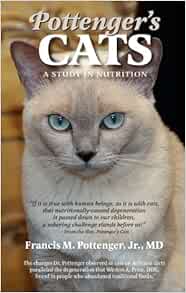
Pottenger’s Cats
Nutritional study completed 1932-1942 Multigenerational study Nine hundred cats Four basic feeding groups Optimum diet groups
2/3 raw meat, 1/3 raw milk, Cod Liver Oil 2/3 raw milk, 1/3 raw meat, Cod Liver Oil Deficient diet groups
2/3 cooked meat 2/3 cooked milk (pasteurized, sweetened condensed, evaporated, metabolized vitamin D)
Effects observed with deficient diet
Dental disease Reproductive abnormalities Allergies Immune disorders Skeletal disease and osteoarthritis Cardiac abnormalities Renal disease Respiratory abnormalities Gastrointestinal abnormalities Hepatic abnormalities Behavioral abnormalities Endocrine abnormalities Ocular abnormalities
{http://www.amazon.com/Pottengers-Cats-A-Study-Nutrition/dp/0916764060 }
{http://ppnf.org/ }
Multigenerational effects – demonstrated “epigenetics” prior to understanding of gene structure or tools to examine Studies in epigenetics reveals that food affects more than just calories and deficiencies…it alters the essence of genetic expression…in the individual…and for subsequent generations Understanding nutrition is critical to longevity and health
{ NOVA | scienceNOW | Epigenetics | PBS }