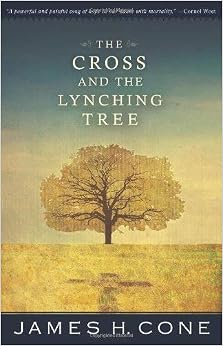
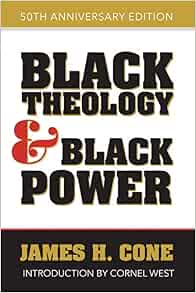
Week five of Theology for Troublemakers, and we finally got to James Cone — which meant we got to Charlene Sinclair, and I want you to know that the moment Gary introduced her on this call was one of the more moving things we’ve done in this class. He described her as the student who told Cone she saw something in his early work that nobody else gets — the importance of Fanon to his concept of ontological Blackness — and the way he described the day she defended her dissertation, how he held his one point until the very end so he could announce that this dissertation had explained, like no book ever written, what Fanon actually meant to Cone’s thought, tells you everything about who James Cone was as a teacher and who Charlene Sinclair is as a scholar. We started at the beginning: the three moments that produced Black Theology and Black Power — the NCBC manifesto, Detroit burning, and the assassination of King — and why Cone said bottled rage would have killed him if he hadn’t written that book. Gary walked us through the satanic nature of whiteness as a theological claim versus a racial one, what ontological Blackness actually meant, and why Cone’s sweeping indictment of the Negro church before 1968 was, as Gary put it, seriously flawed even as it produced a towering theology. We got into the womanist challenge — Delores Williams, Katie Cannon, Kelly Brown Douglas arguing there is nothing redeeming in the cross — and why Cone couldn’t start writing The Cross and the Lynching Tree until Delores retired and Emily Towns went to Yale; he needed just enough personal distance to think it through. Then Charlene took us somewhere unexpected on Niebuhr: she asked, quietly, whether there wasn’t a personal parallel between the Niebuhr brothers and the Cone brothers — Richard the better theologian, Reinhold the extravert who needed the crowd — and Gary spun it out for ten minutes in a way that you could tell he had been sitting with for years and had never said in public. We ended with Caleb’s question about what it means for white Christians to actually hear the cry of Black blood, and Charlene answered it by describing her teenage grandson trembling in her arms, his whole body shaking, saying he didn’t want to die. That’s where the class ended. That’s where James Cone’s theology begins.
If you haven’t joined the class yet, come find us at www.HomebrewedClasses.com — donation-based, including zero. You get Gary’s full lecture series, Aaron’s supplemental interviews with scholars and organizers, curated readings, discussion guides, and the online community. Last session is next week — social ethics, full circle. And come to Theology Beer Camp, where Gary, Arron, and Cornel West will all be in the same room.
In the podcast we discuss…
- The three moments that produced Black Theology and Black Power: the NCBC manifesto, Detroit burning in 1967, and the assassination of King in April 1968
- Why Cone said he could not have written that book in Adrian, Michigan — and why bottled rage would have killed him
- Ontological Blackness: why Cone’s critics could only hear it literally, and why he usually declined to correct them
- The satanic nature of whiteness as a theological claim about demonic forces, not a claim about the humanity of white people
- Cone, Barth, and Tillich: why Jim was mostly on the Barth side, how Tillich saved him from Barth’s narrowness, and why he smuggled Tillich into his intro course by classifying him as neo-orthodox
- Cornel West, the 1975 Theology in the Americas showdown with Latin American theologians, and why Cone’s one-factor viewpoint finally broke — and what changed
- The womanist challenge: Delores Williams, Katie Cannon, Kelly Brown Douglas arguing nothing in the cross is redeeming — and why Cone couldn’t start writing The Cross and the Lynching Tree until he had enough personal distance
- Charlene on Fanon, ontological Blackness, and the Cone she wanted to recapture — the one who was talking about the rats in the communities, not just the interpersonal dynamics of race
- Victor Anderson: the gay, postmodern scholar hurt by the Black church who cleared room in Black theology for everyone with a constellation of experiences like his
- The Niebuhr question Charlene had been sitting with since the seminar: whether the Cecil-and-Jim and Richard-and-Reinhold parallelism was something Cone never talked about in public — and Gary saying yes, and then saying more than he’d ever said before
- Why Niebuhr never risked anything for a Black person — and Gary’s argument about Lutheran false righteousness that Cone heard, acknowledged, and then declined to include in The Cross and the Lynching Tree
- Eric Garner, Michael Brown, Ferguson, and the night Gary walked behind a student holding a sign that said “James Cone was right”
- How Black Lives Matter revived Cone as a teacher — and the retirement letter he ripped up
- Charlene’s grandson, trembling, saying he didn’t want to die — and the question she’s still staying up at night trying to answer
- Jim’s final word to white people who want to be in solidarity: “Try to be one of the white people who don’t ask Black people to take care of you or make you feel better”
Previous Episodes with Gary or Aaron
- Sacred Values and Street Power — The Theology of Organizing
- A Story of Being Saved by Love and Grace
- the Niebuhr You Thought You Knew
- What Would a New Abolition Be? Gary Dorrien on the Black Social Gospel, Ida B. Wells & Reverdy Ransom
- Social Ethics for This Moment
- What God Do They Worship In There? The Black Social Gospel and the Crisis of American Christianity
- Theological Ethics & Liberal Protestantism
- James Cone and the Emergence of Black Theology
- The Future of Faith & Justice
- Theology for Action
- The Sacred, The Political, and Why We’re All Vulnerable
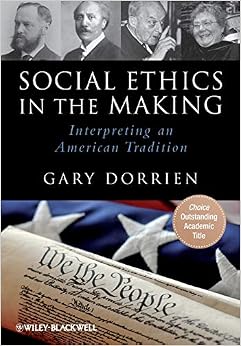
Gary Dorrien is Reinhold Niebuhr Professor of Social Ethics at Union Theological Seminary and Professor of Religion at Columbia University. He is also the author of Anglican Identities: Logos Idealism, Imperial Whiteness, Commonweal Ecumenism, Social Ethics in the Making: Interpreting an American Tradition, American Democratic Socialism and In a Post-Hegelian Spirit: Philosophical Theology as Idealistic Discontent. You won’t want to miss his upcoming theological memoir Over from Union Road My Christian-Left-Intellectual Life.
Aaron Stauffer is the Associate Presbyter for Congregational Vitality at Heartland Presbytery, and is an ordained Teaching Elder in the PC(USA), and was most recently was the associate director of the Wendland-Cook Program in Religion and Justice at Vanderbilt Divinity School. Previously, he was the Executive Director and then Special Advisor of Religions for Peace USA, where he helped launch a national anti-Islamophobia program based in the southeast, along with organizing national senior religious leaders on issues of common concern such as mass incarceration, immigration and climate change.
Charlene Sinclair is Associate Director of the Center for Justice at Columbia University School of Social Work, and a scholar, organizer, and strategic advisor working at the intersections of race, gender, economy, and democracy. A doctoral student of Gary Dorrien’s at Union Theological Seminary, she is the author of a dissertation that James Cone himself said had explained, like no book ever written, the importance of Fanon to his early thought — and which Gary Dorrien insists must be published.
Join our upcoming online class – THE FUTURE OF RELIGIONTripp and Ilia Delio are teaming up for a brand-new four-week online class, The Future of Religion — for everyone who’s read the books, asked the questions, and realized the faith they inherited doesn’t quite fit anymore. Together they’ll trace religion’s evolutionary arc and map what’s emerging on the other side. Includes 4 video lectures, 4 live Q&As (replays available), and a community of fellow travelers. Donation-based, pay what you’re able (including $0). Live sessions start this month — register at ? www.thefutureofreligion.com
Theology Beer Camp 2026 — The God-Podcalypse — hits Kansas City October 8–10, exactly one month before the election. Thirty scholars (Ilia Delio, Cornel West, Diana Butler Bass, Gary Dorrien, and a stack more), thirty God-pods, four post-apocalyptic stages, and the community everyone keeps telling us is the real reason they come back. Come find your people at Theology Beer Camp
This podcast is a Homebrewed Christianity production. Follow the Homebrewed Christianity, Theology Nerd Throwdown, & The Rise of Bonhoeffer podcasts for more theological goodness for your earbuds. Join over 75,000others on our Substack – Process This! Get instant access to over 50 classes at www.TheologyClass.com
Follow the podcast, drop a review, send feedback/questions or become a member of the HBC Community.