In Blue Ocean Strategy: How to Create Uncontested Market Space and Make the Competition Irrelevant, Renée Mauborgne argues that lasting growth does not come from winning market share in crowded existing industries, but from creating entirely new market space that no one is competing in yet.
Mauborgne is a professor of strategy at INSEAD and co-director of the INSEAD Blue Ocean Strategy Institute. Blue Ocean Strategy, co-written with W. Chan Kim has sold more than 4 million copies and is recognized as one of the most iconic and impactful strategy books ever written. The new 20th anniversary edition tests the original theory against today’s market realities and is enhanced with fresh cases, including NVIDIA’s three successive market-creating moves, a new preface that highlights the book’s ongoing global impact, and a curated list of over fifty blue ocean cases across diverse industries that expand far beyond those in the original version.
In her conversation with Adam Job, senior director at the BCG Institute, Mauborgne discusses when a company should stop competing and start creating, why the search for new demand begins with non-customers rather than customers, how NVIDIA chases “zero-billion-dollar markets,” why differentiation and low cost need not be a trade-off, whether AI’s commoditizing effect makes advantage harder to defend, and how to reconcile bold commitment with the case for keeping options open.
Key topics discussed:
01:12 | Why beating the competition is the wrong goal
02:34 | How to know when it’s time to shift from competing to creating
05:26 | Finding a blue ocean: value innovation and the role of non-customers
07:02 | Where the process starts inside an organization
09:25 | NVIDIA and the pursuit of zero-billion-dollar markets
12:46 | Breaking the trade-off between differentiation and low cost
16:21 | What prompted the new edition
18:33 | Will blue oceans stay defensible as AI commoditizes capabilities?
24:17 | Why using AI only for speed and efficiency is a trap
25:36 | Reconciling bold commitment with the need for optionality
Additional inspirations from Renée Mauborgne:
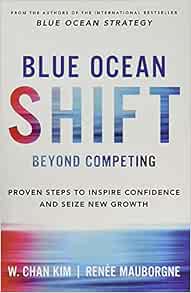
- Blue Ocean Shift: Beyond Competing—Proven Steps to Inspire Confidence and Seize New Growth (Grand Central Publishing, 2017)