https://traffic.libsyn.com/secure/sciencesalon/mss219_Steven_Pinker_2021_10_09.mp3 Download MP3
Today humanity is reaching new heights of scientific understanding — and also appears to be losing its mind. How can a species that developed vaccines for COVID-19 in less than a year produce so much fake news, medical quackery, and conspiracy theorizing? Pinker rejects the cynical cliché that humans are simply irrational — cavemen out of time saddled with biases, fallacies, and illusions. After all, we discovered the laws of nature, lengthened and enriched our lives, and set out the benchmarks for rationality itself. We actually think in ways that are sensible in the low-tech contexts in which we spend most of our lives, but fail to take advantage of the powerful tools of reasoning we’ve discovered over the millennia: logic, critical thinking, probability, correlation and causation, and optimal ways to update beliefs and commit to choices individually and with others. These tools are not a standard part of our education but they should be. Rationality also explores its opposite: how the rational pursuit of self-interest, sectarian solidarity, and uplifting mythology can add up to crippling irrationality in a society. Collective rationality depends on norms that are explicitly designed to promote objectivity and truth.
Steven Pinker is the Johnstone Professor of Psychology at Harvard University. A two-time Pulitzer Prize finalist and the winner of many awards for his research, teaching, and books, he has been elected to the National Academy of Sciences and named one of Time’s 100 Most Influential People and one of Foreign Policy’s 100 Leading Global Thinkers. His books include The Blank Slate, The Stuff of Thought, The Better Angels of Our Nature, The Sense of Style, and Enlightenment Now.
In this in-person conversation in Shermer’s home, Pinker and Shermer discuss:
- The through-line of his many books: The Language Instinct, How the Mind Works, The Blank Slate, The Better Angels of Our Nature, Enlightenment Now, and Rationality
- consciousness and free-will/determinism as conceptual problems, not scientific problems; that is, problems with our concepts,
- the Skeptic magazine conundrum: we publish a magazine promoting science and rationality in the presumption that we can counter irrationality and teach people to think critically and like scientists … but we document how irrational people are,
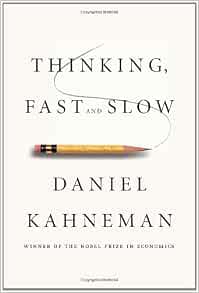
- Daniel Kahneman vs. Gerd Gingernzer and Bounded Rationality,
- Homer Simpson vs. Mr. Spock, Alfred E. Neuman vs. John von Neumann,
- What does it mean to “believe” in ghosts, gods, angels, demons, conspiracies…?
- subjective/internal truths vs. objective/external truths,
- empirical truths vs. mythological truths (religious truths, political truths…),
- logic and critical thinking,
- System 1 vs. System 2 (Thinking Fast and Slow)
- Iron filings to a magnet vs. Romeo and Juliet to each other,
- reason and emotion. Hume: “reason is and ought only to be the slave of the passions, and can never pretend to any other office than to serve and obey them.”
- the purpose of rationality: to determine reality or win arguments (scientist vs. lawyer)?
- faitheism: does “belief in belief” explain why people believe in God?
- two kinds of belief: reality and mythology,
- is-ought fallacy fallacy: to what extent can we derive an ought from an is?
- motivated reasoning,
- the confirmation bias,
- the myside bias,
- what we can do to counter irrationality, and
- how to talk to a conspiracy theorist.
If you enjoy the podcast, please show your support by making a $5 or $10 monthly donation.
This episode is sponsored by Wondrium and Oregon State University: