Fogelmania shared items on The Old Reader (RSS): Recent Episodes
None

Read all your favorite online content in one place. Import your subscriptions in one click, find your friends, and start sharing.
Evolution, ecology and behavior Professor Alison Bell has been awarded a 2024 Guggenheim Fellowship. Bell was awarded among “188 writers, scholars, artists and scientists chosen through a rigorous peer-review process from nearly 3,000 applicants”. The ...
The post Professor Alison Bell awarded Guggenheim Foundation Fellowship appeared first on Smile Politely — Champaign-Urbana's Culture Magazine.
Staff Reporter
THE Water and Sewage Company (WASCO) is battling to control wastewater in Maseru hence the regular spillage of sewerage around the capital posing a threat to public health, the Lesotho Electricity and Water Authority (LEWA) has said.
The deficiency in waste management policy due to rapid urbanisation and financial constraints are some of the factors which contribute to WASCO’s inability to adequately combat the wastewater problem.
LEWA states this in its quarterly newsletter of January to March 2024 publicised this week. LEWA is the regulatory body of WASCO and power utility, Lesotho Electricity Company (LEC).
WASCO is mandated to provide water and sewerage services in urban areas around the country alongside district urban councils.
WASCO is the main role player as it is solely responsible for the provision of sewerage services in urban areas.
The district urban councils ensure that environmental laws relating to pollution are adhered to, for example, the prevention of leakages. LEWA assumed powers to regulate urban water and sewerage services in the country from 2013. LEWA licences WASCO and monitors its operations to ensure the quality of services it offers and sets the company’s performance standards. LEWA appears unimpressed with WASCO.
“The provision of sewerage services in urban areas is surrounded by various challenges that prevent adherence to the Lesotho Electricity and Water Authority’s (LEWA) set Urban Water Quality of Service and Supply Standards (QoSSS) and Water and Sewage Treatment Facilities Safety Standards…” LEWA said in the report.
“Sewerage services challenges in urban areas pose a significant threat to public health, environmental sustainability and quality of life. A significant percentage of the urban residents lack access to proper sewerage facilities such as improved toilets and piped sewerage which prompts others to open defecation…..It remains the responsibility of all key players to ensure swift provision of services,” LEWA states.
“In its role, the Company (WASCO) is faced with hurdles that make it difficult and often almost impossible to provide sewerage services – despite lagging behind in the provision of this service.
“Amongst some problems that the Company faces, is an inadequate waste management policy due to rapid urbanisation, which outpaces waste management infrastructure, resulting in illegal dumping and pollution of water sources.
“Another challenge is poor town planning, which makes it difficult for the installation of sewer networks and to maintain such infrastructure. The sewerage services infrastructure needs regular maintenance for continued functionality and effectiveness. Lastly, most urban areas have poor sewage treatment facilities.”
LEWA further highlights that WASCO’s challenges of managing sewerage services in urban areas can also be seen through sewage flooding due to blocked manhole overflows, breakdowns at pump stations or sewer leaks into the streets.
“These challenges are attributed to amongst other things, limited financial resources, rapid population growth, topography, socioeconomic disparities and inadequate policies and strategies.
“A range of sewerage challenges are often observed in the urban areas in Lesotho. For these challenges to end, the need for collaboration among government, non-governmental organisations (NGOs), investors and communities is inevitable for improved sewerage services and ensure the well-being of urban populations.”
The post WASCO overwhelmed by Maseru sewer appeared first on Lesotho Times.
Although a resident confessed to setting the August 2023 blaze that killed 76 people in a dilapidated building, a report found that officials had ignored warning signs for years.
Publication date: August 2024
Source: World Development, Volume 180
Author(s): Cinthya Silva, Gabriel Pino
Charles Fogelman, a professor of global studies, served in the Peace Corps education sector in Lesotho from 2003-2005, shortly after graduating ...
Urbana-Champaign Reproductive Justice has partnered with the Midwest Access Coalition to provide residents with access to free emergency contraceptives. While EC is available over the counter, the price tag (over $50 per dose) can make ...
The post You can now get access to emergency contraceptives for free appeared first on Smile Politely — Champaign-Urbana's Culture Magazine.
Forty-five church pilgrims from Botswana, along with the driver, were killed when the bus plunged off an overpass into a rocky ravine in South Africa. The only survivor was a little girl.
With a coalition government likely after South Africa's elections in May, many are looking at the West for examples of coalition politics. South Africans, however, should look next door.
Malealea lodge, Lesotho. Image credit Di Jones via Flickr CC BY 2.0 Deed. As South Africa heads to the polls on May 29, 2024, most watchers expect South Africans for the first time to force the African National Congress (ANC) out of its absolute majority atop South African politics. Many commentators and plenty of South Africans seem almost giddy about the prospect of a coalition government coming to power. It is undoubtedly true that the ANC has plenty of corruption scandals, and the burden of load-shedding is still hurting everyday economics and citizens’ psyches in RSA. But what are some of the potential pitfalls of a national coalition government in South Africa?
Many of South Africa’s major municipalities have elected coalition governments in recent years. While these coalitions have varied from reasonably effective to complete disarray, a national coalition would involve more complexity, because it is responsible for weighty portfolios like foreign affairs, macroeconomic policy, and defense. Thus, municipal coalitions are, perhaps, not the best model for thinking through the potential risks-rewards of a national coalition.
For a cautionary example, South Africans might look to the tempestuous history of national coalition governance since 2012 in Lesotho, with which South Africa shares its second-longest land border. Lesotho is one of the only African countries with multiple electoral transfers of power over the last decade. Much like South Africa, though, Lesotho has struggled to move beyond the aging leaders who guided the country back to multiparty democracy in the 1990s. Our brief dive into history is not to advocate for any particular candidate, party, or choice, but rather to look at how Lesotho’s experience with coalition governance might illuminate South Africa’s future.
Lesotho’s first coalition government came to power with great fanfare in 2012. There was a long history of disputed elections in the kingdom, a legacy that included a South African–Southern African Development Community (SADC) military intervention in 1998. The 2012 coalition marked the first peaceful democratic transition of power in Lesotho since gaining independence in 1966. This alone should give some hope for coalition governments in South Africa. However, sustained low-level political violence and minimal improvements in service delivery to the poorest and most vulnerable in Lesotho since that time should also give us pause.
Lesotho coalition governments took office in 2012, 2015, 2017, 2020, and 2022, with a total of three different political parties taking turns in the prime minister’s office. None of these coalitions survived a full five-year term, and political infighting has been a near constant. South Africans should be under no illusion that a coalition that comes to power in June 2024 will be guaranteed enough stability to make it to the 2029 general election intact.
Coalition-era political violence in Lesotho, including an attempted coup in 2014 and the assassinations of army commanders in 2015 and 2017, has been largely contained within the political and security establishment. There has been no widespread political violence. That said, the violence Lesotho faced is certainly a warning that rapidly shifting political alliances can be broadly destabilizing. This has already been seen in the rising violence against South Africa’s elected municipal officials.
Facing instability in Lesotho, South Africa and SADC have repeatedly stepped in to mediate. This has likely forestalled an escalation of violence. However, if South Africa were to face similar dynamics it is not clear that SADC has enough muscle to stabilize a country that accounts for roughly as much total GDP as all other SADC member states combined. The current diminished state of the Economic Community of West African States (ECOWAS), SADC’s West African counterpart, in the face of regional obstinance is a cautionary tale for those worried about what a destabilized South Africa might mean for that country and the wider region.
Another result of the coalition era in Lesotho has been a massive expansion of the Cabinet. With electoral margins so tight, the coalitions in Lesotho have involved multiple smaller parties. In one case, the coalition comprised seven parties, with each tiny party demanding a Cabinet Ministry as the price for their parliamentary votes. The Cabinet had 16 ministers in the early 2000s, which expanded to 26 in 2017. While the Cabinet has contracted back to 19 ministers at the moment, this proliferation of expensive ministries has soured the public on governance. Many Basotho see politics as simply a game of musical chairs for the well-connected and have disengaged from governance by refusing to vote in national elections. There is also no evidence that the proliferation of ministries improved the delivery of services to the population. If anything, it seems likely to have harmed it.
So, what are Lesotho’s lessons for South Africa from its 12-year history of national coalition governance?
First: it might work out all right! With all the unforeseen plot twists in Lesotho’s political situation, it is important to remember that nothing was preordained. Democracy-era South African politics have seen some strange bedfellows: a governing majority with room for both center-right economists and the South African Communist Party is a big tent indeed, and one with limited ideological consistency on matters like land reform or social-benefit schemes. In fact, a coalition government in South Africa could be the sign of a healthy parliamentary democracy that heralds the rise of political parties that can champion the causes of those currently unheard by the ANC. Given the already limited coherence within the three decades of ANC rule, perhaps South Africa now has the opportunity to enter an era of robust deliberative democracy via its coalitions.
Second: however, there is a high chance of political dysfunction. If voters desire steady, predictable financial or social policy and messaging, the potentially volatile mix of parties and personalities in South African politics at the moment would suggest this is unlikely.
Third, and perhaps most importantly: national coalitions in Lesotho have led to even less governance and attention paid to service delivery. With elections and government turnover an almost constant possibility, politicians spend more time jockeying within Parliament than governing. Individual members of parliament have increased leverage because of the slim margins in coalition governance. This has led to the emergence of more political parties and more MPs switching political affiliations in an attempt to gain new party leadership positions or even ministerial appointments. With their focus diverted to political maneuvering, governance suffers, and the concerns of the people are ignored to the detriment of democracy.
So, what does post—May 29 hold for South Africa? South African voters can, and should, send messages about the governance they desire at the ballot box. Citizens should carefully vet parties and individuals based on their commitment to governance and service delivery. If a coalition government does result, there needs to be robust and sustained civil society pressure to get MPs to maintain a focus on the needs of the public. This is especially true of the growing number of disaffected voters who feel that they have been neglected in the 30 years since the end of apartheid. The result of Lesotho’s coalition era has been mounting disillusionment among Basotho in the idea that government can solve intractable problems; as such, it is imperative that Southern Africa’s economic and political heavyweight finds ways to keep political parties and politicians accountable to the public. The lives of many of the poorest South Africans might literally depend on this. Keeping South African democracy healthy and effective is important for many in the Southern African region and across the continent.
March is International Women’s Month and an excellent opportunity to do a temperature check of how women are faring in C-U. Spoiler alert: We have a long way to go in dismantling the patriarchy and ...
The post For women in C-U, it could be worse appeared first on Smile Politely — Champaign-Urbana's Culture Magazine.
Although little evidence suggests a direct link between climate change and mass migration, Europe is using “climate migration” to militarize its borders.
Refugees on a boat crossing the Mediterranean sea from Turkey to Lesbos, Greece, 2016. Image credit callmonikm via Flickr CC BY 2.0 Deed. Boats full of African migrants set sail from North and West African shores destined for Europe. Whether they reach their destinations or not, climate is to blame. In life so in death: climate and environmental factors are, paradoxically at once, the drivers, the detractors, and the solutions to the “pathology” of human mobility.
Countless pirogues leave Senegalese and Mauritanian shores—and many more flayk and dingy boats leave Moroccan shorelines headed for the Canary Islands. Others in the backway enter Dante’s nine circles of Hell in the Sahara Desert before embarking on perilous journeys in the Mediterranean Sea. Climate vagaries, amplified by a politics of putschism, are blamed for being the root causes of migration to be addressed and redressed at home.
Militarized border infrastructures along traditional desert trails and sea routes have strategically weaponized environmental actants. In moments of tragic loss of migrant bodies, it’s also the inhospitable conditions of the Atlantic Sea and the Sahara Desert to blame. From a policy perspective, the blame is quite often placed on “unscrupulous smugglers” who risk migrants’ lives in the treacherous waters of the Atlantic or abandon them in the shifting sands of the desert.
My stance here is that an emergent discourse of climate-migration nexus has persistently formed and informed academic and policy understandings of the life and death of Europe-bound African migrants. Of course, much has been written to critique the causal link between climate change and migration, and how slow- or rapid-onset climate changes deracinate affected communities. Critical scholarship on how border regimes outsource the death and disappearance to environmental, nonhuman actants is not in short supply either. Yet migration, in its connection with climate and environmental factors, is approached generically. My task here is to show how the EU’s migration regimes mobilize climate factors and embed them in their security logics to control African migrants along the West African Route and the Sahara Desert.
The EU’s migration regime embeds environmental factors in three crucial phases of human mobility. The first one is predeparture, where some of the root causes of mobility are ascribed to local environmental issues that massively dislodge community members and morph them into climate refugees. Their potential displacement toward the gated communities of Europe is foreseen as a security threat that should be tackled, in time and space, from afar. The second phase is reminiscent of purgatory: migrants die or go missing in the hellish Sahara Desert as a form of expiation of their sinful decision to leave home. Death and disappearance have, in effect, become the twin technologies of deterrence. On the Atlantic Ocean, thousands of other African migrants, too, die or go missing in the middle passage before finding their way into the Spanish Archipelago. The last phase is the post-arrival one, and it’s where border control comes into full circle through deportation. Deported migrants are sent home. Migration regimes couch such inhuman practices in a humane parlance of “readmission,” “migrant returnees,” and “voluntary return.” Switching gears and chasing one’s dream beyond national borders is treated as a pathology, and racialized migrants are diagnosed as a mentally deranged social category that should undergo psychological therapy and support at the hands of humanitarian actors.
There is no shard of evidence that establishes a direct link between climate change and mass migration. Yet the EU’s anti-migration knowledge systems are unwilling to relinquish this militarized approach to “address the root causes of migration.” And it’s no surprise either to see some EU member states consider African climate migrants as a hybrid threat engulfing the southern flanks of Europe. Beyond the climate change-migration nexus, a novel nexus conflating climate, migration, and military defense emerges along the EU’s external borders. In its joint communication for the “New Agenda for the Mediterranean,” the European Commission writes, “The EU will strengthen and mainstream work on the climate, security and defence nexus, including through increased action on climate adaptation and disaster risk reduction, as well as collaboration with the UN and regional organisations.”
The rise of the “foresight regime” relaying apocalyptic scenarios about the locomotive force of climate change propelling African migrants toward Europe’s southern borders is faulty at its core. When they move, African migrants are captured in an environmental, or rather disastrous, parlance of “waves,” “flows,” “floods,” and “avalanches,” a repertoire that nourishes the myth of invasion and justifies military response to human mobility. In fact, the link between climate change and migration is complex, multi-causal, contextual, and, above all, experiential. The lived experiences of individual migrants are unique and irreducible to sweeping labels such as “climate migrants.” Underlying the decision to migrate varies from one person to another, and from one community to another. Running counter to the idea that rapid- and slow-onset climate change will massively dislodge affected communities, the expansion of the “illegality industry” has made crossing beyond national borders the preserve only of those who can afford it. Looking at the life (and death) experiences of many African migrants, the decision to migrate is a life project that needs moral and financial support. I have in mind the diverse stories of families who sold a patch of land or yearly crops or cattle to support their sons. I also have in mind the stories of families who still struggle to pay back the debt of their missing sons’ crossing.
Before it’s anything else, migration is a culture. It’s deeply enshrined in the sociocultural imaginaries of West and North African countries. In Morocco we think of Zmagria; in Niger we recall les exodants. Putting the blame on climate as the driver of mass mobility not only uncovers the redundancy of this securitized approach but also obscures the socioeconomic ills deeply entrenched in colonial legacies of climate injustice, environmental destruction, and exploitation in Africa. The continent has barely 4 percent of the global share of carbon dioxide emissions, and its riches and resources are deemed the Pharmakon of the World, to use a phrase by Achille Mbembe. Yet Africa is the hardest hit by climate change and bears the brunt of the world’s combustion.
Once migrants embark on unseaworthy boats in the Atlantic or cram into long-bed pickups to cross the Sahara Desert, climate and environmental factors take on a different shape and task. From being the locomotive force that drives out migrants from their national habitats, climate and environmental factors become the strategic slayers of migrants crossing sea and desert routes. The West African Route has been reactivated following the closure of the Western Mediterranean Route in 2020. Quite recently, migrants are pushed away from the already deadly sea routes on the Moroccan coastlines of Tan-Tan, Tarfaya, and Laayoune to deadlier ones, sailing off from the shores of Agadir, Safi, Casablanca, and Salé. Others depart from Senegalese and Mauritanian beaches, sea-weary after weeks of meandering the Atlantic waters only to land in El Hierro.
In the Sahara Desert, the adoption of Law No. 2015-16 on the illegal trafficking of migrants, which criminalizes the cross-Saharan mobility infrastructure, forced transport drivers away from the trodden desert routes along the civilian towns of Séguédine, Madama, and Toumou. The installation of border infrastructures (police stations, checkpoints, roadblocks, and customs) has rerouted migrant transportation to more dangerous, less invisible desert trails. Wind velocity, aridity, air temperatures, solar irradiance, and dune slopes affect vehicle speed and functioning. When stranded, migrant bodies reach “dehydration threshold” and “cognition threshold,” affecting their ability to walk away from the heat funnels.
Less visible tracks in the desert lead to water loss and dehydration. More detours along sea routes lead to water leakage and hypothermia. Environmental actants, and their inhospitable climate conditions, are harnessed by border regimes, rendering migrant bodies untraceable and their death and disappearance depoliticized.
The rise of the “count regime” of the International Organization for Migration (IOM) reveals the right hand of border regimes. The calculus of migrant death is not only used for deterrence but also read against other datasets of crossings, interceptions, and incarcerations to gauge the efficiency of the border infrastructures put in place.
When migrants escape the jaws of deadly climate borders, it still might not signal the end of climate borders. Deportation, masked as voluntary returns, takes a benevolent form, and comes with the promise of “green reintegration.” At the end of the migratory circle, climate factors and migrants are the solution for each other. Green reintegration is a correctional practice for the pathology of migration. It preaches the “metaphysics of sedentarism” and considers those who migrate as sociopaths or mentally deranged. Between November 2019 and October 2023, 751 benefited from psychosocial and health support in the oriental region, and 2,639 returnee migrants benefited from reintegration programs.
Farming a patch of land or raising cattle at home marks the ultimate degree of success. IOM lauds reintegration stories as success stories, and those who migrate lead, by implication, failure stories. “We returned, we succeeded” is the catchphrase of this bordering through climate practice. At the same time, migration is seen as an adaptation strategy to climate change. Migration as adaptation answers the question “What really drives African migrants to Europe?” The answer is a labor shortage and the exploitation of cheap labor sugarcoated as circular migration. Spain launched a labor attraction scheme (GEOCCO), aiming to bring 16,000 seasonal laborers from Morocco to work in its agricultural sector. Climate borders are mobilized at full tilt by the EU’s anti-migration policies. We need to think about climate as border to unpack the elusive bordering practices insidiously embedded in the climate migration discourse. Climate as border primes us to rethink the entangled genealogies of modern climate injustice and the carceral geographies it produces.

In competitive Scrabble, there’s Nigel Richards and everyone else. The 57-year-old New Zealander has won 11 North American and world championships combined; no one else has won more than three. He is widely believed to have memorized the entire international-English Scrabble lexicon, more than 280,000 words. He crafts strategic sequences that outperform the best bots. He’s a gentle, mild-mannered, private, witty, unflappable enigma—the undisputed Scrabble GOAT, and one of the most dominant players of any game ever.
Nigel—one name, like Serena or Michelangelo—went viral in 2015 after winning the French world championship even though he didn’t speak French. He inhaled some large chunk of the 386,000 words on the Francophone list, and did it in a mind-boggling nine weeks. That same year, he won a tournament in Bangalore, India, with a 30-3 record. In one of those games, Nigel extended ZAP to ZAPATEADOS (the plural of a Latin American dance). In another, he threaded ASAFETIDA (a resin used in Indian cooking) through the F and the D. Those words likely had never been played in Scrabble before, and likely won’t be again.
Vodacom Premier League outfit Naughty Boys are dealing with the agonizing pain of the death on Sunday of key player Tšepo Mosaeeea.
Mosaeeea was stabbed to death in Ha-Ramohapi where he stayed in a rented house after he reportedly tried to break up an altercation between groups of men who were fighting over women.
His death came just hours after bottom side Naughty Boys beat Machokha 3-0 in the Vodacom Premiership in a potentially season-saving victory.
The win was a crucial boost to their survival hopes but just hours later tragedy engulfed the club.
Mosaeea was recognised as one of Naughty Boys’ most talented players by his teammates and coaches.
The club said his death has caused a deep wound in their hearts that will never heal.
“The space Tšepo left is something we are not sure will ever be filled because he grew up in this team from when he started playing football,” said Naughty Boys’ communications and marketing manager Moeketsi Sefatja.
“He took Naughty boys from the B-Division to the A-Division, and then from the A-Division to the premier league. The goal that helped the team to make it to the premier league was scored by him in 2022 when we beat Limkokwing University 1-0. He was very good at scoring and most of our goals were scored by him,” he said.
Mosaeea’s death is even more painful because of the numerous tragedies that Naughty Boys have dealt with over the past year.
Earlier this year another player, Fusi Mochai, also lost his life at a young age while club president Khotsofalang Possa died last year.
Sefatja said Mosaeea played “very well” in Sunday’s win over Machokha and had been one of the club’s best performers this season.
“Mosaeea started the game on a very high note and did very well. Everyone could see that he is back with the good things he is known for and people could not stop embracing him,” Sefatja said.
“I knew about his death at around 5am,” he added.
“I received a phone call from one of the people living in Ha-Ramohapi asking if I had heard of what had happened. I immediately left home to go to his place but met his family on their way to the hospital and went back with them (to the hospital). We got to the hospital and his death was confirmed,” he said.
Sefatja said Mosaeea’s death is a very big loss to the team, his friends, family and everyone who knew him.
“It hurts even more because he was not even fighting with anyone but was only trying to stop people who were having an argument and instead they chose to kill him,” Sefatja said.
“The situation has really become a problem because both our player’s deaths happened in their village (Ha-Ramohapi) and all these acts are done by people from the same village. These people have turned Ha-Ramohapi into an unfriendly environment for the villagers,” he said.
Moipone Makholinyane
The post Naughty Boys player stabbed to death appeared first on The Post.
Moorosi Tsiane
THE Principal Chief of Tšakholo, Tebang and Ha- Seleso in Mafeteng, Khoabane Mojela, has been found guilty of murdering his commoner, Tšenolo Letsie in June 2020.
Justice ‘Mabatṧoeneng Hlaele found Chief Mojela guilty yesterday and revoked his bail, thus remanding him in custody to await his sentencing slated for next Thursday.
The trial started early last year before Justice Hlaele, prosecuted by Advocate (Adv) Lehlanako Mofilikoane while one Adv Makhera was the chief’s lawyer.
According to the evidence led by the Crown, Chief Mojela had always despised Letsie and accused him of bewitching him.
On the fateful day, 18 May 2020, Chief Mojela found Letsie at the village shop where he was talking to the owner of the shop. He greeted the owner and started chastising Letsie.
He threw a tantrum, accusing Letsie of bewitching him. He further accused the deceased of giving him a nasty look when he was greeting the shop owner.
As Chief Mojela was throwing his tantrum, Letsie stood up and left for his car but before he could reach it, Chief Mojela withdrew his pistol and shot him in the back.
Chief Mojela then handed himself over to the police while Letsie was rushed to a local clinic which referred him to Mafeteng Hospital.
Mafeteng Hospital refereed him to Queen Mamohato Memorial Hospital (QMMH). He was after a few days discharged at QMMH. He had some complications while at home and was rushed to Ntšekhe Hospital in Mohale’s Hoek where he met his demise on 2 June 2020.
The postmortem report indicated that Letsie’s cause of death was traumatic perforation of the heart and internal bleeding caused by the shooting.
Chief Mojela was initially charged with attempted murder, but the charge was later changed to murder following the death of the deceased.
In his defence, Chief Mojela had said the look Letsie gave him that fateful day was threatening as there had always been bad blood between them.
When Letsie stood to go to his vehicle, he said he shot him as he suspected Letsie was reaching for a gun. He also claimed to have been mentally disturbed that day, alleging he had not taken his medication as he suffers from epilepsy.
Justice Hlaele ruled in favour of the Crown, saying it had proved that Chief Mojela had killed Letsie intentionally.
She therefore found him guilty of murder.
“The Crown has discharged its onus and proved beyond reasonable doubt that the accused had a motive to kill the deceased. The accused disliked the deceased who did nothing to provoke him. It was as if the mere existence of the deceased nauseated the accused. He was irritated by the fact that they breathed the same air.
“Nothing justifies the killing of the deceased. I find you guilty of killing the deceased and your bail is revoked,” ruled Justice Hlaele.
Chief Mojela will appear in court on Tuesday to argue in mitigation of sentence. His actual sentencing is scheduled for 22 February 2024.
The post Principal Chief convicted of murder appeared first on Lesotho Times.

The 2024 primary election is upon us. Early voting begins tomorrow, February 8th. There are not many primary races to speak of in this cycle, including at the county level. In fact, the only contested ...
The post Why are county positions partisan, and should they be? appeared first on Smile Politely — Champaign-Urbana's Culture Magazine.
ORLANDO, Fla. — Last year, while Jesse Joseph was still preparing for his first Olympic Trials marathon, he came across a clip of a runner in Athens winning a race while carrying the Palestinian flag. Joseph and his wife, Olivia Katbi—who works for the Palestinian Boycott, Divestment & Sanctions movement—saw the clip and immediately decided, […]
Mr. Geingob had also been Namibia’s first prime minister after the country gained independence from South Africa in 1990.
Publication date: February 2024
Source: Geoforum, Volume 149
Author(s): Valerio Donfrancesco
David Leonhardt’s self-appointed job, as writer of a daily newsletter for the New York Times, is to make things seem better than they are. This is often misinterpreted as “objectivity,” but it’s actually even less helpful than that: Leonhardt is there to allay the concerns of a certain subscriber who pays vague attention to the […]
The secretary of state is beginning a tour of four African countries, hoping to promote positive news on the continent.
Passed in May, the Anti-Homosexuality Act is harming businesses that rely on foreign travelers and trade.
Officials blame immigrants and liberal housing laws, but a Times investigation found the entrenched problems that turned downtown Johannesburg into a blighted tinderbox.
This article was originally published on Hell Gate. If you like it, we encourage you to visit their site and subscribe. At the beginning of 2021, Charles Bissell, one of the two frontmen for the slow-moving indie rock legends the Wrens, was ready to hand in the songs that he had been working on for more than […]
US Ambulances for Ukraine was founded by OSF HealthCare Vice President of Government Relations Chris Manson, as a way to support the country as the war with Russia continues. They’ve delivered 67 vehicles, including ambulances, ...
The post MTD donated a vehicle to help wounded soldiers in Ukraine appeared first on Smile Politely — Champaign-Urbana's Culture Magazine.
Artist, actor, and performer Deke Weaver has embarked on an incredible endeavor: create a performance representing a threatened animal or habitat for every letter of the alphabet. The first installment of this life-long project, The ...
The post An inside look at Cetacean with Deke Weaver and Jennifer Allen appeared first on Smile Politely — Champaign-Urbana's Culture Magazine.
He was a powerful force as apartheid ended and bargaining over South Africa’s future began, emerging as a voice for tribal and ethnic rights, and powers for regional governments.
Once associated with socialism, the language of participation has been co-opted. How was this radical idea depoliticized?
Photo by Marc St on Unsplash.
As an undergraduate anthropology student at Hartwick College in New York more than 20 years ago, Paulo Freire’s Pedagogy of the Oppressed (1970) profoundly shaped my understanding of how racial capitalism is designed to systematically perpetuate poverty and inequality. Freire’s literacy and development campaigns in Latin America were centered on the idea that popular education and participation must be embedded within the knowledge systems of the oppressed. The links between popular participation in governance and Freirean thought, however, are rarely given adequate attention. My book The Participation Paradox: Between Bottom-up and Top-Down Development in South Africa (2023) demonstrates how Freirean-Marxist thinking associated with anticolonial resistance of the 1960s and 1970s has been watered-down and depoliticized by neoliberal discourses of local ownership, empowerment, and popular participation.
It is no accident that the language of participation, once associated with socialism, self-determination, and indigenous control over a nation’s resources, was adapted to suit the economic and political interests of the Washington Consensus and World Bank, which sought to “roll back the state” and enforce structural adjustment programs. The World Bank’s major publication, Voices of the Poor: Can Anyone Hear Us? (2000) was based on material gathered in 23 countries with 60,000 respondents. The book was a plea to those in power to place the historic victims of development in the driver’s seat. To put it another way, for development to be successful the poor and marginalized must participate in decision-making that affects their lives. Who could be against the idea of listening to the most vulnerable? But the paradox is that the call for inclusion is part of a broader strategy of exclusion. Within this framework, the poor’s voices should be heard and amplified but they should not seek to obtain any form of substantial authority that could challenge the hegemonic order.
Participation:The New Tyranny? (2001) which I came across as a postgraduate student in Development Studies at Witwatersrand University, was among the first major publications to systematically question whether the international proliferation of the idea of participation paradoxically served to legitimate the interests of those in power. The ideas in this book were persuasive to me and many others at the time who wished to come to grips with the myriad ways in which people living in poverty were trapped not because of their own doing, but by systemic relationships of power. Participation: From Tyranny to Transformation took the debate a step further by suggesting that although participation is prone to manipulation and can lead to the imposition of plans from above, it is also a process that is contested from below. I was attracted to this volume since, like Freire, it argued that despite oppressive conditions, people nevertheless have the capacity to liberate themselves. Participation: From Tyranny to Transformation was among the first to make a careful distinction between institutionalized forms of participation and non-institutionalized forms—something that the literature tends to obscure more generally (in favor of institutionalized forms, those which are relatively controlled from the top-down or what may be called state-centric).
In South Africa, the African National Congress (ANC) jettisoned the “people-driven” and redistributive Reconstruction and Development Programme (RDP) in favor of neoliberal or market-oriented policy which perpetuates rather than challenges the status quo. The Participation Paradox: Between Bottom-up and Top-down Development in South Africa explores the dialectical relationship between the state and popular resistance in the post-apartheid period by drawing from a case of an exceptionally militant and class-conscious community called Thembelihle, an informal settlement in the southwest of Johannesburg. Mobilizing in the absence of a national counter-hegemonic movement, grassroots militants must negotiate with those authorities who create the very misery that they seek to challenge. The book suggests that in the lead-up to the 2024 national elections, it is likely that the threat to the ANC of losing votes alongside the disruption of everyday life through protest, occupations and boycotts will, as it did previously in Thembelihle and elsewhere, have a major effect on how this party and former liberation movement organizes itself. Grassroots movements and activists will likely need to reimagine their relationship with the state and other powerful actors if they are to avoid revisiting another 30 years of racial capitalism under the façade of listening to the voices of the poor.
A light dusting of snow coated many parts of Johannesburg on Monday, driving children and adults to nearby parks and playgrounds.
The Athletic exists as the half-billion-dollar New York Times little sibling that it is today because of local sports sections. Long one of the most popular parts of any city newspaper, founders Alex Mather and Adam Hansmann understood in that mid-2010s that, even as those newspapers disintegrated into ad-cluttered websites struggling for relevance and profitability, […]
In retrospect, it was an unusual way to pick a college. I was watching a Notre Dame basketball game on television. It was Feb. 7, 1970, and I was a junior in high school. These were the days when every telecast looked as though it were being sent directly from the caves at Lascaux. There […]
Jocks wanna rock and rockers wanna jock. Or so I’ve found through my years of writing mostly about sports and pop music. So I was among those noting the recent 45th anniversary of a seminal moment in rock/jock confluence: On May 11, 1978, pitcher Robert “Bob” Pollard of Wright State threw a no hitter against […]
Afriski Mountain Resort is closed again after being served with another court order.
Spokeperson Koo Lemeke says all operations are suspended until the ongoing legal battles between shareholders are concluded.
This is further threatening to delay or completely derail this year’s skiing season that usually opens in June.
Chief Executive Officer Dr Reuphillan Pelser earlier said “the unfortunate incident is threatening to derail and possibly jeopardise this year’s skiing season which will be detrimental not just to the resort, but also to the many Basotho employed there permanently and part-time, the tourism of Butha Buthe and Lesotho, and the image and economy of the country.”
She say every skiing season hundreds of tourist vehicles pass through the borders of Lesotho daily.
“The Butha Buthe border alone receives an average 122 vehicles that pay M75.00 each, nearly M10,000 daily or and up to M100,000,000 for the season. This is the least of the losses that the country will suffer if we allow this conflict to drag on longer than it has.” said Pelser.
MASERU – THERE are only three government-run health facilities offering dental services to about 330 760 people living in Maseru, thepost heard this week.
This has created a crisis for residents who are now forced to sometimes wait months to access dental services.
A doctor who spoke to this newspaper last week said all government-run health facilities had no dentists except the Likotsi Filter Clinic, Queen ’Mamohato Memorial Hospital, and the National Health Training Centre (NHTC).
The doctor said one has to book an appointment to access dental services at Queen ’Mamohato or the NHTC.
“Now bookings are set for June at Tšepong (Queen ’Mamohato) and at the NHTC,” he said.
Faced with this crisis, patients are now left with no option but to seek services at private dentists who charge M250 to remove a tooth, way up from the M15 that they would have paid at the subsidised government clinics.
The director of oral health services in the Ministry of Health, Dr Lieketseng Petlane, told thepost last night that she is aware of the situation “but sometimes it might happen that the patients’ problems attended by dental therapists in clinics need more attention”.
“So patients have to set an appointment with a dentist for a certain period looking at their problems,” Dr Petlane said.
But she indicated that they will make a follow-up to find out if patients who had set appointments at the NHTC and Queen ’Mamohato had met dental therapists or not.
“Patients cannot set an appointment now to be attended in June without being attended by dental therapists,” she said.
She said dentists from other countries are also helping to relieve the situation in Lesotho.
Health Minister Selibe Mochoboroane promised to investigate the matter urgently and decide on means to solve the problem.
Lack of oral health professionals is a serious problem countrywide.
A study published last year, undertaken by two health researchers at the University of Pretoria, shows that the Lesotho National Dental Database includes only 30 dentists serving about 2.2 million people, which means that there is one dentist for every 66 666 people.
By comparison, the study says, the dentist to patient ratio in developed countries is one dentist for every 2000 people.
“The actual picture in Lesotho is much grimmer, as some of these dentists work as educators at the National Health Training College, while others are in managerial, non-clinical roles,” the study says.
Staff Reporter
The post Dentists’ shortage hits Lesotho appeared first on The Post.

Johannesburg is the most populous city in South Africa, with upwards of 5.6 million inhabitants. Unlike most major cities, it is not situated on a river or harbor; it was founded where it stands today due to and extremely large gold deposit found nearby. This Overview focuses on Johannesburg’s urban core.
-26.202613°, 28.048294°
Source imagery: Maxar
In this particular house, Lydia Correa has lived her entire life, raised three children, and cared for now-departed relatives. She has never had much, because she’s been disabled for most of her adult life.
You go into any Super Bowl pregame ceremony knowing that you’re going to have to choke down a near-lethal dose of patriotism and military propaganda before being allowed to finally watch some damn football, because that’s just the way things work. But even that hard-earned knowledge can’t totally deaden the revulsion felt at seeing the […]
The rapper, whose legal name was Kiernan Forbes, was one of the most formidable songwriters in South African hip-hop. He and another man were killed outside a restaurant on Friday.
Publication date: February 2023
Source: Geoforum, Volume 139
Author(s): Aleksandra Lis-Plesińska
The acclaimed Nigerian British writer is resonating with American readers in a moment of national crisis. “Maybe nations go through a time when they just can’t hear certain kinds of voices,” he said.
Sub-Saharan Africa has made steady progress in delivering lifesaving medication to adults, but young patients are harder to reach and 100,000 are dying of AIDS each year
Last week, when Buffalo Bills safety Damar Hamlin began to show signs he may recover from his on-field cardiac arrest, everyone was overjoyed. Players were ecstatic that their friend and teammate would live; fans and commentators, their joy no doubt partially related to being relieved of the burden of feeling implicated in a man’s death, […]
Publication date: April 2023
Source: World Development, Volume 164
Author(s): Walker DePuy
MASERU – A 26-year-old soldier was shot dead on New Year’s Eve in Quthing as he tried to disarm a man who was randomly firing a gun at an initiation ceremony.
The police say the trouble started when Bolae Maqoabikane, 36, who had just graduated, fired several shots in the air.
The soldier, who was in plain clothes, asked Maqoabikane to show him the gun’s licence.
Maqoabikane then allegedly got furious and shot the soldier who was rushed to Maqokho Clinic where he was later pronounced dead.
Maqoabikane also shot and injured the village chief who had also demanded to see his gun licence. The 53-year-old chief was treated as an out-patient at the local clinic.
Inspector Lekhafola Tau of the Quthing Police Criminal Investigation Division (CID) said people at the ceremony then beat Maqoabikane to death.
Inspector Tau said the people handed over the suspect’s .357 Magnum pistol whose serial number was rubbed off.
Senior Superintendent ‘Mamoipone Mohloai of Quthing police said they are worried about the increasing cases of violent crimes involving initiates in the district.
In another incident in Thaba-Tseka, a 76-year-old former police officer allegedly fatally shot his 94-year-old mother.
Nthuseng Monyatsi, the suspect, is alleged to have been infuriated by his mother’s request for food.
Monyatsi appeared before the Thaba-Tseka Magistrate’s court last Thursday to face a murder charge.
Monyatsi handed over his pistol to the police. Police said Monyatsi told that he killed his mother because he wanted to save her from the misery of old age and poverty.
Monyatsi was remanded in custody and he will appear in court again next Wednesday.
In Maseru, the chief executive of the Lesotho Tourism Development Corporation (LDTC), Dr Retšelisitsoe Nko, is under investigation after he was involved in a shooting incident.
The incident happened last Tuesday at Hillsview. Police are yet to release a detailed report about the shooting but have confirmed that Dr Nko is being investigated for murder.
Reports say Nko brought his gun to confront guests at a lodge near his house.
It is alleged that Dr Nko was angry that the guests had manhandled his son after accusing him of making noise with his quad bike.
The guests, who were having a braai, tried to wrestle the gun from Dr Nko. One of the guests was shot during the fracas and is in critical condition at a local hospital.
Dr Nko, who has since been suspended from the LTDC, was also shot but did not go to a hospital.
Police spokesman, Senior Superintendent Mpiti Mopeli, said the police are weary of the spate of murders and other violent incidents countrywide involving guns.
He said it is for this reason that the police have suspended the issuance of firearm licences. S/Supt Mopeli said the police are also worried about the proliferation of illegal guns.
“It is for this reason that the Police Commissioner has resolved to temporarily suspend the application for licences countrywide,” S/Sup Mopeli said.
He said five illegal 9mm pistols and bullets were confiscated and the owners were arrested during the festive season.
“This shows that there are still more guns out there in the wrong hands,” he said.
“Because of these guns which are out of control, licences will be suspended so that the police can inspect those already issued,” he said.
’Malimpho Majoro
The post Gun violence rocks Lesotho first appeared on The Post.
The post Gun violence rocks Lesotho appeared first on The Post.
MASERU – AFTER being attacked by a stray dog in his village of Ha-Tsolo in the south-western part of Maseru, Tsolo Majoro didn’t think much of the incident.
Apart from a small wound on his left arm, the dog had not done much damage — or so he thought.
“We did not take it seriously and we just used methylated spirit to kill gems on the wound,” said ’Malefa Majoro, his wife.
Days after the attack, the 51-year-old bricklayer succumbed to rabies. His widow, ’Malefa, said the wound on his left arm was not deep.
“It was just two scratches where the dog tried unsuccessfully to dip its canines,” she said.
The case highlights how the country is struggling with the threat of a rabies outbreak. To counter the threat, authorities have now gone on a massive vaccination campaign.
In the meantime, many risk meeting Majoro’s fate. Majoro met the dog on his way to a nearby shop to buy a beverage in October and it attacked him without any provocation.
’Malefa said after some days her husband began to show signs of flu or fever and he went to the Lesotho Defence Force (LDF) Clinic at the nearby Ha-Ratjomose village.
He didn’t tell doctors that he had been bitten by a dog because “in his belief he was suffering from a common cold,” said ’Malefa.
“The wound was not bad. Only canine prints could be seen on the arm,” the widow said, fighting tears while sitting on the mourning mattress next to her mother.
“He was given an injection,” the widow said.
When thepost visited the bereaved family on Monday, relatives had gathered at the Majoro’s home to offer support to the family.
Sobbing, she said his health condition worsened after his visit to the doctor. On October 25 he had difficulty walking.
“He was confined to the house, he could not go outside the house. Worst of it all, he was unable to drink water,” she said.
His condition worsened over the next few days before the family decided to return to the doctor at the LDF Clinic where he was transferred to Queen ’Mamohato Memorial Hospital.
’Malefa said nurses at the QMMH administered “an injection” on her husband, who then vomited profusely.
“I was told that my husband was poisoned and they were not sure if he drank it or ate the poison.
“The hospital staff demanded answers from her about what Majoro had eaten,” she recalled.
’Malefa said she told the hospital that her husband was bitten by a stray dog.
“The diagnosis thereafter was that the deceased had contracted a virus that gave birth to rabies. It was already at an advanced stage so the doctors told me that they would try their best to save my husband’s life but it was not to be,” she said.
’Malefa says the death of her husband, who was the breadwinner in the family, is devastating. She says she was retrenched from a textile factory at the height of the Covid-19 pandemic.
Authorities and ordinary people say the rabies threat is real. ’Marapelang Lesenyeho from Ha-Shelile, a village close to Ha-Tsolo, said she had to put down a dog that had symptoms of rabies.
She said the dog became wild and bit people in the family.
“My dog had always been friendly and the children could play with it.
“After biting one family member who was rushed to the hospital, we killed it with spears,” Lesenyeho said.
Dr Relebohile Mahloane, a veterinarian in the Ministry of Agriculture, said the ministry went on a vaccination blitz in the Tsolo area from Sunday until yesterday.
“We are in the middle of the outbreak,” Dr Mahloane said, expressing disappointment with the poor turnout during the vaccination campaign.
Dr Mahloane said officials vaccinated only 15 dogs during a campaign in Khubetsoana and Ha-Matala in June this year.
“People come only when the dogs bite them. We go out to the villages to inform the people about the disease.
“We conducted a nation-wide campaign in April and still the turnover was poor,” said Dr Mahloane.
Dr Mahloane said Maseru district has between 20 000 and 30 000 dogs but only 3 000 dogs were brought to be vaccinated during the ministry’s campaigns.
“The sad reality is that people keeping dogs do not pay even a cent to get their dogs vaccinated but still they do not come through,” he said.
He said there is a myth amongst the people that vaccinated dogs lose their vigilance to the extent that thieves can enter their home and the dogs won’t even bark.
“If one is bitten by a dog they should rush to a nearby clinic immediately,” advised Dr Mahloane.
The Public Relations Manager in the Ministry of Health, ’Mamolise Falatsa, said people who have been bitten by dogs should visit health centres immediately. Rabies is a preventable viral disease most often transmitted through the bite from a rabid animal.
The rabies virus infects the central nervous system of mammals, ultimately causing disease in the brain and death. Rabies is usually spread through an animal bite.
Animals most likely to spread rabies include dogs, bats, coyotes, foxes, skunks and raccoons. Symptoms include fever, headache, excess salivation, muscle spasms, paralysis and mental confusion.
Doctors advise people to seek immediate medical attention after a bite or suspected bite. There is no specific treatment for rabies. Once symptoms appear, it is nearly always fatal. A vaccine can prevent infection, doctors say.
Lesotho has been known to be endemic for rabies since the 1980s, but the epidemiology of the disease remains poorly understood due to limited sample submission, constrained diagnostic capabilities, and a lack of molecular epidemiological data, according to Andre Coetzer and other academics in a research paper published in 2021.
The World Organisation for Animal Health (WOAH) says in countries where rabies is still present, “mass dog vaccination campaigns are the most cost-effective way to control the disease”.
“Indeed by vaccinating 70 percent of dogs in at-risk areas, rabies could be eradicated,” WOAH said.
In 2016, the WOAH funded the refurbishment of a government veterinary clinic and kennels in Lesotho to help them implement vaccination campaigns.
WOAH says like in many countries in southern Africa, rabies is endemic in Lesotho, where it causes mortality in dogs and occasionally affects people.
“The government is committed towards elimination of dog-mediated rabies by 2030,” says the organisation.
So bad is the situation that some countries are warning their citizens who intend to travel to Lesotho.
The Canadian Travel Clinics warns travellers to Lesotho that it is possible to get rabies in Lesotho if an infected animal bites or licks you.
“Make sure your shot is up to date, especially if you will spend time in remote areas or work with animals (in Lesotho),” reads a warning posted by the Canadian Travel Clinics.
“Always get immediate medical attention if you are bitten or scratched by an animal during your time in Lesotho, even if you have been vaccinated so that a healthcare professional can decide whether to recommend post-exposure rabies prophylaxis,” reads the warning.
Majara Molupe
The post Rabies outbreak hits Lesotho first appeared on The Post.
The post Rabies outbreak hits Lesotho appeared first on The Post.
In order to better resist contemporary, neocolonial accumulation, we need to historicize land grabs in Africa.
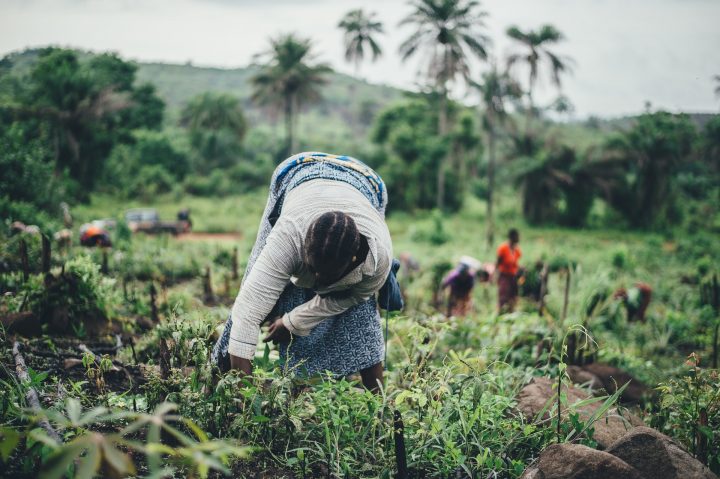
Contemporary land grabs and agricultural investments have generated huge attention. The transformations in land tenure, production and social reproduction in the aftermath of land rushes have generated a rich literature. A central question is about labor, and its implications for structural transformation and agrarian futures.
Extraversion, exports and the labor question
In Senegambia, the intersecting pressures of food, land, and capital were historically linked to the quest for new labor and cash crops (cotton, then groundnut, followed by fresh fruits and vegetables) in frontier markets for Europe. Some of these transformations have been widely documented by Egyptian economist Samir Amin, Senegalese historian Boubacar Barry and American historian Sven Beckert. In 1819, the Ndiaw Treaty between France and the leaders of the Waalo Kingdom (in northern Senegal) was signed, allowing France to set up three agricultural bases in northern Senegal for export. This agricultural colonization project failed mostly because of the resistance of the inhabitants of the Waalo Kingdom (the Waalo-Waalo) and the inability of French colonial leaders to secure land concessions they thought were automatically and permanently transferred to them through the treaty. The Waalo leaders, who managed the land on behalf of their community, understood otherwise. This conflicting interpretation on how land is governed became a recurrent source of conflict.
Another problem was the shortage of labor—the Waalo-Waalo refused forced labor and preferred to cultivate their subsistence crops rather than those for export. This refusal led to the return of clandestine slave trade and related abuses. The insecurity created by Waalo’s neighbors and the resistance of merchant capital added to the failure. These are key to understanding how various historical dynamics have sedimented to make the Senegal River Valley Region (historical Waalo) the site of the land rush that began in 2007-2008, especially for the production of export fresh fruits and vegetables.
Revisiting this rich history offers us a better understanding of relations of exploitation and contemporary resistance to extractivism by a number of communities in this region. It is a reminder of the violence of primitive accumulation, a violence that is ongoing. Tanzanian historian Issa Shivji puts it well:
The early encounter of Africa with Europe was not commercial involving the exchange of commodities, but rather the unilateral looting of human resources. African slavery was neither a trade, nor a mode of production. It was simply a robbery of a people on a continental scale perpetrated over four centuries through force of arms.
Despite the subsequent attempt to develop new crops in 1826 in Saint-Louis, merchant capital eventually prevailed with the failure of agriculture. As a result, post-colonial leaders “inherited a country organized by and for merchant capital” after 1960 as Catherine Boone puts it. In the same vein, Koddenbrock, Kvangraven and Sylla note how merchant capital subsequently established colonial and post-colonial structures of extraction.
Beyond processes of land acquisition, it is important to pay attention to how land becomes capital and how agricultural workers are included, excluded, or rather adversely incorporated into these agri-food networks.For instance, in her 2011 essay on land grabbing in Southern Africa, Ruth Hall provides a useful typology of agricultural transformations from subsistence to capitalist imperatives. Besides models that are based on the displacement of primary producers and the establishment of large export-oriented agricultural estates, Hall emphasizes “commercialization in situ” and “outgrower” schemes whereby petty commodity producers and other land users are incorporated into commercial value chains. This is a further invite to go beyond eurocentrism and methodological nationalism in our analyses of the genealogy of capitalism and of processes of exploitation.
Legacies of racial patriarchal colonial capitalism
In 1961, one year after the celebration of the independence of 17 African nations including Senegal, French philosopher Frantz Fanon published The Wretched of the Earth. He wrote:
The colonial system, in fact, was only interested in certain riches, certain natural resources, to be exact those that fuelled its industries(…). As a result, the young independent nation is obliged to keep the economic channels established by the colonial regime. It can, of course, export to other countries and other currency zones, but the basis of its exports remains basically unchanged. (…) Perhaps everything needs to be started over again: The type of exports needs to be changed, not just their destination. (…) In order to do this, however, something other than human investment is needed. (…) If working conditions are not modified, it will take centuries to humanise this world which the imperialist forces have reduced to the animal level.
African nations produced certain crops only to fulfill the needs of European metropoles. In Senegal for instance, the increasing demand for oilseeds, which were in short supply in European markets, was a decisive factor in the country’s decision to produce vegetable oil before independence. The introduction of groundnuts by the French to meet the needs of the colonial economy influenced Senegal’s specialization in this speculative export culture, and increased rural social differentiation with the spread of commerce and cash cropping.
Fanon already understood the centrality of labor in the alienation and subjugation of African postcolonial economies into an international division of labor and food production that were never meant for their own advancement and that of their peoples. He called on these countries to re-think their priorities to define the meanings of independence and sovereignty for themselves and by themselves: What should they produce? For the benefit of whom? Why? He understood that arguments based on inherited, often fabricated “comparative advantage” were untenable—keeping Global South countries doomed to prioritize the production of food for others, mostly in the Global North, at the cost to their own.
“Industries without smokestack” and sovereign agrarian futures
Export horticulture has been presented as a promising pathway for Africa to industrialize in a context of jobless growth. It has become one of Senegal’s three most promising export sectors. Alongside other tradable services such as tourism, transport and IT, export horticulture, particularly in the fresh fruit and vegetable sector and agro-processing value chains, is now being defined as an alternative to manufacturing in Africa. Export horticulture ispraised for its potential to structurally transform African economies without manufacturing (the traditional smokestacks industry par excellence). For example, Senegalese horticultural exports to Europe have experienced a spectacular rise in the last decade— from 7,767,319kg in 2000, 29,910,997kg in 2009 to 105,982,906kg in 2019 according to the data from the Senegalese Government’s Investment Agency.
But what is industrialisation if it obstructs sovereign futures? Samir Amin understood this and called for a delinking, not as in autarky, but as refusal for a country to submit its national development strategy to the imperative of globalization, and accumulation on a world scale. Only People Make Their Own History (2019), a collection of Amin’s 10 most influential essays published after his death, contains a vivid reminder of the agrarian contradictions of capitalism and the lethal violence of ongoing dynamics of primitive accumulation:
The contention that capitalism has indeed solved the agrarian question in its developed centres has always been accepted by large sections of the left (…). What was always overlooked was that capitalism, while it solved the question in its centres, did it through generating a gigantic agrarian question in the peripheries, which it can only solve through the genocide of half of humankind.
As the African feminist scholar Oyèrónké Oyěwùmí reminds us, colonization was as much about “colonising bodies and minds” as it was about colonising physical countries. It is therefore necessary to replace land grabs and food production in a historical perspective in order to understand how yesteryear processes of accumulation and political responses to them have sedimented to influence, at least partially, how communities respond to land deals today. In failing to historicise land grabs, we fail to disaggregate dynamics of accumulation, establish the genealogy of racial capitalism, and document resistance beyond dispossession. We also perpetuate the myth that the sole purpose of this accumulation is land only, not labor, and we also fail to define what to produce and for whom.
The case study that took place more than 200 years ago in the Waalo showcases the centrality of labor during land rushes and how it exacerbated social differentiation and mobility. It also transformed geographies of food production, with an increasing overreliance on networks of caring labor in the Global South for capitalist social reproduction.
Examining contemporary dynamics of land and labor capitalization in African and global agri-food networks in the light of this rich history allows us to understand the connections and disconnections of accumulation globally, its local ramifications, as well as some of the promises and discontents of/with post-colonial development.
'Tis the season to be jolly, don our gay apparel, and deck the halls with boughs of holly. Falalalala, lalalala. But — what if, instead — we skipped decking the halls, and we deck the balls and celebrate balls of food. Over the past year, I enjoyed many spherically shaped foods in C-U, and I hereby dub 2022: The Year of the Sphere.
From arancini to hushpuppies to Chinese doughnuts, here are six delicious fried balls in Champaign-Urbana.
Published in: Lists
Publication date: Available online 19 October 2022
Source: Geoforum
Author(s): Lindsay Naylor
While some in Africa paid tribute to the deceased monarch, others stressed Britain’s violent colonial history on the continent.
The Rwandan government is hoping to build a local golf culture and harness the sport to appeal to international tourists and investors.
A judicial panel ruled the energy giant had not properly consulted local communities, possibly setting a broader precedent for challenges to offshore drilling activities.
MASERU – Matšeliso Mpuputla is going where few women dare venture: dog breeding.
Owner of Pretty Dog Centre, the 29-year-old from Ha-Matala, is so in love with dogs that she started her own canine business, in the process breaking the cultural barriers that view such ventures as a male domain.
Just this month, she bagged several awards. She was adjudged the best dog breeder in Lesotho at the Farmers Pitso Awards. Mpuputla also won four other awards at a dog show held at Sethaleng.
Pretty Dog Centre offers services for dogs such as grooming, washing, nails, potty training and it also sells jerseys, beds and dog’s cosmetics. The business also offers day care services and has a boarding school for dogs.
Mpuputla says she got her inspiration from her late father’s love for dogs, even though he died when she was still young.
“I have always loved dogs since my childhood. I would always feed and wash dogs on weekends, not realising how deep I was falling in love with the animals,” she said.
In 2019, she had her first dog called Nancy, a very “beautiful and humble” Maltese breed.
In those days, she said, few people owned pets and she knew one lady who owned a dog but could not take care of it.
“Because of the love I have for dogs, I hated seeing her dog in that condition and that’s when I thought of opening my centre. My love for money and luxurious life was the key driving force for me to become an entrepreneur so I had to wake up and do something with my life,” she said.
She added: “There are people who genuinely love dogs but cannot afford to take care of them or literally don’t have time so that’s where I fit in to help,” she said.
Mpuputla started her business last year.
“It has grown tremendously since its establishment. God’s will and the support I get from Basotho is just on another level,” Mpuputla said.
She said she invested about M10 000 that she had saved from selling cosmetics, clothes and other items.
A Diploma in Human Resource Management graduate from the Institute of Development Management (IDM), Mpuputla says her mission is to enrich the lives of pets and their families by providing excellent pet care, peace of mind, trust and security.
Growing up, she wanted to be an actress, which she followed but had to choose between her dream and family.
“When I imagined my life, the only way out was for me to relocate to South Africa and I could not do that because the thought of leaving my mother broke me so much that I had to take another direction.”
She says her mother is her role model.
“She is a hard worker. The way she handled our family after my father’s death made me want to push harder in everything I do. Her strength made me want to make it out there one day and shine.
I could not let her hard work and sacrifices go for nothing,” said Mpuputla.
She further said she has a strong support system from her mother and sister.
“I become emotional when I think about them as I have and continue to receive so much love from them. I am so blessed to have such an amazing family. If it was not for them, I would not be where I am today.”
Mpuputla said being a female breeder, makes her business unique as very few women want to deal with dogs. Also, having boarding school makes it even more unique.
“People don’t understand how a woman can passionately look after dogs day in and day out.”
However, she said being a woman and riding solo in the industry also comes with its own set of challenges.
“My gender has contributed a lot to the challenges I face as people, especially males tend to underestimate me when it comes to animals. But I always prove them wrong by delivering and giving it my all.”
She described herself as a good communicator and “very jolly”.
“This has helped me to entrench a culture of good customer care…it works wonders for my business,” said Mpuputla.
Mpuputla said she chose to be an entrepreneur because “I have what it takes to make good moves in business.”
Also, she loves making the rules.
“I cannot survive being employed. I am extremely content about my choice. It’s something I would do over and over again.”
She says competition helps her to push harder.
“Doing my own thing and what I love makes it easy for me so I really don’t have anything to stress about.”
She sees herself as the biggest dog breeder in the country in the next three years, even though being an entrepreneur is stressful as sometimes business is bad.
“When there is no business, the struggle is real as there would be no income. It is not an easy journey but it is worth it. It needs someone who is very passionate and focused,” said Mpuputla, who also owns Pretty Tours for road trips, vacations and cab services.
‘Mapule Motsopa
The post A woman dog breeder first appeared on The Post.
The post A woman dog breeder appeared first on The Post.
Photo by Alex Wong/Getty ImagesWe will soon be entering the post-Anthony Fauci era. Fauci, who has served as the director of the National Institute of Allergy and Infectious Diseases since 1984 and as chief medical adviser to Joe Biden since last year, announced on Monday that he will be quitting both roles this December.
Fauci will exit the stage as something of a secular saint, in liberal and mainstream circles at least, thanks overwhelmingly to his demonization by Donald Trump and other fanatical Republicans. His name has become a byword for honesty and decency (even though he has acknowledged occasionally playing fast and loose with the truth during the pandemic), and his role as one of the heroes of the response to COVID appears secure. While I was writing this blog, one person told me that their neighbors even have a pro-Fauci sign on their lawn.
There’s only one problem with this veneration: Fauci has done precious little to deserve it. The undying love he has received feels like the ultimate triumph of vibes over reality.
Read more
The pilots reportedly could not be reached by air traffic control and were woken by an onboard alarm. The airline said they have been suspended pending an investigation.
As the city of Las Vegas grows, Lake Mead, its water supply, shrinks. In the mid-1980s, the Vegas metropolitan area was home to 438,000 people, and today that population has ballooned to upwards of 2.2 million. Consequently, the lake’s water level has dropped from 1,225 feet in July 1983 to 1,059 feet in May 2022 — the lowest since it first began to fill in 1935.
36.175000°, -115.136389°
Source imagery: NASA / Google Timelapse
Atul and Rajesh Gupta had fled South Africa four years ago amid intense law enforcement scrutiny and public outrage over allegations that they facilitated the gutting of state resources.
Limpho Sello
THE 2022 State of the World Population Report launched last week revealed that about 60 percent of unintended pregnancies in Lesotho end in abortion.
The report further indicates that despite efforts by the government and development partners to promote Sexual Reproductive Health and Rights (SRHR), unintended pregnancies continue to rise.
It further showed that 35, 71 percent of adolescents aged between 10 to 15 years were admitted to health centres for obstetric and gynaecological attention due to abortion in 2019.
An estimated 8, 17 percent teenage girls aged between the ages of 15 to 19 years were admitted in 2021, while another 10, 6 percent of young women aged 20 to 24 were attended to by health professionals for terminating their unintended pregnancies.
In Lesotho, backstreet abortion is very common despite the dangers it poses to the health of the women, including infections, damage of the cervix, severe blood loss and a risk of materials being left in the womb.
Such women might be forced to live with medical complications that include infertility with some even losing their lives.
Interestingly, the World Population Report detailing the alarmingly high abortion statistics in Lesotho are coming at a time when there is a highly charged debate in the United States (US) as to whether or not abortion should be legalised in that federal country’s 50 states.
For the past 49 years, since the US Supreme Court ruled in Roe v Wade in 1973, women in America have had a legal right to abortion—even if lawmakers in many conservative states have done their best to prevent them from exercising it.
Earlier this month, a leaked draft majority Supreme Court opinion for the overturning of Roe was published, suggesting that the US is moving towards outlawing abortion.
The opinion, published in Politico, a politics website, and written by Samuel Alito, a conservative justice, describes Roe as “egregiously wrong from the start” and says it “must be overruled”.
This has ignited a fierce debate in the US with arguments in favour and against the banning of abortion.
Here in Lesotho, in the wake of the World Population Report, the Lesotho Times took to the streets of Maseru to find out the public’s views on whether or not the government should be considering legalizing abortion, given that the practice happens nonetheless with hazardous consequences for most females.
Below are some of the views of Basotho:
Matsie Makhabane
In my view, abortion should be allowed. A lot of women consult village traditional midwives who give them traditional herbs to abort their pregnancies. Usually there is no proper dosage and it puts the lives of such women at risk. They might even die as a result of taking the concoctions. Sometime women don’t plan to get pregnant. Mistakes do happen, that’s why I support the legalisation of abortion.
Mohanoe Makhetha
It is only fair that Lesotho allows abortion because there are various factors that might force a woman to opt for induced abortion. It should be women’s right to abort their pregnancies in a safe environment if they so wish. This will reduce complications and deaths.
Some women fall pregnant as a result of rape and others are dumped by their partners. Raising a child on their affects them financially and emotionally as some have to abandon their dreams at a very young age should they decide to keep the pregnancy. Women deserve the right to choose whether they want to keep their pregnancies, whether wanted or unintended.
Tsepang Nkopane
Why should women be given the privilege of aborting their pregnancies? When one engages in sexual intercourse they are fully aware that there are chances of them falling pregnant if they do not use contraceptives. They should face the consequences of their actions. I do not support the legalisation of abortion.
Nthabiseng Lekhooa
I strongly support the idea of allowing safe abortion. Some women become desperate after being impregnated and neglected by their partners, leaving them to carry the burden on their own. I strongly support that they should be allowed to have safe abortion. Sometimes they cannot raise babies on their own if they’re unemployed.
We also have a challenge of our girls who fall pregnant in their teens when they are not mature enough to be mothers.
Mamonyane Mpora
As a mother, I fully support the legalisation of abortion. We face challenges when our children fall pregnant at a young age and their bodies have not matured enough to carry out the pregnancy to full term. Some are too young to raise children even though they are sexually active.
When they opt for backstreet abortion they risk dying. It is for such reasons that I support abortion.
Mamonoto Monoto
We are at the mercy of backstreet abortion ‘consultants’ who demand a lot of money from us when we go there for help. They give out pills and verbal instructions but sometimes things go wrong when we use the concoctions at home. We deal with a lot of challenges and end up being emotionally drained. Legalising safe abortion is the way to go.
The post Legalise abortion: Vox Pop appeared first on Lesotho Times.
New reported cases in South Africa have increased 80 percent, from the average two weeks ago, and deaths have increased 44 percent.
Two tourists take a package trip to visit the Hadza people in Tanzania and are so jazzed with what they see, they make a podcast about it. What could go wrong?
Image via Twitter.
Americans Anthony Gustin and Paul Saladino recently took a high-end tour to Tanzania, primarily to spend time with a group of Hadza people. The Hadzabe are a small ethnic group who live primarily in and around Tanzania’s Lake Eyasi. Over the past century or so, they have attracted significant attention from researchers and tourists alike due to their language (which employs phonemic click consonants and cannot be closely linked with any other), as well as the fact that a subset of their population practices hunter-gatherer subsistence (killing animals with bows and arrows and harvesting wild berries and tubers from the forests around them).
Gustin and Paladino spent five days hanging out with the Hadzabe, ticking off all of the boxes that would be offered to them as luxury tourists: gathering honey, spending time in a Hadza encampment, and tagging along on a forest walk during which Hadza hunters killed, cooked, and ate a baboon. In the evenings, the two would return to a well-appointed lodge on the shores of Lake Eyasi for a meal, the Internet, and soft beds. Elated with their good time, they immediately sought to share their privileged experience to their wide followings across social media. It is here that I came across Gustin and Saladino’s experiences with the Hadzabe, their prejudicial understandings of them, and the altogether unsavory uses to which they have been put.
I typically don’t engage in Hadza arguments on the Internet. They seem to occur with every Land Cruiser that leaves Lake Eyasi, and involve the Hadzabe being associated with all sorts of colorful claims ranging from their thoughts about life, to how they raise their children, to what’s going on in their digestive tracts. The reason why these “fad ethnographies” are continually inflicted upon the Hadzabe is complex, but, as my colleague Richard Griscom and I point out, one major reason is that much recent academic work on the Hadzabe hinges on their usefulness as proxies for paleolithic peoples. This conception of the Hadzabe as “living fossils,” having remained unchanged from time immemorial, has fed into the popular imagination, and is heavily featured in the way they are framed by tourism companies: a people in Rousseau’s “state of nature,” living timelessly in the Rift Valley.
In his discussion of the East African “Khoisan,” Matthew Knisley establishes that, when a people’s past is reconstructed as timeless, it effectively discourages investigation into their history and how they may have changed. I would take this a step further and suggest that such “timeless” peoples, having been denied their histories, make incredibly convenient targets upon which to project any manner of bias or belief. This is precisely what Gustin and Saladino are doing. What makes their case so particularly despicable is how it seeks to render the Hadza people “others” for these tourists’ own personal benefit.
Anthony Gustin and Paul Saladino are celebrity doctors: Gustin is a chiropractor and Saladino, known as the “Carnivore MD,” is a medical doctor. Both have considerable followings, celebrity connections, and, most importantly, lucrative business interests built around fad diets encouraging eating mainly animal products and minimizing carbohydrates. Gustin peddles a range of low-carb supplements and is coauthor of a popular book on the ketogenic diet. Saladino, meanwhile, is the author of a best-selling book on the carnivore diet and hawks his own range of meat- and organ-based pills, promising everything from better immune function to reinforced sexual health. It is unsurprising, then, that the Hadzabe—happy, healthy, and, according to them, living mainly on meat—are viewed by Gustin and Saladino as living proof that their prescribed lifestyle (and their associated products) work. Denied their history, the Hadza people are a Rorshach test. And to Gustin and Saladino, what they see is an opportunity for profit.
I am not a physician, nor am I particularly interested in the details of Gustin and Saladino’s nutritional arguments. With that said, over the course of the last several years, I have spent a considerable amount of time with the Hadza community: living and working with them in order to document and describe their language. I also care about how my Hadza friends and colleagues are represented to the wider world—especially in venues to which they may not have access. The way in which Gustin and Saladino portray the Hadzabe is one-dimensional, entirely self-serving, and potentially harmful. This is most evident in the two-hour long podcast episode they recorded about their trip.
In between jolly recollections of how good a time they had “in Africa” and periods of wide-mouthed awe at the beauty of Hadza lifeways, Gustin and Saladino do some considerable work to establish how “natural” and “primitive” the Hadzabe are. We are told that “this tribe has been more-or-less unaffected in their way of life for the last 50,000 years,” and that “they don’t want to transition to a more civilized way of life.” Saladino, for his part, repeatedly states that “the Hadza are the closest thing we have to a time machine.”
After all of this talk, the Hadzabe have been rendered so intrinsically alien that Gustin and Saladino (both doctors, I will remind you) make some astounding statements. “Infant mortality,” says Saladino, “is higher, as it is among other species. Chimpanzee, bonobo mortality, I believe, is higher. I think we just have to accept, though it’s a bit of an uncomfortable notion for me, that ‘wild’ humans may have higher levels of mortality.”
Gustin agrees, telling listeners: “Yeah, this is the truth that nobody likes to talk about . . . that it is normal for mammals to not have 100% of their infants survive into adulthood. And we’ve created an environment where our expectation of that [low infant mortality] is now normal, so when we’re confronted with anything that butts up against that, then . . . we can’t mentally grapple with it.” He later adds, “I don’t know if [the Hadzabe] would trade 100% success to live into adulthood to live a more Western lifestyle.”
To listeners, the message is: The Hadza people are apparently so irreconcilably different to us that the high rates of infant mortality shouldn’t be cause for outrage. In fact, it’s impossible for them to live their lives and have nearby, quality healthcare at the same time.
Later in the podcast, Saladino makes another telling comment. “When I left the tribe,” he says, “they said [to me], ‘When you come back, you’re welcome, but bring us ugali [a staple food made from maize meal].’ And in my mind I thought, ‘I’m not going to bring you ugali. I’ll bring you more arrowheads!’”
Here, the message is: The Hadzabe are deserving of our help insofar as they support our business interests (i.e., as long as they eat virtually only meat). If they request maize meal, I’ll leave them to the luck of the hunt instead.
Do no harm, indeed.
Before the episode reaches its end, Gustin and Saladino assure us that they are already working on ways to ensure the Hadza people will be hunting and gathering into the foreseeable future. This will be accomplished by “creating some sort of fund … [to] protect their natural habitat,” Gustin says. How will it be paid for, you may ask? More tourism, of course. After all, as had been mentioned earlier on, “without tourism, [the Hadzabe] would’ve been wiped out completely by now.”
On the contrary—the toxic effects of unscrupulous tourism on the Hadzabe have been well-documented. In the same breath with which they offer aid, however, Gusin and Saladino raise the prospects for further commercialization, including a TV show and a baobab product. In fact, the webpage hosting their chat is only a couple of clicks away from each of their product lines; any exit from Lake Eyasi will be through the gift shop.
As I said before, I typically don’t engage in Hadza arguments on the Internet. No doubt, before the ink has dried on the sordid example of Gustin and Saladino, a new grifter will be rumbling up the Rift Valley escarpment with a new interpretation, entering into the longstanding tradition of representing the Hadzabe in whatever way they see fit, leaving the fallout to the Hadza people themselves to deal with. If there is one commonality in this forty year scam, it is this: again and again, the value of the Hadzabe has been directly related to how valuable they can be to outsiders—how they entertain us, how they can heal our diseases, even how much carbon their homeland can sequester. When, I wonder, will the Hadzabe simply be allowed to exist by virtue of them being human? Not as stand-ins for ancient humans, but as our contemporaries: full, complex, and coeval?
The answer lies in representation: dispensing with totalizing views of the timeless, click-speaking, hunter-gatherer, and allowing for other histories and realities which may serve the Hadza people better. This kind of representation lies beyond the intervention of outsiders (including me), and can only be created by Hadzabe themselves. The only representation is self-representation. Everything else is a fad.
For her 2013 debut novel, Bulawayo was the first Black woman from Africa to become a finalist for the Booker Prize. Her new novel, “Glory,” is a story about a nation on the cusp of revolution.
The Alliance for a Green Revolution in Africa was presented as a game-changer to address hunger. The consensus 15 years later: It failed.
Photo by Annie Spratt on Unsplash
Launched with both funding and celebrity largess in 2006, the Alliance for a Green Revolution in Africa (AGRA) has as its objective the doubling of agricultural yields and income for 30 million smallholder African farmer households in eleven countries by the end of 2021. With this period over, and after a billion dollars in funding, this “green revolution” is far from realized. The following article is from our series of reposts from The Elephant curated by editorial board member Wangui Kimari.
When the Bill and Melinda Gates Foundation and the Rockefeller Foundation launched the Alliance for a Green Revolution in Africa (AGRA) in 2006, it was billed as a game-changer in addressing the continent’s hunger crisis. Africa would get the sort of productivity revolution that could reduce hunger, improve livelihoods and create jobs. “Sustainable intensification” was the goal—getting more food from the same land, the “green” in the name being in opposition to the “red revolutions” that were sweeping through Asia in the 1960s.
While at the outset this ambitious project appeared to be the sort of aid that could transform Africa’s agricultural sector and feed its growing population, AGRA is now hard-pressed to demonstrate its achievements after 15 years and one billion dollars in funding.
The criticisms against AGRA emanate from diverse quarters and are gaining momentum. The Alliance for Food Sovereignty in Africa (AFSA), the continent’s largest civil society network, comprising 35 groups that involve some 200 million food producers, has embarked on a robust campaign, painting AGRA as a misguided effort that has fallen short in bringing any sort of productivity revolution in its 13 focus countries. Faith leaders in southern Africa issued their own challenge to the Gates Foundation. Neither has received a reply from AGRA’s major donors, which include the two US foundations and aid agencies from the United States, United Kingdom, Germany and Canada.
Those challenges came to a head on September 2, 2021 at a press conference prior to the opening of AGRA’s annual Green Revolution Forum when civil society leaders called for donors to stop funding AGRA. “What African farmers need is support to find communal solutions that increase climate resilience, rather than top-down profit-driven industrial-scale farming systems,” said Francesca de Gasparis, the executive director of the Southern African Faith Communities’ Environment Institute (SAFCEI).
AFSA released an open letter signed by its 35 member networks and 176 international organizations from 40 countries. “AGRA has unequivocally failed in its mission to increase productivity and incomes and reduce food insecurity, and has in fact harmed broader efforts to support African farmers,” reads the strongly worded letter.
AGRA Vice President for Innovation Aggie Asiimwe Konde disagrees. “We focus on informing farmers, enable access to technology and increase production and income to farmers. We have had a resounding success in that we have seen farmers doubling their income, diversification of crops, and integration into the market.”
Searching for evidence of Green Revolution success AGRA was founded in 2006 with ambitious goals: To double productivity and incomes for 30 million smallholder farming households by 2020 while reducing food insecurity by 50 percent. That deadline has now passed, and independent research suggests that AGRA’s rosy promises are far from being realized.
In fact, AGRA is unable to provide evidence of that progress, says Timothy A. Wise, a senior advisor on the Future of Food at the Institute for Agriculture and Trade Policy and senior research fellow at Tufts University’s Global Development and Environment Institute. Wise undertook an impact assessment in 2020 and found no comprehensive evaluations of AGRA’s progress in meeting its goals by AGRA itself or by its major donors. After AGRA refused to accede to his request for data on its beneficiaries, Wise took a broader and more revealing approach.
“I chose to examine data from AGRA’s 13 priority countries to see if there were indications that a productivity revolution was taking place with rising incomes and improved food security. I found little evidence of significant productivity improvements,” notes Wise on his research. As he explained in a recent article for The Conversation, “By any estimate, 30 million smallholder farming households represent a significant majority of farmers in the 13 focus countries. If the alliance had doubled yields and incomes and halved food insecurity for that many farming households, that would indeed have shown up in the data.”
It did not. For a basket of staple crops, Wise found that productivity increased just 18 percent over 12 years. That is nowhere near the goal of doubling productivity, which would be a 100 percent increase. More tellingly, it is barely higher than the rate of productivity growth before AGRA was launched.
Neither did incomes nor food security improve significantly. According to the latest United Nations estimates, the number of severely “undernourished” people in AGRA’s 13 focus countries has increased by 30 percent since 2006, a far cry from AGRA’s promise to cut food insecurity by half.
“After 15 years and one billion dollars in outside funding, AGRA has failed to catalyze a productivity revolution in African agriculture. Farmers’ yields have not grown significantly,” Wise stated at the press conference on September 2. “It is time for donors to listen to African farmers and community leaders.”
Wise pointed out that his critique goes well beyond AGRA, implicating the entire Green Revolution approach to which African governments devote significant resources, including an estimated one billion dollars per year in subsidies for seeds, fertilizers and other inputs. “Our research assessed the progress of the Green Revolution project as a whole. This should indeed have produced measurable results in 15 years given the billions of dollars invested in the project. It has not,” he wrote in The Conversation.
African and German civil society organizations produced a report drawing on Wise’s research. Titled False Promises, the report calls on countries to abandon AGRA and its Green Revolution and instead support initiatives that boost small-scale food producers, particularly women and the youth, to develop climate-resilient and environment-friendly farming practices.
A lot of money went into supporting maize production, and total production went up 87 percent, according to the report. But most of that increase came from farmers increasing the land under maize cultivation, encouraged by the subsidies. Yields increased only 29 percent over 12 years, but land under maize production went up nearly 50 percent, hardly a sustainable way of farming.
The bias towards maize at the expense of other equally essential food crops such as millet, which are drought-tolerant and more nutritious, has also been cited as one of the downsides of AGRA’s interventions. Millet production had declined by a quarter, says the report.
Rising hunger across the continent The decline in crop variety can result in a drop in diet diversity, which may be contributing to the alarming rise in hunger. According to the UN Food and Agriculture Organization’s annual hunger report published on July 12, 2021, the world experienced an almost unprecedented increase in severe hunger from 2019 to 2020. The agency’s annual estimate of “undernourishment” showed an increase of up to 25 percent over the 2019 levels, to between 720 and 811 million people.
In sub-Saharan Africa, about 44 million more people faced severe malnutrition in 2020, with 30 percent of the continent’s population struggling to feed their families. Some 66 percent of the population faced “moderate or severe food insecurity” in 2020, says the FAO, up from 51 percent in 2014, an increase of 244 million food-insecure people in just six years.
Wise points out that since AGRA was founded in 2006, hunger in Sub-Saharan Africa has not gone down by half but has increased nearly 50 percent. “The Green Revolution is taking Africa in precisely the wrong direction,” he says.
AGRA’s defense AGRA has itself faulted Wise’s survey, conducted under the aegis of Tuft University’s Global Development and Environment Institute, saying the research failed to meet “basic academic and professional standards of peer review…” Andrew Cox, chief of staff and strategy at AGRA, is quoted terming the research as “not professional and ethical.” But Tufts University administrators have defended Wise’s methods.
AGRA’s Konde said in an interview that the organization was successful. “We targeted 9.5 million farmers and now we have 10 million farmers with minimum technology.” She then went on to fault African governments for not doing their part. “Unfortunately, only Ghana, Rwanda, and Nigeria have implemented the 10 percent of their budget to the agricultural sector as per the 2003 Maputo Declaration. The rest of Africa has only committed 2 percent of their budget to agriculture.”
Konde took issue with the demands of AGRA’s critics. “Taking into account the uncertainties brought about by climate change and the COVID pandemic, it would be unfortunate to call for the disbandment of AGRA at this point in time. I wonder which farmers they are representing. AGRA believes in increasing choices to farmers, and promotes ways how more farmers can have access to technology and apply them.”
She went on: “We have been carrying out value for money assessments and every $1 we have spent has produced close to $10. The questions we should be asking are did the African farmers get access to information and technology?”
AGRA officials say that the agency’s budget and contributions are too small to have its impact reflected in national-level data. “The data could not possibly be extrapolated onto the kinds of regional/sub-regional work that we do,” AGRA’s Cox wrote via email to Stacy Malkan of US Right to Know. Critics point out that if AGRA reached the 30 million farmers it set out to reach and transformed their practices, such impacts would be evident. Still, AGRA claims that its recent annual report provides evidence of yield increases, income gains and improved food security.
Wise reviewed the new documents and was critical of the data, saying it was hastily constructed, poorly documented, and highlighted improvements in just a few crops and countries over a very short period. Other critics also consider AGRA’s failure to document its impacts over its full 15 years of existence as telling.
Muketoi Wamunyima, country coordinator for PELUM Zambia, which works to improve the livelihoods of small-scale farmers by fostering ecological land use management, co-signed a letter to AGRA last year asking for evidence of its impacts. They received a long response from AGRA’s Andrew Cox, which they dismissed as non-evidence. “As civil society organizations working in Zambia, we have challenged AGRA’s model and engaged with our local government to highlight the fact that AGRA’s approach does not respond to the needs of the small-scale food producers,” Wamunyima said.
Rwanda is widely touted as a star performer in AGRA’s plan, with a quadrupling of maize production since 2006. But according to the False Promises report, the Rwandan “miracle” showed weak overall productivity improvements across staple crops in the country as farmers abandoned the cultivation of more nutritious local crops for maize. And according to the UN’s latest hunger estimates, the number of undernourished people in Rwanda has increased by 41 percent since the advent of AGRA.
Mariam Mayet, executive director of the African Centre for Biodiversity, said, “For years we have documented the efforts to spread the Green Revolution in Africa, and the dead-ends it will lead to: declining soil health, loss of agricultural biodiversity, loss of farmer sovereignty, and locking of African farmers into a system that is not designed for their benefit, but for the profits of mostly Northern multinational corporations.”
Africa is not a monoculture AGRA’s Konde dismissed AFSA’s criticisms. “We invited those that have been complaining to the AGRF summit so that we can exchange views but they did not come.”
AFSA’s General Coordinator, Million Belay, confirmed that he was invited but only at the last minute. Belay explained why he declined the invitation in an opinion piece for Al Jazeera:
We at AFSA disagree with the Green Revolution’s approach on a basic level. The strategy has indebted our farmers, ruined our environment, harmed our health and undermined our seeds and culture. We object to the flurry of initiatives to amend our seed laws, biosafety standards, and institutionalize fertiliser rules and regulations that seek to entrench Africa’s overreliance on corporate agriculture.
He took particular issue with AGRA’s claim that the forum would speak for Africa in a “single coordinated African voice.”
Africa is not a monoculture and we do not want it to become one. Africa does not speak with a single voice, certainly not that of the Green Revolution Forum. Its diversity of voices is as rich as the diversity of the continent’s landscapes, cultures and food traditions. Those voices want to sing, not in monotones but in harmony, with one another, with nature, and with government leaders and donors who value that diversity and support it.
Anne Maina, the Coordinator of the Biodiversity and Biosafety Association of Kenya (BIBA-K), concurs. She believes that sustainably improving nutrition, increasing production, enhancing biodiversity, raising resilience and boosting incomes will come about with the participation of all—smallholder farmers, pastoralists, fisher folk, hunter/gatherers and indigenous peoples—in their diversity and not through expensive, high-input monocultures.
And while AGRA’s technocrats have in the past been more combative in their response to criticism, its board chairman, Ethiopia’s former Prime Minister Hailemariam Dessalegn, sounded conciliatory in an op-ed published by African Arguments:
The solutions for transforming Africa’s food systems [have] come down to one approach over another. Such binary debates are unhelpful and at times counterproductive. Building more resilient food systems on the continent will require a mix of approaches from agroecology to the latest crop and soil science.
Whatever the case may be, the need to resolve Africa’s hunger crisis in a sustainable way is an urgent one.
Publication date: March 2022
Source: Geoforum, Volume 130
Author(s): Benjamin F. Teresa
Charles Fogelman is a participant in season 38, episode 113 of the game show "Jeopardy." On Wednesday, February 16, 2022, he made his first ...
Publication date: May 2022
Source: World Development, Volume 153
Author(s): Caroline Archambault, David Ehrhardt
Although overlooked this awards season, a new film by Lebohang Jeremiah Mosese deserves your attention.
Still from This Is Not A Burial, It’s A Resurrection.
The film, This Is Not A Burial, It’s A Resurrection, threads the African deathworld through a sensorial feast of devastating sound, dazzling color, and mournful affects that sear the soul. The opening scene begins with a Zim Ngqawana-esque horn flute, its music composed by Yu Miyashita, that transports viewers to the ancestral underworld. This is a film about the devastation wrought by development on rural communities. The state seeks to remove communities to make way for a dam. While the viewer never actually sees the threatening dam water, from the very beginning, the haunting music submerges us under water. We assemble before our screens to watch a burial that is actually a resurrection, because in African cosmology, death and renewal are a cycle of continuity.
Jerry Mofokeng voices the narrative through music and story, and his somber tones match the lightning and mourning that shoot through this beautifully textured film. In his mouth, Sesotho becomes a haunted language. It is a story told through the furrowed eyes of Mary Twala Mhlongo, an old woman who hovers close to the grave. She seeks death while refusing to be submerged under the metaphors of development and advancement. From the periphery of her community, she holds back the dam waters that would sooner drown them than honor their dead. Through her kinship with the dead, she resurrects her village’s rights to its land. While she cannot stop the capitalist state, she inspires an unruly spirit of defiance against racial capitalism.
The film’s creator, Lebohang Jeremiah Mosese, immerses viewers in rural scenes of the Nazaretha village along the Senqu river in the mountain plains of Lesotho. The landlocked country is inextricably tied to its location—it is surrounded by South Africa—and we see strains of this through the deathworld of the latter country’s mines, where men have labored and died for generations. The death of Mhlongo’s son reminds us that even in this season of xenophobia, South Africa’s neighbors lie buried in the pits of the mines to which black life has been tethered for decades.
This film illuminates a black sociality that revolves around the deathworld and African death practices. Death is writ large in the mountainous landscape. The film summons us to the shadows of the diminishing sun, to sit with the old woman in the soundscape of radio static, and together, we listen to death notices waiting to recognize names of recently dead kin. We assemble in a mournful affect and listen to death on the sound waves. We are beckoned by the widow’s keening in the mountain wind. To live in wait of death is to live with death. It is a refusal to separate the living from their dead. We recharge radio batteries in the sun’s rays to capture the frequencies of the deathworld. Mary Twala Mhlongo is an old widow who refuses to remove her mourning garb. We are transported to director Ramadan Suleman and screenwriter Bhekisizwe Peterson’s Zulu Love Letter, where wondering widows refused to lose the memories of their murdered kin. Grief and mourning are states of repeated dying, all the days of our lives. Our dead are never still. They push against the living, imploring us to tend to them.
Still from This Is Not A Burial, It’s A Resurrection. In the film, Twala Mhlongo reminds a counselor that “the cemetery is the village” and that we dare not turn our backs on the dead in the name of development. Another character poignantly tells viewers that progress is when “men point their damning finger at nature and proclaim conquest over it.” And nature is this film’s antidote to the stranglehold of death. The natural world lends beauty through the bright fields of flowers, majestic mountains, green fields, red soil of the graves, and splashes of light. The director is adept at the use of color. The costumes sear the screen. Mary Twala Mhlongo’s mourning garb absorbs and refracts color. It is starched black, but it glistens; it is matte; it glows blackish blue; it bounces against the Mosotho blue patterned blanket, lace curtains billowing in the wind, and colorful clothing hanging off walls and clotheslines.
The film is not one of high drama, suspense, thrills, and intense action. It is a slow dance with the dead. Action occurs in the shrill ululation that shreds the quiet and upends the silence that pervades the hills. A horse dashing through the tall grass. There is the thrill and vitality of cattle drawn plows cutting red furrows into the fields. There is joy in the celebration of the harvest, and we are told that this community has all it needs—no one goes to bed hungry. The narrative thread is carried in a terrible sob that shakes the entire mountain kingdom. A mournful soprano pulling a funeral choir along while imploring Maria to intercede on behalf of the dead. A series of breathtaking scenes sewn up together by the director’s invisible yarn.
This story remains firmly moored in place, but it is a story of Third World struggles against racial capitalism. In South Africa, it resonates with the struggles of the Amadiba Crisis Committee and the Mpondo people, who have been embroiled in a protracted fight against governments that are in bed with global mining companies. These communities refuse to leave their dead and to make way for mining. The film honors people like murdered activist and grandmother Fikile Ntshangase’s fight against coal mining in her community in KwaZulu Natal. This is Not A Burial recalls Arundhatu Roy’s activism against dams in India’s river basins, which she chronicles in a volume of essays titled, The Cost of Living. To live on the world’s margins is to be damned to development at the cost of our lives, our dead, and our livelihoods. And yet, as Lebohang Jeremiah Mosese insists in this film, our love for our dead makes us care for the living. The outrage for the death-bound old woman protagonist is a galvanizing rage for those who live to see the atrocities of African nation-states in the stranglehold of late capitalism, with its corrupting influences that poison our air, waterways, land, cosmologies, and our very souls. The depths of our dams in Southern Africa hide a story we do not like to hear. Small states like Lesotho and Mozambique are the lifeblood of the region’s urban water and energy needs. Lesotho’s Katse Dam and its Highlands Water Project is Africa’s largest water transfer program, feeding both that country and South Africa. Similarly, Mozambique’s Cahora Bassa Dam has displaced rural communities. It is now used to convert the Zambezi River water into turbine power, which electrifies Mozambique, parts of Zimbabwe, and South Africa. This is a different narrative to popular discourses of South African largesse in the region. We know little of the graves and communities that were submerged to enable the bounty of these dams. This Is Not A Burial allows us to imagine the screams of rural communities and the keening of their mourning.
In this film that indexes our inexorable march to the grave, Mary Twala Mhlongo gives a majestic performance. She too has since died, but this film will remain an ode to her imprint on Southern African film. Jerry Mofokeng wa Makhetha is an erudite narrator whose haunting tones linger with the viewer long after the film’s end. Makhaola Ndebele’s brooding presence in black priestly garb is a fine match for Twala Mhlongo’s resolutely mournful and inspired act. Lebohang Jeremiah Mosese is a remarkable director whose artistry is a credit to Lesotho and African filmmaking. This Is Not A Burial will not see scores of people watching the film, because it shows a commitment to form and artistry rather than boisterous storytelling. It will, however, leave a mark as an instant classic in the director’s oeuvre. It is a landmark film that is dedicated to beauty and the slow art of fine narration. While the major film awards have snubbed this film, viewers seeking beauty and African artistry can catch it on streaming services like Showmax.
Publication date: February 2022
Source: Geoforum, Volume 129
Author(s): Naomi Ploos van Amstel, Riana M. Rakotondrainy, Christina M. Castellano, Koen Arts
Here is an incredible sentence: And if millions need care—even if they don’t need to be hospitalized—the hospitals will rapidly be overwhelmed. That is from an op-ed this morning in The New York Times, by doctors Ezekiel J. Emanuel and Michael T. Osterholm, warning that China’s fabulously successful measures for limiting COVID-19 infections and deaths—”Even […]
Pitso Mosimane enjoyed a better 2021 than almost any coach in world soccer. Just don’t expect FIFA, or soccer, to notice.
Democrats turned the January 6 anniversary into the dumbest, most cringe-worthy event possible.
The post Today Was So Stupid appeared first on Discourse Blog.
2021 Year in Re(Over)view — The Ever Given blocks the Suez Canal
2021 is nearly over so we want to use the coming days as an opportunity to reflect on some of this year’s key moments. From the Overview perspective, we were able to employ magnitude and scale as we observed these events, that together offer us a chance to pause and reflect on what an unusual year it has been. Without a doubt, many of these moments shine a light on just how vulnerable our civilization can be in the midst of great unpredictability (e.g. a global pandemic and increased climate volatility), how interconnected everything has become (e.g. global supply chain delays) and on a more uplifting note, how exciting it was to witness the return of things that were temporarily on hold (e.g. the comeback of sports around the world following lockdowns).
To start our recap, one story that touched on our interconnectivity was the blockage of the Suez Canal by the Ever Given in March of this year. The 1,312-foot-long (400 meter) container ship was lodged in the canal for six days until salvage crews freed it on March 29. Some estimates say the blockage held up more than $57 billion in trade—or $400 million dollars for every hour for that the ship was stuck. Following the event, I also reflected on how this moment was a fascinating milestone for the space industry, since I could not remember a time when there were so many incredible satellite companies simultaneously vying to capture one event taking place on the planet. The three views seen here, created with imagery from our various partners, convey this incredible technology at work.
— Benjamin Grant, Founder
Source imagery Maxar / Airbus Space / Planet
“Peyton was on his knees and obviously wasn’t a threat. What I saw, from start to finish, was just appalling.”
The Kentucky For 2 now comes with 2 CANS! For only M109,90, you can still share a meal with 4 pieces of Original Recipe chicken, 4 wings, ...
How To Install Jaw Crusher In Lesotho · installation as installing concrete plant jaw crusher · installation crushinginstalled jaw crusher · Crusher Cone ...
Democrats expect us to be grateful after their big spending bill has been gutted. No thanks.
The post Don’t Expect Us to Say Thank You When You Give Us Crumbs appeared first on Discourse Blog.
Watch as Murphy describes what happened when her then-teenaged son Blake — now a large adult son with a very important job in politics — was assigned Toni Morrison's Pulitzer and Nobel prize-winning Beloved, one of the most acclaimed novels of the 20th Century, in his high school AP English class during his senior year.
The post You’ll Never Guess Where the Kid Who Was Scared of ‘Beloved’ Works Now appeared first on Discourse Blog.
The author's courageous decision to support the BDS movement was met with vile distortions.
The post Sally Rooney Deserves An Apology appeared first on Discourse Blog.
The president of the West African nation of Burkina Faso, an anticolonial leader celebrated across the continent, was assassinated in 1987. Now 14 men, including the president who took his place, are on trial.
Naming characters who are from Lesotho or are Peruvian Jewish @esevik asked: “Hi! I'm planning a story were the main characters are girls from all over the ...
By far the most fascinating question to arise from the abominable, appetite-ruining, mood-destroying hype video produced by MLB Network and aired ahead of Friday’s early afternoon White Sox-Astros game, is simply: Who THE HELL is it supposed to be for? Who wants this? Who in God’s name asked for this? I demand an answer. Update […]
Mr. Bagosora was convicted of genocide for ordering a massacre in the capital and the killing of top officials, including the prime minister.
How many "not who we are"-style events have to happen before our leading politicians admit that this actually might be who we are?
The post Have You Ever Considered That This Might Be Who We Are appeared first on Discourse Blog.
Dr. Nkengasong will be the first person of African origin to oversee the U.S. government program combating H.I.V., which has ravaged the continent.
Farmland plains meet the Nebraska Sand Hills just north of Lexington, Nebraska. This unique region, which covers roughly 20,000 square miles (51,000 square km), contains mixed-grass prairies and grass-stabilized sand dunes. Average elevation here gradually increases from 1,800 feet (550 m) in the east to nearly 3,600 feet (1,100 m) in the west, as the sand hills approach the foothills of the Rocky Mountains.
See more here: https://bit.ly/39fWR9k
40.864476°, -99.743275°
Source imagery: Maxar
Yesterday, The New Republic owner and Editor-in-Chief Win McCormack published an article about New York Times columnist Nick Kristof’s bid to be the governor of Oregon, titled “Nick Kristof for Governor.” The article is predictably complimentary and tries its darnedest to make the case that Kristof has something valuable to offer the people of Oregon. […]
The company's union-crushing strategy: send the bosses in to sweep the floors!
The post Starbucks Is Waging a Ridiculous, Sinister Union-Busting Campaign appeared first on Discourse Blog.
| | | | | --- | --- | --- | | Piled Higher & Deeper by Jorge Cham | | www.phdcomics.com | | | | title: "Insult to injury" - originally published 9/10/2021 For the latest news in PHD Comics, CLICK HERE! |
American military officials have denounced the ouster of a president in West Africa, and said they had no warning of what their students were planning.
'The British editorial staff seem to be allowing transphobia to crop up even where it's not even relevant.'
The post The Guardian’s Censoring of Judith Butler Part of a Pattern, Current and Former Staffers Say appeared first on Discourse Blog.
Moorosi Tsiane
THE Bantu management has pleaded with supporters to assist in paying for midfielder, Lindokuhle Phungulwa’s rehabilitation in Bloemfontein.
Phungulwa has been out of action for two years nursing a knee injury.
He went under the knife at the beginning of last season but has not fully recovered.
In a statement this week, the Bantu management said the hard-tackling midfielder will soon start his physiotherapy sessions which cost M800 per week.
The club said it has been negatively affected by the Covid-19 pandemic-induced suspension of soccer activities and therefore is pressed for cash to pay for the player.
“Injured Lindokuhle Phungulwa will spend some time in Bloemfontein for rehabilitation under a physiotherapist,” the management said in a statement this week.
“He has started rehabilitation sessions where each week’s sessions shall cost M800.
“We plead for financial support or rescue from your respective branches like you have recently been doing as you know the closure of football activities has badly impacted us financially.”
The statement said the player has so far responded positively to treatment.
“Lindo’s injury recovery progress shows lots of positives as he is on the verge of returning to a comeback. Your assistance shall be highly appreciated.
“In the meantime, we wish Lindo a speedy recovery as we miss him playing football.”
This is the second time that Bantu supporters are rescuing the by covering a player’s medical costs. In 2014, the fans raised M25 000 for the then Bantu striker, Tsebang Lebata’s knee surgery.
The post Bantu extends begging bowl to fans appeared first on Lesotho Times.
Publication date: November 2021
Source: Geoforum, Volume 126
Author(s): Francis Massé, Nicia Givá, Elizabeth Lunstrum
Thursday’s Field Of Dreams game in Iowa is one of those marketing moments that Major League Baseball likes to trot out from time to time to touch its cultural roots, or perhaps the other way around. A book that becomes a movie and allows them to pay Kevin Costner to slow-walk toward a camera? It […]
What eldritch terrors live on the toilet brush in my house? To what monstrous nightmare vapors have I exposed my poor children? I'm afraid to even go near the bathroom right now. Imagine what my life would be like if only I'd thought to replace my toilet brush more than one-tenth as often as Wirecutter recommends.
By Peete Molapo
The Covid-19 pandemic has all the trappings of a black swan event. It has upended everything. Despite some positive interventions in the form of new vaccines, there is still no sign the pandemic will soon go away. Wave after wave of highly contagious new variants are now becoming a norm. Lesotho is now in the midst of a third wave. Although I am an optimist that sooner than later this runaway disease will be stopped in its tracks, a lot of damage will have been inflicted, especially in those countries that are ill-prepared for it. Experience from elsewhere shows that preparedness for Covid-19 revolves around three strategic areas: saving lives, safeguarding livelihoods, and maintaining macroeconomic stability. It is around the first two areas I would like to assess Lesotho’s preparedness for Covid-19 based on the limited information I managed to gather. Issues around macroeconomic stability will be considered later.
The National Covid-19 Secretariat (NACOSEC) report of 30 June 2021 on the situation of Covid-19 in Lesotho shows that since the beginning of the pandemic the country has had 11 283 positive cases, 6 447 recoveries, 329 deaths and 109 886 tests conducted. According to the report, the infection rate currently stands at 1, 9 percent and by end of June there were no new recoveries or new deaths reported. There is still yet no new update. The positivity rate that reached peaks of 25 percent and 47 percent in the first and second waves respectively, had dropped to zero on average between April and June 2021 but the testing ratio was a paltry 5, 6 percent of the susceptible population. Despite the three months respite, all signs are that this insidious disease is once again rearing its ugly head. As I am writing this paper people are now being infected and dying in numbers in neighbouring South Africa and transmission into Lesotho including new deaths now happening. It is no more an issue of harrowing statistics alone but of people we know as relatives and friends passing on almost daily.
My greatest worry is whether or not Lesotho is prepared for the third wave. This against the backdrop of muddling around in the preceding waves. In any situation of uncertainty, a minimum level of preparedness is required. Based on experience of the past two episodes I am the opinion that Lesotho is one of the least prepared countries in the region to face the pandemic. In the first wave it was the first country in the region to declare a total lockdown even before it had the first case of infection. Some people even complained that the response was premature and uncalled for while others like me were of the view that the initiative demonstrated foresight and decisiveness of government to pre-emptively take position against the dreadful novel virus. No sooner, I took umbrage at noticing total bafflement by authorities to even lay down the basic institutional framework for management of the impending crisis. In the ensuing confusion there were accusations and counter-accusations about corruption and diversion of funds to activities that had nothing to do with the pandemic like the enjoyment of sumptuous meals.
The private sector attempted to come to the party but had to retract due to lack of transparency and direction from government. Bewildered and at a loss, the hapless nation helplessly stood and watched the unfolding saga. When the storm eventually struck, there was total pandemonium. People got infected and so many died, I would say gratuitously, because of government dawdling. Among the fundamental obligations of government enshrined in our constitution is the right to life and protection of health. It is the duty of our government to save Basotho lives from any form of danger at any time. When people died because of lack of basic equipment like oxygen and availability of beds, let alone the more expensive stuff like ventilators, one started to wonder whether the political leadership is aware of its responsibility.
As if rubbing salt into the wound, the new year ominously welcomed us with the second wave. In likeness with the first wave which was fuelled by Easter holidays, the main culprit this time was the influx of people flowing into Lesotho from South Africa for Christmas holidays.
I would say authorities were again caught napping as thousands of Basotho entered the country at formal and informal entry points without being tested. We all witnessed very embarrassing and surrealistic scenes when Basotho drowned trying to cross flooded rivers on matrasses.
There was zilch coordination between Lesotho and South Africa. While our government advised Basotho to enter the country freely through formal entry points without any restrictions, South African authorities on the other hand apprehended them for lack of travel documents and other crass considerations. It is common knowledge that Basotho were callously treated. Consequently, many people preferred to cross at informal entry points without being screened or tested.
It is also instructive to note that so many Basotho were mercilessly fleeced of their hard-earned money by unscrupulous border control officers who used the opportunity for rent-seeking.
Immediately after all these, the whole country plunged into a second wave. Compared with the first wave which peaked with 382 confirmed cases per day, the second wave set a highest peak of 3,181 new cases per day. Just as it happened in the first wave, the majority of sick and infected people were left to their own devises.
Many people resorted to traditional and other informal curative medications from which they expected to find help. Coordination and communication channels between government agencies dealing with the pandemic and the people were nowhere near effective.
Many people lost lives due to lack of trained personnel, oxygen, ventilators, poorly equipped Covid-19 treatment centres and lack of information about where to find help. Those who could afford sent their patients to Bloemfontein while those who could not, faced a natural death sentence if not lucky to survive. During this time Covid-19 demonstrated yet again the glaring gap between the haves and the have-nots in Lesotho.
The foregoing serves to demonstrate that generally, the handling of the Covid-19 pandemic in Lesotho has been poor. By now lessons must have been learnt on how to pull up our socks. In line with the internationally accepted practice, my advice to government in handling this pandemic is to urgently put its act together in the following well known key intervention areas.
Effective prevention of the disease – In order to achieve what is now termed ‘’flattening the curve’’ containment of the disease has been achieved through isolation, contact tracing, social distancing, quarantining, surveillance and detection, as well as aggressive vaccination. Protocols have been developed in Lesotho for these responses or strategies.
Unfortunately, implementation has been and continues to be very weak. A lot of work still needs to be done in this area including making it legally binding to wear masks in all public places. Enforcement of protocols happens to be the challenge and this poses a high risk of infection. Besides the above strategies, one very important strategy to contain the contagion is effective border control. By virtue of its coterminous border with South Africa, Lesotho is very vulnerable to transmission of all forms of disease from that country. All Covid-19 pandemic waves have started in South Africa before afflicting Lesotho. As long as there is laxity in enforcing protocols and no effective strategy for controlling our borders, especially the informal entry points, Covid-19 transmission from South Africa will never be contained.
Strengthening of the health system and clinical management of cases – It goes without saying that without a strong health system as well as effective and efficient cases management system the disease cannot be contained. I have been enthralled to learn that at long last there has been some progress in this area. I have been informed that most if not all hospitals are now open for treatment of Covid-19 patients.
This was not the case before. Also, the oxygen production plant has been recently opened which is very much applauded. Although one would say Rome was not built in one day, there is still a lot of ground to cover in order to achieve what I would call the minimum preparedness threshold. The country still precariously depends on South Africa on almost everything. Critically important types of equipment such as ventilators still remain a challenge. The same applies to trained medical personnel, especially the nursing staff.
Strengthening of the health system is one area where collaboration between government and the private sector is also of critical importance. Recently it was announced with fanfare that a private sector fund named Sesiu has been established to assist government on Covid-19 interventions.
While commendable in every respect, I have been disappointed to learn that due to disagreements on logistics and procurement requirements between the fund management and the Ministry of Health, the fund is not yet operational. Further, I have been authoritatively informed that some private sector agents also attempted to donate to government 150 ICU beds which were sadly declined, perhaps for other motives not at all related to the pandemic.
This is absurd. For collaboration between government and the private sector to thrive, the former has to ensure transparency and accountability. Without these two key principles such cooperation is bound to be a pipedream only.
Effective communication – From experiences elsewhere, we learn that inadequate risk awareness and information can significantly weaken the Covid-19 response interventions. Unlike communication and awareness campaigns on HIV Aids, information dissemination to the public on Covid-19 has not been equally aggressive. This is one area where collaboration with the private sector can also provide a dividend. Effective communication should be smart – meaning simple, measurable, achievable, realistic and timely to all relevant stakeholders. In Lesotho print media, radio, chiefs and community-based councillors can be the most effective mediums through which to disseminate information about Covid-19. Private sector funding can play a very effective role to facilitate.
Ensuring data availability – In preparation of this paper I have struggled a lot as I could not find supporting data. The NACOSEC website was not helpful at all. The effectiveness of any response on the pandemic such as Covid-19 is highly dependent on transparency and coordination among partners and stakeholders as well as the quality and amount of information that is available at any given time.
Data availability on Covid-19 is a serious problem in Lesotho. NACOSEC has to work hard to develop a data management system and dissemination to all stakeholders including the general public. The Covid-19 Situation Report that I learn is for internal use, is but a high-level presentation and devoid of depth. Most of the issues I have touched upon in this paper are not covered by that report at all. Perhaps it serves a different purpose.
Strong institutional structures – Strong institutional structures are a prerequisite for effective Covid-19 interventions. As mentioned above, Lesotho is very weak in this area. Government wasted a lot of time and money harping on the development of an institution that one thought would be responsible for the implementation of its policy on Covid-19.
To date, I have not seen such a policy except what is called a National Covid-19 Strategy. The strategy spells out strategic objectives and actions but I have never seen a report from NACOSEC that speaks to that strategy. At times I wonder what was the purpose NACOSEC was formed.
Ideally, NACOSEC is supposed to be an implementing agency of the national strategy derived from national Covid-19 policy, having its own operational independence, budget, coordinating the pandemic related activities, and operating as a centre of excellence on good management practices of the pandemic. All of these is not happening as administratively I understand it tenuously reports to both the cabinet and Ministry of Health.
Lastly, while lives have to be saved, livelihoods also need to be safeguarded. Both are two sides of the same coin. Lockdowns and other restrictions are meant to save lives but they also disrupt the economy including livelihoods. As a result, a very delicate balance has to be maintained between them. In many developing countries safeguarding livelihoods in the midst of the pandemic has proved to be a hard nut to crack. Needless to say, there is no policy or strategy for livelihood protection against the pandemic in Lesotho.
At the height of the first and second wave all that Basotho witnessed was one could term an unsavoury competition among politicians donating food parcels and other items. This has become the new norm. It is really unfortunate for politicians in Lesotho to use the Covid-19 pandemic for political expediency rather than develop and implement a national policy and strategy for safeguarding Basotho livelihoods during these difficult times.
While it is common knowledge that the country is facing financial distress, what is annoying and disheartening is the insensitivity of political leadership who lavishly and ostentatiously spend the scares financial resources of the country without regard of the welfare of its people.
Anyway, to everything there is a time.
[i] Dedicated my late friend and doctor, Dr John Badia who fought hard to save Basotho lives against the pandemic.
The post Covid-19: Is Lesotho ready for the Third Wave? appeared first on Lesotho Times.
Publication date: November 2021
Source: Geoforum, Volume 126
Author(s): Violeta Gutiérrez-Zamora
Publication date: November 2021
Source: World Development, Volume 147
Author(s): Klaus Deininger, Fang Xia, Talip Kilic, Heather Moylan
| | | | | --- | --- | --- | | Piled Higher & Deeper by Jorge Cham | | www.phdcomics.com | | | | title: "Among Us" - originally published 7/26/2021 For the latest news in PHD Comics, CLICK HERE! |
Shack in Shack, Mafeteng - Van Rooyen's Gate Highway, Mafeteng, Lesotho. Shack is a Lesotho building based in Mafeteng Mafeteng District Shack is ...
Marathon champion and famed ultrarunner Fred Zalokar was found dead this week in Yosemite National Park, four days after park officials put out an alert that he hadn’t returned back down to Yosemite Valley as planned. Last Saturday, Zalokar set out from the Happy Isles trailhead to summit Mount Clark via an off-trail route. Park […]
At this point, it’s difficult not to have heard about Robin DiAngelo, the sociologist and consultant who specializes in anti-racism training. Her book White Fragility: Why It’s So Hard to Talk To White People About Racism has been a bestseller. The New York Times calls her “a phenomenon.” As of the time of this writing, she has given a talk to 184 Democratic members of Congress, been on The Tonight Show, and made a lot of money giving anti-racism workshops at America’s largest corporations such as Google, Amazon, and Microsoft.
DiAngelo is detested by many on the right, the center, and some on the left. The New York Post says she is the “P.T. Barnum of American race relations” perpetrating a “racial con job.” Matt Taibbi is harshly critical of DiAngelo for “urging us to put race even more at the center of our identities, and fetishize the unbridgeable nature of our differences.” Jonathan Chait of New York magazine says she has pioneered “a business model spreading kooky, harmful, and outright racist ideas.” Jacobin editor Bhaskar Sunkara was equally critical, arguing that inclusivity seminars like the ones she runs protect power rather than challenging it.
So what’s really so bad about Robin DiAngelo? Is her model of anti-racism training a helpful way to make American society less racist? Or is she, as her most vicious critics say, a huckster who has found a way to make money off making white people feel bad about racism?
There is, as I see it, one core problem with DiAngelo’s work, a problem that ultimately makes it more harmful than helpful. To examine it, let’s look at the last chapter of the book, titled “Where Do We Go From Here?” Interestingly—and probably not coincidentally—this is also the name of Martin Luther King’s final book, published in 1967. In it, King advocated a guaranteed income, the abolition of poverty, and the organizing of a broad, multiracial labor movement. DiAngelo’s “Where Do We Go From Here?” is very different in its prescriptions. She begins the chapter with an anecdote about a time when she accidentally offended a Black woman by making a joke that did not land, and discusses how she offered to “repair the racism I perpetrated toward you.” She then discusses the ways we can manage our feelings when told that we have done something racist. She suggests ways to “interrupt racism” including:
- Minimize our defensiveness
- Demonstrate our vulnerability
- Demonstrate our curiosity and humility
- Allow for growth
- Stretch our worldview
- Ensure action
- Demonstrate that we practice what we profess to value
- Build authentic relationships and trust
- Interrupt privilege-protecting comfort
- Interrupt internalized superiority
Her “Where Do We Go From Here?” does not mention the racial injustices that concerned King, such as the confining of large numbers of African Americans to neighborhoods that lacked adequate jobs, housing, and public services. The “we” in her “where do we go from here” is white people, and what we apparently need to do most of all is be “willing to tolerate the discomfort associated with an honest appraisal and discussion of our internalized superiority and racial privilege” and “work with one another on our white fragility.” DiAngelo says directly: “In answer to the question “where do we go from here, I offer that we must never consider ourselves finished with our learning.” Her strategy of anti-racist practice leans heavily on the internal transformation and self-improvement of white people, who must overcome their internalized racism.
DiAngelo’s error is that she focuses excessively on interpersonal interactions between white people and people of color, and therefore sees fixing racism as more about perfecting those interactions rather than eliminating large-scale racial inequities like the Black-white wealth gap, the racial gap in school quality/healthcare, and mass incarceration. White Fragility is not especially interested in structural problems, or at least not in structural solutions to those problems: the source of American racial inequality, as far as DiAngelo seems to be concerned, is the psychology of white people. But despite DiAngelo’s lack of interest in a wider material-political understanding of racism, much of her analysis actually has something to it—the core thesis of her book, that there is a white tendency to react with extreme hostility and defensiveness toward any suggestion that white people are racist, does indeed capture a real social phenomenon. In fact, the problem with DiAngelo’s work is far more about what she doesn’t say than what she does.
When it comes to what DiAngelo does say, she is frankly correct that white people tend to have a lot of internalized racism, and that the small unconsciously racist acts that have been labeled “microaggressions” are quite real. DiAngelo’s new book, Nice Racism, argues that many white progressives who consider themselves good and decent and non-racist can, in fact, be racist. It’s a point that King made, too; his “Letter from Birmingham Jail” expresses his exasperation with those who claim to be sympathetic to his cause but do not take the time to understand what he is saying, and he concludes that “shallow understanding from people of good will is more frustrating than absolute misunderstanding from people of ill will.” DiAngelo does a service when she tries to help other white people understand why saying things like “I don’t see color” and “I don’t have a racist bone in my body” is oblivious.
But at the same time, it’s very strange to have an anti-racist handbook that doesn’t encourage people to take any political action that would address the many existing racial inequities that still exist in the contemporary United States. White people’s job, in White Fragility, is to examine themselves (or, to phrase it more uncharitably, to navel-gaze), rather than to actually join movements that would make this a less racially unequal country. The Movement For Black Lives (M4BL) has put out a comprehensive agenda to this end that includes: ending racial profiling, ending qualified immunity for police, reducing deportation, ending the school-to-prison pipeline, and reducing racial disparities in maternal health. It’s also generally focused on investing in equal public transit, education, and healthcare in Black communities, often by investing in universal programs. The healthcare portion of the agenda, for instance, demands that the U.S.:
Pass legislation to expand public health care to all U.S. residents without conditions, including citizenship or work requirements, covering the full range of health care needs, including comprehensive contraception, abortion, and reproductive health care and technologies, maternal health care, comprehensive coverage of health care needs of trans, intersex and gender nonconforming people, elders, people living with the full spectrum of disabilities, and HIV, mental wellness treatment, no cost cancer screening, dental and eye care, interpreters and patient advocates, and coverage of allopathic and homeopathic care, through accessible, patient-centered, and comprehensive health care, including neighborhood-based health centers and home-based care.
Universal programs such as Medicare For All would technically be “race neutral” (in the sense that they would cover “all U.S. residents without conditions”) but they would nevertheless reduce racial gaps in healthcare quality. The sort of political actions that would actually address the most severe forms of racial injustice are often universal programs: many of those require a lot of new spending and are politically radical. Keeping communities safe without using police and prisons is a difficult and potentially costly project, and rearranging society on this level might require some level of financial sacrifice that would hit rich white people quite hard.
But Robin DiAngelo’s proposals in White Fragility are not of this kind, and there is some indication that she considers the improvement of interpersonal interactions and representational diversity simply more important (or more possible) than addressing deeper structural inequalities. Consider this recent interview with Isaac Chotiner of the New Yorker, headlined “Robin DiAngelo Wants White Progressives to Look Inward.” DiAngelo tells Chotiner that “all white people have absorbed racist ideology, and it shapes the way we see the world and the way we see ourselves in the world, and it comes out in the policies and practices that we make and that we set up.” Chotiner asks her in return: “what needs to change structurally?” DiAngelo responds:
Well, the homogeneity alone at the top guarantees that advantage would be built into those systems and structures by the people in the position to build them in. This doesn’t have to be conscious or intentional, but, if significant experiences and perspectives are missing from the table, they’re not going to be included. If a group of architects is around a table designing a building and all of them are able-bodied, they’re simply going to design a building that accommodates the way they move through the world. It’s not an intentional exclusion, but it will result in the exclusion of people who move differently. You have to have multiple perspectives at those tables, and you can’t just take the additive approach, like, “Oh, well, we included some more diversity,” if you don’t also address power. That’s what I wanted to say. You can have policies that appear to be neutral, but, because we don’t account for just centuries of social discrimination, the impact of those policies will not be neutral.
I certainly agree with DiAngelo that if you exclude people who have certain perspectives from making policies, the resulting policies will have blind spots. However: it is telling that DiAngelo’s first instinct, when she is asked how to fix structural racism, is to make sure that “at the top” there is less “homogeneity.” Consider Amazon, a company that DiAngelo has advised, which has had a very serious diversity problem at the top. Of 48 top executives, only four were women and none were African Americans. (There were nearly as many white guys named Jeff as women—three including Bezos.) This year, Amazon has reported a massive expansion in the diversity of its executives—in part because it fiddled the statistics to reclassify those formerly deemed “mid-level managers” as executives.
But even if Amazon had not cheated on its executive diversity numbers, diversifying its executive ranks does not fundamentally change the ways that Amazon harms people of color. Most of the people of color who work at Amazon work in its warehouses. In 2015, while only 5 percent of Amazon’s white collar workforce was Black, 24 percent of its laborer workforce was Black. We know that conditions for Amazon’s warehouse workers and delivery drivers are intolerable, and that the company is happy to brazenly lie about these conditions. But if we ask ourselves the same question that Chotiner asked DiAngelo—what needs to change structurally—we can see that there are a couple of different possible answers. One answer is that Amazon’s executive ranks should reflect the racial demographics of its workforce as a whole, so that these diversity disparities cease to exist. A leftist approach, however, would say that the job is not to have Black and brown people running the exploitation machine that crushes Black and brown workers, but to eliminate the exploitation. The best thing for the multi-racial workforce that toils away in Amazon’s warehouses is not to have a few people from the same ethnic groups (but probably not the same class group) hired away from Google and Facebook. Hiring more executives of color would benefit those individuals and Amazon’s public image but not change the fundamental reality of working life for those at the bottom. Instead, warehouse employees need to be able to work in healthy, humane conditions and their labor needs to be valued more highly. This is not to say that, so long as there is a “top,” the top should not be diverse, but that the best way to fight racial injustice is to look at what is actually being done to people of color and fight to stop it from happening, through universal programs or other large-scale structural changes. The alternative is a kind of trickle-down racial justice whereby we hope that diversity at the top will somehow ultimately benefit people of color at the bottom. DiAngelo does hint that “power” matters, and at the need for “addressing centuries of social discrimination.” But she is vague on what this entails, and the answer matters. Can Amazon ever be “anti-racist” unless it stops exploiting its (multiracial) warehouse workforce and is instead democratically managed by that workforce? That is the question, and I would say the answer is an obvious no.
This is why Sunkara responds to DiAngelo’s work by saying that the most productive way to fight racism is actually through union organizing. Not only do unions deliver tangible benefits to the Black and brown people who make up a major part of the American working class, but when white people struggle on the picket lines alongside coworkers of color, they often start to shed the prejudices, assumptions, and blind spots that DiAngelo wants them to get rid of through introspection. As Sunkara writes:
We do know, for example, of a tool far more useful than unconscious bias trainings in creating respect and equality: unions. Recent work in the American Journal of Political Science notes that union membership reduced racial resentment among white workers and made them more likely to support policies that benefit black Americans. Where writers like DiAngelo focus on the privilege that all whites, including the poorest, have, unions offer the prospect for multiracial organizing and the pursuit of collective gains. The greatest beneficiaries of these gains are brown and black workers, particularly women, but they’re widely felt. Including both wages and benefits, unionized workers earn about 28 percent more than their non-union peers and have far greater job security. The approach of generations of labor organizers hasn’t been to deny privilege, but to bind people together in a common project.
We can see why DiAngelo’s trainings work well in corporate settings. Nothing she says suggests that profits need to be sacrificed, and White Fragility does not demand that white people participate in a political movement that will readjust the balance of wealth and power in this country. This means that rather than fighting the racial status quo, it ends up supporting it, by encouraging changes of “hearts and minds” that will make the country feel less racist without really addressing the worst existing racial disparities in who owns or controls what. These changes can happen. Passing the union-supporting PRO Act, for instance, would be immensely beneficial to Black and brown workers, who have little bargaining power in the labor market. But, because a unionized workforce has better pay and benefits and is therefore more expensive, it would also cost U.S. corporations a lot of money. It would require sacrifices beyond the kind of introspection DiAngelo calls for, sacrifices that might hit the financial bottom lines of the rich. (DiAngelo has explicitly said that she “avoid[s] critiquing capitalism” because “I don’t need to give people reasons to dismiss me.” Dismiss her they probably would, because she would be asking for a much more substantive and radical reevaluation of our country’s core values.)
The problem, then, is that she is not radical enough,meaning that the criticisms which portray her as too radical miss the mark. Some of her critics suggest that the problem with her work is that it paints all white people with one brush and exaggerates the importance of race. I do not think this criticism is fair. There is actually a good reason to discuss “white people” as a group, because the moment you say “well, of course, there are some exceptions” everyone thinks they’re the exception. The generalization is meant to force every white person to examine themselves, and again it’s something that Martin Luther King himself did, writing:
Whites, it must frankly be said, are not putting in a similar mass effort to re-educate themselves out of their racial ignorance. It is an aspect of their sense of superiority that the white people of America believe they have so little to learn.
DiAngelo differs from King not in her harshness toward white people—King, despite his public misremembrance as someone with color-free dreams, could be very, very scathing about white people as a group. She differs from him in that she is not a political radical, but someone whose prescriptions can be implemented without changing much about existing elite institutions. The white board members of Amazon may become more reflective on the ways that their behavior might offend non-white colleagues, but they are still going to be running hideous exploitative warehouses that squeeze every possible ounce of labor out of Black and brown workers.
White people do tend to be touchy about race. (The over-the-top reaction of many of DiAngelo’s critics proves her thesis.) Nice, good progressives can indeed be reactionary obstacles to progress. But white indifference is a bigger problem than white fragility. For instance: here is a story about how unbearable climate change is making the lives of agricultural workers, who have to suffer in unprecedented heat in order to do the low-paid work that feeds the country. The farmworkers in the story are, of course, not white or wealthy, and I do not see much public protest from this country’s white majority on behalf of the farmworkers.
This is why Robin DiAngelo’s work makes me positively angry. It encourages white people to spend time thinking about themselves instead of fixing the central problem, which is that they do not care enough about other people’s lives to try to fix the system that destroys those lives. As the New Yorker says, DiAngelo encourages white progressives to “look inward.” But inward is precisely where they already look too much. Instead, they need to look outward. Study the literature, history, and politics of groups different from themselves. Start caring about the ways that the healthcare system, immigration system, and education system disadvantage people who are not white, and instead of just committing yourself to learning and growing in your interpersonal life (by not making awkward racial jokes like DiAngelo did), commit yourself to lending your support to those who are trying to change the situation. Any time spent making phone calls for Nina Turner, so that she can get us a step closer to the kind of universal healthcare that will address our racially unfair distribution of medical services, is far better “anti-racist praxis” than time spent engaging in transformative self-reflection of the kind DiAngelo promotes.
Again, many of the problems DiAngelo identifies are quite real. White people are constantly saying and doing racially insensitive things that they are unaware of. Interpersonal microaggressions exist, and they may have negative effects on the health of the people of color on the receiving end of them. But we cannot address only the microaggressions and lose sight of the macro-aggressions that make the United States a racist country to begin with. DiAngelo might perfectly well agree that the wealth gap, the health gap, criminal punishment, etc. are unfair, but her emphasis is on “solutions” that address none of this. That’s unconscionable, because it means the end result here is that she does indeed make a pile of money helping white people learn to take steps that make them feel like they are doing “anti-racism” while steering them away from the actual work of anti-racism. And that’s a shame, because that work can be done; we can fix a lot more than hearts and minds.
An H.I.V. infection increases the odds of dying from Covid-19 by at least 30 percent, researchers said.
Publication date: November 2021
Source: World Development, Volume 147
Author(s): Birhanu Addisu Adamie
If you are unfamiliar with Maureen Dowd’s newspaper columns, know that they are morally frivolous and a waste of the New York Times’ limited space. Dowd writes about politics, but displays zero interest in the human consequences of political decisions. It is rare for serious policy issues to be mentioned in a Dowd column; she is unabashedly interested in Washington D.C. as a soap opera. She writes in an irritating style heavy on “sarcasm, cutesy nicknames, and, most importantly, countless gag-worthy pop cultural references,” and was infamously more interested in cutefying Barack Obama (who she called “Obambi”) than analyzing the consequences of his presidency. Naturally, she was in her element during the Clinton impeachment scandal, and in 1999 won a Pulitzer Prize “for a portfolio of 10 columns, all of them about the scandal and its lively cast of characters.” (Her characterization of Monica Lewinsky is particularly infamous for its lively misogyny; Dowd used her influential New York Times platform to call Monica Lewinsky fat, silly, and crazy, and won the biggest award in journalism for it).
A 2011 Gawker article by Hamilton Nolan called “Why Maureen Dowd Is Not A Good Columnist” explains the core of the problem. Nolan picked a column of hers about former Connecticut senator Chris Dodd, who had recently become CEO of the Motion Picture Association of America (MPAA), making him a top movie industry lobbyist and a clear example of the “revolving door” politics through which corporations create the laws they want rather than the laws preferred by, say, the public. But when Dowd wrote about Dodd’s transition from D.C. to Hollywood, the economics and politics of the situation were apparently of little interest to her. Instead, Nolan says, Dowd’s column tells us that Chris Dodd has “gleaming white hair and laughs with gleaming white teeth,” is “not into the glitz,” his life revolves around his family, he has known many celebrities, he thinks “thinks movies can have ‘a profound influence,’” and he likes Martin Scorcese’s Raging Bull. But what about the problem of having ex-senators becoming lobbyists? What about the fact that this was a Democratic senator, offering proof of the rot in both parties? It all went unmentioned, which led Nolan to conclude that Dowd “doesn’t have a single fucking useful thing to say.”
This was back in 2011, and by that point had been true for some time: whatever political instincts Dowd may once have had, she’d given them all up to embody the stereotype of the empty, power-serving gossip columnist. Today, Dowd’s columns continue to impress with how completely she manages to take the policy out of politics. (Is Joe Biden cool? Will Mitch ditch Donald?)
You might have expected that when Maureen Dowd requested an interview with Senator Bernie Sanders, he would have turned her down cold. After all, Sanders is known for despising personality journalism and famously wants to talk about nothing but Medicare For All, free college, and other left policy goals. But Sanders did have lunch with Dowd, and the result is a fascinating example of how a stubborn enough lefty can force a journalist to cover matters of substance against their will.
Dowd’s column begins like this:
I want to talk to Bernie about Balenciaga. And Britney. And Dua Lipa, Sha’Carri Richardson and Joe Manchin’s houseboat. And whether he prefers red or white horseradish on his gefilte fish. And the state of capitalism, and the absurd price of a Birkin bag.
Now, you may be thinking: she’s joking. This is tongue in cheek. She didn’t really want to talk to Bernie Sanders about Britney Spears and a houseboat. But if you think this, you are not familiar with the career and columns of Maureen Dowd. She often makes it sound like she is only ironically interested in these topics, and is mocking the sorts of people who would be interested in fashion and celebrities, but these are quite clearly her favorite topics. Fashion and celebrities are by no means necessarily shallow subjects—for example there are plenty of substantive matters to discuss when it comes to Britney Spears—but it’s unlikely Dowd is interested in a serious discussion of, say, legal autonomy and conservatorships; we can expect she wants to ask about Spears because “Bernie on Britney” would be extremely clickable. But Bernie was having none of it, according to Dowd. When she pulled out her sheet of questions, he produced his own list of the things he was willing to talk about:
He reaches into his shirt pocket and pulls out his own piece of paper, a list of items written in his loopy scrawl. These are the only things he’s here to talk about. At 79, Bernie Sanders is a man on a mission, laser-focused on a list that represents trillions of dollars in government spending that he deems essential. When I stray into other subjects, the senator jabs his finger at his piece of paper or waves it in my face, like Van Helsing warding off Dracula with a cross.
(That last line is admittedly a fine piece of writing, vivid and true. One of the most disappointing things about Dowd is that under her bullshit she is considerably talented.)
The op-ed is even accompanied by a photograph of Sanders holding up this handwritten list. It says:
Physical infrastructure
-broadband
Climate
Childcare
Paid family & medical [leave]
Home healthcare
Prescription drugs
Expand Medicare
– GME expansion
Higher ed
Housing
Progressive taxation
All of these, I think you will agree, are things that matter a lot and have many consequences for millions of people. They are also woefully under-discussed, not just in the New York Times, but everywhere. Even a cursory look at the average Dowd column shows that she is unlikely to have given attention to any of them.
Sure enough, during his lunch with Dowd, Bernie stuck to the list:
[D]igging into some eggs over easy and white toast, [Sanders says:] “Does anyone deny that our child care system, for example, is a disaster? Does anyone deny that pre-K, similarly, is totally inadequate? Does anyone deny that there’s something absurd that our young people can’t afford to go to college or are leaving school deeply in debt? Does anybody deny that our physical infrastructure is collapsing? Does anybody except anti-science people deny that climate change is real? Does anyone deny that we have a major health care crisis? Does anyone deny that we pay the highest prices in the world for prescription drugs? Does anyone deny we have a housing crisis? Does anyone deny that half the people live paycheck to paycheck?
Dowd, rather than responding to any of this, tries hard to make her column about the relationship between Bernie and Joe Biden, and about his dual status as outsider and insider, and about the Squad, and whatever other personality matters she can inject. But he remains firm when she attempts to take things in any kind of Dowdian direction:
When I ask Sanders if he thinks A.O.C. could be president someday, out comes the list.
“That’s not what I want to get into,” he barks. “I want to get into what this legislation is about.”
“You don’t want to discuss ‘Free Britney’?” I ask.
“No.”
[…]
“I want to talk about this legislation.”
But wait, what does he think of Marjorie Taylor Greene’s lurking around A.O.C.’s office and calling her “a little communist”?
“You’re getting off the subject here,” Sanders chides, before relenting…
[…]
Before the senator leaves to work the phones, he returns to his list with one last directive: “Tell people what we are trying to accomplish.”
Of course, Dowd does no such thing. She does, as promised, tell us that Sanders was “featured in this month’s Vanity Fair cover story as a friend of pop star Dua Lipa, and that he was an inspiration for a Balenciaga show in Paris in 2017.” But because Bernie wouldn’t stray far from the list, and her column was based on lunch with him, Dowd had to mention at least some of the substantive and important things Bernie said.
Bernie is a broken record, and the record in question is usually some mix of the Greatest Hits on the list he brought to his meeting with Dowd. But you can see why this actually makes Sanders a very effective communicator. He is always on message, always trying to make sure the press has to talk about what he wants them to talk about. With Maureen Dowd, that’s difficult; she has built her brand on “frivolous” topics and light cruelty. But instead of declining to meet with her, he had lunch and simply wouldn’t stop talking about the issues he wanted to talk about. In doing so, he forced her to write a column about his refusal to stray from those issues. It’s not the column she would have written if he’d asked her what questions she had and simply answered each one. It is an exercise in manipulating a journalist to successful effect.
I think leftists can learn a great deal from this. Bernie has his flaws and made serious mistakes in both of his presidential campaigns, but he is very good at politics despite his marginal position. If he goes on a talk show, he will be discussing wealth inequality or the future of democracy, even if he is talking to a manchild like Jimmy Fallon. Staying relentlessly on message—and thinking about what topics we want to spend our finite resources and time talking about—is critical to having an effective, persuasive left. It’s easy to lose focus and forget what actually matters. We can get lost in personality drama. Sometimes leftists spend far too much time criticizing other leftists with very similar policy goals, seemingly forgetting that we need to build a unified movement against the right, a thing which can only happen if we treat each other as comrades (and are definitive about what it means to be a leftist, rather than embracing right-wing faux-populism). Perhaps we should directly lift Bernie’s approach and just keep a damn list. It’s fine to let our minds wander, to indulge in frivolity and amusement. But we have to know what’s on the list and train ourselves to always come back to it. Otherwise we will lose. Professional hacks like Dowd do not care about the lives that are affected by the issues on Bernie’s list. They care about D.C. drama. But it’s possible, as Bernie showed, to force the conversation to be about what you want it to be about. This is what we must constantly be trying to do.
Rick Paulas is a poster about town currently living in Brooklyn, NY, who self-published a novel called Eastern Span in 2019. If you spend enough time on Twitter, you probably know that Eastern Span is a neo-noir set amongst the housing crisis in Oakland circa 2013. That’s because Paulas’s strategy for selling off a few […]
The death of Lindani Myeni became a cause célèbre in South Africa, intensifying criticism there of racism in the United States and a feeling of solidarity with African Americans.