Some time ago, I worked with Amanda, a marketing director wrestling with something she couldn’t quite name about her life as both mother and professional. At forty-two, she’d built a career she felt proud of while raising two young children with devotion and presence. From the outside, her life looked like she had it all figured out. Yet she often felt like she was walking with an invisible weight, as if something about her choices never quite felt fully her own.
During our work together, Amanda told me something about her father’s childhood that stayed with me long after our sessions ended. His mother had died when he was young, and though other family members raised him, his mother’s absence left a lasting mark. Amanda’s father carried an idealized picture of what ‘a real mother’ should be—an image born from absence rather than experience. That loss never healed.
Amanda’s father’s unresolved grief created contradictory expectations for his daughter. She felt she needed to be both the family achiever and the perfect mother he’d never had—two roles shaped more by his loss than by who she actually was.
This left Amanda feeling caught in an impossible bind. She loved both her work and mothering, but sensed her father’s confusion about who she’d become. She felt like no matter what she chose to focus on, she was somehow letting him down.
Amanda’s breakthrough came when she could finally see this inherited pattern for what it was. She began distinguishing between what was actually hers to carry and what belonged to her father. The question that shifted everything for her was: What would it look like to live into my own understanding of motherhood and work, rather than trying to resolve an inherited puzzle that was never mine to solve?
Once Amanda could see this clearly, she began to release the guilt she’d carried for years. She started living more fully into her own version of mothering and working—one rooted in her experience and values, not her father’s unprocessed longing.
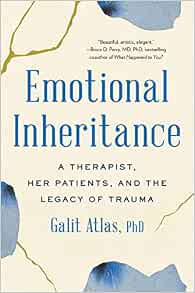
Last week, while walking each afternoon, I relistened to Galit Atlas’s Emotional Inheritance—a book I’d first read years ago that explores ideas about inherited family patterns. Amanda’s story kept coming back to me as I absorbed Atlas’s insights. Atlas, a psychoanalyst, shows how unprocessed trauma, secrets, and emotional pain get passed down through generations, often unconsciously. She explains how what families don’t talk about—shame, grief, unresolved loss—shapes who we become just as powerfully as what is spoken. We inherit not just physical traits, but what she calls “emotional DNA”—the unresolved emotions of those who came before us.
Amanda’s experience was a perfect example of this emotional inheritance in action. Her unease wasn’t really about her current life at all. It was about carrying the silent weight of her father’s story—his loss, his unhealed grief, the expectations he’d formed without understanding their origin.
This recognition shows up often as I help my clients distinguish between their own authentic desires and the invisible expectations passed down through their families. Once they can separate what’s truly theirs from what they’ve carried for others, they’re free to choose from their own truth rather than trying to resolve someone else’s unfinished story.
You might recognize similar patterns in your own life. If so, consider asking yourself:
- What patterns from your childhood family do you find yourself either repeating or rebelling against in your current choices?
- Where do you feel that familiar tension between who you actually are and who you think you should be to keep someone else comfortable?
- What would change if you could gently set down what was never really yours to carry?
Sometimes the most profound freedom comes simply from seeing these family patterns clearly. Once you can distinguish what’s yours from what you’ve carried for others, you can finally choose from your own truth.
This kind of deep work—helping people separate their authentic desires from family expectations—is exactly what I’m here for. If any of this resonates with you, I’d love to support you in discovering what’s truly yours beneath the weight of what you’ve carried.
P.S. If this message found you recognizing patterns you might have inherited or wondering what’s truly yours to carry versus what belongs to someone else’s story, here are a few ways I can support you:
- Schedule a Momentum Experience – When you’re ready to explore what’s driving your choices—your own desires or inherited expectations—this one-on-one session helps you distinguish between the two and choose from your authentic truth. [Book your session]
- Read The Book of Choice – Discover how the choices you make daily—including the choice to honor your inheritance without repeating it—create the life you’re living. [Get the book]
- Take The Choice Quiz – The way you approach decisions often reveals whether you’re choosing from your own values or trying to solve inherited puzzles. Discover your choice-making style and learn to trust your inner knowing [Start the quiz]
- Work with me privately – Whether you’re navigating choices that feel heavy with family expectations or learning to separate your truth from inherited stories, let’s explore how I can support you. [Let’s connect]
- Explore Choice Mapping Mastery – If you’re ready to develop trust in your ability to choose from your own wisdom rather than inherited patterns, this program teaches you to access your inner knowing with confidence. [Learn more]
The post When Your Choices Aren’t Really Yours appeared first on Kim DeYoung.