If you’re a writer (and if you’re reading this article, it’s likely that you are!), you probably spend a happy amount of time reading. But when you read, do you read like a writer?
Writers who learn how to read like writers inevitably improve their craft in immeasurable ways. The longer you read like a writer—and the more accurately you do this—the higher likelihood you notice what does and doesn’t work in a scene, while other scenes grip your attention with ferocious intensity.
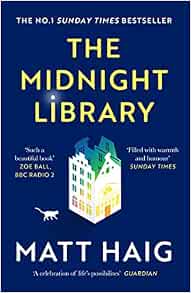
In this article, I continue my series on analyzing first chapters with a deep dive analysis. To do this, I’ll breakdown the first scene in the bestselling novel, The Midnight Library, and then explain how it “works” using editing tools from The Story Grid and Robert McKee.
What is a Scene that Works?When I coach writers, especially when evaluating the strength of a scene, I assess if a scene works. What I mean by this is: Does the scene advance the plot, or move the story forward, and develop the character by forcing one or more main characters to face a dilemma, or make a crisis decision.
If a character makes a crisis decision, then they take action that results in negative or positive consequences for themself or someone or something else. Plus, readers learn who characters really are through action, or this act of decision making, which is why including a crisis moment—that isn’t necessarily spelled out on the page—is so important.
Most importantly, a well-structured scene confirms that important changes have happened from beginning to end.
And all scenes—and stories—are about change.
Case Study: The Midnight LibraryFor today’s case study of a well-structured scene, let’s look at the second chapter of Matt Haig’s bestselling novel, The Midnight Library, which starts on page five, and is called “The Man at the Door.” I chose to analyze this chapter instead of the first chapter, “A Conversation about Rain,” because:
- The first chapter works as a prologue in disguise more than a first chapter established in the Nora Seed’s present time, and
- I don’t think the first chapter is actually a complete scene—even though it hooks readers!
If you’re curious to learn more about the first and second chapter analysis of The Midnight Library, you’re welcome to listen to my conversation with book coach Sharon Skinner on my podcast, Lit Match, here.
However, for now, let’s turn to that second chapter, which does model a complete scene. To do this, first review the scene synopsis (read it yourself here) and answer two Socratic questions adapted from The Story Grid’s scene analysis template:
- Confirm if there is a value shift, or change in the scene, on various layers.
- Review how five commandments can subjectively confirm if the scene advances the plot and develops the main character(s) or not.
Scene Summary, The Midnight Library, “The Man at the Door”Nora Seed, depressed, scrolls through the happy lives of other people on social media. Then Ash, a man who once asked Nora out years ago, rings her doorbell. Nora is self-conscious about answering the door, since she’s not put together. She answers the door anyway and tries to have a light-hearted conversation with Ash, but Ash shares some bad news: He thinks a car hit and killed Nora’s cat, Voltaire (Volts). Nora confirms Volt’s body and cries for him, while secretly confessing to herself that she feels envious of him.
3 Socratic Questions to Evaluate A Value Change In order to determine if there is a change in a scene, you can ask yourself three Socratic questions about it. Each question identifies an important change that needs to happen in a scene.
- What are the characters literally doing? How does that change from beginning to end? (An external value change) Nora Seed scrolls through social media and has a conversation with a man she somewhat knows, and later confirms that her cat, Volts, is dead.
Literal Change: In her house to on the road
- What does the main character in the scene want, what is their goal? How does this change or evolve from beginning to end? (An internal value change) Nora Seed wants to scroll through social media alone—probably so that she can compare her unhappy lives to other happy lives on social media. She does this because she’s depressed, and later her envious feelings for her dead cat confirm her depressed feelings.
Character Change: Sad to Envious
- How does the change in this scene impact the big picture, particularly the main value shift? This scene shows Nora Seed twenty-seven hours before she decides to die—it also presents her with the first of several losses (Volt’s death, which she realizes that she’s envious of) that push her to this decision.
Big Picture Value Change: Longing for Another’s Life to Longing for Death
5 Commandments in a Well-Structured Scene To read like a writer and determine if a scene is well-structured, you can use five commandments, or elements of a scene, to determine if the plot moves forward and if one or more main characters change in the scene. I pull these commandments from editing tools seen in The Story Grid and Robert McKee.
- Inciting Incident This is a causal or coincidental unexpected disturbance that creates a character goal or forces the character to change their approach in achieving their goal.
This is when Ash rings the doorbell.
- Turning PointThis is an action or revelation (a type of conflict) that forces a character to make a crisis decision.
This is when Ash tells Nora that her cat is dead.
- CrisisThis is a best bad choice or irreconcilable goods decision, two equally weighted decisions, that results in negative or positive consequences for either the main character or a third party.
This is Nora’s decision: Should Nora risk emotional trauma to confirm her cat’s dead body, or reject Ash’s suspicion that it’s Volts who the car hit and killed?
- ClimaxThis is the direct action that a character takes after they make their decision.
This is when Nora leaves her house to find Volts.
- ResolutionThis is the aftermath of the scene, the denouement.
This is when Nora finds Volts, cries, and secretly feels envious of his death.
Why You Should Learn How to Read Like a Writer I firmly believe that there is no one way to learn how to write. However, using the tools shared in this article has helped me learn how to read like a writer well—and therefore, simultaneously has made it easier for me to pull out when I think a scene does or does not work.
Like anything, with practice and more time spent reading, we all can learn how to read like a writer. When we do this, we learn how to take an implicit understanding of story patterns and turn it into an explicit awareness of how a well-structured scene works. We then can communicate why we think a scene does or doesn’t work, whether this is for a critique partner’s work or our own scenes.
Writers who read like writers will elevate their craft! And I bet, the more that you understand how to read like a writer, the more fun you’ll have analyzing and editing your own stories, too.
So have fun with this! Pull up one of your favorite chapters from a comparable title and use these tools to identify what you think works in that scene.
And if you want to learn more about how to read like a writer, check out episodes like The Midnight Library deep dive analysis on my podcast, Lit Match, here.
How did you analyze this chapter in The Midnight Library? I’d love to hear from you in the comments!
Abigail K. Perry is the host of the podcast Lit Match and a certified developmental editor who specializes in Upmarket/Commercial fiction, Women’s Fiction, Historical Fiction, MG/YA fiction, and YA fantasy. Abigail holds a B.S. in TV, Radio, and Film from Syracuse University and a Masters in Secondary Education from Endicott College. Abigail worked as an editorial intern and the Agency Relations Assistant for P.S. Literary Agency, is fluent in book and movie quotes, and loves a long walk with good company, which includes audiobooks and two- and four-legged loved ones and buddies. You can reach her on her podcast or follow her on Twitter or Instagram.
The post First Chapter Analysis: The Midnight Library appeared first on DIY MFA.