ADHD is a label, it's a name of a category of behaviors that we want to look at and potentially see how can we change the environment to make a kid the most successful as possible. In today’s episode, our guest is Colleen Cullinan, Ph.D., a pediatric psychologist at Nemours/Alfred I. DuPont Hospital for Children in Wilmington Delaware. She specializes in integrated primary care within the Division of Behavioral Health. Dr. Cullinan completed her Ph.D. in Clinical Psychology at Western Michigan University in 2015. Dr. Cullinan supervises psychology externs and interns, and she directs medical education efforts for Nemours’ residency training programs. Her presentation and publication records center around integrated care, family-based interventions, and experiential cultural humility training. If you want to gain a deeper understanding of the strategies for boosting executive function, this episode is for you! Key Highlights: [00:01 - 11:13] Open Segment An overview of ADHA management Having conversations with families about the types of ADHA The executive functioning in kids and adults Why setting families expectations is a critical part of ADHD management [11:14 - 22:42] The Journey of Starting to Manage A Chronic Neuro-Biological Condition Dr. Colleen’s outlook on children having trouble at school Why the Vanderbilt can be helpful You need the time to do a good job to gather information [22:43 - 33:47] Kids with ADHD Need a Lot of Practice What happens when the medication therapies are not working How executive function coaching looks like Why internal speech is important and complex Kids need more training in nonverbal cues [33:48 - 45:49] Executive Functions That Are Underdeveloped Incentive systems do work, but sometimes we are trying to incentivize the wrong thing Talk about hindsight, foresight, and insight How the sense of time is perceived by kids vs adults [45:50 - 57:07] Working Memory vs Multitasking The executive function of working memory Dr. Colleen's insights about multitasking being a fantasy Always think about the kid and their family [57:08 - 1:11:44] Final Takeaways Start with conceptualizing the diagnosis when talking to parents Take a good history, a really good history Throw away the label and really look at the executive function Start with psycho-education for families and patients Lay out the deficits of ADHD For kids with ADHD, the impact of those executive functional skills deficits may set them back two to three years Lay out building the parent's skills of expectation, setting realistic goals Let's talk about some of the specific deficits Internal speech Hindsight, foresight, and insight Cents of time Working memory Explain to families that ADHD is highly genetic and that there are often ADHD families Future teaching and predicting setting expectations and what that can look like Set the tone with the families Lay out that intervention and management will be an experiment
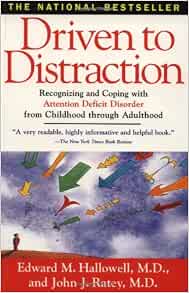
Resources Mentioned: https://www.amazon.com/Driven-Distraction-Recognizing-Attention-Childhood/dp/0684801280 (Driven To Distraction - Ned Hallowell) https://www.amazon.com/-/es/Ross-W-Greene/dp/0060931027/ref=sr_1_1?__mk_es_US=%C3%85M%C3%85%C5%BD%C3%95%C3%91&crid=37EJWPAT09J3Z&keywords=The+Explosive+Child+by+Ross+Greene&qid=1652203040&s=books&sprefix=the+explosive+child+by+ross+greene%2B%2Cstripbooks-intl-ship%2C849&sr=1-1 (The Explosive Child - Ross Greene) https://www.amazon.com/-/es/Peg-Dawson/dp/1593854455/ref=sr_1_1?__mk_es_US=%C3%85M%C3%85%C5%BD%C3%95%C3%91&crid=1IEJLHZRUPOOM&keywords=smart+but+scattered+by+Peg+Dawson+and&qid=1652203176&s=books&sprefix=smart+but+scattered+by+peg+dawson+and+richard+guard%2Cstripbooks-intl-ship%2C407&sr=1-1 (Smart But Scattered - Peg Dawson and Richard Guard)...