Have you ever felt like the internal turmoil you’re battling is invisible to the rest of the world? Like no one truly understands the gravity of what you’re experiencing because you appear calm and composed on the outside? The struggle to manage anxiety while maintaining healthy relationships is a complex and often misunderstood journey. The challenge lies not only in dealing with the anxiety itself but also in finding ways to communicate your needs to those around you effectively.
In this episode, we delve deep into the real-life experiences of someone who has navigated the tumultuous waters of anxiety for over seven years. It covers practical tools and resources for managing anxiety, the crucial distinction between everyday stress and anxiety disorders, and the importance of clear and compassionate communication in relationships. This discussion offers a plethora of actionable advice and relatable insights to help listeners better understand and manage their anxiety while nurturing their relationships.
Dr. Jeanne Retief is the founder of FIGGI Beauty Skincare and The Anxious Calm E-Learning platform for those seeking to peacefully coexist with their anxiety. After her panic disorder diagnosis, she left behind her career in international human rights to find balance in her new normal.
In this episode
05:29 Jeanne Retief’s seven-year journey and finding balance.
08:05 The importance of hope and living in the present.
10:51 Introduction to figgy beauty and anxious calm resources.
14:31 Differentiating everyday stress from anxiety disorders.
19:37 Using code words for emotional communication.
22:52 The hidden turmoil of anxiety.
25:01 The reality of panic attacks.
27:32 Anxiety and its misrecognition.
32:18 Struggling with stigmatization and seeking help.
34:45 Relational dynamics and open communication.
38:30 Supporting each other during anxiety.
43:28 Explaining anxiety to children.
45:26 Discovering and embracing high sensitivity.
Your Check List of Actions to Take
- Establish a simple code word system with your partner to communicate the severity of your mental state, such as “stressed,” “anxiety,” or “panic.”
- Hold a judgment-free weekly meeting with your partner to discuss ways they can support you during anxious moments, similar to life planning.
- 54321 Technique: Practice the 54321 grounding technique by identifying five things you see, four things you feel, three things you hear, two things you smell, and one thing you taste to manage pre-panic attack anxiety.
- Foster open and honest conversations with your partner about your anxiety, sharing triggers and coping strategies to create a supportive environment.
- Use relatable analogies to explain your anxiety to your children, such as comparing it to monsters in the closet, to help them understand and not be frightened.
- Work towards accepting your anxiety as part of your life and focus on being your best self in the present moment rather than seeking to return to “normal.”
- Understand and embrace your sensitivity (if applicable) using resources like Dr. Elaine Aron’s work on Highly Sensitive Persons (HSP) to leverage your strengths.
- Build and maintain a supportive network by clearly communicating your needs and triggers to loved ones, ensuring they understand how to provide the best support for you.
Mentioned
Evolve in Love (*Dr. Jessica Higgins program) (link)
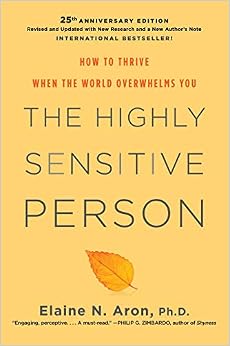
The Highly Sensitive Person: How to Thrive When the World Overwhelms You (Amazon affiliate link*) (book)
Connect with **Jeanne Retief**
Websites: figgibeauty.com | docjeanne.com
Facebook: facebook.com/p/FIGGI-100075876828370/?paipv=0&eav=AfZJP7s4XjYP5eyIQKhkqlwpntG2pmLZtGWGUf_YVwVHncu6yHjrr1cOqWCuOxrdLAU&_rdr
Pinterest: uk.pinterest.com/figgibeauty
LinkedIn: linkedin.com/in/dr-jeanne-retief
Connect with Dr. Jessica Higgins
Facebook: facebook.com/EmpoweredRelationship
Instagram: instagram.com/drjessicahiggins
Podcast: drjessicahiggins.com/podcasts/
Pinterest: pinterest.com/EmpowerRelation
LinkedIn: linkedin.com/in/drjessicahiggins
Twitter: @DrJessHiggins
Website: drjessicahiggins.com
Email: jessica@drjessicahiggins.com
About this Episode
Jeanne, thank you so much for joining us. I’m excited about our conversation.
Oh, I’m super excited to be here, and about what we’re going to be talking about, I think it’s such a great time of year to do it.
Oh my gosh, you’re so right! Typically, for listeners, and just for yourself, I usually have several episodes backed up, so this might not be released for a couple of months. But I’m actually thinking maybe I should bump this up to support people negotiating the holiday season. Because it is such a stressful time of year for people, despite the intention of really focusing on connection.
Well, just before we get started in our topic of looking at anxiety disorder as it might show up in relationship, where one partner might have a diagnosis or really be experiencing a lot of symptoms, and how that might impact relationship, and just how we can support people here. What got you interested in supporting people in this topic and this focus?
Well, I mean, the easy answer would be my own diagnosis with panic disorder. But I’ve been in this field, I think all my life. Because it didn’t crystallize until my diagnosis, but I’ve always had real trouble with anxiety and super-sensitivity that led from my trauma as a child and a young adult, the way I grew up, the environment that I was in. That actually led me to a career in international human rights law, with a focus on international criminal law and the laws of war. So I dealt a lot with human rights and women’s rights, and a lot of anxiety goes into that. Like, how do you manage? That’s not even talking about stress or anxiety on a level where you have everything to work with. You don’t have running water. You don’t have food. Your five-year-old child is the head of the household. So I’ve always dealt with this in some way or the other. Then when I got diagnosed was what I think propelled me towards changing direction and ending up here.
Well, thank you for just acknowledging your journey in larger scope. I’m really grateful to be talking to you. Because it sounds like you’re mentioning a lot of things that people experience, and it might be confusing that if one grew up in a very tumultuous or even environment where traumas occurred or it was chaotic, that that is a certain amount of stress, and we learn to cope and our systems have to adapt. But that also means our nervous system isn’t necessarily in a safe, secure, regulated environment. So we learn to operate with a level of anxiety. So you’re talking about trauma, you’re talking about stress, and you’re talking about anxiety. Do you want to help people, as they listen, how these might overlap, how they’re different, how to really look at them and how these interact?
So look, I’m not a doctor, but it’s my body, it’s my mind, it’s my loved ones that went through it. So I understand how it’s been explained to me and how I’ve been experiencing it. I would say the differences between it is really what made the key deciding factor for me to go towards a path of acceptance of my diagnosis. Because I go back to my trauma a lot, and I have a lot of generational trauma in my family, a lot of undiagnosed mental illnesses. That’s why I didn’t want to get diagnosed, because I didn’t want to be like them. I thought it’s like a done deal because it’s genetic. So if they were wired this way, I will for sure be wired this way. Then it was actually explained to me that if you have panic disorder, it’s not necessarily genetic, it’s mostly brought on by complex post-traumatic stress disorder. That happens when you are in a prolonged situation of being exposed to trauma, usually by somebody in a very close and trusted relationship to you.
So for me, it was my grandfather. In other types of ways, it was my parents. It was all these people that were supposed to be your champion and your hero, close family members. So that’s what led to my panic disorder diagnosis, which is panic attacks, but it’s a lot more than that. So it’s different. But I think it all contributes to the end destination. It looks different for all of us, we’re not all the same. But that’s how I understand it, and that’s how I understand the difference. But I’m still learning new things about my diagnosis every single day. But I hope that answers your question.
Yes, thank you. It does. I have a follow-up with that, if you’re willing. You talked about just seasonal stress or what we might go through seasons of life, with a particular maybe career or family or parenting. There’s a lot of things in life externally and circumstantially that will provide levels of stress. How do you see stress interacting with the panic or the complex PTSD?
I mean, it is difficult. I’ve had to go on a very long journey towards learning my triggers and how I deal with those triggers. Because I have the post-traumatic stress element, there are triggers that I cannot prepare for. So sometimes, somebody will touch me a certain way and it would trigger me. I wouldn’t even know that that was the trigger, but it would just take me back to this place of trauma. I have to deal with my triggers, I have to understand my triggers. But what’s also, I think, necessary to very clearly state, is that even if you don’t have an anxiety disorder, you’re still going to have the normal levels of stress every day. It’s normal. It’s a normal human emotion. We live in a very stressful world. You’re going to have financial stress. You’re going to have career stress. You’re going to have family stress. Then it’s going to go away and you’re going to sort it out, and it’s going to level out again. Or you may need a period where you need a little bit of extra help. That doesn’t necessarily mean you have an anxiety disorder.
It’s so frustrating, because if you really do have an anxiety disorder, it opens you up to so many other types of abuse. Because people start to see you as just another one that’s overly stressed, and it’s not the same thing. So that’s why I always try to tell people to please just be conscious of that and how you use that word. For example, my husband and I have trigger words or code words. Like, when I say I’m stressed, it means I had a normal day of stress—I had stressful things that happened to me, the situation was cleared up, and now I’m no longer stressed. But if I say I have anxiety, it means my actual anxiety disorder is acting up and I’m struggling to cope with the symptoms of that, and how that’s manifesting in my life and how that is preventing me from accurately dealing with normal stress. And when I say panic, it means, panic attack is here, all hangs on deck, we’ve got to abandon all the soft ways of dealing with this and we need to go into our SOS kind of thing.
Well, Jeanne, even as I’m watching you and your nonverbals, for people who are just listening to the audio version, I want to just reflect back, it just seems really notable that you’re describing stress as something almost like, it’s in my day, it’s external. So I’m seeing your hands just outwardly. Then when you talk about my anxiety, your gesture came more inward. When I think about clients and couples that I’ve worked with, when one has anxiety and they’re describing, it feels like this deep level of overwhelm and I’m hurting or I’m not okay. It’s like this internal being, and my essence is struggling. You’re kind of pointing inwards around like, the essence, the internal me is not okay. Does that resonate?
Oh yeah, for sure. That’s definitely how it feels. It’s so difficult to explain it to somebody who doesn’t know what it feels like. But I would say that’s a pretty accurate description of the storm that’s raging inside.
Well, and then to go a little bit even more here, when you talk about the level of panic and the reaching or over-extending to this threshold, it’s like, not only is my outer world stressful, likely, but also my inner world is not okay. Then I reach this level of just untetheredness. It’s like, there is no ground, and it can feel further amplified.
Yeah, that’s very true. I think there’s a difference in how I see, like I said, my code words, when I’m in anxiety and when I’m in panic. Anxiety definitely is that internal turmoil. And what has become dangerous for me is that, many times, when I do talks like this or in public, people will tell me it’s impossible for you to have anxiety. You’re so calm, you’re so centered. But it’s just because I’ve learned to hide it so well, which is actually really bad. Because everything is going on inside of me, but I don’t project it to the outside because I don’t want people to know, and that makes your crash so much more severe. Then when you’re going into panic, it obviously also makes it worse.
The way that I usually explain it to people, when you have panic, we all have a certain relationship with death. We all fear it, or question it, or wonder about it, or are curious. None of us really know, but we do have, all of us, even if it’s just a little bit, that tiny bit of fear in us about what that would mean. So when you have panic and those panic attacks, one of the things is that you honestly and truly feel and know within yourself, this is your last moment on earth. You are dying. You’re seeing your life flash in front of your eyes. So imagine being confronted with death so many times and so often, how traumatic that must be. That’s the only way I’ve found that I can truly describe what it feels like to go through that, so people can also understand what comes after. It’s not just a panic attack. Can you imagine what your body and your mind must have gone through to think that and feel that? And then it happening sometimes three times a day, four times a day. It’s very debilitating.
Right, I’m feeling a sense of exhaustion and just depletion, and having the experience of confronting that with such level of intensity. It really paints a picture, thank you. How is it talking about it? I can even feel inside myself, I feel my own anxiety or just empathizing with that experience. Like, how is it to talk about it?
“That’s the weird thing about panic. When you’re in your calmer moments, it’s even hard for you to understand how you could possibly feel that or think that or know that with such certainty. It’s almost as if it’s an out of body experience for you as well.”
So now that I’m calm and I’m talking about it, I can more reasonably explain this to you. I can, yes, feel that it’s not a nice feeling to have, it’s not nice to talk about it. But I talk about it so often, so it’s been such a cathartic experience for me. But this entire picture you see here looks completely different. When I’m in the throes of panic attack, then all of this goes away.
Yeah. Well, and I appreciate that you’re speaking to what’s visible and what’s on the inside, that those might be different. You’ve done so much in your journey to be congruent, that when you are in a calmer state, likely it is a reflection of what you’re feeling internally. I will say, just on perhaps where someone is feeling a lot of anxiety internally, that they look calm on the outside. This is where some people don’t even know they have anxiety or might even have an anxiety disorder because they are so maybe Type A, or the user anxiety to be productive or control things, and that is a mechanism to manage. What would you say?
Yeah, I for sure think that it can be. Again, I would just be careful to say that. Just because you have a certain personality type doesn’t necessarily mean you have an anxiety disorder. But it is for sure that it can be your way of coping with not wanting to feel those uncomfortable emotions, or the scary reality that you may have an anxiety disorder and you are struggling and you really do need help. That was the worst thing for me. I didn’t want to admit that I had an issue, I didn’t want to be like my other family members. I in no way wanted to have therapy for it, because I felt, at that point, I had enough therapy in my life. I didn’t want to take medication for it. It was really one of my things that I struggled with the most. If that’s where you’re at, then yeah, it’s way easier to tell yourself: No, there’s nothing wrong. I just like being organized. I just like controlling things. This makes me feel safe, this makes me feel secure. I can see how that can make your world seem a little less chaotic.
Yes. Well, and I appreciate what you’re saying, that this is not totally causal or indicative of having an anxiety disorder, and it looks different on different people, or people have different experiences. So I appreciate that.
Now before we pivot to relational dynamics, you mentioned sensitivity. I know you’ve done a lot to support people who identify or are highly sensitive people. I’ll put a link if people are interested in learning more. If you can say a little bit, that would be helpful for people who don’t. But how does this fit in what we’re talking about with the constellation of anxiety, trauma, and stress?
Well, I really didn’t know something like sensitivity or sensitive person existed until I was in my early thirties and I read the book from Dr. Elaine Aaron, and a lot in my life made sense. Of course there were many other dynamics at play for the reasons that these messages were being given to me, as I was growing up and in my formative stages. But some of the messages that I heard a lot were like, you are so sensitive, why are you always crying? Why do you always take things so personally? None of these comments were ever just a question. It was more of an accusation. Like, what is wrong with you? Why are you so broken? Why are you so wrong? I really internalized that, and I just took it as me being really badly put together, and everybody else around me is normal.
I had obviously this underlying anxiety thing I was dealing with, and as part of that, I get really upset with too many sensory overloads, which is also very intense for a sensitive person. So I’m trying to deal with this narrative of: I’m wrong, I’m the problem. But it really upset me if there are so many lights and noises and sounds. But I can’t tell people it upsets me, because I’m the one that’s weird. And when I finally realized that there is actually something like a highly sensitive person, and how much that can play into anxiety, it really explained a lot of my life to me.
That’s so powerful. One of the things, I remember reading her book many, many years ago, similarly, was just how many people internalize the experience of the sensitivity as something different and wrong and not okay, and that they are attempting to be like people. Just for people listening, my understanding is that sensitivity is a trait that we all have, and we can put it on a continuum. Typically, in Western culture—I’m the US, you’re in Portugal—that sensitivity isn’t necessarily something that people seek to achieve. It’s not highly valued. So it occurs in 1/5 or 20% of people.
She really does a lot to help people recognize it’s not a pathology, there’s nothing wrong. This is something that’s like having blue or brown eyes, it’s like a part of your system. That it comes with gifts, it comes with strengths. It also comes with certain considerations, and you want to learn how to care for that. But you’re going to be absorbing more, you’re going to be taking in more information, you’re going to be having a richer sense of the dimensions of life and the nuances. That’s such a gift. And also, if you expect to operate like other people who are not absorbing that much, then that’s going to be a difficult equation. Because they’re not being impacted. They don’t need the time to process, they don’t need the time to integrate. So when you’re attempting to run like other people and their systems, it’s just a burnout. It’s just not going to work.
Yeah. For me, the key thing there was, I used to do a lot of work in my old life in building high-performing teams and putting together people with different talents and all of that. With my anxiety diagnosis and understanding sensitivity, it actually gave me, after I came down from the trauma of it all, a really great toolkit. Because I could start recognizing that maybe I just have these hidden gifts that other people don’t see because they don’t view it as normal. But what that gave me a great entry point to is recognizing how amazing other people are at certain things that I am not. Instead of worrying about the fact that I am so wrong and I am so broken, or arguing my point to somebody else, I could just lean into the things that make them beautiful and ask them to do these things and step away, and shine in the things where I naturally shine at. That did a lot in terms of helping me manage my anxiety, managing this narrative that I’m wrong or that I’m overly sensitive, or it’s not a characteristic that you normally seek in especially the career world. That changed a lot for me.
Oh my gosh, I so appreciate you speaking into that. Because there is a diversity amongst everyone, so when we can hold that in a leadership role. Even talking about extroversion, introversion. There’s people that have different gifts to offer and operate differently. When we can really attune to that, I think it can really be a strength for the whole team.
Yeah, for sure.
Wonderful! So what would you like people to consider as we look at the dynamics of relationship when an anxiety disorder is a part of the mix?
Before I say anything, let me just preface it with, I honestly and completely understand that everybody does not have a brilliant support network. I am very lucky, I have very great support system in my husband. But I also understand that our dynamics look different. Maybe your support structure is your mom or your sister or your friend, whatever that may look like. So I just want to put that out there.
The second most important thing for me to say is, and I say this with empathy and love as somebody that’s been through it, we sometimes forget, as those of us suffering from an anxiety disorder, what responsibilities we have. Because our minds are so overwhelmed with just literally trying to survive and putting one foot in front of the other, it doesn’t many times even occur to us that we have responsibilities within the sphere. Because we are already doing so much trying to just survive. But if we do not communicate with our partners and our loved ones, it is very possible that we are not going to feel supported. Because they also don’t know what’s going on.
“In terms of relationships, it’s so important to understand what your responsibilities are towards your loved ones, to put them in a position where they can be the best type of support structure to you that you need. A lot of that is work that you need to do.”
So for example, I was very lucky my husband came with me to some of my therapy sessions to learn the more technicalities of what an anxiety disorder is, what does it look like, what should he know about it? But I had to learn my triggers. He cannot learn that for me. I had to go through those things. He can support me through it. He can see that I’m struggling and ask me if he can help me. But I need to do that work. Then once I’ve done that work, it’s on me to communicate with him and say: Look, I don’t have all the answers. I also don’t understand what’s happening to my body when this happens. But I’ve realized that if I’m in a mall with a lot of people and a lot of lights and a lot of overwhelm, it really upsets me. Can you help me? Now he understands: Okay, this is the situation we probably should be weary of. I should be a little bit more alert. I can help her through this situation. Or practicing SOS techniques. When you’re in a panic attack, what works for you to bring you to a point where you can at least just start, hopefully, the calm-down.
You cannot be angry at a loved one coming towards you in a panic attack and telling you, just calm down, which is the last thing you want to hear, if you haven’t had that conversation with them in calmer times to say: Look, I also don’t know what’s goin to help me. But if you say this, it really makes it a lot worse. I’ve read about this 5-4-1 technique. This is how it works. Do you think you can help me and talk me through it the next time this happens? We have that responsibility to communicate these things to our loved ones.
I think what makes it really hard is when we don’t know, so we don’t say anything, because we don’t know what the solution is. But in that is the solution. Because even that, you have to say: Look, I know this is happening, and I don’t know. I don’t know what to do. I don’t know what’s going to make it better. But I know it’s going to happen. So can you help me find ways that we can try to make this better? But if we don’t have that acknowledgement of what we need to do from our side, it’s hard for our loved ones to support us in the right way.
Absolutely. I want to ask you about the 5-4-3-2-1 technique, just for people who might be curious. I just also want to speak to what you’re describing around the communication or having the open channel. So much can be misperceived if there is a not knowing. So if Partner A is seeing Partner B seemingly not feeling so great, whether or not it’s the nonverbals or what have you, Partner A can think: Oh, I wonder if they’re mad at me. They could go in all types of routes. They have no idea that it might be anxiety. Or they might say: Oh, you’re okay, I’ve got to grind through this too. Or it’s just a tough time, let’s just keep pushing, like their own strategy of getting through difficult times. It’s a lot of projection, because where Partner A, best intentions, is doing what they know, doing what’s worked, or based on their own lens. And Partner B who’s feeling the anxiety, if they’re experiencing something on a deep level and that’s not visible, it’s really hard for that partner to respond to the difficulty or the real deep upset.
Yeah, especially if they want to help, if they want to fix it.
“Many times, the actions that you would equate to help and fixing it are the things that would make it worse in that moment. But they cannot possibly know that if you do not communicate that to them.”
And also, the key in that is when you communicate it to them. I mean, it’s not the best time to do it when you’re in the throes of a panic attack, shouting back, like, don’t say that to me! There has to be this point that you agree to. Let’s sit down on Sunday when we’re calm, let’s talk it through. Let’s see that if this happens again, what can we do so that we are prepared? I always equate it to life planning. We sit down with our partners and we talk about the most horrific things, if you think about that. What happens when you’re not here anymore? Who do the kids go to? What do I do with our finances? Do you have a will? We talk about that. But we don’t talk about things like this. It’s just, if you look at it that way, it’s so skewed.
Yeah, and this perhaps hearkens back to what you were saying earlier. You were talking about it was a journey to even become accepting or open to having a diagnosis. When you’re talking about, perhaps we could have a sit down on Sunday and talk about in a calm state, if you’re experiencing anxiety, are there things that we can try, or is there a way that I might be able to help or support? If someone isn’t in a place of acceptance of experiencing anxiety or having an anxiety disorder, they might find that conversation difficult. Because: Oh, I’m the one that needs attention in our dynamic, or I’ve got an issue. I don’t want to burden you, and/or I don’t want it to be the focus on me, like I’m the one that’s got a problem. That can be hard. So how do you help people reframe or approach that differently?
For me, it would be that if that were the issue, it already shows me that there are some very crucial core issues in their core communication. So taking away, feeling like you’re being blamed or it’s your fault or something. I think this worked well for my husband and I, because since the day we got married, we had this rule. On Sundays, Sunday afternoons, we sit down, we talk about the week. It’s a judgment-free zone. You’re not allowed to judge or to point fingers. You just say, what went well for you this week, what do you think can be improved? It’s not a personal attack on you. So if he were to say something like that to me, it would feel like: Oh, he is noticing things about my life, he cares enough to see something is wrong. Maybe if he also thinks this could be it, it may be worth investigating. Because I have a partner in this now, I don’t have to feel alone and like something is wrong with me. He is also open to helping me. But if you don’t have that foundation, then you already go into it kind of limping almost.
So I think then you need to backtrack a little bit and go, so where do we start this from a good point of view? How do we lay that good foundation, and then how do we take it further from there? I understand that in the moment that may not be a great solution, because usually when your anxiety is crisis mode. But at the same time, you also cannot fix a crisis with a crisis.
Yes. Part of what I’m hearing you is, there’s something really beautiful about perhaps just naming: we don’t know, and we’re going to be together in the not knowing, and we’re going to take steps to explore, and we’re going to be curious and we’re going to really give space. Or, to your point, I’m going to be here, and as you begin to understand your triggers more or get a little bit more interested in what happens and being able to understand, so I can help you. There’s just more room and support for that journey of not knowing, to getting towards more understanding of what could be helpful.
Yeah, for sure. I think if you go into this knowing, if you set it for yourself, like a personal goal for yourself before you go into a conversation like this, that nothing that’s being said here is being said to offend me or to hurt me or to make another problem, we’re here to solve a problem. I feel like it already takes you out of the mental space where you’re going to feel judged, like is your issue. And in my personal experience, whoever is on the other part of the conversation, it opens up that safety net for them too, to be more vulnerable and to be more open to what you may be experiencing from them. So it’s all about your mindset, how you go into it, how you set up that safe space and what you use it for.
So important to have the focus and the intention around what are we in service of. We’re trying to understand how we can better work to support or solve something that feels challenging or give some solution for. Like, if we’re off-track, we can say: Oh, I’m starting to feel like or I’m not feeling like we’re trying to get to a place of solution here, and we can redirect. Then also, what you’re saying is the safety of non-judgement zone of just really being curious and offering opportunity to be vulnerable. Those are so critical components.
But it’s the hardest components.
“None of us like being vulnerable, for some reason, especially not with the people we love the most. Which is weird if you think about it, but it is unfortunately the truth of the world we live in.”
Yeah. Well, do you want to just, because I mentioned it, the 5-4-3-2-1, do you want to just briefly?
So for me, there are many techniques that I use. But the 5-4-3-2-1, I will again preface with, this does not help for me at all during a panic attack. When I’m in a panic attack, then it’s all hands on deck and we’re just getting through it. When I am literally pre-panic attack, I need help with this. It doesn’t help if I try and do it myself. I need somebody to coach me through it, which is that conversation I had with my husband before: how can you help me when we’re in crisis mode, can you try this? He literally sits in front of me and he shows me his hand, and he coaches me to breathe in for the count of one, stop, breathe out and trace my finger, breathe in, stop, breathe out, trace my finger down. Once I’ve been able to do that, he will do it again. But then he will do it slower and he will start asking me questions like, do you see the lines on my hand? Can you describe something unique about my thumb?
So it completely takes my mind off what is going on, because I’m so focused on the tiny details he’s drawing my mind back to. But again, I need him to be able to coach me through that. Because I’m so much in my own mind, if I’m trying to do it for myself, it’s just a jumble and a mess. But if somebody’s coaching me through it, and I’m maybe losing track somewhere and he can say: Okay, that’s all right, let’s just start from the beginning. It really, really helps.
Wow, thank you for explaining that. I know you’re going to share with us just the plethora and the comprehensive array of what you put together. What else would you want us to know as we talk about the dynamics of relationship? Is there anything else that you feel like will be helpful?
Yeah. I think a key part of that is if you’re in a relationship where you have kids, that was a very hard one for me to broach. Because my initial take on that was, I’m just going to hide it from her so she would never have to know about this, which made it a lot worse. Because of course, I never ever tried to have a panic attack in front of her, but it has happened. Then my panic attack, it’s so much worse, because now I know she has seen me and I just realized the amount of anxiety that was causing her. Because she had so many questions about it and thoughts about it, and she was starting to have issues sleeping because there was so much uncertainty around what’s wrong with mommy. So again, going back to the good foundations of communication you have with your partner, during which times you can then also discuss how are we going to deal with this in terms of our kids? What are we going to say? How are we going to explain it? What is our action plan going to be when she’s been a part of it? So that we’re all on the same page as to how we deal with that.
Then, just be as honest as is appropriate for their age. Because kids know so much more and pick up so much more than we think. So for me, for example, my daughter went through this phase where she was scared of the monster in the closet, and then it became silly to be scared of the monster in the closet because it doesn’t really exist. So I just used that analogy and I told her that when this happens to mommy, my mind thinks that there is a monster in the closet. She would laugh and say, but there is no such thing. Then I explained to her: Yes, but my mind doesn’t know that. My mind thinks it’s real, and then I don’t know what to do to get out of that. That seemed to be a very relatable way of explaining that to her, and it seemed to work for us.
Thank you for sharing that, and it’s so true. This is what they talk about in neuroscience and neuropsychology around naming to tame. When we can name a difficult emotion, we’re able to reduce the intensity of it. In relationship, it also allows for a little bit more safety often. That I’m feeling something, and from a neuroception, I’m picking up on something is off. But I don’t know and nobody is talking about it, and I don’t know what to do with that. Versus something is off, and mommy is telling me and naming it. She’s got it. It still feels a little wobbly maybe. But she’s got it. She’s going to help explain it and guide and organize, and we have a way of dealing with it. That’s a very different experience to go through as a loved one in relationship, when somebody is acknowledging it, naming it, and there’s some organization around how to deal with it, rather than it being this unnamed thing.
Yeah, and whatever story they make up in their mind to explain that to themselves, it makes that story even bigger or worse if they have this free reign of wondering what is happening, as opposed to just understanding as much as they can in that moment what is happening.
Yeah, wonderful. Well, and the questions that your team sent, and perhaps maybe you sent, you had mentioned there was a mistake you had made, or your biggest mistake in regards to this, and you also had talked about ways to really find hope. Would you like to speak to either one or both?
Yeah, honestly, I can’t remember the mistake because I’ve made so many. So there are some that pop out at me. But I think one was definitely not speaking to my daughter about it when I should have. The second was being in this self-help phase. This is where the perfectionist comes out when you also have anxiety maybe. It’s like: Okay, I can fix this. I’m just going to read all the books. I’m going to do all the meditation. I’m going to fix this. Because this person was where I am now, they have the golden ticket cure to never have a panic attack again, they’re gonna show me exactly what to do.
Then I would have a relapse, and I would be devastated. I would be so filled with shame, and now you’re also going through everything from the come down from the panic attack. So the migraine, the depression, the fatigue, plus the guilt. Plus, the wondering: what did you do wrong again, and how did you misinterpret all of these guidelines that you could follow? It just made my recovery process so much worse. That’s a big part of what I advocate for is, we are all different. No one can stand on a stage and tell you that whatever has worked for them is going to be your miracle cure, because you don’t know, and that’s okay. You just need to find whatever lucky packet works for you and stick with it.
“Nobody can tell you how to make it better, unfortunately. That’s the beauty and the pain of it both, because you don’t know. But once you find your golden recipe, it works for you.”
One thing that got me through that was actually, the last time when I came down from that after this whole self-help thing, and my husband actually spoke to me and he said to me: You know what, when this happens again, all we’re going to do is we’re going to say it was just a bad day. Nothing more or else to it, it was just a bad day. You went from having a bad day every day, to a bad day once a month, to a bad day once every three months. There’s nothing to investigate, there’s nothing to it. It was just a bad day. That helped me a lot. That made the shift for me.
So I would just say, be careful of that. Because we tend to always seek the answers somewhere else, especially when you’re so traumatized and when you’re so unwilling to accept your diagnosis and you’re so hurt and you’re struggling so much, you’re just looking for solutions to be normal again. And whatever it is, whatever they tell you that you can do, you’re going to try it, and for me, it ended up making me so much worse. Because I didn’t have the ability to go into it objectively. My way of going into it was: I don’t just need to do it, I need to do it perfectly. I need to do it right. I need to follow all the rules step-by-step. I think if you’re wired like me, that may also be how you approach it.
I’ve definitely heard the sentiment of just: I want to be fixed. I feel damaged and I just want to fix it and be better, and then I’m available to live my life. That could be a real damaging recipe, I think, if we feel like we’re not okay and the guilt and all the things. Just as I’m hearing you describe bigger picture, the thing I’m feeling is that perhaps don’t go it alone. Help your loved ones be able to connect with you on some level, depending. Then the second is, part of the journey is really showing up for self and really being able to help the internal part that’s not okay and the things that work, and that attunement to inner self. Like, how beautiful to come on the other side of that feeling a little bit more coherent, a little bit more internally intact, balanced.
I will say that since diagnosis, I’ve been on this journey for seven years, and I’m always learning, I’m always growing. I literally just had a relapse about a month ago. It was a pretty bad one, and it took me a while to come back from that. But it was just a bad day, and I’m doing everything I can do to get back into a healthy space, and that’s okay. If you are wired like me, and if this is the life that you’ve been blessed with and the hidden gifts that you’ve received, it comes with challenges, and those are never going to go away. Just like life, we are never going to have just smooth sailing. So if we can just be in a space where we can, even if it’s in an uncomfortable agreement with it, be in some kind of an agreement with it, it makes the journey a little easier.
I know, I’m feeling that. That we’re stronger when we have the support, as you said, and the bonds. And also, we have ourselves. It might be hard, but there’s some contact with self. This is beautiful, thank you. So as far as hope, are you speaking to it or is there more you want to say? Because this is all really encouraging.
Oh, thank you. I think that’s about it. Because we all found hope in our own ways, whatever that may look like.
“I think the key is just not to focus on being fixed or being normal. Again, just focus on being the best you in that moment. That may not look the same from last month to now or yesterday to tomorrow, and that’s okay.”
Thank you, Jeanne. Well, tell us about what you have to offer. There’s just such a wealth of support you give.
Thank you. So one of my biggest external symptoms of anxiety, and there are many, is sensitive skin. Because it affects your hormones, it affects your nerve ending. So we created the FIGGI Beauty line, which looks after the external symptoms of anxiety, married with the Anxious Calm, which is an online course offering that looks at the internal things that you suffer with in terms of anxiety. The Anxious Calm is really for a patient by a patient. Like, what do you do after you leave the therapist’s office? Therapy is so necessary. It’s been so helpful on my journey, and I don’t think you can go at this journey without it. But you are still the one waking up at 2:00 AM alone wondering why you’re having night terrors and everybody in the whole world around you is soundly asleep. You are the one that freaks out in the mall. So what do you do in those moments? How do you help yourself? How do you just get into a space where you are in a comfortable, solid recovery phase, knowing that this is part of your wiring and mishaps are going to happen? How do you just navigate that? I can’t remember now, but I think we almost have a year’s worth of courses on there, and I wrote all of them myself based on my own experiences. I present all of them, and I’m very, very involved in the community.
Wow, wonderful! So these are really exercises, resources, tips, recommendations, tools people can work with to make it actionable, to experiment with, as you were describing in our talk here, and to work with.
Yeah. For me, I felt like there was this higher level of trying to help me. Things like, you should meditate, you have to try to eat a more balanced diet. But on the practical level, it’s like: I cannot sit still and meditate, this is causing me so much more stress at this moment. So how did I work around that? What kind of meditations did I teach myself to do actively while I’m moving around, while I’m awake, while I’m aware? Just all of these hacks, I guess, I found to help me work around not being able to do it, and then eventually getting to a space where I could do it.
Lovely. Where can people find your skincare line and also these courses?
You can just go to FIGGIBeauty.com and everything is on there. It links you to the Anxious Calm, it links you to the skincare, the community, everything.
Lovely, wonderful! I’ll make sure to have those links on today’s show notes. Thank you so much for being with us and sharing so openly.
Thank you so much for having me. I’m so, so blessed to be able to be here.
Sign off
If you have a topic you would like me to discuss, please contact me by clicking on the “Ask Dr. Jessica Higgins” button here.
Thank you so much for your interest in improving your relationship.
Also, I would so appreciate your honest rating and review. Please leave a review by clicking here.
Thank you!
*With Amazon Affiliate Links, I may earn a few cents from Amazon, if you purchase the book from this link.
The post ERP 456: How to Navigate Relationship – When a Partner Has Anxiety – An Interview with Jeanne Retief appeared first on Jessica Higgins.