Ever feel like you know all the “right” things to do in a relationship, but when the moment comes, your body is flooded with stress, your voice tightens, or you just shut down? Many of us long for deep connection and trust, but when life gets real, our nervous system can hijack our best intentions. The invisible forces of old wounds, protective patterns, and the lightning-fast reactions of our bodies can make true safety in love feel just out of reach.
In this episode, you’ll discover practical ways to bridge the gap between knowing and feeling safe and connected with your partner. Drawing on insights from attachment and polyvagal theory, somatic psychology, and real-world relationship experiences, the conversation sheds light on what “embodied safety” truly means—and why it’s the foundation for intimacy, trust, and even passion. Listeners will come away with tools to notice their body’s cues, co-regulate with a partner, and develop relational intelligence that supports lasting, resilient love—even when challenges arise.
Aubrey Aust is a writer and master’s candidate at NYU studying relational psychology and philosophy. Her work explores how emotional safety, embodiment, and relational intelligence shape intimacy and trust. Drawing from attachment theory, polyvagal theory, and somatic psychology, Aubrey helps individuals and couples understand how to build safety in relationships through both the mind and the body. She is passionate about making complex psychological insights practical, soulful, and deeply human.
Episode Highlights08:38 How our bodies subconsciously sense safety or danger in relationships.
10:32 The importance of nonverbal cues and body sensations in emotional communication.
16:50 Identifying and changing self-protective behaviors that block intimacy.
19:10 Accessing vulnerability for co-regulation.
21:54 How consistency shapes true relational growth.
26:32 Navigating the tension between meeting others’ needs and self-care in daily life.
28:08 How curiosity about intense emotions can help heal shame and estrangement.
32:04 How understanding core needs brings freedom and new options in relationships.
35:17 Rewiring your reactions: How noticing your nervous system transforms relationships.
38:39 How small shifts in attention can instantly calm your nervous system.
41:30 Unlocking the power to heal and evolve through relationship challenges.
Your Checklist of Actions to Take* Take conscious pauses to slow down and deepen your breath, helping you regulate stress and become more present in relationships. * Practice tuning into your bodily sensations during interactions—notice tension, breath patterns, or relaxation—to better understand your felt sense of safety. * Build somatic awareness by gently observing your physical reactions when you feel unsafe or activated, such as tightness, speeding up, or shutting down. * Create check-in rituals with your partner to attune to each other’s nervous system cues, like noticing changes in body language, tone, or energy. * Normalize and expect moments of rupture or conflict, and view them as opportunities to build relational trust through repair and open communication. * Get curious about your protective patterns (such as people-pleasing, avoidance, or hyper-independence) and consider when they may no longer serve intimacy. * Use subtle self-regulation techniques in social situations, like grounding your feet, gently pressing your fingers together, or scanning the room to calm your nervous system. * When you feel dysregulated in a conversation, ask clarifying questions or take a brief pause to gather yourself instead of reacting from a place of activation.
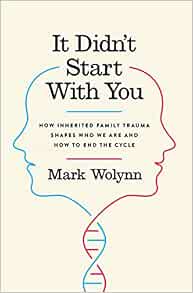
MentionedIt Didn't Start with You: How Inherited Family Trauma Shapes Who We Are and How to End the Cycle (*Amazon Affiliate link) (book)
Social Baseline Theory (National Library of Medicine article)
Emotionally Focused Therapy (EFT) (Psychology Today)
Polyvagal Theory (Polyvagal Institute)
ERP 261: How To Strengthen Your Relationship From A Polyvagal Perspective – An Interview with Dr. Stephen Porges
ERP 276: Understanding The Need For Both Self-Regulation And Co-Regulation In Relationship – An interview With Deb Dana
Evolve in Love (program)
Evolve In Love Discovery Session with Dr. Jessica Higgins (Acuity booking link)
Connect with Aubrey Aust****Websites: aubreyaust.com
YouTube: youtube.com/channel/UCozW2k08GkMQbjs1vyN_Fkw
Instagram: www.instagram.com/aubrey__aust
LinkedIn: linkedin.com/in/aubrey-aust-8b7744174
News Letter: aubreyaust.com/newsletter
Connect with Dr. Jessica Higgins
Facebook: facebook.com/EmpoweredRelationship
Instagram: instagram.com/drjessicahiggins
Podcast: drjessicahiggins.com/podcasts/
Pinterest: pinterest.com/EmpowerRelation
LinkedIn: linkedin.com/in/drjessicahiggins
Twitter: @DrJessHiggins
Website: drjessicahiggins.com
Email: jessica@drjessicahiggins.com
If you have a topic you would like to be discussed, please contact us by clicking on the “Ask Dr. Jessica Higgins” button here.
Thank you so much for your interest in improving your relationship.
Also, I would so appreciate your honest rating and review. Please leave a review by clicking here.
Thank you!
*With Amazon Affiliate Links, I may earn a few cents from Amazon if you purchase the book from this link.
Episode Transcript
Aubrey, thank you for joining us.
Thank you so much for having me. It's such a pleasure to be here.
Yes, and were just chatting and I'm impressed with just how willing you are to be in the space and talk about these very important topics as it relates to polyvagal theory, somatics, intimate relationship, attachment theory, and I know you're studying and doing your thesis and we're going to be talking a little bit more about relational safety and how that supports a feeling of more secure functioning intimate relationship before we do that and get started, where would you like to start as far as helping people to get to know you, how this became a focus?
Yeah, happy to give a little background on myself. So I'm an educator, I'm a speaker, and as you said, I'm currently completing my master's degree in relational psychology and philosophy at NYU. So my primary areas of focus are relational intelligence and embodied safety. And so the work that I'm doing it's really at this intersection of theory and lived experience. My academic path actually began in political theory because I was fascinated by these systems of power and desire on a structural level and how that impacted us. But over time, my attention started to turn inward, and I started to ask, How do these same dynamics that we're seeing on this macro scale play out in our most intimate relationships?
And how are we navigating connection, rupture, trust, care, and seeing how those played out in my personal life, and I wanted to gain the psychological background as to why. So it really comes from an interest in my own life. I feel as though I've experienced moments of profound love and also moments of misattunement or disconnection that left really deep imprints on me. And so I realized that we can know something intellectually, like why we get activated. We can know all the points of secure attachment. Right. But it's very different from actually feeling safe in real time with another person. And so that's what really brought me into this work. I wanted to
**“Understand not just how we love, but how we're growing in connection and how that manifests physically.**
Absolutely. So this is absolutely in alignment with all of the things that I think are so relevant. I remember. So I did my dissertation on conscious intimate relationships, and it was a qualitative study looking at themes of people who were practicing more mindfulness and awareness and bringing more of this emotional intelligence, relational intelligence, to the intimate space. And still, while I included the attachment research, obviously, this was so many years ago, almost 20 years ago, I feel like the attachment research wasn't as part of the conversation as it is now, and also the polyvagal and how it shows up in the nervous system. And even though I was studying somatic psychology, I still feel like there's this integration in these bodies of knowledge.
And all this to say, when I was working with clients, it wasn't until I started incorporating their attachment research that I'm like, this is what's juicing it, the nervousness. Because I have a client who's like, I have been in men's groups. I have been doing individual therapy and coaching with you. And, like, he's been doing the work, and when he gets activated, he does a lot of masking, for sure. So he lets his intellect ride. But the real time, as you're saying, what is felt in his body, he almost is not attuning to in himself, so he can't put it into practice. And just one other point to your description around how this became of interest. It's so funny, even in my.
So I had a separate master's and a separate PhD program, but my master's was in systems and family therapy. And I'm like, why don't our politicians, like, have a family therapist there to help negotiate? Because it's quite profound how these dynamics, these relational dynamics, and what's fueling it, how important that is. And when we don't pay attention, it's very difficult to resolve very complex issues. Or when the stakes are really high.
Oh, it's all intertwined and coming from what are seemingly wildly different worlds. And seeing it from this outsider perspective, my mind is blown every day that I'm like,
“Why are politicians not sitting down and meditating before they go in and make these decisions? Because we could all benefit from some nervous system regulation, let's be honest.”
Yes. Every single person. And I remember Deb Dana being on the show, and she's the, like, interpreter of Stephen Porges and all the work that she does to contribute, and she's like, in any given day, I am dysregulated, like, many times in one day. And so this kind of notion that we're supposed to always be regulated doesn't exist.
Doesn't exist.
Yes.
Yeah.
Okay, great. Well, on the topic of relational safety and what you're describing here, and how this may be different than emotional closeness, they're not totally unrelated, but also, how do you like to distinguish this?
Yeah, I'm huge on embodied safety. And what does that actually look like? What does that actually feel like? And so, as you said, we think about closeness. Of course, there's that emotional component to it or an intellectual component to it. Does this person get me? Do we understand each other? Do we communicate well? All fundamental pillars. Right. But truthfully, relational safety begins in the body. And so I'm really curious about that origin point. What does that mean? And how do we build that? And so it's that internal, often unconscious sense of, I can breathe around you. I feel safe here. I feel comfortable in this connection. And this is where polyvagal theory becomes so helpful because, you know, Stephen Poor just teaches us that our nervous system, we are constantly scanning for those cues of safety or those cues of danger.
And the process is called neuroception. We're picking up on things like tone of voice, facial expression, breathing patterns, and even the timing of responses before we have even had time to think about it. So we might not have even logically parsed out what this means, but we can feel it in our bodies, in every single conversation. And so even if someone says the right things, your body might still feel uneasy in a moment. And the opposite can be true too. So someone's presence or a grounded gaze or a gentle voice might be soothing, even if it's a difficult conversation. So, of course that emotional intimacy matters, but these subtle embodied cues that are telling our nervous system if it's safe to be here, is it safe to soften? Can I be vulnerable?
And that embodied feeling is the foundation of everything, trust, intimacy, even eroticism in our erotic relationships.
Yes. And this does take Aubrey, in my understanding, an individual connection to mind, body, that if we're operating, as you mentioned a lot through the intellect, or we are driving hard or grinding or hustling, as you were saying before we started talking, it has the propensity to pull us out of the present felt experience, embodied state. Would you agree?
Yeah, absolutely. And its social baseline theory teaches us that
“We regulate based on the people surrounding us. We are social creatures. And so it's about recognizing those relational ecosystems we're creating and figuring out how we want to build that co-regulation in our lives.”
Yes. And in addition to what you're describing around neuroception, one of the things that I loved in studying Susan Johnson's work and the research of EFT is that so much of our information, as you describe how social we are, is being transmitted through emotionality, which is often expressed in these physical nonverbal ways. That's why we say a lot of communication up in the upper 80s is nonverbal. And I so appreciate what you're describing and to wonder with you. This is for people listening because part of what this invites us to do is to. I think it's a difficult thing to pay attention to oneself and the shared space that's being co-created in real time. And so the more that we are in practice of recognizing, okay, where's my breath? Am I breathing up in my chest?
Or do my muscles feel tense, or do I feel relaxed, or do I feel at ease, like I could just kick off my shoes and let my guard down right, like these types of things really are important indicators. So not only is that a lot to pay attention to and slow down and really have some understanding and inquiry about. What I find people are challenged with is their relational imprints. So when we partner, it can be very confusing if something feels familiar. And while their system may be activated, if it replicates or mirrors something familiar, they might feel a connection to it. Although it may not be optimal.
Safe relational space 100%. And like you said, it's so difficult to one, operate with that level of self-awareness and two, bring that into a partnership. Right? We have 50 million things we are doing in a given day. I don't have the time or mental space to constantly be checking in and thinking, Oh, is my body tense right now? How am I feeling in myself? How am I feeling with this person? But suddenly, you know, those cues build up over time, and oftentimes we become aware of it when a line or a boundary has already been crossed. And that's where that resentment starts to build. So how do we tap into this without completely exhausting ourselves in the process? It does start with self-awareness.
At the end of the day, you can't co-regulate with someone else unless you know what's happening in your own body. So just start to get curious. You do not have to have the absolute checklist of every single thing that's going on with you. Even the pros. I don't even know who I'm referencing with this, but no one is that self-aware or attuned, right? That's like going to the gym and trying to deadlift 300 pounds on your first day. Just start to notice what happens when I start to feel cues of unsafety creeping in. Do I get tight in my chest? Is my voice speeding up? Do I go quiet? Because our bodies are constantly offering these signals, but we're not taught to listen to them. That's not something that is taught in the day-to-day, right?
Sure, I feel happy, I feel sad. We don't even have the full emotion or
“Most of us are not fortunate enough to get that education or the full emotional vocabulary to even begin to express what's coming up within us”
So building that somatic awareness is foundational. Step one. And then from there, couples can start to work to attune to each other. And that can be creating a ritual for checking in. That can be learning each other's nervous system cues, which, as you start to spend time with someone, you can start to pick up on how someone responds to certain things, how their Body looks around you, and what their body does in certain situations. And then, when you can start to ask what helps you feel safe when you're overwhelmed. And then start to engage those practices.
Like maybe it's something as simple as eye gazing or grounding touch or even just mindfully breathing together. And that can be so incredibly powerful. It's not an ultimate quick fix, but it's a tool that allows you to stay connected in those moments. Especially when things get bumpy. Because things will inevitably get bumpy. Right. Even within ourselves, no one is regulated 100% of the time. That's not how we function as humans. And so we need to first normalize rupture, knowing that's part of our individual day-to-day, our relational day-to-day conflict isn't the enemy. And how to stay with each other through that discomfort. Because that's where the real relational trust is built.
Absolutely. I'm so glad you said trust because I was just on various layers, feeling the importance of earning this trust or repairing the trust. As you talk about rupture, I think even trusting the body, so we may get. I'm recognizing there are many people, and I believe myself, I can raise my hand here too, that I have received certain body cues and sensations, and I overrode them. And it was later that I was like, I knew. I just didn't choose to listen, or I didn't want to listen. And really trusting that the body. And this is one of the things that I love about somatic psychology. It bypasses the intellect, the tendency to rationalize, minimize whatever stories we create that can take us on all different journeys away from what is very core. And so really trusting that relationship.
And I think that can get built over time. And then a second layer here is when people haven't, as you talk about coregulation and what opportunities we have, if people haven't had a trusting environment where coregulation was offered in early life, perhaps they don't feel safe to coregulate.
Exactly.
Do you want to talk about that for sure?
Yeah. Protective patterning is something that so many of us have inherited. Right. Myself very much included. That's how I got into this work. Because so many of us have learned to stay safe in ways that might no longer serve us. And this can show up as a lot of things. It can be hyper independence, it can be over functioning, it can be shutting down, avoiding conflict, or constant people pleasing. Hi, I'm guilty of it right here. Right. This is a pattern I'm trying to break. And these patterns, they were adaptive at one Point in time, they probably worked. They might have worked very well for you up until a certain point when you realize, wait a second, this isn't helping me. And as this builds up, it can get in the way of authentic intimacy.
But because they're so familiar, they can be so hard to recognize. And so it's protective patterning in combination with the fear of vulnerability, which is so real and so incredibly valid. Because building that relational safety means showing your vulnerabilities. It means naming your needs, it means admitting when you're scared and letting someone see those kinds of messy or uncertain parts that societally a lot of us are taught to hide. And that level of exposure can feel terrifying, especially if you've been hurt before in a relationship, then you know that can lead to misattunement.
“Even in the most loving relationships. We're gonna miss each other sometimes. We're not mind readers. But ultimately, this obstacle, it's rarely a lack of love within couples. It's the inability to trust love and that connection.”
And so this work that we are helping people do is helping that process of rebuilding and learning how to break down that protective patterning to get into a practice of love that serves both others and ourselves.
Thank you for naming how these protective, maybe even coping mechanisms, maybe some people would have that language help us function, and they have been adaptive and served us well, and we honor them. And also recognizing there's more opportunity to have a different experience. And that part of that path is acknowledging, oh, I am protesting. I'm getting into wanting to re-litigate what happened in hopes that my partner will be able to decode that and understand what my deeper need is or my fear is. And I know when I have done this work you mentioned terrifying, I mean, I can remember feeling like I am literally going to jump off a cliff. Like the sensation. I don't know if there's a net to catch me. I am interested enough to take the risk.
But I'm saying the very thing I don't want to say to the vulnerability. Like the thing that feels unlovable, the thing that feels unattractive, and those times that I was able to feel my significant other respond to me because of that clear vulnerability and signal. And when we talk about co-regulation, I'm wondering what you would say here because as we talk about how to co-regulate, when we haven't had consistent trusting experiences around that, perhaps what we're describing or you're sharing here around recognizing the coping tendency, the vulnerability that lies underneath, it's not until we access that. That perhaps our physical sensation can then become a little bit more on board to tell us what would be helpful, what we would need?
And to be listening around, would you hold me, or would you just sit side by side with me, or can you tell me a little bit around? How do we start to access the coregulation when the path has not been safe or trustworthy?
Absolutely. I think first, something that I want to point out is that if someone feels this way, you are not alone.
Yeah.
This is the experience that so many people have because we have built up a certain way in which we have found it is, quote unquote, safe to relate to others. That often involves a minimization of our own needs, of our bodily sensations, of what we internally know to be our capital “T” Truth, is how I frame it, but has been repressed by either societal scripts or how we've been expected to show up. So first recognizing that, yes, this experience, when you're first kind of awakening to it, can feel incredibly isolating. And I want to hold a lot of space and compassion for that and let people know. It is okay to feel that. And also that by getting curious about that and exploring this, you are on the step.
You are taking the steps to take back your own control and agency in this situation. And it's not an easy journey. Right. But it is so worth it because it's working on building relational intelligence. And it's something that we all need to do. Because this ain't in the school curriculum. No, it's really not. And so when it feels unsafe to explore those things, it's gaining the relational intelligence within ourselves and in our connections, learning that this is something we build. This is self-awareness, this is nervous system regulation attunement at a pace that feels slow and steady. Something that works with your nervous system, wherever you are. You do not have to launch into giving up your deepest, darkest secrets straight off the bat. Move at a pace that feels comfortable to you.
And it's putting in this work and just showing up consistently every day that leads us to the path of coregulation. And trust me, there is no graduating from this program. This is life. I feel like, especially, you know, in the self-help or personal development spaces, you so often see these gurus and incredible leaders in the field, and not to diminish their teachings or findings or anything by any means, but there's no like championship. You don't get a prize. This is a lifelong quest that we are all o,n and learning so much about ourselves in the process. And so it's that willingness just to show up if you are there, if you are listening to this podcast, you're doing the work.
Yeah.
And it's taking those baby steps. And first of all, congratulate yourself on that, because that's something that deserves recognition and praise.
Thank you, Aubrey. And I'm just appreciating a little bit of a meta comment here. Your tone of voice and your pacing. Even when we hopped on the call, it was a little rushed to get to our appointment time made it, but was a little rushed. And your slow, soothing pace. It's. I can feel my response when you're talking in a very soothing, calming voice. So I. I mean, I think you're demonstrating some of what you're describing here. It can be really helpful. I mean, think about it. If we've ever been in a situation and things are escalating in an interaction with someone, and someone intentionally slows down, and perhaps I think the word in polyvagal is prosody.
So this is more melodic, there's a bit of warmth, and some people would even say sing-song. It doesn't quite have to be that, but there's something in that tone and what's being expressed that somehow that. I mean, according to Gottman's language, that could even be a bid right there. Right. That's like I am intentionally trying to focus on: we love each other, we wanna understand each other, and I care about you. And there's a physical conveying of that, I think can start to transmit a different signal.
Yeah. And thank you for saying all of that. And I feel the same way. The conversation, you instantly helped me feel so at ease. And it's because we are giving each other the signals that we are safe in this conversation. So thank you for creating the space.
Yes, thank you. And you're welcome. And as you talk about just normalizing this and how the curiosity is such a key component, one of the things that strikes me in modern living, that I'll speak for myself, I have to override my cues if I'm tired and I didn't sleep well. My husband just had a. A deviated septum nose repair surgery and anesthesia, and he's still about a week and a half out, but still sleep has still been disrupted. I don't feel professionally comfortable canceling my meetings for a week. Right. I mean, I could, but that's not necessarily what integrity for me. So I think modern living, sometimes we are overriding cues, and to be conscious about that, and making choices about that, and how to say it's not like, oh, getting sleep never matters. It's like, oh, when I can, how do I rest? How do I make a point to get to bed early? These types of things. But just to note that in modern life, I think we often are making choices to override some of the body's needs, and I don't know a way around it currently, as far as functioning in modern life. And yet this is something that we're up against. And do you want to comment on that?
Yeah, 100%. Because it's, you know, especially in Western culture. You and I are both based in the U.S., correct? Hustle culture is central, and we often don't take enough time to slow down and listen to our bodies. But outside of the flaws of American capitalism, it's oftentimes life, period gets in the way.
“In relationships, sometimes we do have to put our own needs on pause to take care of others. If that's a consistent, repeated pattern, that's something we need to look into, maybe make some changes.”
Right. But it's also about that give and take in a relationship.
Yes.
And holding that complexity because it's not up there. Relationships are rarely black and white, let's be honest. It's making space for all of the nuance and the life that comes up in our day-to-day and balancing our own personal needs with the realities of being in a relationship. And what does that mean? And I loved what you said about doing so consciously because sometimes there will be times where we're saying, oh, I need to kind of suppress this need to conk out on the couch and take a three-hour nap. Right. Gotta get stuff done. We need to take care of someone. I need to show up in this way and realize, okay, maybe I can take some time for some self-care later tonight.
How am I going to get my needs met by whom, when? And being intentional about that when we can, while still holding a container for the flexibilities that come in the day-to-day.
Yes. Thank you. And I love that you acknowledge that life is not static and that while we may feel the sense of quote, unquote, balance, I say that because balance is such a, like, proverbial thing. Like, I don't think that it's an achievable state. To your point about getting to this arrival point, that we're going to be tested, we're going to have challenges, we're going to have ways in which we are accessing other layers inside ourselves, and things get activated, and we're under-resourced. And so we may regress and feel some things that we felt like we already had a kind of orientation around. So that's just part of the reality. And I love that you're normalizing. The other thing I want to comment on here is the. When we talk about curiosity and I would love to hear your point on this.
As I mentioned, I judged the vulnerability as shameful or unlovable. And when you talk about being interested in the body sensation or the emotional experience, I think it is a really common thing to have labels for it, especially when we've gotten feedback. So even yesterday in session, I have this lovely couple, and they are such amazing humans and have parented, I think, in really optimal ways. And one of their children is, I don't think, has ever been really officially tested or diagnosed, but I think is in the neurodivergent spectrum, and they're in a place of estrangement. And the dad was talking about him. His whole life has been hateful. I mean, he's coming from a place of frustration because his adult child has done some things that have felt really hurtful.
And I was like, could we possibly?
Just hold that there is a way in which he was experiencing his reality and didn't have a way to either process orient. And the intensity level looked like hate, but it could have been just an intensity. And last thing I'll say here is it didn't. Like it didn't start with you or. Do you remember Wallen's book about the intergenerational trauma?
Yes.
And he talks about the very. I mean, he's got some very severe examples of people who are demonstrating intense psychological experiences and symptoms. And what I loved about it is like the invitation to get curious. And actually, while we may label that as ugly or something, underneath it's like, wow, this does make sense. And it is really important, like material to work with for healing and repair. Do you want to comment on that?
Yes, I love that. I really encourage people and couples to sit with those. I'm using my air quotes again, quote unquote, ugly emotions. Yeah, the stuff we don't want to face. And yes, it's important to sit with our feelings, feel the feelings. Right. But aside from that, what is coming up from that in terms of needs, desires, and what's underlying there? Because that's a cue for clarity. Especially when I've been studying a lot about resentment and what people think of when they think they're entitled to something in A relationship, and the difference between expectations and entitlement. And so when you have an expectation, I want this, so I should have it. Well, if you expect a relationship, does that automatically make it entitlement? Because I want something, the other person should give it to me. When they can't, resentment builds.
And so that resentment doesn't feel good. Right. We don't like sitting with that. We want to push it away. But what is that telling us about our deeper needs, our desires, what's in alignment in the relationship, what's not? And that can be such a good cue to tap into the deeper desire. And most often it's wanting closeness, it's wanting connection, and something is coming up that's getting in the way of that. And so, sitting with the ugly stuff, it's not fun. I'm not gonna lie to you. It is such great data. Once we learn to wade through that and see what the underlying need there is or what's really revealing about how we're experiencing this situation, and what we can learn from it?
Mm, I love that. I so agree with you that the interest of how, like, if I got the thing that I wanted, what would that allow me to feel? Getting a deeper understanding of what the core need or attachment is? Longing. I mean, in my experience, it's so liberating because if I have to work so hard to persuade or plead my case or build the evidence to support my argument or whatever it is to negotiate, that just feels so much more liberating to get in touch with real, clear need. And really, when I've done that, it's not even so hinged on the other person. I'm like, oh, okay. Like, this is a need, and I would love to have an agreement with you if you're interested in showing up. And also, there are things I can do to give myself what I need.
Get going.
Tell me.
I'm laughing because I recently got so in deep. This was me at fault in a discussion with a partner on how I was so in my head about something, and this, this situation, I'm like, I don't. I don't see the way out of it. I feel so blocked. Yada, yada. And went on this, like hour hour-long walk, and by the end it came to me, wait a second. I'm really just desiring closeness with you. Can we spend some more quality time together? What would that look like? And realizing I could have just shortened that entire thing to about three sentences. Don't get me wrong, that was an important emotional journey for me to go through.
But it's so funny even seeing this in myself because I. I can so easily counsel someone else through it or speak to it at a theoretical level, and then, in practice, still see these things come up. It's the human experience. Right. It's how we are living it every day and recognizing those underlying needs. And it does require tapping into ourselves first.
Well, and I think this is what we're up against. And I feel like there are a lot of people who can relate to what you described. I can. And that it's not fully conscious that as we're talking about nervous dysregulation or activation, our nervous system in nanoseconds is feeling and responding to threats.
Yes.
And to the point about protection and the need for protection, for safety, and also the point about vulnerability. We're not as humans walking around. That's not how we're wired.
No.
We're not walking around with our bellies exposed. And here's my vulnerable part. And let me clearly indicate and have that fully accessible. We actually have to work. And I would love your thoughts on this, since this is something you're actively studying around how the nervous system, I feel like, is often the main driver when things are off track or there's tension, and that we can't bypass that.
Yes. And it's there for a reason. Yes. It's there to protect us. And so it's that fine line of recognizing patterns, things that have been ingrained, seeing if those are serving us, and then basing our reactions on that. That's not simple work to unwire patterns that might have been there for years and years. Yes. And so those cues, when things come up somatically, listen to them ask, get curious about what your body is telling you in those situations. And it starts with that conscious awareness of how I am coming into this space? What is my underlying need here? When we feel the ugly stuff coming up, and then acting from that point of awareness to be able to navigate conversations with greater clarity. Like the personal example I just gave. I was dysregulated going into that conversation. I had a day.
I was bringing all of my personal drama into that and projecting that onto someone else.
“As we move through life, we are not going to take the time to regulate for every conversation. We all have moments where we lose that grounded center. And those moments are great refreshers where we're able to wake ourselves up from that and say, how can I come back?”
What am I really craving here? And so, realizing to recognize those cues, asking questions, what they're trying to get us to notice, and then moving from that point of awareness is the key to proceeding forward.
Yes. Well, I want to comment on just the wiring also, that our brain tends to automate.
Yes.
So, as much as we would love to just coast in our relationships, how lovely that would be. Right. And that's not. We're human beings, and we're all having our experiences. And that includes the threat response and, as you said, the rupture repair process and relationship. And also, can you give people an example? Because you're really instructing what is useful. And also, I'm aware socially, this can feel really awkward to slow down and say, Can you. Can you give me a second? Or I'm. I'm not. Like, one thing I do is I'll just notice and I'll speak about what I'm doing. So it's kind of that meta. Like I talked about earlier, meta thought, or oh, I noticed that my voice is rising. Or I noticed I feel really tight in my body.
I want to slow down and just have a second to kind of tune in. But that's not typically how we talk. So, can you give people other examples? There are times by just more options.
I love this question because there is no societal space in most of our conversations to say, One moment please, I need to regulate. We love that.
I need to close my eyes and tune in.
Not gonna work when you're giving a presentation in front of 500 people. Right. Start small. There are lots of tiny physical cues you can do that no one has any idea that you're doing. Even just pressing your fingers together, ground your feet into the floor, and feel your body. That's something you can do on the micro level. No one else has any idea that you're doing. The second thing you can do is situate yourself in the room. See if you can just do a slow scan left to right with your eyes, ground yourself in the space. And then if you are in a conversation or someone says something that just throws you off your tracks, you can feel yourself start to get dysregulated. This is kind of a power-dynamic thing that I like to do. Turn the attention back onto them.
When you don't have the space, or you feel like they don't. You don't have the safety to say, hang on, this is, you know, I'm feeling not great in my body right now. I need a minute to regulate, take a breath, and just say very calmly, What do you mean by that? Or ask them a question about the question that turns the spotlight off of you. Don't assume any ill intent on their part, but just bring the spotlight back to them for a second because that gives you a moment to check in with yourself, calm yourself down internally, and maybe gives you more context around something that you might be spiraling about that doesn't even exist.
Getting more information.
Exactly. Knowledge is power.
“Building up that security within yourself, within your environment and what you know can be natural things to help you do that nervous system calming work that does not require you to take the mindful moments that we would love to have, but often are not afforded in everyday conversation. “
No kidding. And you mentioned it, but I want to also emphasize it. Just the power of the breath. Right. It doesn't have to be something socially super visible.
Right?
Right. Just noticing the breath and doing one's best to deepen the exhale and seeing if there's a little bit more expansion posture again. Okay. I love all these suggestions. Well, I know we're winding down, and we haven't. I know we're talking about relational intelligence, but I would love for you, if you want to weave this in around how this connects and how this helps build relational intelligence and supports long-term intimacy.
100%. Relational intelligence is a practice; I feel like everything we're talking about here circles back to a lifelong practice. So these skills, no matter where you are in your life journey, when you are working on them, they will serve you for the rest of your life. It's an investment in yourself and all of your relationships, family, partnership, coworkers, and anything.
“We are relational creatures, right? Relational intelligence helps build those relationships. So when we are navigating connection, when we're navigating conflict and closeness, building relational intelligence allows us to do so in a way that honors both ourselves and the other.”
And as we've said throughout this conversation, it's not something we're born with. It's not something that we're taught in school; it's something that we build.
And so these components of self-awareness, nervous system, regulation of attunement, these allow us the ability to repair rupture without collapsing into shame or into blame. And when we hit those lows so normal, that is what we have been taught to do. That's how we've been taught to feel or internalize this. When we experience the rupture that naturally we will all experience it relationally. And so this practice can I stay connected with myself while staying connected to the other and holding that complexity. And it's something that we do over and over again. And the practice is in showing up. And it's a skill set that is hopeful because no one is just naturally good at this. It's something we can all learn and develop.
And so then this allows relationships to become not just places of comfort, but are fantastic, but also places of growth. And that's so exciting and invigorating. And when we can create those conditions, both internally and relationally, we are all able to show up as fuller, more honest versions of ourselves.
Yes. Thank you. I so agree. And would also just. I'm imagining you would agree that, as we are in the practice of this, we are afforded an experience that is embodied, that we get to reference, that hopefully will feel motivating and encouraging. Yes, please. More of that, please. Even if it took a journey to arrive there or cultivate it. And some people do have, I think, optimal environments where they're being modeled real relational intelligence. And also, many of us didn't have it modeled in our society. We weren't taught in school. Absolutely. To your point. And also, they're maybe may be moments where a teacher responded to us or a coach showed up for us or a friend responded like that, we can call up and reference and resource that builds to this relational understanding and our kind of attachment system.
And the more I mean this is what I'm so grateful that the research teaches us that we are always adding and updating our experiences. Like this is the neuroplasticity of relationships. Right. That we get to continue to update what we know and be in real advocacy and agency around it. Yeah.
Absolutely.
Wonderful.
Well, how do people get in touch with you? I love how articulate. And you describe these principles so well. What would you like to encourage for people who want to get to know you and your work more?
Absolutely. Yeah. If you'd like to stay in touch, you can follow my work at Aubreyaust.com. I'm currently working on one and with couples. If you want to do more nervous system healing work or talk about how to explore safety within your personal or intimate relationships. And then also you can find me on Instagram at Aubrey__aust.
Great. Well, thank you so much for your time here today with us.
Thank you, Jessica. This was such a pleasure.
The post ERP 499: Regulate to Relate: Building Embodied Safety in Love — An Interview with Aubrey Aust appeared first on Jessica Higgins.