Here we are at the end of another decade. It’s also the beginning of a new one. The Roaring Twenties has already been taken…what will we usher in? The Raucous Twenties? The Restorative Twenties? The Run-for-the-Hills Twenties?
I confess I struggle to keep this last enticement at bay. Not from a Flee-for-your-Life mindset, but rather because there is JUST. SO. MUCH. HAPPENING OUT THERE. And I don’t know about you but I need to take a break now and then to digest it all.
Which is why I go into retreat every year. (Want to do your own retreat? Click here for your free guide.) When life speeds up, It’s more important than ever to make time to slow down. Tending to your state of mind is part of taking care of your mental health. It can also help you tap into your creative process.
But what if we did this sort of review on a regular basis?
When you make a practice out of your creativity, you have a powerful tool for developing self-awareness. The creative process is how you digest experience. You take the raw material of your life—your relationships, cultural issues, dreams, visions, hopes, losses—and portray them in another light, from your perspective. In order to do that there has to be an awareness of that perspective. You can’t write a book if you don’t know what you want to say.
But then you create the work, and send it into the world. This is where the path can get tricky.
discouragement + the Creative ProcessEarlier this year I published my second book, Toward a Secret Sky: Creating Your Own Modern Pilgrimage. This book has not —yet— made the big splash that I might have hoped. It’s an interesting thing to put yourself out there and have no response. Sure, there have been kind souls who write and tell me they appreciate the book, but from my publisher’s perspective, it’s a flop.
The launch was not even lukewarm. Cold, dead fish.
So, full disclosure: I got discouraged. I had hoped the book would guide me seamlessly to the next stage of my evolution as a teacher, counselor and writer. I got hit with a case of the Why Bothers.
But then I realized that I made a mistake.
I let the market’s response--or lack of it--influence the quality of my practice. I am a writer. I practice writing. I let the market dim my flame and have not been writing consistently.
And to be honest, I get it. The book that I put out into the world was my publishers book. It was not my book. Don’t get me wrong, I’m grateful to have had a publisher, and for the experience. But creating for the market is different than creating for the (and from the) higher self. If we can call it that.
The higher self has no agenda for works that we create. The creation itself is the healing. So there is a quality of a pathless path when it comes to creative process.
What is the pathless path?It's a path that is not pre-described. it doesn't mean no path. It means taking responsibility for your own journey rather than going on an organized group tour. Nothing wrong with group tours if that’s your thing. But it’s not a creative act.
It’s writing the book that longs to be written, regardless of what the publisher wants.
The pathless path relies on discipline. You discover which practices resonate with you and then you do them—day in and day out. You practice tuning in and listening for the direct download. Practices that bring you back to the present moment help you tune in and be available for that download. Meditation, pranayama (breath-work), moving meditations such as yoga, Tai Chi, walking meditation provide the framework for the inquiry. And so does the act of creating.
The more I create, the more I understand how making art is a practice of working with the mind.
I‘ve been studying with great artists at the Art Students League in Denver recently. One of the teachers gave us this instruction: try to rest in not knowing what mark you will make on the canvas while you are making a mark. It's counterintuitive! Or it's all intuitive.
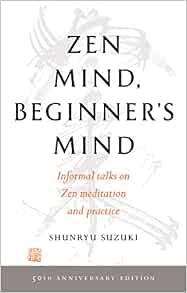
You seek that state of mind or rather that position of mind and try to act from there. It is like The Beginner's Mind that Suzuki Roshi wrote about in his book Zen Mind, Beginner's Mind. Only with creative process you practice acting—with a brush stroke, or a sentence— instead of merely seeing.
So this pathless path approach means to keep going even when you have no idea where you’re going. You’re in the woods and need to carry on, even if you lose the path.
creation is our birthrightHow can you rest in not knowing and make your mark anyway? You might succeed, or you might fail. It’s a scary place to dwell. But that’s where the authentic stuff comes from. Not from trying to predict who wants what or how many sales you’ll make. Authentic creativity comes not despite, but perhaps because of the despair of continually not getting it right.
Why do we feel the urge to create? Where does that urge come from? Writing and speaking is how we connect. Communicating is a creative act, and we all long to connect.
Ready to embark on your own Creative Pilgrimage? Check out my book Toward a Secret Sky: Creating Your Own Modern Pilgrimage to get started.