After enduring a couple of bouts of writer’s block, author and journalist Blake Snow has learned not to sit down with the intention of writing a whole book.
Instead, he breaks a book into chunks, accomplishing one chapter at a time. Talking to Published Author Podcast host Josh Steimle, Blake says: “For any of your listeners out there wanting to write a first book, it is a big challenge.
“But one thing that did help me, despite my writer's block, was this whole concept of don't try to write a book, write one chapter, and then the next chapter,” he explains. “Try to break it up into bite-sized things you can accomplish. That was way easier for me to do with the second book than the first. But that advice, I think stands regardless, and for anyone that's interested in publishing a book, you have to break it up.”
Top Takeaway: Your Book Must Engage And Interest The Reader
Blake says that if your book isn’t engaging and interesting to a reader, it simply won’t sell. He says the hallmark of an amature writer is to think that a business book needs to be stuffy and formal.
No, he says, explaining that entrepreneur-authors should write the way they talk, in a way that’s interesting for people to engage, listen to, and interact with.
Blake has written as a journalist for half of the top 20 U.S. media outlets, including CNN, Wired, and USA Today. He also advises Fortune 500 companies on their content strategy. He’s a blogger and author of two books: Log Off: How to Stay Connected After Disconnecting, and Measuring History: How One Unsung Company Quietly Changed The World, which is the story of National Instruments, a company you probably haven’t heard of, but which has had a global impact on lives big and small, and is explained in the episode.
Despite being a professional writer, Blake has experienced a couple of debilitating episodes of writer’s block, the first one when he was working on Log Off. The struggle lasted for about eight months until it finally dawned on Blake that the successful approach to writing was breaking a book into bite-sized pieces.
“Instead of writing a book, it was: ‘Let's write 1000 words today’. So anyone can do that, and you can break things up,” says Blake. “What I found with writing two books—as with most all things in life—it really is about momentum.
“If you can keep that momentum, you won't stall out as long as I did, or as hard as I did in my first book. So it's all about that momentum, creating bite sized chunks, just sticking to it and not being afraid to fail.”
As an experienced writer, Blake says: “First and foremost, I write for myself. If I know that I don't like it, I'm pretty sure no one else is going to like it. And so that I use that as a litmus test of like, How good is my current writing, the page right in front of me?”
This isn’t guidance for a new writer, who should instead work with an editor to determine the quality of their writing. However, aftertime, everyone who writes a lot can learn to quickly determine what’s good and what their audience wants to read.
Finally, Blake encourages all entrepreneur-writers (or ghostwriters) to read a good range of classics, from Mark Twain and Herman Melville through to Alexander Dumas and Victor Hugo, as well as Charles Dickens or Thomas Hardy. Novels such as theirs, says Blake, will simply make you a much better writer.
Links
BlakeSnow.com
SUBSCRIBE TO PUBLISHED AUTHOR PODCAST
If you enjoyed this episode, don't forget to subscribe. And if you want to spread the word, please give us a five-star rating review and tell your friends to subscribe, too. We're available on Apple podcasts, Spotify, and everywhere else you listen to podcasts.
And if you're an entrepreneur interested in writing and publishing a nonfiction book to grow your business or make an impact, visit PublishedAuthor.com for show notes for this podcast and other free resources.
Youtube
Facebook.com
Linkedin.com
Instagram.com
Josh Steimle
Josh Steimle - LinkedIn
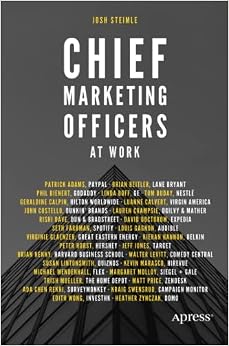
Josh Steimle’s book: Chief Marketing Officers At Work