Episode Recap: Before graduating Curtis balanced a part time job, marriage and still created awesome school projects. During his summer and spring “breaks” he would take awesome internships creating designs for digital theater displays. Upon graduation he was offered a job at our professor’s studio which many of us envied. Curtis talks about what it takes to be so awesome!
Improving Brain Efficiency Curtis is an expert at balancing work, school and relationships and still manages to create great work. He says his “secret” is following through on deadlines and not waiting to start projects. It help improve your brain time efficiently because you don’t have to wonder if you are doing the right thing at the right time. It’s hour by hour time management.
“Artists and dreamers wait around for inspiration and the rest of us just get to work.” – Curtis’ Senior Seminar
The other significant thing Curtis points out is getting your ideas out of your head and into the world as much as possible. “If you are waiting for some sort of inspiration to hit you before you start working, you are already too late in most cases. …[even if you only have 5 minutes] it’s the process that leads to inspiration. You won’t conjure anything out of thin air…”
When Distraction Happens When a designer wants to try 50 iterations of something that’s where they can loose time. Although this can serve as self exploration there is a time and a place for everything. In order to make a deadline a designer should use their time similar to the way an artists uses time to draw a live figure. Figure out the time requirement and use the time to decide which lines are most important to draw first.
Learning by Observation One of the best things about working at an agency where you are surrounded by talented people is that you can see the way your co workers solve problems. When you have that chance to observe others it’s like a little piece gets added to your own repertoire for the decision making process.
Something that is different than one would experience in school is that you are met with real hard deadlines for clients that are counting on you. These situations force you to build trust in your co workers and their abilities to make decisions with their strengths. When you are able to trust them you can finish the project more efficiently.
Disagreement over solutions is a natural part of the process and you want that level of interaction and back and forth. Because as an individual designer you are not going to be able to think of everything. It’s critical to have someone be able to tell you “No” and why.
Relating Education and Past Jobs to Design Work Before working at Green Acres Design as a project manager, Curtis worked in account management for an IT services company. Learning how to schedule things, talk to clients, manage teams and deadlines… all of those skills came into play into his new role.
As far as college education Curtis used the projects to solve problems based on the design briefs and professor’s direction rather than from his own personal inclinations. This way he was able to create his best work and allow himself the opportunity to experience the design world as it is in most cases.
As designers we should be aiming to improve communication problems – not creating a commentary for the world as fine artists do. Studio art can influence design but you need to consider the right solution for the client.
Unique Internships Lead to Unique Opportunities One of the things I always wondered in high school is, what exactly to designers DO? The more I travel along this road the more I find that there are SO many opportunities. Curtis found a unique internship designing digital stage setting for the Pasadena Playhouse. Working within this new context with a new medium helped Curtis expand his abilities to solve design problems.
“Getting you hands dirty in everything” helps you be able to direct the overall design process rather than one little aspect of it. The director has to keep in mind the audience and the story that’s being told at all times. Then the solutions will become obvious.
It’s valuable to try new things even if you aren’t planning to make a career out if it. It’s a hard lesson to learn but very valuable. There is value in knowing your strengths as well because you want to be able to communicate when you can complete a project within your skill set and charge appropriately.
“A lot of growth comes from trying to do something you’re not sure you can do.”
When you are trying new things you may discover something that you want to develop as a specialty for the future.
Getting “Stuck” in A Specialty I expressed my fear of getting “stuck” in a specialty as a designer to Curtis. He then gave a great analogy about Saul Bass who although did many things was mostly know for animated movie sequences. He makes a great point that although you may be known for one thing, you are rarely stuck or confined by that thing permanently.
One of Curtis’ other specialities is being attuned to the design field and the latest happenings. I reference a great blog post written by Curtis: Logo Larceny. In this post Curtis shares his experience submitting a drawing for his school’s mascot – only to loose to another kid who traced the familiar Gonzaga University mascot.
In retrospect Curtis is interested in how this mascot has actually been copied many times, he says, as a testament that someone was able to figure out exactly what a school’s bulldog mascot should look like. Therefore, it is worth copying.
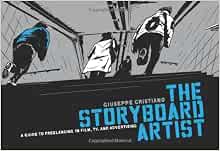
This conversation reminded me of a book I had read called The StoryBoard Artist, where the author explains that he traced for most of his childhood before attempting to draw a free handed figure. He believed tracing helped his proportions as a free handed drawing artist.
Most art schools would never tell you to learn by tracing but it seems the brain and hand learn better that way.
Finding Inspiration Staying attuned to life is important. Curtis finds that many things are analogous. What works in graphic design often works in music, in relationships, and life in general. It’s also about allowing yourself to live in the world and in the moment.
Final Words When it comes to hard skills like your knowledge of Photoshop, your design concepts, or any other hard skills – your employer is going to be interviewing people with all of those same hard skills. So, it’s important to know yourself – what do you bring to the table. You should know if you are any good at working with others. Do you show interest in helping the business with things other than what you are tasked with on Monday morning? It’s the humanist skills that are understated most times.
Connect with Curtis http://www.curtisbaileydesign.com