Meet Renee Rogers, PhD in the 1st part of her interview. Our self-concept evolves in a series of stages throughout our lifetime. Knowing these developmental stages can help you navigate your life more effectively. Renee has a PhD in human resources and organizational development from the University of Texas at Austin and a master’s degree in applied linguistics from San Francisco State University. She has served in executive level positions in HR for over 25 years and is a certified professional coach. Subscribe to YOUR TRUTH REVEALED weekly videos on YouTube - https://bit.ly/2MjsfdK ➤RESOURCES Free Worksheet: https://www.YourTruthRevealed.com Mastering Leadership book: https://amzn.to/2MHKxnE The Leadership Circle: https://leadershipcircle.com/ Store: https://bit.ly/2H99Iwl ➤ SUMMARY What are developmental stages? Developmental stages are a way of understanding the journey we make as human beings from childhood to adulthood.
Development is moving from one stage of development to the next by integrating at a deeper and higher level of consciousness. A person's self-concept evolves in a series of stages throughout their lifetime. Such evolution is driven alternately by two main motivations: that of being autonomous and that of belonging to a group.
What are Roger Kegan’s 5 Stages of Development?
Stage 1: Childhood - Purely impulse or reflex-driven. Stage 2: Adolescence/Self Sovereign - The sense of self is ruled by their needs/wishes. The needs/wishes of others arerelevant only to the extent that they support those of the person. The person and others inhabit two "separate worlds."
Stage 3: Adult/Socialized Self - The sense of self is socially determined, based on the real or imagined expectations ofothers. Stage 4: Adult/Self-Authoring Self - The sense of self is determined by a set of values that they have authored forthemselves (rarely achieved). Stage 5: Adult/Self-Transforming Self - The sense of self is no longer bound to any aspect of themselves or theirhistory, and they are free to allow themselves to focus on the flow of their lives.
What are the Polarities in Each Stage? The stages are a deep personal journey of exploration. Each stage marks a movement toward the opposite polarity, and the 2 polarities are:
Individual - It is true that we are separate human beings and autonomous. Collective - At the same time, we are social, embedded, and whole entities that operate in a larger context. Stage 1: Childhood - collective Stage 2: Adolescence/Self Sovereign - individual Stage 3: Adult/Socialized Self - collective Stage 4: Adult/Self-Authoring Self - individual Stage 5: Adult/Self-Transforming Self - collective
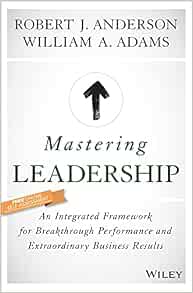
How does the Model of Leadership Relate to the 5 Stages? Robert Anderson and William Adams wrote a book called Mastering Leadership. They describe how Robert Kegan's stages of development are integrated in their universal model of leadership. A very large component of a leader’s effectiveness is the stagethrough which the leader is operating.
Adolescence/Self Sovereign - Egocentric Adult/Socialized Self - Reactive
Nearly 75% of managers, 40% effective. Tend to be autocratic and controlling. Unquestioned loyalty to the leader, not the organization, is the priority. Most adults do not progress beyond this stage.
Adult/Self-Authoring Self - Creative
Only 20% of leaders, 65% effective. We begin to open up our life and leadership less on what we assumed was expected of us as we grew up and more out of our own deeper sense of personal purpose and vision. *Transitioning to this stage is the major transition in adult life and leadership. We configure a self from the inside out for the first time.
Adult/Self-Transforming Self – Integral
Only 5% of adults, 90% effective. Capable of of leading amid complexity. Holds a larger vision of the welfare of thewhole system and becomes the architect of its future.