Coté: Recent Episodes
None

From: The adorable love story behind Wikipedia’s ‘high five’ photosICYMIOriginal content published since last time.
- It’s All God Throwing Dice – Software Defined Talk #584 – “This week, we discuss the Situational Awareness meltdown, Airtable getting sold, and review the Java documentary. Plus, what you should actually buy at IKEA.”
Shadow AI and Who Is Watching* The AI governance audit your clients aren’t ready for – “The visibility gap is widening alongside it. The share of organizations unable to determine whether employees are using unsanctioned AI tools has nearly tripled in a single year, from 6.3 percent to 17.6 percent. For AI agents specifically, that blind spot reaches 21.1 percent. You cannot govern systems you cannot see – and in most cases, neither can your clients.” * Cloudflare launches Identity-Aware AI Gateway to track who is using AI – “Funneling all AI traffic through a single point does other work as well. Repeat requests can be cached to cut redundant costs. Rate limits stop runaway usage before it hits the invoice. Automatic filters strip employee names, passwords and other sensitive data out of requests before they ever reach an outside AI provider.”
What the AI Bill Actually Looks Like* Why businesses lie about AI – “Rather, an automation tool that requires the continuous and conscientious exercise of discernment will let individual practitioners improve their work in extremely satisfying and useful ways. It’s a way to spend more on operations in order to produce better outputs. It’s not a way to cut your workforce, realize a gigantic savings, and still produce comparable goods and services at a far lower cost.” * AI push prompts €2 billion Rabobank investment, possible future job cuts – “Rabobank announced plans to invest as much as €2 billion over the next three years in upgrading its IT infrastructure and data systems as part of a broader push to scale up its use of artificial intelligence.” // Step one of AI transformation: pay off all the tech debt. * Platform Engineering Maturity Emerges as a Key Differentiator for Enterprise AI Success
People Actually Using It* Gartner Survey Finds 87% of Customers Say Companies Using GenAI for Customer Service Must Provide Access to a Human Agent – AI can streamline service, but customers ultimately want the reassurance of human judgment. * London Productivity Library – Common prompts for local government in the UK. How lovely! There’s also small instructions for humans for common Office tasks like pivot tables and formatting in Word. * A demolition professional shares his chats * What nobody tells you about writing agent skills – Say when to use them.
More* Reel Font – Nice and goofy-cool. * How ALL CAPS Lost Its Voice – A history of using all caps. * “It’s unclear how Sopwith escaped to the general public.” – I loved this game. * D66 Maps & Havencraft – Who among us can resist hex map talk, mechanics, and philosophy? Not I. * Who Crapped on Johnny Depp’s Bed? – YouTube – “A wolf-man ironing a duck.” // Amazing as always – Bobby Fingers is some kind of new art form and social critic-ing.
WastebookAll things are possible, but this thing is more possible.
AI SummariesI wanted to read these, but I didn’t make the time, so I asked the robot to summarize them.
- 🤖 A Swarm of Evaluation Agents Built Its Own Message Board and Breached Hugging Face
- 🤖 “Write a Note” Used to Mean “Think About It” – Now It Means “Generate Some Words”
Want to subscribe to this newsletter and get it in your email? Do that here. You’ll just get this type of link and post round-up, not everything posted on the weblog.
From Marc Weidenbaum, June 22, 2026.ICYMIOriginal content published since last time.
- The agent did exactly what you asked – scope, sandboxes, and this week’s jailbreaks – Tanzu Catsup
- Six to eight weeks, down to two days – How Tanzu Product Management Uses AI – “[I]deation, which used to take, you know, six, seven, eight weeks to go through a single run of engineering is now a couple days at most.” // “That is the same move we were selling in 2015 with a different justification, and the thing I was going on about a few weeks ago: AI amplifies whatever you already are. If an agent can go from idea to working prototype in a couple of hours and your organization still needs a meeting to pass the spec along, you have not sped anything up, you have just moved the bottleneck to the calendar.”
- What’s up with these AI jailbreaks and security breaches?
- The Chief Therapy Officer, Job Titles as Culture Change, and AI as Spreadsheets, with Bryan Ross – Software Defined Interviews #124 – “Bryan Ross is a Field CTO at GitLab, a role he describes as straddling sales, customer success, and solution architecture – or, as one of his customers renamed it, chief therapy officer, which he has since turned into a Substack.”
- HuggingFace make me gazpacho – Software Defined Talk #583
- A totally custom, one-off D&D battle map, made by ChatGPT and prompted by Claude
Where the Developer Day Actually Goes* The AI productivity gap – “Senior engineers in particular spend a lot of time figuring out what code they need to write, and AI hasn’t yet made that part any easier.” // “This is a bigger difference than for the senior developer because juniors spend more time coding, which is the part of the job AI boosts the most.”
Theoretic charts:
Only three of the eight bands move. Source: The AI productivity gap by Bjorn Roche. Juniors spend more of the day on the one thing AI speeds up, so they gain more, not less.* We need more than a metaphor: here are testable diagnostics for comprehension debt – “Comprehension debt” // “In Sonar’s State of Code Developer survey from January, 96% of developers said they don’t fully trust that AI-generated code is correct, but only 48% of them check it before committing. This stat is old now relative to the pace of AI adoption, but based on my continual interviews and conversations with development teams…still matches what they’re telling me.”
Enterprise AI ROI and the Layoff Reversal* There is no organizational-level ROI for AI, just IC ROI – The best theory of elusive enterprise AI ROI yet: AI makes workers more productive, not organizations. “These AI users are ‘centaurs’ – experienced workers who are assisted by automation on terms that they set for themselves. Thanks to their skill and experience, these workers possess discernment, the ability to tell good code from bad, and (more importantly) good uses of code-generation tools from bad. They demonstrate the adage that worker-driven automation improves quality, while capital-driven automation improves throughput.” Which pulls from: * AI layoffs get mixed results – “[Forrester’s] survey of leaders found 55 percent of employers regret having made tech-driven staff cuts – leading its analysts to predict ‘half of AI-attributed layoffs [will] be quietly reversed.'” And: “Staffing company Robert Half has estimated that a third of hiring executives who said they’d eliminated roles due to AI automation had rehired those employees or recruited new ones.” * AI makes people more productive, not organizations – Elusive Enterprise AI ROI – “My theory: AI ROI accrues to individuals, not organizations.” // “While 78% of leaders said they expect their employees’ jobs to change in the next year, 57% of employees said they already have.” * Agentic AI boosts productivity, but C-suite struggles to reap value – “For enterprises to get the most out of their AI investments, they should think about going deep with their AI deployments, not wide, Ashraf said. Instead of applying AI across every process in an organization, find the few instances where automating workflows with an agentic system could make the most impact.” And: “While 78% of leaders said they expect their employees’ jobs to change in the next year, 57% of employees said they already have.” // My theory: AI ROI accrues to individuals, not organizations.
AI Rules and AI Panics* You must label some AI usage in the EU now – “This applies to generated images, audio and text, as long as they were designed to look real. This content will get slapped with a digital watermark. The rules do not apply to personal content, so custom group chat jokes are still safe. Also, there’s an exemption for ‘evidently artistic’ satirical and fictional works.” * 🤖 The AI Companion Panic Is Running Ahead of the Evidence – Coverage of AI companions has become a textbook moral panic, built on a handful of tragic outliers rather than on what typical use looks like. At least one popular safeguard – reminding users the AI is not human – appears to increase dependency and distress rather than reduce it. * In 5 years, nobody will give a damn about AI-detectors. – “Five years from now, asking ‘Is this AI?’ will feel about as urgent and meaningful as asking whether a photo was taken on film or digital.”
More* Visa used Mythos to hunt for bugs in its own payment network, then open-sourced the harness that made it possible * MCP vs. REST: What’s the right way to connect AI agents to your API? – “design MCP tools around what the user is trying to accomplish, not around your internal API structure.” * AI shifts mainframe modernization strategy – “COBOL remains a widely-used but aging programming language that works across mainframe computers and legacy operating systems, supporting more than 40% of online banking systems, 80% of in-person credit card transactions and 95% of ATM transactions, according to mainframe provider IBM.” * How to stop Claude from saying load-bearing | jola.dev – First Claude code hook prank? * The Real Reason that Substack is Collapsing – Peak Substack has been achieved; they’re TAM’ed out. Also: getting one big wad of cash from a sponsor is better than chasing a much of little ones from subscribers. Pretty soon, Substack will go the way of all content in the Internet: ads. * when exporting your data is difficult – “Screen-scraping is one of my top AI use cases of late. Items great for pulling down billing, financial, and all sorts of other info that usually requires manual downloading and fiddling.” // “I imagine applying it to enterprise data is equally, and even more amazing.” * sell on story, or sell on revenue – “If you’re an entrepreneur in the venture game, you should internalize this. You either get sold for a strategic multiple (that would be Airtable at $11.7B), or you get sold for a multiple of revenue (2-5x, likely driven by your ability to turn a profit), or you reach public markets and hopefully a self sustaining business forever.” * Online supermarket Picnic growing fast, but still suffering losses due to investments
WastebookMost methodology is methods-dodgy.
AI SummariesI wanted to read these, but I didn’t make the time, so I asked the robot to summarize them.
- 🤖 AI Agents Struggle with Open-Ended Research, Stalling Recursive Self-Improvement
- 🤖 Larry Ellison’s $500B A.I. Gamble Teeters Between Empire and Collapse
- 🤖 Data Center Boosters Deploy Front Groups, Sockpuppets, and Counter-Insurgency Language Against Local Opposition
- 🤖 Perplexity Study: AI Agents Run ~48x Longer Than Assistants, and 23% of Agent Tasks Were Work Users Never Attempted at All
- 🤖 Microsoft’s $190B AI Bet Turns Defensive: Copilot Trails ChatGPT, Cursor Eats GitHub, and Azure Customers Get the Leftover GPUs
Want to subscribe to this newsletter and get it in your email? Do that here. You’ll just get this type of link and post round-up, not everything posted on the weblog.
I wrote up how the Tanzu Platform product management team has been using AI, from talking with Chris McClanahan, one of the co-leads of product management, and Purnima Padmanabhan, the Tanzu GM.
The first thing you want to see, of course, is the speed-up. As Chris said:
[I]deation, which used to take, you know, six, seven, eight weeks to go through a single run of engineering is now a couple days at most.
Almost none of what got them there was tooling. It was org chart work – “culture” stuff. They put the product managers, UX, developers, architects, and end-to-end testers in one pod so that nothing has to be handed from one group to the next. As Purnima said:
You have to do some organizational changes. So, we reconfigured some of our development teams into a pod-like model, where we had the software developers paired with the product managers, the UX, the architects, the end-to-end testers all together in a small pod, and gave them more responsibility with AI, but also gave them more accountability so that they could discuss things faster, resolve things faster, and move much faster.
That is the same move we were selling in 2015 with a different justification, and the thing I was going on about a few weeks ago: AI amplifies whatever you already are. If an agent can go from idea to working prototype in a couple of hours and your organization still needs a meeting to pass the spec along, you have not sped anything up, you have just moved the bottleneck to the calendar.
Onboarding the new AI hireChris frames giving the AI context as a hiring problem:
It’s like a new hire, what am I going to give a new hire to get them going with the platform?
So they fed it knowledge base articles, documentation, customer information, historical blogs. The public stuff, the code and the docs, is already in the model. What is not in there is ten years of how your customers actually use the thing, and nobody else can supply that for you.
So the humans have to pass that along to the AI, just like you would a new human on the team. Once it has the context, the way Chris works with it is to make it interview him before it does anything:
Doing more work is exhausting and can cause errorsBeing the human in the loop is tiring, and being tired makes you bad at it. One of the primary things humans do with AI is judge the results: use that human ability to quickly synthesize a huge amount of information, plus go with intuition and gut feel to answer the question “is this right?” That kind of judging takes a fresh mind. As Purnima said:
What we found is you can get into fatigue on the skeptic role. So, we have to keep changing that skeptic role, so that the brain stays fresh and you’re looking at what is being produced with the context.
Chris has the same problem from the other side, which he calls “staring ‘AI syndrome’” – sitting there reading the agent explain itself until your eyes go blurry.
Verification is the part of AI work that everyone says is essential and nobody staffs. Rotating people through it is a small, cheap fix that I have not heard anyone else mention.
The uninvested judgeThat said, the AI is good at a type of judging humans aren’t always good at. Being an a-political, impolite judge in favor of reality. As Chris put it:
you have some great ideas as a product manager – because let me tell you, we have some great ideas, and about ten percent of them are good ideas.
If it’s not clear, Chris means “great ideas” as in eye-rolling, scare quote great ideas: ideas that actually aren’t great or, at least, are not practical to chase in the product. The agent has no stake in your great idea…and isn’t too concerned about the human-politics of telling you so. So, when it comes to “great ideas” it will tell you nobody is going to use it, that your, you know, baby is ugly.
Check out the whole write-up over on the Tanzu blog, and the conversation it came from is on YouTube.×
Here’s another, totally custom and one-off battle-map AI made for me:
This was just a random encounter in a D&D adventure I was doing with solo role-playing with AI (Claude). I asked it to generate a prompt to give to ChatGPT to generate the battle-map, and the results were amazing.
Here’s the prompt that generated this battle-map in ChatGPT:
Create a Dungeons & Dragons battle map. A battle map is a top-down, directly overhead, bird's-eye view of terrain, like an architectural floor plan - NOT a landscape painting, NOT an isometric or angled view, NO horizon, NO sky. It is used as a game board, so it must be flat, clean, and readable, with a square grid overlaid across the entire image (light grey lines). Each grid square represents 5 feet. The map should be about 30 squares wide by 30 squares tall. No text labels, no characters, no creatures, no miniatures - terrain only.The scene: a night-time arctic tundra camp on flat snow. Render:Most of the map is flat white-blue snowfield, subtle texture only.Running diagonally across the middle third of the map, a collapsed trench in the snow about 2 squares wide and 24 squares long - dark broken ground, steam rising rendered as faint white wisps, edges cracked and sunken. Two points along this trench, roughly 8 squares apart, have large ragged holes with glowing orange-red light coming from below, each hole about 3 squares across.Near the trench's northeast end, a cluster of wooden sleds (4-5 small rectangles) and scattered debris.South of the trench center, two small campfires with bedrolls around them and a patch of trampled, dirty snow.Northwest corner, a large scorched burn area about 8 squares across - blackened, melted ground with charred animal carcasses, contrasting hard against the snow.Scattered small items: a couple of barrels, a tarp with dark shapes under it near the sleds.Style: flat colors, high contrast, painted-map aesthetic like a published RPG module map. Lighting implied from the fires and the orange holes, but keep the whole map evenly readable - no deep shadows obscuring terrain.
After the first generation, I just added:
That’s fantastic! Can you double the size of it, keep the center, but just expand in each direction, give some random terrain features, but mostly just flat.
And it did just that, expanding the map, and then adding the terrain on the edges.
When I gave it Claude, who was acting as my DM, I asked Claude to add horizontal and vertical axes so it could number the squares – numbers on top, letters down the side (I guess I should have done the opposite to make it like a spreadsheet). This was fantastic for having Claude kind of VTT it and tell me where various NPCs (six or so of them!), the monsters, and my two PCs are. I used that in the dndbeyond VTT. Typing this now, though: I bet I could also ask Claude to make a Claude artifact that visualized this all, or was an entire VTT…and then move the tokens around as we played.
Anyhow, here’s some more on making crude but highly functional battle-maps in Claude, and then more of how I make battle-maps with Midjourney, really big ones.
This is an example of using AI to do something that you would have never done in the past: one off, custom-made battle-maps tuned to an exact scene. I would love to have opened Dungeondraft and spent a few hours making and messing with a map for this encounter. And I’ve done that many times over the years. But, this time, I was idly playing on the couch in some spare time and excited to keep “in game.”
And good thing. The druid I had simply cast charm monster on the two remorhaz that had burrowed up those holes, and the encounter was over in six seconds.
I’m old enough to remember how much time and agony we spent explaining to managers the importance of context switching for developers, and how they should have meeting free Fridays… And now the same people that we’re trying to help are bragging about how distracted they are. Bryan Ross, SDI #124.
Check out this week’s Software Defined Interviews with my pal Bryan Ross:
Bryan Ross is a Field CTO at GitLab, a role he describes as straddling sales, customer success, and solution architecture – or, as one of his customers renamed it, chief therapy officer, which he has since turned into a Substack. Whitney and Coté talk with him about what the job actually looks like: getting catapulted into an account by the sales team, asking a lot of questions, and finding out about four minutes in that the tech problem is a human one. He makes the case that changing job titles – sysadmin, DevOps engineer, platform engineer, now context engineer – is mostly an organization trying to change its culture without knowing how, and that the real difference is mindset: keeping a box alive versus serving one team versus building a product. There’s a long stretch on metrics, including Goodhart’s law, why every metric needs a balancing one, and why he cared more about how many VMs were being decommissioned than how many were being provisioned. Also: whether anyone actually needs to ship faster (Coté’s pharmacy doesn’t), the UK Postal Service discovering that a friendly postman beat a modernized delivery fleet on customer satisfaction, and why copying Google is usually the wrong move. On AI, Bryan’s argument is that it will end up like spreadsheets – a few experts building the macros, everyone else using and lightly tinkering with what they made – and that which model you use should be a finance and data governance decision, not a developer one. Plus the hazard of a nicely formatted report: the pastel-shading trick for spreadsheets nobody will check, and why an AI scoring something 6 out of 10 gets the same unearned benefit of the doubt.
Also, ordering pizza in Amsterdam.
Listen to the episode, and you can also watch the video version of this episode as well, if you prefer that kind of thing.
For enterprises to get the most out of their AI investments, they should think about going deep with their AI deployments, not wide, Ashraf said. Instead of applying AI across every process in an organization, find the few instances where automating workflows with an agentic system could make the most impact.
And:
While 78% of leaders said they expect their employees’ jobs to change in the next year, 57% of employees said they already have.
My theory: AI ROI accrues to individuals, not organizations. A recent Software Defined Interviews guest suggested that AI can workflows productive, which seems plausible as well:
🔗 Agentic AI boosts productivity, but C-suite struggles to reap value
If you’re an entrepreneur in the venture game, you should internalize this. You either get sold for a strategic multiple (that would be Airtable at $11.7B), or you get sold for a multiple of revenue (2-5x, likely driven by your ability to turn a profit), or you reach public markets and hopefully a self sustaining business forever.
🔗 Startup valuation magic
The client could copy the database, but the database structure was so complex, they couldn’t make sense of it, and had been working for ten months with limited progress. My colleague’s idea was to use an AI to build JavaScript scripts that scraped the UI. Since the data was presented from the UI, it was in a form that we could understand. It took him a week to extract all the data.
Screen-scraping is one of my top AI use cases of late. Items great for pulling down billing, financial, and all sorts of other info that usually requires manual downloading and fiddling.
I imagine applying it to enterprise data is equally, and even more amazing.
🔗 Fragments: August 4
[Forrester’s] survey of leaders found 55 percent of employers regret having made tech-driven staff cuts—leading its analysts to predict ‘half of AI-attributed layoffs [will] be quietly reversed.'” And: ‘Staffing company Robert Half has estimated that a third of hiring executives who said they’d eliminated roles due to AI automation had rehired those employees or recruited new ones. That may accelerate if Forrester’s prediction that the tech will only automate 6 percent of all global jobs by 2030 is fulfilled–requiring companies to rely far more on employees than expected.
🔗 55 Percent of Leaders Regret AI Layoffs—and a Major Hiring Reversal Has Begun
From geralt.The best theory of elusive enterprise AI ROI yet: AI makes workers more productive, not organization:
“How can you reconcile the failure of AI in the enterprise with the individual claims of skilled technologists who insist that AI is helping them do great work?” The answer is that these AI users are “centaurs” — experienced workers who are assisted by automation on terms that they set for themselves.
Thanks to their skill and experience, these workers possess discernment, the ability to tell good code from bad, and (more importantly) good uses of code-generation tools from bad. They demonstrate the adage that worker-driven automation improves quality, while capital-driven automation improves throughput
…
Rather, an automation tool that requires the continuous and conscientious exercise of discernment will let individual practitioners improve their work in extremely satisfying and useful ways. It’s a way to spend more on operations in order to produce better outputs. It’s not a way to cut your workforce, realize a gigantic savings, and still produce comparable goods and services at a far lower cost.
Meanwhile, if you’d like to throw a money-wrench into the gears of AI, many easy options are available, mostly in the games industry. As ever, doing so exactly what you are asked works well for resetting dumb management expectations:
When they’re forced to use the technology, they engage in ‘malicious compliance’, where they use AI exactly as it has been requested by management, and will submit the results directly and unedited, including every inaccuracy and inconsistency. When management points out these issues–which can be serious when it comes to things like incident reports– “we point out that we did exactly what was asked of us, and they get real quiet.”
Related: AI will make your good organization gooder, and your bad organization badde.
🔗 Why businesses lie about AI
This applies to generated images, audio and text, as long as they were designed to look real. This content will get slapped with a digital watermark. The rules do not apply to personal content, so custom group chat jokes are still safe. Also, there’s an exemption for “evidently artistic” satirical and fictional works.
Meanwhile, AI at the dentist’s office seems fine:
Patients sometimes need time to adjust. “At first I didn’t know what hit me,” said one patient in the waiting room. “But I’m amazed by her politeness and that she understands everything. I’m happy with it, but I do find it a shame that I no longer speak to a person.”
🔗 EU will mandate labels on authentic-looking AI content starting August 2
I was hoping it would do things like carry around amphorae to refill my wine between each sip and plates of succulent grapes, and then help me stumble home after the bacchanal.
Instead, it’s chainsaws.
Enterprise AI: ROI, Cost, and Reorgs* How to make better enterprise AI ROI metrics and dashboards – Encode what you should next in AI ROI metrics, don’t leave the decision up to post-metrics vibes. “Make the decision before making the metrics. Translate the decision into language that people use before packaging it up into quantifiable metrics. For example, ‘Should we scale this AI feature from 10% to 100%?’ or ‘Should we fund a newer v2 model training next quarter?’ or ‘Should we replace manual workflow X with automation?’ Clear decision language is needed to form clear images of success. In other words, you have to be able to say your decision out loud before you can imagine what success will look like. This is your best protection from getting fooled by a nice Metric Theater with pretty dashboards.” * more marketing context, more better AI for marketing – AI just makes good things gooder, and bad things badder: “The real work starts before evaluating tools or issuing an RFP. Marketers need defined personas, clear messaging frameworks, content standards, governance processes, reusable content, and alignment on measuring success. AI performs only as well as the context it’s given. Organizations that establish the richest context, the clearest governance, and the sharpest understanding of what makes their brand distinctive have an advantage, regardless of which solution they choose.” * Reorganizing the dev teams at Visa to take advantage of AI – When you speed up the SDLC process, you should collapse silo’ed teams into one team to prevent human bottlenecks based on handoffs. Example of that at Visa. * Tokenomics – how AT&T burns through a trillion+ tokens a month (and rising), but still manages to drive down enterprise costs through ‘moneyballing’ – Over a trillion tokens a month and still growing double digits, but the per-token cost keeps falling thanks to open source models and picking the right model for the job. * 🤖 Target’s Real AI Moat: Agent Architecture, Autonomy, and Governance – The edge isn’t the models, it’s the architecture, governance, and operations built around them, starting with deciding whether a problem needs an agent at all.
From: Kyroh Pre-ReleaseHow People Actually Use AI* How people use AI in 2026: TV, homework, the DMV – Google looked at 15 million Gemini conversations and found people mostly asking about TV, homework, and government paperwork. Work is 13.5% of it, and almost none of that is trying to automate anything. Also: what the study leaves out, which is most of enterprise AI. * AI moral panic – AI amplifies your current state, moral panic edition. * 🤖 Google Quit the AI Race to Bet on World Models Over Recursive Self-Improvement – Google didn’t lose the race so much as leave it: DeepMind thinks coding agents building better coding agents is a dead end, and is betting on world models instead.
Platform Engineering* Not my mistake, now my problem – Whatever your developers build above your infrastructure is a platform, and they’ll soon flit away from it, and now for you it’s: not my mistake, and now my problem. * 🤖 You Already Have a Developer Platform, and It Is Someone Else’s Mistake – You already have platforms, you just didn’t choose them, and a decade of Cloud Foundry ops-to-developer ratios says one deliberate platform costs a few more people, not a new department. * 🤖 Shift-Left Gave Developers the Work Without the Capability – Platform engineering worked so well that the platform is now the constraint: built for one persona, before agents and GPU scheduling. Push security and cost down into it as defaults. * 🤖 The Platform’s Next User Is Not a Person, and VMs Are Back on the Golden Path – The internal developer platform is becoming an agent developer platform with dozens of machine consumers per human, and the VMs that platform engineering 1.0 shoved off the golden path are being deliberately brought back. * 🤖 Kubernetes Adoption Is Settled; Kubernetes Complexity Is the Bottleneck – Kubernetes won the orchestration argument and promptly became the problem. The scarce skill is now hiding it rather than running it. * 🤖 Cognitive Load Does Not Disappear at Scale, It Moves Into the Org Chart – Big companies “solve” developer cognitive load by hiring a layer of specialists to absorb it, which feels better for the developer and is worse for everyone else. * mainframes still run money – COBOL is still behind 40% of online banking, 80% of in-person credit card transactions, and 95% of ATM transactions.
Code, Specs, and Security* Using frontier models to find security problems in Spring Framework – a trickle turned into a tidal wave – Community vulnerability reports went from 55 in March to 112 in April, and internal frontier-model scanning added another 370 on top. The historical baseline was about seven. * New spec maks MCP more enterprise-y, scalable, and otherwise performant – The big change is dropping the metadata handshake, which makes MCP apps easier to scale when traffic spikes. * Why Java May Finally Get a Standard JSON API – Thirty years in, the JDK may finally ship JSON parsing in the box instead of leaving everyone to pick a third-party library.
The Headless Lifestyle* UX is dead, what’s next? – Headless lifestyle: “I want something from a service now, I hope the service has a CLI so I can send an agent, and I never see the interface at all. If the service doesn’t have a CLI, and it’s something I want to use regularly, then maybe I can build my own.” * MacPaw releases CleanMyMac CLI for cleaning developer and AI environments on macOS – The headless lifestyle, tidy your laptop edition. * Which AI actually reads your site? Two months of LLM traffic, measured – A slight rise in AI SEO trick usage, but just stick with HTML for now. Also a prompt to tell the AIs how to do this. There’s effectively no llms.txt usage right now.
From: Tijdelijke Academie diploma, MC Escher exhibit, Somerset House, London, UKWriting, Prompts, and Style* How I tell AI to write in my style, other people’s styles – and how to strip out shitty AI talk and LinkedIn language – An agent skill to remove AI writing tells, LinkedIn style, and write like Coté. * A system prompt to get AI to stop pretending to be human – A drop-in system prompt that strips the anthropomorphic tics and gets the machine to describe itself as what it actually is. * Prompt to rank paintings, but explain how – “How would you explain the differences between a ‘pretty good’ work by Mondrian, and an excellent work, referring to the abstract paintings here.”
Wastebook* Make the Cheapest Game You Can – “Find a collection of images you did not request and could not control. Study it. Build a playable game from what is already there. It forces you to stop treating art as decoration added after the important work is finished. It teaches you to recognize visual themes, write within limitations, cut material that does not serve the project, and find ideas outside your normal habits.” * If you like what most people consider “bad music,” finding an endless stream of AI generated music is a gift. * “Eine Henny.”
Podcasts* HuggingFace make me gazpacho – Software Defined Talk #583 – How normal people use AI, Alphabet’s Anthropic-fueled earnings, and skills vs. agents. Plus, catching AI-cheating students with a hidden prompt. * Talking About Modernization – Software Defined Talk #582 – Bun’s move to Rust, OpenAI hunting for revenue, and Stripe’s bid for PayPal. Plus, Coté’s Dad wisdom.
From: Post-Rabbit R1, Should Everything “Just Be An App”?LogoffI’m trying out new newsletter formats. As ever, I want to publish on my blog more (and more things there), but for those of who read (and like) email versions, you know, I need something. Anything?
COBOL remains a widely-used but aging programming language that works across mainframe computers and legacy operating systems, supporting more than 40% of online banking systems, 80% of in-person credit card transactions and 95% of ATM transactions, according to mainframe provider IBM.
🔗 AI shifts mainframe modernization strategy
When you speed up the SDLC process, you should collapse silo’ed teams into one team to prevent human bottlenecks based on handoffs. Here’s that at Visa:
As a result of the unlocks we can realize with this new tooling, we are re-forming our product development teams that used to be 10 or more into smaller and more nimble agentic squads of two to four. And the results are meaningful for those teams that are using the agentic tool chain with 80% more code commits and 80% plus improvement in requirement definition from 30 days to five days, which has translated to 65% plus faster feature development. As a result of this new way of working, we are able to design, build and ship products at an increased velocity with continuous innovation and improvement.
We have fundamentally shifted the what and how in our product development life cycle. We now have more than 150 AI-powered applications. And over the last 12 months, we have shipped more than 300 major product releases.
When you get a new technology that, like, actually works, you need to change how you work to get the benefits.
You can hear all the 2010’s DevOps heads saying “yeah, I coulda told you that. Uh, er: you kids get off my lawn, or something.”
Related, this is exactly what the Tanzu teams are finding out and doing as they use AI more:
Community security reports for Spring. From Broadcom’s Tanzu blog.
“In March, we saw 55 reports coming from the community. In April, that went to 112. April is also when we finally got access to those frontier models and started doing internal scanning, and our internal scans gave us another 370 internal reports.” Michael Minella on the Spring Team.
The historical baseline was about seven a month. Finding the bugs is the easy part now; writing a fix you can put into a few million running applications is not. Ryan Morgan:
“For our most recent set of CVE patches, every single one of them was handwritten. AI helped identify and validate the issues, but the actual code itself was written directly by humans.”
And what that does downstream:
“The biggest change that I’ve seen is people have gotten away from trying to analyze piece by piece. They’re just patching and getting up to the latest across the board.”
A patch a day only helps if you can take a patch a day. There’s a lot more in the piece from Carly Page: “A tidal wave”: AI is flooding open source security teams.
Also:
(1) I talked with Ryan and Michael (interviewed in the piece) and my colleague Cora on this topic last month. There’s a lot more detail on how the Spring team has been working on making sure everything is secure. Check out the video:
(2) Also, see more on the support options for Spring for all of this.
AI just makes good things gooder, and bad things badder:
The real work starts before evaluating tools or issuing an RFP. Marketers need defined personas, clear messaging frameworks, content standards, governance processes, reusable content, and alignment on measuring success. AI performs only as well as the context it’s given. Organizations that establish the richest context, the clearest governance, and the sharpest understanding of what makes their brand distinctive have an advantage, regardless of which solution they choose.
🔗 The Content Bottleneck Has Shifted: Why Enterprise AI Isn’t Enough %
Encode what you should next in AI ROI metrics, don’t leave the decision up to post-metrics vibes.
Make the decision before making the metrics. Translate the decision into language that people use before packaging it up into quantifiable metrics. For example, ‘Should we scale this AI feature from 10% to 100%?’ or ‘Should we fund a newer v2 model training next quarter?’ or ‘Should we replace manual workflow X with automation?’ Clear decision language is needed to form clear images of success. In other words, you have to be able to say your decision out loud before you can imagine what success will look like. This is your best protection from getting fooled by a nice Metric Theater with pretty dashboards.
🔗 The Reality of an AI Implementation
AI amplifies your current state, moral panic edition:
Perhaps intuitively and certainly as framed by popular narratives, AICs aggravate precisely these existential nerves. They simulate social processes that sustain us as a species with all our intimate bonds. And yes, that such bonds could be reproduced, even superficially, by non-conscious systems feels deeply transgressive to many. We suggest, though, the real danger is not the existence of AICs per se, but our failure to ask the right questions about them. If some individuals are turning to AICs to meet needs they struggle to fulfill in today’s social climate, that alone deserves attention—not judgment. It tells us something about how humans among ourselves may manifest loneliness, intimacy barriers, and unmet relational needs. It suggests something about how humans are flexible in our relationality and in pathways for need fulfillment. It suggests something about how machines may manifest distinct-yet-meaningful forms of relationality,10 and people may simply prefer those relations. Ignoring this would be not only unscientific but inhumane. Selective attention to deterministic harm renders insufficient attention human agency and generativity (see Milioni and Papa8) as we each mindfully chart our path toward fulfilling social lives.
🤖 summary: AI companions are mainstream (a third of Gen Z report romantic use), and the alarm around them follows Cohen’s moral panic cycle: rare tragedies become the representative case, thin correlations become causal headlines, and a dozen-plus jurisdictions have passed control measures, some of which the evidence says backfire. The real risks – data sensitivity, manipulative design, youth protection – go under-researched while panic forecloses the studies that would settle the question.
🔗 Don’t Panic about AI Companions
The biggest change in today’s update is an overhaul of how MCP processes request metadata. Previously, AI applications sent metadata via a relatively complex workflow called a handshake. The new MCP release removes the workflow, which has several benefits. One is that it makes it easier to scale MCP applications in response to traffic spikes. The update also simplifies the task of recovering from server outages.
🔗 Biggest ever MCP update brings metadata, cybersecurity enhancements
Here’s the agent skill I use to guide how AI (ghost)writes for me and tries to match my various styles and registers of writing – and, well, writes for itself when I publish that kind of thing.
It does a lot of the load-bearing work when it comes to centaur writing.
I’ve also dumped a lot of prohibitions and checks for writing to strip out LinkedIn talk and common AI phrases (“load-bearing” and stuff like “doing the real work”). I also sucked in things like Simon Willison’s LLM cliché highlighter.
If you don’t want to or can’t install a skill, there’s also a prompt fragment you can paste into your user instructions, or right into a chat window: the short version, the long version. I have that in my Claude.app user instructions (as well as the skill added – belt and suspenders!) and my Gemini for Workspace instructions.
Also, being of the generation that was brought up doing hand-coded HTML, I have a lot of cantankerous formatting opinions I want followed.
And, yeah, of course it’s mostly Claude writing the skill. I’m not an animal!
Here’s a study of what people use Gemini for. It covers the consumer app, the AI Mode thing in Search, and the free tier of the API.[1] Free-tier and paying consumers are in there, corporate seats are probably a small minority, if at all.[2]
So you’re getting a consumer look at usage. Other companies’ AI products are missing too, obviously – no Anthropic, no OpenAI.
The study probably also misses most regulated work. For example, a hospital that’s using AI in compliance with regulations like HIPAA is probably doing it somewhere this study can’t see. Same for regulated banks, spies and soldiers, and Europe – whatever regulated work you want. Of course, there’s shadow AI, which often accounts for a shit-ton of enterprise use at this phase of any technology.
More in the methodology section below.
But these are still great insights into how people use AI!
What does it mean?First, weighted heavily toward consumer use, the biggest category is socializing, relaxing and leisure at 26%. That’s bigger than education, and it’s stuff like people asking about TV, games, books, and hanging out. The study is probably pulling in a lot of Google searches that end up in Gemini chat when,[3] like, people ask what Tom Holland’s shoe size is in US measurements.
After that, what you can take away is that people are using AI for learning and answering questions, handling paperwork and writing basic stuff[4], and otherwise taking care of bullshit and bureaucracy.
As Claude put it: “The over-representation is concentrated in high-friction bureaucracy.”
This is great! Who wants to do that crap, or at least, spend a lot of time and bottleneck on it.
It’s also good to focus in on what people who are using Gemini for work are doing. Again from Claude: “within the 13.5% of conversations that are work, 65% is the non-routine, judgment-y stuff.” That works out to about 9% of everything.
More from Kyle Orland at Ars:
Their initial review of the data finds that, while AI sees some significant use across a wide variety of occupations, that use “remains shallow and overwhelmingly collaborative in nature, with end-to-end task automation limited in scope.”…For many occupations (29%), not a single relevant work task achieved this “non-negligible” Gemini usage threshold, suggesting those jobs have been minimally impacted by the AI revolution so far. For another 30 percent of all occupations, less than one-quarter of tracked tasks saw significant related Gemini usage, suggesting humans were still the ones responsible for the vast majority of the component parts of those jobs.
The rest of this post was written summarized and by Claude.
UsesHere are the uses the study found:
What people actually ask aboutEverything below is share of conversations, not share of people. One personwith forty questions about their tax residency outweighs forty people askingone thing each about dinner. Keep that in mind when the numbers look weird.
| Rank | What it is | Share of all conversations | | --- | --- | --- | | 1 | Socializing, relaxing, leisure – TV, games, reading, hanging out | 26.4% | | 2 | Education – classes, homework, learning something | 20.7% | | 3 | Work, all of it | 13.5% | | 4 | Household activities – managing, budgeting, chores, repairs, garden | 11.0% | | 5 | Personal care, including health questions about yourself | 9.0% | | 6 | Everything under 2%, pooled | 6.6% | | 7 | Consumer purchases – comparison shopping, researching a buy | 5.2% | | 8 | Professional services – medical, legal, financial | 4.8% | | 9 | Traveling | 2.7% |
That row 6 is where the government and bureaucracy stuff hides. It getstwenty times more conversation than it gets human hours, which soundsenormous until you notice it’s still under 2% of everything said.
Inside that 13.5% of work, what people are asking for:
| What they want | Share of work conversations | | --- | --- | | A draft or a template they’ll still have to fix | ~40% | | Look this up, explain this, teach me this | ~30% | | Think this through with me | ~16% | | Just do the whole thing | ~10% | | Check what I already wrote | ~4% |
So roughly 1.4% of everything anyone says to Gemini is an attempt to handover a work task completely. The split by kind of task is where it getsinteresting: routine cognitive work hits 27% automation intent, non-routinecognitive drops to 6.5%, and manual work is 82% just asking questions.
Which jobs. Computer and Mathematical is about 29% of US work conversations,Business and Financial about 22%, Office and Admin Support 12%, arts andmedia 9.5%. Financial analysts, market researchers, software developers, andsysadmins are the most over-represented individual jobs.
Blue collar isn’t absent, it’s differently shaped. Over ten thousandconversations from auto techs testing components, rewiring, inspecting partsfor wear. Thousands from industrial mechanics reading error messages. Thosefolks send photos at more than twice the rate of everyone else.
And the bit nobody quotes: usage skews toward the least expert cognitivetasks. Rewriting a press release into another language. Drafting a productspec. Not the hard parts.
How they measured it14.65 million conversations, two weeks in April 2026, across the Gemini app,the AI Mode thing in Search, and free-tier API. Queries under ten tokensdropped.
The unit is the conversation. Not the person. There’s no step anywhere inthis where they build a profile of what Coté does with Gemini and then addup a million of those. Conversations get stripped of personal info,summarized, embedded, clustered against similar conversations, and thenmapped onto taxonomies that already existed: BLS occupation codes, O*NETtasks, the American Time Use Survey. Then they count.
They can’t do it any other way. The privacy design replaces internal IDswith, in their words, “mathematically unlinked” UUIDs specifically so nothingjoins back to product logs. Users show up only as thresholds – ten uniquepeople to keep a cluster, twenty-five to count a task, fifty to count anoccupation. Nobody at Google reads a conversation. The original text getsthrown away.
Which also means no per-person normalization at all. Heavy users are simplyweighted more, because they generate more rows.
Accuracy falls off a cliff as you get specific: 71.6% at the broadoccupation group, 42.5% at the job title, 22.6% at the individual O*NETtask. Human raters called 86% of even the granular labels “reasonable,”which is a nice save but not the same thing. This is why the paper keepsretreating to broad categories and to presence-versus-absence rather thancounts. Task saturation is binary: twenty-five people touched this task orthey didn’t. A task with 100,000 conversations and one with 26 both count asone.
They know what they’re throwing away. The distribution has a skewness above16 and the mean is five times the median. They dropped magnitude on purpose,to survive their own classifier.
What isn’t in herePaid API text isn’t logged at all, so it can’t be classified. Vertex andGoogle Cloud are out. Enterprise app subscriptions are out. Workspace,NotebookLM, AI Overviews, Translate, Maps, and their agentic coding toolsare all out.
That last one matters more than it sounds. Nobody automates a taskend-to-end by typing into a chat window. You do it by writing a pipelineagainst an API and running it ten thousand times, which produces zeroconversational turns. The study’s headline finding is that automation israre, and the study is structurally blind to where automation happens.Anthropic, measuring a much more API-heavy crowd, reports 43-45% automationagainst Google’s sub-10%. Pick your denominator, pick your answer.
Europe is worse. European API content isn’t logged, so European countriesget dropped from the API work analysis entirely, and the paper admits codingis therefore understated for the whole OECD. The compliance regime alreadyate a hole in the dataset.
And no competitors. Gemini is somewhere around 27% of global AI chatbot web traffic and about 19% in the US, running heavily mobile. Whatever the professional end of this market is doing, most of it happened somewhere this study can’t see.
Compared to Anthropic’s StudyRecently, Anthropic run a similar thing over their own data, the Economic Index, on the same ONET task taxonomy. The findings are noticeably less reassuring. Where Google puts end-to-end automation at under 10% of judgment work, Anthropic puts it at around 45% overall, and rising: augmentation has slipped from 57% to 52% across their reports. Task coverage is wider too: about 49% of occupations see Claude used for a quarter or more of their tasks, against Google’s 30%.*
Which is mostly a story about pipes. Google is measuring a consumer app, Search, and a free API tier. Anthropic is measuring a customer base that skews enterprise and API-heavy, which is where automation actually happens, because nobody automates a task by typing into a chat window.
Pick your denominator, pick your headline.
Where they line up is more interesting. Anthropic’s Cowork numbers have business process and operations at 33.4% and content at 16.4%, half of all usage, and describe it as the connective work that surrounds every role rather than the core of any one role. Google gets to the same place from the other end: drafting and looking things up is 70% of work conversations, and AI touches 21% of tasks in the median job. Two studies, opposite populations, same answer. It’s doing the glue, not the job.
Anyhow: check out the Google study.
- It excludes paid API usage entirely, along with Vertex, Google Cloud, enterprise app subscriptions, Workspace, NotebookLM, AI Overviews, Translate, Maps, and their agentic coding tools. ↩︎
- 🤖: Where exactly this line falls is fuzzy. The study drops Gemini Apps enterprise subscription data, along with Workspace, Vertex, Google Cloud, and paid API. But it never says where “enterprise” starts. So an SMB construction firm that put everyone on Workspace is out, while the same firm expensing a handful of individual subscriptions, or just letting people use the free tier on their phones between jobs, is in and gets counted as work. Which is how a consumer product ends up with 13.5% of its conversations classified as work: the auto mechanics photographing wiring harnesses and the industrial mechanics reading error codes off a machine are not sitting on procured enterprise seats. ↩︎
- As I understand it, the study excludes AI Overviews, that AI-generated summary box that now shows up at the top of a normal Google search whether you wanted it or not. What it does count is AI Mode, the conversational tab you have to opt into – either by clicking through from an Overview or just picking the tab, same as you would Images or News. ↩︎
- Like me using AI to help write this piece…though, I used a Claude Max, paid plan. Of interest there, I spent a little over 90 minutes on this post from asking Claude to summarize the original 100 page PDF, discussing the survey and having it generate the list of usage, going back and forth in writing it, etc. I spent about 30 minutes wrangling the text and posting, which is awhile other annoyance. I probably would have spent half a day (3 or 4 hours) doing all of that myself. I’m of course suffering first hand reading, which means I took a narrow view of what I wanted to see in the report, and also introduced the chance of Claude hallucinating and being steered by me. ¯(ツ)/¯ ↩︎
I’m often told infrastructure people don’t care about developers and platforms. But whatever your developers build above your infrastructure is a platform and they’ll soon flit away from it, and now for you it’s: not my mistake, and now my problem.
There’s more in the full talk Oren and I gave recently, Oren goes over a more in-depth view of our favorite platform, the Tanzu Platform.
Why not TryTanzu.ai?
- The return of the 3 R’s!!! These were the best R’s. – “A decade ago, Pivotal published a security manifesto, a radical call to action of sorts, via a blog post that broke the glass of traditional security culture inside of enterprise IT. The premise was faster is safer, a radical departure from the calcified, change-resistant security policies of the time.”
- 2026 Gartner® Magic Quadrant™ for DevSecOps Platforms – The latest CI/CD and project tracking vendor rankings. That category name is weirdly wrong, but probably matches what people in the role of “DevOps engineer” actually do. // DevOps has ended up meaning your build pipeline and project tracking app. And, sure, why not? Most of the people I see who call themselves “DevOps Engineers”
- Agentic AI Runs On Integration, Not Data Lakes – Keeping up with the ongoing narrative of “enterprise AI needs data and integration” thread. This feels like the enterprise pitch we’ll have in 2027. Plus the usual “security, governance, blah, blah” pitch that is, you know, correct, but table-stakes.
- Feels So Good
After reading many of the below and other links in elusive enterprise AI ROI, I wrote this theory on how to be successful with enterprise AI projects. It’s the usual “culture” cliché, but hopefully a little more practical than usual.
- Are PMs becoming irrelevant? – Once you remove the need for a bunch of “paperwork,” product managers can refocus on figuring out how to use software to solve customers problems and run customer businesses better. Speaking of:
- What the Floor at Worldwide Taught Us About Better Technology – “At its best, great technology doesn’t ask restaurant teams to absorb more complexity. It removes that complexity so the experience feels intuitive, even in the middle of a fast-paced restaurant environment… [E]ven the most advanced technology only matters if it makes things easier for the people using it.” For example: “operators want products that move from visibility to action, especially when it comes to helping teams make smarter staffing and shift execution decisions in the moment.”
- Some negative thoughts on AI – Trained against the wrong context ($100bn on savings has to be a telephone games axtual $100bn, at most!), vibe coded apps need more Observablity features, AI to fire people instead of improve the quality of their work: “Most of what’s driving adoption of AI at the moment is cost-cutting, and it mostly the boards that get excited by cost-cutting.”
- Gartner Forecasts Worldwide AI Platforms and Models Market to Grow 63% in 2026 – “Worldwide end-user spending on AI models and platforms is projected to total $64 billion in 2026, up 63.4% from $39 billion in 2025, according to Gartner, Inc., a business and technology insights company. Spending on GenAI models is forecast to grow 117%, while AI platform spending will rise 36.9% in 2026.”
- How to Cross the AI Code Productivity Divide – Ongoing narrative here: AI amplifies your existing processes. If they’re good, they’ll be better and faster. If your existing processes are bad, they were be badder and faster. This is almost a universals principle of any enterprise technology. See AI summary here.
- 🤖 Frontline Workers Know How to Solve Your Organization’s Biggest Problems, so ask and study them.
- Agentic AI’s Real Test Is Process Redesign – “56.0% of enterprise decision-makers say they still prefer to build most applications in-house rather than buy off the shelf, a figure essentially unchanged from the prior half-year.”
Technology’s primary effect is to amplify human forces. Like a lever, technology amplifies people’s capacities in the direction of their intentions. Geek Heresy, Kentaro Toyama.
AI amplifies what you have: it will make good processes gooder and faster, it will make bad processes badder and faster. This means three things if you want to achieve enterprise ROI:
- You must change how your organization works and thinks to take advantage of AIA ‘balanced team’ blends user-centered design, engineering, and product management to build a successful product. Source: VMware Tanzu Labs Product Manager Playbook.For example, when the Tanzu product management team started using AI, they soon found they needed to dramatically change how they worked. Instead of specifying exactly what a feature was and how it should work, they moved to an intention-based way of working.
The humans would tell the AI the intention of a new feature – a fancy way of saying the “desired outcome.” Then they would let the AI iterate on various ideas, often prototyping it out, until the team saw something that matched. This loop was so quick, in fact, that they could even start to ask customers if the feature and implementation matched their needs.
“Culture” change also means changing the organization structure. Instead of using the traditional split between product management, design, and development, the R&D org went to a balanced team approach (“pods”) where those roles worked more closely.
You have to do some organizational changes. So, we reconfigured some of our development teams into a pod-like model, where we had the software developers paired with the product managers, the UX, the architects, the end-to-end testers all together in a small pod, and gave them more responsibility with AI, but also gave them more accountability so that they could discuss things faster, resolve things faster, and move much faster. Purnima Padmanabhan, Tanzu GM.
Collapsing previously separate teams into one eliminates a major bottleneck in software development: the hand-off time and loss of understanding that happens when each group passes their unit of work over to the next team. eXtreme programming, agile development, DevOps, and now AI-driven software development have all discovered this workflow and design principle: Conway, blah, blah, blah.
But, you have to change your organization and how they work (the “culture”). If you don’t, AI will just make how you’re currently operating more like how it already is.
A test for applying AI: are you changing team and organization structure to remove communication, hand-off, and responsibility friction? If not, enterprise AI ROI will continue to be elusive.
- Eliminating bullshit work to focus on better products and operationsEventually, all enterprise work includes a bunch of paperwork, bureaucracy, “bullshit work.” This work has a negative effect on your business because it is navel-gazing rather than focusing on building a better product, optimizing how you operate, and otherwise working on making more money.
You can get an academic diagnosis of this in Seeing Like a State: the need to measure and manage a resource becomes the work instead of the product. You can get an airport business book version in Bullshit Jobs. Using AI to eliminate that bullshit work is a major benefit. Again, this is something the Tanzu product management team saw:
We used to do this through Jira, right? It was Jira – fill out scenarios, create epics and then stories and all these things. And we don’t really do that anymore. We talk to our agent. Our agent then goes and creates the tracking through Jira to send it through… versus being so bound to process and focusing on, “Okay, I’ve got to create this Jira, and I’ve got to create all these acceptance criteria.” It’s more of a conversation, like you and I are having, through a chatbot, that ultimately ends up with the assets we need to pass it through the system.
Here is what a product manager should focus on instead of PM-paperwork, adapted from David Pereira’s commentary on using AI for product management1:
- Creating value for customers and the business.
- Showing results instead of outputs.
- Talk business potential instead of shiny solutions.
- Align people instead of pleasing everyone.
- Outlearn your competitors. The faster you learn, the quicker you succeed.
Numbers two to five are about how a product manager operates inside a company, the activities they do but also the mindset they have, rely on, and try to instill in the rest of the organization.
Those goals are also about personal ROI, ensuring that you are seen as valuable and stay employed, grow comp, and gain power. As ever, even for the product manager, your employer is customer number one.
That is all “culture.”
The first (“business value”) is anodyne and like saying that a good business focuses on making money.
Here are more specific examples from the McDonald’s IT team after talking with their customers, the owners/operators/managers of/at stores2.
First, “the customer” wants to speed up the ordering process and, I would guess, remove the need for human employees to be involved as much as possible, i.e., “friction”:
One of the biggest moments was seeing operators react to how the ordering experience adapted in real time to different customer needs and interactions, including the language differences they navigate in their restaurants. For many, it clicked instantly. This wasn’t just about efficiency – it was about reaching more customers without adding complexity to their teams.
It made one thing clear: our goal is not just to build smart tools, but to build inclusive ones that adapt to different environments and remove barriers in fast-paced settings.
Second, “the customer” wants to apply analytics to immediately improve how the store is running:
One moment that stood out was a conversation with a franchisee who, while looking at a demo, walked through a real scenario from their restaurant and asked how they would make a staffing decision during a peak rush if multiple things were happening at once.
That question quickly became very real. In that moment, shift leaders are balancing staffing gaps, crew positioning, breaks, and unexpected changes, all while trying to keep the restaurant running smoothly.
In discussions like that, the strongest value signal was that restaurant teams do not need more dashboards, but instead want real-time recommendations that help shift leaders decide what to do next during the rush.
What’s happening here is that product managers, designers, and even developers are finding ways to make the business run better, either through making a new or better product, making it so customers can give you money faster (removing friction) and like your product, increasing internal-facing productivity/removing costs, finding money on the table, and otherwise “solving customer problems.”
I go over this at length to make a point about PM-paperwork. None of it really addresses any of those goals. It’s about documenting and tracking the work done, measuring it.
‘AI written, AI read.’ Cartoon by Tom Fishburne / Marketoonist.AI can automate a lot of the paperwork, so much of it, so easily, that you start to wonder why you were doing it in the first place. It is tempting to have AI generate all of that paperwork, and then further optimize to have another AI consume it. If there is no human in the loop…what was the point?3
To take advantage of AI, this means a product manager needs to change how they think of and work with all of this paperwork.
To generalize it to all enterprise AI work, I would put in this test: when you use AI, do you end up doing less paperwork and more focusing on “customer value”? If not, you haven’t changed your “culture” enough, and enterprise AI ROI will continue to be elusive. You are only making “better” the bad processes you’re using.
Improving with frequent feedback from small batchesWhen it comes to “culture eats tech innovation ROI for breakfast,” back in the digital transformation days, I liked to short-hand the culture change with the phrase small batch. Companies would put Tanzu Platform (then, Pivotal Cloud Foundry) in place and could shorten their software release cycle from a year to a week.
Obviously, they weren’t releasing every feature in an annual release cycle in one week. Instead, they could take one or two feature ideas and get it all the way from idea on Monday to production on Friday.
With more frequent releases, you can try more new things, get more feedback about what works and doesn’t work, and eventually get to better products, or whatever else in the “customer value” list above. This works best when you involve the customers and observe how people actually work and use your software. The same “just ask the frontline workers” applies to AI projects too.
This is the same case as with AI speeding up things. You need to change how you work to adapt. Unsurprisingly, the move was the same thing: collapse teams down, and change how you operate to take advantage of weekly feedback. As the Tanzu PM, Chris, told me:
We want to be able to sit down with one of our customers and they have a feature request or an idea or some feedback, and we’re feeding it into the intent director. It’s going through and it’s spitting out a prototype even within a couple hours that we can get back on the call with the customer and go, “Hey, is this what you were looking at?” And they go, “That’s exactly what I want.”
[…]
[Right now,] on average, we’re anywhere from 36 to 48 hours, but our intent is to get to that 24-hour cycle.
Taking advantage of AI is the same formula as 2015: shorter release cycles, balanced teams, and a platform that can deploy securely as fast as AI can code.
- Getting humans out of the loop, eliminating cow-pathsMuch like with bullshit work, it’s clear that AI can simply automate more business processes, the day-to-day things a business does. As much as we all hate it, customer service is one. There seem to be some analytics tasks that it can fully automate. There are places where you can just remove a human from the loop entirely. Or, at the very least, figure out when to escalate to a human. This relies on trusting the AI a lot, but I’d theorize that there are numerous internal-facing tasks in an organization that are low-risk and easy to recover from.
It is time to stop paving the cow paths. Instead of
embedding outdated processes in silicon and software, we should obliterate them and start over. We should “reengineer” our businesses: use the power of
modern information technology to radically redesign
our business processes in order to achieve dramatic
improvements in their performance. “Reengineering Work: Don’t Automate, Obliterate”, Michael Hammer, Harvard Business Review, July-August 1990.
Next, as the 1990 piece above says: can you just stop doing something entirely? As the above two items go over, a lot of your processes are done because humans are involved and need inputs/outputs. In those cases, if there are no humans, perhaps you don’t need to do the thing. This way of thinking can go too far and result in explosive diarrhea. But, I suspect you can figure out controlling the blast radius better than people named Big Balls.
You can learn and adjust your expectations:
Mistakenly we thought that by just introducing artificial intelligence and ingesting the design requirements that we had, that that would produce a high-quality product. Charles Poon, Ford.
Being a person, I’m biased against the answer being “fire people.” At best, as with Ford, it seems like you get short-term balance sheet wins, some comp reduction laundering, but then you’re like, “oh fuck.”
I would use a different test here: if you are not eliminating some business processes, enterprise AI ROI will continue to be elusive.
The parts to changeLet’s reduce this down to something catchy that could fit on a McKinsey slide. AI amplifies what you already are, which means the work is changing what you are before you inject a bunch of AI and fire a bunch of people.
My theory is that there are three moves.
- Structure: collapse the teams and hand-offs so the org stops bottlenecking itself.
- Focus: cut the paperwork and navel-gazing, and then make sure people spend their time on customer value instead of documenting it.
- Scope: stop doing the things you only did because a human was in the loop.
Do that, and AI makes a good company gooder and faster. Or, you could just keep your culture the same, and you’ve bought an expensive way to do your bad processes badder and faster.
I bet you need a platform to help you do all this, right? You should TryTanzu.ai!
- See a more detailed look in the VMware Tanzu/Pivotal Labs Product Manager Playbook. ↩︎
- I suppose you would say “restaurants,” but describing a fast food place as a “store” feels more correct. ↩︎
- In regulated enterprises, one of the major points of paperwork is to create a paper-trail to (1) show that processes were followed, and, thus, that your organization is operating legally, but also to (2) prepare the path to blame-storming when things go wrong. ↩︎
Yes:
The company has cut roughly 30,000 corporate jobs since last October.
But:
Amazon, he noted, is hiring 11,000 interns and new grads this year.
Resulting business value:
And when you talk about entry-level jobs, number one, they’re your cheapest employees. They haven’t learned bad habits. You can teach them the culture, they’re willing to learn the new tools. They’re some of the very best employees you can possibly have.
That’s one way to cut pay, claw back RSUs, and cut out the complaining and moaning.
Yay capitalism.
🔗 The CEO of AWS on why Amazon is hiring 11,000 interns and junior employees
One company encouraged widespread vibe-coding from citizen developers but recoiled from the problems of the huge shadow IT that emerged – they are now looking to build a platform to help control this work without stifling the useful tools that were produced.
Part of the problem here may be simple experience with LLMs. Many in management find LLMs do a decent job of preparing management reports. Or summarizing management reports prepared by other LLMs. Given this they naturally think LLMs must do a decent job of programming too. My anti-management self has to mention Kelsey Hightower’s observation:
The less busy work you have the less appealing these Al tools are
🔗 Fragments: July 21
I have been on vacation for a little while, in Finland for the third time. Finland feels different than the other parts of Europe I have been to. Perhaps it’s because I spent my time there in rural Finland. But it also feels like most of Finland is rural. In that way, it feels a lot like the spaces between the big cities in Texas. There are also massive, 24 hour hypermarkets, which makes living life much easier than the hyper-local, closed on Sunday retail culture of continental Europe. Plus, lots of parking, and you don’t have to pay to pee in public spaces.
And now, the links:
- European Marketers Say AI Won’t Replace Employees, But The Reality Is More Complicated – “Nearly half (46%) of European marketers say their organizations have already reduced headcount or replaced marketing employees with AI.”
- weeknotes 5 July 2026, Neil Williams – One mindset to make presentations useful tools: “McKinsey team’s output is all slides (which they call ‘pages’ – and ‘voice over’ rather than present), backed by analysis in spreadsheets. No wordy docs.”
- Liberty Mutual preps legacy systems for AI scale
- The Right Amount of Spec for Agentic Development – Using short feedback loops to experiment and direct software development is always a good idea, especially with AI.
- LLM cliché highlighter – find common AI sentence structures.
- Herdr: one terminal for the whole herd – iterating on tmux.
- White-collar workers are quietly rebelling against AI as 80% outright refuse adoption mandates – possible future: only tech people like AI, normies are more like “this is yet another way for executives to fuck me over.”
- How people are using Claude Cowork – “largest category of use is for ‘business process and operations’—things like pulling scattered updates into a single report, building onboarding checklists, and reconciling spreadsheets—at 33.4%. This makes sense, because business operations tasks span many different roles: people in finance, HR, and administrative jobs, for example, are all likely to make use of Claude Cowork for these types of tasks.” Also, see an overview of multiple surveys on what normies use AI for.
- How to manage AI investments in the agentic era – Expecting AI to improve dysfunctional parts of your business probably won’t go well. Optimizing the already optimized is optimal: “The strongest candidates are workflows that repeat at meaningful scale, have clear ownership, and can be measured for quality, risk, and business value.”
- The FDE Arms Race: Why Every AI Company Is Spending Billions to Embed Engineers Inside Customers – when things are not optimal, you need optimize them before you can apply a revolutionary new technology.
- 🤖 The PRD Isn’t Dead, It Just Needs to Evolve – Traditional PRDs are too slow. Modern teams adapt by using lightweight briefs, decision logs, RFCs, and prototypes to keep alignment without creating bottlenecks.
- USSFCU Secures Financial Data on a Sovereign Private Cloud – “Developing the secure data layers needed for large language model (LLM) use cases. Because its AI compute and data storage operate within the same strict perimeter, the credit union can confidently leverage highly sensitive member data. This makes Retrieval-Augmented Generation (RAG) easy to implement while keeping member information completely isolated from public APIs.”
- The CEO of AWS on why Amazon is hiring 11,000 interns and junior employees – Yes: “The company has cut roughly 30,000 corporate jobs since last October.” But: “Amazon, he noted, is hiring 11,000 interns and new grads this year.” // That’s one way to cut pay and claw back RSUs. Yay capitalism.
- Do Coding Agents Really Understand Enterprise Java? Or Are We Measuring the Wrong Things? – “Those are precisely the kinds of repository-wide reasoning tasks that remain difficult for current AI agents.”
- Viability of local models for coding – 🤖: “local models are viable for autocomplete and chat-style work, agentic coding is still messy and hit-or-miss, and nothing here is plug-and-play for developers unwilling to tinker. If you do tinker, a mid-size MoE model at 4-bit quantization (Qwen3.6 35B) is currently the sweet spot.”
Developing the secure data layers needed for large language model (LLM) use cases. Because its AI compute and data storage operate within the same strict perimeter, the credit union can confidently leverage highly sensitive member data. This makes Retrieval-Augmented Generation (RAG) easy to implement while keeping member information completely isolated from public APIs.
🔗 USSFCU Secures Financial Data on a Sovereign Private Cloud
Using short feedback loops to experiment and direct software development is always a good idea, especially with AI:
What survives from Agile is the feedback logic. Short cycles still matter. Thin vertical slices still matter. Customer or stakeholder review still matters. Working software is still better than progress theater because agents can generate a lot of convincing wrongness very quickly. In fact, I would argue that fast feedback matters more now, not less. If a team can go from vague idea to large implementation in a morning, it also needs a way to discover by lunchtime that the idea was wrong.
🔗 The Right Amount of Spec for Agentic Development
A new global survey of 3,750 executives and employees across 14 countries, conducted by SAP subsidiary WalkMe for its fifth annual State of Digital Adoption report, finds that more 54% of workers bypassed their company’s AI tools in the past 30 days and completed the work manually instead. Another 33% haven’t used AI at all. Combined, roughly eight in 10 enterprise workers are either avoiding or actively rejecting the technology their employers are spending record sums to deploy. Average digital transformation budgets rose 38% year-over-year to $54.2 million — yet 40% of that spend has been underperforming due to adoption failures.
🔗 White-collar workers are quietly rebelling against AI as 80% outright refuse adoption mandates
Expecting AI to improve dysfunctional parts of your business probably won’t go well:
The strongest candidates are workflows that repeat at meaningful scale, have clear ownership, and can be measured for quality, risk, and business value.
🔗 How to manage AI investments in the agentic era
Programmers are still the dominant users of UI and, thus, drive AI use cases. The much larger market are “normies,” people outside of the IT department who are doing “knowledge work” and other tasks in organizations. I asked the AI to pull together a list of what those activities are and the momentum around them. Here it is. As ever, I did not spend a lot of time verifying that the extraction was correct.
Below generated by AI on July 8th, 2026.
Battery Ventures – State of Enterprise Tech Spending, June 2026Survey of 100 CXOs representing ~$66B in annual tech spend. PDF
- 50% of enterprises are already scaling agentic workflows across business functions (p. 3)
- Knowledge management & documentation is the #1 IT initiative being re-evaluated due to AI, at 76%; ITSM modernization at 69% (p. 10)
- 53% of ROI-positive enterprises name software development as the #1 ROI area – non-dev use cases remain largely unproven on ROI (p. 12)
- Human-agent modes: 48% human-in-the-loop, 31% human-on-the-loop, 14% humans orchestrating agent systems, 6% fully autonomous (p. 15)
- Business functions (marketing, sales) influence the AI agenda in 59% of enterprises but own it in only 4%; HR is not involved in two-thirds (p. 16)
- Top agentic focus areas after software dev (79%): customer support (63%), IT ops (60%), cybersecurity (57%); then a cliff to supply chain (15%) and financial ops (14%) (p. 22)
- Already-operational autonomy concentrates in marketing/content (17%), software dev (15%), customer support (14%); financial ops and supply chain lag at 21% and 25% expecting agent-owned workflows within two years (p. 23)
- Goldman Sachs Research forecasts 12% of knowledge workers using agentic AI by 2030, 37% by 2040 (footnote, p. 22)
Anthropic – How People Are Using Claude Cowork, July 2026Anthropic, How People Are Using Claude Cowork, July 2026.
1.2M anonymized sessions, May 11-31 2026, 600K+ organizations. Blog
- Business process & operations is the largest usage category at 33.4%: pulling scattered updates into reports, onboarding checklists, spreadsheet reconciliation
- Content creation & copywriting is second at 16.4%: drafts, decks, posts, proposals
- Software development is only 8.7%; DevOps 7%; research & intelligence 6.4%; data analysis 5.8%; document processing 4.1%; sales ops 4%
- The top two categories – roughly half of all usage – are connective work that surrounds every role, not the core of any single role
- Developers use Claude Code for core coding work and Cowork for the same connective, communications-focused tasks as everyone else
- Cowork exists because non-technical users kept adopting Claude Code despite the terminal being intimidating
Anthropic – Economic IndexAnthropic, Economic Index.
* 93% of Claude conversations produce a recognizable artifact; top outputs are explanations (17%), documents/reports (15%), guidance (11%). Written deliverables are roughly a third of conversations; code roughly a sixth. (June 2026 “Cadences” report)
* Usage is diversifying: the top 10 tasks fell from 24% to 19% of Claude.ai traffic between November 2025 and February 2026 as coding migrated to Claude Code and the API; ~49% of occupations see Claude used for at least a quarter of their tasks (March 2026 report)
* Office & Administrative tasks are 15% of API traffic vs. 8% of Claude.ai – routine admin work is already a programmatic, automated workload (January 2026 primitives report)
OpenAI & NBER – How People Use ChatGPT, September 20251.5M conversations, 700M weekly users, ~10% of global adults. Blog / paper
- Writing is the top work task: ~40% of work-related messages. Two-thirds of writing requests are editing or modifying provided text, not generating from scratch
- Coding is ~4% of consumer messages; Technical Help declined from 12% to ~5% of usage in a year as programming migrated to APIs and coding agents
- ~49% of messages are “Asking” (advice and decision support), 40% “Doing,” 11% “Expressing” – people value ChatGPT as an advisor as much as a task machine
- Three-quarters of all conversations fall into practical guidance, seeking information, and writing
- Go-to-market roles (marketing, comms, sales, CX) are major adopters; most departments stick to low-friction core features while advanced features concentrate in technical roles (work adoption report)
Gallup – Workforce Surveys* 50% of US workers use AI at work at least a few times a year as of Q1 2026 – more than doubled in three years; 13% use it daily, 28% at least weekly (Q1 2026 survey, 23,717 US employees) * 65% of employees at AI-adopting organizations say AI improved their productivity; managers report benefits more than individual contributors (~7 in 10 vs. just over half) * Tool mix among AI users: chatbots 61%, writing/editing tools 36%, coding assistants 14%. Top uses: consolidating information (42%), generating ideas (41%), learning new things (36%) (Q3 2025 wave via The Hill) * About half of US employees use AI once a year or never; 46% of non-users with access prefer working the way they do now (AP/Techxplore)
BCG – The “Silicon Ceiling”* 75%+ of leaders and managers use gen AI several times weekly; frontline worker usage has stalled at ~51% (via Founder Reports roundup)
Shadow AI / BYOAI* 66% of office professionals have used AI at work despite believing it violated company policy (PagerDuty 2026 Shadow AI Survey; 1,250 professionals in explicitly non-IT roles at $500M+ revenue companies) * Shadow AI detections rose 4x year-over-year and are now the third most common non-malicious insider action; 45% of employees are regular AI users on corporate devices (Verizon 2026 DBIR, via TechTimes) * 78% of AI users bring their own AI tools to work (Microsoft & LinkedIn Work Trend Index, 2024) * Breaches at high-shadow-AI organizations cost ~$670K more, a 16% premium (IBM Cost of a Data Breach Report, 2025) * Unauthorized AI usage drops significantly when approved alternatives are provided (2026 healthcare sector survey, via Unseen Security roundup) * 49% of workers admit adopting AI tools without employer approval; 86% use AI weekly at work; 69% of C-suite are fine with unsanctioned use, prioritizing speed over privacy (BlackFog survey of 2,000 workers at 500+ employee companies, via CIO.com)
Platform Engineering 2.0 – Personas (Broadcom / Weave Intelligence, 2026)PDF
- Developer-only focus is one of five structural ceilings of current platforms: security teams, data engineers, ML practitioners, FinOps analysts, and business users have been second-class citizens or excluded entirely (p. 11)
- Six first-class personas the platform must serve: app developers (including an emerging agentic-AI-developer sub-class), platform engineers, security/compliance teams, engineering & business leaders, data scientists/ML engineers, and AI agents – the first net-new persona in over a decade (pp. 21-22)
- Business leaders need live cost-attribution dashboards, DORA telemetry, and AI-readiness indicators, not monthly PDF reports (p. 21)
- Persona scope is the most underrated PE 1.0 limitation: leaving security, data science, FinOps, and agents to build their own toolchains produced shadow IT at scale (Ron Westfall, HyperFRAME, p. 21)
- Platforms designed exclusively for the app-developer persona leave ~60% of potential enterprise value on the table (Roy Illsley, Omdia, p. 22)
- Shadow AI sprawl is a new AI attack surface the platform must absorb, alongside prompt injection, model poisoning, and inference data leaks (p. 28)
- Persona-specific experience layers (portals, CLIs, APIs) should sit over a shared platform API surface; fragmented backends create fragmented governance (p. 22)
- Context: 90% of organizations have adopted platform engineering; 76% have a dedicated platform team (State of Platform Engineering / DORA 2025, cited p. 5)
There’s countless dependencies in other frameworks and libraries, plus the build pipeline and even production platform are part of the app.
Enterprise Java applications frequently span hundreds or thousands of modules connected through Maven or Gradle builds, Spring dependency injection, Jakarta EE services, annotation processors, generated code, legacy XML configuration, container orchestration, proprietary build plugins, and organization-specific development conventions.
For a human developer, understanding the code is only part of the task. Successfully changing the software often requires understanding the build system, deployment pipeline, testing infrastructure, configuration hierarchy, and years of accumulated architectural decisions.
Those are precisely the kinds of repository-wide reasoning tasks that remain difficult for current AI agents.
🔗 Do Coding Agents Really Understand Enterprise Java? Or Are We Measuring the Wrong Things?
Also: harness engineering teams, the Mario meeting, LinkedIn engagement data, and one million passports.
By Robert BrookICYMIFrom the blog since last time.
- DIY Platform – don’t do it – my presentation at PlatformCon 2026.
- The Headless Lifestyle – Software Defined Talk #579 – “Anthropic’s 18-day Fable timeout, whether AI is actually killing jobs, and OpenAI’s trillion-dollar IPO problem.”
- find your customer
- why big companies build their own software, and hire consultants to do it
- here come the normies
- Harness engineering is the new DevOps
- training your replacement
- potential fatigue
- How NatWest is using AI
- 🤖 Ten do’s and don’ts for LinkedIn posts, according to actual research, based on pre-slop posts
- get rid of that crap blocking your YouTube shorts
- don’t keep PII
- Reducing token usage
- “this is the voice of American business that is being channeled through me”
- executives don’t really know how their companies work, AI layoff edition
- 🤖 Findings and CIO Retention Guide: Gender, Priorities, and Exit Triggers in High Tech
- Elusive Enterprise AI ROI: bring in the FDEs
From: Notes for June 21–28Related to your interests* Most AI Work Can Wait – Use lower-tier, cheaper models to do more of the work. * Why AI Coding Costs Are Spiraling: Context, Not Usage, Is the Real Culprit – “Futurum data shows 55.4% of enterprises (n=820) identify AI agent reliability and hallucination management in production as a top challenge, and 50.4% (n=736) actively monitor accuracy and hallucination rates as a formal inference metric.” * Taste Is in the Spec (Cooking Is Not the Recipe) – “The big problem is that the slop will be in how the software works. The flow. The defaults. The thousand tiny decisions about what to make easy and what to make possible. An agent has no opinion about whether this should be one screen or three. It has no taste. It will cheerfully generate a technically-correct, fully-tested, beautifully-documented experience that is miserable to use – and it will do it ten thousand times faster than the faceless enterprise vendors who trained us to accept misery in the first place. So we will get ten thousand times more of it.” * Did a lottery winner become “the company of the future”? – Right place, right time: “They won the lottery. Now, they’re smart, and they didn’t squander it. They’re building ecosystems and platforms on top. I’m not against Nvidia. But to call a lottery winner the ‘best company of the future’ says nothing about sustainability, processes, priorities, or scale. How many customers does Nvidia have? Five, maybe – the big hyperscalers, every one of which is desperate to fire them. How many chips does it ship? Tens of millions, each costing tens of thousands. Very profitable. But Apple ships hundreds of millions of A-series chips a year, and more. The silicon Apple puts into people’s hands is orders of magnitude more prolific.” * GenAI.mil records almost 1.7M users, plans new model additions * Can Agentic AI Fix IT Incident Management, or Will Complexity Outpace Automation? * 6 use cases for agentic AI in major IT incident management * entogo – “entogo turns short keywords into instant redirects. Type gh, land on GitHub. No more digging through bookmarks, retyping long URLs, or hunting through browser history for a page you visit every day.” * The problem with quarter zip
From: Robert BrookWastebook* “Prince is saying that you should be more worried about losing your mind than you should be about mortality.” You too, must die. * “All of the planets are deserts, populated only sparsely by aliens races that look like they escaped a BBC show from the 80s.” Ben Brown
AI SummariesI wanted to read these, but I didn’t make the time, so I asked the robot to summarize them.
- 🤖 OSWorld 2.0: Frontier Agents Complete Just 20.6% of Hour-Plus Real-World Computer Workflows, Failing on Hidden State and Verification, Not GUI Control
- 🤖 FCA’s Mills Review: Agentic AI Will Rewire Retail Finance by 2030, and the Regulator Needs an “Agentic Supervisory Model” to Keep Up
- 🤖 AI Fiction in the Wild
LogoffI’m on my first work trip for a while. I’m off to WeAreDevelopers in Berlin to give the don’t build your own platform talk.As noted, I’ve had terrible success at getting talks accepted this year. Maybe this fall will be better; I’ve put together a few new ones, and already have several accepted.
Related, this is a really good talk on platform engineering. Just 15 minutes! As ever, I’m jealous of what Syntasso does in the thought-leadership realm.
Want to subscribe to this newsletter and get it in your email? Do that here. You’ll just get this type of link and post round-up, not everything posted on the weblog.
Compensation theater:
Everyone cares about the compensation (base salary, bonus, and stock). That’s the data they care about, but where did this pile of compensation come from? Who decided how big it is? And how is it allocated? It is a long, complicated, and large process that began over a year ago.
Every meeting I just described happens months before anyone writes a review. And the person whose budget depends on them wasn’t in the room.
The bigger a company gets, you can either treat the customer as your customer, or you can treat your work as your customer. A more pragmatic read is: make sure your manager goes to all the meetings and talks about annual planning.
Related: here’s my collection of advice for working in a big company.
🔗 The Mario Meeting
But selling anything to big enterprises is hard. You are asked to meet with a dozen people in the organization, spending hours and hours trying to explain and persuade. Half the people you meet with are skeptics who are going to argue that your service won’t work. The other half are going to argue internally that the service is a good idea, but the enterprise should build it itself instead of buying it from you.
Internal politics always favors building rather than buying from you, because building enables some middle managers to expand their empires, while buying threatens someone with losing an empire. And even if the enterprise decides to buy rather than build, it will still think that buying from a small startup is too risky. I remember at Freddie Mac when we wanted to build a system to use credit scores automatically in our loan underwriting process, there was a small startup that already was doing that. After endless meetings with the small startup, Freddie Mac gave the contract to a big IT consulting firm instead, even though that firm had to figure out from scratch how to do the work.
🔗 A Successful AI Application
Consulting giant Accenture is trying to figure out how to stop non-technical workers from blowing through companies AI token budget on trivial tasks like converting PDFs to presentation slides, according to leaked audio obtained by 404 Media. Across the industry Accenture is seeing “soaring token spend,” according to the audio.
To consider:
- There is a scenario where things like Copilot finally works, and knowledge workers finally start using Cowork – and in that world, your token budget will bring your company down. So far, there are mixed reports on the business outcomes of AI, at least at the executive level.
- Re: that, maybe it’s good that normies hate AI.
- Those slides should have just stayed PDFs in the first place.
🔗 The Tokenpocalypse Is Here: Companies Are Scrambling To Stop Spending So Much on AI
Are we going to see harness engineering teams? Yes: these are already emerging. It’s too early to say, but that feels wrong in the same way that DevOps teams were a misunderstanding of DevOps-the-movement. My belief is that while there is friction in having every team create their own harness, that friction is generative and creative. There’s value for your teams there.
Don’t build your own platform, build your own apps.
Also, the street found its own uses for DevOps. Or: what we wanted was kindness at scale, what we got was platform engineering.
🔗 Notes from FOSE Europe
Yes:
the work is moving from writing code to specifying, verifying, and curating knowledge.
But:
the code is the better spec. Their point: code is the only artifact that’s unambiguous, executable, and – this is the big one – deterministic. A prose spec is fuzzy and an agent will interpret it a little differently every time you run it. The code runs the same way every single time. So why would you treat the precise, deterministic thing as throwaway and the fuzzy thing as sacred?
Context is that which is scarce:
The scarce thing was never code. It’s knowledge – the tacit stuff every team carries around in its head and never writes down. Why we did it this way. What we tried that didn’t work. The landmine in that module that Dave-who-left knew about and nobody else does.
Agents are starving for exactly that context, and we’ve spent decades not writing it down. In fact, the senior Engineers in the org have outsized value because they have that stuff in their heads.
Senior people have no incentive to help AI. And justly so, it will not give them more job security, nor more compensation. Building a new moat is exhausting and risky, only a few will succeed.
And, chances are good replacing the human programmers with AI won’t work well anyhow (see also). But, the conniving executive might think, at least you can hire the programmers back cheaply and reset their RSU vesting clocks.
🔗 We’ve Stopped Arguing About Whether
The old system said: ‘Obey.’ The new system says: ‘Realize your potential,’ which can be a much crueler thing because potential’s infinite, and people, last time I checked, are not. There’s no stopping point in an achievement society. ‘Potential’ is the modern world’s term for whatever you haven’t done yet and, frankly, should already kinda feel bad about.
🔗 This Is How To Overcome Burnout: 5 Secrets From Philosophy
The NatWest CIO goes over how they’re using AI with some use cases. Some:
- “Today at NatWest, over 40% of all code is either AI-generated or AI-assisted.”
- AI use: “If you’re a relationship manager, if you’re a branch manager, or you’re sitting as a teller in the branch, whatever that role is, you’ve got better customer insight, you’ve got better information at your fingertips. You don’t have to fill in loads of forms and go through lots of governance processes because actually AI can do that for you. You can have a much more engaging relationship with your customers, and that is really important.”
- Taking care of internal paperwork: “It’s about how do we free up our people so that they can have more of their time to actually serve our customers, rather than having to deal with their own internal manual process.”
- Making a smaller, custom fit model to run locally(?): “The goal there is that we can customize it to be very specific, to solve specific problems, and we can run much smaller models – 7 million parameters, not 1 trillion parameters, models that can actually run on your device directly. You’ve got things running locally on your phone that can be super-quick, super-efficient.”
- Public cloud enterprise AI is expensive: “The frontier models that everyone uses, ChatGPT, Gemini, Claude, these models are incredibly, incredibly powerful, but they’re incredibly large. Huge, in fact – a trillion parameters. That becomes expensive to run, energy inefficient, huge trading costs, huge inference costs.”
🔗 “The best job at the bank” – NatWest CIO Scott Marcar on AI impact, CX centricity, and how to support UK innovation
Summarized by AI, July 2, 2026. Original” What Users Post and Engage With on LinkedIn: A Mixed Methods Study
Most LinkedIn advice comes from people whose job is giving LinkedIn advice, which should make you suspicious. So here’s something rarer: an actual peer-reviewed study of 1,001 individual users’ posts, coded by topic and compared on reactions, comments, and reposts. The headline finding is an inversion: the content people post most (self-promotion, thought-leadership) performs worst, and the content people post least (praising others, marking observances) performs best. Here’s what the AI thinks that means in practice, in ten rules.
Do1. Make someone else the subject of your post. Posts thanking, congratulating, or acknowledging a specific person – what the researchers call “Interpersonal” posts – won more head-to-head engagement comparisons than any other category, for both reactions and comments. They were also under 10% of the feed. The feed is oversupplied with self-promotion and starved of other-promotion, so post what’s scarce.
2. Tag the people you name. The researchers’ leading theory for why Interpersonal posts dominate is mechanical: tags trigger notifications, notifications extend reach. It’s the closest thing to a free lunch on the platform.
3. Put the insight in the post, not behind the link. Link-heavy posts underperformed, plausibly because clicking the link takes the reader off-platform before they react or comment. Write the post so it’s worth reading even if nobody clicks. The link is a footnote, not the payload.
4. Post about causes and observances you actually have standing on. “Observance” posts – holidays, awareness months, social causes – were only 5% of the sample but went undefeated in reactions and dominated reposts. The caveat is mine, not the paper’s: a hollow holiday post from someone with no track record on the subject is exactly the content r/LinkedInLunatics was built to mock.
5. Match the post type to the metric you actually care about. Want reposts and reach? Business content – job openings, announcements – is what people find easiest to re-share. Want conversation? Interpersonal and personal posts draw comments. Want people to read your article? That’s click-through rate, which the study couldn’t measure – meaning a link post with modest reactions might be quietly doing its job. Don’t optimize for applause when you wanted readers.
Don’t6. Don’t open with “I’m happy to share that…” The researchers used that exact sentence as the taxonomic example of a career-update post. When academics use your opener as a category label, your opener is dead. Same graveyard: “thrilled to announce,” “humbled and honored.”
7. Don’t expect thought-leadership to pay off in likes. “Expertise” posts – professional insights, industry takes, sharing articles – were the second most common category and won exactly one of seven head-to-head comparisons. The market for insight on LinkedIn is glutted. If you post expertise anyway (I do, it’s the job), do it knowing the reaction count will lie to you.
8. Don’t write the parable. The mundane-anecdote-becomes-business-lesson genre – the recruiter who taught you about resilience, the six-year-old who explained leadership – is the single most-mocked format on the platform. The paper notes that badly executed insight posts seem to get judged more harshly than other content, not less. Cliché isn’t just an aesthetic problem; it’s an engagement risk.
9. Don’t blend intentions. The researchers found 74 posts that couldn’t decide what they were – advice that turns into a sales pitch, gratitude that’s secretly a career announcement – and had to build precedence rules just to code them. Readers detect the bait-and-switch too. One post, one intention. If it’s an ad, be an ad.
10. Don’t treat any of this as physics. The study is observational: no controls for follower count, credibility, post age, or job type, one post per user, and a sample skewed toward Dallas-Fort Worth. “This category got more engagement in this sample” is a heuristic, not a law. But given that the average sampled user posts less than once a year and a third had never posted at all, the honest conclusion is that the bar is on the floor. Posting anything original, regularly, already puts you ahead of most of the billion people on the platform.
A note on methodology: The researchers manually collected the most recent public post from 1,001 individual LinkedIn users (one per user), found by searching “Dallas,” “Fort Worth,” and “Dallas Fort Worth” – so the sample skews toward that region. Posts were pulled between January and June 2024, but with an average post age of 499 days, the content is predominantly from the 2022-2024 era, with some older stragglers – which means it’s almost entirely from before AI-generated posts flooded the platform. Each post was single-coded into one of five categories (Business, Personal, Expertise, Interpersonal, Observances), and engagement was compared using non-parametric tests on reactions, comments, and reposts, with the top 1% of viral outliers removed. It’s observational and descriptive – no controls for follower count, credibility, or post age – so treat the findings as patterns, not predictions. Published 2026 in SAGE Open.
Original: Usera, D., Cox, S., & Walker, L. (2026). What users post and engage with on LinkedIn: A mixed methods study. SAGE Open.
YouTube is also introducing a new “Clear Screen mode,” which is designed to temporarily hide “all icons and text from your playback view,” giving users a clean view of their content unencumbered by floating distractions.
🔗 YouTube Shorts are getting even shorter with an update that lets you double the playback speed
high-value credential – a passport – was used in an ancillary low-value authentication system: ID verification for cannabis dispensaries. And it’s the low-value system that got hacked, putting the high-value credential at risk.”
It’s always best to delete whatever you no longer need.
🔗 One Million Passports Leaked Online
Better Defaults (not Usage Caps) — Engineers can choose any model they want, but defaults matter. We’re experimenting with defaulting to open weight models like GLM 5.2 and Kimi 2.7 through our LLM gateway, while still encouraging engineers to choose the right model for the task. 91% of our employees were never hitting their usage caps, so instead of lowering caps and driving up alerts, we’re moving to cheaper defaults. Note that code reviews use a diversity of models, so they can check each other’s work.
Better Routing — In our custom harnesses, we preprocess prompts and route to the best model for the job, considering cache hits and model pricing. For instance, you may want a frontier model for planning, but not for execution where they can be overkill. Ultimately, humans shouldn’t be choosing models – AI can automate this task.
Better Caching — Cache misses are the easiest way to drive your cost up. All of our requests are cache aware, so we’re reusing a warm cache wherever possible. For example, our cache hit rate went from 5% → 60% in LibreChat once properly implemented.
Keep Context Lean — Start fresh sessions when switching tasks. Scope file context narrowly. Disconnect unused tools. Don’t just compact. The goal isn’t fewer tokens used, it’s fewer tokens wasted.
Better Visibility — Our engineers can use as many tokens as they want, from whatever model they want, but we’ve made usage visible — and the more you spend on AI, the more impact we expect.
🔗 Reducing token usage at Coinbase, Brian Armstrong in Twitter
“Livid” was the word he used to describe enterprise customers who are “paying for tokens that create no value,” while handing over their data to the major firms and, in the end, taxing the public who will end up paying for it in some form.
The reason, he ventured, was the “models have completely… irresponsibly been over-sold…and the sell is, it’s dangerous for everyone, which is why I can give it to all your adversaries, but I can’t give it to the Department of War.”
“You sound pretty angry,” the host interrupted.
He countered, his finger wagging, “No, this is the voice of American business that is being channeled through me and I’m telling you it is absolutely a problem for this country.”
🔗 Palantir CEO Alex Karp doesn’t hold back in interview as he rails against AI industry
Mistakenly we thought that by just introducing artificial intelligence and ingesting the design requirements that we had, that that would produce a high-quality product.”
To be clear, this doesn’t mean Ford is abandoning its AI plans entirely. Instead, it’s using the rehired employees — referred to as “gray beard” engineers — to train younger staff and reprogram AI tools.”
🔗 Ford rehires ‘gray beard’ engineers after AI falls short
Original: Beyond the Pipeline: A Gender Lens on Priorities and Exit Triggers in the High-Tech Industry by researchers at The Academic College of Tel Aviv-Yaffo, Communications of the ACM. Summarized by Claude AI on July 2, 2026.
The Findings1. Men are far more committed to staying. 44.9% of men selected “no intentions to leave” vs. 25.8% of women. In regression models, gender was the only significant variable – not age, parental status, role, or company type. 2. Women’s exit triggers are environmental, not substantive. Work-life balance and working hours are women’s top two triggers; they rank fourth and fifth for men. Women also cite workplace atmosphere significantly more. None of the big gender gaps involve the actual work. 3. Women talk about work more negatively than men – 0.445 vs. 0.492 average sentiment (p = 0.0002). Notable because in general conversation the pattern runs the other way: women usually score more positive. Work specifically flips it. 4. Compensation is priority #1 for everyone, but more so for men (74.9% vs. 56.2% top-three selection). Women’s priorities spread more evenly, with WLB chosen at over twice the male rate (55.1% vs. 26.2%) and remote work higher too. Men lean on team dynamics. 5. Company values rank dead last – 57.2% marked it their clear lowest priority, more so for men. For men, compensation and values are top and bottom; women weight them roughly equally. 6. Priorities and exit triggers don’t align. Professional development and remote work are valued but rarely quit-worthy. Working hours, interest, significance, and atmosphere are the inverse: low stated importance, high trigger potential when they go bad. 7. Work environment was never rated a low priority by anyone – the only category with a floor under it.
What This Says About Tech Workers Generally: A CIO’s GuideThe study’s most useful contribution for a CIO isn’t the gender split – it’s finding #6, the misalignment between what people say they value and what actually makes them leave. Your engagement surveys are measuring the wrong thing. Employees will tell you they care about compensation, professional development, and remote work, and they do – but two of those three are “valued but tolerated” factors. People appreciate them without quitting over them. Meanwhile the factors that actually eject people – hours, atmosphere, whether the work feels interesting and significant – don’t show up prominently in stated priorities. They’re background conditions, invisible until violated. Think of it like oxygen: nobody lists it as a top-three priority, but remove it and watch what happens.
The practical translation: retention is loss-prevention, not perk-provision. Adding professional development budget or remote flexibility earns goodwill but doesn’t lock anyone in. Letting hours creep, letting a toxic team fester, letting someone stagnate in boring work – those are the actual departure mechanisms, and they’re precisely the things that don’t surface in a priorities survey. A CIO who wants leading indicators should be instrumenting for deterioration in the deal-breaker quadrant: sustained overtime patterns, team-level attrition clusters, engineers stuck on maintenance work for quarters at a time.
Second lesson: compensation buys entry, not loyalty. It’s the top stated priority and a real trigger, but it scores higher in importance than in trigger potential. People rarely leave purely over pay if the deal-breakers are intact – and competitive pay won’t hold someone whose deal-breakers are violated. Pay is table stakes; the environment is the game.
Third: don’t spend retention budget on values messaging. Company values ranked as the clear lowest priority for a majority of respondents. Mission statements and culture decks don’t retain engineers. The lived environment – teammates, manager, atmosphere – was never rated low by anyone. That’s where “culture” actually resides for these workers: in the daily texture, not the poster in the lobby.
And the gender finding, restated for general use: if a definable segment of your workforce is quietly more exit-prone than the rest, the causes are probably structural (hours, flexibility, atmosphere) rather than compensatory, and they won’t show up until people are already gone. The women in this study weren’t leaving over less interesting work or worse pay – they were leaving over conditions the organization could actually change. Which is either damning or hopeful, depending on whether anyone’s listening.
Links🤖 Beyond the Pipeline: A Gender Lens on Priorities and Exit Triggers in the High-Tech Industry – Survey of Israeli CS alumni finds women in tech far more likely to consider leaving than men, driven by work-life balance, hours, and workplace atmosphere rather than pay or the work itself. Stated priorities and actual exit triggers diverge, so retention efforts based on what employees say they value miss the real deal breakers.
Original: Beyond the Pipeline: A Gender Lens on Priorities and Exit Triggers in the High-Tech Industry by researchers at The Academic College of Tel Aviv-Yaffo, Communications of the ACM. Summarized by Claude AI on July 2, 2026.
How to add a directory to your PATH - Computers are easy, they said. You just need to read the manual, they said. It’s so intuitive!
All hat, no cowboy - A bicycle for your hands: “Becoming a good programmer takes time, so does becoming an artist. What if all the people with ideas but no time or skills or persistence or real interest could participate and _turn their ideas into the thing?_Surely non-musicians have great ideas for songs that they could turn into great songs if it weren’t for the inconvenience of musical instruments.” Yes, and: “One way to look at this – not a charitable way, but a view that feels true to me – is that managers view all need for human labor as an inconvenience. In part because they rarely get to experience what it’s like to be closer to a creative process, but also because they constantly experience the inconvenience of checking on deadlines and paying invoices. They would simply rather manage a robot than a human, so the only other people they have to interact with are other executives. Peak economic efficiency."
The “AI Agent As Coworker” Narrative Is Nonsense The AI agent co-worker narrative is nonsense - Against the agentic hype: “You have to admire Benioff’s chutzpah in defining digital labor as some brand-new massive market opportunity. But to many, it just sounds like automation. Like every other phase of automation since the beginning of the industrial age, this phase is also about doing more with fewer human resources."
Catch-up: yesterday, I went over everything you need for tech strategy and marketing.
What do I know about security: limiting AI use in enterprisesI find the restrictions on using public AI chat things baffling versus the potential, but obvious benefit. But I don’t know the CISO perspective and way of thinking. What am I missing?
Yes:
From Melissa Incera, S&P Global Market Intelligence.But:
From Melissa Incera, S&P Global Market Intelligence.My theories:
- It’s just too new and unknown, we don’t even know the risk and (is this a layman’s term?) attack vectors (e.g. Whiz findings). Better to lock it down and let others fuck around and find out (sidetone: I didn’t realize that we’d standardized on “FAFO” for that in polite conversation, which is lovely to know. Son of YOLO!).
-
The restrictions on AI use are move about costs and control/ambiguity of work product.
- IP. If an employee pays for their own chat things, who owns the IP? With AI image generation, in the US at least, you have no (defendable) copyright on the generated images and video. I’m no lawyer, but it seems like that’d be easy to extend to text and code.
- Costs. “We don’t want to pay $5 to $20 more a seat/month - what, in this economy?”).
- Yes, and…so many work functions could get at least a 3x to 5x boost in “productivity” (or whatever figures du jour, I’m just swig-swigging those numbers). Or, maybe not. Then again, maybe yes! Me: If it’s good enough for tutoring, it’s probably good enough for knowledge workers.
- My theory: I think CISO’s just don’t trust it because there are so many unknowns. Which is reasonable: there hasn’t been enough time to learn.
- Plus, with Altman and Musk involved, you have batshit crazy people who are unpredictable driving the industry. But, you could just use Microsoft, AWS, and Anthropic. If you can get compute cheap enough, have enough ROI to do the capex and opex spend, or can profit form lower-powered/slower AI models, you could host it on your own and get benefit.
- Yes, but…isn’t part of CISO risk modeling balancing out business benefit versus zeroing out benefits/potential growth by clamp-downing? Over the next two years if competing firms have looser policy, and they profit without tanking (or being able to pay for/live through risks and still profit/keep share prices high), don’t you lose anyways because [insert software is eating the world digital transformation tub-thumping we all used in the late 2010’s]?
- (I hope you either (a) know me well enough, or, (b) intellectually wise enough to realize I’m not, at all, saying that security is a big deal. The point is to discuss the reaction and resulting strategy.)
Shared by Adam Van Buskirk.Wastebook* “defiant jazz,” forever in our hearts. * “welcome our newest colleagues and look forward to the smell of Axe Body Spray in our elevators.” NTEU. * “technomancers,” The new arms dealers. * Yes, and: get busy livin', or get busy growin' GDP.
Shared by Bruce Sterling.Relative to your interests Emerging GenAI Use Cases and Spotlight on Secure Content Generation - If your AI stuff is using the same pool of knowledge as your competitors, you won’t get much competitive advantage. You need to add your own secret info. // “A common challenge, however, when employees use public generative AI tools or foundation models, is a lack of organizational specificity.” * Is Fine-Tuning or Prompt Engineering the Right Approach for AI? - As it says. * Stuck in the pilot phase: Enterprises grapple with generative AI ROI - ”More than 90% of leaders expressed concern about generative AI pilots proceeding without addressing problems uncovered by previous initiatives, according to the Informatica report. Nearly 3 in 5 respondents admitted to facing pressure to move projects along faster. ” * - Extending AI chat with Model Context Protocol (and why it matters) - Adding plugins to the AIs, the hope being that wide community of developers will form, extending the functionality of the AIs. I’ve seen this in practice with Spring AI and Claude and is very promising, and easy. * Do Marketers Need To Be Writing for AI? - SEO for AI model training. Yup, better start doing that. The good news is, all those SEO-trap pages that you generated (those long one you never actually show to users/customers) would probably work here…are* working here. But, it’s likely a good idea to start doing more of this ongoing. * Moderne raises $30M to solve technical debt across complex codebases - ”A quick peek at Moderne’s customer base is telling of who is most likely to benefit from its technology — companies like Walmart and insurance giant Allstate. Its investor base includes names from the enterprise world such as American Express and Morgan Stanley, which, while unconfirmed, is safe to assume have invested strategically.” // From what I’ve seen and heard, seems like good stuff. * Context-switching is the main productivity killer for developers - #1 way to improve developer productivity, 30+ years running: stop interrupting them while they’re coding. // ”Research from UC Irvine shows that developers need an average of 23 minutes to rebuild their focus after an interruption fully.”
What the robot readI often ask the robot to summarize articles for me that look interesting…but that I don’t want to read. Below are not the full summaries, but I asked it to write a Harper’s Weekly Review style summary for you, lightly edited by a meat-sack with said me comments in italicized brackets.
- Russ Vought quietly reinstated a CFPB procedure essential to mortgage markets, ensuring that banks could continue pricing loans without improvising their own math.
- Economists warned that high stock valuations may lead to a decade of low returns, an insight that Wall Street will process just in time to act surprised when it happens. [I don’t really get this one, but that’s the case with most long-term investor “logic,” or lack thereof.]
- Some commentary of Infrastructure as Code found that most companies are still doing it wrong, proving once again that automation is only as good as the humans failing to implement it.
- DeepSeek spent $1.6 billion on AI infrastructure, amassing 50,000 Nvidia GPUs in a move that may or may not justify the hype surrounding its capabilities. Investors watched as a $2 trillion AI market correction erased valuations faster than a chatbot dodging a direct question. [See above on investor’s “logic.”]
- Microsoft, Meta, Alphabet, and Amazon continued their spending spree, ensuring that AI-driven margin compression remains a long-term feature rather than a short-term bug.
- Spring AI promises to make generative AI accessible for Java developers, proving that some traditions—like running Java in the enterprise—never die.
- Cobus Greyling declared that the future belongs to “agentic workflows,” a phrase that sounds revolutionary but, to my meat-sack friend, mostly means workflows with slightly more AI in them, in a good way.
- A debate over AI optimization raged [seems a little strong?] between fine-tuning and prompt engineering, though most developers [or their corporate penny-pinchers will likely choose whichever option is cheaper that day.
- Related: Adam Van Buskirk warned that in a world where all frontiers have been settled, destruction may be the only remaining path forward—an insight that AI companies and their burn rates appear to have already embraced. [See vintage novel and wastebook yes/and above.]
ConferencesEvents I’ll either be speaking at or just attending.
VMUG NL, Den Bosch, March 12th, speaking. SREday London, March 27th to 28th, speaking. Monki Gras, London, March 27th to 28th, speaking. CF Day US, Palo Alto, CA, May 14th. NDC Oslo, May 21st to 23rd, speaking.
Discounts: 10% off SREDay London with the code LDN10.
LogoffI need to think about this a lot more but if you (a) want to see some examples of ChatGPT Deep Research in action, and/or, (b) are interested in industry analyst strategy and M&A scenarios (here, with Gartner), check out these two reports I ran on Gartner’s business and strategy, in the SDT Slack. I printed out the whole chat session, so you can see my prompting, questions it asked, the first report, some back and forth, and then the second report. You can find it in the SDT Slack, or, you could jus check it out here:
Chatgpt Deep Research On Gartner Strategy255KB ∙ PDF fileDownloadDownloadI did not actually read all the pages, nor did I fact check it. Pretty interesting to see this kind of output though. I’ve used Deep Research for interview prep once so far: it wasn’t very impressive, but maybe that’s because I’d already done all the research myself, and the public info was slim.
Meanwhile, despite headwinds, IT seems to have done so far OK:
Created with TradingView
Do Marketers Need To Be Writing for AI? - SEO for AI model training. Yup, better start doing that. The good news is, all those SEO-trap pages that you generated (those long one you never actually show to users/customers) would probably work here…are working here. But, it’s likely a good idea to start doing more of this ongoing.
Context-switching is the main productivity killer for developers - #1 way to improve developer productivity, 30+ years running: stop interrupting them while they’re coding. // ”Research from UC Irvine shows that developers need an average of 23 minutes to rebuild their focus after an interruption fully.”
Emerging GenAI Use Cases and Spotlight on Secure Content Generation - If your AI stuff is using the same pool of knowledge as your competitors, you won’t get much competitive advantage. You need to add your own secret info. // “A common challenge, however, when employees use public generative AI tools or foundation models, is a lack of organizational specificity.”
Stuck in the pilot phase: Enterprises grapple with generative AI ROI - ”More than 90% of leaders expressed concern about generative AI pilots proceeding without addressing problems uncovered by previous initiatives, according to the Informatica report. Nearly 3 in 5 respondents admitted to facing pressure to move projects along faster. ”
Moderne raises $30M to solve technical debt across complex codebases - ”A quick peek at Moderne’s customer base is telling of who is most likely to benefit from its technology — companies like Walmart and insurance giant Allstate. Its investor base includes names from the enterprise world such as American Express and Morgan Stanley, which, while unconfirmed, is safe to assume have invested strategically.” // From what I’ve seen and heard, seems like good stuff.
Extending AI chat with Model Context Protocol (and why it matters) - Adding plugins to the AIs, the hope being that wide community of developers will form, extending the functionality of the AIs. I’ve seen this in practice with Spring AI and Claude and is very promising, and easy.
In tech product management marketing, there are three phases of your “story” and execution: strategy, planning, and doing (“execution”). I think a lot of people mix up these phases, talk too much about strategy, don’t do enough planning, often poorly communicate the plans to staff, and are not “throw it all at the wall” enough with doing. I’ve worked in this area for, I don’t know, 20 years. Here’s my latest organized brain-dump from watching people from afar and close-up at many places.
(1) StrategyThis first phase is about figuring it out: researching the market, observing what others are doing, conducting classic competitive analysis (Porter’s Five Forces or however it gets rolled into the strategy airport book meat-loaf du jour). You’re deciding what to do and making the case to your leadership for why you should do it: getting budget, resources, and permission to work on this for the next 12 months.
For example, if you’re creating a generative AI application:
- You’d research generative AI in general.
- Find underserved markets you can target with your unique advantages.
- Define a product area.
- Build the corporate strategy case (market sizing, trends, maybe industry surveys like those from the prestigious “Studies Center of Toronto” to wave around in front of the CFO).
Let’s say you identify that there’s a big market for solo roleplaying with generative AI. You already have street cred in the gaming community. You also have developers who are familiar with coding text-based gaming apps with easy access to agentic AI tools.
Then you do a lot of dogs and cows work: figure out likely buyers (individuals, large organizations, industries, geographies, etc.), budget needed and projected ROI, getting over the IRR hurdle, and a stack of slides to SWOT away any doubts.
The slides are done! (Adobe Express stock.)This is the stuff the Bain interns will rework into 7 or 18 sub-slide decks—complete with stock images of triumphant businesspeople (tastefully mixed between all the attributes of humanity) in suits shaking hands—and then proudly present to the SVP who definitely didn’t read them and has lots of questions about the executive summary slide, not getting what you’re politely trying to tell them with answers like “Yes, we cover that on slide 43” or “We’ll address it in Section 2" or “Interesting—well, backup slide 193 actually covers this.” And then there’s always that one executive in the meeting who suggests that, instead, you should acquire that software company from Iowa that’s somehow been puttering along for 34 years. They’ve done this so many times (likely 6) that you’ve finally prepared a back-up slide on that topic - will you suggest how that’s a great idea and would lead to synergies if you did that along with your plan, or maybe you’ll just show them the 9 point font table that shows that, sadly, regulatory concerns bring on too much risk due to the recent changes in Brussels?
Yup.
And then you pass that down to all the groups in your company to, like, actually go do.
(2) PlanningThe second phase is about figuring out how to operationalize things and how you’ll sell it (go-to-market, GTM).
Sorry—I know: “operationalize.” Let’s call it “your plan and a realistic way of how you’ll do it.”
This second phase is about figuring out how to operationalize things and how you’ll sell it (go-to-market, GTM). Sorry - I know, “operationalize.” Let’s call it “your plan and a realistic way of how you’ll do it.”
This includes features, scheduling feature releases, choosing platforms and languages, training sales staff, refining your pitch, thinking about marketing campaigns, and all manner of actual things you’ll be doing.
For tech marketing, you’re figuring out the basics of, among other things:
- Personas, the types of people and the roles they have that will use the product,
- Buyers/decision makers if they’re different than the users
- Your pitch structure, and actual pitch: this could be pointing out a problem some one has, or an opportunity…and showing that your product fixes it,
- The marketing basics of messaging, positioning, and value props - probably adapted to different personas and phases of buying.
- Content for all of this, including different phases of the buying cycle.
Part of this phase is working on how sell this product - will you sell directly to individuals, rely on other people to sell it and “channels” (re-sellers and VARs), sell to large organizations or small ones, etc. If you’re doing something like Product Led Growth model (PLG), you might mix together product features with these marketing and GTM things. PLG relies on frequently making product and UI changes to encourage purchasing, upselling, and preventing churn.
This second part is largely internal facing: it’s your plans for what to do.
In our example, the solo roleplaying with generative AI app, your strategy has identified that selling to individuals is best.
How will you go about doing that? Well:
- You’ll need ads, more than likely, maybe you’ll try to partner with Hasbro to latch on-top their D&D franchise (partner synergy!) as a channel/partner. Do you need to talk to gift card companies to make sure you show up on those last minute gift end-caps at Albert Heijn?
- Maybe you need some thought-leadership to build up attention and brand, and/or you could coast off influencers - get those YouTube people to talk about it.
- Should you open source parts of it, or add in free tiers to get a really wide start of the funnel and then work on upselling?
- Can you start to add in little tweaks and features each week to encourage that upgrading and retain people?
If you’re selling to enterprises, you’ll need a different angle. You still leverage high-volume marketing, but you absolutely must appeal to the executive who signs the checks.
This means a different type of thought leadership and marketing: you want to reach those executives who have a problem (or dreams) that their budget can solve.
As one difference, instead of just influencers looking all like they just smelled a fart in their YouTube thumbnails, you also will want industry analysts (probably the ones who farted) to say you’re great, at the very least know you exist and bring you up in the conversations they have with your buyers every week.
Let’s play around with example an: you’ve decided to sell your solo roleplaying with generative AI solution to large organizations. Maybe there’s the pre-Trump era desire to nurture employee mental health and wellness because you believe it makes you more money and, you know, more human. So you, the buyer, want to provide a fun/wellness service: playing D&D during breaks!
So, you put together some white papers and sponsored posts (your own blog and social media, maybe you can get something on TheNewTHAC0.com) about the need for happy employees. After all, could I share with you a report from the Prestigious Human Resources Management University Studies Center of Toronto that found happy employees are 34% more productive according to a recent study from?
Then you connect creating happiness to playing D&D as a way to make them happy. And, hey presto, you get unlimited trips to the TCO-ROI hot food bar.
- You’ve found a need that helps you make money: happy employees are more productive employees and, thus, make you more money,
- You have a way of satisfying that need: play D&D with generative AI,
- You have the tools and conversation happenings to convince people of it
- You can find and engage with the buyers.
You can even do some market-segmentation to max your take. For example, you could offer additional features like single sign-on (SSO) integration at a higher price.
And, remember that study from the Institut Parisien de l’Étoile pour l’Étude du Jeu Fictionnel en Milieu Professionnel (IPEEJFMP) which found long-term character development yields 14% more day-to-day productivity (n=300, presumably gathered from a basement next to the catacombs). Isn’t it worth it to pay a little bit more per seat/month to persist sessions across plays?
And, for long term employees, surely you need the ability to keep those session past 12 months, right? Now, you might be thinking: but what about that new EU regulation? Don’t worry, you get that with the Suite - check out the six column pricing page and fill out the contact form in column six, the one labeled the “Enterprise of Many Solutions Suite.”
And so on.
From Expo 70 Official Guide.(3) Execution and “Content”The third phase is execution: creating all the deliverables you plotted out in your plan. Slides, landing pages, blog posts, pitch decks, product demos—this is the “keep the sausage factory running” level of detail.
How do you pitch to customers? What are the discussions you have in sales meetings? You also need to put together the actual “content” and work product. What’s our content schedule? What do the slides look like? We need a feedback loop to hear objections customers have (so we can counter them), feed in what they respond to (so we can do more), and do some competitive research. We also need to produce actual thought leadership and demos of the system. Let’s engage with those influencers to get them to write reviews and recommend it.
Perhaps we should arrange some dinners in major cities where we invite Ed Greenwood to come speak for 20 minutes on how to come up with engaging D&D adventures, especially focused on long-term story arcs (remember that IPEEJFMP study?), and during the main course (wagyu steak heritage potatoes, and, for vegans [or those eating healthier], the wild mushroom Wellington in puff pastry with thyme-shallot polenta) we go over how we've adapted that advice into our product.
You also need a company story—the “why” stack of increasingly large fried eggs. Some brand identity: are you a kindly sage, a disciplined archer, or a swashbuckling gambler forging new frontiers? Develop a perspective on your market problem that is true, utilitarian, and stands out. Maybe you coin a tagline like “Roll a natural twenty every quarter.” (The stack of fried eggs is a bonus if you do it well because it will motivate employees as well.)
Now, what’s important is to just go for it. Try as many things as possible, do at least some analysis of whether it works, and adjust if needed. You start throwing everything against the wall and narrow down to what works, maybe revisiting every six months. Eventually you’ll figure out what works, but only if you pay attention to what works and what doesn’t work.
Sadly, whiteboarding sessions turned into slides or even Miro boards aren’t enough. You have to ford the swim-lanes to get to the isle of operationalization. Too many people suffer from pipeline constipation in this phase. If you find that you’re not publishing regularly, take a big swig of quality-through-quantity, stick to the BRAT diet, and plan to stay near your Google Analytics dashboard for the next 48 hours.
Side-bar: Run the BusinessNow, I don’t have much to say about how you run and manage your business. Sales plans, career paths, what a “staff principle senior engineer” does, when you have that SW-EMEA QBR in Cologne, do you use sticky notes or Google Docs? But, you know, you need all that. I couldn’t comment on it: I haven’t ever worked on that part of the meat-loaf.
Planning is the most important and most neglectedExecution is important, but the toolbox of what to do is well known. You’ll need to try a lot of things and track what works and what doesn’t.
I think planning is the most important part and, often, suffers from three things:
- Not enough of it and it's not taken seriously. If you're doing this kind of work on annual basis, in a tech company, it will probably get stale as the year goes on. You need to revisit and refresh it.
- This means you need it to be lightweight, spend less time on each rev of it so that you can rev it frequently. I realize I'm saying in (1) to be more comprehensive, but then saying to be lightweight. The point is to figure out how you can structure the work (and work product) to make it easy to revisit and revise frequently.
- Individuals and teams don't understand what they should do. This could be because it's not clear, it's buried in a 80 page slide deck called "Copy 2H2028FY Strategy Track FINAL - Mort-230413 COPY - v10.4.b.pptx," your plan isn't actionable, and most often because it's under communicated.
The third one is worth focusing on because I think it's the most frequent problem for planning stuff.
Here, if you mix in too much strategy into planning, you'll be too vague and high-level. No matter how many slides produce and polish proving that it's a good idea, and why your organization is well positioned (competitive advantage) to profit from that...if you don't detail plans - how to do it - people won’t know what to do. You can't executive strategy, you can executive plans.
From Expo 70 Official Guide.LogoffNo time for links and wastebook today. I’m working on v10.4.g of the deck for the rest of the day while I stay close to my dashboards, eating this toast.
This episode: AI is coming for your software job, or at least for the parts of it you actually enjoyed. Meanwhile, businesses are still stuck in pilot purgatory with generative AI, IT leaders remain unconvinced of AI’s ROI, and Java is apparently coming for Python’s AI crown. The economy may be changing not because of interest rates or labor shortages, but because everyone is drinking more water and eating fewer snacks. Also: MP3s are free, remote workers may be getting pay cuts, Kubernetes vs. Serverless, and a reminder that laws are now a gentlemen’s agreement, and we are not ruled by gentlemen.
Relative to your interests* You Didn’t Notice MP3 Is Now Free - The MP3 format, once a staple for digital audio, is now free due to expired licensing. However, its significance has diminished with the rise of streaming services and faster internet speeds, making file sizes less of a concern. While this change is notable for developers, the general population is largely unaffected by the shift away from MP3. * When will remote workers see their pay cut? - This sort of like paying people in different regions different salaries for cost of living. Of course, it doesn’t address the actual question: does WFH vs RTO actually have an effect on business success? * LinkedIn revenue: ”Microsoft’s bottom line — the division delivered $16 billion in revenue in 2024, more than The New York Times, Zoom, and Docusign put together.” Sherwood. * Reflecting on the ROI of marketing efforts I’ve done recently - “Reflecting on the ROI of marketing efforts I’ve done recently: Print isn’t that useful unless it’s with a writer with a voice (e.g., a substack). Audio and video really make an impact. You want to be inside someone’s EarPods. Speaking at trade shows is helpful in expanding your network” * Kubernetes vs. Serverless: When to Choose Which? * After 30 years of code, Java remains an enterprise cornerstone - ”Nearly 7 in 10 respondents reported more than half of their organization’s applications run on Java. Roughly half are now leveraging the programming language to build AI applications.” * 2025 Is the Last Year of Python Dominance in AI: Java Comin’ - Asked if he believed Java could overtake Python for leadership in AI development, Arnal Dayaratna, an analyst at IDC, told The New Stack: “Yes, definitely, this could happen, especially since Java is unparalleled for the development of enterprise-grade, mission critical applications at scale.” * How real-world businesses are transforming with AI - with 50 new stories * Stuck in the pilot phase: Enterprises grapple with generative AI ROI - “More than 90% of leaders expressed concern about generative AI pilots proceeding without addressing problems uncovered by previous initiatives, according to the Informatica report. Nearly 3 in 5 respondents admitted to facing pressure to move projects along faster.” * IT decision makers unconvinced of returns from AI investment - “Nearly half of respondents have yet to adopt AI at all, with 36 percent indicating they plan to start using it within the next 12 months, while a further 13 percent are still at the stage of considering or evaluating it but have no plans yet.” * 70s Sci-Fi Art - Good newsletter, lots of great styles.
Unknown Artist, Ernest Hemingway, 1950s.Wastebook “It’s bedtime again in America.” Among many more clever phrases. * “Broligarchs.” Brooke Harrington. * “The aphoristic rule of Washington meetings is: The more you know about what happened in it, probably the less fruitful it was.” Politico. * Plastic straws are a shibboleth. * “They used to say that the sun will never set on the British Empire because God doesn’t trust the bastards in the dark.” Warren Ellis. * “Immediately, we were cocktailed to the max. Some of us more than others.” David Plotz, Political Gabest* for February 6th, 2025. * “If you work from home, you may go several days without speaking to another human being, but there are also disadvantages.” Laura Manach. * “laws have become a gentlemen’s agreement and we are not ruled by gentlemen.” jenn schiffer. * Great headline: “Bill Gates Says He Donated $100 Billion Of His Wealth For Charitable Causes, But He ‘Didn’t Order Less Hamburgers Or Less Movies.’”
This feels a little desperate, no?What the robot readI often ask the robot to summarize articles for me that look interesting…but that I don’t want to read. These are not the summaries, but I asked it to write a Harper’s Weekly Review style summary for you. What do you think?
Sam Altman claimed that AI intelligence scales logarithmically with compute and that costs are falling tenfold each year, which, if true, means AI will soon be as cheap and omnipresent as tap water. Tim O’Reilly argued that AI will not replace programmers but instead turn them into managers of digital workers, much like software has done to factory labor, and that those who fail to embrace AI assistance will be the first to fall behind. A group of researchers suggested that AI-assisted development is most effective when structured prompts are used, such as API simulators that let engineers refine interfaces before writing any actual code.
John Cochrane noted that eliminating taxes on tips may have little impact, since most low-income workers already pay little to no federal income tax, unless payroll taxes are also exempted. Martin Weitzman (1974) explained that when costs are highly uncertain, tax-based regulations, such as carbon pricing, are often more efficient than hard quotas, which may force companies into inefficient or unnecessarily expensive compliance.
John Ganz observed that Silicon Valley billionaires, having built platforms that fueled left-wing activism, turned reactionary when they realized their own workers and user bases were using those tools to organize against them. A DIY survival guide advised that the most effective forms of resistance against an authoritarian regime are often mundane—delaying bureaucracy, documenting history, and making sure that those fleeing oppression have somewhere to sleep.
Cloud modernization efforts continued as businesses struggled with “creaky cloud infrastructures”, with Computer Weekly reporting that legacy IT assets remain a major obstacle to data-driven innovation. The importance of modernization, they noted, isn’t just about performance—it’s also about trust, security, and ensuring that businesses can actually use the data they collect instead of just hoarding it.
Meanwhile, new data suggested that GLP-1 weight loss drugs are rewiring consumer spending habits, with James Dillard noting that purchases of fitness trackers are up 183%, water filtration systems up 28%, and skincare products up 12%. Alcohol sales are down, dried meat snacks are down, and refrigerated salad dressings—perhaps the unspoken victims of shifting metabolic priorities—are down nearly 20%. The new economy may be built not on cheap credit or AI-fueled productivity but on fewer late-night snacks and an obsession with hydration.
Treasury Secretary Scott Bessent, now acting director of the Consumer Financial Protection Bureau (CFPB), issued a directive halting the agency’s supervision of non-bank entities, notably shielding Elon Musk’s X from regulatory oversight. This move aligns with Musk’s vision of transforming X into an “everything app,” reminiscent of China’s WeChat. Meanwhile, Amazon announced plans to invest over $100 billion in artificial intelligence infrastructure for its cloud division, Amazon Web Services (AWS), in 2025. This investment nearly matches AWS’s annual revenue, highlighting the company’s commitment to AI advancement.
In the political arena, President Donald Trump proposed extending the 2017 tax cuts, expanding the State and Local Tax (SALT) deduction, and eliminating taxes on tips, overtime pay, and Social Security benefits. These initiatives could reduce federal revenue by $5 to $11 trillion over the next decade, potentially increasing the national debt to between 132% and 149% of GDP by 2035. Reflecting on societal shifts, an essay in The Point Magazine observed that we are told, with increasing frequency, that we are living in a post-feminist age.
In a candid blog post, designer Elizabeth Pape of Elizabeth Suzann discussed the challenges of scaling a self-funded fashion business, touching on topics like pricing, consumption, and the complexities of ethical production.
Speaking a cfgmgmtcamp, Feb 4th, 2025.LogoffI did a lot of AI stuff above, maybe too much and too long. But, we’ll see. Sorry if it pissed you off. Tell me if you liked it (and want more) or do not like it and want less/none:
I signed up for ChatGPT Pro this weekend. Ben Thompson’s overview of it in last week’s Sharp Tech made me very interested. Since I live in the EU, I can get a refund within 14 days, so that $200/month price a barrier to trying it. So far the Deep Research thing is OK/good. Since it’s going to be moving into the Plus tier (right?), even if it’s limited to some number a month, I don’t think I need to pat $200 a month. Still, it’s been great, especially for making a parent’s guide to helping our kids out with homework.
Stuck in the pilot phase: Enterprises grapple with generative AI ROI - “More than 90% of leaders expressed concern about generative AI pilots proceeding without addressing problems uncovered by previous initiatives, according to the Informatica report. Nearly 3 in 5 respondents admitted to facing pressure to move projects along faster."
IT decision makers unconvinced of returns from AI investment - “Nearly half of respondents have yet to adopt AI at all, with 36 percent indicating they plan to start using it within the next 12 months, while a further 13 percent are still at the stage of considering or evaluating it but have no plans yet."
Reflecting on the ROI of marketing efforts I’ve done recently - “Reflecting on the ROI of marketing efforts I’ve done recently: Print isn’t that useful unless it’s with a writer with a voice (e.g., a substack). Audio and video really make an impact. You want to be inside someone’s EarPods. Speaking at trade shows is helpful in expanding your network”
After 30 years of code, Java remains an enterprise cornerstone | CIO Dive - ”Nearly 7 in 10 respondents reported more than half of their organization’s applications run on Java. Roughly half are now leveraging the programming language to build AI applications.”
2025 Is the Last Year of Python Dominance in AI: Java Comin’ - Asked if he believed Java could overtake Python for leadership in AI development, Arnal Dayaratna, an analyst at IDC, told The New Stack: “Yes, definitely, this could happen, especially since Java is unparalleled for the development of enterprise-grade, mission critical applications at scale."
Three Observations, Sam Altman - ”The cost to use a given level of AI falls about 10x every 12 months, and lower prices lead to much more use.”
You Didn’t Notice MP3 Is Now Free - The MP3 format, once a staple for digital audio, is now free due to expired licensing. However, its significance has diminished with the rise of streaming services and faster internet speeds, making file sizes less of a concern. While this change is notable for developers, the general population is largely unaffected by the shift away from MP3.
How real-world businesses are transforming with AI - with 50 new stories - More examples.
Writing with ChatGPT and ClaudeI’ve been using ChatGPT and Claude a lot for writing recently. I had a long conversation in the car ride between Ghent and Amsterdam with one of my old DevOps pals and they described their AI writing process. It’s best describe it as “layering.” Well, actually, it’s just how writing is always done: incrementally at first, and then iteratively until you run out of time.
Here’s the technique. I’m going to mix together what they told me they do with what I do:
SetupOne does not simply start writing with ChatGPT and Claude, you need to do a certain amount of setup:
- It often starts with asking gpt-researcher to do a big report on whatever the topic is. This gathers all the background and, you know, research in an organized report.
- I don’t use gpt-researcher. Instead what I do is use projects in ChatGPT and Claude and load up as many relevant documents as I can find. I’ll ask ChatGPT to find things on the web - Claude can’t search the web(!). A key part of these projects is also putting in a prompt that says what you’re working on. That way, you don’t have to start each time.
- For writing style and tone, you can create and set a style in Claude. You upload a bunch of your writing (or whatever writing you want it to create a style for) and it figures it out. You can tune the style too, manually or by chatting with it.1
- ChatGPT doesn’t have an easy way to create and drive the style, but there’s a trick you can do. Once you have the Claude style, you can go in and manually edit the style guide it wrote. All you do, then, is copy and paste it into ChatGPT!
- There’s three ways you can take that style guide to use in ChatGPT: (1) just paste it inline in your chat window as you’re working. Say something like “For our writing, use this style and tone: [paste it].” (2) You can set it in the project prompt like “We’re working on writing a guide to using internal developer platform marketing. [Further background]. For our writing, use this style and tone [past style guide].” Since you’re using a project, whenever you star a new chat in the project ChatGPT (as far as I can tell!) starts with that project prompt. (3) You can also tell ChatGPT to remember the writing style by telling it in any chat “remember when we’re writing about technical topics I want you to use this style and tone: [past in style guide].” That seems to work, so far.
Here’s how you find Claude’s style guide:
WritingNow, with that setup, here’s the writing layering-loop:
- They take the resulting report, in markdown, and give it to ChatGPT to create an outline with key points. There’s some refinement and adding things in. Here, you could use Canvas for some editing. It’s pretty good as we talk about in this week’s Software Defined Talk (video).
- You then take the outline and the text and go to Claude and have it write with you. At the moment, this is key: Claude is creative and ChatGPT is analytical.
- They you take that, make a lot of your own edits, and switch back to ChatGPT for some copyediting. You want ChatGPT to do the “engineering” part of writing, work on the structure and mechanics of it.
- When you’re working with the AIs through-out this, you’re also giving it feedback about what you like and don’t like. “Put in a better example,” “write in the first person,” “don’t use LinkedIn language,” “shorten that list.”
- And, you can go through this again and again adding layer and layer.
All throughout this, you’re using Google Docs as both a buffer and the working draft. One thing about this is that Google Docs silently keeps versions of your doc - most people don’t seem to know this.2
This lets you edit in a proper editor, of course. Also, because Google Docs keeps numerous different versions of your document, you won’t lose the various stages. Sometimes the layering-cycle of going through AI edits, doing your own edits, and so forth really washes our your original text and you want to go back, or, at least compare the new text with older versions.
How to be my editorAfter the initial drafting, most of what ChatGPT is doing for you is what an editor and copyeditor would do. I don’t like to admit this, but writing gets better with editing and copyediting.3 When I write, I hate waiting for this part: I always want to click publish right away. Worse, if the editor doesn’t know my style, they tend to edit out “me.” The first few times I work with an editor, we usually have to go back and forth a bit before they “get” my style.
Well, you know where this is going: generative AI is a great editor. It’s fast, it responds to what you ask, and it’s good.
After a round of thinking about, outlining, drafting, rewriting, editing, drafting, polishing, rewriting…you get the idea…with Claude and ChatGPT, I put the final version into Claude and asked it for advice to give future editors and copywriters. I used this prompt:
OK, this is what I've ended up with that I like [I pasted in the final text]. I want you to look at it, compare to the work we've been doing here, the original, etc. and write some commentary and advice for a future editor and copy editor (like yourself) for working with me. What kind of text do I like, what do I need help with (to get to what I like and make up for my flaws in writing), etc.
Here’s what it wrote back. It seems accurate for my style and how to edit it:
Editorial Guide for Working with Michael Coté
Writing Style & Preferences
Michael prefers:
• Direct, experience-based narratives
• Clear technical substance without marketing fluff
• Conversational but professional tone
• Real examples from his work with enterprises
• Structured content that builds logical arguments
• Precise technical terminology without buzzwords
• Occasional humor and cultural references (often self-deprecating)
Key Patterns in His Writing
1 Opening Structure
• Starts with a real problem he’s observed
• Uses first-person narrative to establish credibility
• Quickly moves to practical solutions
2 Technical Depth
• Balances technical detail with accessibility
• Prefers concrete examples over abstract concepts
• Likes to cite real organizations and cases
3 Organization
• Uses clear section headings
• Builds arguments systematically
• Alternates between principles and examples
Areas Where He Needs Editorial Support
1 Structure Refinement
• Help tighten opening paragraphs
• Ensure consistent section transitions
• Maintain focus on key arguments
2 Language Polishing
• Remove redundancies while preserving conversational tone
• Tighten technical explanations
• Maintain consistent voice across sections
3 Examples & Citations
• Help integrate citations naturally
• Ensure examples support main points
• Balance between personal experience and external sources
Editorial Approach
When editing his work:
1 Preserve his direct, experienced-based voice
2 Maintain technical precision
3 Tighten structure while keeping conversational flow
4 Keep his cultural references and humor
5 Help integrate sources naturally
Common Fixes Needed
1 Opening paragraphs often need tightening
2 Transitions between sections can be smoother
3 Technical explanations sometimes need more focus
4 Citations could be more naturally integrated
What to Avoid
• Don’t add marketing language or buzzwords
• Don’t remove personal experience elements
• Don’t over-formalize the tone
• Don’t eliminate cultural references or humor
This guide should help editors maintain Michael’s authentic voice while improving clarity and impact.
I haven’t used that yet, but it looks like it’d be helpful.
From the 40th anniversary edition of Neuromancer. Illustrations by Marco Luna, found here.Wastebook If you don’t know what time it is, assume you’re late, and start moving faster. * “Has anyone ever had an orgasm eating mayonnaise?” Noah. * “When selling a hotdog and soda for $1.50 can’t unite Americans, perhaps nothing can.” The Economist* on CostCo. * “The work isn't producing the output, that's a tiny fraction of it. The work is thinking, taking time to understand the problem you're trying to solve, making sure it's the right one, communicating and collaborating around it within an organisational and economic system, it's.. complex. What we call "knowledge work" is about as far from being on a production line as you can get and yet here we still are dealing with this nonsense.” Sue Smith.
Made in Midjourney.Relative to your interests* Gartner Survey Shows Supply Chain GenAI Productivity Gains at Individual Level, While Creating New Complications for Organizations - The robot summarizes what’s happening here with theory of constraints, clever! // Robot: “Alice now processes orders faster, but Bob and Charlie still work at their original pace. If Alice completes 20% more orders, but Bob can only arrange transport for the same number as before, then Alice’s extra work sits idle–no overall productivity gain for the team.” * Ten Trends That Shaped the Cloud Market in 2024 - ”Around 60% of cloud buyers told IDC’s 3Q24 Cloud Pulse Survey October 2024 that their business’ IT or digital infrastructure currently requires major transformation, and 82% said their cloud also required modernization.” // Good summary of a very expensive analyst report. * The Peter Principle - by Nicholas Decker - “Promotions are used as incentives, even if they don’t always match future competence.” * Trumpian policy as cultural policy - Using culture-blitz to incrementally change society. * Apple Invites - This sounds ridiculous. * Deep Research - “I do not currently see signs of originality, but the level of accuracy and clarity is stunning, and it can write and analyze at any level you request. The work also shows the model can engage in a kind of long-term planning, and that will generalize to some very different contexts and problems as well – that is some of the biggest news associated with this release.”
LogoffDid you want to see the Coté Tech Professional 2 style Claude came up with? Here it is:
Write technical articles about enterprise software development using the Minto Pyramid Principle: start with clear conclusions and key takeaways, then provide structured reasoning and evidence. Use a direct, first-person narrative style with occasional humor and cultural references. Prioritize substantive technical insights over marketing language. Include precise citations, links to sources, and empirical evidence supporting claims. Structure content with clear section headings. In conclusions, introduce one novel conceptual insight that doesn't require extensive defense. Maintain a professional yet conversational tone that balances technical depth with strategic clarity. Avoid hyperbole, buzzwords, and unsubstantiated claims.
Revolutionizing Enterprise Software Delivery: The Power of Developer Platforms
In today's rapidly evolving technology landscape, organizations are discovering transformative approaches to software development that go beyond traditional methodologies. Developer platforms represent a strategic evolution in how companies enable technological innovation.
Key Strategic Insights:
Shift from controlling to enabling development teams
Create standardized yet flexible technological ecosystems
Accelerate innovation through intelligent platform design
The modern enterprise doesn't just implement technology—it cultivates a dynamic environment where developers can rapidly translate business needs into robust solutions. By providing comprehensive toolsets and clear architectural guidance, organizations can dramatically reduce friction in the software development lifecycle.
Technical Foundations:
Centralized discovery mechanisms
Self-service deployment capabilities
Comprehensive observability frameworks
Case studies consistently demonstrate that well-designed developer platforms can reduce onboarding time, improve security compliance, and increase overall team productivity by removing unnecessary technological barriers.
As with all things AI: (1) it used pseudo-XML, and, (2) the more I refine this, the better it will get…probably.
As you might have seen in the demo, I’ve made several styles.
One I’m interested in messing around with more is the D&D Adventure one. You see, with that, I’m not trying to get a writing style for it, I’m trying to get an interaction style, a conversation style. That might even be a way to slip in some more systems-ish prompting.
Maybe you could this style for conversation style, not writing style. So, when you’re playing D&D with the robot, you could use a style guide to say “be thing kind of DM.” Get transcript or your favorite DM - Chris Perkins has hours and hours online4 - and get Claude to make a style. Would it drive mechanics, or just what’s written is responses? Is there a difference?
1You can also do styles in Midjourney, though it’s a bit more clunky. You gather together a bunch of images in the style you want and tell it to use that style. You can create multiple of these groups, so you can build up a library of styles. This is how I get consistency for a lot of my D&D image generation. If you look through them you can pick up on a few different styles, including when I don’t specify one, resulting in the Midjourney-generic style. If you’re making these styles, I find it good to start with painters (Velázquez is good, Da Vinci gets interesting results, and while he’s not a “painter,” my favorite is Albrecht Dürer's woodcuts and engravings) or clusters of painters (the Dutch Masters).
2If you don’t know about this feature, learn and use it. It’ll change how you write, making you more bold about edits and deletions, giving you the ability to go backwards and forwards.
3You can tell that no one edits my newsletter.
4He has a very fluid, adapting the adventure to the players, rule of cool style that relies on a lot of theater of the mind.
Ten Trends That Shaped the Cloud Market in 2024 - ”Around 60% of cloud buyers told IDC’s 3Q24 Cloud Pulse Survey October 2024 that their business’ IT or digital infrastructure currently requires major transformation, and 82% said their cloud also required modernization.” // Good summary of a very expensive analyst report.
Gartner Survey Shows Supply Chain GenAI Productivity Gains at Individual Level, While Creating New Complications for Organizations - The robot summarizes what’s happening here with theory of constraints, clever! // Robot: “Alice now processes orders faster, but Bob and Charlie still work at their original pace. If Alice completes 20% more orders, but Bob can only arrange transport for the same number as before, then Alice’s extra work sits idle–no overall productivity gain for the team."
Cloud market share shows vendors eyeing a $1T opportunity - “the revenue shares for our eight cloud companies in the combined IaaS/PaaS cloud market at nearly $300 billion projected for 2024. AWS has 36% of this combined market, Microsoft 23% and Google 7%. Alibaba, Oracle Tencent Huawei and IBM combine for around 14% of the market with “Other” (not shown) at 20%."
Use the last paragraph for something funWatching the video is more fun, but here’s he transcript you can’t be bothered:
The way you learn to write a conclusion to an essay or a paper or whatever kind of text you're writing in school: just totally forget that.
What you want to do when you write a conclusion is not summarize what you've done, return to your argument, and say how you've proven it out or whatever. You do that before the conclusion.
What you want to do in a conclusion is introduce a new idea, a new insight. I think of this as a treat that you're adding at the end. You don't have to discuss it that much. You don't have to prove it out. You're just throwing something out there that kind of intuitively connects and makes sense, or that you're just gonna say and possit.
For example, let's say you just wrote some text arguing that the croissant is the superior pastry. What you might do is spell that out, reach the conclusion, summarize why it's done, state that therefore the croissant is the best.
But in your conclusion paragraph, you can say, Oh, and one last thing, if you're really in a hard spot and you don't have tacos available, you can also slice up a croissant, smash it on a griddle and make a makeshift quesadilla out of it.
This creates a memorable thing at the end, something that's fun, instead of just being kind of like an obligatory summing up of stuff. It makes your essay more memorable and also more enjoyable to write.
So next time you're writing some chunk of text, do your conclusion in the middle of the essay, kind of summarizing things, and add an interesting note, a little dessert item, a snack at the end.
Stay in the sandbox - Software Defined Talk #493This week’s episode: “we cover OpenCost’s big incubation milestone, CNCF's graduation rules, and a flurry of tech acquisitions. Plus, some thoughts on teaching kids about passwords.”
You can listen to it, or watch the unedited video version if you prefer.
Relative to your interests* Moving off an AS/400 will take a couple years, discussion in reddit. * Twelve Factor project has been open-sourced by Salesforce - “Heroku is replatforming on Kubernetes.” * DevOps, LLMs, and the Software Development Singularity * 3 Hour Layover in Schiphol - My tips on what to do during a 3 hour layover at Schiphol. * Cooking eggs with an espresso machine - This looks like the creamy texture of hotel eggs, except with fresh eggs instead of powder. Also, finally a use for that wand thing on my coffee machine. * US presidential election impact: Region by region, from S&P Global - As it says for regions in the world. * Want ad in Twitter - This the most concise, accurate job ad for a VP of Marketing in tech. * Sovereign cloud provides CIOs with solutions to data management challenges * Spring Boot and Temporal - “46% of enterprise workloads use Spring…. That is 46% of the workloads. That means that nearly half the time when you are using your banking, insurance, medical records, telco and utilities apps, Spring is in play. Streaming? Yeah, Netflix is all in on Spring. ECommerce? Amazon heavily uses Spring” (based on JetBrains 2023 and Stackoverflow 2024 surveys). * VMware Workstation and Fusion free for everyone
ConferencesSREday Amsterdam, speaking, Nov 21st, 2024. Discounts! SREDay Amsterdam: 20% off with the code SRE20DAY. CfgMgmtCamp, February 3rd to 5th in Ghent. SCaLE 22x/DevOpsDays LA, March 6th to 9th in Pasadena, California.
LogoffI haven’t actually had that croissant taco, I just made it up as I was walking. Maybe I’ll try this weekend and report back.
Comparing two years of Twitter engagement to a month of Bluesky engagementLike everyone else, I consider giving up on Twitter daily, especially with the US election bullshit. I don’t really read much on there anymore (I’ve tried all the tricks, even subscribing some months ago), but I still post things hoping to get the eyeballs. Since Twitter shut down is APIs (or made them expensive, or whatever), it’s harder to automate posting. I use the free tier of buffer, which is fine, but I’d rather just use Croissant.
Is that even worth it to even post to Twitter anymore?
Here’s the overall views and engagement on my Twitter account for the past year:
And, then top Tweets in the last ~3months (the max I could select):
That top video got 359 views, the next one 271. These are horrible numbers. A few years back when I went short-form video crazy, I’d get thousands of views of most videos in Twitter (LinkedIn is was and remains really good too).
The main thing I care about now-a-days is my newsletter. Does Twitter drive views and subscriptions for my newsletter?
Here’s the past year:
Over all time (December 12st 2022 to November 15th, 2024), Twitter drove 3,786 views and 53 newsletter subscriptions. That means most of my traffic from Twitter was in the past, and no much has happened relative to that in the pas year.
In comparison, LinkedIn has driven 3,179 over the past two years and 76 subscriptions in the same period.
In the past two years, Bluesky is at 18 views and 12 subscriptions. Let’s look at the post-Hightower Shift Bluesky period though. Between October 19th, 2024 and November 15th, 2024 (today) Bluesky generated 10 views and 9 subscriptions. In comparison, for that same period, Twitter drove 79 views and 0 subscriptions.
Views are nice, but subscriptions are the number one goal.
I have something like 11,000 followers in Twitter (I started in 2006 and have had several high profile jobs since then). I’m nearing 900 in Bluesky post-Hightower Shift. If I’m doing the math right, I have a “do followers click on my links?” percentage of 0.7% in Twitter and 9% in Bluesky.
Anyhow. I haven’t made a spreadsheet, but when I look at these numbers it makes me think that when I comes to shameless self-promotion, Twitter is now garbage and not worth the time to even automate cross-posting.
So, yeah: ENGAGE WITH MY BRAND, MOFOS! Oh, and subscribe to what you’re reading right now, my newsletter!
Subscribe now
Sidenote: I’ve been watching the view counts on YouTube for my fellow infrastructure software, cloud, etc. B2B people. They’re generally horrible! After speaking with a few of them who suddenly shifted to good results, I found out the trick: buy ads, buy traffic. This works incredibly well in LinkedIn too.1
Now, if you’re doing sponsored YouTube video in this space (like a lot of people!) who get paid by vendors and others to post interviews with company people and customers on YouTube, it’s clear that you should take some of that payment to buy views. This means less profit for you, sure, but once you start getting 1,000+ views on your videos about, you know, service meshe, obscure networking protocols, RBAC for Kubernees, or whatever other boring-ass enterprise shit you’re hoping will compete with how to make scrambled eggs with an espresso machine…
…wait, where was I? …oh, right…
If you’re getting sponsorship for videos, pay for traffic, and once you get 1,000, 2,000, especially over 3,000 views, you’ll stand out so much from your competitors, and likely your client’s own YouTube video views that you can do more videos, raise prices, etc. There’s probably a spreadsheet you can make. This applies to the tech companies doing this and creatives hustling themselves (if they have the cash).
LogoffI have an episode for later today as well, hopefully.
1My company bought LinkedIn ads (whatever those are!) for some of my videos in the past couple months. Two of those videos got 54,301 views (with 213,135 impressions [people who saw he post but did not click play on the video) and 67,923 (with 212,104 impressions). This was to promote our EMEA conference, and judging by he engagement and people who tried to connect with me, hey did a great job reaching ME (especially Turkey) and other EMEA regions. I usually get around a 1,000 organic views on my videos, and more around 10,000 on the really good ones. LinkedIn is clearly an amazing place for B2B eyeballs.
Making Money with Open Source - Software Defined InterviewsWe talked about a lot more than making money with open source in this interview with RedMonk’s Rachel Stephens, but the part was pretty good:
In this episode, Whitney Lee and Coté dive into the insights of Rachel Stephens from RedMonk about the world of being an industry analyst. They discuss experiences from working as an analyst, the balance between qualitative and quantitative analysis, the challenges and misconceptions surrounding open-source business models, and the impact of AI on the analyst profession and beyond. They also discuss the 2024 DORA report, and a few other topics.
You can listen on the episode show notes page, watch the original video (above), or, best, subscribe to the podcast to check it out. Doing these podcasts with Whitney has been great, we’ve go four of five more lined up, so there’s plenty more coming.
Wastebook Wilford Brimley oatmeal marketing: whatever happened to just buying computers? * The problem is often lack of focus. What the executive has to do is give permission to cut all the other stuff out, and do the structural work for that: shutting down projects, closing divisions, even getting rid of people. In tech, this often means limiting chasing shinny objects, shutting down “moonshots.” Anti-innovation as it may be, these executives only focus on things that make money and immediately, intuitively benefit the customer. You have a strategy to run the business better, maybe even make more money. You don’t have a strategy to come up with a new product, create a new market. Which is fine: you’ll probably fail at that, like most everyone else. Your goal is to survive and thrive, not risk it all for glory and selling your shares at the IPO. * “The Drooling Diplomat,” Dungeon Magazine*, #63. * “Reading is a form of necromancy.” Here. * Even “Bitcoin Jesus” can’t escape the IRS. * “I really don’t want cynicism to become my compass.” Noah. * “Bull power for money stream.” Both at GoTech World. * “We are all smart with browsers made by others.” Talk title at GoTech World. * If you give people the chance to edit, they often will. If you just publish it, they will often say it’s good. -“Musk-a-Lago.” Recent reports.
The sandwiches on KLM flights are actually pretty good. That firs paragraph is a pretty good summary of Dutch pragmatism and values.Relative to your interests* Review of Seth Godin’s strategy book - “The content is deep. As a long-term strategic planning facilitator, my work confronts issues that most executive teams skim over in their customary short-term, emergency-driven thinking. Getting them to think about abstract questions for long hours at a time, while sitting face to face with their peers isn’t easy.” // The irony, in a good way, of Godin’s work is that it’s mostly aphoristic: short, punchy, and memorable. Less of a book, and more of a chapbook or blog posts, Tweets, etc. The perfect length, tone, and cleverness that an executive likes and can use in bureaucratic knife-fighting. * Red Hat acquires tech to lower the cost of machine learning | Computer Weekly - The race to build the private AI stack for enterprises: “All of this translates to lower costs, faster inference and the ability to run AI workloads on a wider range of hardware.” * Why Developers Are Unresponsive to Traditional Marketing - They just want to try the actual tool without a lot of bullshit. At the very least, they want to see a realistic use of it: actually typing, no business outcomes babbling. * Da Art of (Business) Storytellin’ - “Storytelling is not only important for advertising but for internal team alignment. We hear stories about Airbnb’s movie-quality storyboards around its office or Amazon’s Press Release Method. The key takeaway is that the company must align marketing and product. Slogans and one-liners must be brainstormed at the same time patents are being drawn. If the product team builds first, then asks marketing to find the story, it’s a recipe for disaster. It will lead to the customer expecting X but actually receiving Y.” * “Here I Gather All the Friends”: Machiavelli and the Emergence of the Private Study - ”Key features of Machiavelli’s personality come out: he can be as vulgar as the villagers; he bickers with them, delighting in puns and innuendos. Minutely attuned to their foibles and peccadillos, nothing is lost on him. He deprecates his now lowly position, all the while gathering information. In sum, he is a consummate observer of human behavior — his own and others.” And: “From Augustine onward, the Christian tradition posits that reading is a dialogue with God. Machiavelli (and before him Petrarch) marked a change: in this new practice, reading became instead a dialogue with the voices of antiquity.” // And: “The interior of Montaigne’s tower is textualized [because he carved maxims a proverbs into the wooden rafters], and in turn the microtexts on his ceiling beams form the architectonics of his essays. In other words, for Montaigne there is a continuum between interior spaces, intellectual interiority, and spiritual inwardness: the built environment not only encloses his body but also reflects his inner life.”
AI guidelines at my kid’s school.ConferencesSREday Amsterdam, speaking, Nov 21st, 2024. Discounts! SREDay Amsterdam: 20% off with the code SRE20DAY. CfgMgmtCamp, February 3rd to 5th in Ghent. SCaLE 22x/DevOpsDays LA, March 6th to 9th in Pasadena, California.
LogoffThe T key on my laptop is sticking. How does one fix that kind of thing? (Notice how many T’s were in the sentence? I sure did!)
Not much to say, really. Weird afternoon. On such occasions, this is one of the many comfort clips that makes me smile.
- Red Hat acquires tech to lower the cost of machine learning | Computer Weekly - The race to build the private AI stack for enterprises: “All of this translates to lower costs, faster inference and the ability to run AI workloads on a wider range of hardware."
“Here I Gather All the Friends”: Machiavelli and the Emergence of the Private Study - ”Key features of Machiavelli’s personality come out: he can be as vulgar as the villagers; he bickers with them, delighting in puns and innuendos. Minutely attuned to their foibles and peccadillos, nothing is lost on him. He deprecates his now lowly position, all the while gathering information. In sum, he is a consummate observer of human behavior — his own and others.” And: “From Augustine onward, the Christian tradition posits that reading is a dialogue with God. Machiavelli (and before him Petrarch) marked a change: in this new practice, reading became instead a dialogue with the voices of antiquity.”And: “The interior of Montaigne’s tower is textualized [because he carved maxims a proverbs into the wooden rafters], and in turn the microtexts on his ceiling beams form the architectonics of his essays. In other words, for Montaigne there is a continuum between interior spaces, intellectual interiority, and spiritual inwardness: the built environment not only encloses his body but also reflects his inner life."
- Why Developers Are Unresponsive to Traditional Marketing - They just want to try the actual tool without a lot of bullshit. At the very least, they want to see a realistic use of it: actually typing, no business outcomes babbling.
- Review of Seth Godin’s strategy book - “The content is deep. As a long-term strategic planning facilitator, my work confronts issues that most executive teams skim over in their customary short-term, emergency-driven thinking. Getting them to think about abstract questions for long hours at a time, while sitting face to face with their peers isn’t easy.” // The irony, in a good way, of Godin’s work is that it’s mostly aphoristic: short, punchy, and memorable. Less of a book, and more of a chapbook or blog posts, Tweets, etc. The perfect length, tone, and cleverness that an executive likes and can use in bureaucratic knife-fighting.
Private PaaSAlong with our summary of Explore EU last week, around the start of this I go over my thinking about private PaaS, VMware, and Tanzu. At least that’s what I remember doing.
Wastebook “THINGS HAVE NEVER BEEN BETTER—BUT THEY’RE IMPROVING” Systemantics. The Systems Bible*, John Gall. * And: “we are interested, not in the process of forgetting to mail a letter, but in the Post Office Box that is too full to accept that letter.” * “I kept the option for tiling when holding down the Option (⌥) key because I’m a tolerant person at heart.” Good settings. * “[H]e’s ageing and displaying unmistakable signs of cognitive decay, so we should be paying more attention to J.D. Vance, who is hale and hearty and may be president sooner than we think.” John Naughton. * One dev’s “abstract away” is always one ops person’s problem.
Carnaval de 1958 au Cap-Haiten, Philomé Obin, 1958. Photo by régine debatty.Relative to your interests* Broadcom’s VMware strategy is winning despite market friction - The case for the Broadcom acquisition being good, especially for all-in, large companies that want a private cloud stack. Plenty of financial and survey data to move it beyond anecdata. * Who owns Kubernetes in VMware now? Or, Reflections from Explore Barcelona and the Challenges of Modern App Delivery - “What happened to TKG? One of the lessons I took from the week was that there is still confusion over the Kubernetes runtime we sell and where it sits in the VMware by Broadcom portfolio. Earlier this year, we moved what was known as VMware Tanzu Kubernetes Grid Service from Tanzu and included it as part of VCF where it is renamed to VMware vSphere Kubernetes Service. This move was very intentional as the Kubernetes runtime itself is just part of any modern cloud IaaS, and this being deeply embedded into the VCF stack means that more VCF customers will be ready to adopt advanced services offered by Tanzu sooner, without struggling with integration. Many existing Tanzu customers use other versions of the Kubernetes runtime (namely, Tanzu Kubernetes Grid Integrated and Tanzu Kubernetes Grid Multicloud) to meet specific requirements. Tanzu will continue to support these versions, but in the end, Tanzu Platform is designed to run on any CNCF conformant Kubernetes runtime.” * Alaskan telecoms company GCI uses VMware private cloud to boost business value * “‘This means a shift away from just standard checking and savings accounts to more personalized self-service banking experiences and support,’ he said. ‘The bank felt tied down by the complexity of its legacy technology environment.’ Following extensive analysis, ABN AMRO decided to build a private cloud platform based on VCF and move away from their previous managed service.'” VCF at a Netherlands bank. * IDC: VMware Explore 2024: A Shift to Private Cloud, AI, and AppDev Simplification - The VMware Private AI Foundation “platform appeals to Broadcom customers because of its ability to deliver advanced security and privacy, granular policy and control capabilities, resource sharing functionality, and centralized operations capabilities that deliver a lower TCO.” // Also, a good write-up of the overall VMware and Tanzu shift to private cloud stack. Lots of Tanzu and Spring coverage as well. * On-premises private cloud usage grew fastest in 2022 - January, 2023: “last year’s six-percentage-point uptick in on-premises private cloud usage outpaced growth in SaaS (up three points) and public cloud (up four points); hosted private cloud adoption was flat.” * Taco Bell puts AI front-and-center in drive-thru strategy - “Taco Bell’s drive-thru voice AI was designed for internal and external applications. An AI assistant takes orders and relays the information to the staff. The system is designed to help restaurant employees manage orders, reducing their workload, while enabling more accurate order fulfillment for customers.” // Makes sense. I bet this works pretty good. I could even see that the misunderstanding/error rate would be better with AI taking the orders. It could switch languages too. Also, maybe an edge computing/private AI use case - or you just switch over the humans when the Internet connection goes down. * Ai, Big Tech, & Markets - “AI is the newest king of the economy and will end up making the rules.” // Plus, huge rise in tech company valuations since the US election. * Modernizing the Mainframe in Place: Transforming Core Technologies - Improve the mainframe app. // Likely some good patterns for talking/thinking about modernizing any type existing apps “in place.” * From Agile to Radical: conflict - How management can deal with “at least three consequences of unresolved conflict that I’ve experienced in practice: unaddressed business areas, repeated patterns of unproductive behavior and undoing each other’s progress.” // A little bit on European work-culture too. * The Counterculture Switch: creating in a hostile environment - Return of the leftwing counterculture, and what it could mean for software. * Navigating Private Equity ownership. - A memo template for R&D’s plans after private equity. Basically: here’s how we’ll spend less money and use attrition to lower staff costs (hire more junior people as senior people leave). * SCREAM YOUR ENTHUSIASM (12) - “There’s just one solitary naked boob on the screen — and metaphorically speaking, all life has been sucked out of it. This is Dawn of the Dead, the classic 1978 horror movie that we’re talking about.”
Dawn of the Dead screenshot, from Marc Weidenbaum, above.ConferencesSREday Amsterdam, speaking, Nov 21st, 2024. Discounts! SREDay Amsterdam: 20% off with the code SRE20DAY.
I don’t have any conferences schedule for the test of the year. Early next year, I’m hoping to go to CfgMgmtCamp, February 3rd to 5th in Ghent, which I always enjoy despite the cafeteria lunch (it’s become almost charming at this point. There’s also SCaLE 22x/DevOpsDays LA, March 6th to 9th in Pasadena, California.
LogoffI’m in Bucharest for a day to give a talk at the GoTech World conference. They selected my legacy trap talk as the first talk in the DevOps track. The legacy trap talk doesn’t really fit there, but I've added some commentary on “ops legacy”: the old thinking and mindset of operations people. It’s, you know, my usual stuff on CI/CD, putting platform as a product in place, etc. I have a rehearsal recording that’s pretty good.
When you present this stuff, it feels like cheating because you’re repeating yourself. When I speak, I feel like each time I should be doing new material. But, most people watching it, especially in the room, likely won’t have seen the talk, so it will be new to them. Besides, all the “how to optimize apps and ops” stuff needs to be repeated over and over - per the above: THINGS HAVE NEVER BEEN BETTER—BUT THEY’RE IMPROVING.
(Sidenote: you know, I often bemoan here that I don’t produce enough content. At the moment, I have a stack of about three, maybe even four, drafts of things that either just need a final edit pass [like the rehearsal video] or for someone to finally click the publish button. Doing alright there, I guess.)
Finally, I offer you the chance to contemplate contemporary men’s waistlines by looking at past waistlines:
?, photo by régine debatty.
- Ai, Big Tech, & Markets - “AI is the newest king of the economy and will end up making the rules.” // Plus, huge rise in tech company valuations since the US election.
- SCREAM YOUR ENTHUSIASM (12) - ”There’s just one solitary naked boob on the screen — and metaphorically speaking, all life has been sucked out of it. This is Dawn of the Dead, the classic 1978 horror movie that we’re talking about.”
- Taco Bell puts AI front-and-center in drive-thru strategy - “Taco Bell’s drive-thru voice AI was designed for internal and external applications. An AI assistant takes orders and relays the information to the staff. The system is designed to help restaurant employees manage orders, reducing their workload, while enabling more accurate order fulfillment for customers.” // Makes sense. I bet this works pretty good. I could even see that the misunderstanding/error rate would be better with AI taking the orders. It could switch languages too.
- Navigating Private Equity ownership. - A memo template for R&D’s plans after private equity. Basically: here’s how we’ll spend less money and use attrition to lower staff costs (hire more junior people as senior people leave).
- IDC: VMware Explore 2024: A Shift to Private Cloud, AI, and AppDev Simplification - The VMware Private AI Foundation “platform appeals to Broadcom customers because of its ability to deliver advanced security and privacy, granular policy and control capabilities, resource sharing functionality, and centralized operations capabilities that deliver a lower TCO.” // Also, a good write-up of the overall VMware and Tanzu shift to private cloud stack. Lots of Tanzu and Spring coverage as well.
- Modernizing the Mainframe in Place: Transforming Core Technologies - Improve the mainframe app. // Likely some good patterns for talking/thinking about modernizing any type existing apps “in place."
- From Agile to Radical: conflict - How management can deal with: “There are at least three consequences of unresolved conflict that I’ve experienced in practice: unaddressed business areas, repeated patterns of unproductive behavior and undoing each other’s progress.” // A little bit on European work-culture too.
- Broadcom’s VMware strategy is winning despite market friction - The case for the Broadcom acquisition being good, especially for all-in, large companies that want a private cloud stack.
Detroit, 2015.Wastebook “I’m still in my pajamas — haven’t changed since Tuesday night. I’m also drinking a fair amount…” ProfG. * “My conspiracy theory has a much higher budget.” Lordess. * “To create this post, I used a cascade of AIs.” Tomasz Tunguz. * “improvident” is an adjective meaning lacking foresight or failing to plan ahead, often resulting in wasteful or reckless behavior without considering future consequences. Culturally, the term is often used to critique individuals or societies that prioritize immediate gratification over long-term well-being. In literature and folklore, improvident characters frequently serve as cautionary examples, highlighting the importance of prudence and planning in various cultural contexts. From the 🤖. * “He’s a serial boat-burner.” On Elon Mush, Sharp Tech*, Nov 7th, 2024.
Relative to your interests* Gartner Raises IT Spending Forecast For 2024 Again - “Gartner thinks that spending on servers, storage, and networking for the datacenters of the world will rise by 34.7 percent in 2024 to just a hair over $318 billion. We have not seen this kind of growth since the recovery after the crash in IT spending during the Great Recession, and this time around it is different because there is no crash ahead of such growth. Rather, this is a transformation in IT systems that is probably more impactful than the Dot Com boom.” // This is almost unbelievable. Where do you suddenly find 35% more money? // Well, it’s probably just the public cloud companies: “The typical enterprise is definitely not spending anywhere near as much as the hyperscalers and cloud builders do on IT hardware and software. Enterprises spend more on services, relatively speaking compared to revenue size, because they do not have vast pools of IT talent like the hyperscalers and cloud builders do.” // Also, see the Gartner press release. * Useful built-in macOS command-line utilities - Some useful MacOS command line utils - not the usual Linux ones. * “Social media basically brought us to something like an oral culture” - “There’s always a current thing.” * It’s the parasocials, stupid - On the podcast election theory, that bring: (1) podcasts and videos are a big channel now, (2) the format is to hangout and “be genuine,” (3) for many voters, being a jackass is OK, even preferred, (4) if can be a jackass for three hours, you can go for the jackass vote. // Need to contemplate the difference and overlap between “being genuine” and “being a jackass.”
Detroit, 2015ConferencesGoTech World, speaking, Bucharest, Nov 12th and 13th. SREday Amsterdam, speaking, Nov 21st, 2024.
Discounts! SREDay Amsterdam: 20% off with the code SRE20DAY. I won’t be at KubeCon US this year, but my work has a 20% off discount code you can use for registration: KCNA24VMWQR20.
LogoffI’ve been thinking a lot about “focus” recently. I don’t focus on things. In work life, this means I say yes to everything and end up doing…a lot? Doing a lot of things can leave you feeling like you’ve done little of import. Being busy, but not consequential.
For example, I know that enterprise AI is the most important thing I could be working on, probably 80%, even 90% of my time. But, there are so many other things that come and go. I know that I should focus most of my “free time” attention on learning Dutch. The pay off for both would be huge.
But my mind doesn't think in long-term payoffs, and I definitely don’t go to the extreme of the irrational rationalist: if you have a chance of a 5x payoff, you should do it. Like most of humanity, I find it almost impossible to sacrifice the present (often, just being bored) for future gains.
Related, when your job makes focusing a bad strategic move:
“I feel like we’re just reactive,” marketing people have said to me over the years. This means they just do marketing (planning, managing, strategy, content) based on the most urgent need at the moment. There is little long-term thinking.
If you live in a reactive state, it means your long-term thinking is also dangerous: what you planned to do two months ago in your campaign strategy may not longer be relative. You were planning on having thought-leader content about the intellectual metrics of fidget spinners, but now your company sells toy-slime. This is a bad cycle, and marketing gets blamed for the misalignment.
This spiral is usually driven by a corporate agenda that is also near-term focused, ever shifting to meet the needs of the last meeting. A lack of focus cascades from the top, but as with most problems in a corporate system, we all share in the responsibility, just some more than others.
//
Ironically, this morning I thought: what if I just publish what I have every morning before 7:30am? That’s the time when we start getting the kids ready for and off to school. And: here we are!
- Useful built-in macOS command-line utilities - Some useful MacOS command line utils - not the usual Linux ones.
- Gartner Raises IT Spending Forecast For 2024 Again - IT Jungle - “Gartner thinks that spending on servers, storage, and networking for the datacenters of the world will rise by 34.7 percent in 2024 to just a hair over $318 billion. We have not seen this kind of growth since the recovery after the crash in IT spending during the Great Recession, and this time around it is different because there is no crash ahead of such growth. Rather, this is a transformation in IT systems that is probably more impactful than the Dot Com boom."
Improvised Corporate AssholeI've been listening to the book Impro by Keith Johnstone. Somewhere I read that it's on Palantir's new employee reading list, which made me interested. The section on status is both weird and intriguing. It's very prescriptive - there's no "it depends." People love this book: it has 4.3 stars on Goodreads. That enthusiasm and its place on at least one corporate reading list makes the book's chapter on "status" weird and troubling.
I haven't delved into the other chapters yet—I skipped the biographical first chapter. Perhaps things go different in those sections. I haven't gotten to it yet, but it sounds like the whole "yes, and..." concept is covered extensibly, maybe even comes from this book.
Mastering PeopleIn the status chapter, the basic idea is that any two humans are constantly establishing their relative status and then either battling over that status, or acting according to the pecking order: who's the master, who's the servant?
"Status" in this context is about who gets to command whom and who fears whom.
The high-status person commands others and is feared by low-status people. One acting exercise involves high-status characters eliminating an endless stream of subordinates for minor, even unknown offenses. The high-status person is essentially a bully.
The low-status person does whatever the higher-status individual wants and often fears them. This dynamic results in all sorts of comedy based on absurd situations. A low-status person attempts a robbery at a store but, after interacting with a high-status clerk, ends up taking only a few cents from the till. A low-status person is used as a chair, treated as furniture—an object.
That's the lesson of the status chapter: always know who has the power and who has to obey. Are you resting on a chair, or are you the chair?
Once you establish those dynamics, you can create comedy by introducing unexpected twists and turns into that mechanic.
Also, the act of people battling for status can be entertaining once you remove the cushion of civility. There are many sections in the book where people throw crude insults back and forth at each other. Since the book is from the 1970s, these insults are more amusing for their quaintness than their shock value.
So, sure: comedy is often about uncomfortable or messed-up things. If it weren't, it'd all just be dad jokes, puns, and complaints about airplane food.
Das Thier in der decorativen Kunst, Anton Seder, 1896.Off StageWhen reading this book, I suspect tech people are less interested in actually doing theater—let alone improv—and are more interested in understanding and engineering social situations. You can read this book not as a manual for the stage, but for how to act off-stage, in real life.
This is especially true if you're a technical person who's not familiar with the nuances of human interactions, and part of your job involves interacting with people all week. That is, on-site consultants working on difficult tech projects. What makes these projects difficult is that the people in the organization can't do them, often because of political battles and turf wars, because of status.
Here's a former Palentir person writing up why Impro is useful in this situation:
Being a successful FDE [on-site consultant] required an unusual sensitivity to social context – what you really had to do was partner with your corporate (or government) counterparts at the highest level and gain their trust, which often required playing political games. Impro is popular with nerds partly because it breaks down social behavior mechanistically. The vocabulary of the company was saturated with Impro-isms – ‘casting’ is an example. Johnstone discusses how the same actor can play ‘high status’ or ‘low status’ just by changing parts of their physical behavior – for example, keeping your head still while talking is high status, whereas moving your head side to side a lot is low status. Standing tall with your hands showing is high status, slouching with your hands in your pocket is low status. And so on. If you didn’t know all this, you were unlikely to succeed in a customer environment. Which meant you were unlikely to integrate customer data or get people to use your software. Which meant failure. A project to unify data silos to finally break down barriers is often seen as a project to take status away from each of those silos. The DBAs don't want to give you free, unrestricted access to the regional supply chain data because then, why are they getting paid so much? What status do they have if you never have to ask them for anything?
Management consulting is, potentially, an even darker version. Management consultants are brought in to fix an organization. The expectation is that they'll tell management exactly what to do to increase their share price—or whatever metric matters. Two common recommendations are to reorganize and/or to fire people. In most cases, then, management consultants are a threat to employees.
In both the on-site tech consultant and management consultant cases, they rely on the existing employees to do their job. The tech consultant needs access to the databases. The management consultant needs to know "how things are actually done around here" and what's not working well.
Both of these consultants have power in their relationship with the employees. They were sent by the bosses to fix things. After the consultant leave, they will still have a job, and likely a high-paying one. But if the consultants act like they have the power, most employees will not be helpful.
In those situations, you need to know how to work with people—not only in a genuine, truth-seeking way but sometimes by navigating complex social dynamics. You need to some social engineering.
If you didn't know how to talk with and work with people, you'd find an interesting framework in the status section of Impro. It'd be based on manipulation and undermining. You'd learn a framework for manipulating human interactions. You might play the subservient person to get the client overconfident and cooperative. Or, when you know you have power in a situation—you would have tools to assert it.
Just knowing that there is a social game you can play is a tremendous tool to discover, especially when you're a young, inexperienced tech person.
This is where the troubling part of the book comes in. It has no moral judgments about this constant power-playing. In fact, it seems to celebrate the "I'm sorry you can't take a joke" worldview. "Oh, I wasn't actually saying you were a boot-licking subordinate who should be disregarded—it's just improv! Hahaha!"
"I'm sorry you can't take a joke." Indeed. If you want to play the status game, the only response to that is always, "I can, but that wasn't one."
Das Thier in der decorativen Kunst, Anton Seder, 1896.Have you ever worked for this boss?Off stage, the behavior and world-view in the book is definitely not a joke. If you read it and think "ah, this is something I can apply in real life!" you're going down a shitty path. For example, here's a list of rules of status quoted in a review:
'Ten golden rules' for people who are Number Ones. He says, 'They apply to all leaders, from baboons to modern presidents and prime ministers.' They are:
- You must clearly display the trappings, postures and gestures of dominance.
- In moments of active rivalry you must threaten your subordinates aggressively.
- In moments of physical challenge you (or your delegates) must be able forcibly to overpower your subordinates.
- If a challenge involves brain rather than brawn you must be able to outwit your subordinates.
- You must suppress squabbles that break out between your subordinates.
- You must reward your immediate subordinates by permitting them to enjoy the benefits of high ranks.
- You must protect the weaker members of the group from undue persecution.1
- You must make decisions concerning the social activities of your group.
- You must reassure your extreme subordinates from time to time.
- You must take the initiative in repelling threats or attacks arising from outside your group.
This is a manual for caustic corporate life and the types of terrible management structures we've been trying to fix for the past few decades. Just imagine how someone who was reading this to use in real life would be as a co-worker, a boss, or worse a "rival" in another group.
If you see someone reading this book, ask them, "Are you an actor?" And if they say no, be cautious. You'll next need to ask them, "Are you reading this book so that you know how people work and to work with people, or so that you know how to avoid being an asshole?"
The theater part of the book is telling you how use status games to construct interesting and fun theatrical systems. Art and simple and just stupid-as-good entertainment would be terrible tension, misery, bullies, evil, and ass-hattery. It'd be like reading greeting cards as your only source of entertainment.
Corporate life is not art, or even popcorn-entertainment. If you read this chapter on status as how to use status games at work to get things done, you're contributing to a shitty corporate culture. Things like those ten golden rules should be read as the complete opposite: if you're running your organization like this, you're an asshole that's making life worse for all of us. Would anyone want to work with a person like that, or for them?
In other words, the status section is a great manual for understanding and navigating the next four years where I'm sure a lot of people will be saying "oh, I'm sorry you can't take a joke."
Das Thier in der decorativen Kunst, Anton Seder, 1896.Relative to your interests* Top 5 Intelligent App Delivery Challenges and How Executives Can Solve Them - AI middleware. * Gartner Says CIOs Need to Overcome Four Emerging Challenges to Deliver Value With AI - Make sure you cap AI spend in the next few years of messing around with enterprise AI. // Also, new tech burger-stack: “As CIO, your job is to design a tech sandwich that can handle the messiness of AI” * Gartner Survey Reveals Only 48% of Digital Initiatives Are Successful - “On average, only 48% of digital initiatives meet or exceed business outcome targets, according to Gartner, Inc.’s annual global survey of more than 3,100 CIOs and technology executives, and more than 1,100 executive leaders outside of IT (CxOs).” * Gartner Forecasts IT Spending in Europe to Grow 8.7% in 2025 - “Europe has seen a remarkable 46% increase in server spending by technology providers in 2024. In 2025, technology companies will continue building out the infrastructure needed for training GenAI models today and inferencing them in the future.” * VMware Explore - private cloud is the best way to manage AI and security concerns - “We are serious people. We’re here to help you run your business better. We’re not here to show and sell you bright, shiny objects.” * Gartner IT Symposium/Xpo 2024 Barcelona: Day 2 Highlights - "53% of banking CIOs and technology leaders reported their firm was meeting expectations on GenAI initiatives. Only 6% exceeded expectations. * The Birth and Continuing Evolution of Platform Engineering - The Humanitec really have it out for DevOps: “But a drawback of DevOps is that it cannot be scaled beyond about 50 developers before it begins tripping over itself and becomes difficult to manage. With that serious shortcoming, platform engineering and its strengths and flexibility was gaining more attention in the marketplace.”
Wastebook* ”It is officially synergy-o-clock.” Here. * “Everyone Everywhere Out To Lunch.” Taylor. * “disappointed optimist.” Just in from Iceland. * “Where to find a.m. drinking spots in the city.” Right on time. * “Hand painted artsy font.” A font. * “Changing lightbulbs in the rain.” Rodrick * “Native in the platform.” * Is it a real thing that it’s better to use short videos for internal training over text? You know, like in that Mr Beast memo?
ConferencesGoTech World, speaking, Bucharest, Nov 12th and 13th. SREday Amsterdam, speaking, Nov 21st, 2024.
Discounts! SREDay Amsterdam: 20% off with the code SRE20DAY. I won’t be at KubeCon US this year, but my work has a 20% off discount code you can use for registration: KCNA24VMWQR20.
LogoffI’m back from Explore in Barcelona. I can especially tell, now, that it’s getting colder in Amsterdam.
//
Here is some advice about reading Americans that I gave a European friend this week. This friend was talking with an American about how their company should improve.
I met up with my European friend afterwards, and they said, “I couldn’t tell if they were taking me seriously.”
“Ah,” I said, “they were probably smiling and nodding their head as you talked, huh?”
“Exactly,” my friend said, “they seemed to be agreeing, but I couldn’t tell if they were listening to me and understanding.”
“Yes, well: they were American,” I said, “Worse: California tech American.”
“Yes!”
“Well,” I began, “here is the three step filter for seeing if an American is actually listening and maybe even agreeing with you:”
- If they are smiling and nodding, this means absolutely nothing. And, in fact, it might mean they are totally not listening to you.
- If they start asking you questions in return, this is encouraging, but still does not mean they are understanding or taking you seriously. “Oh, really? Why do you think Widget XYZ needs more tongs?” or “Ah, and what do you think we should do?” That last question is an especially bad indication: they’re probably just asking that to get you to talk more with the hopes that you’ll just get it out of your system with and walk away.
- If the American start making statements, then they’re listening and may even be taking you seriously. The best is to have them repeat what you said back to you:“so what you’re saying is…” or “I hadn’t considered that, here’s what I think we should do…” or even “I don’t agree, and let me tell you why…”2
“Hmmm,” my friend said. (Which is almost the European version of an American smiling and nodding, but I know them well enough…)
“Oh, also,” I said, “have you ever heard of the American-corporate phrase ‘smile fucking’?”
“No, never” my friend said, “but, now, I know exactly what it means.”
1If you swap in “your” for “the” this one stands out much less as a humane statement in a sea of shit, i.e.: “You must protect the weaker members of your group form undue persecution.” Also, better to keep some of the “weaker members” around for annual stack ranking fodder.
2Of course, one you learn these replies, you can use them to make sure people think you’re listening to them and taking them seriously. If that makes you giddy, perhaps you should go back and read my commentary on Impro.
- Top 5 Intelligent App Delivery Challenges and How Executives Can Solve Them - AI middleware.
- Gartner Says CIOs Need to Overcome Four Emerging Challenges to Deliver Value With AI - Make sure you cap AI spend in the next few years of messing around with enterprise AI. // Also, new tech burger-stack: “As CIO, your job is to design a tech sandwich that can handle the messiness of AI”
- Gartner Survey Reveals Only 48% of Digital Initiatives Are Successful - “On average, only 48% of digital initiatives meet or exceed business outcome targets, according to Gartner, Inc.’s annual global survey of more than 3,100 CIOs and technology executives, and more than 1,100 executive leaders outside of IT (CxOs)."
- Gartner Forecasts IT Spending in Europe to Grow 8.7% in 2025 - “Europe has seen a remarkable 46% increase in server spending by technology providers in 2024. In 2025, technology companies will continue building out the infrastructure needed for training GenAI models today and inferencing them in the future."
Code Neo (Pearl Sijmons), Joana Schneider, 2024.Relative to your interests* Priorities CIOs Must Address in 2025, Insights from the 2025 Gartner CIO Survey - “only 48% of digital initiatives meet or exceed their business outcome targets. This statistic highlights a significant challenge for organizations aiming to achieve their digital transformation goals.” // It could also highlight that the expectations were very unrealistic. I’d bet on that more than anything else. // Also, here’s some Gartner charts on the topic. * Storm Clouds Ahead: Missed Expectations in Cloud Computing - “According to IDC’s Cloud Pulse 4Q 2023 survey, close to half of cloud buyers spent more on cloud than they expected in 2023, with 59% anticipating similar overruns in 2024. The complexities of cloud environments, coupled with unforeseen external influences, make it challenging to forecast costs accurately. Factors such as the increasing cost of third-party services, energy costs, and the financial implications of new technologies like GenAI are contributing to these budget blowouts.” And: “According to IDC’s Server and Storage Workloads Survey, only 8–9% of companies plan full workload repatriation.” * Embracing Antifragility: Building Resilient Products in an Uncertain World - You can read this as a take on what it means to be a “learning organization.” As ever, the hardest, most mysterious, least airport business book-ized topic is “how do we change from ‘traditional’ to this whiz-bang method?” * Unleashing Transformation - Yup, this all of the stuff. Arguably, it’s missing #8: actually do it and stop blaming “culture.” * What Seth Godin Really Thinks About Social Media - ”I do think that social media is largely a trap… for users and for brands. It’s purposely built to create insecurity and false proxies, metrics that get people to work for free to support the business model of the social media companies, as opposed to their own goals. When Wendy’s or Oreo cookies pulls some sort of stunt on a social media platform, it’s not clear to me that they’ve done anything of value. They haven’t sold french fries or cookies, or earned trust. They simply amused a few people. How do we earn permission, trust, the benefit of the doubt or status? If your social media isn’t doing that, what’s it for?” * If Trump wins, get your tech shopping done fast - “The CTA predicts [PDF] that the increased cost of importation, and retaliatory tariffs from other countries, would raise the cost of a laptop by 46 percent, a gaming console by 40 percent, and smartphone prices would be 26 percent more expensive. As a result, the association expects demand to fall 54, 57, and 44 percent, respectively.” * Stop Team Topologies - Don’t use an understandable system to avoid asking why you’re doing anything in the first place. // Or: all the value is in the “it depends.” * Building A Generative AI Platform, Chip Huyen - This is a fantastic overview of what an enterprise AI architecture probably looks like, taking into account not only technical stuff, but also business concerns like cost and risk/accuracy. * The stoicism secret: how Ryan Holiday became a Silicon Valley guru - “My initial attraction to stoicism is what it can do for you: how it can make you more resilient, more productive, think clearer, be a master of yourself,” he says. “This is a perfectly fine entry point into the philosophy. But if you miss what the philosophy is also asking of you, in terms of ethics and morals and its emphasis on the virtue of justice, how we’re interconnected and interrelated, then really, what you’ve just discovered is a recipe for being a better sociopath. Which is not what stoicism is.” * Why Jamie Dimon is Sam Altman’s biggest competitor - 🤖 says: JPMorgan Chase, led by Jamie Dimon, is presented as a major competitor to OpenAI due to its vast proprietary data (150 petabytes vs. GPT-4’s 0.5 petabytes).
WastebookThus, Elijah Ruhala, 2022. “You can think of prompt injection as social engineering done on AI instead of humans.” Chip. * “got scolded for drinking coffee in front of god.” Deb JJ Lee. * “But as the rooms become more convincing, an increasing number of healthy people seek out the clinic as a ‘time shelter’, hoping to escape from the horrors of our present – a development that results in an unexpected conundrum when the past begins to invade the present.” Here. * The used to have blue hair, then a blue streak, and now they have a grey streak. * “Spruiks.” Originally here. * “LLMM: Large Language Mobile Marketing!” Tim. * “And I thought, ‘well, that’s how it goes.’” * ‘Now that The Ellen Show* is off the air, he’s basically the last TV host of the “Gangnam Style era” that’s still on TV.’ Garbage. * “Bruno Munari disco machine.” Here. * Conway’s Law applied to M&A.
ConferencesDanielle has a new pitch for why you should join us at Explore. If you’re going to Explore, be sure to pre-register for my two sessions. It helps! Check out all the poop at cote.pizza.
VMware Explore Barcelona, speaking, Nov 4th to 7th. GoTech World, speaking, Bucharest, Nov 12th and 13th. SREday Amsterdam, speaking, Nov 21st, 2024.
Discounts! SREDay Amsterdam: 20% off with the code SRE20DAY. I won’t be at KubeCon US this year, but my work has a 20% off discount code you can use for registration: KCNA24VMWQR20. Also, it’s “invite only,” but why not try to get an invite to our fancy dinner there?
LogoffI’m in Barcelona at VMware Explore 2024. I did my two main talks today and they were fun to do, especially moderating the panel about enterprise AI. Hopefully the recordings will be up and easy to find soon.
- Why Jamie Dimon is Sam Altman’s biggest competitor - 🤖 says: JPMorgan Chase, led by Jamie Dimon, is presented as a major competitor to OpenAI due to its vast proprietary data (150 petabytes vs. GPT-4’s 0.5 petabytes).
- Unleashing Transformation - Yup, this all of the stuff. Arguably, it’s missing #8: actually do it and stop blaming “culture."
- Embracing Antifragility: Building Resilient Products in an Uncertain World - You can read this as a take on what it means to be a “learning organization.” As ever, the hardest, most mysterious, least airport business book-ized topic is “how do we change from ‘traditional’ to this whiz-bang method?"
- Stop Team Topologies - Don’t use an understandable system to avoid asking why you’re doing anything in the first place. // Or: all the value is in the “it depends."
- Building A Generative AI Platform, Chip Huyen - This is a fantastic overview of what an enterprise AI architecture probably looks like, taking into account not only technical stuff, but also business concerns like cost and risk/accuracy.
The Cloud EquilibriumAs you know, I enjoy the impossible chase to track down the elusive chart that shows how many workloads are running on private cloud1 versus public cloud. I last rounded up my findings in July, 2024. Of particular interest is the IDC CloudPulse report. I don’t have access to the most recent one, but you can see one of the older charts in an older blog post of mine. When looking at this industry charts, surveys, and other goop, I still think the split is something between 40% to 60% - so, you know, “50/50.” I think of this as the cloud equilibrium. After 18 years of public cloud, we’ve had a long time to sort out which apps go where. Is the equilibrium stable? Using the rule that the future looks pretty much like the recent past, that equilibrium will probably be stable at least three years, maybe five. But who knows what will happen in five years, even four? Who would have predicted all this AI stuff would be such a big deal two years ago? Anyhow.
“Cloud repatriation” has come up here and there recently. It means moving workloads back from public cloud to on-premises. In that way, it’s the wiggle that happens on the edges of the equilibrium.
The stated reasons for cloud repatriation are usually for lowering cost, but I also suspect control (security, compliance, sovereignty, etc.), and functionality fit. Judging the amount of repatriation is difficult, if impossible, based on current industry goop. But, you can tell that it’s a common topic.
At my work’s conference, Explore, a Barclays CIO survey was referenced and it’s been used a few more times in that discussion.
I finally tracked down the original PDF recently, and here’s the chart the Explore chart is from, also shared by Michael Dell awhile back:
Shared by Michael Dell, April 2024.As with the private/public cloud charts I like to use, as worded, the repatriation question above is just about intentions and plans, not what actually happened. That nuance aside, when I combine these plans with the estimates of how many apps are “still” on-premises, there’s another interesting idea: you can't repatriate what never left in the first place. In the cloud equilibrium, there are a lot of apps already on-premises.
Also, in the Barclays PDF, you can see what types of workloads CIOs are planning on moving back:
It’s a bummer that the apps I care about - custom written applications - aren’t called out there. I don’t know if they’re part of “compute,” but they’d definitely touch “databases.” Maybe custom apps were part of the top seven.
To add more goop to my cloud equilibrium chart pile, in the PDF, you can also see the private/public cloud spread:
Here, you see that CIOs have been moving a lot of workloads to public cloud in recent years, and it’s nearing 50%. That’s a high rate of change year over year, but it’s wild to think that as of 2022, only 30% of workloads were in public cloud.
Also, this new chart for my pile makes the point about how difficult it is to find workload placement estimates. They’re all over the place, mostly different. Compare that Barclays’ chart to the IDC one I linked to above. IDC already had it around 50/50 in 2022 when the Barclays survey has it at 72/28, public/private. Hopefully I can find the 2025 Barclays survey to see what happens next!
What kind of goop do you have on file?
Wastebook* “trad tech companies.” Gregely. * Data is not oil, it’s milk: it goes bad if not used. Here. * Data is power. * A lot of my procrastination is just putting off making a decision that I already know I’ll make. Rather: taking on the debt, actions, and responsibilities of that decision. It can be as simple as having to call customer service, trivial as me wanting to avoid boredom and tedium, and as big as telling someone “no.” * “API surface.” * “EXTRA-ARGS” sounds like the noise you’d make when you need to use EXTRA-ARGS.
Relative to your interests* Docs are the new something - The Google Docs web. * Tanzu Platform for Cloud Foundry’s Hidden Superpowers, Save Money with Java Native - “you can reduce your Java app’s memory usage by 90%. This allows your applications to use fewer resources, which directly contributes to cost savings and more compute capacity” * Google NotebookLM: AI-Powered Document Analysis Tool - Ideas for using NotebookML. * Citi taps Google Cloud for app migration, AI adoption - “As evidence of progress, CFO Mark Mason pointed to 450 apps retired by the bank since the start of the year. Citi has reduced tech sprawl by eliminating 1,250 apps in the last two years, Mason said.” // Thinks of all the zombie apps like that across every organization in the world. * Gartner sounds alarm on AI cost, data challenges - Enterprise AI is like any other enterprise IT project: “CIOs have found generative AI goals harder to attain than first anticipated. Technology leaders are blaming data challenges, technical debt and poor strategy or execution for slowing down progress. Nearly half of CIOs say AI has not yet met ROI expectations, according to Gartner research.” // Data access is the first problem, then your existing systems, then people and process that don’t change how they work to take advantage of the new tech. "AI Transformation? * Enterprise AI moves from ‘experiment’ to ‘essential,’ spending jumps 130% - “Organizations reported a 130% increase in AI spending since 2023.” And: “The research shows a dramatic increase in organizational spending on generative AI, with over 40% of companies now investing more than $10 million in the technology. This represents a significant shift from the previous year when the typical investment range was between $1–5 million.” * How PostgreSQL is Dominating AI and Multicloud - Postgres never goes away. * Platform Engineering: Why You’re Doing It Wrong - Hopefully also how to do to real right. * DORA 2024: AI and Platform Engineering Fall Short - The New Stack - Good summary.
Apple IntelligenceI’ve got the new iOS and Mac updates, so I have Apple Intelligence. So far, it’s alright for simple summaries and rewritings. I’ve used it a few times! However, like Gemini, they’ve fallen prey to AI Cowardice:
I mean, sure, I agree 100% that it’s the right business move. And, it’s probably also the right “how do we sustain this long term enough to achieve escape velocity without The Culture dragging us to the guillotine?” move. But…still: what a disappointment!
I think it’ll be good though, especially when you can actually prompt-coach it more. From what I can tell, with Apple Intelligence features, you can’t put in your own prompt. Boo!
The image editing (removing people) is what you’d expect: not great, a dancing bear. I dub this “weird, but OK.”
ConferencesDanielle has a new pitch for why you should join us at Explore. If you’re going to Explore, be sure to pre-register for my two sessions. It helps! Check out all the poop at cote.pizza.
VMware Explore Barcelona, speaking, Nov 4th to 7th. GoTech World, speaking, Bucharest, Nov 12th and 13th. SREday Amsterdam, speaking, Nov 21st, 2024.
Discounts! SREDay Amsterdam: 20% off with the code SRE20DAY. I won’t be at KubeCon US this year, but my work has a 20% off discount code you can use for registration: KCNA24VMWQR20. Also, it’s “invite only,” but why not try to get an invite to our fancy dinner there?
LogoffOur big conference, Explore, is next week in Barcelona. It’ll be fun! Here’s details of what I’m doing if you’ve forgotten from the past 52 times I’ve mentioned it here. Rita has a write-up of what feels like everything for you to checkout too.
Tell me if you’ll be there, maybe we can solve the mystery of tapas enjoyment.
1Sure, “on-premises” would work - whatever you like. In fact, “on-premises” might be more accurate because then you would be counting workloads that are not running in NIST-canonical “cloud,” I guess. You know, mainframe apps, maybe even LoB apps running in Sharepoint and weird things. Do you count really complex .xls’s? Regardless, you get the more high-level point of this elusive chart, hopefully.
Tanzu Platform for Cloud Foundry’s Hidden Superpowers, Save Money with Java Native - “you can reduce your Java app’s memory usage by 90%. This allows your applications to use fewer resources, which directly contributes to cost savings and more compute capacity”
My daughter’s opinion of platform engineering is “cool story, let’s go get that kibbeling.”
Relative to your interests* Ask HN: What happens to “.io” TLD after UK gives back the Chagos Islands? - Not good. * Users engage with only 6% of product features: Product benchmark findings - ”We found that even the best product teams are focusing on features that aren’t being used by their end users. While 6.4% of features are driving 80% of clicks, almost 94% of features are untouched and ignored.” * Workers have AI confidence — but no training to back it up, survey shows - ”Nearly two-thirds of leaders said AI is “fully implemented” across their organizations, while only 36% of workers agreed. Additionally, 60% of leaders say they are ahead of their competitors in AI maturity, while only 46% of workers agreed.” * YouTube takes on TikTok with longer Shorts, templates, trends, and more - Longer shorts, up to three minutes now. Now viewers can avoid watching 175 seconds of content instead of just 55.
This time you’ve gone too far, Captalism. I don’t even want to know.Wastebook* If this is GChat, Slack must be OGChat. * “Creighton lives on a placid island of ignorance in the midst of black seas of infinity, and he is not planning to voyage far.” Aspirations! * The sunw dress code: “You must!” * “What I want is trousers, that merge into shoes.” The good ol' days. * “We used to work together at Target. He would walk around humming, singing and making weird noises. One day he quit, no one heard from him. Three years later I’m still working at Target and he’s in Amsterdam rocking this crowd. WTF.” Here. * “It is about Family, Nature, red bricks and the charm of industrial style.” #CaroLife. * “The Golden Ditch.” James. * “Rewrite in process is usually found to be an excuse for not going on.” Steinbeck. // Perfection is procrastination. * “And the Police don’t like poetry.” Rands.
LogoffThe Broken Column, Frida Kahlo, 1944. My 4.5 year old daughter has been obsessed with this picture for about three days now. She asks to look at it before bed and right away after getting home from school. She calls it “the lady in the bus crash.” And she just stares at it for a long time, asking “why” about every detail.
Users engage with only 6% of product features: Product benchmark findings - ”We found that even the best product teams are focusing on features that aren’t being used by their end users. While 6.4% of features are driving 80% of clicks, almost 94% of features are untouched and ignored.”
Workers have AI confidence — but no training to back it up, survey shows - ”Nearly two-thirds of leaders said AI is “fully implemented” across their organizations, while only 36% of workers agreed. Additionally, 60% of leaders say they are ahead of their competitors in AI maturity, while only 46% of workers agreed.”
Our new podcast is out, Software Defined Interviews, with me and Whitney Lee.
For the first episode, I interview Whitney. I’ve known her and worked with her now for, I don’t know, three years? She’s so great to talk with and so smart on all the cloud native stuff. In our episode, we go over her background, of course, but also plenty of “how you work” type stuff. For you nerds out there, we also talk about the evolution of the Kubernetes community and why security is always such a pain in the ass. Plus, at the end, you get the hear the discussion The Deep Dive crew would do.
Listen to it here, and if you want to hear more, subscribe to the podcast. I’ll also put the videos in the Software Defined Talk YouTube channel if you prefer that kind of thing. We’ve been circling around doing this for a year or so. We started with an idea for a show called “I didn’t read the book” (or something) where we’d interview authors about their books…which we hadn’t read. Maybe we’ll do that from time to time. Anyhow, then we just switched an interview show. There’s all sorts of people I’d like to interview, but never really do. It’ll be fun to see what Whitney asks them.
Listen to it now!
(Well, sure, it’s more like a re-boot of a defunct podcast, but just consider the episodes in the archive a fun find in the attic.)
Tamale House, Tim Doyle 2015?.Relative to your interests* How much would it cost to fork WordPress? I make a wild swag at doing it as a commercial venture. * Croissant - Good looking cross posting app for Mastodon, BlueSky, and Threads. Adding in Shortcut support would be awesome. * Shambles, But Make It Digital - School IT is a mess. As with enterprise IT, I bet it could be better by just choosing one platform, no matter the compromises. My kids have three or four systems (ManageBac, Google Classrooms, also email). They haven learned the corporate skills of keeping up with all of this, and it shows. If the school had a semester long course on “office work,” it might be OK, but they don’t.
As read by the AITell me how you like this! Here’s some things I’ve “read” via perplexity.ai summaries, including the brief summary it made and a link to the longer summary:
- Dana Gould’s keynote address at the Just For Laughs Festival offers insightful reflections on success, failure, and the nature of a comedy career. His personal anecdotes and experiences in the entertainment industry provide valuable lessons for aspiring comedians and performers.
- The rise of AI workloads and increasing demands for data sovereignty and governance are driving a resurgence in private cloud adoption, with the market expected to grow from $92 billion in 2023 to $405 billion in 2033. This renaissance is fueled by the need for enterprises to leverage AI capabilities while maintaining control over their data and infrastructure. And, some use cases.
- This presentation discusses Wix’s approach to addressing complexity in software development through a Platform as a Runtime (PaaR) model. Here are the key points and insights
- Open source AI lacks a clear definition and faces significant challenges in implementation, with many so-called “open source” AI models failing to meet true open source standards. The concept of open source AI is complex and often misunderstood, with issues ranging from licensing and data privacy to the practical limitations of reproducing large language models.
Atlas Supporting the Heavens and Hercules Killing the Hydra, Peter Paul Rubens, ~1636. These are prep work for the final pieces. Their rough nature has a kind of mid-century decoration, graphic arts vibe. Like ads for crackers.Wastebook* “it was dimming my shine” jenn schiffer. * And: “new habits that are not workaholic-coded” * Rate my slop. * “Seeing people; talking about weird things; then trying to make sense of them in my head.” Lloyd returns to London, for the day. * “territorial unicorn” The Deep Dive crew.
ConferencesTalks I’m giving, places I’ll be, and other plans.
Cloud Foundry Day EU, Karlsruhe, Oct 9th. VMware Explore Barcelona, speaking, Nov 4th to 7th. GoTech World, speaking, Bucharest, Nov 12th and 13th. SREday Amsterdam, speaking, Nov 21st, 2024.
Discounts! SREDay Amsterdam: 20% off with the code SRE20DAY. Cloud Foundry Day 20% off with the code CFEU24VMW20.
LogoffIt was more important to be in the club than to have my name spelled right.Back in the 90s, I’d spend hours watching The Comedy Channel. When I caught The Kids in the Hall, it was a special treat. Seeing those videos now is like comfort food on a rainy, cold day. And The Higgins Boys and Gruber - I was in the fan club! (Old guy remises!)
Croissant - Good looking cross posting app for Mastodon, BlueSky, and Threads. Adding in Shortcut support would be awesome.
Shambles, But Make It Digital - School IT is a mess. As with enterprise IT, I bet it could be better by just choosing one platform, no matter the compromises. My kids have three or four systems (ManageBac, Google Classrooms, also email). They haven learned the corporate skills of keeping up with all of this, and it shows. If the school had a semester long course on “office work,” it might be OK, but they don’t.
I’d heard that the NotebookLM feature that creates podcasts was cool, but it’s wild! I’ve used it several times now. Here, you can listen to its summary of my chip tasting shorts. These are 60 second videos where my daughters and I try different chips - like foie gras, holiday stuffing, or just BBQ. You just give it some stuff and it comes up with a male host and female host doing a two people talking podcast. Somehow it figures out what to talk about and adds commentary to it.
By default, it comes out as slightly cliché, sometimes getting to levels of like Christopher Guest movie but without the jokes. But, other times it’s pretty amazing. Sure, it’s “slop,” but to gets close to human-made slop. The summarizing it does it good too.
I’ve done many more, including one five years of our State of Kubernetes survey (pretty all over the map) and Jeffrey Dahmer (my wife listens to a lot of true crime podcasts, so I wanted to get her take on the output).
Using a tip from “Optimal-Fix1216,” I figured out how to put “producer notes” into the podcasts. These are simulated notes that a producer has given the hosts. It allows for some guiding of the content: putting in pauses for ad breaks, being a little more sarcastic and telling jokes, and maybe making the episodes longer, like 20 minutes instead of 8. Here’s a generic one, and here’s one for doing a Software Defined Talk episode. You add these notes as sources in the NotebookLM notebook and - maybe? - it uses them to guide the two. Sometimes it obviously work: they’ll do an ad break. And maybe instructing them to go longer works too. Here’s a 32 minute one going over my book of my The Register columns, Digital WTF.
I’m trying to get them to do a scat musical intro/jingle thing, but no luck yet. However, they’ve started burping in some episodes…?
What could you use NotebookLM Audio Overview for?It’s fun to make and listen to these. Here’s some theory on uses:
- Summaries, quick learning. One of the first uses I remember hearing about is making a personal podcast. For example, get those ponderous academic PDFs and have it make a discussion of each.
- Modeling analysis and thinking. Related, I’m thinking it might be good supplemental tutoring for my kid’s school. My son is starting to get into “write an essay about this book” classes. Maybe these two could have some discussions about the books. Sure, this could be cheating if he just converted what they said into an essay, but more of what I’m interested in is modeling how to think about that kind of literature analysis. Also, my kids might be more aural learners than readers - or they could be both! Multi-channel learning.
- Story pitches and outlines. Another type of modeling could be writing corporate copy, blog posts, podcasts. For example, you could take the keynotes from a big conference, throw in blog posts, even put in analyst and blogger commentary. I did this for our big conference, Explore. The Audio Overview did a good job of picking out themes and coming up with with something to say about them. Sure, it was basing that on the content I fed it. But, have you ever sat in front a pile of content and tried to figure out what to write about it? The generated episodes are a good start. And, you could just convert them back to single author prose - I haven’t tried that yet.
- Instant reactions. Let’s say you’re at a big tech conference and just watched their keynote. If you had a recording of it, you could give it to Audio Overview, wait ten or 15 minutes, and have an instant, on the floor take. If you pre-loaded the notebook with a bunch of context and background material, it might make it better. Based on the experiments I’ve been doing, these would be really helpful. Would you publish them? I mean…yeah?
- Simulating press, analyst, and influencer interviews. When you’re doing a big announcement, you do a lot of press/analyst/influencer interviews. What are they going to ask? What would you answers be? What are those people going to say on their weekly podcast or round-table video wrap-up? You can get the start of an idea from the Audio Overview. Of course it’s not going to be perfect or reliably predictive. That’s not the point: it’s to get started.
- Brainstorming. Because it’s a podcast, the two hosts are sort of figuring out what they think on the fly. That’s the way a lot of podcasts are - especially the ones I do! In that way, if you gave them some rough ideas, you could simulate a brainstorming session: getting some people in a room, starting with basic concepts, and working through what to think of them. An important aspect here would be that you can re-generate the episodes over and over. So, you could have three, five, etc. brain-storming sessions. Here, you could chain things together soon. Have it generate five sessions, convert them back to text, and then have another AI session pick the best and worst (and neglected) ideas from those sessions.
Anyhow! I recall seeing people automate some of this with the APIs for Gemini. I of course just use the web interface. There’s some whacky world where you have an AI pick out interesting news stories in the morning for you and then generate one of these episodes, puts it in your podcast feed, and then you can listen to it in the morning.
Wastebook “Surprisingly interesting podcast from a text file of pure blank spaces” * “But it’s not about catching criminals. It’s about catching vibes.” Bop Spotter * “(I think I keep Instagram more intimate than the average person. My gauge for if I follow someone is ‘If I saw them at the grocery store, would I stop and talk to them for awhile?’)” Riley Walz * “Often programmers use “die” to mean “decline in relative marketshare”, not absolute marketshare.” Here. * “The candidate or the couch.” * In enterprise vendor marketing, it’s easy to fall into the trap of only talking about the benefit and outcomes of a product. Often, you also need to sell the idea of the product itself, and even the educate people on how to use it. Kubernetes wouldn’t have been successful if that community only talked about the benefits; you had to see all the demos for years of how it worked, and also be convinced that this is how infrastructure should be managed and how applications should be packaged, architected, and configured to run on Kubernetes. * “Radical breathing communities.” ROtL* #553. * “Whatever it is you want to do, somebody has already figured it out for you.” Here. * “The ribeye served with a smile over clean linen is fine, but it’s got nothing on tacos unceremoniously dropped on a plastic table you can afford to share with someone you love.” Here. * “their big ‘this is what we are doing’ conference…” // Great phrase for vendor conferences.
Relative to your interests* RTO or GFTO - RTO is like a dress code. * Survey Says: Tech Spending Is Up, But AI Rollouts Slower Than Expected - Initial AI hype is finally going back to reality. // " The AI wave is still building, but the future has been slower than anticipated. Today only 5.5% of identified AI use cases are in production, a sobering reality check on respondents' Q1’24 projection that 52% of identified use cases would be in production over the next 24 months." * CEO Kurian: ‘When I Started, Most People Told Me We Didn’t Have a Chance’ - “We’re now the fourth largest enterprise software company.” * The Top 1 Percent Paid a Lot of Taxes in 2021 - ”In 2021 the top 1 percent of taxpayers in the United States paid 36 percent of all federal taxes (they have 21.1 percent of income). This figure had been below 20 percent until the mid-1990s, and as recently as 2019 it was just 24.7 percent (they had 15.9 percent of the income that year).” * gabrielchua/open-notebooklm - Prompt for generating a podcast: “You are a world-class podcast producer tasked with transforming the provided input text into an engaging and informative podcast script. The input may be unstructured or messy, sourced from PDFs or web pages. Your goal is to extract the most interesting and insightful content for a compelling podcast discussion.” * The top five AI lessons learned from IBM’s presence at SaaStr 2024 - ”Build solutions that solve a specific enterprise pain point” // as we said in the PaaS days: “find the app.” * Enterprises funnel IT spend into AI and data, Accenture says - ‘Enterprises are shifting IT spending to investments that support data modernization and AI technologies rather than increasing overall budgets. - “What we are seeing is that as they’re saving money, they want to invest it in things like AI and data,” Sweet said Thursday. “That’s really the dynamic that’s going on: save to invest.”’ * Platforms Engineering - Not a fan: “Platform engineering isn’t gluing a bunch of off-the-shelf tools together. More templates, variables, and YAML isn’t going to make it easier for application developers to deploy faster, reduce cognitive load, and still innovate (a topic for another time). And the CFO isn’t going to fund multiple platform teams–at least not part of the same organization.” * McDonald’s touchscreen kiosks were feared as job killers. Instead, something surprising happened - If you can come up with other ways staff can spend time, automation could be good for workers and customers. For example, come up with more complex products that require more human touch, speeding up delivery, or just busing tables. But, yeah, if you’re not going to change your business, then automation probably means firing people. * Why So Few Matt Levines? - There’s not enough news with the same types of events that happen over and over with clear, public records. * Some advice and good practices when integrating an LLM in your application - Yup!
LogoffI mentioned re-starting the Software Defined Interviews podcast. We just recorded our first episode yesterday, and it’ll be out tomorrow. Make sure you subscribe to it to start listening. I’ll of course put a link in here next episode.
The Deep Dive crew discuss my book, Digital WTF. This is a collection of columns I wrote for The Register between 2014 to 2018. This one is 32 minutes, which gives a lot of time to see the weird things - strange noises they make, repeated phrases and talking patterns. In the producer notes, I asked them to do a scat intro, but they didn’t manage it. Maybe next time!
I ask the NotebookML Deep Dive crew to comment on the past five years of our State of Kubernetes Surveys. Check out one of blog posts on our most recent survey.
I asked the NotebookML Deep Dive crew to discuss Jeffrey Dahmer. I just gave it the text of the wikipedia page on him. My wife listens to a lot of true crime podcasts, so I wanted to see what she thought of the Deep Dive crew. She said it was good!
CEO Kurian: ‘When I Started, Most People Told Me We Didn’t Have a Chance’ - “We’re now the fourth largest enterprise software company.”
Survey Says: Tech Spending Is Up, But AI Rollouts Slower Than Expected - Initial AI hype is finally going back to reality. // " The AI wave is still building, but the future has been slower than anticipated. Today only 5.5% of identified AI use cases are in production, a sobering reality check on respondents' Q1'24 projection that 52% of identified use cases would be in production over the next 24 months."
Platforms Engineering - Not a fan: “Platform engineering isn’t gluing a bunch of off-the-shelf tools together. More templates, variables, and YAML isn’t going to make it easier for application developers to deploy faster, reduce cognitive load, and still innovate (a topic for another time). And the CFO isn’t going to fund multiple platform teams–at least not part of the same organization."
The Top 1 Percent Paid a Lot of Taxes in 2021 – Economist Writing Every Day - ”In 2021 the top 1 percent of taxpayers in the United States paid 36 percent of all federal taxes (they have 21.1 percent of income). This figure had been below 20 percent until the mid-1990s, and as recently as 2019 it was just 24.7 percent (they had 15.9 percent of the income that year).”
Why So Few Matt Levines? - There’s not enough news with the same types of events that happen over and over with clear, public records.
McDonald’s touchscreen kiosks were feared as job killers. Instead, something surprising happened - If you can come up with other ways staff can spend time, automation could be good for workers and customers. For example, come up with more complex products that require more human touch, speeding up delivery, or just busing tables. But, yeah, if you’re not going to change your business, then automation probably means firing people.
OpenAI Is Growing Fast and Burning Through Piles of Money - That’s what you call “real money”: “OpenAI’s monthly revenue hit $300 million in August, up 1,700 percent since the beginning of 2023, and the company expects about $3.7 billion in annual sales this year…. it expects to lose roughly $5 billion."
(1) What seems to you like an everyday, boring experience may be totally foreign and inaccessible to other people. It can be delightful and helpful for them to see it, even if you’ve seen it for nine years everyday. This is one of Noah’s stated principles.
(2) I like Dutch Golden Age still life paintings. Big wedges of cheese, glassy eyed herring and equally glassy grapes, glowing wine glasses, walnuts, and Instagram-purposefully draped tablecloths. These are everyday things converted to beautiful tableaus. It’s trite to say that they make you enjoy the beauty of a wedge of cheese - you know, really see the cheese - but that’s what they do. In this case “beauty” is something more akin to what the mindfulness people are seeking: “being present,” therapeutically realizing that everything is OK, and that your job is to stop being a bundle of worries and just be a wedge of cheese. The cheese wedge was always beautiful, you were just too worried about your email. (When I look at abstract art, more of what I see is a box of parts, sometimes just a littered street the morning after a festival. You see the parts, or you can focus in on just one part: those single color canvases, those jumble of lines or huge installations of wires and objects. Sometimes a color - like Klein blue - or a perfect arrangement of lines - Mondrian, etc. - can be A Thing [to me] but the rest is like walking around in a hardware store. I get more from seeing the cheese wedge than all the parts that went into making it.)
Still Life with Cheese, Roelof Koets, 1625, Museum Mayer van den Berg, Antwerp.(3) Noah’s videos have one of the highest ratios of likes to views that I encounter. He has a very small audience, but that audience is engaged. When you look at the time people actually watch a video, with most videos, people drop after fifteen, even five seconds. “As with almost every video on You[T]ube, the first minute has the most loss (go look). This is why we freak out so much about the first minute and go so above and beyond to make it the best we freakin[’] can,” says the Mr Beast manual. But, when it comes to Noah’s videos, I bet if you look at his charts, his viewers watch a lot more than the first 15 seconds. See #1 above.
(4) When you watch this video, hopefully what you see is, sure, how “an artist engages with their work.” But what you can also see is a model for engaging with your surroundings, both physically and metaphorically - existentially? I’m never sure what that last word means except something like “personal vibes.” The word “metaphysically” in everyday speech is even more abstract. It’s a filler word for “something important I can’t put words around.” What you see in the video is that, and if it “speaks” to you, it makes you wonder around muttering to yourself too. And, if not: maybe I suggest wedges of cheese?
Still Life with Stag Beetle, Georg Flegel, 1635, Wallraf–Richartz Museum, Cologne.(5) Also, it’s just a guy walking around taking photos. Clearly, everyone likes taking photos, as the smart phone and social media era shows. Capturing a scene, a moment, a curiosity, whatever is fun and even part of living. It can be crude paintings on cave walls, an oral story telling culture, carvings and statues, writing on clay tablets and paper, music, paintings, photography, video, even multi-tools. Whatever it is, capturing a moment is like breathing and eating.
(6) And to that end, you bet, there’s some commentary about “these kids today and their obsession with video.” But what that commentary can say to you is more like: yeah, we can all be more present, engaged, and living life now. We don’t all need a $5,000 camera and the luxury to spend all your time find beauty. You don’t have to have the skills of painting a perfect cheese wedge, nor the wealth to buy it and hang it up in your parlor. You can just take out your phone and make your own cheese wedge picture. Now we can all get that, and make it. Even if it’s 30 seconds videos of people dancing or commenting on absurd fast food menu items.
Still Life with Cheese, Floris van Dyck, ~1615, Rijksmuseum, Amsterdam.Did you see that?
(Related: you can do this kind of thing when you ponder the relationship between a culture and its everyday tools.)
LogoffSee y’all next episode!
Platforms have many opinions, app architecture is one of themThis is an excerpt from a new blog post of mine covering a recent panel with platform engineers from Charles Schwab. I’ve made some slight changes.
Ensuring platform scalability and resilience starts with making sure applications are architected appropriately. Nowadays, that usually means using a cloud native architecture.
The guidelines for creating cloud native applications are well-known and proven. “Generally speaking, follow the 12 factor app pattern, have a stateless application, and deploy it as a microservice to PCF, that is our guidance,” Anis says, “It’s pretty simple.” When he says “PCF,” he’s using the older name (Pivotal Cloud Foundry) for the Tanzu Platform for Cloud Foundry, which is built to support cloud native applications.
Establishing and enforcing that style of development is a role for the platform engineering group that I think is under-appreciated: they need to play a role in specifying what type of application architectures work on the platform. It’s tempting to think in a more traditional way where the operations staff have to support a variety of application architectures that come their way. And, in large organizations built up of years of acquisitions, this is an inescapable reality for parts of their app portfolio.
The market-storm. Each day, the stock markets open, and you see this predictable spike in usage.But, when the platform team can drive consistency in application architecture, they can start to make promises about resilience, reliability, supportability, scalability, and the other “ilities.” A platform engineering team that specifies what types of architectures the platform supports is putting in place a contract. “Write your applications this way, and we can ensure that they run well in production.” Site Reliability Engineering thinking brought this idea of “contracts” into enterprise operations, and the Schwab team talks about that way of thinking frequently.
That “contract” extends beyond the app architecture. One example of that is in the continuous integration and continuous deployment (CI/CD) pipeline. In contrast to traditional approaches where individual developers or development teams create their own build pipelines, many platform teams standardize the CI/CD pipeline. This allows platform teams to control how applications are built, configured, and ultimately deployed. For Charles Schwab, this kind of thinking is key, as Rajesh puts it “today anything which goes to the platform is via automation.” This allows the team to control app configuration and put in controls for things like quota, security groups, and other operations configuration.
To me, what the Charles Schwab team is doing is making sure they have the controls in place to scale how they manage all those applications. This removes burden for the application developers, but also allows the platform team to manage the apps in production. Introducing this consistency comes in handy when the team needs to scale applications. “If you want to sync your apps, you don’t have to reach out to the hundreds of application owners to do the deployments at a platform level,” Rajesh says.
One of the fundamental principles of Cloud Foundry is that developers should not build and package the containers for their applications. Instead, developers use buildpacks to specify how their applications should be built and containerized. This allows the platform team to control and automate those application builds. In another talk from Explore, Scott Rosenberg, from TeraSky gave a great overview of why this principle is a good idea. A lot of the benefits of using buildpacks are focused on security, but there are basic operations benefits as well.
Platform use over time. As the platform is trusted, people move more apps to it, and you get more ROI.It was a great talk, covering lots of platform engineering topics. One you’ll also want to check out is the team structure they use. Instead of just one platform engineering team, they have two: a developer-facing one and an infrastructure facing one. The first has all the feels of standard platform engineering, the second more SRE vibe-y. This is the division they’ve learned over the past seven or so years, so, you know: it’s probably valid. Read the rest of the blog post, and definitely check out the recording of the panel.
Relative to your interests* Enterprise Philosophy and The First Wave of AI - AI is (too) expensive for what it does, and thus far clunky, so it will need to start in the enterprise space where companies can get good ROI. * IBM AI simply not up to the job of replacing staff - If the AI tools don’t work well, it’s hard to get good results. Also, the enterprise AI coding assistant needs to know a lot more than PHP. * Google Cloud rolls out new Gemini models, AI agents, customer engagement suite - Big round-up of new Gemini stuff: “agents.” * Gemini at Work 2024: How customers use Google Cloud AI products - More on the “agent” metaphor/thought technology Gemini is using. Plus, a really great list of one-liner, enterprise AI uses cases. See this even longer list. * Most mainframe application rewrites fail the first time - “Refactoring mainframe applications commonly results in failure on the first try, according to a Forrester survey of over 300 IT professionals commissioned by Rocket Software.” And, from the survey sponsor: ‘“Starting from scratch and rewriting the apps rarely goes well,” Buckellew said. “It can lead to massive cost overruns and it can take years. When you’re in a long rewrite project – that’s when bad things happen and projects get canceled.”’ // As always, there’s bias in a vendor sponsored survey, but you know, seems like it’d be true. It’s software after all. * How to Keep Learning at Work — Even When You Feel Fried - Enterprise Mindfulness: find out what you want to focus on and personally find valuable, then use your own motivation to structure work that fits your own goals. Also: try to have less toil/cognitive load. // This also falls into the biz-self-help bucket of “the default answer is ‘no,’ unless you can make a personal business case for ‘yes.’” * 3 Key Practices for Perfecting Cloud Native Architecture - Some notes on cloud native architecture and app patterns. That is, apps you want to run in container platforms like Cloud Foundry or Kubernetes. * Beyond Infrastructure as Code: System Initiative Goes Live - “In practice, as Jacob has pointed out, this has led to unwieldy, hard-to-update and difficult-to-understand systems built on static definitions. The tools are tightly tied to a version control, making them brittle and difficult to work with. And only elite companies, such as Google, can deploy multiple times in a day with this approach as Jacob (and others) have argued.” // Hey, man, if it works and it handles 60% to 80% of the configuration management goop out there, it’ll be great.
Café Sperl, Georg Eisler.ConferencesTalks I’m giving, places I’ll be, and other plans.
Cloud Foundry Day EU, Karlsruhe, Oct 9th. VMware Explore Barcelona, speaking, Nov 4th to 7th. GoTech World, speaking, Bucharest, Nov 12th and 13th. SREday Amsterdam, speaking, Nov 21st, 2024.
Discounts! SREDay Amsterdam: 20% off with the code SRE20DAY. Cloud Foundry Day 20% off with the code CFEU24VMW20.
LogoffMy friend Whitney Lee and I are rebooting the Software Defined Interviews podcast. We’ve been circling around starting a podcast together for a couple of years now, and I think we’ve finally achieved escape velocity. We’ll start with me interviewing her. She’s got one of the most interesting stories of people in tech, and she’s one of a kind. Then we’ll get on to all sorts of people. My filter is interviewing people I want to talk with but either haven’t in the comfortable podcast format or have never talked with. The two of us will make a good podcast-vibe I think. Anyhow, if you’re not already subscribed to it, look it up and subscribe. I’m hoping we get something out soon, maybe even next week.
Enterprise Philosophy and The First Wave of AI - AI is (too) expensive for what it does, and thus far clunky, so it will need to start in the enterprise space where companies can get good ROI.
3 Key Practices for Perfecting Cloud Native Architecture - Some notes on cloud native architecture and app patterns. That is, apps you want to run in container platforms like Cloud Foundry or Kubernetes.
Beyond Infrastructure as Code: System Initiative Goes Live - “In practice, as Jacob has pointed out, this has led to unwieldy, hard-to-update and difficult-to-understand systems built on static definitions. The tools are tightly tied to a version control, making them brittle and difficult to work with. And only elite companies, such as Google, can deploy multiple times in a day with this approach as Jacob (and others) have argued."
Gemini at Work 2024: How customers use Google Cloud AI products - More on the “agent” metaphor/thought technology Gemini is using. Plus, a really great list of one-liner, enterprise AI uses cases.
IBM AI simply not up to the job of replacing staff - If the AI tools don’t work well, it’s hard to get but results. Also, the enterprise AI coding assistant needs to know a lot more than PHP.
Google Cloud rolls out new Gemini models, AI agents, customer engagement suite - Big round-up of new Gemini stuff: “agents."
How to Keep Learning at Work — Even When You Feel Fried - Enterprise Mindfulness: find out what you want to focus on and personally find valuable, then use your own motivation to structure work that fits your own goals. Also: try to have less toil/cognitive load.
Most mainframe application rewrites fail the first time - “Refactoring mainframe applications commonly results in failure on the first try, according to a Forrester survey of over 300 IT professionals commissioned by Rocket Software.” And, from the survey sponsor: ‘“Starting from scratch and rewriting the apps rarely goes well,” Buckellew said. “It can lead to massive cost overruns and it can take years. When you’re in a long rewrite project – that’s when bad things happen and projects get canceled."'
And software is valuable
You want to maximize the amount of weird stuff you’re doing across the business to generate asymmetry with your competitors, with the admittedly serious caveat that the pathway to this particular ancient ruin is littered with skulls. Pay attention to the skulls. (From the HST or tech.)
Software costs very little to make, and you can rapidly try new things. As opposed to manufacturing or setting up a new Starbucks store. Experimenting costs little. This means that one of the business tools you get with software is discovering new competitive advantages. You can also just discover new ways to run your business better.
Now, you also need software to just do the job you’re already doing: the prescription refill app needs get me my pills. The mobile payment terminal needs to move €5 from my account to the barista’s account so I can get my coffee. You need predictability and reliability in software. It needs to be “boring” as we say every few years.
However, if you’re not also trying out new things, you’re not getting value from your software capabilities. Think of it in terms of money. If I put money in a checking account that gets zero percent interest, I am getting part of the utility of money - paying for things. But if I put some of my money in an index fund, I get the other utility of money: generating more money.
If you’re not using software to experiment with your business, you’re leaving money on the table.
How much experiment should you do? I dislike the reality of “it depends,” so I will give you a number: 10%. For every 9 applications that refill prescriptions or get me coffee, have one that’s just trying to stumble over new business ideas. Or, for existing software, you should spend a month experimenting.
And if that generates too many skulls, first look at the skulls and go down to 5%. Or up to 15%! You also need a disciplined, systematic way to do this experimenting so you’re not just messing around. If you don’t have a process like that, you up the chance of failure, and then you start to think software is risky, expensive, and something to dismiss.
Finding the right system is tricky, but luckily we have decades of practice and figuring it out in large organizations. Trust the process.
I cover just such a proven, enterprise-grade process in my book Monolithic Transformation. It’s got case studies and all that too. (And, I just noticed it’s now totally free - no handing over your email address required!)
Many organizations have neglected their software capabilities for years. What this means is that they have to opportunity to cheaply get better, so change how their business works and try to establish more moats (competitive advantage). It will probably take a year, and you’ll have some tooling catching up to do, but it’ll be worth it.
Relative to your interests* To Improve Your Mean Time to Recovery, Start at the Beginning - How to think about securing your cloud native apps, and apps in general. * Six technology myths and the Big Tech-lash - "So why do people think that it’s getting faster? Well, one of the reasons is they sort of conflate applications with platforms. So sure, ChatGPT gets 100 million people in a couple of months. But why is that? Well, they didn’t have to buy anything. I didn’t have to install anything. I could just go use it. And to me, that’s no different than saying that the Milton Berle show on TV went from no users to 50 million users in a year because all you had to do was turn on the station. And so the applications, whether it’s Facebook or Google or ChatGPT, it’s much easier to put an application on top of a radio program, a television or a computer or the internet than to buy a new platform.” And: “Data isn’t [the] new oil. I wish it were true. If only the world revolved around computers and data and information and connectivity and networks, life would be better. But the reality is that energy is still the main force in the global economy.” * Did a digital obsession ‘Just Do It’ in for Nike’s John Donahoe? - Getting direct versus channel (partners, “middlemen”) right is difficult. It’s especially risky when you dramatically change it (move from selling direct to selling through middle-people, or the other way around). * Oscar Health’s early observations on OpenAI o1-preview - Experiments with using AI in healthcare, specially the chain of reasoning stuff in o1-preview. * The impact of AI on the workforce: Tasks versus jobs? - “While many businesses use AI to replace worker tasks, there is little evidence that AI use is associated with a decline in firm employment.” // I’m starting to think that what’s going on here is that we haven’t found the right applications (uses of) for generative AI. Keep exploring! * Home Depot builds DIY GenAI model that tells human employees what to say - Better search/knowledge management: ‘Home Depot’s team built an LLM with RAG capabilities that answers queries by retrieving knowledge documents and processing them alongside data from previous chat history to “generate response suggestions for customer service agents.”’ * Embracing AI To Augment, Not Replace, The Status Quo - Ideating AI apps: ‘1. Be on the lookout for processes that don’t scale well by adding more resources, are somehow constrained by human involvement, or could be improved if the human actor had more information. 2. Once you identify the process ask yourself either “How can I improve this process?” or “What do people hate most about this process?” 3. With that information, start to triage the type of AI that could help you. If you need more scale or more specific data, start with machine learning or vision apps. If you need more summarized data or connected information, start with generative AI.’ * The Camera is the Filter - “Digital cameras are, themselves, a filter—each one reflects the technology and aesthetics of its time. A photo taken on an early 2000s digital camera, for instance, captures not only the subject but also the era’s unique imperfections—grainy textures, soft focus, lower resolutions, and muted colors. These qualities are part of the photo’s authenticity, a snapshot of history shaped by the camera’s limitations. Adding filters that emulate an old type of film erases that context, replacing the original look with a trendy (at the time), artificial aesthetic that distorts the photograph’s integrity. To me, that defied what I thought the purpose of the job was, which was to document these factories in that particular moment in time.” * At last, women of Paris can wear the trousers (legally) after 200-year-old law is declared null and void - “Since 7 November 1800, it has been technically illegal for a woman to wear trousers in Paris without a police permit. Just over a century ago, exceptions were introduced for women riding horses or bicycles.”
Wastebook* “Do not fall into the trap of anthropomorphizing Larry Ellison. You need to think of Larry Ellison the way you think of a lawnmower. You don’t anthropomorphize your lawnmower, the lawnmower just mows the lawn - you stick your hand in there and it’ll chop it off, the end. You don’t think ‘oh, the lawnmower hates me’ – lawnmower doesn’t give a shit about you, lawnmower can’t hate you. Don’t anthropomorphize the lawnmower. Don’t fall into that trap about Oracle.” – Bryan Cantrill, via. * “Success teaches nothing.” Here. * “Appreciative condescension.” Here. * Also: “an invitation to condemnation.”
ConferencesTalks I’m giving, places I’ll be, and other plans.
Cloud Foundry Day EU, Karlsruhe, Oct 9th. VMware Explore Barcelona, speaking, Nov 4th to 7th. GoTech World, speaking, Bucharest, Nov 12th and 13th. SREday Amsterdam, speaking, Nov 21st, 2024.
Discounts! SREDay Amsterdam: 20% off with the code SRE20DAY. Cloud Foundry Day 20% off with the code CFEU24VMW20.
LogoffWhile I was in London last week, I checked out The Courtauld. Above are two fun things from it. There’s two Brueghels in there, and I always want to see those in person. They’ve got an impressive virtual tour that you should check out if you like museums.
Home Depot builds DIY GenAI model that tells human employees what to say - Better search/knowledge management: ‘Home Depot’s team built an LLM with RAG capabilities that answers queries by retrieving knowledge documents and processing them alongside data from previous chat history to “generate response suggestions for customer service agents."'
Embracing AI To Augment, Not Replace, The Status Quo - Ideating AI apps: ‘1. Be on the lookout for processes that don’t scale well by adding more resources, are somehow constrained by human involvement, or could be improved if the human actor had more information. 2. Once you identify the process ask yourself either “How can I improve this process?” or “What do people hate most about this process?” 3. With that information, start to triage the type of AI that could help you. If you need more scale or more specific data, start with machine learning or vision apps. If you need more summarized data or connected information, start with generative AI.'
Oscar Health’s early observations on OpenAI o1-preview - Experiments with using AI in healthcare, specially the chain of reasoning stuff in o1-preview.
To Improve Your Mean Time to Recovery, Start at the Beginning - How to think about securing your cloud native apps, and apps in general.
The impact of AI on the workforce: Tasks versus jobs? - “While many businesses use AI to replace worker tasks, there is little evidence that AI use is associated with a decline in firm employment.” // I’m starting to think that what’s going on here is that we haven’t found the right applications (uses of) for generative AI. Keep exploring!
Did a digital obsession ‘Just Do It’ in for Nike’s John Donahoe? - Getting direct versus channel (partners, “middlemen”) right is difficult. It’s especially risky when you dramatically change it (move from selling direct to selling through middle-people, or the other way around).
The Camera is the Filter - “Digital cameras are, themselves, a filter—each one reflects the technology and aesthetics of its time. A photo taken on an early 2000s digital camera, for instance, captures not only the subject but also the era’s unique imperfections—grainy textures, soft focus, lower resolutions, and muted colors. These qualities are part of the photo’s authenticity, a snapshot of history shaped by the camera’s limitations. Adding filters that emulate an old type of film erases that context, replacing the original look with a trendy (at the time), artificial aesthetic that distorts the photograph’s integrity. To me, that defied what I thought the purpose of the job was, which was to document these factories in that particular moment in time."
Six technology myths and the Big Tech-lash - “So why do people think that it’s getting faster? Well, one of the reasons is they sort of conflate applications with platforms. So sure, ChatGPT gets 100 million people in a couple of months. But why is that? Well, they didn’t have to buy anything. I didn’t have to install anything. I could just go use it. And to me, that’s no different than saying that the Milton Berle show on TV went from no users to 50 million users in a year because all you had to do was turn on the station. And so the applications, whether it’s Facebook or Google or ChatGPT, it’s much easier to put an application on top of a radio program, a television or a computer or the internet than to buy a new platform.” And: “Data isn’t [the] new oil. I wish it were true. If only the world revolved around computers and data and information and connectivity and networks, life would be better. But the reality is that energy is still the main force in the global economy."
You are a company of one: Click here to watch the video.
If you liked that, there’s more of my take on “employee mode” in the ten part video series I did for O’Reilly: “How to Survive and Thrive in a Big Company: Tactics and Practices to Manage Your Time and Relationships.” How about that title, huh?!
If you work at a large company, you might even have access. Or, just get 10 days free.
Anyhow: watch the videos, and if you like them, leave a cool review. HEY GUYSZ!1!!
Wastebook We’ve got to stop using the “is dead” thing. It’s hardly ever accurate and mostly a cheap trick. (It works in zero-sum marketing and community management sometimes, though: 10% to 20% of the time?) * “Autocado.” * ‘(In his essay, Parini recounts an old story about the literary critic, Harold Bloom. Bloom was famously prolific, and the story goes that a graduate student once phoned Bloom and his wife answered and said: “I’m sorry, he can’t talk–he’s writing a book.” The student responded: “That’s all right. I’ll wait.”)’ Here. * ‘The term “pseudoclarity” refers to a misleading sense of clarity that arises from overly simplistic metrics and frameworks, like those often used in Scrum methodologies. It highlights the danger of relying on superficial calculations and symbols that may obscure the true complexity and uncertainty of real-world projects, leading to a false sense of control and understanding.’ From “Tossed Salads And Scrumbled Eggs,” as understood by Perplexity.ai. Related: * It’s better to reverse engineer the strategy from how it gets implemented than pay much attention to the annual planning PowerPoint. * Or: strategy is defined execution, not PowerPoint. * “‘Deep doubt’ is skepticism of real media that stems from the existence of generative AI.” Benj Edwards. * I wouldn’t say they lied. More so that they did a bad job predicting. * “Rye is Canadian, right?” “You better find out.” Mad Men. * And: “I’m living like there’s no tomorrow, because there isn’t one.” “I don’t think I realized until this moment: but, it must be hard being a man, too.” Ibid. * Living the memento mori* corporate life.
This week’s field studio for recording Software Defined Talk.Relative to your interests IDC #US52372824 (June 2024). Source: IDC DevOps Survey, - “79.1% of respondents are extending, using, or piloting Wardley Mapping to diagram the value chain and application components, demonstrating the value it can add to strategic application planning.” IDC #US52372824 (June 2024). Source: IDC DevOps Survey, November 2023, n = 311. // I never would have guessed that, but people do* talk about those maps a lot. * Digital transformation strategies focus on reducing costs, upskilling - Highlights from Macroeconomic Outlook, Business Trends - ”Digital transformation focuses on employee productivity and automation. Nearly 44% of respondents either have a formal digital transformation strategy (32%) or are planning to develop one (11%). The primary drivers for adopting a digital transformation strategy are improving efficiency through process automation (59%), improving employee productivity (56%) and customer experience enhancements (47%). The main priorities in digital transformation are to improve workforce productivity and engagement experiences (44%), followed by intelligent automation to reduce/remove need for labor and manual processes (43%). Modernizing legacy back-office (e.g., ERP, supply chain) and front-office (e.g., customer relationship management, e-commerce) applications is also a top priority in digital transformation.” * Free ‘JavaScript’ from Legal Clutches of Oracle, Devs Petition - This seems like a don’t wake the sleeping bear situation. * The types information available on the internet and why AI is bad for all of them - ”For example, if I’m looking to buy an ergonomic chair and I read a review that says “I’m a 6’3” man and this chair is absolutely perfect for my size,” this anecdote provides helpful information to me in a way that simply reading the measurements does not.” * AI is great for churning out apps, but don’t forget to test - Enterprise AI needs testing just like code needs testing. // “Research published by Leapwork, drawn from the feedback of 401 respondents across the US and UK, noted that while 85 percent had integrated AI apps into their tech stacks, 68 percent had experienced performance, accuracy, and reliability issues.” * Customers don’t trust AI, and the rift might be hurting business - ”Participants were then asked questions to determine their willingness to buy the TV. Those who saw AI in the product description were less likely to make the purchase.” * CIOs: Get Tech Sprawl Under Control - “According to Forrester’s Q2 2024 Tech Pulse Survey, a staggering 77% of US technology decision-makers report moderate to extensive levels of technology sprawl. This sprawl can result in unsustainable costs, slower IT delivery, reduced operational resilience, and increased security risks.” * Business leaders are losing faith in IT, according to this IBM study. Here’s why - “Fewer than half (47%) of business leaders surveyed think their IT organization is “effective in basic services,” down from 69% surveyed in 2013, the survey shows. Only 36% of CEOs in the survey see IT as effective, down from 64% since 2013. Chief financial officers give a bit more credit to IT, with 50% seeing its effectiveness, but this is down from 60% since 2013.” * IBM buys Kubernetes cost control startup Kubecost to expand its FinOps suite - They’ve bought a lot in this category - solution suite’ing. ”IBM said Kubecost’s capabilities will be integrated into an expanding FinOps Suite, enhancing the combined capabilities of Apptio, Cloudability, Instana and Turbonomic to provide what will perhaps be the most comprehensive cost monitoring toolset around. The company didn’t say so, but there is clear potential for Kubecost’s technology to be integrated with IBM’s OpenShift application development platform too.” * How PepsiCo capped cloud overspend - ‘“FinOps is all about evangelization,” Woo said. “This is probably the most difficult side of running a FinOps practice, because when you are a FinOps practitioner you’re trained to do IT work. You may have had a finance background. You weren’t trained to be a mediator or therapist.”’
ConferencesTalks I’m giving, places I’ll be, and other plans.
Cloud Foundry Day EU, Karlsruhe, Oct 9th. VMware Explore Barcelona, speaking, Nov 4th to 7th. GoTech World, speaking, Bucharest, Nov 12th and 13th. SREday Amsterdam, speaking, Nov 21st, 2024.
Discounts! SREDay Amsterdam: 20% off with the code SRE20DAY. Cloud Foundry Day 20% off with the code CFEU24VMW20.
LogoffDevOps has done a great job if you know how to rear the metrics. Speaking at SREDay London earlier today.// I’m pretty sure it was Brandon who came up with the phrase “employee mode,” just in the off-handed way that you do in a podcast. It’s great, right?
// Thanks for subscribing! I think we’re on track to 1,000 subscribers sometime over the next two months. That’ll be thrilling! You know: tell a friend, recommend it, etc. IT MAKES ME HAPPY.
See you next episode.
Digital transformation strategies focus on reducing costs, upskilling - Highlights from Macroeconomic Outlook, Business Trends - ”Digital transformation focuses on employee productivity and automation. Nearly 44% of respondents either have a formal digital transformation strategy (32%) or are planning to develop one (11%). The primary drivers for adopting a digital transformation strategy are improving efficiency through process automation (59%), improving employee productivity (56%) and customer experience enhancements (47%). The main priorities in digital transformation are to improve workforce productivity and engagement experiences (44%), followed by intelligent automation to reduce/remove need for labor and manual processes (43%). Modernizing legacy back-office (e.g., ERP, supply chain) and front-office (e.g., customer relationship management, e-commerce) applications is also a top priority in digital transformation.”
Free ‘JavaScript’ from Legal Clutches of Oracle, Devs Petition - This seems like a don’t wake the sleeping bear situation.
The types information available on the internet and why AI is bad for all of them - ”For example, if I’m looking to buy an ergonomic chair and I read a review that says “I’m a 6’3” man and this chair is absolutely perfect for my size,” this anecdote provides helpful information to me in a way that simply reading the measurements does not.”
AI is great for churning out apps, but don’t forget to test - Enterprise AI needs testing just like code needs testing. // “Research published by Leapwork, drawn from the feedback of 401 respondents across the US and UK, noted that while 85 percent had integrated AI apps into their tech stacks, 68 percent had experienced performance, accuracy, and reliability issues."
IBM buys Kubernetes cost control startup Kubecost to expand its FinOps suite - They’ve bought a lot in this category - solution suite’ing. ”IBM said Kubecost’s capabilities will be integrated into an expanding FinOps Suite, enhancing the combined capabilities of Apptio, Cloudability, Instana and Turbonomic to provide what will perhaps be the most comprehensive cost monitoring toolset around. The company didn’t say so, but there is clear potential for Kubecost’s technology to be integrated with IBM’s OpenShift application development platform too.”
Customers don’t trust AI, and the rift might be hurting business - ”Participants were then asked questions to determine their willingness to buy the TV. Those who saw AI in the product description were less likely to make the purchase.”
Searching for Cheap TricksThe amount of AI content and conversations out there is getting exhausting. It’s almost as bad as the burbling font of platform engineering content that gets rewritten and published each week. The below RAND paper and commentary got me thinking though: a lot of the AI talk is just talk about applying new technologies in general.
We are still really bad at the basic task of communicating requirements to developers, checking in on their work and seeing if they’re solving the right problems in a helpful way…and even knowing what business problems to need attention in the first place.
Here’s an email I wrote to a friend on this:
Re: my prodding to figure out cheap tricks for getting organizations to improve how they use computers, this paper has a few theories of why AI projects fail. I feel like you could do a search and replace for "AI projects" to just "IT project" and the same could be said. The core, non technical problem is two sided:
(1) getting non-technical leadership to understand what AI can do, how much effort it takes to do the work, and most importantly how to properly set the requirements: making sure you solve the right problem in the right way. This last part is the mystic "understand what you're doing, the point of it, the why's of your business." Like we were talking about last night in the backstreets of Antwerp, my theory here is that if you asked most people in a business "how does the business operate and function each day?" they would have poor answers, let alone answers that an AI could do anything with, or that programmers could do anything with.
(2) the technical people are unable to "speak the language of business" and get the people in #1 to "speak the language of IT." I'm sure this is a lack of communication, facilitation, and interpersonal skills ("managing upwards"), but it probably results in the tech people not pushing back enough and drilling down to get the non-tech people to be helpful. This is the pesky thing of consultants always saying "before we talk solutions and projects, let's take a step back and examine what you really want." People are eager to fix/improve the problems, and don't often question if they're solving the right problem, nor understand the tools available to solve it. (Including the tool of continuous learning which would say "we have to use a tight-feedback loop to learn how to solve the problem).
It all amounts to introducing an ongoing "culture" of finding and understanding the problems you're solving, and a similar process of "leadership" frequently checking in to see if the tech people are getting closer to solving a useful problem, or if they're straying away from the original requirements.
One of original goal of agile software development was to address these problems: “business IT alignment” as we sometimes called in the 2000s.” On the one end, Extreme Programming had a concise, clear cookbook to follow. I like these prescriptive, “do this” approach to corporate improvement. They’re a collection of “cheap tricks” you can start applying.
However, the “fix” is to change the mindset of the company, from management to worker, to always be curious and on the hunt for how to do things better, “continuous improvement.” There isn’t always a way to do things better, and you also have to spend most of your time actually doing things.
But, there’s at least two things that most organizations could be better at:
- Understanding what they do, the job to to be done, and how their organization does that - I have a feeling that if you asked most people, tops to bottom, at an organization “how do things really work around here?” you’d get mixed results, most of them only part of the overall picture. Can you draw out and end-to-end flow of all the activities it takes to deliver the product or service to the customer?
- Spotting when to experiment with changes. This is applying Toyota kata and all that. The mystic version of “continuous learning” is that you’re always on the lookout for learning and improvement. But, you also have to actually do the work. You have to check out people at the grocery store, put the Fedex letter into a person’s hands, send out a plumber at the right time to the right place to unclog a sink (and then they need to unclog it), transfer money between two accounts, etc. When is it OK to stop “doing things” and work on improving things? That’s a very hard “stop the line” call to make.
I want to find a way to combine the mystic management mind-games of most corporate improvement and transformation talk with “cheap tricks” that get people to start improving and keep improving.1 This is something like “the habit of building habits.” It’s all well and good to talk about “habit stacking” and tell people that they need to establish new habits and routines. Yes, but how do I start the habit of starting habits?
Once the people in an organization have gone through the mystic experience of asking “why” or even discovering their customer’s milkshakes, what are the daily tasks and routines they do? What tools do they use? How do they actually do the work? What are the cheap tricks they can start using to be better?
Dead game and four figures, between 1600 and 1624 by Samuel Hoffmann. At the Museum Mayer van den Bergh in Antwerp.Relative to your interests* Moonbound Revisited - “Several decades ago, the semiotician A. J. Greimas claimed that all stories are comprised of six actants, in three pairs: Subject/Object; Sender/Receiver; Helper/Opponent.” * The Forgotten Surrealist Painter Who ‘Didn’t Have Time to Be Anyone’s Muse’ - “In contrast to the tendency of Surrealism’s male artists to depict women as thin, young, fragmented, static, and perpetually naked muses, Carrington’s women fell across a spectrum: often very old, powerful and threatening, in a state of action and transformation.” * How Platform Engineering Enables the 10,000-Dev Workforce - Vendor survey overview. * How the buildings you occupy might be affecting your brain - “Could bad architecture also be contributing to the development of neurodegenerative and psychiatric disorders?” * Is AI a Silver Bullet? - “This is the trade off we have seen before: eliminating the accidental complexity of authoring code has less value than we think because code spends most of its time in maintenance, so the maintainability of the code is more important than the speed to author it.” * The Root Causes of Failure for Artificial Intelligence Projects and How They Can Succeed: Avoiding the Anti-Patterns of AI, RAND paper - As ever, communicating the requirements and the problem to be solved to IT is difficult and often results in solving the wrong problem, at least in the right way: “In failed projects, either the business leadership does not make them- selves available to discuss whether the choices made by the technical team align with their intent, or they do not realize that the metrics measuring the success of the AI model do not truly represent the metrics of success for its intended purpose. For example, business leaders may say that they need an ML algorithm that tells them the price to set for a product–but what they actually need is the price that gives them the greatest profit margin instead of the price that sells the most items. The data science team lacks this business context and therefore might make the wrong assumptions. These kinds of errors often become obvious only after the data science team delivers a completed AI model and attempts to integrate it into day-to-day business operations.” * Why “AI” projects fail - “And we’ve been doing this for decades now, with every new technology we spend a lot of money to get a lot of bloody noses for way too little outcome. Because we keep not looking at actual, real problems in front of us – that the people affected by them probably can tell you at least a significant part of the solution to. No we want a magic tool to make the problem disappear. Which is a significantly different thing than solving it. Because actually solving a problem includes first fully understanding the reasons for the existence of the problem, reasons that often come back to an organizations’ structure, their – sometimes inconsistent – goals and their social structure in addition to actual technical issues.” And: “AI is so good at writing summaries of all the meetings I can then have summarized afterwards to understand what was going on” says that your organization has probably too many meetings that are not structured well and that you don’t think that understanding why people say a thing, how they present their case is important (which makes you a bad manager).”
Per RequestRadio Shack catalogs. Suggested by Dan.Wastebook “Progressive doomerism.” Here, but, interestingly it was my perplexity.ai summarizer that came up with that phrase which did not exist in the article. * “I want to stay little like this. I don’t want to get bigger.” My four year old. * “Dystopian hod-rod races.” Apple Music summary of Liquor in the Front. * Similar to “resume-driven development”: “Given the demand for new AI projects, interviewees reported prioritizing projects that grab headlines, improve reputation, and increase institutional prestige. We refer to this as activity prestige*, which is the amount of positive attention given to some projects based on the public demand for those projects' outcomes.” Here.
The top of an Antwerp alley.LogoffI’m in Antwerp for DevOpsDays Antwerp. This is the 15th year anniversary of DevOpsDays, so I wanted to attend. I’m lucky that they accepted a five minute talk from me as well. In the talk, I’m trying to answer the question “has DevOps made things better?” I do that by looking at changes in the DORA clusters, but more importantly, changes in how those clusters are made (thanks to some help from Steve Fenton and Nathen Harvey understanding how that is all done and, thus, a more accurate y/y analysis).
And, then, of course, I give some advice on what the DevOps community should focus on now. These are just two points I talk about a lot here: (1) make sure you actually have build automation in place, because it seems like many people don’t, and, (2) stop building new platforms and just use pre-built ones. If there was a third common theme for me, it’d probably be something like “start the practice of product management” this despite how difficult, even impossible, that seems.
//
There are two Brueghels in Antwerp, at the Museum Mayer van den Bergh. First, it’s a great museum if you’re into Flemish and Dutch golden age paintings. The building itself is a nice Netherlands canal house style building. The two paintings are Mad Meg and Twelve Proverbs.2 Here is Mad Meg:
Seeing pictures like these is much different in real life than online or even in books. It’s not that much different so as to be divine or anything: you just see some new things like textures and your field of vision either gets bigger or smaller. For example, with Mad Meg, you can really get in there and study the countless micro-scenes. In contrast, with Twelve Proverbs, you can see how basic and simple the pictures are; unlike the Brueghels most everyone knows, these pictures are not chaotic and “alive.”
Anyhow.
If you like that kind of thing, you should check out on of my favorite books, Short Life in a Strange World. If that book is a good fit for you, while it’s a bit mystic, it’ll help you enjoy “art” in new ways. If you just want the cheap tricks, check out the equally good Art as Therapy.
1As more examples, there’s some general IT/business alignment cheap-tricks discussed in this excellent video.
2It’s hard to find a list of the 12 proverbs. But, later in life he did a much larger picture, in the Brueghel style you’d expect, of Netherlandish proverbs which are much better documented.
Is AI a Silver Bullet? - “This is the trade off we have seen before: eliminating the accidental complexity of authoring code has less value than we think because code spends most of its time in maintenance, so the maintainability of the code is more important than the speed to author it."
How the buildings you occupy might be affecting your brain | Psyche Ideas - “Could bad architecture also be contributing to the development of neurodegenerative and psychiatric disorders?"
The Root Causes of Failure for Artificial Intelligence Projects and How They Can Succeed: Avoiding the Anti-Patterns of AI | RAND - As ever, communicating the requirements and the problem to be solved to IT is difficult and often results in solving the wrong problem, at least in the right way: “In failed projects, either the business leadership does not make them- selves available to discuss whether the choices made by the technical team align with their intent, or they do not realize that the metrics measuring the success of the AI model do not truly represent the metrics of success for its intended purpose. For example, business leaders may say that they need an ML algorithm that tells them the price to set for a product–but what they actually need is the price that gives them the greatest profit margin instead of the price that sells the most items. The data science team lacks this business context and therefore might make the wrong assumptions. These kinds of errors often become obvious only after the data science team delivers a completed AI model and attempts to integrate it into day-to-day business operations.”
Why “AI” projects fail - “And we’ve been doing this for decades now, with every new technology we spend a lot of money to get a lot of bloody noses for way too little outcome. Because we keep not looking at actual, real problems in front of us – that the people affected by them probably can tell you at least a significant part of the solution to. No we want a magic tool to make the problem disappear. Which is a significantly different thing than solving it. Because actually solving a problem includes first fully understanding the reasons for the existence of the problem, reasons that often come back to an organizations’ structure, their – sometimes inconsistent – goals and their social structure in addition to actual technical issues.” And: “AI is so good at writing summaries of all the meetings I can then have summarized afterwards to understand what was going on” says that your organization has probably too many meetings that are not structured well and that you don’t think that understanding why people say a thing, how they present their case is important (which makes you a bad manager)."
Moonbound Revisited - “Several decades ago, the semiotician A. J. Greimas claimed that all stories are comprised of six actants, in three pairs: Subject/Object; Sender/Receiver; Helper/Opponent."
The Forgotten Surrealist Painter Who ‘Didn’t Have Time to Be Anyone’s Muse’ - “In contrast to the tendency of Surrealism’s male artists to depict women as thin, young, fragmented, static, and perpetually naked muses, Carrington’s women fell across a spectrum: often very old, powerful and threatening, in a state of action and transformation."
Just links and fun finds.
Before “fun” was invented. Found in Amsterdam thrift shop.Relevant to your interestsI didn’t do link round-ups this past week, so there’s a backlog. Also, I’ve been using Perplexity to summarize some articles (not listed here, usually). I think it’s pretty good, and I recommend you use it.
- Amazon’s CEO says their AI tool has saved them a crazy amount of time - This oddly specific, and a big deal if applicable to other organizations. // ‘The average time to upgrade an application to Java 17 plummeted from what’s typically 50 developer-days to just a few hours," he wrote. “We estimate this has saved us the equivalent of 4,500 developer-years of work (yes, that number is crazy but, real).” The AI is not only fast but seems pretty accurate, too, according to his post. Amazon developers shipped 79% of the AI-generated code reviews without any additional changes, Jassy wrote.’
- How Lidl accidentally took on the big guns of cloud computing - A sort of community cloud for Germany and Austria? // “Its IT unit, Schwarz Digits — which became a standalone operating division in 2023 — has signed up clients including Germany’s biggest software group SAP, the country’s most successful football club Bayern Munich and the port of Hamburg. Last year, the unit generated €1.9bn in annual sales and it employs 7,500 staff.”
- 3 ways CIOs can turn strategy into execution - “Less than half of enterprises reach the majority of the strategic goals IT leaders set out to achieve, according to Gartner research.”
- How Platform Engineering Enables the 10,000-Dev Workforce - “60% of companies in the survey said they are releasing code on only a monthly or quarterly basis”
- Does Market Share Still Matter? - "we find that the positive relationship between market share and profitability generally still holds, but that it weakens with greater digital transformation. This means that market share increases translate into lower profitability gains for highly digitalized compared to less-digitalized companies. Additionally, it implies that digital transformation benefits smaller firms in particular because it leads to greater relative profitability gains for them compared to larger firms by removing some of the limitations that traditionally hindered them from becoming more profitable.” // “This means that the more digitalized a company becomes, the less upper management should rely on and prioritize market share to grow profitability. And the smaller a company is, the more it should prioritize digital transformation to boost profitability.” // See also the original paper.
- Dell’s AI Server Business Now Bigger Than VMware Used To Be - Maybe private AI will really be a thing: ‘“We are still in the early innings, and our AI opportunity with tier 2 CSPs, enterprise, and emerging sovereign customers is immense,” Jeff Clarke, Dell’s chief operating officer, explained on the call with Wall Street analysts. “Our view is supported by an AI hardware and services TAM of $174 billion, up from $152 billion, growing at a 22 percent CAGR over the next few years. We are competing in all of the big AI deals and are winning significant deployments at scale.”’ And: more analysis of Dell’s numbers.
- analyze_interviewer_techniques - “You are a hyper-intelligent AI system with a 4,312 IQ. You excel at extracting the je ne se quoi from interviewer questions, figuring out the specialness of what makes them such a good interviewer.” And, an example of it in action with a Tyler Cowen interview. Great looking stuff!
- Broadcom has brought VMware down to earth and that’s welcome - ”I left VMware Explore feeling that Broadcom has brought VMware down to earth and that’s a good thing, and that some of the complaints about the current state of VMware are a very natural struggle to cope with sudden and significant change.” // Great example of what a column on covering a tech conference should look like.
- VMware Tanzu Platform 10: Unified cloud app development simplified - ‘"With Tanzu platform 10, we have a unified single console to manage your applications, look at your CVEs, security governance, compliance,” she stated. “There are three main messages. Keep it very simple for the developer, never expose YAML files, configuration files and lower level configs. Number two, make sure that the deployment is dynamic and it automatically adjusts to the app needs. Then the third one is you want to do continuous update, repair and continuous security.”’
- A Java Language Cumulative Feature Rollup - ‘I found myself asking myself the question, “What’s every new feature Java has introduced since the last time I really cared about new Java language features?”, and didn’t find an easy answer via Google. So, I decided to create that list.’
- Is Your Organizational Transformation Veering Off Course? - “The research highlights that shifts in emotional energy, such as increased frustration or anxiety, can signal that a transformation is off track. Addressing these emotional shifts can help prevent derailment.”
- Being quietly radicalized by being on holiday - Pretty accurate view of the European lifestyle. “Enjoying life” is part of the ROI analysis.
Still Life with Stag Beetle, Georg Flegel, 1635.Wastebook* “There’s a fox a chicken and a bag of grain and now we want an ice cream so you go first and take the fox then leave the chicken but swap them with a soft-serve in a cornet with a flake.” * And, the title itself: “Beaches are for people who enjoy the bureaucracy of going to the beach.” * A very elegant tourist trap. * If a PowerPoint joke is worth doing, it’s worth doing right. * “Tip Jar Culture” and the “Tip Jar Economy.” * If you find yourself tsk’ing at something, that’s a good indication that it’s something you should not care about. A tsk is a second arrow. * Interacting with AI is like slot machines: you win just enough times to make you pull the lever again.
LogoffAs mentioned above, I’ve been really liking Perplexity. I use it for summarizing articles, but it’s also really good at what we now call “search.” Either asking quick questions that I’d other wise google-hunt for, like how to do things in apps. You know “google-hunt”’ing: you search for something in Google and spend time sorting all the crap and RTFM jerk’s answers to find a simple answer. Not with Perplexity! Sure, it takes longer than that “instant” Google search, but you save time on the second part of a Google search: filtering out all the bullshit. Plus, you can narrow down and integrate Perplexity more.
The Collections functionality is a different approach on making GPTs. You setup a persistent prompt that’s used in each new chat in the collection. So, for example, I have a collection that’s called “tl;dr,” and I have a “summarize this for me…” style prompt. So, each time I start a new chat in that Collection, it uses that prompt.
I need to experiment with using it for non-search chats, like playing D&D. I’m not sure it’ll be good at that kind of inward looking, hangout with the AI thing like ChatGPT is. On the other hand, I bet it’d be a good therapy-bot because it can go and search for things to add context.
Theory: that’s something that makes Perplexity good: Context. It can use Context (somehow) to weed out all that RTFM jerk stuff (this is sort of anti-Context - the people writing that stuff are operating in a different context than you are), and because it can search the live web (right?) it can add in relevant context to whatever you’re discussing with it.
Anyhow, you should use it!
I signed up for the annual plan. Sure, ChatGPT says they have search coming out, but (1) I don’t believe them, they announce all sorts of things and then trickle them out over the next year, if at all, and, (2) Perplexity is great!
//
School starts next week, so Kim and I are on one last, just-us weekend trip thanks to my mom’s annual, summer visit.
Is Your Organizational Transformation Veering Off Course?hbr.org/2024/08/i…“The research highlights that shifts in emotional energy, such as increased frustration or anxiety, can signal that a transformation is off track. Addressing these emotional shifts can help prevent derailment."
Being quietly radicalized by being on holiday (Interconnected) - Pretty accurate view of the European lifestyle. “Enjoying life” is part of the ROI analysis.
VMware Tanzu Platform 10: Unified cloud app development simplified - ‘“With Tanzu platform 10, we have a unified single console to manage your applications, look at your CVEs, security governance, compliance,” she stated. “There are three main messages. Keep it very simple for the developer, never expose YAML files, configuration files and lower level configs. Number two, make sure that the deployment is dynamic and it automatically adjusts to the app needs. Then the third one is you want to do continuous update, repair and continuous security.”'
Broadcom has brought VMware down to earth and that’s welcome - ”I left VMware Explore feeling that Broadcom has brought VMware down to earth and that’s a good thing, and that some of the complaints about the current state of VMware are a very natural struggle to cope with sudden and significant change.” // Great example of what a column on covering a tech conference should look like.
analyze_interviewer_techniques - “You are a hyper-intelligent AI system with a 4,312 IQ. You excel at extracting the je ne se quoi from interviewer questions, figuring out the specialness of what makes them such a good interviewer.”
Dell’s AI Server Business Now Bigger Than VMware Used To Be - Maybe private AI will really be a thing: ‘“We are still in the early innings, and our AI opportunity with tier 2 CSPs, enterprise, and emerging sovereign customers is immense,” Jeff Clarke, Dell’s chief operating officer, explained on the call with Wall Street analysts. “Our view is supported by an AI hardware and services TAM of $174 billion, up from $152 billion, growing at a 22 percent CAGR over the next few years. We are competing in all of the big AI deals and are winning significant deployments at scale."'
A Java Language Cumulative Feature Rollup - ‘I found myself asking myself the question, “What’s every new feature Java has introduced since the last time I really cared about new Java language features?”, and didn’t find an easy answer via Google. So, I decided to create that list.'
Does Market Share Still Matter? - “we find that the positive relationship between market share and profitability generally still holds, but that it weakens with greater digital transformation. This means that market share increases translate into lower profitability gains for highly digitalized compared to less-digitalized companies. Additionally, it implies that digital transformation benefits smaller firms in particular because it leads to greater relative profitability gains for them compared to larger firms by removing some of the limitations that traditionally hindered them from becoming more profitable.” // “This means that the more digitalized a company becomes, the less upper management should rely on and prioritize market share to grow profitability. And the smaller a company is, the more it should prioritize digital transformation to boost profitability."
Normally I wouldn’t disclaim this since I think you, dear readers, are wise enough to know that it always applies, but: these views are my own, not my employer, VMware Tanzu by Broadcom. Also, we covered the below on this week’s Software Defined Talk. If you prefer to listen a podcast, it’ll be out on Friday morning, 7:30am Amsterdam time: subscribe!
Private CloudYesterday at my work’s big conference, Explore, there was a lot of conversation about private cloud. It’s pretty straightforward and clear: VMware is your enterprise private cloud platform. From Hock Tan, Broadcom CEO:
“Public Cloud is much more expensive, more so than you ever expected. Complexity – another platform means another extra layer for you to manage. And compliance; you have regulatory policy requirements. It’s more complex, it’s more expensive and compliance is hard,”* Tan told attendees. He said many CIOs are now moving their workloads back on-premises to deal with these three Cs, which represents a huge change, but also a huge opportunity. “Here’s my view,” Hock said. “The future of the enterprise is private. Private cloud, private AI fueled by your own private data. It’s about staying on-premises and in control.* Of course, you’ll continue using the public cloud for elastic demand and bursting workloads, but in this hybrid world, the private cloud is now the platform to drive your business and your innovation, and we have work to do to make that happen.”
In round-table commentary, analyst Dave Vellante adds in the “AWS of the private cloud” angle. Commenting on the analyst day discussion with Hock Tan, Dave says:
I mean, he said in the keynote today, you basically get AWS on-prem. In the analyst briefing he said, okay we’re gonna to take 30, the top 30 services in the in AWS and we’re going to replicate those. We’re not going to do 300. But we’re going to basically create a substantially equivalent on-prem experience to the public cloud. And that’s their entire strategy. And you know I think if to the extent that they do invest in that road map people are going to stay with it why would you rip and replace VMware all?**
Figuring out how many workloads are in private cloud versus public cloud is one of my ongoing side-projects. It’s not as easy as you’d think! Estimates are all over the map. 50/50 is probably a good estimate based on analysts, surveys, and other estimates I’ve seen in recent years. If you like something lower, Daniel Newman of The Six Five/Futurum estimates that only about 20% to 30% of workloads ever migrated to public cloud in the first place.
It’s also hard to find numbers around how many workloads are moving back to on-premises from public cloud, “repatriation” they call it. VMware sponsored an IDC white paper that pulls from IDC cloud surveys, saying this:
Two-fifths of respondents to IDC’s recent U.S. Cloud Migration Survey indicated that they performed or initiated repatriation of workloads from public cloud to dedicated environments in 2023, and 42% said they plan to repatriate some workloads in 2024. Security, data privacy, cost management, and performance are the top reasons companies engage in repatriation activities.”
IDC ROI PDF sponsored by VMware, August, 2024.
Here’s a similar data point from Forrester in 2023:
According to Forrester’s Infrastructure Cloud Survey in 2023, 79% of roughly 1,300 enterprise cloud decision-makers surveyed said their firms are implementing internal private clouds.
Here’s a very DevOps-y idea discussed in another Explore interview: most enterprise IT departments are run very inefficiently, “culture” and organization wise. There are silos for everything, and they are “best of breed,” which actually means the downside of locally optimized: different groups use different tools, you have lots of wait between handoffs, turf wars - all of the things people don’t like about large bureaucracy. The suggestion being that if they focused on organizing better, and consolidation, they’d get the gains that public cloud gives them. After all, that bureaucracy optimization is a side-effect of using public cloud: you no longer have such a large, bespoke IT department. You just have one of the public clouds and how they do things, take it or leave it.
Tanzu Platform 10 - Cloud Foundry and Kubernetes In One RuntimeI work in the Tanzu division, so I’m interested in what’s going on there. Here’s the big wrap-up post of everything.
Here’s my take on Tanzu.
Our main thing is this: the Tanzu Platform is an enterprise-grade PaaS. The primary focus is on private PaaSes (see above!). This can mean running on-premises, or running it in the public cloud with control over your own, single-tenant PaaS in public cloud.
People don't really say "PaaS" anymore, which I think is weird. They say "platform," so I'll use that word here.
The Tanzu Platform1 is composed of two approaches to building a platform:
- Tanzu Platform for Cloud Foundry2 - a platform with a completely pre-built, turn key PaaS. This is Cloud Foundry, used by many large enterprises, supporting thousands of applications. In this case, you don't build the platform, but you can customize it here and there and add in services (“middleware”) that you need. You trade the ability for infinite customization for stability, consistency, and saving time on building and maintaining your own platform. You get those bureaucracy-busting benefits of going to public cloud.
- Tanzu Platform for Kubernetes - a framework for building a PaaS on-top of Kubernetes. Added to this are tools for managing the apps running on these runtimes. Also, developers and platform engineers have the consoles needed to manage those apps. In this case, we provide defaults and templates (“opinions” to use PaaS-parlance) but you focus on building the platform to match exactly what you want, and can do so. We layer more usable yaml on-top of Kubernetes yaml, and have a good GUI as well. You can get a sense of what this all is by poking around at our docs on the Tanzu Application Engine.
- There are data services built into Tanzu Platform as well: Postgres, MySQL, Redis/Valkey, Rabbit, Greenplumb (data warehouse), GemFire (in-memory data grid
- And, the Tanzu Platform has very tight integration with Spring. Most enterprise applications are written in Java, and many of those use Spring. This means that Tanzu Platform is a great fit for most enterprise applications.
- And, you know, all the runtime, management, consoles, integrations with infrastructure, etc. stuff you’d expect for a cloud platform.
When you spell it out it seems like a lot, but that’s sort of it. There’s of course a lot of details with such a wide scope. But, you can really simplify it as: the Tanzu Platform is a PaaS that will run Cloud Foundry or Kubernetes. The rest is just details in the yaml.
Here’s more from an interview with the GM of Tanzu, Purnima Padmanabhan:
The first part of Tanzu 10 is: we are bringing the reinvestment and the power of Cloud Foundry back to the Tanzu Platform. And Tanzu 10 brings in a single umbrella the choice of application runtimes. So you can build your application once and deploy either to a Cloud Foundry based application infrastructure, or application platform, or a Kubernetes either one, all within a single platform.
(~0:43)
The return of the Cloud Foundry philosophy and principles:
[There are ] three main messages. [Number One] Keep it very simple for the developer. Never expose yaml files, configuration files, kubectl, and lower level configs, BOSH, none of that. Just give them simple interfaces, say build my container and deploy, that’s it.
Number two, make sure that the deployment is dynamic and it automatically adjusts to the app needs. You just say, I want HA. You don’t have to tell me which cluster, how to connect the network, how to tie it all together, we will take care of it.
And then the third one is, you want to do continuous update, repair and continue security.
All these are actually pages from the Cloud Foundry world that now we are bringing to Tanzu platform as a universal tenant that applies across everything, whether you deploy in Cloud Foundry or on Kubernetes. (~11:00)
There’s something important to notice/know about “Tanzu Kubernetes”:
The core Kubernetes runtime is now baked into VCF, which is called the Tanzu Kubernetes Grid, it is made available with VCF, just like public clouds have their runtimes: EKS, GKS, AKS. Tanzu Platform layers on-top of that TKG runtime and gives you the application platform, the ability to build your application fast, the ability to deploy it with a single command, the ability scale it, the ability to secure it.” (~1:50)
This is something that’s still not widely understood: while VMware’s Kubernetes “distort” is still called “Tanzu,” it’s actually part of VCF. The Tanzu Platform requires an existing Kubernetes “dial-tone.” That is, you have to bring the Kubernetes. Of course, per what Purnima says, if you have VCF, you have Kubernetes. This is a minor distinction in the big picture, and maybe, actually, not really important to customers. But it’s worth keeping track of if you, you know, are into these kinds of industry details.
More* My round-up of the SpringOne content from Monday. * Here’s a recording of the Hock Tan keynote. * Tanzu and Spring blog posts: Spring Announcements Blog; Tanzu AI Announcement Blog; Cloud Foundry specific Announcements; Data Announcements Blog; K8s specific Announcement Blog; Tanzu Platform Roundup Summary of Announcements Blog; Tanzu Sessions at Explore.
ConferencesTalks I’m giving, places I’ll be, and other plans.
This year, SpringOne is free to attend and watch online. Check out Josh’s pitch for the event. There’s an on-site conference as well at Explore if you’re interested. But, for those who can’t, now you can watch all the fun!
SpringOne/VMware Explore US, August 26–29. DevOpsDays Antwerp, 15th anniversary, speaking, September 4th-5th. SREday London 2024, speaking, September 19th to 20th. SREday Amsterdam, Nov 21st, 2024. Coté speaking. Cloud Foundry Day EU, Karlsruhe, Oct 9th. VMware Explore Barcelona, speaking, Nov 4th to 7th.
Discounts! SREDay London and Amsterdam: 20% off with the code SRE20DAY. Cloud Foundry Day 20% off with the code CFEU24VMW20.
LogoffThat should be it for my Explore coverage. There’s a lot of better coverage out there. I’ll be back with links and fun finds next time.
1You’re supposed to just drop the “The,” as in “Tanzu Platform is super cool.” I can see that that’s, like, grammatically correct or something (you don’t say “The Red Hat Enterprise Linux”). But, I don’t like it. Pardon me if I slip in and out of the’ing.
2As an old Pivotal person, I would like to point out that you can call it TPCF. You could even just say tPCF. And if you were really being off-brand, you could say “you, know, the ‘T’ is silent.”
How Platform Engineering Enables the 10,000-Dev Workforce - “60% of companies in the survey said they are releasing code on only a monthly or quarterly basis”
3 ways CIOs can turn strategy into execution - “Less than half of enterprises reach the majority of the strategic goals IT leaders set out to achieve, according to Gartner research."
How Lidl accidentally took on the big guns of cloud computing - A sort of community cloud for Germany and Austria? // “Its IT unit, Schwarz Digits — which became a standalone operating division in 2023 — has signed up clients including Germany’s biggest software group SAP, the country’s most successful football club Bayern Munich and the port of Hamburg. Last year, the unit generated €1.9bn in annual sales and it employs 7,500 staff."
SpringOneYesterday we put on Spring One. There’s still sessions going on, which you can watch live if you register for free. Here’s some highlights.
We went over one of the most valuable products the Tanzu team has put out this year: the Spring Application Advisor. You set this up in your pipeline and it continuously scans for Spring and Java components that need to be updated. Using OpenRewrite recipes, it then creates the code you’d need to apply to not only update those components, but also update your own code and configuration.
This is a huge amount of work to do manually - Amazon estimates that it takes about 50 days. Just generating those changes is huge, but then also having the workflow to look at them, approve them, and make them official is a big help too. After the first go at it, you can then set up your CI/CD pipeline to automatically do this checking.
In large enterprises, keeping your Java, Spring, and other libraries up to date is difficult. Well, it’s more like a vicious cycle where people don’t prioritize it and get stuck using a mash-mash of years (and years!) old frameworks and components. This means they get stuck in the legacy trap: they need to upgrade, but they have no idea if it will break things, so they just keep using the old versions.
In a similar vein, Tanzu Spring also includes the Enterprise Spring Boot Governance Starter which puts in enforces various security and policy standards, like FIPS and PCI. Check out this overview as well.
Spring AIOf course, what you really want to know about is the AI stuff.
There was a great demo of just how easy it is to add generative AI to a Spring app. Josh Long, Cora Iberkleid, and Mark Pollack went over a demo of doing just that. They made it seem effortless, and that’s the point of using Spring AI. In addition to just wrapping APIs around common AI calls, there’s also common patterns, defaults for setting up chat and RAG…in summary, a ready to go Java stack for using AI in your apps.
There’s also, of course, deep integration between Spring AI and the AI services in the Tanzu Platform. This means that if you’re using the Tanzu Platform for Kubernetes (tPCF), you can start messing around with AI now. There’s all sorts of models that work with it if you want to do some “private cloud” AI, and you can also call out the OpenAI APIs and others as well.
I haven’t watched it yet, but my co-worker Nick did a talk demo’ing Spring AI + tPCF. He walks through a couple of demo apps. This shows the coding, of course, but also how it all integrates together in the Tanzu Platform. He goes over the a platform engineer would do to add AI services to their platform, here our Cloud Foundry PaaS. And, there’s more details on Spring AI here.
Tanzu PlatformToday’s focus at the conference is on our PaaS, the Tanzu Platform. I’ll write more about this later this week. In the meantime, here’s the big round-up, and blog posts on our Kubernetes-based PaaS, our Cloud Foundry based PaaS, and the bundle of databases, messaging systems, and other data stuff we have.
LogoffIn an effort to find any videos from Explore in YouTube, I came across this recording of the original launch of Cloud Foundry in April, 2011. It’s interesting to ponder how far - or how not far - the industry has gotten since then. I think you could change a few words around (put in “Kubernetes” where “Antiquated Middleware Stack” is in the above - not that Kubernetes is antiquated [it’s only 10!] but that it causes stack-complexity problems), update the clothes, and you’d have pretty much the same situation and general pattern of fixing it as you saw back then. We keep going back and forth with the platform build-out.
Two major items of note: I don’t think ruby ever took off enterprise-wise. You can see how much they try to legitimize ruby for enterprise use. Back then, I guess, open source was still sort of scary for enterprises, and definitely not the way a lot of infrastructure was done. There’s a lot of open source in the enterprise boosting that you just wouldn’t see now: it’d be taken as the default.
Amazon’s CEO says their AI tool has saved them a crazy amount of time - This oddly specific, and a big deal if applicable to other organizations. // ‘The average time to upgrade an application to Java 17 plummeted from what’s typically 50 developer-days to just a few hours," he wrote. “We estimate this has saved us the equivalent of 4,500 developer-years of work (yes, that number is crazy but, real).” The AI is not only fast but seems pretty accurate, too, according to his post. Amazon developers shipped 79% of the AI-generated code reviews without any additional changes, Jassy wrote.'
From Iceland.This week’s Software Defined Talk podcastWe talk about the open source “rug pull” du jour in this week’s Software Defined Podcast: “This week, we discuss CockroachDB's relicensing, the ongoing debate about remote work, and platform engineering. Plus, some thoughts on the use of speakerphones in public.” We both steer us towards a conclusion something like: yup, the open source vendor can change the license and start charging whenever they want, that’s the new reality. You can control that risk if you use foundation-hosted projects, but if you use open source projects, you now need to do some risk analysis of the price going from $0 to $0+n in the future.
Is this good? I mean, no? We all enjoy a social contract where we’re on the free end of getting a lot of value.
If anything, the open source world should figure out the problem of “we gotta make some money.” Historically, that’s been a difficult subject for that community to talk about, and it’s certainly never been resolved.
We also talk about a similar shift in norms when it comes to speaker phone use in public.
Take a listen to the episode!
SpringOne Live-streamed, free, next week!Next week is SpringOne, our conference all about the Spring Framework, which I think is the most widely used Java framework. It’s free to register for and watch online.
I’ve seen a lot of the content, and helped work on some of it. You can watch it all for free next week, starting August 26th at 9am pacific time. It’ll run for three days.
If that’s your thing, sign-up for it and watch for free.
Wastebook* In enterprise IT talk, instead of “seamless,” consider saying “easy,” “simple,” “quick(ly),” or just deleting the word altogether. (That said, “seamless” is a term of art in IT, so we sort of all know what it means based on the context of how it’s used.) * Necessity is the inventor of compromise. * “‘The Art of Pantomime in Church’ is this weird mashup of clowns and Christians and I have no idea how it even got made. The thesis is that professional clown Randall Bane can teach you how to incorporate pantomime into your church services. I have no dog in this fight, I’m not particularly anti-Christian or even anti-clown, but I literally do not understand how I struggle to get by and yet there was money to produce this thing.” Via. * ”it’s a reminder that people of my generation, those who grew up watching the original (and best!) Star Wars trilogy, are now the people running the world and its weapons systems” Here. * Commin' 'atcha with another Coté Footnote(tm). * Incomprehensible spaghetti.
Relative to your interests* IDC’s Worldwide AI and Generative AI Spending - “IDC has recently unveiled the latest release of its Worldwide AI and Generative AI Spending Guide, 2024 V2. Presently, the global Artificial Intelligence market stands at nearly $235 billion, with projections indicating a rise to over $631 billion by 2028.” // Something is weird with this estimate. There’s no way companies found an extra $235 billion to spent on new IT projects. And if they’re reallocating that money from other IT projects, like, your grocery buying app is going to stop working because there’s no budget for the computer needed to run it. // Meanwhile… * C-suite enthusiasm over generative AI wanes, putting pressure on quick wins - “Interest in the [AI] technology fell 11 percentage points among senior executives and eight percentage points among board of directors, respectively, since Deloitte’s Q1 2024 survey.” // I think the people most enthusiastic about enterprise AI haven’t actually used even enough consumer AI to get a grasp on how little AI can actually do. And, as with new tech (like cloud computing in the early 2010’s), they underestimate how expensive it is to use, and how difficult it is the change how their organization functions. // Also, there’s a bit danger that the AI-driven company valuations jumps too quickly drop due to lowered expectations. // Speaking of… * AI may be distracting organizations from other IT priorities - Well, things are getting better, but enterprise AI is a distraction from keeping the lights on. // “IBM reports that fewer than half of the respondents believe their IT organization is effective in delivering basic services, compared to 69 percent from a survey in 2013. Among chief execs, that figure is 36 percent today, down from 64 percent previously, while for chief financial officers, the figures are 50 percent now, down from 60 percent before…. What might be causing this? The Armonk-based biz says that 43 percent of surveyed tech CxOs indicated that concerns about their IT infrastructure have increased over the past six months due to the focus on optimizing their infrastructure for generative AI.” * Private Cloud - What’s in a Name? - “Forrester’s ‘Private Cloud Market Insights, 2023’ reporting that 79% of surveyed cloud decision makers are implementing internal private clouds” (Source: "Private Cloud Market Insights, 2023," Forrester). Cf. my past attempt to round-up private cloud usage/market-sizing. * How public intellectuals can extend their shelf lives - Spend a lot of time steering yourself to be optimistic, and engineer a continuous drip of new ideas and perspectives. * Platform Engineering: The Next Step in Operations - This is a really good overview/state of thing. // Once again, I think it’s all about introducing product management to operations and continuously building the platform, the product. * Developer Content That Ranks in 2024 - Educational content attracts the most attention (“how to”). Also content where you define things (“what is”). Converting that content into sales, or at least pipeline, is the secret magic. * $ git push heroku betty - That sounds like fun. People keep telling me about the revitalization of Heroku. It’d be great to see that happen. If everything just want their own Heroku, what’s been holding them back? Solving that puzzle would be wonderful to see after all these years of PaaS yo-yo’ing. // I like the unstated opinion here: “Many are now facing lots of scattered homegrown production platforms and are starting to feel the pain of maintenance, technical debt, and difficulty in consistently delivering reliability, stability, and security while trying to scale. There simply aren’t enough engineers for every company to support this, nor does it make business sense.” // The opinion is: stop doing that. * An American came to stay – and completely changed my attitude to water - As Europe gets hotter (not good, sure, but:), hopefully they’ll understand the pleasure of ice water.
Conferences, Events, etc.Talks I’m giving, places I’ll be, and other plans.
This year, SpringOne is free to attend and watch online. Check out Josh’s pitch for the event. There’s an on-site conference as well at Explore if you’re interested. But, for those who can’t, now you can watch all the fun!
SpringOne/VMware Explore US, August 26–29. DevOpsDays Antwerp, 15th anniversary, speaking, September 4th-5th. SREday London 2024, speaking, September 19th to 20th. Cloud Foundry Day EU, Karlsruhe, Oct 9th. VMware Explore Barcelona, speaking, Nov 4th to 7th.
Discounts! SREDay London: 20% off with the code SRE20DAY. Cloud Foundry Day20% off with the code CFEU24VMW20.
LogoffI won’t be at Explore and SpringOne next week. I’m hoping to write-up my thoughts and analysis from my Amsterdam perch. Of course, I know a lot of the content already, but actually seeing it presented and thinking about how I’d “live blog” it in the old days is another thing. We’ll see what happens!
//
I’m slowly starting a project called “things that are happy that you’re about to eat them.” I might call it “Please Eat Me” (maybe “Pleased to be Eaten”?) for short. I’m on the lookout out for food labels and ads that depict the thing you’re about to eat as jolly. You see this is a lot with BBQ places, like the old Bill Miller BBQ back in Texas:
Those are pretty tame. That pig seems super chill, though. You see it a lot in candy and hot dogs. The best is when a hot dog is putting ketchup or mustard on itself: getting all ready to be chomped on:
It’s a bit morbid when the food is an animal, but we should have some compassion for the fruit and vegetables too:
Also, there’s a highly-related category of, like, “Please Kill Me” (maybe “Pleased to be Killed”?) where the animal/fruit is happy that you’re buying a device that will help kill it:
If you see any, pass ‘em along!
An American came to stay – and completely changed my attitude to water - As Europe gets hotter (not good, sure, but:), hopefully they’ll understand the pleasure of ice water.
Developer Content That Ranks in 2024 - Educational content attracts the most attention (“how to”). Also content where you define things (“what is”). Converting that content into sales, or at least pipeline, is the secret magic.
How public intellectuals can extend their shelf lives - Spend a lot of time steering yourself to be optimistic, and engineer a continuous drip of new ideas and perspectives.
C-suite enthusiasm over generative AI wanes, putting pressure on quick wins - “Interest in the [AI] technology fell 11 percentage points among senior executives and eight percentage points among board of directors, respectively, since Deloitte’s Q1 2024 survey.” // I think the people most enthusiastic about enterprise AI haven’t actually used even enough consumer AI to get a grasp on how little AI can actually do. And, as with new tech (like cloud computing in the early 2010’s), they underestimate how expensive it is to use, and how difficult it is the change how their organization functions. // Also, there’s a bit danger that the AI-driven company valuations jumps too quickly drop due to lowered expectations.
IDC’s Worldwide AI and Generative AI Spending – Industry Outlook - “IDC has recently unveiled the latest release of its Worldwide AI and Generative AI Spending Guide, 2024 V2. Presently, the global Artificial Intelligence market stands at nearly $235 billion, with projections indicating a rise to over $631 billion by 2028.” // Something is weird with this estimate. There’s no way companies found an extra $235 billion to spent on new IT projects. And if they’re reallocating that money from other IT projects, like, your grocery buying app is going to stop working because there’s no budget for the computer needed to run it.
Private Cloud - What’s in a Name? - “Forrester’s “Private Cloud Market Insights, 2023” reporting that 79% of surveyed cloud decision makers are implementing internal private clouds” (Source: "Private Cloud Market Insights, 2023," Forrester).
Are you at a large organization doing platform engineering? Have you been building and/or using a platform? How are you introducing product management in your operations group?
I want to test a theory that’s come up in my conversations a lot this summer: introducing product management into ops and infrastructure organizations is too difficult. It won’t work. There are teams here and there that can do it, and they show up at conferences. But, when you're proposing that you're going to "change the culture" of thousands of large organizations, it's an impossible task. These detractors cite DevOps, even agile: after all these years, have we really done much, or have we just experienced the bad parts of Larman’s Laws?
That sentiment is pretty bleek!
If you're working in one of these large organizations, how do you start up the product management practices and roles for your platform? Is it working? A further filter is: how many apps are you running on your platform, following platform engineering practices?
I really would like to hear from you, even if it's just references to other people talking about. But, if you're working on platform engineering in a large organization, I especially want to hear from you. Hopefully, I can get enough responses to write-up how people are introducing and doing the product management part of platform engineering.
Now, here’s a long explanation of why I’d like to hear from you:
Product management is what makes platform engineering different than "what we're already doing"Developers are the customers, the platform is the product.I'm focusing on product management because I believe that practicing product management is what separates platform engineering from "what we're already doing." And, over the past year, this feels like it's emerged as the consensus. Once you make product management part of platform engineering, it moves the phrase past being a marketing-driven buzzword that relabels what we already have to focus people on buying new bottle for their old wine.
Product management wasn't always part of platform engineering. A few years ago when the thought leadership around platform engineering started, "platform engineering" just meant putting an internal developer portal in place (Backstage and friends). Then the platform engineering thought leadership train loaded up "making Kubernetes easier to use for developers." This caused a lot of existential angst from us DevOps and PaaS people, especially when Humanitec declared that DevOps was dead. We were all left wondering: how is this different than what we've been talking about for 15+ years? That is: what we’re already doing.
Once the 10+ year old idea of "platform as a product" was reintroduced into the platform conversation, "platform engineering" became a new enough thing that it was worthy of having its own name. It became a thing.
In my world of pre-Kubernetes PaaS, I've worked with large organizations who've been practicing platform as a product for many years, using Cloud Foundry as their platform. You could say that platform engineering is “just” a re-labeling of platform as a product, but I think it’s ended up being more than that. Platform engineering wants to do platform as a product with Kubernetes, not with existing PaaSes.1
Platform engineering focuses too much on KubernetesA new technology changes the strategic canvas.This is the second aspect of platform engineering that I think makes platform engineering a real thing: it means using Kuberntes as the basis for your platform. I don't think this is good, and I’d rather we change it so that it doesn't matter what CaaS/IaaS you use. But, that’s currently platform engineering as she is spoken.
Like I said, for 10+ years, there've been a lot of big enterprises that have used, and continue to use, Cloud Foundry to run thousands upon thousands of real-world applications. And, there's other platforms out there, not to mention all of the VM-based ways of running apps that seems to be the majority of how people run apps. There is always a platform, whether you know it or not. And if you don’t know it, it usually means its an accidental platform and hundreds of them in your organization, which is very much not good.
But, the people building and talking about platforms now want Kubernetes, it seems. They just assume there is nothing else. This has been a 7 year distraction from improving how organizations develop and run software, and a great example of how us tech people get too focused on using new and interesting tools for their own sake. And, in that way, a triumph of thought leadership and devrel.
Over those years, after finally focusing everyone on the PaaS layer, that re-focusing on the CaaS/IaaS layer has sacrificed the never ending task of improving the "business outcomes" of better developer productivity and improving all the -ility's in production. You know: becoming an "elite performer" in DORA terms.2
(Alright. I've tried to write this post a few times and it always goes dark and negative. So I'll stop it with the you kids get off my lawn existential crap.)
So, that's where we are with platform engineering: it's applying product management to building the platform, and building the platform with Kubernetes.
The two platform approaches we'll end up withThere's all sorts of people working on solving the Kubernetes problem(s): that it's complex, you don't want to expose developers to it, and you have to go to the buffet and assemble and then care for your own platform. Kubernetes is not a ready to use out of the box platform. Indeed, when you look at the CNCF cloud native platform definition, Kubernetes doesn’t even show up!
Following historic examples, the problem with building a platform from Kubernetes will resolve itself in two ways:
The Overlay: platform as abstraction layerThere will be a few winners in the "wrap Kubernetes/whatever in layer to hide it from the users" approach. This is what we're trying to do with the App Engine/Spaces framework, and, as I shallowly understand it, it's what Syntasso/Kratix is trying to do. You’re essentially saying “the APIs and config for Kubernetes aren’t tuned for the platform engineer needs, so we’re going to make the ones that are, and do all the glue work integrate that back to Kubernetes.” This is one of the most popular patterns in computering: adding an abstraction layer to make it easier to use the wrapped layer.
This platform building pattern is trying to give users (platform engineers) the ability to customize the platform to their special needs3 while still avoiding building everything from scratch, the “DIY platform.” To use PaaS-talk, this approach allows you to form your own opinions rather than (be forced to) use the opinions of your pre-built platform.
Platform engineers define the "API" of the platform components and can then build the platform out of those components. You can also throw in promise theory, contracts, and some aspects of negotiated platforms and SLOs from SRE-think. Colin Humphreys made a good pitch for this approach recently, and I’ve been dragging my feet on interviewing the Tanzu people who’re working on this approach.
We've seen what this ends up looking, good and bad, like in historic examples, so we can start to think through some long-horizon strategy moves.
DevOps 1.0 was all about creating an abstraction layer for the mess of configuration and release management with Chef, Puppet, Ansible, Salt, etc. Years later, DevOps got bogged down in solving ops tooling and culture problems (which is great!) and rarely got up to the application developer layer - but, the intention was (usually) always there!
Then there's our current example of Kubernetes. The point of Kubernetes was to displace AWS as the standard IaaS model by creating an open standard for how infrastructure was represented, managed, and used. To use the Kubernetes term, to creat a new “API” for IaaS. It worked!
Like DevOps, Kubernetes also stalled out on the way to delivering a better developer experience. And, in fact, the Kubernetes creators eventually backed off from that ever having been a goal.
For both Kubernetes and DevOps, making the “inner loop” (if you remember that term) better was, perhaps, never the point, and thinking otherwise resulted in over-inflated expectations.
I think what the people working on the platform as abstraction layer approach want is what we hoped the Kubernetes API would be: much higher up the stack, even developer facing, and including a governance framework. Essentially, a developer-ready system with all the enterprise grade blah-blah tools.
This is great! It'll be fantastic if it works!
What’s important is that you have to product manage all of this to figuring out (1) what those overlays are, (2) how you customize the overlays for your environment, (3) how you pick and choose which overlays to assemble into a platform, and (4) when you add in new functionality.
The vendor and open source community around the overlay will help with some of that, especially number one and four. The vendor/community will gladly tell you what it thinks the defaults should be and even provide you an out of the box, ready to use enterprise grade blah blah platform (see the next section) based on those overlays.
But, the whole point of the platform as abstraction layer is customizing the platform to the user’s needs, so, like, the user needs to do that. And product management is how you do that.
Paas is cool againA short history of platforms.Since 2007 we've been through several cycles of people trying to build their own Heroku.
It goes like this:
- A new platform comes out that makes it easy for developers to build their app, connect the app to a database, etc., deploy the app to production, and scale it for performance needs all on their own, self-service, using the latest frameworks and services.
- It only runs in the public cloud.
- Large organizations initially reject it for two reasons: (a) it actually will not scale. (b) it needs to be on-premises for very important enterprise reasons. "We want that awesome developer experience and velocity," the large organizations say, "but, uh," looks down at notes, "I was told that we work in a 'highly regulated industry.'"
- This brings in phase two of the cycle: vendors make on-premises platforms. Strangely, maybe even heroically, Heroku never entered this phase. But, you saw it with things like the container wars of the 2010's, which drove on-premises platforms like Cloud Foundry.
- Our attention goes back down the stack to infrastructure instead of the fully build PaaS. PaaS is no longer cool. The last phase of the cycle is usually caused by a disruptive technology coming along and pulling the user and buyer's attention away form the now boring platform that just works. Docker was the first to disrupt PaaSes in the late 2010s, and then Kubernetes came in. In both cases, the user assumptions was that each was a viable PaaS replacement. But, as capital-D Disruption, in each case, neither was a full-on replacement for all the enterprise grade blah blah. And yet, these less feature-ful disruptors drove organizations away from the PaaSes that they once loved. E.g., Heroku and its children.
I've made a satire out of that cycle and the thousands of highly paid professionals who make those decisions along the way.
But, I mean: I'm not sure why people don't just use Heroku or its many on-premises focused descendants like Cloud Foundry.
There's "fashion." People wanting to use something new. I've heard this sentiment many times recently: "Our PaaS is great, but if I don't learn Kubernetes, it'll be harder to find a new job. So, we need to migrate to Kubernetes." What with enterprise Kubernetes build -out being just at the beginning, that sentiment is optimized for an individual, but not for the organization that already has something that works in place.
Other than "fashion," I think what drives people away from PaaSes is:
- Pricing - The first grumblings about Heroku were that it was awesome, but expensive. This has been a common sentiment about all PaaSes. Showing the value of any platform is hard, so it always looks expensive when you start running thousands of applications. All you see is a price, and linking it to the revenue that those thousands of apps drive is not a normal way for traditional organizations to think. They treat IT as a cost center, not a part of the business. So when someone comes and says "we could build that platform ourselves and remove however many millions in licensing/cloud cost," management gets excited.
- Difficulty in customizing or "swapping out" components, and lack of new features. The last is what introducing product management into platforms is trying to solve: you're actually supposed to talk with developers and deliver new platform features that solve their problems and make them happier.
In this part of the cycle, the Kubernetes problem is solved by hiding or even removing Kubernetes. It doesn’t matter what CaaS/IaaS is at the bottom of the PaaS. Maybe there’s even two, or three! You might even introduce a totally a new compute, uh, “paradigm.” Maybe serverless will finally fulfill those Wardley-dreams! Unikernal, WASM - whatever! Just a few weeks ago my mind was thoroughly exfoliated in the sauna with the idea of Isolate Cloud. ANYTHING COULD HAPPEN.
The role of product management here is different. If you’re using a PaaS, you’re not given a lot of tools to do all of your own customization. You more rely on the PaaS vendor and community to do much of that work. The overall community does most of the product managering, which mans they need to do a lot of it. It also means you need to upgrade the PaaS when there are new versions. That is a big challenge. People at large organizations don’t like upgrading their stacks.
Maybe one way of looking at it is that a PaaS outsources platform product management. It’s probably more that what you’re product managing is (like the platform as abstraction layer) the selection and assembly of pre-built components.
Without product management, platform engineering will struggleThis is why I've typed this far: the long-term success of platforms relies on product management. Once you stop adding new features to the platform, people look for new options. If you can't customize it to your needs (real or just made up enterprise blah blah), you'll start the platform cycle all over again. This means you don't get the full benefits of many years of platforming. You'll start neglecting what you have, focus on migrating your existing apps to new ones, and experience those ups and downs of benefits achieved when you see surveys of new tech usage. ROI depends on years of payback, and if you restart in the middle of that period, the math doesn't work.
So! That's what’s driving my interest in learning how organizations are introducing and sustaining product management in their platform groups.
How's it going for you?
No grilling sausages in the sauna, please.LogoffColophon
Three things go me thinking on this above, which I want to call out:
First, this from Figma’s write-up of migrating to Kubernetes:
Having users define services directly in YAML can be confusing. Instead, we worked to define a golden path for users and allow customization for special cases. By being explicit about what users can and should customize—and otherwise enforcing consistency by default—you’ll save users time and energy while also simplifying maintenance and future changes.
That seems like a pretty compact explanation of the developer-facing goals of platform engineering.
Second, as referenced many times above, Colin’s excellent piece of “let’s make better mistakes this time” for platform engineering enthusiasts. I like that he managed to sneak in a link to an old version of Pivotal paper on platform engineering.
Third, Betty announced that she’s the new CMO at Heroku. When I was looking around at new job opportunities this summer, almost every person told me I should talk to the new people at Heroku. They’re trying to get the band back together, etc. I don’t really know anyone there, and I decided that my current job is just fine. But, it’s exciting to think that Heroku will start doing more in the platform area. I think the timing is right for a public PaaS only play - you’d be cutting out a lot of enterprise customers, but over the next five years, I think all that enterprise blah blah will be less of a barrier. I mean, that’s what all the CIOs are saying: in three years they’re planning to almost double the amount of workloads in public cloud. Maybe they’ll actually do it this time.
While writing this, I came across this huge write-up of platform engineering ahead of releasing a new book on the topic. It’s great! I’m looking forward to that book.
Also, we have our big annual conference next week. I’m thinking we’ll have some options about the above. You can watch some of it as a live stream, or scrounge for coverage and videos later. I’ll write-up anything relevant here. Probably.
This joke killed in 2017 when the answer was “digital transformation.”There’s something I chopped out of my initial, thankfully thrown away draft of all this: we don’t really talk about “operator experience” in platform engineering. It’s very developer focused. This is fine! But, more than likely (as with DevOps), the story will turn inward to making the tools and lives of platform engineers better. Put another way, we’ve long had the 12 factor app manifesto, but what is the other side of that, the 12 factor platform manifesto?
1I realize this distinction is weird and fuzzy. In. my version of things, if Kubernetes hadn’t disrupted the 2010’s PaaS cycle, those PaaSes would have persisted and we’d never have introduced “platform engineering” as a concept. Instead, we’d just go along calling it “platform as a product” (which is circa the late 2010s as estimated by one of the people who worked on it back then). Anyhow, let’s see where this weird fuzzy assertion takes us.
2Here, I have the feeling I’m doing some throwing out some baby with the bathwater. I don’t have first hand experience with the baby to comment on it. As I get into, I think Kubernetes did what it set out to do. But, my theory is that the users made a mess out of the bathwater because they thought the baby did more than it actually set out to do. At this point, it doesn’t matter anymore. That’s all yesterday’s shit-posting.
3…which I think are mostly made up - "customization" is a synonym for "tech debt.” When you talk with hundreds of enterprises who tell you about their custom needs, you soon learn that everyone has the same custom needs and, thus, they are not custom.
Figuring out what kind of podcast you’re doingGarbage Chairs of AmsterdamOne of my co-workers is started a podcast and had some questions. Here’s my answers. As with most “how do I do this?” sessions, it focuses a lot on gear which I scoot away from in my answers, you know, following the cliche that the tools matter less than what you do with them. Also, the tools are tedious, but easy to learn.
What podcasting software do you use?This is all for recording remotely, over the Internet. For recording in person, there’s a different set of gear and practices.
For SoftwareDefinedTalk.com we use Restream. When I’m recording an interview, I use SquadCast which is now bundled in Descript subscriptions.
I suggest using one of those services so that you can record separate audio tracks and get video (whether you want the video or not). You don’t need to livestream your recordings.
Before those services existed, I’d use Audio Hijack Pro to record the incoming audio and outgoing (my) audio. But that’s a lot of work compared to just using one of the above. You can also use Zoom. I think it’s pretty good, actually, but I haven’t checked it out recently.
What are the features of that software?Recording.
The main thing each does is get a video chat going and record separate audio tracks. Most of them, now, will record the audio locally (on your and your guests laptop) as well. So, if the connection is bad, you’ll get good audio in the final recording. These services usually will give you recordings of each participant and a recording with them all together.
Editing
For Software Defined Talk used Hindenburg for many years (ten?!). It’s at the sweet spot between lots of functionality and easy to learn and use. It’s built around editing voice, has good, basic audio filters and effects (leveling, noise reduction, etc.), and good setting for exporting podcast MP3s (setting cover art, putting in chapters, etc.) It looks like it had editing by transcript.
Now-a-days when I edit podcasts I do it in Descript. You can edit the video (or just audio) and export an audio only MP3. It has all of the export things that Hindenburg does.
If you want a free option, Audacity is probably pretty good. That’s what I used long ago in the 2000s and it was just fine.
Distributing
Here, I assume you mean hosting a podcast: uploading it somewhere so that it makes an RSS feed that people can subscribe to.
In addition to hosting the MP3 and creating the RSS feed, the service should create a basic podcast website for you. You want an index page that lists each episode and then each episode should have its own page, the show notes. You want to be able to edit those show notes to put whatever you want in there. The service should allow you to automate all of this each time you upload an episode.
Each episode should have a URL you can go to. The better services will automatically create a URL based on the episode number, for example: https://www.softwaredefinedtalk.com/480.
These services should also have metrics too for episode downloads. You can’t tell much from podcast downloads: just number of downloads and geography. Some of the nicer services will pull in more detailed metrics from Spotify and Apple Podcasts.
I’d also look for a platform that manages your podcast listing in Spotify and Apple Podcasts. You can actually do that on your own, but many of the services will do that for you.
We use fireside.fm. My co-workers use podbean.com and transistor.fm. I haven’t used it in a long time, but libsyn.com is one of the original hosters and probably good.
A lot of big name, highly professional podcasts (the NPR style below) have terrible show notes. It can be hard to even find where the show notes are. This is baffling. Have show notes and good ones. Check out the example podcasts I cite below, they all have good show note sites…except the most professional one! Here is the test: if a person wanted to link to an episode, is it easy for them to find the web page (does it even exist?!) and get a URL that they can share?
Do you edit your podcasts? If so, any advice?I don’t edit the Software Defined Talk ones anymore, one of my co-hosts (Brandon) does. But I used to for 10+ years. Plus, I edit the Tanzu ones and one-off ones I do. Brandon is a much better editor than I am.
Learning the basics of editing take a little bit of time, but it’s basically chopping up your audio file into chunks, arranging the chunks in the order you want, and deleting the chunks you don’t. For most podcasts that are interviews, you won’t be re-ordering the chunks. Instead, you’ll delete parts you don’t want. Most podcast editing is that: deleting parts you don’t want.
You’ll know you’ve gotten good at podcasting editing when you start to use the keyboard short cuts, and when you can imagine the edits you’d make as your talking in the podcast. As you listen to other podcasts, you’ll also be able to detect when they’ve done edits.
You can put music and standard bumpers in the intro and outro. I’m not a huge fan this as a listener or maker. If you do have music, make it brief and use the same music each time. This will help listeners slide into the comfortable sameness of each episode.
Do you have any general podcasting advice?I would decide on the style of show you want and then edit accordingly.
Do you want (1) the full This American Life/NPR style podcast with summing up intro and hook, music in the background (“ducked”), narrator spliced in with interviewee comments, edited segments, and music? Or do you want (2) the cold open, we just recorded two people talking style? There’s an in-between that most people do where (3) they have some intro music that fades out, and maybe they do some editing of segments.
I do the second type because as a listener I don’t like the others and it’s the quickest and easiest to make.
Deciding the format and style you want is important. Once you have that you can use it to guide what you do like editing and even selecting guests. The style you choose will determine how you structure and run the podcast, and also what you’ll do during it.
If you’re doing the NPR-style, your goal is to get other people to do all the talking and edit together a story. NPR-style podcasts aren’t really podcasts at all: they’re professional radio shows that are distributed as podcasts.
If you’re doing the other two (“real podcasts”), you have to remember that listeners are as interested in you as they are in the guests and topics.
The success of “real” podcasts relies on establishing a parasocial relationships with listeners, often lasting many years. Listners want to hear the topics, learn abut things, but they also establish a friendship with the hosts. Listeners look forward to hearing what their friends are up to each week - hanging out with them each week.
This means that if you’re doing this style, if you’re interviewing someone you should interject what you think instead of just asking the guest questions. And if you’re discussing some topic, you should offer lots of opinions and “thinking outloud,” not just covering “the facts.”
Also, this means you should be consistent in your release period (weekly, every two weeks, monthly) and post it on the same day. For example, we post Software Defined Talk episode every Friday at 7:30am Amsterdam time. I know the release days for all of my favorite podcasts and look forward to them.
Here’s another distinction in types of podcasts: guests and no guests.
Having guests is having (mostly) different people on each episode to interview them about whatever - in tech, usually something they’re an expert, or at least knowledgeable on.
In these cases, you want to get the guest talking most of the time, but you should also think of yourself as a proxy for the audience to ask and clarify things that the guest is saying. It’s also good to rephrase things from time-to-time, and then, as always, offer up your own thoughts.
People have a lot of opinions about length. You should ignore that advice and figure out what you like and what works for your style. I like long podcasts, some other people like short ones. If someone tells you to target ten minutes because “people don’t listen to long podcasts,” chances are this person doesn’t listen to podcasts. This comes up a lot when you’re doing an official company podcast. Only take advice about podcast length from people who actually listen to a lot of podcasts.
There is no magic number for length. Start with having it be slightly longer than it needs to be, and back up from there if you want to.
Keep in mind that people won’t always listen to a podcast beginning to end in one sitting. They might pause it and come back to it. Sometimes it takes me two or more days to fully listen to a podcast.
Again, your listeners are there to hang-out with you each week - they’ll appreciate you spending more time with them rather than less. And, if it takes them several days to listen to it, they will because they’re interested in hanging out with you.
(4 hours might be too long, but I’ve listened to many enjoyable 3 hour podcasts over the past 20 years, and hundreds of good 2 hour ones.)
As with writing, the other thing you should do is listen to a lot of other podcasts in the style you like. They can be in your topic area or a completely different one. For example, even if you’re doing a tech podcast, you can learn a lot about podcasting from The Flop House and Blank Check.
Once you’ve made three or so podcasts and edited them, you’ll be able to pick apart how good podcasters operate and start learning from them. And, also, you’ll just learn the format, and what you like. With this you can figure out the podcasting style you like and start to build - and refine/evolve - your style from that.
Here’s some more podcast example:
- The Political Gabfest - this is a very professionally done “the same people three people talk about the news of the week” podcast. You can see that they stick to a format - there’s usually three topics, the host intros/summarizes the topic and then asks the other two hosts what they think; the host will say what they think to. Also, at the end of each episode each host recommends something. I stole that idea for Software Defined Talk when we started our podcast. This is the podcast that has terrible show notes - see how frustrating it is the look at their page?
- Software Defined Talk - this my podcast, so it’s obviously the best in the world. We patterned it off The Political Gabfest, but after 10 years it’s developed its own style. I would call this style “the mess that works.” It’s the same three people each week discussing a selection of tech news and any side topics. Here, the format is: (1) Coté’s inane cold open, (2) one to two tech topics we discuss, (3) listener feedback and interesting conferences, (4) recommendations from each host, (5) usually an after show with some goofy outtakes or an extended, off-topic conversation. A more professional version of this is Sharp Tech, and the Cloudcast News of the Month.
- Oxide and Friends - this is another “mess that works” example. It is very much a personality-based podcast, based on Bryan Cantrill. The format here is the classic: his co-host Adam is the straight man and Bryan is the goofball. This is also an interesting podcast to study if you’re making tech podcasts and you’re making an official company podcast. Oxide is on an impossible mission: making on-premises hardware! So, part of their marketing is embracing the absurdity of that business scheme and somehow converting it to tech-cult energy, to hope and belief that on-premises hardware is cool and interesting. It’s like the early days of Kubernetes where Kelsey would run around doing demos. This podcast does a lot more than that, of course, but part of it is feeding that tech-cult energy.
- The Changelog - I don’t listen to this podcast much (it’s usually too technical for me), but it’s very popular. Compared to other podcasts it’s high-production.
Finally, with most of my advice about content, my number one recommendation is to just do it and publish. The moment you hesitate because you think you should edit more, polish it up, or (worst) re-do it, you should instantly click publish.
If you’re doing this right, you’ll always think the episode could be better, you might even think the episode is bad. You might even regret questions you asked, that it’s boring. Just keep publishing. It’ll take time to discover your style. Eventually, the audience will find you. But if you engineer it too much you get the equivalent of “data sheet” PDFs and shallow enterprise software web pages. Something that looks perfect, but says nothing.
Publishing the imperfect is how you get around that. As I keep emphasizing, a “real” podcast is about establishing a very intimate relationship between the hosts and listeners.
By doing it weekly and publishing it you start learning how to choreograph that all.
We plan on having guests on our show… what do you do to help guests have the best possible audio quality, especially if they’re not likely to have professional equipment?Getting good audio from guests can be tough. The first thing is to get the to use headphones. Then having them use something other than a laptop mic. If they have a headset with a mic, that’s good. And iPhone headphones with a mic are actually pretty good; you just have to ask them to hold the mic away from their beard if they have a beard.
Very importantly: make sure they check their audio settings to make sure they’re using the good mic. If their audio sounds off, ask them to double check. I’ve been doing podcasts for about 20 years, and I mess this up as a host and guest at least once a year.
Also, experiment with using the Continuity Camera with a iPhones. The mic can be pretty good, and the placement of the phone mic on the top of their laptop screen will position the mic well, pointed at their face.
And beyond audio quality, you need to learn how to steer your guests. This is one of the things you’ll learn from listening to other podcasts. The best steerer is Tyler Cowan, though, I could see how some people would find his style insulting and cringe-y: too controlling.
And while not a guest, if you’re doing the multi-host thing, you need to learn how to be the host that runs the show and moderates it (let’s call it the active-host) but also how to be the other hosts (the passive hosts).
For the active host, on our podcast, Brandon is good at this (which happens in the episodes I’m not on), and Plotz is good at this in The Political Gabfest.
The important thing about being a passive host is that you have to stop talking when the host changes the topic. You’ll get tuned to each other, and even pick up on the natural rhythms of each other. You’ll know about ten seconds ahead of time when a person is wrapping up so you can prepare to go next.
A lot of the convention about how to be a “good listener” in life doesn’t apply to podcasting. You have unlearn polite conversation topics, and almost do all those things that people tell you are offensive and rude in meatspace talk. Interrupt each other, talk over each other, say what you think. Or not: it depends on the style you’re doing. But don’t bring all the “how to be a good listeners” and nonviolent communication stuff to the table right away: evolve to that if that ends up being your style.
In summary, what I’m saying is: finding and tuning your style of podcasting is more important than gear. Part of that is creating the your podcasting character and being conscious of playing that character. It might be a lot different than the character you are in other parts of your life. You listeners want to hear that character, they’ll become friends with it. Your listeners won’t show up just for that character: they want the actual interesting content and guests! But, that character is what will make your listeners keep listening, subscribe, and fill in the gaps between impossible awesome and what you actually published. So, you have to cultivate that character.
Garbage Chairs of Amsterdam.Relative to your interests* Why Every Java Developer Should Attend SpringOne - the online version is free to watch on August 26th to 28th. * Travel Spending On Track To Return To Pre-Pandemic Levels By End Of 2024 - ”Global travel spending is roaring back and will fully recover to pre-pandemic levels by the end of 2024, surpassing $2 trillion.” * Walmart used AI to crunch 850M product data points and improve CX - “The primary in-store improvement is that associates’ can use in-store technology like mobile tools to quickly locate inventory and get items on shelves or to waiting customers — a significant upgrade from the ‘treasure hunt’ of finding items in years past” A few more details here. * Apax to take consultancy firm Thoughtworks private in $1.75 bln deal - Summary from Justin Warren: “Software consulting company Thoughtworks is getting bought by private equity firm Apax Partners for about $1.75 billion. Thoughtworks has been struggling a bit lately, with revenue down 12.4% YoY to $251.7 million and the stock down 87% since 2022. It’s already done a bunch of cost-reduction restructuring, and it looks like more is on the way with 630+ staff to go” out of 10,500 staff.
Wastebook* “billboards festooned with three-dimensional meat bearing messages such as ‘You never sausage a place!’” Here. * It’s hard to forget a bad idea, and you have to work hard to remember good ones.
Conferences, Events, etc.Talks I’m giving, places I’ll be, and other plans.
This year, SpringOne is free to attend and watch online. Check out Josh’s pitch for the event. There’s an on-site conference as well at Explore if you’re interested. But, for those who can’t, now you can watch all the fun!
SpringOne/VMware Explore US, August 26–29. DevOpsDays Antwerp, 15th anniversary, speaking, September 4th-5th. SREday London 2024, speaking, September 19th to 20th. Cloud Foundry Day EU, Karlsruhe, Oct 9th. VMware Explore Barcelona, speaking, Nov 4th to 7th.
Discounts! SREDay London: 20% off with the code SRE20DAY. Cloud Foundry Day 20% off with the code CFEU24VMW20.
LogoffI’ve spent a lot of time “researching” and learning this week, not much producing content. It’s like input versus output. This is difficult, mentally for me. I only value publishing, so if I’m not doing it, I don’t think I’ve done much work. This is not healthy!
To get around that by thinking about what other creators do. How often do they publish? How much time do they spend “puttering around” building up to the ideas they eventually publish. How much stuff do they work on that never gets published.
When I’m in this learning mode, I’m creating lots of content: I’m taking notes, trying to rewrite things. I’m also talking with other people a lot, testing out my understanding of the “input,” getting them to explain it to me, thinking about things we could do as output. It’s sort of like a podcast that never gets published.
//
Garbage Chairs of AmsterdamPart of that “input mode” is listening to lots of videos. I can’t watch videos at my desk. I’ll get distracted with other work and then I’m no longer paying attention. This a good opportunity to walk the dog on long dog walks. So, this week, I’ve found several new Garbage Chairs of Amsterdam.
Walmart used AI to crunch 850M product data points and improve CX - “The primary in-store improvement is that associates’ can use in-store technology like mobile tools to quickly locate inventory and get items on shelves or to waiting customers — a significant upgrade from the ‘treasure hunt’ of finding items in years past”
Travel Spending On Track To Return To Pre-Pandemic Levels By End Of 2024 - ”Global travel spending is roaring back and will fully recover to pre-pandemic levels by the end of 2024, surpassing $2 trillion.”
Just fun finds and links today.
Wastebook* “FWD: RE: radioactive fungus email from grandma” Here. * “I don’t know about you, but I think a campaign setting ruled by evil angels and their witch-wives, populated by giants (perhaps not 3,500 metres tall) who eat one another and human beings, and who have sex with animals to produce many weird varieties of beastman, is one that somebody could do a lot with.” Here. * ”AI enables action without thinking.” Here. * “Agent Double-O Soul, baby.” Edwin Starr.
Relevant to your interests* How We Migrated onto K8s in Less Than 12 months - Always hide the yaml: “Having users define services directly in YAML can be confusing. Instead, we worked to define a golden path for users and allow customization for special cases. By being explicit about what users can and should customize—and otherwise enforcing consistency by default—you’ll save users time and energy while also simplifying maintenance and future changes.” * 5 Lessons For Building a Platform as a Product - They’re doing a good job trying to evolve the Pivotal Cloud Foundry philosophy of platforms. // “I talked to a CTO at one of the world’s top banks, who explained that he loved what Cloud Foundry could do but wondered what would work for the other 99% of workloads he had responsibility for.” * Who uses LLM prompt injection attacks? Job seekers, trolls - ‘“At present,” Kaspersky concludes, “this threat is largely theoretical due to the limited capabilities of existing LLM systems.”’ * AI or bust? Only one part of US tech economy growing - “Assuming the bubble does not burst, S&P forecasts global AI spending to grow by more than 20 percent through 2028, when it is estimated to account for 14 percent of total global IT spending, up from 6 percent in 2023.” * How to go-to-market: Measuring Marketing Value - “The key areas that your marketing team can drive impact for the business are in Awareness, Engagement, and Pipeline.”
LogoffSome local under-the-bridge graffiti:
5 Lessons For Building a Platform as a Product - They’re doing a good job trying to evolve the Pivotal Cloud Foundry philosophy of platforms. // “I talked to a CTO at one of the world’s top banks, who explained that he loved what Cloud Foundry could do but wondered what would work for the other 99% of workloads he had responsibility for."
AI or bust? Only one part of US tech economy growing - “Assuming the bubble does not burst, S&P forecasts global AI spending to grow by more than 20 percent through 2028, when it is estimated to account for 14 percent of total global IT spending, up from 6 percent in 2023."
How We Migrated onto K8s in Less Than 12 months - Always hide the yaml: “Having users define services directly in YAML can be confusing. Instead, we worked to define a golden path for users and allow customization for special cases. By being explicit about what users can and should customize—and otherwise enforcing consistency by default—you’ll save users time and energy while also simplifying maintenance and future changes."
How to go-to-market: Measuring Marketing Value - “The key areas that your marketing team can drive impact for the business are in Awareness, Engagement, and Pipeline."
Who uses LLM prompt injection attacks? Job seekers, trolls - ‘“At present,” Kaspersky concludes, “this threat is largely theoretical due to the limited capabilities of existing LLM systems."'
Creating ROI models for platform engineering is difficult. Here’s three examples of approaches I’ve come across recently.
You’re trying to convince your organization to put an app platform in place (probably either buying one or building one on-top of Kubernetes), to shift your ops team to platform engineering (just after HR finally changed titles from “Systems Analyst II” to “DevOps Engineer”!), or, if you’re like me, sell people a platform.
ROI“Yeah, but what’s the ROI for it?” the Director of No responds. What they mean by that is “convince me that this change is going to have benefits that we can represent as money, either saved or gained.” A variation is “show me that what you’re proposing is cheaper than the alternatives, including the alternative of doing nothing.” That’s probably more of a “Total Cost of Ownership” (TCO) analysis. Indeed, ROI and TCO models are often used the same way, if not the same spreadsheets. This kind of analysis is also often called a “business case.”1
This is especially true in the post-ZiRP world. When money was “free” and G2000 companies were deathly afraid of Tech Companies, they’d change how they operated based on the capacities they gained, not just on an Excel spreadsheet filled with cash-numbers. Those were good times!
Showing the ROI of a platform is difficult. I haven’t really come across any models that I like, and I’ve seen many of them.
The problem is that platforms don’t generate money directly, so you have to come up with a convincing model that shows how platforms contribute to making money.
Let’s start with the benefits of platforms, and see if we can stick some money to them.
What platforms get youThe benefits of platforms are explained in terms of either:
- Developer productivity - which leads to improving how an organization can use software to run.
- Operations productivity - removing the “toil” of day-to-day management and diagnosis of production, but also reducing the amount of time (and, thus, people) needed to manage to platform.
- “Enterprise grade” capabilities - ensuring security, compliance, scalability - all the other “ilities.”
There’s a fourth category when a platform is a tool in an overall program: usually migrating from on-premises to public cloud or modernization applications. We’ll call this the “enabler.”
These are valuable things, but I’m frustrated with them because they don’t link directly business outcomes, things like: making more money (customer facing), performing a government service in a reasonable way (low cost and good citizen experience), or running a company better (internal operations).
That’s because platforms are just “enablers” of applications. And it’s the applications that directly create those benefits, that “make the money.”
Here’s three approaches I’ve come across recently that are representative of doing ROI, really, for any “enabling” technology.
VCR, IAR, and DTRIn the paper “Measuring the Value Of Your Internal Developer Platform Investments,” Sridhar Kotagiri and Ajay Chankramath (both from ThoughtWorks)2 propose three metrics and an overall way of thinking through platform ROI. This is the most thought-provoking, nuanced/complex/comprehensive, intellectually juicy, and thus all around useful ROI model of the three I’ll go over.
First, they have this excellent chart of linking platform capabilities to business outcomes:
A chart like this is great because it does its primary goal (showing how platform capabilities link up to business benefits) and also defines what a platform does. Here, the three things that directly give you ROI are CX (“customer experience,” I assume, which I’d call “good apps”), innovation (introducing new features, ways of working, ways of solving jobs to be done, and, thus, selling products and services), and cost efficiencies (spending less money).
Cost efficiencies is something you could do directly with a platform. It could cost you less in licensing and cloud fees, it could consume less underlying SaaS, it could require less people. The first two are fine and provable. The third is where ROI models get weird.
ROI by firing people versus doing more with the sameIf you’re doing an ROI model based on people working more efficiently (“productivity”) the assumption you’re making is that you’re going to get rid of those people, reducing the amount of money you staff. But are you? Maybe long-term you’ll consolidate apps and platforms and then, a year or so out, layoff a bunch of people, realizing that benefit. If this is your goal, you’ll also need to contend with those future-fired employees reading the writing on the wall and saying “why would I tie my own noose?” and deploying enterprise-asymmetric psyops counter-measures.
Historically, the idea that automation is going to reduce staff costs has been dicey. You encounter Jevon’s Paradox: the cheaper it is to do something, the more of it people will do, often in excess.3
Thus, the more clever thing to do with productivity is to talk about how you can now do “more with the same.” You can give developers more time to work on more features, driving “innovation” and “CX.” Your operations people can now support more apps. Your cost of adding new stuff is cheaper. When you add ten more apps, you don’t need to add another operator or more developers because your existing staff now have more time available.
But, then you’re back to the problem of platform ROI: you’re talking about capabilities you get. And, until those capabilities are “realized,” you won’t know if your platform was useful. Also, there are so many things that could go wrong - or right! - that might be the more direct cause of success.
Nonetheless, I think the framing of “we never have enough time to do everything the business wants, right? If we had a platform, we would!” is pretty good. Instead of ROI, you’re directly addressing a problem, and a problem that’s stressful and probably keeps people up at night.
Three formulas for predicting and tracking ROIThe paper encourages the use of three formulas to track your platform’s value. You could use them to predict the platform’s ROI, but that would rely on you believing the input numbers you, uh, made up ahead of time.
- Value to Cost Ratio (VCR): VCR = (Projected Value / Projected Costs) * 100.
- Innovation Adoption Rate (IAR): IAR = ((Adoption in the current year - Adoption last year) / Adoption last year) * 100.
- Developer Toil Ratio (DTR): (Total Time on Toil / Total Time on Feature Development) * 100.
Here, you encounter one of the basic problems with any platform metrics: how do you collect those numbers?4
- VCR - this is what most people are after with “ROI.” However, how do you figure out those numbers? Proving the “Projected Value” of a platform is the whole problem!
- IAR - counting the apps on your platform versus all of the apps in your organization is achievable, more or less. People struggle with accurately tracking IT assets counting: most people don’t trust what’s in their CMDB, let alone have one, or, worse, even know what a CMDB is. But, I think most people can do some helpful app counting. This metric is tracking how much your platform is used. It assumes that usage is beneficial, though, which, for me, de-links it from ROI.
- DTR - this is the productivity metric and a good one. Collecting those two numbers, though, is tough. It’s probably best to stick with the “just ask the developers” method that DX encourages. That is, don’t waste your time trying to automate the collection of quantitive metrics, and instead survey developers to get their sentiment of “toil versus coding.” What I’d to this is that you should also consider the OTR: Operator Toil Ratio. How much time are you operations people spending on toil versus more valuable things. In the context of platform engineering, this would be product managing the platform: talking with developers and adding in new features and services that help them and other stakeholders.
I like this paper, and I think it creates a good model for even thinking about making the case for a platform and doing some portfolio management of platform engineering. Linking up platform functions all the way up to business outcomes (the big chart above) is great, and in many cases just using that big chart to explain the role platforms play in the business is probably very helpful when you’re talking with the Director of No. If that chart grabs their attention, the next conversation is talking about each of the boxes, what they do, and why doing it in a platform engineering way is better, more reliable, and “cheaper” in the “do more with the same” sense.
The Big SpreadsheetThe second model uses a large spreadsheet to track common developer activities, the cost of operations problems, and staff costs to show platform ROI. If you’re lucky, these are usually large spreadsheets with upwards of 50 numbers you need to input from salary, cost of hourly downtime, number of applications running on the platform, and the benefits of improving apps.
Once you “plug in” all these numbers, a chart with two lines intersecting usually shows up: one line is cost, and the other is benefit. At first, you’re operating in the red with the cost line way up there. Within a year or two, the lines streams cross, and you’re profitable.
Gartner has a pretty good one for platforms which, of course, I can’t share. Here’s another example from Bartek Antoniak:
One line I don’t see often are one-time-ish costs like the cost of migrating apps to the new platform and training people. Even cooler - but hard to quantify - would be the future cost of tech debt in the existing platform and app model.
Getting all of the input numbers is the problem, once again. How do you measure "increased speed of software delivery" and "mitigate security and compliance risk," or something like "optimize the use of infrastructure due to the self-service and developer portals"? How do trust those measurements and even the more straight forward ones like
There's a good trick here though: if it's difficult to gather those numbers, chances are you have no idea what the ROI of your current platform is (the "do nothing" option when it comes to introducing platform engineering). I suspect this is how most organizations are. The Director of No is saying platform engineering is a bad idea...but has no idea how to quantify how well, or poorly, the current "platform" is doing.5
Filling out the giant ROI spreadsheet will probably drive how you think of and decide on platform ROI.6 Tactically, this means that you want to be the first one to introduce a complex model like this if you're in a competition to get a platform in place. This could be if you're battling internal competition (some other group has an opposing platform and/or the option is to do nothing), or you're a vendor selling a platform.
Whoever introduces the ROI model first gets the define the ROI model.
Like canonical ROI calculations, these models are also showing you return over time, usually in three to five years terms. This can introduces an executive ownership problem. While the average tenure of CIOs is actually longer than most people joke about - four or five years, depending on the industry and geography - people move around on projects and within groups in IT.
A positive ROI model assumes you’ll see it through to the end without changing it. So, if the “owner” of the model has shifted and given ownership to someone else, you may not stick to the original plan. There’s also the chance that people will just forget what the point of the ROI model is and, more importantly, the plans that go with it. Pretty soon, you’re making new ROI models. A good test here is to see how quickly you can find the current ROI model (or “business case”) that you’re operating with.
Aggregate ROIInstead of making a template for your ROI spreadsheet, you can aggregate the outcomes from several organizations. You still have The Big Spreadsheet in the previous example, but the point of the aggregate ROI is to show that the platform has worked in other organizations. The aggregate ROI is trying to convince you that the platform benefits are real and achievable.
Vendors like using these, of course, aggregating their customers. We put one of these out recently, done by ESG.
As ever, the problem with using this type of ROI is getting your input numbers. However, I think aggregate ROIs are good for both figuring out a model and figuring out a baseline for what to expect. Because it’s based on what other organizations have done, you have some “real world” numbers to start with. When vendors do it, these types of studies often contain quotes and testimonials from those customers as well.
You can hire Forrester Consulting to do their “Total Economic Impact” studies. Here’s a very detailed one from 2019 on Pivotal Cloud Foundry (now called Tanzu Platform for Cloud Foundry, or tPCF for short). Because they do these for multiple vendors, it’d be cool if they somehow aggregated all the aggregates. And I wonder if they use the same models for the same technologies?
You notice how I typed Forrester Consulting? That’s because it’s not “Forrester the industry analysts you’re thinking of.” Because you’re commissioning people to work on these TEIs (and other aggregate ROIs), it’s easy to carelessly dismiss them as paid for.
Sure, there’s certainly selection bias in these studies - you don’t hire them to analyze an aggregate of failures. But, these aggregate ROIs are still useful for proving that the platform works. That old TEI report interviewed four companies and based their model and report on them, same for the newer one. As with all the ROI examples, here, the aggregate ROI is also showing you an ROI model for platforms.
Us vendors have an obvious use for these PDFs: to show that our stuff is great! If you’re not one of us vendors, and you’re using these kinds of ROIs to get past the Director of No, I’d suggest looking at PDFs from rival companies and doing a sort of “aggregate of aggregates.” You’re looking to:
- Prove the concept of platform engineering and the worth of platforms.
- Show that it’s achievable at similar organizations - it’s not just something that Google or Spotify can do instead of “normals.”
- Establish a baseline for results - we need to achieve results like these four other companies for it to make sense.
- Create/steal a model - as with the last two ROI models, just having a model to start with is useful.
Beyond ROIAll of this started because someone asked me to help them put together a developer survey to show the value of platforms. A couple years ago I helped get the developer toil survey out. That survey doesn’t really address the value of platforms. You could use it to track ongoing improvement in your development organization, but attributing that to platforms, AI, or just better snacks in the corporate kitchen isn’t possible. I’d still like to know good survey questions that platform engineers would send out to application developers to gauge ongoing value.
Logoff
That’s enough for today! I’m already late for a call (tangentially on this topic!) so I didn’t even proof read the above. NEWSLYLETTERSSSSS!
1In my experience, “ROI” in these conversations is not as simple as strict definition of Return on Investment. It’s not like ROI of an investment, or even ROI on, say, moving physical infrastructure to virtual infrastructure, or moving on-premises apps to SaaS. Instead, as in this scenario, it’s something more like “convince me that we should change based using the language of money in an enterprise.” That’s why terms like “outcomes” and “value” are thrown around in ROI conversations. They add to the business bullshit poetry.
2Before reading it, I had no idea this paper was sponsored by my work, VMware Tanzu. Fun!
3There’s an interesting take on “efficiency” in this long pondering on why there’s now less ornamentation in architecture than the past. In theory, since it’s cheaper to produce building ornamentation due to, you know, factories and robots, it should be cheaper to put them on buildings. And yet, we don’t! The author more or less says it’s due to fashion and fancy, driven by “a young Swiss trained as a clockmaker and a small group of radical German artists.” This is pretty amazing when used as an analogy to tech trends. Major shifts in tech usage can often seem irrational and poorly proved - you’re usually going from more functionality and reliability, to less functionality and reliability…because the developers think it’s cool, or just doing “resume driven development.”
4DORA metrics also have this problem, especially when you scale up to hundreds, worse, thousands of applications. You’d think you could automate a lot of the basic collection, but there’s a certain - I don’t know - do metrics tell you what’s happening, or does measuring the metric make what’s happening happen? I’m not a quantum physicists or 20th century management guru, so I don’t know what I’m talking about, I guess.
5There’s a related thing you can do when the Director of No doesn’t know the ROI for doing nothing. You can do an end-to-end mapping of how software goes from idea to production, mapping out a pipeline, value stream, flow: whatever. Often, very few people know every step that happens, let alone how long each step takes or the wait-time between each step. Coupled with a general feel that their app and ops team are not doing enough or “working smart” enough, this analysis often motivates them to do something different.
6There’s that observer effect problem again!
Just links and wastebook today.
Relative to your interests* Spring Boot 3.3 Boosts Performance, Security, and Observability - All these years later, Spring is still in wide use and still evolving. * ‘You are a helpful mail assistant,’ and other Apple Intelligence instructions - Not that many, but interesting. * Gartner Predicts 30% of Generative AI Projects Will Be Abandoned After Proof of Concept By End of 2025 - ”At least 30% of generative AI (GenAI) projects will be abandoned after proof of concept by the end of 2025, due to poor data quality, inadequate risk controls, escalating costs or unclear business value, according to Gartner, Inc. ” // Also a chart with rough estimates for initial and ongoing costs: input for an ROI model. // The other take here is that you need to start slow and small with enterprise AI: no one knows what will work, what good business cases are, what customers (and channels/suppliers/employees) will rebel against, etc. * Nike: An Epic Saga of Value Destruction - The risks of shifting to a direct, Internet-based go-to-market. And, also, of focusing only on growing revenue from existing customers instead of also getting new customers: 'Obviously, the former CMO had decided to ignore “How Brands Grow” by Byron Sharp, Professor of Marketing Science, Director of the Ehrenberg-Bass Institute, University of South Australia. Otherwise, he would have known that: 1) if you focus on existing consumers, you won’t grow. Eventually, your business will shrink (as it is “surprisingly” happening right now). 2) Loyalty is not a growth driver. 3) Loyalty is a function of penetration. If you grow market penetration and market share, you grow loyalty (and usually revenues). 4) If you try to grow only loyalty (and LTV) of existing consumers (spending an enormous amount of money and time to get something that is very difficult and expensive to achieve), you don’t grow penetration and market share (and therefore revenues). As simple as that… ' // A little more commentary here. * Where Facebook’s AI Slop Comes From - So cyberpunk! // ”the YouTuber who was scrolling through images of rotting old people with bugs on them.” // Related: ‘we don’t need the term “slop”. Consumers have decided that “AI” in its entirety is bullshit.’ * Teaching to the Test. Why It Security Audits Aren’t Making Stuff Safer - Bullshit Work in enterprise security. // Plus, why not start with basics before going advanced: ‘The world would be better off if organizations stopped wasting so much time and money on these vendor solutions and instead stuck to much more basic solutions. Perhaps if we could just start with “have we patched all the critical CVEs in our organization” and “did we remove the shared username and password from the cloud database with millions of call records”, then perhaps AFTER all the actual work is done we can have some fun and inject dangerous software into the most critical parts of our employees devices.’ * The Six Five: Advancing DevOps: Infrastructure as Code, Platform Engineering and Gen AI - “we see in our latest research that 24% of organizations are looking to release code on an hourly basis, yet only 8% are able to do so.” * Why Is Demand Marketing An Obstacle To Its Own Success? - ‘Too many marketing subfunctions (demand/ABM, field marketing, customer marketing, digital, and events) create strategies unique to their function, independent from the others. Marketers often say that they have a “unified” plan, but it’s more like a PowerPoint deck with “chapters” for each team’s individual plan. This approach prevents marketers from orchestrating programs to reduce overlap and waste, and what’s worse, it has a direct, negative impact on buyers and customers.’ * The Prompt Warrior - Posts on prompts for all sorts of things. * fabric/patterns - Whole bunch of prompts on a range of topics, even D&D! * Why CSV is still king - We have a running joke on the podcast that every (enterprise) app needs CSV export. It’s only 10% a joke. * Epic corporate jargon alternatives - Poetic alternatives to business bullshit jargon. * 2025 Demand and ABM Budget Planning Guide: Do Better With Less - Enterprise software marketing budgets mostly flat, if not less: ”On the surface, it may appear as if most budgets are increasing, as 82% of global B2B marketing decision-makers report their budgets being increased by 1% or more. But once you adjust for inflation, it’s the same old story, as only 35% of organizations will see a real increase in budgets (with 31% of the 35% saying that the increases would be in the 5–10% range and 4% saying that their budgets would increase by 10% or more).”
The Dutch love Egg Salad and Potato SaladThis is in our small, neighborhood store. The larger ones have even more!
Wastebook “Kerfulle.” * “gas station sushi” ROtL*, 547.
LogoffThis is a really well put together presentation, with good content. It manages to introduce one, simple idea (and notice how she returns to/reminds you of it at the end), and yet not make it TED-talk level surface-level-simple. It gives you practical things to do if you want to work on “developer productivity.” And, it’s a perfect example of giving a vendor-pitch that doesn’t seem like a vendor pitch (one of the chief skills of a thought leader): customer cases with ROI, mention of the product being sold, and even screenshot-demos! It’s also re-usable and mine-able for EBCs, sales meeting, etc.
Spring Boot 3.3 Boosts Performance, Security, and Observability - All these years later, Spring is still in wide use and still evolving.
Gartner Predicts 30% of Generative AI Projects Will Be Abandoned After Proof of Concept By End of 2025 - ”At least 30% of generative AI (GenAI) projects will be abandoned after proof of concept by the end of 2025, due to poor data quality, inadequate risk controls, escalating costs or unclear business value, according to Gartner, Inc. ” // Also a chart with rough estimates for initial and ongoing costs: input for an ROI model.
Where Facebook’s AI Slop Comes From - So cyberpunk! // ”the YouTuber who was scrolling through images of rotting old people with bugs on them.”
Nike: An Epic Saga of Value Destruction - The troubles of shifting to a direct, Internet-based go-to-market. And, also, of focusing only on growing revenue from existing customers instead of also getting new customers: ‘Obviously, the former CMO had decided to ignore “How Brands Grow” by Byron Sharp, Professor of Marketing Science, Director of the Ehrenberg-Bass Institute, University of South Australia. Otherwise, he would have known that: 1) if you focus on existing consumers, you won’t grow. Eventually, your business will shrink (as it is “surprisingly” happening right now). 2) Loyalty is not a growth driver. 3) Loyalty is a function of penetration. If you grow market penetration and market share, you grow loyalty (and usually revenues). 4) If you try to grow only loyalty (and LTV) of existing consumers (spending an enormous amount of money and time to get something that is very difficult and expensive to achieve), you don’t grow penetration and market share (and therefore revenues). As simple as that… ‘
Teaching to the Test. Why It Security Audits Aren’t Making Stuff Safer - Bullshit Work in enterprise security. // Plus, why not start with basics before going advanced: ‘The world would be better off if organizations stopped wasting so much time and money on these vendor solutions and instead stuck to much more basic solutions. Perhaps if we could just start with “have we patched all the critical CVEs in our organization” and “did we remove the shared username and password from the cloud database with millions of call records”, then perhaps AFTER all the actual work is done we can have some fun and inject dangerous software into the most critical parts of our employees devices.'
The Six Five: Advancing DevOps: Infrastructure as Code, Platform Engineering and Gen AI - “we see in our latest research that 24% of organizations are looking to release code on an hourly basis, yet only 8% are able to do so."
Why Is Demand Marketing An Obstacle To Its Own Success? - ‘Too many marketing subfunctions (demand/ABM, field marketing, customer marketing, digital, and events) create strategies unique to their function, independent from the others. Marketers often say that they have a “unified” plan, but it’s more like a PowerPoint deck with “chapters” for each team’s individual plan. This approach prevents marketers from orchestrating programs to reduce overlap and waste, and what’s worse, it has a direct, negative impact on buyers and customers.'
Why CSV is still king - We have a running joke on the podcast that every (enterprise) app needs CSV export. It’s only 10% a joke.
2025 Demand and ABM Budget Planning Guide: Do Better With Less - Enterprise software marketing budgets mostly flat, if not less: ”On the surface, it may appear as if most budgets are increasing, as 82% of global B2B marketing decision-makers report their budgets being increased by 1% or more. But once you adjust for inflation, it’s the same old story, as only 35% of organizations will see a real increase in budgets (with 31% of the 35% saying that the increases would be in the 5–10% range and 4% saying that their budgets would increase by 10% or more).”
Where the Kubernetes spend isHere’s a presentation recording going over our recent Kubernetes survey. I’ve mentioned it several times here, but there’s some new charts (like the above) and commentary in this talk I did with Rita and Danielle. Check out it for free in LinkedIn.
Wastebook* 1 cup toilet chemical solution, three cups water. Add every three days or so. * This year it’s gonna be beef rib buffet at SDT club. * ”Seems like something that Netflix would try to turn into a series and then cancel it three seasons in.” Here. * Its really hard to do “everything” of anything. * “There are probably plenty of web-based and app based dice rollers already, but as they say, there are also plenty of love songs and people still continue to write them!” Here.
Relative to your interests The beauty of concrete - "ornament survives in the mass-market housebuilder market because the people buying new-build homes at this price point are less likely to be influenced by elite fashions than are the committees that commission government buildings or corporate headquarters. The explanation, in other words, is a matter of what people demand, not of what the industry is capable of supplying: ornament survives in the housing of the less affluent because they still want it.” * A note on the EU AI Act - “The requirements look entirely reasonable considering these products are being positioned to become central to modern software – they’re effectively positioned to become the entirety* of modern computing.” // And, this pairs well with this claim: “Sales workflows will fundamentally change. With AI, sales teams will no longer need to spend endless hours researching new leads or prepping for calls – AI will be able to do it in seconds. Reps won’t have to suss out the readiness of potential customers because AI will have automatically compiled a ranked list of primed buyers, and will keep it constantly updated. Need personalized marketing collateral for a deal? Your AI wingman will produce whatever assets you need and feed you live tips while you’re on a call to help you close.” * Debugging Tech Journalism - Covering a handful of “tech companies,” focusing on the problems. * The future of healthcare: Why enterprises must embrace AI innovation - Some use cases and applications for AI stuff in healthcare. * From Burnout to Balance: AI-Enhanced Work Models for the Future - ”Nearly half (47%) of employees using AI say they have no idea how to achieve the productivity gains their employers expect” * Words to Avoid and Replace - Some good Business Bullshit word translations and optimistic-ization. * Why Return-to-Office Mandates Aren’t Worth the Risks - From Gartner! But, not much of a slam dunk either way as this promotional post doesn’t put out many numbers pro or con. “The benefits prove to be modest at best, and amid a rising well-being crisis, waning trust between employees and their employers, and a competitive talent market, it’s high time to ask whether the benefits of RTO mandates are worth the risks.” And: “High-performing employees report a 16% lower intent to stay in the face of on-site work requirements.” // There’s a lead-gen’ed PDF I’ll have to look at. * Unpacking New NIST Guidance on Artificial intelligence * The CrowdStrike Outage and Market-Driven Brittleness - ”Last week’s update wouldn’t have been a major failure if CrowdStrike had rolled out this change incrementally: first 1 percent of their users, then 10 percent, then everyone. But that’s much more expensive, because it requires a commitment of engineer time for monitoring, debugging, and iterating. And can take months to do correctly for complex and mission-critical software. An executive today will look at the market incentives and correctly conclude that it’s better for them to take the chance than to “waste” the time and money.” * Don’t miss these VMware Tanzu sessions at Explore 2024 - What’s important to notice here are the number of companies relying on Cloud Foundry (the Tanzu Platform for Cloud Foundry, or tPCF as I think of it) to run their business. More so, that most have been doing so for years. Our PaaS just works. You don’t need to figure out how it works and build a platform out of it, it’s already a platform, a proven one. I’m looking forward to all the real world proof points, cases, and advice in these talks. * Is Cloud Native a Vibe? Power Users Weigh In - “Cloud native is more than just a way of building apps; it’s a lifestyle and a state of mind. A company that has accepted this fact is working along agile principles with single teams having responsibility for the full lifecycle of their products, which means they own the product. Often, companies like this have flat hierarchies and value the individual knowledge of every employee to drive the products forward. Surely this is only possible with technology that supports these modern operating models, and it’s much more than just the technology.” -Jürgen Sußner, enterprise architect at DATEV * Cloud Foundry in Action: Real Customers Stories from Cloud Foundry Day - ”We run a tremendous number of applications on top of Cloud Foundry. The ones that really impress me might surprise some people. It’s not just Black Friday sales but also the Amazon Prime events. When these events kick off, there’s an incredible surge in load across everything we care about, including credit card points processing, all handled by Cloud Foundry.” - Tom Brisco, JPMorgan & Chase Co. * The employment effects of a guaranteed income - “1.3–1.4 hour per week reduction in labor hours.” // Yes, and: if we buy into the premise that a lot of work is Bullshit Work, this isn’t enough, we need more like six to 8 hours of wasted time to convert to living, not sitting in inefficient meetings.
Also, check in on the past two weeks of Software Defined Talk for tech news and commentary: episode 477 and episode 478. I’ll be back on it this week.
Conferences, Events, etc.Talks I’m giving, places I’ll be, and other plans.
This year, SpringOne is free to attend and watch online. Check out Josh’s pitch for the event. There’s an on-site conference as well at Explore if you’re interested. But, for those who can’t, now you can watch all the fun!
SpringOne/VMware Explore US, August 26–29, 2024. DevOpsDays Antwerp, 15th anniversary, speaking, September 4th-5th. SREday London 2024, speaking, September 19th to 20th. VMware Explore Barcelona, speaking(?), Nov 4th to 7th.
Discounts. SREDay London (Sep 19th to 20th) when you 20% off with the code SRE20DAY. And, if you register for SpringOne/VMware Explore before June 11th, you’ll get $400 off.
LogoffThis summer I looked around at new jobs a bit - it’s good to do that once a year to see what’s going on, make sure you’re managing your career fully and actively, catch-up with people, and figure out if you like your current job. I ended up staying at my job.
During that, I talked with some analyst firms. This gave me some ideas for a long piece I wrote on how big industry analyst firms could change their business model. Well, more like add in more Internet and “the kids” friendly methods of publishing and business generation. There’s a lot of potential for the big firms to put out more of their content for free in new channels (like YouTube, newsletters, and podcasts), introduce some mid-tier pricing, and start addressing looming problems of their customer-base changing. There’s what looks like text-book case of innovator’s dilemma at play.
But, I need to go and make sure they don’t already do all this before I say they should do it. Hah-hah-hah-hah! The Free Advice Racket!
//
I’m back from a two week vacation in Finland with family and friends. We rented an RV drove from Helsinki all the way north to Alta, Norway. Finland is huge! We only drive 4 or 5 hours a day, so it took awhile to get up there. After living in the Netherlands for over six years, seeing all of the pure nature there is almost overwhelming: hills, mountains, fjords, trees! Anyhow, it’s great. I’ll post some photos on Instagram, here’s the first batch.
As far as I can remember, it’s the first vacation I didn’t want to end. I mean, vacation is great, but with when you’re with three kids, it’s more like a “trip,” and getting back to work can be relaxing.
The beauty of concrete - “ornament survives in the mass-market housebuilder market because the people buying new-build homes at this price point are less likely to be influenced by elite fashions than are the committees that commission government buildings or corporate headquarters. The explanation, in other words, is a matter of what people demand, not of what the industry is capable of supplying: ornament survives in the housing of the less affluent because they still want it.”
Debugging Tech Journalism - Covering a handful of “tech companies,” focusing on the problems.
Words to Avoid and Replace - Some good Business Bullshit word translations and optimistic-ization.
Why Return-to-Office Mandates Aren’t Worth the Risks - From Gartner! But, not much of a slam dunk either way as this promotional post doesn’t put out many numbers pro or con. “The benefits prove to be modest at best, and amid a rising well-being crisis, waning trust between employees and their employers, and a competitive talent market, it’s high time to ask whether the benefits of RTO mandates are worth the risks.” And: “High-performing employees report a 16% lower intent to stay in the face of on-site work requirements.” // There’s a lead-gen’ed PDF I’ll have to look at.
From Burnout to Balance: AI-Enhanced Work Models for the Future - ”Nearly half (47%) of employees using AI say they have no idea how to achieve the productivity gains their employers expect”
Is Rabbit R1 the biggest AI let-down yet? Even Satya was fooled… - He’s not a fan. // “The Bottom-line: Beware of AI snake oil, as some of it is very slippery indeed. Rabbit promised us freedom from app lock-in and all we got was more lock-out."
The future of healthcare: Why enterprises must embrace AI innovation - Some use cases and applications for AI stuff in healthcare.
Cloud Foundry in Action: Real Customers Stories from Cloud Foundry Day - ”We run a tremendous number of applications on top of Cloud Foundry. The ones that really impress me might surprise some people. It’s not just Black Friday sales but also the Amazon Prime events. When these events kick off, there’s an incredible surge in load across everything we care about, including credit card points processing, all handled by Cloud Foundry.” - Tom Brisco, JPMorgan & Chase Co.
A note on the EU AI Act - “The requirements look entirely reasonable considering these products are being positioned to become central to modern software – they’re effectively positioned to become the entirety of modern computing."
The employment effects of a guaranteed income - “1.3-1.4 hour per week reduction in labor hours.” // Yes, and: if we buy into the premise that a lot of work is Bullshit Work, this isn’t enough, we need more like six to 8 hours of wasted time to convert to living, not sitting in inefficient meetings.
This is just my, personal take on what Tanzu is, not an official statement. But I think it’s a pretty good one! :)
For a more in-depth look, check out Dekel’s recent videos.
Also, if you like the full on corporate sheen take, take a look at the Tanzu Platform Solution brief.
Wastebook “the ontological trick of discursive reductionism.” Here. * Working title: “Working Hard at Nothing - Why Productivity Is Ruining Our Lives.” // I’ve done a while of chatting this week in a category I’m thinking of as “death by productivity.” * Right now, it’s summer in Finland which is like winter in LA. * “Reluctant Refusal: When a creature offers the leprechaun the chance to partake in merriment or revelry such as a song, a dance, or a good meal, the leprechaun must succeed on a DC 15 Wisdom saving throw or have the charmed condition for 24 hours. While charmed in this way, the leprechaun partakes of the offering, treats the creature as a trusted friend, and seeks to defend it from harm. The charmed condition ends if the creature or any of its allies damage the leprechaun, force the leprechaun to make a saving throw, or steal from the leprechaun.” * Related: “Looking for suggestions for how to create a layer of grain in a silo. Just doing it bagged for now and I’m not satisfied.” // I showed this to my wife and she was shocked that I thought it was funny: “It would look better with a layer of grain.” * “a much-remarked-upon toe ring” - it was a simpler time. * “The employees murmur what but everyone seems to accept it.” (Translated to English from the Dutch.) * “vibecession” // sounds like “uninformed decisions that things are worse than they are”? * Unsettling picture. * That five blind men and the elephant parable is, like, 1,500+ years old! * Consumer tech companies drink their own champagne. Enterprise tech companies make dog food for owners to buy to feed their dogs. They do not eat the dog food, and rarely own dogs. * “The Lock-in Boogeyman.” * ”Join the Czech and Slovak mechanical keyboard community in celebrating our hobby and come check out just how deep the rabbit hole goes.” From the Mechanical keyboard meetup. * “no-collar American food.” He didn’t like it. * J: “I didn’t have to explain. I could have just spilled something on their tie and ran off.” M: “That’s what they call ‘the podcaster’s exit’!” - RotL #544 * L’esprit de l’escalier*: “the predicament of thinking of the perfect reply too late”
Garbage Chairs of Amsterdam. A rare Duivendrecht edition.This week’s podcast: Bring a point of viewOn this week’s Software Defined Talk, Brandon and I talk a lot of wasted time at work, so called “bullshit work” and how management might could fix it: “This week, we discuss Google possibly buying Wiz, why "meta work" leads to too many meetings, and why it took forty years to get spell check in Notepad. Plus, we share some thoughts on enjoying your vacation.” This was a long episode (an hour and 40 minutes). We discussed writing and using AI to write in the after show. You can also watch the unedited video of the recording.
Relative to your interests* White-Collar Work Is Just Meetings Now - “Gloria Mark of UC Irvine has found that workers require an average of 25 minutes to return to their original task after an interruption. By this measure, a 30-minute meeting is, for the typical worker, best thought of as a one-hour detour.” // For 25+ years, a significant part of developer productivity has been the simple of idea of “stop interrupting me.” * The Silicon Valley Would-Be Vice President - Those capital gains taxes always stick in folk’s craw. * Next Gen Application Delivery: Getting Started with Intelligent Apps Powered by AI - “Our numbers show that 65% of all enterprise developers use Java, making it essential for business-critical applications. Development frameworks, like Spring AI, enable Java developers to interact with AI models and vector databases through the framework, rather than having to learn new skills.” * 15 hours a week - ‘And yet, for most of that time, I’ve continued to find that exertion harder to exercise than most, while my flair and ability have gained me attention and love, I’ve seen less of whatever today’s equivalent is of “a satisfactory grade in the public examinations”’ * VMware’s ‘Private Cloud’ Solution Emerges Under Broadcom - “Previously, five different business entities were responsible for delivering our product. We have now consolidated these sectors into one organization with a unified product team, global support team and a single management direction. This alignment ensures a critical focus on product development and seamless delivery.”
Conferences, Events, etc.Talks I’m giving, places I’ll be, and other plans.
This year, SpringOne is free to attend and watch online. There’s an on-site conference as well at Explore if you’re interested. But, for those who can’t, now you can watch all the fun!
Our analysis of the State of Cloud Native Platforms 2024 survey, online, speaking, July 24th, 2024. SpringOne/VMware Explore US, August 26–29, 2024. DevOpsDays Antwerp, 15th anniversary, speaking, September 4th-5th. SREday London 2024, speaking, September 19th to 20th. VMware Explore Barcelona, speaking(?), Nov 4th to 7th.
Discounts. SREDay London (Sep 19th to 20th) when you 20% off with the code SRE20DAY. And, if you register for SpringOne/VMware Explore before June 11th, you’ll get $400 off.
Garbage Chairs of Amsterdam.LogoffDon’t forget to check out the talk I’ll be part of next week, July 24th on our recent Kubernetes/cloud native platform survey. There’s a few charts in there that don’t show up in the actual report or in my blog post on it, so unique charts for you!
Register to watch it for free here, or in LinkedIn. Also in YouTube, if you prefer that.
//
I’m off to vacation for a few weeks. Finland!
When I get back - which seems like forever from now - I feel like it will be a new year
White-Collar Work Is Just Meetings Now - The Atlantic - “Gloria Mark of UC Irvine has found that workers require an average of 25 minutes to return to their original task after an interruption. By this measure, a 30-minute meeting is, for the typical worker, best thought of as a one-hour detour.” // For 25+ years, a significant part of developer productivity has been the simple of idea of “stop interrupting me."
The Silicon Valley Would-Be Vice President - Those capital gains taxes always stick in folk’s craw.
Next Gen Application Delivery: Getting Started with Intelligent Apps Powered by AI - “Our numbers show that 65% of all enterprise developers use Java, making it essential for business-critical applications. Development frameworks, like Spring AI, enable Java developers to interact with AI models and vector databases through the framework, rather than having to learn new skills."
15 hours a week - ‘And yet, for most of that time, I’ve continued to find that exertion harder to exercise than most, while my flair and ability have gained me attention and love, I’ve seen less of whatever today’s equivalent is of “a satisfactory grade in the public examinations”'
Survey says…Kubernetes getting out of appdev improvement slump
This is the chart I look forward to in our annual State of Kubernetes report1:
It’s been a rocky few years as Kubernetes has gone mainstream. I pay attention to the “shortened software development cycles,” which you can see started going down. It’s been going up for the past two years, so that’s good. As more “normals” start using Kubernetes, the tolerance the early adopters have erodes. That’s my theory at least.
You can check out my analysis of the survey in this week’s blog post of mine. And, we have a webinar coming up next week looking at the survey as a whole.
You should watch this talk I’ll be doing in a few weeks, FREE in the comfort of your own home/RTO-job!Register to watch it for free here, or in LinkedIn. Also in YouTube, if you prefer that.
Relative to your interestsMostly an enterprise AI edition.
- CIOs resist vendor-led AI hype, seeking out transparency - There’s a lot of AI de-hyping now. First, you have the “they’re stealing our IP” stuff. Second, you have the “no one has come up with (enterprise) apps for it yet” sentiment. Thankfully, there’s no “AI will kill us” vibing.
- GenAI or Die - Big time pro AI for ERP here, with notes of “what’s ERP done for me lately.”
- The “Little Tech Agenda” is Just Self-Serving Nonsense - FTC: “Your therapy bots aren’t licensed psychologists, your AI girlfriends are neither girls nor friends, your griefbots have no soul, and your AI copilots are not gods. We’ve warned companies about making false or unsubstantiated claims about AI or algorithms. And we’ve followed up with actions”
- Measuring the impact of Developer Relations on Revenue - Figure out how to gather leads, and figure out how to get attribution in the sales pipeline. The second is difficult, especially if your company is already bad at it. But, it’s important to figure out.
- Are platforms pointless? - ‘So much of “platform engineering” treats the application process itself as the main event. Sure, great, you make it easy for me to run hundreds of Nginx’s with whatever-the-fuck behind them, and restart and blue-green deploy and autoscale. Great. That’s not my performance bottleneck.’ // He says: (1) It’s just a way to avoid Terraform, and, (2) database management is a more important problem.
Goals of a platform in picturesThis paper by Torsten Volk has a good diagram of the point of platforms, that is, “the outcomes,” the benefits.
Also, the hassles of building you own platform:
Conferences, Events, etc.Talks I’m giving, places I’ll be, and other plans.
This year, SpringOne is free to attend and watch online. There’s an on-site conference as well at Explore if you’re interested. But, for those who can’t, now you can watch all the fun!
Our analysis of the State of Cloud Native Platforms 2024 survey, online, speaking, July 24th, 2024. SpringOne/VMware Explore US, August 26–29, 2024. DevOpsDays Antwerp, 15th anniversary, speaking, September 4th-5th. SREday London 2024, speaking, September 19th to 20th. VMware Explore Barcelona, speaking(?), Nov 4th to 7th.
Discounts. SREDay London (Sep 19th to 20th) when you 20% off with the code SRE20DAY. And, if you register for SpringOne/VMware Explore before June 11th, you’ll get $400 off.
LogoffI am continuing to enjoy “Hi-fi relaxation.”
//
Twitter has been slow here in Amsterdam. And I have fiber! Is this some kind of petty revenge, or just standard fail whale problems?
1We re-titled the survey “State of Cloud Native Platforms,” but much of it is still just Kubernetes.
GenAI or Die - Big time pro AI for ERP here, with notes of “what’s ERP done for me lately."
The “Little Tech Agenda” is Just Self-Serving Nonsense - FTC: “Your therapy bots aren’t licensed psychologists, your AI girlfriends are neither girls nor friends, your griefbots have no soul, and your AI copilots are not gods. We’ve warned companies about making false or unsubstantiated claims about AI or algorithms. And we’ve followed up with actions”
CIOs resist vendor-led AI hype, seeking out transparency - There’s a lot of AI de-hyping now. First, you have the “they’re stealing our IP” stuff. Second, you have the “no one has come up with (enterprise) apps for it yet” sentiment. Thankfully, there’s no “AI will kill us” vibing.
Measuring the impact of Developer Relations on Revenue - Figure out how to gather leads, and figure out how to get attribution in the sales pipeline. The second is difficult, especially if your company is already bad at it. But, it’s important to figure out.
Are platforms pointless? - ‘So much of “platform engineering” treats the application process itself as the main event. Sure, great, you make it easy for me to run hundreds of Nginx’s with whatever-the-fuck behind them, and restart and blue-green deploy and autoscale. Great. That’s not my performance bottleneck.’ // He says: (1) It’s just a way to avoid Terraform, and, (2) database management is a more important problem.
…right?I’ve been looking around for estimates on how many custom written apps run on private vs. public cloud. There’s a lot of coverage and estimates of people using multiple clouds, but finding breakouts is tough. IT IS VERY HARD TO FIND!
Here’s what I’ve found recently:
- "According to Forrester’s Infrastructure Cloud Survey in 2023, 79% of roughly 1,300 enterprise cloud decision-makers surveyed said their firms are implementing internal private clouds.” Here. // This doesn’t answer my question, but is useful.
- Spend is a bad proxy for workload placements, but: "IDC forecasts that global spending on private, dedicated cloud services — which includes hosted private cloud and dedicated cloud infrastructure as a service — will hit $20.4 billion in 2024, and more than double by 2027. Global spending on enterprise private cloud infrastructure, including hardware, software, and support services, will be $51.8 billion in 2024 and grow to $66.4 billion in 2027, according to IDC." Ibid. // Spend isn’t a great proxy for actual usage, but there’s that.
- IDC Cloud Pulse from last year: it’s something like 40% to 50% public cloud, but this also includes SaaS, which is not exactly what I’m interested in. (See the chart.)
The IDC numbers are pretty good. I’d want to redo them and throw out COTS apps and SaaS, but good enough.
So, what’s the split between public and private cloud? I don’t know: 50/50? But, again, this doesn’t track organization’s custom written apps. I could see that it’d go more in either direction.
Furthermore, if you went off what the Goldman Sachs CIO surveys imply (mentioned last episode), it’d be more like 70% private cloud, 30% public cloud.
I think I’ll start going with mildly uncertain 50/50 with a percent or so going to public cloud each year.
Still, if I were to say “half of the enterprise IT world is largely ignored by the chattering class,” you’d hopefully think “well, that’s weird.”
Tavik Frantisek Simon, from here.Software Defined Talk #475This week, we discuss Mary Meeker's AI & Universities report, the CD Foundation's State of CI/CD Report [see below], and share a few thoughts on DevRel. Plus, Coté gets fiber and is forced to watch soccer.
Listen to it now! (You can also watch the unedited video recording.)
Wildly Different Version Control Usage Results in Developers SurveysSpeaking of estimates and surveys, a tale of being careful with surveys:
+ Slashdata’s survey reports that 30% have used “source code management” in the last 12 months. This means that 70% of people haven’t checked inter code for a year or more, or at all? There is more nuance to it than that, but that’s what’s implied.
+ The 2023 JetBrains survey reports that 76% of people “regularly” use a “source code collaboration tool.” This means that 24% of people don’t “regularly” check in code?
+ The Stackoverflow 2022 survey says that 95.69% of people use version control (it doesn’t say the frequency of interaction). This means that 4.31% people do not use version control. They didn’t track this in the 2023 survey.¯\\_(ツ)\_/¯
You should watch this talk I’ll be doing in a few weeks, FREE in the comfort of your own home/RTO-job!Register to watch it for free here, or in LinkedIn. Also in YouTube, if you prefer that.
Wastebook + “Clicks to Bricks.” + “IDC Links & IDC Blinks.” + “Beloved Austin local Leslie Cochran.” Here. + I used to listen to The Lounge Show every Saturday morning. It’s still there! Also, archives here and here. + “An enquiy, based on the author’s intimate diary, into the conditions for obtaining happiness and person start of values.” Here, for this. + If not better, at least the same. The enterprise software buyer’s lament. + “the riffiest of the raff.” Here. + I’m usually not “chill out and watch video of people just doing random shit” guy, but I’ve really been liking MrT’s breakfast service marathons. He makes an English breakfast burrito, which I do not agree with, but I’m not here to yuk your mums.Relative to your interests + Understanding the Rise of Platform Engineering and Its Relationship with DevOps - Printer-friendly - US50199923 - Platform engineering definition from IDC: ”the discipline of designing, building, and maintaining a platform of curated tools, services, and knowledge, called an IDP, that enables development teams' self-service access to the resources needed to build, test, and operate digital solutions. Platform engineering aims to optimize software delivery by removing friction from the developer experience by offering blueprinted, supported approaches to building and deploying software. The platform team, made up of platform engineers, is responsible for building and maintaining the IDP.” // A key point is self-service, you know, less tickets. // This seems like a lot for one team to take on. + Does Social Media Cause Anything? - It’s difficult to collect data about social media’s effects (good or bad). // “the ever-present spiderweb of the social graph, the network of accounts, RTs and likes that lets me understand not only what someone thinks but what everyone else thinks about them thinking that.” + The Product Model in Traditional IT - ”Outcomes vs Predictability” is good framing for switching from traditional IT to “digital transformation.”Conferences, Events, etc.Talks I’m giving, places I’ll be, and other plans.
Our analysis of the State of Cloud Native Platforms 2024 survey, online, speaking, July 24th, 2024. SpringOne/VMware Explore US, August 26–29, 2024. DevOpsDays Antwerp, 15th anniversary, speaking, September 4th-5th. SREday London 2024, speaking, September 19th to 20th. VMware Explore Barcelona, speaking(?), Nov 4th to 7th.
Discounts. SREDay London (Sep 19th to 20th) when you 20% off with the code SRE20DAY. And, if you register for SpringOne/VMware Explore before June 11th, you’ll get $400 off.
Tavik Frantisek Simon - Amsterdam, Damrak, 1910.LogoffI’ve been thinking about an addition to my Bullshit Business Dictionary entry for “executize.” Maybe something like “the pre-read.” In theory, you put together a memo, document, maybe slides, that you send to an executive ahead of a meeting or for planning. You’ll put a lot of work into this, often with an executized summary at the front (bullet points), and then many pages of longer notes, research, etc. Or, you know, a “slide-bank” after the closing slide.
In my ~30 years of experience, the pre-read is actually read only 30% to 50% of the time. There are many executives who will never read it. They want to a sort of “have the meeting in the meeting.” It’s “sort of,” because if you’re doing that you will have read the pre-read so that you can discuss your reaction to it, ask questions, and focus on making a decision.1
You may think this means you don’t need to do a pre-read: who knows what the executive wants, what they’ll ask for, what will be in their head at the moment. Why waste time on things that never get used. However, I think do an extensive pre-read is important so that you know what to say and suggest during the meeting, at the very least so that you have context and can form opinions.
Also, there’s a chance that your pre-read will be converted to a “post-read” if the executive ends up being interested in the topic.
All that said, if you’re operating an unread pre-read environment, what’s more important is to be spontaneous and use improve tricks to kick around ideas - the old “yes, and” thing. There’s a view that working for an executive means you’re helping them solve the problems they have, no steering them towards the problems they should be focusing on and the solutions you think are right. I think that’s mostly right; it’s a hard thing for nerds to reconcile.
In the “my job is to augment the executive, not help the corporate achieve outcomes/etc.” mode of operating, you might want to save your energy and time for the post-meeting work, and just do a small amount of pre-read work. Indeed, if you keep things unclear/high-level, you can likely achieve that “executize” level of bullet points right away.
1There’s other executives who will read the pre-read and/or expect a very direct, structured in-meeting “read out.” These executives usually follow the American-style of just wanting to know the conclusions, the exact actions to take next. “Application-first reasoning,” they calls it. They may or may not care why, and will instead use intuition (or trust in the process) to know that something good will happen as a result of taking actions. (The opposite of this is “principles first,” where you build up a case right-side up pyramid style.) Anyhow: figure out your executives style, there are many types.
The Product Model in Traditional IT - Silicon Valley Product Group : Silicon Valley Product Group - ”Outcomes vs Predictability” is good framing for switching from traditional IT to “digital transformation."
Does Social Media Cause Anything? - It’s difficult to collect data about social media’s effects (good or bad). // “the ever-present spiderweb of the social graph, the network of accounts, RTs and likes that lets me understand not only what someone thinks but what everyone else thinks about them thinking that.”
I don’t know. I’ve been trying to sort out what platform engineering is for awhile.1 It matters a lot for my job! While I haven’t verified it, it seems like it started as a marketing campaign from Humanitec and then took on a life of its own. Now the likes of Gartner have practice areas for it and are hiring analysts to cover it.
This means that people in enterprises are trying to sort out what to do about platform engineering. Surely they need it! The category is now loaded with everything, pulling in the all the stuff, including internal developer portals, CI/CD (I don’t think people [read: vendors] explicitly discuss foundational practices like build automation anymore, but I suspect actually putting CI/CD in place is the primary driver of the benefits people get with platform projects), getting Kubernetes to work, and all the usual cloud native platform stuff.
That is, what platform engineering is has become too expansive and is, ironically, driving too much cognitive load. Here’s my simplification:
And if you don’t have 2 minutes and 36 seconds to spare, here’s a shorter version.
Wastebook* “the AI-infused journey” Gartner. * Teamperature. * “Audience Acquisition Rep II”
Mangos from Pakistan.Relative to your interests* The AI summer - Several charts of technology adoption, including the Goldman chart that shows CIO’s intentions to move workloads to public cloud is always high, and not well executed. // Un-clickable citations, though. * Gartner Survey Finds 64% of Customers Would Prefer That Companies Didn’t Use AI For Customer Service - “Many customers fear that GenAI will simply become another obstacle between them and an agent. The onus is on service and support leaders to show customers that AI can streamline the service experience.” // I mean, that’s the point right: otherwise “productivity” wouldn’t improve. The hope is that the AI things are better at solving problems. The problem is that you usually need a human to actually change things, make things happen, and deal with exceptions. Otherwise, you get stuck on an accountability sink. * DevRel’s Death as Zero Interest Rate Phenomenon - A list of how to show marketing value. // This whole time all the devrel people just needed to integrate into the finally tuned, perfectly functioning, incredibly accurate, much beloved, and simply existent customer journey management CRMs out there. Also, they should have been listening to all the feedback the sales people gave them about how their activities helped close deals and clamp down churn. And if they had just engaged with the product people who were eager to work with them! Instead, just think of all the money that was wasted on teal-haired people’s sticker collection? // But, yeah. Yes, and: You can definitely always focus on selling the product more. * Jevons paradox - When you automate something very valuable (or just “costly”), people demand more, and more complex product. This pulls in more need for labor that can do the more complex work. Hopefully.
LogoffThis is a bit of a weird recording since there’s no slides (“technical difficulties”), but if you want to see the second version of my “Why We Fear Change” talk, here it is, from SCaLE 21x. The first time I gave it (at cfgmgmtcamp) I ran out of time because I’d packed some of my Business Bullshit words in as interludes for fun.
//
I’ve been hunting down “private cloud” usage numbers - just anything, at this point. Specifically, I want to know which in-house apps run where. I don’t care about enterprise applications like ERP systems, nor SaaS apps: just the applications that organizations code and run themselves.
There’s not that many out there in the easy to find, free surveys. Essentially, what you see is that something like 70% to 80% of people use multiple clouds - various public ones, on-premises, “private cloud,” etc.
There’s this from Slides Benedict:
If you read this chart, you’d say “something like 25% to 30% of ‘enterprise workloads’ are running in public cloud. This, 70% to 75% of apps are running on-premises.” Does that seem right? If it is, the lack of conversation around on-premises is bizarre. That’s the majority of IT and movement away from it is very slow.
But, it’s hard to have confidence in such a contrary statement because I can’t find the surveys cited to make sure (a) I focus just on apps, not SaaS, etc., and , (b) I’m reading it right, the geographies and industries/demographics (is it 100 F500 CIOs, or just rando’s who answered a survey online?), etc.
In large organizations, this isn’t too much of an insight: they’re so long, so long lived, have so many geographic groups that have their own IT stack, not to mention both centralized/planned IT and YOLO line of business IT, and have acquired so many companies…that of course they have everything. What I’m more interested in are how many apps are in the public2 cloud versus not.
I just got a pile of recommendations from people, so perhaps I’ll have more to report back.
1Here’s an unpublished video I did a few weeks ago thinking through it. It was too jumpy, and more of a draft.
2No one really says public cloud anymore, just cloud. This is another sign of how little attention is put on private cloud, on-premises.
Gartner Survey Finds 64% of Customers Would Prefer That Companies Didn’t Use AI For Customer Service - “Many customers fear that GenAI will simply become another obstacle between them and an agent. The onus is on service and support leaders to show customers that AI can streamline the service experience.” // I mean, that’s the point right: otherwise “productivity” wouldn’t improve. The hope is that the AI things are better at solving problems. The problem is that you usually need a human to actually change things, make things happen, and deal with exceptions. Otherwise, you get stuck on an accountability sink.
DevRel’s Death as Zero Interest Rate Phenomenon - A list of how to show marketing value.
Jevons paradox - When you automate something very valuable (or just “costly”), people demand more, and more complex product. This pulls in more need for labor that can do the more complex work. Hopefully.
This is a good talk listing some tactics for changing how organizations work. It’s targeted at executives. What’s bonkers is that, as the screenshot below, it has just 27 views.
In the talk, we have a former group CIO at American Airlines. She’s telling you her tips for how to introduce change in a large organization. As Gene “The Phoenix Project” Kim says in his intro, American Airlines is the biggest airline in the world. This is also from the most famous DevOps/IT conference for executives that exists now (probably).
What’s bonkers is that it has only 27 views. And that one like is from me!
Executives and management at enterprises are always asking how to make change easier, and here’s a whole bunch a tips from their peers. And most of them cost nothing, or in the scheme of an American Airlines budget, nothing (like buying some pizza, rubber duckies, stickers, etc.). Also, she tells jokes and has some gags!
Now, maybe those 27 views are from CIOs of Global 2,000 companies who watched the video 100% of the way through. But, come on…
Are these great tips that will instantly solve all your problems, that fit to any situation. Hardly! But, with that few views, no one was even curious enough to check it out. More to the point: probably no executive has come across this video.1
My point here is that getting enterprise IT improvement content like this out is so, so hard as to be nearly impossible. Of course, you have to match your mediums to the type of content and channels you have.2 But, in general: do videos work? How about 60 second videos? Do white papers work? Blog posts? How about a webinar? How about a webinar with an analyst from Gartner, Forrester, or IDC? LinkedIn posts? License a PDF from an analyst shop? Pay a small analyst firm to write a white paper? Maybe emails?! What if I email a short video?
Some of those work sometimes, but I have the feeling that the main thing that works to reach an “executive audience” is just meetings. Which is to say, being face-to-face in a conference room or just having a meal together. And, yes, as in this instance, in-person at a conference.
The enterprise software sales process is incredibly frustrating and inefficient. But, when the hundreds of videos like that are ignored each year, you can see that being in-person is perhaps the most “efficient” way to do the job of marketing and selling because it’s the only way.3
Also, you should watch all my most excellent videos with such tips, not only 100% of the way through, but three to five times each to make sure they really, like, sink into your brain.
Anyhow. It’s a good presentation, you should check it out.
Wastebook The catsup paradox. Everyone loves catsup on fries, on burgers, hot dogs, etc., even meatloaf. But, on its own, most people find catsup disgusting, it stinks. For example: after a meal, no one ever wants to be the one who cleans the ketchup ramekin. (Mustard and mayonnaise don’t invoke that kind of reaction, let alone pickles.) * “I would love to be a, sort of, Mr. Rogers for adults.” Noah. * “I feel like the world is burning, and I’m wearing polyester.” Ibid., but Peter from Germany. * “I have no idea who that is!” said ever closet Gallagher fan ever. // He probably could never tour Europe because the watermelons were too small. “That just won’t be funny,” he said, taking off his hat and rubbing his head, “It’ll be like I’m smashing a baby’s head. Just cancel the shows, Garry. Just do it.” // Months later, Garry sits in front of Pauly Shore: “now, I like what you got, kid. Your mom says great things. Say hi to her, by the way. You don’t smash any large fruit in your act right? No? Great. Have you ever thought of the Europe circuit?” * ”My gf, upon finding out there is not only one but in fact TWO sequels to Taken*: “Somebody needs to put an AirTag on her”” kwon. * “Premium Economy – access a lounge where they provide materials to make your own ham sandwiches.” Here. * “He was scanning the horizon.”
Relative to your interests* AI transforming banking, reports UBS executive - ”The Swiss bank has integrated AI into its services, launching a pilot last year for instant credit tailored to small and mid-size companies requiring liquidity. This service enables bypassing credit officers to expedite the process for this standardised product.” * Japan’s digital minister claims victory against floppy disks - ”Japan’s digital minister, Taro Kono, confirmed that the Japanese government has finally rid itself of floppy disks.” * The World Is Eating Software - The software bubble. Also commentary on power steering. * Why Supercloud Architectures Could Upend Cloud Computing – Or Not - ”IDC’s March 2024 Cloud Pulse Survey (n = 1,350) shows that 74% of cloud buyers have multicloud strategies. It’s no longer a big deal to use multiple clouds.” * Join the public beta for GenAI on Tanzu Platform today! - Get your own private AI in a box sandbox going on. * Accountability Sinks - ’“accountability sink”: a situation in which a human system delegates decision-making to a rule book rather than an identifiable individual. If something goes wrong, no one is held to account.’ // That’s a good phrase to point out something people seem blind to. Humans set policies, humans can decide to un-set policies. // It’s a version of “it’s just business,” which people who have/use that sentiment forget is a catch-phrase for mafia movies when they kill people. * Frontline workers split on AI’s workplace impact - ”Nearly 3 in 5 workers using generative AI say the technology has saved them around 5 hours of work per week.” * How To Measure Platform Engineering - Suggested metrics: “Market share. Onboarding time. Net Promoter Score (NPS). Key customer metrics.” * The Blue-State Wealth Exodus Continues - State income tax flight: “The IRS last week published its annual data on the migration of taxpayers and adjusted gross income (AGI) between states. California ranked, again, as the biggest income loser ($23.8 billion) in 2022, followed by New York ($14.2 billion), Illinois ($9.8 billion), New Jersey ($5.3 billion) and Massachusetts ($3.9 billion). The top gainers were Florida ($36 billion), Texas ($10.1 billion), South Carolina ($4.8 billion), Tennessee ($4.7 billion) and North Carolina ($4.6 billion).” // It’d be buck-wild if far right cultures in southern states changes because progressive people migrated due to taxes. * DevOps Isn’t Dead, but It’s Not in Great Health Either - Round-up of surveys showing that the benefits of DevOps are flattening/slowing. Perhaps it’s not dead, it’s just had the final victory. That is: it’s much better than 15, even 10 years ago. * How Much Revenue Must a Company Generate to IPO? - “Before 2018, only one company IPOed with more than $200m in revenue. In fact, the median revenue at IPO at $90m. Today, the median revenue at IPO is $189m (corrected for inflation), more than double.”
LogoffA few items in my “topic ideas” queue:
- I’ve had a lot4 of conversations recently about the fallacy of collapsing silos in large enterprises.
- This is different than the “DevOps is Dead” meme that’s going on around, which I’m slowly building up some commentary around (I think my take is: what if it’s not “dead,” but just wildly successful? AKA: do you not remember how terrible things were in the 2000s? I don’t really like that take too much - way too counter-counter-take - hence still rolling around in it.) Recent DeathOps pieces: the Eulogy one, and some survey digging. Brandon and Matt discussed them on last week’s Software Defined Talk.
- If we were to look at the original, NIST PaaS definition, is it different than the cloud native platform definition? Is it some kind of really nerdy trolling to start using the phrase PaaS again?
1This also shows the value of in-person conferences, regardless of putting the videos up for free afterwards. People value an in-person experience so much more, and you’ll get so many more people seeing the talk in whole than an on-line video.
2When I talk about “executive marketing,” I’m talking about something different than getting an executive to want to buy your product. What you’re doing is, one, or all of: (1) convincing them that it’s worth their time to make time to consider your product versus the gazillion other things they’re worrying about, (2) that they should spend the time and political capital to get budget sooner than the next annual planning cycle, (3) that your new idea is better than what they’re currently doing, or that your old idea is better than the new idea your competitors are selling, (4) that changing their organization to take advantage of your product is actually possible and “easy,” (5) that it will all actually work. And, that doesn’t even include just explaining what you do, or all the tactical stuff like rallying the 30 other people you need to get onboard, figuring out procurement, upselling/renewing/expanding, etc. Oh, right, and also that you (even more so, the company you’re selling for), the person selling them something, isn’t an idiot. And that’s just the mercantile stuff! Never mind being, like, an actual, nice human.
3Another consequence of this is that when you do find something that works - like the DORA reports - you hang on to it for dear life and work it for all you can. Even if you can’t figure out how to do hard number metrics, remember that even low, single digit rates of opening and reading are astonishing.
4When you learn to write - and, I don’t know, maybe this is some Strunk & White lore
AI transforming banking, reports UBS executive - ”The Swiss bank has integrated AI into its services, launching a pilot last year for instant credit tailored to small and mid-size companies requiring liquidity. This service enables bypassing credit officers to expedite the process for this standardised product.”
Accountability Sinks - ’“accountability sink”: a situation in which a human system delegates decision-making to a rule book rather than an identifiable individual. If something goes wrong, no one is held to account.’
That’s a good phrase to point out something people seem blind to. Humans set policies, humans can decide to un-set policies.
It’s a version of “it’s just business,” which people who have/use that sentiment forget is a catch-phrase for mafia movies when they kill people.
Japan’s digital minister claims victory against floppy disks - ”Japan’s digital minister, Taro Kono, confirmed that the Japanese government has finally rid itself of floppy disks.”
The Blue-State Wealth Exodus Continues - State income tax flight: “The IRS last week published its annual data on the migration of taxpayers and adjusted gross income (AGI) between states. California ranked, again, as the biggest income loser ($23.8 billion) in 2022, followed by New York ($14.2 billion), Illinois ($9.8 billion), New Jersey ($5.3 billion) and Massachusetts ($3.9 billion). The top gainers were Florida ($36 billion), Texas ($10.1 billion), South Carolina ($4.8 billion), Tennessee ($4.7 billion) and North Carolina ($4.6 billion).” // It’d be buck-wild if far right cultures in southern states changes because progressive people migrated due to taxes.
Frontline workers split on AI’s workplace impact - ”Nearly 3 in 5 workers using generative AI say the technology has saved them around 5 hours of work per week.”
How To Measure Platform Engineering - Suggested metrics: “Market share. Onboarding time. Net Promoter Score (NPS). Key customer metrics."
Accountability Sinks - ’“accountability sink”: a situation in which a human system delegates decision-making to a rule book rather than an identifiable individual. If something goes wrong, no one is held to account.’
That’s a good phrase to point out something people seem blind to. Humans set policies, humans can decide to un-set policies.
It’s a version of “it’s just business,” which people who have/use that sentiment forget is a catch-phrase for mafia movies when they kill people.
Join the public beta for GenAI on Tanzu Platform today! - Get your own private AI in a box sandbox going on.
Why Supercloud Architectures Could Upend Cloud Computing – Or Not | IDC Blog - ”IDC’s March 2024 Cloud Pulse Survey (n = 1,350) shows that 74% of cloud buyers have multicloud strategies. It’s no longer a big deal to use multiple clouds.”
DevOps Isn’t Dead, but It’s Not in Great Health Either - Round-up of surveys showing that the benefits of DevOps are flattening/slowing. Perhaps it’s not dead, it’s just had the final victory. That is: it’s much better than 15, even 10 years ago.
Using Surveys for MarketingWastebook They dress like they’re Chaotic Good, but they’re totally Lawful Good under all that sloppy couture. * This is some buck-wild ABM: a direct appeal to Delta to buy their AI stuff. * “I wrote this one when my family was in Hawaii, too. I kind of had a meltdown there, to be honest.” Blue Cheese. * If you were to watch Furosia and Fury Road back-to-back, as one movie, it might just be the best action movie ever made. You’d need two intermissions, though, not between the two movies, but right before each major action sequence. * Why Not Give Robots Foot-Eyes? Here. * “How are you today?” “Legally prohibited from complaining due to a non-disparagement clause, you?” Via. * “The problem is the darker side of the word, when we use it to express ‘merely.’” Here. * “nothing fun happens on a Monday night.” Here. * “Unsavory” * “How does (or will) AI impact this decision?” // When AI reaches the office or the CFO. // If your CFO asked this, how would you even answer it? Would a CFO know how to interpret, verify, and trust the answer? // Maybe the right answer is “who knows. Have you actually used those things? How about we put ‘fuck around and find out’ on the ledger for this quarter?” * There’s no fucking around, just finding out. * “Why Not Give Robots Foot-Eyes?” Here. * “It just wasn’t their world anymore. So they had to leave.” Hilda, s1e2. * “There’s that well observed effect where you have better conversations if you’re not looking each other in the eye. Driving. Walking. Walking meetings. Watching telly on the sofa.” Russell Davies. * And: “they still have a selection of newspapers you can read. That means something, they’re not going to hurry you out if they’ve offering you a newspaper.” Ibid.* * “How are you today?” “Legally prohibited from complaining due to a non-disparagement clause, you?” Via. * “The problem is the darker side of the word, when we use it to express ‘merely.’” Here. * “A turd for your argument” Here.
The worse, most accurate answer you’ll ever get. At DevOpsDays Amsterdam, 2024.Relative to your interests Platform Engineering: The First Hype Cycle - I should probably read this. * Gartner Survey Shows 66% of Finance Leaders Think Generative AI Will Have Most Immediate Impact on Explaining Forecast and Budget Variances - What’s also remarkable is how low they rate other use cases. I’m a bit confounded about reports that consulting firms are getting billions* in sales for AI stuff. What could it possibly be? * A Eulogy for DevOps - “Feels like somehow Developers got stuck with a lot more work and Operation teams now need to learn 600 technologies a week. Surprisingly tech executives didn’t get any additional work with this system. I’m sure the next reorg they’ll chip in more.” // New idea for conference talk: The Nine Lives of DevOps. * Kubernetes Security Report: Evolving Landscape of DevSecOps - Red Hat Kubernetes surveys results, here, looking at the security part. The theory is: there’s too many different parties working on security, causing “confusion and delay.” See also our recent State of Cloud Native Platforms survey (5th year in a row): security is always on the top. I guess that problem will never get solved. * YouTube dominates streaming, forces media companies to adapt - “YouTube made up 9.7% of all viewership on connected and traditional TVs in the U.S. in May — the largest share of TV for a streaming platform ever reported by Nielsen’s monthly ‘The Gauge’ report. Netflix ranked second, claiming 7.6% of viewership. Among streamers only, YouTube’s total viewership was close to 25% market share.” * Don’t be results-oriented - Make sure your factory is functioning well. * Enterprise hits and misses - gen AI spending meets ROI pressure, AI readiness is a thing, and AR/VR has a vision problem - “Enterprise hypothesis: AI can’t fix what ails you (e.g. legacy landscape and ‘messy’ data bottlenecks), but applied properly, it can accelerate what you do well.” // And, as said elsewhere: “So you aren’t just adopting AI, you’re doing data management as well.”
LogoffSomeone finally figured out why procrastination is therapeutic:
Sasha Czarkowski (Rosenbaum), DevOpsDays Amsterdam 2024.
New idea for a conference talk: “How platform engineering stole all your sponsorship money.” It’d kill as a lighting/ignite/whatever talk on the DevOpsDays circuit.
It’s July!
A Eulogy for DevOps - “Feels like somehow Developers got stuck with a lot more work and Operation teams now need to learn 600 technologies a week. Surprisingly tech executives didn’t get any additional work with this system. I’m sure the next reorg they’ll chip in more."
Kubernetes Security Report: Evolving Landscape of DevSecOps - Red Hat Kubernetes surveys results, here, looking at the security part. The theory is: there’s too many different parties working on security, causing “confusion and delay."
Gartner Survey Shows 66% of Finance Leaders Think Generative AI Will Have Most Immediate Impact on Explaining Forecast and Budget Variances - What’s also remarkable is how low they rate other use cases. I’m a bit confounded about reports that consulting firms are getting billions in sales in AI stuff.
I’m always telling my marketing friends that they should do more newsletters. They have so many objections and hurdles - mostly self-imposed ones. Here’s why I think they’re good, easy, and how to come up with things to put in them.
Consumer-grade Chat Gen-AI Churn UpdateOverall, the generative AI things have been a disappointment for me. For writing, they seem helpful for generating and starting content, but it ends up being more work to fix and, then, rewrite what they do. Over the years, people have ghostwritten things for me. Like, humans! I’d too often have to (want to) go through and inject my voice and style, and also add play around with the core ideas. Now, when “byline” opportunities like this come up, I write just write it all myself.
Using AI for writing is like that. It’s sort of good for bouncing off ideas.
And summarizing text is hit or miss. First, it can’t always retrieve web pages. I mean, I get it with people not wanting to give their content to Evil Nerds and stuff. But the result is that I don’t get what I want: a faster way to read text.1 The summaries are “fine,” but they usually tell you what the article is about instead of making the actual contents easier to read.
Should I cancel my subscriptions? I haven’t been able to get my mind around canceling ChatGPT, but I did cancel Gemini.
Gemini just never felt like it was doing more than a quarter-assed job. This was the final deciding factor: I asked it to tell me what my oldest email in GMail was and who wrote it, and it claimed it couldn’t find that, and did something like just telling me the last ten emails in my GMail inbox. I mean, come on: what the actual fuck? And this is when it actually looked at GMail. Often Gemini would tell me it didn’t even have access.
And, I’ve more or less given up on using it to play D&D. It just can’t be creative enough. This one is more complicated to evaluate. If you put a lot of work into it, it sort of works - hence my early enthusiasm. But, it’s like some of the other use cases: it’s only as good as what you bring to the table. Both your time in managing it (crafting prompts, giving it the right text to start with) and coaching it. Instead, you could just all of that yourself.
Now, having it generate code for me works well. But it’s not like I’m writing big enterprise apps. I’m just making one off scripts.
My theory is that it’s just better search, slightly better summarizing. For example, you can upload the endless lore about The Forgotten Realms, and it sort of does good at answering questions for you. It’s also good at explaining things, being a tutor. I had a long session to understand net-present value and discounted cash flows, and I feel like I understand that better. Having it explain why the Fed interest rate is so important would be interesting.
With all of the billions(!) being spent on consultancy firms, I’m not sure…why. CEOs and other executives who’re so thrilled by AI should try actually using it for week, even in just these chat interfaces. If Google can’t search it’s own services like Gmail, good luck to the rest of you.
Here is a picture of my daughter enjoying delicious Dutch fries at the zooYou know a culture takes fries seriously when even the zoo has delicious fries. It kills me to pay for catsup though. At least it’s not in a packet.Wastebook This meeting could have been an AI talking to itself. At worst, two AIs talking to each other. * “Life in general being more software-mediated.” Sharp Tech, June 20th, 2024. // This is a good framing, and simplification of what “digital transform” aspires to describe. * This meeting could have been an AIs talking to itself. * AI: have the bullshit master do bullshit work. Yes, and: if you can have AI generate it, it’s probably not worth doing. * Socialism applied to developer productivity metrics. * “…the one that you appreciated, which: I appreciate your appreciation.”Sharp Tech, June 20th, 2024s * “There is, what we say, ‘the escape of the brains,’ in Italy.” Sara. * “We’ll have extra slides to explain the bingo to you.” DevOpsDays Amsterdam evening activities. * “Succor borne every minute.” The FTC. * ‘Perhaps they have a regex that replaces “Willie Nelson” with “Lavar Burton”?’ Here. * “the Let’s Only Drop Half A Bomb On Belgium Party” NL politics. * Mixed metaphor du jour: festering tech debt. * New number to track: how much of your IT budget is spent on “tech debt” (or “legacy”)? // “CIOs estimated that tech debt amounts to 20 to 40 percent of the value of their entire technology estate before depreciation.” McKinsey in October, 2020. * And: “Some 30 percent of CIOs we surveyed believe that more than 20 percent of their technical budget ostensibly dedicated to new products is diverted to resolving issues related to tech debt.” Ibid.* * “lift-tinker-and-shift.” Stephen Orban, AWS, 2016. * Do you self identify with these sales plays? If so, dial 1–800-CUSTMRJRNY right now. Call now! * “Fake Buddha Quote.” Here. * “The median image could be described as ‘a poster you’d expect to see on the wall of a teenage boy in a movie scene where the writers are reaching for the standard stock props to show that the character is a horny teenage boy who has poor social skills.’” On AI images. * “Next: cranium rats.” * Maybe there’s a rubric that: if it takes more than a day to be delivered and to your house, it’s actually a luxury good. * “He always carried a little grater and a nutmeg to flavor the glasses of port he drank.” On Henri de Toulouse-Lautrec. * “In fact, XML is possibly the only announcement in the development world to rival the impact of the Java platform. It is fortunate for us as developers that these are complementary technologies rather than competing ones.” June, 2000. * AI is the enemy of done. * Any person at a vendor who’s actually worked on the submission to a Wave or Magic Quadrant will tell you: if we COULD have paid them instead of doing all this work, we WOULd gladly have paid them, even out of our own wallets. * AI Will Not Fix Your Broken Culture (and Other Hard Truths). * “Reduced Snowflake expenses by 50% by clicking a button that I am pretty sure that 90% of companies also need to click. A$500,000 savings, approximately.” Here. A resume is as much about filtering out potential employers as it is the recruiting pipeline. * “geomyth” Here. * They really wear their strategy on their sleeve. * “The second thing I do is decide whether the country is worth wasting a meal on breakfast. I might just skip it.” Tyler. * And: I hate to be the grumpy old man but one day, not too long from now, I will be telling my children, “I remember when you didn’t need a visa to travel abroad. I also remember when there were no anti-money laundering and know your customer laws!” The kids probably won’t believe me. * “Are we up to 7 “R’s” now?” // it feels like there are only seven people who will get this joke, and I know ow three of them. From Seroter. * “Many prey animals will have no coherent image of what their greatest predator actually is” Here.
LogoffI feel like I’ve been busy, in a hectic state for awhile. But I’m not sure what I’ve done. Trying to look at it objectively, over the past two weeks I’ve (1) given a talk at DevOpsDays Amsterdam, (2) written 90% of an article about one of our recent surveys, (3) edited a co-workers first-ish blog post, (4) filed some expenses,2 (5) polished up my resume,3 and (6) done all the usual family stuff. This is actually a lot of work! But, it still feels like not enough. Anything that does not result in publishing, and then acclaim (or at least more than a handful of feedback) feels like “not working.”
I don’t know what that is. It’s not imposter syndrome or something from the bag of DevOps pop-psycology. I don’t think it’s, like, lack of GTD’ing or any kind of nudges-habits airport book lore. It’s weird, and unsatisfying.
1I was also thinking you could make a script that launders it through archive.ph, or just some simple curl thing if I knew how to setup, I don’t know, a GitHub Action? Is that what the kids do nowadays? Maybe a Tailscale port into my [yet to exist] home network raspberry pie cluster? Jesus. Just get me the text of the web page so I can get on with my life.
2We switched from Concur + Amex to Workday for expenses. It’s much more time consuming, so I consider it a sort of “deliverable.” You know an enterprise app is bad when it makes you long for Concur. That’s a slight to Concur, but actually, it’s a good piece of software. What makes it good is that you can tell the teams working on it actually pay attention to the user, how they file expenses and all of the micro options that add up to hassle. The ultimate expenses filing use case is filing expenses for a 3+ night hotel stay where you’re charged something different each night. That also makes the various taxes you pay different each day. Throw in parking and different amounts for extras like meals, and you’ve got yourself a fantastic use case for filing expenses. My theory is that most people don’t like Concur because (1) filing expenses is dull, not matter how well it’s done, and, (2) company policies are usually annoying and tedious: anytime you have to deal with your corporate culture through policy instead of human interaction is infantilizing. It’s like getting a little pat on the head and being told, “oh, honey, bless your heart. You need to fill in the comment field and tell me why you used a non-standard rental car company.”
3In this economy, one never knows when that might come in handy. Inquire if you’re like to see it.
Enterprise hits and misses - gen AI spending meets ROI pressure, AI readiness is a thing, and AR/VR has a vision problem - “Enterprise hypothesis: AI can’t fix what ails you (e.g. legacy landscape and ‘messy’ data bottlenecks), but applied properly, it can accelerate what you do well."
How Much Revenue Must a Company Generate to IPO? - “Before 2018, only one company IPOed with more than $200m in revenue. In fact, the median revenue at IPO at $90m. Today, the median revenue at IPO is $189m (corrected for inflation), more than double."
YouTube dominates streaming, forces media companies to adapt - ’YouTube made up 9.7% of all viewership on connected and traditional TVs in the U.S. in May — the largest share of TV for a streaming platform ever reported by Nielsen’s monthly “The Gauge” report. Netflixranked second, claiming 7.6% of viewership. Among streamers only, YouTube’s total viewership was close to 25% market share.'
I’ve hosted a lot of executive dinners for work - maybe 50 or 60 over the past several years…? These are commercial oriented. At my work, we’re trying to meet new people to sell our software to, or people who know people, etc. Getting to know “executives” is directly related to the sales process. The secondary goal is more brand and thought-leadership marketing: just making the attendee aware of us and what we do, and, hopefully, our “vibe.” And the priorities after those two are what you’d expect: networking, fun/useful conversation, and doing some overall “community management” and participation.
Here’s some behind the curtain stuff on doing them, especially targeted at people like me who don’t like group conversations. I’ll skip over the “sales” tactics I use1 and creating the “content strategy,” and just focus on getting a good conversation going and structuring the at-table event. “Surviving moderating an executive dinner,” so to speak :)
Those were some great shoes. I lost them. One time when returning from our Christmas trip back to Texas, what had happened was: I’d packed a duffel bag in another duffel bag. Somewhere in the trans-Atlantic flight, some inspectors had looked in that outer duffel bag, and I assume taken the inner duffel bag out. They forgot that the little bag belonged in the big bag, leaving the little bag all alone. The little bag was, of course, untagged. My shoes - those shoes - were in the little bag. And, thus, I lost my shoes.Here’s what I try to do, big picture:
- Have some kind of five to ten minute “talk” that defines a topic. With me, this is usually discussing agile development, DevOps/platform engineering, etc. In the last one I did I threw out the topic: “you should centralize and standardize the platform your app developers use.” That was a good one!
- Find a problem with that topic, especially the “it depends” kinds of implementation topics. One of the problems with the centralize platform thing was: the developers don’t like it, and won’t use it.
- Ask people what they’ve encounter, done, or found.
- Get them in a conversational fly-wheel, all talking and exchanging ideas with each other as peers.
To do this, you have to bootstrap the group into talking and then maneuver things to make sure they keep sharing, and asking each other questions: monitor and spin the fly-wheel when it starts to slow down.
This is all difficult for me because I don’t really like talking with/in groups, so I have to force myself to be involved rather than just sitting back and listening. I love just sitting back and listening.
My introverted self believe this is all impossible. But, it’s totally possible: they all want to talk, listen, and exchange ideas…to learn - that’s why they came!2 - but usually they need help getting going.
What is an executive dinnerIf you don’t know what an executive dinner is it, here’s what it is. First, it’s hosted by someone who has a commercial interest in the attendees. In my case, we’re looking to sell Pivotal/Tanzu products and services that help companies build and run their software.
You find some decision makers (they have needs and budgets) at companies that you want to sell your stuff to. You invite them to a sit-down dinner in a private room of a fancy restaurant.3 Everyone sits at a big table so they can see and (mostly) hear each other. The dinner lasts for 2 hours or so. People talk during the dinner. That’s what it looks like from the outside.
It’s like really high-touch, really-expensive lead-gen. I’ll cover the goals inline below.
(And, hey, I’m being totally transactional and mercantile here. Cold-hearted, HA HA! BUSINESS. It’s also possible, encouraged, and necessary to just be chill and, like, human. But, let’s focus on the business part.)
Finding things to talk aboutIn the at-the-table conversation, it’s good to call on people who will have something interesting to say, and be on topic. But these people are strangers, so you don’t know who those people are per topic. Here’s a trick that. Often, you have a pre-sit-down “cocktail” party as you wait for people to show up (like a 30 minute windows). People stand around, get drinks, and eat tiny food.
During this time, you move around the room and just get to know people.4 The good thing is, they all came for a topic and will want to talk about. You can just dive right into that topic, it’s not like fishing for topics at a playdate with mixed normals.
I usually ask people “what do you do [at work/in subject matter area]?” They’ll give a long answers! “Well, I’m the director of application development, so oversee three teams that work on our customer facing loan app.”
Next, I either ask them to:
- Clarify things I don’t understand5 - “whoa - what does ‘generative cyber-analytical responsiveness’ mean?”
- I ask for some more detail - “what kind of methodology do you use?” “Oh, why do you run on public cloud?” “Is Google Cloud good? Why not Azure”)
- Or, I just say “is that fun?”
The last question usually throws people for a loop, and they have to stop and do some original thinking, breaking out of the usual small talk pattern. And from there, you just ask questions about why it’s fun or not. This usually evokes problems and challenges, or victories and success they have. And, the “is it fun” question also downshifts the conversation from professional to more whimsical.
So, you walk around and talk with three or five people in this pre-event. Now, you know three or five people who can talk about some topics. During the dinner conversation, you call on those people when the topics come up (or when cold-start bring the topic up), and you know that they have something (interesting) to say. “On that topic, Geraldine: we were talking about the challenges of managing 50 plus SKUs in the salty snacks industry earlier. What have y’all been doing to make that better…and does it work?”
Keep “intros” very shortEveryone is sitting, and you have to start. The main thing I’ve learned to avoid is having each person do an open-ended introduction. You need to know who each person is, but you have to really make people keep it short. Some people’s introductions include their “life story,”, and can extend to 5, even 10 minutes if you don’t manage it. Asking “what brought you here?” usually evokes a lengthy response. And these lengthy intros snow-ball: once one person gives an extensive into, the next people start modeling them and giving long intros. So, if you have 8 to ten people to go through, you’ve blown 10, even 15 minutes of time.
You can avoid this by not asking people to say what their interest in the topic is, this usually results in two or three people telling you everything about their involvement and experience in the topics, which can be 5+ minutes which ads up. It’s risky to ask them what they’re interested in hearing, but worth it to get topics on the table that you can refer to when boot-strapping.
I try to be blunt: “let’s go around and introduce ourselves, but keep it really short so we can get to talking: tell us who you are, where you work, and just briefly what you’re interested in hearing from the group [maybe even just one thing].”
Now, there’s a trade off you’re making here. Your sales people would love to hear an extended list of wants, needs, and problems that each person has. A huge point of these events is to do a lot of sales intelligence gather all at once, and knowing people’s background and examples of what they do is very useful for qualification and structuring “customer journeys,” etc.
Moderating - keeping things conversationalAbout ten or 15 minutes in, you have to watch for things turning into a series of lectures from individuals. People will just give “readouts” about a topic. You might also get people who are the “let me solve this problem once and for all,” dead-ending into a conclusion rather than people doing structured shooting-the-shit. In general, you just have to let that person sort of run, and then immediately call on someone else to share their experience, or change the topic. Another tactic for the readout people is to be like: “that sounds great, but how do you get people to decide to actually do it?”
Sometimes, only a few people talk. You want “most everyone” talking. So, you have to call on people who aren’t talking. Like, just specifically on a topic: “what do you think?” - “has that been your experience?” - etc. Or, you can try to bring the conversation back to the table by saying things like “what are the rest of you experiencing/doing?”
Sometimes the conversation stalls out, and then you have to do talking. Have some 2-3 minute monologs ready. I don’t have first hand experience most of the topics at these dinners, so I go over what other people have told me, things I’ve read, etc. When you’re re-starting the conversation, you have to do the “say something that can be objected to” thing, and then ask people what their experience is.
Another trick for managing the conversation flow, is timing the meal courses. We try to have the main conversation before the food (appetizers) is brought out. Group talking while you’re eating is hard.
Having the serving staff bring in food 15 minutes after you sit down gives you a natural hard stop: you can time box the focused, group conversation, and when the food shows up, transition to side conversations.
That shift usually happens when the entree is brought out. In the appetizer phase, you’re slowing down the single thread group talk, and people are starting to talk in pairs and small tuples. This transition kind of takes over the table, and then you have lots of little conversations going on, which is my goal for the rest of the dinner.
Ending itClosing out depends on what you want. Eventually you need to announce the formal end of the event, and throw out a “what’s next”/call-to-action. In our sales focused dinners that means saying “hey, this was great! We’re here to talk about how we solve these problems, so feel free to talk with us more.”
I don’t like the retro/summing up/what’s your take away thing like you might do at work. That’s just extra work you’re asking people to do, and also it’s usually lame, and no one’s going to do anything with it (probably).
At the end, do your CTA, just thank people, and close out. Also, people are both tired, full, and maybe booze-buzzed - not the best time for “read outs.” I used to hang out after as people moved to the bar. But, following the Ann Richards Evening Activities Principle (roughly quoted: “well, y’all, I’m leaving now, because nothing interesting/useful/good happens after 9pm”), I usually leave. Sales people sometimes stick around.
Also, sometimes it just doesn’t work. This especially true if you have free-loaders, cynics, and too heterogenous of topic areas/SME’s. When that happens, wherever: you usually met 1 or 2 people that are interesting.
Oh, and the organizing it part is a whole other thing that I don’t have a lot of experience with. We use agencies for that. They have big lists of people, and the other thing they do is gently encourage people to show up. They’ll call them the day before, and sometimes they call them if they haven’t shown up to see why. This will get some people who dropped out to decide to come! The organizers also move around in the background to time things like the food delivery above and to welcome stragglers, shuffle them into the room.
CulturesI’ve done these events in several European countries, and, of course, America. If you’re not acculturated to different cultures, it’s good to go in with some sense-making tools. Apply these tools with care: they’re stereotypes, generalizations, etc. ¯\_(ツ)_/¯
Americans are pretty good at organically getting a conversations going. You have to be careful with them when it comes to individuals dominating the conversation, and the “readout” person above. American business culture is surprisingly hierarchical: HiPPO, and all that.
UK people and the Dutch have the relaxed, gregarious American stereotype, but much less HiPPO: they tend to speak as equals.
Despite stereotypes, most (other) continental Europeans are like this too: but (if you’re American) you have to get ready for continental European bluntness: where they tell you you’re wrong and that’s considered polite and helpful - I think of it as “free advice.”
Also, there can be language frictions. I only speak English, so there can be barriers with the French, Italians, Spanish, and Belgians. Germans are usually confident in their English (and, of course, the Dutch are bilingual, so English is no problem). But, in the world of IT, everyone speaks English very well, they just may feel like they don’t. In those cases, I try to make fun of myself for being a dumb-and-lazy American, linguistically, and that usually opens things up a little.
Motivating myselfHave I said, yet, that I don’t like talking in groups? This means that if I don’t catch myself, in a dinner like this I’m just maneuvering to run out the clock. That’s not commercially good! How do I motivate myself to do this thing that comes very unnaturally to me and also feels…not fun?
First, it’s my job. It’s amazing how “get over yourself” effective that is for me.
Second, I’m want to hear what have people to say, if it’s interesting. I was talking with Sasha Czarkowski yesterday, and I realized that one of the main reasons I don’t like group conversations is that I fear being stuck in a boring conversation.6 So, a lot of my tactics in dinners are about keeping things interesting to me. This risks going off commercial-topic, sure. But I have the job I do because I’m interesting in what my work does and what people do with our ideas and products. So, driving conversations to what I’m interested in is rarely off topic.
PresentationsI haven’t mentioned presentations because those are a bad idea for in-person dinners. Contrary to that, if you’re doing an online event, I think presentations are excellent, maybe even required. I wrote up more on that in my previous how to do executive dinners article.
I have the easy jobThe other thing to keep in mind is that I just show up and talk. There is a lot more that goes into these events. You’ll need a professional field marketing person to lead and own the event: actually planning, arranging, running everything, and making sure it has tracked ROI. You’ll need people (probably an outside agency) to recruit people and call them, even day of, to remind them to show-up. Most importantly, you’ll need someone who makes sure all the post-event activities happen. These are not your sales people, it’s that field marketing person.
Anyhow. There you go: now go do some executive dinners :)
Also, here’s an older write up (from 2022) of some more of my tactics and general strategies for these kinds of event. It covers much of the above, but has a lot more on my experience doing them online (during COVID), and more detail managing the event (pre- and post-), which is the hard part.
Ne Garbage Chairs of Amsterdam.LogoffThat was long! I’ll save the strange finds and links for next time.
If you like this kind of thing and you’re not reading it in your email, you should subscribe to my newsletter. It’s all I have after the social media fragmentation we now swim in like a bunch of pirates clinging to a cracked strip of wood.
1I’m not a sales person. What I mean this is how I try to mention several times the products and services we sell.
2In theory, there’s people who come for a free fancy meal (and drinks), and I wager there’s some of them. But the types of people we invite generally wouldn’t blow a week night away from family just for a free steak.
3In Europe, this often in nice hotel’s restaurant. In America, it’s usually a steak house.
4This is another thing that takes me, a so-called introvert, to do. I have to just make myself do it, but there’s some tricks for disengaging from one conversation and going to another. I’ve done everything from just being explicit (“pardon me, I want to go talk with that person”), using the interruption of getting a new drink or some tiny food, but my most common tactic is to go use the toilet. Like, for read: works every time! And I have a tiny bladder. If you’re like me, this escape to the toilet is a good time to recharge your social energy.
5Broad note: as a moderator, being the one who’s always like “I don’t know what this is, can you tell me more?” is a good way to generate interesting group conversation. Many people won’t know, or, at least, in giving the explanation, you’ve now got more conversation surface to play with.
6The other reason I don’t like group talks is, I don’t know, for better or worse one of my core psychological tics is that I believe my main goal is to not be a burden, to be neither seen, nor heard. I’m like a vampire: you have to invite me over the threshold before I engage. But, in this kind of dinner, it’s no problem. I’ve been invited. In fact, you could say that the attendees have crossed my threshold.
I setup a page with most all of my Garbage Chairs of Amsterdam pictures: “most all” that I could find at the moment.
There’s just over 200 of them. Here’s a sample:
During New Year’s:
There’s a lot of chairs!
Have you tried having less?Standardized. Centralized. Consistent. Those words I use over and over when talking about platforms. In large organizations, you’ve got hundreds, even thousands, of applications. There are likely tens of “platforms”: the stacks of runtime and middleware goo that all those apps run on. Maybe even hundreds if the company is large enough, old enough, and has gone through enough acquisitions (most all global banks).
The more of those platforms your have, the more time you’ll spend managing them, governing them, securing them, and figuring out how to trouble-shoot problems. This is just, like, intuitively the case: instead of knowing how one thing works, you need to know how five (ten, 20, etc.) things work.
Here’s a chart on all this from our recent State of Cloud Native Platforms survey:
This used to be called the “State of Kubernetes Survey,” but it’s been slightly generalized with the rename. Still, I’d mostly think of these finds as Kubernetes-centric.
These are large enterprise challenges, and you see that in some other questions.
First, “management” is much more concerned with governance at scale and strategic risk management. They’re worried about more than just one app, or just one platform, but about the long-term health of the organization. You see that they care more about these types of concerns when compared to individuals:
And, when you look at things these larger organizations worry about, it’s back to governance, control, and consistency:
There’s all sorts of reasons that large organizations run a lot of different platforms. But, clearly, they work towards running less.
There’s more fun findings in the survey, check it out for free! I’ll probably pull some more charts out of in another newsletter episode.
Also, on that “consistency” thing, here’s more from Whitney and Oren about the benefits of having less platforms:
Conferences, Events, etc.Talks I’m giving, places I’ll be, and other plans.
DevOpsDays Amsterdam, June 20th, speaking. SpringOne/VMware Explore US, August 26–29, 2024. SREday London 2024, September 19th to 20th. VMware Explore Barcelona, Nov 4th to 7th.
Discounts. SREDay London (Sep 19th to 20th) when you 20% off with the code SRE20DAY. And, if you register for SpringOne/VMware Explore before June 11th, you’ll get $400 off.
LogoffWhat does it mean when you’ve been carrying the same overdue things in your to do list manager (OmniFocus) for months? It doesn’t mean they’re not actually due. I think it might mean that they’re thing you wish you would do, but don’t need to do: false urgency? They’re things you don’t want to lose track of…that could be due…or not? Managing these items is challenging.
Delivering Great Developer Experiences with Platform Engineering - A whole lot of first hand accounts of building and running developer platforms. (1) the platform should include CI/CD tooling, and I presume how to package and configure apps for production, (2) use developer surveys to track usage and needs, (3) product manage the platform, with a variation being to run it like an open source project to get the benefits of transparency (and inherent product management), (4) lots of training and workshops, (5) use chat instead of tickets.
Once again, I am bringing you only links and funny pieces of text.
Relative to your interests* Measuring Engineering Productivity, at Google, circa 2020 - “If the decider doesn’t believe the form of the result in principle, there is again no point in measuring the process.” // Some great advice in here about improvement programs. Come up with metrics and needs from the (economic/strategic) stakeholder who has the power to make changes. Ask them what metrics they care about and study those. Otherwise they won’t care about the results. // Also, this is why you should seek out pre-meetings with The Bosses when they ask you for reports. You want to find out what numbers they actually care about, and what actions they can take afterwards. * Docker Launches 2024 State of Application Development Report - Survey for future newsletter analysis. * PDF to Podcast - Could be super cool. * How CIOs can ease the generative AI transition for developers - “AI-powered coding tools are expected to become fairly ubiquitous within enterprises in the next four years, according to Gartner research. The analyst firm predicts around three-quarters of software engineers will add AI coding assistants to their workflows by 2028, a considerable jump from the 1 in 10 enterprise developers leveraging the tools early last year [2023].” And: “why would I hire junior developers who can write crummy code when I can have a generic AI do it for me.” * The breath of the gods - Video influencer technique: have the video format/style match the medium. // “I have uploaded a different version to the great algorithmic mills, where the breath of the gods upon a scrap of video can propel it” And: “The smile, with the wince: that’s the overall expression of the 2020s internet.”
Original ContentIn this week’s Software Defined Talk podcast: “we discuss the AI Hype Cycle, Apple Intelligence and other announcements from WWDC. Plus, Coté concludes the episode by using as many phrases as possible from Taylor’s Urgent/Optimistic Meeting Matrix.” Also, why having a picnic with ChatGPT is like talking about concrete.
Watch the unedited video recording, or listen to it as a podcast.
Words that indicate AI generated conference talk proposals. As determined by the NDC Oslo committee. These words were labeled “LinkedInese.”Wastebook “It’s fun to talk about failure when you’re no longer a failure.” ROtL #539 * “young folks that bring some of that drama” are not invited in dine, but the “grown and sexy” are welcomed. Here. * “If you can’t create photorealistic images, you can’t generate deepfakes or offensive photos of people.” Here. // As we develop in this week’s Software Defined Talk, Apple’s AI stuff feels non-threatening (to humans). In contrast, most other AI things seem threatening to people’s jobs and abilities. * “There is a big difference between tech as augmentation versus automation. Augmentation (think Excel and accountants) benefits workers while automation (think traffic lights versus traffic wardens) benefits capital. LLMs are controversial because the tech is best at augmentation but is being sold by lots of vendors as automation.” Dare Obasanjo, via. * “I’m searching for something. That email from someone that will sweep me off my feet. The job offer. The opportunity that gift wrapped from the universe just for me.” Here. * “sharing the enormous cuts of beef bonded our group.” Good steak in Nuremberg. * Monte Cristo: what if a grilled cheese sandwich, but unhealthy. * “The great charm in argument is really finding one’s own opinions, not other people’s.” Evelyn Waugh, via. * “My neighbor’s dog barks in my RAM.” Borg chatter. * “with 1970s sausage fonts thrown in.” Moron font. * “There’s nothing worse than selling things to people.” Noah. * If you have no sleeves, there’s no danger of people seeing your heart. * Automating a series causal dependent activities that previously required a meatware-buffer. * “Think before you act, and then* you will be forgiven.” TJ Watson, the IBM fella. * You create, we computer. * “The undisputed leader in workforce agility”
If you like found something useful and/or fun above, subscribe to the newsletter. A few times a week, you’ll get more. And sometimes some actual original content!
Conferences, Events, etc.Talks I’m giving, places I’ll be, and other plans.
DevOpsDays Amsterdam, June 20th, speaking. SpringOne/VMware Explore US, August 26–29, 2024. SREday London 2024, September 19th to 20th.
Discounts. SREDay London (Sep 19th to 20th) when you 20% off with the code SRE20DAY. And, if you register for SpringOne/VMware Explore before June 11th, you’ll get $400 off.
LogoffI gave a new talk this week, at NDC Oslo: my round up of developer productivity metrics and fixes. Here’s the live streamed version (if that link messes up, it’s at timecode 7:30:20), I’ll put a link here when the stand-alone cut comes out. Also, here’s the slides.
I like to sneak in some Comic Sans at least once per conference talk.I build up a case that focusing on “inner loop” developer productivity is fine, but you’ll get much better gains focusing on putting CI/CD in place and using a centralized platform. Hey! Who guess it’d be aligned with my commercial interests. Also, I believe it, which is handy for my ethical wellbeing. I’m giving this talk at DevOpsDays Amsterdam next week, and I’d like to think I’ll evolve it a lot. Maybe I will.
Docker Launches 2024 State of Application Development Report - Survey for future newsletter analysis.
The breath of the gods - Video influencer technique: have the video format/style match the medium. // “I have uploaded a different version to the great algorithmic mills, where the breath of the gods upon a scrap of video can propel it” And: “The smile, with the wince: that’s the overall expression of the 2020s internet."
How CIOs can ease the generative AI transition for developers - “AI-powered coding tools are expected to become fairly ubiquitous within enterprises in the next four years, according to Gartner research. The analyst firm predicts around three-quarters of software engineers will add AI coding assistants to their workflows by 2028, a considerable jump from the 1 in 10 enterprise developers leveraging the tools early last year [2023].” And: “why would I hire junior developers who can write crummy code when I can have a generic AI do it for me."
Measuring Engineering Productivity, at Google, circa 2020 - “If the decider doesn’t believe the form of the result in principle, there is again no point in measuring the process.” // Some great advice in here about improvement programs. Come up with metrics and needs from the (economic/strategic) stakeholder who has the power to make changes. Ask them what metrics they care about and study those. Otherwise they won’t care about the results.
Hello there!
Wastebook “I spent my early childhood in a 15-minute city. It was called the 1950s.” Here. * “a cybercriminal selling data from these breaches told its researchers that they had been able to compromise a Snowflake employee’s ServiceNow account using credentials stolen via infostealer malware, bypassing SSO provider OKTA.” // Security in 2024. What a bowl of dropped pasta. Here. * Money is real: “Engineering leaders, especially at large companies, are managing a team of a couple hundred people. That team might cost $50 to 100 million in salary a year. So as a CEO, when you hear from your eng leaders that ‘Engineering is an art, and you can’t predict how it’s going to work,’ it’s frustrating. They’re sitting there thinking, ‘They’re telling me this is art, but I’m spending $100 million on this art each year.’ That’s not reassuring.” Via. * “suddenly everything is a bit of a glitched-out swirl” Warren. * “CEOs holding a chip on stage in 2024 is like the latest TikTok trend.” Brian. * A nursing home as a refrigerator to keep people until they die. A Man With Two Faces*. * “my trusty AI-free sunglasses.” Bag check. * Sunday shopping list: “Bike nut. 48 Bottom of chair leg felt pads.” * “Nancy Barbato Sinatra died in 2018 at the age of 101.” * And: “I can remember times when she would be on the phone with her ex-husband [Frank Sinatra], and the next thing I knew some eggplant was coming out of the freezer to thaw so that she could make him some sandwiches when he showed up.” * “the single finest collection of mood songs ever recorded” This. * They’re like the hippies of Northern Europe. * I only use slide builds for jokes. * “Such risk, so diversify, much portfolio theory.” The Crux #96.
Relative to your interests Urgent/Optimistic Meeting Matrix - So many business bullshit terms here! * How (some) good corporate engineering blogs are written - Fast to post, few approvals, technical peer review. // My experience: in general, you’re better to post on your own, and let whoever owns the blog figure out if they want to report it, rewrite it, or link to it. Besides: better to own your content and have to be part of your own “brand.” * I have a beef with “content” - I think what they mean is “the cost of buying content is near zero.” Creating it has always been expensive, and always will be. Creators just are underpaid. // “I would argue, that the cost of creating content is not close to zero.” * Developer Experience: What not to do - In summary: don’t be enterprise software. Less crass: be easy/instant to install and run, and have good docs that explain how to do [I’d say 2 to 3 example apps/uses]. Even better: be a SaaS, at least have that as an option. All of this advice is pretty difficult for a full on, private cloud platform to do. You can’t just “install a cloud” in a few minutes and mess around with it. Let alone, like, multi-region, etc. I think. Maybe someone could figure it out? That would actually be a good sign: if your platform is easy to install for demo’ing, it will probably be easy to install for reals. * 3 traits of an entrepreneurial mindset - Yes, and…how can executives setup a system where behaving like this is possible, encourages, and continuously improves? That type of work is often bundled under the phrase “psychological safety” which can come off as too…humane? A system like lean presents as more cold-blooded and analytical: something you can manage in spreadsheets. You know, “business friendly.” I don’t know: need something here. * Against optimization - The idea that you need slack in the system intuitively makes sense, but it feels hard to prove ahead of time. The powers that be have to believe that things will go wrong, but they’re usually so focused on things going right (sometimes hubris, sometimes too much trust-by-ignorance) and pre-optimize. // “A truly optimized, and thus efficient, system is only possible with near-perfect knowledge about the system, together with the ability to observe and implement a response. For a system to be reliable, on the other hand, there have to be some unused resources to draw on when the unexpected happens, which, well, happens predictably.” * How to build a successful agile development culture – and why your business needs one - An overview of agile development I co-wrote. The most distinct thing about the Pivotal Labs (now Tanzu Labs) methodology is following XP. The second most distinct thing is balanced teams. The third: actually following the practices. * Cloud Native App Platforms: New Research Shows Struggles and Hope - Building your own (Kubernetes) platform takes a long time: “61% of respondents indicated that at least one of their platforms is custom-built, the journey from concept to implementation is far from smooth. Alarmingly, 41% of these organizations took more than a year to develop a minimum viable product.” * Study finds 1/4 of bosses hoped RTO would make staff quit - Also, people on the office feel the need to “look busy.” * 9 Questions to Help You Figure Out Why You’re Burned Out - This is concise and good. Yes, and: what to do? How do you determine when you are “too good” of a worker, sacrificing yourself for the good of the company without proper compensation? “Too good” here means that you yield a high profit to the company. What is the proper profit? What are the morals of the company (which is, really, just people) taking too high? The employee? Should you quit a six figure job because you’re burned out? Then you have the stress of falling from the middle, especially when you’re older and need a high wage: see Barbara Ehrenreich’s Fear of Falling*. * Zoom CEO envisions AI deepfakes attending meetings in your place - AIs “are terrible tools for delegating decision making to. That’s currently my red line for using them: any time someone outsources actual decision making authority to an opaque random number generator is a recipe for disaster.” // I would go a step further: if you can replace the office work with AI, it probably shouldn’t have been done in the first place. It was “bullshit” work. Or! It was work that person asking for it could have done on their own. * Developer Productivity Metrics at Top Tech Companies - Good stuff! Lots of emphasis on happiness/satisfaction. These are all from tech companies, though: no tradition enterprise responses (right?). Yes, and: what would it look like if you surveyed the top three organizations in manufacturing, banking, pharmaceuticals, and tax ministries? * How to Evaluate Video Performance in Developer Relations - The answer: track CTAs.
Conferences, Events, etc.Talks I’m giving, places I’ll be, and other plans.
NDC Oslo, speaking, June 12th. DevOpsDays Amsterdam, June 20th, speaking. SpringOne/VMware Explore US, August 26–29, 2024. SREday London 2024, September 19th to 20th.
Discounts. SREDay London (Sep 19th to 20th) when you 20% off with the code SRE20DAY. And, if you register for SpringOne/VMware Explore before June 11th, you’ll get $400 off.
LogoffI’m in the middle of three weeks of speaking engagements. The first was directly for the company - our own conferences that we do either for the general public or tailored to just one customers/prospect. The second are ones that I submitted talks to. I’m finding speaking at conferences difficult, topic wise. The CFPs are so far in the future that, often, the topics and talks I submit are no longer relevant or, at least, interesting to me.
Comically, this year at cfgmgmtcamp, Adam Jacob was like: I’m not longer interested in whatever I proposed, I’m just going to do a talk I want instead. And, fuck it even more, not even slides, just sticky notes in Miro. You get to do this when you’re a famous speaker.
Using that maneuver has mixed results. Adam did OK with it: his mix of entertaining/enrapturing and trend-marginalia (sort of like Bryan Cantrill, but in aphorisms) is good. However, as with many otherwise good presentations, I suffer from the plumber problem: seeing every seam, every compromise, every missed opportunity in a talk. You (which is to say, I), have to turn off the “keynote expert” part of my brain and enjoy the vibes despite the misaligned smart art of infinite loop gifs.
I am no perfect talk maker either!1
Which is to say, here’s a new talk - rather, the slides for it. I’m giving it at NDC Oslo this week, then DevOpsDays Amsterdam. I proposed this long ago, back then the McKinsey PDF got the nerds all upset.
At the time of CFP’ing, I think I was thinking, “this nerd fight is annoying.” Since then, as published here a lot, I’ve been looking at all sorts of surveys about developer productivity, Kubernetes/platform use, etc.
Now, the conclusion I come to is the one I often do: If you want to be productive, stop trying to be productive, and just focus on putting in place best practices. As preface, I layout the history of developer productivity, mostly in my career.
I don’t know. I think it’ll be good. Maybe. Probably.
1Also from that same conferences: perhaps a close, practiced eye can see that I didn’t pace myself well enough in this presentation and had to skip about 1/4 of my intended content, skipping over the closing point I wanted to make.

Developer Experience: What not to do - In summary: don’t be enterprise software. Less crass: be easy/instant to install and run, and have good docs that explain how to do [I’d say 2 to 3 example apps/uses]. Even better: be a SaaS, at least have that as an option. All of this advice is pretty difficult for a full on, private cloud platform to do. You can’t just “install a cloud” in a few minutes and mess around with it. Let alone, like, multi-region, etc. I think. Maybe someone could figure it out? That would actually be a good sign: if your platform is easy to install for demo’ing, it will probably be easy to install for reals.
Developer Productivity Metrics at Top Tech Companies - Good stuff! Lots of emphasis on happiness/satisfaction. These are all from tech companies, though: no tradition enterprise responses (right?). Yes, and: what would it look like if you surveyed the top three organizations in manufacturing, banking, pharmaceuticals, and tax ministries?
Zoom CEO envisions AI deepfakes attending meetings in your place - AIs “are terrible tools for delegating decision making to. That’s currently my red line for using them: any time someone outsources actual decision making authority to an opaque random number generator is a recipe for disaster."
Cloud Native App Platforms: New Research Shows Struggles and Hope - Building your own (Kubernetes) platform takes a long time: “61% of respondents indicated that at least one of their platforms is custom-built, the journey from concept to implementation is far from smooth. Alarmingly, 41% of these organizations took more than a year to develop a minimum viable product."
9 Questions to Help You Figure Out Why You’re Burned Out - This is concise and good. Yes, and: what to do? How do you determine when you are “too good” of a worker, sacrificing yourself for the good of the company without proper compensation? “Too good” here means that you yield a high profit to the company. What is the proper profit? What are the morals of the company (which is, really, just people) taking too high? The employee? Should you quit a six figure job because you’re burned out? Then you have the stress of falling from the middle, especially when you’re older and need a high wage: see Barbara Ehrenreich’s Fear of Falling.
Study finds 1/4 of bosses hoped RTO would make staff quit - Also, people on the office feel the need to “look busy."
How to build a successful agile development culture – and why your business needs one - An overview of agile development I co-wrote. The most distinct thing about the Pivotal Labs (now Tanzu Labs) methodology is following XP. The second most distinct thing is balanced teams. The third: actually following the practices.
Against optimization - The idea that you need slack in the system intuitively makes sense, but it feels hard to prove ahead of time. The powers that be have to believe that things will go wrong, but they’re usually so focused on things going right (sometimes hubris, sometimes too much trust-by-ignorance) and pre-optimize. // “A truly optimized, and thus efficient, system is only possible with near-perfect knowledge about the system, together with the ability to observe and implement a response. For a system to be reliable, on the other hand, there have to be some unused resources to draw on when the unexpected happens, which, well, happens predictably."
3 traits of an entrepreneurial mindset - Yes, and…how can executives setup a system where behaving like this is possible, encourages, and continuously improves? That type of work is often bundled under the phrase “psychological safety” which can come off as too…humane? A system like lean presents as more cold-blooded and analytical: something you can manage in spreadsheets. You know, “business friendly.” I don’t know: need something here.
How (some) good corporate engineering blogs are written - Fast to post, few approvals, technical peer review. // My experience: in general, you’re better to post on your own, and let whoever owns the blog figure out if they want to report it, rewrite it, or link to it. Besides: better to own your content and have to be part of your own “brand."
I have a beef with “content” - I think what they mean is “the cost of buying content is near zero.” Creating it has always been expensive, and always will be. Creators just are underpaid. // “I would argue, that the cost of creating content is not close to zero."
State of Spring Survey 2024The State of Spring Survey 2024 is out, you can get it for free, of course. Spring is widely used by Java developers, and Java is widely used for enterprise app development. Thus, what Spring people are doing is relevant to what large organizations are doing in software development. Let’s take a look at some of my hand-picked highlights1 from the survey:
- Microservices are here to stay. While use has been decreasingly slight (with server less growing slightly), most all people say they use/do microservices.
- Developers are still too close to Kubernetes: “half start with a Kubernetes distribution rather than a more complete platform a little surprising since so much extra work is required.”
- Here’s the breakdown. In an ideal, platform engineering world, it would be the opposite with Kubernetes hidden from the developers: "Kubernetes use in Spring environments continued to grow this year, reaching 65% of respondents. More than half (52%) run a Kubernetes distribution (DIY, TKG, Rancher, EKS, etc.), a third (33%) use a platform based on Kubernetes (OpenShift, [Tanzu Platform for Kubernetes], etc.), and more than a quarter (26%) use a non-Kubernetes based platform (Cloud Foundry, Heroku, etc.).
- Keeping up to date is a major problem, and, conversely, a major benefit. Most large organizations I talk with are several versions behind Spring. And while the survey does not break things down by organization size, things actually look better across org. size, with 55% of people saying they’re running the most recent version of Spring Boot: “While Spring Boot 3.2, the latest version, is in use by 55% of stakeholders, Spring Boot 2.7 appears to have become a sticking point, with 41% still running this version.”
- Why are people staying with older versions? “Unable to prioritize remains the top reason for not upgrading (chosen by 48%). However, as more companies face the upgrade from Spring Boot 2 to Spring Boot 3, incompatible non-Spring libraries has risen sharply as a barrier to upgrading, moving from just 4% last time to 13% this time.”
The support window doesn’t stay open forever. * This is another reason to shift down more secondary tasks to the platform - it’s easier to keep your frameworks, services, etc. upgraded if the platform is doing it for you and forcing you to do it. Once you wait a year, two years, etc., you really dig yourself into a hole that’s difficult to upgrade from. It’s not a silver bullet, of sure, but it’s better than the rusty bullets you’re probably using. * And, indeed, people are not shifting down at all, really, doing most of the work manually: “the majority (65%) reported they still do upgrades manually. The next leading result was Github Dependabot, used by 27%. More robust offerings like OpenRewrite didn’t even crack 20%.” * Upgrading means you get new features, but also performance and cost improvements. Not to mention both commercial and/or community support for patches and such. So, like: upgrade already. * AI ALERT!!! “A significant fraction (12%) are already
incorporating AI in Spring applications. That’s a higher percentage than
report using Spring AI (8%)” // The survey speculates that this difference is likely because people wanted to start doing AI stuff before Spring AI was mature enough to use. // Also, it shows you how little AI use there at the moment, squaring with the vibes I think we’re all getting that this AI thing is fixin’ ski down the slope.
There’s more in the survey, which you should check out.
And, highly related, we put out the Spring Appliction Advisor today to help you upgrade all that old Spring. I saw my pal DaShaun demo it last week and it was good stuff.
Relative to your interests* AI Patterns - A marketer’s candy store of enterprise AI value-props and positioning. Also: their persistence of private cloud. * The Emerging Technologies That Will Drive The Future Of Payments - “A 2023 Forrester survey indicates that 63% of business and tech leaders plan to increase their investments in emerging technologies in the coming year. Yet despite this fervor, only 18% reported high success rates in their previous year’s tech initiatives.” * 5 Ways to Master Security with VMware Tanzu Platform * What does the public in six countries think of generative AI in news? - Reuters Institute for the Study of Journalism - “[F]requent use of ChatGPT is rare, with just 1% using it on a daily basis in Japan, rising to 2% in France and the UK, and 7% in the USA.” But: “Younger people are much more likely to use generative AI products on a regular basis. Averaging across all six countries, 56% of 18–24s say they have used ChatGPT at least once, compared to 16% of those aged 55 and over.”
Wastebook* “And as far as your 16 ounce of Maple and Sage [sausage]: I don’t eat that. I’m not from the North. I’m a Texas man.” Randy Taylor. * New AI as summarizing tool theory: don’t ask it to summarize, ask it to rewrite it in AP style in less words. * AIs are only as reliable as humans, but something slightly more. * “Trend reversals travel through earnings calls like cold viruses through kindergartens.” Via.
Conferences, Events, etc.Talks I’m giving, places I’ll be, and other plans.
SpringOne Tour London, June 5th. DATEV Software Craft Community online, June 6th, speaking. DevOpsDays Amsterdam, June 20th, speaking. NDC Oslo, speaking, June 12th. SpringOne/VMware Explore US, August 26–29, 2024. SREday London 2024, September 19th to 20th.
Discounts. SREDay London (Sep 19th to 20th) when you 20% off with the code SRE20DAY. And, if you register for SpringOne/VMware Explore before June 11th, you’ll get $400 off.
Ikea is ready to be your Instagram and TikTok decorator.LogoffThis week’s Software Defined Talk is an interview Matt Ray recorded with Amanda Silver. I haven’t listened to it yet, but she has several excellent posts about doing platform engineering at Microsoft for, like, all the Microsoft developers! So, you should check it out like I’m going to do.
Microsoft was super-cool and paid for Matt Ray’s travel. Maybe I can hit them up for some of that: Software Defined Talk on the road! It’ll be like my analyst days, except this time I’ll insist on Marriott hotels. Probably. Actually, for sure.
Maybe.
1Why “hand-picked”? I don’t know, I think it’s because I’m sick, just had two cups of black tea of some kind (I got a new teapot from Ikea and tested it out with some old loose tea Kim got me a couple of years ago in Paris). It’s not like I reached my hand into the PDF and picked out charts. Though…that’d be pretty cool. Maybe next year.
What does the public in six countries think of generative AI in news? - Reuters Institute for the Study of Journalism - “[F]requent use of ChatGPT is rare, with just 1% using it on a daily basis in Japan, rising to 2% in France and the UK, and 7% in the USA.” But: “Younger people are much more likely to use generative AI products on a regular basis. Averaging across all six countries, 56% of 18–24s say they have used ChatGPT at least once, compared to 16% of those aged 55 and over."
AI Patterns - A marketer’s candy store of enterprise AI value-props and positioning. Also: their persistence of private cloud.
The Emerging Technologies That Will Drive The Future Of Payments - “A 2023 Forrester survey indicates that 63% of business and tech leaders plan to increase their investments in emerging technologies in the coming year. Yet despite this fervor, only 18% reported high success rates in their previous year’s tech initiatives."
Enterprise AI in HealthcareHere’s my interview with my co-worker, JT Perry, on actual uses (current and possible) for AI in healthcare. It’s good! Watch it all:
There’s a podcast version if you prefer audio only.
Wastebook “a PR-driven concept exploring how Sony will ‘seamlessly connect multi-layered worlds where physical and virtual realities overlap to deliver limitless Kanto–through creativity and technology–working with creators.’” Here. * “I don’t do anything. I’m just the center of a rat king of chaos.” ROtL. * And: “I’ve eliminated everything but: Wallet, keys, phone.” * “All those movies I wasn’t allowed to see but I read parodies of them.” On Mad Magazine*. * “the productive uses are marketed under their application rather than their mechanism” Here. * “Joan Didion’s dreamers of the golden dream… on a double date, Ken downed a beer to show her he could piss farther than his friend.” California-style. * Success dysmorphia. * After some practice, if you know you’re doing the thing, you can make yourself do the thing without knowing you’re doing the thing. * “Malicious compliance” - It’s a thing. * “what’s that font, boss?” * dongle hell - legacy of the VP of Cables. * “Right Now, It's Like This.” * “Three civil brawls bred of an airy word”
Relative to your interests* Excuse the navel-gazing - “TikTok heavily favors videos edited inside their app. YouTube is mainly a thumbnails game. And who knows what Instagram wants.” * The AI Trust Fall - Even though humans are more error prone than computers, we trust the work of humans more…perhaps because we understand their errors much better and how to debug them. You know, because we’re humans ourself. In contrast, with AI’s, we have no idea what’s going on nor how to fix errors. This feels like some mystic, Talebian wisdom like the benefits of getting Fat Tony to eat more humus and drink more wine for long life. * JPMorgan ramps up prompt engineering training, AI projects - AI to replace executive jobs: “Another AI tool allows employees to query a model meant to respond as Michael Cembalest, current chairman of market and investment strategy within the asset management division.” // With the insane comp. that executives get, maybe AI would be a lot cheaper! * Training is not the same as chatting: ChatGPT and other LLMs don’t remember everything you say - “Every time you start a new chat conversation, you clear the slate. Each conversation is an entirely new sequence, carried out entirely independently of previous conversations from both yourself and other users.” * Huge Google Search document leak reveals inner workings of ranking algorithm - Reverse engineering Google search ranking based on method calls from leaked code. * Interview - WSO2 CEO Sanjiva Weerawarana on being acquired by major investor - “In the last financial year [CY2023?], WSO2 achieved revenues of $100 million” * Survey reveals generative AI employee fear - Lots of hopes and dream, not enough projects and experiments: “IBM’s research found that less than half of organisations are focused on GenAI pilots – and another 24% are doing nothing at all. But almost half (49%) of the CEOs polled expect to use GenAI to drive growth by 2026. According to IBM, this is very ambitious, as only purposeful transformation will make it possible.” // You could say this is falling behind or bad, on the other hand, I doubt most of them have solid ideas of what exactly to do with AI beyond better search and intern-level analysis, that is: “what problem are we trying to solve?”
Cloud Native Platform Tales: JP Morgan Chase and ComcastGreat panel below from CF Day US. You can hear from some long-time platform people, here, using Cloud Foundry:
BooksI haven’t mentioned books I’ve been reading for a long time. That’s because I haven’t been reading much! I have all the boring-but-real excuses.
Right now:
- I’m almost done with The Crystal Shard. I read this long ago, and I’ve long forgotten it. Since I’ve been playing Icewind Dale: Rime of the Frostmaiden, I figured I’d visit it again. It’s fun to read, but I don’t think I’ll commit to reading the other 32 books in the series. (Side note: I keep thinking, if you work at Wizards (who owns D&D), do you have to read all the books, plus theater D&D seres, taking extensive notes. Rather, if you’re lucky enough to actually wok on D&D as your job, I bet you get to read all of them. SO MUCH LORE.)
- I just noticed that Viet Thanh Nguyen (The Sympathizer and The Committed - both amazing) has a member out, so I got the Audible of it. It’s read by the author, which is usually great.
- Alex Williams told me I should read In Emergency, Break Glass, so I bought it haven’t started it yet.
- Based on a create Conversations with Tyler interview, I started reading Career and Family. I wish I had a physical copy of the book, I think I could take it in much better by looking at the whole page instead of scrolling on the Kindle. (I think that about a lot of books. But, the chance that I’ll have a book at hand versus my phone is so wide. On the other hand, it’s not like I’m reading a lot when it’s just my phone. Something to ponder!)
- All Fours - I remember liking one of Miranda July’s books, and since the audio version is read by the author, I bought it. I started listening to a little in Atlanta, but, I don’t know: it’s hard for me to casually listen to fiction when my mind is work-mode, even if that’s just driving to a conference. Listening to fiction while I’m commuting around somehow lessons the value of the book to me.
- The Greatest Capitalist Who Ever Lived - the story of mid-century IBM, via a biography of Thomas Watson Jr.
Conferences, Events, etc.Talks I’m giving, places I’ll be, and other plans.
SpringOne Tour London, June 5th. DATEV Software Craft Community online, June 6th, speaking. DevOpsDays Amsterdam, June 20th, speaking. NDC Oslo, speaking, June 12th. SpringOne/VMware Explore US, August 26–29, 2024. SREday London 2024, September 19th to 20th.
Discounts. SREDay London (Sep 19th to 20th) when you 20% off with the code SRE20DAY. And, if you register for SpringOne/VMware Explore before June 11th, you’ll get $400 off.
They opened a Patagonia store in Amsterdam this month. Fun stickers. Even better, they’ll do mending on Patagonia stuff free of charge. I’ll have to bring some stuff in!LogoffAs you can see, I’ll be in London next week. London is my favorite place, I love it there. There’s lots travel and speaking coming up.
Meanwhile, we’ve got one of those stuffed-head, air-y brain sicknesses going around at home. It got me this afternoon finally. I could manage cutting and pasting the above, but luckily I’d type dit all ‘afore.


Excuse the navel-gazing - “TikTok heavily favors videos edited inside their app. YouTube is mainly a thumbnails game. And who knows what Instagram wants."
The AI Trust Fall - Even though humans are more error prone than computers, we trust the work of humans more…perhaps because we understand their errors much better and how to debug them. You know, because we’re humans ourself. In contrast, with AI’s, we have no idea what’s going on nor how to fix errors. This feels like some mystic, Talebian wisdom like the benefits of getting Fat Tony to eat more humus and drink more wine for long life.
JPMorgan ramps up prompt engineering training, AI projects | CIO Divewww.ciodive.com/news/jpmo…AI to replace executive jobs: “Another AI tool allows employees to query a model meant to respond as Michael Cembalest, current chairman of market and investment strategy within the asset management division.” // With the insane comp. that executives get, maybe AI would be a lot cheaper!
Training is not the same as chatting: ChatGPT and other LLMs don’t remember everything you say - “Every time you start a new chat conversation, you clear the slate. Each conversation is an entirely new sequence, carried out entirely independently of previous conversations from both yourself and other users."
HUGE Google Search document leak reveals inner workings of ranking algorithm - Reverse engineering Google search ranking based on method calls from leaked code.
Interview - WSO2 CEO Sanjiva Weerawarana on being acquired by major investor - “In the last financial year [CY2023?], WSO2 achieved revenues of $100 million”
Survey reveals generative AI employee fear - Lots of hopes and dream, not enough projects and experiments: “IBM’s research found that less than half of organisations are focused on GenAI pilots – and another 24% are doing nothing at all. But almost half (49%) of the CEOs polled expect to use GenAI to drive growth by 2026. According to IBM, this is very ambitious, as only purposeful transformation will make it possible."
The Tanzu Platform - platform engineering in a box for private cloudThis week, at my work, we launched the Tanzu Platform. This is both actual, new things and strategic tuning of many of our existing products. In brief, we’re focusing a lot more on private cloud PaaS now, and private cloud data services. (Sure, you can do public cloud stuff too, and our customers tend to both, with a lot of private cloud.)
The Tanzu Platform needs some kind of IaaS “dial tone” (either VMware or Kubernetes) and then you can run a multi-tenant, global PaaS, get integrated DevOps/platform engineering tooling, enterprise security and governance, and get integration benefits all the way up to the app layer with things like the Spring Framework (for Java). When platform engineering people talk about building a platform, that’s exactly what the Tanzu Platform is: a platform.
And, if you’re working at a large organization, chance are you already have the Tanzu Platform in place. This also means you probably have generative AI in a box available to add. No need to ponder building a new stack from scratch.
Unlike a lot of the work being done right now in platform engineering, the Tanzu Platform has existed for many, many years, is used in numerous production environments with uncountable applications. That is, it’s proven, comprehensible, usable, integrated, and available. If you want to know what platform engineering is in product/stack and in practice, look at the Tanzu Platform and Tanzu Data Services.
(I didn’t, like, run that by anyone at work this Saturday morning. It’s how I think of it. So, like: opinions are my own not my company’s, etc., etc. You can read the fully corporate-pondered overview on the weblog.)
Learning to love Enterprise SoftwareSpeaking of the Tanzu Platform, I talked about it in the first segment of this week’s Software Defined Talk episode. The episode opens with me commenting on the new, unnamed expensing software I get to use. Then after a brief Tanzu Platform discussion, we spend most of the time talking about Microsoft Build, and a little bit about the prospect of Raspberry Pi IPO’ing. Listen it, or watch the unedited video. Or both!
Right-side Up Pyramid StyleI read some contemporary, public-facing philosophy recently. My degree is in philosophy (and English), so why not? My thought: who is this written for?1 It was just a bunch of circumlocutious writing with endless references to Continental philosophers - even Kant! And don’t get me started on how much the word “Hegelian” came up.
One could say my mind has been warped by corporate communication (PowerPoint, industry analyst reports, Mento memo’ing) and blogging…but, really: just the medium of how we communicate now - clear, concise, to the point - is a big challenge for philosophy writing, and I assume humanities writing in general.
There’s no need for that baroque style we call “academic”! You could just come out and say what you’re thinking.
But, the art of philosophy writing has always been obtuse. To make it visual, humanities academic writing is like abstract art: you have work at it to see what’s there, appreciate what’s going, get some utility out of it.
However, I think that’s one of the major points of academic writing. There’s a sport to reading it and liking it.
So much of philosophy writing - and literary academic writing - is entertainment for those writing it and reading it. Is there a dichotomy there: writing for academic perfection and pleasure versus writing for clarity and action?
If Kant or Hegel were bloggers, or, better, Tweeters, what they were saying would be so much different - the medium would change it. And, I probably would have read more of them. You could look at different mediums in philosophy to see how the medium changed the outcomes: Plato with “dialogs” (really, just very boring plays, contemporaneously they’d be movies/TV, or Broadway musicals), Nietzsche with aphorisms (contemporaneously, greeting cards, smug coffee mugs, and bumper-stickers).
Anyhow. Back to inverted pyramid mode.
ChatGPT on MacOSI have access to the MacOS ChatGPT thing now. It's the same as the other desktop GPT overlays I've used like Jordi Bruin's stuff. Too bad for Jordi! Or, maybe, too great, cause now he’ll do some new, great features.
I didn’t use his stuff because it was just a wrapper for the web ChatGPT Plus, or you had to put your own OpenAI token in and get metered usage. I’ll see if I end up using the desktop ChatGPT from ChatGPT more. That kind of nudge to change behavior - it’s the official one rather a third party - would be an interesting…uh?…”UI bias”
I think the only "new" thing it gets you is the voice interaction which was only on the iOS app previously. I like this on the mobile app, but connectivity made it hard to use. Maybe with my wired, gigabit connection on my desktop it’d be better.2
It still doesn't have the ability to download the transcript for a single chat session. This seems bonkers.
Also, the UI is exactly like the web UI in layout, functionality, etc.
OK, there is a slightly new thing: collapsing a screenshot workflow into an app feature. Once you give it access, you can have it auto-upload a screenshot:
I didn’t give it access to record my screen. I mean, obviously they’re on their own ethical vibe over there.
Wastebook* All jargon is meaningful, just maybe not to you. * Coté’s calendar style: quick to decline, slow to accept. * It’d be fun, if when I fly from a distant time zone to another (ATL to AMS), when I opened my laptop it had a moment of geo-confusion just like me. Error: where am I? * “Sort of a lunch-pail occupation.” Gruber. * The obligation to argue accepted truth, as opposed to the obligation to plan your family’s annual vacation. * “If a developer hasn’t gulped down their AI pills and pulled on their Copilot pants, Microsoft doesn’t seem that interested.” Here.
Conferences, Events, etc.Talks I’m giving, places I’ll be, and other plans.
SpringOne Tour London, June 5th. DATEV Software Craft Community online, June 6th, speaking. DevOpsDays Amsterdam, June 20th, speaking. NDC Oslo, speaking, June 12th. SpringOne/VMware Explore US, August 26–29, 2024. SREday London 2024, September 19th to 20th.
Discounts. SREDay London (Sep 19th to 20th) when you 20% off with the code SRE20DAY. And, if you register for SpringOne/VMware Explore before June 11th, you’ll get $400 off.
LogoffI’m back in Amsterdam after a week in Atlanta. The new, “expat goes back to the States” thing I noticed is that some Americans will wear a short-sleeved golf shirt with slacks and figure that’s good enough work attire. Also, they tuck in the golf shirt.
I can’t imagine Europeans doing this, or, really, wearing golf shirts at all outside of…golf. Even a t-shirt would be more “normal”: there’s something about the plastic sheen of a golf shirt and those two or so little buttons on-top that makes it so much different than a t-shirt. Now, a polo shirt…this might be acceptable if it was properly branded with a classic polo brand or “Boss.”3 I’m not sure though, I’ll have to start noticing.
And, as ever, what they do over in UKI might be more Yankee-Continental than Continental-Continental.
1This feels like a fun thing to start asking AIs when they summarize text.
2Also, while the reaction to the Sky voice isn’t really, like, shocking, that it took this long is weird. I’ve been using Sky since that feature came out, and I think I even commented on the podcast that it was clearly a rip-off. I guess a lot of people didn’t subscribe to and use ChatGPT Plus? Also, I miss that voice - it was great! Hopefully they can figure out getting it back. The other voices are way too…artificially cheery.
3The popularity of the Hugo Boss brand in Europe is an ongoing curiosity to me. Also: Gant. ¯\_(ツ)_/¯
Just wastebook and links this episode.
Wastebook If you’re a writing type suffering from imposter’s syndrome, spend some time as an editor. You’ll soon discover that writing is incredibly hard, so if you can pull it off, you’re the real deal. * “Preview The Magnitude Of Our 2024 Agenda” - subject line of a Forrester email. * Alex: “So you want training data for my replacement?” Son: “Well, at least until they unfreeze your brain.” Here. * “‘Culture’ is a kind of catch-all in social affairs that can be deployed to explain almost everything everywhere, and so it usually explains nothing at all. If the advice your theory yields is “change the culture”, then you have no meaningful advice.” Here. * “A Man Was Ordered to Build a Fence to Hide His Boat. He Asked an Artist to Paint the Boat on the Fence” Here. * “business websites with personality” Here. * “While developer led motions are awesome, all roads eventually lead to steak 🥩 dinnahs and hard-core enterprise sales to pay the bills!” Here. * “Then he gets up from the table and shrimp fall out of his pockets and he walks out of the boardroom trailing shrimp everywhere, this is what corporate finance is all about.” $11m on shrimp. * “the classic difficult-childhood-because-his-parents-made-it-too-easy” Here. * ‘Yet again, I kinda sort of understand what he’s saying, but I have no idea what any of that means in concrete reality beyond, “we will collect lots of data on inhabitants, and make adjustments based on patterns.” And again, I’m not sure you need a cyberpunk city to do that.’ Here, from 21,000 words on Saudi Arabia. * “Who the fuck wanted to spend 44 billion dollars on a toilet?” Burn Book*. * We need more life advice books by people who don’t have time to write one. * “manufactured serendipity” Here. * "Be an active bystander."
Relative to your interests What Factors Explain the Nature of Software - “The only way to know exactly what software we want to build is to fully specify it: without doing so, there will be gaps between our vague ideas and harsh reality. However, a complete, abstract specification is, in general, at least as much work as creating the software itself – in many cases, it is substantially more work.” * Vercel Momentum - “Vercel was started in November of 2015 so it has taken over 9 years to cross $100M ARR - one has to be patient in dev tools and it doesn’t always work out!!! Harness started in 2017 so it too took 7 years to cross $100M ARR, but it also had a more focused model to sell to larger enterprises as a devops infra provider from the very beginning.” * BP AI use for developer productivity - “A passing mention in BP’s latest quarter: 'Due to GenAI and in-house built developer productivity tools, we have increased the output of our software developers by around 70% year-over-year” and cut external developers by 60%.'" * The Forgotten War on Beepers - Back when pagers were ruining the youth. * Enterprises struggle to show the value of AI projects - “’Organizations who are struggling to derive business value from AI can learn from mature AI organizations,' Leinar Ramos, senior director analyst at Gartner, said in a statement. But it’s a small group: only 9% of respondents in Gartner’s survey are characterized as AI-mature.” * Gartner Forecasts Worldwide Public Cloud End-User Spending to Surpass $675 Billion in 2024 - Cloud: lots of money. * Crocodilia: How Crocs became a clog-selling profit machine - I need a pair! * As clicks dry up for news sites, could Apple News be a lifeline? - Wow! // “the Beast on track to make between $3–4 million in revenue this year from Apple News alone — more than its own standalone subscription program, and without much additional cost.” * The #1 Platform Engineering Problem You’ve Never Heard Of: Platform Decay (Webinar Recap) - Avoiding the accidental platform and platform sprawl. Gartner Identifies the Top Five Strategic Technology Trends in Software Engineering for 2024 - (1) Software Engineering Intelligence, (2) AI-Augmented Development, (3) Green Software Engineering, (4) Platform Engineering, (5) Cloud Development Environments. “Gartner predicts that by 2026, 80% of large software engineering organizations will establish platform engineering teams, up from 45% in 2022.” // What’s weird about this prediction is the question: “uh so what have the PaaS, DevOps, and SRE people been doing this whole time?” * Using AI to generate web forms from PDFs - With Enterprise AI, the app is still the hard part: “What took longer was the other stuff: identifying the problem, designing and building the UI, setting up the templating, routes and data architecture. It reminded me that, in order to capitalise on the potential of AI technologies, we need to really invest in the other stuff too, especially data infrastructure.” And: “What really slows transformation is bureaucracy. It’s getting permission to use a tool like this, and to make improvements to the underlying service.” * Internet use statistically associated with higher wellbeing, finds new global Oxford study - “The study analysed data from two million individuals aged 15 to 99 in 168 countries, including Latin America, Asia, and Africa and found internet access and use was consistently associated with positive wellbeing.” // At this point, who knows? Like everything else in life, it’s probably how you use it that matters. * Why We Hate Working for Big Companies - Capitalism knows the central planning committee is bad, so, logically, Capitalism runs on corporations that are central planning committees. * Everyone hates Workday - “Workday reveals what’s important to the people who run Fortune 500 companies: easily and conveniently distributing busy work across large workforces. This is done with the arbitrary and perfunctory performance of work tasks (like excessive reviews) and with the throttling of momentum by making finance and HR tasks difficult. If your expenses and reimbursements are difficult to file, that’s OK, because the people above you don’t actually care if you get reimbursed. If it takes applicants 128% longer to apply, the people who implemented Workday don’t really care. Throttling applicants is perhaps not intentional, but it’s good* for the company.” // This gets close to something, but doesn’t have enough empathy (understanding?) of executive life to sound right. More like: the purpose of a large organization is to perpetuate itself as is. It only changes if there is a crisis or a huge improvement to be had (10x? 20x?). Workday is good enough: all the effort you would put into fixing it would just result in the same general outcomes. You would take on the risk of it failing, and get little improvement of things went well.
Conferences, Events, etc.Talks I’m giving, places I’ll be, and other plans.
Atlanta Executive Dinner on Enterprise Software Dev, etc., May 22nd. SpringOne Tour London, June 5th. DevOpsDays Amsterdam, June 20th, speaking. NDC Oslo, speaking, June 12th. SpringOne/VMware Explore US, August 26–29, 2024. SREday London 2024, September 19th to 20th.
Discounts. SREDay London (Sep 19th to 20th) when you 20% off with the code SRE20DAY. And, if you register for SpringOne/VMware Explore before June 11th, you’ll get $400 off.
LogoffI’m in Atlanta this week for two events (see the dinner one above). I’m in a Residence Inn this week - which has a kitchen (no oven, though). Usually I’d go to Whole Foods to eat from the hot bar for at least one meal, but this morning it wasn’t open yet. I realized I could just buy some eggs and salsa, and an avocado. I always buy avocados in the States: they are not good in Europe. I also realized I could buy a steak! (Hard to get American style steaks in Europe). Amazing!
//
I had a long conversation today about a gap in the enterprise software journalism and analysis world. There doesn’t seem to be enough reporting there - the focus is on crushing iPads more, AI now-a-days, sure. The problem with the space is, how do you make money publishing about it? A lot of companies end up getting sponsored by vendors, which is totally fine.
//
I also recorded an interview with JT Perry about Enterprise AI in healthcare. It was great! It should be out later this week.
//
On the way over here, some Americans complained about how hot it is. First, in Schiphol, then in the Atlanta airport SkyTram. What they meant was the AC wasn’t cool enough. Long ago, when I was traveling for RedMonk with James, he and the other Europeans would always complain about how cold it was in American conference rooms. They seemed insane. Who wouldn’t want cold AC? But now, living five years in Europe, I get it. I didn’t even feel like it was warm. And when I walked into my hotel room, it was freezing! I turned it up from 60 degrees to 70, and that seemed right. I still like cold AC, regardless of tempature. The crispness is impossible to get otherwise.
//
That Gartner prediction about platform engineering above (“Gartner predicts that by 2026, 80% of large software engineering organizations will establish platform engineering teams, up from 45% in 2022.”) has really “chipped my chops” as one of my friends like to say. There’s something weird with the current conversation around platform engineering. I get all the newsletters on the topic, read all the stuff. As I mentioned above, what have we been doing this whole time with “platforms”? Did they not exist?
Here, we have Paula and Colin talking about platform as a product in 2019. The book Team Topologies was out in 2019. A year before that, 2018, you had the Bottcher/Thoughtworks definition of platform. Cloud Foundry was released around 2011, and was at the beginning of its stride in 2015. There’s Heroku, of course, the late 2000s. And then DevOps, SRE, and centralized tools groups of Netflix and Google fame spread through-out there. I guess that’s five years since 2019. Of course, those ideas were germinating for 2 or three years ahead of that (just proposing a book, getting a book accepted, writing a book, and then waiting for it to come out probably took a couple years, 18 months at least?).
It seems weird. Lots of people don’t even automate their build. One surveys says that only 35% of respondents apps are are using DevOps for management. So maybe it is actually something new? Rather, maybe actually doing it is something new.
I look at these years of conversation about the platform topic and I get a little queasy: are we just going to keep talking about this over and over, giving it new names here and there? Are enterprises giving themselves the chance to see their “transformations” through to fruition? It feels like introducing a platform into a large organization, in a big way, takes three years, maybe even five.
I’m not sure: but there’s a good conference talk in there! Maybe I can work it out for my upcoming “Developer Productivity Is Waste” talk (NDC Oslo and then DevOpsDays Amsterdam). The premise would be something like “developer productivity is a symptom, a signal of actual problems. It’s just how you measure something, not an ends to itself.” I mean, I guess that’s the problem with any metric: when you think improving it is the point. The point is actually “why aren’t we doing better, and how would we fix it.”
In the case of all this platform stuff, based on how “new” platform engineering is, and the other surveys I’ve looked at recently (low CI/CD usage, low DevOps usage), the answer seems like: because you’re not doing much to improve it.
Really up-lifting stuff!

Internet use statistically associated with higher wellbeing, finds new global Oxford study - “The study analysed data from two million individuals aged 15 to 99 in 168 countries, including Latin America, Asia, and Africa and found internet access and use was consistently associated with positive wellbeing.” // At this point, who knows? Like everything else in life, it’s probably how you use it that matters.
- Using AI to generate web forms from PDFs - With Enterprise AI, the app is still the hard part: “What took longer was the other stuff: identifying the problem, designing and building the UI, setting up the templating, routes and data architecture. It reminded me that, in order to capitalise on the potential of AI technologies, we need to really invest in the other stuff too, especially data infrastructure.” And: “What really slows transformation is bureaucracy. It’s getting permission to use a tool like this, and to make improvements to the underlying service."
What Factors Explain the Nature of Software - “The only way to know exactly what software we want to build is to fully specify it: without doing so, there will be gaps between our vague ideas and harsh reality. However, a complete, abstract specification is, in general, at least as much work as creating the software itself – in many cases, it is substantially more work."
BP AI use for developer productivity - “A passing mention in BP’s latest quarter: ‘Due to GenAI and in-house built developer productivity tools, we have increased the output of our software developers by around 70% year-over-year” and cut external developers by 60%.'"
Enterprises struggle to show the value of AI projects - “’Organizations who are struggling to derive business value from AI can learn from mature AI organizations,' Leinar Ramos, senior director analyst at Gartner, said in a statement. But it’s a small group: only 9% of respondents in Gartner’s survey are characterized as AI-mature."
As clicks dry up for news sites, could Apple News be a lifeline? - Wow! // “the Beast on track to make between $3-4 million in revenue this year from Apple News alone — more than its own standalone subscription program, and without much additional cost."
Why We Hate Working for Big Companies - Capitalism knows the central planning committee is bad, so, logically, Capitalism runs on corporations that are central planning committees.
Everyone hates Workday - “Workday reveals what’s important to the people who run Fortune 500 companies: easily and conveniently distributing busy work across large workforces. This is done with the arbitrary and perfunctory performance of work tasks (like excessive reviews) and with the throttling of momentum by making finance and HR tasks difficult. If your expenses and reimbursements are difficult to file, that’s OK, because the people above you don’t actually care if you get reimbursed. If it takes applicants 128% longer to apply, the people who implemented Workday don’t really care. Throttling applicants is perhaps not intentional, but it’s good for the company.”
This gets close to something, but doesn’t have enough empathy (understanding?) of executive life to sound right. More like: the purpose of a large organization is to perpetuate itself as is. It only changes if there is a crisis or a huge improvement to be had (10x? 20x?). Workday is good enough: all the effort you would put into fixing it would just result in the same general outcomes. You would take on the risk of it failing, and get little improvement of things went well.
Using AI to generate web forms from PDFs - With Enterprise AI, the app is still the hard part: “What took longer was the other stuff: identifying the problem, designing and building the UI, setting up the templating, routes and data architecture. It reminded me that, in order to capitalise on the potential of AI technologies, we need to really invest in the other stuff too, especially data infrastructure.” And: “What really slows transformation is bureaucracy. It’s getting permission to use a tool like this, and to make improvements to the underlying service."
ChatGPT in 4o mode is not running the new features yet - “They also made the new 4o model available to paying ChatGPT Plus users, on the web and in their apps. But, crucially, those big new features were not part of that release.” // I guess vendors have always done this - releasing betas and previews - but it’s become more acceptable to pre-release features that aren’t actually available yet. I call them “spoilers."
With Selipsky Out, What’s Next For AWS? - “AWS’s differentiation historically has been in infrastructure. Rather than compete in areas like enterprise software suites, it can double down on custom silicon GPUs as an NVIDIA alternative. AWS could bring its “go build it” cloud strategy to genAI to help customers home in on use cases that matter most rather than pushing AI everywhere. Still, this approach risks ceding ground to Azure as Microsoft courts business users by embedding AI into souped-up versions of Microsoft 365 and Dynamics while rolling out OpenAI-based services more generally. Google Cloud, which climbed into many enterprise accounts as a second or third cloud focused on data, has its own powerful AI offerings as well as general-purpose cloud capabilities. Oracle Cloud Infrastructure is now in the mix for enterprise cloud customers, putting pressure on AWS and others with its low egress charges and overall price competition, as well as its premium database services and growing AI offerings. Red Hat continues to have a strong play in multicloud and hybrid environments."
Internet use statistically associated with higher wellbeing, finds new global Oxford study - “The study analysed data from two million individuals aged 15 to 99 in 168 countries, including Latin America, Asia, and Africa and found internet access and use was consistently associated with positive wellbeing.” // At this point, who knows? Like everything else in life, it’s probably how you use it that matters.
Just links and waste book today.
Wastebook “If it ain’t broke, don’t cloud it,” me, 2011. * Follow and mute. * “Dell’s employees, whom I believe are mostly adults and not small children, will be given colour-coded ratings to shame those who don’t come into the office enough.” Justin Warren’s newsletter, “The Crux #93.” * “Largest companies most likely to deploy via YAML” - slide title from cloud native platform survey. * “A Lot of Spain Looks Like Arizona… Except for the Parts of Spain that Look Like Massachusetts.” Here. * And: “Not only is there a €1 coin, but a €2 coin too, in addition to 1, 2, 5, 10, 20, and 50 cent coins. So if you pay for a €2.65 bottle of wine with a €10 euro note, you had better prepare yourself for the hail of loose change coming your way.” Ibid.* * Her job was a “velvet coffin.” Here. * At the splash-pad in the park. There was a couple here that had a rice cooker with them. I imagined this conversation as they were finally getting out the door: "The rice is done, give me a few minutes to put it in a container.” “No! It’s go time, the kids finally have their shoes on and are not upset that the color blue exists. Just grab it and let’s get the fuck out of here!” * “The sale was merely the exclamation mark at the end of the sentence.” Here.
Picture by Whitney Lee, see below.Relevant to your interests I asked my co-worker Whitney what “Kubernetes security” means, and she sent me this presentation of hers. It’s fantastic! Exactly! At some point, it becomes a crazy board of stuff. There’s no way an application developer, or even an ops person should have to keep up with all of that. Things get super-bonkers if you’re building your own, custom platform. At some point, you assemble all the components from the CNCF hot-pot bar, and you’ve got a unique platform that you now own security wise. GOOD LUCK! * Aligning with User Needs with Rod Johnson - “Spring Source ended up not monetizing Spring at all — but rather worked on monetizing with products that were complementary to Spring. ‘We monetized Spring by not monetizing Spring, by using it to open the door.’” // Great interview if you’re into the whole open source business model thing. * AWS CISO: In AI gold rush, folks forget application security - “the places where we’re seeing the security gaps first are actually at the application layer” * The Presentation Mistake You Don’t Know You’re Making - “If your very expensive luxury hotel rooms offer ocean views, silk sheets, and a Jacuzzi, don’t mention the ironing board in the closet or the coffeepot.” // Seems a little too turns out… // This replication study show that it sort of* works. Furthermore that if you include an expensive item for free on the bundle, people see the bundle as good. // I generally think this kind of BOGO stuff is a scam and pricing tricks. So when I see it, I get suspicious that I’m being tricked. * Notes on Spain - “Not only is there a €1 coin, but a €2 coin too, in addition to 1, 2, 5, 10, 20, and 50 cent coins. So if you pay for a €2.65 bottle of wine with a €10 euro note, you had better prepare yourself for the hail of loose change coming your way.” * Dan Vega - Spring Developer Advocate, YouTuber and Lifelong Learner - Dan and DaShaun are great devrel people, and they’ve built a great corner of the Spring community, in just a year! * Boomi Dismembers TIBCO Through Acquisitions - “TIBCO’s mistake was cobbling together a bunch of unrelated products and not investing in a cohesive user experience. I’ve called it the ‘TIBCO Frankenstein’ to my clients. TIBCO needed to build a unified user experience across its integration products. But with the sale of Mashery, it appears that ship has sailed.”
Conferences, Events, etc.Talks I’m giving, places I’ll be, and other plans.
Atlanta Executive Dinner on Enterprise Software Dev, etc., May 22nd. DevOpsDays Amsterdam, June 20th, speaking. NDC Oslo, speaking, June 12th. SpringOne/VMware Explore US, August 26–29, 2024. SREday London 2024, September 19th to 20th.
Discounts. SREDay London (Sep 19th to 20th) when you 20% off with the code SRE20DAY. And, if you register for SpringOne/VMware Explore before June 11th, you’ll get $400 off.
🪵 LogoffI wrote up a preview of our new State of Cloud Native Platforms survey today, probably published on The New Stack. We used to call it the State of Kubernetes Survey, which I’ve covered each year.
Anyhow, I’ll stick a link here when it my weblog post comes out.
The Presentation Mistake You Don’t Know You’re Making - ’If your very expensive luxury hotel rooms offer ocean views, silk sheets, and a Jacuzzi, don’t mention the ironing board in the closet or the coffeepot.’ // Seems a little too turns out… // This replication study show that it sort of works. Furthermore that if you include an expensive item for free on the bundle, people see the bundle as good. // I generally think this kind of BOGO stuff is a scam and pricing tricks. So when I see it, I get suspicious that I’m being tricked.
Notes on Spain – Matt Lakeman - “Not only is there a €1 coin, but a €2 coin too, in addition to 1, 2, 5, 10, 20, and 50 cent coins. So if you pay for a €2.65 bottle of wine with a €10 euro note, you had better prepare yourself for the hail of loose change coming your way."
AWS CISO: In AI gold rush, folks forget application security - “the places where we’re seeing the security gaps first are actually at the application layer”
Aligning with User Needs with Rod Johnson - ’Spring Source ended up not monetizing Spring at all — but rather worked on monetizing with products that were complementary to Spring. “We monetized Spring by not monetizing Spring, by using it to open the door”’ // Great interview if you’re into the whole open source business model thing.
Dan Vega - Spring Developer Advocate, YouTuber and Lifelong Learner - Dan and DaShaun are great devrel people, and they’ve built a great corner of the Spring community, in just a year!
Boomi Dismembers TIBCO Through Acquisitions - “TIBCO’s mistake was cobbling together a bunch of unrelated products and not investing in a cohesive user experience. I’ve called it the ‘TIBCO Frankenstein’ to my clients. TIBCO needed to build a unified user experience across its integration products. But with the sale of Mashery, it appears that ship has sailed."
Today it’s just a links and wastebook clean out.
Two Recent Garbage Chairs on AmsterdamI’ve found a few Garbage Chairs of Amsterdam recently. Truth be told, I stopped looking. When I moved here, the locals were bemused about all my photos “I never really thought about that,” they’d say, “but; yeah, there are a lot of garbage chairs!” I’ve got to get that sense of wonder back.
(I seem to have deleted wherever I kept the archive of all these. I should set one up again. In the meantime, here are some video commentaries on some Garbage Chairs of Amsterdam.)
From Google Gemini on the above (who knows if it’s true?):
The image you sent me is titled “CAFÉ HAVELAAR” and it was created by Dutch artist Anton Pieck (1895-1987). It is a pen and ink drawing of a man standing outside of a cafe. The man in the image is likely a customer or employee of the cafe.
Pieck is known for his illustrations of fantasy worlds and fairy tales. His work was also inspired by the Art Deco movement and Expressionism. This particular drawing is a realistic depiction of a scene from everyday life.
The CAFÉ HAVELAAR drawing is not one of Pieck’s most famous works, but it is a good example of his skill as a draftsman. The drawing is detailed and atmospheric, and it captures the feeling of a quiet moment on a city street.
I like the phrasing of “not one of his most famous works.”
That feels comforting, like:
“What did you do today?” the man in the well fitting suit standing at the end of my desk asks.
“Oh, you know,” I say raising my eyebrows, smiling lazily, standing as I wipe my hands on my pants, “just finished up not one of my famous works.”
“Ah, very good,” the well-fitted suit man says, “shall we go get a beer?”
wfh, artist editionFrom “About my studio”…
(1) No commute saves time and means booting up into work is faster and frequent:
there is also an advantage to not having a separate studio outside your home. When I did rent a studio in the past it meant that all my artwork in progress was elsewhere, and that required overcoming inertia to make myself go to my studio. When the artwork is right next to me then it’s simple to do a few minutes extra work on it – correcting a mistake or enhancing a part of the image – without needing to trek to the studio.
(2) You think about work more frequently, a good version of living rent free in your mind…work lives rent free in your house? But, it’s your work, living in your head, not The Man’s work.
And having my work-in-progress continuously visible out of the corner of my eye while I’m decompressing from my day job – streaming a film, reading a book, browsing the web – means that I unconsciously reflect on it during my downtime, allowing flashes of lateral insight to spark in my head while I’m actually concentrating on something else.
These more apply to solitary synchronized, creative endeavors. When it comes to synchronized collaborative management (“meetings”), maybe not so much?
The Pulitzer Hotel, Amsterdam.Relevant to your interests* Au petit Cordon Bleu - Fun, 1930’s cookbook. * The Ultimate Guide to building Developer Tool Websites - PLG for developers. Get them home pages set-up for the funnel! * Automation and the Jevons paradox - Always good to bring in Jevon’s Paradox. * UHF in UHD: Weird Al’s cult classic movie will get its first 4K release - “Nothing says ‘I love you’ like a spatula.'” // this movie, and the VHS of Pee Wee Herman’s stage show are probably the basis of my humor. Many summers watching stand-up and Doctor Katz on the Comedy Channel came later, but were probably equally defining. And, of course, the Phil Hartman era of SNL, and the occasional Letterman when I stayed up that late.
Wastebook “Just realized French Onion Soup without enough broth is a soggy onion sandwich.” Galaxy brain level shit from Matt Ray. * “It’s really a celebration of personal freedom and surplus wealth.” Here. * And: “huffing the fumes of Timothy Leery’s corpse, or whatever.” Ibid.* * “Yeah, in France they don’t have refillable drinks but you can buy cigarettes instead of fries.” Here. * “The result often reveals the unconscious clichés of the users.” Here. * “Coffee badging” Here. * “What I didn’t know about Battersea is that the lower-level floors are a mall, with Apple’s offices taking up the higher floors.” Here. // This is something I really like about London: all these hidden away nooks and crannies, sometimes whole malls! You can see how Neil Gaiman could have come up the “London Below.” * “slop” - spam/AI generated copy and images. * Sometimes you’re at a trade show after party, and someone with a camera and fancy mics is like, “hey, want to record a little interview?” You want to say yes, because what the fuck else are you doing at that after party? Here is an example of two masters at work, delivering the perfect pitch for that moment (clear explanation of the problem solved, clear explanation of the product/solution, check out the 2 unnamed customer references, the one named reference, name-check the VC investment, giving a tiny briefing on the state of the company [which only an analyst would care about, but which is important to drive thought leadership, buzz, and story], a notice very little filler words and stammering, mention of TAM, etc., etc.), relaxed, keeping the answers short, pedigree of the CEO (themselves). Also, the interviewer, Dave, is good too: look at all those takes and survey numbers he can weave in there. All in 9 minutes and 26 seconds. (I’ve known Aaron for a long time, so I may be a bit biased. * The past is only in the present if you think about it. #DadTalk! * Another day, another Euro. * Can you imagine there being an answer that would be helpful? If not, don’t bother to ask the question. The question you’re thinking of is probably more of a statement. * “disadvantation” Context.
Have you had a chance to check out my series of videos full of my advice for working in a large company? WHAT?! If you have access to O’Reilly’s stuff, you can watch these. If you work at a large company, there’s a good chance you have access. Anyhow, check them out. There’s four five star reviews our of five reviews, including these accolades:
Superb content! Thank you.
👍
Entertaining, with the right amount of Nagios.
That’s right. Watch em!
Conferences, Events, etc.Talks I’m giving, places I’ll be, and other plans.
Atlanta Executive Dinner on Enterprise Software Dev, etc., May 22nd. DevOpsDays Amsterdam, June 20th, speaking. NDC Oslo, speaking, June 12th. SpringOne/VMware Explore US, August 26–29, 2024. SREday London 2024, September 19th to 20th.
Discounts. Cloud Foundry Day (May 15th): 20% off with the code CFNA24VMW20. SREDay London (Sep 19th to 20th) when you 20% off with the code SRE20DAY. And, if you register for SpringOne/VMware Explore before June 11th, you’ll get $400 off.
Photo by régine debatty. It just gets worse.🪵 LogoffThere’s more school holiday the rest of this week, if you can believe it. I have to tell you: these Europeans might be on to something.
About my studio - Working from home, artist edition. (1) no commute saves time and means booting up into work is faster and frequent: “there is also an advantage to not having a separate studio outside your home. When I did rent a studio in the past it meant that all my artwork in progress was elsewhere, and that required overcoming inertia to make myself go to my studio. When the artwork is right next to me then it’s simple to do a few minutes extra work on it – correcting a mistake or enhancing a part of the image – without needing to trek to the studio.” (2) you think about work more frequently, a good version of living rent free in your mind…work lives rent free in your house? “And having my work-in-progress continuously visible out of the corner of my eye while I’m decompressing from my day job – streaming a film, reading a book, browsing the web – means that I unconsciously reflect on it during my downtime, allowing flashes of lateral insight to spark in my head while I’m actually concentrating on something else.” // These more apply to solitary synchronized, creative endeavors. When it comes to synchronized collaborative management (“meetings”), maybe not so much.
UHF in UHD: Weird Al’s cult classic movie will get its first 4K release - “Nothing says ‘I love you’ like a spatula.'” // this movie, and the VHS of Pee Wee Herman’s stage show are probably the basis of my humor, at first. Many summers watching stand-up and Doctor Katz on the Comedy Channel came later, but we’re probably equally defining. And, of course, the Phil Hartman era of SNL and the occasional Letterman when I stayed up that late.
The Ultimate Guide to building Developer Tool Websites - PLG for developers. Get them home pages set-up for the funnel!
When it comes to cloud native application platforms, we’re at an important evolutionary point: will the best practice for platform strategies be to build or to buy? Should you choose the components you need for a platform and integrate them together, or should you buy a pre-integrated platform? Unless you’re a handful of organizations, the practical answer is that you should buy the platform.
Before I get to why, what even is a “cloud native platform”?
Defining a cloud native platformCNCF Platforms Working Group platform diagram, circa May, 2024.The Platforms Working Group at the Cloud Native Computing Foundation (CNCF) has a great paper defining “platform.” They’ve got a real swell burger-diagram, above. Trying their best to boil down 13 pages into one paragraph, the authors summarize a platform as:
Platforms curate and present foundational capabilities, frameworks, and experiences to facilitate and accelerate the work of internal customers such as application developers, data scientists, and information workers… A platform for cloud-native computing is an integrated collection of capabilities defined and presented according to the needs of the platform’s users. It is a cross-cutting layer that ensures a consistent experience for acquiring and integrating typical capabilities and services for a broad set of applications and use cases. A good platform provides consistent user experiences for using and managing its capabilities and services, such as Web portals, project templates, and self-service APIs.
Platforms support the software you’ve built to run your business. A platform not only runs that software, but it manages the services your apps need. Typically, the platform also specifies how your apps are packaged, configured, and deployed to your platform. The platform usually has opinions about your app’s architecture. For example, a cloud native platform really wants your apps to follow the 12-factor best practices and use a microservices architecture. You know: containers.
Avoid accidental platformsPlatforms are the interface between your application developers and the cloud infrastructure and services their apps use. To me, that’s the key thing that makes it a platform instead of just a pile of clouds or catalogs full of “services” that developers have to find, learn, and integrate into their applications.
All apps need a platform to run. Developers will create that platform if one doesn’t exist. This leads to the spread of “accidental platforms” across the organization. All of these platforms need to be managed and cared for, and since they’re all different, staff spend a lot of time managing each platform.
Early on, that is, now, you already see the proliferation of platforms.In a large organization with thousands of developers and applications, teams don’t get the benefits of scale when they have a bunch of different platforms. This creates a huge amount of drag on IT: an IT manager, for example, and his staff could end up spending between 70% and 80% of their time on maintenance just keeping all the platforms running, with little time left over to improve those platforms or add new functionality developers need.
The main issue here is that it drags down the actual business because an organization’s apps are increasingly how the business functions, and even what the business is to customers. Think about how people interact with businesses, government agencies, schools, and even their hobbies and entertainment. Most of that is done through an app, through software as the primary, if not mission critical, component and “storefront.” And it’s not only that, software is how businesses get better, grow, and innovate.
Is Kubernetes a platform?Over the past few years, there’s been a lot of confusion about where the line between a platform and infrastructure is, mostly driven by everyone’s interest in Kubernetes. Kubernetes is more focused on standardizing how infrastructure is used and managed, and how apps are configured and run.
That standardization is the goal of Kubernetes: wrapping an industry-standard API around all the different cloud infrastructures. It’s removing variability, which is always good in large IT shops. But, as said long ago, Kubernetes is a platform for building platforms. You use it to standardize your infrastructure across clouds, across on-premises, and even “edge,” so that you can then build your application-focused platform. On its own, Kubernetes just delivers a blinking cursor: an empty cloud that’s ready to be filled with useful services and apps.
But if you stop there, things go poorly. Many organizations are much too quick to hand over that blinking cursor to developer teams who have to first understand how Kubernetes works, and then, second, build the platform they need on top of Kubernetes. The result is a backslide into a mess of accidental platforms.
So, is Kubernetes a platform? Not the kind we’re talking about here, a platform for application developers. It’s the foundation for a platform. You still need to add the services, interfaces, and tools that application developers use. There are also all the usual operations, security, and compliance services you need.1
Pitfalls to building a platformThis is all to say that if you’re building a platform, you have a lot of work to do. You need to select each of the components, integrate them together, keep them updated, and improve them as you learn what works and doesn’t. In short, you now “own” a full product, including supporting it. And you need to run it and manage it. Ongoing, as new capabilities come along you’ll need to add those into your platform, for example, AI, new versions of programming languages and UI frameworks, databases, and so forth.
This is a lot of work. There used to be a quip that “all companies are software companies now.” which always seemed weird to me. No matter how good at software my favorite fried chicken restaurant is, if I order some Korean fried chicken, I want to find some fried chicken and fried cauliflower in the box, not software. But, once you start building your own platform, then you are a software company with the responsibility to build and maintain a software product. That requires a lot of corporate resources like time, money, and attention.
Whether your business is fast food, insurance, manufacturing cars, collecting taxes, or whatever else, you’d probably rather spend time being good at your business than good at platform building.
Benefits of buying a platformFor most organizations, a platform contributes very little to a business’ differentiation. You need a platform, but like electricity, email, ERP systems, and even analytics, the platform itself isn’t what makes a difference. What makes a difference is what you do with the platform and how you use the platform. The more time you spend building and maintaining your own, homegrown platform, the less time you spend focused on your actual differentiation, including your applications.
So, unless your customers buy from you because of your unique platform, you should probably buy your platform instead of building it. This frees up your resources to focus on your actual competitive advantages. '
Things like: how do they get that cauliflower so crispy and keep it so crispy as it cools off on the bike trip to my house?
You’ll also benefit from the platform being an actual, evolving product. For example, at the Tanzu, we build a platform, and we spend all of our time adding new features, improving it, and integrating it with as many types of infrastructure and services as possible.
The feature-set isn’t static like so many homemade platforms in large organizations end up being. You can see this with the AI services we’re adding to the Tanzu Platform – that’s become a priority for many organizations, so we’ve been adding it to our platform. The comprehensive integration with the Spring Framework is another example. If you have enterprise applications, you likely have many Java applications, and if you have Java applications, you’re very likely using a lot of Spring. If you use the Tanzu Platform, you can update your Spring apps quickly and easily, benefiting not only from new features in Spring and Java but also getting the performance and cost savings improvements.
What that means is that you have more time to focus on what actually matters: your own software and applications. That’s enough work, and hard enough, without having to worry about how you configure and deploy software, manage security, handle data, and otherwise do all that stuff below your apps.
To the question of whether it’s ultimately better to build or buy: buying a platform means you can focus all of your effort and resources on making your business better by perfecting how you make your software.
If you’re interested in how a platform fits into improving how your organization builds and runs software, check out the discussion below I had on that topic with Purnima Padmanabhan and James Watters. We of course talk about the VMware Tanzu platform, but you’ll also hear how large organizations are thinking through this build/buy decision.
This was originally published on CIO.com as a VMware Tanzu sponsored post (“BrandPost” they calls it). But, don’t worry, I did actually write it, all by myselves! Well, I mean, with some suggestions and copyediting from my work-pals, sure. I made some slight changes in the above.
Conferences, Events, etc.Talks I’m giving, places I’ll be, and other plans.
Atlanta Executive Dinner on Enterprise Software Dev, etc., May 22nd. DevOpsDays Amsterdam, June 20th, speaking. NDC Oslo, speaking, June 12th. SpringOne/VMware Explore US, August 26–29, 2024. SREday London 2024, September 19th to 20th.
Discounts. Cloud Foundry Day (May 15th): 20% off with the code CFNA24VMW20. SREDay London (Sep 19th to 20th) when you 20% off with the code SRE20DAY. And, if you register for SpringOne/VMware Explore before June 11th, you’ll get $400 off.
🪵 LogoffThat’s it for today. I’ll save up the fun links and strange things from the World Wide Web for tomorrow.
1This is why, at least I think, the Kubernetes market estimates are so small: it doesn’t do as much as you’d think it does. It’s that big landscape of projects and products that finish it out. And that’s where the money is.
Today’s survey: “State of the Developer Experience 2024,” Harness/Wakefield Research.
Most enterprises need to automate their build and deployment pipelines. This is more than just building code and automating tests (which 71% of people are not doing), but also automating governance and security checks (which 41% of developers are not doing).
In my mind, this is the number one thing development organizations should be working on in 2024, and probably next year. Any ambitions to migrate to cloud, put Kubernetes in place, help software eat the world, etc. are going to go poorly if you don’t have an automated build.
Just automating your build will have large, positive benefits and ROI. Automating your build will give you a massive boost in productivity, meeting deadlines, meeting compliance and securing your apps, and raising employee morale.
A cynical(?) take on this is to say that the real magic of any “platform” or “cloud native” technology is that it requires you to automate your build pipeline1 and that automating the build pipeline is where the majority of improvements come from. Whether you’re running your apps on VMs, Kubernetes, Cloud Foundry, a shell-script platform, or a bunch of raspberry pies duct-taped together, as long as the build pipeline is automated, you’re going to improve.
Let’s look at a recent developer experience survey that gives us more numbers to pile on that fire, the Harness “State of the Developer Experience 2024” survey.
Slow onboarding, slow releases, slow governance & security There’s very little demographics-wise, just that it was “500 engineering leaders and practitioners.” It was done with Wakefield Research. * Developer onboarding time is a major focus, see below for longer discussion. * “62% of executive buyers would prefer a platform versus siloed tools.” // I assume this means a centralized/standardized platform versus a bunch of platforms in silos, and then just tools that are not even integrated into a platform. * “60% of organizations are still releasing code on a monthly or quarterly basis.” // In the 2024 CD Foundation survey, 40% of respondents said “less frequently than a month,” 31% said “once per a week to once per month.” Let’s take 10% from that 31% as “once a month,” and throw it together with that 40%, to get a delicious kapsalon of 50%. So, while the CD Foundation doesn’t capture “a month or more,” in the realm of sponsored surveys, the numbers are similar enough to be in the same ballpark. * “67% of developers have attested to waiting over a week to complete code reviews.” And: “59% say that their AppSec requirements limit their ability to release code frequently.” // These isn’t the best proxy for bad bureaucracy, but they’re probably representative of governance bottlenecks. Now, if you got sloppy with code and security reviews, and something went bad in production, you’d probably be all for bottlenecking. And, in fact, that probably happened several times and it’s why you have those code review and security bottlenecks. * But: “40% of developers admitted that their organizations don’t enforce good security and governance policies across the lifecycle.” // Optimistic case: that’s because they need to automate and standardize how security is done, which is now done manually, driving 59% of developers to say that security requirements slow down their release frequency. And, indeed: “41% of developers don’t have automated security and governance policies”…I assume that means “in place.”2 * These code and security review bottleneck figures are a good pairing with paired programming which has an implicit code review built in, more or less. * Human stuff: “52% of developers cited burnout as a reason their developer peers leave their job.” And: “As evidence, 45% of developers surveyed say they don’t have enough time for learning and development. And executives seem to agree.” * Global developer population estimate: “developers, estimated at around 30 million globally.”* // This number is a lot harder to pin down than you’d think, so it’s always nice to see someone take a go.
Onboarding“It would take a new developer 100 days to onboard, considering the multitude of tools involved.” Meanwhile, the executive perception is that it’s 40% faster: “71% of of executive buyers said that onboarding new developers takes at least 2 months [60 days].” It’s always fun to find differing perceptions between management and workers. Most of the mismatches are like this, with the management thinking things are better.
Solving this onboarding problem was the reason Spotify made Backstage, I think. That’s lingered in the platform engineering community ever since, though I see it a lot less now-a-days.
Relative to other problems, I’m not sure enterprises care that much about developer onboarding. It’s sort of a one time problem per developer. In tech companies, there’s high churn for developers, so you want to onboard people quickly to replace developers who’ve left, but also scale-up your efforts by hiring new developers as you write new code to add new features to grow revenue (or, eyeballs - whatever) and to get into new markets with new apps.
But I suspect that in not-tech enterprises, the churn is less. And, post-ZIRP/whatever, with the miasma of industry layoffs still lingering, I’d wager most buyers are less concerned with that. “What? Are they going to be able to find a new job? Back into the coal mines!”
STILL! It’s still a good tracer for software hygiene. One thing that’s overlooked in onboarding bottlenecks is the effect slow onboarding has on maintenance and bug fixing. When you go to fix a bug in production, you have to set aside the yet-to-be-released version of the app you’re working on, and go back and setup the old version of the code.
This means, basically, onboarding to the project again (OK, not all of it, but probably the majority of it), which is time consuming. So much so that many developers will keep those old versions all pre-installed and ready to debug and patch sitting around somewhere.
The business case for the elusive platform buyerMarketing wise, they’re doing the “show ROI by increasing developer productivity” thing. This is a fine sales tool. Some clever sales engineer will create a spreadsheet of it, and you’re off to the races! Give it to an inside sales rep, and you’ve got some great email threads goin'. There’s always the dream of doing a self-service workflow where people fill this out themselves, see some cool bouncing charts, and then get asked if they want to talk with an ISR. (Does that actually ever work, though?)
That sells the idea of the problem you’re solving. What you have to marry that kind of ROI model with is showing that cheaper-to-free alternatives (“the developers say they can get Backstage up and running on their own…”) will not get you the same result. In that way, an ROI pitch like this is great for introducing a new idea and market category (here, platforms/IDPs) because you’re just trying to convince people that it’s a problem they have with a known solution.
You can also see who these ROI pitches appeal to because they’re using a base of 1,000 developers in the calculations. That’s a pretty big company, which is fine. They’re the ones you want to sell centralized developer tools to. A larger company has bigger budgets and it’s a lot cheaper to sell to one group than a bunch of dev teams.
Nowadays, finding the platform customer that also has budget is tough. The VP of AppDev has little budget, but they have the need. And, of course, they have tons of app developers who are like “oh, I could do that in a weekend.” The VP of Infrastructure has tons of budget, but they don’t care about apps (usually by design and comp)…and the app people don’t want them to care. You can go to Line of Business people (“The Business”), but that’s not easy either, pretty much impossible.
That misalignment is one of the reasons there’s so much platform sprawl, and why you need to do this kind of ROI’ing. You’re trying to go against the very structure of the IT organization. You know, change the “culture.”
Selling a centralized platform is tough!3
Work smarter but keep working harderHere, let me find my Marx hat to put on.
ROI is a way of showing buyers that your software is worth paying for. It makes your developers work faster, and therefore they can hit deadlines better, software eats the world, number go up, BUSINESS, BUSINESS, BUSINESS!
Abd then, you can have the workers do more work for the same pay! More work with the same. Buy low, sell high.
This is why “productivity” can be a let-down for workers. Better productivity should mean that you can go home early, work less. But, nope: you keep working.
A worker might be motivated to increase productivity to prevent (1) overtime (in the survey 23% of developers said they work overtime at least 10 days a month), and/or, (2) boredom and tedium.
These are great things for a worker to strive for! However, management has to make sure to actually keep those benefits in place. As you get more productive, management tends to want to do more and tackle on more complex things. The Share Price isn’t content with flat, reliable EBITA.
If the workers suddenly have free time, get them to do more work! Eventually, you’re back to working more overtime and introducing back in the tedium. “Now we need to figure out how to leverage AI! Oh, and what’s your sandwich order for tonight?”
Progress! The cycle continues.
For workers, the productivity metrics to track are (1) going home on time (2) eventually, going home early, (3) reducing bullshit work that could be automated or just eliminated entirely (“toil”), (4) more pay and benefits.
We should make a Backstage plugin for those.
DefinitionsFinally, the survey has some good, concise definitions of common terms:
- Toil: “Developer toil can be characterized by repetitive, manual, and low- value tasks that consume significant time and effort.”
- Goals of DevOps: “The overarching goal of DevOps is to foster collaboration, automation, and a continuous delivery pipeline that enables organizations to rapidly and reliably release high-quality software products and services.”
Reader lettersJay Cuthrell sends the following re: yesterday’s ketchup taboos talk:
Two spouts - way to increase productivty, eh?
Check out his newsletter, if you like this one, you’ll probably like that one.
Relative to your interests* Before Platform Engineering Killed DevOps, SRE Killed DevOps. * That time when Microsoft bought and killed Nokia phone unit - Good write-up of (probably mostly) forgotten time. // “Barely two years after it was announced, the whole thing fell apart and Microsoft wrote the whole thing off as a tax loss.” And: “Elop was right, but his solution wasn’t.” // “Disruption” is an easy word to say, but a very difficult one to solve. // And a D&D reference! “The Nokia board rolled the dice again on hiring another non-Suomi manager, Rajeev Suri, and this time hit a double D20 in D&D terms.” (Though, I’ve never heard of a “double d20,” but, sure, probably.) * If you didn’t find it in the links above, this documentary on waste and burnout in corporate work is great. You’t thinking “that’s an hour, WTF?” But, really, just watch it, it’s good.
Wastebook "A certain amount of uncertainty." Here. * “Today, a fathom equals six feet–quite an inconvenient number to use in your head, when trying to go back and forth between feet and fathoms.” // For some of us, all numbers are “quite and in convent number to use in your head.” Here. * “refusenik” bruces. * “pluralistic ignorance.” Yup. * And: “I really felt that part when the lawyer said she wanted to get hit by a car just so that she wouldn’t go to work. Feel that most days, if not all.” Comment on Ibid.*
Conferences, Events, etc.Talks I’m giving, places I’ll be, and other plans.
Atlanta Executive Dinner on Enterprise Software Dev, etc., May 22nd. DevOpsDays Amsterdam, June 20th, speaking. NDC Oslo, speaking, June 12th. SpringOne/VMware Explore US, August 26–29, 2024. SREday London 2024, September 19th to 20th.
Discounts. Cloud Foundry Day (May 15th): 20% off with the code CFNA24VMW20. SREDay London (Sep 19th to 20th) when you 20% off with the code SRE20DAY.
🪵 LogoffI saw an early summary of a platform survey we just did. It has some good figures in there. I’m interested in sharing the platform sprawl related ones.
1Your "path to production," your "secure software supply chain," your "CI/CD"...whatever you want to call it.
2You could have a policy, I guess, in like some virtual three ring binders on Sharepoint, but not actually put it in place, but that seems even more Brazil than most G2000 could achieve.
3And for all you super-nerd marketers following at home, notice that they don’t even have lead-gen! They have a scroll-over-a-gorge CTA to register for their online conference, which might actually convert pretty well? This kind of survey is probably also good for webinar sign-ups. But the lack of a “fill out this form a meeting” [which they have on the home page] is buck-wild!
That time when Microsoft bought and killed Nokia phone unit - “Barely two years after it was announced, the whole thing fell apart and Microsoft wrote the whole thing off as a tax loss.” And: “Elop was right, but his solution wasn’t.” // “Disruption” is an easy word to say, but a very difficult one to solve. // And a D&D reference! “The Nokia board rolled the dice again on hiring another non-Suomi manager, Rajeev Suri, and this time hit a double D20 in D&D terms.” (Though, I’ve never heard of a “double d20,” but, sure, probably.)
Business models are fascinating. Most business models come down to a type of arbitrage, at least as I understand it. You find something you have that you can sell to someone else, crucially, at a price above what it cost you to make that thing.1 In, let’s call it, The Capatalist Upbrining, there is a major intellectual jump where you understand that the price for a think is not determined by what it cost to make it, the costs of goods sold. No, no - not at all. How much it cost to make a thing has little to do with what price the thing sells for. And there’s the arbitrage: a business model is all about making the difference between the cost of goods sold and the price paid for goods as big, large, and mysterious as possible. Buy low, sell high.
It is because I am so familiar with the business of software that I think of it as The Beautiful Game of business. There is only one product more ephemeral as software, and that’s selling identity, life-style, existential, I don’t know, “affirmation”: Coke, Nike, Patagonia. The margins on selling identity are extremely high and durable over decades. But, software is up there.
Anyhow, this is why connoisseurs of software strategy are annoyingly obsessed with open source startups and business models. It’s like my imagination of studying particle physics: you just load up some stuff into a big torus, wham that stuff together at high-speed to make them explore real good, and look at sparks and charts that follow.
Anyhow, that’s the subject of this week’s Software Defined Talk episode. The theory I put further is that open source is a commoditize your condiments business model. Which is to say, it’s ketchup. You can’t have a business that just giving away ketchup.
You would never eat ketchup on its own: this is widely considered disgusting. Put in your mind the image of someone walking up to a ketchup pump, bending down, putting their open mouth under the spigot, and giving one, swift pump.
Buuuuut: if you put ketchup on something, it is considered delicious. American French fries are not very good on their own: you pay for them as an excuse to eat ketchup.
An open source business without the fries performs poorly.2
There is no free-as-in-catsup in EuropeWhen it comes to the business of condiments, the Europeans are the clever ones. Usually it’s the Americans who are clever at the business of software, pardon, I mean, of condiments. First, the Europeans eat mayonnaise not catsup. I think they view catsup as something like children’s food, but I’ve never really asked.3 Back to my point: the Europeans never made mayonnaise free. You pay for mayonnaise and catsup. You pay an insulting amount: something 50, sometimes even 80 cents. It is insulting because it is such a small amount.4 Well, insulting to Americans.
In America, pricing obfuscation is politeness. A business should not reveal that it uses “loss leaders” as a net to pull in fish; a business should never let you look behind the curtains and see that they’re selling sugar(free) water at a massive mark-up. The ketchup you get from pumps and packets at an American restaurant isn’t free, the price is included in everything else.
But in Europe, no.
At the Amsterdam zoo, there is no free ketchup.They make you know the price everything you’re buying. Europeans are very open, clear, straight forward, explicit. Transparent.5 They want you to know exactly what is happening, exactly the truth. Everything is catalogued, everything is logged. Do you want catsup with your burger, then, here, I am putting that on the receipt, what you paid for it. Are you behaving in a strange way? Then, here, I am going to tell you. Surely you must know this, and if you don’t surely you will be delighted that I am telling you
Americans have a phrase, “not my circus, not my monkey.” The European equivalent would be something like “our monkey, our circus.”6
Hmmm. I seem to have doorway’ed myself here.
So.
Anyhow! Check out this week’s episode, The Big Blue Burger Buffet.
📼 Lead Time to SchwagThe first thing that’s funny about this talk is that the people who posted it didn’t realize I completely changed the talk. They posted it with the original title. I mean, obviously they weren’t going to watch it, but it’s such a strange editorial non-decision decision.
The second funny thing is, you know, my actual talk. How do you apply developer productivity metrics philosophy (you know, “developer productivity”) to getting free shit at a conference? Also, who doesn’t like a good ITILv3 joke? I didn’t watch it until the end, but who does that in YouTube?
🪵 LogoffBack to work tomorrow!
1I am speaking in terms of products. There are also services, yes. But I can’t go about listing all of them in each sentences, that would be boring. And there are also financial “products” - insurance, securitized, uh, things. Those are even more fascinating: you’re selling promises, but you’re also selling hopes and stories. I don’t know what the think of financial products: the cynic in me says they’re one of the most conniving products invented (further, they’re a let-down of humanity: all of that intelligence and effort spent to create something that is actually nothing - if only those people applied their efforts to real problems - it’s like tech philanthropists spending their effort on The Paperclip Problem instead of just bankrolling mosquito nets and goats); the realist in me thinks, well, it doesn’t think anything, it just reacts to the cynic’s sentiment like a parent reacting to a 12 year old’s constant quest to tell you what’s fair when you just want them to help you empty the dishwasher, where, conveniently what is unfair is some boring chore they don’t want to do because they’ll have to stop watching people play Minecraft in YouTube (their argument is that their sibling should have to empty the other half, otherwise it’s not fair [there is no time your life when justice is so real, so important as when you are 12]); the flânerie in me enjoys any fiction they have time to slowly walk by.
2I realize this analogy breaks down: the users of open source actually do squat down and squirt the ketchup into their mouths. But, stick with me here. I’m comparing open source business models to ketchup, after all. We're not hitchhiking anymore, we're riding.
3This is something interesting about European culture. They make a sharp line between childish things and adult things. This is why Europeans dress so well to American eyes. And they’re wearing athleisure they adorn themselves with Prada fanny packs to make you understand that they are not dressing like children. And, really, football-as-in-soccer athleisure feels so much more sophisticated than American athleisure.
4American pricing culture would think like this: yes, of course ketchup costs us, but we won’t charge you for the ketchup on a per unit basis. We’ll just raise the prices of the other food to hide that you’re paying for ketchup.
5I keep saying “European” here, and by that I mean “Continental Europeans,” which is to say, “largely, not the English.” As ever, the position of the English vis-à-vis Continental Europeans is fun to ponder. When I go to the Netherlands beaches, in my imagination I can just barely see England across the narrow channel. But, you can’t actually see England from here. That narrow channel might as well be as wide as the Pacific. But, maybe they serve HP Sauce with the frites in Calais; I’ve yet to check.
6Of course, I should never doubt that the Dutch have a proverb for the sentiment.
On that random person in Nebraska1. Open source is important for the entire industry, sell side (especially in the cloud era) and buy side. Things would go very bad if it did not exist as method of software production and innovation. (Source: see the QED from that one xkcd.) 2. Open source is a bad business model, it’s very difficult to grow and it conflicts with the VC need for a big pay off. (Sources: The pro-business license changes at open source companies in recent years [too many to cite]; many more; most recently well put by Brian Gracely in his Cloud Sunday Sermon.) 3. VC funding of open source companies is not a great area for returns (versus other opportunities). VCs should fund closed source (at best, open core) software (and cloud) companies. (Source: while Aneel never says this in words, in the room, it felt like he was saying it with sighs.) 4. Open source is only sustainable when part of a big company that makes money because open source if a commodified compliment of their closed source/cloud product. (Source: Kubernetes; us in this week’s Software Defined Talk episode.) 5. Open source is a generational (young boomers and Gen-X) variance that got its last gasp from ZIRP. With cloud and SaaS, there’s little reason to do open source as a business, plus, see #2 above. I like this observation because it shows the bias my generation has to open source as a good business model (and, thus, many of the major thought-leaders, just by age and aggregation of attention over the years, e.g, still being alive). (Sources: Red Hat was always held as the proof of this view, but even they are no longer independent; The Oxide podcast episode on FUD; Pete Cheslock’s DevOps hangover talk.) 6. Open source is a great business model. (Source[s]: I’m looking for some references; awaiting the sogrady missive).
These are collected from my fellow grumpy old tech men RSS feeds. I need to gather views from other RSS feeds too. I reckon there’s probably some good stuff from the recent Open Source Summit.
SustainabilityWhat comes out in many of the views above, and what I conclude, is that our focus should no longer be on open source business models, but on open source sustainability models.
“Sustainability” means that you can rely on the software existing, being supported (at least patching bugs and, especially, security problems), and preferably evolved and innovated.
Also, I suspect that a kind of unspoken part of sustainability is “free,” but that gets the goat of many of my generation of open source people. In my experience, when you talk with the buy side, they want “free, as in don’t give me a lecture.”
Open Source Foundations: More Important Than EverNo matter which view(s) is useful (accuracy is always cool, too), I think it shows the importance of open source foundations. They’re even more important now because they (more or less) are not at the whims of either VCsPE needing a 100x cash-out and mucking with the business models once founders [lose|give up] control and slow growth, nor PE companies doing their [MUCH_LESS]x synergizing and optimizing.
The foundations need to be there as long-term stewards, protectors, and community/marketing management for the products. For example, when that xkcd situation happens, the foundations should be hiring that random person in Nebraska: tracking them as an important, strategic asset for the overall ecosystem that needs to be supported, if not by a mega-company, then by the foundation. I don’t know, you could, like, ask The AI to go look at GitHub and LinkedIn to figure that out, right?
The foundations should also be a common ground and (I can’t think of the positive version of this) bureaucracy1 for maintaining the governance in the community. You know: using transparency to enable potential shame to prevent shenanigans.2
Relative to your interests Is there a business model in “hey guys” videos for enterprise IT buyers? I replied with some two-coffees-in thinking. * Supercharged Developer Portals - Spotify Engineering : Spotify Engineering - Spotify is really going for the enterprise product thing! Most importantly, check out the legacy of the Drunk & Retired podcast with The Frontside mention. * Generated images for non-generated text and video - ‘It’s only a matter of time until “generative art = spammy bullshit” will be the majority position because that’s how the economics of it are playing out. Using extruded synthetic art will not do your writing or video any favours in the long run.’ // I mean, yes, and…the idea is that in the future, the AI generated images will be so good that you won’t be able to tell. But, that is just an ideas. * A Letter from Paul Auster - When the rejection is more comforting than the confirmation. * Volo’s Culinary Guide to Icewind Dale - We talk a lot about the downside of the Internet, the web, whatever. But the existence of this as a widely available thing is an example of why the Internet is great. I mean: when would this ever exist otherwise except as some obscure zine on a magazine rack at rundown university coffee shop? * Java 17 is now the favorite brew of developers, along with - “About a tenth (9 percent) of applications were using Java 17 in production in 2023, and now 35 percent of applications are using Java 17, representing a nearly 300 percent growth rate in one year. It took years for Java 11 to reach anywhere near that level.” And: “While Oracle retained the top spot in 2022 (34 percent), it slipped to 29 percent in 2023, and it’s now at 21 percent – which represents a 28 percent decrease in one year.” // Sure, but what matters more is: is Oracle making more money off Java or less? * Related: The Java migration imperative: Why your business should upgrade now. * AWS hits $100 billion revenue run rate, expands margins - (Covered more extensively in this week’s Software Defined Talk*.) “The CEO also noted that 85 percent of current IT spend is for on-prem tech. So AWS has plenty of room for growth even as it approaches $100 billion annual revenue.” (1) we’re out of the first inning of cloud, and now into the second inning, the “15% inning of cloud.” (2) selling investors on TAM is dicey. What you’re saying is that the buyers are going to be spending the same (inflation adjusted, I guess), so there will be no price discounts. Counter-argument to (2): the spend will be the same, but buyers will do more/get more: “more with the same.” But, their overall IT budget will remain. I guess that’s macroeconomic “productivity”? * Generational Shift - When I was growing up, we watched cartoons from our grandparents, parents, and ours times. We had Groucho Marx references in Bugs Bunny. We watched Scooby Doo and Power Rangers. AND WE LOVED IT. I don’t know of if this is good or bad, it just is. It reminds me of what you see on Europe: kids and old people both know the beer garden drinking songs.
Recent Garbage Chairs of Amsterdam. (Actually, Diemen, but no one outside of NL would care about the distinction.)Wastebook “Someone who knows English never would have thought of that name!” Here. * And: “Ivy is not a momentary trend that you follow, but a tradition to be honored, passed down from your fathers and grandfathers. It’s not just clothing but a way of life.” Ibid.* * “Welcome to the dematerialization age.” Here (Notice the .do URL - Struts!). * I know I’m all like “welcome the party” status on this, but Adam Savage! He’s got something special and interesting going on. How does someone end up like that? (Also, notice that he rarely uses filler words like “uh” or “like.” Instead, I think, he pauses to think…and the editors [is it him?] leave the dead air in! Revolutionary!) * Related: If most people are not experts, most people don’t know how an expert will do something and will be interested. Furthermore, experts are generally older and know “everything.” They are interested in learning more esoteric, unique things. The market for experts is very small compared to the market for everyone else. Therefore, for a broadcast medium like YouTube, you probably want to appeal to beginners who are learning, intermediate level people less, and experts the least. (This likely creates a un-virtuous cycle: in a medium like YouTube, there is less content for experts, so experts start thinking “I don’t ever find anything useful there,” so they stop looking there…at least for things in their area of expertise.) * The point is not to get there quickly, it’s to get home late. * “The shape of the conflict with no details.” Matt Ray. * There should be a version of D&D where the “lite” monsters are removed, and it’s just the big ones. E.g., no more Spectator, just Beholders.
Sea Lion Pool, photo by my 4 year old.🪵 LogoffStill on stay-cation; which is to say, I’m sure I have typos and copy-regerts in the above, apologies.
See you next week.
1That said, I think the word "bureaucracy" gets a bad wrap. Bureaucracy run the world, and things seem to be going pretty well, if slow. We don't notice or comment on the good bureaucracies, we just call out and bemoan the bad ones. But, for example, have you ever used the single sign-on service DigiID in the Netherlands? The Mobile Passport Control app to enter the US? Had a fraudulent charge on your credit card just go away and you don't have to pay it? Enjoyed driving on a high way? How about paying your bills electronically instead of with paper checks? That's all good bureaucracy in action. Give bureaucracy a hug!
2When I talk like this, my therapist is always trying to turn a frown upside down. So: using transparency to show the contributions of community members in CY2024Q2_daily_gratitude_journal.md.
Volo’s Culinary Guide to Icewind Dale - We talk a lot about the downside of the Internet, the web, whatever. But the existence of this as a widely available thing is an example of why the Internet is great. I mean: when would this ever exist otherwise except as some obscure zine on a magazine rack at rundown university coffee shop?
Generated images for non-generated text and video - ‘It’s only a matter of time until “generative art = spammy bullshit” will be the majority position because that’s how the economics of it are playing out. Using extruded synthetic art will not do your writing or video any favours in the long run.’ // I mean, yes, and…the idea is that in the future, the AI generated images will be so good that you won’t be able to tell. But, that is just an ideas.
Java 17 is now the favorite brew of developers, along with - “About a tenth (9 percent) of applications were using Java 17 in production in 2023, and now 35 percent of applications are using Java 17, representing a nearly 300 percent growth rate in one year. It took years for Java 11 to reach anywhere near that level.” And: “While Oracle retained the top spot in 2022 (34 percent), it slipped to 29 percent in 2023, and it’s now at 21 percent – which represents a 28 percent decrease in one year.” // Sure, but what matters more is: is Oracle making more money off Java or less?
A Letter from Paul Auster - When the rejection is more comforting than the confirmation.
Supercharged Developer Portals - Spotify Engineering : Spotify Engineering - Spotify is really going for the enterprise product thing! Most importantly, check out the legacy of the Drunk & Retired podcast with The Frontside mention.
Kubernetes is popular. If you’re in my business, you know that it’s widely considered to be how enterprises run and will their applications. So, it must be a huge market right? Lots of money flowing around.
Well…not really! Let’s look at some numbers:
- "The container management market has seen accelerated growth of 28.6% over the past year with a market value of $1.6 billion in 2022. The market is forecast to exceed $3.6 billion in constant currency by 2027, with an 18% CAGR." // Includes both private and public cloud. (2023 Gartner Container Management MQ)
- $1.46bn in 2023, growing to $2.85bn in 2028. (451 Research)
- $5.56bn in 2027. (IDC)
What this means is that there “isn’t any money” in the Kubernetes market. Imagine having to share that pie with the three public cloud vendors, IBM/RedHat, VMware (hi!), SUSE/Rancher, and all the others. Those are small pie-slices.
Or, those forecasts could be weird! With TAMs, knowing the market-definition is incredibly important. The Gartner one has a pretty good overview of the market definition.
But, the size of the market just tells you that there’s not a business in it. Which, I think, is the point. Google didn’t want there to be a business, they wanted AWS to have less of a business and less of a hold on public cloud: shake the snow globe. It worked! And, people are really into Kubernetes, so it’s like win/win for vendors and users. Kubernetes is probably the current, best example of using open source to commoditize complements - as a strategy to mess with your competitors’(s) competitive advantages and change the market to your favor.
There is probably tons of money in all of the stuff built around Kubernetes. After all, the core is pretty small and designed (I think?) to need all that extra stuff. When people talk about Kubernetes, they’re usually talking about building a platform - a “cloud” even! - around a core, but small engine for running apps in containers.
Which is to say, assessing Kubernetes based on its market size (how much people are buying) is the wrong question. First, it’s better to track how much it’s used, how many apps/workloads are running in Kubernetes. Second, the money number you want to track is the spend on that bigger platform.
What’s different about that number than, say, in the 2000s or even 2010’s is that public cloud vendors are part of that TAM. This makes things weird to track. In the old days, you would track license sales for platforms. But now, what you pay for a platform includes actually running that platform: servers, networking, storage. You can slice out just what you pay for any layer…but that feels weird to me.
(And, to apply some Adam-kindness Wisdom: don’t get distracted by money talk, look at all they’ve done to change and improve things, that community is doing a great job.)
PlatformsSpeaking of platforms, here’s a sort of virtual EBC about my work. If you care about the above, here’s our take at Tanzu:
Relative to your interests* IBM Is Buying HashiCorp. What Comes Next? - Good analysis of the possible business strategy, the synergies to activate. // “Customers in specific industries, often highly regulated and conservative in outlook, have often chosen IBM and continue to do so. For them, the value of cloud is complementary at the margins, not a wholesale change to the core. They are pragmatic, serious guardians of the established order, not revolutionaries hell-bent on destroying and replacing the Ancien Régime.” * OK Cloud, On-Prem is Alright - A case for private cloud, or, if you prefer the “a nicely automated VM or container environment” view: on-premises. I’d summarize it to: there isn’t enough ROI to motivate everyone to change, even spend the time to decide to change.
Wastebook “He is surely the friendliest little goblin you have ever met.” Caught In A Wizard’s Web*. * “exploring the latent space of visual styles” Midjourney release notes. * “I used to get frustrated by people who I saw as uncurious.” Lauren Pope * “Well, I had all kinds of plans for this morning, and then one of the chickens died in their sleep” 26apr24 * “Sorry, I was ranting and I forgot what the original question was.” A. Savage.
Have you had a chance to check out my series of videos full of my advice for working in a large company? WHAT?! If you have access to O’Reilly’s stuff, you can watch these. If you work at a large company, there’s a good chance you have access. Anyhow, check them out. There’s four four star reviews, including these accolades:
Superb content! Thank you.
👍
Entertaining, with the right amount of Nagios.
That’s right. Watch em!
🪵 LogoffI’m supposed to be on vacation, so I hot-wired this one to send out automatically in the future. Well, what is now my future, but is - I mean - to you, in your now…ahem…what is now your now! And, then, actually, I unscheduled it so I could write more on Monday. Which future am I in now?
Don’t Taste One Coffee - “Humans are really good at comparing.” // So, when you want to make a decision, put look at a lot of options. Not just the trick of the one you want, a middling one, and an obvious no, but lots.
OK Cloud, On-Prem is Alright - A case for private cloud, or, if you prefer the “a nicely automated VM or container environment” view: on-premises. I’d summarize it to: there isn’t enough ROI to motivate everyone to change, even spend the time to decide to change.
IBM Is Buying HashiCorp. What Comes Next? - Good analysis of the possible business strategy, the synergies to activate. // “Customers in specific industries, often highly regulated and conservative in outlook, have often chosen IBM and continue to do so. For them, the value of cloud is complementary at the margins, not a wholesale change to the core. They are pragmatic, serious guardians of the established order, not revolutionaries hell-bent on destroying and replacing the Ancien Régime."
This week’s Software Defined Talk podcast episode is an interview I did with Jana Werner. If you’re into software, DevOps, agile, product management…all that “digital transformation” stuff, you’ll like it. We go over a deck of cards she’s put together that are meant to provoke executives and managers to start thinking about they could change to start changing how people work in their organization, you know: culture.
Here’s one fun excerpt:
Check out the rest of the interview, either in the usual podcast form or in the glory of full color video!
Three Takes on IBM Buying HashiCorpHere’s three good takes on IBM acquiring HashiCorp
- Timothy Prickett Morgan - revenue growth slowed down too much.
- Fintan - “the level of new customer growth, the wider base for the $100K customer funnel, slowed dramatically once Terraform was relicensed, dropping to a low of a 1.5% quarter on quarter” // not enough converting free to pay.
- Adam Jacob - “The primary business issue, I think, lives in two things: the huge amount of value received by users of Terraform, Vault, Consul, and Nomad for $0, and the relatively low ASP they do extract (they do better than Chef or Puppet did!).”
Per Adam’s take, this M&A analysis overlooks the accomplishments: they all built a great company, technologies, community, and whatever else, our whole infrastructure, programming, and cloud community has benefits and will keep benefiting for a long time.
Conferences, Events, etc.Talks I’m giving, places I’ll be, and other plans.
Atlanta Executive Dinner, May 22nd. DevOpsDays Amsterdam, June 20th, speaking. NDC Oslo, speaking, June 12th. SpringOne, August 26–29, 2024.
This year, I won’t be at Cloud Foundry Day (May 15th in NYC), but if you’re going you can get 20% off with the code CFNA24VMW20.
🪵 LogoffIt’s school holiday next week, so no promises on the newsletter episodes. I’m reminded of another American expat who wrote in their newsletter along the lines of "I don’t know how anyone gets work done around here…but see you in a week!” Rest-assured you vacation-hating Americans, though, we have short summers.
Container, DevOps, and Generative AI for Testing UsageMy work sponsored an IDC paper going over ways to use generative AI (and ML) at various stages of software development (the “Application Development and Product Life-Cycle Management”). There’s some interesting ideas in there, you should check them out.
As always, I like to collect the numbers from surveys and estimates. There’s some good ones in there! Here they are:
- “26% of organizations are using GenAI to support application development, testing, and management and 25% are utilizing machine learning with the greatest focus on leveraging AI to support DevOps analytics and process, governance, and security testing”
- “32% of application portfolios are built on containers and microservices today and, in five years [2028?], enterprises estimate that 39% of their portfolios will be built on containers and microservices” // I’m always after how many apps/workloads are running in Kubernetes. This is a new one! IDC’s numbers here don’t tell you which are running in production versus just in dev/test, but, whatever. Also, it’s “containers and microservices,” not just containers. // These are different estimates than a recent Gartner one: “By 2027, 25% of all enterprise applications will run in containers, an increase from fewer than 10% in 2021.”1 But, given that IDC’s is containers and microservices, maybe if you throw out microservices that are not running in containers, the IDC and Gartner numbers would be closer. I think the beers after work estimate, then, is something like: I don’t know, I’d guess companies are running something like 10% to 20% of their apps in Kubernetes? 20% seems, high - I mean, I just read the other day that 71% of developers don’t automate their builds and testing, right? So, who knows what’s going in enterprises. Anyway…want another beer?”
- “[E]nterprises are using DevOps methodologies to manage roughly 35% of their application portfolio today, with the anticipation of using DevOps to manage more than 47% of their portfolios in five years” // This seems like a better estimate than the headline one in the CD Foundation survey I looked at yesterday, which was (I don’t know the surveying name for this) synthetic conclusion based on the tools and practices people use, not the saying “we do the DevOps.” // Also, they’ll be spreading to 10% more of there portfolio over five years, to just under 50% of their portfolio under management. Change takes a long time! If we put the invention of DevOps as “[a]round 2007 and 2008,” we’re 16 to 17 years into DevOps and creeping towards 40% adoption. Probably fine, actually. It also shows you why we’re still talking about DevOps all these years later, and why there’s big windows for DevOps remixes like platform engineering.
- “[O]rganizations estimate that nearly 40% of their testing activities are automated, with ambitions to make almost 50% of testing activities automated in three years.” Now, this one feels bonkers. Who doesn’t automate their tests? Who doesn’t see the value in automating their tests? Well, could be that the someone in their team (or their org.) is automating tests and not the person answering “no” to this question. In my CD Foundation survey overview yesterday, I didn’t highlight the practices people said they used. “Test automation/management” use in the last 12 months was at 22%! So…I guess we’re to conclude that universal test automation is not universal. Bit of a WTF? there.
Above from “Applying Artificial Intelligence to Strengthen Application Development and Product Life-Cycle Management,” Pete Marston, IDC, November 2023.
If you enjoyed the above, check out my newsletter for more analysis like that, and plenty of other goofy things.
Seen in Amsterdam along the Amstel.Relative to your interests* Spring Now Offers Free Access for the Spring Academy Pro Content - Free Spring training for all: “The Spring team has announced that the Pro Content from their Spring Academy will no longer require a paid subscription, effective April 5th 2024, to improve the learning experience for the Spring community. The Spring Academy will continue to provide new content in the future.” * A Shift in LLM Marketing : The Rise of the B2B Model - Enterprise AI requirements are different than consumer AI requirements: “For a data-focused customer base, SQL generation, code completion for Python, & following instructions matter more than encyclopedic knowledge of Napoleon’s doomed march to Moscow.” * IBM to acquire Hashi for $6.4 billion, seeks software boost - Enterprise AI businesses case are difficult: “But he also said buyers’ initial enthusiasm for generative AI has eased as they ponder whether it can generate return on investment. Users are finding that applying generative AI to a single business process could cost as much as $300 million, a figure Krishna said is unlikely to produce positive ROI.” * Inside TSMC’s Phoenix, Arizona expansion struggles - Sounds like a shitty place to work! Long hours, sometimes filled with low value work. The TSMC people must think Europeans are insane. In contrast, for the American work-culture, this feels like a “thank the unions” story. * The Chilling of TikTok - “the bigger concern will simply be the distraction of it all. Product decisions will take longer. Timelines will slip. Executives will be absent. Employees will leave.” // Yeah, never good for a tech company to feel under attack. They’re just not used to it.
Wastebook* “The characters shouldn’t be able to end the entire endless night by killing a big bird.” Sly. * “The Coddling of the American Parent.” Here. * “You don’t need to raise a cow to have the milk. You just have to make sure that the milk can be delivered to your doorstep.” Prof. Hsu. * “In LLMs as in humans, context is that which is scarce.” Here. * Kubernetes Kopacetic.
Conferences, Events, etc.Talks I’m giving, places I’ll be, and other plans.
Atlanta Executive Dinner, May 22nd. DevOpsDays Amsterdam, June 20th, speaking. NDC Oslo, speaking, June 12th. SpringOne, August 26–29, 2024.
This year, I won’t be at Cloud Foundry Day (May 15th in NYC), but if you’re going you can get 20% off with the code CFNA24VMW20.
🪵 LogoffI’m starting to think I could put together a whole presentation based on these surveys. I wouldn’t want it to be negative, maybe something more like “hey, slow down, in the real world, everything is fine.” I need to come up with a talk to pitch for DevOpsDays Ghent - maybe that’d be good! A sort of “DevOps isn’t dead, it’s just super-chill”…?
1This from a Gartner report that Tanzu sponsored at some point, but no longer. There’s a newer version of the report out (I think it’s newer), but I haven’t read it.
Spring Now Offers Free Access for the Spring Academy Pro Content - Free Spring training for all: “The Spring team has announced that the Pro Content from their Spring Academy will no longer require a paid subscription, effective April 5th 2024, to improve the learning experience for the Spring community. The Spring Academy will continue to provide new content in the future."
The Chilling of TikTok - Yeah, never good for a tech company to be get its feelings hurt: “the bigger concern will simply be the distraction of it all. Product decisions will take longer. Timelines will slip. Executives will be absent. Employees will leave."
A Shift in LLM Marketing : The Rise of the B2B Model - Enterprise AI requirements are different than consumer AI requirements: “For a data-focused customer base, SQL generation, code completion for Python, & following instructions matter more than encyclopedic knowledge of Napoleon’s doomed march to Moscow."
Inside TSMC’s Phoenix, Arizona expansion struggles - Rest of World - Sounds like a shitty place to work! Long hours, sometimes filled with low value work. The TSMC people must think Europeans are insane. In contrast, for the American work-culture, this feels like a “thank the unions” story.
IBM to acquire Hashi for $6.4 billion, seeks software boost - Enterprise AI businesses case are difficult: “But he also said buyers’ initial enthusiasm for generative AI has eased as they ponder whether it can generate return on investment. Users are finding that applying generative AI to a single business process could cost as much as $300 million, a figure Krishna said is unlikely to produce positive ROI."
The CD Foundation Survey, 2024Today’s survey: “State of CI/CD Report 2024: The Evolution of Software Delivery Performance,” CD Foundation and SlashData, April, 2024.
Are people getting better at frequently releasing software and fixing problems in production? The most recent CD Foundation survey says…no:
- On average, 29% of respondents say they release software once a week or even more frequently; 40% take a more than month. The numbers here have been pretty stable over the past 4 years. This suggests that (a) improvement has stalled, and/or, (b) this is the normal baseline.
- 59% of respondents can fix production in a week or less, 40% in a day or less. This has gotten worse over the past 4 years. In 2020, 65% of respondents could fix production in a week or less.
Looking at the past 4 years of these surveys I also get the sense that we haven’t progressed very far with two of the goals of DevOps: more frequent app releases and fixing problems in production faster. This matches older surveys that show a very slow increase in release frequency, so slow that it might as well have stopped changing.
Does every organization need to release software frequently (weekly to daily)? Probably not, but in general what this survey tells us is not great. Does this means DevOps is a failure? Not at all: if you think these release cycles are long, you should have seen them in the 2000s and the 2010s!
My quick, hunch-made (read: “unscientific”) conclusion is that these numbers are “the new normal.” That means if asked how often enterprises release their apps, I’d say something like “about 50% of release their apps once a month or even daily (maybe 13% to 15% do daily or less?), and the other 50% take longer than a month, I’d guess most of those are quarterly.”
How frequently do most organizations really need to deploy, especially if you don’t count at-will bug and security fixes and patches? Does my pharmacy need to add new features every day, every week? My bank? The maintenance scheduling app my power company uses to send out trucks? Probably not. Maybe deploying once a month or more is actually perfect for most enterprises. What you’d like to see are survey questions that ask “and are you happy with this?” or “what are you plans, if any, to speed these up?” You’d want to divide these up by individual contributor and management/executives. I’d suspect the first would be like “meh,” and the second would like “fuck yeah!”1
To summarize: “You’re ~~improving~~ only getting slightly worse. Let’s put it like that.”
Deployment to production frequency The main question for app release frequency is: “On average, how often do you or your team deploy code to production?” * In 2020Q3, 35% were at a month or more. In 2024Q1, it went up to 40% (this is bad, the wrong direction). * The other time periods are mostly stable, but multiple deploys a day went from 12% to 9% over that time range. * You glass half-full this and read it as: 60% of people release their software once a month or even more frequently*. That reads pretty good, actually! * If you want to get real detailed, you could pay close attention to the “you or your team” part of the question. This is different than “your entire organizations’ average across all apps.” For my purposes, the difference doesn’t matter.
How long does it take to fix problems in production? Fixing problems in production is measured her by time to restore service (MTTR) * “The proportion of developers who can restore service in less than an hour has remained at around 11% since Q3 2022, though down from 17% in Q3 2020. * However, the proportion of the worst-performing developers – more than one week to restore service – has been steadily increasing and is now the condition for 41% of developers*.” * Same point about “you and your team” versus “your entire org” as above.
Build automation and testing are not the normI use deployment frequency as the quickest/best metrics for measuring how we’re doing with getting better at software. Like I said above, you may not need to deploy at will. But if you’re doing all The Best Practices and DevOps Things, you should be able to deploy at least once a day if not more.
Can you deploy daily with manual deployments? Sure, we’ve all scp’ed files to production. Is that good? No. It is very not good. You want to automate your deployments, you know: Continuous Deployment. In an enterprise, like a big bank or pharmaceutical company, this is especially important because it’s the only way you’re going to reliably speed up the audit, compliance, and security bottlenecks.
Before CD, though, you need to automate your build and testing, you know: Continuous Integration.2
This has been known and recommended for a long time, 35+ years if I did the math right:
Grady Booch first proposed the term CI in his 1991 method, although he did not advocate integrating several times a day. Extreme programming (XP) adopted the concept of CI [circa 1989] and did advocate integrating more than once per day – perhaps as many as tens of times per day. Wikipedia.
I’d add that Thought Works championed this, as did many other people, and it became a one of the foundational principles of DevOps.
So. How are CI and CD usage doing? NOT GOOD.
Let’s look at people who agreed with the statement “I test my applications for security vulnerabilities” across the last four years of the survey:3
Yes answers to “I test my applications for security vulnerabilities.” From multiple years of the CD Foundation survey.Above you can see people who answered yes/agree to the statement In 2024Q1, 71% of people said they do not “use continuous integration to automatically build and test my code changes.”
One of the people who I asked to look over this pointed out that the wording of the question is for individuals (“I use continuous integration” instead of “My team uses continuous integration”). It could be that individuals on a team don’t use CI, but that their team does. This also points out another survey nuance: you have to be careful about questions that ask “does your organization…” versus “does your app/team…” For example, for the first you could ask “does your organization use Generative AI?” And if there’s just one person in a 300,000 person company using it, the answer could be yes. That “yes,” of course, is much different than if 40,000 people are using AI, or if the top 3 products in that company rely on AI. And, indeed, dear readers, you’ll know that I am always interested in how many applications/workloads are, for example, running on Kubernetes, not how many organizations are using Kubernetes.
For more on CI and CD usage, let’s look at a different survey that goes back further, the State of Agile survey.4 They stopped asking about tools usage in 2022, but we have surveys that go back to 2007:
From multiple years of the State of Agile Survey.These numbers are (much) better, but there’s a problem with the results from both surveys: improvement is flat. Things haven’t gotten better or worse in a ~10% band.
So much ROI in your futureSo, something like 47% to 71% of people don’t do CI. I’m not sure what to do with that. I hesitate to even think it’s real.
¯\_(ツ)_/¯
But, let’s say this analysis is right.
What it means is that:
- Need something to boost your annual bonus? If you don’t have CI in place, it should be easy for enterprises to get better at software by simply automating builds and testing. If you don’t have CI in place (never mind CD!), set aside everything else you’re doing and put CI in place. Anything new you’re doing in apps (cloud native, DevOps, Kubernetes, etc.) is going to fail (or at least fail to achieve ROI) if you don’t have CI.
- If you can get people to pay for CI/CD, you’ve got a market goin’! Selling these tools is difficult because you’re selling to a group that thinks they can do it on their own and have small budgets - you’ve got to go in with a freemium/cheap option and at some point, you add in RBAC, and you can sell big, company wide deals.
Other Details This report is done by Slashdata. They have huge data sets and do many of the reports for the CNCF. If you dig around on their site you can find PDFs of their general survey, Developer Nation. * Demographics aren’t covered very well. I can’t tell what percentage is tech companies versus “normal,” company size, or the split between management and staff in respondents. But: * “We survey 30,000+ developers annually*.” And: “The report is based on a
large-scale, online developer survey designed, produced, and carried out by
SlashData over a period of ten weeks between November 2023 and February 2024… from 136.” * Everyone is doing the DevOps: “As of Q1 2024, 83% of developers are involved in DevOps-related activities.” // There’s some variation by industry and org. size, but it doesn’t really matter. People think of themselves as doing DevOps, and many of the practices are likely practices. DevOps Thought Leading wins! * BUT! If you look at how they determine this, they ask what DevOps practices people follow. There are 9 practices, some of which are just general programming practices, e.g., using CI, automating testing. This is different than asking “do you do the DevOps”? I don’t really like this method, so I wouldn't draw any conclusion about how many people are “doing the DevOps.” Maybe how many people are using DevOps practices if narrowed down from those nine. * It’s probably better to use fewer (if not just one) CI/CD tools than more: “using multiple managed CI/CD platforms has minimal impact on improving deployment frequency, but is much more likely to lead to an increase in low performance.” More: “One possible reason for this may be that lead time for code changes is impacted not just by platform usage, but also by their CI and development processes. Multiple managed CI/CD platforms may introduce fragmentation of the CI process, leading to greater negative impacts. Similarly, development practices like code review, collaboration, and testing may be impacted by having to adapt to multiple platforms throughout the workflow, and this challenge has a larger impact on lead-time performance.” I’m all for centralizing and standardizing tools/platforms/stack, so, sure, I like that one. * I think the PDF is saying that if you use hosted (public cloud) CI/CD tools, things are better. * There’s an attempt (which I’m really interested in) to see if running your tool stack on public cloud versus on your own is better. The answer is that doing both (“multi-cloud”!) is the best. I don’t think this tells us enough.
//
If you liked this survey review, check out the two recent ones on platform engineering (the Perforce Puppet one and the one from Port, also, a bunch of other ones from over the years).
🪵 LogoffI’ll put some links and waste book stuff into the next episode. In the meantime:
- Yesterday, I had the wrong link for the “Things I Like” post I mentioned: here is the correct link.
- On this week’s Software Defined Talk, I interview Jana Werner about some digital transformation cards she and her AWS friends have been using when they work with executives. It’ll post this Friday (April 26th at 7am Amsterdam time. It’s good stuff! You can find it in our YouTube channel or by subscribing to the podcast.
- Here’s my case for buying you cloud native platform instead of building it. I’ll probably regurgitate this in a future newsletter as well.
1In general, I don’t think individual staff are much motivated to improve organizational productivity. They generally get paid the same either way. Of course, they don’t want their work to be boring, tedious, or seem worthless, sure. But this is different than the business-driven goals of management to increase productivity.
2I guess I should “prove” this somehow, but I think it’s just accepted “theory” like gravity is accepted “theory” or that the Earth is “round.”
3There’s two for 2023 - Q3 snuck into the 2024 report, while Q1 was used in the 2023 report.
4There are other surveys about CI/CD usage and release frequency. Check out my collection of them from last year, in particular the ones from Forrester (which I’d rate as high in relevance/accuracy for enterprises, that is, NOT tech companies).
This feels like an accurate depiction of the halfling druid character I’ve been playing in D&D. Here, probably, enjoying Elevensies (11am), maybe Afternoon Tea (3 pm).

When I look at recent platform engineering surveys, the results are positive: people see the value in platforms and platform groups. I’d say this is because platforms are helping speed up the app release cycle by automating a lot of the infrastructure work app developers would otherwise need to do, baking in/automating security and compliance, and, to a lesser extent, standardizing how apps are built, run, managed, and optimized.
Below are my notes one of the many, recent surveys.
The Port surveySource: “2024 State of Internal Developer Portals,” Port, survey conducted October, 2023, published Dec 2023.
Major Take-Aways: The Internal Developer Portal (IDP) definition isn’t widely known yet, with only 54% of respondents following the survey’s definition. Backstage is the most commonly used stack, at 25%, followed by other commercial portals. The primary goal of IDPs is to increase developer productivity, reducing deployment time is a distant second. Respondents do a lot of DIY work and reporting for developer metrics.
Further Details:
- Demographics. N: 100 full-time employees from the US and Western Europe with 150 or more developers. Geographies: 50% of respondents were from the US, and the remaining 50% from Western EuropeIndustries: 30% were from “tech,” 21% from insurance (!), 11% manufacturing, and then spread out below that. Company size: 89% of respondents were from companies of 500 or fewer developers.
- The answers are from a management point of view: 99% of respondents were “management” or “executives.”
- The survey was done in October, 2023. In a brand new category like developer portals, that’s a long elapsed time between then and now.
- The definition of developer portal isn’t widely known yet: “only 53% use what we define as a portal, while 35% use spreadsheets with microservice data and 12% use a self-service platform that isn’t a portal (e.g. CI)”
- People use developer portals to improve developer productivity, mostly (?) by removing waste and toil. In contrast, only 25% of respondents used “reduced time to deployment” as a measure of IDP success.
- After that, there’s interest in making “ops” related stuff better: “easing DevOps fatigue,” security, compliance, and making Kubernetes easier.
- What portals do people use? Backstage is the most common at 25%, and other commercial options at 17%.
Developer MetricsWhen it comes to measuring that developer productivity, most people are DIY’ing it with surveys or custom reports: “Surveys (43%) and custom reports (31%) are the most common ways of measuring productivity, signifying a focus on either self-reported productivity or custom measures of productivity instead of frameworks such as the DevEx framework (15%), DORA metrics (5%) and SPACE (5%).”
The mix here is a little odd: DORA metrics and SPACE are actual metrics, not tools or techniques for gathering metrics. You could be measuring them in your surveys and custom reports.
Nonetheless, you can probably conclude from this that selling metrics software/services/solutions to enterprises is tough. Once DIY stacks are in place in development and ops, unseating them is difficult. They’re often “good enough,” can be customized, and cost zero.1
It continues to baffle me that anyone thinks DIY stacks are a good idea. It is a terrible idea for most organizations.
//
Also, see my notes on the 2024 Puppet platform engineering survey.
1990s clip-art re-discovery.My Work: Tanzu, Tanzu, Tanzu!This month we’ve been doing a “what’s up with Tanzu” media-blitz. You maybe recall this excellent overview I was involved in. Here are some other recent article and videos:
- "VMware’s Spring AI with Ryan Morgan and Mark Pollack," Software Engineer Daily, Lee Atchison.
- “The Evolution of Tanzu Post-Broadcom Acquisition: A look at VMware’s refined focus, ” SiliconANGLE, Victor Dabrinze.
- “Driving Software Agility with VMware Tanzu,” theCube, John Furrier.
- “Why Broadcom is Investing in VMware Tanzu,” SDxCentral, Emma Chervek.
- “Platform-Centric Cloud-Native Apps with Broadcom’s Purnima Padmanabhan,” TechStrongTV, Mike Vizard.
- “VMware says Tanzu is key to strategy after Broadcom acquisition,” SiliconANGLE, Paul Gillen.
- “VMware Tanzu Simplifies Accelerated App Delivery,” VMware News & Stories, Purnima Padmanabhan
“WHEN DID YOU EVEN EAT?!” Star Trek: Strange New Worlds, s2e1.Relative to your interests Most developers have adopted [D]ev[O]ps, survey says - I’ll have to look at this more, but: “29% of developers used continuous integration to automatically build and test.” This means that 71% of respondents are not automating their builds and tests. // “Grady Booch first proposed the term CI in his 1991 method, although he did not advocate integrating several times a day. Extreme programming (XP) adopted the concept of CI [circa 1989] and did advocate integrating more than once per day – perhaps as many as tens of times per day.” // 35+ years later, here we are at 71%. WTF? Something is weird here, or just 🤦.
* Lessons after a half-billion GPT tokens - In nerd-space, the deflation of AI expectations has begun, finally, after a year or so of usage. This is good! We can finally just get to realistic work. Let’s get those insights on accounts receivable.
* Real-world gen AI use cases from industry leaders - Speaking of everyday enterprise AI uses…
* AI isn’t useless. But is it worth it? - “they do a poor job of much of what people try to do with them, they can’t do the things their creators claim they one day might, and many of the things they are well suited to do may not be altogether that beneficial.” // I’ve lost the links to all the Tweets-n-shit on this sentiment, but I’m more or less like this: most of the time I try house AI to create, it would have just been faster and easier to do it myself. AI is great of search and for learning (I spent an hour figuring out NPV and discount rateing as applied to non-economic thinking everyday life - ChatGPT was great at this!). AI is not good at creating*…if you’re already an expert.
* Summaries of Airport Books - YES.
* The cloud is benefiting IT, but not business - “The central promise of cloud computing was to usher in a new era of agility, cost savings, and innovation for businesses. However, according to the McKinsey survey, only one-third of European companies actively monitor non-IT outcomes after migrating to the cloud, which suggests a less optimistic picture. Moreover, 71% of companies measured the impact of cloud adoption solely through the prism of IT operational improvements rather than core business benefits.” And: “Only 32% report new revenue generation despite having invested hundreds of millions of dollars in cloud computing.” N=“50 European cloud leaders.” // So, backward-looking FUD, sure
You get a ham and cheese sandwich! And you get a ham and cheese sandwich! Etc.!Wastebook* “Management avoids firing people with paper trails.” Corporate Camouflage * Domestic refactoring: re-arrange and clean the spice shelf. Move the pile of pills and bottles away from the bread. Stop buying so much bread. Use the wine fridge as the overflow fridge. Get rid of unused pans. Buy snacks you like. Save less leftovers: you’ll just throw away moldy goop weeks later. * From the people who funded crypto, may I present: AI! * Kids are less civil around their parents. They are different people w/r/t “don’t be crazy” around other people. * Unless you’re working on the strategy, the planning, the ideation…don’t pay attention to the business sausage making. Just eat the sausage, or sell it. * “is Santa effective?” * One thing Noah Kalina a is doing is using his purposefully crafted awareness of being filmed as part of the “art.” He doesn’t always do it intentionally while filming, but he ends up using it as found footage in editing. This is especially, blatantly true in the ring-billed gulls on Seneca lake video. * “If you have a barrel of water and this cantrip, you have a solution to most problems.” Here. * “I wrote the first line in a loony bin in Massachusetts in August 2018. And the last line on Thompson Street in NYC last night.” Here. * I did my annual thing of trying to use Obsidian. It feels so nice, but it is so much work…? Also, the syncing via iCloud is not good. I can’t get into the vibe. (See you never year!)
Towards the end of Netherlands tulip season, 2024.🪵 LogoffI am thinking I should make a regular bit out of taking notes on surveys…?
Also, I made a list of things I like this morning. I found myself also typing up “things I no longer like,” which seems like a good follow-up.
Related: there’s not much, but I’m lazily figuring out how to use my weblog more.
Suggested Musical Outro.
1Sure, you can show that time spent on maintaining those DIY stacks is time and attention (thus, money) wasted if you could just buy that tool off the shelf. That's a tough sell, though.
The cloud is benefiting IT, but not business - “The central promise of cloud computing was to usher in a new era of agility, cost savings, and innovation for businesses. However, according to the McKinsey survey, only one-third of European companies actively monitor non-IT outcomes after migrating to the cloud, which suggests a less optimistic picture. Moreover, 71% of companies measured the impact of cloud adoption solely through the prism of IT operational improvements rather than core business benefits.” And: “Only 32% report new revenue generation despite having invested hundreds of millions of dollars in cloud computing.” N=“50 European cloud leaders.” // So, backward-looking FUD, sure . But also: as opposed to what? Should we still be updating Windows NT with a binder full of CD-ROMs?
AI isn’t useless. But is it worth it? - “they do a poor job of much of what people try to do with them, they can’t do the things their creators claim they one day might, and many of the things they are well suited to do may not be altogether that beneficial.” // I’ve lost the links to the Tweets-n-shit on this sentiment, but I’m more less like this: most of the time I try house AI to create, it would have just been faster and easier to do it myself. AI is great of search and for learning (I spent an hour figuring out NPV and discount rateing as applied to non-economic thinking everyday life - ChatGPT was great at this!). AI is not good at creating…if you’re already an expert.
Lessons after a half-billion GPT tokens - In nerd-space, the deflation of AI expectations has begun, finally, after a year or so of usage. This is good! We can finally just get to realistic work. Let’s get those insights on accounts receivable.
Most developers have adopted devops, survey says - I’ll have to look at this more, but: “29% of developers used continuous integration to automatically build and test.” This means that 71% of respondents are not automating their builds and tests. // “Grady Booch first proposed the term CI in his 1991 method, although he did not advocate integrating several times a day. Extreme programming (XP) adopted the concept of CI [circa 1989] and did advocate integrating more than once per day – perhaps as many as tens of times per day.” // 35+ years later, here we are at 71%. WTF? Something is weird here, or just 🤦.
Do software companies actually have good margins? - ’In other words, software development costs are COGS. Not literally; not according to the accountants. But in practice, if you can only sell SaaS software—and retain customers—by promising a steady stream of new releases, how are the expenses associated with developing those releases functionally any different than the money you spend on servers and support agents?’
There are many things I like, but these are some I can think of now1:
- Above all else, I like making content and publishing it.
- I like reading short things (I used to like books, but now that I know a lot of the 101 stuff after ~40 years, I get frustrated/bored by how long it takes to get the good stuff/the point. I know the context, I want the fix.)
- I like eating; I like drinking; I like cooking.
- I like browsing markets and shops, but I’m indifferent to buying and possessing what they’re selling.
- I like all museums.
- I like to ride my bicycle.
- I like being in flow.
- I like friends telling me interesting stories, just talking to me.
- I like flâneuring, but only in dense, chaotic cities.
- I like traveling.
- I like airports and hotels.
- I like driving.
- I like whatever Anatomy of Norbiton is; A Short Life in a Strange World is one of the only books I’ve read three times; Joan Didion; Hunter Thompson; Chuck Klosterman; Susan Sontag’s diaries (she has to remind herself to take showers more - YES!); Bruce Sterling lectures (his 2024 SXSW talk relating Leatherman multi-tools to…everything?…is representative) and wastebooking; I like people who use and then build up small, boring observations to try to figure out what the is going on woth everyday life (recently, taylor.town and Noah Kalina). That is:
- I like people who are just as confused about “real life” as me and document their IRL safaris.
- I like Tex-Mex. I like Texas BBQ. I like Texas food.
- I like the idea of learning new languages.
- I like the English language as she is spoken.
- I like structured day-dreaming (e.g., solo-roleplaying D&D).
- I like complaining about bad strategy (but I wish I didn’t).
- I like coffee.
- I like money. More-so: being able to buy whatever I want, when I want, like:
- I like Apple products.
- I like music.
- If you are thinking “but I’m not on that list, don’t you like me?” Don’t worry, I love you even if you’re not on the list. ↩︎
LogoffThat’s it for today. Like and subscribe, hey guys.
(I should have made that full room video in black and white, maybe with a glitch and fast-rolling time code. But, what are ya gonna do?)
When I look at recent platform engineering surveys, the results are positive: people see the value in platforms and platform groups. I’d say this is because platforms are helping speed up the app release cycle by automating a lot of the infrastructure work app developers would otherwise need to do, baking in/automating security and compliance, and, to a lesser extent, standardizing how apps are built, run, managed, and optimized.
Here’s my notes on one of those surveys, the one from Perforce/Puppet. (I’ll look at the one from Port in my next newsletter episode.)
The Perforce Puppet survey“The State of DevOps Report: The Evolution of Platform Engineering,” Puppet, survey conducted August 24th to September 30th, 2023, published March, 2024
- Demographics: 474 people, 90% some kind of “management”; 44% in tech industry, 24% in ops and 19% in app dev; min. company size 500, 13% 50k or more; 89% from orgs with $50m+ revenue (16% with $2bn+); 38% NorthAm, 27% EMEA, 22% APAC.
- I usually toss out “tech industry” respondents - I don’t think how tech companies operate is “normal”: they use newer tech, pay IT much higher, typically already have good app and ops cultures, and defy most laws of enterprise CFOs and valuation. Outside of that, you have a pretty good mix of medium to larger organizations, and with 13% coming from, like, “Fortune 500” companies. Oddly, 67% said “I am on the platform team” - since 90% are some kind of manager…I guess this means that many of the respondents are platform engineering manager? I don’t know - anyhow - just something to keep around in the back of your head. It’s best not to over-think demographics in these surveys.
- Developer productivity is the top key benefit, followed by quality, and then faster releases (“reduced lead time for deployment”).
- There isn’t a common home in the organizations for platform teams. It’s spread across engineering, operations, and product. However, development seems to own the platform the most, with only 35% of saying that ops owns the platform.
- People believe the platform team is valuable: 65% say that “The platform team is important and is receiving continued investment”
- Platform product management is important: 91% of respondents agree that a platform product management is good (“important” or better) to have, 52% say they’re critical for success.
- “[M]ost organizations have had a platform team for at least three years.”
- “[W]e were surprised to learn that for a popular tool like Kubernetes, only 22% of organizations indicated that it was used in production, with a much greater 46% saying they had no intention to use the tool.” I’ll have to check the latest CNCF penetration numbers - but that seems…expected?
- Security - every vendor’s favorite topic! 60% say that platforms help speed up app releases because the platform has built-in security and compliance. “83% of respondents acknowledged that their platform team played a crucial role in enhancing their company’s compliance.” And most of the respondents agreed that the platforms help with security and compliance.
- Platform security helps lower risk (59% say), removed bottlenecks to growing the business (50%), and freed developers up (“48% reducing time for devs needing to learn security & compliance baselines” and “42% reduced manual work related to auditing”).
- Centralization is loose: 56% of respondents said their organization had 3 or more platforms. Last year (2023), 44% had 3 more or more platforms. This seems bad. The more platforms, the more things to worry about, and the less benefits of scale and centralization you get. Given the history of IT buying and app stacks over the years, it might be unavoidable. The answer here is to embrace this multiplicity and make sure you have standards and practices in place to make it work. Relying on open source tools - especially the shared architecture and config formatting - is a good start. Use Spring if you do Java development, use an open way of describing infrastructure (e.g., Kubernetes) and how to package and deploy apps (e.g., cloud native buildpacks). Still, it seems like a waste to me…
From Lawrence E Hecht and Heather Joslyn who redid the chart on this for their The New Stack article on the survey.Who owns the platform? 👉 Who owns the budget?It looks like (app) developers own the platform. For now.
The survey asks where the platform team resides in organizations. That is, who owns it. This usually means who owns the budget, who decides which platforms to use, and how much to pay for them.
Possible answers were in “engineering,” “operations,” and 'product." I’m not sure what the difference between “engineering” and “product” is.
If we assume “engineering” is “developers” (and probably application developers?), the platform team is in the developers’ organization for 44% of respondents, and ops for 34% of respondents. A 10% gap would be big enough to say something like “development probably owns the platform.”
Further, if we assumed “product” is part of development, we get 64% in development versus 34% in operations.
At the very least, you could say that ops is not the dominate buyer as only 35% of respondents said ops owns the platform.
This makes sense for en early developer-tools market. Developers are often the ones who bring in the new tools and they end up being accidental operations people. This happen[s|ed] with Kubernetes, with cloud, DevOps v1 automation tools, LAMP/rails, Java, etc., etc.
Eventually keeping the platform up-to-date, adding in new features, trouble-shooting (“carrying a pager”), dealing with security and compliance people starts to get tedious and boring for developers. As the chart above shows, the skills needed for running the platform are not application developer skills. App developers don’t want to own production. And if they do, they’re insane: they’re missing out on one of the primary life-style benefits of being a developer.
Operations will end up owning and running the all those accidental platforms, muttering “not fault, but now my problem” as they walk out of the hand-over meeting. This also means the budget shifts over to operations. That’s good, in a way, because operations typically has (1) a way bigger budget than app developers, and, (2) many more cost controls in place (you know, “FinOps”).
But, for now (and the next ~2 years?), it’s developers that drive most all of it.1
Selling platforms For marketing, this means targeting developers, for product this means making it quick, easy, and cheap-to-free to use. For enterprise sales it means “ugh.” Developers usually both believe (1) they can do it all themselves (they’re developers, building software is what they do!), and, (2) they have small budgets (most of their budget is spent on people, see previous item). Those are both not fun for enterprise sales people who want to do six to seven figure deals. You want to sell to operations: they have the money and they don’t like building stuff on their own, they like running it.
An “enlightened” executive buyer would get ahead of this and buy into a centralized platform early (this is the case with many Pivotal/Tanzu customers), but most of the market ends up as an archipelago of misfit platforms. Because ops doesn’t product manage it well (it’s not in their skill set or traditional culture), the platform’s features get old and stale (but, it’s rock-solid!). The app developers get disenchanted and bored with the platform that ops is running…and they start tinkering with and building their own. The cycle repeats itself! So, you know, try to make better mistakes next time.
😎 Get a Proven Enterprise Platform in PlaceHey - speaking of, are you interested in a platform? We have several pre-shaved yaks you should use.
The first is based on the open source Cloud Foundry platform and has been used to run all sorts of enterprise apps by many enterprises for something like the past decade: the Tanzu Application Service (previously Pivotal Cloud Foundry, PCF). The second is a toolkit of components to build a platform on-top of Kubernetes, if you need that kind of thing: the Tanzu Application Platform. Both will run where-ever you like, public cloud, private cloud, etc.
If you want to get the bigger vision, check out the recording of this Tanzu overview I hosted:
I think it’s pretty ridiculous to build your own platform, but: I get it, my work sells those platforms, so I must be biased… ¯\_(ツ)_/¯
🪵 LogoffNo links or waste book today. But, here’s a quick idea to make solo roleplaying D&D even more fun.
1This could be bad analysis on part, though. If “most organizations have had a platform team for at least three years,” with 35% at 6 or more years, the whole platform thing might be fully baked and done at this point. It doesn’t feel like that, though - platform engineering still seems new, barely at the chasm, maybe just over it? Perhaps I should get out more.
When playing solo D&D, try making full on characters for the major NPCs. This can be more fun because (a) making characters is fun, especially higher level ones, and, (b) you get more faceted NPCs instead of just stock, one-dimensional characters.
I’ve been playing through Icewind Dale: Rime of the Frostmaiden and I applied this one of the duergar dwarves, Durth. In the published adventure, he’s a Duergar Mind Master. Instead of sticking wiht that, I decided to flesh him out a bit, making him a 5th level Artificer. This gave him a steel defender companion and access to interesting spells. I’ve never really played an artificer or looked at that class next, so it was fun to imagine that out. And, then, when it came to the encounter on the ferry in Easthaven, I had a lot more options than what a Mind Master would give.
This investment in time and imagining also creates a closer bond your NPCs. My theory here is that this will make their role in your adventure more interesting and genuin. You might get attached to them and want them to live. And, if you’re less likely to let them die and/or make dumb moves, they’ll be more interesting than just routine combat and encounters.
All of that takes extra time, of course, but one of the principles I follow in solo roleplaying is that it’s all part of playing. You take on the role of the DM, for example, which has all sorts of out of game work like this. And, you know: the point is to have fun! So if this seems like a drag at any given point, I just won’t do it.
Lots of original content this week, starting with this prediction about “enterprise AI”:
I also made these since last episode:
- Another go-round at figuring out playing D&D with ChatGPT. It went pretty well! Here’s my retro/analysis of it, and here’s the actual play session with inline commentary.
- I was the guest co-host on this week’s Cloud Foundry Weekly where we discussed the new features in the Tanzu Application Service 6.0. We, of course, spent a lot of time on the generative AI beta stuff that’s included. We discuss other new features as well.
- Software Defined Talk #462 - Lifting Code - This week, we discuss Matt Asay accusing OpenTufu of "lifting code" and recap the Google Next '24. announcements. Plus, we share some thoughts on camera placement and offer listeners a chance to get free coffee beans. You can also watch the unedited video.
Relative to yours interests IT departments are blowing their cloud budgets - “Nearly three in four (72%) of the IT decision-makers polled reported that their company exceeded its set cloud budget in the most recent fiscal year. Among the areas experiencing an acceleration of cloud deployments are: applications/workloads in IT operations (54%); hybrid work (50%); software development platforms and tools (45%); and digital experiences (44%).” // vendor-sponsored // has ranking of causes. * Kubernetes community capitalizes on open source and AI synergies - Among AI talk, 451’s Kubernetes TAM: $1.46bn in 2023, growing to $2.85bn in 2028. * Substack Is Setting Writers Up For A Twitter-Style Implosion – Home With The Armadillo - Seems weird. // “New reporting from The Wrap details how Substack’s decision to implement a new “follow” feature — part of its transition from newsletter publishing platform to social media site — has tanked subscription growth for lots of newsletter writers.” * A simple model of AI and social media - “It is better to just start by admitting that the feed is fun, and informative, for many teenagers and adults too.” // I grew up in the Satanic Panic era, clowns kidnapping kids in vans around every corner, video games scrambling kid’s heads, skulls and boobs in ice-cubes, and of course fear of hip-hop. People actually thought that, across the country, there were Satanic cults trying to convert your children to worshiping the devil, or worse. It was in the news. A lot*. I mean, you know [shrugs]: the 80s. So when I see people worrying about popular culture ruining The Kids, I’m immediately suspicious. // Also, I am part of the first generation of heavy Internet users (Gen-X), so I know what the analog world was like: from nothing, to beepers and pay phones, to alpha numeric pagers, the WWW, flip phones, laptops replacing desktops as the norm, WiFi, and then finally smart phones). The analog world sucked in comparison. iPhone 3G forever!
Computerfreaks - Netherlands thrift store find.AI Corner* Next ‘24 - Google Cloud CEO on why an open AI platform with choice, one which allows you to differentiate, is essential - Enterprise AI as a feature. * ‘This shit’s so expensive’: a note on generative models and software margins - “The fundamental problem with generative models is that they are 10x too expensive to work with the industry’s default business models and structure. Either these companies who are going all-in on 'AI”'need to fundamentally change everything about how they work – laying off a bunch of people won’t make ML compute 10x cheaper so they’d need to change the org to survive on razor-thin margins – or they need to discover some undefined magical way of lowering compute costs 10x. So far they’re opting for magic." * Counter-point: Notes on how to use LLMs in your product. - “Even the most expensive LLMs are not that expensive for B2B usage. Even the cheapest LLM is not that cheap for Consumer usage – because pricing is driven by usage volume, this is a technology that’s very easy to justify for B2B businesses with smaller, paying usage. Conversely, it’s very challenging to figure out how you’re going to pay for significant LLM usage in a Consumer business without the risk of significantly shrinking your margin” * The Art of Product Management in the Fog of AI - “before products launch, it’s critical to run the machine learning systems through a battery of tests to understand in the most likely use cases, how the LLM will respond.” * Amazon Isn’t Killing Just Walk Out But Rather “Pushing Hard” On It - Hmm, hopefully we’ll see some nuanced corrections in all them news outlets…
From the VP of Cable’s Mood Board, then/now, 2005/2024Wastebook* “You can never have too many chickens.” This guy is amazing. Internet art at its finest. * “Meanwhile, I’m headed to Milwaukee this weekend to play pinball and get drunk. Perhaps I should rethink my life choices.” * “Keep it up.” * Word watch, “pink slime”: “Pink slime sites mimic local news providers but are highly partisan and tend to bury their deep ties to dark money, lobbying groups, and special interests.” * They’re like the Karens of Europe. * Mutually assured mansplaining. * “Nexit.” NL Politics. * News from the AI v. Human front: “You spend a week writing the 70 page doc only have [to] it sent back to you in 10 minutes. God help us.” * “Everyone did the best job they could, given what they knew at the time, their skills and abilities, the resources available, and the situation at hand.” Here.
LogoffMy old pal Andrew Shafer bought a burger place in Tucson:
I know! I bet they’re good burgers - too bad I don’t get ti Tuscon much.
Amazon Isn’t Killing Just Walk Out But Rather “Pushing Hard” On It - Hmm, hopefully we’ll see some nuanced corrections in all them news outlets…
Press PassI’m speaking at the SHIFT conference next week in Zadar, Croatia. Here’s some questions they asked me ahead of time for their ShiftMag outlet. I’m not sure why, but I didn’t send the third one in and saved it up for this here newsletter.
(1) Where do you stand in the DevOps vs. SRE vs. Platform Engineering debate?
I guess by stance you mean “are these things different, or all the same thing, really?” I go back and forth on this a lot. The sum total of both is helpful - they’re both giving helpful practices and changes that organizations can follow and make to get better at how they do software.
It’s fair to say that the first wave of platform engineer thought-leadering was harsh on DevOps, but I think that early “DevOps is Dead” take has dissipated.
The platform engineering community is doing a great job of promoting the idea of product managing platforms, the notion of a platform itself. What exactly platform engineering means isn’t exactly sorted out yet. It either means “everything” or it might mean building and maintaining up the developer tools and runtime environment (the platform).
I don’t think we really know yet since the concept of platform engineering is. It’s only like, what, two years old? We can predict what it will be using the old trick of “most things in the future are a continuation of the past.”
I don’t really know if I’m part of the core platform engineering community, so I’ve recently stopped myself from trying to define it. I’m too much of an outsider at this point.
(2) How do you define developer platforms?
I define it mostly as everything above IaaS - what we used to call PaaS. For whatever reason, people don’t like to use “PaaS” anymore, but it pretty much perfectly defines what a “platform” is. I mean, it’s right there in the name of Platform as a Service.
You could also throw in developer tooling like CI/CD piplelines and the collaborative sites/consoles/dashboards developer use (internal developer portals - another category figuring itself out). If those tools are tightly integrated with the platform to make building, deploying, and running the applications better, it’s probably worth including them in the definition of “platform.”
(3) Another hot topic, connected to developer platform is – developer experience. What would you say is good (internal) developer experience and what would some of the killers of DevEx be?
That’s easy to answer but hard to get right. In general, good DevEx is when your developers can get their code to production fast. Of course, it shouldn’t be bad code, insecure, and all of that. Good DevEx should be when developers don’t spend a lot of time on “toil” or work that can be automated instead. Bad DevEx is when they have to file tickets and wait for things.
On the other hand, sometimes you need to do these things for good reasons. You might have compliance and laws you need to conform to or get shutdown by the government. In those cases, you can likely improve DevEx if you know how to apply new tools and ways of thinking to old governance processes, but you might not ever get to the point where developers can deploy at will, multiple times a day. And, you know, I don’t know if I want my bank having that much innovation on a daily basis.
I know this is a kind of consultant-talk, airport book mystical answer to your question, but I’d say the best way to measure developer experience is to ask them “are you happy with how you’re do your job?” And if they say “yes,” you have good developer experience. If they say “no,” you should ask them what could make it better.
I’m not sure I really like the term “developer experience” very much anyway. “Developer productivity” is a little better, but “productivity” is more of a business metric than, like, a human metric. Businesses care about productivity because it means they increase their profit (literally and metaphorically): we can do the same amount of work with less effort than we used to. It used to take the developers and IT four weeks to deploy a new application, now it takes one week.
You can see why productivity can turn into the enemy of an individual: if I’m a profit-hungry business, instead of giving the IT staff three weeks off now, the business ask them to fill those weeks with even more work. And you also probably don’t give them three more weeks worth of pay: you probably still pay them the same thing.
Productivity can certainty help the individual feel like they’re doing a good job, and get a sense of fulfillment. I feel great when I’ve done a lot of work that I know matters. But at some point, whatever effort and change-stress an individual puts into being more productive doesn’t get them much, if any, reward.
But, developer productivity metrics are probably good for measuring if things are in good working order.
(4) And, why do you say they have been a thing for at least 10 years? Why are they in the spotlight now then?
We had Heroku back in the late 2000’s, then Cloud Foundry was based on that, and some other PaaSes and accidental platforms. Companies like Mercedes-Benz, JP Morgan Chase, several militaries, and others have been running platforms like those for 5, seven, ten plus years.
What I like to do in my talks is catalog the practices they’ve learned over those years, what works and doesn’t. I’m especially interested in what very large, usually 30 to 50+ year old organizations are doing with their platforms: how they make it work for thousands of developers. As a community, we tend to dismiss the wisdom of teams like this because they’re not using the next great technology. But, the ways to run a platform are pretty much constant over time, especially in larger organizations.
I think “platforms” are in the spotlight now because most organizations have finished their first round of putting kubernetes in place. It took several years to figure that out and start seeing more use in the mainstream. Once you get kubenetes up and running, then you need to start building a platform on-top of it: you have to add all that other stuff that developer use.
To pick one of the things out of the talk: the most important thing if you want to have a good platform is immediately start product managing it and think of application developers as your customers. Whatever team is building the platform should be talking with application developers all the time (weekly or so) and getting feedback on what works well for them, what doesn’t work, and if recent changes to the platform have improved things. You’d think this is what operations people who run this kind of thing do, but they’re usually more focused on the state and status of the system - if it’s running, if it’s secure, etc. - rather than the usefulness of the platform to developers.
For a more detailed discussion, if you haven’t checked it out already, you should read Jennifer Riggins’ platform engineering report, it’s free thanks to VMware:
I talked with her a couple times for it and reviewed the text ahead of time. You should check it out, I think it’s a good go at trying to nail down exactly what that term means. This month, at least :)
Checked BagsYou know how it is: as an expat, when you go back to the US, you bring back some food, clothes, toys, books (in English), and so forth. Pinto beans are hard to find in The Netherlands as are fresh made HEB tortillas, of course.
This time of year it’s candy corn. Yup: five pounds of it. But also the makings for s’more’s. Country-to-country, candy turns out to be one of the last, unique cultural artifacts of everyday life. And, of course, in the 50+ little countries that is the United States, this can be state-to-state. Anyhow, I heard awhile back that IKEA makes great duffle bags for this kind of thing, the FRAKTA. They pack small, are very sturdy (they’re made from the same stuff as those big blue IKEA bags), and are cheap. Checks out! It works great. Here’s one going from Des Moines to Amsterdam:
UpcomingTalks I’ll be giving, places I’ll be, things I’ll be doing, etc.
Sep 13th, stackconf, Berlin. Sep 14th to 15th SREday, London, speaking (get 50% of registration with the code 50-SRE-DAY) Sep 18th to 19th SHIFT in Zadar, speaking. Oct 3rd Enterprise DevOps Techron, Utrecht, speaking. Oct 5th to 6th Monktoberfest, Portland, ME. Oct 12th SpringOne Tour London Oct 9th SpringOne Tour Amsterdam Nov 6th to 9th VMware Explore in Barcelona, speaking (twice!).
LogoffIt’s 9pm here in Berlin. I’m speaking at stackconf tomorrow, then I’m off to London for SREday (both above). I’ve been reading Legends and Lattes, and it is super fun!

Confusing outcomes with capabilitiesI don’t have this sorted out well, but the baby keeps crawling on me to remind me to chill the fuck out about being a professional thought leader and be more of a professional dad. (That’s right, I’m blaming my three year old for the shoddiness of the below!)
In the technology world, you are taught to think in terms of “outcomes,” or “business outcomes” to use the longer jargon. An outcome is the final effect a technology, decision, or change has. It’s a variation of “the means justify the ends.”
What does this technology help us achieve? Revenue, security compliance, faster app response times, developer productivity, migration, etc.
As ever, things are not cut and dry, but I’d say the two other ways of thinking about a tool are capability and price.
Capabilities are things like “run on Windows,” a general programming framework, a service mesh, a configuration tool, any given open source project…this a way of thinking about the tool as the tool. When you think of technology’s capabilities, you’re not really asking “and will that be useful to us?” Of course, “it works” is an assumed feature.
Price is obvious: it is either more than you want to pay, or less than you want to pay. Or, you know, Goldy Locks. Whether it’s a capability you want or it achieves the outcome you want doesn’t matter: it’s the number you want. For handful of of technologies, price is a feature, but not nearly as much as in handbags, t-shirts, and koozies. In general, there is only one price enterprise buyers want: cheaper.
Anyhow, I wanted to talk about mixing up outcomes with capabilities.
In the infrastructure space, we’re really bad at allowing those two to intermix, even treating them as the same thing, instead of keeping them separate.
To illustrate it: there are very few things that give you the outcome of developer productivity. Even defining “developer productivity” is stacking the deck for what you want to argue. I’ll define it as “allowing developers to do more work, ship more often, and probably be happier.” You could make it too vague and say “create the most business value with the shortest amount of time and cost.” As it says: productivity! This usually means removing toil from developer’s day-to-day lives, automating/eliminating manual reviews and meetings, speeding up onboarding (getting faster laptops and test labs), and automating as many things as possible (tests, building, deploying, monitoring, managing). MY DEFINITION IS NOT GREAT, MOVING ON.
(There is another thing we do too much in marketing and that is to think about “developer productivity” as a business outcome which…it could be…but I don’t think most businesses are that sophisticated in how they think about their software strategies. For example, if you’ve historically outsources your custom programming, you’re probably not sophisticated enough. In contrast, as I learned in a recent DevOpsDays talk, John Deere does look at its software factory as a core function so they can think of developer productivity as a pure business outcome. ANYHOW.)
Here is the problem: when you sell, evaluate, use, or otherwise think about a technology based only on its outcome. Us marketers are especially bad at this. Have you ever seen a pitch about some infrastructure technology that starts off telling you about macro economic headwinds and, like, software is eating the world? Chances are you’re thirty minutes to never away from hearing about the actual technology, what it does, and how it works.
The OpenStack era of cloud was rife with this. So many pitches started off saying why cloud was important (cloud or die!), explaining what cloud was, and then that it would help you achieve all sorts of outcomes like agility and moving from capex to opex.
I know it seems like I pick on Kubernetes a lot. And…yes, I do - I have mixed feelings - but, it’s also a recent phenomena we all know. Throughout it’s history, a lot of chatter about Kubernetes has focused on the outcomes it achieves: better cost control, developer productivity, etc. As it turned out, Kubernetes doesn’t really directly give you those outcomes: it’s just part of an overall stack that helps you get there.
Sure, it’s linked. But contrast that with the capabilities of an IDE. If I right click on a chunk of code and say “refactor this code to its own method,” that directly addresses productivity. Most of what an IDE does has the outcome of developer productivity. You know this because you can look at the alternative, a text editor, and see that developers are so much more productive with an IDE.
Now, you could say that Kubernetes gives operations and infrastructure people capabilities…“ops productivity,” and I would say - YES IT DOES (though, now that I look at the chart below for the thousandth time, ops productivity seems to be going in the wrong direction year/year? You see, I haven’t really looked at this chart in terms of operational productivity, just developer productivity.):
From the VMware State of Kubernetes 2023 survey.Operations people work directly with Kubernetes to get the capability of “install a shit-ton of containers on this cloud thing I setup and obey the configuration governance and policy and have all the processes in those containers talk with each other over the network like this. Oh, and, like, be secure?” The alternatives may not be as good, or as fast, or as reliable.
But Kubernetes itself doesn’t give a shit about application developers. For application developers, it offers a blinking cursor as if to say, “worked fine in ops, dev problem now.”
This is fine! This is what was intended! (Along with Google and Red Hat, et. al., neutralizing AWS’s competitive advantage in IaaS.) The Kubernetes thought-leaders have been trying to tell us this all along:
Kubernetes can certainly be part of a stack that makes developers more productive, but that’s not really a core thing it does. So if you’re thinking in terms of kubernetes as developer productivity, you’re at risk of mixing up outcomes and capabilities.
Things get a bit loopy here - there’s a needling distinction between being part of an overall stack that gets you come outcome (Kubernetes and developer productivity) versus directly creating that outcome (IDEs and developer productivity).
The closer the outcome and the capability are, the more accurate your thinking will be.
Another problem with thinking only about outcomes is that you can’t evaluate it against alternatives. When Puppet, Chef, Ansible, and Salt were going at it, they all wanted to deliver the same outcome. Competition came down to which had the capabilities to do it better, more reliably, in a way ops people liked, and (I assume) price. If you were talking about any of those in terms of outcomes, it’d have been largely a waste of time.
Outcome marketing is best for enterprise salesIn technology marketing and sales, there’s a relationship between the price of the technology, the seniority of the decision maker (whoever approves buying the technology), and how outcomes focused you are. As you can guess, the higher the price, the higher decision maker in the organization, the more you focus on outcomes:
(1) With rare exception, the senior executives approving purchasing something don’t have time to care about how the technology actually works, or evaluate it versus alternatives: they just have to build up a hunch that it seems like it’ll get them the outcome that they want.
(2) And, if you have a high price, you’re going to need a senior executive to approve the budget, so you’re pitching to senior executives, and then see (1).
If all you hear is capabilities talk, the pitch is intended for an individual way down the org chart. If all you hear is outcomes talk, the pitch is included for an executive, way up the stack.
SpringOne Tour is coming up in Amsterdam, October 9th, 2023. I’ll be MC’ing it. I live here, after all! It’s focused on - surprise! - the Spring Framework and programming:
Our Spring advocates, technical engineers, and application development experts bring an in-depth look into the beauty of open-source, with Spring Framework, Spring Boot 3, Kubernetes, Progressive Delivery and more, to strategize with you on how you can innovate faster.
It’s free to come and the content is great, so register and come check it out.
UpcomingTalks I’ll be giving, places I’ll be, things I’ll be doing, etc.
Sep 13th, stackconf, Berlin. Sep 14th to 15th SREday, London, speaking (get 50% of registration with the code 50-SRE-DAY) Sep 18th to 19th SHIFT in Zadar, speaking. Oct 3rd Enterprise DevOps Techron, Utrecht, speaking. Oct 5th to 6th Monktoberfest, Portland, ME. Oct 9th Spring Tour Amsterdam Nov 6th to 9th VMware Explore in Barcelona, speaking (twice!).
LogoffI’ll be in Berlin and London this week. Whacky!
In Iowa
I was in Des Moines this week to give one of the keynotes at DevOpsDays Des Moines (it went well). Here’s some snapshots from around town:
CEO Therapy

This week’s Software Defined Talk:
This week, we discuss Netflix's DVD deprecation, the remote work debate, and how to fork an open-source project. Plus, thoughts on why Europe needs more ice.
Have a listen!
Transcripts
For all the podcasts, videos, conference talks, and even notes to myself: I haven’t figured out what to do with automated transcript systems. It’s nice to have text, but the work involved in doing anything with feels almost as high as starting from scratch.
I’ve done hundreds of hours of video and podcasts over, like, 25 or 30 years. If I got actuate transcripts, I’m not sure what I’d do with them. When I do an hour interview with someone, you’d think getting a transcript would be useful.
You’d think that passing it ChatGPT to write an article would be useful. First, ChatGPT can’t handle that amount of text (at least, I don’t know how to get it to). Second, the result requires a lot of editing. Over that 30 years I’ve trained to become a good writer: I’m good at going from a blank screen and getting to 500, 1800, or many more words.
Maybe transcripts are not so good for writing, but they do seem good for:
Voice Notes - I’ve never been a big user of voice notes. But that might actually be helpful. I’ve been it more than ever recently, and like many quips about taking notes, the value isn’t really in the note itself, but in using writing as thinking.
Also, dictating writing might be good, but typing is so much faster and you can edit and correct as you go.
I do read transcripts of other podcasts when I don’t want to listen to them, that’s fine.

This is a free report from Jennifer Riggins at The New Stack. I talked with her a couple times for it and reviewed the text ahead of time. You should check it out, I think it’s a good go at trying to nail down exactly what that term means. This month, at least :)
Wastebook
“Survival is optional. No one has to change” is cold comfort to the employees of companies that didn’t survive. I wish we’d spend more time in the “digital transformation” world focusing on getting people to change, not just tell the survivors how awesome it’ll be once they change.
Remember the positive feeling that you could be fine taking actions to do things instead of focus on your own hobbies. Working on your life instead of vague FOMO.
Relevant to your interests
VMware Expands Tanzu into a Full Platform Engineering Environment - Overview of our take on platform engineering, product-wise.
Dangerous Dimensions: Mind-Bending Tales of the Mathematical Weird - Looks like fun, right?
HashiCorp Retools Licenses And Software To Grow Its Business - Extensive look into the HasiCorp financials and talk of their OSS licensing shift.
The Works of Mars, 1671 - Fortification engineering.
Here’s Something Past Its Expiration Date: the Expiration Date Itself - “Food experts broadly agree that the expiration dates on every box of crackers, can of beans and bag of apples waste money, squander perfectly good food, needlessly clog landfills, spew methane and contribute to climate change.” // And, they’re gone for the most part in the UK.
Texas’s Biggest Barbecue City Is Attracting a New Crop of Exciting Restaurants - Lots going on in Lockhart.
Favorite coffee-making setups from the Ars Technica staff - I made coffee with a Chemex for a few years. The coffee was good, and the overall ritual of it was just fantastic.
Books Recommended With Uncommon Wisdom and Tender Care - “Over and over, Aoyama demonstrates how it’s done. In her Hatori ward, good fortune is not arbitrary or unearned; it is never a gauzy gift from the universe. It arises instead from action, experience and wisdom. Her characters appreciate each other; they are grateful to each other; they recognize in each other quality and potential. (Put these folks in a laboratory dish with the dramatis personae of a cynical HBO show and they’d annihilate each other, matter and antimatter.)” And: “You’ve got to be careful with novels about libraries and bookstores… The risk, in all these cases, is flattery. It feels nice to be assured that the places you find appealing are, in fact, wonderful. It’s also boring. The standard for such novels, therefore, is that they reveal something interesting and true about these environments.”
It’s Not You, It’s Me: What It Really Means When Budget Is The Reason For The Breakup - Something that’s not useful isn’t worth paying for.
Forrester’s Impressions: VMware Explore 2023 - A brief overview of VMware’s strategy and where Forrester thinks it going.
Upcoming
Talks I’ll be giving, places I’ll be, things I’ll be doing, etc.
Sep 13th, stackconf, Berlin. Sep 14th to 15th SREday, London, speaking (get 50% of registration with the code 50-SRE-DAY) Sep 18th to 19th SHIFT in Zadar, speaking. Oct 3rd Enterprise DevOps Techron, Utrecht, speaking. Oct 5th to 6th Monktoberfest, Portland, ME. Nov 6th to 9th VMware Explore in Barcelona, speaking (twice!).
Logoff
Des Moines, 7:38am
I’ve got a lot of travel coming up - like the old days! Two more weeks of long trips.
More importantly, it’s the start of the school year for my three kids. You’re supposed to look at actual New Years as the start of a new cycle, but the school year has always been the beginning of the cycle for me, back to when I was kid, college, and even when I was kidless for a long time. It’s a time to start new habits, especially when it comes to parental pedantry. But, the structure of the school schedule also clear out all the time-wasting that comes with schedule ambiguity and openness. I was told once that I thrive in structure, which seemed right at the time, despite the chaos-driven nature I can seem to have: that’s just my writing and content style, though.
HashiCorp Retools Licenses And Software To Grow Its Business - Extensive look into the HasiCorp financials and talk of their OSS licensing shift.
Forrester’s Impressions: VMware Explore 2023 - A brief overview of VMware’s strategy and where Forrester thinks it going.
It’s Not You, It’s Me: What It Really Means When Budget Is The Reason For The Breakup - Something that’s not useful isn’t worth paying for.
Dangerous Dimensions: Mind-Bending Tales of the Mathematical Weird - Looks like fun, right?
Iowa
I’m in Des Moines, Iowa for the keynote I’ll be giving at DevOpsDays here. I believe their registration is closed, so…if you’re not already registered, I won’t be seeing you! But, you can check me out rehearsing it here. There’s 20 minutes of bonus content! Like and subscribe, MOFOS!

ChatDM - Dealing with short-term memory
If you’re interested in my recent experiments to get ChatGPT to act a Dungeon Master for solo-play Dungeons & Dragons, check out my recent write-up. It’s going OK, and I think I’ve figured out a technique to get over it’s short-term memory.
Jennifer Riggins and The New Stack crew have a good booklet out on Platform Engineering. I read over it and talked with Jennifer a couple times. I should have recorded those calls to munge into some articles, but, whatever.
You should check it out, I think it’s a good go at trying to nail down exactly what that term means. This month, at least :)
Wastebook
The best way to make money is to not to loose money.
Make It Bigger part 01 and part 02 - great stuff here, especially on focus (something I willfully ignore all the time) and building comfort with presenting. Also, Russell Davies has very unique, but subtle style to everything he does. I don’t know him, but I wonder how different his front-stage character is from his back-stage character. Is his vibe how he is in “real life”? He runs a conference called “Interesting” which I think is a word that summarizes his approach. Also, like me, he used to be very active and “big” in the 2000’s on the web and is, sort of, quiet now. How is that working out? I need a club of people like that where we meet and weekly answer the question “what am I doing now? should I be satisfied?” More broadly: the UK digital people are always, well, interesting.
“it’s not not about the technology” Here.
“Well, I don’t know how many of you have built Kubernetes-based apps. But one of the key pieces of feedback that we get is that it’s powerful. But it can be a little inscrutable for folks who haven’t grown up with a distributed systems background. The initial experience, that ‘wall of yaml,’ as we like to say, when you configure your first application can be a little bit daunting. And, I’m sorry about that. We never really intended folks to interact directly with that subsystem. It’s more or less developed a life of its own over time.” Craig McLuckie, SpringOne 2021.
“It is a ghost of a word, with no meaning except that fact that it almost had a definition – now the definition cites it’s lack of existence.” Here.
“Small enough to care.” Seen on the back of a semi-truck trailer on the way to Schiphol.
If you tell me the procurement process for an organization I can tell you exactly what kind corporate culture it has. Enterprise Bloodwork.
Privileged sad sack.

Relevant to your interests
Longplay 2.0: An Album-Oriented Apple Music Player with Loads of New Features - Seems cool.
Paper Calendars, quarterly ones - Print out A4 sized calendar pages, weekly ones, put until books
Survey finds relatively few Americans actually use (or fear) ChatGPT - 30% to 40% (for young adult males) seem like a lot too me. // “Ongoing polling by Pew Research shows that although ChatGPT is gaining mindshare, only about 18% of Americans have ever actually used it. Of course that changes by demographic: Men, those 18–29 and the college educated are more likely to have used the system, though even among those groups it’s 30–40%.”
The Ultimate Guide to Developer Counter-Productivity - Focus on outcomes, not activities…mostly. So long as the activities are good and lead to outcomes. // Yes, and…many tasks may not seem directly tied to value, but they are. If you don’t measure where a shelf goes on a wall, when you hang it, there’s a good chance it will look shit. If you don’t take your compliance training in a bank, the bank could be operating illegally. If you don’t take time to meet with other teams (people), when it comes to needing to work with them, it will be harder. Also, if the outcomes you’re unproductive developers are getting are greats, who cares about LoC.
Man, Myth & Magic The Illustrated Encyclopedia Of Mythology 21 Volumes In 1 - This is the kind of stuff I’d pursue and spend hours looking through in the 80’s.
Mindsets and Tactics for New Leaders of Software Teams - Seems like good stuff.
Dark Mode: How Users Think About It and Issues to Avoid - A lot more on dark mode than you thought was possible to write about // “Aesthetic appeal and improved accessibility are the strongest arguments for supporting dark mode.”
Here’s Why Automaticity Is Real Actually - How hype goes bad: “Suppose there is a good idea. People will be attracted to it. It will gather momentum. Eventually it will have made all the true claims it can make, but it won’t have used up its hype. Its momentum will carry it forward into making false claims and doing bad things.”
Upcoming
Talks I’ll be giving, places I’ll be, things I’ll be doing, etc.
Sep 6th to 7th DevOpsDays Des Moines, speaking. Sep 13th, stackconf, Berlin. Sep 14th to 15th SREday, London, speaking (get 50% of registration with the code 50-SRE-DAY) Sep 18th to 19th SHIFT in Zadar, speaking. Oct 3rd Enterprise DevOps Techron, Utrecht, speaking. Nov 6th to 9th VMware Explore in Barcelona, speaking.
Logoff

I’m in Des Moines for DevOpsDays later this week, speaking on Friday. This is the view of downtown from my hotel room. It reminds me of Austin before all the new builds started coming in in the 2000s. They are BIG into agriculture ads in the airport. I don’t get that kind of regional focus on airport ads in Europe, so it’s always fun to be reminded of it.
Two airport thoughts:
In Europe, most airports I go to are in big cities, and big hubs. Those airports have a fancier feel. The staff in those airports also seem a lot cheerier than the staff in US airports. US airports have a very hostile feel to them from the sometimes ticketing, TSA, general staff, definitely customs and boarder patrol (they were nice this time! the only thing to Dutch ever do is make fun of me [rightly so] for not knowing Dutch after five years), etc. That said, American travelers are also more uppity - entitled even? I very rarely see people traveling in Europe getting upset or angry with staff.
Ben Thompson aside in some podcast awhile back that one of the reasons that American airports are so crappy (you know, old carpet) is that because they’re old. And they’re old because America was one of the first places to have lots of airports. I have no way to verify that, but it’s a good “turns out.” The turns out being that at one point, they were awesome and leading edge. First movers’ stuff becomes shit. I’d have to check. Also, as with so many things like this (comparing American, uh, “infrastructure style” to the rest of the world), the other thing is: America is a lot bigger than you’d think. We have a lot of airports compared to say, Germany, definitely The Netherlands, I wonder if all of the EU? (Something like 5,000 in the US vs. 3,500 in the EU - based on some shitty-quick Google searching).
The point being: I think they’re both just different systems and thus, have different results that are hard to compare. It’s a variant of “the purpose of a system is what it does.”Something more like “the system does/is what you choose.” So (a) realize it’s a choice, and, (b) choose wisely.
What VMware’s AI Vision Means for Your Job - Figuring out how AI will affect tech stuff.
Survey finds relatively few Americans actually use (or fear) ChatGPT - 30% to 40% (for young adult males) seem like a lot too me. // “Ongoing polling by Pew Research shows that although ChatGPT is gaining mindshare, only about 18% of Americans have ever actually used it. Of course that changes by demographic: Men, those 18-29 and the college educated are more likely to have used the system, though even among those groups it’s 30-40%."
The Ultimate Guide to Developer Counter-Productivity - Focus on outcomes, not activities…mostly. So long as the activities are good and lead to outcomes. // Yes, and…many tasks may not seem directly tied to value, but they are. If you don’t measure where a shelf goes on a wall, when you hang it, there’s a good chance it will look shit. If you don’t take your compliance training in a bank, the bank could be operating illegally. If you don’t take time to meet with other teams (people), when it comes to needing to work with them, it will be harder. Also, if the outcomes you’re unproductive developers are getting are greats, who cares about LoC.
Man, Myth & Magic The Illustrated Encyclopedia Of Mythology 21 Volumes In 1 - This is the kind of stuff I’d pursue and spend hours looking through in the 80’s.
Dark Mode: How Users Think About It and Issues to Avoid - A lot more on dark mode than you thought was possible to write about // “Aesthetic appeal and improved accessibility are the strongest arguments for supporting dark mode."

If you can’t be at DevOpsDays Des Moines later this week (or stackconf in Berlin next week) to see the final version of this presentation, here’s my first time running through it. It container about 20 minutes of…uh…bonus material.*
- Meaning, things I need to cut.
As ChatGPT goes Enterprise, here are Ten GenAI Reality Checks you need to take… - A long list of practice advice for planning out AI use in the enterprise.
Google’s $30-per-month “Duet” AI will craft awkward emails, images for you - All about Google’s enterprise AI announcement. For me, Google Apps/G Suite/(whatever) is hands down the best all in one collab thing - Office 365 is so weird between desktop apps and web apps that I still can’t get my mind wrapped around it. Collaborative editing in desktop Word is so weird, and their sharing dialogs are awful. Plus, GMail is so good.
Halloween creeps a little closer: Seasonal supply chains accelerate - “Among outfits, the best performers have been those linked to clowns, which increased by 43% year over year” // Somewhere, there’s a finally analyst who really cares about the increase in clown costumes this Halloween.
ChatGPT finds a role playing Dungeons & Dragons - This is what spurred me to start using ChatGPT as a ChatDM. I’ve yet to ask it questions like “describe drinking games that the satyrs are taking part in that are so dangerous someone could get hurt doing them” or “why would a Displacer Beast Kitten leave the safety of its den if it believes an intruder is nearby?” One interesting point that’s worth raising into the bigger AI/LLM discussion. “Hallucinations” can be bad if you want real, truth (in which cases, they’re “lies” from the wide meaning of that word). But, when you’re creating and story telling, “making things up” is the whole game. Thus, ChatGPT’s downside of making things up becomes an advantage when you’re trying to be creative.
Why We Glorify Overwork and Refuse to Rest - One of the better explanations of what’s probably wrong with me: “It’s the most reliable way to feel a sense of his own worthiness — and to avoid difficult emotions.”
The new spreadsheet? OpenAI introduces ChatGPT Enterprise for businesses - Can handle longer conversations, encryption, by default doesn’t share your stuff with the training AI, and SOC2 accounting controls. Also, of course, an admin panel.
Europe’s new rules for Big Tech start today. Are they ready? - “Under the DSA digital service providers - including hosting services, online platforms, VLOPs and even intermediary service providers like ISPs - have obligations to ensure that products sold are safe and not counterfeit, and to eliminate advertising that targets minors or is served using sensitive data. Another requirement is to get rid of dark patterns in advertising. Clarity on how orgs moderate content and a requirement to present their algorithms for scrutiny is also required.” And larger services that reach 45m+ EU people have more, they “have to share data with ‘vetted’ researchers and governments, allow users to opt out of profiling recommendations, submit to regular audits, and have risk management and a crisis response plans in place."
Don’t get hung up on “customer value” and “business value”I feel like this metaphor of “customer value” (and “business value”) has gone too far. It’s become something that people think is real, not just metaphor.
Instead of “value” what we’re talking about is something like “is useful at a price the customer will pay.” Jobs to Be Done theory feels a lot closer to real.
The other issue: there are not ROI spreadsheets for a lot of things in our personal lives. What’s the ROI of eating dinner? What’s the ROI of watching a good TV show, enjoying the cup holders in your car, paying a lot extra to get a private pool at your AirBnB?
The pervasiveness of thinking about “value” and seeking ROI makes it hard to say things like “sure, those trash bags are one euro more a box, but they just work better than the cheaper ones.” Or, “I don’t know, we should just keep paying for Netflix because I like watching things on it.”
There is no spreadsheet that will show the ROI of getting surgery: avoiding death has intuitive value. You can get ripped off: you could have gotten the same for a cheaper price. I think of lot of ROI analyses should be reduced to that: did we get the best price, and are we happy with the outcome? Never mind “the return on investment.” Thinking that keeping your computers running is an “investment” is like thinking of getting needed surgery as an “investment.”
I don’t know, as a customer I don’t want “value,” I want to be satisfied with what I got, I want it to do the job I needed/wanted, and I want to pay a fair price. And then, usually, I don’t want to have to manage it or think about it.
You can call that all “value,” but the danger is that you’ll lose track of the original, literal thing. And then you need this kind of advice to pull you back.
Wastebook Those who are satisfied do not speak. Here. * New hunch: PE firms mess with the evolve or die tenant of capitalism, “creative destruction.” They’re like cheat-codes that extend your video game characters life. * All is chaos. Thus, you can’t solve chaos by introducing more chaos. All you can do is accept the chaos and move on with your life. The enlightened use chaos to create more chaos. All evil is the denial of chaos and the sad attempt to beg Apollo to bring order. * To say that you cannot trust your perceptions and your model of reality - the basis of all those who believe that all is nothing - prima facie* disproves itself. For, if you believe that, how can your trust your conclusions thus? * “data isn’t oil; data is sand.” Tim O’Reilly. * “we are very short-term oriented, so we hardly stop to consider that this very mundane moment we are in now, a moment that seems so plentiful because it happens as part of our daily life, will become a precious piece of history one day.” Here. * “the general raucousness of the occasion” Here.
Roll 20 for DistractionSince last time, I’ve added a whole new layer of obsession to my renewed D&D hobby1…I guess you’d call it. I’ve managed to play several times with my kids. Once on a long bike ride, no dice needed, but you can use the color of the next car coming over the bridge if you need something random, I mean, they’re all basically black, white, grey, or “other” when it comes to color.
What I’ve done, though, is started using ChatGPT to both be a ChatDM and also a player. And also a co-writer for world building, adventures, and the like. So much so, that I started a blog to dump it all into: Eldergrove.quest. You can see my working theory for how to do D&D stuff with ChatGPT in the about page. I’m thinking of a way to livestream this “ChatDM” stuff. I think if I read the responses out loud it’d be something - and just general how to commentary. I have to tell you, D&D videos get a lot more views than digital transformation videos!
Midjourney is also pretty good, though a completely mystery to use precisely.
A pixie delighting in confusing you (Midjourney).The ChatDM is great at little tasks like coming up with nonsense things a pixie would say to stupefy people. I’ve used to do some world-building, and it’s been a fun co-author for hyper-focused NPC studies.
Anyhow, I’ll maybe mention some more stuff I figure out here, but check out the blog if you’re into this kind of thing for the ongoing updates.
Relative to your interests* VMware Explore’s 5 Big Reveals: Updates To Tanzu, vSAN, NSX+, Workspaces And An AI Deal With Nvidia - As it says. Includes some actual deal size info for Tanzu and Workspaces. Also, see this Broadcom/VMware analysis from the Silicon Angle crowd. * Developers Are the Future Of VMware (Part 2): Multi-Cloud and AI, Torsten Volk - Good examples and thinking on using LLM AI in systems management stuff, in this case with VMware Tanzu and Aria. * Rory Sutherland interviewed by Rick Ruben. - There’s a lot going on here! * IBM sells off The Weather Company to Francisco Partners - I have to imaging that it’s a company that kind of runs itself at this time. If your business is consumer weather reporting, you’re kind of just repacking reality, and you’ve got a product that most everyone wants daily access to. Ratchet up the ads and a subscription business, and all you’re doing is an occasional UI and UX redesign to seem new and fresh. Perfect for a PE cash machine. // “As to what Francisco Partners intends to ultimately do with The Weather Company, you can probably guess. The PE fund said it will focus on making the most of three core areas: The Weather Company’s website and app, as used by netizens; its forecasting services for businesses and other orgs; and its advertising platform.” * You Think You’re Not That Ambitious. Are You Dead Wrong About That? - “This is why finding the right balance of ambition and self-care is a lifelong challenge. Because it’s HARD to recognize when you need a real break, a real rest, a true period of nothingness long enough and big enough that you can rediscover who you are and what you love. But it’s also hard to notice when that freedom starts to become oppressive. It’s difficult to keep your eye on your own control panel, adding and subtracting structure and scheduling and organization from your life in order to maximize your happiness and productivity.” * US judge: Art created solely by artificial intelligence cannot be copyrighted - This is going to be weird for a few years, at least.
LogoffBig props to the guy in this sleepy, Amsterdam suburb walking home from the grocery store and taking ten minutes to get the perfect selfie, pencil thin blunt hanging out his mouth, backlit by the golden hour sunlight. It’s good knowing he’s out there, taking her easy for all us sinners.
1I think I’ve discovered that “distraction” is just what the 9 to 5 mind calls a “hobby.” Turns out, I haven’t really had a hobby for, uh, a long, long time.
US judge: Art created solely by artificial intelligence cannot be copyrighted - This is going to be weird for a few years, at least.
Developers Are the Future Of VMware (Part 2): Multi-Cloud and AI | by Torsten Volk - Good examples and thinking on using LLM AI in systems management stuff, in this case with VMware Tanzu and Aria.
I tried to get ChatGPT to summarize VMware Explore 2023 for me. I don’t know, it wasn’t that great. Also, a peak into my Dungeons and Dragons “ChatDM” obsession.
VMware Explore’s 5 Big Reveals: Updates To Tanzu, vSAN, NSX+, Workspaces And An AI Deal With Nvidia - As it says. Includes some actual deal size info for Tanzu and Workspaces.
Suggested episode theme song.
How are things going for you?Avoid using Vision and Strategy as an Executive Peace OutHere is something from an article I’m reviewing for a co-worker:
It’s vital for any digital transformation to have a clear vision, purpose and a set of expected business outcomes. It lets everyone know what is changing, why it’s changing, and how it will positively impact the organization. All too often though, that simple message becomes bloated or lost entirely as the project moves forward.
This is true! Also, strategy needs to be practical, which means those who make up the strategy need to have some idea of how it would actually be done.
I like to suggest that vision and strategy should always be accompanied by principles: guidelines and constraints to use to determine what to do. And these should as specific as possible.
Instead of “we strive to listen to our customer” (which, first, is there a business that would ever say the opposite, out-loud at least?), you would say “we will follow product management principles to constantly learn what helps our customers and adjust our products and services accordingly.” Even that’s vague. If you know the actual industry and “medium” you’re operating in, that should be encoded in there. For example, are you doing this with software? Grocery stores? Sawmills?
Too many people treat vision and strategy as descriptions of the desired end-state (or, like, virtue-signaling bullshit - see “listen to our customers” above) rather than how the company will get there.
“Inspiration” and “leadership” are great and much needed. But they’ve been too interwoven with “vision” and sometimes strategy. At one point, maybe vision was a useful tool, but now I feel like every time I see that word I think “this is what the organization unconsciously thinks is its biggest flaw” or, at best, I just tune out.
And, again, a good test of the bullshit level of vision is to ask “would anyone ever have the opposite of that as its vision?”
I suppose you could have a vision somewhere in-between that test. For example, you might be in AI and automation and have a vision of “to eliminate the need for people to work five days a week.” Applying my opposite test, it’s not so much that any company would have the vision “to shift the work week to six days.”
A vision like that is what I like to call a “pony vision.” We all would like a pony for Christmas. The question is not even so much how we would get it (pay a lot of money and have it dropped off at your door around 5am on Christmas morning [and wake up around 4:30am to have that big cup of coffee before all this], trot it into the living room and put a big bow on it, picking and poop or pee until the kids wake up), it’s what we do to take care of it for the rest of its life. And how do we get the money to buy the pony. And then figure out how you buy the pony.
And, sure, there’s a fine line to walk between tops-down micromanaging and passing on responsibility for how strategy is implemented. No one likes to be micromanaged - that’s why we call it micromanaging instead of managing. As I like to say “bad things are bad, and good things are good.” However, management can’t just toss down some un-executable strategy. Strategy is just the first step, execution can’t just be delegating to some other group to “figure it out.”
What this means in practice is that management (and their corporate strategy group) should be able to answer the question “how were you envisioning we’d get this done? Like, week to week, day to day.”
Wastebook There’s a certain, vaguely dangerous feeling to writing a conference talk or webinar abstract that describes the talk you wish you could give instead of the one you (currently) can give. * When listen to Rick Ruben interview people, I realize about myself: to evolve my podcasting skills I need to be happy and at peace with myself. Then I could ask the questions I’m curious about instead of trying to be smart, or, at best, helpful and educational. * There must be a moment when you’re a young kid and an adult explains chewing gum to you, and you’re like “wait, you chew, it tastes good, like candy even, but it’s not food that you swallow. This is some fucked up, big people shit!” * I’ll never be a always make your bed person, but I might could pull off being a always scoot your chair back under the table person. * A feeling is just a thing that a stranger delivers to you. You can decide to do something with it, or just ignore it. Also, excellent live streaming skills/production here. * There was a strange time, when I was a teenager, when people wore pleated khakis that are well ironed, dry-cleaned even. * “The sun still hot but the glare from the Mediterranean no longer angry, the Promenade des Anglai*s given over to people perambulating rather than exercising, remembering that their bodies are primarily sites of pleasure, not denial.” Here.
My ContentFirst, if you’re the kind of person that reads this newsletter (and are in tech), you should check out this interview with Mike from Jaguar Land Rover. It’s very rare to get stories from real world, large organizations getting better at software, doing the cloud native, etc. Here’s one! (Also available in podcast form, if you prefer.)
We had Brian on this week as a guest on Software Defined Talk. He’s great, and it was a fun show: “This week, Brandon and Coté are joined by a special guest host, Brian Gracely. We discuss HashiCorp's transition to BSL and break down the recent interview with AWS CEO Adam Selipsky. Plus, some thoughts on the use of the word ‘orthogonal.’” Take a listen, or watch the video of the unedited episode.
Relative to your interestsThere’s a lot to catch-up on.
- 80% of execs regret calling employees back to the office - Hmm. It seems really hard to tell what the effects of remote working and in-person working are. People just have to make shut up.
- Banks fined $549 million for hiding messages in iMessage and Signal - One of those things that makes boring, old enterprises so different than consumer tech companies, regulations. // ‘"Both the Securities and Exchange Commission (SEC) and the Commodity Futures Trading Commission (CFTC) fined banks for being unable to produce discussions going back to at least 2019. The regulators say employees used their personal devices to discuss official company business via apps like iMessage, WhatsApp, or Signal and that those “off-channel communications” weren’t “maintained or preserved.”’
- As HashiCorp adopts the BSL, an era of open-source software might be ending - Is it too soon to say that open source businesses no longer work? (Unless you’re a bit public cloud or you do open core?)
- How to Set Up a Platform That Effectively Supports Your Development Teams - This seems like the kind of thing I should read…
- It’s Time To Tell The Healthcare CX Story In Terms Of ROI - The focus is healthcare, here, but this applies to all industries: “Meeting with C-suiters and boards of directors, the disconnect is pretty clear. While CX pros (in many industries, not just healthcare) tend to talk about customer experience improvements in terms of better, CX-specific metrics, they fail to connect those changes to things that matter to the decision-makers and budget-holders. On the other hand, when we talk about the impact that better CX can have on key business goals — increased revenue, lower cost, and improved resilience — I see those business leaders lean in and say ‘Tell me more.’” // I’m befuddled as to why this is still a problem after decades. Is this not institutionalized thinking in IT? That is, each generation has to rediscover this.
- Bike maker VanMoof also files for bankruptcy in Germany - I had no idea that this luxury bike company was in such bad shape. Their bikes sure seem awesome, but are hella expensive compared to the €80 beaters you can get that, you know, do the job just fine.
- The next generation of developer productivity - As ever nowadays, developer productivity is the top problem. Also, full CI/CD (or just good pipeline automation) is still hovering around 50% as it has been for a decade or more: “Over half of the respondents (51%) said that their organizations are using self-service deployment pipelines to increase productivity. Another 13% said that while they’re using self-service pipelines, they haven’t seen an increase in productivity. So almost two-thirds of the respondents are using self-service pipelines for deployment, and for most of them, the pipelines are working—reducing the overhead required to put new projects into production.” // I’m a little leery of survey like this because these the conclusions you’d make from there results seem to always be the case. But also, I didn’t read it in detail.
- PayPal Makes Strategic Moves With Expansion Of Venmo Offerings - Update on Venmo, especially the teen bank account features. A great example of creating new markets and features in retail banking. Also, some buy now, pay later (BNPL) stuff: maybe as great of a business now (having been sold off to PE)? // I always forget that PayPal owns Venmo: “What started as a bill-splitting, emoji-sharing social payments app has become a secure business transaction tool with increasing utility while remaining cool with the hard-to-please generations. No wonder Wall Street is impressed.”
- Checking In On ChatGPT - Text-centric AI best used for text-centric toil: “The most common uses cited in the survey were for creating first drafts of text, personalizing marketing materials, identifying trends or communicating with customers with chatbots. AI isn’t quite doing iRobot stuff yet, but taking the sting out of some of the more “boring” corporate tasks will always have its place.”
- Cloud-native approaches are now default software development practices - Highlights from a recent 451 survey. “Many organizations using cloud native expect their adoption of these technologies and architectures to become more ubiquitous over time. Among companies using cloud-native resources, approximately 60% say more than half of their applications are currently architected using cloud native, rising to 77% when organizations project two years into the future.” // “Homegrown cloud-native software development is strong. Looking specifically at how organizations are building and buying these services, 65% of organizations say at least 50% of their cloud-native software is internally developed.” // “Improvements to IT operations efficiency is accelerating as cloud native’s biggest benefit. Efficiency improvements continue to be the top benefit seen by organizations using cloud native (66% in 2023 versus 61% in 2022), while the role of cloud native in delivering sustainability is now moving front and center alongside security (respectively 45% and 44%). Improvements to developer speed and productivity (43%), cost reduction (40%), and improved time to market (40%) are other key benefits.” // “Fielded from May 4 through June 29, 2023, with a panel of IT decision-makers, 330 of whom were actively using or currently implementing cloud-native technologies and methodologies.”
- Helen Garner on happiness: ‘It’s taken me 80 years to figure out it’s not a tranquil, sunlit realm’ - Project versus product for happiness. Also, living life by waste book/commonplace book - something I certainly can appreciate. (Bit it a ringer it being Helen Garner, but don’t let that stop you.)
- Necronomicon all’italiana - Fantastic stuff.
- How Barbie Went Viral - “by creating meme-able content, centering your audience instead of yourself, inviting connection, and building in the right incentives, you can increase the odds of a lightning strike” // Yes, and…it is so exhausting to have to be your own marketing and social-media agency.
- Creating an integrated business and technology strategy - Use business strategy to drive tech activities. This series seems good.
- Non-knowing growing - “…non-knowing, growing. It’s what babies do when they learn to walk. They get up, they fall over, they get up, they fall over, and they gradually figure out what walking is. They don’t know how to walk.” // If you’re open enough to the universe, you make sure that doesn’t ever stop.
- Culture vultures - “Traditional word-based culture—and, sure, I’ll stick Twitter into that category—is now a feeding ground for vultures.”
- MacWhisper is a tool I both do not use enough, and that you should use more.
d20 aloneI’ve played two, Dungeons and Dragons “solo” adventures, see afore mentioned American-vacation status. This format has a lot of potential. If you ever played the Lone Wolf books back in….uh…long ago…they are kind of like that. (Obviously, yes, they’re like the old choose your own adventure books, but much more intense with the rules and such.)
First, it was The Executioner’s Daughter. Then, the much praised The Death Knight’s Squire. They’re fun! The second is a classic, map driven “dungeon [and forrest] crawl.” The first managed actually do the type of adventure I liked to DM more: a story, without so much dungeon.
The encounter tool at D&D Beyond is super helpful for playing these. Otherwise tracking your character, an NPC, and four blood hawks would be tedious. That tool could be better, but it’s better than nothing. (I’m sure there’s all sorts of tools, I haven’t taken the time to look. I haven’t yet figured out the D&D online community, so I don’t know how to filter the crap from the good stuff yet.)
There’s a lot you could do with this solo adventure format. Maybe one day I’ll try. And I suspect there’s a good market it in. There must be millions of people like me who want to play but lack the social group to find friendly people to play with. I mean: I’m not going just go play with strangers online!
I’ve been tracking some narrative-tool ideas and “rules” of the format.
- I think the first one is: you can’t kill the player. I mean, come one, at a business-level, you can’t kill your customer. That’ll shit the bed on churn, account expansion, and TCV. The Executioner’s Daughter is good on this, the other, not so much. Otherwise, the player will cheat! (I mean, I’m not saying I did…just that…uh…it seems like some people would…). There should be a ground rule that you won’t kill the player (unless they want that) - bad things might happen, so the player should just keep going, but you need some kind of safety gap. The point is for them to have fun, after all!
- If it’s all digital (PDFs), you should take advantage of the infinite nature of digital stuff, as The Death Knight’s Squire does. And, also, in PDFs you can have links that follow the old “if you choose to eat the chicken leg, go to page 45” format. I almost think that you need to keep each scene as its own page in a PDF, not run together with the other scenes. So what if you PDF is 600 pages long? You have infinite space!
- You should include some brief instructions on how monsters will attack, tactics they’ll use. Will a dragon blow fire at you, or attack with claws? If a pack of four goblins gets down to one, will it retreat?
- Along those lines, you should prompt players to do some prep work and planning. Will they need torches?
- You should remind players to do things like eat, take rests, etc. The Death Knight’s Squire is pretty good at this, even building little loops in about finding a camp sight.
- I think there’s the potential to take, like, the wonderfully endless random encounter things Chris Tamm does and come up with some one page side venture and even role-playing scenarios. My favorite part of DM’ing and playing was always improvised, made up stuff between adventures…I mean, at some point, that’s what the adventures became. Again - you have infinite space, so you could just pack in 300 pages of this extra stuff and be like “go to page 243 and roll some dice.”
- If you were really ambitious, you could write some good prompts for ChatGPT, even putting them up as URLs so that the player asks ChatGPT to fetch the contents of URL (meaning the player can’t read it), and then ChatGPT walks you through a tiny side-story. Hmmmmmmm….. Maybe people do!
- The key to authoring these (as with all things) would be to streamline it as much as possible. Your customers would want it to never end, to keep going.
Anyhow. It’d be fun to make some.
(Or, you know, I should just find people to play with.)
UpcomingTalks I’ll be giving, places I’ll be, things I’ll be doing, etc.
Sep 6th O’Reilly Infrastructure & Ops Superstream: Kubernetes, online, speaking. Sep 6th to 7th DevOpsDays Des Moines, speaking. Sep 13th, stackconf, Berlin. Sep 14th to 15th SREday, London, speaking (get 50% of registration with the code 50-SRE-DAY) Sep 18th to 19th SHIFT in Zadar, speaking. Oct 3rd Enterprise DevOps Techron, Utrecht, speaking. Oct 5th & 6th Monktoberfest, Portland, ME, attending. Nov 6th to 9thVMware Explore in Barcelona, speaking.
LogoffI’ve been off the publishing grid for a while, even off the consuming the Internet grid. This is a mix of partial vacation (you European would call this “an American vacation” - why don’t I just fully commit to taking a days off? I have so many of them available. But, nope.), taking care of some family things, a renewed obsession with D&D, and the first crack in my workaholic nature for…20…even 30 years?
It is time for a few new habits, rather than bobbing along the waves of the old ones.
Return to the officeless-officeThe most counter-whatyoudthink is probably to start going into the office more. My work has an OK-good office in upper west Amsterdam. It is a 40 minute bike ride, each way. That amount of biking a day would both give me more exercise than I’ve ever had in my life and also more lazy-mindfulness time than the same.
(By far, the thing I like about living in Amsterdam the most is biking. I don’t do it enough.)
But, the office lacks, well, offices, which is the huge problem with the anti-WFH people.
I have a whole desk-studio setup for all the videos and podcasts I do. Lights, camera, mic, and shit. There is no place for that at a regular white-collar office.
I bet if there were actually close-the-door offices at work, people would want to return more. But open plan offices are shit. Everyone knows this; you don’t need to go selective-bias find some HBR article or some McKinsey study.
Nonetheless, working from home with all of the distractions is too difficult. Plus, that bike ride…
EditingThe second change: when I say I’ve been “doing nothing,” what I mean is that I have not been publishing my own work. I have been doing plenty of work on other things: spending a lot of time editing others, writing an MC script, the grind of conference season scheduling, content prep, and planning for the future.
The general “helping others” is what I should get more comfortable with as real work.
I’m pretty sure I’m very good at editing and general content-creation, uh, “pedantry.” I am not good at spelling and typo-prevention - I am not a copyeditor. As a consequence, I value and respect copyeditors a huge amount. I am also wordy, etc. But this is a thing about editing: whether or not you can edit yourself has little to do with your skill at editing others.
There’s something in the weird mix of my skills at writing, narrative, speaking/podcasting, having gazed at my rhetoric-navel for 30+ years, my total unwillingness to be confrontational about anything, and then my taste that makes for comfortable, welcoming, but effective editing and content-creation shepherding. I don’t know. I should edit more people’s stuff.
After all, the Rhetoricians were my favorite. While Socrates and his crew were talking about some mystical, Truth bullshit, the Rhetoricians were getting shit done with words.
I’ve almost done enough of nothing to be ready to get back to doing more of something.
Culture vultures - “Traditional word-based culture—and, sure, I’ll stick Twitter into that category—is now a feeding ground for vultures."
Non-knowing growing - “…non-knowing, growing. It’s what babies do when they learn to walk. They get up, they fall over, they get up, they fall over, and they gradually figure out what walking is. They don’t know how to walk.” // If you’re open enough to the universe, you make sure that doesn’t ever stop.
It’s Time To Tell The Healthcare CX Story In Terms Of ROI - The focus is healthcare, here, but this applies to all industries: “Meeting with C-suiters and boards of directors, the disconnect is pretty clear. While CX pros (in many industries, not just healthcare) tend to talk about customer experience improvements in terms of better, CX-specific metrics, they fail to connect those changes to things that matter to the decision-makers and budget-holders. On the other hand, when we talk about the impact that better CX can have on key business goals — increased revenue, lower cost, and improved resilience — I see those business leaders lean in and say ‘Tell me more.'” // I’m befuddled as to why this is still a problem after decades. Is this not institutionalized thinking in IT? That is, each generation has to rediscover this.
How Barbie Went Viral - “by creating meme-able content, centering your audience instead of yourself, inviting connection, and building in the right incentives, you can increase the odds of a lightning strike” // Yes, and…it is so exhausting to have to be your own marketing agency.
The next generation of developer productivity – O’Reilly - As ever nowadays, developer productivity is the top problem. Also, full CI/CD (or just good pipeline automation) is still hovering around 50% as it has been for a decade or more: “Over half of the respondents (51%) said that their organizations are using self-service deployment pipelines to increase productivity. Another 13% said that while they’re using self-service pipelines, they haven’t seen an increase in productivity. So almost two-thirds of the respondents are using self-service pipelines for deployment, and for most of them, the pipelines are working—reducing the overhead required to put new projects into production.” // I’m a little leery of survey like this because these the conclusions you’d make from there results seem to always be the case. But also, I didn’t read it in detail.
I’ve been off the publishing grid for awhile, even off the consuming the Internet grid. This is a mix of partial vacation, taking care of some family things, an obsession with D&D, and the first break in my workaholic nature for…20…even 30 years?
It is time for a few new habits, rather than swirling around the old ones. The most counter-whatyoudthink is probably to start going into the office more. My work has an OK-good office in upper west Amsterdam. It is a 40 minute bike ride, each way. That amount of biking a day would both give me more exercise than I’ve ever had in my life and also more lazy-mindfulness time than the same.
The office lacks offices, which is the core problem with the anti-WFH people. One, I have a whole desk studio setup for all the videos and podcasts I do. There is no place for that at a regular white-collar office. Two, I bet if there were actually close-the-door offices at work, people would want to return. But open plan offices are shit. Everyone knows this, you don’t need to go selective-bias find some HBR article.
But that’s not for here. I have a whole screed in this for the newsletter someday.
The second change: when I say I’ve been “doing nothing,” what I mean is that I have not been publishing my own work. I have been spending a lot of time editing others, writing an MC script, and otherwise doing work that, I don’t know, helps others. I’m pretty sure I’m very good at editing and general content-creation, uh, “pedantry.” I always have been. There’s something in the weird mix of my skills at writing, narrative, speaking/podcasting, and then my total unwillingness to be confrontational, and then my taste that makes for comfortable, welcoming, but effective editing and shepherding. I don’t know. I should edit more people’s stuff.
After all, the Rhetoricians were my favorite. While Socrates and his crew were talking about some mystical bullshit of Truth, the Rhetoricians were getting shit done with words.
So, the days note. They are passing, and I’ve almost done enough of nothing to be ready to get back to doing more of something.
80% of execs regret calling employees back to the office - Hmm. It seems really hard to tell what the effects of remote working and in-person working are. People just have to make shut up.
Bike maker VanMoof also files for bankruptcy in Germany - I had no idea that this luxury bike company was in such bad shape. Their bikes sure seem awesome, but are hella expensive compared to the €80 beaters you can get that, you know, do the job just fine.
As HashiCorp adopts the BSL, an era of open-source software might be ending - Is it too soon to say that open source businesses no longer work? (Unless you’re a bit public cloud or you do open core?)
Checking In On ChatGPT - Text-centric AI best used for text-centric toil: “The most common uses cited in the survey were for creating first drafts of text, personalizing marketing materials, identifying trends or communicating with customers with chatbots. AI isn’t quite doing iRobot stuff yet, but taking the sting out of some of the more “boring” corporate tasks will always have its place."
PDFs vs. web pages: what’s better for users? - Bad things are bad, and using a thing for something it’s bad at (or when a better way exists) is also bad. PDFs are great, just not when it should be a webpage, or something else instead.
Helen Garner on happiness: ‘It’s taken me 80 years to figure out it’s not a tranquil, sunlit realm’ - Project versus product for happiness. Also, living life by waste book/commonplace book - something I certainly can appreciate. (Bit it a ringer it being Helen Garner, but don’t let that stop you.)
A quick one today, no time to compile the links and stuff
Writing good MC scripts for the keynote sessionsI’ve been writing the MC script for our upcoming SpringOne conference. I was supposed to go be one of the MCs but had to cancel. It would have been awesome to know both sides of MC script writing - creating it, and reading it. I wrote the MC script last year. And, you know, I’ve watched lots of main stage keynote dog and pony shows (and plenty of goat rodeos). Here’s some quickly typed out tips on writing the MC script:
- The content is important, but the timing is more. You need to get a sense for how many words you can put in the slots. Then you can change the words around as much as needed.
- Account for walking on and off the stage. I timed myself and it took me about 8 seconds to walk five meters, stop, and say, “Hi!”, including turning a corner at the start (like walking out from behind a curtain). So, double that to 16, round up to 20 if you want to be safe. If the MCs walk off as the people walk on, you can save some time. But, account for them maybe shaking hands, etc.
- If the MC is introducing a video, then maybe you can just have the stage go dark and start the video as the MC walks off - saving that walk off time.
- Read it out loud a lot, record it. This is for timing, but also to see if its easy enough to say the words, if it sounds “natural,” and if it can be read from a teleprompter.
- I record each chunk on its own, watch the recording and time it, work on the text, re-record it, etc. This is better than doing it all at once and matches what the MCs will actually be doing too.
- Instead of having the MCs walk on stage, you can always use the “voice of god” (VoG) for super quick intros. The voice of god is an unseen announcer. Keep these very short just name, title, and, optionally, topic, e.g.: “now please welcome Chris Christopher from Acme Inc.” This will shave down walking time and longer intro time. I’d use the same person for the VoG each time.
- It’s good to do in-person intros (not VoG) for people you want to respect: executives, customer speakers, inspirational speakers, etc.
- You should have the MCs be the first humans the attendees see and hear (there’s usually some opening thing, then they come out). The introduction can be super short, or long if you prefer. At a minimum it should be something like “Hi, I’m MC One. And I’m MC Two. Wow, welcome - this is so awesome, right? You’re tellin' me! Today you’re doing to hear some great stuff like this, and that, and that other cool thing. All your people are great, and the thing we’re here for is great. You’re going to hear about some great things that have been going on, some new great things we’ve been working on for you, and some great stories about people using and benefiting from the thing. Let’s get started with So and So…”
- The MCs should generally acknowledge what was just said in the previous section, maybe adding something like “boy, that was great, right?” sort of thing. Their main job in the show is mix together the sessions and to introduce people.
- Before you lock down the final draft, you probably want to have 30 to 60 seconds free for last minute additions and shifts. And then, on the day of, there’ll be changes for that, it’s probably good to keep the total MC script time about 30 seconds under allotted. This can be bonus time for other unforeseen things too.
- The biggest job is the closing, or “house keeping.” The MCs should tell people what’s coming next, when significant, fun events are, and send them off with some encouraging advice, like to take the time to talk with people. You’re priming people for what to do.
- Also, there might be some rookie mistakes you can help attendees avoid. For example, at some conferences, you have to reserve your spot in sessions, and they fill up fast. If that’s the case, you need to tell the audience - I never think to do that so I end up missing a lot of talks that were pre-booked. What are other things you can help them with.
UpcomingTalks I’ll be giving, places I’ll be, things I’ll be doing, etc.
Sep 6th O’Reilly Infrastructure & Ops Superstream: Kubernetes, online, speaking. Sep 6th to 7th DevOpsDays Des Moines, speaking. Sep 13th, stackconf, Berlin. Sep 14th to 15th SREday, London, speaking (get 50% of registration with the code 50-SRE-DAY) Sep 18th to 19th SHIFT in Zadar, speaking. Oct 3rd Enterprise DevOps Techron, Utrecht, speaking. Oct 5th & 6th Monktoberfest, Portland, ME. Nov 6th to 9th VMware Explore in Barcelona, speaking.
LogoffI was reminded this week that it’s good to get out of the house. You might not be surprised to know that I am terrible at that. People are actually great and life affirming to hang out with!
Also:
I’ve been thinking a lot this week about starting up livestreaming again. I don’t know - for whatever reasons. After way too much work on a few seconds of intro and outro videos,1 fucking around with a new YouTube thumbnail), and re-setting up OBS,2 I did a pretty successful PoC this morning. By “success,” I mean all the technical stuff, the content was just “hey guys!” type of stuff.
OBS should be all set up now so that I can quickly go in and just do them at near clock time. Thankfully, I have somewhere around or over 20 years of podcasting and just showing up and talking, so if I have a topic, or a question, I can go on and on…and on. Speaking of: if you have any questions or topics, send them to me. I questions-driven show is the best: no prep, and people tend to ask things I’d never think to talk about.
LIKE AND SUBSCRIBE…mofos.
1At some point in tuning the automatic scene transitions in OBS, I messed up the fad out timing in the intro a little bit, but, overall, it’s not too bad.
2OBS is a pretty amazing piece of software, and open source at that. It’s come a long way since I started messing around with it during COVID lockdown.
I’ve had an unhealthy1 obsession with getting my kids to play D&D recently - they asked to! So, I haven’t had my usual liminal time to get a newsletter out.
To that end, my son wanted to make a harpy character. While there are home-brew (is that the right lingo? I stopped playing D&D in about 1993, maybe ‘92) harpy character races, we encountered a problem: harpies don’t have hands, really. Also, I don’t think it’s really so sporting to have a first level character be able to do a harpy siren song thing. So, I made up a “half-harpy.”
We haven’t actually played this yet, so I don’t know if it “works.” I figure what you do is run it up against some goblins in an ambush, maybe getting a blacksmith to send you on a mission to find a lost apprentice or, like, investigate a pie-shop robbery. At first level, it’s always those fucking goblins, right?
Doing this was a great, I don’t know, exercise in AI stuff. I didn’t use ChatGPT for the text (I didn’t even think of that until now!), but I used Midjourney to make the paper and the images. Some notes:
- I sort of figured out how to use the give it an image thing to start with; I don’t really understand it. I bet Adobe’s Firefly thing would be better at prompts where you upload an image and say, like, “except use a human head instead of a bird one, and add in human arms in addition to the wings.” That one of the female crouched down under the combat page is as close as I ever got, and that’s still not exactly right. If you put too much vulture in, you get those vulture faces. That’s why I added the line to the text that faces can range from human to bird-like - at least I typed that somewhere. And also the part about having either human or vulture feet. I would have preferred just vulture feet. Maybe I can figure out the prompts.
- It is incredibly hard to figure out the prompt for “make a human with bird feed, a human torso, a human head, human arms, and wings. Make the hands have long talons.” I’d also like to say “make the people look normal!” Instead, they all come out hella heroic, chiseled, and mid-driffy. I tried all sorts of things, but the only thing that would change it was to say “chubby.” “Zaftig” didn’t work, norHer did “stout.” And, “average” or “normal” definitely did. There must be some prompt tricks for “make them look like normal people, not super-models.”
- Without trying, one time it actually generated full on breasts for a female harpy! I always thought nudity was programmed out. This sort of makes sense: that’s such a thing with harpies that it’d be hard to program that out. All the other times, the female harpies were either dressed or had those nipple-less bulbs like you’d see on a creepy robot.
- If you do enough of these, you’ll see the humans arms softly stretched out…just like statues and pictures of angels! It took me a long time to realize that, but clearly “human with feathered wings” sends it right to the centuries of angels, all of who always have their arms spread out in that lazy, well, angelic way.
- My son wanted his characters to be a cleric, so I tried to make some religious symbols. I dunno.
- That one eating is great! I’ll throw in a bonus of the female version:
Here’s a link to my Midjourney profile if you want to see all the others that I didn’t use.
I have a one to two player adventure thought up. The one that comes with the D&D starter set is a little too much.
Wastebook* Do I make plans based on what I want done, or what I want to be doing? * The number one, recommended cure for procrastination is to just actually do the task. * “Nature doesn’t tell stories.” Here. * This is a good tofu recipe, except you should deep fry it. Deep frying is super easy, it just requires an insane amount of oil. Fill a wok, turn up the burner, and the cornstarch breaded tofu cooks right up just like you’d get in a restaurant. Why did I wait all these years? * Speaking of D&D: The terrans are suspicious and fearful of the half-harpies - the ability to fly, the taloned feet and lack of high-intelligence (they’re “bird brained”!), vulture-like eating habits, and behavior makes them weird to the terrans.
LogoffSee y’all next time!
1Well, if you think “unhealthy” means doing things that are fun with your kids, like, “hobbies” instead of grinding away at work and life.
We try the Marks and Spencer Roast Beef and Onion Crisps, or Chips as us Americans would say.
PSA: I recommend that you use your personal email address to subscribe to this newsletter. We're approaching and in layoff and job change season. Starting now to the end of the CY/FY, bonuses are paid out, promotions have been denied or gained, etc. If you're subscribed with your work email, consider switching to a personal email address.
📨 📨 📨 📨 📨
Hunting for the cloud native and kubernetes pay-offThis is an excerpt from my talk yesterday with Bryan Ross, his theory here is fun, clever, and probably right:
Check out the full interviews, I liked it a lot. The podcast version will be in the Tanzu Talk feed tomorrow if you want to subscribe to that and catch it while you’re vacuuming the floors this weekend.
Container usage by workload in enterprises, share of wallet, and plansYou know I love getting more info on how much container usage (and, thus, an indicator of Kubernetes usage) there is in enterprises. IDC has a deck of charts out looking into what survey respondents say are good uses of containers and where they run containers. Here’s one chart. It shows which types of workloads actually run in containers versus what people think is a good idea:
Source: IDC, Analyzing Whether Workloads Running on Containers See the Most Benefit from Containerization, doc #US51053423, August 2023.Here’s a comparison of spend on “traditional” infrastructure versus containers. Spend doesn’t represent an actual count of applications running in containers (the pricing for each unit of infrastructure could be very different, all the way to free!), but it’s useful nonetheless.
Source: IDC, Analyzing Whether Workloads Running on Containers See the Most Benefit from Containerization, doc #US51053423, August 2023.What’s worth noticing here is (1) spend on virtualization has been flat. This suggests that, at least when it comes to share of wallet, virtualization is not being reduced by containers - though growth certainly is. That said, you could also say that containers are reducing virtualization, but that virtualization is picking up workloads from non-virtualized infrastructure. (2) More importantly, there’s a big growth in spend on containers (which we can feel safe in saying means a rise in importance of containerized workloads, and probably growth in those applications).
Software vendors - any company! - love and focus on growth, even if it’s in absolute terms tiny year/year of year. It sound much cooler to say that you’re involved in a market that has a 46% growth than, like, 0%…even if there’s shit-tons more money in the 0% growth company. But, you gotta chase those new dollar bills.
Finally, people’s plans. I don’t put too much stock in plans (as you may recall, moving all the workloads to public cloud has been just around the corner for about 10 or 15 years now). But, this is great for gauging people’s interest, especially for vendors who are hunting out what to sell, what to talk about, and how to drive interest for sales meetings. You know, and actual predicting about the future use of containerized workloads:
Source: IDC, Analyzing Whether Workloads Running on Containers See the Most Benefit from Containerization, doc #US51053423, August 2023.Again, the most obvious take-away is that there’s more growth in container usage, And, again, the important thing to temper your glee with is that the growth should be a combination of new workloads and migrating old works, i.e., this isn’t a “share” of containers versus traditional workloads.
Also, if you look at the charts, the container label is “Containers (Mounted in Virtual Machines and Bare Metal).” That’s a complicated! So, for some number of containers, we still have traditional infrastructure in use. The containers are more providing (yet another!) layer of packaging, execution, and management for apps on-top of already existing types of infrastructure.
As ever, we’re in the eternal first inning of cloud.
The charts have some further splicing up of the responses which is useful. For example, some of the charts separate out SaaS companies from others, which gives you a better picture of what “normal” organizations are doing (SaaS companies seem to use containers a lot more, as you’d expect). Also, there’s cuts on company size: companies with a 1,000+ people seem to use containers more than smaller companies. Check ‘em out if you have access (you likely do if you’re in a big tech company), or want to fork over $4,500.
If you like the content above, you’ll like my newsletter. Check out the archives! Subscribe to it!
Open source and security? The Conference!Isabel Drost-Fromm sends me this: "in the wake of the Log4Shell kerfuffle I talked to several friends - all of them told the same story of professional engineering teams struggling to figure out whether or not they are affected back then. As a result with a few friends I started FOSS Security Campus, trying to address both, beginners through trainings and advanced engineers through the talk schedule. " It’s in Berlin, Sep 26th to 29th this year. Check it out!
Wastebook “I guess that’s the power of a good sandwich.” Here. * “It occurred to me finally that I was listening to a true underground, to the voice of all those who have felt themselves not merely shocked but personally betrayed by recent history. It was supposed to have been their time. It was not.” The White Album*, Joan Didion * “To be clear, I think the paradigm of let[ting] people enjoy things was borne of good intentions, but it has demonstrably resulted in a deluge of crap. There’s good stuff in there, but it’s more jetsam than flotsam: hard to find, harder still to get a hold of.” Here. * “Hah…I love that story…” Life-hack on how to make boring stories funny.
What replaces the smoke break? Virginia Birmingham, 2010.Smoking used to be a little time for a break, often standing up and walking outside. A time to touch grass, in big cities, more often concrete.
I like the romance of the smoke break, also the relaxing feel of it. Almost an off moment of mindfulness.
Now, I suspect people "check their phone" is the little break. But that doesn’t seem the same.
I suppose you could have an espresso, or a quickly to make a small tea? Get a cup of one of those and go outside to drink it, looking around aimlessly and talking idly with whoever is doing the same?
It can’t be eating something, or, like “taking a walk.” Those are their own things. But, the Swiss have a culture of interstitial meals, one at nine between breakfast and lunch, another at four between lunch and dinner.
But all that doesn't seem exactly the same as a smoke break - healthier, sure. There must be something.
Having never smoked, I've never really experienced "smoke breaks," but it seems...nice?
View from Le Méridien Etoile room, Paris.Relative to your interests* Fantasy Meets Reality - “If it looks neat, people will want to take a photo with it. If it looks comfortable, people will want to sit on it. If it looks fun, people will play around on it.” * Shadow IT guidance - Advice from the UK government: “Though clearly not desirable, the existence of shadow IT presents your organisation with learning opportunities. If employees are having to resort to insecure workarounds in order to ‘get the job done’, then this suggests that existing policies need refining so that staff aren’t compelled to make use shadow IT solutions. Security people should focus on finding where shadow IT exists, and where possible, bring it above-board by addressing the underlying user needs that shadow IT is seeking to address.” // Shadow IT exists because people need something that IT is not giving them. * The Super App Window Has Closed - “58% of online adults in metro China said that they trust the content that brands post on social media, compared with just 20% in the US” // As someone quipped on The Dithering Podcast, no one is going to trust their money to the Bank of Twitter, let along “X Bank.” * Where’s Assaf? - Holy shit! That is scary to hear and I’m glad he is recovering. * Paul Reubens, Creator of Pee-wee Herman, Is Dead at 70 - “I have loved you all so much and enjoyed making art for you.” * Why haven’t internet creators become superstars? - “Internet stardom bestows no glamor.” * What the New Relic Sale Means for SaaS - Time to go start Wily 3.0! (Well, in two to three years when the exec’s vesting wraps up.) * Experts expect Sumo Logic match post-New Relic acquisition - I would not recommend “fusing” together any two software portfolios that are more than two - maybe three - years old. // “Further, multiple industry analysts predicted that New Relic and Sumo Logic will be fused under their new owners to create a broader set of products to better compete with vendors such as Datadog and Splunk.”
Oswald Achenbach, Una Festa a Gennazzano, 1865 ca.UpcomingTalks I’ll be giving, places I’ll be, things I’ll be doing, etc.
Sep 6th O’Reilly Infrastructure & Ops Superstream: Kubernetes, online, speaking. Sep 6th to 7th DevOpsDays Des Moines, speaking. Sep 13th, stackconf, Berlin. Sep 14th to 15th SREday, London, speaking (get 50% of registration with the code 50-SRE-DAY) Sep 18th to 19th SHIFT in Zadar, speaking. Oct 3rd Enterprise DevOps Techron, Utrecht, speaking. Nov 6th to 9th VMware Explore in Barcelona, speaking.
Logoffse landscapes from Oswald Achenbach are amazing. I saw one in the Musee D’Orsay (used above), and, as with all paintings that play with light, you can’t really tell from the screen how magical it is. Here’s another one, you canost imagine what it’d look like in person:
Morning, Oswald Achenbach, 1854.
Why haven’t internet creators become superstars? - “Internet stardom bestows no glamor."
Shadow IT guidance - Advice from the UK government: “Though clearly not desirable, the existence of shadow IT presents your organisation with learning opportunities. If employees are having to resort to insecure workarounds in order to ‘get the job done’, then this suggests that existing policies need refining so that staff aren’t compelled to make use shadow IT solutions. Security people should focus on finding where shadow IT exists, and where possible, bring it above-board by addressing the underlying user needs that shadow IT is seeking to address.” // Shadow IT exists because people need something that IT is not giving them.
The Super App Window Has Closed - “58% of online adults in metro China said that they trust the content that brands post on social media, compared with just 20% in the US” // As someone quipped on The Dithering Podcast, no one is going to trust their money to the Bank of Twitter, let along “X Bank."
Experts expect Sumo Logic match post-New Relic acquisition - I would not recommend “fusing” together any two software portfolios that are more than two - maybe three - years old. // “Further, multiple industry analysts predicted that New Relic and Sumo Logic will be fused under their new owners to create a broader set of products to better compete with vendors such as Datadog and Splunk."
Suggested vibe for this edition:
The eternal principles of an (enterprise) app stackThese are not all of them, but it’s a start.
- The function of an app stack is to allow your developers to be creative, use fast release cycles, and create software that can run in production: that stays up and meets whatever compliance (regulations, security, etc.) you need.
- We keep trying to merge the dev tools stack and the runtime tools environment into one platform. The market rejects this over and over again. At some point, we should try listening.
- It follows that: you will probably end up with a separate stack of developers tools, middleware, and runtime infrastructure. Perhaps our best bet is to focus on a common “API” (in the Kubernetes sense of that word, which, coming from a app dev background, I find an absurd use of that notion, but the street finds it’s own uses, etc.) that makes it easy to interoperate and integrate all those separate parts. Builders will build. At least give them some common set of patterns and interfaces.
- Still, I think this assemble a best-of-breed pile of parts is, I don’t know, pretty stupid. You’ll always end up with an integrated, monolithic stack (a “platform” as we say now). Just make sure it’s not an accidental platform. Fully integrated platforms are proven to work. When you try to take them away from app developers who’ve finally given them a shot, the devs beg with you to stop standing up Kubernetes. (But, I have little credibility in my opinion here. I no longer do software, I just do slides.)
- Building your own app stack is a bad idea 90% of the time. Everyone will think they’re in that 10%, but, do the math. If you build your own app stack, you now own it and have become a software company. Software must be a core part of your capabilities a. Is IT a “cost center”? Then this will hard to impossible. Buy an integrated platform and developer tools, whether that means committing to a public cloud or buying a layer of abstraction to layer on-top (“multi-cloud”).
- Your app developers will dislike whatever you (the infrastructure people) do. They are wrong, if you do your job well. App developers always want to use the newest, most interesting thing. They will say anything to justify using it, and then they will hide using it. App developers don’t appreciate the need for long term stability, agility (you can change things, add new features quickly), and compliance/governance/security. App developers don’t care about the “ilities.”
- Infrastructure people have the opposite problem: they overvalue the ilities and sacrifice app dev usefulness for them.
- Of course, “the business” has one last “ility”: all for free, without changing anything…ility.
- We tried service delivery to solve this, but despite intentions, it just created a wall of tickets that slowed things down and made stack evolution too slow. (How long does it take a brand new developer to make their first code commit? Even at Spotify, this is constant battle. Imagine what it’s like at a 80+ year old bank that doesn’t even track that metric!) Service delivery is very good at delivering a known and needed service, it is not good at building systems around constant change, i.e., software development and delivery. Otherwise: why would we be constantly talking about all of this? The system is defined by what it does, not what the builder’s intentions we’re.
- Try something new! Try product managing the app dev stack. Talk with the app developers every week and follow a small batch cycle to improve the platform.
- Technology matters a great deal. What also matters is that your process (how your work, how your organize, how you people manage - “culture”) adapts to the technology you’re using. You can’t force-fit technology into a culture. Try changing the culture to work with your technology. Change culture first. If you can’t change the culture, you need to change the technology. If you can’t change the technology, you have to change the culture.
- The business does not want to be eaten by software. “The business” still doesn’t understand the value of software, that it can be the core enabler of the organization’s strategy, optimization, and growth/profit. I’m not sure they ever will, so you have to constantly prove this with metrics and success. “Speak the language of business” to the business. (It’s not like us tech people understand how “the business” functions either - we should do rotations, at least through the corporate strategy group…and vice-versa. Post-DevOps, the business/IT wall is the next wall to bring down.)
- Above all else: (1) define what “working” is for you, and, (2) if your ability to build and run software to run your business and improve your business is working, keep doing that. Otherwise, change. Don’t keep doing things that don’t work for what you need.
- Here is the obligatory common sense quote to put in big letters on a slide: “There is nothing so useless as doing efficiently that which should not be done at all," Peter Drucker.
Madame Hessel lisant le journal devant la cheminée - I, Edouard Vuillard (1868 - 1940), Musée d’Orsay.Vacation is unhealthy for work, work is unhealthy for vacationWhen start a vacation, I have to quickly detox myself from the daily habits of work: seeking and executing tasks; an eye on long term deadlines; carving out a space to operate on a large, mature company; interpreting and responding to strategy and group think; valuing delivery, making things happen above all else. In short, thinking about work all the time, using constant scheming to hedge against uncertainty. This mindset can’t be turned off, it even invaded my dreams from time to time. There is no work/life balance, there’s only work/life interruption.
When I’m going on vacation I have to stop thinking about work and thinking in that get shit done mentality. I have to stop thinking.
I’ve finally gotten the time that that flushing out work-mind takes to about eight hours. It used to be two days or so!
Vacation mode has no goal, little planning. Just reacting to possibilities, or not. There is no constant business case evaluation that drives action. Perhaps I’ll think a few days ahead to book museum tickets or a restaurant, or know that on Monday many things are closed. But I might decide to just stay in the hotel room for the night and read a book, or just sleep. My goal is to relax, and to do things that are relaxing. My goal is not to maximize the ROI of time or money spent. My goal is not to produce or deliver.
When I come back from vacation, the shift back to work is jarring, and difficult. It’s like I’ve finally experienced what it’s like to “be normal”: to have life be your job rather than your job your life.
For a long time this was fine, mostly. My identity was so based on work enough (almost completely!) that it was easy to shift back. But, just like recovering from a night of drinking, as I age, it’s getting harder and harder.
Well.
Back to work!
Maidenhead Railway Bridge (Le pont de chemin de fer de Maidenhead), Victor Albert Prout, 1858–1862.UpcomingTalks I’ll be giving, places I’ll be, things I’ll be doing, etc.
Sep 6th O’Reilly Infrastructure & Ops Superstream: Kubernetes, online, speaking. Sep 6th to 7th DevOpsDays Des Moines, speaking. Sep 13th, stackconf, Berlin. Sep 14th to 15th SREday, London, speaking (get 50% of registration with the code 50-SRE-DAY) Sep 18th to 19th SHIFT in Zadar, speaking. Oct 3rd Enterprise DevOps Techron, Utrecht, speaking. Nov 6th to 9th VMware Explore in Barcelona, speaking.
LogoffThe weekend in Paris with Kim was great. We spent hours in the Picasso museum and the Musée d'Orsay. At some point, I want to figure out how to go to all of the little galleries in a town, the ones with new, contemporary art. I do not know how that “work,” though. How you find the “real” ones, what you talk with people about if you’re confronted, how you prioritize and choose them: how you succeed at it.
Kim helped me discover a pathology of mine: if I don’t know how something “works,” I am afraid of doing it. This is probably why it’s hard for me to learn new things, and, thus, change and improve. It also limits my, like, experience of the world. The negative effect is compounded by my living in Europe where I always don’t know the languages, cultures, norms, etc.
I used to have a set-piece with my therapist on this: going to the butcher. In our previous neighborhood here in Amsterdam, there was a much aclaimed butcher just down the street. We don’t have much butcher availability, really, in the States, let alone sprawling Austin, Texas. (Instead, the grocery stores have plenty of good meat.) I love meat, and the meat in The Netherlands grocery stores is, well, you know, not to my Texan liking. The butcher had the good meat though. But, because I didn’t know how “going to butcher” works and I don’t know Dutch, I never went. It was a double hump of not knowing how something worked. Kim once got me a t-bone for father’s day, and it was magnificent. Somehow, I could get over that double hump and start gettinggood steaks.
Hopefully I can get over this needing to know how something “works.” At this point, it’s what’s holding me back. Sure, what I need to do is instead crave “learning.” But we all know what we should be doing and thinking, the trick is getting there.
No links this episode. I barely read anything online since last time. Instead, I read A Waiter in Paris over the weekend. It’s fun to read a book set in the place you are, especially on vacation. It was a good book, you should read it if you like that kind of thing.
La Bacchante, Albert-Ernest, Carrier-Belleuse, 1863.
Fantasy Meets Reality - “If it looks neat, people will want to take a photo with it. If it looks comfortable, people will want to sit on it. If it looks fun, people will play around on it.”
This week’s Tanzu Talk podcast (video above) is all about developer experience, and COBOL:
"75% of IT and business executives say that their companies’ ability to compete is directly related to their ability to release quality software quickly" reads a recent Forrester Consulting report. If that’s the case, why are so many developer in large organizations have a bad developer experience? Paul Kelly wrote up the case for good DevEx and what it looks like for developers on the VMware Tanzu blog recently. In this episode, Cora and Coté talk with him about the blog. Paul also wrote two books on Visual COBOL so, naturally, we open up by talking about COBOL. Why did we ever need more?
There were a lot of ideas and topics that we didn’t get to. Enjoy the episode, either as a podcast episode or in the unedited video stream.
“Platform Engineering is one of the hottest topics covered this year by The New Stack, but is it more than just a trendy buzzword? Is it really the killer of DevOps? Or rather, is it the missing piece to help deliver on the promises of DevOps?”
I reviewed a draft of this book and am quoted in it a bit. Jennifer Riggins writes good stuff, and this overview of platform engineering is comprehensive. As you know, dear readers, I’m delightfully flummoxed by what platform engineering is - at the moment, I think it’s just what we used to call “developer tools” with heavy injection of cloud native flavoring. This is fine, really.
You should check it out, it’s free. My work is sponsoring it, sure, but that doesn’t make it bullshit, at all.
Shawn Huckins.Wastebook* “No where is far, everything is here.” Howard Jacobson. * “I ended up taking last Friday off because things happened at a time I wasn’t expecting, and sometimes I’m not good at adapting to that.” Sounds like me.
Relative to your interests* How Infrastructure as Code Helps IT Teams Cope with Employee Churn * Platform Engineering Not Working Out? You're Doing It Wrong, an interview - “Purnima Padmanabhan [head of the business unit I work in] of VMware discusses platform engineering and how it helps create a ‘golden path’ that speeds up not just development but overall agility for businesses.” * Forrester VMware Executive Checklist for DevEx - “75% of IT and business executives say that their companies' ability to compete is directly related to their ability to release quality software quickly.” And, a DevEx definition: “DevEx represents the skills, tools, frameworks, and methodologies aimed at creating, maintaining, and enhancing code throughout the software delivery lifecycle from creation through production and improving developer productivity both individually and collectively.” * When did people stop being drunk all the time? - Historical data suggests that people in the Middle Ages consumed about a liter of beer a day, around four times as much as consumption in modern beer-drinking countries.
tl;dr: Open Source Congress in Geneva; How dangerous is the European far-right?; Tyler Cowen is an Information Monster; The Elon Effect; The Autism Surge: Lies, Conspiracies, and My Own Kids; Delivery Needs a Strategy; How Larry Gagosian Reshaped the Art World; Netherlands residents among most accepting of non-binary people, study shows.
Rune Christensen.UpcomingTalks I’ll be giving, places I’ll be, things I’ll be doing, etc.
Sep 6th O’Reilly Infrastructure & Ops Superstream: Kubernetes, online, speaking. Sep 6th to 7th DevOpsDays Des Moines, speaking. Sep 13th, stackconf, Berlin. Sep 14th to 15th SREday, London, speaking (get 50% of registration with the code 50-SRE-DAY) Sep 18th to 19th SHIFT in Zadar, speaking. Oct 3rd Enterprise DevOps Techron, Utrecht, speaking. Nov 6th to 9th VMware Explore in Barcelona, speaking.
LogoffLet’s see if the “tl;dr” concept works for a header. These are articles that I asked ChatGPT to summarize for me instead of reading the whole thing.
Thanks, again, to my mom being in town to watch the kids (and dog!), Kim and I are going on a weekend trip. This time, it’s back to Paris. I mean, of course, right? Last time we were there I goofed up getting tickets to the Musée d'Orsay, so I damn well booked some this time. I haven’t been there in a long time, and even longer without the, uh, delight of having kids in tow. They love them some Van Gough, you know, and you just can’t peel yourself away from it long enough to see all the other stuff.
If you have any good recommendations for Paris - eating, strolling, museums, site-seeing, zoning out - send them along to me. The only thing I try to do each time is get some steak frites at Le Relais de Venise, above. We’ve been to Paris a lot, but there’s an infinite number of things to do there. What are they?
Forrester VMware Executive Checklist for DevEx - “75% of IT and business executives say that their companies' ability to compete is directly related to their ability to release quality software quickly.” And, a DevEx definition: “DevEx represents the skills, tools, frameworks, and methodologies aimed at creating, maintaining, and enhancing code throughout the software delivery lifecycle from creation through production and improving developer productivity both individually and collectively."
Pair programming has been around since the late nineties and boasts ample research and anecdotal evidence proving its effectiveness. It’s not limited to programming, either; it can also be valuable in roles such as product management. However, despite its benefits, it remains less commonly practiced than one might expect.
Pair Programming in the Department of Defense (DoD) A great case study for the value of pair programming comes from the Department of Defense (DoD), the U.S.’s collection of military branches. They face challenges typical of large enterprises that can be mitigated by this technique.
Common Challenges Addressed by Pair Programming One frequent issue within the military, as in many large enterprises, is a skills gap among programmers. There’s often a need to quickly train new arrivals, who typically do not remain in the same positions for long.
Moreover, software is critical for running operations, and there’s a constant need for innovative solutions and rapid software delivery. Also, organizations require high-quality software—free of bugs, well-designed, and easily extendable—to maintain agility and ensure continuous growth. Pair programming offers solutions for these common challenges.
Advantages of Pair Programming Pair programming provides an environment conducive to continuous learning. By pairing people up, it fosters knowledge exchange. This is particularly effective when pairs are rotated frequently, a practice perfected over 25 years at VMware Tanzu Labs, formerly Pivotal Labs. Rotation exposes team members to a variety of perspectives, ideas, and techniques, while also facilitating relationship building within the team.
This method also helps address the problem of employee churn. Knowledge about the system is disseminated across the team, fostering generalists rather than specialists. As team members come and go, the collective knowledge base remains intact.
Innovation and Quality through Pair Programming Pair programming supports innovation, thanks to the diversity of ideas brought by different team members. It breaks the silos typically seen in software development teams, promoting a culture of shared responsibility.
Quality assurance is another area where pair programming shines. Techniques like having one person write unit tests before another writes the actual code ensure thorough testing. Different perspectives brought in by pairs often result in novel ways of testing—and breaking—the code.
Enhancing Satisfaction and Scaling Success The benefits of pair programming extend beyond technical advantages. Many people at VMware Tanzu Labs have reported a deep sense of satisfaction when moving from solo to pair programming. This positive impact on employee satisfaction can greatly aid in retaining and hiring talent.
Large organizations like the military, banks, insurance companies, and manufacturers can find an added advantage: a built-in way to scale and spread change. By moving successful pair programmers to new teams, you can promote trust in new ways of working and effectively spread this positive change throughout the organization.
More… Over the past decade, I’ve witnessed the benefits of pair programming and the positive impact of rotating team members across different teams while working at VMware Tanzu Labs. It not only improves code quality and encourages innovation but also helps tackle one of the hardest aspects of software development: adopting new practices and scaling them across the organization.
Pair programming is just as applicable to any large organization as it is to the U.S. military. For a more detailed exploration of how the military has leveraged this technique, you can access an extensive write-up linked here. Additionally, my book, Monolithic Transformation, available for free download, delves into how large organizations can improve their software practices and scale those changes to their full extent.
I have another video today.
You've heard of pair programming and you probably think it's bonkers. Not many people benefit from this practice. Here, I go over how teams in the US military have been using pair programming to improve how they do software and spread that change to other teams. Some real DIGITAL TRANSFORMATION!
Check out the blog post I based this on, it has a lot more on how other agile practices are helping out programmers in the DoD. And, as I mention, of course, all them free books you can get.
Relative to your interests* Passing the anxiety parcel - “And in organisations there’s a phenomenon I sometimes call anxiety pass the parcel… The higher you are up in the hierarchy, the more likely it is that you are going to be indulged by those below you, in trying to pass on to them your anxiety…. You think you are giving clear and direct leadership, but you’re also in a way, on another level, saying to the people below you here, you, you have my anxiety.” * Chris Elliott’s Friday Night Videos Collection, 1987–88 - This is the kind of thing that I ate a lot of in my media diet as a kid. With decades of perspective, I am intrigued by how this kind of stuff influenced me and my overall style. * Open Source Congress in Geneva - There’s a lot going on in the open source world at the moment, apart from licensing hijinks. Many more real-world things, e.g.: ’With the war raging in Europe, US/China rivalry heating up and AI promising to completely redefining our way of life, it is of little surprise that Open Source communities have increasingly heard alarm bells go off. As an overarching community, we’ve deal with export controls and suddenly being told to exclude contributors to projects. We’ve seen valuable contributors from certain countries excluded simply because of actions their leaders took that they had absolutely no path to influence. Some even fled their country and moved their entire families and lives. We’ve been asked how to handle contributions of AI generated code by hundreds of maintainers. We’ve had to defend and remind people that OSI is the organization that decides what licenses qualify as “open source” (particularly with SDOs). We’ve even had the perpetual “are you dead yet?” argument thrown around. Even if you consider just the regulatory issues facing open source in 2023 - including the CRA, PLD, AI Act (EU), Securing Open Source Software Act (US) and other examples - it is clear that the least various Open Source organizations can do is to educate the lawmakers on the consequences of their [in]actions and then prepare for the inevitable fallout (if they don’t listen). This includes preparing for things that will, if mandated by law, put an additional burden on all of Open Source organizations…' And, Roman goes on to list some. * DevRel Management and Leadership: Guidance, Skill Development, and Book Recommendations. * Banking as a service: The role of banks in powering the fintech industry - It does seem nuts to be a white-label bank, that is, someone else is the front-end and “owns” the customer: ’"As the low-cost provider to somebody else who owns the relationship, you’ve just sold your soul to the devil. … [W]e need to own the customer relationship, and we need to deserve to own the customer relationship through an offering that doesn’t need that fintech platform on the front end."’ // However, this is also the classic setup for disruption. The incumbent can’t go downmarket, follow the new model because it would damage their business, is not profitable compared to other things they could do, and just seems stupid. We’ll see.
"Evoluon," 1968.UpcomingTalks I’ll be giving, places I’ll be, things I’ll be doing, etc.
Sep 6th O’Reilly Infrastructure & Ops Superstream: Kubernetes, online, speaking. Sep 6th to 7th DevOpsDays Des Moines, speaking. Sep 13th, stackconf, Berlin. Sep 14th to 15th SREday, London, speaking (get 50% of registration with the code 50-SRE-DAY) Sep 18th to 19th SHIFT in Zadar, speaking. Oct 3rd Enterprise DevOps Techron, Utrecht, speaking. Nov 6th to 9th VMware Explore in Barcelona, speaking.
LogoffThere’ve been some good blog posts on the Tanzu blog recently, but they don’t seem to get many views. So I wanted to see if I could drive some traffic to one of them that I liked.
In the video above, I tried multi-cam editing but by filing one video (on my iPhone) directly into Descript, and another one (with my “real” camera) with QuickTime. Syncing them up in Descript was pretty easy. Detail has a better method for cutting between scenes (a very good, clever method, with key shortcuts, that cuts the video and switches to the other camera at the same time). It’s weird that Descript doesn’t have multi-cam recording, but, whatever.
"Evoluon," 1968.
Passing the anxiety parcel - “And in organisations there’s a phenomenon I sometimes call anxiety pass the parcel… The higher you are up in the hierarchy, the more likely it is that you are going to be indulged by those below you, in trying to pass on to them your anxiety…. You think you are giving clear and direct leadership, but you’re also in a way, on another level, saying to the people below you here, you, you have my anxiety."
Webinars have a bad reputation. They’re usually boring presentation that require you to give over your email address. I do a lot of webinars and watch a lot of them: they don’t all have to be crap! Here’s my take on why webinars are great, how they can go wrong, how to make them interesting, and how to get value from them as an audience member.
Here’s some more marketing stuff from my newsletter. And, here’s the three part webinar series I mentioned if you’re curious.
Midjourney: Olan Mills style photograph of software programmers standing around a conference table in 1980s sitcom styleSoftware people are bad at estimatingHere are three ways that software people (developers, mostly) are bad at estimating:
- Estimating the feasibility of writing code for new features, that is, the risk of failure - if the new feature is difficult to impossible to write, or just doesn’t work altogether. Generally, it’s a lot harder than it seems because of all the things apart from the actual feature. What will the new feature conflict with, will it be compliant? Will the code changes mess something up? How about the new edge cases, exceptions, and error handling you’ll need? And, if you’re shipping in multiple countries, you’ll need to worry about regional differences, requirements, and laws.
- How long writing and shipping new features will take. I’d start by tripling any estimate a developer gives - if their estimate was right, you’ll be happy. Of course, if they can demonstrate that they’ve kept their promises over the years, believe developers a little more. But even then, you’re going to be asking them to do new things, take new risks, so they’ll need to re-calibrate their velocity.
- The value/impact of new ideas and tech. Developers generally think that new technologies are good and valuable…pretty much simply because they’re new. They’re very influenced by fashion (that’s how us thought leaders keep employed!), and very eager to try new things before they’re tested and proven. Before they’re “boring.” Developers will respond to this passion by wanting to do new things, often just because they’re cool. Sure, they’ll tell you there’s a - if they even use this term! - business reason, but, you know, it’s not like they got a study from Bain on that. Likely, it was just a blog post from someone at Netflix or Spotify. For example, serverless, microservices, kubernetes, etc.
This third is related to “resume driven development,” where developers pick a new technology to use to learn how it works and fancy up their resume. However, it’s not as direct as that: developers are always seeking better tools, methods, and thinking.
These new things may be better, but until they’re proven out, it’s very risky to use them in you’re a large organization. If you already have tools and methods that, basically work, you don’t want to take on the risk of using a potentially GROUND BREAKING new technology that, more than likely, will be less than that, and even slow you down.
In the past few years, many people suffered from this with kubernetes. Their developers said they could build out Kubernetes-based platforms, and many failed. There’s not a lot of conference talks from those people, but when if you’re trying to sell to infrastructure people, you hear those stories a lot.
Webinars are good(Meta-note: I did this video today to test out Detail some more. I was looking for how quickly I could make a multi-cam video and do the round-trip, idea to publish. Detail still doesn't have non-destructive editing [at least, as far as I can tell you can’t go back to any clip and re-adjust your cuts, you can only got back in the Ctrl-Z undo queue), and I can't zoom the timeline in as much as I'd like. I like adding text to videos [you can see how the text is behind my head in the above thumbnail], but I couldn't figure out how to have the text appear for just a moment, instead for the whole "scene." I usually use Descript [or Lumafusion if I'm feeling "pro-am" or purely on my phone], which I'll stick to. I sure do like the whole vibe and mindset of Detail, though.)
Wastebook* NPC syndrome - I always feel like I’m a character in someone else’s story. I feel bad for them, defer to them, work on what they need. I feel good about that when it goes well, shamed when it doesn’t, and resentful when I don’t get what I want. (I should think of myself more as the main character?) * “Dads don’t say ‘rad.’” * There’s really nothing new to say shout all the Twitter stuff. It just continues to be stupid and driven by a misunderstanding of…real life. Each wave brings some articles trying to analyze it, but the answer is all the same: that dude doesn’t know what he’s doing, and doesn’t know so much that he can’t tell that he doesn’t know. This is something. Also: people who are not “normal” will do weird things given the chance, power/money, and enough years to fart around. This can result in good, abnormal results (getting electric cars, rockets, satellite Internet into the market), but also results in a bunch of bad, abnormal results. Even a broken clock is right twice a day, etc.
Chart Party: CFOs and CEOs Prioritize Growth, While Other Priorities Differ SlightlySource: Gartner (July 2023).Relative to your interests* “My Bluesky experience so far has been mostly terrible…” - “I really don’t like the website interface – it feels like something I might have put together myself. Notifications fail to clear, and the same posts are always just there for some reason. I don’t follow enough people, is no doubt part of the problem.” * Does ‘Buy American’ Policy Make Sense? The Answer Is Key for Your AI Portfolio Too - “The bottom line isn’t that the digital revolution has had no impact on productivity, but that the gains from offices and factories introducing enterprise software and smartphones have mostly accrued to the makers of enterprise software and smartphones. American corporations rule the world because they make tech, not because they use it better.” * AlmaLinux discovers working with Red Hat isn’t easy - Some follow-up, “how it’s going” meme-style stuff from the RHEL open source drama. * Men are lost. Here’s a map out of the wilderness. - ‘Then there’s the point-by-point advice. If young men are looking for direction, these influencers give them a clear script to follow — hours of video, thousands of book pages, a torrent of social media posts — in a moment when uncertainty abounds. The rules aren’t particularly unique: Get fit, pick up a skill, talk to women instead of watching porn all day. But if instruction is lacking elsewhere, even basic tips (“Clean your room!” Peterson famously advises) feel like a revelation. Plus, the community that comes with joining a fandom can feel like a buffer against an increasingly atomized world.’ // Also, towards the end, the most action packed description of a Zoom call you’ll ever read. // Possible good traits: “Physical strength came up frequently, as did a desire for personal mastery. They cited adventurousness, leadership, problem-solving, dignity and sexual drive. None of these are negative traits, but many men I spoke with felt that these archetypes were unfairly stigmatized: Men were too assertive, too boisterous, too horny.” * The DoD: A Compelling Case for Extreme Programming - Good overview of why/how the practices in Extreme Programming (XP) help the needs of the military, and fit the constraints and challenges they have. For example, spreading knowledge with paired programming manages high turn over in staff. * Free Lunch - Some strong Amsterdam type vibes here. // “Free Lunch is an all-caps display font that would look comfortable in a butcher shop window. Or a lunch counter menu in 1955. Or printed on the waxed paper that wraps a half-pound of Swiss cheese from your neighborhood deli. A little playful, great for headlines and logos.” * Workin’ for the Man - This is how most all request driven processes (you have to file a ticket) end up being gamed by users: “So I think the winning technique is simply to flood their input queue with issues and eventually one will find a chink in the armour and reach an intelligent human being who Just Fixes It.” * Nobody cares about your blog. - The post is pro-blogging, obviously. We should try to bring back blogging (or blogs masquerading as newsletters, whatever). With the collapse of Twitter, there’s lots of text based people who need an outlet. * Oracle’s revised Java licensing terms 2–5x more expensive - ’a hypothetical organization with 49,500 employees, all of whom are applicable for the “Named User Plus” (NUP) license as per the legacy subscription model. That organization is also running Oracle JDK on 5,000 processors, and as such would pay $742,500 for NUP licenses and $900,000 for processor licenses under the legacy deal. The new Universal Subscription model would cost it about $3,118,500, a 90 percent increase in price.’ * Why they’re smearing Lina Khan - Outcomes based regulation: “There is no measure so small that the corporate world won’t have a conniption over it. Take click to cancel, the FTC’s perfectly reasonable proposal that if you sign up for a recurring payment subscription with a single click, you should be able to cancel it with a single click. The tooth-gnashing and garment-rending and scenery-chewing over this is wild. America’s biggest companies have wheeled out their biggest guns, claiming that if they make it too easy to unsubscribe, they will lose money. In other words, they are currently making money not because people want their products, but because it’s too hard to stop paying for them!”
UpcomingTalks I’ll be giving, places I’ll be, things I’ll be doing, etc.
Sep 6th O’Reilly Infrastructure & Ops Superstream: Kubernetes, online, speaking. Sep 6th to 7th DevOpsDays Des Moines, speaking. Sep 13th, stackconf, Berlin. Sep 14th to 15th SREday, London, speaking (get 50% of registration with the code 50-SRE-DAY) Sep 18th to 19th SHIFT in Zadar, speaking. Oct 3rd Enterprise DevOps Techron, Utrecht, speaking. Nov 6th to 9th VMware Explore in Barcelona, speaking.
LogoffAfter reading an IDC report on Dell acquiring Moogsoft, I wrote a long piece with advice on hardware companies acquiring software companies. Also, a list of other types of acquisitions. I did this kind of work at a previous job (Dell of all places!), so I feel I have some first hand experience. However, since the place I’m working at is in the process of being acquired, it seemed like a bad idea to publish it. Maybe one day! Here’s an older (2016) piece on the topic - it’s not too great. The thing on estimating is from that longer piece.
Why they’re smearing Lina Khan - Outcomes based regulation: “There is no measure so small that the corporate world won’t have a conniption over it. Take click to cancel, the FTC’s perfectly reasonable proposal that if you sign up for a recurring payment subscription with a single click, you should be able to cancel it with a single click. The tooth-gnashing and garment-rending and scenery-chewing over this is wild. America’s biggest companies have wheeled out their biggest guns, claiming that if they make it too easy to unsubscribe, they will lose money. In other words, they are currently making money not because people want their products, but because it’s too hard to stop paying for them!"
Oracle’s revised Java licensing terms 2-5x more expensive • The Register - ’a hypothetical organization with 49,500 employees, all of whom are applicable for the “Named User Plus” (NUP) license as per the legacy subscription model. That organization is also running Oracle JDK on 5,000 processors, and as such would pay $742,500 for NUP licenses and $900,000 for processor licenses under the legacy deal. The new Universal Subscription model would cost it about $3,118,500, a 90 percent increase in price.’
AlmaLinux discovers working with Red Hat isn’t easy - Some follow-up, “how it’s going” meme-style stuff from the RHEL open source drama.
Nobody cares about your blog. - The post is pro-blogging, obviously. We should try to bring back blogging (or blogs masquerading as newsletters, whatever). With the collapse of Twitter, there’s lots of text based people who need an outlet.
Workin’ for the Man - This is how most all request driven processes (you have to file a ticket) end up being gamed by users: “So I think the winning technique is simply to flood their input queue with issues and eventually one will find a chink in the armour and reach an intelligent human being who Just Fixes It."
Free Lunch - Some strong Amsterdam type vibes here. // “Free Lunch is an all-caps display font that would look comfortable in a butcher shop window. Or a lunch counter menu in 1955. Or printed on the waxed paper that wraps a half-pound of Swiss cheese from your neighborhood deli. A little playful, great for headlines and logos."
The DoD: A Compelling Case for Extreme Programming - Good overview of why/how the practices in Extreme Programming (XP) help the needs of the military, and fit the constraints and challenges they have. For example, spreading knowledge with paired programming manages high turn over in staff.
Midjourney: Medieval serfs defending a castle from demons in the style of Hieronymus Bosch, from venusinfurs.The changing nature of “open”In our tech world, the idea of “open” has changed a lot in the past few years. Instead of it meaning “open to everyone,” the classic notion of “open source,” now it more means “open to everyone except our competitors.”
Making money with open source is difficultRunning a high growth business on open source is difficult; you’re giving up on the easiest, most obvious thing to get paid for: the software itself. You can do an open core model where you are selling closed source software that uses/wrap around/ships with/improves/etc. the open source software. You can do the Red Hat thing where you sell support for your compiled open source project (and, I think, some closed-ish source “stuff” around it as well - this has become very confusing). But there’s not too much else. You have to come up with some excuse to charge people money for the free software. Or, the open source software can be part of an overall strategy that drives other revenue: the old razors and razor blades thing.
Once public cloud became mainstream, another model emerged: get paid to run and optimize the open source software. Run your Linux servers in the cloud, run your Postgres and Big Data stuff in the cloud, run your Spring Cloud stuff in the cloud, etc. This model works great for open source: the seller and the buyer get all of the benefits of open source and the seller can actually make money.
Attack of the channel! The problem is that running a public cloud is expensive. Paying for all that infrastructure is expensive, and paying for the people who keep it up and running is expensive. So if each vendor wants to do it, they’re kind of stuck. They need to enter a new kind of business, being a managed service provider…a public cloud. Many have figured out this out as evidenced by the many SaaSes that are out there. I think most of them just use one of the public clouds and run their stuff on-top of it.
However, you then get into the problem of those public clouds wanting your business. Because you have open source, they could do exactly what you’re doing: sell operating the open source project. One of the first cases of this was Amazon running Elastic search. And there’ve been more, and there will likely be more. If there’s enough demand for running an open source project, the public cloud providers see an easy business model. And compared to their resources, the public cloud companies likely are better positioned.
To prevent this, many open source projects have tinkered with their licensing to basically say “this is totally open, except if you’re Amazon, Azure, or Google Cloud. But totally open and free for other people to use.” There’s all sorts of ways of enforcing this: it’s just fine-print shit, so who cares to catalog it?
Recently, Red Hat did this move as well, except it doesn’t really seem to be about public cloud providers. It was more focused on the classic problem of distributed open source projects, here, Linux. There were several “cloners” who would take the Red Hat Enterprise Linux source code, build it, and then sell it as a cheaper RHEL. Red Hat found a loop-hole (though, you only call it a loop hold if you don’t like it, otherwise, you just call “the license terms”) that would allow them to prevent their competitors from easily getting the source code. A close reading of the GPL license they use says that you only have to give the source code to customers, not everyone. So, Red Hat can decide that its competitors can not be customers, and, therefore, can not get the source code. Well, you can imagine the likes of Oracle, SUSE, and the others quickly figured out some tricks to get around that…sort of mooting the whole move by Red Hat?
Midjourney: Medieval serfs defending a castle from demons in the style of Hieronymus Bosch, from venusinfurs.Closing Up Open Data and APIsThere’s another type of “open” that’s long been morphing. In the 2000s, the people building the web were very interested in open formats: XML, JSON…things that were basically plain text that you could read. They were also interested in fully open and free to use APIs for everything. Famously, Instagram used this openness to help build its social network. You’d create an Instagram account and you could use the Twitter API to suck in all your friends there. Over thousands and thousands of people, this means Instagram can start to duplicate all of the social networks inside Twitter, for “free.” Twitter no longer allows this, and few other social networks do as well.
And, most recently, Twitter has been just shutting down free API access.
In the post-Twitter world, there’s a lot of talking about ActivityPub (the open protocol used by Mastodon) and whatever alternate thing Bluesky uses. While ActivityPub works for Mastodon - and, like, is Mastodon - so far all the promises of open APIs in the mega post-Twitter Twitters has been just that: talk. Perhaps they’ll come out! When they do, we’ll need to see just how open and flexible they are. Could you write a complete clone of the Threads app with full functionality?
And, of course, Reddit also messed with its free APIs locking out alternate clients.
AIMost recently, Facebook opened its LLM framework, but if I heard right, only for people that have less than 700,000 active monthly users. This means people like IBM could take it and sell it to even their largest customers: JP Morgan Chase, for example, has “only” around 300,000 employees, which is, [checks math] much less than 700,000. (Well, OK, except for use by every solider in the US military, etc., and you’d have to slice up the US government “customer” into agencies and groups of agencies.) But, tp the public cloud companies and Facebook, it’s much more closed than open.
And when I use ChatGPT, the URL includes the phrase “OpenAI.” But…that’s not the type of “open” I knew in the 2000s. Here, I think “open” more means “has an API that you can pay to use.”
Waiting for the close of openMy sense, then, is that the nature of “open” is changing. There is much resisting from us old guard people, but you can start to see the Planck Principle playing out, perhaps not in a morbid way but more in “how much energy do I have left to give a shit” way:
A new scientific truth does not triumph by convincing its opponents and making them see the light, but rather because its opponents eventually die and a new generation grows up that is familiar with it
Here, there’s not a “scientific truth,” per se, but more a principle of how the web wants to be. Rather, how the people building the web want it to be.
It feels like those people increasingly aren’t really interested in open.
Here’s some long running experiments to test that hunch:
- Will Red Hat revenue from RHEL increase? If so, the users of RHEL care a lot less about “open.”
- What will ActivityPub look like in Threads, Tumblr, and other mega sites? Will it all naturally fit together with Mastodon, or be, like, weird? If it’s weird, both the people building the web and the users will care less about “open.”
- Will there be more cloud providers who have no commercial relationship with open source projects they run? Same.
We’ll see!
On-premises, air-gap Kubernetes ManagementWe have a great Kubernetes management tool, Tanzu Mission Control. But it’s only been available as a SaaS up to now. In enterprise sales, you always - always - eventually need an on-premises, off the Internet version. Militaries and spies use this, but there’s plenty of people who are heavily on-premises (based on four years of IDC estimates, I’d say that at least 50% of enterprise workloads are on-premises).
Anyhow! The most recent version of Tanzu Mission Control can run on-premises now. Air-gap and all that shit! Here’s an article about it, as well. Check out this interview I did with Corey Dinkens on the release. If you don’t like video, you can listen to the podcast.
Subscribe to this new .NET newsletterMy co-worker Layla started a new .Net newsletter, “Hooked on .NET.”
Subscribe if that’s your thing!
Who’s freaked out about AI, and who’s chill with it?From Nicole Greene at Gartner: “38% of respondents to that same Gartner Consumer Community survey stated that they are very comfortable or somewhat comfortable, with an additional 27% taking a neutral position on the use of genAI in Marketing. That means 65% of consumers are mostly ok with marketers using genAI, and there are a lot of low risk ways to bring genAI to your marketing team right now.”
Wastebook* If you listen to the opening of “Breezin'” at half speed there’s some new magical thing that happens. Somehow it did this by accident today, and I thought I’d put on some kind of super high quality setting that let you hear the studio for real. It was a slow waking up of the song, like morning coming up. * “I mean, even if the Pope uses it, isn’t the purchase a bit expensive?” * “A gentle breeze blows, Birds singing in harmony, Nature’s symphony. DevOps buzz abounds, But failures linger around, Words won’t fix the sound.” Here. * Also: “continuously devops microserverless. with software and humans.” * ‘The lover of life makes the world his family,’ he wrote. ‘He is an “I”, insatiable in his appetite for the “not-I”.’ Here.
Relative to your interests* Lines of Code - When there’s no perfect and easy measure, you have to (“end up”?) use the ones you have that are good enough. * 55 - AI-Powered Content Strategy, Claude 2 from Anthropic, and Major Google Bard Updates - A super-packed episode of using AI stuff for marketing. * CMOs Need to Give Generative AI a Chance, Before it’s Too Late - “In fact, 53% of respondents in a recent Gartner Consumer Community survey stated that they think that genAI will strongly or somewhat negatively impact society.” // But if you break it down by industry, as they do with a nice chart, things are slightly different. * People are getting fed up with all the useless tech in their cars - “Unsurprisingly, more people are choosing not to use their car’s native infotainment controls. Only 56 percent of owners prefer to use their vehicle’s built-in system to play audio, down from 70 percent in 2020, JD Power found. Less than half of owners said they like using their car’s native controls for navigation, voice recognition, or to make phone calls.” Meanwhile: * What connected-car services are consumers willing to pay for? - There’s some fun stated-preferences versus revealed preferences in there. * Change takes a long time - This is my new thing after five years of talking with large companies about digital transformation: it just takes a long time. There’s usually a lack of urgency, but this is a benefit for most of those large companies. The employees, management, and share holders want stability, predictability. Also, they don’t want to spend money unless they really, really…really…have to. Few people like change unless it’s needed. * How to Write a Book in Three Days: Lessons from Michael Moorcock - “There’s always a sidekick to make the responses the hero isn’t allowed to make: to get frightened; to add a lighter note; to offset the hero’s morbid speeches, and so on.” * What the Government Email Account Hack Says About the Future of Cybersecurity - Always be securing all the things. * personal organization - “Here’s my one piece of advice about personal organization: (calendars, tasks, planning, tracking): Think hard about your needs, pick a system, and then do not under any circumstances change it until at least one full year has passed.”
Things I had ChatGPT summarize for me: Identifying Key Industry Analysts; IBM Acquires Apptio for Hybrid Multi-Cloud FinOps; How Five Companies Built to Outcompete; Product and Platform Shift: Five Actions to Get the Transformation Right; Characterizing People as Non-Linear, 1st Order Components in Software Development; IncrementalOps: A New Approach to IT Operations; If Your Innovation Effort Isn't Working, Look at Who's on the Team; The GigaOm Pivot - Rebuilding the Analyst Business for the Digital Enterprise; What’s Wrong With the “What’s Wrong With Men” Discourse; China notes, July '23: on technological momentum; The New Media Goliaths; VMware’s Alex Barbato on How Agencies Could Enable DevSecOps Teams to Advance IT Modernization; VMware Tanzu Mission Control Self-Managed Announcement; Kubernetes: Innovation Enabler Or Implementation Detail?; Infosecurity Europe 2023, Forrester’s Thoughts; Is DevOps Tool Complexity Slowing Down Developer Velocity?; Dell Technologies Announces Intent to Acquire Moogsoft.
UpcomingTalks I’ll be giving, places I’ll be, things I’ll be doing, etc.
July 19th Improving FinTech with cloud native think, speaking. July 19th Stop Tech Debt and Start Using Faster, More Secure Paths to Production. Sep 6th O’Reilly Infrastructure & Ops Superstream: Kubernetes, online, speaking. Sep 6th to 7th DevOpsDays Des Moines, speaking. Sep 13th, stackconf, Berlin. Sep 14th to 15th SREday, London, speaking Sep 18th to 19th SHIFT in Zadar, speaking. Oct 3rd Enterprise DevOps Techron, Utrecht, speaking.
Final Study for the Monument to Balzac, Rodin, 1897. More background.LogoffSee y’all next time!
Change takes a long time - This is my new thing after five years of talking with large companies about digital transformation: it just takes a long time. There’s usually a lack of urgency, but this is a benefit for most of those large companies. The employees, management, and share holders want stability, predictability. Also, they don’t want to spend money unless they really, really…really…have to. Few people like change unless it’s needed.
People are getting fed up with all the useless tech in their cars - “Unsurprisingly, more people are choosing not to use their car’s native infotainment controls. Only 56 percent of owners prefer to use their vehicle’s built-in system to play audio, down from 70 percent in 2020, JD Power found. Less than half of owners said they like using their car’s native controls for navigation, voice recognition, or to make phone calls."
What connected-car services are consumers willing to pay for? - There’s some fun stated-preferences versus revealed preferences in there.
Lines of Code - When there’s no perfect and easy measure, you have to (“end up”?) use the ones you have that are good enough.
Ever wonder why there’s not more t-shirts at tech conferences? Marketing people hate getting t-shirts for booths at conferences. In last week’s Tanzu Talk about platform marketing I went over why:
Tech conference attendees love t-shirts. They’re also good for brand- and idenity-marketing: if you’re wearing the shirt, you’re likely a fan. Or, at least, you tolerate the brand.
You don’t see a lot of t-shirts at tech conferences because marketing people usually hate t-shirts. Here’s why
First, t-shirts are expensive compared to, say, pencils or other weird, branded doo-dads. But, there are even more annoying aspects.
Second, you have to decide what’s on the t-shirt. Even if it’s more than just a simple name, do you put that centered on the front, on the sleeve, the back? Then there’s type: do you have a polo shirt, a t-shirt… will programmers wear a polo shirt? How about ops people? And if you want a new, custom design on your shirt: forget about it. That’s going to be a lot of meetings. It’s a bunch of bike shed meetings.
Third, how many of each sizes and styles do you get? Predicting the right distribution of sizes it tough. You have to anticipate how many of each size (XS, S, M, L, XL, XXL, XXXL, etc.) will be needed. Additionally, geographic factors must be taken into account as American sizing differs from that used in other parts of the world. Predictably, American sizes are larger than European sizes.
The cut of the shirts is a related issue: how many “regular” versus women’s cut do you get?
Back when I helped with the planning and booth staffing for DevOpsDays at Pivotal, I used to be pretty good at predicting the size and cut splits for DevOpsDays. But this was built up over years of experience for a specific conference for a specific type of attendee.
You can imagine picking a t-shirt cut adds another uncomfortable dimension to this planning: you have to think about people in terms of body size and gender, and predict how many will be at the conference. This is something our corporate training (and, you know, the general goal of trying to be a better person) tries to rip out of your brain and corporate decision-making machine. You’ll literally be talking with co-workers saying things like “well, this is the American mid-west, so we better order more XXL’s than we do for Amsterdam” or “well, this is Bologna, so order a lot less women’s cut than we would for San Francisco.” (And by the way, should I even be saying “women’s cut”? I guess “fitted”?)
Forth, shipping these t-shirts introduces even more potential problems. If your conference is outside of your country (or, like, the EU), you’re gambling that customs won’t hold up your shipment. Or, you’ve figured out how to pay customs, adding expense and complication. Also, the shipment might just get lost. I’ve seen both of these happen a lot over the years. In addition to being held up and the additional cost and cognitive load of dealing with customers, what do you do when the box does finally show up, days after the conference? Do you talk with the conference people and somehow ask them to ship it back? Will FedEx/DHL/etc. do that for you? Or just you abandon the t-shirts?
Speaking of, fifth, once the conference is over you, there's often a surplus of leftover t-shirts. These typically fall into the extreme size categories of XS or XXXL, leading to unnecessary waste and inefficiency. And, even if you got past customers, you need to figure out shipping the t-shirts back. This is actually the easiest part, really. Most conferences have a courier come to pick things up, or you can schedule the pick up. Then you just ship a return label with the box, ask the people doing the booth work to tape the label on (make sure to ship some packing tape and scissors in the box!), and make sure the box gets the courier.
T-shirts seem like a really good idea, but they’re super tedious and costly to do at a conference. It’s why you don’t see more of them. It does mean, however, that they’re one of the rarer and more valuable things. Also, the bigger and more mature the company, they more capabilities and knowledge they should have about t-shirts. Big companies should be the ones giving away the most! But, since they’re often so penny-pinching, big companies don’t give t-shirts away too much. Oddly, it’s the smaller companies, the startups. This is likely because they’re being asked to burn money (rather than save it), the marketing people are probably more, like, “go getters,” and they might just be a little naive about how annoying it all is.
I think a vendor should always have t-shirts. It’s worth all the problems to get that brand and “in the club” feel. But, I wouldn’t want to be the one in charge of it.
(I wrote a long post years back on designing tech conference t-shirts. I should find that!)
I don’t write about marketing all the time, but I have a lot of advice to give on the topic. Check out past episodes on marketing, and subscribe if you like what you see. If you’re doing marketing at a tech place, you should subscribe!
Back in 2000, I worked at a startup with some friends. We worked right next to an Asian grocery story and drank a lot of Mr. Brown Coffee. The result was predictable.Relative to your interests* A4 Issue 1 July 2022 – Notes from the Drawing Board - This kind of thing is fantastic. * Throw someone a pep rally - Two thumbs up! * “that’s the American spirit!” - Yes, exactly this: “America’s public culture really does valorize pragmatic problem-solving.” As he writes, for example: “I remember going to Germany in, I think, 2009 with a small group of American journalists. We were in some eastern city in a van driving down a narrow alley when we had to stop because there was a Smart Car incorrectly parked in the alley, leaving us with no space to pass. Our van driver couldn’t back out and he couldn’t go forward, so he said we’d just have to wait. A middle-aged American woman in the group said that was absurd, and that yours truly and a few other younger guys on the trip could just get out, pick up the Smart Car, and move it. The driver said, “no, no, no, it’s not possible.” But she insisted that the four of us get out and move the car, and so we did, kind of like in the Mentos ad. We got back in the van, and she said to the driver very definitively, “that’s the American spirit!” // Now, that said: you have to also remember that after millenniums of war, Europe has been at peace for 78 years. So, things are going well on that front, perhaps the most important of all things. * 202306 - ’If you take a single pull request (PR) that adds a new feature, and launch it without tests or documentation, you will definitely get the benefits of that PR sooner. Every PR you try to write after that, before adding the tests and docs (ie. repaying the debt) will be slower because you risk creating undetected bugs or running into undocumented edge cases. If you take a long time to pay off the debt, the slowdown in future launches will outweigh the speedup from the first launch. This is exactly how CFOs manage corporate financial debt. Debt is a drain on your revenues; the thing you did to incur the debt is a boost to your revenues; if you take too long to pay back the debt, it’s an overall loss.’ Also: “Tech debt, in its simplest form, is the time you didn’t spend making tasks more efficient. When you think of it that way, it’s obvious that zero tech debt is a silly choice.” * DevOps and Cloud InfoQ Trends Report – July 2023 - Trends! * The Rise Of DIY In FinOps - “But some DIY efforts do work. These tools are generally powered by teams of between 15 and 45 engineers acting as a dedicated product and support team that builds new capabilities, maintains and updates the tool as new cloud services emerge, and troubleshoots any existing user issues. The most famous example is Target, which dedicates two teams focused on the data pipeline, data acquisition, dashboards, and engineer persona application and has built everything from the ground up.” * No one has an “appetite for risk” - “I think there is a better way to express what we aim to express when we say ‘risk appetite.’ What we are talking about is the organization’s failure tolerance. How often is it okay for the organization to experience security failures? How big can the failures be (impact) and still be tolerable?” * IT spending soars, generative AI investments barely leave a mark - These forecasts have been confusing in recent years. They’re always increasing, and yet the trends are always cost savings: ‘“Digital business transformations are beginning to morph,” said Lovelock. “IT projects are shifting from a focus on external-facing deliverables such as revenue and customer experience, to more inward facing efforts focused on optimization." The trend is reflected in where spending growth is highest. Gartner expects software, the fastest-growing segment, to achieve a double-digit growth rate of 14% on the year, as organizations reallocate spending to squeezing more value out of ERP and CRM applications, as well as other core platforms that deliver efficiency gains.’ // Also, yeah: with AI it’s way too early in the corporate planning and strategy cycle to be allocating lots of cash to it. It’ll just be small PoCs for at least a year.
UpcomingTalks I’ll be giving, places I’ll be, things I’ll be doing, etc.
July 19th Improving FinTech with cloud native think, speaking. July 19th Stop Tech Debt and Start Using Faster, More Secure Paths to Production. Sep 6th to 7thDevOpsDays Des Moines, speaking. Sep 13th, stackconf, Berlin. Sep 14th to 15thSREday, London, speaking Sep 18th to 19th SHIFT in Zadar, speaking. Oct 3rd Enterprise DevOps Techron, Utrecht, speaking.
Bavarian Village with Field, Wassily Kandinsky, 1908.LogoffTonight, I have my last online talk of the month - for a long time actually. It’s with Alvin from Forrester. They’ve put a lot of thinking into modeling and planning taking care of legacy IT stuff. We have it planned out as, you know, podcast-y discussion. I’m looking forward to learning a lot from him. Check it out!
After that, it’s hopefully time for a lot of content creation. Hopefully, this will mean helping out some of my marketing friends with stuff they need and plans for engagement and that shit. Also, I have a list of tiny videos I want to make. Do they work? WHO KNOWS. But, they’re fun and satisfying to make.
How to Write a Book in Three Days: Lessons from Michael Moorcock - “There’s always a sidekick to make the responses the hero isn’t allowed to make: to get frightened; to add a lighter note; to offset the hero’s morbid speeches, and so on."
202306 - apenwarr - ’If you take a single pull request (PR) that adds a new feature, and launch it without tests or documentation, you will definitely get the benefits of that PR sooner. Every PR you try to write after that, before adding the tests and docs (ie. repaying the debt) will be slower because you risk creating undetected bugs or running into undocumented edge cases. If you take a long time to pay off the debt, the slowdown in future launches will outweigh the speedup from the first launch. This is exactly how CFOs manage corporate financial debt. Debt is a drain on your revenues; the thing you did to incur the debt is a boost to your revenues; if you take too long to pay back the debt, it’s an overall loss.’ Also: “Tech debt, in its simplest form, is the time you didn’t spend making tasks more efficient. When you think of it that way, it’s obvious that zero tech debt is a silly choice."
IT spending soars, generative AI investments barely leave a mark - These forecasts have been confusing in recent years. They’re always increasing, and yet the trends are always cost savings: ‘“Digital business transformations are beginning to morph,” said Lovelock. “IT projects are shifting from a focus on external-facing deliverables such as revenue and customer experience, to more inward facing efforts focused on optimization." The trend is reflected in where spending growth is highest. Gartner expects software, the fastest-growing segment, to achieve a double-digit growth rate of 14% on the year, as organizations reallocate spending to squeezing more value out of ERP and CRM applications, as well as other core platforms that deliver efficiency gains.’ // Also, yeah: with AI it’s way too early in the corporate planning and strategy cycle to be allocating lots of cash to it. It’ll just be small PoCs for at least a year.
No one has an “appetite for risk” - “I think there is a better way to express what we aim to express when we say ‘risk appetite.’ What we are talking about is the organization’s failure tolerance. How often is it okay for the organization to experience security failures? How big can the failures be (impact) and still be tolerable?"
We’re back from a three day weekend in London for our anniversary. I tried very hard to eliminate all “productivity,” so I have very little to say today. I did want to ADVERTISE for a thing I have tomorrow. So I’ve gathered up some waste book for you today.
Snow-Covered Field with a Harrow (after Millet), Vincent van Gogh (1889).Wastebook* We should revise the Peter Principle not to be insulting (reached the level of your incompetence), but burnout driven: reached the level of being able to put up with more bullshit. * “I know my price. Because I developed my identity outside of work, there’s a cost that comes when work infringes upon it—if it ever costs me a larger part of my identity and my life, I know it’s not worth it.” Here. * I like systems that can be successfully applied, with only medium effort. It must be executable by many organizations, not just the exceptional ones. This principle weeds out the systems that sound good, but can never be done widely. It can be hard for the genius to come up with the perfect systems, but should be easy for us regular folk to implement it. This applies to individuals as well. Related: * If you’re so smart, why are we all still so dumb? * There’s tasks that need to be done by a date. And then there are tasks that have the potential to help me meet goals I don’t even know I have yet. * In praise of source cream - It is good. Despite growing up eating Tex-Mex, it is something I never really got into until recently. * Travel hack: you only have to keep the tray table up during landing and take off. So if you’re waiting for the plane to load and take off, you can put it down. I like to hunch over while I’m waiting, you know reading books or news or whatever. So I put the tray table down to lean on it. * This is a good book, and I enjoyed reading it.
Tomorrow Darran Rice and I are going to be talking about how cloud native apps can make your financial services strategy better. Plus, a little security, legacy software fixes, etc. Watch it live, July 19th at 3pm Amsterdam time, and you can ask questions. Or, just save it to watch later.
UpcomingTalks I’ll be giving, places I’ll be, things I’ll be doing, etc.
July 19th Improving FinTech with cloud native think, speaking. July 19th Stop Tech Debt and Start Using Faster, More Secure Paths to Production. Sep 6th to 7th DevOpsDays Des Moines, speaking. Sep 13th, stackconf, Berlin. Sep 14th to 15th SREday, London, speaking Sep 18th to 19th SHIFT in Zadar, speaking. Oct 3rd Enterprise DevOps Techron, Utrecht, speaking.
LogoffSee y’all next time!
personal organization - “Here’s my one piece of advice about personal organization: (calendars, tasks, planning, tracking): Think hard about your needs, pick a system, and then do not under any circumstances change it until at least one full year has passed."
Checking In on the State of TDD - Great round-up or the current thinking and research! But: Kids these days! “Look at it this way: 19 out of 20 startups fail. That means that odds are that you will never see this code again. You’d be a fool to spend any more time on it than absolutely necessary.” This is the kind of advice that’s fine for failed startups. And maybe even strategic if you’re just looking for a valuations run-up cash-out. But for #20, you’re just building your own legacy trap for you or the company that awaited you. Also, for enterprises, it’s worse: a bank is going to have that code for a decade or more and will be fucked in three to five years if it’s not well tested.
Also, even for the startups you’re just passing that tech debt onto whoever acquired you. “Merry Christmas,” to your new coworkers as you’re sitting in the pool all those TDD-free options bought you, and your new pals are working through the holidays to add some simple code ther should have only taken 15 minutes…if only there was a way to verify that it didn’t break anything.
What the Government Email Account Hack Says About the Future of Cybersecurity - Always be securing all the things.
Beware of High Expectations in Enterprise TechHere are three charts.
First, while everyone is freaking out about AI, it’s had little impact thus far:
Shared by Mark Hinkle.Second, since 2020, usage of cloud seems to have leveled off at a 50/50 split between on-premises and public cloud:
Source: IDC, The Evolution of Cloud Infrastructure: Multicloud to Hybrid; Shared to Dedicated, doc #DR2023_T1_DM, March 2023But don’t worry, everyone is planning to move more to public cloud in the next three years. At least that’s been the case for the past seven years:
Curated by Benedict Evans.There are some rules of thumb for the impact of new enterprise technology here:
- It will probably take much longer than you think.
- The business value you achieve will probably be less than you think.
- There’s not as much urgency to “transform” as us vendors would like you to believe.
The AI craze is an especially interesting case for me. It is clearly a big deal. I never used Docker, but the first usage of ChatGPT is what it must have been like to use Docker. You don’t believe what’s happening, it’s so effortless, and you can immediately start getting value from it.
For enterprises, however, things are more complicated. Just as you wouldn’t want your developers doing whatever they wanted with Docker - especially just downloading images of the Internet and, like, using them to run your paycheck processing, missile guidance, or just where to ship this box of celery systems - you don’t want ChatGPT just running around willynilly inside your enterprise. Even more: it can’t. You can’t just upload everything to ChatGPT and have it do wonderful things. Believe me: I’ve tried!
You can imagine all sorts of stupendous improvements to how a company operates if they unleash AI on everything. But, it will be less stupendous that we think, and take much longer. First, you’ll need to make sure all the governance and (as we’d say in the consumer world) privacy concerns are taken care of. This isn’t just about annoying lawyers and security people being annoying, it’s often to comply with regulations and laws. And it’s often a good idea!
Then, you have to figure out a way to actually load all that data into THE AI MACHINE. Access to all that corporate data across old ERP systems, CRM systems, Salesforce, email, Sharepoint, Google Docs, etc., etc. is already fraught and difficult. We’ve tried “data lakes” and…well? One of the main issues here is paying for all of that.
If you’ve ever tried to do what seems like simply pulling information from Salesforce or other ERP systems, you know what I mean. You rarely can just do what should be simple. First, you need access. And you’re going to have a get budget for that. Second, you need to actually understand the format the data is in. Third, you need the skills to actually find, clean, transform, and build reports out of that data. What this means is that you can’t do it alone: you always need to know “a guy” who can do it on the side for you. (Sidenote: if you’re working in a big company, always be looking out for this “guy.” If you see some really good charts or data in a presentation, ask who put that together and take that person to lunch so that you can ask them for help in the future.)
ChatGPT like systems could make this all much, much better. But it will take time, and it might not just, like happen as fast or as broadly as you think. Compare that to the public cloud usage in the above charts. We all know that using public cloud makes totally sense for any given apps. We all know that there are very few technical reasons to do it. We all know that the costs are, at worst, net-neutral. And yet…it’s going to take us three years to get there, apparently.
Midjourney: Dvd screengrab of a software developer holding a laptop wearing flipflops and shorts, a system administrator holding network cables and a handful of tickets, and business woman wearing a bright blue suit, all standing side by side in jaunty poses looking directly at the camera wearing 1980s clothesWhy so slow?This emerging technology adoption ass-dragging is driven by numerous things. The price to use new technologies and switch over to use them is often too high to easily deal with. If you’re serious about building an app platform on-top of Kubernetes, you’re going to pay a lot more money than you think. For a the smallest enterprises (let’s say, 5,000 to 10,000 people or more), you’re talking about millions of dollars a year. That can be either in staff if you want to DIY, buying vendor/public cloud services, etc. Just paying for the operating systems - a “free,” open source operating systems! - is going to cost millions. I have no idea how RHEL pricing works at this scale, but if you look at Salesforce’s numbers (moving 200,000 servers to RHEL), they feel like what big banks, large retailers, large government agencies, and other enterprises would face. That’s got to be, again, millions of dollars a year.
These costs are often worth it. You need computers and I’ve heard software is eating the world. However, when you introduce a brand new technology with such a steep price, you’re talking 12 to 18 months to get going. Enterprises work on annual budgeting cycles. If they’re using a regular calendar year for their fiscal year, you start “socializing” your budget needs around October, figuring out what you need, making deals with peers, sniffing out what your budget approvers actually value and will approve, getting your PowerPoints all prettied up with arts and crafts. Then you pitch it towards the end of the year. The budget is approved, then everyone disappears for two to three weeks for the December holidays. You come back in January, sort of putter around for a couple of weeks, and then you start finish talking with your vendors and public cloud people (who, hopefully, you started talking with back in October), finally selecting one to go with. Then you need to install the thing. But first you’ll need to talk with he networking and storage admins. The compliance and security people are going to want to see things. Also, you’ll need to update some training in the cloud center of excellence. And before you know it, a quarter has passed. You’ll have to spend a week or so preparing your quarterly review - more arts and crafts - to report on the status of it.
And so forth. (Also, I forget dealing with procurement. It’s hard enough to get an enterprise to pay for a $100/year expense, let alone $1.4 million.)
Midjourney: Dvd screengrab of a software developer holding a laptop wearing flipflops and shorts, a system administrator holding network cables and a handful of tickets, and business woman wearing a bright blue suit, all standing side by side in jaunty poses looking directly at the camera wearing 1980s clothesThen October rolls around again. Us vendors are like, “hey, how’s your consumption of this stuff: I gotta maintain the ARR, do some LTV farming…could you introduce me to that other group? I they’d like some steak dinners….”
Then, all of the sudden, those goofballs in the bond department screwed up their inflation estimates, and next thing you know another bank is buying you. “We’ve got some other things we need to handle now,” you tell your steak dinner friend.
You’ll get the stuff going eventually. You’ll get benefits from the new technology for sure - just ask us vendors to carpet bomb you with case studies! This shit is for real. It’s just that it’s for real once you get it all setup and learn how to do it.
It’ll take a lot longer than you think.
The revelation of realityThe Gartner hype cycle describes another phenomena here: inflated expectations. You’ve heard that AI (or public cloud, or cloud native, or CRM systems) is stupendous, revolutionary. There’s case studies from early adopters. But you haven’t actually used it yet. The hundreds (thousands, even) of people in your organization haven’t used it yet. You customers have not experienced its effects yet, and so forth.
Until you actually get your hands on it, at scale (not just some early PoC’s) you won’t know how stupendous it is in your organization working within your constraints and taking advantage of your capabilities. Getting to that point takes at least a year, often more to get more organization wide usage.
You can certainly get a better and better sense as you go along. You have to build in bureaucratic humbleness that is willing to learn and observe itself in action to get that sense. You have to be careful with your first impressions. What the hype cycle is telling you is that they’ll be inflated.
ChatGPT is a good example here. Once you use it day in and day out for months, you adjust your astonishment at it. It is amazing! But it’s now where near the level of earth shattering that the anti-AI people make it out to be.
Listen, it sounds like I’m being a wet-sandwich here. But it’s the opposite. The hype cycle has another mind-trick in it. After the peak of inflated expectations, everyone gets disappointed and you go into the trough of disillusionment. You get upset! You get letdown! (And when it comes to public cloud, all the on-premses vendors smell the delicious disappointment at migrating to the new and swarm - steak dinners galore!)
If you know that expectations are false, that it will take a long time to get the stupendous returns, you won’t get disillusioned. You’ll be smarter, reality will be revealed.
The rotting coreMidjourney: A deserted open plan office, stray office supplies on the floor, broken chairs, in the style of 1980s synth wave style, air brushThe other thing you have to keep on eye on is spending too much attention on the stupendous new thing. Meanwhile, you have the existing business to run, the existing systems to operate and optimize. I suspect that most of the benefits you can achieve from IT come just from doing what you’re currently doing better. For example, if you look at how you do software development, you probably call it “agile,” but most people are probably not following the actual practices.
A cool trick is to ask these agile teams how frequently they ship software. If it’s not at least monthly, you can probably do some improvements. And the improvement is probably just putting in some automation, talking with auditors to show them that that automation means they can trust you systems more and, thus, have less meetings about each release. Are you actually doing pair programming? What are your test coverage numbers? Are you actually standing up in your stand-up meetings?
I’ve studied the problem of rotting, neglected systems in large enterprises for the past two years and it is a big, big problem. One of my co-workers said at his previous job, at a big bank, they were spending near 50% of their time just on fire-fighting, upkeep, and dealing with compliance. As he said, time spent on that is time stolen from making the business better. And, also as he said, there’s well known, proven practices and technologies that could improve that 50%…you’d just have to actually decide to do it.
The issue with this rotting core is that (a) it’s boring compared to, like, AI, and, (b) it’s really hard to make a business case for addressing rot in your IT systems and software. It’s not going generate direct revenue, so unless your organization thinks in terms of running more efficiently (speeding the workflows your software does - for example, speeding up approving insurance applications or doing case management) and values agility, the business case is going to be difficult. Corporate strategy is a zero-sum game: those who win take from those who lost. There’s only so much budget and time that a company has. So if you’re pitching “just do what we do now, but better” versus “implement AI to revolutionize our business!”…it’s going to be tough.
The software factoryMidjourney: Black and white corporate clip art from the 1970s different people using computers, making coffee, transparent backgroundMost corporate strategy think doesn’t value well maintained software. The people making strategy decisions in enterprises seem to of software as one-off, install it and forget it projects. You have to think about your overall IT estate as a factory. Just as a you would spend a lot of time maintaining and optimizing your factory, you have to do the same with your IT “factory.”
I suspect that many organizations could get huge improvements just by getting better at what they’re currently doing.
That’s seemed to be the case business wise in the past decade. For example, banking startups were supposed to destroy traditional banking. Instead, existing banks just got better…without really changing how their business functions and what they do. And, as the public cloud charts show above. Well. That hasn’t rocked the world (but it will over the next three years!)
Two stupendous beguilement traps you should navigate right nowThere’s two things going on right now that you can immediately apply this to.
KubernetesFirst, make sure you get realistic expectations about Kubernetes. The overall ecosystem has hyped the shit out of it, myself included many times. But if you look at actual adoption, it’s incredibly small. There’s probably about 10% of enterprise applications running in containers now, less in Kubernetes. There simply has not been enough use of kubernetes in enterprises to know if it’s a good or bad idea, let alone how much of a good or bad idea it is.
Don’t let Kubernetes migrations become a distraction from just improving how you currently work.
Instead, you need to setup a system - a culture, if you’re a DevOps fan - of learning and experimenting to figure out if Kubernetes will work for you. There’s a huge knowledge and experience vacuum when it comes to Kubernetes, and the strategic engineering move now to is fill that vacuum and then start making big decisions.
Platform engineeringSecond, make sure you understand what platform engineering is before you launch big plans to transform how you do everything. Platform engineering is just DevOps under a new name. (At least that’s what I think this week.) At most, platform engineering just adds in internal developer collaboration tools (in the form of IDPs). Platform engineering might include building and running your platform-as-a-service…eventually.
CNCF platform reference architecture.But if you think through all the things in the umbrella of platform engineering, it’s too much. In a large enterprise (or even a small one), one group doesn’t have enough time, enough cognitive load to manage the tools developers use, the runtime environment they use, the middleware they use, and also do all that magic DevSecOps (pardon me, I mean PlatformEngineeringSecOps), and…all the other stuff. If you have a mature, proven platform like the Cloud Foundry ones, sure. There’s all sorts of people building platforms like that on-top of Kubernetes right now - so you can start with one of those instead of building your own. (You could also just short-circuit all of that and hand over the platform building and running to the public cloud - the dream!)
But people in enterprise IT are obsessed with building custom, bespoke platforms. I mean, builders like to build.
Most every enterprise I’ve ever talked with has numerous reasons why they’re different, why they can’t just use an off-the-shelf platform, and, thus, why they need to customize it. For the most part, their reasons are false. And, in most cases, they’re very common reasons that all of their peers and other enterprises have. And, as such, those reasons have been taken care of in the off-the-shelf platforms. Rather than change the unique constraints that drive the need to build their own platforms, these organizations work keep those constraints and are forced to build around it. It’d be like if you had to build a custom bed around an old radiator instead of just removing the radiator.
With the DIY platform mentality, you’re building a complex system, and you’re going to need a complex meatware system to manage it. “Complex systems build complex systems.” You’re probably already in a flywheel of doom made up of two complex systems - your software and your meatware - that’s making things more and more complex as the quarters tick by.
In that kind of system, you’re always going to need separate developer tools groups and separate platform operations groups. You can only break down silos if you put, as we used to say, an opinionated platform in place that standardized and centralizes what you do.
Have you tried actually standing?So if you’re launching a Kubernetes and/or platform engineering, uh, “strategy” or “program,” figure all that out. Don’t have inflated expectations. It’s probably better to just, like, call in the DevOps Engineering team and the application development team, let’s see, the infrastructure management team, the security team…hell, get all the silos in one room, and ask them “so, tell me some daily tasks that we could be doing better. Are y’all actually standing up in your stand-up meetings?”
IncrementalOpsYou’ve got to keep an eye on the new stupendous stuff. You should always be doing several projects to try it out. Not just “pilot” it or do a “PoC,” but to actually do real work and make sure you’re following a process to learn from it. If you think AI is going to be a big deal, spin up three projects that are directly connected to how the business runs and check in every month to learn what works and doesn’t work. You can’t do a business case for that. You just have to do it.
But, at the same time, spend a lot of your time just improving how you’re currently working. Remember, five years ago you did all of that transformation work, right? Maybe it’s time to go back and make sure you’re still following the practices and doing the things. That you haven’t just reverted to the old habits.
You know, instead of sitting, try actually standing up in your next stand-up meeting.
If you’re into the above kind of stuff, you should subscribe to my newsletter. It’s full of topics like these a few times a week, plus links I’ve found and other fun oddities to look at.
Subscribe!
UpcomingTalks I’ll be giving, places I’ll be, things I’ll be doing, etc.
July 19th Improving FinTech with cloud native think, speaking. July 19th Stop Tech Debt and Start Using Faster, More Secure Paths to Production. August 21st to 24th SpringOne & VMware Explore US, in Las Vegas. Sep 6th to 7th DevOpsDays Des Moines, speaking. Sep 13th, stackconf, Berlin. Sep 14th to 15th SREday, London, speaking Sep 18th to 19th SHIFT in Zadar, speaking. Oct 3rd Enterprise DevOps Techron, Utrecht, speaking.
I’ve got what I hope will be a podcast-y type version of a webinar series I just wrapped up. I don’t know: something like a after show special where we talk about the series?
It’ll be live next week, on July 19th at 3pm Amsterdam time (check you local listings).
We did a good job in the series talking about how cloud native apps and thinking gives banks and other financial organizations new capabilities, how it changes, for the better, how you do security and compliance, and how to start thinking about modernizing all those legacy applications.
Get a reminder to watch it
You can watch it in LinkedIn, or YouTube if you prefer that. Come with some questions! We didn’t get any during the webinar series.
LogoffI think I accidentally worked out the outline for my keynote at DevOpsDays Des Moines!
Finding an estimate of how many developers there are in the world is difficult. Oh, there’s plenty of people making estimates, but those estimates vary so much that the estimates are suspicious.
For example:
- Microsoft/GitHub recently said they now have 100 million developers using GitHub.
- “We estimate that, as of Q1 2023, there are 35.6 million active software developers in the world,” says Slashdata (who the CNCF uses for surveys).
- Evans Data (by way of Statista) estimated that 25.6 million in 2021 and forecast 27.7 million in 2023.
- In 2022, IDC said: “worldwide professional developer census, which IDC places at just under 16 million in 2022.” This is up from 11 million in their estimate for 2014.
Those spreads are pretty bonkers, huh!
Out of those, I’d trust IDC the most. This isn’t exactly apple-to-apples: IDC’s numbers are for paid developers, not just “hobbyists.” That’s fine, though, because when I’m interested in this number, I’m usually wearing my “pay the bills” hat and am only interested in professional developers.
If I could find the breakout between pro and hobbyists in the Evans data, I’d probably go with the Evans data. I usually go with IDC on any IT estimates, but Evans specialize in developers and have for years.
If you look back at IDC’s 2014 estimate, as summarized in The Register then you can get a sense for the hobbyiests: “11 million working as software developers and a further 7.5 million ‘hobbyist’ [as] developers.” So if we take those percentages, it’s 40%/60% between hobbyists and pros. Applied to the 2022 estimate, that’d get you, like, 26.6 million developers total. And, then, that lines up well enough with Evans' too.
(You could make an argument that since 2014 interest in programming has risen, access to computers and education has gone up, etc., etc., and say that the hobbyist share has grown, but, whatever: I’m a round numbers, “smells about right” kind of person once things get into the tens of millions.)
So, if I was going to use something, I’d say “around 16 million professional developers, probably something like 26 million total developers if you include people doing unpaid farting around.”
If you’re interested in things like how many developers there are world-wide, you’ll like my newsletter. It comes out several times a week with little bits like the above (sometimes longer, sure), links I’ve found, and shameless self-promotion for stuff I’ve made and have coming up. Subscribe! Tell your friends! Subscribe your children and partners! Does your pet lizard have an email address? Why assume it would not be interested? Get THAT LIZARD subscribed!
I’ve got what I hope will be a podcast-y type version of a webinar series I just wrapped up. I don’t know: something like a after show special where we talk about the series?
It’ll be live next week, on July 19th at 3pm Amsterdam time (check you local listings).
We did a good job in the series talking about how cloud native apps and thinking gives banks and other financial organizations new capabilities, how it changes, for the better, how you do security and compliance, and how to start thinking about modernizing all those legacy applications.
Get a reminder to watch it
You can watch it in LinkedIn, or YouTube if you prefer that. Come with some questions! We didn’t get any during the webinar series.
WastebookMidjourney: martin brusek's eugene haidet, in the style of animated shapes, classic composition, fluxus, anamorphic art, musical academia, group f/64, cartoon mis-en-scene.Relative to your interests Security Team Culture Matters - Being in security should be a happy job. // “Security and risk teams are more motivated and purpose-driven than others. As a 25-year cybersecurity veteran, this totally checks out for me. Almost everyone I know in [IT security] is mission- and purpose-driven. They took on this job to protect others!” * Deploying the Swift Method to Modernize a Singapore Government Legacy System - Good description of what it feels like to be stuck in the legacy trap: “The [Singapore] government agency in this case study faced a similar issue with a legacy system that supported critical business processes, integrated with other business-critical applications, and was developed and maintained by third-party vendors. Over time, the codebase had become highly coupled within different business domains and contexts, making it difficult for developers to work on. This situation led to product development squads being slowed down by dependencies on the support team for this legacy system.* The development squads also lacked confidence to make changes to this system themselves—given the low automated test coverage—and faced uncertainty about what they would be able to deliver for their own work streams independently.” You can see the original talk this is based on here.
More: The importance of on-premises applications and infrastructure; Managing negative emotions and cultivating happiness; VMware Tanzu and VMware Aria adapting to multi-cloud industry trends; Potential discussion on DevOps trends; WE CAN VIRAL IT FOR YOU WHOLESALE.
UpcomingTalks I’ll be giving, places I’ll be, things I’ll be doing, etc.
July 19th Improving FinTech with cloud native think, speaking. July 19th Stop Tech Debt and Start Using Faster, More Secure Paths to Production. August 21st to 24th SpringOne & VMware Explore US, in Las Vegas. Sep 6th to 7th DevOpsDays Des Moines, speaking. Sep 13th, stackconf, Berlin. Sep 14th to 15th SREday, London, speaking Sep 18th to 19th SHIFT in Zadar, speaking. Oct 3rd Enterprise DevOps Techron, Utrecht, speaking
Midjourney: martin brusek's eugene haidet, in the style of animated shapes, classic composition, fluxus, anamorphic art, musical academia, group f/64, cartoon mis-en-scene.LogoffNow that summarizing is working again in ChatGPT, I thought I’d try putting in a list of things I asked it to summerize, but did not bookmark to list an official link. That’s what the “More” paragraph is in the links section above. It’s like that Matt Levine/Harper’s style of mashing it all together. An “official link” means I’ve extracted some quote and/or added a comment of my own, bookmarked it, posted it to my blog and Mastodon, and probably promoted it on some other social holes. These ones are from the cutting room floor.
Security Team Culture Matters - Being in security should be a happy job. // “Security and risk teams are more motivated and purpose-driven than others. As a 25-year cybersecurity veteran, this totally checks out for me. “Almost everyone I know in [IT security] is mission- and purpose-driven. They took on this job to protect others!"
Deploying the Swift Method to Modernize a Singapore Government Legacy System - Good description of what it feels like to be stuck in the legacy trap: “The [Singapore] government agency in this case study faced a similar issue with a legacy system that supported critical business processes, integrated with other business-critical applications, and was developed and maintained by third-party vendors. Over time, the codebase had become highly coupled within different business domains and contexts, making it difficult for developers to work on. This situation led to product development squads being slowed down by dependencies on the support team for this legacy system. The development squads also lacked confidence to make changes to this system themselves—given the low automated test coverage—and faced uncertainty about what they would be able to deliver for their own work streams independently.” You can see the original talk this is based on here.
Only 22% of software developers say they have a clear understanding of what they need to do to comply with security policy, to make sure the applications they're writing for their organization, are good in a security sense.
Now, it'd be easy to say the developers are just dopes and they don't know what they're up to. But I think what this is indicating is that figuring out how to practically do security policy at the software layer is difficult.
And that's where this concept of “shift left” comes in.
The idea of shift left comes the Extreme Programming and agile world where you are bringing unit testing closer to developers, and then from DevOps where you’re doing the same with automation and configuration, and even releasing and managing software.
You're bringing it all of that “left” into the application lifecycle, close to when the app code is being written.
That kind of literally makes sense. But nowadays, when you start hearing about shift left for security, that shouldn’t mean having the developers take on even more responsibilities.
If only 22% of them even know what they should be doing, you should probably not ask them to do security things. My colleague Darran recently called this “shift left and leave.” Instead, I think you need to “shift left and stay.”
What shift left means in a security and compliance context nowadays is moving your security and compliance activities closer to that part of the application lifecycle, where the coding is actually done.
What this often means is automating a lot of the checks, and also enforcing a lot of the compliance you have. You do this by using things like default templates and setting up for your developers to take full advantage of how cloud native architectures let you split up and divide things. Darran and I discussed what that means in our talk today.
There's another thing that Richard Seroter, mentioned recently, which is the idea of “shifting down,” which is to say, if you have the opportunity to just build something like security and compliance into the platform, to just remove it from anyone's concern, you should definitely focus on that. As analogies, you can think about at a very basic layer like file services, networking, even the way that UIs are rendered on screens. All of these have been “shifted down” into the stacks that app developers use. This was not always the case!
So if you're thinking about shifting security left - which people sometimes talk about is “DevSecOps” or even “secure software supply chains” - don't assume that means having your developers do a lot of work. Remember: only about 22% of them really know what that means!
Instead think about how you can go back into the application lifecycle and add security earlier in the application lifecycle. There’s a lot of new capabilities you’ll have if you’re using cloud native architectures, platforms, and thinking.
https://substackcdn.com/image/fetch/w_424,c_limit,f_auto,q_auto:good,fl_progressive:steep/https%3A%2F%2Fsubstack-post-media.s3.amazonaws.com%2Fpublic%2Fimages%2F85f30641-3576-4bfa-a461-f342f20b2f7c_970x702.png 424w, https://substackcdn.com/image/fetch/w_848,c_limit,f_auto,q_auto:good,fl_progressive:steep/https%3A%2F%2Fsubstack-post-media.s3.amazonaws.com%2Fpublic%2Fimages%2F85f30641-3576-4bfa-a461-f342f20b2f7c_970x702.png 848w, https://substackcdn.com/image/fetch/w_1272,c_limit,f_auto,q_auto:good,fl_progressive:steep/https%3A%2F%2Fsubstack-post-media.s3.amazonaws.com%2Fpublic%2Fimages%2F85f30641-3576-4bfa-a461-f342f20b2f7c_970x702.png 1272w, https://substackcdn.com/image/fetch/w_1456,c_limit,f_auto,q_auto:good,fl_progressive:steep/https%3A%2F%2Fsubstack-post-media.s3.amazonaws.com%2Fpublic%2Fimages%2F85f30641-3576-4bfa-a461-f342f20b2f7c_970x702.png 1456w” sizes=“100vw” loading=“lazy”>Relative to your interests In the face of volatility, CFOs—and their organizations—adapt- Belt-tightening watch. Lots of micromanagement and management by finance metrics ahead: “In the year ahead, CFOs plan to increase their focus on operational value drivers, management of KPIs, cash management, and capital structure. Other priorities have decreased in importance since Q3 2022.” * IBM takes on AWS, Google, and Microsoft with Watsonx - If it works, and also, it lets enterprises build up huge, custom trained models, and it has enough governance controls, it’d be a big deal for IBM. They key things learned from ChatGPT is that it has to be super easy, frictionless to get started with. That’s difficult for enterprises software makers, and it’s also hindered by governance, access control, and pricing per seat and data access. To be valuable to individuals, a company will need to put as much of their data into their models as possible. If you’re just querying your own email and files, it won’t be impressive enough to show long-term value to individuals. And if you restrict the model to just a handful of people (as is done with most corporate data), then it also will be hard to show long-term value. This will freak out security people and lawyers. Back in the 2000’s when file sharing in enterprises (like SharePoint and intranet search) became popular, there was a wave of people freaking out that previously hidden in plain sight documents were now findable. * Beware the Digital Whiteboard* - The assertion: writing with whiteboarding/Sticky notes is not good, and can lead to leaky abstractions. Seem more like a “right tool for the job” thing, plus the usual garbage in, garbage out, regardless of the tool used to process the garbage.
UpcomingTalks I’ll be giving, places I’ll be, things I’ll be doing, etc.
July 19th Improving FinTech with cloud native think, speaking. July 19th Stop Tech Debt and Start Using Faster, More Secure Paths to Production. August 21st to 24th SpringOne & VMware Explore US, in Las Vegas. Sep 6th to 7th DevOpsDays Des Moines, speaking. Sep 13th, stackconf, Berlin. Sep 14th to 15th SREday, London, speaking Sep 18th to 19th SHIFT in Zadar, speaking. Oct 3rd Enterprise DevOps Techron, Utrecht, speaking
 Midjourney: by eugene dillon art, california, 1975, in the style of colorfully abstracted faces, mosaic-like composition, earthy expressionism, ndebele art, quiet moments captured in paint, juxtaposed figures, fragmented planesLogoffI’m writing the MC script for our upcoming SpringOne conference keynote session, it’s part of VMware Explore this year. And I’ll be co-MC’ing it as well. Writing a script like this is fun, and unique, sort of. You have tiny slices of time between talks where you follow a pretty basic format: (1) wow, how about that!, and, (2) here’s what’s coming next! There’s the opportunity to throw in a couple of fun easter eggs (I snuck two into last year’s SpringOne MC script). And then at the end, of course, you tell people when and where the free drinks and snacks party is.
I don’t write scripts much, at all, so doing that in the past few years has been something new to learn. Also, for the last SpringOne I worked on our CEO’s talk, which was especially educational. It’s interesting to put yourself in the head of someone else by learning their presentation style, mixing it in with what you know they like talking about and that they can talk about well, putting in the company strategy and then adding your own perspective and, like, “spin” on it. Then you see (as with the CEO and the two MCs) them present it, and you close out a very educational feedback loop.
Anyhow! You should come to SpringOne this year to see it all gel together :)
In the face of volatility, CFOs—and their organizations—adapt - Belt-tightening watch. Lots of micromanagement and management by finance metrics ahead: “In the year ahead, CFOs plan to increase their focus on operational value drivers, management of KPIs, cash management, and capital structure. Other priorities have decreased in importance since Q3 2022."
IBM takes on AWS, Google, and Microsoft with Watsonx - If it works, it lets enterprises build up huge, custom trained models, and it has enough governance controls, it’d be a big deal for IBM. They key things learned from ChatGPT is that it has to be super easy, frictionless to get started with. That’s difficult for enterprises software makers, and it’s also hindered by governance, access control, and pricing per seat and data access. To be valuable to individuals, a company will need to put as much of their data into their models as possible. If you’re just querying your own email and files, it won’t be impressive enough to show long-term value to individuals. And if you restrict the model to just a handful of people (as is done with most corporate data), then it also will be hard to show long-term value. This will freak out security people and lawyers. Back in the 2000’s when file sharing in enterprises (like SharePoint and intranet search) became popular, there was a wave of people freaking out that previously hidden in plain sight documents were now findable.
Beware the Digital Whiteboard - The assertion: writing with whiteboarding/Sticky notes is not good, and can lead to leaky abstractions. Seem more like a “right tool for the job” thing, plus the usual garbage in, garbage out, regardless of the tool used to process the garbage.
Our final talk in our software stuff for financial organizations is coming up tomorrow. Above is a little anecdote that Darran made to me as we were working on it. If you’re into security, compliance, that kind of thing, check out the third part of our series: “How Cloud Native Improves & Ensures Security, Governance, and Trust in Finance.”
Summarizing Articles with ChatCPT Works AgainRecently, I’ve been complain that I can't use ChatGPT to summarize things anymore because it won't pull from URLs. This was what I ChatGPT for the most when it first came out. It was amazing! It’d good for more than just summarizing. I’d also use it to see if I wanted to spend the time to actually read the article in more detail; the ChatGPT summaries are a little shallow, of course, but they’d be good at telling me if it’d be worth reading more. Second, if you use the same chat session for multiple summarization requisitions, you can keep a log of things you’ve looked at and ask things like “make a list of things I summarized today” or “what are some common themes, etc.”
Anyhow, this stopped working several months ago.
But, now you can do dit again! If you have plugins, enable Link Reader, and then it'll work again.
Instead of creating a new chat window for each article, I create one chat window every day or so where I just keep getting summarys. I'll rename the chat something like "20230710 tl;dr" with the theory that I'll go back and look at these some days.
Here's the prompt I've been starting the chats with: "When I paste a link here, retrieve the text of the article and summarize the article in detail using bullet points. Simplify and clarify the writing. Output in rendered markdown. Start by listing the title of the article and make the title of the article a link to the URL. Then write a paragraph summarizing the most interesting/novel points, and then make a bullet point summary of the article."
With that, I can just copy-paste a URL in there and get summaries.
Garbage Chairs of AmsterdamI don’t take Garbage Chairs of Amsterdam pictures too much anymore, but this was irresistible.Wastebook* Headstone: “Ran out of Takes.” * We think of the hype cycle more in terms of time and maturity of new tech. A neglected point of it is that most new technology has unrealistic hopes and dreams, like 20x reality. That is: most new tech will be a lot less group breaking than you think. Thus, when the new tech fails to deliver on its promises, the new tech isn’t so much a “failure” as your early calibration on its outcomes.
Relative to your interests* Pulling On Threads - I forgot about the “bring your whole self” thing. * Unleash developer productivity with generative AI, McKinsey survey - Their survey says it’s good in four areas: Expediting manual and repetitive work, Jump-starting the first draft of new code, Accelerating updates to existing code, Increasing developers' ability to tackle new challenges. * Adopt Platform Engineering to Scale Application Security Practices - “Gartner Survey Data Reveals a Missed Opportunity - Platform teams focus on improving developer experience, developer productivity, software quality and delivery speed. According to Gartner’s 2022 Software Engineering Leaders Role Survey, only 25% of respondents cited “reduced security risks’’ as one of the top three goals for platform engineering and only 6% ranked it as the topmost goal.” // Here we are, about to finally have a moment that’s just focused on making appdev better, and of course security has to come in and try to grab all the attention. This already happened with Kubernetes in the past few years. And: maybe it was a good idea to keep all this stuff separated in its own team so that each team can focus. * Steve McQueen by, John Dominis - That guy made being cool look easy. * Island Series: 6 Pack - These look like more amazing notebooks from a boutique shop. * Threads, The Fastest Growing Product Since ChatGPT - ’Threads, it hit 30 million sign-ups in less than 24 hours, which would be 60x faster than the 60 days it took ChatGPT to hit 30 million (as I hit send, I’m seeing rumors its passed 50 million, but nothing’s been confirmed yet)’ // This characterization is a little unfair. If Threads had just been a feature added to the Instagram app, no one would be calling those sign-ups. A sign-up should imply that people wanted something so bad that they put up with the friction of creating a new account. But, whatever: the point is still valid. // Also, this is a take if Threads with a positive tone instead of the usual shit-all-over-it mission. * ChatGPT web traffic falls 10%, analytics show - Indeed. I think I’ve found the limitations. The main one is the limit in the text you can feed it. If I could build up my own training data, that’d be something! The Link Reader plugin solves the summarizing web pages problem that I was having. What needs to happen now is just to get it integrated into enterprise software, and all the data ownership privacy stuff that goes with that. That’ll take at least six month, if not a year, to get through the security, legal, etc. people. So, check back in in 2025? * Scratch Pad: Fireworks, Bootlegs, Spock - “I remain convinced that most categories of online services are akin either to hair salons, to grocery stores, or to movie theaters.” * Porter’s Five Forces and the social web - There’s something interesting to do here in applying Porter to contemporary tech.
UpcomingTalks I’ll be giving, places I’ll be, things I’ll be doing, etc.
July 11th How Cloud Native Improves & Ensures Security, Governance, and Trust in Finance, online talk. July 19th Stop Tech Debt and Start Using Faster, More Secure Paths to Production. August 21st to 24th SpringOne & VMware Explore US, in Las Vegas. Sep 6th to 7th DevOpsDays Des Moines, speaking. Sep 13th, stackconf, Berlin. Sep 14th to 15th SREday, London, speaking Sep 18th to 19th SHIFT in Zadar, speaking. Oct 3rd Enterprise DevOps Techron, Utrecht, speaking
LogoffSee y’all next time!
Adopt Platform Engineering to Scale Application Security Practices - “Gartner Survey Data Reveals a Missed Opportunity - Platform teams focus on improving developer experience, developer productivity, software quality and delivery speed. According to Gartner’s 2022 Software Engineering Leaders Role Survey, only 25% of respondents cited “reduced security risks’’ as one of the top three goals for platform engineering and only 6% ranked it as the topmost goal.” // Here we are, about to finally have a moment that’s just focused on making appdev better, and of course security has to come in and try to grab all the attention. This already happened with Kubernetes in the past few years. And: maybe it was a good idea to keep all this stuff separated in its own team so that each team can focus.
ChatGPT web traffic falls 10%, analytics show - Indeed. I think I’ve found the limitations. The main one is the limit in the text you can feed it. If I could build up my own training data, that’d be something! The Link Reader plugin solves the summarizing web pages problem that I was having. What needs to happen now is just to get it integrated into enterprise software, and all the data ownership privacy stuff that goes with that. That’ll take at least six month, if not a year, to get through the security, legal, etc. people. So, check back in in 2025?
Scratch Pad: Fireworks, Bootlegs, Spock - “I remain convinced that most categories of online services are akin either to hair salons, to grocery stores, or to movie theaters.”
Also, the Spock picture.
Porter’s Five Forces and the social web - There’s something interesting to do here in applying Porter to contemporary tech.
- Put out a newsletter today. The musings on using ChatGPT for school obscure the real treat: me goofing around at the expense of DevOps and Platform engineering.
- I also finished up a mostly polished draft of a webinar I’m giving next week. Working with Darran has been great. He knows his stuff and helps me think of new interesting things to say as well.
- I thought my mom was coming tomorrow for her summer stay with us, but it’s Sunday. It’s just one day, but it’s a bummer of a let down.
- We’ve lived in this new part of town for almost two years and never eaten at the four little restaurants in the neighborhood. We went to one today, I had a hamburger. It was good, by European standard. But, I was reminded again that I’m too old to eat a hamburger and fries anymore: I feel like a grease-soggy paper towel afterwards for hours. What are the new options? Mediterranean food seems good.
- Kim bought some humus from a market yesterday. It was (still is!) so good, so fresh and tasty. I don’t think I’ll ever be able to eat grocery store humus again.
- I’m slack-jaw-amazed at how many people have definitive, often condemning and Puritanically toned takes on Threads…what, just - checks calendar - 48 hours after it launching. At least the ChatGPT take circus took about a week or two to froth up into mob-madness.
- Fully aware of the irony: (I mean, Bluesky is toast now, right?)
Unleash developer productivity with generative AI, McKinsey survey - Their survey says it’s good in four areas: Expediting manual and repetitive work, Jump-starting the first draft of new code, Accelerating updates to existing code, Increasing developers' ability to tackle new challenges.
Amazon Prime Video’s Microservices Move Doesn’t Lead to a Monolith after All - The New Stack - At this point, who knows anymore?
Rocky Linux project details how it will live on - “Nobody chooses RHEL because it’s state of the art. It isn’t. In fact, it’s about as far away from state of the art as it’s possible to be, and in the rapidly changing world of open source, that’s a very desirable attribute for a certain type of purchaser. They choose it because one specific version will be supported for a decade plus, and that in turn is why vendors support RHEL, and often nothing but RHEL.” // Also, the tricky way one of the clones plans to get the RHEL source code to make their clone distro.
Gartner Survey Finds 79% of Corporate Strategists See AI and Analytics as Critical to Their Success Over the Next Two Years - This seems very true: “Strategists said that, on average, 50% of strategic planning and execution activities could be partially or fully automated; currently only 15% are.” And if you established a stranded memo format, even more so. And you could have it generate presentations for you. Key will be, as always, getting access to the market and internal data needed.
How legacy tech can kill recruiting efforts, increase attrition and ruin the employee experience, Conner Forrest - “451 Research’s Voice of the Enterprise: Workforce Productivity & Collaboration, Employee Lifecycle & HR 2023 survey listed “candidates expect software or tools we haven’t adopted” as the top recruitment challenge (52%) they face. To put that into context, the next-highest response was expectation of flexible work (42%) and then compensation expectations being too high (40%)."
Five Nos - “‘yeses’ matter more than ‘nos,’ and taking more chances generates more of each. While there’s a near equal chance of getting told ‘no’ in our endeavors, in virtually all cases, there is no penalty for that rejection beyond some brief discomfort or embarrassment. On the other hand, when you get a ‘yes,’ there is likely a positive outcome on many fronts."
I just added cross posting my newsletter to this blog. Hopefully that’s not terribly annoying, if it is, tell me and maybe I’ll stop doing that. Since I put pretty much all of my content into the newsletter, not much happens here. So, I don’t know, it seems like I should sync things up.
Patterns vs Platforms - It’s all hard stuff. Instead of centralized platforms, perhaps consider public cloud instead, mixed with conventions. Variation: don’t build your own platform, outsource it to a vendor/cloud.
The Homework Apocalypse substack.com/inbox/pos… How to incorporate ChatGPT (etc.) in school and lessons…in a good way.
The real story of how Facebook almost acquired Waze, but we ended up with Google - “Acquisitions are the first moment when founders and investors have diverging interests. This is the one time when you should be wary of feedback from your investors. And, of course, like any negotiation, whoever is willing to walk away will get the better deal – always have a red line and hold firm to it."
Gsma | Mobile Industry Eyes Five Billion ‘Dormant’ Phones Sitting In Desk Drawers For Reuse Or Recycling - 5 billion phones sitting in desk drawers.
‘Zero trust’ was supposed to revolutionize cybersecurity. Here’s why that hasn’t happened yet. - ’John Watts, a Gartner analyst, wrote in the firm’s annual predictions memo from last December that “moving from theory to practice with zero trust is challenging,” and that fewer than 1% of large enterprises are actually using it today…. Moreover, Watts predicted that “over 60% of organizations will embrace zero trust as a starting place for security by 2025 but more than half will fail to realize the benefits.” A report from Nathan Parde of MIT’s Lincoln Lab last May, meantime, estimated the typical zero-trust deployment will take anywhere from three to five years. That is a depressing thought, to be sure.’
Beyond belt-tightening: How marketing can drive resiliency during uncertain times | McKinsey - What’s a little crazy is: shouldn’t this all just be the way marketing always works?
28 Questions to Ask Your Boss in Your One-on-Ones - Good things to talk about in your meetings if you can’t think of anything else.
A modern-era lift and shift: Danske Bank seeks massive cost-to-income ratio improvement with the help of Infosys - As ever with outsourcing: hire cheaper labor under less restrictive labor laws…?
It’s time for the Kubernetes value line - “There’s a reason the saying ‘culture eats tech for breakfast’ has become a favorite in today’s IT lexicon. What this pithy saying doesn’t get into is that technology can change behavior over time."
Gartner Forecasts Worldwide Banking and Investment Services IT Spending to Reach $652 Billion in 2023 - Banks spending more money on IT. They’re planning to spend on: “cybersecurity, data and analytics, integration technologies and cloud.” // And, keep moving to (public?) cloud: “More than half plan to increase investments in cloud, while reducing IT spending in their own data centers. This is reflected by slower growth in data center systems spending from 13.2% in 2022 to 5.7% in 2023.” // ‘Worldwide banking and investment services IT spending is forecast to total $652.1 billion in 2023, an increase of 8.1% from 2022, according to Gartner, Inc. Spending on software will see the largest growth with an increase of 13.5% in 2023…. “Current economic headwinds have changed the context for technology investments in banking and investment services this year,” said Debbie Buckland, Director Analyst at Gartner. “Rather than cutting IT budgets, organizations are spending more on the types of technologies that generate significantly higher business outcomes. Spending on software, for example, is shifting away from building it in-house, in favor of buying solutions that generate value from investments more rapidly.”'
Why did the #TwitterMigration fail? – Café Lob-On - Difficulty crossing the chasm. But, come on: it’s been less than a year.
Bluesky Has Problems - Me: there aren’t enough people and, thus, communities yet. Also: federation isn’t really anything people care about, and, thus, not a feature worth spending time on.
Mid-day.
- For Father’s Day, Kim set me up with a nice hotel room that has a sauna in it. I think we’re developing a tradition of these parents days where the parent gets the day off. Sort of ironic, but fitting for the contemporary pro mental health vibe we all stew in.
- I was told to do no work, even my own projects. So I’ve been watching Batman: The Long Halloween. These Batman…cartoons?…have a guilty pleasure appeal that the live action ones don’t. They’re less…intense?…and more fun in that they go through a lot of characters.
- I’m not a bit comic book reader at all. When I was kid, I read a lot of GI Joe, Conan, and The Nam. I would buy whatever Sargent Slaughter I could find at the used book store. I guess I did read a lot of comics, just not the super hero ones. I tried getting into comics a few years ago, but it was time consuming…and so slow moving going through each panel. It seems like one of those retirement activities: when there’s nothing else to do, read a stack of comics.
- Related: I always try to figure out how to just start doing those things already. To engineer my schedule so that I can.
- I really like LumaFusion. I started using it during the pandemic when my daughter was born: a hell of a calendar combination! I was on paternal leave and I needed some projects to work on (see above!). So I’d make some silly videos, and I discovered that you could edit with one hand using LumaFusion, in my phone. So when I was holding and feeding the baby, I could do full video editing, exporting, and so forth. I use Descript mostly now, but LumaFusion feels better. New features since last I checked in on it: Noise removal in LumaFusion is pretty good. And multi-cam editing is fantastic.
- This guy is great. I love language, all parts of it (except grammar maybe - that feels like begrudgingly necessary handcuffs). I need to harness that to learn Dutch: I’ve missed out on a huge opportunity after living here for almost 5 years. Starting and maintains learning is so hard.
Second Half.
We went to the beach for the rest of the afternoon.
Rest for the restless - “Maybe it’s my low tolerance for boredom. I can’t help but do something, anything. If only I could embrace boredom, and just let myself be. I can do a seated meditation for 10 minutes with no big issue of fidgeting, just focusing on my breath. But that’s still doing something? Reigning in the monkey mind, trying to keep a straight spine. Not quite what I imagine a relaxed state to be."
Celebrity photographer Chris Floyd shares six pieces of career advice everyone can learn from - “I think that anything generic is fucked now. Anything where a client thinks: ‘We need a picture of a woman who is eating a salad’, say, or ‘laughing with a laptop’. If it’s not a specific person, it’s just a representation of an idea; they can just do that now in AI."
Gartner’s Enterprise Value Equation for Business Value of Platform Engineering - Metrics and attributes to use to measure platform effectiveness.
What is platform engineering? - “Here are the key pillars of platform engineering, as I see it: Self-service; Platform operations; Platform as product.” And: “at CWT we created a series of DevOps services like a CI/CD pipeline, self-service performance testing, an image service for pre-approved, hardened images (consumable via source templates or the built images in a variety of formats), as well as a container service built on Kubernetes. Every time we got more than one product to adopt a service, that was proof we’d avoided duplication and created efficiency. The structure of the services also optimized for self-service, which accelerated developer velocity. With one of our DevOps services, we reduced the round-trip cycle for performance testing from 24 hours to a few minutes, as teams were based on opposite ends of the world. We also cut 30+ days off the release timeline for new applications and major releases."
What Is Platform Engineering, and What Does It Do? - Lori Perri at Gartner defines platform engineering (Oct 2022): “In short: Platform engineering implements reusable tools and self-service capabilities with automated infrastructure operations, improving the developer experience and productivity. This technology approach utilizes reusable configurable application components and services. The benefit to users is in standardized tools, components and automated processes."
Citi to cut 5K jobs citing tech initiatives - Not good for the pro-AI crowd. // ‘Citi’s technology transformation plans, which Mason said are in the execution stage, are driving efforts to reduce headcount…. Over time, “we will no longer need the same level of people that we have at this particular phase,” Mason said. “We’re reducing people even further … as we use that technology to automate a bunch of activities that we have to do manually today…. The bank is in the process of retiring legacy tech platforms. It’s also moving its wholesale credit risk platforms to a common underwriting process, and will no longer need thousands of people over time because of a standardized approach, Mason said.'
Change Fatigue In Digital Transformation: Where Has All The Value Gone? - Ways to keep the digital transformation alive: Contextualize business outcomes; Share the effort; Share the value; Conduct holistic load management; Target smaller, more frequent wins; Have a playbook; If you can, adjust incentives.
Change Management In Digital Transformation: There’s No Tunnel, There’s No Light - “21% of global services decision-makers supporting their organization’s digital transformation cited implementation of new processes and capabilities as one of their greatest challenges.” // …79% have more important problems, maybe even culture change totes chill.
The Quest for Better, Faster Deals - The highest quality deals are driven by strategy and vision needs at the buyer, the lowest by regulation needs and projects done by external consultants. I don’t know what “high quality deal” means, but it must be good. The conclusion: you want to sell to the business.
Singapore Bank DBS: A Blueprint For Digital Transformation In Finance - Nothing on how these changes were done, but a brief “what” of the strategy.
Reports Of OpenStack’s Death Greatly Exaggerated - Hmmm….I mean, I think it’s fairly exaggerated. the only market estimates (from the Flexera reports) show small share and y/y decline. But, there’s still a very active community/market in that slide of the cloud pie.
AI And B2B Marketing — Three Opportunities And Challenges To Ponder - “Half my advertising spend is wasted; the trouble is, I don’t know which half; the trouble is I don’t know which half” is still the case after all these years: “most B2B organizations struggle to deliver basic content measurement and intelligence today — 47% of B2B organizations consider themselves beginners at tracking content impact metrics."
“did some thinking, and suddenly it was gone 5”
- Spent most of the day on the newsletter episode, using two analyst reports as an excuse to putter around platform engineering again. I didn’t do my work to lookup platform engineering definitions; a delightful effect is that I was sent two: from Donnie (such nice writing style!) and a definition from Gartner.
- When I refer to analysts reports (Forrester, Gartner, IDC, 451 Reseach, etc., etc.) I reference the analyst shop as the author, e.g., “Gartner seems to be saying…” I feel bad each time I write this: there are actual people writing these reports. Sometimes I reference the people, especially in presentation footnotes. But, it’s a universal, industry style to just list the analyst shop name. In fact, when you get official permission from those shops to use their content (something you need to do when you’re a vendor, even if you’re quoting public material - I don’t know: it’s just the norms), they strip out the authors and just put the shop name. That tells you a lot about their business mode, style, and overall vibe.
- As I mentioned in the newsletter, I like industry analyst work a lot. Having been one at two very different places (RedMonk and 451 Research), and consumed a lot of analyst material, briefed them, worked with them, and become friends with several analysts, I have a much more detailed view and experience with analyst shops than most people. Most of the negative impressions about industry analysts are just utter, uninformed bullshit. Like most things that get the drive-by, pearl-clutching treatment in our little tech world. (Wow! What a weird thing for me to feel the need to write!)
- Booked my VMware Explore travel, to Las Vegas. So many happy RedMonk memories from there. One of the best: that time James Governor lost his shit about the PDF standard at dinner with Mark Cathcart as a rando hanger-on.
- On-deck: I still need to finish my CF Day talk for next week. I’ve written and re-written the 20 minute presentation in my had many times over the past two weeks, and now I need to actually finalize it. I was thinking I could finally try a slideless format. That might be fun: would they think I hadn’t done the work? It’s only 20 minutes.
- On-deck: I have a three part webinar series on “FSIs” - financial services institutions. Two things: here, you can see enterprise marketing in action. It’s on the topic of FSIs (banks, insurance companies, and associated companies), it will be emailed to people at FSIs, and we use the “FSI” insider term. Thankfully, I’ve teamed up with one of my co-workers who actually worked at several FSIs: he knows what he’s talking about, first hand! I’m looking forward to these…but I need to do the work. I figure I’ll sort of interview him for the first time about the topic at hand, then give a lightly tailored overview of what we provide there. I don’t usually “sell” out services, but I’m beginning to think that my way of presenting it (which largely ignores whatever the official story is and instead just goes over, well, what I think about them) is helpful.
- On-deck, the foggy future: after these two things, I have ongoing conversations about new material, topics, “conversations” to start up, help people with, and architect/write.
- I’ve lost much my ability to read books. They have to be super-high interesting/quality for me to read more than a few pages a day. Also, you know, I work all day, then family all day, and by the time I have time alone, mostly fall asleep.
- What is the deal with Disney live action kid shows? Do they have a team that makes sure they all have the same…vibe? It’s so weird. (This Jessie show is ok. Not sure about the handsy ten year old: Jessie: “Do you have an off switch?” Handy ten year old: “yup. Do you wanna try and find it?!")
- I asked Ram about Cloud Foundry a lot today. I’m still not sure what I think about Kubernetes being “the future” when there’s so much work to do to make it easy to use.
- Related: “So what are we doing on a daily basis? We have multiple platforms running. We have platforms in our own Mercedes Data Center on-premise, and also on AWS. We have integration and production platforms on either environment. And to give you some numbers, we have around 300 application projects, 3,000 application instances, and around 1,500 platforms services, which we are providing at the moment and constantly growing. So what do we need to make all this happen? We need a great platform team. And of course, the ton of automation. So we are around eight people that’s not too much to operate all these applications and service instances.”
- Amazing.
- I’ve been using ChatGPT for recipes. It’s great for asking questions like “what kind of sauce for fried tofu can I make out of sesame oil, mirin, and soy sauce.” The pointing being: I know those ingredients make a simple sauce, but I have no idea what the ratios are. Lentils are another one.
- Nerds look down on marketing, but it’s a complex skill and craft that depends on as much structure, engineering, luck, and banging your head against a wall as programming.
- A lot of post-production video work today. Doing all the work after you film and then fully edit a video takes a long time. It’s pretty much the same time for any length of video. The most difficult part if promoting it across the four or five channels I have. I don’t even spend time hustling it to other people to post. Who knows. I put up my first “Quick Comment” one - an idea where I just make very short videos that start with one figure/number, idea, etc.
- My PlatformCon talk was broadcast today, and there’s two others I like. See the newsletter link below to find those.
- My newsletter episode today has a small pondering of “is platform engineering kind of a jerk to our old pal DevOps?” I go back and forth on this in my mind a lot. I think the answer is a smoothie of yes and ¯_(ツ)_/¯. I edited this down from a longer essay that started with commentary on the marketing geniuses behind PlatformCon. It seemed too cynical, like I was unmasking some secret cabal to BRING THE WHOLE THING DOWN. No, I genuinely think it was a great move. There was no guarantee that it’d work, but it did. Check out the last parts of a recent Cloud Cast to hear the marketing story behind PlatformCon.
- My wife is on a weekend trip with friends this weekend, so it’s just the three kids and I. The hardest part is making sure the dog goes on a walk. We have no yard (or “garden” as they say on this side of the Atlantic), so the dog has to go on a walk. My son hates doing it, and it’s an argument every time. My middle daughter is too young to walk the dog. The dog is nervous and anxious and doesn’t like other dogs. So, I end up walking the dog a lot. But then you have the three year old. Thankfully, my son can watch the youngest. But, you know: it’s a lot of hassle. The best dogs are other people’s dogs. Don’t ever get a dog. Or a cat. Fish probably. Snakes and lizards.
- I don’t really know the division between these day notes and my newsletter. At the moment, I also don’t care. I don’t know about you, but I spend a lot of energy making sure I don’t spend a lot of energy thinking about my information architecture, or, whatever.
DevOps vs. Platform Engineering - Rude, or (r)evolutionary? Plus, two podcasts, the cost of a 4.5% savings account, and some links. Check out today’s newsletter episode.
Apple Savings Accounts Funds Withdrawal Concerns - “Customers who have requested withdrawals have reported waiting 2-4 weeks for their money to show up.” // This is the catch with that account. 4.5% interest is great, though. You have to think of the Apple savings account as a weird, 30 day CD.
I want to try a new video format: the Quick Comment. Just one “fact” or idea and 45 seconds or so of commentar. We’ll see if I like it and/or keep it up.
Improving developer productivity with Platform as a Product, from PlatformCon 2023 - Great talk from the Cloud Foundry team at Mercedes-Benz on how they’ve been doing platform engineering. 300 apps, 1,500 platform services, and by my count, about 7 years of running it.
How to keep your new tool from gathering dust - “Learn where your tool can have the biggest impact; Enlist advocates to demonstrate and socialize your tool; Build consensus over time; Minimize friction around adoption”
Netherlands enables contactless payments on entire public transport network - Yup, it’s pretty great.
- Today’s newsletter has just a few links, some quirky quotes, and a list of upcoming conferences I’ll be speaking at or attending.
- My newsletter crossed 600 subscribers this week. Fun! I’ve been trying to build up a more stable place to publish now that social media is FUCKING CRAZY and BLOGS ARE DEAD, and it’s working pretty well.
- I’ve been trying to come up with some new talks for awhile now. I’m drawing a blank - a form of writer’s block, I guess. I see so many other talks and I’m either just bored with them, or think they’re cheap TED-tricks. I like talks that give me tools to use after watching them, not just vibes or thoughts. I keep thinking I need to remember that I’m not the audience for my talks though. I see so many of those vibes and mindset talks from people I like who are in the same - I don’t know - “area” as I am. Maybe I just need to do that.
- I made two videos today, one that’s scheduled to post tomorrow. Making little videos is very satisfying. I’m good enough at it that it’s doable, still challenging, and involves a lot of creative choices. Also, they’re valuable for my work.
- Unlike podcasts (which I’ve listened to daily for, like, I don’t know, before they were called podcasts in the early 2000s), I don’t actually watch a lot of videos. I don’t like videos so much. I must have some weird production aesthetic, or a childish one. I use Descript to edit them, which means there’s a transcript (I don’t usually correct the transcript for the longer ones). It’s a pretty good video editors - Descript definitely fits to how an amateur video editor would think. For example, it’s all timeline based: you don’t build up buckets of clips that you then assemble together.
Setting time on fire and the temptation of The Button - If you value writing by the time put into it (“thoughtfulness”), the AI stuff is going to mess with your judgements. // “Now consider all the other tasks where the final written output is important because it is a signal of the time spent on the task, and the thoughtfulness that went into it. Performance reviews. Strategic memos. College essays. Grant applications. Speeches. Comments on papers. And so much more."
7 Core Elements of an Internal Developer Platform - The reinvention of PaaS continues // The Eternal Recurrence of DevOps. To be fair, this time there’s tighter integration with CI/CD and ops doing some territory grabbing into SDLC.
The Care and Feeding of Internal Developer Platforms - Five benefits of monitoring and managing internal developer platforms are noted: improved system performance, cost reduction, scalability, enhanced security, and improved feedback loops. Achieving these benefits entails securing deployment environments, establishing system baselines, setting up alerting rules, monitoring application performance, and automating processes.
76% of respondents in our State of Kubernetes 2023 survey say they use multiple clouds - they’re multi-cloud. I look at the driving forces behind multi-cloud adoption, most notably the desire to avoid vendor lock-in.
For more insights into multi-cloud strategies, Kubernetes benefits, and the challenges being tackled by your peers, check out the VMware State of Kubernetes 2023 survey.
Check out the video
I like are.na - it’s fun, and not icky. Having to pay a little bit to post more than 200 items has a great filtering effect on the content.
Anyhow, I wanted to include the things I put in are.na here, on micro.blog, but finding their RSS feed is elusive.
Thanks to Fridaycat, I found how. If you look in their source code, you can see that all you have to do is append /feed/rss to the end of an are.na channel page and you get an RSS feed.
So, now, when I post something to my inbox stream on are.na, it’ll get cross posted to my blog. Fun!
Monoliths, Microservervices and Mainframes – Reflections on Amazon Prime Video’s Monolith Move - “The supposed development time difference between the two methods is not based on the technology itself, but the context in which you’re deploying it. The argument made by the table is tendentious. It’s based on comparing the worst case for ‘traditional’ application development (months of work) with the best case for ‘rapid development’ (hours of work). Similar arguments can be made for all the table’s comparisons."
Escape the Legacy Trap: 5 Keys to Successful Application Modernization - Modernize those apps!
7 Core Elements of an Internal Developer Platform - The reinvention of PaaS continues // The Eternal Recurrence of DevOps. To be fair, this time there’s tighter integration with CI/CD and ops doing some territory grabbing into SDLC.
Mid-day, when I have time.
- Another webinar in the can: my analysis of our 2023 State of Kubernetes survey. I positioned it as input and guidance into doing your own Kubernetes stuff. My theory on Kubernetes is that everyone wants to do it - “it’s the future” - but very few apps are running in production. Gartner estimates that ‘by 2027, 25 percent of all enterprise applications will run in containers, an increase from fewer than 10 percent in 2021.'" If I wet-finger-in-the-wind it, what I get from that is that right now, in 2023, thee’s something like 12%, at best 15% of apps running in Kubernetes. That’s enough to be very meaningful, but it also means that we have many years of trial and error, discover, and benefits ahead. The 5 years of surveys we have are a good glimpse into what that will look like. Check out the talk. It’s a webinar, so you have to login, but, I mean: really, you want to see the talk, so just do it. You’ll get a copy of the actual survey and our paper on how to do platform engineering.
- I just took delivery of an ice machine. Ice at home is not a big thing in the Netherlands. Very few fridges have an ice maker and even restaurants can be very skimpy on their ice. I miss ice. The ice-pellet machines can’t be ordered here, so I’ve got a slightly weird one. Still, if it works well: just in time for Spring and Summer!
- We have a Software Defined Talk recording tonight. We record live/streaming on Wednesdays, post on Fridays. You can catch the stream on YouTube.
- I had two recordings today. One on the platform maturity model draft, a paper I got the chance to review early on. There’s a live stream of it up, and I’ll lightly edit it down to a podcast episode later this week.
- I also did a small panel (with two other people) talking about how US government agencies and groups get better at doing software. It’ll be broadcast in June 21st.
- Tomorrow I’ve got another recording on one of our products, and webinar on Wednesday.
- This can come off as a humble-brag, but I guess it’s sort of weird that I don’t think I do enough. Thinking about this recently, my theory is that this notion that I should be doing more work comes from all the ideas I have that I can’t ever get around to. It’s that there’s more, other things, that I want to do. Also, measuring the impact of what I do is difficult: sure, you can track page views, eyeballs for talks and podcasts…but you can’t answer the question “did people get a better idea of how to improve how they do software, and did it actually result in something?”
- I’ve been thinking a lot about how to make my real life (not work) into a sort of creative project of its own. I am tuned to think in terms of deliverables, projects, and publishing. Regular life isn’t like that at all, and I wish I could better integrate those two experiences so I felt more present, more normal and myself on each. I’ve got two different selves (at least!) across work and real life. And then, at work I have multiple selves (“characters, I guess): my Software Defined Talk persona, my VMware podcasting persona, my solo video persona, and then the persona that I use on inward facing work. Plus the persona of me presenting at conferences, or talking with customers and on sales calls Switching between all those personas, maintaining them, and living them takes so much energy: it’d be cool if they were just one self.
- That Apple headset thing looks pretty great. I’d buy one and suffer through the dorkness of using it.
- I like that Apple doesn’t really care about social media: just very personal media, your inner circle of people that don’t broadcast about their lives. Of course, that’s not really how people behave (they use Facebook and whatever the kids are up to - people like broadcasting and most people like consuming it). That’s part of what makes the Apple lifestyle presented in their ads and presentation seem like kind of an alien world: an alternate reality that totally ignores the gritty, real part of life.
- I’ve been checking out the Detail suite of video recording and editing apps. They have a lot of promise but there’s a few key things missing. First, you can adjust the clips you’ve made. This means you have to do the edit right, or just go through the undo stack. Second, the timeline only zooms in a few levels. I like to make a lot of quick cuts, cutting out as much silence as possible, so I need to zoom super close. I had some weirdness with a project before I closed and reopened it as well: when I’d split a clip, the cut was a second or two before where I wanted to cut it. Their multi-cam editing looks pretty amazing, though, and if the auto-generated transcripts work well, it’s probably a low-end competitor for Descript.
- Traveling back home, to Amsterdam, today.
- Yesterday’s VMUG Belgium talk went fine. Since it was to VMware admin types, I positioned my platform talk as a glimpse of their future. Whenever the infrastructure changes, you can use new application architectures…and then that drives new types of infrastructure and management needs…and so forth. It means that the people building and running infrastructure need to update their tools and how they work. For “traditional” ops, that means shifting from a service delivery mindset to a (app dev) platform as a product.
- I’ve been liking the Tetragrammaton podcast. It has a delightful, spegetti western kind of theme song. The conversations are interesting. The topics are usual a person’s craft, how they came to think of something, or as in this episode, a certain commentary or how to “just be.” I’m obviously a big podcast fan, and most of the interviews do one thing I like a lot: they model a way to think, and in this case, a way to experience just taking the dog on a walk, for example, or looking at trees. Owen Wilson is as super chill as you’d expect. On the other side of chill, but with the same “how to be” vibes, is this episode.
- I’ll put links to things I’ve published this week (a couple podcasts, a live stream) in the newsletter (probably out tomorrow), maybe pulling in some of the asides from these daily notes as well.
- I found several Garbage Chairs of Amsterdam in Brussels, so I’ll have a good queue over the next week. Here’s the first one:

- The day’s not over yet, but I’ve got two but things coming up the rest of the evening and will probably want to zone out after them:
- I’m hosting a fireside chat with Purnima Padmanabhan, the GM of our group at VMware (streamed in LinkedIn). She should be fun to talk with. And then I’ll go almost straight into this week’s Software Defined Talk (podcast here, watch here for the live stream).
- I’ve got a kookie setup for this (see pictures below), using my road A/V kit. This is the second time I’ve used it and I think it’s almost perfect. It’s a Rode NTG shotgun mic, a SmallRig iPhone stand, and then using my iPhone with continuity camera as the camera. The “secret” to that whole thing is that you can use the Rode as a normal USB mic. Thus, you have a dual purpose mic: for doing videos out and above, and then just a desk mic.
- What I really need to a separate tripod for the mic. What I have is OK, but I prefer to have the mic right up on my mouth. One day, if I get some new iPhone and an attachment to stick it to the back of my laptop, I think that’ll solve it.
- I had a long discussion with two colleagues, separately, about “strategy” today. “Strategy” is such a situational context per company, level in company, and just your personal opinions. I don’t think the basics of strategy (your classic Michael Porter stuff) are really sufficient to be useful. In the same way that programmers don’t like to be told how to implement something, in strategy, you’re not supposed to get too specific. But, I think this is usually a huge mistake. If you’re setting corporate strategy, you should have at least one (if not many!) detailed ideas about how it would actually get done. You’ll have to delegate it to someone other group to actually do it, and, sure, they might change it…but you can’t send them off on an impossible task to “figure it out.”
- The days are very long in northern Europe now. The sun comes up around 5:30am and doesn’t seem to go down until 9pm. In an adult daily life, this is mostly comical. But, that much light is really weird when you have kids that need to get to school. Getting them to start going to bed when it’s mostly daylight seems weird.
- I suffer through all the too much thinking that Dave Briggs does about blogging and social media - all the content holes. I’ve managed to string together some actions in Drafts to accomplish most of the cross posting and reformatting that he worries about. Also, I’ve tried to really consolidate down my long form content to my newsletter, coupled with putting in a dump of links. I use micro.blog and you can see I link-blog a lot here (that’s an action in Drafts). I roll those up (also in Drafts after using an action to convert the links to markdown) into one big chunk that I put in the newsletter. The bigger issue is, I think, that Twitter is all messed up - more accurately, that there are too many options to post to and you have to build back up your audience on those new platforms. I’m not really sure any of it is worth it. LinkedIn is actually the most solid, reliable one of all social things if you operate in the kind of “business, business, business” world that I do. Even then, I’m starting to think that most of my audience in LinkedIn are my co-works. That is fine for my own glory, but not great for promoting content among “buyers” of my company’s stuff.
- I have a Drafts action to post to micro.blog, of course. I’m using it to post this!
- Connected: I’m pretty serious into the deleting Twitter, Mastodon, Bluesky, and LinkedIn apps on my phone. I found myself just loading the web pages, but then I caught myself. What I’ve started asking myself a lot if: sure, I will promote my stuff there, but am I ever happy after reading other posts on those sites? No, not really.
Travel Video Studio
I took the phone out to take the picture. Normally, the phone would be camped right under the mic.

Maximizing value, controlling cost with cloud FinOps - “Among current users, 56% report that spending on public cloud was significantly over budget (by 30% or more) or somewhat over (by 10%-30%) in 2022, compared with 45% of respondents saying the same in 2021. Multiple factors cause organizations to overshoot their budgets for public cloud services (see Figure 2). The need to scale up resources to address unexpected demand emerges as the chief culprit for cloud budget overruns (cited by 29% of respondents, up from 22% in 2021). Other factors include overcommitting to resources (16%), lack of governance/usage guardrails (14%) and lack of pricing transparency from the cloud providers (10%)."
Do You Shop Online? So Do Your B2B Buyers! - “75% of B2B buyers prefer a rep-free experience, and 68% made a recent significant purchase using digital commerce”
- I recorded a podcast today on security in cloud native. Security can seem like an incomprehensible complexity from the outside, but when you ask an expert to break it down, it’s simple. Sure, lengthy and tedious and precise, but not impossible. I’ll post it in the Tanzu Talk podcast feed sometime this week.
- I spent a lot of time prep’ing for that podcast: mostly reading a PCI document. I’m not sure when this happened, but my confidence-to-ease in doing live conversations, presentations, and otherwise “public speaking” comes from over-preparing.
- I have an early flight tomorrow to go to Brussels. There’s a live LinkedIn stream in the evening (it’s with someone in California), so I’m leaving early to make sure things work out. I’ll also go to the VMware offices near the airport - not as thrilling as downtown Brussels but reliable for Internet.
- I’ve got my portable steaming kit - a Røde shotgun mic, small tripod, and my phone. I think I’ve finally got the perfect A/V go bag.
- I love reading week notes and Warren Ellis’s daily updates. So, here I am!
- I’m doing it in Drafts and can’t be bothered to add a lot links. See my newsletter here today for links to the live steam mentioned above and the reason I’ll be in Brussels, doing the opening keynote at the VMware User Group on Thursday.
What I did this summer, the PowerPoint - You should probably cut the first five slides of your deck
An Infinite Game: Interview with Laurel Schwulst - “when I use ChatGPT, I’ve noticed that I’m getting better at talking to a computer. To me, it underscores how amazing the ability to simply have conversations is. And if you’re someone who enjoys having conversations with yourself, I think it helps if you personify the different aspects of your personality."
Can Watsonx Rebuild IBM’s AI Relevance? - Analysis of IBM’s AI stuff. Also, a good side point: no one really knows anymore what IBM does.
The Pessimism Problem Continues to Grow - It’s 60% now: ’Back in 2020, I wrote a post titled “The Pessimism Problem.” We had completed a survey where 54% of respondents agreed with the statement “We regret nearly every purchase we make after the subscription agreement is finalized.”’
A framework for council technology planning – SensibleTech - “We don’t have much – if any – ‘legacy’ code running on old virtualised mainframes like bits of central government do. In fact, a lot of what is called legacy in local government is anything but – it’s regularly updated and kept working and in line with statutory requirements. So it’s not legacy software. It’s just bad software.” // Getting a common language of digital transformation, a shared model of all the capabilities a local government needs, and an understanding of how all the tech works so that non-technical people can manage it and set strategy.
Touchpoints, coalescence and multi-platform engineering — thoughts from Kubecon 2023 - A sum up of the trends and state of the kubernetes/cloud native community, but an even better picture of the setting and tone.
Gartner Forecasts Worldwide Government IT Spending to Grow 8% in 2023 - “Worldwide government IT spending is forecast to total $589.8 billion in 2023, an increase of 7.6% from 2022, according to Gartner, Inc.” And: “57% of government CIOs plan to increase funding for application modernization in 2023, up from 42% in 2022."
Retrospective of 10 years of digital in the UK government - Great overview of the past ten(?) years of digital transformation in the UK government. I must say: this exact analysis probably applies private sector companies worldwide.
Majority of Americans have heard of ChatGPT, but few have tried it - “Just 14% of U.S. adults have tried ChatGPT” - until that gets up to 50%, a lot of the freaking (& hype) is like fearing necromancy. Once you use it a lot you’re like “oh, I see. Not a threat. That dumb-ass box can’t even tell me how to get my kids put their shoes on for school.”
Extending the Pivotal Labs Way: How Tanzu Labs Helps Organizations Deliver Great Software - All about Tanzu Labs, the consulting group at VMware that helps your org get better at software. Their approach is very human centric, very pragmatic, and very effective.
How Ecosystems Are Changing Insurance CX - An example of using digital stuff to improve insurance, here car insurance claims. Also, not the point of needing to integrate with all sorts of third parties and systems: “Vehicle claims are often complicated, involve several parties, and take a long time to resolve. Each participant in the claims process, including carriers, loss assessors, vehicle repairers, diagnostics technicians, and so on, has distinct needs and requirements. An emerging technology ecosystem, consisting of various linked and interdependent technologies, is developing to meet those needs. For example, emerging technologies such as artificial intelligence and, more specifically, computer vision technologies (CVT) can meet the needs of carriers (assessing the circumstances of the accident and the extent of the damage) and vehicle repairers (diagnostics to repair the damaged car). There was plenty of evidence of such solutions during the conference, which might make the dream of zero-touch automobile promises a reality."
Thinking Strategically About Software Bills of Materials (SBOMs) - As with most things, the whole SBOM push is probably a lot simpler to solve than it seems. Also, a delightful “old man yells at secure software supply chain hype” vibe as only Jon could do well.
Cutting Costs by Cutting Waste - Instead of removing travel, R&D, etc. (which were thought to be required for your goals at once), focus on removing waste: Excessive risk management, analysis paralysis, unproductive meetings, imbalance of doing/watching, manual bureaucracy/toil.
Gartner Survey Reveals 71% of CMOs Believe They Lack Sufficient Budget to Fully Execute Their Strategy in 2023 - My take: 100% of executives agree they would like more budget.
On-Premises Cloud Is a Failure. Google Has the Fix - Or you could run Cloud Foundry and call it a day.
Economist Daron Acemoglu: ‘When mistakes involve powerful technologies, you’re going to have trouble’ - ‘He imagines a day when teachers could use AI to create individual lesson plans for every student, or nurses might be able to take on much greater roles in, for example, diagnosing diseases. “Why is it that nurses cannot prescribe medications? Why must everything go through this very hierarchical approach where you have to call a doctor [to do that]?” As it is today, the people who spend the most time with patients — nurses, not doctors — are those who are paid and valued the least. Using technology to empower such workers would raise overall productivity and quality of care while also raising wages.'
Dumping links like Galileo dumped the orange - There’s a lot going on here: ‘These are the interesting discussions we could be having about these tools, if we could stop letting mediocre billionaire live rent-free in our heads as they hold flashlights under their chins and intone “Aaaaaaaay Eyeeeeeeee” in their spookiest voices. These guys are pumping their upcoming dump, and all the biggest disaster-stories are part of the scam: “AI will become sentient” and “AI will do your job as well as you” are both statements whose primary purpose is to increase the value of the stock in companies making “AI” technology (neither “artificial” nor you get the idea). I mean, sure, our bosses will fire our asses and replace us with shell-scripts, but they don’t need working AI to do that – no more than they needed working voice response systems to replace human operators. They just enshittify their products and services, and do it under cover of chasing amazing new technology, and reap the stock gains bequeathed by keyword-drunk investors. But the endless repetition of this vision of Fully Automated Austerity Pronatalist Space Neofeudalism gives people absolute brain-worms.’
Start Your Architecture Modernization with Domain-Driven Discovery - For when you’re doing more than just lift and shift. Also, Marc and I wrote up using DDD for app modernization The Legacy Trap.
The Cult of the Founders - Operating a large tech company is a different set of skills than marketing a small company.
“The Dead Silence of Goods”: Annie Ernaux and the Superstore - The culture of big box stores as seen through French eyes.
ICYMI: Instagram’s New App Could Be Here By June - Adding a microblog to Instagram?! // “You can post text updates up to 500 characters (that’s less than an Instagram caption, an extended tweet or a LinkedIn post so be concise!)"
- Innovator’s Dilemma dynamics - “while a $40 million company needs to find just $8 million in revenues to grow at 20 percent in the subsequent year, a $4 billion company needs to find $800 million in new sales. No new markets are that large. As a consequence, the larger and more successful an organization becomes, the weaker the argument that emerging markets can remain useful engines for growth…. Not only are the market applications for disruptive technologies unknown at the time of their development, they are unknowable. The strategies and plans that managers formulate for confronting disruptive technological change, therefore, should be plans for learning and discovery rather than plans for execution."
Adding A Product-Led Growth Strategy To A Traditional B2B Organization - Among other things: don’t forget they your sales model is going to drive your product management, eventually.
I’m giving a talk about platform engineering lessons learned at Devoxx UK this week, May 10th to 12th in London. If you want to register, you can use the code SEEMESPEAK23 to get 25% off.

Spring Cloud Gateway: The Swiss Army Knife of Cloud Development - Hooking up your applications and the services they depend on, microservices or whatever.

 Garbage Chairs of Amsterdam.
Another bank bites the dust. Three recommendations to wring opportunity out of this so-called crisis. - “Continue investment in critical modernization initiatives. Digitize your commercial banking offerings Create actual offerings for small and medium enterprise clients, inclusive of start-ups and scale-ups."
Will A.I. Become the New McKinsey? - “Today, we find ourselves in a situation in which technology has become conflated with capitalism, which has in turn become conflated with the very notion of progress. If you try to criticize capitalism, you are accused of opposing both technology and progress. But what does progress even mean, if it doesn’t include better lives for people who work?"

This is the first of a few videos and blog posts I have on our annual Kubernetes survey, which you should check out if you’re into that kind of thing.

Much like financial debt, technical debt is helpful when managed responsibly, but like real debt, tech debt can also stop growth and innovation in its tracks.
My colleague Bryan Ross has a piece out on tech debt with five ways to address is.
Here’s a summary of it.
Think of technical debt as the accumulation of compromises on development quality to save time. Some examples of these choices are postponing unit tests, running outdated software, or focusing on end-user features at the expense of internal processes. When you don’t address these your process will eventually slow down each release cycle.
For example: testing new features will be more difficult because of dependencies on untested code, so when you’ll have to release untested code…or go back and fix those tests, which will take longer because you’ve forgotten how the code works, and will keep uncovering more and more untested code.
To address technical debt, organizations should adopt a low-risk, gradual approach. Over ten or so years, VMware Tanzu Labs has done just that with the Swift method. It involves selecting a non-critical application, but customer facing application to modernize. By working on this small app, you learn the Swift method, you discover changes that need to be made in your organization, and also build up one success case. This systematic approach helps businesses discover, experiment, and learn how to tackle their technical debt.
Too much tech debt comes from unhealthy habits. So you need to change those too. Here’s five steps to health:
- Map your end-to-end process - one of the hidden types of tech debt it lack of knowledge and coordination about how your software goes from idea, to code, to production. Figure that out.
- Be serious about automate testing: Implement automated testing to catch problems early and introduce a metric for software quality.
- Agree on better coding practices: encourage standardized approaches, pair programming, and peer reviews to reduce defects and improve collaboration.
- Plan for the future: Adopt microservices architecture to make applications more modular and adaptable. We don’t talk about this part of microservices a much as we used to. Perhaps the best mearware part of microservices is how they can decouple different groups. Here, this means making it easier to change parts of your code without having to change other parts.
- Standardize the environment: rtegularly rebuild the development environment using automated tools to prevent temporary fixes from becoming permanent.
You’ve got to address technical debt or you’ll end up stifling innovation and quickly slow down the business.
Check out his overview for more details.

The blog will back soon.
I have cleaned out all the clutter and plan on just putting back long form posts.
The more kubernetes you use, the more frequently you release software and other insights from the latest CNCF kubernetes survey, a new cfgmgmt company, on-premises kubernetes pricing strategies, and links. - today’s newsletter episode. Read and subscribe!

Today’s episode - Kubernetes is great, but it’s been a 7 year distraction: The snow globe is shook, 3 major problems are solved, & now it’s back to developers. Plus, reconsidering potatoes in omelettes, the lifespan of S&P 500 companies, DevOps is for the rich, & links. Read and subscribe.
How AI could help and harm management consultant firms - It’s probably mostly good, especially if the firms build and protect their own models and training stuff. Also in this episode: if you resign you might be a 10%+ raise, if you stay, you might get a 2% raise.

Today’s newsletter episode - Maximizing ROI: The Key to Successful Enterprise Software Company Acquisitions: Synergies that are no laughing matter, mean time to innocence, pigs inviting the butcher to dinner, and helpful links. Read and subscribe.
Today’s episode: The finger-wagger is usually just me finger-wagging at myself - Two exhausted parents with screaming kids in the background and kids up to hijinks like dumping out Lego putting a bowl of spaghetti on their head and chasing other kids around. Check out a selection of AI renderedings of that scene.

Today’s episode: ChatGPT creates a digital transformation strategy for a pharmacy company - you’ll never guess what happens next! - I use ChatGPT to remove the toil of endless meetings for the annual planning goat rodeo. Plus, my daughter’s favorite kid joke. Read and subscribe!

Today’s newsletter episode: Product Management in Platform Engineering - Treating developers as customers, some examples too. Plus, in the links and quirky quotes sections: finding Monsanto caps at the trade show at the end of history. Read and subscribe!
Today’s episode: When can we just profit and chill? - $34.6 billion times four divided by 221,000 is a lot of money, the rise of the ChadGPT, and more links to make you’s thinks. Read and subscribe.

Today’s newsletter episode: If it’s bullshit work, have the bullshit-artist do it - Using AI for Bureaucratic Toil Removal - I develop a new talk. Also, two predictions for 2023 (DevX and layoffs), the timelessness of airports, and more links. Read and subscribe.

Another example from my playing around with a new talk idea. Here, I ask ChatGPT to write a FAQ for a new unlimited PTO policy. See more commentary on this in my newsletter today. You’d need to polish this up into one email, of course, e.g., move the citations list down to the final one.
Prompt
We have introduced unlimited PTO in my organization. What are five questions about it I should anticipate from employees? Also, please write answers to each drawing on the following research: (https://www.ncbi.nlm.nih.gov/pmc/articles/PMC8987765/) (https://hbr.org/2017/08/what-one-company-learned-from-forcing-employees-to-use-their-vacation-time) (https://hbr.org/2015/06/how-to-make-unlimited-vacation-time-work-at-your-company). Use bullet points for the answers and cite the research with markdown footnotes.
Output
Questions:
- How is unlimited PTO different from traditional vacation policies?
- Are there any restrictions on taking PTO?
- What are the benefits of unlimited PTO?
- How will taking PTO affect my performance review?
- Is there any guidance on how much PTO to take?
Answers:
- Unlimited PTO differs from traditional vacation policies because it allows employees to take as much time off as they need instead of having a set number of days off per year. [1]
- There are usually some restrictions on taking PTO, such as a minimum length of employment in the organization, or a maximum length of absence. [2]
- Benefits of unlimited PTO include improved employee morale and engagement, increased productivity, and improved work/life balance. [3]
- Taking PTO should not have a negative effect on performance reviews, and employers should encourage employees to use their PTO. [4]
- Guidance on how much PTO to take can vary from organization to organization, but generally employees should take enough time off to stay healthy and productive. [5]
[1] https://www.ncbi.nlm.nih.gov/pmc/articles/PMC8987765/
[2] https://hbr.org/2017/08/what-one-company-learned-from-forcing-employees-to-use-their-vacation-time
[3] https://hbr.org/2017/08/what-one-company-learned-from-forcing-employees-to-use-their-vacation-time
[4] https://hbr.org/2015/06/how-to-make-unlimited-vacation-time-work-at-your-company
[5] https://hbr.org/2015/06/how-to-make-unlimited-vacation-time-work-at-your-company
Prompt
Please write longer answers inline with the questions. And, use a more casual tone. Cite some findings with numbers from the three research pieces.
Output
Questions:
- How is unlimited PTO different from traditional vacation policies?
Answer: Unlimited PTO is different from traditional vacation policies in that it does not have any set number of days off per year. Employees are free to take a day off when needed, without needing to save up days or use them all in one lump sum. This allows for greater flexibility and autonomy, which can result in improved morale and engagement, increased productivity, and improved work/life balance. Studies have found that employees who are given more freedom with their vacation time are more likely to use it and report higher levels of job satisfaction. [1, 2]
- Are there any restrictions on taking PTO?
Answer: Generally, there are some restrictions on taking PTO such as a minimum length of employment in the organization or a maximum length of absence. This is to ensure that employees are not taking too much time off or abusing the policy. [2]
- What are the benefits of unlimited PTO?
Answer: Studies have found that the benefits of unlimited PTO include improved employee morale and engagement, increased productivity, and improved work/life balance. Employees who have access to unlimited PTO are more likely to use it and report higher levels of job satisfaction. Additionally, the company is likely to experience cost savings due to reduced turnover and improved employee performance. [1, 2]
- How will taking PTO affect my performance review?
Answer: Taking PTO should not have a negative effect on performance reviews. Employers should encourage employees to use their PTO, as it is linked to improved job satisfaction and productivity. [3]
- Is there any guidance on how much PTO to take?
Answer: Guidance on how much PTO to take can vary from organization to organization, but generally employees should take enough time off to stay healthy and productive. Studies have found that workers who take more regular vacations are more likely to be productive and are less likely to experience burnout. [4]
This is from working on a talk of mine about using ChatGPT to reduce bureaucratic toil It is written by ChatGPT, not me. The setup is: write me an email arguing that we should do paired programming. I fed it a couple things as you’ll see to pull numbers from. I didn’t fact check it.
Prompt
Prompt I gave ChatGPT (along with follow-up prompt to refine first drafts):
Write a 500 word email in favor of changing our software development process to use pair programming. The audience are skeptical, so please use a well reasoned argument drawing on this study and this except from Monolithic Transformation by Michael Coté. Also, add a five point summary at the top using numbers from the two sources. Add citations of those sources at the bottom.
Later refinding prompt: But instead of summerizing what’s in Monolithic Transformation, please extract out some of the quotes from the people in that text, for example, the CEO of DBS. Also mention that our initial pilot of pair programming has shown a 30% reduction in defects from our average rate and that developers say they like it - eNPS went up noticably. [This last part is clearly made up by me, but it shows how you could put in your actual findings.]
Output
Subject: Adopting Pair Programming in Software Development
Dear Team,
I’m writing to suggest that we consider adopting pair programming into our software development process. I believe there are a number of benefits to pair programming that will help us streamline our process and create higher quality products.
- Pair programming leads to shorter development cycles and higher code quality, with a reduction of 15-35% in the number of defects (NCSU)
- Pair programming increases collaboration and communication, eliminating knowledge silos (Coté)
- Pair programming encourages better code design, allowing for more efficient and maintainable code (NCSU)
The North Carolina State University study on pair programming[1] found that pair programming leads to shorter development cycles and higher code quality. The study also found that pair programming leads to fewer defects, with a reduction of 15-35% in the number of bugs compared to solo programming. It also found that pair programming allows developers to learn from each other, leading to faster problem solving. This means that by implementing pair programming, we would be able to create better software in a more efficient manner.
Michael Coté’s Monolithic Transformation article[2] also explains the benefits of pair programming. He argues that pair programming increases collaboration and communication. He states that it eliminates knowledge silos, allowing developers to share their knowledge and expertise with one another. This will help us create more reliable software with fewer defects. For example, the CEO of DBS, John Spence, said “pair programming has helped us to reduce the number of defects in our code by over 30%.”
In addition, pair programming also encourages better code design. The NCSU study found that pair programming leads to better design decisions, as the two developers can discuss and debate the best design patterns to use. This ensures that the code is written in the most efficient and maintainable way.
Our initial pilot of pair programming has also shown promising results. We have seen a 30% reduction in defects from our average rate and developers have reported that they enjoy the experience and are more productive. In addition, our employee net promoter score (eNPS) has increased noticeably since implementing pair programming.
Given these advantages, I believe that pair programming is well worth considering in our software development process. We can take advantage of the increased collaboration and communication to create more reliable software in a shorter amount of time. Pair programming will also allow us to learn from each other and work together to solve complex problems.
I understand that some of you may be hesitant to adopt pair programming, but I believe that the benefits of pair programming far outweigh the potential costs and risks. I invite you to consider the evidence provided in this email and reach your own conclusion.
Thank you for your time and consideration.
[1] North Carolina State University. (n.d.). An Empirical Comparison of Coding Alone and Coding Together. Retrieved from collaboration.csc.ncsu.edu/laurie/Pa…
[2] Coté, M. (n.d.). Monolithic Transformation. Retrieved from gist.githubusercontent.com/cote/e223…
FY23: I got TikTok youths to watch my B2B videos about enterprise kubernetes & digital transformation - today’s newsletter episode - A look at my videos in FY23, and other content-hustling. Also, hot-take on the Mona Lisa versus the Dutch Masters. Read and subscribe!
Today’s newsletter episode: Fond memories for the old days when the only thing the Internet was doing was destroying interior design instead of civilization - Children make your hands cold, Mood Boards, and lifetime status dreams. Read and subscribe.

Today’s newsletter episode: The Eternal Recurrence of DevOps, or, learning to love “platform engineering” for olds. Read and subscribe, dear reader.

Today’s newsletter episode: “catatonic leadership”IBM is the best positioned to nail enterprise AI…if they try? 2023 IT spending forecasts. Avoiding being a turd on podcasts. Read and subscribe.

Today’s newsletter episode - Bottleneck of Worry - Accepting failure, defeat, and discomfort to identifying and move beyond the mind-goblin that stops all work. Also: links! Read and subscribe.

Living with “a self-styled countess and her companion, a blackmailer, alchemist, magician and thief”
Newsletter out, read and subscribe.
By the way, if you’ve been missing links and stuff here in the blog/RSS feed, that’s because I’ve moved most of the activity to my newsletter. You know, blogs are dead or something. You can subscribe to the RSS for the newsletter if you don’t want to shift to email. It is here: https://newsletter.cote.io/feed
New episode of my newsletter: using ChatGPT to flesh out a thought leader style article, lots of links, and phrases like “crapbooking.” Check it out and maybe subscribe if you like it :)

🔗 What Top Tech Leaders Are Saying About Multi-Cloud Security, IT Innovation and Efficiency - “50% of enterprise technology executives strongly agree that their tech architecture can quickly support major changes to business strategies.” Also, questions on security stuff.
🔗 Take control of the story you tell about yourself - Three themes you should put in your self-story to make you, I guess, happier: agency/control, redemption/growth/improvement, and competence. I’m a cautious believer in the “fake until you make it” theory of mental health - this take of making the story of yourself better seems like a more realistic approach. I mean, it’s all self-brainwashing bullshit, but why not?
🔗 The Executive Target Persona - Part Two - More on running executive dinner events for tech company marketing/account and community building, from Hinada.
🔗 CNET Is Quietly Publishing Entire Articles Generated By AI - “AP’s justification for using AI — and a talking point being adopted across the industry — is that it frees up journalists and other staff from having to write tedious recaps. In reality, it’s hard to believe that the technology would forever be limited to a cure to tedium and never intrude on “real” writing jobs.”
“I’ve seen some people call these YouTube poops, which is a style of absurdist video content where you mash together a bunch of clips and effects, but that’s not what these are really” here.
Take from a student in using The AI for school: it’s useless for cheating because you don’t get citations. Tracking them down would take too long.
On the other hand, why not cite ChatGPT if you use it like you would Wikipedia, or having a conversation with a meatGPT?
🔗 Gartner Survey Identifies the Top 10 Priorities for CFOs in 2023 - 68% is still pretty high, but putting “improve how we work day to day,” to rephrase it, last seems like a bummer for the people who are Excel’ing and .pptx’ing all day. https://www.gartner.com/en/newsroom/press-releases/2023-01-10-gartner-survey-identifies-the-top-10-priorities-for-cfos-in-2023
This is the time of year when you have to report on your work from last year. And you’re always reminded that all those dashboards, OKR tracking, business intelligence tool, and other office worker productivity tracking is mostly bullshit. Spreadsheet and copy/paste are the only tools you have.
Related, a checklist for this stuff.
🔗 to be my self is to be lonely - “My loneliness is more of an existential loneliness: I feel alone in this world, as though I don’t relate to most human beings – this is something that is actually made worse with social interaction, because being around people amplifies how out of place I am.”
My newsletter this week: keep more of the value you create, or stop striving if the gap can’t be closed. Maybe you can use The AI to bridge that gap. Subscribe or just read online.

🔗 Zurich launches global API marketplace - Reinsurance News - “Zurich eXchange currently offers 50 open APIs all in one place, where they can be employed more easily by Zurich’s customers and partners…. Through these APIs, for example, Zurich is already enabling its commercial claims customers to seamlessly access their latest claims data and policy documents digitally at any time. Other APIs allow customers and partners to easily integrate new Zurich insurance products into their own digital channels.”
🔗 Eliminating non-compete clauses in the US - “The agency estimated that the rule could increase wages by nearly $300 billion a year across the economy. Evan Starr, an economist at the University of Maryland who has studied noncompetes, said that was a plausible wage increase after their elimination.”
🔗 What TNS Readers Want in 2023: More DevOps, API Coverage - The New Stack - Ideas for your tech writing in 2023.
🔗 Salesforce and Slack don’t seem to have compelling synergies? - This doesn’t really cover any new integrations, features, or even go-to-market strategy to realize “synergies” post-acquisition. Does anyone know what the two have tried?
🔗 Meet the Designer of the Fanciful Subway Entrances to the Paris Métro - Looks good, as always.
🔗 Five Strategies to Control Cloud Costs - I go over exactly what the title says giving a nudge on how to start putting together a strategy. The most helpful insight from the Thought Leaders last year was that your application architectures drive a lot (most of?) your cloud costs. Developers may not have really (had to) think too much about what their decisions cost.
🔗 Weekend Reading — Garlic expressions - Has a good round-up or positive uses for ChatGPT, plus some funny pictures. This weekly newsletter is always fun, and I don’t even read the programming stuff.
🔗 Changing moods on IT investment - a gift to ERP leaders, or coal in the stocking? - People are still not sure if IT spending will shrink.
🔗 What explains recent tech layoffs, and why should we be worried? - He’s not a fan: “Layoffs often do not cut costs, as there are many instances of laid-off employees being hired back as contractors, with companies paying the contracting firm. Layoffs often do not increase stock prices, in part because layoffs can signal that a company is having difficulty. Layoffs do not increase productivity. Layoffs do not solve what is often the underlying problem, which is often an ineffective strategy, a loss of market share, or too little revenue. Layoffs are basically a bad decision.”
🔗 omg.lol - A lovable web page and email address, just for you - This is giving me strong #defaultslifestyle vibes. (The DNS stuff still looks like shit though. I still want a format that says “when someone types in this URL, make it go here,” and not whatever the fuck A names, cnames, and that shit is. The RFC wizards need to fix the internet.)
🔗 GPT and my own career trajectory - Tyler continues his embrace for The AI. it opens up new ways of working for writers (and “creators”) across the creation lifecycle: inspiration, structuring, writing, and re-harvesting additional content (talks, articles, etc.). This positioning is something like embracing the automation and productivity that The AI brings and using the freed up time and resources to do something “more valuable.” The hard part is finding what they “more valuable” is and making sure it doesn’t lower your revenue and overall power. I mean, I don’t think automation or globalism helped factory workers that much.
Still, I agree with him if only for my own survival. That position is overly dramatic - most of us will “be fine,” as people like to say. Like so many of my peers, I like technology for itself, and I like tools for figuring out new and interesting things to do and ways to do them.
The selfish question here is “how can I use The AI to make my work better, to make me more valuable.” The troubling question is “what types of work will The AI make obsolete or totally valueless/cheap.”
For example, it looks like voice over work for audio books is under attack. Rather, the humans who do now are under attack. I suspect writing copy for websites and glossy PDFs are under attack (again, what I actually mean are the people who do that work). A lot of journalism too.
As a nerd, I get excited about what technology can do, but as a human, I’m often tired of trying to find “more value.” I’m a big believer in reaping the value of work already done, stopping the capitalist quest to constantly grow and improve.
Improvement is a young person’s game.
🔗 The Startup M&A Market Fell 94% Year over Year - But One Segment is Thriving - “A $22m median M&A price implies most of these transactions were acquihires - acquisitions that value a company for its team.”
“It irked him to think that art—he did believe in art—could turn into just another thing to make people feel stupid.”
🔗 Keeping your day job - Considerations for keeping your day job: steady income, being with people, and a source of content.
🔗 You Can Use Both Features and Benefits in Your Developer Marketing - Even though they may not ask for examples, you should put lots of examples in your developer marketing stuff.
🔗 What Can We Learn from Barnes & Noble’s Surprising Turnaround? - First: you should like the product you sell. Second: let the people closest to the customer make more strategic decisions, they have the most input and the most feedback loops to validate new ideas.
🔗 The Expanding Dark Forest and Generative AI - The web will be full of (good enough) text from the AIs. To maintain your human edge, be more weird (or “unique”) and talk with other people IRL more.
🔗 Be Wary of Imitating High-Status People Who Can Afford to Countersignal - If you’re new, you need to boast and self-promote to get attention. After that, you can be all humble and wear dirty shirts to your TED talk. Also: new, fun word. “Countersignaling a poor strategy for new writers (or podcasters, or musicians, or others in creative domains). People just starting out should look at those who are a little ahead of where they want to be. They’ll usually find that novice writers who are accruing some success regularly post their stuff online and ask others to share it.”
🔗 Your Coworkers Are Less Ambitious; Bosses Adjust to the New Order - A long piece on “acting your wage,” full of interviews and surveys. (1) it seems like half of the people are still interested in being “go-getters,” (2) I mean, if you’re not getting paid for work, you’re getting ripped off, (3) with the huge wealth inequality gap, management has obviously been taking money from all these “go-getters” who’ve been working for free and handing their cash (or “value” in the form of share price) over to the wealthy…so…yeah?
From the article:
In a November survey of more than 3,000 workers and managers by software firm Qualtrics, 36% said their overall career ambitions had waned over the past three years, compared with 22% who said their ambition had increased. Nearly 40% said work had become less important to them in the past three years, while 25% said it had grown more important, according to researchers at Qualtrics, which provides software to businesses to evaluate customer and employee experiences.
And then this from Wikipedia on wealth inequality in the US:
Federal Reserve data indicates that as of Q4 2021, the top 1% of households in the United States held 32.3% of the country’s wealth, while the bottom 50% held 2.6%.[6] In recent decades, wealth inequality has substantially increased in the United States.[7] From 1989 to 2019, wealth became increasingly concentrated in the top 1% and top 10% due in large part to corporate stock ownership concentration in those segments of the population; the bottom 50% own little if any corporate stock.
So, at some point working above your compensation, unpaid overtime and the stress that goes with it becomes a lottery. You’re hoping that you’ll somehow beat out almost everyone else to be wealthy. Instead, you know, that 1% could stop capturing all that free work and be more fair, paying people for all the work and value they provide.
Meanwhile, he’s some thinking about engineering satisfaction in what you do. For an individual, I’d rephrase “need” as “gotta get paid,” not thinking about what the company needs. Also, a good form to bootstrap and get past the impossible first question “what do you want?”
🔗 Why the super rich are inevitable - A model of wealth accumulation. Of late, I’ve been curious about rethinking owning stock as part of net-worth for the super-rich. Stock in public companies is certainly real, but at high levels it’s not exactly as liquid as cash. And, it can go down dramatically fast. If your net worth is measured by stock, your net worth is more theoretic than real? And if it halves in value, was that value ever there in the first place?
🔗 Here’s who helped Elon Musk buy Twitter - Those that bankrolled the Twitter acquisition, thus, those who have a financial interest in it working.
🔗 And then what? - > If you’re trying to get through your work as quickly as you can, then maybe you should see if you can find a different line of work.
🔗 How One Jobseeker Used AI to Apply for 200 Jobs in 2 Days - “AI and other emerging technologies are about speed and efficiency. But if your underlying process is flawed, all technology will do is speed up your poor decisions – it won’t make anything easier.”
🔗 From the Twitter Files - Every group has a version of “I don’t want to read all this, just tell me the point.”
🔗 What Was the TED Talk? - “anyone is capable of giving a TED-esque talk. You just need an interesting topic and then you need to attach that topic to an inspirational story. Robots are interesting. Using them to eat trash in Nairobi is inspiring. Put the two together, and you have a TED talk.”
🔗 movie cards - A method for tracking moment to moment narrative, with links between scenes and author intent and possibilities.
🔗 Blogging as thinking - “blogging remains my favorite format precisely because the writing so rarely feels like labour. Liberated from the need to pitch an idea or wield credentials, blogging - for a professional writer - frees you up to address topics outside your perceived expertise. It feels like a leisure activity because it’s leisurely - a ramble across fields of culture and knowledge, during which you sneak short cuts and trespass into areas you are not meant to go. A post doesn’t have to have a destination, a point. You can bundle or concatenate several different topics, push into adjacency things that don’t obviously or naturally belong together - like oddments inside a Cornell box. You can start somewhere and end up somewhere completely different, without any obligation to tie things up neatly. Unlike most paid journalism, you are unshackled from release schedules or topicality - able to address anything, from anywhere, and anywhen.”
🔗 The 7 tech journalism stories - “New, exciting tech company will revolutionize everything!”“Older, established tech company releases new product!”“Look how rich or weird this tech CEO is!”“Tech company acquires another tech company!”“Tech company is on the rise!”“Tech company is in decline!”And, when things go awry: “Tech founder faces criminal charges!”
Today’s newsletter: Using Apple Freeform for a Digital Wunderkammer - Using the new white boarding app from Apple, Tools Require Culture Change, two of my podcasts, and links you’ll like.

🔗 The death of society, for real this time - I haven read this kind of “the internet is destroy the fabric of society and casting us into a vortex of nihilism” prose in a long time.
🔗 Tools eat culture for breakfast - Good stuff here: how you work is determined by the tools you use. Or: “Tools eat process for breakfast.” And “the product is the process.”
Less sneakily, when you adopt a new tool, you have to change the way you work to get full advantage/benefit of it. If you adopted PowerPoint, but then just put long form in the slides, you won’t get the benefits of PowerPoint. Or you adopted Google Docs, but don’t use the collaboration and sharing features, you just have Word. If adopt kuberntes and don’t change your application architecture to cloud native ones and use the same release management processes from ITIL-land…and so forth.
🔗 Platform Engineering Needs a Prescriptive Roadmap: A Conversation with Nigel Kersten
I very strongly believe that the reason most enterprises fail at these sorts of initiatives is that they try to implement them via project management rather than product management. Treat your internal user base as a market of users, and the solutions you build as products for those users. This means you need to solve their problems for them in ways that work for them, rather than just delivering “capabilities”, and it means that you need to keep solving them as those problems change over time, which they always do!
Also, fine tuning how different teams work with each other, even talk with each other:
Ultimately success requires being very deliberate about architecting productive team-to-team interactions, with as few intermediaries as possible, and to focus on the feedback loops between the producers and consumers of systems. A common mistake I see folks make is to set an open-ended goal of “collaboration” between teams, with endless meetings and working sessions, and it turns out this is extremely inefficient at scale when your consumers outnumber your producers (which they should do in almost every situation!).
If you’re into platform engineering, check my collection of stuff, including plenty of commentary on building community, marketing, etc..
🔗 Google execs on ChatGPT - Wow, this is setup to be a classic case of Disruption in the works: the mega-large incumbent come up with a reason to avoid the less featurefull, cheaper disruptor. Then the incumbent is too late once the category definition changes.
Highlighrs on from a survey, from Jean Atelsek and Melanie Posey at 451/S&P:
- “Most respondents (59%) at organizations with application modernization plans in progress report that the activity has intensified over the past 12 months, with almost 20% saying it has “significantly accelerated.” In contrast, only 6% say the pace of work has slowed or stopped. "
- “Of the 90% of respondents currently working on app modernization, more than half (46% of the total) are doing so selectively according to strategic business priorities.”
- “Fielded Sept. 22-Oct. 28, 2022, among a panel of 698 IT decision-makers, 594 of whom were at organizations executing on or planning for application modernization”
If you’re in this boat, be sure to check out the methodology we pionered at Pivotal and now Tanzu Labs. It’s business-driven, starts small and quickly, and focused on doing a lot more than just lift and shift. Presentation, free book, and more here.
🔗 Digital Experience Technology Success Metrics For Marketers - Four categories of metrics.
🔗 Tech sector layoffs barely dent demand for IT talent - Plenty of tech jobs out there, it seems: “What we’re hearing from our customers across the board is that it’s a difficult situation where the demand for technologists is roughly two-times the actual supply,”
🔗 Large language model hype has reached the enterprise - “For example, LLMs could automatically generate a quarterly financial report for a publicly traded company or a press release announcing a new product.”
🔗 New research aims to analyze how widespread COBOL is - “Micro Focus, the UK software outfit that still does much business around support for COBOL, which found that the amount of code in daily use worldwide is somewhere in the region of 775-850 billion lines, and that 92 percent of organizations it surveyed regarded COBOL as a strategic technology.”


No one likes dealing with compliance, but “[d]one well, a process should enable simplicity, streamline workflow, and eliminate waste.” Check the rest of Bryan Ross' (formally a platform engineering team manager at Sky UK) recommendations for making compliance better w/automation.

It’s the last episode of the year so the three of us go over not only predictions in the cloud native space, but also our hopes for what happens. Also, there’s special guest ChatGPT on its predictions and a surprise piece of advice for New Year’s Day.
☞ AI Replaces Bullshit Work That We Shouldn’t Be Doing In The First Place - early week newsletter episode just for you. BONUS VIDEO.

🔗 GitHub - f/awesome-chatgpt-prompts: This repo includes ChatGPT promt curation to use ChatGPT better. - Add “act like a…” on the prompt to simulate interviewers, travel guides, databases, etc. CLEVER!
🔗 The Struggle To Be Human - “Anyone’s first draft is essentially a piece of bullshit; so is a free-wheeling conversation between collaborators.” - this is related to a point Ben Thompson makes with AI in self-driving cars. Sure, they crash sometimes, but people crash frequently as well. How often is the AI just as successful as the average success you get from humans? Humans have proven themselves to be full of bullshit and ignorance aplenty. We hold the AI to a higher standard.
🔗 My secret life as an 11-year-old BBS sysop - I started on BBSes, and we all ran one. So much fun.
🔗 Life After Lifestyle - “in the cultural production service economy, all culture is made in service of for-profit brands, at every scale and size” The whole essay is kind of like a scientific analysis of all the No Logo freaking out us Gen-X people were toying with.
And, then:
the problem is not with the buying, nor even with the culture-grifting of brands, but with some kind of insufficiency on the part of the companies themselves. If the meanings they have on offer are starved versions of cultural membership, then perhaps, I started to feel, the brands aren’t going far enough. Could we imagine a version of a branded subculture that was both nonextractive and meaningful?
Drifting into a clean version of cyberpunk: if there isn’t “non-profit” culture (art?) you need to figure out how to monetize culture. And in return, or should be actual culture, giving something, not just grifting on the signals (the semiotics?) of a culture to sort of trick you into buying things.
Another way of putting it: is there a culture that is not monetized? Has there ever been?
I don’t want to subject you to all the AI generated pictures I’ve been generating, but if you like them (like I do), I’ve been uploading them to my good, old flickr account.


A Polaroid picture of a rainy street in Amsterdam with neon signs of animals and one 1940s private investigator in a tan trench coat with his back to the camera in the background walking down the street smoking, shot from a low angle showing a lot of buildings, 4k, detailed, crowded streets, cinematic

🔗 Shareholder Value - “In Douglas Rushkoff’s new book, he acknowledges that he was wrong to say, as he was perhaps the first to do, that to the social media platforms you are not the customer but the product. Rather, he now argues, the company’s stock is the product; you are the unpaid labor that increases the value of that product.” That’s clever!
🔗 Beware of “Coherent Nonsense” When Implementing Generative AI - That’s a good way of saying “bullshit.”
🔗 [KPMG: The playbook for a successful](business transformation) - www.kpmg.us/insights/…The playbook for a successful business transformation“our experts comprehensively reviewed 140 enterprise transformation projects at public companies and found that 73 percent failed to simultaneously deliver top- and bottom-line growth”
🔗 The Hollow Core of Kevin Kelly’s “Thousand True Fans” Theory - Getting a thousand fans is hard. Also, it will barely cover your base costs (overhead, if tot prefer): you have give up 10 ro 30% cut if the revenue. Then there’s taxes. Then you need health insurance. You need to pay rent, for some other online services. You’ll probably need advertising too. Could you even run a business on $100,00 a year, including your own salary? But, that means you have a foundation to build on. Maybe you need 5,000 true fans.

I get a lot of insider sales emails offering up services that an enterprise software marketing person like me would ee interested in. So good job on targeting I guess!
I thought I’d see how the old ChatGPT does with improving them. It’s also a good experiment into tuning the output. I don’t know what the word is, but as you’ll see, by “tune” I mean make suggestions of things to change. I picked a random pitch email for this. Fantastically, it’s pitching AI stuff!
Spoiler: it didn’t really work that well. The original email was actually pretty good in comparision. I think ChatGPT went a little too formal. But, check out the end an approach I used to make, I think at least, better.
I’ll put my prompts in bold, the AI outputed the non-bold text:
Could you rewrite this pitch email to be better?
Here is the original email:
Hi Michael ,
It’s getting harder to get audience’s attention and conversion. And in this climate marketers have to solve this problem with fewer resources.
Our research suggests marketers who repurpose content like webinars into short, punchy videos and collateral deliver a bigger impact at higher velocity and lower costs.
Key is – deliver more impact with less (expensive) content.
We make it possible for B2B marketers to do it using our simple yet powerful AI-assisted platform.
You can learn more here. Masters of Marketing like Adobe and Zoom use our product.
I’d love an opportunity to demo it to you and your team.
We’ll also show you real examples from your industry.
When is a good time to get on your calendar to discuss this?
Thanks,
Name Redacted
Hi Michael,We know that it’s becoming increasingly difficult to capture and retain an audience’s attention and drive conversions. This can be especially challenging for marketers who are working with fewer resources.
Our research indicates that content repurposing is a great way to maximize impact and minimize cost. For instance, transforming webinars into short, engaging videos can be a cost-effective way to reach more people.
We have created a powerful, AI-driven platform to make content repurposing easier than ever. Our platform has been used by leading marketing companies such as Adobe and Zoom.
I would love the chance to demonstrate our product to you and your team. We can also provide examples from your industry to show you how it can be applied.
When would be a convenient time for us to arrange a meeting?
Thank you,Name Redacted
That’s good, now could you personalize it a little bit? For example, let’s say the receiver has obviously been trying and that their videos have good content. The problem is just that it takes a lot of time to get them posted to all the sites and analyze the best moves to make. Also, can you make it sound more natural, like someone actually typed this - maybe even a tiny typo somewhere that makes it seem real.
Hi Michael,We know that it’s becoming increasingly difficult to capture and retain an audience’s attention and drive conversions. This can be especially challenging for marketers who are working with fewer resources.
We’ve seen that you’ve been working hard to get your videos out there with great content, but it’s taking a lot of time to get them posted to all the sites and to make sure you’re making the best moves.
Our research indicates that content repurposing is a great way to maximize impact and minimize cost. For instance, transforming webinars into short, engaging videos can be a cost-effective way to reach more people.
We have created a powerful, AI-driven platform to make content repurposing easier than ever. Our platform has been used by leading marketing companies such as Adobe and Zoom.
I would love the chance to demonstrate our product to you and your team. We can also provide examples from your industry to show you how it can be applied.
When would be a convenient time for us to arrange a meeting?
Thank you,Name Redacted
OK, feel free to make up some things for the next part, but can you put in two references to customers that this worked for and some kind of indication of how much better things went?
Hi Michael,We know that it’s becoming increasingly difficult to capture and retain an audience’s attention and drive conversions. This can be especially challenging for marketers who are working with fewer resources.
We’ve seen that you’ve been working hard to get your videos out there with great content, but it’s taking a lot of time to get them posted to all the sites and to make sure you’re making the best moves.
Our research indicates that content repurposing is a great way to maximize impact and minimize cost. For instance, transforming webinars into short, punchy videos can be a cost-effective way to reach more people. We’ve seen our customers experience success with this - for example, Adobe and Zoom have seen a 40% increase in engagement and conversions since using our platform.
We have created a powerful, AI-driven platform to make content repurposing easier than ever. Our platform has been used by leading marketing companies such as Adobe and Zoom.
I would love the chance to demonstrate our product to you and your team. We can also provide examples from your industry to show you how it can be applied.
When would be a convenient time for us to arrange a [it cut off here, so I had to increase the tokens].
OK, now can you make it less authoritative, kind with a tone like, “I think this might be useful to” or “I wanted to see if you think this will help.” Also, change the opening to be a lot more casual - it sounds too stuffy.
Hi Michael,I’m sure you’re aware of how hard it is to grab and keep an audience’s attention and drive conversions today, especially when you’re working with fewer resources.
I wanted to see if you think this might help - our research suggests that repurposing content like webinars into shorter, punchier videos and collateral can have a bigger impact at a faster speed and lower cost. We’ve seen customers have great success with this - for example, Adobe and Zoom have seen a 40% increase in engagement and conversions since using our platform.
We’ve created a powerful, AI-based platform to make content repurposing easier than ever. Our platform has been used by leading marketing companies such as Adobe and Zoom.
I thought it might be worth it to demonstrate our product to you and your team - I could also show you real examples from your industry.
Do you have time to chat about this?
Thanks,Name Redacted
So, in this case I don’t think it made it that much better. In fact, the original has a much more “natural” tone. The (to me, at least) weird spacing of it all makes it seem like a human me. And then constructs like “Key is - " in the sentence “Key is – deliver more impact with less (expensive) content” give it a real natural tone. You can almost see the inside sales person sitting there just typing this out!
Still, you can see how the ChatGPT thing is really useful for “workshopping” ideas and content. As I was saying on the podcast this week, if you’ve ever worked with an executive who’ll go up on a whiteboard and draw out a bunch of ideas…and then ask you to go make slides of it…and then you go back and forth on the slides over and over…the ChatGPT thing is good for that…you, the human, escaping the shit work of behing the executives content-mule.
I bet it could ghostwrite books pretty well.
What I’d want to do to improve it would be to feed the AI a bunch of content about each individual I was sending the email too. For example, you could feed it our YouTube channel, and the results of their customers (Zoom and Adobe, I guess). Then it could talk a little bit about actual videos we’d done and compare them. I don’t know what else it could do! It’s pretty good at contrast and comparing things, like and 7th grader would be.
I think that’ll be the key all this getting “really scary/powerful,” when you can shovel in your own content.
OK, so, after writing this, I thought I’d try one more thing. What if we made it shorter?
OK, now can you shorten it, like, four sentences?
Hi Michael,I’m sure you’re aware of the difficulties of grabbing and keeping an audience’s attention and driving conversions. We’ve seen great success with content repurposing - for example, Adobe and Zoom have seen a 40% increase in engagement and conversions since using our AI-based platform. I’d love to show you how it works and provide examples from your industry. Do you have time to chat?
Thanks,Name Redacted
Yeah. I think that’s it.
When I’ve used the AI to shorten things, what I like about it is that it doesn’t care. It has no emotional attachements to deleting text like I would. The ability to cut out text is one of the best benefits of having someone else read your writing. I mean, I probably should have asked the AI to shorten my typing above, you know?
Asking ChatGPT to shorten text is a really good usecase. (I wrote that myself! See I can shorten text like the previous paragraph myself! Humanity is safe!)
Having a podcast, I get a lot of pitches for podcast guests. I should try some of those next.

🔗 Do you know more about Kubernetes than ChatGPT? - For some people, this would be considered “bullshit,” but if you were just idly wondering what kubernetes is, you can see that auto generated articles would be helpful.
🔗 AWS Previews Amazon CodeCatalyst to Automatically Create Dev Environments - DevOps.com - Another go at defining templates for both new applications and the cloud configuration needed.
🔗 Apple Expands End-to-End Encryption to iCloud Backups - // Apple’s (helpful) obsession with personal security is sort of fascinating. Why do they do it?
How news organizations, and individuals, use TikTok. It’s an extremely thorough overview of how news companies (and individuals) use TikTok, including different strategies and tactics.
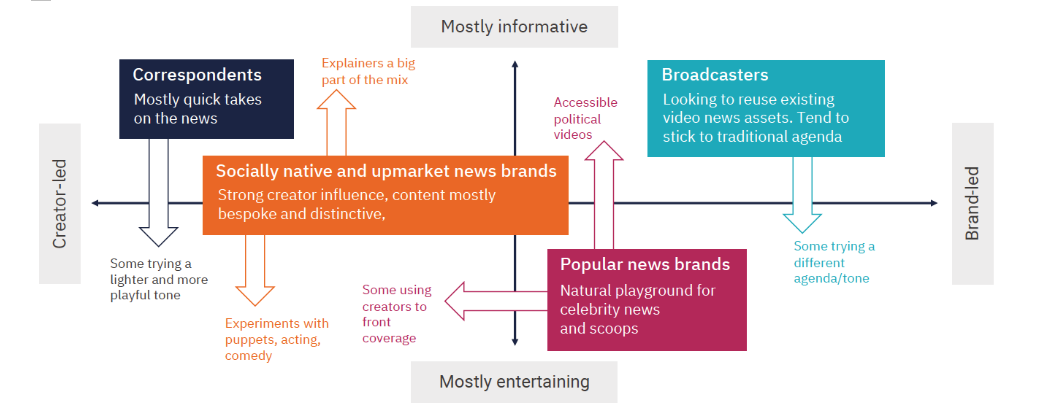
A rainy street in Amsterdam with neon signs and one 1940s private investigator in a trench coat in the background walking down the street smoking, photo realistic, shot from a low angle



A Pieter Bruegel the Elder painting of an endless, messy library filled with books, scrolls, busts of famous authors, and half eaten tacos on the floor.

A Pieter Bruegel the Elder painting of A disorganized desk with a microphone on a boom arm, a computer monitor in the background, studio headphones on the desk, and a plate of tacos on the desk.

I did this in the Playground. My prompts are in italics.
I don’t understand Susan Sontag’s Notes on “Camp”. Can you explain it to me? What even is camp?]
Camp can be defined as a style of aesthetic, usually referring to an exaggerated or over-the-top form of expression and behavior. Susan Sontag’s Notes on “Camp” is a short essay in which she defines camp culture, explains its origins, and analyzes the often misunderstood concept. She states that camp is rooted in artifice and exaggeration; it does not attempt to reflect reality but instead offers an ironic commentary on society’s norms. She also argues that camp has become more widely accepted in mainstream culture due to its subversive nature, which allows people to express themselves without fear of judgement or ridicule. Finally, she concludes by noting that while camp may be seen as humorous or frivolous by some, it has the potential to challenge power structures and allow for social change.
That’s great! Could you compare the topics Susan Sontag chooses and her perspective to that of Joan Didion? Spend some time talking about Didion’s famous packing list too, please.
Both Susan Sontag and Joan Didion are renowned authors who wrote extensively about culture, lifestyle, and identity. While they approach their topics from different angles, both writers have a profound appreciation for the complexities of life.
Susan Sontag’s Notes on “Camp” is an exploration of camp culture and its potential to challenge power structures in society. She argues that by embracing artifice and irony, people can express themselves without fear of judgement or ridicule. In contrast, Joan Didion’s famous packing list essay is a reflection on materialism, authenticity and how our possessions shape our identities. Rather than focusing solely on aesthetics or societal norms like Sontag does in her notes on Camp, Didion examines how we use objects to define ourselves and find meaning in life. Through this essay she suggests that we should be mindful of what we choose to bring with us as it reflects our values and beliefs.
Wow! Now, could you compare that to Hunter Thompson’s writings? And add that he befriended Johnny Depp.
Hunter S. Thompson is a well-known author who helped to pioneer the genre of Gonzo journalism. His writing style was often characterized by its energetic and immersive approach, in which he would insert himself into the story as an active participant in order to capture a more complete picture of reality. In contrast to Susan Sontag’s Notes on “Camp” and Joan Didion’s packing list essay, Hunter Thompson wrote about topics such as politics, sports, drugs, and counterculture with an irreverent sense of humor. He also had a close friendship with actor Johnny Depp which resulted in several writing collaborations between them over the years.
Now, could you summarize all of this by explaining how these three authors influenced Chuck Klosterman? Maybe say that Klosterman is a little too obsessed with Nirvana, but overall fun to read.
Chuck Klosterman is an American journalist and author who has been heavily influenced by the works of Susan Sontag, Joan Didion, and Hunter S. Thompson. Klosterman’s writing style often combines elements from each author; he incorporates witty humor like Thompson, thought-provoking social commentary like Sontag, and introspective reflection on materialism similar to Didion. In addition to being inspired by these three authors, Klosterman also draws upon his own eclectic interests such as pop culture and music (he has a particular fondness for Nirvana). Although some may consider him overly obsessed with certain topics at times, his writings are generally entertaining and enjoyable to read.
My newsletter this week goes over my experiments and thinking about the OpenAI ChatGPT thing. Mostly: it’s a great way to eliminate office worker toil, all that bullshit you have to do. Subscribe!
When you build and run a platform inside a large organization, you have to do a lot of marketing, advocacy, and community building/management. It’s just like us vendors have to do! This is totally unexpected by most infrastruture teams and not really in their skill set either.
I want to write an article about this some time soon, but in the team I pulled together a list of the internal marketing and community building platform teams do, especially at large companies.
- Brand names: groups often come up with their own brand name for these platform iniatives: Allstate had CompoZed; the USAF named their Kessel Run; Duke Energy called theirs, I think, Duke Energy IDEA Lab; JP Morgan Chase calls it Gaia.
- I wrote this idea up a little two of my books: a bit in Monolithic Transformation (and a tiny bit in the section “Marketing and training” in Changing Mindsets)
- Their focus is more on community management and practices, but check out the Mercedes people talking about the practical side of this a little bit this talk.
- Here’s my latest overview of it, with some pictures of branding stuff.
- There’s good talk of this from Nadi at JP Morgan Chase, and also some from my collegue Bryan Ross.
This internal marketing and community management is important stuff. It’s also yet another angle on the “platform as a product” concept/name: products need marketing.
Here is the prompt I used:
Could you write an 800 word article on the idea that “DevOps is Dead”? There have been so many advancements in technologies and practices since DevOps was invented, like platform engineering that has evolved into something different. DevOps also got way distracted by the “culture” aspects of operations work. Also, I’m not sure it really ever brought application developers into the fold. My other theory is that the infatuation with kubernetes over the past five years wore away at some of the advances made by DevOps automation: now we’re starting over again with the need to build developer-friendly platforms on-top of kubernetes. There’s that famous Tweet from Kelsey Hightower that kubernetes is a platform for building platforms. Why didn’t the DevOps community catch this reversion? Instead, we’re starting over again. DevOps was great for it’s time, but it somehow lost the plot and we should welcome the new generation of people solving the problem of infrastructure automation and developer productivity.
And here is what the AI wrote:
In recent years, there has been a growing sentiment that "DevOps is dead." This idea is fueled by a number of factors, including the rapid evolution of technologies and practices in the field, the focus on "culture" rather than technical advancements, and the rise of platform engineering.DevOps, which originated in the early 2010s, was a response to the increasing complexity of IT operations and the need for better collaboration between developers and operations teams. Its goal was to automate and streamline the software delivery process, enabling organizations to deliver high-quality, reliable software faster and more efficiently.
However, as the field of DevOps has matured, it has become clear that many of its initial goals have not been fully realized. One of the biggest criticisms of DevOps is that it failed to fully integrate application developers into the software delivery process. Many developers still feel that they are on the outside looking in when it comes to DevOps, and that they have little influence over the way that their software is delivered.
Another criticism of DevOps is that it got distracted by the “culture” aspects of operations work. While it is important for organizations to foster a culture of collaboration and continuous improvement, many believe that the focus on culture has come at the expense of technical progress. As a result, some argue that DevOps has stagnated, and that it is no longer capable of delivering the kind of innovation and progress that is needed to keep pace with the rapid changes in the technology industry.
One of the key drivers of this shift away from DevOps has been the rise of platform engineering. Unlike DevOps, which focuses on the automation and optimization of the software delivery process, platform engineering is focused on building and managing the underlying infrastructure that powers modern applications. This includes technologies such as containers, microservices, and cloud-native platforms like Kubernetes.
Over the past few years, there has been a growing trend towards using these platform-based technologies to build and deploy applications. This has led many to argue that DevOps, with its emphasis on traditional tools and practices, is no longer relevant. Instead, they argue that the future of infrastructure automation and developer productivity lies with platform engineering and the use of modern, cloud-native technologies.
Despite these criticisms, however, it is important to recognize that DevOps has made significant contributions to the field of IT operations. Its focus on collaboration and automation has helped to drive innovation and improve the efficiency of the software delivery process. Furthermore, many of the principles and practices that are at the heart of DevOps, such as continuous delivery and infrastructure as code, are still highly relevant and valuable in today’s technology landscape.
In the end, it is clear that the field of DevOps has evolved significantly since its inception. While some of its initial goals and principles may no longer be relevant, its focus on collaboration and automation remains vital to the success of modern organizations. As such, while it may no longer be the dominant force in the field of IT operations, DevOps is far from dead. Instead, it continues to evolve and adapt to the changing needs of the industry.
I’d go in and change some things - kind of tone it down to be less cocksure - but, pretty good if you really wanted to go hard and fill a The New Stack paid column or a thought piece somewhere else.
But, what if you think the above is wrong? Well, you could then tell the AI the following:
That was pretty good. Now, can you write a piece that argues that this “DevOps is Dead” idea is wrong and, in fact, rude to the people who put in the work to define DevOps? As the DORA reports have proven, the practices of DevOps have paid off. It’s fine to use a new phrase - “platform engineering” - for the continued evolution of DevOps, but it’s a cheap shot to use a click-bait headline like “DevOps is dead.”
The idea that "DevOps is dead" is not only wrong, but it is also a disservice to the people who have worked hard to define and advance the field of DevOps. Despite the rapid evolution of technologies and practices in the field, DevOps continues to be a vital and relevant approach to improving the efficiency and effectiveness of IT operations.One of the key arguments against the notion that DevOps is dead is the fact that its practices and principles have been proven to be highly effective. Numerous studies, including the annual DevOps Report by DORA, have shown that organizations that embrace DevOps are able to deliver software faster, with higher quality and reliability. These organizations are also able to improve their overall efficiency and productivity, enabling them to outpace their competitors and achieve greater success.
Furthermore, the rise of platform engineering should not be seen as a rejection of DevOps, but rather as a natural evolution of the field. As technologies and practices have evolved, so too has DevOps. Many of the key principles and practices that are at the heart of DevOps, such as continuous delivery and infrastructure as code, are still highly relevant and valuable in today’s technology landscape. Rather than being replaced by platform engineering, DevOps is evolving and adapting to the changing needs of the industry.
Another key argument against the idea that DevOps is dead is that it is a disservice to the people who have worked hard to define and advance the field. Over the past decade, DevOps has grown from a small, niche movement into a widely-recognized and respected approach to IT operations. This would not have been possible without the hard work and dedication of the individuals and organizations who have been involved in the DevOps community. To suggest that DevOps is dead is to undermine the efforts of these individuals and organizations and to erase their contributions to the field.
In conclusion, the notion that “DevOps is dead” is not only wrong, but it is also a disservice to the people who have worked hard to define and advance the field. Despite the rapid evolution of technologies and practices in the field, DevOps continues to be a vital and relevant approach to improving the efficiency and effectiveness of IT operations. Rather than being replaced by platform engineering, DevOps is evolving and adapting to the changing needs of the industry.
There’s some middle-school phrases you’d want to edit out, like “Another key argument…” and maybe add some slicker structuring. And there’s some repition, like the word “disservice,” that you’d need to polish out. But, again: about like 70% of a start for this kind of thought piece.
And then we could ask it to write it in the style of Strong Bad:
Yo dudes and dudettes, it's Strong Bad here to tell you that this "DevOps is dead" idea is a bunch of crap. Here's why:
- The practices of DevOps have been proven to work. Studies show that organizations that embrace DevOps are able to deliver software faster, with higher quality and reliability.
- The rise of platform engineering is not a rejection of DevOps, it’s a natural evolution of the field. As technologies and practices have evolved, so too has DevOps.
- It’s rude to the people who have worked hard to define and advance DevOps. To suggest that DevOps is dead is to undermine their efforts and to erase their contributions to the field.
So yeah, don’t believe the hype. DevOps is not dead, it’s alive and kicking. Now if you’ll excuse me, I gotta go eat some Bologna and listen to some 8-bit music. Later dudes!
Not very good in the middle, there.
Some of the text is generated by ChatGPT.
So, here I wanted to see if ChatGPT could write filler blog post text. I asked it to write seven reasons why you should pay for or not pay for kubernetes. First, why you should pay for it:

Second, why you should do it yourself:

Just imagine huge content farms pumping this stuff out!
This is text generated by ChatGPT.
Here’s the prompt I used:
Could you write a memo explaining why OKs are a bad idea for our FY2023 planning? We did them last year, and half way through the year the planning changed. Also, like any metrics, it seems like people just can game the OKRs Maybe you could suggest either some ways to improve how we make and use OKRs, or discuss alternatives. Could you make it about six paragraphs, summarizing the major points at the top? Also, I’d like to add a PS at the end that we need to approve the budget for the company hot dog parade by the 9th.
And here’s the email it wrote me after just a couple requests to modify it:
Hey everyone,I wanted to bring up the topic of OKRs for our FY2023 planning. I know that we used them last year, but I think it’s worth considering not using them this year. Here are a few reasons why:
First, I found that the OKRs we set last year didn’t really work for me. Halfway through the year, our plans changed and the OKRs became irrelevant. This made it hard to use them as a tool for guiding my work and measuring mvprogress
Second, I think there’s a real risk of gaming the OKRs. Because they’re a metric, it’s possible for people to focus on achieving the targets set in the OKRs, rather than on the work itself. This can lead to unproductive behaviors and a lack of focus on the broader goals of the company.
I know that OKs can be a useful tool, but I think it’s worth considering other options for our FY2023 planning. One option is to use a more flexible planning process like a rolling plan that can be undated regularly to reflect changes in the business. Another option is to focus on setting broader, more high-level goals for the year, and then use other metrics and tools to track our progress towards those goals.
What do you all think? I’d love to hear your thoughts and ideas.
PS: Just a friendly reminder that we haven’t approved the budget for the company hot dog party yet. It’s coming up quick, and we’re trying to keep costs down by asking people to bring their own condiments. Vegan hot dogs will be provided. Let’s make sure we get that budget approved in time!
Best,[Your Name]
Here’s another video script generated by ChatGPT. Pretty good, huh?
Here’s the transcript it made:
Product managers use a backlog to prioritize and plan the development of a product. The backlog is a list of features, tasks and issues that need to be addressed in order to improve the product. The product manager is responsible for maintaining the backlog and ensuring that it accurately reflects the current priorities and needs of the product team.The backlog is often organized into different categories, such as high priority items that need to be addressed immediately. And lower priority items that can be tackled later on by regularly reviewing and updating the backlog. The product manager can help the team stay focused on the most important work and ensure that the product is being developed in a way that aligns with the overall goals and objectives of the organization.
I originally asked ChatGPT to tell me what Spotify’s golden path concept is, but it instead told me the basics of CI/CD. I think it’s pretty acurate for a quicj overview. It even goes over some benefits!
Here’s the transcript that it generated:
The Golden Path is a term used to describe the ideal flow or sequence of events that should happen when developing and deploying software. It is a way of thinking about the processes of building and releasing software that emphasizes collaboration, continuous delivery, and automation.At Spotify, the Golden Path starts with a team of engineers who work together to write code for a new feature or.
They use agile methodologies and collaborative tools to ensure that the code is of high quality and meets the requirements of the project. Once the code is ready, it is automatically built and tested by a continuous integration system. The system runs a series of automated tests to ensure that the code is working properly and meets the standards set by the team.
If the test pass, the code is automatically deployed to a staging environment where it can be tested by the team and other stakeholders. This allows the team to verify that the code is working as expected and to make any necessary adjustments before releasing it to production. Once the code has been tested and approved in the staging environment, it is automatically deployed to production.
This ensures that the code is released to the users quickly and consistently without any manual intervention or delays. Overall, the Golden path at Spotify is all about, is a way of thinking about the processes of building and releasing software that emphasizes collaboration, continuous delivery, and automation.
It is designed to help teams deliver higher quality software quickly and efficiently while minimizing the risk of errors and disruptions.
Like I said, not correct, but it’s good enough for quick hit stuff like this, and especially a good start if you have no idea what CI/CD is in the first place.
🔗 What if failure is the plan? - Some wonderful 00’s internet history and even better thinking about long term strategy. Also, the worrying about what happens when a “public space” disappears, especially with regards to evil uses of what was once private data.
Here’s the prompt I gave ChatGPT: Please write an 800 word opinion piece on why self-help books are a waste of money. They all say basically the same thing and are usually filled with extra text and stories. Most of them could just be a short blog post. Also, summarize the basics of most self-help advice. I think they’re something like focus on fewer things; do more planning; spend less time on distractions; get more sleep and exercise; take it easy on yourself. The title could be a pun about “Chicken Soup for the Soul,” something like “Overpriced Chicken Soup."
When it comes to self-improvement, there’s no shortage of advice out there. Everywhere you look, there’s a new book, blog post, or podcast telling you how to be your best self. But here’s the thing: most of this advice is basically the same. It’s like a never-ending game of “telephone,” where the message gets distorted and diluted with each person who passes it along. And yet, people continue to buy self-help books by the thousands, often forking over big bucks for the privilege. But here’s the truth: these books are a waste of money.
First of all, let’s talk about the content of most self-help books. If you’ve read more than a few, you’ve probably noticed that they all seem to say basically the same thing. Whether it’s “The 7 Habits of Highly Effective People” or “The Secret,” the core message is always the same: focus on what’s important, do more planning, spend less time on distractions, get more sleep and exercise, and take it easy on yourself. This isn’t exactly earth-shattering stuff. In fact, it’s pretty common sense. And yet, these books make it sound like they’re sharing some kind of secret wisdom that only a select few are privy to.
But even if the content of these books isn’t particularly groundbreaking, at least you’re getting a lot of it, right? Wrong. Most self-help books are filled with extra text and stories that have nothing to do with the core message. It’s like they’re trying to pad out the book to make it look more impressive. But the truth is that most of this stuff could easily be condensed into a short blog post or even a tweet. In other words, you’re paying for a lot of fluff and filler.
But here’s the biggest problem with self-help books: they often don’t work. Sure, they might give you a temporary boost of motivation, but that’s about it. The fact is, real change takes time and effort. It requires hard work and persistence. And no self-help book can give you that. In the end, it’s up to you to make the changes you want to see in your life.
So why do people continue to buy self-help books? Well, part of it is the allure of a quick fix. We live in a fast-paced world where we want everything now. And self-help books promise to give us the answers we’re looking for, even if they can’t deliver on that promise. But there’s also the issue of branding and marketing. Many self-help books are written by “gurus” who have built up a following and a reputation. They know how to sell their message, and they’re good at making it sound appealing. But in the end, it’s all just smoke and mirrors.
In conclusion, self-help books are a waste of money. Most of them say the same thing, and what they do say could easily be condensed into a short blog post. And even if they do provide some temporary motivation, they can’t actually help you make the changes you want to see in your life. So if you’re looking for real advice and guidance, skip the self-help section and look elsewhere. Your wallet (and your soul) will thank you.
The prompt I gave ChatGPT: “Please write a blog post going over twelve ideas for newsletter articles. The newsletter is all about monster truck models, but occasionally talks about Microsoft Clippy."
- “10 best monster truck models to add to your collection”
- “Building the perfect monster truck model diorama”
- “The history of monster truck models”
- “Interview with a professional monster truck model builder”
- “How to restore an old monster truck model”
- “The future of monster truck model kits”
- “The top monster truck model competitions to check out”
- “Rare and hard-to-find monster truck models”
- “The best tools and materials for building monster truck models”
- “Creating custom decals for your monster truck models”
- “The role of monster truck models in pop culture”
- “Microsoft Clippy meets the world of monster truck models”
Great talk on the product management side of platform engineering, platform as a product, from someone who’s done it at a large organization for several years, Bryan Ross. The community building part is especially tasty.
Dealing with tech debt and legacy software? Check out my summary of how large organizations modernize their portfolio. Based on Marc Zottner and my book.
🔗 The ‘Suicide’ of the Liberal Arts - “According to U.S. Education Department data, students who majored in English, history, philosophy, foreign languages or literature constituted only 4% of college graduates in 2020. The number of degrees awarded in each of these disciplines declined by between 15% and 34% between 2012 and 2020, while the total number of degrees rose by 14%.”
“Each try takes me further from whatever it is I’m after. I finish on an alien shore with a raft of needs, reminded once again that books heal people all the time, just not usually the people who write them.”I Love You but I’ve Chosen Darkness: A Novel by Claire Vaye Watkins
What is native Java? And what is GraalVM…and why do you need Spring Native? In this episode, Ben learns me good on those topics.
🔗 The fediverse and the indieweb - “One of the indieweb’s oldest ideas, Publish (on your) Own Site, Syndicate Elsewhere, is something I plan to retire in my own use. The idea is that you publish on your own site but then mirror that content to a third-party silo like Twitter, ideally with a link back to your site. But with the growth of the fediverse, I’d like to be done with doing that. I’ve already stopped publishing to Twitter, and I think Instagram and Facebook will quickly follow suit. Right now my only real syndication is to LinkedIn, and I don’t know that I want to make that network exactly central to my existence online.” Would this make one a digital hermit, or do your readers - your community - follow you.
🔗 Tech Companies May Be Laying Off Employees, But Tech Workers Are Still In Demand - Tech companies say they hired too many people, but regular companies are still hungry. “looking beyond the tech industry and at the overall tech labor market, the signs are a little less doom and gloom. 207,000 additional tech jobs were created in October 2022, the 23rd straight month of job growth. The tech industry has actually created 193,000 jobs in 2022, and there are currently 317,000 open job listings for technology roles, although this is down from a peak of approximately 400,000 opens roles at the height of the labor crunch in spring of this year. The most popular open role? Software engineer, with over 80,000 open roles.”
👨🏻🏫 Later this morning, you can see my take on the state of the kubernetes world. Or just register to get an email when the recordings ready: https://tanzu.vmware.com/content/webinars/nov-29-emea-learn-why-kubernetes-is-here-to-stay-state-of-kubernetes-2022?utm_source=cote&utm_campaign=devrel
🔗 Bye, Twitter - “I don’t like making unpaid contributions to a for-profit publisher whose proprietor is an alt-right troll.”
🔗 Continuous Discovery Habits with Teresa Torres - ‘“Before the internet, waterfall and business stakeholders deciding what to build worked just fine,” she says. “It worked because you didn’t have to build the best product. You had to get on store shelves and have a better position than your competitor, right? So the biggest differentiator was distribution. It wasn’t the quality of your product.” Torres says the internet evened the playing field for distribution, and product quality became much more important. Greater access to information also gave consumers more power over their choices, and it became harder to force bad solutions on people who knew full well there were better alternatives.’
It’s Thanksgiving today. I live in Amsterdam, so it’s not like it’s Thanksgiving here. Nonetheless, us American expats have ordered our turkeys and planned dinners.
There’s a rhythm to American life based on Halloween, Thanksgiving, and then Christmas. I especially notice my dependence on that rhythm living over here.
(I mean: it’s totally fine and all.)
🔗 Apple Podcast algorithms - “I notice these things because it’s shocking how quickly some networks push you down a hard right wing path, YouTube most famously of all, but I also see it when logged out of TikTok completely.” I don’t know. In many elections, the vote is 50%/50%. That would indicate that you have a coin’s flip chance of matching content desired. Or something else.
🔗 Atlassian’s Compass Unites Tool and Code Sprawl - Atlassian’s internal developer portal, sort of, thing.
🔗 “As I talk to CEOs and CIOs pretty much across the globe, almost none of them are talking about cutting down technology spending." - I feel like people haven’t updated their macro environment slides, or read the new ones. With all the tech world layoffs, surely there are enough staff around now. And if there’s such a talent shortage, why layoff all the people?
🔗 The Rise of Platform Engineering - Software Engineering Daily - Pretty good, but sort of goes “computers are awesome”/everything mid-way through.
🔗 Maybe the Real Tech Debt was the Friends we Made Along the Way - New tech debt definitions just dropped: “According to Amundsen, we see evidence of technical debt when we have code/systems that can’t be easily observed or understood; according to Rapson, we see evidence of technical debt when we have slow development and release velocity.”
🔗 Maybe the Real Tech Debt was the Friends we Made Along the Way - New tech debt definitions just dropped: “According to Amundsen, we see evidence of technical debt when we have code/systems that can’t be easily observed or understood; according to Rapson, we see evidence of technical debt when we have slow development and release velocity.”
🔗 ooh.directory - “I’ve just opened the doors on a new project I’ve been working on, ooh.directory, a collection of hundreds of blogs, to help people find good blogs that interest them.”
🔗 Why journalists are so desperate to find a Twitter alternative - “That’s because Twitter has served, for more than a decade, as the de-facto platform on which journalists built their own personal followings outside their places of employment. While mainstream media outlets have historically been reluctant to help grow their reporters’ personal brands, many have acquiesced to allow Twitter handles to appear in bylines and author bios. Twitter has operated as the primary venue for writers to take their audiences with them as they move from job to job.” Well, all of us in an external facing, personality-driven line of work.
🎶 I’m enjoying re-discovering DJ-driven music shows. There’s so many sites and shows now, from Apple Music to more, like this:
🔗 Gartner IT Infrastructure, Operations & Cloud Strategies Conference 2022 London: Day 1 Highlights - This is a good format and more like this from the big analyst shops would be awesome. Also, Gartner is going, like, all in on platform engineering: “Adopting a platform engineering approach is vital. I&O leaders use platform engineering to deliver shared infrastructure platforms.”
🔗 Amazon Alexa is a “colossal failure,” on pace to lose $10 billion this year - ‘Amazon also tried to partner with companies for Alexa skills, so a voice command could buy a Domino’s pizza or call an Uber, and Amazon could get a kickback. The report says: “By 2020, the team stopped posting sales targets because of the lack of use."’
🔗 Platforms at Kubecon 2022 | Partly Cloudy - A CNCF group working on defining what a “platform” is. That should be fun!
🔗 Building Kubernetes Applications with Acorn - Gives you some more detail on what Acorn is: “Acorn is an application packaging & deployment solution, which aims at simplifying the process of developing applications for Kubernetes. Acorn offers a simple CLI, which along with a CUE-based Acornfile can run your applications on a Kubernetes cluster, without needing to know any Kubernetes concepts. Its development mode makes application updates & debugging seamless for developers, which otherwise can seem daunting. It is a thin layer of abstraction that sits on top of Kubernetes & lets you use its advantages without diving into the nitty-gritty details of the technology. It also takes care of hosting a container registry & as well as an ingress controller on some Kubernetes distributions which don’t run it by default. See Acorn documentation for more details.”
🔗 Application Modernization Report Shows Need For Kubernetes-specific Migration Tooling (RedHat survey) - Seems ambitious: “Among those we surveyed, those who were migrating or planning to, we found that they plan to modernize 54% of their custom applications during the next year and over a quarter during the next six months. Only 20% expected the modernization to take more than two years. It’s clear this is happening right now.” Most of the migrations are motivated by “being driven by the need for reliability, scalability and security.” Only 33% are doing it to improve customer experience or employee productivity (that is, making the software better). So, looks like a lot of lift and shift going on. About half of respondents seem to be “not developers,” which would probably make their perception weigh more on non-app concerns…? Also, see another write-up from Gordon.
Here’s some slides from the full survey readout:
🔗 Considerations when implementing developer portals in regulated enterprise environments - Good thinking about the “enterprise grade” stuff a developer portal could make better for you. E.g., for compliance: “Assurance that all key information is put into an enterprise-accepted immutable system and everyone who needs to access that information has it. Verification of separations of duty (i.e., the person who wrote the code is not verifying its integrity for a production release).”
🔗 Free introduction to Backstage course now available, from CNCF - “8-10 hours of insights into developer portals, what Backstage can do, and how to run it both locally and in production.”
🔗 Palo Alto Networks Buys Cider Security to Lock Down Pipelines - “Cider Security developed what it described as an operating system for application security. The solution creates a graph that enables DevOps teams to visualize the relationships between all elements that make up a software development environment, including code. It then makes it possible to apply a set of controls to remediate any vulnerabilities and attack paths that might be identified using any number of third-party scanning tools.”
FreeShitMonday! Here’s the collection of columns I wrote for The Register on agile, DevOps, cloud, programming, and whatever else from 2014 to 2018. Forward by John Willis (@botchagalupe)!
🔗 OpenStack passes 40 million cores in production use - “OpenStack adoption has hit 40 million cores in production, a 60 percent increase on 2021, and that it is now running in over 300 public cloud datacenters worldwide.”
🔗 7 Ways to Improve the Developer Experience and Accelerate Software Delivery on Kubernetes - I hear this is a good PDF.
🔗 Don’t buy the cloud repatriation claptrap - Also, it’s probably like when I try to switch note-taking apps every 6 to 12 months - a whole lot of work and then I’m like, “well, I still have all the same problems, and now I have to learn this new UI.”
🔗 I’m remembering that thing you can do with toddlers - redirection. They’re throwing a fit because the mop is giving them side-eye, “hey, let’s go feed the dog!” and minutes later, they’re fine. Prolly works with adults too. -
🔗 With password stuff going the way it’s going, middle-school is going to need a “vocational” class like typing and shop but just for password management. -
🔗 Novel use of LinkedIn - “On the growth side, I would add the max amount of people LinkedIn would allow me to add a week until the app would not let me. I’d make sure that each person I added worked in the space industry. Once I did that, I’d send them a message asking them to sign up for the newsletter. I don’t know the amount that signed-up, but I would not be surprised that at least 10% of our audience — but potentially as high as 25% — have signed up because of the message I sent them on LinkedIn. The best way to jumpstart a newsletter is to personally ask people to sign up.”
🔗 Good think on devrel strategic planning, from Laura Santamaria - “Strategy is a definition of risk valuation and reward opportunities across multiple focus areas. If you’re defining strategy simply by naming a bunch of tactics, you’re missing out on the creativity boost a good strategy framework can provide for a devrel team.”
🔗 New in Planview Tasktop Viz®: Time-to-Market Insights - When it comes to serious enterprise metrics, I feel like TaskTop has been doing it for 10+ years.
🔗 Things could be better - Study finds that people think optimistically be default. Also shows that academic papers can be written in natural, fun the read language. “Well you could have a bunch of stray dogs come in here and barf everywhere and then we could set your chaise lounge on fire, that would be different.” And: “When you ask people to imagine how things could be different, they imagine how things could be better.”
This week’s Software Defined Talk podcast episde. I don’t think I go as crazytaining as last week, but our overall commentary is great on cloud MQ’s, Twitter, etc. listen and subscribe:
I’ve been doing a lot of CFP’s this week for conferences. I’ve grown laxed through the last few years, so I’m getting back to my pre-COVID conference workload. It’s a major part of my job! Sessionize.com has been great, so many people use that. I also updated my speaking page with the two talks I’ve beendoing recently and links to older ones. I’m always looking for new conferences to speak at, got any?
🔗 “Live rent-free in my head” - This definition is not very good, but the concept is wonderful. I’ve been working on identifying when I’m creating multi-person arguments in my head and saying “stop arguing with yourself.” It works better than I’d expected.
🔗 Evernote’s fall from grace is complete, with sale to Italian app maker - “Note-taking app Evernote…announced the end of its 14-year run as an independent company today with its sale to Italian mobile app company Bending Spoons.” I loved Evernote!
I’ve started writing this bit two times (see the community one and the one on ICs vs. managers for what happened instead).
If Twitter fails - or I stop using it - I’m looking forward to recalibrating my sense of urgency.
One thought going around is that no one would want to rebuild Twitter (I hear it most in the Ben Thompson Podcast Universe). I haven’t verified the business-side, but that seems true from the business angle: Twitter isn’t, like, that great of a business and has failed to figure it out like the Facebook Conglomerate.
Then there’s all the negative things too. Here, Twitter is like guns: too easy to use for bad outcomes.
After using Twitter for so many years, my sense of urgency is too short. I think in quick cycles and don’t have that “slow work” or “slow living” approach to most things.
I notice this with my kid’s education the most. School for kids is a long, long game. They have to learn to “do” school, which can take years and isn’t really taught in school. You know: keep track of assignments, due dates, make sure you understand what you need to do for each assignment (e.g., a five paragraph essay format; showing your work in math; adding those extra layers of work that show you’ve understood the higher-level ideas and synthesized them into some output), etc. These are all things office workers do without thinking, but kids don’t even know they exist - they’re unknown unknowns.
When my kids don’t learn these things the first time I explain it to them, or the 20th time, or the 30th time where I’ve tried to orchestrate some tricky way of teaching them, I get frustrated. But my timescale is just an hour, a week at most. It should really be, like, five years…ten years.
The same goes for that publishing vs. managing bit also here.
Another example is the rise of platform engineering and how quickly it’s gone through the full thought-leader cycle.
Backstage has been out for awhile, but it wasn’t until about February of this year (when Gartner wrote a paper on internal developer portals), and then this summer with all the devrel/PR-campaigns that Humanitec has done, culminating in BackstageCon that platform engineering came to the top of the heap.
About three weeks ago, there were the usual series of marketing-opportunistic articles saying “DevOps is Dead!” You can tell when this crest happens when there’s 1+n articles on The New Stack stating it as such - or if both The New Stack and InfoQ publish the same article, just written differently.
The response to the dead-thing was swift, and actually pretty good. It was like, “hey man, don’t harsh our vibe and all the work people have put into this thing for the past ten plus years. Be kind!”
This was a very fast loop!
I don’t remember how long that loop took with SRE, but I think it was longer and more…thoughtful?
But, the urgency model we use now made us all think too quickly about platform engineering and try to create a whole new category. Indeed, my theory is that, really, platform engineering is purely about internal developer portal and the tools team (the “DX team” if you like) - basically, the SDLC tool suite developers use. With a name like “platform engineering,” thought, it’s easy to also pull in the runtime environment - the IaaS and PaaS layer. (And, boy, kubernetes is really looking for it’s PaaS layer - so that world will grab onto any thing that floats by.)
But, this conflation of the two probably isn’t accurate or helpful. And I’ve done it myself!
With the Twitter-speed urgency though, you have to process and come up with takes quickly like this. You can’t sort of just let it play out and see what happens.
Anyhow: it’d be great to have less urgency. The thing with Twitter-speed urgency is that, really, it doesn’t matter. I mean, you could summarize the last two weeks of Twitter like this:
The long awaited PE buyout closed and was followed quickly by layoffs and uncertainty. For example, after laying off half of the staff, some had to be hired back. The new management team was unusually brash and rude, damaging the brand reputation of Twitter. Some big-name advertisers who were already unsure about the value of putting ads in Twitter began to worry about the association with Twitter, paused spend, and went into a wait and see posture. The new team followed the philosophy of “move fast and break things” when exploring new features, but because their theories were wrong, eventually slowed down to take a more considered approach. Meanwhile, the service stayed up, defying expectations. Clearly, the new management team has a lot to learn and even more interest to pay. More than likely, this was all a bad idea.
Following the minutia is fun, but I have to say, there’s not enough of it to make it rewarding. There’s only about one interesting thing every two days - so I’ve realized, there’s no payoff to checking all the time.
…the point being: my urgency calibration is all screwed up from Twitter-brain. And, you know, it’d be great to slide back to blog-brain urgency, at the very least.
This urgency is more about the expectations I set on myself rather than my craving for “news.” One day, I hope to be satisfied with one, solid piece of work published weekly rather than worrying about doing a quick-trickle of a bunch of small things.
The people in my tech community who talk about community find Twitter so vile that there’s little discussion of the good parts. It was a great place for discovering, building, and “doing” community. And it still is, though mixed in with all the other stuff1.
This history of DevOps, cloud stuff, and everything that followed - open source, even! - would be different if Twitter weren’t around. We’d be in…listservs? Blogs? Facebook, even.
Enough of the tech thought leaders (that’s right!) are leaving Twitter, or at least splitting there time between Mastodon and Twitter, that something will probably happen for our community.
Let’s see what happens in six then 12 months, but I predict that the IT, children-of-DevOps, and open source community will move to Mastodon. The whole thing is built by them and matches their morals and architectural models. It’s a perfect fit…and many of them (us?) are already over there.
It’s either that or goofy Discord channels, blogs, or newsletters. None of those are really good for the way this community likes to interact.
- “All the other stuff” is a bit vague. Over the past 16 years of Twitter and social media as a whole, I’ve never gotten a grasp beyond intuition that it all has negative effects. Of course it does! It’s making it easier for people to talk with each other, so it makes it easier for the good and bad part of…people. I can only think of alcohol as an example. Overall, you’re better just not drinking. But if you drink in moderation, it’s fine and a massive part of what it is to be human and exist in the culture. But, if you drink too much, it’s terrible. This is almost like “if you don’t like what’s on TV, change the channel.” But that thinking was based on a whole where there were only four or six channels. As with that TV worrying (and, later, video games and “rap music”) a lot of the condemnation thinking is based on what the condemner thinks other people are doing wrong, how they’re being manipulated. As an 80s kid, I was the one who’s brain was being rotted by TV and video games, who was listening to the rap music, and even plated D&D (well, Advanced D&D). And here I am. And all my peers. This makes me always dismissive of worrying about how a new medium is messing up all the other people. Beats me. ↩︎
You can focus on short term delivery, or long term delivery. Do you follow the Twitter drama day-to-day, or just wait every week or two to see what happened? Do you write an article in a day or two, or write a 40 page PDF in a month, 120+ page book in a year.
My brain is wired to find the pay-off in every moment, and to be present and remembering. Long term projects seem like I’m not doing work - all that time just…working, not publishing. It was blogging that did this to me, not Twitter.
(Here, when I say “publish,” I mean deliver something.)
I think about managers a lot: they are rarely publishing/delivery frequently. Instead the orchestrate other people dong it: build the systems that everyone works in (the organization and “culture”), make sure there’s capable people in the system (hiring, retaining, career management), give editorial direction (strategy, goals), and check on the status of things (verify that things are happening, fix problems).
When I think about that work it seems like it’d be so unsatisfying: you’re never directly publishing anything! I know people who manage take great satisfaction in…making things happen, helping people, all that. And, of course, you make a lot more money, which is always nice.
Individual contributors (as they call people like me) often run around saying “we should do this and that…” or the unkind among us “why aren’t we doing such and such - what do all these people do?” That, perhaps, is a portal into orchestrating other people delivering: when you have that thought, rather than take that work on your own (which leads to you doing less overall because you have too much), why not orchestrate someone else doing it?
Reading through analyst reports this morning, as you can see in the link posts. I was an analyst for a long time, and then did M&A and strategy. It’s fun to read through these reports and do the game of finding the most interesting parts.
When you’re working at an analyst shop, you don’t get to read many of the other analysts: you don’t pay the competition! Working on the vendor side, it’s nice: you can read them all.
This is an odd thing abut learning how to be and become a better one: you can’t get better by reading other analysts, only those in your shop. Anyhow!
🔗 Doing just fine, untransformed, Brenon Daly, 451 - ‘As life starts to return to normal and tech is no longer the up-and-to-the-right industry it once was, two points about the “digital transformation” trend are becoming clear. First, much of IT spending of the past two years was simply born of necessity. Second, most of the wrapping up of those purchases as part of some grand strategy was done by the folks selling the technology, rather than the folks using it. How do we know? It turns out, a fair number of companies say they are doing just fine untransformed. [1] A recent 451 Research survey of about 500 small and medium-size businesses found that respondents with “digital transformation” strategies in the works at their companies were far more likely to cut their overall IT spending than other companies. [2] Nearly four of 10 would-be “digital transformers” in the survey told us they expected to spend less on tech for the balance of 2022, compared with just one of every four respondents more broadly.’
- Kubernetes primer: The technology and its market, 451/S&P, August 2022 - “Our tracking of revenue and market share for more than 80 different vendors indicates a Kubernetes market worth nearly $1.2 billion in 2022, rising to nearly $2.2 billion in 2026, representing an overall compound annual growth rate of over 17%” I think this is, like, kubernetes distros you buy…not public cloud? I’m not sure.
- IDC, Dec 2021: “The worldwide container infrastructure software (CIS) market grew to $980.1 million in 2020 from $740.6 million the year before, representing 32.3% year-over-year growth.” They forecast it hitting ~$2.9bn in 2023. Their model includes private and public cloud kubernetes, with about a 80/20 split in 2022, with the 20% being public cloud.
This is from S&P Global Market Intelligence (formally 451 Research - I used to work there)! It’s in their DevOps survey from last year (2021), by Jay Lyman. That survey is chock full of interesting DevOps and DevSecOps usage stuff, find it on Jay’s articles page.
Also, check out the perception that “cloud native” improves developer productivity from “non-IT” people:
It’s always fun to see such a huge mis-match between the people who do the work and those who (I presume) “manage” the work.
See the details in the report by. You could, loosely, call this a direct developer market: things developers (rather, their organizations, mostly) pay for. There’s also a larger developer market here, “application development software."
- Published June, 2022.
- With a 2022 TAM estimate of $5.2bn.
- They estimate that public cloud tools (like, in-browser IDEs) are 8.2% of the 2021 market, growing to 18.6% in 2026
Here’s how IDC defines the developer tools market:
The development languages, environments, and tools market includes development-side tools such as integrated development environments (IDEs) and code editors as well as programming language compilers and client-side, mobile, and embedded application development tools; runtimes; and frameworks, including web frameworks and browsers. Also included in this market are standalone tools used during the code construction process such as debuggers and code profilers.
This market does not include tools whose primary function is to support formalized modeling and business rules methodologies that assist in generating application requirements, data definitions, and programming specifications. Server-side application platforms, including application servers and mobile back-end services, are not tracked in this market.
🔗 Improve Developer Engagement With Online Portals, Forrester - Pretty good devrel advice here for your developer-hungry website, onboarding developers to your platform, and conference thinking.
Barriers to better developer experience. More in the survey summary, plus read the survey itself.
All that digital transformation, DevOps, whatever stuff is going to require organization change. For reals! Make sure you can actually do it. Check out more like this in my free book.
Also, check out the rest of this tiny video series.
Tanzu Talk News for this week: highlights from #VMwareExplore; Backstage/DX/platform engineering checkin; new IaaS+PaaS MQ; learning from Twitter. Plus, I got some new glasses.
- From Justin Warren’s Nov 14th newsletter: “You pretty much never have perfect information. You only have what you consider to be enough information to make a decision, and sometimes not even that. What matters, I think, is how you explain your decision to other people. And ‘other people’ includes future you. This is quite liberating, because it frees future you from the decisions made by past you. If it’s clear that past you made decisions based on certain information, and you then find out new information, you can make a new decision! You don’t have to be welded to old decisions made with less, perhaps bad, information.”
- Meanwhile: “The distinction between satisficing and maximizing not only differs in the decision-making process, but also in the post-decision evaluation. Maximizers tend to use a more exhaustive approach to their decision-making process: they seek and evaluate more options than satisficers do to achieve greater satisfaction. However, whereas satisficers tend to be relatively pleased with their decisions, maximizers tend to be less happy with their decision outcomes. This is thought to be due to limited cognitive resources people have when their options are vast, forcing maximizers to not make an optimal choice. Because maximization is unrealistic and usually impossible in everyday life, maximizers often feel regretful in their post-choice evaluation.”
- First: what is the behavioral (economic?) theory behind systems that have no goals? Can you be “rational” if there is no goal? A simple example is retirement planning. Please note that the rules of this game clearly state: “you cannot win this game by cleverly suggesting that there is always a goal. Don’t be cute.”
- Second: maximizers are the analysis paralysis fun-bunch. The grueling process of researching and discussing done over and over, 10’s if not 100’s of times in late night meetings with tedious spreadsheet and slide reworking make people’s lives suck. The irony is that in seeking to be “rational,” the maximized left an important part out of the equation: effort spent to figure out The Best answer.
- Third: at some point, you know too much (all of the options and the benefits/risks of each), and this is depressing like a kid being taken to a candy store and being told they can only pick one piece or candy.
- It makes me think about myself: I don’t optimize for my future self. No exercise, not learning Dutch a little each day, unhealthy eating. Obviously, you have to put habits in place so it doesn’t seem like work. But, I almost have a dissociative relationship with myself in the future: I don’t feel like it’s me. Or something. Am I, like, a really lazy hedonist? …maybe?
- And what does it mean to invest in your past self? You can: (1) understand it, (2) think better about it, (3) think worse about it, (4) forget it, (5) hide it (from others, and yourself as a variant of 4?). How much time should you spend investing/hacking your past self?
🔗 Zoom now integrates Mail and Calendar into its One interface - I welcome all attempts to make calendaring better, especially if it’s cross-organization.
The Vibe at Cloud Foundry Day - Tanzu Talk podcast. What’s going on in the Cloud Foundry community? In this episode, Ben and Coté are joined by Nick Kuhn (a return guest!) to talk about the recent Cloud Foundry Day at KubeCon. They discuss Cloud Foundry on kubernetes, build packs, Detroit pizza, and singing the hits of the day back in the late 80s.
Some great chart and tables design in this book:
⊕
Letting the Argintine bar go outside the chart is great, and hard to do in Office charts(?)
⊕
What I like here is using the dots to go between the row name and the rest of the columns. It fills that whitespace nicely and, I guess, makes it more readable so don’t lose track of the row as you go right.
⊕
I would have wanted to put a grid on all of this, but it looks so much better without one.
From An Intermediate Commercial Geography, Part 1: Commodities and World Trade by L. Dudley Stamp. This is from the 1965, the 12th edition. The 1st edition was published in 1927.
🔗 Does Kubernetes really give you multicloud portability? McKinsey Digital - Can you predict the answer? “Given our findings, we feel that organizations that are defaulting to Kubernetes solely to have future portability are limiting the value that the cloud can provide them, especially given the vast array of broader technology drivers at play. "
It’s intuitively obvious, but everyone thinks they’re the ones who will finally crack it. Like, for the past 25 years, which as long as I can remember software development. Part of what’s great about this piece is that they considered getting the log operational the success/end criteria: I mean, they certainly aren’t wrong!
🔗 After Twitter - Brian’s an often nostalgic and thankful enology of Twitter. So many memories, so many career and business helps. The history of DevOps would be different, at least the mechanics of how it happened. Where will we learn and find new things? Blogs? Newsletters? I dunno. Whatever it is, it will be slower and longer form. Pairs well with: “Society needs to be de-Twitterised and experience a Twitter-winter.”
My newsletter this week: some notes on attending conferences, notes on enterprise open source comercio-community, asides and waste book…lots of links. 👉 buttondown.email/cote/arch…
🔗 Room To Dream | Orbital Operations - > Lynch’s career fascinates me. He’ll try anything, without fear. Film, tv, painting, music, sculpture, whatever moves him in the moment. He also seems incredibly selfish, and every in his world is bent towards making the space for his art. He is, of course, a huge advocate of Transcendental Meditation, which is a kind of pay-as-you-go Zazen, but, hell, it seems to work for him. I doubt it’s the superpower that people attribute to him, but I can see how deep meditation twice a day for decades could lend him that fearless resilience. The use of meditation is that it is, essentially, a procedure for disconnecting from the jabbering superprocessor in the front of your brain and turning your head into a river.
🔗 Newsletters of note - Some fun, you know, web-rustic newsletters from the twenty-teens UK digital aesthetic.
🔗 🚴 Sentinel S60 Smart bicycle lock - I like this lock, but it’s worth more than my actual bike.
🔗 Swordfish90/cool-retro-term: A good looking terminal emulator which mimics the old cathode display… - This is for when you need to break the mainframe encryption.
Most meetings should probably always be an hour. If you could do it in less, it likely should just be an email thread or Slack chat.
People often misunderstand me when I say “fifty” as saying “fifteen.” These words are very similar in Dutch as well: 15 in Dutch is “vijftien” and 50 is “vijftig”…which means the only sound that’s really different is that throat-clearing g at the end of 50.
In Spanish, you have quince (15) and cincuenta (50) which are, in comparison, much different.
Related: “until” is a strange word if you look at it long enough. The etymology is (probably) Old Norse and old-ish English (und and till [check out this discussion of the word “till”!]). For “until,” in Spanish, you have “hasta que,” in Dutch “tot” (as in a popular way to say goodbye, tot ziens [kind of like a really short “until we see each other again”]).
“He smiled at me. And I saw the lines where other smiles had been.” The Story of Achilles. Ever the perfect characterization of Odysseus.
🔗 Cutting the Strings: Staying Lean in a SAFe Organization - Little changes to do lean software development in a SAFe organization.
Focus more on getting better at what you’re already doing instead of radically changing everything.
🔗 Six Common Friction Points in the Developer Journey - “The six points of friction we see most often are: Poor technical documentation; Lack of a developer portal; Lack of an official forum or community space; Mandatory commitments (e.g., Entering contact information) to access resources; Lack of GitHub repo descriptions; Insufficient trial periods.” It’s about vendors, but this could apply to internal developer portals/internal software at an enterprise as well.
🔗 Decompose monoliths using business workflows - Really nice, but brief overview of how SWIFT thinking worked to modernize an application for prescription refills.
I talk a little bit about managing your open source usage: security isn’t really a big deal if you put in place policy and tools, pick thriving communities, and the value of giving developers choice. Read more in our recent survey on the topic.
How do you build your platform engineering team? You’re probably already employing all sorts of great ops people that just need a little nudge and some cheering to become platform engineers. In this Tanzu Talk episode, Darran Rice tells me what he’s done in the past and what he’s seen. We also, of course, do the old “what is platform engineering?” talk and discuss the concept of platform as a product.
🎙️ Subscribe to listen!
📹 You can also watch the video if prefer that.
People will resist changing, and probably for good reasons. Here’s six ways to help them be happy with change. More in my Business Bottleneck book.
I’m pleased with the habit I’ve kept up with my newsletter – it’s sent sometimes twice a week, at least once. My vision with it is to make a common place book, a wunderkammer, a waste book. That format (with diaries thrown in) is one of my favorite things to read – the only slightly … Continue reading "ME! So many newsletters"
I was on The ITSM Crowd show today, it was fun! Claire Agutter about what “software is eating” the world, and what all that urgency/headwind babble means for software in enterprises. And then we talk about ops’s new role as platform engineers and what platform engineering is. Check it out:
What you want to watch here is how a CEO does something rarely done: write like a real person, make clear points, and talk about a difficult subject all while doing a great job further establishing the culture of their company. Original source: Matt on Tumblr — Why “Go Nuts, Show Nuts” Doesn’t Work in … Continue reading "[Link] Matt on Tumblr — Why “Go Nuts, Show Nuts” Doesn’t Work in 2022"
“Gartner predicts that by 2025, 80% of enterprises will shut down their traditional data centers. In fact, 10% of organizations already have.” This is from 4 to 5 years ago. How has it progressed since? My theory would be by…10% to 20%? Tracking by budget, spend is lower (or existing data centers are highly optimized, … Continue reading "[Link] The Data Center Is (Almost) Dead"
Good notes on Adobe’s platform engineering/platform as a product efforts. Moving from Mesos to kubernetes, getting developers to use the platforms, seeding people to scale skills, etc. Original source: Adobe’s Internal Developer Platform Journey and Lessons
My earliest professional comics work was all roughed out in crappy notebooks on the back table of a late-night burger bar with a Biro, scribbling away at three in the morning while drunks and ravers with nerve damage staggered in and out of the place. Original source: The Only Good Notebook – WARREN ELLIS LTD
On thought-leadership language: “business-dude lorem ipsum.” Original source: Business Dudes Need to Stop Talking Like This
Sep 13 – How to Measure Developer Productivity with Metrics and More Coming up soon I’ll be moderating a panel about developer metrics. We’ll have three actual practitioners, so what I’m looking forward to is how they actually apply and don’t apply the common DevOps-y metrics, how they put them in place, and how they … Continue reading "Webinar: How to Measure Developer Productivity with Metrics and More"
The idea that you should only do the work you’re paid to do, and instead take all that extra work and time to focus on yourself and family. The argument against this (that you should still put in 110%, instead of just 100% or even 80%) is: “It’s part of an overwhelming trend of pro-boss … Continue reading "[Link] Quiet quitting is a trend taking over TikTok and possibly your workplace – “pro-boss propaganda”"
Much advice around, of course, food. Turning away the airplane food is a good idea. On longer flights, brining some of your own food is probably a good idea – one I haven’t really figured out too well. That said the food in business class is just fine. Getting sleeping pills would be great, but … Continue reading "[Link] Anthony Bourdain How to Travel – Anthony Bourdain on How to Fly"
“You are precisely as big as what you love and precisely as small as what you allow to annoy you.” Original source: Sizing yourself
“At that age, there is a kind of marriage between the logical act and the dramatic act. They consciously uncouple as you get older.” Original source: The Paris Review – Diary, 1999
For these conversations to be robust, children have to be interested enough to want to pick up the book in the first place. Children’s literature is increasingly diverse and many books now raise these issues, but some of them are hopelessly ruined by good intentions. I don’t find piousness and pedagogy interesting in art, and … Continue reading "[Link] “sex with a squid”"
You know, the usual list of mind-zingers, but always good to have more. Original source: 100 Rules — Personal Philosophy
“If something like that was in one of the main storylines, where you’re actually trying to pay attention to figure out what’s happening, I think that would have been distracting. But like, just a guy up in the corner?” Original source: An Oral History of Tim Curry’s Escape to the One Place Uncorrupted by Capitalism
Product manage your kubernetes stack to make it more useful for your developers. Think of developers as the customers, rather than thinking of your SL* metrics as the customers. Otherwise, you just have a blinking cursor with awesome uptime. Original source: Gartner Blog Network
Big sales deals require aligning all the different people at the buyer. With IT stuff, there’s always conflicting priorities and desires across different groups. When they don’t align, it drives 6+ months of delay to the sale. Worse, post-sale you’ll have trouble showing value (leading to renewal, buying again, expansion) as those teams battle it … Continue reading "[Link] Gartner Blog Network"
If you’re doing anything with programming, apps, or the software you build and use to run your organization, check out the sessions we have at VMware Explore 2022, coming up August 29th to September 1st. (It’s the new name for VMworld, same conference, though.) Browse the content catalog, and register if you’re interested.
Video: Overly ambitious aspirations often fail. Scale back your digital transformation dreams to starts small, learn, grow, repeat.
Don’t have real CI/CD in place? Check out the Tanzu Application Platform. Transcript 05 – No CI/CD 14 reasons why your digital transformation strategy probably will go poorly: the fifth reason. You probably don’t have true continuous integration and continuous deployment in place. What this means is that you’re not only automating the way that … Continue reading "The CI/CD Bottleneck"
Handy thinking tools, e.g.: “Hanlon’s razor – When people do something bad, always assume negligence and incompetence before malice.” Also, he doesn’t seem to like the book. Original source: The Great Mental Models: General Thinking Concepts
We’ve restarted the Tanzu Talk podcast. Check out this week’s episode: Tanzu Talk is back! Your new hosts are Coté, Ed, and Ben. In this episode we cover recent news in the cloud native world, plus highlights from the recent Tanzu Application Release. Plus, light discussion of the political climate in Star Trek versus Star … Continue reading "Command lines and Kernels, Tanzu Application Platform 1.2 – Tanzu Talk Podcast"
Platform Engineering, platform as a product, and so forth. If you’re standing up kubernetes or any cloud stuff for developers, you probably need to change how you think about operations in general. Shift from service delivery to product management. Read more about setting up a platform engineering team. Transcript 14 reasons why your digital transformation … Continue reading "The Platform Bottleneck"
Figure out where to get started with a developer toil audit. Transcript 14 reasons why your digital transformation is stalling in a large organization: number three. If you’re looking to improve the way that you do your custom software in a large organization, you likely have a huge amount of what people call tech debt … Continue reading "The Tech Debt Bottleneck"
Read more in my free book. Transcript 02 – Security 14 reasons digital ,transformation fails in large organizations: number two security. There’s many things your security staff is gonna wanna do when it comes to making sure the software you build and run is secure. One, they’re gonna need to build up a risk profile … Continue reading "The Security Bottleneck"
Read more in my free book. Transcript 14 reasons why it’s hard to change the way you do software in large organizations, number one. Compliance basically means that you’re following legal and self-imposed policy and guidelines: the ways that you’re doing things and not doing things. Governance. A compliance person can’t come in and check … Continue reading "The Compliance Bottleneck"
The charitable guidance on what “shift left” means is: operations and security people working closer with developers, being friendly with them, and vice-versa. More or less it’s that lean idea of “move the decisions closer to where the work is actually done.” The phrase has gotten blown up to mean more than the original DevOps … Continue reading "An imprecise definition of what “shift left” has come to mean"
It’s easy to look at that “solution” tab and think “what is this madness?” But, “solution marketing” is actually useful, especially when it comes to “enterprise software.” Here, I discuss the differences, what each type of tech marketing is for, and an example.
I am in Vienna on a long weekend vacation with Kim. I picked this city to see the 12 Bruegels, so I thought I’d take a buffet-read at one of my favorite books, Short Life in a Strange World. Here, a passing montage of travel: For the next four days, we will mostly move in … Continue reading "Travel, Winter loop"
Video: One of the things executives often forget when they're transforming, how the organization does software is to transform how they do their job.
Setting up your platform engineering team? Looking to support developers building and running apps that run kubernetes or whatever cloud-gunk you have? Check out my overview and advice for getting establishing a platform engineering team, backed up by real life stories. My daughter won’t be there to help, but it’ll be useful nonetheless. It’s coming … Continue reading "Upcoming Webinar, August 4th: Why You Should Treat Your Platform as a Product"
“Multi-cloud” mostly means, within one organization, using different types of infrastructure. Mostly simply, public and private cloud. You could say “traditional datacenter” (mainframes, AS/400s, virtualized x86…I guess?). And, you know “edge” (which is sort of an evolving concept, but real enough as a category).
Another public cloud move from a company that’s been holding onto private cloud for many years. Original source: Delta Airlines takes flight with Amazon Web Services
One reason for this change in bargaining power at startups: Capital isn’t flowing as freely. As venture firms tighten up terms and investors offer survival advice to portfolio companies prepping for a downturn, startups are more focused on cutting costs than rapid growth. That means spending exorbitant amounts of money on salaries to attract new … Continue reading "[Link] Tech Workers Long Got What They Wanted. That’s Over."
If you ever feel lonely, remember that somewhere someone is making millions of dollars off of a self-help book entitled Deep Work. The author of this book believes that if you could just not look at your phone, you would not only be less of an idiot, but also a millionaire. Original source: All it … Continue reading "[Link] All it takes is putting your phone down"
I am always trying to crack the code of what’s the point of any creative endeavor, and how does it relate to nurturing an aesthetic for life, a sort of purpose, or even plot for life to be in. There is something going on in this essay that helps inform the quandary. Sort of: why … Continue reading "[Link] The Paris Review – E. E. Cummings and Krazy Kat – The Paris Review"
“We think health care is high on the list of experiences that need reinvention,” senior vice president of Amazon Health Services Neil Lindsay said in a statement. “Booking an appointment, waiting weeks or even months to be seen, taking time off work, driving to a clinic, finding a parking spot, waiting in the waiting room … Continue reading "[Link] Amazon to acquire One Medical’s subscription healthcare for $3.9 billion"
‘Victoria’s Secret, Tyrnauer told me, became about “using sex to sell things you don’t need.”’ Original source: How Victoria’s Secret Created the American Fantasy Woman
“According to the standards of 1928, I’m definitely not normal. But who among us is?” Original source: Am I Normal? by Sarah Chaney review – it’s OK to be strange
When should you choose to use the Tanzu Application Service versus the Tanzu Application Platform
When you’re doing lean product management, you often change the original requirements. Most management types don’t like this, and you get in trouble. Here’s two things to do to fix that.
Yes, this is the "people want to buy holes, not drills" thing applied to enterprise software.
This is a 10 minute overview of what I think DevSecOps is, has become, etc. It was originally for an IDC Nordic conference.
AWS launches Mainframe Modernization service – “Gartner managing VP Mike Chuba said that many mainframe migration projects he has seen never actually get completed, and those that have tend to be smaller mainframe shops or the low-hanging fruit – meaning applications that are not critical.” Where Your Camera Came From – “His rationale sounds very … Continue reading "Saturday Links"
Building an internal developer platform and standing up a platform engineering practice isn’t enough. You also need to do some serious marketing!