Episode 041: PLC Plus with Nancy Frey & Doug Fisher
Join us for this discussion with the potent pair Doug Fisher & Nancy Frey! We learn about their new book, PLC+ and the five questions that get to the heart of what collaboration time should look like in schools. Stay tuned until the end for a special promo code for our listeners for the PLC+ Institutes the authors will be hosting in Colorado in October!
Connect with Fisher & Frey
Website: www.fisherandfrey.com/ | Twitter: @DFisherSDSU; @NancyFrey | Newest Book: PLC Plus, Corwin Press
Connect with Vrain Waves
Website: vrainwaves.com | Twitter: @VrainWaves | Becky Twitter: @BeckyEPeters | Ben Twitter: @mrkalb
Links & Show Notes
- Out of Our Heads & Into the Classroom: (01:30)
- American Express: Simple Guide to Lean Meetings
- Robyn Jackson on weekly team meetings
- Have an agenda / protocol
- Techless meetings
- Pre-mortem from Daniel Pink
- Collaborative notes & DRIs
- Toby - Chrome Extension
- Introduction to Fisher & Frey & PLC Plus (08:12)
- Their School: Health Sciences High & Middle College in San Diego
- Questions: Where are we now? & the importance of pre-assessments
-
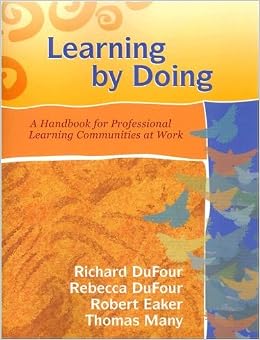
Side note: common questions for PLC work come from DuFour, DuFour, Eaker, & Many, 2010 as a PLC foundation: Learning by Doing: A Handbook for Professional Learning Communities at Work; we acknowledge this foundational work when discussing PLCs :
- ``` What do we want students to learn? (essential standards)
*How will we know if they have learned? (team-developed common assessments)*What will we do if they don’t learn? (systematic interventions)*What will we do if they already know it? (extended learning)``` + Collective Efficacy + Graham Nuthall, Hidden Lives of Learners - Students already know between 40-50 percent of what the teacher is teaching (Nuthall, 2007) + Equity: Removal of Barriers vs. intervention as responses to student data + Activator: Someone to guide the group * What are PLCs getting wrong? (13:21) + Emphasis on the structural conditions can overwhelm the focus and mission of the group + PLC must continually reinvest in itself + Lack of attention to instruction - “How do we move learning forward?” - Literacy example (16:49) + Curriculum / Instruction / Assessment + Recent research that ~20% of in-class tasks are on grade level TNTP’s The Opportunity Myth - and an article from EdWeek + PLC+ Protocol - Assignment analysis (from The Education Trust) (19:34) - Equity in Motion work from The Education Trust * Trust and the importance of Relational Conditions (21:18) + Activator helps keep the conversation moving + Protocols provide consistency * PLC+ / PD (22:57) + Roughly a 1 to 3 ratio - Full staff Professional learning to PLC+ Time * Credibility & Efficacy (24:33) + Teacher Credibility: Trust, Competence, Dynamism, Immediacy * Self-Efficacy and Collective Efficacy (27:17) + Albert Bandura’s research on self-efficacy - - From Leading Impact Teams, by Bloomberg & Pitchford (& based on Bandura’s research, as well as Goddard, Hoy, & Hoy): Efficacy = Mastery Moments, Vicarious Experience, Feedback, and Trust * “Where are we going?” and “Where are we now?” (31:08) + 5 Questions in PLC+: Where are we going? Where are we now? How do we move learning forward? What did we learn today? Who benefited and who did not benefit? * Bringing data to the PLC+ (33:22) + Student feedback * Equity / Cognitive Bias / The Decisions we choose to make: (35:52) + Quote from PLC+: “Underlying every decision about what we choose to gather data on is an unspoken decision about what we won’t look at.” + Data should be aligned to team’s common challenge; then did we impact learning or not? - Invite students to PLC+ times for feedback * Protocols for learning walks + Microteaching protocols * What did we learn today? Every single day we should be formatively assessing * Scheduling logistics (44:56) + Two PLC+s - Grade level & Content level + Vertical & Horizontal conversations are necessary * Grading at their school (48:19) + Competency-Based / Mastery of Standards + Formative homework & classwork * All Learning is Social Emotional (50:41) + Social Emotional Academic Learning * Removing institutional barriers vs. Intervention (54:27) + Support each learner individually - help them find a way to mastery * Special offer for Vrain Waves Listeners!! (58:50) + Promo Code: VRAINWAVES + Go to corwin.com/PLCColorado to register; Oct 3 & 4 in Denver at the Curtis Hotel
-