How can one explain the expression, transmit one’s comprehension? Ask yourself: How does one lead anyone to the comprehension of a poem or of a theme? The answer to this tells us how meaning is explained here. Let’s simplify language to the declarative statement that has the capacity to convey unambiguously. (Wittgenstein, Philosophical Investigations, #533)
Reading is not reading if it does not lead to comprehension. Otherwise, it would be known as “word calling”. With that premise, I launch into a brief entry about reading comprehension. It is not comprehensive. Nor is it very technical. Instead, it is a few, common ideas that have been hanging around my head for some time. To help organise my thoughts, I have set out to dispel a few myths that I have heard expressed from time to time:
- Myth #1: Once one solves issues of decoding and the reader is fluent, then comprehension should take care of itself.
- Answer #1: Whilst automaticity and fluency does facilitate meaningful comprehension, learners need ample practice and instruction in order to process, interpret, and respond to the information presented in a texts. Developing readers also need to build a diverse portfolio of knowledge, interests, reading experiences and vocabulary to make sense of what is read.
- Myth #2: You cannot teach comprehension, because you cannot teach thinking. Someone either understands something or he doesn’t.
- Answer #2: Cannot teach someone to think? You have got to be kidding! We teach people to think all the time. We direct people’s attention to significant details. We encourage individuals to imagine. We ask people to draw connections between observations and concepts being learned. We present pictures to people so that we can persuade and inform. Of course we can teach comprehension.
- Myth #3: Comprehension is a singular skill that one completes by oneself.
-
Answer #3: To comprehend requires the orchestration of a wide range of skills, whether this involves visualisation, summation, interpretation, comparison, application, etc. Over time, learners are taught to deploy a range of techniques in order to focus on what they read and to make sense of what they read. All of these techniques may not have been made explicit, but this does not mean that they do not exist, that they should not be taught and that they do not become more complex over time.
-
Myth #4: Reading comprehension is a general skill. If one is a good reader, then one can read and understand just about everything.
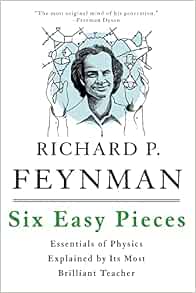
- Answer #4: No! It may appear that a good reader can read anything (as long as the reader can control his or her reading diet). Most of us can’t necessarily choose our reading diet. The ability to read a novel is different than the ability to read legislation or philosophy or a science textbook or a government policy or an electricity bill. Furthermore, our ability to comprehend a given text will be impacted by our background knowledge, our experiences, our context, our educational experiences, our language and our motivation. A physicist might devour Six Easy Pieces by Richard Feynman. For the novice, is it so easy? Perhaps not.
We become better readers by reading, discussing, re-reading and thinking reflectively and critically. In the context of books, we explore new words, new knowledge, new ideas, new perspectives and more. What we read and how we read are things that change across the lifespan. Please enjoy what you read and explore!