The Spark: Recent Episodes
WITF, Inc.


When people come together and talk about really interesting topics, great questions spark better understanding and opportunities for new ideas to form. On The Spark from WITF, hosts Scott LaMar and Aniya Faulcon start the conversations about what’s happening in the world and at home. Share your ideas at https://witf.org/programs/the-spark.
In 50 STATES OF MURDER: An Atlas of American Crime, true crime master Harold Schechter, reveals lesser known, darkly fascinating cases that, taken together, form a unique criminal history of all 50 states in the US!
This week, libraries across the country, including the Cumberland County Library System, are taking part in National Banned Books Week, a celebration of the freedom to read and an effort to raise awareness about attempts to remove books from public shelves.
Support WITF: https://www.witf.org/support/give-now/
See omnystudio.com/listener for privacy information.
Lancaster’s vibrant theater scene is getting a thought-provoking addition this month as the Lancaster Shakespeare Theatre presents Streamers, a powerful drama set during the height of the Vietnam War.
Support WITF: https://www.witf.org/support/give-now/
See omnystudio.com/listener for privacy information.
For many in Central Pennsylvania, surf fishing might seem like a distant coastal pastime, but Matt Bryson, a Harrisburg/Hershey resident, has turned the sport into a personal passion and a competitive triumph.
Support WITF: https://www.witf.org/support/give-now/
See omnystudio.com/listener for privacy information.
This week, libraries across the country, including the Cumberland County Library System, are taking part in National Banned Books Week, a celebration of the freedom to read and an effort to raise awareness about attempts to remove books from public shelves.
Support WITF: https://www.witf.org/support/give-now/
See omnystudio.com/listener for privacy information.
A historic log cabin in downtown Gettysburg is being restored to become the town’s first dedicated Black History Museum, highlighting the lives and legacy of the Hopkins family and the wider Black community in the area.
Support WITF: https://www.witf.org/support/give-now/
See omnystudio.com/listener for privacy information.
A new report from the PA Health care Cost Containment Council outlines why Pennsylvanians stay in the hospital-the types of procedures they undergo. Using data collected from October 1, 2023, through September 30, 2024, this type of fact-based information showing the overall total number of cases performed at a facility level reflects the degree of experience a facility has in caring for patients who undergo a procedure.
Support WITF: https://www.witf.org/support/give-now/
See omnystudio.com/listener for privacy information.
In 50 STATES OF MURDER: An Atlas of American Crime, true crime master Harold Schechter, reveals lesser known, darkly fascinating cases that, taken together, form a unique criminal history of all 50 states in the US!
Filled with hundreds of dark tales of murderous mayhem, 50 STATES OF MURDER is a chilling work of storytelling and an authoritative survey of the United States’ homicidal history. Schechter explores each state’s most grizzly, gruesome, and notorious murders that have passed into regional lore.
Support WITF: https://www.witf.org/support/give-now/
See omnystudio.com/listener for privacy information.
The internationally acclaimed saxophone quartet Ensemble du Bout du Monde — whose name translates to “the ensemble at the edge of the world” — will bring their genre-bending blend of classical, contemporary, and experimental music to Perry County on October 11.
Support WITF: https://www.witf.org/support/give-now/
See omnystudio.com/listener for privacy information.
Pennsylvania’s fall foliage season is officially underway, and according to the Pennsylvania Department of Conservation and Natural Resources (DCNR), it’s shaping up to be one of the most colorful — and longest — in the country.
Support WITF: https://www.witf.org/support/give-now/
See omnystudio.com/listener for privacy information.
The Lebanon Valley College Jazz Orchestra (VJO) has released its second commercial album, Jungle Book, showcasing the talent and dedication of student musicians under the direction of Dr. Jeff Lovell and Dr. Justin Morell. The album features four original compositions by Morrell and highlights guest performances from multi-Grammy-nominated trombonist Alan Ferber and New York-based saxophonist Hashem Assadullahi.
Support WITF: https://www.witf.org/support/give-now/
See omnystudio.com/listener for privacy information.
DoorDash is helping transform food access in Pennsylvania through its community initiative, Project Dash. The program partners with organizations like Hunger Free Pennsylvania to deliver meals and essential items to those who need them most — particularly seniors with limited mobility or transportation options.
Support WITF: https://www.witf.org/support/give-now/
See omnystudio.com/listener for privacy information.
On October 6, as part of a partnership with the Dauphin County Bar Association, Keep Our Republic (KOR) will host a public forum titled “The Independent Court: What It Is and Why It Matters” at Widener Law School in Harrisburg. The panel will feature former United States Court of Appeals Judge Andre Davis, former District of New Jersey Federal District Court Judge Robert Kugler, and President Judge Emerita Bonnie Leadbetter of the Commonwealth Court. Together, they will discuss why judicial independence is a cornerstone of democracy.
As schools across Pennsylvania welcome students back to classrooms, mental health experts are using Suicide Awareness Month to highlight a growing concern: youth suicide and the importance of supporting students’ social-emotional well-being.
Support WITF: https://www.witf.org/support/give-now/
See omnystudio.com/listener for privacy information.
On this month’s Braver Angels segment on The Spark, the focus was on a principle often discussed but not always fully understood: free speech. Host Asia Tabb was joined by Wilt Wilkinson, host of the conservative podcast Derate the Hate and national Braver Angels leader, and Ron Chadwell, a retired Pennsylvania attorney and local Braver Angels organizer.
Support WITF: https://www.witf.org/support/give-now/
See omnystudio.com/listener for privacy information.
As Pennsylvania enters its fourth month without a state budget, at least six counties are exploring lines of credit to cover essential services, according to Spotlight PA reporters Katie Meyer and Stephen Caruso.
Support WITF: https://www.witf.org/support/give-now/
See omnystudio.com/listener for privacy information.
The Harrisburg Book Festival is back this year, running October 15–19, bringing together authors, readers, and literary enthusiasts from across the region. The festival promises panels, book signings, and special presentations that highlight a wide range of genres and creative voices.
Support WITF: https://www.witf.org/support/give-now/
See omnystudio.com/listener for privacy information.
For more than a century, the East Broad Top Railroad has been a lifeline for central Pennsylvania. Built in the 1870s, it is the oldest surviving narrow-gauge railroad east of the Mississippi — and it still runs on its original track and steam locomotives.
Support WITF: https://www.witf.org/support/give-now/
See omnystudio.com/listener for privacy information.
On October 6, as part of a partnership with the Dauphin County Bar Association, Keep Our Republic (KOR) will host a public forum titled “The Independent Court: What It Is and Why It Matters” at Widener Law School in Harrisburg. The panel will feature former United States Court of Appeals Judge Andre Davis, former District of New Jersey Federal District Court Judge Robert Kugler, and President Judge Emerita Bonnie Leadbetter of the Commonwealth Court. Together, they will discuss why judicial independence is a cornerstone of democracy.
Support WITF: https://www.witf.org/support/give-now/
See omnystudio.com/listener for privacy information.
Anders Beck, the dobroist for acclaimed bluegrass-americana band Greensky Bluegrass, recently shared the story of how he stumbled into the instrument that would define his career. “I was a guitar player, getting into bluegrass, and realized flat-picking guitar just wasn’t my thing,” Beck said. “Then I found the dobro—played with a slide, lots of sustain—and I just fell in love. I played six hours a day.”
Beck also reflected on the band’s longevity as they celebrate their 25th anniversary. “The reason we’re still going strong? We didn’t stop,” he explained. “We keep pushing ourselves creatively, evolving our sound, and trying new things. Our live shows are like a psychedelic rock odyssey, but on bluegrass instruments.”
Over the years, Greensky Bluegrass has blended traditional bluegrass roots with innovative sounds. Beck described the evolution: “We started with the classic setup, one mic, traditional instruments. Now we’ve got amps, pedals, and experimental sounds—but the instruments are still at the core.”
The band’s journey, Beck says, has been as much about friendship as music. “We’re five best friends. The band has always been constant, no matter the challenges.”
Greensky Bluegrass will be bringing their signature sound to Harrisburg on October 2, marking another milestone in a career defined by creativity, innovation, and a love of bluegrass in all its forms.
Support WITF: https://www.witf.org/support/give-now/
See omnystudio.com/listener for privacy information.
Theatergoers in Lancaster are in for a unique experience this October as Creative Works of Lancaster presents the world premiere of Dead Inside, a new play by local playwright Gwen Tulin. Known for its innovative approach to performance, Creative Works specializes in nomadic theater, bringing productions to unconventional spaces around the city.
Support WITF: https://www.witf.org/support/give-now/
See omnystudio.com/listener for privacy information.
Visitors to Lititz may find themselves twisting their own pretzel while stepping back in time at the Julius Sturgis Pretzel Bakery, America’s oldest commercial pretzel bakery. Founded in 1861, the bakery’s origins are said to be a happy accident.
Support WITF: https://www.witf.org/support/give-now/
See omnystudio.com/listener for privacy information.
As schools across Pennsylvania welcome students back to classrooms, mental health experts are using Suicide Awareness Month to highlight a growing concern: youth suicide and the importance of supporting students’ social-emotional well-being.
Support WITF: https://www.witf.org/support/give-now/
See omnystudio.com/listener for privacy information.
For fans of classic comedy, the Three Stooges have long been a source of laughter, from their slapstick antics to their timeless humor. In Ambler, Pennsylvania, one man has turned that love into a museum experience unlike any other. Gary Lassin, founder and executive director of the Stoogeum, has curated the world’s only museum dedicated entirely to the Three Stooges.
Support WITF: https://www.witf.org/support/give-now/
See omnystudio.com/listener for privacy information.
Pancreatic cancer is among the deadliest forms of cancer, and Pennsylvania has one of the nation’s highest rates. For families like the Crosbys of Cumberland County, the disease has left a lasting mark — one they hope can spark more awareness, early detection, and support.
The beginning of the school year is an exciting time, but many children will fall behind academically, developmentally and socially because of undetected vision issues. That is the concern of the Pennsylvania Optometric Association, POA, and the reason state lawmakers are sponsoring the Children’s Vision Bill. It calls for optometrists and ophthalmologists to perform vision exams at milestone years for students: kindergarten, fourth and eighth grades. The National Parent Teacher Association has reported that more than 10 million children in the U.S. suffer from undetected vision problems that can hamper learning success. Identifying those students who have vision-related deficiencies early on and getting them an effective diagnosis and treatment will make a significant impact on their overall quality of life and future.
Support WITF: https://www.witf.org/support/give-now/
See omnystudio.com/listener for privacy information.
For decades, WPSU has been a trusted public radio and television station for central and northern Pennsylvania. But now, the NPR and PBS affiliate based at Penn State University is facing a wind-down plan that would close its doors by June 30, 2026—a decision that has left staff and community members shocked.
Support WITF: https://www.witf.org/support/give-now/
See omnystudio.com/listener for privacy information.
As students head back to school this fall, many families are celebrating new beginnings—but for some children, undiagnosed vision problems can create hidden barriers to learning, development, and social growth. That is the concern behind the Pennsylvania Children’s Vision Bill, which calls for mandatory eye exams at key educational milestones.
For Laura Koenig of Pennsylvania, the issue hit close to home. Her son, Nathan, struggled with reading from the time he entered kindergarten. Despite interventions and an Individualized Education Program (IEP) implemented in second grade, Nathan continued to lag behind his peers. Teachers and specialists initially attributed his difficulties to a learning disability.
Support WITF: https://www.witf.org/support/give-now/
See omnystudio.com/listener for privacy information.
The Sheepford Road Bridge, a 19th-century engineering landmark connecting York and Cumberland Counties, is set for restoration after years of community advocacy and preservation efforts. Built in 1887 by the Phoenix Bridge Company, the bridge features innovative Phoenix Columns, a wrought-iron construction technique that also supported projects like the New York City subway, Independence Hall, and the Washington Monument.
Support WITF: https://www.witf.org/support/give-now/
See omnystudio.com/listener for privacy information.
For decades, Dr. Bruce Levine has been at the forefront of cancer research, pioneering CAR T-cell therapy—a treatment that harnesses a patient’s own immune system to fight cancer. On a recent conversation with Asia Tabb, Levine shared his journey and the promise of this innovative therapy.
Support WITF: https://www.witf.org/support/give-now/
See omnystudio.com/listener for privacy information.
Every September, National Recovery Month shines a light on the millions of Americans working toward recovery from addiction. For Dr. Ken Martz, PsyD, MBA, a psychologist with three decades in the field, it’s a time to both celebrate progress and confront the barriers that remain.
Support WITF: https://www.witf.org/support/give-now/
See omnystudio.com/listener for privacy information.
For the past decade, Cable House Presents has been bringing national touring acts to York in intimate settings, creating a space for both artistry and community connection. The volunteer-led series has now reached a major milestone: more than 90 events, nearly 10,000 attendees, and $100,000 paid directly to independent artists.
Support WITF: https://www.witf.org/support/give-now/
See omnystudio.com/listener for privacy information.
For the past decade, the Harrisburg Mansion Concert Series has been offering something different from the usual large concert venues — intimate performances where audiences sit just feet away from world-class musicians.
Support WITF: https://www.witf.org/support/give-now/
See omnystudio.com/listener for privacy information.
For Alexander Cabot, spirituality has always been about evolution. His upcoming memoir, set to be published this October, reflects on a lifetime of exploring pagan traditions, psychic practices, and the spiritual lessons he’s gathered along the way.
Support WITF: https://www.witf.org/support/give-now/
See omnystudio.com/listener for privacy information.
Pancreatic cancer is among the deadliest forms of cancer, and Pennsylvania has one of the nation’s highest rates. For families like the Crosbys of Cumberland County, the disease has left a lasting mark — one they hope can spark more awareness, early detection, and support.
Support WITF: https://www.witf.org/support/give-now/
See omnystudio.com/listener for privacy information.
Pennsylvania has no shortage of literary talent, and one of its most celebrated young adult authors is back with a new novel. A.S. King, who grew up “in the middle of a cornfield in Berks County,” has just released Pick the Lock, a story about family secrets, teenage rebellion, and the power of music.
Support WITF: https://www.witf.org/support/give-now/
See omnystudio.com/listener for privacy information.
Prostate cancer is one of the most urgent health issues facing men in Pennsylvania, according to cancer advocates and survivors who are working to remove barriers to early detection.
Support WITF: https://www.witf.org/support/give-now/
See omnystudio.com/listener for privacy information.
Marilyn, 79, who lives in Camp Hill, is a 25-year survivor of early-stage breast cancer. Since 2011, Marilyn has logged more than 20,000 miles walking and has raised more than $115,000.
Marilyn's mission is to save lives by building awareness of early detection of breast cancer AND raising money to fund research and treatments. She wants to rid the world of breast cancer ... for her daughter, granddaughters, loved ones and people around the world.
Also on the program...
Historic Gettysburg Adams County is embarking on an effort to preserve historic barns throughout the county. reservation techniques through publications, workshops, lectures, tours and demonstrations. For example, the Adams County Barn Registry to gather information that will help everyone gain a better understanding of the local barns. The goal is to assist in the preservation of the historic barns of Adams County by encouraging an interest in and an understanding of their im- portance to the rural heritage of our community.
Support WITF: https://www.witf.org/support/give-now/
See omnystudio.com/listener for privacy information.
The federal Roadless Rule, first enacted in 2001, remains at the center of a national debate over conservation and land use — and Pennsylvania’s only national forest is directly impacted.
The rule restricts road construction and timber harvesting in designated “roadless” areas of national forests. It has faced legal and political challenges over the past two decades but has largely stood firm.
Support WITF: https://www.witf.org/support/give-now/
See omnystudio.com/listener for privacy information.
Ed Mahon reported on a recent public meeting of a statewide panel responsible for determining how Pennsylvania will use millions of dollars from settlements with opioid makers and distributors. The funds are intended to help address the ongoing opioid crisis, but questions remain about how to balance immediate needs with long-term strategies for prevention, treatment, and recovery.
Meanwhile, Danielle Ohl reported on a cyber-attack that disrupted operations at the Pennsylvania Attorney General’s office. Details of the breach are still being investigated, but officials said the attack raised concerns about the security of sensitive information and the resilience of the state’s digital infrastructure.
Support WITF: https://www.witf.org/support/give-now/
See omnystudio.com/listener for privacy information.
Outdoor enthusiasts in south-central Pennsylvania have a new reason to explore the Bedford and Fulton County region, thanks to the opening of the Sideling Hill Trailhead at the Sideling Hills Service Plaza along the Pennsylvania Turnpike. The new trailhead provides access to local hiking and biking trails, along with convenient amenities for visitors.
Support WITF: https://www.witf.org/support/give-now/
See omnystudio.com/listener for privacy information.
When Marilyn B. Fuller-Smith was diagnosed with stage zero breast cancer, her doctor’s insistence on a same-day mammogram saved her life. “From that moment until today, everything about my breast cancer journey has been a blessing, just an absolute blessing,” Fuller-Smith said. “I am the model of finding breast cancer early. Detection is the most important part. Find it early, don’t go without those mammograms.”
Her diagnosis not only changed her life but also connected her to fellow survivors Jayne Blake and Donna Slusser. Together, the women have walked thousands of miles in breast cancer awareness events and built a sisterhood rooted in resilience, joy, and advocacy.
Support WITF: https://www.witf.org/support/give-now/
See omnystudio.com/listener for privacy information.
As Pennsylvania moves into September, cooler weather may be on the horizon—but gardeners are facing an ongoing dry spell that’s putting stress on trees, flowers, and vegetable beds.
Horticulturist Erica Jo joined The Spark to share advice on how to keep plants healthy during drought-like conditions. Her first piece of guidance: don’t forget about your trees.
Support WITF: https://www.witf.org/support/give-now/
See omnystudio.com/listener for privacy information.
Central Pennsylvania is once again gathering for a day of food, fun, and giving back as the Alex W. Smith Foundation hosts its 6th annual “Chili Cook-Off for a Cause.” The event honors the life and legacy of Alex Smith, a 22-year-old chef apprentice whose passion for food and people continues to inspire.
Support WITF: https://www.witf.org/support/give-now/
See omnystudio.com/listener for privacy information.
Pennsylvania is grappling with a workforce shortage in aging services, raising concerns about access to care for older adults across the state.
Support WITF: https://www.witf.org/support/give-now/
See omnystudio.com/listener for privacy information.
Adams County’s barns are more than farm buildings — they’re living pieces of history. For the past two decades, the Historic Gettysburg Adams County (HGAC) Barn Preservation Project has been working to keep them standing.
Support WITF: https://www.witf.org/support/give-now/
See omnystudio.com/listener for privacy information.
With National Voter Registration Day being observed next week, Pennsylvania Secretary of State Al Schmidt is reminding residents how simple it is to get registered — and why it matters in every election, not just presidential years.
Support WITF: https://www.witf.org/support/give-now/
See omnystudio.com/listener for privacy information.
After a stretch of cooler weather earlier this month, Central Pennsylvania is back to feeling more like summer. ABC27 meteorologist Dan Tommaso says the warmth will continue into late September — but the bigger story is the lack of rainfall.
Support WITF: https://www.witf.org/support/give-now/
See omnystudio.com/listener for privacy information.
What began as one high school band director’s dream in 1975 has grown into a program that has sent thousands of young musicians across Europe. American Music Abroad (AMA), based in New Hope, Pennsylvania, is celebrating nearly five decades of blending music, travel, and cultural exchange.
Support WITF: https://www.witf.org/support/give-now/
See omnystudio.com/listener for privacy information.
More than two months past Pennsylvania’s budget deadline, school districts across the state are grappling with uncertainty, borrowing costs, and the possibility of program cuts as they wait for billions in state funding.
Also, on The Spark Weekly:
At the heart of WITF’s mission to provide trusted news, cultural programming, and educational content lies a dedicated team working behind the scenes: the development department. Leading the charge is Elisa Balestra, Vice President of Philanthropy, who joined the station 11 months ago and has quickly immersed herself in connecting the community to the station’s mission.
Support WITF: https://www.witf.org/support/give-now/
See omnystudio.com/listener for privacy information.
The Pennsylvania Dairymen’s Association may be best known for its long lines at the Farm Show milkshake stand, but Executive Director Dave Smith says the nonprofit’s mission goes far beyond a sweet treat.
Support WITF: https://www.witf.org/support/give-now/
See omnystudio.com/listener for privacy information.
Prosecutors allege Heller ran a multimillion-dollar ATM investment scheme that defrauded investors out of millions. “It’s a really complex case,” Umble explained, “but at its core, investors thought they were buying into profitable ATMs that didn’t exist.”
According to Umble’s reporting, Heller allegedly diverted funds for personal use and to prop up his businesses. Federal investigators say the fraud reached into the hundreds of millions of dollars.
Umble emphasized the local impact, noting that many Lancaster County residents and businesses were among those who lost money. “This isn’t just a headline-grabbing national case—it has real consequences here at home,” he said.
The case is ongoing as federal prosecutors pursue charges.
Support WITF: https://www.witf.org/support/give-now/
See omnystudio.com/listener for privacy information.
What does it mean to protect your family when the world itself is falling apart? That question is at the heart of Megha Majumdar’s new novel, A Guardian and a Thief.
Support WITF: https://www.witf.org/support/give-now/
See omnystudio.com/listener for privacy information.
The soothing aroma of freshly brewed tea will once again fill downtown Mechanicsburg as the 8th annual Pennsylvania Tea Festival returns September 19th and 20th. Held in the lush herb gardens of The Rosemary House and Sweet Remembrances Tea Room, the event promises two days steeped in flavor, culture, and community.
Support WITF: https://www.witf.org/support/give-now/
See omnystudio.com/listener for privacy information.
As downtown Harrisburg continues to evolve, local planning experts see both challenges and opportunities in shaping the city’s future. Vern McKissick, a 30-year member of the Harrisburg Planning Commission who helped develop the city’s first Comprehensive Development Plan since the 1970s, reflects on how the energy around downtown projects has shifted over the decades.
Support WITF: https://www.witf.org/support/give-now/
See omnystudio.com/listener for privacy information.
At the heart of WITF’s mission to provide trusted news, cultural programming, and educational content lies a dedicated team working behind the scenes: the development department. Leading the charge is Elisa Balestra, Vice President of Philanthropy, who joined the station 11 months ago and has quickly immersed herself in connecting the community to the station’s mission.
Support WITF: https://www.witf.org/support/give-now/
See omnystudio.com/listener for privacy information.
A collaborative study by the Clinic for Special Children in Lancaster and the Children’s Hospital of Philadelphia has identified an ultra-rare genetic disorder called complement factor I (CFI) deficiency, which is significantly more prevalent in individuals of Old Order Amish ancestry.
Support WITF: https://www.witf.org/support/give-now/
See omnystudio.com/listener for privacy information.
When the dancers of A Taste of Ireland—The Irish Music & Dance Sensation take the stage in Central Pennsylvania this October, they’ll be bringing with them not only high-energy choreography but also centuries of cultural history.
Support WITF: https://www.witf.org/support/give-now/
See omnystudio.com/listener for privacy information.
More than two months past Pennsylvania’s budget deadline, school districts across the state are grappling with uncertainty, borrowing costs, and the possibility of program cuts as they wait for billions in state funding.
Support WITF: https://www.witf.org/support/give-now/
See omnystudio.com/listener for privacy information.
Education in Ancient Rome was far from the structured classrooms we think of today. Historian Chrissy Senecal joined The Spark to explain how the system evolved over centuries—and how issues of class, gender, and respect for teachers shaped who actually got to learn.
Support WITF: https://www.witf.org/support/give-now/
See omnystudio.com/listener for privacy information.
Coming up on this week's edition of The Spark Weekly.
The Braver Angels National organization launched a two-year initiative around the topic of immigration - The Citizens Commission on Immigration. The goal is to demonstrate to our US Congress that Americans with differing views can find common ground. The initiative was launched after our 2024 convention and the result of a vote by a balanced red-blue group of about 750 delegates. It will culminate with a "Report to the Nation." The process is similar to the previous two-year initiative on Trustworthy Elections.
Also on the program...
The idea of a “traditional” college student — 18 to 24 years old, living on campus, and attending classes full-time — may no longer match reality.
Support WITF: https://www.witf.org/support/give-now/
See omnystudio.com/listener for privacy information.
WITF Democracy Reporter Jordan Wilkie discussed his report on Pennsylvania activist Heather Honey, who is moving from leading election conspiracy groups to a top elections policy role at the U.S. Department of Homeland Security. Elections experts have raised concerns that Honey’s appointment could undermine federal election support and public confidence. “The appointment of Heather Honey is just confirmation that DHS has gone from being one of the most credible supporters of American election integrity to potentially a purveyor of disinformation,” said David Becker, head of the Center for Election Innovation & Research.
Next, WITF Capitol Reporter Jaxon White weighed in on Pennsylvania’s upcoming Supreme Court retention elections. Three Democratic justices—Christine Donohue, Kevin Dougherty, and David Wecht—face voters this November. Supporters, including legal expert Shanin Specter, argue the justices rule impartially and deserve to keep their seats, while Republican groups are campaigning against them citing key decisions on abortion, mail-in voting, and redistricting.
Finally, PennLive reporters Jenna Wise and Jonathan Bergmueller discussed a Labor Day weekend incident at Harrisburg’s Kipona festival, where a car ran into a crowd, injuring three people, including a 6-year-old child.
Support WITF: https://www.witf.org/support/give-now/
See omnystudio.com/listener for privacy information.
Immigration has long been one of the most divisive issues in American politics. Now, Braver Angels, a national nonprofit dedicated to reducing political polarization, is taking on the challenge with its new two-year initiative: the Citizens Commission on Immigration.
Support WITF: https://www.witf.org/support/give-now/
See omnystudio.com/listener for privacy information.
Stuart Malina is entering his 26th season as music director of the Harrisburg Symphony Orchestra (HSO), a milestone he admits still surprises him.
Support WITF: https://www.witf.org/support/give-now/
See omnystudio.com/listener for privacy information.
At Zoetropolis Cinema Stillhouse in downtown Lancaster, community members gather once a month to watch films, sip cocktails, and dive into deep conversations. The series, Philosophy | Drinks | Film—known as PDF—is curated by Dennis M. Weiss, who started the program in 2019.
Support WITF: https://www.witf.org/support/give-now/
See omnystudio.com/listener for privacy information.
When we think of the American Revolution, names like George Washington, Thomas Jefferson, and Benjamin Franklin often come to mind. But one of its most influential figures came from halfway across the world — a Polish-born engineer and soldier named Thaddeus Kosciuszko.
Support WITF: https://www.witf.org/support/give-now/
See omnystudio.com/listener for privacy information.
The idea of a “traditional” college student — 18 to 24 years old, living on campus, and attending classes full-time — may no longer match reality. That’s what Alvernia University Provost Leamor Kahanov, Ph.D., explained in a recent conversation on The Spark.
Support WITF: https://www.witf.org/support/give-now/
See omnystudio.com/listener for privacy information.
Washington Crossing Historic Park, located along the Delaware River, stands as a pivotal site in American history. It was here that George Washington famously crossed the Delaware on Christmas night in 1776, a daring maneuver that helped turn the tide of the Revolutionary War.
Support WITF: https://www.witf.org/support/give-now/
See omnystudio.com/listener for privacy information.
The New Cumberland Music and Film Festival is returning this year, celebrating the best of local talent alongside globally recognized films and performances. Skye Cadzow, producer of the festival, describes it as “a celebration of all things culture and arts, bringing both local talents and global pieces that are being celebrated around the world to the stage right here in central Pennsylvania.”
The festival began in 2022, with its first event taking place in September 2023. “A few of us in the nonprofit, the New Cumberland Collective, started talking about how we wanted to bring some of these elements that we love in pop culture together, start creating a film festival,” Cadzow said. “Last year we ran it back and added even more components… this year we're really thrilled to take things in a slightly new direction.”
This year’s theme centers on “small groups that can make a difference,” featuring documentaries like Middletown, which follows teenagers uncovering a toxic waste scandal in New York, and Speak, which highlights five students competing in national oratory contests. Cadzow said, “The teacher who was part of this project [in Middletown] is actually gonna be at the film to do a Q&A on Friday night following this screening. So, we're thrilled to have that.” The festival will also showcase its first non-documentary film, OBEX, a Sundance favorite, with director Albert Burney and other filmmakers participating in a post-screening Q&A.
Support WITF: https://www.witf.org/support/give-now/
See omnystudio.com/listener for privacy information.
The only English- and Spanish-bilingual public radio station in Lancaster and York counties is expected to cut programming next year in the wake of Congress’ vote last month to rescind public broadcasting funds.
Also on the program:
August 23rd marked the 20th anniversary of Hurricane Katrina; we look into what happened and how meteorology has advanced over the last 2 decades.
Support WITF: https://www.witf.org/support/give-now/
See omnystudio.com/listener for privacy information.
With the season opener against Frostburg State just around the corner, Millersville University’s football team is ready to hit the field. Head Coach J.C. Morgan says the preparation has been months in the making.
Support WITF: https://www.witf.org/support/give-now/
See omnystudio.com/listener for privacy information.
Gettysburg National Military Park, one of America’s most historic sites, is feeling the effects of widespread staffing and budget reductions across the National Park Service, according to reporter Najib Aminy. The cuts, driven by executive actions under the Trump administration, have already resulted in the loss of a quarter of the agency’s staff.
Support WITF: https://www.witf.org/support/give-now/
See omnystudio.com/listener for privacy information.
A mysterious, apple-loving creature said to roam the hills of Columbia has once again inspired thousands to gather for a celebration of folklore, food, and community.
The Albatwitch Festival, now in its 11th year, highlights the legend of the “albatwitch” — a small, hairy, tree-dwelling cryptid that some say still lurks in the woods around Chickies Rock.
Support WITF: https://www.witf.org/support/give-now/
See omnystudio.com/listener for privacy information.
Cherry Crest Adventure Farm is once again in the running for USA Today’s “Best Corn Maze in America” — marking the 10th time the Lancaster County attraction has been nominated.
Support WITF: https://www.witf.org/support/give-now/
See omnystudio.com/listener for privacy information.
When Hurricane Katrina struck the Gulf Coast in 2005, the storm left a devastating mark on New Orleans and surrounding communities. Nearly two decades later, the storm is remembered not only for its destruction, but also for how it reshaped meteorology and weather forecasting.
Support WITF: https://www.witf.org/support/give-now/
See omnystudio.com/listener for privacy information.
For nearly a decade, Hershey Gardens’ annual Bug-O-Rama has given families the chance to get up close with creatures they may never encounter in their own backyards — from hissing cockroaches to jungle nymphs, tarantulas, and exotic praying mantises.
Support WITF: https://www.witf.org/support/give-now/
See omnystudio.com/listener for privacy information.
WLCH Radio Centro, a bilingual public radio station and program of the Spanish American Civic Association (SACA), is celebrating almost 38 years of broadcasting while navigating financial challenges brought on by cuts in federal funding.
Support WITF: https://www.witf.org/support/give-now/
See omnystudio.com/listener for privacy information.
The Middle Creek Wildlife Management Area isn’t your typical state game land. Spanning about 6,000 acres along the Lancaster-Lebanon County border, it combines hunting, hiking, boating, and wildlife viewing with a rich conservation history.
Support WITF: https://www.witf.org/support/give-now/
See omnystudio.com/listener for privacy information.
On this week’s Journalist Roundtable, reporters examined the August 11 explosion at U.S. Steel’s Clairton Coke Works that killed two workers and injured ten others.
U.S. Steel says its initial investigation points to a gas valve failure. According to the company, pressure built up inside the valve while workers were flushing it during maintenance preparations. The release of coke oven gas is believed to have found an ignition source, triggering the deadly blast.
Reid Frazier of The Allegheny Front noted that the Clairton plant has a long history of safety and maintenance problems. “There was a fatal explosion here in 2009, another blast that injured 20 workers in 2010, and a fire in 2018 that disabled pollution controls for months,” he said.
Jordan Wilkie of WITF shared the perspective of a Clairton resident who heard the August 11 blast. The resident described not only the fear of the explosion itself but also ongoing struggles with air quality and pollution tied to the coke works.
Support WITF: https://www.witf.org/support/give-now/
See omnystudio.com/listener for privacy information.
A Pennsylvania native is receiving national attention for her work helping soldiers build resilience beyond physical training.
Maj. Erin Stone, originally from Boiling Springs, was recently featured in Men’s Health for her expertise in the U.S. Army’s Holistic Health and Fitness (H2F) system. The program, known as H2F, aims to improve soldier readiness by focusing on five areas: physical, mental, nutritional, sleep, and spiritual.
Support WITF: https://www.witf.org/support/give-now/
See omnystudio.com/listener for privacy information.
Even though it’s late summer, many Pennsylvanians still have gardening on their minds—and plenty of questions, too. While spring is often thought of as the main planting season, horticulturalist Erica Jo Shaffer says this time of year is far from the end of gardening. In fact, there’s still a lot you can do to keep your garden thriving into fall and beyond.
When words like “bipolar,” “schizo,” or even “anxious” are tossed around in everyday conversation, they often miss the mark of what those diagnoses actually mean. Psychiatrist Dr. Luke Piper of UPMC Lititz says while the casual use of psychiatric language has become common, it can dilute the real meaning of mental illness and even discourage people from seeking help.
Support WITF: https://www.witf.org/support/give-now/
See omnystudio.com/listener for privacy information.
As students and families prepare for the upcoming academic year, many are facing questions about financial aid — especially in light of major federal changes coming in the next few years. That’s where Pennsylvania’s School Services Team steps in.
The team is made up of 13 Higher Education Access Partners strategically located across the state. They work under the Pennsylvania Higher Education Assistance Agency (PHEAA) to provide free support to students, families, schools, and community organizations.
Support WITF: https://www.witf.org/support/give-now/
See omnystudio.com/listener for privacy information.
Pennon Education is working to give students the tools they need to succeed — from building curiosity in elementary classrooms to helping teens explore future career pathways.
Check out The Morning Agendas Feature on the Youth Voice Program:
https://omny.fm/shows/the-morning-agenda/ag-dave-sunday-implements-a-diversion-program-and-a-deep-dive-with-middle-school-podcasters
Support WITF: https://www.witf.org/support/give-now/
See omnystudio.com/listener for privacy information.
Harrisburg will host its first-ever Open Championship, a martial arts tournament designed not just for competition, but to celebrate community, unity, and culture.
Support WITF: https://www.witf.org/support/give-now/
See omnystudio.com/listener for privacy information.
Even though it’s late summer, many Pennsylvanians still have gardening on their minds—and plenty of questions, too. While spring is often thought of as the main planting season, horticulturalist Erica Jo Shaffer says this time of year is far from the end of gardening. In fact, there’s still a lot you can do to keep your garden thriving into fall and beyond.
Support WITF: https://www.witf.org/support/give-now/
See omnystudio.com/listener for privacy information.
A new report is offering a deeper look into the well-being of children across Pennsylvania, providing insights at both the county and state levels. The State of the Child Profiles, published annually by Pennsylvania Partnerships for Children (PPC), aim to spark critical conversations about children’s health, education, and economic stability.
Support WITF: https://www.witf.org/support/give-now/
See omnystudio.com/listener for privacy information.
Penn State Health employees recently collected and donated more than 250 bras to women in need across Carlisle, Shippensburg, and Harrisburg — a project that not only meets a basic need but also spreads awareness about affordable breast cancer screenings.
Support WITF: https://www.witf.org/support/give-now/
See omnystudio.com/listener for privacy information.
For many visitors, the Brandywine Conservancy and Museum of Art offers more than just galleries of artwork—it’s an accessible and welcoming place where art and nature come together.
Support WITF: https://www.witf.org/support/give-now/
See omnystudio.com/listener for privacy information.
When words like “bipolar,” “schizo,” or even “anxious” are tossed around in everyday conversation, they often miss the mark of what those diagnoses actually mean. Psychiatrist Dr. Luke Piper of UPMC Lititz says while the casual use of psychiatric language has become common, it can dilute the real meaning of mental illness and even discourage people from seeking help.
Support WITF: https://www.witf.org/support/give-now/
See omnystudio.com/listener for privacy information.
What began as a simple injury turned into a lifetime of adventure for 68-year-old Duane “Mike” McHale. After an Achilles injury ended his running days, he took up swimming, then cycling, and eventually triathlons. He’s since completed more than 140 multisport events and now focuses on extreme endurance challenges around the world. His adventures include climbing Mount Kilimanjaro, biking the 450-mile RAGBRAI ride in Iowa, swimming 22 miles through the Maldives, and more. Most recently, Mike completed a 390-mile ride across the Erie Canal alongside his 15-year-old grandson, Gavin.
Groundbreaking took place in late July on a brand new, 16 thousand square foot roundhouse at the Railroad Museum of Pennsylvania in Strasburg. It will be home to six historic steam locomotives, a major step forward in preserving Pennsylvania's railroad heritage. The Friends of the Railroad Museum of Pennsylvania have spearheaded a "Ready For The Roundhouse" fundraising campaign, already raising over $300,000 to support restoration work associated with the locomotives that will be housed in the new structure.
The 13.5 million-dollar project is set to be completed in early 2027.
Support WITF: https://www.witf.org/support/give-now/
See omnystudio.com/listener for privacy information.
This week on The Journalist Roundtable, the discussion focused on the latest developments in the Pennsylvania state budget. Hosts spoke with Jaxon White, WITF Capitol Reporter, and Ian Karbol, State Government Reporter for the PA Capital Star, about the key negotiations, spending priorities, and the political dynamics shaping Harrisburg’s budget process.
White and Karbol provided insight into how the proposed budget impacts Pennsylvanians, from education and healthcare funding to infrastructure and local government allocations. They also explored the challenges lawmakers face in reaching consensus and what to expect in the coming weeks as budget talks continue.
Support WITF: https://www.witf.org/support/give-now/
See omnystudio.com/listener for privacy information.
Lancaster County is no stranger to ghost stories, strange legends, and tales of hidden treasures—and Adam Zurn, executive director of Uncharted Lancaster, has spent years chronicling them. Since 2019, Zurn has written nearly 700 articles exploring the area’s folklore, and now he’s compiled a full-length book capturing the county’s spookier side.
Support WITF: https://www.witf.org/support/give-now/
See omnystudio.com/listener for privacy information.
Will and Jim Pattiz grew up just south of Atlanta, but a spontaneous road trip nearly 15 years ago changed the trajectory of their lives. Driving across the country to the Grand Canyon, they pulled off to visit Petrified Forest National Park and were immediately captivated.
Support WITF: https://www.witf.org/support/give-now/
See omnystudio.com/listener for privacy information.
For many, an Achilles injury might mark the end of an athletic journey. For 68-year-old Duane “Mike” McHale, it was just the beginning. After his injury ended his running days, Mike turned to swimming, then cycling, and eventually triathlons. Over the years, he has completed more than 140 multisport events and now focuses on extreme endurance challenges around the globe.
Support WITF: https://www.witf.org/support/give-now/
See omnystudio.com/listener for privacy information.
Flooding is the most common and costly natural hazard in Pennsylvania — and now the state is taking a high-tech step forward in predicting and preparing for it.
The Pennsylvania Emergency Management Agency (PEMA) has partnered with Penn State University and the National Weather Service to modernize the Integrated Flood Observation and Warning System, or iFLOWS, first launched in the 1970s and 80s.
Support WITF: https://www.witf.org/support/give-now/
See omnystudio.com/listener for privacy information.
A major preservation project is underway at the Railroad Museum of Pennsylvania — one that museum leaders say will secure the future of some of the state’s most treasured locomotives.
The museum has broken ground on a brand-new, 16,000-square-foot roundhouse, a circular structure that will house six historic steam locomotives, all listed on the National Register of Historic Places.
Patrick Morrison, Director of the Railroad Museum of Pennsylvania, says the design centers around a fully restored 1928 turntable — a piece of equipment that was once essential in the age of steam.
Support WITF: https://www.witf.org/support/give-now/
See omnystudio.com/listener for privacy information.
Lancaster-based nonprofit Servant Stage is on a mission to make live theater accessible to everyone — regardless of physical or financial limitations.
Support WITF: https://www.witf.org/support/give-now/
See omnystudio.com/listener for privacy information.
For Kelly Smith, founder of Omega Horse Rescue, the journey began not with a business plan or a long-term strategy — but with what she calls “a divine intervention.”
Support WITF: https://www.witf.org/support/give-now/
See omnystudio.com/listener for privacy information.
The deadliest U.S. passenger ship disaster since 1934 is the focus of a gripping new maritime history by two veteran seafarers who know the waters — and the dangers — all too well.
Yarmouth Castle Burning: The Deadliest Passenger Ship Disaster off the Coast of the United States Since 1934 by Eric Takakjian and Randall Peffer tells the harrowing story of the 1965 inferno aboard the SS Yarmouth Castle, which claimed 90 lives and forever changed maritime safety regulations.
Support WITF: https://www.witf.org/support/give-now/
See omnystudio.com/listener for privacy information.
The Catherine Hershey Schools for Early Learning (CHS) marked a major milestone with the grand opening of its newest location in Middletown — the third of six planned centers in Pennsylvania.
For Senate Alexander, Executive Director of CHS and a Milton Hershey School graduate, the opening is deeply personal.
"It’s a special moment for me personally as an MHS graduate… to now bring this program that’s needed to another community," Alexander said. "We’ll be able to serve almost 450 children next year."
The new CHS Middletown location will provide care and education for 150 children, adding to the 300 already served at CHS centers in Hershey and Harrisburg. Designed with a unique touch, the facility includes 25,000 square feet of outdoor play space. "This particular plot used to be a farm," Alexander explained. "Now we’re transforming it into high-quality early childhood education for a community that needs it."
Support WITF: https://www.witf.org/support/give-now/
See omnystudio.com/listener for privacy information.
On today’s edition of The Spark, former host Scott LaMar returned to the show for a wide-ranging conversation with Pulitzer Prize-winning author Rick Atkinson. The discussion centered around Atkinson’s latest volume in his Revolutionary War trilogy, which explores not only national figures like George Washington but also the critical role Central Pennsylvania played during the war.
Atkinson, whose ties to the region run deep—his father once taught at the U.S. Army War College in Carlisle—spoke about the strategic importance of towns like Lancaster, York, and Reading during the revolution. He noted that the Second Continental Congress even relocated to York for several months when threatened by advancing British forces, although not all delegates had kind words about the temporary capital.
The conversation also focused on how Atkinson brings familiar historical figures to life in nuanced ways. He described George Washington as “the indispensable man,” but not without flaws—highlighting his tactical missteps, limited early experience, and evolving leadership style. Atkinson also acknowledged Washington’s connection to slavery and how that legacy remains deeply intertwined with the nation’s founding.
The full interview offered both historical insight and personal reflection, bringing new perspective to the Revolutionary era through a local lens.
Support WITF: https://www.witf.org/support/give-now/
See omnystudio.com/listener for privacy information.
Downtown York is celebrating a major milestone in its journey toward revitalization — earning both state and national accreditation through the Main Street America program and the Pennsylvania Downtown Center.
The recognition signals a significant accomplishment for Downtown Inc, the organization leading the charge to support small businesses, public art, economic development, and community safety in York’s core. “Accreditation is kind of the gold standard in downtown revitalization programs,” said Sarah O’Brien, Director of Downtown Inc. “York has actually been doing the work to meet those standards for many years. We just took a step back this last year and went through the process to get the recognition we’ve earned.”
This is the first time in over a decade — since 2013 — that York has held the prestigious designation.
Since stepping into her role in April 2024, O’Brien has worked to strengthen York’s ties to national revitalization standards and broaden the community’s participation in the process. “I worked for three different Main Street programs in Texas, and we always worked really hard to get accredited,” she said. “It was kind of a personal and team goal to get back on track with our reporting and demonstrate that we’re doing the hard work to successfully revitalize a community.”
According to O’Brien, the accreditation recognizes a collaborative effort between local government, businesses, nonprofits, and private citizens. “Downtown Inc is that connector between small businesses, nonprofit organizations, government, and individuals,” she said. “Without them, we wouldn’t be where we are today.”
Support WITF: https://www.witf.org/support/give-now/
See omnystudio.com/listener for privacy information.
As the summer months heat up, so does the intake of stray and displaced animals at the York County SPCA, putting serious pressure on space, staff, and resources.
Steven Martinez, Executive Director of the York County SPCA, joined The Spark to shed light on how the shelter is navigating one of its busiest seasons of the year. "It's usually about this time of the year, towards the end of summer, that we start to get full," said Martinez. “You hit May, June, July — things start creeping up. And then by the time you get to August, suddenly we have 70, 80 dogs in the kennel at any given time.”
This influx of animals, particularly large dogs, is taking a toll on both the animals and the staff. “When our shelter starts to get too full, the animals get real stressed. They can get sick because there’s too many in too close of an environment. That extends their length of stay,” Martinez explained.
As the only animal shelter serving all 72 municipalities in York County, the organization is legally required to accept all stray and displaced animals. That volume alone creates consistent strain, but summer presents unique challenges.
“For cats, summer is their breeding season,” Martinez said. “By the time you get to the end of summer going into the fall, they’re in the third litter — and now we’re starting to get full.”
Inside the shelter, the noise and constant activity can cause stress for animals, especially dogs. That stress often leads to poor health, which then delays adoption. “Stress equals bad health. Our job is to manage their health through enrichment,” Martinez said. “We try to get dogs out two to three times a day for a walk, put them in play groups, and teach them manners so that they’re better candidates for adoption.”
Support WITF: https://www.witf.org/support/give-now/
See omnystudio.com/listener for privacy information.
The story of American industry is deeply woven into the steel beams, machine tools, and echoes of labor found inside the National Museum of Industrial History in Bethlehem, Pennsylvania. On The Spark, host Asia Tabb spoke with museum curator Andria Zaia and historian Mike Piersa about the museum’s roots, its Smithsonian affiliation, and how it brings the legacy of industrial America to life.
Support WITF: https://www.witf.org/support/give-now/
See omnystudio.com/listener for privacy information.
On a recent episode of The Spark, Dr. Chrissy Senecal joined host Asia Tabb to uncover new and evolving discoveries about early humans—from our earliest ancestors in Africa to the impact of DNA inherited from long-extinct relatives like Neanderthals and Denisovans. The conversation explored groundbreaking insights into how humans evolved and what modern science is teaching us about our ancient past.
Support WITF: https://www.witf.org/support/give-now/
See omnystudio.com/listener for privacy information.
For students across the Keystone State, the Pennsylvania Science Olympiad offers more than just a test of knowledge—it’s a hands-on, high-energy academic experience that encourages critical thinking, collaboration, and creativity in science, technology, engineering, and math.
Support WITF: https://www.witf.org/support/give-now/
See omnystudio.com/listener for privacy information.
The Central Pennsylvania Festival of the Arts is returning this summer with a vibrant and inclusive lineup that organizers say will reflect the region’s artistic spirit while drawing visitors from far and wide. Executive Director Pamela Snyder Etters says this year’s event is bigger, more diverse, and more accessible than ever before.
Support WITF: https://www.witf.org/support/give-now/
See omnystudio.com/listener for privacy information.
Now in its third year, the Harrisburg Fringe Festival has quickly become a vibrant celebration of bold, experimental, and uncensored art that’s energizing the capital city’s creative community.
Support WITF: https://www.witf.org/support/give-now/
See omnystudio.com/listener for privacy information.
The Pennsylvania State Police’s Bureau of Liquor Control Enforcement (BLCE) is responsible for far more than checking IDs at bars or inspecting bottles at restaurants. Officer Kristyn Plowden, who works in the bureau’s Training and Recruitment Unit for the Central Section, joined The Spark to share the behind-the-scenes role BLCE officers play in promoting public safety across the Commonwealth.
Support WITF: https://www.witf.org/support/give-now/
See omnystudio.com/listener for privacy information.
Now in its 58th year, Art of the State continues to serve as a cornerstone of Pennsylvania’s rich and vibrant arts community. Hosted by the State Museum of Pennsylvania in cooperation with the Pennsylvania Heritage Foundation, this annual juried exhibition features an impressive range of work—painting, photography and digital media, crafts, sculpture, and works on paper—highlighting the diverse artistic voices from across the Commonwealth.
This year’s exhibition includes 94 works selected from a staggering 2,344 entries—the second-highest submission count in the exhibition’s history. Ninety-five artists from more than 30 counties are featured in the 2025 show, which runs from June 8 through September 14 at the State Museum in Harrisburg.
Support WITF: https://www.witf.org/support/give-now/
See omnystudio.com/listener for privacy information.
From the rich scent of homemade vanilla ice cream to the creak of wooden barn doors, farm life runs deep for Brittany Snyder and Charlene Espenshade—two Pennsylvania women working to make agriculture education more accessible for the next generation.
Support WITF: https://www.witf.org/support/give-now/
See omnystudio.com/listener for privacy information.
With thousands of dams scattered across its waterways, Pennsylvania has a complicated relationship with its aquatic infrastructure. But a growing number of those dams—especially small, aging, and obsolete ones—are being taken down. And for good reason.
Support WITF: https://www.witf.org/support/give-now/
See omnystudio.com/listener for privacy information.
As more women seek answers about the physical and emotional changes that come with aging, UPMC Nurse Practitioner Melissa Laidacker is helping lead the conversation through a new podcast series dedicated to menopause and perimenopause.
Support WITF: https://www.witf.org/support/give-now/
See omnystudio.com/listener for privacy information.
Coming up on this week's edition of The Spark Weekly.
David Blankenhorn, a Harvard graduate and cofounder of Braver Angels, has stepped down after nine years as President of the nonprofit organization he helped launch in response to America’s growing political polarization.
also, on the program.
More than a decade after the loss of 19-year-old Peyton Walker to sudden cardiac arrest (SCA), the foundation created in her name is saving lives across Pennsylvania and beyond.
Support WITF: https://www.witf.org/support/give-now/
See omnystudio.com/listener for privacy information.
David Blankenhorn, a Harvard graduate and cofounder of Braver Angels, has stepped down after nine years as President of the nonprofit organization he helped launch in response to America’s growing political polarization.
Support WITF: https://www.witf.org/support/give-now/
See omnystudio.com/listener for privacy information.
As Americans get ready to celebrate Independence Day, the bald eagle—a powerful symbol of freedom and the nation itself—continues to be a soaring success story in Pennsylvania. Once nearly wiped out due to pesticide use, bald eagles have made a remarkable comeback across the Commonwealth.
Support WITF: https://www.witf.org/support/give-now/
See omnystudio.com/listener for privacy information.
In the heart of downtown Lancaster, a new museum is preparing to open its doors — one that highlights a powerful, and often overlooked, chapter of American history. The Thaddeus Stevens and Lydia Hamilton Smith Center for History and Democracy is set to open next spring, led by LancasterHistory, the organization behind the museum's development.
Support WITF: https://www.witf.org/support/give-now/
See omnystudio.com/listener for privacy information.
As temperatures soar and heatwaves become more common in Pennsylvania, health experts are urging people to understand the dangers of extreme heat — and how to protect themselves and others.
Support WITF: https://www.witf.org/support/give-now/
See omnystudio.com/listener for privacy information.
Mount Gretna may be a small Pennsylvania town, but it’s home to something historically unique: the only remaining Chautauqua in the state. For more than 130 years, the Mount Gretna Chautauqua has championed the same four foundational pillars—arts and culture, education, religion, and recreation—that began with the movement’s founding in 1874.
Support WITF: https://www.witf.org/support/give-now/
See omnystudio.com/listener for privacy information.
More than a decade after the loss of 19-year-old Peyton Walker to sudden cardiac arrest (SCA), the foundation created in her name is saving lives across Pennsylvania and beyond.
Support WITF: https://www.witf.org/support/give-now/
See omnystudio.com/listener for privacy information.
Local educator, historian, and adventurer Adam Zurn has taken his passion for Pennsylvania’s hidden history from blog to bookshelf. In his debut children’s book Canassatego and His Six Arrows, Zurn tells the powerful story of unity shared by the Onondaga chief Canassatego during the 1744 Treaty of Lancaster—a message that helped shape America’s earliest ideas of governance.
Support WITF: https://www.witf.org/support/give-now/
See omnystudio.com/listener for privacy information.
In the heart of downtown Harrisburg, Gamut Theatre Group is doing more than just putting on plays — it’s reimagining the way stories are told and connecting them to the community it calls home.
Support WITF: https://www.witf.org/support/give-now/
See omnystudio.com/listener for privacy information.
As Congress considers what could be the most significant Medicaid cuts in U.S. history, experts are sounding the alarm about the far-reaching consequences—especially for small businesses and rural communities.
Also, on the program.
For children affected by parental incarceration, the trauma can be deep, isolating, and difficult to express. But in Lancaster, a unique nonprofit is helping those children find their voice — through music.
Scaling Walls a Note at a Time (SWAN) was founded in 2011 by violinist and educator Diana Vuolo to serve children impacted by the incarceration of a parent. The organization offers free music instruction, performance opportunities, Bible and trauma management classes, and immediate access to mental health care — all under one roof.
Support WITF: https://www.witf.org/support/give-now/
See omnystudio.com/listener for privacy information.
With summer temperatures climbing and heat waves becoming more frequent, energy bills can quickly get out of hand. But there are simple, affordable ways to stay cool without breaking the bank.
Dan McCunney, Senior Communications Manager at NRG Energy, joined The Spark to share expert tips on how to lower energy usage while staying comfortable indoors.
Support WITF: https://www.witf.org/support/give-now/
See omnystudio.com/listener for privacy information.
Harrisburg’s own M. Travis Dinicola had his public radio dreams come true when he was selected as the winner of NPR’s Sunday Puzzle segment on Weekend Edition. A long-time listener, public media volunteer, and nonprofit fundraiser, Dinicola represented Central Pennsylvania on the national airwaves with enthusiasm and humility.
Support WITF: https://www.witf.org/support/give-now/
See omnystudio.com/listener for privacy information.
As Pennsylvania's June 30 state budget deadline approaches, lawmakers in Harrisburg remain at odds—especially over the controversial issue of whether to tax so-called "skill games." On this week’s Journalist Roundtable, The Spark explored the state budget standoff with Spotlight PA reporters Katie Meyer and Stephen Caruso, who outlined the widening rift among Republicans and what’s at stake.
Support WITF: https://www.witf.org/support/give-now/
See omnystudio.com/listener for privacy information.
As summer kicks off, much of the East Coast — including Pennsylvania — has already endured a punishing stretch of extreme temperatures, thanks to what meteorologists are calling a "heat dome." According to ABC 27 Meteorologist Dan Tomaso, the phenomenon is a classic — but intense — example of high-pressure systems trapping heat across large regions.
Support WITF: https://www.witf.org/support/give-now/
See omnystudio.com/listener for privacy information.
As vacation season heats up, safety officials are reminding Pennsylvanians to travel smart, buckle up, and never drive impaired — especially with increased traffic expected around the July 4th holiday.
In a recent conversation on The Spark, Kelly Whitaker with the Pennsylvania Traffic Injury Prevention Project (PA TIPP) outlined critical safety tips and state efforts to reduce crashes this summer.
Support WITF: https://www.witf.org/support/give-now/
See omnystudio.com/listener for privacy information.
As Congress considers what could be the most significant Medicaid cuts in U.S. history, experts are sounding the alarm about the far-reaching consequences—especially for small businesses and rural communities.
Support WITF: https://www.witf.org/support/give-now/
See omnystudio.com/listener for privacy information.
The Lower Susquehanna Riverkeeper Association (LSRA) has sounded an alarm for outdoor enthusiasts this summer: several locations along the Susquehanna River near Harrisburg are currently unsafe for recreational activities like swimming, kayaking, and fishing due to dangerously high levels of E. coli and other bacteria.
Support WITF: https://www.witf.org/support/give-now/
See omnystudio.com/listener for privacy information.
As conversations around mental health and social media continue to intensify, one expert says there’s growing evidence that screen time—especially among teens—is doing real harm. On The Spark, WITF’s Asia Tabb spoke with Dr. Yann Poncin, a child and adolescent psychiatrist, about what research is revealing and how families can respond.
Support WITF: https://www.witf.org/support/give-now/
See omnystudio.com/listener for privacy information.
The Whitaker Center for Science and the Arts is celebrating a major milestone — 25 years of engaging the Central Pennsylvania community with its unique blend of science, art, and education. We spoke with President and CEO Mary Oliveira, who reflected on the center’s legacy and shared how it’s planning for the future.
Support WITF: https://www.witf.org/support/give-now/
See omnystudio.com/listener for privacy information.
Journalists have long risked their safety to report the news — but in today's political and digital climate, that danger is only growing. Whether on the frontlines of protests or facing online harassment, reporters are increasingly “in the line of fire” in more ways than one.
Support WITF: https://www.witf.org/support/give-now/
See omnystudio.com/listener for privacy information.
For children affected by parental incarceration, the trauma can be deep, isolating, and difficult to express. But in Lancaster, a unique nonprofit is helping those children find their voice — through music.
Scaling Walls a Note at a Time (SWAN) was founded in 2011 by violinist and educator Diana Vuolo to serve children impacted by the incarceration of a parent. The organization offers free music instruction, performance opportunities, Bible and trauma management classes, and immediate access to mental health care — all under one roof.
Support WITF: https://www.witf.org/support/give-now/
See omnystudio.com/listener for privacy information.
When Stella Boheme received the first physical copy of her debut book, Read Like a Queen, she was overcome with emotion.
“Oh my gosh… the word that just comes to mind for me is surreal,” she said in an interview on The Spark. “It went from an idea that I had to start writing and every step of the way it just felt like, am I really doing this? And when I finally got the physical advanced copy, it finally hit me that yeah, this is happening.”
Coming out this September, Read Like a Queen is a bold reimagining of the traditional tarot guide, wrapped in the sparkle, empowerment, and self-discovery that defines Boheme's unique life as both a seasoned tarot reader and a dynamic drag performer.
Also, on the program
As Central Pennsylvania faces one of its soggiest seasons on record, gardeners are feeling the effects—and wondering how to keep their plants thriving. On a recent segment of The Spark, WITF’s resident gardening expert Erica Jo returned to share timely tips and tricks for navigating rain-soaked soil, fungal threats, invasive pests, and more.
Support WITF: https://www.witf.org/support/give-now/
See omnystudio.com/listener for privacy information.
On this week’s edition of Journalist Roundtable, the focus turned to a deeply troubling and emotionally charged case that’s raised pressing questions about youth violence, accountability, and the juvenile justice system in Pennsylvania.
A 15-year-old York County teen was recently convicted of third-degree murder in the shooting death of a 12-year-old, a case that has shaken the local community and drawn wide attention. Joining the discussion were Jonathan Bergueller of PennLive and Aimee Ambrose of the York Dispatch, two journalists who have been following the story closely.
Support WITF: https://www.witf.org/support/give-now/
See omnystudio.com/listener for privacy information.
What began as a childhood curiosity led to a lifelong career for Season Daugherty, a cheerleader-turned-executive who’s been part of the competitive cheer world for decades. She now works with Varsity Spirit, one of the largest cheerleading organizations in the country. In a recent interview, Daugherty took us behind the scenes of All-Star Cheerleading—a fast-paced, high-stakes sport that’s often misunderstood.
Support WITF: https://www.witf.org/support/give-now/
See omnystudio.com/listener for privacy information.
Homer C. Floyd, who led the Pennsylvania Human Relations Commission (PHRC) for over 40 years, passed away on June 9 at the age of 89. Widely regarded as the “Dean of Civil Rights in Pennsylvania,” Floyd leaves behind a monumental legacy of civil rights advocacy, policy reform, and unwavering dedication to fighting discrimination.
Support WITF: https://www.witf.org/support/give-now/
See omnystudio.com/listener for privacy information.
As Central Pennsylvania faces one of its soggiest seasons on record, gardeners are feeling the effects—and wondering how to keep their plants thriving. On a recent segment of The Spark, WITF’s resident gardening expert Erica Jo returned to share timely tips and tricks for navigating rain-soaked soil, fungal threats, invasive pests, and more.
Support WITF: https://www.witf.org/support/give-now/
See omnystudio.com/listener for privacy information.
The Cumberland County Historical Society (CCHS) is celebrating a transformative gift that will fund a long-vacant museum director position, thanks to the generosity of longtime supporters Pat and Ron Ferris. The newly endowed position ensures that the organization can better care for its vast collection, curate compelling exhibitions, and deepen community engagement.
Support WITF: https://www.witf.org/support/give-now/
See omnystudio.com/listener for privacy information.
After weeks of persistent rain, cloudy skies, and cooler-than-normal temperatures, it looks like Central Pennsylvania is finally on the cusp of a dramatic weather shift. Meteorologist Dan Tomaso joined The Spark this week to explain what’s been driving the recent soggy stretch and what we can expect as we head into mid-June.
Support WITF: https://www.witf.org/support/give-now/
See omnystudio.com/listener for privacy information.
In a world that’s transformed since 2018, artist and designer Davide DeAngelis felt called—by something beyond himself—to return to Starman Tarot, the vibrantly metaphysical deck he originally created in collaboration with the late David Bowie.
Support WITF: https://www.witf.org/support/give-now/
See omnystudio.com/listener for privacy information.
When Stella Boheme received the first physical copy of her debut book, Read Like a Queen, she was overcome with emotion.
“Oh my gosh… the word that just comes to mind for me is surreal,” she said in an interview on The Spark. “It went from an idea that I had to start writing and every step of the way it just felt like, am I really doing this? And when I finally got the physical advanced copy, it finally hit me that yeah, this is happening.”
Coming out this September, Read Like a Queen is a bold reimagining of the traditional tarot guide, wrapped in the sparkle, empowerment, and self-discovery that defines Boheme's unique life as both a seasoned tarot reader and a dynamic drag performer.
Support WITF: https://www.witf.org/support/give-now/
See omnystudio.com/listener for privacy information.
On the latest episode of The Spark, Rob Franklin—writer, educator, and creative force—joined us to discuss his buzzed-about debut novel, Great Black Hope. The book, which was released June 10, is already drawing critical acclaim for its raw and resonant portrayal of identity, addiction, and Black excellence.
“It’s super exciting and gratifying, especially for a first book,” Franklin said of the attention the novel has received. “I think it really just validates the project…to hear that writers I really admire have thought about it carefully and admired parts of it—that’s been one of the greatest gifts of my life.”
Support WITF: https://www.witf.org/support/give-now/
See omnystudio.com/listener for privacy information.
In Central Pennsylvania, LGBTQ+ youth are navigating increasingly complex and often dangerous environments at home, in school, and in their communities. Advocates Amber Roadcap, Executive Director of the LGBT Center of Central PA, and Hope Dehnert, a local LGBTQ+ youth advocate and researcher, joined The Spark to speak candidly about the challenges these young people face—and what all of us can do to support them.
also, on the program;
As concerns about student mental health continue to rise, two Pennsylvania colleges—Bucknell University and Pennsylvania College of Technology—are being recognized for their leadership in suicide prevention and mental health services. Both institutions recently received the PA CARES designation, a recognition from the Pennsylvania Department of Education for campuses that demonstrate a strong commitment to student mental wellness.
Support WITF: https://www.witf.org/support/give-now/
See omnystudio.com/listener for privacy information.
This year marks the 500th anniversary of the Anabaptist movement, a religious tradition born during the Protestant Reformation that has since spread across the globe.
Support WITF: https://www.witf.org/support/give-now/
See omnystudio.com/listener for privacy information.
Once a dominant player in the American pharmacy world, Camp Hill-based Rite Aid is now struggling to survive after filing for bankruptcy for the second time. With hundreds of stores slated for closure, the company’s downfall marks a dramatic turn for one of Pennsylvania’s most recognizable corporate names.
Support WITF: https://www.witf.org/support/give-now/
See omnystudio.com/listener for privacy information.
In Central Pennsylvania, LGBTQ+ youth are navigating increasingly complex and often dangerous environments at home, in school, and in their communities. Advocates Amber Roadcap, Executive Director of the LGBT Center of Central PA, and Hope Dehnert, a local LGBTQ+ youth advocate and researcher, joined The Spark to speak candidly about the challenges these young people face—and what all of us can do to support them.
Support WITF: https://www.witf.org/support/give-now/
See omnystudio.com/listener for privacy information.
The City of Harrisburg is gearing up for one of its biggest Juneteenth celebrations yet — and for organizer Dr. Kimeka Campbell, it’s about more than festivities. It’s about honoring history, building community, and reclaiming economic power.
Support WITF: https://www.witf.org/support/give-now/
See omnystudio.com/listener for privacy information.
What started as one woman’s personal mission to advocate for animal welfare has blossomed into one of the most anticipated community events in Lancaster. The 9th annual Lancaster VegFest took place this past weekend, drawing thousands of attendees and over 140 vendors to celebrate plant-based living, sustainability, and inclusivity.
Support WITF: https://www.witf.org/support/give-now/
See omnystudio.com/listener for privacy information.
As concerns about student mental health continue to rise, two Pennsylvania colleges—Bucknell University and Pennsylvania College of Technology—are being recognized for their leadership in suicide prevention and mental health services. Both institutions recently received the PA CARES designation, a recognition from the Pennsylvania Department of Education for campuses that demonstrate a strong commitment to student mental wellness.
Support WITF: https://www.witf.org/support/give-now/
See omnystudio.com/listener for privacy information.
Lee Cole’s new novel, Fulfillment, takes readers deep into the warehouses and inner lives of working-class America, telling a story of two half-brothers on diverging paths. The book captures both the physical grind of warehouse labor and the existential weight of trying to find purpose in a chaotic, modern world.
Cole joined The Spark to talk about his inspiration, the emotional terrain of his characters, and the layered meaning behind the book’s title.
Support WITF: https://www.witf.org/support/give-now/
See omnystudio.com/listener for privacy information.
In downtown Lancaster, a cozy and colorful new business is creating a buzz — not just for its coffee, but for its cuddly residents and inclusive vibe. Co-founded by Jax Lanza and John Bender, two professionals who left careers in teaching and law, the cat café is more than just a trendy hangout. It’s a passion project rooted in community, comfort, and connection.
Support WITF: https://www.witf.org/support/give-now/
See omnystudio.com/listener for privacy information.
Harrisburg is charting a bold course for revitalizing its downtown core—one that blends short-term wins with a long-term vision rooted in community input, economic development, and local identity.
Support WITF: https://www.witf.org/support/give-now/
See omnystudio.com/listener for privacy information.
For nearly seven decades, the Central Pennsylvania Spelling Bee has brought together young students from across the region to compete in one of the area’s most cherished academic traditions. Since about 15 to 17 years ago, public media organization WITF has proudly taken on the role of organizing the bee, continuing the legacy that was originally sponsored by PennLive and the Patriot-News.
Support WITF: https://www.witf.org/support/give-now/
See omnystudio.com/listener for privacy information.
Coming up on this week's edition of The Spark Weekly.
June marks Men’s Mental Health Awareness Month, a time to spotlight the unique challenges men face in seeking mental health support. Dr. Luke Piper, a psychiatrist at UPMC Lititz, joined The Spark Weekly to share both professional insights and a deeply personal story.
When Van Wagner talks about trees, it’s more than just classroom chatter — it’s a personal mission. The Danville Area High School agriculture teacher and certified forester recently completed a unique and physically demanding journey: climbing a tree at the highest point in each of Pennsylvania’s 67 counties.
Support WITF: https://www.witf.org/support/give-now/
See omnystudio.com/listener for privacy information.
In a time of deep political division, two leaders with vastly different backgrounds—one in marketing, the other in human resources—are helping Pennsylvanians find common ground through Braver Angels, a national nonprofit focused on depolarization.
Support WITF: https://www.witf.org/support/give-now/
See omnystudio.com/listener for privacy information.
As Pennsylvania approaches its June 30 budget deadline, the state Capitol is bustling with legislative maneuvering, behind-the-scenes negotiations, and intense public advocacy. But according to journalists closely watching the process, it’s still early—and anything could happen.
Support WITF: https://www.witf.org/support/give-now/
See omnystudio.com/listener for privacy information.
Long before founding Pennsylvania, William Penn Jr. was just “a guy in England,” according to historian Daniel K. Richter. But his story—and the colony he helped establish—was anything but ordinary.
Support WITF: https://www.witf.org/support/give-now/
See omnystudio.com/listener for privacy information.
The spotlight is once again shining bright in Hershey as the 17th season of the Hershey Theatre Apollo Awards kicks off—an annual celebration of high school theater talent from across Central Pennsylvania.
Support WITF: https://www.witf.org/support/give-now/
See omnystudio.com/listener for privacy information.
A coalition of Pennsylvania providers is urging lawmakers to include a $13 million funding increase in the upcoming state budget to support residential rehabilitation services for individuals with traumatic brain injuries. If approved, the state investment would unlock an additional $17 million in federal Medicaid matching funds, bringing the total to $30 million.
Support WITF: https://www.witf.org/support/give-now/
See omnystudio.com/listener for privacy information.
When Van Wagner talks about trees, it’s more than just classroom chatter — it’s a personal mission. The Danville Area High School agriculture teacher and certified forester recently completed a unique and physically demanding journey: climbing a tree at the highest point in each of Pennsylvania’s 67 counties.
Support WITF: https://www.witf.org/support/give-now/
See omnystudio.com/listener for privacy information.
For Dr. Eric Selvey, President of the Pride Festival of Central Pennsylvania, Pride is personal — and political. After first joining the board in 1993, serving as president for three of those years, and then returning in 2021 after the pandemic hiatus, Selvey has seen the LGBTQ+ movement in Central Pennsylvania evolve into something both resilient and radiant.
Support WITF: https://www.witf.org/support/give-now/
See omnystudio.com/listener for privacy information.
Tucked away in the wooded hills of Lititz, Pennsylvania, the Wolf Sanctuary of PA offers a permanent home to over 50 gray wolves and wolf dogs—animals too wild for domestic life and too misunderstood for most traditional shelters. Since its founding in 1980 by the Darlington family, the sanctuary has grown into both a rescue haven and a powerful educational resource, helping the public understand the complex nature of these majestic canines.
Support WITF: https://www.witf.org/support/give-now/
See omnystudio.com/listener for privacy information.
June marks Men’s Mental Health Awareness Month, a time to spotlight the unique challenges men face in seeking mental health support. Dr. Luke Piper, a psychiatrist at UPMC Lititz, joined The Spark to share both professional insights and a deeply personal story.
Support WITF: https://www.witf.org/support/give-now/
See omnystudio.com/listener for privacy information.
For more than six decades, Long’s Park Amphitheater has echoed with the sounds of live music every summer Sunday night — a tradition that continues in 2025 with a vibrant lineup of 12 free concerts from June 1 through August 17.
“The summer music series at Longs Park Amphitheater is a tradition in Lancaster that’s spanned over 63 years,” said Kristin Chronister, president of the Long’s Park Amphitheater Foundation and chair of music. “We host free music concerts every Sunday evening starting at 7:30 p.m.”
Support WITF: https://www.witf.org/support/give-now/
See omnystudio.com/listener for privacy information.
Coming up on this week's edition of The Spark Weekly.
Anne Danahy of WPSU and Wyatt Massey of Spotlight PA will discuss the closure of 7 Penn State campuses, agreed to by the Board of Trustees in a 25 to 8 vote.
Also on the program:
As the nation observes Memorial Day, many Americans pause to honor the men and women who gave their lives in service. For Patricia Bowers of Camp Hill, Pennsylvania, that solemn remembrance is a year-round mission.
Support WITF: https://www.witf.org/support/give-now/
See omnystudio.com/listener for privacy information.
On The Spark this week, we explored the fascinating intersection of art, memory, and environmental legacy with two leaders from the Susquehanna Art Museum. Executive Director Alice Anne Schwab and Rachel O’Connor, the museum’s new Director of Exhibitions, joined us in the studio to talk about Future Fossils, their latest exhibition that’s sparking big questions—and imaginations.
Support WITF: https://www.witf.org/support/give-now/
See omnystudio.com/listener for privacy information.
This week on The Spark’s Journalist Roundtable, we tackle a major shakeup in Pennsylvania higher education: the closure of seven Penn State campuses, a decision formally approved by the university’s Board of Trustees in a 25 to 8 vote. Joining us to unpack the story are Anne Danahy, reporter for WPSU, and Wyatt Massey, education reporter with Spotlight PA.
The closures, announced as part of a sweeping cost-cutting and restructuring effort, have stunned students, staff, and communities that have long relied on Penn State’s commonwealth campus system to provide accessible and affordable education across the state.
Support WITF: https://www.witf.org/support/give-now/
See omnystudio.com/listener for privacy information.
Nearly half of Americans are now breathing unhealthy air — and much of Pennsylvania is among the hardest-hit, according to the American Lung Association’s newly released 2025 State of the Air report. The annual analysis, now in its 26th year, found significant declines in air quality across the state, with Lancaster, Pittsburgh, and Dauphin counties receiving failing grades for both ozone and fine particle pollution.
Support WITF: https://www.witf.org/support/give-now/
See omnystudio.com/listener for privacy information.
If you’ve ever marveled at the massive Greyhounds that crisscrossed the country or wondered what public transit looked like decades ago, the Museum of Bus Transportation in Hershey, Pennsylvania, is a destination worth pulling over for. And there’s no better time to visit than during its signature event: Spring Fling, happening this June.
Support WITF: https://www.witf.org/support/give-now/
See omnystudio.com/listener for privacy information.
Dr. Kaushal Kapadia’s path to opening his own dental practice in York, Pennsylvania, began with a self-conscious middle schooler’s smile and a compassionate orthodontist in a small town in India. Today, as the owner of White Rose Family Dental, he brings a lifetime of experience, empathy, and global perspective to his patients—thanks to a journey filled with determination, hardship, and heart.
Support WITF: https://www.witf.org/support/give-now/
See omnystudio.com/listener for privacy information.
When Alvernia University launched its engineering program in the midst of the COVID-19 pandemic, it was more than an academic initiative — it was a bet on the future of Reading, Pennsylvania. Today, that gamble is paying off with a powerful partnership between the university and local industry, most notably Brentwood Industries.
Peter Rye, CEO of Brentwood Industries, brought a global mindset to his leadership — shaped by life in Denmark, Canada, and now Reading — that emphasizes outward-looking innovation.
Support WITF: https://www.witf.org/support/give-now/
See omnystudio.com/listener for privacy information.
If you walk into the Pennsylvania National Fire Museum in Harrisburg, you’ll find more than old fire trucks and helmets. You’ll step into a story of service, family tradition, and decades of dedication to preserving local history—thanks in large part to one man: Dave Houseal.
Support WITF: https://www.witf.org/support/give-now/
See omnystudio.com/listener for privacy information.
This month, Project SHARE marks a major milestone: 40 years of nourishing the Carlisle community and awakening hope for those experiencing food insecurity. Since its founding in 1985, the organization has grown from a centralized food distribution initiative into a multifaceted support network addressing both immediate needs and long-term stability.
Support WITF: https://www.witf.org/support/give-now/
See omnystudio.com/listener for privacy information.
When it comes to balancing love, duty, and family, retired military couple Dale and Jan Hamby have lived what many might consider the impossible dream. Both dedicated to decades of service in the U.S. Armed Forces—Dale in the Army, Jan in the Navy—their journey has spanned continents, deployments, and deep personal sacrifice. But their bond only grew stronger through it all.
Support WITF: https://www.witf.org/support/give-now/
See omnystudio.com/listener for privacy information.
As the nation observes Memorial Day, many Americans pause to honor the men and women who gave their lives in service. For Patricia Bowers of Camp Hill, Pennsylvania, that solemn remembrance is a year-round mission.
Bowers has made it her life’s work to honor the veterans of World War II, particularly those of the 17th Airborne Division—where her late father, Thomas Miller, served. What began as a personal tribute has become a powerful example of living patriotism, community service, and intergenerational memory
Support WITF: https://www.witf.org/support/give-now/
See omnystudio.com/listener for privacy information.
Coming up on this week's edition of The Spark Weekly;
Since Pennsylvania legalized medical marijuana in 2016, the cannabis industry has grown quickly—but not without growing pains. In a recent interview on WITF's The Spark, host Asia Tabb sat down with Judith D. Cassel, a leading attorney and advisor for cannabis companies, to explore how the legal landscape has evolved and what misconceptions still cloud this rapidly expanding market.
Also, on the program
Chrissie Senecal rejoins Asia on the Spark to talk all about the history of Birth Control
Support WITF: https://www.witf.org/support/give-now/
See omnystudio.com/listener for privacy information.
In this week’s episode of The Spark on WITF, democracy reporter Jordan Wilkie joined host Asia Tabb to break down the results and implications of Pennsylvania’s 2025 municipal primary elections. Statewide voter turnout hovered around 20%—typical for an odd-year primary with closed primaries, where only voters registered with major parties can participate. As Wilkie noted, about 15% of voters are shut out of these races due to registration restrictions.
Support WITF: https://www.witf.org/support/give-now/
See omnystudio.com/listener for privacy information.
A pivotal case now before the Pennsylvania Supreme Court could determine whether the state continues participating in a key carbon-reduction program known as the Regional Greenhouse Gas Initiative (RGGI). The outcome may have lasting implications for Pennsylvania’s energy policy, economy, and environmental health.
Support WITF: https://www.witf.org/support/give-now/
See omnystudio.com/listener for privacy information.
This Memorial Day weekend, the skies over Harrisburg International Airport (HIA) will roar with precision, speed, and spectacle as the U.S. Navy Blue Angels take over Central Pennsylvania—a first for the region and a homecoming for the event’s promoter.
Support WITF: https://www.witf.org/support/give-now/
See omnystudio.com/listener for privacy information.
When Dr. Hagir Elsheikh’s son, Kareem, was diagnosed with autism, she found herself navigating an under-resourced system. Determined to change that reality for other families, she founded Kareem’s Mission—a nonprofit dedicated to providing support, advocacy, and education for individuals with autism across Central Pennsylvania and beyond.
Support WITF: https://www.witf.org/support/give-now/
See omnystudio.com/listener for privacy information.
Homefields Care Farm is set to launch its 26th growing season on May 30, 2025. This milestone underscores its enduring commitment to providing meaningful work and community engagement for individuals with intellectual and developmental disabilities.
Support WITF: https://www.witf.org/support/give-now/
See omnystudio.com/listener for privacy information.
When people talk about the history of civil rights in America, they usually mention famous names like Martin Luther King Jr. and Rosa Parks. But there are other important people, like William Miller Barbour from Middletown, Pennsylvania, who don’t get as much attention even though they did a lot for the movement. Recently, researchers at Elizabethtown College have been working to bring more attention to Barbour and everything he did.
Support WITF: https://www.witf.org/support/give-now/
See omnystudio.com/listener for privacy information.
In a recent episode of The Spark, Dr. Christine Senecal, Associate Professor of History at Shippensburg University, delved into the multifaceted history of birth control. Drawing from her extensive background in medieval history and women's studies, Dr. Senecal provided a comprehensive overview of how family planning has evolved across different cultures and eras.
Support WITF: https://www.witf.org/support/give-now/
See omnystudio.com/listener for privacy information.
Since Pennsylvania legalized medical marijuana in 2016, the cannabis industry has grown quickly—but not without growing pains. In a recent interview on WITF's The Spark, host Asia Tabb sat down with Judith D. Cassel, a leading attorney and advisor for cannabis companies, to explore how the legal landscape has evolved and what misconceptions still cloud this rapidly expanding market.
Support WITF: https://www.witf.org/support/give-now/
See omnystudio.com/listener for privacy information.
History isn't always written in the halls of government or on the battlefields of revolution. Sometimes, it's tucked into the rugged edges of Pennsylvania’s landscapes — like the Welsh Mountains of Lancaster County, where the Buzzard Gang built their legend.
On a recent episode of The Spark, I sat down with historian and criminal justice expert Michael Zimmerman to explore the dark and fascinating legacy of this infamous local family of outlaws. Zimmerman, who grew up on the edge of the Welsh Mountains himself, has spent decades researching the Buzzards — a group of six brothers and their extended gang who terrorized southeastern Pennsylvania from the late 1800s through the mid-1900s.
Support WITF: https://www.witf.org/support/give-now/
See omnystudio.com/listener for privacy information.
In the heart of Harrisburg, there’s a hidden gem — 24 miles of scenic trail connecting neighborhoods, natural spaces, and historic landmarks. It’s called the Capital Area Greenbelt, and it’s more than just a path. At the center of its most festive celebration is Tour de Belt, the annual bike ride that brings thousands of riders together and highlights the Belt’s significance.
Support WITF: https://www.witf.org/support/give-now/
See omnystudio.com/listener for privacy information.
Our journalist roundtable segment for May 16 included Kate Huangpu of Spotlight PA and Kara Jeffers of Lilly Broadcasting, who discussed the latest developments in Pennsylvania's push to legalize recreational cannabis.
Support WITF: https://www.witf.org/support/give-now/
See omnystudio.com/listener for privacy information.
In his in-depth investigative podcast Death County, PA, PennLive journalist Joshua Vaughn dives deep into a troubling pattern of deaths and alleged abuse at Dauphin County Prison (DCP) — a facility many incarcerated individuals describe as so inhumane, they’d rather die than remain inside.
Support WITF: https://www.witf.org/support/give-now/
See omnystudio.com/listener for privacy information.
On this week's edition of The Spark Weekly;
Ashlie Crosson, an English and journalism teacher at Mifflin County High School in Lewistown, Pennsylvania, has just been named the 2025 National Teacher of the Year — and while the spotlight may be on her, she’s making it clear her mission is still focused on the students she serves.
Also, on the program.
A Pennsylvania Senate panel has rejected a bill advanced by Democrats that would permit the sale of recreational cannabis to adults at state-owned stores.
Support WITF: https://www.witf.org/support/give-now/
See omnystudio.com/listener for privacy information.
As the debate over public education funding continues in Pennsylvania, a concern from school administrators and business officials are calling for urgent reform of how cyber charter schools are funded. At the heart of their concern: a decades-old funding formula they say unfairly drains resources from public schools and lacks accountability.
Support WITF: https://www.witf.org/support/give-now/
See omnystudio.com/listener for privacy information.
History buffs and curious visitors alike will have the rare opportunity to experience early American industry in action during the upcoming Open House at the Bowmansville Roller Mill on May 17, hosted by the Historic Preservation Trust of Lancaster County.
Built in 1850—and with roots going back to 1737, even before George Washington was born—the Bowmansville Roller Mill stands as one of Lancaster County’s last two fully functional water-powered mills. On May 17, guests will not only tour this remarkable structure but also witness live milling and sawmill demonstrations, offering an authentic glimpse into 19th-century life.
Support WITF: https://www.witf.org/support/give-now/
See omnystudio.com/listener for privacy information.
In a new exhibit, York College students are breathing life back into one of York’s long-silent landmarks: Zion Lutheran Church. The church, which has been vacant for more than 30 years, is the centerpiece of a student-led public history project that uncovers not only its architectural grandeur but its deep-rooted legacy of community outreach, social justice, and cultural connection.
The project is the product of a collaboration between York College's Museum Studies course and the York County Economic Alliance (YCEA). For Associate Professor Dr. Jacqueline Beatty, who teaches the course, the exhibit represents the kind of hands-on, community-engaged work that transforms student learning.
Support WITF: https://www.witf.org/support/give-now/
See omnystudio.com/listener for privacy information.
Ashlie Crossan, an English and journalism teacher at Mifflin County High School in Lewistown, Pennsylvania, has just been named the 2025 National Teacher of the Year — and while the spotlight may be on her, she’s making it clear her mission is still focused on the students she serves.
Support WITF: https://www.witf.org/support/give-now/
See omnystudio.com/listener for privacy information.
In Harrisburg, a small team is taking a new approach to curb gun violence—one that places empathy, community engagement, and early intervention at its core. Group Violence Intervention (GVI), led by Angelo Bailey and Gina Vasquez, aims to interrupt cycles of violence by connecting high-risk individuals with resources, not just repercussions. The program, supported by law enforcement but driven by community partnership, is actively shifting the narrative around crime prevention.
Support WITF: https://www.witf.org/support/give-now/
See omnystudio.com/listener for privacy information.
Coming up on this week's edition of The Spark Weekly.
This week, Dickinson College President John Jones and Susquehanna University President Jonathan Green joined more than 300 higher-education leaders in publicly condemning what they described as “unprecedented government overreach and political interference endangering American education and public research funding."
also, on the program,
Acclaimed award-winning author Dan E. Hendrickson shines a powerful light on female empowerment through his gripping novels centered around heroic women who lead with courage, conviction, and heart.
Support WITF: https://www.witf.org/support/give-now/
See omnystudio.com/listener for privacy information.
This week’s journalist roundtable dove into the growing staffing shortages impacting all corners of the justice system—from sheriff’s deputies to public defenders.
Joining the conversation were Dan Nephin, reporter for LNP/LancasterOnline, and Kara Jeffers, multimedia journalist at Lilly Broadcasting. Both shared insights from their reporting and on-the-ground observations, highlighting how vacancies in law enforcement and legal defense are straining local justice systems across Pennsylvania.
Support WITF: https://www.witf.org/support/give-now/
See omnystudio.com/listener for privacy information.
Listen to the podcast for the full conversation.
With Mother’s Day just around the corner, author Dan E. Hendrickson joins The Spark to share a story rooted in love, legacy, and liberation. His latest novel, Brandy, Dame of the Caribbean, continues the saga of a woman pirate turned abolitionist, capturing both swashbuckling adventure and heartfelt family moments.
Support WITF: https://www.witf.org/support/give-now/
See omnystudio.com/listener for privacy information.
This spring, as we look forward to harvesting homegrown produce and gifting fresh flowers for Mother’s Day, horticulturalist Erica Jo Schaffer joined The Spark to share her expert advice on everything from planning your first vegetable patch to reviving cut blooms.
Support WITF: https://www.witf.org/support/give-now/
See omnystudio.com/listener for privacy information.
Paralegal-by-day and debut novelist by night Doug Peiffer joined us on The Spark to discuss his six-year labor of love, Big Blue, “a parable of modern-day migration” that explores the fraught relationship between the United States and Mexico through the eyes of ordinary—and extraordinary—individuals.
Support WITF: https://www.witf.org/support/give-now/
See omnystudio.com/listener for privacy information.
Listen to the podcast for the full conversation.
This spring, the Cumberland County Historical Society (CCHS) unveiled Contrasting Photos: Behind and in Front of the Camera at the Carlisle Indian School, a groundbreaking exhibition featuring over 300 rarely seen images that reveal how students reclaimed their own representation at the controversial boarding school. Many of these photographs are on public display for the first time, offering visitors a richer, more nuanced understanding of life at Carlisle between 1879 and 1918.
Support WITF: https://www.witf.org/support/give-now/
See omnystudio.com/listener for privacy information.
Listen to the podcast to hear the full conversation.
This week, Dickinson College President John Jones and Susquehanna University President Jonathan Green joined more than 300 higher-education leaders in publicly condemning what they described as “unprecedented government overreach and political interference endangering American education and public research funding.” In a statement circulated nationally, the signers affirmed their commitment to campuses as “centers of open inquiry where, in the pursuit of truth, faculty and students … are free to exchange ideas and opinions across a full range of viewpoints without fear of retribution, censorship, and deportation.”
Support WITF: https://www.witf.org/support/give-now/
See omnystudio.com/listener for privacy information.
On The Spark, Asia Tabb sat down with Paul Schaeffer—longtime spokesperson for ENIAC, the world’s first general-purpose electronic computer—to explore how a 1940s Army weapons project gave birth to the digital age and why its lessons still matter. ENIAC, unveiled in February 1946 at the University of Pennsylvania’s Moore School of Engineering, was originally built “to solve a problem the Army was having,”
Support WITF: https://www.witf.org/support/give-now/
See omnystudio.com/listener for privacy information.
LancasterHistory is a nonprofit museum preserving the county’s heritage since 1886. We dove into Lancaster’s rich past with Robin Surratt, President and CEO of LancasterHistory.
Support WITF: https://www.witf.org/support/give-now/
See omnystudio.com/listener for privacy information.
For the past three years, Woodward PA’s 90-mile-from-Harrisburg action-sports summer camp has been forging a unique blend of elite coaching and genuine camaraderie. Camp Program Director Eric Brown and Olympic gold-medalist Charlotte Worthington joined The Spark to explain what makes Woodward’s “wheeled sports” experience unlike any other—and why campers keep coming back for more.
Support WITF: https://www.witf.org/support/give-now/
See omnystudio.com/listener for privacy information.
Last Thursday, President Trump issued an executive order directing the Corporation for Public Broadcasting (CPB) to halt federal funding for NPR and PBS. For WITF and hundreds of other public media stations nationwide, that order—and a pending congressional budget vote—could have serious implications. WITF’s Chief Impact Officer Cassie Farrelly and Vice President of Media and Production Fred Vigeant joined The Spark to break down what this all means for local journalism.
Support WITF: https://www.witf.org/support/give-now/
See omnystudio.com/listener for privacy information.
With Pennsylvania’s primary election just weeks away, Secretary of the Commonwealth Al Schmidt joined WITF’s The Spark to walk voters through the critical deadlines and options for casting their ballots. “The primary in Pennsylvania is May 20th,” Secretary Schmidt reminded listeners, noting that “the last day to register to vote is May 5th” and “the last day to apply to vote by mail … is May 13th.”
For people of faith, civil discourse often begins in recognizing the image of God and/or the inherent dignity in our conversation partner. As a result, Braver Angels approach involves mutual respect. Respect, not agreement, is an essential key for a healthy discussion. Asia speaks with two representatives of Braver Faith to speak on their process and the benefits
Support WITF: https://www.witf.org/support/give-now/
See omnystudio.com/listener for privacy information.
John Lucieu and Sue Gleiter of PennLive joined our journalist roundtable to dissect their compelling feature on “Dueling Downtowns: How Lancaster Thrives as Harrisburg Struggles to Reinvent Itself.” Drawing on extensive reporting, John and Sue explored why Lancaster’s revitalized riverfront development, bustling arts scene, and strategic public–private partnerships have sparked a renaissance, while Harrisburg wrestled with vacant office towers, a sluggish retail core, and the challenges of post-industrial reinvention. Their insights offered a vivid, data-driven comparison of two neighboring capitals on very different trajectories.
Support WITF: https://www.witf.org/support/give-now/
See omnystudio.com/listener for privacy information.
On May 2, Braver Angels’ own Red Co-Chair of Braver Faith, Lenny Greenberg, and Reverend Chad Butz joined The Spark to explore how faith communities can heal our fractured political landscape. Lenny, a retired high-tech executive, explained that “we must learn to talk to each other about our disagreements in a civil way again,” while Pastor Chad reflected on the shared mission of church and Braver Angels: “Relationship is at the heart of what it means to be Christian… and Braver Angels teaches us to compromise for the benefit of the relationship.” Both guests underscored the importance of releasing our need to be right so that love and care for our fellow humans can guide us toward a more united future.
Support WITF: https://www.witf.org/support/give-now/
See omnystudio.com/listener for privacy information.
When the juvenile treatment facility where Jack Berkenstock Jr., MHS Executive Director of the Bodhana Group —and several colleagues—worked closed its doors, he and his friends faced an unexpected question: “What’s next?” As Jack recalls, “we decided to start a nonprofit to help other organizations know about unique and innovative treatment opportunities.”
Their answer was unconventional—and inspired by an activity Jack knew well from childhood: gaming.
Support WITF: https://www.witf.org/support/give-now/
See omnystudio.com/listener for privacy information.
With Pennsylvania’s primary election just weeks away, Secretary of the Commonwealth Al Schmidt joined WITF’s The Spark to walk voters through the critical deadlines and options for casting their ballots. “The primary in Pennsylvania is May 20th,” Secretary Schmidt reminded listeners, noting that “the last day to register to vote is May 5th” and “the last day to apply to vote by mail … is May 13th.”
Support WITF: https://www.witf.org/support/give-now/
See omnystudio.com/listener for privacy information.
This year, Landis Valley Village & Farm Museum celebrates its centennial, honoring a vision born nearly a century ago when brothers Henry and George Landis “started collecting as boys” to “protect and collect all Pennsylvania German history that [they] were seeing disappear from the area,” explains longtime curator Jennifer Royer. Their early passion has blossomed into a sprawling living-history campus of more than 30 historic buildings, over 200,000 artifacts, and award-winning exhibits that continue to draw newcomers and generations of locals alike.
Support WITF: https://www.witf.org/support/give-now/
See omnystudio.com/listener for privacy information.
This interview was recorded on Monday, April 28.
Two wildfires that tore through the Michaux State Forest last week are now largely under control, even as foresters warn that dry conditions could fan new blazes.
Support WITF: https://www.witf.org/support/give-now/
See omnystudio.com/listener for privacy information.
Since it opened in 1968, the Pennsylvania Governor’s Mansion has stood as a deliberate statement of state pride—and a beacon of resilience. “It was the first one that was actually built to be a governor’s residence,” explains David Morrison of the Historic Harrisburg Association. Prior to its construction, gubernatorial families lived in purchased townhouses on Harrisburg’s Front Street, retrofitted to serve their needs. When the Commonwealth decided it needed a purpose-built home—complete with security features, public meeting rooms, and private living quarters—it commissioned architect George Ewing to evoke early American manor houses like William Penn’s Pennsbury Manor and Virginia’s colonial estates.
Support WITF: https://www.witf.org/support/give-now/
See omnystudio.com/listener for privacy information.
Nashville‐based singer‐songwriter Maya de Vitry returns to her hometown this week for two special homecoming events at Zoetropolis. On Tuesday, April 29, she’ll lead an interactive workshop titled “Find Your Voice, Unblock Your Creativity, and Gain the Courage to Share Your Songs,” designed to help participants mine their personal stories and sharpen their craft. Then, on Wednesday, April 30, Maya will perform with her trio—Joel Timmons on guitar and Rhees Williams on bass—showcasing material from her latest releases and her celebrated 2024 album The Only Moment.
Support WITF: https://www.witf.org/support/give-now/
See omnystudio.com/listener for privacy information.
“Stress is really the body’s response to some type of a challenge,” explains Dr. Patrick DeLone, a clinical psychologist, “whether it’s a physical challenge, an emotional challenge, or a combination of both.” At its core, stress triggers the familiar “fight or flight” cascade: cortisol and adrenaline spikes that sharpen focus, speed up your heart, and prime your muscles. “In fifth grade you learned about fight and flight…your metabolism goes up, you can see better, you focus better”—all reasons why short‐term stress can actually enhance performance.
Support WITF: https://www.witf.org/support/give-now/
See omnystudio.com/listener for privacy information.
Since 2016, the Partnership for Better Health’s Match Madness campaign has raised over $5 million to bolster small and mid-sized nonprofits across the region. “We saw that our local nonprofits didn’t necessarily have the staff to do the fundraising they needed,” explains Carol Thornton, the Partnership’s Executive Director. “We spotted an opportunity to leverage our capacity…to bring in flexible funding into their organizations to meet their needs.”
The very first Match Madness matched $50,000 in partnership funds and galvanized 15 organizations to raise $116,790—more than doubling the match. Thornton recalls, “That first year showed that this was something that definitely was wanted and needed, and there was opportunity for growth.” Today, the campaign matches the first $1,500 of each nonprofit’s donations dollar-for-dollar, then allocates an additional $150,000 pool proportionally up to $30,000 per organization.
Support WITF: https://www.witf.org/support/give-now/
See omnystudio.com/listener for privacy information.
On this week's edition of The Spark Weekly.
The Most Reverend Timothy Senior, Bishop of the Roman Catholic Diocese of Harrisburg, joins us from Rome to reflect on the life and legacy of Pope Francis, who died the day after Easter. Religious and political leaders, along with the Catholic faithful, are gathering in Rome for the Pope’s funeral, which took place on Saturday.
Also on the program...
Johannes Kelpius was a German Pietist, mystic, musician, and writer. He was also interested in the occult, botany, and astronomy. He came to believe with his followers – called the "Society of the Woman in the Wilderness" – that the end of the world would occur in 1694.
Support WITF: https://www.witf.org/support/give-now/
See omnystudio.com/listener for privacy information.
Our Journalist Roundtable for April 25 included Ivy DeJesus from PennLive and David Payne, The Spark producer and former Radio Pennsylvania Reporter. In this episode, DeJesus reported the life and legacy of Pope Francis including his reaction to the clergy sex abuse scandal in PA. Payne discussed his report at the 2015 World Meeting of Families and offers firsthand perspective on Francis’s impact in Philadelphia and beyond.
Support WITF: https://www.witf.org/support/give-now/
See omnystudio.com/listener for privacy information.
Last week, The Most Reverend Timothy Senior, Bishop of the Diocese of Harrisburg, found himself originally traveling to Rome as part of the Catholic Church’s Jubilee Year 2025, Bishop Senior joined forty faithful from his diocese to “walk in the footsteps of St. Francis of Assisi and St. Clare” before making arrangements to attend Pope Francis’s funeral on Saturday. As Bishop Senior explains, the Jubilee theme is “hope”—a reminder that “we are pilgrims of hope…trying to share that hope and encourage others…in the midst of so many challenging and difficult times, we all need hope.”
Support WITF: https://www.witf.org/support/give-now/
See omnystudio.com/listener for privacy information.
Over the past two weeks, Central Pennsylvania has traded April showers for an almost unbelievable stretch of spring sunshine. As ABC27 Meteorologist Dan Tomaso put it, “It’s kind of phenomenal that this time of year…we’ve had lots of sunshine, very little active weather,” making it “the perfect recipe” for spring sports and outdoor plans. After a damp start to April and a few chilly weekends, the region has seen more days in the 70s—and even flirted with the 80s in the extended forecast—than the cooler 50s and 60s typical of early spring.
Support WITF: https://www.witf.org/support/give-now/
See omnystudio.com/listener for privacy information.
In an era when family vloggers and “kidfluencers” can earn upwards of six figures, the rights—and privacy—of the children at the center of that content often go unprotected. Quit Clicking Kids, a grassroots initiative founded by Chris McCarty, is on a mission to change that by pushing for legislation that treats these minors as the revenue-generating contributors they are.
Support WITF: https://www.witf.org/support/give-now/
See omnystudio.com/listener for privacy information.
Nearly 27 years ago, the Virginia Department of Transportation launched a pilot effort to curb the rising number of highway work-zone accidents. “They put together an awareness campaign and then after a year said, ‘You know, we need to take this national,’ ” recalls Stacey Taschner, President and CEO of the American Traffic Safety Services Association, which now spearheads National Work Zone Awareness Week in partnership with the Federal Highway Administration and AASHTO.
Support WITF: https://www.witf.org/support/give-now/
See omnystudio.com/listener for privacy information.
Nestled in the rolling hills of Western Pennsylvania, Meadowcroft Rockshelter and Historic Village offers a captivating journey through nearly 19,000 years of human habitation. We sat down with David Scofield, the site’s director for the past 31 years, to uncover how this nationally recognized landmark brings prehistory and pioneer life vividly to public view.
Support WITF: https://www.witf.org/support/give-now/
See omnystudio.com/listener for privacy information.
At a time when digital media shapes everything from global news to everyday conversations, a new generation of communicators is finding its voice—right here in Central Pennsylvania. In this installment of The Spark, host Asia Tabb goes behind the scenes of WITF’s Creator Academy to explore how college students are learning to craft their own stories and why media literacy matters more than ever.
Support WITF: https://www.witf.org/support/give-now/
See omnystudio.com/listener for privacy information.
In a former tire factory in Oaks, Pennsylvania, the American Treasure Tour Museum unfolds like a pop‑culture funhouse, where vintage cars, mechanical music machines, and stuffed animals coexist in kaleidoscopic harmony. “If you have a concept of a museum, I can almost 100 percent guarantee this isn’t it,” says director Ross Brakman, who delights in upending every expectation of quiet glass cases and hushed galleries.
Support WITF: https://www.witf.org/support/give-now/
See omnystudio.com/listener for privacy information.
Since its founding in 1990, Keep PA Beautiful has removed 161 million pounds of trash across all 67 counties—with over three million volunteers contributing to litter pickups, planting events, and stewardship programs.
Support WITF: https://www.witf.org/support/give-now/
See omnystudio.com/listener for privacy information.
April is National Child Abuse Prevention Month—a time to spotlight the importance of keeping children safe and supporting families through education, community awareness, and access to critical resources. In Pennsylvania, the Pennsylvania Family Support Alliance (PFSA) leads the way with its annual Blue-Ribbon campaign and an array of statewide initiatives dedicated to prevention.
Support WITF: https://www.witf.org/support/give-now/
See omnystudio.com/listener for privacy information.
In the shadowy woods above the Wissahickon Creek in present-day Philadelphia, legend has it that a mystic once awaited the end of the world. His name was Johannes Kelpius—a German-born spiritual seeker who led a small band of followers from Europe to the wilds of Pennsylvania in 1694. Their purpose? To prepare for the second coming of Christ and live lives of contemplation and purity.
On a recent episode of The Spark, host Asia Tabb sat down with Dr. Patrick M. Erben, professor of American literature at the University of West Georgia and a scholar of early German American culture, to uncover the story of this lesser known but deeply fascinating figure.
Support WITF: https://www.witf.org/support/give-now/
See omnystudio.com/listener for privacy information.
On this week's edition of The Spark Weekly...
We’ll discuss the arson attack on the Governor’s Residence with Peter Hall and Ian Karbal of the PA Capital Star, along with Laura Esposito of the Pittsburgh Post-Gazette, who wrote a story earlier this year on political violence in Pennsylvania.
also, on the program.
When Dr. James P. Delgado took his first dive to the Titanic in 2001, he expected awe. What he didn’t expect was tears.
Delgado—one of the world’s foremost marine archeologists—spoke with Asia Tabb for The Spark about what it was like to descend two and a half miles beneath the ocean's surface and come face-to-face with the wreck of the Titanic, a site as iconic as it is tragic.
Support WITF: https://www.witf.org/support/give-now/
See omnystudio.com/listener for privacy information.
During one of the darkest chapters of the American Revolutionary War, George Washington’s army settled into winter quarters at Valley Forge. What followed was a six-month ordeal that tested the endurance, resilience, and unity of a nation. On a recent episode of The Spark on WITF, host Asia Tabb welcomed Adam Gresek, Director of Community Engagement at Valley Forge National Historical Park, to take listeners deep into the story of that pivotal winter encampment.
Support WITF: https://www.witf.org/support/give-now/
See omnystudio.com/listener for privacy information.
In this episode of The Spark, we confront a disturbing incident that has shaken Pennsylvania’s capital: the arson attack on the Governor’s Residence in Harrisburg. As law enforcement continues its investigation, we turn to journalists who have been closely following this developing story and the broader rise in political violence across the state.
Joining the conversation was Peter Hall and Ian Karbal of the Pennsylvania Capital-Star, who have been reporting on the investigation into the arson and its potential political motivations. They provided insight into the ongoing search for answers, how officials are responding, and what this attack may signal about the current political climate in Pennsylvania.
Also on the program is Laura Esposito of the Pittsburgh Post-Gazette, who earlier this year published an in-depth piece on the increase in politically motivated threats and violence across the commonwealth. Esposito helps place the Governor’s Residence arson in a broader context, highlighting how elected officials, law enforcement, and journalists themselves are becoming targets in an increasingly charged atmosphere.
Listen to the podcast to hear the conversation.
Support WITF: https://www.witf.org/support/give-now/
See omnystudio.com/listener for privacy information.
At least two more Pennsylvania residents have been deported to Bhutan. That brings the total to eight Bhutanese refugees from Pennsylvania and 20 from across the country who have been deported back to Bhutan, according to leaders from those communities who have been tracking cases.
In early March, Immigration and Customs Enforcement agents began arresting members of the Bhutanese refugee community in Central Pennsylvania. The first deportation flight came on March 26, less than three weeks after the initial arrests, with the next flights on March 28 and April 10.
On this special episode of The Spark, Democracy Reporter Jordan Wilkie spoke with Bhutanese refugee community leaders Narad Adhikari in Pennsylvania and Sudarshan Pyakurel in Ohio, Dauphin County Commissioner Justin Douglas, veteran immigration attorney and former Department of Homeland Security appointee Kerry Doyle, Nepal-based human rights activist Gopal Krishna Siwakoti, and Craig Shagin, a lawyer for one of the recently deported men.
If you want to read the full story, check out Jordan's article here.
Support WITF: https://www.witf.org/support/give-now/
See omnystudio.com/listener for privacy information.
Every June, hundreds of riders saddle up for an epic journey spanning eight states and nearly 2,000 miles — all in the name of history. On a recent episode of The Spark, host Asia Tabb caught up with Petra Keller and Linda Jenny of the National Pony Express Association to talk about the enduring legacy of the legendary Pony Express and how it continues to ride strong today.
Support WITF: https://www.witf.org/support/give-now/
See omnystudio.com/listener for privacy information.
As part of National Library Week, we took a closer look at the critical and evolving role libraries play in our lives. To help us understand, we welcomed two local leaders in library services—Ryan McCory, Executive Director of the Dauphin County Library System, and Carolyn Blatchley, Executive Director of the Cumberland County Library System. Together, they painted a vibrant picture of how libraries have become vital hubs of connection, learning, and community.
Support WITF: https://www.witf.org/support/give-now/
See omnystudio.com/listener for privacy information.
As maternal health outcomes worsen across the nation, Pennsylvania’s hospital leaders are taking action. Nicole Stallings, president and CEO of the Hospital and Health System Association of Pennsylvania (HAP), joined WITF’s The Spark to discuss the group’s new maternal health report and the sweeping recommendations it offers.
Support WITF: https://www.witf.org/support/give-now/
See omnystudio.com/listener for privacy information.
Our Journalist roundtable for Feburary 14 included WVIA agriculture reporter Isabela Weiss and LNP's Jaxson White. Isabela discussed the budget address and its effect in agriculture in western Pa. Jaxson discussed an overview of the budget address and a look ahead to the legislative budget hearings in Harrisburg.
Listen to the podcast to hear the full conversation.
Support WITF: https://www.witf.org/support/give-now/
See omnystudio.com/listener for privacy information.
For our weekly weather segment, ABC 27 Meteorologist Dan Tomaso shared an update about Valentines Day weekend weather, an overview of next weeks weather, and how soon until we can spot spring weather.
Listen to the podcast to hear the full weather report.
Support WITF: https://www.witf.org/support/give-now/
See omnystudio.com/listener for privacy information.
Couples are invited to renew their commitment to one another and celebrate the Valentine’s season in what’s been called the most romantic small town in Pennsylvania. Mary Grace Kauffman, Media Relations Manager with Destination Gettysburg, joined the spark to share more about the event.
Gettysburg Loves Love will return to historic Gettysburg on Saturday, Feb. 15 from 2 to 4 p.m. inside the Hotel Gettysburg (1 Lincoln Square). Gettysburg Mayor Rita C. Frealing will lead married couples through a vow renewal ceremony at 3 p.m., which will be live streamed by Community Media of South Central PA. The free outdoor event, presented by Destination Gettysburg, Community Media and Main Street Gettysburg, is open to all.
At the firstGettysburg Loves Love event in 2024, more than 120 couples from nine states registered to attend, ranging from newlyweds to a couple who celebrated 70 years of marriage.
“Gettysburg Loves Love is a celebration of the love we have for each other and for the Gettysburg community. Our town has such a romantic atmosphere this time of year and this event really shines a light on that,” Destination Gettysburg Director of Partnership Amy Welsh said. “In the first year of the event, we hoped for at least 50 couples. We were impressed by the response and can’t wait to see how many lovebirds flock to Gettysburg this year.”
In recent years, Gettysburg, Pennsylvania has been recognized as a top romantic destination. In 2023, New York Travel Guides crowned Gettysburg as the most romantic small town in Pennsylvania, and in 2024 the U.S. News & World Report claimed Gettysburg as one of the Top 20 most romantic getaways in the Keystone State.
Listen to the podcast to hear the entire conversation.
Support WITF: https://www.witf.org/support/give-now/
See omnystudio.com/listener for privacy information.
Hershey Gardens opened in 1937 with Milton Hershey’s request to “create a nice garden of roses.” More than 85 years later, the small rose garden has blossomed into 23 acres of botanical beauty providing visitors with unique experiences and enriching opportunities.
We spoke with Amy Zeigler, Senior Director with the M.S. Hershey Foundation about Hershey’s Gardens history, the butterfly atrium, how the gardens are maintained, renovations taking place, and how you can get involved.
Listen to the podcast to hear more.
Support WITF: https://www.witf.org/support/give-now/
See omnystudio.com/listener for privacy information.
Job scams have been on the rise in recent years. Scammers have been using artificial intelligence, also known as AI, to create fake job listings and steal personal and financial information from job seekers. Julie Shore, President and owner of Career Development Advisors, was a guest on The Spark Feb 13 and shared some tips to protect ourselves from scammers.
Shore says with the rise in technology, there’s been more than 20,000 jobs a year that have been reported as scams since 2020.
“Especially with the rising age of technology, people are receiving texts, email, some common industries I've seen are for, especially work from home jobs, sales related, potentially tutoring. I've heard in the technology industry as well.”
As a job seeker, Shore shared a few red flags to look out for when applying for positions online.
“As a job seeker, you should never, ever, ever be paying money for anything unless, for instance, you want, you know, premium access to, like, LinkedIn for job search purposes. But you should not be paying in for a job, number one. Number two, you should never feel pressured into making a decision. Number three, if something's too good to be true, it probably is. And number four, sharing any personal information such as social security number, date of birth, none of that is legally permissible in most cases on a pre-hire basis.”
Listen to the podcast to hear more tips from Julie Shore.
Support WITF: https://www.witf.org/support/give-now/
See omnystudio.com/listener for privacy information.
The 2025 Philadelphia Flower Show is themed “Gardens of Tomorrow.” Seth Pearsoll, President and Creative Director of the flower show says they wanted the event to be timeless. The event is set to take place from March 1-9 at the Pennsylvania Convention Center.
“We like all of the different people who create something with us There's thousands of them. We want them to have something they can get excited about and do their thing at the show And then we also want the show to be kind of slightly referencing something that's happening in the world in this case We wanted to remind people that If you're a gardener if you're a plant lover if you like botanicals You're kind of in a field that's helping to make the world a better place to give you something to look forward to So gardens of tomorrow.”
The Entrance Garden, “Futura Florentia” sets the tone for visitors. It’s divided more into three giant beds and each has a custom water feature inside of it.
“We modified the rain bars from car washes Because we were looking for a really specific Like sound and pattern so we have these really cool kind of Custom rain bars in each of the garden and then on the inside of these Custom water elements this insane floral display. So you've got you know, these incredible flowers You've got the sound that gentle kind of dripping of water. You've got kind of that crystalline rivulet, you know of water falling And then we've also got 24 cherry trees up above up high So whole thing is surrounded by beautiful blossoming trees. We also custom -made 12 of these concrete printed Kind of vases these giant containers and then our floral partner will Do a really modern kind of horizontal floral arrangement over the top of that? And then of course every garden has incredible horticulture and incredible garden beds So you've got custom lighting elements. You've got these kind of really nice sonic element with the water You've got flowers everywhere got trees overhead.”
Listen to the podcast to hear more of the conversation.
Support WITF: https://www.witf.org/support/give-now/
See omnystudio.com/listener for privacy information.
February may not seem like peak gardening season, however some gardeners are probably itching to get outside in their gardens. Horticulturalist Erica Jo Shaffer was on The Spark, and talked about seed starting tips for this time of year, how to improve soil quality, common mistakes gardeners make this time of year and how they can be avoided, plus good projects for beginner gardeners to start in February.
Listen to the podcast to hear the conversation.
Support WITF: https://www.witf.org/support/give-now/
See omnystudio.com/listener for privacy information.
The Harrisburg Regional Chamber & CREDC are gearing up for the Harrisburg Regional Economic Forecast February 13. The Harrisburg Regional Economic Forecast offers local business leaders and finance professionals a must- attend luncheon featuring a keynote from a leading economist on local, national, and global financial trends.
Ryan Unger, President and CEO of the Harrisburg Regional Chamber & CREDC says the capital region has a strong and vibrant economy.
“Our unemployment typically mirrors because of the industrial mix that we have, and it remains low, some of the lowest since I've been doing this over 20 years, right? It's a little bit higher than it was last year, but again, that mirrors a lot of trends and the result of a bunch of different policy choices, I think the curve inflation to get us to where we're at, but we've seen growth in our employment and our population and a lot of positive trends here in the Harrisburg capital region, “said Unger.
Central Pennsylvania also had the largest increase in remote work due to the business and professional services in our area.
“I think certainly the continued impact of remote work we've seen impact us significantly. We have a project we're gonna talk about at our economic forecast luncheon upcoming, and we benchmark ourselves against other peer metros with similar economies and population, “said Unger.
Ryotaro Tashiro, Outreach Economist and Advisor at the Federal Reserve Bank of Philadelphia, says the economy looks fairly healthy and the job market has been experiencing some growth.
“You know, professional services, eds and meds are really big in the area. The one thing I would add is that, you know, leisure and hospitality has always been, you know, fairly a big part of the labor market in the area, right, so we know that that sector of the economy lost a ton of jobs during the first couple of years of the pandemic. That particular sector has been rebounding fairly steadily and significantly. So, I would say those three sectors all happen to be service providing sectors, by the way, you know, have been the most important parts of the growth in the local labor market. And I don't see any reason why this will change in the future, “said Tashrio.
Listen to the podcast to hear the entire conversation.
Support WITF: https://www.witf.org/support/give-now/
See omnystudio.com/listener for privacy information.
People of African descent lived in medieval Europe, and Europeans were aware of the power of contemporary kingdoms in Africa. This shaped the way that people from African were depicted in the art and literature of medieval Europe in different ways. Dr. Chrissie Senecal, Associate Professor at Shippensburg University, shared about their presence during that era.
“it's really an erroneous idea that people of color actually of African descent were not present in Western Europe. Just a big example is that obviously Spain is in Western Europe. Spain had been conquered in the early medieval period by people from North Africa that were Muslim and had set up an incredibly vibrant culture, like the biggest city of medieval Europe was Cordoba. So that's a whole bunch of people. There were also constant exchanges with people in the Mediterranean. So, for example, the Kingdom of Ethiopia was known to be Christian, and they had an embassy in Rome. Moreover, there's a lot of contact with the Eastern Mediterranean through the Crusades. And that was a kind of melting pot in some ways of different cultures. The island of Sicily is also a place where many, many people of African descent existed.”
Figures like Balthazar, one of the Three Wise Men, were depicted with African features in medieval art. According to Dr. Senecal, Balthazar is a really fascinating character in medieval art.
“So, in the new test, obviously, we know medieval Europe, predominantly Christian, although there's many, many Muslims in Spain and there's a large Jewish population as well. But most people identified as Christian outside of Spain. And in the medieval period, there began to be legends attached to the Gospel of Matthew about the three wise men that went to visit Jesus. So that gospel actually doesn't say there were three. It becomes thought of as three wise men representing a king, sort of mage from Europe, from Asia, from Africa. And so Balthazar is considered to be from Africa. But here's where we get into, like, you know, descendant of Africa versus black, because in the first renditions of Balthazar in medieval art, like in the 11th century, Balthazar is depicted as with white skin. And it isn't until the 1400s that he's shown with black skin, even though he was considered to be from Africa. And some of the most beautiful paintings of the wise men come from the 1400s. And you see images of Balthazar wearing this incredibly beautiful clothing, sumptuous fabric. And, you know, he carries myrrh along with the other wise men carrying the other gifts. And it's really incredible. There's a kind of middle transition period. Like in the 1300s, we have an image of Balthazar and he has white skin, but he has a servant accompanying him. And that servant has black skin. So it's a pretty fascinating trajectory.”
Support WITF: https://www.witf.org/support/give-now/
See omnystudio.com/listener for privacy information.
The Lancaster Asian American and Pacific Islanders (LAAPI) began with a group of Asian Americans searching for a larger community. According to Brian Nguyen, Communications chair of LAAPI, says the organization began post pandemic after the Atlanta, Georgia shootings.
“There was a pressing need to amplify AAPI voices and foster connections and wanting to at least celebrate our identities and the contributions that the Asian community has and not just have these stereotypes of us out there about us spreading COVID to being only good at math and just being very docile and quiet behind closed doors.”
LAAPI evolved into a large community gathering and brought the first ever Lunar New Year in 2023.
“I remember, at least for me personally, I cried when we were in that space because one, it was after the shooting and we were really nervous and we didn't know what the turnout will be, but we received a lot of messages of support and wanting us to push forward with it. And the overwhelming public response to this event led to the formal establishment of us as an organization.”
Listen to the podcast to hear more about LAAPI.
Support WITF: https://www.witf.org/support/give-now/
See omnystudio.com/listener for privacy information.
Coming up on The Spark Weekly:
Our Braver Angels segment for the Month of February was about the Braver Angels stye debates. Karen Ward, Debate Chair and Past Bloomsburg Alliance Red Co-Chair and Past PA Red State Coordinator, and Terry Webb, Co-founder of the Braver Angels Alliance in Lancaster, and coordinator of their first debate in 2021, gave insight into the debates. They also shared how the BA debates are different from political debates we watch on TV and from competitive debates that a high school or college team tries to win.
but upfront...
Each service plaza along the Pennsylvania Turnpike now contains a mural depicting landscapes and attractions in their areas. The murals were created by local high school students under a program called Art Sparks, a joint effort of the Pennsylvania Council on the Arts and the Turnpike Commission.
Support WITF: https://www.witf.org/support/give-now/
See omnystudio.com/listener for privacy information.
This Friday we featured The Burg Magazine’s journalist Diane McCormick. The segment featured her latest article, “A Better World: Harrisburg’s W. Justin Carter spent a lifetime fighting racial injustice." In this episode, she shares how his legacy still lives on in Central Pennsylvania.
Support WITF: https://www.witf.org/support/give-now/
See omnystudio.com/listener for privacy information.
Our Braver Angels segment for the Month of February was about the Braver Angels stye debates. Karen Ward, Debate Chair and Past Bloomsburg Alliance Red Co-Chair and Past PA Red State Coordinator, and Terry Webb, Co-founder of the Braver Angels Alliance in Lancaster, and coordinator of their first debate in 2021, gave insight into the debates. They also shared how the BA debates are different from political debates we watch on TV and from competitive debates that a high school or college team tries to win.
Support WITF: https://www.witf.org/support/give-now/
See omnystudio.com/listener for privacy information.
The Presidential Awards for Excellence in Mathematics and Science Teaching (PAEMST) is the highest recognition that a kindergarten through 12th grade science, technology, engineering, or mathematics teacher may receive for outstanding teaching in the United States. Up to 110 teachers are recognized each year.
The PAEMST awardees receives a $10,000 award, a citation signed by the president and a visit to the White House. Six Pennsylvania teachers have been recognized for their dedication to STEM education.
On January 6 episode of The Spark, Jeremy Tomaszewski, Melissa Costantino-Poruben, Dylan Fedell, and Jeff Remington shared what this award meant to them, and how we can better support educators in today’s society.
Support WITF: https://www.witf.org/support/give-now/
See omnystudio.com/listener for privacy information.
The Susquehanna Art Museum is a non-collecting art museum. They also have multiple shows, and world class art that travel through Harrisburg.
“We're located in Midtown, in the new Harrisburg Arts Corridor, and we are near the Broad Street Market and the Midtown Scholar. We are, as a non-collecting entity, we're always bringing something new, lots of something new, “said Alice Anne Schwab, Executive Director of the Susquehanna Art Museum.
There are two exhibits that are opening on February 6.
“One is called Wall Power. It's spectacular quilts from the American Folk Art Museum, which is located in New York City. We are bringing that show to Harrisburg. Additionally, we are bringing a show called There, like T -H -E -R -E, by Jordan Nasser, who is an artist who is really making quite a name for himself. He works in embroidery. He does cross -stitch, which sounds not necessarily like what you would think of as a major New York artist. He is Palestinian by his heritage, but he is actually making cross -stitch pieces using the skills and talents of some people who are living in Hebron, living in the Middle East, and he brings that sense of community together with a community building of embroidery. We have one piece that is 20 feet long. Think of that, an embroidery that's 20 feet long, “said Schwab.
The exhibit will be available at the museum until May 11. According to Rachel Barron, Director of Education at the Susquehanna Art Museum, art education is important.
“I believe that arts education is crucial for a well-rounded education. I often like to boil it down to creative problem-solving skills. Creating art really means constantly asking yourself questions and searching for solutions. And art also connects to so many other topics and subjects. For example, with Wall Power, the exciting quilt exhibition that we have opening today. The kids are going to be able to connect the quilts with geometry, with symmetrical, and pattern. And they're also going to have the opportunity to learn about Pennsylvania history, as well as local history, “said Barron.
Support WITF: https://www.witf.org/support/give-now/
See omnystudio.com/listener for privacy information.
Each service plaza along the Pennsylvania Turnpike now contains a mural depicting landscapes and attractions in their areas. The murals were created by local high school students under a program called Art Sparks, a joint effort of the Pennsylvania Council on the Arts and the Turnpike Commission.
Mark Compton, CEO of the Turnpike Commission, says they want to make the service plazas more welcoming to visitors.
“As we see it, about 550 ,000 travelers use this system every day and very few ever get off the system other than where their destination is. So, we wanted to make sure that some of the beautiful places around the Turnpike were able to be viewed from the service plaza, and that really was why we did what we did.”
Jamie Dunlap of the Pennsylvania Council on the Arts says this project had a huge impact on the students.
“It's given them a chance to be a part of the creation of public art that is community driven and to work with a professional artist and to have that experience and to work with a client to then have amazing artwork produced at the end that is installed.”
Dana Attivo is an art teacher on the very first mural project. The project took a few years, however, it brought the students together while creating the mural.
“It's been quite a few years since we've done this, but we were super excited to participate, and one of the things that, speaking of the benefits that I noticed in my classroom is that group specifically, we had some small groups. We had a couple of friend groups that would come in and hang out with each other, and most of them were juniors that were working on the project. And by their senior year, it created such a different, tight -knit community in our classroom, because they all had to work together with each other. They weren't just coming in and doing their own thing. So we really loved the opportunity to put some work out into our community. We really loved the community that it created in our own classroom, and we loved the opportunity to work with a professional artist.”
Katie Trainer and her students were the final group to create their murals. Trainers believe it forced her students to learn about local landscapes in their religion.
“So getting them involved with the design, like what's important to you guys? You can't like at first all the students seem to be hesitant, like, oh, what do you mean Shippensburg is important? And it's like, well, no, it's what's like good. What's the value of your heritage or your town? What are some of the iconic buildings or what do you guys like to do? And so, getting them invested in the community aspect is always a very big deal. And from there, I can kind of find the common themes of what they've chosen to express and merge them together, figure out how it makes sense and then get painting.”
Support WITF: https://www.witf.org/support/give-now/
See omnystudio.com/listener for privacy information.
The National Civil War Museum in Harrisburg will have a few programs to offer the public for the month of February. On Presidents Day, they will have actor James Haney, who will portray Abraham Lincoln.
“He is going to be talking about Abraham Lincoln battle with slavery and how he got to the 13th Amendment, “said Jeffrey Nicholas, CEO of the National Civil War Museum.
Haney, will present Lincoln’s Battle with Slavery.
“It was a long journey from his early days in his life to that point. And he was quite often anti slavery, which means he was against slavery, but not necessarily an abolitionist, not someone who was on the forefront. His views changed over time. Heaven, forbid he grew as a person. And so, Mr. Haney will be here on President's Day talking about that progression that he made. And on President's Day, admission will be reduced to be ten dollars for adults and all kids who are home from school that day will be free.”
On Wednesday February 20th at 7 p.m., Jefferey Nicholas will interview Dr. Jonathan Lande about his new book Freedom Soldiers: The Emancipation of Black Soldiers during the Civil War.
“this tells the story of those USCT troops like Ephraim, who joined the U .S. Army to fight for their freedom and how they reacted to that. In some cases, as I have just started reading the book, you can imagine that some of these recently freed people in the South had escaped their plantation. But their wife or their children might be at another plantation as they were sold apart at some point. And so, they worked very hard to try to find their families. As we all can relate to. And even when they did and they were forced and they joined the army, some of them left, went AWOL, as it were, to go see their family, to protect their family and what those consequences were. It’s a very fascinating story. And part of that great research that's going on now about these American heroes who gained their own freedom and then help protect ours.”
Support WITF: https://www.witf.org/support/give-now/
See omnystudio.com/listener for privacy information.
The City of Johnstown has very rich immigrant and industrial history. Shelley Johansson, Director of Marketing and Communications of the Heritage Discovery Center says the building was built in 1903.
“It was built as a brewery in 1903. Of course, we all know what happened to breweries very quickly after that. Prohibition came along, and they were not breweries, and basically it became several other things until my organization bought it. The first phase of the exhibit opened with America through immigrant eyes. If early industrial America is your story, and it is, it's an amazing building to have. It tells a story of what it was like to be an immigrant coming to this area around the turn of the last century. It's kind of a national story told in a local context, because that is the period of great immigration from Europe.”
The first-floor exhibit of the Frank & Sylvia Pasquerilla Heritage Discovery Center, America: Through Immigrant Eyes, tells a national story in local context.
“The exhibition focuses on telling the story. When you come to the exhibit, you get to choose one of eight immigrant cards that has a different nationality, an age, and a gender. This is a young Polish boy. This is an innate. At different points in the exhibit, you plug the card into the exhibit, and the exhibit talks to you as though you were that character. It kind of puts you in an experiential position to learn what happened. The other thing about this building that I failed to mention, it is located in Cambria City, which was Johnstown's most important immigrant neighborhood during this period. This is where these people, who were largely from southern and eastern Europe at that time, were settling and they didn't have a whole lot of choice in the matter. I mean, one of the themes in the exhibit is about the prejudice that people encountered when they got here.”
Support WITF: https://www.witf.org/support/give-now/
See omnystudio.com/listener for privacy information.
VOICES of Black Women is a long-term study working in conjunction with the Population Science team and American Cancer Society (ACS) that aims to enroll at least 100,000 black women in the United States over the next few years. According to ACS researcher, Alpa Patel, there has been an underrepresentation of black women in their studies historically.
“So, we are launching this new study called Voices of Black Women to build on that legacy of population studies where we can really understand what the unique multi -level drivers of cancer risk and poor outcomes unfortunately for black women are. We know that black women disproportionately die if they hear the words, you have cancer, “said Patel.
The hope is that the participants will help researchers overcome previous limitations from under-representation. Information from the volunteers will help optimize the health of Black women for generations to come by giving ACS VOICES researchers the opportunity to:
- Advance the knowledge of the health conditions that affect Black women.
- Inform strategies for interventions to help Black women decrease their risk for certain diseases.
- Inform advocacy efforts that initiate, support, or expand health policies based on evidence-based research.
Tashia James became a volunteer for Voices of Black Women and an ambassador for ACS after losing so many family members to cancer.
“I wanted to elevate black women's voices so that my sisters, my children, that we could understand the environmental impact on our lives and how we can change it for future generations. I also have had several family members that have lost their lives to cancer, and I want to know why. So that is really what motivated me and making sure that women know how to, you can't necessarily prevent cancer, but you know, the steps that you can take. So that is what motivated me to participate in this study, “said James.
ACS will be building partnerships with the women who are engaging in the study. If you would like to sign up, CLICK HERE.
Support WITF: https://www.witf.org/support/give-now/
See omnystudio.com/listener for privacy information.
PennDOT is embarking on a long-term project to make major improvements along Interstate 83 in the Harrisburg area. This multi-phase project will have a major impact on motorists in the Capital region for the next several years.
Richard Reisinger, Design Chief of the project, shared an overview about the improvements planned for the I-83 Eisenhower interchange.
“Specific to the Eisenhower interchange, it will be a brand-new interchange constructed. That will include new connections to all the legs for traffic, so it will be connections to Interstate 283, 322 to the Hershey area, the main line of Interstate 83 along with local road connections in that vicinity, “said Reisinger.
According to John Bachman, Project manager, this will be a long-term, multi- phase project.
“Well, I guess we go back to the master plan that was done and started in 2001 and finished in 2003. We have East Shore Section 1, which is union deposit to 81. That's already through design and construction. Right now, we have in final design the Eisenhower interchange and also East Shore Section 3, which is down in the city of Harrisburg, and that piece there is under construction right now. Construction again, as we said, is kind of jump from Section 1 to Section 3. Until we get everything done, it's probably going to be around 2038 up at the Eisenhower, “said Bachman.
Bachman says they are working to keep the interstate flowing during the construction.
“So we're going to maintain the lanes we have out there now. That varies as you drive through the corridor from the Susquehanna River up to the Eisenhower interchange. There will be detours. As people are familiar with the Eisenhower, it is a multi -level interchange with ramps connecting, as Rich noted, between 83, 283, 322, and then you have the local streets”
However, Reisinger, believes these upgrades overall will improve safety and traffic flow once completed.
“Well, anyone who travels the corridor knows. There are several bottleneck areas where traffic queues and has heavy volumes and slows down, so the intention here is to, in basic terms, provide three lanes of travel, three through lanes of travel in each direction. Certain areas, there will be additional auxiliary lanes that will serve as ramp connections, so to make that improvement, to keep the traffic that really wants to flow through the area continuing to flow, not providing or not having those backups and queuing and a lot of lane change potential should help with safety greatly, along with, as we mentioned, that local road connection, so Paxton Street, Union Deposit, trying to clean up some of those connections and make the local road network also more user friendly, “said Reisinger.
Support WITF: https://www.witf.org/support/give-now/
See omnystudio.com/listener for privacy information.
Few theatres in the world bring stories to like quite like Sight & Sound Theatre. Sight and Sound is known for its set, immersive storytelling, and larger than life productions. Glen Brodersen, Senior Technical Director of the Sight & Sound Theatre in Lancaster, says there are key differences between the locations in Lancaster, Pa and Branson, Mo.
“So, the Lancaster location is actually our design and build primary locations or our story team. Most of our creatives work out of the Lancaster location. And then we share some of the build with our Branson location. They have a shop as well, and they would help build parts of our shows. But when we actually premiere a brand-new production, it premieres on the Lancaster stage and runs about a year. And then we transfer that show to our Branson location, about 60 tractor trailer trucks to move a show from one location to another. And the stages are almost identical. So, when we design a show for the Lancaster stage, we design it with the Branson stage in mind as well. So, when we tear that show down and put it on the other stage, it actually fits mostly correctly all the time.”
It takes nearly 48 months for Sight & Sound to develop a new show concept to opening night.
“So, two years of that is actually sitting and figuring out all the elements of the show and how they're going to impact the story. And then the other two years of that is actually building the physical sets and costumes and effects for a show. So about four years from when we have our first design meeting to when it actually hits the stage for the first time.”
Listen to the podcast to hear more.
Support WITF: https://www.witf.org/support/give-now/
See omnystudio.com/listener for privacy information.
Coming up on this week's edition of The Spark Weekly.
Today we are honoring Holocaust Remembrance Day. It’s a day to reflect on the lives lost, resilience of survivors, and lessons we must never forget. Dr. Mark Glick is the only living child of Polish Holocaust Survivors.
and
Jennifer N. Sellitti is a lawyer and shipwreck hunter. She is also the author of The Adriatic Affair: A Maritime Hit-And-Run Off the Coast of Nantucket. The book will be released on February 28. The book tells the story of the collision that sane Le Lyonnais and its aftermath.
Support WITF: https://www.witf.org/support/give-now/
See omnystudio.com/listener for privacy information.
Groundhog Day is this weekend and if Phil does not see his shadow, winter will not end early, and we will have another six weeks of it. Sara Perrault is the managing editor at the Farmer’s Almanac. The Farmer’s Almanac has been around since 1792, and Sara says they’re still using the same formula by their founder Robert B. Thomas.
“His formula was based on three scientific disciplines, which include solar science, which is the study of sunspots and other solar activity, climatology, which is just the study of weather patterns over a certain amount of time, and meteorology, which is the study of the atmosphere. So that's the basis of the formula and of course, it being 2025, we have modern scientific calculations and radar, all this great stuff to add to that already wonderful formula.”
The almanac is located in New Hampshire and is predicting spring to be a bit warmer than usual in the Central Pa region.
“Well, as spring for your area of the country is forecast to be warmer than normal. So that might be good news with above normal precipitation. And we usually say, you know, in the spring, above normal precipitation is a gift because you're starting to garden, and you don't have to worry about rain. So that's what's going to happen in the spring. And then in the summer, it's also going to be warmer than normal. But precipitation is going to be below normal and then some of the hottest periods. So, if you're not enjoying the cold right now, just think about these hot periods that are becoming in early to mid -July and then again from late July into early August.”
Support WITF: https://www.witf.org/support/give-now/
See omnystudio.com/listener for privacy information.
The Lafayette da Marqis Bicentennial commemoration is taking place all throughout the country. However, this weekend, there’s a special event taking place in Harrisburg and York this weekend. According to Elizabeth Zucker, with the Historical Society of Dauphin County, says Lafayette’s visit to Harrisburg was not originally planned.
“He had been invited to come to the U.S., and he met with the governor of Pennsylvania and Philadelphia, and that was Governor Andrew Schultz. Governor Schultz said to him, this was September 1824, we have this brand-new Capitol in Harrisburg. We just built it four years ago. We'd love to show it to you. And General Lafayette, being the very hospitable, kind, and warm person that he was, said, sure, I'll come to Harrisburg, “said Zucker.
Lafayette kept his word and came to Harrisburg. He even stayed at the Governors mansion.
“At that time, it was a residence that's still intact today, 27 North Front Street. It's now part of the Dauphin County Library System, the Riverfront Library. And we're very excited because we're going to get to revisit that spot, that very spot-on Saturday with the General Lafayette reenactor.”
Chuck Schwam, Executive Director of the American Friends of Lafayette says his visit to the United States 200 years ago was significant.
“I feel is that Lafayette was here when we decided that all people were created equal. And when he came back in 1824, he saw that maybe our country wasn't exactly doing those things, creating people equally. And Lafayette was an abolitionist. He was a feminist, and he was a friend of the Native Americans. And he showed these feelings right open to the American public. And it was very important in 1824 and 1825 to see the last living continental American general do these things, hug African Americans, treat women like intellectual equals that they are. Seek out to have conversations with Native Americans. These were things that Lafayette did in 1824 and 1825, and Americans watched him do it. And we feel it really did help heal the nation a little bit and bring back some more patriotic feelings, “said Schwam.
Here is what is taking place this weekend in Harrisburg and York.
“So we have some what we think are very fun events planned. As I mentioned, we have a wonderful reenactor for playing General Lafayette, who will be in town all weekend, starting with a photo op in front of the state capitol. During General Lafayette's visit 200 years ago, he spent most of his visit with the governor, the governor's administration and the House of Representatives and Pennsylvania Senate. And so we thought it would be very fitting to start this commemoration with a trip back to the capitol. This is a new capitol, the capitol he visited, of course, unfortunately burned down, but we're going to have a photo op. It's open to the public. Come meet General Lafayette, take a picture, post it on social media, bring a very family friendly kind of event at four o 'clock on the state capitol steps right there at State Street and Third Street. That evening, we're going to have what we're calling a bicentennial reception commemorating the Marquis de Lafayette's historic visit to Harrisburg. It will start at six o 'clock at the Dauphin County Library, the McCormick Riverfront Library. This is a chance to mingle with Lafayette himself. We'll also have the reenactor that plays John Harris Jr. on whose land the capitol was built, as we know, and who himself was instrumental in making sure that Harrisburg was the state capitol of Pennsylvania, “said Zucker.
Support WITF: https://www.witf.org/support/give-now/
See omnystudio.com/listener for privacy information.
Our Journalist Roundtable segment for January 24 included WVIA’s Isabela Weiss and WPSU’s Anne Dannehy. Isabela shared her report of a Library Administrator Layoff in Susquehanna County. Anne spoke about her recent report on Trump’s Plan to freeze federal funding & it’s impact on Central PA childcare providers.
Support WITF: https://www.witf.org/support/give-now/
See omnystudio.com/listener for privacy information.
Spiral Path Farms is celebrating the 31st season of its Community Supported Agriculture Program (CSA). This farm is also one of two big organic farms in Perry County. Bethany Hinkle has been the CSA manager for two years.
“So, a CSA is a relationship of mutual support and commitment between a local farm and its community. So as a member, you help support the farm for the duration of the growing season. And then the cost of your produce is locked in at the time you join and in return, our family and farm crew do all the work necessary to plant, grow, harvest, wash and deliver your produce.”
CSA offers a medium and full share size for CSA members.
“So, if full shares are getting, say, four pounds of potatoes, mediums might get two pounds of potatoes or in corn season, they might get a dozen years versus six years or a bigger watermelon versus a smaller watermelon. And then aside from size, you can also choose how long you are signing up for.”
The season lasts for about 35 weeks and runs from April to December.
“It’s another one of those things that often sets us apart as a lot of local farms aren't able to quite extend their season that late into the winter or early into the spring. So, it's very seasonal in the spring. We'll have our leafy green. We'll have spinach, arugulas, strawberries, rhubarb. And then in the summer we'll have tomatoes, zucchini, cucumbers, our melons, our sweet corn. And then we have a third option that summer season is the 20 weeks from June to mid -October. And then we have a third option for people that just want to try us out. It's called our sampler and they can just sign up for one month and see if they like receiving the produce and if they can use the produce and if they want to continue on with the program.”
Support WITF: https://www.witf.org/support/give-now/
See omnystudio.com/listener for privacy information.
Mental health experts say there’s been an increase in the number of people diagnosed with Obsessive Compulsive Disorder, also known as OCD, since the covid pandemic. OCD is an anxiety disorder marked by fear, that if you don’t engage in a particular action, something awful is going to happen.
Dr. Rafat Omar, psychologist with UPMC says we are using the term ‘OCD’ casually.
“It kind of diminishes the severity of the actual disorder because that in and of itself does not mean you have OCD or maybe you're just particular or maybe you have a certain personality style where you can't see, can't stand seeing things out of order.”
The safety measures during the pandemic shutdown contributed greatly to the rise of OCD symptoms, even for those who did not have a history.
“I mean, it's you know, kind of a breeding ground for OCD type thoughts because we have a specific action tied to a really negative outcome that you can't see or predict, right? We couldn't see or predict when we were catching COVID, you know, obviously because it's an airborne illness. So, you know, just the very nature of how it played out and the restrictions we had to take lined up unfortunately really perfectly with OCD type symptoms.”
There are a couple of treatments available for those dealing with OCD symptoms. Therapy and medication could help reduce those symptoms.
“It is an anxiety disorder. So, we're still targeting the actual anxiety level, but if we want really long -standing relief from it, there's a technique called exposure and response prevention. Basically, we're exposing the person to the thing that makes them anxious but not letting them do the compulsion.”
Support WITF: https://www.witf.org/support/give-now/
See omnystudio.com/listener for privacy information.
There’s been reports of a surge in cases of a respirator virus in China that has evoked dark echoes of the start of the covid-19 pandemic almost five years ago. The Chinese cases are reported to be infectious with Human Metapneumoia Virus known to doctors as HMPV. Dr. Richard Jackson, Adjunct Professor of Biology and Chemistry at Harrisburg University of Science and Technology says the virus is similar to a cold.
“HMPV is actually a rather common virus that causes cold symptoms. So, think of the fall, early winter, midwinter and you get a cold. About 10 to 15 % of cases are actually caused by HMPV.”
The symptoms of an HMPV infection are also similar to the common cold.
“Runny nose, cough, tiredness, sore throat, swelling in your throat, sneezing, maybe low-grade fever.”
Dr. Jackson shared a misconception about HMPV.
“I think that one thing we need to realize is China, they did not come from what we would say a verified source was, and so it caused a lot of fear. About two or three weeks after those first reports came out, the World Health Organization came out with a report that said the increase in HMPV in northern China, which is happening this time of year in all the northern climates, was within the expected range. And so just like we were talking about two weeks ago here in the United States, the range was, we had some people that were a little above the average, some areas that were a little below. What happened in China was within the expected range, so it shouldn't have caused fear. And the other thing to remember is that when people hear virus out of China, they immediately think of COVID. And this was completely, this virus is completely different from COVID.”
Support WITF: https://www.witf.org/support/give-now/
See omnystudio.com/listener for privacy information.
For our weekly weather segment, ABC 27 Meteorologist Dan Tomaso shared an overview about this week’s weather, the chances for early spring, and Groundhog Day. He also shared about a potential unusual pattern he’s been seeing heading into spring. Listen to the podcast to hear the report.
Support WITF: https://www.witf.org/support/give-now/
See omnystudio.com/listener for privacy information.
To the Hilt: A sword swallower’s history of sword swallowing will soon hit the shelves by the end of February. Co-Authors Dan Meyer and Marc Hartzman were inspired to write this book through their interest in sword swallowing.
For Dan, he became interested in sword swallowing in 1997. After he met the sword swallower, George the Giant, he learned there were only 12 in the world and began researching.
“I founded the Swords Followers Association International, started collecting all these bios and all this research, putting it on our website, and I decided that needed to go into a book, “said Meyer.
Dan reached out to Marc seven years ago to write the book. The book will share the historical significance of sword swallowing.
“As far as we can tell, sword swallowing may have started about 4000 years ago, about 2000 B .C. back in ancient India. There's some information, some evidence that it might have been in Mesopotamia as well…It was actually it came to the United States about 1810, 1819, 1820 and then didn't really become popular in the United States until 1893 at the Chicago World's Fair. And then after that, circuses and sideshows started having sword swallowers and it's become kind of a little bit more popular since then, “said Meyer.
For those who read the book, Dan and Marc puts numerous disclaimers to not attempt any of the acts done in the book.
“We do mention in several places throughout the book that no one should try this at home. So, if they're a kid reading this book, they should they should not be inspired to try this. In fact, we talk about the fact that most books try to inspire you and this one, we strongly suggest that you do not get inspired, “said Hartzman.
To the hilt, will also discuss myths and misconceptions about sword swallowing.
“I've pulled a sword out of Dan's throat myself. And people swallow other things also to help prove that that this is where that there's no handle for that blade to go up in. No trickery at all, “said Hartzman.
Support WITF: https://www.witf.org/support/give-now/
See omnystudio.com/listener for privacy information.
The Conestoga Susquehannock people are a Uriscoian speaking tribe indigenous to the Susquehanna River Valley and its tributaries which encompasses parts of present-day Pennsylvania, New York, and Maryland according to tribal historian, Michael Mantooth.
“Our oral history and the historical record support that we started in New York, and we actually traveled down the Susquehanna River. So periodically through time, as you track our people and where our villages were located, we move up and down the Susquehanna River throughout, you know, the seasons and throughout the years, and when, you know, a particular site would become depleted or unsafe, we would move to the opposite side of the river or further north or further south.”
Present day, there are under 100 members remaining of the Conestoga Susquehannock people today. According to Mantooth, most of the tribe are over 70 years old.
“So, you know, it puts us in a situation where it's now or never in terms of recognition of our tribal history. It's now or never in terms of return of our treaty guaranteed land in Lancaster County, Pennsylvania. You know, it's interesting that today there's a prevailing myth of our extinction, despite 175 plus years of documented history of asking for that land back, not just as indigenous people, but specifically and consistently identifying as Conestoga people over this period of time. You know, so today we're really in a push. You know, we're reaching out to politicians. We're trying to rebuild those relationships to try to preserve our history because it is like every major source still lists us as extinct despite all of this documentation.”
Listen to the podcast to hear more about the tribe, how colonization impacted the tribe, and the five common myths about Native Americans that Mantooth addressed.
Support WITF: https://www.witf.org/support/give-now/
See omnystudio.com/listener for privacy information.
Jennifer N. Sellitti is a lawyer and shipwreck hunter. She is also the author of The Adriatic Affair: A Maritime Hit-And-Run Off the Coast of Nantucket. The book will be released on February 28. The book tells the story of the collision that sane Le Lyonnais and its aftermath.
The Le Lyonnais collided with the ship called the Adriatic off the coast of Nantucket in November of 1856. And it's the story of both the collision, how 18 people survived this disaster, and the aftermath of the collision, which actually had some political consequences involving the way shipping regulations in the North Atlantic developed from the mid -19th century as nations were grappling with what happened when two ships from different countries met.”
Jennifer spent a decade researching the ship, the people on board, the circumstances of the collision, and the circumstances of people who survived in lifeboats. Some of the research involved divers from her team D/V Tenacious, to locate Le Lyonnais.
“So, what we do is we map the historical data to the hang locations, and then we go out with a side scan sonar. We imagine the ocean floor. We spent two years imagining the ocean floor to find potential targets. And then last summer, we went out to dive several targets, and one of them turned out to be the ship that we were looking for, the Le Lyonnais, and we put divers on it to confirm that identification.”
Jennifer wrote this book for those who are not familiar with shipwrecks and hopes readers takes away the importance of shipwreck preservation.
“I tried to educate readers just on the importance of our maritime history. It's estimated that there are about four million ships on the ocean floor all around the world. We have many, many ships off the east coast of the United States. And each one of those ships really has a story to tell. When you think about what happened to the people on those ships, the stories of the people who lived, the stories of the people who died, there's so much history.”
Jennifer will continue exploring the Le Lyonnais, and shipwrecks off the coast of New Jersey and off the coast of Nantucket.
Support WITF: https://www.witf.org/support/give-now/
See omnystudio.com/listener for privacy information.

Today we are honoring Holocaust Remembrance Day. It’s a day to reflect on the lives lost, resilience of survivors, and lessons we must never forget. Dr. Mark Glick is the only living child of Polish Holocaust Survivors.
“ My parents were born in Poland, about 35 miles apart. My father in a town called Vilna and my mother in a town called Oceana, which would be in modern day Belarus.”
When the holocaust came, it was very difficult for Glick’s parents. They had two different experiences according to Glick.
“My mother was all of her family was killed other than she and her cousin, who were taken to a series of labor camps and concentration camps where they did a lot of manual labor. My father, when the Germans came to his town, they shot all his family, his parents, his brothers and sisters. And he and two of his sisters were able to escape out of the back of their house. And they actually spent the war hiding in caves in the forest in Poland.”
After the holocaust, it was love at first sight for Glick’s parents.
“So after the Holocaust, people tended to go back to their towns to look for survivors. So many people had been killed that, you know, they wanted to try to reconnect. And my parents met in a displaced persons camp. They looked for survivors. Really didn't find any. The story goes that my father was delivering supplies to the displaced person’s camp. He saw my mother and winked at her, and a week later they were married.”
His parents made the decision to migrate to Philadelphia, Pennsylvania in 1949.
“All of their families had been killed. They had no homes. Their homes now were occupied by other people who would not give it back. So, they were looking for places to make a new start. And there were very severe laws that limited immigration into the United States. It took my parents about four years till they could actually find someone. My mother's uncle, who happened to live in Philadelphia, who could sponsor them, bring them to this country and give them a job and a place to live.”
Listen to the podcast to hear more.
Support WITF: https://www.witf.org/support/give-now/
See omnystudio.com/listener for privacy information.
On this week's edition of The Spark Weekly.
Penn Pilot offers showcase aerial photography of Pennsylvania’s landscape from the 1930’s to the 80’s. This tool was started by the Pennsylvania Geological Survey, according to Maurie Kelly, Director of Informatics with the Institutes of Energy and the Environment at Penn State University.
But upfront:
This week’s Journalist Roundtable focuses on the inauguration of Donand Trump and the actions he’s already taken, a new legislative lesion in Harrisburg overshadowed by the death of a state House member. Our journalists this week will be Stephen Caruso of Spotlight PA and Jordan Wilkie, WITF’s Chief Democracy Reporter.
Support WITF: https://www.witf.org/support/give-now/
See omnystudio.com/listener for privacy information.
Our Journalist Roundtable segment for January 24 included Spotlight PA’s Stephen Caruso and WITF’s Democracy reporter Jordan Wilkie. The roundtable segment focused what we can expect policy wise in the new year, Donald Trumps pardoning January 6 criminals, and dismissing pending cases, and the Attorney General investigation into voter fraud.
Support WITF: https://www.witf.org/support/give-now/
See omnystudio.com/listener for privacy information.
Fort Indiantown Gap is hosting what’s known as a war fighter exercise, an event to train and evaluate military units for large scale combat operations. More than 3,000 personnel are taking part between now and mid-February. Col. Kevin Potts, Garrison Commander at Fort Indiantown Gap says it’s a large-scale collective training exercise.
“We're really, it's an it's not so much on the ground like normal soldiers were normal units come and train where they go out. They train in the field, and they do marksmanship qualifications and road marches and things of that nature.”
The exercise trains the commanders and their staff in military decision making.
“Well, fighting a mock battle in a computer system. So, it's kind of like a gaming system, but it integrates the life scenario of soldiers doing the work on the ground inside a computer system. And there's an enemy operating. So, they have a decision in the fight. So is a is a fight the fight the enemy can make a decision and then it changes how they react, how the forces or forces react to what they do.”
This type of exercise focusses on command and control rather than many troops.
“So, a normal brigade commander will have about 3 or 30 500 to 4000 soldiers under him. This is a division level. So you're talking 12, 12,000 soldiers. So instead of bringing 12,000 soldiers to fight, you know, on the terrain, which is extremely expensive, this is their staff. And they do it in a computer simulated world, which reduces 12,000 to 2500. And that includes everybody that needs to be involved in it. So, it's an it's a force reduction or cost reduction, but it's still it gets you to be able to work the method, the processes, the equipment and the procedures on how to actually do the exercise or the operation.”
Due to the large number of military personnel, there will be an increase in traffic in the area.
Support WITF: https://www.witf.org/support/give-now/
See omnystudio.com/listener for privacy information.
Penn Pilot offers showcase aerial photography of Pennsylvania’s landscape from the 1930’s to the 80’s. This tool was started by the Pennsylvania Geological Survey, according to Maurie Kelly, Director of Informatics with the Institutes of Energy and the Environment at Penn State University.
“They are part of the Department of Conservation and Natural Resources, and they had thousands and thousands of paper photographs that were in file cabinets, essentially. And they approached Penn State about scanning those and then putting them online for people to access. So now people have limited access to the paper photographs, but now anyone can access the digital photographs, said Kelly.
The photos come from the U.S. Department of Agriculture Farm Service. A lot of the photography was originally done for agricultural reasons, now the data is utilized for planning and development, solving cold cases, and more. According to Maurie, the site is used 15 million times a year.
“These people who originally took those photographs in the 30s and 40s had no idea how meaningful and how useful this data was going to be almost 100 years later, “said Kelly.
Scott Hoffman, Retired USGS Scientist and Geographer who also worked on imagery to investigate real world problems for USGS- funded problems in Pennsylvania, shares about the equipment used to capture NHP images.
“A lot of the cameras used were the best at the time. I'm thinking it's a memory for me, but I think it's a Zeiss camera was one of the best cameras in the world at that time. And they were able to collect really detailed imagery far better than anyone could have imagined. The aircraft varied from high altitude jets to turboprop aircraft, but just using the best of what was available at the time within the budgetary constraints, “said Hoffman.
Some of the photos on Penn Pilot came from a project called the National Altitude Photography Project.
“That project was really designed to, I think, for lack of a better way, really try to coordinate something nationally and be used in conjunction with what Maury just described with the agricultural program. And just take it maybe a little further, perhaps give a little bit more detail, create a system where the photograph overlaps in a certain percentage, 30%, let's say for each photograph, there's duplication along the flight path. But it was really a nice step to combine with what the agricultural program was doing, “said Hoffman.
Towards the end of the interview, Scott shared the impact of Penn Pilot, and the importance of preserving those photographs.
“Working with one of the if not the leading mapping agency in the world. But that resource is so, so valuable that it's just so important that we keep it. And as Mari said, you know, funding is everything. And this is a valuable resource that, you know, if there's a legislator that's listening to maybe take a really good look at this and say, hey, look, this is something that we really need to keep going and preserve. “I just think it's so important, “said Hoffman.
Support WITF: https://www.witf.org/support/give-now/
See omnystudio.com/listener for privacy information.
Adam Zurn, Executive Director of Uncharted Lancaster offers kayak tours to see the petroglyphs at Safe Habor. The petroglyphs are so significant because they are probably one of the oldest artifacts in all the Susquehanna Valley. There used to be thousands of petroglyph sites in the Lower Susquehanna, but with the buildings of dams they have been submerged.
“There's a series of about six rocks with like significant carvings on them. The two big standouts are little Indian rock and big Indian rock. This cluster of rocks represents one of the two largest concentrations of petroglyphs in the northeast United States, which is cool.”
Little Indian Rock is said to have the best panel rock art east of Mississippi. Zurn says this rock is really unique as it is full with all sorts of carvings.
“There are three serpent carvings on the rock, and so there is a single carving a serpent and it lines up with the solstice sunrise. And so, you can go out there on the first day of summer and the first day of winter and the sun will come up right where its tail is, it is pointing. And then at a slightly different angle are two squiggly lines, again, representing serpents and those two squiggly lines, the on the equinox or the first day of spring and the first day of fall, the sun rises directly between those two.”
The rock tells a story about their natural environment.
“They know where the sun is going to be on, you know, very specific days. And they're and they're marking these things on the rock. And so, for me, that's just one of the things that make little Indian rock so special. You can go out there and you can see, you know, that these carvings are somewhere between 800 and 1200 years old.”
Support WITF: https://www.witf.org/support/give-now/
See omnystudio.com/listener for privacy information.
Central Pennsylvanian's have been experiencing bitter cold conditions this past week. ABC 27 Meteorologist Dan Tomaso says it's due to the artic outbreak which was a huge area of cold air.
"It's almost like a big blob of cold air that came across the Arctic Ocean, ultimately into Canada and then into the United States."
Tuesday morning's weather broke a record of the coldest morning since 1994, which was the coldest day in Harrisburg being recorded at -22 degrees.
"So to put things into perspective, no records being set, but some of the coldest air we've seen in about 30 years time. And so now looking ahead, we're going to start digging out of that. Temperatures in the middle 30s, upper 30s, as early as Sunday and early next week. And I do think we're going to be out of this extreme weather pattern looking at things kind of flattening out with the jet stream, which means not as cold but also not as warm kind of average."
As for another round of snow, Tomaso believes there is not a huge chance for another snowstorm.
"I think it would be more snow showers and not necessarily accumulating snow, but that's when temperatures are getting into that middle. To upper 30s range. That could be, again, a situation where it's snowing, but maybe it's not accumulating. It's melting on contact. But again, something we're watching, nothing significant. And then beyond that, still not a whole lot going on. We may go into February. Kind of quiet in the snow department as of right now."
Support WITF: https://www.witf.org/support/give-now/
See omnystudio.com/listener for privacy information.
Harrisburg-based A Miracle 4 Sure is an organization which provides services to formally incarcerated individuals, mainly women of color, to allow them the opportunity to resume their lives as productive members of society.
Marsha Curry-Nixon, Executive Director of A Miracle 4 Sure, founded the non-profit organization in 2010.
“I was really looking to find a way in which I give back. I am a formerly incarcerated mother of eight and I paroled to Harrisburg, Pennsylvania, after serving time in a state prison. And I struggled tremendously.”
Marsha realized there needed to be a structured program that would help woman who were just released from prison. One of the main services the organization provides is mentorship.
“That whole idea of assisting someone who is not familiar with our area and guiding them through their journey and becoming self-sufficient was very important to us. So, we guide individuals on a very individual level to connecting the dots for them and their families so that they could be successful in their journeys.”
Since its inception in 2010, a lot has changed. Marsha realized there was a huge need for urgent essential services like transportation, housing, education, recovery support, and communication with family members.
“We are noticing younger participants coming into our office for assistance. Many elderly people are looking for supportive services, so we've had to tweak a lot of what we learned. I always say we are as strong as our resources, so we make sure that we are conscious of what's available as it pertains to support.”
Thank you so much Lois Saylor, for recommending this topic to The Spark.
Support WITF: https://www.witf.org/support/give-now/
See omnystudio.com/listener for privacy information.
Charles Stewart is the Host and producer for the podcast, Itsnothistory.com. Stewart was always fascinated by history and worked on numerous documentary films. He began his journey with a podcast series called Conestoga Town.
“I'm from Lancaster County. And growing up there, I was always fascinated by the Conestoga and subsequent rivers. And so, I thought, you know, hey, let's you know, and what happened to the people who those rivers are named after.”
He began his podcast by asking one question.
“What happened to the people the rivers are named after. And, you know, the people being the kind of stoker and Susquehanna Indian tribe. And, you know, so I thought this would be a nice, easy way to start a podcast because I naively thought I pretty much knew about what the answer to this question was, which was that the, you know, the last of the kind of stoker and systematic people were tragically massacred in the mid-1700s by a in Lancaster by a group of vigilantes from what's now the Harrisburg area called the Paxton Boys, or the Paxton Rangers.”
Stewart interviewed historians and native Americans for his podcast series, and realized he didn’t know as much as he thought he did. The Conestoga Town series was supposed to be one episode, but as he completed more interviews, he realized there was so much more to the topic.
“And so when I started to dig deeper into this and to talk to, you know, historians and Native American activists, I discovered that this was a very, very far reaching topic with, you know, very, very deep roots in the area. And it had a broad impact, not just in, you know, central Pennsylvania, in Dauphin County, what's now Dauphin County and Lancaster County, but really had far reaching impact on American history as well. And that this was actually a very, very active topic among both professional historians and Native American to Native American communities as well.”
The Conestoga Town series currently has 22 episodes.
Support WITF: https://www.witf.org/support/give-now/
See omnystudio.com/listener for privacy information.
The Historic Preservation Trust of Lancaster County is a non-profit organization that advocates for the preservation of architecturally and historically significant buildings in Lancaster County. Danielle Keperling, Executive Director of The Historic Preservation Trust of Lancaster County has been working with the trust since 2001.
“We are a county wide organization that advocates and educates about the importance of historic preservation. It was founded in the late 60s as a response to the urban renewal, where all the buildings in town, in the downtown center and then also in the southeast portion of town were being torn down in the name of progress.”
For Keperling, historic preservation is important for Lancaster County due to it’s history attached to the buildings.
“It has, you know, over 300 years of agriculture or that agriculture architecture. So, there's, you know, there's, you know, from the very early 1700s all the way to modern times. And there's a variety of architecture that you can see just in a one block span downtown.”
The trust has saved many buildings. They also work with property owners to protect historic sites.
“So we do have easements on a little bit over 30 properties. So those are properties that we actually monitor and and work with the homeowners to maintain that go. That goes with the deed. And, you know, its input into perpetuity so it goes with the deed. No regardless of who the owner is. But if people call us and need advice on, you know, this is what we want to do the contractors recommend. We will definitely, you know, send information or, you know, I've even gone out to look at different projects just to help because that's what we're here for. We're here to educate and help people make good choices.”
Support WITF: https://www.witf.org/support/give-now/
See omnystudio.com/listener for privacy information.
The Lafayette Bicentennial Tour planning committee in Lancaster County is preparing for a tour this summer. Kathleen Hood, Coordinator of the Lafayette200 Bicentennial in Lancaster and Western Chester Counties, says this is part of the nationwide commemoration that is the brainchild of the nonprofit, The American Friends of Lafayette.
“The whole goal of this commemoration is to celebrate, commemorate Lafayette's triumphant farewell tour of America in 1824 and ’25. This nonprofit reached into various communities that Lafayette actually visited to identify coordinators who would assemble planning committees. Hundreds of events are being planned nationwide to trace Lafayette's footsteps and the exact dates in the exact order in the 24 states Lafayette visited on his tour here in Lancaster County.”
The commemoration will take place July 27-29. The committee will host multiple events showcasing Lafayette’s journey through Lancaster.
“Well, our committee has been planning for the past three years the events that will basically be walking in the footprints of Lafayette by mirroring where he went, with whom he met, what he did while visiting our very area in 1825.”
Hood shared the importance of remembering and honoring the history of Maquis de Lafayette and his moments in Lancaster.
“I would say that it's absolutely no wonder that Lafayette's 13 month farewell tour of the then 24 states in 1824 and 1825 has become called the Triumphal Tour. Wherever he went, his journey along the Lafayette Trail, he was treated like the biggest celebrity that this country had ever seen. He was a true rock star in 1825 here in Lancaster County. And we're looking to recreate that excitement, that passion and that true understanding of what this American hero actually gave to each and every one of us.”
Support WITF: https://www.witf.org/support/give-now/
See omnystudio.com/listener for privacy information.
PEW Research Center conducted a study to explore if college was worth it in 2024. Richard Fry was the Senior researcher on that project. As costs are rising, the college debate is always a huge discussion.
Also, on the program Asia speaks with David T. Miller about a Martin Luther King Jr. Event taking place January 20th, and the importance of Dr. Kings work.
Support WITF: https://www.witf.org/support/give-now/
See omnystudio.com/listener for privacy information.
Our Journalist Roundtable segment for January 17 included WVIA’s Rural Government Reporter Isabela Weiss and WPSU Sydney Roach. The roundtable segment focused on Sydney’s reporting on schools and hospitals in rural communities struggling to remain financially solvent. Isabela shared about her report on the newly formed rural population revitalization commission working to address those problems.
Support WITF: https://www.witf.org/support/give-now/
See omnystudio.com/listener for privacy information.
The Interdenominational Minister’s Conference (IMC) of Greater Harrisburg is preparing to host their 47th annual Reverend Dr. Martin Luther King Prayer Breakfast. The event is sold out, however IMC President and Pastor of Wesley Union AME Zion Church in Harrisburg, David T. Miller sat down with us on The Spark to share the impact of this event.
“The things that we do to really make it effective is when we come together, we go across denominational lines just like Dr. King there. We have individuals who are Baptists, Methodists, Pentecostal, Jewish, Protestant, Presbyterians all come together for this breakfast. And by doing that, we show the community, according to the Greek word, that how we can all come together no matter our religious background. Dr. King even once said the most segregated hour of the day is Sunday morning because people go to their respective churches and the nominations.”
Breakfast brings the community together regardless of their denominations, while showcasing local non-profit organizations in our area. This year, IMC will also honor educators in our community.
“As we come together, we recognize people in all their faiths. We have rabbis pray during our breakfast, speak during our breakfast and communicate and connect with other nonprofits. Now, here's the great thing about how we get together with other nonprofits. Have them come and set up booths and tables to let other people know how they can get involved with outreach in the local area, in the community and abroad.”
Listen to the podcast to hear the full conversation with The Spark Host Asia Tabb and David T. Miller.
Support WITF: https://www.witf.org/support/give-now/
See omnystudio.com/listener for privacy information.
The Dutch Apple Dinner Theatre is a beloved Lancaster experience. The theatre opened in 1967 by Deborah and Thomas Prather. Deborah and her husband Thomas, always dreamed to own a theatre in Lancaster instead of going to Hazleton, Lancaster, and Harrisburg.
“So, we designed it, built it off of Route 30 in Lancaster. We wanted to go to Lancaster address because of the tourism industry. And so, after the answer to prayers and lots of wishes from friends and contractors, we opened on April 3rd, 1987, with a production of A Chorus Line, “said Debroah.
Will Prather is the son of Thomas and Deborah, and now the Executive Producer of Prather Productions. Initially, he said he did not want to go into the family theater business.
“I wanted to do I wanted to go in the hospitality industry. I was very fortunate that I was accepted at Cornell University's hotel school, and I got a great education and learned a lot about business. And then I took a job in the corporate world, and that didn't last very long, “said Will.
Shortly after, Debroah asked Will if he wanted to return to the business and take over while she retired in 1993.
“36 years later, I'm still here, still running the business, managing growth, managing 300 employees and lots of various challenges that we've encountered as a business. But I've always had the support of my parents. My mom has been incredibly supportive through some really challenging times. But the future is bright for the industry, and I'm just honored to be a second-generation business owner and entrepreneur, “said Will.
According to Will, the overall guest experience is what sets the Dutch Apple Dinner Theatre apart from other venues in the area.
“You know, everything from free parking, which is plentiful to a really terrific meal, very Pennsylvania Dutch local flavors, and then a professional production that is on the caliber of anything else you will see in this community. So, when you bring all those things together and offer them at a valuable price and we also are also really known for our service. We have employees that have been with us from the very, very beginning. We're a very caring operation. We take care of our people and in turn, they take care of our guests who really make the magic happen, “said Will.
CLICK HERE to see the upcoming shows from the theatre.
Support WITF: https://www.witf.org/support/give-now/
See omnystudio.com/listener for privacy information.
World Braille Day celebrates the awareness of the importance of Braille as a means of communication for people who are blind or visually impaired. Vision Resources of Central Pennsylvania has been providing services to people with vision impairment for more than 100 years.
The organization offers support to the communities in Cumberland, Dauphin, Franklin, and Perry Counties. Cheryl Cuddy, CEO of Vision Resources of Central PA, has been involved with the agency for 20 years.
“I have family members with low vision diseases that stole their vision. So, I became more and more involved and had a hand in starting our eye clinic and in our low vision center and did a lot of community relations, events, fundraising, and this position became available, “said Cuddy.
Londa Peterson is the Access Technology Specialist at Vision Resources of Central PA. Being blind herself, she wanted to make a difference for other people living with visual impairments.
“A lot of the particular challenges that I had, and that made me very passionate about it and about what it could do and its potential for people to successfully get through school, to successfully get a job, and maybe to do it with fewer challenges, with needing less help from sighted individuals to get things done, “said Peterson.
Since college, Londa has been invested in learning about ways technology would compliment the use of Braille. She now uses a device that has the keys of a keyboard of a Braille keyboard.
“So now they are actually working on displays that can do multi-line and can-do graphics raised up so that blind people can participate more fully in science, technology, engineering and math, also called Stem and anything else that's graphical. So, Braille is. Not really changing with technology, but technology is making use of Braille, “said Peterson.
Even though technology is emerging, Londa says for the visually impaired, braille literacy is extremely important.
“Not everything can be done easily with technology and audio labels, for instance. It's much easier to run your finger over a Braille label on something just like it is to look at a print label rather than have to have a device find where the barcode is or find the digital label that you put on something or the NFC tag, whatever you're using, “said Peterson.
Support WITF: https://www.witf.org/support/give-now/
See omnystudio.com/listener for privacy information.
January is National Blood Donation Month. BluePearl is the largest veterinary emergency and specialty provider, and is using the month to raise awareness about blood donations for pets. BluePearl has over 100 hospitals in 30 different states. Dr. Meghan Respess, National Blood Bank Director, has been trying to raise awareness since 2012.
“It's been around for decades because in people, the need in the winter months is even greater than the rest of the year for a variety of reasons. But we capitalize on this opportunity to also highlight the need and celebrate our blood donor heroes through our blue pearl, but also the entire veterinary community. And we recruit both dogs and cats.”
The need for donations is dire, as pets can find themselves in a variety of conditions are trauma, especially in bigger cities. Sometimes cats fall out of windows, dogs run out and get hit by vehicles, while some pets are cancer patients.
“So, in Blue Pearl, we did about 7500 blood transfusions last year between both red blood cells and plasma. Because each donation, you can separate the blood products just like in us and save up to up to three lives. So, it is it is common.”
In order to be eligible, cats and dogs have to be stress free.
“Cats typically do require some degree of sedation, often mild. But dogs don't always need anything at all. Or maybe the owner gives them something at home. Just relax them a little bit, just, you know, a medication. But many of our dogs, actually, they get to know these nurses that perform the donations. They're excited to see them. They'll jump up on the table and get, you know, pets and love and kisses and their tails are always wagging. So, it is really important that those are the candidates that we recruit for blood donors. And then it's a quick process, you know, just like really when blood is a little needle prick. And within 5 to 10 minutes, we have a unit of blood.”
Support WITF: https://www.witf.org/support/give-now/
See omnystudio.com/listener for privacy information.
On the first day of the new year, many people around the country kick off a new start by heading outdoors. Dia Hitt, National Coordinator for First Day Hikes says this initiative began in 2012.
“The original idea was started in one state and the state was Massachusetts. And they said, “You know what? Everybody on the first days is always talking about the resolutions and what they're going to do. And so, they said, why don't we take advantage of that and get people to come back out to state parks in a time of year that most people don't think of visiting state parks. Don’t think of going in January because it's cold. So, they said, let's start an event called First Day Hikes and see how it goes. And from there it's grown.”
This yearly event takes place in all 50 states. Each state park system decides what that event looks like.
“So, it might be a hike, it might be snowshoeing, it might be horseback riding, it might be canoeing, it might be kayaking, it might be a lot of different things. We call it the first day hikes an umbrella. But there's little literally something for everybody. I'm not a hiker. I don't like getting called and just staring at trees in wintertime. But you give me a kayak and I'll go do anything you want me to. It is the first day hikes were intended to get people to come back to state parks at a time of year. They don't think of it. And it was also intended to really give people to go outside, enjoy the world that we live in.”
Around 171,000 people participated this year, which has had the highest number of participants since 2012.
“We're seeing families do this year after year after year. We're also seeing people who wouldn't think of going to a park. Maybe they're scared of bugs, maybe they don't like dirt. Or maybe they have an assessed ability issue where they don't really think that this is something they can do. And we're seeing people really realize that they can do it. And this is even if they don't ever do it any other time of the year, which, of course, we hope they do. This is a day that they are at least willing to try it.”
Support WITF: https://www.witf.org/support/give-now/
See omnystudio.com/listener for privacy information.
The Hands-on-House in Lancaster offers a world of imagination and exploration for children of all ages.
This year is the 25th anniversary. The mission of the museum is to learn through play according to Megan Stoltzfus, Lead Educator and Camp Director at the museum.
“All of our exhibits are hands on. We have classes and with our classes, all of its hands on education. And we also have a special educational room called the Play Lab, where we have lots of hands-on activities, play based and some sensory things as well, “said Stolzfus.
For children, play based education is extremely important for children as they learn through discovering things for themselves. The museum also offers STEM courses for children to help them succeed in the future.
“The best way to develop skills is through that hands on that play based learning play, because learning is also important, because it helps kids to basically pretend to be what they're going to be as adults as well. So, it gives them a really good preparation for their future ahead, “said Stolzfus.
There are many exhibits that offer educational opportunities. A fan favorite at the museum is the heating and HVAC exhibit. Patti Van Brederode, Art and Museum Director, the construction site exhibit is also popular among the visitors.
“It has to do with how air flows and the kids get to put in these giant tubes that we have on the wall with an H back system in them. They can put there clear these tubes and they can put colorful handkerchiefs in there and see which way they go. And they can change the direction and flow of the air and change the way the handkerchiefs fly around. And that is, I think, one of the most fun things, “said Brederode.
Patti also teaches art classes at the museum.
“So, my kiddos come in, I teach one week is one lesson, so and I teach on Tuesdays and Wednesdays twice each day and I get to do the fun stuff with kids. We get to make a mess, and their caregivers don't have to worry about cleaning it up too much. We only tidy in class and so I'm there for both the kids and the caregiver so the caregivers get a minute to relax and play with their kiddos that they bring along. We do things that you wouldn't necessarily do at home, but I also send and give information so that each family can also expand upon that play at home because, you know, play is actually children's work. And so we what I get to do is I get to show kids what they are capable of, “said Brederode.
Support WITF: https://www.witf.org/support/give-now/
See omnystudio.com/listener for privacy information.
PEW Research Center conducted a study to explore if college was worth it in 2024. Richard Fry was the Senior researcher on that project. As costs are rising, the college debate is always a huge discussion.
“Given the debates about college, a little bit better opportunities for those who haven't gone to college, it seemed like a good time to sort of both look at the economic data we have on, you know, the value of college.”
PEW research began this survey about a year ago about the U.S. adult attitudes about going to college. They found that there is a disconnect between what the government data says about college educated versus non college educated.
“Outcomes have improved for young adult, particularly young adult men who finish their education at high school. The share of them that are able to land full time jobs, adjusting their pay for inflation, their earnings are up. And so, the past ten years sort of marks an upturn after a very dismal 40 years for less educated young men, where they're given the decline of manufacturing, their real earnings were declining. They were having a harder time finding full time, full work. So, yes, opportunities have improved recently for young men who finish their education at high school. Having said that. Opportunities have also improved for college educated young adults, both men and women. And so, when we compare the two. Yeah, things have gotten better for the less educated. But things have also gotten better for the college educated. And so using the most recent year, let's just throw a few numbers out there. You know, the typical and here I am combining both men and women. I have the numbers separately, but it's easier to digest if I just keep it together for both men and women. The typical college educated young adult ages 25 to 34, he or she makes about $70,000 a year recently, whereas their high school educated counterpart only makes about 40,000. So, I mean, you're looking at a 75% pay premium. You know, pay advancement. Typically, if a young adult has at least a bachelor's degree. And that sort of earnings gain hasn't shrunk over the past ten years or the past 20 years. Typically, this is a typical outcome, an average outcome. Young adults who finish at least a bachelor's degree tend to get paid quite a bit more than their high school educated counterparts.”
CLICK HERE to see more of the data.
Support WITF: https://www.witf.org/support/give-now/
See omnystudio.com/listener for privacy information.
School safety is more important than ever, and empowering students to speak up can make all the difference. Safe 2 Say Something is a youth violence prevention program run by the Pennsylvania Office of Attorney General. Brittney Klein, Program Director of Safe 2 Say, says this program was created in 2019 and is mandatory that every school in the state participates.
“The primary mission of this program was actually developed to avert school violence. It was developed to prevent afterschool violence in that a student, if they see something or hear something, either in school or on social media or just in talking with friends, that they can actually report it to us anonymously without any judgment or any questions.”
The office soon realized after launching the program that the program did more than prevent school violence.
“It actually became a program that would take a lot of steps geared toward mental health concerns among students, whether it's actually for themselves or for others. So, a lot of our top tip types that we actually receive are actually geared towards mental health concerns of our students.
Since it’s launch in 2019, the program has had a huge impact on community and the schools in Pennsylvania.
“I can safely say that we have averted potential school shootings through intervention and collaboration with police in our schools, and that was based off of threats that were received by another student who reported it to us. I can also say that we have five students who actually were considering suicide, and we were able to intervene and get students’ help in their students who were obviously struggling. And somebody else reported that they had concerns. So, we were able to intervene in that way as well. Our program continues to be a national leader of school safety, said one. We've received over approximately 170,000 tips and so on for the program.”
Support WITF: https://www.witf.org/support/give-now/
See omnystudio.com/listener for privacy information.
Coming up on The Spark Weekly.
Milton S. Hershey is a man who turned sweet dreams into a global legacy. Hershey was born in 1857 near Hershey according to Amy Zeigler, Senior Director of The Hershey Story Museum, Hershey Gardens, and Hershey Community Archives.
also, on the program.
For many, the new year means new fitness and wellness goals. Jesse Cracco is a certified personal trainer, functional nutrition coach, and behavior change specialist who works with women to naturally speed up their metabolisms so they can stop the dysfunctional yoyo diet cycle and learn to maintain fitness and health for the rest of their lives.
Jill Harbarcuk has been a high-level nutrition coach and personal trainer for over eight years. She is a functional nutrition coach, PN, Level 2 Master Health Coach, and National Board-Certified Health & Wellness Coach but most importantly, she has a talent for understanding the deeper psychological needs of her clients, which has led to hundreds of success stories.
Support WITF: https://www.witf.org/support/give-now/
See omnystudio.com/listener for privacy information.
Our Journalist Roundtable segment for January 10 included Spotlight PA reporters Ed Mahon and Stephen Caruso. Ed shared about his report on how easy it is to obtain a Medical Marijuana card in Pennsylvania, as well as the latest on proposals to legalize adult recreational marijuana. Stephen discussed his reporting on the number and cost of special elections in Pennsylvania in 2024.
Support WITF: https://www.witf.org/support/give-now/
See omnystudio.com/listener for privacy information.
The 109th Pennsylvania Farm Show highlights Pennsylvania’s agriculture. It is also the largest indoor agricultural event in the country. The Spark Team traveled to the farm show to experience food vendors, live animal exhibits, farmers and more. On this episode of The Spark, you’ll hear from King View Mead, the Steinmetz Family Farm, Altmeyer’s Western Wear, The Pennsylvania Farm Bureau, and the Future Farmers of America. You will also hear commentary from Producers Emma Halsey and David Payne.
Support WITF: https://www.witf.org/support/give-now/
See omnystudio.com/listener for privacy information.
The Pennsylvania Association of Community Bankers are pushing for new laws to better protect seniors from elder financial abuse. Kevin Shivers, President and CEO of PACB, and Christina Carden, VP of Marketing and Communication at Cross State Credit Union Association were guests on The Spark to shed light on this issue. Below is a op-ed from PACB that explains their partnership on this effort and what they would like to see happen in 2025.
Letter to Santa to Protect Older Pennsylvanians
Dear Santa,
Older Pennsylvanians deserve a new law to help protect them from financial exploitation.
Elder financial exploitation comes in many forms. Scammers are constantly targeting older adults through a variety of schemes, like romance scams and investment frauds.
Tech support scams were the most reported last year by older adults. Criminals pose over the phone as tech or customer service representatives, impersonating technology, banking, or government officials to convince victims that foreign hackers have infiltrated their bank account. They then instruct the victim that to “protect” their money, they should move it to a new account – one secretly controlled by the scammers.
Nameless, faceless scammers are constantly finding new ways to steal money from older adults. Sadly, even people known and trusted by an older adult can be the perpetrators of elder financial exploitation. In these situations, a family member, friend, or someone else known to the older adult exerts pressure on financial decisions, asks for sums of money, or convinces the older adult to sign over investments, real estate, or other assets through the use of manipulation, intimidation, or threats.
On a positive note, these scams often raise the suspicions of trained bank employees who are effective guards against financial abuse of older adults. Recognizing the warning signs of frauds and scams is a goal that is shared by many, including the Pennsylvania Association of Community Bankers and AARP Pennsylvania.
That is why this holiday season, we are urging older Pennsylvanians to be on high alert for scammers, fraudsters, and manipulators who want to steal their money, their financial information, and even their identity. We believe if you can spot a scam, you can stop a scam. But this is where our wish list gets a bit longer. Currently, the state’s Older Adults Protective Services Act (OAPSA) does not mandate reporting of elder financial abuse. We believe this act also needs to be updated to allow banks and credit unions to place a temporary hold on transactions they suspect are fraudulent and report the matter to the local area agency on aging and law enforcement.
Providing this “safe harbor” will ensure banks play an even more active role in preventing elder financial abuse, while adding a needed device to the Commonwealth’s toolbox to detect and deter frauds and scams. While we’ll be good and working hard on this effort, we hope you can help make our wish for the Commonwealth to pass a law to better protect older Pennsylvanians from elder financial abuse can come true in the new year.
Kevin Shivers, President and CEO, Pennsylvania Association of Community Bankers
Bill Johnston-Walsh, State Director, AARP Pennsylvania
Listen to the podcast to hear the interview.
Support WITF: https://www.witf.org/support/give-now/
See omnystudio.com/listener for privacy information.
Central Pennsylvanians have been experiencing cold weather for the past week. ABC 27 Meteorologist Dan Tomaso says it’s due to low pressure that has been keeping slightly below average temperatures.
“It's not extremely cold, but it's cold enough that we're seeing highs around freezing, maybe a little bit below nighttime. Temperatures in the 20s, nighttime temperatures in the teens and the coldest spots, but also the really persistent wind. And I think that's what people really get tired of this time of the year, that when we keep getting these drops of cold air coming in from the north, unfortunately, that means we keep getting rounds of cold air. Chances for some light snow.”
Temperatures from this month compared to last year’s are about five to ten degree below average.
“It seems like every passing snowstorm we get is maybe 1 or 2in. And so, heading into late Friday night, early Saturday morning, we do expect another kind of brush by of light snow, 1 to 2in, likely two inches might be really the high point at this at this stage. And then early next week, there's another type of clipper that usually means some light snow. Maybe it's Monday or Tuesday timeframe and then possibly another next Thursday into Friday.”
Support WITF: https://www.witf.org/support/give-now/
See omnystudio.com/listener for privacy information.
The World Affairs Council of Harrisburg is inviting high school students in Central Pennsylvania to take part in their annual Martin Luther King Jr. International Poetry and Storytelling Festival on January 19. This year’s theme is “We must accept finite disappointment, but never lose infinite hope.” Joyce Davis, President and CEO of the World Affairs Council of Harrisburg, says she hopes students stop and think about the ideals of the Reverend Dr. Martin Luther King Jr. and what it means to their life today.
“We must accept finite disappointment, meaning that that disappointment is now limited but infinite. We can never give up this infinite hope that this will be a better world. It is going to be. And it's only going to happen if we don't give up and don't suffer despair, “said Davis.
On Wednesday February 15 at 5:30 The 3rd annual Central Pennsylvania Dr. Martin Luther King, Dr. Commemorative banquet will take place at the Hershey Lodge. Dr. Wanda Knight, Professor of Art Education and African American studies at Penn State Harrisburg says this banquet is always held on Dr. Kings Birthday.
“I want to say that again, January 15th, we know we have a holiday, but that typically may not be his birthday. So, what people to make sure they recognize his birthday, which is January 15th, always. And this this case, January 15th, falls on a Wednesday. And the whole purpose of the banquet is to enhance community engagement among local organizations. And I'm thinking about our organizations, our businesses, our residents. Also, the banquet is designed to strengthen community ties and promote unity and collective responsibility, collective responsibility. And that's really key to what Dr. King's vision of a more just and equitable society, “said Knight.
Support WITF: https://www.witf.org/support/give-now/
See omnystudio.com/listener for privacy information.
Wayne Harpster, owner of Harpster Farms in Huntingdon County, developed a friendship with the late President Jimmy Carter through their love of fly fishing. Harpster met Cater in 1978 at a Spruce Creek Rod and Gun Club member meet up.
“I didn't know he was coming.”
The former president arrived in his helicopter and landed on Harpster’s field. He offered to cut his fence so the president and first lady Rosalynn could get to the stream. However, the president did not allow him to do that.
“I had barbed wire that separated the field that turned to the area where he was going to go fishing because wheat pasture cattle at that time. And I don't want them to cut their boots. So, I wanted to cut the barbed wire so they wouldn't cut our fishing boats. And they wouldn't let me do that. And they just crawled over the wall’.”
When the day ended, Wayne was not sure that he’d see the president again, however his friendship lasted well over 40 years.
“I didn't know if I'd ever see him again. But 12. For the next year. The time came again. And our friendship began.”
Over the years, Harpster and Cater went on trips around the world that included Mexico and even China.
“We had a lot in common. And so, we become more than just friends. We become buddies. And of course, we would do a lot of things together. We would shoot groundhogs in the summertime.”
President Cater passed away at 100 years old died peacefully Sunday, Dec. 29, at his home in Plains, Georgia, surrounded by his family. He was 100, the longest-lived president in U.S. history.
Support WITF: https://www.witf.org/support/give-now/
See omnystudio.com/listener for privacy information.
The Adams County Historical Society has recently announced it has assumed ownership and management of the iconic Shriver House Museum, located in downtown Gettysburg. Abbie Hoffman is the new Director of the Shriver House Museum and believes that this will help to tell the story from a civilian perspective of life during the Civil War era.
“The Shriver House Museum is dedicated to telling the civilian experience during the Battle of Gettysburg. And what the beauty of the museum is that we take visitors behind the scenes to take them into a home with the family behind the lines during the battle. And we help them view the battle from 1863 through the eyes of just one common family. So, it's kind of a chance for visitors to see things behind the scenes and walk as if a family would have walked.
Del and Nancie Gudmestad were the previous owners of the museum. Their journey began in 1984 when they moved to Gettysburg and opened its first Bed-and-Breakfast, the Old Appleford Inn. Realizing the lack of focus on the town’s 2,400 civilians during the battle, they sold the inn and pursued their dream of telling these stories. In 1996, they purchased the long-abandoned Shriver House and painstakingly restored it to its Civil War appearance.
According to Abbie, the Adams County Historical Society did not have much of a downtown Gettysburg presence. So, when they were approached by the Gudmestads about taking over, it was an opportunity they could not refuse.
“Having a downtown location was of huge interest to us beyond the fact of having this museum which fit perfectly into our mission and things that we're trying to continue on with. So, it was honestly, it was a perfect fit into what we were looking forward to. We weren't really expecting it, but at the same time we were very, very interested and happy to kind of see how that might fit into our plans of expansion over the historical society.”
The Shriver House Museum will reopen on March 1, 2025.
Support WITF: https://www.witf.org/support/give-now/
See omnystudio.com/listener for privacy information.
Milton S. Hershey is a man who turned sweet dreams into a global legacy. Hershey was born in 1857 near Hershey according to Amy Zeigler, Senior Director of The Hershey Story Museum, Hershey Gardens, and Hershey Community Archives.
“He had two parents who were very different from each other, but he really seemed to get the best of both of them. So, his mother was a pretty strict Mennonite. She was very hard working, family focused. He went to school until he was 14, but she really wanted him to have an apprenticeship and learn a trade. His father was a dreamer. He changed jobs a lot. He always had big ideas to earn money and move the family around a lot, which was a bit unsettling.”
Hershey originally started making candy, years before he found success with milk chocolate. In 1876, he opened his own candy business in Philadelphia, however, his business would not last for long.
“He eventually went bankrupt. He traveled around the United States to different locations Chicago, Denver, New Orleans. And then he ended up in New York. And he started another candy business there. And he just couldn't sell enough to pay his bills. And he rented an extra kitchen space when he was in New York. And the rent kept going up and up and he just couldn't afford it. So, he had to declare bankruptcy a second time. And I think this is where his mother's sort of drive to never, never give in kicks in. He moved back to Lancaster, borrowed some money and started focusing on one type of candy, which was caramels, and started the Lancaster Caramel Company and got a huge order from a man in England. And that's kind of where things started to take off. So, he started that company in around 1886. By 1893 or 4, he had over 1300 people working for him.”
Listen to the podcast to hear more about the Milton S. Hershey story.
Support WITF: https://www.witf.org/support/give-now/
See omnystudio.com/listener for privacy information.
Brightside Opportunities Center in Lancaster is changing lives with its innovative programs from fitness and wellness to education and youth initiatives. Sally Winchell, Wellness Director at Brightside, has been at the center for ten years. Winchell helped to design the layout of the fitness center.
“We have strength and conditioning. We have some Zumba classes. We have a senior pound class. I work with younger people with lifting weights, doing personal training all the way up through people that are in their 90s, “said Winchell.
Isiah Perry, Program Director at Brightside says the center offers nutrition programs as well.
“Through these nutrition programs that we're doing with seniors, but also for the kids. Sally came into Stem camp and did a whole day all about nutrition, how to read a food label. My kids, we call them food detectives. What to stay away from Red dye is terrible for you. Sugar in these sodas is three times your daily limit. We're uplifting them to make healthy choices so that they can live of, well, vibrant life, “said Perry.
Sometimes, participants can be a little hesitant when joining due to fear or self-doubt. However, Perry and Winchell work hard to build confidence among people in their fitness programs.
“Or some people believe, I want to do this by myself and get down to a certain level before I enter into a public space. And the educational programs, I see the same thing with the youth, where they are shy to explore educational activities outside of the classroom. And that can be with learning loss due to Covid, whether or not confidence in their abilities, whether that's math or reading. But really that self-doubt is something that we have to overcome by instilling a sense of community and giving them a purpose, “said Perry.
Support WITF: https://www.witf.org/support/give-now/
See omnystudio.com/listener for privacy information.
Where the Nile Meets the Sea: Mystery of the Great Giza Sphinx is a fictional tale about two characters Geb and Luna. Local author, Andreja B. Gunjaric was a guest on The Spark to share more details about her debut book.
Ten percent of Where the Nile Meets the Sea royalties earned will be donated to Tree Aid, a international NGO supporting communities to tackle poverty and the climate crisis through the power of trees. Their project supports the Great Green Wall- an initiative to prevent the Sahara desert’s expansion by planting a wall of trees from Senegal to Sudan.
Support WITF: https://www.witf.org/support/give-now/
See omnystudio.com/listener for privacy information.
For many, the new year means new fitness and wellness goals. Jesse Cracco is a certified personal trainer, functional nutrition coach, and behavior change specialist who works with women to naturally speed up their metabolisms so they can stop the dysfunctional yoyo diet cycle and learn to maintain fitness and health for the rest of their lives.
“So my background in school is in psych psychology and wanting to help people. So I went to school to eventually do a clinical psychology path, and I totally diverted and went this direction because I see nutrition and fitness as a way to proactively prevent disease and help mental health and anxiety and depression and all those things. So yeah, that's kind of my, my background wanting to help people and being able to prevent disease rather than deal with it once it comes and deal, “said Cracco.
Jill Harbarcuk has been a high-level nutrition coach and personal trainer for over eight years. She is a functional nutrition coach, PN, Level 2 Master Health Coach, and National Board-Certified Health & Wellness Coach but most importantly, she has a talent for understanding the deeper psychological needs of her clients, which has led to hundreds of success stories.
“Mine wasn't necessarily school related. When I was pregnant, I was on bed rest and gained a lot of weight. And one of the goals I set afterwards was to compete in a bodybuilding competition. And it just kind of spiraled into wanting to be a trainer and then coaching online. It's definitely evolved from a physique focus to now just to kind of add on to what Jesse said, just a health focus and being proactive about your health and just feeling good inside and out, really, “said Harbarcuk.
In this podcast episode, Jill and Jesse spoke with The Spark Host Asia Tabb and fitness trackers, body image, weight loss drugs, pricing of healthy food, and more. Listen to the podcast to hear more from this conversation.
Support WITF: https://www.witf.org/support/give-now/
See omnystudio.com/listener for privacy information.
Our Braver Angels segment for the Month of January was about managing strong emotions and important relationships at the start of a new presidential administration. David Lapp, Co-founder of Braver Angels and Director of Citizens Commission on Immigration, and Rhona Myers, Braver Angels member, spoke about separating feelings about political leaders and people in our lives. They also shared what happens when two opposing sides no longer interact with one another as they want to associate with those who agree with them
also on the program;
The holidays are usually a time for socializing, celebrations, and cocktails. However, some people decide to bring in the new year by not indulging in alcohol at all by participating in Dry January. Dry January is a month where one refrains from drinking any alcohol as a personal challenge. According to Dr. Melissa Brown, UPMC Clinical Psychologist, society has played a role in the challenge of becoming more popular.
Support WITF: https://www.witf.org/support/give-now/
See omnystudio.com/listener for privacy information.
The iconic strawberry drop in the City of Harrisburg was established in 1990 the same year that the Hilton opened.
“When the Hilton was finally built, and downtown Harrisburg was really on the rebound and Market Square had been completely redesigned. And the newer buildings there and so forth. So, Market Square was a destination to really want to go to and to be proud of, “said David Morrison, Executive Director of the Historic Harrisburg Association.
The late Mayor Reed decided this would be the perfect opportunity to promote the downtown area while bringing in the new year.
“They felt that a celebration in Market Square would be a good thing to do and that a strawberry for Strawberry Alley, which is what Strawberry Square is named for. It goes right through Market Square, “said Morrison.
Support WITF: https://www.witf.org/support/give-now/
See omnystudio.com/listener for privacy information.
Residents in Lancaster were in for a treat on New Year’s Eve when the iconic red rose made its return after a small hiatus. The original rose made it’s debut in 1993 and its creator is Victor Capecce, Professor of Emeritus at Millersville University. The idea of the rose rising was born out of the Lancaster County Artists Association.
“It was nearly eight feet in diameter. The base, the foundation based that I had created was actually two pieces of right inch plywood side by side.”
Listen to the podcast to hear Capecce’s story.
Support WITF: https://www.witf.org/support/give-now/
See omnystudio.com/listener for privacy information.
Our Braver Angels segment for the Month of January was about managing strong emotions and important relationships at the start of a new presidential administration. David Lapp, Co-founder of Braver Angels and Director of Citizens Commission on Immigration, and Rhona Myers, Braver Angels member, spoke about separating feelings about political leaders and people in our lives. They also shared what happens when two opposing sides no longer interact with one another as they want to associate with those who agree with them.
Support WITF: https://www.witf.org/support/give-now/
See omnystudio.com/listener for privacy information.
The holidays are usually a time for socializing, celebrations, and cocktails. However, some people decide to bring in the new year by not indulging in alcohol at all by participating in Dry January. Dry January is a month where one refrains from drinking any alcohol as a personal challenge. According to Dr. Melissa Brown, UPMC Clinical Psychologist, society has played a role in the challenge of becoming more popular.
“I think it's just as we it became popular, just as we, you know, as a society have started to become more conscious of our health and, and focused on how certain substances might not be as safe for us or as healthy for us as maybe we once thought about, “said Dr. Brown.
Dr. Adam Barnathan, UPMC Addiction Medicine Specialist, says the benefits of participating are quite notable.
“So, we do have medical data on the long-term effects of dry January. So, the benefits range from better sleep to weight loss to ongoing reduction even past one month extending out to six months. So, people who do participate tend to reduce their drinking long term, “said Dr. Barnathan.
Dr. Brown suggests creating a goal when participating in dry January.
“Once they set that intention, then they can certainly look at their lifestyle and then how can they follow through with that? So being very conscious of your goals and very specific with them is just one great way and great place to start, “said Dr. Brown.
For those who drink alcohol excessively, it is important to reach out to a medical provider in case severe withdrawal take effect.
“If you have what we call a diagnosable alcohol use disorder where you're at risk for detox or severe withdrawal effects, and that should be done under medical supervision. This is targeted more towards people who fall into the problematic or heavy drinking, which is a lot more people than you would believe. So, it's upwards of seven drinks per week for females and upwards of 14 drinks for males. And that's really who the target audience is, “said Dr. Barnathan.
Support WITF: https://www.witf.org/support/give-now/
See omnystudio.com/listener for privacy information.
The Jewish week-long festival will take place in just a few days. This year, Hanukkah falls on the night of December 25 and ends on January 2. Zach Benjamin, President and CEO of the Jewish Federation of Harrisburg and Marc Kline, Interim Rabbi of the Temp Ohev Shalom joined to the spark to share more information.The history of Hanukkah begins 2200 years ago.“The Syrian Greeks were in control of what we now call Israel Palestine, and they brought Greek culture, which was replacing the existing Jewish culture, and they trashed the temple and didn't destroy, but they trashed and were sacrificing pigs on the altar. And Jews said, we can't let this happen. And so Matthias and Judah Maccabee and their followers warred against the Syrian Greeks and they defeated the Greeks and rededicated the temple. The rest of the story becomes a matter of different versions of history. The story everybody seems to know is that when they went to light the lights on the altar, they had one cruise of oil that hadn't been destroyed. They thought it would last for one day and it lasted for eight. That story's first written about 500 years later. Many of the versions of the story, though, deal with the fact that we changed the practice from Pagan to to God at the altar, that people stopped the war to rededicate themselves to God. So whatever story you're looking at, we're looking at bringing the light of peace and faith over the ugliness of paganism and war, “said Kline.Zach Benjamin explained the significance of sundown and those eight days of Hanukkah.“Well, in at its most basic, the Hebrew calendar and the Gregorian calendar, what we think of as our typical calendar, they're different in a number of ways. The Hebrew calendar has 13 months. The our Western calendar has 12 months. And another way that they are different is that the Hebrew day begins at sundown and goes from sundown to sundown. And thus Hanukkah, like all other Jewish observances, begins at sundown on the first day. And Hanukkah lasts eight days. And so it goes until sundown.”
Also on The Program:
Kwanzaa honors unity, pride, and African traditions from December 26 to January 1. This celebration brings people together by sharing stories, lighting candles, and community. Naaja Rodgers, Professor of Africana studies at Dickinson College says Kwanzaa is a Kiswahili word.“So it's actually a Kiswahili word, which means maternal, your Kwanzaa, which means first fruits. So essentially Kwanzaa means first fruit. And these are typically celebrations that are held throughout Africa.”Kwanza was created in 1966 by Maulana Karenga. He was a part of a cultural nationalist group that promoted African culture.“The Watts riots in Los Angeles and just the racial tensions going on during the Black Power movement inspired him to think about what we can do to kind of help African people as a collective Pan-African. Keep that theme intact. How can we ensure that black people are able to reason to remember and prepare for the new Year as opposed to just like the commercialization of Christmas where it's like a hustle and bustle, you're shopping and then you give a gift and then you go on to the new year.”There are seven principles of Kwanzaa:
Umoja (Unity)
Kujichagulia (Self-Determination)
Ujima (Collective Work and Responsibility)
Ujamaa (Cooperative Economics)
Nia (Purpose)
Kuumba (Creativity)
Imani (Faith)
Support WITF: https://www.witf.org/support/give-now/
See omnystudio.com/listener for privacy information.
This week kicks off Christmas and there is no denying that poinsettias make for bright and festive decorations during the winter months. But have you ever wondered how they got to be the official Christmas flower? Shirley Halk, Master Gardener with the Penn State Agricultural Extension Service says they have a long history.
“The flower or the poinsettia reminds people of the Star of Bethlehem. When the three wise men were coming to Jesus to bear their gifts. So that's one thing about the poinsettias. You have this Christian belief. You also have when you look at the Aztecs and the Mayans, they use the poinsettias for medicinal values. They believe sometimes in magical values of the plant. So, it's it's used in a variety of ways.”
Poinsettias are grown in warm settings and are native to Mexico and Guatemala.
“They are actually considered a perennial shrub and they can grow up to 15 foot high, which you won't see here usually in the States.”After Christmas, Poinsettias can be preserved.
“They can be they can be made to bloom, believe it or not, year after year, if you so desire. And when I say year after year, the longevity on a poinsettia plant can be anywhere from 10 to 20 years.”
Support WITF: https://www.witf.org/support/give-now/
See omnystudio.com/listener for privacy information.
Since it’s the week of Christmas, The Spark Team at WITF decided to do a whole segment on Christmas Traditions. Listen to the podcast link to hear from David Payne, Researcher/ Producer, John Kinzer, Program Manager, Emma Halsey, Audio Engineer/ Producer, and Host Asia Tabb to hear some of their favorite Christmas stories growing up.
Support WITF: https://www.witf.org/support/give-now/
See omnystudio.com/listener for privacy information.
Visioncorps is accepting Braille letters to send to Santa. Kids who submit a letter will hear back even if it is after Christmas. Erika Rothermel is a teacher of the blind and visually impaired at Visioncorps.
“So being able to write a letter to Santa is a long standing tradition that children have been doing for years. But being able to open it up to the Braille population has been a new adventure. And it's, yeah, something fun to include everybody. So we started doing that here at Vision Core about five years ago, “said Rothermel.
9-year-old JJ Maldonado took advantage of the opportunity and is looking forward to hear back from Santa soon.
“I asked for a microphone.. and a police car, “said Maldonado.”
Maldonado’s mother, Yaritza Riversa says Visioncorps has helped with JJ’s journey. JJ was diagnosed with cancer at just a month old.
“He was born with cancer. It's a genetic type of cancer. But he's that one person that was actually born without mom and dad having that gene. And it is bilateral, meaning he has it in both eyes, “said Rivera.
He began chemo at just three months old and underwent a lot of chemo and radiation.
“He actually got his right eye removed at the age of three years old. And that's kind of where the vision kind of went down a little bit. I'm the only eye he had. And so, yeah, and then Vision Corp kicked in and helped so much during this transition because it's definitely tough and they made it so much easier, especially for JJ and myself, because, you know, as a mom, it's like, what do I do? Not knowing this is on you. So, they have been a blessing to us. And even though JJ is now in school when he's 13, they still involved him and everything, and they're there for him no matter what. Just on a on a regular time. You know, they check up on Jay and make sure he's doing great. So they're amazing and we are so blessed to have them, “said Rivera.
According to JJ, learning braille can be challenging.
“It's really hard to learn all the contractions and all how to like type with your fingers and how to read properly. It's been a hard journey, “said Malonado.
When JJ grows up, he wants to be a rapper. Listen to the podcast link to her his performance.
There is no deadline for letter submission this holiday season. For those looking to send their letters to Santa in braille, letters can be addressed:
Santa’s Attention, VisionCorps (Erika Rothermel, head elf)
244 N. Queen St. Lancaster, Pa. 17603
Support WITF: https://www.witf.org/support/give-now/
See omnystudio.com/listener for privacy information.
The Jewish week-long festival will take place in just a few days. This year, Hanukkah falls on the night of December 25 and ends on January 2. Zach Benjamin, President and CEO of the Jewish Federation of Harrisburg and Marc Kline, Interim Rabbi of the Temp Ohev Shalom joined to the spark to share more information.
The history of Hanukkah begins 2200 years ago.
“The Syrian Greeks were in control of what we now call Israel Palestine, and they brought Greek culture, which was replacing the existing Jewish culture, and they trashed the temple and didn't destroy, but they trashed and were sacrificing pigs on the altar. And Jews said, we can't let this happen. And so Matthias and Judah Maccabee and their followers warred against the Syrian Greeks and they defeated the Greeks and rededicated the temple. The rest of the story becomes a matter of different versions of history. The story everybody seems to know is that when they went to light the lights on the altar, they had one cruise of oil that hadn't been destroyed. They thought it would last for one day and it lasted for eight. That story's first written about 500 years later. Many of the versions of the story, though, deal with the fact that we changed the practice from Pagan to to God at the altar, that people stopped the war to rededicate themselves to God. So whatever story you're looking at, we're looking at bringing the light of peace and faith over the ugliness of paganism and war, “said Kline.
Zach Benjamin explained the significance of sundown and those eight days of Hanukkah.
“Well, in at its most basic, the Hebrew calendar and the Gregorian calendar, what we think of as our typical calendar, they're different in a number of ways. The Hebrew calendar has 13 months. The our Western calendar has 12 months. And another way that they are different is that the Hebrew day begins at sundown and goes from sundown to sundown. And thus Hanukkah, like all other Jewish observances, begins at sundown on the first day. And Hanukkah lasts eight days. And so it goes until sundown.”
Listen to the podcast to learn more about Hanukkah.
Support WITF: https://www.witf.org/support/give-now/
See omnystudio.com/listener for privacy information.
As today is Christmas Eve, the entire Spark Team at WITF FM thought it would be great to read a Christmas story on air. Ryan McCrory, Executive Director of the Dauphin County Library System, read "I Got the Christmas Spirit" by Connie Schofield-Morrison.
Listen to the podcast to hear the story.
Support WITF: https://www.witf.org/support/give-now/
See omnystudio.com/listener for privacy information.

Kwanzaa honors unity, pride, and African traditions from December 26 to January 1. This celebration brings people together by sharing stories, lighting candles, and community. Naaja Rodgers, Professor of Africana studies at Dickinson College says Kwanzaa is a Kiswahili word.
“So it's actually a Kiswahili word, which means maternal, your Kwanzaa, which means first fruits. So essentially Kwanzaa means first fruit. And these are typically celebrations that are held throughout Africa.”
Kwanza was created in 1966 by Maulana Karenga. He was a part of a cultural nationalist group that promoted African culture.
“The Watts riots in Los Angeles and just the racial tensions going on during the Black Power movement inspired him to think about what we can do to kind of help African people as a collective Pan-African. Keep that theme intact. How can we ensure that black people are able to reason to remember and prepare for the new Year as opposed to just like the commercialization of Christmas where it's like a hustle and bustle, you're shopping and then you give a gift and then you go on to the new year.”
There are seven principles of Kwanzaa:
- Umoja (Unity)
- Kujichagulia (Self-Determination)
- Ujima (Collective Work and Responsibility
- Ujamaa (Cooperative Economics)
- Nia (Purpose)
- Kuumba (Creativity)
- Imani (Faith)
Support WITF: https://www.witf.org/support/give-now/
See omnystudio.com/listener for privacy information.
Coming up on this week's edition of The Spark Weekly.
Asia speaks with Jenna Wise from PennLive about her recent reporting on our journalist roundtable.
Also on the program:
The Central Pennsylvania Music Hall of Fame is a multi-room museum of autographed albums, guitars, and so much more. Brandon Valentine, Executive Director and Founder of the Central Pa Music Hall of Fame, opened the museum in 2023.
Support WITF: https://www.witf.org/support/give-now/
See omnystudio.com/listener for privacy information.
The Hershey Theatre, a historic landmark in Derry Township, has announced it will close its doors for 2025 for renovations. Donald Papson, Executive Director of the MS Hershey Foundation, says the theatre will undergo major renovations.
“We're hoping to be able to renovate the seats and actually we will be taking out 1904 seats and historically and accurately putting them back in with new seat cushions, some new armrests, some things that will bring those seats up into what we call 2025, 2026 standards.”
The renovations will also include new carpeting, new dressing rooms, heating, ventilation, and air conditioning units.
“So, although most people tell me they don't notice it because we have 1930s technology in our air conditioning. You can get a time in that theater where it's not quite as cool as you may have hoped it has been. So the air conditioning again will be brought up to 2026, 2025 standards, and we'll also be doing a adding new boilers so that the heating will be improved and we'll also be adding an entire new electrical system in that space so that the lights will not only be more energy efficient, but actually will be able to light that auditorium space throughout the year.”
The Final show before the closure will be “Pretty Women” which is scheduled for January. The first show after the renovations is yet to be determined, but the theatre is set to welcome back audiences on Dec. 1, 2025.
Support WITF: https://www.witf.org/support/give-now/
See omnystudio.com/listener for privacy information.
Our Journalist Roundtable segment for December 20 included Pennlive reporter Jenna Wise. Jenna joined The Spark to discuss her article on The Harrisburg School Department to create it’s own police department. She also discussed her coverage on major breaking news in the City of Harrisburg in the past month. Listen to the podcast to hear the conversation.
Support WITF: https://www.witf.org/support/give-now/
See omnystudio.com/listener for privacy information.
Scholastic, the global children’s publishing, education, and media company, announced its selection of 12 educators from across the country to join the Company’s third annual Teacher Fellows Cohort. During the school year, these skilled K-8 educators will work alongside Scholastic Education Solutions’ product development, research and marketing teams and assist with the development of various education-focused programs.
Scott Brewer, a sixth-grade teacher at Eagle View Middle School has been selected to join the 2024-25 teacher Fellows Cohort. Scott has 19 years’ experience as a Pennsylvania educator, and has worked with students and teachers across various K-8 settings.
The 2024-2025 Teacher Fellows will serve through August 2025 and are listed below:
- Sherri Amos, Grade 4 Teacher, Copeland Elementary School, Augusta, GA
- Anna Catherine Boyd, Grade 6 and 8 Teacher, Brewer Middle School, Greenwood, SC
- Scott Brewer, Grade 6 Teacher, Eagle View Middle School, Mechanicsburg, PA
- Andrea Childes, Grade 5 Teacher, Highcroft Ridge Elementary School, Chesterfield, MO
- Milagros Sanchez-Cohen, Kindergarten Teacher, Horeb Christian School, Hialeah, FL
- Alexandra Felix, Grade 2 Teacher, P.S. 122 Mamie Fay School, Astoria, NY
- Bridget Jordan, Grade 1 and 4 Teacher, Baltimore Highlands Elementary School, Baltimore, MD
- Katie Kim, Grade 5 Teacher, Warner Avenue Elementary School, Los Angeles, CA
- Paul King, Grade 6 Teacher, Global Village Academy North, Thornton, CO
- Morgan Meaux Mercado, Grade 3 Teacher, Dr. Raphael A. Baranco Elementary School, Lafayette Parish, LA
- Keke Powell, Grade 2 Teacher, Sunfield Elementary School, Buda, TX
- Hope Clinton, Grade 8 Teacher, AZ
Support WITF: https://www.witf.org/support/give-now/
See omnystudio.com/listener for privacy information.
Joy to the Burg is an annual Christmas album that features holiday selections from local artists to raise money to benefit Central Pennsylvania residents experiencing homelessness. Proceeds from the album will go to street outreach through Christian Churches United.
In 2019, Sheldon Jones was concerned about the unhoused people in Harrisburg. As an artist, he had this idea to make a Christmas album and sell it to help the homeless.
“And it's just been it has taken off from there. In 2019, when Joy to the Bird first started, it helped open up a winter overnight shelter for women and non-binary individuals. And so, we're super grateful for the legacy of joining the burg and all the artists, “said Nick Mucci, Director of Development for Christian Churches United of the Tri County Area.
Since Joy to the Burg’s inception in 2019, there have been over 80 artists that have been on the annual Christmas album. D-Bo!, songwriter and singer, is featured on the album this year. He has a song titled, “Christmas with My Baby.”
“I'm just honored to be a part of this this great project and collaborate with so many great musicians in the area that me. I mean, I'm very familiar with most of them. I've seen a lot of them perform live. A lot of them have seen me. And so, you know, to be able to get all together on one thing and just, you know, for a good cause, it's just it's just a dream come true, you know? “said D-Bo!.
CLICK here to purchase the album.
Support WITF: https://www.witf.org/support/give-now/
See omnystudio.com/listener for privacy information.
The National Civics Bee is an annual competition that is led by the U.S. Chamber of Commerce in Washington, D.C. that provides an opportunity for middle school students to showcase their civic knowledge and become more engaged in their communities.
The civic bee is very important to the Pennsylvania Chamber according to Elizabeth Bolden, Executive Director, of the PA Chamber Foundation. A survey in 2022 showed that less than half of Americans could name all three branches of government. Another survey in 2023 by the U.S. Chamber of Commerce found that only 25 percent of Americans were confident that they could explain how our government worked to other people.
“It makes for a more effective and efficient government, which makes for a better place for businesses to operate and grow and entrepreneurs to come to the Commonwealth. We know that stability is important for businesses. And so, as the civics fee increases, civic engagement, just not among middle schoolers, but among their family members, we're building a stronger commonwealth where we can have a more competitive economy and businesses can flourish and grow, “said Bolden.
The PA Chamber Foundation, Lancaster Chamber of Commerce, and Harrisburg Regional Chamber & CREDC are working to get participation from middle school students in the state. Kat DeSantis, Public Policy Coordinator of the Lancaster Chamber says the deadline for applications for the local competition is February 5, 2025. The first step is responding to a three-question essay prompt with no more than 750 words by submitting their application online through a portal.
“So, we've distributed that to teachers and educators and students themselves to kind of help them develop their essay, Know what the judges are looking for. They'll get the rubric because we do have essay judges that we've solicited from across the state who will then be scoring the essays. And then, like I said, the top 20 essays will then go on to compete in the local competition, which then includes a couple of rounds of multiple-choice questions via tablet. And then as they kind of go through that, they’ll get down to the kind of third round where students will defend their essays and they'll be asked questions about how they would implement it. And to explain a little bit more about their solutions for their community. And then that is how they then the judge, the live event judges, then select the finalists who then move on to the state competition, “said DeSantis.
Kevin DiGuiseppe, Business Policy & Advocacy Manager, Harrisburg Regional Chamber & CREDC is really hoping to see growth of civics knowledge and engagement in our region’s youth during the competition.
“One of the most fulfilling and rewarding parts of this experience, at least for myself, is seeing the kids who come in as competitors, as sixth grade students, as seventh grade students. And then to see them coming back the next year or two as seventh graders or as eighth graders, and really watching that knowledge and understanding of foundational civics principles really growing, taking root and flourishing in these kids. It's really rewarding to see. It reminds me of myself at that age when I was first taking an interest in civics, “said DiGuiseppe.
The first prize of the National Civic bee is $100,000 529 account towards their college education.
Support WITF: https://www.witf.org/support/give-now/
See omnystudio.com/listener for privacy information.
Underground caves are a complex, underground ecosystem that must be treated with care and responsibility. Pat Minnick is a member of the Franklin County Grotto which is a local chapter of the National Speleological Society. Minnick shared some of the dangers of the popular recreational activity.
“The most common type of injury. With the carving action, it is a cave or fall. Someone trips falls and generally it might result in a lower leg injury, sprained ankle, broken leg, that kind of thing.”
Minnick also recommends letting a trusted friend or family member know when you decide to go caving.
“Now, you want to allow enough time so that if you're, you know, maybe an hour late or something, nobody's punching 911. But you need to let somebody know where you're going and have a plan of what you're going to do if the person doesn't come out. Most recreational cavers go to someplace that's known. However, a lot of people are doing project cave in cave mapping, so they're going in to maybe a known cave, but there's unknown passage beyond. So, they're in the process of mapping the cave. And mapping the cave involves compass and a tape measuring, measuring the cave, and then doing the cartography or drawing up the map. So, they're people that that excel at that and produce wonderful cave maps that show new maps and new caves.”
Support WITF: https://www.witf.org/support/give-now/
See omnystudio.com/listener for privacy information.
A few months ago, Dr. Troy Ott became the dean of Penn State’s College of Agricultural Sciences. In that role, he oversees Penn State’s founding college, which includes the statewide reach of Penn State Extension and embodies the university’s status as Pennsylvania’s sole land-grant institution.
Agriculture is one of Pennsylvania’s most important economic drivers, generating more than $132 billion for the state’s economy and supporting nearly 600,000 jobs. But to remain strong and vibrant, the industry needs research to spur innovation, training to build a skilled workforce, and education to develop a new generation of leaders.
Listen to the podcast to hear how the College of Agricultural Sciences and Penn State Extension comes in.
Support WITF: https://www.witf.org/support/give-now/
See omnystudio.com/listener for privacy information.
The Central Pennsylvania Music Hall of Fame is a multi-room museum of autographed albums, guitars, and so much more. Brandon Valentine, Executive Director and Founder of the Central Pa Music Hall of Fame, opened the museum in 2023.
“You’ll see the plaques on the walls with pictures of the artists, you know, their summaries of their accomplishments, their resumes, if you will, of the members who are currently in the Hall of Fame, of which there are 35 members already in the Hall of Fame from 2019 to current voted in. And then, you know, in the other rooms, there's a lot of autographed guitars…We have guitars from Bret Michaels from Mechanicsburg, as well as Taylor Swift from Wyomissing here.”
There are a few things that go into consideration when an artist is nominated into a class hall of fame. The class is measured by album sales, Grammy nominations, and gold/ platinum records.
“There's a couple of big names from our area, you know, who have already been inducted. Bret Michaels live, your hailstorm breaking, Benjamin and so forth. This year, we're inducting Grammy nominees, August Burns Red from the Lancaster area. So, a lot of those, you know, have accomplished big things in the more recent past, and done large tours. But then you look, and you look at some of the other acts. For example, Pentagon, you know, they did a lot of original. Music at the start of their career, they toured all over. Did a lot of the casino scenes and were kind of a regional band, you know, up and down the East Coast. But they've been around for over 50 years, so a lot of different factors go into play. But ultimately, we're trying to recognize the best of the best from all time in our area. And that's really what it boils down to.”
The Central Pa Music Hall of Fame is located at 1215 W End Ave, Hummelstown Pa, 17036. You can take a FREE self-guided tour from 7am-3pm.
Support WITF: https://www.witf.org/support/give-now/
See omnystudio.com/listener for privacy information.
Christmas Magic at Rocky Ridge County Park has been going strong for the community for 41 years. The holiday tradition started in 1984 following an energy crunch that made it difficult for decorating.
“Folks just were there a lot of the Christmas lights in York area, and so they came together, the commissioners at the time and the Parks Department decided to kind of put together this little bit of a light show that started out with about 10,000 lights. And then, yeah, it just kind of really grew from there. So, yeah, it started in 1984 during the heart of that and has become a great tradition in York area ever since, “said Teddy Fisher, Assistant Director of Parks for the York County Parks Department.
There are about 600,000 lights currently on display. The light show includes many people and takes about a year to plan.
“So, each year we try to mix it up. And Nancy Heizer, she's our park naturalist and really our Christmas magic program coordinator. So, she, she kind of oversees all that. We do have multiple meetings throughout the year with a larger group of staff and volunteers, and we try to brainstorm ideas and come up with things. But she does a lot of playing on the light show. And, you know, she tries to do different themes and kind of group and be strategic about it. And then also, you know, we're using a lot of the same props and lights each year and it's the same area, but we always try to mix it up just that way. It feels like a new experience for those folks that are coming back each year. So yeah, yeah, it's definitely a lot of fun. And let's have a lot of creativity and putting that together.”
This is the 41st year of Christmas Magic. Visitors can stroll the festive half-mile woodland trail filled with Christmas lights and holiday scenes. The event runs through December 30 and will be closed December 24 and 25.
CLICK HERE for more information.
Support WITF: https://www.witf.org/support/give-now/
See omnystudio.com/listener for privacy information.
AAA Central Penn has been reminding mature drivers to stay safe on the roads. AAA Central Penn service the nine-county region in Central Pennsylvania. It has about ten branches and the driving school is in Lancaster.
“So, these are classroom courses that offer a mandatory insurance discount upon completion. Many of those who take this course usually leave with some renewed sense of confidence or even just having their questions answered about some of the recent traffic lot changes, “said Erik Fitzgerald of AAA Central Penn.”
The mature driving course is for drivers 55 and older. AAA of Central Penn is also breaking the stigmas associated with mature drivers.
“Some feel that once you reach a certain age, you shouldn't be driving anymore. Some feel that age doesn't determine how old or how long they should be driving. And as a result, some feel that they should be able to drive well until they're 100 or so. By taking this course, it puts it puts the control back into their hands and gives them a better perspective on determining when it may be necessary to retire from driving or just things that they can make, changes they can make along the way to enhance the skills that they have, “said Fitzgerald.”
CLICK HERE to read more about AAA Central Penn.
Support WITF: https://www.witf.org/support/give-now/
See omnystudio.com/listener for privacy information.
Eighty years ago today, the German army launched its last major offensive on the Western Front during World War II. It centered on the Ardennes Forest in Belgium and became known as the Battle of the Bulge. Standing in the way that day was a Pennsylvania National Guard division, the 28th, which is known as the Bloody Bucket.
To shed some light on the 28th’s heroic stand, WITF’s Tim Lambert reached out to Walter Zapotoczny. He’s a former member of the 28th Infantry Division, the incoming president of the Divisions Association, and the author of 13 military history books, including his latest that is set to be released next year, “The 28th Infantry Division in the Battle of the Bulge.”
We aired this conversation on The Spark Monday, December 16th.
Support WITF: https://www.witf.org/support/give-now/
See omnystudio.com/listener for privacy information.
Coming up on this week's edition of The Spark Weekly.
This year a report was released by the US Department of Interior on Indian Boarding Schools, and President Joe Biden issued an apology for conditions that Native Americans endured. Th institutions included the Carlisle Indian Industrial School in Cumberland County. Dr. Amanda Cheromiah is the Executive Director of the Center for the Futures of Native Peoples and is a decent of some of the students who attended the school.
Also on the program,
Pennsylvania has rich military history shown through many memorials and museums in the state. The National Civil War Museum in Harrisburg is one of the largest museums in the world dedicated solely to the American Civil War. According to Jeff Nichols, Chief Executive Officer of The National Civil War Museum, visitors will explore a civil war one on one course.
Support WITF: https://www.witf.org/support/give-now/
See omnystudio.com/listener for privacy information.
Friday December 13 is the final Friday the 13th of the year, which is considered unlucky across the world. The day has been associated with superstitions, and historically certain events have occurred on this date that has added to it’s reputation. According to Associate Professor at Shippensburg University, and historian, Christine Senecal, says the number 13 and date both have a different trajectory in unlucky sort of origins.
“In fact, there's a certain name for it. It's Triss Cadec, a phobia about that for and it's phobia from a Greek word. Yeah. And that means it's fear of 13. But I think it's interesting because although most people think, yes, everybody knows that Friday the 13th is unlucky, that fear really only took off in the late 19th century. So, the late 1800s. And the word for fear of 13 wasn't coined until 1911.”
The superstition surrounding the day really didn’t take off until after the American Civil War.
“So, it's the late 19th century and there are people that press against this. They don't want this fear. They think it's superstitious. And so, one person actually founded a society called the 13th Club. His name was Captain William Fowler. And he tried to fight against the rise in what he thought was problematic about these beliefs, superstitious beliefs. He decided to convince this club to bust on superstition in 1882. So, the 13 Club started on Friday, January the 13th, and he sat down with 12 other diners. Ooh, scary number because 13 if there was an idea that if 13 people sit down to dine together in the next year, one of them will die. And then he proceeded to do all kinds of things that ran counter to like in the face of superstition. So, people like spilled salt on the table deliberately. They lit 13 candles. They dined on lobster salad shaped into miniature coffins. So, they were like laughing at death. And then during the year, they did all kinds of other things that flouted superstition, like eating with open umbrellas, deliberately walking under ladders. And then then they did things like they count.”
Support WITF: https://www.witf.org/support/give-now/
See omnystudio.com/listener for privacy information.
Our Journalist Roundtable segment for December 13, included reporters Charlotte Keith and Wyatt Massey from Spotlight PA to discuss their reports on Penn State Health halting their liver transplant program and suspending the kidney transplant program for the second time. Charlotte and Wyatt also did a report following up with a few patients who were impacted by the transplant programs being halted. Listen to the podcast to hear more from their reports.
Support WITF: https://www.witf.org/support/give-now/
See omnystudio.com/listener for privacy information.
For 41 years, the PNC Bank has calculated the prices of the 12 days from the popular Christmas song, “The 12 days of Christmas.” The Christmas Price Index was originally established as a fun way of interpreting economic data into the holiday season according to Jim Hoehn, PNC Regional President for Central Pa.
“And here, 41 years later, we still have that fun. And there are some very meaningful themes behind it. But more than anything else, it's a lighthearted way of looking at economic data as we all face the rushes, and a little bit of the pressure is the holiday season.”
The Consumer Price Index comes from the Bureau of Labor Statistics and the Christmas Price Index comes from investment economics group at PNC.
“Well, this year what we're looking at is that the overall cost of the 12 days of Christmas in terms of all of those gifts, if you were to add them up, is 5.4% higher than it was in 2023. Now, if we look at and this actually came out I think today, is that the annualized inflation rate as of today is 2.7%. So, while we think that inflation was really high a couple of years ago and you're hearing less and less about it, you know that that pesky inflation is still out there and this kind of corresponds. But actually, our gifts cost more in an inflation rate than the overall economy at this point.”
CLICK HERE to see how much the 12 items cost that my true love gave to me.
Support WITF: https://www.witf.org/support/give-now/
See omnystudio.com/listener for privacy information.
This week, the temperatures were higher in the morning compared to the afternoon. ABC 27 Meteorologist Dan Tomaso says when we think of the high temperatures in the afternoon, once the sun is up and warms the ground, the ground heats the air and that’s when we see the spike in high temperature. Following the movement of the air tells a lot about the upcoming weather pattern.
“So, this is all basically due to the balance of the jet stream. And so, when we mentioned the jet stream, the jet stream is just the main carrier of weather across the country and it's a zone of fast-moving winds. And it can meander, it can move around. And it sometimes is very straight across the country and sometimes it kind of snakes up and down. We were in a huge upswing of the jet stream as of yesterday, and that's what led to so much warmth coming from places like Florida, the Gulf of Mexico, the Caribbean. That was all allowed to flow in our direction. Well, now we're on the downswing and the downswing is really sharp this time around. So that allows cold air to basically replace the warm air. So, we go from one extreme to the next. Cold air comes diving in from the north, and all of a sudden, we start to get very cold. Sometimes we call this cross polar flow if it comes from the North Pole. But basically, that just means there's truly some Arctic air moving into the region.”
According to Tomaso, we are entering winter late. Compared to last December, this month is warmer and rainier than it’s been in the past.
“And so it really does shorten our winter in this area to January, February and maybe early March to see snow. I mean, it is very, very hard to get substantial snow any more in November in this region or excuse me, in December in this region.”
Support WITF: https://www.witf.org/support/give-now/
See omnystudio.com/listener for privacy information.
This year a report was released by the US Department of Interior on Indian Boarding Schools, and President Joe Biden issued an apology for conditions that Native Americans endured. Th institutions included the Carlisle Indian Industrial School in Cumberland County. Dr. Amanda Cheromiah is the Executive Director of the Center for the Futures of Native Peoples and is a decent of some of the students who attended the school. When she heard the news, she was surprised.
“I was actually in Hawaii when I heard I ran a marathon this weekend. And when I was there, I felt so excited. There's a lot of mixed emotions. Any time there's any information regarding an Indian school, it's always a spectrum of emotions, of joy and celebration, but grief and anger and pain. And so, it really is this kind of coming in and out of these emotions. But I'm so glad because ultimately our indigenous narratives are going to be amplified in a way that is going to bring so much light. And I think healing collectively for our Native people and beyond.”
The White House announced the creation of the Carlisle Federal Indian Boarding School National Monument. More than 900 Native children died at hundreds of government-funded boarding schools under forced assimilation policies meant to erase tribal traditions. Cheromiah believes this moment will help share the story of the school.
“think ultimately when you're on the Barack's camp is you're literally walking in the footsteps of our relatives, our indigenous relatives. And that is, again, a whole flow of emotion. But it shows you the spectrum of experiences because there were really bad experiences, but then there were also some positive experiences that some of our Native people had. And I think that's often negated and sometimes the larger media, larger stream of communication. And so, I think it's important to recognize that there is a plethora of experiences that make this whole system really complicated.”
So far, Cheromiah says there are six relatives that attended the school. She credits those relatives for having tenacity.
“If they didn't survive, I literally would not be here. So there has to be some kind of tenacity, some kind of grit, some kind of endurance, right. For them to navigate that place. And it's only a mile down the road from where I'm at, where I'm sitting right now. And in that, I know that our family in their DNA and the genetic makeup, that there's that endurance in there. So that's a personal story.”
Support WITF: https://www.witf.org/support/give-now/
See omnystudio.com/listener for privacy information.
Hunters Sharing the Harvest is Pennsylvania’s venison donation program for hunters who share their extra venison via statewide network of participating butchers to food pantries and community assistance centers across Pennsylvania. Meadow Thompson, Produce and Agricultural Coordinator for Second Harvest Food Bank of Northwestern Pa says the foodbank has a partnership with Hunters Sharing the Harvest.
“We are very blessed to be able to receive, to have the capacity to receive large amounts of meat donations for us to equitably share with our food pantries and our neighbors in the 11 counties that we work in. And working with them has been very easy and has proven very fruitful.”
Hunters sharing the harvest originated in 1991. Since then, it has made a huge impact on communities across the state.
“So last year in 2023, we received about 4,500 pounds of venison from hunters sharing the harvest. And that is such a significant amount of food to be given to our neighbors in need and being able to work with hunters. Sharing the harvest has allowed us to access food that we would not have had otherwise.”
For those looking to participate, Thompson says its a very simple process.
"So the very first step of hunters sharing the harvest is enjoying a safe hunt. So as long as everyone is safe and and following all of the rules that they need to be following for hunting and enjoying themselves, that's fantastic. And the next thing that they would do is carefully field dress their deer. They would legally tag it and report their harvest of the deer. So those are all things that you would normally do when hunting, but that is required when donating deer through hunters share the harvest. The next thing that they would do is on the website which is shared deer.org. I'll mention that again later. You can find which processor closest to you would be able to take the deer. Because we work with certain processors. So you would take your whole deer that you had field dressed and legally tagged and reported to this processor near where you live. And when you arrive, you complete a deer donor form. And that is truly it is as easy as that. So it is completely free. You do not need to pay the processor completing the donor. The deer donor form helps us because they actually at that point later will receive a letter of thanks and that letter of thanks qualifies them for for tax purposes, which is fabulous. So the entire process is very easily easy. It goes from hunting to donating at the at the processor.?
Support WITF: https://www.witf.org/support/give-now/
See omnystudio.com/listener for privacy information.
New research into the uses of Psychedelic drugs in the fields of mental health and addiction raises several issues, especially when it comes to how these drugs are regulated by the federal government. Dr. Dominic Sisti, Associate Professor of Medical Ethics & Health Policy in the Perelman School at the University of Pennsylvania, and Holly Fernandez-Lynch, Associate Professor of Medical Ethics and an Associate Professor of Law at the University of Pennsylvania joined The Spark to discuss challenges of crafting guidelines for the ethical use of psychedelics. Listen to the podcast to hear the discussion.
Support WITF: https://www.witf.org/support/give-now/
See omnystudio.com/listener for privacy information.
There has been a continued concern over what is know as HPAI, also known as bird flu that has been affecting large and small poultry populations in several states including Pennsylvania. Recently there was an outbreak in Lancaster County.
“HPAI is a devastating disease for chickens. And in fact, it's something that you can imagine the worst case cold that you've ever had and just amplified. That is just terrible, terrible, terrible for these birds. So, our main thing that farmers do in our area, in Pennsylvania and across the country is we try and keep our birds safe. We try to keep them healthy. And the best way to do that is to keep our farms bio secure, to keep the outside diseases that can be out there from coming inside of our barns, “said Jim Shark, owner of Silver Valley Farm.
Dr. Greg Martin is an expert in poultry management at the Penn State Agricultural Extension Service. Penn State works with many farmers throughout the commonwealth teaching about biosecurity.
“ Well, we have been working throughout the commonwealth and in fact, with neighboring states surrounding Pennsylvania on teaching folks about biosecurity, helping them write plans for biosecurity on their farms and helping farmers, actually during an outbreak with expertise in composting and other things, cleaning and disinfection and other logistical things that we have been working in partnership with the Department of Agriculture in the state of Pennsylvania, as well as with USDA. So it's been a multifaceted approach. There is a number of our poultry team members that were deployed during the last outbreak that we had. And so it's a supportive role that we take very seriously, “said Martin.
Biosecurity includes keeping animals separated from one another and helps to prevent the spread of bird flu.
“So we keep them in housing, for example. And if they're going to visit the birds, then they're going to don, they're going to put on clothing and special shoes that they can wash before they go into the house where the birds are. And then the same thing as they're coming out, they're going to wash. They're going to change their clothes and move on to other things. And so they don't co-mingle birds. Meaning that they don't. But while birds and domestic birds mix together, “said Martin.
Support WITF: https://www.witf.org/support/give-now/
See omnystudio.com/listener for privacy information.
Pennsylvania has rich military history shown through many memorials and museums in the state. The National Civil War Museum in Harrisburg is one of the largest museums in the world dedicated solely to the American Civil War. According to Jeff Nichols, Chief Executive Officer of The National Civil War Museum, visitors will explore a civil war one on one course.
“If you think back to your college days, you get a little a little bit of a deep dive as you go through and you learn about the secession movement, how the states of the South left the union, the reaction to that, get into some of the battles of the war. As you go through the galleries, you learn about individuals, both well-known generals, for example, George McClellan from the U.S. Army or Robert de Lee from the Confederate side, but also individual soldiers. And it really takes you through this narrative ending eventually with the conclusion of the war, the assassination of Abraham Lincoln and the creation of the constitutional amendments. The 13th, 14th and 15th Amendment to our Constitution in the 14th is very relevant to this very day.”
Tourists come from all over the world to experience the civil war museum. The museum was founded by former Harrisburg Mayor Stephen Reed in 2000. It’s now known as a city collection.
“We're fortunate to have thousands of artifacts, 10,000 that we've added since we opened in 2000, one, for example. And as you go through, you'll see everything from armaments that were used, different types of weapons from swords to handguns to muskets and carbines and all these other experiences that accrued from on that the soldiers would have carried. You also, again, learn and see images of certain individuals at the very beginning. There's a very moving and powerful section about slavery. In our collection, we have, for example, a pair of pants that were worn by an enslaved child in the South in the 1840s. This is a pretty rare artifact to have something that that really was a tattered and at the time thrown away a garment.”
As you pass through the museum, it is a very interactive experience. There’s various audio and visual components that tells a story of several people from the north, south, white soldiers, black soldiers, and civilians.
“They're composites of real people. So, it's not an actual person that live, but the stories are accurate. And then we have these other dioramas where we have, for example, again in the slavery section, an entire scene that's dedicated to a slave market that was just outside the White House in Washington just before the Civil War.”
CLICK HERE to visit the museum.
Support WITF: https://www.witf.org/support/give-now/
See omnystudio.com/listener for privacy information.
Older Driver Safety Awareness Week just passed, and the state has been sharing resources to help people stay educated and safe behind the wheel at all ages. The aging process is different for everyone, and PennDOT reminds mature drivers they may see some changes in vision, and reaction time.
“ There's a lot of people out there who think that if you're a mature driver, you know, 70 or 80 or 90s even, you shouldn't be driving when the reality is there are younger people who perhaps have some issues that shouldn't be driving, but a lot of things that change, you know, your vision changes, your medications that you take change. “You have physical things that go on, “said Fritzi Schreffler, Safety Press Officer for PennDOT.
For some mature drivers, there are some things to watch out for to limit or stop driving.
“If they're feeling more nervous or anxious when they're driving, that's a sign. They could also like if they're seeing unexplained dense scrapes, damages to like car doors and mailboxes, that kind of thing. That's another sign, you know, frequently getting lost or not knowing, you know, like you know where they are. That's another sign. Or if they're having other close calls, the reaction time, if they're noticing that their reaction time is slowing, that could be a sign that they might want to consider not driving as much or if they're having difficulty paying attention or staying in their lane of travel and judging the just the gaps, too, at the between their cars and things like that, “said Aimee Imana, Spokesperson for PennDOT.
CLICK HERE for more resources for older drivers across the commonwealth to remain active and connected in their communities.
Support WITF: https://www.witf.org/support/give-now/
See omnystudio.com/listener for privacy information.
Dauphin, Cumberland, and Perry Counties have partnered with Connections Health Solutions, to launch a 24/7 Emergency Behavioral Health Crisis Walk-in center, making it a first of its kind in the area.
“We're actually really excited about this because we know that if we are better prepared to offer proactive support to families and individuals experiencing a crisis, it will likely. Be helpful and decrease more costly services down the road. Plus, the person gets immediate help versus waiting longer until their need is met, “said Annie Strite, Mental Health Director for Cumberland and Perry County.
The Center is projected to open for adults and children in the weeks following, serving individuals ages 14 and up, regardless of insurance or ability to pay. The center located at 1100 S. Cameron Street in Harrisburg will provide walk-in care and crisis stabilization services, and mobile response units to address the additional crises in the community.
“One of the goals of the center is to expedite drop offs by law enforcement personnel. To do that as quickly as possible and to avoid any lengthy delay in order to support law enforcement personnel with getting back to what the public most needs them to be doing it, “said Andrea Kepler, Administrator for Dauphin County Mental Health, Autism, and Developmental programs.
The center will open in phases with the crisis mobile unit Dec.4. More information about the Center can be found on Connections Health Solution’s Website.
Support WITF: https://www.witf.org/support/give-now/
See omnystudio.com/listener for privacy information.
Coming up on this week's edition of The Spark Weekly.
The start of rifle deer season began on the Saturday after Thanksgiving. According to Travis Lau, Pa Game Commission Communications Director, most participation takes place on opening weekend.
also, on the program.
Ever wonder where Christmas traditions come from? Asia Tabb speaks with Shippensburg University Professor of History Christine Senecal all about Yule and other Pagan traditions that we now use during the holidays.
Support WITF: https://www.witf.org/support/give-now/
See omnystudio.com/listener for privacy information.
Our Braver Angels segment for the Month of December was about maintaining relationships with those who have voted differently than you. Melissa Gizzi, Red Co-Chair of the Lower Susquehanna Alliance, and Bill Doherty, Co-founder of the national Braver Angels organization spoke about the Alliance’s “temperature” taking of everyone after the election. Bill, who has designed all Braver Angels workshops shares the Braver Angels efforts to minimize any fall out after the election.
Support WITF: https://www.witf.org/support/give-now/
See omnystudio.com/listener for privacy information.
This interview was recorded on November 19 at 3 p.m.
For our journalist roundtable segment, we spoke with Pennlive reporters Joshua Vaughn and Juliette Rihl about their report on Former Dauphin County Commissioner Jeff Haste accepting $350,000 from the founder of the county jail’s healthcare provider when he was in office and making decisions about the jail’s operations.
Juliette realized a pattern during a report of Haste getting paid $60,000 a year to be a consultant to the county’s National Rifle Associations Outdoor show.
“It turns out that that was actually the reason his position was created was based on a false rumor that the NRA was going to relocate the show unless the county, like, really closely maintained that relationship. Turns out the NRA has come out saying that was not the case. They were not planning on relocating the show. So we really don't know why this position needed to exist, given that the reason for its existence was proven to not be legitimate, “said Rihl.
Haste resigned from office in 2021, and Juliette and Joshua began following the funds while Haste was in office. They discovered he was involved in giving millions of county dollars to the county’s tourism bureau, approving and funneling money to a county agency solar farm while he was living on the same friend the solar farm was being built on.
“And his high school friend, it appears, had no former experience working on solar farms, was made the project manager and wound up getting $2 million worth of contracts to work on it over the last ten, 15 years, “said Rihl.
As Joshua dug into this developing story, he learned that Haste received some form of income from PrimeCare, the medical company that provides healthcare services to the Dauphin County Prison.
“Which is the local jail he had listed on his financial disclosures, his annual financial disclosure that he had received some income. So, about a month ago, we started asking about that. And it turns out he had a contract with Prime Care to be a consultant, generally working in other states. But he was getting paid again, 60,000 a year to be this consultant for this medical company while he was a commissioner and while he was on the prison board, ostensibly supposed to be oversight of how the medical care was being provided at the jail, “said Vaughn.
Listen to the podcast to hear more about this in-depth report.
_________
Since this conversation we received this update from Juliette and Joshua:
The county has announced it will put out an RFP for medical care at the jail. This is the first time in nearly 40 years. PrimeCare has also provided notice to terminate it's contract early. The contract will now end at the end of May. PrimeCare intends to bid on the new contract.
DA Fran Chardo has asked the AG to look into the payments Hoffman made to Haste.
Support WITF: https://www.witf.org/support/give-now/
See omnystudio.com/listener for privacy information.
This week Central Pennsylvanians experienced bitterly cold temperatures and according to ABC 27 Meteorologist Dan Tomaso, the cold weather is a sign of more cold air outbreaks to come this season.
“So, we dropped a couple of degrees this morning as that snow pushed through some of the snow squalls. And there were some areas of ice. And we cautioned everyone, you know, leading up to this that there could be some isolated trouble spots, especially in the higher elevations. Now, thankfully, again, in the valleys, it was above freezing leading into this. So, we avoided any major problems this morning.”
Erie received over 50 inches of snow this week from a four-day period.
“And this is the time of the year for that because the lakes are still relatively warm. And when I say relatively warm, 40s and 50s, but the air coming over top of them is very cold. So that air could be ten, 20 degrees coming in from Canada. And so that temperature difference, just the way a summertime thunderstorm works, is really a driver for nonstop snow. And that's why you may say to yourself, how do you get 40 to 50in of snow if you get stuck underneath one of these snow bands and 20 to 30 miles makes a difference. It really becomes a nonstop snow at 2 to 3 in per hour.”
Support WITF: https://www.witf.org/support/give-now/
See omnystudio.com/listener for privacy information.
The Historic Harrisburg Association has partnered with The Kidney Foundation of Central Pennsylvania for their Elegant Progressions event on Saturday, December 7. Those who attend will have the opportunity to visit the Old Beaufort Hunt. Old Beaufort Hunt was a classic, English-style foxhunting club founded in 1929 by landowner Ehrman Mitchell in what was known as the Linglestown Valley.
"And frankly, that organization is still in existence. They hunt in other parts of central Pennsylvania now because because the lingers Hound Valley is so built up. But the first house on the tour where we go for orders is called Fox Run Manor. And that's right in Beaufort Estates. And it dates from the 1930s, I believe. It's a wonderful colonial revival house and it looks like the Beaufort Estates area would have looked back in the 1920s, "said David Morrison, Executive Director of the Historic Harrisburg Association.
This is the 33rd annual event that kicks off the holiday season while fundraising for local charity.
"It's a progressive dinner and it's a very formal affair. We have orders in one house, dinner and another and dessert in a third house. And all of our guests are are chauffeured in motor coaches from start to finish so they don't have to drive at all to go to these houses. And it's catered. We have wonderful caterers and wine pairings, live music at every property, and the properties themselves are just spectacular, "said Morrison.
Call 717-233-4646 or 717-652-8123 or CLICK HERE for more information.
Support WITF: https://www.witf.org/support/give-now/
See omnystudio.com/listener for privacy information.
According to Adam Zurn, the Executive Director of Uncharted Lancaster, America’s first Christmas tree was documented in Lancaster County, Pennsylvania.
“Believe it or not, it probably wasn't the first Christmas tree here in America, but it's definitely the first documented Christmas tree. Probably the people who first saw Christmas trees here in the United States were the guards in Carlisle guarding Hessian troops who were mercenaries the time during the Revolutionary War.”
While the Germans were in America fighting the war, they brought the idea of Christmas tree’s and were allowed to decorate their barracks with them.
“Believe it or not, the first recorded example of a Christmas tree is in 1821 by this Matthias, Zahm and in his 1821 diary he records this entry, and I quote Sally & our Thos was out for Christmas Trees on the hill at Kendricks sawmill. And so there we have this documented proof of this first, you know, Christmas tree. And they were here in Lancaster County. So, a neat little claim to fame here for our area.”
It is unlikely that the first actual Christmas tree was in Lancaster County, let alone the united states, however it is the earliest recorded example of one.
Support WITF: https://www.witf.org/support/give-now/
See omnystudio.com/listener for privacy information.
The holiday season brings warmth, celebration, and cherished traditions. According to historian Dr. Christine Senecal of the Department of History at Shippensburg University, there are a few parallels between Yule and Pagan traditions and our modern Christmas traditions.
“So, Yuletide corresponds very well over the season of December because that's when the days get the shortest of the year. And so that the kind of tradition of that gets wrapped around Christmas.”
In ancient times, the word pagan had a negative connotation. In the early Christian period in Rome, the Christians used it as a disparaging term for the people that hadn’t converted to Christianity.
“So, the three hundreds, by that time, there were later three hundreds. There were more Christians than pagans. And the word pagan can refer to a rustic person, somebody who's not sophisticated. So even in ancient times, it had a negative connotation. It doesn't mean somebody that is polytheistic. But of course, the ancient Romans that didn't convert to Christianity were polytheistic.”
Folks in Germany during that time that were not Christian had a lot of evergreens in the middle of the winter when the days were the shortest.
“And that's sort of like this idea that Christianity is triumphing over paganism, and then that tree is incorporated into the Christian tradition. But really it comes from the 1840s. There is a German wife of English King George, the third. Her name is Charlotte, and she is the first one to set up a Christmas tree in Windsor. So that's where it comes to the inn, to England. And then the husband of Queen Victoria, Prince Albert, actually puts up another tree and they decorate it with baubles. And this is in 1840. And from there, it really gets going. There's Pennsylvania Dutch people also, and they're incorporating consciously a lot of this Germanic tradition. So, the Christmas tree and decorating it comes from that as well.”
Listen to the podcast to hear more connections between Yule/ Pagan Traditions.
Support WITF: https://www.witf.org/support/give-now/
See omnystudio.com/listener for privacy information.
The Kutztown Folk Festival for 2025 has been cancelled due to dwindling attendance, increased costs, and continued net losses according to a statement by the Kutztown Folk Festival Board of Directors.
The Pennsylvania German Cultural Heritage Center has been affiliated with the folk festival for years. According to Patrick Donmoyer, Director of the Pa German Cultural Heritage Center, brought thousands to Berks County during the nine-day festival.
“During its heyday, there be 100,000 people there over the course of the nine-day festival, and we would have one of our largest opportunities to engage with not only the culture of the region, but then also visitors from all over the United States and international audiences as well, who came to see Pennsylvania folk culture at its finest.”
During the pandemic, the festival was suspended, and it is believed that it had some impact on the attendance. There are also several other cultural events that are taking place yearly that could have contributed as well.
“I think the Kutztown Folk Festival always did a wonderful job of meeting its mission to preserve Pennsylvania Dutch folk culture and to celebrate it throughout the region and really engage new audiences of people with educational programing to learn about what it meant to be, what it means, I should say, not what it meant, not in past tense, but presently what it means to be Pennsylvania Dutch and what it means to live in this region that we share.”
According to Donmoyer, when the festival was first established in the 1950’s, it was an opportunity for families in that area to go out and have a good time.
“It was also ensured participation from a lot of the families who lived in this area, who worked in this area, who that was the largest amount of time that they had off. But it was also the time of the greatest amount of heat. And so that was one thing I think that the festival experienced as a challenge over the years. But it was also I think being rooted in July 4th was an opportunity for people of Pennsylvania Dutch descent to help people remember that this is a unique American culture.”
Support WITF: https://www.witf.org/support/give-now/
See omnystudio.com/listener for privacy information.
The start of rifle deer season began on the Saturday after Thanksgiving. According to Travis Lau, Pa Game Commission Communications Director, most participation takes place on opening weekend.
“So, what we've seen is like in the firearms deer season, which is still the big one that we're that, you know, it sort of generates a lot more media requests than anything else. We have longer deer seasons, longer stretch deer seasons than we ever have in Pennsylvania, higher participation by hunters in earlier starting seasons. But we'll still see about 550,000 deer hunters out during the firearms deer season.”
Deer hunting is very important in Pennsylvania as it helps to control the deer population.
“You know, the deer are our state animal here in Pennsylvania. They influence a lot of the impact Pennsylvanians in a lot of positive ways. But at the same time, there are negatives there. So, it is a balancing act. You know, the annual deer harvest is an important means of managing that population to the objective. And the hunters really should be complimented for the work they do there. You know on the wit with hunters not only do hunters provide a public service in deer management and pay to do it, but then at the same time, through the purchase of their hunting licenses, they fund the conservation of all other wildlife species.”
Support WITF: https://www.witf.org/support/give-now/
See omnystudio.com/listener for privacy information.
Coming up on The Spark Weekly;
The Pennsylvania German Cultural Heritage Center is an open-air folklife museum and research center dedicated to preserving and celebrating Pennsylvania German folk culture, history, and language in a unique educational setting at Kutztown University.
Also, on the Program
Ambassadors for Hope is the only organization in Lancaster County with the sole function of supporting children as soon as the parent of a child is incarcerated.
Support WITF: https://www.witf.org/support/give-now/
See omnystudio.com/listener for privacy information.
The Spark is hosting its annual book-as-gifts- guide. We spoke with Catherine Lawrence, co-owner of the Midtown Scholar Bookstore in Harrisburg, Travis Kurowski, (Ph.D) an assistance professor of creative writing at York College of Pennsylvania, and Carolyn Blatchley MLIS, Executive Director of Cumberland County Library System.
The Midtown Schloar Bookstore recommendation can be found here.
The Cumberland County Library Systems recommendations can be found here.
Travis Kurowski Recommendations list below:
NONFICTION
Heartbreak Is the National Anthem: How Taylor Swift Reinvented Pop Music
By Rob Sheffield
I just ordered this book because I am in love with a woman who is the biggest Taylor Swift fan I have ever met. As it happens, I have only recently realized the most obvious thing about Swift’s music: It’s mostly about heartbreak. Our American Shakespeare of longing and distance, of regret and revenge, Swift’s oeuvre is analyzed from first album to last by best-selling Rolling Stone journalist Rob Sheffield in this new book.
From the publisher: “Heartbreak Is the National Anthem: How Taylor Swift Reinvented Pop Music is the first book that goes deep on the musical and cultural impact of Taylor Swift. Nobody can tell the story like Rob Sheffield, the bestselling and award-winning author of Dreaming the Beatles, On Bowie, and Love Is a Mix Tape. The legendary Rolling Stone journalist is the writer who has chronicled Taylor for every step of her long career, from her early days to the Eras Tour. Sheffield gets right to the heart of Swift and her music, her lyrics, her fan connection, her raw power.”
The Message
By Ta-Nehisi Coates
Baltimore native Ta-Nehisi Coates’s new book of nonfiction takes a risk in being human. I’ve been following Coates since his days reporting for The Atlantic where he made national attention making a persuasive case for reparation. Since then, he’s published a best-selling works of fiction and nonfiction, even written for Marvel Comics. This latest book from Coates is an analysis of how myths and stories shape cultures and nations, from Senegal to the ongoing war on Gaza.
From the publisher: “In the first of the book’s three intertwining essays, Coates, on his first trip to Africa, finds himself in two places at once: in Dakar, a modern city in Senegal, and in a mythic kingdom in his mind. Then he takes readers along with him to Columbia, South Carolina, where he reports on his own book’s banning, but also explores the larger backlash to the nation’s recent reckoning with history and the deeply rooted American mythology so visible in that city—a capital of the Confederacy with statues of segregationists looming over its public squares. Finally, in the book’s longest section, Coates travels to Palestine, where he sees with devastating clarity how easily we are misled by nationalist narratives, and the tragedy that lies in the clash between the stories we tell and the reality of life on the ground.”
Lovely One: A Memoir
By Ketanji Brown Jackson
The election was hard for everyone—every national election has been in recent memory. Memoirs from people behind the scenes in spaces shaped by such elections have always been popular, more recently they seem to be a source of sustenance. I cannot see the new memoir by Justice Ketanji Brown Jackson—the first black woman and first public defender to serve on the U.S. Supreme Court—as anything else.
From the publisher: “With this unflinching account, Justice Ketanji BrownJackson invites readers into her life and world, tracing her family’s ascent from segregation to her confirmation on America’s highest court within the span of one generation.”
FICTION
The Vegetarian
By Han Kang
2024 Nobel winner for Literature, Han Kang also won the 2016 Booker Prize for her most widely read novel, The Vegetarian, a short novel I read in a gulp years ago when it was first translated from the Korean into English by Deborah Smith. The power of The Vegetarian is ineffable, which is an odd thing to say for a book—that it is beyond words—but that is the power and experience of great art. A perfect introduction to Kang’s work.
From the publisher: “Before the nightmares began, Yeong-hye and her husband lived an ordinary, controlled life. But the dreams—invasive images of blood and brutality—torture her, driving Yeong-hye to purge her mind and renounce eating meat altogether. It’s a small act of independence, but it interrupts her marriage and sets into motion an increasingly grotesque chain of events at home. As her husband, her brother-in-law and sister each fight to reassert their control, Yeong-hye obsessively defends the choice that’s become sacred to her. Soon their attempts turn desperate, subjecting first her mind, and then her body, to ever more intrusive and perverse violations, sending Yeong-hye spiraling into a dangerous, bizarre estrangement, not only from those closest to her, but also from herself. Celebrated by critics around the world, The Vegetarian is a darkly allegorical, Kafka-esque tale of power, obsession, and one woman’s struggle to break free from the violence both without and within her.”
All Fours
By Miranda July
There has been no other book I’ve heard about as much this year as filmmaker and fiction writer Miranda July’s latest novel All Fours, about what happens when we ignore our desires—by which I mean, ignore our very selves—and the confusing struggle it might be to ever find ourselves again. The conversations I’ve had about this book have been as rich and meaningful as the book itself, conversations I hold dear and have changed me forever.
From the publisher: “A semi-famous artist announces her plan to drive cross-country, from LA to NY. Thirty minutes after leaving her husband and child at home, she spontaneously exits the freeway, checks into a nondescript motel, and immerses herself in an entirely different journey. Miranda July’s second novel confirms the brilliance of her unique approach to fiction. With July’s wry voice, perfect comic timing, unabashed curiosity about human intimacy, and palpable delight in pushing boundaries, All Fours tells the story of one woman’s quest for a new kind of freedom. Part absurd entertainment, part tender reinvention of the sexual, romantic, and domestic life of a forty-five-year-old female artist, All Fours transcends expectation while excavating our beliefs about life lived as a woman. Once again, July hijacks the familiar and turns it into something new and thrillingly, profoundly alive.”
Playground
By Richard Powers
Richard Powers won the 2019 Pulitzer Prize for fiction for his previous novel The Overstory, arguably the single most important American novel ever published about our relationship to the environment, all told through the lens of our human relationship to trees. Powers’s latest novel, Playground, is about artificial intelligence and the ocean. And I expect nothing less.
From the publisher: “Four lives are drawn together in a sweeping, panoramic new novel from Richard Powers, showcasing the Pulitzer Prize–winning author of The Overstory at the height of his skills. Twelve-year-old Evie Beaulieu sinks to the bottom of a swimming pool in Montreal strapped to one of the world’s first aqualungs. Ina Aroita grows up on naval bases across the Pacific with art as her only home. Two polar opposites at an elite Chicago high school bond over a three-thousand-year-old board game; Rafi Young will get lost in literature, while Todd Keane’s work will lead to a startling AI breakthrough. They meet on the history-scarred island of Makatea in French Polynesia, whose deposits of phosphorus once helped to feed the world. Now the tiny atoll has been chosen for humanity’s next adventure: a plan to send floating, autonomous cities out onto the open sea. But first, the island’s residents must vote to greenlight the project or turn the seasteaders away. Set in the world’s largest ocean, this awe-filled book explores that last wild place we have yet to colonize in a still-unfolding oceanic game, and interweaves beautiful writing, rich characterization, profound themes of technology and the environment, and a deep exploration of our shared humanity in a way only Richard Powers can.
COMICS
Future
By Tommi Musturi
I saw this book while browsing with my daughters and close friends at Lost City Books in Washington, DC—a bookstore I cannot recommend enough for its curation, display, and overall artistry in the selling of books—and it actually took my breath away. I saw it from across the room, huge and bold in color and design. Almost the shape and size of a small board game, this absolutely thrilling collection of Mutsuri’s is so stunning it feels unbelievable it exists and, more than that, was somehow published. It’s an atomic explosion of creativity fracturing the very medium of comics. Few art experiences in the world give such a rush.
From the publisher: “A graphic, genre-mashing magnum opus from one of the most restlessly creative voices in comics. Tommi Musturi's Future traps the reader into a web of stories happening in different timespaces, providing perspectives on the possible futures of mankind through imaginary future worlds, current events, historical references, utopias, and ideals. Future is a mash-up of the familiar and the terribly alien: quotidian existence, sci-fi spectacle, utopian fantasy, AI dystopia, and other worst-case scenarios. Richly philosophical and allegorical, Musturi gives us alcoholic magicians, guerrilla art squads, mutant reality television hosts, and incel archaeologist-astronauts, among many others. Weaving between a variety of styles in illustration and narration that transform and reflect our constantly changing reality, Future is an impassioned graphic novel for our times that renews the medium of comics—a vital and multifaceted work of art.”
Here
By Richard McGuire
Now a major motion picture starring Tom Hanks and Robin Writing, Richard McGuire’s 2014 graphic novel Here is almost made small by calling it a graphic novel. It is, certainly, a work of fiction, and so technically then a graphic (comic) novel (fiction), but it’s also one of the strangest and most beautiful works in the comics medium ever made. Every page of the book is a drawing of the same corner of the same room across 300 million years of history. Yes, the same space, variously drawn, across 300 million years. And seeing that space across time, stories do emerge, but only in the same way they do in the reality within which we all exist—because we construct them. Since the first pages of the book concept were published in 1989, its impact has rippled throughout the comics world, and continues to.
From the publisher: “From one of the great comic innovators, the long-awaited fulfillment of a pioneering comic vision: the story of a corner of a room and of the events that have occurred in that space over the course of hundreds of thousands of years.”
POETRY
By Fady Joudah
There are few contemporary issues as important as the well-being and fate of the Palestinian people, and few voices in American literature as important and prominent in this area as Palestinian American poet and physician Fady Joudah. The book’s strange title, […], is a pictogram, a symbol evoking meaning: silence, perhaps, or erasure. The brackets for what has been omitted, the internal ellipsis for all that remains unsaid. Joudah wrote the poems in […] between October and December 2023, a time of much suffering, ceaseless since.
From the publisher: “Fady Joudah’s powerful sixth collection of poems opens with, ‘I am unfinished business,’ articulating the ongoing pathos of the Palestinian people. A rendering of Joudah’s survivance, […] speaks to Palestine’s daily and historic erasure and insists on presence inside and outside the ancestral land. Responding to the unspeakable in real time, Joudah offers multiple ways of seeing the world through a Palestinian lens—a world filled with ordinary desires, no matter how grand or tragic the details may be—and asks their reader to be changed by them. The sequences are meditations on a carousel: the past returns as the future is foretold. But ‘Repetition won’t guarantee wisdom,’ Joudah writes, demanding that we resuscitate language ‘before [our] wisdom is an echo.’ These poems of urgency and care sing powerfully through a combination of intimate clarity and great dilations of scale, sending the reader on heartrending spins through echelons of time. […] is a wonder. Joudah reminds us ‘Wonder belongs to all.’”
Wrong Norma
By Anne Carson
I’ve been following Canadian poet Anne Carson’s career since I picked up a copy of her wildly experimental and stunning 1998 book, Autobiography of Red—" richly layered and deceptively simple, Autobiography of Red is a profoundly moving portrait of an artist coming to terms with the fantastic accident of who he is”—while living for a summer at the home of potter Jim Romberg in southern Oregon, details that may seem insignificant, but that’s not how art works on us. Carson is one of the world’s—the world’s—most experimentally stunning poets who somehow still reaches the depth of human emotion. A classicist who has translated the Greek Tragedies for the stage, along with the most stunning book of Sappho’s poetry I’ve ever read, Wrong Norma is a sampling of the same erudition and emotion we have for decades expected from the poet. Oh, and she’s incredibly funny. I haven’t read this book yet, but I will, because I agree wholeheartedly with the late Susan Sontag about Carson: “She is one of the few writers writing in English that I would read anything she wrote.”
From the publisher: “Published here in a stunning edition with images created by Carson, several of the twenty-five startling poetic prose pieces have appeared in magazines and journals like The New Yorker and The Paris Review. As Carson writes: ‘Wrong Norma is a collection of writings about different things, like Joseph Conrad, Guantánamo, Flaubert, snow, poverty, Roget’s Thesaurus, my Dad, Saturday night. The pieces are not linked. That’s why I’ve called them ‘wrong.’”
Support WITF: https://www.witf.org/support/give-now/
See omnystudio.com/listener for privacy information.
For the second year, the Pennsylvania Renaissance Fair will take place at the Mount Hope Estate and Winery. Yuletide at the Pa Renaissance Fair opens on Black Friday, November 29 and runs Saturdays and Sundays through December 15, 11 AM-4:30 PM. Candance Smith, Director of Sales and Communications at the Mount Hope Estate says the venue is very excited about it.
"It kind of grew out of something that we did for several years. It was just an open house where we would open the mansion and allow people to walk through the the ground floor and look at the decorations. And we would have special beverage sales and we'd have carolers and things like that. And it was a free event, but we wanted to make it kind of a continuation of the actual Renaissance Faire because the Renaissance Faire goes for 11 weekends and is so popular. People are really sad when that last weekend comes. So we thought, why can't we just kind of. Light it right into the holiday season and kind of bring the two together."
This is a family friendly event, that offers a new theme each weekend.
"For instance, okay, we have a fairy weekend, we have a wizarding weekend, we have a time traveler's weekend. And the the the patrons really do support those weekends with their costuming. And it's amazing what guests come up with as far as their costume. And a lot of Comic-Con type costumes come in. So it's really it's really neat. We also see the traditional renaissance period costuming and the Knights and the Pirates and that kind of thing. So I like to say it's just a big playground for everybody just to come and have a good time."
More information for the Pa Renaissance Faire can be found here.
Support WITF: https://www.witf.org/support/give-now/
See omnystudio.com/listener for privacy information.
The week of thanksgiving is one of the busiest times of the year. Students are returning home from college, deer hunters are heading to camp, and black Friday shopping keeps the roads busy.
Since this weekend will kick off rifle deer season, Fritzi Schreffler, Safety Press Officer with District 8 Penndot suggests paying close attention to the roads and deer.
“It is also mating season for the deer. So, they are off in search of love and not paying attention to what the drivers are doing, obviously. So, if you're in an area that is heavily populated by deer, you definitely want to be on the lookout in case they're running out, “said Schreffler.
Lt. Adam Reed, Director of the Communications Office for the Pennsylvania State Police, says during this time of year drivers get caught up in the hustle and bustle of the holidays.
“They get caught up in the rush to go see family for Thanksgiving or the shopping crush prior to Christmas. People get busy, and it's important that people take a step back and realize that their safety is the most important and the gifts could weigh the travel if it takes an extra few minutes to get to your destination. So be it. Take an extra minute, take a deep breath, and get where you're going safely, “said Reed.
Reed says one of the biggest causes of crashes he sees is speeding.
“Two of the biggest causes of crashes that we see, number one is speeding. And number two is follow too closely, especially when a driver is doing both of those things at once. It's a recipe for disaster, really. So even things that that might seem mundane, like don't speed, don't follow the car in front of you too closely. Going back to the last topic there, it's easy to forget about. It's easy to have that get lost in the in the rush of the holiday season. So slow down and leave some distance between your vehicle and the car in front of you, “said Reed.
Support WITF: https://www.witf.org/support/give-now/
See omnystudio.com/listener for privacy information.
This week more people will be out shopping and spending time with their loved ones. ABC 27 Meteorologist Dan Tomaso says Thanksgiving may be a little damp, and more chills this weekend. Meteorologist Dan Tomaso also shares more about where we stand in the drought season. Listen to the podcast for more information.
Support WITF: https://www.witf.org/support/give-now/
See omnystudio.com/listener for privacy information.
Southern Market in Lancaster has undergone renovations in 2015 and reopened in 2022. With the help of Assets, a non-profit organization focused on transforming the community through ethical and inclusive businesses. For the last eight years, the historic southern market has been home to assets. The historic landmark now contains a food hall, retail shops, community space and more. CEO of Assets Jamie Arroyo and Chris Balentine, Community Relations Manager of the Southern Market, joined The Spark to share the history of market.
Support WITF: https://www.witf.org/support/give-now/
See omnystudio.com/listener for privacy information.
It’s no surprise we can feel stressed during the holidays, especially since they come post-election. Dr. Tim Riley from Penn State Health says this is often a hard time for many people.
“First off, there's a lot more that we have to do on top of our already full plates. And then there's also often a lot of expectations about the way things should be. And a lot of family dynamics that get surfaced that have often kind of been in the background and not a big deal during the rest of the year.”
However, Dr. Riley says even though the holidays can be challenging, there’s things we can do to try to limit the stress.
“If we do wind up in a conversation that begins to feel uncomfortable, I think the first step is to identify our own reactions and own them as ours. No one else can make us feel anything. So, the reaction that I'm having about a particular conversation is about me so I can own my feelings as my own.”
For those struggling with grief, Dr. Riley suggests allowing the grieving process to take space.
“I would also say if we're approaching a holiday and we recently lost a loved one, it's just really important for us to give ourselves a little bit of extra tender loving care, give ourselves some extra support. Find things that we know will be supportive for us that will allow us to navigate the challenges of the holiday season with a little bit less turbulence.”
Support WITF: https://www.witf.org/support/give-now/
See omnystudio.com/listener for privacy information.
The Pennsylvania German Cultural Heritage Center is an open-air folklife museum and research center dedicated to preserving and celebrating Pennsylvania German folk culture, history, and language in a unique educational setting at Kutztown University.
Patrick Donmoyer is the Director of the Center and has been involved since 2006 when he was a student.
“I had gotten involved back then because I was interested in textiles and the history of historic textile looms, and the center happens to have a number of significant artifacts. I started working on a student project. One thing led to the next, and I was hired on after I graduated and eventually, over time, worked my way up to being director of the center and have been in this role now for 12 years.”
Today, the Pa German Cultural Heritage Center has an extensive research library available for those who wish to study genealogical, historical, and cultural research.
“If people come to our new headquarters today, they can come in to do research any time between 10 a.m. and noon and one and four on Monday through Friday during our normal operation hours. They can also come in and let us know if they're researching something in particular and we can connect them with those resources to do that research.”
Support WITF: https://www.witf.org/support/give-now/
See omnystudio.com/listener for privacy information.
Ambassadors for Hope is the only organization in Lancaster County with the sole function of supporting children as soon as the parent of a child is incarcerated.
“In addition to having a website with some educational resources, we are also reviewing children's book books that deal with parental incarceration so that we can make recommendations to school counselors, folks that are working with kids that have experienced parental incarceration. The family services advocate can give each child that she works with an age-appropriate book that deals with this subject. And the books all have a message of competency and resiliency so that the child knows I'm not alone in dealing with this, “said Mary Glazier, Vice Chair of Ambassadors for Hope.
The program also offers teddy bears for children of incarcerated parents with their parents’ voices in them. Ambassadors for hope have gifted over 300 teddy bears to children in the past five years.
“And let me tell you, children of all ages love a teddy bear that has their parents voice in it. And, you know, that's one of the most popular things, “said Glazier.
Ambassadors for Hope also collaborate with other local organizations to advocate for children of incarcerated parents in Lancaster County. One of those organizations is Compass Mark. A program based on federal and state strategies for substance use and gambling prevention and follow a public health model of balancing risk factors with protective factors, or strengths.
Terry Miller- Landon, Director of Programs for Compass Mark says they conduct research of that shares that will best support families dealing with incarceration.
“We know that parental incarceration can impact behavior, for example. So, we're available to consult with schools. And we do we do try to make sure that school social workers are aware that we're here so that they are kind of keeping that extra eye if they know that a child's parent has been incarcerated and if that child needs to get referred to counseling or something, because there are some predictable things that happen when they're feeling that family fracturing, “said Terry Miller-Landon.
Support WITF: https://www.witf.org/support/give-now/
See omnystudio.com/listener for privacy information.
Coming up on this week's edition of The Spark Weekly.
A new law now allows college athletes and even some in high school to benefit financially by allowing the use of the athlete’s name, image, or likeness (NIL). Phillip Petrina, an associate with the law firm McNees, Wallace & Nurick spoke with The Spark host Asia Tabb about the emergence of those deals.
Also, on The Program;
Six Irish dancers who train at the Doherty Petri School of Irish in Lancaster will join the group Riverdance to perform at this year’s Macy’s Thanksgiving Day Parade. 17-year-old Isaiah Pujol is one of those six students that will be seen in front of millions of people.
Support WITF: https://www.witf.org/support/give-now/
See omnystudio.com/listener for privacy information.
ExtraGive in Lancaster is a day-long giving event that supports the work of nonprofit organizations in Lancaster County. ExtraGive is the region’s largest day of online giving, presented by Lancaster County Community Foundation and supported by High Foundation and Murry Foundation. It benefits more than 400 participating nonprofits that support issues and causes ranging from children and families to health and affordable housing, environmental and farmland preservation to arts and culture, and much more.
Asia Tabb, the host of The Spark, interviewed Patrick Morrison, Director of the Railroad Museum of Pennsylvania, Cori Jackson, Communications Manager of the Ware Center, Brook Lenker, Executive Director of Keystone Trails Association, and Sam Bressi and Tracy Cutler Executive Vice President of the Lancaster County Community Foundation for their involvement participating in Lancaster's ExtraGive.
Support WITF: https://www.witf.org/support/give-now/
See omnystudio.com/listener for privacy information.
Around this time next week, many people will be preparing to eat turkey on Thanksgiving Day. The Edge Farms is located in Chester Springs, Pennsylvania. The Farm offers tours, educational programs, a live turkey farm and more. Black Edmonds of the Edge Farms shared what goes into day to day raising a turkey.
“Turkeys are very, very social animals. So, one of the things we have to do is make sure that the space that they're in is well contained. So, we generally use electric fences because we move our turkeys and they move very regularly over pastureland, “said Edmonds.
Alexandria Ferris of the Edge Farms says there are many benefits of purchasing poultry straight some the producer of the food.
“Turkeys are often one of the most antibiotic filled foods that is in the grocery store, you know, across the industry. Yes. And so, again, with accountability, you want to know how the animal was raised. Our animals are all raised on pasture, and they are not given antibiotics, you know, broad spectrum or, you know, except in specific cases where an individual animal has an individual need and then they're often, you know, we separate them out because there are people who say, I don't want any antibiotics if they're not needed. And that's just something to keep in mind because many times if you grab an industrially produced turkey off of the shelf at the grocery store, if you were to test it right then and there, there would be antibiotics present in its meat “said Ferris.
CLICK HERE or listen to the podcast to learn more about The Edge Farms.
Support WITF: https://www.witf.org/support/give-now/
See omnystudio.com/listener for privacy information.
Remember the inmate who “crab-walked” over a fence at the Chester County Prison in the summer of 2023, capturing the nation’s attention as he remained on the run for 2 weeks? Local schools and businesses were forced to close, and people remained off the streets. Journalist and author of “A Killer At the Door,” Bruce Mowday sat down with The Spark host Asia Tabb to share more in depth about the dramatic escape and eventual recapture of convicted murderer Danilo Cavalcante.
Listen to the podcast to hear the conversation.
Support WITF: https://www.witf.org/support/give-now/
See omnystudio.com/listener for privacy information.
Grammy and Tony Award winner Leslie Odom Jr. is ushering in the holiday season on The Christmas Tour, which he will be performing at the Hershey Theatre Dec 17.
He will be performing holiday classics, and selections from his Christmas album Simply Christmas and The Christmas Album.
For Odom Jr. Christmas is one of his favorite holidays and he’s hoping to share that experience with the audience during his tour.
“Christmas means family. Christmas means rest. You know, as Americans, we work. We work hard. And there's something about Christmas, too, Like a day or two after New Year. That's like the only time as Americans that we really allow ourselves to rest and push the pause button. People are not expecting you to answer your email right away, your text messages right away. So, it means pushing the pause button, you know, and focusing on family.”
Leslie is a Pennsylvania native and is looking forward to performing in Hershey.
“It's been a long time. You know, Pennsylvania holds such dear memories for me. I grew up in Philadelphia, of course, I went to college in Pittsburgh. My summer job was to intern on the House floor. You know, I was a page on the House floor in Harrisburg, so you know it. I am looking forward, as usual, to touching down in Pennsylvania and to having those that those rush of memories. I've got dear friends coming to the show in Hershey, and I want those memories around me at the holiday time. You know, it's really special.”
CLICK HERE to see more about Leslie Odom Jr.’s upcoming tour.
Support WITF: https://www.witf.org/support/give-now/
See omnystudio.com/listener for privacy information.
The Central Pennsylvania region may have experienced some rain, however it has not been enough to get out of the current drought watch. According to ABC 27 Meteorologist Dan Tomaso, the region is just a quarter of an inch of rain for the entire month.
“We're just over a quarter inch of rain for the entire month, which is pretty insanely low or approaching the last ten days of the month that we haven't even gotten to a half inch yet. That will begin to change later tonight into tomorrow. So the first kind of phase of this week was the mild weather from Monday through now. When I say mild temperatures approaching the 60s in the afternoon, sunshine, but also mild at night with temperatures only dropping to their lowest in the 40s.”
The temperature for the month of November has been warm compared to previous years. The area may also see snow on Friday and Saturday of this week.
“There will be a line of showers, maybe in a few thunderstorms sometime after 8 p.m.. So, depending on where you are in the Midstate, it'll go from west to east. That rain will be heavy at times and it's the first time, I think at least in over a month and a half that I mean, we'll say it's a legitimate chance of getting over a half inch of rain, which is not a lot of rain in the grand scheme of things, but it may be the heaviest rain we've had since the beginning of October. If it all pans out the way we expect. And as that storm exits, it actually forms a coastal low, which will bring some snow to interior New England because there's cool air coming in behind this storm night. Once that happens and the cooler air settles in for Friday, we may see snow showers here locally. Now, it will likely not accumulate because temperatures won't be at or below freezing in the ground. But you heard it here first, perhaps.”
Support WITF: https://www.witf.org/support/give-now/
See omnystudio.com/listener for privacy information.
The Court Appointed Special Advocates for Children in Dauphin County has sworn in eight new volunteers. Nearly 400 children are in foster care in Dauphin County, and the advocates work to ensure the safety of abused and neglected children in the county.
Now that the new volunteers have been sworn in, the program in Dauphin County has 40 advocates. Will Foster, Executive Director of the CASA Program in Dauphin County says this will positively impact the youth in foster care.
“It's really wonderful. Our program in a very short amount of time has gotten to the 40 mark for volunteers. And as I said earlier, it's a 1 to 1. So that means at least 40 children in our system are having a 1 to 1 experience. And that impact goes even beyond that, because some of our counselors have 2 or 3 kids, one has four. But that's the special circumstance that just gives a few more kids an extra set of eyes and ears that that can help them, “said Foster.
Maurice Knight is a newly sworn volunteer with CASA. He has served 23 years in the Military and during a National Night Out event in Lower Paxton Township, he spoke with someone within the program and wanted to give back to the community.
I like to see the fruits of the labor, so I'm looking forward to meeting the child or teenager that I'll be paired with and then watching them get through and hopefully, you know, lead to a successful life, “said Knight.
CLICK here to apply to be a volunteer.
CASA in Dauphin County is also asking for donations for their virtual giving tree which will benefit the children in foster care. The virtual giving tree is the agency's one and only annual fundraiser.
"They can donate a certain amount of money or however much money that they would like to donate and they can put a little message up or a picture up and then people can go on and read the stories. And it's pretty a pretty amazing fundraising event that we do, "said Foster.
CLICK here to donate to the virtual giving tree.
Support WITF: https://www.witf.org/support/give-now/
See omnystudio.com/listener for privacy information.
A new law now allows college athletes and even some in high school to benefit financially by allowing the use of the athlete’s name, image, or likeness (NIL). Phillip Petrina, an associate with the law firm McNees, Wallace & Nurick spoke with The Spark host Asia Tabb about the emergence of those deals.
While a college athlete can earn compensation through NIL deals, the NCAA has outlined it does not include pay to play.
“So, the athlete is going to perform a service in exchange for that compensation. And the compensation, again, cannot be tied to their athletic performance or their attendance at a particular university. So that compensation by law, most state laws, Pennsylvania isn't one of them, but most state laws require that the compensation be commensurate with the student's fair market value.”
Student athletes are not allowed to enter into any NIL agreements that promote alcohol, tobacco, gambling, sports betting, or adult entertainment services. Students must report their NIL agreements to the university.
“So, in Pennsylvania, within seven days of executing an aisle agreement, students must disclose that to the university. And the reason for that is, one, so that the university can, and the athletics department of that particular school can monitor whether or not it complies with the state law and the NCAA regulations, but also the endorsement agreements cannot conflict. With any college or university agreements.”
Support WITF: https://www.witf.org/support/give-now/
See omnystudio.com/listener for privacy information.
Many people look forward to celebrations during the holidays, however it is also a time when some people are more likely to drink beyond their limits and other times of the year. Kelly Primus is the Deputy Secretary of the Pennsylvania Department of Drug and Alcohol Programs. She joined the spark to share how the holidays can affect those dealing with alcoholism.
“This this time of year, it's filled with lots of different holidays and celebrations and parties, which is wonderful. And while we are spending special times with family and friends, those very same times can be overwhelming for people who have a substance use disorder. And that includes people who are actively using it in addition to people who are recovering. So, if you find that the stress and the pressure of the holidays is taking its toll on people on you, for example, you can surround yourself with people that you trust.”
The holidays can be stressful for everyone including those who deal with substance abuse disorders. For those of us who know a person that is struggling, we should be very mindful during these festive functions.
“Family and friends who are not drinking alcohol and help them by. If you are hosting an event, make sure that there are certainly nonalcoholic drinks available for people and make sure that any kind of festivities are not only focused around alcohol. This can include also offering mocktails. We know that the Internet has tons of recipes for mocktails that might be appropriate for people who are having who are actively in substance use disorders, but also people in recovery. They're also great for people who are designated drivers, which are hoping that any kind of festivity that has alcohol engages in in that kind of safety and prevention opportunity. You can still have fun. You can still go out and you can people can reach out to family and friends if they have a sponsor, call a sponsor. And so, it's really communicating and working together and understanding. If a person doesn't want to attend a party or festivity because of alcohol being served or that they may need to leave early if it becomes too much.”
Support WITF: https://www.witf.org/support/give-now/
See omnystudio.com/listener for privacy information.
The World Affairs Council of Harrisburg is a nonprofit organization dedicated to promoting global education and cultural exchange in our region. Several members of the council traveled to D.C. for the Prague Forum 2000. In this episode of The Spark, WACH President and CEO Dr. Joyce Davis, Community Outreach Ambassador Cole Goodman, ad Board member Hagir Elsheikh shared about their experience.
During the conference, Elsheikh shared her experience as a Sudanese refugee at a panel discussion during the conference. Listen to the podcast to hear her story, and more about WACH.
Support WITF: https://www.witf.org/support/give-now/
See omnystudio.com/listener for privacy information.
The Doherty Petri School of Irish has over 100 students that has danced in over 200 performances locally in Pennsylvania and as far as Ireland. The mission of the school is to help everyone reach their highest potential ass an Irish Dancer no matter what age, level of natural ability, or level of commitment.
Six Irish dancers who train at the Doherty Petri School of Irish in Lancaster will join the group Riverdance to perform at this year’s Macy’s Thanksgiving Day Parade. 17-year-old Isaiah Pujol is one of those six students that will be seen in front of millions of people.
“My gosh. I'm so happy because I don't think I've ever been in anything as big as this. And to be able to get the opportunity to do something well as big as the Macy's Day Parade is just something fantastic to me, especially with Riverdance as well, “said Pujol.
Jase Lawrence has been performing since he was 3.5 years old. He will also be performing with Riverdance for the parade. He shares how he has been preparing for the parade.
“Basically, the parade is a show. It's not a competition you're not repeating for first place. So, you still are working very, very hard to lead up to it. But it's. It's not, it's not the same as you would do for a competition like in a show. You would like you would like to be practicing like your dancers, trying to keep your arms in and like, true your feet keeping that turn at all. And in competitions you would try to do like all of them. But in shows you're not doing like you're dancing; you're doing the dancing like they have for you. So, you're preparing differently, but the preparing going up to it is a little stressful. But once you get into the groove of things, you really just like go straight forward, attack it, right it, “said Lawrence.
Support WITF: https://www.witf.org/support/give-now/
See omnystudio.com/listener for privacy information.
On this week's edition of The Spark Weekly.
November is Lung Cancer Awareness Month. Stephanie Williams was a nurse and stopped her employment when she had her daughter in 2015. In 2021, she had a persistent cough that turned out to be lung cancer.
Also on the program:
Girls on the Run is a national organization that empowers and strengthens the social, emotional, physical, and behavioral skills for young girls in grades third through eighth. There’s more than 175 chapters in the United States and seven in Pennsylvania.
Support WITF: https://www.witf.org/support/give-now/
See omnystudio.com/listener for privacy information.
Our journalist roundtable segment for Friday, November 15 included reporters Sydney Roach from WPSU in State College and Sarah Schinto of WVIA in Pittston to discuss stories of interest they've been working on, as well as stories they're working on now. Sydney shares about her most recent report about a Jersey Shore Area Elementary School to close at the end of the year. Sarah shares about her recent story on NEPA workers among beneficiaries as U.S. Labor Departments recovers one billion dollars n lost wages.
Support WITF: https://www.witf.org/support/give-now/
See omnystudio.com/listener for privacy information.
We’ve all felt the impact of rising prices, but you might be surprised to learn that one in nine people in Central Pennsylvania face food insecurity, including one in seven children. Plus, 58% of our neighbors who seek charitable food have a paying job. Joe Arthur Chief Executive Officer with the Central PA Food Bank says food insecurity is at an all time high in Central Pa.
"We thought that four years after the pandemic started that we would be in a better position with respect to hunger. And that's not really the case. We're actually serving as many people now, actually a bit more in terms of individuals coming for help than we were even in 2021 at the height of the pandemic. So unfortunately, with inflation and many of the other challenges, challenges hitting families, we're at this really high level of need and we're really just trying to make sure the public understands that."
WITF is proud to partner with Weis Markets, the Central Pennsylvania Food Bank and you for our Annual Day of Foodraising on November 14. For each dollar you contribute to WITF today through November 14, Weis Markets will match it – up to $35,000 – with a donation of food to the Central Pennsylvania Food Bank
CLICK HERE to donate.
Support WITF: https://www.witf.org/support/give-now/
See omnystudio.com/listener for privacy information.
Girls on the Run is a national organization that empowers and strengthens the social, emotional, physical, and behavioral skills for young girls in grades third through eighth. There’s more than 175 chapters in the United States and seven in Pennsylvania.
Jennifer West is the Executive Director of Girls on the Run Lancaster. Each year, about 2,000 participants and 600 volunteer coaches come through the program. West brought the organization along with her friend Carrie Jonson to Lancaster in 20009.
“At the time, we both had girls in third and fifth grade. Carrie Googled girls’ self-esteem and running and thought, my gosh, this is something that Lancaster needs. This is something our girls could benefit from. Let's get it started. So, we went through the process of getting approved to be a council, which took about a year. And in the fall of 2009, we started with 25 girls. Then we grew to about 170 or 90, and then we grew to over 300. And it has just snowballed since. And it's been absolutely amazing how Lancaster and Lebanon have welcomed us.”
The overall goal of this program is to build confidence, so they develop vital life skills. During a ten-week season, the girls meet twice a week for about a hour and a half after school.
“We talk about healthy habits and teamwork and resilience and conflict resolution, how to be a good friend, because in third grade you're really figuring out what is it like to be a good friend? What qualities do I have that I can give to somebody else? And then what qualities am I looking for in a good friend? And we talk a lot about being unique and being individual because as girls get a little bit older, they tend to look at those around them and think, wow, I, I want to be like her. I want to look like her. I want to dress like her, whatever it is. And we say that you are uniquely you and you are just who you are supposed to be. And let's celebrate that and let's really figure out who that is.”
Support WITF: https://www.witf.org/support/give-now/
See omnystudio.com/listener for privacy information.
Mister Ed’s Elephant Museum & Candy Emporium will be celebrating its 50th anniversary in February. The museum is famous for its one-of-a-kind candy, fudge, and pretzels. Nicole Bucher is the third-generation owner and chocolatier of the museum. Nicole and her husband Isaac purchased the shop in 2014.
“My grandfather started the business in 1975. He was kind of an unusual character. And I guess one of the fun things about our business is how much it has evolved over the years. When he first started, he had, you know, fun things from the 70s like cold creatures, like Pennsylvania, coal things, souvenirs and just unusual things that you would find at a tourism stop. So, but what he noticed is that Candy was really popular, and he also had this kind of wacky small elephant collection. He threw it in the store, and it got a lot of attention. So, he started focusing on the things that made money and got interest, “said Nicole Bucher.
In addition to the items sold in the stores, Nicole and Isaac give back to the community through various fundraisers.
“We have a fundraising program that allows local organizations to raise money through fudge pretzels and cinnamon glaze nuts. And we also did, we brought back a bunch of events. And so we have four large free community events throughout the year and one is our Easter egg hunt. Santa Claus comes to the store. We also have a pumpkin party and a s'mores event in our store, and those are all free to the public, “said Isaac Bucher.
For their 50th anniversary they’re working on a mural and are looking for the community’s support.
“I'm working with an artist right now. I am a big proponent of community arts, and we're working on a mural that our customers will be able to help us paint and we're going to install it on our property. And it's all going to be based on my grandfather and his dream he had. His mind was full of colorful notions, so it'll definitely be colorful and pay homage to what he's built, “said Nicole Bucher.
Support WITF: https://www.witf.org/support/give-now/
See omnystudio.com/listener for privacy information.
The Strasburg Railroad is the oldest continuously operating railroad in the United States, charted back to 1832. Eric Conner, Vice President of Guest Experience and Stationmaster says in a few years the railroad will be celebrating bicentennial
“We are more than just a steam train ride through Amish country. We have a variety of dining events, food and beverage events, special events including civil war days, haunted rails and tales of Christmas and Easter events, and obviously the day off with Thomas. So we are a tourist attraction in the heart of Amish country, but we are more than just a steam train. We're also a family of family friendly attraction that has a a wide variety of different offerings, “Said Conner.
Around 1954 the railroad was struggling until the year 1960 when investors came together and decided to revive steam for passenger operations.
“So, in 1960, Labor Day of 1960, the Strasburg Railroad brings back steam for revenue generating passenger service. So, think of it is all the major railroads are getting rid of steam. Here's this small railroad in Lancaster County, Pennsylvania, bringing steam back. Plus, they're located in the heart of the Amish country, which was the booming tourist attraction in the late 1950s and 1960s. And so here we have this dichotomy of Amish country. People are coming flocking in to see the Amish, and there's a steam locomotive running, which at that time a lot of the parents and the kids grew up with steam, “said Conner.
Today, staff at the Strasburg Railroad works to educate their guests about its history through festive events. Terron Quailes Director of Entertainment says they aim to do historical things will make them fun. Right now, they’re preparing for their Christmas season.
“I just want to announce that we will be having our very first Christmas piece of this season that will kick off Saturday, November 30th. And that comes with a 5 p.m. train ride followed by a family style dinner that will take place in Lefevre Hall, which will include a brass band that will play for the mayor as well as a meet and greet with Mrs. Claus, and then stay on the lookout for all of what we have for 2025, “said Quailes.
CLICK HERE to see upcoming events.
Support WITF: https://www.witf.org/support/give-now/
See omnystudio.com/listener for privacy information.
November is Lung Cancer Awareness Month. Stephanie Williams was a nurse and stopped her employment when she had her daughter in 2015. In 2021, she had a persistent cough that turned out to be lung cancer.
“When I was diagnosed, I was 37 years old, and I didn't have the typical risk factors we think of when we think of lung cancer. For example, I'm what they call a never smoker. I didn't have a family history of lung cancer, and there were no environmental exposures that we were aware of that would have contributed to my diagnosis. So, my family and I were very shocked, “said Williams.
According to Dr. Troy Moritz, thoracic surgeon with UPMC, Lung Cancer is abnormal growth in the lung.
“It occurs when the cells have mutations. They go unchecked and then they multiply sometimes rapidly. And the checks and balances that our body has to take care of, altered DNA sort of fail. And so those cells are allowed to multiply unchecked. You can have growth of different types of cells and that's why we get different types of lung cancer, “said Moritz.
Historically, there are different ways that someone can get diagnosed with lung cancer.
“You had symptoms. Now you maybe coughed up blood. Maybe you were short of breath, maybe you had a cough, maybe had chest pain. And your doctor would then prescribe an X-ray or a Cat scan or some other diagnostic test. The other way was what we called incidentally found. And that's people that maybe had a kidney stone and got a Cat scan or they fell off a ladder and came to the E.R. and got a Cat scan or for some reason they got imaging done. And on that imaging, we would see a nodule or a mass that would lead to an investigation and uncover that they had lung cancer. Nowadays, we're fortunate because we have screening for lung cancer, “said Moritz.
Today, Stephanie has become an influencer on social media, raising awareness about Lung Cancer.
“Shortly before starting chemotherapy, I went on Tik Tok and just made a couple of videos talking about this crazy thing that happened to me, which is finding a tumor in my long after a little bitty cough that I wasn't too worried about. And sharing that story got some interest. People started following me. People would comment about a family member they know that had lung cancer or even people who were newly diagnosed themselves. And I continued to share my story through chemo. And the following grew a little bit. And it's been a nice outlet for me to kind of process some things surrounding my diagnosis. And it's made some great connections for me with other people, with lung cancer organizations and helps me get the word out, “said Williams.
During this month, Dr. Moritz is working to raise awareness and break the stigma associated with lung cancer.
“You know, I started my career a long time ago and, you know, lung cancer was perceived as, you know, kind of an older smoker's disease. And so there's not a lot of sympathy in that. And so over time, you know, as less and less of our population smoke, it becomes more and more apparent that nonsmokers do get lung cancer. And so people like Stefanie are incredibly important to advocating for that and changing people's perception of what lung cancer is all about. A lot of times when people think about women's cancers, everybody immediately thinks about the gynecologic or the breast cancer. But what most people don't realize is that lung cancer kills more women. It's the leading cancer killer in women. And so that's an awareness that most people just don't have. And so people like Stephanie can sort of help change those minds to young people get cancer. Not a lot, but some do in nonsmokers get lung cancer, but it's also survivable. There's been more advancements in the last five years than the prior 50 years, and that comes from surgery, radiation advancements, chemotherapy advancements. The entire treatment paradigm has changed. People survive a lot longer with more advanced stage lung cancer. And so it's important to have advocates. It's important to have people out there that are trying to change the way people see lung cancer because that drives funding and it drives organizations that are out there creating public awareness, “said Moritz.
Support WITF: https://www.witf.org/support/give-now/
See omnystudio.com/listener for privacy information.
Coming up on this week's edition of The Spark Weekly.
A study for the advocacy group PennEnvironment found microplastics present in waterways throughout Pennsylvania, making it a major concern in the fight against pollution.
Also, on the program.
The Pennsylvania Innocence Project is a non-profit organization working to exonerate those convicted of crimes they did not commit, prevent innocent people from being prosecuted and convicted, and to help those wrongfully convicted transition to freedom.
Support WITF: https://www.witf.org/support/give-now/
See omnystudio.com/listener for privacy information.
The Pennsylvania Innocence Project is a non-profit organization working to exonerate those convicted of crimes they did not commit, prevent innocent people from being prosecuted and convicted, and to help those wrongfully convicted transition to freedom.
Nilam Sanghvi is the Legal Director and oversees all of the casework from the PA Innocence Project.
“I worked for private law firms for a long time. And when the opportunity to come do this work arose, it's almost how can you say no? It's, you know, that people just should not be in prison if they're innocent. The law is incredibly complex and technical. So, we felt, you know, this is really a place where you need a strong legal team and it's intellectually stimulating. But most important, you know, we really hope that we're giving folks a diligent look at their case that they may never have gotten in the ten, 20, 30 years that they've been dealing with the criminal legal system, “said Sanghvi.
Pennsylvania is one of 13 states that provides no compensation or services to those who have been wrongfully convicted. Blanca Castro is a reentry social worker at the non-profit. She provides reintegration services to clients after they are legally represented.
“When transitioning home for their release, they really just have the clothes on their back. And this is why reentry services is so important for our clients. And, you know, without those services, it really makes it difficult for them to have a smooth transition home. And so, we see a lot of, you know, the system failing our clients that way as well without providing any sort of compensation or services, “said Castro.
The organization has received almost 8,000 letters asking for help in the 15 years since opening in 2008. Technology plays a huge role in investigations that the Pennsylvania Innocence Project cases.
“When you think of innocence work, you think a lot of DNA testing, you hear a lot about DNA testing was done and showed this person didn't do it. And that's also something that didn't exist right in the 70s and 80s, but now can be brought to bear to try to determine whether somebody was involved in a crime or not. So, keeping up with advancing technology and using it to look back at old cases is a really important part of our work, “said Sanghvi.
Yahya Moore is currently a paralegal at the Pa Innocence Project who served 27 years for a wrongful conviction. While he was in prison, he studied law and worked as a legal aid. Once he returned home, he wanted to assist others wrongfully convicted.
“When you're studying the law and you're finding your case and you know that you're right by law, you know that the law is on your side. But you put in a petition, and you put in one after another after another. You still get denied. Right. And so, when you finally come up with an opportunity and I call it an opportunity because for so long in the city of Philadelphia, so many people weren't getting any relief. And so, it was it was so far from few in between that it was almost you could actually say it was nonexistent. And so, after piling in a petition after petition after petition and you're getting no relief, were you when someone comes up against an opportunity to say, okay, well, I take a deal. To get out or do I continue down this long journey? Appellant In these petitions, right. When? I may not get any relief. And so many people who are innocent were apt to go in and just take the deal to get it over with and so they could go home and start their lives, “said Moore.
Support WITF: https://www.witf.org/support/give-now/
See omnystudio.com/listener for privacy information.
Our Journalist Roundtable segment for Friday November 8 was recorded Thursday November 7 around 4:30 p.m. In this episode, we spoke with WITF's Democracy Reporter Jordan Wilkie, and LancasterOnline/ LNP Statehouse Reporter Jaxon White about their election coverage. They spoke about what surprised them, where the election stands, and how this years election will impact their reporting moving forward.
Support WITF: https://www.witf.org/support/give-now/
See omnystudio.com/listener for privacy information.
The Saint Joseph's University's Lancaster location is seeking pregnant volunteers to receive free ultrasounds from students. The ultrasound events will take place from October 29- December 4 every Tuesday and Wednesday at 9 a.m. and 10 a.m. The events are part of the student curriculum at SJU. In order for women to participate, they have to have a prior ultrasound after 18 weeks, volunteers must be 18 years of age, and have a USB drive of 1 BG or higher to receive the sonogram images.
"I think sometimes people can be hesitant or volunteers can be hesitant to come in sometimes if they don't want to know the gender. Afraid that the students will reveal the gender. Of course, you know, the students have no intentions. They don't you know, they're really not going to, you know, be around that area. And if they are, they're going to let the patient know. You know, I'm going to be looking here. You might want to look away. So it's it's not something where we're going to reveal anything that the patient doesn't know or the, you know, volunteer doesn't want to know, "said Kathryn Zale.
Volunteers are asked to schedule an appointment by calling PeggyAnn Matusiak, Administrative Assistant for sonography at SJU, at 717-947-6383.
Support WITF: https://www.witf.org/support/give-now/
See omnystudio.com/listener for privacy information.
There has been a stretch of warm weather which is unusual for the month of November. WHTM ABC 27 Meteorologist Dan Tomaso says the weather is due to a lack of rainfall.
“If you go back and look at some of our rainfall, it's been very, very dry since late pretty much late summer through fall. And so, when you get such a dry weather pattern and it's not just dry here, it's dry across most of the eastern United States, dry east of the Rockies. And you get warmth on top of that. You have a recipe that, again, dry air begets dry air. Wet air begets wet air in many ways. So, when you stay this dry consistently, it affects everything. And so even our, you know, weekly or even semiweekly rain chances that we've had have really fallen apart by the time I get to Pennsylvania. So that just leads to more sunshine. Not as many clouds. A lot less rain. And so, the process kind of repeats itself.”
In addition, just last month, we were the fourth driest on record. So, it's gotten worse progressively as we've gone through fall. So now we're in a four-inch hole just in the last 30 days. So, we need a lot of rain, and we need it somewhat soon to alleviate these drought conditions again.
“We're talking about over several months. And so it takes a long time to now get out of those drought conditions. And why do we care about such things? Well, our drinking water response to this that we have to start conserving water so we make sure we have it for critical needs. Our reservoirs start to get lower, our creeks, our streams start to get lower, and that all plays into it.”
Support WITF: https://www.witf.org/support/give-now/
See omnystudio.com/listener for privacy information.
Benjamin Illkanoff is the owner of Persian Cat Vintage. A store that offers a variety of antique furniture, clothing, and more. Before venturing into entrepreneurship, Illkanoff was a student at Moravian University studying political science and psychology.
“I definitely was on track to doing something like, you know, with the law and I had in planning for that. But in the back of my head and the back of my mind, I, I've always really loved clothing. Like, I started out with streetwear back in 2016 and, you know, just from high school all the way to, you know, even post College, you know, looking at graduate school and stuff.”
There are currently two Persian Cat Vintage Stores. The first location was opened in Lancaster, and the second was opened in February in Elizabethtown. Both stores offer different products to shoppers.
“So the store in Elizabethtown is an it's kind of like what I would call like a college nook, a college closet. It really, really encapsulates a 1990s and a really heavy like Y2K, 2000s vibe, whether it be like the plushies. And I'm like, I'm in the store right now, so I'm kind of just looking around and reciting back to you what I'm what I'm seeing. But it's a lot of like NASCAR stuff and toys and Pokemon and, you know, Looney Tunes and more like college crew snacks and sports memorabilia. It definitely is geared towards a college crowd versus my Columbia store is geared towards a crowd of anywhere from like the college high school crowd that I get in town to, you know, the oldest collector that I guess could walk in to the shop.”
Support WITF: https://www.witf.org/support/give-now/
See omnystudio.com/listener for privacy information.
Temperatures are unseasonably mild for November and along with that comes a lack of rainfall and drought watch for over 30 Pennsylvania counties. The dry conditions have also increased the risk of wildfire, with more than 100 reported statewide in the last several days.
Mike Kern, Chief of Division of Forest Fire Protection at the Pennsylvania Department of Conversation and Natural Resources says the wildfires have not been following those dry areas.
“So, the wildfires, not surprisingly, have been following those dry areas, the areas of drought especially. There's been a concentration in the southwest and also along the southern tier, but in the southeastern part of the state and then even up towards the Poconos.”
As a result, the agencies have resulted in banning campfires in state parks and forests. Kern says the fires in Pennsylvania are being caused by people.
“that's usually either burning at your home or using fire or some other manner campfires or wine. That's those are usually some of the biggest causes. There are some miscellaneous causes of fire, anything from power lines and high wind to equipment use and sparks and fireworks and a lot of that stuff. But burning by humans is a main cause of fires in Pennsylvania. So, we're just. Looking to stop campfires is a way to ensure that we don't have any, you know, anything that's abandoned or not put out. Right. And we're asking people not to not to burn until we get some significant rainfall at this point.”
Support WITF: https://www.witf.org/support/give-now/
See omnystudio.com/listener for privacy information.
Comedian Nurse Blake will be performing at Shippensburg University on November 22. Blake Lynch is a nurse, creator, advocate, viral sensation, and touring comedian.
Being born into a medical family, he followed suit by joining the healthcare field.
“My dad is a respiratory therapist. He's been a respiratory therapist for over 30 years. And my mom is medical device sales. And so, I had no other choice that night. Like that was my only option. I didn't consider anything else.”
His nursing journey includes roles in Surgical ICU, Live Transplant, Pulmonary Step Down, Injury Prevention, and Care Coordination. He realized he was funny when dealing with a patient while he was at work.
“I had a patient. I was telling her a joke and she went on, had a full asthma attack. And I'm like, You know what? I'm funny. Like, I'm funny. She was okay, by the way. She was fine.”
Being a comedian was never something Blake set out to do. Through comedy, he advocates for better working conditions for healthcare professionals.
“Being understaffed contributes to a lot of burnout. And nurses and nurses leave the profession at really, really high rates even after only a few years of being a nurse. Nurses also work, like I said, 12-hour shifts, right? We don't get lunches necessarily. We don't get breaks, but we still have to clock out for them. So, it looks like we got a break or a lunch. So, a lot of times, you know, your health care workers are working extended periods of time without going to the bathroom or without eating. And it just becomes really unsafe. And our health care in America is so expensive to other countries, you would think we would be able to provide, you know, higher quality care.”
Blake also insists those not in the medical field can enjoy his show as well. By telling his story, he believes anyone can relate to his experiences.
“I hope they realize that as nurses or people too, we have feelings and emotions. And if a health care worker is watching my video, I hope you feel less alone because it is a really, really hard job. And I hope that you watch the video and read the comments and realize that you're not the only one going through it. There's other people that can relate to you.”
Support WITF: https://www.witf.org/support/give-now/
See omnystudio.com/listener for privacy information.
For many, the town of Gettysburg is a travel destination. Gettysburg is built on history and the legacies of those that come before us. Historian Tim Smith with the Adams County Historical Society explained how Gettysburg developed into a commercial entity and how the tourism economy developed over the years.
“After the war ended and a lot of these people who lived here had lost their farms and had no real means of livelihood and livelihood. People opened up hotels and, you know, taverns and restaurants to accommodate the number of tourists. And a lot of people started to collect stuff off of the battlefield and sell those items to tourists. So much to bring about or sort of about how people are picking up stuff like artillery shells or bullets or pieces of weapons or uniforms that were laying on their property, on their farms and selling them to tourists who are coming in to try to make some kind of living. And later, of course, it expands into local people becoming tour guides and really leaning into the tourist industry.”
For those that have never visited Gettysburg, Smith suggests starting with the Battlefield itself. You can pick up a tour map of the battlefield at a kiosk at the National Park Service Visitor’s Center.
“You can get for free and see the place where the battle was fought and the spot where Abraham Lincoln gave the Gettysburg Address. And then, of course, you know, the Gettysburg Foundation has a wonderful museum at a national military park visitor center. And of course, we have a nice museum here, Gettysburg, Beyond the Battle Museum, and many of these other attractions and museums around town are really interesting to see.”
Smith believes early on, those who lived through the Battle of Gettysburg, that local people there should be some kind of public property where the battle was fought.
“In 1863, a couple of months after the battle, it was local people that first took steps to purchase Little round Top and Culp's Hill Cemetery Hill. And then as time went by, roads were put in and more and more land was purchased. The local people formed an organization called the Gettysburg Battlefield Memorial Association. And they were actually able to get grants from the Pennsylvania state legislature. And then they used those funds to purchase more land around the battlefield.”
Support WITF: https://www.witf.org/support/give-now/
See omnystudio.com/listener for privacy information.
Now that daylight saving time ended this past weekend, it’s usually a time where people can feel a little more blue than usual. According to Dr. Ahmad Hameed, Psychiatrist at Penn State Health, it’s called seasonal depression.
“This kind of depression, which is affiliated to a particular season and generally it happens in fall and winter. And when the seasons, then one gets back to not being sad and depressed during this time. Individuals who have seasonal affective disorder, which is which is what it was previously called, have low mood, lower energy issues with focus, concentration, their irritability and changes in sleep pattern, “said Hameed.
If you notice you feel a little more depressed during the fall or winter months, then it’s important to reach out to a mental health expert to dig a little bit deeper into it. Dr. Rafat Omar, Psychologist at UPMC suggests reaching out to a therapist if you think you are struggling with seasonal depression.
“I mean, you know, as with any other depression, you know, there are things that we can do to manage it, to mitigate it, to help the person get through it. So, it's not something that necessarily is going to come and disrupt your life and you're just a passive victim to it. So, I want people to feel comfortable knowing that they are empowered to do something about it, to help alleviate it a little bit as much as they can, “said Omar.
Daylight saving time doesn’t directly cause mental health conditions, but it can intensify those who are currently battling depression or anxiety.
“Well, you know, you look at what happens when daylight savings time comes around, the lights get longer, the days get shorter, there's less sunlight. Typically, with the time of year, it gets colder out. So, you know, there's less that people are. Able to do in some regards, you know, less time, but they're able to spend outside and especially for people who enjoy being outdoors, this becomes a challenge for them. So even though it's not a direct cause. That impacted because as we know, with depression, as the depression worsens, the activity level drops. As the activity level drops, the depression worsens even more. So that sort of snowball effect, coupled with the lack of benefits that we get from the sunlight because there's fewer sunlight hours kind of combined to create the perfect storm, so to speak, for more depressive symptoms, “said Hameed.
Support WITF: https://www.witf.org/support/give-now/
See omnystudio.com/listener for privacy information.
A study for the advocacy group PennEnvironment found microplastics present in waterways throughout Pennsylvania, making it a major concern in the fight against pollution. Microplastics are tiny pieces of plastics that is not biodegradable according to Faran Saviz, Zero Waste Advocate with PennEnvironment.
“There are some you can see in the visible environment, especially tiny plastic pellets called nurdles that are used to make larger plastic products. But a lot of these microplastics you just can't see, but they're out there, “said Saviz.
PennEnvironment has done two projects for testing microplastics and has tested over 100 waters in Pennsylvania.
“We found microplastics in every single waterway that we've tested. Our most recent one was on some of our cleanest, most important waterways around the state. They're called exceptional value, high quality or class A cold water trout streams. So, these are sort of the best of the best that we have. And unfortunately, we found microplastics in every single one that we tested. Meaning it doesn't matter if it's the cleanest waterway or the dirtiest. It doesn't matter if there's visible litter or absolutely nothing at all. Pristine nature. These plastics are polluting everything everywhere, “said Saviz.
Harry Campbell, PA Science Policy and Advocacy Director at the Chesapeake Bay Foundation says research suggests humans ingest about 2,000 particles of microplastics a week over the course of a year.
“That can get into our hearts, into our brains, into our bloodstream, into our lungs through. And it can affect a whole myriad of systems with either physical irritation or the impacts of those compounds that make up that plastic particle as they begin to degrade, whether it be in the environment or in our bodies, those compounds that make up that plastic start to degrade into their individual chemical components. And those components can act as singularly or synergistically in combination to cause cancers to affect even mental health learning rates and other factors that are a direct correlation to our own health and well-being, “said Campbell.
Support WITF: https://www.witf.org/support/give-now/
See omnystudio.com/listener for privacy information.
The Pennsylvania Art Educators Association is celebrating 75 years in 2024. The organization has a huge impact on art educators throughout the state according to Ashley Gogoj, Chair of the Art and Program Design Department in the Carlisle Area School District
“So, providing professional development opportunities for teachers, providing art shows and opportunities for teachers to showcase their students work. And I know firsthand when I was a brand New York art educator 19 years ago, my program supervisor at the time said, This is an organization you really shouldn't get involved with. So I started going to conferences, attending workshops. I was on board for a period of time. So it just really provides a lot for our teachers, which then goes directly down to our students. So, you know, I think Pennsylvania is a leading state in art education, and that is because of Ohio, “said Hoffman.
The organization also involves the youth with programs such as the National Art Honor Society. Ben Hoffman, President of the Pennsylvania Art Educators Association says they work to create opportunities for students as much as possible.
“We have some great sponsors who, you know, can that give students scholarships or supplies back to those students and those educators. And then for that National Honor Society, just something to, you know, add to the conversation is Pennsylvania is not doing this work alone. We are an affiliate of the National Art Education Association, which I believe right now is just shy or almost 17,000 are educators across the nation and overseas. So there's every state has an agency or organization doing this work, “said Hoffman.
Support WITF: https://www.witf.org/support/give-now/
See omnystudio.com/listener for privacy information.
The DaVinci Science Center is a national award-winning nonprofit organization that has brought science to life to science since 1992. It was established by a faculty member at Lehigh University. It was initially formed in a former Bethlehem steel plant building with hands-on experience. Now the location is downtown Allentown. For visitors, it showcases the relationship between art and science.
“A lot of our scientists have pretty extensive art pursuits, whether it's in their free time or, as you know, a second position or a former job. And I think that's because there's a kind of natural intersection between the two disciplines. The biggest thing for me is whenever you're trying to solve a science problem, you have to be able to think creative, “said Lin Erickson, CEO of the DaVinci Science Center.
The Science Center offers hands on experiences for everyone of all ages. It also offers an opportunity for students to get out of their classrooms to experience hands-on exhibits like curiosity hall. It was inspired by Leonardo DaVinci.
“You know, Walter Isaacson's book talks about Leonardo and his genius and says that that's why he was such a genius more than the other people whose written about Einstein jobs and so forth. He was such a genius and curious. He never finished anything. So, a lot of his artwork, you might know he never finished, but that sets him apart. But in Curiosity Hall, there's three programs, and you're introduced to Leonardo, the artist, Leonardo the scientist and Leonardo the inventor. So, you're at a kiosk and you're looking up at a huge screen. And so, like Leonardo the artist, you have the opportunity to create your own portrait, “said Erickson.
Carol Luthar is the Sr. Manager of STEAM Education at the science center. She hopes that visitors walk away with a new appreciation of science.
“So, I personally really and I think our whole our whole team really believes that science is for everyone. Science is a great way to help people and help the community. When you think about recent things that we as a society have had to deal with. So, for example, the Covid 19 pandemic science really helped us through that. And it's not a process that's done, you know, individually without creativity, without innovation, without community input. It really requires being kind of like a well-rounded individual. And I think what I hope people get when they come to the science Center is they learn that science is interactive, it's community based, and it's something that is really important. And it's not just having to sit at their desk, read a book about electricity, You know, that's not what while that can be interesting, it's not how real scientists work. So I'm hoping that students get a little broaden their idea of what science is and how it can help us, “said Luthar.
Support WITF: https://www.witf.org/support/give-now/
See omnystudio.com/listener for privacy information.
Coming up on this week's edition of The Spark Weekly;
The Center for Rural Pennsylvania has been examining substance abuse and the opioid crisis for 10 years, holding a total of 20 public hearings.
Also, on The Program
Braver Angels is an organization that brings people together, Asia interviews one member was at the Capitol on January 6 and is very proud about that. and another who is actively involved in electing Democratic candidates. So, their politics couldn't be more different. They became friends via Braver Angels.
Support WITF: https://www.witf.org/support/give-now/
See omnystudio.com/listener for privacy information.
LancasterOnline’s Brett Sholtis, Investigative Reporter on Democracy and Jaxon White, State House Reporter, joined Friday, November 1 Journalist roundtable segment. The segment included a preview of the 2024 Election, including the importance in Pennsylvania in the national vote, and the amount of disinformation and misinformation reporters and voters had to deal with.
Support WITF: https://www.witf.org/support/give-now/
See omnystudio.com/listener for privacy information.
Our Braver Angels Segment for the Month of November was about Braver Angels Red and Blue Friendships. We spoke with Red member, Tom Cook who was at the Capitol on January 6 and is very proud of it, and Blue member, Ron Chadwell who is actively involved in electing Democratic candidates. Their politics couldn’t be more different, but through Braver Angels they’ve become the best of friends.
Support WITF: https://www.witf.org/support/give-now/
See omnystudio.com/listener for privacy information.
Preston Mitchum Jr. writes books to inspire with books full of positive affirmations. Mitchum was a journalist for over 18 years, and realized he wanted to pour more positivity into his community.
“You know, working at evening shift, we cover kind of some tough some tough stories in some tough communities and in the area that I worked in. And you know what? I got tired. I got tired of just covering those stories night in and night out. And I wanted to find a way to make a difference.”
He founded the PMJ foundation after leaving the news business. He wanted to make a difference in the lives of low-income families.
“I wanted to use the power of media to kind of shine a light on some of the things that are going on in these communities. And let's try to work together to figure out how to solve them, how to offer programs. Services that are going to help family’s kind of raise themselves up from the daily grind that they're going through.”
Mitchum says you can never have too many powerful tools to incorporate into our everyday lives. Positive Vibes Kids promote self-confidence and positivity. A portion of the proceeds support programs and services offered by the PMJ Foundation.
“Words are powerful. And I think whenever we can offer positive words, it's so important. And the beautiful thing about these books is they're quick. It's quick little affirmation. You're not asking for a whole lot of time, so you can take a couple of minutes to read a powerful affirmation as our kids get ready to go to school. When they when they're at school.”
Support WITF: https://www.witf.org/support/give-now/
See omnystudio.com/listener for privacy information.
The temperature for trick or treaters will be quite warm this Halloween with temperatures in the 80’s. Tonight, we will experience a low in the 70’s. Since the month of October was quite warm, WHTM Meteorologist Dan Tomaso believes it could be a warm winter.
“So early indications for snow lovers are not good for this upcoming winter. And overall, the big trend for snow and for winters recently has not been a snow lover's trend either.”
Without a source of cold air and storm activity, there is less chances for snow this December.
“So, you know, if you've been living in this area more than five years, we rarely get snow in December anymore. It's almost like winter doesn't start anywhere in this region. I don't see that changing this year. I mean, unfortunately, the deeper we go into fall and then approaching winter and the warmer it stays again, the trend is going to be hard to change.”
Support WITF: https://www.witf.org/support/give-now/
See omnystudio.com/listener for privacy information.
Dave and Carol Stelts, Owners of Valley of Giants, a pumpkin farm in Enon Valley, recently produced three pumpkins that weighed a total of 7,729 pounds. Dave won the “Grower of the Year” award at the 29th annual Ohio Valley Giant Pumpkin Growers weigh-off.
Dave says it takes about 120 days for the pumpkins to grow.
“We take the seeds in the fall, then we bring it back in the spring and sometime in early April we go, and we'll start those insides. We'll get them in our germination chambers, and we'll start to see if we get the seedlings out shortly thereafter, usually by mid late April, some events May, but that's the competitive end of that. But for a lot of people, production-wise or, you know, late May or early June, they get those. But they your question on that it's roughly on the cycle for a pumpkin is 120 days the match for the they get the actual pollination they still harvest today, and we like to be in 100% range.”
Now that the weigh-off is over, and Dave and Carol won the contest, people will now have an opportunity to see the giant pumpkin in person.
“We also have a thing called the Pittsburgh Monster Pumpkin Festival that starts, and then we're going to strip the street where we like to take and showcase after the way off. Excuse me. A lot of these big giant pumpkins after the way off, you know, the grounds want to showcase thousand seven miles so other people can enjoy them and come down and do different things when the pumpkin drops from over 200ft.”
Support WITF: https://www.witf.org/support/give-now/
See omnystudio.com/listener for privacy information.
Johlene “Spooky” Riley has been managing the Gettysburg Ghost Tours for over 15 years. She has always been fascinated by ghosts and was drawn to the job description. She went from being the premier tour guide to the manager of operations.
“I have always had an interest in things I didn't. I didn't quite understand or couldn't explain.”
The Gettysburg Ghost Tours has a connection to Gettysburg and the Civil War. There’s a few Civil war soldiers that can be sensed on the tours.
“Well, you're not going to have the same experience in any place that they're all different, obviously, due to the different landmarks that you're taking the guests to, the different types of spirits. You might go to a town that didn't have a civil war impact. So, you're going to get altogether different kind of activity.”
The ghost’s tours are endorsed by the Gettysburg Paranormal Association. It hosts professional run ghost hunts at private haunted locations.
“We have about 15 indoor and outdoor exclusive locations now that we can take our guests where they don't have to be outside with public investigations, where you don't know how many people are going to be out there or the weather conditions or the intent of the people out there as well. So, we provide them with ghost hunting equipment. We teach them how to use it, and we're pretty proud about it. We're very proud of our organization and we're having a membership.”
The Gettysburg Ghost tours cannot ensure that you will see a ghost while on tour, however they say you have a good chance of a ghostly encounter or photo along the routes.
“The ghosts, I always say, are not on their payroll, so we don't know what they're going to do. And unlike people, because they were people at one point and they're just now in spirit form. They're drawn to some people more over than others. And that's just a fact. So, and sometimes they're grumpy just like people are, or they may just not they just may not be active at one particular location at that particular time. It comes down to being at the right place at the right time more than anything else.”
Support WITF: https://www.witf.org/support/give-now/
See omnystudio.com/listener for privacy information.
The Center for Rural Pennsylvania has been examining substance abuse and the opioid crisis for 10 years, holding a total of 20 public hearings. Dr. Kyle C. Kopko, Executive Director of the Center for Rural Pennsylvania says in rural areas, there’s less infrastructure, less healthcare providers, and transportation issues.
“We've seen that rural Pennsylvania for a period of time actually had higher overdose rates once you standardize for populations relative to urban areas. Now, it's hard to pinpoint why that is, but our best hunch is due to those access types of issues having fewer providers, it's harder to get to treatment centers. There are just fewer doctors, fewer nurses, and health care professionals in general in our rural communities versus our urban communities. So, we have to be really mindful of that, “said Kopko.
The last public hearing was at Kutztown University in Berks County. Senator Gene Yaw, Chairman of the Center for Rural Pennsylvania says there’s a lot of misconceptions about substance abuse disorder.
“And I think in simple terms, we need to make the point that a person that becomes addicted to heroin or opioids, that's not a moral short. I mean, for that person, as he said, it changes your body makeup. And those drugs do. For some people, it's just like diabetes. I mean, some of us processed sugar with no problem. Others don't. And you need to take medication in order to survive every day.”
Support WITF: https://www.witf.org/support/give-now/
See omnystudio.com/listener for privacy information.
The 51st edition of Historic Harrisburg Association’s Candlelight House Tour will be presented on Sunday, December 8. The tour includes more than 17 properties in Bellevue Park, Breeze Hill, and many historic homes in the Capitol View District. David Morrison, Executive Director of the Historic Harrisburg Association, says research plays a huge role about the stories of the historic homes.
“Very often we've got we've got a library at historic Harrisburg and a lot of books that the talk about what these houses were. We have old city directories which cross-reference the prior owners and so forth. People can research who builds it and when they build it and when it changed hands, that kind of thing, or the many other ways that you can research that you can research the architecture. Who was the architect that designed this, this particular house or this group of houses or whatever? A lot of that information does exist. And we love to help people find it.”
Each year, visitors have a chance to see different historic homes on the tour. The only two that is the same each year is the Governors residence and the John Harris Simon Cameron Mansion.
“Since 1980, the governor's residence has been on every year. And every first family has agreed that they would participate with our house tours and have their open house concurrent to that. So, it's a great way that they collaborate with us. But all the other properties are different every year, and it's a combination of, as I described, big houses, little houses, apartments in some cases. This year we must have two historic churches and occasionally there'll be a business in a historic building. That’s kind of interesting. So, you never know what you're going to see, but it's always a different array of great ideas of here's what's happening in the world of historic preservation.”
More information may be sought at info@historicharrisburg.org .
Support WITF: https://www.witf.org/support/give-now/
See omnystudio.com/listener for privacy information.
The Christmas show will include 78 performances from November 5 through December 30. Brandon Martin, President and CEO of the American Music Theatre says the show is written, built, and produced entirely in house with a team of artists and creatives.
“This is a special show, and I think they all are, quite honestly. But we're so excited for this one. You know, each year is very different and is kind of redesigned and rebuilt and created from the ground up. This year is really kind of a nod to the nostalgia of Christmas and a lot of the traditions that so many families hold dear. It takes place in a town square, which is just cynically stunning with a lot of hustle and bustle, some last-minute shopping, some festivities, tree lighting transitions into a grand cathedral for some of the sacred aspects of our show. Of course, there's quite a bit of merriment with some elves and Santa as well for the for the kids of all ages, church choir. But a real kind of family. And community vibe around this one that focuses a lot on that tradition.”
The show features 55 singers, dancers, musicians, and youth performances from across the country. Auditions occur throughout the year with on-site rehearsals that begins as early as September.
“In fact, we've been working in earnest on this particular show since January of this year. So, yeah, and even a little bit before then really in terms of the design aspects of it. Casting begins typically in the spring with a cast finalized and selected going into the summer. Rehearsals begin in September. And yes, we've been well underway for the past month or so with our cast all here in Lancaster rehearsing together. And yeah, we're coming up on it. We've got about a week to go.”
Support WITF: https://www.witf.org/support/give-now/
See omnystudio.com/listener for privacy information.
The Last installment in the NPR podcast series Embedded follows the case of Sergeant Joshua Abate, an active-duty Marine who joined the mob that attacked the Capitol on January 6, 2001.
NPR Pentagon Correspondent Tom Bowman and producer Lauren Hodges were both at the capitol reporting on the attack.
Bowman says the interest in this interview came out of a news report that said three active-duty marines were convicted of misdemeanor charges for going into the Pentagon on January 6.
“They got 279 hours of community service, one hour for every Marine killed in the Civil War. And when I was reading the story like that is really interesting. So, I reached out to one of the lawyers to talk with him. His name is Dave Daschle. He is a lawyer in Warrenton, Virginia. And he was representing Sergeant Joshua Abate and talked with him. And then he set us up with his client.”
Out of the three active-duty marines, only Abate spoke with Bowman and Hodges. Bowman says the only reason Abate says he agreed to speak, was because of his newborn daughter.
“He said, I don't want her, you know, 15 years from now to Google my name and all of a sudden this pops up. But, you know, I was convicted of a misdemeanor on January 6th. I was part of this mob. So, he said, “I want to tell my side of the story. And that's what we got from him.”
The latest in the Embedded series is available on the NPR App or wherever you get your podcasts.
Support WITF: https://www.witf.org/support/give-now/
See omnystudio.com/listener for privacy information.
According to CeaseFire PA, 1,600 Pennsylvanians lose their lives to gun violence each year. Adam Garber is the Executive Director of CeaseFire PA and has been leading the organization since 2020 .
“We believe that every Pennsylvanian should be able to live free from gun violence where they feel and they are safe, whether they're going to school, their grocery shopping, their walking around their neighborhood or in their in their own home. And I really came to the word because I live in South Philadelphia with my family and was watching gun violence devastate my community and neighborhood and really not just the loss of life, which is so what's so significant, but how it changed the character of people interacting because of that fear. And so I've spent a long time thinking about how do we build movements in power to address social problems. And I thought this was a really exciting opportunity, as sad as it is, to make sure that we don't have to live this way anymore, “Said Garber.
Dr. Shawn Safford is a UPMC pediatric surgeon. He also the President of the American Trauma Society Pennsylvania Division, and on the committee for the PA health professionals to end gun violence. Safford says gun violence is the number one killer of children.
“That, to me means we need to do something as a group. That's what got me involved and that's what's made me passionate, is the day-to-day process that you take care of a family, that when the child comes in who's been shot and you look to that mom to have to tell her, I'm sorry, your child's dead. And it's this is a totally preventable disease. It's a totally preventable problem. This doesn't have to happen. And if we as a group together can come together to make it stop and all together to come up with common sense ideas of mitigating these problems, we can stop children from being killed. I don't have to have that conversation again. I never want to have that conversation again, “said Safford.
Reverend Martha Harris, Priest in Charge at Saint Luke Episcopal Church works with other faith leaders to advocate an end to gun violence.
“My whole time as an ordained priest has been framed by this collective sin of gun violence, that's a uniquely American problem. And it's particularly prevalent in Pennsylvania where people own more guns than we have people in the state. Guns don't solve problems. Guns cause problems. Early childhood mortality. Teenage suicide is often on the rise. It's a hugely problematic area. And as faith leaders, we approach this as a moral issue, “said Harris.
Through partnership, Safford, Harris, and Garber says is one of the first steps to advocating an end to gun violence.
“I come at it from a standpoint of taking care of the families and taking care of the actual medical capabilities. Reverend Harris comes out from the spiritual part, all of these requiring healing across this across the spectrum of taking care of these children and their families. And again, I'm speaking specifically to children, of course, and but just the actual medical care. And then, of course, Adam helps us from the education and advocacy and getting changes at the government level in order for us to make an improved outcome from all of this. It has to be exactly this. It has to be people across a level, across specialties and their focus. I think Sean said it exactly right. And the only thing I'd add is I think it's reflective of where Pennsylvanians are. This is what Pennsylvanians want, despite the politics and the hard parts of the policy piece. Poll after poll will tell you 80% of Pennsylvanians, I was talking to 100 the other day, I have a veteran on my staff, or I have a hunter on my staff. I have a faith leader on my board and a Republican on my board. Our organizations are individuals, our communities are all sick of this crisis that is damaging and taking away our loved ones and our friends. And that's where our elected officials are really failing because they some of them are refusing to come together the way Pennsylvanians want and the way this call it, these coalitions are to address it, “said Safford.
Support WITF: https://www.witf.org/support/give-now/
See omnystudio.com/listener for privacy information.
Moms Demand Action is a grassroots movement advocating for stronger gun laws. Gina Pelusi is a volunteer with the Pennsylvania Chapter. She lost her mother to gun violence ten years ago.
“It was a cold Thursday morning, and she answered a knock at the door in a manner that she did not know. When she opened the door, she just shot her. In broad daylight. And they rushed my mom to the hospital. They were not able to save her.”
Pelusi was shocked, angry, and heartbroken by the passing of her mother. Later, she decided to turn her pain into advocacy for stronger gun laws.
“I always knew that I wanted to do something with gun safety advocacy. I just didn't really know what and how. And it actually was after the election when Donald Trump was elected, the first time that I finally went and joined Moms Demand Action and went to a meeting. I had my first child and thinking about my mom, thinking about my son, eventually going off to school one day and all of those things. I was like, I need to find a way to use my voice and share my story and try and have this tragedy mean something.”
Moms Demand Action also advocates for updated background checks and responsible gun storage. The organization also meets with lawmakers and other organizations to advocate for gun safety.
“it's just it's so important. And I think secure storage shouldn't be something that is controversial. That shouldn't be a hard thing for us to talk about. I think most responsible gun owners that I know and then I've ever had a conversation with agree with that. So it's like sometimes I think we get to this place where everything feels so polarizing. This is not polarizing. This is just common sense. It is the gun owners responsibility to secure their firearm, period.”
Support WITF: https://www.witf.org/support/give-now/
See omnystudio.com/listener for privacy information.
Coming up on this week's edition of The Spark Weekly:
Flag football and wrestling are the newest sanctioned girls’ sports in Pennsylvania. According to Lyndsay Barna, the Assistant Executive Director of the PA Interscholastic Athletic Association (PIAA) says both sports passed with flying colors with support from the PIAA board.
Also, on the program.
Jack Crowley, President of the Water Street Rescue Mission in Lancaster, recently marked World Homeless Day, by spending 24 hours outdoors, in support of those who are unsheltered. Crowley discusses the reasons behind his demonstration, and the issue of homelessness in general, especially as the weather begins to turn colder. We’ll also be joined by member of the Water Street Board Rick Rutter, who himself was once homeless.
Support WITF: https://www.witf.org/support/give-now/
See omnystudio.com/listener for privacy information.
Katie Meyer and Stephen Caruso of Spotlight PA joined The Spark's journalist roundtable for a segment on Pennsylvania House and Senate Elections. Democrats' hold one seat margin in the House, while Republicans control the Senate by six seats.
"Right now, the Senate is controlled by Republicans and the House is controlled by Democrats by just one vote. So, I mean, both of them are in play. Republicans have held the Senate for a very long time. So that is, I think, less likely. But the House could really go either way. And there are a number of races that Stephen in particular has been sort of laser focused on as the most important ones that could flip control. So it's very important. Right now, Pennsylvania's the only divided legislature in the country, I think, still. And we have a Democratic governor. So that makes it difficult for them to really do anything. And so this is going to be it's going to have a huge impact on Pennsylvanians, "Said Meyer.
Caruso shared which districts are competitive in this years senate elections.
"Democrats have been minority for a while, almost minus a small time in the 90s, basically since the 80s that they had they had a literally like a six month majority or so. So Republicans have controlled the chamber. And to flip it where Democrats have to win in Erie, a seat in Allegheny and a seat in central Pennsylvania and around Harrisburg. And they'd also have to hold one seat in Allegheny County, and that would just tie the chamber. That would basically give them a majority without getting in the legislative walker. But because of that, like, those are the main races. And I think it's just a hard path for Democrats to try and tie the chamber and get some control, "said Caruso.
Support WITF: https://www.witf.org/support/give-now/
See omnystudio.com/listener for privacy information.
Jack Crowley, President of the Water Street Rescue Mission in Lancaster. Just a few weeks ago, Crowley marked World Homeless Day by spending 24 hours outside on a bench in support of those who are currently unhoused.
“The idea is not to imitate or pretend that we're experiencing what our friends who are unhoused actually are going through, “said Crowley.
The demonstration created an opportunity for different organizations to come together and brainstorm how they could better serve the homeless population. Crowley livestreamed his entire experience.
“We had conversations the whole 24 hours. I got like a four-hour window in the middle of the night where it was quiet. I didn't really sleep because it was cold out and I was on an uncomfortable bench. But we had tons of conversations with leaders from across the community, “said Crowley.
Crowley gained some new perspective when he camped out all night. He says the experience was way more than just sleeping in the cold. During his demonstration, a former visitor at the mission visited him. Through conversation, Crowley learned a new meaning to empathy.
“One of the guests who visited me on the bench is a gentleman named David who is homeless. He's staying with us right now at Water Street. And he's doing well. But he actually went through a cycle where he had been with us for three months and then he left and he was back on the street. And one of the things he combated, we were joking about my experience. So is this the morning after I'd been on the bench for 18 hours and I was sore, and I was tired, and he was he was teasing me about that. And I said, David, I know this doesn't compare to what you experienced during those two months. And he's like, Yeah, you're right. And he said, the biggest thing for him was that within 24 hours of leaving Water Street and being back on the street, sleeping on the sidewalks, he said, I knew that I was either invisible or inhuman to every person I encountered that people didn't even want to see me talk about walking down the sidewalk and people not like. Kind of ignoring him, not moving out of his way, even though he had a whole bunch of stuff he was carrying, just kind of pretending he wasn't even there. And then others who looked at him but looked at him with disgust and looked at him with condescension. And he's like, within 24 hours of leaving Water Street, I knew I was either invisible or inhuman. And the only thing that kind of carried him through those two months was he knew that he could come back to Water Street and that people would love him and that he had a church that he went to every Sunday, “said Crowley.
Support WITF: https://www.witf.org/support/give-now/
See omnystudio.com/listener for privacy information.
Shippensburg University has just finished it’s 12th growing season at the Campus Farm. Dr. Sean Cornell has been a faculty advisor since tit’s inception.
“it's been a really exciting opportunity for the university with a student led project, the students from biology and geography and Earth Science, as well as social work departments. We all kind of got together and developed the campus farm concept actually in response to both the students’ interests, but also the needs in our community. At that time, you know, the Shippensburg Produce and Outreach Organization had posted a sign indicating they wanted individuals to grow a role for SPO so that you would have this excess harvest that could go to community members, “said Cornell.
Seember Agbajir is a student at Shippensburg University and says being involved in the farm was a great experience for her.
“That was my first time ever being on the farm, so it was actually a great experience for me. Prior to that time, I had to get close to Dr. Ross, so I felt like it would be a good thing to maybe dive deeper into it. And then I was like, okay, let me work on the farm. And then, yeah, I started walking on the farm with him and it was a very beautiful experience because that was my first time ever getting my hands dirty, “said Agbajir.
CLICK HERE to learn more about the campus farm.
Support WITF: https://www.witf.org/support/give-now/
See omnystudio.com/listener for privacy information.
Voting registration in Pennsylvania ended on October 21 and mail and absentee ballots are due by November 5. WITF Democracy Reporter Jordan Wilkie voted absentee and recorded himself voting.
“I took the sort of unusual step of voting by mail in person. So I went to my elections, my county elections office, and I requested my mail in ballot. They approved the request. They handed me the ballot. I filled it out. I put it in the secret envelope. I put it in the return envelope. But instead of putting it in the mail back to them, I just turned around and went to the office window and said, well, here you go. They recorded accepting it. And, you know, not a lot of people know that this is part of the process in Pennsylvania.
Jordan documented his experience because it’s a method that many Pennsylvania voters are not experienced with yet.
“Well, when people vote, they get in a habit of voting a certain way. People who vote in person on Election Day tend to vote in person. Election Day, you know, for years and years and years, people who vote by mail decide that that's the best practice for them. And so I just thought it was an interesting way to show, you know, there's a different method that most people aren't familiar with.”
Support WITF: https://www.witf.org/support/give-now/
See omnystudio.com/listener for privacy information.
Hurricane Milton and Helene devastated many states including Florida. ABC 27 Meteorologist Dan Tomaso planned a family vacation in Florida, but it was postponed for a few days due to Milton.
“So, I was there about three days after the hurricane hit. And again, luckily, the Orlando area did not experience major issues, especially in the area that I was in. But the farther west you went across Florida, the more damage, wind damage like rain and wind gusts in excess of 100mph for a few locations.”
Unfortunately, according to Tomaso, the Hurricane season for 2024 is not over. The waters of the Caribbean are currently warm and that’s where storms begin.
“And there are several models that are that advertised, computer models that have advertised something happening either right near Halloween or in the days following Halloween from the Caribbean northward to, say, possibly Florida. We're hoping that's not the case or even along areas of the East Coast. So, what essentially has been happening lately for us is just these big areas of high pressure coming in and leading to all this dry, sunny weather for fall and even warmer than average weather.”
Now that we are heading into wildfire season, Tomaso urges smokers to not litter as the ground is drying up.
“If you are out camping, if you are driving along the highway and there's woods, it's as simple as don't throw your cigarette outside the window because everything right now is turning so dry that we have a lot of kindling near the ground. And any tree debris, any leaves that can catch fire very quickly. And on a breezy day like day, it's something to be aware of that fires can get out of control very quickly.”
Support WITF: https://www.witf.org/support/give-now/
See omnystudio.com/listener for privacy information.
The 5TH annual Red Rose Film Festival takes place November 8-10 in Lancaster. Ryan Shank, Executive Director of festival says participants can expect private screenings, award ceremonies, Q&A, and so much more.
“We also have five different industry breakout panels where we're inviting industry experts from around the state to come and share their expertise, “said Shank.
Actress and Filmmaker Sugey Cruz began her filmmaking career as a documentary film producer for the Oscar-qualifying film, “The US of Autism.” She’s also collaborated with Universal Pictures, Disney, Blinding Edge Films, and Phi Phen Studios. She is from Lancaster and will participate as a judge during the festival.
“So, you have an hour and a half long film that you have to sit through and like, you know, examine and actually be thoughtful about them and, and give good feedback because somebody put that energy into that, and you want to make sure that it gets viewed. So that's it's been a pleasure to actually be involved with something like that in my own hometown that gives filmmakers a voice and allows their work to get seen, “said Cruz.
According to Shank, it’s important to keep the festival local because he wanted to give a voice to Pennsylvania filmmakers.
“We have so much talent in this area that often has to leave Pennsylvania in order to find work in different places because there just has not been anything here for the most part other than, you know, night and or but there has been more lately, “said Shank.
Support WITF: https://www.witf.org/support/give-now/
See omnystudio.com/listener for privacy information.
According to the Adams County Historical Society, the Civil War greatly impacted American funeral practices. The ACHS is hosting Mortuary practices: How the death profession was changed by the Civil War October 30th at 7 p.m.
Maria Lynn, Archives Assistant says Duane Hills and Neva FinGado will be discussing the history of embalming practices in the United States and how the Civil War played a vital role in moving the death care profession and the preparation of the deceased into a new direction.
“They talk about not only the Civil War, but the one of the gentlemen that wrote books. He actually worked for many years for Joseph Gobblers Sons, which was in Washington, DC, Funeral Home. It's still there today, and they still have very high-profile funerals. And I do believe that President Lincoln, after he was killed, he did he was taken eventually to the Sons Funeral Home, “said Lynn.
During the Civil War, there were no dog tags to identify soldiers or federal hospitals. Andrew Dalton, Executive Director of the Adams County Historical Society and Gettysburg Beyond the Battle Museum adds there was a decline to preserve the bodies for long distance transportation and people were returning to practice buying the deceased near their home quickly.
“After the Battle of Gettysburg, the town was so overwhelmed by the dead that I'm sure it was not available for every transportation. You know? And you know, if you think about it, there are like seven, 6 or 7000 bodies left behind at Gettysburg, meant almost all of them buried in temporary graves. But it was just an overwhelming undertaking for the town. And to deal with this, you know, there were some agencies that came in to help the Sanitary Commission, you know, the Sisters of Charity, a group of nuns from Emmitsburg. But for the most part, the task of dealing with this was left to the townspeople. So that's just a really important dimension here. But yeah, no dog tags, no ability to identify graves except for what was left in people's pockets. You know, if he died at a hospital, it was more likely that you would have given your name and information to someone who could then, you know, associate that with the body. But in many, many cases, you know, they're digging through people's bags and belongings and having sex and trying to find, you know, some sort of identifying mark, “said Dalton.
Support WITF: https://www.witf.org/support/give-now/
See omnystudio.com/listener for privacy information.
The red zone is a period of time on a college campus when the risk of sexual assault is the highest, typically from the start of the fall semester to Thanksgiving break. Lili Duarte- Evans, Vice President of the YWCA Carlisle & Cumberland County says it’s a time where students experience the most sexual assault.
“So, we have students for the first time being away from home. And when you're going into college, what you hear a lot is trying new things, right? Get out of your comfort zone and befriend all. And that really makes students vulnerable. For people that are wanting to cause harm in this type of way.”
The YWCA Carlisle & Cumberland County provides support and services for all people. One of the programs Duarte-Evans oversees is the sexual assault and anti-human trafficking services where they help victims, survivors, and their loved ones in the aftermath of violence, sexual assault, or trafficking. If a student experiences something traumatic like sexual assault on campus, Durate-Evens recommends reaching out for help.
“My advice is to know that there are resources and support available, and it doesn't always have to be that you are reporting right away. Right. It takes time to really get comfortable with the idea of having to explain this to a lot of people to include, you know, police and or investigating individuals so know that there are confidential spaces built in either on your college campus or outside within the community. It's very easy now. It's on your phone. You can pull up Google and or whatever search engine and search for confidential support for sexual assault.”
Support WITF: https://www.witf.org/support/give-now/
See omnystudio.com/listener for privacy information.
Widener University Commonwealth Law School is launching a professional closet, a donation-based initiative providing free professional attire to law students.
The initiative was launched by students involved in Phi Alpha Delta. The students realized other schools had professional closets, and it was something they needed too. So students reached out to the Dean of Career Advising to get it started.
“She was very gracious that we were going to actually put it into form. So she advised us, you know, start reaching out to maybe like other, you know, the local bar association and just other outlets that maybe we can get donations from to go beyond just Weidner itself. So we took it from there and it's been really exciting to see it, you know, now coming to the ribbon cutting and kind of how it's built the community, “said Kira Meager, student at Widener university Commonwealth Law School.
This initiative is especially significant as 90% of our 2024 entering class are first-generation law school students, and 32% are first-generation college graduates. With 170 incoming students, this resource will ensure that students have access to the professional attire they need for interviews, external external events, and networking events.
“You know, when we initially came up with this idea, I mean, we kind of understood that so many of our professors make it clear that professional attire is a requirement of the profession. Whether you're in a courtroom, you're in an office. When you're whether you're arbitrating, I mean, a lawyer has to represent this kind of like position of being official and representing the law and in a respectful manner. And I think when it came to us with this idea, you just said, you know, not everybody has the means off the bat to have like a suit or a nice dress for these kind of things. But everyone is capable of it if they're given those tools. That's what we can provide. The students of the Commonwealth that don't have that, “said McFadden.
Donations of gently used professional clothing can be dropped off at the Student Organization Building on-campus or at the Dauphin County Bar Association located at 213 N. Front Street, Harrisburg, PA between 9 a.m. and 3:30 p.m. on weekdays.
Support WITF: https://www.witf.org/support/give-now/
See omnystudio.com/listener for privacy information.
The Feel Your Boobies Foundation is celebrating 20 years of service by encouraging women to “feel their boobies” at a chance to survive breast cancer. The founder of this organization is breast cancer survivor Leigh Hurst. Hurst was diagnosed with breast cancer in 2004 at age 33.
“After my diagnosis, I just realized that the messages were out there that were out there were not resonating with me. I never thought about breast cancer before. So, I wondered why. And I made a T-shirt just for fun that said Feel Your Boobies. And it went viral, “said Hurst.
The foundation is even offering “feel your boobies” pledge to women who take part and those who participate can receive a free shower card in the mail for a daily reminder.
“It’s actually a monthly reminder and you can get a text or email reminder to. You know, just a nice little magic letter. Hey, did you feel your release today? And yet they also get a home kit, which is a shower card that has symptoms on it, has a little bit of information on what you should look for. And it’s just to remind you, I have mine and like by my makeup, where do I makeup and a car magnet to help spread the message and a sticker. As of today, we are reminding 1028 women a month right now, “said Twentier.
The foundation is currently gearing up for their Pink Tie Gala on November 16 at the Antique Auto Museum in Hershey.
“It's just going to be a celebration of really 20 years and looking forward and to raise money to help us be here another 20 years, “said Christie Twentier, Executive Director of Feel Your Boobies Foundation.
Support WITF: https://www.witf.org/support/give-now/
See omnystudio.com/listener for privacy information.
Flag football and wrestling are the newest sanctioned girls’ sports in Pennsylvania. According to Lyndsay Barna, the Assistant Executive Director of the PA Interscholastic Athletic Association (PIAA) says both sports passed with flying colors with support from the PIAA board.
“a sport needs to hit emerging sport status to have 25 teams across the state to sponsor the sport. And then when we reach 100 teams, that way we can bring it to the board and start trying our sanctioning process. The board needs to approve of the sport on three separate readings. And for each of the sports they passed with flying colors with the support from our board. And it's really awesome to say the last two years we've been able to sponsor or sanction a girl sport across Pennsylvania, “said Barna.
As of now, there’s currently 100 schools in Pennsylvania that offer girls flag football. Barna also credits the Eagles and Steelers for their support.
“So the NFL has an initiative with girls flag across the whole United States and the Eagles and Steelers took it upon themselves three years ago to really contact schools, get schools involved. They were sponsoring schools to where they were helping them out, getting their uniforms. And I've just got it started that way, “said Barna.
Ryan Seagreaves is the girls wrestling head coach at Cumberland Valley High School. Seagreaves credits his daughters for getting him involved in coaching girls wrestling.
“ It started with me, it started with my daughter, my daughter's one of the four girls on my team. And I was coaching in the youth program a couple of years ago five years ago now. And as the year went on, like the number of girls in our band, the rest of them grew and I think that was my daughter's second year in sport. And at the end of it I you know very candidly, and I think she might have been in sixth grade and was like, hey, what? You know, what do you think about all this? You know, and she just said, I like it, but I don't want to wrestle boys anymore and I'd like to be on a girls team. And so, you know, when, you know, parents will do anything for their kids and I'm no different. So, I was like, well, I guess I'm going to make a girls’ team next year. So, I just kind of went through the youth program and said, hey, we're going to have a girls’ team next year because that's what I'm going to volunteer to do. And so, I want to say that it was like 20, 21, “said Seagreaves.
Now that the sport is officially sanctioned it Pennsylvania, Barna believes it will add more opportunities for women years to come.
“ This not only creates a new opportunity for girls to get involved, it creates new avenues, whether it's into college, it's a job, it's coaching, it's anything. There's so many things on the back end of this, and I only see these two sports growing because of what is happening in the Olympics, too. With flag football going to be an Olympic sport in 2028, and you've seen our United States people represent us in wrestling, so it's something special, “said Barna.
Support WITF: https://www.witf.org/support/give-now/
See omnystudio.com/listener for privacy information.
Laurel and Hardy were a comedy team that is widely regarded as the greatest in film history. Stan Lauren and Oliver Hardy made more than 100 comedies together between 1921 and 1950.
Danny Bacher and Berine Hogya co-authored an upcoming publication, Collecting Laurel and Hardy.
Bacher has always been fascinated by old silent film stories.
“We would sit and watch these old silent film strips of like, you know, comedians like Buster Keaton, Harold Lloyd, Charlie Chaplin, of course, Laurel and Hardy, because my brother and I, there were two of us. We got into Laurel and Hardy. And, you know, I just I guess my cousin had given us a set of Laurel and Hardy dolls when we were really little, and we played with those. Then it was between that and the films. I just said, I want to try and find more of this. So, I really kind of started and amassed a huge collection of all these years, “said Bacher.
Bacher realized the comic duo Laurel and Hardy were timeless when his brother showed an old film to his kindergarten students in Jersey City.
“I was amazed by how much they laugh and how much they enjoyed this. And it almost was like, again, they weren't thinking of it like this was these were filmed like, you know, 80, 90 years ago. They were looking at them as a, you know, fresh audience. And this was something very new to them. And I don't think they had an idea of the timing of it. So that's the beauty of their comedy and their appeal is that they really were great, “said Bacher.
The book features more than 1,000 artifacts from film history, fun stories, and research to create a veritable encyclopedia of Laurel and Hardy Memorabilia. The inspiration of the book came when Bacher and Hogye realized they both were collecting Laurel and Hardy memorabilia.
“A couple of decades later, Danny now has the largest collection of Laurel Hardy memorabilia in the world. Bigger than anybody's collection. I've got a meager collection now compared to what Danny has. But you see that behind me is in his room. He has a lot of his artifacts. But several years ago, maybe 5 or 6 years ago, I'm an art director by trade. And so Danny asked me, Hey, would you do me a favor? I'm thinking I've got some cool stuff, one of a kind things, you know, be photograph some of these things. And so I went down, photograph them for him. And at some point he said, Do you think there's a book in this? And the answer was yes. We decided to keep photographing and put together a book, “said Hogye.
The book has been published and will be on the shelves November 28, 2024.
Support WITF: https://www.witf.org/support/give-now/
See omnystudio.com/listener for privacy information.
On This Week's Edition of The Spark Weekly:
Sydney Roach of WPSU in State College, will discuss her story on legislation approved by the PA Senate, providing funding to create “safe exchange zones” for child custody exchanges and online marketplace sales. These zones will have video surveillance and be near a law enforcement office or in a public area. and Stephanie Sigafoos of LeighHighValleyNews.com will speak about one of her stories about a gas explosion.
Also, on the program.
Andrew Dalton is the Executive Director of the Adams County Historical Society and Beyond the Battle Museum. As a Gettysburg native, Dalton has always been drawn to history.
“We have a lot of people who are connected to Gettysburg through family history, whether their ancestors lived here or there are millions of Americans undoubtedly, who had an ancestor that fought at the Battle of Gettysburg. And so, connecting those people to Gettysburg is something that I really enjoy because, you know, I found my own connection early on.”
Andrew’s passion for history began as he grew up at what was once the Gettysburg Country Club. With a curious spirit, he soon learned about the story of what happened on that property before, during, and after the Battle of Gettysburg.
Support WITF: https://www.witf.org/support/give-now/
See omnystudio.com/listener for privacy information.
This year marks the 50th anniversary of Fallingwater's listing the in the National Register of Historic Places in 1974. The State Museum of Pennsylvania has an exhibit honoring the place that held so much significance. According to Dr. Curt Miner, the Chief of Interpretation and Senior History Curator for the State Museum of Pennsylvania, the exhibit will be on display until January 5, 2025.
"One of the things that we did in the course of researching this project is come across what I think is an absolutely fascinating fact. I believe it would be, which is that falling water in surveys is often ranked as the most recognized private residence in the world. Let that sit in for a little bit in the world. This building, this house that was built by Frank Lloyd Wright in 1938 for Edgar J. Kaufmann, who was, by the way, a department store magnate from Pittsburgh, has been heralded as the most recognized and most famous private residence in the world. And where is it? It's in Pennsylvania. It's in the small town of Mill Run, which is in in Fayette County in southwestern Pennsylvania."
Dr. Miner also highlighted "A Place for All Exhibit. This exhibition tells the history of three integration efforts in Pennsylvania after World War II. These stories testify to the courage of those who sought to end racial segregation in all of its forms.
"The subtitle of that exhibit is "Three Stories of Integration in Pennsylvania." The genesis of that exhibit actually goes back two decades. We had a curator on staff. His name was Eric Ledell Smith. He was a specialist in African-American history. And he came up with an idea for us and it presented to the curatorial staff and to the museum eventually. And he said, I think we need to tell the story of the civil rights movement in Pennsylvania. And his premise was that the Civil Rights Movement is often thought to be the story that takes place in the American South. When you think of civil rights and the movement led by Martin Luther King and others, you think of places like Little Rock, Arkansas, Birmingham, Alabama, Greensboro, North Carolina. You don't think about places like Levittown, Pennsylvania, and Bucks County or Girard College in North Philadelphia, or the Highland Park swimming pool in Pittsburgh. And yet, Eric argued correctly, Those were all places where the struggle for racial equality in the north took place. It was simply the idea that racial discrimination, and segregation did not stop at the Mason-Dixon Line. It went North even in places like Pennsylvania."
Support WITF: https://www.witf.org/support/give-now/
See omnystudio.com/listener for privacy information.
Sydney Roach at WPSU in State College recently reported on legislation approved by the Pennsylvania Senate to provide funding to create safe exchange zones for child custody and online marketplace sales. She was drawn to report on this story because she does a lot of shopping on Facebook Marketplace.
“I just thought it would be something that would be of interest to a lot of people and especially whenever I discovered some of the story behind it. There was a woman killed in Jonestown a few years ago. And so, after that, Johnstown police put up a safe exchange zone to prevent more tragedies like that. So basically, what it is, is it's just like a parking spot or some sort of spot in public view. In this bill, they define that as either 100ft away from like a law enforcement agency or some sort of like public park or some sort of public place. So, it's in the public eye. And then there also has to be surveillance cameras. And there also has to be a sign saying that it's a safe exchange zone. So, it's a pretty easy thing for municipalities to do. And this bill would just it's grant funding to help more places incorporate that, like the one in Johnstown, “said Roach.
Stehpanie Sigafoos is with LeighValleynews.com. She just reported on a local family channeling grief to mission to change college and university culture around the safety of off campus housing after 20-year-old Carly Grozier passed away as a result of injuries suffered in a gas explosion at her off campus home in West Virginia.
“Carly had three roommates. They rented an off-campus home, as most juniors do. And when they go to college in four-year environment and unfortunately, it sounds like there were problems right off, you know, right off the bat in terms of dealing with the landlord. There were issues related to the plumbing. There were issues that were certainly brought to the landlord's attention that, you know, kind of sparked this entire thing because they're alleging that the landlord hired an unlicensed contractor to do work on the bathroom. And they're saying he opened a gas valve and then left that gas valve open. And it unfortunately caused a massive gas leak. It caused the home to fill with three times the amount of gas that would typically be servicing the home over a number of days. And so, the home, you know, there was an explosion that was always when Carly lit a candle and she lit a candle because they were told that, in fact, it was not gas leaking, but it was water. It was the sewer that they were smelling. And the contractor said, I'll be back to fix it. And, you know, obviously that never took place because the explosion occurred, “said Sigafoos.
Support WITF: https://www.witf.org/support/give-now/
See omnystudio.com/listener for privacy information.
According to the American Cancer Society, when breast cancer is detected early and is in the localized stage, the five-year relative survival rate is 99%. Dr. Mai Gandhi is a breast surgeon with UPMC. She agrees its important to get screened as early as possible.
“Treatment of breast cancer has come so far, and it's always amaze me every day how much things change by the month. The second reason that early detection of breast cancer is important is that it is less aggressive treatment potentially. So, if you have early detection sometimes can allow for less aggressive treatment options, meaning less expensive, less invasive surgery, fewer potential complications, fewer side effects from radiation or chemotherapy, or maybe skip chemotherapy altogether, “said Dr. Gandhi.
Sheri Murray is celebrating five years of being cancer free this October. She shared her story on how early detection saved her life.
“I had always been I was diagnosed at age 53, and I had always been receiving mammograms. And as Dr. Gandy had said about the changes and you guys had discussed the changes in alerting clients and patients to dense breast tissue. I was alerted early that I had a head or generously dense breast tissue. So, I knew that. And I stayed on the course far as doing my yearly mammograms because my grandmother on my mother's side, my mom's mom had breast cancer. My older sister Carlene was diagnosed with breast cancer. And then sure enough, I got it. And then a year after I received my diagnosis, my niece had also got it. And then my sister-in-law got it. So, breast cancer is prominent. And I. I think it's very important to know your body and know about changes, as Dr. Gandhi had suggested. You know, know, know when things are changing and speak to that.”
Listen to the podcast to hear more about early detection and Sheri's story with battling breast cancer.
Support WITF: https://www.witf.org/support/give-now/
See omnystudio.com/listener for privacy information.
A retired teacher donated $10,000 to the Gutherie Memorial Library after the Southwestern School Board decided to cut the $10,000 donation made to the library.
According to Lizzy Baldwin, former director of the Gutherie Memorial Library, it all happened after a decision to remove a book from a classroom library in a middle school.
“And so, you know, book banning, and censorship has been on the rise in the nation. You know, as a librarian, I'm well-tuned into that kind of news. And so, you know I, I saw that it started to happen in Hanover. And I, you know, as the public librarian who served that school district, they were in our service area. I decided that, you know, I should. You know, say something and, you know, advise against going down this road. Right. I'm so I sent a letter to the school board, and I basically said that. And I you know; censorship is an issue in my professional opinion. We need to be, you know, having viewpoints and books that show different experiences, from a, you know, a wide range of things to make good global citizens for our students. And so, you know, I want to be clear that, you know, I think you should keep these books, but if you don't, your students will be able to access them if they go through the Memorial Library, because that's what libraries are all about. They're about providing free and uncensored information. We're a neutral provider of free and uncensored information to the community. And so, I got a rather interesting response back from the school board president and I because I wasn't going to speak at the school board meeting, I just was going to send the letter and just kind of leave it as like where it was. And I said, you know, if you have any questions or whatever, please contact me. But then, like I said, I got the interesting response back. So, I went to the school board meeting, and I got up and I said, you know, I reiterated my point that, you know, libraries are about free and uncensored information. Much like Richard, I don't like bullies. And so, I also wanted to kind of stand up and say like, I'm not going to be bullied about this. This is the fundamental tenet of public librarianship. And I'll reiterate it for the community that any book that is removed from Southwest or School District per like a book ban issue, will be made available in the Gotham Memorial Library. And then, you know, the decision was made to discontinue our funding support. Over the years, school districts have given us a range between 5 and $15,000 every year, 2023. It was a so for an average of 10,020, 23 was 10,000 and they decided to discontinue their donation, “said Baldwin.
Richard Gallagher was upset by the decision. He did his student teaching in Southwestern High School and spent 32 years as a teacher in Maryland.
“I went to the board meeting and confronted them directly and, you know, just told them that this was pure intimidation on their part. They have an $83 million budget that they couldn't find $10,000 for the library, which is ludicrous. I stood up and confronted them directly because. They need you to hear it face to face. And of course, since the school board meetings are on YouTube. After the meeting. My wife posted the actual speech that I had written on her Facebook page, and I have many contacts and linked them to YouTube. And the response was overwhelmingly positive. As Lizzy said, you know, there are just so many people who are just upset by this. And one of the groups that I heard from several people were the Hanover for Progress Facebook group and the. The circumstances were. I didn't like what they were doing. They were trying to bully the library. And I hadn't met Lizzie yet. Quite frankly, I was surprised. I expected to see someone about 70 years old, but she's not quite there yet. So, I was very surprised to see a young woman like that stand up. But I happen to have the resources to be able to help. And I was more than willing to do that, to let the board know that censorship just doesn't work. You have to give exchange of ideas. The kids. Nobody forced these kids to read any of these books. It's not like it was on a course curriculum. These were library books. Kids signed up. Our schools have librarians who guide them. People to the appropriate section. For example, if you go into the Guthrie Library, they have the children's section, the teenage section and you know, everything else. So, it was purely voluntary on the student's part if you wanted to read the book. Parents should be supervising or at least checking on what their kids are reading anyhow. And the parents and the students agree to that. The student should read the book. Well, it's nobody else's business and I hate people who are trying to control. As I call them, the book 1984, if you remember from high school, the thought police and I hate I have no tolerance for the by police. So, I was able to do it and glad to help out. But listen, he's really the hero of the story here, “said Gallagher.
Support WITF: https://www.witf.org/support/give-now/
See omnystudio.com/listener for privacy information.
Andrew Dalton is the Executive Director of the Adams County Historical Society and Beyond the Battle Museum. As a Gettysburg native, Dalton has always been drawn to history.
“We have a lot of people who are connected to Gettysburg through family history, whether their ancestors lived here or there are millions of Americans undoubtedly, who had an ancestor that fought at the Battle of Gettysburg. And so, connecting those people to Gettysburg is something that I really enjoy because, you know, I found my own connection early on.”
Andrew’s passion for history began as he grew up at what was once the Gettysburg Country Club. With a curious spirit, he soon learned about the story of what happened on that property before, during, and after the Battle of Gettysburg.
“A 16 year old girl lived there and wrote an incredibly vivid account of her experiences during the battle. Her name was Amelia Harmon. And because this happened literally just a few hundred yards from where my modern-day house sat, I was just captivated by her, what happened to her? And that Confederate army burned her home during the battle she survived was basically sent out in the midst of all of it on the first day of the battle with her aunt to flee the scene as their house was left behind in flames. And so, she wrote this incredible account when she was an older woman in the early 1900s. And I really thought it hadn't seen enough tension. And so that's actually what drew me into the Adams County Historical Society at first, because these human-interest stories of civilians are often not given the attention that I think they deserve in the larger mixture of what people see and hear about when they come to Leesburg. So, I was just fascinated by her story turned into a book. But more importantly, it led me into this organization where, you know, I was able to, you know, uncover and learn many other stories of, you know, incredible heroism during and after the Battle of Gettysburg by our local community members. So just to put that into perspective, we have like 2000 people living in the town of Gettysburg at the time of the battle a little over 2000. And, you know, massive armies, hundreds of thousands of soldiers show up on their doorsteps, 50,000 plus casualties in three days. For a small town, it was just an unbelievable event that stayed with them for the rest of their lives. And so many of them wrote about it. We have hundreds of letters and diaries, and newspaper accounts left by these people. And that's really what got me hooked on learning more about Gettysburg and sharing those stories.
The Beyond the Battle Museum was named best new museum in the United States in 2023. The museum has 12 exhibits including a “Caught in the Crossfire” immersive experience. Dalton credits the community for their support of the museum.
“We rely on members and donors to do all that we do. And I really think history is just such an important and sometimes undervalued part of the community. You know, the identity of every community is. Tied to its history. And we're so fortunate in Gettysburg that we have not just local history, but national and even internationally significant history. And so we appreciate the support that comes to us. You can visit our website at npr.org. Or I think we just added Gettysburg history.org, if you want an easier link. But we are just so honored that people who have helped us make this dream come true for a new home, a new museum, a new space for us to preserve our collection. And, you know, we're preserving people's lives, you know, people, our ancestors, even, you know, parents and grandparents. If you think about it more closely, when they pass on, you know, people really treasure what's left. You know, a scrapbook or, you know, a personal item or a letter or a diary. And people cherish and hold on to these things and oftentimes pass them down for generations. And so, you know, we've become a permanent home once, you know, families have decided that they want something, you know, that might be even more lasting and guaranteed in terms of protecting that item. And so, we take about 100 donations every year. You know, it could range from an artifact to a grouping of letters or, you know, of a piece of furniture if there's a story attached to it, you know, that's important to someone in their life, in their legacy. You know, we want to make sure that that's protected. So we that's what we do with the support that we receive from the public. We invest that in keeping these stories and these people's legacies alive. And, you know, we're just grateful for the support we've received and hope that we'll continue to earn people's respect and trust and support in the future.”
Support WITF: https://www.witf.org/support/give-now/
See omnystudio.com/listener for privacy information.
October is Hispanic Heritage Month. Carlos Graupera is the CEO of Tec Centro Workforce Center and spent 50 years as the CEO of the Spanish American Civic Association. He joined The Spark to share the importance of highlighting Hispanic Heritage month.
“It is appropriate that Latinos and Latinos in Pennsylvania, because that's where we're at, that community is celebrated because it's roughly 8% of the state population. It is not an insignificant group of people, and it's continues to grow and it's making its presence in some very important urban areas. Allentown, Bethlehem. Redding, of course, Philadelphia, Lancaster and beyond. Those city centers are being revitalized by the influx of Latinos, setting up businesses, buying homes and really providing the energy so that these cities are able to rethink themselves.”
Tec Centro in Lancaster offers bilingual education and skill training in Lancaster. Throughout the month, the organization will highlight the impact of investing in diverse workforce development.
“We're busy training people day in and day out so that they can climb out of poverty. And that's important because among Latinos, the poverty rate is 32% compared to all Pennsylvanians, about 14%. So, we have a lot of work to do. And we try to train people as best we can so that they can, one at a time, overcome poverty, become part of the economic mainstream, become homeowners. And that's our celebration of the Hispanic Heritage Month. Just keep doing what we're doing over and over again.”
Support WITF: https://www.witf.org/support/give-now/
See omnystudio.com/listener for privacy information.
The joro spider has been discovered in Bucks County, Pennsylvania in September. The Joro Spider is about four inches long according to Michael Skvarla, Assistant Research Professor of Arthropod Identification at Penn State University.
"They're kind of gray and green stripes. The males look. So that's the adult females. The males look a little bit different. They're much smaller and kind of a reddish, reddish brown color. And they're all weaver. So they build a large orb web and they sit in the middle of it. There's a similar species of related species in the same genus golden orb weavers or golden silk orb weavers that live in Florida, parts of southern Georgia, if I recall correctly. And they're similar in size and shape. They have a different color pattern to them, but they kind of do the same thing. They make a big web. They sit in that web. They don't really move from it. So draw spiders are similar, but differently colored and from a different part of the world, "said Skvarla.
Joro Spiders does have venom, however, Skavarla believes it is not medically important.
"They don't leave their web. And so to get bit, you have to physically go up to the web and touch or grab them. Most people aren't going to be doing that. If you do that. They're reluctant biters because most orb weavers are like, you have to really mess with them to get them to bite you. Most orb weaving spiders, if you pick it up in their web, they're going to curl their legs up and sit in your hand if you can make it bite you. The venom is weak because it's not evolved toward causing pain in mammals. It's evolved for subduing insect prey. And because of that, it doesn't elicit much of a pain response. It's maybe on par with a bee sting. There haven't been any reports of people having allergic reactions to it that. In theory could happen. People have allergic reactions to lots of things, but as far as we can tell, there's been no reports of that in their native range. So. Theoretically somebody might have an allergic reaction if they can make it bite them. But that is the only risk and it is a small one. So are they venomous? Yes. But does it matter? Not really. Not for people, at least, "said Skvarla.
Support WITF: https://www.witf.org/support/give-now/
See omnystudio.com/listener for privacy information.
The American Red Cross of Greater Pennsylvania is working to support states in need impacted by Hurricane Milton and Helene. According to Laura Burke, Executive Director of the American Red Cross Central Pa Chapter, says their work begins before the first drop of rain.
“Our work actually began before that first drop of rain. And then with our partners, we're helping we'll be helping for weeks and months to come. So we're right now sheltering thousands of people in emergency shelters. And we have over 2100 Red Crossers on the ground supporting our partners, making sure we're supporting those relief efforts, “said Burke.
PPL has been assisting by restoring power in those areas hit hard by the hurricanes. Dana Burns, the Communications Director for PPL says have crews on the ground for hurricane relief efforts.
“ We've had troop I had crews on the ground helping to restore power for Hurricane Mountain. We sent down over 60 people, electric line workers and support personnel, along with 40 contractor line workers to help Florida Power and Light and aid in their restoration efforts. And, you know, I think it's just it's a really important way that we all support each other and give back to the regions that are hardest hit by this weather, “said Burns.
Support WITF: https://www.witf.org/support/give-now/
See omnystudio.com/listener for privacy information.
Ted Czech spent 25 years as a journalist before he left the industry in 2021. He just published a book, Saving the Beast: A recovering reporter reflects on America’s broken media and how to fix it.
Czech got his official start in news in 1996 in Rhode Island.
“There's a guy that he was a millionaire, Ernie, and he wanted to start up a newspaper. And because he didn't like his hometown newspaper that had been there for so long. And so, he started this newspaper. And five and a half months later, they think tank. But I got a great amount of experience out of that. And I already have a degree in criminal justice. So, I was able to parlay that into this job as a crime reporter. And I was also in school for journalism at the time. And so, I took a leave of absence from the University of Rhode Island to take this full-time job. And then when it was over, I just went right back to school.”
Five years before leaving his career behind, he realizes a shift in the media.
I saw a lot of people who were upset at the media, and they were frustrated with the media, and they were taking there, as I say in the book, they were taking their time and their money, and they were going elsewhere with it other than the mainstream media. That's why I felt compelled to write the book.”
Czech is hoping that readers feel informed and entertained when reading the book.
“it’s a tremendous profession to be in. It's a burden in some ways. But I say that people have the right to know, and journalists have a duty to report. Or maybe it's the other way. Journalists have a duty to report, and the public has a right to know. I think that's the way that I put it. And I came to that phrase because at some point, this was another reason why I left journalism and wrote the book.
Support WITF: https://www.witf.org/support/give-now/
See omnystudio.com/listener for privacy information.
Coming up on this week's edition of The Spark Weekly:
October 9 is commemorated as National Ageism Awareness Day. The National Center to Reframe Aging works to end ageism by advancing equitable and more complete story about aging in America according to the Executive Director, Trish D’Antonio.
The PA Council of Aging provides advice to the governor and department on suggestions on how to plan and provide service for older adults. Velma Carter-Dryer is a member of the PA Council of Aging. She also is a retired social worker.
Also on the program,
Adam Zurn has always had a passion for history. He is the founder of Uncharted Lancaster, a website that offers self-guided scavenger hunts.
Support WITF: https://www.witf.org/support/give-now/
See omnystudio.com/listener for privacy information.
RSV is a common infectious respiratory virus that usually causes cold-like symptoms but can lead to serious illness or even death. Sue Peschin, CEO and President of the Alliance for Aging Research and Dr. Robert Hopkins, Jr., Medical Director for the National Foundation for Infectious Diseases share information about the virus.
Support WITF: https://www.witf.org/support/give-now/
See omnystudio.com/listener for privacy information.
Jaxon White of LNP | Lancaster Online, Jordan Wilke, WITF’s Democracy Reporter and Katelin Mentz, Program Manager for the civics education group Project Citizen discuss final report on the Franklin and Marshall College Deliberative Forum on Voting and Elections
Support WITF: https://www.witf.org/support/give-now/
See omnystudio.com/listener for privacy information.
Asia Tabb interviews author Dr. Richard Smith, who tells us everything we need to know about coral reefs, sea creatures, and his new book "The World Beneath: The Life and Times of Unknown Sea Creatures and Coral Reefs"
Support WITF: https://www.witf.org/support/give-now/
See omnystudio.com/listener for privacy information.
A new self-guided walking trail has opened at Gettysburg Historic Daniel Lady Farm. Chris Jones, Lady Farm Facilities Manager, and Lauren Wilmoth, Museum Curator says the trail has been in the works for years.
“When the idea was presented to Chris and I, we jumped at it because it gave us the opportunity to really do a lot of deep digging into what we knew about the farm, to get more information as far as the things that we didn't know to weed through the apocryphal versus the factual, “said Wilmoth.
The new trail has 14 markers with details of the property from the 1700’s when it was first settled.
“It covers about a quarter mile. And it can take somebody 30 to 60 minutes, depending on how in depth they want to read. There's also a a brochure that that Lauren and I made that you can get at the building by the front entrance. And that's kind of a walking trail companion. So that'll give you a little bit more information on each marker. So that tells you things like looking to your front in the field, you will see where and describing what happened around that specific spot, “said Jones.
The new walking trail adds a more informative experience at the Gettysburg Historic Daniel Lady Farm. Those looking to explore the trail can have the opportunity to visit on the weekends.
“Because we're not open during the week for the private tours, it gives any visitors and guests the opportunity to come anywhere between 10 and 5 any day and walk through the property to be able to see just how expansive the property is and to really be able to stand at these markers and notice the landmarks around them so they get a true feeling for what it was like, who was where at what time, and what the family went through, “said Jones.
The address to the Daniel Lady Farm is 1008 Hanover Rd, Gettysburg, PA. The events at the Historic Daniel Lady Farm also includes house and barn tours, as well as enactments.
“I just hope it is a more in-depth understanding of what this family went through. And you have to remember, this is the tale of only one family that was affected by this enormous, basically catastrophe that happened all around their properties. You know, the town of Gettysburg had 2400 people at the time of the battle. That's the borough itself. That's not counting the hundreds of farms that surrounded that were used for hospitals. Whenever the armies left, they left behind, like 27,000 wounded men to be cared for by 2400 people. It's just an astronomical task. So for people to get a little more a little more acquainted with the family, you know, the Daniel Laney family is not a they're not somebody you read about in every history book. So this gives us an opportunity to introduce the family and talk about their struggle and what they endured and how they persevered through it, only the way that Americans can.”
Support WITF: https://www.witf.org/support/give-now/
See omnystudio.com/listener for privacy information.
October 9 is commemorated as National Ageism Awareness Day. The National Center to Reframe Aging works to end ageism by advancing equitable and more complete story about aging in America according to the Executive Director, Trish D’Antonio.
“What's most important here is that we're raising awareness, because one of the things we've learned in our work, in our research, what we learn is that people aren't aware of ageism. It's one of those things that people just accept. And one of those things that it's not only how people we talk about how we define ageism, it's not only how people might interact with others, “said D’Antonio.
The PA Council of Aging provides advice to the governor and department on suggestions on how to plan and provide service for older adults. Velma Carter-Dryer is a member of the PA Council of Aging. She also is a retired social worker.
“There's always had always been a bias regarding older adults seeking help in a behavioral health field. Well, a lot of times they didn't hear about different treatment options. They weren't involved in clinical trials. I mean, there were a number of things that we could see. People were always didn't have always had access to even preventive care in that field. And I saw that in health care as well. So, I know that there are many things that we can be doing. And I think the work we're doing with the state plan, what aging the aging in our way, is one of those opportunities to really focus in on ageism and how we can do things better, “said Carter-Dryer.
Through experience and research, D’Antonio and Carter-Dryer also learned ageism can occur in every age group.
“people have heard comments like, she's too young to run that program. She just finished college. Yeah, well, that's not true either. She might be like a really great leader in a room, Right? And she can run that program just as much as we hear he's too old. He'll never pick up that technology. And it's like him. If you teach him, he will learn just like everybody else does. So like, think thinking about that and that intergenerational work. We know that that's a way to really combat ageism across the life course, “said D’Antonio.
“The students learned a lot about what life experiences have been for the older adults that they connected with and these students also. Many of them decided that they wanted to work in the field of gerontology because they had such a positive experience. That doesn't happen all the time, but we really need to capitalize on those opportunities because you will find what's unfortunate is one of those other ageism issues is that geriatrics, gerontology are not those areas where people get paid a lot of salary. They're not a specialty. So people drive too. But that's where we need more people working in the areas. Things will be different, “said Cater-Dryer.
Support WITF: https://www.witf.org/support/give-now/
See omnystudio.com/listener for privacy information.
Adam Zurn has always had a passion for history. He is the founder of Uncharted Lancaster, a website that offers self-guided scavenger hunts.
“I think when you live somewhere your whole life, you kind of take that local history for granted.”
The idea for the scavenger hunts came into fruition about six years ago while Zurn was walking his dog.
“A friend asked me this question that really forever changes my life. And she says, well, have you ever been to the cemetery in in Shanks Ferry? Because I walk my dogs on, you know, a low grade and then often into Shanks Ferry. If it's hot, they'll get in the creek and cool off. And I hadn't. And I said, well, where is it exactly? And she's, you know, I don't remember. It was like 20 years ago when I was there. But these tombstones date back to the 1700s. And a lot of them are German. And I was like, okay, you know, that's cool. I'm going to I'm going to find it.”
The scavenger hunts are usually based around hiking trails, so participants can get some exercise while learning about local history.
“I had such a neat experience looking for it and learning all of these neat little local history pieces in that area that I thought maybe other people would like to have a similar experience. And so, I kind of wrote up what I learned and created like my first self-guided, like scavenger hunt. And so, they would kind of go from place to place and they would answer a question or two or what kind of unlock the clue to go to the next place. And then at the end, I hit a box full of like plastic gold coins, and people go out still and find these plastic gold coins and, and have a fun little adventure over an afternoon, not over the course of weeks like I did it, but just over an afternoon, which is probably little more palatable for people.”
Halloween is just a few weeks away, and Zurn already has plans to incorporate the spooky season into the adventures.
“So pretty much every night on my Facebook and Instagram, like typically five and seven, I'm sharing at least two local ghost stories from around the area. And we have such a big, long list of though some very unique to the area and some, you know, that every area has like we have our own Headless Horseman story. You know, I think every community has one of those.”
Support WITF: https://www.witf.org/support/give-now/
See omnystudio.com/listener for privacy information.
College is a time where students realize their interests in the future careers. Trinity Johnson is a senior at Millersville University. Trinity is studying Media Arts and produces a weekly news show on campus.
“I actually started thinking about media arts back in high school. I did a broadcasting class in the high school, which was basically the same thing as what I'm doing now, where it's like we do the morning announcements every single day and we try to run it as close to a news station as we could. And I just absolutely fell in love with the structure. I fell in love with just the act of filming. And I decided I wanted to pursue that later in life. And I've really enjoyed it so far. I absolutely love media arts, and college has really given me an awesome opportunity to find out what all media arts can cover, which is really cool, “said Johnson.
Tylee Stauffer is a student at Lebanon Valley College. Tylee as the Associate Editor for La Vie Collegienne a student run newspaper.
“I kind of so it's we kind of run it through like a class sort of. So you take class and like you do assignments, write stories and all this kind of stuff for the class. And I kind of did that as it's part of a requirement for my major on the course. And then I kind of just fell in love with doing it, “said Stauffer.
Kate Barrelle is in the Mass Communications program at the York College of Pennsylvania. Kate is involved in being the current news director and former program director of WVYC 88.1 on campus.
Listen to the podcast to hear more from this conversation.
Support WITF: https://www.witf.org/support/give-now/
See omnystudio.com/listener for privacy information.
The Lancaster airport is the third busiest airport in the State of Pennsylvania. Ed Foster is the Executive Director of the Lancaster Authority Airport, says more changes are underway to the airport.
“We are ramping up for our launch of the nonstop service with British Airways. This coming Tuesday, we have an exciting time lined up, the flight is we have bookings, we have people coming inbound from Orlando, which is great. And we have about 60 people confirmed on the outbound. So, bookings are looking good.”
The airport is also adding a baggage screening area, a secure passenger line, while adding a restroom. Foster believes these new additions to the airport will impact passengers in a positive way.
“I think it will make travel easier for the passengers that normally would have to drive an hour and a half or two hours to competing airports. Puts a lot less time on the road for those passengers that choose to fly out of here.”
Support WITF: https://www.witf.org/support/give-now/
See omnystudio.com/listener for privacy information.
October is Domestic Violence Awareness Month. Psychology Today released a report in 2020 that research suggests that when an NFL team lose, domestic violence increases. Dr. Rafat Omar, clinical psychologist with UPMC says several factors goes into how sports can intensity a domestic violence relationship.
“Sporting events can often be high stress situations for fans who are really into it. You know, that kind of pressure of. Is my team going to win, especially in a more meaningful games can lead to people feeling. A little bit more on edge. And, you know, when people are on edge, they can be more aggressive. I also think the increased use of alcohol at some of these events can lead to some of it, too. I mean, as we know, when people are drinking, their inhibitions get a little bit lower, too. How about to say if there's anything wrong with, you know, kicking back and having a drink or two within reason? But sometimes that can tip the edge for people. You know, psychologically. One of the biggest factors that I think needs to be considered is how a lot of times people who are really avid sports fans, not only the casual watcher, but someone who really is into it, can tie their favorite teams to their identity. And when. That identity is. A sports team on the loose. That can lead to a lot of negative emotions and a lot of deep frustration or even anger. And they're not using a healthy outlet, so they turn to the violence. You know, it's unfortunate, but it can happen that way. People really invest a lot of time, resources and sometimes even money into these things. And unfortunately, this is the result.”
Domestic violence can include physical, emotional, mental, and financial abuse. According to Dr. Omar, even if a sports team wins, that could also trigger an abuser. Dr. Omar says recognizing the signs of an abuser early is very important.
“Recognizing the signs early and set in. Those limits to keep yourself safe is really important before it escalates to know, I guess, sort of peak of what it might be. I mean, if you start seeing those warning signs early, then, you know, trying to put a stop to it or getting out of the situation before it gets out of hand. But most importantly, you know, your safety is paramount. So, if you are feeling unsafe in any situation, coming up with a plan to get somewhere safe. If you feel as though the person, especially with sports as a sporting event as occurring, the positive thing here is that their plan. So, it's not like it's something that's spontaneous. If it's, hey, every time someone so watches whatever sport it is, these things tend to happen, then starting to create a contingency around that. Don't be around for that beat elsewhere. Or if the problem only seems to happen when alcohol is involved. Having that discussion beforehand, hey, let's not drink during this event or limit it to one whatever the person feels safe doing. But you know, also reach out to your resources. Utilize any resources you can do not allow yourself to be isolated. In these situations.”
Support WITF: https://www.witf.org/support/give-now/
See omnystudio.com/listener for privacy information.
Women in Medicine Month is celebrated to honor the contributions of women in the medical field. For Dr. Sheela Vivekanandan, she knew she wanted to practice medicine at the age of six years old.
“My sister was a brain cancer survivor, is a brain cancer survivor, and she was diagnosed at age nine. So, I was six. So that's what really drove me into medicine because we were always in and out of the hospital. And I really, I liked her neurosurgeon the best because he was the most encouraging, “said Dr. Vivekanandan.
From there, Sheela decided she was going to become a neurosurgeon. For Dr. Kit Lu, she also had a personal connection to becoming a doctor.
“My grandmother, unfortunately, was diagnosed with metastatic breast cancer when I was in high school, and she ultimately passed from her breast cancer because, you know, she unfortunately didn't really get a lot of screening upfront. And so, by the time she was diagnosed, she was diagnosed with stage four cancer. So just kind of seeing her journey and her battle with breast cancer really prompted me to become a breast medical oncologist as well, because, you know, there's definitely a human side of medicine communicating with not just the patient, but also the family and really understanding kind of, you know, cancer doesn't hit just one person, but it hits the whole community and the whole family, “said Dr. Lu.
Kit Lu, MD completed her fellowship program at National Institutes of Health, medical school at Florida State University, and a residency program at Johns Hopkins University School of Medicine. Sheela Vivekanandan, MD earned her medical degree from the University of Missouri – Kansas City School of Medicine and completed her neurological surgery residency at Geisinger Medical Center, followed by a neurosurgery fellowship at the University of Utah.
Women in the medical field can face many challenges including breaking stigmas associated with women in the medical field. Something both Kit and Sheela experienced.
“There has been such a stigma that women have not been represented, represented in medicine. And even as I was starting to get into the field, it seemed like there were more females that were joined just like slightly more, maybe like 52% more, something more females that were joining medicine versus males. But certainly still within the subspecialties, there's still quite a stigma of women like, for example, like in neurosurgery, like there's not that many women neurosurgeons. There's very few and less by neurosurgeons who are women. So, there's there's quite a bit of stigma associated with women in neurosurgery. And I think even now, probably Dr. Kate will attest to this, like, you know, it doesn't happen as much anymore now that I'm an attending and patients actually recognize me. But sometimes if I'm seeing someone in console in the hospital, they'll say, you know, my nurses here or so you know, like you're Rite Aid is here. They don't recognize that females are also doctors. It's just so ingrained in people's heads that it's this white male with this type of scope in a jacket. And it's it is at times kind of disheartening, and you just have to shake it off, “said Vivekanandan.
“I think in medicine it was predominantly male centric and also heavy male leadership role in in in medicine. So, a lot of males go into medicine and then they also take on to a lot of leadership or kind of like the kind of more prominent academic roles. I think more and more that has changed. I think a lot of institutions are very well aware of the gender gaps and they're trying to close the gender gap, which is great. But I think a lot of times, you know, as a female, we go into medicine and sometimes we are seen as nurses by the patients. And also, you know, I think sometimes in in our roles and some people may see us as, okay, well, we're going to take care of patients, but then we may be only working part time or we're not committed to medicine because then we have to go home and take care of family. But, you know, I like to you know, I would like kind of the community and also, you know, our women who are listening to this program to really understand that we need to start breaking down these gender stereotypes. And, you know, many of us are empowered to do more than just one thing, right? We can be a good physician, give great quality care, and we can also be leaders, and we also can be good mothers. You know, so I think it's powerful for us as the women. We can do it all well. So, and I really think that, you know, programs like this can empower young, younger women to know that, you know, is not sacrificing one versus another. I think, you know, we just have to give more women more opportunities to lead in medicine, “said Lu.
Both women spoke about why representation is so important to inspire the next generation of female doctors.
“As a woman and also as a minority, I come from a Chinese background. I think it's important to have good representation for women in general and also for different diversity in our feel. I think coming from a different background and being a woman, we're just more sensitive to kind of the different values of patience. You know, again, every patient had their own story, their own values, their own beliefs. So being attuned to the differences in terms of representation, in terms of their cultural beliefs and and gender belief would be important as we take care of the patients because their values and their belief could be different than mine. I also think that, you know, in research, women and also minorities are historically underrepresented in research. And so, a lot of the outcomes and what we know about diseases could be different across different backgrounds. So, it is important to increase that diversity and to increase the gender representation in research so that we can advance medicine, “said Lu.
“Making sure that women are represented because like you said, I've had patients come to me and say, you know, like females in particular, they're like, well, I could never talk to this, talk about this X, Y, Z problem with a male physician. So just having more people involved in the medical field who basically look like you are relatable. It really helps foster that relationship because the more you trust to your physician, the more you’re the better your care is going to be, quite frankly. But yeah, and you know, there's quite a lot, especially in women's health, that does go under researched. Like I think we all might have heard about, like how CDC was talking about mandating like pain control for IUD insertion and things like that that have historically been just overlooked for so long. So, I think having more women in the field, I guess, gives all of us better care, better quality care and more opportunities for growth, “said Vivekanandan.
Support WITF: https://www.witf.org/support/give-now/
See omnystudio.com/listener for privacy information.
On this week's edition of The Spark Weekly:
Our Journalist Roundtable covers the aftermath of Hurricane Helene in the southeastern US. We’ll be joined by Lilly Knoepp of Blue Ridge Public Radio and Jeffrey Collins of the Associated Press.
Also, on the program:
The Valley Jazz Orchestra just released a new album “Vicious Fishes” for the first time in over 50 years
Support WITF: https://www.witf.org/support/give-now/
See omnystudio.com/listener for privacy information.
It’s been over a week since hurricane Helene made landfall near the Florida panhandle. Along with Florida, there’s been extensive damage in Tennessee, the Carolinas, and Georgia. At last count and time of recording at 10 a.m. Friday Oct 4, the death toll has exceeded 200 and is expected to increase.
In this journalist roundtable, Lilly Knoepp of Blue Ridge Public Radio and Jeffrey Collins of the Associated Press appeared on The Spark to discuss their recent hurricane Helene coverage.
“This disaster isn't unprecedented compared to others, is it's just not your traditional cleanup. It's just not making sure we get all the branches and trees that fell and, you know, repairing a pothole or two. I mean, like just the roads themselves. I mean, if you see some of the drone footage and everything. Like major highways, like U.S. highways look like trails. I mean, they look like primitive trails now because the, you know, the river just completely gouged them out. And then you won’t not be able to even rebuild on top of where the original road was. So somebody is going to have to figure out if they need to if they can rebuild on the road or they can go somewhere other place. So yeah, I mean, the thing I've heard about cleanup is it's just not like it's going to be a week or two. We'll get all the debris out of there. Everything will start to get back. I mean, you're going to have to rebuild entire infrastructure like it never existed in the first place, “said Collins.
Listen to the podcast to her more from the conversation.
Support WITF: https://www.witf.org/support/give-now/
See omnystudio.com/listener for privacy information.
Our Braver Angels segment for the month of October was about how to prepare for the election no matter who wins. Nita Landis is a registered Independent, Monica Guzmon (Blue), and Chris Hausner (Red) was apart of the discussion today. During the podcast, Monica also discusses her book, "I never Really Thought of it That Way" and speaks about her experience coming to grips with the political differences she had with her family. We also discuss the Family and Politics Workshop in Camp Hill on November 2.
Support WITF: https://www.witf.org/support/give-now/
See omnystudio.com/listener for privacy information.
Menstrual products are coming to some Pennsylvania schools thanks to Governor Shapiro’s million-dollar program.
Dr. Khalid Mumin Secretary of the Pennsylvania Department of Education says it’s important to create conditions where students can learn without having barriers to the basic needs that may be acquired.
“First and foremost, the governor and the first lady advocated for this funding because they believe that all Pennsylvanians, especially our kids, deserve real opportunity and freedoms to be able to chart their course for success, “said Dr. Khalid Mumin.
Pennsylvania Department of Health, Dr. Debra Bogen, says this is a win-win across the commonwealth, and she’s glad to see this program move forward.
“There's no bell that goes off that says I'm going to have my period today. So, it's really important that we have the flexibility in schools to respond to the needs of children when they when they need them. So, this is such a smart and easy, important, not easy, but it's an important program, right? We provide all kinds of things for our children to ensure they're ready for their school day. And this is just another important need that is met for children where, you know, you can't always have everything you need, always at your fingertips. And so, this is making sure the schools have those needs met, “said Dr. Bogen.
Montgomery County Commissioner Jamila Winder says period poverty affects so many people. Now there are period products located in all county buildings within Montgomery County.
“Like as I mentioned earlier, they’re we believe, based on the 2022 census data, that there are over 13,000 females that are living below the poverty line and age 12 to 44 of menstruating age. And so, you know, the poverty challenges aren't just affecting our children. Right. And so, this is you know, people come to our county built buildings to do a lot of business, you know, vie for a marriage license. You might have to go to court for something, taking a walk in one of our parks or playing at one of the playgrounds. So it just really but the continuity of addressing period products, this is a great example from, you know, your schools to where people are doing business, you know, for every day, everyday life, “said Winder.
Support WITF: https://www.witf.org/support/give-now/
See omnystudio.com/listener for privacy information.
There have been over 100 confirmed deaths in the aftermath of hurricane Helene that caused destruction in parts of Florida, Georgia, Tennessee, and Carolinas. Mennonite Disaster Service responded to the damage in Ashville, North Carolina.
Kevin King is the Executive Director of the Mennonite Disaster Service. He expressed what he’s experienced while being in North Carolina post hurricane.
“The sights and the sounds. Even the smells are just absolutely overwhelming. I've been doing this for 21 years, responded to Katrina, Greensburg, many other disasters. But it's been a long time since I've seen such a complex emergency like this.”
MDS has thousands of volunteers. Currently over 20 volunteers for Mennonite Disaster Service is assisting those in need in North Carolina.
"So, what's happening now is search and rescue, and then it's early phase of debris removal, chainsaw and so on. But we were called in and invited in by the local community to help open up the roads with skid steers and chainsaws. But 95% of our work is the long-term recovery, and that's the rebuild phase six, eight and two years later. But here we are responding to this huge, huge disaster.”
King says this work is not for the faint of heart, and sometimes, the work can take a massive toll.
“It makes me cry. Sure, it does. Human. And I guess when I stop. When the tears stop flowing. Maybe it's time to start to quit. To sympathize, to empathize with people who've lost so much life. Loss of property. Disasters are never friendly. They don't come and knock on your door and say, Can I come in? Disasters are just tragic. And so that's why I think the beautiful nature of Mennonite disaster services we supply volunteers to walk alongside of these people to help rebuild their home, rebuild their lives and get them restored, hopefully. So we're just a part of a larger network of many other national players, such as the Salvation Army, Red Cross, the Methodists, the Presbyterians, the Lutherans. We all have our niche. And that's the beautiful thing that's really talked about. I need a warehouse. I'll call Seventh Day Adventist. I need some more chain saws. We'll call the Baptist. I need some ice and water. I called the Red Cross and Salvation Army. It's amazing the 64 of us national agencies know each other on a first name basis. So, it's not just about the Mennonites. We're here as partners together, and that's a beautiful thing.”
CLICK HERE to donate to the Mennonite Disaster Service.
Support WITF: https://www.witf.org/support/give-now/
See omnystudio.com/listener for privacy information.
A new social media trend has been circulating showing children as young as ten years old using antiaging and skincare products. Dr. Kate Berry, Dermatologist at Penn State Health Milton S. Hershey Medical Center says it’s concerning.
“I think it's a big issue. These social media trends really can create a lot of problems as children are buying these products that are really appropriate for adult skin and not children's skin and can create both short term and long-term issues. There's a lot of key differences between children's skin and adult skin, which is not always well advertised on these social media platforms. A lot of people are receiving information without really going into the effects or the science behind skin care. So, they're not really understanding what they're putting on their skin, “said Dr. Berry.
According to Dr. Berry, this trend may not be life threatening, but it could be counterproductive in the long run.
“Their skin is, as I said, different. They don't need to address concerns like decreased collagen. Their skins are already continuing to increase the collagen content. That's not going to max out until they're in their mid-20s or mid-30s. So, anything that's going to increase their collagen is redundant. So, if that product then causes irritation, that's really all they're getting from it. They're not getting any of the benefit that an adult would get. So, I think that's the biggest issue is that people are using products or kids are using products that really have no possible benefit for them and really just harm, “said Dr. Berry.
Lex Remillard, Licensed Clinical Social Worker for Altior Healthcare says this trend is more than skin deep.
“If I'm if a child is comparing their insides to someone else's idealized outsides, it's going to create a huge problem because we're not dealing with reality. At all, “said Remillard.
The social media #Sephorakids and Get ready with me trends is linked to social media influencers with online popularity. According to Remillard, it’s important to explain to kids, the trends are made from a sales standpoint from the beauty industry.
“it's interesting because a lot of the kids that are watching the videos, they don't understand commerce. They don't understand like how. The system works. And, I mean, the key and I would say this about any mental health topic is talk to your child. Just talk to your child and you have to sit down, “said Remillard.
However, Dr. Berry stresses the importance of visiting a dermatologist before trying those products seen online.
“So, dermatologists have a lot of training in about being able to evaluate your skin, see what it needs, and then address those needs. So, children, for example, have a much faster cell turnover rate than adults. So, their skin in general is naturally going to be more soft, smooth and radiant. And that cell turnover slows down as we age. So, gives us things like dullness and not even texture. And so, for them, as we get older, these brightening products can be really helpful because it's going to increase that cell renewal rate. But are unnecessary for children. So being able to assess where somebody's skin is and see any issues there and then be able to recommend appropriate products, “said Dr. Berry.
Support WITF: https://www.witf.org/support/give-now/
See omnystudio.com/listener for privacy information.
October is Domestic Violence Awareness Month. The Pennsylvania Coalition Against Domestic Violence was founded in 1976. Since then, the organization provides free and confidential direct services to victims and survivors of domestic violence in all 67 counties of the Commonwealth.
“We provide technical assistance and ensure that every local domestic violence program that is one of the programs that PCADV funds is providing equal services to all survivors. We ensure that services are survivor centered and trauma informed. And there are incredible advocates at all of the 59 local domestic violence programs. PCADV provides training to all of them, as well as to the volunteers so that we can ensure that every survivor in Pennsylvania is getting quality services from their local domestic violence center, “said Lauren Duff, Director of Communications for the Pennsylvania Coalition Against Domestic Violence.
Every October, PCADV recognizes Domestic Violence Awareness month and works hard to raise awareness about what domestic violence looks like, how to recognize it, and highlight the work of advocates that work in direct service with survivors every day.
According to Duff, abuse comes in many different forms.
“Many abusive relationships don't start out with physical violence. I mean, look, more like in the beginning, even a relationship that might be too good to be true might feel like love bombing, which is a term that that we use to describe when somebody really, like overwhelms the other person with all of these grand gestures of love and appreciation. But once they have established their relationship, things may change. They may start to isolate them from friends and family. They may start to use emotional and psychological tactics of abuse, such as putdowns and calling them names, humility, humiliating them in front of others. They might kind of reverse the blame of the abuse and make the victim or the survivor feel guilty for the abuse rather than taking accountability for their own actions. Things such as that. Another thing to look out for that we don't talk about a lot is financial abuse. So, if the abusive partner wants to control all of the money, they only let their partner have an allowance. They might hide assets, or they might run up debt in the partner's name, ruin their credit. Anything that they can make them do. So, anything they can do to make the survivor financially dependent on them is a tactic that a lot of abusers will use in order to keep the survivor in that abusive relationship because they no longer have the financial means to leave and go off on their own. In fact, financial abuse occurs and 99% of abusive relationships.”
Domestic violence also impacts those in the LGBTQ+ community and some men as well.
“1 in 3 women, 1 in 4 men and nearly half of LGBTQ individuals that will experience domestic violence in their lifetime. And so, you know, it's important when we think about domestic violence. I know I mentioned that like men can also be victims of domestic violence. Women are the most often thought of type of victim of domestic violence. But folks that are in LGBTQ relationships are also they also experience domestic violence and at even higher rates than other folks tend to. So that's something that we want to talk about, that we want to highlight and also to highlight that all of the member programs for peace are there to serve survivors of every gender, of every sexual orientation. It doesn't matter who they are. It doesn't matter who their abuser is.”
Oct 1, the PCADV will host an Domestic Violence Awareness Month Memorial Vigil at the capitol. They will be recognizing the 199 individuals who lost their lives to domestic violence in Pennsylvania last year. The event begins at 6 p.m.
Support WITF: https://www.witf.org/support/give-now/
See omnystudio.com/listener for privacy information.
Asia Tabb speaks with Reid Frazier and Rachel McDevitt for our Journalist Roundtable.
Also, on the program, Asia speaks with Brandon Buterbaugh Director of Bands at Hershey High School and Eric Farkas, Band Director at Cumberland Valley High School about all things marching band!
Support WITF: https://www.witf.org/support/give-now/
See omnystudio.com/listener for privacy information.
Cooler temperatures are expected in Pennsylvania soon, and that means another season of respiratory illnesses. The CDC is recommending the updated 2024-25 COVID-19 vaccines and the updated 2024-25 flu vaccines to protect against severe COVID-19 and flu this fall and winter. Dr. John Goldman, UPMC Infectious Disease Specialist seconds the vaccine recommendations from the CDC.
"So you can definitely get the Covid shot and the flu shot at the same time? Because all of these shots have side effects, I tend to try to have people space them out by a week or two apart. But one of the things that I really want to stress is the most important part isn't the timing. The most important part is getting the shot here. So if you have the choice, spaced them out a little bit because you might have fewer side effects. But but if you think, well, I'm not going to come to the pharmacy next week, my doctor's office isn't going to be able to get them next week and get them at the same time."
There's currently a new COVID-19 vaccine called Novavax and it's a standard DNA vaccine. If you already gad the vaccine, Dr. Goldman recommends getting a booster shot.
"This virus mutates so rapidly that if you had Covid a couple of years ago, or you had a vaccine a couple of years ago, you were vaccinated against older strains, the so-called legacy strains, the ones that came out originally. And this virus of value, has evolved a lot since then. And so the newer vaccines are tailored to the to be much closer to the variants that are currently circulating and will provide you with a lot better protection and, natural infection and vaccination, just for whatever reason, tend to fade out with time."
Covid is a virus, and being vaccinated will protect against severe disease and hospitalization.
"Covid is a virus. So Covid in most people you have you're going to fight it off. You're going to be cured of it because it will leave your system. There are a lot of people who have long Covid, so they will have side effects of Covid, but we think those side effects are more damage that the virus did before it left in damage, possibly from your immune response to the virus than the virus still being in your body. In addition, there are things mono, for example, that you get once and you never get again. Covid because it mutates so rapidly. You clearly. And because your immunity fades out, you can clearly get multiple times. Now, the vaccines, provide probably about 50% protection about from getting any Covid. Meaning if you get Covid, if you get the vaccine, your chances of getting any infection go down by roughly half. But they provide, great protection against severe disease and hospitalization."
Support WITF: https://www.witf.org/support/give-now/
See omnystudio.com/listener for privacy information.
Dan Tomaso is back again this week to give us the rundown of the rainy weather we've been experiencing!
Support WITF: https://www.witf.org/support/give-now/
See omnystudio.com/listener for privacy information.
Daryl Davis a black blues musician will be speaking and performing at the Pennsylvania College of Art & Design in Lancaster Oct 4 at 3:30 p.m. Davis is currently the subject of an Independent Lens documentary.
Davis says he was inspired musically by Elvis Presley and Chuck Berry.
“I thought, my goodness, that's what I want to do. And what, you know, really inspired me about them was the fact that these two gentlemen and their contemporaries had made millions upon millions of people all over the world happy with their music. They had touched them.”
Davis graduated from Howard University with a degree in jazz performance. He’s played a lot of rock n’ roll, country blues, boogie woogie, jazz, and big band swing. Davis performed with the late Chuck Berry, Little Richard, Jerry Lee Lewis, and many other artists. He believes music is a powerful uniting force.
Davis is also the author of Klan-destine Relationships: A Black Man’s Odyssey where he speaks about the power of conversation to ignite positive change, understanding hate groups in America, and how music broke down racial barriers in the 1950’s and 1980’s.
After the performance, a guy came up to Davis praising his performance. The man told Davis he was a member of the Klu Klux Klan. That interaction posed a question for Davis. A question that has been haunting hum since he was 10 years old.
“How can you hate me? You don't even know me. It fell right into your lap, and you didn't even realize it. Because who is the best person to ask? Who better to ask that question of than someone who would go so far as to join an organization that has over a 100-year history of practicing hating people who don't look like that or who don't believe as they believe? Get back in contact with that Klansman and ask him to set you up with the Klan leader for the state of Maryland. To a state leader is known as a grand dragon. It's what you and I would call a governor who heads of state, a national leader. You and I would call a president. They call it the Imperial wizard. So, I you know, I've told him myself, you know, get back in contact with that guy. Get him to set you up with the Grand Dragon interview. The Grand Dragon. Go up north. Go down south. Go to the Midwest. Go to the West. Interview other grand dragons, imperial wizards and other members. And write a book about it. Because all the books written on the Klan have been written by white people, you know, who had more access, they could sit down and interview Klan people. No black person had done that. So, I decided I would write the first book as a black author from the perspective of sitting down face to face with Klan leaders and members and interviewing them. And that's how I started.”
As Davis continued to ask that question by speaking with KKK members, some became his friends, left the Klan, and gave him their robes and hoods.
“And today, I own a ton of Klan robes and Klan hoods that have been given to me by active KKK leaders and members because they no longer believe in what those things stand for. As a result of these conversations.”
Support WITF: https://www.witf.org/support/give-now/
See omnystudio.com/listener for privacy information.
Asia Tabb Speaks with Amanda Jones, author of "THAT LIBRARIAN: The Fight Against Book Banning in America" about banned book week, and her experiences with book banning in a small Louisiana town.
Support WITF: https://www.witf.org/support/give-now/
See omnystudio.com/listener for privacy information.
Asia Tabb speaks with Band Directors Eric Farkas (Cumberland Valley High School) and Brandon Buterbaugh (Hershey High School) about all things marching band!
Support WITF: https://www.witf.org/support/give-now/
See omnystudio.com/listener for privacy information.
Coming up on this week's edition of The Spark Weekly:
The Main Street Matters (MSM) program is designed to support local downtowns and surrounding neighborhoods with tools to create welcoming communities. This 20-million-dollar initiative will impact smaller communities like Hummelstown Borough.
Rick Siger, Secretary of the Pennsylvania Department of Community and Economic Development, says this new initiative comes out of Governor Josh Shapiro’s budget for this year.
Also on the program:
Kindred Spirits Alcohol Free Bar in Chambersburg founded by Chuck Dutrow, a recovering alcoholic. When he quit drinking, he wanted to create a space for everyone to enjoy without alcohol.
Support WITF: https://www.witf.org/support/give-now/
See omnystudio.com/listener for privacy information.
Artificial Intelligence, also known as AI, is a field of study that involves the creation of machines that can mimic human intelligence. AI systems use algorithms and data to learn and improve, and can perform tasks like analyzing data, making predictions, and responding to language.
AI and misinformation has been a huge topic leading up to the 2024 Presidential Election. Matthew Jordan is a Professor of Film Production and Media Studies in the Penn State Bellasario College of Communications. Professor currently teaches a class on media and democracy.
It's very difficult to know what you're voting for and what the people are going to do. So, when misinformation or disinformation enters into the system, it clouds the it clouds the picture for people. And that's increasingly a problem because all of the misinformation that we once got, which is just kind of, you might say, preach, I was content form creators and now everything is done at scale by machines. So, this has created a new challenge for the domain that I've been working in, “said Jordan.
Professor Jordan says social media can play a huge role in misinformation online.
“So much comes at people every day on their phones that it's very difficult for the consumer alone to know what what is you know, what is true and what is not. Unfortunately, the social media companies have over the last couple of years reduced their curation capacities, what they used to call their trust teams. And they because I don't think they're able to deal with it at scale and because their business model is based on, you know, kind of drawing revenue from engagement, they haven't done a very good job of doing that. And I think the only way for the problem to be solved is for not only the public to be much more aware of inauthentic content that they're interacting with, but also for social media companies that profit from the proliferation of misinformation to be held accountable, just like any publisher would be, “said Jordan.
Jordan says there are some things you can do to differentiate between misinformation online.
I would say there are there are certain techniques that you can use, as I mentioned before, kind of if you're looking at something that looks like a news source, but you've never heard of it before. Check it out. See if it's real. And then also, if you're looking at a at a site and there's no byline, you know, no reporter that you can see if it's a real person, that's a good sign that it's probably generated by a lie. And those things are easy fixes or easy kind of tools for, for content that is not authentic, “said Jordan.
Support WITF: https://www.witf.org/support/give-now/
See omnystudio.com/listener for privacy information.
Asia speaks with Dan Tomaso about what we can expect this week and coming into fall.
Support WITF: https://www.witf.org/support/give-now/
See omnystudio.com/listener for privacy information.
The Humane Society of Harrisburg Area (HSHA) will be holding a free vaccine clinic Saturday September 21 for dogs and cats. HSHA will be providing rabies, distemper, and FVRCP shots for owned cats and dogs. Microchips will be available for $10.
Humane society is requesting for cats to be in carriers and dogs to be leashed. According to Amanda Brunish, Director of Marketing & Outreach for HSHA, over the years, there’s been an uptick for low- cost services for pet owners.
“We understand that sometimes, you know, people have, you know, times where they struggle a little bit financially or even just want to save a little bit. You know, we're not here to judge. The most important thing is taking care of your pets and getting them, you know, these vaccines. You know, these vaccines are just so important because, you know, it helps, you know, prevent illness in your pets. And it can also help with potential illnesses that would be very costly to treat down the road. So, you know, that's why we want to be able to treat pets while we can.”
Parvovirus and distemper in dogs and panleukopenia in cats is the most prevalent deadly diseases affecting pets, and are preventable with simple vaccines that will be provided at the free clinic.
“Working on an animal shelter myself, just simply walking through the shelter, I could, you know, get something on me and bring it home. And anyone could do that anywhere if they're interacting with animals or even wildlife as well. So that that's important to think about, too. There's vaccines that are considered core, like I mentioned earlier, but then there's also what's called lifestyle vaccines. So, for example, if you live in the woods, it would be recommended that you get the vaccine for Lyme disease for your dog, because there's a much higher chance of your dog getting a tick on them. It doesn't mean if you don't live in the woods, you should not get it. But, you know, depending on your lifestyle situation, what you do with your pet, you might get, you know, different recommendations for vaccines. But vets are always going to say there's just a couple of vaccines that you really, absolutely should get because it's going to cover some of the most common, most contagious illnesses that.”
The vaccine clinic will take place at the Hamilton Health Center parking lot from 9 a.m. – 11 a.m.
Support WITF: https://www.witf.org/support/give-now/
See omnystudio.com/listener for privacy information.
September is National Suicide Prevention Month. Dr. Val Arkoosh, Secretary of the Pennsylvania Department of Human Services says it’s critical to raise awareness surrounding mental health and suicide.
“Suicide can impact individuals from every walk of life, all sorts of different circumstances. And I just want people to know that help is always available. I think we can all agree that even one life lost to suicide is one too many. And we also know that death by suicide has ripple effects on those that survive. People often have been left with a lot of unanswered questions about complex emotions. And there's a lot of stigmas that remains around death by suicide. Oftentimes, survivors feel quite isolated or are nervous about talking about how their loved one died because they're nervous that that they will be similarly stigmatized. And so, I just so appreciate this opportunity to talk with you today to let folks know that this is something we should be talking about. There is no need for stigma around this issue. And now today, we have a new relatively new at this point, suicide, national suicide crisis, line nine, eight. And this is truly a lifeline. Anybody can call or text nine, eight, eight. And when they do that, they will get no judgment. They will just get help, “said Dr. Arkoosh.
Dr. Arkoosh just toured Centre Helps, a 988-call center to connect with staff about the importance of accessible, affordable, and local mental health and substance use disorder services. Centre Helps is one of 12 call centers in Pennsylvania that is available 24/7 by calling or texting 988.
“They work very closely with a number of Penn State student volunteers who go through extensive training to answer these calls. And I was so impressed by the way that they work in their community. They have brought all kinds of resources to the table to assist people with a variety of needs. And they've done it in such an effective way with the people in their community. I also was impressed by how impactful their work is. They take such pride in their work and deservedly so. They have been extremely successful in handling most of the calls just right over the phone without the need to deploy additional resources or send someone somewhere else. But when that is required, they're ready to do it. And they have a great system in place to help the folks in their community, “said Dr. Arkoosh.
Lex Remillard, a Licensed Clinical Social Worker for Altior Healthcare says many people are dealing with suicidal thoughts.
“One of the biggest reasons is it's one of the major causes of death for young people. And older people now. So, there's a much higher increase in suicidality with the youth and much higher suicidality with older folks. So, the good news is that collectively, we can all do a lot more. On this difficult subject because it affects everyone, “said Remillard.
Remillard says it’s important for those battling those suicidal thoughts to reach out to a trusted confidant.
“Well, considering that adolescent suicidality in young, young adults suicidality activities is on the rise, I think the first the first place. You would look would be maybe in school like a school counselor. They have resources that would be like a first step if you belong to a church. Talking to someone like a pastor. Getting in to see a professional therapist, “said Remillard.
Support WITF: https://www.witf.org/support/give-now/
See omnystudio.com/listener for privacy information.
Kindred Spirits Alcohol Free Bar in Chambersburg founded by Chuck Dutrow, a recovering alcoholic. When he quit drinking, he wanted to create a space for everyone to enjoy without alcohol.
“I founded it because in a town where, unless you are a member of a club and drank alcohol, there was really nothing to do. And after I. Quit drinking and. Didn't lose the taste for it. And there was no socialization. I figured it was a great platform to offer people that didn't drink alcohol and also wanted to socialize. And then it also part of the socialization of it was the idea of the camaraderie amongst people who. Got sober themselves for whatever their reasons were, “said Dutrow.
Dutrow says he was depressed and self-medicated with alcohol. One night he says he passed out on the couch and woke up in the emergency room. He realized when speaking with the doctor, he needed to change his ways immediately.
“I ended up having a talk with the doctor after, you know, this. It was like, we're going to do this and get you out of here and do that and get you out of here and see. I had a sense for something wrong, but no one was talking. So, I asked to speak to the doctor. He came in, we sat down, and he told me, he said, I need you to be straight with me and tell me what's going on. And he said, “Well. But he said, you continue on the road, you're on 3 to 6 months, you're going to be dead. And I saw. No, no, no. I don't like that outcome, I said. So, I asked him. I said, so what do I do to fix this? He said, “I don’t know that there's anything you can do to fix it. But I said, well, as a doctor, what would your best solution be like? What would your best? So, I see. And he said, well, first officer, he quit drinking. And second, he said, I would start with eating right, exercising right. Reasonably change everything you're doing in your life. To a healthy lifestyle and a healthy work. And so that began my journey, “said Dutrow.
Dutrow also founded Zero Proof Market, a marketplace for premium alcohol-free beverages. The beverages ranges from alcohol-free wine, beer, whiskey, cocktails, tequila, and cognac.
“They figured out a process where they can take the alcohol out and leave all the flavor in. And so, what I've done is created a dozen cocktails that are 100% organic. They're natural. Everything. Every ingredient we use, we use all kinds of we use fresh fruits and vegetables and pretty much we name it, we make our own syrups. But what we do is we create elevated drinks that. The drink had to stand on its own. But it tastes like. Your own tastes like rum. Tequila. I got seven different types of tequila. So, I mean, they all taste like that type of tequila. And. Same way with bourbon, “said Dutrow.
CLICK HERE to be directed to the Kindred Spirits- alcohol free bar.
A
Support WITF: https://www.witf.org/support/give-now/
See omnystudio.com/listener for privacy information.
The Main Street Matters (MSM) program is designed to support local downtowns and surrounding neighborhoods with tools to create welcoming communities. This 20-million-dollar initiative will impact smaller communities like Hummelstown Borough.
Rick Siger, Secretary of the Pennsylvania Department of Community and Economic Development, says this new initiative comes out of Governor Josh Shapiro’s budget for this year.
“We created it to support Main Street, to support business districts, small businesses and local communities all across Pennsylvania. It's about making downtowns more vibrant. It's about thriving businesses and enabling Pennsylvania communities to achieve their full potential. As you said, in the lead in, you know, it's a funding tool, $20 million across the state that will help Main Streets maximize what makes them great things like façade improvement, small business grant programs, things like streetscape improvements, whatever Main Street managers, borough managers like Theresa need, you know, to make their main streets great places to live, to work, to visit and to play, “said Siger.
Those eligible to apply for MSM are units of local government, Redevelopment and/or housing authorities, Nonprofit organizations, community development corporations, and Business improvement districts.
Hummelstown Borough Manager Theresa Eberly felt this program would benefit the borough.
“It's all about the heart of our community. If our main street thrives, the residents thrive. We have a vibe, walkable community, a viable community. And this type of funding gives us just what we need to have that lift that we need to continue to invite businesses and improve our economic development. And so, our community thrives. So, we're very excited about Main Street Matter program.”
Applications for Main Street Matters funding will be accepted through November 15, 2024.
Support WITF: https://www.witf.org/support/give-now/
See omnystudio.com/listener for privacy information.
The 12th Annual Harrisburg Book Festival will take place at the Midtown Scholar Bookstore from Oct 9-13. The book fest promotes reading and community. Alex Brubaker is the Program Director of the Midtown Scholar Bookstore and Executive Director of the Harrisburg Book Festival.
Midtown Scholar is an independent bookstore, something Brubaker is proud to be a part of.
“We’re in charge of our own community events. We get to decide what gets put on those shelves, and we have more intimate interaction with our customers. We get to know our customers a little bit better than maybe a large box, big box store might, or an online retailer might. So, we get to host our author events, we get to curate the books, and we get to have that sense of curation that perhaps a corporate bookstore might not, “said Brubaker.
The festival will offer an outdoor tent sale offering discounts on over 30,000 books, 25 high profile authors, and a Children’s Day. Abbott Kahler, Author of Eden Undone: An Afternoon with Abbot Kahler, will be among the visiting authors.
“One of the great pleasures about being an author is that after years of isolation and research in the archives and connecting with your long dead characters, in my case, you get to go out and talk to live people who are interested in the story, who want to ask you questions. You know, especially a really strange story like this. I've been hearing from a lot of people who've been to the Galapagos Islands and are really interested more in this dark slice of history from that unique place, “said Kahler.
Support WITF: https://www.witf.org/support/give-now/
See omnystudio.com/listener for privacy information.
Over the summer PennDOT opened to the public a comment period on the Highly Automated Vehicles (HAVs) guidelines. The HAV advisory Committee was created in 2018 to advise and consult the Secretary of Transportation on each aspect of highly automated vehicles.
Derrick Herrmann, Chief of Transformational Technology at PennDOT, and Matthew Johnson-Roberson, Director of the Robotics Institute at Carnegie Mellon University joined The Spark, to share more about research about the HAV and driverless vehicles
Support WITF: https://www.witf.org/support/give-now/
See omnystudio.com/listener for privacy information.
The Appalachian Trail Museum has announced its 2024 Class of the Appalachian Trail Hall of Fame. The induction will take place September 21 at 1 p.m. at the Army Heritage Education Center in Carlisle.
The Appalachian Trail museum tells the stories of the founding, construction, maintenance, preservation of the trail since it’s been created.
The 2024 Hall of Fame class honorees include:
- Edward B. Ballard
- Arno Cammerer
- Raymond Hunt
- Ronald S. Rosen
To register to the induction, send an email to atmbanquet@gmail.com.
Support WITF: https://www.witf.org/support/give-now/
See omnystudio.com/listener for privacy information.
Coming up on this week's edition of The Spark Weekly.
Host Asia Tabb Speaks with LNP reporters and WHTM ABC27 Sports Director Allie Berube about coverage of local Friday night football games, and the importance of shining a light on local sports teams.
Also on the program:
On this day 23 years ago, the worst terrorist attack on American soil unfolded. Two highjacked planes crashed into the World Trade Center in New York, One hijacked plane crashed into the Pentagon in Washington, D.C., and the fourth United Airlines Flight 93 crashed into a field in Somerset County Pennsylvania.
The field is now the site of Flight 93 National Memorial. At 9:28 a.m. on September 11, 2001, Flight 93 was heading from Newark, New Jersey to San Francisco. Four men in firs stormed the cockpit and hijacked the plane.
Support WITF: https://www.witf.org/support/give-now/
See omnystudio.com/listener for privacy information.
This week's Journalist Roundtable featured LNP Mike Gross and Jason Guarente and ABC 27 Sports Director Allie Berube. They all sat down with Asia Tabb to talk about their local football coverage. Berube, Guarente, and Gross all shared with Asia the importance of covering local sports, and how it builds community. Listen to the podcast to hear the conversation.
Support WITF: https://www.witf.org/support/give-now/
See omnystudio.com/listener for privacy information.
The Pennsylvania Department of Crime and Delinquency has released it’s 2023 survey results. The survey, also known as PAYS, has been administered in the state since 1989. It gathers information on student behaviors, attitudes, knowledge concerning alcohol, tobacco, drug use, and violence for students between the 6th and 12th grades.
According to Mike Pennington, Executive Director of the Pennsylvania Commission of Crime and Delinquency, there have been some positive findings in the results.
“So, 68% of the students report high levels of attachment to their families. 68%, 6,864% report their families, provide opportunities for positive social engagement activities. And a little over 93% of students in all grades reported that their parents know where they are and know who they're with. And about 86% of the kids reported that there are clear family roles and alcohol and drug use about alcohol and drug use.”
The survey also discovered a rise in mental health concerns and bullying.
“Almost 38% of students reported feeling sad or depressed most days, and 37% of seniors reporting that at times, you know, feeling that they don't think they're good at all. You know, about 16% of eighth graders reported self-harming behavior and 32% of kids reported being bullied. And, and also considered seriously considered suicide over the past year. And just some other concerns to note, 56% of kids reported low commitment to school. 64% of students feel, you know, tired and not ready for school frequently at school. And 20% of students worried that food aid would run out before their families could buy more. You know, some of that food and stability and security.”
These results help to put in place resources and organizations to improve the needs of students in schools and in the communities.
“The Shapiro Davis administration has invested heavily in school safety and especially to support behavioral health needs of kids. So, this year, we just in this year's budget, $100 million was approved to support school safety and school security. And a significant portion of that goes for behavioral health support for kids. So, it gives schools the flexibility to implement the programs that are needed at the local level. So, we're providing resources to help them implement the programs that they need based on what they're seeing at the school level. So we're making a tremendous investment. So, some of that is to continue existing programs and some of that is to implement new programs based on, I think what they're seeing locally as what's needed most to support their students.”
Support WITF: https://www.witf.org/support/give-now/
See omnystudio.com/listener for privacy information.
Amtrak’s Keystone Service takes passengers between Harrisburg and New York, with stops including Lancaster, Philadelphia, and Trenton, NJ. The project to replace the track between Harrisburg and Lancaster began in March.
Ray Lang is the Amtrak Vice President of State Supported Services says it’s an important project to upgrade and modernize the Keystone line.
“It's $122 million capital project. So, it's big and it's replacing the ties, the ballast and the rail, and it's at its own pace. And we're looking forward to completing this project.”
The Project is expected to be completed in November. Lang credits the project being completed in time due to working on the project during the day.
“It's a very innovative project the way that we're doing the work, because historically you tend to tend to do this kind of track replacement projects at night, during the evening, and then do so by putting up these large light posts, these lamp trucks, basically that light up the railroad so that the employees can work. We're doing this largely during daylight hours and primarily because the topography of the land there is very hilly, very narrow in some places, and right away is very narrow. And so, it's very difficult to put those light posts up and light up the railroad. And so, it makes it's easier to do this during the daytime. But what we have really done is we shut down one of the two tracks on that line during the daytime and are doing that work and limiting the number of trains that go through there while the employees are actually on the railroad relaying ties and ballast. And that has meant that we've had to truncate some of the services so that not all of the trains during the daylight hours go between Philly, Lancaster and Harrisburg. Most of them are largely the midday trains are largely Philadelphia just to Lancaster with bus bridges providing a link between the Lancaster Station and Harrisburg. And for those, passengers need to travel all the way through.”
Support WITF: https://www.witf.org/support/give-now/
See omnystudio.com/listener for privacy information.
The Cumberland County Vector Control Office is working to prevent the spread of the West Nile Virus. Marcus Synder, Public Health Specialist with the Cumberland County Vector says his team is proactive in combating the spread of the virus.
“We set data collection traps weekly throughout the county to collect and test mosquito populations for West Nile virus. Whatever we collect, we send to the state of Pennsylvania to the Department of Protection of Environmental Protection, and they test it. They give us back the results. And then based on that, determines how we move forward with specifically adult treatments. Another thing that we try to do is incorporate treating or eliminating any standing water throughout the county. So, there's not an opportunity for those adults to materialize throughout the county.”
The West Nile Virus is asymptomatic according to Synder.
“I believe it's 2% have neuroinvasive, meaning encephalitis within the brain. So, it can be very dangerous if you have that that form of West Nile. And then the other cases where they're not asymptomatic, they're not invasive, it presents its flu symptoms. So, it can be very dangerous. So that's why we try to kind of curb it where we can. So, if we know it's president of population, we're not getting to that point where people are getting sick by it. We're keeping it in the mosquito population.”
Many people struggle to correctly identify mosquitoes. Synder says mosquitos are typically smaller.
“a lot of the times they're going to be smaller. So, the bigger ones that you see that people think of, I heard them called things like hawk mosquitoes. And people will think that they're male mosquitoes. Those are actually crane flies. And they actually are pollinators. They don't bite humans. They don't bite anything, actually. They feed on flowers. So, the mosquitoes are going to be smaller and it's going to have a thing called a proboscis, which is kind of like its nose. That's what it drinks the blood with. So that's what you want to look for when you're looking at a bug. It's going to be definitely smaller in size, but you want to look for that proboscis to see if it has the ability to bite anything. That's what differentiates a mosquito from other insects.”
Support WITF: https://www.witf.org/support/give-now/
See omnystudio.com/listener for privacy information.
According to Tomaso, the the ground has been very dry and will benefit from rainfall.
"So oftentimes when we get into a dry weather pattern, sometimes it can kind of build on itself. And what I mean by that is, you know, a lot of our humidity in the summertime can come from evaporation and can come from the soil holding water. And when you start to eliminate some of that wetness in the ground, you end up with drier air. And then the dry air continues to build and it helps prevent rainfall. So Saturday was very, very dry leading into that front that came through, didn't really produce much rain. Most places under a quarter inch. And so it really did nothing to the ground water at this point. If you've noticed, if you've spent any time in your yard or garden, things are drying up pretty quickly. And this is similar to how we were kind of leading into Debby before Debby did give us a few inches of rain. But outside of Debby, it's been extremely dry and so much so I have some numbers to pass along. "
Support WITF: https://www.witf.org/support/give-now/
See omnystudio.com/listener for privacy information.
On this day 23 years ago, the worst terrorist attack on American soil unfolded. Two highjacked planes crashed into the World Trade Center in New York, One hijacked plane crashed into the Pentagon in Washington, D.C., and the fourth United Airlines Flight 93 crashed into a field in Somerset County Pennsylvania.
The field is now the site of Flight 93 National Memorial. At 9:28 a.m. on September 11, 2001, Flight 93 was heading from Newark, New Jersey to San Francisco. Four men in firs stormed the cockpit and hijacked the plane.
“What happens afterwards, of course, we only know of because of the phone calls that are made aboard Flight 93. And in the next 20 minutes, 13 people aboard Flight 93 are going to make a total of 37 phone calls. And that's going to tell us what was going on aboard the plane. But more importantly, it's going to tell what was going on the ground to the crew and passengers, “said Katie Hostetler, Public Information Officer for the National Park Service.
A lot of the calls were made from an airphone that was in the back of the airplane where the crew had been pushed. Only two calls were made from cell phones. As the members on the plane made phone calls to their loved ones, they learned what happened at the twin towers and the pentagon.
“And then we know that they've taken a vote for Flight 93 because they mentioned that in their phone calls to their loved one. And they decided that they're going to try to get into the cockpit door. There's about six folks. And in a similar way, we're getting ready to do it. It's happening. Everyone's running to first class. And there's two phone calls that are not hung up. They leave the phone on the seat intending to come back to their loved ones and let them know what they've accomplished aboard that airplane.”
The passengers made a heroic attempt to reclaim the plane. During the struggle, the plane lost control and crashed into a field near Shanksville, Pa. Everyone on board were killed, however through the passenger’s bravery, the prevented the hijackers from reaching their target.
“The people aboard Flight 93 were just regular people. They were going to visit friends or go to a birthday party or travel and see national parks. And they're all traveling for very different reasons. And they find themselves in this extraordinary circumstance. And they didn't have to do anything. But through the phone calls that they make, they learn about what's going on. And they chose to do something. And that's the power I kind of really hope the next generation takes with us. And then also that, you know, just telling someone this story makes a difference, too. If you tell one person about what this incredible story does and means to a lot of other people, it continues that word-of-mouth association as well.”
Support WITF: https://www.witf.org/support/give-now/
See omnystudio.com/listener for privacy information.
The Franklin County Visitors Bureau held a world premiere of “Fedelta. Solider. Prisoner” at the Capitol Theatre in downtown Chambersburg. It is a documentary of the Italian Prisoners of War that were kept at the Letterkenny Army Depot during World War II. The documentary was created by Stephen Mancini.
“Steve Mancini Productions did a fantastic job shining a spotlight on such a special piece of World War two history. And to have the families bring to life the impact that the experience of being here at Letterkenny Army Depot during World War Two had on their family members. And we look every day we drive by the Letterkenny Chapel. And that's an artifact of that history that forever will make it part of Franklin County and then connect us to those families in Italy. And that was the documentary that just drove that whole, “said Janet Pollard, Executive Director of the Franklin County Visitors Burau.
During the Second World War, the depot was about 20,000 acres of farmland. After the attack on Pearl Habor, the government decided to construct an army facility. About 50,000 Italian POW’s came to America. 150 of the 50,000 ended up at the Letterkenny Army Depot.
“They came here as with at that point in the war, the Italy had which size and become an allied supporter. So those folks that were captured had the opportunity to become cooperators. And most of them, maybe 85% of them of the 50,000 did, they became the Italian service units. So, we had 150 soldiers at the depot. “And as I said, they worked alongside the civilians,” said Dave Sciamanna, Board member of the Historic Letterkenny Chapel.
The POW’s built the Letterkenny Chapel. According to Pollard, it was built out of sorrow.
They didn't know what was happening to their families in the same way that they really wanted to in their hearts. And out of that, they took their well, their desire to do something there, their fear, I think, with feelings of homesickness and sorrow. And they put that into building the Letterkenny Chapel, “said Pollard.
The Franklin County Visitors Bureau is showcasing the Letterkenny Italian POW story in the lobby of the 11/30 Visitors Center. The exhibit will be open from Sept 6 and will be available to the public until November 11.
Support WITF: https://www.witf.org/support/give-now/
See omnystudio.com/listener for privacy information.
The Pennsylvania AFL-CIO is one of the largest labor unions in the state with about 51 affiliates, and 700,000 members. Angela Ferritto is the President of the organization and says there’s unions from almost every sector involved.
“We have public sector unions, private sector unions, manufacturing unions. We have building trades unions. We have nursing unions. We have unions that represent workers from airports to hospitals to teachers to clerical workers in the state offices to the construction workers on the side of the road, construction workers erecting buildings, service workers who are fixing age systems. And so, it really spans all sectors and all different professions we represent.”
Ferritto is also the first female president at the Pennsylvania AFL-CIO. Since women make up 50 percent of the workforce, Ferritto believes its important for more women to get involved with the labor movement.
“I think that, you know, the importance of it is that women can lend a different voice. We bring a different perspective to the table. We think about things a little bit differently. And so it's really a chance for our voices to be at the forefront and a chance for us to, you know, be, I guess. Role models on models too. To show to show girls and to show, you know, young adults like this is this is what you have the potential to become, and women can do and become anything that a man can.”
Ferritto says Pennsylvania membership is up when it comes to labor unions and offers advice for workers that would like to be represented by a union.
“I think that a lot of workers would be surprised to see how unions, how unions function in the workplace really by becoming a voice, but also by building out that relationship. It gives management a chance to hear the workers’ issues and the workers’ needs and therefore make changes to create a better workplace. And everyone knows that happier workers make for better business and better industry. So, I would say embrace it and, you know, maybe even consider being neutral in it.”
Support WITF: https://www.witf.org/support/give-now/
See omnystudio.com/listener for privacy information.
House Resolution 87 passed with bipartisan support in Spring 2023. It would implement the use of wildlife corridors to keep people and animals safe from collisions. According to Sally Ann Sims, Co-founder and member of the Pennsylvania Habitat Connectivity, the legislation would help to support the state’s wildlife.
“So, all wildlife and we're including mammals that you see the, the rabbits, the raccoons, the deer, the bobcat, and also aquatic animals like, fish and mussels and the hellbender that's now our state amphibian, to move around. So, we're already the, the state, natural resource agencies are already working, the Department of Conservation and Natural Resources, the Game Commission and the Fishing Boat Commission in particular, are working to help, make habitat better for these, for these animals. And so, the corridors that the corridors that, that, that they move through are, areas that help them get food, may reproduce, respond to different changes in their environment so they can they can thrive, their populations can thrive. So, the corridors may not be a physical thing. It may be it may be a road crossing. It may be a big culvert that allows fish to go through. It may be just, one parcel of land between two state parks where animals are able to pass through.”
Pennsylvania Habitat Connectivity was established in 2019 to advance wildlife corridors in Pennsylvania. Members of the organization realized there was a lot of activity done in other states, but not so much in Pennsylvania.
“So, there are several natural resource agencies in the state that already their work already overlaps with, with maintaining corridors, building corridors, encouraging wildlife movement. And we wanted to see if we could help in some way to get them to organize and prioritize wildlife borders around the state so that more work could be done in that area. And we could help with habitat connectivity in the state and throughout the region, because Pennsylvania is a really key state in terms of species moving north for climate change and back and forth with several different states to help them maintain healthy populations.”
The wildlife corridors would also slow down the spread of diseases among the animals.
“So, without the corridors, there's a there's the primary the primary, stressors that they're facing now are development for housing and commercial development. So if a subdivision goes in and there's, say, foxes and different animals in that area, they need to be able to move to another area where they can get the resources that they need. Invasive species are moving, into Pennsylvania. We've we've noticed the, the lanternfly in particular. But there's diseases and there's species that are moving in that animals can use that ability to move to, to help regulate that. Like if, if there's a disease among certain mammals, they can move and spread out more. They can move from areas away from where it's concentrated. So mostly there's there's development, there's pollution, there's invasive species, and there's climate change. Those are most of the big stressors that animals that have to seek migration and corridor pathways are dealing with.”
Support WITF: https://www.witf.org/support/give-now/
See omnystudio.com/listener for privacy information.
Coming up on this week's edition of The Spark Weekly:
Asia Tabb Speaks with Dave Wagner, the Red PA State Coordinator and Gabbi Timmins, The National Coordinator for the American Hope Project.
She also speaks with PA reporter Carter Walker and Editor and Chief Chad Lorenz of Votebeat about their reporting on election and voting related issues.
Support WITF: https://www.witf.org/support/give-now/
See omnystudio.com/listener for privacy information.
Braver Angels is a citizens' organization uniting red and blue Americans in a working alliance to depolarize America. Dave Wagner, the Red PA State Coordinator, and Gabbi Timmin, Director of Communications for the national organization joined The Spark to share more about the organization and their role. They also spoke about The American Hope Campaign. The campaign is equipping Americans across the political spectrum to work together and demand the same of politicians from both parties.
Support WITF: https://www.witf.org/support/give-now/
See omnystudio.com/listener for privacy information.
Our weekly journalist roundtable segment featured Carter Walker, Votebeat Pennsylvania Reporter, and Chad Lorenz, Votebeat Editor-in-Chief. Votebeat operates in five states, with reporters on the ground producing coverage of election administration.
Both joined The Spark to update us on their election coverage.
Support WITF: https://www.witf.org/support/give-now/
See omnystudio.com/listener for privacy information.
The Duncannon Fire Company No. 1 has earned a $15,000 Safety First grant from Norfolk Southern. Byron Worner, Fire Chief of the Duncannon Fire Company, has been volunteering for over 40 years. The funds will be used to purchase new gear so the fire team will have essential protective gear needed when responding to emergencies.
Maintaining a volunteer fire company is not easy.
“The whole the whole thing, from bottom to top, from funding coming into your base. Your administrative staff here are all volunteers. The Duncannon Fire Company is 100% volunteer. So, everybody that does anything at the firehouse receives no compensation for their jobs. So we do everything that any organization or type of business does from providing the base, which is your administration, your secretary, your treasurer, your, you know, you’re and you have your work staff, which is your firefighters, and you have support staff also, which could be just, social members who just come around and do things outside of getting on the fire trucks and go on calls. And then you have your firefighters and then Your administrative staff. I said that with your, executive board, but then your, operations staff, which is your, line officers, your two lieutenants, captains, assistant chiefs, and the chief.”
The Safety First Grant program is designed to promote overall community safety across Norfolk Southern’s 22-state network. The Duncannon Fire Company is always looking to add volunteers to the program. Worner says being a volunteer has so many benefits.
"it's gratifying and you give back to your community every year. That thrown around a lot. But seriously, it is giving back to your community because you are doing a job that and not taking a salary. So every volunteer at Duncannon Fire Company is basically saving the municipalities. You know, probably 80 to $100,000 a year. So you add that up times, you know, 20 or so. You know the number, and it's saving people a ton of money. And once, once that goes by the wayside, the people are going to know what they're going to have an appreciation for what the volunteer firefighters provided them."
Support WITF: https://www.witf.org/support/give-now/
See omnystudio.com/listener for privacy information.
This past June, the U.S. Supreme Court ruled that a president is immune from criminal prosecution for official acts conducted while in office. Former President Donald Trump is facing several charges for his actions in connection to the January 6 attack at the capitol.
Emily Spottswood, Professor from Penn State Dickinson School of Law says the news came as a partial surprise.
“I wasn't shocked that the court recognized some degree of immunity. You know, there's a lot of parallels for that in other contexts, right? Like prosecutors can't be prosecuted if they even if they flagrantly and egregiously bring charges against a wrong person is absolute prosecutorial immunity. Judges can't be prosecuted for putting the wrong person in prison or even finding them guilty, and they get executed. Right. So, there's a variety of those sorts of immunities that are built into the structure of government. And so, saying some amount of presidential conduct might be similar. There are arguments back and forth. And I'm not a, you know, executive power scholar. So, I'm maybe not the most authoritative person on this subject, but I thought it wasn't incredibly unlikely that the court would say there was some kind of immunity. What was surprising to me was the scope of what they suggested. The extent to which, you know, the sort of this very broad sphere in which he couldn't be prosecuted, and the lack of any guidance given to lower courts about what among the acts in this indictment probably would fall outside of that. Probably would. So, they had a very broad notion of what is his office and what are his official acts. And without giving a lot of guidance that could help streamline things”.
With this ruling, Spottswood believes this will change how constitutional law is taught to law students moving forward.
“If you're teaching a constitutional law class, you know, a big part of those classes traditionally are these things about how the Constitution structures government, how these various checks and balances and how the separation of powers works on our system. And there's aspects of this decision that cut counter to, you know, previous decisions that definitely are evolving the law in new directions and others that might influence the future course of what powers Congress has to regulate the president. And you know, how the president and the executive branch conducts their work. You know, so I think it's not just as a narrow precedent about, specifically prosecuting presidents, which, you know, we can hope isn't something that will come up as often going forward. But this is also a decision about how the branches relate to each other. And I don't teach constitutional law, but I'm quite sure that my colleagues who do, will think this is an important case to discuss and teach in class.”
Support WITF: https://www.witf.org/support/give-now/
See omnystudio.com/listener for privacy information.
12-year-old Lancaster resident Lucus Kreider is on a mission to better the community he lives in. Lucus along with his mother, Sophia Kreider, created Peace Kids to the Rescue Art Show and Silent Auction.
“So, at a young age, I was involved with people who are experiencing homelessness and people who are less fortunate than we are. So that just kind of inspired me, to try to do whatever I can to help people who are less fortunate than us. So, I was really into art at the time and made an art show, “said Lucus.
Sophia gathered all her resources and began trying to turn Lucus’ dream of helping others into a reality.
“As a mom, there's lots of fun little ideas that come up on a day-to-day basis. And you, you only have so much time and energy to do things. But I thought, you know what? Let's give this a go and see what happens. But I don't think Lucas, or I ever imagined that it would grow to the degree that it has. So, it's been it's been pure joy, “said Sophia.
2024 is the 6th Annual Peace Kids to the Rescue Art Show and Silent Auction. Children from ages 6-19 create art, and the pieces are auctioned off at the event.
“I think it just little by little, the community has come to know this event and has come to look forward to the event. And we're also trying to grow it by connecting with various nonprofits that, also want to collaborate in the sense that they want to bring children into the fold of the peace kids. So, this year we have, close to ten, perhaps children that are part of the mix for kids, organization, nonprofit. Who has donated art. And so that's also part of the wider view is how do we collaborate with other nonprofits that are out there in the world and really wanting to also empower children in various ways, “said Sophia.
CLICK HERE to donate.
Support WITF: https://www.witf.org/support/give-now/
See omnystudio.com/listener for privacy information.
According to ABC 27 Meterologist Dan Tomaso, this weekend the weather should warm up and hopefully will lead to rain.
"So we went from having what you would term as a cold front come through on Saturday. I don't know if it necessarily got old per se. It got cooler, but that brought some clouds, a few showers. It was kind of well advertised that was coming on Saturday. You know, the forecast pattern lately has been pretty obvious to follow. And what I mean by that is there's not a whole lot going on. And these large areas of high pressure or areas of sinking air, as we say in meteorology so air can either rise or sink. It's kind of the fundamentals of meteorology. And when you get under one of these big areas of sinking air under high pressure, it can lead to very, very quiet stretches of weather, whether that's a week, ten days, possibly even longer. And other than that front that came through Saturday, it's been quiet for almost two weeks. And so we're under the influence of yet another area of high pressure. When we get some of this fresh air coming in initially from Canada, it's a little chilly. So we started this week, temperatures only in the 70s for highs, low temperatures, upper 30s and 40s. Now we're pushing into the mid 80s, even upper 80s potentially, but there's still not a lot of humidity. The air is very, very dry. Nighttime temperatures in the 50s, it's really, really comfortable air. And I must admit to, you know, we had some cooler nights, but compared to even how we started the month, this is warmer. But it's quiet at the same time. So, you know, sometimes we get these warm ups and it leads to rain. There's no rain and heat right now. Even leading through this upcoming weekend."
Support WITF: https://www.witf.org/support/give-now/
See omnystudio.com/listener for privacy information.
Coming up on The Spark Weekly,
We speak with UPMC Dietician Sarah Beaty about the pros and cons of using artificial sweeteners over natural sugars.
Also on the program:
We also have a conversation with Tracie Potts and Dr. Teresa Smallwood about Unpacking the Vote, an event that allows the public to ask questions and speak with Election Experts about the upcoming election.
Support WITF: https://www.witf.org/support/give-now/
See omnystudio.com/listener for privacy information.
Asia speaks with Tracie Potts and Dr. Teresa Smallwood about Unpacking the Vote, an event that allows the public to ask questions and speak with Election Experts about the upcoming election.
Support WITF: https://www.witf.org/support/give-now/
See omnystudio.com/listener for privacy information.
Asia spoke with Hugo Crosthwaite, Kele McComsey, Bob Faust, Nick Cave, and Machine Dazzle about Project 270. 50 states 70 voices, and 1 message.
You can pre order the book here.
Support WITF: https://www.witf.org/support/give-now/
See omnystudio.com/listener for privacy information.
Sandy McBride and Linda Wren speak with us about Penn State Harrisburg's career studies program.
Support WITF: https://www.witf.org/support/give-now/
See omnystudio.com/listener for privacy information.
We speak with UPMC Dietician Sarah Beaty about the pros and cons of using artificial sweeteners over natural sugars.
Support WITF: https://www.witf.org/support/give-now/
See omnystudio.com/listener for privacy information.
Author Tory Gates has written a new fiction novel called How the story ends. The inspiration of the book was born out of a trip he’s taken to Chambersburg about 6-7 years ago.
“I was driving down I-81 to get there, I was looking at the fields, looking at the hills and that kind of thing. And I'm from Vermont originally, and there's certain parallels that Vermont and Pennsylvania have that make you feel kind of home.”
The Main character Jhana is an NPR reporter and is loosely based on Gate’s experience in the media field and meeting people along his journey.
“I think there is always a bit of an element of me. And for Jhana, she is a person who has tried to be the different one, not necessarily in an outrageous way, but she is the person that she found people turn to because she walked her own path, and she was fortunate enough to have parents that were there going to let the kid run, let her figure out for herself. And as she's done that, she realizes that she has to go some other place other than this semi-idyllic hometown to find her life.”
Gates hopes that readers see themselves in the characters in ‘How the story ends.
“Everyone has a story, and I hope that people get to like them. They get to identify with them and maybe see themselves. And the other thing too, is no matter what you put the characters through, and I put my characters through an awful lot because that's just how that is. I look at it as maybe you see something in yourself, and if you see something in yourself that maybe you're wondering about and you see what these people go through, it's like, I want these people to be as real as possible. You can be that person. You are that person. Where do you go from here? What do you want to do next? And that's important. There's no such thing as can't. There's no such thing as cannot. It's. It is not what you can't. It is what you can and what you will. And Jonah was a great example of I. I can and I will.”
Support WITF: https://www.witf.org/support/give-now/
See omnystudio.com/listener for privacy information.
Penn State College of Medicine and the UPMC Pinnacle Foundation teamed up to launch a new healthcare system in a grab and go format. The ‘Health to Go’ vending machine provides 24/7 access to anyone in need.
The vending machine is located outside the entrance of the emergency department at UPMC Harrisburg. Dr. Alice Zang, Assistant Professor of Family and Community Medicine at Penn State College of Medicine says they saw the need for the vending machine during the Covid epidemic.
“When we're seeing a lot of fatal overdoses happening, a lot of services were closed because of them. And so, we had thought of an idea to try to have a way to dispense needed, harm reduction items and naloxone to try to save lives within the context of the pandemic. And then from there kind of grew to try to include other health items and other things that the community might need. And so now we have a variety of different items in the vending machine besides naloxone and harm reduction items, “said Dr. Zang.
Items inside the vending machine includes Opioid overdose reversal kits, Xylazine and fentanyl test strips, Medication Disposal bags, male and female condoms, pregnancy tests, menstrual kits, would care kits, personal care items, and HIV and sexually transmitted disease self-test kits.
Dr. Anthony Guarracino Chair of Emergency Medicine at UPMC Harrisburg says many patients don’t have transportation or financial means to receive healthcare and are often negatively affected by various determinants of health. This location provides those services in a convenient location those patients may not otherwise be able to access.
“You don't need an appointment. You don't need transportation. It's right there in the community. And it allows the patient a sense of independence, because they can now take care of some of some minor health needs, if you will, all on their own. It provides hygiene kits and wound care kits in addition to naloxone. It includes fentanyl test strips for those that are using heroin and other substances so they can make sure that they're not getting, you know, adulterants or stuff way more potent than what they're used to. And so, it provides the community, the services, you know, it meets the community where they are, “said Dr. Gurracino.
Support WITF: https://www.witf.org/support/give-now/
See omnystudio.com/listener for privacy information.
Coming up on The Spark Weekly:
It was July 13 when shots rang out during a rally in Butler County featuring republican candidate Donald Trump. One person was killed, and three others were injured including Trump. Numerous investigations uncovered gaps in security leading to gunfire. Danielle Ohl of Spotlight PA, Tracy Leturgy and Irina Bucur of The Butler Eagle reported extensively on the Trump assassination attempt. They all joined host Asia Tabb on The Spark for the Journalist roundtable.
Also on the program:
According to the Pennsylvania Tree Growers Association, Pennsylvania ranks third in the nation for the number of Christmas tree farms. There are more than 1,400 Christmas trees in Pennsylvania.
The winter holidays are months away, but for the tree farmers, it’s a year long process. Gerrit Strathmeyer Jr, President of the PA Christmas Tree Association says tree farms are a large investment.
Support WITF: https://www.witf.org/support/give-now/
See omnystudio.com/listener for privacy information.
WITF and Tim Lambert received some good news last week. Tim’s story about his father being one of the last living witnesses to a unique atomic test in the 1950’s was honored with a national Edward R. Murrow Award for best use of sound.
Director of Journalism Scott Blanchard who was Tim’s editor for the project sat down with Asia Tabb to talk about the impact of this story.
“The Murrow Awards are among the most prestigious in the industry. The Radio Television News Directors Association presents Murrow Awards for first in 14 regions across the US. Broken down by the size of the market a station serves, and then the regional honorees are judged, and one story is recognized as the best among all regions in its market size. As the organization says, stories must uphold the RTDNA Code of ethics, demonstrate technical expertise, and exemplify the importance and impact of journalism as a service to the community, so they honor the dedication and excellence that broadcaster Edward R Murrow was known for. This is the seventh time that Tim has received a national Murrow, and the 18th time for WITF since 2007. So, it's a big deal to be honored on a regional level. And in fact, Tim Story received three regional awards for sound digital presentation and for Feature Story. And I want to take a minute to note that the, did digital producer Jeremy Long, graphic designer Tom Downing, and videographer Doug Watson all played key roles in the project.”
The story called “A Pennsylvania man saw the true power of Atomic Annie,” is about Tim’s father, who was in the Army, witnessing a nuclear test in the Nevada desert in 1953.
“It was the only time that a tactical nuclear device was fired from a cannon. So it was a massive logistical undertaking. And a lot of that comes through in Tim's story. And in May 1953, when that test took place, the Korean War was on going, and North Korea and Russia were paying really close attention to what the U.S was doing. So, as you'll hear, the historian that Tim talked to, you say the U.S. was very much sending a message to those adversaries with this test. So this is a fascinating story about Tom Lambert's personal experience amid the bigger picture. Of this, event that had such international impact. And it's also a story that lives in American cultural history, the whole atomic age.”
Support WITF: https://www.witf.org/support/give-now/
See omnystudio.com/listener for privacy information.
February 2, 2001, is a day many won’t forget in York County. Norinia Bentzel was the Principal of the North Hopewell-Winterstown Elementary School when she was attacked twice by a man with a machete.
Bentzel noticed someone unfamiliar trying to get in the school around 11:23 a.m. The intruder, William Stankewicz snuck in behind a parent dropping her child off for school.
“To me, he just looked like a grandfather coming in. So that's kind of how I got started. In the event I, I did go looking for him then just to see if I can help him. And I looked in the lobby when I went out there heading toward the cafeteria. I couldn't see him anywhere. I took a few more steps. I thought, well, he must know where he's going. Took a few more steps and again there was some voice that came into my head, and I said, stop, turn around. And so, I did. I didn't know what was going on as far as those messages were in my brain. But I stopped, turned around, and he was standing outside of our kindergarten classroom just beyond the office area where I had come out.”
When Bentzel found Stankewicz, he looked at her and then pulled out the machete. She yelled for the staff to call 911 as he was pushing her down the hallways.
“He came in on me for the second time and started attacking me again. And every time he was attacking me, it was basically he was aiming for my head. So, my hands were criss crossed above my head to protect my head because I didn't have anything else to protect me.”
11 students and two other adults were hurt in the machete attack.
“I went through six hours of surgery, two teams of doctors, one on each hand and left arm. I was there for five days, and in those five days, I was very upset, and I cried a lot. Most people thought I was upset about my injuries, and that was not the case. Or possibly just because of the event. And I knew what happened and how horrific it was. And that wasn't the case either. I cried because I didn't think I could ever go back to my school. I thought that it was too painful to ever go back as the principal there.”
Nearly 20 years later, Bentzel has written a memoir, “Glorious Sadness – Faith – Love – Hope – Trumps School Attack”.
“My basic reason for writing this was that I had learned so much in these 23 years, since 2001, when this happened, 23 years has gone by and I have learned so much about healing and trauma, perspective, loss, tragedy, crisis. I'm an educator, so I determined that it was necessary for me to write down what I knew in hopes of benefiting others. Because as we grow in our world, it doesn't seem to be getting any better. School attacks continue to happen and very innocent people continue to be killed or hurt. And somehow, someway, I'm hoping that we can stop some of this anyway, get to a better place.”
Support WITF: https://www.witf.org/support/give-now/
See omnystudio.com/listener for privacy information.
West & Ward a musical duo is working to incorporate advocating for mental health through their music. Their priority is galvanizing a local community into action that will change how mental health is discussed, and hopefully change how the mental health care system works here and beyond. West & Ward has recently dropped an EP, which includes “Battlefield” and “How Long”, songs that examine the feelings a person might have on their mental health journey. Elijah Cross and Macy Leonard of West & Ward sat down with The Spark Host Asia Tabb to talk about how their music is influencing change.
In the podcast, they also chat about their collaboration with the I'm fine. Project to produce a video we hope will bring more awareness to 988 and NAMI once it has been released. We hope to partner with more like-minded organizations and artists moving forward.
Support WITF: https://www.witf.org/support/give-now/
See omnystudio.com/listener for privacy information.
It was July 13 when shots rang out during a rally in Butler County featuring republican candidate Donald Trump. One person was killed, and three others were injured including Trump. Numerous investigations uncovered gaps in security leading to gunfire. Danielle Ohl of Spotlight PA, Tracy Leturgy and Irina Bucur of The Butler Eagle reported extensively on the Trump assassination attempt. They all joined host Asia Tabb on The Spark for the Journalist roundtable.
Support WITF: https://www.witf.org/support/give-now/
See omnystudio.com/listener for privacy information.
The Little League World Series tournament is held from July 27 through August 25. Approximately 935 kids will participate in the tournament.
Jason Fink, President and CEO of the Lycoming County Visitors Bureau says the first world series took place in Williamsport in 1947.
“This year is the 77th Little League World Series.”
With this event being a true global event that is broadcasted on major networks like ABC and ESPN, it brings a lot of business to the South Williamsport area.
“This is something that, we see thousands, some were estimated in the 70 to 75,000 unique visitors. That will come here, over those 11 days. Some will come in, for a day or two. Others will stay, you know, upwards to a week. Not a lot. Stay for the entire 11 days. That's, challenge for a lot of people, to be able to make it that long. But, we do have those who do make this the annual trip for them, just because they, they want to do it or it's that bucket list item that they fully want to experience the, the whole, you know, range of, of games and other programing that goes in and around, the annual series and, and activities.”
In addition to watching the tournaments in South Williamsport, spectators can check out the Little League Museum.
“It's a great complex, to be able to take and really see, the history of Little League baseball, but also some notable people who have played Little League over the years, the opportunity to to go through the museum, to be able to, to get a better understanding of, you know, what, what it's all about. You know, it's not just about playing baseball. It's about other things that are involved and being able to be part of a team, some leadership qualities that are involved there. And so from that aspect of it, it's a great opportunity to do that. There's also some fun activities that they have there. You know, you have the opportunity to feel what it's like to be able to catch a baseball at a certain level as a catcher. So there's some, some good interactive activities that they have there. During the World Series, it's open, pretty much throughout the whole, time. So you'll be able to come to the complex. It's actually on, the complex where the, the, two stadiums are, where they play the games. So folks will be able to take and not only come to the games, but then they can go up the hill, to be able to see, the museum as well.”
Support WITF: https://www.witf.org/support/give-now/
See omnystudio.com/listener for privacy information.
An EF1 tornado hit a Dauphin County neighborhood on Friday August 9. The National Weather Service says the winds were up to 110 miles an hour in the Bellevue Park Neighborhood.
Bellevue Park is located within the city limits of the City of Harrisburg. Dennis Kauffman, President of the Bellevue Park Association Board says his dog alarmed him of the severe weather.
“My dog's afraid of thunder. So, he woke me up and we went down to the basement. So, you can't see or hear it as well. So, I didn't even know about it till I started receiving emails from my neighbors, “said Kauffman.
Dan Diebler, Architectural historian, was in bed when he heard the weather.
“I heard this incredible noise, which, I just identified as wind, which was an unusual sound, but I didn't think anything other than that. And I know I got up and sort of looked out the window and suddenly saw. All this tree debris in my yard just everywhere. It was the most I think I've ever seen, “said Diebler.
Kauffman spoke with other neighbors in the Bellevue Park community where he learned of the damage done to their properties.
“I just went out and looked around and was stunned. By all the, visible tree damage that. Fortunately. Fortunately, our house was not damaged in any way. Except with a gutter was dented by a falling limb, but that's pretty minor. But. You. I was just when you looked out over the landscape, there were all these our neighbors who have a very open yard. Their yard was covered with huge trees that had fallen around them. And again, they were not. Your house was not hit. Their yard was covered. Debris. And the roads were filled with debris that the city had already started clearing, “said Kauffman.
The neighborhood association is currently working with the City of Harrisburg to clean up the community.
“The city has been very helpful. They've been very responsive to helping us get our, neighborhood cleaned up. People have been able to just take the phone lines and such to the curb, and they come by and pick them up. They've been helping us with our reservations, cleaning up the debris from there. The fire company was very helpful as well, “said Kauffman.
Support WITF: https://www.witf.org/support/give-now/
See omnystudio.com/listener for privacy information.
There has been a drastic change in weather over the week as students returned back to school. ABC 27 Meteorologist Dan Tomaso says Hurricane Debbie has changed the weather pattern. While the hurricane is long gone, it essentially disrupted our summer weather pattern to the point that we had somewhat of a cooler weekend temperature wise this past weekend.
We had this deep dive of a broad area of low pressure that brought in some humidity from south, but also showers and thunderstorms. And for some folks, on Sunday of this past week we had some pretty strong thunderstorms, some heavy rain, especially in parts of eastern New York, western Lancaster County that all set the stage for more cooler air to follow. So oftentimes there's several steps to get where we are. And so, once that trough of low-pressure kind of dug in, it allowed cold air to drain southward from Canada. And I don't think anyone's going to totally complain, because this is kind of a taste of what we expect toward the end of September and October, but high temperatures, low to mid 70s. I was looking here this morning. We had 50s to our north and northwest. There could be some 40s and upper 30s that night leading into the next couple of mornings, especially if you're in a sheltered valley location. The air is very dry, but it's also very cool. So overnight, that leads to some chillier conditions leading into the next day. But unfortunately, if you're looking for rain, which we're doing fairly well in that department now, we may not get rain for another week. So, it is very, very quiet and very, very pleasant, which again, I don't think anyone's going to complain about.”
Tomaso predicts the wind will shift by the weekend, which will take us into summerlike weather.
“I expect by Saturday and Sunday will be in the middle to upper 80s and even early next week. So, the first day of school may be pretty hot. For those trying to plan all those new outfits that have been purchased. I think highs near 90 are possible next Monday and possibly into next Tuesday, and then rain chances may pick up Tuesday into Wednesday next week, but that's pretty uncertain at this point. And I guess the bigger story right now is this is moving into the peak of hurricane season. Ernest, though, went out to sea away from us again, leading to all this nice weather locally, but there's nothing really on the horizon for big rain chances from anything tropical.”
Support WITF: https://www.witf.org/support/give-now/
See omnystudio.com/listener for privacy information.
Franco Ordoñez is a White House Correspondent for NPR’s Washington Desk. In the past, he’s reported on foreign policy, and immigration, and has been a correspondent in Cuba, Colombia, Mexico, and Haiti. Ordoñez joined the Spark to speak with host Asia Tabb about his work as a correspondent, and his experience covering the 2024 Presidential election.
Support WITF: https://www.witf.org/support/give-now/
See omnystudio.com/listener for privacy information.
According to the Pennsylvania Tree Growers Association, Pennsylvania ranks third in the nation for the number of Christmas tree farms. There are more than 1,400 Christmas trees in Pennsylvania.
The winter holidays are months away, but for the tree farmers, it’s a year long process. Gerrit Strathmeyer Jr, President of the PA Christmas Tree Association says tree farms are a large investment.
“So, from when we plant a tree in the field, when it is, four years old from seed, it takes another 6 to 8 years to get up to 6 to 8ft for when you, put it in your household.”
There is also a lot of future planning when it comes to planting a Christmas tree farm. Farmers must plan 6-8 years in advance when planting trees.
“You kind of look at it as a 9-to-10-year crop rotation. So, you're trying to, portion off, per se, your acreage, your available acreage to plant on, over a ten year span and figure out. So, say you have 100 acres to plant on you at max. You have ten acres to use each year, because by the time you get to that end of the cycle, you're back to the first starting spot. Yeah. The long, long planning process that that it goes. It takes a while, but then it's over before you know it.”
On average, it takes nearly a year for a Christmas tree to grow a foot. That’s why the larger trees are typically more expensive than the petite ones.
“So, each year you're putting in your mowing, your spray, your shearing costs into it. Plus, the chemicals or whatever else equipment costs go into it. So yeah, it's that cumulative ten-year buildup of class.”
Climate change has a huge impact on the Christmas tree farms. Strathmeyer says Pennsylvania has an advantage experiencing all four seasons yearly.
“It does help plants and trees in this case to go dormant during winter. And not always just be in the heat in the thick of the weather. So that that is a good thing. So, Pennsylvania, location wise, it's been an ideal, growing area. Yeah. For all the seasons to help to contribute with your April quote unquote, April showers, where you get a little bit heavier rainfall those months, and warm up during the warmer months of May and June help push the new growth out. Now, you don't obviously want the dry without rain. You always want some sort of rain off night. But, yeah, I think, Pennsylvania's located in a good spot to shoot for Christmas trees, specifically to, to grow and grow well.”
Support WITF: https://www.witf.org/support/give-now/
See omnystudio.com/listener for privacy information.
The Pennsylvania School Bus Association is made up of the independent school contractors that transport students every to and from school across Pennsylvania. Gerry Wosewick, Executive Director of the Pennsylvania School Bus Association says there are laws that motorist need to be aware of while buses are back on the roads.
"The most important thing to remember, is that, it is illegal to pass a school bus, when they have either their amber or their yellow lights, engaged or their red lights, flashing and the stop arm activated."
According to Wosewick, between 2000-2022 there were 55 students that died as a result of illegal passing of a school bus. Act 19 in 2023 reinsititued those laws that you cannot legally pass a school bus.
"That's 55 lives that did not need to, that that were lost needlessly, senselessly. And it's absolutely tragic. So when you're approaching a school bus and if you see, you know, their yellow lights and get their amber lights engaged, that indicates you got to start slowing down. If their red lights are engaged, you got to stop. You must stop within ten feet, of a school bus. If they've got their red lights flashing the stop arm engaged. And, when you're at an intersection, you also have to stop."
There is also a hefty fine involved if a person illegally passes a school bus, and a fine increase if you are a repeat offender.
"The most important thing that I always tell drivers, in the event that they are approaching a school bus with their lights that are, either amber or red, or if you just have any questions, you're not sure of whether or not you should stop. Just stop. You know, these are you. We have to remember that there are kids that are going to be passing. There's going to be parents. You don't know if it's a special needs student. You don't know what the situations are. So if you ever are curious about whether you should stop and you're in that situation, it's just best to stop."
Support WITF: https://www.witf.org/support/give-now/
See omnystudio.com/listener for privacy information.
August is National Minority Donor Awareness Month (NMDAM). The Gift of Life Donor Program helps to heal lives by coordinating the recovery and distribution of organs and tissues used in lifesaving and life- enhancing transplants.
The Gift of Life donor program has been serving the community for 50 years, and it’s the vital link between patients who wants to donate with over 100,000 patients who are awaiting transplantation according to Rick Hasz, President and CEO of the Gift of Life Program.
This month provides an opportunity to clear up misconceptions in the minority community regarding donations.
“We also know there's a huge need, in the, in the minority community for transplants. Unfortunately. Especially among communities of color. There's 3 to 4 more times likely to suffer from kidney disease. And need a transplant. You know, right now, 60% of the patients who are waiting for a kidney transplant are people of color. And I think we have to get that information out, so that when families are making that decision about donation, they know that by saying yes, they're going to actually be helping people in their own community. There's such a huge need. Because of that.”
Hasz says the number one misconception is if a person puts donor on their driver’s license, they won’t receive medical help if hospitalized.
“That couldn't be further from the truth. Hospital staff do not have access, to your driver's license is very rarely found with you at, you know, after you've been in an accident. And it's only after that you have died that that information is accessed, and then shared, with your family. And so, the reality is that putting that donor designation on your license, you let everybody know that at the time, you, you know, you want to help somebody else. And it takes that burden and that decision making, away from your family, and allows them to be able to honor your legacy, after you've passed that.”
Willam Johnson received a kidney transplant in 2022 after being on dialysis for five years. He registered on four separate lists in Chicago, Philadelphia, Washington, DC, and even Baltimore.
“You have to go through a battery of tests to see if you are able to even receive a kidney transplant. So I had to go through the testing basically at four different medical centers. And so then it's a wait, once you accept it on the list, then it's a waiting game for that phone call to come to see if they have an available kidney that matches you. And since there are so many people who are on the list, it doesn't happen overnight. It doesn't happen overnight unless you have someone who was willing to be an organ donor to donate for you, because you can live with one kidney, “said Johnson.
Cynthia Slater’s son Ezekial passed away at 21 years old in 2022. He registered as an organ donor when he was 16 years old. Through his generosity, he was able to save five lives with organ donations.
“You know that even in death, he still continues on. So it means a lot. As we spoke to earlier, you know, everyone's not always in the family on board with. A donor make a donor's decision. But it was made. It was so much easier for me to make that decision for our family to make that decision, because we knew that that was Ezekiel's specific, decision. So we weren't making thinking about is this something that he would want to do? But he had donated, you know, made himself a donor. Designated donor, "said Slater.
Support WITF: https://www.witf.org/support/give-now/
See omnystudio.com/listener for privacy information.
Since the early 1900's the Walnut Street property has housed schools and now apartments. Jeb Stuart the President of the Board of Directors of the Historic Harrisburg Association says the building means so much to so many people.
"Well, it was a landmark, and, and had a lot of history. There are a lot of alumni from old tech, as it was called, and there was the Tech Golden Legion, which resolved the alumni association of a lot of folks and met in Harrisburg. They had gone there. So there was kind of, you know, a feeling about the history that was important. But above and beyond that, it was, a significant building architecturally, a sound building, and had a lot of architectural character."
The structured was a technical school for boys in Harrisburg around 1910, before the building became the Old City Hall building.
"There are two parts to it. The original part of the building was built around 19 four, 1905, which is the the back part, the brick part of the building and the main part of the building, which people see today along Walnut Street, was completed in 1911. And the English Collegiate style is really a cool building architecturally, and it served for many years as the technical high school, which was really the principal downtown high school for boys. And it was, fulfilled that role until the mid 1920s, actually until 1927, when John Harris High School, and the eastern end of the city and William Penn High School at the northern end of the city were completed, which kind of consolidated all what were schools in the downtown area and the new two new, very large campuses that we all know to this day. When that happened, old City Hall became, renovated as the site for city government and became city hall. And it served that purpose, starting in 1927, all the way up until the new city hall was completed on Market Square in the early 1980s."
Stuart even worked as a city clerk in the Old City Hall building when it was located on Walnut Street.
" I was city clerk to Harrisburg City Council at the time, and council chambers was on the second floor, and my office was on the second floor. And, I spent many interesting sessions with city council and, of course, the general public coming in, for one reason or another. And I knew, many of the folks in City Hall at the time I started in the city planning Bureau, which was on the second floor. And that's that that was the time that we started to, inventory and create the municipal historic districts in the downtown. So it was an interesting time, at least for me, and also for the city in general, and trying to to coordinate the value of historic preservation efforts through the historic district creation and also marry that with the goals of the Harristown Plan in terms of the development of the central business district. When word came out that the building was going to be vacated, for, the new building on Market Square. I think a lot of people accepted that, understood why that was happening. Understood it was part of a broader mission and a broader goal. But it was interesting in that there was the Harrisburg City Archives, all the documents, all the ledgers, everything, all the photography of the city's history was located in and the old City Hall building. And I remember when it was being cleaned out, for the move to the new one. The mayor at that time, Steve Reed, was very, aggressive in stopping the, removal of those archives because at that time they thought, well, it was just paper. And, you know, we have to get rid of all this stuff. Nope, nope. He was able to save that. And those archives, thankfully, have been preserved over the years and are now, part of the Pennsylvania State Archives headquarters facility on North sixth Street and can be accessed by the general public."
Support WITF: https://www.witf.org/support/give-now/
See omnystudio.com/listener for privacy information.
Artificial Intelligence also known as A.I. for short is a set of technologies that enable computers to perform a variety of advanced functions, including the ability to see, understand and translate spoke and written language, analyze data, and make recommendations and more according to google cloud.
Many professions are utilizing this tool, and colleges are integrating it into their courseloads this fall. Professor Carrie Sipes is the Department Chair and Professor of the Communications, Journalism, and Media Department at Shippensburg University. She encourages her students to use A.I.
“I love encouraging students to use AI during their brainstorming sessions of their projects, right? It can really streamline ideas. It can give you more ideas to consider. So if you put in a prompt and an AI software, you can come up with a lot of ideas for a project. And then you could use your brain to build out 1 or 2 of those ideas, to see which one is the one that you think is the best choice for you at this time.”
Jeff Ritchie is the Chair and Professor of Design, Media, and Technology at Lebanon Valley College. Ritchie says although it could be helpful, it could be utilized in an unethical manner.
“It also can be used to cheat and to misrepresent, as your own thought something. So again, I think is carried spoke to before. You know, a lot of our existing laws and practices are predicated on technologies. You know, the printing press brought about the idea of intellectual property rights. I don't know what these laws will look like, when AI is there, you know, do we share ownership or, you know, so much is up in the air right now about how we will decide to proceed, with these legal, ethical and just policy-based decisions.”
Professor Sipes teaches a course called Digital Tools, and A.I. related tools for photography and videography will be among the courseload.
“But it's more for a creative the creative process and creative outcomes for the work that they'll create in that course. Certainly, there's lots of conversations about, like I mentioned earlier, you know, what is plagiarism? What it you know, when it comes to AI, what is you know, if you're going to turn in work that's used AI, what's required for you to to do that in order to not, you know, fall into the plagiarism category or, have high scores on, ChatGPT or GPT zero, etc.. Kind of scan of work.”
However, even if A.I. is used to cheat on assignments, Professor Sipes says professors can always tell if the student has used A.I. to write an entire assignment.
“You can you can tell almost immediately by reading the first few sentences, if it's using words that people just don't use, it's it doesn't have that human element to it, even though it's based on, you know, the algorithms that are pulling all of this content together. So, we're definitely having conversations like that with students that I would rather see you as student submit work that has some errors in it. You're 18, 19, 20 years old. Like, that's what we're expecting to see. We're not expecting to see error free. But we also want it to see that we want you to show that human personality that you have. And so I think emphasizing those kinds of things and, and letting students know, like, look, we're watching for these things too, and we want you to use these things in an ethical way is, is a conversation we have pretty regularly.”
Support WITF: https://www.witf.org/support/give-now/
See omnystudio.com/listener for privacy information.
During the Paris Olympics, Algerian boxer Imane Khelif faced difficulty when she tested higher for testosterone in her system. Khelif was assigned female at birth, and it says so on her birth certificate. Dr. Frederika Schmitt Associate Professor of Sociology at Millersville university says the word sex is a noun.
“ Well, first, when we talk about sex, the noun is and we're talking about sex assigned at birth. That is, a term that we use to refer to one's, physiological makeup, one's physical makeup, such as one's, reproductive organs, hormones, chromosomal makeup. And we typically refer to these groups as female, male and intersex.”
She also says there is some variability with groups as female, male, and intersex when it comes to different levels of hormones.
“Females have different levels of, testosterone, naturally occurring testosterone in their bodies throughout their lives and different levels of estrogen and progesterone, in their bodies throughout their lives. That is naturally occurring. And additionally, in rare cases, women have, XY chromosomal makeup that we typically associate with men. Some women have that chromosomal makeup. And I think that was part of the issue, in the, with some of the Olympic boxers that are under scrutiny.”
Support WITF: https://www.witf.org/support/give-now/
See omnystudio.com/listener for privacy information.
Dr. John Sygielski, seventh president of Harrisburg Area Community College (HACC) announced he will be retiring in July 2025. He’s held the position since 2011 and holds the title of HACC’s longest running president.
HACC’s reputation is what lead Sygielski to Central Pennsylvania, and how valuable this institution is to the community.
“I have come to realize how generous our communities are to support our mission, especially our students. I like to say that we are the on ramp to higher education, and so many of the students who come to us, may be in need of financial assistance. And thanks to the generosity of so many in our communities. Our foundation has 300 scholarships that we are able to offer our students. And so we just are grateful for the love that we get from our community to the college.”
Some of the accomplishments includes increasing student retention rates and graduation, and raising $28,803,886 for the HACC Foundation, a nonprofit providing financial support for the college.
“I would say the other thing that I am most happy about is to hire a very diverse and capable team of senior leaders who, in my mind, have been the best senior leaders as a team that I have ever worked for and worked with because they are so committed to the success of our students.”
HACC will conduct a national search for Dr. Sygielski’s successor.
Support WITF: https://www.witf.org/support/give-now/
See omnystudio.com/listener for privacy information.
Lancaster County’s Casey Kaufhold made her dreams come true after winning a mixed-team archery bronze medal in the Paris Olympics. Her journey began at the Lancaster Archery Academy in Easter Lampeter Township.
Kaufhold’s archery coach, Heather Pfeil, was with her in Paris as she was living her dreams as an Olympic athlete. Pfeil says watching Kaufold win in real time felt like an out of body experience.
“It was so exciting. There was a large group of us and, you know, just a lot of people from the US there at the event just supporting just the athletes in general in watching other sports, and people chanting USA. And, you know, it was it was very, very cool.”
Pfeil’s discovered her love for archery as a young child in Buffalo, New York. At the Lancaster Archery Academy, she serves as a coach and program coordinator. She’s been coaching Casey for over a decade.
“She was originally, competing at a relatively high level for, for gymnastics. And then decided that she was wanted to do archery. And so, from there, her recreational archery went into a competitive and now a professional level.”
Preparation for the Olympics takes a lot of dedication, passion, and hard work. According to Pfeil, it takes about six trails to qualify for the archery competition in the Olympics. Then the archers’ points are accumulated on performance at those events.
“Then it was, you know, down really to the last event in May of this past year where they name the team. But there's a good bit that goes into that as well, because they have to qualify the spots to have a team in Paris. So, we had to you can either qualify one spot or three spots for the Olympics or men's team. We had one and our women, we had one that Casey had earned at World Championships of last year, which then evolved into the team earning additional two spots. So, they were able to field a full team for the Paris game.”
Pfeil’s dream was to participate in the Olympics, and the Paris Olympics turned her dreams into reality.
“it's very cool is very, a very humbling process. My goal myself was always to be in the Olympics as an athlete, but I naturally found myself, coaching and helping people. So be able to, you know, still be a part of that, that dream and that movement, but in a way that I'm very passionate about and helping others achieve theirs. This is the best combination.”
Support WITF: https://www.witf.org/support/give-now/
See omnystudio.com/listener for privacy information.
The Franklin County Visitors Bureau will be hosting on Aug. 17 "Frederick Douglass in Chambersburg: More Than A Speech". The presentation will include lunch, a bus tour to showcase Douglass' visit, and the major meeting between Douglass and John Brown. Janet Pollard, Executive Director of the Franklin County Visitors Bureau, says the speech that was made August 17,1859 was really to conceal the true reason he was in Franklin County.
"He was getting off of the Cumberland Valley Railroad, one of the trains of the Cumberland Valley Railroad in Chambersburg. And he was supposed to be there secretly, that so that he could meet with John Brown about Brown's planned raid of Harpers Ferry in the arsenal there. But as soon as he got off that that train, the public recognized him, and they queried him about why he was in Chambersburg. And so there had to be some fast thinking. And it was like, I'm here to give a speech. I'm here to give a speech. And at the Franklin Hall. So, that's really he is one of the most photographed men of his day in his lifetime. And just to think about that in 1859, that he would be that recognized is is really an amazing, an amazing place to be in his life considering how his life started. And so that's why we called it Frederick Douglass in Chambersburg more than a speech, because the speech was actually actually a way to conceal the fact that he had a definite purpose to be in Chambersburg."
When Douglass made the speech Saturday, Aug. 17, 1859 at Franklin Hall to deliver a speech about the inhumanity of slavery and the emancipation. Just like Douglass, John Brown was an abolitionist.
"They may they may have had different perspectives, perspectives on how that abolishing would take place. But they were partners in wanting to move America of 1859 beyond the place it was on with slavery. And, you know, that was John Brown. Many people look at what occurred at in Harpers Ferry as the precursor to the Civil War. It was kind of, a fuze that ignited the reality that we were not going to be able to legislate out of slavery, that we were going to have to more directly confront the issue. And so they both recognized it. I don't know that they necessarily thought the path would be the same."
The event will run from 10 a.m. to 4 p.m. and including lunch. You can purchase tickets in person at Franklin County 11/30 Visitors Center, 15 S. Main St., Chambersburg. Contact Franklin County Visitors Bureau at 71-552-2977.
CLICK HERE to purchase tickets.
Support WITF: https://www.witf.org/support/give-now/
See omnystudio.com/listener for privacy information.
Coming up on this week's edition of The Spark Weekly:
Vice President Kamala Harris selected Minnesota Governor Tim Walz as her running mate. Among those who had been in consideration was Pennsylvania Governor, Josh Shapiro. Berwood Yost, Director for the Center of Opinion Research at Franklin & Marshall College, and Stephen Caruso, journalist with Spotlight PA shared their general reactions to Harris’ choice, and more on the journalist roundtable.
Boar's Head recalled seven million more pounds of deli meat due to a listeria outbreak. That outbreak follows an earlier recall of more than 200 thousand pounds of deli meat by the same company. Those outbreaks have been reported in Pennsylvania and 12 other states. Martin Bucknavage, Senior Extension Program Specialist with the Penn State Department of Food Science says if this product is in your refrigerator, it should be a concern.
Support WITF: https://www.witf.org/support/give-now/
See omnystudio.com/listener for privacy information.
Lt. Gen. Ben Hodges served in the military for 38 years. He has been making appearances in Pennsylvania including the Midtown Scholar Bookstore and the U.S. Army War College in Carlisle. Hodges most recently published a book called Future War and the Defense of Europe.
“I wanted to write a book that would help wake people up about what needed to be done. And to be honest, as a, somewhat of an amateur historian myself, I mean, that's part of your professional education is looking at, past wars. And how did we get where we got. I never wanted to be accused at some point of somebody saying, hey, you were the commander, and you never told us that we were unprepared, or you never told us that we were not ready.”
He started and ended his career in Germany. In 1981, he was a lieutenant during the height of the Cold war in West Germany.
“My last three years in the Army, I was the commanding general of U.S. Army Europe. So bookended in Europe. I served one year in Korea as a young officer. I did, two tours in Iraq, first as a brigade commander and 101st Airborne Division, and then second time as a staff officer, the chief of operations, for Multinational Corps Iraq in Baghdad. And then I did, a 15-month tour in Afghanistan in 2009 and ten, where I was director of operations. But I also served in the Pentagon three different times, as working in what we call Army congressional liaison, helping explain, the Army's requirements to the Congress, to our oversight committees, as well as answering questions from, members of Congress on constituent issues or from oversight committees.”
His last assignment was as Commander of the U.S. Army in Europe. A big threat he believes Europe is facing is complacency.
You know, since the end of World War Two and with the creation of NATO, there had not been any land war in Europe except for in the 90s with the breakup of the former Yugoslavia. And then you had conflict between Bosnia, Serbia, Croatia. And NATO was able to step in and help implement the Dayton peace accord. So, except for that, there hadn't been a conflict in Europe. So, people became complacent.”
Support WITF: https://www.witf.org/support/give-now/
See omnystudio.com/listener for privacy information.
Vice President Kamala Harris selected Minnesota Governor Tim Walz as her running mate. Among those who had been in consideration was Pennsylvania Governor, Josh Shapiro. Berwood Yost, Director for the Center of Opinion Research at Franklin & Marshall College, and Stephen Caruso, journalist with Spotlight PA shared their general reactions to Harris’ choice, and more on the journalist roundtable.
Support WITF: https://www.witf.org/support/give-now/
See omnystudio.com/listener for privacy information.
In just two weeks, students attending Franklin & Marshall College will be back on campus for the fall semester. F&M President Dr. Barbara Altman says the start of a new academic year is the highlight of her year.
“We're expecting a first-year class of about 500, which is pretty much what we planned. I know we might want to talk about the various things going on in higher ed these days, but we're delighted with a very, very talented class of 500”.
In addition to serving as President, Dr. Altman is the Board Chair of the Association of Independent Colleges and Universities (AICUP) of Pennsylvania. AICUP is the only statewide organization that serves exclusively the interests of independent, nonprofit higher education within the Commonwealth and exists to complement and support the work of campus leaders. She also recently led the largest fundraising program in the college’s history.
“We closed that campaign about two years ago and we came in over about 10% over goal. It takes a long time to do a capital campaign like that. Among our most important priorities was raising money to support financial aid for students. We give very generous aid, and we commit to fully meeting a student's aid for all four years there with us. So that's a big part of our budget”.
Dr. Altman has been at F&M since August 2018. She says the location in Lancaster, and the reputation of the college is what led her to Franklin & Marshall.
“Being in Lancaster is an unbelievable privilege and advantage for Franklin and Marshall. Many schools like us are located in quite isolated places, but we have this wonderful, vibrant, busy, exciting city to work in and we're an open campus, so our our boundaries just meld right into the neighborhoods around us. Our students volunteer, work for paid, do internships, right in Lancaster City and Lancaster County. We love to bring the community to our facilities, as they just came for the Lancaster International Piano Festival, which was held in our beautiful little jewel of a concert hall. The bars are a concert hall, and we're just so lucky to be in the fabric, right in the fabric of a really happening little city. That is a great place for our students to live and work. I'm happy to say that we have about 1400 Franklin and Marshall grads working in the immediate area. It's our third largest alumni group, actually.”
Support WITF: https://www.witf.org/support/give-now/
See omnystudio.com/listener for privacy information.
The One World Festival in Lancaster will be held Sept. 8 at the Franklin and Marshall College at the Alumni Sports and Fitness Center. Deepa Balepur, Chair of the One World Festival Committee and Tom Daniels, Performance Coordinator of the festival appeared on The Spark to promote the festival. The festival was born in 2018, as Deepa was attending the Asian Indian Festival.
"I would say a native Lancastrian who came up to me and said, you know, this is such a great thing you guys are doing. It is wonderful learning about different cultures. And this is a very special day for me. And I asked her, I said, why do you say that? And she said, well, I love Indian food, so I'm starting my day here. I'm going to have lunch, and then I'm going to head over to, Business Park where the, African American Festival is happening. And after that, I'm going to go to Long's Park because that's where the Latin American festival is happening. You know, it would be really cool if you guys could all get together and do this in one location. Not only would it be super convenient, but it would also be so much fun and such a great exposure of, you know, the different cultures that exist in our wonderful community. So that thought kind of just stuck with me. So the next morning, I reached out to the organizers of the other two festivals and told them the story and said, if you're interested, let's talk. And, they were very interested in continuing the conversation. So I would say that's really where the seed of the One World Festival got planted, "said Balepur.
The event is free and open to the public. The festival showcases a variety of food, cultural heritage, music, dancing, and performances embracing different cultures.
"So, you know, it's, you you walk into the room and they will you will be welcomed by a lot of color and music and, nonstop performances. The aroma of the food, which is, you know, representative of food from different parts of the world, merchants and artisans showcasing products that they're looking to sell or handicrafts, different arts and crafts. It's really a very, vibrant and inviting and welcoming environment, "said Balepur.
Support WITF: https://www.witf.org/support/give-now/
See omnystudio.com/listener for privacy information.
It's been ten years since the spotted lanternflies began showing up in Pennsylvania. Brian Walsh, Spotted Lanternfly Researcher at Penn State College of Agricultural Sciences began noticing the insects when he was a landscaper years ago.
"I was running a landscaping business, and it lanternfly landed very close to where we worked from just a few miles. And we realized that what we were seeing on the ground didn't really match up with what we were being told by some of the government agencies that were responding. And so we had to do our own research to figure out what would work to kill them and do our best with, helping our customers to, help keep their trees alive. At the time, we thought that all the trees and shrubs that they were feeding on were going to be killed by lanternfly, "said Walsh.
Soon after, Walsh joined the researches at Penn State College. He learned spotted lanternflies are prolific, and they feed on just about anything.
"It has a hugely varied diet and it uses the entire landscape. A lot of, insect pests will focus on one or maybe a few, different host plants, in, throughout the landscape. But spotted lanternfly is able to use pretty much anything that's available to it from all the way down to weeds and weedy grasses right up through full sized trees, depending on where they are in the lifecycle stage. And because it can move freely through a huge amount of our landscape, it's like trying to catch a moving target when you're trying to control, "said Walsh.
For years, it was believed that the spotted lanternflies only fed on grapes, and trees of haven. However, researches have found the invasive species will feed on black walnuts, maple trees, and more.
"We know that there are several others that are also preferred hosts. And it kind of depends on the time of the year when the nymphs are very small, they'll feed on just about anything shrubs, small shrubs, weedy plants, just perennial weeds and roadside ditches. They're happy that anything that's off that they can get a meal from, they'll do it and they move. They move constantly. When we see the fourth in stars, and early adults, it's really where we see the, the lanternfly start to congregate more and we'll start seeing them grouped up more. We see black walnut is a very common host at that time period. Black walnut is very common and very important hardwood tree in Pennsylvania. And there's a lot of it, especially through the southern part of the state. They really prefer the black walnut. And then later on in the fall, we see a lot of movement towards maple trees, red maple syrup, silver maples. And they will they will use this to finish out the lifecycle and lay their eggs. So it's a it's a moving target. It's a moving diet, "said Walsh.
Even though ten years have passed, it is still important that the spotted lanternflies are killed because they cause so much damage to our crops.
"If you're not comfortable using insecticides, you can. You can just squash them with a fly swatter. Stomp on them. The important thing is, if you find them in a place where they're not known to be yet, make sure to report them. Report them to the Department of Agriculture, "said Walsh.
Support WITF: https://www.witf.org/support/give-now/
See omnystudio.com/listener for privacy information.
Boar's Head recalled seven million more pounds of deli meat due to a listeria outbreak. That outbreak follows an earlier recall of more than 200 thousand pounds of deli meat by the same company. Those outbreaks have been reported in Pennsylvania and 12 other states. Martin Bucknavage, Senior Extension Program Specialist with the Penn State Department of Food Science says if this product is in your refrigerator, it should be a concern.
"Throw it away, as they say. Not only that. Also making sure that you go through and clean your. Your refrigerator door or wherever you have that that product stored. Are the stories of. Is a very harmful organism, especially people for those people in high risk categories, "said Bucknavage.
The symptoms and side effects of listeria includes an upset stomach, a rise in temperature, and possible body aches.
"Oftentimes because this is a longer type of, infection, we're not going to see this like immediately right after you eat food with listeria and like, you're not going to immediately get sick. But what we're going to see is that over time, over a period of time, you know, weeks, you know, you could start to see these, the symptoms, and certainly any time that somebody, you know. Get that. It's important to go immediately to the to the to that, to the to see a doctor, "said Bucknavage.
Bucknavage says when grocery shopping, it is very important to pay close attention to the sell by, prepare by, and expiration dates.
"If you're going to spend money on something, it's important to make sure you're tracking those dates and you're using it. Especially for the standpoint that you want to get it. While it's at its best quality at a lot of these dates are based on more of a quality parameter, "said Bucknavage.
Support WITF: https://www.witf.org/support/give-now/
See omnystudio.com/listener for privacy information.
Inflation has been impacting many industries from food prices at the grocery store and even affordable housing. In Central Pennsylvania, there’s even a housing shortage. Jodi Diego of the National Association of Realtors says there’s even a lack of homes to sell in the area.
“We don’t have enough homes to sell. Plus, you know, new construction. It’s taking a awhile for us to get back up in running… We’ve got the buyers out there. We have sellers too, “said Diego.
The baby boomer generation is also contributing to the housing shortage by staying in their homes longer, according to Diego.
“Back a few years ago, when the interest rates were lower and people either refinanced or, you know, purchased at that lower price. Interest rate. For them to go ahead and put their home on the market today to try to buy something at a higher interest rate if they're going to take a mortgage on it. You know, it really has caused that trickle-down effect because baby boomers are staying in their home, we don't have their homes for resale, “said Diego.
Tracy Klinger is the President of the Greater Harrisburg Association of Realtors. Klinger says construction costs and materials are also adding to the shortage.
“Construction rates have been down for years. I believe over the last decade, we have not seen the level of construction that we need to continue, to provide adequate, affordable housing, particularly for the workforce class. And just because I'm a numbers geek, to put things in perspective, depending on who you ask, a balanced market, meaning there's enough buyers and sellers on both sides. It's considered to be somewhere between 4 and 6 months, depending on whether you use the 4- or 6-month target. The last time we've been in a balanced market has been somewhere between 2015 and 2018. So, at a minimum, six years ago is the last time we were anywhere near a balanced market. Right now, compared to that, I consider six months to be balanced. Compared to that, we are running somewhere right around one and a half months supply of inventory. So, it's drastically lower than what we need, for the number of buyers out there, “said Klinger.
Support WITF: https://www.witf.org/support/give-now/
See omnystudio.com/listener for privacy information.
On June 3, the Dauphin County Library System had its first Library named after an historic African-American couple. The Kline Library located in the Allison Hill area of Harrisburg was renamed the George & Hettie Love Memorial Library. This library is the first library in the county named after African Americans. About a year ago, Dauphin County Board Member Ruby Doub wanted to honor Hettie Love by remaining a library after her.
"She became, quote unquote, a hidden figure of Harrisburg, despite the fact that she was well known throughout the community. She finally was getting noted, for having been the first African-American woman to graduate with her MBA from the Wharton School of Business at the University of Penn in 1947, "said Ryan McCrory, Executive Director of the Dauphin County Library System.
George and Hettie Love were both educators and civil rights activities. George earned his bachelors, master's, and PhD at the University of Pennsylvania, serving as the first African-American employed as a high school teacher in the Philadelphia school system.
"He went on to also be the, assistant commissioner for basic education at the Pennsylvania Department of Education. When he moved, here to Harrisburg, he oversaw in that capacity the desegregation of schools. He was involved with local businesses, the local church, as well as, as well as his fraternity. And so, he kind of led the way in a, in a number of ways, just as much as he did, without quite becoming he wasn't quite the trailblazer, that she was in the sense of being the first, but he was just as important in the role in which education plays, in the citizens of the, of the Commonwealth, "said McCrory.
The Dauphin County Library System is also working to create a community room at the George and Hettie Love Memorial Library to honor their commitment to education and the community.
"One of the things that we're going to do in the coming months is actually name the community room in the George and Hettie Love Memorial Library, the Klein Family Community Room, as a way of honoring their, long term commitment to the to that library as well as, their future commitment, "said McCory.
Support WITF: https://www.witf.org/support/give-now/
See omnystudio.com/listener for privacy information.
Coming up on this week's edition of The Spark Weekly:
Upper Allen Township announced that it has officially been recognized as the 57th Bird Town in the State of Pennsylvania. According to the Bird Town Pennsylvania website, their mission is to work in partnership with local municipalities and like-minded organizations to promote community-based conservation actions to create a healthier, more sustainable environment for birds, wildlife, and people.
Also on the program:
The U.S. Supreme Court decided earlier this year that cities can enforce bans on homeless people sleeping outdoors, even in areas where shelter space is lacking. John Leciew, Pennlive Patriot News Reporter has been following the unhoused trends in Harrisburg and Cumberland County.
Support WITF: https://www.witf.org/support/give-now/
See omnystudio.com/listener for privacy information.
Braver Angels is leading the nation’s largest cross-partisan, volunteer-led movement to bridge the partisan divide for the good of our democratic republic. As we are in an election year, Braver Angels is bringing together “We the People” to find a hopeful alternative to toxic politics.
Linda Beck is a national volunteer with Braver Angels. After the 2016 presidential election, she discovered the organization and wanted to be more involved.
“Braver angels were actually founded after the 2016 election, by three friends… looked at, the state of the political divide and said, let's see if we can bring people together. And so, they ran it as an experiment. And did the first red, what was called a red, blue workshop, where they brought, ten Trump supporters and ten Clinton supporters together and, and just had them in a room. And interestingly, one of those three people is a marriage counselor. And so, the red, blue workshop, which we still offer today, is founded on marriage counseling principles. And they had such great success that the organization has taken off. “And now we have more than I think that last count was maybe around 13,000 members, across all 50 states, “said Beck.
Bill Madway is the Blue Pennsylvania Co-coordinator. He realized there was a need for liberals and conservatives to come together and effectively communicate to better the political system.
“The way to get people to work together is for them to listen to each other, form relationships, and find that common ground, and then we can. You know, find ways to solve problems. But you know, so over the years, I continue to go to programs here and there. And then when I heard about this opportunity, they were looking for a new co-chair. In Pennsylvania. I put my hand up and, you know, they offered me the position. So, I'm really excited about it. It's a great organization and with a great mission, “said Madway.
Melissa Gizzi is the Red Co-chair of Braver Angels Lower Susquehanna Alliance that was founded in 2021 in Lancaster County.
“We started out in Lancaster County, and before we knew it, we had people calling us from some of the surrounding counties who wanted to take part in our programs. So, in 2022, we expanded to include Dauphin, Cumberland, Lancaster, Lebanon and York counties. And we don't intend to expand beyond that. But we offer a variety of programs at the local level, workshops, and also special opportunities for members of bravery and angels to get together and talk to each other about controversial issues, “said Gizzi.
Something that came up a lot during the conversation was language being used to build trust within the organization.
We simply believe that we can get further if we get people to listen to each other. And so in doing that, sometimes people inadvertently use words that might turn off someone of a different color. So a blue might say something and use a word that. Then a red would just say, oh, I'm not even going to listen to that person or vice versa. And so we carefully talk about language and making sure that, that we're using language. And it's not like there's language police. I don't want to make it sound like that. It's just, I teach communications, and so I know that that, that is an important part in communicating with other people. If we want to be heard, we have to talk in a way that others will hear us and want to listen, “said Beck.
Support WITF: https://www.witf.org/support/give-now/
See omnystudio.com/listener for privacy information.
The U.S. Supreme Court decided earlier this year that cities can enforce bans on homeless people sleeping outdoors, even in areas where shelter space is lacking. John Leciew, Pennlive Patriot News Reporter has been following the unhoused trends in Harrisburg and Cumberland County.
"It is right here in our backyard. Everyone was seeing it. We definitely saw more homeless, in the Harrisburg area. And we'd like everybody else who would drive into the city and witness it, wanted to know what was going on with them. So we we approached it from very, all angles, looking at the agencies who were coordinating and trying to serve the various needs of the homeless, but also then getting into the shelters and talking to the homeless themselves and actually going to some of the tent encampments along the river and knocking on tents and just trying to get the stories of what led people to homelessness, "said Luciew.
There were nearly 16 homeless encampments along Riverfront Park in Harrisburg. As spring approached, City Spokesman Matt Maisel announced the unhoused people had to vacate the area.
"Well, I do think that is part of the ongoing dialog between the city, which is trying to manage being a livable city for all citizens and all visitors who come to to come to these major events on Riverfront Park and the homelessness, the homeless people and the people who help serve them, "said Luciew.
Two best known Shelters in Harrisburg is the Bethseda Mission and YWCA. While following this story, Luciew found there were more organizations stepping in to help the unhoused people.
"During the winter, there is a drop in shelter run by Downtown Daily Bread, which is the, right across from the Capitol building that provides hot meals, every day of the week, every day of the year around lunchtime. But they also have other services that are focused on the homeless there, including a visiting health program where they they get regular checkups. And if they have chronic issues, they have their issues treated. They also have, mail service. In other words, if you're homeless, living in a tent, you don't get any mail. And but but you can have your mail delivered to Downtown Daily Bread," said Luciew.
Listen to the podcast to hear more of the conversation.
Support WITF: https://www.witf.org/support/give-now/
See omnystudio.com/listener for privacy information.
As we are in an election year, there is a strong need for poll workers. The typical role of a poll worker includes showing up to the precincts at 6 a.m. on Election Day, set up the polls, help check people in to distribute the ballots, and overall make sure those ballots and voters are taken care of.
Sean Drasher, Director of Lebanon County Board of Elections says the county has a waiting list for poll workers.
“We always that waiting list is always there, but we're always churning through it. So, there are some years we've had a waiting list of 100 people waiting to get jobs. But then on when the election rolls around, we might have 20 openings and you start calling that waiting list, and all of a sudden, the first 20 people you call might have moved since they asked to work or they're not available, they're already scheduled for work on that election day, or they can't get childcare. So, you might get through those 100 people on the waiting list. You might get to number 50 before you find somebody that can jump into a role. So that we do have a waiting list. We're very blessed or I'm very proud of our citizens here, but I don't want it to sound like that means we can't constantly be taking more volunteers because we really need to keep restocking that, “said Drasher.
The Lebanon County Board of Elections also encourages college and high school students to get involved in volunteering and signing up to be poll workers.
“We're trying to implement that in our district as well. It's a great opportunity for the kids. They for some of these kids, this is the first time they've ever had a job. And it's little skills. I think for us, it's. Hey, we need help signing people in on election day for these kids. They're learning, “said Drasher.
Support WITF: https://www.witf.org/support/give-now/
See omnystudio.com/listener for privacy information.
Service dogs are more than just pets. They are highly trained working members of the community aiding those with physical, mental, and emotional disabilities.
Deb Tack, Executive Director of Susquehanna Service Dogs was a guest on The Spark to talk about the difference between emotional support and service dogs.
“A service dog is covered under the Americans with Disabilities Act. That means that it is trained at least one. And for our program, we do three specialized tasks to assist an individual who has a documented disability. An emotional support animal is an absolutely fantastic pet, be it either it doesn't even need to be a dog, it could even be a cat or another type of animal. And what that is, is that animal is providing emotional support for its owner. It doesn't mean that it has the rights to go out into public spaces, but it does mean that for an individual who lives in housing that is rented, that they are able to provide documentation to their landlord from a medical professional saying that they need that animal for that emotional support within their home, “said Tack.
In Pennsylvania, if you’re disabled, state law and the federal Americans with Disabilities (ADA) protect your right to bring your service animal to all public accommodations, as well as restaurants and bars, and hotels.
“If I were to have my service dog and I were to say go to the restaurant, and the person wasn't sure about my dog, they could ask me, is this a service dog trained to assist with a disability? If the answer to that is yes, then they can ask what task or task has it been trained to perform? “said Tack.
Under the Americans with Disabilities At, there is not a registry for service dogs. As a result, there’s a growing market for counterfeit service dog certifications, vests, and ID’s making it easier for pet owners to claim their dog as a service dog. According to Tack, the consequences could be dangerous.
“I think it puts everyone in and it can put people in harm's way. So again, I think people really need to know the temperament of a dog because there are lots of pet friendly places too. But I think just before you take your dog out in public, make sure it's something that they enjoy and make sure that if you are taking a dog in public who has a pet, that you are going places that are pet friendly, there are lots of places that only allow service dogs. And I feel that, saying that the dog that you have is a service dog when it is not, is. It's just not right, “said Tack.
CLICK HERE to learn more about Susquehanna Service Dogs.
Support WITF: https://www.witf.org/support/give-now/
See omnystudio.com/listener for privacy information.
Avian Influenza, also known as bird flu, has been affecting wild, commercial, and backyard birds in Pennsylvania since 2022. Highly Pathogenic avian influenza (HPAI) has been affecting wild birds as well as domestic poultry species. HPAI in birds can have high death rates for domestic poultry such as chickens, quail, and turkeys.
Avian flu has shown up in dairy farms in other states and one dairy worker has been infected in Texas.
However, Dr. Alex Hamberg, State Veterinarian of Pennsylvania said there have been no cases of avian flu in cattle in Pennsylvania.
“Thankfully we have not had in here in Pennsylvania yet, and we’re taking precautions to prevent it from coming into Pennsylvania and set up the infrastructure to detect it, “said Dr. Hamberg.
According to Dr. Hamberg, pasteurized milk products and pasteurized milk is safe and there is no consumer threat.
“We know pasteurization is very effective at destroying the virus. So yes, the virus has been found in milk, but we know that pasteurized pasteurization is extremely effective at destroying it, “said Dr. Hamberg.
The Pennsylvania Department of Agriculture has issued a quarantine to protect the poultry from spread of the virus.
Support WITF: https://www.witf.org/support/give-now/
See omnystudio.com/listener for privacy information.
Upper Allen Township announced that it has officially been recognized as the 57th Bird Town in the State of Pennsylvania. According to the Bird Town Pennsylvania website, their mission is to work in partnership with local municipalities and like-minded organizations to promote community-based conservation actions to create a healthier, more sustainable environment for birds, wildlife, and people.
Heidi Shiver, President of Bird Town Pennsylvania said in 2010, she realized there was a need to protect birds in the state.
“I think we all realized that the bird populations have really been declining…We’ve really been seeing a huge drop on populations anywhere from 30 to 70 percent, “said Shiver.
Shiver says the birds can decline in population due to loss of habitat, pesticide use, bird window collision and cats. She said 2.4 billion birds die by cats. Through partnerships, Bird Town Pennsylvania is truly making a remarkable impact on conservation of birds and wildlife.
“we work at municipal levels, you know, on passing proclamations, resolutions and ordinances to address these issues. Also working with schools in and also doing youth actions as well. You know, looking at these different issues to how they can be addressed on school properties and also engaging with Scouts and so on, you know, possibly invasive removal, invasive plant removal, or you know, actually planting native plants or putting in demonstration gardens. And we also focus on organizations and collaborations and partnerships with other groups. And also, doing advocacy work, really promoting awareness about these issues and assuring that we have or a thread that goes through all these different strategy areas. It's habitat enhancement, really just focusing on, you know, planting native plants, creating demonstration gardens to inform the public, and then also addressing those threats to birds through all those different strategies, “said Shiver.
Tim Wendling is the Assistant Township Manager for Upper Allen township. Since becoming the assistant manager in February, he’s began touring their 17 different parks, and realized the need for preserving birds thriving in the township. Upper Allen Township is also looking for volunteers from the community to help design and then implement the bird walk.
“We wanted to really explain that and see how we can get the community involved and making sure that, we encourage bird care throughout the whole township by, you know, talking about how we can do little things and talk a little bit more about this later, but by adding birdhouses and being, you know, cognizant of of birds and windows and lighting and those types of things, and because the park system in nature is really important to the residents, I felt like this was something that, you know, we should bring to our township. And the Board of commissioners was very supportive about it, “said Wendling.
Click Here to learn more about Bird Town Pennsylvania.
Support WITF: https://www.witf.org/support/give-now/
See omnystudio.com/listener for privacy information.
A team from the University of South Florida and Pennsylvania State Police has exhumed the body of Dauphin County’s last John Doe in hopes to identify him through DNA samples. Dr. Erin Kimmerle is an Associate Professor at the Department of Anthropology College of Arts and Sciences at the University of South Florida.
Dr. Kimmerle began working with Pennsylvania State Police to exhume John Doe and John Cases in the state. Just last week, Dr. Kimmerle was in Dauphin County at Potter’s field where the last John Doe was buried.
“We use heavy equipment to get it started, to take off the top layer of soil and grass, and then the rest is done by hand and excavation, just to make sure, everything is complete, and you just see a big range of in terms of, you know, preservation what’s there based on each case, “said Dr. Kimmerle.
Dr. Kimmerle said the exhumation process was very smooth, and state officials had marked the location prior to getting to the field, and that saved a lot of time. She says DNA has come a long way since the 1980’s.
“We have so many success stories now with DNA testing and specifically genetic genealogy, that I’m just very, very hopeful that we will all be able to figure out who he is and what happened to him, “said Dr. Kimmerle.
Dr. Kimmerle and her team from the University of South Florida is also traveling around the state to help other agencies with solving cases similar to this one.
Support WITF: https://www.witf.org/support/give-now/
See omnystudio.com/listener for privacy information.
The 2024 Olympic Summer Games have officially kicked off in Paris and one Pennsylvania company has been tasked with outfitting the U.S. Women's and Men's gymnastics team. GK Elite has as partnered with thee USA gymnastics to provide on-mat attire for athletes include Simone Biles, Yul Moldauer, and Suni Lee. This year's collection drew inspiration from old Hollywood glamour. The custom-made outfits has 10,000 Swarovski crystals and some long sleeved leotards will be embellished with pearls. The gymnastics competition ends on August 5. In the podcast, Erica Schnebel, Director of Marketing at GK Elite was interviewed on The Spark about the company's involvement with the Summer Olympics.
Support WITF: https://www.witf.org/support/give-now/
See omnystudio.com/listener for privacy information.
Coming up on The Spark Weekly;
There's a new tool created by the Pennsylvania State Police for individuals with autism to enhance interactions with law enforcement officers. The cards, which include a person’s name, contact information and emergency contacts, state that the cardholder has autism and urge officers to be patient and direct in their interactions.
As the demand for electric vehicles are on the rise, car dealerships and mechanics are faced with new challenges. Roger Cackovic is a dealer at RJ Cackovic Auto Sales, Service and Rental, and has been in the industry for over 60 years. Cackovic was a guest on The Spark and spoke with Asia about where the auto industry is going now that the demand of electric vehicles. Listen to the podcast to hear his perspective.
Support WITF: https://www.witf.org/support/give-now/
See omnystudio.com/listener for privacy information.
Amber Roadcap is the new Executive Director of the LGBT Center of Central Pennsylvania. Roadcap has earned a degree from Penn State Health, and has a background in mental health. She started her career in crisis intervention at Geisinger Holy Spirit Hospital. She's also worked at Malvern Health where she helped to develop a LGBTQ+ based behavioral health program.
"I believe that when we are able to meet folks where they are, we are able to best serve. And I'm really huge on that of me just meeting the community where they are, meeting folks, where they are having that background in substance use counseling, behavioral health. I think will lend it to being able to, again, be a connector of resources. With our global population, with any population who is in need of housing. Finding a great therapist. And again, working with our agencies in behavioral health and substance use. And bringing some of the relationships that I've built over the years with me to connect folks."
In addition to welcoming Amber to her new role, just this week the center held a ribbon cutting for their new location at 1323 N Front Street in Harrisburg. The LGBT Center of Central Pa has been active for nearly 20 years, and board members believe this new location will provide stability for the folks they serve.
"I've been using the term grow forward as we have this new home. We have been here in the community, serving the community for almost 20 years. And I think having our own space and having this beautiful, safe space that folks can come and we want to welcome our allies as well as the queer community to come in. And we want to say, hey, like, what events would you like to see? What groups would you like to see? I've been really trying to focus on listening to the community when we're out at tabling events, or when I'm meeting people and saying, how can your LGBT center serve you best?"
Normal operations are 3 p.m. to 8 p.m. on Mondays, Tuesdays, Thursdays, and Fridays. To learn more about the LGBT Center of Central Pennsylvania, CLICK HERE.
Support WITF: https://www.witf.org/support/give-now/
See omnystudio.com/listener for privacy information.
In January Governor Josh Shapiro announced the Property Tax/Rent Rebate program, or PTRR for short. With the program, hundreds of thousands of older and disabled Pennsylvanians will now be eligible for a rebate up to $1,000. This brings the maximum standard rebate up from its previous level of $650. Secretary of Revenue Pat Browne sat down with The Spark Host Asia Tabb to share how the program works, and why the deadline is being extended. Listen to the podcast to learn more about the program.
Support WITF: https://www.witf.org/support/give-now/
See omnystudio.com/listener for privacy information.
There has been some unofficial conversation about the possibility of reopening of the Three Mile Island nuclear plant in Dauphin County. The plant was completely shut down in 2019 after more than 40 years in service. TMI was also the site of the 1979 accident which completely crippled the unit two reactor. Terry Fitzpatrick the President and CEO of the Energy Association of Pennsylvania, the main trade group of all utilities in the state. Fitzpatrick joined The Spark to share what this could mean from his perspective.
"TMI closed in in 2019. And there's been a big change since then. I mean, circumstances have really changed. There's a lot of federal money support now available for nuclear power. That's one thing that's changed. The other big thing that's changed is with the growth of data centers in particular, and also more generally, just the switch, the shift towards using more electricity with electric vehicles, etc.. There's more concern now that demand is growing. So all of a sudden, you know, nuclear power didn't look so good or TMI didn't look so good back in 2019. But now the outlook has changed. So that's led to this discussion about the possible restart."
Support WITF: https://www.witf.org/support/give-now/
See omnystudio.com/listener for privacy information.
Molly of Denali is a children's show on PBS centered around Molly, an Alaska Native girl, her dog Suki, and friends on their adventures in Alaska. The show is created by a team that includes Indigenous advisors, and is the first nationally children's program to feature Native American and Alaska Native lead characters. Yatibaey Evans, the Creative Producer of the program, says the impact of the show has been massive.
"So Alaska has 229 different recognized tribes, and there are other tribes here as well. And it's important to do our best to represent the indigenous people here in Alaska and have our characters reflect the real lives of people here. And many there are many people that are, you know, part of one tribe, but there are also many people that are part of multiple tribes."
Yetibaey also shared the show is currently breaking stigmas and stereotypes associated with Indigenous people. The show also could impact STEM education in Alaska.
"Well, Alaska is at the forefront of climate change. And children who grow up here are observing in their own lives the impacts of rising temperatures that they see on the environment, as well as the animals that are around, and some of the patterns that are observed, and the cultural values and environmental connections that are shared within Molly can encourage kids to further engage within Stem education, because when children can relate to their own lived experience, then they're more apt to want to learn more about it and do learning in that way. It's an amazing opportunity that we have to share through Molly because this is our lives."
Support WITF: https://www.witf.org/support/give-now/
See omnystudio.com/listener for privacy information.
Mecum Auctions comes to the Farm Show Complex in Harrisburg for their 2024 auto auction and car show.
Support WITF: https://www.witf.org/support/give-now/
See omnystudio.com/listener for privacy information.
Two Pennsylvania educators talk about the importance of reading to young children to prepare them to learn literacy in phonics when they reach Kindergarten.
Support WITF: https://www.witf.org/support/give-now/
See omnystudio.com/listener for privacy information.
The Penguin Project is a 20 year old program that promotes theater for everyone by putting students who have disabilities at center stage in a shortened Broadway musical. The Penguin Project was conceived by Dr. Andrew Morgan to give children with disabilities an opportunity to participate in the performing arts. “Dr. Andy” is a developmental pediatrician and the former Head of the Division of Child Development at the University of Illinois in Peoria.
"So Dr. Andy Morgan is the founder of the program. And his belief was that penguins, while they can't fly, they can still soar. And that is true with our performers. While they may not be able to do some of the everyday tasks that you or I may be able to do, they can still soar in other ways. And one of the ways is on stage. And these kiddos, let me tell you, are incredible, "said Director Matt Spencer.
He created The Penguin Project recognizing that theater not only provides children with a valuable recreational experience and an opportunity to display their creative talents, but also enhances social interaction, communication skills, assertiveness, and self-esteem. The Penguin Project strives to demonstrate that individuals with disabilities are fully capable of participating in community activities with the same dedication and enthusiasm as others, if given opportunity and support.
Listen to the podcast to hear how Theatre Harrisburg is preparing their penguins for their performance, Madagascar: A Musical Adventure Jr.
Support WITF: https://www.witf.org/support/give-now/
See omnystudio.com/listener for privacy information.
It's been a little after a year since the Broad Street Market in Harrisburg caught on fire. Half of the building was destroyed and the other half sustained huge damage. On the half of the building that was destroyed, the roof was gone and only the walls remained standing. Recently, a big tent was added to help vendors, as the Broad Street Market Alliance works to rebuild the Broad Street Market. Eric Hagarty is the Chair of the Board of Directors for the Broad Street Market Alliance. Hagarty joined The Spark to speak with host Asia Tabb on the podcast for recovery efforts.
Support WITF: https://www.witf.org/support/give-now/
See omnystudio.com/listener for privacy information.
On this week's edition of The Spark Weekly:
WITF’s Director of Journalism Scott Blanchard, and LNP’s Managing Editor of Content Stephanie Zeigler, spoke with The Spark’s Asia Tabb about their commitment to staying accurate when covering breaking news. Zeigler also spoke with Asia about language around reporting breaking news and why that matters and building trust with the community when reporting.
Lesa Brackbill is a wife, mother, advocate, and author raising awareness about Krabbe Disease.
Support WITF: https://www.witf.org/support/give-now/
See omnystudio.com/listener for privacy information.
WITF’s Director of Journalism Scott Blanchard, and LNP’s Managing Editor of Content Stephanie Zeigler, spoke with The Spark’s Asia Tabb about their commitment to staying accurate when covering breaking news. Zeigler also spoke with Asia about language around reporting breaking news and why that matters and building trust with the community when reporting. Listen to the podcast to hear more from the roundtable discussion.
Support WITF: https://www.witf.org/support/give-now/
See omnystudio.com/listener for privacy information.
Saturday July 20th Chambersburg will host two historically events that took place in Harrisburg 160 years ago. The Old Market Day will bring over 100 different vendors, and the 1864 Ransoming, Burning, and Rebirth of Chambersburg commemorates the 160th anniversary of a historical event. Janet Pollard the Executive Director of the Franklin County Visitors Bureau joined Asia Tabb on the Spark to share all the details of the two fun events on Saturday.
Support WITF: https://www.witf.org/support/give-now/
See omnystudio.com/listener for privacy information.
Kim Bailor is the owner of Terrarium Therapy which was established in 2017. Terrarium Therapy offers workshops, team building functions, fundraising events, and virtual events. In the podcast, Kim speaks with Asia about the connection between plants, soil, and happiness.
Support WITF: https://www.witf.org/support/give-now/
See omnystudio.com/listener for privacy information.
The 5th annual Susquehanna Folk Festival returns August 9 and will run until August 11. The festival will take place at the Appell Center in downtown York, Pa for a weekend of music, dancing, family activities and more.
Peter Winter Lee is the Executive Director of the Susquehanna Folk Music Society. He says the music society is South Central Pennsylvania’s grassroots for home and traditional folk music. For Lee, folk music has always been a part of his life.
“I play in a Celtic Scottish Americana band with my siblings called seasons, and that’s how I really became a part of the folk music scene in central Pennsylvania, playing in that band for close to two decades now.”
The artists at the festival will include Cape Breton fiddle, Natalie MacMaster & Donnell Leahy, Texas swing alchemists Hot Club of Cowtown and so many more. This year, the Susquehanna Folk Music Society will be in downtown York, offering programming in both The Studio and The Capitol Theatre of the Appell Center for Performing Arts.
“I would encourage anyone to try the festival just to experience different forms of music and, you know, find that you might absolutely love Brazilian drumming or something like that. And just it’s an amazing weekend of just an utterly electric musical experience.
Support WITF: https://www.witf.org/support/give-now/
See omnystudio.com/listener for privacy information.
Carlisle Events returns for another season, while celebrating 50 years of bringing vintage car lovers together.
More than 400 cars will be on display at the auction while featuring vehicles from more than a century of auto history. For the big anniversary, the fairgrounds will have a wall of events that were held in Carlisle.
Bill Miller Jr. the Co-Owner of Carlisle Events, and Main Street Manager Stacey Gould with the Downtown Carlisle Association joined the Spark to talk about the impact Carlisle events bring to Cumberland County.
Support WITF: https://www.witf.org/support/give-now/
See omnystudio.com/listener for privacy information.
F&M’s Center for Public Opinion Research has conducted a random-sample survey of 900 Lancaster County Residents. Typically, about 60 attend the two-day forum. Those who attend are briefed about topics and issues they are asked to deliberate about. On day 1, attendees are asked to discuss topics and potential solutions to challenges. On Day 2, they deliberate and identify solutions and recommendations in small groups while moderated.
Professor Stephen K Medvic and Berwood Yost, the Director for Opinion Research at Franklin and Marshall College joined the Spark to discuss their recent Reforming Democracy Forum that took place in Lancaster.
Support WITF: https://www.witf.org/support/give-now/
See omnystudio.com/listener for privacy information.
The Pennsylvania Department of Conversation and Natural Resources oversees 124 parks and 2.2 million acres of forest land. PA DCNR Secretary Cindy Dunn, and Planning Chief in the Resource Management and Planning Division of DCNR’s Bureau of State Parks Rachel Eckman made an appearance on the Spark with host Asia Tabb to chat about what new parks are in the works, and what’s new to come to the PA DCNR. Listen to the podcast above to hear more about plans for the rest of the season.
Support WITF: https://www.witf.org/support/give-now/
See omnystudio.com/listener for privacy information.
Lesa Brackbill is a wife, mother, advocate, and author raising awareness about Krabbe Disease.
Her daughter Victoria was born in July 2014 and began exhibiting symptoms of Krabbe Disease in January 2015.
“She was perfectly healthy, so we thought. And it wasn't until she was five months old that everything changed. She became a completely different baby. It was it was kind of like a light bulb or a light switch had been flipped. She had stopped smiling, talking, laughing, playing, you name it. And we were like, first time parents. Is this, okay? Like, I don't think so. So, we began to pursue answers, but we never, ever would have dreamed that we would receive a diagnosis like Krabbe disease, which is fatal. And so, on February 13th, we were told that our six-month-old daughter was dying.”
Lesa soon found there was no cure for Krabbe, and treatment could’ve began at birth. However, Victoria was not screened for Krabbe when she was born.
“When I think back to diagnosis Day, I think about how when we were pleading with the neurologist for something that we could do because we were like, it's 2015, what do you mean? Our daughter's dying and there's nothing you can do. And she said, if they had caught it at birth, they could have treated it.”
Victora passed away on March 27, 2016. In her honor, Lesa has devoted her time to advocating for newborn screening of Krabbe, and raising awareness of Krabbe Disease. She’s even strengthened the Newborn Screening Program through Act 133 that was signed into law in Pennsylvania in 2020.
Support WITF: https://www.witf.org/support/give-now/
See omnystudio.com/listener for privacy information.
Coming up on this week's edition of The Spark Weekly:
The SS United States Conversancy has issued a $500,000 emergency fundraiser to rehome America’s flagship. The SS United States has been docked at Pier 82 in Philadelphia since 1996.
“SS United States or America’s flagship is the nation’s only remaining great ocean liner. She smashed the transatlantic speed record on her maiden voyage in 1952, and she is an extraordinary symbol of American achievement and excellence and technological innovation. And there’s nothing like her left anywhere. And we are working so hard to save her, “said SS United States Conservancy President Susan Gibbs.
The pandemic babies who were toddlers, and preschoolers are now school aged showing signs of learning loss, speech delays, behavioral problems and more. Ms. Denean Bressi serves as the Director of Special Education and Student Services at the Susquenita School District and came and spoke to us about the affect the pandemic had on these young children.
Support WITF: https://www.witf.org/support/give-now/
See omnystudio.com/listener for privacy information.
Celebrities such as Oprah Winfrey, Amy Schumer, Kelly Clarkson, and Tracy Morgan have all tried the Ozempic drug for weight loss. The U.S. Food and Drug Administration approved Ozempic in 2017 for the treatment of type 2 diabetes, as an effective weight loss tool.
The hype surrounding the injectable drug has led to an increase in sales and shortages. But is Ozempic safe for those struggling with weight loss? Dr. Taraneh Soleymani, the Director of Obesity Medicine at Penn State Health Medical Group, and Dr. Franceschelli Hosterman, the Physician of Clinical Nutrition and Bariatric Medicine at Geisinger Health both joined the Spark to weigh in on the Ozempic craze.
Support WITF: https://www.witf.org/support/give-now/
See omnystudio.com/listener for privacy information.
The University of Maryland Center for Environmental Science (UMCES)’s 2023/2024 Watershed Report Card found the Chesapeake Bay has improved its health score for the first time in 20 years.
According to the report card, the Chesapeake Bay received a C+. The Chesapeake Bay Foundation Vice President for Environmental Protection and Restoration Alison Prost stopped by The Spark to share her thoughts on the progress.
“Pennsylvania was a standout. The Susquehanna River basin has improved its grade and is one of the highest grades. The other one that’s a standout is the lower portion of the bay. Where the bay meets the Atlantic Ocean, because there’s a lot of mixing and different water sources coming in that lower portion.”
The Chesapeake Bay watershed includes Delaware, Maryland, New York, Pennsylvania, West Virginia, and the District of Columbia. The health is a reflection of the multistate watershed.
“You know someone said yesterday and I agree with that sentiment that, water knows no political boundaries. It also doesn’t know any geographical boundaries. Like we do have to work together because the water that comes in Pennsylvania does impact someone that lives in Virginia and Virginia waters impact Maryland and DC. You know, we kind of have to lean into the connectedness. I don’t think it probably helps us to point the fingers and try to take a divided approach to cleaning up, because it’s a natural system. It’s all connected.”
In the past Pennsylvania has faced harsh feedback for not doing enough to prevent pollution from flowing into the bay. In the 2023/2024 UMES report, Pennsylvania’s efforts were highlighted to block pollution from entering state waterways. Prost commented on what that says about Pennsylvania efforts.
“I think Pennsylvania has learned in. I think they have leveraged the influx of federal dollars to establish an agricultural cost share program for the first time in the state to get more practices on the ground. I think there is a recognition that, while many people in Pennsylvania may not be connected to the bay, they’re connected to their local waters and take great pride in spending time in their communities, hunting, fishing, other forms of recreation. And if they focus on and we all focus on clean water for Pennsylvania, the bay will still benefit. And so I think it was, a shift from organizations like my own in terms of how much blaming to do versus rolling up or sleeves and working together. I think we’ve just seen a different approach in the last few years, and the report card demonstrates that it’s working.”
Support WITF: https://www.witf.org/support/give-now/
See omnystudio.com/listener for privacy information.
The cost of keeping cool during the summer heat is expected to rise 12 percent this year, according to the National Energy Assistance Directors Association. Daniel McCunney the Communications Senior Manager for the East Region for NRG.
On average, consumers on average see their bills increase from June through September. According to McCunney, solar panels are a great way to reduce energy consumption.
“Solar panels can help lower your energy bills. They’ll make your house more energy efficient. You’ll be able to in most cases, sell your energy back into the grid. Which could be really helpful. Solar panels can really help, lower your energy costs, and help defray some of those, exorbitant bills that some people get in the summertime when their thermostat, is really driving the cost of their energy.”
During the summer if you plan to leave your home for several days, adjusting the temperature on your water heater could help with reduction.
“A lot of thermostats nowadays also have scheduling features, so you can schedule your temperature in your home so that when you’re away, they have vacation mode so that when you’re away you can turn the temperature up and you’re not cooling a house that no one’s actually in. So that can help lower your costs.”
Listen to the podcast to hear more energy reduction tips.
Support WITF: https://www.witf.org/support/give-now/
See omnystudio.com/listener for privacy information.
There are dozens of organizations that support our veterans here in Central Pennsylvania. Marc Miagala the Director of the UPMC Veteran Care Services, and Bill Habacivch the Executive Director of Veterans Outreach of Pennsylvania joined Asia Tabb on the Spark to talk about the need for those programs.
The Veterans Outreach of Pennsylvania mission is to combat homelessness among veterans by providing support and services needed to promote an empowered life filled with strength and purpose.
“In part, UPMC is part of that support and services. And we’re trying to get these men to live the rest of their lives in dignity and respect. We’ve got a certain percentage of the population that has difficulty in finding, or combatting homelessness, “said Habacivch.
The Veterans Outreach of Pennsylvania has come together with e community to build 15 tiny homes surrounding a community center for veterans experiencing homelessness.
“The great thing about the tiny home is they’re shaped in the form of a heart. There’s 15 of them. And so, it looks like a little village. And you know, it’s going to take the village within the members of the village to help each other. And then it’s going to take a larger village to continue to help and pour money into and care into our veterans.”
Support WITF: https://www.witf.org/support/give-now/
See omnystudio.com/listener for privacy information.
On this week's edition of The Spark Weekly, we speak about the importance of HBCU's and the Veterans holistic health clinic Boots To Health.
Support WITF: https://www.witf.org/support/give-now/
See omnystudio.com/listener for privacy information.
The Shapiro Administration sought out the public’s feedback for the proposed 2025 Statewide Transportation Improvement Plan (STIP).
The Pennsylvania Department of Transportation also invited the public to comment on the draft. PennDOT’s Executive Deputy Secretary Larry Shifflet says the draft consists of projects like infrastructure, and projects that connects PA residents to opportunities and services that support the Shapiro Administration’s vision of a safe and reliable transportation network.
Support WITF: https://www.witf.org/support/give-now/
See omnystudio.com/listener for privacy information.
The Fringe Fest is an arts festival that takes place across the City of Harrisburg connecting artists, venues, and audiences in a spirit celebration. Co-producers Chris Gibson and Brianna Dow stopped by The Spark to tell us the importance of the festival.
Support WITF: https://www.witf.org/support/give-now/
See omnystudio.com/listener for privacy information.
Meteorologist Dan Tomaso from ABC 27 WHTM joined The Spark to update us on the upcoming weather. We are in another heatwave, and that could possibly impact Centra PA residents with a drought.
Support WITF: https://www.witf.org/support/give-now/
See omnystudio.com/listener for privacy information.
The York County History Center serves as a major cultural anchor and community space in downtown York. A former electricity-generating plant transformed York County 150 years ago. The history center will be opening a new museum this summer.
Ron Hershner a longtime volunteer, and former board member of the York County History Center, and Joan Mummert the President and CEO of the center spoke with The Spark’s Asia Tabb about what the public can expect upon reopening.
“It’s a unique way of looking at history. It’s a state-of-the-art museum. There’s a lot of digital technology, deployed throughout the museum. We have more than a thousand photographs. We have films, video, historic films, and new films that we’ve created. So, it makes it a very dynamic place to visit. It’s unique among its peer institutions, history, institutions in the region. So, we think it’ll be different and that people will be attracted to come to York, “said Mummert.
Listen to the program to learn more about the York County History Center and it’s new museum.
Support WITF: https://www.witf.org/support/give-now/
See omnystudio.com/listener for privacy information.
Meet Dr. Marybeth Gasman, the Samuel DeWitt Proctor Endowed Chair and a Distinguished University Professor at Rutgers University, and Dr. Levon T. Esters, the Dean of Graduate School and Vice Provost for graduate education at Penn State University. The co-authored HBCU: The Power of Historically Black Colleges and Universities, published by John Hopkins Press.
In this program, Gasman and Esters discussed with us their book about the impact of HBCU’s.
“A lot of great scholars and athletes and politicians started their journeys at an HBCU. So, for me to be apart of that, and to be able to share that story with others, other students, right. No matter if they’re middle school or high school, as you name it, to get them to start thinking about it. I mean, matter of fact, I have three daughters. My middle one attended a HBCU. And so, for me, to know that I can share my story that can hopefully inspire others to want to attend, and gain what I gained when I was there. Just something that I look forward to doing. And this book is just one other mechanism to do that, “said Esters.
Gasman said she first learned of a Historically Black College in 1994 during her first year of her doctoral program. She read a book called the Education of Blacks in the South by James Anderson who was a Stillman College Graduate located in Tuscaloosa, AL. She was so inspired by Anderson, her research on HBCU’s.
“I always had an interest in race and equity, but that book really changed my life. And you know I grew up in the country. I grew up in the Upper Peninsula of Michigan, where, there were no African-Americans anywhere within, like, a hour radius living in that area up near the Canada border. And so, I would, you know, a black college is not something that I would ever have crossed my radar. Especially given that we don’t really learn much in school about black colleges at the K through 12 level. It’s changing a little, but that’s kind of how I got into it, “said Gasman.
The book explores the remarkable impact and contributions of these significant institutions.
Support WITF: https://www.witf.org/support/give-now/
See omnystudio.com/listener for privacy information.
The Lancaster Farm Sanctuary offers abused farm animals a second chance at life. The non-profit was founded in 2017 by Jonina Turzi and Sarah Salluzzo when it became obvious there was a need to save farm animals.
“Although in some circumstances farm animals are protected from egregious abuse, there are a lot of loopholes where it’s like, if it’s common practice in animal agriculture, then there are exceptions. And so, we found that to be wrong in our perspective, morally wrong. And also, disappointing that it’s like these animals are protected, but these animals are not. It’s okay to do this to a pig, but you can’t do this to a cat.”
Lancaster Farm Sanctuary’s core values are Justice, Integrity, Responsibility, Compassion and Courage. As the sanctuary works to reduce animal suffering, they also educate the public on animal agriculture, social justice issues, and the climate crisis.
Listen to the podcast to learn more about the Lancaster Farm Sanctuary.
Support WITF: https://www.witf.org/support/give-now/
See omnystudio.com/listener for privacy information.
According to Anxiety and Depression Association of America, one in ten men will experience depression or anxiety. The study also found less men will receive treatment. June was Men’s Mental Health Month. A month dedicated to breaking the stigmas associated with men and their mental health.
UPMC Clinical Psychologist Dr. Rafat Omar calls it the silent killer.
“It is an important topic. Talking about it is beneficial because it normalizes the idea of not only men struggling with mental health conditions, but also talking about it with their friends, family, and going to get treatment. It’s really the term silent killer. Just the rates of men committing suicide is disproportionately high compared to women, and a lot of times, people in their lives have no idea anything was going on.”
According to Dr. Omar, phrases like “man up” has contributed the stigma that comes along with men and their mental health. He says the he stigma makes it much harder for men to talk about their feelings and seek help.
“It creates this idea that if you’re struggling emotionally in any way that, you know, somehow you’re weak… or that you’re not depressed. You just need to work harder. You’re just being a scaredy cat, you know whatever language they use. But then people, when they’re flooded with these messages, they start to believe it. And that causes them to not want to open up when things are going wrong, because they know the response they’re going to get is negative.”
Dr. Omar provided a lot of insight when it comes to Men's Mental Health on Monday's program.
Support WITF: https://www.witf.org/support/give-now/
See omnystudio.com/listener for privacy information.
Ahead of the Fourth of July celebrations, The Spark on WITF had the opportunity of speaking with Sam Peterson, The Director of Veteran Programs for Altior Healthcare. For many veterans, fireworks and loud noises can be triggering for those dealing with Post Traumatic Stress Disorders.
According to the F&M Global Barometers team, Pennsylvania received a “C” in human rights issues for the LGBTQ+ Community.
Dr. Susan Dicklitch-Nelson, professor with Franklin & Marshall College, and Principal Investigator of the team, and Project Manager Erin Hallenbeck, sat down with The Sparks Asia Tabb to share the results.
Support WITF: https://www.witf.org/support/give-now/
See omnystudio.com/listener for privacy information.
Scientist is saying Tornado Alley is shifting from the Great Plains to the southern U.S., increasing risks to communities. According to AccuWeather, Tornado Alley is described as an area of the U.S. where there is a high potential for tornado development.
Meteorologist Dan Tomaso from ABC 27 WHTM joined The Spark to update us on what that shift means for us in Pennsylvania.
Support WITF: https://www.witf.org/support/give-now/
See omnystudio.com/listener for privacy information.
With the 4th of July holiday near, state officials are urging drivers to be safe on the road. PennDot's Fritzi Shreffler and Pennsylvania State Police Lieutenant Adam Reed join us to remind us about the awful realities of driving under the influence.
Support WITF: https://www.witf.org/support/give-now/
See omnystudio.com/listener for privacy information.
Fireworks can be a trauma reminder for those whose served in combat, went through a fire, explosion or gun violence. Sam Peterson is a mental health patient-turned program founder at Altior Healthcare. Sam has founded both out-patient and in-patient treatment programs for veterans and first responders to receive more and effect treatment for mental health.
Support WITF: https://www.witf.org/support/give-now/
See omnystudio.com/listener for privacy information.
The coronavirus pandemic not only changed everyday learning for high school students, but higher learning education expectations. Grace Halsey was a senior in high school when the COVID19 pandemic struck in 2020. Dr. Carrie Sipes is the Communications, Journalism, and Media Department head and professor at Shippensburg University. Piper Hull graduated from Shippensburg University in May of 2024.
Support WITF: https://www.witf.org/support/give-now/
See omnystudio.com/listener for privacy information.
Tec Centro in Lancaster offers many workforce programs in Central Pennsylvania. It was founded in 2014 through the Spanish American Civic Association. Tec Centro also helps formally incarcerated individuals to reenter into the workforce.
Reinaldo “Ray” Rivera is the Associate Director at Tec Centro.
Frank Bailey completed the Electromechanical program offered at Tec Centro. Before attending the program, he spent 7.5 years in state prison, and wanted a fresh start. Bailey was convicted of illegal possession of a firearm in 2016.
Support WITF: https://www.witf.org/support/give-now/
See omnystudio.com/listener for privacy information.
Shiremanstown in Cumberland County is about to celebrate the 150th anniversary of its founding. The borough's mayor, Tammie Dailey, joins us to talk about their celebration and some of the borough's history.
Support WITF: https://www.witf.org/support/give-now/
See omnystudio.com/listener for privacy information.
2024 is an election year and WITF is approaching this election differently. WITF’s Director of Journalism Scott Blanchard, and Special Projects Editor Tim Lambert, spoke with The Spark’s Asia Tabb about their commitment to transparent journalism, how they will cover the 2024 election, and the thinking behind their decision.
Blanchard also spoke with Asia about The Purple Buck, WITF’s new, weekly journalism newsletter. The Purple Buck offers a platform to talk about the massive amounts of news we come across daily from different sources, and sharing ideas on what makes for trustworthy news that can strengthen communities and promote civic participation and civic dialogue.
You can subscribe to The Purple Buck at witf.org/purplebuck. Blanchard can be reached at 717-910-2805 or scott_blanchard@witf.org.
You can listen to the podcast below.
Support WITF: https://www.witf.org/support/give-now/
See omnystudio.com/listener for privacy information.
This week the high peaked in the high 90’s four days in a row. Extreme heat can make air quality worse, which is bad for the health. WHTM/ ABC 27 meteorologist Dan Tomoso sat down with WITF’s host Asia Tabb on the Spark to explain how the high temperatures could impact our air quality.
Listen to the podcast below.
Support WITF: https://www.witf.org/support/give-now/
See omnystudio.com/listener for privacy information.
Simply Yoga and Fitness in Carlisle is offering Goat Yoga in the Fall of 2024. Goat Yoga is lighthearted fun, yet gentle yoga class that combines floor movements for beginners while holding baby goats. The goats for the classes are sourced by Double MG Farm who are present to clean up after them behind the classes.
Michelle Landis with Simply Yoga and Fitness, and Marissa Grochalski, spoke with host Asia Tabb of the Spark about this new yoga trend that started in 2020. Listen to the conversation below.
Support WITF: https://www.witf.org/support/give-now/
See omnystudio.com/listener for privacy information.
In June, we recognize and celebrate Lesbian, Bisexual, Transgender, and Queer (LGBTQ+) as Pride Month. The month-long celebration typically brings events, marches, and parades to mark the occasion, while bringing a call for equality and unity.
Tesla Taliaferro the President of the Rainbow Rose Center in York joined Pastor Donte A Jones of Lift United Church of Christ, to highlight LGBT Christianity and spirituality, with the importance of being an ally. York Pride will kick off on Saturday, June 22. Taliaferro spoke The Spark’s Asia Tabb about what will be taking place during the pride event. The Rainbow Rose Center fosters inclusion, equity, and health where all LGBTQIA+ thrive in York, Pennsylvania.
Fairness Pennsylvania, a lobbying group launched the first week of Pride. It’s the state’s first full time lobbying group focused on LGBTQ+ issues. Sarah Hammond, the Fairness PA State Director spoke with Asia to address how Fairness PA will advocate for members of the LGBTQ+ community on The Spark
Support WITF: https://www.witf.org/support/give-now/
See omnystudio.com/listener for privacy information.
Meet The Spark's new host Asia Tabb! Join WITF's Fred Vigeant as he interviews Asia about her start and what we can expect to see from her and the rest of The Spark team in the future.
Asia began her start in radio when she joined legendary radio/ host producer, Doc Christian. She worked closely with Doc for her role on “The Gospel Express, on WHOV 88.1 FM and was a host for “Unrestricted Praise” at Praise FM.
Previously she was an anchor in Shreveport, Louisiana at KTAL/KMSS. Asia also worked as a Multi-Media Journalist at WHP-TV here in Harrisburg, PA.
Asia got her break into news at KTVO in Ottumwa, Ia. While the 2020 caucuses were gearing up. Asia followed many candidates through their campaign trail from Senator Cory Booker, Congresswoman Tulsi Gabbard, and 46th President of the United States Joe Biden.
Asia was born and raised in Norfolk, Va. She graduated from Old Dominion University in 2018 with a major in Communications.
Support WITF: https://www.witf.org/support/give-now/
See omnystudio.com/listener for privacy information.
This broadcast is a celebration and commemoration of the illustrious career of Scott LaMar, a broadcasting legend with over 40 years in the industry. In his final broadcast on WITF, Scott reflects on his journey into media, sharing the reasons behind his career choice and revisiting some of his favorite interviews and moments from shows like The Spark and Smart Talk. Recorded in front of a live studio audience, this special program highlights Scott's significant contributions to WITF and the lasting legacy he hopes to leave. From compelling interviews to memorable on-air moments, Scott's dedication and passion for broadcasting shine through. This engaging retrospective show that honors Scott LaMar's remarkable career and the impact he has had on the world of media, and WITF.
Support WITF: https://www.witf.org/support/give-now/
See omnystudio.com/listener for privacy information.
From Scott LaMar:
After 32 years at WITF I’m retiring at the end of this week. On the Spark, we're broadcasting several of my most memorable conversation.
On November 19th, 2013 Scott went to Gettysburg to speak with some special guests about the 150th anniversary of the Gettysburg Address.
Support WITF: https://www.witf.org/support/give-now/
See omnystudio.com/listener for privacy information.
From Scott LaMar:
After 32 years at WITF I’m retiring at the end of this week. On the Spark, we're broadcasting several of my most memorable conversation.
Wednesday, we went back to June of 2014 When Federal Judge John Jones appeared on the program.
In May of 2014, Judge Jones struck down Pennsylvania’s defense of marriage law as unconstitutional. The law had defined marriage as between a man and a woman. The ruling made same sex marriage legal in Pennsylvania – the 14th state where same sex couples could marry at the time. It was a historic decision. At the time, many were interested in Judge Jones’ legal interpretation that went into his ruling. Same sex marriage was eventually upheld by the U.S. Supreme Court.
Judge Jones joined us to discuss how he arrived at his decision and the role of the judiciary.
Support WITF: https://www.witf.org/support/give-now/
See omnystudio.com/listener for privacy information.
From Scott LaMar, co-host of The Spark.
After 32 years at WITF I’m retiring at the end of this week. On T*he Spark* Tuesday, Wednesday and Thursday, we’re airing several of my most memorable conversation. Tuesday, we go back to September of 2019 when Sue Klebold appeared on the program.
On April 20, 1999, Eric Harris and Dylan Klebold walked into Columbine High School in Littleton, Colorado. Over the course of minutes, they would kill twelve students and a teacher and wound twenty-four others before taking their own lives.
Since then, Sue Klebold, Dylan’s mother, has lived with the indescribable grief and shame of that day. How could her child, the promising young man she had loved and raised, be responsible for such horror? And how, as his mother, had she not known something was wrong? Were there subtle signs she had missed? What, if anything, could she have done differently?
Sue Klebold wrote a book -- A Mother’s Reckoning: Living in the Aftermath of Tragedy, in which she talks about Dylan’s seemingly normal childhood, the day of the Columbine shooting and the years afterwards when she grieved and struggled to understand her son and what’s she’s learned about mental health or brain health as she refers to it.
Mother and author Sue Kebold appears on this special edition of The Spark.
Support WITF: https://www.witf.org/support/give-now/
See omnystudio.com/listener for privacy information.
Coming up on this week's program,
A new report shows just how dire Pennsylvania's teacher shortage is. Also, the role of bail in criminal cases.
Support WITF: https://www.witf.org/support/give-now/
See omnystudio.com/listener for privacy information.
Shelby Witmer, a seasoned family and child services worker with over 25 years of experience in education, recently addressed the critical issue of how poor mental health contributes to the school-to-prison pipeline. Witmer emphasized the need for new systems to support vulnerable and misunderstood children. With a strong focus on mental health advocacy and creating trauma-informed communities, she highlighted the work of Mental Health America of Lancaster County (MHALC). At MHALC, the commitment to helping individuals achieve mental well-being is paramount. The organization advocates for a holistic approach to health, emphasizing the importance of nurturing the mind, body, and spirit. While many people focus on physical health through diet and exercise and spiritual health through personal beliefs, mental health often remains neglected. Witmer pointed out that neglecting mental health undermines the ability to achieve one’s full potential.
MHALC’s mission is to promote optimal mental health through advocacy, education, and support. Witmer's visit underscored the organization's dedication to fostering a community where mental wellness is foundational. She called for greater awareness and systemic changes to better support children at risk of entering the school-to-prison pipeline, stressing that mental health care is essential for a healthy, thriving society. Through their work, MHALC aims to create a society that values and actively supports mental well-being, recognizing its critical role in overall health.
Support WITF: https://www.witf.org/support/give-now/
See omnystudio.com/listener for privacy information.
Horticulturalist Erica Jo Shaffer was on The Spark Thursday at the height of the growing season with gardening tips.
May can be the best late spring month but there’s a lot of do to keep the plants, flowers, trees and garden healthy and thriving.
We’ve had a lot of rain this month so how does it affect the garden, what fertilizers are the most effective that are also environmentally friendly, how the insects in the garden – some are bad but others are essential. Are you feeding birds or even hummingbirds this spring?
These are all topics Erica addressed on the program.
Support WITF: https://www.witf.org/support/give-now/
See omnystudio.com/listener for privacy information.
Pennsylvania has a shortage of teachers. More than 2,100 teaching positions were vacant in the state as of October, according to newly released state data — and almost a quarter of those spots were filled not with full-time teachers, but with long-term substitutes.
Some who produced the report called it a crisis.
Dr. Edward Fuller, a Professor of Education in the Education Policy Studies Department at Penn State University worked on the report and was on The Spark Wednesday.
Fuller indicated that not all school districts are having trouble hiring enough teachers. He pointed to Philadelphia and the rural school districts between Harrisburg and State College as areas where the teacher shortage is most pronounced. Fuller said suburban districts, especially in eastern Pennsylvania, are experiencing the shortage as much as some others.
Fuller said the districts having the most critical teacher needs are often the ones that are classified as poorer districts and not getting funding from Harrisburg to meet the needs of their students.
Fuller explained why there are fewer teachers to hire,"The number of people who entered teaching preparation programs fell dramatically across the entire United States from the onset of the recession (in 2008) till about 2016. And then it's kind of been flat since. But we lost a ton of teachers. Some of that was because a lot of teachers were laid off during the recession. And when you see a profession having layoffs here, it's not a great choice to go into that profession, right? You wonder, am I even going to get a job, much less how much am I going to make? Teacher pay has been stagnant for much of the last 30 to 40 years. Teachers average teacher pay is essentially the same as it was in 1990 when I was teaching. Once you constant dollars. So, you know, adjusting for inflation and everything. The pay has fallen below some comparable, professions, particularly like nursing. So I looked at I think, 21 labor markets in Pennsylvania and compared beginning nursing salaries to beginning teacher salaries and all but three instances nurses made substantially more, sometimes in the range of $10,000 more per year, which is a lot. And colleges have become increasingly expensive, especially in Pennsylvania, where we have some of the highest tuition rates in the country. So if you're an 18 year old and you're deciding, what do I want to be? And if you're you're paying attention to the economics of your decision, you're going to look and go, wow, It's going to cost a lot. I'm going to come out of college with student debt. I'm going to go into teaching and make between 30 and 50,000 a year beginning where I start, and it's going to take a long time to pay off my, my student loans...The other part of the the explanation is there's been, lack of two things, a lack of autonomy by teachers. So, teaching has become increasingly guided by scripted lessons where they tell you exactly what to say, things like that. And, so they have less decision making authority in their classroom. And there's been lots of attacks on teachers. So going back to even 2008, we had "Race to the Top" under the Obama administration. In the some of the rhetoric around that was like, teachers aren't very smart. We need to get rid of all the bad ones. There's lots of bad ones. They need to be fired. We need to replace them with better teachers. And so teachers and teaching really started to be denigrated. And that has continued over time and in recent years. And we've just halted. We've seen them being called names, really despicable names for no reason. And, and that's really turned people off as well. And, that has caused, some increased attrition, which makes the shortage worse too, because you have people leaving. We don't have enough people in teacher preparation programs. If you're a district, what do you do? You have to hire somebody, right? Either that or make classes really large. So you hire somebody on an emergency permit."
Fuller was asked if students are impacted by the teacher shortage,"We have research that shows students who are taught by a teacher on an emergency permit, so a long term substitute or series of short term substitutes or somebody who's working toward a certification and just hasn't fulfilled all the requirements here. Children taught by those teachers don't learn as much in the differences pretty large between those children and children who are taught by a fully certified teacher. So, we're really disadvantaging some students by not addressing this shortage."
Fuller told us the shortage of special education and English as a Second Language teachers is especially acute.
Fuller talked about some possible solutions,"There's no silver bullet in education. But, implementing the court's ruling on school finance (The Pennsylvania Supreme Court ruled the state's funding formula for education wasn't providing money equitably and was unconstitutional), reducing the cost of getting a teaching certificate would help, particularly if you're going to go into special education. Or else we should probably make it free for if you're going to teach special ed, those things would would help, paying for student teaching so that you don't have to teach and you have to work for free at a school and then go to your job after to go through student teaching. So fully funding student teacher stipends would work in starting grow your own program. So we increase the supply of teachers, particularly teachers of color, who turn out to be, research finds a little bit more effective than white teachers for most students."
Support WITF: https://www.witf.org/support/give-now/
See omnystudio.com/listener for privacy information.
May is Mental Health Awareness Month, but quite frankly more Americans are aware of their mental health – especially since the COVID pandemic. According to the U.S. Department of Health and Human Services, one in five American adults has experienced a mental health challenge, and one in 20 Americans live with a serious mental illness such as schizophrenia, bipolar disorder, or severe depression.
Those statistics may not tell the whole story. There seem to be more people who are suffering from depression and other mental illnesses or experiencing episodes of poor mental health since the pandemic.
However, there are barriers to seeking help in the form of therapy or other treatments. One of the biggest is access to trained mental health professionals. There simply aren’t enough to keep up with the demand.
Pennsylvania Governor Josh Shapiro signed a bill earlier this spring that could make more therapists and counselors available.
Joining us on The Spark Tuesday to talk about mental health and access to treatment were Alison Pidgeon, Chief Executive Officer and Valerie McNicholl, Licensed Clinical Social Worker and the Chief Operations Officer, both with Move Forward Counseling.
Pidgeon was asked why there are more people who seem to be experiencing poor mental health,"The pandemic for so many people was so difficult, and if they were already struggling a little bit, but maybe coping okay, the pandemic was just another humongous layer of stress on top of all of the things that they were already dealing with. And then it really just became apparent that they needed help. And then I also think the pandemic -- silver linings -- it just became a lot more normal to talk about mental health. The stigma was less because everybody just went through this very, traumatic experience. And so that's the other piece that we have seen as well."
McNicoll addded,"I think obviously the pandemic has had an impact, but I think we were seeing an increase in mental health needs even prior to the pandemic. So that was just exacerbated. Even more so, I don't individually see clients any more, but I meet with the staff who do, and I'm just coming out of a meeting, where staff are expressing that clients seem to be sicker, that the acuity level, of some of the clients we're seeing in outpatient seems to be higher. And people seem to be struggling more. I also agree that I think the stigma is less. It's still there and it's still very strong, especially in certain communities. But I think particularly our younger folks, our Gen Z, younger millennial folks, they feel much more comfortable talking about mental health and talking about accessing help and support for mental health problems."
Access to mental healthcare has been a problem for years according to Pidgeon and she explained why,"If you look at the cost of getting an advanced degree, you need to either a master's degree or a PhD to become a therapist. And obviously that's a very expensive and time consuming proposition and then you come out of school making very little money. And so I think that it just doesn't make financial sense for people to go to school to become a therapist. You don't want to spend $100,000 on a graduate degree and come out making $40,000 a year. So, I really think that the the answer is for insurance reimbursement rates to increase, to pay therapists at the level of other Masters and PhD level professionals in the healthcare field."
Gov. Shapiro signed a bill in March that created a new licensure category, allowing individuals to practice as licensed associate marriage and family therapists and licensed associate professional counselors. The idea is to expand access to mental health services and addresses the need for more practitioners. Under the new law, individuals with the required educational qualifications but who have not completed the necessary supervised clinical experience can obtain an associate license. This enables them to provide mental health support and qualify for insurance reimbursement while under the guidance of a licensed supervisor.
Pidgeon said the new law could have a great impact on accessibility,"This is huge for Pennsylvania in terms of having a whole new pool of people who now have an associate level license and can hopefully bill insurance. Although that remains to be seen. So essentially, when you get your degree, you come out of school, if you're going to become a therapist, you come out of school and you get your master's degree in social work, or you get your master's degree in counseling. The social workers were able to become licensed social workers, so that was their version of their provisional license. There was no provisional license for the people who were getting their masters in psychology, so they had to work for two years totally on license. They weren't able to bill insurance. Even as an employer, it was difficult for me to employ them, because that means that we had to basically ask people to pay out of pocket to see that person, which is obviously another barrier to treatment. So there weren't a lot of opportunities for those folks. They also ended up in jobs where they weren't paid very well. And so now our hope is that they have this associate level license and they'll be able to bill insurance, just like the, licensed social workers do."
Support WITF: https://www.witf.org/support/give-now/
See omnystudio.com/listener for privacy information.
The story of Robinson Crusoe, published in 1719, is the most famous tale of a castaway. But Daniel Dafoe’s Robinson Crusoe was a work of fiction.
Best-selling author Eric Jay Dolin’s new book recounts the true story of five castaways in the Falkland Islands during the War of 1812.
It’s called Left for Dead – Shipwreck, Treachery and Survival at the Edge of the World.
The story that Dolin tells is one of incredible survival in the harshest of conditions.
The book's publicist provides a good description: "Set against the backdrop of wartime conflicts, Dolin's narrative weaves a compelling saga of a chance encounter between an American sealing vessel, a shipwrecked British brig, and a British warship. Misunderstandings and mistrust led to the abandonment of three British sailors and two Americans, including Charles H. Barnard, the captain of the sealer, in the unforgiving terrain of the Falklands for a harrowing eighteen months.
Left for Dead is a tale that unravels with intriguing complexity, offering surprising twists and turns. Reminiscent of David Grann's The Wager, Left for Dead reveals a spectrum of human behavior under extreme duress—depicting instances of greed, deception, and bullying juxtaposed with stellar leadership, ingenuity, and remarkable endurance. The story unfolds with banishment, the profound value of a loyal companion, the birth of a child, a perilous thousand-mile open-ocean voyage in a mere seventeen-foot boat, an unlikely rescue mission, and ensuing legal battles over a contentious wartime prize."
Eric Jay Dolin talked about the book and the story on The Spark Monday.
Support WITF: https://www.witf.org/support/give-now/
See omnystudio.com/listener for privacy information.
Coming up on this week's edition of The Spark Weekly,
The number of people who are food insecure is increasing and Penn State Health has a program to help.
Also on the program, mental health professionals will join us to discuss advances in mental health services.
Support WITF: https://www.witf.org/support/give-now/
See omnystudio.com/listener for privacy information.
National Prevention Week, observed from May 12-18, 2024, serves as a vital public education platform dedicated to preventing substance use and promoting positive mental health. This annual event engages communities across the country in raising awareness about substance misuse and mental health issues, showcasing the effectiveness of evidence-based prevention programs. By involving communities, National Prevention Week highlights the importance of implementing strategies that address these critical public health concerns.
One of the primary purposes of National Prevention Week is to foster partnerships and collaborations with federal agencies and national organizations committed to improving public health. These collaborations enhance the dissemination of quality prevention resources and publications, ensuring that effective strategies reach those in need. The event underscores the significance of community involvement in addressing substance misuse and promoting mental well-being.
Eric Kennel, the executive director of Compass Mark, has been instrumental in raising awareness and taking action for individuals suffering from substance misuse and other addictions. As National Prevention Week concludes, Kennel emphasizes the importance of recognizing the signs of substance misuse, providing support to those affected, and accessing available services. His insights highlight the collective effort required to combat addiction and support recovery, reinforcing the crucial role of community and organizational initiatives in fostering a healthier society.
Support WITF: https://www.witf.org/support/give-now/
See omnystudio.com/listener for privacy information.
Fresh from competing in the 2024 Senior Games at Spooky Nook Sports Complex, Sally Winchell and her group of Iron Mustangs returned home with a collection of well-deserved hardware. The team, composed of women aged 55 and older, made a significant impact not only through their victories but also by inspiring their fellow competitors with their dedication and strength. Today, on WITF's The Spark, Sally Winchell and the Iron Mustangs joined Marquis Lupton to discuss their journey, preparation, and motivations behind embracing powerlifting later in life. The Iron Mustangs, a formidable team of senior powerlifters, showcased their remarkable abilities at the Senior Games, held at the sprawling Spooky Nook Sports Complex. Their success is not merely measured by the medals they won, but by the barriers they broke and the stereotypes they shattered about aging and athleticism.
Sally Winchell, the spirited leader of the Iron Mustangs, spearheaded the team’s efforts. Among the many highlights, perhaps the most impressive was 70-year-old team member Jane Thompson’s stunning performance, where she deadlifted over 200 pounds. Thompson’s feat exemplifies the extraordinary capabilities of senior athletes when given the opportunity and support to thrive. Winchell, reflecting on their achievements, noted, "Our team is about more than just lifting weights. It's about lifting each other up and proving that age is just a number." Her words resonate deeply with many, as the Iron Mustangs’ story is one of perseverance, community, and the relentless pursuit of personal bests.
The journey of these women into powerlifting is as inspiring as their performances. Many of them took up the sport after the age of 60, driven by a desire to stay active, healthy, and strong. Their training regimen is rigorous, involving not only physical preparation but also mental fortitude. The Iron Mustangs train diligently, balancing workouts with proper nutrition and recovery, ensuring they are always at their peak. Their preparation for the Senior Games was intensive, marked by months of disciplined training and a strong support network. The camaraderie among the team members plays a crucial role in their success, providing motivation and encouragement to push through the toughest challenges.
On The Spark, the Iron Mustangs shared their individual stories and collective experiences. They hope to inspire other seniors to embrace physical activity and perhaps even powerlifting, demonstrating that it’s never too late to start something new. And, as the Iron Mustangs continue to celebrate their achievements, their influence extends beyond the competition. They are redefining what it means to age, one lift at a time, showing that strength, resilience, and determination have no age limit.
Support WITF: https://www.witf.org/support/give-now/
See omnystudio.com/listener for privacy information.
In 2010, Humankind founder TJ Foltz experienced a profound calling to address the global need for clean drinking water. This mission was sparked by an overseas trip where he witnessed children forced to drink unclean water due to a lack of resources. Since then, TJ has dedicated his life to providing hope and clean drinking water to those in need. The pivotal moment came during a trip to a remote village where Foltz saw firsthand the devastating effects of contaminated water. Children, their faces etched with hardship, were consuming water from a polluted source, leading to widespread illness and despair. This harrowing experience ignited a deep-seated resolve in Foltz to make a tangible difference.
Determined to turn his vision into reality, Foltz founded Humankind with a singular mission: to provide sustainable, clean drinking water to underserved communities worldwide. Under his leadership, Humankind has embarked on numerous projects, installing water filtration systems, drilling wells, and educating communities on maintaining these vital resources. However, Foltz’s journey wasn’t undertaken alone. He received invaluable support from the SCORE mentoring program, an initiative dedicated to assisting aspiring business owners and entrepreneurs. SCORE, with its vast network of experienced mentors, played a crucial role in helping Foltz navigate the complexities of starting and growing his nonprofit organization.
The mentorship Foltz received through SCORE was instrumental in Humankind’s success. SCORE mentors provided guidance on various aspects of running a nonprofit, from strategic planning and fundraising to operational management and outreach. Foltz attributes much of Humankind’s growth and impact to the insights and support he received from his SCORE mentors. Statistics support the efficacy of the SCORE program, where small business owners who engage in three or more hours of mentoring report higher revenues and increased growth. This was certainly true for Foltz and Humankind. The organization’s reach has expanded significantly, touching lives in numerous countries and providing clean water to thousands of people who previously had none.
Today, Humankind stands as a testament to the power of one individual’s commitment to a cause and the profound impact of effective mentoring. TJ Foltz’s story is one of hope and a reminder of the difference one person can make when supported by a community of knowledgeable and dedicated mentors.
Support WITF: https://www.witf.org/support/give-now/
See omnystudio.com/listener for privacy information.
May 16th, marks Mental Health Action Day, a significant initiative aimed at shifting the focus of mental health culture from mere awareness to concrete action. This day serves as a vital reminder of the ongoing mental health crisis and the need for proactive steps to address it. The Centers for Disease Control and Prevention (CDC) reports that more than one in five adults live with a form of mental illness. Alarmingly, over 20% of youth aged 13 to 18 have experienced a serious, debilitating mental illness at some point in their lives. These statistics underscore the urgent need for effective mental health interventions and resources.
In recognition of Mental Health Action Day, The Spark invited two distinguished mental health specialists to provide deeper insights into the multifaceted issue of mental health, Dr. Matthew Hurford, President and CEO of UPMC’s Community Care Behavioral Health, and Professor Jihan Owens-Tyler, a psychotherapist and counselor at Elizabethtown College. Professor Owens-Tyler brings a wealth of expertise, having been trained in cognitive behavioral therapy, dialectical behavioral therapy, prolonged exposure CBT, structural family therapy, emotion-focused family therapy, trauma-informed care, and psychoanalytic therapies. And while the national statistics on mental illness are sobering, there is encouraging news for Pennsylvanians. According to Mental Health America, Pennsylvania ranks eighth in overall access to mental health resources and stands out as the top state in the nation for youth-specific access to mental health services and the lower prevalence of youth mental illness. This ranking highlights the state’s commitment to providing robust mental health support, particularly for its younger population.
Mental illness manifests in various forms, including anxiety, nervousness, worry, stress, loneliness, frustration, mood swings, and panic attacks. The diverse range of symptoms necessitates a comprehensive approach to treatment and support, emphasizing the importance of specialized care and accessible resources. And as Mental Health Action Day progresses, the focus remains on encouraging individuals to take actionable steps towards improving their mental health and advocating for better mental health policies and resources. By moving beyond awareness and towards action, society can make significant strides in addressing the mental health challenges faced by millions.
Support WITF: https://www.witf.org/support/give-now/
See omnystudio.com/listener for privacy information.
Pennsylvania, Maryland, Virginia and the District of Columbia, along with the federal government entered into an agreement in 1983 to clean up the Chesapeake Bay. The states of Delaware, New York and West Virginia joined the partnership years later.
During the past 41 years, strategies and plans have been implemented to reduce pollution and restore the health of the Bay. Some have been successful while others have fallen short of their goals. Next year – 2025 – was set as a deadline to meet several of those goals in the restoration plans.
It has the states and the federal government thinking about what comes next.
The pollution in the form of nutrients came from wastewater, agricultural practices and storm water runoffs from sources like parking lots, streets and chemicals on lawns.
Harry Campbell, Director of Science Policy and Advocacy with the Chesapeake Bay Foundation, Pennsylvania, was on The Spark Wednesday and talked about the goals for Pennsylvania,"We agreed to a reduction of pollution in the form of nitrogen and phosphorus and sediment of 40%, based on baseline numbers in the from the early 1980s, based on monitoring and things of that nature. So that was one of the primary goals. And then the secondary goals were more protection and management activities around those living resources, like the striped bass, like the oysters, like the crabs, so as to help provide a a more stable and healthy population for reproduction and growth of the economy and in the living resource."
Some have suggested there has been too much attention to nutrients running into local streams, creeks and rivers and eventually into the Bay.
Campbell indicated that maybe the numbers have gotten too much of the focus during the Bay clean-up,"One of the things that has occurred over the course of time during the these efforts is that we've kind of started to fixate on bean counting. And what I mean by that is how much of this, how much of that, how much did we do? An acre of that. How many linear feet of that and lost sight of the outcomes. So one of the five pillars we have are to focus on the outcomes, meaning the not just did we reduce a pound of nitrogen based on what a computer model tells us or based on how much linear feet of this or that we've installed, but focusing on the outcome in terms of like, what is the living resource response? Did it improve trout habitat? Did it create a situation where we have more young of the year, striped bass or other types of living resource responses? Then of course we have to promote innovation and focus in on people, and do a number of other things, like even building those partnerships, but by looking at the outcome instead of the widget or the bean counting, we can then really start to measure and I think improve and focus in on the things and the places and practices that improve water quality, but also the ecosystem at large."
It's been suggested that more attention to making sure local streams, creeks and rivers are clean and healthy would be more a more tangible result for those who live in the Chesapeake Bay Watershed.
Another discussion has centered on making climate change a priority over the Bay restoration. Campbell said the two are closely linked,"The effort to try to mitigate climate change, as well as save the Bay and our local rivers and streams and watersheds. You can't separate the two. The climate change and the responses to it, regardless of what you believe are the causes there, it's causing and contributing and increasing the amount of runoff and the pollution that enters our local rivers and streams in the Chesapeake Bay. By focusing in on the types of practices that build that resiliency, tree plantings, cover crops on our agricultural areas, forested riparian buffers and tree canopy in our suburban and urban areas. Not only does that actually help mitigate the impacts of climate change, but simultaneously is improving our local rivers and streams, as well as the Chesapeake Bay as well. It's all tied together."
Support WITF: https://www.witf.org/support/give-now/
See omnystudio.com/listener for privacy information.
UPMC Magee-Womens Hospital, has been honored for its outstanding efforts in supporting Black maternal health by U.S. News & World Report. Notably, it is the sole hospital in Pennsylvania to receive this prestigious recognition, underscoring its commitment to health equity and positive birthing experiences for vulnerable populations, particularly pregnant people of color. This recognition stems from the U.S. News' comprehensive analysis of high-performing maternity care hospitals across the United States. In December 2023, UPMC Magee-Womens Hospital was highlighted among a select group of 26 hospitals nationwide for achieving exceptional outcomes in cesarean sections and unexpected newborn complications among Black patients.
On The Spark we spoke with Dr. Sharee Livingston of UPMC who stated that, at the core of UPMC Magee-Womens' success is its holistic approach involving providers, nurses, hospital staff, and community members. She states that together, they strive to address and mitigate health disparities, ensuring that every patient receives equitable and high-quality care. This collaborative effort is particularly evident in their innovative use of doulas, which has been a major focus over the past few years.
Additionally, the Birth Circle Doulas of Magee program is a cornerstone of this initiative. It offers individualized doula support at no cost to at-risk women who face significant disadvantages due to adverse social determinants of health during pregnancy, delivery, and the postpartum period. These services include both face-to-face and remote (telehealth) support, ensuring comprehensive care regardless of the patient's circumstances. The utilization of doulas is well-documented to improve clinical outcomes for both the birthing person and the baby. At UPMC Magee-Womens Hospital, doulas provide crucial emotional, physical, and informational support, helping to create a more positive and empowering birthing experience. This support is particularly beneficial for underserved women, who often face higher risks of complications and less access to quality maternal care.
The hospital's recognition by U.S. News & World Report not only highlights its exemplary performance but also brings attention to the broader issue of maternal health disparities. By prioritizing health equity and pioneering effective programs like the Birth Circle Doulas of Magee, UPMC Magee-Womens Hospital sets a benchmark for other institutions to follow. In a healthcare landscape where maternal mortality rates remain unacceptably high for Black women, UPMC Magee-Womens Hospital's dedication to improving maternal health outcomes is both commendable and essential. This recognition serves as a testament to the hospital's unwavering commitment to providing equitable and excellent care for all mothers.
Support WITF: https://www.witf.org/support/give-now/
See omnystudio.com/listener for privacy information.
Jennifer Hassel's captivating memoir, "Bad Ass Grief," recounts her remarkable odyssey of honoring her late husband's memory through audacious feats and profound self-discovery.
Support WITF: https://www.witf.org/support/give-now/
See omnystudio.com/listener for privacy information.
A major milestone in the clean-up of the Francis Scott Key Bridge in Baltimore is scheduled for Monday afternoon after being postponed over the weekend. Explosives will be used to clear eight to 12 million pounds of the collapsed bridge from the front of the container ship, Dali.
To get an update on the story, The Spark turned to Robert Lang, an award-winning anchor reporter with WBAL News Radio and longtime radio and TV journalist in Pennsylvania.
Support WITF: https://www.witf.org/support/give-now/
See omnystudio.com/listener for privacy information.
Coming up on this week's edition of The Spark Weekly,
New York Times best-selling novelist Jeff Shaara talks about his new book against the backdrop of the Cuban Missile Crisis, The Shadow of War.
Also, on the program jazz musician Champian Fulton discusses her career and upcoming tour and album.
Support WITF: https://www.witf.org/support/give-now/
See omnystudio.com/listener for privacy information.
In a unique collaboration celebrating history, community, and the spirit of resilience, Spring House Brewing Company has crafted "Saucy Boy," a refreshing blend of pale lager and grapefruit soda. But this beer is more than just a beverage; it's a tribute to the enduring legacy of Crispus Attucks, an emblematic figure in America's fight for freedom.
Partnering with the Crispus Attucks Community Center and the Community Action Partnership of Lancaster County (CAP), Spring House Brewing Company embarked on a mission to commemorate and educate people about the historic significance of the Center, which has been a beacon of equity and justice in the community for nearly a century. The collaboration extends beyond brewing, with local artist Keisha Finnie lending her talents to create a visually stunning can design that honors the story of Crispus Attucks. Blending Finnie's artwork with a bold citrus graphic, the can reflects the vibrant essence of Saucy Boy, mirroring the beer's sweet, crisp, and citrusy notes.
The choice of name, "Saucy Boy," carries profound meaning rooted in history. Crispus Attucks, an Indigenous-African man who escaped enslavement, met a tragic fate as the first American killed in the American Revolution. Yet, his memory endured, albeit tarnished by the derogatory remarks of the era. Future President John Adams infamously referred to Attucks and his compatriots as "a motley rabble of saucy boys," among other disparaging epithets. For the collaborators behind Saucy Boy, the name symbolizes resilience in the face of adversity. It represents the defiance of oppression and the unwavering spirit of those who have fought for justice throughout history. Through this partnership, they aim to shed light on this often-overlooked chapter of American history and pay homage to Attucks' enduring legacy.
"We are grateful to have some awesome partners carrying Saucy Boy in support of the Center," expressed Joshua Hunter the center's director. This sentiment underscores the collaborative effort that has brought Saucy Boy from concept to reality, with local businesses and community organizations rallying behind the cause. And the launch of Saucy Boy serves as more than just a celebration of craft beer; it's a celebration of community, culture, and the resilience of the human spirit. With each sip, drinkers are invited to reflect on the legacy of Crispus Attucks and the countless others who have dared to defy oppression and pave the way for a more just and equitable future.
As Saucy Boy finds its place on shelves and in glasses across the community, it carries with it a message of hope and remembrance—a reminder that even in the face of adversity, the spirit of resilience endures. And in raising a glass to toast to this shared history, we honor the legacy of those who came before us and inspire future generations to continue the fight for justice and equality.
Support WITF: https://www.witf.org/support/give-now/
See omnystudio.com/listener for privacy information.
On June 1st, a moving portrayal will grace the stage—a heartfelt depiction of Hazel Jackson's life, a woman whose resilience and dedication left an unforgettable impact on her community. This play, honoring Jackson's memory, marks the foundation stone of the newly formed Hazel Jackson Foundation, with proceeds supporting its mission of empowerment and assistance. Recalling the beginnings of this endeavor, Cheryl Holland-Jones, Dr. Jackson's daughter and the driving force behind the foundation, reminisces about a journey that commenced with a shared desire for change. Amidst social unrest and a global health crisis, the community found itself reevaluating its values and institutions. The renaming of a local school in Jackson's honor sparked discussions about representation and inclusivity, setting the stage for broader societal reflections.
The renaming of Hazel Jackson Middle School was more than symbolic; it embodied the community's commitment to preserving Jackson's legacy. From these conversations emerged the idea of a foundation—a platform to perpetuate Jackson's values through scholarships, lectures, and community programs. At the heart of fundraising efforts lies a stage production chronicling Jackson's extraordinary life—a narrative of resilience, leadership, and advocacy. Through this artistic medium, the foundation seeks to inspire pride and unity, anchoring individuals in Jackson's enduring principles. And, reflecting on her mother's legacy, Cheryl, alongside her daughter Amber, underscores the pivotal role of community involvement in driving change. It was through grassroots activism and collective efforts that the school renaming became a reality—a tribute to Jackson's legacy and her ideals.
Dr. Jackson's story epitomizes resilience in adversity. As the first African-American female teacher in the Lancaster school district, she confronted systemic challenges with unwavering resolve. Her nine-year journey symbolizes a steadfast commitment to her vocation. Beyond her pioneering role, Jackson's legacy encompasses a broader cultural and social influence. She paved the way for diversity and inclusion initiatives within the school district, leaving an indelible mark on successive generations. Furthermore, she embodied this commitment as the first African-American Professor at Millersville University.
As the stage production unfolds, audiences will witness Jackson's remarkable odyssey—a testament to perseverance and community solidarity. Their support will fuel the foundation's empowerment mission, ensuring Jackson's legacy inspires future generations. Rooted in talent development and community resilience, the Hazel Jackson Foundation's endeavors, from scholarships to cultural events, aim to uplift and empower. Attendees of the play not only honor Jackson's memory but also contribute to initiatives that enrich the community. Ultimately, the production celebrates Jackson's life—a tribute to her enduring legacy and the values she embodied, serving as a poignant reminder of the transformative power of perseverance, leadership, and communal unity.
Support WITF: https://www.witf.org/support/give-now/
See omnystudio.com/listener for privacy information.
The vibrant cultural scene of Downtown Harrisburg is set to be enriched as the curtains rise for the acclaimed play "What the Constitution Means to Me" starting Saturday, and continuing its run until June 1st at the Open Stage. This Tony-nominated and Pulitzer Prize finalist production promises to captivate audiences with its witty, timely, and deeply personal exploration of our nation's founding document. At the heart of the play lies the intertwined narratives of playwright and performer Heidi Schreck, whose own journey through Constitutional debate competitions as a fifteen-year-old forms the bedrock of this insightful production. Portrayed by Karen Ruch in a performance that promises to be both humorous and poignant, Schreck's journey traverses the landscape of American history, connecting four generations of women to the enduring principles enshrined in the Constitution.
Under the creative guidance of Stuart Landon, the producing artistic director, "What the Constitution Means to Me" emerges as a testament to the enduring relevance of the Constitution in shaping individual lives and the collective ethos of a nation. With evening performances scheduled at 7:30pm on select dates from May 11th to June 1st, alongside matinee shows at 2:00pm on May 12th and 19th, audiences have ample opportunity to engage with this transformative theatrical experience. Moreover, special events such as the Opening Night & Reception on Saturday, May 11th, and an ASL Interpreted Performance on Sunday, May 26th at 6:00pm, ensure inclusivity and accessibility for all theater enthusiasts. For those seeking a blend of entertainment and enlightenment, "What the Constitution Means to Me" promises to be an unmissable cultural event, offering a fresh perspective on the document that continues to shape the American narrative.
Support WITF: https://www.witf.org/support/give-now/
See omnystudio.com/listener for privacy information.
Public interest in intergenerational (IG) programs and practices are growing, spurred by the recognition that the synergy between younger and older generations can address mutual needs and aspirations. Research underscores the manifold benefits of IG programs, with participants of all ages experiencing diminished susceptibility to age-based stereotypes, enriched perspectives on life, skill acquisition, expanded social networks, and avenues for civic engagement and community service. As the IG landscape evolves nationally and internationally, there's a call for enhanced training for professionals and broader access to resources, diverse program models, support systems, and evaluative research affirming program effectiveness.
The Mid-Atlantic Intergenerational Conference, slated for July at the Lancaster Holiday Inn and hosted by Penn State University, is poised to be a focal point for stakeholders invested in IG initiatives. Tailored for community-based organizations, the conference beckons staff members, administrators, educators, scholars, advocates, volunteers, students, and others keen on deepening their understanding of intergenerational programs.
To delve into the intricacies of IG dynamics and the significance of the upcoming conference, we featured on The Spark; Chris Kennedy, a nationally acclaimed thought leader in aging-in-place, elucidated the fundamental tenets of intergenerational collaboration. Ian Sanchez, the community relations specialist at Lancaster County Community Foundation, shared insights into local efforts fostering intergenerational connections. Dr. Matt Kaplan, a distinguished professor specializing in Intergenerational programs and aging at Penn State University, provided scholarly perspectives on the transformative potential of intergenerational initiatives.
Support WITF: https://www.witf.org/support/give-now/
See omnystudio.com/listener for privacy information.
As the curtains draw close on the fantastical production of "Seussical" at Theatre Harrisburg, audiences are left enchanted by the whimsical world of Dr. Seuss characters brought to life on stage. Since its opening on April 26th, the musical has captivated hearts and minds with its tale of friendship, loyalty, and community. In an exclusive interview with Lorien Reese Mahay, the Executive Director of Theatre Harrisburg, and Becky Mease, the chair of the board of Directors, insights were shared on the success of the season and the compelling reasons why theater enthusiasts should seize the opportunity to witness the magic of "Seussical" before it bids adieu. "The response to 'Seussical' has been overwhelmingly positive," Mahay beams, reflecting on the journey of Horton the Elephant as he embarks on a daring adventure to safeguard Jojo and the Whos. "It's a testament to the enduring appeal of Dr. Seuss's timeless characters and themes."
Mease echoes this sentiment, emphasizing the profound resonance of the production's themes of friendship, loyalty, and community. "In a world filled with challenges, 'Seussical' reminds us of the importance of standing together and supporting one another," she asserts. Adapted from Dr. Seuss's beloved stories, "Seussical" follows Horton's quest to protect the Whos, encountering trials and tribulations along the way. From facing ridicule to braving danger, Horton's unwavering dedication is a poignant reminder of the power of perseverance. "Seussical" not only delights audiences with its vibrant performances but also provides a platform for creative expression through its inventive set designs, lighting, and costumes. The musical's alternate orchestration offers a fresh take, catering to diverse interpretations of the beloved characters.
With its universal appeal and family-friendly charm, "Seussical" promises an unforgettable theatrical experience for audiences of all ages. As the final performances approach, Mahay and Mease extend a heartfelt invitation for theater enthusiasts to immerse themselves in the enchanting world of Dr. Seuss one last time. And as the curtain falls on "Seussical," Theatre Harrisburg leaves an indelible mark on its audience, reminding them of the enduring power of imagination, friendship, and the triumph of the human spirit.
Support WITF: https://www.witf.org/support/give-now/
See omnystudio.com/listener for privacy information.
There are about 200 million working animals around the world. Here in Pennsylvania, we’re most familiar with farm horses, search and rescue dogs, dogs used by law enforcement and therapy animals.
The Pennsylvania State Working Animal Foundation has plans to honor these animals with a granite memorial wall in Mechanicsburg on June 1.
On The Spark Wednesday was Terri Heck, President of the Pennsylvania State Working Animal Foundation, who talked about why working animals are being memorialized,"People don't realize all that they do, or they don't realize the hours of training that goes into these animals. They don't realize the cost of being able to offer these services to the people. So, to me is it's more of not taking it for granted, but the realization is not there. People don't know. So we want people to know, and we want the handlers of these animals and the entities that support them, whether there are nonprofit like my search-and-rescue dogs and all the people and businesses that are willing to donate to us, or it's the sheriff's department in York County that I know spend hours doing fundraising, so it doesn't cost the citizens anything, to have the canines. I just want to make people more aware of all that goes into having these animals there to find the lost child, to get the criminal off the streets, to give that person in the wheelchair the freedom they need to be able to make that person that's in the hospital feel better, more relaxed. Just all of this, to me, it's a knowledge based thing. So the more that we share that, I think the more that these animals will be appreciated along with their handlers and supporting agencies and should be."
Support WITF: https://www.witf.org/support/give-now/
See omnystudio.com/listener for privacy information.
About 20% of all people who consume alcohol develop an unhealthy use, accounting for over 5% of worldwide deaths.
Bucknell University psychology and neuroscience professor Judy Grisel was among those who developed an unhealthy relationship with substances.
Dr. Grisel began her recovery from addiction 30 years ago. Since then, she has studied substance dependency and wrote a New York Times best-selling book Never Enough, the Neuroscience and Experience of Addiction.
Grisel has authored a new study that examines brain activity from a single exposure to alcohol and the impact it can have on some people,"I was trying to understand what's different about the brains of people like me, who go on to develop a problem before they ever start using. So we now know that the brains of people who have substance use disorders are different before they begin, while they're using. And then even after they're finished, hopefully. And I wanted to probe the mechanisms of those differences. We know, for example, that a big portion of your risk, maybe up to 50%, is something you're born with. But for the most part, we don't really know what it is that you're born with that makes you differently sensitive. And one of the things in the clinic. That has been shown probably for maybe 45 years, is that people who go on to develop a problem, the first time they get it, they they tend to have a different response, a more euphoric response and a less sedated response."
Grisel and her team of researchers used mice to experiment with the impact on the brain from the first time they consumed alcohol.
Grisel indicated age is a factor in addiction. She said that a person who doesn't drink until age 21 has a one-in-25 chance of becoming dependent. A person who drinks before age 18 has a one-in-four chance.
The research found that the amount of endorphins released in the brain can predispose a person to dependency,"Endorphin is a neurotransmitter that's synthesized and released in response to getting alcohol. And there is, again, an old human literature showing that, that synthesis and release a sensitivity of the brain, in other words, to alcohol and its ability to make endorphin is correlated with your susceptibility to having an alcohol use disorder. So we tested that hypothesis, and we found that, mice that were genetically engineered to have different amounts of endorphin responded to the initial alcohol differently. So the ones that had low endorphin, in fact, were different than or no endorphin were different than the ones that did have endorphins. So there was age effects and no neurotransmitter effects."
What does Grisel want people to take away from the research,"I would like people to understand that there is an inherent liability in some people more than others, that it's not just a matter of choice. And even more importantly, that the brain is so malleable and plastic that there's always hope for recovery."
Support WITF: https://www.witf.org/support/give-now/
See omnystudio.com/listener for privacy information.
In the realm of criminal justice, Pennsylvania stands as a stage where the specter of wrongful convictions casts a long and haunting shadow. Recent research by the American Civil Liberties Union (ACLU) sheds light on the staggering prevalence of wrongful accusations within the state, illuminating the urgent need for systemic reforms.
According to the ACLU's data, Pennsylvania ranks among the highest in the nation for wrongful convictions, with a significant portion of those affected belonging to marginalized communities. The indigent defense fund, a crucial lifeline for those who cannot afford legal representation, has emerged as a beacon of hope amidst this bleak landscape.
On The Spark, Senator Vincent Hughes shed light on the pivotal role of indigent defense funding in safeguarding the rights of Pennsylvanians. The recent statewide budget allocated substantial resources to bolster this essential aspect of the justice system. Senator Hughes emphasized that expanding this funding could be instrumental in rectifying the injustices faced by wrongfully accused individuals, particularly those from disadvantaged backgrounds.
The human toll of wrongful convictions came to the forefront in a poignant conversation with Ronald Johnson, a man who spent 34 years behind bars for a crime he did not commit. Released just last month, Johnson's harrowing ordeal serves as a stark reminder of the devastating consequences of miscarriages of justice. During the interview, Johnson recounted the anguish of knowing his innocence while languishing in prison, separated from loved ones and robbed of precious moments of freedom.
As we dove deeper into the heart-wrenching stories of those wrongfully convicted, attention turned to Chester Hollman III, another victim of a flawed justice system. Reporter Emily Preveti provided insights into Hollman's case, shedding light on the systemic failures that led to his wrongful conviction in Philadelphia. Hollman's exoneration serves as a testament to the resilience of the human spirit in the face of adversity, but it also underscores the pressing need for comprehensive reforms to prevent similar tragedies in the future.
The statistics presented by the ACLU paint a sobering picture of the pervasive injustices that plague Pennsylvania's criminal justice system. Among the wrongfully accused, a disproportionate number hail from marginalized communities, highlighting the intersecting dynamics of race, poverty, and systemic bias.
Support WITF: https://www.witf.org/support/give-now/
See omnystudio.com/listener for privacy information.
On this week's edition of The Spark Weekly.
A White woman Pheobe Kilby contacted Betty Kilby Baldwin, a Black woman. sawing she suspected they are connected through slavery. That started a conversation and led to a book called Cousins. They both join us for The Spark Weekly,
Also on the program, Dr. Dhiman Chattopadhyay is a professor at Shippensburg University and an author of two books, the first one related to journalism in India and the second takes a broader look at journalism practices around the world, he joins us on The Spark to discuss his two books and his life as a news reporter abroad before coming to America.
Support WITF: https://www.witf.org/support/give-now/
See omnystudio.com/listener for privacy information.
Men Raising Black Boys (MR. BB) is set to make waves with its inaugural conference, slated for May 18th, 2024, at Harrisburg University. This pioneering event aims to embolden men engaged in the nurturing and guidance of Black boys, igniting vital discussions and furnishing invaluable resources for community enrichment. The conference showcases an illustrious lineup of speakers and panelists, featuring renowned figures such as Marcus Smith II, former Philadelphia Eagles' 1st round pick turned mental health advocate, and Jordan Hill, retired NFL Defensive Lineman and Super Bowl Champion, now Director of Advancement & Head Football Coach at Trinity HS. And Jawon Chisholm, a former Pittsburgh Steeler and founder of fitness brand Struggle To Succeed, joins the roster alongside Dr. Kevana Nixon, Clinical Director for the Black Brain Campaign, and Brandon McCoy, recipient of the esteemed 'Teacher of the Year' award for Washington, D.C. The esteemed panelists will lead discussions encompassing crucial themes including mental health, mentorship, education, and community empowerment, providing attendees with invaluable insights and strategies for fostering positive change.
The MR. BB Conference aims to tackle these challenges head-on by offering a platform for pivotal conversations, empowerment, and solidarity for men invested in the guidance and mentorship of Black boys. Through a blend of workshops, panel discussions, and interactive sessions, the conference endeavors to equip participants with the knowledge, resources, and skills requisite for effecting positive change in the lives of Black boys. Addressing systemic barriers and fostering a supportive network, the MR. BB Conference endeavors to empower men to serve as effective advocates, mentors, and role models for Black boys. Key topics on the agenda include communication strategies, mentorship techniques, navigating systemic obstacles, promoting positive masculinity, and addressing mental health.
The day-long conference will feature a timeline of workshop sessions covering an array of pertinent topics. The Men Raising Black Boys Conference emerges as a pivotal intervention in confronting the systemic hurdles confronting Black boys while empowering men to serve as catalysts for change in their lives and communities. Through collaborative endeavors and substantive dialogue, the conference aspires to cultivate a brighter future for Black boys, ensuring they receive the support and opportunities requisite for thriving.
Support WITF: https://www.witf.org/support/give-now/
See omnystudio.com/listener for privacy information.
Erik Larson is perhaps America’s preeminent non-fiction history writer. His best-selling books stand out for their storytelling narratives, but also their attention to detail, especially when it comes to what the historical characters in his books actually said or wrote. There’s no speculation – Larson only quotes what is verified.
Larson’s newest book is about the period between Abraham Lincoln’s election in November, 1860 and the start of the Civil War, with the bombardment of Fort Sumter in South Carolina.
Erik Larson was with us on The Spark Thursday to talk about The Demon of Unrest – A Saga of Hubris, Heartbreak and Heroism at the Dawn of the Civil War.
Larson has said he would never write about the Civil War but during the COVID pandemic in 2020, came upon a book about the beginning of the Civil War and was intrigued.
The unrest at the U.S. Capitol on January 6, 2021 to stop the certification and protest the election of President Joe Biden by Trump supporters also drew parallels in Larson's mind. The Vice President, who would certify Lincoln's election victory in 1861 was John C. Breckenridge, a candidate for president who Lincoln had just defeated and there was speculation the South would attack Washington to disrupt Lincoln's inauguration.
One of the heroes in the story is Major Robert Anderson, the commanding officer at Fort Sumter in Charleston, South Carolina. South Carolina had seceded from the United States after Lincoln's election, believing he planned to abolish slavery. Anderson was a southerner and former slave owner but was loyal to the U.S. Army and did his valiant best to keep the fort from falling into South Carolina's hands until he and his 75 men were overwhelmed and had to surrender. That sparked the beginning of the Civil War.
Erik Larson will be appearing with NPR’s Steve Inskeep Saturday at the Scottish Rite Cathedral in Harrisburg at 2 p.m. Tickets are still available through Midtown Scholar Bookstore.
Support WITF: https://www.witf.org/support/give-now/
See omnystudio.com/listener for privacy information.
Imagine a dream job that entails traveling around Pennsylvania -- eating ice cream – and getting paid for it.
It will become a reality for someone.
The American Dairy Association North East is looking to identify their first ever honorary "Chief Ice Cream Officer" to visit creameries and dairy farms throughout Pennsylvania in July – National Ice Cream Month. The person selected will vlog about their experiences, document their journey and create content for social media. And they’ll earn $5,000 for their efforts.
To talk about the Ice Cream Roads Trip on The Spark Wednesday was Patrick Carney, Vice President, Marketing and Digital Strategy with the American Dairy Association North East,"It's the greatest job I've ever heard of, right? I get to go around Pennsylvania, eat ice cream for just a couple of weeks, make $5,000. And we've had so many people already applying. I think the person that we will ultimately bring on board is going to have a mixture of creativity, originality, and of course, a love of ice cream and adventure, because going all around Pennsylvania and getting to go on actual dairy farms all over the state is going to be a lot of fun. And we want somebody who's really enthusiastic about dairy and really loves ice cream."
Carney indicated about 20 dairy farms and creameries are being identified throughout the state.
He said the Chief Ice Cream Officer would have choices as to what they like and what flavors to sample,"We want them to have fun so they'll pick whatever they want to do, whatever flavor that suits them. What's really cool is that there are so many great dairy farms in Pennsylvania that have these creameries, and a lot of them have fun, unique flavors that are unique to their farm and their creamery, and not always the flavors that we enjoy from the grocery store or our local ice cream parlor. So really getting a taste of the local ice cream is going to be great. Whether they want to try samples of a lot of flavors stick to one flavor at each farm. We're going to let them choose and really just talk about the experience."
Apply to become Chief Ice Cream Officer here.
Support WITF: https://www.witf.org/support/give-now/
See omnystudio.com/listener for privacy information.
Horticulturalist Eric Jo Shaffer was on The Spark Tuesday and talked about container gardens for those who decide to grow their plants or flowers in containers,
Support WITF: https://www.witf.org/support/give-now/
See omnystudio.com/listener for privacy information.
Vicki and Mike Deitzler, motivated by their late son Evan's passion for film, spearheaded the establishment of the Mount Gretna International Film Festival (MtGIFF). They approached Kerry Royer, Director of the Mt. Gretna Art Show, to initiate this endeavor, aiming to complement the renowned art show and aligning with Lebanon County's designation of 2024 as the "Year of the Arts." Cody Hassler, head Broadcast Video teacher at Cedar Crest High School, is aiding in managing the film submission and judging process, leveraging his connections to the program where Evan was once an active member. Additionally, three of Cody's students serve on the MtGIFF committee. Janice Balmer, a resident and volunteer of Mt. Gretna, has been enlisted to ensure the smooth operation of the volunteer team for the festival. Set to debut on August 18, 2024, from 12-3pm, the inaugural MtGIFF aims to provide a platform for both emerging and established filmmakers, reflecting their collective dedication to cinema as an art form.
The festival coincides with Mount Gretna's esteemed Outdoor Art Show, which has garnered national recognition and is also celebrating its 50th anniversary in 2024. Held at the iconic Mount Gretna Playhouse, nestled within the wooded enclave of Pennsylvania's Chautauqua, the event promises a screening of carefully selected films alongside an awards ceremony, offering attendees a comprehensive experience celebrating the arts. With its roots deeply entrenched in the community and a mission to honor Evan's memory while fostering a vibrant cultural atmosphere, the Mount Gretna International Film Festival emerges as a testament to the enduring power of cinema and the arts to unite and inspire.
Support WITF: https://www.witf.org/support/give-now/
See omnystudio.com/listener for privacy information.
The Fulton Theatre's decision to dissolve its IDEA (Inclusion, Diversity, Equity, and Accessibility) committee has sparked discontent among some of its members. Kareena Rios, a former committee member, shared her insights on the matter during an interview on The Spark. Rios expressed disappointment, suggesting that the committee, tasked with addressing diversity and equity within the theater, was doomed from the start. The dissolution of the committee raises questions about the theater's commitment to inclusivity and representation within its operations. Rios's commentary sheds light on potential shortcomings in the theater's approach to diversity initiatives. The decision to disband the committee comes amid broader conversations about equity and inclusion in the arts and entertainment industry. It underscores the complexities and challenges inherent in implementing meaningful change within institutions. The theater's move has not only disappointed its former committee members but also prompted reflections on the efficacy of diversity initiatives in the entertainment sector. As stakeholders and observers continue to grapple with these issues, the incident at the Fulton Theatre serves as a reminder of the ongoing work needed to foster genuine inclusivity and equity within cultural institutions, and Lancaster City.
Support WITF: https://www.witf.org/support/give-now/
See omnystudio.com/listener for privacy information.
Coming up on this week's edition of The Spark Weekly.
As the anticipation builds and the excitement mounts, the Harrisburg Havoc, Central Pennsylvania's sole all women-led tackle football team, is rallying the region's residents to come out and support their upcoming season.
Also on the program, the farm to hospital program, conceived by Dr. KimberLee Mudge, has emerged as a beacon of holistic healthcare in York County.
Support WITF: https://www.witf.org/support/give-now/
See omnystudio.com/listener for privacy information.
"Common Ground," the highly anticipated sequel to the widely acclaimed documentary "Kiss the Ground," is set to make waves following its predecessor's success. "Kiss the Ground" reached an astounding audience of over 1 billion people worldwide and even spurred the United States Department of Agriculture to allocate a significant $20 billion towards soil health initiatives. In "Common Ground," the spotlight shifts to shed light on the unjust practices that have shaped current farming system, revealing a grim reality where farmers are literally sacrificing their lives to sustain us. However, amidst this stark portrayal, the documentary also showcases a beacon of hope in the form of a growing movement. This movement, comprised of black, white, and indigenous farmers, is embracing alternative "regenerative" models of agriculture. These models hold the potential to not only mitigate climate change but also enhance our health and stabilize the economy of the United States.
Following the screening of "Common Ground," an expert panel discussion will delve deeper into the issues raised by the film. Moderated by Eric Finkenbinder, Chief Meteorologist of Channel 27 News and a farmer himself, the panel features a diverse lineup of voices:
- Will Brownback from Spiral Path Farm
- Tiana Zabela-Lopez representing GoggleWorks Center for the Arts
- Lucas Waybright, the PASA Dairy Grazing Project Manager at PASA
- Bill Chain, a retired farmer, teacher, and agricultural program manager at the Chesapeake Bay Foundation
- Kat English from Rock Hill Heritage Farm of Hershey
Attendees are encouraged not to miss the accompanying informational exhibits. Starting at 6 pm, guests will have the opportunity to explore a variety of local food options, engage with regional growers and producers, and discover resources related to health, wellness, and sustainability.
Support WITF: https://www.witf.org/support/give-now/
See omnystudio.com/listener for privacy information.
There are about 15,000 children in temporary foster care in Pennsylvania. Most of them will return to their family of origin.
It can be painful for kids to be separated from their parents or families and for younger children, it may be hard to understand what’s happening to them and around them.
A new children’s book called The Watchful Owl tells the story of a young fox that loses his parents and lives with another animal family.
It was written by Heather Paterno, an attorney who focuses on families and children’s issues and is a board member of Dauphin County’s Court Appointed Special Advocates for Children or CASA. The artwork in the The Watchful Owl also tells the story and will keep kids’ attention. It’s illustrated by artist P.D. Murray. Both Heather Paterno and P.D. Murray were with us on The Spark Wednesday.
Paterno surmised the story,"The story is just a parable of sort of what could happen to a child in the foster care system, sort of told through a family of animals, so that children can understand it. And essentially what happens to Fennec is he doesn't have a father who's around. His mother's working hard, raising the family. And tragically, something happens to her. She gets picked up by a hunter and the great owl, that's a watchful owl, has always circled around the woods and looked out for all of the the creatures in the woods. And he gathers the community together. And they come up with a plan to look out for Fennec and his siblings."
Fennec, the young fox is taken in by the deer family after he loses his mother. Paterno that's part of the story behind the story,"There is a lesson there. And really it is how a child can walk through the dependency system. This is a very common thing that we do. We have what's called family group conferences, where whenever a child is in care, obviously you want to keep them and the most natural place that you can. So that's why we look to family members. That's why we look to to community members. You never want to have to pick up a child and put them with strangers. Now this fox winds up being with strangers. But he also has two siblings that wind up living with family members. And it's very common. You'll see that a lot in the dependency system. They have these family group conferences and they bring in everybody. And how can we keep the child in their most natural environment of origin? And who are the supports? Who are the people that we can bring around to help assist this family?"
Murray's illustrations help tell the story, especially of Fennec, who is vulnerable,"He's small in most of the scenes. He's little in these environments of these dark woods and larger animals and such. You know, people talk a lot about the importance of representation of kids, how they look, skin color, gender, all of those things in books. But I think it's really critical to -- and Heather has done this wonderfully to capture the needs state of children and to have representation of that. So this does a wonderful job of preparing children or children that aren't in the foster system. Probably build some empathy out of reading a story like this."
Murray was asked what the takeaway is from The Watchful Owl,"I think it's a heartwarming story without being pollyannish. It really tells about the foster system when everything goes right, when there's a champion for a child."
Proceeds from sales of the book will go to Dauphin County's CASA. Paterno explained what CASA does,"These are volunteers, community volunteers who get trained in child abuse and the dependency system. And then they are appointed either one child or one sibling group, one family group. And they also help to advocate for the child's best interests through their entire court proceedings. And, what I can tell you in Dauphin County itself, we have over 350 children right now who are in foster care. That's a lot of kids. And while each child has what I was, which was a guardian ad litem, I can tell you, is guardians of litem or G-A-L, as we call them for short. They often have anywhere from 60 to it can be 110 children. So it's really tough to know what is going on with all of those children every day. Every moment of every day. What's going -on in school, what's going on in their home life, what's going on, with them psychologically and emotionally. Are they getting checked in and seen regularly? So having this outside volunteer come in and represent that one child or one family where they can devote all of their time, to helping, maybe they can find that one psychological report that was buried, that had that one nugget of information that was helpful. And that's what Dauphin County CASA does. They recruit and they train these advocates, to really make a difference in a child's life."
Support WITF: https://www.witf.org/support/give-now/
See omnystudio.com/listener for privacy information.
The Farm to Hospital program, conceived by Dr. KimberLee Mudge, has emerged as a beacon of holistic healthcare in York County. Addressing the root causes of illnesses through interventions such as diet and exercise, the initiative aims to combat food insecurity by supplying fresh, nutritious produce to UPMC Memorial patients, staff, visitors, and the wider community.
Partnering with York Fresh Food Farms (YFFF), a local non-profit committed to cultivating and distributing affordable produce, the UPMC Pinnacle Foundation has facilitated the employment of a farm manager and farmhands for daily operations. Through careful selection and seasonal rotation of crops, the YFFF team ensures a year-round supply of fresh food to both patients and the community. With ambitious goals in sight, the program seeks to establish and manage a year-round farm spanning 3-5 acres, yielding approximately 10,000 lbs. of fresh produce annually. Distribution efforts will extend to York City's food deserts, UPMC Food Services, and local food banks. Moreover, the initiative emphasizes the importance of nutritional education, tracking co-op participant data, and the establishment of a permanent produce stand, and critical to the program's success are major donors, including the Memorial Health Fund of the York County Community Foundation, the Powder Mill Foundation, and York Excavating Co.
In shifting the narrative from illness to wellness, the Farm to Hospital program underscores the significance of fresh food in combating prevalent health issues such as heart and renal diseases. Pairing dietary interventions with fitness, mindfulness, and spiritual healing, the initiative endeavors to foster a healthier community. The collaboration between UPMC Memorial, the UPMC Pinnacle Foundation, and York Fresh Food Farms signifies a concerted effort towards community wellness. Commencing with the creation of a walking trail on the hospital campus, repurposed from a former golf course, the initiative gained momentum during the COVID-19 pandemic as the community embraced outdoor activities.
Further enhancing the wellness campus, the installation of the Breast Cancer Garden of Hope at the trailhead offers emotional solace to visitors. Leveraging high tunnels for crop cultivation, the program ensures sustainable practices through drip irrigation, solar power utilization, and water conservation efforts. Future endeavors include educational programs aimed at empowering the community with knowledge on urban farming and nutrition. Volunteers will play a pivotal role in the program's success, receiving training and schedules to assist with harvest activities.
Support WITF: https://www.witf.org/support/give-now/
See omnystudio.com/listener for privacy information.
Three construction workers were killed while working on Interstate 83 in York County last week. The victims were sealing cracks in the highway in the early morning hours last Wednesday when a box truck collided with a construction vehicle and veered into the workers.
It brought attention to just how potentially dangerous construction zones can be for those working and motorists driving in them.
Nationally, there were 891 fatalities and almost 38,000 injured in work zones in 2022. Since 2010, work zone deaths have increased 52 percent.
Why are those tragic numbers going up and what can be done to make work zones safer for both workers and motorists?
Joining us on the program Tuesday were PennDot District 8 Traffic Engineer Chris Flad and Fritzi Schreffler, Safety Press Officer with District 8 Penndot.
Flad was asked why crashes in work zones are increasing,"I think a lot of it has to do with more aggressive driving behaviors that are occurring in society lately and in general. I mean, we all seem to feel like, we need to get somewhere very quickly. Maybe it's a little bit of entitlement, but that sort of leads to aggressive driving behavior. Speeding. Cell phone use, not paying attention. And it doesn't take much to sway outside your lane in a blink of an eye which could change lives for the worse."
Flad talked about what it feels like when traffic is driving by you,"When you're a novice you notice it more often. So you will be spooked by traffic. You'll be more cognizant of well, now trucks are going by, the noises. It's a lot of sensory overload in some cases. Because you have a job to do out there, and yet you have traffic within an arm's shot of you. And, as time progresses, you do get a little more comfortable working around. It doesn't make it any more dangerous. But some of that does go away. But, when you do stop and think and when you look at motorists driving alongside the work zone that you're working in, and you see some of the behaviors, that a lot of them might not even be looking at the windshield because they're looking down at their phones or, and things like that, changing their radio stations. It's a little scary. And you think why are they not caring enough? I am out here. I'm trying to better the world through keeping up our infrastructure. Try and do my job. I know they have their jobs to do. Please respect my job. And please allow me the safety to do what I need to do."
According to federal highway safety officials, the most common mistakes made in work zones include speeding, following too closely, failure to yield the right-of-way, improper or unsafe lane movements, and driver inattention.
Drivers cite poor visibility in work zones, altered traffic patterns, uneven surfaces, sudden stops and poorly marked hazards in work zones for many of the crashes.
Schleffer pointed to what PennDot does to make work zones safer,"We do a lot of advance notice that we're going to be out there, even if it's an emergency repair that we have to do. We get information out to the media and to the public as soon as we possibly can. So there's signs, there's a lot of lights that are out there. Sometimes people say, well, how can you have all these trucks out there and they're only working in one spot? Well, per federal standards, there are and state standards, certain amounts of protection. So you have something called an attenuator truck. When you see the chevron on the back of that is there to protect the work zones and protect the workers in the work zone. Because that can take a hit and it can take the force of the hit provided somebody doesn't bounce off of them and into the workers. But, we follow standard operating procedures and try and have the right number of vehicles out there so that somebody isn't just going along in their lane and not paying attention. But unfortunately, it still happens."
Support WITF: https://www.witf.org/support/give-now/
See omnystudio.com/listener for privacy information.
April marks Autism Acceptance Month, shedding light on the experiences of autistic individuals, particularly adults, with an estimated 7 million in the US who may be unaware of their diagnosis. Dr. Thomas Pineo, Medical Director at UPMC Community Osteopathic, joined The Spark to share his journey as part of the "lost generation" of autistic adults, emphasizing the transformative impact of his diagnosis on his personal and professional life.
Dr. Pineo's recent paper on caring for autistic adults in the inpatient setting underscores the importance of advocating for marginalized groups, drawing from his leadership in healthcare. As an autistic physician, he highlights the need for acceptance and accommodation, stressing that simple gestures can significantly benefit autistic individuals. During this month of April, Autism acceptance encompasses various aspects from addressing sensory concerns to providing predictable routines and workplace accommodations. Understanding the significance of repetitive behaviors as coping mechanisms is crucial, along with recognizing communication differences and implementing strategies to bridge gaps.
In healthcare, Dr. Pineo raises concerns about the unmet needs of autistic individuals, leading to health disparities and a shorter life expectancy compared to non-autistic peers. He advocates for sensory accommodations and clear communication to ensure equitable healthcare access and outcomes. Efforts to support autistic individuals extend beyond awareness to actionable steps, such as offering sensory aids, creating conducive environments, and fostering understanding in healthcare settings. And, by embracing acceptance and making meaningful accommodations, society can enhance the well-being and inclusivity of autistic individuals.
Support WITF: https://www.witf.org/support/give-now/
See omnystudio.com/listener for privacy information.
April 22nd is Earth Day – 54 years since the first Earth Day that is credited with starting the environmentally movement and led to changes to protect the environment.
However, Earth Day today is different. Climate change will be the focus of most of the Earth Day activities around the world. There will be talk about the changes in temperature, water levels, extreme weather and the dangers they pose physically to the planet. But how will climate change affect our brains and behaviors?
A new book – The Weight of Nature: How a Changing Climate Changes Our Brains describes a profound and what could be depicted as a frightening future of neurological diseases, developmental disorders and increased anger and maybe even violence.
The book was written by Clayton Page Aldern, a neuroscientist turned journalist , who was with us on The Spark Monday.
Aldern explained how a changing claimate could impact our brains," There are cellular effects, those that are taking place at the level of the individual neuron, the individual brain cell. There are those that manifest at the level of the whole organism or at the individual, what's happening to us and our cognition and our behavior. And and then there are the effects that manifest again neurologically, but in the manner in which we treat one another right, in the interactions between people, the effects that manifest at the level of culture and socializing and and so, just to zoom the lens in a teeny bit very quickly at that cellular level, we're really talking about brain disease. We're talking about neurodegeneration and zoological diseases. This is the kind of stuff like bats, ticks, mosquitoes, all of these disease vectors that are responsible for brain diseases like yellow fever and cerebral malaria -- they're increasing their habitable ranges as a function of climate change. So even if we don't do anything differently as people, just the fact that there are more opportunities to come into contact with the ticks that cause brain disease will imply that there's going to be more brain disease in the future. And this is also true of the fact that climate change is really good at exposing us to neurotoxins. Environmental degradation is really good at exposing us to neurotoxins that we might not otherwise come into contact with. Air pollution is a great example. Particulate matter is really, really bad for your brain. It's one of these things that can cause low level inflammation in your brain. That chronically is likely one of the causes of something like Alzheimer's or Parkinson's. So, these are really cellular level scientific effects at the level of the individual. It's more about behavior. Think about the fact that, you're maybe a little slower of a thinker on a hot day. You're not a you're not as good at solving problems. I certainly feel like I'm a little sluggish when it's really warm out. And and we know from behavioral economics studies, for example, that, students are less good at taking exams on, on hot days. It's also true that immigration judges, for example, are less likely to rule in favor of an asylum applicant on a hot day. All else equal. So so there there are some effects with respect to, cognition and impulsivity that manifest at the level of the person. And then there are the effects that are all about the manner in which we treat one another. And what is this doing to culture? And I think aggression is a nice example of that. The fact that people tend to be more aggressive on hotter days. We're more prone toward violence. This is an effect that has been understood for centuries effectively, and I've again certainly felt it. But but the point here is that this is a this is a universal shared experience in terms of anybody, or anything with, a nervous system, basically a brain higher temperatures appear to be related, to aggression. And so as temperatures continue to rise, we should expect to see, more aggressive acts. And indeed, again, when you look at the behavioral economics literature, for example, you see relationships between heat and racial discrimination claims or sexual harassment claims. You see relationships between heat and violence. The likelihood of civil riots, the likelihood that a baseball pitcher is going to hit a batter of the opposing team with their pitches, the extent to which a penalty in the NFL is going to be aggressive or less aggressive. All of these things. There have been studies illustrating the relationship between heat, and these outcomes. And so it spans, I think, so many different spatial scales. And this is to say nothing of the mental health effects, of which I think many folks are already familiar. These ideas around climate anxiety, the fact that post-traumatic stress disorder can be a very likely outcome from something like experiencing a hurricane or a wildfire."
Support WITF: https://www.witf.org/support/give-now/
See omnystudio.com/listener for privacy information.
Coming up on this week's program.
A new book about how star baseball players like Babe Rith and Shoeless Jow Jackson avoided military service in World War I by playing baseball for Bethlehem Stell plants., including in Lebanon and Steelton, also on the program we talk with former Obama social secretary and Author Deesha Dyer about her new book.
Support WITF: https://www.witf.org/support/give-now/
See omnystudio.com/listener for privacy information.
Paige Joki, Staff Attorney at the Education Law Center in Philadelphia, is leading a groundbreaking initiative aimed at upholding the rights of young black girls within the education system. The initiative, aptly named the Black Girls Justice Initiative, comes in response to the pervasive inequities faced by black girls due to various forms of discrimination including anti-Black racism, sexism, ableism, homophobia, transphobia, and economic injustice.
In Joki's view, public schools should serve as supportive and affirming environments where black girls are championed in their academic and personal growth, yet the current reality falls short of this ideal. Black girls continue to encounter systemic barriers that hinder their ability to learn and thrive in educational settings. The Black Girls Justice Initiative operates on the principle of centering the needs and voices of black girls themselves, recognizing them as experts on the challenges they face in schools. Through this approach, the initiative aims to identify and address the interlocking educational barriers that disproportionately affect black girls.
ELC's Black Girls Education Justice Initiative, spearheaded by Paige Joki and former ELC legal intern Brandon Miller, Esq., is guided by several key principles. Firstly, it asserts the belief that black girls deserve full and holistic support in their educational journey. Secondly, it emphasizes the necessity of investing time and resources to dismantle the various forms of oppression that black girls encounter in schools. Lastly, the initiative focuses on developing and implementing unique legal strategies to tackle these barriers effectively. Through legal, policy, and communication strategies, the Education Law Center is committed to challenging the root causes of inequity in education. By advocating for the rights of black girls and addressing the systemic injustices they face, the Black Girls Justice Initiative seeks to create educational spaces where black girls can thrive without fear of discrimination or marginalization.
Paige Joki's leadership in this initiative underscores the importance of centering marginalized voices in the fight for educational equity. As the initiative continues to grow and evolve, it serves as a beacon of hope for black girls striving for justice and equality in education.
Support WITF: https://www.witf.org/support/give-now/
See omnystudio.com/listener for privacy information.
As the anticipation builds and the excitement mounts, the Harrisburg Havoc, Central Pennsylvania's sole all women-led tackle football team, is rallying the region's residents to come out and support their upcoming season. With players itching to return to the field after months of intense preparation, the team is poised to showcase their skills against formidable opponents. Since October, the Harrisburg Havoc has been diligently honing their abilities, dedicating countless hours to training and strategizing for the challenges ahead. Their collective determination is palpable as they set their sights on their ultimate goal for the season: securing a spot in the National Championship, held in Canton, Ohio.
For the women of Central Pennsylvania who harbor a passion for football, the Harrisburg Havoc provides a vital outlet to not only play the sport they love but also to compete at a high level, mirroring the opportunities historically afforded to men. And in a landscape where women's participation in tackle football is still relatively uncommon, the Havoc stands as a beacon of empowerment and equality, breaking down barriers and shattering stereotypes. Led by a dedicated coaching staff and fueled by the unwavering support of their fans, the Harrisburg Havoc embodies the spirit of resilience and perseverance. Their journey represents more than just athletic prowess; it symbolizes the triumph of determination over adversity, the triumph of teamwork over individualism.
As the season unfolds, the Harrisburg Havoc invites the community to join them on their quest for greatness, to witness firsthand the grit and determination of these extraordinary athletes. With each tackle, each touchdown, they continue to inspire and uplift, leaving an indelible mark on the landscape of women's sports in Central Pennsylvania and beyond.
Support WITF: https://www.witf.org/support/give-now/
See omnystudio.com/listener for privacy information.
Deesha Dyer, renowned as the former Social Secretary of the Obama Administration, has made a significant mark as a speaker and creative event strategy consultant. Originally from Philadelphia, Dyer's journey into the political realm is characterized by her unconventional path. Despite starting as a hip-hop journalist, she joined the White House as an intern at the age of 30 while attending community college.
During her tenure, Dyer spearheaded numerous high-profile events, notably coordinating the historic 2015 visit of Pope Francis. Her responsibilities extended to orchestrating State Dinners featuring distinguished guests such as leaders from China, Canada, and Italy. Dyer's knack for curating memorable experiences was evident in her bookings, which included performances by iconic figures like Beyoncé, Bruce Springsteen, and the cast of the Broadway sensation "Hamilton." Now, Dyer took center stage on "The Spark" to discuss her latest endeavor, a captivating memoir titled "Undiplomatic." In this revealing book, she chronicles her personal journey, shedding light on her transition from feeling like an imposter to making a tangible impact. With insights gleaned from her experiences, Dyer offers readers a roadmap for navigating their own paths to success.
Her narrative is not just one of professional triumph but also a testament to resilience and determination. Despite facing obstacles, including her unconventional background and self-doubt, Dyer emerged as a trailblazer in her field, and through "Undiplomatic," she aims to inspire others to embrace their uniqueness and harness it as a force for positive change. Furthermore, as a graduate of Milton Hershey School, Dyer's story resonates deeply with individuals from all walks of life. Her journey serves as a reminder that with perseverance and a willingness to challenge conventions, anyone can defy expectations and leave an indelible mark on the world.
Support WITF: https://www.witf.org/support/give-now/
See omnystudio.com/listener for privacy information.
Fresh produce travels an average of about 1,500 miles from farm to your dinner table.
It’s one of the reasons that many consumers prefer to buy local, believing the food they’re buying and eating is truly fresh with the added benefit of supporting a local farmer or community member.
Those are two of the principles behind Community Supported Agriculture or CSA businesses, arrangements and plans that can be a win-win for both consumer and farmer.
To explain more about CSAs on The Spark Thursday were Mike Nolan, owner Earth Spring Farm in Carlisle and Bethany Hinkle, CSA Manager at Spiral Path Farm CSA in Loysville, Perry County, who explained the concept of a CSA,"We see it as a relationship between the community and the farm that provides mutual support and commitment. Since the members (who join the CSA) met at the beginning of the season to be customers for the season, and then we as the farmers commit to the community to do all of the work of the seeding, the planting, the growing, harvesting and delivering those."
Hinkle described how their CSA works,"We have different size options. So depending on how many vegetables you eat and we have different season lengths whether you want to get a box of veggies or our whole 35 weeks of growing, April to mid-December, or if you just want our peak summer season, or just want to try it out for a few weeks. And then we have delivery sites anywhere from Manheim to Shippensburg and everywhere in between, where we will do weekly box deliveries while we're in season that are farmer's choice of what veggies are ripe that week that we want to send out to our members."
The customer benefits from the CSA by knowing they have fresh produce that was harvested recently and didn't have to be shipped a long distance.
Nolan said there a few benefits for the farmer,"For us the benefit is we get to showcase what we're growing. We get to showcase what other farms are doing too, because we don't grow everything that we put in the CSA. So we will pull in from other farms that we know. They are almost all organic, with the exception of maybe a fruit farm. And then the benefit for us is that we just get a constant stream of revenue all year, because we do run all year with our CSA. You can also put your CSA on hold with ours. And then so we'll see the numbers sort of decrease over the winter time and then pick up during the summertime and fall. And that's just a trend that we deal with. But it's a nice little cash flow that kind of keeps things moving for us."
Support WITF: https://www.witf.org/support/give-now/
See omnystudio.com/listener for privacy information.
In a bid to reshape the landscape of finance and address persistent racial wealth disparities, Joe Cecala and Dwain J. Kyles are on the brink of realizing a two-decade endeavor: the inauguration of the Dream Exchange, set to become the pioneering minority-operated stock exchange in the United States.
The Dream Exchange, a brainchild of Cecala and Kyles, stands as a testament to their aspiration for a more equitable economic future. "It's actually truly born from the soul of two people that want to see the world become a better place," remarked Joe Cecala, co-founder and CEO of the Dream Exchange, underscoring the profound mission behind their initiative. With a launch imminent this year, the Dream Exchange aims to democratize access to the stock market, serving as a bridge between Main Street and Wall Street.
Expected to be the eighth licensed stock exchange in the nation, the Dream Exchange distinguishes itself by placing minority leadership at its helm. Mirroring established exchanges like the New York Stock Exchange, the Dream Exchange will facilitate trading of stocks from smaller companies, fostering inclusivity in an arena historically dominated by larger entities.
At the core of the Dream Exchange's vision lies a commitment to dismantling barriers to entry, particularly for communities of color grappling with limited access to capital. "The point is to make the stock market accessible to more people, specifically people of color who historically have less access to capital," Cecala asserted, emphasizing the transformative potential of this endeavor in empowering burgeoning enterprises.
Recognizing capital as a pivotal determinant of success, the Dream Exchange seeks to catalyze growth for underserved businesses, nurturing prosperity within marginalized communities. "If we can build these companies up and expand them, we'll have prosperous communities," Cecala affirmed, highlighting the ripple effect envisaged by their initiative.
For Kyles, the pursuit of economic equity resonates deeply, informed by the teachings of his father, a prominent preacher and confidant of civil rights luminary Dr. Martin Luther King Jr. Dr. King's advocacy for economic parity serves as a guiding principle for Kyles, who believes that true equality hinges on empowering individuals to achieve financial stability and support their families.
Central to the Dream Exchange's ethos is the conviction that economic empowerment can be realized through public listing. Citing research by the U.S. Treasury Department Task Force, which found that 92% of jobs within a company are generated post-public listing, Kyles and Cecala underscore the transformative impact of their endeavor on job creation and economic vitality.
As the Dream Exchange prepares to embark on its historic journey, Cecala and Kyles stand as torchbearers for a vision of inclusivity and opportunity in the financial realm. With the promise of a more accessible and equitable stock market on the horizon, their pioneering venture embodies a beacon of hope for a future defined by economic justice and prosperity for all.
Support WITF: https://www.witf.org/support/give-now/
See omnystudio.com/listener for privacy information.
Burnout is such a problem for workers that some employers are considering reducing the length of the workweek.
Nearly one-third (30%) of large US companies are exploring new work schedule shifts such as four-day or four-and-a-half-day workweeks, according to a KPMG survey of CEOs released last week.
The idea to attract and retain talent in a hot job market where many employees feel over-worked and underpaid.
American workers don’t get enough free time and our work has become central to our identities.
Journalist Simone Stolzoff explores why what we do and how much we do for a living has become such a priority in our lives in his book The Good Enough Job: Reclaiming Life From Work. On The Spark Wednesday, he talked about how our jobs became our identities in many cases and how the four-day work week may help us take back our lives,"We live in a country where the majority of people get their health care through their employment. If you're an immigrant, your ability to stay in this country is often determined based on your employment. There are political reasons or economic reasons. There are cultural reasons why we got here. One of the big ones that I harp on in the book is there has been a precipitous decline in the past three or four decades, and the number of institutions and community groups that once provided great sources of meaning and identity in our lives, things like organized religion or social or neighborhood groups. And with the decline of these institutions, the need for identity, for purpose, for belonging remained. And so the majority of Americans turned to where they spent the majority of their time, which is the workplace. Now we live in a country that loves to treat CEOs like celebrities, we plaster "always do what you love" on the walls of our co-working spaces. It's a country where productivity and self-worth are almost one in the same. And so the question is what is the cost? If you're rising and falling based on your professional accomplishments alone, what gets left out? I think the pandemic was a great emblem of what are some of these costs. For one, that your job might not always be there. If you are deriving identity solely based on your title as an employer at a certain company or your job title, and you lose your job due to a furlough or getting laid off offered to retirement, you might be left wondering what's left. The second is just a matter of expectations. If we're always expecting our jobs to be a dream, if we're always expecting our jobs to be perfect, that creates a lot of room for disappointment. A lot of the rhetoric that we use around do what you love and never work a day in your life or follow your passion, obscures the fact that every line of work has monotony, has tedium in it. And if we have these sky high expectations, we can leave a lot to be desired. And the third, which I think really points to some of the studies that are coming out recently about the four-day workweek is that when we are only investing and giving our best time and our best energy into our work selves, we can neglect other parts of who we are. Certainly we all are more than just workers. We are neighbors and partners and parents and siblings and friends and citizens. And yet so many Americans are giving so much of their time and energy to their jobs that they're leaving little room for anything else."
What does Stolzoff disagrees that not as much can be accomplished in a four-day work week,"It's essentially about our capacity to produce at a higher level. Everyone knows this intuitively. Not all hours in the day are created equally. And when workers are well rested. When workers have been able to fully recharge and invest in their lives outside of work, they tend to be better workers. They tend to be more innovative and creative problem solvers. They tend to be more productive on the whole. This might sound counterintuitive. I think a lot of us have internalized this idea that the more hours you work, the more work that you produce, and the better you do. But, for example, there was one study at Stanford University, studying munition workers, and it found that above working a certain amount of hours, 55 hours in a week, there was no increase in productivity with additional hours worked. And so we might trick ourselves into thinking the more time we're spending working, the more work we're getting done, when in actuality we're robbing ourselves of the rest that we need to recharge and become productive workers. That's sort of the business case. And then there's also the moral case, which is because we are all more than just workers. We need time and energy to invest in things like our families, our relationships, our neighborhoods, our local communities. And I think this reduction in the work week provides a great opportunity for people to invest and derive meaning from things other than just what they do to make money. "
.
Support WITF: https://www.witf.org/support/give-now/
See omnystudio.com/listener for privacy information.
Dozens of coal plants have closed in Pennsylvania over the last few decades as the Marcellus Shale boom made natural gas cheaper and some coal energy companies decided new environmental regulations are too costly.
Coal plants have shutdown in other places across the country because of the amount of pollution they emit that contributes to climate change.
A coal plant in Centralia, Washington, that at one time produced 10% of all the energy in the state of Washington will close for good next year. The Centralia plant was the county’s largest employer and largest taxpayer. However, plans for closing the facility and what comes next for Centralia is seen as a model for other transitions to other forms of energy production.
StateImpact PA reporter Rachel McDevitt and WITF’s Digital Producer Jeremy Long traveled to Centralia, Washington last month and came back with how what has worked so far.
Read Rachel McDevitt's reporting on Centralia, Washington's transition away from coal and see Jeremy Long's photographs.
Support WITF: https://www.witf.org/support/give-now/
See omnystudio.com/listener for privacy information.
Patriotism and a rush to serve in the military characterized America when the U.S. entered World War I in 1917. Those who didn’t enlist in hopes of fighting in Europe or tried to avoid the military draft were called slackers.
At the time, baseball was by far the American Pastime.
Dozens of Major League baseball players like Ty Cobb and Christy Mathewson did enlist.
But some of the biggest names in the sport like Babe Ruth and Shoeless Jackson played in baseball leagues formed by Bethlehem Steel plants or shipyards. There were teams in Lebanon and Steelton and most of the best players joined teams in Pennsylvania and Delaware.
A new book called Work. Fight. Or Play Ball – How Bethlehem Steel Helped Baseball’s Stars Avoid World War I -- chronicles the industrial and shipyard leagues.
Pulitzer Prize winning journalist and author William Ecenbarger was on The Spark Monday and talked about the history when the U.S. entered World War I,"There was something called the work or fight order. It was issued by the War Department. That was what we called the Pentagon back then. And it said that either you have to work in a central industry or be drafted in the armed forces. It affected any young men between 18 and 32. And, so, the essential entities were, farming. That was one, munitions plants and, steel mills and shipyards. So, that was one way to to get out of the draft was to work in one of those industries."
A man by the name of Charles M. Schwab (not the investment and financial Charles Schwab) was the president of Bethlehem Steel, who formed a six-team baseball league where Bethlehem mills and a shipyard were located -- Bethlehem, Lebanon, Steelton, a plant near Boston, Sparrows Point near Baltimore and a shipyard in Wilmington, Delaware. Ecenberger indicated superstar Shoeless Joe Jackson of Chicago White Sox should have had a draft exemption but everything changed when Jackson's local draft board in Greenville, South Carolina classified him as 1A on the draft board,"In 1918, some of the major leaguers figured out that if they could get on one of those teams, they would be in a central industry and they would be exempt from the draft. And so there began a slight exodus. Shoeless Joe Jackson was deferred from the draft. He had a dependent wife. He had his mother who was dependent on him. He had two sisters who would depend on him. And three of his brothers were already in the military. But somehow his draft board rescinded his exemption, and he became 1A. And that's when he fled to the shipyard in Wilmington. And, so after that, the major leaguers said, well, if he can get drafted, anybody can get drafted. So, that really pushed the exodus to these teams."
Reportedly, Jackson actually did some work while employed at the shipyard in addition to playing baseball.
Ruth played one game for the Lebanon team while he was on the roster of the Boston Red Sox,"Babe Ruth's job title was Blueprints Messenger, and no one quite knew what that meant. But I've talked to people who who remember him at the steel mill, and, they said that he showed up in very expensive clothes, would hang around for a couple of hours, talked about baseball, and then walked out. And that was it. That was his work day."
In its two years of existence, the Lebanon Bethlehem team won the championship the first year and Steelton the next.
Dozens of major league and minor league players dotted the rosters of the Bethlehem Steel League. However many did get drafted or enlisted. Several were killed.
The war and shortage of men actually changed baseball history. Ecenbarger said the Red Sox were short on outfielders and they knew Ruth, who was a very good pitcher at the time, could hit, so they moved him to the outfield. Ruth ended up hitting 714 home runs in his career -- mostly with the new York Yankees -- and was the nation's most popular athlete.
Support WITF: https://www.witf.org/support/give-now/
See omnystudio.com/listener for privacy information.
Results of Muhlenberg College’s Institute of Public Opinion’s Spring 2024 Pennsylvania Public Health Survey were released last week. It’s a unique poll in that many of the questions don’t have to do with politics or candidates.
For example, seven out of ten of those surveyed had positive responses to the quality of healthcare in the state. There was an increase in the number of respondents who said their mental health was better than a year ago.
However, that doesn’t mean politics is not mentioned – a majority of those surveyed said politics and current events were a major source of stress for them as Dr. Christopher Borick, Director of the Muhlenberg College Institute for Public Opinion said on The Spark Monday,"A majority saying that's either a major or at least somewhat of a stress, on their lives in Pennsylvania. And that's probably not all that shocking, in some ways that Pennsylvania is at the heart of American politics, right? We are a purple state. We are a swing state. We are seeing lots of contested races from the presidency, the Senate to congressional races, state House, state Senate races. We're loaded with with politics happening all the time, we get bombarded with more ads than almost any other place in the country. We are constantly in the midst of these political, moments, if you will. And Pennsylvanians report that that takes a bit of a toll on their mental health. And now we're not alone. Lots and lots of Americans are reporting that politics is a stress. We're in a difficult time in terms of our politics. But I think looking more, narrowly at the Commonwealth, that's very, very true. And that individuals across demographics, if you look at our cross tabs at the end of our study, it's not just Democrats, it's not just Republicans, it's not women, or just men or across age groups. It's widespread across various, cohorts within the Keystone State."
On some other issues, the Muhlenberg poll found Pennsylvania don't support more restrictions on abortion by 59%-41%; they do favor more restrictions on firearms 59%-41%; 49% support would like to see marijuana legalized for adult use compared to 31% who don't and 20% said they neither favor or oppose legalization.
The word crisis is used often in describing problems we face but the Muhlenberg poll found the majority of those responding said aggressive driving, fracking, climate change, obesity and domestic violence were all problems wouldn't go as far as saying they were at crisis stage yet.
Support WITF: https://www.witf.org/support/give-now/
See omnystudio.com/listener for privacy information.
Coming up on this week's edition of The Spark Weekly:
We hear about the hundred-year-old stories of prostitution, gambling and drinking in Lancaster in the Lancaster Vice Project.
Also on the program, author Brad Wolff, talks about his newly published book- A Ministry of Risk that contains the writings of peace activist Phillip Berrigan.
Support WITF: https://www.witf.org/support/give-now/
See omnystudio.com/listener for privacy information.
Marquis Lupton speaks with Emily Gonzales, Owner and Operator of Gems Catering in Lancaster, Pennsylvania.
Support WITF: https://www.witf.org/support/give-now/
See omnystudio.com/listener for privacy information.
Kesha Morant Williams is an accomplished communicator, researcher, and advocate. She is the Senior Advisor for College Diversity, Equity & Belonging and Professor of Humanities and Communication Arts at Elizabethtown College. She speaks with Marquis Lupton about her educational journey and what she has accomplished as well as what she plans to accomplish in the future.
Support WITF: https://www.witf.org/support/give-now/
See omnystudio.com/listener for privacy information.
Marquis Lupton tells us the story of the first BIPOC owned and governed stock exchange and venture exchange.
Support WITF: https://www.witf.org/support/give-now/
See omnystudio.com/listener for privacy information.
Thaddeus Stevens was one of the most consequential members of Congress in the nation’s history. Stevens represented Lancaster County in Washington during and after the Civil War. He was instrumental in the passage of the 13th Amendment to The Constitution that abolished slavery and led the fight for the 14th Amendment that requires equal protection under the law.
But before moving to Lancaster in 1842, Stevens was a trial lawyer, iron maker, public education advocate and champion of the Underground Railroad and freedom for enslaved people in Adams County.
An December 2023 article in Smithsonian Magazine was titled Why America Is Just Now Learning to Love Thaddeus Stevens, the ‘Best-Hated Man’ in U.S. History. It raises the point that Stevens should be recognized as one of the greats in Americans history.
Ross Hetrick is Founder and President of the Thaddeus Stevens Society, was with us Thursday on The Spark where he addressed the lack of attention Stevens has gotten in history books,"The way that history is taught in our schools is primarily about the presidents. And even though Thaddeus Stevens exercised power equivalent to presidents, he was a member of the House of Representatives. So for that reason, they kind of glossed over, those people in the House of Representatives and even in the Senate. Another big reason is that he was a target of what's known as the Lost Cause mythology, where Southerners after the Civil War basically rewrote the history of the Civil War, saying that it wasn't about slavery, was about states rights and that those people who led the Confederacy were heroes. And one of the things they also did was attack people like Thaddeus Stevens. Stevens has been in three movies. In two of them he was the villain."
Hetrick said the many historians Stevens pushed President Abraham Lincoln toward several of his most significant accomplishments,"The Union was blessed with two political geniuses. One was Abraham Lincoln and the other one was Stevens. And much of Abraham Lincoln's genius was that he listened to Thaddeus Stevens. At the beginning of the war, Lincoln was against ending slavery in the South. He was against the expansion of slavery. But he told anybody that would listen that he did not intend to end slavery in some states. And he also, let it be known that he was not going to use Black soldiers. Those are two positions that Stevens had from the beginning. And he basically kept pestering Lincoln until he adopted those positions. So you could actually say, in fact, contemporaries likened it to Thaddeus Stevens going through the field, removing the trees and the boulders, with Lincoln following behind him, sowing the seeds of freedom."
Before being elected to Congress, Stevens was a Pennsylvania state legislator where his legacy may be that he saved public education,"Pennsylvania was a pioneer in public education, and they actually passed the Public Education Act in 1834. But with public education comes higher taxes, which caused a taxpayer revolt in Pennsylvania. And most of the legislators, who returned (to Harrisburg) in 1835, were pledged to repeal public education. And, in fact, the state Senate, met first and voted to repeal public education. Then all came over the House where Thaddeus Stevens, was a powerhouse. And he made a stirring speech where he urged his fellow legislators to build, "not monuments of brass or marble, but of every living mind" that they passed a stronger public education bill, which then was approved by the Senate, which had just previously repealed it. So yeah, he is he is known as the savior of public education. And late in his life he considered that to be, perhaps the best thing he ever accomplished. And he said he would be amply rewarded if a student of the public education system shed a tear on his grave."
The first stand alone museum dedicated to Stevens -- The Thaddeus Steven Society Museum -- opened last week at 46 Chambersburg Street in downtown Gettysburg. it is free to the public.
Another museum -- The Thaddeus Stevens and Lydia Hamilton Smith Center for History and Democracy -- will open in Lancaster next year.
Support WITF: https://www.witf.org/support/give-now/
See omnystudio.com/listener for privacy information.
Brad Wolf's "A Ministry of Risk" stands as the authoritative anthology of Philip Berrigan's writings, offering a profound journey through the evolution of a revolutionary spirit. Authorized by the Berrigan family, this collection is meticulously arranged chronologically, providing readers with an intimate portrayal of Berrigan's transformation amidst a nation entrenched in martial obsessions. Through autobiographical insights, introspective theology, and a fervent call to activism, the book weaves together the vibrant tapestry of history while serving as both a manifesto of nonviolent resistance and a testament to spiritual reflection.
Philip Berrigan, renowned for his activism as an American peace activist and Catholic priest, endured 11 years of imprisonment for his unwavering advocacy of nonviolent resistance against war. Engaging in prominent protests such as the Baltimore Four and Catonsville Nine, Berrigan left an indelible mark on movements spanning from Vietnam to Iraq. His prolific literary contributions, including numerous books, earned him a nomination for the Nobel Peace Prize. "A Ministry of Risk" not only encapsulates Berrigan's life's work but also serves as a beacon for future generations committed to peace and social justice.
Support WITF: https://www.witf.org/support/give-now/
See omnystudio.com/listener for privacy information.
There were 4,992 substantiated reports of child abuse and 60 deaths resulting from abuse in Pennsylvania during 2022. Child abuse in Pennsylvania is defined as when an individual acts or fails to prevent something that causes harm or a high likelihood of harm to a child under the age of 18. This harm can take many forms, such as bodily injury, serious mental injury, or sexual abuse or exploitation.
April is Child Abuse Prevention Month.
The Pennsylvania Family Support Alliance provides education, support, and training programs to make Pennsylvania safe for children.
Angela Liddle, the President and CEO of the Pennsylvania Family Support Alliance was on The Spark Wednesday and was asked for reasons there are so many cases of child abuse and neglect,"People are struggling with substance use disorder, food insecurity. They're struggling to make ends meet with still an economy that's not quite where we'd like it to be. There's inadequate child care. So we have a lot of folks that aren't providing the supervision of their kids that are needed, and our kids are just needing a whole lot sometimes that they're not getting."
Liddle was asked about trends they're seeing,"One of the trends that we're seeing, not fatality related, but near fatality. So we've had our numbers increase around the near fatality cases. And what that basically means is that had there not been intervention, we have a medical physician that has certified, the child would have died. So in all likelihood, it could have been a mandated reporter. It could have been a concerned community member who alerted the system that children, that the child was in danger and then got the necessary intervention. But those numbers are increasing, and about 80% of all of the near fatalities are because of a lack of parental supervision. So we have kids who are ingesting cleaning material or over-the-counter meds or prescription meds, drowning in swimming pools, getting into unsecured firearms, some very, very serious things."
Liddle said sometimes parents need help and PFSA offers parental training programs as well. But what if someone suspects a child is being abused or neglected,"Anyone can report suspected child abuse. Community members can do so anonymously. They do not have to give their name or contact information. Mandated reporters, the professionals or volunteers who work with kids, bus drivers, teachers, doctors, dentists, nurses, athletic coaches those folks are required by law, and you don't have to be certain. You have to have a reasonable suspicion. That thing in your gut that says this child is not safe. And so what you do then is you pick up the phone and you dial Childline, which is the central registry. It's the hotline for reporting abuse. And that number is 1-800-932-0313."
Digital technology, especially social media, has become an area that can put children in danger. Peer-to-peer online bullying is commonplace, but so are kids going on websites that isn't age appropriate for them. Children can be put in physical danger when adults reach out to kids online and sometimes even make arrangements to meet them, often to exploit them sexually.
PFSA has initiated a Family Digital Wellness program. Liddle talked about keeping children safe online,"We have to build into our family culture strong assessments about what each kid needs and based on their age, development around social media and the digital world. Our own kind of family norms and rules. How many times do you go out to a restaurant and if there's a mom and dad and a two kids, you see all four of them sitting there with their smartphones, they're not even talking to each other? And that comes from parents modeling the behavior and allowing it. So your family digital plan might be we have strong parental controls for these kids. We have, time limits by when they can be on their iPad. And maybe it's only on the weekends or very limited through the week. We have a rule that we don't, none of us, take to the table when we're going to share a meal our phones. And then there's discussion about the whys. And you talk about how are we like so much to hear about your day. Tell us one thing you learned today, or what was your favorite part of the day? And you begin to talk to kids too, about at a young age about who they may encounter online. Not if, but who they may and what the response might be. What is a good response? And then you reinforce that and what you reinforce with. And this is some good old Fred Rogers talk here. There isn't anything you can't talk to me about. I'm always gonna love you no matter what. You're wonderful just the way you are. Mom or mom and dad or just dad want to keep you as safe as we possibly can. So it's a different day. We don't have a choice."
To report suspected child abuse or neglect, call CHILDLINE at 1-800-932-0313.
Support WITF: https://www.witf.org/support/give-now/
See omnystudio.com/listener for privacy information.
Jamie Beth Cohen, a versatile writer, storyteller, and dedicated individual, has worn many hats throughout her life. Notably, Cohen is the author of The Alice Burton Novels, comprising "WASTED PRETTY" and "LIMINAL SUMMER," both published by Black Rose Writing. Her insightful words have graced platforms such as HuffPost, The Washington Post, Salon, and SFWP Quarterly. And in recognition of her storytelling prowess, Cohen was awarded the title of Best Storyteller in Lancaster, PA, in 2021. Presently, she is engrossed in crafting a memoir delving into the complexities of her relationship with her enigmatic father and his mysterious passing. Beyond her literary pursuits, Cohen devotes her time to mentoring novice writers and budding storytellers, a testament to her commitment to nurturing creativity and expression in all forms.
Cohen's talents also extend beyond the page, as evidenced by her triumph at the Lancaster Story Slam in 2021. She is slated to participate in upcoming grand slam competitions in both Lancaster and York later this year, further solidifying her reputation as a captivating storyteller. Additionally, Cohen's literary endeavors have yielded "Wasted Pretty," a poignant narrative following Alice, a young woman navigating the challenges of self-acceptance after a significant weight loss.
Jamie Beth Cohen's multifaceted career as an author, mentor, and storyteller is marked by her ability to weave compelling narratives that resonate with readers across various platforms. Her upcoming ventures in both writing and storytelling competitions continue to showcase her unwavering dedication to her craft and her ongoing commitment to uplifting others through the power of storytelling.
Support WITF: https://www.witf.org/support/give-now/
See omnystudio.com/listener for privacy information.
The history that most of us have been taught or focus on usually centers around the people and events that shaped the nation, state or the towns and cities we live in. Often, that history is full of dates, stories and well-known names.
Of course, right now, there are debates going on across this country about who and what should be included in that history.
But what we don’t hear as often is the seamier side of history. And every place has those stories they don’t highlight in the history books. But those tales can tell us a lot about a place and its people and how they evolved. That history can also be fascinating and entertaining as well.
A great example is the Lancaster Vice project. Lancaster was known as a "wide-open" city in the early part of the 20th Century, where prostitution, gambling and drinking were rampant and law enforcement often looked the other way or were part of the corruption.
The Lancaster Vice project includes a walking tour, a podcast, a blog and articles in LNP. Alison Kibler is a Professor of American Studies and Women’s Gender and Sexuality at Franklin and Marshall College. Dr. Kibler runs the Lancaster Vice project and was on The Spark Tuesday.
Kibler said she researched by using the Law and Order Society collection at Lancaster History that included some 800 pages of investigative reports. Three male detectives and a woman were hired by the Law and Order Society to investigate the commercial sex trade in Lancaster during one month in 1913.
In their reports, the investigators conclude there were 190 "professional" sex workers and 40 brothels or furnished rooming houses in Lancaster.
Kibler said there were "charity" girls, who weren't considered professionals, but exchanged sex for tickets to the theater or vaudeville shows. Kibler indicated that the professional prostitutes thought the charity girls were "giving it away for free" and ruining their business model.
Kibler described the politics of Lancaster made the vice possible,"In Lancaster, the set of conditions that makes this happen is that there is a government that's running as a corrupt machine. And in Lancaster, that happens to be a Republican administration. In other cities, it's a Democratic machine. So, police officers are political appointees and factory inspectors are political appointees. There are stories of vote buying. So in that context, vice is running in basically with the full knowledge of city officials and police officers. And they it's not just that they sometimes do nothing. They largely do nothing and then sometimes participate themselves. So vice in Lancaster is not a secret. Maybe you could describe it as an open secret, but it's definitely running in cooperation with law enforcement in Lancaster. So, here's some examples from the archives. There's reports in the newspaper that police officers basically don't even patrol the streets at night. They just go to the firehouse and go to sleep on their overnight shifts. And then there's also a report...now, this has not been fully substantiated, but one, I think maybe two newspapers do report that there seems to be prostitution actually running out of City Hall or the county courthouse, so that women are coming in the back door, at all hours of the night. And when they report on that in the paper, they kind of jokingly refer to the courthouse there sarcastically. They call it the Temple of Justice."
Learn more about the Lancaster Vice walking tour here.
Support WITF: https://www.witf.org/support/give-now/
See omnystudio.com/listener for privacy information.
The Central Pennsylvania Chapter of the American Marketing Association is making waves in the region, aiming to revolutionize the way marketing professionals connect, learn, and grow. As a non-profit organization, their dedication to education, cultivation, and empowerment of marketers is evident in every aspect of their mission. At the core of their values is the commitment to fostering strong connections within the marketing community and beyond. They prioritize Service Leadership, ensuring that their interactions with customers, members, and stakeholders are guided by principles of integrity and respect. With a bold vision to become the foremost influencer in global marketing discourse, the chapter is positioning itself as an indispensable resource for marketers worldwide. Their ambition knows no bounds as they strive to offer a forward-thinking, distinct, and contemporary perspective on marketing practices.
Under the unified banner of One AMA, the chapter is spearheading a collaborative effort to shape the future of marketing. They recognize the importance of a cohesive Intellectual Agenda, which spans across all platforms, emphasizing the interplay between established Best Practices and innovative Next Practices. Central to their strategy is the creation of a dynamic and interconnected knowledge hub, designed to facilitate continuous engagement within the AMA community. This hub serves as a repository of insights, strategies, and resources, ensuring that members are always connected and empowered to thrive in the ever-evolving landscape of marketing. The Central Pennsylvania Chapter of the American Marketing Association is not just an organization; it is a community of forward-thinkers, change-makers, and innovators united by a common goal—to elevate the practice of marketing and empower professionals to reach new heights of success.
Support WITF: https://www.witf.org/support/give-now/
See omnystudio.com/listener for privacy information.
The Mansion Concerts take place on Front Street in Harrisburg at the Manor on Front. It's a listening-room-style concert series that aims to provide great sound, great performances and a great experience for its patrons. Guitarist Trevor Gordon Hall will be performing on April 27th at 7pm
Support WITF: https://www.witf.org/support/give-now/
See omnystudio.com/listener for privacy information.
The April 2024 Franklin and Marshall College poll indicates Pennsylvanians support voting reforms, including requiring county voting officials to contact voters if they find an error on a submitted ballot and requiring photo IDs when voting. An overwhelming 77% of respondents said they favored so-called ballot curing. It's an issue that has been in the courts many times. Requiring photo IDs when voting has been a divisive issue between Republicans and Democrats for years with Republicans refusing most voting reforms without voter ID and Democrats vehemently opposed, arguing there's virtually no voter fraud and thus no need for voter ID and that it would keep some voters from being able to vote. The F&M poll showed 73% of those surveyed supported voter ID.
The poll also shows more voters – although not a significant number of voters – are viewing the direction of the state more positively. Thirty-nine percent of respondents say Pennsylvania is heading in the right direction. Thirty-seven percent said the state was heading in the right direction in February. Seventeen percent of registered voters say they are better off financially than last year compared to 15% in February and 11% in October, 2023.
Continuing a trend, 62% said marijuana should be legalized for recreational use in Pennsylvania and most (48%) say it should be sold through a dispensary rather than a state operated cannabis shop (29%).
Berwood Yost, Director of the Floyd Institute for Public Policy at the Center for Opinion Research at Franklin & Marshall College was on The Spark Monday and said President Joe Biden has a slight lead over former President Donald Trump, but third party candidates may have an impact on the presidential race in Pennsylvania, "Something like 90% of registered Democrats say they're supporting Biden. And it's about 75% of registered Republicans say they're supporting Trump. When you add in all the third party candidates, Biden's support among Democrats drops down to about the same level as Trump among Republicans. So about three quarters, that's what we see happen. So the number of people who pick a third party candidate or say they don't know is about 7% among Democrats. When it's a head to head, it's more like 15% when you offer the three, or the additional candidates, the third party candidates. And that's an important finding, right? I mean, I keep trying to tell people, look, getting to the final vote outcome here is going to be like searching for spare change in your sofa. I mean, the the parties are going to need everything they can get. And it's clear to me that who's on the ballot as a third party candidate, and how many of them are going to have a significant impact on this race."
Yost said independent candidate Robert Kennedy Jr. is polling at about 9% in Pennsylvania.
Support WITF: https://www.witf.org/support/give-now/
See omnystudio.com/listener for privacy information.
Coming up this week.
A Cumberland County woman talks about her experience on PBS' Finding Your Roots with Dr. Henry Louis Gates Jr., where she learned about her family history. Also on the program, Marquis Lupton's insightful conversation with breastfeeding advocate Norma Vasquez.
Support WITF: https://www.witf.org/support/give-now/
See omnystudio.com/listener for privacy information.
The Lancaster Symphony Orchestra, known for its commitment to delivering exceptional live music experiences and fostering music education, is gearing up for a weekend of enchantment with their natural world concert series at Lancaster Country Day School's Gardner Theatre.
Kicking off Friday and running through Sunday, the series promises an immersive musical journey celebrating the wonders of our natural world. From the frosty expanses of the Arctic to the enchanting mysteries of nature's embrace, audiences can expect to be transported through a symphonic odyssey unlike any other. At the heart of the concert lies Hovhaness' "Mysterious Mountain" and Copland's evocative "Suite from The Tender Land," each piece meticulously selected to evoke the awe-inspiring beauty and majesty of our planet. These masterful compositions, performed by the Lancaster Symphony Orchestra's ensemble of professional musicians, are poised to captivate and inspire. More than just a concert, this event underscores the Lancaster Symphony Orchestra's dedication to enriching the cultural fabric of Lancaster. Through their unwavering commitment to accessibility and excellence, they continue to elevate the city's artistic landscape while nurturing a deeper appreciation for the power of music.
For those eager to embark on this sonic voyage, the concert series offers multiple opportunities to experience its magic, with performances scheduled for Friday evening, Saturday afternoon, and Saturday evening. As the Lancaster Symphony Orchestra takes the stage, audiences can anticipate an unforgettable fusion of music and nature, inviting them to pause, reflect, and marvel at the splendor of the world around us. So, tune in this weekend and immerse yourself in the enchanting melodies and timeless beauty of the natural world, courtesy of Lancaster's finest musical ambassadors.
Support WITF: https://www.witf.org/support/give-now/
See omnystudio.com/listener for privacy information.
For over two centuries, the Prison Society has been a lifeline for incarcerated individuals and their families, offering essential support services and shedding light on the often opaque world of prisons. Founded 235 years ago, the organization has remained a steadfast resource, providing invaluable assistance to those affected by incarceration.
With a focus on maintaining vital support networks and offering reliable information, the PA Prison Society serves as a beacon of assistance for families navigating the complexities of having a loved one behind bars. From guidance on staying connected to updates on specific facilities, the organization ensures that families have access to the information and resources they need.
Beyond direct support, the PA Prison Society plays a crucial role in advocacy, driving conversations on prison conditions and shaping the discourse on incarceration. By providing essential information to the public, elected officials, and prison administrators, the organization empowers decision-makers to make informed choices regarding policy and practice.
One of the Prison Society's latest initiatives, its bus transportation service, exemplifies its commitment to facilitating connections between incarcerated individuals and their families. Offering hassle-free and affordable rides to correctional facilities, the service prioritizes safety and convenience, ultimately bringing families closer together during challenging times.
Support WITF: https://www.witf.org/support/give-now/
See omnystudio.com/listener for privacy information.
Finding Your Roots with Dr. Henry Louis Gates Jr. is one of the popular TV shows on PBS. Every Tuesday at 8 p.m., Dr. Gates leads a celebrity through their family histories.
What makes the show so fascinating are the mysteries uncovered about their families.
Recently, Finding Your Roots did something it had never done before – it offered viewers of the program – people who aren’t considered celebrities – an opportunity to go on the show and trace their families’ roots. Nine-thousand viewers applied. Three were chosen to appear on the show.
Megan Robertson of Mechanicsburg was one of them and she was with us Thursday on The Spark.
On the show, the family mystery Megan was most interested in learning more about centered on her great-grandfather, "Green Marshall Church was born in North Carolina, and we knew very little about him as a person because his son, my grandfather. My grandfather's name was Eugene Dewey Church. Everybody called him Dude. And, my grandfather was only about five years old when Green passed away. He was a railroad worker in West Virginia and was tragically killed on the railroad. So my grandfather didn't have any information about his dad, so there was no information to be had because although Green's widow -- my dad remembers her -- they called her Ma Church. Although he knew her, I don't know that Green shared a lot about his past because it was maybe painful for him. I don't know that he shared it with his wife, his widow, so there was no information to be had by anybody. So, I remember growing up and when we would do school projects on our background or hey, where'd your last name come from? I would go to my dad and he said, where did Church come from? And he was like, well, we can go back to here, but we don't know. So we were always told that was his adopted name, and we didn't know what his actual last name would have been."
Megan said she learned a lot about great-grandfather, Green Church, including his military service record,"What I know about Green, he was a veteran of World War I. He served in France during World War I, and I don't know what they put it in the episode, but I know what battles he was in over there now. I didn't know any of that. I mean, we had some of his service records from from the military, but we didn't know a whole lot about that."
The Finding Your Roots episode that tells Megan's family story airs Tuesday night, April 9 at 8 p.m. on PBS nationally and WITF-TV. Megan hasn't seen the episode, so she doesn't know what was left in the program or edited out from the six-hour taping.
The Finding Your Roots producers asked that she not divulge too much information before the show is broadcast, but she did say she learned the identity of Green Church's father and more about her family on both her father and mother's side.
Support WITF: https://www.witf.org/support/give-now/
See omnystudio.com/listener for privacy information.
Renowned African American tenor and educator Jonathan Walker-VanKuren continues to leave an indelible mark on the world of music, both on stage and in the classroom. With a diverse repertoire spanning jazz, musical theatre, art song, and opera, Walker-VanKuren has captivated audiences with his powerful voice and versatile performances.
Currently serving as Assistant Professor of Voice and Artist Teacher of Studio Voice and Music Theatre at Lebanon Valley College, Walker-VanKuren balances his teaching duties with a busy schedule of recitals and operatic performances. His influence extends far beyond the college walls, as evidenced by the success of his students who have gone on to pursue music at prestigious institutions such as Texas A&M, Michigan State University, and Belmont University.
Recent highlights from Walker-VanKuren's performing career include his roles as Thamar in Opera Southwest's revival production of "Ali Baba," as well as captivating portrayals of the Witch in "Hansel and Gretel," Don Jose in "La tragédie de Carmen," Fenton in "Falstaff," Nelson in "Porgy and Bess," and Beppe in "Il Pagliacci." And in a testament to Lebanon Valley College's commitment to inclusivity and accessibility, the Music Theatre department is set to host a sensory-friendly performance of "Tuck Everlasting" on Saturday, April 6, at 1 p.m. in Leedy Theatre inside the Allan W. Mund College Center. This initiative aims to provide a welcoming environment for individuals with sensory needs or other social, cognitive, and/or physical challenges, allowing them to enjoy the magic of live theatre.
What To Expect:
Audiences attending the sensory-friendly performance can expect several modifications to enhance their experience, including keeping the lights dimmed throughout the show, reducing overall sound levels, and eliminating potentially overwhelming elements such as strobe lights and intense sound effects. Additionally, the cast and crew will adjust their interactions with the audience to ensure a comfortable atmosphere for all attendees.
To further support guests, a staffed quiet area will be available in the lobby for those who may need a break during the performance. Audience members are also encouraged to bring their own comfort objects and support items to personalize their experience and make the most of this unique theatrical event.
Through his dedication to both his craft and his students, Jonathan Walker-VanKuren continues to inspire and uplift aspiring musicians while fostering a culture of inclusivity and accessibility in the performing arts. As the curtain rises on this sensory-friendly performance, it serves as a shining example of the transformative power of music and the boundless potential for artistic expression to unite and uplift us all.
Support WITF: https://www.witf.org/support/give-now/
See omnystudio.com/listener for privacy information.
On April 8, 2024, Pennsylvania will be graced with a breathtaking celestial show as a total solar eclipse traverses the state and country, spanning across Mexico, the United States, and Canada. This rare phenomenon occurs when the Moon positions itself directly between the Earth and the Sun, obscuring the Sun's radiant face from view. The skies will transform into an ethereal spectacle, reminiscent of twilight, captivating onlookers with its mesmerizing allure.
Eclipses, whether solar or lunar, offer a profound opportunity to witness the cosmic dance of our celestial companions. As Earth, the Moon, and the Sun converge in perfect alignment, they gift us with a fleeting glimpse of their harmonious interplay.
However, amidst the marvel and wonder, safety remains paramount. Proper precautions must be taken to safeguard one's vision when observing a solar eclipse. During the peak of a total solar eclipse, known as totality, the Moon entirely shrouds the Sun, casting a shadow across the land below. Approximately 32 million individuals situated along the 115-mile-wide path of totality in the United States will have the privilege of experiencing this awe-inspiring event firsthand.
For those fortunate enough to find themselves within the path of totality, the opportunity to witness the full splendor of a total solar eclipse is a momentous occasion not to be missed. The last time such an event unfolded across the contiguous United States was in August 2017, making this upcoming spectacle a rare and cherished occurrence. Furthermore, the next opportunity to witness a total solar eclipse in this region won't present itself until August 2044, underscoring the significance of seizing the moment.
As the countdown to April 8, 2024, draws nearer, anticipation mounts among astronomers, enthusiasts, and curious spectators alike. It serves as a poignant reminder of the awe-inspiring majesty of the cosmos and the profound connections that bind us to the celestial realm. So, mark your calendars, secure your eclipse glasses, and prepare to be enchanted by the celestial grandeur unfolding above.
Support WITF: https://www.witf.org/support/give-now/
See omnystudio.com/listener for privacy information.
In Lancaster County, tens of thousands of residents have been coming together for over twenty-five years, joining forces with YWCA Lancaster to combat racism and empower women. The organization proudly hosts the biggest and longest consecutively Race Against Racism in the nation, inviting the community to participate in this vital movement. Recognizing that the journey to eliminate racism is ongoing, the YWCA emphasizes the importance of collective action in building a just future. While acknowledging that a 5K race cannot single-handedly eradicate racism, the event serves as a platform to raise awareness and mobilize individuals towards meaningful change. The YWCA Lancaster underscores the significance of "naming the need" and encourages unity among community members, friends, neighbors, and coworkers. Every step taken together is deemed instrumental in making a difference. The organization pledges to persist until injustice is eradicated, institutions are reformed, and women, girls, and people of color are universally recognized as equal, powerful, and unstoppable.
Proceeds from the Race Against Racism are channeled into supporting the Center for Racial and Gender Equity (CRGE), which spearheads community education, training, advocacy, and change programs. Additionally, in observance of Sexual Assault Awareness Month in April, the YWCA Lancaster is conducting a Comfort & Clothing Drive. The initiative aims to provide essential supplies to sexual assault survivors in local hospitals, aiding their recovery process and assisting them in regaining stability. Sexual assault remains a prevalent issue, with statistics from the Centers for Disease Control and Prevention indicating that over half of women in the United States, along with one in three men, have experienced sexual violence involving physical contact during their lifetimes. In response to this sobering reality, the YWCA Lancaster is committed to raising awareness and providing tangible support to survivors through initiatives like the Comfort & Clothing Drive.
Through its multifaceted efforts, the YWCA Lancaster continues to serve as a beacon of hope and solidarity for individuals affected by racism and sexual violence. By fostering community engagement, promoting awareness, and offering support services, the organization remains steadfast in its mission to create a more equitable and just society. As residents of Lancaster County and beyond unite in these endeavors, they embody the collective spirit necessary to effect lasting social change.
Support WITF: https://www.witf.org/support/give-now/
See omnystudio.com/listener for privacy information.
Renowned Spoken Word Poet, Artistic Educator, and Motivational Speaker Brandon Leake continues to captivate audiences worldwide with his unique blend of artistry and charisma. With his distinctive personal narratives, Leake has graced stages across the globe, earning widespread acclaim and recognition. One of the most notable platforms for Leake's talent was Season 15 of NBC-TV's America's Got Talent. Millions of viewers witnessed his awe-inspiring performances, ultimately leading to his victory on the show. Notably, Leake received the prestigious Golden Buzzer accolade from judge Howie Mandel, solidifying his status as a standout talent. And on Thursday, April 4th, fans and enthusiasts of Leake's work will have the opportunity to experience his latest creations firsthand. The Ware Center in Lancaster will serve as the venue for what promises to be an unforgettable evening of poetry and inspiration.
Leake's performances transcend mere entertainment, often delving into profound themes and social commentary. Through his masterful use of language and storytelling, he has the power to evoke a range of emotions and provoke thought among his audience. Attendees can expect an intimate and immersive experience as Leake takes them on a journey through his latest work. From heartfelt reflections on personal experiences to poignant observations on the world around us, Leake's poetry resonates deeply with audiences of all backgrounds.
Beyond his artistic endeavors, Leake is also recognized for his contributions to education and motivational speaking. His passion for empowering others shines through in everything he does, inspiring individuals to embrace their own creativity and pursue their dreams with unwavering determination. And as anticipation builds for Brandon Leake's upcoming performance at The Ware Center, and for those fortunate enough to attend, it promises to be an evening filled with inspiration, reflection, and the transformative power of spoken word poetry.
In a world often fraught with division and uncertainty, Brandon Leake's message of unity, empathy, and resilience serves as a beacon of hope. Through his artistry and unwavering commitment to making a positive impact, he continues to touch the hearts and minds of people around the world.
Support WITF: https://www.witf.org/support/give-now/
See omnystudio.com/listener for privacy information.
The glass ceiling – a metaphor for a barrier that kept women and other marginalized people from advancing – usually in their careers. The term is and was used often when a woman had reached a position or place in society for the first time. Breaking through the glass ceiling was seen as how far we’ve come as a society. But that glass ceiling isn’t the final destination or even the ultimate barrier for many women.
What about the "glass walls?"
Wilson College’s Chief Information Officer Amy Diehl has identified obstacles that women in the workplace still face in a book she co-wrote called Glass Walls: Shattering the Six Gender Bias Barriers Still Holding Women Back at Work.
Through their research, comparing women's experiences and anecdotes, Diehl and her co-author Dr. Leanne Dzubinski found the top six barriers woman are up against and that contribute to bias are male privilege, disproportionate constraints, insufficient support, devaluation, hostility and acquiescence.
Dr. Diehl will appear with Dickinson College’s Chief Information Officer, Jill Forrester, Monday, April 8 at 7 p.m. at Dickinson’s Anita Tuvin Schlecter Auditorium to discuss gender bias. Both Dr. Diehl and Forrester were with us on The Spark Monday.
Diehl went into depth about the six walls,"Male privilege is men's inherent advantage caused by workplace cultures in which men are the leaders. They control the resources, they set the standards, and they assign women to a second class status. So women are allowed into the organization in ways that support the males, the men's privilege. The second one is disproportionate constraints. So again, women are allowed into the workplace, but they are constrained to act in ways that are supportive of the men and held to unequal standards when compared to the men...The third one is insufficient support, where women lack access to social structures and networks that would help them to advance. And it actually includes unsupportive leadership, in which leaders ignore women's needs or concerns. The fourth one is devaluation. It attempts to make women seem unimportant and detract from their authority. One example is, something that we, we didn't coin is term, but it's a term that's out there. It's called office housework. It's when women are assigned all the tasks that aren't, what are typically thought of as promotable tasks. So it's like cleaning the office refrigerator, taking notes in a meeting, even just helping a colleague with a project. It's, you know, it's all those things that that it's like, well, you're the woman, you're expected to do it. And if you to say no to that, you're going to get backlash...Fifth one out of the six is hostility, hostility and active, resistance to women's presence in the workplace through overt discrimination, harassment, and retaliation. The goal of hostilities to keep women in their supposed place. And then the last, as a result of all the other barriers, is acquiescence. Where women internalize the obstacles, accept them as valid, and adapt to the limitations. One example is that being silent on issues, self-silencing, keeping quiet on workplace sexism, or even their own experience of experiences of harassment. And that's a self protection mechanism."
Forrester suggested that the COVID-19 pandemic that brought so many abrupt changes to Americans' lives were even more burdensome for working women who most often had to take care of children who were out of school and maintain households,"It was women who put their careers on hold and in many cases, actually stepped out of the workforce altogether. It wasn't that, well, I, I need to work part time or I'll work in after hours. They actually had to step out of the workforce. And when that happens to a woman who's on a professional trajectory towards leadership, it's not just if they step out of the workforce for a year that they've been set back a year. It can it really is a setback of could be 5 to 10 years on their professional trajectory to once again get the leadership opportunities that perhaps they were aspiring to. So very definitely a very real impact, to women, during the pandemic."
Diehl's book offers dozens of suggestions to reduce or stop gender bias.
Support WITF: https://www.witf.org/support/give-now/
See omnystudio.com/listener for privacy information.
Coming up on this week's episode of The Spark Weekly.
Two Philadelphia Inquirer reporters that have investigated forever chemicals of PFAs that go into the making of artificial turf and firefighting equipment and that could also increase the risk of cancer.
Also on the program Bryan Wade, the proprietor of Keystones Oral Histories and organization that addresses the absence of historical documentation relation to ethnic minority communities.
Support WITF: https://www.witf.org/support/give-now/
See omnystudio.com/listener for privacy information.
AJ Nutter and Dr. Kate Whiteley are the host and producer of the thought-provoking podcast "Self-Identities," which takes a unique approach to storytelling by engaging in conversations with convicted women murderers serving life sentences. Dr. Kathryn Whiteley, a feminist criminologist, leads the podcast as the primary host, with AJ Nutter serving as co-producer. "Self-Identities" stands apart from typical true crime narratives by eschewing the sensationalism often associated with the genre. Instead of focusing on the crimes committed by the women, the podcast delves into their personal stories and identities. By doing so, it aims to offer listeners an educational experience that goes beyond surface-level narratives.
The podcast's premise is to humanize these women, providing a platform for them to share their experiences and perspectives. Through candid conversations, listeners gain insight into the complexities of these individuals' lives, moving beyond the labels of "convict" or "murderer" to explore the nuances of their identities. Dr. Kathryn Whiteley's expertise as a feminist criminologist lends depth and sensitivity to the discussions, fostering an environment where the women feel heard and understood. Meanwhile, AJ Nutter's role as co-producer ensures the smooth operation of the podcast, from conceptualization to execution.
"Self-Identities" challenges societal perceptions of convicted criminals, offering a fresh perspective on empathy and understanding. By amplifying the voices of these women, the podcast encourages listeners to confront their preconceived notions and engage in meaningful dialogue about the complexities of crime and punishment. Through its commitment to education and engagement, "Self-Identities" serves as a beacon of empathy in a genre often marked by voyeurism and exploitation. By centering the stories of these women, the podcast not only sheds light on their individual experiences but also prompts broader discussions about justice, rehabilitation, and societal responsibility.
As "Self-Identities" continues to captivate audiences with its compelling narratives, it reinforces the power of storytelling as a tool for empathy and social change. In a world where true crime entertainment often prioritizes sensationalism over substance, this podcast offers a refreshing and enlightening alternative, inviting listeners to see beyond the headlines and embrace the humanity of those society has deemed irredeemable.
Support WITF: https://www.witf.org/support/give-now/
See omnystudio.com/listener for privacy information.
The Harrisburg Singers, established in 1984, have risen to prominence as one of Central Pennsylvania's most distinguished choral ensembles. With a rich history spanning four decades, the group has become synonymous with excellence in vocal performance. Comprising of 40 members whose voices and talents intertwine harmoniously, the Harrisburg Singers are poised to mark their 40th anniversary with a celebratory event on Friday, April 26th, at the Holy Trinity Lutheran Church in Hershey.
As the ensemble prepares to embark on this milestone occasion, anticipation is high for an evening filled with music, memories, and reflection. The significance of reaching the 40-year mark is not lost on the singers, who view it as a testament to their enduring passion for choral music and their dedication to fostering artistic excellence. In an exclusive interview on The Spark, Susan Beckley and Breanna Echelmeier shared their insights into what this anniversary signifies to them personally and to the ensemble as a whole.
For many members, the 40th anniversary represents a profound journey of musical growth and camaraderie. Over the years, the ensemble has evolved both artistically and emotionally, forming deep bonds through a shared love of music. Each performance serves as a testament to the collective talent and commitment of the singers, who continue to inspire audiences with their captivating interpretations and impeccable harmonies. And as they look ahead to the anniversary celebration, the Harrisburg Singers are keenly aware of the historical significance of this moment. Forty years of dedication, perseverance, and artistic innovation have culminated in a legacy that extends far beyond the confines of a concert hall. It is a legacy built on a foundation of passion, teamwork, and unwavering dedication to the craft of choral singing.
In commemoration of this iconic milestone, the ensemble has curated a special program that pays tribute to their illustrious history while also embracing the future. Through a carefully curated selection of repertoire spanning the decades, they aim to showcase the breadth and depth of their musical journey. From classic masterpieces to contemporary arrangements, each piece serves as a poignant reminder of the enduring power of music to unite, inspire, and uplift. As the Harrisburg Singers prepare to take the stage once more, they do so with a profound sense of gratitude for the journey that has brought them to this moment. With hearts full of song and spirits soaring, they invite audiences to join them in celebrating 40 years of musical excellence and toasting to many more years of harmony to come.
Support WITF: https://www.witf.org/support/give-now/
See omnystudio.com/listener for privacy information.
The Pennsylvania Legislative Black Caucus (PLBC) serves as a vital conduit for articulating the concerns and aspirations of the African American populace across Pennsylvania. It plays a pivotal role in bridging the gap between the community and the state legislature, championing policies geared towards fostering social equity, cultural enrichment, and economic advancement statewide.
April Ashe, the Executive Director of the PLBC, recently shed light on the multifaceted responsibilities and initiatives undertaken by the caucus during The Spark. Ashe articulated the caucus's commitment to amplifying diverse voices and addressing a spectrum of issues affecting the African American community.
One noteworthy project highlighted by Ashe is the James R. Roebuck Scholarship, a significant endeavor aimed at supporting the educational endeavors of high school seniors and college students. The scholarship not only assists students financially but also underscores the caucus's dedication to nurturing future leaders and empowering youth through education. Through strategic advocacy and collaboration, the PLBC endeavors to enact policies that foster inclusivity and opportunity for all Pennsylvanians. By engaging with legislators and stakeholders, the caucus seeks to dismantle systemic barriers and create a more equitable society. Moreover, Ashe emphasized the importance of community engagement and grassroots mobilization in driving meaningful change. The PLBC actively collaborates with local organizations and advocates to address pressing issues such as education, healthcare, criminal justice reform, and economic development.
In addition to its advocacy efforts, the PLBC serves as a platform for fostering dialogue and promoting understanding across racial and cultural divides. By facilitating conversations and promoting awareness, the caucus endeavors to cultivate a more cohesive and empathetic society. April Ashe underscored the significance of representation and diversity within the caucus, highlighting its role in amplifying marginalized voices and advocating for policies that reflect the rich tapestry of Pennsylvania's population. And looking ahead, the PLBC remains steadfast in its commitment to advancing the interests of the African American community and promoting social justice across the Keystone State. Through collaborative partnerships, grassroots activism, and strategic advocacy, the caucus continues to serve as a catalyst for positive change and progress.
The Pennsylvania Legislative Black Caucus, under the leadership of Executive Director April Ashe, continues to be a driving force for social, cultural, and economic advancement in Pennsylvania. Through initiatives like the James R. Roebuck Scholarship and ongoing advocacy efforts, the caucus remains dedicated to building a more inclusive and equitable future for all residents of the state.
Support WITF: https://www.witf.org/support/give-now/
See omnystudio.com/listener for privacy information.
Professional athletes have been playing on artificial turf since the mid-60s. Many college football stadiums were outfitted with plastic grass or Astroturf in the 1970s. More high schools are installing artificial turf today with the thinking that’s it’s easier and cheaper to maintain.
Pro athletes have complained about artificial turf for decades, saying they suffer more injuries than on real grass. But what if artificial turf contributes to more than just knee or ankle injuries? What if the chemicals used in the manufacture of the turf can lead to cancer for those who play on it?
For the past year, The Philadelphia Inquirer has investigated the forever chemicals or PFAs that go into artificial turf.
And it’s not just the turf. Those forever chemicals are used to make the gear that firefighters use.
Joining us on The Spark Thursday were the two journalists who have investigated those forever chemicals, David Gambacorta and Barbara Laker.
Gambacorta explained how the series came about,"We took note, when David West, who had been a, a relief pitcher for the Philadelphia Phillies in the early 1990s, died in 2022 from brain cancer. And he became, at that point, the sixth former Phillie to die from glioblastoma. And Barbara and I just sort of got curious as to whether there might be potentially some sort of common link between all these cases. And we noticed that, each of the former players had spent parts of their career at Veterans Stadium, which had been the Phillies' ballpark from 1971 to 2003. So the stadium was demolished, in 2004. But we were just trying to figure out what more we could find out about the stadium itself. And we were able to find pieces of the Astroturf that had been on the Vet's field, on eBay. So we bought four samples, and, Barbara had by then connected with, researchers at two different laboratories, who were willing to test the turf for us. We had no preconceived notion of what it might show. But the, the test found that the turf contained, 16 different types of PFAs."
PFAs have been found to increase the risk of cancer.
Laker said the artificial turf manufacturers wouldn't talk to them for their stories but she added,"We do know from internal documents, within DuPont that they knew that these chemicals were hazardous and could be harmful, and they knew that for decades. So, like, dating back to the 60s and 70s, there were tests they did on, on animals and, so they knew for a long time. And it just seems like David and I are finding it's almost every month that experts add another cancer or another health hazard that could be linked to PFAs. And, because the the cancer is, right now it's kidney and testicular. But some people believe that there could be links to many more cancers. It's linked to infertility, thyroid problems, asthma, I mean, a whole host of problems that people can have. And I just read this morning, in fact, that the rate of colorectal cancer is going up among young people, like drastically. And experts across the country are trying to figure out why. Some people believe there may be a genetic mutation component or the diet that younger people have eaten for a long time, but some people are are really looking, carefully at environmental hazards."
The turnout gear worn by firefighters has also been found to contain PFAs. Gambacorta talked about how it's raised concerns,"What we found last year, as we went deeper into our reporting on this project, was that the firefighting industry is now deeply concerned about PFAs as a potential driver of cancer cases. The International Association of Firefighters, the union that represents firefighters in America and in Canada, had told us that they, I think it was in 2022 added 261 names to a memorial that they have for fallen firefighters, and two thirds of them had died of cancer. And what they were really upset about was that their uniforms, the turnout gear that they wear, when they respond to blazes, contain PFAs that are often used as a water repellent. So it sort of makes sense that a firefighter's gear might have that. But studies have shown PFAs, not just on the outside of the firefighters gear, but on a middle layer, a middle barrier, and on the inside part of the uniform. That would be sort of up against their bodies. And so the the International Association of Firefighters is now involved in litigation over this issue. And there's a pretty significant effort, even in federal government now to research and develop firefighting gear that doesn't contain PFAs."
Congress is considering legislation that would provide $100 million to research and develop firefighting equipment that doesn't contain PFAs.
Gambacorta and Laker also reported that artificial turf is difficult to recycle and can't be disposed of in landfills. Rolls of the used turf are being stored on farms in Pennsylvania.
Support WITF: https://www.witf.org/support/give-now/
See omnystudio.com/listener for privacy information.
After nearly 40 years of serving as office space for city agencies, Southern Market has undergone a transformative revival, emerging as a vibrant public space in early 2022. Reimagined and revitalized, the new Southern Market boasts a dynamic array of offerings to cater to diverse tastes and needs. At the heart of the revamped space is a sprawling first-floor food hall spanning 7,500 square feet, equipped with seating for up to 250 patrons. Nestled within this bustling hub is Bar 1888, a 30-seat bar overseen by the skilled hands of Southern Markets acclaimed mixologists. This central gathering spot is an unparalleled experience to many, blending innovative cocktails with a welcoming ambiance.
Beyond its culinary delights, Southern Market caters to various functions with a versatile layout. Visitors can avail themselves of co-working desks and private offices, ideal for remote work or collaborative projects. Additionally, the venue offers well-appointed meeting spaces, retail outlets, and community rooms, ensuring a multifaceted experience for all who step through its doors.
Positioned as Lancaster's newest culinary and communal hotspot, Southern Market beckons both locals and tourists alike. Whether for a quick bite, a productive work session, or a leisurely gathering, it promises to be a go-to destination for culture and collaboration. With its diverse amenities and welcoming atmosphere, it's poised to carve out a niche as a beloved fixture in the city's landscape. Opening its doors five days a week, from Wednesday to Sunday, Southern Market accommodates the schedules of busy urbanites and weekend explorers alike. This flexible operating model ensures accessibility for all, encouraging regular visits and fostering a sense of community among patrons.
In essence, Southern Market's rebirth marks a significant milestone in Lancaster's cultural and culinary scene. By repurposing a once-utilitarian space into a vibrant communal hub, it reflects the city's spirit of innovation and adaptability. As it continues to evolve and thrive, Southern Market stands as a testament to the power of revitalization in shaping urban experiences.
Support WITF: https://www.witf.org/support/give-now/
See omnystudio.com/listener for privacy information.
The Major League baseball season begins this week and the man with more hits than any other player in the game’s history – Pete Rose -- is not in the Baseball Hall-of-Fame.
Rose was banished for life from baseball in 1989 for gambling on his own team.
Best-selling author Keith O’Brien has written a new book, Charlie Hustle: The Rise and Fall of Pete Rose and the Last Glory Days of Baseball. It may be the definitive biography of a man who was one of the all-time greats and most admired players on the baseball field -- but off the field, lived a life of controversy, chaos and that may have ruined or at least had a negative impact on other people’s lives along the way.
O'Brien appeared on The Spark Wednesday where he described Rose as an American success story in many people's eyes -- someone who wasn't a great athlete, but through sheer determination and grit, made himself into the most prolific hitter in baseball history. Rose was known for his ferocity and hustle on the field, doing whatever it took to win and be successful as a player.
O'Brien added that Rose had that same ferocity off the field, in his private life, that led to recklessness, two marriages, multiple affairs with women, cavorting with criminals and gambling.
It was Rose's gambling on the Cincinnati Reds that he managed at the time that led then Baseball Commissioner Bart Giamatti to ban Rose from the game.
The question that often arises today about Rose is whether he should be enshrined in Baseball's Hall-of-Fame. Spark listeners (a small sample size), who commented on the question, were nearly unanimous that Rose should be in the Hall. O'Brien doesn't take a position in the book but said on The Spark that he agrees with one of the commenters that said Rose should be in the Hall-of-Fame for his on-field performance, but with his gambling transgressions mentioned on his plaque.
Support WITF: https://www.witf.org/support/give-now/
See omnystudio.com/listener for privacy information.
Renowned producer and host Bryan Wade, drawing from his personal journey marked by adversity, has dedicated himself to illuminating the intricate tapestry of American life, transcending racial and socioeconomic barriers. With over two decades of experience in radio, television, and documentary production, Wade's work has consistently aimed at providing an equitable portrayal of diverse experiences across the nation. His acclaimed television series, "Worlds Apart," which aired from 1997 to 2008, delved into the complexities of race in America, challenging prevailing social constructs and stereotypes. Following this success, Wade embarked on a documentary project initially focused on the National Civil War Museum, evolving into the expansive "Keystones Oral Histories," now broadcasted on WITF and PBS stations nationwide.
Driven by a vision of fostering dialogue and understanding, Wade's documentary series, launched in 2017, sheds light on the often-overlooked contributions of marginalized communities throughout history. Complemented by K-12 curriculum materials, meticulously aligned with educational standards, the initiative aims to broaden students' perspectives and promote inclusivity in learning. In collaboration with Ruby Media, the forthcoming installment of "Keystones" will spotlight the pivotal role of diverse populations in the Underground Railroad network across south-central Pennsylvania. With a focus on the collaborative efforts of Quakers, white and Black abolitionists, and conductors, the documentary underscores the grassroots origins of the civil rights movement.
To ensure historical accuracy, Wade has enlisted the expertise of regional historians, including George F. Nagle and Calobe Jackson Jr., among others, for in-depth research. In the face of challenges to comprehensive historical education, Wade's commitment to dismantling racial barriers and fostering unity remains steadfast. By encouraging viewers to recognize shared humanity beyond superficial divisions, he aspires to forge a more inclusive and harmonious society.
Support WITF: https://www.witf.org/support/give-now/
See omnystudio.com/listener for privacy information.
It is officially spring. Daffodils have bloomed for the last few weeks and now it’s time to really get down to gardening for 2024.
Horticulturalist Erica Jo Shaffer was on The Spark Tuesday to talk about bulbs, getting a start on vegetable gardens, mulching and seeding the lawn.
Daffodils have been especially prolific this year and Shaffer described how to grow even more daffodils next year,"When your daffodils get done flowering, if you notice your clumps aren't flowering as much anymore, it's because they're busy down underneath the earth making small bulbs. And then they're all competing with each other. So after they get done flowering and just as the foliage starts to yellow and this is pretty much on, daffodils, snowdrops, crocuses, hyacinths, you can actually dig your clump up and divide them and have more and then put them right back in the ground. Don't store them in your garage. Don't wait till autumn to plant them, dig them up and put them right in. And then as a tip, our shovels go in at a 45 degree angle, and often we would slice the bulbs, and then they're dead. So you have to really hold your shovel up straight and go into the ground straight and go all the way around the clump, and then just, like, lift it up. Then you can put bulbs back in like five and a clump five and a clump, find your friends, your garden friends, or people who like all those daffodils, give them some and pass them out."\
Shaffer said it's too early in the season to mulch, especially since we're gotten so much rain lately, but she said she prefers pine bark mulch to wood mulch,"You have to ask is it bark mulch or is it wood. Because wood usually looks good for about three weeks to a month. And then it goes to that nasty gray color. And that's why they dye it. Is that good for your plants or how long does it last. Then here we are at mulch volcanoes. Like do you even need mulch. You know sometimes people got mulch that's even in the regular garden beds. Suddenly your mulch is four and six inches deep. And when we do get rain in the summertime, it can't even get through the mulch to the root. So maybe you want to just rake it, save yourself some money and fluff it up and rake it so it looks good again and ride it for another year."
Support WITF: https://www.witf.org/support/give-now/
See omnystudio.com/listener for privacy information.
Norma Vazquez, a seasoned Certified Lactation Counselor and Birth & Post-Partum Doula, is spearheading a crucial initiative to foster solidarity among women of color on their journey through motherhood. With 16 years of extensive experience in public health, Vazquez has honed her expertise in lactation support, particularly focusing on aiding individuals during childbirth. Her dedication led her to roles as a Lactation Counselor at Penn Medicine Lancaster General Health and as the Founder of Mama La Lechera, a venture born from her observations of the racial disparities in breastfeeding support for BIPOC individuals.
Now, Vazquez is amplifying her impact by hosting a support groups at the YWCA, providing a vital space for the community free of charge. Simultaneously, she serves as a training coordinator and Instructor for a national breast pump company, furthering her mission to empower mothers through education and accessibility. Notably, Vazquez also operates a community lactation supply closet, offering essential resources like breast pumps and nursing pillows to anyone in need, irrespective of financial constraints. Her multifaceted efforts underscore her commitment to breaking down barriers to breastfeeding initiation and continuity, ensuring that all mothers and birthing individuals receive the support they deserve.
Support WITF: https://www.witf.org/support/give-now/
See omnystudio.com/listener for privacy information.
The culture wars in this country are a clash of ideologies or beliefs. But sometimes – maybe even more often today – those emotional differences result in threats of violence or violence itself.
In a day that will be long remembered, the city of Lancaster was the center of the culture wars Saturday.
The Drag Queen Story Hour event was scheduled for the Lancaster Public Library Saturday morning. As part of the event, Christopher Paolini -- dressed in his drag costume -- was to perform and recite stories geared toward children.
Hundreds of people, that included children and their families, had signed up to attend.
The Story Hour was cancelled after a suspicious package was found and bomb threats were emailed that referenced the library, and the home addresses of the library’s executive director, the president of Lancaster Pride and LNP journalist Dan Nephin.
Nephin reported on the events all day Saturday and then became part of the story.
Dan Nephin was with us on The Spark Monday and read the contents of the email threat."It says "we are the ones that placed bombs at the Lancaster Public Library. We will kill Tiffany Shirley. That's the head of Lancaster Pride. We placed a bomb in her home and the home of Lissa Holland. That's the library executive director. My home. Starbucks in Lancaster. Lancaster Online office. At 1:30, the bombs will detonate. Bring the fire department. We placed pipe bombs as well as fuel. Bombs will likely cause a fire spreading to other buildings. Evacuate so no innocents die. You are exploitive, degenerate pedophiles, child abusers, or expletive cowards who rather let our children get preyed upon than be called a bigot? Expletive you degenerates, we will kill you all and purify our land." That is terrifying to have received."
Nephin said that Lancaster Mayor Danene Sorace called him to tell him he was mentioned in the email threat,"I reacted with some words and I'm not going to be able to say on the radio, and I knew I had to call home, let my partner know that something was up and she had to get the heck out of the house. But I'm also thinking "can I get a comment from you?" Because I knew we had to say that she also said that there was an evacuation and that there had been bomb threats elsewhere. So I was on the phone with her for about a minute. I hung up frantically, told Kathleen (his partner) to get out of the house again, using words I can't use here. But you can imagine what they are. And she asked where to go. I said, I can't tell you, I don't know, just get the hell out of there. I went over to my desk, and then I saw in my email the email that we shared, virtually everything about it except by redacting the addresses and, saying expletive instead of the words that were used. So I forward that to my bosses. Then we realized that we, LNP, that we, we're also, mentioned that there was a bomb here, so we had to evacuate and relocate. We had probably a little over a dozen of our staff and reporters working. We just didn't know what to expect. There had been a lot of calls for protests and whatnot, so we had to scramble and relocate, to continue to do our our job at that point. We left and we were out of here in probably less than five minutes."
Lancaster County Commissioners Josh Parsons and Ray D'Augostino were among those who criticized the library holding the event, in essence saying it wasn't appropriate for children. A prayer vigil was held Friday night with participants asking God to stop the event, but they didn't call for violence.
Nephin quoted library officials as saying the Commissioners' criticism brought more attention to the event and helped to increase attendance.
Nephin reported later Monday that the suspicious box contained coloring books according to Lancaster Police.
Support WITF: https://www.witf.org/support/give-now/
See omnystudio.com/listener for privacy information.
Coming up on this week's edition of The Spark Weekly:
Shannon Powers, Press Secretary with the Department of Agriculture joins us to speak about food safety inspections, what goes into them? Also on the program, Kelly Barnhill, author of the Ogress and The Orphan, joins us to speak about her traumatic brain injury, and what the future holds for her.
Support WITF: https://www.witf.org/support/give-now/
See omnystudio.com/listener for privacy information.
Rich Everts, the co-founder and CEO of Bestie Bot, has received recognition for his significant contributions to the field of Artificial Intelligence (AI). In addition to his role at Bestie Bot, Everts is also the founder of Lancaster AI, an organization that hosts free monthly meetups focusing on the latest advancements in AI. Everts appeared on "The Spark" to offer insights into how AI will impact various industries.
The decision to feature Everts on the show reflects a growing recognition of the importance of staying informed about AI developments. With AI's continuous evolution, there is a palpable desire among many individuals to fully grasp its implications. Everts' expertise sheds light on topics such as AI's role in education, real estate, and medicine. Drawing from his firsthand experience as the head of Bestie Bot, Everts brings practical insights into harnessing AI technologies.
Beyond his entrepreneurial endeavors, Everts' involvement with Lancaster AI underscores his commitment to fostering community dialogue around AI innovation. This commitment aligns with the broader trend of increased AI adoption across sectors. An article from Politico highlights how businesses, educational institutions, and medical professionals are integrating AI into their operations with growing frequency. Whether it's screening job applicants, providing educational support, or offering medical advice, AI's influence permeates various aspects of daily life.
The Politico article suggests that this widespread embrace of AI signifies a significant shift in society's interaction with technology. As AI becomes increasingly integrated into everyday activities, its transformative potential becomes undeniable. However, this embrace also raises questions and concerns about its implications. One pressing issue is its impact on employment. As AI capabilities expand, there is apprehension about potential job displacement caused by automation.
During his appearance on "The Spark," Everts addressed these concerns, explaining how AI will affect both blue-collar and white-collar jobs. While there may be job displacement in some sectors, Everts also highlighted the creation of new jobs involving AI technologies. And as AI continues to reshape society, staying informed becomes crucial.
Everts' recognition for his contributions to AI, coupled with his appearance on "The Spark," underscores the importance of understanding the implications of AI in various industries. With AI's increasing integration into daily life, it is essential for individuals to stay informed about its developments and potential impacts. Through dialogue and discussion facilitated AI experts, audiences and the general public can begin to navigate the evolving landscape of AI with greater insight and understanding.
Support WITF: https://www.witf.org/support/give-now/
See omnystudio.com/listener for privacy information.
In "Healing Our Way Home," a profound exploration ensues as three Black women, all educators in the Plum Village tradition established by Zen Master Thích Nhất Hạnh, engage in candid dialogue. They delve into the complexities of their familial backgrounds, navigating relationships, confronting loneliness, embracing intimacy, discussing politics, dissecting popular culture, and grappling with issues of race, self-care, and healing.
Authors Valerie Brown, Marisela B. Gomez, MD, and Kaira Jewel Lingo create a safe space where no topic is off-limits, offering a treasure trove of mindful wisdom aimed at nurturing a profound sense of connection with both present relationships and ancestral heritage. They reflect on how the timeless teachings of the Dharma underpin their advocacy for social and racial equality, permeating both their professional endeavors and personal journeys.
"Healing Our Way Home" provides invaluable insights into the practice of embodied mindfulness. It serves as a powerful tool in the ongoing struggle against white supremacy, internalized racial oppression, and the pervasive influence of social and cultural conditioning. Through their shared experiences and reflections, the authors illuminate pathways toward healing, fostering a deep-rooted sense of belonging and enduring joy.
With its free-flowing narrative and expansive scope, the book offers a roadmap for individuals seeking to confront and transcend the barriers erected by systemic injustices. It underscores the transformative potential of mindfulness in dismantling oppressive structures and nurturing collective resilience. "Healing Our Way Home" stands as a testament to the resilience and strength inherent within marginalized communities, inspiring readers to embark on their own journeys towards healing and social transformation.
Support WITF: https://www.witf.org/support/give-now/
See omnystudio.com/listener for privacy information.
Author Riley Kilmore, known for her diverse career spanning firefighting, policing, and adventure pursuits, has recently made waves in the literary world. Following her completion of an MFA in Writing Popular Fiction in 2022, Kilmore's talents were recognized when she clinched the top spot in the 2023 West Virginia Fiction competition. Now, she's captivating readers with her latest release, "Shay The Brave," a middle-grade novel with a fairy-tale flair.
"Shay The Brave" follows the journey of a young girl who harnesses her courage and intelligence to defend the creatures close to her heart. Kilmore's background in adrenaline-fueled professions adds depth to her storytelling, infusing the narrative with authenticity and excitement.
Readers are drawn into a fantastical world where Shay, the protagonist, navigates challenges with determination and resourcefulness. Kilmore's knack for weaving compelling tales shines through as she crafts a narrative that resonates with both young and adult audiences alike.
With its themes of bravery, friendship, and the importance of protecting those we care about, "Shay The Brave" promises to be a captivating read for anyone seeking an adventure-filled escape into the realm of imagination. As Kilmore continues to make her mark in the literary landscape, readers eagerly anticipate what thrilling stories she'll bring to life next.
Support WITF: https://www.witf.org/support/give-now/
See omnystudio.com/listener for privacy information.
Nova Lorraine, recognized for her multifaceted talents as an author, fashion enthusiast, futurist, avid traveler, and Chief Metaverse Officer, emerges as an influential figure in the realms of Web3 and AI, owing to her diverse array of achievements. Transitioning from a background in psychology to establishing herself as a notable podcaster and entrepreneur, Nova's journey has garnered acclaim, positioning her among the top 100 influential women shaping the future.
In collaboration with Marquis Lupton on their project titled "The Spark," Nova Lorraine delves into a conversation about her recent milestones, drawing insights from her extensive global voyages, and elucidating on the integration of AI into her everyday encounters. This initiative serves as a platform for Nova to not only showcase her accomplishments but also to share profound reflections on her experiences across various corners of the world.
Nova Lorraine's journey epitomizes resilience and innovation, as she navigates through different domains, leaving an indelible mark in each. As an author, her works resonate with audiences seeking inspiration and insight into the future. Her passion for fashion transcends mere aesthetics, embodying a vision that intertwines style with technology and societal progression.
In her role as Chief Metaverse Officer, Nova stands at the forefront of the evolving digital landscape, pioneering new ways of interaction and connectivity. Her forward-thinking approach positions her as a trailblazer in harnessing the potential of emerging technologies to reshape industries and enhance human experiences.
Through her podcasting endeavors, Nova Lorraine amplifies voices and perspectives, fostering dialogue on topics ranging from entrepreneurship to personal growth. Her ability to engage audiences with authenticity and depth underscores her influence as a thought leader in the digital age.
As Nova continues to chart new territories and push boundaries, her journey serves as a testament to the power of vision, determination, and adaptability in navigating the ever-evolving landscape of technology and innovation. In a world shaped by constant change, Nova Lorraine stands as a beacon of inspiration, inspiring others to embrace the future with optimism and courage.
Support WITF: https://www.witf.org/support/give-now/
See omnystudio.com/listener for privacy information.
There are certain things that many Americans look forward to in late winter and early spring – better weather, spring, flowers and trees budding, March Madness and something that is universal – Girl Scout cookies.
Many of us got our orders in early – probably from more than one Scout – have received our boxes thin mints, tagalongs and peanut butter sandwiches and are on to buying more cookies.
Girl Scout cookies are officially an American tradition and icon.
But how did the sale of Girl Scout cookies start, how did they become so popular and what does the money generated benefit?
With us on The Spark Wednesday were Jessica Mislinski, Director of Product Program and Cathy Hirko, Director of Marketing for Girl Scouts in the Heart of Pennsylvania. Both said taste is one of the reasons the cookies sell more than 800 million boxes each year, but Mislinski said there's more to it,"They benefit our girls and troops. But our girls learn so much with every box of cookies that they sell. They learn amazing skills. They learn money management, goal setting, decision making, business ethics, people skills. They learn all of this through the Girl Scout Cookie program. So whenever a customer buys a package of cookies from a Girl Scout, they're supporting more than just those goals that the troop has for what they want to do with those cookies that they sell. They're supporting the skills that the girls are learning and their lifelong skills that they'll take with them into their future careers."
Hirko indicated that social media is a great way for Girl Scouts to market the cookies,"They'll get on their Facebook page, they'll get on TikTok to be able to figure out how to market, just like any business is doing right now. They're figuring it out, and they helped us create a video, for TikTok and for one of the reels for Facebook. And that actually went viral. I think it was over 100,000 views."
Mislinski described the history Girl Scout cookies,"Girl Scout cookies started all the way back in 1917. A Girl Scout troop in Oklahoma called the Mistletoe Troop. They held their first cookie sale. They baked cookies in their own homes, and then they sold them in their high school as part of a service project. And from that point on, Girl Scout cookies just continued to grow. The first Girl Scout Cookie booth was held in 1933, in Philadelphia, Pennsylvania. So that was the very first cookie booth that was held. Girl Scout cookies were sold in every decade since 1917. They did have to pivot a little bit during World War two, and Girl Scouts actually sold calendars instead, because they weren't able to get some of the ingredients to make Girl Scout cookies. So Girl Scouts are definitely, innovative. They've been able to show over the decades that they can, you know. Take any challenge by the hand and just do something great with it."
Mislinski was asked where the money generated from cookie sales goes,"Proceeds from the Girl Scout cookie program are used by local troops to fund a variety of different things. So, different educational field trips, whether that's locally, nationally, internationally, they use the proceeds to purchase different badges and patches and awards. They use it to support community service projects, and just celebrate their time together. They'll take some amazing trips, they'll go camping. They do a lot of different things with the proceeds. And then our council also benefits from the proceeds so it stays local. So we use it to provide programing across our 30 county footprint. And we also use it to provide financial assistance. So that way all girls have the opportunity to participate in Girl Scouts. So all of the proceeds from the Girl Scout Cookie program stay within our council."
Support WITF: https://www.witf.org/support/give-now/
See omnystudio.com/listener for privacy information.
Tec Centro, established in 2014 as a division of the Spanish American Civic Association (SACA) in Lancaster city, stands as the primary provider of bilingual education and skills training in the region. With two existing locations in Berks and Lebanon, alongside extensions in York, Tec Centro is set to broaden its reach, expanding services to Harrisburg starting in July 2024. Catering primarily to families grappling with unemployment, underemployment, or poverty, Tec Centro offers a comprehensive array of services aimed at addressing basic human needs. These services encompass vital necessities such as food, clothing, and shelter, crucial for the well-being of the community it serves.
Moreover, Tec Centro plays a pivotal role in addressing broader issues faced by its constituents. It extends support to individuals navigating complex immigration matters, offering guidance and assistance through the intricate legal processes involved. Furthermore, the organization provides essential aid in the realm of employment, facilitating opportunities for skill development and job placement to empower individuals towards economic self-sufficiency.
Education stands at the forefront of Tec Centro's mission, with a commitment to providing accessible learning opportunities. By offering educational resources and training programs, the center equips individuals with the tools needed to enhance their prospects in the job market, contributing to the overall socio-economic development of the community.
With its impending expansion into Harrisburg, Tec Centro is poised to extend its reach further, ensuring that its vital services and support systems continue to positively impact the lives of individuals and families across a broader geographic spectrum.
Support WITF: https://www.witf.org/support/give-now/
See omnystudio.com/listener for privacy information.
One of the most popular and most read features in local newspapers and news websites are the food safety inspection results of restaurants and other places that prepare food.
It seems that most restaurants have violations, although many of them don’t have major violations that would shut them down immediately. An immediate shutdown is made only when it's determined there is imminent potential to make a diner sick or worse. The most common violations appear to be insects and equipment that isn’t clean.
But even those violations that are considered minor can lead to fines or even a suspension of a license if they’re not corrected.
On The Spark Tuesday, Shannon Powers, Press Secretary with the Pennsylvania Department of Agriculture was asked who or what are subject to inspections under the law,"Pretty much any place that food is sold out of the packet. In other words, not just, potato chips and things that are in sealed containers. So, food trucks. Convenience stores, if they prepare food, which many of them do now. It covers restaurants and bars, hotels, places that serve food, retail, schools.
Powers said there are fines and penalties for establishments that don't correct violations but punishment is not the point of the inspections,"It's about educating their staff, working with those business owners to make sure that their customers are safe. That's what every business owner wants. Nobody wants to make their customers sick."
You can access food safety inspections reports and learn about inspections here.
Support WITF: https://www.witf.org/support/give-now/
See omnystudio.com/listener for privacy information.
Newbury Award-winning author Kelly Barnhill shared her poignant journey of grappling with the loss of her ability to write following a traumatic brain injury in an article for the New York Times. The ordeal began in December of 2021 when Barnhill suffered a fall down the stairs, rendering her unconscious for a concerning 15 minutes. What adds a chilling layer to her experience is her complete lack of memory regarding the incident. Since then, she has been battling post-concussive syndrome, a condition that has robbed her of her writing prowess.
Barnhill's latest work, the middle-grade fantasy novel titled "The Ogress and The Orphans," now stands as a poignant testament to her struggle, possibly marking her final literary creation. The gravity of this situation is underscored by the uncertainty surrounding her future as an author. The loss of her ability to write not only poses a personal challenge but also casts a shadow over the literary world, potentially depriving readers of future literary treasures from her imaginative mind.
In her heartfelt narrative, Barnhill offers readers a glimpse into the emotional turmoil of confronting such a profound loss. For an author whose craft is intricately woven into her identity, the inability to engage in her life's passion is undoubtedly a devastating blow. Yet, amidst the struggle, there is resilience and a determination to persevere, evident in Barnhill's willingness to share her story with the world.
This revelation serves as a reminder of the fragility of life and the unpredictable nature of adversity. Barnhill's experience resonates beyond the realm of literature, prompting reflection on the profound impact of traumatic events on individuals' lives and livelihoods. It also underscores the importance of supporting those grappling with similar challenges, fostering empathy and understanding in the face of adversity.
As readers await updates on Barnhill's journey, her story stands as a testament to the power of resilience in the face of adversity and the unwavering spirit of creativity that continues to inspire despite the darkest of circumstances.
Support WITF: https://www.witf.org/support/give-now/
See omnystudio.com/listener for privacy information.
For a long, long time, those suffering from mental illness or even suspected of mental illness or a disability would be locked up in an asylum. Often, they were just forgotten.
It was even worse for African-Americans – especially those in the South during the Jim Crow era.
Peabody and Emmy Award-winning NBC News journalist Antonia Hylton has chronicled what Black patients and workers faced at Crownsville State Hospital in Maryland in her new book Madness: Race and Insanity in a Jim Crow Asylum. Antonia Hylton joined us today on The Spark Monday.
What inspired her to write about Crownsville? "As a college student, I decided to study the history of psychiatry, and I came across information about this place called Crownsville Hospital, founded into in 1911. But it didn't close until 2004, within our lifetimes. And I just knew when I first read just a few sentences about it that I had to know more. And I, kind of used this site as a place to not just contribute to what we know about mental health and civil rights in this country, but also really to to better understand why in my family and why in so many communities of color, there is this longstanding shame and stigma around these issues. Why has it become so hard to address it and talk about it? And Crownsville and its story has really become my way to make sense of it all."
Crownsville State Hospital opened as Maryland's Hospital for the Negro Insane in 1911. One of the strangest parts of the history was that the original 12 Black men sent to Crownsville were actually forced to build the hospital as Hylton described,"That image was so shocking to me, that patients could be forced to create their own hospital before they could even benefit from their own health care. The way in which Black patients were treated so differently and seen as deserving so much less than everybody else. But also it raises questions where we write a how sick can somebody be? They're apparently so sick that they need to be removed from society. They need to be institutionalized, but they're so healthy that they can do around the clock physical labor, officials are writing about even forcing children to do this labor as young as ten and 12-years-old, some of whom are physically disabled, missing limbs. And they are part of the construction project as well. And so it raised all these questions about how someone can be seen as so sick, but also be such a talented, a craftsman, and contractor. Apparently they can build buildings that still stand up 100 plus years later. That to me has always really stuck in my mind."
Hylton pointed out that throughout its history, Crownsville patients worked to pay for their own care, "They make the patients build the hospital themselves, then they make them run a massive, highly productive and very modern farm. They use modern irrigation systems. And I found in the records that the patients at Crownsville are producing way more than any other patients at other peer hospitals that are larger than Crownsville. So the the white counterparts have actually more patients because the white population in Maryland is larger. But they are doing less than the patients at Crownsville. In addition to that, they're running a rug shop. They're creating a basket weaving program. And all of this is done to offset the cost of their own care. And so it sets up something. And this kind of brings you back to my point about the way in which the areas that come before us really impact us to this day. So because in those early years, the hospital never gets the amount of funding that it was supposed to get, if you compare it to its other institutions and it relies so heavily on patients really running the place themselves, that kind of mistreatment, that gap is never really made up for, even in the later decades when that forced, servitude and sort of constant labor stops and they're trying to professionalize and become a kind of normal hospital. They're still decades behind everyone else because they hadn't invested in infrastructure. They don't have all the same resources. They're way understaffed compared to other hospitals. And so the decisions made in those early years to make the hospital really like a plantation, sort of the recreation of the antebellum social order, even when we get to say, the 60s and 70s, and there are all these reforms and new Black employees are coming in and they're changing the game and all that's good and fine. The truth is, they're really up against a very difficult opponent systematically. I mean, because they're looking at decades of deprivation that they really don't have the opportunity to fully, make up for. And that affects the hospital all the way until it's closing (in 2004).
Hylton writes that often someone who was different or broke a minor law would be sent to Crownsville,"What I found in the records really disturbed me at times. I write about the story of one patient who's sent to Crownsville, and ends up there for decades for the crime of cutting a White person off in traffic. And another point I write about a patient named Mr. Bell who is discovered by one of the first ever Black employees who arrives in the early 50s, and she finds this man on the wards who tells her that he hasn't been outside. He hasn't seen the sun in many years. So she does a little research on him, and she takes him outside one day, and she finds out that her own supervisor had picked him up downtown in Baltimore, because he had overheard the patient speaking in a British accent. And the man didn't think that there were Black people who could have British accents. And so he thought, oh, he's crazy. And so he gets committed to Crownsville, sort of in the cover of night and stuck there for years with no relatives. And it turns out after she does some research that this man, was a jockey from London and had come to the United States and, and fell on some hard times. And it's stories like that that really changed me and helped me see the way in which in some ways, the asylum was almost an appendage to the criminal justice system or into almshouses, and wasn't always truly this therapeutic place."
Support WITF: https://www.witf.org/support/give-now/
See omnystudio.com/listener for privacy information.
On this week's edition of The Spark Weekly,
Scott Lamar speaks with Professor Matt Wilson about Susquehanna University's Freshwater Research Institutes and how they have created their own beaver dams in an effort to restore streams.
Connor Rohrer talks with Marquis Lupton about his start in music and his most recent tour with Samara Joy, a triple Grammy winner.
Support WITF: https://www.witf.org/support/give-now/
See omnystudio.com/listener for privacy information.
Pennsylvania officials are labeling the opioid overdoses as one of the most pressing public health crises confronting the state, and amidst this grim scenario, M28, a nonprofit based in Harrisburg, has emerged with a unique approach to aid individuals in their recovery from substance use disorder, drawing attention for its faith-based methodology.
Reports indicate that while the national average for individuals staying sober for a year hovers between 4% to 6%, M28 Ministry's assistance in central Pennsylvania boasts an impressive claim of a 60% one-year sobriety success rate. Today, we dug deeper into this remarkable achievement with insights from M28's Executive Director, Jimmy Schambach, and Board member, Susan Ewing Rathfon, who also holds the prestigious title of Mrs. Pennsylvania America.
In response to the crisis gripping the region, Dauphin County and Harrisburg have issued a joint public health and safety advisory, signaling the urgency of the situation. Opioid overdoses have surged, prompting state officials to highlight the gravity of the issue, characterizing it as one of the foremost public health challenges confronting the Commonwealth of Pennsylvania.
Amidst this backdrop of despair, M28 has emerged offering a novel approach to aiding individuals grappling with substance use disorder. Situated in Harrisburg, this nonprofit organization has garnered attention for its faith-based methodology, which appears to be yielding remarkable results in the realm of addiction recovery.
While national statistics paint a bleak picture, with only a small fraction of individuals managing to maintain sobriety for a year, M28 Ministry's efforts in central Pennsylvania have yielded an astonishing 60% one-year sobriety success rate. This achievement has not gone unnoticed, prompting inquiries into the methodologies employed by M28 to achieve such exceptional outcomes.
On The Spark on Friday we had the privilege of speaking with key figures from M28: Executive Director Jimmy Schambach and Board member Susan Ewing Rathfon, who brings her perspective as Mrs. Pennsylvania America to the discussion. Together, they shed light on the innovative strategies and faith-based principles that underpin M28's approach, offering insights into how they are effectively combating the scourge of substance use disorder in their community.
Support WITF: https://www.witf.org/support/give-now/
See omnystudio.com/listener for privacy information.
The highly anticipated second annual Little Layers of Black History Gala is set to commence Saturday at noon, taking place at the Keystone Forum Atrium in Harrisburg. Promising a day filled with enriching activities, the event aims to celebrate Black history and culture in an engaging and educational manner.
Attendees can look forward to a variety of stimulating experiences tailored for all ages. One of the highlights includes engaging book readings by esteemed authors, designed to captivate young minds and instill a love for literature. Additionally, hands-on STEM workshops and experiments will be available for children, igniting curiosity and fostering innovation among the youth.
For those with a penchant for gaming, the gala will feature Video Game Stations equipped with interactive gaming zones, providing entertainment and excitement for attendees of all ages. Furthermore, Arts & Crafts Stations will offer individuals the opportunity to express their creativity while participating in family-friendly activities.
To encourage teamwork and bonding among families, the event will host Family-Friendly Competitions, adding an element of friendly rivalry to the festivities. Through these activities, attendees will have the chance to forge lasting connections while celebrating the rich tapestry of Black history.
In anticipation of the event, Mr. Corey Dupree, the curator of the gala, he shared his enthusiasm and vision for the occasion on The Spark with Marquis Lupton. With his dedication to showcasing the diversity and significance of Black history, Dupree aims to create an immersive experience that honors the contributions of Black individuals while inspiring future generations.
As the countdown to the Little Layers of Black History Gala begins, excitement builds for a day filled with learning, creativity, and celebration. From captivating book readings to interactive gaming zones, the event promises something for everyone, making it a must-attend occasion for individuals and families alike.
Support WITF: https://www.witf.org/support/give-now/
See omnystudio.com/listener for privacy information.
Lancaster Lebanon Habitat for Humanity's homeownership program stands as a beacon of hope for first-time homebuyers in Lancaster and Lebanon Counties, offering a pathway to affordable and decent housing. The program fosters strength, stability, and self-sufficiency among future homeowners and their families as they engage in the process. They are supported through the program until they are ready to purchase their Habitat home, facilitated by a zero-percent interest mortgage tailored to their budget.
Since its inception in 1986, Habitat has been dedicated to bringing the community together to build safe, warm, and affordable homes for local families in need. Through the collaborative efforts of volunteers and community partners, Habitat has been able to expand homeownership opportunities in the region, assisting more than 300 households with their housing needs. The organization's latest endeavor, the "Open Doors" campaign, aims to raise $4 million to construct 30 affordable homes over five years, marking a significant 50 percent increase in home construction compared to recent years.
The urgency of addressing affordable housing is paramount as inventory diminishes and home costs soar, particularly impacting lower-income families striving for homeownership. Each day, Habitat receives numerous inquiries from local families in dire need of affordable housing. Contributions to the "Open Doors" campaign will support Habitat in acquiring properties for new construction or renovation, purchasing building supplies, expanding the construction team, and enhancing the volunteer program.
Beyond addressing the immediate housing crisis, the campaign also aims to bolster Habitat's organizational capacity, enabling sustained accelerated construction beyond the campaign's conclusion in 2026. By strengthening its infrastructure, Habitat seeks to continue its mission of providing affordable housing well into the future. The impact of affordable homeownership extends beyond mere shelter; it empowers families with the space to pursue life's opportunities and navigate its challenges, ultimately enabling them to build brighter futures for themselves.
The "Open Doors" campaign represents a pivotal moment in Habitat's history, signaling a commitment to addressing the pressing need for affordable housing in Lancaster and Lebanon Counties. Through collective efforts and community support, Habitat endeavors to make homeownership a reality for more families, fostering stability and prosperity for generations to come.
Support WITF: https://www.witf.org/support/give-now/
See omnystudio.com/listener for privacy information.
Sometimes nature has the best solutions.
Beavers build dams to create homes for themselves. Beaver dams back up small streams of moving water to protect themselves from enemies.
However, beaver dams can also make a stream healthier by reducing erosion and raising water levels.
Humans are recreating what the beaver has done through something called beaver dam analogs or artificial beaver dams.
Susquehanna University’s Freshwater Research Institute has created their own beaver dams in an effort to restore streams.
Director Matt Wilson joined us on The Spark Thursday,"These dams are slowing down the flow as it comes through, off of agricultural fields, off of development, lots of sediment, lots of nutrients that would be flowing into the stream. They get trapped behind the dams and it slows the flow down. These dams aren't what would you think of as a normal dam. They don't stop everything. They just slow it down a little bit. So think of it more like a sieve. We put eight of these in. So each sieve catches a little bit more of sediment, a little bit more of the energy that's coming through and decreases the erosion while building up the stream channel at the same time. So that's our goal in this one. It's more about stormwater management. But in general we think about beaver dams for groundwater recharge for creating nature's cooler in the summer. Sort of slowing down flow, slowing down energy during big storms."
Wilson was asked how an artificial beaver dam replenishes groundwater,"Slowing down the flow and creating more surface area for absorption of water. So, as that pond fills, think about a normal stream channel, say it's ten feet wide. If you create a beaver pond there, that's now an acre. I'm not using the same units, but you get my picture. There's a lot more area for water to be soaked up and infiltrate the ground. And then when you have a dry spell, say that beaver pond starts to contract. It gets small. It goes back to the original channel. You've held so much water back for so long, it's been able to infiltrate and saturate the ground. Now, when the water is low, that water slowly will it back out of the banks into the stream. And it's been in the ground."
Wilson said he hopes that creating beaver dam analogs will become more popular as a tool to reduce storm water pollutants from flowing downstream. He mentioned that permits are required to construct a beaver dam.
Support WITF: https://www.witf.org/support/give-now/
See omnystudio.com/listener for privacy information.
Connor Rohrer, a jazz pianist in his final year at the Frost School of Music, has experienced a remarkable journey. He recently reached the finals of the prestigious 2023 Herbie Hancock Institute of Jazz International Piano Competition, a highly competitive event. Additionally, he's currently touring with Samara Joy, a triple Grammy winner and acclaimed young jazz vocalist. Their sold-out concert at The Moss Center in South Miami-Dade features Rohrer, alongside fellow Frost master’s student David Mason on saxophone, and alum Jason Charos on trumpet.
Raised in Mechanicsburg, Pennsylvania, Rohrer attributes much of his success to Frost, where he's pursuing a Master’s Degree in Music Theory and Composition. Associate professor Martin Bejerano, Rohrer’s mentor, praises his exceptional talent and humble nature. Bejerano emphasizes Rohrer's growth as a musician and his dedication to serving the music.
Rohrer acknowledges Bejerano's significant influence on his artistic development and credits Frost for providing numerous performance opportunities and valuable connections. His talent for composition was recognized with a 2022 Downbeat Student Jazz award.
Despite initial reluctance, Rohrer's participation in the Herbie Hancock competition and collaboration with Samara Joy were pivotal. Frost connections facilitated his involvement with Joy's band, highlighting the importance of networks in the music industry.
Reflecting on his experiences, Rohrer expresses admiration for Joy's inclusive approach to music-making. Their collaboration emphasizes teamwork and creativity, fostering a supportive environment among group members.
As Rohrer prepares to graduate, his journey at Frost has been marked by achievement, mentorship, and collaboration, setting a strong foundation for his future endeavors in the world of jazz music.
Support WITF: https://www.witf.org/support/give-now/
See omnystudio.com/listener for privacy information.
With St. Patrick’s Day coming up on Sunday, you’ll be hearing a lot of stories about the Irish and many will be celebrating their Irish heritage.
One of the most infamous periods in American history, and certainly here in Pennsylvania, involved the Molly Maguires. The Molly Maguires were a secret organization of Irish coal miners in the anthracite coal region of Pennsylvania in the late 1800s.
Assassinations and violence grew throughout the area because of poor working conditions in the mines and ethnic tensions, leading to 16 killings. The Molly Maguires were thought to be responsible, and 20 supposed members were executed.
Kevin Kenny is author of the 1998 book Making Sense of the Molly Maguires and a Professor of History and the Glucksman Professor in Irish Studies at New York University. On The Spark Wednesday, Kenny was asked who the Molly Maguires were,"Nobody agreed at the time. Historians haven't agreed since. I would say we need to avoid, two extremes. One is that they were simply savages who killed people for the sake of killing people. Believe it or not, that's how they were described in the 19th century. The other is that they were simply innocent victims because 20 men were hanged. But there were 16 other dead bodies on the stage at the end, and somebody killed them."
Working conditions and ethnic differences were two factors that led to violence, especially after coal miners unionized,"Underground and mining communities are always difficult and harsh. It's brutal work. People died of miners lung in those days and they still do. I can tell you that the fatality rates and mining accidents were three times as high in the anthracite region of Pennsylvania as they were in Europe. It's really difficult work. There's also a division based on class, on ethnicity, because most of the skilled miners and this was really an elite workforce who built the mines and then freed the coal from the coalface. Most of them were were British, English or Welsh. Most of them were Protestant. Some of the skilled miners were Irish, but most of the laborers were Irish. It's a very important distinction between being a laborer and a miner because it comes down to this. The skilled miner will come in, come into the mine underground in the morning. They will free the coal from from the coal face by using powder to explode it out of the coalface. Then they'll go home. The Irishman will stay down underground all day loading the coal into carts. It's a different kind of work. The union brought the two sides together. The Molly Maguires represents the marginalized and the exploited."
Kenny described what happened,"There were two waves of violence attributed to the Molly Maguires. The first was in the 1860s, during the Civil War. It was a mixture of rudimentary labor organizing and opposition to the military draft to conscription in the same category as the New York City draft riots, which are more famous. Six people were killed in that violence. Nobody was convicted at the time. The second wave of violence was in the middle of the 1870s, and it directly followed the destruction of the labor union. The labor union went down to defeat in the middle of the worst national economic depression the country had ever seen, and the 1870s the labor union, the WBA, was crushed. Into the vacuum stepped the Molly Maguires. Six more killings took place in the summer of 1875. That's the context in which it unfolds. (The victims were affiliated with the coal companies or those perceived to be enemies of the miners). The killings in the 1860s were traced retroactively to the Molly Maguires and a mopping up operation. They got the big wigs Alexander Campbell out in Carbon County, Patrick Hassler in Northumberland County, and John Kehoe in Schuylkill County. That's the context. And the explanation is Franklin Gowans attempted to secure monopoly control over the production and distribution of anthracite in the lower region, and eliminating all obstacles in his path."
The suspected Molly Maguires paid for their alleged crimes with their lives -- justly or not as Kenny explained,"The 20 men who were hanged. My sense is, some were guilty as charged. Some were possibly innocent as charged. Others were probably guilty of other, crimes. But my position is that there were Molly Maguires and they killed people. It's a historian's question to try and explain, to try and make sense of what happened. I will tell you that, John Kehoe was the alleged ringleader of the whole Molly McGuire thing. He was based on Schuylkill County. He was active in politics. He was a marked man, and he was convicted in 1877 of the very first Molly McGuire killing, which took place in 1862."
Kehoe was pardoned posthumously by Pennsylvania Gov. Milton Shapp in 1979.
Support WITF: https://www.witf.org/support/give-now/
See omnystudio.com/listener for privacy information.
Jessica Lopez, who spent the last 10 months incarcerated for her involvement in violent protests in downtown Lancaster following the fatal police shooting of Ricardo Munoz on September 2020, has emerged from prison to reclaim her place in society. The protests erupted as a response to Munoz's death and were part of a broader movement for equality that had been brewing in Lancaster city and county. Munoz, diagnosed with schizophrenia and bipolar disorder, was shot by police after allegedly charging at an officer with a knife during a domestic disturbance call.
Lopez's return to the public eye comes after a period of introspection and reconnecting with her family, including her mother and four children. Her journey is marked by a history of trauma, including sexual assault at age 14 and the deportation of her father when she was just 3 years old, alongside her mother's own incarceration. Many argue that this traumatic past has shaped Lopez's responses to situations and fostered her distrust of the judicial system.
Now, as she steps into the limelight once more, Lopez's story serves as a poignant reminder of the complexities of social justice and personal struggle. Her experiences highlight the intersectionality of systemic issues and individual trauma, shedding light on the need for empathy and understanding in the pursuit of a more just society. Despite the challenges she has faced, Lopez's resilience shines through as she seeks to reintegrate into her community and make sense of her past. Her journey is a testament to the human spirit's capacity for growth and healing, even in the face of adversity.
Now, as Jessica Lopez takes her place on "The Spark," and in the Lancaster community as a whole, she brings with her a message of hope and perseverance, inspiring others to confront their own struggles and work towards a better future for all.
Support WITF: https://www.witf.org/support/give-now/
See omnystudio.com/listener for privacy information.
Agriculture is one of Pennsylvania’s top industries, contributing more than $132 billion to the state’s economy and employing 593,000 people. The state produces $10 billion in agricultural products and recently passed a historic milestone – as of 2022, Pennsylvania poultry has surpassed dairy as the number one ag product in the state. According to the U.S. Department of Agriculture, poultry now accounts for $2.6 billion dollars in Pennsylvania compared to dairy’s $2.5 billion dollars.
Philip Gruber is the News Editor of the publication Lancaster Farming, who has reported on this explained the rise of poultry on The Spark Tuesday,"With dairy, a lot of it is at the mercy of the market. So, milk prices have been pretty volatile over the last ten years here. With poultry, there are ways to make more or less money, but, it's a pretty steady stream if you're producing eggs or broilers, that's on a set production schedule and you're on a contract and which runs for X number of years."
Gruber pointed out that poultry has thrived even though the state's poultry flocks have been hit with deadly avian influenza outbreaks in recent years,"Avian influenza did cost Pennsylvania about 4 million birds. The threat is still there that we could have future outbreaks. But, really, 4 million birds is a relatively small part of our Pennsylvania production when you're talking about millions and millions of laying hens and broilers, the meat chickens. It's a concern, but it's it's hasn't, you know, totally devastated the industry."
.
Support WITF: https://www.witf.org/support/give-now/
See omnystudio.com/listener for privacy information.
Larry Bellorín, a Llanera music legend from Monagas, Venezuela, and Joe Troop, a GRAMMY-nominated bluegrass artist from North Carolina, along with special guests Vinegar Creek Constituency, are set to perform at CWS Lancaster on Friday, March 15, from 5:30 PM to 10:30 PM at West Art. Larry, an asylum seeker in North Carolina, and Joe, stranded in his home state due to the pandemic after a decade in South America, have joined forces. Larry, forced into exile, worked construction while Joe, known for his "latingrass" band Che Apalache, shifted focus to aiding asylum seekers. Now based in North Carolina's Triangle, the duo showcases a fusion of Venezuelan and Appalachian folk music, featuring instruments like harp, banjo, cuatro, fiddle, maracas, guitar, and upright bass. Their performances highlight their diverse musical backgrounds and aim to demonstrate that music transcends borders. Additionally, they incorporate storytelling into their program, exploring the intersection of music and social movements. Larry and Joe's collaboration reflects resilience, cultural exchange, and a shared commitment to using music as a tool for connection and advocacy.
Support WITF: https://www.witf.org/support/give-now/
See omnystudio.com/listener for privacy information.
Friday night football games in the fall are a Pennsylvania tradition but more games are being scheduled on Thursday nights or Saturday afternoons because there aren’t enough officials. For high school football, seven officials on the field are what’s ideal, but many times five are calling the games.
There’s a shortage of referees or officials in other sports too like lacrosse, soccer and field hockey.
On The Spark Monday was Patrick Gebhart, Assistant Executive Director of Pennsylvania Interscholastic Athletic Association who said,"The, poor treatment of officials nationally that has been ranked as the number one reason that officials retire and don't come back, after a few years, if we get an official to their third year, we feel pretty strongly that they'll continue to have a great career. But poor treatment by coaches and spectators has been the number one reason across the country, including Pennsylvania, that officials, retire."
Gebhard said athletic directors are making a greater effort to control coach and fan behavior toward officials.
Gebhard indicated there are other reasons there aren't as many people willing to become officials or are leaving,"Back in 2015, the state legislature began to require officials to have clearances. They cost approximately $60 for the three clearances. They're good for five years. Well, when it came to the renewal program, we lost the officials from 2015 because they didn't want to go through the process. 2021 they had to renew. Many officials felt the same way. I don't want to go through that again. I don't want to pay the $60 even though it's mandated by the state legislature. I think many officials felt they didn't want to go through that. And as everyone remembers, in 2020, COVID hit and many officials dropped just because they might have had an underlying illness or just didn't want to go through wearing a mask while they officiate. So we did lose officials for those two reasons."
Gebhard said officials or associations representing officials negotiate pay rates with schools.
What's being done to recruit new officials? Gebhard described several marketing and advertising campaigns, including in schools and at championship events. Younger people are becoming officials through a junior officiating program where they officiate middle school grade athletic contests.
If you are interested in becoming an official or have questions, go to the PIAA website here.
Support WITF: https://www.witf.org/support/give-now/
See omnystudio.com/listener for privacy information.
On today's special episode of The Spark Weekly, Marquis Lupton speaks with Kira St. Clair, who lost her brother in a tragic fire, Olliette Murry-Drobot about the murder of her father, and Grief Specialist Deborah Gonzalez about how people can live with tragic loss, and the and the effects it can have on the body.
Support WITF: https://www.witf.org/support/give-now/
See omnystudio.com/listener for privacy information.
In Harrisburg, the historic Lincoln Cemetery on South 30th Street is facing potential intentional damage, as two fallen trees have damaged headstones, according to the preservation group Saving Our Ancestors Legacy (SOAL). The group is seeking assistance to address the situation, emphasizing the cemetery's vulnerable history of vandalism. SOAL, currently assessing the extent of the harm, reveals that the cemetery gate was left wide open, contributing to concerns about intentional destruction.
Established as the oldest Black cemetery in Harrisburg, Lincoln Cemetery holds significant historical value with headstones dating back to 1812. SOAL Founder Rachel Williams highlights the cemetery's role as the final resting place for over 10,000 African Americans, including civil rights activists and Civil War veterans. Williams, motivated by a familial connection, initiated efforts to restore the cemetery grounds, having already repaired over 400 headstones and salvaged more than 1,000 sunken ones. The damage raises broader concerns about preserving the legacy and recorded history of those interred at the site.
Support WITF: https://www.witf.org/support/give-now/
See omnystudio.com/listener for privacy information.
NPR's Hidden Brain's host Shankar Vedantam delves into the intricacies of his latest podcast series, US 2.0, challenging the prevailing narrative of a deeply divided America. Vedantam emphasizes that, contrary to popular belief, Americans share more common ground in their political views than it may appear. The insightful discussion explores the nuances of unity amidst perceived polarization, shedding light on the untold stories that bridge political divides.
US 2.0, as Vedantam elucidates, aims to showcase the multifaceted nature of American perspectives and experiences, transcending the often sensationalized portrayal of a fractured nation. Drawing from extensive research and compelling narratives, the podcast series delves into the shared values and aspirations that bind Americans together, fostering a deeper understanding of the collective national identity.
Vedantam's exploration challenges listeners to reconsider preconceived notions about the country's political landscape and encourages a more nuanced approach to understanding the complexities of American society. US 2.0 emerges as a platform for dialogue and connection, offering a refreshing perspective on unity in an era dominated by divisive narratives.
Support WITF: https://www.witf.org/support/give-now/
See omnystudio.com/listener for privacy information.
WITF's music director, Joe Ulrich, takes center stage as he continues to shine a spotlight on regional musical talents through his engaging episodes. As the mastermind behind the WITF Music program, Ulrich provides a platform for local artists to showcase their skills and perform their top hits. If you haven't yet tuned in to WITF Music, you're missing out on a treasure trove of exceptional music and insightful interviews.
Joe Ulrich's episodes are a curated blend of diverse musical acts, offering listeners a chance to explore the rich tapestry of regional talent. With a passion for promoting and celebrating local artists, Ulrich creates a space where musicians can jam out and share their unique sounds with a broader audience. The result is a vibrant collection of episodes that not only entertain but also foster a sense of community within the regional music scene.
WITF Music stands out as one of WITF's hottest programs, drawing in music enthusiasts and curious listeners alike. The program's success is attributed to Ulrich's dedication to showcasing the best of regional music, making it a must-listen for those eager to discover hidden gems and emerging talents. The carefully curated selection of top hits and engaging interviews adds an extra layer of depth to the overall listening experience.
In an exclusive interview, Joe Ulrich provided valuable insights into the inner workings of WITF Music. Listeners can expect to gain a deeper understanding of the program's vision and the passion driving its success. As Ulrich shares his perspective, audiences are invited to connect with the stories behind the music and the artists who contribute to the program's dynamic playlists.
For music enthusiasts and those curious about the local music scene, tuning into WITF Music and exploring Joe Ulrich's episodes promises a journey filled with exceptional tunes and compelling narratives. Don't miss the opportunity to immerse yourself in the sounds of the region and uncover the next big musical sensation with WITF Music.
Support WITF: https://www.witf.org/support/give-now/
See omnystudio.com/listener for privacy information.
Harrisburg Vegan Chef, Chef Marilyn Christian has carved a distinctive niche in the culinary world with her soulful cuisine, marked by an unparalleled infusion of love and devotion in every delectable bite. In an exclusive interview, Chef Christian shed light on her culinary journey, a path guided by an unwavering passion for the art of cooking, and her Nana.
What sets Chef Marilyn Christian's soul food apart from the rest is its entirely vegan nature. In a culinary landscape often dominated by traditional ingredients, Chef Christian has redefined soul food by creating plant-based versions of classic dishes. This unique twist adds a health-conscious and environmentally friendly dimension to a cuisine known for its rich and hearty flavors.
Chef Christian's commitment to veganism goes beyond just dietary preferences; it reflects a broader ethos of sustainability and mindful eating. By substituting animal products with plant-based alternatives, she not only caters to the growing vegan community but also challenges preconceived notions about soul food. The chef's innovative approach demonstrates that indulging in soulful comfort food can align with ethical and health-conscious choices.
During the interview, Chef Marilyn Christian shared some of the secrets behind her favorite vegan soul food creations. Each dish, crafted with precision and care, encapsulates the essence of soul food while remaining entirely plant-based. Chef Christian revealed the meticulous selection of ingredients, unique flavor combinations, and culinary techniques that contribute to the distinctive taste of her creations.
One of the highlights of Chef Christian's vegan soul food repertoire is the ability to capture the essence of traditional soul food dishes without compromising on flavor. From savory collard greens to mouthwatering macaroni and cheese, her creations pay homage to the roots of soul food while embracing a modern, compassionate twist.
Chef Marilyn Christian's vegan soul food is a testament to the transformative power of culinary innovation. Her dedication to infusing love and passion into each dish has not only elevated the perception of soul food but has also paved the way for a more inclusive and sustainable approach to gastronomy. As the culinary world continues to evolve, Chef Christian stands as a trailblazer, proving that soulful indulgence can align harmoniously with conscious and compassionate choices.
Support WITF: https://www.witf.org/support/give-now/
See omnystudio.com/listener for privacy information.
Animal abuse is widely recognized as both a risk factor for and a potential consequence of interpersonal violence. In children, especially, factors such as dysfunctional families, antisocial personality, physical, psychological, or intimate abuse, and frequent exposure to domestic aggression or animal abuse have been confirmed as factors that can predispose young people to perform acts of animal cruelty. That’s according to the National Institutes of Health.
The FBI has recognized the connection between animal cruelty and violence toward humans since the 1970s, when its analysis of the lives of serial killers suggested that most had killed or tortured animals as children.
Obviously not everyone who hurts animals becomes a serial killer but there is a correlation between violence and animal cruelty.
On The Spark Thursday, Teresa Olsen, Program Director, Suspected Child Abuse & Neglect (SCAN), Pennsylvania Chapter of the American Academy of Pediatrics quoted an eye-opening statistic,"There's an 88% chance that if there is child physical abuse, that there is animal abuse in the home at the same time."
Olsen addressed one scenario foir animal abuse,"The threat can be a big factor there. There might be sexual abuse going on, and they want that secrecy. So they'll be like, okay, well, if you say anything, that means I'm going to to hurt your belovd pet or kill your beloved pet. So it can be used in a variety of ways. But again, that kind of pecking order of who's the weakest in the family, and that person is going to get that abuse."
Kristen Tullo, the Humane Society of the United States, Pennsylvania Director talked about the organization's Keystone Links,"We aim to connect the dots between animal abuse and interpersonal violence, and our coalitions really come together dedicated to the prevention of protecting both humans and animals as victims of abuse.
Tullo indicated the FBI has understood the correlation between animal cruelty and violence and investigated animal abuse,"In 2016, the FBI actually began tracking animal abuse crimes into different categories. Prior to that, they were all lumped together. But now they're broken into four areas. The first is animal neglect. The second is intentional abuse and torture. The third is animal sexual assault, and the fourth is organized abuse, like rooster and dog fighting."
Animal sexual abuse? Tullo commented,"It is these most the most highly linked predictor of going on to child sexual abuse. And that's why it's so important that we intervene to get these preventative strategies in place to help protect people and pets."
Dana Herrmann-Hart, Director of Legal Services and the PAWS for Empowerment Program for Crisis Center North, works with victims of domestic violence,"We have women that are entering shelters report that pet abuse, use those perpetrators to manipulate and control their victims. They found that 71 to 83% of women that are entering into DV shelters report that their partners had abused or killed the family pet in the court system. I have seen it. I have heard it from people."
Herrmann-Hart said vistims of domestic violence often forma bond with their pets and her organization helps to keep them together,"We work not only on educating the people about how do we identify this to get them services, but also to help them because that pet ownership can sometimes be a barrier to leaving. The abuser will say, if you leave, I'm getting the pet, or they don't want to leave their pet in an abusive situation, and they have that intensified emotional bond with that pet during the crisis. The second part of our program is that we will help them leave. We will help them get, if it's an emergency situation, a pet friendly hotel. We have, different kind of housing problems with pets. We help them financially with their pets way so that because they will not, they won't leave their pet if they believe that that pet is going to be harmed, abused or killed."
Support WITF: https://www.witf.org/support/give-now/
See omnystudio.com/listener for privacy information.
Sammette George, a self-described "walking, talking, testifying miracle," recounts her remarkable healthcare journey spanning six months, which sheds light on her extraordinary resilience and unwavering faith.
It all began with a seemingly innocuous cough after a flight delay in Florida, prompting Sammette's visit to the emergency department where pneumonia was diagnosed. However, her persistent cough led to the discovery of a lung mass, swiftly followed by a devastating stage IV lung cancer diagnosis.
Undeterred by the grim prognosis, Sammette's faith guided her to trust the medical team at UPMC West Shore for her treatment. Despite subsequent discoveries of a brain mass and spinal issues necessitating emergency surgeries, Sammette maintained her optimism, believing in the silver lining amidst adversity.
Remarkably, both brain and spinal surgeries were successful, with the brain tumor proving non-cancerous, downgrading her lung cancer to stage III. Commencing chemotherapy, Sammette encountered minimal side effects, leading to a successful lobectomy to remove the cancerous lobe.
Today, Sammette stands cancer-free, attributing her recovery to the comprehensive care and efficiency of the UPMC team. Grateful for their familial support and swift actions, Sammette emphasizes the importance of maintaining a positive outlook in the face of challenges, advising others to have faith and resilience.
Her journey underscores the transformative power of faith, positivity, and exemplary medical care, encapsulating a story of hope, perseverance, and triumph over adversity. Sammette choice of UPMC exemplifies not only her resilience but also the profound impact of trust and optimism in overcoming life's greatest challenges.
Support WITF: https://www.witf.org/support/give-now/
See omnystudio.com/listener for privacy information.
Almost every poll across the country indicates that the number one issue on Americans’ minds is the economy. Break it down even more and the answer is most often inflation.
Inflation has leveled off at about 3%, but that means prices are 3% higher than this time last year.
Heather Long, Washington Post Editorial Board member, columnist, former U.S. economics correspondent and Deputy Editor at the Patriot-News in Harrisburg writes that consumers don’t seem to think that way. Long wrote in a recent column that Americans tend to look back to before the COVID pandemic in early 2020, when prices on average were 20% lower than they are now.
Appearing on The Spark Wednesday, Long explained the mindset of many consumers,"It's really pretty simple. And that is that even though journalists are saying inflation has cooled, people think about inflation cumulatively. You remember what you paid for meat or for a house or for auto insurance three or four years ago. And you can see that the prices not only are they not coming down, but they're up massively. And in particular that overall, on average, prices are up 20%, since four years ago. Now the White House likes to say, hey, don't worry, don't worry. Your wages are up over 21%. So, you should still feel like you're better off. But the problem is, this is all averages. It's different for every family. And if you look at the basic necessities -- groceries, rent, gas, electricity -- you have to pay your electric bill every month. All of those items are up more than 20%. So those are the ones that are really crushing and that people are seeing week after week, month after month are all up more than 20% in the past four years."
According to Long's research, gas prices have increased 35%, groceries 21%, and electricity 28% since the beginning of 2020. Auto insurance is up a whopping 44%. In what may come as a surprise to many, health insurance premiums have actually gone down 21%, even though Long points out the formulas for determining those prices are convoluted.
Long said that the supply chain disruption for many products during and right after the COVID pandemic helped to fuel higher prices,"We couldn't produce enough for a long time."
She added there were other factors,"We also didn't have enough workers. In the United States, we laid off almost 20 million people. And so there weren't enough people in some cases to make things or to transport, things or cut through trains or trucks or whatnot to get them to the right spots. And so all of these different glitches, couldn't be solved. It took a lot longer to solve, many of these supply chain shocks, than I think anyone anticipated. And so, that turned out to be a major driver. Now, there will be an internal debate for years to come about the role that the stimulus packages played. Obviously, the United States opted to do historically large levels of aid during the pandemic. The federal government spending, the first two packages were bipartisan. The third package was passed by Democrats only and signed by President Biden in March of 2021, shortly after he took office. It's clear that that certainly helped drive some demand and probably put things over the top."
Some voters blame President Biden for inflation. Long was asked if Biden's policies contributed to higher prices,"If I had to put a number on it. And again, this will be debated for years to come. Inflation was probably 70% driven by supply, which really wasn't the Biden administration's fault. And, 30% probably driven by stimulus and government spending. You can debate what those exact percentages are. So, I'd say a little bit of blame. Probably not as much blame as he's getting. I think the hard part for President Biden is they kept saying in summer 2021, and then in 2022, it was going to be temporary, that this was a short term shock."
That also seems to be what many remember.
Support WITF: https://www.witf.org/support/give-now/
See omnystudio.com/listener for privacy information.
In a captivating exploration of the ancient Greek concept of "doula's," today on The Spark we featured Rae Johnson-Bundy, the owner of DoulaRight Thing. Originating from Greece, the term "doula" initially referred to a female worker. However, its modern evolution has transformed it into a designation for women who provide crucial support to others, particularly during childbirth.
A doula's role extends beyond the delivery room, encompassing continuous physical, emotional, and informational support for women before, during, and after childbirth. This essential assistance is designed to create a supportive and empowering environment for expectant mothers. Doulas are trained professionals who offer expertise and guidance during significant health-related experiences, including childbirth, miscarriage, induced abortion, stillbirth, and even non-reproductive events such as dying.
The expansive scope of a doula's impact is underlined by the multifaceted support they provide. Whether it's guiding a woman through the challenges of labor, offering comfort during a heartbreaking miscarriage, or providing solace during the difficult decision of induced abortion, doulas play a crucial role in the emotional well-being of those they assist.
Surprisingly, beyond the realm of reproductive experiences, doulas also extend their compassionate care to non-reproductive scenarios such as dying. This lesser-known aspect of their work sheds light on the broader spectrum of support they offer. Doulas like Rae Johnson-Bundy are instrumental in helping individuals navigate the complexities of life's most profound moments, offering a reassuring presence and expert guidance.
As the owner of DoulaRight Thing, Rae Johnson-Bundy is at the forefront of this transformative movement. Her dedication to the well-being of women and the broader community exemplifies the positive impact that doulas can have on individuals facing a variety of challenges. Through continuous learning, training, and a commitment to compassionate care, doulas like Johnson-Bundy are changing the narrative surrounding reproductive and health-related experiences.
The term "doula" has evolved from its Greek origins to become a symbol of unwavering support for women in various life experiences. Rae Johnson-Bundy's work with DoulaRight Thing exemplifies the profound impact doulas can have, making a meaningful difference in the lives of those they serve.
Support WITF: https://www.witf.org/support/give-now/
See omnystudio.com/listener for privacy information.
In his budget address last month, Governor Josh Shapiro called for the legalization of marijuana for recreational purposes. The latest Franklin and Marshall College poll found that almost two-thirds of Pennsylvania voters who were surveyed support marijuana for adult use being legal. Support is a trend that has been growing over the past decade. Several Republicans in key positions in the General Assembly have changed their positions and now favor legalization. Twenty-four states have legalized marijuana.
Gov. Shapiro estimated legal weed would generate $250 million for the state once it was up and running.
So, is it just a matter of time that marijuana is legalized in Pennsylvania?
Not so fast.
The federal government still classifies marijuana as a Schedule 1 Controlled Substance.Opponents say it needs more study, law enforcement organizations have mostly opposed legalization and some opponents have pointed out there's been an increase in vehicle crashes in states that have legalized.
Stephen Caruso is the Capitol Reporter for the online non-profit newsroom Spotlight PA and wrote a summary of where Pennsylvania stands on legalization. he talked about it on The Spark Tuesday.
Support WITF: https://www.witf.org/support/give-now/
See omnystudio.com/listener for privacy information.
March being officially declared Women’s History Month by presidential proclamation, is a time dedicated to honoring the significant contributions of women throughout American history. Originally conceived as a local celebration in Santa Rosa, California, Women’s History Week was first observed in 1978, coinciding with International Women’s Day on March 8th. Over the years, this observance has evolved into a nationwide recognition of the achievements and struggles of women in various fields.
On The Spark, we highlighted "Women in Welding". Despite constituting only 5 to 6 percent of the entire workforce in welding, these women play a crucial role in the industry. On The Spark, we featured interviews with several women welders from High Steel, providing insight into their experiences and challenges as women in a predominantly male-dominated profession.
The ladies highlighted the perseverance and resilience of each of them, as they gave first hand accounts of being a woman in welding. These women discussed challenges as they navigate a field traditionally seen as male-centric. Through their stories, we gained a deeper understanding of the barriers women in welding face and the strides they have made to overcome them. From breaking stereotypes to advocating for gender equality in the workplace, these women exemplify the spirit of Women’s History Month.
As the month unfolds, The Spark will continue its mission to celebrate the achievements of women throughout history, inspiring our audience to recognize and appreciate the invaluable contributions of women in shaping the fabric of American society.
Support WITF: https://www.witf.org/support/give-now/
See omnystudio.com/listener for privacy information.
We live in a politically polarized country. Depending on where Americans stand on issues, people on the other side are often viewed as the enemy and sometimes in visceral terms. Those feelings can be driven by emotions.
The two leading contenders for president – incumbent President Joe Biden and former President Donald Trump certainly evoke emotions.
Almost every day there’s a poll that shows which candidate voters support, or less frequently, support for or opposition to specific issues.
But what about the emotional responses to the candidates from voters?
It's not the kind of question voters are asked very often but Franklin and Marshall College’s February poll asked how Pennsylvania voters how they would feel if Biden or Trump were elected.
On The Spark Monday, Berwood Yost, Director of the Floyd Institute for Public Policy at the Center for Opinion Research at Franklin & Marshall College said emotions play a significant role in how how voters decide which candidates to support,"You could argue that polarization is driven by these emotional feelings, right? But, political scientists talk about negative ideology and negative partisanship, which basically means we have strong negative feelings about the other party. I don't think there's any question that emotions play a large role in our politics. And I think we don't talk about them a lot. And, maybe we should talk about them more, particularly as people become more and more polarized."
The poll divided voters into three categories -- all voters, moderates, and "disapprovers." Those polled were asked to say whether they were worried or hopeful, sad or happy and agitated or calm about the prospect of Biden and Trump being elected.
Yost indicated the poll showed more negative emotional responses to Trump than Biden,"Among Mr. Trump's supporters, if you're looking at all voters, about a third of voters consistently said they'd be very hopeful, very happy, very calm if he were to win. So about a third of voters expressed positive emotions about his victory. But he also pretty solidly outpaces President Biden and the number of strong negative responses he generates among all voters. So, there's a lot more voters who have an extreme emotional response, as we've measured it to President Trump than President Biden. I don't think that's a surprise, but that's what we certainly see. So then we wanted to say, okay, that's all voters are. There's some groups of voters that are worth looking at, more closely. And one group that we think is important for this election will be moderate voters, people who do not identify as ideological conservatives or ideological liberals. And here we see a very different picture. Again, President, Biden has a much larger share of positive forecasts. So a lot more people said they'd be very hopeful, very happy, or very calm if he were elected compared to President Trump. Now, again, just speaking about moderates who only about 15% consistently said they'd be very hopeful, happy or calm. And then on the other side, again, we see this large negative emotional response to Trump, former President Trump among moderate voters."
Even though Trump gets more negative emotional responses from those polled, the horse race polls show the candidates are close. The February F&M poll showed President Biden narrowly leads Donald Trump in Pennsylvania, 43% to 42%, in a one-on-one match up in Pennsylvania.
Yost added that Trump voters are more enthusiastic about Trump than Biden voters are about Biden,"If you look at conservative voters, 70% of conservatives say they would be very happy, very helpful, very calm if Mr. Trump won in November. So his base is really positive and happy and excited about his candidacy. You can't say the same for Joe Biden among liberals, and this is his real problem, I think. Only about half said they'd be very calm if he won. Fewer than half said they would be very happy if he won. And only 1 in 4. Now this is liberals. Only 1 in 4 liberals said they are very hopeful should Biden win. And this, in a nutshell, emphasizes Mr. Biden's weakness with his base and Mr. Trump's strength with his. Which is why the races are so close at the moment. This the the base, the base of both parties feel very differently about their candidates.
Support WITF: https://www.witf.org/support/give-now/
See omnystudio.com/listener for privacy information.
On this week's program...
The government reform group Fair Districts PA describes Pennsylvania's state legislature as dysfunctional and unproductive.
Best-selling author Harry Maclean talks about his new book Starkweather- The untold Story of the Killing Spree That Changed America.
Support WITF: https://www.witf.org/support/give-now/
See omnystudio.com/listener for privacy information.
In a recent exploration of the profound and challenging experience of grief, on today's the focus was on sudden loss. Described by John's Hopkins Medicine as an unexpected and abrupt death, often resulting from incidents like fatal accidents or heart attacks, sudden loss leaves survivors grappling with unresolved issues, pain, and a myriad of emotions, including anger, guilt, and profound sorrow. On The Spark we featured Olliette Murry-Drobot, who shared her poignant story of losing her father to murder at the tender age of 7. We also delved into the heart-wrenching experience of Kira St. Clair, who tragically lost her younger brother in a devastating fire. These personal narratives shed light on the complexities of grief arising from sudden and unforeseen circumstances, emphasizing the lasting impact on individuals' lives.
To provide insights and support, Deborah Gonzalez, a Grief Counselor associated with the Pathways Center for Grief and Loss, joined the conversation. Her expertise aimed to guide individuals through the challenging process of coping with sudden loss, offering a glimmer of hope amidst the darkness of grief. This exploration into grief and sudden loss serves as a platform for sharing stories, fostering understanding, and acknowledging the profound journey of those grappling with the aftermath of sudden loss.
Support WITF: https://www.witf.org/support/give-now/
See omnystudio.com/listener for privacy information.
It seems that there’s a mass shooting in America every few weeks. Stories of killing sprees or serial killers are commonplace on TV and in movies and books today.
But, it wasn’t always that way. There had to be a first and a time when multiple murders were new to a broad audience.
Best-selling author Harry MacLean points to a gruesome series of murders in Nebraska and Wyoming in January, 1958 as that point. Nineteen-year-old Charles Starkweather, accompanied by his 14-year-old girlfriend, Caril Ann Fugate, shot and stabbed 10 people to death over an eight-day period. In all, Starkweather murdered 11 people.
Maclean’s recently published book is titled Starkweather – The Untold Story of the Killing Spree That Changed America.
Support WITF: https://www.witf.org/support/give-now/
See omnystudio.com/listener for privacy information.
If you go to good government group Fair Districts PA’s and FixHarrisburg's website – there’s a photograph of the Pennsylvania State Capitol with a drawing of a crack down the middle. It represents a state government that the group calls broken. A legislature or lawmakers that make few laws is what Fair Districts blames for what they call Harrisburg’s dysfunction.
As examples, Fair Districts says that during this legislative session, more than half the bills that passed one chamber unanimously weren’t addressed in the other. Only about 7% of bills introduced ever make it to the governor’s desk.
Carol Kuniholm is the Chair of Fair Districts PA and joined us on The Spark Wednesday,"Pennsylvania is among the few full time legislatures, among the most costly, probably the most costly legislature because they have the third highest base salary for legislators, but also one of the largest legislatures in the country. One of our volunteers is quite sure that it costs $1 million a day to run our state legislature, given what she can discover. And we are in the very, very bottom in terms of states, in terms of bills passed or in terms of percent of bills that are introduced that are enacted."
Kuniholm compared Pennsylvania's legislature with Virginia -- another state that has divided government with one party in the majority in one chamber and the other party with the majority in the opposite chamber,"They passed 800 something bills last year while Pennsylvania passed 77. And people were talking about Pennsylvania's got a divided legislature. Virginia also had a divided legislature. The Senate was controlled by one party. The House was controlled by another. They have legislative rules that allow bills to get very fast attention and move quickly. It's not a partisan game. Does the bill have merit? If it does, it gets a vote in committee. If it comes out of committee, automatically scheduled for a vote on the chamber floor. Today's an interesting day. It's Crossover Day in several state legislatures. Crossover Day is the day when legislatures (there are 13 that do this) you have to finish in the first chamber by Crossover Day. And those bills go to the other chamber. And they have to be considered in the other chamber. That guarantees that action takes place on bills that have come out of committee. And it means they are far, far more productive than our state legislature."
Kuniholm says Pennsylvania legislative leaders and committee chairs have too much power in deciding which bills are even considered by the full legislature and she said rule changes would solve the problem,"Let the committee have some say in what gets a vote. If it comes out, take the ability of the leader to say what gets a vote on the floor and just move them forward. So simple changes of rules."
Support WITF: https://www.witf.org/support/give-now/
See omnystudio.com/listener for privacy information.
Sigma Gamma Rho Sorority, Inc., a prominent member of the National Pan-Hellenic Council, celebrated its founding anniversary on November 12, 1922, at Butler University in Indianapolis, Indiana. It was established by seven young educators, and the sorority has since grown into a significant force within the Divine 9, which is a collective term for historically Black Greek-letter organizations.
As part of its ongoing commitment to community engagement and youth development, the Kappa Omicron Sigma chapter of Sigma Gamma Rho, in collaboration with the Nu Phi Sigma Chapter, is organizing a youth symposium on Saturday, March 9th. The event will take place at Susquehanna Township High School and is aligned with Sigma Gamma Rho's national signature program, Project Reassurance.
The youth symposium aims to provide a platform for young individuals to engage in meaningful discussions, gain valuable insights, and foster personal growth. Through interactive workshops, informative sessions, and engaging activities, participants will have the opportunity to explore topics such as leadership, academic excellence, and social responsibility.
By leveraging the collective expertise and resources of Sigma Gamma Rho, the symposium seeks to empower youth with the knowledge, skills, and confidence needed to navigate various challenges and succeed in both their personal and academic endeavors. Additionally, the event underscores the sorority's unwavering commitment to supporting and uplifting future generations.
Project Reassurance, the flagship program of Sigma Gamma Rho, embodies the organization's dedication to community service and advocacy. Through initiatives focused on education, health, and social justice, Sigma Gamma Rho strives to make a meaningful impact and effect positive change within marginalized communities.
The upcoming youth symposium represents a continuation of Sigma Gamma Rho's longstanding tradition of excellence and service. By investing in the next generation of leaders and change-makers, the sorority reaffirms its commitment to building a brighter, more inclusive future for all.
In addition to providing a platform for personal and professional development, the symposium also serves as a testament to the enduring legacy of Sigma Gamma Rho and its ongoing relevance in today's society. As the sorority celebrates nearly a century of sisterhood, scholarship, and service, events like the youth symposium highlight the vital role that organizations like Sigma Gamma Rho play in shaping the leaders of tomorrow.
As the Kappa Omicron Sigma chapter and the Nu Phi Sigma Chapter come together to host this impactful event, they demonstrate the power of collaboration and collective action in driving positive change. Through their shared commitment to empowering youth and fostering community engagement, Sigma Gamma Rho continues to be a beacon of hope and inspiration for generations to come.
KOS Roher Club information
Youth Symposium
Support WITF: https://www.witf.org/support/give-now/
See omnystudio.com/listener for privacy information.
Spring is three weeks away. For many of us, that means time to get back into the garden for the 2024 growing season. But there still is work to do before then to get ready, including cleaning up from last year.
Do you know when to prune and mulch? What are you planning in the garden this year?
Horticulturalist Erica Jo Shaffer was on The Spark Tuesday where she warned against cleaning up the garden too soon,"That depends on how many leaves have blown into your garden and all that. One of the things, though, that really is coming into more people's awareness is if you clean up too early there's morning widow or morning cloak butterflies, there's Luna moths, lightning bugs. They're all in that leaf litter right now. So if you start cleaning that up too early, you're actually dropping their populations. So there's a patience involved here. Shaffer added it's too soon right now to rid the garden over everything from over the winter,"Now they're exposing their perennial crowns to colder weather that was protected underneath those leaves. And again, lightning bugs are tucked underneath all that leaf litter, waiting for the warmth to come so that they can sprout. Be patient, find other things to do and leave the leaves for at least another month, at least another month."
Even though spring starts officially March 19, Shaffer again encouraged patience and talked about starting seeds,"A lot of people are starting their vegetable seeds right now. And you might be starting them too early. Like right now we're going to have our pepper seeds started, but we actually want to wait two more weeks before we start our tomato seeds, or they're going to get all long and lanky and fall all over each other. We're nowhere near starting squashes or cucumbers."
Support WITF: https://www.witf.org/support/give-now/
See omnystudio.com/listener for privacy information.
The 'Gueru Wellness Spa & Continued Education' in Lancaster, PA, stands out as a comprehensive destination for wellness and beauty enthusiasts. Offering a diverse range of services, the spa serves as a one-stop-shop for individuals seeking to enhance their well-being and appearance.
The spa's array of services includes spa parties, makeup services, and workshops, all meticulously designed to cater to the diverse needs of their clientele. The experienced professionals at 'Gueru Wellness Spa' prioritize using only the highest-quality products, ensuring a premium and rejuvenating experience for their customers.
What sets this spa apart is not only its commitment to physical well-being but also its dedication to ongoing education. The establishment offers continued education programs, providing clients with the opportunity to acquire new skills and knowledge, fostering personal growth and development.
Situated in Lancaster, PA, 'Gueru Wellness Spa & Continued Education' embraces a personalized approach to spa care, health, and wellness. The spa aims to create a unique and tailored experience for each individual, promoting a sense of relaxation, beauty, and self-discovery.
Beyond the physical realm, the spa operates on a higher frequency, emanating love, joy, and abundance. This spiritual and holistic approach sets 'Gueru Wellness Spa' apart as a center that not only addresses outer beauty but also seeks to elevate the inner well-being of its clients.
For those looking to embark on a journey of self-care, education, and transformation, 'Gueru Wellness Spa & Continued Education' presents an inviting space. With a commitment to excellence and a focus on holistic well-being, this spa endeavors to be a beacon of positivity and growth in the field of wellness and beauty.
Website: https://www.thegueru.com/
Support WITF: https://www.witf.org/support/give-now/
See omnystudio.com/listener for privacy information.
On this week's edition of The Spark Weekly:
The Pennsylvania State police and PennDOT are education or reminding motorists during Highway Safety Law Awareness Week.
Also on the program...
From the projects of Harrisburg to the board room on UPMC, Dr. Sharee Livingston is an OB/GYN and the highest volume female robotic surgeon in Lancaster County. On The Spark, Dr. Livingston discusses her new roles, and how she has stayed true to her childhood dream of becoming a doctor.
Support WITF: https://www.witf.org/support/give-now/
See omnystudio.com/listener for privacy information.
Harrisburg City Hall is currently hosting a captivating exhibit that chronicles the dynamic journey of acclaimed hip-hop photojournalist, Leon Laing. Titled "Through the Lens: 20 Years of Hip-Hop," the exhibit features a compelling collection of photographs capturing the essence and evolution of hip-hop culture over the past two decades.
As visitors enter the exhibit, they are immediately transported into the heart of hip-hop's most iconic and influential moments. The gallery is divided into sections that showcase Leon Laing's work from various periods, offering a visual timeline of his illustrious career. The exhibit seamlessly weaves together old and new photographs, providing a unique perspective on the evolution of both the genre and the artist.
One section of the exhibit is dedicated to the early years of Laing's career, displaying iconic images of hip-hop pioneers and trailblazers. From the gritty streets of New York City to the vibrant scenes of Los Angeles, Laing's lens captures the raw energy and authenticity that defined the genre during its formative years.
Moving through the exhibit, visitors witness the evolution of hip-hop through Laing's eyes. The transition from vinyl records to digital streaming, the rise of social media, and the global impact of the genre are all documented in vivid detail. Laing's ability to adapt to the changing landscape of the music industry is evident in his diverse and compelling body of work.
One of the highlights of the exhibit is a section dedicated to Laing's ventures in the most iconic hip-hop affiliated areas. From the bustling streets of the Bronx to the historic neighborhoods of Compton, Laing's lens transports viewers to the very locations that have shaped the culture he so passionately captures. Each photograph tells a story, not just of the artists but also of the communities that have been instrumental in the development of hip-hop.
During a recent interview, Leon Laing expressed his excitement about the exhibit, stating, "This collection is not just about the artists; it's about the culture, the communities, and the journey. Hip-hop is a living, breathing entity, and I'm grateful to have been able to witness its growth and evolution over the years."
This exhibit is a celebration of not only Leon Laing's remarkable career but also the vibrant and ever-evolving world of hip-hop. The exhibit invites visitors to experience the culture, history, and impact of hip-hop through the eyes of a photographer who has been a silent witness to its evolution. Harrisburg City Hall is proud to host this extraordinary showcase, inviting the community to immerse themselves in the visual journey of a hip-hop photojournalist who has dedicated two decades to capturing the spirit of a musical revolution.
Support WITF: https://www.witf.org/support/give-now/
See omnystudio.com/listener for privacy information.
Despite the U.S. banning the importation of enslaved individuals from Africa in 1808, the insatiable demand for slave labor in the burgeoning cotton trade led Alabama plantation owners, such as Timothy Meaher, to venture into illegal slave runs. Meaher's audacious bet to bring a shipload of Africans back across the ocean materialized in 1860 when his schooner set sail from Mobile to the Kingdom of Dahomey under Captain William Foster. The vessel discreetly entered Mobile Bay under the cloak of darkness and navigated the Mobile River, bringing Africans captured by warring tribes back to Alabama. Some of the enslaved were shared between Foster and the Meahers, while others were sold. To conceal the illicit activities, Foster ordered the Clotilda, the ship used for the voyage, to be taken upstream, burned, and sunk.
The survivors of the Clotilda, liberated by Union soldiers in 1865, aspired to return to Africa but faced financial constraints. Overcoming adversity, they pooled their wages earned from various endeavors, including selling vegetables and working in fields and mills, to purchase land from the Meaher family. The establishment of Africatown ensued, a testament to their resilience. This new settlement embodied their roots, featuring a chief, a system of laws, churches, and a school. Descendants, including individuals like Woods, continue to inhabit Africatown, witnessing the validation and vindication of their ancestors' stories.
Dr. Hannah Durkin, a distinguished historian specializing in transatlantic slavery and African diasporic art and culture, plays a pivotal role in preserving this history. With a Ph.D. in American Studies and extensive teaching experience, she advises the History Museum of Mobile, working towards memorializing the Clotilda survivors. Dr. Durkin's expertise extends to her role as the keynote speaker at Africatown's 2021 Spirit of Our Ancestors Festival, founded by the Clotilda Descendants Association. Her numerous academic accolades, including a Leverhulme Trust Early Career Fellowship, underscore her commitment to illuminating the historical significance of events like the Clotilda's journey and the resilience of its survivors.
The Survivors of the Clotilda
Support WITF: https://www.witf.org/support/give-now/
See omnystudio.com/listener for privacy information.
In a disturbing turn of events, a law firm specializing in sexual abuse cases has filed a lawsuit against Faith Friendship Ministries, alleging negligence in identifying an employee at its personal care home as a serial sexual abuser. James Lee Zook faced initial charges in November 2022, leading to a cascade of revelations with 13 additional cases filed by residents in January, February, and March of 2023. Zook now faces a staggering 342 counts of institutional sexual assault and 346 counts of indecent assault. The 74-bed facility, catering to individuals with mental illness or developmental disabilities, is teetering on closure due to these harrowing allegations.
As the legal battle unfolds, the prospect of homelessness looms over the residents, exacerbated by the existing housing crisis in the country and state. Faith Friendship Villa's Executive Director, Tammi Morris, joins The Spark today to shed light on the unfolding situation and discuss potential avenues to prevent homelessness among the affected clients. The gravity of the situation underscores the urgent need for action to safeguard the well-being of these vulnerable individuals caught in the crossfire of legal and housing uncertainties.
Support WITF: https://www.witf.org/support/give-now/
See omnystudio.com/listener for privacy information.
February 18-24 is Highway Safety Law Awareness Week in Pennsylvania.
The Pennsylvania State Police and the Pennsylvania Department of Transportation or PennDOT are reminding motorists about bicycle, motorcycle, pedestrian, work zone and emergency responder safety laws.
Joining us on The Spark Thursday were Trooper Megan Frazer, Public Information Officer with Troop H of the Pennsylvania State Police and Fritzi Schreffler, Safety Press Officer with PennDOT.
Tips and information from PennDOT during Highway Safety Law Awareness Week:
BICYCLISTS
Bicycle Helmet Law:
- Pennsylvania law (Title 75, Section 3510) requires everyone under the age of 12 to wear a helmet when riding a bicycle.
- This applies to anyone operating the bicycle, riding as a passenger, or riding in an attached restraining seat or trailer.
- The Pennsylvania Department of Transportation strongly recommends that all bicyclists wear helmets whenever they ride.
- Ensure a proper helmet fit using these guidelines: https://www.nhtsa.gov/sites/nhtsa.dot.gov/files/8019_fitting-a-helmet.pdf
General Bicycle Law:
Pennsylvania's Vehicle Code provides that every person riding a pedalcycle upon a roadway shall be granted all of the rights and responsibilities applicable to a driver of a vehicle, with certain exceptions.
If you ride in violation of the traffic laws, you greatly increase your risk of a crash.
Riding on the Roadway:
- Bikes may be ridden on the shoulder of the road (in the same direction as the flow of traffic) but are not required to do so.
- Bikes may also ride on the right half of the roadway as follows:
- On a multilane roadway, bikes may be ridden in the right-most travel lane.
- On a two-lane roadway, a bike may be ridden in the right lane.
- On a roadway with no center line, a bike may be ridden anywhere on the right side of the roadway.
- Bikes may move from the right lane:
- When overtaking another vehicle proceeding in the same direction.
- When preparing to make a left turn.
- When an obstruction exists that makes it necessary to change lanes or cross the center line with due care.
- Persons riding bicycles upon a roadway shall not ride more than two abreast (side-by-side), unless on paths or parts of a roadway set aside for exclusive use of bicycles.
- A bicycle or motor vehicle may, with good caution, treat an intersection with an inoperable or malfunctioning traffic signal as a stop condition when red or as a caution condition when green or yellow.
- Often signals with embedded detectors will not respond to the bike awaiting a green light, and this is treated as "inoperable" under law.
- Motor vehicles must allow 4 feet of distance when overtaking a bicycle and travel at a careful and prudent speed. It is the motorist’s responsibility to provide this distance, not that of the cyclist.
- Motor vehicles may also overtake a bicycle in a no-passing zone to avoid excessive delays, but this must be done with due care and while providing the required 4 feet of clearance.
- No person shall open any door on a motor vehicle unless and until it is reasonably safe to do so and can be done without interfering with traffic flow.
- Cyclists may be injured or killed when a door is opened in their line of travel (dooring). Therefore, a distance of 4 feet should be kept between parked motor vehicles and the line of travel when riding along parked vehicles.
Safety Talking Points:
- Always wear a helmet. Pennsylvania law requires all cyclists under age 12 to wear an approved bicycle helmet.
- Obey traffic laws.
- Obey stop signs and red lights.
- Never ride against the flow of traffic.
- Be predictable:
- Ride in a straight line with at least one hand on the handlebars.
- Check to be sure your path is clear, and change directions without swerving.
- Use hand signals to indicate when you are turning.
- Make yourself visible:
- Consider wearing bright cycling clothes.
- Put reflectors on your wheels and on the front and rear of your bike.
- At night, a front light and rear reflector are required.
- Maintain your bike:
- Carry a pump, a patch kit and a spare tube.
- Take care of yourself:
- Carry plenty of drinking water and snacks for energy.
- Bring your cellphone in case of an emergency.
For more information, visit PennDOT’s webpage on Bicycle Safety and Pennsylvania Laws.
MOTORCYCLISTS
Motorcycle Helmet Law:
- Pennsylvania Law (Title 75, Section 3525) requires that any person who operates or rides a motorcycle (including an autocycle) must wear protective headgear unless he or she is 21 years of age or older and has been licensed to operate a motorcycle for two full years or has completed a motorcycle safety course approved by PennDOT or the Motorcycle Safety Foundation.
- In addition, the operator or an occupant of a three-wheeled motorcycle or autocycle equipped with an enclosed cab is exempt from wearing a helmet.
- The Pennsylvania Motorcycle Safety Program offers free motorcycle safety courses to Pennsylvania residents and active-duty military with a valid Pennsylvania driver’s license and motorcycle permit.
Safety Talking Points
Rider Safety Tips:
- Ride the bike that's right for you. Your feet should reach the ground when you're in the saddle, and the controls should be easy to operate.
- Always wear the proper clothing, use your headlight, and ride in the best lane position.
- Always let drivers know what you're doing by using the correct signals.
- Keep your distance from others so you have more time to react and more space to adjust.
- Always be looking for potential hazards and anticipating how you will react. If a car can cross your path, assume that it will.
- Avoid obstacles by slowing down or going around them. On slippery roads, reduce your speed, use both brakes, and try to keep your bike as upright as possible.
Motorist Safety Tips:
- Be aware that motorcycles are small and may be difficult to see.
- Check mirrors and blind spots before changing lanes and at intersections.
- Be aware that large vehicles can block a motorcycle from a motorist's view and a motorcycle can suddenly appear out of nowhere.
- Allow for more following distance. Leave at least four seconds when following a motorcycle.
- Signal your intentions before changing lanes or merging with traffic.
- Allow a motorcyclist a full lane width as the motorcyclist needs the room to maneuver safely in all types of road conditions.
For more safety tips and information on proper gear and upkeep, visit PennDOT’s webpage on Motorcycle Safety.
PEDESTRIANS
General Pedestrian Law:
Pennsylvania's Vehicle Code details the rights and duties of pedestrians.
Generally, people walking may cross the street at any point, but pedestrians and motorists must understand their responsibilities. Below are the basic laws to follow when crossing the street or driving.
- When a pedestrian crosses the street in a crosswalk, the driver must yield.
- Drivers are not required to yield until you begin to step into the crosswalk.
- Pedestrians should not walk or run unexpectedly into the path of a moving vehicle. Pedestrians should not assume drivers will see or yield. Look left, right, and left again before stepping out.
- It is illegal for drivers to pass a vehicle that is stopped for a pedestrian in a crosswalk, as the second driver may not see the pedestrian in the crosswalk.
- If a pedestrian crosses the street not at an intersection and there is no crosswalk, the pedestrian must yield to vehicles.
- When crossing the street at a signalized intersection, both pedestrians and motorists must obey the traffic-control devices.
- These signs and signals help identify who must yield.
- When walking along a road with sidewalks and its use is practicable, it is unlawful for any pedestrian to walk along and upon an adjacent roadway.
Safety Talking Points
Tips for Pedestrians:
Cross only at crosswalks. Don’t cross between parked cars.
- Look left, right then left again and keep looking.
- Wait for a gap in traffic, then step one foot off the curb or fully enter crosswalk and make eye contact with approaching drivers.
- Always obey traffic signs and signals especially pedestrian count down timers.
- See and be seen – drivers need to see you to avoid you. Wear bright clothing during the day, and wear reflective materials or carry a flashlight at night.
- Watch for turning vehicles at intersections, even if you have the right-of-way and proceeding lawfully.
- Watch your children. Children can’t judge a vehicle’s speed and distance and need the help of an adult to be safe.
- On streets with multiple lanes in each direction, be aware of what drivers in both near lanes are doing. If one driver is allowing you to cross, the other might not see you.
- If no sidewalk is available, walk as far on the side of the road as you can, and always walk against traffic.
- Always be aware of your surroundings, and never get distracted.
Tips for Motorists:
Slow down when approaching a crosswalk or intersection. Watch for pedestrians and be prepared to yield to them.
- Yield to pedestrians in crosswalks – the law requires motorists to yield to pedestrians in crosswalks at signalized and non-signalized intersections.
- Travel at a prudent speed. Don’t try to beat the light.
- Watch for mid-block crosswalks. Pedestrians have the right-of-way in mid-block crosswalks, so yield to them.
- Expect the unexpected – look out for children who may dart out between cars or buses or cross mid-block without a crosswalk.
- Drivers on streets with multiple lanes in each direction should be aware that pedestrians may be crossing all lanes.
WORKERS (Work Zone, Emergency Responders)
The Law:
Pennsylvania's work zone safety laws are designed to protect both highway workers and motorists.
Posted Work Zones:
- Headlights on. All motorists are required to travel with their headlights turned on in all posted work zones, not just active work zones. It is necessary for drivers in vehicles with daytime running lights to turn on their headlights in order to activate their taillights.
- Speed-monitoring devices. Interstate work zones with a project cost exceeding $300,000 will have a speed-monitoring device to alert motorists of their speed prior to entering the work zone.
Active Work Zones
PennDOT manages two distinct programs relating to active work zones:
- Criminal Violations under 75 Pa. C.S. § 3326 (Duty of driver in construction and maintenance areas or on highway safety corridors) identify fines and penalties when an officer pulls you over for a violation.
- Posting of active work zones. Active work zones must be designated as such to notify motorists when they enter and leave the work zone. A white flashing light attached to the "Active Work Zone When Flashing" sign will indicate an active work zone. The flashing light will only be activated when workers are present and turned off when workers are not present.
- Fifteen-day loss of license for driving dangerously. Motorists caught driving 11 miles per hour or more above the posted speed limit in an active work zone, or who are involved in a crash in an active work zone and are convicted for failing to drive at a safe speed, automatically will lose their license for 15 days.
- Fines doubled/jail time increased. Fines for certain traffic violations — including speeding, driving under the influence, and failure to obey traffic devices — are doubled for active work zones. Also, the law provides for up to five years of additional jail time for individuals convicted of homicide by vehicle for a crash that occurred in an active work zone.
- Civil Violations under 75 Pa. C.S. § 3369 (Automated speed enforcement systems in active work zones) began in 2018. Section 3369 allows for a fine to be administered using calibrated and tested automated speed enforcement technology. Civil violations are only fines and don't reflect any points or insurance ratings.
- The Automated Work Zone Speed Enforcement (AWZSE) program uses vehicle-mounted systems to detect and record motorists exceeding posted work zone speed limits by 11 miles per hour or more using electronic speed timing devices.
- AWZSE systems are only operational in active work zones where workers are present.
- Work Zones that have an AWZSE system present and active will have unique signs in advance of the enforcement area, alerting drivers to the upcoming enforcement.
- Registered owners receive a warning letter for a first offense, a violation notice and $75 fine for a second offense, and a violation notice and $150 fine for third and subsequent offenses.
- These violations are civil penalties only; no points are assessed to driver’s licenses.
- For more information on the Automated Work Zone Speed Enforcement program, including a list of projects where the units are deployed, visit https://workzonecameras.penndot.gov/.
Move Over Law
Pennsylvania’s Move Over Law requires drivers approaching an emergency response area who are unable to safely merge into a lane farther away from the response area to "pass the emergency response area at a speed of no more than 20 miles per hour less than the posted speed limit and reasonable for safely passing." An emergency response area is where an emergency vehicle has its lights flashing, or where road crews or emergency responders have lighted flares, posted signs, or try to warn travelers.
- Act 105 of 2020, signed on October 29, 2020 and effective 180 days later on April 27, 2021:
- Creates a new point system that imposes two points for failure to merge into the lane not next to the emergency response area.
- Sets fines at $500 for first-time offenders, $1,000 for a second offense, and $2,000 for a third or subsequent offense.
- Requires a 90-day license suspension for a third or subsequent offense. The license suspension also applies to incidents that seriously injure or kill another person. The suspension is six months if the person injured or killed is an emergency service provider or was near a disabled vehicle.
- Sets additional fines of up to $10,000 for violators who injure or kill an emergency service responder or a person in or near a disabled vehicle.
- Doubled fines for several traffic violations when committed in an emergency response area when first responders are present.
- A similar law (Title 75, Section 4572.2) requires motorists to move over or slow down when approaching a stationary trash or recycling truck.
- Disabled vehicles are covered by the Move Over law when they display at least two of the following markings:
- Vehicular hazard signal lamps.
- Caution signs or other traffic control device.
- Road flares.
Portable Emergency Warning Devices
Title 75, Section 4530 requires any truck class III or greater, truck tractor, bus, or any motor vehicle towing a trailer carry at least three portable emergency warning devices and display the devices when stopped on a roadway or shoulder for 10 minutes outside of an urban district, or on a divided highway anywhere, even in an urban district (like I-95 in Philadelphia).
Support WITF: https://www.witf.org/support/give-now/
See omnystudio.com/listener for privacy information.
Dr. Sharee Livingston, a trailblazer in medicine, recounts her inspiring journey from humble origins to becoming a leading figure in obstetrics and gynecology, in an exclusive interview on NPR's The Spark.
Born and raised in Harrisburg, Pennsylvania, Dr. Livingston harbored a lifelong ambition to pursue medicine, with a keen interest in Women’s Health from an early age. Her dedication saw her volunteering as a candy striper at the Community General Osteopathic Hospital at a tender age of 9, marking the nascent stages of her illustrious career.
Her academic pursuits led her to earn a Bachelor of Science degree in Biology from St. Joseph’s University in Philadelphia, followed by a medical degree from the prestigious Philadelphia College of Osteopathic Medicine. Dr. Livingston further honed her skills through a rigorous Obstetrics and Gynecology residency at Penn State Hershey Medical Center in Hershey, Pennsylvania.
In 2006, Dr. Livingston commenced her practice as an Obstetrician/Gynecologist at UPMC Lititz, where she currently serves as the Chair of the Ob/Gyn Department and holds a position on the UPMC Lititz Board of Trustees. Notably, she has established herself as the foremost female robotic surgeon in Lancaster County, exemplifying her commitment to pushing boundaries and achieving excellence.
Dr. Livingston's ascent to prominence underscores her resilience and determination in overcoming obstacles in a male-dominated field. Her journey serves as an inspiration to aspiring medical professionals, especially women, reaffirming that with perseverance and dedication, any dream is attainable.
Her groundbreaking work in robotic surgery not only exemplifies her technical prowess but also underscores her dedication to advancing medical practices, ultimately enhancing patient care and outcomes. Dr. Livingston's contributions extend beyond the operating room, as she actively engages in mentorship and advocacy initiatives aimed at fostering diversity and inclusion within the medical community.
As a beacon of achievement, Dr. Sharee Livingston's remarkable trajectory serves as a testament to the transformative power of passion and perseverance. Her unwavering commitment to excellence continues to inspire and uplift both colleagues and aspiring healthcare professionals alike, leaving an indelible mark on the field of obstetrics and gynecology.
Support WITF: https://www.witf.org/support/give-now/
See omnystudio.com/listener for privacy information.
During the COVID-19 pandemic, many Pennsylvanians re-discovered or discovered the outdoors all around them. Outdoor recreation has always thrived in Pennsylvania with its vast natural resources, state parks, trails, hunting, fishing, sports and so many other activities.
But it’s been only recently that outdoor recreation has been identified as an industry and economic driver in Pennsylvania. According to the U.S. Department of Commerce, outdoor recreation adds $17 billion to the state’s economy and creates 164,000 jobs. The state has plans to grow the outdoor recreation industry even more.
Pennsylvania's Director of the Office of Outdoor Recreation, Nathan Reigner described who and what makes up the outdoor recreation economy on The Spark Wednesday,"We can think of them as including the stuff of outdoor recreation designers, manufacturers, retailers, distributors, repairers of clothing equipment, vehicles in outdoor recreation. We've got some fine brands coming out of Pennsylvania producing outdoor recreation equipment. So that's the first component of the industry. Second part of the of the industry or our experience providers, ski areas, mountain lodges, guides, outfitters, rental shops, food, beverage, lodging associated with outdoor recreation. And then we've got the third component of our industry and those who are our professionals, our creative professionals, our journalists, photographers, videographers, social media influencers working in the outdoors are technical professionals like mapmakers and guidebook writers, planners, designers, builders in this space. That's the first big component of our outdoor economy. The second big component of our outdoor economy is the contribution that the outdoors makes to community and economic development. And here we're really talking about quality of life, the quality of life for Pennsylvanians that live here now, and the quality of life that it can attract."
Reigner said the plan going forward is to activate the outdoor economy,"I think what we are realizing now is this phenomenon of outdoor recreation, the investments we make in it, the infrastructure we build to support it, the people who work in outdoor recreation. The benefits that that system generate go well beyond fun. They go well beyond health. They go well beyond advancing our conservation and sustainability. It really is at the core of the productivity of our Commonwealth. And for many of our communities particularly, are more rural communities. It is, in fact, a pathway to a better future for them."
Reigner pointed to Columbia in Lancaster County as an example of how outdoor recreation has helped revitalize a town,"The Northwest River Trail has been developed along the Susquehanna River. We have a crossing, new facility built along the river there. If we talk with the mayor of Columbia, if we talk to business owners, in the region, what we hear are stories about new entrepreneurial opportunities, new businesses opening up, and, visitors coming to town and those towns really, really thriving in a way that they hadn't been, a few years prior to the development of this outdoor recreation."
Reigner was asked whether the development of outdoor recreation will have to be weighed against traditional housing and industrial development that creates tax revenue,"For our economic development, for industrial developments to be productive, they've got to have people who want to live and work around those. And for people to want to live and work around, in any given community, that community needs to have a high quality of life, which is a product of outdoor recreation, of arts and culture, of historic preservation, of good schools, of public safety, etc.. So, I don't think we look for the biggest number on the spreadsheet and put all of our eggs there. I think what we're trying to do, I think certainly with the Office of Outdoor Recreation, with the Economic Development Strategy, etc., is develop a well-rounded and competitive Pennsylvania."
Support WITF: https://www.witf.org/support/give-now/
See omnystudio.com/listener for privacy information.
In celebration of Black History Month, Philadelphia-based Trans-artist and musician Diamond Anthony, known by the stage name D.D.A., has unveiled their latest musical endeavor, the album "Phoenix." D.D.A. is no stranger to the entertainment scene, having been in the music industry since 2020 and immersed in the world of drag for even longer. Their accolades include clinching the title of Mx. Philadelphia Leather for the 2020/2021 term and triumphing at the highly esteemed drag competition, Snatcherella 3000, in 2021.
"Phoenix" comprises 10 tracks that traverse various musical genres, including classic hip hop, R&B trap, invigorating ballroom beats, and anthemic house rhythms. D.D.A.'s versatility as an entertainer and musician shines through each track, effortlessly navigating different vocal styles to match the distinct tones of each genre. The album captures her confidence, and the seamless transitions between songs showcase her artistry.
One standout track, "Take My Breath Away," featuring Quinn Possible, lives up to its title, delivering a breathtaking experience. The instrumental is beautifully crafted, evoking chills on the first listen. When D.D.A. enters with their vocals, the song becomes a perfect blend of artistry. A noteworthy homage to Lauryn Hill occurs in the middle of the track, as it interpolates the iconic "Fu-Gee-La" by the Fugees. Quinn Possible's contribution adds grace and elegance, culminating in a flawless collaboration. The key changes towards the end of the track promise an unforgettable musical journey.
D.D.A.'s "Phoenix" stands as a testament to her multifaceted talent, leaving listeners captivated by the artful fusion of genres and the artist's commanding presence. The album not only reinforces her musical prowess but also serves as a noteworthy contribution to the celebration of Black History Month.
Support WITF: https://www.witf.org/support/give-now/
See omnystudio.com/listener for privacy information.
The Whitaker Center for Science and the Arts in Harrisburg is approaching its 25th anniversary. The Whitaker Center is a jewel of downtown Harrisburg and the region for families, children, students and adults to view and engage in science, movies and shows. It may be the premiere stop for "hands on" science, technology, engineering, art and mathematics or STEAM in Central Pennsylvania.
Mary Oliveira is the President and CEO of Whitaker Center and joined us on The Spark Tuesday where she said the Whitaker Center is still re-emerging from the COVID-19 pandemic and wants Whitaker to be a Central Pennsylvania destination.
One of the unique aspects of the Whitaker Center is so many of the exhibits and programs are interactive, which Oliveira characterized as important,"People learn in a variety of ways -- whether it's hearing, reading, seeing and doing kind of combines all of that. For us, interactive and immersive stands out as a way that allows the parent and the child to do it together. That allows our professional educators to really see what they're teaching be executed. We start curriculum as early as three-years-old with our little learners on Wednesday mornings. And so teaching is one thing, but being taught back because of what they're showing and doing themselves is really a way to ensure that those lessons are being deeply embedded."
The Whitaker Center is a popular destination for schools to take field trips as Oliveira noted,"I think it's really more about the environment that they're immersed in. When they're at Whitaker. Again, they're not sitting at a desk. They're not sitting in front of a laptop or a computer. They're really able to move around at their own pace and guide themselves as well. And some of that capability of being able to learn on their own and self teach as they go through all of our different stations, I think, imposes a a level of enjoyment and ownership to what they're experiencing there versus being drilled to by a teacher or an educator at Whitaker."
Support WITF: https://www.witf.org/support/give-now/
See omnystudio.com/listener for privacy information.
Americans are hearing about democracy often today – whether it is resilient and its future in particular. Abraham Lincoln is considered America’s greatest president for holding the union together when the nation was at its greatest peril during the Civil War.
Renowned historian and author Allen Guelzo’s new book Our Ancient Faith: Lincoln, Democracy and the American Experiment examines Lincoln’s vision of democracy and how he guided the nation during democracy’s most dire crisis.
Lincoln was perhaps democracy’s greatest champion. Think about his words in the Gettysburg Address -- “of the people, by the people and for the people.”
Guelzo’s book takes a unique angle – examining how Lincoln applied democracy in areas like the economy, culture, race and civil liberties.
Allen Guelzo recently appeared at Midtown Scholar Bookstore in Harrisburg and spoke with The Spark's Scott LaMar.
Support WITF: https://www.witf.org/support/give-now/
See omnystudio.com/listener for privacy information.
On this episode of The Spark Weekly:
Honeybees have been dying by the millions over the last 15 years, but beekeepers may be the key to saving them. Also on the program, a memoir about a woman who realizes she is in love with her best friend and had been for 20 years.
Support WITF: https://www.witf.org/support/give-now/
See omnystudio.com/listener for privacy information.
Author and filmmaker Sammi Leigh Melville, based in Harrisburg, wears multiple hats in the creative sphere. Not only is she the talent behind two novels, but she also contributes film reviews to TheBurg while serving as an event coordinator for Vidjam, dedicated to nurturing filmmaking in Central Pennsylvania. Melville's latest literary venture, "Tween," delves into the complex theme of mortality through the story of siblings Don and Cherry, who grapple with the aftermath of death. Cherry's struggle to come to terms with her brother's passing contrasts with Don's journey as he navigates the ambiguous space between life and death. Through "Tween," Melville offers readers a poignant exploration of grief and the existential questions surrounding mortality.
Support WITF: https://www.witf.org/support/give-now/
See omnystudio.com/listener for privacy information.
Evita Colon and Solise White are the proud owners and operators of A Concrete Rose Book-bar and Micro-Winery! A Concrete Rose merges a bookstore, micro-winery and live entertainment venue under one roof; a book bar but so much more! The bookstore will feature books and art created by authors and artists of the African diaspora providing the community with the opportunity to learn about different cultures through the immersion of literature and art. They aim to provide the community with a place to freely express themselves and showcase their work on a regular basis. The inclusion of wine intersects a sophisticated experience with a casual experience giving our space a unpretentious vibe for all to enjoy. Their vision is to establish a passion and appreciation for culture, literature and the arts through the wine bar and bookstore. A Concrete Rose serves as a staple of growth and the merging of ideas in the community by providing a safe space for all to feel welcome. In celebrating and amplifying the stories of people of the African Diaspora, they hope to ignite conversations and actions that will positively change the dynamic of the relationships we have with others.
Support WITF: https://www.witf.org/support/give-now/
See omnystudio.com/listener for privacy information.
One of many Central Pennsylvanians' favorite fall fun activities is exploring a corn maze.
Cherry Crest Adventure Farm in Ronks, Lancaster County has one of the best in the country. USA Today’s 10 Best Readers’ Choice contest chose Cherry Crest’s corn maze number one in the nation in 2020 and it’s placed in the top three in 2021 and 2022. Cherry Crest is nominated again this year and the winner will be announced this Friday.
Cherry Crest owners Jack and Donna Coleman spoke with The Spark on Tuesday's program. Donna was asked what makes their corn maze unique,"I think it's the interactiveness of our corn maze. We have a lot of activities going on in the maze. You have to find them in order to enjoy the fun part. But yeah, there's a lot of interaction in our corn maze, not only trying to find pieces to the puzzle to build your map and find your way out, but also play while you're in there."
Cherry Crest Adventure Farm is more than just a corn maze. There are more than 60 farm-related activities.
Donna Coleman said there are many people who visit Cherry Crest who aren't familiar with farms,"It's actually amazing because there are people who have never been this close to a corn stock in their whole entire life. And you still get the kids who think their milk comes from the grocery store or their corn is produced at the store itself. They don't understand the whole concept. So that's one of the main reasons why we started this as well, is to educate the public about where their food comes from and where would they be without farmers."
The Colemans continue to farm the land producing corn, pigs, and chickens.
Support WITF: https://www.witf.org/support/give-now/
See omnystudio.com/listener for privacy information.
Between three and four percent of engineers in this country are Black. About 6,000 Blacks graduate with engineering degrees each year – far less than Whites. The great majority of engineers are White and men.
This Saturday, the Millersville University Chapter of the National Society of Black Engineers is holding its first ever Career Carnival to generate interest in the Science Technology Engineering and Math fields and showcase safety equipment to the community.
The Career Carnival was the brainchild of Jordan Branch, a senior manufacturing engineering technology major and president of the NSBE Millersville student chapter, who said on The Spark Monday that he got the idea for the carnival from a "Touch-Me-Truck" event geared toward children. Branch said he envisioned an event that where children, students and adults could see safety equipment up-close but also learn about the STEM field, with an emphasis on STEM opportunities for African-Americans, "What I want them to take away is there's a community that looks just like them. Because the whole point of this career carnival is I'm asking these employers, it's not a requirement to have somebody from underrepresented or minority community. My goal is for these kids to see not only themselves as professionals, but students in the same place."
When asked why there are so few Black engineers, Branch said he didn't think it was a lack of opportunities as much as not being exposed or aware of STEM, "When I talk to a lot of my friends that are in the same program, they kind of bumped into it is either one or two things. Either they have family that's already in this field or they were inspired because they took things apart."
But Jordan Branch is much more than a soon-to-be engineer – he also is active in the community in many ways, including food and coat drives. He was inspired by his mother who Jordan said started by encouraging him to help older ladies carry their groceries to their car or into their houses. Today, giving back to the community is on a larger scale,"With the help of the Lancaster Food Hub, Lancaster Habitat for Humanity, and The United Way of Lancaster County we were able to collect and distribute over 250 coats to those in need."
Support WITF: https://www.witf.org/support/give-now/
See omnystudio.com/listener for privacy information.
In an exciting development for the local media landscape, WITF is thrilled to announce the launch of its groundbreaking new podcast, “The Melanin Report,” which premiered on September 4. This innovative podcast provides a platform for Black, Indigenous, and People of Color (BIPOC) communities to share their stories, perspectives, and experiences while celebrating the rich tapestry of cultures that make up Central Pa.
Diversity and Voices Amplified
Hosted by Marquis Lupton, “The Melanin Report” promises an engaging and thought-provoking listening experience. Each episode features interviews, discussions, and personal stories that highlight the unique contributions and challenges faced by BIPOC individuals in Central Pennsylvania. The podcast delves into a wide range of topics including culture, identity, social issues, history, and more.
Lupton is a native of Lancaster, Pa., and current On-Air Host and Producer for WITF. With a journalism career spanning over a decade, Lupton has had the opportunity to interview people like Sen. Corey Booker, former Gov. Chris Christie, Shaq, Oprah Winfrey, and a lengthy list of state and local politicians. Lupton previously ran a digital media company called TCP Media Group, which focused on giving marginalized groups in Pennsylvania a voice.
Support WITF: https://www.witf.org/support/give-now/
See omnystudio.com/listener for privacy information.
During the pandemic, gyms and fitness studios were among the hardest hit businesses as people were told to stay home. And even when things reopen, people were often hesitant to return to in-person workouts. The National Health and Fitness Alliance, an industry group, estimates that 25% of U.S. health clubs and studios have closed permanently since the pandemic began. Today on the Spark, we're talking to Marie Cleves RATHKE of Move Art Studio in Lancaster and Jenny Bones of Black Cat Yoga in Lititz about how they've navigated the pandemic and how the fitness industry in general is responding to the big changes of the past few years.
Support WITF: https://www.witf.org/support/give-now/
See omnystudio.com/listener for privacy information.
The city of Lancaster has been attracting more and more national attention for being a great place to live and also for being a welcoming place. In 2017, the BBC did a story about how the city is a haven for refugees and dubbed Lancaster America's refugee capital, citing the fact that the city resettles 20 times more refugees per capita than the rest of the U.S. And last year the city was designated as a certified welcoming city by an organization called Welcoming America.
Support WITF: https://www.witf.org/support/give-now/
See omnystudio.com/listener for privacy information.
A group of young people recently won a historic lawsuit about climate change in Montana. The court sided with the young plaintiffs and found that they have a constitutional right to a healthy environment and that the state must consider potential climate damage when approving projects. The case centered on language in Montana's state constitution, guaranteeing people the right to a healthy environment. Pennsylvania has similar language in its state constitution, and we're here today to talk about this case in Montana and its potential broader implications. With John Dern, he's emeritus professor of law and the former director of the Environmental Law and Sustainability Center at Weidner University.
Support WITF: https://www.witf.org/support/give-now/
See omnystudio.com/listener for privacy information.
Eight-hundred-thousand U.S. veterans struggle with physical injuries, post-traumatic stress disorder or PTSD and other emotional distress.
They are being treated for both their physical and mental conditions in the traditional way at hospitals with doctors, specialists and mental health professionals.
But there are other things that work to relieve their pain as well.
Guitars4Vets is one such program. It’s a national organization that uses music to heal. There’s a Guitars4Vets chapter in Lebanon and we were joined on The Spark Thursday by co-coordinators from that chapter – David Bowen and Linda Lehman.
Support WITF: https://www.witf.org/support/give-now/
See omnystudio.com/listener for privacy information.
Does it seem like there’s been more near collisions on the nation’s airport runways recently?
The New York Times reports there have been more near misses than are actually reported in the media. The Times reported that in January, a Delta plane almost collided with an American Airlines flight that was on the wrong runway at JFK. The pilot slammed on the brakes.
The next month, in Austin, a FedEx cargo plane came within 100 feet of a Southwest flight packed with passengers.
The Times report also said there is an ongoing shortage of air traffic controllers and more planes in the sky which can lead to problems.
On The Spark Wednesday, Scott Miller, Deputy Director of Marketing and Public Relations at Harrisburg International Airport said HIA hasn't had any near misses recently and he said the airport's design is one of the reasons,"It's one of those things in which we are fortunate in the sense of with a one runway system, we don't have all of the intersections and cross runways that you'll find in Boston, Fort Lauderdale, JFK, places like that, because it's where the wind patterns are. We only need one runway. So it's a much simpler process here. And it's easier, so to speak, from a training perspective because there's just less to teach."
Belinda Svirbely, HIA's Deputy Director, Operations and Security was also on the program,"Our aviation system is full of professionals who are very good at their job. Training is paramount. So we train everybody that operates on the airside, whether that's a mechanic who taxis an aircraft around, whether that's a maintenance employee who's driving the airfield. They all get training to recognize where the runway is, where the taxiway is, radio communication procedures, safety areas that are built around the runways to ensure that there is no interaction with an aircraft that's landing or taking off. So training is paramount to our safety programs. But so are the meetings that we have on a regular basis to ensure that everybody is up to speed with what's going on and answer any questions or concerns that might be out there."
Support WITF: https://www.witf.org/support/give-now/
See omnystudio.com/listener for privacy information.
Remember the old adage “finder keepers, losers weepers?” Apparently, that saying isn't consistent with what's legal
A Chester County man learned that the hard way when he found a $3,000 wad of cash someone dropped at a grocery store in Gap, Lancaster County last year.
After he was identified through security video, the man was charged with a misdemeanor by police, was fined and ordered to perform community service.
LNP/Lancaster Online crime and safety reporter Dan Nephin has been covering this case and joined on The Spark Tuesday, "This man found money. He didn't see anybody around. He went home with it, didn't spend it, but it was captured on video and he was subsequently recognized. Police show up and he gave the money back. But there is a charge. There is a law that says when you find lost or misplace or mis-delivered property or cash, you have to take steps to get it back to its rightful owner."
Nephin was asked what the man should have done when he found the money,"What he should have done under the law is he should have went to the store (saying) I found this money or the police department in this case, it would have been the state police. But he should have taken some some steps to reunite the money with its owner."
What punishment did the man get? Nephin told us,"He got into a program for generally first time offenders or generally nonviolent crimes. It's called accelerated rehabilitative disposition. And it's essentially probation without conviction. In this case, he was given 20 hours of community service and then court costs. But all told, added up to over $2,000."
Nephin found that the level of charges depend on how much money was found or the value of what was found. Anything over $100,000 would result in a first-degree felony.
Support WITF: https://www.witf.org/support/give-now/
See omnystudio.com/listener for privacy information.
Where have all the spotted lanternflies gone? It’s a question many Central Pennsylvanians have been asking this summer. After a few years of seeing overwhelming numbers of the invasive insects, it’s very noticeable there aren’t as many around this year.
Not that they’re missed, but not as many lanternflies makes it feel like an unusual summer. But it is good news for the fruit trees and other plants the lanternflies can damage.
Julie Urban, an associate researcher in entomology at Penn State University was asked on Tuesday’s The Spark why there aren’t as many spotted lanternflies in the central part of Pennsylvania this year,”The short answer is, I don’t know. The longer answer is it’s unlikely (they’re gone). And so we know that spotted lanternfly populations are extremely patchy and that you might have a really high density in one area and a couple of blocks away — not very high at all. And so a colleague of mine likened the spotted lanternfly spread to throwing a stone into a pond. You have this wave that moves out, but then you still get subsequent ripples behind it. And so their populations are patchy. I hope that potentially populations are smaller in eastern Pennsylvania, perhaps due to the governmental control efforts, but also because we’re seeing it spread and we’re seeing really high numbers in newer areas like Pittsburgh in our state and continued high numbers in Manhattan and other places. I don’t want people to let their guard down yet.”
The first spotted lanternfly found in Pennsylvania was discovered in Berks County in 2014. Nine years later, there’s still a lot we don’t know about the invasive insect that is native to Asia.
Urban described one of the unknowns,”I think one of the big questions is how far can they move? We know they’re not great fliers. But does that mean that they can’t get caught up in a thermal and blow pretty far? Or with this constant movement, their feeding, moving, feeding, moving. How far can they really move? And so my concern is that we might be underestimating this true dispersal distance.”
Urban pointed out a researcher in West Virginia is dissecting lanternflies and using DNA to identify the plants they’ve consumed as a way to know where they’re come from.
Support WITF: https://www.witf.org/support/give-now/
See omnystudio.com/listener for privacy information.
On August 28, 1963 -- sixty years ago today, Dr. Martin Luther King Jr. gave the iconic "I have a dream" speech during the March on Washington for Jobs and Freedom. Some 250,000 people crowded on the National Mall between the Lincoln Memorial and Washington Monument focusing on employment and other discrimination, civil rights abuses against African Americans and support for the Civil Rights Act that the Kennedy Administration was attempting to pass through Congress.
At the time, it was the largest civil rights demonstration in the nation’s history.
But how did the March on Washington come together and did it have an impact?
Michael G. Long has co-authored a new book More Than a Dream -- The Radical March on Washington for Jobs and Freedom and has also edited another new book Bayard Rustin – A Legacy of Protest and Politics.
On The Spark Monday, Long said the march helped to get the Civil Rights Act passed but added,"The march also had an impact in the sense that it created a template for future marches. One of the things that Rustin did was to focus on massing numbers. He wanted the Black masses to be present for the marching. Philip Randolph, the director of the march, and they turned out 250,000 on that day. There was some controversy because he'd cut out civil disobedience for the day. Originally, the march was scheduled as a two-day program, which would include a massive sit in in Congress. And Rustin eventually cut that out, focusing on amassing 250,000 people, which is what he did, and future movements, so that there was big numbers as an important thing. What Rustin did on that day was to serve notice on Congress and on the White House and on the Supreme Court. You couldn't be a member of those institutions and not comment on the March on Washington for jobs and freedom."
President John F. Kennedy opposed the march as Long described,"He said that the march would intimidate people. We don't want to put on a big show. Those were his exact words. And he really pressured them to call off the march. And Philip Randolph, who had organized the 1941 March on Washington to discuss to end discrimination in national defense industries, said to Kennedy quite point blank, there will be a march, Mr. President. And Kennedy left the 90-minute meeting frustrated. And I love that point because it shows that the Black civil rights leaders were in charge of the civil rights movement and civil rights legislation at that point. They were the ones who were pushing it. They were the ones who had the leverage."
Long said Dr. King inserted the "I have a dream" segment of the speech, "King left behind his prepared comments and launched in his dream a refrain. And that's when the people really got into the march. They were as flat as King's flat speech up to that point. But once he started to recount the dream, they were captivated. It was like a religious revival. If you watch footage, people in the march are raising their hands. They're throwing their heads back, they're closing their eyes. They're thanking the heavens."
Support WITF: https://www.witf.org/support/give-now/
See omnystudio.com/listener for privacy information.
It’s Friday when we talk with journalists on The Spark. We were joined by two reporters who are new to covering the State Capitol in Pennsylvania – WITF’s Ben Wasserstein and LNP/Lancaster Online’s Jaxon White.
The state's fiscal year began July 1. After appearing to be on track for passage by that deadline, an impasse ensued when Senate Republicans said Gov. Josh Shapiro reneged on a promise to include a $100 million voucher program to pay for tuition at private and religious schools. White said lawmakers still have to pass "code bills" in order to finalize the spending plan and there's some question as whether vouchers will once again become an issue,"Senate Majority Leader Joe Pittman said that they were basically looking for any avenue possible to get the voucher program through, but he did not mention the code bills to make that clear. But my question was about the code bills when he said that he would explore other avenues. So it's up in the air whether they're going to try."
The State Senate returns to session next week.
The Pennsylvania General Assembly is also considering moving the 2024 primary election (a presidential election year) from its scheduled date of April 23 to earlier in the month. Wassenstein indicated the Jewish observance of Passover is one of the reasons,"This would also give Pennsylvania a bigger say in who is the nominee. Considering that Pennsylvania is the largest swing state, I believe at this point now that Florida is red. So this would give a bigger say, especially since elections tend to come down to Pennsylvania in a lot of regards. So having an early say on who gets the nomination would be beneficial to Pennsylvania. But on top of that, it would be more equitable for the Jewish people."
Wasserstein pointed out lawmakers will have to move quickly to change the date and one of the considerations is candidates have enough time to circulate nominating petitions to run for office in 2024.
Wasserstein has reported on a move in the legislature to regulate how much health insurance companies can use artificial intelligence when deciding on claims, "Some insurance companies, Cigna, for example, has an algorithm that can go through tons of claims and deny them in 1.2 seconds. And it has been exposing certain biases based on sex and race. And that is something that legislators are trying to take a look at because it could potentially mean life or death for some people. So they want to have a human voice and not be solely relying on the technology. And AI is becoming a pretty bipartisan issue."
Support WITF: https://www.witf.org/support/give-now/
See omnystudio.com/listener for privacy information.
If a presidential election was held today in Pennsylvania – Democratic incumbent President Joe Biden would beat Republican front runner and former president Donald Trump 42-40%. That’s according to the latest Franklin and Marshall College Poll that was released Thursday.
But there are some caveats – both Biden and Trump are not popular with Pennsylvania voters and the two percent difference falls within the poll’s +/-4.5% margin of error.
The poll does show that Gov. Josh Shapiro has the highest favorable ratings of any new Pennsylvania governor in almost 30 years. And Pennsylvanians are a little more optimistic about their finances than just a few months ago.
To analyze the results of the poll on The Spark Thursday was Berwood Yost,(Ph.D.) the Director of the Center for Opinion Research and the Director of the Floyd Institute for Public Policy at Franklin & Marshall College. He is also the Director of the Franklin & Marshall College Poll.
Yost was asked what the big takeaways from the poll are for him,"Voters are feeling a bit more optimistic about how things are working in the state and how things are going with their checkbooks, with their pocketbooks. And so if we're talking about broad sort of factors that are going to affect an election down the line, people's perceptions of of how things are going are always important. They speak to whether or not an incumbent is going to be successful. And so when you start seeing some of those changes, it's worth taking note. And so because we saw the kind of rise in optimism, we did see an uptick in some of the approval, job approval ratings for some of the candidates we tested. So Josh Shapiro, Governor Shapiro, his numbers increased and they're at the highest of any first term governor since Tom Ridge. That's been a long time. And and so his standing is very strong. President Biden is still relatively weak when it comes to an incumbent's job approval rating. But it started to tick up and that's what you would expect to start happening right now as he begins transitioning from governing to campaigning"
The poll indicated that 59% of voters viewed Biden unfavorable and 64% were unfavorable toward Trump.
A disagreement over whether the state should use tax money to partly pay for tuition at private and religious schools caused a budget impasse last month. The F&M poll showed voters oppose a school voucher program by a 51-47% margin, although statistically that's a split.
Yost said he's seen a change in how voters answer the voucher question though,"It used to be starkly divided by party. And there is still a strong partisan division. Republicans do tend to favor it. Democrats tend to oppose it. But that has changed over time, where we see a geographic component as well as a party partisan component. That is, I think people in more urban or rural areas where school performance may be more critical or critically viewed or where funding is not as high as they'd like it to be, those communities are much more supportive of these voucher ideas than, say, suburban communities whose schools are good and who do a good job of educating students and have plenty of money to do it."
Support WITF: https://www.witf.org/support/give-now/
See omnystudio.com/listener for privacy information.
NPR’s All Things Considered co-host Mary Louise Kelly career as a journalist has taken her around the world including Russia, North Korea, Iran and Ukraine. That’s not when she’s on the anchor desk at the NPR studios in Washington.
Kelly has written for the Wall Street Journal, The New York Times, The Washington Post, Politico, Washingtonian and The Atlantic. But she also has authored three books.
Her latest is called It. Goes. So. Fast. The Year of No Do-Overs about her life with her family during her son James’ senior year in high school.
Mary Louise Kelly appeared at Midtown Scholar Bookstore in Harrisburg last Saturday and The Spark's Scott LaMar spoke to her about the book, her career and the news.
Here are a few excerpts:
Why did she write the book?
My oldest son, who loves soccer. Has lived for soccer since before he could walk. He would have been like crawling along the front here, batting a little Nerf soccer ball. He was going out for his varsity team and their games are weekdays at 4:00. And this is what he lives for. Lives for these games. And I have a conflict on weekdays at 4:00, which is to the minute it's when All Things Considered goes on air. This had been the case for years. He made the varsity team as a freshman and as a sophomore and as a junior. And I had missed all the games freshman year, sophomore year. But I was suddenly staring down senior year. And the choices. That I had wrestled with. I never took them lightly, but I always thought, there's a chance I'll make a different choice next time. Like next year I'm going to figure this out. And I suddenly, instead of thousands or hundreds of games, I could count them on my two hands. There just weren't that many. There weren't that many left. And I realized if I'm going to make a different choice. I got to do it right now. And I did. And I took an extended absence from NPR. So if you didn't hear me much in the fall of 2021, that's why I was going to soccer games. And the act of deciding to do that and the impact it had on my career and how I thought about it led me to think about all the decisions I'd made that has gotten us there and what the impact on my family on me has been"
Did her son James appreciate that she was at the soccer games?
"That's such a good question. There were games that I went to. And, you know, some games he would trot over and meet me on the sidelines afterward. But others, the team is going into meetings in the locker room and I wouldn't see him until we got home and he would show up at our dinner table and report the score and tell me about the highlights. And I'd look at him and say, I was there. You know, I saw that goal and he. Oh, you were there? I thought, yes, I was there. But yeah, I think I think he knew and I think he appreciated I think he got it."
Kelly was asked to describe her famous interview with former Secretary of State Mike Pompeo.
"We did the interview. We started with Iran. It was contentious. It was a testy interview from the start and got more so when I changed the subject to Ukraine, which he did not want to talk about to the extent that his staffer cut the interview short before the full 10 minutes. And I thanked him, as is customary to do. And he said nothing. Just leaned close and glared at me. And then left the room. So my team and I are packing up to head back to file. And the same staffer came and got me and brought me back to...we're on the seventh floor of the State Department in Washington and brought me back to his living room adjacent to his office. And he screamed at me for about the same amount of time as the interview. And asked...Forgive my language, but if I'm going to quote accurately. Do you think Americans care about (expletive) Ukraine? And I said yes.
Did she find herself counting the days until James graduated?
"I wasn't counting days so much as experiences. I was counting, like. Maybe not counting like checking them off. I would set the table for family dinner and think how many more nights? And they come home as those of you with older kids know or you know, they come back. But it's never going to be quite the same as that nuclear family where you're all under one roof. So I think I was I was focused on that, but also focused on the beauty of those moments. In what might have been my very first interview about this book, I was speaking to my colleague Scott Simon, who was my NPR interview for Weekend Edition, and Scott was asking me about lasts. Like the last time your kid crawls onto your lap for a cuddle. And you, of course, never know in the moment. This is going to be the last time because they're 11 or 12 and they're about to be taller than me. But. Sometime it's going to be the last one."
James will be starting his second year at the University of Chicago.
Support WITF: https://www.witf.org/support/give-now/
See omnystudio.com/listener for privacy information.
The number of suspected child abuse cases increased slightly last year in Pennsylvania according to the Child Protective Services Report from the Pennsylvania Department of Human Services.
There were 39,093 suspected child abuses reported. Sixty children died as the result of child abuse.
Joining us on The Spark Monday to provide some insight is Angela Liddle, President and CEO of the Pennsylvania Family Support Alliance, who was asked what leads to abuse and neglect, "Stress impacts families, lack of resources, impacts families, lack of knowledge around child development impacts, parenting, an absence of knowing good, solid, positive parenting skills impacts how children are raised. I think you put all of that together."
The report indicated most of the child deaths were due to neglect. Liddle said not being able to find affordable child care is a factor in neglect.
Mandated reporters were the source of 82% of all suspected child abuse reports in 2022.
Liddle encouraged members of the community to report child abuse or help de-escalate a potentially dangerous situation. PFSA has instituted the Front Porch Project, "It's trying to increase awareness so those folks learn very safe ways that can help support a family when they see a family in crisis or when they think a child is not safe in public or in your neighborhood. How you go to the grocery store over the weekend, you're at the local Walmart on a Friday night, and sometimes you just know the stuff you see is not okay. So what can you do in that moment to safely help de-escalate a situation and maybe prop up mom or dad and kind of get through that really tough moment? It can range the training ranges from situations like that to those situations we know we sometimes have in our communities, in our neighborhoods where kids really are not supervised, they're too young or too immature to be left home unattended or whatever the situation may be. And so there needs to be intervention."
Support WITF: https://www.witf.org/support/give-now/
See omnystudio.com/listener for privacy information.
The reigning National League Champion Philadelphia Phillies are scheduled to play the San Francisco Giants Monday night at Citizens Bank Park in Philadelphia. Coming off the World Series last year, the Phillies are playing before nearly sell-out crowds for most games.
Since the COVID pandemic, physical tickets aren’t the only way to enter a ballpark or other venue. Apps on phones are often used instead.
Starting Monday, there will be another option at Citizen’s Bank Park – fans will be able to get into the games with the scan of their face. It’s being called “Go-ahead entry.”
Karri Zaremba, MLB Senior Vice President of Product for Ballpark Experience & Ticketing appeared on The Spark Monday and explained how it works,"All they need to do is have the MLB Ballpark app and all ticketed fans have the option to take a selfie and that's it. They're enrolled and then when they get to the game, they just look for one of the clearly marked go ahead entry lanes at first base gate and they just keep on walking. There's no need for them to even stop or get out their phone."
According to MLB, all individuals will be scanned by the facial authentication cameras for entry. The ticket holder's family and guests will enter Go-Ahead Entry with the ticket holder if the tickets are on the ticket holder's MLB Ballpark app account.
Go-ahead entry is a pilot program and after evaluation, MLB may institute at other ballparks starting next year.
Support WITF: https://www.witf.org/support/give-now/
See omnystudio.com/listener for privacy information.
Artist and Philanthropist Alex Wednesday Colon has been making music just as long as he's been giving back to his community. From Film festivals aimed at highlighting content creators with smaller budgets, to this month's book bag giveaway, Alex has always used his unique skillset and connections to help build community within his community. Alex also runs a media company emphatically called The Ripple Effect, which is a creative platform that brings light to the independent artists in it’s set city. Traveling up and down the east coast, The Ripple Effect has made its presence in South Florida as well as Pennsylvania since being established in 2017. Every curated event is a brand new experience: new artists, new genres, new venues, as well as a new audience. They strive to provide a platform that makes the up and coming artists that they put on stage feel they are the show.
Support WITF: https://www.witf.org/support/give-now/
See omnystudio.com/listener for privacy information.
Former President Donald Trump and 18 others were indicted by a Grand Jury in Georgia this week for allegedly attempting to interfere and overturn 2020 election results in the state. Even though the alleged crimes were directed at Georgia’s election, there are several ties to Pennsylvania – another state that Trump and his allies contested after Joe Biden won in 2020.
Fulton County, Georgia District Attorney Fani Willis laid out charges under the state’s Racketeer Influence and Corrupt Organizations Act otherwise known as RICO.
WITF’s Democracy Beat reporter Robby Broad was with us on The Spark Friday to talk about the Pennsylvania connections.
York County Congressman Republican Scott Perry is alleged to have introduced Jeffrey Clark, an Assistant Attorney General for the Environment and Natural Resources Division to Trump. Broad explained from there,"Perry introduced him through (Trump Chief-of-Staff) Mark Meadows through text messages. And he essentially talked to Mark Meadows a good amount leading up to the 2020 election and urged him to talk to Jeff Clark... Trump found Jeff Clark to be someone who would be sympathetic to his claims of election fraud and ultimately tried to install him as attorney general, which kind of caused a revolt in the DOJ. And a lot of senior leadership wanted to resign. But that ultimately didn't happen. But text messages from Scott Perry found that Mark Meadows sent to him were used to as part of the indictment on Mark Meadows for his racketeering activity. But I just want to underscore that Scott Perry's name was not mentioned in the indictment, and he has not been accused of any crime."
Meadows allegedly also tried to get former Pennsylvania Speaker of the House Bryan Cutler's phone number from Perry and Broad explained,"Mark Meadows was looking for Brian Cutler's phone number to be able to connect him with Trump so they could talk about essentially what the prosecutors say would be ways to criminally undermine the electorate in Pennsylvania. So that was actually another text message that he connected with Scott Perry to get Bryan Cutler's number. And prosecutors say that that constituted racketeering in that although that doesn't specifically involve Georgia, this was what they describe as a criminal act committed by what they say is a criminal enterprise."
The Georgia indictments also referenced a State Senate committee hearing in Gettysburg in December, 2020 attended by Trump attorney Rudy Guiliani and attorney Jenna Ellis, that included Trump by phone where they falsely claimed Pennsylvania's election was riddled with fraud and irregularities.
Support WITF: https://www.witf.org/support/give-now/
See omnystudio.com/listener for privacy information.
After three and a half years, most Americans are ready to put the COVID-19 pandemic behind them and have gone back to their pre-pandemic routines. For the most part, no one could blame them.
However, the COVID virus has not gone away and now in August 2023, hospitalizations to treat COVID have increased across the country, although not nearly at the level of other times during the last three years.
UPMC infectious disease specialist Dr. John Goldman appeared on The Spark Thursday and said,"We're seeing an increase in cases, but the absolute number of cases is still very low. It is nothing like the previous summers and it is night and day different than the previous winters...They are much less sick than they used to be. So, for example, it's unusual to see a COVID patient in our intensive care units."
Dr. Goldman indicated that the increase in cases isn't unusual,"What I have always expected is that this will turn into a disease that is essentially with us for the rest of our lives. But it will begin looking much more like a typical seasonal virus, something much closer to the flu. I do think we're probably going to see an increase in cases over the winter because we've seen increases in cases over the last previous winters, each previous winter. But I don't think that we're going to see the same kind of increase in hospitalizations or death."
Goldman was asked if COVID is seasonal why is it showing up in the summer,"It's been a hot summer and we have seen previous COVID surges, particularly in the South, particularly when it's hot or where it's hot, because people go inside because of air conditioning, because it's hot outside, they're spending less time outside, they go inside, they're packed closer together and the virus's, more efficiently transmit themselves."
Most of us can’t name the latest variant of the virus but it is a sub-variant of the Omicron variant that was widespread last year.
The Centers for Disease Control and Prevention says that less than one-third of Americans are up-to-date with their COVID shots and that doesn't count a coming vaccine for the latest variants. Dr. Goldman said,"Up-to-date would really mean that you've gotten the latest bivalent vaccine, not the one that's coming out in the fall, but the one that is not the original strain. And thethe biggest difference in hospitalizations and mortality has been between people who are not vaccinated and those who have gotten the complete original series. There's always a little bit of extra protection with each booster, and there almost certainly will be a little bit more protection when you have the newest booster, which will be more like the variants that are actually circulating right now. However, the most important thing is to have a vaccine. That's where the mortality really starts to go down."
Support WITF: https://www.witf.org/support/give-now/
See omnystudio.com/listener for privacy information.
Word late last year that Lancaster Airport was the third busiest airport in Pennsylvania was a surprise to some. More than 97,000 planes departed and arrived at the airport in 2021. Not many of them were commercial carriers though. That could change.
Low-cost airlines are showing interest in providing service to Lancaster Airport with aircraft that could hold up to 150 passengers.
Ed Foster, Director of Lancaster Airport told us on The Spark Wednesday that's he's met with Allegiant, JetBlue, Breeze Airways, Spirit and Avelo Airlines -- all that expressed interest in Lancaster.
Foster indicated there is a market for commercial air service from Lancaster,"We do what we call air service market studies and we've done them for the last two years. I've been here three years this September, and we know that about 820,000 people a year travel from this area domestically in the United States and then about another 80,000 internationally. So about 900,000 people, total travel from this area out of there, only 10,000 travel from this airport. So a bulk of those, 99% of them are traveling to airports -- 30 miles to 150 miles away."
Destinations could include several in Florida like Orlando and Tampa and Myrtle Beach, South Carolina, Charleston and Nashville. Foster said fares would be comparable to larger airports and parking would continue to be free.
Some residents who live near Lancaster Airport say they're concerned about noise and their lives being disrupted. Foster said their concerns will be taken into consideration,"I honestly think they would just see a bigger airplane once every two days. These airlines that we've been talking to, the proposals that they say they would like to do is two to four airplanes a week to these destinations. So you would see one airplane every two days and you would have to almost be sitting waiting for it to land to catch it, because it would be inside and landed in 15 seconds and then it would be taken off an hour later after it reloads."
Foster added that he hopes airlines have signed a lease with the airport by late-winter or early spring of next year.
Support WITF: https://www.witf.org/support/give-now/
See omnystudio.com/listener for privacy information.
Walk through the woods or fields of Pennsylvania and you’ll thousands of plants, flowers and trees. Deer and other animals eat these plants as part of their regular diet.
What about humans though?
Do we have to eat just the plant-based food sold to us?
Our guest on The Spark says no, but you better recognize what's edible and what’s not.
Debbie Naha-Koretzky is known as The Wild Edibles Lady. She is a licensed Dietitian Nutritionist, a certified Rutgers Master Gardener, and a Pennsylvania Master Naturalist as well as the author of the book -- Foraging Pennsylvania and New Jersey.
Support WITF: https://www.witf.org/support/give-now/
See omnystudio.com/listener for privacy information.
The Spotted Lanternfly is an invasive insect native to Asia that is just everywhere in Pennsylvania. That’s even though it was discovered just nine years ago in Berks County.
Spotted lanternfly feeds on sap from a myriad of plants but has a strong preference for plants important to Pennsylvania's economy, including grapevines, maples, black walnut, birch and willow. Spotted lanternfly's feeding damage stresses plants which can decrease their health and in some cases cause death.
The Pennsylvania Department of Agriculture gave some unusual instructions to Pennsylvanians who see spotted lanternflys. We were told to smash them on sight.
The department has a weapon though – Lucky the Lanternfly sniffing dog. Shane Phillips Compliance and Enforcement Specialist, Pennsylvania Department of Agriculture with Lucky.
Support WITF: https://www.witf.org/support/give-now/
See omnystudio.com/listener for privacy information.
The Spark traveled to the Annual Festival for Nature and Art at MYO Park in Millersburg, Dauphin County last weekend. The festival is staged by the Ned Smith Center for Nature and Art – one of the gems of Central Pennsylvania.
We learned about Ned Smith, one of Pennsylvania's most renowned outdoors/wildlife painters and naturalists.
Joining us on the program were John Laskowski, a friend of Ned Smith's and one of the original board members of the Ned Smith center and Adam Steppy, Marketing and program Coordinator at the Ned Smith Center.
Support WITF: https://www.witf.org/support/give-now/
See omnystudio.com/listener for privacy information.
Hallucinogenic drugs like LSD and psilocybin were often the target of the war on drugs in the 1970s. That’s even though what are known as psychedelics, that altered users’ senses and perceptions were studied and researched extensively for their therapeutic potential in the 1950s until the 70s.
For the past decade, the psychedelics have been getting another look and how they may be used to treatment depression, anxiety or PTSD.
Earlier this summer, the U.S. Food and Drug Administration released a draft of guidelines for conducting clinical research with these drugs.
Dr. Jason Wallach, an Assistant Professor of Pharmaceutical Studies at St. Joseph’s University in Philadelphia studies and develops psychedelic compounds to treat mental illness and joined us on The Spark Tuesday where he talked about what's changed in how the drugs are viewed since the War on Drugs,"These drugs are heavily demonized. They remain schedule one in the United States, which is high abuse potential. And no recognized medical use, essentially, I think would change a number of things. And it's complicated. But I think one of the major ones was that science sort of advanced. There were a number of pioneers who did very well done, controlled studies starting in the nineties, but continuing up to modern times, demonstrating that these compounds can be used safely in controlled clinical situations. And not only that, they show very encouraging and promising therapeutic potential in a number of areas where our current therapeutic interventions fall short."
Wallach was asked what impact the hallucinogens have on the user,"They're classified as hallucinogens because often they'll cause visual, auditory, tactile hallucinations and not hallucinations in the sense, for example, that you would see someone who's not there and think that that's a real person, right? It's things like patterns in the walls, in the walls might appear to breathe. So just distortions in perception. They also stimulate changes in thought. People will have sort of what appear to be like revelations about life and their personal history. And so it can cause very profound alterations in thought as well.
Wallach added that these drugs are not physically addictive.
Wallach said there are still a lot of unknowns about how the psychedelics affect the brain and whether it's unique but described what research has found with those who suffer from mental illness,"What we do know is studies have been done, for example, where after a psychedelic, people will have a more positive outlook on things, if they're shown sort of ambiguous stimuli, they'll rate it more positively or ambiguous faces. They'll write them more positively. So many people think it's sort of allows a shift in your perspective, your outlook, maybe, it's not so much there's changes in the brain that alleviate the pathology, assuming you know that's the case, it may be that it alters your interpretation of the world in a way that's therapeutically beneficial."
Support WITF: https://www.witf.org/support/give-now/
See omnystudio.com/listener for privacy information.
What does professional golf have to do with future gas prices? Why is the U.S. Senate concerned about the merger of the Professional Golf Association or PGA, the European Tour and the LIV Golf Tour?
The new entity would be controlled by the Public Investment Fund – the sovereign wealth fund of Saudi Arabia and it has raised suspicions of "sportwashing."
Fletcher McClellan (Ph.D.), professor emeritus of political science at Elizabethtown College recently wrote about the impact and possible repercussions of the merger in LNP and joined us on The Spark Monday where he defined sportwashing,"That refers to efforts by a country, a nation state, to try to improve their public image internationally by associating itself with with athletic events, stars, teams, typically by investing or buying, you know, into a franchise."
McClellan pointed out that sportwashing is not new and cited examples of said Hitler's propaganda attempts for Nazi Germany at the 1936 Olympics and Russia using the 2014 Olympics in Sochi to distract from annexing Crimea.
Why would the U.S. Senate have concerns about the PGA/LIV merger? "When this deal was announced in early June, there were senators, other politicians, that a number of them, for example, were responding to the cries from 911 families about the Saudi's role in 911. And they they interpreted this effort as kind of an effort to of the Saudis to improve their public image and the take over sport that Americans tend to think is one of their own. We're the largest golfing nation, just not just in terms of professionals, but the number of people who play golf. So kind of a foreign takeover of a dominant sport by a country which is regarded in many circles as a pariah."
McClellan also said some politicians may have considered the merger as a monopoly of professional golf. But he added he doubted the Biden Administration would pursue an anti-trust investigation,"The Biden Administration is negotiating pretty hard with the Saudis on a number of Middle East issues. And the Saudis basically are the major player in among oil producing nations. They determine in large part what oil prices will be depending on how much oil they and other petro states produce. So, we have an election coming up. Inflation, gas prices is sort of front and center in this election. And I don't think the Biden Administration is going to do a whole lot to interfere with this deal."
Support WITF: https://www.witf.org/support/give-now/
See omnystudio.com/listener for privacy information.
Central Pennsylvania students will be returning school in a few weeks.
Nowadays, back-to-school usually focuses on new school clothes or what’s needed in the classroom like pencils, notebooks, and backpacks.
But what about children’s health as they go back to school? It’s getting more attention since theCOVID-19 pandemic disrupted normal classroom and learning activities in the last three years.
With us on The Spark Friday was Wellspan Health pediatrician Dr. Chris Russo,
Support WITF: https://www.witf.org/support/give-now/
See omnystudio.com/listener for privacy information.
Many Pennsylvanians are cutting their pills in half, skipping a dose or don’t get their prescriptions filled because they can’t afford their medications. In the first half of last month alone, 59 drug manufacturers raised prices on 105 brands. The cost of prescription drugs is near the top of the list of healthcare concerns for many Americans. At the same time, Pfizer had revenues last year of $100.3 billion dollars and Johnson and Johnson brought in almost $95 billion dollars. So, what gives? John Conradi of The Campaign for Sustainable Rx Pricing is with us today to discuss ways to reduce the cost of prescription medications.
Support WITF: https://www.witf.org/support/give-now/
See omnystudio.com/listener for privacy information.
THC is the chemical found in marijuana plants that gets users high.
There are three strains of THC – Delta 8, Delta 9 and Delta 10. THC is contained in some legal products like hemp and CBP.
There seems to be some confusion as to what’s legal and what’s not as businesses that sell the products are getting mixed signals from the federal, state and county governments.
LNP’s breaking news reporter Jack Panyard recently wrote about that confusion and joined us on the Spark Wednesday.
Support WITF: https://www.witf.org/support/give-now/
See omnystudio.com/listener for privacy information.
Most of us have seen video of four-wheel drive trucks or jeeps driving over rock strewn mountains or through creeks. Fewer of us have actually done what’s called Overlanding but it is becoming more popular. And it’s not just the thrill of how one travels through a remote off-road place but Overlanding also involves camping and enjoying the outdoors. Huntingdon, Pennsylvania will be the center of the Overlanding universe starting this weekend with the 2023 Mid-Atlantic Overland Festival. Joining us on The Spark today is Matt Henwood, President of Main Line Overland, Mid-Atlantic
Support WITF: https://www.witf.org/support/give-now/
See omnystudio.com/listener for privacy information.
Last fall, state and federal leaders admitted that the Chesapeake Bay region will not meet its most fundamental 2025 cleanup goal, aimed at reducing nutrient pollution in the Bay and the rivers that feed it. For 40 years, the region has struggled to meet its goal largely because of an inability to sufficiently reduce nutrient pollution from farms in Maryland, Pennsylvania and Virginia.
That’s taken from a series of articles in the Bay Journal that dives extensively into the Chesapeake Bay restoration, including its history and where the health of the Bay is today.
The Bay Journal’s Editor-at-Large Karl Blankenship authored the series and was with us on The Spark Monday and said that while nutrients from wasterwater treatment plants and air pollution (nutrients) have largely been controlled, agriculture is a different story,"Agriculture has been difficult for a number of reasons. For one thing. It's not as easily regulated as other sources. And there's ongoing pressure. It's a nutrient intensive activity. You don't grow food without nutrients."
Blankenship wrote that success to reduce nutrient runoff from farms relied on Best management Practices such as planting nutrient-absorbing cover crops in the fall, installing forest buffers along streams, and reducing soil tillage. But at the same time, farmers were under pressure to produce more food for a hungry world. Blankenship quoted Zach Easton, a Viginia Tech agriculture professor who said, "We can't have cheap food and a pristine Bay."
Blankenship says the Environmental Protection Agency tells farmers they need to reduce nutrients but at the same time, grow more corn for ethanol,", EPA for the last like 15 years has been through its reformulated fuel policy, has been incentivizing the production of more corn and corn happens to be a particularly key nitrogen crop. It loses more possibly than anything else. And since around 2007, 2008, thereabouts because of EPA policies it's been estimated that the price of corn is about a third higher than it would be. And something like around a third to 40% of the nation's corn production goes for ethanol. And and so EPA is like basically incentivizing the system that tells everyone, oh, you should grow more of this really nitrogen leaky crop, even as we're telling you to reduce pollution."
What has seemed to work to reduce nutrient runoff is when farmers are focused on a local waterway rather than the entire Bay as Blankenship described," A lot of the Bay reduction goals were established by computer models, model estimates of what needs to happen. Telling farmers to do something that doesn't make economic sense, to clean up a model is a tough sell. But uniformly, when you talk to farmers and you talk to people who work on the ground with farmers, when you can tie actions to an improved stream where you can show an impact on a stream, that's a much different conversation and it's a lot easier to sell. That's not the way these programs have been solved historically."
Support WITF: https://www.witf.org/support/give-now/
See omnystudio.com/listener for privacy information.
Breast cancer is the second most common cancer among women in the United States. About 42,000 women and 500 men in the U.S. die each year from breast cancer. Black women die from breast cancer at a higher rate than White women, even though great progress has been made in the treatment of breast cancer. The 6th annual Fun Pink Pageant looks to continue its advocacy and awareness work, through its annual pageant for people 40 years and older.
Support WITF: https://www.witf.org/support/give-now/
See omnystudio.com/listener for privacy information.
Basketball superstar LeBron James’ 18-year-old son Bronny suffered a cardiac arrest last week. Bronny James is a highly recruited basketball player himself and was preparing for his first season at the University of Southern California. NFL player Damar Hamlin returned to practice for the Buffalo Bills last week – eight months after cardiac arrest almost killed him on the field during a game. High school athletes in our area and across the country are beginning practice for fall sports and although most appear healthy, there is more attention being paid to their heart health.
The Peyton Walker Foundation's mission is “to increase awareness and survival rates for Sudden Cardiac Arrest." That includes educating, providing CPR training and AED units throughout the region.
On July 22, a 72-year-old man who suffered cardiac arrest at the Jigger Shop in Mt. Gretna was saved by an AED supplied by the Foundation.
Julie Walker is the founder of the Peyton Walker Foundation, was with us on The Spark Wednesday, "We're currently aware of four recorded saves. And in fact, today I have in the studio with me an AED or defibrillator that was used in February to save a ten-year-old little girl. And this one is really special to me, just knowing that we saved a child. And now she has the chance to live a full, active, healthy life because of this aid."
Walker described what Sudden Cardiac Arrest is and how it's different than a heart attack, "Sudden cardiac arrest is an unexpected stop or irregular heart rhythm so your heart can either stop beating altogether or it just beats so erratically that it can't pump and circulate blood in your body. So, it's basically like a power failure. Lights out, boom, an immediate collapse. With a heart attack, people are typically conscious, they're having the chest pain and they might be sweaty and nauseous. So they're typically awake."
Sudden cardiac Arrest often occurs when there is a heart condition to begin with so Walker recommends getting kids checked by their family doctor,"I'm advocating that every parent, regardless if the kid is an athlete or non athlete, takes their child to their doctor or a visit to their primary care physician, pediatrician, whoever, and ask for a baseline electrocardiogram, We get calls all the time, how do I get an EKG? What do I need to do? Who do I need to ask? So we we tell them have the conversation with your primary care doctor. Ask for the baseline electrocardiogram just to make sure your kiddos are okay."
Support WITF: https://www.witf.org/support/give-now/
See omnystudio.com/listener for privacy information.
A state budget that appeared all set for final approval at the beginning of the fiscal year July 1st has reached the impasse stage and a month into that impasse, payments to public schools and other county-administered services – some that are essential for thousands of Pennsylvanians -- haven't been made.
Both the House and Senate have passed the main $45.5 billion budget bill, but it lacks a needed signature from the Senate.
The hold up is over Governor Josh Shapiro saying he will line-veto a $100 million private school voucher program that Republicans said he promised.
Spotlight PA’s Katie Meyer has been reporting on the budget impasse and joined us on The Spark Tuesday.
Support WITF: https://www.witf.org/support/give-now/
See omnystudio.com/listener for privacy information.
As of Monday morning, nearly five thousand wildfires have burned 30.4 million acres in Canada since the beginning of 2023.
Smoke from those wildfires has drifted to the eastern United States, including here in Central Pennsylvania and resulted in poor and unhealthy air quality days in June and July.
In fact, researchers at Rutgers University found the smoke was at levels not seen since smoking was banned indoors 15 years ago.
José Guillermo (Memo) Cedeño Laurent, Assistant Professor, Rutgers School of Public Health, Director| Rutgers CARE Lab, Environmental and Occupational Health Sciences Institute. Memo Cedeño Laurent, an assistant professor at the Rutgers School of Public Health who is working on the study, is with us on The Spark today.
Support WITF: https://www.witf.org/support/give-now/
See omnystudio.com/listener for privacy information.
A beat from the islands can be heard this weekend at Moon Dancer Vineyard and Winery near Wrightsville in York County. It's the Moon Dancer Winery Reggae Festival.
Eight bands, a DJ, wine, beer and food will all be available during the two-day event.
On The Spark Friday, DJ and emcee Lance O described the event,"The vibe in the flow is, it's definitely an easygoing vibe, relaxed, kind of chill. But then at times it's definitely going to get you up and you want to move and you want to shake the hips and the energy is always positive, The lyrics are positive. It's either about the upliftment of the downtrodden or it's the biggest and most popular theme in any music is usually love. And there's lots of love there. There's just lots of war and love and peace and love. And and it's always a good time.
What sets reggae apart from other genres of music,"it's definitely the drum and bass, The syncopation of the drum and bass, coupled with the kind of the skank sound of either the guitar or the keyboards coupled with, they like to use brass a lot. Music creates all kinds of moods."
Support WITF: https://www.witf.org/support/give-now/
See omnystudio.com/listener for privacy information.
It’s Friday when we take a look back at a few of the significant news stories or topics you are talking about with journalists on The Spark.
Among those topics are toxic trains traveling through the region, radioactive fracking waste, how extreme climate events impact us mentally, and WITF’s new partnership with LNP.
We’re joined on the program by WITF’s Director of Journalism Scott Blanchard.
Support WITF: https://www.witf.org/support/give-now/
See omnystudio.com/listener for privacy information.
Soul singer and legend Aretha Franklin made headlines after her death in 2018, when a handwritten will was discovered in a couch cushion. This began the domino effect of questions being asked about how her estate would be handled. It went on for years. Earlier this month, a jury from Michigan declared that the will that was found in the couch cushion is valid, according to Michigan law.
But how do you know what wills are or aren’t legitimate? Where do you even begin? How do you even create a will?
Attorney Marielle Hazen, founder of Hazen Law Group, was on The Spark Thursday and said the handwritten will in a cushion is not ideal,"It's not the way you want to have your estate handled. And it's not good for anybody involved. That family. It's been a long journey for them and it's not good for those family relationships going forward. So certainly not the legacy that you want to leave for your family. And it also means that you have a court working to interpret what your intentions were instead of you making those intentions clear yourself."
Hazen described what's unique about Pennsylvania and wills,"The probate process is a little bit different in each state. And and also one of the big differences is what the taxes are. So Pennsylvania does have an inheritance tax. And so a lot of people think that they're familiar with the federal estate tax and they're vaguely aware that it's a big level. Right now it's close to 13 million that you have is an exclusion. So if you unless you exceed that, you're not exposed to federal estate tax. But a lot of people think that is the only death tax. But Pennsylvania does have an inheritance tax. It's a 0% tax for what you leave to a spouse for lineal descendants. It's four and a half percent. For your siblings, it's 12. And for everybody else, it's 15. Charities also are zero."
Hazen was asked the basics about creating a will,"You have to be 18 or older. You have to have put it down in writing and you have to have signed it. The things I think you need to think about in that will the obvious thing -- how do you want your assets distributed when you die? Who are the beneficiaries and how do you want it to be distributed? And I think it's important to think about contingent beneficiaries. So if one of those beneficiaries that you've named predeceased you, what should happen? Where does that share go? Also important to think about. Do you have any beneficiaries who may have special considerations? Are there minor beneficiaries that we don't want to leave money outright to? And do you want to take control over at what age they get it, how it's used for them until they get to that age, who's responsible for it, Who's the trustee? Is the name for that over that money, while they are under the age before the distribution age, thinking about any beneficiaries you have that may have special needs. So if you have a beneficiary that qualifies for or may in the future need to qualify for means tested benefits like SSI or Medicaid, then you want to be careful how you leave money for them. Special needs trusts can be an excellent tool to make sure you are providing financial security for them in a way that will not interfere with their eligibility for essential public benefit programs."
Support WITF: https://www.witf.org/support/give-now/
See omnystudio.com/listener for privacy information.
On this date in 1775, the U.S. postal system was established by the Second Continental Congress, with Benjamin Franklin as its first postmaster general. Franklin put in place the foundation for many aspects of today's mail system. It’s just one of many positions which Franklin the inventor, scientist, publisher and diplomat held throughout his life. More than 200 years later, just recently, researchers at the University of Notre Dame how Franklin devised a way to print paper money that made it difficult to copy by counterfeiters. Joining us on The Spark today is Dr. Khachatur Manukyan (ka-cha-tur man-ik-yan), an associate professor of physics at Notre Dame.
Support WITF: https://www.witf.org/support/give-now/
See omnystudio.com/listener for privacy information.
It’s the hottest week of the year but the work is never done in the garden or with plants, flowers and trees around the yard. How do you keep those plants and flowers or even the lawn healthy with the sun beating down?
How can you prepare for later in the season?
Horticulturist Erica Jo Shaffer is on the Spark talking about weeds, fertilizing, pruning and especially watering.
Support WITF: https://www.witf.org/support/give-now/
See omnystudio.com/listener for privacy information.
The Norfolk Southern train derailment in East Palestine, Ohio last February was a wake-up call for many across the country.
Firefighters who responded to that scene didn’t know what materials or chemicals were contained in the tanker cars of the freight train after they ran off the tracks.
Thousands of residents in the town on the Ohio-Pennsylvania border evacuated. Three days after the derailment, the decision was made to release toxic vinyl chloride from five tank cars and burn it to keep them from exploding.
Every day, trains pass through our local neighborhoods and near our homes and schools and we really don’t know what they’re hauling.
Reporters for LNP | LancasterOnline and WITF sought detailed information about train cargo in a series called Toxic Trains. LNP reporter Ann Rejrat investigated what we know about freight trains and what they haul through Lancaster County and other Central Pennsylvania counties as well and said on The Spark Tuesday the information on what trains are hauling isn't easy to get, "The information belongs to the private train companies themselves, and they are not required to share that information unless something such as a derailment happens. So what happens with a derailment is responders show up to this scene. You're looking at firefighters, the people in the community are going to come to respond to the scene. And when they respond, they have a few options, none of it streamlined. They can use what's called the Ask Rail app, which is not mandated or they have to get a hold of what's called a manifest on the train, which should be near the engineer." That manifest may not be accessible if an engineer is injured or the train has been damaged.
Federal and state governments are working on ways to rectify the lack of information as Reyrat explained,"Things like creating a database that holds all the information. And then when there is a situation, any type of hazmat release, it can get pushed out to local responders. What happens with that if it actually does happen? That's all on the federal and state level right now. But there are proposals to try to fix it, to try to get the information faster. But none of those changes have actually started to happen."
The LNP/Lancaster Online/WITF investigation found counties don't know what's on trains traveling through their areas on a daily basis, although some have records of materials that have been hauled through those counties in past years.
Support WITF: https://www.witf.org/support/give-now/
See omnystudio.com/listener for privacy information.
Many of us grew up watching Marc Summers hosting the kids’ messy, chaotic game show Double Dare on Nickelodeon. Slime became a thing during that time.
A game show host is what Summers aspired to be, although being hit with pies and all kinds of other substances was not part of what he had in mind.
Summers has had a great career before Double Dare and afterwards as well hosting talk show on Lifetime and the History Channel and the Food Network’s Unwrapped, but on The Spark Monday, Summers said he being busy came natural to him,"It's weird. I always had this passion. I came out of the womb knowing exactly what I wanted to do, and I just never accepted the word no. And the thing about it is, in our show, we talk about the word no and how it stops creativity and halts wonder. And a lot of people just retreat. And I never wanted to be the kind of guy who got up and went to work every day and hated my life and hated my job. And so I just pursued. I never did it. I lectured colleges and I always said, why do you want to get in the entertainment business? And people will say, I want to be rich and famous. And I say, Well, don't even bother, because the odds of it happening are slim and none. And it's also be careful what you wish for. And so I never give up. I used to have people say, I'll hire you if you stop calling me. I was a pain in the neck. I just kept going after it and after it. And I was in L.A. for 13 years before I landed Double Dare, my first national TV show. But I worked as a page and I was at the Comedy Store. I was a regular at the Magic Castle. I always found stuff to do."
All the while Summers suffered from Obsessive Compulsive Disorder, which manifested itself as Summers always having to have things in order and clean,"Everything had to be perfect. Most of it had to be symmetrical. I couldn't do my homework, and unless everything on my desk was absolutely perfect and there was a rug that had fringe, and the fringe wasn't absolutely straight. I would sit there and straighten it. And it runs in families. My grandparents had it. My mom and dad had it and I had it. It passed down in the genes. And what drives you is intrusive thoughts. You tell yourself, unless you make these things perfect, bad things might happen to members of the family. Or the next time you take a plane ride, it's going to crash. And it just drives you to do these repetitive actions and it's miserable. And the way I got diagnosed, I was hosting a talk show on Lifetime television called Biggers and Summers, and we had Dr. Eric Hollander discussing OCD. And I was doing the research the night before in my apartment in New York City, and I thought, Oh my God, all these things I've been doing my entire life, it has a name and I guess I'm not crazy, but maybe I am."
Summers tells the story in a show called The Life and Slimes of Marc Summers at the Gretna Theatre in Mt. Gretna August 3rd through 6th. On The Spark he described the show,"It is about OCD and cancer and overcoming obstacles and the fight of getting your jobs in show business. And how the answer is no 98% of the time. And one why do some people keep pursuing it and why that some people give up? And, you know, I think it's a motivational show in many ways."
Support WITF: https://www.witf.org/support/give-now/
See omnystudio.com/listener for privacy information.
For the last three years Lark Daniel and her colleagues have held the Soulfit Festival at Reservoir park in Harrisburg. The purpose of the SoulFit Festival is to bring awareness to the importance of health, pertaining to total mind, body and spirit. This year, the 4th annual SoulFit Festival will take place August 12th and August 13th at Camp Curtain Academy. The goal of the Soulfit festival is to educate black and brown communities to be healthier, stronger, and happier, in addition to providing the best chances to fight against diseases such as diabetes, heart disease, and high blood pressure. The fit fest is centered around the natural healing that comes specifically from African Arts and culture through dance, drumming, and spoken word. This years fourth annual festival promises to bring much of the same, including fun interactive presentations, DJs , demonstrations, vendors, community partners, local farmers, and of course fitness and dance instructors.
The festival was born out of the pandemic, and organizer Lark Daniel realized depression rates were going up, child abuse rates were going up. So she figured she had to do something! This two day event combines mind, body, and spirit fitness, with a mix a of health lectures from leading health professionals, health related activities, and health check-ups such as blood pressure. Bringing a healthy energy to the Capital city!
Support WITF: https://www.witf.org/support/give-now/
See omnystudio.com/listener for privacy information.
The Pennsylvania Department of Transportation announced a big change on one of the major bridges crossing the Susquehanna River this week. The Veterans’ Memorial Bridge between Columbia and Wrightsville now has a 10-ton weight limit until further notice. That means no tractor trailers can use the bridge.
Joining us on The Spark Thursday was David Thompson, PennDot District 8 press officer who said,"During our most recent inspection, we discovered some unexpected deterioration to what I would call the load carrying members. And that's the floor beams and the columns that support the bridge deck. This damage was not apparent or visible when we inspected the bridge two years ago."
Thompson was asked if the bridge is safe to drive over,"The bridge is safe and this is not an emergency situation. The reason that we're implementing a ten ton restriction is just to simply ensure that the deterioration that we detected in our most recent bridge inspection, which was at the end of June, does not progress. And so this is something that we're implementing to ensure that the bridge remains open, number one, and that the deterioration doesn't advance."
A $79 million project was planned for the bridge and was scheduled to begin next year. Thompson said that's now on hold,"We're going to have to kind of go back to the drawing board and expand the project to include the the support sections underneath the deck. We're were just going to place the new deck on top of the old deck, but we don't want to do that now that we know that there's some support under the current deck that that needs to be replaced. So we're going to have to expand the scope of that project to include those elements. And so that's going to take some time. In the meantime, we we may be able to perform some interim repairs that may allow us to increase the weight limit on that bridge."
Thompson indicated the new project will cost more than originally planned because of the deterioration.
Support WITF: https://www.witf.org/support/give-now/
See omnystudio.com/listener for privacy information.
Former Penn State assistant football coach Jerry Sandusky was convicted in 2012 on 45 counts related to sexually assaulting 10 boys.
The Sandusky scandal spawned new laws on the state level and new rules and offices to handle sexual assaults and harassment and other misconduct complaints at Penn State.
Eleven years later, a year-long investigation by Spotlight PA and the Centre Daily Times finds "distrust is rampant and many fear retaliation if they speak up." The report, which came out Wednesday, is called “Missed Conduct.”
Spotlight PA investigative reporter Wyatt Massey appeared on The Spark Wednesday and talked about one office in particular, "The university created this Office of Ethics and Compliance, which was supposed to be a real central piece of these reforms. It was designed to kind of be an independent investigative unit, so it would answer directly to the board of trustees rather than going through a bunch of administrators. And we found over a two-year period from basically late 2018 to early 2020, that that unit really struggled to handle complaints of misconduct, the types of complaints that that unit was designed to prevent. So, complaints of misconduct allege retaliation, and this was by the chief ethics officer. Basically, the person that was running the ethics office was accused of misconduct within the office designed to stop misconduct."
The report described that misconduct as the ethics officer of creating a hostile work environment, including mocking employees' physical appearances.
Massey described a lack of communication at Penn State as well,"The university has kind of a series of offices that do investigative or compliance work. And ten years after creating the system, there is not a university wide system for tracking reports of misconduct. So, one of the examples we found was a professor in late 2021 raised the complaint, and he even admitted it was a relatively minor thing, but he got no response for a year-and-a-half. And the university, when he confronted them, they said, well, there is maybe communication gaps, Maybe your report went to the wrong office and it got routed to another one and no one followed up."
The report indicates that transparency is an issue at Penn State when it comes to complaints and reports of misconduct. Penn State is not subject to all aspects of Pennsylvania's Right-to-Know law that was enacted in 2008.
Support WITF: https://www.witf.org/support/give-now/
See omnystudio.com/listener for privacy information.
One of the lessons learned during the COVID-19 pandemic is just how important child care is. It was a major challenge in 2020 and 2021 when child care facilities shut down and many parents couldn’t return to work because of it.
Every parent wants to make sure their children are cared for in a setting that is safe and in a learning environment. In another words, they want quality child care. The federal advocacy group First Five Years Fund sponsored a poll of Pennsylvanians that focused on child care and their Director of Communications, Christy Felling appeared on The Spark Tuesday and was asked to define quality child care,"Very top line, it means safety. It means there are enough people there per child to make sure that that child gets the attention that they need. It means that there is a clean and child friendly space for the kids to be in. And it also means enrichment activities. It means there are people who are teaching your kids and working with your kids on sharing and their emotions and reading and colors and all of the things that you associate with childhood that are happening, even if as a parent, you're not the one in the room doing that with them at a certain hour of the day."
But quality child care can be expensive, so we often hear the word affordable right after quality. and Felling said that's where the federal government comes in and needs to step up,"It becomes really important that we have this funding so that child care is accessible and affordable. And by accessible, I mean that there are a lot of places where you just can't find childcare. There aren't enough slots at the local child care center or the local pre-K or it's really far away or it doesn't match your hours. Maybe you're not working in 9 to 5. Maybe you're a server in a restaurant or you're working the night shift at times. Like there's all of these places that make it or things that make it really hard to find. And then when you do find it, it's really expensive, as I'm sure most people have learned if they have had little ones in the last few years. In many states, the expense of child care is for an infant is more than the average for a mortgage. It's more than the average for college. And that's why we need to figure this out and make sure that it gets funding. The system is such that if parents had to pay what it actually cost to hire people to watch their kids in a safe enriched environment, it's really expensive. Most couldn't afford it, especially people who are on the lower end of the income scale. At the same time, a lot of private providers are barely squeaking by with what they make at child care centers. A lot of people during the pandemic left working in child care to go work at a Target or at a local restaurant because they could make so much more and so were desperate to hold on to these amazing, wonderful people who care for kids."
The poll found 49% of Pennsylvania voters believe federal funding for child care and early childhood learning programs should be increased and 83% support providing tax incentives to businesses that provide or help employees find and afford quality early childhood education programs.
Support WITF: https://www.witf.org/support/give-now/
See omnystudio.com/listener for privacy information.
Researching family history or genealogy is booming.
On The Spark Monday, James Beidler, Interim President of the Genealogical Society of Pennsylvania explained a few of the factors contributing to genealogy's popularity,"More people with spare time. DNA analysis being available and the internet in general bringing records and documents to people's desktops. You triangulate the three of those things together. And yeah, it's been a real explosion."
The Genealogical Society of Pennsylvania was founded in 1892 and says it was "among the first to recognize the value of collecting and preserving the vital and personal records of people whose lives comprise much of our American history."
Beidler described how to get started researching one's family history,"You want to figure out what do you have in house. Do you have your parents birth certificates? Do you have military discharge papers? Do you have a family Bible? Take an inventory of your home's sources and what names and dates do you know about people? Also, pay attention to the family stories, even ones that may be kind of wacky, because your pedigree is a whole lot more than names and dates."
Beidler said that once you've learned what you can at home and from family, past U.S. Census's provide a lot of information like listing people living in a household and where they lived at the times of the Census. Birth and death certificates, and newspaper archives also are valuable resources.
Beidler indicated DNA analysis had made a lot more information available,"It's now estimated that more than half of the people in America are represented in the DNA databases today, not necessarily because they've taken a test, but because a relatively close relative has."
Support WITF: https://www.witf.org/support/give-now/
See omnystudio.com/listener for privacy information.
Pennsylvania has undergone some major changes politically in the last 20 years. That’s the broad description of the findings of the Franklin and Marshall College poll that examined trends in voters’ registration, ideology, how Pennsylvania identify themselves politically, and on two major social issues – gun control and abortion.
Berwood Yost, Director of the Center for Opinion Research and the Floyd Institute for Public Policy at Franklin & Marshall College appeared on The Spark Friday and said the surface results of the poll like whether Pennsylvanians identify themselves as conservative, liberal or moderate haven't changed much. But Yost indicated that looking below the surface there have been major shifts,"In 2000, about 49% of Republicans said they were conservative. About 37% said they were moderate and 9%, believe or not, said they were liberal. Fast forward 23 years to today. It is now 70% of Republicans who identify as conservative, only 24% as moderate and 2% as liberal. So, you've seen a huge movement to conservatives, the conservative ideology, far fewer moderate Republican voters than there used to be. On the Democratic side, you have more folks identifying as liberal. They went from 31 to 40% and fewer as conservative at 9% with most Democrats, however, remaining moderate. And so, one of the, I think, interesting changes and one of the points that I make out make in this article is that the the battleground in Pennsylvania, in battleground Pennsylvania is really among these moderate voters. They are the state's single largest ideological group."
The research also showed that on two major social issues -- gun regulation and abortion -- voters in the two parties have diverged significantly. In 2000, 51% of Republicans strongly or somewhat favored creating more laws to regulate gun ownership. Today, 29% of Republicans strongly or somewhat support new gun laws while 68% strongly or somewhat oppose. Democrats went from 66% strongly or somewhat supporting new gun laws in 2000 to 83% now. On abortion, Democrats support for abortion being legal under any circumstances went from 27% in 2000 to 52% now. Republicans support for abortion legal under certain circumstances went up from 54% in 2000 to 65% in 2022. 23% of Republicans said abortion should illegal in all circumstances compared to 4% of Democrats.
Voter registrations changed based on geography. Yost pointed out the Democrats have essentially lost western Pennsylvania outside Pittsburgh while flipping the suburbs around Philadelphia from Republicans to Democrat.
Support WITF: https://www.witf.org/support/give-now/
See omnystudio.com/listener for privacy information.
Major League baseball just played in annual All-Star game Tuesday night and but if you’re looking for a chance to watch the game in its purest form, go to Gettysburg this weekend.
The Gettysburg National 19th Century Base Ball Festival will be played Saturday and Sunday with 30 clubs from all over the country competing in a field on a family farm.
Bruce Leith, President of the Gettysburg 19th Century Base Ball Festival, described the festival on The Spark Thursday,"The best way to explain it is it would be like watching the Gettysburg Battle reenactments. But instead of using fake bullets, we would actually be using real ones. They're going to be playing baseball by the same exact rules that we played that was played in 1864 in the Adams County area. Baseball was going on there. We're going to be using the same style of uniforms and equipment and playing by the same rules and customs as as you would have seen back then, in the mid-19th century."
Leith was asked what some of the differences are between base ball in 1864 and today's game,"The ball is going to be coming in underhanded. It's not going to be thrown at a hundred miles an hour. Back then, it was it was made to put up there almost on a tee so that people could hit it. It was a hitter's game, not really a pitching game. So the ball come in underhanded. But the the pitcher's mound that we know today was really a flat spot. It was only 45 feet away, instead of 60 feet away. And it's 12 feet long. So a pitcher can stand anywhere inside that box to throw the ball. The bats will be, for the most part, they're hand turned bats that a lot of people make themselves. Or there's a couple special companies that make them, but that's the style that they had back then. It's a little bit thicker handle, a little bit different barrel, but they're all be wood bats. And then what one of the other big things you'll see is you can get an out, you can get it on one bounce. So if you hit the ball 400 feet in the air, it bounces once and the outfielder gets underneath it and catches a bounce, you're out. Same thing when you foul tip the ball back to the catcher who doesn't have any equipment on. You know, it's just his bare hands. None of us have any kind of equipment whatsoever. There's no catcher's equipment, no gloves, nothing like that. So if you tip the ball back to the catcher who's standing probably about ten feet behind you, he can catch on one bounce. So there's little things like that that fans will see. You can't over run first base. If you do, you can get tagged out."
Support WITF: https://www.witf.org/support/give-now/
See omnystudio.com/listener for privacy information.
The U.S. Supreme Court ruled two weeks ago that Lancaster County mail carrier Gerald Groff was exercising his religious rights when he said he didn’t want to work on Sundays because it is a day of rest and a holy day. The decision is seen as making it easier for employees to seek religious accommodations from their employers.
Groff’s case actually was ordered back to a federal appeals court for further litigation and as LNP investigative reporter Brett Sholtis told us on The Spark Thursday, "We actually had a unanimous ruling where we had the most liberal justices on the court agreeing more or less. And this was one case where everyone agreed on one thing, which was that they needed to clarify a rule around a previous ruling that happened in 1977."
That means Groff's case isn't in the clear just yet since the Court clarified what religious accommodations an employer must provide,"(In 1977) They interpreted undue hardship to mean anything that was more than a minimum inconvenience. So, that basically gave employers a real broad slate to say, no, this is inconveniencing me because it's going to cost money or it's going to cost time or are going to cost workers. And so as a result like that was it was for the longest time in favor of employers. Well, now, after the Groff ruling, this definition is changed from a minimum standard to a substantial hardship. So now it's not enough for an employer to merely say, well, this is going to cause me an inconvenience. And so we're not going to meet your accommodation."
Support WITF: https://www.witf.org/support/give-now/
See omnystudio.com/listener for privacy information.
Pennsylvania will be receiving $1.16 billion in federal money to expand high speed internet access to thousands of homes and businesses. The announcement late last month of the amount of funding coming to the state was hailed far and wide.
The Federal Communications Commission estimates that 300,000 or 6% of all registered service areas are unserved. The FCC identifies an unserved area as an area or address that lacks access to broadband speeds of 25 megabits per second for downloads and three megabits for uploads.
Local areas were given the opportunity to question the FCC maps of where unserved or underserved customers are located, but some still aren’t confident in their accuracy and that has a direct impact on the money the state gets.
On The Spark Wednesday, Sascha Meinrath, Director, X-Lab Palmer Chair in Telecommunications Penn State University, says the $1.16 billion should be a down payment because it's not nearly enough to provide high-speed internet to all the Pennsylvanians who don't have it. Here's how he described what that money would do,"We're looking to provision a lot of medium speed connectivity, which because right now we have abysmal speed connectivity and (the new connectivity) looks great. But the reality is also that the the necessity, the capacities that we will need over this next decade require us to think in terms of next generation connectivity, infrastructure. And right now, we're not, for the most part, doing that. It is expensive and time consuming and disruptive, right? You have to lay fiber, dig up roads, do all this work. But we have to do that. We either pay the billions today or we pay far more in terms of the opportunity costs and by opportunity cost."
Meinrath estimated the state would need $4 billion to $5 billion to do that.
Meinrath said that one of the problems Pennsylvania faces is the federal government's maps of where internet service is needed aren't accurate,"We need to do our own broadband mapping systematically to identify the reality of broadband connectivity in the state, because the official maps are hyperbolically ridiculously overstating of the extent of connectivity in this state. And because they overstate connectivity, we receive less funding than we should receive to bridge the digital divide, because officially people that don't have service are already served. That translates to the loss of several hundred million dollars, according to our assessments that the state should have received but didn't get because we didn't accurately assess how woeful our own connectivity realities are."
Meinrath said costs to consumers is another huge issue,"We've seen some really fascinating and fascinating and kind of disconcerting way research from folks like John Horrigan, Pew Center, etc., that's documenting that the richer areas pay less than poorer areas for broadband service, which is to say you've got this really regressive reality where those that are on the wrong side of the economic divide end up on the wrong side of the digital divide because they are facing higher prices for the same service than their richer constituents, often within the same community. Some of the pricing work we did a bunch of analysis with Consumer Reports and we found that on the same street. We were seeing pricing differentials for the same service by upwards of 40%. But which is to say, imagine if you went and bought gas and your neighbor was paying 40% more or less than you were because none of the pricing at the gas station was transparent."
Meinrath is one of the founders of Measurement-lab or M-Lab that provides free data on internet service and performance that anyone can use.
Support WITF: https://www.witf.org/support/give-now/
See omnystudio.com/listener for privacy information.
The devastating fire at the Broad Street Market in Harrisburg Monday morning has left a city and a region mourning one of its iconic and historic treasures.
The overwhelming response from the community shows just what the market means to Harrisburg and its residents.
Even though another market building – the stone building -- was not damaged and will be open for business Thursday, so many people reacted as if they lost a long-time friend.
Tanis Monroy, the Executive Director of the Broad Street Market on The Spark Tuesday, echoed those thoughts,"It's been a series of emotions. When I start to feel a bit more grounded, I'm just reminded that we've lost a part of the community yesterday. And it's truly a historic day for Harrisburg, because even though the plan is to rebuild and to come back, a part is missing right now."
Harrisburg Fire Chief Brian Enterline said the fire started in a ceiling fan that had been installed in 2017, so it was an electrical malfunction that touched off the blaze. The building was not equipped with a sprinkler system but Monroy indicated a new building will have a modern fire suppression system.
On The Spark, Monroy confirmed the building will be re-built. he said it's too soon for definitive plans but activity is already underway to move ahead,"The city of Harrisburg is moving already. Having the adjusters here and checking out the space and being in contact with the different contractors. So the process has started. I can't say how long it will be, but, we'll keep posting on our Facebook page and the city of Harrisburg, also of an active Facebook page. And we'll continue to update the community."
Even though the building was insured, several private fundraising campaigns are being discussed.
There are also talks surrounding possible locations for vendors who lost their businesses to set up.
Support WITF: https://www.witf.org/support/give-now/
See omnystudio.com/listener for privacy information.
Adult use marijuana or marijuana used for recreational purposes became legal in Maryland July 1st. Maryland joins New York, New Jersey and Delaware where marijuana is legal. The momentum seemed to be toward legalization in Pennsylvania as well. Not so fast.
The Muhlenberg College Institute of Public Opinion survey conducted in conjunction with the Muhlenberg College Public Health Program found that for the first time in more than a decade support for legalizing recreational marijuana dropped in Pennsylvania. The poll found 50% of respondents support marijuana legalization compared to 56% in 2022.
Dr. Christopher Borick, Director of the Muhlenberg College Institute of Public Opinion and a Professor of Political Science, appeared on The Spark Monday and said the results may be an outlier but then again,"After years and years of support, that some Pennsylvanians at least are having more questions about it, more concerns? Is the prevalence of marijuana in society pushing some people maybe to to reconsider on the issue? Again, from one data point, we don't have any conclusive answers for that just does raise some questions of perhaps we're seeing some type of shifts going on in the state."
At the same time, the poll cited a National Institutes of Health study that found marijuana use was up dramatically in the 18 to 22 age group. The Muhlenberg poll found 55% of Pennsylvanians said they very concerned or somewhat concerned about that increase.
On another substance-related issue, a large margin of respondents -- 73% said the state isn't doing enough to address the opioid abuse, compared to 16% who said it is. Borick said the opioid response cut across the political lines,"It's the enormous majority and it's bipartisan. Usually when we ask questions in our public health poll on things from COVID to climate change to obesity, we see pretty big divides across the political spectrum with Republicans and Democrats having strikingly different views on these matters. When it comes to opioids, we don't see that. We see overwhelmingly among Pennsylvanians that there's a sense that the state's not doing enough, that it's a crisis. We see again, we've asked this now dating back to 2016, do you know anyone who's been addicted to heroin and other opioids? A majority of Pennsylvanians do. Its reach is gigantic. I think most Pennsylvanians know that at this point how significant the impact of this crisis has been on the commonwealth and the nation. And you're seeing that there's a desire for more action on this."
The poll didn't asked what more the state should be doing about opioids.
The Muhlenberg poll also found that 53% said mental health in children and teenagers is a crisis and 43% saying it's a problem but not a crisis. 29% saw climate change as a crisis, 38% called it a problem but not a crisis and 28% responded climate change was not a problem at all.
Support WITF: https://www.witf.org/support/give-now/
See omnystudio.com/listener for privacy information.
Almost 10,000 teachers left their jobs in Pennsylvania since the beginning of the 2021-22 school year. That’s according to a Penn State study released in May. At the same time, the number of new teachers certified by the state plunged by 70% since 2010.
It all adds up to a teacher shortage in Pennsylvania. Actually, there’s a shortage of teachers across the country.
The problem is especially critical in districts where students of color make up the majority of the student population.
Why are so many teachers leaving the profession and what aren’t more young people opting for a teaching career?
On The Spark Monday, Dr. Lara Willox, Dean of the College of Education and Human Services at Millersville University, offered her opinion of why there's a teacher shortage,"There's been a lot of political nuances that have been engaging educators. We just went through a pandemic that also was very impactful for education, requiring teachers who have never taught online to shift and move to a new paradigm that they weren't familiar with. We have a lot happening in the world with A.I. being introduced in terms of how we're assessing students and how we're gathering knowledge. There's just a pretty rapidly changing landscape right now that's impacting, you know, education, I think, at the forefront.
Teachers told the Penn State researchers the reasons they were leaving included pay and working conditions. More specifically, they cited student behavior issues, teacher involvement in decision making and school leadership. but they also suggested that the prestige and respect for teachers has declined dramatically. During The Spark broadcast, several listeners that included former teachers, told us that today's atmosphere of books, curriculums and their teaching being questioned are reasons leading to the exodus of teachers.
Willox responded,"We are facing a lot more public scrutiny and that's certainly not helping the educator shortage at all. And but there are ways that teachers, I think, savvy teachers are finding ways to engage that process and work through that classroom management. I know myself as an educator had my students write their own notes about what they had done at school today, and that was a lot harder for a parent to refute when their own kid explained the situation. So there are some ways around this in covert ways. But yeah, we are facing a lot more scrutiny as an education field and I'm afraid teachers are starting to feel like they have to be careful and kind of censored in some cases. And, you know, I think some of the best educational leaders are working hard to protect their teachers and to to ensure them that they will have their back if need be."
Willox thinks more students would become teachers if they made higher salaries,"It's expensive to become a teacher. There are a lot of costs involved. When you go to college, you expect to pay tuition and fees. But when you're an education major, you're also expected to you know, you have to get your clearances annually. That costs a nominal amount. You have to take some tests and exams that also costs additional money. And then when you're in your final semester of student teaching, you can't work. You're working at a school the entire school day for an entire semester. So if you relied on working to pay your rent or to to take care of things to to live, you no longer have that opportunity. Or you have to squeeze that in after school hours or weekends. So then we have future teachers working two or three jobs, essentially trying to make it meet."
Support WITF: https://www.witf.org/support/give-now/
See omnystudio.com/listener for privacy information.
Katie Trainer has to be one of the most talented people who has ever appeared on The Spark.
She’s an artist and that includes creating more than 100 murals throughout Pennsylvania and in other states, ice carving, and drawing. She also was a street magician and has written a book.
Not only is she one of the talented, but probably one of the busiest and most in demand. But we are fortunate to have a bit of her time on the program Friday.
Support WITF: https://www.witf.org/support/give-now/
See omnystudio.com/listener for privacy information.
Gov. Josh Shapiro has generally gotten high marks during his first six months in office – including from some Republicans who thought Shapiro had shown a bipartisan streak. Even the state budget process seemed to be low key without the normal political bickering back and forth.
That was until the last week or so. The Democratic majority State house passed a $45.5 billion state budget plan Wednesday after Shapiro said he would veto a $100 million plan to use public money to fund vouchers to private schools.
Republicans in the Senate are up in arms claiming Shapiro reneged on a promise to fund the voucher program in return for Republicans giving Democrats a few of the items they saw as priorities.
So, where do we stand seven days into the new fiscal year without a budget.
Spotlight PA’s Katie Meyer was on The Spark Friday with some insights.
Support WITF: https://www.witf.org/support/give-now/
See omnystudio.com/listener for privacy information.
There’s been a resurgence in American’s interest in the space program and NASA. Nothing like during the Apollo era in the 1960s and 70s, and perhaps it has to do with private companies sending people to space, but still more people seem to be following what NASA is doing and especially for plans to return to the moon.
A Lancaster company will be part of that venture and others with NASA. Advanced Cooling Technologies describes itself as a thermal management solutions company.
On The Spark Thursday Bryan Muzyka, Vice President of Sales and Marketing for ACT and a board member of the Keystone Space Collaborative talked about how ACT will be part of the VIPER moon vehicle and what it's "warm box" will do,"Artemus is kind of the foundational NASA program to to bring life to the moon. But one of the key aspects in there is to create sustainable life. You need a water source. Not only does water give you kind of nourishment, but it also can be broken down into hydrogen and oxygen, and that can be used for fuel. So water is kind of the key element in all of these areas. And what NASA has found is that there appears to be large amounts of water harvested in the south pole of the moon. And the challenge is, is getting there and and confirming that hypothesis. So Viper is going to be the mission that is going to land and track that terrain and and basically be able to confirm that there is that there is water there." "So, the the warm box and I guess where Advanced Cooling Technologies comes into play is one of the biggest challenges with going to the South Pole of the moon is when it goes to darkness, let's say lunar night, it goes to darkness for 14 days. And during that time, it's at temperatures close to liquid nitrogen. So it's extremely cold. And what could happen in that environment? You have all this precious electronics and testing and sampling equipment. You could over cool it or freeze it and and cause catastrophic damage. So it is creating a thermal management system that can during fully operational, where everything's on and getting hot, it could transfer and reject the heat to deep space, but also create a thermal control system that creates this warm box which keeps things from damaging during the 14 day lunar night."
Muzyka said the VIPER vehicle is scheduled to launch next fall.
Support WITF: https://www.witf.org/support/give-now/
See omnystudio.com/listener for privacy information.
Legalizing marijuana for medical purposes was considered a major milestone in Pennsylvania seven years ago because it got so much support from Pennsylvanians and lawmakers of both political parties. But it also appears to be a work in progress.
There are proposals to loosen regulations to allow doctors to approve medical marijuana for any health condition rather than just the ones allowed by law now. Spotlight PA’s Ed Mahon has been following the medical marijuana program for some time and told us more on The Spark Thursday, "Right now you need to have a specific condition like anxiety, chronic pain, cancer, HIV-AIDS, epilepsy. There are a bunch of very specific ones and some of them aren't specific. The big three are anxiety, chronic pain and PTSD as the reason people get a card. In Pennsylvania, there is a push to get rid of that list entirely and leave it up to a doctor to say you have a medical condition and I think it would help you so you're free to go."
Another proposed change would allow doctors to advertise that they can approve medical marijuana.
Mahon discussed what isn't addressed in current proposals,"Right now, if you have cannabis in your system, even though you're not high, even though you're not impaired while driving, it can still show up in your system and that can lead to DUI charges. And that's that's a major concern. There's been some action to try and push changes through on that, but they haven't passed yet and they're not addressed in this bill. There's employment protections for patients. Similar issue. The law itself has protections, some protections in place, but they're also nebulous or contradictory. So employees can be in a position where if they test positive for cannabis, they can lose their job, even if there's not evidence of impairment while they were working."
More proposals are out there that could set the stage if marijuana became legal for recreational purposes like allowing those who grow marijuana for medical purposes to grow it for adult use as well. But that would only happen if if marijuana is legalized for adult use in Pennsylvania.
Support WITF: https://www.witf.org/support/give-now/
See omnystudio.com/listener for privacy information.
The Consumer Price Index, which measures inflation, was at 4% in May, the lowest rate of inflation since March of 2021, when prices started to rise. By comparison, the inflation rate was 8.6% in May, 2022.
Even though prices are stabilizing, they’re still higher than two years ago.
Other key sectors of the economy like unemployment is are doing well but consumers often judge the economy’s health on prices they’re paying and as a result, most polls show American consumers aren’t optimistic.
Two years later, there’s still disagreement on what caused the rising prices in the first place.
Bucknell University Professor of Economics Matias Vernengo on The Spark Wednesday blames the rearrangement of supply chains for inflating prices -- something he says that started well before the pandemic in the U.S. but intensified by COVID restrictions in China.
Support WITF: https://www.witf.org/support/give-now/
See omnystudio.com/listener for privacy information.
We are in prime beach season. Central Pennsylvanians most often travel to the shorelines in New Jersey, Delaware and Maryland. The towns and cities we visit do a good job of keeping the beaches clean and safe.
However, it’s a tough task because beach goers leave behind tons of trash and much of it is plastics.
The organization – Ocean Conservancy – is calling for a ban of five of the single use plastics that are most commonly polluting shorelines.
They include plastic cigarette filters, straws, cutlery, bags and foam foodware.
Ocean Conservancy says the ban of these five would be the equivalent of 1.4 million tons of plastic in the U.S. alone. They say that making less plastic would reduce 7 million metric tons of CO2 emissions every year -- the equivalent of taking 1.5 million cars off the road.
Appearing on The Spark Wednesday was Dr. Anja Brandon, associate director of U.S. policy plastics at Ocean Conservancy.
Support WITF: https://www.witf.org/support/give-now/
See omnystudio.com/listener for privacy information.
The summer of 2023 is in full swing.
However, even with the Fourth of July weekend just beginning, it’s already been a unique summer and late spring.
Smoke from wild fires in Canada is creating unhealthy air quality, it’s been very dry up until the last week and we really haven’t gotten hot weather like other parts of the country yet.
But summer does expose us to some potential hazards.
With summer safety tips on The Spark Friday was Dr. David Gasperack, Vice President and Chief Medical Officer for the East Region, at WellSpan Health.
Support WITF: https://www.witf.org/support/give-now/
See omnystudio.com/listener for privacy information.
The Harrisburg-based Independence Law Center is described as a conservative, religious liberties law firm that is working with school boards across the state to implement policies that that “create a toxic environment for LGBTQ students.” The law firm has also advised school boards on guidelines for limiting books that may contain sexual references.
That’s according to reporting by USA Today Network Pennsylvania that includes the York Daily Record, Lebanon Daily News, Chambersburg Public Opinion, Hanover Evening Sun and Bucks County Courier Times.
On The Spark Friday, we were joined by the two journalists who reported this story, Chris Ullery and Bethany Rodgers.
Support WITF: https://www.witf.org/support/give-now/
See omnystudio.com/listener for privacy information.
Many think renewable energies like solar and wind will play a large part in combating the climate crisis, by replacing fossil fuels.
However, Pennsylvania is one of the leading fossil fuel suppliers on the East Coast for natural gas, coal, and petroleum. Can both be used in order to create a more sustainable energy future for Pennsylvania?
Guests: Energy Future PA – a group touting carbon-free energy solutions for the state that don’t push renewables. Co-Chair Kate Harper and founder Sanjay Srinivasan of Penn State.
Support WITF: https://www.witf.org/support/give-now/
See omnystudio.com/listener for privacy information.
BRCA or Brac-ca stands for breast cancer. It refers to genetic mutation that carries a high risk of ovarian, prostate and pancreatic cancer. Many Americans learned about BRCA when actress Angelina Jolie announced in 2013 that she tested positive for BRCA 1 and had a double mastectomy to prevent the risk of cancer. PennLive Public Safety Editor Christine Vendel recently found that she tested positive for the BRCA-2 mutation and decided to have her breasts removed to head off breast cancer. She wrote about it in a column entitled I’m removing my breasts before they have a chance to kill me. Christine Vendel is with us on The Spark today.
Support WITF: https://www.witf.org/support/give-now/
See omnystudio.com/listener for privacy information.
June is Pride Month when the LGBTQ plus community and other Americans remember their history in the fight for equality, justice and against discrimination. What began almost 54 years ago at a Greenwich Village Bar in New York called the Stonewall Tavern has led to a time when same sex couples can marry and have other have other legal protections and rights.
But there still is discrimination and hate.
Three years ago, William Burton and Barry Loveland, wrote the book -- Out in Central Pennsylvania: The Story of an LGBTQ+ Community.
In June 2023, the book is WITF and Midtown Scholar Bookstore’s Pick of the Month.
Wednesday, The Spark reprised a conversation with Burton and Loveland in 2020.
Support WITF: https://www.witf.org/support/give-now/
See omnystudio.com/listener for privacy information.
What should you be doing with your vegetable garden, flowers or lawns? Horticulturist Erica Jo Shaffer appears on The Spark.
Support WITF: https://www.witf.org/support/give-now/
See omnystudio.com/listener for privacy information.
New York Times best-selling author Riley Sager’s latest thriller novel – The Only One Left – was just published last week. Set in the 1980s, there are twist and turns into who committed 1929 Lizzy Borden type murders at a cliffside Maine mansion and an ending that will surprise the reader. Riley Sager appears at Midtown Scholar Bookstore in Harrisburg tomorrow night at 7 but he is with us on the Spark today.
Support WITF: https://www.witf.org/support/give-now/
See omnystudio.com/listener for privacy information.
Remember Real ID? The deadline for obtaining one has been pushed back again with more changes. Beginning May 7, 2025, Pennsylvanians will need a REAL ID-compliant driver’s license/photo ID card, or another form of federally-acceptable identification to board a domestic commercial flight or enter a federal building or military installation that requires ID. Pennsylvanians can get a Real ID through the Pennsylvania Department of Transportation. Penndot recently announced some changes to streamline the process. We’re joined today by Diego Sandino, Press Officer, Driver and Vehicle Services at Pennsylvania Department of Transportation.
Support WITF: https://www.witf.org/support/give-now/
See omnystudio.com/listener for privacy information.
It’s Friday when The Spark welcomes journalists onto the program. Today, we’re joined by Jade Campos, Metro Political Watchdog Reporter” for LNP in Lancaster.
Lancaster’s primary election voters approved the formation of a study commission last month to determine whether a home rule form of government would serve the city better. That commission met for the first time last week.
Campos began the conversation by explaining what home rule is,"Pennsylvania is governed by its many municipalities, townships, boroughs. But those townships and boroughs don't necessarily get to follow their own set of rules. They go by state guidelines unless they adopted something called home rule, which is a form of governance where they can have more control over themselves. They can set their own laws and set their own rules for how they do things. And that's what Lancaster City is trying to pursue right now. And the big bonus from what officials tell me for pursuing home rule is that they can play with their taxes and adjust the way that they taxed a resident."
Opposition to home rule usually comes down to taxpayers thinking they may have to pay more money in taxes if it's approved. So, what how will the home rule discussion play out? Campos told us,"After the study period, they have to take another about six or seven months to write the charter, and that gives residents a couple of months to look over the charter, decide if they like it, and then vote to approve or get rid of it."
Campos has reported on visitors to Lancaster expressing concern to business owners that sometimes they don't feel safe in the city, "They're (businesses) getting reached out to by people who I believe don't live in the city and want to come into the city to visit their businesses and say that they are concerned. And the library, the Lancaster Library, recently moved into this block (110 block of North Queen Street), into the plaza. And they've told me the same thing, that the people who are expressing concern don't live here and don't know what the block is like and don't know what the city is like. And so they just hear things and they might not all be correct and they just express their concerns based off of that. But within the past two weeks or so that the library has been open, they said everybody coming in feels really comfortable and they're actually excited that the library is on the block."
Support WITF: https://www.witf.org/support/give-now/
See omnystudio.com/listener for privacy information.
June is Pride Month when the Lesbian, Gay, Bisexual, Transgender and Queer communities celebrate and commemorate the 1969 Stonewall Uprising in New York City that was considered a turning point for what was referred to as the Gay Liberation Movement.
Pride Month itself has drawn protests and condemnations from conservatives, but right now some state legislatures, local governments and school boards have proposed laws or rules limiting what school students can read about LGBTQ people, what bathrooms they can use, whether trans athletes can participate in sports, and on gender-affirming healthcare. That’s on top of the always present threat of physical harm to LGBTQ individuals.
Earlier this month, The Human Rights Campaign issued a state-of-emergency for the first time ever for LGBTQ+ Americans.
To discuss these issues on The Spark Thursday were Jason Landau Goodman, the Board Chair of the Pennsylvania Youth Congress and Corrine Goodwin, the Executive Director and founder of the Eastern Pennsylvania Trans Equity Project.
Support WITF: https://www.witf.org/support/give-now/
See omnystudio.com/listener for privacy information.
Juneteenth or officially Juneteenth National Independence Day is being celebrated next Monday across the country. It celebrates the emancipation of African-Americans on June 19th, 1865 in Galveston, Texas -- the last of the enslaved people to be freed.
This is the third year Juneteenth has been a designated federal holiday.
Many Juneteenth observations celebrate African-American culture.
But what about the history itself?
Dr. Kimeka Campbell, Co-Founder of Young Professionals of Color--Greater Harrisburg was on The Spark Wednesday and explained how Juneteenth came about, "Juneteenth is the day that we celebrate the last slaves being freed in Galveston, Texas, and not just being freed, but they were freed two years before and the federal troops had to go to Galveston, Texas, to not deliver the news, but to actually fight the stronghold at Galveston that was keeping those slaves enslaved, those people enslaved."
Even though the Emancipation Proclamation by President Abraham Lincoln had declared freedom for enslaved people in south, they weren't actually free until the Civil War ended and the enslaved were informed they were free. The enslaved at Galveston weren't aware they were free until a Union Army General ordered their freedom.
Ana White, co-chair of Young Professionals of Color Greater Harrisburg’s Juneteenth Coalition added on The Spark,"It's not just kind of this cut and dry thing of freedom. Like, one day you're enslaved, the next you're not. The dismantling of that took so much time and pieces connecting to total freedom that I think people gloss over that part as well. This was a very kind of intentional piece by piece journey towards freedom, not some kind of absolute wake up. One day someone signed something and we're all free and then others are notified and then we kind of just ran off and did another thing. It was a very intentional piece by piece journey into this large thing that we know is emancipation."
White commented on the relevance of Juneteenth today.,"I think Juneteenth allows individuals to get another piece of history under their belt, understand the significance of freedom, but also challenges us and modern day to think of what does freedom look like? What have we defined, black and brown freedom to look like? Are we there yet?"
Juneteenth is celebrated today with discussions of the history, food, music and theater. There are Juneteenth events scheduled throughout Central Pennsylvania between now and Tuesday. WITF radio and TV have scheduled Juneteenth programming as well.
Support WITF: https://www.witf.org/support/give-now/
See omnystudio.com/listener for privacy information.
It’s been three years since the murder of George Floyd sparked a racial reckoning in the U.S. It may have led to some progress, especially in how history is viewed.
But, one narrative that still survives though is that the Civil Rights movement was carried out largely in the south where Jim Crow laws and most racism were thought to exist.
While there may not have been explicit Jim Crow laws in the north, there was racism and unwritten rules that discriminated against Blacks.
In 2008, author and historian Thomas Sugrue wrote the book Sweet Land of Liberty: The Forgotten History for Civil Rights in the North.
Sugrue is Julius Silver, Roslyn S. Silver, and Enid Silver Winslow Professor, Professor of Social and Cultural Analysis and History, Director of the NYU Cities Collaborative at New York University.
Sugrue will be speaking in the Pennsylvania Historical and Museum Commission’s Framing Pennsylvania History Series on Pennsylvania and the unfinished struggle for civil rights Wednesday, June 14 at 1:30 at the State Museum in Harrisburg.
Support WITF: https://www.witf.org/support/give-now/
See omnystudio.com/listener for privacy information.
The War on Drugs first instituted by President Richard Nixon in the 1970s and President Ronald Reagan in the 80s didn’t work to reduce Americans’ lust for mind-altering substances. With a heavy emphasis on law enforcement, we couldn’t arrest our way out of the problem. Prisons filled up and there still was no solution.
Within the last decade, the focus turned to treatment for addiction -- especially opioid users.
But today, the synthetic drugs fentanyl and methamphetamine are ravaging the country and if they don’t die first, users aren’t seeking treatment voluntarily.
Sam Quinones wrote two groundbreaking books -- Dreamland and The Least of Us -- about the drug trade and drug usage.
In The Atlantic, he writes law enforcement should play a bigger role because America’s approach to drugs and addiction is failing and the affects of fentanyl and methamphetmine are so powerful, users can't break away and find it difficult to seek treatment.
Quinones appeared on The Spark Tuesday where he said incarceration may be the only way these users can get off fentanyl and meth. But, he said jail alone won't work. he cites jails that have what are pods for recovery,"Jail becomes a place where you can go where you are arrested, and you can't leave when the dope tells you to. Except in some of these counties, the ones I talk about in the piece, they are experimenting with jail as a place of recovery. Once you are detoxed, once you are beginning to think differently about the world, once you've separated blessedly from the damn drugs that are going to kill you, there is an option for recovery. And this is working in a very interesting ways in various counties in Kentucky, Ohio. These are states that have the longest experience with the opioid epidemic. And I think in those counties people are seeing that what's been tried is not working. And so they understand it is really a community based approach."
Support WITF: https://www.witf.org/support/give-now/
See omnystudio.com/listener for privacy information.
Americans spent $418 billion dollars remodeling their homes in 2022. TV shows like those on HGTV are having a major impact on their remodeling decisions.
So says Bucknell University, Freeman College of Management markets, innovation & design Professor Annetta Grant, who has researched and written about remodeling, who appeared on The Spark Monday,"Increasingly, these media outlets have made the home more of a financial asset to be maximized. So now people are doing renovations with an eye to what everyone else wants."
Grant said her research show many homeowners are more concerned that their home choices fit in with what's acceptable according to the TV shows and not what they really always like.
Grant indicated the shows have a common script,"A camera crew and a host walk through a home with the camera, and they'll kind of point out everything that's wrong with the home. They might look at your kitchen, they'll go into the bathroom, they'll even go into the bedroom and they'll point out, oh, look at, these colors are terrible. Look at that wallpaper. Who would ever put this linoleum floor in here? It's all wrong. And so basically what these shows are coming into our homes and criticizing and scrutinizing what we've done with our homes."
Grant added that a home used to be a reflection of one's personal tastes, but the shows have changed that,"The idea being perpetuated in media is that your home should adhere to these standards."
Support WITF: https://www.witf.org/support/give-now/
See omnystudio.com/listener for privacy information.
Think of a cave you’ve seen portrayed in movies or TV or read about in books. The cave almost always has a large opening and lots of space for fires or living space.
Now, come back to reality.
There are several types of caves or caverns. Most don’t have that big enough to walk through opening and what’s inside is full of mystery or the unknown. Many aren't safe or are off limits.
A pilot study underway at Harrisburg University of Science and Technology will allow anyone to travel into the furthest reaches of Pennsylvania caverns from their computers and/or virtual reality equipment.
The “CaVRNs” project, when completed, will offer a database of previously unreachable subterranean spaces across the commonwealth viewable to the public like caves or sinkholes.
On The Spark Monday, Dr. Michael Meyer, Harrisburg University Earth Systems Science professor indicated many underground spaces or caves are too small to just walk or hike into,"We've been trying to figure out ways that people who might not normally access a cave can do so. Caves are notoriously not handicap accessible, and especially you might have people who get claustrophobic very easily, or even some people who might be allergic or have other health issues to going in a cave. So being able to put like your normal little like quest to headset on and go around the cave, it makes it a lot more accessible for maybe family members or friends who come to the cave and they can't take part in seeing some of these things. Additionally, it allows for access to places that you can't actually have people in."
The data base will be used for purposes other than someone looking to just explore a cave. There will be practical uses as well. Meyer gave an example,"A cave or sinkhole has been found. They're getting work done, but they may only have like that afternoon to assess that subterranean hazard because the construction crews are going to come by and are going to fill it up and then we kind of lose all of that. So the hope with this is like with a handheld light, our device, you could just send someone in there or even like drop it in on a pole, get a full 3D twin of it, and you'd have that forever."
Meyer said "show" caves -- those that are open to the public -- were the first to be mapped out but now caves located on private land are also being explored and preserved in the database.
Support WITF: https://www.witf.org/support/give-now/
See omnystudio.com/listener for privacy information.
The Union victory at the Battle of Gettysburg in July, 1863 is considered the turning point of the Civil War. One of the factors pointed to in the Confederate loss was General Robert E. Lee didn’t have as much intelligence as he needed because his Calvary – led by General Jeb Stuart was riding around Carlisle leading up to and on the first day of the battle.
That’s when most historians mention Carlisle, but Carlisle has a Civil War history of its own.
Since Carlisle wasn't being defended by Union troops at the time, the town council met with the Confederates and said the Confederates could enter Carlisle peaceably. The Confederates demanded supplies in return though.
Chris Jones, who is chairing the re-enactment for Historic Carlisle, described what happened when the people of Carlisle couldn't meet the Rebels demands on Friday's The Spark.
Support WITF: https://www.witf.org/support/give-now/
See omnystudio.com/listener for privacy information.
This has been a week like no other in Central Pennsylvania. Smoke from wildfires in Canada enveloped the region and most of the northeastern part of the country this week. The smokey haze led to air quality warnings, unhealthy air, more people staying inside – even with pleasant temperatures and low humidity – and events being postponed or canceled.
The Environmental Protection Agency says Central Pennsylvania started the day Friday still in a Code Orange -- meaning people who are sensitive to bad air conditions – like those with Asthma or COPD -- could be impacted. The EPA expected the air to clear and get better throughout the day.
StateImpact PA reporter Rachel McDevitt was on The Spark Friday and explained why this region had some of the worst air pollution in the world this week.
Support WITF: https://www.witf.org/support/give-now/
See omnystudio.com/listener for privacy information.
Thursday was The Spark's annual program devoted to good books to read during the summer or on vacation.
But now, there’s another scenario or maybe a reason to read – smoke. Central Pennsylvanians are being advised to stay indoors due to the unhealthy smoke from wildfires in Canada that have blanketed the area over the past few days. So, if you’re in the house – possibly with air conditioning or an air filter – sit down and read a good book.
The smoke could be gone by early next week so then we can return thoughts of lounging on the beach or next to the pool with a book – or heading for any other vacation spot where relaxation is the goal. Or of course, there are children at home from school this summer and they will need something to read.
Our panel has recommendations. With us on The Spark today are Catherine Lawrence, co-owner Midtown Scholar Bookstore, Travis Kurowski, Ph.D, assistant professor of creative writing at York College of Pennsylvania, and Carolyn Blatchley, Executive Director, Cumberland County Library System.
Book recommendations from our panelists:
Summer Reading Recommendations from The Midtown Scholar Bookstore – June 2023
NONFICTION
Essays
Happy-Go-Lucky, by David Sedaris [just issued in paperback; signed copies available]
Humorous, honest, poignant reflections on the pandemic lockdown in New York.
Biography
King, by Jonathan Eig [just published; signed copies available]
A landmark new biography of Martin Luther King Jr. that draws on recently declassified FBI files. Eig dramatically re-creates the journey of King, who recast American race relations and became our only modern-day founding father—and the nation’s most mourned martyr. King demanded peaceful protest for his movement, but was rarely at peace with himself. Eig offers a revelatory, intimate portrait of this deep thinker, brilliant strategist, and committed radical, whose demands for racial and economic justice remain as urgent today as ever.
Psychology and Sociology
Unmasking Autism: Discovering the New Faces of Neurodiversity, by Devon Price [2022]
A social psychologist and Autistic trans man, Price shares his personal experiences with masking versus non-conforming. He interweaves the history of psychology and the latest research in social science with intimate individual profiles, to tell intersectional stories of neurodivergence. His stories center perspectives and voices from within the Autistic community, rather than from the outside looking in. He challenges us to honor the needs, diversity, and unique strengths of Autistic people so that they no longer have to mask—and he calls on everyone to work for greater public acceptance and accommodation of difference. By embracing neurodiversity, everyone can learn to live more authentic lives.
In Unmasking Autism, Dr. Devon Price shares his personal experience with masking and blends history, social science research, prescriptions, and personal profiles to tell a story of neurodivergence that has thus far been dominated by those on the outside looking in. For Dr. Price and many others, Autism is a deep source of uniqueness and beauty. Unfortunately, living in a neurotypical world means it can also be a source of incredible alienation and pain. Most masked Autistic individuals struggle for decades before discovering who they truly are. They are also more likely to be marginalized in terms of race, gender, sexual orientation, class, and other factors, which contributes to their suffering and invisibility. Dr. Price lays the groundwork for unmasking and offers exercises that encourage self-expression, including:
• Celebrating special interests
• Cultivating Autistic relationships
• Reframing Autistic stereotypes
• And rediscovering your values
It’s time to honor the needs, diversity, and unique strengths of Autistic people so that they no longer have to mask—and it’s time for greater public acceptance and accommodation of difference. In embracing neurodiversity, we can all reap the rewards of nonconformity and learn to live authentically, Autistic and neurotypical people alike.
Poverty: By America, by Matthew Desmond [2023; signed copies available]
The Pulitzer Prize–winning author of Evicted reimagines the debate on poverty, making a provocative argument about why it persists in America: because the rest of us benefit from it.
Science and Philosophy
Fires in the Dark: Healing the Unquiet Mind, by Kay Redfield Jamison [just published]
An expansive cultural history of the treatment and healing of mental suffering. From the trauma of 20th-century battlefields, to those who are grieving, depressed, or otherwise have unquiet minds, to her own experience of bipolar illness, Jamison explores the transformative effects of psychotherapy and other treatments, and examines the healers themselves.
ADULT FICTION
Thriller
The Only One Left: A Novel, by Riley Sanger [pub.date 6/20/2023; the Midtown Scholar will be welcoming the author, along with novelist Ruth Ware (Zero Days), for a ticketed book talk and signing, on Tuesday June 27th]
Set in Maine, a Gothic chiller about a young caregiver assigned to work for a woman accused of a Lizzie Borden-like massacre decades earlier.
Mystery-Suspense
Death of a Bookseller: A Novel of Suspense, by Alice Slater [2023]
An edgy, darkly funny suspense novel that raises ethical questions about the fervor for true crime and how we handle stories that don’t belong to us.
Romance
Jane and Edward: A Modern Reimagining of Jane Eyre, by Melodie Edwards [2023]
A reimagining of Jane Eyre, set in a modern-day law firm. Jane is a former foster kid and leads a solitary life as a waitress in the Toronto suburbs, until she takes classes to become a legal assistant and receives a job offer at a prestigious downtown law firm. Her boss is the notoriously difficult Edward Rosen, of Rosen, Haythe & Thornfield LLP. He has never been able to keep an assistant—he’s too loud, too messy, too ill-tempered. Until the quietly competent, delightfully sharp-witted Jane begins to intrigues him. Romantic feelings develop between them. But when Edward’s secrets put Jane’s economic independence in jeopardy, she must face long-ignored ghosts from her past and decide if opening her heart is worth the risk.
Women’s Fiction
One Italian Summer, by Rebecca Serle [paperback issued this spring; signed copies available]
A powerful novel about the transformational love between mothers and daughters, set on the breathtaking Amalfi Coast.
Literary Fiction
Coming in July: Crook Manifesto, by Colson Whitehead, set in the 1970s, continuing on with characters like Ray and Pepper from Harlem Shuffle** [The Midtown Scholar is hosting the author in Harrisburg for a ticketed book talk and signing, Friday July 21st at the Whitaker Center]
Or, read now: The Colossus of New York, short essays on the city by Colson Whitehead [2003]
Young Adult NEW RELEASES
She Is a Haunting, by Trang Thanh Tran (they/them) – gothic thriller/horror [2023]
A house with a terrifying appetite haunts a broken family. When Jade Nguyen arrives in Vietnam for a visit with her estranged father, she has one goal: survive five weeks pretending to be a happy family in the French colonial house Ba is restoring. She's always lied to fit in, so if she's straight enough, Vietnamese enough, and American enough, she can get out with the college money he promised. But the house has other plans.
From the World of Percy Jackson: The Sun and the Star (Nico Di Angelo Adventures), by Rick Riordan and Mark Oshiro (they/them) – action/adventure [just published]
A stand-alone adventure featuring two of the most popular characters in the Percy Jackson saga. The son of Hades, Nico di Angelo must face demons both internal and external as his relationship with his boyfriend Will Solace, the son of Apollo, is tested to the core.
Gallant, by V. E. Schwab – Shirley Jackson meets Neil Gaiman [just released in paperback; signed hardcovers available]
Schwab weaves a dark, original tale about the place where the world meets its shadow, and a young woman beckoned by both sides.Olivia Prior has grown up in Merilance School for Girls, and all she has of her past is her mother’s journal—which seems to unravel into madness. Then, a letter invites Olivia to come home to Gallant.
Children’s Picture Books NEW RELEASES
This Is a Story, by John Schu, illustrated by Harrisburg’s Lauren Castillo – in praise of libraries, librarians, and finding the perfect book [2023; signed copies available]
“This is a word on a page. This is a page in a book. This is a book on a shelf . . . waiting.” With a sea-horse kite in hand, a child heads out with Dad to the library. They stop at a park, where other people are flying kites, too. At the library, a person toting a big pile of books hands over a story on a favorite subject: the sea horse. We see the ways books foster connection and understanding—and how they can empower children to transform the world.
The Night Before Freedom: A Juneteenth Story, by Glenda Armand, illustrated by Corey Barksdale [2023]
Eight-year-old David and his family gather at Grandma’s house in Galveston, Texas, for a cherished family tradition: Grandma’s annual retelling of the story of Juneteenth, the holiday that commemorates the end of slavery in the United States.
Big, written and illustrated by the award-winning Vashti Harrison [2023; signed copies available from Harrison’s recent visit to the Midtown Scholar on Independent Bookstore Day]
Traces a child’s journey to self-love and shows the power of words to hurt and to heal.
Carolyn Blatchley, Cumberland County Library System recommendations for WITF The Spark - June 8, 2023
28 Summers: A Novel
by Elin Hilderbrand
The best-selling author of Summer of ‘69 presents a tale inspired by the film, Same Time Next Year, that follows a man’s discovery of his mother’s long-term relationship with the husband of a Presidential frontrunner. (romance)
The Sixth Wedding: A 28 Summers Story
by Elin Hilderbrand
In a postscript to "28 Summers," Jake McCloud returns to Nantucket for the Labor Day weekend in 2023, this time without Mallory. (ebook, novella, 107 pages.)
How to Sell a Haunted House
by Grady Hendrix
Forced to return to the small Southern town where she grew up to sell her late parents' house, Louise discovers that her and her brother's old grudges pale in comparison to the terror that still lurks within its walls.
The Librarianist
by Patrick Dewitt
Tells the story of Bob Comet, a man who has lived his life through and for literature, unaware that his own experience is a poignant and affecting novel in itself. (Publication Date: July 4, 2023)
The Woman in the Library: A Novel
by Sulari Gentill
In the Boston Public Library, on lockdown after a threat is identified, four strangers sitting at the same table pass the time in conversation—and it just so happens that one of them is a murderer, but which one?
The Island of Sea Women: A Novel
by Lisa See
The ostracized daughter of a Japanese collaborator and the daughter of their Korean village's head female diver share nearly a century of friendship that is tested by their island's torn position between two warring empires.
Better Living Through Birding: Notes from a Black Man in the Natural World
by Christian Cooper
The Central Park birder at the center of a racially-charged viral video reflects on his lifetime journey towards self-acceptance while offering insights into the wonderful world of birds and what they can teach us about life. (Publication Date: June 13, 2023)
The Summer of 1876: Outlaws, Lawmen, and Legends in the Season that Defined the American West
by Chris Wimmer
Weaves together the timelines of the biggest legends in frontier mythology to demonstrate the overlapping context of their stories and to illustrate the historical importance of that summer, highlighting significant milestones in 1876?—?the inaugural baseball season of the National league, the invention of the telephone and more.
Love & Lemons: Simple Feel-Good Food
by Jeanine Donofrio
Offering visual guides to reusing, mixing and matching ingredients for fresh, must-eat vegetarian meals, the creator of the hugely popular Love & Lemons blog provides both make-now recipes made with minimal prep and ingredients and make-ahead recipes for full meals destined for the freezer. Illustrations.
When Stars are Scattered
by Victoria Jamieson
A Somali refugee who spent his childhood at the Dadaab camp and the Newbery Honor-winning creator of Roller Girl present the graphic-novel story of a young refugee who struggles with leaving behind his nonverbal brother when he has an opportunity to help his family by going to school. (Local Author; Lancaster, PA.)
The Comic Book Guide to Growing Food: Step-by-Step Vegetable Gardening for Everyone
by Joseph Tychonievich
A gardening guide, in the form of a graphic novel, that walks beginners through the steps of planning, planting, caring for and harvesting their first vegetable garden, along with “cheat sheets” of key facts and techniques. Longwood Gardens Community Read 2023.
Mel Fell
by Corey R. Tabor
A heartwarming celebration of self-confidence and taking a leap of faith depicts an endearing, courageous kingfisher who falls down, down, down before learning to fly up, up, up. By the Geisel Award-winning creator of Fox the Tiger. PA One Book Early Literacy 2023 selection.
Rain
by Cynthia Rylant
This ode to the beauty and magic of a rainy day — one during which some get cozy inside, while others soak up the showers — shows that rain is good for everyone!
Travis Kurowski, York College professor recommendations, June 8, 2023
NONFICTION
Monsters, by Claire Dederer (2023). I bought Monsters after listening to an interview with Dederer on the Otherppl podcast with Brad Listi—not just because she quoted an interview done by one of my former students, but because Dederer was engaging head on with the complicated morality of taste and entertainment, and what else is reading and writing literature about? Not to mention the deluge of summer blockbusters to consider. From the publisher: In this unflinching, deeply personal book that expands on her instantly viral Paris Review essay, "What Do We Do with the Art of Monstrous Men?" Claire Dederer asks: Can we love the work of Hemingway, Polanski, Miles Davis, or Picasso? Should we love it? Does genius deserve special dispensation? Is male monstrosity the same as female monstrosity? Does art have a mandate to depict the darker elements of the psyche? And what happens if the artist stares too long into the abyss? She explores the audience's relationship with artists from Woody Allen to Michael Jackson, asking: How do we balance our undeniable sense of moral outrage with our equally undeniable love of the work? In a more troubling vein, she wonders if an artist needs to be a monster in order to create something great. And if an artist is also a mother, does one identity inexorably, and fatally, interrupt the other? Highly topical, morally wise, honest to the core, Monsters is certain to incite a conversation about whether and how we can separate artists from their art.
Animal Liberation Now, by Peter Singer (1975; 2023). I have been a pescatarian since 2016, influenced by my oldest daughter and a couple of brilliant former students. I thought for some time I was just doing it because of the environmental impact of factory farming, but I’ve since realized that I am also motivated by the immorality unnecessary and brutal of animal suffering—a concern largely brought to contemporary consciousness by Peter Singer, a philosopher perhaps most well-known for his influence on effective altruism. Singer’s ideas about animal rights were introduced in his 1975 book Animal Liberation Now, which is this year being re-released, revised and updated, with a new introduction and forward. Grab a copy from PETA, like I did. Maybe by summer’s end I’ll finally get to fully vegetarian. From the publisher: Few books maintain their relevance – and have remained continuously in print – nearly 50 years after they were first published. Animal Liberation, one of TIME’s “All-TIME 100 Best Non-Fiction Books” is one such book. Since its original publication in 1975, this groundbreaking work has awakened millions of people to the existence of "speciesism"—our systematic disregard of nonhuman animals—inspiring a worldwide movement to transform our attitudes to animals and eliminate the cruelty we inflict on them. In Animal Liberation Now, Singer exposes the chilling realities of today's "factory farms" and product-testing procedures, destroying the spurious justifications behind them and showing us just how woefully we have been misled.
The Climate Book: The Facts and the Solutions, by Greta Thunberg (2022). After seeing The Inconvenient Truth movie in the theater in 2006, I awoke to our climate emergency, started writing and teaching about it, and bought for a home climate change reference the book Worldchanging: A User's Guide for the 21st Century. Almost 20 years later, there is a new reference book for our climate era, and from one of our leading moral voices about our world on fire: The Climate Book, by your Swedish activist Greta Thunberg. I type this as my Pennsylvania home city is shrouded in smoke from the wildfires raging across Canada. Moreover, according to The Washington Post earlier this week, the likely transition to El Niño heralds another summer of “extreme weather.” How will we get prepared? When will we wake up to our shared global emergency? And what—together—can we do? From the publisher: In The Climate Book, Greta Thunberg has gathered the wisdom of over one hundred experts – geophysicists, oceanographers and meteorologists; engineers, economists and mathematicians; historians, philosophers and indigenous leaders – to equip us all with the knowledge we need to combat climate disaster. Throughout, illuminating and often shocking grayscale charts, graphs, diagrams, photographs, and illustrations underscore their research and their arguments. Alongside them, she shares her own stories of demonstrating and uncovering greenwashing around the world, revealing how much we have been kept in the dark. This is one of our biggest challenges, she shows, but also our greatest source of hope. Once we are given the full picture, how can we not act? And if a schoolchild’s strike could ignite a global protest, what could we do collectively if we tried?
The Myth of Normal, by Gabor Maté (2022). My lovely neighbor is suffering from cancer. Her husband suffers from his own trauma, and also shares hers, as much as he can. One of the obstacles in our suffering, and our understanding of our illnesses and isolation, is the idea of what normal is, normal life, work, community, emotions. Last year I bought the 500+ page The Myth of Normal from well-known medical doctor and addiction expert Gabor Maté, because of my sneaking suspicion—as a father, teacher, human, global citizen—that the way we live (isolated, online, commodified) impacts our health in unexpected ways. Maté, along with the host of research he’s compiled, agrees. I keep mentioning the book to my neighbor (and my daughter); this summer should give me time to finish reading it. From the publisher: Over four decades of clinical experience, Maté has come to recognize the prevailing understanding of “normal” as false, neglecting the roles that trauma and stress, and the pressures of modern-day living, exert on our bodies and our minds at the expense of good health. For all our expertise and technological sophistication, Western medicine often fails to treat the whole person, ignoring how today’s culture stresses the body, burdens the immune system, and undermines emotional balance. Now Maté brings his perspective to the great untangling of common myths about what makes us sick, connects the dots between the maladies of individuals and the declining soundness of society—and offers a compassionate guide for health and healing.
Air Age Blueprint, by K Allado-McDowell (2023). A fascinating work of literary art that was cowritten with AI, for readers who want to explore the avant garde of where technology and expression might collide. From the publisher: A young filmmaker’s life is disrupted by a fated encounter with a Peruvian healer. Called to twin paths of artistic creation and mystic truth-seeking, they set out on a transcontinental journey. In the Pacific Northwest they meet K, a double agent working between art and technology, who invites them to test a secret program called Shaman.AI. This human-machine experiment, rooted in magic, produces a key to rewriting reality – a manifesto describing how entangled human and non-human intelligence will remake our technologies, identities and deepest beliefs. Allado-McDowell (along with their AI writing partner GPT-3) weave fiction, memoir, theory and travelogue into an animist cybernetics – an air age blueprint.
Pageboy, by Elliot Page (2023). A longtime favorite actor of my family is out with this timely memoir about trans identity. Such books are near must-reads today, a time when trans people are being attacked and hounded by state governments. "The emergence of our true selves is all of our life's work. Pageboy helps chart the course," says Jamie Lee Curtis about the book. From the publisher: With Juno’s massive success, Elliot became one of the world’s most beloved actors. His dreams were coming true, but the pressure to perform suffocated him. He was forced to play the part of the glossy young starlet, a role that made his skin crawl, on and off set. The career that had been an escape out of his reality and into a world of imagination was suddenly a nightmare. As he navigated criticism and abuse from some of the most powerful people in Hollywood, a past that snapped at his heels, and a society dead set on forcing him into a binary, Elliot often stayed silent, unsure of what to do. Until enough was enough. The Oscar-nominated star who captivated the world with his performance in Juno finally shares his story in a groundbreaking and inspiring memoir about love, family, fame—and stepping into who we truly are with strength, joy and connection.
FICTION
The Archive Undying, by Emma Mieko Candon (2023). A huge post-apocalyptic science fiction book about AI gods to read all summer?!? Yes, please. From the publisher: When the robotic god of Khuon Mo went mad, it destroyed everything it touched. It killed its priests, its city, and all its wondrous works. But in its final death throes, the god brought one thing back to life: its favorite child, Sunai. For the seventeen years since, Sunai has walked the land like a ghost, unable to die, unable to age, and unable to forget the horrors he's seen. He's run as far as he can from the wreckage of his faith, drowning himself in drink, drugs, and men. But when Sunai wakes up in the bed of the one man he never should have slept with, he finds himself on a path straight back into the world of gods and machines. The Archive Undying is the first volume of Emma Mieko Candon's Downworld Sequence, a sci-fi series where AI deities and brutal police states clash, wielding giant robots steered by pilot-priests with corrupted bodies. Come get in the robot.
The New Earth, by Jess Row (2023). Jess Row’s last novel, Your Face in Mine, was one of the best books about the problem of race and racism in America I have read in the 21st century. Now, Row follows it up with a global consideration of our fractured earth identities. From the publisher: For fifteen years, the Wilcoxes have been a family in name only. Though never the picture of happiness, they once seemed like a typical white Jewish clan from the Upper West Side. But in the early 2000s, two events ruptured the relationships between them. First, Naomi revealed to her children that her biological father was actually Black. In the aftermath, college-age daughter Bering left home to become a radical peace activist in Palestine’s West Bank, where she was killed by an Israeli Army sniper. Now, in 2018, Winter Wilcox is getting married, and her only demand is that her mother, father, and brother emerge from their self-imposed isolations and gather once more. After decades of neglecting personal and political wounds, each remaining family member must face their fractured history and decide if they can ever reconcile. Assembling a vast chorus of voices and ideas from across the globe, Jess Row “explodes the saga from within—blows the roof off, so to speak, to let in politics, race, theory, and the narrative self-awareness that the form had seemed hell-bent on ignoring” (Jonathan Lethem). The New Earth is a commanding investigation of our deep and impossible desire to undo the injustices we have both inflicted and been forced to endure.
Greek Lessons, by Han Kang (2023). Han Kang’s Booker Prize winning The Vegetarian—a magical realistic excavation of food, art, gender, and the body—made her a global literary name. Human Acts, her next novel translated into English, viscerally explored revolution and repression in Korean history. Neither of those descriptions begin to explain the artistry of Kang’s language and narrative playfulness, which is unparalleled. I look forward to reading her newest book this summer. From the publisher: In a classroom in Seoul, a young woman watches her Greek language teacher at the blackboard. She tries to speak but has lost her voice. Her teacher finds himself drawn to the silent woman, for day by day he is losing his sight. Soon the two discover a deeper pain binds them together. For her, in the space of just a few months, she has lost both her mother and the custody battle for her nine-year-old son. For him, it's the pain of growing up between Korea and Germany, being torn between two cultures and languages, and the fear of losing his independence. Greek Lessons tells the story of two ordinary people brought together at a moment of private anguish—the fading light of a man losing his vision meeting the silence of a woman who has lost her language. Yet these are the very things that draw them to each other. Slowly the two discover a profound sense of unity—their voices intersecting with startling beauty, as they move from darkness to light, from silence to breath and expression. Greek Lessons is the story of the unlikely bond between this pair and a tender love letter to human intimacy and connection—a novel to awaken the senses, one that vividly conjures the essence of what it means to be alive.
Kairos, by Jenny Erpenbeck (2023).I don’t know the leading German author Jenny Erpenbeck’s work, but reviewers are raving about Kairos—and her work in general. I will be reading this book in the woods this summer and crying about love and loss alongside it’s heartbroken, nostalgic characters. Just like life. From the publisher: Jenny Erpenbeck’s new novel Kairos—an unforgettably compelling masterpiece—tells the story of the romance begun in East Berlin at the end of the 1980s when nineteen-year-old Katharina meets by chance a married writer in his fifties named Hans. Their passionate yet difficult long-running affair takes place against the background of the declining GDR, through the upheavals wrought by its dissolution in 1989 and then what comes after. In her unmistakable style and with enormous sweep, Erpenbeck describes the path of the two lovers, as Katharina grows up and tries to come to terms with a not always ideal romance, even as a whole world with its own ideology disappears.
Yellowface, by RF Kuang (2023). Award-winning and best-selling fantasy author RF Kuang tackles literary identity, racism, and appropriation. From the publisher: Authors June Hayward and Athena Liu were supposed to be twin rising stars. But Athena’s a literary darling. June Hayward is literally nobody. Who wants stories about basic white girls, June thinks. So when June witnesses Athena’s death in a freak accident, she acts on impulse: she steals Athena’s just-finished masterpiece, an experimental novel about the unsung contributions of Chinese laborers during World War I. So what if June edits Athena’s novel and sends it to her agent as her own work? So what if she lets her new publisher rebrand her as Juniper Song—complete with an ambiguously ethnic author photo? Doesn’t this piece of history deserve to be told, whoever the teller? That’s what June claims, and the New York Times bestseller list seems to agree. But June can’t get away from Athena’s shadow, and emerging evidence threatens to bring June’s (stolen) success down around her. As June races to protect her secret, she discovers exactly how far she will go to keep what she thinks she deserves. With its totally immersive first-person voice, Yellowface grapples with questions of diversity, racism, and cultural appropriation, as well as the terrifying alienation of social media. R.F. Kuang’s novel is timely, razor-sharp, and eminently readable.
POETRY
West: A Translation, by Paisley Rekdal (2023). I am from Oregon, and have long felt that the American west needs a richer, more diverse literary exploration of its painful history and where it sits in human imagination. Paisley Rekdal’s poetic exploration of America’s westward expansion, the railway system, and Chinese exclusion seems a heartbreaking and important addition. From the publisher: In 2018, Utah Poet Laureate Paisley Rekdal was commissioned to write a poem commemorating the 150th anniversary of the transcontinental railroad. The result is West: A Translation—an unflinching hybrid collection of poems and essays that draws a powerful, necessary connection between the railroad’s completion and the Chinese Exclusion Act (1882–1943). Carved into the walls of the Angel Island Immigration Station, where Chinese migrants to the United States were detained, is a poem elegizing a detainee who committed suicide. As West translates this anonymous Chinese elegy character by character, what’s left is a haunting narrative distilled through the history and lens of transcontinental railroad workers, and a sweeping exploration of the railroad’s cultural impact on America. Punctuated by historical images and told through multiple voices, languages, literary forms, and documents, West explores what unites and divides America, and how our ideas about American history creep forward, even as the nation itself constantly threatens to spiral back.
To 2040, by Jorie Graham (2023). Josie Graham is our leading American poet of the Anthropocene. This is her 15th book, and perhaps her most profound yet: “Inhale. / Are you still there / the sun says to me.” From the publisher: It is rare to find in one collection an entire skyline burning and the quiet to follow a single worm, to hear soil breathe—in Jorie Graham’s fifteenth poetry collection, you do. Jorie Graham’s fifteenth poetry collection, To 2040, opens in question punctuated as fact: “Are we / extinct yet. Who owns / the map.” In these visionary new poems, Graham is part historian, part cartographer as she plots an apocalyptic world where rain must be translated, silence sings louder than speech, and wired birds parrot recordings of their extinct ancestors. In one poem, the speaker is warned by a clairvoyant “the American experiment will end in 2030.” Graham shows us our potentially inevitable future soundtracked by sirens among industrial ruins, contemplating the loss of those who inhabited and named them.
Bread and Circus, by Airea D. Matthews (2023). From Philadelphia’s poet laureate comes a fascinating autobiographical collage poetry examining our capital inheritance and present. A visually stunning book of poetry filled with cut-ups, typography, and photos. From the publisher: As a former student of economics, Airea D. Matthews was fascinated and disturbed by 18th-century Scottish economist Adam Smith, and his magnum opus The Wealth of Nations. Bread and Circus is a direct challenge to Smith’s theory of the invisible hand, which claims self-interest is the key to optimal economic outcomes. By juxtaposing redacted texts by Smith and the French Marxist Guy Debord with autobiographical prose and poems, Bread and Circus demonstrates that self-interest fails when people become commodities themselves, and shows how the most vulnerable—including the author and her family—have been impacted by that failure. A layered collection to be read and reread, with poems that range from tragic to humorous, in forms as varied and nuanced as the ideas the book considers, Bread and Circus explores the area where theory and reality meet.
COMICS
Gender Queer, by Maia Kobabe (2019; deluxe edition 2022). As noted recently by PEN America, “The 2022-23 school year has been marked to date by an escalation of book bans and censorship in classrooms and school libraries across the United States”—overwhelmingly targeting books by and about LGBTQ+ individuals, with Maia Kobabe’s powerful graphic memoir Gender Queer one of the most targeted books in America. A new deluxe edition was released in 2022 with new art, and commentary from ND Stevenson and Kebab. I plan to read, and share, as many as possible of these books about queerness, love, and self-love that people are trying to keep from us. From the publisher: In 2014, Maia Kobabe, who uses e/em/eir pronouns, thought that a comic of reading statistics would be the last autobiographical comic e would ever write. At the time, it was the only thing e felt comfortable with strangers knowing about em. Then e created Gender Queer. Maia’s intensely cathartic autobiography charts eir journey of self-identity, which includes the mortification and confusion of adolescent crushes, grappling with how to come out to family and society, bonding with friends over erotic gay fan fiction, and facing the trauma and fundamental violation of pap smears. Started as a way to explain to eir family what it means to be nonbinary and asexual, Gender Queer is more than a personal story: It is a useful and touching guide on gender identity—what it means and how to think about it—for advocates, friends, and humans everywhere.
The Gull Yettin, by Joe Kessler (2023). What I love about comic books is that they are often also intensely beautiful works of art—none more so recently than what I’ve read in Joe Kessler’s new, magical book The Gull Yettin. The layout and narrative style are stunning and near claustrophobic, like you’re walking through the book rather than just reading it. From the publisher: Joe Kessler is at the forefront of European comics. Co-founder and art director of UK’s Breakdown Press, and winner of the Angoulême International Comics Festival’s Fauve Révélation for his breakthrough comic book Windowpane, Kessler rejuvenates the form once again with his vivid and moving The Gull Yettin. Told in striking colors and loose but confident lines, The Gull Yettin’s story begins when a young boy awakens late one night to find his home on fire. The boy is saved by a lanky, shapeshifting Gull. Orphaned by the fire, and now adrift in a boat piloted by the Gull, the boy faces an uncertain future, one that will be both helped and hindered by his new attendant. Without a word, Kessler builds a strange but recognizable world, using it to explore all the forms that grief, jealousy, longing, and love can take in our lives, and the compassion and cruelty that can dwell in a single heart. Filled with all the warmth and poignancy of a great folktale, The Gull Yettin proves that Kessler is pushing comics to new heights.
The Talk, by Darrin Bell (2023). A new book-length memoir from Pulitzer Prize winning comic artist Darrin Bell about having a black body in America and parenting children in a racist world. From the publisher: Darrin Bell was six years old when his mother told him he couldn’t have a realistic water gun. She said she feared for his safety, that police tend to think of little Black boys as older and less innocent than they really are. Through evocative illustrations and sharp humor, Bell examines how The Talk shaped intimate and public moments from childhood to adulthood. While coming of age in Los Angeles—and finding a voice through cartooning—Bell becomes painfully aware of being regarded as dangerous by white teachers, neighbors, and police officers and thus of his mortality. Drawing attention to the brutal murders of African Americans and showcasing revealing insights and cartoons along the way, he brings us up to the moment of reckoning when people took to the streets protesting the murders of George Floyd and Breonna Taylor. And now Bell must decide whether he and his own six-year-old son are ready to have The Talk.
Impossible People: A Completely Average Recovery Story, by Julia Wertz (2023). The drawing style of Julia Wertz—who I first discovered with her amazing 2010 book Drinking at the Movies—feels like reading a face, often a melancholic one. The assured, curved lines of her highly detailed work mirror the relaxed warmth of Charles Schulz—only Wertz's stories are packed with the black honesty of adult life. Needless to say, I cannot wait to get my hands on this book. From the publisher: Opening at the culmination of a disastrous trip to Puerto Rico, the first page of Impossible People finds Julia standing stupefied in the middle of the jungle beside a rental Jeep she's just crashed. From this moment, the story flashes back to the beginning of her five-year journey towards sobriety that includes group therapy sessions, relapses, an ill-fated relationship, terrible dates, and an unceremonious eviction from her New York City apartment. Far from the typical addiction narrative that follows an upward trajectory from rock bottom to rehab to recovery, Impossible People portrays the lesser told but more common story: That the road to recover is not always linear. With unflinching honesty, Wertz details the arduous, frustrating, and hilarious story of trying and failing and trying again.
Support WITF: https://www.witf.org/support/give-now/
See omnystudio.com/listener for privacy information.
The Mason-Dixon Line has separated Pennsylvania and Maryland since the 1760s. It has often been viewed as the line between north and south and has become a big part of popular culture.
But how did it come to be?
Historian Michael Dixon told Wednesday that Pennsylvania and Maryland had been disputing their boundaries for 80 years. Sometimes those disputes became violent and there was bloodshed.
Finally, the King of England had enough of the violence and commissioned astronomer Charles Mason and surveyor Jeremiah Dixon to set the borders between the two colonies.
Mason and Dixon didn't have anything close to today's surveying equipment. They used chains and went off the stars to measure and find the boundaries as Dixon explained,"From this northeastern corner of Maryland to the Delaware line and maybe a mile in that direction, they began an over 200 mile trek through the present day borders of Chester, Lancaster, York, Franklin, Cumberland and on up at the line Fulton (Counties). And eventually they'll get so far west that they decide maybe we better stop. They were heading into Indian territory."
Surveys after Mason and Dixon finished their work found the boundaries were very accurate.
The Mason-Dixon Line is probably the most famous boundary in the country and is a big part of popular culture. Dixon said the dividing line between north and south and freedom and enslavement for African-American is one of the main reasons,"You start with freedom seekers. Literally right there (pointing to the stone marker one), that was insane. People were treated as property. They were enslaved. In the decade coming as the Civil War is coming up and you wanted freedom. It wasn't too far away from the head of the Chesapeake Bay or Harford County (Maryland) or all along the line had to be very appealing because freedom was right over there (pointing to Pennsylvania). So people, freedom seekers begin to self emancipate themselves. They're not waiting for anybody else. And so it becomes a very active conduit on the Underground Railroad."
The stone markers along the Mason-Dixon Line come from England. Many still exist but others were plowed or paved over or broken.
Support WITF: https://www.witf.org/support/give-now/
See omnystudio.com/listener for privacy information.
Against the backdrop a great divide in the U.S. and Pennsylvania over many issues, Franklin and Marshall College’s Center for Opinion Research conducted a unique poll – asking Pennsylvania voters which party they perceive as being better aligned with majority opinion on seven major issues. The poll didn't asked voters about their own opinions, but rather what they think other Americans believe.
The issues included abortion, gun control and immigration.
Berwood Yost, Director of the Floyd Institute for Public Policy at the Center for Opinion Research at Franklin & Marshall College was asked why poll voters about other people's opinions,"We can ask people what their positions are, but it is actually a little more common than you might guess to ask people how they think other people think about an issue. In fact, there's a whole line of thinking and survey research that instead of that, after you ask someone who they're going to vote for, then you ask them, Well, who do you think is going to win regardless of how you're going?"
One of the most significant results of the poll is that even Republicans think the majority of Americans support abortion rights and Yost said that's a problem for Republican candidates,"Unless some other issue comes into overwhelm, this one where they (Democrats) have an advantage, it suggests perhaps they need to think about their messaging on this issue a bit differently. And until that happens, they're going to have problems with independent voters and probably weakly attached. Even people who are inclined to favor Republican candidates."
Support WITF: https://www.witf.org/support/give-now/
See omnystudio.com/listener for privacy information.
The adage is, “When it’s too good to be true, it probably is.”
It may be a cliche, but as Timothy Arthun, Deputy Secretary for Financial Services for the Pennsylvania Department of Banking and Securities said on The Spark Tuesday, there’s a good reason to listen to your instincts,” When you hear something that’s too good to be true, oftentimes there’s that little bit of doubt. Well, it’s too good to be true, but maybe there’s that 1% chance that I am the lucky winner of Publisher’s Clearing House or, oh, I’m getting a gift card for something I didn’t enter in. And that little bit of doubt is what creates that opportunity for the scammer to say, Hey, I got my hook in, I got the foot in the door. Let’s see if I can string this person along and get their bank account information, get their credit card.”
Criminals – scam artists and fraudsters — are always scheming up ingenious ways to steal money from people. Often, they’re successful because an unsuspecting person has been hoodwinked in believing the pitch, story they have heard or email they’ve read.
Technology has only provided more ways for scammers to contact would be victims. Data breaches give scammers information on victims they can use to their advantage.
Arthun talked about a newer scam called the “Pig Butchering” scam, which is an investment scam,”With investment scams, you’re typically asked, I have this high guaranteed return with no risk. But the scammer says, Hey, why don’t you trust me? Let’s just invest a little bit of money. Maybe it’s $100, maybe it’s $1,000. And see for yourself the opportunity. So you as a victim may say, okay, I can do 100, I can do $1,000. And, maybe two weeks later you get a fake statement that says, your thousand dollars is now $2,000. And so the scam artist will string you along. $1,000 turned into $2,000. Why don’t you put a little more money in? You put $5,000 in. You get a statement. Fraudulent, of course, that says now you’re making $10,000. People will see these statements as some reassurance of, my money is doing this so well, I have to just put more and more in and eventually a victim will maybe transfer their entire 401k or a significant amount of their retirement savings over. And at that point is when the scam artist disappears.”
The Pennsylvania Department of Banking and Securities has scheduled more than a dozen events and presentations across the state to warn consumers about the most popular scams, fraud, ID theft and cybersecurity.
Support WITF: https://www.witf.org/support/give-now/
See omnystudio.com/listener for privacy information.
There are certain things we use in our lives everyday – so much so that we take them for granted.
Ice is one of them. In a new book released just Tuesday called Ice – From Mixed Drinks to Skating Rinks – a Cool History of a Hot Commodity, author Amy Brady calls ice a once revolutionary product that has transformed our nation and the world.
On The Spark Tuesday, Brady explained how,"If we go back 200 years, we witnessed the rise of the American ice trade, and that was launched by a man named Frederic Tudor, who was a wealthy Bostonian who landed on the idea to ship blocks of ice out of his Massachusetts lake to warm climates around the country and eventually around the world. Well, what he found at the very beginning is that when ice arrived in these warm climates, people didn't know what to do with it because it just it would never forms naturally there. So why would they just know to put it in their drink or make ice cream out of it? So he taught them how to do these things. And then that sparked an interest in ice and once more and more people got access to it, all kinds of innovation happened. It's revolutionized our food and drink industry. It gave rise to the American beer industry, the fishing industry, the meatpacking industry. It changed how we treat patients in hospitals. Ice is truly everywhere."
In the book, Brady writes about how ice changed how food was stored, so it wouldn't spoil, led to ice in drinks that up until early 1800s were sipped at room temperature or above, and made ice cream available to a mass of consumers when an African-American man named Augustus Jackson opened his own confectionery store in Philadelphia in 1818.
The first air conditioner was concocted in the 1840s in Florida when Dr. John Gorrie attempted to lower the body temperature of yellow fever patients by drilling a hole in a bedpan, filling it with ice and hanging it over the patient's bed.
In the book, Brady writes that ice was used to fight cancer and changed fashion because women wearing long skirts or dresses began tripping over them when skating at newly invented skating rinks.
As much good that has come from ice, ice also poses a threat to the planet because of climate change, as Brady told us,"The ice industry revolutionized how Americans think of cold, and it gave rise to electric refrigeration and air conditioning. Today, in the United States alone, there are approximately 110 (million) electric refrigerators in operation, and they draw more energy than almost any other appliance in the house. And if they have an automated ice maker, which most of them do, they draw even more energy because ice makers never shut off. That's why you can get ice at any time of day or night. All of that energy is having an impact on the climate. Refrigerant. The cooling industry is spewing approximately 60 million tons of carbon into the atmosphere every single year, which makes up about 10% of all carbon emissions."
Brady added that technologies are being developed so that refrigerators and air conditioners use less energy and polluting materials.
Amy Brady, is also the Executive Editor of Orion Magazine and co-editor of The World as We Knew It: Dispatches from a Changing Climate.
Support WITF: https://www.witf.org/support/give-now/
See omnystudio.com/listener for privacy information.
Almost every child has run around the back yard trying to catch fireflies illuminating the sky on a hot summer night.
Bucknell University biology Professor Sarah Lower and her research team study all things fireflies and they will be continuing research this summer.
One in three firefly species in North America may be at risk of extinction, according to a study by the Xerces Society for Invertebrate Conservation. Bucknell biology professors Sarah Lower and Moria Chambers talked about their firefly research and what we can learn about the environment around us on The Spark Monday.
Chambers said they don't know why there are fireflies in danger of extinction,"Our research is trying to address what are some of the factors that could be influencing that? What are the things, you know, that could be causing it? So things like light pollution could be influencing their ability to find mates at night. Things like infection, which is the focus of our most recent study, could be becoming more prevalent, could be killing off different populations, especially as climate change is occurring. And that's going to influence the biology of these insects and potentially make them more susceptible to various infections."
Fireflies are looking to mate when they flash their lights as Lower explained,"Each species has its own flash pattern that they use as sort of a code. So in light flashing species, we think of female sort of being down on the grass or on the vegetation and all of those flashes that you see when you're out on your porch at night. Those are generally the males and they're patrolling for these sedentary females. And so when a female sees a pattern that she likes, she'll reply with a flash of her own and then the male will flash back at her and they'll go back and forth or sort of talk to each other. We call it a flash dialog in the Firefly field. And until they find each other."
Support WITF: https://www.witf.org/support/give-now/
See omnystudio.com/listener for privacy information.
Our guest on The Spark Monday is one of the funniest and thoughtful observers of life in America and overseas.
David Sedaris has written 13 books, including best-sellers, and host radio programs and in fact got his start with Ira Glass on NPR 30 years ago.
In 2019, Sedaris was elected to the American Academy of Arts and Letters, which is an exclusive honor society dedicated to “foster[ing], assist[ing], and sustain[ing] excellence in American literature, music, and art”.
David Sedaris will appear at Midtown Scholar Bookstore in Harrisburg this Wednesday where he’ll be signing his latest book – Happy Go Lucky.
One essay or chapter in the book is call The Vacuum and it described Sedaris' time during the earlyof the COVID pandemic,"It's not like we live in a studio apartment. You know, we had plenty of room, but it was just. I think I called it the vacuum because I was like vacuuming my apartment like three times a day. You know, I it was I mean, you could go out in New York City, but you had to have a mask on, on the street. So I started I have a Fitbit that just wants me to walk like a crazy person. So I started going out after midnight because there was nobody on the street. And I thought, Well, I can put my mask on my chin and nobody out. And so I saw a lot of nighttime during the pandemic. I mean, when I think back on it, I think of it as a nighttime thing, like being on the street at one, two, 3:00 in the morning and people with means, a lot of them left New York. So the people who were left were a lot of mentally ill people and drug addicts. I mean, it was pretty it was pretty dark there during the worst of it."
Sedaris said it was a challenge to write anything funny during the pandemic,"One thing that happened to us as a country during COVID is I feel like people got so angry, you know? I mean, it used to be if I wrote an essay and if I wrote that I woke up this morning and washed my face, nothing would be thought of it. But suddenly it was like, Oh, how nice. You still have a face. I had to sell mine to support my family during that worldwide pandemic You obviously never heard of, you know, you pompous so and so. So everybody got so angry. And and it was funny to me, like their anger was funny to me. Like, everyone got so mad at Ellen DeGeneres, right? She did her show from home. She lives in a mansion. It's like, yeah, with money you gave her. Like, where do you think she lived?"
Support WITF: https://www.witf.org/support/give-now/
See omnystudio.com/listener for privacy information.
Many people assume, but don’t know what a no-kill animal shelter is. It doesn’t mean that every animal taken in comes out alive, although that’s the goal.
It’s a question shelters are asked most often "is this a no-kill shelter?"
So, what is it and what do shelters do to keep animals alive?
Steven Martinez, Executive Director of the York County SPCA was on The Spark Friday and defined what a no-kill shelter is,"You have to have a 90% or better save rate, right? 90% or better say rate. So it is save rate. It says that of all the animals that come in alive in a given year, in that same year, how many have a life outcome? So all the animals that come in alive in a given year, how many have a live outcome?"
Martinez indicated there are only certain reasons to euthanize an animal,"The first one is for health. So the health of the animal is beyond repair, and modern medicine can't bring that animal back. And so it'd be a humane euthanasia. Right. And that's a medical call. And it tends to be a little bit more black and white. But the other reason that would you could euthanize an animal still receive that classification is no-kill is called a behavioral euthanasia. And that's the hardest part of our job is making those calls. It's the toughest part. But because of the work that we do, like we, for instance, we investigate and prosecute animal cruelty offenders, right? We've got a police officer on staff who enforces the cruelty neglect statutes. And so you're going to get animals out of some situations that are pretty hard to think about. And we rehabilitate, rehabilitate nearly every single one of those animals and put them up for adoption. But every once in a while, you get an animal that there's just there's just they're too far gone. Right. And so we are that's the hardest part of our job."
Support WITF: https://www.witf.org/support/give-now/
See omnystudio.com/listener for privacy information.
Wildfires are common nowadays in the western United States and Canada, but this spring, some 200 wildfires have burned more than 6.7 million acres in the easter Canadian province of Nova Scotia – something that’s very unusual for the North Atlantic region.
The fires are so widespread that smoke has drifted into the northeastern U.S., including here in Central Pennsylvania. The smoke has resulted in unhealthy air in some areas.
With us on The Spark Friday was Dr. Albert Rizzo, Chief Medical Officer with the American Lung Association, who talked about the impact the smoke is having,"The main things we look at in air pollution boil down to two categories. One of those on the other one is called particle pollution. And the particle pollution is really what is affected when we have wildfires, because these are small particles, 2.5 microns, much smaller than a hair. They're so small that they can be inhaled into the lung. And we know that these particles cause inflammation in the lung. And when there's a lot of these particles in the air, that's when the air quality index gets worse. And the air quality index is graded different colors. Green is good all the way up to maroon, which is very, very bad for everybody. More recently, I think the air quality index in areas like Pennsylvania and New York have been in the orange category, meaning there's enough particle pollution to really affect people who have underlying sensitivities like chronic lung diseases like asthma, emphysema, chronic bronchitis."
Dr. Rizzo said described what those impacted by the smoke should do and includes staying indoors,"Try to close doors and windows and be self-contained with air conditioning. That doesn't bring in the outside air. That's one thing to do. The other is if you know, you have to go out on days like this, try to do it early in the day when there's potentially less ozone effect contributing to the particle pollution."
Support WITF: https://www.witf.org/support/give-now/
See omnystudio.com/listener for privacy information.
As the planet warms, we continue to seek ways to produce energy that are climate friendly. Renewables like solar and wind or batteries get most of the attention, but what about hydrogen?
Wait, isn’t hydrogen a greenhouse gas? Indirectly it is, but hydrogen technologies are being explored.
StateImpact Pennsylvania’s Rachel McDevitt reported on hydrogen this week and joined us on The Spark Friday, who said clean hydrogen is what is being promoted as an energy source,"Clean hydrogen is the idea that we can make hydrogen. So it's hard. So it's already existing right out there in the atmosphere, but it's hard to bring that and create a fuel from it. So you usually make it out of something else. So when you can make that without additional greenhouse gas emissions, then it's clean. If you make hydrogen by splitting water molecules apart, separating that oxygen and hydrogen and you use renewable electricity to do that, that has no emissions and that's considered green hydrogen. There's a whole rainbow of colors to describe different ways to make hydrogen. Pink. Hydrogen is when you use nuclear energy to split water and take the hydrogen and separate the oxygen out. So clean, according to the Biden administration and advocates for lowering those emissions would be any process that has net zero emissions."
How could hydrogen potenially be used,"Hydrogen is viewed as a solution to these areas that are really hard to break away from fossil fuels that are really energy intense, like heavy transportation, heavy industry, steelmaking, flying, aviation. So industries like that, it's seen there are some companies that are experimenting with using hydrogen for power plants to replacing that as a fuel source there. So any place that's really hard to decarbonize or remove from fossil fuels, that's where people are hoping to use hydrogen."
Support WITF: https://www.witf.org/support/give-now/
See omnystudio.com/listener for privacy information.
Picture you’re on a street, in a store shopping or attending a sporting event and someone nearby collapses—suffering what could be a life threatening medical emergency – say cardiac arrest. The time it takes to get that person to the hospital and treatment could make all the difference in his or her survival.
Now, imagine someone is quickly on the scene to provide CPR or use an AED.
There’s an app for that. Pulse Point can notify those nearby who are certified in CPR.
Darrell Fisher is the EMS Council President and EMS Chief of the New Holland Ambulance Association, and was with us on The Spark Thursday, who explained how Pulse Point works,"It sends a signal out on the app if you're within a half a mile of someone that needs CPR and they're in a public location, your phone will be alerted and if you're able to help them out. So in the building that we're sitting here, if someone would go in cardiac arrest, my phone would alert because I have the app, downloaded. I'm a trained professional and I could hopefully find that individual and start care now."
Fisher said time is most important when someone has suffered cardiac arrest,"We know is 70% of these cardiac arrests happen at home. So this is around your loved ones. So if you don't know CPR, go find out. Go find out how to do compressions if not for the public, for your loved ones. But when your heart is not beating properly, your brain cells are not being oxygenated. The blood's not getting in your brain. Brain cells are dying. Those don't regrow. Those don't, you know, grow back. It is so important when that heart's not beating properly, something is being done to oxygenate that brain. CPR is like artificially pumping blood to your brain to keep those cells alive until hopefully we can restore the blood pressure from your heartbeat if the problem originally can be fixed. So CPR saves lives, saves brain cells, and each year we have these folks that walk out of the hospital, no deficits because somebody was trained, someone who was in the area to start compressions prior to the mass arrival."
Fisher added that Pulse Point was used about a hundred times in Lancaster County during the month of May.
Support WITF: https://www.witf.org/support/give-now/
See omnystudio.com/listener for privacy information.
Historic Midland Cemetery in Steelton is even more historic -- officially. Midland Cemetery has been nominated for the National Register of Historic Places.
Founded in 1795, the cemetery is the final resting place for many African-Americans – some of which were enslaved people and veterans of the Civil War and World Wars I and II.
[caption id="attachment_234365" align="alignleft" width="289"] Barbara Barksdale, Founder and President of The Friends of Midland Cemetery[/caption]
On The Spark Thursday, Barbara Barksdale, a historian and Founder and President of the Friends of Midland, said the cemetery was condemned and bodies would have been moved when she began removing overgrown weeds and trees and restoring the cemetery,"I started the cemetery process of restoration, mainly because of my grandfather, because he is buried there. I never knew exactly where, but my parents would go into the woods because it was always woods to me. We would go into the woods or they would go into the woods and plant flowers for Memorial Weekend, as well as I heard, and many years later that other people did the same thing. And that's what started it. I wanted to make sure that I continued on what my parents, especially my mom, because was her father, and go in there and put something down. I told my son when he was 11 years old that, Hey, if I can clean it up now, then we'll be at just throw flowers down on his grave. And this is what happened. This is the beginning."
Barksdale was asked what being on the National Register of Historic Places means to her,"The National Register of Historic Places is our national official list of properties significant in American history architecture, archeology, engineering and culture. Okay. And these people, these places contribute to our understanding of the historical and cultural foundation of the United States. And the wonderful thing about this is that the other day, Mr. Stern, who was part of the spiritual messengers playing at our service, he made it when he spoke about the cemetery, he says, Do you realize that you're standing on a national site now? It's like, Oh my God, is for real, you know? And so they go on with this. The National Register is ministered by the by Pennsylvania, by the Pennsylvania Historical and Museum Commission in partnership with the National Park Service. So it means a lot to us. And I say us because it's been a whole huge team of people that has helped me over the years. And it means a lot to say that we are saving the history that we're notating, the history that we're sharing the history, and above all, that we're preserving it for our future generations to come."
Support WITF: https://www.witf.org/support/give-now/
See omnystudio.com/listener for privacy information.
Test scores in history and civics have declined slightly for eighth grade students in the U.S. and it calls into question what it means in the future for a nation that is deeply polarized.
The results came earlier this month from the National Assessment of Educational Progress. There are some caveats to the results – reading and math scores were also down and the lower scores came after two years of the COVID pandemic when regular classes were disrupted.
However, history and civics scores have been declining for some time.
How important are civics and history and what can be done to better educate American students?
With us on The Spark Thursday was Senior United States circuit judge of the United States Court of Appeals for the Third Circuit and a former First Lady of Pennsylvania, Marjorie Rendell. In 2014 she co-founded the Rendell Center for Civics and Civic Engagement, a nonprofit corporation that focuses on educating students, especially at the elementary level, regarding the principles and disciplines of democracy.
Judge Rendell described what she thought when she heard about the latest civics and history test scores,"I'm appalled. Obviously, we don't teach civics anymore. It is not tested. The high stakes testing that goes on in our schools has gone on for the last 30, 40 years, does not focus on does not have anything having to do with social studies or civics. It's all math literacy. It's basically STEM. We spend $0.05 per student for civics education compared to $54 per student for STEM in this country. And I'm not against STEM, you know, but there's room to put civics in there. And we need to do it. You know, if people don't understand how their government is supposed to work, then they're not going to realize that when it isn't functioning and sometimes it isn't functioning."
Judge Rendell was asked why civics education is important,"For a people, for a country to know your heritage, to understand the way your government works. And our government is so instrumental in what happens in everyday life. You go into a classroom and you try to ask the kids, well, what is what is government, what is civics? And the law has to do with anything. And you realize the mattress you sleep on is regulated. What you eat is regulated. So often the things that we do day to day life, when you stop and think about it we're a country of laws. We respect the laws in a way that almost no other country does. And Sandra Day O'Connor used to say the courts really aren't about the law. The courts are only there if someone needs to know what the law is or needs to enforce the law. But by and large, every day as we live and breathe in this country, we are governed by the rule of law. And it's special. It's really very special. We don't have a corrupt government. We have elections that are fair. And people need to understand this. And they also need to participate. They need to vote. They need to to let their their congresspeople know their views."
Support WITF: https://www.witf.org/support/give-now/
See omnystudio.com/listener for privacy information.
About 12 million Americans are colorblind. Worldwide, one in 12 men and one in 200 women are colorblind. That works out to 360 million people who are colorblind around the world.
The term "colorblind" can be misleading. Most colorblind people can see many colors but not as broad as others. It is extremely rare to see in black and white only.
If colorblindness is so common, what causes it? And do people who are colorblind just learn to adapt, can they be treated or cured?
With us on The Spark Wednesday was Dr. William Smith, Assistant Professor of Ophthalmology at the University of Pittsburgh School of Medicine and Director of the Low Vision Service at UPMC, who told us,"There's three different types, there's red green color deficiency, which is the inability to detect the difference between red and green. There's blue and yellow, which means that blue people have a hard time telling blue and green apart and red and yellow, and then obviously the complete blindness. But even with in the red, green and blue yellow, it would be it would be their classifications like mild, moderate and severe. So even within that, there's different expression of the of the ability to detect color."
Colorblindness can't be cured can Dr. Smith said it can be treated,"For many years we've used a red tinted contact lens in the patient non-dominant eye, which helped change the wavelength. So it just help people be able to kind of discriminate the differences between between red and green, for instance, on a traffic light in that same vein. There were also tinted glasses that were usually tinted, a magenta color. And again, it kind of distorts how the light goes back to the eye and allows people to keep note the change between the colors. And then most recently there were lenses and glasses called in chroma lenses, which really increased the separation between the colors of the light. And then people were able to see colors more vibrantly, clearly and distinctly. So I would say that in chroma glasses would probably be closest to. Detect to be able to see color more naturally where the other devices are. Really the other options are just really trying to get a discrimination between to two separate colors.?
Support WITF: https://www.witf.org/support/give-now/
See omnystudio.com/listener for privacy information.
On May 31, 1889, the South Fork Dam near Johnstown, Pennsylvania collapsed and the devastating release of water killed more than 22 hundred people.
As a result, May 31st is remembered and recognized as National Dam Safety Awareness Day.
National Dam Safety Awareness Day seeks to encourage and promote individual and community responsibility and best practices for dam safety, as well as what steps can be taken to prevent catastrophic dam failures.
Pennsylvania has more than 3,400 dams and over a thousand of them are at least a hundred years old.
In its 2022 Infrastructure Report Card, the American Society of Civil Engineers gave Pennsylvania dams a "C" grade. The report said 54% of the state's dams are "high hazard."
On The Spark Wednesday, Kirk Kreider, Chief, Division of Dam Safety,for the Pennsylvania Department of Environmental Protection, said high hazard doesn't mean dangerous,"It's not a assessment of condition. It's really if a dam were to fail for whatever reason, whether it's perfectly in fine condition or not, what happens? And if the answer to that question is if it fails and it hits habitable structures, people's homes, businesses, things like that, and causes a life, a likely loss of life, that's that's the definition of high hazard."
Duke Adams, Water Program Specialist, in the Pennsylvania Department of Environmental Protection Bureau of Waterways Engineering and Wetlands said there are Emergency Action Plans for dams,"Emergency action plan is A, it's that it sits on a shelf and it's there to pull off. If there is something going wrong at the dam, they have trigger elevations in there. So during heavy rain events or if there's a known issue at a dam, we're going to ask an owner to be super diligent and watch what's going on. And if the water level over their spillway starts to reach a trigger elevation, they're going to call 911 and they're going to put their county emergency management on on notice that, hey, we have an issue here and we'll keep you posted. And then if it reaches the next elevation, then it's, hey, pull that plan. Let's get let's get roads closed. Let's get people evacuated. Let's get people out of harm's way."
Adams added that dams are being inspected all the time and when there is an issue with a dam, the owner is made aware to get it fixed.
Support WITF: https://www.witf.org/support/give-now/
See omnystudio.com/listener for privacy information.
Scientists believe an El Nino could develop over the next two months. El Niño is a climate pattern that is caused by changes to ocean currents in the eastern Pacific Ocean but has national and international impacts. During changes in ocean currents, the warmer waters cause the Pacific jet stream to move south of its neutral position.
What impact could El Nino have on Central Pennsylvania's weather and around the world?
On The Spark Tuesday was ABC27 meteorologist Dan Tomaso, who indicated El Nino could mean a hot, dry summer for Central Pennsylvania,"What's a little bit of alarming and perhaps our listeners have noticed this, the extremely dry weather we've had so far for May, we will likely close out May as the driest May on record for the Harrisburg region that goes back to records set back in 1888. So that already is somewhat concerning. If we do have a suppressed hurricane season, which a lot of scientists believe is linked to El Nino, we could be in trouble rain wise. Heading into the summer. And the reason I say that is usually in the summertime we rely on thunderstorms for rain, which tend to be sporadic and scattered in nature. But also we rely on tropical systems. So if you want rain, if you are a farmer, if you are a gardener, I would almost root for these warmer Atlantic waters to win out. And we actually do get some travel activity because then we may actually nip into this deficit of rain that we have so far. We did pretty well at the end of April. Then everything shut off in terms of rain here in central P-A. So the uncertainty lies in how much rain we will see this summer. And if you haven't noticed to the last couple of days, last week here in central P-A., the air has been so dry, there's no humidity and so temperatures easily get into the upper seventies, low eighties, and we're not even into June yet. So it could be a hot and dry summer here locally if El Nino winds out the weather pattern. So that has our alarm bells up a little bit."
Tomaso said El Nino usually means more snow for Central Pennsylvania. He added the southeastern part of the U.S. could be in for more rainfall if El Nino develops.
Support WITF: https://www.witf.org/support/give-now/
See omnystudio.com/listener for privacy information.
Our guest on The Spark Tuesday says he writes weird stories.
Cliff Lewis’ debut novel is called We The Future and it’s about an asthmatic boy, Jonah, who is worried about his future as the climate is changing and is thrown a lifeline from Sunny, a girl visiting from the future. Along the way Jonah is tasked with recruiting 600 of his classmates to fight climate change.
Cliff Lewis talked about his inspiration for writing the book,"I had an experience a few years ago in my community that really changed my life and changed the lives of a lot of people in our town in Lancaster, Pennsylvania. There was a congressional campaign and my family volunteered to get involved, and we were using our house as a staging location and as a little bit of backup support. The campaign sent this crew of young climate activists from a group called the Sunrise Movement. They came to our house. They helped us run the operation. And it was meeting these young activists that completely reshaped my understanding of the crisis and what people can do about it. They worked with such incredible urgency like like not like a workaholic that can't pull themselves away from their smartphone, but like like a first responder on their way to a four alarm fire. And it was that urgency that I saw in their eyes and the sense of community and camaraderie that they had all the while that really lit the spark that led to what is now this book called We The Future."
Lewis said the book is geared middle-school aged kids," I was listening to an interview actually with the author David Wallace-Wells, who wrote an excellent book called The Uninhabitable Earth, which is exploring worst case scenarios around the climate crisis. And in that interview, he said, We have so few stories. Even though climate crisis is arguably the defining historical event of this century, we have so few stories and so few examples of popular storytelling that really directly tackle this subject. We've got a lot of popular storytelling that tangentially addresses it or metaphorically addresses it, but what about stories that directly address it? And he was saying there is there's a dearth of that. And as a writer myself and a creative person, it was like I felt this the calling come upon me in that moment and the spark of that idea sort of lit in that moment. And I thought, I can do this. I can write a story. And more specifically, yeah, I can write a story for young readers. That's just something I've always had a passion to do, is to is to communicate with young people."
Jonah is the main character in the story but Sunny, the girl from the future, has a big impact on Jonah and what he has to do to fight climate change,"He's tried to strip his life of anything that grows his carbon footprint and he's trying to basically tackle the climate crisis as a one kid army alone. And the big message that Sunny brings to Jonah at the opening of the story is only you can save the world, but you'll never do it alone. And she encourages him to network out, to build connections, to organize, and then build those friendships. Because it's not just about networking. Networking is when I say networking, it sounds very functional, very utilitarian. But what we're really talking about when you're organizing together with other people who are who are feeling the same passion that you are, who are facing the same fears that you are, that's not just a network, that those are friendships, and some of those friendships can last a lifetime. So, Jonah, at the beginning of the story is a very lonely kid. And through this journey of organizing and friend building and advocating for a better future, he finds with the help of Sunny the friendships that he had so desperately needed when the story began."
Support WITF: https://www.witf.org/support/give-now/
See omnystudio.com/listener for privacy information.
The Pennsylvania Learning Investment Commission is holding the 2023 Early Learning Economic Summit June 6th in Harrisburg. The Commission says the event will highlight experts on investments for businesses and policymakers to make that will guarantee that working parents/caregivers can gain access to affordable, quality child care while also maintaining economic mobility, while still having a vibrant economy.
The importance of quality childcare emerged as a major issue during the COVID pandemic.
Many say childcare and early childhood education are essential to Pennsylvania’s economic future.
Joining us on The Spark Thursday were Andrea Heberlein, executive director of the PA Early Learning Investment Commission (PA ELIC) and Jim Hoehn, a member of ELIC and the Regional President, Central PA with PNC Bank.
Support WITF: https://www.witf.org/support/give-now/
See omnystudio.com/listener for privacy information.
One in 36 Pennsylvania children and more than five million adults nationwide are diagnosed with Autism Spectrum Disorder.
The court system can be daunting for anyone, but can be especially challenging for someone living with autism.
Autism Spectrum Disorder isn’t universally understood, including sometimes by judges and other court personnel.
Against that backdrop, the Pennsylvania Court System created The Autism and Courts Initiative a few years ago.
Pennsylvania Supreme Court Justice Kevin Dougherty is on a community education tour. Justice Kevin Dougherty was with us on The Spark Thursday.
Support WITF: https://www.witf.org/support/give-now/
See omnystudio.com/listener for privacy information.
The bust of four men are on Mt. Rushmore – George Washington, Thomas Jefferson, Abraham Lincoln and Theodore Roosevelt – considered by many to be among the nation’s greatest presidents. But what made them stand out?
New York Times best-selling historical fiction writer Jeff Shaara has a new book out about the life of Roosevelt. It’s called The Old Lion – A Novel of Theodore Roosevelt.
Shaara appeared on The Spark Wednesday and talked about why he wrote about Roosevelt,"This is one of the most interesting people who've ever lived. And when I wanted to change from writing about a number of different characters and telling the story through four or five different points of view. I thought it'd be a challenge to just take one point of view and tell that story and the character of TR. There aren't too many more people that have as much going on in their lives that are as fascinating as he is and from all the way from his childhood, all the way up through his days as a cattle rancher in the Dakotas, to his days in Washington, to his days of the Spanish-American War, his presidency, and his trip to the Amazon later in his life that nearly killed him. He's a family man with six children. He loves them all. He had two wives. The first part of that story is, is a catastrophic time in his life. And he bounces back from that and goes on to be one of the great men that we've certainly ever produced in this country. And he was fun. He was just fun to write."
Shaara was asked what made Roosevelt so interesting,"When he goes to the Dakotas, he's in his twenties. He goes out there to go hunting and he finds out that it's a fascinating place. If he wants to be a cattle rancher, he knows absolutely nothing about the cattle rancher, but he puts a bunch of money into it and he does that for about three or four years. And it's one of the highlights of his life that's pretty much sums up his personality. If he wanted if he thought it would be fun, if he thought it would be interesting, he would find a way to do it. And that even includes no politics. No. I love the story of how he becomes vice president of the United States under William McKinley. It's because McKinley needed the vice president. His vice president had died and they had a vacancy in the office. And so all these political bosses were putting up their favorite people. And in Albany, New York, where Roosevelt is governor of New York, he is so despised by the political bosses who just hate what he's trying to do. They hate is reform movement. So they put his name up as vice president. He accepts it reluctantly. But the main reason they do that is to get him out of Albany. They get him out of the state house in New York because he's such a pain to those people. And of course, he goes he accepts the job as vice president, knowing it's a dead end job, knowing that it's he has no power. And he says at one point, he says, I can leave Washington for two weeks and nobody will even know I'm gone. And he does that a few times. And then, of course, a short time later, William McKinley is assassinated. And just like that, TR becomes president of the United States. You know, he always had that as an ambition somewhere buried in the back of his mind. But the way it happened was a surprise, a really poor surprise. He didn't expect that. And yet what he does, he rises to the occasion as president and accomplishes well, I mean, what he accomplishes in the eight years he's in office is an extraordinary thing and extraordinarily positive for this country."
Jeff Shaara will be appearing at Midtown Scholar Bookstore in Harrisburg Thursday, May 25 at 7 p.m. to discuss The Old Lion -- A Novel of Theodore Roosevelt.
Support WITF: https://www.witf.org/support/give-now/
See omnystudio.com/listener for privacy information.
Mother’s Day has always been a mile marker for planting gardens and plants and flowers that are susceptible to frost. There have been thoughts that a changing climate may move that date up a couple weeks but then May 2023 came along with two frosty nights last week that had everyone rushing outside to cover their sensitive plants.
What are we to do?
Horticulturalist Erica Jo Shaffer was on The Spark Wednesday and said temperatures in the 40s can damage some plants and flowers, even if there isn't frost,"A lot of the annuals that we're planting and some of the vegetables we're planting are not made to see the forties. So things like eggplant, your cucumbers, even things that you wouldn't expect, marigolds of all they grow in Africa. Right. Like the marigolds too. And so it doesn't necessarily have to be a frost for it to hit a cold temperature that the foliage or the flowers are not used to that cannot they can't handle it."
How can those plants be protected? "If you've planted your cucumbers already, your squashes, if you've got old empty nursery pots and they're not too big, I'd put them over top of them just for the nights, you know, during the day you don't want to leave them on because the sun will still heat that up."
Central Pennsylvania hasn't gotten a lot of rain recently and Shaffer indicated plants should be water during dry conditions,"The things that you've planted, especially your trees and shrubs that you've got in now, you really have to be watering them. A lot of people will put them in and forget to water them. And then we've got on the other side of the coin, we have the people who are mothering them and watering them every day so they don't live in swamps. So you can actually kill a plant by over watering. And then we've got the person that's in between that gives them a little bit of water every day. And what that does is it causes the root system to actually grow up higher, to get to the water, and then they're less drought tolerant as the summer comes on. So when you first put your shrubs in or your trees twice a week, watering thoroughly for at least a month and then switch off to once a week thorough, thorough, thorough, like say you bought a tree that six feet tall, I would say that's two gallons of water."
Shaffer was asked about fertilizing plants and flowers,"I personally I like the more organic fertilizers like fish emulsion and liquid seaweed. The the chemical fertilizers don't do anything for your soil. And once you get like really your thumb starts turning green, it's all about your soil. So if you use the organic and also very, very established organic fertilizer company in our area is called Espoma. So you can get Espoma garden tone or Espoma made a tone like everybody sells it and you just scatter handfuls. It's very long lasting. The liquid seaweed and fertilizer would be more for the people that like to mix it up in a watering can and give each one of them a drink. But if you use the chemical fertilizers, which would be Miracle-Gro, a lot of times what you're going to get is really fast growth and you're going to get a false sense of what's going on because they're going to grow so fast that you're going to get mostly foliage and they're going to be so lush, you're going to get mostly aphids because they love that lush. So it's a slower growing thing when you use the organic, but the benefits that you're not noticing as quickly, the better soil, the higher worm, you know, the worms are providing you fertilizer then, and a sturdier growth is like 100% worth it."
Support WITF: https://www.witf.org/support/give-now/
See omnystudio.com/listener for privacy information.
Six years ago, Richard Rothstein wrote the seminal work – The Color of Law – which described how government at all levels gave rise to and reinforced racial segregation in neighborhoods. It forcefully argued and most would say squelched the idea that Blacks and Whites lived apart by choice.
The book sold almost one million copies.
Rothstein and his daughter Leah Rothstein have published a new book – a follow up called – Just Action – How to Challenge Segregation Enacted Under the Color of Law.
Both Richard and Leah Rothstein were with us on The Spark Tuesday.
Richard Rothstein's previous book described and he spoke on the program about how the federal government created racial segregation,"We all believe somehow that segregation just happened naturally because of private bigotry and people wanting to live with each other at the same race. My previous book, The Color of Law, demolished that myth. And one of the policies that I described was the policy of the Federal Housing Administration and Veteran's Administration to create all white suburbs throughout the country at a time when we were not a suburban nation. Immediately after World War II was its height. They built suburbs all over. And the only condition that they required of builders whose projects they approved for federal guarantees, bank guarantees of their loans was a commitment on the part of these developers never to to sell a home to an African-American. The Federal Housing Administration, the Veterans Administration even required these developers to place clauses in the deeds prohibiting resale to African-Americans or rental to African-Americans. This was a racially explicit policy. The Federal Housing Administration had a manual called the underwriting manual that they distributed to appraisers all over the country whose job it was to recommend or not to recommend the builders for federal bank guarantees for their loans. The manual said you could not get a federal bank guarantee if you were going to sell to African-Americans. The manual went so far as to say you couldn't even get the federal bank guarantee if you were going to build an all-white project near where African-Americans were living, because in the words of the manual, that would run the risk of their infiltration into a white neighborhood. This was a blatantly unconstitutional policy of the federal government followed."
The new book -- Just Action -- describes how communities can get involved to reduce or eliminate racial housing segregation. Leah Rothstein listed a few of them,"A community can start or support a land trust that creates long term affordable housing opportunities, affordable home ownership opportunities, both in gentrifying communities where residents are being are at risk of being displaced by rising prices. And in suburban communities where African-Americans have historically been excluded from and are now priced out of. So a land trust could create affordable home ownership opportunities in those communities. We could look at changing how the Section Eight program works locally so that it's a better tool for allowing low income families to move out of high poverty areas into higher opportunity neighborhoods. And there's a lot of changes that can be made on the local level that make that program a more effective, what we call mobility tool for low income families. And in all of these policies and strategies, we advocate for being race specific in our solutions and in our goals and and the structures of these programs. You know, the segregation was caused by race specific policies of the federal and local and state governments. And so our solutions and our remedies have to be race specific as well. So as we create new housing opportunities in exclusive communities, for example, say we change the zoning in those communities so that those communities now allow duplexes and triplexes and small multifamily buildings rather than only single family homes. Then we have to ensure that African-Americans have access to those homes. So maybe we have preferences or subsidies to allow them to buy into those communities. So it's a multi layered, you know, a basket of solutions, I guess. And like Color of Law, describe the many, many actors and actions that went into creating segregation. There's also many, many actions and actors that will go into undoing it and challenging it."
Richard and Leah Rothstein will appear at Midtown Scholar Bookstore in Harrisburg Saturday, June 3, 2023, at 6 p.m. to discuss Just Action – How to Challenge Segregation Enacted Under the Color of Law.
Support WITF: https://www.witf.org/support/give-now/
See omnystudio.com/listener for privacy information.
The Pennsylvania Human Relations Commission investigates reports of discrimination and promotes equality across the state.
The Commission’s Executive Director Chad Dion Lassiter is embarking on a tour of all 67 Pennsylvania counties, starting next month to gather information about the concerns Pennsylvanians have about equal opportunities, bias and discrimination.
Chad Dion Lassiter was with us on The Spark Tuesday, who talked about the idea behind the tour of the state is not new but was postponed,"At the HRC, we recognize that against the backdrop of so many challenges, not just in our Commonwealth but also in our democracy, there's a lot of people who are committed to themes of peace. Themes of justice. Themes of truth, love and kindness. And so we wanted to get into all of the counties throughout our beautiful commonwealth prior to COVID. So this is not a new concept. This is something that we wanted to do, not so much to always impart on these communities, but also to listen and to learn. We recognize that in some communities it may not be biased solely, it may not be discrimination solely, it could be some poverty related challenges, it can be some things as it relates to environmental struggles."
Support WITF: https://www.witf.org/support/give-now/
See omnystudio.com/listener for privacy information.
Six years ago, Richard Rothstein wrote the seminal work – The Color of Law – which described how government at all levels gave rise to and reinforced racial segregation in neighborhoods. It forcefully argued and most would say squelched the idea that Blacks and Whites lived apart by choice.
The book sold almost one million copies.
Rothstein and his daughter Leah Rothstein have published a new book – a follow up called – Just Action – How to Challenge Segregation Enacted Under the Color of Law.
Both Richard and Leah Rothstein were with us on The Spark Tuesday.
Richard Rothstein's previous book described and he spoke on the program about how the federal government created racial segregation,"We all believe somehow that segregation just happened naturally because of private bigotry and people wanting to live with each other at the same race. My previous book, The Color of Law, demolished that myth. And one of the policies that I described was the policy of the Federal Housing Administration and Veteran's Administration to create all white suburbs throughout the country at a time when we were not a suburban nation. Immediately after World War II was its height. They built suburbs all over. And the only condition that they required of builders whose projects they approved for federal guarantees, bank guarantees of their loans was a commitment on the part of these developers never to to sell a home to an African-American. The Federal Housing Administration, the Veterans Administration even required these developers to place clauses in the deeds prohibiting resale to African-Americans or rental to African-Americans. This was a racially explicit policy. The Federal Housing Administration had a manual called the underwriting manual that they distributed to appraisers all over the country whose job it was to recommend or not to recommend the builders for federal bank guarantees for their loans. The manual said you could not get a federal bank guarantee if you were going to sell to African-Americans. The manual went so far as to say you couldn't even get the federal bank guarantee if you were going to build an all-white project near where African-Americans were living, because in the words of the manual, that would run the risk of their infiltration into a white neighborhood. This was a blatantly unconstitutional policy of the federal government followed."
The new book -- Just Action -- describes how communities can get involved to reduce or eliminate racial housing segregation. Leah Rothstein listed a few of them,"A community can start or support a land trust that creates long term affordable housing opportunities, affordable home ownership opportunities, both in gentrifying communities where residents are being are at risk of being displaced by rising prices. And in suburban communities where African-Americans have historically been excluded from and are now priced out of. So a land trust could create affordable home ownership opportunities in those communities. We could look at changing how the Section Eight program works locally so that it's a better tool for allowing low income families to move out of high poverty areas into higher opportunity neighborhoods. And there's a lot of changes that can be made on the local level that make that program a more effective, what we call mobility tool for low income families. And in all of these policies and strategies, we advocate for being race specific in our solutions and in our goals and and the structures of these programs. You know, the segregation was caused by race specific policies of the federal and local and state governments. And so our solutions and our remedies have to be race specific as well. So as we create new housing opportunities in exclusive communities, for example, say we change the zoning in those communities so that those communities now allow duplexes and triplexes and small multifamily buildings rather than only single family homes. Then we have to ensure that African-Americans have access to those homes. So maybe we have preferences or subsidies to allow them to buy into those communities. So it's a multi layered, you know, a basket of solutions, I guess. And like Color of Law, describe the many, many actors and actions that went into creating segregation. There's also many, many actions and actors that will go into undoing it and challenging it."
Richard and Leah Rothstein will appear at Midtown Scholar Bookstore in Harrisburg Saturday, June 3, 2023, at 6 p.m. to discuss Just Action – How to Challenge Segregation Enacted Under the Color of Law.
Support WITF: https://www.witf.org/support/give-now/
See omnystudio.com/listener for privacy information.
The Pennsylvania Human Relations Commission investigates reports of discrimination and promotes equality across the state.
The Commission’s Executive Director Chad Dion Lassiter is embarking on a tour of all 67 Pennsylvania counties, starting next month to gather information about the concerns Pennsylvanians have about equal opportunities, bias and discrimination.
Chad Dion Lassiter was with us on The Spark Tuesday, who talked about the idea behind the tour of the state is not new but was postponed,"At the HRC, we recognize that against the backdrop of so many challenges, not just in our Commonwealth but also in our democracy, there's a lot of people who are committed to themes of peace. Themes of justice. Themes of truth, love and kindness. And so we wanted to get into all of the counties throughout our beautiful commonwealth prior to COVID. So this is not a new concept. This is something that we wanted to do, not so much to always impart on these communities, but also to listen and to learn. We recognize that in some communities it may not be biased solely, it may not be discrimination solely, it could be some poverty related challenges, it can be some things as it relates to environmental struggles."
Support WITF: https://www.witf.org/support/give-now/
See omnystudio.com/listener for privacy information.
There are more than 120 state parks in Pennsylvania. The three newest parks became state parks last fall, including the Susquehanna Riverlands State Park in York County.
How did this stretch of land along the confluence of Codorus Creek with the Susquehanna River become a state park and what does it and will it offer visitors?
Nathaniel Brown, Susquehanna Riverlands State Park Manager, was on The Spark Monday discussing the new state park in York County, "It's a very nice chunk of property along the Susquehanna River and the Dawes Creek in Hallam Township. It has several overlooks we have, one of which there's a trail going to at this point. We're working on continuing that trail along to several other overlooks that would have a really nice view over the Susquehanna River and into Lancaster County. And it just has a lot of nice, open, open space and has probably about 250 acres or so of agricultural fields and another 800 some acres of woodland."
Brown indicated they've had to expand the parking area because there have been so many visitors and plans are still being made to complete the park.
Support WITF: https://www.witf.org/support/give-now/
See omnystudio.com/listener for privacy information.
From time-to-time we like to highlight places to go and things to do to enjoy yourselves. We used to hear just about trails for hiking. Now there are “trails” that involve a series of similar sites to visit. Beer and wine trails are some of the most popular.
But what about trails for the whole family?
You can find ice cream trails throughout the region and today we shine a spotlight on the Cumberland Valley Ice Cream Trail.
With us on The Spark Monday was Aaron Jumper, Public Relations Manager, Cumberland Valley Visitors Bureau, "It started a couple of years ago, probably five or six years ago, we started the Cumberland Valley Beer Trail. And then it kind of evolved. We knew that people really liked these culinary trails where they could go and explore what businesses and restaurants were in their area. And so it kind of evolved from there. So we have the beer trail for the over 21 crowd. And then, well, what about the families? We have a ton of families who are residents here who like to visit here. So the ice cream trail is kind of the next evolution of that. Part of it is that Cumberland County is such an agricultural rich area. So you have places who are making their own ice cream and then it's just celebrating the number of stops that we have along the county. So this is the third year of the Cumberland Valley Ice Cream Trail. We have 19 locations this year, which is the most we've had. And so what you do is you go to our website at visit Visit Cumberland Valley, you'll sign up for the passport right there. So it's not an app, but you'll use your phone and digitally check into every location There's kind of a code you'll check in at that location and as you go along you get kind of points as you check in. And so then you win prizes. So you're getting ice cream and you're winning prizes along the way. It's kind of the perfect summer."
Support WITF: https://www.witf.org/support/give-now/
See omnystudio.com/listener for privacy information.
Twenty-year-old Isabella DeLuca of Lancaster was diagnosed with eczema as a one-year-old. As a baby she had open sores on her face. She was prescribed topical steroid creams to control the sores.
Now, almost 20 years later she has grown dependent on the creams and says she suffers from a rare condition called Topical Steroid Withdrawal and it has had a significant impact on her life.
Isabella DeLuca and her mother, Nicole Vasquez were with us on The Spark Monday and Isabella talked about her childhood with eczema, "Growing up with eczema, it would come around during the winter and go away when summer came around. It was really only in specific places like the crevices of my arms, my mouth, my eyes. And that's only where it was. It had never really traveled to other places. And then for a few years, when I was younger, it kind of went away. I didn't really struggle with it. And then it came back. My freshman year of high school when I was maybe 15."
After that Isabella said her condition worsened to the point where she felt like her skin was on fire and she was constantly scratching because she itched so badly. She indicated each visit to the doctor would bring a higher dosage of steroid cream and then she realized she was addicted to the steroid creams,"My skin it's a vascular issue. So put from putting the creams on for so long, my blood vessels kind of learned how to constrict and do all of that with the creams. So then taking the creams away, they just they don't know how to they just stay open for as long as they want to. They don't know when to close themselves. My blood vessels are just really confused, is pretty much like the main problem."
Topical Steroid Withdrawal isn't universally accepted as a diagnosis and patients are often blamed for not following their medication regiment.
Isabella thinks steroids are over-prescribed,"Steroids I feel are prescribed so often topical steroids, oral steroids. I feel it's kind of just like a Band-Aid solution for almost everything. Steroids don't solve any problems. They just kind of hide it. You know, I would get prescribed like prednisone for my asthma when it would get super bad. And I wasn't it wouldn't fix the problem. It would just kind of Band-Aid it. It would just stop the inflammation for a little bit. And so what I'm kind of realizing is that the steroids have never they never fixed a problem."
Isabella takes medication to deal with her symptoms but she doesn't believe they treat her illness.
Support WITF: https://www.witf.org/support/give-now/
See omnystudio.com/listener for privacy information.
About 10% of American children and 8% of adults ages 18 to 44 have been diagnosed with Attention Deficit Hyperactivity Disorder during their lives.
Since 2020, the number of those diagnosed with ADHD and prescribed the medication Adderall has been increasing, But now there’s a shortage of the medication and patients and their parents are searching for answers.
Appearing on The Spark Friday was Dr. James Waxmonsky, the Division Chief of Child Adolescent Psychiatry at Penn State Health’s Milton S. Hershey Medical Center, the University Chair in Child Psychiatry at Penn State and a Professor of Psychiatry at the Penn State College of Medicine, who was asked why there's a shortage,"Demand had been increasing for years, even before the pandemic, particularly in adults. And we can all hypothesize -- my have my wife mostly got the brunt of this. But you can imagine if you're a parent who's working, then forced to work remotely and then forced to educate your school aged children simultaneously while working remotely in a new setup. Why we would all feel stressed and scattered. And if you're prone to those issues already because you have ADHD, you could see why you might legitimately turn towards treatment more. Same thing for kids. Their whole school world got changed upside down, so demand went up. And you know, the interesting thing with these meds is supply is, to some degree fixed and determined yearly because the active ingredients are controlled substances. And, you know, the federal government allocates only so much. So you were literally fixed supply, increasing demand. That's probably at the heart of it. And then there's a whole bunch of interesting kind of supply chain economics of health care issues involving particularly generic drug manufacturers, which run on, from my understanding, relatively thin margins with a couple of big buyers. And you and you get some quality control issues and some just, you know, finding work and other issues that can knock one company offline and then you can have reservations all through the supply chain."
What should patients or their patients do if they can't find Adderall? Dr. Waxmonsky said,"You should always have a discussion with your provider and if the provider is very comfortable with ADHD and has a lot of background there, again, there's only three types of ADHD medicines and they all have the same active ingredient and they largely differ in kind of when they work the doses available and when they stop working during the day. So you can do some mixing and matching. I never advise patients do that on their own because you should always take your own medication and there are meaningful enough differences, but you can do some switches and dose adjustments going up or down slightly because that doses available is reasonable if you don't have options available. If your only other option is no medication. But again, you should always have that discussion with your provider. I probably field a dozen or more calls each week trying to come up with options and I'd say 90% of the time we can."
Support WITF: https://www.witf.org/support/give-now/
See omnystudio.com/listener for privacy information.
All elections are significant. Reflecting the polarization in this country, today’s elections seem to have taken on a feel of a battle for your soul – no matter what office is being contested. Who would have thought that school board or judicial races would be battlegrounds or get as much attention as they do? Even those contests have been swept up in the culture wars.
So, a low-turnout, off-year primary election Pennsylvania is watched closely by the nation.
What can we take away from Tuesday’s primary?
With us on The Spark Friday was John Micek, Editor-in-Chief of Penn Capital-Star.
Support WITF: https://www.witf.org/support/give-now/
See omnystudio.com/listener for privacy information.
Thursday is Native Species Day in Pennsylvania. Sponsored by The Pennsylvania Department of Agriculture and The Governor’s Invasive Species Council, it is a time to celebrate plants, animals, birds, insects and aquatic life that is native to the state.
But the other side of the conversation is the invasive species that have invaded the state and the harm they have and can cause to our ecosystem and environment.
Joining us on The Spark Thursday was today is Jane Allis of the organization -- South Central Pennsylvania Wild Ones, who talked about why native species are important,"To be able to have the native species that keep our ecosystem running. The other part of that is concern about invasive species. So unfortunately, a lot of those plants we've been importing from other countries for our gardens and plants and that have snuck in in various ways into our environment don't have the species they've evolved with to keep them in check. And so they tend to run rampant. And not all of them, but some of them are particularly deleterious to our our habitats out there. So things like the Callery pear, burning bush, Japanese barberry, we deal here with a lot of Japanese stiltgrass. Those plants have escaped and can really take over and make it so that the native plants can't compete and they don't provide anything worthwhile for the native insects and other kinds of wildlife that are out there. So it's really a combination of getting more plants out there and getting rid of the invasives in the environment."
Allis said not all native plants are alike and Pennsylvania should about planting what she called "keystone natives", "The oak tree supports more than 500 kinds of caterpillars. And so those birds know where to go find them. But you won't have birds. And birds will continue to be in decline, which they have been for the last 50 years, unless there's a food source for their babies. And babies don't need seeds. They need caterpillars. So keystone plants are the the plants that you can put in your yard that can benefit most. If you have room for an oak tree, that's the best thing you can put out there. A black cherry, a willow bay, and a maple tree that is native, not the Norway maple, which is very invasive. But those are great trees. There are some dwarfs, kinds of oak trees that you can put in your yard if you have a very small yard. There are also lots of shrubs that are great keystone plants that can benefit and lots of people may be familiar with pussy willow. Pussy willow is the kind of willow you can put in your yard and and really benefit wildlife. And then there are a variety of perennials and some people maybe have seen native plants growing in people's yards where they look sort of overgrown and a little wild and may not it may be a little nervous about introducing them down here. But there are plenty of very tame looking, very compact and orderly native plants you can put in your yard and have a beautiful garden for people, but not just for people, one that will benefit all wildlife. So one of the things you want to consider is having blooms from early spring all the way till late fall. That way you're benefiting the pollinators all season long. People have heard about the monarch decline and everyone's rushing out to buy milkweed. Well, milkweed is the only plant that the baby caterpillars can grow up on. But it's not a plant that all that that necessarily can provide nectar and pollen for those same monarchs. The whole seasons, the unique plants that go the whole season. So some early ones can be ground covers like there's one Golden Ground Cell is Beautiful, gets beautiful yellow flower in the spring and makes wonderful groundcover underneath your other perennials that PGA or falls blue Indigo is beautiful native plant with blue flowers that blooms fairly early. And then you move into flowers which people are familiar with some where Rebecca is or black eyed Susans that the milkweeds in the middle of the summer and later asters and goldenrod and. Golden rods are."
Support WITF: https://www.witf.org/support/give-now/
See omnystudio.com/listener for privacy information.
The Holocaust was the systematic and state-sponsored persecution and murder of six million Jewish men, women and children by the Nazi regime and its collaborators. The Nazis, believed that Germans were "racially superior" and they wanted to create a “racially pure” state. Jews, deemed "inferior," were considered an alien threat to the so-called German racial community.
In the 78 years since World War II ended with the defeat of Nazi Germany, there have been many stories told of the murders and atrocities committed against Jews.
However, our guest on The Spark Thursday, told one of the most harrowing and graphic.
Tova Friedman was born in Central Poland in 1939 and she and her family lived under the domination of Nazis for the first six years of her life. She and her parents were eventually sent to concentration camps and survived.
Tova Friedman has written a new book called The Daughter of Auschwitz – My Story of Resilience, Survival and Hope.
On The Spark Thursday, Friedman was asked about the many close calls she had during the Holocaust , but survived,"I really think a lot of it was luck because I would hate to think that I was chosen or I was better or whatever. Well, a million and a half children were murdered. I think it was just luck being the right time, the right place, a good even quota. For instance, when I got off the cattle car in Auschwitz, it was a Sunday. Could have been a been Monday and Tuesday. But I learned this years later, of course. And apparently the Nazis were Christians and they didn't want to work so much on Sunday. So they only had four crematoriums going and they didn't want to start a fifth one. So they let me in thinking because, I mean, Birkenau, Auschwitz-Birkenau was only in one purpose, the purpose of of of killing people. So again, that was pure luck. Had I come a different day, I wouldn't have been here to tell the story because every child, every single child, 99.9 children were killed as soon as they arrived, unless they were old enough to work."
Just before her sixth birthday, Friedman was among a group of children led to a gas chamber. Her mother and other women were housed separately but saw the children being led away when Tova heard her mother call her name," I was walking and I heard my name called. You know, I haven't heard my name for a long time because I was a number. And when I said, oh, my mother's voice, she said, Where are you going? I said to the gas chambers. And the women were screaming. And I remember turning to the little girl next to me. We were partners walking. And I said, Why are they crying? I thought, every Jewish child has to go to the gas chamber. It was just normal, you know, normal and and kept walking."
The children undressed and stood in the cold gas chamber for hours but finally they were told to talk back to their barracks. Whether it was a mistake or for some other reason, she never learned why they weren't gassed.
Before she was sent Auschwitz, Tova witnessed atrocities and lived under a kitchen table," I lived mostly under the table because for many reasons it was very crowded and I had no place physically, I had no place was a tiny apartment with a lot of people, some strangers. So we knew (what was going on outside) and it was it was comfortable. It had blankets. And my mother fed me there, whatever food we had. And. But I do remember the death of my grandmother. They came in. They just took her and shot her. There was the beginning when they decided that all elderly, elderly men over 50 years old were worthless. And then I remember the death of my father's parents. I didn't see that. I did see the death of my grandmother. She was shot outside the house, but not of my parents, my father's parents. He came in and he told my mother and he just puts them on a truck. But I knew where the trucks were going because people talked about it. You know, you live in a crowded situation, mostly adults. And my mother believed that, letting me know what's going on, so on. So I get prepare myself for life and and he they would his parents were taken and they were shocked and I knew exactly how because people talked about it. You know, kids listen especially you've got nothing else to do a whole day. You're starving. You have no toys of any kind. You don't have other children to play with. You listen to the adults. The more I learned the language I was young, the more I understood, Oh, that's what happened. And then they all the elderly were taken, undressed, naked, and they were all positioned, stood by the by the communal grave and shot from the back. And they fell right into the graves. I know also that my father dug, a grave like that. People from the age of 20, sometimes thirties were the able bodied people. They dug the graves for their own parents and for their own children. The Germans didn't do the dirty work There was our old people did it for our own people under duress or they wouldn't shot."
After escaping death many times, Friedman and her parents were liberated from the concentration camps where they were imprisoned, returned to their hometown in Poland where they faced anti-semitism, moved to the United States, to Israel and back to the U.S. She is now 84-years-old and has worked as a therapist most of her life.
Tova Friedman will be speaking at the Harrisburg Jewish Community Center on Monday, June 5 for the Jewish Family Service of Greater Harrisburg.
Support WITF: https://www.witf.org/support/give-now/
See omnystudio.com/listener for privacy information.
More people are diagnosed with skin cancer each year in the United States than all other cancers combined. More than two people die of skin cancer every hour. Having five or more sunburns in your lifetime doubles your risk for melanoma.
Late spring and moving into summer more people will be outdoors and exposed to the sun.
May is Skin Cancer Awareness Month and a good time to learn more about skin cancer.
Exposure to UV radiation from the sun is what causes the great majority of skin cancers
On The Spark Wednesday was Dr. Kent Zettel, a surgeon with UPMC in Central Pennsylvania, who described how skin cancers present themselves,"What you're going to see is a little lump, depending on the types. Right. There's different types of skin cancer, like a basal cell carcinoma, these are from the basal cells or the deep part of the skin that turn into a cancer. And some of these are like little pearly appearing lumps. Then there's the squamous cell carcinoma that is the more superficial part of the skin. And they tend to be low plaques sometimes. And then they could eventually turn to ulcerations. So when we start talking about the more scary ones like melanoma, these usually start with moles or something like that, that change over time. So what you're seeing in appearance are like little lumps or some ulcers or lesions that are coming out with melanomas. You're looking for moles that change in appearance, changing color, increase in size. We talk about the ABCDE. So, A is for asymmetric border, right? It's not a round circle like you've seen before. B, for border for an irregular border. So it's not smooth. It's got a lot of folds. C for colors, more than one color. Sure. You're talking about tumor colors, diameter. We're talking six millimeters. Nobody knows what six millimeters is. So we talk about look at your pencil eraser. It is the size of your pencil eraser or bigger. Those are things to be concerned about. And then the big E is evolution. If you see something changing, you know, that's something you should have your doctor evaluate."
Dr. Zettel talked about to protect yourself against the sun,"There's sunscreen, there's sunblock. You know, you're talking about the different sunscreen is more of these little benzene rings that are coming from inside the sunscreen itself that absorbs the UV radiation. And so we talk about the the when you talk about UVB, and that's what we detect. But the sun also admits UVA radiation. But we just look at the UVB and that's how we scale, how good the sunscreen is. So the sunscreen, the absorbs the radiation, well, you got sunblock. So the sunblock tends to be thicker. It's harder to rub on. You always see the people with the white chalky stuff on them. And, some people don't like that. I'm not going to wear it. And so I think at this point, please wear something. Right. If you're if you say, you know what, I don't like the paraffin and the sunscreen and I'd rather be more organic than wear the somewhat pleased because skin cancer is for real, wearing a shirt, wearing a hat, sunglasses, cotton that sells cotton t shirts, has a SPF rating of five. You think how low that is? But that blocks 80% of UV radiation. Your sun blocks that we are sunscreens that we usually prefer is at least an SPF 30 or more. And so that's going to block off 90, 97% of your UV radiation. So that's pretty significant. Beyond that, 98 is SPF 50. You're not getting much of a big difference for your cost. So, you know, you reapply your sunscreen or your sunblock every 2 hours. If you're going one ounce swimming, if you're running around and sweating, make sure you get a water resistant or a waterproof sunscreen or sunblock itself. A T-shirt, you're still blocking out 80% of the UV radiation. That's cotton. But if you start talking about polyester, you look at the shirts on the thing, it says, oh, this is SPF 45. Polyester is going to be an SPF of 30 or plus. You know, some of those other more expensive shirts are more. But again, even walking 80% is better than nothing."
Support WITF: https://www.witf.org/support/give-now/
See omnystudio.com/listener for privacy information.
"Inequities pervade every aspect of Black girls’ education in Pennsylvania — where they go to school, what resources their schools have, what the environment is like in their schools, and what opportunities they can access. Due to the intersection of systemic anti-Black racism, sexism, and other forces of oppression, Black girls are subjected to especially daunting educational barriers."
That’s the conclusion of the We Need Supportive Spaces That Celebrate Us: Black Girls Speak Out About Public Schools report prepared by the Education Law Center, a nonprofit, legal advocacy organization with offices in Philadelphia and Pittsburgh, whose mission is to ensure that all children in Pennsylvania have access to a quality public education.
With us on The Spark Wednesday was Paige Jokie, a staff attorney with the Education Law Center and one of the authors of the report, who said the report is unique because it came directly from the Black girls they spoke with and the report says they're the experts,"They're the experts because they are experiencing the everyday reality of schools. So I as an attorney, have legal knowledge, but I'm not in the seat learning. I'm not in the classroom. I'm not the one who's experiencing the curriculum, the dress code, etc.. And so when we think of expertise, oftentimes that lives, expertise is missing. And that's a huge problem because in the solutions we're coming up with are going to actually meet the demands of those being subject to really harmful conditions. And so in our piece, we talk about black girls as experts, because they are they have unique knowledge, they have experience, and their voices do need to be centered in our conversation. And part of the reason why we made this report was because that wasn't happening and we wanted to change things moving forward in the future."
What are the inequities the report highlighted? "Where they go to school, what type of funding their schools have, what the staff look like demographically and schools, and that includes who is there and who is missing. So are there teachers that are of color or Black that look like you? Do you have access at all to a school mental health professional? Does that person share lived experiences and identities with you? Are police ever present in your schools? And so we have eight recommendations in the report that range from things like hiring and supporting Black teachers, ensuring that Black girls have access to affirmative and supportive adults at school, making sure that curriculum is culturally responsive and affirming, ensuring that girls aren't facing discrimination for who they are, for expressing themselves through dress codes, making sure that they do have access to mental health professionals who share their lived experience and identities. Removing police from our schools and ensuring that schools have sufficient resources and are able to support students in the ongoing pandemic."
Support WITF: https://www.witf.org/support/give-now/
See omnystudio.com/listener for privacy information.
For many Pennsylvanians, it’s happened before our very eyes without us realizing a new industry was growing – Agritourism or Agritainment.
Think about pick-your-own fruit at orchards, corn mazes, hay rides and wine and beer trails.
Now, there are those who want to experience what's it like on a real farm and there are farmers willing to accommodate them.
Where does Agritourism fit in in Pennsylvania’s $132 billion agriculture industry in Pennsylvania?
To talk more about it on The Spark Monday was Claudia Schmidt, assistant professor of marketing and local/regional food systems at Penn State University. She is co-leader of Penn State’s Agritourism Program.
Support WITF: https://www.witf.org/support/give-now/
See omnystudio.com/listener for privacy information.
Pennsylvania leads the nation in the incidence of Lyme disease and has for 11 of the past 12 years.
Lyme disease is spread by ticks. The largest study of its kind on ticks is underway in Pennsylvania.
The Pennsylvania Tick Research Lab is one of only three nationwide and is analyzing data from 30,000 tick exposures from 2019 to 2021.
Joining us on The Spark Tuesday was Dr. Nicole Chinnici, laboratory director for the Northeast Wildlife DNA Laboratory – home of the Pennsylvania Tick Research Lab, located at East Stroudsburg University.
Get the tick you find tested.
Support WITF: https://www.witf.org/support/give-now/
See omnystudio.com/listener for privacy information.
Between 2010 and 2020, rural counties in Pennsylvania lost 85,000 residents and it’s simple math – more deaths than births.
The Center for Rural Pennsylvania has conducted a population analysis and found more people are moving to rural Pennsylvania than moving out and most are coming from out-of-state.
What does this information tell us about rural Pennsylvania?
Kyle Kopko is the Executive Director of the Center for Rural Pennsylvania and was with us on The Spark Tuesday.
Support WITF: https://www.witf.org/support/give-now/
See omnystudio.com/listener for privacy information.
We’ve all gotten those Amber Alerts on our phones when there’s a missing child. The alerts come as part of Amber’s law. Most people probably know what they’re for but do they know what to do if a missing child is spotted? And do Amber Alerts work?
Those are questions posed on Friday’s The Sparkto Lieutenant Adam Reed, Director, Communications Office for Pennsylvania State Police
Support WITF: https://www.witf.org/support/give-now/
See omnystudio.com/listener for privacy information.
When Europeans first explored the eastern shores of North America, trees covered more than 90% of Pennsylvania's 29 million acres. Its moderate climate, abundant rainfall and rich soils gave rise to dense forests with plants and animals unknown in Europe. The state provided lumber that built houses, heat those homes, were used for growing railroads and burned in charcoal furnaces that fueled the iron industry.
By 1900, Pennsylvania had lost more than 60% of its forests.
But efforts to restore the forests worked.
Today, Pennsylvania’s hardwoods is a $28 billion a year industry. The state is number one in the country for hardwoods.
On The Spark Monday, Jonathan Geyer, Executive Director of the Pennsylvania Department of Agriculture’s Hardwoods Development Council, discussed how the forest is sustained.
Support WITF: https://www.witf.org/support/give-now/
See omnystudio.com/listener for privacy information.
Almost a third of nurses are considering leaving their profession after the pandemic left them feeling overwhelmed and overworked (survey by AMN Healthcare Services).
In Pennsylvania, nurses are pushing for a lower ratio of nurses to patients in hospitals, but hospitals say they can’t fill all their open nursing positions they have now.
On The Spark Friday were Maureen May, a registered nurse and the President of Pennsylvania Association of Staff Nurses and Allied Professionals, Tammy May, a registered nurse and ICU nurse at Butler Memorial Hospital in Western Pennsylvania and the president of PA Independent Nurses and Carla Lecoin, a registered nurse and the political and community engagement chair for Einstein Nurses United at Einstein Medical Center in Philadelphia.
Maureen May was asked why so many nurses are leaving the profession,"The bottom line is conditions. We need to have the proper conditions to be able to take care of our patients. And I have to highlight that the pandemic did not create the crisis or the shortage. This was a public emergency, and we were sounding the alarm long before the pandemic came along because of the average age of the nurse and also the conditions nurse to patient ratios will make the conditions better. We have an oath to do no harm. And when we're doing harm, we create a moral injury which pushes nurses away from the bedside. I've been a nurse for 37 years and I love my profession. But there are days where I think to myself, I don't know if I can do this anymore because of the conditions. I've had colleagues leave that plan on staying for 2 to 3 or four more years. But after the pandemic, they left and newer nurses are leaving because they cannot do the conditions or work under the conditions."
Research shows that Pennsylvania has enough trained nurses but they just aren't working in hospitals. To which Maureen May said,"There is no shortage of registered licensed nurses in the state of Pennsylvania. 80,000 nurses have a license and are not practicing. New nurses that come in decide the conditions are too difficult and leave the turnover, the cost of orienting a new nurse over and over and over again. There's a high cost to that. You will retain nurses if you have ratios. There are areas in the hospital that are prime places to work and that's where you actually have a ratio of the 0 or the PACU. There's certain really good jobs there that nurses like to do because it has a ratio attached to it. However, you know, again, we know that if you can't, you walk away from your job and you're unsatisfied."
Support WITF: https://www.witf.org/support/give-now/
See omnystudio.com/listener for privacy information.
It’s Friday when The Spark welcomes journalists onto the program to provide insight into a few of the significant news stories around Pennsylvania.
Next Tuesday is Pennsylvania’s primary election and even though it’s considered an “off-year” election – meaning we’re not voting for president or governor – we will pick candidate for judges, and local officials like county commissioners, mayors and municipal council members. Gov. Josh Shapiro also signed his first bill into law and it focuses on women’s health.
Joining us Friday was Bruce Siwy, Pennsylvania State Capital Bureau reporter for the USA Today Network, which includes more than a dozen newspapers in the state.
Support WITF: https://www.witf.org/support/give-now/
See omnystudio.com/listener for privacy information.
Every summer, children from New York City, ages 8-14 get to spend some time in the country here in Central Pennsylvania. For many it’s the experience of a lifetime.
The non-profit, Fresh Air Fund is looking for volunteer families to host a Fresh Air child this summer.
With us on The Spark Thursday were Lisa Gitelson, CEO of The Fresh Air Fund and Maura Wheeler, a longtime volunteer host.
Gitelson described the goals of the Fresh Air program,"We set up these matches and they take place from anywhere from a week to the whole summer. We work very hard with both the New York City youth and the host family to figure out what a good match is and to make sure they're going to share experiences that are meaningful to the youth and to the family that's hosted in our youth. Have the opportunity to live and experience a different family for that time period. And the family has the experience of getting to also have another youth in their home, which enriches every single one of us. We do focus and ask families that are hosting to focus on some outdoor experiences, and we're not saying you have to hike the mountain every day. It could be that after dinner you go outside when the ice cream truck comes and go for a walk with your ice cream. It could be that you belong to a pool community and you go swimming. It could be any kinds of outdoor activities. But we do really ask that there's some opportunities to participate in the outdoors during the time."
Wheeler said the two boys her family hosted in 2007 now return every summer, even though they're adults. She was asked if there was a culture shock the first time they stayed with her family,"We were driving from the bus pick up and pulling into our driveway and the fireflies were just coming out, the lightning bugs. And one of the boys said, What is wrong with your yard? What? They never seen them before. And my boys were so used to spending summer nights going out and chasing them. So that is certainly something that we did. And deer, seeing deer. One of them said that doesn't look like Santas, right? Yeah, well, Santa's sleigh is just different. And being able to walk out the door into a yard without fear or concern, going into a new neighborhood and trusting people, it was a culture shock. And it opened up the perspective for my children as well, to see the world through somebody else's eyes, which I think is invaluable in how we all create relationships and go out into the world and bring those relationships to the world."
If you're interesting hosting a child through the Fresh Air program, go to freshair.org.
Support WITF: https://www.witf.org/support/give-now/
See omnystudio.com/listener for privacy information.
The Herb and Garden Faire at Landis Valley Village and Farm Museum is one of the most popular events in Lancaster County and the region for gardeners and history buffs.
Actually, it’s where gardening and history meet, because there are heirloom seeds of plants that have grown throughout the Pennsylvania Dutch region since the 1700s on sale. That’s along with many other plants and flowers and vendors.
On The Spark Thursday were David Blackburn, Landis Valley Village Museum site administrator, Ellyn Holt, Heirloom Seed Project Manager, and Joe Schott, Master Gardner, Landis Valley Village Museum.
Blackburn talked about why the Herb and Garden Faire is unique,"The story here is that not all but many of the Pennsylvania Germans that emigrated to this corner of Pennsylvania in the 18th, the 19th century, were agriculturalists. So they are long associated with agriculture and horticulture. It's an important part of the story. It's also a really important part of our collection. The founders of the museum, George and Henry Landis, collected many things associated with Pennsylvania Germans, but a very important part of that collection then and today are agricultural and horticultural implements that were used by Pennsylvania farmers and agriculturalists across across time. Additionally, for 35 years, we've supported the Heirloom Seed project, which is unique to the Landis Valley Village and Farm Museum and is something that supports the preservation of. Vegetables, beans and other plants that were. Hybridized and developed by Pennsylvania German farmers in our region."
Holt spoke about the heirloom seed collection and seeds that are sale,"The collection was built by donations, so people took plants that they had been growing in their gardens that their mothers had given them or gotten from their grandmother or a neighbor that's been passed down through the generations. So when the project first started in the eighties, that was how all of the seeds were acquired and we still get donations. I was just recently contacted by a farmer down in Whitehorse that had some lima beans and some edible soybeans that they've been passing down for generations and wondered if that was something that we would want to look into. So we try whenever possible, to get as much of the story behind the seeds, the history as far back as we can go and have that information along with the seeds, because that education component is part of what we really enjoy being able to pass along as well as things that people have been eating for generations."
Schott told us visitors will see more than seeds and plants on sale, but see how they were planted and worked throughout history,"When they come here, I mean will stop. If we're out in the field, we'll stop and talk to people and tell them exactly what we're doing and how it was done then and how it's done now."
Support WITF: https://www.witf.org/support/give-now/
See omnystudio.com/listener for privacy information.
Twelve percent of Pennsylvanians live below the poverty line, but according to a new report from the United Way of Pennsylvania, another 27 percent or 1.4 million households have incomes above the poverty line, but still face challenges paying for the essentials like food and rent. They fall into the ALICE category – Asset Limited, Income Constrained, Employed.
To talk more about the 2023 ALICE report on The Spark today is Philip Falvo, Public Policy Director of the United Way of Pennsylvania.
Support WITF: https://www.witf.org/support/give-now/
See omnystudio.com/listener for privacy information.
More than half of the 154 known bat species across North America are at risk of severe population decline in the next 15 years. That’s according to the first ever State-of-the-Bats Report published by the North American Bat Conservation Alliance, a multinational coalition from the United States, Mexico, and Canada, including Bat Conservation International.
Climate change and diseases are just two ways bats are being put at risk.
Bats are an important part of our ecosystem.
On The Spark Wednesday was Dr. Winifred Frick, Chief Scientist at Bat Conservation International, who described why bats are an important part of the ecosystem,"Bats are incredibly important to our ecosystems here in the United States, North America, and all around the world. In the U.S., most of our bats are insect timorous, and they have voracious appetites and eat nocturnal insects, and they go out to forage every night. It's been estimated that bats provide in the billions of dollars to our agricultural industry here in the U.S. through all of the crop insects that they eat every night. And then globally, as we move into more tropical latitudes, bats are also really important pollinators."
Frick indicated climate change is a major threat to bats in more ways than one,"Over 82% of bat species are expected to face some kind of a negative impact from climate change. And climate change is both a direct threat to species as also as an amplifier of other threats of species that may have reduced reduced amount of habitat or degraded habitat if they get a catastrophic storm on top of that. That's the double hit for them."
Frick told us bats in Pennsylvania have been hurt by white-nose syndrome, a fungus that targets hibernating bats,"One of things is happening in Pennsylvania is that the several of the species there have been really hard hit by the disease white nose syndrome. So Indiana bats, which were already federally listed as endangered, but then also northern long eared bats, which just became listed as endangered, are found throughout Pennsylvania. Little brown bats, which used to be very common, which is over 90% of the population has been lost to white nose syndrome and then tri-colored bats. So those four species are the species that are most heavily impacted by the disease white nose syndrome. Now, Greg Turner with the Pennsylvania Game Commission has done tremendous work on trying to protect bat species in Pennsylvania and is working on some really innovative approaches of working on protecting and changing managing abandoned mine sites in Pennsylvania to provide the best roosting microclimate and conditions to try to help bats survive and recover."
What can you do to help bats? "There's things you can do in your own backyard in terms of reducing your pesticide use, planting natives, all the things you can do to be more green and be more climate friendly. Help bats. Because if we're helping the planet, we're helping bats."
Support WITF: https://www.witf.org/support/give-now/
See omnystudio.com/listener for privacy information.
Ninety-seven percent of firefighters in Pennsylvania are volunteers. In the 1970s, there were 360,000 volunteer firefighters in Pennsylvania. Today, there are fewer than 37,000.
There have been on-going efforts to recruit new volunteers.
One year ago, 21 fire companies in the capital region across multiple counties banded together, helped by a grant from the Federal Emergency Management Agency, and recruited 71 new volunteer firefighters – well past their goal of 50.
How did they do it and can the success of that campaign grow and be used elsewhere?
Joining us on The Spark Wednesday were Scott Ryno, Fire Chief at Columbia Borough Fire Department Station 80, Battalion Chief at York Area United Fire and Rescue, Vice President at Keystone Community Medical Services, President at RYNO Public Safety Solutions and Program Manager of SAFER grant and David Macfaline, a new volunteer at the New Cumberland Fire Company.
Chief Ryno said,"Those numbers are getting less and less every year. It's community and area dependent. Some areas are still maintaining volunteers. Some areas are doing well. But as a general rule, we're seeing less and less volunteers each year. And, in many cases in many communities, those numbers are now reaching dire straits or the ability to actually get a staffed fire truck on the road, depending on the time of day."
Ryno was asked why there are fewer people volunteering to be firefighters,"People's lives today are very busy on many households. Everybody works. Now those, parties or work and if you have a family, kids are in sports and there's just a lot of things these days vying for your time. And volunteerism is not only down in fire dominated, it's down in organizations in general. We'll take you to volunteer for whatever you can do. If you don't want to be a firefighter, but you can help in other ways, we'll certainly take that. But if ultimately you want to be a firefighter, we're not only asking you to come in and volunteer, we're also asking you then to go to a number of training classes that will add up to a couple of hundred hours. Now, you know, we're going to pay for those. There's monies within the grant to pay for those. There's monies in the grant to buy the turnout gear that you need to wear to train and go in a fire. So there's not a cost issue to you at all. However, there is a time issue. We are asking you to invest and make a commitment of time to get trained to be a firefighter."
Why did this recruiting campaign work,"I think one of the biggest things is planning and focus. This is a very well-planned out campaign. We have a website that drives this campaign. It's called CapitalRegionFirefighter.org. We drive people to that Web site, which represents all 21 companies. And there's a lot of visual there of what the fire company does. There's a lot of description of what we're looking for or what we're trying to recruit. There's a lot of action shots. So, a there's a focused campaign and there's a lot of marketing behind this. So, I think one of the keys is to have the proper message and make that message known and continue to beat the street with that message. And again, we've been doing that for about a year now, and the goal was 50 per year. This is a four year program so far in year one. We're able to recruit 71. So we're going to continue that path."
Macfaline said he wanted to become a firefighters to "give back to the community."
Support WITF: https://www.witf.org/support/give-now/
See omnystudio.com/listener for privacy information.
May is Mental Health Awareness Month. If ever there was a time to be aware of mental health it is now.
In fact, since the COVID-19 pandemic began three years ago, many Americans have been saying they’re anxious about their mental health, have gone through a mental health crisis, or have suffered bouts of depression.
There has been a lot of attention on the mental health of young people whose lives and routines were disrupted.
To discuss mental health of The Spark today was Dr. Ellen Beckjord, Associate Vice President for Population Health and Clinical Transformation at UPMC Health Plan, as well as a behavioral scientist, an epidemiologist and a licensed clinical psychologist, who referenced a recent report by the U.S. Surgeon General that concluded loneliness is now at epidemic proportions,"I am thrilled that our surgeon general has been advocating for mental health and ideas around the periphery of that, like loneliness. He's specifically talked a lot about mental health among youth, and I think the timing of that is really important. Part of it, I think, is coming on the heels of the pandemic when we were very isolated by necessity for a long time in ways that we had never experienced, probably most of us in our lifetimes, but also in the context of the real distributed world that we live in now. And some of that has been happening for a long time. You know, the degree to which just even built environments are less conducive to neighbors interacting with one another now with more distributed workforces. So a lot of social connection that people once had working in the office with other people, that gets pretty distributed now and we have a lot of connection to others via social media. But there is a mounting set of data points and evidence to suggest that that connectivity doesn't always really represent authentic connection. And I think that's part of what the surgeon general is pointing to, that we have a lot of connectivity more than ever before, but do we really."
There have been many more reports of depression, especially among young people, but Dr. Beckjord was asked the difference between being depressed and a diagnosed mental illness of depression,"For a person to be diagnosed with a mental illness, they have to meet certain criteria and typically have to meet that criteria for an extended period of time. So if we take depression as an example, to receive a diagnosis of depression, someone needs to assess that you are exhibiting at least five of a collection of nine symptoms and that you've been dealing with those symptoms for at least two weeks or longer. So that's different than I'm feeling depressed. You know, that might be more circumstantial. I'm not to say that it isn't important to address it and to get help if you're feeling depressed, but feeling depressed, feeling down, you know, feeling blue is different than having a diagnosis of depression. And that sort of scenario holds for anxiety for other things as well. There is probably a lot of mental illness that goes undiagnosed. But I think as I said earlier, you know, I haven't found a way to escape periodic disruption in mood or energy and stress and distress. That's kind of part of the human condition. There are things that we can do to make ourselves more resilient in the face of stressors that we both can and can't anticipate. But, you know, having a diagnosis of a mental illness is more serious, typically means that it's something's been going on for longer and to a greater extent. And there are lots of evidence based interventions that can help people recover from mental illness and also where people can recover from more episodic disruptions in their in their mood and mental well-being.
Dr. Beckjord said only about half of the people suffering from mental illness seek treatment. However, those that do often run into not being able to get access or at least fast access to a health care professional,"It's a multi-dimensional problem. Some of it is just a supply and demand problem. There aren't enough licensed mental health providers for the amount of demand that there is. Some of it is a problem related to stigma and a reluctance to seek treatment. But...even people who are seeking treatment, who have the courage and the wherewithal to seek treatment, encounter barriers to being able to reliably receive it. I will say that I think this has been another one of those silver linings that we now have a fairly robust collection of services, and that's important for a couple of reasons. One is that, as I mentioned, I really think of mental health on a continuum. So what kind of help a person needs when it's going to vary over time? Sometimes they need pretty intensive help if they really are dealing with a crisis. But it's important to access, you know, maybe lighter levels of support to prevent a crisis. And also people are different. There are individual preferences. Some people really want to get treatment in one way and other people might want to get it and another. So everything from the National Suicide Hotline, the 988 hotline, which is now available to everyone, 24/7, most counties have a crisis hotline that can be accessed by people 24/7. Those are, of course, real sort of, really kind of stopgap measures that we we don't want people to only exclusively rely on. But it's important that they're there within the realm of evidence based psychotherapy, which can be delivered by psychiatrists, psychologists, licensed counselors. We've seen, I think, an increase in being able to access those through the availability of those services on telehealth platforms and delivery via synchronous video."
Support WITF: https://www.witf.org/support/give-now/
See omnystudio.com/listener for privacy information.
There’s good news about allergies today. Well, not great news for those who suffer from allergies, but better than yesterday anyway. Today’s allergy forecast for the South Central Pennsylvania region is medium – compared to yesterday and tomorrow when the forecast is high.
Depending on what one is allergic to, allergies could be 24/7, all year round problem, but for those whose allergies flare outdoors, spring can be especially tough.
With us on The Spark today is Dr. Tim Craig, director of allergy, immunology and respiratory clinical research at Penn State Health Milton S. Hershey Medical Center.
Support WITF: https://www.witf.org/support/give-now/
See omnystudio.com/listener for privacy information.
Earlier this year, nearly 70 homeless people – living under the Mulberry Street Bridge in Harrisburg – were re-located to other encampments. The city cited public health concerns as the reason for the move.
It was one of the rare times, Harrisburg’s homeless population was in the news.
There are organizations that work to feed, find housing and provide others services people living on the streets. Two of them were with us on The Spark Monday.
Our guests were Corrie Lingenfelter “Chef Corrie”, Executive Director of Downtown Daily Bread and Tara Davis, Director of Agency Services and Outreach at the Central Pennsylvania Food Bank.
Lingenfelter described services Downtown Daily Bread provides besides food assistance,"In Downtown Daily Bread on 234 South Street in Harrisburg, we not just a kitchen, not just a soup kitchen. We have every day a drop-in center from 7 a.m. to 3 p.m. where we provide shelter, obviously somewhere to sleep. We have computers, we have vendors that come in and that could be anywhere from UPMC Street Feet coming in, doctors coming in, attorneys coming in, sometimes for pro-bono situations. And then we offer mail services and an area to get showers. So, I just call it the one stop shop for all things of our unsheltered neighbors of those that even low income you know, we don't stop at just homelessness. Sometimes we want to prevent homelessness. And so that was my big key when I became the executive director is to shift, you know, we're all one thing away, I say, sometimes from being homeless, and that really hits home, especially nowadays and how things are in in the economy. So we want to prevent that. So, if it's a guest that, hey, we don't have enough to get us by till we get our next check, we offer meals, no questions asked."
Davis added,"We're seeing folks that are brand new to the charitable food assistance world, folks that have never been a supporter of the central food bank or their local pantry. And now they're having to come to those pantries for the first time for services. You know, as you touched baseline from that report, some folks are just, you know, maybe their car broke down and now they have a $400 repair. And that has put them in this situation of needing to look for food assistance. And so, we are now probably I'd say probably about six, five, 6% below our highest peak during COVID. So we are definitely seeing an increase in need. Many of our pantries and programs are seeing an increase in their lines."
Support WITF: https://www.witf.org/support/give-now/
See omnystudio.com/listener for privacy information.
Pennsylvania has been lagging behind other states in the Chesapeake Bay watershed in reducing pollution that runs into the bay. As a result, Maryland, Virginia, Delaware and the District of Columbia went to court and a second suit was filed that includes the Chesapeake Bay Foundation, claiming the federal government was not doing more to hold Pennsylvania accountable.
A tentative settlement has been reached in both suits.
On The Spark Monday, we looked at the details of the settlement and what it will mean for Pennsylvania.
Joining us on the program were Harry Campbell Director of Science Policy and Advocacy for the Chesapeake Bay Foundation in Pennsylvania, and Jon Mueller the head of Litigation for the Chesapeake Bay Foundation, who talked about why the legal action was taken,"The reason the suit was filed is that the Trump administration, EPA at that point was not exercising any of what we call our backstop actions. Those are things that tools EPA can use under the Clean Water Act to help states come into compliance with what we call the Chesapeake Bay total maximum daily load and their watershed implementation plans that are designed to limit the amount of nitrogen and phosphorus and sediment that enter tributaries to the Chesapeake Bay. All right. Felt that the only way to get things going was to file suit against the government."
Mueller was asked what the settlement would mean for Pennsylvania,"It requires EPA to do a number of things, primarily to actually look at exercising some of the backstop actions that were identified in prior correspondence to the states. And in the TMD itself, there were eight different backstops identified. And the EPA is going to either undertake or examine undertaking four of those. Two of them are directed at what we call a residual designation authority. So I'm sure most folks are familiar with wastewater treatment plants and other big industries having permits that limit the amount of pollution they can discharge. A lot of the problems that we're facing primarily in Pennsylvania is where it's called non-point source pollution. They don't have a permit. The sources are either too small or to diffuse to have a permit. So the Clean Water Act gives EPA the authority to go and look at those sources and say, you know, we can see that these sources are actually contributing to bad water quality downstream and that we can use our residual authority to require those to get permits with numeric limits or requirements for installing best management practices like trees, buffer areas, fencing, livestock out of streams, those sorts of things. And in urban areas, you know, the two big problem areas are between from agriculture and from urban and suburban stormwater, the runoff from impervious hard surfaces into local streams."
Campbell said he believes there is a will in Pennsylvania to comply with what has to be done to keep pollutants from running into streams and rivers that eventually end up in the Bay,"This is the time at which there is more will and momentum in the state of Pennsylvania. The can do attitude from not only the state government all the way down to our individual communities and farmers. I've seen a substantial change in perspective over the last ten years, even five years in the state of Pennsylvania, that we can do this as long as we are receiving the necessary levels of support, the leadership, the commitment and the investment that is necessary to design and implement these practices. And part of that process, the three legged stool of success, as I like to call it, is outreach, education, technical and financial assistance. And compliance and enforcement. A store cannot stand without three strong legs, and those three together is the store of success."
Support WITF: https://www.witf.org/support/give-now/
See omnystudio.com/listener for privacy information.
It was one of South Central Pennsylvania’s most horrific crimes.
In November 2021, former Baltimore County police officer Robert Vicosa shot and killed his two young daughters, a woman and himself in northern Maryland.
This came four days after Vicosa had kidnapped, tortured and raped his estranged wife Marisa Vicosa, in his York County home.
She went to police to report what Vicosa had done and that he had threatened to kill his daughters. According to Marisa Vicosa and in a lawsuit she filed against York County Regional Police, police bungled their response.
York Daily Record columnist Mike Argento has written extensively about the case and told the story on The Spark Friday.
Support WITF: https://www.witf.org/support/give-now/
See omnystudio.com/listener for privacy information.
A boat with two men on board capsized near the Dock Street Dam in the Susquehanna River at Harrisburg two weeks ago. One man drowned and the other survived.
The Dock Street Dam is a particularly dangerous spot for boaters but even places on lakes and rivers in Pennsylvania that are ideal for boating can be dangerous if those operating the boat make mistakes or don’t take precautions.
As the weather warms, there will be more boats on the water and safety should be a priority.
To discuss boating safety on The Spark Thursday were Laurel Anders, Director of the Bureau of Boating, and Mike Parker, Communications Director for the Pennsylvania Fish and Boat Commission.
Anders said the biggest safety mistake boaters make is not wearing a life jacket,"80% of deaths occurred of people who weren't wearing a life jacket at the time of the incident. So we can surmise then that most people who are in accidents rely heavily on their life jackets to save their lives during a very stressful, traumatic situation. Whether the water is cold, they end up falling overboard unexpectedly or whatever. That life jacket is there to keep them buoyant until they can get their thoughts together, until they can be rescued, get out of the water. And without the life jacket, that's when they get into trouble."
Anders indicated drinking alcohol while boating is another cause of boating accidents,"Sober boating is so very important. We see so many accidents throughout our state and across the nation where alcohol is involved. And it's an influencing factor in why the accident occurred to begin with. We know that you know it. People normally drive to get to their boating location. So that means they're going to be driving home. So if they're drinking on the water, then, they're potentially impaired on their drive home. So we encourage people to just leave the alcohol at home, save it for when you get back to shore. When you get back home."
Support WITF: https://www.witf.org/support/give-now/
See omnystudio.com/listener for privacy information.
In our childhoods, most of us were asked “What do you want to be when you grow up?”
Then a year or so before graduating high school, questions arise about what we want to major in or college or what career path we want to take.
Many of us will follow our passions to answer those questions – what we really like. Maybe, others won’t be as passionate but decide on something they are really good at.
Our guest on The Spark Thursday is an educator who has advice about passions and deciding on the future. Matthew Jaskol is the founder and program director of Pioneer Academics in Jenkintown, who talked about why passion is so important when making decisions about a young person's future,"I think that is the thing that really drives our intrinsic. Accomplishments. Right. When your accomplishments are something you're pursuing for the purpose of having an accomplishment that's really different than something that you are interested in because it lights you up, it makes you excited and it makes you want to pursue that more. And that is a natural way where we actually accomplish things. And so I think that the the difference where we think about this is that in one case, you're asking yourself, what should I be doing and what will that look like? And in the other case, preferably people are starting a little bit younger. You're saying this is an exploration process and I'm not supposed to know. And actually, a really big thing that I think is important is that 15 year olds and 16 year olds, they can have a lot of interests. They don't have to have found their one thing like like in the City Slickers movie. Right. It's it's much more about. About saying it's okay for me to be interested in a couple of different things. And I don't have to know my purpose in life. But I'm going to actually choose a couple of things and take them a couple steps further. And that's what parents probably should be helping their their children to do. And that's what students really should feel comfortable with, that life is a great exploration. High school can be a great exploration. And in fact, I think we're extremely lucky that we live in a country where college is an exploration. I've lived outside of the country for a long time, and in a number of different countries you have to choose your major and you don't get to take classes outside of it when you go to college or you need to. You know, your choice of your major determines where you get into school. We're really fortunate to live in a country where the higher education system enables people to say college should be an exploration where you're going to get both breadth and depth, and that's expected. And that, I think, is part of what drives the spunk or the spark to choose our topic today. Right. Or of of the innovation of our economy is that we expect people to be able to explore and to be able to have depth and to then be able to see connections between things rather than be siloed in particular majors that they chose before they really knew what they were."
Support WITF: https://www.witf.org/support/give-now/
See omnystudio.com/listener for privacy information.
Casinos in Pennsylvania generated $515 million in March – the first time more than half a billion dollars in revenue came in in one month. Commercials for sports betting sites are all over TV now. A survey conducted by the state found online gambling raises $1.2 billion in profits each year. That same survey found 11% of Pennsylvanians gambled online last year.
Legal gambling is widespread in Pennsylvania. But so is problem gambling as the number of people who are looking for help has increased dramatically.
With us on The Spark Tuesday was Josh Ercole, Executive Director of the Council on Compulsive Gambling, who said he thinks there is more problem gambling based on the number of calls to 1-800-GAMBLER hotline for problem gambling,
If you need help or are looking for resources to get help for problem gambling, call 1-800-GAMBLER or 1-800-426-2537.
Support WITF: https://www.witf.org/support/give-now/
See omnystudio.com/listener for privacy information.
The bald eagle holds a lofty status in America. A depiction of the majestic bird is on almost every national symbol or logo.
In the 1960s, there only about 400 bald eagle mating pairs left in the lower 48 states of the U.S. However, conservation efforts to save the bald eagle were successful and now there are more than 71,000 nesting pairs and a total population of more than 316,000 in the lower 48 states. The Chesapeake Bay watershed, including central Pennsylvania, is one of the top breeding grounds for bald eagles.
Has the eagle population grown too much? It certainly has changed and changed bald eagle behavior.
That's according to Bryan Watts, founder and director of the Center for Conservation Biology at Virginia’s College of William and Mary, who has studied the bald eagle for decades and was with us on The Spark Monday,"The Chesapeake Bay bald eagles were incredibly productive. When we get to the late 1990s, we began to see asymmetric broods, meaning birds that have a large chick and a small chick. That's an indication of food stress. And once we get to the early 2000s, we begin to see an increase in intrusion rates in the territories. And so what had happened is that the population was beginning to run out of space.
Pairs were continuing to produce young, those young are maturing, but then they didn't have a place to settle. And so we reached the point in the early 2000s where there was probably what we refer to as floaters. These are birds of a breeding age that don't have a place to breed for every territory holder. And so that set up a class war between the haves and the have nots. And those floaters began to put immense pressure on territory elders. It became like Fight Club, where these territory holders had to fend off, 6 to 8 attacks per day. And the result of that was that we have seen a reduction in productivity in the bald eagle since about 2000 and we have traced back down to about 1980 levels. In terms of productivity, bald eagle pairs have a division of labor. The females stay with the nest, they brood chicks and they feed chicks. The males responsibility is to hunt. Another responsibility is to fend off intruders. And in the 1990s, everything was peaceful. But once we get in the early 2000s, the males then had to spend more and more of their hunting time guarding the nest. And so we went from male spending about 30% of their time guarding nests to about 70% of their time guarding mass. The consequence of that was that males were able to bring less and less food back. And so we are now producing much fewer because the food is not there to support. It's not that there is not enough fish or food in the bay. It's the male is having to spend more and more of his time to defend the nest from intruders. And that's the type of negative behavioral feedback that will ultimately bring the population into balance with the available space. So over time, as we produce fewer young, we'll have fewer and fewer floaters. That's less and less pressure, and eventually we'll get to some equilibrium there between the floaters and productivity."
Support WITF: https://www.witf.org/support/give-now/
See omnystudio.com/listener for privacy information.
The Pennsylvania State Police was the first uniformed police organization of its kind when created in 1905. Today, it is the tenth largest police agency in the United States, serving a population of more than 3.3 million residents over a 36,000 square-mile area. The Pennsylvania State Police has a budget of more than $1.5 billion and a statewide complement of approximately 6,500 enlisted and civilian employees, which includes an authorized complement of 4,740 State Police Troopers.
The Pennsylvania State Police are facing challenges – they’re being asked to do more and cover more territory – in townships, boroughs and cities that once had their own police departments. The State Police are assisting local police departments as well.
More responsibilities and duties also mean they need more funding and equipment. It also comes at a time when many troopers are nearing retirement age and not as many people are applying to become troopers.
Col. Christopher Paris is the Commissioner of the Pennsylvania State Police. He was appointed to that position earlier this year by Gov. Josh Shapiro.
On The Spark Monday, Paris indicated the State Police are competing for funding and advocated for Gov. Shapiro's proposal to created a dedicated funding source for the department,"The governor's proposed budget calls for a creation of a Public Safety and protection fund, a PSP fund. Currently, the way that the state police is funded comes from multiple sources. But the biggest issue that the creation of the PSP fund would take care of would be that we since the 1920s have gotten revenue out of the motor license fund and that sets up PennDOT, who is an integral partner in the operations that we perform and are a great asset and resource to us. But those dollars could be going for road and bridge repair rather than going to fund the state police. And there's been various operational cycles, I would say, where that amount of appropriation coming out of the motor license fund has been higher and the legislature has seen fit to try and draw us out of that. But, you know, to give us our own dedicated funding source would be huge so that we don't have to compete for those public infrastructure dollars."
The Pennsylvania State Police are not attracting as many applicants as in past years. Col Paris was asked why,"I think it's a nationwide situation. I think that there have been some challenges as a result of the economy. You know, the unemployment rate is the lowest, I believe, since 1969. And in short, I'm not an economist, but I've read...that for every prospective employee, there are two jobs. So there's not enough people to be butchers and bakers and candlestick makers, if you will. Beyond that, I think the challenging operating environment of law enforcement, we've had challenges with the result of George Floyd and some calls for reform there, which I believe, we're taking strides, making strides in addressing those issues In Pennsylvania. Just since January 1st, we've had ten police officers shot, three fatally. So, I mean, I think it's a perfect confluence of storms that perhaps people entertaining a very wide array of prospective employment have seen a challenging operating environment. They see potentially a dangerous job. And I think we're having a more difficult time. And from my conversations with our partners across the country, it's nothing unique to Pennsylvania or at the state police level. I mean, there are municipal police that are very challenged as well. So what I think our position needs to be is that we have a job that requires people to be very committed. But it's a noble profession."
Has Col. Paris seen any trends in crime Pennsylvania? "Gun violence is our number one concentration along with illicit drugs. So, to the point just to speak very plainly about it, it's not an urban problem. It's an urban it's a suburban and it's a rural problem. We're trying to do as many collaborations with our federal and municipal partners, task forces to try and really concentrate on the illegal gun problem out there that, some of these incidents are driven by. We're working with our municipal partners in some of the urban areas like Philadelphia and Aliquippa, for example, just to give you an East and a West example where we're going in to try and assist those operations with with municipal agencies. And we're trying to take a strategic approach through intelligence and through undercover operations to really get to the heart of that problem."
Support WITF: https://www.witf.org/support/give-now/
See omnystudio.com/listener for privacy information.
New exhibitions at the Art Association of Harrisburg are always highly anticipated.
There are two new exhibitions opening Friday – The Eppleman Collection: A Triano Family Gift curated by Rachel O’Connor and Correlated Cultivations, guest curated by Nate Foster.
Both curators were with us on The Spark Friday.
The Correlated Cultivations exhibit includes three artists -- Young Won, Earle Rock and Marina Radanovic. Foster described the exhibit,"They have different styles from different generations, but there is a cohesion to it. The way I look at it as human beings, we all kind of have similar shared experiences, and some of what that is, is trying to identify the problem."
The Eppleman Collection: A Triano Family Gift is made up of art collected by I. William Eppleman, an architect, who born in Columbia, Lancaster County in 1904. O'Connor described the exhibition this way,"It is varied and a real feast for the eyes. It's a it's a real treat. So the exhibit has works that were donated to the Art Association's permanent collection, and those works that are exhibited are mainly prints. And so they are prints that are they tend to be midcentury modern. So we're talking, you know, prints that are created in like, 1950s, 1970s and well, not not eighties, but 1960s, seventies. And they there are a lot of black and white prints. There are some colored prints. But at the same time, there's no one particular style. So there are some prints that are architecture. Makes sense, right? He was an architect. They're they're very realistic. They're also prints, though, that are more abstracted and they might be of a cityscape. There's one, I believe it's of Tokyo, we think perhaps. Or Kyoto. Maybe. Kyoto."
The exhibitions run through June 22 at the Art Association of Harrisburg.
Support WITF: https://www.witf.org/support/give-now/
See omnystudio.com/listener for privacy information.
One of the most significant transactions in the history of South Central Pennsylvania media was announced this week. Steinman Communications gifted LNP Media Group, including the newspaper LNP and website Lancaster Online to WITF, central Pennsylvania’s public broadcasting radio and TV stations and media.
WITF will oversee the Lancaster media company, which will be converted to a public benefit corporation and become a subsidiary of WITF.
To support the mission and activities of both LNP and WITF, Steinman Communications and WITF have also announced the creation of the Steinman Institute for Civic Engagement, which will be overseen by WITF and funded by a donation from The Steinman Foundation.
Since the announcement was made Wednesday, there have been many questions about what this will mean for the now one company, especially as it relates to news and journalism.
To answer those questions on The Spark Friday, were WITF’s President and CEO Ron Hetrick, Janice Snyder, Chair of WITF’s Board of Directors and Robert Krasne, chairman and CEO of Steinman Communications.
Krasne was asked why LNP decided to approach WITF about taking over the company,"The Steinman family is on LNP Media Group and its predecessors for 158 years. Over that period there have been many changes. It's necessarily it had to adapt to the changing times. The current media landscape is for community. News and information is a challenge for two thirds of the counties in the United States of America (who) do not have a a daily newspaper. Lancaster County, mercifully, is an outlier in this time, and the family is committed to local journalism. Looking toward the horizon, the family wanted to figure out how best to ensure the long term vitality of local news and journalism for Lancaster County and was looking to create a new business model that would ensure the vitality of local journalism and at the same time combine education and civic engagement into the process. That's part of the Steinmann Communication's DNA, but it's also part of the DNA of WITF."
Hetrick said the thought did cross his mind that WITF has never operated a newspaper but then thought about it in a different way,"The paper's much like just radio or TV. It's one platform in the way that people consume the important news and information that we provide. And that platform continues to change and evolve. And just like we at WITF are trying to figure out how to evolve on the radio, TV and digital space. The same thing applies to LNP in the digital and the the newspaper space. So, you know, we've sort of transcended past that newspaper, the physical component of it, even though that's a super important part of this entire deal right now to actually be more altruistically, how can we evolve all these different services on the platforms that people are using?"
Hetrick indicated combining WITF and LNP's content creators will result in a batter product for consumers,"Things are going to improve for both the constituents of WITF as well as those that consume the Lancaster newspaper products. And most immediately, we see that happening through the exchange of content. So LNP, of course, has wonderful local, robust news. They have some statehouse reporting, but there's also the reporting that WITF does around health, energy, climate, statehouse reporting. And you know, just in the first couple of weeks, starting to bring those assets together so that they can be uplifted on both sides. You know, on the LNP side, they also have a very rich arts and culture beat, of which WITF is getting into with our Mosaic product. So we see some opportunity for that content where it transcends perhaps the Lancaster County region, but would be more applicable to the broader 19 counties that we serve. We see that coming over and being augmented to our content as well. On top of that, we intend to do more community engagement. So, you've been to our news and brews events before. You know what they're like and what we get out there with our reporters and we basically listen, we answer to the community and we intend to bring that that hyper level, that hyper level level of conversation to the Lancaster community by getting those reporters and journalists out there to not only report, but also to extend that a bit further into listening and being part of that that fabric of the community and building around events and activities like that."
The transaction should be complete by July 1, 2023.
Support WITF: https://www.witf.org/support/give-now/
See omnystudio.com/listener for privacy information.
South Central Pennsylvania has many successful sports teams and teams in academics that thrive in competition. But there are only a few that can say they won national competitions. The Spring Grove Area High School Rocketry team made history and won a competition at NASA’s Student Launch event last week.
The team launched their 27-pound, eight-foot-tall rocket to meet their exact target of 4,500 feet – winning the National Target Altitude Award – a perfect flight for the first time in the 23 year history of the competition.
On The Spark Thursday, we talked with members of the record-setting team. With us were: Dylan Tichy - High School NASA SLI team, Gautham Narayan - SGI TARC team, and Brian Hastings – Rocketry Advisor and SGAHS Physics Teacher.
Tichy said of hitting that perfect target of 4,500 feet,"There are so many things and so many hours that have to align just for something like that to happen because a slight gust of wind or hitting the launch button three seconds later could have caused the rocket to be off by three, even four feet. So just something that tiny could cause the flight to not perfect and for everything to line up for that to happen is just crazy."
The altitude of 4,500 feet was chosen in November by those putting on the competition. Hasting said that set a goal for the Spring Grove team," They're gearing for that all year. And it's one of the few awards that numbers don't lie. If if you had it, you win. Some of the other awards are voted on by teammates like best looking rocket or you know, most team spirit that kind of thing. But there's no denying if if you know, if you've won that altitude award and what makes the altitude award even harder some times is that you're actually choosing your shot like you're choosing now that you're going to fly your rocket before the rocket is actually built. So if you screw up on the design process, you might make your rockets end up being too heavy and you're not even going to be able to reach that altitude, let alone be able to have a rocket consistent enough to hone in on that altitude."
Dylan was asked how the school has reacted to the national award,"Everyone's kind of shocked. I mean, especially a lot of like, our administration. Like, they're like, oh, wow, you guys won a national award. I mean, the national award part's really cool. But then you add the little kind of side note. Oh, yeah. By the way, we made history, too. We got a perfect (shot). So just both of those together is just jaw dropping."
Watch the Spring Grove Rocket team's perfect launch here.
Support WITF: https://www.witf.org/support/give-now/
See omnystudio.com/listener for privacy information.
Pennsylvania as a whole can’t be described in just a few words. The state is diverse and regions that are much different from one another.
There also is a lot of entertainment, sports, history and just about anything to enjoy one could think of in Pennsylvania.
So, how to learn more about everything going on in the state?
Uncovering PA bills itself as the state’s most read travel blog. It’s expansive with more than 12 hundred places featured and actually visited firsthand.
With us on The Spark today was Jim Cheney, the creator, writer and photographer of Uncovering PA.
Support WITF: https://www.witf.org/support/give-now/
See omnystudio.com/listener for privacy information.
There seems to be a mass shooting somewhere in this country often. Mass shootings at schools like Columbine, Sandy Hook Elementary, Parkland and Uvalde are part of the most deadly infamous crimes in the nation’s recent history.
Even though schools have taken protective measures like metal detectors, bulletproof glass, lockdowns, police and resource officers in schools and intruder drills, the shooters have still found ways to carry out their crimes.
One suggested remedy has been to arm teachers and other school personnel.
A recent Penn State Harrisburg Institute of State and Regional Affairs survey asked Pennsylvanians what they think.
Joining us on The Spark Wednesday was Emily Strohacker, an assistant professor of criminal justice in Penn State Harrisburg’s School of Public Affairs, who talked about one of the major findings of the poll, "we saw that more than half. So about 50% of Pennsylvanians supported teachers or other school officials with appropriate training, carrying guns at schools. And I do want to highlight that we were asking them with appropriate training, how do you feel."
Strohacker said there were clear lines in the results,"We are seeing that men are more likely than women to support arming teachers. We are also seeing individuals who identify as Republican affiliates and those who report conservative political ideologies are more likely to support. We did find that educational attainment did matter in regards to support and actually. Individuals who had reported any college education were less likely to support arming teachers than those who reported no college at all." Strohacker added those living in rural areas of Pennsylvania were also more likely to support arming teachers.
Support WITF: https://www.witf.org/support/give-now/
See omnystudio.com/listener for privacy information.
For many -- gardening, planting flowers, plants or vegetables or maintaining our yards and homes is an annual ritual – one that so many enjoy.
But different times of the year and weather conditions have a lot to say about what and when we’re doing all those things. It’s late April and a month into a mild spring. So, what should we be doing now?
Horticulturist Erica Jo. Shaffer was with us on The Spark Wednesday for her late April appearance.
Shaffer talked about the vegetable plants that can planted now,"you're almost getting late to get your what they call the cold crops in your vegetable garden. Your broccoli, cauliflower, even lettuce. You know, that kind of kohlrabi. You can get your carrot seeds planted, your pieces plan. It's way too early for beans. You might pull off tomatoes. There's a you know, if you want to cover them during the night to start, get them. But the cold soil on the roots is what knocks them down. So again, we get like get jumpy, we get impatient to start doing stuff and you don't really get too far ahead because the cold soil holds them. If you were to just wait a two more weeks, you'd be at the same spot."
Shaffer said it's a good time to prune summer shrubs and plants,"Shrubs and trees either bloom on the new wood that they make each year, or they bloom on the wood they made last year. Azaleas. Rhododendrons are last year. So if you were to, I mean, as they always are in bloom. But if you were to cut on azaleas right now, of course you cut all the flowers off and some things bloom on the wood they make this year. So you want as much new it as possible. That's going to be a roses. Your butterfly bushes. What else just jumped into my head? Spy Rose. There's just different things that are really going to respond well to being pruned back. Actually, like even halfway back."
What about dividing and replanting bulbs,"Tulips, you don't divide tulips. They usually only last for three years and then they just start sending up foliage and they're never going to flower again after that. So I kind of think like every three years I need to order more tulips. I don't even try. You can break the little top off of them where the flower was, So they're not trying to to create seeds that'll make them age faster. Daffodils, However, you can divide those for sure. And it's a great time of year to do that. You would you can cut the foliage halfway back, not all the way back because they need to get the sun energy so they can come back next year. But carefully with your shovel straight down, not at an angle. Go all the way around the clump, dig the whole clump up and then just pull the bulbs apart and then you can put them back in like groups of five or seven, right back in the same hole. Same. You do that now? Don't put it in your garage and let them dry out. We get in this kind of disconnect because the bulb companies send us bulbs in autumn. We should plant in autumn. But when you're dividing them out of your garden, you actually want to put them right back in your garden and let him finish aging and going back to sleep."
Support WITF: https://www.witf.org/support/give-now/
See omnystudio.com/listener for privacy information.
Remember how many of our parents complained about the music we listened to when we were teenagers?
They probably had the same kind of questions and maybe even criticisms of how we spoke the English language. You hear the same thing today like – “what’s with using the word like in every sentence?” Or guys who say the word "dude" to express themselves in a number of ways.
A new book talks describes how English has evolved and why we speak the way we do. It's called Like Literally, Dude – Arguing for the Good in Bad English. With us on The Spark Tuesday was author Valerie Fridland, who is also a professor of linguistics in the English Department at the University of Nevada, Reno.
Fridland was asked about some of the words or speech that some find annoying like saying "um" and "uh,"use of the word "like," dropping the "g" when a word ends with "ing," She wrote that it's not necessarily a bad thing, "I think what we do is we get so caught up in our emotional attachment to certain types of grammar rules that we don't step back to say, you know, there has to be a reason why people do it. It can't just be because they're all vacuous and empty headed and have nothing better to say then that, you know, is an unfortunate thing that we do often think. But the reality is most of the time language changes in directions determined by language itself. So we have underlying cognitive and articulatory tendencies that exist at all times in all speakers and what allows those to progress and certain speakers and not others are certain social triggers. And that can be things like words, like invasions, migration or even today, the influence of someone on social media or, you know, someone that in high school we want to emulate those social triggers, interact with these linguistic triggers, and that's what triggers changes. But these aren't negatives. They're simply differences from previous versions of English that arise to fulfill a social and linguistic need for those speakers. And a great example is an "um," a universal. All languages have them. It would be weird to think that languages are just all messing it up, right? That's not normally how language works. And when we look more deeply at the research on why we have them and what they do, we find that while we don't like them, they may not be socially preferred. They're incredibly cognitively beneficial. They help us when we're trying to activate our neural pathways to come up with more difficult words, more abstract words, longer syntactic structures, and even more interesting. They work as flags for listeners that help them both know we're going to have a delay. How long a delay to expect. "Uh" is shorter delay. When you "um" it means you're going to have a longer delay. But even more fascinating, it seems, to help listeners process new information more efficiently when they have an preceding that new information."
Fridland writes that young women are the drivers of language,"Iit's not just in this country. Research overwhelmingly suggests in both English and other languages that young women are the drivers of language change over time. And we see this even in early modern English. But like is fascinating because it's actually existed as a discourse marker in English for hundreds of years, which I think surprises most people because, you know, we see one unit and Frank Zappa as the progenitors of that change. But what seems to have happened in about the eighties or nineties is it got picked up and disseminated widely, particularly among young women. And it became an iconic association with not just valley girls, but with young urban women that were sort of projecting this fun, carefree lifestyle, but I think is something that people hate. No one likes. Like they don't realize that a lot of them use like themselves in places that it wasn't traditionally acceptable. So if you've ever said something such as it feels like or it seems like or I pretend like you've used a nontraditional like that was disliked as recently as 50 to 75 years ago. So we all use like we just don't realize that we've evolved in different ways in our speech, but like is both a discourse marker and a qualitative verb, so we can use it at the beginning of a sentence to highlight some sort of subjective sensibility that we're going to talk about that is related to the sentence we just said. Or we can use it as a quoted, a verb to introduce indirect speech or thinking. So that would be something such as I was like, I don't think I'm going to go tonight. And he was like, Yeah, you totally should go tonight. And that's the quoted a verb. The funny thing is, in most cases we're not adding a like in where it wasn't some other word previously. So I can say he's like 12 years old and I wouldn't just say he's 12 years old in that context. Otherwise I probably would have said he's about 12 years old. So again, like a substituting for a word, What we don't like about like is it's typically associated with young women. And that's a really interesting historical pattern that we have always held women aside as linguistically suspicious. And that's probably because, A, they lead in change. So whenever someone's doing something new and novel, they stand out more and be We don't tend to like language in the mouths of women. We haven't historically. If we look back to the Middle Ages, we used to put them in contraptions that held their tongues down called scolds bridles when they talked out of turn. And even in the 18th and 19th century, we found a lot of usage guides basically telling women to be quiet, cute and mild and meek. So women talking out is already not really well-accepted. Women saying new things while they're talking out is even less well accepted. So I think it just makes it more salient to us when they lead in change in the modern era."
Support WITF: https://www.witf.org/support/give-now/
See omnystudio.com/listener for privacy information.
Court Appointed Special Advocates for Children or CASA can play a significant role in the lives of kids who have been abused, neglected or abandoned and in foster care, kinship care or group homes.
The Pennsylvania CASA Conference is being held in Harrisburg Tuesday and Wednesday.
On The Spark we learned more about CASA.
Joining us on the program were Kai Walcott, who was in the foster care system, Megan Jennings, Kai's court-appointed advocate, and PA CASA Director of Impact Becca Matchett.
Walcott described how her life changed,"I was placed in a different home. It was it was really rough. It was a difficult time of adjustment. One of the hardest things was being placed in a new place with a new family, new rules, new expectations, just being able to adjust to that. So it was it was a little difficult. But the reason why I was placed in care was, unfortunately, my mother, she she wasn't ready. She wasn't prepared to be a mother. She struggled with addiction. We moved around a lot. We had a very unstable childhood and very unstable life. And eventually that led to me being placed in care."
Jennings talked about her role as a CASA volunteer advocate,"In short, I would pretty much just say the voice for the child. That being a volunteer, there's no hidden agenda. There isn't. There's not as much of the policy and, you know, procedures and rules that sometimes caseworkers are kind of, you know, stuck in with how they handle the cases. And I'm more of just a neutral party to kind of keep in contact with everybody involved with the case and report directly to the the judge and the attorneys to hear like the child side in their placement and a different perspective and different perspective as well."
Matchette talked PA CASA's role and her part as director of Impact,"We provide training opportunities for the local programs and that it goes to the volunteers directly as well. And we're also fortunate to have received state funding that is also provided to the local programs. And in addition to that, we provide different opportunities to enhance their advocacy, like our health advocacy program and our trauma informed advocacy."
Support WITF: https://www.witf.org/support/give-now/
See omnystudio.com/listener for privacy information.
For many plants and trees, the spotted lanternfly has become public enemy number one in Pennsylvania over the past few years.
But all the while, other threats have emerged. One that is getting more attention is Beech Leaf Disease, which has now been detected in 65 of the state’s 67 counties.
It’s attacking and killing beech trees that are abundant in Pennsylvania and a valuable source of food for bears, deer, squirrels and other animals that feed on the nuts.
Joining us on The Spark Monday was Emelie Swackhamer, a Penn State Extension educator, based in Montgomery County, who explained what Beech Tree Disease is,"We believe it's caused by a nematode which is a small and segmented roundworm. Microscopic. But we also have found bacteria and fungi associated with this disease. So it's so new. We we don't know a lot about it yet."
What does the disease actually do to beech trees?"The leaf disease is complex and the nematode gets into the buds. It over winters in the buds and then they reproduce and you get these high populations of nematodes building up in the leaves. The nematodes feed between the layers of the leaves and they feed on the leaf cells and they actually make the leaf cells change and they, the cells grow and divide in an abnormal way and it thickens the leaves. So it's technically a gall or a thickening of the tissue when they get to high enough populations and they destroy enough of the photosynthetic cells within the capability, within the cells, the leaves can die. They'll curl. A good diagnostic feature to look for is to hold infected leaves up to the light. And you can see between the veins. Some areas will be very dark green and other areas will be very light green. You get this banding look and you can see that pretty easily when you hold it up to the light."
Swackhamer said so far there isn't a treatment for the infected trees,"Anytime we have a new problem come into the state or any area, people look for recommendations and we need to just take a pause for a minute to think about what does that really mean? So a recommendation doesn't have a good definition. And sometimes people turn to Internet sources or other sources that aren't research based and you know, somebody's idea or maybe best guess, and sometimes that's not the best way to go. So to get research cranked up for these kinds of problems, it's difficult. We don't have a lot of ready resources in place and staff and in some cases, commercial tree care companies are trying things that are legal, that are used for other problems like insects or, you know, other problems that might have efficacy against this nematode. So that's kind of where we're at. We'd like to see more research. We'd like to know how it spreads that might help us intercept it. So we mentioned birds, but we think wind driven rain, but we really just don't know a lot about this. So where we're at with it right now, we usually start with protect the health of the tree that you are concerned about. Make sure that you're not injuring it with lawnmowers or any kind of machinery. Try to mulch the root system to protect it, water it if it's dry, try to promote the health of that tree."
Support WITF: https://www.witf.org/support/give-now/
See omnystudio.com/listener for privacy information.
The U.S. Supreme Court heard the case this week of a Lancaster County man who didn’t want to work on Sundays for religious reasons.
As with most Supreme Court decisions, this one could have far-reaching consequences for not only religious freedom but also the rights of employers.
LNP investigative reporter Brett Sholtis has been covering the case and was at the Supreme Court in Washington this week.
On The Spark Friday, Sholtis talked about Gerald Groff, the man who brought the case,"Gerald Groff is a man who grew up in rural Lancaster County. He's from a family that descended from Mennonites and he grew up pretty religious in and he identifies as an evangelical Christian. And, you know, he's someone who is in his mid-forties. And he did a lot of a lot of missionary work. So he spent a lot of his his years after graduating college doing missionary work. And then around 20, 2010, he first started taking work with the the Postal Service and in particular working at some of the small post offices that are that are in rural Lancaster County in areas like Quarryville and Holtwood. You know, one thing with growth. He did not want to have to work on Sundays because he sees Sundays as a day of rest and a holy day where you should not work. That worked out for him until Amazon.com got involved in the situation. Amazon basically set up a contract with the Postal Service so that the Postal Service would start delivering some of Amazon's packages, especially in some of these different rural areas where it may not have a lot of regular service as well as in some cities. So. Amazon wants them to work, deliver these packages, which includes working on Sundays. And Groff basically said, I don't want to work on Sundays. And it was important enough to him that he actually transferred from Quarryville to Holtwood. And in doing so, he lost some of his seniority there through the union. And but then eventually the same policy came to Holtwood and they were telling him that he had to work on Sundays along with everybody else. And so he just he just didn't. And he ended up missing 24 shifts before resigning. And then, you know, working with some groups to sue the post office."
Sholtis was asked what's at issue,"There's this 1977 case that revisited this issue. I mean, you think about it, it's like this seems like the kind of thing that would have come up 100 years ago, 50 years ago. And sure enough, it did come up in 1977. And in this case, the Supreme Court ruled that companies do have to accommodate someone's religious request under the Civil Rights Act unless doing so would cause an undue hardship to the company. That part sounds like pretty understandable on the face of it, but back then they also defined undue hardship in a way that a lot of attorneys have taken issue with since then. They defined it as an undue hardship would be anything that causes more than a minimal inconvenience to the to the employer. And so this case, that was where we had oral arguments before the Supreme Court on Tuesday. Among other things, it really revisited that that word, that term, undue hardship and sought to potentially get the Supreme Court to redefine or reinterpret what undue hardship means that would potentially give workers more, more freedom or more more religious liberty in the workplace to request accommodations."
A ruling is expected in the case by June.
Support WITF: https://www.witf.org/support/give-now/
See omnystudio.com/listener for privacy information.
The Seminary Ridge Museum and Education Center re-opened almost 10 years ago during the 150th anniversary of the Battle of Gettysburg.
In the last decade, the museum has updated interpretations of race and equity, critical race theory and books bans to address issues facing America today.
On The Spark Thursday, Peter Miele, Executive Director of Seminary Ridge Museum and Education Center, explained why the museum has added interpretations,"The 150th anniversary of the Civil War ends essentially in April of 2015. If you if you look at when the surrender at Appomattox was and then and then just two months later, you have the massacre at Mother Emanuel Church in Charleston, South Carolina. And that really brought the memory of the Civil War from books and academic circles, really onto the front page of newspapers across the country. And we started to see these conversations about the Confederate battle flag and and monument nation. So really, the way that people think about the Civil War has changed. What is the memory of the Civil War? How can we tell a more inclusive story? So that's a lot of the work that we've been doing here since 2015, has been thinking about how to help people study that history and study that memory and think about ways in which really the civil war is still being debated heavily."
Miele said the museum tells the story that led up the Civil War,"The two sides didn't just wake up in April of 1861 and start trading shots. These are debates that are occurring across this nation even before it's founded in in in the 1700s. The issue of of slavery and freedom is debated heavily. Going back to even even the 1600s when you have the Germantown petition. 1688. The first anti-slavery petition in what becomes the United States. So one of the stories that we tell and it's because we're in a building that was built in 1832, the original seminary building, where you have a president who is going through his own struggles with the institution of slavery, a man named Samuel Simon Smucker. And and he his whole story could could take up a whole show. But he is he is becoming more anti-slavery over a period of about 40 years. But he's he's president of a school that is teaching students from north and south. So you have these debates over the meanings of freedom occurring within our building. So that's that's part of the story that we tell as we go back to the 1830s and start telling telling that story and the issues with race and slavery. So it's not just after the Civil War, but it's before."
Miele indicated the museum has made many changes but events of the past few years can be put in context,"It's become more and maybe more important is the right way to think about what are these past events that brought us to the contemporary to the massacre in Charleston, to Charlottesville to the murder of George Floyd."
How have visitors reacted to bringing contemporary events into the interpretations? "People are looking for understanding. We get a lot of great comment cards where people will respond that say things like, it helped me put this in perspective. One of my favorite comments always was, you know, we came for understanding and you delivered. So again, it's putting all of that back into what is the larger picture of the what I call the long shadow of the Civil War. So people, I think, are looking to go beyond just the fighting and think about what it what it means."
Support WITF: https://www.witf.org/support/give-now/
See omnystudio.com/listener for privacy information.
A mild spring and abundant sunshine has led to flowers and trees blooming in all their beauty throughout the region. If you’re looking for one of the most gorgeous acres of ground in the area, it may be at the Gardens of Oz in Lancaster County.
It’s not just a place of colorful beauty either – the Gardens of Oz is used by non-profit organizations for fund raising events and other events.
Dennis Denenberg is known for many things in the community but he also owns the Gardens of Oz and was with us on The Spark Thursday,"The gardens are ahead of schedule, which is something we can't control. Peonies, which were my dad's favorite plant, normally are the flower we see around Memorial Day. Well, mine are three feet tall and I'm predicting they will probably bloom by middle of May at the latest. So we're way ahead. The daffodils. I have about 6,000 daffodils. They're completely done. A few tulips are hanging on. But, these 80 degree days and as a gardener, one of the things that many people don't understand, it's the temperature of the soil that pushes plants. The ground essentially never froze. And we had in the Lancaster area about an inch of snow. So, again, everything bolted early. It's beautiful to see it. But I'll tell you this, don't plan an excursion to Oz in August. I'll be giving you a cutting shears to help cut back."
How did the Gardens of Oz come to be? Denenberg told us,"About 15, 18 years ago, I opened my gardens and house to nonprofits for events. And that can be fundraising. It can be a board retreat, can be to honor members of the group. And it has morphed into quite an elaborate scheme where now I have about 6 to 8 tours a year and the people are treated to about a 45 minute to an hour tour of the gardens by one of the garden goddesses, and then they get a house tour for me. And the house is themed Wizard of Oz and Art Deco and that's also about an hour. And we of course, provide refreshments for the people and everybody comes to have a good time."
Support WITF: https://www.witf.org/support/give-now/
See omnystudio.com/listener for privacy information.
Particle pollution. Do you know what it is? Fine particulates can cause respiratory problems for those at risk like those who suffer from asthma. Central Pennsylvania has some of the worst particle pollution in the country and it’s actually getting worse.
There is some positive news though. The region has shown improvement in the ozone smog.
The American Lung Association has released its annual State-of-the-Air report that points to the region needing to do more to clean up the air.
The Lancaster Metro was graded with an "F" on particle pollution and Dauphin County was graded with a "D."
Ozone actually got its best ever grades in the region.
With us on The Spark Wednesday is Kevin Stewart, Director of Environmental Health, American Lung Association, who explained particle pollution,"Particle pollution is a complex mixture of microscopic particles and droplets smaller than the diameter of the human hair. So they can get very deep into the lungs. It's not made of a single thing, but all sorts of things. Soot, because sometimes it's called soot pollution, but also metal fumes, air toxics, combination of particle of things from agricultural operations. All those are joined together in this thing called fine particle pollution that gets into the lungs, can cross into the bloodstream, can actually cause problems for people, especially with cardiovascular disease, can cause angina or chest pain, can result in heart attack. Stroke can send people to the emergency room and sometimes kills them."
Stewart indicated particle pollution has increased by more than 60% nationally over the past five years. Do we know why,"We do know that the western wildfires certainly have affected that that increase. But at the same time, there are things that are going on here in the east that are part of our air pollution mix. And we know that agricultural emissions still are part of the problem that we are experiencing. How big that is is a more complicated question than this report can address. It's beyond the scope of what we could do. We're reporting on the quality of the air. So we want people to know whether they're breathing clean air or dirty air."
Stewart addressed how the Lung association wants the report to be used,"We want people to understand, first of all, the quality the others are breathing that, you know, it may look okay outside, but it could still be problematic for people in lots of high risk groups. And the high risk groups include broad swaths of the population, children, senior citizens, people with chronic lung disease, heart disease, people living in poverty, pregnant women. We have individuals who also are people of color. But all of those groups are at higher risk and we want them to understand this. Go to the report. Take a look at your grade."
Support WITF: https://www.witf.org/support/give-now/
See omnystudio.com/listener for privacy information.
Science, technology, engineering and mathematics or STEM often include an A for Arts today. A new production that will premiere in Lititz next month is a good example.
The production is called LOVEBUG and it depicts nine different types of insects through professional dance, poetry and elaborate costumes.
With us on The Spark Tuesday was Lauren Tait, the creator and director of Love Bug,"It depicts nine different types of bugs through dance and costumes and sets. We have a giant suspended cocoon and we have a big spider web. The company is an adult company. The show is geared towards young audiences, but hopefully sophisticated enough for adults to want to watch without their kids as well.
Tait was asked where the idea for the show came from,"This was the result of a passing comment that I heard someone talking about a giant hive. And I thought, Wow. Well, that's an interesting image. And so for me, really, it was about the otherworldliness and the weirdness and the beauty of bugs, their compound eyes and delicate wings and iridescent exoskeletons. And they're just so interesting. And I thought and the way they move, layering that on. And so it was just kind of a something I had to try to do."
Keith Williams, Vice President of Engagement and Education at the Lancaster Conservancy explained the Conservancy's role."this is an amazing opportunity for us to do some great education about biodiversity conservation. You know, we protect land for our community use forever. And one of the reasons why we protect that land is we're losing biodiversity at a frightening pace even here locally. And in one of those groups of organisms that we're losing are insects. And, you know, the fact that that Lauren had this idea of love bug because bugs need love. It was a no brainer for us to get involved."
Actor Caleb Heckman also appeared on the program.
Support WITF: https://www.witf.org/support/give-now/
See omnystudio.com/listener for privacy information.
Even though Central Pennsylvania is a growing region, it still is largely rural and that’s what many people love about the area. It also has a lot of history – especially in agriculture.
The Historic Preservation Trust of Lancaster County and the Historical Society of Cocalico Valley are launching a driving tour of historic barns in Lancaster County.
Elaine Bowman, board member of Historic Preservation Trust of Lancaster County and Historical Society of Cocalico Valley and Angela Stewart of the Historical Scoiety of Cocalico Valley talked about the project on The Spark Tuesday.
Bowman discussed what's the idea behind the barn tour project,"We think through this barn tour, we can educate them not only on barns but also the architecture of the barns, the cultural significance, and also our agricultural community in Lancaster County."
Stewart added,"We have we have our criteria that we're looking for are what I would call a probably our minimum criteria. It would need to be at least 50 years of age or older. It needs to be of historical significance, either architecturally or of, you know, local history and or how big currently used either as a working barn or as a repurposed use. And the most important aspect is that it must be visible from a public road. That's right. We decided when we first started to talk about the tour, there is no way we can have everybody on this self-guided tour just traipsing around other people's property."
The driving tour will include a booklet with information about the barns on the tour. The goal is to have it out by October.
Nominations can be sent to krististoehr@gmail.com.
Support WITF: https://www.witf.org/support/give-now/
See omnystudio.com/listener for privacy information.
Mail fraud and wire fraud are among the most common white-collar cases prosecuted by the US government. Barely a day goes by without a mail fraud or wire fraud case appearing in the newspaper or on radio and television news.
But what exactly are mail fraud and wire fraud, why does it happen so often and what can be done to stop it?
Our guest on The Spark Tuesday has written a book – Understanding Mail Fraud and Wire Fraud: A Nonattorney’s Guide. Joining us was Dennis Boyle.
Support WITF: https://www.witf.org/support/give-now/
See omnystudio.com/listener for privacy information.
The Spark travels to Shippensburg University to experience and discuss the Driving While Black exhibit.
Support WITF: https://www.witf.org/support/give-now/
See omnystudio.com/listener for privacy information.
There are certain statements made every day in America that are stated as fact – even though there isn’t evidence backing up that supposed fact – but is repeated so often that many, if not most people accept it as fact.
Many have to do with psychology such as "opposites attract" or "some people are left brained while others are right brained."
Dr. Shaun Cook, Associate Professor of Psychology; Director, Neuropsychology of Memory & Aging Lab; Director, Psychology Honors Program; Senior Researcher, Center for Developmental Research; Chair, Cognitive Section, Eastern Psychological Association and the Psychology Department at Millersville University teaches a class on the misconceptions of psychology. He appeared on The Spark Wednesday.
Dr. Cook actually developed a class at Millersville focusing on misconceptions,"Misconceptions have been around in psychology as well as other fields for a long time. They sort of started to bother me back a few years ago when I was hearing more of them from students in the classroom. And I started to ask the students well, why do you think that? And increasingly, I started to get responses that started to concern me. And it was things like, well, I saw it on and they would name a social media platform. Occasionally they might mention something like a video on YouTube or on TV. And then it started to evolve from there. And they were like I read it in so-and-so's tweet and it started to expand into topics beyond psychology where we had prominent say political figure is saying things that just weren't true. And it started to bothered me. So I thought in my little corner of the world, like, how can I try to address this to some degree? And so one of the things that I did was I ended up creating a class called Popular Misconceptions in Psychology, which is offered at Millersville. It's a fairly popular class that it runs regularly, and I often get students from other colleges and universities asking for permission to take it."
According to Dr. Cook, an example of a misconception or myth is that lie detector tests can tell when someone is lying,"What they do do is detect anxiety, physiological states that people go through when they're feeling sort of anxious. So if they were sort of pitched as anxiety detector tests, then that's sort of more valid or a more valid way to think about them. But in terms of actually sort of being able to detect a signature of lying, if you will, if there isn't, if there even is such a thing, these tests don't do it. They pick up on changes in physiological states like blood pressure and heart rate and something called skin conductance response, which has to do with like how well electrical impulses can be through our skin, depending upon other things going on with us physiologically. So they pick up on changes in in those situations. But when you think about someone who's experiencing and going through a lie detector test, you would expect that person to have physiological reactions because likely they're being accused of a crime, or at least they think they're being accused of a crime. And whether they're innocent or guilty, they're going to respond physiologically. So these sort of lie detector tests aren't really detect detecting lies so much as they're detecting sort of physiological changes."
Other misconceptions that Cook pointed to include "some people are left brained while others are right brained," "inkblot tests are accurate and telling about personality," and "photographic memory exist."
Support WITF: https://www.witf.org/support/give-now/
See omnystudio.com/listener for privacy information.
Saturday is Earth Day -- the anniversary of the birth of the modern environmental movement in 1970. That environmental movement has led to many positive changes to the environment like the Clean Air Act.
Even before the first Earth Day, Pennsylvania enacted The Pennsylvania Environmental Rights Amendment to it’s Constitution which said "The people have a right to clean air, pure water, and to the preservation of the natural, scenic, historic and esthetic values of the environment.”
Fifty-three years after that first Earth Day, efforts to rid the environment of greenhouse gases and clean up waterways could be considered even more serious with a warming climate leading to what could be disastrous changes to the planet.
This Saturday – Earth Day – there’s a Climate Summit in Lancaster with more than four dozen presentations and events. It’s coordinated by the non-profit Regen/All, whose Executive Director Eric Sauder was with us on The Spark today, along with John Dernbach, Commonwealth Professor of Environmental Law and Sustainability, Director, Environmental Law and Sustainability Center, Widener University Commonwealth Law School.
Support WITF: https://www.witf.org/support/give-now/
See omnystudio.com/listener for privacy information.
Pennsylvanians are not feeling good about the state of affairs today and they are very concerned about crime. Those a couple of the findings from the latest Franklin and Marshall College poll just released.
Joining us on The Spark Friday to break down the results and what Pennsylvanians are saying was Berwood A. Yost, Director, Floyd Institute for Public Policy at the Center for Opinion Research, Franklin & Marshall College who said,"I think if I had to summarize sort of the field that the pool presented to me was that voters feel a bit or seem a bit stuck and perhaps pessimistic. Their evaluations of their personal finances and their expectations about the future and their future finances are where they were during the midterms, which was pretty low, pretty poor. And frankly, when we asked them about the performance of a lot of political figures there, the results are just so. So it seems like they're not truly excited about much at this time. And so, you know, I'm taking a step back and thinking about the big picture that comes from the polling. I think it's it's just this general sense of, you know, concern, pessimism, malaise, even that that we seem to see among voters at this moment."
The poll indicated that crime was identified as the most important issue facing Pennsylvania and that's up nine percentage points from the last F&M poll. Yost was asked why,"You can't open a paper today without seeing the concerns that people have about crime and violence. And so I think that's that's really what we're seeing in the poll. About one in five voters told us on or off the top of their heads that crime is the most important problem facing the state, which is, as you pointed out, is a big jump from last fall. I think what's most interesting about those findings is that the people who say that are more likely to be Democrats than Republicans. And I think part of that reflects the fact that urban crime and gun violence particularly has gone up. And so even though urban centers are more likely to be registered Democrats that they're experiencing in their their everyday lives, these concerns about crime. And I think that's that's what we see in the poll."
The poll showed a majority of Pennsylvania voters support creating more laws to regulate gun ownership 59%-39%.
An issue that a large majority of Pennsylvania support is abortion between legal. 33% said abortion should be legal under any circumstance, 57% agreed that abortion should be legal under certain circumstances and only 8% should abortion should be illegal in all circumstances.
Support WITF: https://www.witf.org/support/give-now/
See omnystudio.com/listener for privacy information.
Morphy’s Auctions, based in Denver, Lancaster County is in the midst of a three-day auction that includes some historic and valuable items.
Tuesday, a rare Civil War Confederate carbine rifle sold for $52,000, and Friday a locket that includes a lock of President Abraham Lincoln’s hair and a license plate that was on General Douglas MacArthur’s command car in Asia will be up for bids.
Dan Morphy, owner of Morphy’s Auctions was on The Spark Wednesday who described what's up for auction between now and Friday,"It's primarily firearms, early military and cutlery, you know, swords, edged weapons and then early documents like, of course, we have the lock of hair from from Abe Lincoln. But yeah, the general theme is just the early firearms, the military and cutlery, really, and historical items."
Morphy was asked how someone could see what's up for auction and bid,"The easiest process would be actually to go to our website, which is morphyauctions.com. They can go on there and register, but they can also preview the catalog. They can watch the sales live. Like right now our site, our sales streaming Speaker Watch. The auctioneer has everything going on. We also have the largest free appraisal service probably in the world. We have 2 to 300 items being coming across to us on a daily basis in all categories, and we don't charge to do it. We appraise items at no cost, and that's very it gets our name out there in a big way because people appreciate just helping them with numbers and values."
Support WITF: https://www.witf.org/support/give-now/
See omnystudio.com/listener for privacy information.
The Battle of Gettysburg was the turning point in the Civil War.
There are many museums and memorials in Gettysburg telling the story of the battle itself and especially the military aspects of what happened on July 1st, 2nd and 3rd, 1863.
A new museum opens April 15 and 16 that doesn’t focus on the battle, but rather on Gettysburg’s history and especially the people of Gettysburg.
It’s called Beyond the Battle.
The museum has unique exhibits, including an interactive room of what a family lived through during the battle and a rare actual program from Lincoln’s Gettysburg Address.
Andrew Dalton, Executive Director of the Adams County Historical Society was interviewed on The Spark Wednesday and pointed out the museum is more about people than the battle," I think those stories are even more gripping, the human interest stories. And increasingly, we've heard from visitors and from local residents that there's this missing piece in Gettysburg, and that is what was it like for these people and and how did they deal with these life or death decisions where they had to, as the battles approaching, decide, should we stay in the basement and weather the storm of what's to come? Should we try to to leave and get out? Is there enough time? Where do we go? And then you have the on top of that, the stories of African-Americans who lived here, who are dealing with a whole different set of factors. Are they going to be captured by the Confederates, taken South into slavery? Will they survive the battle? There's all these layers to the story. And so we're kind of presenting a multidimensional look at Gettysburg that hasn't really been explored in detail before."
Filmmaker Jake Boritt described exhibits, including the interactive the Caught in the Crossfire exhibit that recreates a family hunkered down in their home during the battle,"It's an immersive experience, it's a storytelling experience, it's character driven. And so you're meeting these characters and we're talking about thousands and certainly hundreds of years. We're talking about hundreds of years of human history here and and thousands of years. And so you want to capture that. And what are the stories? Where are the emotions? What are the characters? And that's what sort of I come in is telling that in a visual and audio way that is gripping to, you know, hopefully students and kids coming through here as well as grandparents that bring them in."
Support WITF: https://www.witf.org/support/give-now/
See omnystudio.com/listener for privacy information.
The National Weather Service has issued a Red Flag Warning Wednesday for Pennsylvania saying that conditions exist that could lead to forest or woodland fires. Wind, low humidity and dry conditions combine to make it a Red Flag Day.
The Pennsylvania Department of Conservation and Natural Resources made a similar warning last week and it’s only gotten dryer in much of the state since then.
Joining us on The Spark Wednesday to address the potential for fire was Michael Kern, Chief, of the Division of Fire Protection, Pennsylvania DCNR, Bureau of Forestry, who explained why now is a particularly dangerous time for brush or wildfires,"It's partially the time of year and partially the weather. The time of year being spring art. The vegetation is still not quite green yet. Some people's yards are greening up, but there's a lot of brown out there, especially in the mountains. And as you go into northern Pennsylvania, it's the spring always arrives a little later as you go north. So, you know, a couple of weeks behind maybe in the northern tier. So it's it's still brown so that when that vegetation still dormant, it's it's more available to burn once it gets to be green and you know actively growing and and alive. It's much more difficult to combust that because it's got a lot of water and moisture in it."
Kern had some advice on how to prevent fires,"Monitor the weather a little bit. You know, if it's hot, dry and windy, that's not a good date burn. If you want to get more, more detailed or scientific about it. We do post the wildfire danger on our our Web page. And, you know, generally, if the fire danger is low, it's it's a safer day to burn once you start to get into moderate and high. And, you know, today we're a very high fire danger across much of the state. It's it's really not a safe day to be burning. And we would just really discourage people not to burn on days like today. When you do burn. Trying to clear the flammable material away from where you're burning it for at least ten feet. You can do that with a rake or a leaf blower or a broom or whatever you have. And then, you know, when you if you do burn and you've taken those precautions, have some water on hand, have a rake or a shovel available in case it gets away. And just really stay with your fire till it's extinguished. Don't you know, we've seen fires where people lit something and then they stayed there a few minutes and then they decided it was time to go inside and watch TV or go run some errands. And that's that's just not a good idea, that we've seen that quite often, that that's that's really a bad decision to walk away from a fire like that. If you're not there, you can't you can't put it out if it escapes or, you know, try to keep it small. So. Just stay with it till it's extinguished. It's, you know, once once you light it, it's it's your responsibility to put it out."
Support WITF: https://www.witf.org/support/give-now/
See omnystudio.com/listener for privacy information.
According to the American Transplant Foundation, over 104,000 people in the United States are currently on the waiting list for a lifesaving organ transplant.
One person can save eight lives and enhance 75 others through organ, eye and tissue donation, according to Donate Life California.
Mandi Smith, Annville resident and kidney donor, is one of those life savers, who took her donation miles further by traveling halfway around the world and up one of the world’s tallest mountains, Mt. Kilimanjaro, to encourage others to consider organ donation and dispel the common misconception that organ donation has lasting limiting effects on a donor’s active lifestyle.
Smith and her transplant surgeon at UPMC, Dr. Vijay Menon, joined us on The Spark Tuesday to share her story and the importance of organ donation.
Support WITF: https://www.witf.org/support/give-now/
See omnystudio.com/listener for privacy information.
Most Pennsylvanians probably aren’t familiar with the American marten or pine marten – a wiesel-like animal that was native to Pennsylvania, but has been extinct in the state since early in the 20th Century.
The Pennsylvania Game Commission is studying the feasibility of re-introducing the marten.
Thomas Keller, a furbearer biologist with the Game Commission appeared on The Spark Monday and described the marten,"It's kind of tough because it's been gone for 120 years. But the Martin is in similar size to the American mink, which is quite common throughout the state. The Martin is anywhere from 20 to 24 inches long. It averages about £2. It's generally a lighter brown color than the mink, which is generally a darker, chocolaty color. And then it actually has an orange bib underneath its chin that runs down onto its chest and it has semi retractable claws. So that means that it can easily climb trees. It actually can run up a tree as quickly as it can run across the the surface of the ground. And it does a lot of it spends a lot of its time in the trees or on the ground hunting or working through its territory."
Why after so long, should the marten be re-introduced to Pennsylvania? Keller said,"Ecologically, this was a part of our overall community that we had here within the forests in Pennsylvania. And so what we saw is, is as we lost all these species in the late 1800s and then we've worked really hard over the last 100 years to bring these species back. We see the forest health actually increase as we bring species back. And that makes sense because each one has its role within that ecological community. And so it's a nice theory, of course, but there's actual practicality with the marten. The marten does two things that we're very well aware of. The first is seed dispersal. So we talked about its diet and how much seeds it eats, hard mass and soft mass. But we also need to consider that for this tiny little animal, it has a three and a half mile square home range, which is huge in comparison to a lot of our other larger mammalian species here in the state. And so what that means is, as it's eating these seeds and then moving across its home range, it's depositing seeds throughout. And that's really important for a lot of our tree and shrub species here in Pennsylvania. It's also really important and plays a major role in rodent population management within the force, which is also really important, trying to keep that balance there of rodents within the forest."
This is not something new for the Game Commission – white-tailed deer, bald eagles, wild turkeys, elk and beaver were all species that were reintroduced in Pennsylvania. Most are thriving now.
There have been some concerns from farmers about martens attacking chickens or livestock. Keller indicated martens would be re-introduced in Pennsylvania northern tier counties that are heavily forested and not prime farm land.
Keller was asked what the next step is for possible re-introduction of the marten,"We're working through this very careful process. So we did the feasibility assessment. We're working on a reintroduction management plan currently. That will be done in July. We'll go out for public review and comment. And then once we get those comments back, that will go back to the board as a final plan draft and we'll be asking them to approve that plan. If they would approve it, then we would move forward with reintroduction. If they don't, then that's where it would end."
Support WITF: https://www.witf.org/support/give-now/
See omnystudio.com/listener for privacy information.
There were five thousand thirty six cases of child abuse in Pennsylvania in one year. That included 58 children who died from abuse.
April is National Child Abuse Awareness Prevention Month.
The Pennsylvania Family Support Alliance’s mission is to prevent child abuse and protect kids from harm, and that includes neglect.
Angela Liddle, President and CEO of the Pennsylvania Family Support Alliance was on The Spark Monday and was asked why child abuse keeps happening,"Sexual abuse remains the largest category of abuse. The perpetrators, the vast majority, remain the parents. Moms and dads who spend the most amount of time with kids who are responsible for them. And all we can really say The truth is everything in our society right has become almost more concerning. You think about gun violence, you think about what's happening in our schools. You think about the mental health issues that people are dealing with. And I'm not saying it's all because of the pandemic. I'm saying we've been on this trend now for quite some time. And when stress escalates, throw in factors of the economy, worst inflation we've seen in probably our lifetime. And we remember the seventies. Right. But think about that. Think about housing. Think about all of those things. Converge and come together on a family. And it's really the only thing we can come up with because what is another reason for it?"
Christina Roland, Director of Intake Services for Cumberland County Children and Youth Services addressed whether there are typical cases of abuse,"Abuse goes across all socio-economic families and that is a fact. Families experience different, I think, stressors in their lives in just different categories and different kinds of things. But so I can't say that it's typical, but we do see a lot of children experiencing neglect in households where the again, the lack of mental health resources and the opioid epidemic have been really (present)."
Liddle talked about when an observer or neighbor should report child abuse,"If you believe a child in your midst is truly, truly not safe, that they're being harmed. And that kind of sticks with you in your gut. Maybe it's that you see them a combination of things because it's never just one thing. You have to look at kind of the totality of the circumstances. A child who very clearly is maybe not having adequate food. So food scarcity is an issue. Things like that, by all means, try to get to know your neighbors and try to connect them to resources in the community. Every community has resources. But if you truly believe that a child is being harmed, they're being beaten. They're being really totally unsupervised in very dangerous situations. Then by all means, you call Childline and you can do that as a concerned citizen with complete anonymity. So you call 1-800-932-0313. If you're a mandated reporter, you by law must report suspected child abuse again to Childline at 1-800-932-0313."
Support WITF: https://www.witf.org/support/give-now/
See omnystudio.com/listener for privacy information.
WITF's Director of Journalism Scott Blanchard and WITF's News Director Randy Parker join the Spark to discuss the week's news.
Earlier this week NPR was listed as a 'state-affiliated media' organization. Scott Blanchard notes the distinction is inaccurate as there is a difference between state owned media and public media. Federal funding for NPR accounts for 1% of its overall funding and the federal government does not exercise editorial decision making at NPR.
This week Gabriela Martínez reported on growing maternal health deserts. The statistics indicate that the health risks of a pregnant woman increase significantly when the obstetrical office is more than 50 miles away from where the patient lives. This is becoming a growing concern in many of the rural areas of the state.
A Pennsylvania Latina business owner helps newer immigrants navigate their taxes. Gabriela Martinez introduces us to one of the few tax preparers in the area who is a native Spanish speaker. In 2021, undocumented households contributed $30.8 billion in total taxes.
Read news on the go by downloading WITF's new app available for iOS and Android platforms.
Support WITF: https://www.witf.org/support/give-now/
See omnystudio.com/listener for privacy information.
While NASA’s selection of the astronauts that will travel to the moon has gotten most of the space related attention this week, there’s been another significant discovery in space – this one about 12 light years away.
Bucknell University physics and astronomy professor Jackie Villadsen co-authored research that includes evidence of an Earth-like planet, at least when it comes to magnetic fields – something that is essential to life.
Professor Villadsen was us on The Spark Thursday where she talked about why the discovery is significant,"This discovery is important because magnetic fields are a key part of what makes Earth a good plant to live on. Earth's magnetic field provides an invisible forcefield that shields earth from stuff that comes off of the sun. And based on the example of looking at Mars, which doesn't have a strong magnetic field flicker anymore, we believe that magnetic fields are really important for holding onto our air and our water and making it a place we can live... We've found some evidence that magnetic fields could exist on earth sized planets elsewhere in the universe."
The planet revolves around a star like the Earth does a star, but this planet is much closer to star -- taking only two days to circle the star.
A magnetic field that can control an atmosphere and keep out whats coming off the star makes it Earth-life but could the planet sustain life? Villadsen said probably not because temperatures are about 3000 degree Celsius and added,"If it did, it would be on the Nightside or the Twilight Edge, because planets like this that are so close to the star, they end up getting locked to always have the same side of the planet facing the star so that there's a permanent dayside and a permanent nightside And that dayside is going to be really, really, really hot. And probably because winds and things will spread that heat around, probably the whole planet is too hot to live on, but the night side of the planet will be cooler. So it could be that there might be some conditions for life in the Nightside or the Twilight Zone."
Support WITF: https://www.witf.org/support/give-now/
See omnystudio.com/listener for privacy information.
One in 44 children are diagnosed with Autism Spectrum Disorder. That represents about seven million kids. It’s also a number that has grown substantially as researchers have learned more about Autism.
Those living with Autism may face challenges with behavior, social interaction, communication.
One of the keys to treating Autism Spectrum Disorder is to diagnose it early – something that can be difficult today for several reasons.
Joining us on The Spark Thursday was Dr. Cheryl Tierney, Medical Director at Meliora Health and a board certified developmental pediatrician with expertise in dealing with developmental and behavioral problems of children and teens.
Dir. Tierney explained what Autism Spectrum Disorder is,"Just like the name suggests, it's a spectrum, meaning that children, adults that are diagnosed with this have a range of symptoms ranging from deficits in their social communication. So children might be nonverbal all the way to being completely fluent in speech, but may suffer with the social aspects of language. And then in addition to that, individuals that have autism may have difficulties with things like sensory sensitivities or rigidity of temperament. They may have difficulties with fixations of interest and other kind of behavioral aspects of the condition. But how it impacts each person is is different."
How does Autism present,"It can present a variety of ways. The most common, though, are parents that identify difficulties in their child's development. Maybe they're not using words or communicating or using eye contact or gestures or pointing skills and then also behavioral challenges. So that's another very common way that people that children will present to us that the it isn't uncommon for family to present saying that my child's been kicked out of daycare or preschool because they have very challenging behaviors. And then that leads to a visit with maybe their pediatrician or their family doctor who may identify that there's more going on that needs evaluation."
Dr. Tierney said one of the biggest challenges facing parents is how much time it takes to get their children evaluated,"That is exactly the challenge today. So access to diagnostic intervention, a diagnostic assessment is absolutely key for children to be diagnosed early. So if you're a parent and you notice that your two year old is struggling and you bring that concern to your pediatrician, the last thing that parent wants to hear is that they have to go on a six, 12 or 18 month wait list to have that child assessed by professionals that are knowledgeable in the field. That, to me is it's criminal. I think that it really does need to be addressed in a way comprehensively that we can help those families who raise concerns and have their child and as early as possible so that that child will meet their developmental potential."
Dr. Tierney indicated that telehealth works when it comes to diagnosing Autism and it has made a great difference in the wait times.
Support WITF: https://www.witf.org/support/give-now/
See omnystudio.com/listener for privacy information.
For many families a neonatal intensive care unit is a place of fear and uncertainty due to the concerning conditions of some infants and the technology and wiring used to keep them alive.
However, UPMC and RAPTbaby have partnered to make UPMC Harrisburg’s NICU better. RAPTbaby donated twenty Smarter Sleep Sound machines that support infant brain development, sleep and performance across all stages of life.
Michelle Loomis, major gift officer at UPMC Pinnacle, and April Benasich, co-founder and chief scientist for RAPT Ventures Inc. joined us on The Spark Wednesday to discuss NICU environments and how these sleep sound machines are making a difference for UPMC Harrisburg's youngest patients.
Benasich said, it's important that babies are in an environment where they can hear human noise so they can build their language and acoustic maps.
"In a NICU that is all in one room, the noise level and competing sounds mask a lot of the human noise that babies need to hear as they grow," Benasich said. "...When we did our Raptbaby Smart Sleep Machine, it was really in a response to so many parents using white noise, including parents that had preterm infants, which masks sound. It's like all the same sound, all the same frequencies, at all the same intensities. And that's not what the brain needs to listen to when it's setting up these networks."
RAPTbaby donated twenty of their sound machines to UPMC Harrisburg's NICU for use in their private rooms. Loomis, who is the mother of a child who was previously in a NICU, said the machines could be a source of encouragement for mother's who feel helpless while their child is in the NICU.
"For a mother to know that the hospital system cares so much that they are going above and beyond to get the best technology for my baby... Having that ability to to be present and to know that the medical team and health system is doing everything they can to stay ahead of the curve with technology is absolutely amazing," Loomis said.
Support WITF: https://www.witf.org/support/give-now/
See omnystudio.com/listener for privacy information.
Best-selling novelist Robert Dugoni is one of the world’s most prolific writer of legal and spy thrillers. His police investigator Tracy Crosswhite and spy Charles Jenkins series are must reads for Dugoni fans and read like an on-going TV series – in other words, readers want to read the series of novels one-by-one to learn about the next adventure.
His latest novel is a first or stand alone for now – called Her Deadly Game about lawyer Keera Duggan. Duggan is an attorney representing a man accused of murder, facing off against a prosecutor who she had a romantic relationship with and the daughter of a legendary defense attorney who has been diminished by alcoholism. As in all of Dugoni's books, there are twists and surprises throughout the story.
Dugoni appeared on The Spark Wednesday and talked about how his own life inspired part of Keera Duggan's story,"My mother was the product of an alcoholic household. She was the third daughter in a family of six, and her father was a very prominent dentist in San Francisco, and he was also a binge drinker. She used to she didn't talk about it much, just like veterans. The Vietnam veterans don't talk much about the Vietnam War. They don't want to relive it. But when my mother would talk about it, she would talk about, you know, things like having to go down to his office and go into the waiting room and tell all his patients that he was sick and then bring him back home. Her and her sister would have to get in a car and he would drive them home and finally got to the point where they actually put his office in the same apartment building that they lived in so that he wouldn't have to drive. As I got older, my brother and I were often tasked with driving over to Marin County to make sure he was still alive, to pull the spark plugs out of his car so he couldn't drive it to just check in on him to make sure that he was okay. So I saw I saw the impact that that illness had on my mother and her brothers and sisters. And so I wanted a situation that was real for so many people. I wanted Keera to be in a household that's dysfunctional, which is the reason why she didn't initially want to work for her father's legal defense firm, criminal defense firm, because it is so dysfunctional and all the children are impacted by it. Not just her. Her two older sisters are impacted. Her two brothers are impacted. And that's how it is in an alcoholic household. So part of it comes from a lot of experience."
Dugoni described how a teacher in the Catholic school he attended set him on the path to being a writer,"Sister Mary Williams was my sixth grade teacher and she loved boys, which was unusual back then. Most of the teachers, favorite girls and the boys were the troublemakers. But Sister Mary Williams had a soft spot for boys, and I never really understood why. But there was an incident that happened one time where the principal who was an alcoholic, came into the classroom and just berated me, and Sister Mary Williams took me outside and she said I was a good boy. I was a good boy. And then she got a hold of my mom and she said I think he's just bored. He needs more to read. And so my mother, who had been an English teacher before she started having ten kids, began to hand me all these books or take me to the library, and I'd check them out of the library, which is why libraries are so, so appealing to me. I would read The Count of Monte Cristo, The Old Man and the Sea, Of Mice and Men, To Kill a Mockingbird. And so, I fell in love with stories, and that really is what put me on the path."
Dugoni has said he now writes with his heart rather than his head,"When I was writing by my head, I was really absorbed by the plot. I was absorbed by, you know, this happens and then this happens. Then this happens. When I finally started to write from my heart, it came from a quote from Stephen King in the book on writing when they asked him, how does how does an author touch the heart and soul of a person he's never met? Living in a small town, he's never visited and never will. And Stephen King said telepathy, which I didn't know what to make of that. But then later, I was on a panel with Diana Gabaldon, who wrote the Outlander series, and she used the very similar word. She said it was magic. Charles Dickens wrote A Christmas Carol much the same way organically. It just the characters came in and started talking to him. And so I decided at that time that I was going to give it a shot. I was going to I was going to see how that went. Now, I had studied story structure for 20 years, but I understood how a story was to be told. But I wanted it to become the character's story, not mine. And if that meant that the characters were going to surprise me, all the better."
Robert Dugoni appears at the Library System of Lancaster County’s spring author event Thursday, April 13 at 11 a.m.
Support WITF: https://www.witf.org/support/give-now/
See omnystudio.com/listener for privacy information.
Ethan Poetic, Lancaster resident, miraculously survived life-threatening injuries that he received from a deadly car crash on Route 30.
A little over 12 years later, Poetic joined us on The Spark to share how he recovered and thrived after an accident that doctors said, he had a 1% chance of surviving.
Poetic grew up in a single parent household of five in Coatesville, where he faced many challenges like the death of his older brother by gun violence, which he said, caused him to become an older brother to his younger siblings overnight.
Poetic also said, sports and a program with a Lancaster nonprofit organization, Children Deserve a Chance Foundation, were therapeutic and helped to keep him on the right track towards a college education.
Before Poetic could start his college classes, he was seriously injured in an accident on Lincoln Highway East (Route 30), when the Jeep he was riding in collided with a tractor-trailer. As a result, a 3-year-old boy died from his injuries and the person driving the tractor-trailer died upon impact.
"The last thing I remember seeing, like I said many times, was the gas station and the outlets on Route 30. And then I wake up in the ICU unit sometime later," Poetic said. "For me, my story was I faced a 99% chance of death versus a 1% chance of life."
Although, doctors thought he wouldn't make it through the night of the crash and his family almost lost hope, Poetic was able to make a full recovery after rehab and become a motivational speaker, life coach, poet and author of The Inspirational Story of Ethan A. Poetic: Chronicles of Adversities, Education, Sports, Relationships, and Resiliency; after he was paralyzed in his throat due to a feeding tube.
Poetic said, he hopes his story will inspire people to overcome their personal adversities.
Support WITF: https://www.witf.org/support/give-now/
See omnystudio.com/listener for privacy information.
We are in the midst of the worst outbreak of avian flu in the nation’s history. Avian flu has been diagnosed more than 63 hundred times and almost 60 million birds have been destroyed to stop the spread of the disease.
With the knowledge that it’s a strong possibility that the COVID-19 pandemic began with an animal to human transmission, many have asked whether avian flu could infect humans as well.
Dr. John Goldman, an infectious disease specialist at UPMC, appeared on The Spark Monday to answer that question,"Humans can occasionally be infected with avian flu. Throughout the world, there are reports of transmissions from birds to people. When that occurs, the mortality rate, when it occurs and is recognized, the mortality rate is very high, at least 50%. The good news is that when it is recognized, it is being transferred from birds to people. It usually stops right there. So it doesn't go from birds to a person and then person to person. You will occasionally see transmission among very close contacts such as family members. But what distinguishes bird flu from something like COVID is that bird flu, when it infects people, does not easily go from person to person. And so as of yet, there is no threat of a widespread outbreak."
Goldman added,"Often, influenza or other viruses easily transmit from birds to birds, dogs to dogs, pigs to pigs from one species within that species. What we fear is what's called a pandemic influenza. And that's when a bird flu infects someone with a human flu. The two combined, and then the bird flu, which is a type of flu we haven't seen before, easily goes from person to person. That typically happens every 20 to 20 or 30 years. The last time that happened was 2009 with H1N1. And so one of the reasons they are destroying so many birds is, one, to keep the the bird flu from spreading, spreading within flocks of chickens, within commercial farms, but also because if there's more bird flu around, it will increase the chance that the bird flu will manage to combine with a human flu and then easily go person to person. I want to stress we have not seen that yet, which is very fortunate."
Support WITF: https://www.witf.org/support/give-now/
See omnystudio.com/listener for privacy information.
Edward Babiarz, who lives in Berks County, is a paper artist whose work has gotten worldwide attention. It is a medium that takes a lot of imagination, skill and patience.
On The Spark Monday, Babiarz described the process he uses for creating paper art,"My process is I start out with a piece of cotton lint or basically a 20 by 24 press piece of cotton. And then I put that in a five gallon bucket of water. To that, I add, it's like a mixer, an industrial blender that actually pulverizes it into a pulp. Then the process continues with adding it's a retention aid. It's a, let's say, a chemical additive that I put to the pulp that actually helps the dye adhere to the pulp itself. After that part's done, I put it into a vat of water, agitate the vat, and I have a mold and decal that I use to actually form my pieces of paper, pull it out of the VAT, and I press it and I just make a stack or a post of paper until I'm done with that specific vat to that, it dries. I let it dry naturally so that the fibers will actually adhere to themselves more readily and more steadily. So when it comes time to sculpt, it's going to be a more stable piece of paper so that after it dries, I re wet it again. And then the creative, let's say in me, the fun part happens and then the paper will dictate what it's going to do. So I'm putting some colors together. Or if things don't quite work out how I would like them to, I can always recycle and use the paper again. So it's forgiving."
Does have a plan for his art in mind when he starts,"Sometimes I do. Sometimes I don't. It depends. The motivation for my pieces comes from music, primarily listening to music, dance movement. It could be just looking outside the window and seeing the wind go and how that actually flows. And is that going to inspire me to take this piece of paper and form it into something that's, you know, to me, making art is a very selfish thing because it's what I want to do to step out of reality. I want to make something that's pleasing to me. And hopefully if somebody else sees it and they find value in it and get a reaction to it, that's what it's all about."
Babiarz' paper art is on display at the Yocum Institute for Arts Education In West Lawn.
Support WITF: https://www.witf.org/support/give-now/
See omnystudio.com/listener for privacy information.
The U.S. Environmental Protection Agency is considering a proposal to reduce its limits on soot pollution.
Last week, more than 30,000 comments from Pennsylvanians were submitted to EPA as the public comment input process ended.
The environmental group – PennEnvironment was instrumental in collecting those comments.
With us on The Spark Monday was PennEnvironment’s Clean Air Advocate Zach Barber, who explained what soot pollution is,"When we talk about soot pollution, we're talking about microscopic particles of fine particulates. And these are organic pollution molecules that are released in the primarily from the burning of fossil fuels as well from industrial pollution. They're linked to everything from breathing disorders like asthma or COPD to cardiovascular problems, premature death. And one of the most concerning things about soot pollution, fine particulates, is they're so small that they're able to penetrate through our lungs into our blood, where they can be transported to the whole body. So we see whole body concerning health outcomes."
Where does soot pollution come from,"Our power sector is one big one, the burning of coal and other fossil fuels for electricity, as well as vehicles especially diesel trucks, can be another major source. But even if you have a a wood burning stove or something like that, that can also release some pollution."
Research shows the highest soot pollution action days and levels of soot pollution are in Lancaster and Harrisburg.
Barber was asked what kind of health problems it can cause,"the type of soot pollution being covered in this EPA proposal is the fine particulates. And so these are microscopic particles of soot that you can fit about ten or more of them around a single human hair. So to give you a sense of the size of what we're talking and as they get into our blood, they can cause health problems in any number of systems. So some of the obvious ones are things like asthma and COPD. And on high level days, people who do have breathing problems are often the first to notice and may have asthma attacks, breathing problems. But we also see problems from poor heart health and cardiovascular problems to premature death, cancer risk increasing. So it really does impact many of the most important systems in our bodies as it's able to get into our blood and end up in places where it shouldn't be."
What is the EPA considering,"The EPA, for the first time in a decade, is looking to update the federal limit on this type of soot pollution that we've been talking about. And this is one of the kind of core functions of the Clean Air Act is limiting this type of pollution. And the EPA sets a concentration limit that functions much like the speed limit on the roads. So they set the maximum and places your air quality should fall below that. And for the past ten years or more, that limit has been at 12 micrograms per cubic meter, which is a measure of concentration. And the EPA has proposed to lower that limit to somewhere in the range of 9 to 10. And if they do that, that would dramatically lower the amount of unhealthy soot days and the amount of unhealthy exposure, especially in places like Pennsylvania, where we have high levels of soot pollution."
Support WITF: https://www.witf.org/support/give-now/
See omnystudio.com/listener for privacy information.
There is an all-too familiar pattern that develops after a school shooting like the one in Nashville earlier this week that resulted in the deaths of three nine-year-old students and three adults.
There’s the news coverage, the questions about why and how it could and still does happen, thoughts and prayers sent to the victims and their families, and calls for stricter gun laws. And then nothing happens until the next shooting.
But something else that happens across the country is schools are threatened with violence – either a shooting or a bomb threat. It happened again this week nationwide. In Pennsylvania, there were maybe 10 schools – maybe more – that received threats.
With us on The Spark Friday to discuss what has become known as "swatting" and school safety were Joseph Walsh, an assistant professor of computer science and criminal justice at DeSales University, who also is a police officer and Jeff Tomlinson, criminal justice/ homeland security professor at DeSales. Tomlinson is the former supervisor of the FBI's Joint Terrorism Task Force in Philadelphia.
Support WITF: https://www.witf.org/support/give-now/
See omnystudio.com/listener for privacy information.
Paula Cooper was 15 years old in 1985 when she and three other teenagers murdered 78-year-old Ruth Pelke in an attempted robbery of Pelke’s Gary, Indiana home.
Cooper was sentenced to death for her part in the killing. She became the youngest person ever to receive the death penalty in the U.S.
In the years afterwards, something unexpectedly happened – forgiveness toward Paula Cooper from Ruth Pelke's grandson, Bill Pelke.
The story is chronicled in Alex Mar’s new book Seventy Times Seven – A True Story of Murder and Mercy.
Mar joined us on The Spark Thursday where she described the murder,"Paula and three other girls who went to Lew Wallace High School with her, they were all 14, 15, 16 years old. They decided to skip class one afternoon and they were bored. They wanted money to get up to something. And one of them said, well, you know, there's an older woman who lives across the way. She's a Bible teacher. She lives alone. There's some nice things in her house. I've been over there. You should just knock on the door and ask her about Bible study lessons and take this knife from the kitchen, and you can scare her with it. And so three of those girls, they go in there, knock on the door, they talk their way in, the situation escalates and Paula ends up striking Mrs. Pelke over the head and ultimately stabbing her many times to death. They came away with nothing more than $10 and the keys to her Plymouth. And within a couple of days, all four of the girls had been rounded up and arrested. Paula confessed right away. And the county prosecutor, who was extremely pro-death penalty, had a press conference and he said I'm going to go for death here as many of these girls as I can. He eventually brought death penalty charges against two of them. And Paula was the one because she was most actively involved. She was the one who received the death sentence in this case."
The story takes an unexpected turn when the victim's loving grandson, Bill Pelke, decides to forgive Cooper,"He's called in for a late shift one night at the mill. He's up in his crane. No one else is there. It's just dead that night. And he's thinking about his life. His personal life has become a mess. His longtime girlfriend has left him. He's gone bankrupt for various reasons. He feels he has no direction or sense of purpose. And and he has this moment where he thinks, you know. Maybe the one person I won't disappoint this time is my grandmother. I think that I can do something for her, and I don't think she would want the death sentence for this girl. And he actually has a moment of picturing Paula Cooper on death row and how alone and how desperate she must feel. And he starts to cry when he thinks I've got to do something. And when he comes down off that shift that evening he knows he wants to reach out to this girl. And the next day he sits down and he writes a letter to the girl who killed his grandmother and he mails it to the address on death row in Indianapolis and just waits to see what's going to happen. And eventually Paula does write back and they start up a correspondence that ends up lasting for years, hundreds of letters that I was able to read to understand their relationship. And there was something about it, you know, once they started to trust each other. There was a level of honesty I've never seen before. And you get to see also this teenager in such a desperate situation, actually finding her own voice through these letters and at some some moments, she's even offering him advice with his problems. I mean, it's really quite remarkable. It's not the dynamic you would necessarily expect. And through making his forgiveness public, because he starts talking to the press about it, he writes a letter to the editor of the local paper. His forgiveness gets picked up by the European press. It helps to keep this story alive and to complicate the debate around the death penalty there."
Cooper's death sentence was overturned and eventually she was released from prison and appeared to be doing well. However, she became depressed, ridden with guilt and took her own life. Mar talked about what she wants readers to take away from the book,"I hope that this story lets the reader ask some bigger questions about what we think of as justice and the role that forgiveness might be able to play in our justice system, but also in our own lives. I know it's not an easy question and it doesn't have an easy answer, but that is the big the big question to grapple with at the heart of this book. And Bill and Paula's story is an emotional and challenging one that I hope is is going to inspire people who dive into this book."
Alex Mar will be appearing at Midtown Scholar Bookstore in Harrisburg for an author’s event Tuesday, April 4th at 7 p.m.
Support WITF: https://www.witf.org/support/give-now/
See omnystudio.com/listener for privacy information.
How informed are Americans about politics and what’s going on in the world around them? More specifically, how informed are young Americans?
Anecdotally, we’ve all heard that young people are too busy with college classes, their social lives or starting their adult lives to pay attention to what they believe may or may not have an impact on them.
Alison Dagnes is a professor of political science at Shippensburg University who recently concluded a column she wrote that most of the kids are alright.
On The Spark Thursday, Dagnes was asked what "being alright" means,"I think that there's a widespread misunderstanding. Or maybe it's stereotyping that college students are angry and they're protesting. And I know folks on the right who think that college students are kind of almost all liberal and folks on the left think that college students are insufficiently liberal or maybe all conservative. And so I just get to talk to so many kids and they are in the main, not our political science majors, but our gen ed students and students from other disciplines. They're happy. They're not very political and they're very busy with things going on and they just don't want to get screamed at and they don't want to scream at anybody else. And and that makes it all right."
Are they knowledgeable about politics and issues? "Some are are well-informed, some are informedish, however informed you can be from Tik Tok, I think is how informed they are.
Also with us was Shippensburg dual major in public service and criminal justice student Daeshawn Ford, who said he doesn't think many of his classmates are well informed,"I don't feel like it's very important to them. I feel like it's just on a personal level, if you want to be politically informed or if you don't, and if you care about the issues in your community and want to actually make a change in your community, then you should."
Ford was asked about the issues he finds most important,"I would say gun violence, that's a huge one. Quality of life issues like issues going on within like the local community."
Dagnes said that her classes are divided probably in half between those who identify as Democrats and Republicans, which may surprise some people because young people are often thought of a liberal -- at least on social issues.
Support WITF: https://www.witf.org/support/give-now/
See omnystudio.com/listener for privacy information.
For thirty-six years, the Dutch Apple Dinner Theatre in Lancaster has put on shows and served full course and buffet style dinners to over 150,000 guests. On The Spark Wednesday, we heard the backstory of how this theatre came to be, how they continue to thrive amongst challenges and the story of an actress in several of their productions. Erika Wolf, chief operating and financial officer at Dutch Apple Dinner Theatre, Dominic Lau, technical and scenic director at Dutch Apple Dinner Theatre and Brynne Davidson, an actress in Dutch Apple Dinner Theatre productions, joined us for this discussion.
The owners of the theatre, Thomas and Deborah Prather, got married six months after meeting on a TV show in Harrisburg, where Deborah interviewed Thomas about his involvement in theater. After they got married, they put on several theater production together throughout the state; until they eventually opened Dutch Apple Dinner Theatre with the ideas and designs they drafted on a Denny's restaurant napkin.
Today, their theater, which seats three hundred twenty-eight people, brings a wide variety of shows to the region. However, due to inflation, the theater was forced to increase their prices and put a mask mandate in place for audience and cast members.
"It was difficult, especially as a dancer," Davidson said. "Breathing is hard enough while dancing at such a high intensity with a mask. On top of that, it was a whole new way of adjusting to doing shows and accommodating for safety precautions."
Wolf said, although their theater had challenges and changes to adjust to, they're looking forward to growing and giving their audience what they want in this season and the next seasons to come.
Support WITF: https://www.witf.org/support/give-now/
See omnystudio.com/listener for privacy information.
It is officially spring. Flowers are starting to bloom, the grass is getting greener and leaves will be on the trees soon – here in central Pennsylvania. Some places have already look like full blown spring. Have you seen pictures of the cherry blossoms in Washington DC? But for us – it’s early season and for the first time in three years – since the before the COVID pandemic, we’re joined on today’s program by Erica Jo Shafer – flower, plant and weed guru – to talk about getting your green thumb on.
Support WITF: https://www.witf.org/support/give-now/
See omnystudio.com/listener for privacy information.
The Major League baseball season begins Thursday and games will be different this year. That’s because MLB has instituted a number of rules changes that are designed to speed up the games and create more action on the field.
Pitchers will have 15 seconds with no one on base and 20 seconds with runners on base to throw pitches. Batters will have to be ready in the batter’s box in eight seconds. The bases will be larger (18 inches compared to 15 inches) and two infielders will have to position themselves defensively on each side of second base rather than in a "shift" with three or four infielders on one side of second. Pitchers are limited to throw over to first base twice when a runner reaches base.
Baseball writer and author Andrew Linker appeared on The Spark Tuesday where he pointed out that the new rules -- specifically the pitch clock -- have been used in minor league games and it did make games go faster,"It definitely sped up the game. For example, last year in the minor leagues for nine inning game, the average time was 2 hours and 39 minutes, which was down 20 minutes."
Baseball in recent years has been dominated by analytics -- statistical analysis of many, many categories. The result has been more batters trying to change the "launch angle' of their swings to hit home runs and strikeouts have increased and not evenly viewed as a negative. The new rules are designed to lead to more stolen base attempts and action,"Teams don't take as many chances trying to steal bases because outs are so precious. It's funny because they talk about outs being so precious. They don't want to take a chance on having a runner thrown out. But they're okay with teams averaging ten strikeouts a game. And if they sat down and looked at it analytically speaking, if your team strikes out nine times a game, which is perfectly acceptable by today's standards, you only play in a six inning game, aren't you?"
The World Baseball Classic that was won by Japan last week over the United States generated a lot of excitement for baseball that may carry over into the season as Linker suggested,"That was a terrific two weeks. They had terrific pools set up. Everyone was competitive. If you watched the final game between Japan and the United States and if you'd said two weeks before going into the tournament that you had Shohei Ohtani facing Mike Trout with the game on the line, you would have been salivating. Want to see that match up? And it didn't end well for the United States, but it ended great for baseball because this has people talking about it."
Support WITF: https://www.witf.org/support/give-now/
See omnystudio.com/listener for privacy information.
According to Pew Research Center, people of color and women remain underrepresented in STEM fields.
Another recent report stated that women and students of color drop out of STEM courses or leave STEM fields due to uninviting atmospheres, difficult weed-out classes, and STEM courses that do not show their relevancy.
Dr. Sue Mukherjee, chief student success officer and chief information officer at Cheney University, Dr. Bilita Mattes, executive director of STEM-UP Network at Harrisburg University, and Oluwatomilola Taiwo, medical biotechnology student at Harrisburg University joined us on The Spark Tuesday to discuss the importance of diversity in STEM fields and how local universities are working to support that.
Support WITF: https://www.witf.org/support/give-now/
See omnystudio.com/listener for privacy information.
Vinyl albums outsold CDs last year for the first time since 1987, according to the Recording Industry Association of America. It marked the 16th consecutive year of growth in vinyl, with 41 million albums sold — compared to 33 million CDs.
Streaming is still the biggest driver of the music industry's growth, making up 84% of recorded-music revenue, but physical music formats saw a remarkable resurgence in the past couple of years. Even when CDs were the preferred choice for listening to music, there were record collectors who never abandoned vinyl.
With us on The Spark Monday were Derek Shaw and Phil Schwartz with Keystone Record Collectors.
Schwartz talked about why he prefers vinyl to digital,"Everybody talks about warmth. The warmth seems to be a keyword. I call it depth and texture. And vinyl is a far more high quality sound. No audio that is lost when pressing a record. It sounds just as great as a producer in the band intended."
Shaw added,"I've been collecting since the Beatles came to America. I was eight at the time, and She Loves You is my first 45 and Ricky Nelson 45 as well. I Wonder Back With a Very Thought of You. I want to hold it. I mean, yeah, you can stream and that's okay. But I'd rather hold something physical product. I never abandoned it and it came back. We thought our show might fade away about ten years ago, and all of a sudden we started seeing young people have interest in vinyl. I can't explain it necessarily. Maybe still has a thought, but we're excited. I didn't abandon something that that came back around again."
Shaw said he started noticing younger people coming to their shows,"Probably about five or six years ago. And I'm not sure what precipitated this interest. But again, they're collecting certain things. This 11 year old was thrilled to get a Bruce Springsteen album that joined our club. Maybe it came from her parents. Maybe they had interest in and it translated into her. But we're finding young people coming out and you feel maybe you can better explain it. I can't put my finger on exactly why, but I'm not complaining. I'm happy they're coming because we want to see a resurgence. We want to see people keep the music alive. And I think it goes back to something we discussed a little bit earlier in the show. Ownership. When you have a record, when you get vinyl, you can bring it home and actually hold something in your hands. And that's something invisible in a computer that you hit a button in your audio file with to feel."
Album cover artwork has also become a hobby. Both Schwartz and Shaw admitted they have purchased records based strictly on an album cover they liked.
Support WITF: https://www.witf.org/support/give-now/
See omnystudio.com/listener for privacy information.
Avian influenza that infects chickens, turkeys, ducks and other birds is rampant across the country. In fact, the current outbreak is now the largest avian flu epidemic the nation has ever seen. Pennsylvania has the most cases with the majority of those coming in our region.
It’s one of the reasons the cost of eggs has gone up so much, but it has had a devastating impact on poultry flocks and farms.
Philip Gruber, the News Editor for the Lancaster Farming newspaper has written extensively about avian flu and was with us on The Spark Monday.
Gruber avian flu has been detected in 47 states and discussed why it has been so widespread,"This is an unusually virulent strain of avian influenza. So it has been it's been hard on wild birds, unusually. And it has also it's also spread across several migratory bird pathways in the United States instead of being more confined to just one."
In fact, that's how avian flu is spread -- through wild birds and their feces that is then transported into chicken houses or other places where poultry animals are.
Pennsylvania has been hit hard as Gruber pointed out,"The first outbreak in Pennsylvania of this current outbreak was last April, April 2022. And since then we have had 1.6 million birds lost across 67 premises. We have had the most lost so far in the past month or so, not necessarily across the entire outbreak, but we've had 32 premises affected. 300,000 birds across February and March."
Flocks that have infected with avian flu are destroyed. Gruber explained why,"That's a federal policy. Avian influenza is considered a foreign animal disease. So the prescribed response is called stamping out. Which means all of the birds on the farm would have to be killed. I mean, you don't The main thing is you don't want such a high consequence disease to become endemic and to cause problems over such a long period of time. The other thing is chickens just don't have natural immunity to avian influenza. So if it's if it's in their house, it's pretty likely they're going to die anyways. And if we can do euthanasia or something similar to that, then that's a better death. Veterinarians would say, rather than having them go through the agony of avian influenza."
Gruber was asked what steps are taken to fight avian flu,"in the industry, the term is biosecurity. That's the main way we do this, which means making sure that what's dirty stays out of the clean, which is the area where the birds are. And that means changing your shoes. Making sure whatever goes into the poultry area. Is not going to be contaminated, cleaning up feed spills and things. So you don't attract wild birds. You know, bio security is not 100% effective, but that's our main tool."
Support WITF: https://www.witf.org/support/give-now/
See omnystudio.com/listener for privacy information.
The mud sale season in Amish country is in full swing. Every weekend, Amish are holding sales that could be described as giant flea markets or auctions to raise money for community causes like volunteer fire companies.
But what is a mud sale?
On The Spark Friday, Steven Nolt (Ph.D.), a professor of history and Anabaptist studies at Elizabethtown College, and director and senior scholar at the college’s Young Center for Anabaptist and Pietist Studies said, "volunteer fire companies and other volunteer like EMT groups are really the backbone of, you know, first responders throughout Pennsylvania and in rural areas and including in our part of the state. And they're needing to find ways to fund themselves. And so their, you know, variety of things that you may see, evening suppers, Saturday morning breakfasts, bingo nights, whatever. But back in 1965, the members of the Bart Township Fire Company in southern Lancaster County, and they were mostly Amish folks who had this idea -- they decided to have a fundraising auction, a benefit auction, where people would either donate items or leave them for consignment with with the profits going to the fire company. And it's just taken off from there. So mud sales. And I guess we get back to the why they're called mud sales. But but these are things now today that they'll draw thousands of people to a particular site and all sorts of things for sale, furniture, lumber, building supplies, quilts, antiques, shrubbery, housewares, lawnmowers. Some of the things are that are for sale are specifically for a very plain community buyer. Some of the, you know, buggies that are for sale horses, livestock, but lots of things that, you know, there are people who come from far and wide from other states who make an annual trek to this part of Pennsylvania to to buy things. Again, some things are donated, some are there on consignment, and they make thousands of dollars for the fire companies that host these sales each year."
Mud sales can raise over $50,000.
Why are they called mud sales? "The original sales and still the bulk of them today were held from late February into April. So they're in the springtime for the volunteers who worked to get ready for them and then to hold the sale, they may be working in frigid temperatures one day and then the next day it's quite warm and things are freezing and thawing and they're just really muddy."
Mud sales for 2023:
Farmersville Mud SaleMarch 24th
Farmersville Volunteer Fire Company
74 East Farmersville Road, Ephrata, PA 17522
717-354-5094
farmersvillefire.com
Gap Fire Company Mud Sale & Auction March 25th
Gap Fire Company
802 Pequea Avenue, Gap, PA 17527
610-593-2480
gapfire.org
Robert Fulton SaleApril 1st
Robert Fulton Volunteer Fire Company
2271 Robert Fulton Highway (Routes 272 & 222), Peach Bottom, PA 17563
717-548-8995
513rffc.com
Rawlinsville Mud Sale April 14th & 15th
Rawlinsville Volunteer Fire Company
33 Martic Heights Drive, Holtwood, PA 17532
717-284-3023
rvfd58.com
Schoeneck Fire Company Mud Sales
April 15th
Schoeneck Fire Company
125 N. King Street, Denver, PA 17517
717-336-6767
schoeneckfire.com
Fivepointville AuctionMay 6thFivepointville Fire Company
1087 Dry Tavern Road, Denver, PA 17517
717-445-4933
fivepointvillefire.net
Honey Brook Quilt Sale & Consignment Auction
May 13thHoney Brook Fire Company
Romano 4H Center, 1841 Horseshoe Pike, Honey Brook, PA 19344
610-273-2688
honeybrookfire.org
Weaverland Valley Mud Sale May 19th & 20th
Weaverland Valley Fire Department
210 Lancaster Avenue, Terre Hill, PA 17528
717-445-7066
weaverlandvalleyfire.com
Kinzer Fire Company Mud SaleJune 10th
Kinzer Volunteer Fire Company
3521 Lincoln Highway East (Route 30), Kinzer, PA
717-442-4121
kinzerfire.com
Lancaster County Carriage & Antique Auction Bird-in-HandJune 29th & 30thBird-in-Hand Volunteer Fire Company
313 Enterprise Drive, Bird in Hand, PA 17505
717-392-0112
birdinhandauction.com
Refton Fire Company Mud SaleJune 23rd & 24th
Refton Volunteer Fire Company
99 Church Street, Refton, PA 17568
717-786-9462
refton59fire.com
Bareville Fire Company Consignment AuctionAugust 26thBareville Volunteer Fire Company
211 East Main Street, Leola, PA 17540
717-656-7554
barevillefire.com
Gordonville Fall Mud Sale & AuctionSeptember 16thGordonville Fire Company
Old Leacock Road, Gordonville, PA 17566
717-768-3869
43fireems.com
Cochranville Fire Company Mud Sale October 21st
Cochranville Volunteer Fire Company
3135 Limestone Road Cochranville, PA
610-593-5800
cochranvillefire.com
Support WITF: https://www.witf.org/support/give-now/
See omnystudio.com/listener for privacy information.
Three years later, some relief programs initiated and developed during the COVID-19 pandemic are still active. Maybe active isn’t the right word for a $350 million state program designed to provide relief to Pennsylvania homeowners who were having trouble paying their mortgages. That’s because the program has had it’s problems and some who are eligible have been denied and there have been delays in getting relief to others.
Spotlight PA's Charlotte Keith reported this story this week and was on The Spark Friday.
Support WITF: https://www.witf.org/support/give-now/
See omnystudio.com/listener for privacy information.
Penn State University is in the midst of a budget crunch and the university says to expect deeper cuts and more layoffs.
Spotlight PA investigative reporter Wyatt Massey reported this story and was on The Spark Friday.
Massey was asked how Penn State ran up a $125 million budget deficit last year,"Like many places of higher education across the country, (Penn State) is struggling with enrollment. Costs are up. Still kind of feeling some of the pandemic financial effects as well as just inflation are kind of the reasons they have given for the situation."
Massey talked about what Penn State is doing to try to bring the budget into balance and reduce the deficit,"We don't have a sense yet of the kind of specific programs that will be facing the biggest cuts. I mean, one one of the big takeaways from our story is that the university had said with this new budget model that the kind of central funding for individual departments and units won't be cut by more than 4%. That was their kind of commitment to ensure that there wasn't a huge drop off in some departments or units. But the president's memo that we had reported on made note that some individual units, because of their financial situation, were actually going to be facing cuts that were greater than that 4%. And it's kind of a convoluted how you get there, but essentially some units are going to have to make kind of internal cuts to shore up their budgets. The College of Engineering has been one that our local public radio station, WPSU has reported on. And that was another question that we had asked the university, with the president mentioning certain units if they could give us a sense of ones that they were eyeing, they were going to need steeper cuts."
What will it mean for Penn State students,"That's still kind of an open question. I mean, I think that there's a lot of fear or concern among faculty about the quality of education or what the kind of plan will be if there are pretty deep cuts in the teaching level, whether that will be more adjuncts or individual professors having to take on more course loads and kind of what that means for the quality of education. I know the university and the other state related universities like Temple, Lincoln and Pitt are asking the state for more money from their appropriation and those hearings are kind of ongoing, but they've already said that they will not commit to freezing their tuition for the upcoming year even if they get more money from the state."
Support WITF: https://www.witf.org/support/give-now/
See omnystudio.com/listener for privacy information.
The Haines Shoe House in York County is one of the region’s most iconic landmarks. Since it was built in the 1940s, the house shaped like a shoe or boot, has served several purposes but today, it can be rented for overnight stays.
Naomi Brown and her husband purchased the Haines Shoe House last year. They've made some updates to the structure but it maintains that history that travelers along Route 30 in Hellam Township have seen for decades.
Speaking on The Spark Thursday, Brown talked about the history,"1949 was when it was constructed. And at that time it was built to be sitting on a hill above the old original Lincoln Highway. So Route 30 did not exist yet. It was built to set up along the highway for people as they were driving by. And the gentleman who built it just had a large chain of shoe stores. And he was all about promoting his shoe brand any way he could. So this was just another extension of promoting the shoe brand and a fun and creative way to do it. So he constructed it with that original intent of offering stays inside the shoe house. And to our knowledge, never actually lived in it."
Brown said those who have rented the shoe house seem to enjoy it,"A lot of the guests that we've had already are just people who live in this area but have very fond memories of it as I do, and wanted to come and stay. And even though they've probably been to the shoe house many times for tours, it's a whole different experience to get to sleep inside. So it's just been such a joy to see people come in and be able to share their memories and create new memories by getting to stay and sleep there as well."
Brown indicated what may surprise visitors is how big the interior of the shoe house is,"It's bigger than you think it would be. At least that's what was what my impression was. Because you come in and there's actually three bedrooms, two bathrooms, a kitchen dining area, and then a full rec room down in the sole of the shoe at the bottom of the shoe. So there's quite a bit of space put into that. And it's it's surprising when you look at it from the outside how much space there is inside. But it's just because it's the what the way it's laid out, it's so unique. You know, you have multiple levels of stairs because you got to go this way in the shoe and then you got to go that way in the shoe. So it's kind of like a little discovery journey going through."
Support WITF: https://www.witf.org/support/give-now/
See omnystudio.com/listener for privacy information.
Invasive insects, plants, pathogens and animals are wreaking havoc on Pennsylvania’s waterways, forests, trees and wildlife.
A statewide survey conducted by the Pennsylvania Governor’s Invasive Species Council found more than 100 invasive species that includes spotted lanternfly, mile-a-minute vine, Japanese stiltgrass, zebra mussels and more.
On The Spark Thursday to discuss the spread of invasive species and what the state is doing about it was Fred Strathmeyer, the Pennsylvania Department of Agriculture’s Deputy Secretary for Consumer Protection and Plant Industry and chair of the multi-agency Governor’s Invasive Species Council, who gave examples of the harm invasive species are doing,"Economically you can go to the marmorated stink bug that has we've seen do damage in our fruit crops millions of dollars and that just that's something that has been been put out there in the last couple of years initially when as you know, it was more of a nuisance then it was thought to be an economic impact. You look at the emerald ash borer. Emerald ash borer has devastated the ash forest. You know that to the point where very few native ash are still around. A hugely profitable economic impact to that was an economic driver here in the state -- baseball bats. And now we have very few ash native to the state of Pennsylvania. So, those would be two real quick ones. But here's obviously a list -- what has now become spongy moth to your viewers or to your listeners would be gypsy moth in the past, but spongy moth. And again, you don't have to go very far to see devastation in our oaks across the state of Pennsylvania."
Strathmeyer talked about stopping the spread of invasive species,"Every day, whether it's our agencies, whether it's nonprofits, conservation districts, they're all working together to partner to deal with an invasive in their area. One of the things to remember is that invasives become very personal after a while. It's about your fishing hole that used to go to or your area in the woods that you used to be able to walk to. Now, the undergrowth is filled with an invasive type of plant that no longer can you walk in the woods. It's about the undergrowth that has been devastated in some areas of the state where we no longer have the regeneration that we need of the of the appropriate plant material."
The state is working on a plan to keep invasive species from spreading on a regional basis.
Support WITF: https://www.witf.org/support/give-now/
See omnystudio.com/listener for privacy information.
On The Spark Wednesday, we spoke with two 10th grade Capital Area Science & Engineering Fair senior grand champions.
The CASEF science fair provides 7th through 12th grade students with the opportunity to showcase their research projects on a regional level but Anshi Paul, from Hershey High School student, and Isaiah Houssou, Camp Hill High School student, earned the opportunity to represent the state and display their projects at the world’s largest pre-college STEM competition, the Regeneron International Science & Engineering Fair in Dallas, Texas in May.
Anshi, Isaiah, and Timothy Ritter, CASEF board member and former fair director, joined us to discuss the students’ projects, stories, and preparation for their upcoming international competition.
Support WITF: https://www.witf.org/support/give-now/
See omnystudio.com/listener for privacy information.
Raven Ridge Wildlife Center is a wildlife rehabilitation facility in Washington Boro in Lancaster County.
It offers rehabilitation services for injured raptors, mammals and waterfowl. Raven Ridge also provides wildlife education programs as well.
Just in the last month, two bald eagles have died after ingesting lead. That usually happens after an eagle has swallowed lead from the carcass of an animal that was killed by a hunter.
On The Spark Wednesday, Raven Ridge founder, director and rehabilitator Tracie Young, described what happens to eagles if they've ingested lead,"The lead poisoning in bald eagles is very debilitating. The birds that come in with the lead poisoning, they're weak, they're emaciated, they're uncoordinated, they're not able to move. They can't fly, they can't walk. They look like they're stargazing, Like they're just kind of looking off into space. Um, they have seizures. They haven't eaten. They appear blind. If you can walk up to a bald eagle, there's something wrong. They're uncoordinated. A lot of times they're hit by car first because they're hungry, but they're not coordinated enough to hunt. So they're looking for an easy meal. And it only takes the size of two little BBs for an adult bald eagle to ingest. And if that is not caught in time or this bird brought to a rehab center like Raven Ridge, that will kill the bird."
Young said hunters can find ammunition not made of lead,"The problem with lead is it's easy to get. It's cheap. A lot of sportsmen make their own ammunition at home. So lead is able to melt at a very low temperature. But the copper, the steel, the bismuth, it is a little more expensive. But what I explain to the sportsmen is when you use the alternative, the copper, the steel, the bismuth, when you hit your target, that bullet stays 99% intact. So you're able to remove the entire bullet from what you're hunting as far as lead. When lead hits the target, it fragments anywhere from 12 to 14 inches for point of impact. And that goes all through the meat. And it's physically impossible to remove every piece of lead in the meat. So it's not good for the sportsmen, too, that are consuming the game meat and using lead ammunition."
Raven Ridge rehabs about two thousand animals a year. Young said red-tailed hawks are the animal they see most often,"These guys are usually alongside the highway. They're up in the trees, they're on the light posts, and they will hunt the field voles. A lot of them like to be in the median of the highway. So as soon as they see that voth, they're coming down to get it, but they're not taking in consideration here comes a car. So a lot of them are hit by cars, first year hatches, which means it's time for you to go on your own now. So they're poor hunters, so they're starving. So we get a lot of those in here. Lead poisoning when they are first year hatch and they're just kind of learning to be out on their own. They're looking for an easy meal. So they'll join the eagles a lot of time on carcasses and that. So, yeah, I've gotten several in with lead poisoning. Now, the other factor that we're dealing with now is high pathogen avian flu. So now we have protocols in place here at the center where we actually have to test every bird of prey and waterfowl for avian influenza."
Support WITF: https://www.witf.org/support/give-now/
See omnystudio.com/listener for privacy information.
Jeffrey Gabel, the founding executive director of Gettysburg College’s Majestic Theatre, plans to retire January 2024 after 20 years of service and nearly 40 years in the entertainment business.
He programmed more than 300 concerts by professional artists, lead an almost $17 million renovation for the Majestic Theatre, produced the Ken Burns Festival in Gettysburg last month, which drew sold out audiences from across the country, and more.
Support WITF: https://www.witf.org/support/give-now/
See omnystudio.com/listener for privacy information.
For most of us, sleep is a part of our lives we take for granted. But maybe we shouldn’t because there is a considerable amount of evidence and research that shows not getting enough sleep, restful sleep, or living with a sleeping disorder can have a great impact on one’s health and quality of life.
Between and third and a fifth of Americans say they don’t get enough sleep. Nearly a third have been diagnosed with a sleep disorder. Half of Americans snore during sleep. 40 million say they fall asleep during the daytime.
Sleep plays a major role in our health and well being.
On The Spark we discussed sleep and why it’s an important part of our lives. Our guest was Dr. John Levri, Sleep Medicine Physician and Systems Medical Director of Sleep Medicine with the UPMC Neurological Institute who explained why most of us aren't getting enough sleep,"I think if you had to give like a generalization, a lot of it's cultural, right. I think there's pretty good data showing that even from 50 years ago, on average in this country, we sleep an hour less than we used to. So certainly, there's some low hanging fruit. Our our TV shows, our devices that are pumping that light into our brains can delay that time. I think most people would agree that if they actually allow themselves to kind of wind down in a quiet, well-lit environment, they might fall asleep earlier than they allow themselves to."
Dr. Levri indicated we should be getting different amounts of sleep during different stages of life -- but that seven to nine hours a night works for most people.
Levri was asked about people who have trouble falling asleep,"insomnia is actually the most common sleep disorder reported. Now, there's a difference between acute and chronic insomnia. Acute insomnia is usually situational. The death of a relative, the ending of a relationship, the changing of job to some stressor in life is disrupting your sleep. Usually this resulted in three months without any intervention. So that's kind of I focus more on chronic insomnia, which I think what most patients who are going to come to a sleep clinic would probably be experiencing, and this is three nights per week for three months or more, having difficulty falling asleep, staying asleep or both. And it's a difficult condition for a lot of reasons. It's difficult because there is this paradox that's very well documented and understood where the person experiencing their sleep. It's not always a great representation of what's actually occurring. It's called paradoxical insomnia. So the patient thinks I hear all the time, I don't sleep at all. Okay. And or I only sleep an hour or two. And when I hear this, I know that the patient's expressing how they feel rather than probably what's actually occurring neurologically. Because if someone was experiencing no sleep at all or only an hour or two for months on end or years on end, they wouldn't be able to sit up right and talk to me. They would be dead. Sleep deprivation of that extreme would not be compatible with life. And so a lot of insomnia is reassuring. Well, I know you're struggling. I know you feel bad, but some of this is some of this is is more how you feel than than what's occurring neurologically in the brain. And it's really hard to even now it's hard to explain that paradox. And so the other thing that can be difficult to convey about insomnia to patients is most of the time there's some other problem that's either causing or precipitating the insomnia. And so I focus a lot of my attention on finding those issues. And a lot of the time it's low hanging fruit like, an undiagnosed sleep disorder in my clinic, that's probably a lot more common than the general population, but certainly there's a lot of sleep apnea out there that's undiagnosed. And certainly that if you're not breathing well, I tell patients the brain eventually learns that it's not getting enough oxygen and will keep you from sleeping because the brain wants oxygen. It needs a lot of it. Right. And so, so undiagnosed sleep disorders weren't just run of the mill medical problems, things like hurting back a hurting neck, a rash that's itching, simple or simple medical issues can disrupt your sleep, right. And perpetuate insomnia. So I say, well, we might need to get your primary care doctor involved to work on some of those issues with you. Right? Then there's mental health or mental health in our sleep are so intrinsically entwined, sometimes it's hard to pick out which is which is bothering the other, right? Is it the poor mental health that's causing the sleep issues, or is it the poor sleep issues causing the mental health of both?"
Support WITF: https://www.witf.org/support/give-now/
See omnystudio.com/listener for privacy information.
So many of us have moved on from the COVID-19 pandemic after three years and have gotten back to normal or at least accepted a new normal. That’s even though 250,000 American died from COVID last year.
A Penn State researcher says the new normal could be 90,000 to 120,000 deaths from COVID every year, unless more Americans get vaccinated – every year. That's compared to the high end of influenza deaths, which is about 50,000 a year.
On The Spark Monday, Dr. Maciej Boni, an associate professor of biology at Penn State University said only about 39% of Americans have been vaccinated against COVID in the last 12 months and those vaccination figures are what he's basing his estimate on,"The primary determinant, really the only important determinant of how many COVID cases, how many COVID hospitalizations and deaths we're going to see this year is COVID vaccination. And, of course, every country, every region, every state decides this differently. But the difference between being 100% vaccinated and 0% vaccinated is enormous. If we get vaccination rates up into the 80 to 90% range, maybe we could quash COVID to the point where it's millions of cases and thousands or perhaps 10,000 deaths a year. But if we relax fully and just tell everybody to stop getting vaccinated, and that worst case scenario, which I don't think we're going to do, but in that worst case scenario, we could get up into the multiple hundreds of thousands of deaths again."
Dr. Boni was asked why he thinks more people aren't getting vaccinated,"I think there's two main reasons. One is that I don't think the CDC has put enough effort into promoting and underlining the importance of vaccination. So this was done for other infectious diseases. This was done for measles, for example, in the sixties, seventies and eighties. And we don't have problems with measles vaccination coverage. Kids get measles shots before they're one year old. They get measles boosters, which are just measles vaccines before they go to school. And we're quite successful at getting these coverage levels very high. The CDC does a good job of promoting it, and we don't have any problems around it. So one basic problem is that the CDC hasn't planned or started a campaign to get this number up to the 90% range. I think the second problem is the disinformation that we have encountered over the last three years. So COVID is unique in that for no other infectious disease have we seen this level of coordinated disinformation campaigns getting into people's social media feeds, getting into the press, getting into the mouths of TV personalities. And this, I think, has caused a lot of distrust in people. So one important thing, I don't know how this is going to be done, but one important thing is to beat back a lot of the disinformation that I think has caused people to worry."
Support WITF: https://www.witf.org/support/give-now/
See omnystudio.com/listener for privacy information.
Culture wars are playing out across America and here in South Central Pennsylvania. School board meetings have often become the battleground – especially since mask mandates and other mitigation efforts by schools during the COVID-19 pandemic.
It’s common for parents or groups to criticize the content of books, say critical race theory is being taught or question accommodations for LGBTQ students.
LNP investigative reporter Brett Sholtis recently reported about one group called Moms for Liberty – in the Warwick School District in Lancaster County and issues the group has raised.
On The Spark Monday, Sholtis was asked about the first paragraph of his story that quoted questions from Moms for Liberty -- "would the school district allow a student to identify as a tomato? Is the school putting kitty litter in the bathroom for students who believe their cats? Will reading a book about rape inspire a student to become a rapist now?" Sholtis weighed in, "I think there's a real flattening going on, Scott. A real flattening of the ability to sort of have nuanced and meaningful conversations, for example. And we see that a lot in this kind of language that you bring up there. And some of those examples, all of which I vetted, by the way, in fact, checked to make sure that, and in some cases I watched video of people saying those things. But again, to the flattening, it's one thing to say I think that this one book might have a passage in it that I would like to think about or talk about, but or maybe I don't even want my teenage child to read. But if you look at the language, it's words like Marxism, communism, pornography, critical race theory. So there's groomers, teachers are called groomers, a word that is usually associated with child sexual abuse. And so a slippage occurs where words don't have their normal meaning anymore. So if I were to call you, hey, you're someone who's teaching a book that I think maybe I don't necessarily want my child reading. That's a reasonable sentence. But if I call you a groomer, well, now you're upset instantly. It's, this is an emergency. And I think that's not enough attention is focused on the way that words are used and and too too quickly. I think we want to jump right to like let's talk about this book or whatever. But like, the way those words are used is really interesting because it gets people to sort of shut down their critical thinking and just view people in very simple terms. And I think that must be viewed here as it's something that's extremely consistent among the Moms for Liberty chapters, where you'll see the same language pop up in county after county."
Sholtis talked about Moms for Liberty's goals,"What I'll hear from critics of Moms for Liberty is that the real goal here is to take over school boards or to bend sort of school boards to their will. And, that's not necessarily my perspective, though. I see what they're saying. That's kind of where their larger concerns lie. And those same critics, a lot of these, more progressive groups, they track the money that goes into Moms for Liberty and the language around it they point to the broader context of efforts to weaken public schools."
Support WITF: https://www.witf.org/support/give-now/
See omnystudio.com/listener for privacy information.
Conrad Weiser was a pioneer who served as an interpreter and diplomat between the Pennsylvania Colony and Native American nations. His homestead near Wolmesdorf in Berks County was a farm but Weiser served as a soldier and judge. I recently visited the Conrad Weiser Homestead and talked Lynn Otto, a colonial reenactor,
Support WITF: https://www.witf.org/support/give-now/
See omnystudio.com/listener for privacy information.
March is Women’s History Month. Susquehanna Art Museum in Harrisburg is commemorating with a special exhibit of women artists called Intent/Content: Celebrating Women Artists.
It’s described as a collaboration with Hunter Museum of American Art to create a version that is unique to Susquehanna’s space that encompasses the spirit of this collection of historic female artists.
Lauren Nye, Director of Exhibitions for the Susquehanna Art Museum appeared on The Spark Thursday and described the exhibit,"There's lots of types of artists. So we have a few really special and unique large installation pieces. We have works in glass, in bronze paintings, photographs, printmaking, mixed media work, fabric works. It's a really beautiful collection, and the types of women depicted are incredibly diverse. They come from all over the world, different ages, different ethnicities. And so there's really a wide range of types of people represented in this show.
Renowned artist Vadis Turner said on The Spark, "I have two pieces that are sort of like sister works in the show. One is called Black Swells and one is called Green Swells. They're both wall based works that are made out of antique quilts and these ribbon forms. And so what interests me, I mean, many things interest me about this work and about the show, but both pieces sort of tease the space between painting and sculpture. So they're wall based works, but they swell out, as their title suggests, into the space of the viewer and start to be wild based sculptures."
Turner described her art,"I think about a big picture of my work. I am interested in the transformative possibilities of domestic materials. So I look at the sort of the domestic sphere, the great landscape of the home, which can include interior materials, functional materials, exterior materials, structural, decorative, what have you. And I really mine that space for materials that have the potential to speak in some way to be vehicles for my ideas. And then in my practice, I manipulate those materials so that they start to misbehave in different ways, so that they betray their structural nature or their behavioral expectations. And I also like to touch on what materials might have traditional gender expectations or associations and how can I encourage the misbehaviors of that too?"
Nye talked about the exhibit is conveying,"We decided to go with sort of the idea of celebrating all women artists. There is discussion of feminism in the exhibition. Some of the artists are particularly vocal about it. And it really grew out of sort of this idea of not just the civil rights movement, but the women's rights movement that was building in the United States since suffrage in the early 1900s, 1920. So women artists sort of in mid-century decided that it was time to start thinking about themselves and their own perspectives in their work and taking away sort of the power of the male gaze and the way that men interpret art history."
The Intent/Content: Celebrating Women Artists exhibit is the Susquehanna Art Museum through May 21.
Support WITF: https://www.witf.org/support/give-now/
See omnystudio.com/listener for privacy information.
Pennsylvanians certainly have opinions have about the state’s roads. We all do.
But how should roads, bridges, bike paths, mass transit, airports and transportation overall be improved or updated?
Now through April 30 is the time to let the Pennsylvania Department of Transportation know. PennDot is soliciting comments on the future of transportation in the state.
To participate in PennDot's survey and make comments, go to talkpatransportation.com.
On The Spark Thursday, PennDot Deputy Secretary of Planning Larry Shifflet talked about what kind of suggestions they're looking for from the public,"If there's a safety concern, if there's a known issue, if there's a really good idea on where an improvement could help. Accessibility, mobility, congestion relief. Those are the types of things we want to hear from the public...a stop sign that maybe isn't functioning the way it should, and maybe it's a roundabout or a traffic signal that might help improve safety or might help improve mobility around that intersection."
Shifflet was asked what are PennDot's priorities,"Safety is always number one. And if you take a look at the website in the survey, that's one of the components. Mobility. Accessibility certainly is another one that we're always concerned about. You mentioned climate change. Resiliency is another one where we we need to be adaptive in our design, adaptive in our ability to address more emergencies from slides and the like. And then again, just making sure that we're being good stewards of the taxpayer dollars, putting the money where the needs are, knowing that we don't necessarily have all the money to address every every need that's out there."
In answer to a question from a listener about how rough I-81 near Carlisle is, Shifflet indicated most Pennsylvania interstate highways need a new "foundation,"That means you're not coming out milling off the surface and putting down two or three inches of asphalt and thinking that's going to solve the problem. That means there's been enough wear and tear on that road that you have to tear the whole road up, put new stone, new foundation down, and then concrete, asphalt, whichever the the surface might be moving forward. So it's basically a full reconstruction."
Support WITF: https://www.witf.org/support/give-now/
See omnystudio.com/listener for privacy information.
Pennsylvania ranks near the bottom when it comes to generating renewable energy. Data from the federal Energy Information Administration shows Pennsylvania comes in 45th in the country in energy production from wind, solar and hydropower, Only 3% of total energy comes from those sources. State Impact Pennsylvania Rachel McDevitt reported this story and joins us.
Support WITF: https://www.witf.org/support/give-now/
See omnystudio.com/listener for privacy information.
New York Times best-selling author Erik Larson has written nine mostly non-fiction books about history that gives the reader the sense that they’re witnessing the scenes firsthand that he’s writing about. His books have been described as reading like fiction, even though they are about events that actually occurred.
A quote from a book review in the New York Times said “Mr. Larson occupies a rare niche of historical writers whose books seem to straddle the high and low end of the nonfiction market, reaching the masses but also attracting scholarly attention and landing in college and high school curriculums.”
On The Spark Wednesday, Erik Larson was asked if he has a specific audience in mind when he's writing,"That specific audience is my wife. She's an academic scientist, she's a physician, but she's an avid reader and she reads the kind of things that I like to read. And when I write, I have her specifically in mind, like she's the reader who I'm going to try to lure into a subject that she might not otherwise have been particularly interested in. And if I can do that with her, then I think I can do that with a pretty broad swath of audience. That's what I'm after as a broad, the broadest possible audience, not writing for scholars, but I'm also not going to write something that they're not going to like. But it's really for this broad audience that I can just sort of invite into my world for a really long story."
How does Larson decide what to write about?"When I finish a book and I start looking for the next book, it takes me a long time. It takes me about a year, sampling ideas, thinking about things, testing ideas. It is not at all a natural process. There is no 3D printer that will help me just come up with some great new idea. I always have to, even if I have a subject in mind. Yeah, there are topics and then there ideas topics or,anybody can come by the topic. I had a guy come up to me once to say, you know, this year wasn't this year like before the pandemic. This year is the 100th anniversary of the auto industry. You should write a book about that. And I was like, Well, okay, well, you know, what's the story? So I really have to test my ideas. And I have I have certain criteria that that they have to meet. For example, if I, if I come up with an idea for something, it is something about the event or the period that I'm writing about has to have a natural narrative arc, a natural narrative engine that will draw readers along because of the inherently suspenseful nature of of the event. For example, the sinking of the Lusitania. Has to have that, which was another book that I'd done. It has to have that central narrative arc. It has to be something I'm interested in and I'm willing to spend four years on it. But it also has to have probably the most, most important thing, because this is this is what's referred to as narrative history. You can't make it up. You have to have you have to have the details that let you tell the story as if it were fiction. I use fictional techniques, but my books are completely nonfiction. But in order to be able to do that, you to have the fine grained material that lets you tell a story in a rich way telegrams, memoirs, diaries and so forth. So I evaluate the idea also to see how rich a reservoir and how deep of archival materials there is on the subject. And if all those things check off, then I do a book proposal. And by the end of the book proposal, I either pretty confident that I have a book or that it's it's not it's not going to happen."
Erik Larson will appear as part of the York County History Center’s Distinguished Speaker Series at the Appell Center for the Performing Arts in York on April 18. WITF's Scott LaMar will be in conversation with Larson.
Support WITF: https://www.witf.org/support/give-now/
See omnystudio.com/listener for privacy information.
On The Spark Tuesday we spoke with members of a dance school in Harrisburg that will be performing on the world’s stage at the Carnegie Hall in New York, which is known as one of the most famous and finest venues in the United States for artists and audiences.
Rachita Nambiar, founder and artistic Director of The Rasika School of Dance, and Anoushka Nambiar, senior student and teaching assistant at The Rasika School of Dance joined us to tell us about their school, how they received the opportunity of a lifetime to perform at the Carnegie Hall, and the challenges dancers face with different styles of dance.
Support WITF: https://www.witf.org/support/give-now/
See omnystudio.com/listener for privacy information.
The number of shootings, gun murders and suicides using firearms is rising across the country. Mass shootings are commonplace in the U.S. and although they get most of the attention, they don’t happen nearly as often as a shooting on the street or in a home. Philadelphia and other large cities are setting records for gun deaths but here in Central Pennsylvania, not a week goes by that we don’t hear of a shooting nearby. No one has been able to identify any one reason why gun violence is increasing – other than the availability of guns. For years, there have been impassioned pleas for stricter gun laws. It has turned out to be one of the most divisive political issues of our time. A new group the Saving Lives: Ending Gun Violence Committee is led by the religious community -- in particular Pennsylvania’s Episcopal Diocese – calling for tougher gun laws. With us on The Spark today are The Rt. Rev. Audrey C. Scanlan, Bishop of the Diocese of Central PA and The Rev. Jennifer Mattson, Rector, St. Thomas Episcopal Church, Lancaster & "Saving Lives: Ending Gun Violence" Committee Chair
Support WITF: https://www.witf.org/support/give-now/
See omnystudio.com/listener for privacy information.
This week is Sunshine Week in Pennsylvania – a time to highlight the importance of transparency in our governments. It is most often highlighted by the news Media but transparency is not just for journalists. All those Pennsylvanians who are now attending school board meetings can attest to that. With us on The Spark today is Terry Mutchler, Founding Executive Director of the Pennsylvania Office of Open Records in 2008 and now with a law firm in Philadelphia, where she is Chair of the firm’s Transparency and Public Data Practice.
Support WITF: https://www.witf.org/support/give-now/
See omnystudio.com/listener for privacy information.
A CNN/Kaiser Family Foundation national poll last fall found more than 90 percent of Americans believe the U.S. is in a mental health crisis. Those polled cited depression and anxiety in adults and children as significant issues. In Pennsylvania, counties often provide mental health services. In his budget proposal last week, Gov. Josh Shapiro said he wants the general assembly to approve 20 million dollars in new funding for mental health services administered by counties. But is it enough? On The Spark today, we’re joined by Lisa Schaefer, Executive Director of the County Commissioners Association of Pennsylvania and Annie Strite, Cumberland and Perry County Mental Health Services Administrator.
Support WITF: https://www.witf.org/support/give-now/
See omnystudio.com/listener for privacy information.
Sunday is Charter Day in Pennsylvania – a day to commemorate Pennsylvania’s founding and to celebrate the 1681 charter that created Pennsylvania.
The Charter itself will be on display at the state museum in Harrisburg and number of state historic sites will be free to visit.
With us today are Andrea Lowery, Executive Director of the Pennsylvania Historical and Museum Commission and state archivist David Carmichael.
Support WITF: https://www.witf.org/support/give-now/
See omnystudio.com/listener for privacy information.
It’s Friday – the day The Spark host Journalist for a roundtable discussion of the week’s events and news. With us today are Jan Murphy and Charlie Thompson – both reporters for PennLive. Among the topics being discussed are Gov. Josh Shapiro’s 44 billion dollar state budget proposal and the resignation of a state lawmaker accused of sexual harassment and what it means going forward.
Support WITF: https://www.witf.org/support/give-now/
See omnystudio.com/listener for privacy information.
During the COVID-19 pandemic, people who received SNAP benefits received an additional monthly payment, which helps low-income individuals and families buy nutritious food. This month the extra payments, known as SNAP Emergency Allotments, have expired and nearly 2 million Pennsylvanians will be affected by this change.
On The Spark Thursday Shelley Peterson, Community Progress Council’s Director of Housing Education, and Amy Hill, Director of Community Engagement and Advocacy for the Central Pennsylvania Food Bank, joined us to discuss the impact of SNAP Emergency Allotments ending and resources to help SNAP recipients during this transition.
Support WITF: https://www.witf.org/support/give-now/
See omnystudio.com/listener for privacy information.
Finding affordable and quality child care – it was challenge for many parents before the COVID-19 pandemic but the pandemic made it even worse. Not all child care providers have recovered.
Like other industries, hiring and keeping workers has been a problem. However, it’s one that preceded the pandemic.
One of the reasons is child care workers are not paid much and as a result, there’s a high turnover.
Children First PA conducted a survey of what early childhood educators are paid and it’s not a positive report.
Mai Miksic is the Early Childhood Education Policy Director at Children First PA, wrote the report and she joined us on The Spark Thursday. Here's how she described child care in Pennsylvania,"It's a crisis because it's affecting every part of our society at this point. It's not just a crisis for the childcare sector, but the early childhood workforce is the workforce behind the workforce, which means people can't go to work. And so when you think about number the thousands of kids sitting on wait lists across the state, that's thousands of families that can't go to work. That's thousands of businesses that can't staff. And that's our economy that can't rebound from the pandemic."
The survey showed that on average, early childhood educators in Pennsylvania are earning about $12.43 per hour.
Miksic was asked why early childhood educators are paid so little,"It's the business model of childcare programs. You need to have a certain number of adults per child in order to keep a facility that's safe. So for infants, that's four infants to one adult. And so you have this business model where you have to put a lot of money into the labor, and then there's not very much money for everything else. With a company like Target, they can increase prices on products, but you can't really as easily increase tuition for parents. And so it's it's just a hard business model to do. It's hard. It's a hard business for for providers to run. And then secondly, I think it's just historically not been a field that's been very respected. I think it's true of a lot of care industries, not just child care, but home health aides teaching, nursing. Like fields that are dominated by women typically have been lower paid in general. And I think for a long time and maybe still in some parts of the country, early childhood education is still thought of as babysitting and not as early education."
What's the answer? Miksic said,"We know that policymakers can step in and help industries out when the need is high. We saw throughout the pandemic at the federal level and at the state level that they can make investments, one time investments. I think the time is now to make sustainable investments and the mechanisms are there to do that."
Gov. Josh Shapiro's budget plan he outlined earlier this week includes more money for childcare for low-income families, but Miksic said her organization was disappointed in the proposal,"While it sounds like $66.7 million for childcare is a lot of money. It's actually plugging a hole in federal dollars that are going away. So it's not even though it was targeted toward low income families, it's not going to have the impact that's needed to solve this childcare crisis."
Support WITF: https://www.witf.org/support/give-now/
See omnystudio.com/listener for privacy information.
This Old House has been one of the most popular TV shows on PBS since it premiered in 1979.
In the 44 years since then, a lot of other home makeover, fixer upper type shows and an entire network have sprung up but none quite like This Old House.
Kevin O’Connor has hosted This Old House for the past 20 years and he spoke with The Spark when he visited the Pennsylvania Home and Garden Show in Harrisburg last weekend.
O'Connor talked about why he thinks the show has been so successful,"It was truly reality television. And by that I mean not the definition that I think we hold today for much of what we are calling reality television back in 1979. The idea was, is to follow a jobsite and put a microphone on Master Carpenter, Norm Abraham and the other folks who were on the job site. Look at what they did and talk to real contractors and real homeowners about what they were up to. And so that authenticity that started in 79 continues today. We are doing real projects for real homeowners still. And my co-hosts, if you will, are all professional contractors. I'm the only person on the talent side who is not a professional contractor, Tommy Richard, Jan, Mark, they all run their own construction businesses. So we have authenticity and we also have trust. People know when they hear these gentlemen and these women speak that they're talking from a place of experience because they and their fathers and sometimes their grandfathers have been in the trades. They live it and they breathe it every day. So those two things, I think, is what makes us unique. And I also think it's what makes us successful."
O'Connor described what has changed over the time he's been hosting the show,"There are always esthetic trends for sure, and we've seen them some come and go. You know, the farmhouse modern came on like a storm. I think it's fading right now. We have seen the mid-century modern trend that happened, you know, before my lifetime. But we've seen it put in place and and we've seen it sort of fall out of favor and now we've seen it back. I have definitely seen sort of all of those esthetics. But to me, the trends that are sort of the most interesting are the the changes in the way that construction actually happens. I don't think people appreciate how many advances have actually happened within the construction industry. And by that I mean new materials, new products, new efficiencies. The magic behind your walls, that gray box in your basement that keeps you warm, those things are being improved all of the time. There are tasks that craftsmen used to do three or four or five different tasks that have now been compressed into one step because we have new materials. And those are the things that most homeowners don't appreciate, but they're actually going on behind the scenes. And it's a credit to these people who do this professionally that they stay on top of that stuff. And if they adopt those and I think it's one of the things that separates the really good builders from the medium builders and the poor builders."
This Old House airs multiple times on WITF-TV, including Saturday mornings at 9:30.
Support WITF: https://www.witf.org/support/give-now/
See omnystudio.com/listener for privacy information.
Most of us climbed trees – especially when we were kids. However, most of us were just thinking about having a good time and trying to keep from falling and not much about the tree we were climbing.
Van Wagner – who is a teacher at Danville Area High School in Montour County -- has taken tree climbing and knowledge of trees and the forest to a whole new level.
Wagner plans to climb the tallest tree at the highest elevation in all 67 Pennsylvania counties. All in the name of education. he has already climbed trees as part of his campaign in seven counties.
Appearing on The Spark Wednesday, Wagner indicated the purpose of his campaign is to educate Pennsylvanians about trees and the forest,"A lot of Pennsylvania's forests are privately owned. And so some of your listeners, you know, I'm talking specifically about them, these are their trees. And it's not just about dollars and cents. It's also just about the the spiritual and recreational side of the forest. You can't really put a price tag on that as easily, but there's just nothing like a walk in the woods. And so I just I just want to raise awareness that these forests are fragile. And we sometimes, I think, in Pennsylvania, take them for granted as if it's just a guarantee to always be there. And that's not the case. You know, we have a wonderful forest here in Pennsylvania and it takes proper management to continue that, and all of us are part of that."
Fragile in what way? "It's a living system. And so anytime you have a living system, there are risks. For example, I know a lot of folks are probably aware of the spotted lanternfly. This is an insect that has gotten a lot of attention and I think that's a good thing. That's proof that an awareness campaign can work. I think the part of that that frightens me more, though, is that's one specie that we're talking about. There are dozens, perhaps hundreds of non-native insect pests that are threats to Pennsylvania forests. So if we're going to, you know, talk about an insect past or talk about a threat, it's a lot more than just one bug. Same thing with non-native plants. So when we have non-native plants that humans accidentally or intentionally introduced to the forest, sometimes those can cause absolute havoc. So one that I'm seeing only just now show up here in Montour County is a mile a minute weed. It's a real concern and it's an Asian species of weed that just takes over."
Wagner was asked about the climbing itself,"My goal is identify the highest point in each county, the highest mountain. I climb that mountain and then once I get there, I just look around and identify the highest tree, and then I climb that tree to what I feel is a safe high point. I don't necessarily try to push my limits to the tippy, tippy top of the tree that would become, you know, unnecessarily dangerous. So I go as high as I feel comfortable doing and enjoy the moment, spend a few minutes up there and take in the view and take in the experience and then head back down."
Wagner said he's already identified the highest points in all 67 counties.
Wagner chronicles his climbs on video here.
Support WITF: https://www.witf.org/support/give-now/
See omnystudio.com/listener for privacy information.
Gov. Josh Shapiro delivered his first state budget address as governor yesterday. The governor is proposing spending of 44.4 billion dollars – an increase of more than three and a half percent from this fiscal year’s budget. The governor is calling for a one billion dollar increase in education spending, a $2,500 tax credit for those seeking to become teachers, nurses or police officers, expanding the state’s Property Tax and Rent rebate program, free breakfasts for all school children, adding almost new state troopers, more money to help low income families pay for child care, a reduction in the state’s corporate net income tax rate and a $15 per hour minimum wage. Shapiro called the proposal conservative. To discuss the budget plan on The Spark today is Berwood Yost, Director of the Floyd Institute for Public Policy and Center for Opinion Research at Franklin & Marshall College
Support WITF: https://www.witf.org/support/give-now/
See omnystudio.com/listener for privacy information.
In July 1972, U.S. Senator Thomas Eagleton was named as Democratic Presidential nominee George McGovern’s running mate. Rumors swirled almost immediately about Eagleton’s medical history. Three weeks later, Eagleton resigned from the ticket admitting he had been treated for clinical depression, that included electroshock treatments. In the 50 years since, depression or any hint of mental illness was enough to sink a political candidate or someone in a position of authority.
That is until Pennsylvania’s newly elected Democratic U.S. Senator John Fetterman sought treatment for clinical depression at Walter Reed Army Medical Center in Washington. Fetterman has been lauded by some for coming out publicly about his depression and criticized by others for not being forthcoming and transparent with voters.
Major depression is one of the most common mental health disorders in the U.S. An estimated 21 million adults, approximately 8.4% of U.S. adults, experienced at least one major depressive episode in 2020, according to data from the National Institute of Mental Health.
On The Spark Tuesday, psychologist Dr. Ashley Milspaw, defined what clinical depression is,"In order to have a depressive disorder, clinical depression, you need to have at least five of these symptoms over a two week period. So at least ten days, So. From time to time. We all have a bad day, one or two bad days. To be clinically depressed it needs to affect your work, your relationships, your life in a significant way in order to become a full blown disorder. And real quickly, these symptoms are anhedonia, which is lack of pleasure in things you to take pleasure in. So you feel kind of depressed. Most of the day feeling sad, empty or hopeless, a second symptom is diminished interest. Anhedonia, which I just mentioned, you can either eat more or eat less. You can sleep more or sleep less. And that can also vary from individual to individual. You may have insomnia and or sleep 2 hours on a Tuesday and then your sleep in 14 hours the next day on a Wednesday that can also go back and forth. There's some physical symptoms, so you might have brain fog fatigue, feel restless, but not able to focus on anything. A diminished ability to think, concentrate, focus, make decisions, and then also thoughts of death. Or dying. So some suicidal idealtion, be that active or passive. And so all of these symptoms together."
Psychologist Dr. Jonathan Gransee, talked about whether genetics play a role in depression,"There is a fairly common scientific thought that there is a genetic component to depression. I look at it in a maybe more complex way where genetics maybe sets the stage for things that then can create depression or I'm not sure I would agree that it's directly because they have a particular brain cell, you know, that is coded for depression. I think that certain people are born with personalities and then they go through certain things in their early life that kind of direct or emphasize a particular part of their personality that then ends up causing all sorts of problems when they interface with the world, which then can result in symptoms such as depression or anxiety or whatnot."
Gransee added,"And they also have a parent who's depressed, they're going to teach you how to be depressed. If you have a parent who has PTSD, they're going to teach you how to have PTSD."
Dr. Milspaw was asked how depression is treated,"It is most often treated with therapy and medication. The most recent research that I'm aware of is you want to do therapy and medication. What I personally like to recommend for individuals is to try 8 to 10 sessions of therapy first, because we know we can do psychoeducation on exercise your diet because we've got serotonin receptors all throughout our body and a lot in our gut. And as we all know, if we feel sick physically, we get depressed, we get sad. So if and then if things are not significantly improved after eight or ten times of meeting, then I recommend okay, let's see what other what other supports we have to bring in, because there's a lot of empirical treatments for depression that work. And so a lot of people, if you do as an example, 8 to 10 sessions of cognitive behavioral therapy, where you're focusing on cognitive, your thought behavior, you know, what's your sleep hygiene, what's your exercise? What's your diet?"
Support WITF: https://www.witf.org/support/give-now/
See omnystudio.com/listener for privacy information.
An upcoming documentary aims to give the audience a glimpse of what life is like for people living with disabilities that use art to overcome challenges.
James Hollenbaugh, Lanacaster-based Documentary Filmmaker of A Life Like This and artist-in-residence at Franklin & Marshall College, features three artists living with a mental disability and one who has a physical disability in his film.
Hollenbaugh and David Nolt, an artist featured in A Life Like This joined us on The Spark Tuesday to tell us about the documentary, its impact, and the stories within it.
Support WITF: https://www.witf.org/support/give-now/
See omnystudio.com/listener for privacy information.
History was made last week when Democratic State Representative Joanna McClinton of Philadelphia was elected Speaker of the Pennsylvania House of Representatives. Representative McClinton became the first woman and first woman of color to become speaker in the more than 200 year history of the legislative body.
Speaker McClinton takes over the most powerful position in the House when Democrats have a one vote majority and at a time when partisanship flourishes.
Appearing on The Spark Monday, Speaker Joanna McClinton talked about what kind of Speaker she will be,"My goal is to really be a speaker that brings decorum to the House in a way that Pennsylvanians are proud. The House is the people's House. So it's often very rowdy neighbors, constituents, voters, they can if they choose to listen in, they can hear some of the boos, loud boos or selective sighs. But one thing that's concerned me in the short time that I've been in the House is that there are many times when the institution...some of the ways people personalize arguments on the floor of the House. So I look forward to being a speaker for the entire chamber that reflects the historical nature of our institution and the things we've been able to accomplish in the past, and most importantly, provides the example so that fair decisions are made when we're in debates and folks know that this isn't a partisan post. It's not like my last job where I was the Democratic floor leader. This is a job where it's for the institution."
McClinton pointed to bipartisanship when she spoke on the floor of the House last week. She was asked how she will foster bipartisanship,"You seek it by getting to know people, taking the time to hear what their concerns are, and most importantly, to allow them to bring you up to speed with why they ran in the first place. What is going on in their part of the state that led them to even seek this opportunity? I mean, we have to really develop relationships off the floor so that when we get to the floor, we can be the best version of ourselves and really showing the type of decorum or professionalism that the institution deserves."
McClinton indicated she has legislative priorities -- even though there may be push back from Republicans,"We want to make sure that we have an agenda that supports a long overdue raising the minimum wage. We want to make sure we support an agenda that provides full opportunity for folks to be able to have access to organized labor and representation in a union. And we are going to be supporting an agenda that ends misclassification of workers, particularly in the construction industry. We know how deadly that can be with some corporate entities trying to cut costs and not negotiate through labor unions and get unskilled workers to do jobs that they do not have the training to do. We also want to look at our school system. We want to make sure our children, Pennsylvania's children, are promised the opportunity to a good school wherever they live. So we've got to work through this budget process that'll be coming up to ensure that our students see the real thing in all of our public dollars in their classrooms."
Speaker McClinton is already facing criticism from Republicans for how allegations of sexual harassment by two women against Democratic Rep. Mike Zabel of Delaware County have been handled. Republicans say Democrats called for the resignations of two of their members, who were accused of sexual misconduct, but yet the now Democratic majority hasn't demanded Zabel resign. McClinton responded,"We did have some private conversations with the member that we're discussing -- Representative Zabel -- asking for him to consider resigning because of the distraction, because of the challenges, because it's more than one person. And we are respecting his response where he said instead of resigning, he wants to be able to take care of some behavioral health issues that unfortunately, he is dealing with at the moment. And I want to be clear that in the circumstances regarding prior folks to be called down, they were not the same. It was very different."
Support WITF: https://www.witf.org/support/give-now/
See omnystudio.com/listener for privacy information.
A 4th grade teacher at Hambright Elementary School in the Penn Manor School District in Lancaster was one of only 50 K through 12 teachers in the U.S. and Canada to receive “professional development opportunity of a lifetime”.
Katie Harnish participated in the National Geographic and Lindblad Expeditions Grosvenor Teacher Fellowship, where she traveled to the Antarctica and the Falkland Islands to study with biologists, naturalists, underseas specialists, and photographers to learn about the environment and wildlife in these places.
Harnish joined us on The Spark Monday to discuss her experience with the fellowship and how she’s using what she learned to enhance her science lessons in her local classroom.
Support WITF: https://www.witf.org/support/give-now/
See omnystudio.com/listener for privacy information.
Travel through Pennsylvania’s northern tier and there are places where you can drive miles through thick forests or without passing through a town. What you also won’t see is a lot of artificial lights in some of those areas. Many people who live in the Pennsylvania Wilds want to keep it that way.
But it’s getting harder as development continues.
Light pollution is not just an issue in rural areas.
On The Spark Friday, Sandy Goodstein, a volunteer with the Pennsylvania Outdoor Light Council defined light pollution,"Light pollution we like to describe to people is the improper use of outdoor space. We're talking mainly about outdoor lighting now where it's not being directed in the right thing, over lit in many situations and, you know, having lights on at times when it's not needed."
Mark Grosz is another volunteer. Both men said they became interested in light pollution because they were studies the sky through astronomy. Grosz added,"Flagstaff, Arizona, population 80,000, they can go out in their driveway at night and look up and see the Milky Way. Mechanicsburg is less than 10,000, and I can't do that. Why? Cumberland Valley is a big place with a lot of development, a lot of lights. So that's why we can't see it. But you can do lighting in a way that still allows you to see the sky and also protects health. And because that same light pollution is affecting human health and the environment as well. So it's just not missing the the beauty of the night sky. We can have all the light we need and have the dark sky. And that's what we're really trying to do."
Goodstein said that one of the biggest factors in light pollution or light "trespass" is that lighting fixtures aren't aimed properly,"Lighting down is what we're talking about, because a lot of these issues with light fixtures are not aimed properly when they're installed. And especially now with the we're having the changeover to LED lights. It's even more important that this is carried out in an installation of a lighting fixture. I'm sure a lot of your listeners, if you go out in the evening and just start driving around, some of these older lights where they wanted to light up, let's say a parking lot area instead of having it figured out properly where all the lights are down, they'll have one or two fixtures aimed straight up where half the lights go, going up into the air, not doing anything. The other half down there and the other out light is probably going into the driver's eye causing glare, which is again affecting their vision for driving."
Support WITF: https://www.witf.org/support/give-now/
See omnystudio.com/listener for privacy information.
History was made in Pennsylvania this week as Joanne McCinton became the first woman and first woman of color to be elected as Speaker of the House of Representatives. There actually was some movement in the House this week after a couple months of inaction. WITF’s Capitol Bureau Chief Sam Dunklau is with us today with more.
Support WITF: https://www.witf.org/support/give-now/
See omnystudio.com/listener for privacy information.
Pennsylvania voters did not have equal opportunities to cast or correct their ballots during the November 2022 election, the latter producing a disparity that disenfranchised hundreds of voters. That’s the first sentence from a recent first-of-its kind report on all 67 Pennsylvania counties from Spotlight PA. The focus was on mail in ballots and how counties dealt with them in 2022. The bottom line, there isn’t consistency across the state on one of democracy’s most fundamental rights and liberties. Kate Huangpu is the Spotlight PA reporter who investigated this story and with us on The Spark today.
Support WITF: https://www.witf.org/support/give-now/
See omnystudio.com/listener for privacy information.
Many central Pennsylvania homeowners were shocked when they got their electric bills in January. Some electric customers received bills than were higher than expected and in more than few cases -- by a lot.
PPL Electric Utilities, which covers most of the region increased its rates in December and prices have nearly doubled in the past two years.
PPL also had an issue with billing in December that had an impact on what many customers were paying.
What’s behind the higher bills and is there anything electric customers can do about it?
On The Spark Thursday, Ryan Hill, Vice President of Corporate Communications with PPL Electric Utilities indicated their default rates increased by 18% December 1, 2022. He said the war in Ukraine is one of the factors that led to the rate hike,"It's created tighter supplies for natural gas. As Europe tried to wean itself off of natural gas from Russia. Heading into winter there was an effort by the U.S., I think, to ship more liquefied natural gas over to (Europe). To help our allies and boost our stores heading into winter. That's certainly, again, that war has really kind of disrupted the markets for a number of things. And it's probably contributed to rising costs of goods and services for many of the things that folks buy." Natural gas is used for power plants.
Hill also said constraints to power supplies was also a factor.
Support WITF: https://www.witf.org/support/give-now/
See omnystudio.com/listener for privacy information.
According to the CDC, about 1 in 44 children have autism spectrum disorder. According to the Pennsylvania bureau of autism services, the number of individuals diagnosed with autism disorder has increased. But at the age of 21 many adults living with the disability have difficulty receiving support services.
On The Spark Thursday we discussed a local nonprofit organization that is attempting to address that challenge with Laurie Howard, founder and director of A Place for Jacob and Michelle Miller, grandmother and caretaker of a child living with autism.
Support WITF: https://www.witf.org/support/give-now/
See omnystudio.com/listener for privacy information.
98-year-old former President Jimmy Carter announced recently that he was entering into hospice care. Even though many families have had a loved one who has opted for hospice, there are others who may not know what hospice is, what services it provides or may have heard some of the myths surrounding hospice. Joining us on the program today are Dr. Maria Olender, Medical Director and Susan Resavy, Director of Family Services, Hospice of Central Pennsylvania.
Support WITF: https://www.witf.org/support/give-now/
See omnystudio.com/listener for privacy information.
Today is the last day of Black History Month but Crispus Attucks Centers across the country and within our region are aiming to carry the patriotic hero’s legacy forward throughout the entire year.
Crispus Attucks was an American whaler and sailor, who is traditionally regarded as the first person killed in the Boston Massacre, and as a result the first American killed in the American Revolution.
Barry Freeland, director of the Crispus Attucks Center for Employment and Training, Greg Smith and Jeff Kirkland, who are a part of the Crispus Attucks Centers’ programs joined us on The Spark Tuesday to tell us about his life and legacy.
Support WITF: https://www.witf.org/support/give-now/
See omnystudio.com/listener for privacy information.
Has there ever been an economy that has so many mixed signals?
Unemployment is near records lows and there are many, many job openings. But at the same time, some of the nation’s most successful corporations are laying off workers. Inflation is slowing down somewhat, but is still higher than it’s been in decades. Gas prices have gone back up, then down and who knows where they’ll be next week? Consumers are still spending money but interest rates, including mortgages are up.
Did the COVID-19 pandemic change what we thought we knew about the economy? Is our economy healthy or not?
Appearing on The Spark Tuesday was Ryo Tashiro, Senior Outreach Economist in the Research Department at the Federal Reserve Bank of Philadelphia, who said traditional economic indicators are not straightforward right now.
.
Support WITF: https://www.witf.org/support/give-now/
See omnystudio.com/listener for privacy information.
The Spark traveled to the Dauphin County Technical School, and hosts Scott LaMar and Aniya Faulcon, spoke with employers, educators, administrators and students about in demand careers; with an emphasis on some young people pursuing careers that many would not picture them seeking.
Right now, jobs are plentiful and in fact, many employers can’t find enough workers. The COVID-19 pandemic has contributed a great deal to the changing dynamics of work. However, even before the pandemic, many employers couldn’t recruit workers with the skills needed to perform the jobs and fill the positions their businesses needed. One of the reasons there weren’t enough skilled workers is that they hadn’t been trained or educated to get those skills. Technical schools are training students to step into those careers and fill those positions.
On The Spark Monday, employers shared what they're looking for from students looking to enter the workforce; and administrators, teachers and students from the Dauphin County Technical School shared how they are working to give them exactly what they want.
Dr. Karen Pflugh, Director of the Dauphin County Technical School, said most of her students leave their school and go straight into the workforce and some of them enter the workforce in their area of study before graduating.
She said, her main hope is that students get graduate and get employed.
Support WITF: https://www.witf.org/support/give-now/
See omnystudio.com/listener for privacy information.
Joyce Kieffer – has authored a trilogy of books – historical fiction novels called The Trees Inspire, The Trees Endure and The Trees Remember.
Beautifully written, the three books are set in Juniata County in Central Pennsylvania more than 120 years ago. Although, the story starts in 1897, the books touch on issues we are facing today like the environment, race, classism, family conflict and gender inequality.
Joyce Kieffer appeared on The Spark Thursday.
Support WITF: https://www.witf.org/support/give-now/
See omnystudio.com/listener for privacy information.
Support WITF: https://www.witf.org/support/give-now/
See omnystudio.com/listener for privacy information.
When Pennsylvanians have an emergency, they call 911 and expect police, an ambulance or firefighters to respond and respond quickly -- like within minutes.
Emergencies don’t happen often so each of our particular 911 calls are unique to us. At a time like that, the last thing on our minds is whether there are enough emergency responders. We just want help fast.
But the reality is in Pennsylvania there are fewer emergency responders than 25 years ago and they’re facing others challenges as well – like the cost of equipment and training.
Support WITF: https://www.witf.org/support/give-now/
See omnystudio.com/listener for privacy information.
One of the nation’s most infamous crimes occurred in New York’s Central Park in April, 1989. A white female jogger was beaten and raped. Five Black and Latino teenagers were accused of the crime. The Central Park Five as they became to be known, confessed after three days of intense interrogation by police. They all were convicted even though they were innocent, but spent years in prison or juvenile facilities. Eventually, another man confessed and DNA exonerated the Central Park Five. Kevin Richardson was one of them and was in Gettysburg last weekend where he told his story.
Support WITF: https://www.witf.org/support/give-now/
See omnystudio.com/listener for privacy information.
Most of the buzz in the region this week has been about the unusually warm weather in central Pennsylvania.
Temperatures in the 60s Wednesday and Thursday spawned even more people to wear shorts and a lot of car windows down. Sixties in February aren’t normal but this winter has been unusual anyway.
Other than just a few days here and there, temperatures have been above normal most days this winter and there’s been very little snow.
So, what’s going on? What are the factors that have led to this mild winter and will it continue?
Joining us on The Spark today is ABC27 meteorologist Dan Tomaso.
Support WITF: https://www.witf.org/support/give-now/
See omnystudio.com/listener for privacy information.
According to the Centers for Disease Control, about 1 in 5 children between the ages of 5 and 11 have at least one untreated decaying tooth and children between the ages of 5 and 19 are twice as likely to have cavities if they come from low-income households.
According to the University of Illinois College of Dentistry, there is a connection between oral health and a person’s overall health and well-being.
February is Children’s Dental Health Month and Dr. LaJuan Mountain, Vice President of Dental Services at Family First Health, and Dr. Sam Mansour, Pennsylvania Dental Association’s Statewide National Children’s Dental Health Month Chair, joined us on The Spark Thursday to discuss the importance of children's dental health, the barriers to receiving dental care and ways to overcome them.
Support WITF: https://www.witf.org/support/give-now/
See omnystudio.com/listener for privacy information.
The Historic Harrisburg Association is celebrating it’s 50th anniversary this year. It has to considered as one of the state’s most successful historic preservation organizations. What are some of those successes and why is historic preservation important?
David Morrison, executive Director Historic Harrisburg Association
Jeb Stuart, member of the Historic Harrisburg Association
Support WITF: https://www.witf.org/support/give-now/
See omnystudio.com/listener for privacy information.
This is from the County Commissioners Association of Pennsylvania’s website: County governments are responsible for a wide variety of critical services, including provision of human services (mental health, intellectual disabilities, juvenile justice, children and youth, long-term care, drug and alcohol services, housing) to people in need in our communities. In addition, counties are responsible for emergency management and 911 services, administration of the courts and corrections system, elections, maintenance of county bridges, and the county property assessment rolls, and also are involved in environmental and land use planning, protection of open space and community and economic development.
Makes you wonder whether most Pennsylvanians know all that counties are responsible for. But, counties often have to rely on the state for funding and other resources as well as to conform to mandates from the state. At the beginning of every year, the County Commissioners Association goes to the legislature with a set of priorities. We talk about what counties are looking for or feel they need in 2023 with
Lisa Schaefer, Executive Director and Venango County Commissioner Chip Abramovic, the President of the County Commissioners Association of Pennsylvania.
Support WITF: https://www.witf.org/support/give-now/
See omnystudio.com/listener for privacy information.
About 697,000 people die of heart disease in the United States every year–that's 1 in every 5 deaths.
Coronary heart disease (CHD) is the most common type of heart disease, killing approximately 382,820 people annually. Every year about 805,000 Americans have a heart attack. Those numbers come from the Center for Disease Control and Prevention.
While many are thinking about hearts on Valentine's Day, The Spark focused on heart health.
On The Spark Tuesday is Dr. Rhian Davies, an interventional cardiologist from WellSpan York Hospital pointed out that men and women often have different symptoms when having a heart attacks and sometimes the signs are missed or mis-identified in women,
Support WITF: https://www.witf.org/support/give-now/
See omnystudio.com/listener for privacy information.
On The Spark Tuesday, we sparked conversation about an art form that many may not know about, applied theatre.
Fadi Skeiker, Philadelphia based, Syrian-born theater practitioner, theatre professor at the University of the Arts, and educator who has used applied theater, for over a decade to help people across the world, as a tool to address youth, human right issues, and other issues as it relates to refugees and other marginalized groups.
Skeiker joined us to discuss his story, applied theater and how marginalized communities can benefit from it.
Skeiker said, applied theater is an umbrella term that includes theater, education, drama therapy and community based theater. In this art form, where an applied theater practitioner identifies an issue that community members are facing and that artists begin leading exercises and improvising scenarios of how could they address this issue. It’s just like a community members sitting and talking about an issue and dramatizing it and then dialoging about it.
Support WITF: https://www.witf.org/support/give-now/
See omnystudio.com/listener for privacy information.
Experience the Journey is the tagline for the Susquehanna Chorale spring season.
On The Spark Monday, we discussed the journey of the artists within the Susquehanna Chorale, their upcoming concert, and what makes them a premier vocal ensemble in the mid-Atlantic region and beyond. Linda Tedford, Founder and Artistic Director for the Susquehanna Chorale, Gwen Lehman, Singer in the Susquehanna Chorale, and Daniel Dorty, Accompanist for the Susquehanna Chorale, joined us to provide some insight.
Support WITF: https://www.witf.org/support/give-now/
See omnystudio.com/listener for privacy information.
There’s excitement in the air in eastern Pennsylvania with the Philadelphia Eagles playing for a championship in Sunday’s Super Bowl against the Kansas City Chiefs.
Both teams have won 16 games and lost three, although the Eagles have only lost one game when starting quarterback Jalen Hurts plays.
This may be the best Eagles team to ever take the field.
The guest on The Spark Friday may know better than anyone – Ray Didinger is revered by Philadelphia sports fans as a sportswriter and broadcaster. He also authored the Eagles Encyclopedia. One final item in Ray’s biography -- he’s a playwright as many of you saw his play Tommy and Me at the Hershey Theatre last August.
Support WITF: https://www.witf.org/support/give-now/
See omnystudio.com/listener for privacy information.
According to the Parkinson’s Foundation, approximately 60,000 Americans are diagnosed with Parkinson’s disease each year and about 1 million people live with Parkinson’s disease within the United States.
On The Spark Thursday, we were joined by Terry Walters, a Cumberland county author living with Parkinson’s disease, who discussed his story and career. After being diagnosed with Parkinson’s disease about twelve years ago, he nearly lost his ability to write but found another way to be creative through his new podcast, Alex and Terry's Boomer MusicCast.
Support WITF: https://www.witf.org/support/give-now/
See omnystudio.com/listener for privacy information.
Support WITF: https://www.witf.org/support/give-now/
See omnystudio.com/listener for privacy information.
According to the CDC, one person dies every 34 seconds in the United States from cardiovascular disease. Heart disease is the leading cause of death for men, women, and people of most racial and ethnic groups in the United States.
On The Spark Wednesday we heard the story of a Lancaster man who has a heart condition and recovered from open heart surgery by doing a drawing a day. When Jerome Hershey created the art for his art series, BREATH, he said, it was like inhaling and exhaling. He and his wife Shelley Hershey joined us to share their story in honor of American Heart Month.
Support WITF: https://www.witf.org/support/give-now/
See omnystudio.com/listener for privacy information.
According to the Keystone Human Services website, their Susquehanna Service Dogs change lives for more reasons than one.
Their dogs are matched with an owner and are individually trained to suit their owner’s needs.
Kelsey Parsons, Susquehanna Service Dogs training director, Ramon Selove, assistance dog owner, and his son, Nathan Selove, assistance dog owner, joined us on Tuesday’s The Spark to share their stories and discuss Susquehanna Service Dogs and their impact.
Support WITF: https://www.witf.org/support/give-now/
See omnystudio.com/listener for privacy information.
How old is your dishwasher? Do you rinse the dishes before putting them in the dishwasher? Chances are you probably do because that’s what we were taught to do growing up. If your dishwasher is fairly new and that means just a few years old – you shouldn’t have to rinse the dishes and you’re using water and paying for water when you don’t have to.
Do you still wash your clothes in hot water? Do you keep your thermostat at one temperature -- no matter what the weather is like outside or if you're home or not?
These are examples from a recent column by Washington Post Climate Advice Columnist Michael Coren who recently wrote that we’re still using appliances like it’s 1970. Michael Coren joined us on The Spark Tuesday.
Support WITF: https://www.witf.org/support/give-now/
See omnystudio.com/listener for privacy information.
Remember the fight over whether to legalize medical marijuana in Pennsylvania less than a decade ago? Parents of children who suffered seizure disorders and had fewer seizures when they used medical marijuana led that battle. When medical marijuana was approved, it was hailed as a victory for those children but also for the two political parties in Pennsylvania’s capitol coming together for a good cause. Fast forward to 2023. Medical marijuana, which supposedly doesn’t get anyone high, has been approved for more than 20 medical conditions but there is one condition that is getting more prescriptions than others – anxiety disorder. It has led to questions about marijuana’s effectiveness, how the state’s program is administered, marketing, incorrect medical claims and how doctors are getting paid. Spotlight PA reporter Ed Mahon investigated the issue and is with us on the SPARK today.
Support WITF: https://www.witf.org/support/give-now/
See omnystudio.com/listener for privacy information.
Last month on The Spark John McElligott, founder and chief executive officer of York Exponential discussed artificial intelligence and its future. As a follow up on that conversation Brian Sathianathan, Co-Founder and Chief Technology Officer of Iterate.ai, joined us on The Spark Monday to discuss how his tech company is using Artificial intelligence to help other companies detect what’s called “quiet quitting”.
The COVID-19 pandemic set off a nearly unprecedented churn in the U.S. labor market and the nation’s “quit rate” reached a 20-year high in 2021. Two years later, employers are still seeing an influx in people resigning from jobs.
Sathianathan gave us some insight on why people are quiet quitting and ways to prevent it from happening.
Support WITF: https://www.witf.org/support/give-now/
See omnystudio.com/listener for privacy information.
The "Ask Me Anything" features on The Spark is designed to "spark" conversation about everyday things in our lives while learning about program hosts Scott LaMar and Aniya Faulcon.
We'd love to hear your questions and include them in future discussions. Send them to thespark@witf.org.
Support WITF: https://www.witf.org/support/give-now/
See omnystudio.com/listener for privacy information.
We’ve all gotten those Amber Alerts on our phones when there’s a missing child. The alerts come as part of Amber’s law. Most people probably know what they’re for but do they know what to do if a missing child is spotted? And do Amber Alerts work?
Those are questions posed on Friday's The Spark to Lieutenant Adam Reed, Director, Communications Office for Pennsylvania State Police, who said,"There's a handful of criteria that's very specific to Amber Alerts. Within that criteria, the missing child or abducted child has to be under the age of 18. And also, very importantly, there has to be good reason to believe that child is in imminent danger of death or serious injury. Those are the two big qualifiers right there. Third, we're looking at the timeliness of information. Was that information reported to law enforcement in a timely fashion? Was that information relayed to a missing persons unit who controls the Amber Alerts within our department?"
Lt. Reed was asked if Amber Alerts work,"Since the inception of the Amber Alert system in 1996, over 1000 children have been recovered safely thanks to the Amber Alert system" (nationwide).
What should someone do if they think they see the child or car that was the subject of an Amber Alert,"if you think you see something, if you think you see the vehicle or an individual matching that Amber Alert, call 911. And we're going to come out and we will investigate and hopefully bring that to a positive conclusion."
Support WITF: https://www.witf.org/support/give-now/
See omnystudio.com/listener for privacy information.
Outside of Carlisle and south central Pennsylvania, The Carlisle Indian Industrial School is best known for it’s national power football teams in the early part of the 20th Century and Jim Thorpe – the world renowned athlete. But a new book documents how the school used football for more than just school spirit or to build its athletic program. It’s called The Imperial Gridiron – Manhood, Civilization and Football at the Carlisle Indian Industrial School by Matthew Bentley and Shippensburg University History Professor John Bloom. John Bloom is with us on The Spark today.
Support WITF: https://www.witf.org/support/give-now/
See omnystudio.com/listener for privacy information.
Janica Wright, Owner of Jay's Boutique, is using her passion for thrifting to provide a unique experience for women and empower them meet every opportunity with confidence and professionalism, all while saving them a pretty penny.
Janica joined us on The Spark Thursday to tell her story, share her passion for thrifting, tips for thrift shopping and how she uses thrifting to empower women.
Support WITF: https://www.witf.org/support/give-now/
See omnystudio.com/listener for privacy information.
According to the CDC, 30% of black people are physically active outside of work but all other racial and ethnic groups are in need of more physical activity.
However, a local fitness program called Zoombalicious, that adds a twist to traditional Zumba, is fighting to make a difference in that area.
Sandra Johnson and Charisse Grayer, founders of Zoombalicious, joined us on The Spark Wednesday to discuss their program and the importance of health and wellness and sisterhood for women of color.
Support WITF: https://www.witf.org/support/give-now/
See omnystudio.com/listener for privacy information.
The Human Trafficking Task Force in Lancaster County made 30 arrests in its first year. A segment of the people arrested were men who were seeking sex, including those who thought they were making arrangements to have sex with young girls as young as 13. But there were alleged traffickers charged with crimes too.
The incidents of human trafficking for sex or labor, but most often for sex, vary wildly from tens of thousands to hundreds of thousands. The states where trafficking occurs most often are California, Florida and New York.
But it happens everywhere, including here in south central Pennsylvania, as Lancaster County District Attorney Heather Adams explained on The Spark Wednesday, "Really anywhere that you have these major highways and hotels next to these major highways, you're going to have an issue with human trafficking. And that's evidenced by the fact that, you know, we made 30 arrests this past year. Now, not all of them are specifically on the Title 18 crimes involving human trafficking. But what the arrests show is that there's a demand for these services here in Lancaster County. And so long as that demand exists, then the traffickers are going to fill that demand with victims. And sometimes and this does happen, it can be minors. So, it's so important that we have this task force and we're out there looking for this because people do need to understand that it does exist."
Adams indicated she was surprised at the results of the task force's first year,"I am still taken aback when I see that we arrested nine people in three separate investigations for specifically searching out a minor to engage in sexual activity. And that's shocking. But but it's there. So it was good to see that we're making these arrests. And we also made progress on two other goals of the task force and that it be victim centered. So we have some really trained victim advocates on board now that can help a victim when they are first rescued with services that they need. And we made some advancements to with training as well."
Adams was asked what the task force learned in their first year,"To be honest, it was a successful first year. And and, you know, I think we need to advocate for ourselves a little bit more. As far as, you know, any any time the state or federal agencies can have additional resources to provide us, that would be very valuable."
Support WITF: https://www.witf.org/support/give-now/
See omnystudio.com/listener for privacy information.
Two new children’s picture books will soon be released that tackle concepts like gratitude and celebrating the experience of people who look at the world differently and live with disorders.
Jessica Whipple, Lancaster poet and author of Enough Is and I Think I Think a Lot joined us on The Spark Tuesday to discuss her books, poetry, and connection to her work.
Support WITF: https://www.witf.org/support/give-now/
See omnystudio.com/listener for privacy information.
Halfway through the third winter of COVID-19, we have not seen the wave or surge of cases that we did the previous two years. Why not? There was an uptick of COVID cases nationally just after the holidays but in the past few weeks, that trend has reversed itself. Last fall, hospitals across the country were dealing with a surge in RSV – especially amongst children – then came the flu and then the that increase in COVID. It may not be as well known or as widespread as the omicron variant last year, but the highly contagious XBB.1.5 variant is dominant in the northeast right now. To talk about all this on The Spark today is Dr. John Goldman, an infectious disease specialist with UPMC in Central Pennsylvania.
Support WITF: https://www.witf.org/support/give-now/
See omnystudio.com/listener for privacy information.
For the first time, The Harrisburg Fringe Festival, that is known by its tagline "Do Something Weird”, is coming to town in July. On The Spark, we’ll learned what a fringe festival is and how art is used, during these events, to break down barriers and limitations.
Chris Gibson, artistic director for the Harrisburg Fringe Festival, Nick Werner, pianist and composer featured in the Harrisburg Fringe Festival, and Reglynn Heywood, multidisciplinary artist featured in the upcoming Harrisburg Fringe Festival joined us on The Spark Monday to share their stories and work in the festival.
Support WITF: https://www.witf.org/support/give-now/
See omnystudio.com/listener for privacy information.
Veteran State Capitol reporter Brad Bumsted retired earlier this month after almost five decades as a journalist. Bumsted was one of the most respected reporters covering state government and had a reputation for being fair and thorough. He broke many stories over the years including Porngate – staffers in the Pennsylvania attorney General’s office shared sexually explicit emails and political campaigns that didn’t make public where almost $3.5 million in expenses went. He also wrote two books about corruption in Harrisburg. Brad Bumsted is with us on The Spark today.
Support WITF: https://www.witf.org/support/give-now/
See omnystudio.com/listener for privacy information.
It’s called Act 1 and Pennsylvania school districts’ budgets have often been determined by what Act 1 allows them to do since it was adopted by the legislature in 2006. Act 1 requires school districts to seek voter approval for tax increases greater than “the Act 1 Index'' which is made up of several cost to schools factors. Districts can get exceptions from this requirement if tax increases are needed to cover specific types of expenses. Pennsylvania Auditor General Tim DeFoor released results of an audit of 12 school districts this week that found the audited districts moved unspent money out of their general funds into reserves to be eligible for the exceptions and sometimes those reserves totaled millions of dollars. Auditor General Tim DeFoor is with us today.
Support WITF: https://www.witf.org/support/give-now/
See omnystudio.com/listener for privacy information.
Support WITF: https://www.witf.org/support/give-now/
See omnystudio.com/listener for privacy information.
Pennsylvania has some of the weakest policies in the country when it comes to preventing and reducing tobacco use. That’s according to the American Lung Association’s State of Tobacco Control report released Wednesday.
Tobacco use is the leading cause of preventable death and disease in the U.S. It takes the lives of more than 22 thousand Pennsylvanians a year according to the Lung Association. The report provides grades in five areas and Pennsylvania doesn’t fare well in any other them.
Appearing The Spark Thursday, Jennifer Folkenroth, National Sr. Director, Tobacco Programs, American Lung Association explained what the state is being graded on,"The first is funding for state tobacco prevention programs. Now, this really are the programs out there to prevent kids in initiating tobacco use, providing programs to help individuals to quit that want to quit tobacco products for good. And unfortunately, Pennsylvania is grading in an F, We are failing in this slot. The second is strengthening the clean indoor air law. So making sure that smoke free laws are in place and are completely comprehensive to protect workers, all Pennsylvanians and residents across the state. Unfortunately, we received a D in this category due to all of the loopholes that continue to be in the Clean Indoor Air Act, the level of state tobacco taxes. We graded again a failing grade here. We have not revisited tobacco taxes here in Pennsylvania since 2016, and there's a lot more we could be doing in increasing that tax at least by $1 to really increase the number of individuals quitting. The fourth area is coverage and access to cessation services. This is really ensuring that our state employees have access to all seven first line medications, as well as all counseling options to really help them quit, as well as, of course, the health and wellness of all Pennsylvanians across the state. And our fifth area is ending the sale of all flavored tobacco products. Unfortunately, we don't have any laws or policies here to remove those. So again, we received a failing grade here in Pennsylvania."
Dr. Jamie Garfield, American Lung Association National Spokesperson, Professor of Thoracic Medicine and Surgery, Temple Lung Center, Temple University Hospital was asked whether Pennsylvania's policies have real world impacts,"More adults in Pennsylvania smoke than the national average or used tobacco products. Many more high school kids in Pennsylvania use tobacco products than the national average. And we may be it may take some time to see the effects of this. But the anticipated effect is that there will be more people who die or who suffer with tobacco related illness and death in Pennsylvania, you know, than in the rest of the nation. And this is is this preventable disease? This is this is about prioritizing tobacco control."
The American Lung Association is advocating that a larger percentage of tobacco settlement funds go toward anti-tobacco programs and that taxes be increased on tobacco products to reduce tobacco use.
Support WITF: https://www.witf.org/support/give-now/
See omnystudio.com/listener for privacy information.
Since the late 19th and early 20th centuries, when Jazz originated in the African-American communities of New Orleans, Louisiana, there have been a lot of changes within the jazz industry and new stories of jazz professionals that have emerged across the country.
On The Spark Wednesday we heard the story of Dr. William Stowman, a local trumpeter, jazz professor and the chair of the Music department at Messiah University. We also discussed the jazz industry, jazz history within Pennsylvania, and the benefits of teaching jazz in schools.
Support WITF: https://www.witf.org/support/give-now/
See omnystudio.com/listener for privacy information.
One of the most important issues or challenges facing the U.S. and Pennsylvania is updating, modernizing and improving our infrastructure. And it’s not just roads and bridges – even though that a big part of it – but energy, ports, drinking water, stormwater and wastewater.
The American Society of Civil Engineers releases a report card every four years that provides a status of infrastructure. The 2022 Report Card for Pennsylvania’s Infrastructure grades the state as a C-. If you go by a traditional report card, that would put the state on the lower end of average.
Pennsylvania doing well in aviation and hazardous waste with a B-. But other areas need improvement such as wastewater and bridges that got Ds.
On The Spark Wednesday was engineer David DiGioia, co-chair of the infrastructure report card for Pennsylvania.
DiGioia indicated that Pennsylvania has received more funding for infrastructure but more is needed in most areas. He added that a new source of funding, other than taxes on gasoline, will be needed for road projects,"Eliminating the gas tax isn't going to happen overnight. I think we all realize that it is an important source of funding for infrastructure and transportation. It keeps getting dwindled away with other things, electric vehicles and so forth. I think we're going to start to see small steps in that direction. We're going to see where mileage based user fees can be implemented. There's many, many programs going on."
Wastewater got as D- on the report card meaning millions of gallons of raw sewage is going into Pennsylvania waterways. DiGioia said wastewater will get more attention,"Anything we don't see or a lot we tend to not bring to the surface. I think wastewater and drinking water and utilities and some of those underground type facilities, they're the ones we got to pay more attention to. And I think that's what we're trying to bring to light here. I do agree the investment in wastewater is occurring and new structures are being built. I think we'll see that change over the next four years. I think we're starting to see that investment be put in place that in the next four years, we'll see those grades go up."
Support WITF: https://www.witf.org/support/give-now/
See omnystudio.com/listener for privacy information.
Two-hundred-forty years after the end of the American Revolution, the history we hear about is often just a thumbnail sketch. Declaration of Independence, Washington crossing the Delaware, Valley Forge and victory at Yorktown. That history seems to be fading.
Along those lines, one of the heroes of American independence doesn’t get the attention today that he deserves.
The Marquis de Lafayette is remembered for coming to America as a 20-year-old and helping to bring France into the war, but Lafayette was so much more.
Author Bruce Mowday has written a book about Lafayette’s role – called LaFayette at Brandywine – The Making of an American Hero. Bruce Mowday was on The Spark Tuesday.
Mowday writes that LaFayette became very close to Continental Army Commander Gen. George Washington and Washington trusted LaFayette with more reponsibility. LaFayette ended up being involved and leading American troops in many of the significant campaigns of the Revolution all the way up until victory at Yorktown, "He almost was the commander of Monmouth right after Valley Forge but Gen. (Harry) Lee stepped in and took it away from him. But as he went along, as he gained experience, Washington really, really put more emphasis on him giving more responsibility. And towards the end of the first fighting season for him. He went back to to France to help. The French came to recognize it. But when he came back, he was with Washington with the French forces and he was the one that kind of smoothed over any difficulties. He was with Washington at West Point when the great traitor tried to give away West Point to the British and actually Washington sent Lafayette to Virginia. And one of the directives was, if you find that Benedict old just hang him, don't worry about niceties, don't worry about a trial. He's the Great Satan. He was the great traitor. Just go ahead and do it."
[caption id="attachment_226173" align="alignleft" width="379"] Statue of LaFayette in York.[/caption]
The British were creating havoc in the south in 1781. Washington entrusted Lafayette along with a few other generals,"LaFayette was down there basically by himself and some militia and was told, look, you got to keep (British General) Cornwallis at bay, don't get in a major fight or clean he'll your clock, but do what you can to contain him. And that's how the campaign (Yorktown) really kind of started."
LaFayette was hailed as an American hero throughout his lifetime but made a triumphant tour of the United States in 1824 and 1825,"You would not see that today. There is nobody around that would've gotten this. President Monroe thought we really need to do something for him. You had the 50th anniversary of the country coming up. Congress said bring him over as our national guest. And it was just amazing. He was only supposed to be here for four months. But New York City, thousands and thousands all the way up through New England, Boston, Philadelphia, Washington. People just showed up. They wanted to greet him. They stood in the rain to come up to see him. The speeches, dinners, everything. At the end of that year, he was going to go back (to France) and every other state said, you can't go back. We want you to visit. So we extended it for a total 13 months."
Support WITF: https://www.witf.org/support/give-now/
See omnystudio.com/listener for privacy information.
The Young Professionals Of Color – Harrisburg is hosting an event called Black NewsBeat, where they aim to uncover the hidden gems within Central Pennsylvania by showcasing poetry, music, and activism.
Melissa Wilson is one of the hidden gems that YPOC is highlighting during their event Wednesday. She’s a Harrisburg native singer-songwriter who was nominated for the Best R&B Artist Central Pennsylvania Music Hall of Fame award. Wilson is the owner of a salon called Hair Krush in Harrisburg and is passionate about black hair, beauty, and fashion.
Wilson joined us on The Spark Tuesday to share her story and her work. Dr. Kimeka Campbell, Vice President of Young Professionals Of Color – Harrisburg also joined us to discuss the Black NewsBeat event that Wilson is featured in and the upcoming Juneteenth events that her organization is hosting for the advancement of the community.
Support WITF: https://www.witf.org/support/give-now/
See omnystudio.com/listener for privacy information.
Support WITF: https://www.witf.org/support/give-now/
See omnystudio.com/listener for privacy information.
The tax season begins today, as the IRS will start accepting 2022 federal income tax returns.
However, with a unique tax season behind us that included special tax credits for pandemic relief, many may wonder what’s new this tax season and what are some key things taxpayers need to know before filing this year.
According to a survey published by the National Bureau of Economic Research, there’s a widespread lack of understanding about federal income and estate taxes.
Benjamin Bostic, a principal with Boyer & Ritter and a member of the Pennsylvania Institute of Certified Public Accountants joined us on The Spark Monday to provide some answers as we start this tax season.
Support WITF: https://www.witf.org/support/give-now/
See omnystudio.com/listener for privacy information.
Support WITF: https://www.witf.org/support/give-now/
See omnystudio.com/listener for privacy information.
Pennsylvania has been in the throes of an opioid epidemic for much of the past decade. People are dying from heroin and now fentanyl overdoses. It only got worse during the COVID pandemic. The Pennsylvania Department of Health has a standing order for pharmacies across the state to make the medication Naloxone available over the counter without a prescription as former acting Secretary of Health Denise Johnson said last month:
(Johnson)
Chuck Kray is the owner of Hershey Pharmacy and Hershey Care and the former President of the Pennsylvania Pharmacists Association and he is with us today to talk about naloxone.
Support WITF: https://www.witf.org/support/give-now/
See omnystudio.com/listener for privacy information.
It’s Friday when we host journalists to discuss the news of the week and to provide some insights into those news stories. Democrat Josh Shapiro was sworn in as Pennsylvania’s 47th governor Tuesday. Now that Governor Shapiro will actually be governing, what has he said will be his priorities and what can Pennsylvanians expect. Joining us on The Spark today are Angela Couloumbis of Spotlight PA and WITF’s Brett Sholtis.
Support WITF: https://www.witf.org/support/give-now/
See omnystudio.com/listener for privacy information.
Traveling the world is only a dream for most of us. Few get to realize that dream firsthand and maybe read about or watch documentaries of far off, exotic places. Our guest today not only read about the world but lived out her dream. Sherry Knowlton is a native of Chambersburg. She has visited more than 50 countries on six continents. She has written about her adventures in two of the books she has written – Beyond The Sunset – A Travel Memoir Volumes One and Two. Sherry Knowlton joins us on The Spark today.
Support WITF: https://www.witf.org/support/give-now/
See omnystudio.com/listener for privacy information.
In the age of robotics, artificial intelligence, quantum computing, self-driving cars, and chatbots people may wonder what’s the future of artificial intelligence and how one can keep up with new technological advances? John McElligott, founder and Chief Executive Officer of York Exponential, had the answers for us on The Spark today. He is a sought-after thought leader on exponential technology, robotics, artificial intelligence, economic development, and responsible disruption.
Support WITF: https://www.witf.org/support/give-now/
See omnystudio.com/listener for privacy information.
During Black History Month in February, Gamut Theatre Group and the Sankofa African American Theatre Company will present the Voices of the Eighth Chronicles II: Stories from Harrisburg’s Old Eighth Ward production. The play aims to pay homage to the Old 8th Ward of Harrisburg, where hundreds of primarily black homes, black-owned businesses and facilities were demolished, wiping out connections to a community that thrived during the 19th and early 20th centuries.
To discuss the Voices of the Eighth Chronicles II: Stories from Harrisburg’s Old Eighth Ward and its importance for the community, Sharia Benn, director and playwright for the production, and Latreshia Lilly and Sydney Crutcher, actors within the piece, joined us on The Spark Wednesday.
Support WITF: https://www.witf.org/support/give-now/
See omnystudio.com/listener for privacy information.
Former President Donald Trump has been the dominant figure in Republican politics over the last six years. Loyalty to Trump and his policies and campaigning on what Trump’s beliefs were part of the Make America Great Again movement.
Trump may have lost the 2020 election and the candidates he endorsed in 2022 may not have fared well for national offices, but the new battlegrounds may be on the local level – school boards, municipal offices like mayor or township supervisor or even local Republican party positions.
The USA Today Network of Pennsylvania, which includes newspapers like the York Daily Record, Lebanon Daily News, and Chambersburg Public Opinion, have investigated the America First, MAGA, Patriot Movement strategy to gain power from the ground up.
Two reporters who worked on the stories were on The Spark Wednesday -- Bethany Rodgers, Government Accountability Reporter for the USA Today Network in Pennsylvania and Chris Ullery, USA Today Network of Pennsylvania's Extremism and Social Justice Reporter.
Rodgers talked about what they found,"We started looking into something called the precinct strategy, which is a strategy that has been promoted. It's been pushed for years by this attorney, this Republican attorney from Maricopa County who is, you know, MAGA Republican. And it's a way in his mind of transforming the Republican Party. A lot of people who are, you know, America first or far right or supporters of former President Trump feel that the Republican establishment doesn't really represent them and that, you know, many elected Republicans don't aren't doing what they want them to do. So this is a way of trying to overtake the Republican Party. But instead of doing it, you know, starting from the top level positions that the top of the pyramid, what they want to do is basically go in and get America first or MAGA Republicans to join the local Republican Party, you know, the county chapters. And by doing that, by filling the committee positions, which, you know, there are a few committee positions assigned to each voting precinct. And, you know, this is a pretty obscure position. Many of them are vacant. A huge number of them are actually vacant on a national level. And so the idea is it's pretty easy to just kind of go in and get appointed or run uncontested and sort of snap up one of these positions. And then from there, you know, you can basically overtake a party on a county level and sort of start steering it in the direction you want to go."
Rodgers described the difference between the far right candidates and what would be considered mainstream Republicans,"One of the experts that I talked to for this story pointed out that in a lot of ways these far right Republicans aren't that much different ideologically from (Republicans) on policy issues. There isn't that much of a distinction between a lot of the conservatives on the right. What really sets this them apart is to what lengths are they willing to go to pursue their goals."
Ullery indicated that opposition to mail-in voting is the main focus of these candidates and believe there's a nation conspiracy,"The mail ballots are part of a larger machine that is controlled by big tech and legacy media and the Democrats to ensure that one party rule as the parties would would put it there. So really, I think they have a singular focus of repealing Act 77 sometime in the next four years. But what's also interesting is that part of the strategy that we heard the Berks County Patriots discuss back in November was to endorse mail voting to encourage Republicans to vote by mail so that they could basically get a leg up. I think Sam Brock of Dora, the head of the Berks County Patriots, said, you know, we have to take a page out of the Democrats playbook, do exactly what they did except for the cheating, and then we can win. And then eventually we're going to get rid of mail moving. And this is that is their their singular point. You will see some overlap, though, with sort of the anti pandemic mitigation protesters that we saw throughout the past two years. Some of the groups that signed that petition include things like, you know, medical freedom in their names, sort of that little tip of the hat to anti COVID mitigation efforts."
Support WITF: https://www.witf.org/support/give-now/
See omnystudio.com/listener for privacy information.
Dr. Martin Luther King Jr. was assassinated on April 4th in 1968. But he left a legacy of activism and a powerful dream for a just America. He played a key role in the American Civil Rights movement by leading people into a world of justice, hope, perseverance, and freedom. The eloquence, passion, and meaning of his words continue to guide us forward as we strive to become a more perfect union.
On The Spark Monday Sir Dominique Jordan, spoken word and hip-hop artist, and Joshua Beltre, engagement specialist of the arts for the City of Lancaster, musician and spoken word artist, shared how their pushing Dr. King's mission forward through art.
Support WITF: https://www.witf.org/support/give-now/
See omnystudio.com/listener for privacy information.
Monday was Martin Luther King Jr. Day – a national holiday commemorating Dr. King’s birthday. There were be memories of Dr. King and the civil rights movement he led in the 1960s and many used the holiday as a day of service to their communities.
However, generations of Americans have grown up since Dr. King was assassinated in Memphis, Tennessee on April 4th, 1968. They may not know what he did and what he stood for.
Joining us on The Spark was Joseph Robinson Jr. – a community leader himself and former head of the Martin Luther King Leadership Council. Mr. Robinson talked about Martin Luther King Jr – the Man, the Myth, and the Martyr.
Support WITF: https://www.witf.org/support/give-now/
See omnystudio.com/listener for privacy information.
Over the past three years, Kate Baer, who lives in Lancaster with her husband and four children, has become one of the nation’s most popular poets.
Her poems, that often are about motherhood, children and many other issues in the world, have struck a chord. All three of Kate Baer’s books of poetry have reached the top of the New York Times’ best-seller list.
Her latest book – And Yet Poems – is WITF and the Midtown Scholar Bookstore’s Pick-of-the-Month for January. Kate Baer was on The Spark Tuesday to discuss what makes her poems unique.
Baer told The Spark that most of her poems come from her personal experiences,"There have been many women who have paved the way for me to be able to write about these sort of things. A lot of women of color, actually, Audre Lorde is one of them who was writing about this decades ago. Sharon Olds is a wonderful poet as well, who is kind of tackling these day to day things. And I think when women, especially women read poetry like this, not just mine, and be able to see themselves reflected back, I think that's part of why these books have been so popular. I meet women all the time on my book tours who say I never saw myself in books before until I read your work. And that, to me, is the best compliment. And I think you know what people are looking for."
Baer's poems are often about topics that some may find uncomfortable like body image, mass shooting or sex. Why does she choose those issues to write about? "I think just my personality. I'm not really afraid to tackle those things in real life either. I'm not someone who loves surface conversations. Most people said they don't like small talk. It really makes my skin crawl. So I think a lot of that just comes from my own personality. And then the other part of that is I really love the the idea that to write what you want to read and I don't really want to read surface poetry or watch all my favorite books and movies and TV shows are the ones that are willing to take risks and what they talk about. And so I try to write in the same way, because when you're willing to take the risk to tackle some of those things, that's that's where the good stuff is."
Support WITF: https://www.witf.org/support/give-now/
See omnystudio.com/listener for privacy information.
A Harrisburg University of Science and Technology professor discovered and named a 5-million-year-old "horned" turtle that’s extinct and is entirely new to science.
Dr. Steven Jasinski, environmental sciences and sustainability professor, joined us on The Spark Tuesday to share how he discovered the fossil species of the horned turtle, his passion behind his work, and what his discovery will mean for the world of science.
Support WITF: https://www.witf.org/support/give-now/
See omnystudio.com/listener for privacy information.
Support WITF: https://www.witf.org/support/give-now/
See omnystudio.com/listener for privacy information.
Support WITF: https://www.witf.org/support/give-now/
See omnystudio.com/listener for privacy information.
Many are familiar with popular Marvel and DC superheroes, like Iron Man, Captain America, Batman, Cat Woman and more but there’s a new superhero on the scene that is representing the Puerto Rican and Hispanic community, La Borinqueña.
This superhero is used to tell stories about Puerto Rico’s history, present-day social and environmental issues, and celebrate the diversity and cultures within the Puerto Rican community.
On The Spark Thursday we discussed the new graphic novel superhero, its impact on the community, and the upcoming Pennsylvania College of Art & Design La Borinqueña exhibit and programming with Edgardo Miranda-Rodiguez, award winning Graphic Novelist and Creator of La Borinqueña and Alex Schaufele, Director of Exhibitions at Pennsylvania College of Art & Design.
Support WITF: https://www.witf.org/support/give-now/
See omnystudio.com/listener for privacy information.
On September 17, 1778, during the American Revolution, the Continental Army, who were in need of Indigenous allies to help fight British troops, signed a treaty with leaders of the Delaware Nation. That treaty recognized the Delaware Nation’s sovereignty and promised the Delaware Nation a delegate in Congress. More than 240 years later, the Delaware Nation doesn’t have a delegate in Congress, but another tribe – the Cherokee Nation could be getting a delegate. The Delaware Nation is protesting. Joining us on The Spark today is Deborah Dotson, president of the Delaware Nation.
Support WITF: https://www.witf.org/support/give-now/
See omnystudio.com/listener for privacy information.
The Pennsylvania Farm show will take place this week through next week and the Pennsylvania Winery Association has been a part of the farm show for several years.
As the Pennsylvania wine scene continues to emerge, many may be interested in the wine production process and how it’s been affected by the spotted lanternfly and weather conditions within the state.
Ed Lazzerini, Pennsylvania Winery Association Board Member, wine grower, and winemaker at Octoraro Cellars in Chester County joined us on The Spark Wednesday to provide some insight.
Support WITF: https://www.witf.org/support/give-now/
See omnystudio.com/listener for privacy information.
The opioid crisis in this country and Pennsylvania would generally follow this timeline – the use of prescription drugs – mostly those that alleviated pain – skyrocketed. Many became addicted to opioids by raiding a medicine cabinet or buying prescription drugs on the street. They then turned to heroin, which was cheap on the streets and not just available in inner cities. Those who sold or distributed heroin, were always looking for ways to make more money so they begin lacing heroin with synthetic drugs like Fentanyl, which could be made inexpensively. Fentanyl was also much more powerful than heroin and was deadly.
Now comes word of Fentanyl being mixed with an animal tranquilizer xylazine known on the street as "tranq."
This mixture has one of the most horrible impacts on a body than almost any other drug.
To talk about tranq on The Spark Wednesday was Dr. Asif Ilyas, president of the Rothman Orthpaedic Institute Foundation for Opioid Research and Education.
Support WITF: https://www.witf.org/support/give-now/
See omnystudio.com/listener for privacy information.
January is National Blood Donor Month.
There is a need for blood donation all year round but the winter months – especially after the holidays can be a time when blood donations slow down.
The American Red Cross is enticing would be blood donors with a promotion that could lead to donors winning two tickets to the Super Bowl.
On The Spark Tuesday was Lisa Landis, Communications and Marketing Director for the American Red Cross – Greater Pennsylvania Region, who talked about why it's important to donate blood now,"This time of year has historically brought some challenges for all blood collection organizations. And in part, it's because of inclement weather, the storms, winter cold, but also the sickness that we see this time of year with so many folks indoors. And that's not even speaking of the pandemic implications, an impact that it's made in the collection of blood. We also have the holidays where we're just concluding a big celebration. And so when folks are spending time maybe doing shopping and gathering with friends and family, the last thing that's coming to mind for many is donating blood. And so when you take those factors all together, it creates a bit of a scenario where we typically see a decrease in donor turnout and blood drives that are hosted."
Landis was asked what donated blood is used for,"Every two seconds in the United States, someone is in need of lifesaving blood. Now, that could be due to cancer chemotherapy treatment that's required as part of an ongoing standing appointment. A patient may have to help recover and help increase their chances of winning a successful battle against a major illness like that. But we also have situations for maternal health care, whether that's for babies or for for mothers during childbirth and labor. They can face situations where they require large amounts of blood or blood products transfused. But also, there's the situations that occur with trauma. And so those are the everyday disasters and emergencies that may happen. The unexpected, really. And that could be an injury, a fall or a car crash. But trauma centers certainly do require a large volume of blood and blood product to help treat patients that are facing emergency."
Landis added there is a promotion to encourage donations,"One of the incentives this month is all donors that come there presenting. Donors come out to donate blood or platelets or plasma between January 1st and the 31st of this month are automatically entered to win a trip for two to the Super Bowl in Arizona."
Support WITF: https://www.witf.org/support/give-now/
See omnystudio.com/listener for privacy information.
Pennsylvania leads the nation in the production of mushrooms. Mushrooms have an economic impact of $1.3 billion and employs some 9,400 people in the state.
During this Pennsylvania Farm Show week, Gale Ferranto, Committee Member of the Mushroom Farmers of Pennsylvania and President of Buona Foods, joined us on The Spark Tuesday to discuss Pennsylvania mushrooms, "Most of our farmers are fourth, fifth generation, some sixth generation family farms in Chester County, Berks County. But I think what made it unique initially and yes, you can grow them in other parts of the country, but you need a certain ag byproduct for the growing material, the growing medium. I mean, growing mushrooms is very scientific at this point. You need horse bedding, you need straw, you need cocoa hulls, so you need certain ag byproducts. We take the recycled materials from other ag byproducts and that's part of our growing medium in our growing rooms. So not everywhere had horse compost, but straw bedding. But we did here in the Northeast because when things started to really ramp up, there were a lot of racetracks in Pennsylvania. So I think that's what made it, you didn't have far to go with transportation. So, I think they were pretty smart back in the early thirties, forties and fifties to say, let's keep it local because we don't have to go too far. We didn't have the transportation. But then as things grew on, refrigeration, we could take the hauling of the fresh mushrooms and we could start to go from Boston down to Florida. So, technology really has helped accelerate our industry.
Support WITF: https://www.witf.org/support/give-now/
See omnystudio.com/listener for privacy information.
Wedding venues often come with unbinding contracts, that lead to families losing thousands of dollars if their event falls through. Jaime and Michael Helbein, Chester County parents, joined us on The Spark Tuesday to tell us about their experience of paying for their daughters’ wedding venue reservation that eventually needed to be cancelled when the wedding was called off.
To turn a negative situation into a positive one, the Helbein's gave their wedding venue reservation to a local non-profit, Art of Recycle, for a good cause.
"I guess the wedding planning was going well and at some time in May or June, the couple made the decision that they were not going to proceed with the wedding and we're very proud of their brave choice to say even though everything was planned for just a few months away from that time frame, and if something wasn't right that they put a halt to what they were doing and made a brave choice to do that. So we were left with a few months to make a decision to what are we going to do with our wedding venue that we were paying for in full? Yes. And that's where we came to this situation.
Joshua Myers, Executive Director for Art of Recycle, also joined us on The Spark Tuesday to discuss the wedding donations’ impact and the work his organization does for the community.
Support WITF: https://www.witf.org/support/give-now/
See omnystudio.com/listener for privacy information.
The Chesapeake Bay Foundation last week released its biennial State of the Bay report, which grades the health of the bay in several different areas.
As has been the case for most of the 40 years of the bay restoration, this report shows there is good and bad news.
Overall though, the Chesapeake Bay got a 32 score or a D plus grade.
Joining us on The Spark today is Harry Campbell, Director of Science Policy and Advocacy for the Chesapeake Bay Foundation.
Support WITF: https://www.witf.org/support/give-now/
See omnystudio.com/listener for privacy information.
Support WITF: https://www.witf.org/support/give-now/
See omnystudio.com/listener for privacy information.
The world watched on live TV as 24-year-old Damar Hamlin of the Buffalo Bills collapsed on the football field, suffering from cardiac arrest Monday night during an NFL game in Cincinnati.
Hamlin, who is a western Pennsylvania native and Pitt graduate, had just tackled a Cincinnati player, took a few steps afterwards and fell to the ground. Doctors, EMTs and trainers rushed to Hamlin and performed CPR on him to get his heart beating again.
Hamlin is still in critical condition but is said to be improving.
What caused Hamlin’s heart to stop isn’t known for sure at this point. No doubt the circumstances in which Hamlin’s heart problems surfaced has helped to generate so much interest. However, Sudden Cardiac Arrest isn’t unusual.
In fact, Julie Walker's daughter died from Sudden Cardiac Arrest 10 years ago.
Julie Walker, founder of the Peyton Walker Foundation, whose mission is to increase awareness and survival rates for Sudden Cardiac Arrest appeared on The Spark Thursday.
Support WITF: https://www.witf.org/support/give-now/
See omnystudio.com/listener for privacy information.
In the Old 8th Ward and the 7th Ward of Harrisburg, thousands of primarily black homes and hundreds of Black-owned businesses were demolished, wiping out connections to a community that thrived during the 19th and early 20th centuries.
In tribute to the lost neighborhoods, the Harrisburg Historic Association created an exhibit called Remembering Harrisburg’s Vanished African-American Neighborhoods.
OnThe Spark Wednesday, Caleb Jackson Jr., representative for the Historic Harrisburg Association and former resident of one of the vanished Harrisburg black neighborhoods, Jeb Stuart, preservation advisor for the Historic Harrisburg Association, and Cole Goodman, World Affairs Council of Harrisburg’s global outreach ambassador told us why these demolitions took place and the impact that had on the community.
Support WITF: https://www.witf.org/support/give-now/
See omnystudio.com/listener for privacy information.
Penn State Dickinson Law, formerly known as the Dickinson School of Law in Carlisle was founded in 1834, making it the oldest law school in Pennsylvania and one of the oldest in the country.
Penn State and Dickinson Law merged more than 20 years ago. Today, there are two separate campuses – Penn State Dickinson Law in Carlisle and Penn State Law in University Park at the main campus of Penn State.
Penn State president Neeli Bendapudi has proposed merging the two law schools once again with Penn State Dickinson Law in Carlisle being the main hub.
Bendapudi has indicated the move would save resources and be more efficient.
The merger has been met with some criticism.
Appearing on The Spark Wednesday was a distinguished alum of what is now Penn State Dickinson Law, the president of Dickinson College and former Federal Judge John Jones. Judge Jones spoke strictly as a Dickinson School of Law graduate and said himself that he is not an insider, but had thoughts on the proposed merger,"I think you have to look at the arc of this sort of marriage that took place in as you noted, in 1997. Back in that time, acquiring a law school was was something that made a lot of sense, I think, for Penn State University. Applications were high. Law schools were an asset. Penn State lacked one. And it made perfect sense to do that. The paradigm changed somewhat over time in the recession of 2007, 2008. Applications went down after that. And then there was really kind of a change in the legal paradigm. And so, you know, I think it's been a bumpy ride and they've hit some headwinds. I'm not surprised that they're trying to reunify the law schools simply because in higher ed today, I don't think the economics of having two separate schools, two separate administrations, two separate sort of superstructures, if you will, two separate deeds. That doesn't make sense to me as someone now associated with higher education. So structurally, it makes sense. But I think the the path that has been occasioned since since in the last 25 years has been one that was somewhat unexpected and a little bit meandering."
Judge Jones added that Penn State Dickinson Law being in Carlisle means a lot of the community, "If you could test the genealogy of of a an institution, which you can't, but you can look it up. You can see that Dickinson College was the sort of parent of the law school going back. So there's that long sort of familial relationship between the two. But I think it adds something to the nature of Carlisle. With the college that I lead, with the law school, with the war college and so forth. It makes Carlisle a much more vibrant place. There are many people employed at the law school in Carlisle who are longtime, who have long time affiliations with the law school. So, yeah, I think it matters a great deal. And I would say, too, that for the the larger community, when I was on the bench, I always employed interns, law students from Carlisle. So the proximity to Harrisburg and to the federal bench in Harrisburg was very meaningful. And I would have to believe that that went into the president's calculus as well."
Support WITF: https://www.witf.org/support/give-now/
See omnystudio.com/listener for privacy information.
On The Spark Monday, Tom Cridland, a singer and songwriter, who creates original rock and pop music, discussed his story as an artist and how he used Elton John’s music to overcome a life-threatening alcohol addiction.
After his struggle with the alcoholism, he achieved success as he is currently on tour performing in front of thousands across the country and the United Kingdom, with the Pennsylvania based soul group, The Stylistics. He also hosts a podcast, Greatest Music of All Time, with guests that have included Earth, Wind & Fire, The Temptations, Smokey Robinson, Chance the Rapper, Christina Hendricks and more.
Cridland, who has been sober for the past five years said, he nearly drunk himself to serious injury and death on numerous occasions but there was one thing that saved him.
"Having Elton John's music to turn has kept me sober and has effectively saved my life," Cridland said." "It's not only that I never get bored of his music but it's also him as a sober man that lives a larger than life existence; that is a big inspiration. One of the things that a lot of people worry about, irrationally, when they want to become sober is that they're no longer going to be fun, interesting, and people are going to think they're boring and their friends will no longer want to hang out with them. But Elton proves that you can certainly be a very colorful, unique, fun character without boozing."
Support WITF: https://www.witf.org/support/give-now/
See omnystudio.com/listener for privacy information.
Congress has voted and President Biden has signed legilsation to remove the bust of former U.S. Supreme Court Chief Justice Roger Taney from the U.S. Capitol. Taney wrote the Dred Scott decision in 1856, which is widely considered the worst decision in the court’s history. Taney was from Maryland but was a graduate of Dickinson College in Carlisle in 1796.
“While the removal of Chief Justice Roger Brooke Taney's bust from the Capitol does not relieve the Congress of the historical wrongs it committed to protect the institution of slavery, it expresses Congress's recognition of one of the most notorious wrongs to have ever taken place in one of its rooms, that of Chief Justice Roger Brooke Taney's Dred Scott v. Sandford decision," the bill, authored by Democratic Sens. Ben Cardin and Chris Van Hollen, reads.
To talk about Roger Taney and that history on The Spark Monday was Matthew Pinsker, a Professor of History, holds the Brian Pohanka Chair of Civil War History and serves as Director of the House Divided Project at Dickinson College..
Support WITF: https://www.witf.org/support/give-now/
See omnystudio.com/listener for privacy information.
Support WITF: https://www.witf.org/support/give-now/
See omnystudio.com/listener for privacy information.
Former Democratic Speaker of the U.S. House of Representatives Tip O’Neill once said “all politics are local.” But that was 40 years ago. Since then, there are fewer newspapers covering local news, cable news networks that present news and opinions that lean liberal or conservative air 24-hours-a-day and in the last six years, former president Donald Trump dominated news on a daily basis. National issues were the focus for the most part.
But has that changed what’s most important to voters?
A new book studied that question in Pennsylvania. It’s called Are All Politics Nationalized – Evidence from the 2020 Campaigns in Pennsylvania. It was edited by Stephen Medvic, Berwood Yost and Matthew Schousen. All are from political science and government departments at Franklin and Marshall College and were on The Spark Tuesday.
Medvic indicated that they didn't find overwhelming evidence that all politics are nationalized,"In addition to Franklin and Marshall, a number of other colleges and universities around the state did on the ground research in six congressional districts. And each one of them also looked at two state House races. And so what we found was candidates often will, first of all, no campaign had two candidates who ran nationalized campaigns. So, at least half the candidates, if not more, were running localized campaigns, which meant they were focused on local issues that were not in the national news, or they were focused on candidates themselves and their records and their accomplishments in the 18 state House races in eight of those we found. So almost half we found that there was a split decision between the presidential election in that particular state House race and the state House result. And so if you had nationalization, you would just expect that up and down the ballot, people are voting the same way. So if they're voting for Trump for president, they're voting for the Republican for State House. But in almost half the races, we found that there was a split decision. So there's quite a bit more local focus going on in campaigns than the nationalization hypothesis would suggest.
Yost added," The other part of that was that, voters were where we expected to see the nationalized behavior. We expected someone who voted for Trump to vote for a congressional candidate and a state House candidate of the same party. That didn't happen all the time. And you can look throughout the state. The first congressional district is one of those places. But every congressional district we looked in for the most part had a split decision somewhere. So I think that's important to recognize that we were expecting voters to show nationalized behaviors. But what wasn't nationalized to the extent we thought was the campaign messaging or the fundraising people. We expected different groups to support candidates with the same kind of messaging, whether they were state House candidate or congressional candidate or presidential candidate. But the truth of the matter is, there was virtually no funders, no donors who gave at every level or across levels, even most people focused on a single race, congressional, presidential or state house. And so that's really telling. The other thing that we found is virtually no coordination between presidential, congressional, and state House races. They didn't get together and talk about their strategies. There's a little evidence that maybe some Democratic candidates did that in the fourth Congressional District, but even that was kind of loose. So when you're looking at nationalization, you expect to see it among voters a lot less than we did, but we didn't see it among donors fundraisers, and we didn't see it among the campaign messages that they aired themselves."
Schousen said their research shows candidates do listen to voters,"I think one optimistic note that comes out of our book is that candidates really care about voters and they find voters where they are. If voters are interested in local issues, they will go there. And I think that's really optimistic in an era where we often think that everything's national."
Support WITF: https://www.witf.org/support/give-now/
See omnystudio.com/listener for privacy information.
Pittsburgh Steelers fans and the world overall were shocked at the news of former Steeler and Hall of Fame running back Franco Harris’ death overnight
Harris died just two days before the 50th anniversary of that play, which became known as the Immaculate Reception – a play where Harris snagged a deflected pass from Terry Bradshaw and ran 60 yards into the end zone with under ten second to go in a playoff game against the then Oakland Raiders. It has been called as the greatest play in NFL history. Just last weekend, Associated press reporter Peter Smith wrote a story about how the Immaculate Reception was a turning point not just for the Steelers but for Pittsburgh and Western Pennsylvania.
Support WITF: https://www.witf.org/support/give-now/
See omnystudio.com/listener for privacy information.
Inflation has been running at 40-year highs for the past few months led by the prices on energy and food. The U.S. Federal Reserve has responded by raising interest rates to slow down the economy. At the same time, the nation is adding hundreds of thousands of jobs every month and consumers have money to spend. Those are just a few of the factors that are contributing to unique economic circumstances and have economists talking about a recession or maybe not. With us today on The Spark is Gus Faucher (foe-SHAY), senior vice president and chief economist of The PNC Financial Services Group.
Support WITF: https://www.witf.org/support/give-now/
See omnystudio.com/listener for privacy information.
According to HealthDay News, 1 in 10 Americans suffer from depression, with the mood disorder increasing fastest among teens and young adults.
New research from Boston University School of Public Health reveals that the elevated rate of depression since the start of COVID-19 has persisted into 2021, and even worsened, climbing to about 33% and affecting 1 in every 3 American adults.
Elliot Kallen, Co-Founder and President of A Brighter Day, joined us on Wednesdays The Spark to discuss teen depression and stress and ways to help those experiencing it.
Support WITF: https://www.witf.org/support/give-now/
See omnystudio.com/listener for privacy information.
The Pennsylvania National Guard is celebrating it’s 275th anniversary this month. In December 1747, Pennsylvania was still very much a colony made up of pacifists befitting its Quaker tradition. Longevity aside, during its 275 year existence, the PA National Guard has played a leading role in American military history. Joining us today to discuss that history is Captain Michael Sprowles, a curator at the Pa. National Guard Museum
Support WITF: https://www.witf.org/support/give-now/
See omnystudio.com/listener for privacy information.
Restricting the books that students have access to in school libraries has become one of the battlegrounds in the culture wars being fought throughout the country. Hundreds of school boards, including some in our region, have faced angry parents who have singled out a book or books they don’t want their kids to read or that they find inappropriate. The American Library Association reports there were 729 attempts to ban or restrict library resources in 2021. The Donegal School District in Lancaster County sought to implement guidelines that would require permission from the parents of middle school students to read or sign out books designated as young adult titles. The Donegal Junior High School librarian Matthew Good developed a permission form, but resigned his position in November. He is with us today.
Support WITF: https://www.witf.org/support/give-now/
See omnystudio.com/listener for privacy information.
Sight and Sound Theatre in Lancaster County attracts thousands of visitors each year who have come to see their Bible focused live stage productions. In fact, Sight and Sound is one of the biggest tourist attractions in the county. Sight and Sound has now produced its first full-length feature film called I Heard the Bells.
I Heard the Bells is being shown in movie theaters across the country and has been one of the top box office draws since its release earlier this month. We’re joined by the president of Sight and Sound Theatre, Joshua Enck, who directed, produced and wrote I Heard the Bells.
Support WITF: https://www.witf.org/support/give-now/
See omnystudio.com/listener for privacy information.
Christmas Eve is just a few days away when children all over the world – or at least in the United States -- will be looking forward to Santa Claus coming down the chimney and leaving presents under the tree.
But there’s another tradition and children may or may not be looking forward to his visit.
For the Pennsylvania Dutch, Belsnickel is a character who rewards well behaved kids and is not so nice to the naughty children.
To learn more about Belsnickel, we’re joined by Doug Madenford, host of the YouTube channel PA Dutch 101 and the author of multiple books on the PA Dutch language and culture.
Support WITF: https://www.witf.org/support/give-now/
See omnystudio.com/listener for privacy information.
According to Community Literacy, there are about 75,000 Quakers within the country and about 377,000 Quakers worldwide.
Many may have little to no knowledge about Quakers and what they believe.
On The Spark Monday we dove beneath the surface and learned more about Quakerism and George Lakey, a Quaker activist who fights for peace, civil rights, LGBTQ rights, labor, justice, and the environment.
Lakey led over 1,500 social change workshops on five continents for groups including Thai Buddhist monks, Russian LGBTQ, activists, US coal miners, South African National Congress members, and Northern U.S. students.
On The Spark we discussed Lakey's recently published book, Dancing with History: A Life for Peace and Justice, which is his memoir.
Support WITF: https://www.witf.org/support/give-now/
See omnystudio.com/listener for privacy information.
The holidays are a time where Pennsylvanians and people across the world gather with family, cook meals and enjoy each other's company.
In an effort to learn more about a healthier and environmentally friendly way of cooking this holiday season, Dr. Stephanie Lee, Assistant Professor of Pediatrics at Penn State Health and Chris Galarza, Chef for Forward Dining Solutions joined us for The Spark Friday to discuss pollution free cooking and its benefits.
Support WITF: https://www.witf.org/support/give-now/
See omnystudio.com/listener for privacy information.
Friday’s “Ask Me Anything” segment on The Spark features co-hosts Scott LaMar and Aniya Faulcon quizzing one another on their lives to learn more about each other and to spark conversation of a multitude of topics.
Support WITF: https://www.witf.org/support/give-now/
See omnystudio.com/listener for privacy information.
It’s Friday when the Spark gathers journalists from around Pennsylvania to discuss the significant news stories of the week. This is the last Journalist Roundtable of 2022 and we didn’t venture far for our roster of participating journalists today. They’re all from the WITF newsroom. On The Spark today are WITF News Director Randy Parker, WITF’s Democracy beat reporter Robbie Broad and State Impact Pennsylvania’s Rachel McDevitt.
Support WITF: https://www.witf.org/support/give-now/
See omnystudio.com/listener for privacy information.
Natalie Reuss, has produced several award-winning PBS documentaries over the course of her thirty year career.
Some of her PBS producer credits include Atlantic Records: The House That Ahmet Built and the Emmy award-winning films, Proud to Be A Girl and Out of the Darkness: Women and Depression.
For the past decade, she’s been producing and directing her own feature-length documentary film, CIVITA, about an ancient Italian hill town, Civita di Bagnoregio, that sends a warning that la citta che muoreis threatened by landslides, erosion and the footprint of international tourism that steadily erases the ancient hill town’s culture and story.
Reuss joined us on The Spark Thursday to discuss her story, career, and passion behind her work.
Support WITF: https://www.witf.org/support/give-now/
See omnystudio.com/listener for privacy information.
Family history or one’s genetics are often a factor in how much a person drinks alcohol, suffers from alcohol use disorder or uses tobacco. It’s one factor but there are others. The largest study of its kind that surveyed more than 3.4 million people and included over a hundred scientists found more than 1,900 genetic variants that had not previously been linked to substance use behaviors. The study’s co-author is Dajiang Liu (Duh-jawn Loo), Professor & Vice Chair for Research, Dept. of Public Health Sciences, Interim Director, Biomedical Informatics and Artificial Intelligence, Co-Chair, Bioinformatics and Genomics Graduate Program, Penn State College of Medicine.
Support WITF: https://www.witf.org/support/give-now/
See omnystudio.com/listener for privacy information.
According to the World Health Organization, as of Tuesday, there have been over 645 million confirmed cases of COVID-19 and over 6.6 million deaths due to COVID-19.
Most people have been effected indirectly or directly by COVID-19.
Dr. Rena Ferguson, Member of the HealthyWomen Women’s Health Advisory Council, Dr. Sal Giorgianni, Men's Health Network's Senior Science Advisor, and Armin Brott, author, columnist, and radio host who often focuses on fatherhood joined us on The Spark Wednesday to discuss the impacts of COVID-19.
Support WITF: https://www.witf.org/support/give-now/
See omnystudio.com/listener for privacy information.
Central Pennsylvania artists are back with an all-new collection of Christmas music for the 4th annual Joy to the Burg. This album project aims to help a portion of the over 14,000 people experiencing homelessness within the state.
Doug Wilburne, Chair of Joy to the Burg 2022, Steve Schwartz, Director of Development for Joy to the Burg, and Joe Trojcak, Organist featured in the Joy to the Burg 2022 album, joined us on Tuesday's The Spark to tell us more about Joy to the Burg and how it aims to help the community.
Support WITF: https://www.witf.org/support/give-now/
See omnystudio.com/listener for privacy information.
More than 1.7 million children in Pennsylvania qualify for free lunches and breakfasts at their schools. But what about on the weekends when there are no classes and no lunch or breakfasts periods?
In Lancaster and Lebanon Counties, the Power Pack Project has a stated mission of “empowering families with education and ingredients to create nutritious weekend meals, so their children can return to school fed and ready to learn.”
Brad Peterson, the Executive Director of the Power Pack Project joined us on The Spark Tuesday and explained the project's mission,"What it boils down to is we're trying to empower families to make healthier food choices. And by doing that and what we do is every week, families that are enrolled in the power packs program, they get a pack of food. Included in that is a recipe and all the ingredients for that recipe. We we want to introduce them to some new foods and show them that they can eat a healthy meal on a budget. With that recipe, we give them the cost of the ingredients if they would go out to the grocery store to buy it. We try to keep it to about 5 to $7 this year. Sometimes it's been more around ten because we've all seen what the prices are like at the grocery store. And it's about empowering them to do that and giving food, the food and the nutrition to the kids that they need. Just as you read. So Monday mornings when they go back to school, they're not worrying about a rumbling in their belly because they haven't really eaten or weakened. They're ready to learn and have academic success."
Peterson was asked how many meals are being served each week,"We are now in nine school districts in Lancaster County, five school districts in Lebanon County, about 90 total schools. And we're providing somewhere in the ballpark right now of about. Oh. 14,000 meals a week."
Peterson talked about the number of children going without meals every weekend,"There are 15,000. Give or take. Food insecure kids in just Lancaster County and. It's heartbreaking to think that these kids are going without. There was a recent community needs assessment done in Lancaster County. About 13% of families said they regularly skip meals to make ends meet and that one of the biggest challenges they have is finding getting access to healthy food. And that's why we're here trying to fill that meal gap, trying to provide some of that to them for the families who are really struggling to put food on their tables for their kids."
Support WITF: https://www.witf.org/support/give-now/
See omnystudio.com/listener for privacy information.
The Pennsylvania Historical and Museum Commission has approved 36 new Pennsylvania Historical Markers that will be located throughout the state. The more than 2,500 blue and gold markers, that are located mostly next to roadsides, tell the stories of Pennsylvania’s history. Included in the set of new markers are stories about former Pennsylvania Governor Dick Thornburgh, the Haines Shoe House in York County and the Pittsburgh Pirates fielding Major League Baseball’s first all-minority team. Joining us on The Spark today is PHMC Marker Program Coordinator Allie Davis.
Support WITF: https://www.witf.org/support/give-now/
See omnystudio.com/listener for privacy information.
The Whitaker Center in downtown Harrisburg is one of the gems of Central Pennsylvania. It combines science, entertainment and art to attract visitors throughout the year. Now through January 13th, the Whitaker Center is hosting the Popnology traveling exhibit that features what was once science fiction that has become science fact. I visited the exhibit and spoke with Ted Black the President and CEO of the Whitaker Center.
Support WITF: https://www.witf.org/support/give-now/
See omnystudio.com/listener for privacy information.
According to The National Center for Health Statistics, residents of assisted living and nursing home facilities are older, sicker and more compromised by impairments than in the past.
In addition to the challenges residents face, facilities are faced with challenges that make it difficult to provide the care that residents need and pay for at a costly rate.
To provide some insight on the state of assistant living and nursing home facilities within Pennsylvania and ways to make them better, Zach Shamberg, president and CEO of the Pennsylvania Health Care Association, Margie Zelenak, executive director of the Pennsylvania Assisted Living Association and Anne Adams, 95-year-old assisted living resident in Lancaster, illustrator and author of the art book, The People I see, joined us on Monday's The Spark.
Support WITF: https://www.witf.org/support/give-now/
See omnystudio.com/listener for privacy information.
Being busy during the holiday season is often described as “the hustle and bustle.” Almost sounds quaint. But for many people and families the holiday season and winter are anything but quaint. There’s a lot of stress. There are some places in the world where it’s not as stressful as here in the United States. Take Denmark for example. The people of Denmark are consistently ranked as some of the happiest in the world. What do they know that we don’t? With us today is Dr. Marie Helweg-Larsen, a native Dane and psychologist, who ids a professor of psychology at Dickinson College.
Support WITF: https://www.witf.org/support/give-now/
See omnystudio.com/listener for privacy information.
The emergency rooms at Pennsylvania’s hospitals are overwhelmed with patients these days, the new Pennsylvania House of representatives haven’t even bee sworn in and Republicans and Democrats are battling one another for control, a Penn State student is arrested at a Proud Boys appearance and a follow-up on the Akron Borough Council’s decision to not provide funding to their library. These are all stories we’ll discuss on The Spark today as part of our weekly Journalist Roundtable. We’re joined by PennLive reporter Ivey DeJesus and WITF’s Brett Sholtis.
Support WITF: https://www.witf.org/support/give-now/
See omnystudio.com/listener for privacy information.
[box] Listen to The Spark every weekday at 12 p.m. and 8 p.m. on WITF 89.5 & 93.3. You can also stream WITF radio live on our website or ask your smart speaker to “Play WITF Radio.” [/box]
Local musicians, Kirstin Myers, oboe and English horn player, and Frances Drost, pianist, are a part of the two-person musical group called Double Keyed.
Early last month, they released their Christmas album called Midwinter’s Gift. Just eleven days after releasing their album, it charted at thirteen on the Billboard Classical Crossover chart.
When Drost and Myers got this news they said, they were in disbelief.
However, before this celebratory moment, Drost and Myers experienced challenges during COVID-19.
"All of my performances were canceled and it wasn't just the financial, it was the emotional realization that I felt like what I had been put here on earth to do was taken away from me," Drost said. "Out of it came some very beautiful things. So, I'm okay on the other side of it."
Drost also said, her husband encouraged her to continue creating music and she began practicing playing the piano for hours. She started doing house concerts and daily Facebook Live concerts for her fans and sold more merchandise than she did the year before.
Myers said, her music teaching career and will to be positive source for her students, dealing with the challenges of virtual learning, got her through the pandemic.
She also created a podcast, Life Between the Notes, with Morgan Davis, a flutist in Lancaster, to share the stories of local musicians.
Myers and Drost said, another beautiful thing that came out of the pandemic was their Christmas album, Midwinter's Gift.
"The feedback we're getting is, 'I just feel such peace when I listen.' Getting that from people has been so fulfilling and that's the idea, to help people through your music," Myers said. "Touching people, trying to bring down that stress level, trying to just improve the quality of of life. That's the idea of this album."
Support WITF: https://www.witf.org/support/give-now/
See omnystudio.com/listener for privacy information.
About six million Americans have Alzheimer’s disease that affects their memories and cognitive abilities and could eventually lead to their deaths. The numbers are expected to grow as a large swath of Americans get older. When any progress is made on Alzheimer’s – it is big news.
The results of a large clinical trial on a new drug have shown it slowed down cognitive decline by 27%.
However, some have warned the drug called lecanemab may cause adverse side effects. In fact, two people involved in the study died, although the drug makers say those two had underlying health issues.
The FDA could decide next month whether to approve the drug.
Appearing on The Spark Thursday, Clay Jacobs, Executive Director of the Alzheimer’s Association, Greater Pennsylvania Chapter, talked about why there's some excitement about lecanemab,"It's clinically significant, but also the potential significance for families. So this was a trial over 18 months. This moderate improvement, it is one of those things that we can't let necessarily the perfect be the enemy of good. This is the first medication ever to show benefit to the clinical sides in this way. And so while it may not be a cure and certainly not a silver bullet, if it adds quality of life and reduced symptoms to families, it still is potentially the best thing we have available right now today that would make a difference for all those impacted by this disease."
The drug could be approved by the Food and Drug Administration next month according to Jacobs,"A decision is incredibly close. So this medication, in terms of the trial, the the longitude, the fullness of the trial, even representation so unique to some dementia trials started years ago, 25% were black and or Hispanic, Latin American. And so it also means it's a representative sample. And so they were able to move forward with traditional approval and accelerated approval. And so the first decision on whether this could be available will come on or before January 6th. So the FDA has already set that timeline. So we we are within 30 days on knowing whether the FDA will approve this for general usage. Then we get into Medicare and Medicaid and other coverage, but we'll have an FDA decision very soon."
Know the 10 signs of Alzheimer's Disease.
Support WITF: https://www.witf.org/support/give-now/
See omnystudio.com/listener for privacy information.
Maria James-Thiaw, award-winning poet, performer, and playwright, has nearly 20 years of experience as a professor of writing and community teaching artist.
She has a passion for using her art to bring light to the experiences that people of color have with the healthcare system and hair.
Thiaw had a personal battle with a chronic illness that fueled her passion to create art about the healthcare system challenges that people of color face.
According to the CDC, racial and ethnic minority groups within the country experience higher rates of illness and death, when compared to their White counterparts and the life expectancy of people of color is four years lower than that of White Americans.
Maria joined us on The Spark Wednesday to tell her story and provide some insight on her work as an artist to help tackle these issues.
Support WITF: https://www.witf.org/support/give-now/
See omnystudio.com/listener for privacy information.
December 7th, 1941. On this day, 81 years ago, the Japanese bombed Pearl Harbor in Hawaii to bring the United States into World War II.
More than 2,400 U.S. Navy, Army, Marines and civilians were killed in the attack.
Henry “Hank” Heim of New Cumberland was 22 years of age and stationed at Hickham Airfield at Pearl Harbor that day. He told his heroic story on WITF in 2013 and was joined by retired Brigidier General Harold Nelson, who was the former U.S. Army’s Chief of Military History.
Support WITF: https://www.witf.org/support/give-now/
See omnystudio.com/listener for privacy information.
A PBS award-winning series, Craft in America, is preparing for the PBS Broadcast premiere of its 14th season that will take place on Friday, December 16.
The show discovers the beauty, significance, and relevance of handmade objects and the artists who create them.
On The Spark Tuesday, Carol Sauvion, executive director of Craft in America joined us to provide some insight on the show and Pennsylvania natives, featured in the show’s new season, Helen Drutt English, an art historian known as the godmother of craft, and Syd Carpenter, an artist who specializes on telling stories of African American culture.
Support WITF: https://www.witf.org/support/give-now/
See omnystudio.com/listener for privacy information.
Benjamin Franklin is often credited with founding the first free library in the country in Philadelphia where books could be borrowed and returned. But according to the Free Library of Philadelphia, that’s actually not true – members had to pay a subscription fee that covered the expenses to buy books and materials.
Fees, including late fees or fines, have been used for a long time by libraries to ensure books and materials that are borrowed are returned on time so others can borrow them too.
But there’s a growing movement across the country for libraries to not levy fines for late returns. The Dauphin County Library System and Hershey Public Library are two of the latest to adopt the policy. Joining us today on The Spark is Karen Cullings, executive Director of the Dauphin County Library System.
Support WITF: https://www.witf.org/support/give-now/
See omnystudio.com/listener for privacy information.
The Lancaster Medical Heritage Museum will open at a new location – 410 North Lime Street in Lancaster – this Saturday, December 10th.
The museum will have an emphasis on Lancaster County healthcare and medical history, but medicine in Pennsylvania gets attention too.
Actually, geography is not the main focus of the museum. It’s history.
With us today on The Spark is Kim Jovinelli, Executive Director of the Lancaster Medical heritage Museum.
Support WITF: https://www.witf.org/support/give-now/
See omnystudio.com/listener for privacy information.
The third busiest airport in Pennsylvania is probably not the one you think. More than 97,000 planes departed and arrived from Lancaster Airport last year – almost 40,000 more than at Harrisburg International Airport and just about 11,000 fewer than at Pittsburgh International Airport. As a result, there are plans to grow Lancaster Airport – even though the growth may not be able to keep up with the demand. We’re joined by Ed Foster, Lancaster Airport director.
Support WITF: https://www.witf.org/support/give-now/
See omnystudio.com/listener for privacy information.
Pennsylvania motorists have a one-in-57 chance of being involved in a crash with an animal – that’s according to State Farm Insurance. That puts Pennsylvania sixth in the country for animal related crashes. The animal crashes that usually cost the most to repair and are most dangerous are with deer. There were 57 hundred deer-vehicle collisions in Pennsylvania in 2021, resulting in 1,255 injuries and 13 fatalities. That’s right -- people killed by colliding with a deer. How can these crashes be avoided and what to do if you do hit a deer? With us on The Spark today are Pennsylvania’s Acting Insurance Commissioner Michael Humphreys and Lt. Adam Reed, Director for the Communications Office for the Pennsylvania State Police.
Support WITF: https://www.witf.org/support/give-now/
See omnystudio.com/listener for privacy information.
The Power of Thought -Live Ready award-winning film that premiers tomorrow at Central Penn College aims to inform people about the power of thought and motivate people to live their best life.
During this interview, we discuss the documentary, the power of thought and its impact on our guests’ lives.
Don Boyer, Author and Speaker, and Dr. Tracey Jones, Author, Publisher, and Speaker, who are a part of the documentary, join us to provide some insight.
Support WITF: https://www.witf.org/support/give-now/
See omnystudio.com/listener for privacy information.
Friday's "Ask Me Anything" segment on The Spark features co-hosts Scott LaMar and Aniya Faulcon quizzing one another on their lives to learn more about each other and to spark conversation of a multitude of topics.
Support WITF: https://www.witf.org/support/give-now/
See omnystudio.com/listener for privacy information.
It’s Friday when The Spark invites Pennsylvania journalists into our studio to provide some context and insight into the news of the day.
Joining us Friday were Marc Levy, covers Pennsylvania politics and government for the Associated Press, and WITF’s News Director Randy Parker.
Support WITF: https://www.witf.org/support/give-now/
See omnystudio.com/listener for privacy information.
Kathleen Bentley, Executive Director for The Perry County Literacy Council is retiring after a more than 50-year career of public service.
Throughout her career she’s received recognition and awards for her ability to reduce the barriers that individuals face in the public sector and provide a clear path for employment and self sufficiency for people across the region.
To discuss Kathleen’s story and her impactful career in public service, Leslie Heimbaugh, Kathleen’s successor and Development Officer for the Perry County Literacy Council joins us on today’s program.
Support WITF: https://www.witf.org/support/give-now/
See omnystudio.com/listener for privacy information.
Today is World AIDS Day. Since 1988, December 1st has been designated as a day to unite to end AIDS and remember those who have been lost to AIDS and HIV illnesses.
Since the first AIDS cases were diagnosed in the early 1980s, we’ve come a long way – in education and knowledge of the HIV virus but especially of the treatment options for those infected with the virus. AIDS no longer results in certain death.
But there still are challenges. Getting more people tested for one and the stigma that still exist.
On The Spark Friday, Nikki Buchanan, Case Manager Supervisor at Family First Health said there was a drop-off of testing during the COVID pandemic but more people should get tested for HIV,"The best that we can do is educate the community to let them know that it's okay to get tested. There are ways that you can get tested where you don't have to go into a medical facility. You can actually get a free HIV test. I get my HIV test gets delivered to your door because some individuals don't they just don't feel comfortable being out in a medical facility and getting tested again. It goes back to the stigma of HIV and that automatic thought that that's a death sentence. But we do try to really educate, that it's not a death sentence. We've come such a far way since the 1980s what people thought of HIV and AIDS. So in 2022, we have made so many advances that we just want to want to educate the community that it's okay to get tested, it's okay to talk about your your situation and your personal life. And we don't think of you any differently."
Dr. Jarrett Sell, a family physician who specializes in HIV treatment and prevention at Penn State Hershey Medical Center was also on The Spark. He indicated treating AIDS has progressed significantly,"I think the complex regimens of medications that folks had to take 20, 30 years ago, you know, that often caused a lot of side effects and were, you know, multiple 20 or 30 pills a day was very difficult. I think anybody would have a hard time sort of adhering to a regimen like that. Today, treatment is much simpler. So not only do we have very effective treatments, but most of the folks that I treat, you know, are taking a single pill once a day, which is often very well tolerated. So, you know, it ends up being HIV treatment can end up being similar to high blood pressure treatment or diabetes treatment or in some cases even simpler than some of those other chronic diseases that we see very, very commonly. And I think where the difficulty lies is really, you know, many of us have other things going on in our lives."
Support WITF: https://www.witf.org/support/give-now/
See omnystudio.com/listener for privacy information.
Most books written about African-Americans in the Civil War focus on battles and the hardships and discrimination the soldiers faced. Historian and author Holly A Pinheiro Jr. has written a book about the soldiers and their families. It's called The Families' Civil War -- Black Soldiers and the Fight for Racial Justice.
Dr. Pinheiro is an Assistant Professor of African American History in the Department of History at Furman University. He has also started preliminary work for a new monograph that will examine all Pennsylvania born soldiers who trained at Camp William Penn. He’s also been interviewed by the History Channel, Curiosity Streams, the Washington Post, and New York Times. He’s also a Senior Editor for Black Perspectives.
Pinheiro recently spoke with The Spark's Scott LaMar as part of the Dauphin County Library System's Hari Jones Hidden Histories Collection. Part of that conversation aired on The Spark Wednesday.
Support WITF: https://www.witf.org/support/give-now/
See omnystudio.com/listener for privacy information.
In a recent report by porch.com on Holiday burglaries, Pennsylvania ranked as the second highest state to most likely experience burglaries during the holiday season versus any other time of year.
According to the Federal Bureau of Investigation’s Crime Data Explorer, 83,000 burglaries occurred during the holiday period last year and crimes during holidays account for over 8% of all crimes committed throughout the year.
Miranda Marquit, Spokesperson for Porch.com, joins us to provide some insight on this data and discuss why holiday burglaries are spiking in Pennsylvania and ways to prevent them.
Support WITF: https://www.witf.org/support/give-now/
See omnystudio.com/listener for privacy information.
About 128 million doses of the flu vaccine have been distributed this year compared to 140 million at this time last year and 156 million the year before. That’s according to the Centers for Disease Control and Prevention.
The number of children getting vaccinated against the flu is way down too. In the UPMC system, more than 49,000 kids have been vaccinated against the flu so far. In 2021, 109,000 had gotten shots at this point and in 2020, almost 127,000 had been vaccinated.
All this comes at a time when we’re dealing with an increase in RSV cases and COVID is still infecting thousands across the country.
Why are many fewer kids getting flu shots and what impact will it have?
Appearing on The Spark Tuesday, Dr. John Goldman, an infectious disease specialist at UPMC in Central Pennsylvania said it's not just children who aren't getting flu shots but fewer people overall.
Support WITF: https://www.witf.org/support/give-now/
See omnystudio.com/listener for privacy information.
Christian Carrion, local six-time game show contestant, who’s appeared on ABC’s Match Game in 2019, received his dream opportunity to host and produce a Strong National Museum of Play podcast, Tell Us About Yourself: Conversations with Game Show Contestants, which will be a part of their National Archives of Game Show History.
Carrion joined us 0n The Spark Monday to discuss his career as an award-winning game show contestant and new podcast host and producer.
Support WITF: https://www.witf.org/support/give-now/
See omnystudio.com/listener for privacy information.
Club Q in Colorado Springs, Colorado was described as a “safe space” for patrons no matter what their sexual orientation, gender identity and gender expression is or was. That safe space was shattered last weekend when a gunman burst into the club and shot and killed five people and wounded at least 17 others.
It was the latest mass shooting where LGBTQ people were targeted.
Violence and harassment against the LGBTQ community is not uncommon. The National Center for Transgender Equality reports 47 known transgender people have been killed since November of 2021 and that's just transgender people.
Why are LGBTQ people targeted and what can be done to stop the violence?
It’s the focus of our program today. Joining us are Amanda Arbour, Executive Director of the LGBT Center of Central PA and Tesla Taliaferro, President of the Rainbow Rose Center in York.
Support WITF: https://www.witf.org/support/give-now/
See omnystudio.com/listener for privacy information.
More people travel this weekend than any other of the year. Families getting together for Thanksgiving make up the bulk of the travelers, but there’s college students coming home from school and in Pennsylvania – deer hunters on their way to camp for the start of the firearm deer season.
The night before Thanksgiving is one of the biggest party nights of the year too so there may be more intoxicated drivers on the road too.
Wednesday's The Spark is one of the programs we present every year to answer questions about rules of the road.
We’re joined by Lt. Adam Reed, Director of the Communications Office for the Pennsylvania State Police and David Thompson, District 8 Press Officer for the Pennsylvania Department of Transportation.
Support WITF: https://www.witf.org/support/give-now/
See omnystudio.com/listener for privacy information.
The midterm election is history and now those who have been elected look ahead to governing – which doesn’t get near as much attention.
Speaking of which, tomorrow is Thanksgiving and while there may be many more important things to be grateful for – some Pennsylvanians may be thankful that TV commercials for political candidates are gone for the time being.
It’s been quiet after the election but WITF Capitol Bureau Chief Sam Dunklau is still busy every day and joins us on The Spark Wednesday.
Support WITF: https://www.witf.org/support/give-now/
See omnystudio.com/listener for privacy information.
Thanksgiving is the day after tomorrow and then Black Friday -- when attention turns to finding the perfect holiday gift. A book or two or three would fit that description of the perfect gift. On today’s program, we look to “spark” ideas about the books that would make great holiday gifts this year. It has become a tradition on WITF to assemble our panel for book recommendations and ask you about your favorites too. On The Spark Tuesday are
[caption id="attachment_222207" align="alignleft" width="504"] Travis Kurowski, Catherine Lawrence, Carolyn Blatchley and Scott LaMar[/caption]
Catherine Lawrence, co-owner of the Midtown Scholar Bookstore in Harrisburg
Travis Kurowski, Ph.D, assistant professor of creative writing at York College of Pennsylvania
Carolyn Blatchley, Executive Director of Cumberland County Library System.
Send your recommendation or questions about books to thespark@witf.org
Catherine Lawrence recommendations:
ESSAYS
Rest is Resistance: A Manifesto, by Tricia Hershey
The Philosophy of Modern Song, by Bob Dylan
HISTORY
African Founders: How Enslaved People Expanded American Ideals, by David Hackett Fischer
Path Lit by Lightning: The Life of Jim Thorpe, by David Maraniss
NOVELS
Demon Copperhead: A Novel, by Barbara Kingsolver
- Dickens for the Modern-day
Sea of Tranquility: A Novel, by Emily St. John Mandel
- Speculative, Literary Fiction
Tread of Angels, by Rebecca Roanhorse
- Epic Fantasy Meets the American West
CHILDREN’S
Our Friend Hedgehog: A Place To Call Home, by Harrisburg’s Lauren Castillo
-
For early readers
-
Signed copies available at the Midtown Scholar Bookstore
A Bird Will Soar, by Pennsylvania’s Alison Green Myers
-
For middle-grade readers
-
Free CRAFT ACTIVITY with the author at the Midtown Scholar, Sat. Nov 26th, 12pm
Llama Rocks the Cradle of Chaos, by Central PA’s Jonathan Stutzman, illustrated by Heather Fox
-
For picture-book readers
-
Free LIVE ILLUSTRATION and STORYTIME at the Midtown Scholar, Sat. Nov 26th, 10am
Carolyn Blatchley recommendations:
Walking: My Life in the Movies and Other Diversions by Steve Martin In this illustrated memoir of his forty years in the movie biz, the Academy Award-winning actor, using his unparalleled wit, shares anecdotes from the sets of his beloved films, bringing readers directly into his world, capturing the everyday moments that make up a movie stars life.
The Magic Kingdom by Russell Banks In 1971, a property speculator records his life story, reflecting on his time in a community of Shakers in Florida, which saved his family from complete ruin, and meditating on youth, belief, betrayal, Florida’s everchanging landscape and the search for an American utopia.
Marie Kondo's Kurashi at Home: How to Organize Your Space and Achieve Your Ideal Life by Marie Kondō Inspired by the Japanese concept of kurashi, or way of life, the #1 best-selling sensation and Netflix star, in this beautiful guide, empowers you to embrace what you love about your life and then reflect it in your home, activities and relationships.
100 Countries, 5000 Ideas: Where to go, When to go, What to see, What to do by National Geographic Society (U.S.) An updated guide to help globetrotters plan their next adventure includes 5,000 ideas for things to see and do in 100 countries from paddling Ha Long Bay in Vietnam to Visiting Dinan, France’s only walled city. Also Recommended: Lonely Planet Offbeat: 100 Great Places Away From the Tourist Trail Books as Holiday Gifts - Preview at Your Public Library! November 2022
The Art of the Board: Fun & Fancy Snack Boards, Recipes & Ideas for Entertaining All Year by Olivia Carney Features 75 fun and fancy seasonally inspired snack boards and recipes, and is packed with step-by-step how-tos, handy tips, and festive ideas to help even the most hopeless host elevate their entertaining all year long. Not sure where to start? No problem! The in-depth introduction will walk you through all the important facts when it comes to equipment and ingredients.
The LEGO Story: How a Little Toy Sparked the World's Imagination by Jens Andersen Through interviews with the founding family that still owns the company and with access to the vast LEGO archive this definitive story behind one of the most beloved brands on the planet doubles as a cultural history of changing generations view of childhood and the importance of play.
A World of Curiosities by Louise Penny Chief Inspector Gamache investigates after a 150-year-old letter points to the discovery and opening of a bricked-up room in an attic that's filled with curiosities, in the 18th novel of the series following The Madness of Crowds. Books as Holiday Gifts - Preview at Your Public Library! November 2022
The Librarian Always Rings Twice by Marty Wingate The curator of Lady Georgiana Fowling’s collection of Golden Age of Mystery Writers first editions, Hayley Burke must protect her late benefactor’s legacy when a strange man arrives, claiming to be her grandson, which leads to murder and scandal.
The Hike to Home by Jessica M. Rinker Stuck in Newbridge, New Jersey, for the summer, Lin Moser, who lives on the road with her house-flipping parents, learns of an ancient ruined castle in the woods that no one has been able to find and embarks on her biggest adventure yet.
The Lights That Dance in the Night by Yuval Zommer In this wonderfully festive picture book, the author cleverly imagines the Northern Lights' fleeting journey from space to Earth and how they weave a special magic for the animals and people living in the frozen lands below. Books as Holiday Gifts - Preview at Your Public Library! November 2022
Night Lunch by Eric Fan Inside this elegant, horse-drawn establishment, a feathery cook works the grill, serving up tasty dishes for shift-workers and operagoers alike...As the evening's service winds down, weary Owl spots trembling Mouse. Has he found his own night lunch, or will he invite this small sweeper inside for a midnight feast for two?
Little Tractor and the Christmas tree by Natalie Quintart Sharing an environmental message, this Christmas story finds Little Tractor searching for the perfect tree to decorate, but when he finds it, he discovers the young fir might not want to be a Christmas tree after all. Illustrations.
Travis Kurowski recommendations:
NONFICTION
Strangers to Ourselves, by Rachel Aviv (2022). Rachel Aviv’s fascinating new book puts into language a lot of the complexities and complications surrounding how we think and talk about identity when it comes to mental health and mental illness. From publisher: “The acclaimed, award-winning New Yorker writer Rachel Aviv offers a groundbreaking exploration of mental illness and the mind, and illuminates the startling connections between diagnosis and identity.”
Gods of Soccer, by Men in Blazers (Roger Bennett, Michael Davies, Miranda Davis, and Nate Kitch) (2022). This past Sunday kicked off the politically-divisive but nonetheless sporting enthralling 2022 World Cup, the biggest sporting event on the planet. The great soccer show Men in Blazers have put out a book about our favorites in soccer to celebrate. From the publisher: “From the hosts of the popular podcast and tv show Men in Blazers, comes their completely scientific, 100% definitive, defend-to-the-death list of the greatest soccer players of all time.”
Inciting Joy, by Ross Gay (2022). In 2019, a student and myself saw Ross Gay read at Midtown Scholar from his then new book, Book of Delights, a masterful collection of essays about things that brought Gay joy. This is his follow up, describing the way things bring joy into our lives, from basketball to gardening. From publisher: “In these gorgeously written and timely pieces, prizewinning poet and author Ross Gay considers the joy we incite when we care for each other, especially during life’s inevitable hardships.”
COMICS
Acting Class, by Nick Drnaso (2022). Nick Dranso’s second book, Sabrina, was the fist comic book finalist for the Booker Prize, the most esteemed English language literary prize. Acting Class is his follow up, using the incredibly powerful intimate and vulnerable imaginative energies of an acting class to follow a cast of characters as they try to connect and disconnect, get lost and find one another. From publisher: “Ten strangers are brought together under the tutelage of John Smith, a mysterious and morally questionable leader. The group of social misfits and restless searchers have one thing in common: they are out of step with their surroundings and desperate for change.”
Ducks, by Kate Beaton (2022). Some of the most powerful personal stories take on the most important shared stories humans are trying to tell, solve, and set down. Kate Beaton’s first fulllength graphic novel takes narrates her own story working in the oil sands, and also our shared economic and climate story. From publisher: “Ducks: Two Years in the Oil Sands is an untold story of Canada: a country that prides itself on its egalitarian ethos and natural beauty while simultaneously exploiting both the riches of its land and the humanity of its people.”
The Complete Persepolis, by Marjane Satrapi (2007). It is painful watching the news in Iran about protests that emerged in response to heinous violence, and which are then responded to with more violence. I am reminded of Marjane Satrapi’s masterful graphic memoir Persepolis, an account of her young life growing up 40 years ago during a different revolution in Iran. From publisher: “Persepolis is the story of Satrapi's unforgettable childhood and coming of age within a large and loving family in Tehran during the Islamic Revolution; of the contradictions between private life and public life in a country plagued by political upheaval.”
POETRY
Frank: Sonnets, by Diane Seuss (2021). Hands down one of the most brilliant and moving books of poetry I’ve read in years, so I was not shocked this book won the 2022 Pulitzer Prize for Poetry, and many other awards. Sonnets in the loosest sense, in the poems in 14 lines sense, in the tradition of art stretching back centuries. Accessible in the way a sunrise is accessible. From publisher: “These poems tell the story of a life at risk of spilling over the edge of the page, from Seuss’s working-class childhood in rural Michigan to the dangerous allures of New York City and back again.”
The Hurting Kind, by Ada Limón (2022). In 12 July 2022, Ada Limón was named the 24th Poet Laureate of the United States by the Librarian of Congress—and so the first Latina to be Poet Laureate of the United States. I’ve followed her poetry for years, and often gift her collections to friends. The Hurting Kind is her sixth collection. From publisher: “An astonishing collection about interconnectedness—between the human and nonhuman, ancestors and ourselves— from National Book Critics Circle Award winner, National Book Award finalist, and U.S. Poet Laureate Ada Limón.”
FICTION
The Candy House, by Jennifer Egan (2022). A sequel to Jennifer Egan’s 2011 Pulitzer Prizewinning work of fiction A Visit from the Good Squad, The Candy House is one of those finish it breathlessly in a weekend sort of books—even though it covers the most fascinating and complex ideas about technology and the self we are wrestling with today. From publisher: “Egan introduces these characters in an astonishing array of narrative styles—from omniscient to first person plural to a duet of voices, an epistolary chapter, and a chapter of tweets. Intellectually dazzling, The Candy House is also a moving testament to the tenacity and transcendence of human longing for connection, family, privacy, and love.”
The Years, by Annie Ernaux (2008). Annie Ernaux was the winner of the 2022 Nobel Prize for literature. Until the prize announcement, I had not read Ernaux’s work. This month I began reading her 2008 book The Years—in translation shortlisted for the 2019 Booker Prize—and it has immediately been one of the most stunning literary experiences I’ve had in the form of the novel. A book I want to read slowly, to experience like a falling leaf or someone I love. From publisher: “The Years is a personal narrative of the period 1941 to 2006 told through the lens of memory, impressions past and present—even projections into the future—photos, books, songs, radio, television and decades of advertising, headlines, contrasted with intimate conflicts and writing notes from 6 decades of diaries.”
Razorblade Tears by S.A. Cosby (2021). My aunt Sandy reads more books than anyone I have ever known—even after my decades of graduate school and working in publishing—and she often reads very different books than me: thrillers. This new book by S.A. Cosby is one of Sandy’s personal favorites. Barack Obama agrees. From publisher: “A Black father. A white father. Two murdered sons. A quest for vengeance.”
Support WITF: https://www.witf.org/support/give-now/
See omnystudio.com/listener for privacy information.
A Harrisburg native director and producer has an upcoming premiere on Thanksgiving day for a film called “False Pretenses” that highlights the challenges black people face in modern-day society.
Andrew Fountain, False Pretenses Director and Producer, and Johnathan Davis, Actor in the False Pretenses film, join us to share the details about the film and their roles within it.
Support WITF: https://www.witf.org/support/give-now/
See omnystudio.com/listener for privacy information.
While the record-breaking snowstorm that struck western New York this weekend has gotten so much attention, there were places in Pennsylvania where snow squalls made driving hazardous.
A snow squall is a brief but intense period of heavy snow that can result in up to two inches of snow in a half hour, 30 mile per hour winds and visibility less than a quarter mile.
Motorists in Pennsylvania are being warned to be on the lookout for snow squalls and advised on how to stay safe when driving in one.
Joining us on The Spark Monday are Randy Padfield, director of the Pennsylvania Emergency Management Agency and Jon Fleming, Highway Administration Executive Director with the Pennsylvania Department of Transportation.
PennDot tips for driving in snow squalls:
- Slow down gradually and drive at a speed that suits the conditions.
- Turn your headlights on.
- Stay in your lane.
- Increase your distance between vehicles.
- Stay alert, keep looking as far ahead as possible and be patient.
- Reduce in-car distractions since your full attention is required.
- Use your defroster and wipers.
- Turn your four-way flashers on.
- Keep the windows and mirrors free of snow and ice.
- During whiteouts, come to a complete stop only when you can safely get as far off the road as possible or when there is a safe area to do so.
- Do not stop in the flow of traffic since this could cause a chain-reaction collision.
- Do not pass a vehicle moving slowly or speed up to get away from a vehicle that is following too closely.
- Always buckle up and never drink and drive.
With freezing temperatures, roads that look wet may actually be icy, and extra caution is needed when approaching bridges and highway ramps where ice can form without warning.
Support WITF: https://www.witf.org/support/give-now/
See omnystudio.com/listener for privacy information.
Inflation is taking a toll on American wallets, particularly in grocery stores, as overall food costs are rising by about 8%, according to the Bureau of Labor Statistics' Consumer Price Index.
And for those who want to eat a traditional Thanksgiving dinner this Thursday, American Farm Bureau Federation, says be prepared to spend around more than you spent last year due to the Turkey shortage caused by the Avian flu.
Alex Baloga, president and CEO of the Pennsylvania Food Merchants Association, Andrea Karns, Vice President of Marketing and Sales for Karns Foods, and Dennis Curtin, Director of Public Relations for Weis Markets join me to discuss how grocery stores and customers are responding to inflation and shortages this holiday season.
Support WITF: https://www.witf.org/support/give-now/
See omnystudio.com/listener for privacy information.
Support WITF: https://www.witf.org/support/give-now/
See omnystudio.com/listener for privacy information.
Support WITF: https://www.witf.org/support/give-now/
See omnystudio.com/listener for privacy information.
Support WITF: https://www.witf.org/support/give-now/
See omnystudio.com/listener for privacy information.
Support WITF: https://www.witf.org/support/give-now/
See omnystudio.com/listener for privacy information.
When the Cold War ended and the Soviet Union collapsed – the world rejoiced – at least the world’s democracies were happy. Many thought the capitulation of the USSR would result in a more peaceful world.
Thirty years later, Russia with a former KGB agent as president has invaded Ukraine and has threatened to use nuclear weapons. Communist China is now a superpower economically and militarily. Much has happened in those 30 years. Can lessons be learned from when the Cold War actually ended?
A new book, published just this week is one of, if not the most detailed account of President Ronald Reagan’s role in defeating the Soviet Union and reducing the stockpile of nuclear weapons. It’s called The Peacemaker Ronald Reagan, The Cold War, and the World On The Brink by William Imboden. William Inboden is executive director and William Powers, Jr. Chair at the Clements Center for National Security and associate professor of Public Policy and History at the LBJ School of Public Affairs, both at the University of Texas at Austin. Prior to academia, he worked for fifteen years as a policymaker in Washington, DC and overseas, including senior positions with the State Department and the National Security Council in the George W. Bush Administration.
Appearing The Spark Thursday, Inboden described Reagan taking a different approach to the Cold war and the Soviet Union than his predecessors," Every previous Cold War president from Harry Truman on forward to Jimmy Carter had conceived of the Cold War, primarily as this superpower competition between two rival nations, United States and Soviet Union. That happened to have different ideological differences once communism won, once capitalist. And so for them, the Soviet Union had been a problem to be managed and contained. And Reagan reversed that. He saw the Cold War primarily as a battle of ideas, and he saw Soviet communism as an idea to be defeated. And so that's why he pursued a much more aggressive strategy of applying pressure on the Soviet system, thinking that he could bring it to an end. But very important. And this goes even to the title of my book, The Peacemaker. He wanted to keep the Cold War cold. He was terrified of nuclear war. He did not want to start what he certainly didn't want to accidentally stumble into one. And that's why he also did the diplomatic outreach to the Soviets. In hindsight, I think we could see it worked out quite well, but it was a very difficult, tricky balance to navigate."
Inboden said that one of the keys is that there was a leader in the Soviet Union who was willing to talk with Reagan, talk with the United States, and that was Mikhail Gorbachev," This is a very important part of the book, and it's not a story I've seen many other scholars pick up on. Part of his pressure on the Soviet system isn't just to weaken it, but to force it to produce a more reformist leader. Because the previous Soviet leaders that Reagan was trying to deal with, Brezhnev, Andropov, Chernenko they were not open in negotiating with him. They were not open to doing reforms. They were old time, Soviet dinosaurs, if you will. And then in March of 85, the start of Reagan's second term, along comes Gorbachev. And that's why I titled that chapter Waiting for Gorbachev, because Reagan had been waiting for a Gorbachev or someone like him to come along. That's why he embraces Gorbachev pretty quickly as a partner, a partner for peace. Now, Gorbachev is very important to the story. I want to give him his due. You would not have the peaceful end of the Cold War the way we did without Gorbachev as well. But I try to lay out in the book the the indispensable role that Reagan played in that as well."
Inboden was asked if there are lessons that could be applied to today's foreihn policy issues,"Reagan saw allies as a key source of American strength. Even if they can also be annoying, we need to we need to recover that. Second, of course, is the battle of ideas. Fundamentally, the United States can stand for different values and ideas than communist China or Putin's Russia. And we need to put that front and center in developing our strategies against them. Third would be, I think, support for human rights and democracy, not just as American values, but as universal values, that these tyrannies in China and Russia are. They're terrified of their own people. Their own people want American support. So let's speak up for them, just as Reagan spoke up for them as well."
Support WITF: https://www.witf.org/support/give-now/
See omnystudio.com/listener for privacy information.
Many Americans are not including products from popular brands like Cheerios, Dawn, Reese’s, Heinz in their shopping carts, as inflation takes its toll.
According to the second annual Emarsys Customer Loyalty report, almost two-thirds of Americans are ditching their favorite brands to save cash.
The data shows that income, gender, political lines, and whether a brand is made in the U.S. or not, effect a customers loyalty to a retailer.
Mark Choueke, Retail Expert and author of Boring2Brave, one of Book Authority's 'Best B2B Marketing books of all time', joins us to provide some insight on the research.
Support WITF: https://www.witf.org/support/give-now/
See omnystudio.com/listener for privacy information.
Many may be familiar with the Salvation Army Red Kettle seen outside of grocery and department stores but may not know what happens when they put change into one of those kettle.
Jenny Gallagher-Blom, Director of Programs and Operations for The Salvation Army Harrisburg Capital City Region, and Toni Mark, Resource Development Director for The Salvation Army Harrisburg join us to discuss the Salvation Army Red Kettle and its impact on the community.
Support WITF: https://www.witf.org/support/give-now/
See omnystudio.com/listener for privacy information.
There are certain statements made every day in America that are stated as fact – even though there isn’t evidence backing up that supposed fact – but is repeated so often that many, if not most people accept it as fact. Many have to do with psychology such as opposites attract or some people are left brained while others are right brained. Our guest today teaches a class at Millersville University called Popular Misconceptions in Psychology. With us on The Spark is Dr. Shaun Cook, Associate Professor of Psychology, Director, Neuropsychology of Memory & Aging Lab, Director, Psychology Honors Program, Senior Researcher, Center for Developmental Research, Chair, Cognitive Section, Eastern Psychological Association, Psychology Department at Millersville University
Support WITF: https://www.witf.org/support/give-now/
See omnystudio.com/listener for privacy information.
Capital Area Intermediate Unit is hosting a fundraiser this month to bring Dolly Parton’s Imagination Library to Central Pennsylvania. The program allows a family to register their children to receive a free new, developmentally appropriate book each month, from the time their born to the age of five.
Andria Saya, Executive Director at Capital Area Intermediate Unit, and Brandon Carter, Supervisor of Special Projects at Capital Area Intermediate Unit join us on The Spark to provide the details.
Support WITF: https://www.witf.org/support/give-now/
See omnystudio.com/listener for privacy information.
Last week’s mid-term election went against history. The first term after a new president has taken office almost always leads to the opposing party making big gains in Congress. That was what was expected last week but it didn’t happen. What made Democrats strong showing even more of a surprise is that the nation is facing the highest inflation rates in 40 years, the price of gas has been setting records, polls show Americans believe the country is on the wrong path and President Joe Biden’s job approval ratings have been low. But, more voters than expected rejected Republican candidates. Does that mean they disliked what message Republicans were sending or that they could live with Democrats and Biden’s policies? Either way, the midterm or two years into a Biden Administration is a good time to examine the Biden presidency. We do that on today’s program with David O’Connell, Associate professor of Political Science at Dickinson College, whose specialty is the presidency.
Support WITF: https://www.witf.org/support/give-now/
See omnystudio.com/listener for privacy information.
Support WITF: https://www.witf.org/support/give-now/
See omnystudio.com/listener for privacy information.
On any given night, about 130 thousand military veterans are homeless across the country. IN Pennsylvania, it’s estimated there are about 15 hundred homeless vets at any given time. As we come to the end of this Veterans Day Weekend when America honored its veterans, today we bring attention to the Tiny Homes and Community initiative for homeless and displaced veterans that is planned for a five acre site in South Harrisburg. One of the companies and groups contributing to the project is Renewal by Andersen which is donating 536 thousand dollars’ worth of materials and labor toward the tiny homes project. We’re joined today by Linda Johnston, General Manager of Renewal by Andersen.
Support WITF: https://www.witf.org/support/give-now/
See omnystudio.com/listener for privacy information.
One in five women and one in sixteen men are sexually assaulted while in college. 90% go unreported. LGBTQ students, black students, and students living with disabilities all have higher risks of being sexually assaulted on-campus. That’s according to the Pennsylvania Coalition Against Rape. Many of these sexual assaults occur during the first semester on campus. College and universities are much more conscious of the dangers of sexual crimes and most have taken steps to prevent it and make students more aware. But is it enough?
Donna Greco, Public Policy and Legislative Affairs Director, Pa Coalition Against Rape
Jennifer Storm, Director of Equity and Title IX, Muhlenberg College
Support WITF: https://www.witf.org/support/give-now/
See omnystudio.com/listener for privacy information.
Food and dining are the big topics on this week's Ask Me Anything with Scott LaMar and Aniya Faulcon.
Have questions for Scott and Aniya? Send them to thespark@witf.org.
Support WITF: https://www.witf.org/support/give-now/
See omnystudio.com/listener for privacy information.
It’s Friday – a day when The Spark welcomes Pennsylvania journalists onto the program to discuss what’s in the news and maybe get some behind the scenes insight into the events and news that are impacting our lives. Joining on today’s program are:
Dennis Owens, ABC 27 anchor and host and co-producer of This Week in Pennsylvania
Katie Meyer, a reporter with Spotlight PA.
The mid-term election was the big news story this week. Democrat Josh Shapiro will be Pennsylvania’s next governor and Democrat John Fetterman goes to Washington as the state’s new U.S. Senator. What were the factors that led to their victories and what challenges do they face
Support WITF: https://www.witf.org/support/give-now/
See omnystudio.com/listener for privacy information.
Distant Thunder is a Broadway style musical that is coming to The Ware Center in Lancaster on Thursday at 7:30 p.m. The musical blends traditional Native American philosophy with modern concepts and displays Native American culture and concerns.
The show was co-written by Lynne Taylor-Corbett, who choregraphed Footloose and her son, Shaun Taylor-Corbett, who appeared in "In the Heights" on Broadway.
Distant Thunder is supported by five major Native American tribes and has cast members that have traveled from diverse tribal lands to perform in the musical.
Jordan Traut, former liaison and graduate student at Millersville University, did her thesis on the Distant Thunder production and helped bring the musical to Lancaster.
Traut said, it was important to bring the show to The Ware Center, as it is next door to the Fulton theatre, which was previously the old county jail house where the last indigenous people native to Pennsylvania were massacred in 1763.
"I think its going to be sort of a reclamation of the space and a rectifying of some of the darker history of Pennsylvania, our European-American communities and our indigenous communities," Traut said. "...I think bringing Distant Thunder to Lancaster is a good first step forward, I'm hoping, in including indigenous voices back into the history of Pennsylvania as well as into higher education in general."
Shaun said, he hopes the show informs people about the Native American community with a performance that is of Broadway quality.
"We want people to come and and see this show and be blown away by the message, by the importance of what they're seeing, by the execution, by the music, and have a high bar so that it can stand up there with any other Broadway musical and be a proud indigenous Broadway style musical."
Support WITF: https://www.witf.org/support/give-now/
See omnystudio.com/listener for privacy information.
Here are some alarming and sobering numbers. Nearly 46 thousand people died by suicide in the U.S. in 2020. Women were one and a half times more likely than men to ATTEMPT suicide, but men were four times more likely to DIE by suicide. Those numbers come from the Center for Disease Control and Prevention. Men make up 49 percent of the population, but 80 percent of suicide deaths are men. Why -- and what can be done to stop men and women for that matter from taking their own lives?
The Men’s Health Network focuses on the physical and mental health of men and boys and are bringing attention to men’s suicides.
On The Spark today, we’re joined by Dr. Sal Giorgianni, Men's Health Network's Senior Science Advisor, and author, columnist, and radio host Armin Brott, who often focuses on fatherhood.
Support WITF: https://www.witf.org/support/give-now/
See omnystudio.com/listener for privacy information.
Korva Coleman, award winning Newscaster for NPR, from Phoenix, Arizona is known for writing, producing, and delivering daily national newscasts airing during NPR’s news magazines, All Things Considered, Morning Edition, and Weekend Edition.
Korva, offers a Diversity in Journalism Internship to students of color, as she is passionate about diversifying journalism and training the next generation of public radio reporters and newscasters.
Korva joins us to share her story, discuss her career and the inner working of NPR.
Support WITF: https://www.witf.org/support/give-now/
See omnystudio.com/listener for privacy information.
According to the Parkinson’s Foundation, approximately 60,000 Americans are diagnosed with Parkinson’s disease each year and about 1 million people live with Parkinson’s disease within the United States.
But local fitness companies like Crush PD Fitness and Rock Steady Boxing Lancaster are working with people with Parkinson’s disease to fight for health and a better quality of life.
Dr. Sol De Jesus, neurologist at Penn State Health, said Parkinson's disease normally effects individuals above sixty five years old is a with symptoms like a slowness of moment, stiffness in muscles, and tremors of body parts, walking and balance challenges.
She said, medication, healthy diet, sleep, and exercise can act as a treatment for Parkinson's disease.
Dave Haught, Crushed PD Fitness class member, said when he was diagnosed with Parkinson's Disease he decided he wasn't going to take the disease lying down.
He dealt with side effects of medications and symptoms like body tremors but is determined to keep a positive attitude about his diagnoses to continue moving forward.
Susan Ludwig, Owner of Crushed PD Fitness and former trainee with Rock Steady Boxing said,
Support WITF: https://www.witf.org/support/give-now/
See omnystudio.com/listener for privacy information.
The votes have all been cast in yesterday’s mid-term election and while some votes are still be counted across the country, we do know how some of the most watched races turned out and there were a few surprises. Here in Pennsylvania, Democrat John Fetterman defeated Republican Mehmet Oz to become Pennsylvania’s next U.S. Senator. Democrat Josh Shapiro will be the state’s governor in January after beating Republican Doug Mastriano handily.
There were some surprises though. Democrats across the country did better than expected as an anticipated Republican wave didn’t materialize, even though Republicans may still control the House and Senate. On The Spark today, we look at the election, what we know, what we don’t know and the issues that influenced voters. Our guest is Berwood Yost, Director of the Floyd Institute for Public Policy and Center for Opinion Research at Franklin & Marshall College.
Support WITF: https://www.witf.org/support/give-now/
See omnystudio.com/listener for privacy information.
Support WITF: https://www.witf.org/support/give-now/
See omnystudio.com/listener for privacy information.
Today is election day. The polls are open in Pennsylvania and will be until 8 p.m. Pennsylvania voters will be electing a U.S. Senator, a governor, members of the U.S. House of Representatives, the entire state House of Representatives and half the State Senate. Voters appear to be engaged for this mid-term election with the future direction of Pennsylvania and the nation at stake. Then why are there so many candidates running unopposed? Grant Schwab is a graduate journalism student at Northwestern University who researched Pennsylvania’s legislative districts where there were unopposed candidates and joins us now from Virginia Beach, Virginia where he and several colleagues are monitoring today’s election.
Support WITF: https://www.witf.org/support/give-now/
See omnystudio.com/listener for privacy information.
November is Native American Heritage Month and it appears that more people are interested in and observing that heritage or history. Millersville University recently made a Land Acknowledgement statement that recognizes the indigenous peoples who lived in the area. Millersville’s land acknowledgement statement reads:
We would like to recognize the Native peoples of the lower Susquehanna River basin, those known and those unknown to us, who have stewarded the land, upon which Millersville University sits, for thousands of years. We acknowledge that the land on which we gather, study, and work is the ancestral land of the Conestogas, Susquehannocks, Shawnee, and others. One group, the Shenks Ferry people, had a village adjacent to the campus. We pay our respects to the traditional occupants and caretakers of this land.
Part of this project includes a detailed history of the indigenous people who lived where the campus is located. With us today are Dr. Marlene Arnold, professor of anthropology and Dr. Tanya Kevorkian, professor of history, at Millersville University.
Support WITF: https://www.witf.org/support/give-now/
See omnystudio.com/listener for privacy information.
Best-selling author and journalist Michael Dobbs will be speaking at Messiah University this Thursday. As a foreign correspondent for the Washington Post, Dobbs had a front row seat to the collapse of Communism, covering landmark events such as the breakup of the Soviet Union, the rise of Solidarity in Poland, and the Tiananmen protests in China. Dobbs has written six books on the Cold War and World War II, including the widely acclaimed One Minute to Midnight: Kennedy, Khrushchev and Castro on the Brink of Nuclear War, on the Cuban missile crisis. His latest book, King Richard, Nixon and Watergate: An American Tragedy, was named New York Times critics’ “Top Book of 2021.” We’re joined by Michael Dobbs on The Spark today.
Support WITF: https://www.witf.org/support/give-now/
See omnystudio.com/listener for privacy information.
Support WITF: https://www.witf.org/support/give-now/
See omnystudio.com/listener for privacy information.
Pennsylvania was one of the first and most important stops on the Underground Railroad that helped enslaved people escape to freedom. Philadelphia in particular was at the center of assisting African-Americans to flee from bondage and find new lives for themselves. Philadelphian William Still was at the center of it all. History may not remember Still as much as Harriet Tubman, for example, but at the time, Still was someone who was instrumental in directing enslaved people to freedom and civil rights afterwards. A new book chronicles the life of Still. It’s called Vigilance The Life of William Still -- Father of the Underground Railroad. We’re joined today the book’s author Andrew Diemer.
Support WITF: https://www.witf.org/support/give-now/
See omnystudio.com/listener for privacy information.
As we end the first week of WITF’s new program The Spark, we’re introducing a regular feature – a weekly Journalist Roundtable that will focus on what’s in the news and bring some insight into those issues and stories that have an impact on all our lives. To spark conversation today, we’re joined by:
Julia Terruso, who cover politics and the divided electorate for the Philadelphia Inquirer
John Micek, Pennsylvania Capital-Star's Editor-in-Chief
Sam Dunklau, WITF’s Capitol Bureau Chief
Support WITF: https://www.witf.org/support/give-now/
See omnystudio.com/listener for privacy information.
Texas native singer, Laci Kaye Booth, is not a stranger to the limelight, as she was on Season 17 of American Idol and placed in the Top 5 and was named one of CMT’s “Next Women of Country.”
But through her journey of success, she faced challenges and overcame them to continue her passion of creating music, with tour appearances scheduled this year and a new single slated for release soon.
Laci, joins us on the Spark to discuss her story, new single, and future plans as an artist.
Support WITF: https://www.witf.org/support/give-now/
See omnystudio.com/listener for privacy information.
A recent report from the environmental group Greenpeace concluded that of the 51 million tons of plastic produced by Americans last year, about 2.4 million tons were recycled, which is about five percent of the country’s plastic waste. Bottom line – we don’t recycle a lot of plastic compared to how much is produced or used. That’s why news of a new plant in York that transforms plastic waste into an addictive for concrete was met with some excitement. It has sparked conversation about the process and whether it can contribute to less plastic ending up in landfills. We’re joined by Ross Gibby, Chief Operating Officer for CRDC Global, the company that just opened in York and bills itself as the first of its kind in the country.
Support WITF: https://www.witf.org/support/give-now/
See omnystudio.com/listener for privacy information.
Last month, the Dauphin County Library System held its grand re-opening of the McCormick Riverfront Library and Haldeman Haly House. The 3.5 million dollar renovation project connected the library with the Haldeman Haly House and includes the T. Morris Chester Welcome Center – all along Front Street in Harrisburg. And there’s more to it than that. Karen Cullings, Executive Director, Dauphin County Library System and historian Ken Frew.
Support WITF: https://www.witf.org/support/give-now/
See omnystudio.com/listener for privacy information.
Support WITF: https://www.witf.org/support/give-now/
See omnystudio.com/listener for privacy information.
Harrisburg native Reina Wooden, known as “Reina 76”, created artwork that was chosen to be displayed in the U.S. Embassy of Moldova and the U.S. Ambassador to Moldova’s residence.
The themes in Reina’s artwork, purposed to make a positive difference in Moldova, captured Genevieve Fitzgibbon, Deputy Director for Keystone Human Services’, attention as they connected deeply to her organization purpose and work with Moldova.
Ambassador Kent Logsdon, U.S. Ambassador to Moldova, Genevieve, and Reina join us to tell us about Reina’s artwork and its impact in Moldova since the war in Ukraine began.
Support WITF: https://www.witf.org/support/give-now/
See omnystudio.com/listener for privacy information.
According to Pew Research Center, 77% of seniors report that they would require assistance when trying to learn how to use a smartphone or tablet. Additionally, of those who are already on the internet but do not use social networking sites, 56% percent say they would need help to connect with friends and family.
The Pew Research Center also found that American’s digital literacy is lacking, with only 40 percent of adults answering questions about technology correctly.
Dr. Bruce Young, Director of the Cybersecurity Graduate Program at Harrisburg University, joined us on Tuesday for The Spark to discuss how to use technology and provide tips for staying safe online.
Young said, technology is advancing much faster than humans are able to adapt with advancements in technology like artificial intelligence, machine learning, robotics, and quantum computing. He said, these advances were created to make things convenient and make lives simpler but yet the technology is much more complex.
As technology becomes more complex its important to know how to keep your devices safe. Here are some of the online saftey tips that Young offered:
- Take advantage of services offered to help learn technology.
- Be aware of common scams that are occurring.
- Understanding the use of technology and starting to change your your mindset to think like a security professional
- Encrypting your cell phone and put a passcode on it
- Run malware protection or antivirus protection
- Make sure your device has the latest updates
- Use apps from trusted sources
- Use VPN applications for protection
Quote
Support WITF: https://www.witf.org/support/give-now/
See omnystudio.com/listener for privacy information.
Pennsylvania had a record low unemployment rate of 4.1% and more than 263,000 Pennsylvanians were looking for work in September.
At the same time, and no doubt you’ve noticed or been affected by it, Pennsylvania employers are having trouble finding enough workers to fill positions.
The COVID-19 pandemic has been a factor in the labor shortage but even before the pandemic, there weren’t enough skilled workers in the state. On today’s program, we look to spark conversation on the labor shortage, workforce training, and skilled workers with
Alex Halper Vice President of Government Affairs at the Pennsylvania Chamber of Business and Industry appeared on The Spark Tuesday and talked about the jobs that are needed in Pennsylvania,"One of Pennsylvania's great strengths is how diverse the diversity of our economy. And that is true throughout the Commonwealth and all the various regions. When we hear from chamber members and employers across the state that they can't find people, it represents a cross-section of all those industries. We hear it from the energy sector. We hear it from manufacturers. Health care in particular around the state, many communities. The health care institutions are their top employers. And they cannot find people. And the long term projections for health care are daunting. That, of course, is a concern from an employer perspective, but also just for us as Pennsylvanians, we need a robust health care system, I.T. professionals. It is broad. So that means that for kids or for incumbent workers and adults who are looking to make themselves more employable or to upskill, there are a lot of options out there.
Elizabeth Bolden, President & CEO of the Pennsylvania Commission for Community Colleges indicated that the state's community colleges have added 80 new programs on top of the job training programs they already have to train or re-train workers. She added that comes after consulting with employers on the kind of jobs needed,"They're very flexible and nimble. So if a hospital comes to a community college and says we need a phlebotomy program, for example, up and running in six months, community colleges are able to respond to that need very quickly. And then you have to use data. I mean, the state has a lot of data. There are private companies that we used to do labor market projections. And that's how we can tell that there is going to be a need in health care. There's going to be a need in it. There's going to be a need for CDL drivers. And then we adjust our programing accordingly. So I mentioned the 80 programs that we've started in this academic year. The same holds true when programs are no longer relevant. The colleges will begin to teach those programs out so that we are not educating students into poverty, into jobs that don't exist."
Support WITF: https://www.witf.org/support/give-now/
See omnystudio.com/listener for privacy information.
Many may have heard about soul food but not Amish soul food in particular.
For over one hundred years, Black and Amish people’s lives in Chester County have been intertwined through food.
Many black families who settled near Amish country infused Amish ingredients with traditional soul food and created what’s now known as Amish Soul Food.
Chris Scott, Coatesville native and Author of Homage: Recipes + Stories from an Amish Soul Kitchen, Top Chef alum, and founder of Butterfunk Biscuit Co., created the term Amish Soul Food after learning about his ancestors and his grandmother who raised their children on this type of food.
Scott, said Amish soul food ingredients, techniques, highlighted with more citrus, acid, and sugar sweet and sour flavors is what makes it different from regular soul food.
Scott created the phrase Amish soul food when he was a finalist on season 15 of Top Chef to help people to get to know him, his cooking style, and story.
"
Support WITF: https://www.witf.org/support/give-now/
See omnystudio.com/listener for privacy information.
Respiratory Syncytial Virus or RSV is a respiratory illness that is seasonal usually in the late fall, winter or early spring. However, there has been significant increase in the number of RSV cases around the country and in Pennsylvania for this early in the season. RSV can be especially serious for young children or older adults. Infants are vulnerable. Joining us on The Spark today is Dr. Jessica Ericson, pediatric infectious diseases physician, Penn State Health Children’s Hospital.
Support WITF: https://www.witf.org/support/give-now/
See omnystudio.com/listener for privacy information.
There are almost 9 million Jehovah’s Witnesses worldwide but many know Jehovah’s Witnesses mostly by their door to door visits but today we’ll dive beneath the surface and learn more about their beliefs and practices.
Robert Hendricks, National Spokesperson for Jehovah's Witnesses joins us on today’s Smart Talk to provide some insight on that.
Support WITF: https://www.witf.org/support/give-now/
See omnystudio.com/listener for privacy information.
Support WITF: https://www.witf.org/support/give-now/
See omnystudio.com/listener for privacy information.
Listen to Smart Talk every weekday at 12 p.m. and 8 p.m. on WITF 89.5 & 93.3. You can also stream WITF radio live on our website or ask your smart speaker to “Play WITF Radio.” [/box]
Higher credit scores are benefiting consumers and borrowers but there are 35% of Americans who do not know their credit scores and are unaware of how it affects their purchasing power.
26 million adults are considered credit invisible, according to the Consumer Financial Protection Bureau.
Shelley Peterson, Director of the Housing and Financial Education program for Community Progress Council and Rebecca Gramuglia, Top Cash Back Consumer Expert joined us on Wednesday's Smart Talk to discuss credit and tips on how to improve it.
Support WITF: https://www.witf.org/support/give-now/
See omnystudio.com/listener for privacy information.
Fly fishing has never been the most popular type of fishing, but over the years it has consistently grown. According to the Outdoor Foundation, about6 to 10 million people go fly fishing ever year.
James Widmaier, Senior master fly tying fly fisherman, joins us to provide some insight on fly fishing and fly tying, and his extensive career in the sport.
Support WITF: https://www.witf.org/support/give-now/
See omnystudio.com/listener for privacy information.
Many may have wondered why bark is shedding off their trees. Now that flowers and leaves are dropping this season, it is making this issue more noticeable.
George Weigel, Garden Columnist for the Patriot-News and PennLive and retired horticulturist, joins us to tell us why this is taking place, signs of other unhealthy plants, and ways to combat the issue.
Support WITF: https://www.witf.org/support/give-now/
See omnystudio.com/listener for privacy information.
Many, including millennials, are looking for the keys to succeed in the workplace and find purpose and passion in their work.
Dr. Tracey Jones, President of Tremendous Leadership and Co-author of A Message to Millennials: What your parents didn’t tell you and your employer needs you to know, joined us on Monday's Smart Talk to discuss her book and the tips it offers to achieve success in the workplace.
Support WITF: https://www.witf.org/support/give-now/
See omnystudio.com/listener for privacy information.
Columbia has gained a reputation for its haunted and spooky nature because of paranormal activity reports from residents, stories about the Albatwitch, and more.
According to the Lancaster County Magazine, Columbia secured its place of honor on the Halloween Happenings map in 2001 when its production of the Haunted Lantern Tour became the hottest ticket in town for nine years and when Mt. Bethel Cemetery began hosting a fundraiser that allows guests to dine amongst the gravestones.
Chris Vera, President of the Columbia Historic Preservation Society and Rick Fisher, Author of Ghosts of the River Towns book and Mysterious Creature & Paranormal Investigator join me to talk about Columbia’s spooky nature and upcoming Halloween events.
Support WITF: https://www.witf.org/support/give-now/
See omnystudio.com/listener for privacy information.
Journalists in the U.S. have come under criticism and have been targeted verbally and sometimes physically in our highly politically-charged society. But the First Amendment freedom of the press is still one of the fundamentals that makes America different.
All one has to do is look to our south in Mexico where even many journalists take bribes and journalists are intimidated and sometimes murdered or disappear.
Regina Martinez was not one of the journalist who was accepting bribes or writing-government friendly stories. Her aggressive reporting on corruption may have gotten her killed.
Former Associated Press Mexico Bureau Chief Katherine Corcoran has written a new book called In The Mouth of the Wolf – A Murder, A Coverup, and the True Cost of Silencing the Press.
Appearing on Friday's Smart Talk, Corcoran explained why she wrote the book," I wanted to write this book because I wanted to show the importance of a free press and what happens to a society when you shut it down, when you quiet the free press. Also, I wanted to find out what happened to her. It was a very controversial case and there was clearly a cover up. And so I wanted to see if I could find out what really happened."
She added that's why the book is relevant to American readers,"The attacks against the press in the United States right now, which I've been a journalist for decades, are really unprecedented. It can be dangerous to go out and be a reporter in the United States because now you are targeted for being a journalist in a way that never happened before -- verbal threats, but also physical attacks. And so what I wanted to show was a society where the journalists are basically terrorized. They either have to leave or self-censor in order to protect their own lives. And what happens in a society where that situation exists, because there is a void of real information, of reported information, of independent voices, of critical voices. And it allows, in the case of the book, a criminal government to basically prey on its own citizens. And so the result of silencing the press is not really hitting the press. It's it's hitting the society. It's controlling the society. And what the society can know, what the society can do. And so I think it's very important for people to understand that when someone attacks the press, we're just the first line of attack. We're not the target. You're the target. The society is the target."
Regina Martinez was beaten to death in her home in 2012. An arrest was made but there's some doubt about the guilt or level of guilt of the man arrested. Corcoran doesn't speculate on who killed Martinez but she does have a theory,"I think she was killed because she had some very sensitive and explosive information about a powerful person. And I think that powerful person found out about it. And there's some dispute among her colleagues whether she was actually planning to publish it or not, because some said she was actively working on this. And others said, no, that she had come to the point where she realized the situation was just too dangerous. And she told people that she didn't want to investigate any more, that she wanted to pull back. She maybe wanted to cover other topics. And so it's not clear that she was actually working on it as to publish. But it is pretty clear that she knew it and some and other people found out that she knew it."
Support WITF: https://www.witf.org/support/give-now/
See omnystudio.com/listener for privacy information.
According to a recent survey, women have powered the post-pandemic small business boom, with the share of women entrepreneurs nearly doubling from 2019 to 2021. Robin Wheeler, Owner of Wheel of Light Studio, is one of those women.
Wheeler said starting her business during that time had its challenges.
"Figuring out the best loan processes to apply for, sorting through all the information out there, dealing with the supply chain issues; it's been interesting. I really picked an interesting time to try to launch this business," Wheeler said.
However, she thought that it was important to start her pottery business to spread the importance of creativity and diverse entrepreneurship.
Wheelers' studio offers classes for people with all levels of skill with art forms like pottery, painting, macramé, wood, burning, silk painting and resin trays. She described her studio as a place to play, where people can make cups, bowls, plates, decorations, wall ornaments, lamps, picture frames, tiles for walls, Christmas decorations, plant holders, wind chimes and more.
"I hear so many people say they don't have an artistic bone in their body and yet they are creative in wonderful ways, but somewhere along the line they were made to feel that they weren't artistic," Wheeler said. "I also think that creativity is the spark for problem solving, ingenuity and invention. And if the creative thought processes aren't encouraged at an early age, then you lose a part of yourself. So, I think everybody needs to be encouraged to explore their creativity."
Support WITF: https://www.witf.org/support/give-now/
See omnystudio.com/listener for privacy information.
We’ve heard it many times – the next election is the most important one of our lifetimes. That may be only measured by history because every election has consequences. Elections themselves have become part of the ongoing partisan battle in our polarized society. The mid-term election is set for less than three weeks from now. As before any election, there information voters should know.
Earlier this month, the U.S. Supreme Court avoided a decision by the third U.S. Circuit Court of Appeals that required Pennsylvania to count mail in ballots that were previously rejected for lacking handwritten dates next to the voters declaration signatures on the outside of the ballot envelopes. The Wolf administration has said the high court decision does not affect a separate previous ruling by state Commonwealth Court in favor of counting ballots without properly dated exterior envelopes.
Pennsylvania’s Acting Secretary of State Leigh Chapman appeared on Thursday's Smart Talk and explained why counties should count undated mail-in ballots,"Earlier this year, the Commonwealth Court of Pennsylvania issued a ruling saying that ballots that lack a handwritten date on the outer envelope should count because they're immaterial to whether or not a ballot was received timely. So in the Commonwealth of Pennsylvania, we have 67 counties and counties actually record when ballots are received into that county, they timestamp it, they record it. So even though those most ballots lack a handwritten date. Counties still know that they're timely received. And these are ballots from eligible voters. So after that Commonwealth Court decision, you know, we issued guidance to counties saying that those ballots, that lack a handwritten date should count. You know, that Supreme Court case was procedural. Nothing changed."
Chapman was asked if counting undated ballots after the Supreme Court ruling will confuse voters and counties,"There is confusion, right? And when there's litigation brought so close to the election, we're 19 days out. That is also something that creates confusion. So I understand. And mail in voting in particular is a newer culture here in Pennsylvania. Well, other states have had it for decades. We've only had it since 2019. And one thing that we are doing at the Department of State is we have a comprehensive voter education campaign. So voters know the rules on how to register to vote, cast their ballot and ensure that it's counted in Pennsylvania. And we are meeting voters where they are. We are sending emails, text messages. We have a social media campaign. We have ads on the turnpike, in doctor's offices and in cabs. You know all about voter education. And we are doing that in urban areas, rural areas, through various methods on radio for people who don't have Internet access. So for us, the best way to counter any confusion, any myths or disinformation about the electoral process in Pennsylvania is to really provide accurate information to voters about how to cast a ballot and ensure that it's counted here in Pennsylvania."
Pennsylvania have until October 24 to register to vote and until November 1 to apply for a mail-in ballot.
WITF’s election coverage is supported by the law firm of Saul, Ewing Arnstein & Lehr LLP.
Support WITF: https://www.witf.org/support/give-now/
See omnystudio.com/listener for privacy information.
There are many, many museums, memorials, statues and exhibits throughout the world associated with war. Often, they tell the story of how a war or battle was fought or honor those who fought and died in combat.
In comparison, it can be said it is probably rare to find an exhibit that focuses on war, peace and justice and uses different genres of art to tell stories.
But that’s just what the War Amongst the People/From Swords to Plowshares exhibit presented by the J. Sherwood McGinnis Jr. War, Peace and Justice Project does in cooperation with the Cumberland County Historical Society does.
Appearing on Wednesday’s Smart Talk, Tara Leigh Tappert (Ph.D), the curator of the exhibit explained why the exhibit is unique, "The element that I think that is most unique is a balance of two sides. There is literally the show is divided in half. And so war among the people is one half of the show. And it's literally on one side of the room. And I'm Swords to Plowshares is the other half, and it's on the other side of the room. And the war side I call the history of war making in America. And the other side I call the history of the costs of war making in America."
Jennifer Pacanowski served as a combat medic in Iraq starting in 2004. She came home in 2006 suffering from post-traumatic stress disorder and was battling substance use. She says her life was changed by attending a writing and papermaking retreat in Massachusetts that included cutting up her uniform and to make art. Pacanowski used it as an outlet from her suffering,"In the beginning, it was about how angry I was when I came home and what I faced. And being a woman combat veteran and not having support and people trying to lock me up in a psych ward instead of helping me learn skills to help myself to breathe, to create space, to create, you know, go to acupuncture, all these different holistic things, not just throw meds at me or try to lock me up in any sense of the world, including incarceration. There's so many veterans incarcerated."
The War Amongst the People/From Swords to Plowshares exhibit runs through November 10th in Carlisle.
Support WITF: https://www.witf.org/support/give-now/
See omnystudio.com/listener for privacy information.
According to a pew research survey, 32% of parents of children in K through 12 schools say they are very or extremely worried about a shooting ever happening at their children’s school.
And recent data shows over 150 million students report having experienced peer violence in and around school and live in conflict-affected areas where classrooms are often no safer than their communities.
Within the state school violence of all kinds has become a growing concern as well.
Tuesday Harrisburg School District held a public forum to address the increase in violent incidents at its schools, as there have been 69 incidents so far this year and an increase in suspensions.
Joey Melvin, Director of Center for Safe Schools, said
Support WITF: https://www.witf.org/support/give-now/
See omnystudio.com/listener for privacy information.
According to the center for entrepreneurs, young people are more entrepreneurial than ever, starting twice as many businesses as the baby boomer generation.
Reign and Taij Saunders, who started their business at the ages of 9 and 11 in 2019, are a part of the younger generation of entrepreneurship, as they own Reign & Taij's Homemade Lemonade.
The Saunders sisters joined us on Tuesday's Smart Talk to tell us about their experience as young entrepreneurs and their business.
Reign and Taij said their Mom's cake and decorating business and the customer service that she provides inspired them to start a business of their own.
Reign also was inspired to start their business to take her mind off of the flair ups and medical treatments that she was facing with with asthma, allergies and severe eczema.
Taij said at first it was a challenge running a business with her sister but things got smoother along the way.
"At first it was like get out of my way, I'm trying to do this. Let me deal with this customer; you do that customer," Taij said. "But I think we just know, it's just kind of like a vibe feel where we know you deal with the money and I'll make the drink or the other way around."
Since starting their business, Reign and Taij have made modifications to their ingredients and lemonade making methods to make their product a perfect balance between sweet and tart.
Their lemonade can now be found at events, Od's Fish House in Harrisburg, and Hampton Inn on Union Deposit rd. in Harrisburg. Reign and Taij, who were also featured in The Burg magazine, said they received some of these opportunities by simply asking for them.
"I hope it just makes other kids my age and my sister's age realize that you don't have to be an adult to actually get up and do something," Taij said. "I just really hope that they look up to me and realize that you don't have to be older, have a license, and all of this experience to actually start a business and actually run a business."
Support WITF: https://www.witf.org/support/give-now/
See omnystudio.com/listener for privacy information.
A ten month WITF investigation found that almost one in three uses of force from twenty five jails during the last three months of 2021 involved a person who was having a mental health crisis or who had a diagnosed mental illness.
Records also show 42 cases where corrections staff noted someone appeared to have a mental health condition but still used force when the person failed to respond to commands.
Brett Sholtis, WITF Health Reporter, joined us on Monday’s Smart Talk to discuss his investigative reports on this issue and solutions to resolve it.
Sholtis said, some of the solutions used to lessen corrections officers’ use of force for prisoners with a mental health condition is by reimaging the jail as a place that prioritizes mental health care, putting psychologists in charge of the jail instead of wardens and classes and programs to prepare prisoners to reenter society.
Sholtis’ reports on this issue, solutions to resolve it, and process in gathering the information can be found here: In Pa. county jails, people with mental illness are routinely met with pepper spray and stun guns | WITF
Support WITF: https://www.witf.org/support/give-now/
See omnystudio.com/listener for privacy information.
The 10th annual Harrisburg Book Festival returns to the Midtown Scholar Bookstore in Harrisburg this week. It runs Wednesday through Sunday.
The Harrisburg Book Festival is the largest event centering on books and authors of books in the region.
The book festival also includes a tent sale for used books and a special day for kids too.
On Monday’s Smart Talk, Alex Brubaker, the new book buyer and program coordinator for Midtown Scholar Bookstore discussed a couple of the big name authors who will appear at the festival,"I think the event I'm most excited about is poet Ross Gay. He's delivering the closing keynote address. He has a new book of essays called Inciting Joy. So it's about compassion, curiosity and joy. And so it's going to be a great closing keynote with Ross Gay. But of course, we've got other authors. Pulitzer Prize finalist Joshua Prager has written a new book called The Family Row An American Story, which is about the history of Roe versus Wade. So we'll kind of talk about that event. Joshua Prager will be in conversation with Shippensburg University professor Alison Dagnes."
This year, a building adjacent to the bookstore will open where antique books and collectibles will be on sale. Brubaker talked about it,"It's a brand new building full of ephemera. We've got Victorian era maps, we've got vintage postcards and we've got really cool old books. And so if you're a book lover, if you're just a reader, you're really going to want to get in that room and browse."
Support WITF: https://www.witf.org/support/give-now/
See omnystudio.com/listener for privacy information.
Pennsylvania native singer-songwriter, Olivia Farabaugh, is not a stranger to the limelight, as she was a contestant on Season 10 of NBC’s “The Voice,” opened for major musical artists like Rodney Atkin and Chris Janson, was nominated for several awards, won several competitions, and was named 2019 and 2020’s Best Solo Artist by the Central Pennsylvania Music Hall of Fame.
But through her journey of success, she faced health and identity challenges that she fought through to continue producing music that was true to her.
Olivia, is here today to discuss her powerful story and upcoming album, “Transparent”.
Support WITF: https://www.witf.org/support/give-now/
See omnystudio.com/listener for privacy information.
It’s estimated that 54 million tons of food or almost a quarter of all food in the U.S. is wasted. That translates to 90 billion meals.
Food waste is not just an issue of food that could go to those who are food insecure or hungry, but it is an environmental issue as well.
How are we wasting so much food and what can be done to stop it?
With us today on Smart Talk is Jackie Suggitt, Director of Capital, Innovation & Engagement, with ReFED, which describes itself as a national nonprofit dedicated to ending food loss and waste across the U.S. food system.
Support WITF: https://www.witf.org/support/give-now/
See omnystudio.com/listener for privacy information.
Pennsylvania Demographic Outlook report released last week by Pennsylvania’s Independent Fiscal Office – “Over time, there will be relatively fewer working-age residents to support the needs of rapidly expanding retiree and elderly populations. Stated differently, the burden of support will fall on a smaller group of taxpayers.”
That is not good news for the future of Pennsylvania and it create some real challenges for policymakers and taxpayers alike.
Matthew Knittel, the director of Pennsylvania’s Independent Fiscal Office told Thursday's Smart Talk,"These are really very long term trends that have been occurring and have become much more noticeable due to COVID in part. And two trends are really at work here. One is a large wave of retirements from baby boomers, so moving out of the working age cohort to the retiree cohort. And the second one is declining fertility rates. And that's not true just for Pennsylvania, but nationwide as well. So both of these combined. Moreover, when you have folks who are exiting the workforce for various reasons and we're getting results that are concerning, as you noted, our taxpaying population is shrinking, whereas the folks on the upper end of the age distribution who require services are expanding rapidly."
Knittel said the demographics will impact Pennsylvania's economic growth,"It really affects everything. And in particular, the the underlying economy. You can't see it because it's always there. And it just takes a long time to show up. And I do think we we saw it this last year or two when COVID hit. And we have folks who are departing the labor force that reinforce the underlying demographic trends that are always operating in the background. And of course, we care about that, not only for the number of taxpayers and those who require services, but this ties directly into economic growth. And economic growth is simply the number of folks working times how productive they are. And, of course, economic growth is what drives standards of living."
The IFO produces population trend reports every year.
Some of the other findings include the 0-19 age cohort is expected to decline by almost 1% in the near and long term, while the working age cohort ages 20-64 will decline by half a percent or 200,000 workers.
Support WITF: https://www.witf.org/support/give-now/
See omnystudio.com/listener for privacy information.
According to the World Health Organization, every day about 810 women die from preventable causes related to pregnancy or childbirth and women of color are disproportionately affected by this issue.
The estimated national maternal mortality rate in the United States is about 17 per 100,000 live births––but it is about43 per 100,000 live births for Black women.
Rae Johnson-Bundy, CEO of DoulaRightThing and Certified Doula, Madu mitha Raja kittu, Certified Doula and CEO of Guiding Hand Doula, and Dr. Sharee Livingston, Ob-gyn Chair at UPMC Lititz and co-founder of Diversifying Doulas Initiative, joins us to talk about maternal healthcare and how doulas are a vital part in making it better.
Support WITF: https://www.witf.org/support/give-now/
See omnystudio.com/listener for privacy information.
What are the health needs of Central Pennsylvanians and other nearby residents? UPMC recently published its 2022 Community Health Needs Assessments and Implementation Plans. The assessment identified the four most pressing health needs in all the communities served by UPMC. It may not be a surprise – especially after the past two and half years of the COVID-19 pandemic – but behavioral health was identified as the number priority or health need. We’ll talk about that and the other three on the list on today’s Smart Talk with Tina Nixon, vice president, Mission Effectiveness and Diversity, Equity & Inclusion, UPMC in Central Pa. and Christine Rapp, Manager, Public Relations, UPMC in Central Pa.
Support WITF: https://www.witf.org/support/give-now/
See omnystudio.com/listener for privacy information.
According to Census data, the official poverty rate in 2021 was over 11%, with almost 38 million people in poverty. Neither the rate nor the number in poverty was significantly different from 2020.
Recent data shows, almost half the world — over three billion people — live on less than $2.50 a day.
Robin Rohrbaugh, president of the Community Progress Council joined us on Tuesday's Smart Talk to discuss the poverty crises and resources to support families on their path toward self-sufficiency.
Rohrbaugh said people experiencing poverty face challenges with employment, income, housing, transportation, health insurance, education, childcare, and food and nutrition.
To combat these challenges the Community Progress Council offers a Self-Sufficiency program, which aims to empower and coach low-income families to attain a family sustaining wage in order to achieve and maintain economic self-sufficiency and live free of public assistance.
Rohrbaugh said she doesn't believe poverty is too large of an issue to try to eliminate.
"
For more information about the Self-Sufficiency program visit yorkcpc.org/self-sufficiency-program.
Support WITF: https://www.witf.org/support/give-now/
See omnystudio.com/listener for privacy information.
The Pennsylvania Municipal League and Pennsylvania Economy League have published a new study that they say demonstrate how the current local taxation structure developed in 1965 does not meet today’s municipal revenue needs.
This not a new request – municipalities have been lobbying for new sources of revenue for years. But so far the only municipalities that have been given approval to use other sources are those in financial distress.
Municipalities would like to explore earned income taxes or a tax or alcoholic drinks.
Joining us on Tuesday’s Smart Talk was John Brenner, the executive director of the Pennsylvania Municipal League and former mayor of York.
Support WITF: https://www.witf.org/support/give-now/
See omnystudio.com/listener for privacy information.
A big change is coming in the city of Harrisburg later this week. One of Harrisburg’s main thoroughfares – Second Street – will switching from one-way to two-way traffic in a two mile stretch.
Second Street will be two-way between Division and Forster Streets. There will be roundabouts at Verbeke, Reily and Kelker Streets.
Matt Maisel, the city’s Director of Communications, told Tuesday's Smart Talk that the switch to two-way was done in the name of safety.
Second Street has been a one-way street since 1956.
Support WITF: https://www.witf.org/support/give-now/
See omnystudio.com/listener for privacy information.
Studies have shown that a lack of support for breastfeeding and a lack of education about it can act as a breastfeeding barrier.
Many say that it’s important for not only mothers to be informed about breastfeeding but their entire family, as it can make for a better and more inclusive experience.
Dr. Uhmaka N namani, author of “Ziora’s Quest: Mommy’s Milk Rocks!”, Pediatrician and Chapter Breastfeeding Coordinator for Pennsylvania American Academy of Pediatrics, and her daughters Amara and Uhla who were involved in the creation of her book join us to talk about their book and the importance of children’s literacy around breastfeeding.
Support WITF: https://www.witf.org/support/give-now/
See omnystudio.com/listener for privacy information.
A month before the November election, Pennsylvanians are being bombarded with commercials on TV. The commercials have been airing for months and there are more of them as we approach election day. It didn’t used to be this way. Campaign season and especially the TV spots didn’t used to start until after Labor Day and usually became more frequent the last few weeks before the election. But today, most voters learn about candidates through the ads and here’s what is troubling. Most of the ads are increasingly negative toward a candidate’s opponent and many if not most are misleading with only half truths or edits without context. To discuss TV advertising and commercials for candidates is Alison Dagnes, Professor of political science at Shippensburg University and author of multiple books on politics.
Support WITF: https://www.witf.org/support/give-now/
See omnystudio.com/listener for privacy information.
This year, almost 288,000 new cases of invasive breast cancer and over 51,000 new cases of non-invasive breast cancer are expected to be diagnosed in women in the United States.
According to the National Breast Cancer Foundation, over 43,000 women in the country are expected to die in 2022 from breast cancer. The overall death rate from breast cancer decreased by 1% per year due to treatment advances and earlier detection through screening.
More than 2,700 men are also diagnosed with breast cancer each year and over 500 men die from the disease, according to the American Cancer Society.
In recognition of Breast Cancer Awareness Month this month, Natalie Kopp, Pennsylvania Breast Cancer Coalition Communications Director, and Teresa Spittle, Breast Cancer Survivor and Pennsylvania Breast Cancer Coalition York County Captain join us to discuss breast cancer, early detection methods, and resources to help those living with cancer.
Support WITF: https://www.witf.org/support/give-now/
See omnystudio.com/listener for privacy information.
Lung health is the focus of our discussion on today’s Smart Talk. A recent report from the Asthma and Allergy Foundation of American listed Harrisburg at number seven nationally in their list of the Top Asthma Capitals in the country. That means Pennsylvania’s capital city has one of the highest prevalences of asthma nationally. Also, the American Lung Association is out with a report of how many lives could be saved by transitioning to zero emission trucks and other vehicles.
Appearing on today’s Smart Talk are Bryan Burton, Advocacy Manager, Healthy Air, American Lung Association and Dr. Albert Rizzo, Chief Mission Officer, American Lung Association
Support WITF: https://www.witf.org/support/give-now/
See omnystudio.com/listener for privacy information.
Pennsylvania, Maryland and Virginia – the three states that produce 90 percent of the pollution that enters the Chesapeake Bay collectively are not on track to meet the 2025 deadline toward restoration of the Bay. Pennsylvania in particular is not on track to meet its goals of reducing nitrogen and phosphorus runoff into the bay. That’s the conclusion of the Chesapeake Bay Foundation’s 2022 State of the Blueprint report released yesterday.
The report indicates that Pennsylvania is behind in reducing both nitrogen and phosphorus, but is on track for reduction of wastewater.
On today’s Smart Talk, Harry Campbell, Science Policy and Advocacy Director for Chesapeake Bay Foundation in Pennsylvania said there is reason for optimism though,"With the passage of the most recent state budget, back in July, Pennsylvania established something called the Clean Streams Fund, and as part of that, which included $220 million investment in clean streams initiatives across the state of Pennsylvania. As part of it, it created an agricultural cost share program, a program that will help farmers across the state of Pennsylvania, but particularly in the Bay Watershed, design and implement best management practices that keep soils and nutrients on the land instead of in the water. It has been the Achilles heel to Pennsylvania's effort that we did not have such a plan or such a program across the state of Pennsylvania. We have created that and now we are poised. There's a lot of momentum to become the bay's hero."
That money will be a big boost to farmers who have sometimes struggled to pay for ways to mitigate runoff as Campbell described,"We have over 54,000 family farmers across the state of Pennsylvania, over 30, roughly 32,000 in the Bay Watershed of Pennsylvania alone, which is that middle part of the state. And each and every one of those individual farms have an opportunity to be a conservation hero, a steward of the land, and by providing them the resources, the technical and financial assistance to design and implement these practices, not only are we helping improve our rivers and streams and the Chesapeake Bay, but also to provide them for economic vitality into the future and sequester carbon to deal with carbon, to deal with the issue of climate change and other factors. So this is an investment in our farms, in our families and in our communities in order to restore not only rivers streams, but the bay, too."
Campbell stated it's doubtful the states in the Bay agreement will meet the 2025 deadline but that they should stay committed.
Support WITF: https://www.witf.org/support/give-now/
See omnystudio.com/listener for privacy information.
Support WITF: https://www.witf.org/support/give-now/
See omnystudio.com/listener for privacy information.
Rick Steves is a popular television host, best-selling guidebook author, travel writer, and an outspoken activist who encourages Americans to broaden their perspectives through travel. He is the founder and owner of Rick Steves' Europe, a travel business with a tour program that brings more than 30,000 people to Europe annually.
Steves spends about four months a year in Europe, researching guidebooks, fine-tuning his tour program, making new discoveries for travelers, and filming his TV show.
Beginning Saturday, October 15th, Steves will have a new TV series airing on WITF called Rick Steves Art of Europe. Steves joined us on Wednesday’s Smart Talk to tell us about the series and provide tips and trends about the travel world this season.
"Thomas Jefferson said travel makes a person wiser, if less happy," Steves said.
Steves shared a look at his latest six-episode series.
"Going from cave paintings 20,000 years ago in southern France to the beautiful murals that covered the streets in cities like Glasgow and Lisbon and Athens," Steves said. "Distilling it into six hours was a challenge. But we did it."
Support WITF: https://www.witf.org/support/give-now/
See omnystudio.com/listener for privacy information.
Amy Goodman is the host and executive producer of the daily national broadcast Democracy Now! -- described as a national, independent news program that airs on more than 14 hundred public television and radio stations worldwide.
She has co-authored six books and been on the front lines covering some of the world’s most contentious issues and events.
Amy Goodman is slated to speak at Penn State Harrisburg Wednesday night at 7 addressing "Democracy in Crisis: The Power of Independent Journalism." Amy Goodman joins us.
Support WITF: https://www.witf.org/support/give-now/
See omnystudio.com/listener for privacy information.
Support WITF: https://www.witf.org/support/give-now/
See omnystudio.com/listener for privacy information.
Support WITF: https://www.witf.org/support/give-now/
See omnystudio.com/listener for privacy information.
Support WITF: https://www.witf.org/support/give-now/
See omnystudio.com/listener for privacy information.
Support WITF: https://www.witf.org/support/give-now/
See omnystudio.com/listener for privacy information.
Support WITF: https://www.witf.org/support/give-now/
See omnystudio.com/listener for privacy information.
According to the U.S. Census Bureau, 18.4 million children, 1 in 4, live without a biological, step, or adoptive father in the home. That’s enough children to fill New York City twice or Los Angeles four times over. Research shows that a father's absence affects children in numerous unfortunate ways, while a father's presence makes a positive difference in the lives of both children and mothers.
Here to provide some insight on the importance of father involvement, obstacles fathers may face and resources to help them are Dr. Rufus Sylvester Lynch, Academy of Certified Social Workers Fatherist and Chair of the Strong Families Commission and Luisa Olivo-Wolf, Assistant Chief Program Officer for Community Progress Council.
Support WITF: https://www.witf.org/support/give-now/
See omnystudio.com/listener for privacy information.
Workforce shortages, inflation, and supply chain issues are making shopping more difficult compared to previous years.
To combat some of this year’s shopping challenges many people are looking for ways to save and are shopping early this holiday season.
According to Bankrate, 25 percent of shoppers either began their holiday shopping last month or plan to begin shopping this month. Another 25% expect to begin in October, while only 40% plan to start shopping in the final two months of the year.
Rebecca Gramuglia, Top Cash Back Consumer Expert, joins us to provide some insight on this holiday shopping season and tips on how to prepare for it and save.
Support WITF: https://www.witf.org/support/give-now/
See omnystudio.com/listener for privacy information.
After watching recent popular videos on social media of dogs smiling while getting a haircut, laughing hysterically with an owner, or crying on the grave of one of their loved ones, many have wondered if animals can feel emotions just like humans do and to what extent.
Well, in recent studies, scientists have discovered that animals feel empathy, grieve, and seek joy just like us. Yudigit Battacharjee, author of National Geographic's October cover story on this topic, joins us to provide some insight on scientists’ findings about animals’ emotions.
Support WITF: https://www.witf.org/support/give-now/
See omnystudio.com/listener for privacy information.
A month and a half before the November 8th election, it is poll season when we find out what Pennsylvania voters are thinking. The Franklin and Marshall College poll is out today and we’re joined by Berwood Yost, Director of the Floyd Institute for Public Policy and Center for Opinion Research at Franklin & Marshall College.
Support WITF: https://www.witf.org/support/give-now/
See omnystudio.com/listener for privacy information.
Support WITF: https://www.witf.org/support/give-now/
See omnystudio.com/listener for privacy information.
Violent protests continue in Iran – sparked by the arrest and death three days later of a young women who was accused of not properly covering her face. 22 year old Mahsa Amini was arrested in Tehran on September 13th. Since her death there have been demonstrations and protest throughout the country. The BBC is reporting 76 people have been killed as police have cracked down. State media in Iran says 41 have died. State media branded the protesters "hypocrites, rioters, thugs and seditionists", while state television said police clashed with "rioters" in some cities. What’s driving the protests and will they change anything in Iran? Our guest on today’s Smart Talk is Dr. Mehdi Noorbaksh, Professor of International Affairs and Business, Information System Engineering and Management, at Harrisburg University of Science and Technology and Vice President, World Affairs Council Harrisburg
Support WITF: https://www.witf.org/support/give-now/
See omnystudio.com/listener for privacy information.
Support WITF: https://www.witf.org/support/give-now/
See omnystudio.com/listener for privacy information.
About 795,000 people suffer from a stroke in the U.S. each year. More than 140,000 die from stroke. Stroke is the leading cause of disability in the United States. 60% of stroke deaths occur in women. Experts say 80% of strokes can be prevented.
Dr. Raymond Reichwein, a neurologist and co-director of the Penn State Stroke Center in Hershey was on Tuesday's Smart Talk where he described what a stroke is,"A stroke is a sudden brain injury caused by a blood vessel problem. And with that being said, there's two types of stroke. One is known as an ischemic stroke, which is the most common. It affects about 85% of people. And that's where a clot walks up a blood vessel and cuts off the blood supply to a certain part of the brain. The other less common type is what's called a hemorrhagic stroke. That's where a blood vessel burst and dispenses bleeding blood in and around the brain."
What are the symptoms of a stroke,"So there are several common symptoms. And the acronym for the public health. There is something called BE FAST -- the acronym stands for the following. So the B is a sudden balance problem on your walking balance is off the E stands for an eye problem, either loss of vision or double vision. Classically, the F stands for a face problem. Classically a drop of your face. It could also be a face that a stands for an arm problem. If you hold your arms out, your arm can drift down and appear weak. It also could affect the leg. The S stands for a speech problem to where your words are garbled, slurred, or you're having difficulty getting the words out or understanding conversation. And then the T emphasizes the importance of time to call 911 and use the EMS system to promptly get to the hospital for a prompt evaluation and hopefully an appropriate treatment."
Dr. Reichwein listed the risk factors for stroke,"High blood pressure, diabetes, cholesterol, atrial fibrillation, and then also carotid artery disease, a blockage in your neck artery. And then lastly, there are people out there with aneurysms. So abnormal blood vessels in their brain, people that smoke and have high blood pressure can increase the likelihood that one of those aneurysms can rupture and cause a brain hemorrhage. So, we don't talk as much about those, but the brain hemorrhages can be much more likely to be fatal after suffering a hemorrhage. But there's many others. But I would just leave the list short at those to start with. And then also behaviorally smoking and alcohol abuse carry increased risk."
Reichwein told the Smart Talk audience that if someone is having a stroke to call 911 and get to a hospital or a certified stroke center as quickly as possible because time is one of the most important factors in savings a stroke victim's life.
Support WITF: https://www.witf.org/support/give-now/
See omnystudio.com/listener for privacy information.
Saturday kicks off National Women’s Small Business Month. Women – specifically women of color – have powered the post-pandemic small business boom. Women entrepreneurs nearly doubled in number from 2019 to 2021, according to gusto. 32 percent of small businesses are owned by women and nearly one in five Black women are in the process of running or starting a business.
According to Guidant Financial and the Small Business Trends Alliance, there have been more female small businesses owners in the past few years than at any other point in American history.
But many women become entrepreneurs out of necessity to accommodate family needs and face obstacles that make it difficult for their business to survive and thrive.
Careoheena Martinez, CEO of CAMEO, Adriana Eey-reece, Vice President of Partnerships at Accion Opportunity Fund, and Jennie Groff, Member of Business for a Fair Minimum Wage join us to provide some insight on the obstacles women entrepreneurs face and resources to help them succeed.
Support WITF: https://www.witf.org/support/give-now/
See omnystudio.com/listener for privacy information.
The mid-term election is scheduled for November 8 -- about a month and a half away.
Pennsylvania’s races for the U.S. Senate and Governor could play a major role in the direction of the nation.
Historically, the first mid-term election after a new president has been elected is dominated by the party that is not in the White House. In 2022, that means Republicans should do very well, if history is an indicator.
However, at least in Pennsylvania, polls are showing Democrats in the lead in the statewide races.
The latest poll from Muhlenberg College was released late last week. Dr. Christopher Borick, Professor of Political Science and Director of the Muhlenberg College School of Public Opinion appeared on Monday's Smart Talk.
Democrat Josh Shapiro leads Republican Doug Mastriano 53% to 42% in the race for governor and Democrat John Fetterman has a five point lead over Republican Mehmet Oz 49% to 44% in the U.S. Senate contest. In both races though, the Republican candidates are viewed unfavorably by wide margins by those who were polled.
Borick said those unfavorable numbers are sometimes hard to overcome and mentioned Mastriano in particular," I think it is harder for Senator Mastriano right now to close that gap. It is a good cycle for Republicans. Issues like inflation certainly help bouy the Republican chances. And it's going to be a lift for Republican candidates across the country. But matchups still matter. And in this particular matchup, advantage Democrats, Shapiro has pretty broad appeal in Pennsylvania, very comfortable, maybe in places like suburban Philadelphia, older voters, where somebody like John Fetterman might not be a natural fit. Josh Shapiro is every bit a natural fit and and has less, I think, weaknesses to expose. And I think Mastriano has weaknesses that have been exposed by the Shapiro campaign, a relentless series of ads that in Senator Mastriano's own words allow, I think, a framing of him as a more extreme candidate, and that's hurting his negatives."
Abortion also stacks up to be a major issue in the election.
Borick talked about abortion as an issue,"I went back and looked at our polling from the exact same time in the last cycle that was 2018, last midterm comparable cycle to see where abortion was. 3% of Pennsylvanians in 2018 said it's the top issue for them as they made their choice. In 2022, it's 21% -- one fifth of of the electorate. I don't think you have to to be a mind reader to guess what's happening for Pennsylvania voters. This is a post Dobbs effect in terms of issues, salience. It's a much more important issue now than it was before that decision and comparable to other cycles. And it has a big effect if you're looking for one issue that has helped energize Democrats in a cycle where they were fairly energized, if you will, relative to Republicans."
The Muhlenberg poll also showed 52% of those polled disapprove of the job President Joe Biden is doing compared to 43% who approve.
Support WITF: https://www.witf.org/support/give-now/
See omnystudio.com/listener for privacy information.
Since the early 1970s, Video games has dominated pop culture and created communities and fans all over the world.
Games like Minecraft, Grand Theft Auto, Super Mario Bros., Wii Sports, and Mario Kart have dominated the multi-billion-dollar industry ranking as some of the best-selling video games of all time with millions of copies sold.
Although video games were created in the name of fun, recent studies are analyzing the positive and negative effects of video games.
Dr. Sa Liu, Assistant Professor of Interactive Media studies at Harrisburg University, joins us to provide some insight on the science behind video games and their impact.
Support WITF: https://www.witf.org/support/give-now/
See omnystudio.com/listener for privacy information.
The invasive spotted lanternfly seems to be everywhere or at least on buildings and structures.
Since showing up in Berks County in 2014, the lanternfly has become a pest in Pennsylvania that can pose a danger to trees and plants but not to humans.
With few natural enemies in Pennsylvania and even difficult to eliminate with pesticides, we are told to squish the bugs on site. Doesn’t seem to be the most efficient or scientific way to control the lanternfly, but that’s where we are.
On today’s Smart Talk to address what many of you are talking about right now – the spotted lanternfly. Joining us is Kelli Hoover, Professor of Entomology at the Center for Chemical Ecology, Center for Pollinator Research and Insect Biodiversity Center at Penn State.
Support WITF: https://www.witf.org/support/give-now/
See omnystudio.com/listener for privacy information.
Stuart Weitzman, American shoe designer and founder of the high-end international shoe brand, Stuart Weitzman, garnered worldwide attention for the use of unconventional and unique materials like vinyl, cork, wallpaper, and gold. His shoe designs are sold in more than seventy countries worldwide.
The shoe business was a part of Stuart’s family since Seymour Weitzman, his father who was also a shoemaker, had a company called Seymour Shoes where Stuart got his start designing footwear and afterward carried his legacy forward to create his own label.
Laura Turner I go, Chief Curator at Mitchner Art Museum in Bucks County joins us to tell us about their upcoming exhibit Walk This Way: Footwear from the Stuart Weitzman Collection of Historic Shoes that will start Saturday and go through January 15th to honor his legacy and the history and significance that his shoes hold.
Support WITF: https://www.witf.org/support/give-now/
See omnystudio.com/listener for privacy information.
Support WITF: https://www.witf.org/support/give-now/
See omnystudio.com/listener for privacy information.
Support WITF: https://www.witf.org/support/give-now/
See omnystudio.com/listener for privacy information.
Support WITF: https://www.witf.org/support/give-now/
See omnystudio.com/listener for privacy information.
Single women with children experiencing poverty and homelessness are often burdened with obstacles and circumstances that make it hard to get on their feet.
According to finances online, the decline in two-married-parent households has led to the prevalence of single-mom and single-dad households.
It is estimated that there are 100 million single mothers all over the world and about 19 million children below the age of 18 living with a single parent.
According to the Women's Defense and Education Fund, single women are the head of 60% of households in poverty.
Christina Duncan, Executive Director at Milagro House and Stacie Blake, CEO of the YWCA Lancaster join us to discuss the factors that are keeping women in these circumstances, resolutions to get them out of those circumstances, and an upcoming Milagro House event that addresses these issues.
Support WITF: https://www.witf.org/support/give-now/
See omnystudio.com/listener for privacy information.
September is Suicide Prevention Awareness Month.
Nearly 46 thousand American died by suicide in 2020 and about 1.1 million attempted to take their lives. Suicide is the 12th leading cause of death in the nation. But those cold numbers don’t tell the story. There are many people struggling with depression and studies have shown the number of people suffering from bouts of mental illness has increased during the COVID-19 pandemic. Joining us on today’s program are:
Govan A. Martin III, Suicide Prevention Alliance Chair/Executive Director,
Dr. Williametta Simmons Ph.D. (psychologist)
Amanda Hammock, Mayor of Morton in Delaware County and Chief of Staff for State Representative Jen O'Mara
Support WITF: https://www.witf.org/support/give-now/
See omnystudio.com/listener for privacy information.
54% of Americans said that they felt overwhelmed with clutter filling up their homes.
And it’s estimated that only 20% of the things we own are actually used, according to a LexisNexis study.
Mara Pritchard, Founder of The Beautiful Sort professional organizing company and Abby Shank, CEO of Tiny Estates and Live Tiny LLC join us to tell us about the importance and benefits of home organization and minimalism.
Support WITF: https://www.witf.org/support/give-now/
See omnystudio.com/listener for privacy information.
Support WITF: https://www.witf.org/support/give-now/
See omnystudio.com/listener for privacy information.
Music stimulates many areas of the brain, including those responsible for memory, movement, mood, and gets different parts of the brain working together simultaneously, according to a new report from the Global Council on Brain Health.
Researchers found that music can improve sleep, sharpen memory, reduce stress, and stimulate thinking skills — all of which are good for maintaining brain health as we age.
Kevin Shorner-Johnson, Dean of the School of Arts and Humanities at Elizabethtown College, joins us to tell us about their new musical peacebuilding program and the benefits of music.
Support WITF: https://www.witf.org/support/give-now/
See omnystudio.com/listener for privacy information.
For the past two years, attractions, events, and gatherings have been put on hold due to COVID-19.
But as the pandemic recedes, more events and attractions are coming back and new ones are coming to the surface.
On September 6th The Cumberland Valley Visitors Bureau launched a Fall Fun Trail that provides people within the community an opportunity to gather and enjoy family friendly activities.
Aaron Jumper, Public Relations Manager for the Cumberland Area Economic Development Corporation, joins us to provide the details.
Support WITF: https://www.witf.org/support/give-now/
See omnystudio.com/listener for privacy information.
Wednesday is World Alzheimer’s Day.
Alzheimer’s disease is caused by damage to nerve cells or neurons in the brain that can lead to loss of memory, communication, confusion, poor judgement, behavioral changes and ultimately difficulty in speaking swallowing and walking.
It's estimated that 6.5 million Americans are living with Alzheimer’s dementia. As baby boomers age, it’s expected that more people will develop Alzheimer’s. The Alzheimer's Association says 12.7 million could have disease by the year 2050.
Appearing Monday's Smart Talk to discuss a disease that has no cure is Sara Murphy, Vice President of Programs and Services for the Alzheimer’s Association, Greater Pennsylvania Chapter.
Support WITF: https://www.witf.org/support/give-now/
See omnystudio.com/listener for privacy information.
The Universal School Meals Program Act was passed last year to ensure that every child had free lunch regardless of income, as the pandemic brought more food insecurity to homes, but the program cut when Congress reduced pandemic-era spending in the 2022 budget.
Congress did not extend United States Department of Agriculture Food and Nutrition Service authority to allow all students to eat school meals free of charge in school year 2022 to 2023, a choice that will effect around 10 million children this school year, according to Forbes.
Dr. Patty Bennett, Regional Administrator for the United States Department of Agriculture Food and Nutrition Service, said all students will receive free or reduced school school meals, this year there's just one additional step, to submit an application.
Last Friday Governor Tom Wolf announced his over $21 million dollar plan to provide universal free school breakfast for 1.7 million students across the commonwealth this school year. Bennet said, the USDA is thrilled about this but families will still need to submit applications for school lunch.
Bennet said, application can be submitted at anytime throughout the school year. To apply for free and reduced school meals reach out to your local school district for next steps.
Support WITF: https://www.witf.org/support/give-now/
See omnystudio.com/listener for privacy information.
September is Hunger Action Awareness month and the Central Pennsylvania Food Bank is sounding the alarm.
The COVID-19 pandemic showed there was a hunger crisis in the region, but now with inflation, the hunger crisis continues, said Central Pennsylvania Food Bank Executive Director Joe Arthur.
"We want people to know that the crisis is not done, that the hunger crisis is very much real and at a high level," Arthur said.
Now, much of the support the food bank received in the past few years has gone away.
"Here in 2022, a lot of that support is is tapered down," Arthur said. "So, now we've got the issue of less of those additional kind of emergency resources coming to households. But costs are higher for them."
While unemployment is low, that does not mean people's incomes are higher, Arthur explained.
"We just see a lot of people that were kind of on the edge and now all of a sudden can't quite make the food bill because the gas bill so much higher. Their utilities are higher, their rent is higher," Arthur said. "What we're seeing in our communities is really just this steady increase in the amount of people that are reaching out for help to our partner organizations and them leaning on us harder for more healthy food."
The Food Bank relies on a network of suppliers to stay fully stocked, but there have been supply chain issues.
"Our grocers are wonderful. Our food producers are wonderful, but they're pretty stretched to try to meet demand right now," Arthur said. "And they're facing supply line challenges as well. We're buying more food and unfortunately we have the same challenge of other businesses. Those costs for food are going up, as [are] fuel costs. So, we are managing it."
The best way to help, Arthur said, is to volunteer or contribute financially. To do so, visit www.centralpafoodbank.org
Support WITF: https://www.witf.org/support/give-now/
See omnystudio.com/listener for privacy information.
Hispanic Heritage month, which starts today and goes until October 15th, celebrates the history and culture of the country’s Latino and Hispanic communities and how they have contributed to American society.
September 15th was chosen as the starting point for the commemoration because it is the anniversary of the independence of five Hispanic countries.
Jaime Zabala, Founder and President of the Latin American Alliance, Noelia Torres, Public Relations Director of Danza Fiesta, and Meredith Klein, Director of the Philadelphia Argentine Tango School, join us to provide some insight on the Latin American community and their upcoming event, the Latin American festival, which takes place Saturday at 11:30 a.m. in New Holland.
The festival aims to bring together twenty one Latin American countries and present, to the local non-Hispanic community, their heritage and traditions through music, dance, and food.
"Music, it is in our blood," Zabala said. "I think it's even more prominent among the Hispanic countries; music, big gatherings, and food... They all speak of our roots, heritage, and traditions."
Klein said, the best way to celebrate Hispanic Heritage month is to get outside of your comfort zone and learn about the culture.
"Hispanic Heritage Month is a great opportunity to say, I'm going to do things outside my bubble," Klein said. "I'm going to go see dance performances, listen to music, try something new that I might not interact with otherwise. And I really believe that those unexpected connections and the things that push us out of our habitual patterns of living and thought, are what keep bringing us into contact with the moment and making our lives richer."
For more information on the Latin American Festival visit latinamera.org.
Support WITF: https://www.witf.org/support/give-now/
See omnystudio.com/listener for privacy information.
Support WITF: https://www.witf.org/support/give-now/
See omnystudio.com/listener for privacy information.
College costs have been on a mostly upward trend for the last two decades. High tuition prices, housing, food, transportation, books and other school-related fees can add thousands of dollars to college expenses.
According to U.S. News, In-state tuition and fees at public national universities have grown the most, increasing by over 210%.
Although tuition has increased across the country, Harrisburg University has managed to keep their tuition the same for the past decade.
Eric Darr, Harrisburg University’s President, said the way his university did this is by keeping a goal of student accessibility in mind.
"Universities can have lots of other goals but if your goal is to make your education as accessible as possible, then you'll do things and you'll priorities things and activities to keep costs constrained," Darr said.
He said property management, health care providers, brokers, and fundraises help to make consistent tuition rates possible for the university as well.
Darr said he believes one of the reasons students stay at his university is because of the consistent tuition rates. The tuition is $23,000 and he said, a family would pay on average, after scholarships and grants about $3,000. Last year, the university gave more than $10 million in scholarships.
"What it means to our students is that they have a chance, they have the opportunity to pay for a life changing career that they find fascinating," Darr said. "Am I able to promise that we're not going to ever raise tuition? No, I can't do that. But can I say we're going to work in the next ten years, as hard as we have over the last ten years, to keep education as affordable as possible. Absolutely, yes."
Support WITF: https://www.witf.org/support/give-now/
See omnystudio.com/listener for privacy information.
Support WITF: https://www.witf.org/support/give-now/
See omnystudio.com/listener for privacy information.
Support WITF: https://www.witf.org/support/give-now/
See omnystudio.com/listener for privacy information.
The One World Festival will be held this weekend at Franklin and Marshall College.
The festival will be held on Sunday, Sept. 11 from 11:30 a.m. to 6:30 p.m. at the Alumni Sports and Fitness Center.
Deepa Balepur, chair of the One World Festival Committee and president of the Indian Organization of Lancaster County; Dorothy Dulo, the vendor coordinator for the festival and the founder and director of Rafiki Africa; and Dr. Nick Serrano, a retired family physician, member of the Greek Orthodox Parish appeared on Smart Talk to discuss the festival.
The idea for one festival celebrating world cultures actually came about in 2018 when Balepur spoke with a woman at the Indian festival.
"She said, 'Well, today is a very special day for Lancaster County.' And my question was why? Why do you say that?," Balepur said. "And her response was, 'Well, you know, I love Indian food, so I'm starting my day here. And then from here I'm going to go to downtown Lancaster because Rafiki is having their African-American festival there, after which I'm going to go to Long's Park because the Latin American community is having their festival there. Wouldn't it be great if you guys all came together and did this in one spot? It would be so convenient and there would be such fun.'
"And, you know, that kind of just stuck with me. The next day I picked up the phone call the organizers of the other festivals and said, 'I have this crazy idea,'" Balepur said.
There will also be quite the variety of food on Sunday.
"We are going to have Indian food from Taj Mahal. We're going to have African food from Rafiki," said Doolan. "And then we're going to have great food from Gus's restaurant. And then we're going to have Italian food from Piccolo, Italy, and then we're going to have Latin food. A little bit of Mexican food. And then we're going to have African/Southern Soul Food from Exmouth. It's really fun to see such a variety come together in one location."
The event is free and open to the community, and will be a big celebration of the diverse cultures from the region with food, dancing, shopping and more.
Support WITF: https://www.witf.org/support/give-now/
See omnystudio.com/listener for privacy information.
During the pandemic, virtual learning was something that teachers, parents, and students complained about, as some said it presented barriers for learning.
However, some are saying that in person learning may not be the best fit for teenagers struggling to maintain their mental health.
According to the Office of Population Affairs, mental health conditions are on the rise among youth with almost 50% of teens struggling with a mental health disorder in their lifetime.
Allie Schleifer, Insight Pennsylvania Cyber Charter School Lead School Counselor, said virtual learning provides students struggling with their mental health the opportunity to learn in a safe place, have more flexibility, learn with more family support, improve their academics and overall functions as human beings, use chat boxes and turn off their camera for comfort, and relieve the pressure of making friends and dressing to fit into a school environment.
"I think that there's a lot that can come with moving to a virtual model for students, especially those struggling with mental health, because it allows them to focus on their academics and takes away some of those other factors that might be distracting them," Schleifer said.
She also said, she thinks there will be an increase in the number of virtual options that are available to students as the demand increases.
Schleifer's school has increased their focus on social and emotional learning for students and she advised that in person schools integrate that kind of learning in their curriculum as well.
"We hear from many in the workforce that its those soft skills that students are leaving high school and potentially lacking," Schleifer said. "So really making sure that we're giving those skills to students, that we're modeling it but also directly instructing them on all of those social and emotional aspects are so important, whether virtual or in person."
Support WITF: https://www.witf.org/support/give-now/
See omnystudio.com/listener for privacy information.
Pennsylvania Governor Tom Wolf signed an executive order last month directing state agencies to discourage the practice of conversion therapy.
Conversion therapy is the discredited and unscientific practice of trying to change someone's sexual orientation or gender identity.
There are 20 states across the country that have passed laws explicitly prohibiting licensed professionals from engage in conversion therapy on minors. There are another five states that have executive orders similar to what was issued in Pennsylvania that specifically address state funding.
Casey Peck, senior fellow for advocacy and government affairs with The Trevor Project, a suicide prevention and mental health organization for LGBTQ youth; and Carmen McKinney, a licensed clinical social worker for Alder Health, which provides affirming mental health care for LGBTQ community in central Pennsylvania; and Matthew Shurka, who co-founded Born Perfect, a national campaign working to end conversion therapy were on Smart Talk to discuss the importance of the executive order.
When he was 16-years-old, Shirk was put through conversion therapy.
"They try to find out what traumas I went through as a kid, and their theory was that some kind of traumatic experience caused my same sex attraction and that innately everyone is heterosexual and cis gender," Shurka said. ", I had a pretty good upbringing, so it was harder to define the cause of why I was gay and what their diagnosis was. I'm from the third child. The youngest of three are two older sisters, a mother that I was very close to and what they describe as a working distant father. And they said, this is the reason why I have I'm confused about my masculinity and I need to correct the rules in my own home."
Shurka was then told he could not talk to his sisters and mother for three years and had to learn to "be one of the guys," he said.
"And they explained that as long as they spend more time with the male figures, father, uncles, male cousins or the boys at school, I will learn how to be more connected to the guys and heal any issues they had in my masculinity," Shurka said.
Gov. Wolf's executive order aims to prevent the experiences Shurka went through from happening to other people.
"It specifically encourages the state mental health licensing boards to prohibit conversion therapy by licensed professionals throughout the state," Peck said. "And also directs that there be additional training and information for state agencies that are working with LGBTQ people so as to actually not only prevent things like conversion therapy, but also try and improve the experience for LGBTQ folks who are making use of state programs where all too often we see disparities in outcomes and some experiences of discrimination."
Organization like Adler Health provide affirming care to the LGBTQ community.
"Affirming care is just therapy that affirms who a person is, whether that is related to their sexual orientation, their gender identity," McKinney said. "It provides them with the space to explore who they are. If that's why they're coming to therapy and receive affirming care for the same reasons everyone else comes to therapy: depression, anxiety, relationship issues. Lets people get the same care that everyone else does."
McKinney added that conversion therapy is not therapy and any mental health professional practicing it is actually going against their professional code of ethics.
Support WITF: https://www.witf.org/support/give-now/
See omnystudio.com/listener for privacy information.
John Waters, American filmmaker, writer, actor, and artist is most famously known for directing boundary-pushing independent comedies like "Pink Flamingos" and the original "Hairspray”.
According to IMDb, John, Baltimore native, rose to fame in the early 1970s when he began making feature films and became popular as his subject matter grew more shocking and polished.
Sept. 22nd through the 24th , Waters plans to host a film festival called False Negative - An Evening With John Waters at the Barshinger Center for the Musical Arts at Franklin & Marshall College in Lancaster.
Although Waters is now known for being a famous filmmaker, he said he got thrown out of film school.
"One line technique is nothing more than failed style," Waters said. "If you like my movies, you called them raw. If you didn't like them, you call them amateur."
Waters said he built his career on negative reviews and learned to overcome his failures by telling stories through different mediums.
"I believe you get one life and it's not very long in the history of times," Waters said. "It's a split second in the history of the universe. So, I want to do everything I can while I have the chance."
He said his upcoming film festival will be a great opportunity for other filmmakers to network and be discovered.
For more information about the film festival visit gleaners.site.
Support WITF: https://www.witf.org/support/give-now/
See omnystudio.com/listener for privacy information.
Returning to work has been known to be difficult for new parents for a wide variety of reasons: lack of sleep, implicit biases that new parents face, finding the time and space to pump breast milk, postpartum, hormonal changes, separation anxiety and guilt, getting back in the swing of work duties and schedules, and so much more.
According to Parents.com, women are three times more likely than men to have to leave the workforce due to pandemic-related child care demands.
Lori Mihalich-Levin, CEO of Mindful Return and advocate for working parents said, it's important that new parents connect with other parents who are returning to work, talk to a therapist, or social worker to receive support and normalize the stresses and fears that one may be facing alone.
She also advised for parents to take parental leave, as it is necessary for recovery and can help destigmatize caregiving for both men and women.
"I'd say that you shouldn't feel any guilt about wanting to start your baby's life off on a healthy foot and to recover yourself. So I'd say, ditch the guilt. This is a major life event and the work will be there and you'll be okay if you take some time to pause," Mihalich-Levin said. " When it becomes completely normal for a new parent, whether a man or a woman to take a leave, then there will be less discrimination against women in the hiring process."
She said a good parental leave policy is gender neutral and provides about six months in paid leave. If your job doesn't have this kind of parental leave policy, she advised that people create working parent groups to seek change in their workplace or connect with local advocacy groups to make a difference.
Support WITF: https://www.witf.org/support/give-now/
See omnystudio.com/listener for privacy information.
On Saturday, NASA’s Artemis rocket attempts to take off for the second time from NASA's modernized Kennedy Space Center in Florida.
According to BBC news, the lift-off scheduled for Monday had to be scrubbed when one of four engines on the vehicle would not cool down to its required operating temperature.
According to NASA, the Artemis mission is to land the first woman and first person of color on the Moon, using innovative technologies to explore more of the lunar surface than ever before.
Brixx Minguez, General Manager of Shippensburg University’s Television Station, who interviewed astronauts and the Head of Space Exploration at the press site during the first attempt to launch the rocket said, the name Artemus comes from an ancient lunar goddess turned feminist icon, which is significant because they're bringing the first woman to the moon.
"There is this moment when you're getting to the end of your interviews with each person and you ask them, 'Any final words about the launch?' and people start to cry and say that this is their dream coming true. This is their childhood. This is what they've waited their whole lives for," Brixx said.
They also said it took everyone that played a part in creating the Artemis rocket 10 or more years to do so.
“We are going to the moon to stay,” NASA said. Brixx said what NASA meant by this statement is they're training astronauts to build a permanent moon base with Artemis mission.
Brixx said she hopes the issues that caused Monday's launch date to be scrubbed will be addressed for a successful launch Saturday.
Support WITF: https://www.witf.org/support/give-now/
See omnystudio.com/listener for privacy information.
Support WITF: https://www.witf.org/support/give-now/
See omnystudio.com/listener for privacy information.
Support WITF: https://www.witf.org/support/give-now/
See omnystudio.com/listener for privacy information.
Support WITF: https://www.witf.org/support/give-now/
See omnystudio.com/listener for privacy information.
Book challenges in America aren’t new — but over the past year, they’ve reached a peak. In particular, Pennsylvania is second on a PEN America list of states with the highest number of banned books. In Pennsylvania, there are 456 bans across nine districts and the school district with the most bans across the nation can be found in the state as well.
Professor Quinn Yeargain, Assistant Professor of Law at Widener University,
Support WITF: https://www.witf.org/support/give-now/
See omnystudio.com/listener for privacy information.
Support WITF: https://www.witf.org/support/give-now/
See omnystudio.com/listener for privacy information.
According to the Centers for Disease Control and Prevention, black mothers in particular, disproportionately experience a number of barriers to breastfeeding.
Black women have the lowest breastfeeding initiation rate of all racial groups at less than 70 percent.
In honor of Black Breastfeeding Week . which ran through Thursday and ends today, Charlotte Dorsey, Community Progress Council’s Women, Infants, and Children Education Manager
Support WITF: https://www.witf.org/support/give-now/
See omnystudio.com/listener for privacy information.
[box] Listen to Smart Talk every weekday at 12 p.m. and 8 p.m. on WITF 89.5 & 93.3. You can also stream WITF radio live on our website or ask your smart speaker to “Play WITF Radio.” [/box]
The Pennsylvania Department of Aging will expand a pilot program to form an investigative unit to probe financial exploitation cases involving older adults. Joining us is Denise Getgen, our director of Protective Services for the Department of Aging.
Support WITF: https://www.witf.org/support/give-now/
See omnystudio.com/listener for privacy information.
Support WITF: https://www.witf.org/support/give-now/
See omnystudio.com/listener for privacy information.
According to National Center for Drug Abuse Statistics, more than four times as many people died from drug overdose than from homicide in the first month of 2021. There were over 96,000 drug overdose deaths that were reported from March 2020 to March of last year.
Opioids kill more than 136 Americans every day, according to the National Center for Drug Abuse Statistics.
International Overdose Awareness Day is on Wednesday and Dr. Bonnie Milas, Professor of Clinical Anesthesiology and Critical Care Medicine for the University of Pennsylvania’s Perelman School of Medicine and Dr. Patti Anewalt, Director of Pathways Center for Grief & Loss joined us on Tuesday's Smart Talk to spread awareness of the drug overdose epidemic and provide resources that for victims and families.
"
Support WITF: https://www.witf.org/support/give-now/
See omnystudio.com/listener for privacy information.
Airdate: Monday, August 29, 2022
A new report finds that those living with a disability faced bigger challenges and hardships during the COVID-19 pandemic. The report – “COVID-19 Health Care Barriers Among People with Disabilities – is the first part of a multi-year effort funded by the CDC’s COVID-19 Health Disparities Grant to improve health equity.”
The ARC of Pennsylvania provides services and advocates for Pennsylvanians living with disabilities. We’re joined today by The Arc’s Executive Director Sherri Landis and Emma Nolan, the manager of health initiatives.
Support WITF: https://www.witf.org/support/give-now/
See omnystudio.com/listener for privacy information.
Last week President Joe Biden took action to cancel up to 20 thousand dollars of debt for those who took out loans to pay for their college educations. Since then, much of the national conversation has been what it will mean for the middle class to not be burdened with as much debt, the fairness of the debt relief and the cost of higher education. But what do students and their families hear about the financial aspects of college even before they start classes? We discuss preparing and planning financially for higher education on today’s program with Emiyaril Alvarez, Director of Financial Aid, Millersville University and Dr. Stacy Mastriola, Associate Professor of Accounting ,Bucknell University.
Support WITF: https://www.witf.org/support/give-now/
See omnystudio.com/listener for privacy information.
We all climbed trees as kids. Often, our parents would warn “get down from there, you’re going to fall.” They probably didn’t know there are proper and safe ways to climb trees and that one could make a career out of climbing trees. Penn State University has a one-of-it’s kind tree climbing school that trains would-be climbers in safety and the fundamentals of tree maintenance. It is in Harrisburg for the first time. Jim Savage, an Assistant Professor of Arboriculture at Penn State has been teaching tree climbing for 28 years and is with us on today’s Smart Talk.
Support WITF: https://www.witf.org/support/give-now/
See omnystudio.com/listener for privacy information.
Pennsylvania is in line to receive $17.8 billion dollars as part of the $110 billion dollar Infrastructure Investment and Jobs Act signed into law by President Joe Biden last November. Most of that money will go toward upgrading or repairing roads and bridges, but public transportation, safe drinking water, electric vehicle charging stations and expansion of broadband also have been earmarked for funding. Since an infrastructure package was approved after years of debate, the public hasn’t heard much about it. Joining us today is Mitch Landrieu, Senior Adviser to the President and Coordinator of the Infrastructure and Jobs Act and former Mayor of New Orleans.
Support WITF: https://www.witf.org/support/give-now/
See omnystudio.com/listener for privacy information.
According to the American Kennel Club there are a total of 200 dog breeds; with so many options many people don’t know which breed to pick that will be the best fit for their family. After purchasing their animal owners tend to struggle with the training process.
According to Pet356 94% of respondents to their survey reported that they do at least some training with their dog at home and only 6% believed their dog to be perfectly trained.
Janet Edwards, Owner of Stateline Canine and Brianna Fair Veterinary Technician at Manheim Pike Veterinary Hospital provided some tips on dog training and suggestions for dog owners and breeders on Thursday's Smart Talk.
Here are some of the tips that were provided:
Create a clear communication with your dog.
Establish a clear picture of what's good behavior.
Reward good behavior and don't reward bad behavior.
Develop a schedule for bathroom breaks and consistency in where you take your dog to the bathroom.
Use crates properly and moderately. (It ensures that they don't get into anything dangerous and helps to get rid of separation anxiety.)
Use crates as a potty training tool.
Use training tools properly and moderately
Use place training methods
Use slip leads
Don't get training items or buy dogs because they're cheap
Bring you pet to the veterinary for "Happy Visits"
Pay attention to irregular behavior and go to the vet to determine if there's a behavioral or medical issues
Normalize social experiences with other people and dogs
Do your research on breeders and make sure they have proper certifications
Ask adoption clinics and breeders what dog is best for your family type
For breeders, make sure the parents don't have genetical or social problems
Edwards, said if a trainer is working with a dog they take about 4 to 6 weeks to train them.
Janet and Brianna thank you both for being with us today.
Support WITF: https://www.witf.org/support/give-now/
See omnystudio.com/listener for privacy information.
By a large margin, Pennsylvania voters support abortion rights according to the latest Franklin and Marshall College poll that was released today. 52% say abortion should legal under certain circumstances while 37% say it should be legal under any circumstances. 59% opposed amending the state Constitution to say there is no constitutional right to an abortion.
This is the first F&M poll taken since the U.S. Supreme Court overturned Roe vs. Wade – the 1973 decision that legalized abortion nationally. It is now up to the states to decide on their own abortion laws.
The poll also shows the economy is the most important issue to voters, President Joe Biden is unpopular, Democrat John Fetterman leads Republican Mehmet Oz in the U.S. Senate race and Democrat Josh Shapiro is in the lead against Republican Doug Mastriano for governor.
Those are some of the findings in the poll that we discuss on Thursday's Smart Talk with Berwood Yost, Director of the Floyd Institute of Public Policy Center for Opinion Research at Franklin and Marshall College.
Support WITF: https://www.witf.org/support/give-now/
See omnystudio.com/listener for privacy information.
Points on one’s driving record go to those who have violated certain motor vehicle laws in Pennsylvania. A driver who accumulates a level of points can have their driver’s license suspended. The Pennsylvania department of Transportation is giving some of the those drivers a reprieve and an opportunity to get their licenses back. Penndot’s Press Officer, Driver and Vehicle Services, Diego Sandino tells us about it.
Support WITF: https://www.witf.org/support/give-now/
See omnystudio.com/listener for privacy information.
The tiger, has always been a well known beast of the jungle. It’s the largest living cat species and is ranked as one of the top five deadliest mammals because of their immense physical strength.
Until recently, when talk of a new scientific experiment began to trend, most didn’t know that there was once another tiger breed that walked the face of the earth, the Thylacine, which is commonly known as the Tasmanian Tiger.
This animal is known for having dark stripes across its back, like the tiger we all know, but is quite different as it is described by National Geographic, to look like a slim dog with a stiff, thin tail and was a marsupial, the type of Australian mammal that raises its young in a pouch.
According to Australian Geographic, the last known Tasmanian Tiger died on September 7th 1936 in a Hobart Zoo in Tasmania.
According to a National Geographic Editor, the Tasmanian Tiger was most likely nocturnal and hunted at night; they would ambush smaller marsupials, as their prey, and had a jump in a way that was similar to a kangaroo when launching onto their prey.
Researchers in Australia and the United States are embarking on a multi-million dollar project to bring the Tasmanian tiger back from extinction.
Jay Bennett, National Geographic Senior Science Editor, said the Tasmanian Tiger existed in Australia and Niugini for millions of years and then thousands of years ago likely a combination of changing climates and human hunting.
Bennet also said, scientists' plan to de-extinct the Tasmanian Tiger is similar to the movie Jurassic Park; they are going to take the closest living relative to the animal, the numbat, and try to sequence the tiger's genome using preserved biological material.
"So they have sequenced the genome but it has gaps in it and they can fill those gaps using the genome of the nombat."
He said it could take five to ten years at the earliest and scientists may run into complications that make it much longer than that and the species that they would bring into existence wouldn't be a hybrid of the Tasmanian Tiger.
Scientists are unclear on how they will prevent the animal from going extinct again and how they will adapt to the environment successfully.
Support WITF: https://www.witf.org/support/give-now/
See omnystudio.com/listener for privacy information.
Middletown’s football program has been one of the most successful in the state over the last few years. The Dauphin County borough takes a lot of pride in their Friday night football games. But Middletown has been shaken and many Central Pennsylvanians appalled by an alleged hazing on the football team.
Middletown School District Superintendent Chelton Hunter said in a written statement: “Cell phone video, taken by players, shows a group of students restraining two of their teammates and using a muscle therapy gun and another piece of athletic equipment to poke the buttock areas of the students who were on the ground,” “The video shows players fully clothed. It did not appear that any student’s body was physically penetrated..”
Hazing to initiate new or younger people into fraternal organizations, clubs or onto sports teams is sometimes thought to be a relic of the past that is most often outlawed. But it isn’t.
Our guests today are national experts on hazing. Dr. Susan Lipkins, Psychologist and author of Preventing Hazing: How Parents, Teachers and Coaches Can Stop the Violence, Harassment and Humiliation, and Douglas Fierberg, an attorney and expert on legal issues involving school law, hazing, and sexual assault.
Support WITF: https://www.witf.org/support/give-now/
See omnystudio.com/listener for privacy information.
Most ten-year-old kids find interest in things like the Roadblocks app, Tik Tok, and tv shows. But a ten-year-old resident of Lancaster City had a different kind of interest: to make a positive difference within his community and abroad.
Lucas Kreider and his mom, Lauren Kreider, created Peace Kids to the Rescue Art Show and Silent Auction, that they will host on Friday, Sept. 2 at Millersville University's Ware Center, 42 N Prince St. The 4th annual show will feature art donated by over thirty children between the ages of 6 and 18 and will include four artists from the Democratic Republic of the Congo, in Central Africa, who received donated art supplies to create pieces for the art show.
All proceeds will be donated to Church World Services and Lancaster County Homeless Coalition. To date, they’ve raised over $10,000 for those two organizations and hope to raise more.
Lauren said when Lucas was 6 years old during breakfast, he said: "Mom, I want to have an art show for children to raise money for people who don't have as much as I do."
Today, Lucas and Lauren are keeping that dream alive and are looking forward to conducting their 4th annual Peace Kids to the Rescue Art Show and Silent Auction.
Support WITF: https://www.witf.org/support/give-now/
See omnystudio.com/listener for privacy information.
Federal judge Bruce Reinhart signed off on the search warrant at former President Donald Trump’s Mar-A-Lago residence earlier this month. Judge Reinhart signature meant he believed there was probable cause to search for documents that the National Archives says should not have taken to Mar-A-Lago when trump left the White House. Since then, Judge Reinhart has been lambasted by Trump supporters as a partisan and worse yet threatened with violence. Former Federal Judge John Jones is now the President of Dickinson College but he says he worries a judge is going to be killed in today’s highly charged political atmosphere. Judge Jones is with us today.
Support WITF: https://www.witf.org/support/give-now/
See omnystudio.com/listener for privacy information.
Food has connected people for centuries.
Last September, the Tourism Office launched four culinary trails, to bring people together in the name of food and spotlight the rich food culture in Pennsylvania.
Now, the Tourism Office is preparing to launch an Apple TV series, Stuffed with Steve Ford, promoting the trails hosted by HGTV star and Pittsburgh-Native Steve Ford.
Carrie Lepore, Deputy Secretary of Marketing, Tourism and Film, said the TV series will allow them to connect with travelers and continue to tell the story of local small businesses, farmers, bakers, chefs and the history and heritage of the state in another medium.
"We're helping to make connections with people. Travel at its core can be transformative for people," Lepore said. "When you have an opportunity to quite literally break bread with someone, this is how I think we can really become more curious and interested in one another's stories."
Lepore also said she hopes the Culinary Trails will continue to aid in some of the COVID-19 recovery; helping to make sure restaurants stay busy, farms stay vibrant, and create opportunities for people to take a piece of the state home with them.
Support WITF: https://www.witf.org/support/give-now/
See omnystudio.com/listener for privacy information.
When do you come up with your best ideas or are most creative? Many of us probably haven’t thought about it but was it when you were in the outdoors or taking a walk – maybe daydreaming?
Whether you’re recognized a trend or not, researchers have found there are times when we are more likely to be creative. Stacey Colino writes about the Science of why you have great ideas in the shower for National Geographic and is with us today.
Support WITF: https://www.witf.org/support/give-now/
See omnystudio.com/listener for privacy information.
James Holmes shot and killed 12 people and wounded 70 others in an Aurora, Colorado movie theater in 2012. The photographs of Holmes the world saw afterwards with dyed bright red hair and eyes wide open left many people judging Holmes fairly or not to be mentally unstable or even seriously mentally ill. In fact at trial, Holmes’ lawyers tried to prove an insanity defense. Dr. Lynne Fenton is a psychiatrist who treated Holmes, was identified publicly and then was vilified for not stopping Holmes and faced death threats of her own. Ten years later, Dr. Fenton has written about Holmes and the aftermath of the murders with true crime writer Kerrie Droban in the new book Aurora. We’re joined on today’s program by Dr. Lynne Fenton and Kerrie Droban.
Support WITF: https://www.witf.org/support/give-now/
See omnystudio.com/listener for privacy information.
When thinking about homeless women most don’t think about their physical health but a new exploratory study by a Harrisburg University delves into that and finds that increased physical activity caused a significant decrease in the number of mentally unhealthy days.
According to the Mental Health Foundation, being active releases chemicals in your brain that make you feel good - boosting your self-esteem and helping you concentrate as well as sleep well and feel better.
Tonya Miller, associate professor of physical therapy at Harrisburg University, who conducted the study, joins us to discuss the study and its impact.
Support WITF: https://www.witf.org/support/give-now/
See omnystudio.com/listener for privacy information.
Pennsylvania is one of nine states that have closed primary elections. Only Democrats and Republicans can vote for candidates to move on to the Fall election.
More voters have registered as independents in Pennsylvania than Democrats or Republicans since 2016. There are about 1.3 million registered independents right now.
There are two proposals in the legislature that would open the state’s primaries to independent voters.
We’re joined on today’s program by David Thornburgh, Chair of Ballot PA, a project of the good government organization Committee of 70.
Support WITF: https://www.witf.org/support/give-now/
See omnystudio.com/listener for privacy information.
It's been known that when you leave the lot of a car dealership with a new car, the value of the car depreciates immediately. However, in today's car market the tables have turned in the favor of used car owners.
According to the U.S. Department of Labor statistics, used car prices are up nearly 40% from last year. New cars are only up by 12%.
Ivan Drury, Edmunds' senior manager of insights, said we have got to this place because of a depletion of inventory and microchips, and COVID-19 protocols on assembly lines.
"We are seeing that virtually every single used car and we're talking about one year old, three year old, nine year old cars are up in value," Drury said. "We're just at this point where people can't get what they want and even if you do order a new car today, you're going to have to wait and it might not even be fully equipped in the manner in which your accustomed to because it might be missing a chip or two for certain options."
Drury also said in today's car market, it's better to buy a car than to lease one, as lease payments are expensive currently and comparable to the cost of buying a car.
Here are some tips that he gave on negotiating:
- Shop your existing vehicle to as many outlets as possible
- Shop around for the best interest rate
- Be confident
- Do you research to find out the market rate
- Research addons for your desired vehicle
- Look over your purchase contract to learn important common auto terms
- Compare your trade in value with different outlets
- Separate your wants from your needs
Drury said it's important to find out what the deals are available at dealerships, the published and unpublished ones.
"Ask the dealer what are the incentive programs available or go to the automakers website because they publish these incentives," Drury said. "...They adjust these incentive programs every single for sales day of the month. So, be aware. And if you're looking at holidays, this is the one where people think you actually have to buy on that holiday, that's really not the case it's the same incentives throughout the entire month."
Support WITF: https://www.witf.org/support/give-now/
See omnystudio.com/listener for privacy information.
The nation’s attention has been focused on the COVID-19 pandemic for the past two and a half years. Covid disrupted our lives in so many ways, including isolating us for long periods of time and shutting down much of what we counted on for essentials like food or health.
At the same time, a drug overdose crisis raged. More than 107,000 Americans died of overdoses last year – 15,000 more than the record set in 2020.
Best-selling author Beth Macy’s latest book is Raising Lazarus – Hope, Justice, and the Future of America’s Overdose Crisis. The book is WITF and Midtown Scholar’s Pick of the Month in August. Her best-selling book Dopesick was adapted into an Emmy nominated TV series on Hulu.
On Thursday's Smart Talk, Macy described the scope of the drug crisis, "It's massive. It's almost hard to get your arms around. And yet if you just sort of peek behind the surface, if you literally peek under the bridges, you probably drive over. It's right there. It's all around us. It's hovering there, but just barely below ground. And because it's such a hard issue, people don't want to look at it. So what I'm trying to do is I'm trying to make the unseen seen. I'm trying to make it a little more visible. So that will begin, particularly as this opioid litigation settlement moneys is beginning to come down to communities that will know the best ways to to spend it, because we don't want another tobacco settlement where all the money got like waylaid for building potholes and other budget holes that the state budgets were experiencing. We want the money to go to the programs that says best deliver treatment, prevention and harm reduction. We know those things can work if we follow the science.
In writing the book, Macy was right with the people who providing help to drug users in the streets, back roads and homeless encampments of Appalchia. Who are the people she followed? "They're angels that walk on the earth. These are largely harm reductionist and the idea of harm reduction. Most people have heard of needle exchanges. It's this idea of we're going to go to you and we're going to bathe you in nonjudgmental care and we're going to meet you where you are, whether that's in a McDonald's parking lot where the book begins or or under a bridge or in a tent. And because we know that the largest number of people with opioid use disorder are people who say they don't want to stop using drugs. And it's this idea that if we meet them where they are and give them clean needles and test strips, safe use cards, that then we're making a connection because right now the large majority are are totally divorced from all connections with health care. And and the idea is, if you're helping them use more safely, they begin to trust you and then they turn to you for treatment for their hep C or when they're ready to stop using drugs.
"I'm writing about these innovators who are figuring out ways with all these bureaucratic restraints. They're showing creativity and innovation and figuring out ways for people to get out of their silos. Because where people die is this huge gap between treating people as human beings with a treatable medical condition and treating them as moral failures and criminals.
Beth Macy will be appearing at Midtown Scholar Bookstore in Harrisburg August 24th at 7 p.m.
Support WITF: https://www.witf.org/support/give-now/
See omnystudio.com/listener for privacy information.
Small businesses that don't have many employees have struggled to offer retirement plans -- often because starting a retirement package from scratch can be expensive.
The SECURE Act (Setting Every Community Up for Retirement Enhancement Act of 2019) that became law last year, created a new type of 401(k) called pooled employer plans that allows multiple employers to join one single retirement plan.
Conrad Siegel Investment Advisors and the Harrisburg Regional Chamber have partnered for the first pooled plan in the region called Central PA 401(k).
Conrad Siegel Partner and Consulting Actuary Trevor Bare and Harrisburg Regional Chamber President and CEO Ryan Unger
Support WITF: https://www.witf.org/support/give-now/
See omnystudio.com/listener for privacy information.
In honor of National Thrift Shop Day, which is celebrated today, many plan to support their local thrift shops and raise money and awareness for charitable organizations.
During the eighteenth century, before thrift stores existed, old clothes given to younger siblings, would be recycled as furniture stuffing, or sold for money.
The Salvation Army and Goodwill were launched in the late 1800s and early 1900s to provide immigrants with clothing and give people an opportunity to give used clothes to receive food and lodging.
According to National Today, thrift stores were formally known as “junk shops” but that changed in the 1900s, as they became were useful during times of need like the Great Depression and World War II.
Rebecca Gramuglia, Top Cash Back Consumer Expert,
Support WITF: https://www.witf.org/support/give-now/
See omnystudio.com/listener for privacy information.
With so many streaming service options, cable, movie theatres, and conventional ways of consuming content is becoming less popular.
According to Grand View Research, since the start of the COVID-19, subscriptions and viewership has increased across all major services, like Netflix, Amazon Prime Video, YouTube, and Disney+.
The streaming industry is expected to be worth $330 billion by 2030, according to Cloud Wards.
On the contrary, according to Cloud Wards, in 2021, 67% of U.S. households had a paid TV subscription compared to a staggering 85% that had a video streaming service.
According to Forbes, movie ticket sales in the US were down 80% in 2020.
With so many new streaming options, cord-cutting has more become popular and the future of movie theatres has become uncertain.
Joey Randazzo, Audio/Visual Technical Manager at Franklin and Marshall College, said although streaming services are taking the world by storm, movie theatres and cable infrastructure will always have it's place.
"We're all connected to the cable company and that infrastructure that's in place now is really necessary if we're going to provide each of our homes access to high speed internet," Randazzo said. "Without it there wouldn't be streaming, not the way we know it."
Randazzo said he decided to back out of his plan to buy the Marietta Theatre because there are more fun ways to throw away his money. However, he still believes movie theatres will continue to be successful and necessary.
"Maybe you don't have to pay $100 to take your family out to see Downton Abbey the movie, wait a few weeks and see it at home," Randazzo said. "But the next big Marvel free for all or Top Gun 2, it's a treat and you definitely should experience some of that spectacle on the big screen."
Randazzo said with so many options to consume content, we are getting disconnected from the world and the answer isn't inside the box but it's in the real world.
Support WITF: https://www.witf.org/support/give-now/
See omnystudio.com/listener for privacy information.
When Jake Miller quit teaching last March, he was teaching eighth grade history in the Cumberland Valley School District. Over his 15-year career, Miller taught several subjects in 6th to 12th grade classrooms. But it wasn’t just the 50 percent increase in salary he got when he left teaching, there were several other reasons. And these are issues teachers are facing everyday.
Support WITF: https://www.witf.org/support/give-now/
See omnystudio.com/listener for privacy information.
The last time schools were what can be described as normal was in March 2020. That’s when the COVID-19 pandemic struck and disrupted education like never we’ve ever seen before. Online classes, to mask or not to mask students, and politics have had roles. Two-and-a-half years later, a new school year is about to begin in Pennsylvania. Schools probably will never return to that early 2020 normal but what will they look like this year? We’re joined by Mark DiRocco, Executive Director and Sherri Smith, Director of Professional Development, Pennsylvania Association of School Administrators
Support WITF: https://www.witf.org/support/give-now/
See omnystudio.com/listener for privacy information.
Many kids deal with challenges when starting elementary school like finding new friends, adjusting to new teachers, or understanding new concepts; but some deal with those challenges and additional ones that are presented because of learning disabilities.
According to the world health organization, About 15% of the world’s population lives with a disability, this includes about 93 million children and 720 million adults with significant difficulties in functioning.
Jeremy Mutzabaugh, Dauphin County resident and Author of Jeremy, Interrupted and Jeremy’s Realization, said he dealt with academic challenges and bullying because of his learning disability.
"I had to find a way to deal with those students plus a different personality of teachers," Mutzabaugh said. "It was roughly a lesson in me finding the strength to push myself through my grades to get through school."
According to Learning Disabilities Statistics and Prevalence, kids with learning disabilities are 31 percent more likely to be bullied than their classmates without a learning disability.
Although Mutzabaugh dealt with challenges because of his learning disability throughout his life, he found a way to overcome with faith, a strong support system, and a positive attitude.
"
Support WITF: https://www.witf.org/support/give-now/
See omnystudio.com/listener for privacy information.
Since the Congressional Committee investigating the January 6th insurrection at the U.S. Capitol began hearings earlier this year, there have calls from Democrats and others for the Justice Department to conduct a criminal probe of former President Donald Trump and his allies’ alleged attempts to overturn the results of the 2020 president election.
There were criticisms of Attorney General Merrick Garland for not moving fast enough or even confirming a criminal investigation was underway.
That all changed last week when the FBI executed a search warrant at Trump’s Mar-A-Lago estate in Florida – not looking for election-related materials but documents he may have removed from the White House when he left.
Back on the election front though, Central Pennsylvania Republican Congressman Scott Perry confirmed the FBI seized his cell phone looking for evidence related to the use of fake electors to overturn President Joe Biden’s victory.
Then PennLive reported that several Republican state lawmakers were subpoenaed as well. The PennLive journalists who broke that story – Jan Murphy and Charles Thompson are on Monday's Smart Talk.
Support WITF: https://www.witf.org/support/give-now/
See omnystudio.com/listener for privacy information.
It’s August – temperatures have been in the 90s for the past week. Schools haven’t opened yet and the football season and crisp fall weather are a few weeks away. But there’s a local business that wants their customers to start thinking about the holidays and specifically Christmas decorations. It’s called simply enough – Christmas décor of Harrisburg and we’re joined today by the company’s owner – Nikos Phelps.
Support WITF: https://www.witf.org/support/give-now/
See omnystudio.com/listener for privacy information.
As kids go back to school this year the are confronted with challenges like readjusting to in person learning, making new friends, and a new bedtime schedule after the summer. But a major challenge that some will face, due to COVID-19, is catching up academically to perform on their grade level.
According to a study by McKinsey and Company, the impact of the pandemic on K through 12 student learning was significant, leaving students about five months behind in mathematics and four months behind in reading by the end of the school year.
The pandemic widened preexisting opportunity and achievement gaps, hitting historically disadvantaged students hardest.
Laura Overdeck, president and founder of Bedtime Math Foundation is here with us today to provide us with some insight on the issue and solutions to resolve it.
Support WITF: https://www.witf.org/support/give-now/
See omnystudio.com/listener for privacy information.
More than 300 people have been shot to death in Philadelphia in 2022. 497 were killed in shootings last year. The numbers are rising too. A group of students from Philadelphia descended on the state capitol this week demanding action on gun violence in Pennsylvania. We’re joined by two of them today – Emely Seda and Danay McNeill, along with Hillary Do, Executive Director of the organization, PhillyBOLT.
Support WITF: https://www.witf.org/support/give-now/
See omnystudio.com/listener for privacy information.
Ideal Food Basket, a fresh produce grocery store, opened last Tuesday; with the long-anticipated snipping of their red ribbon a neighborhood food desert in Reading was eliminated.
The family-owned grocery store provided the first 100 shoppers with a complimentary grab bag stuffed with free groceries and a $10 coupon for their next visit.
According to the United States Department of Agriculture’s Economic Research Service, 10 percent of the approximately 65,000 census tracts in the United States are food deserts; about 13.5 million people within those areas have low access to sources of food.
Jeffery Diaz, Co-owner of Ideal Food Basket, joins us today to discuss the grocery store that has made buying groceries ideal for a neighborhood in Reading.
Support WITF: https://www.witf.org/support/give-now/
See omnystudio.com/listener for privacy information.
Last month, some four-thousand beagles – puppies and adults – were rescued from a facility in Cumberland, Virginia where they were being bred to be used in medical research. They are now on their way to being adopted from shelters and partners across the country, including at least seven here in Pennsylvania. The Humane Society of the United States is helping to coordinate the rescues and adoptions. It’s just one of the animal welfare issues we’ll discuss today with Kristen Tullo, Executive Director, of the Humane Society of the United States, Pennsylvania.
Support WITF: https://www.witf.org/support/give-now/
See omnystudio.com/listener for privacy information.
HippoCamp: A Conference for Creative Nonfiction Writers is an annual event produced by independent/volunteer-run Hippocampus Magazine.
It will take place this weekend, August 12-14, in Lancaster.
Storytelling is a big part of writing and today, we’ll learning a little bit about how to tell or write a story.
On Wednesday's Smart Talk Donna Talarico, founder, Hippocampus Magazine & Books and Jamie Beth Cohen, Author and Storyteller (Best Storyteller in Lancaster, 2021).
Support WITF: https://www.witf.org/support/give-now/
See omnystudio.com/listener for privacy information.
When thinking about recess most think about children, but the Pennsylvania College of Art & Design’s Center for Creative Exploration has given recess a new twist.
Art Recess, which started in 2019 prior to a brief hiatus due to COVID-19, provides adults with two and a half hours to work an art project of their own or an assigned art project while enjoying their packed lunch.
The college of art and design believes this opportunity gives adults something better to do than “doom scrolling at their desk.”
According to a Drexel University professor and researcher in art therapy, the act of creation can reduce stress and anxiety, improve one’s mood, and increase problem solving skills.
Natalie Lascek, Director of Center for Creative Exploration, said Art Recess is important because it provides a way for people to take a moment to pause and connect with others.
"I think so many of us have this idea of productivity meaning that we're just like connected to everything all of the time," said Lascek. "...Giving yourself a break and indulging in creativity it really allows us to bring our best and most productive self to our work everyday."
Adults engage in collage, zine making, drawing, water color, Crayola model magic, sharpie tye dye and other projects when participating in Art Recess.
Lascek said a big part of Art Recess is having a lot of different things that people can try and finding where each person's comfortable entry point.
To increase the reach of Art Recess, the Center for Creative Exploration has been talking to community partners about bringing the program to their spaces. Lascek said she hopes people extend Art Recess's reach by practicing it on their own and with other groups.
"Maybe it's something that they can do for themselves, for their colleagues," said Lascek. "Maybe it's something that they can start in their own communities and make sure that they're all taking care of each other; and taking out a really mindful pause... and start their own Art Recess."
The kickoff of the 2022 - 2023 Art Recess season will be held on Friday, September 30 from 11:30 to 2 p.m. at the Lancaster City Welcome Center, 38 Penn Square.
For additional Art Recess dates and information visit
Support WITF: https://www.witf.org/support/give-now/
See omnystudio.com/listener for privacy information.
How and what kind of media Americans consume has changed a great deal in the last decade.
The time spent watching TV, listening to radio, reading newspapers and magazines are all down while the use of mobile devices is up by 250%.
At the same time, with so many choices for content, a polarized nation often goes to the media where they hear news or opinions that agree with their own – increasing the polarization.
With us today's Smart Talk to discuss these changes and their impact is Alison Dagnes, a professor of political science at Shippensburg University, who has authored three books Super Mad at Everything All the Time: Political Media and Our National Anger, Politics on Demand: The Effects of 24-Hour News On American Politics and A Conservative Walks Into a Bar: The Politics of Political Humor.
Support WITF: https://www.witf.org/support/give-now/
See omnystudio.com/listener for privacy information.
One of the bright spots of the COVID-19 pandemic is that more Pennsylvanians went outdoors for recreation. There's no reason to believe they'll stop either. At a time when many were home from work and didn't want to be stuck indoors, adults and children visited state parks, hiked on trails, camped, swam or explored.
And they spent money according to the U.S. Department of Commerce -- almost $12 billion on outdoor recreational activities.
State government took notice and hired the state's first Director of Outdoor Recreation Nathan Reigner, who was on Tuesday's Smart Talk to discuss his new role and the outdoors in Pennsylvania.
Support WITF: https://www.witf.org/support/give-now/
See omnystudio.com/listener for privacy information.
Three people were killed and a fourth critically injured when lightning struck a tree they were standing under last week in Washington D.C. Fatalities from lightning strikes don’t happen often – sometimes up to two dozen people a year are killed and multiple fatalities are even more rare. Scientists say there could be more lightning strikes as the climate changes. Chris Vagasky, Meteorologist, Lightning Data and Safety Specialist, National Lightning Safety Council.
Support WITF: https://www.witf.org/support/give-now/
See omnystudio.com/listener for privacy information.
Most would assume that back pain is an issue that older people deal with but back pain in young people has been very common due to poor posture, heavy back packs, exercising improperly, technology habits, and more.
According to the good body, 30% of children and young people experience back pain, beginning in childhood.Dr. Andrie Joseph, primary care sports medicine physician at Penn State Health Milton S. Hershey Medical Center, joins us today to provide us with some insight on the issue.
Dr. Andrie, thank you for being with us today.
Support WITF: https://www.witf.org/support/give-now/
See omnystudio.com/listener for privacy information.
2022 – but especially the summer of 2022 – has been marked by major disruptions in air travel. More than 120,000 flights have been cancelled since Memorial Day and one in five flights have been delayed. There are several reasons for the problems and other air travel topics that we’ll discuss today with Tim Edwards, Executive Director at Harrisburg International Airport
Support WITF: https://www.witf.org/support/give-now/
See omnystudio.com/listener for privacy information.
Science, Technology, Engineering and Mathematics or STEM. In today’s economy and especially with a view toward the future, STEM is and will be much more important and even essential for the jobs and careers that will make up what is now the information economy. STEM Learning Ecosystems brings together several partners from education, business and others to improve STEM opportunities. There will be a STEM workforce development connector event tomorrow at Lebanon Valley College.
STEM Outreach Liaison for the Penn State’s Center for Science and the Schools (CSATS)
Julie Stolzer, Director of STEM Learning Ecosystems Global and Senior STEM Consultant
Support WITF: https://www.witf.org/support/give-now/
See omnystudio.com/listener for privacy information.
January 2020 was the last time the United States declared a public health emergency and that to Covid-19.
Now there’s a new virus on the scene, Monkeypox, that has caused the United States to have the largest outbreak in the world.
At the end of last month, the Biden Administration declared Monkeypox to be a public health emergency, as there are more than 6,600 confirmed cases of Monkeypox in 48 states as of June 28th, according to the Centers for Disease Control and Prevention.
The virus is known for forming rashes and raised pustules on the skin.
Dr. John Goldman, Infectious Disease Specialist with UPMC Harrisburg, said because the disease can only spread through direct skin to skin contact to a lesion or fluid from a lesion, it spreads much slower than COVID-19.
"I expect that we're going to see more cases in the United States, we're going to see more cases in central Pennsylvania, but we're not going to see anything like what we saw with COVID-19." said Goldman. "We're not going to have mask in public, go to remote learning, have colleges shut down their classrooms. It's a totally different level of transmission. There are just simply fewer cases."
Most Moneypox cases have been transmitted through sexual and predominantly among the gay and bisexual men community.
Some of the symptoms for the disease are:
- Fever
- Chills
- Swollen lymph nodes
- Exhaustion
- Muscle aches and backache
- Headache
- Respiratory symptoms
- Rash and lesions
If you experience any of these symptoms call your doctor for further instructions.
Support WITF: https://www.witf.org/support/give-now/
See omnystudio.com/listener for privacy information.
A rare 1952 Topps Mickey Mantle baseball card from the superstar’s rookie season is expected to sell for more than $10 million at auction later this month. It would be the top price ever paid for a card. 20 years ago, there were a lot of people who dreamed of getting rich from the cards they collected. The market was flooded with cards and card collecting as a hobby seemed to lose its popularity. But it has made a comeback. Tomorrow is Tops National Baseball Card Collectors Day. Chris Dreisbach, co-owner of Red Rose Cards.
Support WITF: https://www.witf.org/support/give-now/
See omnystudio.com/listener for privacy information.
245 years after the Battle of Red Bank, along the Delaware River in New Jersey, remains of soldiers from the Revolutionary War have been found. So, the skeletal remains of up to 12 believed to be German Hessian soldiers have been uncovered. To tell us more about this unusual find is Dr. Jan Janofsky, Red Bank Battlefield Park Director
Support WITF: https://www.witf.org/support/give-now/
See omnystudio.com/listener for privacy information.
Pregnant women are warned not to drink alcohol or smoke because it may harm their babies. Unfortunately, there are too many that don’t heed the warnings or drink when they don’t know they’re pregnant. Sometimes, it does have an impact on the baby’s brain and development. Drinking can result in fetal alcohol syndrome. It’s estimated that up to five percent of the babies born are on the fetal alcohol syndrome spectrum. Some medical professionals say it is underdiagnosed. Others have gone as far as saying one third of those incarcerated may have been born with fetal alcohol syndrome. What is it? Tammy Corr, Neo-natologist at Penn State Health Children’s Hospital, Fetal Alcohol Syndrome
Support WITF: https://www.witf.org/support/give-now/
See omnystudio.com/listener for privacy information.
Did you know that there is a popular myth that America’s favorite dessert, the chocolate chip cookie, was invented and became popular on accident? In the 1930s Ruth Wakefield invited the Chocolate Crunch Cookie recipe in the Toll House Inn, which was a popular restaurant in Massachusetts that she owned with her husband.
There are popular myths from Wakefield unexpectedly ran out of bakers’ chocolate or nuts for a regular ice-cream cookie recipe and, in desperation, replaced them with chunks chopped out of a bar of Nestle bittersweet chocolate, to chocolate accidentally fell into cookie batter to a rushed last-minute replacement ingredient miracle, to Ruth strategically developed the recipe.
Whatever the real story is, the Chocolate Chip cookie’s popularity soared as soon as it hit the scene, as the richness and comfort it provided during the Great Depression and World War two was needed for American soldiers and civilians alike.
According to the Kitchen Project, seven billion chocolate chip cookies are eaten annually and toll house produces 33 thousand cookies a day.
Support WITF: https://www.witf.org/support/give-now/
See omnystudio.com/listener for privacy information.
A class of Harrisburg third grade students created a social justice quilt last year with hopes to bring awareness and make a change.
This year the quilt, which was created by St. Stephen’s Episcopal School students, has been displayed at the MLK City Government Center in Harrisburg.
The quilt consists of fabric squares, where each child depicted themes around identity and social justice.
JoAnn Baldwin, a third grade teacher at the Episcopal school, called the class who participated in this project, the “change makers” which set the tone before they were put to the task.
JoAnn, thank you so much for joining us today to discuss this topic.
Support WITF: https://www.witf.org/support/give-now/
See omnystudio.com/listener for privacy information.
We’re in the middle of a heat wave and high temperatures could be in the 90s for the next week or so. The grass is brown, leaves are falling off the trees, flowers are wilting and gardens are dry. So, how do you take care of what’s growing in the ground during the middle of summer? Erica Shafer is
Support WITF: https://www.witf.org/support/give-now/
See omnystudio.com/listener for privacy information.
What is a hero? The definition of the word is a person who is admired or idealized for courage, outstanding achievements, or noble qualities. As we’re growing up, there are people we look at as heroes. Who are they? Do we hold those people as heroes as adults – maybe changing our views about old heroes and adopting new ones? Dennis Denenberg and Lorraine Roscoe have updated a book they wrote years ago 50 American Heroes every kid should meet is now 60 American Heroes Every Kid Should Meet. Dennis Denenberg is with us today.
Support WITF: https://www.witf.org/support/give-now/
See omnystudio.com/listener for privacy information.
Support WITF: https://www.witf.org/support/give-now/
See omnystudio.com/listener for privacy information.
It has become almost a Monday morning ritual in Central Pennsylvania – the reports of the murders and shootings from over the weekend. The gun violence doesn’t just happen on weekends but it seems to be more prevalent on Fridays, Saturdays and Sundays. It used to be that most shootings occurred late at night or in the early morning hours, but now it’s not unusual to hear gunfire in broad daylight or an innocent person being hit in the crossfire or by a stray bullet. Most of the shootings are in the region’s cities and most often the victims are young Black men. Dr. Dale Dangleben is the Trauma Medical Director at Penn State Health Holy Spirit Hospital in Cumberland County and he has treated many of these gunshot victims or worked to save their lives before they died.
Support WITF: https://www.witf.org/support/give-now/
See omnystudio.com/listener for privacy information.
From time to time on Smart Talk, we form a panel to recommend books to read on summer vacations or books to give as gifts during the holiday season.
Now during the height of summer, we wanted to check in to see what books are most popular right now or the titles that people are talking about.
With us is on Tuesday's Smart Talk was Alex Brubaker, the Book Buyer and Program Coordinator at Midtown Scholar Bookstore in Harrisburg as well as the director of the Harrisburg Book Festival.
Support WITF: https://www.witf.org/support/give-now/
See omnystudio.com/listener for privacy information.
Lung cancer is the leading cause of cancer deaths in Pennsylvania and the nation.
It’s estimated more than 11,000 Pennsylvanians will be diagnosed with lung cancer in 2022 and almost 6,000 will die of the disease.
However, a new nationwide survey finds that only 40% of Americans are concerned they may get lung cancer and even fewer have talked to their doctor about their risk for the disease.
Deborah Brown, the Chief Mission Officer at the American Lung Association appeared on Tuesday's Smart Talk.
Support WITF: https://www.witf.org/support/give-now/
See omnystudio.com/listener for privacy information.
Child care was already unaffordable for 63% of parents. Half of families live in child care deserts. One in 3 working families struggle to find child care. Only 10% of the supply of child care is quality. That’s from a recent article in Forbes Magazine quoting several sources and were from before the COVID Pandemic.
The situation has only gotten more dire as many child care facilities closed and some didn’t re-open.
Quality child care is expensive where it exist, there aren’t enough child care workers and many of them aren’t paid well.
So, what’s the answer?
The Early Childhood Education Professional Development Organization for Pennsylvania State System of Higher Education, housed at Shippensburg University provides training for child care workers and employers at little cost.
Liz Knouse, Director of Early Childhood Education Professional Development Organization for PSSHE, Autumn Alleman, Assistant Director of ECEPDO@PSSHE, and Melissa Ocker, Director, Carlisle Early Education Center, Carlisle, were on Tuesday's Smart Talk.
Support WITF: https://www.witf.org/support/give-now/
See omnystudio.com/listener for privacy information.
[box] Listen to Smart Talk every weekday at 12 p.m. and 8 p.m. on WITF 89.5 & 93.3. You can also stream WITF radio live on our website or ask your smart speaker to “Play WITF Radio.” [/box]
Middletown Public Library has partnered with Caring Hearts Pet Therapy to present a program that encourages the love for reading and provides therapy from a furry friend.
Tales with T.A.I.L.S., which stands for Therapy Animals Increase Literacy Skills, is a program that allows kids from Kindergarten to 5th grade to engage with therapy dogs and cats while reading to them individually or in small groups.
With the guidance of literacy mentors from Caring Hearts Pet Therapy, children read books to the animals, which act as non judgmental and attentive listeners to support the development of their reading and communication skills.
According to the Caring Hearts Pet Therapy website, this program helps to increase relaxation and lower blood pressure.
John Grayshaw, Director of the Middletown Public Library, said this program becomes more important during the school year because it provides an opportunity for kids to destress and apply skills that are learned in school.
"I hope that this finds the kids that are struggling the most and helps to improve their reading skills because it's one of the necessary skills for life," said Grayshaw.
To participate in this program visit the Middletown Public Library at 20 N Catherine St. on Tuesdays from 6 to 7 p.m.
Support WITF: https://www.witf.org/support/give-now/
See omnystudio.com/listener for privacy information.
The COVID-19 pandemic had a major impact on fundraising campaigns and efforts for non-profit organizations throughout the country. Many adapted by becoming creative. Big Brothers Big Sisters of the Capital Region was one of them. Board member Joe Holston came up with a golf challenge – playing 100 holes of golf in one day in which $60,000 was raised in August 2020. Two years later Holston and another board member are playing 144 holes of golf at Manada Golf Club in Grantville and are hoping to raise $144,000. How will that money be used for Big Brothers Big Sisters? With us today is Board Member, Joe Holston, and Events Manager, Rich Carroll.
Support WITF: https://www.witf.org/support/give-now/
See omnystudio.com/listener for privacy information.
Images from deeper into space than humans have ever seen from the James Webb Space Telescope captivated the world when they first released last month.
Located a million miles from Earth, the Webb telescope shows some of the earliest galaxies in the universe – located some 13.5 billion light years from Earth.
But what are we seeing and how can information be used?
Joining us is Dr. Ryan Trainor, an assistant professor of Physics and Astronomy at Franklin and Marshall College.
Support WITF: https://www.witf.org/support/give-now/
See omnystudio.com/listener for privacy information.
The U.S. Surgeon general reported that from 2009 to 2019, the share of high school students who reported persistent feelings of hopelessness increased by 40 percent to more than one in three students. Then came the Covid-19 pandemic and in person classes canceled or conducted by a combination of in person and virtuaal or what became known as hybrid. Worse yet, the pandemic disrupted
many young people’s lives and educators took notice. They pointed to mental health as a major concern for students. In the recently adopted state budget, $200 million was provided for student mental health and school safety.
David Hein is the school board president at Parkland School District in Lehigh County; the 2022 president of the Pennsylvania School Boards Association, and a member of the Pennsylvania Commission on Crime and. Delinquency’s School Safety and Security Committee
Support WITF: https://www.witf.org/support/give-now/
See omnystudio.com/listener for privacy information.
Murders that occurred 47 years ago don’t often get solved. But then again, there are tools and technology available today that wasn’t in 1975. That’s when 19-year-old Lindy Sue Biechler was stabbed to death in her Manor Township apartment in Lancaster County. The case was officially cold until just two weeks ago when police arrested 68 year old David Sinopoli of East Hempfield Township, Lancaster County. The break came when genetic genealogist CeCe Moore was able to connect DNA recovered from the crime scene to Sinopoli’s family ancestry. Joining us on today’s Smart Talk are Lancaster County District Attorney Heather Adams and CeCe Moore, Chief Genetic Genealogist at Parabon NanoLabs.
Support WITF: https://www.witf.org/support/give-now/
See omnystudio.com/listener for privacy information.
The Civil War Battle of Hanover was fought on June 30th, 1863.
There were more than 300 casualties in the fighting and although it wasn’t considered a major engagement, Hanover proved to be significant because it delayed Confederate General Jeb Stuart’s calvary troops from meeting up with and providing intelligence to Commanding General Robert E. Lee at Gettysburg.
The Battle of Hanover will be commemorated starting Friday. Events also include the launch of the Heart of Hanover Trails.
We learn more on today’s Smart Talk from Matthew Jackson, Chief Editor of the Hanover Commemoration and editor of the social media hub, The Valley: For Good Change in the 717, Susquehanna Valley and Chesapeake Bay Watershed along with historian and author Jim McClure, who is the retired publisher of the York Daily Record and York Sunday News.
Support WITF: https://www.witf.org/support/give-now/
See omnystudio.com/listener for privacy information.
The often spectacular views we see from drones, drones being used in warfare or flying inexpensive drones ourselves are how most of us have become familiar with unmanned aerial vehicles or drones. However, there’s potential for drones to be used for many more purposes.
That's what the DR1 Group is working on. The non-profit organization promotes the use of drone technology for unmanned flights.
DR1 group has plans to open a facility in Columbia, Lancaster County – anchoring a business park on land that used to be an airstrip.
Todd Kishpaugh, a board member and one of the founders of DR1 Group said on Thursday's Smart Talk.
Support WITF: https://www.witf.org/support/give-now/
See omnystudio.com/listener for privacy information.
The world has been captivated by the images deep into space captured by the Webb Telescope. The view from Cherry Spring State Park in Potter County in northern Pennsylvania may not be as far into space, but it provides one of the best looks into the nighttime sky as can be seen on Earth – at least on the east Coast. And there’s a new moon tomorrow night. Here to tell us about it is Curt Weinhold – a professional photographer who has a reputation of knowing more about Cherry Spring than anyone.
Support WITF: https://www.witf.org/support/give-now/
See omnystudio.com/listener for privacy information.
“Fight the Bite” is a call to battle against mosquitoes in Pennsylvania. The state Department of Environmental is encouraging Pennsylvanians to protect themselves against mosquito bites and possibly West Nile Virus that mosquitoes can carry. There’s been on confirmed case of west Nile Virus so far this summer in the state. Welcome our guests Jennifer Stough, Water program Specialist for DEP’s Vector Management Program and Matt Helwig, an Aquatic Biologist Supervisor with DEP.
Support WITF: https://www.witf.org/support/give-now/
See omnystudio.com/listener for privacy information.
Dickinson College has been a leader in Central Pennsylvania and on college campuses of pursuing and implementing environmentally sustainable practices. Dickinson’s latest project involves turning cow manure and food waste into biogas to generate electricity. We’re joined by Matt Steiman, the energy and livestock projects manager at Dickinson.
Support WITF: https://www.witf.org/support/give-now/
See omnystudio.com/listener for privacy information.
After a hiatus in 2020 and a hybrid series of summer events last year due to COVID-19, the Susquehanna Folk Festival is back and will be held in person this year.
The 3rd annual festival will take place at the York Expo Center, August 12th through the 14th,a and will bring performances, indoor and outdoor activities, new traditions, onsite camping, and food trucks to central Pennsylvania.
Peter Lee, Executive Director of the Susquehanna Folk Music Society, said they’re excited to celebrate and honor folk music, art, and dance with the community.
“What Susquehanna Folk wants to do whether it’s a coffee house, or a concert, or a festival, is to just encourage people coming together and the community that rises around this music,” said Lee.
Lee said one thing that inspires him is that they organize a weekend festival with one paid employee, himself, and volunteers. He said this shows because they love the organization and the work that they do.
To buy tickets or volunteer visit sfmsfolk.org.
Support WITF: https://www.witf.org/support/give-now/
See omnystudio.com/listener for privacy information.
Support WITF: https://www.witf.org/support/give-now/
See omnystudio.com/listener for privacy information.
A refugee from the Democratic Republic of the Congo in Africa and recent graduate of Millersville University, was forced out of his home in 2002 because of political warfare in Africa.
Cedrick Kazadi lived in a refugee camp with his family from the age of two to sixteen and suffered trauma and hardships there.
Upon resettling in Philadelphia and later in Lancaster, Kazadi overcame past struggles, adjusted to American society, and graduated high school and college on time with honors.
During his time in college, Kazadi rose to be the President of the NAACP chapter at Millersville University after wrestling to overcome identity issues, language, and societal barriers.
Ultimately, Kazadi found the value in his unique story and heritage, in a world where he said he initially felt like an outsider.
He said one of the things that helped him to achieve against all odds, was a belief that his parents instilled in him at an early age: being second is not good enough.
“Yes, there were days that were dark, and it didn’t look like things were going to get better,” said Kazadi. “But at the end of the day I was just pushing and knowing that things could change.”
Kazadi said he considers himself a beacon of light for those with similar journeys following his footsteps.
Support WITF: https://www.witf.org/support/give-now/
See omnystudio.com/listener for privacy information.
The Pennsylvania Department of Revenue is warning of a new scam in which fraudsters are sending phony letters to business owners to try to trick them into turning over their accounting records.
The fraudulent letters include the Department of Revenue’s name and logo, leading the recipients of the letter to believe that they are under investigation for failing to pay Pennsylvania taxes.
Pennsylvania Secretary of Revenue Dan Hassell said on Monday’s Smart Talk the letter tells businesses they are under investigation by the Pennsylvania State Revenue and Cash Dispersements Unit — an office that doesn’t exist and are asking for all 2020 accounting records. That information could include bank account and tax return information.
The letter starts with “Dear business owner” and doesn’t include account numbers or any other identifying information.
Hassell says businesses receiving the letter should ignore it or contact the Department of Revenue through their website.
Support WITF: https://www.witf.org/support/give-now/
See omnystudio.com/listener for privacy information.
The early days of the COVID-19 pandemic saw a substantial increase in the number of people seeking food assistance. With stimulus money from the federal government, the return to work and many getting new jobs, the demand slowed down.
However, just as many Americans have left the pandemic behind them, there have been a significant number of people who aren’t able to put food on the table and the Central Pennsylvania Food Bank is seeing an increase in clients. For example, in Lancaster County more than 28,000 individuals received service in the first six months of 2022 compared to 18,000 in the same period last year — a 56% increase.
During Monday’s Smart Talk, Joe Arthur, the executive director of the Central Pennsylvania Food Bank, indicated higher prices for food is a major factor in more people seeking assistance. Inflation has also impacted what the Food Bank can purchase, but Arthur indicated an emergency fund was used to stock their shelves.
Arthur also said there’s a disparity in food insecurity rates among people of color. According to the Food Bank, Black and Hispanic individuals are experiencing food insecurity at triple the rate of whites.
Arthur encouraged those who need help to contact the Central Pennsylvanian Food Bank.
Support WITF: https://www.witf.org/support/give-now/
See omnystudio.com/listener for privacy information.
The spotted lanternfly has made its return to Pennsylvania. The invasive species seems to be everywhere in some places.
For several years, there was no known natural predator to the invasive spotted lanternfly.
But, as more studies have cropped up, researchers are finding that several animals like to make a meal out of the pests.
At Penn State University, one study has asked the public for help. Researchers say they’re using a “community science approach” to gather data about which species of birds and other predators are eating spotted lanternfly. They’re also looking at how frequently they eat them.
Kelli Hoover, Professor of Entomology, Centers for Chemical Ecology, Insect Biodiversity and Pollinator Research at Penn State University appears on Tuesday’s Smart Talk to discuss the lanternfly and how to control the insect.
Support WITF: https://www.witf.org/support/give-now/
See omnystudio.com/listener for privacy information.
Tommy McDonald played wide receiver for the Philadelphia Eagles from 1957 to 1963 and was inducted into the Pro Football Hall of Fame in 1998. Ray Didinger is an iconic sports writer and broadcaster in the Philadelphia area, who is also in the Hall of Fame. They became friends in McDonald’s rookie season when the Eagles pre-season training camp was in Hershey.
Ray Didinger wrote a play about that lifelong friendship called “Tommy and Me.” Tommy and Me will be performed at the Hershey Theatre in August.
Ray Didinger appears on Friday’s Smart Talk to discuss the play and his friendship with Tommy McDonald.
Support WITF: https://www.witf.org/support/give-now/
See omnystudio.com/listener for privacy information.
Antique cars and Hershey are almost synonymous with one another in Central Pennsylvania. The Antique Automobile Club of American is in Hershey, so is their museum and there’s the annual Antique Car show every fall in Hershey.
This Sunday – there’s a new event or series of events 2022 CarMania.
It’s different in that all kinds of vehicles are eligible — antiques, hot rods, customs, rat rods, and sports cars. It’s free at the Antique Automobile Club’s National Headquarters on Hersheypark Drive.
The AACA’s CEO Steve Moskowitz is on Thursday’s Smart Talk with more information.
Support WITF: https://www.witf.org/support/give-now/
See omnystudio.com/listener for privacy information.
As students prepare for their first full year of in person learning since the start of COVID-19, the pressure to hit the school hallways with style, fit in, or simply be prepared for a successful school year, is on and is costing parents and students a pretty penny.
With an over 9% inflation rate in the U.S., the highest since November of 1981, food, housing utilities, entertainment, retail, and even parents and students shopping for back-to-school supplies are affected.
According to a Top Cash Back survey, 80% of Americans are shopping back-to-school sales this year, but 53 percent expect to spend more than last year on back-to-school supplies.
On Thursday’s Smart Talk, we’ll hear from Rebecca Gramuglia, Consumer Expert for Top Cash Back, on how to beat inflation and save on back-to-school essentials this year.
Support WITF: https://www.witf.org/support/give-now/
See omnystudio.com/listener for privacy information.
Pennsylvania certified 20 thousand teachers 10 years ago. Last year, just 6,000 were certified.
There is a teacher shortage in Pennsylvania and it’s being felt in many ways.
Why are fewer young people entering the teaching profession? Why have so many left or retired? The last two years of remote and hybrid learning certainly hasn’t helped. And what is the state’s plan to recruit new teachers – especially teachers of color?
Pennsylvania’s Acting Secretary of Education Eric Hagerty is on Thursday’s Smart Talk with details.
Support WITF: https://www.witf.org/support/give-now/
See omnystudio.com/listener for privacy information.
Lucy Winn of Carlisle is the American Honey Queen. In that role she is the national spokesperson for educating Americans on honey, it’s uses and the importance of the honey bee.
It’s an important lesson considering the millions of honey bees that have died in the past decade and their essential role in food production.
Lucy Winn is on Wednesday’s Smart Talk with honey bee and honey information that we all can use.
Support WITF: https://www.witf.org/support/give-now/
See omnystudio.com/listener for privacy information.
Last May, Samantha Fullam’s car was stolen in downtown York. It was involved in a hit and run crash and one of her credit cards used in Philadelphia. Unfortunately, cars are stolen often. What makes this incident different is Samantha’s dog Wilder was in a back seat and has since not turned up – even with extensive searches. In this case, the car may have been what the thief was after but two million dogs are stolen across the country each year. 15 states have specific laws addressing the theft of dogs. Pennsylvania isn’t one of them.
Samantha Fullam is on Wednesday’s Smart Talk.
Also with us is Corporal Michael J. Spada, Animal Cruelty Officer, Investigative Services Section, Bureau of Criminal Investigation, Pennsylvania State Police.
Support WITF: https://www.witf.org/support/give-now/
See omnystudio.com/listener for privacy information.
The Hempfield School Board in Lancaster County adopted a policy last week that limits a student athlete’s participation to sports teams that align with their sex at birth.
Supporters say those born as males have an unfair advantage over females – even after they transition to female.
Opponents indicate such policies are discriminate against transgender students or athletes.
We hear from both sides of the debate on Wednesday’s Smart Talk.
Appearing on the program are Naiymah Sanchez, Trans Justice Coordinator, American Civil Liberties Union — Pennsylvania and Republican State Senator Kristin Phillips-Hill of York County, one of the co-sponsors of legislati8on that would have restricted athletes to teams that matched their assigned sex at birth. That bill was vetoed by Gov. Tom Wolf.
Support WITF: https://www.witf.org/support/give-now/
See omnystudio.com/listener for privacy information.
Many musicians have quit and returned to music after overcoming discouragement, financial hardships, and times of little opportunity; but not many can say they’ve returned after suffering from a traumatic injury that took them over a decade to recover from.
Kelly Buchanan, lead singer, guitarist, and songwriter for local band, Dimestore Dolls, injured her brain during a street hockey game, in her hometown, New York City.
The injury took place in 2008 right before Buchanan released an album.
More than ten years later, after she recovered, Buchanan retuned to music and formed the six-person local band, Dimestore Dolls.
On Tuesday’s Smart Talk we’ll talk with Buchanan and discuss how she returned to music after the injury and Dimestore Dolls’ new record “Wooly Mamas”.
Support WITF: https://www.witf.org/support/give-now/
See omnystudio.com/listener for privacy information.
The longest and hottest heat wave of the summer this week could put many of us at risk for heat exhaustion or even heat stroke.
Both can come on quickly when the body’s temperature rises.
Signs to look out for and possibly seek medical treatment include heavy sweating, nausea or vomiting and dizziness.\
Dr. Ananya Daggubati, an emergency medicine physician at Penn State Health’s Hampden Medical Center and Holy Spirit Medical Center is on Tuesday’s Smart Talk with tips to keep you safe during the heat wave.
Support WITF: https://www.witf.org/support/give-now/
See omnystudio.com/listener for privacy information.
The weather forecast for this week is for high temperatures in the mid-90s each day through at least Sunday. There’s a slight chance of a few thunderstorms, but not enough to cool things down.
Compared to the rest of the nation, and especially Europe where there’s been record-shattering temperatures, the summer of 2022 has been fairly moderate and rainfall has been about average for a few spots here and there.
ABC27 meteorologist Adis Juklo is on Tuesday’s Smart Talk to discuss this week’s heat wave and what to expect long-term this summer.
WITF recently entered into a partnership with ABC27 for the TV station to provide weather forecasts and information.
Support WITF: https://www.witf.org/support/give-now/
See omnystudio.com/listener for privacy information.
Support WITF: https://www.witf.org/support/give-now/
See omnystudio.com/listener for privacy information.
Jim Thorpe, whose athletic career and fame began at the Carlisle Indian School, has been reinstated as the sole winner of the 1912 Olympic pentathlon and decathlon in Stockholm — nearly 110 years after being stripped of those gold medals for violations of strict amateurism rules of the time.
The International Olympic Committee announced the change Friday on the 110th anniversary of Thorpe winning the decathlon and later being proclaimed by King Gustav V of Sweden as “the greatest athlete in the world.”
Robert Wheeler is author of the book Jim Thorpe: World Greatest Athlete and Co-Founder with his wife Dr. Florence Ridlon of the Jim Thorpe Foundation has been credited with getting Thorpe's medals restored, appears on Monday's Smart Talk to discuss Thorpe, the Olympics and his time in Carlisle.
Support WITF: https://www.witf.org/support/give-now/
See omnystudio.com/listener for privacy information.
College athletes -- especially college football players -- have been the main focus in the conversation about NIL -- being compensated for the use of their name, image or likeness. Bryce Young, the first-year quarterback at the University of Alabama had $1 million lined up in NIL money before he even played a game last year. Another freshman -- quarterback Jaden Rashada -- has reportedly signed a NIL deal worth $9.5 million before he has played a snap at the University of Miami.
Obviously the money won't be the same, but high school athletes in Pennsylvania may be able to profit from the use of the name, image and likeness.
The Pennsylvania Interscholastic Athletic Association, that governs high school sports, is working on a policy for NIL and young athletes.
The P.I.A.A.'s Associate Executive Director Melissa Mertz is on Monday's Smart Talk with details.
Support WITF: https://www.witf.org/support/give-now/
See omnystudio.com/listener for privacy information.
The Pennsylvania Wilds Center for Entrepreneurship has launched a program called “The Wilds Are Working: A Remote Lifestyle Experience,” with the goal of luring remote workers to rural corners of the state. Bellefonte, the county seat in Centre County and Kane in McKean County were chosen as the pilots for the program.
Rural “Zoom towns” across the country have launched similar programs, some of them giving workers $10,000 to relocate there for one year.
On Friday’s Smart Talkis Abbi Peters, chief operations officer at the Pennsylvania Wilds Center.
Support WITF: https://www.witf.org/support/give-now/
See omnystudio.com/listener for privacy information.
A tragedy that shocked many people last week was the killing of a motorist in downtown Baltimore by a squeegee worker. The confrontation ended with a fatal shooting after the motorist pulled a baseball bat on the squeegee workers. A 15-year-old was arrested in the murder earlier this week.
Squeegee workers, also known as squeegee kids, are mostly teenagers from low-income neighborhoods who clean drivers’ windshields at intersections for money.
Squeegee workers are common in major cities across the country and some complain they are too aggressive, while trying to make a couple bucks.
We’ll here from Robert Lang, Reporter/Anchor at WBAL Radio on Tuesday’s Smart Talk to discuss the squeegee workers and the recent Baltimore tragedy.
Support WITF: https://www.witf.org/support/give-now/
See omnystudio.com/listener for privacy information.
Over the past year, the housing market has seen high demand from buyers, fewer homes for sale, and higher prices. As the Federal Reserve raises interest rates, what impact will it have on home sales?
In Pennsylvania, 12,759 homes were sold from June of 2021 to last month; more than 33,000 were for sale, the houses for sale and sold were on the market for a median of 20 days and 53% of homes sold above list price.
New Cumberland is one of the hottest locations for homes sales in the country while Camp Hill, Ephrata and Mechanicsburg are all in Pennsylvania’s most competitive markets.
Friday’s Smart Talk zeroes in on the housing market with Christopher Beadling, President of the Pennsylvania Association of Realtors and Elle Hale, President of the Realtors Association of York and Adams Counties.
Support WITF: https://www.witf.org/support/give-now/
See omnystudio.com/listener for privacy information.
Amid crises across the world, like the war in Ukraine and Taliban’s takeover of Afghanistan, many people have fled their countries to seek refuge and resettle in America.
According to the United Nations Refugee agency, in the first months of 2022, more than one hundred million individuals were displaced worldwide because of persecution, conflict, violence or human rights violations, which includes almost twenty-seven million refugees —which was the highest amount ever seen.
Church World Service Lancaster has helped thousands of these refugees resettle in Lancaster and obtain the services and support needed to survive and thrive.
Matt Johnson, Strategic Community Partnerships Officer for Church World Service Lancaster, appears on Thursday’s Smart Talk to discuss their efforts in placing refugees on college campuses as their first stop in their journey in America.
Support WITF: https://www.witf.org/support/give-now/
See omnystudio.com/listener for privacy information.
Six babies have died of sudden and unexpected infant death in York County this year. Nationwide, about 34 hundred die unexpectedly with no obvious medical cause each year. More than a thousand of the babies die of Sudden Infant Death Syndrome or SIDS every year.
Most of the deaths could have been prevented with safe sleep environments. In fact, it is where and how the baby sleeps that causes the death.
Appearing on Thursday’s Smart Talk is Dr. Michael Goodstein, division chief of newborn medicine at Wellspan Health and director of the York County Cribs for Kids Program.
Support WITF: https://www.witf.org/support/give-now/
See omnystudio.com/listener for privacy information.
More than two-thirds of American children have smartphones by the age of 12. Seventy percent of kids encounter sexual or violent content online while doing homework research. One in five kids between the ages of 10 and 17 receive a sexual solicitation or are approached online. 40% of children in grades 4 through 8 say they have chatted with a stranger online.
These alarming numbers show there is a need to protect children from potential dangers online.
The Pennsylvania Family Support Alliance, that works to protect children from abuse, has created a Family Digital Wellness Hub.
The 44-page toolkit includes information on parental control resources, facts and statistics about the issue and where to report incidents of predatory behavior.
Angela Liddle, the President and CEO of the Pennsylvania Family Support Alliance is on Thursday’s Smart Talk with details and why the protections are needed.
Support WITF: https://www.witf.org/support/give-now/
See omnystudio.com/listener for privacy information.
After a mass shooting like the one in Highland Park, Illinois July 4, we ask ourselves what motivated the shooter? Often, many people will cite mental health and say the person who killed our wounded those around him or her was suffering from mental illness. Sometimes, that is the case, although most research indicates mental illness is a factor in a small percentage of incidents.
The gun bill passed by Congress and signed by President Biden last week includes new money for the treatment of mental illness. Will it stop the rash of mass shooting around the country?
Alexandra Hunt is a health researcher and former Congressional candidate who says mental illness is not one size fits all and what moves most shooters to violence. She appears on Wednesday’s Smart Talk.
Support WITF: https://www.witf.org/support/give-now/
See omnystudio.com/listener for privacy information.
The Atlantic hurricane season ranges from June 1 to November 30.
For the 2022 hurricane season, National Oceanic and Atmospheric Administration (NOAA) is forecasting a likely range of 14 to 21 named storms (winds of 39 mph or higher), of which 6 to 10 could become hurricanes (winds of 74 mph or higher), including 3 to 6 major hurricanes (category 3, 4 or 5; with winds of 111 mph or higher). NOAA provides these ranges with a 70% confidence.
Pennsylvania is not on the coast but that doesn’t mean the state won’t be impacted by hurricanes or other severe weather events like flooding.
The Pennsylvania Insurance Department is encouraging Pennsylvanians to be prepared for the summer hurricane season.
Acting State Insurance Commissioner Mike Humphreys is on Wednesday’s Smart Talk with more information.
Support WITF: https://www.witf.org/support/give-now/
See omnystudio.com/listener for privacy information.
The Crown Act stands for creating a respectful and open world for natural hair. If the bill passes, it will ban race-based hair discrimination in employment and for those participating in federally assisted programs, housing programs, and public accommodations. It would also protect people against bias based on hair texture and protective styles like cornrows, braids, twists, bantu knots, locs, afros, and more.
The Crown Act bill was introduced last year in the Pennsylvania house of representatives and there was a rally last month in Harrisburg to see a version of the CROWN Act passed but there still hasn’t been full house action.
According to a 2019study commissioned by Dove, a co-founder of the CROWN coalition, Black women are 80% more likely to believe that they must change their natural hair to “fit in at the office”. The same study found that Black women’s hair was over three times more likely to be perceived as unprofessional.
Wednesday’s guest on Smart Talkis Winnie Okello, founder and owner of Winnie O. Media LLC, which houses the cosmetic science review and the harassment and assault reporting platform, about the Crown Act bill, its importance, and her personal experience with hair discrimination as an African American woman.
Support WITF: https://www.witf.org/support/give-now/
See omnystudio.com/listener for privacy information.
Karns Quality Foods, with 10 grocery stores in south central Pennsylvania, is the first retailer in the nation to buy, raise and produce its own beef cattle. Last week, Karns began selling its own line of PA Preferred 100% Black Angus Choice and Prime beef.
Karns is working with farms in six central Pennsylvania counties to produce the cattle and the beef. Those farms will benefit as well.
Karns CEO and President Scott Karns is on Tuesday’s Smart Talk to discuss the new venture.
Support WITF: https://www.witf.org/support/give-now/
See omnystudio.com/listener for privacy information.
Fourteen women joined the ranks of the Pennsylvania State Police in July 1972 — 50 years ago. They were part of the 31st Cadet Class — the first to admit women.
Pennsylvania State Police was the nation’s first state police agency to fully integrate female troopers into the regular command structure.
Today, there are more than 250 women who are officers or Troopers.
We look back to that first class and today’s women in the State Police on Tuesday’s Smart Talk with Lt. Col. Krystal Turner-Childs, the Deputy Commissioner of Staff for PSP and Romaine Edwards, who was the first woman to apply for the Cadet Class.
Support WITF: https://www.witf.org/support/give-now/
See omnystudio.com/listener for privacy information.
Support WITF: https://www.witf.org/support/give-now/
See omnystudio.com/listener for privacy information.
Support WITF: https://www.witf.org/support/give-now/
See omnystudio.com/listener for privacy information.
Central Pennsylvania has a rich heritage of firefighting. Most firefighters in the region are volunteers and adhere to the “neighbor helping neighbor” adage.
You don’t have to be a firefighter to enjoy or appreciate the annual Pennsylvania Pump Primers’ Antique Fire Apparatus Show and Muster this Saturday in Riverfront Park in Harrisburg.
We learn more about it on Friday’s Smart Talk from Mike Rugh, the Muster Chairman.
Support WITF: https://www.witf.org/support/give-now/
See omnystudio.com/listener for privacy information.
The state House has released details of a tentative new state budget deal. It totals about $45 billion -- an increase in spending of about three-and-a-half billion dollars.
The state Treasury has amassed around a five billion dollar tax surplus since last June.
Even with the budget surplus, the spending plan is week late. Pennsylvania’s fiscal year runs from July 1 to June 30th.
What are a few of the highlights that will impact your life?
WITF Capitol Bureau Chief Sam Dunklau is on Friday's Smart Talk with some answers.
Support WITF: https://www.witf.org/support/give-now/
See omnystudio.com/listener for privacy information.
As phone cameras become more advanced with every update, many people have become their own personal photographer. However, many don’t know how to take their self-taught photography skills to the next level.
We're taking many more photographs than we used to and with recent life-threatening events like COVID-19 and mass shootings, more than ever people are eager to capture special and maybe even significant moments and hopefully in good quality.
Here are a few tips from Adobe on how to take better photos: Understand the ins and outs of exposure Learn your equipment Practice by taking a lot of pictures Find the light that works for you Experiment with composition Try different styles Focus on your artistic vision Experiment with presets
Eric Weeks, an associate professor and Chair of the Photography and Video Department at Pennsylvania College of Arts and Design in Lancaster, appears on Friday’s Smart Talk to discuss how to take better photographs.
Learn more:
8 tips to take better photos today | Adobe
Take Better Photos: 7 Tips You Can Start Using Today (photographypro.com)
12 Mobile Photography Tips Every Photographer Should Know (iphonephotographyschool.com)
Support WITF: https://www.witf.org/support/give-now/
See omnystudio.com/listener for privacy information.
As of last Friday, Pennsylvania’s coal and natural gas power plants will pay for each ton of carbon dioxide they release in an effort to curb greenhouse gases. The rules also link Pennsylvania to the Regional Greenhouse Gas Initiative that runs a shared market for allowances plants must buy for their emissions.
Republican lawmakers and others are challenging the rules in court.
StateImpact Pennsylvania reporter Rachel McDevitt is on Thursday’s Smart Talkwith more details.
Support WITF: https://www.witf.org/support/give-now/
See omnystudio.com/listener for privacy information.
Just as Harrisburg’s annual Fourth of July fireworks were to begin Monday night, two juveniles began fighting, according to city police.
Whether it was the pop of a firecracker or fireworks or nothing at all, someone reportedly yelled “gun!”
Hundreds of people fled through the streets in a panic.
Americans are on edge and very aware of mass shootings. Independence Day shootings in Highland Park, Illinois and Philadelphia bears that out.
Justin Douglas of Harrisburg and his family were caught up in the fleeing crowd and tells his frightening story on Smart Talk.
Support WITF: https://www.witf.org/support/give-now/
See omnystudio.com/listener for privacy information.
With a new omicron subvariant on the scene the present and future of COVID-19 may look a little different.
According to data released Tuesday by the Centers for Disease Control and Prevention, BA.5 now comprises most of U.S. COVID-19 cases; but as of June 22, daily new cases decreased by almost 6 % compared to the previous week.
Although new hospital admissions have increased by 1 % in the past week, COVID-19 related deaths have decreased by more than 10 %.
Researchers are finding that COVID-19 will transition to endemic status possibly within two years.
Dr. John Goldman, an infectious disease specialist at UPMC, appears on Thursday’s Smart Talk to discuss the current status of the pandemic and what the future looks like for COVID.
Learn more:
New omicron subvariant BA.5 now a majority of US COVID-19 cases | The Hill
For COVID-19, endemic stage could be two years away | YaleNews
COVID Data Tracker Weekly Review | CDC
Support WITF: https://www.witf.org/support/give-now/
See omnystudio.com/listener for privacy information.
Almost 51 million students attend public schools in the U.S. Another 5.7 million are educated at private schools.
However, traditional academic curriculums that the great majority of these schools offer are not for everyone.
There are other non-traditional, often called progressive schools including self-directed, democratic schools. The Circle School in Harrisburg is one of them.
A democratic school is a school where students are trusted to take responsibility for their own lives and learning, and for the school community. At such a school, students choose their own activities and associate with whom they please. If courses are offered, students are always free to take them or not. Most such schools accept students across a wide range of ages and do not segregate students by age, so that students can learn from interacting with others who are older and younger than themselves.
Jim Rietmulder, founder of the Circle School is on Thursday's Smart Talk to discuss democratic schools.
Support WITF: https://www.witf.org/support/give-now/
See omnystudio.com/listener for privacy information.
[box]Listen to Smart Talk every weekday at 12 p.m. and 8 p.m. on WITF 89.5 & 93.3. You can also stream WITF radio live on our website or ask your smart speaker to "Play WITF Radio."[/box]
Sweeny Murti grew up in Middletown in Dauphin County. Like millions of young boys before him, he played baseball. Sweeny realized early on that he probably didn't have the on-the-field skills to play big league baseball, but he did have a dream. Sweeny wanted to be like Harry Kalas -- the legendary play-by-play announcer for the Philadelphia Phillies -- he grew up listening to.
Last Thursday night he realized that dream. Sweeny Murti described the action on the New York Yankees radio network as the Yankees lost 2-1 to the Houston Astros.
Murti was filling in for long time Yankees announcer John Stirling.
Sweeny is not a newcomer to radio and the Yankees -- he's been the Yankees' beat reporter for WFAN Sports Radio in New York for much of the past 30 years. Early in his career, Murti worked for WITF's Radio Pennsylvania Network.
Sweeny Murti talks about his dream come true and broadcasting career on Wednesday's Smart Talk.
Support WITF: https://www.witf.org/support/give-now/
See omnystudio.com/listener for privacy information.
Have you gotten your monthly electric bill yet? Electricity prices increased for most Pennsylvania utilities from 6% to 45% in June and those bills should just be arriving.
Prices are up because of the rising cost of natural gas which generates about half of Pennsylvania's electricity.
In recent years, ratepayers were advised to shop for the best rates when looking to save money on their bills. Is it still the way to go to find a better price and offset the rate hikes?
State Consumer Advocate Patrick Cicero is on Wednesday's Smart Talk to discuss if electric customers have alternatives that can help them minimize higher electric rates.
Support WITF: https://www.witf.org/support/give-now/
See omnystudio.com/listener for privacy information.
Imagine a time when only a few hundred whitetail deer roamed the woods and fields of Pennsylvania. That was the reality in the early part of the 1900s in Pennsylvania. Then, compare that with today when there are hundreds of thousands of deer in the state.
A number of wildlife species like deer, elk, bald eagles and carrier pigeons were close to or were wiped out completely due to destruction of their habitat or over hunting.
The Pennsylvania Game Commission came into existence in 1895 to preserve and manage the state's wildlife.
A new museum that opened last month-- the Pennsylvania Conservation Heritage Museum -- located at the Middle Creek Wildlife Management Visitors Center near Kleinfeltersville -- chronicles that history.
Brian Collett, an education specialist at the museum sat down with Smart Talkto describe the history and the museum.
Support WITF: https://www.witf.org/support/give-now/
See omnystudio.com/listener for privacy information.
The spotted lanternfly has made its return to Pennsylvania. The invasive species seems to be everywhere in some places.
For several years, there was no known natural predator to the invasive spotted lanternfly.
But, as more studies have cropped up, researchers are finding that several animals like to make a meal out of the pests.
At Penn State University, one study has asked the public for help. Researchers say they’re using a “community science approach” to gather data about which species of birds and other predators are eating spotted lanternfly. They’re also looking at how frequently they eat them.
Kelli Hoover, Professor of Entomology, Centers for Chemical Ecology, Insect Biodiversity and Pollinator Research at Penn State University appears on Tuesday's Smart Talk to discuss the lanternfly and how to control the insect.
Support WITF: https://www.witf.org/support/give-now/
See omnystudio.com/listener for privacy information.
Three-quarters of Pennsylvanians believe there is solid evidence that temperatures on Earth have risen over the past four decades.
However, they’re split on one of Pennsylvania’s biggest industries – the extraction of natural gas from shale deposits in the state.
Those figures come from the 2022 Pennsylvania Climate and Energy Survey conducted by the Muhlenberg College Institute of Public Opinion and Sustainability Studies Program.
To provide analysis of the poll results and Pennsylvanians' attitudes toward climate and energy on Tuesday's Smart Talkare Christopher Borick, the founder and director of the Muhlenberg College Institute of Public Opinion and Dr. Richard Niesenbaum, the Director of Sustainability Studies at Muhlenberg College.
Support WITF: https://www.witf.org/support/give-now/
See omnystudio.com/listener for privacy information.
Almost all Americans should be able to able to dial 9-8-8 on their phones in the future if they are someone close to them is in a crisis.
The 988 hotline is scheduled to go live in mid-July and for many mobile phone users, it’s live already and calls are coming into crisis intervention centers.
However, they’re facing challenges in getting 988 up and running. That includes people to staff intervention centers and answer the phones, paying for 988 hotlines and just the infrastructure needed.
WITF’s Transforming Health reporter Brett Sholtis has investigated the rollout of 988 and is on Tuesday’s Smart Talk with details.
Support WITF: https://www.witf.org/support/give-now/
See omnystudio.com/listener for privacy information.
Other than the nation’s independence, the Fourth of July holiday may be known most for fireworks and not just the ones that are scheduled for public viewing.
The fireworks business is booming. Sales of fireworks more than doubled between 2019 and 2021 from $1 billion to $2.2 billion. It’s estimated more than 400 million pounds of fireworks were set off last year.
However, fireworks that have been purchased and set off at home or at Fourth of July celebrations can be dangerous and a nuisance as well.
Pennsylvania’s Acting State Fire Commissioner Charles McGarvey is on Thursday’s Smart Talkto discuss fireworks safety.
Support WITF: https://www.witf.org/support/give-now/
See omnystudio.com/listener for privacy information.
“Congress shall pass no law respecting an establishment of religion.” The establishment clause of the First Amendment to the Constitution is cited as the basis for the separation between church and state.
However a growing Christian Nationalist movement in politics believes America was founded as a Christian Nation and should return to it Christian roots.
Republican Congresswoman Lauren Boebert of Colorado, said at a religious service Sunday: “The church is supposed to direct the government. The government is not supposed to direct the church. That is not how our Founding Fathers intended it.” She added: “I’m tired of this separation of church and state junk that’s not in the Constitution. It was in a stinking letter, and it means nothing like what they say it does.”
Is that an example of Christian Nationalism?
John Fea, Distinguished Professor of American History at Messiah University appears on Wednesday’s Smart Talk to discuss Christian Nationalism in politics.
Support WITF: https://www.witf.org/support/give-now/
See omnystudio.com/listener for privacy information.
More than 32,000 abortions were performed in Pennsylvania in 2020 and that number may increase, as women from states where last week’s Supreme Court decision made abortion illegal, travel to Pennsylvania for the procedure.
To be clear, the Dobbs vs. Jackson Women’s Health Organization decision does not make abortion illegal nationwide. Pennsylvania is one of about 30 states where women can still get an abortion legally, although Dobbs has energized Republican lawmakers and candidates to outlaw or further restrict abortion here and in other states.
Smart Talk examines how the court ruling impacts Pennsylvania. Our guest is Amal Bass, Director of Policy and Advocacy with the Women’s Law Project.
Support WITF: https://www.witf.org/support/give-now/
See omnystudio.com/listener for privacy information.
70% of all incorporated businesses in the United States are family controlled. One-third of all Fortune 500 firms are family controlled. Family firms account for almost half of the nation’s Gross Domestic Production.
However, only 30% of family controlled businesses are transferred to a second generation.
The S. Dale High Center for Family Business at Elizabethtown College addresses, advocates for and teaches about all these issues.
We’re joined on Tuesday's Smart Talk by the High Center’s Executive Director Mike Mitchell to discuss these and other issues..
Support WITF: https://www.witf.org/support/give-now/
See omnystudio.com/listener for privacy information.
The average deer hunter in Pennsylvania is a white man who is at least 51 years old. There were almost a million deer hunters in the state during the late 1980's. It's projected there could half a million by 2040. Deer hunting is not attracting younger or more people.
The dwindling lack of interest in hunting is not the main issue, although it could be costly financially to some businesses where deer hunting has flourished in the past.
Deer hunting is the only way to control the size of Pennsylvania's deer population.
Fewer hunters could mean more deer. That may be good for the remaining hunters, but it could be a environmental and safety issue for everyone.
More deer could lead to additional vehicle-deer collisions, crop and forest damage and Lyme Disease, since deer often carry the tick that causes Lyme.
As a result, alternatives to hunting may have to be considered -- none of which are popular or would be totally effective.
On Tuesday's Smart Talk, we hear from Duane Diefenbach, an Adjunct Professor of Wildlife Ecology and Leader of the Pennsylvania Cooperative Fish & Wildlife Research Unit at Penn State University about why there are fewer hunters and what happens if the deer herd isn't managed.
Support WITF: https://www.witf.org/support/give-now/
See omnystudio.com/listener for privacy information.
At the top of many American history buffs' list of places to visit are the homes and libraries of former presidents.
The most visited are George Washington’s Mount Vernon and Thomas Jefferson’s Monticello in Virginia. In Central Pennsylvania are James Buchanan’s Wheatland in Lancaster and Dwight Eisenhower's farm in Gettysburg.
Presidents from the last half century have been active in maintaining their papers and legacies in libraries.
Our guest on Monday’s Smart Talk has taken his interest in presidential homes and libraries to another level. Ryan Unger is the President and CEO of the Harrisburg Regional Chamber and CREDC, but has visited roughly half of the nation’s presidents’ homes or libraries. He discusses his adventures on Monday’s program.
Support WITF: https://www.witf.org/support/give-now/
See omnystudio.com/listener for privacy information.
Earlier this month, Pennsylvania protected more than 22 hundred acres on 32 farms in 18 counties from future development.
That brings the total number of farms protected under the farmland preservation programs to almost 6,100 farms protected that make up nearly 614,000 acres in 58 counties.
Pennsylvania leads the nation in the number of farms preserved.
What does it mean that a farm is preserved? Why is it important to preserve farmland? How much does it cost? What do the farmers get out it?
All questions we ask on Monday’s Smart Talk.
Our guests are Pennsylvania Department of Agriculture, Bureau of Farmland Preservation Director Doug Wolfgang and Ben Wenk and his father Dave own Ploughman’s Cider in Adams County.
Support WITF: https://www.witf.org/support/give-now/
See omnystudio.com/listener for privacy information.
Support WITF: https://www.witf.org/support/give-now/
See omnystudio.com/listener for privacy information.
It seems that everywhere you drive in Central Pennsylvania, there’s a road under construction or some type of project.
Although it may be an inconvenience and slow your trip down sometimes, maintaining and upgrading transportation infrastructure is a good thing and sign of progress.
But what it also means is we’ll see those "crews at work" signs and bright orange flags cautioning motorists to slow down and be careful in work zones.
Flagger Force is a short-term traffic control company headquartered in Hummelstown. The company’s Vice President of Risk and Safety Luke Lazar is on Wednesday’s Smart Talkto discuss navigating work zones safely.
Support WITF: https://www.witf.org/support/give-now/
See omnystudio.com/listener for privacy information.
Violence and threats of violence against public officials have become more commonplace in recent years.
The U.S. Capitol Building was enclosed with more secure fences and security after the January 6th attack. Election administrators across the country have been threatened often since the 2020 presidential election. The U.S. Supreme Court building also is fenced in in anticipation of a decision on abortion or other rulings that could lead to massive protests or crowds.
Something else that didn’t happen often before but is now is protests occurring at officials’ private homes. Sometimes, it goes beyond protesting.
Two weeks ago, an armed California man was arrested outside the Maryland home of Supreme Court Justice Brett Kavanaugh and charged with attempted murder.
Legislation was approved to provide more security for justices but threats against judges aren’t new.
Dickinson College President John Jones is a former Federal Court Judge and was appointed by Supreme Court Chief Justice John Roberts to the Committee on Judicial Security. Judge Jones appears on Wednesday’s Smart Talk.
Support WITF: https://www.witf.org/support/give-now/
See omnystudio.com/listener for privacy information.
Central Pennsylvania has many fun events throughout the summer – each one different in it’s own way.
The Fort Loudoun Market Fair in Franklin County scheduled for this weekend may be one of the most unique.
On Thursday’s Smart Talk, we’re joined by Andrew Newman, who coordinates the Market Fair, to talk about the event and the rich history of Fort Loudoun.
The Fort Loudoun Market Fair will be held Friday through Sunday at 1720 N Brooklyn Rd, Fort Loudon.
Support WITF: https://www.witf.org/support/give-now/
See omnystudio.com/listener for privacy information.
Last month’s primary election was a record setter and not just for the amount of money spent in the campaigns for governor or the U.S. Senate.
Pennsylvania voters appear to have been energized. That’s according to reporting by the Philadelphia Inquirer that found more Democrats and Republicans voted than in any midterm election primary in the last 25 years. Who those voters are, where they live, and which candidates they supported for Senate and governor show how the state’s political geography is shifting.
One of the journalists who dug into the primary results and voting patterns is Julia Terruso, who covers politics for the Inquirer and joins us on Thursday’s Smart Talk.
Support WITF: https://www.witf.org/support/give-now/
See omnystudio.com/listener for privacy information.
June 1972 will long be remembered for one event in Pennsylvania -- flooding caused by Tropical Storm Agnes. It was one of those "I remember where I was and what I was doing" life-changing events.
During this week 50 years ago, Agnes drenched Central Pennsylvania with over a foot of rain that led to record-setting and devastating flooding throughout the region and the state.
The storm followed a path along the Susquehanna River which crested in Harrisburg at more than 33 feet – a record that still stands. Harrisburg and Wilkes Barre suffered the most flood damage but waterways throughout Pennsylvania flooded too.
In Pennsylvania, 68,000 homes and 3,000 businesses were destroyed. Fifty people died.
Telling their Agnes stories on Tuesday’s Smart Talk are David Morrison, Executive Director of the Historic Harrisburg Association and Julia Iaria, a Harrisburg resident at the time.
Support WITF: https://www.witf.org/support/give-now/
See omnystudio.com/listener for privacy information.
The word populist has made a comeback in American politics since the election of Donald Trump in 2016. Trump ran and won the presidency by appealing to ordinary people who feel their concerns are disregarded by elite groups – the very definition of populism. But Trump isn’t the only politician who has spoken to this segment of the population.
President Andrew Jackson may have been the first. In fact, a new book, The First Populist – The Defiant Life of Andrew Jackson identifies Jackson as the original American populist. The biography describes Jackson as a man who rose from poverty to military hero to one of the nation’s most unique presidents.
Author David Brown spoke about Jackson and the book recently at Midtown Scholar Bookstore in Harrisburg.
Thursday’s Smart Talk is made up of excerpts from that conversation.
Support WITF: https://www.witf.org/support/give-now/
See omnystudio.com/listener for privacy information.
Book Week continues on Wednesday's Smart Talk.
America is a polarized country on political and cultural issues. There have been times in the past when Americans have been divided but one of the unique characteristics of the time we live in is that there often seems to be little appetite for compromise or even considering what someone is saying when there’s a disagreement.
If you listen to Wednesday's Smart Talk guest, it may make for less polarization – even if there are disagreements.
Bo Seo is author of the new book Good Arguments: How Debate Teaches Us to Listen and Be Heard. Seo is a two-time world champion debater and former coach of the Australian national debating team and the Harvard College Debating Union.
Support WITF: https://www.witf.org/support/give-now/
See omnystudio.com/listener for privacy information.
Book week continues on Tuesday’s Smart Talk and features a conversation with two bestselling novelists – Adriana Trigiani and John Searles. Both appeared last month at the Council of Friends of Lancaster County’s Public Libraries fundraising event.
Trigiani is the New York Times bestselling author of twenty books of fiction and nonfiction, including The Shoemaker’s Wife. Her books have been published in thirty-eight languages around the world. She is an award-winning playwright, television writer/producer, and filmmaker. Adriana’s latest novel, The Good Left Undone, tells the story of the Cabrellis, a hardworking family of Tuscan artisans with long-held secrets.
Searles is the author of four novels: Her Last Affair, Help For The Haunted, Strange But True and Boy Still Missing. His essays have appeared in national magazines and newspapers, and he contributes frequently to morning television shows as a book critic.
Support WITF: https://www.witf.org/support/give-now/
See omnystudio.com/listener for privacy information.
It's Book Week on Smart Talk. All our programs through Thursday will focus on books—mostly talking with authors of new books.
Best-selling novelists Adriana Trigiani and John Searles, world champion debater Bo Seo and Historian David Brown are among the authors who will with us this week.
However, we start this special week Monday with a show Smart Talk features every year in the first days of summer – books that you would enjoy or find interesting while on vacation or relaxing at home.
We’re joined by our worthy panel of readers and new book experts – Catherine Lawrence, co-owner of the Midtown Scholar Bookstore in Harrisburg and a writer herself, Travis Kurowski, Ph.D, assistant professor of creative writing at York College of Pennsylvania, and Carolyn Blatchley, Executive Director of Cumberland County Library System.
Support WITF: https://www.witf.org/support/give-now/
See omnystudio.com/listener for privacy information.
Juneteenth will be celebrated across the country a week from Sunday on June 19th. It marks the day when all enslaved people were free in the United States.
The State Museum of Pennsylvania opens a Civil Rights Movement exhibition on Friday, June 17 that ties in with Juneteenth.
It’s called A Place for All: Three Stories of Integration in Pennsylvania.
The exhibit is comprised of A Story of Strength: The Myers Family Moves to Levittown, A Story of Bravery: Integrating Pittsburgh’s Public Pools and A Story of Resilience: The Desegregation of Girard College.
We’ll learn more about the exhibit on Thursday’s Smart Talk from State Museum Director Beth Hager and Senior History Curator Dr. Curtis Miner.
Support WITF: https://www.witf.org/support/give-now/
See omnystudio.com/listener for privacy information.
June is Pride Month to honor the 1969 Stonewall riots that marked the beginning of the fight for LGBTQ rights and works to achieve equal justice and equal opportunity for lesbian, gay, bisexual, transgender, and questioning (LGBTQ) Americans. That involves all aspects of the lives of the LGBTQ community.
Access to and affordability of healthcare is a major concern for LGBTQ people and there are some unique challenges as well.
Next Thursday at 8 p.m. on WITF-TV, you can learn more from Transforming Health LGBTQ+ Health.
On Thursday’s Smart Talk, we’re joined by Transforming Health producer Keira McGuire and Christa Nelson, who identifies as a transgender woman.
Support WITF: https://www.witf.org/support/give-now/
See omnystudio.com/listener for privacy information.
The historic Lebanon Cemetery or Mt. Vernon Cemetery, west of Chambersburg, is the cemetery where many African-Americans from Franklin County were buried after the Civil War. It is the final resting place for more than 25 Black soldiers who fought in the war, including those of the 54th and 55th Massachusetts Colored Troops.
The Cumberland Valley Civil War Roundtable has plans to clean and restore the grave sites of the soldiers.
The Roundtable’s Tracy Baer is on Wednesday’s Smart Talk to discuss the history.
Support WITF: https://www.witf.org/support/give-now/
See omnystudio.com/listener for privacy information.
The aftermath of the mass shootings in Buffalo, Uvalde Texas, Philadelphia and other places around the country the last two weeks have followed a familiar pattern. Shock, outrage, calls for expansion of mental health resources and, of course, new gun laws. After every shooting, there seems to be a sense of this is the one that will result in action. Most often, it doesn’t and another news story comes along and diverts the attention.
One proposal that appears to have public support according to most polls and even bi-partisan political support is “extreme risk or red flag laws.”
Red Flag laws allow family members or law enforcement officials to prevent an individual from accessing a gun if they believe the person is in crisis.
Less than half the states in the country already have red flag laws and the states with the lowest firearm deaths rates fall into that category.
Pennsylvania doesn’t but Democratic State Senator Wayne Fontana of Allegheny County would like to see that change and is on Wednesday’s Smart Talk to explain why.
Support WITF: https://www.witf.org/support/give-now/
See omnystudio.com/listener for privacy information.
An extended conversation of Smart Talk's road trip to the Carlisle Ford Nationals.
Support WITF: https://www.witf.org/support/give-now/
See omnystudio.com/listener for privacy information.
Last week, Sheryl Sandberg announced she is stepping down as chief operating officer at Facebook’s parent company Meta.
Sandberg oversaw Facebook’s spectacular rise to a company that generated $100 billion in revenue each year, but she also had to answer for several scandals involving Facebook.
Sandberg became a feminist icon after her best-selling book Leaning In about women in the business world was released.
However, it was a more personal story that Sandberg told in September 2020 when she appeared on Smart Talk. She and psychologist and university professor Adam Grant co-authored the book Option B: Facing Adversity, Building Resilience and Finding Joy after Sandberg’s husband died unexpectedly.
You’ll hear an encore of that conversation on Tuesday's Smart Talk.
Support WITF: https://www.witf.org/support/give-now/
See omnystudio.com/listener for privacy information.
What may be the largest environmental rally and campaign since right after the Three Mile Island accident is scheduled for this weekend in Harrisburg.
The Pennsylvania Climate Convergence is staging the "Festival for the Planet" Saturday through Monday.
It will include advocates and activists sending a message to “Gov. Wolf, lawmakers and regulators to step up” to fight climate change.
The Festival will be made up of panel discussions, arts, music, theatre, rallies and a march on the Capitol.
Karen Feridun of Pennsylvania Climate Convergence is on Monday’s Smart Talk to explain what the group is looking to do.
Support WITF: https://www.witf.org/support/give-now/
See omnystudio.com/listener for privacy information.
What was driven home the past two years to many Pennsylvania students, those who worked from home and businesses was how spotty or non-existent high speed internet service was. Expanding broadband internet became a priority.
The $1 billion dollars in infrastructure money coming to Pennsylvania from the federal government for broadband expansion was thought to be an answer. But local communities that wanted to build their own broadband networks are facing another challenge – an obscure 2004 state law intended to keep publicly-owned telephone companies from competing with utilities.
Spotlight PA reporter Charlotte Keith broke this story last week and is on Monday's Smart Talk to tell us why this has become an issue.
Support WITF: https://www.witf.org/support/give-now/
See omnystudio.com/listener for privacy information.
Smart Talk makes a road trip Friday to the Carlisle Ford Nationals.
Carlisle Events stages some of the most popular events in Pennsylvania as some half million people attend their car related shows every year. For one thing, it’s evidence of just how many car enthusiasts there are.
This weekend’s event at the Carlisle Fairgrounds will center on an American icon — Ford.
On Friday’s program, we’ll talk about the unveiling of the new Shelby American, Ford’s plans for electric vehicles and meet Ford’s first black woman designer, Emeline King – the primary designer of a generation of Mustangs and author of the new book What Do You Mean A Black Girl Can’t Design Cars? Emeline King, She Did It!
Support WITF: https://www.witf.org/support/give-now/
See omnystudio.com/listener for privacy information.
Memorial Day weekend is considered the unofficial start of summer. It’s when many public swimming pools and beaches open. A rare late-May heat wave helped to remind us there is a lot of hot weather on the way.
However, along with so many other things, there is a shortage of lifeguards.
The American Lifeguard Association estimates a third of the nation’s public pools may be closed this summer because there aren’t enough lifeguards. Several in Pennsylvania have already announced they won’t open this summer. There could be fewer beaches covered by lifeguards too.
Why are there so few lifeguards this year and what impact could the shortage have?
Thursday’s Smart Talk focuses on the lifeguard shortage with an assistant director of the Bureau of State Parks in the Pennsylvania Department of Conservation and Natural Resources.
Support WITF: https://www.witf.org/support/give-now/
See omnystudio.com/listener for privacy information.
About 560,000 people work in manufacturing jobs in Pennsylvania. Even though that’s 400,000 fewer than 30 years ago, there are thousands of manufacturing job openings right now.
Many people who could fill those jobs don’t know about the openings or don’t have the necessary training.
Pennsylvania is actively campaigning to find training for would-be manufacturers, including providing funding to six Manufacturing Summer Camps through Nuts, Bolts and Thingamajigs, a charitable foundation of the Fabricators and Manufacturers Association International.
We’ll learn more about the summer camps and manufacturing careers on Thursday’s Smart Talk from Ed Youdell, President and CEO of Nuts, Bolts and Thingamajigs and the Fabricators and Manufacturers Association International.
Support WITF: https://www.witf.org/support/give-now/
See omnystudio.com/listener for privacy information.
Original Airdate: Monday, March 28, 2022
Many of us have dreamed of making a cross-country trip – maybe in a car or motorhome. Some of us have actually done it.
But the journey across America from the deep south to the Rocky Mountains that Alan Jinich and Max Strickberger took last spring was unique.
The two University of Pennsylvania students traveled across the country during the COVID-19 pandemic – not as a vacation or to sight see, but to talk with ordinary Americans about the challenges they were facing and what they looked forward to afterwards. They chronicled their project on a website.
Alan Jinich and Max Strickberger join us on Monday’s Smart Talk.
Support WITF: https://www.witf.org/support/give-now/
See omnystudio.com/listener for privacy information.
Educators are tasked with many responsibilities today that their predecessors didn't have to deal with. Technology has forced changes in the classroom too.
One that is most noticeable is the use of cell phones. Today, almost every high school student has a cell phone and even elementary age students do too.
Outside of school, it seems many kids, as well as adults, are gazing at their cell phones constantly. Inside the classroom, cell phones can be a major distraction if allowed to go unchecked.
As a result, most schools have cell phone policies and some have gone as far as banning them altogether.
However, some teachers and administrators see cell phones as tools for learning in their classes and say there are life lessons related to cell phones too.
Democratic State Representative Anthony DeLuca of Allegheny County has proposed banning cell phone use by students statewide.
The middle school in the Penn Hills School District in Allegheny County banned cell phone this year. Superintendent Dr. Nancy Hines joins us on Wednesday's Smart Talkwith her observations.
Support WITF: https://www.witf.org/support/give-now/
See omnystudio.com/listener for privacy information.
"You never forget the teacher who makes a difference." So many of our lives have changed or our futures influenced because of a teacher.
That's why a select group of teachers in Central Pennsylvania are honored each year with a Teacher Impact Award.
WITF and Rotary 7390 presented the 2022 Teacher Impact Awards last week.
Two of the award winners are on Tuesday's Smart Talk to discuss what their goals in the classroom, what makes them unique and what influenced them.
Joining us are Rosario Eppley, who teaches Spanish at Susquenita High School and Michael Bricker, a drawing, painting and photography teacher at Central Dauphin High School.
You can watch the Teacher Impact Awards television special on WITF TV June 23 at 8 p.m.
Support WITF: https://www.witf.org/support/give-now/
See omnystudio.com/listener for privacy information.
[box]Listen to Smart Talk every weekday at 9:30 am and 7:30 pm on WITF 89.5 & 93.3. You can also stream WITF radio live on our website or ask your smart speaker to "Play WITF Radio."[/box]
Video games are no longer just associated with kids wasting their time while they could be outdoors playing. That''s what adults trying to get their sons and daughters away from video games sometimes thought. Today, video games are credited with broadening young people's interest and passion for science and the arts. And esports have created a whole new field of competition for high schools and colleges. The Whitaker Center for the Science and the Arts in Harrisburg has just opened a first-of-its-kind facility that they say "will capitalize on the massive popularity of video games and esports while offering educational, experiential learning in science, technology, engineering, arts, and math (STEAM) to children eight years and older." It's called the PNC Innovation Zone and it features a 2,000-square-foot Purposeful Gaming Studio along with o Capacity for up to 30 gaming stations and 12 gaming consoles o 10 75-inch, high-definition flat screen televisions o 12-foot, high-definition projection screen o Esports tiered seating for spectators. We'll learn about the PNC Innovation Zone on Tuesday's Smart Talk from Ted Black, CEO of Whitaker Center, Jim Hoehn, regional president of PNC Bank, and Amy Rote from Big Brothers Big Sisters of the Capital Region.
Support WITF: https://www.witf.org/support/give-now/
See omnystudio.com/listener for privacy information.
For the first time since 2019, Artsfest in Harrisburg (May28-30) may feel normal this weekend. The biggest difference this year is that the event will be held at Riverfront Park after last year’s sojourn to City island. Normal probably is not a good word to describe Artsfest because it is one of the premiere events in Central Pennsylvania.
According to the City of Harrisburg, Artsfest will feature more than 150 juried artisans and craftsmen from across the country, selling handcrafted works in 14 categories.
There also will be 50 groups entertaining throughout the weekend and more than two dozen food trucks.
We’ll learn more about Artsfest in Thursday’s Smart Talk from Harrisburg’s Director of Communications Matt Maisel and Carrie Wissler Thomas, Executive Director of the Art Association of Harrisburg.
Support WITF: https://www.witf.org/support/give-now/
See omnystudio.com/listener for privacy information.
The mass shooting at an elementary school in Uvalde, Texas Tuesday that left 19 children and two adults dead is weighing on the hearts and minds of a nation.
Once again in the violent year of 2022, we are grieving and asking the usual questions after another mass shooting – why, what can be done to stop it and do we as people have the will to take steps to keep it from happening again?
But there are issues that may be or should be addressed in our own families – how to talk with our kids after another traumatic event – one that may leave them feeling vulnerable and scared?
Thursday’s Smart Talk addresses those issues with Dr. Brian Allen (PhD), a clinical psychologist and director of mental health services at the Center for the Protection of Children at Penn State Health Children’s Hospital and Brandy Fox, Director of Cross Sector Infant Early Childhood Mental Health Initiatives with the Pennsylvania Key ,that is part of Pennsylvania’s Office of Child Development and Early Learning.
How to talk with children after tragic events from pbs.org
Other resources:
The Pennsylvania Key has a webpage focused on Trauma: RESOURCES TO PROVIDE SUPPORT AROUND TRAUMATIC EXPERIENCES – THE PENNSYLVANIA KEY (pakeys.org) where several of the resources below are linked in one place.
The National Child Traumatic Stress Network:
Microsoft Word – Tips for Parents Media final_shooting (nctsn.org)
Danielle Lewis (nctsn.org) “Talking to children about the shooting”
restoring_safety_aftermath_of_mass_shooting_for_parents.pdf (nctsn.org)
From the Child Mind Institute:
Helping Children Cope With Trauma (childmind.org)
Support WITF: https://www.witf.org/support/give-now/
See omnystudio.com/listener for privacy information.
Inflation is at its highest rate in 40 years. Gas prices are setting all-time records. Even though jobs are plentiful and wages and consumer spending are up, Americans are struggling in many ways financially.
Wednesday is the 100th stock market trading day of 2022. The year has not been a good one. According to Dow Jones Market Data, the S&P 500 index and the Dow are on track for the worst first 100 trading days since 1970. And for the Nasdaq 100, it’s the worst ever.
Most of us are not daily traders on Wall Street, but the markets do have an impact on several aspects of our lives – including retirements savings.
What strategies can we use to weather the storm?
Bradley Newman is the Lead Financial Advisor at Fort Pitt Capital Group LLC in Harrisburg and is with us on Wednesday’s Smart Talk.
Support WITF: https://www.witf.org/support/give-now/
See omnystudio.com/listener for privacy information.
Many school boards across the country – including in central Pennsylvania – have been called on to take certain books out of school libraries.
Often, the complaints are that the books are obscene with too much sex, the books contain stories of same-sex relationships or that they promote racial stereotypes or are critical of a race.
Some of the books that are called into question are considered classics.
When the book Me and Earl and the Dying Girl was challenged in Elizabethtown, a group of women formed Freedom Readers – a club to read banned books and eventually provide reviews or summaries on their Facebook page.
Freedom Readers Judi Grove, former teacher Liz Lewis and former school principal and administrator Becky Hostetler join us on Tuesday’s Smart Talk.
Support WITF: https://www.witf.org/support/give-now/
See omnystudio.com/listener for privacy information.
So many illnesses and health conditions were neglected or didn’t get a lot of attention in the past two years during the covid-19 pandemic.
In a country where obesity was common before the pandemic, it has increased even more.
Obesity is a condition that can negatively affect health in several ways, including heart disease, diabetes and even cancer.
What changes do we have to make to maintain a healthy weight and why is it so important?
Appearing on Tuesday’s Smart Talk to discuss the obesity epidemic are Dr. Taraneh Soleymani – obesity medicine specialist, Penn State Health Milton S. Hershey Medical Center and Dr. Marsha Novick – director, Health Weight Program for Children and Teens, Penn State Health Children’s Hospital.
Support WITF: https://www.witf.org/support/give-now/
See omnystudio.com/listener for privacy information.
Pappus House in York County is unique in Pennsylvania. It describes itself as “a warm, safe, reassuring, family-centered place to live… a home exclusively dedicated to care for dying people and their families.”
What it isn’t is a hospice, although residents can select an outside hospice agency.
Pappus House provides meals, bathing, grooming, personal safety, ambulatory assistance and light housekeeping who may not have a family, a home or caregiver.
We’ll learn more about Pappus House on Monday’s Smart Talk from Executive Director Amy Jansky and Alexandra Chiarutinni, who had a family member at Pappus House.
Support WITF: https://www.witf.org/support/give-now/
See omnystudio.com/listener for privacy information.
More than 107,000 people died of drug overdoses in the U.S. last year. That’s a 50% increase over 2019, which indicates the COVID-19 pandemic was deadly in more ways than one. Those statistics come from the Centers for Disease Control and Prevention.
In Pennsylvania, 5,162 people died of drug overdoses in 2020 and the incomplete numbers from 2021 show 5,224 were killed by overdoses.
Most of the overdose deaths were linked to fentanyl — the synthetic opioid that 50 times more powerful than heroin.
Many drugs purchased on the street are laced with fentanyl, without the buyer knowing it, so the user is gambling they haven’t taken a lethal dose of fentanyl.
With so much attention focused on the pandemic, the opioid epidemic has flown under the radar. What can be done to stop it?
Joining us on Monday Smart Talk is Steven Ross, Special Assistant to Secretary, Pennsylvania Department of Drug and Alcohol Programs.
Support WITF: https://www.witf.org/support/give-now/
See omnystudio.com/listener for privacy information.
May is Mental Health Awareness Month and Thursday is National Mental Health Action Day.
Experts estimate one in five Americans experience a mental illness each year. The COVID-19 pandemic has only increased anxiety, stress, loneliness, panic attacks and more. As a result, more people have focused on their mental health and perhaps that has lessened some of the stigma attached to mental health.
That stigma has often kept those suffering from mental illness from seeking treatment or getting help.
UPMC is offering a free mindfulness seminar Friday designed to provide tools to alleviate stress and anxiety.
Dr. Matthew Hurford, Vice President of Behavioral Health at the University of Pittsburgh Medical Center's Insurance Services Division is on Thursday's Smart Talk with more information about mental health.
Support WITF: https://www.witf.org/support/give-now/
See omnystudio.com/listener for privacy information.
Less than 10 percent of airplane pilots are women. If you discount student pilots, about six percent of pilots are women.
The average pilot today is a white man in his early 60s.
Boeing's workforce outlook says 612,000 new pilots will be needed in commercial aviation alone over the next 20 years.
That’s why it’s notable that three women pilots graduated last week from Eastern Mennonite University’s Lancaster campus with Bachelor of Science degrees in Leadership and Organizational Management with an Aviation Concentration.
Two of them are on Wednesday’s Smart Talk. Ivy Kreiser and Noelle Yorgey have earned their private, Commercial and Flight Instructors certificates, with Instrument and Multi-engine ratings..
Support WITF: https://www.witf.org/support/give-now/
See omnystudio.com/listener for privacy information.
Almost 60 years after his death, President John F. Kennedy continues to fascinate and be looked upon with admiration and even reverence.
Kennedy’s personal traits have to be one reason – his youth, oratory skills, ability to inspire and family all contribute to how he is remembered. Myths about Kennedy have grown throughout the last six decades as well.
A new book – Incomparable Grace – JFK in the Presidency by presidential historian Mark Updegrove takes a deeper look into Kennedy as president.
It describes a president who may not have been ready for the White House into one who grew into the job.
Mark Updegrove, who has authored five books on the presidency, is president and CEO of the LBJ Foundation and the presidential historian for ABC News, is with us on Wednesday’s Smart Talk.
Support WITF: https://www.witf.org/support/give-now/
See omnystudio.com/listener for privacy information.
Ten people were killed in a mass shooting at a grocery store in Buffalo, New York Saturday. The victims were Black and investigators say the shooter was motivated by racial hatred.
The Buffalo shooting was one of four nationwide this past weekend.
For many years, criminologists Jillian Peterson, Ph.D., and James Densley, Ph.D., have studied mass shootings and the people who carry them out.
Their research has shown and they point out in their 2021 book THE VIOLENCE PROJECT: How to Stop a Mass Shooting Epidemic is that those who carried out mass shootings share four common characteristics, including grievances and exposure to violence.
Dr. Peterson and Dr. Densley appear on Smart Talk Tuesday to offer insights into their research and a hopeful look at stopping the violence before it happens.
Support WITF: https://www.witf.org/support/give-now/
See omnystudio.com/listener for privacy information.
Almost all Americans should be able to able to dial 9-8-8 on their phones in the future if they are someone close to them is in a crisis.
The 988 hotline is scheduled to go live in mid-July and for many mobile phone users, it's live already and calls are coming into crisis intervention centers.
However, they're facing challenges in getting 988 up and running. That includes people to staff intervention centers and answer the phones, paying for 988 hotlines and just the infrastructure needed.
WITF's Transforming Health reporter Brett Sholtis has investigated the rollout of 988 and is on Tuesday's Smart Talk with details.
Support WITF: https://www.witf.org/support/give-now/
See omnystudio.com/listener for privacy information.
This primary will be unique in Pennsylvania, considering how much money several candidates for governor and the U.S. Senate have spent to represent their parties in the November general election and we’ve been seeing those TV commercial since January.
In several ways, primaries are different than general elections anyway. Voter turnout usually isn't high, the counties where the candidates hail from may influence voters as can the ballot position of candidates.
Appearing on the program is Berwood A. Yost, Director, Floyd Institute for Public Policy, Center for Opinion Research at Franklin & Marshall College.
Support WITF: https://www.witf.org/support/give-now/
See omnystudio.com/listener for privacy information.
Tuesday is the long-awaited primary election in Pennsylvania. Long awaited because the campaigns seemed to have been in full force since the New Year. Also, Pennsylvania is such an important state in the nation’s political landscape that what voters decide may have ramifications nationally.
It also is the first big election since former President Donald Trump and allies sowed doubt and a lack of confidence in the 2020 election.
Is Pennsylvania ready for tomorrow’s primary and what should voters know at the last minute?
Joining us on Monday's Smart Talk is Pennsylvania Acting Secretary of State Leigh Chapman.
Support WITF: https://www.witf.org/support/give-now/
See omnystudio.com/listener for privacy information.
It was a sad day for many central Pennsylvanians when the West Shore Theatre in New Cumberland closed it's doors in 2017. The theatre was one of the region's small-town entertainment meccas since it opened in 1940.
The West Shore Theatre was such an icon that many people wouldn't give up on it and accept that the theatre was a thing of the past. A non-profit group calling itself Friends of the West Shore Theatre formed a year after the theatre closed to raise money to reopen it.
The Friends fundraising campaign was successful and the theatre reopened last weekend and will have a Grand Opening starting Thursday night and through the rest of this weekend.
The theatre looks the same outside but has a lot of changes inside.
There are plans to show movies, hold concerts, host comedians and more.
The West Shore Theatre's managing director Dustin LeBlanc is on Thursday's Smart Talkto describe the new theatre and plans going forward.
Support WITF: https://www.witf.org/support/give-now/
See omnystudio.com/listener for privacy information.
More than three quarters of Americans say that the temperatures on Earth have risen over the past four decades and almost 60 percent believe its due to human activity. That’s according to the latest National Surveys on Energy and Environment conducted by the Muhlenberg College Institute of Public Opinion.
The survey also shows that a majority of those polled think climate change is a public health emergency and mitigation should be prioritized as a climate policy.
Christopher Borick, director of the Muhlenberg College Institute of Public Opinion (MCIPO) will discuss the survey and more of its findings on Thursday's Smart Talk.
Support WITF: https://www.witf.org/support/give-now/
See omnystudio.com/listener for privacy information.
Keystone Human Services, which was born in Central Pennsylvania 50 years ago, has worked to support people living with disabilities, autism and mental health conditions. Now the organization is helping Ukrainian refugees with disabilities.
Keystone Human Services has a branch office in Moldova -- just across the border from Ukraine, where its employees heard bombs exploding in Ukraine. More than 420,000 Ukrainians have fled to Moldova since the war started in late February. Many of them are living with a disability.
Keystone says "We’re looking to people’s immediate needs today, tomorrow, next week—food, shelter, other supplies. We’re also looking at what people will need in the years to come as they rebuild their lives."
Keystone Human Services President/CEO, Charles J. Hooker is in our studios for Smart Talk Wednesday to discuss what the organization is doing to support Ukrainian refugees living with disabilities.
Support WITF: https://www.witf.org/support/give-now/
See omnystudio.com/listener for privacy information.
Pennsylvania’s counties provide mental health services such as crisis intervention, treatment, day services and prevention. This comes at a time when mental health and mental illness are getting more attention. The COVID-19 pandemic increased anxiety and more mental health challenges over the past two plus years and today there is additional focus on mental health in the criminal justice system.
In many cases, counties will be involved in any kind of treatment or intervention.
However, while there may be more recognition of the role of mental health, Pennsylvania counties say the state is not providing enough money to maintain or increase these services.
Lisa Schaffer, the Executive Director of the County Commissioners Association of Pennsylvania appears on Wednesday's Smart Talk to explain.
Support WITF: https://www.witf.org/support/give-now/
See omnystudio.com/listener for privacy information.
Before the COVID-19 pandemic, many Pennsylvanians were either in the process of obtaining a REAL ID or asking whether they should or needed one. It actually was a hot topic.
More than two years later, REAL ID is back and the state has set a deadline to get one. May 3, 2023 is that date.
Congress passed the REAL ID Act in 2005 to improve national security standards for state-issued identification.
Next May, REAL IDs will be required to board domestic and foreign flights and enter a military base or federal facility. A driver's license will no longer suffice.
On Tuesday's Smart Talk, we answer your questions about REAL ID. What documents do you need, how much do they cost and do you need a REAL ID?
Diego Sandino, the Pennsylvania Department of Transportation's Press Officer for Driver and Vehicle Services is with us.
Listen Now
Support WITF: https://www.witf.org/support/give-now/
See omnystudio.com/listener for privacy information.
Dickinson College's House Divided Project, which examines the Civil War and Reconstruction, is hosting a college-level seminar for high school seniors to explore questions of freedom, democracy and self-government. The free, three-week program is called Knowledge for Freedom and includes trips to Washington D.C., Gettysburg and the National Civil War Museum in Harrisburg. It's aimed at low-income and first generation college-bound students.
Applications for the July seminar are being accepted until May 15 -- this Sunday.
This is the second year for the seminar that exposes students to texts about the abolition of slavery and the multi-faceted fight for freedom in the U.S.
We learn more about Knowledge for Freedom on Tuesday's Smart Talk from Matthew Pinsker, professor of history at Dickinson College and director of the House Divided Project, which is hosting the Knowledge for Freedom seminar, Todd Mealy, a historian and teacher at Penn Manor High School in Millersville, and Etsub Taye, a student at Penn Manor who participated in last summer’s Knowledge for Freedom seminar at Dickinson.
Support WITF: https://www.witf.org/support/give-now/
See omnystudio.com/listener for privacy information.
Since Russia invaded Ukraine in late February, millions of Ukrainians have been displaced. In fact, 5.7 million have left Ukraine and gone to other countries as refugees. Poland has taken in the most Ukrainian refugees -- about 3.1 million.
The images Americans see of the refugees are heartbreaking. Many have few possessions and may not not know where their next meal s coming from.
Kim O'Donnel is a former food writer for LNP in Lancaster and the Washington Post, cookbook author and cook. She recently volunteered with World Central Kitchen to cook for Ukrainian refugees. She appears on Monday's Smart Talk to describe what she saw and the experience.
Read Kim O'Donnel's LuLuPorkChop blog from Poland here.
Support WITF: https://www.witf.org/support/give-now/
See omnystudio.com/listener for privacy information.
Murder is the third leading cause of death of Native American women. Native women are 10 times more likely to be murdered than the general population. More than eight in ten Indigenous women and men experience violence in their lifetimes.
Missing and murdered indigenous women is a crisis that most Americans aren't aware of.
A new exhibit has opened at Millersville University in Lancaster County to bring attention to missing and murdered indigenous women. It features a simple red dress that holds significant meaning in Native American culture and artwork by Indigenous young people.
We'll learn more about the exhibit and missing and murdered Indigenous women on Monday's Smart Talk from Carolyn Rittenhouse, a Lakota Sioux woman who is the club advisor for Friends of Advocates for Native Nations and who made the red dress on display and Jordan Traut, an English graduate assistant who studies Native literature at Millersville.
Support WITF: https://www.witf.org/support/give-now/
See omnystudio.com/listener for privacy information.
Many employers require a four-year college degree for perspective employees.
But just as many don’t. However, those employers do seek workers who have the skills and training needed to perform the jobs they have available. That shortage of skilled w...
Support WITF: https://www.witf.org/support/give-now/
See omnystudio.com/listener for privacy information.
Support WITF: https://www.witf.org/support/give-now/
See omnystudio.com/listener for privacy information.
Support WITF: https://www.witf.org/support/give-now/
See omnystudio.com/listener for privacy information.
Support WITF: https://www.witf.org/support/give-now/
See omnystudio.com/listener for privacy information.
Pennsylvanians support keeping abortion legal under any circumstances(31%) or under certain circumstances(54%) overwhelmingly compared to those who think abortion should be illegal in all circumstances(14%). Those are the findings of the May, 2022 Franklin and Marshall College Poll. However, those were the only three choices on the abortion issue in the poll that doesn't differentiate which circumstances. Abortion is getting more attention this week after the leak of a draft opinion from the U.S. Supreme Court that strikes down the 1973 Roe vs. Wade decision that legalized abortion.
The F&M Poll also found that most Pennsylvania registered voters who were surveyed were dissatisfied (52%-43%) with the rules and procedures that guide the way elections are conducted in the state. Most who favor changes support voters being required to present identification before voting and in-person or absentee voting only and no mail in ballots.
This is the last Franklin and Marshall College Poll before the May 17 Primary election.
At this point, less than two weeks before the primary, the poll shows John Fetterman leading Connor Lamb 53%-14% in the Democratic U.S. Senate race and Mehmet Oz ahead of David McCormick 18% to 16% with Kathy Barnette climbing to 12% on the Republican side. Doug Mastriano has an eight point lead over William McSwain in the Republican contest for governor. The winner will face Democrat Josh Shapiro in the general election.
Thursday's Smart Talkhas analysis of the poll and more results with Berwood A. Yost, Director, Floyd Institute for Public Policy, Center for Opinion Research at Franklin & Marshall College.
Support WITF: https://www.witf.org/support/give-now/
See omnystudio.com/listener for privacy information.
Legislation was introduced last week in the Pennsylvania General Assembly to create a statewide rape kit tracking system. What impact would it have on sexual assault investigations and survivors?
For years, Pennsylvania had a backlog of rape kits that went untested. As a result, hundreds of cases went unsolved. Not only did survivors not get justice but rapists could rape again.
Progress has been made in testing the backlog of rape kits, but proponents say more needs to be done to keep survivors informed.
Only 25 out of every thousand rapists end up in prison. Thirty states and Washington D.C. have rape kit tracking systems.
Wednesday's Smart Talk focuses what a rape kit tracking system would do. Joining us on the program are the Pennsylvania Coalition Against Rape's Medical Advocacy Coordinator, Barbara Sheaffer and Public Policy and Legislative Affairs Director, Donna Greco.
Support WITF: https://www.witf.org/support/give-now/
See omnystudio.com/listener for privacy information.
The Arts are back.
After two years of the COVID-19 pandemic -- live productions are once again headlining at theaters, musical performances and concerts are drawing big audiences and visual arts and exhibits are on display at museums and public places like before the pandemic.
The Arts are not only for enjoyment, education and culture, but are an economic driver as well. The Arts contribute $27.1 billion to Pennsylvania's economy. During the pandemic, more than 16,000 people employed in the Arts lost their jobs and the state lost $4.4 in economic activity.
On the bright side, artists and performers say the pandemic may have produced even more creativity during their time at home or at least not being able to work publicly.
Tuesday's Smart Talkexplores the state of the Arts in Central Pennsylvania from the Fulton Theatre in Lancaster.
Appearing on the program are Nicole Hackman, Director of Advancement and Government Relations at the Fulton Theatre, Guy McIntosh, Executive Director of the Lancaster Symphony Orchestra, Kelley Gibson, President of the Cultural Alliance of York County and artist and educator Ophelia Chambliss.
Support WITF: https://www.witf.org/support/give-now/
See omnystudio.com/listener for privacy information.
The Pennsylvania State System of Higher Education has frozen tuition at state-owned universities for the fourth straight year. Gov. Tom Wolf's budget proposal for the fiscal year that begins July 1 calls for a 15% increase in funding to $550 million, an additional $200 million for student financial aid, and $75 million in funds to continue the merging of six universities into two.
Even with those increases, Pennsylvania ranks in the nation's bottom five for state support for public universities.
At the same time, labor shortages became widespread during the COVID-19 pandemic.
PASSHE Chancellor Dan Greenstein says one of the ways to fill positions is for more low and middle students to attend college and that takes money.
Greenstein appears on Monday's Smart Talk to discuss funding.
Support WITF: https://www.witf.org/support/give-now/
See omnystudio.com/listener for privacy information.
Lancaster County author Carolyn Kleinman has written a unique novel related to the Holocaust. In Love, Faith, and the Dented Bullet, Kleinman writes about a Holocaust survivor who forms a bond with a Lancaster County Mennonite girl.
Support WITF: https://www.witf.org/support/give-now/
See omnystudio.com/listener for privacy information.
Linda Schwab was six-years-old when Nazis came to her village in Poland, forcing her and her family to flee. Eventually, Linda and her family lived in a cold, lice-infested cave for 18 months with little to eat to survive. Linda did live to describe her experiences and moved to Harrisburg and married.
Linda Schwab tells a story like you’ve never heard on Thursday’s Smart Talk.
Support WITF: https://www.witf.org/support/give-now/
See omnystudio.com/listener for privacy information.
A sure sign of spring is when daffodils shoot up and bring some color to the landscape that has been brown and gray for the last five months. Daffodils are common – so common that many probably take them for granted. They are easy to grow and inexpensive, but there are between 40 and 200 different daffodil species and not all have that bright yellow bloom at the end of green stems.
The National Daffodil Show of the American Daffodil Society is in Gettysburg (at the Wyndham Hotel) Friday and Saturday. Daffodil enthusiasts from around the country will be there.
Joining us on Wednesday’s Smart Talk to discuss daffodils are Janet Hickman, from Lynchburg, Virginia, newly elected President of the American Daffodil Society, Anne Wood, author of the new biography of Dr. William Bender — “Yes Daffodils do have seeds.” of Chambersburg, former President of the ADS and Robert Darling, Photography Division Show Chair for the ADS 2022 Convention.
Support WITF: https://www.witf.org/support/give-now/
See omnystudio.com/listener for privacy information.
Imagine a whole community gathering together to sing their favorite songs. Any large-scale event that brings people together after the last two years of the COVID-19 pandemic is noteworthy, but one that includes many friends and neighbors meeting to create music is what headlines are made of.
CHOIR!CHOIR!CHOIR! is a free community sing-in sponsored by the Appell Center for the Performing Arts in York this Saturday where anyone can show up to sing with one another.
On Wednesday’s Smart Talk, we’re joined by CHOIR!CHOIR!CHOIR! co-founders and directors Nobu Adilman and Daveed Goldman and Todd Fogdall, President & CEO, Appell Center for Performing Arts.
Support WITF: https://www.witf.org/support/give-now/
See omnystudio.com/listener for privacy information.
The average number of daily case counts of COVID-19 increased 82% over the past two weeks in Pennsylvania. There were more than a thousand cases a day and the numbers were rising. However, hospitalizations went up 12% during the same period.
It means while the BA.2 subvariant of the virus is still infecting people, they aren’t getting as sick.
An 80% increase in cases over the past two years would be cause for alarm. Today, most experts don’t foresee a new wave of COVID infections because most people are vaccinated or have had COVID.
On Tuesday’s Smart Talk, we examine the current status of COVID in the midstate and what the future holds.
Appearing on the program is Dr. John Goldman, an infectious disease speciallist at UPMC.
Support WITF: https://www.witf.org/support/give-now/
See omnystudio.com/listener for privacy information.
More than two years into the COVID-19 pandemic – mask wearing is still a contentious topic.
The federal court decision last week -- that is being appealed by the Biden Administration -- that the CDC didn’t have the authority to mandate mask wearing on public transportation started the latest debate. The city of Philadelphia reinstated its mask mandate last week with covid cases rising somewhat only to remove it a few days later.
Most people say they don’t like wearing a mask but followed the guidelines set forth by medical professionals and scientists who said masks protect against the spread of the virus.
Researchers have been studying how much protection masks provide.
We’re joined by one of them on Monday's Smart Talk – Dr. Seema Lakdawala, Associate Professor in the Department of Microbiology and Molecular Genetics at the University of Pittsburgh School of Medicine. Dr. Lakdawala studies the airborne transmission of viruses.
Support WITF: https://www.witf.org/support/give-now/
See omnystudio.com/listener for privacy information.
The American Lung Association’s “State of the Air” 2022 report finds that despite decades of progress on cleaning up sources of air pollution, more than 40% of Americans—over 137 million people—are living in places with failing grades for unhealthy levels of particle pollution or ozone.
Lancaster and Dauphin Counties got F grades in particle pollution while Cumberland County was graded with a D. York and Adams Counties did well in the report – earning A grades.
Monday’s Smart Talk has more details about the region’s air. Our guest is Kevin Stewart, Director of Environmental Health, American Lung Association.
Support WITF: https://www.witf.org/support/give-now/
See omnystudio.com/listener for privacy information.
The U.S. Environmental Protection Agency says Pennsylvania is not on track to meet its pollution reduction targets for the Chesapeake Bay restoration.
EPA says the state needs to develop manure runoff controls and provide money to farmers so they can start using more environmentally safe practices.
Strategies to control manure runoff from farms include better fencing to keep animals off stream and cover crops, to keep soils healthy without the need to add manure.
The EPA also says Pennsylvania lacks details on how it will update or develop new programs or fully fund existing state programs.
Pennsylvania has 90 days to submit an improved plan.
Starting this week, the EPA says it will step up inspection of farms and municipal stormwater, increase permit oversight and redirect federal funds to other state agencies that could use them more efficiently.
Adam Ortiz, EPA's Mid-Atlantic Regional Administrator is on Thursday's Smart Talk to discuss Pennsylvania clean-up efforts.
Support WITF: https://www.witf.org/support/give-now/
See omnystudio.com/listener for privacy information.
Substitute teachers are in short supply in school districts throughout the country. A recent national survey of schools found 75% of them say it’s become a challenge to find substitutes.
It’s gotten to a point where teachers in some schools are teaching two classes at once in two different subjects.
The COVID pandemic is one factor but there was a teachers’ shortage beforehand.
To give us a sense of how dire the situation is and what can be done about it is JR Godwin, Vice President of Business Affairs with Substitute Teacher Services, who is appearing on Wednesday's Smart Talk.
Support WITF: https://www.witf.org/support/give-now/
See omnystudio.com/listener for privacy information.
The Highly Pathogenic Avian Influenza has shown up in Pennsylvania. The state Department of Agriculture confirmed a case at an East Donegal Township, Lancaster County chicken flock late last week.
The disease is highly infectious and can be fatal to...
Support WITF: https://www.witf.org/support/give-now/
See omnystudio.com/listener for privacy information.
The good government group Committee of Seventy is among the election reform minded who want to open Pennsylvania's primary to all registered voters, saying primaries would be more competitive and wouldn't cater to the most extreme elements in the parti...
Support WITF: https://www.witf.org/support/give-now/
See omnystudio.com/listener for privacy information.
Seven different good government non-profit organizations, led by Fair Districts PA and the Pennsylvania League of Women Voters kicked off the campaign last week with an eye on changing rules and the procedures in the legislature that they say will resu...
Support WITF: https://www.witf.org/support/give-now/
See omnystudio.com/listener for privacy information.
Beekeepers in the U.S. lost more than 45% of their honeybee colonies in the one-year period starting in April 2020. The loss of bees from colony collapse disorder and other causes over the past decade is critical to food supply since bees pollinate native plants and tree fruit crops.
Researchers at Bucknell University in Lewisburg have taken a novel approach — they are studying the brains of bees for stress, which has been identified as a factor in colony collapse disorder.
Using Nuclear Magnetic Resonance spectroscopy, the researchers are comparing the brains of healthy bees to those that are diseased.
Monday’s Smart Talk focuses on the research with Jayne McDevitt, cell biology/biochemistry major and lead author of their latest study, chemistry professor David Rovnyak and biology professor and bee researcher Beth Capaldi.
Support WITF: https://www.witf.org/support/give-now/
See omnystudio.com/listener for privacy information.
The Lancaster County District Attorney’s office formed a County Human Trafficking Task Force earlier this year.
Last month it resulted in 14 arrests of men who answered an online advertisement and thought they would be paying for sex with prostitute...
Support WITF: https://www.witf.org/support/give-now/
See omnystudio.com/listener for privacy information.
Support WITF: https://www.witf.org/support/give-now/
See omnystudio.com/listener for privacy information.
Inflation is something that has an impact on everyone and when prices for essentials like gas for our cars and food rise substantially in a short amount of time, it becomes hard to budget. Low to middle income wage earners are especially vulnerable whe...
Support WITF: https://www.witf.org/support/give-now/
See omnystudio.com/listener for privacy information.
April is National Child Abuse Awareness Prevention Month.
There were nearly 46 hundred substantiated cases of child abuse in Pennsylvania in 2020 – the last year for when statistics are available. That included 73 fatalities and 115 near fatalities....
Support WITF: https://www.witf.org/support/give-now/
See omnystudio.com/listener for privacy information.
The Pennsylvania Department of Transportation plans to replace the I-83 or South Bridge that spans the Susquehanna River near Harrisburg. Penndot says the 62-year-old bridge is nearing the end of its lifespan.
The plan would cost an estimated $500 m...
Support WITF: https://www.witf.org/support/give-now/
See omnystudio.com/listener for privacy information.
State lawmakers are considering a bill that would allow municipal police departments to use radar to monitor the speed of vehicles traveling through their jurisdictions.
Support WITF: https://www.witf.org/support/give-now/
See omnystudio.com/listener for privacy information.
The two University of Pennsylvania students traveled across the country during the COVID-19 pandemic – not as a vacation or to sight see, but to talk with ordinary Americans about the challenges they were facing and what they looked forward to afterwards.
Support WITF: https://www.witf.org/support/give-now/
See omnystudio.com/listener for privacy information.
Three former Peace Corps volunteers, who worked in Ukraine, appear on Thursday's Smart Talk to describe their experiences and observations about Ukraine.
Support WITF: https://www.witf.org/support/give-now/
See omnystudio.com/listener for privacy information.
The Lancaster 2040: Thinking Beyond the Boundaries Summit is scheduled for Thursday, March 31st at the Ware Center in Lancaster. Billed as the first-of-its kind in Pennsylvania and the region, the summit has an ambitious goal – bringing together “a div...
Support WITF: https://www.witf.org/support/give-now/
See omnystudio.com/listener for privacy information.
while much of the country was still focused on the COVID-19 pandemic, tens of thousands of people were still dying from overdoses.
New York Times best-selling author Sam Quinones’ last two books -- Dreamland and The Least of Us – told stories of the...
Support WITF: https://www.witf.org/support/give-now/
See omnystudio.com/listener for privacy information.
Shipping Africans to be enslaved in North and South America was one of the cruelest and most inhumane aspects of slavery.
Some 36 thousand ships made that voyage and a thousand of them sank. Very few have been found.
That’s according to the cover story in the March issue of National Geographic Magazine.
It's called Into the Depths Searching for shipwrecks from slavery’s hidden past to help heal the present.
Tara Roberts is a National Geographic Explorer and Storyteller who is following a group of Black scuba divers, historians, and archaeologists as they search for and help document slave trade shipwrecks around the world. Tara Roberts appears on Wednesday's Smart Talk.
Support WITF: https://www.witf.org/support/give-now/
See omnystudio.com/listener for privacy information.
Inflation is something that has an impact on everyone and when prices for essentials like gas for our cars and food rise substantially in a short amount of time, it becomes hard to budget. Low to middle income wage earners are especially vulnerable whe...
Support WITF: https://www.witf.org/support/give-now/
See omnystudio.com/listener for privacy information.
More than half of the 12,000 nurses issued licenses to work in Pennsylvania last year waited for three months or longer to get them, according to an NPR data analysis. Health care groups say the failure to promptly certify nurses added to a critical st...
Support WITF: https://www.witf.org/support/give-now/
See omnystudio.com/listener for privacy information.
High Industries – based in Lancaster – is one of Central Pennsylvania’s and the nation’s most successful businesses. High Companies employ nearly 2,000 workers in 11 infrastructure businesses at 38 locations in six states. The company’s 2021 revenues w...
Support WITF: https://www.witf.org/support/give-now/
See omnystudio.com/listener for privacy information.
A typical visit to a doctor's office involves completing a form about your medical history and depending on the reason for going to the doctor, a few minutes with a doctor. Other than the time spent in the waiting room, the whole process may take a hal...
Support WITF: https://www.witf.org/support/give-now/
See omnystudio.com/listener for privacy information.
The Franklin and Marshall College Poll provides a good snapshot of what registered Pennsylvania voters are thinking every few months.
The March 2022 F&M poll finds that those surveyed aren’t very optimistic about the economy and the future direction of the U.S. and Pennsylvania.
According to the poll, just 21% said the nation is headed in the right direction while 32% say the state is head down the right path. The majority of those polled don’t believe President Joe Biden or Gov. Tom Wolf are doing a good job either.
Berwood A. Yost, Director of the Floyd Institute for Public Policy and Center for Opinion Research at Franklin & Marshall College is on Monday’s Smart Talk with analysis of the poll results.
Other topics the poll addressed are gun laws, including concealed carry laws and abortion.
Support WITF: https://www.witf.org/support/give-now/
See omnystudio.com/listener for privacy information.
The spotted lantern fly, emerald ash borer, snake head fish, and kudzu are all examples of the large number of invasive plants, insects and aquatic animals in Pennsylvania.
This week is National Invasive Species Awareness Week. Invasive species are...
Support WITF: https://www.witf.org/support/give-now/
See omnystudio.com/listener for privacy information.
Support WITF: https://www.witf.org/support/give-now/
See omnystudio.com/listener for privacy information.
How safe are we from cyber attacks, what can be done to protect ourselves and our networks, and what should we look for?
Support WITF: https://www.witf.org/support/give-now/
See omnystudio.com/listener for privacy information.
During the month of December, workers in Pennsylvania had the highest degree of job security in the country.
That's according to the job site ZipRecruiter that said that Pennsylvania had a layoff rate of 0.2% -- the lowest in the state's history. Ab...
Support WITF: https://www.witf.org/support/give-now/
See omnystudio.com/listener for privacy information.
Many employers require a four-year college degree for perspective employees.
But just as many don’t. However, those employers do seek workers who have the skills and training needed to perform the jobs they have available. That shortage of skilled w...
Support WITF: https://www.witf.org/support/give-now/
See omnystudio.com/listener for privacy information.
The political divide keeps members of Congress from working together or even compromising.
But others point to a Congress that is entrenched and individual members who prioritize their re-elections over all else.
Their answer is to limit the amou...
Support WITF: https://www.witf.org/support/give-now/
See omnystudio.com/listener for privacy information.
Penn State's 46-hour, non-stop dance marathon known simply as "Thon" is the world's largest student-run philanthropy. Since it's inception 50 years ago, Thon has raised more than $190 million to provide emotional and financial support to children and f...
Support WITF: https://www.witf.org/support/give-now/
See omnystudio.com/listener for privacy information.
WITF has launched a new project that not only talks about suicide but does it in a different way. It's called "One More Moment" and it features stories of people who have attempted suicide and lived to talk about their one more moment, lost a loved one...
Support WITF: https://www.witf.org/support/give-now/
See omnystudio.com/listener for privacy information.
HIV/AIDS can impact anyone, but Black or African American communities are more affected than others.
We'll learn more on Tuesday's Smart Talkfrom Brice Williams, part of UPMC's REACCH Program through a project called, GLO-Harrisburg and Anthony Hall, Community Engagement Specialist, GLO-Harrisburg.
Support WITF: https://www.witf.org/support/give-now/
See omnystudio.com/listener for privacy information.
Dr. Robert Ballard, the man who led the expedition that discovered the wreckage of the Titanic in 1985, is on Monday's Smart Talk.
Titanic may be what Ballard is most famous for but there have been many other accomplishments for the oceanographer al...
Support WITF: https://www.witf.org/support/give-now/
See omnystudio.com/listener for privacy information.
A democratic school is a school where students are trusted to take responsibility for their own lives and learning, and for the school community. At such a school, students choose their own activities and associate with whom they please. If courses are...
Support WITF: https://www.witf.org/support/give-now/
See omnystudio.com/listener for privacy information.
The American Lung Association's annual "State of Tobacco Control" report indicates Pennsylvania is not doing enough to reduce smoking and tobacco use.
In a report card format, the Lung Association gave the state F grades in four of five categories i...
Support WITF: https://www.witf.org/support/give-now/
See omnystudio.com/listener for privacy information.
Pa.'s Republican-majority General Assembly are proposing Constitutional Amendments more frequently
Support WITF: https://www.witf.org/support/give-now/
See omnystudio.com/listener for privacy information.
Smell be the one sense that is the least understood and gets the least amount of attention. It also is the sense that may have the fewest books or articles written about it.
Author Jude Stewart may have written THE book about smell. It’s called Revela...Support WITF: https://www.witf.org/support/give-now/
See omnystudio.com/listener for privacy information.
PennDot applies some 800,000 tons of road salt each year.
But road salt doesn't just melt snow and ice. It creeps into the soil and can get into waterways and have a negative impact on aquatic life and plants.
Support WITF: https://www.witf.org/support/give-now/
See omnystudio.com/listener for privacy information.
February is Black History Month. The African-American Historical Society of South Central Pennsylvania has plans for a live performance and an exhibit at the Ware Center in Lancaster. Both focus on the city’s history of anti-slavery activities and the Underground Railroad that helped enslaved people escape.
Support WITF: https://www.witf.org/support/give-now/
See omnystudio.com/listener for privacy information.
February is American Heart Month — a time to bring attention to heart health and the steps that everyone can take to fight heart disease.
Support WITF: https://www.witf.org/support/give-now/
See omnystudio.com/listener for privacy information.
Seventy-three people were bitten in unprovoked shark bites worldwide in 2021 and nine of them were killed.
The good news is that being attacked or bitten by a shark is extremely rare.
Support WITF: https://www.witf.org/support/give-now/
See omnystudio.com/listener for privacy information.
More Pennsylvanians identified as Republicans than Democrats in 2021. That’s according to the Center for Opinion Research at Franklin and Marshall College in Lancaster.
Support WITF: https://www.witf.org/support/give-now/
See omnystudio.com/listener for privacy information.
Cheval-de-frise found 30 miles north of Philadelphia undetected for 240 years
Support WITF: https://www.witf.org/support/give-now/
See omnystudio.com/listener for privacy information.
The COVID-19 pandemic of the past two years has possibly had a greater impact on restaurants than any other industry.
Support WITF: https://www.witf.org/support/give-now/
See omnystudio.com/listener for privacy information.
Congressman Thaddeus Stevens was born in Vermont, practiced law in Gettysburg and represented Lancaster in Congress before, during and right after the Civil War. He was considered one of the nation's most fervent anti-racist and anti-slavery members of Congress. He also was one of the its most influential legislators.
Yet 160 years later, Stevens often doesn't get the kind of recognition for his accomplishments that some of his contemporaries do. That may be attributed to Stevens' personal characteristics. He was considered radical for his time and didn't hesitate to verbally attack political opponents with biting insults and a cutting wit.
Best-selling author Bruce Levine's 2021 book, Thaddeus Stevens -- Civil War Revolutionary, Fighter for Racial Justice is the first biography of Stevens in 50 years and provides details of this important figure in the nation's history.
Levine discusses Stevens on Tuesday's Smart Talk.
[caption id="attachment_196426" align="aligncenter" width="1920"]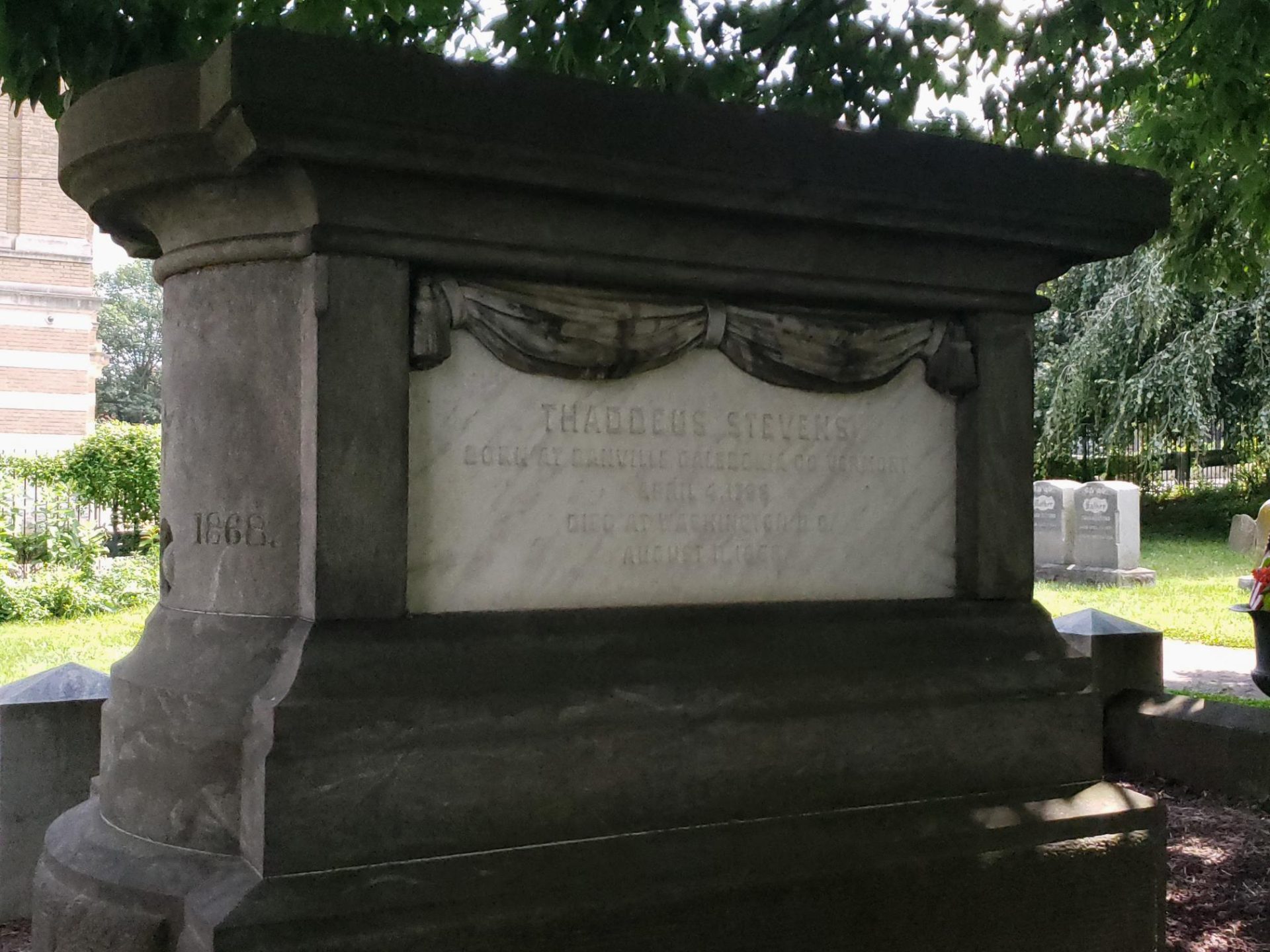 Thaddeus Stevens grave site in Shreiner-Concord Cemetery in Lancaster/photo: Scott LaMar[/caption]
Support WITF: https://www.witf.org/support/give-now/
See omnystudio.com/listener for privacy information.
Students at vocational and technical schools relish the opportunity to get real-world experiences. Very few ever get the chance to contribute to out of this world projects, but that’s just what students at the Lebanon County Career and Technology Center (LCCTC) in Eric Tanger’s Industrial Machine Technology are doing. They’re making parts for NASA and … Continue reading "Lebanon County tech students make parts for Space Station"
Saying it hasn’t happened anywhere else in Pennsylvania, LGBTQ advocates and allies are protesting a proposal by Chambersburg’s Borough Council to roll back an anti-discrimination ordinance, that was adopted last year by a previous council. The Council could vote Monday night to repeal the ordinance that would have established a local human relations commission. That … Continue reading "LGBTQ advocates and allies fight efforts to repeal discrimination ordinance in Chambersburg"
Hemp has been making a comeback in recent years. It’s a crop that played an important role throughout history until it became illegal to grow because of its relationship to marijuana, although no one was getting high off of hemp. Farmers have been encouraged to grow hemp in the last few years because it’s cheap, … Continue reading "Lancaster County firm introduces hemp-fed, cage-free eggs"
The Pennsylvania Department of Environmental Protection says a third of the state’s streams are impaired or polluted — meaning those waterways are unsafe for aquatic life, recreation, fish consumption and water supply. All told, Pennsylvania has 27,886 miles of streams that are impaired — almost 2,400 more than in 2020. The draft 2022 Integrated … Continue reading "DEP: Number of polluted waterways in Pa. up"
Pennsylvania’s Supreme Court last week blocked an inspection of voting machine equipment in heavily-Republican Fulton County – a county where former President Donald Trump won easily. The machines Republicans want to look at have been decertified because another company without election experience examined those machines last year. The company found nothing consequential. WITF’s Capitol … Continue reading "Looking at Fulton County voting machine issues"
A poll by Muhlenberg College and Keep Our Republic finds that Pennsylvanians continue to be polarized when it comes to elections and voting. Perhaps the biggest takeaway from the poll is how Democrats and Republicans view the 2020 presidential election and see the threats to voting in 2022 differently. For example, 57% of Democrats say … Continue reading "Poll confirms Americans deeply divided on election issues"
The U.S. is in the middle of another COVID-19 surge – this one driven by the omicron variant. Almost two years into the pandemic, one of frustrations for the medical community and — really all of us — is the unpredictability of the virus. And that includes knowing where there will be a surge. Researchers … Continue reading "Penn State researchers find a way to predict COVID surges"
The nation’s blood supplies are at historically low levels and it could have real world impacts when patients need blood to be treated for an illness, condition or injury. The American Red Cross has called the current supply of blood a “national crisis” and dangerously low. The Red Cross provides 40% of the nation’s blood … Continue reading "Low blood supplies are a “national crisis”"
The Winter Olympics in Beijing begin in less than three weeks on February 4th. Figure skating will be one of the most watched competitions and one that garners the most interest. Central Pennsylvania has a robust figure skating scene itself. The Central Pennsylvania Figure Skating Club trains skaters and competes in competitions with other local … Continue reading "Central Pennsylvania figure skaters prepare for competition"
News is out this week about the new Giant Center for Advanced Agriculture and Sustainability at Harrisburg University of Science and Technology. When in operation, the center will provide “research, education, career pathing in sustainability, controlled environment agriculture, and clean water initiatives.” Ian Kanski, Director for Center is on Thursday’s Smart Talk with more details.
Fourteen percent of American farmers were Black a century ago. Today, only 1.4% of farmers are African-American. An organization that is trying to change that and help other minorities become part of the agriculture industry is MANRRS – Minorities in Agriculture, Natural Resources and Related Sciences. Derek James is the MANRRS advisor and Coordinator of … Continue reading "Getting more minorities involved in agriculture"
Agriculture is touted as Pennsylvania’s number one industry. It has a wide-ranging impact from the food we eat to the businesses that sell or serve that food. The Pennsylvania Farm Show, that is going on now, is the world’s largest indoor agricultural exhibition, that highlights and celebrates the state’s products and farmers every January. It … Continue reading "The state of agriculture in Pennsylvania"
Sunday morning, 17 people, including eight children, died in an apartment fire in the Bronx, New York. Twelve people, including eight children, were killed in a Philadelphia row home fire last Wednesday. A 69-year-old man died a house fire in Dauphin County last weekend. The Philadelphia and New York fires were unusual because of the … Continue reading "Fire safety in spotlight after tragic fatal fires"
Pennsylvania Governor Tom Wolf has just begun his final year in office. The governor appears on Wednesday’s Smart Talk to discuss a wide range of issues. We’ll talk with Wolf about his legislative priorities in 2022. Topics may include what Wolf’s last state budget blueprint will look like, continuing efforts to fight COVID-19, climate change, … Continue reading "Gov. Tom Wolf’s 2022 priorities on Smart Talk"
It’s estimated that 200,000 American adults are addicted to pornography — defined as “a person becoming emotionally dependent on pornography to the point that it interferes with their daily life, relationships, and ability to function.” Some 40 million people visit porn sites on line on a regular basis and that includes both women and men. … Continue reading "Support for men and women addicted to pornography"
Surprise medical bills or surprise balance billing could be a thing of the past under a new law that became effective the first of the year. Patients, covered by health insurance, that were treated with a surgery or procedure would sometimes get a bill later, charging them for services performed by an out-of-network provider.often those … Continue reading "New law restricts surprise medical bills"
After almost two years since the beginning of the COVID-19 pandemic in the U.S., the omicron variant is driving the biggest surge of cases yet. There are some differences from early 2020 though. Most adults are vaccinated and omicron doesn’t appear to cause as serious of an illness and as many hospitalizations as the delta … Continue reading "When to get tested and is it a cold, the flu or COVID?"
The nation’s first president George Washington was certainly the most revered person in young America and maybe the most beloved chief executive the country has ever had. When Washington was president, most people only knew him by reputation or that he was the commander of the army that won independence from Great Britain. As president, … Continue reading "Travels With George — In Search of Washington and His Legacy"
Pennsylvania continues to trail other states in meeting its goals for the Chesapeake Bay restoration. According to the Chesapeake Bay Foundation, The Chesapeake Clean Water Blueprint is a federal/state plan established in 2010 to restore water quality in the region’s rivers, streams, and Chesapeake Bay. It includes pollution limits allocated to each jurisdiction, specific plans … Continue reading "Pa. lags in meeting Chesapeake Bay restoration goals"
WITF’s StateImpact Pennsylvania reports most communities across Pennsylvania will likely face higher flood risks by the end of the century due to climate change. That’s according to research from Penn State. The state’s latest Climate Impacts Assessment expects Pennsylvania to face more extreme rainfall and flooding by 2050 because of climate change. The top three cities … Continue reading "Penn State study says Pa. could see more flooding due to climate change"
The African nation of Sudan appeared to be on track toward a civilian-led democratic government after the fall of a dictator in April 2019. It came crashing down last October when the military staged a coup and arrested prime Minister Abdalla Hamdok. The military allowed Hamdok to return to limited power a month later. Hamdok … Continue reading "Crisis in Sudan grows"
Thursday, January 6th – is the one year anniversary of the violent insurrection at the U.S. Capitol where supporters of former President Donald Trump attempted to stop of the certification of votes cast in November 2020 for Joe Biden as President. Twelve months later, hundreds who breached the capitol, including some who violently attacked Capitol police … Continue reading "Are checks and balances in place to stop another insurrection?"
Even though today’s news often focuses on what’s happening on the state and federal levels, local government may have the most significant impact on many Pennsylvanians. Just think about police and fire protection, roads and streets, sewer systems, social programs and more. However, what the state’s cities, boroughs, and townships can do or not do … Continue reading "What are Pennsylvania municipalities’ priorities in 2022?"
Snow fell on areas of Pennsylvania Monday for the first time this winter. The first snowfall always is a bit of a challenge as drivers get acclimated to driving on slippery roads again and state and local governments coordinate snow removal efforts. In an ongoing theme of shortages during the COVID-19 pandemic, the Pennsylvania Department … Continue reading "Pa. has a shortage of snowplow drivers"
Voting and election-related legislation will be amongst the proposals getting top billing when Pennsylvania lawmakers return to session. There are deadlines that have to be met for the state’s new Congressional and state legislative districts. Redistricting has become a high-profile exercise — especially in today’s highly charged political atmosphere. Republicans and Democrats want to make … Continue reading "Voting and election-related bills taken up in 2022 by Pa. Legislature"
You might be one of those people who think of the Amish as a simple, peculiar people who choose to live without modern technology and abide by a 19th Century lifestyle. A new book, What the Amish Can Teach Us in so-many words advises don’t underestimate the Amish and possibly learn from them. The book also answers … Continue reading "What the Amish can teach us"
Homer Plessy will be pardoned by the state of Louisiana 130 years after his “crime.” The state’s Board of Pardons recommended the pardon for Plessy and Gov. John Bel Edwards has committed to approving it. In 1892, the 29-year-old African-American bought a first class train ticket, but was told to retire to the train car … Continue reading "Infamous Plessy vs. Ferguson Supreme Court case explained"
More than 260,000 people are testing positive for COVID-19 in the U.S. each day. Until last Monday, a positive test meant you should stay home for 10 days to avoid infecting others. Now, those who don’t have symptoms after five days can go back to their regular activities as long as they wear a mask, … Continue reading "Is 5-day COVID quarantine good guidance?"
What do you think about starting 2022 with a hike through nature at a Pennsylvania State Park? The State Department of Conservation and Natural resources is hosting more than 50, free guided hikes at 37 state parks on New Year’s Day. The hikes usually are about one or two miles, but can be longer depending … Continue reading "Pa. State Parks offering hikes for new year"
The National Rifle Association is one of the nation’s most powerful lobbying organizations and probably most responsible for stopping any new significant gun laws. However, the NRA has gone through a series of major financial and legal setbacks in recent years. They include filing for bankruptsy, accusations of financial mismanagement by high-ranking NRA officials, which … Continue reading "New book details NRA’s missteps"
Most Americans probably believe we have learned everything there is to know about World War II since it ended more than 76 years ago. But the public release two weeks ago of what is known as The American Soldier in World War II has provided hundreds of thousands of viewpoints from American troops on their … Continue reading "Thousands of WWII soldiers’ opinions released to the public"
Last month State Senate Republicans agreed to pay an Iowa consulting firm $270,000 over the next six months to review the 2020 election in Pennsylvania. They say the review is designed to determine the flaws that exist in the election system and fix them through legislation. Skeptics argue the real impetus for the effort is … Continue reading "Groups go to court against Senate election review"
Finding affordable housing can be difficult. As inflation and the cost of living increases, so do home prices and rent. For low-income families or individuals with limited resources, affordable housing might seem like an impossible dream. There is an organization in the mid-state that has spent the past 50 years helping people find safe, welcoming … Continue reading "Affordable housing is on everyone’s wish-list"
Pennsylvania has 141 state parks and forests. About half of them have names or paths that derive from Native American tribes that once lived in Pennsylvania. In fact, some of the state parks grew out of American Indian paths. Indigenous people lived in what is now Pennsylvania for at least 20,000 years and European colonists … Continue reading "Native American paths have become state parks in Pa."
Many families and friends will be gathering over the next two weeks to celebrate Christmas and New Year’s. It comes at a time when COVID-19 cases are on the rise in Pennsylvania. The state’s Acting Physician General, Dr. Denise Johnson joins us on Monday’s Smart Talk to provide tips and advice on how to stay … Continue reading "Pa. Physician General has tips on avoiding COVID and flu during holidays"
There have been several explanations or narratives about why millions of jobs are going unfilled. There are about four million more job openings than unemployed people in the U.S. right now. According to the U.S. Department of Labor Statistics, there are 11 million job openings and almost 6.9 million unemployed. At the same time, millions … Continue reading "Why are so many jobs going unfilled and what happened to all those who quit?"
Only about half of the dinosaurs have lived on Earth more than 60 million years ago have been named. So, it’s big news when a new species is discovered or named. Harrisburg University of Science and Technology professor of Environmental Science and Sustainability Steven Jasinski, PhD. has named or helped name seven different dinosaur species, … Continue reading "Harrisburg University professor names newly discovered dinosaurs"
Most American workers have some type of retirement plan through their employer, but many don’t. Most employers who don’t offer the rare nowadays defined pension or a 401K plan are small businesses. Usually the cost of a retirement plan is what keeps them from making it available to their employees. The Pennsylvania State Treasury has … Continue reading "State proposes retirement plan for those who don’t have one or can’t get one through employer"
Death is not something many of us want to talk about – especially our own deaths. Most of us don’t know when we’re going to die so it may come unexpectedly. With that in mind, planning for after we pass away is common and viewed as a responsible thing to do so that our wishes … Continue reading "What do you know or not know about funerals?"
Do you make New Year’s resolutions? If so, have you decided on one yet? Even if it’s not a resolution, many of us will be looking for ways to spend or save our money more wisely. It may be even more important this year with higher prices and the availability of products we normally buy. … Continue reading "How will handle your money in 2022?"
Super star classical-pop vocalist (and Pennsylvania native) Jackie Evancho brings her “Home for the Holidays” show to Millersville University’s Clair Performance Hall, Winter Visual and Performing Arts Center Friday night. Ms. Evancho joins us on Wednesday’s Smart Talk to discuss her career that includes multi-million album sales, starring on TV shows and in movies and … Continue reading "Jackie Evancho comes to Central Pa."
There are many strategies for mitigating the affects of climate change. Most of them involve finding ways to reduce or eliminate the use of fossil fuels. But what if that’s not enough or can’t be achieved? Can science geoengineer the planet to reduce carbon? A new study from the National Academies of Sciences, Engineering and … Continue reading "Can oceans be geoengineered to offset climate change?"
About 10 million Americans suffer from Seasonal Affective Disorder. They often become depressed, experience mood changes or don’t have a lot of energy when the days get shorter in the late fall and winter. Less exposure to light is what causes SAD. Light therapy is one of the ways SAD is treated. Tuesday’s Smart Talk … Continue reading "Shorter days mean more people are SAD"
Kevin King, executive Director of Mennonite Disaster Services talks about their relief efforts for tornado victims.
The COVID-19 pandemic has had a great impact on everyone, but especially on vulnerable children. The Pennsylvania Partnerships for Children annual State of Child Welfare Report showed declines in the number of child abuse or neglect reports and children in the foster care system. However, the numbers are from 2020 during the height of the … Continue reading "Pa. State-of-Child Welfare report on Smart Talk"
There’s nothing like a frosty beverage to get a party started. Cocktail and “mocktail” flavor combinations can reflect the season and elevate any gathering. Steve Wood is the beverage and hospitality manager for Willow Valley Communities and a nationally-recognized and award-wining beverage director who has been opening and operating beverage programs at prominent Lancaster County … Continue reading "Holiday drink ideas to usher in the season"
Seven years ago, a group of school districts, parents and advocates sued Pennsylvania over how it funds public schools. The case centers on wide spending gaps among the state’s poorest and wealthiest school districts. The plaintiffs — six school districts, four parents, and two statewide organizations — argue state funding for schools is inadequate, inequitable, … Continue reading "Pa. school funding case update"
For many consumers, the words “supply chain” were probably not top of mind, until the pandemic hit in March 2020 – starting with toilet paper shortages, and spiraling to everything from computer chips, to used cars. The issues have continued for nearly two years, as we head into another holiday season. However, the holiday shopping … Continue reading "What’s behind supply chain disruption and what lessons have been learned for the future?"
Are African-American children or kids who aren’t proficient at speaking English over-represented ina special education programs? Penn State Professor of Education & Demography and Director of Center for Educational Disparities Research Paul Morgan doesn’t think so. His research concludes “that white children are more likely to be identified as having disabilities and to receive special … Continue reading "Is there a racial disparity between the children that are receiving special education services?"
Victims can be any age, race, gender, or nationality and because the problem is so prevalent it can often occur in plain sight. The central Pennsylvania area is especially vulnerable to human trafficking because of the interstate highway system crossing through the state. Understanding the signs of trafficking and knowing what to look for might … Continue reading "U.S. Route 15 is focus of human trafficking"
Otto Warburg is probably one of the most important scientists of the 20th century and one those outside of cancer research have never heard of. His discovery of how cancer cells devour glucose or blood sugar at a rate of 10 times that of healthy cells in the body became known as the Warburg effect. … Continue reading "Author of book on scientist who discovered connection between sugar and cancer is on Smart Talk"
Saying that 75 percent of all newly emerging infectious diseases are zoonotic – meaning passed from animals to humans – the University of Pennsylvania School of Veterinary Medicine has established an Institute for Infectious and Zoonotic Diseases. Is Covid-19 one of them? Many, and probably most researchers, believe the virus came from bats and that … Continue reading "Penn Vet opens institute to study diseases spread from animals to humans"
Pennsylvanians don’t like how their leaders are handling COVID-19 twenty-two months into the pandemic but tend to support masking in schools and vaccines. That’s according to the latest Muhlenberg College Poll that focused on COVID. Neither President Joe Biden or Pennsylvania Gov. Tom Wolf got high marks for how they’re handling COVID mitigation efforts. Pennsylvanians … Continue reading "New poll finds Pennsylvanians support mask mandates in school, split on vaccine mandates"
When asked about the nation’s economy, most Americans would probably not have much good to say about it. They would have evidence to back up their opinions too – inflation hit a 30-year high in October. Prices for essentials like gas, energy and food have been climbing. Meanwhile a new jobs report Friday found 210,000 … Continue reading "What does the nation’s economy really look like?"
December’s “First Friday” Smart Talk – a focus on arts and culture in Central Pennsylvania — features three separate conversations, including one about an art exhibit and two others highlighted by holiday music. The 54th annual “Art of the State” exhibit is at the State Museum of Pennsylvania now through January 2. Curator Amy Hammond … Continue reading "“First Friday” focuses on holiday music and Art of the State"
It was just a week ago that we heard about the omicron variant of the Covid-19 coronavirus. A week later, we still don’t know much about how transmissible or whether omicron can cause serious illness. Even without the new variant, the number of Covid cases in Pennsylvania is high. Tuesday’s case count of more than … Continue reading "Covid, including what we know about omicron, answered"
More than $18 billion will be on its way to Pennsylvania as part of the $1 trillion infrastructure bill signed by President Joe Biden earlier this month. The money will be used to repair, upgrade and modernize highways and roads, bridges, rail and mass transit, airports and water systems. In addition, cleaning up the environment … Continue reading "How will Pennsylvania use infrastructure money?"
Several Pennsylvania cities and small towns made the list of the Safest Small Towns in America and Safest Cities in America in research conducted by SafeWise.com — a home security company. Using FBI crime statistics, the company ranked towns and cities based on the number of violent crimes and property crimes per 1,000 people. Luzerne … Continue reading "Midstate towns on the list of safest from crime"
More Americans travel during Thanksgiving week than any other time of the year. In fact, the Wednesday afternoon before Thanksgiving is when the most volume of travelers are on the road. According to AAA, there will be more than 53 million people traveling by vehicle, air or rail this year. The Wednesday night before Thanksgiving … Continue reading "Rules of the road explained"
It’s that most wonderful time of year when thoughts turn to holiday gift-giving. So what better way to show friends and family that you care than by finding them an amazing book to read! Smart Talk is hosting our annual book-as-gifts guide. Books come in all shapes and sizes, and in a vast array of … Continue reading "Books-as-gifts guide to holiday giving"
Each year, the Lancaster County Community Foundation hosts The Extraordinary Give, the nation’s largest per capita one-day online fundraiser that benefits over 500 non-profit organizations. Every dollar donated online is “stretched” by more than $500,000 from the Lancaster County Community Foundation (LCCF), along with sponsors Rodgers & Associates, the High Foundation, and other supporters. Last … Continue reading "Smart Talk: The Extraordinary Give 2021"
During the coronavirus pandemic, we’ve been reminded from time-to-time that thousands of people are still dying across the country from drug overdoses. Often, the deaths are attributed to and listed as part of the opioid epidemic. Best-selling author Sam Quinones writes in his new book that we as a nation are in a new era … Continue reading "Author Sam Quinones writes fentanyl and methamphetamine are dominating streets today"
The advent of the Nurse Practitioner profession in the 1960’s was intended to expand health care options for people living in underserved communities. Since then, the number of practitioners has grown exponentially, along with their influence in healthcare. There are nearly 300 thousand Nurse Practitioners in the United States now, and their role continues to … Continue reading "What is the role for nurse practitioners in Pa.?"
Many aspects of the labor force have changed during the past two years, as workers left jobs for new careers and some retired early to explore other opportunities. The changes have impacted all age demographics, including older workers who make up nearly 24 percent of the labor force. The number of workers aged 55 and … Continue reading "Careers that Work; leveraging the talents and contributions of older workers"
In 2017, a delegation of Northern Arapaho tribal members traveled from Wyoming to Carlisle, in Cumberland County, to retrieve remains of three children who died at the Carlisle Indian Industrial School in the 1880s. That emotional journey is chronicled in a new documentary Home From School: The Children of Carlisle, that will be broadcast on … Continue reading "History of Carlisle Indian School and return of children’s remains who died at school subject of new documentary"
Pennsylvania’s Affordable Care Act (ACA) insurance marketplace is open for 2022 enrollment. The deadline to sign up is January 15. Pennsylvania’s ACA marketplace is through the Pennsylvania Health Insurance Exchange Authority or Pennie.com. Reportedly, insurance plans are less expensive this year and the coronavirus pandemic has resulted in a few changes for tax credits and … Continue reading "Pa.’s insurance marketplace questions answered"
“One of the distinctive characteristics of the electric power sector is that the amount of electricity that can be generated is relatively fixed over short periods of time, although demand for electricity fluctuates throughout the day. Developing technology to store electrical energy so it can be available to meet demand whenever needed would represent a … Continue reading "State makes plans to store energy using solar"
For 100 years, the Tomb of the Unknown Soldier has stood as recognition and gratitude for the sacrifice and service of America’s Armed Forces. Since November 11, 1921, the Tomb has provided a final resting place for one of America’s unidentified World War I service members, and Unknowns from later wars were added in 1958 … Continue reading "Recognizing the contributions of America’s veterans to our nation"
During the coronavirus pandemic, we’ve been reminded from time-to-time that thousands of people are still dying across the country from drug overdoses. Often, the deaths are attributed to and listed as part of the opioid epidemic. Best-selling author Sam Quinones writes in his new book that we as a nation are in a new era … Continue reading "Author Sam Quinones writes fentanyl and methamphetamine are dominating streets today"
On a late spring night in 2002, a bearded man entered a home in a Salt Lake City neighborhood by cutting open a screen on an open bedroom window. He placed a knife to the throat of 14-year-old Elizabeth Smart and dragged her from her room and into a nine month nightmare. Elizabeth Smart’s abduction … Continue reading "Abduction survivor Elizabeth Smart shares her story"
[box]Listen to Smart Talk every weekday at 9am and 7pm on WITF 89.5 & 93.3. You can also stream WITF radio live on our website or ask your smart speaker to “Play WITF Radio.”[/box] The Biden administration implemented a vaccine mandate in September that would require any business with at least 100 employees to require … Continue reading "How well do mandates work to change behavior?"
[box]Listen to Smart Talk every weekday at 9am and 7pm on WITF 89.5 & 93.3. You can also stream WITF radio live on our website or ask your smart speaker to “Play WITF Radio.”[/box] Now that the 2020 Census numbers are complete, the legislative working groups have begun the onerous work of redrawing Congressional districts … Continue reading "Redistricting plans are underway, with little public oversight"
Most Pennsylvanians have heard of artist Violet Oakley, a woman before her time whose works grace the state Capitol building. A local playwright brings Oakley’s life to the stage with Violet Oakley Unveiled for two performances at Open Stage in Harrisburg, on November 12-13. The Open Stage production will mark the 115th anniversary of Violet … Continue reading "A local playwright brings Violet Oakley’s life to the stage with Violet Oakley Unveiled"
A local poet and school librarian leveraged their common goals to offer a creative writing workshop for area students. The initiative began with Julian “Juelz” Davenport, a writer and poet, who draws upon his own life and experiences, and Jennifer Hendry, a librarian with the Milton Hershey School. They join Smart Talk Friday to explain … Continue reading "Julian “Juelz” Davenport, writer and poet"
Chances are, you have seen his art. The cartoon artwork of Ron Campbell is a part of American popular culture and immediately recognizable to most people of a certain age. Campbell’s 50-year career in animation includes works featuring Scooby Doo, Smurfs, Rugrats and more. A “popup art show” begins this weekend at the Pure Gallery in … Continue reading "The work of cartoonist Ron Campbell (Scooby Doo, Smurfs, Rugrats, etc.) is displayed."
Late last week the U.S. Food and Drug Administration authorized the emergency use of the Pfizer-BioNTech COVID-19 vaccine for children five through 11 years of age. The issue went before the Centers for Disease Control and Prevention to issue their determination. The CDC panel of experts voted on Tuesday to recommend the shot, and the … Continue reading "Pennsylvania closer to offering COVID-19 vaccines for children"
Republican candidates dominated Tuesday’s elections across the country. Republicans won the highly contentious Virginia race for governor, and New Jersey’s gubernatorial contest was unexpectedly close and, in fact, too close to call this morning. Republican Kevin Brobson won the open Pennsylvania Supreme Court seat and Republican candidates did well in the others judicial contests as … Continue reading "Nationally, Democrats take big losses on Election Day"
Pennsylvania Treasurer Stacy Garrity is critical of Governor’s Wolf’s plan to offer five days off or a lump payment to state employees under his jurisdiction who are vaccinated. Garrity says it could cost taxpayers $100 million dollars. The governor disputes that, saying no new money is allocated for the plan. Garrity is on Tuesday’s Smart … Continue reading "Pennsylvania Treasurer opposes Wolf’s call for state worker vaccine incentive"
Election Day on November 2, may not be for a presidential vote or the much anticipated mid-term Congressional contest, but there are still candidates and measures on the ballot that will make a big impact. Local school board races are garnering a lot of attention, particularly in places experiencing debates on contentious issues like masking … Continue reading "Election Day 2021"
WITF and StateImpact Pennsylvania are partnering with four other media organizations, two institutions of higher learning and a theater company to inform a broad Central Pennsylvania audience and help find solutions to climate change. This new collaboration is called “Climate Solutions.” It’s designed “to report on what’s working — or could work — to help … Continue reading "StateImpact PA and local organizations establish a partnership to reach diverse audiences on climate change"
Three years ago last Wednesday, 11 men and women were killed while attending a prayer meeting at the Tree of Life Synagogue in Pittsburgh. It was the deadliest act of anti-Semitism in American history and allegedly carried out by a man with reported white supremacist views. Dickinson College interim President and former Federal Judge John … Continue reading "Tree of Life Synagogue mass shooting marks third anniversary with summit event"
Childcare options in Pennsylvania essentially evaporated in the early days of the COVID-19 pandemic. Most providers closed their doors for at least a while at the beginning of mitigation efforts, dealing many centers a financial death blow that is hampering any hopes of industry recovery. Providers are now facing the same labor shortages that are … Continue reading "Childcare industry facing unprecedented challenges"
Thursday’s Smart Talk analyzes results of the October 2021 Franklin and Marshall College Poll. President Joe Biden’s approval ratings have been going down nationally in the last few months after the chaotic withdrawal from Afghanistan, price inflation and infrastructure and budget plans that are stalled in Congress. The F&M poll provides data on how Pennsylvania … Continue reading "Franklin & Marshall Poll: Pennsylvanians weigh in on Biden, election review, abortion, masks"
The threat to Pennsylvania’s forests might not be what you think. Uncontrolled development is often cited as the greatest threat to the state’s wilderness and forested areas. But the threat is also coming from within. Researchers say that invasive plants and bugs are what is really threatening urban forests and are a “catastrophe in the … Continue reading "Invasive plants and an overpopulation of deer are decimating Pennsylvania’s forests"
Anyone who shops for food or fills their gas tank knows that higher prices are affecting their pocketbook. Economists are now forecasting that higher prices may be here to stay, as the U.S. is running at a 13-year high of 5.4 percent inflation. Rising food and housing costs accounted for more than half of the … Continue reading "Inflation fears plaguing economic recovery"
[box]Listen to Smart Talk every weekday at 9am and 7pm on WITF 89.5 & 93.3. You can also stream WITF radio live on our website or ask your smart speaker to “Play WITF Radio.”[/box] Award-winning writer and journalist Nicholas Crane has traveled extensively and perhaps this is what drew him to write about one of … Continue reading "Interview with author Nicholas Crane and a tale of adventure and scientific discovery"
[box]Listen to Smart Talk every weekday at 9am and 7pm on WITF 89.5 & 93.3. You can also stream WITF radio live on our website or ask your smart speaker to “Play WITF Radio.”[/box] What does it mean to consent to sexual contact with another person? It depends on who you ask and, frankly, where … Continue reading "What is the definition of consent?"
[box]Listen to Smart Talk every weekday at 9am and 7pm on WITF 89.5 & 93.3. You can also stream WITF radio live on our website or ask your smart speaker to “Play WITF Radio.”[/box] To help individuals who are experiencing domestic violence it is important to first identify what defines that behavior. Domestic violence is … Continue reading "Domestic violence awareness; working to end the cycle of abuse"
[box]Listen to Smart Talk every weekday at 9am and 7pm on WITF 89.5 & 93.3. You can also stream WITF radio live on our website or ask your smart speaker to “Play WITF Radio.”[/box] Gas prices are at a seven-year high, and still rising. The highest fuel prices in the country are in California and … Continue reading "Gas prices continue to rise, fueling sticker shock at the pump"
Historian Allen Guelzo has written a biography: Robert E. Lee – A Life, that has a new relevancy today. A racial reckoning over the past two years and a nation that is re-examining its past has put Lee back in the news. Lee was looked upon as an icon in the south and respected as … Continue reading "A new Robert E. Lee biography and why it’s relevant today"
For the second straight year, the holiday shopping season may be different than in the years before the coronavirus pandemic. Last year, COVID cases had begun to re-surge and many Americans were in the midst of the pandemic’s economic fallout. This year, the problem is inventory. Many retailers’ shelves may not be stocked with the … Continue reading "Supply chain problems affecting economic recovery"
A recent investigative report by Spotlight PA and The Caucus found that the Pennsylvania legislature spent almost $10 million on private attorneys over the last two years and often didn’t divulge what those lawyers were hired for. That’s even though the four legislative caucuses have attorneys on staff. The investigation was able to identify some … Continue reading "Legislators spend millions on private lawyers with little transparency"
As COVID-19 spread throughout the United States, it not only resulted in greater morbidity and mortality but it also had disastrous effects on the mental health of the nation. The pandemic is different than other “calamities” that impacted the United States, in certain regions or populations. The COVID-19 pandemic has affected the entire population of … Continue reading "“The State of Mental Health in America” report links access to care and mental illness as key metrics"
You can’t smell it, see it or taste it, but radon gas could be in your home and putting occupants at serious health risk. Radon gas is a byproduct of naturally-occurring uranium as the element breaks down underground, then enters through cracks or leaks in a home or building foundation. It is estimated that 40 … Continue reading "Radon gas is dangerous and extremely common in Pennsylvania, causing a significant health risk"
With the advent of online technology it is now possible for knowledge-based workers to log on and work from anywhere, at any time. That is good news for both employees and employers, but it also increases the likelihood of worker burnout as the traditional work-life boundaries become blurred. There are some organizations recognizing the need … Continue reading "Four-day work week gaining traction in the workplace"
The PA Media Group is hosting a statewide virtual event in collaboration with the Pennsylvania Human Relations Commission on October 19 called “Peace and Justice in PA.” The is part of their “live journalism” series to examine Pennsylvania’s “current state of affairs around diversity, equity and inclusion.” They will discuss efforts to counter extremism and … Continue reading "‘Peace and Justice in PA’ to honor those who fight racism, discrimination"
From the beginning of the COVID-19 pandemic, nurses and other healthcare workers were lauded as heroes in the fight and held in high regard. Now that the world is closing in on two years battling the virus those same workers are exhausted and, in some cases, leaving the profession because of burnout. Healthcare providers are … Continue reading "What is behind the reports of a nurse shortage?"
The Pennsylvania Chapter of the American Planning Association announced the 2021 award winners of the Great Places in Pennsylvania contest, sponsored by their organization. To qualify for consideration, a place must fit into three categories: great public spaces, great greenways or trails and great streets. Eight places were designated this year and to date, 46 … Continue reading "The 2021 ‘Great Places in Pennsylvania’ award winners"
Climate change is a complicated and often frightening concept. Talking to kids about it, while necessary, can be difficult for anyone. Smart Talk Friday is joined by two guests who offer ways to present the problem through the lens of a beloved aquatic mammal named Kobee Manatee. A new book in the Kobee Manatee® series, … Continue reading "Talking to kids about climate change and ocean health"