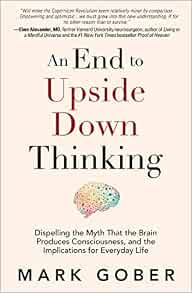
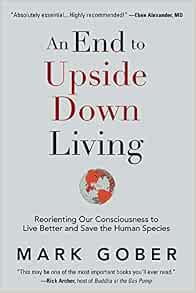
Part 2 of An End to Upside Down Thinking by Mark Gober. I love this book so much.
- Rogue scientists and decades of research on the paranormal/anomalistic.
- Use of remote view to solve crimes by US police department.
- “…We should acknowledge that the topics discussed in this book are multidisciplinary. Think about how many different areas of science have been covered: physics, neuroscience, cardiology, biology, chemistry, etc. Herein lies a serious problem in science: scientists specialize in their areas of expertise and are often uncomfortable or unfamiliar with subject matter outside of those areas… It is therefore possible that the lack of interdisciplinary integration has led to significant oversights in science… Many prominent scientists simply aren’t taking the time to look at the data… The don’t want to spend their time on something they deem impossible.”
- “Isn’t that what science is all about: refining our theories when we learn of new data? We know how little we know. We know, for example, that 96 percent of the universe is made of hypothetical “dark matter” and “dark energy.” We should expect that our theories will change, given how little we know. Therefore, we should be open the to possibility of new ideas. That’s not to say we should accept every theory we come across, but we should be open to scientifically exploring new ideas.”
- Near Death Experiencers (NDEr’s) report similar experiences WORLDWIDE, across cultures. These things happen while the brain is dead, off, and the experiences are verifiable.
- “The suggest that a primary reason for living is to learn and to evolve consciousness. In the life review, the NDEr reviews his life from his perspective and from the perspective of those he affected in his life, all while judging himself — as if to learn to do better next time — and ultimately working toward a state of unconditional love… This notion makes the physical body seem like a temporary conduit or vessel for broader consciousness. Each individual’s body is then the lens through with the broader consciousness has a particular experience in a physical form. And when the physical experience is over (what we call “death”), consciousness can enter another physical vehicle for a different learning experience. If we are truly entangled as “one mind,” then the learning experienced by each individual’s consciousness is simply a piece of the broader learning and evolution of a universal, collective, “one” consciousness." …
- A Nobel Peace Prize laureate states his beliefs around reincarnation
- Materialism is wrong. “If consciousness is fundamental, then life has to be viewed in a more meaningful light since some part of us doesn’t die.”
- The politics of science — how scientists are punished for exploring topics outside the realm of the accepted narrative.
- The trickiness of consciousness, god, and science. Maybe science is afraid of consciousness because it’s too close to god.
- Science has become religion (said Einstein).
- Mark Gober’s new book An End to Upside Down Living
- Kindred Meditation
- HUG A TREE. Set a time for 5 minutes. You will feel something. (Ask the tree first).
- Animal medicine card: KOALA - Calm, Perspective, Imagination, Ease. Stillness, Beingness, Softness, Strength.
- Koala Affirmation: “I breathe deep with a warm smile and relax into the arms of the great Tree of Life. I feel peace, calm and new possibility. I bring this wherever I go.”
- Katya’s Matriarch Collective and her Instagram account @nurturingnovas.