Mission Network News - Middle East: Recent Episodes
None

Iran (MNN) —As Heart4Iran broadcasts the animated TV show Superbook into Iran, children are receiving the gospel with joy. Their excitement impacts their families too.
For more than 40 years, the show Superbook (created by the Christian Broadcasting Network) has brought Bible stories to life for kids across the world. Today, Heart4Iran and its partners are bringing Superbook into the Farsi language episode by episode.
Jennifer is the manager of the Superbook Farsi team at Heart4Iran. She knows firsthand the impact that children can have on their families when it comes to faith in Christ.*
When Jennifer was four, her mom starting sending her to a Sunday School.
“My sister and I would come home and talk about Jesus to my mom, not knowing that we’re witnessing to her. She got excited from our excitement, and she started going to a church and reading [the] Bible. This is how salvation [came] to our home,” Jennifer says.
(Photo courtesy of Heart4Iran)
“I know that even though this (Superbook) is a kids program, it has a huge impact even on adults.”
The team at Heart4Iran receives calls from parentswho say how Superbook is impacting their kids’ behavior. They say it’s inspiring their kids to be better people and recognize the true good and evil.
“We also get a lot of messages [from] parents asking for [a] Bible for their kids, because their kids, after watching a few episodes, get excited and captivated by the show, wanting to have their own Bible and to read it,” Jennifer says. (Learn more about Superbook here.)
One girl named Yalda called the Heart4Iran team with something more on her heart.
Superbook is the Bible brought to life through animation — a timeless form of storytelling — to introduce children to Jesus and help develop their faith. (Photo courtesy of Heart4Iran, caption courtesy of CBN)
“I want to receive Jesus,” Yalda said. “But I’m concerned about my uncle too, because he doesn’t see Superbook. He’s drug addicted, and I’m afraid that he [will go] to hell.”
“This is so heartwarming that kids not only think about themselves — they think about their family members,” Jennifer says. The team is helping Yalda walk through her new faith and encouraging her prayers for her uncle.
Children in Iran have limited resources to hear about the truth of Jesus. Would you join in praying for them and partnering with Heart4Iran?
“We can move forward as much as our budget allows us,” Jennifer says. “It’s really crucial to have [those funds] to keep this program moving forward. If somebody wants to partner with us in this project, we are open-armed.”
Visit heart4iran.org to learn more and support the work of bringing Superbook to children in the Farsi-speaking world.
*Name withheld for security reasons.
Header photo courtesy of Heart4Iran.
Lebanon (MNN) — School is well underway in most places worldwide, but the beginning of classes this week in Lebanon holds special significance.
“We tried to finish the school year last year, but it was not finished well. We had raids in camps and could not bring the kids in; we finished the year abruptly,” Nuna with Triumphant Mercy Lebanon explains.
As a result, “The beginning of this year is a big celebration for us because it’s like, wow, now we can start again. At the same time, we’re very aware that this might not stay the same.”
Syrian refugee students and their families face constant deportation threats. Meanwhile, Hezbollah and Israel continually trade fire in southern Lebanon, close to where the school operates.
“In the Middle East, planning ahead is a luxury we don’t have. We live day by day [because] we have a new situation every day,” Nuna says.
“We don’t know how many normal days we will have, so we’re just celebrating the beginning and praying that we will be able to continue.”
Furthermore, TM Lebanon’s school is even more important now that other options are unavailable. “With the UN funding going down, many kids are not going to school anymore [and] many Syrian kids are on the streets,” Nuna says.
“We need to sow peace, hope, and a future because God has plans for them. If we leave them on the streets, it’s likely that they will never see their dreams come true.”
Pray students will begin a saving relationship with Jesus Christ through TM Lebanon’s school. Learn how your gift can further TM Lebanon’s efforts here.
“Everything we do is to bring the knowledge of Jesus to people. We believe God will bring these seeds we plant to fruition one day,” Nuna says.
Header and story images courtesy of Triumphant Mercy Lebanon.
Lebanon (MNN) — Lebanon’s former central bank governor, Riad Salameh, was arrested this week in Beirut after a lengthy interrogation. Salameh is facing domestic and international charges for allegedly embezzling over 40 million dollars.
“Now, the sad part in this whole thing is that he’s not the only one,” Heart for Lebanon’s Camille Melki says.
“This is not a one-man show; you have a full range of politicians, economists, bankers – people of influence – who were involved in this more than $110 billion scheme.”
Lebanon has faced severe economic downfall since October 2019, with billions of dollars frozen in bank accounts. That fall, people took to the streets en masse to protest government corruption.
Riadh Salameh attending MTV Lebanon talk show in January 2020.
(Wikimedia Commons)
“We woke up on October 17, 2019, to the news that all the banks have frozen everyone’s assets because they have no means to pay Lebanon’s debt,” Melki explains.
“Every Lebanese who had $100 or $100,000 in the bank woke up having zero access to [their savings because] they (corrupt officials) sent our money to banks offshore and robbed the country of Lebanon of all its resources.”
As a result of widespread corruption, poverty has more than tripled in the past ten years, affecting nearly half of Lebanon’s population. Yet hope remains. “God has put us in a position to engage the world with a positive change,” Melki says.
“I see great hope in Lebanon if we continue to work diligently in raising a new generation of God-fearing, compassionate leaders that would replace the current leaders.”
Learn how you can foster transformative change through Heart for Lebanon here.
“We are focusing on raising people who have one mission: to live a Christ-like life in our country,” Melki says.
Header image depicts 2019 mass protests against government corruption in Beirut. Since October 2019, Lebanon has faced severe economic downfall, with billions of dollars frozen in bank accounts. (Photo courtesy of Shahen Books/CC4.0)
Iran (MNN) — A wise man once said, “Planning without action is futile; action without planning is fatal.” This fall, Transform Iran is laying the foundation to effectively reach children for Christ.
A generous partner made part of the plan possible by providing training for 35 Gospel workers. The training will cover topics like effectively communicating the Gospel with children, discipling children, and releasing children into mission. More about that here.
(Photo courtesy of Transform Iran)
“When children do start responding [to evangelistic material], we want to make sure that people across our ministry [will] be ready to go,” Transform Iran’s Lana Silk says.
“We can say, ‘Okay, here’s a 12-year [-old] girl who’s responded from Iran. I’m going to connect her to you. Will you disciple her?’ Meanwhile, we’re expanding our digital evangelism and discipleship materials for children.”
Kids are a critical yet unreached demographic in Iran. “Children are not exempt from the pain that the people of Iran are suffering today. We have a pretty formalized, permissive structure in Iran that allows the abuse of children,” Silk says.
“Child marriage is a reality; children who are abused have no course of action. Then, we’ve got hundreds of thousands of children who are abandoned.”
The children of Iran face poverty, a lack of freedom, and an uncertain future. Help them find the hope that comes only through knowing Christ by partnering with Transform Iran.
“There are millions of children in Iran under the age of 12. Our estimates show eight to 10 million,” Silk says.
“We don’t anticipate immediately reaching all of them, but if even 1,000 children were to respond in the first year and let’s say 100 of those gave their lives to the Lord, that would be a wonderful start.”
Header and story images courtesy of Transform Iran.
Lebanon (MNN) — In a world becoming darker by the day, Lebanese believers intentionally shine the light of Christ.
At a recent staff meeting, “We asked ourselves, ‘What is the role of Heart for Lebanon in times of crisis?’” Heart for Lebanon’s Camille Melki says.
“Every couple of years, there’s a different crisis, whether financial [or] the pandemic, deadlock in political groups; we’ve been without a president and a sitting government now for over 18 months.”
(Photo courtesy of Heart for Lebanon)
Together, the team came up with five responses:
- Form a community of prayer.
- Be messengers of hope.
- Live as the hands and feet of Jesus, serving those in need.
- Be heralds of peace.
- Provide an alternative community.
Melki says Gospel workers are motivated by the needs of their neighbors. “People are living in despair; they’re living in fear,” he explains.
“They’re looking for hope desperately, but there’s only one hope and that’s in Christ.”
According to the World Bank, poverty in Lebanon has tripled over the past decade, reaching 44 percent of the population. Conflict in southern Lebanon has displaced roughly 100,000 people since October.
Daily clashes are ongoing, preventing uprooted families from returning home.
“We cannot be indifferent to the atrocities, to the death, to the destruction that is going [on] everywhere. We have to give a message of peace,” Melki says.
Additionally, “we need to provide an alternative to the community of hatred and anger and [instead] have a community of forgiveness and love.”
Fulfilling the five decrees listed above in times of crisis will position Heart for Lebanon as a beacon of hope. Pray that hurting people will be drawn to their light and find everything they need in Christ.
Header and story images courtesy of Heart for Lebanon.
Lebanon (MNN) — Caught behind the mounting hostilities between Israel and Hezbollah are 1.3 million children in Lebanon, many of whom are suffering.
In April, UNICEF issued a report on children in Lebanon, saying that what was then six months of conflict had led to deteriorated education, healthcare, water access and emotional well-being for them. A full-scale war would be devastating for their futures.
(Photo of summer camp courtesy of Triumphant Mercy Lebanon)
Nuna with Triumphant Mercy Lebanon says that although fears are pressing the nation, they strive against it.
“We try to to continue life as normal, and to continue to work with the kids as normal, so that the kids will also feel safe and secure and that life goes normally,” she says. “This is what we try to do, but it’s not always easy.”
This year, TM Lebanon summer camps gave kids a brief safe space where they could have fun and learn about the God who they can trust. Kids were able to laugh with friends, play games, watch Bible story skits and more. (Read one story from TM Lebanon here.)
Nina says some of the kids had never heard about David and Goliath, Jonah, and other well-known stories from the Bible. They were mesmerized by the skits that leaders put on to retell these stories.
“That helped so much with their feelings, because they didn’t have the thought of the today and now and the war, but they were really taken into another place (by the skits),” Nuna says. “I think this is not only healing, but it’s also sowing seeds of faith inside them that God is greater and that God can do much bigger [things], and he can take any circumstance and change it.”
Nuna shares that after seeing the story of David and Goliath, one girl said, “I know that if God is with me, nothing can conquer me.”
“This is the joy of having these camps with the kids. It’s just seeing what impact we can do and what seeds we can plant,” Nuna says.
(Photo of summer camp courtesy of Triumphant Mercy Lebanon)
Many of the children TM Lebanon serves are refugees whose families are struggling.
“Even inside Lebanon, [refugee families] have been moving from place to place. So now that there’s another war in the horizon, they don’t know where to go. Should they move? Should they stay?” Nuna says. “The kids are feeling this. They feel the pressure that their parents are under.”
Now that you know, would you pray for the gospel of hope to spread in Lebanon?
“[Pray] that the ministers of the gospel would be refreshed, that they will not give in to the news. The news [is] just spreading fear and anxiety and gloom, and we cannot go there,” Nuna says.
“Pray for our team members who have to fight this every day. They have to come against all the news that they are hearing every day — all the mothers that are coming with news, all the kids that are coming stressed. We have to always and every day fight.”
Header photo of summer camp courtesy of Triumphant Mercy Lebanon.
Israel (MNN) — The Israel Defense Forces (IDF) began raids in the West Bank last week, continuing efforts to dismantle Hamas and its leadership. On Thursday, the IDF reported the successful elimination of Islamic Jihad commander Muhhamad Jabber.
This marks the latest phase in the ongoing conflict in the Holy Land — a war that is taking a toll on both Israeli soldiers and civilians, who are feeling the strain of the economic impact.
(Photo courtesy of Beit Hallel Congregation)
Pastor Israel Pochtar of Beit Hallel Congregation in Ashdod says, “The needs are great because the military expenses are very high and it’s affecting the Israeli economy. The prices are growing, the economy is suffering, and we’re going to see consequences more and more because this war is very costly.”
Despite the challenges, the light of Christ is breaking through. Beit Hallel Congregation actively supports Israeli Christians in the military. Pochtar estimates there are at least 1,000 Christian Israeli soldiers, including 35 from his church. He also has two sons in Israel’s military.
“We’ve never had such a big number of Christians who are in the army, who are sharing their faith and becoming a living letter of Jesus, of God for all people,” says Pochtar. “We have lots and lots of powerful testimonies and saved lives!”
As the Church continues to encourage believers in Israel’s military, Pochtar emphasizes, “We want to create a platform for our guys. I mean, we have the way they need help, but also we help them to be a message, to be a voice. Also, we tell them when we come, ‘I want to let you know Christians are praying for you.'”
You can get invested spiritually with Beit Hallel Congregation’s informative prayer resources.
“We do send prayer guides on how to pray for Israel, specifically, once a week,” says Pochtar. “So if people who want to pray, not only generic prayers, but specific prayers, they can sign up for our email…and take it into their prayer lives.
“When people pray, we do feel it. Israel needs prayer, and we believe in the power of prayer.”
Header photo courtesy of Pastor Konstantin Tsivin/Beit Hallel Congregation.
Middle East/North Africa (MNN) – Unrest in the Middle East and North Africa seems to dominate news cycles. However, in the midst of this turmoil God is working through the MENA Leadership Center to provide hope and change lives.
(Image courtesy of WikiImages on Pixabay)
Practical Training for Existing MinistriesMENA Leadership Center offers training for leaders throughout the Gulf states, Egypt, Jordan, Israel, and Lebanon as well as Sudan, Morocco and other Arabic speaking nations.
Jennifer Murff with the MENA Leadership Center says, “These are already existing leaders who are looking to have even greater impact. We do this through digital courses that are live and online. We focus on social entrepreneurship and practical ministry training so that they can have a greater impact in the region, because God is moving in the Middle East – even if you don’t hear it on the news.”
There are many groups that provide theological or ministry training to new believers and pastors. However, the MENA Leadership Center offers a unique set of courses that takes ministry work a step further. They focus specifically on maximizing the reach of an organization. This means giving participants the skills to manage financial needs as well as understand how to do strategic planning and market research.
“One course that we are offering is building financial capacity,” Murff says. “Most ministries don’t have the financial foresight or financial skills to be able to adequately run an organization successfully. Another course that we are providing is the power and knowledge of market research. You have to know your market whether you are in Syria, Lebanon, or Egypt. You need to know what your constituents need, why they need it, and how your services are going to meet that need.”
Getting InvolvedWhile these courses are critical for the organizations that the MENA Leadership Center serves, practically getting the resources to students can be difficult without the help of partners.
(Image courtesy of StockSnap on Pixabay)
Murff asks for prayer. “There is not a day that passes by that you do not see what’s going on in the region on the news. We need the Lord to move in a great way. The second thing we need is we need the finances to provide the courses. We are looking for people to maybe sponsor a class or sponsor a student. That way we turn no one away and that we can have an impact in the region through the courses that we provide.”
Please join the work of the MENA Leadership Center here.
Header image courtesy of J F on Pixabay.
Palestine (MNN) — Since the outset of the latest conflict in the Holy Land, 65% of West Bank businesses have reported a reduction in their workforce. Tourism in the West Bank used to attract 1.5 million visitors every year. Now, local tourism has dwindled to practically nothing.
Christian pilgrims used to flood Bethlehem, the town where Jesus was born. Shireen Hilal, Director of Outreach at Bethlehem Bible College, says today, Bethlehem is a ghost town.
“When visiting Bethlehem, of course, people come and see the Nativity church, and then they go to their restaurants. We have many of the best restaurants here in the area. Besides that, souvenir shops and tour guides and all these businesses are connected to tourism,” says Hilal.
“Now imagine when the war started. Unfortunately, people stopped coming. People are afraid. So basically, those people who were actually working in businesses had to completely shut down their businesses.
A Palestinian woman. (Photo courtesy of Hammam Fuad/Unsplash)
“The war has put so many things behind. I think if the country would want to go back to how it actually was, I think we’d need at least 20 years to develop. I know that in Gaza, we even need more years to develop — I think, at least 30 years.”
Rising unemployment in the West Bank is made worse by the fact that Palestinians who used to travel across the border daily for work in Jerusalem are now barred from continued employment in Israel since the start of the war on October 7.
Amid growing tragedy and grief in their communities, Palestinian Christians with Bethlehem Bible College are being the hands and feet of Jesus to their neighbors.
Hilal says, “Through the Shepherd Society, which is the social arm of Bethlehem Bible College, we provided at least 200 jobs for those who are unemployed. I would not say it’s a full-time job, but at least on a monthly basis, we give what’s called pocket money for the family to survive.
“We want to raise a community that would not actually beg for food or beg for income, but rather work for that.”
The college is also supporting humanitarian aid efforts for those who cannot work or are unable to find employment. “There are areas where you want to teach people how to fish,” says Hilal. “But there are areas that you really need to fish for those who are elderly, for the seniors who are sick and who are with limited resources and so on.”
Through Bethlehem Bible College, people can also find the sustaining hope of the Gospel. To continue in their critical work as the light of Christ, Bethlehem Bible College needs the support of Christian brothers and sisters around the world.
Hilal says, “The Church itself, the Body of Christ…need to help the Body of Christ in Palestine.'”
Learn more about Bethlehem Bible College here, and find ways you can offer support and prayer!
Header photo shows a street in Bethlehem emptied during the COVID-19 lockdowns. Bethlehem is, once again, a ghost town with the ongoing war. (Photo courtesy of Bethlehem Bible College)
Iran (MNN) — Failed attempts to secure a ceasefire and hostage release deal last week raise fears about Iran’s promised retaliation against Israel.
Iranian leaders said previously that they didn’t want to disrupt the peace talks between Hamas and Israel. However, now that negotiations are at a stalemate, analysts say Iran could feel pressured by its allies to respond. This would expand the current war beyond Gaza.
“Jesus has said He could come back at any day, and we must be ready for Him,” Transform Iran’s Lana Silk says.
“When you’re serving in an environment like Iran, where persecution is so heavy and now we’re talking about the threat of war, that sense of urgency is heightened,” she continues.
“We need to make sure the Iranian people have heard the Gospel and had an opportunity to respond before it’s too late.”
Transform Iran specializes in reaching Iranians for Christ and helping new believers learn to follow Jesus in Iran. More about that here.
“We’ll use every form of digital media you can imagine to communicate the love of Jesus for the people of Iran, His invitation to come into relationship with Him,” Silk says. “When they do respond, we invite them to discipleship, where they can learn about this Jesus they’ve chosen to follow.”
Visit Transform Iran’s website to learn how you can help. Additionally, “I invite listeners [and readers] to sign up for our newsletter,” Silk says.
“It’s free, it comes once a month [via] email, and it will fuel your prayer because you’ll know what’s going on. You’ll know where the needs are.”
Header image is a representative stock photo depicting the Iranian flag. (Photo courtesy of Engin Akyurt/Pexels)
Lebanon (MNN) — Fear and fighting escalate in Lebanon as the U.S. pushes for peace between Israel and Hamas.
Secretary of State Anthony Blinken warned Israeli leaders that this week’s talks could be the last chance for a Gaza ceasefire. Diplomats hope a peace agreement will halt movement toward a regional war.
Meanwhile, Hezbollah and Israel trade attacks in southern Lebanon, killing ten.
“Every little crack, every little sound is watched very carefully and brings up the worst [fear in] us because, again, we’re human beings, and we do fear for our lives,” Heart for Lebanon’s Camille Melki says.
Gospel workers serve diligently near conflict zones in southern Lebanon, offering the hope of Christ to those who flee Hezbollah hot spots.
“It starts with a food package, but that’s not our end goal. That’s just the beginning of a journey from despair to hope.”
(Photo courtesy of Heart for Lebanon)
“Since [the] conflict started in October, we added 500 new families that are receiving monthly food packages. In June, we had another 500, so we are now tending to an additional 1,000 families in great need,” Melki says.
“We want to give this message of hope. At the same time, we want to tend to those who are suffering the most.”
The ministry is also helping local partners extend relief to needy families. “I got a call from a local ministry [partner who] said, ‘We’re running short on resources. We have 50 families that we cannot feed this month,’” Melki says.
“We have to scrap whatever resources Heart for Lebanon has to make sure that this ministry can meet its obligation to the families they’re serving.”
Pray that widespread tension in the Middle East will de-escalate.
“A lot of people are paying a huge price, a price that right now we’re not seeing, but this emotional, psychological fear is going to last for a long time,” Melki says.
`
Ten months of war continues to displace families throughout Lebanon. Help those most in need through Heart for Lebanon here.
Header image depicts a woman receiving food aid from Heart for Lebanon. (Photo courtesy of Heart for Lebanon)
Iran (MNN) — One ministry is tapping into an overlooked people group in Iran, preparing ways to mobilize them for mission.
“Children are dear to Jesus’s heart,” Transform Iran’s Lana Silk says. “He encouraged His disciples to make sure that the children would have direct access to Him, so we want to make sure we reach them, too.”
Knowing that children hold the future of Iran, the Iranian regime seeks to mold and shape the Next Generation from a very young age.
“The government knows the power of reaching children. Children are brainwashed [in school] having to shout ‘Death to America, death to Israel’ at the beginning of every school day,” Silk says.
“[They are] surrounded by propaganda in their classrooms and taught Islamic propaganda through their lessons. What they need to be hearing is the voice of Jesus.”
(Photo courtesy of Transform Iran)
This fall, Transform Iran is teaching 35 Iranian pastors how to reach the Next Generation for Christ. More about that here.
Silk says the ministry seeks to incorporate “all the same principles we do through adult ministry, where you train people effectively, qualify them, and release them to reach other people” into its children’s outreach.
“How do we now apply that to children? That’s a different skill set, and we want to ensure our pastors are equipped to do that well,” she says.
Help sow into the future of Iran here. Pray the upcoming training will trigger a ripple effect of transformation.
“We talk about the people in Iran with malintent who are out for destruction. How wonderful it would be to raise a generation that is contra that culture and wants something different,” Silk notes.
Header and story images courtesy of Transform Iran.
Iran (MNN) — For kids growing up in Islamic countries, gospel resources are limited. What can be done to reach them?
“In today’s world, children, including those in Iran, are bombarded with misleading, false and sometimes harmful messages from various animations, games, movies,” says Jennifer with Heart4Iran*.
“It’s crucial to counter this with equally engaging content that conveys the truth of gospel to to kids.”
Superbook is the Bible brought to life through animation — a timeless form of storytelling — to introduce children to Jesus and help develop their faith.
(Photo courtesy of Heart4Iran, caption courtesy of Christian Broadcasting Network)
That’s where the Superbook TV series comes in. Created in 1981 by the Christian Broadcasting Network, Superbook now reaches kids in 60 languages with engaging Bible stories and lessons. (Learn more about Superbook here.)
Jennifer serves as the manager of the Superbook Farsi program at Heart4Iran. She and her team collaborate with another group of believers to bring Superbook to the Farsi-speaking world. Each episode goes through a detailed process of translation, review, dubbing, audio mixing and more before it’s ready for broadcast.
“Through characters like Joy and Chris, kids can relate to common challenges that they face at school, with their friends, at home, with families. Each episode presents a story from the Bible, showing how decisions can be made and lessons learned,” Jennifer says.
“The high quality Superbook cartoon really competes with a lot of other non-Christian content out. So as much as we can, we have to support this and make it available for our kids around the world.”
It’s coming at a critical time. Jennifer says that children in Iran are “growing up with a lot of health, mental, [and] emotional problems.” They and their families need the hope of Christ.
Would you join in praying for the next generation in Iran? Ask God to transform their lives through this special TV program. Pray for God to save all children.
To learn more about Heart4Iran’s mission, click here.
*Name withheld for security reasons.
Header photo courtesy of Heart4Iran.
Israel (MNN) — The United States Pentagon press secretary says an Iranian attack on Israel is possible this week. The U.S. is beefing up its show of military force by sending an additional Carrier Strike Group and missile submarine to the region.
Meanwhile, Israelis are preparing their bomb shelters for potentially longer stays if Iran or one of its proxies attacks.
Pastor Israel Pochtar of Beit Hallel Congregation in Ashdod says, “We’re buying food and preparing for the Iran attack because, from previous times, we know many families won’t be already anyway — especially the really poor, needy people because sometimes they just don’t have more money to buy ahead of time.”
Many Israelis have bomb shelters in their homes. But many more who live in older homes have to stay in shared community bomb shelters.
(Photo courtesy of Beit Hallel Congregation)
Pochtar and his ministry team bring aid and biblical encouragement to people struggling in bomb shelters, especially near the conflict borders.
“Visiting those bomb shelters, I can tell you it was a very difficult scene,” says Pochtar. “You see sick people, very old people, [and] women with young children or even with infants.” Yet, he adds, “We came to distribute food, and we’re ready to do it again.”
Please pray for Israelis, that they would not be trapped in a spirit of fear but would know the confidence and hope of the Gospel.
Pochtar says, “We pray that they really will be seeking God because that’s promised that if they will seek God – not just religion, but God – they will find Jesus.”
You can support Beit Hallel Congregation’s humanitarian work in Israel here!
“It’s a great time for the Church to be a voice of comfort,” Pochtar encourages. “As Isaiah 40 says, ‘Comfort, comfort my people, says the Lord. Speak tenderly to the heart of Jerusalem.’ That’s our focus in ministry right now.”
Header photo courtesy of Beit Hallel Congregation.
Syria (MNN) — A small earthquake triggers big fears in Syria.
Samuel* of Redemptive Stories says, “There was a small-scale earthquake of 4.8 magnitude on the Richter scale near the city of Hama, which is [a] similar area that was affected by the large earthquake last February, which was a 7.8 [magnitude earthquake].”
Flashbacks sent families running into the streets at midnight on Monday. Last year’s earthquake caused widespread destruction in Türkiye and northern Syria, killing over 50,000 people.
There were no immediate reports of deaths or damages this week, but health workers treated at least 67 cases of shock. “I can only imagine the pain that they are now going through again, to have all those memories from the first one hit them again,” Samuel says.
“Particularly for children, that (earthquake) probably brought all those memories right back to the surface.”
Residents across Syria, Jordan, and Lebanon reported tremors lasting into Tuesday morning.
In Syria, “A lot of organizations quickly responded, reminding [Gospel workers] how to uniquely help people with the trauma from an earthquake because it’s different than other traumas that they’d already faced after 10-plus years of war,” Samuel says.
“Through that, then, [believers are] sharing the Gospel and sharing our source of hope through Jesus Christ.”
Pray Syrian believers will keep speaking the Gospel truth amid challenging circumstances.
*Pseudonym
Header image depicts the town of Jindires in Syria after the 2023 Turkey–Syria earthquakes. (Wikimedia Commons)
Lebanon (MNN) — Statistics show Lebanon to be one third Christian, a tremendous opportunity for churches and organizations there to leverage. But the nation also faces tremendous challenges today.
One day last February, a group of leaders gathered at one of the facilities of Thimar-LSESD, a ministry to Lebanon in the capital city, Beirut. These leaders came from the business sector, NGOs, churches, and the media world, but they had a common goal for the day: to learn how to build God’s Kingdom better together.
Photo of Movement Day February 2024 courtesy of Thimar-LSESD
In the months since then, what have been the results? Hunter Williamson with Thimar shares about two groups that formed from Movement Day.
“The Christian Businessmen Association has been meeting to discuss different ways that they can actually work with local churches to support local churches, and also ways that they could consider the workplace a ministry,” Williamson says.
“Having your local business not only [be] a local business that supports your community, but also using it as a platform for sharing the gospel, for talking to people about Christ.”
Second, a pastors’ network has allowed churches to share wisdom on the best ways to reach local communities.
Photo of Movement Day February 2024 courtesy of Thimar-LSESD
“Lebanon is a country that is very diverse — it can really change a lot from one area to the next. So finding ways that each pastor can share the gospel and the proper context for their individual community is critical.” Williamson says.
Thimar intends to host a Movement Day again next year. But for today, they need your prayers.
“For the past four, almost five years now, a series of crises have been afflicting Lebanon,” Williamson says.
“First there was a mass public uprising against the government. That was quickly followed by very severe economic collapse. The COVID-19 pandemic had a huge impact on Lebanon and really exacerbated the political and economic crisis. Now there is the escalating conflict between Israel and Hezbollah, which seems that it could escalate into a full-scale war any day now.”
Williamson adds that another wave of mass emigration from Lebanon has risen in the past few years. That includes Christians.
“It’s great for us to have days and events like Movement Day,” he says. “But as more and more people seek to leave the country, this really affects Christian organizations and the church, when you have its members leaving.”
Ask God to lead Christians to stay in Lebanon. Pray as you feel led for stability and effective gospel witness. To learn more about what Thimar is doing to advance the gospel in Lebanon, click here.
Header photo is a representative stock image courtesy of Andrew Moca/Unsplash.
Lebanon (MNN) — The United Kingdom and Egyptian governments ask airlines to avoid Iranian and Lebanese airspace as Middle East tensions rise. The region remains on edge, awaiting Iran’s promised retaliation for the Hamas and Hezbollah leaders killed last week.
Heart for Lebanon’s Camille Melki says, “We’re praying that Iran settles with a proxy response. But if Iran shells across the borders into Israel, the response from Israel and other nations is going to be huge.”
Meanwhile, Israeli Defense Minister Yoav Gallant issued a warning to the Lebanese people yesterday as Israel and Hezbollah weighed “first strike” options:
“We will not allow the Hezbollah militia to destabilize the border and the region. If Hezbollah continues its aggression, Israel will fight it, with all its might: Remember Nasrallah’s regret following the dangerous and miscalculated adventure he embarked on, in August 2006 – learn the lesson of the past so as not to fall into a dangerous scenario in August 2024.”
Hezbollah, a paramilitary group backed by Iran with political ties in Lebanon, vowed revenge on Israel for killing one of its senior leaders in Beirut last week. Hezbollah and Israel have exchanged near-daily attacks since early October, but the assassination marks a substantial escalation.
“Lebanon is in the middle of all that conflict, and, unfortunately, the tension keeps rising,” Melki says.
“Every day seems to add a notch to the tension.”
Melki, a Lebanese national, says the tension is tangible in Beirut, where Heart for Lebanon is headquartered.
(Photo courtesy of Heart for Lebanon)
“The Lebanese population is significantly worried. [By] around 3:30 or 4 pm, the streets are empty. Everybody goes home early to finish their business before it gets dark,” Melki says.
“I heard a psychiatrist say today, ‘It’s worse to anticipate war than to live in war.’ This anticipation that war is coming or more death and destruction is behind the door, as they say, makes you sit and wait with fear,” he continues.
“The general population in Lebanon is doing whatever they can to ensure they have enough fuel in their car and food in their fridge and store nonperishable food items in anticipation that things can get worse soon.”
Heart for Lebanon’s team is committed to staying and shining the light of Christ as the clouds of war darken in Lebanon. A gift from you can help the team purchase more food aid or relief supplies.
“Resources are scarce. Food is limited because people are trying to store additional food supplies,” Melki says. “In our medical clinic, we have supplies of medicines, but we don’t have all the medicines that we need.”
Header image depicts a tank flying a Hezbollah flag. (Wikimedia Commons)
Iran (MNN) — Israel remains on high alert following Iranian threats of retaliation. Iran blames Israel for assassinating a Hamas political leader in Tehran last week and promises revenge.
Transform Iran’s Lana Silk says, “Everyone is playing a game of chicken, I think, showing a display of strength and willingness to engage, but waiting to see who will make their move first.”
Iranian-backed militia in nearby countries are attacking Israel and Western forces with increased frequency. Hezbollah drone attacks wounded 19 people in northern Israel yesterday, while a suspected rocket attack on a military base in Iraq injured several U.S. personnel.
No groups have claimed responsibility for Monday’s attack, but Iranian-backed Iraqi militias recently resumed assaults on bases housing U.S. forces in Iraq and Syria.
Despite these strikes, U.S. state officials say the exact timing and details of Iran’s “big attack” remain unclear. “Iran is a legitimate threat, but Iran doesn’t want war on their turf,” Silk says.
“Iran doesn’t have the capacity for that kind of war. They’ve been very happy to run this war by proxy.”
Meanwhile, the focus inside Iran is on a different quandary. “There is talk of war; there is an anticipation that something might escalate, but they’ve got bigger, immediate problems at hand,” Silk says.
“They’re so concerned with getting food on their table that I’m not sure it (the potential war with Israel) is trickling down to them just yet.”
Transform Iran offers peace amid the turmoil. “Our hope is Jesus, and He is the person we endeavor to introduce Iranians to in every way we can,” Silk says.
Transform Iran reaches the lost, disciples new believers, and develops nation-transforming leaders. Find ways to come alongside these efforts here.
Header image is a representative stock photo of the Iranian flag. Photo courtesy of Mohsina881018/Wikimedia Commons.
Lebanon (MNN) — Life in Beirut seems to carry on after an Israeli airstrike killed a top Hezbollah commander there last week. Beachfronts and cafes are open and full of people, but the normalcy is razor-thin.
“You’ll be sitting [or] walking, and you’ll hear large explosions: it’s Israeli jets breaking the sound barrier over Beirut and over Mount Lebanon,” says Hunter Williamson with Thimar-LSESD. “These are largely just shows of force, but they’re adding a lot to the anxiety and pressure.”
Ten months of escalating fire between Hezbollah and Israel have taken a deep toll on the people of Lebanon.
“If you drive just an hour south of Beirut, you really begin to enter a different world. Almost 100,000 people have been displaced over the past several months. You have entire villages deserted, damaged and destroyed,” says Williamson.
“Both Iran and Israel and Hezbollah have suggested that they still would like to avoid a full scale war. But the situation very much seems to be getting out of hand. There’s a lot of talk about how people will be able to get out of the country if a larger conflict erupts.”
This is all just one more challenge the people of Lebanon face on top of crippling economic and political crises of the past several years.
(Photo courtesy of Thimar-LSESD/MERATH)
“Many people were already struggling to get by before this conflict began,” Williamson says. “[It] has added another tremendous amount of weight to already very tired shoulders.”
Thimar’s staff serves as the hands and feet of Christ as they all look to an uncertain future.
“Thimar remains committed to Lebanon and to the wider Middle East. We have many different ministries focused on aid and development, on education, on church planting, and building on special needs, education and support,” Williamson says.
“Whether it’s providing education, whether it’s providing aid, whether it’s helping with home rehabilitation, through this Thimar is not only declaring the gospel, but it’s demonstrating it.”
Pray for an end to hostilities in the Middle East. Pray that Christians on the ground will be agents of peace and justice, and that many will come to know Christ through this incredibly difficult time.
Learn more about the ministries of Thimar at thimar.org.
Header photo of damaged building in Beirut, Lebanon is a representative stock photo courtesy of Jo Kassis/Pexels.
Lebanon (MNN) — Residents are reportedly leaving Lebanon’s capital city in droves, and hospitals are preparing for “emergency” cases.
Lebanon remains on a knife’s edge following last week’s Israeli killing of a Hezbollah commander in a Beirut suburb. Heart for Lebanon’s Tom Atema says the tension is tangible, and questions abound.
“When’s this going to end? What are we fighting about? What’s the issue here? These are all Jesus questions,” Atema says. “These (questions) give us an opportunity to answer from a biblical perspective.”
Airlines are canceling flights to Israel and Lebanon and avoiding Iranian airspace as concerns grow of a regional war. Heart for Lebanon’s team sees Gospel opportunities amid widespread fear. “This is our Esther moment,” Atema notes.
“This is [the] time for Christians to stand up and be counted in the Middle East because there are people groups now that are wide open to the Gospel.”
Believers are committed to reaching hundreds of kids with the hope and peace of Christ.
(Photo courtesy of Heart for Lebanon)
“In September, when our Summer of Hope focus is over, we will take a number of these students and put them into our Hope Educational Center,” Atema says.
“We are full—275 students—but our team found a walk-in closet that they could turn into a classroom that could hold another 20 students.”
Can you help cover the associated costs? Connect with Heart for Lebanon here to give.
“In the south alone, 20,000 students will not probably go to school this fall. We’ve got to reach as many kids as we can,” Atema says.
Most importantly, pray. “Prayer paves the way [and] it opens doors,” Atema says. Please pray for “protection, wisdom, clarity, and creativity.”
Header and story images courtesy of Heart for Lebanon.
Iran (MNN) — In a shocking turn of events, Hamas political leader Ismail Haniyeh was assassinated on Wednesday in Iran’s capital city, Tehran.
It was initially believed that Haniyeh was killed in a targeted airstrike. However, a new report from The New York Times says a bomb was smuggled months in advance into the Tehran guesthouse where Haniyeh was often known to stay.
The assassination has sparked outrage and promises of retaliation from Iran, which has vowed revenge against Israel — although Israel has not officially claimed responsibility for the attack.
This latest development has heightened concerns about the potential for escalating regional tensions, with fears that surrounding countries could be drawn into a broader conflict.
Tehran, Iran (Photo courtesy of Khashayar Kouchpeydeh/Unsplash)
Joe Willey with SAT-7 USA explains, “In the Middle East and North Africa, there are countries the size of our states and they are bordering each other. So perhaps listeners could imagine on the East Coast where states tend to be smaller. It would be like saying, ‘Why can’t Delaware and Pennsylvania just have a conflict without spilling into other states that surround it?’ So there is the idea of just the proximity; just the size.”
Many Iranians are dissatisfied with the direction of the country and, by extension, Islam.
“Without the hope of Christ, without the Gospel, without people’s lives being transformed by forgiveness, by what Scripture teaches a Christian to do, there is truly continual strife,” says Willey.
What they need is the Gospel. SAT-7 PARS broadcasts satellite television to Persian speakers in Iran. Willey says their programming “uses biblical reasoning, biblical principles, and Scripture to provide answers to what we will call these existential questions.”
Pray for Iranians to seek Jesus. Amidst growing conflict and uncertainty, ask God to use SAT-7’s broadcasts to connect with people in Iran who need biblical hope.
“Ultimately, SAT-7 says it’s not just about now,” Willey explains. “It’s about eternity.”
Header photo of Hamas leader, Ismail Haniyeh, 2022. (Photo courtesy of Wikimedia Commons: http://council.gov.ru/events/multimedia/photo/202324/)
Lebanon (MNN) — Israel and Lebanon prepare for new and intensified fighting following Saturday’s rocket strike on a soccer field in the Golan Heights.
The attack killed 12 children and teens, one of the highest civilian casualties since Israel-Hezbollah fighting began in October. Although Israel and the U.S. blame Hezbollah for the strike, the terror group denies responsibility.
“Everybody knows they did it,” Heart for Lebanon’s Tom Atema says. “There’s evidence all over the place. But they don’t want to admit it because that raises the stakes even higher.”
Prompted by the Gaza war, fighting between Israel and Hezbollah has been the highest since the two went to war in 2006. The people of southern Lebanon suffer daily.
Approximately “98- to 100,000 families have been internally displaced; 58 Lebanese schools or educational centers are now closed; most churches are closed,” Atema says.
“Who minister to these people? You can’t walk away from them.”
(Photo courtesy of Heart for Lebanon)
Heart for Lebanon introduces Lebanese families to the hope of Christ through aid packages and summer camps for kids. The “Summer of Hope” outreach provides youth with a much-needed escape from daily fear and tension.
“Almost every day, [there are] multiple drones overhead; Israeli jets fly low to break the sound barrier, and the rockets go back and forth” in southern Lebanon, Atema says.
“Can you imagine being a 9, 10, or 11-year-old boy or girl, and [hearing] multiple times a day, the jets [breaking] the sound barrier and [scaring] you to death? That’s trauma that’s going to not only last today [but] this might last a whole lifetime for these kids.”
Learn how you can support Heart for Lebanon’s efforts here. Most importantly, pray. Ask the Lord to give believers continued courage to carry on Gospel work.
“We’re going to keep doing what we’ve done since 2006. We try to do it as wisely as possible; we have our sources to tell us what areas are bad and not to go into today, but overall, we continue to do ministry. Pray for God’s wisdom, clarity, and protection,” Atema requests.
“When you hear that rockets are going off in southern Lebanon, that should be a reminder for Christians to pray because Bible studies are happening; kids are being reached with the Gospel of Jesus Christ.”
Header image depicts Hezbollah flag. (Photo courtesy Paul Keller via Flickr)
Gaza (MNN) — Israel seeks last-minute changes to a Gaza truce deal, wanting Palestinians to be screened before returning north. Meanwhile, Hamas rejects Israel’s latest proposal for a hostage release deal without reading the contents.
Peace remains elusive in the enclave, where 150,000 Palestinians fled a new Israeli offensive in Khan Younis last week. As part of the offensive, Israeli forces recovered the bodies of five hostages taken in Hamas’ October 7 siege.
Israeli officials say 115 hostages remain held in Gaza, including at least 41 who are believed to be dead. The terror attack on October 7 killed 1,200 people and saw around 250 taken hostage.
MENA Leadership Center’s Fadi Sharaiha says, “What’s happening in Gaza reflects what’s happening in the region. People are suffering, whether they are in Lebanon, whether they are in Israel, in the northern part, or Gaza.”
Heightened proxy wars between Israel and Iran in Lebanon, Syria, Iraq, and Yemen keep believers on edge. At the same time, “The presence of Christians in Gaza is now disappearing,” Sharaiha says.
“They had been talking about 4,000 Christians. Now, they’re talking about less than 1,000 Christians; so many of them have been killed.”
Those who remain have few options. Though they want to stay in their homeland, Palestinian Christians see their future growing increasingly dim. “Many of them are trying to go outside of Gaza [to] find refuge in some other countries,” Sharaiha says.
Keep praying for an end to the war. Ongoing combat keeps aid workers at a distance, but eventually, compassionate Christians will be able to help people in need.
Join MLC’s efforts to train and prepare these Gospel workers here. Your sponsorship allows believers to access refugee care training at a greatly minimized cost.
“Nobody knows what’s going to happen the day after the war. Things are not clear at all,” Sharaiha says. Despite the uncertainty, “we want to be more than ready,” he adds.
“We want to make sure that we are equipping people (aid workers) to do the job well. That’s why we are preparing Christian leaders in the region to do that.”
Header image is a representative photo of destruction in the Gaza Strip. Photo courtesy of Mohammed Ibrahim/Unsplash.
Lebanon (MNN) — Mediators between Israel and Hezbollah say they hope a truce in Gaza could also open doors for a de-escalation of violence at the Israel-Lebanon border. But as we’ve seen over the last several months, diplomatic efforts can sour on a dime.
Pierre Houssney with Horizons International in Lebanon says, “It’s not clear whether a truce would be positive or negative because it’s just possible that when Israel is done with what it’s doing in Gaza, it could turn more of its resources toward the Lebanon front.”
Hezbollah terrorists, for their part, continue to engage in war crimes as they attack Israel.
“We’ve had Hezbollah rockets fired from next to homes of church members,” says Houssney. “They’re having their neighborhoods directly under threat because Hezbollah is using those areas to launch missiles into Israel. So it’s caused a lot of fear.”
Throughout Lebanon, Horizons staff members meet with people in their homes to share the Gospel and pray together.
(Photo, caption courtesy of Horizons International)
Meanwhile, fighting between Israel and Hezbollah at Lebanon’s southern border caused 58 Lebanese schools and education centers to close by spring. Will any of those schools reopen in the fall? It doesn’t seem likely, and 20,000 students could be impacted.
In a country the size of Lebanon, everyone feels the conflict’s impact. Houssney says, “Many people don’t realize how small Lebanon is. I mean, it’s about 140 miles from north to south. So that southern area of Lebanon where Tyre is, it’s not that far from the southern border to Israel.”
Horizons International works with the Lebanese Church to spread Gospel hope and reach Muslims for Christ. These local churches are serving thousands of people displaced from the southern border.
Pray with believers in Lebanon and throughout the region for peace. Ask God to lead many Lebanese people, including Hezbollah, to put their trust in Jesus Christ.
Houssney encourages, “I think we need to be a support to the brothers and sisters in Christ that are on all sides of these borders as things are heating up politically and as violence is increasing.”
Find ways to come alongside the Lebanese Church with Horizons International.
Header photo of Israel-Lebanon border. (Photo courtesy of Eternalsleeper | Wikimedia Commons: https://commons.wikimedia.org/w/index.php?curid=9439853)
Saudi Arabia (MNN) — As relations between countries and militant groups in the Middle East grow daily more complex, a faithful church remains and increases by God’s grace in Saudi Arabia.
“Saudi Arabia’s rate of Christian growth is about 65% greater than the global average,” says Bruce Allen with FMI, citing statistics from Joshua Project. “Just because we hear that a government is closed to the gospel doesn’t mean the hearts of the people are.”
Saudi Arabia’s government is an Islamic absolute monarchy. As you might expect, that puts believers in challenging positions. Allen says, “If you’re born in Saudi Arabia to a Muslim father, by law, you are deemed Muslim. Obviously, [an] overwhelming majority [of] citizens are Muslim. Any non-Muslim must practice their religion in secret — underground, so to speak — and they’re vulnerable to discrimination and arrest.”
FMI steps right into this window of opportunity and opposition in which local church leaders live.
“We know there are shepherds of small, underground, scattered fellowships of Christ followers. [We want to] come alongside of them, and empower them for their crucial work in such a strategic place as the birthplace of Islam,” Allen says.
A team from FMI will be going for the third time to Saudi Arabia this year. Pray for fruitful connections with local church leaders.
“It’s a hard place. Pray that their faith would grow, and that they can bless their countrymen in Jesus’s name, and that more people would respond,” Allen says. “We see the work of the Holy Spirit occurring in this place.”
Three Christian girls share a single Bible while attending a church service held in a private Saudi Arabia home. It is customary to remove shoes for these gatherings. (Photo, caption courtesy of FMI.)
Pray also for the foreign workers living in Saudi Arabia.
“About 30% of Saudi Arabia’s population are not Saudi. They come from other countries to work in Saudi Arabia. Pray that the Christians among those foreigners would have opportunities and courage for creative and clear gospel presentations,” says Allen.
Consider partnering with FMI to lift up church planters in expanding mission fields like Saudi Arabia. To support this work, visit forgottenmissionaries.org and give a gift to their New Fields initiative.
Header photo of Mecca is a representative stock photo courtesy of GLady via Pixabay.
Iran (MNN) — Iran’s growing footprint in the Middle East-North Africa region is a critical threat.
“They exploit instabilities, becoming more of a thorn in the side of the US, UK, the West in general,” Unknown Nations’ Greg Kelley says.
“Of course, Israel is ground zero for them; they want and believe in the annihilation of Israel.”
For example, Iran supports Hamas militants in Gaza, supplying them with a steady flow of funds, weapons, and training. Hezbollah enjoys similar benefits from Iran in Lebanon, where it threatens to begin war on Israel’s northern border.
Kelley says it’s all part of Iran’s regional strategy. “They’re looking for places that have already shown weaknesses so then they can come along and exploit that situation,” he explains.
Sudan is a newer front for the Islamic Republic and is in a key location on the Red Sea.
“Sudan definitely expands them into parts of Africa that they hadn’t been in prior,” Kelley says. “Sudan’s a super strategic area; it [has] access clearly to Yemen and Saudi Arabia, Israel.”
While the regime plots regional domination, Iran’s people have never been hungrier for meaning. Find your place in the story here.
“Over 95 percent of Iranians don’t have access to the Gospel, so we need to fix our eyes on means and avenues of getting the Gospel in there,” Kelley says.
“The people see no change, they see no hope, and ultimately, that creates opportunity for the Gospel.”
In the header image, a mural in the holy city of Qom depicts Ayatollah Khomeini, leader of the 1979 Iranian Revolution, on the left and Ali Khamenei, the current Supreme Leader of Iran, on the right. (Photo/caption courtesy of David Stanley via Flickr)
Gaza (MNN) — Speculation surrounds Israeli Prime Minister Benjamin Netanyahu’s upcoming speech to the U.S. Congress. Slated to speak on Wednesday, Netanyahu will make history as the only world leader to speak at Congress four times.
Will he focus solely on the war in Gaza, highlight Iran’s growing threat, or announce progress in hostage negotiations?
A recent round of Israeli bombings struck Gaza City, and the Israeli military said it had eliminated half of the leadership of Hamas’ military wing since the start of the war. Meanwhile, the Israeli parliament passed a resolution on Thursday rejecting the establishment of a Palestinian state, a pillar of the U.S. three-phase ceasefire deal.
No matter which direction Netanyahu goes in his upcoming speech, Fadi Sharaiha with MENA Leadership Center says the situation on the ground needs attention.
“Around 38,000 Palestinians have been killed through this war in Gaza; we have around 100,000 [people] who are injured. Around 700,000 people will be unable to find water to drink in the coming few days,” Sharaiha says.
“It’s very, very bad; people are dying.”
Israel’s war against Hamas recently surpassed the nine-month mark and shows no signs of ending soon. “There is no timeline [for] eliminating an ideology or school of thought,” Sharaiha notes.
“[In] the beginning, Israel said they wanted three outcomes from the war on Gaza and one of them [was] to eliminate Hamas. At that point, wise people told them that they could not do this because Hamas is an ideology. It’s not like an army.”
The fighters of the Multi-Dimensional Unit maneuver on the ground in the Gaza Strip in the Iron Swords War.
(Wikimedia Commons)
MENA Leadership Center is preparing Christian leaders to help meet the needs of Gaza as soon as it becomes safe enough. More about MLC’s approach here.
“The U.N. is saying it will take 15 years to clean up around 40 million tons of war rubble in Gaza,” Sharaiha says, describing the difficult conditions that Palestinian Christians encounter.
“Christians don’t have houses anymore. Some churches have been bombed, and even the Baptist Hospital has been bombed. Christians are suffering just like any other non-Christian people in Gaza, so we are trying to see how we can help maybe the day after the war,” he continues.
“That’s why we are preparing for the course on how to handle refugees and displaced people within Gaza. It is important for church leaders to be ready, [to know] how to handle the influx of refugees and displace people whether it’s in the south side of Gaza [or] maybe in Egypt, Jordan.”
Find ways to help here.
“Please pray for the peace in the Holy Land. Please pray for the Church in the Middle East; they are prepared to work and to do something for the people who are suffering,” Sharaiha requests.
Header image depicts residential buildings in Gaza destroyed during the first week of intensive bombing by Israeli aircraft. (Wikimedia Commons)
Iraq/Türkiye (MNN) — Türkiye’s latest incursion in northern Iraq “neutralized” at least 11 members of the Kurdistan Workers’ Party or PKK. The incursion is part of a more comprehensive operation aimed at removing PKK forces from strategic locations by November 2024.
In describing the PKK’s blended identity, Samuel* with Redemptive Stories says, “First and foremost, they are a political party, but then they do acts of terrorism.”
Listed as a terror group by Türkiye, the U.S., and the E.U., the PKK has killed more than 40,000 people – including civilians – in nearly 40 years of fighting with the Turkish government.
“They are behind various bombings that have occurred in Türkiye, as well as continual incursions from Iraq into Türkiye. Because of that, Türkiye has decided to press in[to northern Iraq], and they’re almost up to Duhok,” Samuel says.
Because PKK camps are Türkiye’s primary focus, Christians aren’t directly in the line of fire. However, “Any rising tension in our region means there’s the potential for expats living in those spaces, serving God [and] the community of Christ, to have to leave,” Samuel explains.
“All of that can have a detrimental effect [on] ongoing ministry.”
Pray believers will have Spirit-led boldness to proclaim the Gospel amid strife. Pray “that people would see again more of the failures of Islam and be challenged to look at what Christ offers, even through His beautiful Sermon on the Mount,” Samuel requests.
“[Pray] that people would see and experience Jesus in dreams and visions, and then they will be called to Him.”
Plus, “there is ongoing work in and around Duhok that is doing amazing things in the Yazidi population,” Samuel adds.
“God is working nicely, so we need to pray for stability so that work may continue.”
*Pseudonym
Header image depicts a Kurdish PKK guerilla in Iraq. (Wikimedia Commons)
Iran (MNN) — A recent article from Transform Iran shared the words of three house church leaders describing what life is like in Iran today. Their words reveal the despair running deep in the nation.
“From morning to night people are running but they are not getting anywhere,” one of the women said. “Poverty is great. It is everywhere and growing constantly. People are hungry and powerless to change their circumstances.”
Representative stock photo courtesy of Pouya Hajiebrahimi via Unsplash
Lana Silk with Transform Iran translated the women’s audio messages into written English. She says it was a struggle to convey in writing what their voices and tones carried. Their sorrow and burden for their country is profound. Read their messages on the web article here.
Silk says the people of Iran are the first to pay the price for their nation’s brutal regime.
“We must remember there is an agenda that [the Iranian] government is pushing that is evil in many ways and causing havoc through the Middle East. But this is not the agenda of the people of Iran,” Silk says.
“They’re trapped in a country with overwhelmingly high inflation rates, no prospects, no jobs, [and a] mental health crisis. [If] you speak out, [if] you do anything, you’re imprisoned, you’re tortured. It’s a desperate situation, and they’re turning to desperate means such as drugs [and] prostitution to try to deal with their own pain [and] inability to put food on their plates.”
Transform Iran broadcasts the hope of Christ through its ministry Pearl of Persia. Pearl focuses on reaching people who are victims of trauma, abuse, addiction and prostitution. It introduces Iranians to what the Jesus of the Bible says about them as human beings.
“[Pearl of Persia’s message is] not overtly gospel [focused] at the beginning. It’s about identity, looking after mental health, dealing with depression, dealing with addiction. When they (Iranians) reach out for help, then we present them with the full picture and we offer them the opportunity to receive counseling from a Christian. They’re loving that opportunity and seeing change through that process that we can give them through trained counselors,” Silk says.
(Graphic courtesy of Transform Iran)
Would you prayerfully consider joining this critical ministry by supporting Pearl of Persia?
“We are in a position now where we are able to expand, but we don’t have enough counselors to deal with the expected increased demand on our time for counseling and therapy,” Silk shares.
“So if you want to see us help [and] deal with this [mental health] issue, get behind Pearl of Persia and it will be an exciting adventure.”
Silk says the circumstances in Iran are dire, but God is more than able and wants to draw people to Christ.
“We praise Him for what He’s doing and for His overwhelming love for these people. We have hope in the future because of Him,” Silk says.
Header is a representative stock image courtesy of Shimabdinzade via Pixabay.
Iran (MNN) — Six Christians from a minority community in Iran just received sentences totaling 40 years behind bars.
One believer who received a 15-year sentence stands accused of “threatening national security” and “propaganda against the regime through promoting Christianity.” Charges against the other five believers remain unknown.
Heart4Iran’s Mike Ansari says one thing is clear: “This collective sentencing could be a method to send a strong message and warning to others who may consider converting to Christianity.”
Iran’s new president-elect is a member of the minority community, which seems like it would offer a measure of protection to ethnic minorities. However, these harsh sentences were all handed out to minority Christians in the days leading up to Iran’s July 5 run-off election.
“For a few days, minorities became citizens” in the public eye, Ansari says, “and now we realize that those minorities are irrelevant.
“The location of this persecution is a place where you have a lot of minorities residing. There is no coincidence [in] this persecution’s timing so close to the election.”
Believers have a legal option to appeal these sentences, but “appealing the sentence usually requires extensive legal representation, which can be very challenging due to the constraints imposed on Christians in the country,” Ansari says.
(Photo courtesy Heart4Iran)
“During the appeal process, the legal system most likely is not going to be able to maintain impartiality and fairness,” he continues.
“Given Iran’s political and religious biases, the appeal courts might also be influenced by the same pressure or forces that led initially to the arrest and sentencing of these individuals. This makes the process of appealing both difficult for the individual and their families, something we have seen in the past.”
We cannot change Iran’s judicial system, but we know the Lord who holds Iran in His hands. “There is power in prayer. That’s why we ask the international community to stand next to these individuals and pray for them,” Ansari says.
“Pray for comfort and peace. These are very, very difficult, stressful times. Pray for strength and endurance, protection and deliverance.”
Use the buttons at the bottom of the page to share this article on your social media profiles.
“The international community needs to bring attention to these cases, and that’s crucial. External pressure and awareness have always played a huge favorable role in helping the persecuted,” Ansari says.
Header image is a representative photo courtesy of Ehsan Habashi/Unsplash.
MENA (MNN) — Bible translation is essential for reaching the unreached. It is also extremely dangerous work in some parts of the world, at times requiring a team to go into hiding or on the run.
“[Bible translation] moves forward with the faithful Christians who commit to it, whether that’s in hiding, or whether that’s [when] they leave their country,” says Tabitha Price with Wycliffe Associates.
Wycliffe Associates’ MAST program (Mobilized Assistance Supporting Translation) allows faster translation through accelerated and effective training (Photo courtesy of Wycliffe Associates)
But there’s more to the story. Bible translators in the Middle East and North Africa put their lives on the line even after the work is done.
“God’s Word changes lives, and it transforms communities,” Price says. “So getting it translated in a safe place is wonderful — and still requires the risk of getting it back into those places that are not so safe. Our translators take that risk.”
But they never take it lightly. These brothers and sisters have created ways to carry electronic copies loaded onto microchips back to their homeland. Print copies are often just too dangerous.
“We simply partner with them and pray for them as they take the extreme risk in places all over the world, but particularly in the 10/40 window,” Price says.
(Photo courtesy Wycliffe Associates)
In that 10/40 window, Price says spiritual warfare is deep. “These areas of the world have been dominated by Satan’s kingdom. When God’s people get a foothold and begin to proclaim the name of Christ and share the Word of God, the gates of hell will not prevail, but they can certainly try. And they do.”
Right now, Wycliffe is working on printed Bibles for 13 language groups in the Middle East/North Africa (click here to learn more). Pray for their protection and joy in these battles, and learn more so that you can pray with deeper compassion.
“I highly recommend that you research these stories when Wycliffe Associates puts out press releases or newsletters,” Price says, pointing also to resources from Voice of the Martyrs.
(Read about two sisters serving as Bible translators or many other stories of joyful faith in the midst of opposition.)
“Take [it] seriously. Read and enter into the pain of [their stories], because then when you pray, you will be thinking about their children who might be fatherless and of those mothers who are begging God to bring their husband back from that risky trip,” Price says.
“You will be thinking of the reality that they face instead of just some ethereal idea that ‘Someone’s out there risking their life for the gospel.’”
Header photo courtesy of Wycliffe Associates.
Iran (MNN) — Few expected the reformist wildcard Masoud Pezeshkian to win Iran’s presidential election run-off nine days ago. However, as reality sets in, “People are starting to dare to hope, but we have to wait and see,” says Lana Silk, the U.S. CEO of Transform Iran.
“I don’t think anyone doubts his intent. He’s probably the most ‘normal’ Iranian if you want to use those words, of all of those who ran for the office of president.”
Pezeshkian’s likeability could benefit Iran’s minorities, she adds. Plus, “he’s relatable,” Silk says.
“He is from one of the ethnic minorities; he’s a heart surgeon. When he announced his candidacy, he was holding his daughter’s hand.”
Whether his persona translates to positive changes for minorities remains to be seen. During his campaign, Pezeshkian called for more societal freedoms, but Iran’s Supreme Leader still has the final say.
“The ethnic minorities will be remembered by him because he is one of them. Whether he will be able to activate much in terms of his agenda remains to be seen,” Silk says.
“He was one of the ‘original’ crew that brought in the [1979] revolution. However, many of those who saw the revolution in 1979 were expecting something different from what they got. Whether he’ll be able to redress that and bring it back to what he had hoped Iran would be when he was bringing in this (Khamenei) regime” is in question, too.
Furthermore, “I’m interested to see how the ruling authorities deal with him, whether they will try to control him, silence him, or allow him a bit of space,” Silk continues.
“Iran is increasingly isolated on the global scale, and it doesn’t hurt to have somebody fronting the country with a softer touch, a softer look; maybe it will appease the West a little bit.”
Scripture mentions praying for those in authority in 1 Timothy 2. Pray that Pezeshkian will encounter the truth about Jesus and that his life will change.
“Paul tells us about this ‘unveiling’ that happens when people finally see the truth of the Gospel for what it is. Let’s pray for that to happen,” Silk says.
“Can you imagine if someone like the president of Iran meets with Jesus in his dreams and has a life-altering experience and the trajectory of his life has changed? And as a result, perhaps the trajectory of a country has changed. Let’s pray in faith for that kind of thing.”
Header image depicts president-elect Masoud Pezeshkian in the 2024 election debates. (Wikimedia Commons)
Lebanon (MNN) — Families in northern Israel are calling for an official war against Hezbollah. Fighting for the North, a group representing hundreds of Israeli families is planning nationwide demonstrations on Sunday.
Meanwhile, in Lebanon, “All the threats are mounting; we’re not sure what’s going to happen,” Nuna with Triumphant Mercy Lebanon says.
“We don’t know if we’ll wake up to a full-size war tomorrow, or [will it] be contained in the south? The fear and the stress are really high.”
Tit-for-tat fighting between Israel and Hezbollah escalated following the targeted killing of a Hezbollah commander. Nine months of bombings in southern Lebanon have taken a toll.
“People are not doing okay,” Nuna says. “You can see it from the way they drive [and] talk to each other; they’re on the brink of always shouting and cursing because of all the stress and fear inside them.”
TM Lebanon offers the hope of Jesus to families who fled southern Lebanon and found shelter in Beirut. Find ways to help here, and pray for perseverance.
“All the people on the ground are under heavy stress. Pastors and many people are considering quitting [because] this is too hard,” Nuna says.
“Pray for us that we would rely on the strength of God because we cannot rely on our own strength or our old strategies. We need to be in that place of trusting Him to lead us through the unknown.”
Header image depicts an aid distribution in Beirut. (Photo courtesy of TM Lebanon)
Lebanon (MNN) — Heart for Lebanon’s summer outreach began only last month, but it’s already bearing fruit.
“Heart for Lebanon is focusing this summer on children,” ministry co-founder Camille Melki says. “In the midst of despair, fear, and in the midst of pain, we want to bring a smile, a message of hope to children, both locals and refugees.”
The Summer of Hope program is a perfect escape for destitute kids like Zahrat Jamila.
“This girl whose name is ‘beautiful flower’ has such a sad, broken story of pain and suffering,” Melki says. “In the last two years, she wouldn’t engage in any verbal [or] nonverbal communication.”
Guided by spiritual leaders and mentors, children participating in #SummerOfHope will explore themes of hope, resilience, and the power of faith.
(Photo, caption courtesy of Heart for Lebanon)
The program’s arts and crafts class recently offered a breakthrough. “She, for the first time, took a piece of paper and drew the building of our center, and on top of that center, she put the cross and then a heart next to it,” Melki says.
“Though she’s not communicating with anyone, she’s keeping inside her that the safe place where she can find refuge and deal with her fears is the Hope Ministry Center in southern Lebanon.”
It’s a small yet meaningful step for a little girl working through trauma beyond her years. Pray she will find her voice as Christ heals her heart.
“Though she comes from a Muslim background, the cross [in her picture] shows us that all the Bible stories, the verses, and the songs that she had learned are affecting her,” Melki says.
“This is the hope that we receive as we share Christ’s hope with those who need it the most.”
Support from people like you makes the Summer of Hope program possible. Pray that Heart for Lebanon receives the resources it needs to reach more kids in need.
Psychosocial sessions will provide a safe space for children participating in Heart for Lebanon’s Summer of Hope program to explore and process their experiences of displacement, loss, and trauma. (Header image and caption courtesy of Heart for Lebanon)
Iran (MNN) — Reformist candidate Masoud Pezeshkian wins Iran’s runoff election, surpassing hardliner rival Saeed Jalili by 2.8 million votes.
On Sunday, Supreme Leader Ayatollah Khamenei met with members of former president Ebrahim Raisi’s cabinet to “set expectations” for the president-elect.
Pezeshkian has never held a high-security post before. The cardiac surgeon promises to ease tensions with the West and improve social freedoms. However, many Iranians doubt his ability to fulfill those promises, as Khamenei holds the highest authority in the Islamic Republic.
Unknown Nations’ Greg Kelley says, “There’s [still] going to be human rights atrocities, lack of religious freedom, targeting of minority people groups, [and] crackdowns on people standing up for freedom. So, we need to pray for the Iranian people because they are in the crosshairs of the enemy.”
Gospel work continues, thanks to opportunities in nearby countries like Iraq.
Veiled women hold Treasures, Unknown Nations’ solar-powered audio Bibles.
(Photo courtesy of Unknown Nations)
Because Western sanctions stymie Iran’s economy, believers are “leaving Iran to get goods, services, supplies [in a neighboring country], and then they’re going back into Iran,” Kelley explains.
“There’s [an] opportunity for us to train leaders and equip them so that when they do go back into Iran, they can effectively share the Gospel.”
Pray for the continued protection of believers willing to risk everything to share Christ. Pray that Unknown Nations can get the resources needed to distribute more solar-powered audio Bibles in Persian languages.
“There are Iranian followers of Jesus who are eager to share the Good News amongst their brothers and sisters inside Iran because they know that [the] Gospel is the only hope,” Kelley says.
“Pray that they have boldness and courage as they share the Gospel inside of Iran.”
Header image depicts celebration at Pezeshkian’s electoral headquarters on July 3, 2024. (Wikimedia Commons)
Iran (MNN) — Iranians head to the polls again today after the June 28 snap election failed to yield a majority winner.
Last week saw the lowest turnout in Iran’s history, with over 60 percent of voters withholding their ballots. Since no candidate got more than half the votes cast, the top two finishers advanced to a run-off election today.
Saeed Jalili in a 2021 interview.
(Wikimedia Commons)
Voters can choose either reformist Masoud Pezeshkian or hardliner Saeed Jalili. For some, the choice is “picking your poison” or selecting one bad option above another. Jalili strongly advocates the typical hardline platform, while Pezeshkian emphasizes social and political freedom.
Transform Iran’s Lana Silk says, “I didn’t expect Pezeshkian to get so far. I don’t think even the ruling authorities in Iran expected that.”
Pezeshkian may be running under a Reformist banner, but few voters see him as a champion for meaningful change.
“Remember, no one got to this point without being vetted by the Guardian Council. So, we’re calling him a reformist, but we’re talking about Iran here,” Silk says.
“This is an Iran where ‘reformist’ doesn’t mean exactly what we mean when we talk about a reformist in the West. He’s still sympathetic to the cause of the government.”
Whether men’s plans succeed or fail today, the Lord still holds Iran in His hands. Pray for His will to be done through today’s elections.
Most Iranians, including leaders like Pezeshkian and Jalili, lack a saving relationship with Christ. “These are people that Jesus died for, and He still wants to save them, even though they’ve (Pezeshkian and Jalili) done such incredibly horrible things. Let’s pray for their salvation,” Silk says.
“Let’s pray for change through peace, through repentance, and let’s pray for God’s will to be done.”
Visit Transform Iran’s website to learn how you can partner with Gospel workers in Iran.
Header image depicts presidential candidate Massoud Pezeshkian in the 2024 election debates. (Wikimedia Commons)
Syria (MNN) — Syria may be broken by over a decade of war, but hope remains. Muslim Syrians are turning to Christ as they discover His truth.
Although today’s challenging circumstances remain, Jesus provides hope for tomorrow.
(Graphic courtesy of VOM Canada)
“The battles Syria [has] seen in the cities and from home to home, from street to street, is over. But the results [are] very difficult,” says Voice of the Martyrs Canada partner Fayez Youssef, a pastor serving in the Middle East/North Africa region.
“Life is so difficult in Syria. There is no free gasoline for heating; [there are] electricity problems [with] maybe two, three hours a day [of electricity] maximum. When the dollar equals 6500 liras, the person whose income was $500 is now about $10 or $15.”
Nearly seven million Syrians are displaced inside the country, while over five million live as refugees in neighboring countries. Islamic State violence drove a mass exodus of Christians out of Syria in 2014 and 2015, but those who remain today shine brightly.
“It’s the natural role of a church to be light in the places of this darkness, to show God’s love and mercy towards the people and share the Good News. The church in Syria is [doing] a great job,” Youssef says.
“This was one thing that amazed me in Syria: to see the Church growing and opening the doors for everybody from all backgrounds to come.”
With help from VOM Canada, believers are reaching out to vulnerable populations, including Syria’s next generation. Pray their efforts will be successful.
“Many, many children are not in regular schools. Some of them lost their parents, so they are growing up as orphans. You’re talking about [a] traumatized generation,” Youssef says.
Header and story images courtesy of The Voice of the Martyrs Canada.
Lebanon (MNN) — Chance are, your life has been deeply impacted by someone who served you or listened to you in a moment of need. These life-on-life moments carry lasting weight and are a key part of Heart for Lebanon’s ministry in the name of Jesus.
As families in need receive consistent aid and compassionate friendship from their team, Camille Melki with Heart for Lebanon says, “Many of them choose to take this relationship of trust that has been built between Heart for Lebanon and them to the next level and start asking questions.”
(Photo courtesy of Heart for Lebanon)
These “why?” questions open the way for staff and volunteers to share the hope of Christ. They invite families to study the Bible with them. Melki calls these Bible studies “our best way to have this conversation taken out away from politics and religion into faith in Christ and Christ alone.”
These studies, prayer groups and discipleship classes lead to deepened relationships and to greater understanding of God.
“On any given week, we have more than 1,200 adults in these Bible study groups, and we have around 50 groups that meet in different places,” Melki says.
Melki says five church communities have sprung out of these Bible studies and discipleship classes, as people learn who God is and give their lives to him. It’s an exploding outreach, and you can play a part in it. In the next two years, Heart for Lebanon is looking to triple their team’s outreach capacity, which calls for greater logistical and financial resources.
“Let’s also pray that God will keep giving us more and more leaders. The needs are huge. We are only touching the surface here. The people are thirsty and hungry for the truth.”
Learn more and donate here about Heart for Lebanon’s goals to reach people for Christ.
Header photo courtesy of Heart for Lebanon.
Iran (MNN) — The shadows of conflict, proxy wars, and economic trouble hangs over the winner of Iran’s snap elections.
On Friday, voters elected a new leader to replace former president Ebrahim Raisi, who died in a helicopter crash in May. The results of that election were unsurprising. Transform Iran’s Lana Silk says, “It is a case of a parent saying to their child, ‘Do you want to put your shoes on or shall I?’ The final outcome has been decided; you’re giving an illusion of choice.”
It’s not a question of which hardliner takes office but rather the degree of the hard line. Silk explains, “Iran has its fingers in terrorist activity right across the Middle East. So Hamas, Hezbollah, the Houthi; now we’re hearing words of Iran stretching into Sudan.”
“Iran is being very strategic in putting allies and terrorist organizations in place outside of its borders that can do its bidding.”
To that end, the new administration’s impact has been the crux of many urgent calls to prayer. A ministry leader in Lebanon reported that “the elections in Iran are his top priority prayer because what happens in Iran will change everything in the whole Middle East, not only in Lebanon.”
Iran’s Hezbollah backing in Lebanon has dragged the country to the brink of war with Israel. That’s unlikely to change, adds Silk. “They (Iran’s government) have been very open and say that they want to wipe out Israel. That has been their agenda right from the beginning. They haven’t hidden it.”
She urges believers to pray urgently, being mindful of Iran’s influence in the region. Even as the overt hostility continues with propaganda scenes of school children learning that America and Israel are the ‘Great and Little Satan,’ something has shifted. “The Iranian people have recognized the fallacy here and don’t want the agenda their government is pushing, but the government is still focused on that as an end game.”
As Iran’s future hangs in the balance, people want hope to counter the bleakness of their daily lives. Transform Iran’s team answers that search for hope, whose sole focus is bringing the hope of Christ to Iran. Their team has decades of experience in church planting, discipleship, leadership development, strategic thinking, and more.
Iran may see little political change in a new administration, but the change comes from inside. Silk urges us to ask God to intervene in Iran. Pray for God’s mercy, protection, and kingdom to grow.
Most importantly, pray for the new administration. She is praying boldly for a Damascus Road conversion for the new president and the sitting government. We can join her in praying that Jesus appears to them in their dreams and visions and turns their hearts.
“The Bible tells us that He turns the hearts of kings like the course of rivers; He adjusts them as He wants,” Silk says. “So let’s pray that He does these incredible, miraculous things and turns his country to himself.”
Photo by Michael Bayazidi on Pexels.
Saudi Arabia (MNN) — The Muslim pilgrimage to Mecca, known as the Hajj, became a death march last week. In Saudi Arabia, over 1,300 pilgrims died in a heatwave. Scorching temperatures soared to over 115 degrees Fahrenheit.
The Hajj is one of the five pillars of Islam and a requirement for every Muslim.
Bruce Allen with FMI says, “Saudi authorities try to control the flow of pilgrims through quotas, allowing each country one pilgrim for every 1,000 Muslim citizens. People are just hoping that this year, I will be one of the ones who is allowed to go in — whether they’re going from Indonesia, Bangladesh, Pakistan, the Netherlands, or wherever they may live.
“But there are unofficial pilgrims who also come because they’re told to. Their religion says you must perform this act.”
Roughly one-quarter the size of the US in terms of land mass, Saudi Arabia is mostly desert and is one of the few countries in the world with no rivers; instead, there are some wadis – valleys with river beds – which may occasionally collect water. The average annual rainfall in most areas of the country is below 6″. Less than 2% of the land is arable. (Photo, caption courtesy of FMI)
Unofficial pilgrims on the Hajj didn’t have the same access to shaded pavilions and water as registered pilgrims. The Saudi Health Minister reported 83% of those fatalities were unauthorized pilgrims.
Pilgrims on the Hajj desire to be closer to their god. Please pray for Muslims around the world to know the truth in Jesus Christ.
Allen says, “I keep going back to Jesus’s words: ‘Blessed are those who hunger and thirst for righteousness, for they will be filled.’ And I pray, Lord, let me be an agent of your filling to those people to give them the spiritual nourishment that they really need, rather than all the polluted cisterns…where people go to get water when Jesus offers living water.”
“As much as there’s this obligation on Muslims to perform the Hajj, for Christ’s followers, there’s an obligation on us to let those living waters flow from us and quench the spiritual thirst of people literally dying in the desert.”
FMI is expanding its ministry to new fields, including Saudi Arabia, to support believers representing Christ under difficult circumstances. Pray for FMI as they connect with Christians in Saudi Arabia and discern ways to unify and expand the Church.
Support FMI’s expansion to new fields here!
Header photo courtesy of FMI.
Lebanon (MNN) — Escalating tensions threaten to tip the Gaza war into a regional conflict. Canada called its citizens out of Lebanon yesterday due to the deteriorating security situation, as Israel and Hezbollah trade daily assaults.
Speaking to MNN from Beirut, Heart for Lebanon’s Camille Melki says, “In the last few days, it felt like this tension was escalating further, with both [sides] threatening to escalate it to the next level.”
Military analysts warn that a war today would be worse than the conflict between Israel and Lebanon in 2006.
“Any conflict between Hezbollah and Israel that goes to the next level could escalate [to] a regional war. The political paramilitary groups in Iraq and Yemen could join the conflict,” Melki says.
“Iran has many arms that it can use to support Hezbollah, and that brings so much fear to all of us.”
The United States continues to push Israel and Hamas toward a diplomatic solution, warning that its ability to deter aggression from either side is limited.
“Lebanese are all concerned. As a nation, we are people of peace; we desire and pray that this conflict ends sooner than later,” Melki says.
(Photo courtesy of Heart for Lebanon)
Heart for Lebanon cares for displaced Lebanese families and introduces fearful hearts to the hope and love of Christ. Find ways to help on Heart for Lebanon’s website.
“We exist for times like this. We’re here to be the hand and feet of Jesus amid the dark days,” Melki says. “We don’t celebrate these moments of turmoil, but we are here for that purpose.”
Founded in 2006, “Heart for Lebanon serves all [vulnerable] people in our nation. We serve unconditionally, and we exist to help lead people from despair to hope,” Melki continues.
“This is our moment to be there, in the midst of that conflict, showing the love of Jesus Christ without any discrimination and sharing the Gospel alongside every humanitarian aid we can provide.”
Header image depicts Lebanese army soldiers. (Photo courtesy of Fahed27 via Pixabay)
Jordan (MNN) — A convoy of 70 trucks containing humanitarian aid entered northern Gaza earlier this week from Jordan.
The Hashemite Kingdom has sent more than 2,100 aid trucks to date, and Jordan’s King Abdullah advocates frequently on the global stage for Gaza’s Palestinian people.
In Jordan, “People carry this ongoing heaviness of the war because many still have ties back into Palestine; 70 percent of them, as a matter of fact,” says Samuel* with Redemptive Stories.
“Everything that happens in Gaza, and even the West Bank, has direct emotional, spiritual, and familial effects.”
Daily headlines keep the Gaza war front and center for most Jordanians, heightening unrest and anxiety. “It’s not just a matter of economics or the unsettledness, but even like simple things where we haven’t been able to celebrate anything since October 7,” Samuel says.
“Often at weddings or even graduation ceremonies, we love to shoot off fireworks, but we have not had any fireworks or celebration except for the Jordanian Independence Day. It’s a loss to the community in the sense of an ability to celebrate the moments of life.”
The war is also affecting Gospel work. “There’s been even more closure to the Gospel because of what’s taking place in Gaza,” Samuel notes.
“Evangelical Christianity is often associated with the United States, and political decisions made by the United States affect people’s realities.”
Ask the Lord to empower and strengthen Gospel workers in Jordan. “Encouragement is number one. Number two would be continued boldness,” Samuel says. “Pray for wisdom and boldness in sharing and speaking truth into the situation.”
*Pseudonym
Header image depicts a worker loading humanitarian aid onto a truck in Jordan. (Wikimedia Commons)
Lebanon (MNN) — Syrian refugees in Lebanon seem to be caught in a chess game where checkmate looms in multiple directions. Their homes in Syria are largely unlivable; their host country struggles under their sheer numbers; and officials from European Union nations continue to wade toward best policies for the ongoing crisis.
Pierre Houssney with Horizons International says that in Lebanon there is mounting pressure toward forced repatriation as a solution.
“It’s like this stick. We’re threatening [Syrians] with a stick and making life more miserable for refugees here in Lebanon, with hopes that things will get miserable enough that they will find it less miserable in Syria,” Houssney explains.
Throughout Lebanon, Horizons staff members meet with people in their homes to share the Gospel and pray together.
(Photo, caption courtesy of Horizons International)
“Well, that’s a whole lot of misery, and that’s really not a good solution.”
In the midst of these challenges for the Syrian people they love and serve, Horizons sees a new gospel opportunity. Houssney explains that they are making plans for a different approach to repatriation.
“Because of the recent climate in Lebanon, we’ve been thinking about and working on plans to work with evangelical churches that we already partner with in Syria. [This would mean] trying to re-place believing refugees who have come to Christ here in Lebanon, [sending] them almost as missionaries back into Syria,” says Houssney.
The ministry partners with evangelical churches in northern Syria, with whom they have labored to assess and renovate homes damaged in the 2023 earthquakes. That network would be the framework through which Horizons would not only send believers but also also “support them, and help them to get plugged into church communities, so that we can actually start reviving the Syrian society,” Houssney says.
No path will be easy. Houssney says ongoing conflict zones, the threat of army conscription and even of blacklisting by the Syrian government are grim realities for Syrians.
Pray for wisdom and courage for these believers and for this network of churches. Pray for God to build up His Church and bring stability.
For firsthand accounts of the ministry with Horizons, consider joining one of the video calls they host.
“We call them digital roundtables, where people are literally just able to ask open questions to the people that are on the field here in Lebanon,” says Houssney.
Click here to check out recent roundtables. Sign up for Horizons newsletters to keep informed about upcoming roundtable calls.
Header photo of refugees living in an abandoned factory near Saida, Lebanon courtesy of Anthony Gale via Flickr.
Lebanon (MNN) — Poverty has more than tripled in Lebanon over the past decade, according to the latest World Bank report. The percentage of people living below the poverty line surged from 12 percent in 2012 to 44 percent in 2022.
Heart for Lebanon’s focus used to be primarily on refugees, but today, both the Lebanese and refugee populations need a helping hand.
(Photo courtesy of Heart for Lebanon)
“Christ’s heart breaks and aches for every injustice in this world, for the living conditions that the refugees have, and problems that the local Lebanese have,” Heart for Lebanon co-founder Camille Melki says.
“This is why Heart for Lebanon does not differentiate between a local and a refugee. We provide aid equally to both communities.”
Plenty of groups offer aid, but each one has an ulterior motive.
“Every political party in Lebanon has a humanitarian arm to influence and control the individuals they serve,” Melki explains. “They provide them with aid, but they control how they think, plan, and vote.”
Heart for Lebanon serves like Jesus. “Everything we provide is provided unconditionally – food packages, blankets or warm clothing, medical clinics – every attempt to touch the life of a local or a refugee is given unconditionally, but we also want to give it in a meaningful way,” Melki explains.
“We want to make sure that the Gospel is shared openly and boldly with those who want to hear it.”
Find ways to help through Heart for Lebanon here.
Lebanon’s society is an “ethnically, religiously, politically divided culture. But that shouldn’t be the same or true for the Church. The Church should offer the alternative,” Melki says.
“The Church should give us a preview of what heaven looks like, and this is what Heart for Lebanon is trying to do. We are reaching out to the Arabs and the Kurds, the Lebanese and the Syrians, to individuals who come from a Muslim background or a traditional Christian background. [As a result,] God is painting a beautiful mosaic of what heaven looks like.”
Header and story images courtesy of Heart for Lebanon.
Iran (MNN) — Ten short days remain before Iran heads to the polls in a snap election following the sudden death of former president Ebrahim Raisi. However, with five of the six candidates coming from hardline ranks, voters have little choice.
Transform Iran’s Lana Silk compares the process to “when parents try to control their children, and they want them to put their shoes on. You say things like, ‘Do you want to put your shoes on? Or shall I?’
“You’re giving a sense of choice, but really, you’re deciding the outcome.”
Presidential candidates for Iran’s 2024 elections.
(Screenshot)
She adds that the odds aren’t great for the one candidate who isn’t a hardliner. “Probably the only potential promise on that list [of candidates] is Pezeshkian. He’s the only reformist in that pool,” Silk says.
“He was quoted in an interview in September 2022, when Mahsa Amini protests were happening, saying it’s our (the government’s) fault. But for the same reason, I would be very surprised if he was elected.”
Due to the government’s approach to elections, Iranians have lost hope in political change through voting. One poll puts the number of those who say they’re not willing to vote at 80 percent.
Believers know Who holds their future, regardless of the outcome of upcoming elections. “The government, the rules, the legal system, and the country they live in stand against them. On paper, the future is against them. But God is ultimately in control,” Silk says.
“We know that God loves them; He is for them. I think that has to be the same for all of us,” she continues.
“Our true hope, security, and future lie in Christ only. That certainly is the case for Christians in Iran today.”
Pray for strength and courage for Iranian Christians. Pray that desperate Iranians will somehow encounter the Gospel. Learn how Transform Iran makes Christ accessible in Iran.
“The most powerful thing we can do today is to pray and also to be a voice for the people of Iran, who can feel very isolated on the world scene, particularly with all that’s happening in the Middle East today,” Silk says.
Header image is a representative stock photo courtesy of Inimafoto A/Pexels.
Israel (MNN) — Israelis continue to watch their northern border with concern. Over the past week, Iran-backed terror group Hezbollah increased missile attacks from Lebanon into Israel.
An IDF spokesperson said on Sunday that Hezbollah’s aggression is bringing the region to the brink of “wider escalation.”
Victor Kalisher giving a presentation with The Bible Society in Israel. (Photo courtesy of The Bible Society in Israel)
Victor Kalisher, director of The Bible Society in Israel, says they’re ministering to displaced Israelis and encouraging Christians. “The Bible Society, at the time of the war, expanded outreach into humanitarian aid.
“We also realize that The Bible Society is amongst the very few — if not the only ministry — that focuses on the message of the Bible in this critical time. I can tell you that many people are seeking encouragement and they are much more open than before.”
The Bible Society in Israel has several biblical resources in modern Hebrew on their website. They’re also active on social media sharing Scripture.
“Another thing that we do is that we leased a mini truck and we fill it up with Scriptures. We travel throughout the land and engage with people in conversation about the faith. Anyone who is interested, we provide them with Scriptures, whether it is New Testament, the full Bible, the Book of Psalms, outreach resources, and so on and so forth.
“We want to bring this spiritual aid to the people of Israel in this time of crisis, of spiritual war, and a great need for real encouragement — and real encouragement can only come by understanding the love of God in Christ.”
Connect with The Bible Society in Israel here.
Then, pray with them for Israelis to sense God’s tangible peace. Ask Jesus to reveal Himself to the people of Israel in profound ways, and to advance the Gospel through The Bible Society.
Pray also for Hezbollah fighters to repent and believe in the Lord Jesus Christ.
Header photo of Jerusalem, Israel. (Photo courtesy of Dariusz Kanclerz/Unsplash)
Lebanon (MNN) — Tensions remain high along Lebanon’s southern border. Hezbollah launched as many as 250 rockets into northern Israel last week during two days of its heaviest bombardment so far.
Escalations like these lead many Lebanese to fear an imminent invasion by Israeli troops. However, Nuna with Triumphant Mercy Lebanon says her focus remains on Iran.
“Elections in Iran are now my top priority prayer because this will change everything in the whole Middle East, not only in Lebanon,” Nuna says.
Iran operates by proxy in several Middle Eastern countries. For example, “Hezbollah is the hand of Iran in Lebanon,” Nuna says.
By arming and training groups like Hezbollah and Hamas, Iran carries out its strategic objectives from afar. Proxy positions frequently put the Islamic Republic within striking distance of its arch-nemesis, Israel.
As the Lebanese border clashes demonstrate, “It’s Hezbollah who is attacking Israel. It’s not Israel attacking Hezbollah, it’s the opposite,” Nuna says.
Early presidential elections will be held in Iran on June 28 following the death of President Ebrahim Raisi in a May helicopter crash. Stand with Nuna and others in prayer for the Lord’s will to be done.
“We’re just asking that the person who becomes president in Iran will have the heart of Cyrus, that [they] will be in the hands of the Lord, and be in favor of peace with Israel.”
Header image is a graphic courtesy of Cartoons by Barry/Wikimedia Commons.
Lebanon (MNN) — Local media in Lebanon – quoting anonymous sources – say a full-scale invasion by Israel will begin tomorrow, June 15. MNN turned to Nuna with Triumphant Mercy Lebanon* for details.
“There is an escalation. Yes. There are more battles on the ground. Yes. But having a date like that, I don’t think this is true news,” Nuna says.
Like the little boy in the fairy tale who cried wolf one too many times, Nuna says invasion warnings are a common yet toothless tune. “I don’t believe any specific dates [given] for invasion,” Nuna says.
“We have heard this for so many months now. [People say,] ‘Now – this is the crucial month, this is the time for the invasion!’”
Whether Israel invades Lebanon or not, countless needs remain. Nearly 100,000 people have been displaced by fighting in southern Lebanon between Hezbollah and Israel over the past several months.
“People are losing everything. They’re losing their homes; most of them work [in] agriculture, and now their fields are burned, so they have lost the means of living,” Nuna says.
“This is tragic; going back is quite impossible for them now.”
Thousands have come to Beirut, where TM Lebanon is helping as many as possible. More about that here. The process starts with a home visit.
Gospel workers prepare to help queues of Lebanese needing relief aid.
(Photo courtesy of Triumphant Mercy Lebanon)
“We are sending them (Gospel workers) not only to assess the home [and verify claims of need] but mostly to talk about who God is and what God wants to do in their lives,” Nuna says.
“Inside their homes, there’s so much freedom to talk about the Gospel, God’s peace, and how God loves them.”
Nuna admits that starting Gospel conversations in public is difficult. “The conversation will not lead [to Christ] because of peer pressure, because there are so many people around them. But when we visit them at home, it is different,” she says.
“People are open, people are crying, people are sharing their hurts and their despair.”
Help from believers like you makes it all possible. Learn more about TM Lebanon’s work here, and follow TM Lebanon on Facebook for the latest updates.
*Pseudonym
Header and story images courtesy of Triumphant Mercy Lebanon.
Iraq (MNN) — Experts say the Islamic State lacks social support in areas it once controlled, like Mosul, Iraq. Citizens even report ISIS claims to Iraqi security forces.
Samuel* with Redemptive Stories says, “People you speak to on an everyday basis are far more opposed to that form of Islam because of what they saw and experienced during the time of ISIS.”
Iraq’s second-largest city fell to Islamic State control on June 10, 2014, as government forces retreated. Then, terrorists gave Mosul’s 1,200 Christian families a choice: renounce Christ and convert to Islam, pay a tax, or die.
“That (warning) doesn’t mean that all Christians could make it out. But many were able to make it into Iraqi Kurdistan,” Samuel says.
Huddled in refugee camps, believers followed devastating reports of their city under ISIS control. In 2017, Iranian-backed militia helped Iraq’s government wrestle Mosul back from ISIS control, but the ensuing battle left the city in pieces.
“International governments, as well as the UN, have done a wonderful job of trying to rebuild Mosul,” Samuel says.
“There is a sense of hope not just in terms of Christianity returning but also in the economic flourishing that’s taking place.”
Mosul remains primarily devoid of its once-thriving Christian community. “However, within the past few years, there has been some movement back, particularly into the villages on the outskirts of Mosul,” Samuel says.
“Christians are returning, mostly due to work and work opportunities.”
So far, only about 50 families have resettled in Mosul. Pray for more Iraqi Christians to return to share the Gospel with Muslim neighbors.
Pray specifically for “More encouragement, more boldness, so that God might do something big because people are asking questions,” Samuel says.
“They’ve seen the failures of Islam through ISIS, and they are beginning to ask more of those existential questions.”
Pray also for the provision of critical services like education. “There aren’t as many schools [available], so be praying that God would raise up opportunities for (local) churches to engage with education ministries so that more Christians may be able to return,” Samuel requests.
*Pseudonym
Header image depicts an ISIS militant with the ISIS flag. (Wikipedia)
Lebanon (MNN) — Most churches in the West plan to hold a week of Vacation Bible School sometime this summer. Heart for Lebanon’s Summer of Hope follows a similar model but lasts all summer instead of one week.
Heart for Lebanon’s Camille Melki explains, “Our Summer of Hope campaign is meant to bring joy, peace, tranquility, and a sense of togetherness to children who have experienced the hardest of life, whether they are refugees or whether we’re talking about local children.”
Lebanon is not an easy place to live, and children need hope. Poverty is rampant, and daily essentials are hard to come by. Cross-border shelling between Israel and Hezbollah threatens war.
Only one source offers peace that passes understanding. “Summer of Hope is meant to bring the hope of Christ to every little kid that has suffered tremendously in the last year or so,” Melki says.
(Photo courtesy of Heart for Lebanon)
“Our teachers, staff, and volunteers come alongside hundreds of children every day this summer [to bring] a smile to a child who has lost a loved one; bring a place of belonging, a place where they can play safely and feel welcomed.”
Connect with Heart for Lebanon here to learn more about the Summer of Hope and follow individual hope stories throughout the summer.
“Pray every child that comes in our doors will experience this hope in Christ,” Melki requests.
Pray the Lord will transform children’s lives and entire families through this outreach. Melki adds, “Pray for our safety. Both of our Hope Ministry Centers [are in] very difficult locations, but purposefully located so we can reach out to those suffering the most.”
Header and story images courtesy of Heart for Lebanon.
Yemen (MNN) — The Houthis and an ongoing civil war may bring the most attention to Yemen on the global stage. However, Greg Kelley with Unknown Nations says Yemen’s spiritual need remains overlooked and unknown by most churches today.
“[There are] over 34 million people inside Yemen, and most of them have never heard the Gospel, so we need Yemen to be a priority,” Kelley says.
The problem is that “Yemen is one of the [most] challenging mission fields today. Because of the civil war and the instabilities, it’s difficult to get aid to the places it’s ultimately needed.”
Plus, religious challenges abound. Following Jesus and sharing the Gospel are forbidden in Yemen; these are crimes punishable by death.
Even so, a small number of Yemeni believers live out their faith in utmost secrecy. How do they follow Christ’s instructions in the Great Commission to “go and make disciples”? Training from Unknown Nations helps.
“We can’t just show up [in] Yemen on an airplane. We have to use beachheads like Egypt,” Kelley says.
“We train Yemenis [in] places like Egypt, and they are going into Yemen raising up leaders, making disciples, or distributing our solar-powered audio Bible in the local language.”
Pray for clear, biblical dreams, visions, and revelations to draw Yemeni people to Jesus. Pray that the Lord will send more workers into His harvest in Yemen.
One of Yemen’s largest unreached people groups “is Yemeni Arabs, 15 million people who are 0.00 percent Christian. The number of workers needed is 300. That’s just for one single people group,” Kelley says.
Header image is a screenshot from Prayercast | Yemen.
Iran (MNN) — Apologetics plays an important role in sharing the Gospel, especially in places like Iran, where religious and philosophical questions abound.
Transform Iran’s Lana Silk says, “Apologetics is a more generic term of giving a thought-through, almost academic explanation or defense, and it goes beyond our Christian theology.”
(Photo courtesy of Transform Iran)
Transform Iran’s recent apologetics training equipped 45 church planters and Gospel workers to answer the tough questions they encounter in the field.
“Some people make an immediate heart connection to the Gospel and have an ’emotional’ experience with Jesus in how He touches and transforms their lives,” Silk says.
“There are others who have fair academic questions, and apologetics is for those people.”
Iranian Muslims often wrestle with the Gospel message. “In the case of apologetics for Iranians, we must have a thorough grasp of Jesus in the Koran versus Jesus in the Bible. There is a compare and contrast [method] that equips our evangelists to answer questions from Muslims,” Silk says.
“We’re helping them come to a different understanding of the nature of God, and the truth about Jesus.”
Participants left the seven-day training session with more than a few new skills. “We’re not just hitting them with a ton of information,” Silk says.
“We’re also praying for them, ministering to and equipping them. We want to see these people grow in their faith, become deeper rooted in Christ, and closer in their walk with Jesus.”
Read a full description of the training here and see feedback from participants.
Pray for many Iranians to be saved as a result of this training. Pray for the health and protection of all involved. One of the trainers remains in hospital care, suffering from severe health issues.
“When you put yourself into the spiritual battle, you are more susceptible to the attacks of the enemy,” Silk notes.
Header and story images courtesy of Transform Iran.
Gaza (MNN) — Israel continues its restrained assault on Rafah today after announcing the Gaza war would likely drag on for several months. Meanwhile – in a sign of Israel’s growing isolation – Ireland, Norway, and Spain officially accepted Palestine’s statehood on Tuesday.
These and other European nations are pushing other countries to do the same, saying this recognition is the only way to ensure peace.
“What they’re asking for is to turn the clock back 60 years and do something that’s never been done in history,” Uncharted Ministries’ Tom Doyle says. “Israel’s not going to give up the Golan Heights, half of Jerusalem; it’s not going to happen.”
Doyle says the brutal massacre on October 7 changed everything. “Before October 7, a lot of Israelis would have said, ‘Gaza is all yours.’ Many of them just wanted peace,” he explains.
“Now, the leaders of Hamas are saying they don’t want a two-state solution. They want a one-state solution with them in charge and Israel gone from the river to the sea,” Doyle continues.
“That’s ethnic cleansing of Israel in their homeland.”
According to this Gospel worker, the only feasible solution is spiritual. “A massive turning to God and a reconciliation to Him through Jesus Christ – that’s the only thing that will bring any kind of change in the Middle East,” Doyle says.
Pray leaders in Israel and Hamas will encounter and believe the life-changing Gospel of Jesus Christ. Pray their lives will change and the war will end as a result.
Uncharted Ministries supports believers on both sides of the Gaza war. Learn more about Uncharted’s work here, and discover how you can tangibly support Israeli and Palestinian Christians.
“Number one, pray that the hostages are released,” Doyle requests. “They (Israel) are not going to leave their hostages behind. They’re in tunnels; we wonder how many have survived.
“Secondly, pray that Hamas would surrender or there would be a peace deal where they are removed from the Gaza Strip. You won’t hear Palestinians saying this publicly, but if they were given a chance to have Gaza free from this terrorist group lording everything over them, they would be thrilled.”
Header image is a representative stock photo courtesy of hosny salah/Pixabay.
Israel (MNN) — These days, if you see images of Arabs and Jews in one place, you’ll often see conflict, shouting, or violence. It is rare to see a Star of David and a keffiyeh side-by-side in peace.
But Israeli and Arab pastors are defying expectations to elevate the Gospel.
Pastor Konstantin Tsivin is an assistant pastor with Beit Hallel Congregation in Ashdod, Israel. He recently traveled to a conference in Turkiye with other pastors from across the Middle East and North Africa (MENA).
Pastor Tsivin says, “They gathered together and prayed and preached. It was amazing because we also shared that, yes, we are now in Israel and we pray for you. We pray for Muslim countries, we pray for Arab countries because we know that we are brothers. And we know a lot of Christians now there are also standing and praying for Israel.”
It’s a profound picture of radical love in Christ — when most of what the world sees in the region is radicalized hate.
(Photo courtesy of Pastor Konstantin Tsivin/Beit Hallel Congregation)
Additionally, ever since Hamas’ attack in Israel on October 7, Beit Hallel Congregation gathers believers in Israel for one hour every morning and evening to pray.
“We pray for peace – peace for Jerusalem, peace for Israel, peace for our neighbors here [and] neighbor countries,” says Pastor Tsivin.
These prayers, too, are profound when you understand that even in the midst of praying, “Every day, we hear a lot of sirens and rockets fly above us and get intercepted by our Iron Dome.”
In many parts of Israel, people are trying to get back to a semblance of daily life. But in border areas where they still see frequent rocket fire, “Our government and our military spread information for civilians that it’s better to stay at home, not go away. Because if you go outside, you can find yourself under the fire. On the street, it’s hard to hide somewhere.”
Yet, despite all this, believers in Israel are praying for the terrorists who shoot the rockets.
Pastor Tsivin says, “We bless Hezbollah, we bless Hamas because God told us you need to bless your enemies. So we bless them. It’s tough, very tough. But we do as our God told us to do.”
You can link arms spiritually with our Christian brothers and sisters in Israel and throughout the MENA region. Pray that both Jews and Arabs would know and follow Jesus Christ. Ask the Lord to open the eyes of terrorists so that they may abandon a life of violence in favor of the Prince of Peace.
Header photo of a steeple in Jerusalem, Israel. (Photo courtesy of Jonny Gios/Unsplash)
Iran (MNN) — State news IRNA in Iran announced the country’s presidential election to replace the late President Ebrahim Raisi will take place on Friday, June 28. But Iranians are skeptical.
Presidential candidates can register beginning tomorrow until June 3. There will be a brief time to campaign before the election.
Iran’s Supreme Leader Ali Khamenei.
(Photo courtesy of Wikimedia Commons)
Iranian voter turnout — a litmus test for election confidence — has decreased significantly. Only 8% of voters participated in the final round of parliamentary elections in Tehran, just one week before Raisi’s death.
In recent elections under Supreme Leader Ayatollah Ali Khamenei, the pool of candidates who can put their names on the ballot is extremely limited. Moderate and reformist opposition candidates are blocked.
Lana Silk, CEO of Transform Iran, says, “An election in Iran, for the last 40 years, hasn’t been free. It’s been incredibly controlled. So that sounds to me like some kind of meaningless charade to put another puppet in place that will continue to carry Khamenei’s will.
“Of course, there is a constant power play happening and internal struggles with people trying to vie for positions of authority. And that will be interesting to watch to see who lands in those significant positions.”
Raisi was Khamenei’s protege and essentially next in line for the role of Supreme Leader. Whoever steps into the role of president in Iran will have notoriously large shoes to fill.
“In countries like this, when new people take on positions of authority, they want to make their mark. They want to be known for something and everyone wants to have significant actions associated to their role,” says Silk.
“So for now, with the way elections are controlled and with the way who gets to even run for election [is] controlled, I don’t see anyone more moderate coming into that role. I see it only becoming more and more hardline.”
(Photo courtesy of Transform Iran)
As they head towards another election, Iranians need hope. Transform Iran uses various media resources to connect with Iranians and point them to the King of Kings, Jesus Christ.
Check out Transform Iran’s ministry here.
Silk asks, “Pray that they hear the Good News, pray they connect with the message, and pray for us to continue to be able to minister to them, disciple them, and strengthen them as the Church grows in Iran.”
Header photo of Tehran, Iran. (Photo courtesy of Mohammad Amirahmadi/Unsplash)
Iran (MNN) — Iran deploys “spy drones” to target women not wearing hijabs in its latest crackdown. Quadcopters equipped with cameras photograph women and girls and transmit their location to “hijab enforcers,” who then confront them directly.
Heart4Iran’s Mike Ansari says, “These days, Iranian women – whether they’re Christian or non-Christian – are being subjected to harassment and violence under Iranian rule.”
Quadcopters equipped with cameras photograph women and girls and transmit their location to “hijab enforcers,” who then confront them directly.
(Photo courtesy of Edgar Delgado/Pexels)
Free women aren’t the only ones beset by Iranian authorities. Christian prisoners like 60-year-old Mina Khajavi are suffering oppression, too.
Inside Iran’s notorious Evin Prison, “she is currently serving a six-year sentence under the charge of acting against the national security by promoting Zionist Christianity in a house church,” Ansari says.
Mina severely broke her ankle in a car accident shortly before starting her prison sentence in January. “According to some sources close to her and her family, she is still in severe pain and unable to receive the care that she needs,” Ansari says.
“The only care she receives is occasional pain relief.”
According to International Christian Concern, Evin Prison houses 60 percent of the believers detained in Iran. Prisoners in Evin report dismal conditions and more than 70 different types of torture.
Pray the Lord will heal Mina’s ankle and relieve her pain. Ask God to strengthen women believers across Iran and help them endure the crackdowns.
“The systematic violation of religious freedom and human rights across Iran is quite alarming,” Ansari says.
“It gives us cause as Christians to come together and lift up Iran in our prayers.”
Header image courtesy of Heart4Iran.
Lebanon (MNN) — Arab Baptist Theological Seminary (ABTS) is preparing to bid a fond farewell to its president, Elie Haddad, who has faithfully served the seminary in Lebanon for nearly 20 years.
Haddad will be stepping down from his role as ABTS President in September 2025.
Elie Haddad, President of Arab Baptist Theological Seminary. (Photo courtesy of ABTS)
Previously, Haddad and his wife Mireille lived in Canada before coming to Lebanon in 2005. After Haddad departs ABTS, they plan to continue serving with Canadian Baptist Ministries in the MENA region.
Haddad shares what he’s learned from his tenure at the helm of ABTS:
“Probably the most important thing is not to be too attached to what we think we should be doing. Because number one, the situation might change, realities might change, and we’d have to respond accordingly. Number two, God may be wanting to do something a bit different than what we anticipate.”
ABTS is no stranger to change. In fact, it practically comes with the territory in Lebanon.
“We’ve been through so many major changes since I started,” says Haddad. “The war in 2006 between Israel and Hezbollah, then followed in 2010 by the war in Syria and the influx of refugees into Lebanon and that humanitarian crisis. Then we had our own economic and financial meltdown in Lebanon in 2019, then COVID, the Beirut explosion, and layers and layers of crises and changes.”
Haddad says, “There is not one season for change. It’s a very highly volatile and violent region for ministry. To be effective, we need to respond differently to change.”
With God’s help, ABTS has survived the storms of change in Lebanon and the Middle East. More than that, Haddad says, “We’ve thrived — and this is a God thing!
“It seems that every crisis is an opportunity for the Gospel and God is opening up new doors for us.”
A thriving seminary in Lebanon is critical for equipping the Church in the MENA region.
ABTS staff worshipping together. (Photo courtesy of ABTS)
ABTS’s vision is “to see God glorified, people reconciled, and communities restored through the Church in the Arab world.” Despite volatility in the region and various ministry changes and challenges, ABTS continues this vision to raise up Christian leaders.
Pray for a smooth leadership transition at ABTS, and for joy in Haddad’s next chapter.
“The ministry is not based on one person,” says Haddad. “I do pray that God will raise the right person that will continue in the same direction with the same ethos and values, working with the leadership team that’s already in place.”
Learn more about ABTS.
Header photo of Elie Haddad, President of Arab Baptist Theological Seminary, at the 2015 graduation. (Photo courtesy of ABTS)
Palestine (MNN) — As the Israel-Hamas war nears the eight-month mark. Palestinians in the West Bank are feeling the strain.
Reverend Dr. Jack Sara, the president of Bethlehem Bible College, says the West Bank may not be experiencing intense warfare, but there are conflicts here and there along with difficulties.
Bethlehem Bible College (Photo courtesy of Bethlehem Bible College)
“Every day, we wake up in prayer that this [war] will be stopping. But honestly, people are tired. They’re losing hope and it feels like it’s going to impact us long-term at different levels. It’s going to be years and years of repercussion even to survive [the] horrendous things that are happening in Gaza,” says Dr. Sara.
“The economy is collapsing, and people are really struggling. So it’s very hard all over the place.”
After the October 7 attack by Hamas, Israel barred some 100,000 Palestinian workers from crossing into Israel for work, for security reasons. More recently, Israel has also threatened to cut off Palestinian banks from their Israeli correspondent banks. This would be to prevent terrorists from accessing funds. But it would also be another blow to the West Bank’s economy, which has already felt the loss of tourism, among other things.
“We at Bethlehem Bible College suffer because of this. We depend a lot on visitors, tourisms, courses we offer,” says Dr. Sara.
But believers in the West Bank know they are not alone. Bethlehem Bible College held an international conference May 22–25 that saw hundreds of believers gather to discuss biblical justice and peace. (Learn more about Bethlehem Bible College here.)
City of Bethlehem (Photo courtesy of Bethlehem Bible College)
“Sometimes the person feels that no one’s concerned. No one’s listening, no one’s seeing. But the things is not the story. There are people, churches, ministries and leaders who are very concerned and they’re doing their utmost so that they will be helping in such a context like this,” says Dr. Sara. “This is encouraging, of course, [to] keep hearing from friends, whether by email or messages, that people, churches are praying on behalf of the Palestinians.”
Dr. Sara says he has seen intifadas and conflicts that last a number of months in Palestine, but nothing like the Israel-Hamas war. Please pray with him that God will do a miracle and bring an end to the war in Gaza.
“At the same time [pray] that the people here in the West Bank will have relief and will be able to survive such a context that is so hard. Pray against injustice, pray for peace,” says Dr. Sara.
“Pray for the Christian community that has been affected badly recently. It’s dwindling. People are leaving the country because it’s such a charged, dangerous atmosphere.”
Header photo courtesy of Bethlehem Bible College.
Gaza (MNN) — Toothless arrest warrants sought by the International Criminal Court cause problems for Israel abroad.
Earlier this week, the ICC’s top prosecutor accused top Israeli and Hamas leaders of war crimes and crimes against humanity.
“It’s a moral equivalency issue that’s really not fair,” Uncharted Ministries’ Tom Doyle says.
“Hamas is a terrorist group. They tried to commit genocide; Israel goes in to get Hamas, and now they’re accused of war crimes.”
The United States immediately condemned the ICC announcement, stating:
We reject the prosecutor’s equivalence of Israel with Hamas. It is shameful. Hamas is a brutal terrorist organization that carried out the worst massacre of Jews since the Holocaust and is still holding dozens of innocent people hostage, including Americans.
Three judges will review the charges and decide whether to pursue a case. Even if ICC judges issue arrest warrants, Israel’s Prime Minister and Defense Minister won’t face immediate prosecution. However, they could be arrested during travel to an ICC member nation.
“There are some nations where that could happen to Israeli leaders, so they need to be careful,” Doyle says.
Residential buildings destroyed during the first week of intensive bombing by Israeli aircraft.
(Wikimedia Commons)
Meanwhile, conditions in Gaza continue to deteriorate. After six months of war, believers have little choice but to leave.
“They’re tired; many people are saying, ‘We’re finished. We can’t live this way anymore,’” Doyle says.
“I was just talking with a Christian leader in Gaza, and he said that there were 900 known Christians in Gaza; now it’s down to 700. They expect that it will be cut in half, at least to 450.”
Pray for the war in Gaza to end. “Pray [for] a massive heart change, that the Gospel will spread through Gaza, and people can see there’s a better way,” Doyle requests.
Support Gospel workers in the region through Uncharted here. “We hope when it’s safe to go in, and the war’s over, that the Gaza Baptist Church will be rebuilt and be a beacon of light in the Gaza Strip,” Doyle says.
Header image is a representative stock photo courtesy of Mohammed Ibrahim/Unsplash.
Iran (MNN) — You may have seen videos this week featuring public displays of mourning at President Ebrahim Raisi’s funeral. But not everyone in Iran mourns the passing of Raisi, also known as “The Butcher of Tehran.”
A 2016 photo of Ebrahim Raisi when he ran as a candidate for the 2017 Iranian presidential election.
(Wikimedia Commons)
Raisi rose to the presidency after record-low voter turnout, and had a hand in the deaths of thousands of political prisoners.
Iran is silencing expressions of celebration following Raisi’s death. Iran-based lawyers report people are being ordered by Iranian security agencies to remove celebratory posts online.
Todd Nettleton with The Voice of the Martyrs USA (VOM) says he saw one video post on X of an Iranian man handing out sweets in a park.
Nettleton says of the video, “It was a celebratory thing: ‘Hey, here’s some sweets to celebrate.’ The person who received the sweet said, ‘What are you celebrating?’ and the answer was, ‘You know what we’re celebrating.’ So they didn’t come out and say [it was] because the president has died, we’re celebrating. But that was the clear implication.”
Nettleton says, “I think there are a significant number of people in Iran that are not happy with the current system. They are not happy with the current government.”
In Iran, anger with the government system also often means questioning the very religion it’s based on.
Believers in Iran. (Photo courtesy of VOM)
“The government are the mullahs. They are the Islamic leaders, and they say, ‘We are doing everything according to Islamic principles. We are running our country exactly how the Quran tells us to run a country.’”
There is hope for Iranians seeking spiritual answers. VOM says there are Iranian Christians who look for opportunities to have faith conversations and plant Gospel seeds.
Pray for their wisdom and boldness as there may be more Iranians looking for truth at this time.
Nettleton says, “Let’s pray that the Holy Spirit prepares the ground and prepares the hearts of people to hear that Good News.”
Header photo courtesy of Pixabay.
Lebanon (MNN) – On October 7, 2023, Hamas launched an attack against Israel. The ensuing conflict has spilled out of Gaza and into courtrooms, political discourse, and neighboring countries. On October 8, only one day after the conflict broke out, Hezbollah – a militant group and political party operating out of Lebanon – fired a barrage of missiles and tank shells across the Lebanese border and into northern Israel. Israel retaliated with firepower that Heart For Lebanon’s Camille Melki describes as “equal, if not more aggressive.”
The exchange of rocket fire has killed hundreds of people, and hundreds of thousands more have been forced to flee what is quickly becoming a warzone.
“You wonder, what’s the point of this daily cross-border shelling?” Melki says. “Hopefully a ceasefire is reached in a very short time. For now, there has been enough death and destruction on all sides of this conflict… Everybody suffers, especially the innocent.”
As if conflicts and the deaths of civilians weren’t enough, this new crisis is damaging to other problems Lebanon is already facing. For example, the barrages have caused more than $3 billion in damage on Lebanon’s side of the border. While that would be an issue for any country, it’s especially devastating for a country facing a catastrophic economic crisis.
“Our currency in Lebanon has lost 98.5% of its value,” Melki says. “Our currency today is only 1.5% of what it was worth in October 2019.”
Plus, Lebanon’s government has utterly collapsed. “We have a completely destabilized country, because we’ve been without the president for two years, without a sitting governing cabinet, and our parliament is closed, not convening for any legal matters.”
This conflict is yet another obstacle in the way of rebuilding. “We believe that this conflict is going to delay any negotiations among the dividing parties in Lebanon to elect a new president and appoint a new government,” Melki says. “Without doing so, how could we meet the international government pressures… to bring some order to our economy, address matters of corruption, and start bringing up the economy to a level that could be trusted by international agencies and governments to invest in the country of Lebanon?”
And for Heart For Lebanon, all of this gets in the way of providing Christlike service to the people of Lebanon.
“The more people in need, the more people God is calling us to serve, but we have limited resources to do so. That makes things difficult for all of us. We pray that it ends soon because I don’t know how much further the country of Lebanon can go with these multiple crises at the same time.”
Learn more about Heart For Lebanon’s work here.
Header photo courtesy of Unsplash.
Lebanon (MNN) – On April 29, high winds spread a fire that razed a Syrian refugee camp to the ground in Lebanon’s Bekaa region.
Triumphant Mercy Lebanon’s (TM Lebanon) Nuna Matar explains, “The tents are very close to each other. It’s all wood and tarps. They have fuel inside to help them with heating or with other stuff. With a bit of wind, any small spark can create a whole fire.” The fire erupted near one of TM Lebanon’s schools. The teachers and students were in class and remained safe; when they returned home, nothing was left. Refugees could be seen searching for their belongings amid the ashes.
Rebuilding not an option(Photo courtesy TM Lebanon)
Nuna says some displaced could stay with relatives in nearby areas, but resettling elsewhere is out of the question. “The Lebanese Government is not allowing Syrian refugees to rebuild or change locations for security reasons, and understandably so. But for these people, they have to do something just to find a place to rest at night.” That’s particularly confusing since the European Union offered Lebanon a one-billion Euro aid package aimed at easing the strain of playing host to so many Syrian refugees. However, it comes with a price, she says. “The price is to keep refugees inside Lebanon, and Lebanon is not wanting this, so they’re not accepting the grant yet.”
Impact on ministryTrying to find the students and teachers is chaotic. In the weeks intervening since the fire, the raids increased. “At Triumphant Mercy, we’re also worried about the teachers and the kids that are at our school, that raids will come to the school and take the teachers, take the drivers, and…deport them maybe, or put them in questioning, or arrest them.” For their sake, Nuna decided to close the schools on May 10. If they’re not at the school, they’re harder to find. “I don’t know what will happen to them. We need wisdom to navigate this.”
(Photo courtesy TM Lebanon)
Meanwhile, TM Lebanon gathered clothing donations and held a free ‘market’ to help the families who lost everything in the fire. It was small, and it helped, but the reality, says Nuna, is that it wasn’t enough. There are hundreds of people who have scattered, made homeless by the fire. Food, shelter, and clothing are not easy to come by, especially at a time when anti-Syrian sentiment in Lebanon is at an all-time high.
Yet, because TM Lebanon offers a cup of cold water in Jesus’ name in a time of distress, “Whenever we are there (and they know who we are), they know we are Christians. We have been talking to them. We have been showing them love again and again; this is opening conversations.”
Uncertainty remains. The risk of the region being dragged into a proxy war is rising. The economy has collapsed. Every way you turn, another future is being stolen. Nuna remains hopeful because God is sovereign and will answer prayer. “We need prayer for wisdom and for God to just intervene in this situation.”
Palestine (MNN) — This week, an international conference in the West Bank is offering Christians a space to talk about biblical justice and mercy.
Organized by Bethlehem Bible College and led by Palestinian Christians, the biannual conference “Christ at the Checkpoint” has gathered believers from many contexts since 2010.
But this year it has looked a bit different. Bethlehem Bible College’s president, Reverend Dr. Jack Sara, says, “When the war broke out, of course, we had no clue if we will be able to do it. Only recently, international flights started flying into Tel Aviv and surrounding airports.”
The team soon realized that the Israel-Hamas war wasn’t going to end quickly.
People gathered to hear the Christ at the Checkpoint Conference at BBC in recent years. (Photo courtesy of the Bethlehem Bible College on Facebook)
“We said, ‘Let’s do it anyway — and maybe we can invite people that are not just participating in a conference, but come here in solidarity, in encouragement and to listen to our voices in such a time like this where is [most] needed,’” Sara says.
The staff was surprised by how many people joined.
“We said, ‘If we have 40 coming, we’ll do it. If we have 50 coming, we will do it.’ The number is quadruple that,” Sara says.
Would you come alongside this conference in prayer this week? Ask God to resolve any remaining travel issues for those attending. Pray for God’s guidance for these brothers and sisters in pursuing justice and loving mercy in all contexts (Micah 6:8). Pray for peace in the Middle East.
“It’s really amazing to see international leaders, pastors, leaders of huge organizations, participating. Some of them are speaking, but many of them are just coming to learn. That’s a humbling attitude, to be honest with you. God surprised us with such a response,” Sara says.
Learn more about the mission and vision of Bethlehem Bible College here.
Header photo of Bethlehem Bible College, courtesy of Bethlehem Bible College.
Iran (MNN) – With global attention shifted to Iran’s conflict with Israel, the Iranian government has again cracked down on women’s freedoms.
Increasing Restrictions for WomenIn April Iran launched a new “Nour” campaign that encourages rigorous enforcement of the already mandatory hijab laws. Videos uploaded online show police as well as plain clothes officers apprehend women violently. Many say this sort of conduct has become more aggressive and common since the campaign began.
In addition to the Nour campaign repressions, women are facing increased exclusion from public places. They have been banned from soccer stadiums in northern Mazandaran after a man insulted and threatened women attendees.
These increased attacks on women may become even more commonplace after codification of the in process “hijab and chastity” bill.
However, even as the government tightens its grip, International Media Ministries offers hope through stories from church history and Scripture.
Standing for Hope and TruthDenise Godwin with International Media Ministries (IMM) says, “It’s a pretty intense time to make sure we tell the stories of truth and hope into parts of the world that don’t encourage that. We don’t see that encouraged in Iran; the government there is cracking down on women again. [They are] cracking down on hijab wearing again, continuing to say things about hypocrisy and lies in other parts of the world while they continue to persecute their own people and young people continue to die from trying to stand up for truth. Yet, the Iranian government can just shout louder and say, it’s the West’s fault.
“It’s such an amazing time in world history to be able to bring truth – to phone screens, to computer screens, to television screens – and what a challenge we all have as believers to live truth.”
(Image courtesy of mostafa meraji from Pixabay.)
IMM’s most recent project is Esther: Queen of Hope. This story not only features a woman but is reminiscent of the current conflict between Iran and Israel. IMM hopes this story will encourage believers and provide opportunities for them to share truth with others.
“The believers in Iran are excited to share their faith, and they are reaching out at great risk to themselves personally,” Godwin shares. “It’s an amazing time to be praying with them and standing with them and remembering that there’s believers inside Iran, despite the terrible regime that’s in control of the government. We have brothers and sisters there that are under persecution and that are evangelizing at the same time.”
Get InvolvedPlease pray for the many believers in Iran to stand strong in the Lord despite fierce persecution.
Godwin urges, “In addition to praying for our Iranian brothers and sisters, please pray for creativity and funding and protection for our team, as we make stories that call into question the powers of darkness. It is a terrible situation for women in Iran and they need to know they’re not alone.”
Join IMM financially to help get this story into the hands of Iranian believers as soon as possible here.
Image courtesy of mostafa meraji from Pixabay
Israel (MNN) — The International Criminal Court (ICC) is attempting to put Israeli Prime Minister Benjamin Netanyahu in the dock alongside Hamas leaders like Yahya Sinwar.
The ICC issued tandem arrest warrants on Monday for both Netanyahu and Sinwar. Arrest warrants were also issued for Israeli Defense Minister Yoav Gallant as well as Hamas leaders Mohammed Deif and Ismail Haniyeh.
The move was more symbolic than anything since the ICC has very little enforcement power.
However, the United Kingdom, Italy, and the United States strongly condemned the ICC’s decision. US President Joe Biden called the prosecutor’s arrest warrant for Israeli officials “outrageous.”
Todd Nettleton with The Voice of the Martyrs USA (VOM) explains, “The issuing of arrest warrants for both of these together suggests an equivalency that doesn’t exist.
“Saying the [prime minister] of the State of Israel who responded to an attack on his people is the same as the terrorists who instigated that attack undermines confidence in the International Criminal Court that they would sort of put those two things together because they’re not the same.”
(Photo courtesy of Shutterstock)
Despite international bodies stirring tensions in the Holy Land, Arab and Israeli Christian pastors present a different picture: Focus on the Gospel mission.
Nettleton says, “Pastors on both sides of this conflict were asking the same prayer: ‘Lord, we want to represent you well in the midst of conflict, in the midst of now even war and death around us and bloodshed. We want to represent Jesus to the people who are going through this very difficult time. Pray for us to be able to do that.’”
Please pray alongside these pastors that the Gospel will be elevated above the noise in the region, and for unity in the Church.
Pray ultimately for Christ’s justice and peace, that evil would be defeated and God’s name be glorified.
Header photo courtesy of Israeli Prime Minister Benjamin Netanyahu. (Photo courtesy of IDF Spokesperson’s Unit/Wikimedia Commons: https://tinyurl.com/2s4hb6aw)
Iran (MNN) — Iranian President Ebrahim Raisi unexpectedly died Sunday in a helicopter crash. The announcement yesterday from state media sent shockwaves across Iran and the Muslim world. Iran’s foreign minister and other officials were also killed in the crash.
Raisi was known as a hardliner with a notorious record. He oversaw the 1988 executions of over 30,000 people and, more recently, ordered hijab crackdowns on women. Raisi was being groomed to potentially even succeed Ayatollah Ali Khamenei as supreme leader.
Five days of state-ordered mourning have barely begun, and the government of Iran has already scheduled an election within 50 days for Raisi’s replacement.
Lana Silk, CEO of Transform Iran, says, “Yes, this is hugely significant. The president of a country has died. You would think that would change or potentially change many things in the country.”
However, will much change politically?
“The reality is that the Supreme Leader Ali Khamenei is literally the Supreme Leader of Iran and controls near enough everything. You could argue that all other extensions of government and authority are an extension of his will. He has now already come officially and made a statement and said nothing is going to change.”
(Photo courtesy of Transform Iran)
What’s next is uncertain. That uncertainty creates the potential for more unrest.
For now, Vice President Mohammad Mokhber has been appointed as the interim president.
Silk says, “Unrest does breed difficulty for the regular person in Iran. It gives space for those who are plundering the nation…and it creates opportunity for increased discrimination, persecution to the minorities, and particularly to the Christians.”
In the meantime, Transform Iran is sharing the Gospel and discipling believers in Iran using every possible media platform — including TV, radio, and social media.
Their goal is to ensure that when Iranians are feeling stressed, hopeless, or looking for answers, they will encounter Jesus Christ.
“I think the message of hope continues to be our important message to the people of Iran,” says Silk. “These people who are your rulers, these people who are making your lives miserable, they are not ultimately in charge of you.
“There is a higher authority — a good higher authority. There is hope. So we continue to point the people of Iran to Jesus.”
Learn more about Transform Iran here.
Header photo of Ebrahim Raisi when he ran as a candidate for the 2017 Iranian presidential election. (Photo courtesy of Wikimedia Commons)
Lebanon (MNN) — Hezbollah takes aim at the Golan Heights in the latest air strikes and missile exchange with Israel. Drones targeted Israeli military bases in areas they had not reached before.
This escalation moves Israel one step closer to opening war on a second front, this time with Hezbollah in the north. It wouldn’t be the first time Israel and Lebanon faced off.
“In 2006, when we had the war between Israel and Hezbollah, it was all a matter of weeks. The airport closed right away; most of the infrastructure in Lebanon was bombed. It was devastating but short,” Elie Haddad with the Arab Baptist Theological Seminary says.
“When this conflict started in October, the anticipation of whether it would grow into a full-scale war was a little bit unsettling.”
Located in the hills overlooking Beirut, ABTS is keeping its doors open despite Lebanon’s latest turmoil.
“One of the things that we’re prepared to do [is] open up our guest house and dormitories to house people that have been internally displaced,” Haddad says. “Right now, we have a few families from the south.”
Please pray for the innocent people suffering during these difficult times. Pray that the Lord comforts those who are grieving, that He calms those who are anxious, and that He protects those who are in danger.
(Photo, caption courtesy of Arab Baptist Theological Seminary)
Internet access is a deciding factor for seminary students in the coming days and weeks, but plenty of backup plans are in place.
“Right now, more than half of our students reside in Lebanon. If the internet is disrupted, it could be a big disruption for the ministry. We don’t know what that will look like. We’ll be watching, and as things develop, we will respond accordingly,” Haddad says.
“No matter what happens in Lebanon, we should be able to continue, even if we have to set up shop somewhere else temporarily, like in Turkey, Cyprus, or Jordan.”
Pray this experience will equip students to be peacemakers, no matter where in the MENA region they call home.
“Pray for peace in the region,” Haddad requests. “I do believe that war is of the devil. This is the utmost manifestation of sin and the brokenness in the world.”
Header and story images courtesy of ABTS.
Lebanon (MNN) — Hundreds of Syrian refugees opt to go back to Syria as anti-refugee sentiment surges in Lebanon. Earlier this week, 225 refugees were escorted back to their home villages as part of a repatriation campaign organized by the Lebanese General Security.
Millions of Syrian refugees remain in Lebanon in worsening conditions. According to the UNHCR, nine out of 10 Syrian refugees in Lebanon live in extreme poverty and need humanitarian aid to survive.
Heart for Lebanon’s Camille Melki says, “The hardships around us are many, and we do not celebrate the brokenness and hardships of people. But what we celebrate is the God-given opportunity to come in the name of Jesus Christ and tell them they are loved.”
Heart for Lebanon shares the love of Christ with refugees through medical clinics, kids’ camps, and aid deliveries like food and warm blankets. More about that here.
“Everything we do is given unconditionally. But when you do that, then questions arise. They have questions about religious differences and political differences, and we need to move those conversations into a Jesus conversation,” Melki says.
“When you go into a Jesus conversation, people are thirsty and want answers for their miseries. They want to know if God exists.”
Your support helps Heart for Lebanon continue reaching these refugees for Christ. Find more details here.
“It doesn’t matter who we were before Christ; what matters is who we are in Christ—messengers of His peace sent forth despite all the challenges around us, talking about love, forgiveness, and reconciliation and knowing that there is salvation only through Jesus Christ,” Melki says.
Header image courtesy of Heart for Lebanon.
Lebanon (MNN) — Ongoing refugee camp raids in Lebanon have forced one Christian school to shut its doors.
Spotlighted in an extensive report last year, Syrian refugees have long been the bane of Lebanese officials and society in general. In January, The New Humanitarian shared detailed accounts of Syrians sleeping in the streets to avoid forced deportations.
Today, “the fear that the Syrian people are living now is so stressful. Some of them are teachers in our schools,” Nuna with Triumphant Mercy Lebanon says.
“They’re not sleeping in the camps because they are raided at midnight or three in the morning. Internal Security is coming and taking people from their homes and arresting them.”
TM Lebanon temporarily closed its school on Wednesday to protect Syrian teachers. Learn more about TM Lebanon’s education program here.
(Photo courtesy of TM Lebanon)
“Because of all the paperwork that Syrian people have not been able to fill with the government in Lebanon, many now are in a status of illegal residence,” Nuna says.
“We cannot open the school and have them come and be in danger of being caught.”
As teachers shelter in place with their families, text messages from TM Lebanon staff provide hope and assurance that someone cares. “‘Just trust God.’ This is what we can tell people,” Nuna says.
“We cannot help in any other way; we cannot make legal papers, we cannot advocate for them, but we can call them, comfort them, ask about them, and see if they need anything.”
Ask the Lord to give Syrian refugees His peace, which passes understanding. Pray for supernatural wisdom for TM Lebanon staff and leaders.
“Pray for wisdom to navigate this and for a long-term solution for all the people,” Nuna requests. “The whole situation is volatile. We don’t know what’s going to happen.”
Header image courtesy of Triumphant Mercy Lebanon.
Iran (MNN) — Bible translators are praising God for progress in a language of northern Iran. Transform Iran’s Lana Silk says the Gilaki language has a broad reach.
“There are three million Gilakis living in a predominantly unreached part of Iran,” Silk says.
“There has never been an accurate translation of the Gilaki Bible, and now we’re in a place where we can give them the entire New Testament.”
Along with text, Transform Iran’s team is publishing audio dramatizations of Scripture in Gilaki. More about that here.
“Even before using it in evangelism, we’re already seeing dozens of Gilakis coming to know Christ, just through the process of translation and review of the New Testament,” Silk says.
(Photo courtesy of Transform Iran)
Work has already begun on the Old Testament translation, and “some of the Psalms are already being audio dramatized today,” she adds.
Once the Psalms and Pentateuch are completed, translators will begin work on select Old Testament books.
“We’re thinking about Ezra, Nehemiah, Esther, and Daniel, some of the giants of the Old Testament whose graves can be found in Iran today. These are meaningful stories for people who live in that land,” Silk says.
“We want to give them those texts first, and then as we progress, the plan and the vision is to see the entire Old Testament translated.”
Stage two: Old Testament translationThe next phase of translation work will be finished in no time.
“We have about 150 Bible translators working with us in different capacities [on multiple different languages of Iran.] They’re working 24/7 because there’s such a sense of urgency that ‘This must happen yesterday, so let’s get it done as quickly as we can without compromising quality,’” Silk says.
“For the Torah, Psalms, Proverbs, and some of the very Iran-centric Old Testament books, we plan to have those all finished [in Gilaki] by the spring of next year.”
Praise God for the progress being made in the Gilaki language. Pray for the Church to be established, take root, and grow among this people group.
Connect with Transform Iran here to take further action.
“With $35, we can translate a verse of the Scriptures, and another $15 will give the audio dramatization,” Silk says.
“Maybe we can get together with our family or house group and think, okay, how many verses do I think I can make happen? Could I make a chapter or one of the epistles happen?”
Donate to Transform Iran’s Bible translation work here.
Header and story images courtesy of Transform Iran.
Yemen (MNN) — An unexpected pair poses a new threat to Yemen. The Iran-backed Houthis are working with a feared local branch of Al-Qaeda on several fronts, including prisoner swaps and weapon deliveries.
Unknown Nations’ Greg Kelley says the partnership creates even more danger by adding another layer of chaos to war-torn Yemen. Currently, “you have the Houthis fighting, you have the military involved, and then you have Saudi Arabia and Iran doing a proxy war inside of Yemen,” Kelley says.
The constant instability hinders aid deliveries to people in need. Meanwhile, sanctions hurt the economy and lower the buying power of Yemeni families. As a result, “You have millions and millions of people who are affected and at risk of dying of hunger,” Kelley says.
“Yemen is in the top five percent [of] greatest need from a humanitarian and a spiritual condition.”
(Photo courtesy of Lara Jameson/Pexels)
Half of Yemen’s population, more than 17 million people, face severe hunger. A more significant percentage desperately needs Jesus, the Bread of Life. “Almost 100 percent of Yemenis are Muslim, and less than one-half of one percent are followers of Jesus,” Kelley says.
“Most of them have never heard the Gospel in their life.”
Christian activity is strictly forbidden in Yemen, so Unknown Nations trains Yemeni Gospel workers in Egypt. Contact Unknown Nations here for more details and ways to help.
“We’re training leaders; we are sending in solar-powered audio Bibles because the majority of the population in Yemen don’t read,” Kelley says.
Pray believers will have Gospel opportunities as they bring physical help to people who need it most. “Because the humanitarian crisis is so devastating, it’s a tremendous opportunity for the body of Christ, as we deploy aid into that place, to also share the love of Jesus,” Kelley says.
Header image depicts an April 2020 bombing in Yemen. (Photo courtesy of Felton Davis/Flickr/CC2.0)
Iran (MNN) — Believers from a Muslim background face renewed pressure in Iran.
“International Christian Concern just released an article about Iranian authorities again charging an active house church member, Shahab Shahi, under the charge of propaganda against the Islamic regime,” Heart4Iran’s Mike Ansari says.
“He served a four-month prison [term] in 2019 on the same charge.”
Shahab Shahi was re-arrested in December 2023 alongside three of his fellow house church members. He appeared at a Revolutionary Court hearing in March and today awaits a second and final hearing.
“He was arrested twice. We have no idea what will happen to him,” Ansari says.
“He was given a chance to recant from his new faith, Christianity, and go back [to Islam], and he decided that he did not want to do that.”
Several families connected to the same house church as Shahab have been interrogated since the December arrests. These incidents were part of a growing trend in 2023.
(Photo courtesy Heart4Iran)
“In its annual report, the United States Commission on International Religious Freedom said that Iran has the third largest number of religious prisoners of conscience, behind only China and Russia,” Ansari observes.
“We are asking people to please lift up Shahab and his fellow Christians who are arrested right now and serving a term in prison.”
Ask the Lord to strengthen and sustain the Christians behind bars in Iran. Pray they can be a strong witness for Jesus to other prisoners.
“We constantly hear about Iranian involvement in various crises. However, we encourage the church to look at Iran as a place where the beacon of light is shining strong,” Ansari says.
“In the middle of darkness and hopelessness, people have dreams and visions about Jesus. The news coming from God’s perspective is one of encouragement and edification.”
Header and story images courtesy of Heart4Iran.
Lebanon (MNN) — Europe and the Middle East play ping pong with Syrian refugees, turning boatloads away from Cyprus and back to Lebanon’s shores.
Record numbers have been arriving in Cyprus – the closest European territory – seeking asylum. On Thursday, the European Union gave Lebanon one billion euros to help the crisis-ridden country care for its refugee population.
Syrian refugees “have fled their war-torn country seeking a safe place to live and reside, hoping that eventually their life will be better. But this is not happening in Lebanon,” Heart for Lebanon’s Camille Melki explains.
“The refugees feel unwelcome [but] most of them cannot return to Syria. The other alternative, then, would be to emigrate elsewhere. The only way to do it right now is illegal travel into Europe, through land or sea, and Europe, of course, does not want to deal with this problem.”
One billion euros may seem sufficient, but Lebanon has many refugee mouths to feed.
“The United Nations recently announced that Lebanon has the densest per square mile of refugees; [more] than any other country on planet Earth,” Melki says.
“Around 60 percent of the inhabitants of Lebanon today are refugees from a nearby country.”
Understanding refugee complexities in LebanonLebanon’s refugee situation is complex with no easy solutions. “The best way to [understand] this is to differentiate between the political, economic, and social matters, and then look at this whole humanitarian crisis,” Melki says.
First: a political perspective. “The Syrian army occupied Lebanon from 1975 to 2005, and most of us in Lebanon believe that Syria continues to meddle in our politics,” Melki says. “Syrian refugees are used as political pressure on the government and on the people of Lebanon.”
(Photo courtesy of Heart for Lebanon)
Ethnic religion plays a role, too. Currently, “one-third of our population is Sunni, another third of our population is Shia, and then the last third are Christians. The majority of the refugees are Sunni, and it looks like this is swaying the population of Lebanon,” Melki says.
Next, “Hosting such a large refugee population has a serious impact on our economy” and infrastructure, Melki says. “It affects almost every service that the government gives, whether it’s the power grids, the water supply, the sewage – everything.”
Political and economic pressures naturally flow into the social sphere. “Tensions between the Lebanese and the Syrians are rising; the hatred towards the refugees continues to grow, and the refugees’ hatred towards the locals, who they feel [are] treating them unfairly,” Melki says.
Rather than pick sides, Heart for Lebanon provides refugees with help for today and hope for tomorrow. Here’s how you can help by partnering with Heart for Lebanon.
“What gets us out of bed every morning, what drives us to care and love people, is Christ’s compassionate heart,” Melki says.
“Refugees are human beings just like us and deserve to be treated with dignity. Every party involved [at the national level] feels like they don’t want to own it (the refugee crisis) and take responsibility.”
Header and story images courtesy of Heart for Lebanon.
Israel (MNN) — Holocaust Remembrance Day was last week Monday, honoring the lives of six million Jews murdered by Nazi Germany. The anthem we often say from the Holocaust is: “Never again.”
But could “never again” happen again today?
Victor Kalisher (left) presenting the Annotated Hebrew Bible at a pastor’s conference hosted by author Joel Rosenberg (right). (Photo courtesy of The Bible Society in Israel)
Victor Kalisher is the director of The Bible Society in Israel. For him, Holocaust Remembrance Day hits close to home.
“My father is a Holocaust survivor, and this always reminds me of him and how the Lord saved him,” Kalisher says.
“He came to faith because he realized that he should have been dead so many times, and it is only by a miracle that he was saved. For me, growing up with a father who survived the Holocaust and listening to what he shared with us every Shabbat morning [when] we had breakfast together, he would share all the things that he went through and the things that he saw and experienced. These are things that it’s hard to believe.
“My father wrote his memories. There is a book about his life, and some of the things he shared with us are not in this book. He said, ‘If I would write them down, people will think that everything is just a lie because they think it cannot be that human beings would do such a thing.'”
Kalisher says, today, he sees antisemitic trends that ring eerily familiar.
“This is not something that is so far away from us as we thought it is and think that we wouldn’t believe that [from] an enlightened nation like Germany was at that time with science and culture, a leading Western nation at that time. Today, the US is the leading nation in the world. [It is] a world superpower in science and many other things,” Kalisher says.
“You can see how easily people can be brainwashed and how evilness can take over the hearts and minds of people with growing antisemitism.”
As a Messianic Jew, Kalisher says fellow Christians can stand with believers in Israel and be a light for Christ.
“In the time of the Holocaust, there were Christians that were considered heroes because they risked their lives to protect Jews,” Kalisher says.
(Photo courtesy of The Bible Society in Israel)
Ultimately, true change of heart happens through the Gospel of Jesus Christ. Kalisher says, as The Bible Society in Israel, “We share the Word of God with many people. We provide Bibles. We share the message of the Bible — the Gospel — through the Old Testament from the New Testament.”
There are many ways you can pray over Israel and the nations. And our prayers are needed more than ever.
“The people of Israel very much needed to see the love of Christ, the love of God, the testimony of the love of Christ. […] in the time of the Holocaust, the people of Israel were persecuted. Many nations didn’t want to help and to allow Jews to enter their country. So because of that, for [many Jews], faith in Christ is something that they see as going against Israel and against Judaism because of this history.
“This is an opportunity today to change it, to come and show this is not the case whatsoever — that Jesus loves the Jewish people [and] He wants their salvation.”
(Image courtesy of The Bible Society in Israel)
Learn more about The Bible Society in Israel here!
Header photo of the barracks of the Auschwitz-Birkenau concentration camp. (Photo courtesy of Sonia Dauer/Unsplash)
Gaza (MNN) — Israeli forces have assembled on the outskirts of Rafah, trading fire with Hamas and Islamic Jihad groups. This move comes despite U.S. warnings that it won’t supply weapons to ally Israel if the latter launches a full-scale invasion.
Israel says, for its own security, it needs to eliminate the Hamas stronghold in Rafah, where hundreds of thousands of Palestinians have also sought refuge.
Uncharted Ministries’ Tom Doyle says, “Israel wants to finish this and get the remaining Hamas leaders that are in Rafah, but this is going to be a horrible thing for the Palestinians. We need to pray for them, too.”
Rafah’s population exploded when the war began several months ago, growing from 250,000 to 1.4 million as Palestinians fled south from other parts of Gaza. Today, thousands of households are on the move again as Israeli troops prepare for a forthcoming invasion.
Palestinians packed up their tent settlements in Rafah earlier this week when Israel closed the main crossing for aid trucks entering Gaza from Egypt.
Scores of Hamas militants could also be relocating, hidden among the crowds leaving Rafah.
“It’s absolutely impossible to extract Hamas from innocent civilians. They’re all over,” Doyle notes.
It’s unclear whether Israel will launch an all-out invasion of Rafah as international efforts continue for a ceasefire, but no matter what happens next, the situation needs your prayers. Ask the Lord to protect and provide for His followers in Gaza.
“Let’s say that the war ends today. Nobody knows what tomorrow looks like,” Doyle says. “Who’s going to control it (Gaza)? Will there be another Palestinian government? [Will] some nations come together to help keep it from going over to the radicals?”
Along with prayer, consider helping Christians in Gaza through Uncharted Ministries.
“Prayer is the most important thing, but if you want to help support [people], we’re able to get funds in without Hamas taking them, and [together we can] help the people that need it so much in Gaza,” Doyle says.
Header image depicts Israeli troops in the Gaza Strip. (Wikimedia Commons)
Holy Land (MNN) — Around 900 people have been sheltering together in a church building within a conflict zone of the Holy Land — many of them Christians.
Joe Willey with SAT-7 says they recently interviewed one Christian in their current affairs program, You Are Not Alone.
“He’s taking refuge inside this church building, living inside church halls, sleeping on the floor, and this has been for six months,” Willey says.
The believer says he was living in a building that housed mostly Christians – until that building was destroyed in the conflict.
“This person says, and I quote, ‘We made the decision to either all die together or live together inside the church. We protect the church, and the church protects us. We will not leave our churches no matter what or how difficult it becomes.'”
(Photo courtesy of Mohammed Ibrahim/Unsplash)
Difficult is an understatement. Willey describes the economic realities of the conflict zone according to the believer: “If you can buy food, it’s very expensive. Two pounds of meat costs about $100 US dollars. One egg is $3 US dollars — if you can get it.”
With the constant stream of news coming out of the Holy Land and ongoing war developments, it’s easy to lose sight of the Body of Christ in the chaos.
“I think something for listeners now to remember, because I speak to people about this, is that there are brothers and sisters in Christ who live in the conflict zone,” says Willey.
“They live in the Holy Land. They live where there is war where there is destruction. It’s less than 2%. But nonetheless, there are people that we would definitely call brothers and sisters in Christ.”
SAT-7 broadcasts Gospel programming via satellite television across the Middle East and North Africa. They also use digital means and social media, so even people in the Holy Land conflict zones can get SAT-7 on their phones.
For many, it’s a spiritual lifeline as SAT-7 talks about the existential questions people are facing.
Willey says, “One of the major things – if not the most important thing – is, ‘Why am I here? Is there hope? What happens when I die? Death may be around the corner.’ I believe SAT-7 is at work addressing those issues and saying that there is hope, and hope’s name is Jesus Christ.”
Pray for people in the war-torn Holy Land to find and cling to Jesus.
Connect with more of SAT-7’s stories at their website.
Header photo courtesy of Shutterstock.
Iran (MNN) — Iran’s government may be hostile to Christianity and the Gospel message, but Iran’s people are hungry for truth.
However, only five of Iran’s 39 languages have any Scripture, leaving millions without any access to God’s Word. Transform Iran is translating the Bible into Iran’s ethnic ‘heart’ languages, with help from groups like unfoldingWord and SRG.
Transform Iran’s Lana Silk says, “There’s an ethnic minority group in Iran – we won’t name for safety reasons – where we’ve been working on the Open Bible Stories. That’s complete, and now we’re setting our sights on the New Testament.”
Three of the five people involved in the translation work were Muslim. “It’s very easy to have a Christian filter in the phrases that we use to explain things” in the Open Bible Stories, Silk explains.
(Graphic courtesy of Transform Iran)
“We want Iranian Muslims, who’ve never heard any of these terms before, to understand them and engage with them. So that’s why we make sure there are Muslims on the team,” she continues.
“They help us get these accurate translations [going], and often, they get saved through that process.”
Today, those three formerly-Muslim team members are on fire for Christ. Shortly after turning to Jesus, “They began evangelizing other people in their communities with this Word that completely changed their lives,” Silk says.
“Within a small matter of weeks, those three became 15. Five months in, there are more than 50 Muslim converts in this previously unreached people group.”
You can support Bible translation work like this by partnering with Transform Iran.
“A lot of these people have heard Scripture in Farsi, and they’ve not been that interested because it’s been this foreign ‘thing’” that didn’t connect with their heart, Silk says.
“But when you go to them in their language, and you engage them in the process, it’s impacting their lives, and they’re getting saved.”
Header and story images courtesy of Transform Iran.
Jordan (MNN) — For countless Christians, following Jesus costs them everything. For others, being a Christian actually brings some sort of gain within their culture. Yet over every Christian’s life is this truth: Jesus is worth it all.
Samuel* with Redemptive Stories shares the story of a dear friend of his that we’ll call Peter.
Peter is from Iraq. He lived as a refugee in another country with his wife and children. About a year ago, he came to faith in Christ after months of meeting with Samuel and other team members in their ministry.
“He knew that there was God, but he didn’t believe in Islam anymore,” Samuel says. “So when he met a team of believers that were engaged with him and began to share with him, he felt something different that he had never seen before in someone’s life. He felt a joy and a peace.”
As these Christians drew closer and closer to telling Peter the story of why Jesus really came, they saw evidence of God’s work in his heart.
“Every time that the team would meet with him, he would just cry, just tears of repentance,” Samuel says.
“Fast forward a year, and he’s been working with his family, trying to share with them (and) others. (He) is just on fire for God and communicating the story of redemption, God’s story, with whomever will listen.”
But there has been a deep cost recently. At first, Peter’s wife was glad for his faith. She saw a difference in him and the new peace he had. But when Peter grew more bold in sharing his faith, she began to recognize its impact on their family. Their children’s reputations, future marriages and jobs within the Muslim community were at stake. For her, that was too much. Earlier this year, she left with their kids to return to Iraq.
This devastating loss for Peter raises other concerns. If his extended family learns he has renounced Islam, there is a chance they will do something to harm him even in the host country he is remaining in.
“Those realities are real,” Samuel says, “but he’s said over and over again to our team that it’s worth it, Jesus is worth it.”
The team read Luke 14 with Peter.
“It talks about this reality of ‘anyone who comes after Me and follows Me must deny (himself)’ — it would look like hate towards their mother and their father and their son and their daughter, their wives,” Samuel says.
Would you let Peter’s story be a call forward in your discipleship after Christ?
“I would say the same thing that my dear brother demands of himself, which is to follow Christ — which means give everything for the sake of winning some others to walk this journey with him,” Samuel says.
“That we all might count that cost and realize that any sort of other god that (we have) put before God Himself is not worth it compared to eternal riches that come through following Jesus Christ.” (cf. Philippians 3:7-11)
*Pseudonym
Header photo is a representative stock image courtesy of Abyan Athif/Unsplash.
Middle East/North Africa (MNN) — Where do you start if you want to reach the entire Middle East/North Africa region for Christ? If you’re The MENA Leadership Center, you begin with hundreds of ministry leaders currently at work in the MENA region.
Instead of teaching Gospel workers how to fill leadership positions, MLC works with believers currently in a leadership role. These leaders already have “boots on the ground,” MLC’s Fadi Sharaiha says.
“We are empowering them so that we will have a much larger impact. Whatever they are learning, they are applying in their ministries,” Sharaiha says.
Executives must often expand their knowledge in various fields, from persecution to HR to strategic planning. MLC connects Christian leaders in every workshop with a subject matter expert or SME. More about that here.
“The training inspired me to new approaches to ministry… I began to implement the material, combining both the passion and skills for a more significant impact in God’s kingdom. Thank you for the abundant, precious resources you left in our hands.” – Key Ministry Leader from Jordan
(Photo, caption courtesy of MLC)
Using a format fit for adult learning, leaders in MLC workshops are “meeting and learning from each other” about a particular topic, Sharaiha explains. “The SME, or the subject matter expert, facilitates the whole learning process.”
During one MLC workshop, believers learned how to develop online training courses. The “trickle-down effect” of training leaders at an executive level was phenomenal.
“We trained maybe 60 or 70 different people from 20 ministries in the MENA,” Sharaiha says.
“Those ministries took the materials and produced around 100 training programs with around 15,000 people being trained online.”
Another popular workshop originated during the pandemic. “In Digital Church, we have trained 150 people in the last three years,” Sharaiha says.
“Today, [there is an] online presence for different ministries and churches, and we have around 102,000 people benefiting from this.”
MLC workshops are usually reserved for leaders in senior or executive positions. “It is important that we can work with the right people rather than building the capacity of people who are not going to lead in those ministries,” Sharaiha says.
If you want to invest strategically in the MENA region, consider partnering with the MENA Leadership Center.
“Please pray that we have the right SMEs – subject matter experts – for our teams. Please pray that those ministries and churches in the Middle East and North Africa will be rooted in Christ,” Sharaiha requests.
Header image is a representative stock photo courtesy of Levi Meir Clancy/Unsplash.
Iran (MNN) — Iran is intensifying crackdowns on anything perceived as “Western.”
On April 13 – the same day Tehran launched drone attacks on Israel – the regime also announced a new campaign called Noor, or “light” in Persian. The campaign increases efforts by the morality police to punish women not wearing hijab in public.
The header photo shows an Iranian woman. (Photo courtesy of TruedynamicPhoto, CC BY-SA 4.0 https://creativecommons.org/licenses/by-sa/4.0, via Wikimedia Commons)
Iranian women who’ve been arrested without head coverings say they are physically and verbally assaulted — accused of loving the West and loving America.
Iranian Christians are also ostracized and treated with suspicion for ties to the West.
An annual report released by Article18 in February shows a similar number of Christians were arrested in 2023 from previous years. However, fewer Iranian Christians in 2023 were willing to allow their faces and names to be publicized due to growing fears of backlash.
Joe Willey with SAT-7, a Christian satellite television broadcaster in the Middle East and North Africa, says they recently heard from one Iranian Christian viewer who was denied a job opportunity.
“He had applied for a job with an excellent salary. But he also had to write his religion and he wrote Christian/Protestant…. But the owner sadly just said, ‘If you were not a Christian, then with your experience, your capabilities, you would go into management in the IT department. You’d get an excellent salary. But we do not employ Christians.’”
SAT-7 PARS’ television programs in Farsi are challenging the narrative on Christians in Iran.
By broadcasting via satellite and utilizing social media, they can reach across closed borders and connect with Iranians who might otherwise never hear the Gospel.
(Photo courtesy of SAT-7 PARS)
Willey says, “SAT-7 exposes people who are not Christians to Christians and Christian theology, Christian thought. How do Christians act? Why do Christians say what they say?
“So it is a tool to make the Gospel available, to make God’s love visible to people who may have preconceived notions about Christians.”
To believers around the world, Willey says we can be encouraged by the example of persecuted Iranian believers.
“There are those in Iran, there are those in the Middle East who are certainly firm and strong in their face — that they would say, ‘No, I am a Christian,’ even if it means not getting a job, not having an opportunity that would be a benefit; but also in more extreme cases, physical harm and worse.”
Please pray for women and other marginalized minorities in Iran to know their worth in Christ! Ask God to give local believers wisdom and boldness as they share their faith.
Learn more about SAT-7 here.
Header photo courtesy of Zahra Amiri/Unsplash.
Iran (MNN) — It’s not too surprising to hear that the government of Iran holds a high degree of control on the internet within the country. But do you know how this positively impacts the spread of the gospel?
In Iran, the government can not only limit or shut down the internet, but also track peoples’ use of it. Because of this, more and more Iranians are turning to satellite TV, which cannot be stopped or monitored.
(Photo courtesy of Transform Iran)
It’s a trend that ministries such as Transform Iran are making the most of for Christ.
“They’re not necessarily looking for Jesus at this point,” says Lana Silk with Transform Iran.
“They take to the satellite airwaves to find material from the West that they can listen to that is different to the rhetoric that they hear at home — and that is where we want them to find Jesus.”
There’s an interesting contrast here. In 2016, Iranian officials confiscated 100,000 satellite dishes, declaring that the corrupting influence of satellite TV led to marriage troubles, addiction and poor education for children.
Today, however, Transform Iran hears testimonies from people who were caught in those same struggles. But in these accounts, people on the brink of suicide, or trapped in addiction, depression or broken relationships discovered the help they needed.
“They find the message of Jesus through the TV, and it gives them hope, it gives them a better way, and then through that they can contact us — and we give them safe ways to do that. Then we can minister to them in-person and disciple them,” Silk says.
“We have really increased our investment into program creation, to make sure that we’re delivering fresh, current quality programs that the people of Iran will want to watch, will engage with and be blessed by.”
In addition to recently finishing a series on history, politics and heritage of Iran, they have also focused on children’s programming. Silk says that in Iran there are eight to 10 million children between the ages of five and 12. They are the future of Iran.
(Photo courtesy of Transform Iran)
“We would love you to pray for us for protection on all the people involved in the frontline producing these programs, because we see time and again, as people take offensive in spiritual battle, their health is attacked, their families are attacked,” Silk says.
There is also a practical way you can reach Iran with the gospel: by partnering to support their next programs.
“Our regular programming costs $800 for one 30-minute episode, $900 for children’s programs,” Silk says. “That’s everything from conception to production, to all the talent to recording, post production, editing. All in one, that’s $800-900 will get you a program.”
Click to learn more about Transform Iran’s ministry in radio, television and social media.
Header image is a representative stock photo courtesy of mojzagrebinfo/Pixabay.
Syria (MNN) — The United States is responsible for alleged human rights abuses in Syria, Amnesty International asserts. A recent report claims that because the U.S. set up camps for Islamic State detainees, it is responsible for thousands of people within the camps.
The camps are only one of Syria’s many woes.
Samuel* with Redemptive Stories says, “So many people have just closed their eyes to what’s taking place and the horrific realities [in Syria] because there are other more pressing needs [like] Gaza, Ukraine – things that are higher up on the headline list.”
Nearly 17 million people will need humanitarian aid to survive in 2024, up from 15.3 million last year.
“The whole country continues to subsist on the generosity of people outside the country,” Samuel says.
“Syria is a mess in and of itself; the economic situation only worsens. More issues create more difficulty for Christians to stay.”
Before war broke out in 2011, extreme poverty was virtually nonexistent in Syria. Today, over half of all Syrians live in extreme poverty, while 90 percent are below the poverty line.
(Screenshot of Prayercast: Syria)
“Many families are sending the young men to other countries where they can procure work and send money to help either the elderly or the young back in Syria,” Samuel says.
Ask the Lord to have mercy on Syria. Pray that people receive help for today and hope for tomorrow.
“The suffering of 20 million people in that space continues to motivate our hearts to ask God to intervene,” Samuel says.
Pray also “that we would see people experience healing and restoration in a right relationship with God as they become disciples of Jesus Christ. [Pray] that our brothers and sisters [in Syria] communicate the hope of Jesus with those around them.”
*Pseudonym
Header image is a representative stock photo courtesy of Ahmed akacha/Pexels.
Iran (MNN) — Iran and Israel dance dangerously close to the edge of war, trading attacks and threats.
The U.S. confirmed Israel’s drone strike against an Iranian air base on Friday morning, while Iranian media downplayed damages and cited “infiltrators” instead of Israel as the primary instigators.
This weekend’s attack follows Iran’s first-ever direct assault on Israel on Saturday, April 13. The following day, senior U.S. officials said it was apparent Iran’s attack on Israel intended to cause significant damage and death.
The latest tiff between sworn enemies Iran and Israel began earlier this month when a targeted Israeli strike killed senior military leaders at an Iranian embassy in Syria.
Meanwhile, analysts wonder if Iran’s economy can hold up to a prolonged battle, citing pressure imposed by Western sanctions and sky-high inflation.
“On social media, people are complaining about prices skyrocketing,” Heart4Iran’s Nazanin Baghestani says.
“Since Friday (April 12), everything has doubled and tripled [in price.] Basic groceries, such as eggs, they (Iranian people) cannot buy [because] it’s so expensive.”
Fear and anxiety constantly plague Iran’s people, fueled by government oppression and deceit.
“They (Iranian officials) are making the people afraid and quiet by arresting them, harassing them,” Baghestani says. As a result, “People are on edge 24/7, and they’re scared. The spirit of fear is so bad it just doesn’t let them function,” she continues.
(Photo courtesy of Heart4Iran)
“Once that (fear) is gone, they can breathe, and it’s very important for us to disciple them and make sure they are strong to withstand all the storms they face inside the country.”
Heart4Iran connects Iranians with the hope of Christ through a 24-7 call center and social media. More about that here.
“Praise God; the message of Christ is always hopeful and peaceful. The goal of the Gospel is peace, and we introduce them to the Prince of Peace, Jesus Christ,” Baghestani says.
Please pray that the current tensions between Iran and Israel will not escalate into regional war. Ask the Lord to show mercy on the Iranian people.
“Only God can intervene [to stop the war,] no politician. Let’s pray that God will intervene and this war will stop, this regime will give in and free the people,” Baghestani says.
Header image depicts 10,000 Iranian rials, which are equivalent to .24 USD, as of April 19, 2024. (Wikimedia Commons)
Iran (MNN) — Last weekend’s attack by Iran on Israeli soil may have some of the most significant political ramifications this year. As Israel seeks a Sunni-Israeli alliance against Iran and its Shia proxies, many are still asking questions.
Why did Iran directly attack Israel for the first time in its history? With support for Israel wavering from its allies, wouldn’t a direct attack from Iran re-bolster the world’s support for Israel? How was a direct attack in Iran’s best interest?
Escalating conflict abroadTehran, Iran (Photo courtesy of Khashayar Kouchpeydeh/Unsplash)
Lana Silk, CEO of Transform Iran, says, “Iran is in a difficult situation because, as you say, they can’t be seen to have ‘all bark and no bite.’ So they can’t just keep throwing all these threats out there and not following through.”
The lead-up to Iran’s attack has been a tit-for-tat process of escalation. Prior to October 7, Israel had a ceasefire with Hamas and was preparing to sign a peace deal with the Sunni government of Saudi Arabia. Then on October 7, Iran provided support for the terror attack by Hamas that killed over 1,200 Israelis and took around 240 hostage.
Iran has continued to add fuel to the fire of war in the Holy Land through its Shia proxies in Yemen and Lebanon. Israel sent a message to Iran by striking the Iranian consulate in Syria on April 1st, killing two Iranian generals and five officers.
Following the Iranian consulate strike, Tehran vowed to retaliate — which led to Iran sending hundreds of drones and missiles at Israel, most of which were shot down. Now, Israel says they cannot let a direct attack like this from Iran go unpunished.
Escalating conflict at homeMeanwhile, all is not well at home in Iran.
First, an ongoing power struggle between the Iranian Revolutionary Guard and the ayatollahs makes for uncomfortable bedmates when they have to turn and deal with wars abroad.
“That’s certainly what the atmosphere is in Iran today — that maybe there’s some infighting going on. And, of course, that has other implications,” Silk says.
(Photo courtesy of Transform Iran)
Then there’s the Iranian people, the majority of whom feel disenfranchised by their own government and are struggling to make ends meet.
Tehran received significant criticism for entering 2024 without an official budget or fiscal plan. This year also marks the end of Iranian President Ebrahim Raisi’s first term in office.
“Economically, it’s a very difficult climate. There’s already been a lot of uncertainty now with this ‘budget, no budget’ question. I mean, they’re having to throw something together. They’re not committing the right money to the right places. They’re spending money in war.
“So the people of Iran continue to pay. They’re struggling for jobs. They’re struggling for affordable housing and food. Poverty is high. The people are not being looked after and they’re stuck.
“They feel completely trapped in the world that they live in right now. As far as they’re concerned, they are forgotten by the West because all the West sees is their regime with all the negative things at play that the regime is involved in. So then the West must hate us.”
Silk says there are many in Iran who are not pleased with their government’s actions on the global stage. Many are even questioning the validity of Islam itself, although it is incredibly dangerous to do so in Iran where Islam is the state religion.
Seeking TruthThese silent doubters are seeking spiritual truth. This is where Transform Iran’s ministry steps in with the transcending hope and truth of the Gospel.
Transform Iran is passionate about leadership development. The Church in Iran is growing fast.
(Photo, caption courtesy of Transform Iran)
Transform Iran uses television, radio, and social media to reach Iranians with the Good News about Jesus. No matter the circumstances, Christ offers comfort and hope. The people of Iran need to know.
“The best thing that we can do for the people of Iran today is to let them know that we see them, and we care!” says Silk.
“It would be so helpful for us all to be using the power of social media to be talking about the people of Iran, sharing posts that highlight the needs of the people of Iran, let them know that they are seen, that we love them, we care for them.
“Let’s be praying. Let’s be fueling what God is doing. Let’s be inviting the Holy Spirit to be visiting people in their dreams, in their doorways, in visions…. That is a powerful thing that we can be doing. If we do that, then we will have helped the people of Iran.”
Learn more about Transform Iran’s ministry here.
Header photo courtesy of Steven Su/Unsplash.
Middle East/North Africa (MNN) – What happens when the desert gets even hotter?
The cause of climate change is controversial, but its impact means even the Middle East and North Africa are getting hotter. Fadi Sharaiha of MENA Leadership Center says that as temperatures rise and weather patterns change, ecosystems and cultures suffer.
Sharaiha says there are four different categories of culture affecting climate change in the Middle East and North Africa.
- Water scarcity: “The Middle East is known as the most water-stressed region in the whole world,” Sharaiha says. Rising temperatures cause higher evaporation rates, making water sources more scarce. Communities that rely on those water sources could face conflict or economic problems.
- Extreme heat waves: In the summer, temperatures can jump above 122 degrees Fahrenheit. These heat waves can cause heat-related illness and death rates to rise as well.
- Desertification: Best described as extreme drought, desertification can change the land that was once used as farmland into barren, cracked deserts. This means economies that rely on agriculture face collapse, and food shortages threaten to follow in the wake of these droughts.
- Sea level rise: Some communities thrive off of the sea. However, bodies of water such as the Mediterranean Sea, Red Sea, Arab Gulf, and Persian Gulf are rising. This throws off ecosystems reliant on these seas and endangers communities built on their shores.
“Regardless of whether this is a natural cycle or this is a man-made one, this is what is happening,” Sharaiha says. “This is what we are facing right now.”
So what should the Church’s response be? Sharaiha says the Church needs to watch crises like these and be proactive in responding to them. “If we have cities disappearing, then people are going to go somewhere else,” Sharaiha says. “We need to have the churches being prepared [on] how to handle refugees, food security issues, [and] wars.”
MENA Leadership Center helps communities prepare to meet some of these concerns. They have courses on working with refugees, strategic problem-solving, and Gospel-focused innovation.
“We are training leaders on how to use the digital church and how to do discipleship programs for that,” Sharaiha says. “There are opportunities for the Church to shine and to serve the community and thus bring more people to the kingdom of God.”
Learn more about the MENA Leadership Center here. And pray. “Pray for the Middle East. Pray for the Church to be ready to take its own position and role in terms of being light and salt to the world.”
Header photo courtesy of Unsplash.
Lebanon (MNN) — Lebanon is poised to be a strategic spiritual influence in the Middle East. Approximately one-third of the country identifies as Christian, and the laws safeguard religious freedom and equality. Many Christian groups in Lebanon have made progress sharing the Gospel among local Lebanese, Syrian refugees, and Palestinians.
But so far, they have worked independently. The country’s first ever Movement Day recently mobilized Christian leaders for greater impact together.
Hunter Williamson of Thimar-LSESD says, “This was a one-day conference that brought together more than 100 local Christian leaders from various sectors, including business media, NGOs, and churches.”
“The idea behind the event was to create a venue for local leaders to meet and collaborate in order to promote the Gospel throughout Lebanon. And it was also aimed at fostering unity.”
Movement Day is an initiative that has traveled around the world to connect local Christian leaders and help them start Gospel movements in their area. Learn more here. The conference in Beirut was organized by Thimar-LSESD, Heart For Lebanon, and other ministries. The Supreme Council of Evangelical Community in Syria and Lebanon helped with facilitation of the event.
Speakers at the event emphasized the need to overcome group divisions and pursue a shared vision. During the day, representatives from more than 20 Christian NGOs met together for the first time and began planning how to better support each other moving forward. Watch a video summary here.
Hope at a critical timeThe conference has come at a time when Lebanon finds itself in desperate need for hope and peace. Conflict continues between Israel and Hezbollah on the southern border. Civil war in Syria to the north and east has driven an estimated 1.5 million refugees into Lebanon. Meanwhile, more than half of Lebanese people live below the poverty line due to compounded crises.
“All of these sort of initiatives and outcomes to find ways to better promote the gospel, to better provide hope to people, that is just so critical at this time,” Williamson says.
Leaders left with plans for collaboration between churches and NGOs as well as a network for pastors. They have already set the date for another Movement Day next year and begun working towards a Movement Youth Day.
“One of the big ones was the creation of the Christian Businessmen Association,” Williamson says. “And this will provide various forms of support and resources to business leaders.”
Read more about the key results of Movement Day and next steps on Thimar’s website. Pray for Christian leaders in Lebanon to work together for the Gospel.
Photos from Movement Day in Lebanon courtesy of Thimar-LSESD.
Iran (MNN) — Israel and Iran square off as Western allies urge restraint.
Iran’s assault on Saturday was the first time the Islamic Republic directly attacked Israel since the regime’s formation in 1979. According to an Israeli military spokesman, nearly all of the missiles and drones were intercepted.
“Iran attacked Israel [with] full force, about 300 missiles, intending for a mass casualty. Fortunately, that did not happen, but this was the first time they fired from inside Iran,” Heart4Iran’s Nazanin Baghestani says.
“They were [previously] using the neighbors and using Hezbollah (to attack Israel), but for this one, they wanted to show that ‘We can do it.’”
Although Israel defended itself against Iran’s assault with help from Western and Arab allies, “on the local news inside the country, they were saying that the attack was very successful,” Baghestani says.
“[Officials said,] ‘We intended to harm Israel and America, and we have succeeded,’ so, all positive.”
The U.S. and other Western nations say they will not back Israel if it escalates the conflict by retaliation. According to Reuters, Israel’s war cabinet “favored retaliation but was divided over the timing and scale of any such response.”
(Photo courtesy of Denis Oliveira/Heart4Iran)
Meanwhile, Iran’s people are fighting a new battle against the regime. Knowing the people oppose their leadership, “the government kept people busy so they could do their attack” on Israel, Baghestani says.
“Morality police [were] arresting women that had bad (‘improper’) hijabs. They would take these ladies to unknown places. This happened on Friday, and on Saturday, [Iran launched] all the missile attacks.”
Heart4Iran offers the hope of Christ to anxious and fearful Iranians through a 24-7 call center and social media. More about that here.
“The spirit of fear is so bad, and it just doesn’t let them function inside the country. Once that is gone, they can breathe,” Baghestani says.
“It’s very important for us to continue with them, to disciple them, and make sure that they are strong enough to withstand all the storms they face inside the country.”
Help Heart4Iran keep this important work going. Pray the current tensions between Iran and Israel will not escalate into regional war.
Header image is a representative photo courtesy of Angelo Scarcella/Pixabay.
Lebanon (MNN) — Tensions and violence peak in Lebanon as Syrian gang members recently killed a Lebanese politician, causing a spike in anti-Syrian sentiment.
The Lebanese army says Syrian gang members hijacked the politician’s car, killed him, and took his body to Syria. Pierre Houssney of Horizons International says Lebanese anger is spilling into the streets.
“A lot of Lebanese are taking justice into their own hands and starting to be like vigilantes,” Houssney says.
“We’ve had guys go out on the streets with loudspeakers and issue general threats to Syrians that they need to leave their homes and go back to Syria.”
Furthermore, because the politician belonged to an ethnically Christian political party, “Every day, there have been instances of Syrians out in the streets being accosted by ethnic Christians beating them and threatening them,” Houssney says.
“It grieves my heart when we see people who are bearing the name of Christ beating these Syrians. It feels like they’re pushing them further away from the Gospel.”
The situation directly impacts Syrian Gospel workers at Horizons’ facilities.
Horizons workers visit with children at a refugee camp.
(Photo courtesy of Horizons International)
“You take for granted that people can come into the office [or] go to their place of ministry, whether it’s one of our ministry centers or our school for refugee kids. All of those things have had to shut down,” Houssney says.
“The Syrians can’t show up because it’s just too dangerous for them to be on the streets in certain neighborhoods.”
Pray for calm in the streets of Lebanon, and pray Syrian Gospel workers can walk safely in public again.
“It’s likely, based on the past, to calm down after a few days, and life goes on as usual until the next time these tensions peak,” Houssney says.
Learn how Horizons International proclaims Christ and equips disciples through its ministry in Beirut, Lebanon.
Header image is a representative stock photo courtesy of Ahmed akacha/Pexels.
Lebanon (MNN) — Galatians 3:28 says that all Christians are one in Christ Jesus, unified above ethnic and social labels.
That’s the principle Heart for Lebanon stands on in the deeply divided Middle East.
“The question you want to ask (is), ‘How can you get people on a Sunday morning to sit in one room and worship Jesus Christ?’” says says Elio Constantine with Heart for Lebanon. “(Keep) in mind that these people have been programmed and brainwashed for centuries and centuries that from a human perspective, they should be enemies.”
(Photo courtesy Heart for Lebanon)
Heart for Lebanon’s Middle East Center for Justice and Missions advocates for biblical responses to injustice, for the glory of God. They want people to discover how to break these cycles of violence and hatred.
“The answer is easier said than done: It’s through Christ and Christ alone,” Constantine says. “How do we do that? Through unconditional love, patience, grace, and mercy.”
Their team goes out and befriends families from different ethnic backgrounds in Lebanon — whether Syrian, Kurdish, Lebanese and others. They spend countless hours visiting, offering prayer, giving aid and showing true friendship.
Their love has led to hearts opening to the gospel and two diverse churches gathering.
These principles of love are Christ-centered. Constantine says they can be applied anywhere in the world.
(Photo courtesy Heart For Lebanon)
“That’s what The Middle East Center for Justice and Missions is here to advocate for. We’re here to show the picture, to show our experience, what we have done in Lebanon, how we — now, God never tells us any indicator of success — but what our hard work has yielded,” Constantine says.
Would you take this unfolding story into your own heart? Consider who you perceive as an enemy, or who you have been taught is your enemy. Then, commit yourself to obey Christ and show your “enemies” the same love He has given you. (See 2 Corinthians 5:11-21 about this “ministry of reconciliation.”)
“That is the only way to move past and break the cycle of hatred and despair that we’ve been living in globally,” says Constantine.
“Anywhere on planet Earth, the answer is simple. But the work is much harder. We need to have the intention and the discipline to show love unconditionally to anyone we meet along the road.”
Header photo courtesy of Heart for Lebanon.
Iran (MNN) — U.S. intelligence warns lawmakers of Iran’s retaliation against Israel, which could take shape in the coming days. One official says Iran could strike Israel directly, while another points to Israeli diplomatic facilities as potential targets.
Iran’s Supreme Leader Ali Khamenei vowed to punish Israel for last week’s attack in Syria, which killed two top Revolutionary Guard commanders.
Transform Iran’s Lana Silk says, “I don’t see that it’s really in Iran’s interest right now to be engaging Israel in all-out war. Because if Israel and Iran get into a direct fight now, then naturally, the world is going to support Israel.”
Israel is becoming isolated in global politics because of recent events in Gaza, she continues.
“Iran would find it in their interest to allow that situation to play out rather than find Israel rallying the troops and everyone coming together with Iran as a common enemy,” Silk says.
In a Wednesday sermon, Iran’s Supreme Leader Ali Khamenei vowed to punish Israel for last week’s attack in Syria, which killed two top Revolutionary Guard commanders.
(Wikimedia Commons)
Iran already faces a crumbling economy and division within its ranks.
“The ayatollahs created the Revolutionary Guard, but now the Iranian Revolutionary Guard has become a threat, potentially, to the ayatollahs; maybe even more than Israel or America,” Silk says.
“There is a rumor circulating in Iran today that it’s the ayatollahs or their cronies that have been giving up intelligence for the locations of some of these high-ranking Revolutionary Guard generals to slightly weaken that organization.”
We can’t fix Iran, but we know the God who holds this country in His hands. Let’s ask Him to have mercy on the Iranian people.
“We must be praying. Our prayers are powerful; the Word of God tells us that,” Silk says.
“Let’s be constantly thinking, ‘Lord, I want to see the people of Iran saved, I want them to find hope in You.’”
Stay up-to-date on what God is doing in Iran by signing up for Transform Iran’s monthly newsletter here.
Header image depicts ominous shadows over Iran’s capital city, Tehran. (Photo courtesy of Amir Housseini/Unsplash)
Palestine (MNN) – Negotiations between Israel and Hamas show little progress towards a ceasefire in Gaza and the release of Israeli hostages. Israel refuses to allow displaced residents to return to their homes, and Hamas will not release Israeli hostages until all its demands are met. Another difficulty is deciding how many Palestinian prisoners Israel will release in exchange for each Israeli hostage. Neither party takes responsibility for the ongoing stalemate. Learn more here.
Meanwhile, the war in Gaza has entered its sixth month. Just one hour away, the reports of death and destruction have taken a toll on Bethlehem. Andrew Bush with the Bethlehem Institute of Peace and Justice says the war weighs heavy on those in the West Bank even as they carry on with daily life.
More roads have recently reopened for travel between Bethlehem and Israel, including the main checkpoint to enter Jerusalem. Thousands of people could not go to their jobs for months and were out of work, leading to economic hardship. Palestinian businesses that depend on tourism have also struggled if not already closed.
Students in the BIPJ summer intensive course drink tea from a local vendor.
The Bethlehem Institute of Peace and Justice, a program of Bethlehem Bible College, has continued in its mission despite the challenges. In May, the institute will welcome students to visit and learn more about peace and justice in the Holy Land for its third annual summer intensive course.
“The Summer Intensive is a two-week residential program here in Bethlehem,” says Bush, “which allows students to interact with Palestinian peacemakers and Jewish Israeli peacemakers.”
The short program begins May 13 and can be taken for academic credit. Students stay in the guesthouse of Bethlehem Bible College. Each day starts with devotions and continues with lectures, discussions, and field studies.
The summer intensive will look a little different this year because of the region’s current dynamics. Read about the experience of students last summer here. Bush says, “We’ve had to make adjustments in our program, which includes visiting sites around the West Bank.”
Learn more about the course and apply by April 15 at BIPJ.org.
Resources to Grow Understanding and UnityFor those who are unable to travel to Bethlehem, the institute also offers online semester courses for credit and free lectures open to all. Even some churches have taken a five-session course available called “Apocalypse, Empire, and Palestine” by J. Nelson Kraybill.
The varied resources grow students’ understanding of Palestinians and modern Israel. “We feel it’s very important that Christians have a clearer picture of what’s going on here,” says Bush.
“Humanity needs to be rescued here. And people need to see each other as human beings.”
He encourages Christians to explore the institute’s resources and listen to other points of view with an open mind.
“When you dehumanize the other, you dehumanize yourself,” says Bush. “And so for the sake of Israel, for the sake of the Gazan people, for the sake of all Palestinians, we hope people will pray for this war to end.”
Photos used courtesy of the Bethlehem Institute of Peace and Justice.
Syria (MNN) — Sworn enemies Israel and Iran trade threats amid escalating tensions
Iran’s supreme leader says Israel must be punished for its assault on the Iranian embassy in Syria. In return, Israel’s foreign minister vows to strike Iran directly if the Islamic Republic targets Israel from its territory.
Samuel with Redemptive Stories says the latest tiff began after an Israeli attack on Friday*.
(Graphic cred: E3 Partners)
“There was a bombing that Israel perpetrated on [the Iranian] embassy in Syria… to kill a high-ranking official in the Revolutionary Guard who happened to be there visiting,” he says.
“It was a target opportunity that, from what I understand from reading various reports, the U.S. was unaware of. The U.S. military is on full alert in the region, expecting some retaliation from Iran.”
As usual, Syria and its people are stuck in the middle of a proxy war between Iran and Israel.
“It’s just more of the chaos they’ve been living through the past 12 years,” Samuel says. “The chaos has looked different at different seasons; there was open war, COVID, economic sanctions, an earthquake, plus constant incursions by the IDF [and] by Iran.”
Believers are committed to staying in Syria, and the Lord is at work. “Our brothers and sisters there, keep pressing on. They keep walking [by] faith,” Samuel says.
“God is doing amazing things among the Druze, among the Kurdish people in the north; it’s quite powerful.”
You can help Gospel workers survive another week. Connect with The Voice of the Martyrs USA to learn how.
“The only way to survive is by the help of others from the outside. There is not enough income within the bounds of Syria to provide a month’s worth of meals for a family,” Samuel notes.
*Pseudonym
Header image is a representative stock photo courtesy of ErikaWittlieb/Pixabay.
Lebanon (MNN) — An Israeli strike killed a Hezbollah field commander in southern Lebanon on Monday. This tit-for-tat fire between Israel and the Lebanese terrorist group is just one piece in the increasingly fractured Middle East.
“Lebanon and the region is a place where injustice rules, if I may say. It’s been like that for years and decades and centuries. The cycle of violence, the cycle of hatred, the cycle of despair, is never-ending,”says Elio Constantine with Heart for Lebanon.
“The only solution to break the cycle is through Christ, and Christ alone.”
Heart for Lebanon believes that when our relationship with God our Creator is broken, it creates a playground for the devil to bring injustice to the world. But there is a biblical solution.
“If we want to talk about how to deal with this injustice, and how to approach it from a biblical justice point of view, the simple answer is ‘Restore our relationship with God,’” Constantine says.
Heart for Lebanon builds trusting relationships with families from diverse ethnicities and faiths.
“We work with traditional Christian backgrounds, with Muslim backgrounds, with Lebanese families, with Syrian families, with Kurdish families — all these families that have been preconditioned to hate each other and be scared of each other,” Constantine says.
Heart for Lebanon’s focus on holistic, relational, and unconditional ministry allows believers to reach and engage Syrian refugees in a relationship.
(Photo, caption courtesy of Heart for Lebanon)
The team shows them God’s love, which opens the way for many heart-level questions.
“When these questions start to be answered from Scripture, it all starts making sense to them that ‘We have been taught that we’re enemies, but really, we’re not. The enemy is making us believe that we’re enemies,’” Constantine says.
“All that work has led to two beautiful worship gatherings, turned to churches in the south of Lebanon and the Beqaa. On Sunday morning, you will see that mosaic of different people really just being one.”
Praise God for growing unity in these two churches. Would you pray for more heart transformation like this in the Middle East? Pray that God will use Heart for Lebanon to spread His love and reconciliation to many people in the region.
Header photo courtesy of Heart for Lebanon.
Gaza (MNN) — Israel sparked international outrage this week when its airstrikes killed seven World Central Kitchen workers in Gaza.
When it was struck, the World Kitchen team had just delivered 100 tons of food aid at a distribution warehouse. Other aid groups have temporarily paused deliveries in Gaza, saying it’s no longer safe to offer help.
(Photo courtesy of World Central Kitchen via Facebook)
“The accidental attack against the aid workers is tragic; it’s just heartbreaking,” Uncharted Ministries’ Tom Doyle says.
“We know what they go through to get aid to the people because we’ve done those things at Uncharted. It’s hard to get through the Hamas blockade.”
Celebrity chef Jose Andres, World Central Kitchen founder, says Israel’s military intentionally targeted the aid convoy – a claim Israel denies.
“Israel has been explaining, they’re doing full disclosure. I certainly think it was not in their best interest to do this on purpose, of course, but they will be blamed for it like it was on purpose,” Doyle says.
Uncharted partners with believers on both sides of the war, and they see God at work – despite the horrific scenes in the headlines.
“We’re seeing people [becoming bold] in their faith,” Doyle says.
For example, “some of the Muslim background believers that we work with in Gaza — the hatred is pushed aside; they’re able to follow Jesus and live their life for Him amid a horrible situation.”
Learn more about Uncharted’s work here.
The Israel-Hamas war is “a difficult situation,” Doyle continues. “Whatever side people fall on, we can agree on this – we need to pray. We need to pray for the Palestinians who are suffering through this and for the Israelis who are suffering as hostages.”
Pray also for the hostages’ “families, now six months not knowing if their sons or daughters are alive or dead. Pray for the families of the aid workers [who] gave their lives to serve the people [who] are in misery right now.”
Header image depicts 2023 damages inflicted during the war in Gaza. (Wikimedia Commons)
Lebanon (MNN) — Over a dozen people have died so far in the latest pick-up of cross-border shelling between Israel and Hezbollah forces in southern Lebanon.
Hezbollah has been launching rockets toward Israel since October 8; Israel’s tit-for-tat response in the months following has displaced over 120,000 people.
“In parallel to all the conflict, there has been a lot of diplomatic shuttling between many capitals in the Middle East. The U.S. and other nations have been trying to broker some kind of talk,” Heart for Lebanon’s Camille Melki says.
“My prayer is that it would not only end this conflict but also [bring] an end to a more than 100-year-old conflict between the Arabs and Israel.”
For now, Heart for Lebanon continues its outreach to thousands of displaced families.
“What motivates us to care for people in need is the compassionate heart of Jesus Christ,” Melki says.
Family Care is about helping families in Lebanon meet their basic needs while also helping them meet Jesus, in very real and practical ways.
(Photo, caption courtesy of Heart for Lebanon)
“The basic food package we distribute monthly is the centerpiece of our work, but we have also provided significant help with winterization, and now [we] are looking at every opportunity to provide educational support.”
Every distribution is a Gospel opportunity. Pray for open and receptive hearts.
“We cannot forget that everything that happens in the Middle East is religiously driven,” Melki says.
“People wonder, ‘Where is God in all this mess?’ and are asking questions. [This] allows us to show them the love of Jesus Christ.”
Header graphic describes Heart for Lebanon’s 2023 response to the crisis in southern Lebanon. (Photo courtesy of Heart for Lebanon)
Iran (MNN) — You might think of Iran as a nation closed off to the gospel, but it’s actually in a unique moment in history where the good news of Jesus can have massive reach. Here’s what you need to know.
Iran’s role on the world stage today has had ominous overtones. Lana Silk with Transform Iran acknowledges, “Iran has made it very clear their agenda is to wipe out Israel.”
But a closer look shows a growing rift between the government of Iran and the people of Iran. Young people have called for the end to the regime which their parents and grandparents once welcomed into power.
Baptizing an Iranian believer.
(Photo courtesy of Transform Iran)
“It will take something much bigger than what we’re seeing now to dethrone that regime,” Silk says.
But Silk believes that Iran will one day be a free country, and that it will happen within our lifetimes. The Church must be ready.
“That (one-day freedom of Iran) is what drives us every day as a ministry,” she says. “In an environment in which people are silenced and controlled, they are fighting and looking for water in a desert, if you will. We know that Jesus is the source of that life that they’re looking for — and they’re finding Him.
“But come a day when Iran is open and every version of untruth will be available to them freely, then we have a different fight on our hands.”
It will be the spiritual battle of the West, where Silk says there is “a buffet of life’s choices and options, and people can pick and choose and pick it up and drop it as they want.”
There are 88 million people in Iran, and Transform Iran’s mission is to spread the gospel to each one of them — literate, illiterate, Persian Farsi speaking, ethnic minorities in their own languages, everyone.
Your prayers matter in this massive opportunity. Ask God to lead Iranians to Jesus when they look for answers. Pray for wisdom, effectiveness, equipping, resources and protection for ministries like Transform Iran and others who are spreading the gospel in the nation.
“Let’s pray that God’s will happens,” Silk says. “We don’t know how things are going to play out. But God is sovereign. The Word tells us that He steers the hearts of kings like the course of water, like rivers.”
Learn more about the ministries of Transform Iran here.
Header photo is a representative stock image taken in Tehran, Iran, courtesy of Omid Mozzafari/Unsplash.
Lebanon/Syria (MNN) – Israel has expanded its attacks against Hezbollah, striking targets in Syria. Meanwhile in Lebanon, at least 90,000 people have been displaced by missiles since October.
But Lebanese Christians still look forward to Easter this weekend, says Hunter Williamson of Thimar-LSESD. He says, “Whether it’s in southern Lebanon or somewhere else, the war is not going to stop Easter celebrations.”
Children received gifts at Christmas events in December 2024. Photo courtesy of Thimar-LSESD.
Thimar has hosted special Christmas events for a decade, but for the first time, the Lebanese organization has planned something similar for Easter. The organization will partner with local churches in both Lebanon and Syria to reach families in their communities.
“Thimar is going to help host Easter events at 20 churches in Lebanon, and 13 churches in Syria,” says Williamson.
The events will host over 4,000 local children in total. The children will receive chocolate and a traditional Arab dessert called maamoul. They will also receive the story of Jesus’ sacrifice and resurrection.
Williamson says, “These Christian resources are going to be booklets which will emphasize the resurrection story, to help children remember what Christ did for them and all of us.”
About one-third of the total population in Lebanon identifies as Christian, while in Syria, Christians are roughly six percent of the population. Thimar invites believers to pray for the churches reaching their communities this weekend, “praying that this will be an incredible opportunity for children to hear about what Christ did for them, that they’ll hear the real story of Easter,” says Williamson.
You can support future outreaches in Lebanon and Syria by donating to Thimar-LSESD.
Photos courtesy of Thimar-LSESD.
Iraq (MNN) — A Yazidi woman kidnapped during the Islamic State’s reign of terror a decade ago was recently reunited with her family in Iraq.
The Kurdish-led Syrian Democratic Forces (SDF)’s all-women force liberated Kovan Aidi Khourto from al-Hol. This notorious camp houses tens of thousands of ISIS families and supporters in Syria.
Samuel* with Redemptive Stories says their partners in Iraqi Kurdistan offer trauma healing to former Yazidi captives. One day, a Gospel worker saw a woman enter with sorrow etched on every feature.
Collage depicting the persecution of Yazidis by the Islamic State.
(Wikimedia Commons)
The worker asked if she could pray for the new class member. “The woman who was praying for her saw a vision. And in this vision, she saw the young lady cutting herself,” Samuel says.
“She stopped praying and began to tell her (the Yazidi woman) what she saw, and [the woman said], ‘How did you know that? No one knows about me hurting myself.’”
This Yazidi woman – another Islamic State sex slave – shared her painful story with the Gospel worker who prayed for her. Nearly 50 different men raped her during her time in captivity.
The worker introduced her to the Great Physician and his Gospel hope. “Through that process, this woman was able to find healing in Jesus Christ,” Samuel says.
“She became a believer and is now sharing with others in her community.”
Pray that Redemptive Stories and its partners can continue their vital work among Yazidi survivors. Politicians threaten to shut down all the camps housing displaced Yazidi communities in Kurdistan and force these families to relocate.
“A lot of women found healing through trauma healing care, through dreams and visions, and ultimately through Jesus Christ,” Samuel says.
Pray believers from a Yazidi background will grow in Christ and become bold witnesses.
“Pray for them to keep pressing on amid persecution,” Samuel requests. “One of the young believers – his father was killed for speaking out against the Yazidi religion.”
*Pseudonym
Header image depicts Yazidi women in traditional clothing. (Wikimedia Commons)
Iran (MNN) — This month a U. N. fact-finding mission shared a report on human rights violations in Iran linked to the protests that began after the death of Mahsa Amini in 2022.
The report is a grim list that includes “extra-judicial and unlawful killings and murder, unnecessary and disproportionate use of force, arbitrary deprivation of liberty, torture, rape, enforced disappearances, and gender persecution.”
It marks the first time that the term “crimes against humanity” has appeared in an official report on the government of Iran.
But Nazanin with Heart4Iran says even this report won’t change anything in the nation. “They (Iran’s government) already know they are violating the human rights. But the Iranian government is not hiding anything, and they don’t care what the media says. They don’t consider the West as a threat to them.”
(Photo courtesy of Heart4Iran)
She affirms that Christians are targeted by the government, especially Muslim background believers.
People regularly phone Heart4Iran’s 24/7 call center and choke out their sometimes horrific experiences. Some post on social media despite the possible consequences of sharing their stories.
In an effort to protect callers, Heart4Iran discourages them from sharing all the details of their experiences. If the call is being monitored by the government, it’s possible the people will be punished again in some way. They point people to trust God even in intense suffering, and pray with them.
Nazanin asks the Church to take action for Persian people living under a government that uses fear and control.
“One thing: be a voice for them. Second, pray. Pray for their protection,” she says.
“Go to your city, go to your leaders, your people. Tell them what’s going on. Go to social media — put up pictures, just retell the stories that you hear.”
Finally, Nazanin wants you to know that Iranians are not like what their government portrays.
“They have so much potential. They’re so good, so kind, so hospitable. They need our help, (those) that are outside that can do something. They can’t. They’re stuck. Every time there is a protest, every time there’s an uprising, they’re shut down,” she says.
Connect with Heart4Iran on Facebook, Instagram, X and other online channels.
Header photo courtesy of Closeup Foundation via Heart4Iran.
Palestine (MNN) — Nearly a third of Gaza’s residents face extreme lack of food and acute malnutrition, according to a report last Monday from the international community’s authority on determining food insecurity levels. Famine could strike anytime in northern Gaza between now and May.
This led to a vote on Friday by the United Nations Security Council on a resolution calling for an immediate cease-fire in Gaza. But like several previous resolutions, this one failed to pass in the fifteen-member council.
Food isn’t the only thing scarce in Gaza. Darrel Templeton with MegaVoice says their audio Bibles ministry has had to stop, despite their many years of partnerships in the region.
(Photo of audio Bible unit courtesy of MegaVoice)
“Right now, even though the requests are coming in, we just have not been able to provide the audio Bibles that are requested — because of the war, because of the blockades, because nothing is getting in or out,” he says.
“As soon as those doors open, we pray that we will have enough to be able to provide for the Palestinian believers and the Palestinian seekers.”
As the situation in Gaza becomes even more grim, you can do something that will touch all those suffering.
“The Scripture teaches us to pray for the peace of Israel, and so that is first and foremost what we need to do is pray for the peace of the land,” Templeton says, referring to Psalm 122:6.
“Real and full peace only comes with the Prince of Peace. So that is the ultimate answer for the Palestinian people, as well as the Jewish people as well as anyone around the world.”
See last week’s two-part story on the war from the perspective of Christians in Palestine and Christians in Israel.
Header photo: U.S. Air Force C-130J Super Hercules conducts an airdrop of humanitarian assistance over Gaza, Mar. 2, 2024. Photo courtesy of Wikimedia Commons.
Israel (MNN) — Israeli forces raided the al-Shifa hospital in northern Gaza this week, killing dozens and taking over 160 suspected terrorists back to Israel for interrogation.
In our continued look at the Israel-Hamas war from a Christian perspective, believers from a Jewish background tell Tom Doyle of Uncharted Ministries, “It’s still chaos in Israel because of Hamas in the south and Hezbollah in the north, the terrorist groups that are still attacking.”
See yesterday’s story about the Palestinian Christian perspective.
A home in Kibbutz Nir Oz after the 2023 Hamas-led attack on Israel. In the October 7, 2023 surprise attack on the Gaza border communities, Hamas either killed, injured or abducted about one quarter of the 400 residents of Kibbutz Nir Oz.
(Wikimedia Commons)
The Israel-Hamas war began five months ago when Hamas militants raided Jewish communities in southern Gaza. At least 1,200 people lost their lives, while Hamas took roughly 250 hostages. They’re still holding at least 100 people captive today.
“There’s a lot of upheaval to the Jewish community,” Doyle says. “There is so much trauma; marriages need counseling, and children need counseling. So many of them even saw their parents die, and now they’re with an aunt or an uncle.”
Meanwhile, hope remains but is fading quickly for the hostages who remain alive today.
“There are still nine Americans in Gaza who are hostages. We’re not hearing anything about them; pray for the hostages to be released,” Doyle requests.
Pray the Lord will accomplish His will and purposes through this evil situation. “In one of the most horrific trials Israel’s ever been through, some good has come out of it,” Doyle says.
“Many [Jewish people] are believing in God and even turning to Jesus as Savior and asking questions. As sad as this situation was, God’s working, and both sides are more open to faith in Christ.”
This openness is significant because “many Jews in Israel – because of the Holocaust, terrorist attacks over the decades, and all the wars – have abandoned a belief that there is a God. We would hear this often from Jews: ‘I cannot believe there is a God. During the Holocaust, we cried out to Him; where was He?’” Doyle continues.
“But through this October 7 [attack], former agnostics and atheists are talking about God. They see their very survival as a testimony that there is a God.”
Along with prayer, consider taking further action. “Go on a trip with us,” Doyle suggests.
“We’re doing goodwill trips where we reach out in Israel to Jewish people to Palestinian people, show them that we love them and are concerned about them.”
Contact the Uncharted team here to learn more.
Header image depicts the hand marks of Israeli citizens murdered by immolation during the October 7, 2023 Hamas attack on Israel. (Wikimedia Commons)
Israel (MNN) – Conversations about the conflict between Israel and Palestine are laden with political tensions. Violence has triggered debates and arguments across the globe. The only thing everyone can agree on is that they disagree.
The Church hasn’t avoided the discussion. Some Christians insist that taking one nation’s side over the other is the distinctly Christian perspective. Yet these perspectives often conflict.
And maybe taking sides is off the mark altogether.
SAT-7’s Rami al Halaseh says Christians should start by aligning their perspectives with God. “Our vision is making God’s love visible,” he says. “That’s our duty, and that’s why we are there. We want to make God’s love visible.”
Media covering the crisis is often polarizing, and it leads to distinctly un-Christlike hatred and disdain. The Christian position, al Halaseh argues, is one of humility, emphatic prayer, and biblical justice. “God is able to bring justice to all of the suffering,” al Halaseh says. “Our focus is to say ‘God is with you, Emmanuel,’ in the midst of the situation.”
The Church can still contribute to the conversation, al Halaseh says, but she should consider who she holds up to the world. “We give voice to the Church because we remind the Church of the power of prayer,” he says. “I would encourage everyone to speak up and say, ‘This has to stop.’ When we say ceasefire, we’re not saying necessarily that we’re standing with one party against the other […] we’re saying, ‘What would God do? What would Jesus do? What is God doing right now?’”
When God sees His beloved children doing violence to one another, His reaction is to weep. Al Halaseh suggests that perhaps, this should be our reaction too. After all, no political solution will prevent all harm between these groups, let alone account for the loss people in the region have already suffered.
Al Halaseh is not advocating neutrality. He says a Christian position of peace is in direct opposition to the world’s ways. “As Christians, if we watch what’s happening and we’re happy about it or just neutral about it, then there’s something wrong with our faith. Jesus says, ‘That’s not my spirit.’ The spirit of Jesus would weep and would bring us to our knees. That’s our role.”
So how do we pray? al Halaseh makes four suggestions:
- Pray for God’s mercy in the region
- Ask God to protect the ministries, churches, and Christians trapped within the region
- Pray that generosity would meet the humanitarian needs in the area
- Pray that the Gospel would infiltrate every home, heart, and mind in Israel, Palestine, and beyond.
Learn more about SAT-7’s work right here.
Header photo courtesy of Unsplash
Gaza (MNN) — Today, we begin a special two-part look at the Israel-Hamas war from a Christian perspective.
Uncharted Ministries partners with believers on both sides of the conflict. Co-founder Tom Doyle says Palestinian Christians are suffering in Gaza. “They’re just not getting the food; maybe little bits, but hardly anything,” Doyle says.
“Even though Israel is sending the trucks in, Hamas is taking them over, and sadly, they’re (Hamas) getting all the food. People aren’t getting much.”
The U.N. says famine is “imminent” in Gaza, where over one million people face “catastrophic hunger.” Multiple countries send food into the Strip through alternative methods, including airdrops and sea routes.
“Gaza is very tightly confined. Pray that they (Palestinian Christians) survive; that they get food [and] water,” Doyle says.
“Uncharted has been privileged to send in both through some of the ministries we work with, and thankfully, it did get in.”
Believers see a silver lining to the war raging around them. “The terrorist groups that have caused so many problems for their own people [are leading] Muslims to look elsewhere,” Doyle notes.
“There is a new openness to the Gospel [among] Muslims that are tired of the wars, they’re tired of the revenge, the killings.”
You can support Palestinian and Jewish believers during the war through Uncharted.
Above all else, pray. Pray for peace and an end to the war. Pray believers will have opportunities to share the hope of Christ with Muslims searching for truth.
“We have not seen Palestinian believers in Gaza with hatred toward Israel. I think the Gospel rises above that,” Doyle says.
Header photo depicts an Israeli pastor and a Palestinian missionary praying over the Gaza Strip from Israel. They love each other as brothers in Christ and they love both people groups. (Photo, caption courtesy of Uncharted Ministries)
Iran (MNN) — It’s not as hard to change the world as you might think.
The nation of Iran is an unprecedented, exciting field for the gospel to advance. As young Iranians reject Islam, their awakening to who Jesus Christ is could change the entire Middle East.
Let’s take a closer look at the young generation in Iran, the unique challenges of reaching them, and how you can be part of making history.
CONTEXT: A YOUNG AND RESTLESS GEN-ZDr. Hormoz Shariat with Iran Alive says there are three subcultures within Iran. There is the Islamic Revolution generation (over 50), a middle generation (30 to 50), and the young generation (under 30).
Representative photo courtesy of Amir Hosseini via Unsplash.
Shariat calls these Milennials and Gen Z-ers “the generation of the fatherless and fearless.” They are the ones Iran Alive’s ministries especially focus on.
“Fatherless means they have nobody over them who cares for them. Anybody older than them, they don’t care about them,” Shariat says. “They have (been) raised in a society that doesn’t care for them. There’s a unity among them. Nobody cares for them, but they care for each other.”
He calls them fearless because “they’re free from the spirit of Islam. (The) spirit of Islam is fear, control by fear. So they’re not afraid of government, they’re not afraid of Allah. They have no fear.”
Shariat continues, “They have lost everything. They have no hope for the future, so they don’t have even fear of death, many of them. They said, ‘We are dead anyway.’”
This fearless hopelessness is what Shariat says made so many young people willing to come out on the streets in protests in 2023, even when many of them were being killed or arrested.
Although the protests were squelched and people went home, Shariat believes the people of Iran are active, especially the young generation. “Something is brewing and it will come out at the right time.”
“But now they’re wise. They say, ‘Why should they give my life for nothing? I’m ready to give my life for something.’”
CHALLENGE: BURNED BY RELIGIONThe young people in Iran may be searching for something to live for, but they are also wary. To them, clergy and religion are the problem.
(Stock photo by mentatdgt from Pexels)
Shariat says a growing number of young people in Iran have concluded, “I don’t want God. I don’t want any religion. Religions all are bad. They all have been used by human being to oppress other people. Christianity is the same as Islam.”
“It’s our job to tell them, ‘No, it’s not. It’s different!’” Shariat says.
Once young people realize that the God of the Bible loves mankind and is forgiving and kind and so much more, the gospel resonates deeply within them, Shariat says. “The last six months has been an explosion of salvation of young people in our ministry.”
CALL: HOW THE GLOBAL CHURCH NEEDS TO RESPONDYour prayers can make a difference in God’s movement in Iran.
But instead of praying first for young people in Iran, Shariat asks that you would pray for yourself.
“Pray that the Church (in the West) will see this historical opportunity, that we can change the direction of a nation for eternity and once Iran is saved, the whole Middle East and even the whole world will be impacted,” he says.
Then, pray for Iran Alive’s faithful ministry in evangelism, Bible distribution and much more. Pray that they will make the most of every possible opportunity at this critical time to transform the nation.
Header photo is a representative stock photo courtesy of Papaioannou Kostas/Unsplash.
Lebanon (MNN) — As conflict between Israel and Hezbollah drags on across Lebanon’s southern border, the spiritual landscape of the nation is transforming as one family, one child at a time grasps who God is.
Camille Melki with Heart for Lebanon says, “Christ’s compassionate heart leads us to love on and care for unconditionally without any discrimination to all the people who God puts in our way.”
Kurds, Arabs, Lebanese, Syrian refugees, local internally displaced persons, and impoverished local farmers receive the friendship of Heart for Lebanon.
The needs truly are massive. More than 90,000 people in Lebanon have been displaced since the Israel-Hamas conflict began last October.
“We have a tall order ahead of us as the needs are overwhelming. But more important than that is that we focus on attending to the spiritual loss as much as we are attending to the physical loss,” says Melki.
The Heart for Lebanon team goes out regularly to visit and build relationships with families as Christians. Melki says that rather than argue over politics and religions with these people, “what’s important is to move every conversation into a Jesus conversation.”
Muhammad is a student at one of Heart for Lebanon’s programs. In the afternoon, he turns teacher and shares with his friends and family in a refugee camp what he learned that morning.
(Representative photo courtesy of Heart For Lebanon)
When people realize God’s unconditional love, Melki says the first change that happens is they start to accept others with whom they don’t see eye to eye. This is a huge shift.
“Arguments in the Middle East are not words arguments, they’re not fistfights: they’re wars. For us to change that, we need to have a calmer, a kinder, a more caring individual,” Melki says.
With that in mind, Heart for Lebanon is deliberate in what it teaches the next generation. The ministry has the privilege of serving 1,300 children in multiple locations in Lebanon with programs and schools that are formative on a spiritual level.
“We build character formation programs in every lesson. We have ten biblical traits, such as forgiveness, such as love of others, such as generosity, such as accepting people of different faith,” Melki says.
“In those biblical character traits, we’re raising a new generation, a generation that does not revert to anger, to hatred, to revenge, but rather reverts to love, forgiveness and acceptance.”
Pray for the gospel to launch in Lebanon like never before. Pray for individuals to be radically transformed by God’s love for them.
“Those kids are are not only learning biblical truth, but they are teaching that biblical truth to others. That’s transformation. That’s when Christ is alive and active in the lives of young kids. They become disciplers of others,” says Melki.
Header photo of Syrian refugee children courtesy of Heart for Lebanon.
Iran (MNN) — Iran may be a rising nuclear threat, but the global Church also needs to recognize the nation’s tremendous potential to advance the gospel in the Middle East.
“Iran (is) at the verge of a historical point where they can have a positive impact in the world, or very negative, and maybe both at the same time,” says Dr. Hormoz Shariat with Iran Alive.
He says Iran is not shy about its development of nuclear weapons, but at the same time, an amazing thing is happening as Iranians turn away from Islam and open to the gospel.
“The Iranian believers, (when) they come to Christ, they naturally develop a love for God, a love for people and — are you ready to hear that? — a love for nations! Can you believe it?” Shariat says.
“They say ‘We have a heart for Arabs, we have a heart for Hindus, we have a heart for the Jews. I want to go to Jerusalem and share the gospel with the Jews.’ That’s a God-given desire growing in the hearts of persecuted Iranian Christians.”
Photo courtesy of Lara Jameson via Pexels.
Pray not just for God to reveal Himself to Iranians through the ministries of Iran Alive, but also pray for the Church in the West to invest in this movement of God.
“The Church in the West has so much to offer in terms of spiritual experience, church experience, ministry experience, resources, both biblical resources and financial resources. Pray for the Church in the West to wake up and see what God is doing around the world so they can join God,” Shariat says.
“God is making history in many nations in the world, and Iran as a nation will be the first Islamic nation that turns to Christ.”
Header photo is a representative stock photo courtesy of Mhrezaa/Unsplash.
Israel (MNN) — “Pray for the peace of Jerusalem,” says Psalm 122:6.
Peace is still far away from the Middle East. But that doesn’t keep the Church from laying plans for sharing Christ.
Pastor Israel Pochtar of the Beit Hallel Congregation in the city of Ashdod says the church has planned an outreach trip to Beersheba at an undisclosed date later this month to reach people impacted by the war, which is now past its five-month mark.
“Three hundred Israelis were taking to the south,” Pochtar says. “Pray for these people, 300 non-believers who will come to hear the gospel.”
War relief action teams delivering much-needed day to day essentials to soldiers at the Israeli army bases in the south of Israel. (Photo courtesy of Beit Hallel Congregation)
One of Beit Hallel Congregation’s ongoing ministries is to help resettle Jews returning to Israel from other parts of the world — an immigration movement called the aliyah. More than 44,000 people, mostly Jewish, are estimated to have immigrated to Israel from January to November of 2023.
“Generally speaking, people who come from Eastern Europe, they’re mostly not religious and they are more open for the gospel. They are kind of disconnected from their families, starting new life in Israel. It really cause(s) them to be more open,” Pochtar says.
“We’re praying that the Holy Spirit will reveal Yeshua, Jesus, and many of them will be touched.”
He says that the war and violence are taking a toll on the hearts of Israelis.
“People (are) losing their hope, losing their faith. Many people (are) just lost in all these conflicts. So gospel is the answer, (the) love of God, love of Jesus and all the prophetic messages that preparing us for such an hour. Pray for (the) Prince of Peace, God of peace, God of shalom to come and visit Israel. It’s very important,” Pochtar says.
Click here to learn more about Beit Hallel Congregation’s ministry.
Header image is a representative stock image of Jerusalem, Israel courtesy of Dave Herring/Unsplash.
Middle East/North Africa (MNN) — In Romans 15:5, Paul refers to “the God who gives endurance and encouragement.”
Denise Godwin with International Media Ministries (IMM) shares one example of what she describes as “God winks.”
“So often, each of us has something that we feel passionate about, or we feel called to do in our lives. Yet there are obstacles and challenges, and it’s easy to get discouraged over things that seem too big or too hard, or a calling that is just wearing us down,” Godwin says.
“It’s good to rejoice and recognize when God gives you a wink.”
IMM is filming the story of Esther to reach the Persian world. Recently, they needed incense burner stands with a unique, historical design.
“In the research [process], the art director found that there are these very specific incense burners that are in front of the king so that Esther or anyone else does not approach beyond that without permission, without risk of death. These are things that you can actually find in the sculpted reliefs in Iran.”
The art director wanted authentic and accuracy, but he could not find the right stands for the incense burners.
(Photo courtesy of International Media Ministries via Facebook)
“We have a budget, but sometimes if you can’t find the object at all, money isn’t always the thing that makes everything perfect,” Godwin says.
The art director finally told the Lord, “It’s just not happening. I can’t think of any other way.”
“The next day, he saw some people pulling furniture out of their yard, and they were throwing away a table that had the exact shape legs of these incense burners,” Godwin says.
“He was so excited. He just stopped and asked them, ‘Is this really going in the trash?’ They said, ‘Sure. Do you want it?’ He reworked these into really beautiful, beautiful stands — you can imagine these belong in front of a throne.”
The story only got better when the incense burners arrived in the mail and fit the top of the stands perfectly, as if they had been designed that way.
“It was just beautiful to see how God would say, ‘I see this project, I have called you to do Esther. And I am going to supply your needs.’ We’re going to be counting on that a lot over the next 18 months as we continue to move forward on that project.”
Pray that Esther will draw many in the Persian world to the gospel. (More on that here.)
Be on the lookout for how the Lord may be telling you today that He sees you.
Header image of Esther: Queen of Hope courtesy of International Media Ministries.
Lebanon (MNN) — Lebanon is filing a complaint with the UN Security Council regarding Israel’s attacks this week in southern Lebanon, claiming they “targeted residential areas.” Israeli drone and air strikes killed a senior Hamas official near Tyre and a Hezbollah facility in the Bekaa Valley.
Living conditions near the border are deteriorating, and the war is also ruining Lebanon’s agricultural sector.
“A lot of the rockets being shelled at Lebanon have white phosphate, and this ruins the soil for a long, long time,” Heart for Lebanon’s Camille Melki explains.
“Farmers not only are dealing with [today’s] problem of not being able to plant and harvest their crops but also the potential loss of several seasons because of that white phosphate.”
Heart for Lebanon operates between Tyre and Sidon and in the Bekaa Valley. “We are located strategically to properly care for the families who have fled the recent conflict,” Melki says.
“Since October, Heart for Lebanon added 500 new families to our distribution list in southern Lebanon.”
“It starts with a food package, but that’s not our end goal. That’s just the beginning of a journey from despair to hope.”
(Photo courtesy of Heart for Lebanon)
Heart for Lebanon teams provide emotional and spiritual care to those affected by war, along with food and clothing. “It starts with a food package, but that’s not our end goal,” Melki says.
“That’s just the beginning of a journey from despair to hope.”
Heart for Lebanon teams can speak hope into people’s lives by meeting tangible needs.
“Food packages go a long way because they’re feeding the hungry and our way of showing Christ’s love. They are our opportunity to answer that question, ‘Why do we care?’” Melki says.
“[We can] lead them into a relationship of trust with our staff first, and then eventually invite them to our Bible study groups and discipleship classes.”
Help Heart for Lebanon continue this vital work here.
“Every family that we serve receives a food parcel worth $45. Maybe it’s nothing for a family in the West, but $45 is a lifeline for families struggling so much here,” Melki says.
Most importantly, pray. “We don’t take prayer lightly at all,” Melki says.
“The dangers, challenges, and worries are so real that we need every person in the kingdom of God to lift us in prayers for safety, wisdom, and discernment.”
Header and story images courtesy of Heart for Lebanon.
Lebanon (MNN) — As the consequences of war continue to ravage Lebanon, its people live in survival mode. Triumphant Mercy Lebanon addresses immediate concerns while helping people look beyond the physical to their soul’s needs.
Lebanese people have been living day-to-day for years. From their civil war that ended in 1990 to continued clashes with Israel and spillover from the Syrian civil war, many Lebanese don’t have the luxury of making plans. They cannot rely on many processes that others take for granted.
Nuna with Triumphant Mercy Lebanon says, “Everything is short-term. In people’s lives, they live day-to-day… They don’t know if tomorrow we will have a war. They don’t know if tomorrow we will have a shortage of fuel, shortage of foods, there will be no flour (that happened before). Suddenly, we don’t have flour. Suddenly, we don’t have fuel. Suddenly, something happens. So, this is how we live.”
Coping with the ExhaustionLiving without any long-term stability is difficult physically and mentally. This exhaustion affects everyone, not just leadership in ministries. Whatever your job, the constant concern about the next day is tiring.
(Image by Steve Haselden from Pixabay)
Nuna says that to combat the heavy mental loads, she takes breaks from thinking about ministry or even just regular future planning for her own life and steps back to read, pray, and enter a time of thinking about the Lord rather than daily life. She encourages others to do the same.
TM Lebanon implements this strategy of dealing with the trauma and burn-out extends not only to their workers but to their beneficiaries as well. “Every day, we also send a devotional. We have hundreds on WhatsApp groups and every day, we send a devotional so that they will have at least 5-10 minutes of just listening to a devotion. They need to stop thinking about the immediate need.”
Searching for True PeaceNuna emphasizes that this strategy is some of the most practical care they give. Whatever troubles come, the state of people’s souls is most pressing. There is no lasting peace without a relationship with God.
“He is our peace. He is not just a God of peace, He is our peace,” Nuna states. “If we don’t have a peace inside, whatever happens around us, we will never have peace because there is no peace outside. You will have troubles and you will have problems with people and you will have enmities and you will have all this. So really, it’s really praying that people will find a place of refuge in the midst of trouble and in the midst of hardship.”
This truth applies to everyone, in any situation. Whether you are facing the harsh realities of war, family hardships, health concerns, or any other thing, peace only comes through Christ.
Please pray that the peace of Jesus would invade the hearts and minds of TM Lebanon and those they work among. “We need the light of Jesus. We need the hope of Jesus to just come and just go into all these places of darkness and culture. This is our job – but this is also the Spirit’s job. It’s more than our job. He does that. He’s the one who can light up that spirit in them… We need Jesus – Jesus’s peace, Jesus’s light to light up our world so that we become lights.”
If you want to support the work of Triumphant Mercy Lebanon, click here.
Iran (MNN) — God is bringing gospel hope to Iran, even in the unrest and conflicts Iran is involved in on a world stage.
Still, life is hard for Iranians, especially Christians. As the good news of Jesus spreads, so too do new persecutions.
Peter Smith, a representative for the Persian-speaking world, says the number of arrests of Christians has gone up in the past several months.
“People who thought were safe in their groups are no longer safe. When they go out the door, they’re fearful that somebody will be looking for them to arrest them,” he says.
It doesn’t look like the pressure will lift anytime soon. Iran’s March 1 elections have given hard-line officials continued power.
Smith says that although protests are not happening now like they were last year, “there still is the thought that ‘The government is not the answer. We need something else. So what is it?’”
Representative stock photo courtesy of Pouya Hajiebrahimi via Unsplash
It is none other than the eternal life Jesus gives.
“If you want to boil it down to one word, it would be hope. People see that there is hope in the gospel,” Smith says.
The simplest and most powerful thing you can do for Iran is pray.
“For those who have been arrested, pray that they can be a testimony and light in the prisons that they’re in,” Smith says.
For young Iranians searching for something to live for, pray for dreams and visions of Christ that would draw them to Him.
Finally, pray for Christian resources to reach kids.
“There’s a large population of single-parent families inside the country. For these young mothers who need something to help train that second generation of believers, pray that the resources that are available to them can get to them so that as their children begin to understand who Jesus is, at an early age they’ll say yes to Him,” Smith says.
Expect great things in Iran. God has always been “the One enthroned in heaven” (Psalm 2:4 ESV), and He is building a people of His own in Iran.
Header photo is a representative stock photo courtesy of Amir Hosseini/Unsplash.
Iran (MNN) — A restless, young generation in Iran is searching for more to live for.
More than 60 percent of Iran’s population is under the age of 30. In the protests of the past two years, young Iranians have shown a decided shift in their mindset. They are no longer looking for hope or help from political authority, as did the generation under the Islamic Republic of Iran founded in 1979.
To Iranian youth, the government is religion.
“The system, the politics, the government is based on and grounded in the Islamic practices. So when when we refer to politics and democracy, they (young people) immediately think of religion,” says Lily Meschi with Iran Alive Ministries.
“Anything that sounds or smells like religion, they’re rejecting.”
Representative stock photo courtesy of Pouya Hajiebrahimi via Unsplash
Meschi says this is a historic time for Iran. “Because the new generation — Millennials and Gen Zs — are fed up with the religious rhetorics and anything that is like religion. As a result, they are open to new ideas, to New Age spiritualities, including even the gospel of Christ.”
Meschi wants the young people of Iran to know that Jesus said in John 10:10 that He came that people might have abundant life. But while Iranians are desperate for this freedom that can only be found in Christ, they do not recognize Him.
“They think of Christianity just as another religion. We want to sort of wipe off and remove from their mindset and help them have that shift in their mindset of not seeing Christianity yet as another religion.”
Iran Alive offers 24/7 programming through satellite TV to help Iranians understand that Christianity is a relationship-based faith. They use social media and other channels to engage a tech-savvy generation, offering discipleship, Christian community and God’s Word through various means. Read stories of impact here.
“This is an urgent time for all of us Christians to rise up and to really make the message of Christ, make the gospel bold in Iran and among Iranians, so that we could have an amplified voice among all the other spiritualities that are being offered to Iranians,” Meschi says.
You can be part of this through your prayers and support.
“Historically, it only takes one generation for the Christianity movement to be completely wiped off,” Meschi says.
Join in praying for older Christians to faithfully and effectively train leaders of a new generation. Pray that these young people would “truly make this movement of God among Iranians move forward, and keep the momentum going even stronger than the past generation.”
Header image is a representative stock photo courtesy of MohammadHosein Mohebbi/Unsplash.
Iraq (MNN) — Secretary of State Anthony Blinken reiterated U.S. support of justice for the Yazidi people in a recent meeting with Yazidi advocate, Islamic State survivor, and Nobel laureate Nadia Murad.
Abducted by ISIS during the group’s genocide against Yazidis in 2014, Murad has been fighting to hold the terrorists accountable for their crimes. She is also working together with the Kurdistan Region Presidency to ensure the safe return of survivors to the Yazidi heartland of Shingal.
Numerous Yazidis have encountered the Gospel since being driven from their homeland by the Islamic State in 2014. Today, the Yazidis’ “openness [to the Gospel] can be debated, but one thing that has been very clear is that God is doing some amazing things,” says Samuel* with Redemptive Stories.
For example, “the Yazidi speak their own version of Kurdish,” he explains.
“One of our partners has a Facebook page that is putting out Christian content in that language, but made by believers from a Yazidi background.”
Sometimes, these partners will meet with Yazidi families face-to-face in secret.
“This family will say, ‘Hey, have you seen this page? It’s amazing. They’re talking about this Jesus that is peaceful and loves us.’ All the while, they (believers) know they’re messaging this person from behind the scenes.”
The Islamic State is not as powerful as it used to be in Iraq, but they’re still around. Secrecy protects believers and the Yazidis from persecution. Pray the Lord will continue calling the Yazidis to His side.
“Pray for the Yazidis; pray for our brothers and sisters doing amazing work among the Yazidi. Some churches are being planted,” Samuel says.
Pray Yazidis will encounter the God of the Bible through a dream or vision if they have no access to a believer who can tell them about Jesus. “They believe in the spirit world; they believe that God would speak to them potentially through a vision or a dream,” Samuel says.
*Pseudonym
Header image depicts a Yazidi religious leader at his home in Babera village near Duhok, Iraq. (Photo, caption courtesy of Levi Meir Clancy/Unsplash)
Iran (MNN) — Minorities press on despite an increasingly dangerous atmosphere in Iran.
A new report from Norway-based Iran Human Rights (IHR) and France’s Together Against the Death Penalty (ECPM) says executions surged for the second year in a row in Iran as authorities targeted protestors involved in the ‘Women. Life. Freedom.’ movement.
Official sources noted 125 executions in 2023, but the report lists at least 834 executions – a 43 percent increase since 2022 and the second-highest number of state-sanctioned killings since records began. At least 22 of those who died last year were women, the report says, the highest number since 2013.
Yet those surrendered to Christ do not fear death. “The vast underground church movement inside Iran is primarily led by women. They have left Islam and become Christian,” Mike with Heart4Iran* says.
Heart4Iran recently gathered these young Iranian Christ-followers and their male counterparts for a leadership development discussion.
“God has given these younger believers such amazing tools to contribute to Iranian society,” Mike says.
“These are people who are saying, ‘I matter; I can change the destiny of my nation, and I am brave enough to stand in the gap.’”
Many young believers tell Heart4Iran that their unique giftings don’t have a place in the local church.
“When a young Muslim becomes a Christian, their zeal for Christ translates to an innate desire to serve the Lord. Most often, [young people say,] ‘The only way I can be an effective Christian leader is to be a pastor or serve within the church building,’” Mike says.
(Photo courtesy of Heart4Iran)
“That model is not a holistic model for the growth of a Christian movement within the context of a society and a nation. God is raising Christian believers leading from the context of the marketplace,” he continues.
“Defining a leader goes beyond the church context. The survival of the Church and Christian movement in Iran depends on Christian leaders within the marketplace.”
Heart4Iran is helping young leaders finetune and develop their skills and passions, enabling them to serve God through vocation. The first way you can help is also the easiest and most important.
“Please pray for the younger, emerging leaders to understand that to be an effective, efficient leader does not mean that you have to serve in the church only,” Mike requests.
“Pray [Heart4Iran can] train enough leaders organically so they would stay inside their own countries and have an impact through their skills and love for the Lord.”
*Name withheld for security purposes.
Header image depicts a snapshot from the emerging leaders’ conference hosted by Heart4Iran. Faces blurred for security purposes. (Photo courtesy of Heart4Iran)
Iran (MNN) — After being introduced in late 2022, Chat GPT steadily grew into a go-to source of information on the web.
Today, “more younger people are using Chat GPT as a primary search engine than Google,” says Mike with Heart4Iran Ministries.*
Thanks to Mohabat GPT, whenever a Muslim in Iran searches for answers about Christianity, they’ll find a carefully curated set of biblical content. Creators modified the code interacting with external sources in Chat GPT to point to Mohabat GPT servers instead.
Mohabat GPT is “a platform that has been gifted to us generously by one of our ministry partners, Al-Hayat Ministries,” Mike says.
“We anticipate that in reaching the younger audience, especially Millennials and Gen Z’s, [we will] see more success than our conventional multimedia approach.”
Heart4Iran leaders hope this is the first of many ways AI can advance Gospel outreach in Iran.
For example, “bringing the Gospel to Iran usually carries along with it a risk of putting faces and names on TV that may have families in Iran that could get into trouble,” Mike says.
However, using an AI-generated avatar to deliver the information instead of a person “creates a great opportunity for us to bring the latest news, updates, and encouragement to a region that otherwise would be difficult to reach.”
Pray for wisdom as Heart4Iran leverages Mohabat GPT and develops other AI tools to introduce Iranians to Christ.
“These tools can provide a set of unique challenges and can be quite dark at times,” Mike says.
“Please pray that we could be intentional and diligent in the biblical approach through the help of the Holy Spirit to bring the Gospel of light to people.”
*Name withheld for security purposes.
Header image depicts a recent Heart4Iran leadership conference. Faces blurred for security purposes. Photo courtesy of Heart4Iran.
Lebanon (MNN) — Work in ministry long enough, and you’ll learn that the big-picture vision you are pursuing happens not in your tasks but in the relationships you have with those you serve.
That’s the key to Heart for Lebanon’s effective ministry, says Bachir Sarkis with Heart for Lebanon: relationships.
Heart for Lebanon’s team of staff and volunteers starts each day at 8:15 a.m., dividing out lists of families to visit whom they have connected with, and determining what rooms of their ministry center will host the week’s busy schedule of Bible study groups.

Along with food kits and winterization supplies, Heart for Lebanon introduces people to the love and hope of Christ.
(Photo courtesy of Heart for Lebanon)
For their home visits, Sarkis says four to five groups of staff will connect with at least 30 households every day, if not more. They have the long-term welfare of people in view.
“When we build relationship(s), we are building trust with people. We are winning the hearts of people, we are winning the love of people,” says Sarkis.
“When we promise them that we have distribution next month, (or that) we will help this family at this date, they find that we are working on time. So we do what we say, and people are touched through how we treat them, because they see through our team all respect, love and care.”
Syrian Sunni (Muslim) families, Syrian Christian families, Iraqis families and those of other nationalities that live in Lebanon alike receive Heart for Lebanon’s friendship.
The team provides humanitarian aid with respect for Kurdish families too, many of whom are looked down on by Lebanese families as farmers. These families feel the difference.
“They say, ‘You are totally different. We were taking (a) bad picture about Christianity, and now you’re changing everything,’” Sarkis says.

Jesus showed us how to care for people – by spending time with them, acknowledging them, hearing them.
(Photo, caption courtesy of Heart for Lebanon)
Syrian Christian families as well as Lebanese Christian families both may know the basics of the Bible, Sarkis says, that Jesus is the Savior who died on the cross. But they don’t necessarily have a personal relationship with Jesus or know how to accept Jesus as Savior. So the Heart for Lebanon team helps them toward that understanding.
Sarkis tells us, “Through the visits that we are doing, we (get) the opportunity to win some of the people that we visit to Christ. It’s not easy to win someone to Christ. It takes time, it needs patience.”
Heart for Lebanon strives to help people grow as disciples of Christ. They work alongside the Church with their multiple discipleship programs, learning programs, relief work and more.
Sarkis asks for prayer for the peace of Lebanon, as Israel and Hezbollah exchange fire over the southern border of the country.
“We pray for stability in the political situation, because any political earthquake, I’ll call it— (if) any political problem in Lebanon or any war might be expanded, (it) might affect all our work.”
He says a rocket strike in late February struck very close enough to their center in the South to send shrapnel through the walls and windows, and they had to stop all their operations in the region.
Learn more about Heart for Lebanon’s disciple-making ministry here.
Header photo is a representative stock image courtesy of Masjid MABA/Pixabay.
Iraq (MNN) — Iraq is pushing to close all IDP or internally displaced persons camps by the end of July. More about that here.
Samuel* of Redemptive Stories says many people affected by this move would’ve gone home sooner if they could, but they cannot because it’s dangerous.
“The southern part is still unsafe because the PKK is still there, and there’s fighting. Only about 15 percent of those people have been able to return,” Samuel says.
“The majority of the (IDP camp) community is from Sinjar, which is in federal Iraq. About 85 percent of the people from the north part of that have returned home.”
Many remaining IDP camp residents belong to the Yazidi people group. “They’re not particularly liked by either side, whether you be Christian or Muslim. They’re looked down upon by all the other groups,” Samuel explains.
“Historically, they’ve been reclusive, but ISIS forced them, because of the displacement, into other spaces. Many of the Christians and Yazidis that were affected by ISIS fled into Iraqi Kurdistan.”
Restoring the pre-ISIS status quo in Iraq is a top political priority.
“A lot of politicians ran on this kind of platform: ‘We want to put everybody back where they belong. We’re past what happened with ISIS, and our country is stable and secure,’” Samuel says.
“They now want to enact that platform, and that’s why they’re trying to press into Kurdistan to have these IDP camps closed.”
Pray that Christian ministries will gain new opportunities to establish Gospel work among Yazidi communities. Ask the Holy Spirit to soften hearts on both sides of the ethnic divide.
“The human heart hates what it doesn’t understand,” Samuel notes.
*Pseudonym
Header image is a representative stock photo courtesy of Ahmed akacha/Pexels.
Gaza (MNN) — Senior U.S. and Israeli leaders are meeting in Washington this week to discuss the Gaza crisis. The U.S. began humanitarian aid drops this weekend in the latest attempt to alleviate suffering.
Hamas officials have not agreed to a temporary ceasefire that Israel signed off on, so the war rages on, sending ripple effects throughout the region.
“Remember that whatever is happening in Gaza is affecting not only the surrounding countries but also the whole Middle East – Yemen, Dubai, Jordan, Egypt,” Fadi Sharaiha with the MENA Leadership Center says.
“All over the Arab world, people are feeling it.”
(Photo courtesy of ErikaWittlieb/Pixabay)
The timing of Israel’s potential expansion into Rafah has some Middle Eastern leaders on edge. Ramadan – the Islamic month of fasting – begins on March 10, the same day Israel vows to begin its assault on Rafah.
Christians are not immune from the regional tension. “This is also affecting the mental health and the spiritual health of Christian leaders,” Sharaiha says.
“Christians are anxious in the region because this is not over yet. The whole thing is a mess, so people are anxious, especially in Lebanon, because they’re not sure what is next.”
Believers can also fall into the trap of polarization and political argument. “In the thick of it, sometimes we forget who we are. Our DNA is we are peacemakers.
“We need to be very, very prayerful that Christian leaders and the Church does not lose focus on the Lord.”
MLC courses help Christian leaders keep their eyes on Jesus. More about that here.
MLC offers practical coursework on MENA-relevant topics like “trauma healing, conflict resolution, how to empower Christian leaders to be peacemakers, and religious freedom,” Sharaiha says.
Help from believers like you makes it all possible. First, “Please pray for us. Pray for discernment, grace, and wisdom,” Sharaiha requests.
Second, consider supporting Christian leaders in the MENA through sponsorship. More about that here.
“You can sponsor a leader taking a course or you can sponsor a whole program,” Sharaiha says.
“This is a project for individuals, families, and churches, and there is a blessing whenever you are involved.”
Header image is a representative stock photo courtesy of Hosny salah/Pixabay.
Lebanon (MNN) — Hezbollah says it would consider a ceasefire on Lebanon’s border if Israel stops military operations in Gaza. Since October, rockets have driven over 80,000 Lebanese away from the border. At least 42 civilians in Lebanon have died, including a 5-year-old girl on February 21.
Christian organizations such as Thimar-LSESD quickly mobilized to help the displaced. MERATH, a ministry of Thimar, provided emergency aid for food, blankets, winter clothing, and hygiene products. Thimar’s Hunter Williamson says, “Thimar remains ready to respond to further needs if things escalate.”
Before the conflict, daily survival was already a challenge for many Lebanese, including Christians. More than 80% of Lebanon’s population lived in poverty due to numerous crises.
“There are Christians in southern Lebanon, and across the country as a whole who are either caught in the crossfire whose lives have been upended by this conflict, or who otherwise in some way or another are being greatly affected by this war,” Williamson says.
In addition to MERATH, Thimar has five more ministries that work together to serve the many needs of Lebanon. Williamson says Thimar supports local Christians while also showing the love of Christ to others.
“Thimar aims for a holistic ministry approach. And in short, that means that Thimar doesn’t just want to proclaim the Gospel, but it wants to demonstrate it as well,” says Williamson.
Get a free prayer guide from Thimar here.
“People can pray for Lebanon and the Middle East as a whole that there’ll be peace, and they can also donate and partner with Thimar through its website.”
Header photo courtesy of MERATH on Facebook.
Israel (MNN) — The Israel-Hamas war nears the five-month mark. As the conflict in Gaza continues, to the north Hezbollah and Israel exchange fire over the Israel-Lebanon border.
Pastor Israel Pochtar of Beit Hallel Congregation says 80,000 Israelis have evacuated their homes in northern Israel, moving to central cities away from the border with Lebanon.
“It’s like we have two fronts. Officially, the war is only in Gaza. But in fact, it’s both Gaza and Lebanon,” Pochtar says.
Meanwhile, in the city of Ashdod, Pochtar’s church lives out its daily mission as the church, preaching and building up the church body. They pray about ways they can reach out to those trapped in conflicts farther away from their region, and they actively serve their neighbors.
(Photo courtesy of Beit Hallel Congregation)
Pochtar thanks God that there is no longer a need in their area to deliver food to people living in bomb shelters.
“We right now (are) focusing on the poor and needy, widows and single mothers, but also aliyah, or immigration. The Jewish immigration keep(s) going, even during the war, praise the Lord,” Pochtar says.
More than 44,000 people, the majority of them Jewish, are estimated to have immigrated to Israel from January to November of 2023. When they arrive in Israel, they are in a key transition time where local believers can share the love and hope of Christ.
This Christian witness is important among rising expressions of anti-Semitism in other parts of the world.
“When you live in Israel, and you see the international social media, you (get) kind of (a) crazy picture, and you feel like ‘all the world is against us.’ So when we help people, we always tell them, ‘This help come(s) from Christians. Christians are with you, they care, they love,'” Pochtar says.
Praise God for this church’s faithful ministry, and join in praying for the peace of the Middle East in these ways:
“First of all, (pray for) shalom — Israel need(s) peace, Israel need(s) shalom. Number two would be (the) salvation of Israel. Yeshua said, ‘Pray for the workers. (The) fields are ready. They are ready to be harvested but pray for workers in the harvest.’ So we pray for more people with a passion for evangelism,” Pochtar says.
Click here to learn more about Beit Hallel Congregation’s ministry.
Header photo of war relief action teams delivering much-needed essentials to soldiers at the Israeli army bases in the south of Israel, courtesy of Beit Hallel Congregation.
Iran (MNN) — Bible translation builds up the Church in a Middle Eastern nation that is full of more gospel hope and good news than you might think.
Transform Iran serves in the foundational areas of evangelism, discipleship, church planting and much more in Iran to see the power of Christ transform peoples’ lives.
(Graphic courtesy of Transform Iran)
One of the tools they use is Bible translation. Today, that tool is critical to reach Iranians.
Lana Silk with Transform Iran says, “There are more than 39 languages in Iran. Some organizations will say hundreds. It depends on how you slice and dice it. But we believe 39 are the core languages, and within them, the dialects understand each other. Only four of them have the Bible. So you’re talking coming up to 30 million people in Iran who do not have the Bible in their language.”
Transform Iran partners with unfoldingWord among others to translate Scripture into these other languages. (More about that here.)
“We have worked together in learning and rolling out the concept of church-centric Bible translation, which is so dear to our hearts because we are not in the business of translation, we’re in the business of building the church and expanding the kingdom of God,” Silk says.
“As we go through translating the Word, we’re also inadvertently building (the) Church as people come together and worship and study and learn together in languages that they have not used before in the context of the Church.”
She adds that Transform Iran and unfoldingWord have worked together on “making sure that the Open Bible Stories are available in as many languages as possible. Now we are working together to bring the New Testament in some of the key languages. We’re at the early stages.”
(Learn more about recent projects completed such as an audio Bible dramatization in the Gilaki language as well as a mobile app called Cheshme.)
(Photo courtesy of unfoldingWord)
Silk says that many Iranians are disillusioned with Islam and are looking elsewhere for answers. “Iranians are open and they are hungry. When they look, we want them to find Jesus.”
Silk invites believers around the world to “pray and give where you can, but help us raise awareness because I see so much misinformation in the West about what God is doing in a country like Iran. If the Church can be aware, then more people can be praying and more people can be engaged in this exciting harvest.”
Sign up for Transform Iran’s email newsletter to know every month how you can pray for and partner with the awesome things God is doing to build up the Church in Iran.
Header photo is a representative stock photo courtesy of Timothy Eberly via Unsplash.
Israel (MNN) — U.S. President Biden recently voiced his hope for a Gaza ceasefire deal by Monday, but one Israeli official tells The Washington Post, “There is no deal” while Hamas officials say gaps remain in the ceasefire proposal.
Meanwhile, the mood is heavy as Israeli troops prepare to invade Rafah. Death is an ever-present possibility.
“I heard someone say once, ‘There are no atheists in the trenches of war,’ and I can say that for a fact,” says Zev Sigulim, a reservist in the Israel Defense Forces. He partners with MegaVoice to distribute audio Bibles among IDF troops.
Presenting “non-Jewish” ideas isn’t always a popular task.
“There was some religious Jewish radio station warning soldiers of being targeted for missionary work, which makes you think twice about going into the trenches and giving soldiers audio Bibles,” Sigulim says.
However, now is the prime time to introduce Scripture because “Jewish people are all interested in this subject of the Messiah,” he continues.
“God is right now being talked about in the trenches; you’ve got people who are semi-religious talking with secular Israelis, and then there are those who are genuinely interested in knowing about God and Jesus in the New Testament.”
MegaVoice’s solar-powered audio Bibles typically bring God’s Word to unreached groups of people in the world’s most remote locations. More about that here. Today, MegaVoice is providing God’s Word in audio to those on the frontlines of freedom in Israel.
Admittedly, not all IDF soldiers are initially drawn to the audio Bibles because they want to hear Scripture. “Some of the units have a flashlight and a radio … and having that ability creates somewhat of an interest for a secular person,” Sigulim says.
“A lot of the IDF right now is war, fighting, and shooting. But a majority of it is guard duty and standing watch. You can’t watch TV or be on your smartphone, but you can have a radio. You can put your earphones in one ear, listen to the radio, and hear what’s going on.”
(Photo courtesy of MegaVoice)
Believers have distributed more than 1,500 units so far.
“There are two types of missionary work you can talk about in the Israeli army. There’s missionary work by Israelis, like me, who are friends with non-believing Israeli soldiers saying, ‘Hey, I’ve got an audio Bible here; would you be interested in it?’” Sigulim says.
“Then, there are organizations who come with their people [and] they want to serve … giving soldiers food and tactical gear and medical equipment that is much needed, [as well as] handing them an audio Bible,” he continues.
“The Christian community at large has made a huge impact because even the religious soldiers, they don’t care about the rabbis [who say], you know, ‘No, no, don’t accept help from these nice Christian people!’ When you’re in the trenches, you’ll take what you can get.”
Pray IDF soldiers who want to know the truth will receive a MegaVoice audio Bible.
Additionally, “pray for Israel, pray for the soldiers, and pray for Israeli believers who are fighting for their country,” Sigulim requests.
“Pray for this spiritual war that is going to affect all of us.”
Header image depicts IDF Multi-Dimensional Unit fighters maneuvering on the ground in the Gaza Strip in the Iron Swords War.(Wikimedia Commons)
Yemen (MNN) — Houthi attacks on cargo ships in the Red Sea have put Yemen in the crosshairs of Western forces.
The European Union is launching a new one-year naval operation to safeguard commercial shipping. Meanwhile, the U.S. re-designates the Houthis as terrorists, imposing harsh sanctions designed to cut off funding and weapons.
Yemen seems locked in a never-ending war, yet hope remains for the Yemeni people. God is at work here.
Trey Hulsey, a consultant for Middle East ministries, says, “The Yemeni church is growing, and we can speak of a Yemeni Church confidently and tangibly now. That wasn’t the case, maybe even 10 or 15 years ago.”
The Gospel message and teachings of Jesus are revolutionary in a place like Yemen.
“Christ teaches us to love our enemies, not to hate them. In Yemeni culture, that is a completely new message. That’s one of the things that really sticks,” Hulsey says.
“Yemenis say, ‘My culture teaches revenge and an eye for an eye. And yet, these other people who claim to follow a Messiah are telling me different.’”
Yemen is one of the world’s most dangerous places to follow Jesus. Nearly all Yemenis are Muslim, and converting to Christianity from Islam is a crime punishable by death.
(Wikimedia Commons)
The best way to help is also the easiest. “Sometimes it sounds cliche, but ‘Pray’ is first and foremost, number one,” Hulsey says.
“It takes an incredible amount of wisdom to navigate the unbelievable complexity of work in Yemen.”
Pray also for the boldness, wisdom, and protection of underground churches. Consider giving to a ministry supporting Yemeni believers like The Voice of the Martyrs USA.
“There is an enormous need [in Yemen]: money, aid, food, medicine. I would encourage people to contact charities that they trust and ask if they’re doing something for Yemen. If not, can they direct you to someone that is,” Hulsey says.
Header image depicts Yemen on a global map, highlighted in red. (Wikipedia)
Iraq (MNN) — Religious minorities voice concern as Iraq’s government threatens to close all of the Internally Displaced Persons or IDP camps by July 30, 2024.
“It’s a big concern because there’s a huge number; we’re talking probably over half a million people that are currently housed in IDP camps in Kurdistan,” Samuel* of Redemptive Stories explains.
“Many people view the camps as not a long-term healthy solution, which is the truth. But it is the current solution, and it continues to be an issue for which there aren’t good answers.”
IDP camp closures are “kind of a yearly campaign promise that they try to push through,” Samuel adds. “I doubt it will fully come to fruition, but some camps will be closed over the next four months.”
Most Christian IDPs have already been resettled in Iraq, but the Yazidi people have fewer options.
The Islamic State called Yazidis ‘infidels’ and tried to eliminate the entire population in August 2014. Hundreds of thousands of Yazidi people took refuge in Kurdistan, where they’re being pushed out of IDP camps today.
Views in June of 2019 around Sardashte Camp for displaced Yazidis, atop Shingal Mountain.
(Wikimedia Commons)
“For many of them, that means being relocated back to their homes, but again, home doesn’t really mean home because that’s why they’re in this camp in the first place,” Samuel says.
“Their home has been destroyed; their home is no longer safe, or they don’t have jobs; lots of different reasons.”
Opportunity follows every crisis. “This is another case where the Church, our brothers and sisters, can step in and fill a need,” Samuel says.
“If they (Yazidis) are displaced from these camps, they need to be housed somewhere so that’s another chance for Christians to love their neighbor as themselves.”
As Yazidis return to where they grew up, please pray that “this will create new opportunities for organizations to move back into those spaces where they haven’t been for many, many years – if ever – to serve in those communities,” Samuel requests.
Ask the Lord to protect the children of affected families. “The children have only known the camp; they’ve been there since 2015,” Samuel says.
“So many of them have been impacted by Christian ministries in those camps, centers that have taught them English, played games with them, and been in kindergarten or tutors.”
Header image depicts the Hassan Sham IDP Camp for Arabs who fled the Islamic State. The camp is located near Erbil Governorate and Mosul (Nineveh Plains) on the border of the Kurdistan Region in Iraq. (Wikimedia Commons)
Palestine (MNN) — Nearly five months after Hamas attacked Israel, peace and security are still out of reach. And the small number of Christians across Israel and Palestine have fallen.
In Gaza, several churches were destroyed, and approximately 20 percent of Christians left. Those who remain have been trapped by the conflict, living as refugees. But even the Christian community outside of Gaza has been affected.
Photo courtesy of Bethlehem Bible College.
Reverend Jack Sara, President of Bethlehem Bible College, says the devastating ripple effects have extended to the West Bank.
“It’s hard. People are frustrated,” Rev. Sara says. “Every day you hear people are leaving the country.”
West Bank tourism has dropped drastically. Military checkpoints, road closures, and violence are the new norm. Businesses struggle to remain open, and simply commuting between towns is an ordeal.
Rev. Sara says, “In Bethlehem, it did impact us because like I said, over 60% of the income depends on tourism here in the city.”
Those who can afford it, including local Christians, are choosing to go elsewhere. But Bethlehem Bible College remains as a ministry to the Middle East and support for the local Church.
“We want the Christians to remain here. Just imagine this country without the Christians,” Rev. Sara sasys.
A New OpportunityBethlehem Bible College is giving some Christians a new reason to stay. The college has partnered with other institutions in the Middle East and North Africa to offer a doctorate program in theology. It is the first of its kind in the region’s history.
Previously, Christian scholars from the MENA region had to study abroad if they wanted to pursue a PhD. Other doctorate programs also tend to represent a Western worldview. Bethlehem Bible College, the Arab Baptist Theological Seminary in Lebanon, and the Evangelical Theological Seminary of Cairo have formed the Middle East Graduate Theological Consortium to provide students with another option unique to their region.
“These scholars will study a PhD in their context,” Rev. Sara says.
“They don’t have to leave somewhere to get it. And it will focus on what we call a contextual theology, understanding the Bible in our context.”
The doctorate program will also welcome students to apply from anywhere in the world and study remotely. Learn more about the new program.
Bethlehem Bible College continues to offer several online courses and degrees, such as peace studies and Arabic, for anyone interested in ministry and the Middle East. Find out more here.
Pray for God to bring true peace and sustain His people in Palestine. Ask Him to provide for the ongoing ministry of Bethlehem Bible College and consider supporting a student.
Rev. Sara says, “We depend on donations and people who want to support the work of the Kingdom through Bethlehem Bible College.”
Photos courtesy of Bethlehem Bible College.
Iran (MNN) — As the conflict between nations and paramilitary groups in the Middle East continues to surge, we need to remember these hostilities are not new developments.
Iran celebrated the 45th anniversary of the Islamic Revolution a few weeks ago. The day included crowds on the streets chanting “Death to Israel” and “Death to America” and other demonstrations.
In a recent conversation with Voice of the Martyrs Canada, Dr. Hormoz Shariat with Iran Alive helps us take a step back and look at the “why” behind Iran’s opposition to Israel. He says it’s spiritual warfare and must be seen and treated as such.
Photo of Islamic Revolution celebration on Feb. 11, 2015 courtesy of Mostafameraji via Wikimedia Commons.
“Number two is political. The Iranian government needs an enemy – [it] always has,” Shariat says. “[Iranian governors] need an enemy outside Iran so they will keep the minds of the Iranians busy.”
He refers to ‘Death to America,’ and ‘the great Satan, America,’ as often repeated phrases in Iran.
(“Death to Israel” is also present)
“For example, in the first [eight] years in Iran after the Islamic Revolution, the government of Iran welcomed a war with Iraq. For eight years, they had this war and it really benefited [them]. They stabilize[d] themselves.”
Shariat says there is a disconnect between Iranians and their government. Many do not agree with the regime’s hatred-driven policies.
Iran is listed as number nine on the World Watch List from Open Doors.
“I’m a very positive person,” Shariat says. “I look at [persecution] positive[ly]. That’s a sign of us Christians winning. That’s why the Iranian government is afraid of us. They’re afraid of Christianity, and they have no answer to it except violence, except putting them in jail and putting fear [into Christians].”
Yet God is moving in Iran. In the past 45 years, hundreds of thousands have turned to Christ. The Joshua Project says the number of evangelical Christians in Iran is growing by 19.6% each year — compared to the global rate of 2.6%.
Now is the time to pray earnestly for Iran! Pray not just for protection for these believers but for courage. Ask God to move powerfully and turn the nation to Christ.
Header photo courtesy of Mohsina881018 via Wikimedia Commons.
Iran (MNN) — Transform Iran celebrates God’s faithful work in the lives of Iranians as they look back on ministry highlights of 2023.
Lana Silk with Transform Iran tells us, “This is God’s success story, and He is so good and so kind in allowing us to be part of it and to share in the joy of it.”
Transform Iran’s different ministries work together to shepherd people through their journey with Christ. They offer many kinds of media and online resources for seekers as well as those who need discipleship, Bible training, and much more.
“There are (resources) that help people who are struggling emotionally with trauma, needing counseling. There are (resources) that help people who are academically motivated, who have questions (where) we go through apologetics,” Silk says, to name just a few.
“These are all different touchpoints in peoples’ stories that we know that they’ve come through and they’ve heard the Gospel, they’ve been pushed forward in their journey.”
Last year, more than 178,000 unique users came across Transform Iran’s websites.
(Graphic courtesy of Transform Iran)
“In fact, all the various sites together come up to almost 600,000 different times that Iranians received a form of the message of Jesus through the different (ministries). So that excites me,” Silk says.
“I think about the people who called in — the hundreds and the thousands who had the conversations, who had the questions, who shared their testimonies and said, ‘My marriage was breaking down. Now it’s restored,’ ‘I’ve been dealing with addiction and depression. Now I’m healed.’ Those are the stories that I really want to celebrate. And I think God is amazing. He’s doing great work in Iran today.”
Visit Transform Iran to learn more about their ministries. Join in praying earnestly for Iran and consider how you might partner with them to reach the nation.
“This is a land of opportunity when it comes to the Gospel. Whenever I share it with others, I come with an invitation, really,” Silk says.
“Because as Christians, we want to make a difference. We want to see the gospel preached, we want to see lives change. Well, if you want to see that happen, it’s happening today in Iran, and the invitation is there for you to join us. There is a joy in this partnership.”
Header photo courtesy of Transform Iran.
Lebanon (MNN) — Targeted Israeli airstrikes reach Syria’s capital and southern Lebanon as the Gaza war grinds on and threatens to expand.
At least 83,000 people have fled inland from the Lebanese-Israeli border, and Lebanon’s caretaker government has yet to declare a state of emergency. That leaves nonprofits like Triumphant Mercy Lebanon without resources to care for those in need.
(Photo courtesy of TM Lebanon)
“We’re trying to reach out as much as possible to people in a state of shock and instability, and not knowing what the future holds,” Nuna with TM Lebanon says.
“We’re trying to see how we can help them because they came with nothing. Their kids left school; they don’t have jobs anymore. It’s a difficult situation because you’re always finding people who are hopeless.”
Believers may not have the resources to meet every physical need, but they share what they do have – the hope of Christ.
“We always bring in the Gospel because how would we bring hope to people except by telling them to turn their eyes from their situation and trust that God is taking care of them, even in the midst of difficulty,” Nuna says.
“It is the Good News, and people need to hear some good news with everything bad around them, everything so bleak, dark, and heavy.”
Consider supporting TM Lebanon’s efforts here. Ask the Lord to strengthen Gospel workers and give them wisdom as they reach out to people in need.
“My team needs joy,” Nuna says. “We need to be overcomers and bring joy over all this sadness and the despair around us, so just pray for a double portion of joy.”
Header and story images courtesy of Triumphant Mercy Lebanon.
Iran (MNN) — Iran may be one of the world’s toughest places to follow Christ, but it also has tremendous Gospel growth opportunities.
“When we talk about the mission field that is Iran, we are talking about a rapidly increasing harvest. Iranians are interested,” Transform Iran’s Lana Silk says.
“They want to hear the Gospel, but an immediate need becomes, ‘Do we have enough people who can lead the hundreds and thousands who are coming to the Lord?’”
New believers need strong leaders because “there are so many things that need to be completely relearned by someone who comes from a Muslim background,” Silk continues.
“You need people who can walk with them and teach them, ‘God is not like who you thought Allah was. No, God is not angry with you. He’s not waiting to judge you. He loves you. He wants to hear your voice.’”
Transform Iran is committed to developing leaders that will change Iran and the surrounding region. More about that here.
The ministry uses one-on-one counseling and mentoring, intensive live training seminars, and a host of digital and printed media to support and equip leaders as they grow in Christ.
Your help makes it all possible. Find ways to support Transform Iran’s work here.
Make sure you add Iran to your daily prayer list, too. “Prayer is the most important, isn’t it? If we don’t do it (our work) through the power of anointing of the Holy Spirit, then we’re doing it in human strength, and then we’re in trouble,” Silk says.
“Let’s pray for those who come to know Jesus — that they are grounded in the Word, that they grow as disciples; pray that they’re fruitful. Pray that leaders are raised up [who] can look after this growing church.”
Header image courtesy of Transform Iran.
Middle East (MNN) — A new report from the Institute of International Finance says the Gaza war is edging the Middle East closer to a regional conflict that would significantly impact the global economy.
Trey Hulsey, a consultant to ministries in the Middle East, says it’s not as simple as the U.S. and Israel versus Iran.
“When you say regional war, we have this idea of nations by nations. This escalated regional conflict is [by] paramilitary groups or proxies,” Hulsey says.
“It gets very messy, complex, and complicated because you have many different actors in this situation, and each of them has their own interests that override what their controlling party wants.”
For example, Iran funds and supports proxy militia groups like Hezbollah in Lebanon and the Houthis in Yemen.
“There’s a real possibility right now that any of these small actors have the potential to pull the United States into a conflict that maybe the U.S. would prefer not to get involved in. But if things get unstable enough, the United States almost has to react,” Hulsey says.
See how the Gaza war expanded across the region in four months.
A 2009 cartoon of Hezbollah, Iran, and Hamas, with Iran as puppet-master.
(Graphic courtesy of Cartoons by Barry/Wikimedia Commons)
Iran’s recent aggression adds another complex dynamic. “Iran is probably feeling that they want to show themselves as stronger in the region so that others will listen to them more,” Hulsey says.
“Arabs tend to follow what they view to be ‘the strong horse,’ so they’ll back the party or the entity that looks like it’s going to win or is going to be the dominant force. So, if Iran shows [that it is] willing to flex its muscle versus only carrying out its strategic objectives through proxies like the Houthis or Hezbollah, ideally, the Arab world will view it as a sign of strength and perhaps fall in line so that less force is required going forward,” he continues.
“Perceived force is achieved force. If they (Iran) can show that they’re strong, they don’t need to follow through and bear the costs that go along with doing the hard things to show themselves as the strongest player in the region.”
Ask the Lord to protect believers in the Middle East. War fosters instability, which increases the risk of religious persecution.
“As the state and the control that the state exerts on communities and society breaks down, persecution starts to come less from the government, and communities start to feel free to exercise their prejudices or desired aggression towards outsiders,” Hulsey says.
“A good example would be Syria. When the government of Syria broke down and wasn’t able to control parts of the country, ISIS could do things that we view as horrific.”
Header image is a representative stock photo courtesy of ErikaWittlieb/Pixabay.
Lebanon (MNN) — Tensions spike in southern Lebanon following deadly tit-for-tat rocket fire and bombings from Hezbollah and Israeli forces. The exchange comes after Hezbollah rejected a French ceasefire proposal on Tuesday, heightening fears of an Israel-Hezbollah war.
“Politicians on all fronts keep threatening a possible war, but we’re already at one,” Heart for Lebanon’s Camille Melki says.
“Since the morning after the attacks from Gaza [on October 8, 2023], Hezbollah and Israel have been exchanging fire.”
Along with food kits and winterization supplies, Heart for Lebanon introduces people to the love and hope of Christ.
(Photo courtesy of Heart for Lebanon)
More than 120,000 Lebanese have fled their homes near the border. “Heart for Lebanon is reaching out to 400 families in the south,” Melki says.
“We are helping families who have fled more inland toward the two major coastal cities in southern Lebanon, Sidon and Tyre, but we also are helping an additional 100 to 150 families who have come to Beirut.”
Along with food kits and winterization supplies, Heart for Lebanon introduces people to the love and hope of Christ. Learn how you can help here.
“Four months into the conflict, we have seen more people in attendance in our Bible study groups, more people coming to worship gatherings,” Melki says.
“We’re even starting a new worship gathering on Wednesday evening for the Kurdish-speaking population in southern Lebanon. We are looking for every spot and space to host newcomers to our church, and that’s something we celebrate,” he continues.
“We don’t celebrate the hurt or the brokenness of the families around us, but we celebrate the opportunity to preach and share the Gospel in these difficult moments.”
Header image depicts Hezbollah flag behind a tank. (Wikimedia Commons)
Lebanon (MNN) — France proposes a ceasefire between Israeli and Hezbollah troops on Lebanon’s southern border. The proposal calls for a 10-day de-escalation process ending with border negotiations.
Nuna with Triumphant Mercy Lebanon says, “Inside the country, on the news, it is not discussed because this means defeat for Hezbollah. And I don’t think Hezbollah wants to be seen as a weak entity.”
A senior Hezbollah official rejected the French proposal on Monday, saying negotiations were not an option until the war in Gaza ends.
Hezbollah announced its support for Hamas the day after Israel declared war in October. “Inside Lebanon, there’s so much anger towards Hezbollah for dragging Lebanon into wars that we don’t want,” Nuna says.
“Hezbollah doesn’t want to lose its power and grip over Lebanon, so they want to stay at the border. At the same time, Israel wants to protect its northern border, so they will not allow Hezbollah to stay.”
The Hezbollah flag flies behind a tank. (Photo courtesy of Wikimedia Commons)
Tit-for-tat fighting on the border between Israeli and Hezbollah forces has killed over 200 people; at least 170 victims were Hezbollah fighters.
Thousands of Lebanese have fled the southern border in recent months to Beirut, where TM Lebanon stands ready with help for today and hope for tomorrow. By donating to TM Lebanon, you can help believers demonstrate the love of Christ to more people in need.
Ask the Lord to strengthen believers and give them His compassion. Pray also for wisdom so Gospel workers can know who to help first.
“We don’t know if it’s going to escalate; we don’t know if we will have an influx of a million people next week, but we need the wisdom to be ready to cater to as many as possible and not be overwhelmed,” Nuna says.
“The south is empty, and many, many people have left. We have so many families now [in Beirut who] have just arrived from the south,” she continues.
“They know that eventually this (southern region) will be like a war zone.”
Header image depicts Hezbollah fighters marching in a 2018 ceremony. (Wikimedia Commons)
Middle East/North Africa (MNN) — Turmoil in the Middle East-North Africa region constantly fills the headlines. Think of how often you hear about situations in Israel, Iran, or Lebanon, for example.
Yet hope remains. “Despite the challenges, God is at work,” Jennifer Murff with the MENA Leadership Center says.
MLC’s team sees this work first-hand. “Our mission is to bridge leadership gaps and build the capacity of Christian leaders throughout the Middle East, Turkey, Pakistan, and North Africa to expand the Gospel and accelerate what God’s doing,” Murff says.
Society in the MENA region presents incredible challenges for Christian leaders. These challenges include leading under political Islam, humanitarian crises, and insufficient resources.
MLC courses identify these struggles for leaders and leverage them as Gospel opportunities. Learn more here.
“We work with existing organizations throughout the MENA to plan and lead more strategically,” Murff says.
“We do not do leadership training; we train existing high-impact leaders already doing the hard stuff.”
Click here to partner with MLC and help Christian leaders transform their communities for Jesus. Believers in places like Iran or Syria cannot access MLC courses without your help.
“We train Muslim background believers, so they have the tools to navigate turmoil successfully,” Murff says.
Pray that a new MLC initiative equipping Christian women leaders will be successful.
“We’re seeing women, more than ever, rise to the surface to meet the needs of the Church on an organizational level,” Murff says.
Header image courtesy of MENA Leadership Center.
Iran (MNN) — This Sunday marks the 45th anniversary of the Islamic Revolution in Iran. On February 11, 1979, a new republic based on Islamic values was established under then Ayatollah Khomeini. Iranians are near the close of their annual, ten-day celebration leading up to the anniversary.
It is a national celebration, but what does it mean to people today? Amir with Heart4Iran says, “Actually, these days the Islamic Republic(‘s) popularity has dropped in the past year.”
Amir says this decrease in trust for the regime probably comes from its executions and suppression of the women’s rights movement.
Even from the beginning, the revolution failed in its promises for religious freedom.
“They say that ‘All the religions, they are free.’ But that was not right, because they start(ed) to persecute Christians. They start(ed) to persecute Baha’is. Life changed a lot for many, many people in Iran.”
Join Iranian believers in prayer for the future (Photo courtesy of Heart4Iran)
Jews were also among those who received persecution. Tensions between Sunni and Shia Muslims were also present.
“Christian now more than ever, must shine in the light of Christ upon the darkness created by the Islamic Republic in Iran. If every Christian were to share the gospel with just one person today and they repent, imagine how much the situation in Iran would be change(d).” says Amir.
Some believers are not afraid of what their faith in Christ may cost them, but at the same time they are concerned for the safety of their families. That’s why some Christians have chosen to leave the country. Pray for courage for those who remain in Iran — especially Muslim-background believers, who often face additional pressures and threats.
Finally, join Heart4Iran in praying for Iranians who have not yet accepted Christ.
“We have to love them and pray for them until they see the face of the Christ, because everybody need(s) love. Praise the Lord, in Christianity, God is love,” says Amir.
Click here to learn more about the ministry vision of Heart4Iran to see all of Iran saved.
Header photo of Tehran, Iran courtesy of Hamid Mohammad Hossein Zadeh Hashemi via Unsplash.
Israel (MNN) — Top U.S. and Israeli officials remain divided after a week of intense ceasefire negotiations aimed at pausing the Gaza war.
Israel’s Prime Minister Benjamin Netanyahu calls Hamas’s response to a ceasefire proposal “delusional” and says fighting will continue until Hamas is rooted out. U.S. Secretary of State Anthony Blinken says he sees room for negotiation and is planning more talks.
“Most Israelis feel like the whole world is against them. Israel tends to unify in times of trouble, whereas the nation was very divided up until October 7,” says Brother Isaac, who serves in the Holy Land with Global Catalytic Ministries.*
Some question the capabilities of the Israeli Defense Force. Brother Isaac says, “There are questions of ‘Can we really trust our government? We had a massive intelligence failure [on October 7]’ and ‘There’s a regional war brewing, will we be able to handle it?’”
Others doubt the security of their secular worldview. Approximately “45 percent of Israel is secular [and]…it’s turning the hearts of the Jewish people to God; not necessarily to Yeshua yet, but to God,” Brother Isaac says.
“[The Gaza war is] definitely leading to a hunger for God and self-introspection that I’ve never seen in my entire 20 years living in Israel. I would say the same thing with the Palestinians as well.”
(Photo courtesy of Global Catalytic Ministries)
On the Israeli side, “The majority of people that were attacked on October 7 were from kibbutz’s, which are very secular,” Brother Isaac says, which has led them to seek the Lord. “A lot of them started praying the Psalms, and they started crying out to God for the first time in their lives. There’s definitely a hunger and an interest in who God is during this hard time.”
Palestinian hearts are changing, too. “Even though there is a radicalization happening in society, among everyday people who want to live, there’s this questioning like, ‘What has Islam done for us?’” Brother Isaac says.
“It’s creating deep-seated questions in people’s hearts, which is definitely opening up more room for sharing the Gospel.”
Pray people on both sides of the Gaza war will meet the one true God as they search for truth. Learn more about GCM’s approach to discipleship and church planting here.
*Pseudonym
Header image depicts Israeli tank in the Gaza Strip. (Wikimedia Commons)
Lebanon (MNN) — Hostilities in southern Lebanon continue daily. They represent the most significant spike in tension since a 2006 war that pitted Hezbollah and Israel against each other for a month.
“Our Hope on Wheels truck has been in high demand in many schools in southern Lebanon,” Heart for Lebanon co-founder Camille Melki says.
“Even if they (families) have not fled their home and towns in the south, they are hearing the shelling repeatedly; they are seeing the news; they are watching others being affected by this conflict.”
(Photo courtesy of Heart for Lebanon)
Heart for Lebanon’s Hope on Wheels ministry helps children leave dire circumstances and fear behind, even if only for a few hours.
“Our Hope on Wheels team is leading fun, joyful activities where children can play in a safe environment,” Melki says. “They can sing along and enjoy watching a skit [or] stories from the Bible.”
Hope on Wheels began over a decade ago as an outreach to Syrian refugee children living in tent settlements. Learn more here.
“We take [our mobile truck] into the refugee tent settlement and open it up as a stage and use it to lead all our fun activities,” Melki says.
Today, “many public and private schools ask us to bring our ‘fun truck’ to their premises to help children.”
Ask the Lord to sustain Heart for Lebanon staff as they introduce kids to the hope of Christ and help them overcome emotional trauma.
“Every opportunity that our team can use to restore a smile and confidence in a child’s life, knowing that they are loved and cared for, we’re going to use because the scars of this conflict [are] going to be with children for a long, long time,” Melki says.
Header and story images courtesy of Heart for Lebanon.
Lebanon (MNN) — Increasing conflicts in the Middle East are affecting gospel ministry in Lebanon.
“We’re seeing renewed fighting in some countries like Syria and completely new conflicts erupting in other places,” says Hunter Williamson with Thimar-LSESD.
Photo courtesy of Thimar-LSESD via Facebook
“When the war between Hamas and Israel began in October, some of the armed groups here in Lebanon, who are allied with Hamas, began attacking Israeli positions, which has created a conflict here which has displaced about 83,000 people.”
Israel has also returned fire into Lebanon. In the middle of these tensions, LSESD seeks to provide relief and development aid as well as education and church discipleship. (More on that here.)
Today, the needs are enormous.
“The country has really been suffering under a severe economic crisis since 2019. It’s been hosting a tremendously large refugee population of Syrians. It also hosts a few 100,000 Palestinians as well,” says Williamson.
“Some of the latest figures show more than 80% of the population being cast into poverty.”
Pray for Thimar-LSESD as they provide aid for displaced persons in Lebanon, and consider supporting this critical ministry.
“Every donation, every dollar helps tremendously,” says Williamson.
Header photo courtesy of LSESD.
Middle East/North Africa (MNN) — It’s hard to find a location in the Middle East/North Africa region that’s not affected by conflict in one way or another.
Hunter Williamson with Thimar-LSESD says, “There are conflicts here in Lebanon [and] down to Sudan, Yemen, Libya. We’re in a very difficult and dark time; we need a lot of prayer.”
Thimar-LSESD serves the MENA region through six branches of ministry organized into three divisions: church discipleship, inclusive education, and community development. More about that here.
“Some staff from one of LSESD’s ministries, Middle East Revive And Thrive, went to Ethiopia to host a basic relief training event that included (Sudanese) pastors who had previously studied at Arab Baptist Theological Seminary,” Williamson says.
“This training was meant to teach pastors who have been displaced by the conflict basic skills for how to provide relief to the communities, if and when the situation allows,” he continues.
“We still have brothers and sisters who are being affected every single day by these conflicts.”
Habil, a Sudanese graduate from ABTS. (Photo courtesy of Arab Baptist Theological Seminary)
Sudan’s unrelenting war makes relief and development work practically impossible.
“We hope that when the situation becomes a bit more stable, and these pastors can return … that they’ll be able to help with relief efforts … both for their church members and their community at large,” Williamson says.
“It is critical that regional organizations like LSESD continue to provide the limited help that is reaching them.”
Thimar-LSESD reaches refugees and other vulnerable populations for Christ through its community development branches. Needs have only increased across the MENA region over the past decade.
Ask the Lord to provide all the resources needed to continue this vital work. Consider partnering financially with Thimar-LSESD to meet urgent needs in the MENA region.
“We not only hope to develop leaders. We also want to complement this work with tangible service-based efforts, going out and providing relief to affected people,” Williamson says.
Header image courtesy of Thimar-LSESD.
Iran (MNN) — We can’t do much to change conditions on the ground for our Christian brothers and sisters in places like Iran. But God holds the world in His hands and listens to His children’s voices.
In other words, prayer moves the hand of God, and conditions change that cannot be altered by human means.
“We are not measured or judged by the world’s standards. When we talk about results in the kingdom of heaven, we can’t get there without the spiritual element,” Lana Silk with Transform Iran says.
“The Word of God tells us clearly that we do not wrestle against flesh and blood. This is spiritual warfare.”
Yet, to fight well, you must use the most effective weapons. “When we want to pray, sometimes we feel a little bit lost,” Silk says.
“‘Okay, great. I understand that prayer is important or that I must pray, but what do I pray? How do I pray?’”
(Graphic courtesy of Transform Iran)
Transform Iran has two solutions on its website. “Our heart is to enable the Body of Christ to engage with what God is doing in Iran,” Silk says.
First, “there are generic things that you can constantly bring before the throne of God in prayer. Then, if you want to get active and get specific, we invite you to sign up for our newsletter,” Silk says.
“Your prayers are important. They are essential to the continuing work that God is doing in Iran.”
Join Transform Iran’s newsletter list here.
“Month after month, we’ll give you insight into what is happening on the mission field, what the current needs are, the projects that need prayer covering,” Silk says.
Header image courtesy of Heart4Iran.
Iran (MNN) — Iran is getting ready to choose a new Supreme Leader, and the replacement process begins with elections on March 1.
A mural in the holy city of Qom depicts Ayatollah Khomeini, leader of the 1979 Iranian Revolution, on the left and Ali Khamenei, the current Supreme Leader of Iran, on the right. (Photo/Caption courtesy of David Stanley via Flicker)
This is Ayatollah Ali Khamenei’s 35th year in power. Joel with Global Catalytic Ministries* says, “It (the change) is expected simply because the current Supreme Leader is 85, so obviously, his ‘expiration date’ is coming up.”
Experts say the elections will likely produce yet another hardline leader. “It’s clear that they’re pushing for hardliners who won’t compromise,” Joel says.
“The Supreme Council wants to become much more adversarial. That primarily affects American foreign policy and troops in the region, but of course, reflects the church as well.”
The Shi’ite leaders of Iran present themselves as “agents” or stewards of God on earth. “To maintain power, they need to maintain the belief of the people,” Joel says.
Iran is one of the ten most dangerous places in the world to follow Christ “because when people believe in the Gospel, the government loses power.”
Religious zealots view non-Shi’ite faiths – Christianity included – as existential threats. For example, “The current president is a hardliner. When he came into power, we saw persecution drastically step up,” Joel says.
Now, “if the government is stepping forward to a much more hardline government, then we can expect the persecution against the Church to be drastically increased.”
With a hardline agenda securely in place, persecution won’t let up anytime soon. “The goal is regional Iranian dominance,” Joel says.
“It’s not simply Islamic dominance, but specifically their version of radical Shia dominance with their imamate.”
Global Catalytic Ministries equips believers from a Muslim background to make disciples in spiritually dark places, including Iran. More about that here. Pray Gospel workers will trust in Christ daily.
*Name withheld for security purposes.
Header image courtesy of Global Catalytic Ministries.
Lebanon (MNN) — Imagine explaining the gift of salvation to people who have never given or received gifts. That’s the situation Triumphant Mercy Lebanon faced recently.
Celebrations and GiftsNuna with Triumphant Mercy was teaching about celebrations and Christ’s birth at a school for Syrian refugee children. She opened the lesson by asking the students to talk about different gifts that they have received. No one had an example!
Quickly Nuna discovered that these kids never celebrated birthdays and rarely had big celebrations. The closest they came would be feasts for holy days.
Nuna says, “Even the teachers that they did not come here during the wars … they never celebrated a birthday until they were in our classroom, never in their lives. I asked the teacher, why don’t you do this? She said, ‘It’s not in our culture.’”
This culture clash required Nuna to make some quick changes in the lesson. Much of the language Christians typically use to describe salvation is foreign to these children. A free gift does not mean much, if you’ve never had one!
(Image courtesy of Ahmed Akacha on Pexels)
“Just to explain the gift of Christmas to them, became a harder task than I expected. I was expecting to just talk about Jesus as a gift to humanity to come and save us, but I went into the whole thing of just enjoying giving to others. Then, of course, we reached the point where God gave His only Son.”
A New Focus this YearBecause gift-giving is so unusual in the student’s culture, over the next year Triumphant Mercy plans to add an in-class focus on celebrations and gift-giving. They have already been celebrating the children’s birthdays, but this year they will discuss the motivations behind giving gifts and responses from the person receiving, as well as including celebrations to mark important occasions and add joy to life.
“I think we need people to see that God loved celebrations. He instituted celebration and celebrations. Like the wedding celebration would go for a long time; the Passover would go for a long time; Tabernacle would go for a long time. It was big parties and God loves celebration.”
This idea of God instituting celebration and wanting His people to be joyful, is a strange concept for many coming from the Syrian culture. They have experienced a lot of pain with the war, but even more than that, without Jesus, they are missing out on the underlying joy that Christ brings.
“I think we have the joy of Christ to give out to societies, to people around us – wherever they are, whoever they are, whether they are refugees, whether they are Lebanese, whether they are poor or not. It doesn’t matter. We have a joy in us. We have hope in us. We have celebration in us and we cannot depend on situations. It’s not because the situation is all good with everything working perfectly, now we can celebrate. No, we celebrate just because He’s born and because we’re happy that we have Christ who came to dwell with us. He’s Emmanuel. He’s with us. So we celebrate.”
Get InvolvedTriumphant Mercy has already seen children responding to the gift of Christ as they continue to explore gift-giving. Please pray that God would open the hearts and minds of children, parents, and teachers to understand the gift of God in salvation. To learn more about Triumphant Mercy, click here.
Image courtesy of Antoni Shkraba Productions on Pexels.
Middle East (MNN) — The UN’s top court demands that Israel do everything it can to prevent death, destruction, and any acts of genocide in Gaza.
However, the International Court of Justice did not indicate if genocide had already taken place or demand a halt to Israeli military action. The timing of the ruling magnified its solemnity; it was given on the eve of International Holocaust Remembrance Day.
Fighting connected to the Gaza war has intensified and broadened in scope over the past two weeks, raising the specter of regional war.
“When you say ‘regional war,’ we have this idea of nations fighting nations. This (current) escalated regional conflict is [by] paramilitary groups or proxies,” says Trey Hulsey, a consultant for ministries working in the Middle East.
Missile explosion in the Gaza Strip in conflict between Israel and Hamas.
(Wikimedia Commons)
Asked if the Gaza battle would morph into a regional war, Hulsey replies, “It’s good to be aware [of current events, but] trying to predict what’s going to happen, especially in this part of the world, is often a foolish task.”
The Gaza war and its associated skirmishes are a complex web of multilayered motives.
“If you list the big players – Israel, Iran, Hezbollah, Hamas, the Houthis – all of them are going to do what they view as best for themselves first, and then it may line up with what their “allies” want or don’t want,” Hulsey says.
Take Israel, for example. “Israel and the United States government are strong allies. That’s been true for decades,” Hulsey says.
“Israel doesn’t only do what the United States wants it to do; Israel does what’s in its best interests. That often coincides with what the United States would like, but sometimes it doesn’t.”
The same principle applies to Hezbollah. “They’re mostly restraining themselves. And Israel’s mostly restraining itself. But for both parties, that is in their best interest right now,” Hulsey says.
“When I think about these things, I try to keep in mind that everyone in these situations is behaving rationally, according to what they understand their interest to be.”
Whatever happens next, the best thing you can do is pray. Use the prompts listed alongside this report to guide your intercession, or go here for more prayer resources.
“Life for Christians in these communities is already hard,” Hulsey says.
“They’re already under persecution. But as state control breaks down, it’s less likely that anybody who is marginalized will be safe.”
Header image is a representative stock photo courtesy of ErikaWittlieb/Pixabay.
Iran (MNN) — Iran flexes its military muscle as neighboring countries condemn Western responses.
Pray for the safety of all affected by the Middle East conflict. Seek insight for Iran’s leadership.
(Photo, caption courtesy of Heart4Iran)
The U.S. struck three bases belonging to Iranian-backed militia in Iraq on Wednesday. The Iraqi government deemed this move a “reckless escalation” that violated Iraq’s sovereignty.
The strikes follow countless attacks on U.S. military personnel since the Israel-Hamas war began in October and an Iranian missile airstrike in Kurdistan on January 16.
Edwin with Heart4Iran* says, “Iran is basically attempting to showcase its military strength and signal to [the] United States, to Israel, and even to Arab allies, its readiness to confront external threats.”
Iran launched consecutive missile attacks in neighboring Iraq, Pakistan, and nearby Syria last week, signaling “Iran’s ability to spread its influence beyond its borders and impact regional security,” Edwin says.
“That is why they have such a bold action this time, and they’re not using proxies.”
The messages didn’t stop there. “Iran attacked Pakistan to pressure the regional countries to reconsider their alliances with the United States.
“Iran’s goal is to discourage any assistance to the United States that could be used against Iran or its allies in the region.”
Heart4Iran furthers the Great Commission in Iran through media and technology. More about that here. Pray their messages will encourage and reassure believers in Iran.
“Please pray for stability in the region and peace for the Church of God as she’s carrying out the Kingdom’s mission,” Edwin says.
“Any unrest directly affects people’s [lives], especially in the Iranian population. It is even harder on religious and ethnic minorities because of the discrimination they are experiencing inside the country.”
*Name withheld for security purposes.
Header and story images courtesy of Heart4Iran.
Middle East/North Africa (MNN) – As God continues to work through MENA Leadership Center (MLC), they expand their own offerings as well as launch a new online opportunity for their partners.
On-Demand TrainingDr. Jenn Murff with MLC explains that most of their current coursework is live training online. These real-time courses retain some of the benefits of traditional courses with teacher and student give and take. However, ministry leaders have expressed that often the live courses can be difficult to attend, given their own ministry obligations. So, MLC is preparing to launch an on-demand program.
Murff says, “This is where we are going to do high-quality, production-quality video content. It’s not a talking head, but it’s a moment of experiencing our coursework. It’s also through relationship. You’re going to feel like you know your instructor, as well as the material.”
(Image courtesy of RF Studio on Pexels)
This relational aspect is crucial for MLC. They are known for investing in their participants and seeing them as more than just students. They are MLC’s ministry partners.
In fact, because they are so close to their participants, MLC wants to provide even more options for partners from different backgrounds.
“We also would like to expand into other languages such as Turkish and Urdu,” Murff states. “We’re currently working in Arabic, Farsi, Kurdish, and English. But we want to do much more, because the need is great. So that’s the MLC core, the on-demand core courses.”
Powered by MLCIn addition to beginning their own on-demand courses, MLC is launching a new platform called Powered by MLC. Murff says, “This is going to focus very heavily on on-demand type courses, but led by trusted partners throughout the region. These partner courses will be listed on our website, they’ll be a made available through the MLC platform that we provide.”
(Image courtesy of Michael Burrows on Pexels)
This initiative not only provides additional courses for trainees, but it helps support smaller, local organizations and circulate their unique perspectives and information. Additionally, Powered by MLC provides a platform to help spread content from one area to another, which might be difficult otherwise. For instance, an organization based in Jordan might now be able to reach students in Egypt. This accelerates an individual ministry’s impact beyond what their tight resources would otherwise allow.
Get InvolvedHowever, both of these new initiatives take resources from MLC. Murff says, “We would love for people to partner with this. We can’t do all that we’re doing without trusted partners in the West, [who] say, ‘I believe in what God’s doing and when He starts something, He’s going to finish it. I want to partner with great ministries throughout the region.’”
In addition to monetary support for the ministries, Murff asks for prayer. Their team is working in areas that can be challenging ground for the Gospel.
She says, “Despite the turmoil, God is at work. He’s doing things that he even if we were told, we wouldn’t believe it. Don’t believe everything you see on the news because we’re hearing things that are incredible. So please pray that God would continue to move. Please pray for safety. Pray for resources for the different ministries throughout the region.”
If you are interested in joining the ministry of MLC, please click here.
Header image courtesy of Ketut Subiyanto on Pexels
Iran (MNN) — Only four of Iran’s 39 languages have the Word of God.
Transform Iran is working tirelessly to change this by translating the Bible into Iran’s ethnic languages. More about that here.
(Photo courtesy of Transform Iran)
Transform Iran and Strategic Resource Group recently completed audio dramatizations of all four Gospels in Gilaki. The rest of the New Testament is due for completion by Spring 2024.
“We overlay sound effects; we have original music in Gilaki style on Gilaki instruments to support the audio dramatization,” Transform Iran’s Lana Silk says.
“When that’s broadcast using the radio station and other forms of communication, the people of Gilan will be immediately captivated.”
Initial feedback is encouraging:
“I am a Gilaki from Rasht, and I am thrilled to hear God’s word so powerfully expressed in my own language. What creativity! What music! What a message! God bless you all for making this a reality!” (Monir, Gilaki believer)
“This is a first in our language. Since I came to know Christ at the age of 17 (now 45 years old), I have not read or heard anything so extraordinary as to grip my heart like this. I commend you for doing it but also for the talent and artfulness with which you have completed it.” (Habib, Gilaki believer)
The audio productions will fuel evangelism and discipleship efforts among the Gilaki. “There are three million Gilakis in Gilan with no established churches in that region and no church growth,” Silk says.
“We’re very excited to come in with the New Testament and help establish churches in this region and in this language.”
Scripture dramatizations make the Bible “come alive.” More ethnic minorities will benefit from this approach in the years to come.
“A lot of people in the ethnic communities in Iran don’t have strong literacy in their own language because the government has been so prohibitive in how it’s allowed these languages to be taught at schools,” Silk explains.
“They will not necessarily be confident reading and writing [in these languages]. So, when you come in with the Gospel, it’s really important to bring it to them in an audio format so they can fully connect to it.”
Connect with Transform Iran here to learn how you can help.
“Iran is an exciting place to be in ministry,” Silk says.
“There is a huge amount of openness and hunger, the kind of openness and hunger that we pray for in our own communities.”
Header image is a representative stock photo courtesy of Rahib Yaqubov/Pexels.
Yemen (MNN) — Houthi militants in Yemen promise revenge following targeted overnight airstrikes by Western forces.
U.S. and British teams struck eight different locations, with support from Australia, Bahrain, Canada, and the Netherlands. Since November, the Houthis have launched dozens of attacks on tankers traveling through the Red Sea, one of the world’s busiest shipping lanes.
(Wikimedia Commons)
Trey Hulsey, a consultant to Middle East ministries, says the conflict makes life in Yemen increasingly difficult.
“The people who are really suffering are the regular, average people who don’t have other options. Those in power, whether that be the UN-recognized government or the Houthis, they’re benefiting from what’s going on,” Hulsey explains.
Corruption is widespread. For example, “if the U.S. government says, ‘I’m going to give you $4 million a year to fight terrorism in your country,’ [it] kind of incentivizes me to never actually win because if I win, then the U.S. government funding stops. But if I keep fighting, I have that money coming in,” Hulsey says.
Exploitation even reaches the aid sector. “Whether it’s cash or food distribution, relief work, medicine — all of that has to pass through ports controlled by people in power,” Hulsey says.
“Somebody [in power] gets something before any of the aid gets to the people on the ground.”
Yet hope remains in Yemen. The Body of Christ is not only growing – it’s thriving. Ask the Lord to give Christian leaders wisdom to navigate Yemen’s complex environment.
“Ten or 15 years ago, we had scattered numbers of believers, but now we’ve got this distinct, emergent body that is clearly Yemenis who identify as Christians and practice the sacraments of the Lord’s Supper and baptism,” Hulsey says.
“It’s still dangerous to publicly identify yourself as anything other than Muslim, but we can confidently say about 7,000 believers are living in Yemen, and they’re doing wonderful things.”
Header image is a representative stock photo courtesy of Lara Jameson/Pexels.
Lebanon (MNN) — As fighting intensifies in Gaza, Western diplomats try to prevent a similar escalation between Israel and Lebanon. Israeli airstrikes killed two Hezbollah members and three civilians in southern Lebanon over the weekend.
See our full coverage here.
Ever since the Israel-Hamas war began, Hezbollah and Israel have exchanged fire along Lebanon’s southern border. Now, Israel appears to be prioritizing the targeted killings of Hezbollah militants inside Lebanon.
Tension is tangible nationwide. “So many around us [are] living with this spirit of terror like, ‘Something is going to happen to me today or tomorrow,’” Nuna with Triumphant Mercy Lebanon says.
Fear coincides with anger. “We have this division in Lebanon now against Hezbollah. You have so many people who don’t want the war [and] they’re rising up,” she continues.
“So, what will this lead to? It might be a civil war, and that would be more concerning to me than the Israel-Hezbollah war.”
Helping a refugee family “winter-proof” their home.
(Photo courtesy of TM Lebanon)
Lebanon’s last civil war, from 1975 to 1990, killed more than 100,000 people. The fallout from that war, plus the Syrian refugee crisis and all the calamities of the last five years, leave many Lebanese feeling like Job.
“We [hear] lots of questions: Why me? Why us? We had one tragedy after the other; when will it stop? Why did God allow this?” Nuna says.
“Frankly, we don’t have all the answers, but we do have one answer — we are not alone, even in the midst of tragedy. He said, ‘In this world, you will have trouble,’ but He promised that He will be with us.”
Pray believers can speak God’s peace to troubled souls.
“We cannot live under the assumption that tomorrow will be Doomsday. We have to… lift people up, those who are fearful and living under this panic,” Nuna says.
“Our job is to keep [encouraging] people and saying, ‘God is with us. He’s not against us. He’s for us.’”
Header image courtesy of Heart for Lebanon.
Lebanon (MNN) – Israel and Lebanon exchanged more rocket fire last week, with no end in sight for the regional conflict. Meanwhile, ministries in Lebanon are helping to give children hope for the future.
More than two million children in Lebanon, both from Lebanese and refugee families, are unable to go to school. Learn in this story how Lebanon’s economic difficulties have made education inaccessible to so many. But there is hope. Heart For Lebanon currently serves 1200 young students in need, says co-founder Camille Melki.
“Those are underprivileged kids, children at risk, that are getting proper education but are also learning in a safe and loving environment,” says Melki.
The educational programs of Heart For Lebanon care for children who lack opportunities of many kinds. Students in the H.O.P.E. program, which stands for Helping Overcome Poverty through Education, learn standard academic subjects along with a biblical foundation.
Melki says, “They’re not only getting the academics but they’re also being exposed to the Gospel for the first time.”
The ministry also runs a mobile outreach, Hope on Wheels, visiting communities with fun activities and biblical messages for children. The Hope on Wheels outreach offers additional clubs that children can attend for small group discussion and further growth.
Melki says, “Unless we provide good education and wonderful character formation that is biblically based, Christ centered, those children could be influenced by radical Islamists, by fanatic individuals.”
Extremist groups often exploit and recruit youth who don’t have any other hope. At-risk children suffering from poverty and lacking education are common targets for trafficking and abuse. Ministries such as Heart For Lebanon intervene at the critical time and offer a brighter alternative: the way of Jesus.
“Heart For Lebanon’s goal is to raise the next generation to be followers of Jesus Christ after God’s own heart,” says Melki.
Pray for the children and youth in Heart For Lebanon’s programs to receive the Gospel and find abundant life in Jesus. Sign up to join Heart For Lebanon as a prayer partner here. To financially support the children’s programs, you can give at this link.
Photos courtesy of Heart For Lebanon.
Middle East/North Africa (MNN) – Despite serving in areas that are in almost constant turmoil, MENA Leadership Center (MLC) joyfully empowers Muslim background believers with practical and organizational training, supports local organizations, and trains women.
MLC is not a higher education institution, but instead offers practical and organizational training to Muslim background believers. These trainees are leaders in their communities and seek strategic ways to spread the Gospel throughout the MENA region, Türkiye, and Pakistan. The training helps them navigate the unique turmoil they face because of their backgrounds and where they live.
MLC works in response to the felt needs of those they serve. Dr. Jenn Murff with MLC says that often organizations can focus in on assumed needs. MLC strives to listen to what people actually need. “We are going to listen to the needs. Then to meet that, we’re going to bring in the best of the best for instruction. We’re going to make sure that we’re making a true Kingdom impact.”
An Underserved PopulationAs MLC listened, they learned that women have been underserved in leadership training. Murff says that recently they have been working more with women leaders.
“We’re seeing women, more than ever, rise to the surface to meet the needs of the church on an organizational level. It’s kind of amazing to see what God is doing.”
These women leaders are seeing gaps in their church bodies and want to step in to fill needs, but lack training. “Some of the most talented people that I’ve ever known in my life are women from the MENA,” Murff says. “They are strong; they are resilient; they have great minds. They just need the tools to be able to see things through.”
(Image courtesy of Cedric Fauntleroy on Pexels)
Several women on MLC’s founding advisory board advocated for this need and played instrumental roles in the new programs. As they provide resources, MLC has seen God bring new women to the programs.
“We’re seeing more and more women not just come to faith, but step into leadership,” Murff states. “We want to give them the tools to be able to successfully navigate what God’s put in front of them. So, it has to be a priority for us. . . This is where God is. And we want to be where God is.”
Learn MoreIn addition to focusing in more on women’s leadership training, MLC opened a new platform called “Powered by MLC”. This platform allows ministries to run high quality courses as well as helps them gain exposure.
If you are interested in learning more about how MLC equips women, trains leaders, or “Powered by MLC”, click here.
Representative header photo courtesy of Pavel Danilyuk on Pexels.
Iraq (MNN) — Yesterday’s report explored why Muslims in Iraq associate Christians with the West and how this association increases persecution.
Today, Samuel* with Redemptive Stories shares the silver lining: “God is still working even in the midst of all the chaos; the Lord is doing something amazing!”
Iraq’s government complained to the UN Security Council about this week’s missile attacks in Kurdistan, calling the strikes “Iranian aggression.” Meanwhile, Iraqi citizens voice concerns about the economic impact of further U.S. withdrawal.
“Even [amid] upheaval and ongoing issues, we have partners on the ground in Iraq that are continuing to respond,” Samuel says.
One partner operates a Christian radio station in Iraq and recently shared updates from their listeners with Samuel. In one case, a family tuned in and “heard the Gospel for the first time, decided to follow Jesus Christ, and were so excited to receive their first Bible to read and understand more about who Jesus is,” Samuel says.
“Another person had a vision that told them to turn on the radio and listen at this very specific time. They did and heard the Gospel presentation,” he continues.
“[They] called in, told the person on the phone about the vision, and became a believer right then and there.”
You can support projects like this radio station through groups like The Voice of the Martyrs USA.
Most importantly, pray. “We need to pray that our brothers and sisters would be protected, that they would continue to be bold, and that God would be glorified through all of it,” Samuel says.
*Pseudonym
Header image is a representative stock photo courtesy of joesef key/Unsplash.
Iraq (MNN) — The Israel-Hamas war is raising tensions in Iraq, where Iranian missile strikes recently killed four civilians in Kurdish Erbil.
Iran’s military says it attacked Erbil in response to Israeli “atrocities” in Lebanon. Israel unleashed an intense barrage of air strikes in southern Lebanon yesterday in its ongoing battle against Hezbollah militants.
Regional activities and responses prove the old saying: “Everything in the Middle East is connected.”
The U.S. makes a convenient target in Iraq because it’s aligned with Israel. Iranian-backed militias have launched more than 100 attacks on U.S. bases in Iraq and Syria since the war began in Gaza.
“After October 8, Iranian militias [in] Iraq began to lob rockets, shoot mortars at different U.S. bases, as well as the embassy,” Samuel* with Redemptive Stories says.
“The U.S. went to Iraq and said, ‘You need to deal with these militias inside your borders,’ and Iraq said, ‘Who are you to tell us what to do?’”
In the eyes of Muslim neighbors, Iraqi Christians become guilty by association. “The evangelical church in Iraq is connected, at least by proxy, with the U.S. But the church locally has done its best to distance itself from the U.S. policy related to Gaza,” Samuel notes.
Nevertheless, perception is reality. “It’s understood that the heart of evangelical Christianity is American. Because of that, they may and are receiving additional persecution,” Samuel says.
Oppression is nothing new for believers in Iraq, but that doesn’t make it easy to endure. Ask the Lord to strengthen believers and praise Him for His faithfulness.
“God is still at work amid all the chaos and mess,” Samuel says.
Believers outside Iraq need to “pray for our brothers and sisters and stand with them as best we can financially to help them share the truth with their neighbors,” he adds.
*Pseudonym
Header image is a representative stock photo courtesy of 12019/Pixabay.
International (MNN) — How can isolated Christian women in the Arabic-speaking world learn that they are not alone in their faith?
Denise Godwin with International Media Ministries says that their upcoming social media video of Christian testimonies is meant to encourage Arabic-speaking women that there are many believers like them.
A common theme among believers in the Middle East is “aloneness.”
“They believe oftentimes, especially if they’re from a rural community, that they are the only Christian in their dialect or in their community or in their state. There is a huge isolation and fear, because they could lose their lives by telling their families — and people have,” says Godwin.
While the hope from God’s Word and the comfort given by the Holy Spirit are enough, there is something unique that a sense of community brings to a lone Christian.
“To know that there’s another believer who has had their questions, or who has walked that path is a huge boost to their faith and their willingness to communicate to others — and for the hope in Jesus Christ to spread in their communities,” says Godwin.
Image courtesy of Pexels.
“The stories we’re telling are actual call-in stories from people who’ve responded to social media and said, ‘I feel isolated,’ or ‘I’ve begun to think about Jesus, and I’m not sure when I should make this move.”
Five courageous, Arabic-speaking women came together with IMM to portray these stories on camera, as well as their own testimonies, so that other Christian women will know they are not alone.
“I know a lot of people think there’s so much war and chaos and hardship going on. But God is doing huge works in the Middle East right now. I think that’s part of why Jesus hasn’t come back,” says Godwin. “He is busy reaching new generations of people in places where maybe this is the first generation we’ve had access to, as the media has grown.”
You can learn more about IMM at imm.edu and be part of God’s work in the Middle East today through your prayers.
“Pray for creativity,” says Godwin. “These particular stories of isolation and faith are told in pieces. So there’s a lot of creativity needed to piece it together in a way that is tight and communicates quickly on social media.”
Ask God to give the IMM team wisdom in their constant search for actors and actresses to help create gospel-centered media.
Pray also for the Holy Spirit to give wisdom to follow-up workers who respond to peoples’ calls, texts and online chats in response to videos like this one.
Header photo courtesy of Keira Burton on Pexels.
Yemen (MNN) — Houthi rebels and U.S. forces exchange tit-for-tat fire in the Red Sea as concerns about a regional conflict rise.
A Houthi missile struck a U.S. container ship yesterday but did not cause injury or significant damage. On Sunday, U.S. forces shot down a cruise missile fired from Houthi territory toward a U.S. destroyer stationed in the Red Sea.
Trey Hulsey, a consultant for ministries focused on the Middle East, says the Red Sea provides critical access to the Suez Canal.
(Map courtesy Middle East Concern)
“If you’re not going through the Suez Canal, you’re going all the way around the entire continent of Africa,” Hulsey explains.
“It’s a significant effect that these aggressive actions are having on global shipping, and then, of course, that trickles through the global economy.”
U.S. and British air strikes on Yemen began in retaliation for Houthi attacks on Red Sea shipping. The Houthis say their strikes are a show of support for the Palestinians and Hamas in its war against Israel in Gaza.
“The Houthis are primarily an Iranian-backed political group that has engaged in what the U.S. government considers acts of terrorism,” Hulsey says, explaining some of the context surrounding Houthi aggression.
Ask the Lord to provide for His followers in Yemen. Under Houthi rule, “It’s been hard to be anything except Shia Muslim… for a very long time,” Hulsey says.
“The Houthi movement has not been kind to anyone who doesn’t identify as Shiite Muslim.”
Last week, the Biden administration added the Houthis back onto the State Department’s Entities of Particular Concern or EPC list. “The current administration removed them when they came into office,” Hulsey says.
“[Now,] the State Department is changing that designation, so it does start to affect [how] money can be moved into the country.”
Pray the EPC changes will not hinder Gospel work.
Find more ways to pray for God’s work in Yemen here.
Header and story images obtained via Wikimedia Commons.
Iran (MNN) — Usually, Iran makes the headlines because something terrible is underway; the regime is persecuting Christians or cracking down on human rights. Yet the primary focus of today’s story is how your prayers make a tangible difference.
“God is doing incredible things in Iran, but that is because men and women of God have been on their knees praying,” Transform Iran’s Lana Silk says.
“[They] have done the spiritual battling, and now we’re seeing the fruit.”
“The prayer of a righteous person is powerful and effective.” James 5:16
(Photo, caption courtesy of Transform Iran)
Transform Iran seeks Gospel growth in every avenue of Iranian life, from spiritual transformation to humanitarian aid. More about that here.
“Our heart is to enable the body of Christ to engage with what God is doing in Iran,” Silk says.
God has changed and is changing countless lives through this ministry. While planning and strategic development are crucial components of any Gospel-focused endeavor, they are not the key to Transform Iran’s success.
Following Christ’s instructions in John 15:1-8, Gospel workers fully rely upon the Lord to provide supernatural transformation; believers are merely branches connecting fruit to the life-giving vine.
“The minute we try to get clever about it all and businesslike and strategic and take out the spiritual element, then we’re in trouble,” Silk says.
“If we want to continue to see this kind of fruit, then we must stay on our knees and pray.”
If the Lord has placed Iran and its people on your heart, connect with Transform Iran.
You can find time-sensitive prayer needs by subscribing to Transform Iran’s monthly newsletter. Or, if you’d like to pray generally for Iran, visit this page.
“Sometimes we think we must get our hands dirty to do something [for God]. But we must remember that we are doing something when we’re on our knees – prayer is vital!” Silk says.
“Just like Moses in battle – when he’s getting weary, his brothers are there holding his arms up so that he can stay doing what he needs to be doing. That’s the picture I have in my mind,” she continues.
“You are holding our arms up as you pray for us. So please do.”
Header and story images courtesy of Transform Iran.
MENA (MNN) — Don’t miss it. With all the news of growing conflict in the Middle East and North Africa (MENA), God is at still work. You just won’t hear it from your average media outlet. That’s why we bring you coverage from local Christians and ministries on the ground.
Fadi Sharaiha with the MENA Leadership Center says, “The Middle East and North Africa is full of people that need Jesus, full of people that are dying without hope. Basically, [in] the Middle East and North Africa around 90-95% of the population are coming from a non-Christian background.”
(Photo courtesy of Muhammad Adil/Unsplash)
While that’s the bad news, there is good news.
David Garrison wrote the book titled A Wind In The House Of Islam. Garrison has studied the Muslim movements towards Christianity across the Arab world and shared the findings in his book. He defined a Muslim movement as at least 1,000 Muslims baptized into the Christian faith.
Sharaiha shares from Garrison’s research: “In the 11th to the 13th century, we had no [converts to Christianity from a non-Christian background]. The 14th to the 18th century, we have two movements [of people coming to faith] – 2,000 people.
“What is really great is that what is happening only in the first 12 years of this century – 69 different [non-Christian] movements to Christ. This is great! This is the hope that we have! The Lord is at work in the Middle East and North Africa!”
As more non-Christian background believers reach their own families and communities, it has a domino effect. The Gospel is spreading in the Arab world, despite opposition.
“Today, by the way, I know more pastors by the name of Mohammed and Ahmed than James and Mike – even in Canada!” adds Sharaiha.
The MENA Leadership Center fuels this Gospel movement with various trainings for Christian leaders. For example, one of their programs is called How To Design A Digital Course, offered in Arabic and English. At least 80 Christians have taken this training and used their new skills in digital course creation to reach over 10,000 people.
Istanbul, Turkiye (Photo courtesy of Levi Meir Clancy/Unsplash)
“The other course we have…is Psychological First Aid. After the earthquake that happened in Syria and Turkey, we thought, ‘You know what, let’s see what is happening.’ We connected with our partners on the ground, and asked, ‘How can we help you? How can we support you?’
“They said, ‘If you can just do a course on trauma healing, this will be great.’ And we did that…. We had around three different interventions of those courses or those webinars or seminars, and we had a great number of people coming.”
Pray for more open doors and opportunities to share Jesus Christ across MENA. Ask God to give believers wisdom and boldness.
You can learn more about the MENA Leadership Center’s ministry here!
Header photo courtesy of Ali Arif Soydas/Unsplash.

Lebanon (MNN) — Your kids may be tired of their Christmas toys by now, but the impact of Triumphant Mercy Lebanon’s Christmas outreach still bears fruit today.
Christmas outreach 2023
(Photo courtesy of TM Lebanon)
As described here, TM Lebanon staff split into teams and spent several days bringing Christmas joy to those in need.
“The one time is like a teaser; we come with joy and peace just to give them hope. And then we invite them to come to our center later on because we have different programs to help them,” explains Nuna with TM Lebanon.
“We can do many things to help people rise above their circumstances and just be there for them.”
Trust and friendships are growing with every follow-up meeting.
“Teams go [into the homes] and drink a cup of coffee [with people] or tell the story [of Jesus] and say, ‘He loves you so much. He came to the world and wants to come into your situation, too.’ And, we offer a simple prayer” to conclude the time together, Nuna says.
“I’ve never had anyone refuse prayer. Muslims, Christians – even atheists who don’t believe in anything – they never refuse the prayer.”
The conversations aren’t always easy. “You hear doubt, and you hear [people] questioning God a lot [like] ‘Why did this happen to me?” Nuna says.
“There are lots of hard questions.”
Believers don’t have all the answers, but they know the One who can solve every problem. Pray that lives will change as Lebanese accept Jesus as their Savior and follow Him.
Ask the Lord to strengthen and sustain the TM Lebanon team.
“Pray for the team. We want to be this light, but at the same time, [there’s] darkness coming against us,” Nuna says.
“It’s very hard to answer the questions of people who have lost a loved one, or lost homes or lost any joy of living.”
Food aid packages like the one in the header image are tangible demonstrations of Christ’s love and care. (Photo courtesy of TM Lebanon)
Lebanon (MNN) — The Israel-Hamas war in Gaza is affecting Gospel work in neighboring Lebanon.
Documents like the Evangelical Statement in Support of Israel create an impression that all U.S. evangelical Christians agree on supporting Israel unconditionally and how the U.S. government should approach the Israel-Hamas war.
In reality, Christian thought varies widely regarding the war and how the U.S. government should respond. On November 9, Churches for Middle East Peace (CMEP) and 30 American Christian leaders asked the Biden administration to “support an immediate ceasefire, de-escalation, and restraint by all involved.”
Former Vice President Mike Pence delivers remarks at the Christians United for Israel Washington Summit in Washington, D.C. on Monday, July 8, 2019. (Official White House Photo by D. Myles Cullen)
“It’s [commonly thought] that evangelical Christians are the main force behind funds for the weapons that Israel is using to do mass killings right now in Gaza,” Pierre Houssney with Horizons International says.
“When you’re talking to Muslim people, and the Muslims are saying, ‘How could you, as Christians, finance weapons that are killing people and finance a regime in Israel?’ – it’s really difficult to do evangelism,” he continues. “But that is not stopping us.”
The division among Christians often draws on doctrinal differences regarding how Israel is defined and its role in end-time events.
“Some Christians look at Paul’s definition of Israel in Galatians 3, Romans 9, and Romans 11 as spiritual descendants; everybody in Christ is Israel,” Houssney explains.
“Others look at it [as] a simplistic definition; the state of Israel is the Israel of the Bible.”
Regarding financial support issues, the Biden administration added Israel to its broader military aid request for Ukraine, Southeast Asia, and the southern U.S. border in October. That proposal remains gridlocked in Congress today, so none of the proposed $10 billion in military aid has reached Israel yet.
But perception is reality. “It does not help the cause of the Gospel throughout the world that evangelical Christians are being known as the financers of mass destruction,” Houssney says.
“We cannot let these things stop us from sharing the Gospel, but we also have to recognize that it causes a lot of complexity.”
Pray believers in the region will be faithful ambassadors for Jesus, no matter what happens in the political realm.
“Whether you believe in this eschatology or that eschatology, we still need to be acting in harmony with the teachings of Jesus,” Houssney says.
“We need to stand with loving the sojourner, loving the foreigner. This is throughout the Old Testament and New Testament; this is God’s command.”
Header image is a representative stock photo courtesy of Karolina Grabowska/Unsplash.
Israel (MNN) — U.S. Secretary of State Antony Blinken meets with senior leaders in the Middle East this week, trying desperately to de-escalate and contain the Gaza war.
Blinken meets with Israeli leaders again today after discussing Arab leaders’ responses with Prime Minister Benjamin Netanyahu, various Israeli Cabinet ministers, and opposition leader Yair Lapid yesterday.
According to Reuters, Arab leaders told Blinken:
“…they wanted integration with Israel – also a long-term Israeli aim – but only if that included a ‘practical pathway’ to a Palestinian state. With U.S. support, Israel established diplomatic ties with the United Arab Emirates and Bahrain in 2020. It was working to do the same with Saudi Arabia until the Gaza conflict broke out.”
Speaking at a Tuesday conference in Qatar, Hamas leader Ismail Haniyeh cited Israel’s normalization of regional relations “at the expense of the Palestinian cause” as one of the reasons behind the October 7 attacks.
Meanwhile, Lebanon’s Hezbollah threatens to expand the war beyond Gaza after bombing northern Israel. Israeli Defense Minister Yoav Gallant warned recently that Israel’s patience for Hezbollah is wearing thin, and a major IDF operation could be on its way.
“The majority of attacks throughout [Israel’s] history have come [from the] north, not south,” Tom Doyle with Uncharted Ministries says.
“The eye has always been on the north because, as Jews say, ‘Bad news comes from the north.’”
Four Hezbollah members were killed in southern Lebanon this week, but Israel did not take credit for the strikes. That didn’t stop Hezbollah from attacking an Israeli base at Safed, approximately eight miles from the Israel-Lebanon border.
Despite tit-for-tag fighting since early October, Hezbollah and Israel have stopped just short of declaring war on one another.
“Hezbollah is armed to the teeth, fueled by Iranian cash and weapons galore. We’ve seen some of the weapon caches, the fake mountains in Lebanon,” Doyle says.
“They (Hezbollah) have been waiting for decades to go to war with Israel. Something is holding them back.”
October 2023 Gaza−Israel conflict
(Wikimedia Commons)
Uncharted Ministries partners with Christians and churches on both sides of the Gaza war. At the Gaza Baptist Church in Gaza City, “There are 70 Christians in the building. Israel knows they’re there, they’re fine with it,” Doyle says.
“They’re hiding out, but it’s very desperate. Food is running out. When the (aid) trucks come in with relief, the people don’t get it. Hamas steals it. In fact, there are videos of them shooting their own people [who] tried to get some food for their family.”
Ask the Lord to strengthen and sustain His followers in this difficult situation, and pray for the war to end. Consider sending tangible support to war-weary Christians through Uncharted Ministries.
“The Body of Christ transcends war, strife, and all the problems that are happening in the world,” Doyle says.
“We’re praying for both sides and sending messages from Palestinian believers to Jewish believers and vice versa. War is] not an enviable place for anyone to be a follower of Christ.”
Header image depicts the Hezbollah flag. (Wikimedia Commons)
Iran (MNN) — History, current events, and the decisions of those in power create one general impression about Iran.
“We consider Iran closed and impossible, perhaps hopeless. And yet, when we see what God is actually doing, our understanding changes,” Transform Iran’s Lana Silk says.
“Iran is a land of opportunity for the Gospel because millions upon millions of Iranians are disillusioned with Islam.”
In order to know the God of the Bible, Iranians need access to Scripture in their heart language and Christians who understand their context. Only four of Iran’s 39 languages have the full Bible. More about that here.
“Some of these languages will have fragments; they might have, say, The JESUS Film, or tools like that. But by and large, the Church is not established in these communities, and the Gospel has not penetrated through,” Silk says.
“Up to 30 million people in Iran do not have the Bible in their language.”
(Graphic courtesy of Transform Iran)
Through a partnership with unfoldingWord, Strategic Resource Group, and others, Transform Iran is advancing Bible translations in several minority languages. Believers completed a Gilaki New Testament last year.
“There are 3 million Gilakis in Gilan, with no established churches in that region and no church growth,” Silk says.
“We’re very excited to come in with the New Testament and help establish churches in this region and this language.”
It is crucial to translate the Bible into minority languages such as Gilaki for several reasons.
“The language currently used to communicate the Gospel is the language of the authorities (Farsi). That’s the same language used to control and oppress these people groups, so you’re creating walls in their hearts,” Silk says.
“It’s really important when we communicate the Good News of Jesus Christ, we do it in their heart language.”
Support Bible translation in Iran here through Transform Iran.
You can also “go on social media, follow us, share, like – all the things that will increase connection for others to find out what God is doing in Iran,” Silk requests.
Header image is a representative stock photo courtesy of Ioann-Mark Kuznietsov/Unsplash.
Lebanon (MNN) — Last week, drone missiles killed a top Hamas leader and several of his lieutenants in an apartment in Beirut. All eyes are on Israel and although the nation hasn’t claimed the attack, Israeli Prime Minister Benjamin Netanyahu called it a “surgical strike against the Hamas leadership.” The IDF may be making good on its promise since October 7th to eradicate Hamas leaders wherever they may be found.
Some fear this latest strike could lead to violent escalation between Lebanon’s Hezbollah and the IDF. Hezbollah leader Hasan Nasrallah threatened there would be “a response and punishment” following the attack on Hamas leadership in Beirut.
IDF spokesman Rear Adm. Daniel Hagari said, “We are highly prepared for any scenario.”
However, there is reason for Hezbollah and Israel to avoid all-out war, and both sides are showing restraint in the stand-off.
Pierre Houssney with Horizons International says, “It seems like a lot of people want there to be this big fear and the wars and rumors of wars. I personally don’t feel that it’s actually in the best interest of either side to start a war…. You have to kind of read between the lines because…it’s really important to understand this in light of the Shiite-Sunni greater conflict.”
Mosque in Beirut, Lebanon. (Photo courtesy of Ramy Kabalan/Unsplash)
The Lebanese terror group Hezbollah follows Shia Islam, while Palestinian Hamas extremists are Sunni. They’ve had a turbulent relationship, in part due to the Shia-Sunni rivalry.
Yet, in recent months, the old adage has rung true: The enemy of my enemy is my friend.
However, is conflict with Israel enough to pull Hezbollah into full-scale war alongside Hamas? It’s an unanswered question only time can answer.
In times of conflict, Houssney says Christians should look to the Bible for direction and hope.
For example, take the Prophet Isaiah. “It helps me to just kind of draw back and say, ‘You know what? I’m gonna be like Isaiah in that time. He made it through the rule of four different kings of Judah and he was always just faithfully proclaiming the Word of the Lord.’”
Horizons International carries out Gospel initiatives across Lebanon, reaching Muslims with the Good News and discipling new believers. You can support this crucial ministry here!
“We need to be in touch with ministries that are operating in these areas because anytime there’s conflict, there’s opportunity spiritually, Houssney says.
Pray also for believers in the region to be faithful ambassadors for Jesus, no matter what happens in the political realm.
Header photo of Beirut, Lebanon, courtesy of Piotr Chrobot/Unsplash.
Iran (MNN) — Iran vows revenge after the biggest attack on its soil since 1979. Yesterday, the Islamic State claimed the twin explosions that killed at least 95 people on Wednesday and left over 200 wounded.
At first, “the Iranian government [was] blaming America, CIA, Mossad, and Israel, but people within the country say it’s the regime who did this,” says Heart4Iran’s Nazanin Baghestani.
“A few days earlier [before the explosions,] Ayatollah Khamenei said that he is speaking from God, and he says the blood of the martyrs is feeding the regime to stay put (in power).”
The explosions impacted anniversary gatherings at the tomb of military commander Qasem Soleimani, who was assassinated by the U.S. on January 3, 2020.
Iranian General Qaseem Soleimani
(Wikimedia Commons)
Initially, a senior adviser to Iran’s President blamed Israel and the U.S. for the double blast, while the U.S. suspected the Islamic State. Iran’s explosions came a day after an Israeli strike killed a senior Hamas leader in Lebanon.
Iranians say the two events are connected. “This is all about revenge; you know, taking revenge,” Baghestani says.
“The regime always uses innocent people; it’s nothing new. They always use innocent, local people to blame things on an outsider.”
The January 3 explosions threaten to escalate tensions in the Middle East, a region already on edge due to the Israel-Hamas war.
Calls to Heart4Iran’s 24-7 ministry line reflect nationwide anxiety. “They cannot afford to buy basic [items] because of inflation [or] having no job, all the turmoil that’s going on inside [Iran.] They’re already stressed with financial situations, and on top of that, thinking about the war scares them,” Baghestani says.
“They always want prayer for peace. That’s mostly what our calls are. When they ask for prayer, we say, ‘Do you know the source of peace?’ We always preach the Gospel; we always tell them the Good News,” she continues.
“Praise God, so many believe in Christ because there is no other hope.”
Only Jesus offers hope that can override today’s calamity. Pray that Iranian callers will surrender their hearts to Christ and find peace that surpasses understanding.
Header image is a representative stock photo courtesy of Engin Akyurt/Pexels.
Iran (MNN) — Artificial intelligence, or AI, is doing more than improving Iran’s military might. It’s also helping the Islamic regime clamp down on civilians.
Soon after Mahsa Amini died in 2022, the Iranian government allowed police to use AI-assisted tools to crack down on protestors. This reportedly led to more than 20,000 arrests and the killing of 500+ young protesters.
Heart4Iran’s Laurelle Gallant says, “Iran has been pursuing a goal of becoming a top 10 AI nation [by 2032.] The country has made significant progress in AI research and applications such as license plate recognition [and] face recognition.”
Today, AI-powered surveillance helps police identify and oppress women who flaunt the hijab laws. Authorities use the same types of tools to target Christians.
“The development of AI in Iran could pose challenges and opportunities for our work,” Gallant says.
“On one hand, [AI] could make it harder for us to operate safely and effectively in a hostile environment. On the other hand, it could create new avenues for us to communicate and connect with Iranians who are curious and hungry for the Gospel.”
Gallant describes four ways you can help Iranian Christians through Heart4Iran.
First, “Listeners and readers who are concerned about the situation in Iran and the fate of Iranian Christians should respond by praying for them fervently and regularly,” she says.
“Number two, they [can] support Heart4Iran’s work financially to provide Bibles and other resources to deepen the walk of believers in Iran and set the tone for future generations.”
(Graphic courtesy of Heart4Iran)
Research paves the way for a third way to help. Believers can “educate themselves and others about the reality and the needs of Iranian Christians and advocate for their rights and freedoms” by visiting Heart4Iran’s website, Gallant says.
Finally, “you should share the love and hope of Jesus Christ with Iranians and Muslims you may encounter in your community or online. It’s a shame and honor culture, so evangelizing will be different than evangelizing to Westerners,” she continues.
“[At Heart4Iran,] we offer and host a Muslim next-door training at churches. We can come to your church for a day or half a day and give training to help you understand the cultural differences and help cause your evangelism to Muslims to be more effective.”
Contact Heart4Iran here to learn more.
Header and story images courtesy of Heart4Iran.
Middle East (MNN) — A recent report from the World Bank says the Israel-Hamas war could push Lebanon back into recession, fueling a broader demand for hostilities to end in Gaza.
World leaders and global public opinion remain divided on how long the war should last, who’s the victim, and who’s the aggressor.
“The perspective from outside is so different than the perspective from [within] this region. There’s so much polarization in the news and such an oversimplification of what’s happening,” Pierre Houssney of Horizons International says.
“We don’t view our region as Muslims versus Israelis; it’s so much more diverse than what you see on the news.”
Most headlines “try to convince everybody that it’s all complex and hard to understand,” Houssney continues.
“So, they just simplify it to mean that you’re going to choose this side or the other side.”
Based in Beirut, Lebanon, Horizons helps struggling people in the name of Jesus – no matter what country they come from or religion they follow. More about Horizons International here.
Lebanon holds “so many different kinds of Muslims – Shiites and Sunnis, and different interest groups,” Houssney says.
“There are Christian Lebanese, Christian Syrians, Jewish believers, and Palestinian believers; there are a lot of believers from Muslim backgrounds.”
Houssney encourages believers in the West, like you and me, to consider the war a call to prayer. Understanding regional context is vital to aligning our prayers with the heart of God.
“Don’t look at this in terms of who’s right or wrong, the Palestinians or the Israelis, but see this with spiritual eyes. Not the clash of civilizations or the political side of things because that’s not how God views this conflict,” he says.
“God doesn’t want anybody to perish, whether they’re Israeli, Palestinian, Muslim, Christian, or Jew; nobody should die without knowing Jesus as their Savior and Lord. That’s what we need to start praying for.”
Header image courtesy of Horizons International.
Lebanon (MNN) — Some children are currently on Christmas break. In Lebanon, kids have been out of school for an entirely different and more concerning reason – the schools may have never opened at all.
Depending on the specific institution, some schools in Lebanon closed months or even years ago. Public schools struggled to stay open thanks to Lebanon’s sputtering economy and strikes from teachers demanding fair wages. Private schools charge tuition costs that are devastatingly expensive for the average family. Affordable non-public education options can’t provide the same level of certification for graduates.
In short, the financial crisis has eliminated most education options for kids living in Lebanon. In the words of Nuna from Triumphant Mercy Lebanon, “In the whole process, the kids are left alone. Kids are not being educated, and they’re losing years of their lives.”
Lebanon’s financial troubles are quickly becoming cyclical. Lack of resources makes problems worse, leading to a further lack of resources, and so the storm spirals. The same is true for education; fewer students going to school means the schools can’t justify the resources to bring in more students. Private school tuition continues to climb as schools try to get the money they need to keep the lights on from the few students they do have – but when tuition costs climb, current students can’t keep paying.
The available funding is tied to specific kids from people groups. The United Nations High Commissioner for Refugees has provided funds specifically designated for the education of Syrian refugee children. Meanwhile, the Lebanese government pays for school for Lebanese students.
On a day-to-day basis, that means that Syrian refugee children – and only refugee children – can attend morning classes. Then, Lebanese children join them in the afternoon for the rest of the day. However, the Lebanese curriculums are more intensively monitored. That means Lebanese children are getting higher quality education, but Syrian children are getting more hours of education per day. These divisions exacerbate personal and political tensions that already exist and have led some locals and leaders to demand that schools shut down entirely rather than split up students.
While Triumphant Mercy Lebanon doesn’t have a registered education program, they can help provide some bolsters to keep kids learning. They’re not just teaching math and science; they’re teaching kids about Jesus. “We have so seen so many kids that are under trauma, and we try to just bring the Gospel in their lives so that they can trust God and see that God is actually moving in their lives,” Nuna says.”The gospel is in every classroom with every teacher, with every program, and with everything we do.”
If you want to support these programs, you can do so right here. “We prepare the whole program towards just bringing the Gospel and understanding who Jesus is,” Nuna says. “The name of Jesus is unknown to them, why they need salvation is unknown to them. Even in their religious background, there is no need for a Savior. There is no need for atonement. So to get this concept through, it takes a while.”
If you don’t want to give, pray. “Trust that God has a plan for all these people. He has a plan of salvation, and we’re just part of it. We do whatever we can, but we need to see God moving. So just pray that God will open eyes and will give us strength to continue.”
Header photo courtesy of Unsplash.
Israel/Gaza (MNN) — Over the last week, we’ve shared reflections from several ministry partners in conflict zones on Isaiah 9:6. This prophetic verse lists the titles of Jesus, including ‘Prince of Peace.’
For our final Christmas Day reflection, we spoke with Pastor Israel Pochtar of Beit Hallel Congregation in Ashdod.
When talking about peace, the region of Israel, Gaza, and the West Bank may be the last place you’d think of. The war between Israel and Hamas rages on. Peace seems like a fool’s hope.
(Photo courtesy of Gerd Altmann/Pixabay)
Yet, Pastor Pochtar says peace is something Israelis deeply long for.
“When this disaster happened [on October 7], everyone knew we have no choice. We need to protect ourselves because Hamas is saying, ‘We will recover and we will do October 7 again and again and again until we destroy Israel.’ They really speak not just of attacking [soldiers], but about all the violence and raping women and killing children and targeting civilians. Not targeting soldiers — targeting civilians.
“Israel is very sorry that we need to fight this war. But, once again, we have no choice. So in this moment, many people cry to God.”
Beyond regional peace, the spiritual peace of Jesus Christ is needed now more than ever in Israel and beyond. Earlier this month, Beit Hallel Congregation gathered a few hundred people in Jerusalem where Pastor Pochtar preached the Gospel through the Christmas message.
(Photo courtesy of Robert Thiemann/Unsplash
“The message about who the Messiah is and what the Messiah is going to do — that He’s going to bring peace — is very relevant and very powerful…. We’re using the Scriptures to show people the Messiah surely will come to rule the world. But right now, He can come to your heart and rule in your heart and give you peace and shalom.”
Only 1.3% of Israelis know Jesus as the Messiah, and roughly 97% have never heard the Gospel, according to The Joshua Project. The stats aren’t any better in Gaza and the West Bank, where 99% of the people have never heard the Gospel.
Christ’s peace is needed both for Jewish Israelis and their Muslim neighbors.
“Real peace can only be through ‘Sar Shalom’ — the Prince of Shalom, Prince of Peace. That’s what we all need,” says Pochtar.
“So when you pray, when you speak, when you encourage people to help Israel, please include Arabs because they are a very important part of God’s plan.”
Pray today for the Prince of Peace to touch hearts across the Holy Land.
Header photo courtesy of Dariusz Kanclerz/Unsplash.
Lebanon (MNN) — Believers in Lebanon are accustomed to and prepared for tribulation and trials.
The last five years brought waves of despair to Lebanon – financial and economic disaster, government collapse, pandemic fallout, and the Beirut port explosion – on top of an existing refugee crisis driven by the civil war in neighboring Syria.
As Christ-followers, “We are called to be prepared for conflict and wars because we live in a broken and fallen world,” Camille Melki with Heart for Lebanon says.
“Unfortunately, those wars and conflicts in the Middle East are reoccurring, and at a higher percentage maybe than [in] the other parts of the world.”
Then, Hezbollah started a war with Israel on Lebanon’s southern border in October. That battle continues today.
“In times of war, we look for peace in earthly matters. We look for peace through political leaders, governments, and a good economy,” Melki says.
“We [tend to] look for peace in things that don’t have everlasting life, whereas Jesus promised us His peace.”
The promises in Isaiah 9:6 help Lebanese Christians move from despair to hope.
(Photo courtesy of Heart for Lebanon)
“This is the peace and the assurance that we would live eternally with the King of Kings and Lord of Lords,” Melki says.
As agents of hope and peace, “instead of digging trenches and hiding or running away from conflict, let’s run towards the opportunity to be the hands and feet of Jesus to a broken community.”
Pray that Lebanese people will see the light of Christ through believers.
“I want to [remind everyone] as we celebrate Christmas that Emmanuel, God with us, the Prince of Peace lives in us and sends us as messengers of His peace,” Melki says.
“Pray that we learn how to counter hatred with the love of Jesus Christ, violence with a message of his peace, despair with the hope in Christ alone.”
Header and story images courtesy of Heart for Lebanon.
Middle East/North Africa (MNN) — You might not know it with today’s demographics, but the Middle East/North Africa region is rich in Christian history.
“Jesus lived in Egypt. The Gospel writer, Mark, was from Libya,” MENA Leadership Center (MLC) President and CEO Jennifer Murff says.
“The apostles ministered in Lebanon. The Bible, as we know it today, was codified in Tunisia.”
MLC helps high-impact Christian leaders in the MENA region. More about that here.
MLC courses equip Christian ministry leaders in countries suffering from conflict, turmoil, and hostility to the Gospel. When leaders get the tools and training they need, the effects trickle down to improve whatever work God has called each believer to do.
“The training inspired me to new approaches to ministry… I began to implement the material, combining both my passion and skills for a more significant impact in God’s kingdom. Thank you for the abundant, precious resources you left in our hands.” – Key Ministry Leader from Jordan
(Photo, caption courtesy of MLC)
Christian leaders can do more for the Kingdom of God by working smarter, not harder. “We started the center four years ago, and we have had over 1,500 enrollments,” Murff says.
“We have trained 422 ministries in four languages and 36 nations.”
As more Muslims encounter Jesus, the demographics of Christian leadership change.
“We want to transform society, and that’s mostly by working with Muslim background believers. It is the fastest-growing segment of our work,” Murff says.
“We’re seeing so many people come to know the Lord and then step into leadership.”
You can help MLC through a special year-end giving challenge.
“We are looking to raise $75,000 [before December 31] to make sure that we give our participants what they need,” Murff says.
“We are expanding quite a bit, and we want to do production-quality, on-demand courses with live meetups.”
Header image courtesy of MENA Leadership Center.
Lebanon (MNN) — In 4 B.C., most Jews in Israel were waiting for a Messiah to deliver them from Roman oppression. Today, in neighboring Lebanon, “We are in the waiting season,” Nuna with Triumphant Mercy Lebanon says.
“We’re living under this continuous tension and stress about what’s going to come. Is it (fighting) going to start in Beirut, or is it just staying in the South of Lebanon?”
Some analysts say Israel could soon turn its military attention away from Hamas in Gaza and toward Hezbollah in southern Lebanon.
“Many people around us are living in the unknown and the fear of tomorrow; you have all the internally displaced people fleeing [the southern border],” creating a tense and sorrowful atmosphere, Nuna says.
Many people missed Jesus the first time He came because their attention was in the wrong place. Currently, TM Lebanon teams are directing people’s attention to the only thing that truly matters.
TM Lebanon staff packing Christmas goodie bags.
(Photo courtesy of Triumphant Mercy Lebanon)
“We call it a season of joy, so why not bring some joy?” Nuna says.
“We need to have people turn their eyes a little bit and see Christmas as a time of joy because our Savior is born.”
TM Lebanon teams travel to impoverished communities bearing hope and Good News.
“We have a small speaker, and we have Christmas songs in the background, and we say, ‘We’re celebrating Jesus; this is His birthday!’ We celebrate, and the joy is contagious,” Nuna says.
“The people are so tense. [Then,] suddenly, you see in their faces that something is happening, and you see a smile coming. The kids are smiling. The women are smiling, the older people are smiling, it is contagious.”
Pray that the friendships formed during this Christmas outreach will lead to deeper Gospel conversations. “The response [to this outreach] is always so positive,” Nuna says.
“Their response is like, ‘I want what you have. You have a peace or a joy that I want.’ That opens a door [to] discipleship.”
Header and story images courtesy of TM Lebanon.
Iran (MNN) — Working for the Lord in a place like Iran isn’t easy.
Government spies are everywhere, and saying the wrong thing to the right person could get you arrested, tortured, or killed. Yet Iranians are desperate for truth.
Two years ago, Transform Iran launched a free mobile app called Cheshme to help meet the need. People can scan a QR code to download the app, avoiding government detection.
“This isn’t about making a profit,” Transform Iran’s Lana Silk says.
“This is about making sure people can access the Gospel in an easy, convenient, and safe way.”
Today, the app has been downloaded thousands of times and is used frequently across devices. Learn more about Transform Iran’s media ministry here.
Cheshme app
(Photo courtesy of Transform Iran)
“The idea with the app is to create a one-stop shop for people to access a whole range of Christian resources,” Silk says.
“People can access our online meetings, whether it’s a digital church, prayer room, or an apologetics center. They can also download the Bible in text and audio; they can access sermons, books, articles, worship songs, and materials for children.”
Pray for house churches to be started in ethnic minority communities as people learn from God’s Word in their heart languages.
“Thanks to generous funding, not only have we been able to translate unfoldingWord’s Open Bible Stories into 18 languages of Iran, but we have also been able to complete the Gilaki New Testament, and several Gospels of John, and there is more on the way,” Silk says.
“However, the key for many of these translations is the provision of the audio dramatization to ensure the most remote and the most illiterate can access and understand them. We currently have an audio dramatization of the Gospel of John in Balochi, Bakhtiari, Laki, Luri, Gilaki, and there’s more coming. We have also been able to dramatize the Gospels of Matthew, Mark and Luke in Gilaki.”
Help reach the unreached of Iran by investing in Bible translation here.
“The great need now is to secure the funding to be able to dramatize all that has already been translated as well as pressing into more essential translations,” Silk says.
Header image is a representative stock photo courtesy of Clay Banks/Unsplash.
Lebanon (MNN) — Western leaders push for an agreement between Israel and Lebanon to prevent a wider war between Israel and Hezbollah.
Concerns are growing that Israel could soon turn its military focus from Hamas in Gaza to Hezbollah enclaves in southern Lebanon and beyond.
In Beirut, Nuna with Triumphant Mercy Lebanon says, “People are afraid; people are full of doom and gloom. It’s a really high, tangible tension.”
Last month, Lebanon’s caretaker government shared a disaster preparedness plan and called upon nonprofits to “be ready.”
Medication has become so expensive, and the price continues to climb higher. Triumphant Mercy is helping to provide medication for over 200 people monthly.
(Photo, caption courtesy of TM Lebanon)
“We’re getting ready from all sides, both as a team planning and also on the ground with emergency food, blankets, [and] mattresses in case something happens,” Nuna says.
Believers need to process their own grief before they can help others.
“My team still needs some healing since we have tragedy after tragedy [in Lebanon.] Some of them are still under the trauma,” Nuna says.
“We really need to take care of each other at this time.”
Pray Gospel workers will find comfort and healing in Jesus as they walk through past hurts. Pray TM Lebanon’s team grows closer through the process.
“Pray for the team, especially those in churches and Christian NGOs, that they [can] respond in a way that shows Christ and is not just a humanitarian response,” Nuna requests.
Support from people like you makes this ministry possible. Give online here.
Header image depicts the Hezbollah flag flying behind a tank. (Wikimedia Commons)
Israel (MNN) — Israeli troops continue to press into areas of northern and southern Gaza, targeting Hamas terrorists. The IDF last week said Hamas fired rockets into Israel from near designated civilian safe zones and shelters close to Rafah.
Meanwhile, in Israel, Hanukkah continues through this week amidst two months of war.
Pastor Israel Pochtar with Beit Hallel Congregation in Ashdod says church volunteers are delivering aid to Israelis living in bomb shelters in the south. But even bringing aid to these areas is risky.
(Photo courtesy of Beit Hallel Congregation)
“We buy food and we have them in food packages for Holocaust survivors, single mothers, or mothers who have been stuck home and cannot even go to the grocery stores to buy groceries because they have little kids…. It is dangerous. Rockets are coming down and exploding,” Pochtar says.
“For some who cannot come [to pick up food], we go into houses and apartments and deliver them. We’re also going to bomb shelters in the city of Ashkelon because people during the war live in the bomb shelters…. So we need to get bulletproof vests and helmets because it’s a dangerous place, but we did it.”
You can meaningfully support Israelis through Beit Hallel Congregation, serving in Jesus’ name. Click here to give to the church’s war ministry.
Pochtar says, “Many times, I will get a phone call or email from people I don’t know who just heard about us and want to do something for Israel through the local Church.
“They want to not just give and help Israel, but they want to be sure the testimony is there, the message of Jesus there. That’s what we’re able to do.”
Praise God for Gospel opportunities reaching Jews, Arabs, and even refugees from other countries.
“It is amazing to see how God is using our church and all the volunteers we have,” Pochtar says. “We’ve been able to help thousands and thousands of people, and all of it in the name of Jesus and the message about Christians. It’s from Christians, they stand with you, they love you. That’s it.”
The Lord is doing something in Israel and across the Middle East. Pray for even more people to have their eyes opened to salvation in Jesus Christ this Christmas.
Header photo courtesy of Robert Thiemann/Unsplash.
Lebanon (MNN) — Hezbollah and Israeli forces regularly exchange tit-for-tat rocket fire on Lebanon’s southern border. The latest clashes killed an Israeli farmer and a Reuters reporter.
Israeli Prime Minister Benjamin Netanyahu says if Hezbollah wants a war, they’ll get it – and Israel will turn Beirut into another Gaza. The question is: does Lebanon want to go to war?
“Lebanon is struggling in many ways and on many fronts,” Heart for Lebanon’s Camille Melki says.
“We can no longer afford another war; we cannot afford more death, destruction.”
Hezbollah may be ready for war, but Melki says, “[The] people of Lebanon are more eager for times of tranquility and development, rather than rebuilding from wars.”
Over the past several years, Lebanon has endured COVID-19 shutdowns, a historic port explosion, and economic and government collapse. “If we enter another conflict, you can imagine the overwhelming additional needs that would create,” Melki says.
(Photo courtesy of Heart for Lebanon)
“Heart for Lebanon serves 3,200 families on any given month. Immediately after October 7, we added 500 new families. Multiplied by an average of six [people per family], over 22,000 individuals are cared for every month.”
Throughout every trial, God moves in incredible ways. Read Asaad’s story of transformation here.
The Gospel and hope of Christ accompany every provision of practical aid.
“We are providing aid to many hurting families, both on the local and the refugee level, [and] education for people in need,” Melki says.
“55,000 Lebanese have fled the villages and towns at the borders with Israel. That’s 55,000 new internally displaced individuals that need help.”
Pray the Lord will provide everything Heart for Lebanon needs to care for the vulnerable. You can send support here.
Pray that border tensions will calm and a war will not begin on Lebanese soil.
“The situation in Lebanon is so fragile that any conflict, like the one across our borders with Israel, [could] bring so much destruction to our nation. And we don’t have the infrastructure nor the will to be in war,” Melki says.
Header image depicts Hezbollah fighters marching in a 2018 ceremony. (Wikimedia Commons)
Middle East (MNN) — Israel announces a new phase of its Gaza invasion as ground troops push further south. Yesterday’s fighting in Khan Yunis was the “most intense” combat since the war began eight weeks ago.
Israel’s military dropped leaflets ahead of the surge, warning residents to head farther south toward the border with Egypt. However, millions of Palestinians – including Palestinian Christians – remain trapped as neither Egypt nor Israel will accept refugees.
“We [lost] contact with our friends in Gaza,” Fadi Sharaiha with the MENA Leadership Center says.
“[It is] extremely difficult to know what is happening right now because [there is] no internet, no phone calls.”
MLC expands the capacity of Christian leaders throughout the Middle East and North Africa. More about that here.
“One example [of that work] is a Christian ministry in Gaza, where the person in charge participated in some of our courses,” Sharaiha says.
MLC is preparing believers in the greater Middle East for long-term response.
“We are going to do trauma healing courses for people in affected areas [and] refugee ministry because we have hundreds of thousands of people displaced within Gaza,” Sharaiha says.
Find ways to help here. Pray believers will see and seize opportunities to share the love of Christ. Pray that people in need will understand His truth.
“We need to be not only peacemakers but also encouraging people, whether in Israel or West Bank or Gaza, that God loves them and there is a good plan for their lives,” Sharaiha says.
“This plan involves having Jesus in their heart.”
Header image depicts IDF Caterpillar D9 armored bulldozer and Israeli combat engineers operating in Gaza, Swords of Iron, on November 2, 2023. (Wikimedia Commons)
Iran (MNN) — While the West clamors over artificial intelligence and the latest gadgets to make their lives easier, Christians in Iran prepare for the worst.
(Photo courtesy Heart 4 Iran)
Hardline clerics are exploring how AI can help them enforce Islamic law. Heart4Iran’s Laurelle Gallant says, “Religious leaders in Iran have argued that AI can be used for helping clerics issue fatwas faster and more effectively.”
A fatwa is a legal ruling issued by an Islamic leader. “Most clerics spend weeks or months poring over Islamic texts, social media accounts, emails, and search histories of their people to find infractions against Sharia law,” Gallant explains.
“AI could speed up both the research and the public release of fatwas.”
These edicts are used on everything from personal hygiene to Christian persecution, she adds. Ironically, Iran issued a fatwa against AI earlier this year.
“It is possible that [Iran’s Supreme Leader Ali] Khamenei has reconsidered his stance on AI after seeing its potential benefits for the Islamic Republic,” Gallant says.
Christian leaders who partner with Heart4Iran “are aware of the potential risks of AI being used for surveillance, censorship, propaganda, and oppression … are calling for a responsible and ethical use of AI that respects human rights and values,” Gallant says.
“If AI can help issue fatwas more effectively and quickly, it can also increase the frequency and severity of the anti-Christian fatwas, which could endanger the lives and freedoms of Christian minorities in Iran.”
Now that you know, what will you do? Gallant suggests the following:
- Pray for Iranian Christians fervently and regularly.
- Consider sending Bibles and other resources through Heart4Iran to deepen the walk of Iranian Christians and help guide future generations. More about that here.
- Learn more about the needs of Iranian Christians and advocate for their rights and freedoms. Follow Heart4Iran for regular updates.
- Be ready to share the love and hope of Jesus Christ with any Iranians you encounter in your community.
Header and story images courtesy of Heart4Iran.
Iran (MNN) — When planted in fertile soil, seeds cannot help but grow and produce. What’s true in agriculture is true in spiritual matters as well.
Behdin and Sanaz are perfect examples. “Their story is a story of fruitfulness right from the beginning,” Transform Iran’s Lana Silk says.
Nine years ago, the Iranian couple was on vacation in Türkiye. “One of our evangelists shared the Gospel with this couple, and right there on the street, they gave their lives to the Lord,” Silk says.
“They came alive with Jesus in their hearts; they began sharing the Gospel with their friends [and] relatives. Whole families started turning to Jesus as their Lord and Savior.”
Behdin and Sanaz immediately put their faith into action. “In the first year, they opened their home for meetings,” Silk says.
“The church grew quickly and has grown ever since.”
Behdin, Sanaz, and their miracle son
(Photo, caption courtesy of Transform Iran)
These believers soon encountered “fruitfulness” in other arenas, too. Silk says, “Sanaz had major issues with infertility for many years. [Then,] they conceived on the same day they committed their lives to Jesus!”
Read Behdin and Sanaz’s full story here.
Transform Iran needs your help to train 100 more leaders like Behdin and Sanaz. See how and why Transform Iran began training leaders.
“Jesus said Himself, ‘The harvest is great, but the workers are few,’” Silk says.
“There’s so much we need to do in making sure people who come to know Jesus learn what it looks like to follow Him.”
Even $20 can make a difference. Help Transform Iran disciple and equip 100 leaders here.
Most importantly, pray. “Let’s keep praying that this incredible moment in history with Iran continues while we gather in the harvest,” Silk suggests.
“Pray for many more to be saved, to encounter Jesus in their dreams. Pray that leaders are raised up [who] can look after this growing church.”
In the header image, Iranian Christians baptize a new believer. (Photo courtesy of Transform Iran)
Iran (MNN) — A new report from International Christian Concern last month says Iran still has one of the fastest-growing church movements in the world, despite intense persecution. Out of Iran’s 87 million people, only up to 800,000 are Christian.
Joe Willey with SAT-7 says Iranian believers have to be very careful trying to find connections with other Christians.
“These are believers who do not have access to a church like perhaps we do here in the West where they can say, ‘I’m going to attend this church.’ They’re meeting underground. They’re not able to freely share their faith without the threat of persecution.”
Some contact SAT-7 PARS Audience Relations Specialists at great personal risk to ask for prayer and share their stories. (Image courtesy SAT-7)
SAT-7 PARS is SAT-7’s Persian-language satellite channel broadcasting biblical programs to Persian-language-speaking countries.
Through their ministry, SAT-7 is a contact point for Iranian believers seeking Christian community.
“It’s difficult to do in person, of course, and we do not have any personnel in the nation of Iran. But what we also do through social media [and] through our viewer support team is provide an opportunity for those who have questions to connect with other believers as well as the programs that are there to let them know that they are not alone, that there are people who are praying for them.”
You can support isolated Christians in Iran with SAT-7! Learn more at SAT-7’s website.
Then, pray. Willey says, “That is a great need and a great way to pray — that those who are alone can have a community of believers and encourage one another in Christ.”
Header photo courtesy of Zahra Amiri/Unsplash.
Iran (MNN) — An Iranian woman has an incredible testimony of God’s faithfulness in persecution. Bita Rezaei recently shared her story on SAT-7 PARS program New Identity.
(Photo courtesy of SAT-7 PARS)
While living in Iran, Bita sensed God leading her to work with women and children in need.
Joe Willey with SAT-7 says, “She believed she was called to start her own organization and she called it House of Kindness. This was an organization that helped children who were having physical and psychological problems. So she did this — and she had said in her own words — ‘with God’s miraculous power’ for 13 years.”
Suddenly, her home was raided in the night. Bita and her son were dragged out of bed and she was taken to prison. Police also seized control of the children’s center.
“She was questioned and she was accused, not because of what she had done to help people. She was accused because of her Christian faith. So it was the motive of helping people,” says Willey.
Bita was in prison for a year, separated from her son and the families she had served, suffering frustration and abuse. She was even pushed down a flight of stairs while blindfolded and sustained a significant back injury.
(Photo courtesy of SAT-7)
Yet, Bita’s faithful ministry was not over.
Willey says, “While she was in prison, she was working again as God had called her to help people. She was working in the wing of the prison with mothers and children that were under three-years-old. So God did not remove her from that mission with which he called her.”
After a year, Bita was suddenly and unexpectedly released! Today, she and her son live in Germany, and her story is a profound example of God’s sustaining power and missional calling.
“Her advice to Christian women who are suffering persecution: ‘Firstly, we can’t know everything. There’s no point in asking why because the whys become a mire in which we might drown. Secondly, we should trust the Lord. It is in hard situations that trusting God has meaning.’”
SAT-7 PARS supports persecuted Iranian Christians like Bita with biblical satellite television programming and social media outreach.
Click here to learn more about SAT-7!
Header photo courtesy of Ye Jinghan/Unsplash.
Lebanon (MNN) — Fear is tangible in Lebanon as Hezbollah prepares for the next phase of war against Israel.
“People are afraid; people are full of doom and gloom. The media is feeding us the possibilities of wars, bombs, and being stranded in the country; even schools have been talking about the possibility of going online in case things happen,” Nuna with Triumphant Mercy Lebanon says.
“The government contacted many NGOs [to] ask if we’re ready for whatever is going to happen; if we’re ready to join forces together to work.”
Representative photo depicting food aid.
(Photo courtesy of TM Lebanon)
British journalist Dominic Waghorn warned of a long war yesterday, saying that the Israel-Hamas war could continue for “a number of weeks if not months.”
The Lebanon-based terror group Hezbollah joined the fray six weeks ago when it began attacking Israeli settlements on the border to show solidarity with Hamas. Ongoing clashes have uprooted between 40,000 and 60,000 people, who are now taking shelter wherever they can in Lebanon.
“We’re not directly involved yet with displaced people, except for the small group coming to our region,” Nuna clarifies.
“Most of them (the displaced people) are still in the Tyre region. We’re waiting to see what will happen, but we’re getting ready.”
TM Lebanon is preparing emergency supplies and food aid, and “We’re training the team [in] spiritual first aid,” Nuna says.
“When tragedy happens, most people would say, ‘Where’s God?’ or ‘Why did God allow this?’ If we’re not ready, then these questions will go unanswered.”
Find ways to help here. Most importantly, pray. Ask the Lord to give believers wisdom as they meet pressing needs in the name of Jesus.
“We have assumptions of what people need and are asking for; sometimes, it’s totally different,” Nuna says.
Header and story images courtesy of Triumphant Mercy Lebanon.
Iran (MNN) — Iran has one of the world’s fastest-growing Christian populations. Some estimates point to a million converts from Islam in the past decade.
“The church in Iran is a ripe, healthy church that is constantly growing,” Transform Iran’s Lana Silk says.
Secret believers often meet online for security purposes. However, recent government crackdowns on the Internet make digital gatherings challenging to organize.
“With mission to Iran, there’s kind of a ‘reverse migration’ right now back to satellite TV as a primary source because it’s harder for the government to control,” Silk says.
Satellite TV is banned in Iran, but over 70 percent of the population uses satellite dishes to access media outside the country. “As part of our Persian Community Church, we have live broadcasts on Friday night through satellite TV,” Silk says.
“Friday night is primetime in Iran, so that’s an excellent time for a family to [gather] at home, in their living room [to watch the broadcast.] There is an interactive element, so people feel they’re participating in something rather than just watching it.”
Satellite TV, radio, social media, and mobile apps allow Gospel workers to discuss their faith, disciple new believers, and resource church planters. More about Transform Iran’s media ministry here.
Iranian lawmakers tightened the country’s internet censorship legislation last year amid widespread civil unrest. But difficult is not impossible. Most Iranians use VPNs or other workarounds to bypass government restrictions. This opens the door for digital evangelism and discipleship.
(Photo courtesy of Transform Iran)
“We are mindful of security and take [several] measures to address people’s security concerns. We don’t reveal people’s identities or force anyone to show their video,” Silk says.
“We have a fully interactive Zoom meeting [on Sundays] where hundreds of devices will join. Of course, the most visible will be [those] with their video on. Those are very, very rarely Christians who are [inside] Iran.”
Help Transform Iran share the hope of Christ with Iranians through media. Pray desperate Iranians searching for truth will meet the God of heaven.
Header and story images courtesy of Transform Iran.
Middle East (MNN) – In the Middle East, Gospel workers are beginning to see a new breakthrough among a group known as Ishmaelites. The group traces their ancestry back to Ishmael, the son of Abraham and Hagar.
Genesis 17:20-21 records God’s words to Abraham about Ishmael’s future: “As for Ishmael, I have heard you; behold, I have blessed him and will make him fruitful and multiply him greatly. He shall father twelve princes, and I will make him into a great nation.”
Ishmael’s descendants are now dispersed throughout the Middle East. Historically, they have been opposed to the Gospel and ministry progress has been slow. That is beginning to change.
A ministry team recently gathered with Ishmaelite believers for a week of Bible study, prayer, and encouragement. Uncharted Ministries President Tom Doyle asks listeners to pray for these believers.
Doyle says, “That’s a significant move of the Holy Spirit to reach a group that links their past all the way back to Ishmael in Genesis, so this is big.”
The journey to faith often starts with dreams of Jesus and a search for meaning. I Found the Truth, a project of Uncharted Ministries, shares similar stories from Muslims who dreamt of Jesus.
The next step is meeting followers of Jesus. Many Ishmaelites live in areas affected by multiple crises, such as terrorism, hunger, and natural disasters. Surrounded by these circumstances, the fruit of the Spirit in believers makes them stand out to spiritual seekers.
“And in the midst of the tragedy that they’re living in, they see people that are living in the same thing, but they have love, joy, peace, patience, and it’s a magnetic pull to them,” says Doyle. “They want to know, how can you be happy and live here where we live and have this joy?”
Disciple-makers then share God’s Word with them. As the seekers learn what God says in Scripture, they begin to understand His love for them and the purpose He has for their lives.
Doyle says, “We know for the church to be strong, the church has to understand who they are in Christ, and what God’s called them to do.”
Pray for the Lord to protect the disciple-makers of Uncharted Ministries from spiritual attacks as they communicate God’s love and calling for the new believers.
“That’s what discipleship does,” says Doyle. “And that’s what launches them into the body of Christ to be effective. And to be a change agent in the Middle East or Central Asia, North Africa, wherever they live.”
Pray that the new Ishmaelite believers will continue to grow in faith and persevere against persecution and discouragement.
Representative photo by Ryan Cheng on Unsplash.
Yemen (MNN) — Yemen drips with conflict. The Houthi movement has made extremism and violence commonplace, and even in areas where there are ceasefires, tension weighs on local minds. Food security, illness, and bloodshed are far too common.
The presence of Jesus is badly needed, and yet there are 34 million unreached people across 20 million people groups. That means 34 million people in Yemen have never heard the Gospel message.
What does it take to fill that void?
A localized translation of the Bible might be a good start.
But given the constant turmoil racking Yemen and the sparsity of the local Church, creating that translation is proving to be a challenge. Between extremist religious groups and a strong sense of tribalism, many Christians can face banishment or death for simply proclaiming their love of Jesus Christ, let alone translating Scripture.
“There’s a huge stronghold there because of their belief system – the things that they think they know about God, who He is, and what they believe to be true,” says Amy of Strategic Resource Group. “They’re so rooted in that – it’s not just what they believe, it’s part of their life and their culture.”
That’s why so few of Yemen’s Christians are able to share their stories with the rest of the world. “There’s a significant risk on people’s lives if they share these stories, and if they tell the good things that are happening,” Amy says.
But the Bible translation is still in the works. The believers working on the project put in fulltime hours working on the localization, all while weathering bombing and conflict. They’re working on the project while staying in hiding.
And yet: “God continues to draw [Christians] unto himself. [T]hey are being encouraged by that and seeing the fruit of what God’s doing in their lives and in live the people around them, which encourages them to continue on doing their work.”
For example, while working on the translation, some of the believers have felt called to writing their own worship songs. Not translating existing songs; they’re writing localized songs from scratch. “Now in their heart language, it has a deeper meaning and impact on their lives, because they’re able to understand it in a more complete and deep way.”
Want to help? The Church in Yemen needs your prayer. “Those of us who are aware of what’s happening and know what’s going on need to commit to prayer for the people that are doing the work for the people that God still wants to reach with his word. Pray that God would continue to soften their hearts so that they’ll be prepared to hear the word.”
Header photo courtesy of Unsplash.
Iraq (CAM) — Mina*, a 22-year-old Yazidi girl, was only recently reunited with her family in Iraq after being captured by the Islamic State years ago. She arrived at the tent camp, where her family now lives, in an ambulance, her hands and feet broken by the constant torture and beatings. She suffered from severe epilepsy and was bedridden for an entire year.
Indigenous missionaries supported by Christian Aid Mission visited the camp in a mobile clinic, offering free medical care and the hope of the gospel. Mina looked forward to their regular visits, telling them, “I am very happy and comfortable with the heavenly words that you share with me, and I feel it is a message to me from God.”
While still bedridden, Mina asked Christ to be her Lord and Savior, and God restored her health and strength. She now shares the work of Christ with other Yazidis.
Would you consider coming alongside Christian Aid Mission to make the name of Christ known to more people like Mina — people whom the enemy of our souls is trying to destroy?
The time to act is now. Let’s make the most of the time and extend the saving knowledge of Jesus Christ to as many people as possible before it’s too late!
*Name changed for security
Header image courtesy of Christian Aid Mission.
Syria (MNN) – As the Syrian civil war continues many women find their lives in shambles. A large number of young men have left the country or been killed. As a result widows and single women abound.
One single woman named Vivian joined a Syrian dating app to find a husband. She met and married a man who beat and abused her after they were wed. Although she didn’t know God, she cried out to Him and was able to escape from her husband.
Soon afterward she discovered she was pregnant. Vivian was homeless and jobless. She didn’t think she had any option but to abort her baby. But God had other plans and she kept her daughter.
A “Chance” Meeting with Uncharted MinistriesThe Uncharted Ministries team in Syria met Vivian while they were sharing food with the poor, orphans, and widows.
Tom Doyle with Uncharted Ministries says, “She had one small little container of yogurt. They had so little. Her daughter could only just dip her finger in there and lick it once a day. They had a little bit of watermelon, occasionally some bread, and that was it.”
Through the ministry of that team, God brought her to faith in Himself. Now despite what she endured, Vivian radiates the joy of the Lord.
(Image courtesy of JodyHongFilms on Unsplash)
Doyle shares, “You talk about a 180 in Christ and just a passion she has to serve others. Now she’s come to faith in Christ. She’s serving [as a] volunteer, got a little job. That’s a miracle in Syria, where she’s able to feed her daughter and herself. The blessings that God has poured out from heaven in Christ to her are really astounding when you think about where she was and where she is today.”
Given Much, Giving BackLike the widow in Mark 12, Vivian understands both poverty and the value of giving. She received much from God and so now she joyfully gives it back.
“Whether it is money – her little money that she receives in her job – or the food that she gets, she always gives 10% away to others. Whether she buys it or it’s given to her – funds or food – she always gives away 10%. [She] prays, ‘Lord, who do I give this to?’ And He directs her. She’s just the testimony of God blessing us [and] how we’re supposed to pass on the blessing to others.”
Doyle encourages believers to go to the Uncharted Ministries website to learn more about how they can get involved with widows and orphans in Syria. “One of the major ministries we have with Uncharted is helping widows and orphans. We believe every ministry is called to do that, whether that’s in your sphere of what you do — we’ve got to help them. That’s something specifically in Scripture that God tells us to do. And there are so many in Syria.”
Visit the Uncharted Ministries website here to get involved with their ministry.
(Header Image courtesy of Rostyslav Savchyn on Unsplash)
Lebanon (MNN) — Today is Lebanon’s Independence Day, marking 80 years of liberation from the French mandate. However, according to some Lebanese, the holiday is a farce.
“We don’t have independence,” Nuna with Triumphant Mercy Lebanon says.
“Pray that we would be free to make our own decisions as a country and not be completely directed by Iran, as they are taking the country into places we don’t want to go.”
For example, Hezbollah – an Iranian proxy group and prominent political party in Lebanon – has dragged the country to the edge of war with Israel.
Fighting along the Israel-Lebanon border is picking up, triggering a new round of displacement. An estimated 29,000 people have fled the border area to other places in Lebanon since October 7.
Western Christians’ reaction to the Israel-Hamas war “is hindering our testimony a little bit because Muslims [see] Christians as linked to political views,” Nuna explains.
“Now, many Muslims [see] evangelism as a Zionist thing. It’s hard because Christians [are] seen as linked with the enemy.”
(Graphic courtesy of TM Lebanon)
TM Lebanon operates a House of Prayer in Beirut, along with many other programs. Today marks a special 12-hour worship and prayer session for the Body of Christ in the Near East.
Nuna describes how you can pray alongside Christian brothers and sisters in Lebanon:
“Pray for [believers on] both sides because the Body of Christ needs to be a light to the darkness around them. We’re praying that people will recognize Christ – whether from Muslim or Jewish backgrounds – and that they will encounter Christ because there is no other solution. It has to be Christ. He is the only one who [can] be peace among the peoples. We need Him to come as the Prince of Peace.”
Header image depicts Hezbollah flag. (Wikimedia Commons)
Lebanon (MNN) — Things are heating up on the Israel-Lebanon border.
Hezbollah and the Israeli army have exchanged tit-for-tat fire since the war began in Gaza six weeks ago. Now, the range and intensity of the fighting are increasing, and both sides are using deadlier weapons.
See our coverage of the Israel-Hamas war here.
An estimated 29,000 people have fled the border area since October 7. “A lot of people have been fleeing to Beirut or anywhere they can get away from that border area,” Pierre Houssney with Horizons International says.
“[Others] are fleeing to villages not quite on the border area but are still in the south.”
Now, those who remained in southern Lebanon have to flee again as the war creeps further inland.
Throughout Lebanon, Horizons staff members meet with people in their homes to share the Gospel and pray together.
(Photo, caption courtesy of Horizons International)
“We have partner churches providing mattresses so that the internally displaced people can sleep in the churches; that’s an opportunity to show the love of Christ to them,” Houssney says.
“Every time we give medical or food aid in these areas, it glorifies Christ, and people are coming to faith as a result.”
You can help Horizons International show God’s enduring presence and steadfast compassion as Lebanon collapses.
“We’ve had layers and layers of crises, compounding since 2011 when the Syrian crisis started. Then, the economic crisis of 2019, COVID in 2020, the [Beirut port] explosion in 2020; [there are] lots of refugees here, one in four people in this country [is a refugee,]” Houssney says.
“Crisis has almost become our (Lebanon’s) status quo.”
Along with food aid, Horizons International’s field staff wants to deliver care packages to displaced families in Lebanon. The packs will consist of hygiene and first aid items, things that are essential yet often inaccessible to those on the run. Here’s how you can help.
Syrian refugees throughout Lebanon often live in terrible conditions in camps and slums. Horizons staff members in Tyre (southern Lebanon) shared the Gospel with these refugee families in a beautiful outdoor setting! (Photo, caption courtesy of Horizons International)
Gaza Strip (MNN) — Analysts warn that Israel risks a long, bloody insurgency in Gaza. Israel, the U.S., and many Arab states agree that Hamas should be ousted. But there is no consensus on what should replace it.
Meanwhile, fighting between Israeli forces and Hamas militants escalated in the West Bank on Friday. At least three Palestinians were killed. Israel confiscated weapons, ammunition, and surveillance gear.
As the Israel-Hamas war escalates and approaches new territory, aid agencies warn of mass starvation in Gaza. Palestinian Bible Society’s Nashat Filmon says his team is helping Palestinian Christians who are sheltering in Gaza City churches.
“Our mission is to sustain the Christian presence there and try to help the needy people. We’re working hard on aiding the people and [providing] food, water, medicine, and wheelchairs,” Filmon says.
“We continue to help provide food, but nowadays, there isn’t any in the market. There’s very little even if you want to buy, and the prices went up.”
The future seems bleak for these Gospel workers and the people they serve.
“The Palestinian Bible Society office in Gaza Strip [was] hit, and the whole building collapsed. Two of our staff got injured, several lost their homes,” Filmon says.
“After this war, where would they go to? That’s a big question.”
Yet hope remains. “It’s a devastating situation with lots of fear. But we know God is there, God is in the midst,” Filmon says.
“Please pray for our team. We have nine people down there. They are very active, reaching out and praying and blessing.”
Header image depicts the Palestinian flag. (Photo courtesy of Gayatri Malhotra/Unsplash)
Israel (MNN) — Could another “October 7th-type of attack” come from Hezbollah in the North?
That’s the question on the minds of many Israelis, even as they adjust to life in wartime. Around 200,000 Israelis have fled their homes at both the northern and southern borders.
Eric Mock with Slavic Gospel Association says, “Most reports show about 80% of the Israeli military up on the northern border. They don’t know what Hezbollah will do. So they’re in constant fear that now, all of a sudden, it’s the eye of the storm before rockets come from the North.
(Photo courtesy of Oleg with Slavic Gospel Association)
“So even as they attempt to go back to normal, there’s this recognition that at any second, at any moment, much like what happened to them earlier on October 7, everything could change.”
SGA supports Russian-speaking churches in Israel, which include Jews who fled the war in Ukraine.
However, instead of being immobilized by a new war front, these believers understand the fear their neighbors are going through, and they’re responding with compassion.
“We’re talking about all these people that have been displaced,” says Mock. “Much like a hurricane coming into New Orleans, much like we see other destructions, these people now have nowhere to go.”
With SGA’s help, Russian-speaking churches are delivering groceries to the displaced and gathering for meals.
Mock says, “Central to distribution of food is relationship building, and then the questions follow the relationship building. The [relationships] then provide bridges for the Gospel.”
Pray for spiritual fruit in Israel. Ask the Lord to encourage churches representing Christ and comfort those living in grief and fear.
Header photo courtesy of Oleg with Slavic Gospel Association.
Gaza Strip (MNN) — A senior member of Israel’s government calls on Gaza Arabs to “voluntarily emigrate” as war rages in Gaza City.
Over two-thirds of Gaza’s 2.3 million residents have fled their homes since the war began in early October. Hundreds of Palestinian Christians remain in place, however, and they’re in trouble.
“A couple of hours ago, I got a message from the Christian community begging us to pray because the army [is] surrounding the church, and all of the Christians have gone to the church building,” Nashat Filmon with the Palestinian Bible Society says.
“They don’t know [if] they’re going to make it or not through this war.”
The United Nations says 200,000 Palestinians fled to southern Gaza in the last ten days, including some Palestinian Christians. Two church compounds in Gaza City shelter the remaining believers.
Elham Farah, shot and killed on November 12, was one of Filmon’s long-time friends.
(Photo courtesy of Nashat Filmon/Palestinian Bible Society)
“Christians are between a rock and a hard place. Some Christians tried to follow [the] instruction given to them and go south, but there [was] no place for them to go; they don’t have relatives” to take them in, Filmon explains.
“There is no identified specific place [in southern Gaza.] Therefore, they took refuge in the house of the Lord.”
On Sunday, “Sadly, somebody I knew for a long time, the piano player at the Baptist church, was walking from the church compound to her home when she got shot,” Filmon says.
“[In] the last phone conversation, she was saying ‘I cannot feel my legs,’ and she was there bleeding till she died. Nobody was able to reach where she was to help her.”
Ask the Lord to protect Christ-followers in the Gaza Strip. Nine Palestinian Bible Society team members support believers in Gaza with essential items like food, water, and medicine.
“Most people in North America do not know that Christians have been living there (in Gaza) for ages,” Filmon says.
“This is maybe a wake-up call, or if you wish, a kind reminder that we exist. We are here in the Gaza Strip, and we need your prayers.”
Header image is a 2021 photo depicting Palestinian Christians in a Gaza church. (Wikimedia Commons)
Israel/Gaza (MNN) — Israeli forces are at the gates of Al Shifa Hospital, Gaza City’s main hospital above Hamas headquarters. The hospital is running out of fuel, and at least 32 patients have died. Yet, Hamas blocked Israeli efforts to deliver more fuel. The IDF says they plan to help evacuate babies at the hospital’s request.
An Israeli defense spokesperson emphasized Al Shifa Hospital is not under siege and reminded the world that Hamas still has 239 Israeli hostages.
Meanwhile, missile sirens continue to sound every day in Israel. Over 9,500 rockets have been fired on Israel from both Hamas in the south and Hezbollah in the north since the war began.
Victor Kalisher of the Bible Society in Israel says Israelis are grappling with collective, generational trauma. “When someone has been through a trauma, everything that reminds you of that brings you back to the situation that you remember.
The Holocaust Memorial Museum, Washington D.C., USA. (Photo courtesy of Tatiana Rodriguez/Unsplash)
“In our collective historic memory, we have the Holocaust. We have a lot of disasters. You know we celebrate Purim. It’s the story of Haman. And [then] Pharaoh. It is part of our identity. It’s not something foreign. It’s not a story about someone far. It is our story. We teach it to our children, we celebrate it every year, and we feel that it is the same thing. It happened to us again, and we are shocked.
“It’s the same demons that can chop heads off children, burn them, rape women and girls, and things that you cannot imagine…just unbelievable.”
Churches are asking the Bible Society in Israel specifically for biblical resources for traumatized kids and teens.
“We share resources for children and youth because they go through very difficult times. For children to go in this time, they have a lot of questions, they are afraid, the rockets are falling everywhere, the sirens are every day, and many of them are very scared obviously,” says Kalisher.
Messianic Hebrew resources for youth are limited. Over the last few years, the Bible Society in Israel has produced children’s books and resources in Hebrew that tell Bible stories, communicate Christian values, and engage kids at different stages.
(Image courtesy of the Bible Society in Israel)
You can support the Bible Society in Israel here as they develop more biblical resources in Hebrew for kids.
“We want to help them, to encourage them so that this time will not just be a time where they sit in front of the TV watching and scared and so on, but that they use it in a positive way and grow spiritually.”
Kalisher asks, “Pray that the Church will seek the truth biblically of what is happening and what should be the response of the Church…. We need to really seek the face of God. What is our role in this plan of salvation of yours, God? Because it affects every one of us.”
Header photo of Western Wall, Jerusalem, Israel. (Photo courtesy of Bruno Aguirre/Unsplash)
Lebanon (MNN) — The United Nations warns of a “potential mass exodus” of Palestinian refugees as fighting escalates in southern Lebanon. The Lebanese terror group Hezbollah began attacking northern Israel in early October.
Pierre Houssney of Horizons International says, “They’ve been provoking Israel in solidarity to [Hamas and] what’s going on in Gaza. There have been skirmishes and shelling; at least 60 Hezbollah fighters have been killed.”
As a result, Houssney explains, “Villages along the Lebanon-Israel border are really dangerous places right now. A lot of people have been fleeing those villages to Beirut, or anywhere they can get away from that border area.”
Horizons International staff deliver aid to a needy family.
(Photo courtesy of Horizons International)
Since the beginning of October, more than 29,000 people have been internally displaced in Lebanon.
Horizons International is providing emergency aid to displaced Lebanese in light of the developing crisis.
“We’re providing food portions for those who make it to the capital of Beirut,” says Houssney. “So far, we’ve provided at least 380 families with food aid. In the south, we have partner churches providing mattresses so the internally displaced people can sleep in the churches. That’s an opportunity to show the love of Christ to them.”
Unfortunately, he adds, “We have these new opportunities to help but don’t have a lot of resources to help.”
Based in Beirut, Horizons International partners with church networks to meet Lebanon’s overwhelming needs. Believers offer relief aid and the hope of Christ, but they can’t do it alone.
Ask the Lord to provide needed resources to support this outreach!
Learn more about how you can help at Horizons International’s website.
Header photo courtesy of Horizons International.
Iran (MNN) — Religious freedom and women’s rights are under attack in the Persian-speaking world.
Iran’s oppressive treatment of women continues despite months of protests. Afghanistan – ruled by the Taliban for over two years now – is barring women and girls from most areas of public life.
SAT-7 recently surveyed Persian viewers about religious freedom and women’s rights. Joe Willey with SAT-7 USA says, “We are curious to see the viewers’ responses in nations like Iran and Afghanistan because they are not nations that have freedom for people to worship.”
Read the results of the survey here.
“Christian respondents often said, ‘We want freedom to believe because we are all equal in Christ. We want freedom for men and women because God created men and women to complete each other,’” Willey says.
“It is encouraging to see that believers in these countries are holding fast to the truth of Scripture.”
One “secret believer” in the region described the price he paid for following Jesus.
“This person says, ‘I was rejected by my family and deprived of my father’s inheritance due to my change of belief. I’ve lived secretly for 15 years,’” Willey says.
Women like Nadia often feel depressed living with limited options. But SAT-7 programs teach them that they can still be triumphant! “Ever since I’ve been watching your programs, I feel better. Life is more beautiful.” #GodsLoveIsVisible
(Photo/Caption Courtesy SAT-7)
Survey results will help Christian programmers develop content for Insiders, a popular show on SAT-7’s Persian channel, SAT-7 PARS.
“SAT-7 is a Christian broadcaster in a region where 97 percent of people are not Christians,” Willey says.
“We tailor our programming to help give comfort, hope, pray, and answer difficult questions. That’s why it’s important to hear directly from viewers and not make assumptions.”
Pray for wisdom for SAT-7 programmers. Pray the content they develop will bring truth and hope to Christian and non-Christian viewers.
“Not all SAT-7 viewers are Christians. Some watch SAT-7 to answer questions about Christianity,” Willey says.
Header image courtesy of SAT-7.
Palestine (MNN) — Israel has agreed to daily four-hour pauses in the fighting with Hamas in Gaza City to let civilians out.
There are tens of thousands of Palestinians fleeing the city. Rev. Dr. Jack Sara, President of Bethlehem Bible College says this includes Christians.
“The Christian community in Gaza has been in refuge now for over a month hiding in churches. Many of them really are in shortage for a lot of things. You’re talking about kids, women, men, elderly people, sick people.”
(Photo courtesy of Bethlehem Bible College)
An Israeli airstrike on October 20 damaged part of the compound of the Church of St. Porphyrius in Gaza City. At least 400 Palestinians, mostly Christians, were taking shelter in the church and 18 were killed.
The Palestinian Christian community is in mourning and cut off even from offering tangible support between the West Bank and Gaza.
Dr. Sara says, “We are incapable of sending in anything because of the total blockade. So right now, we’re hoping that something will happen so that we can send them as much as we can, whether it is funding, food, or medicine — not just in particular for the Christians, but as we want to help the other communities who are suffering and struggling in the community of Gaza.”
Ultimately, Dr. Sara says Palestinian Christians in Gaza and the West Bank feel like the forgotten Church.
“Part of the problem that they’re seeing is even the Christians are siding against them, in a way, whether they intend it or not. But this what the news is carrying…. So we feel hurt and frustrated.
“It seems that there are many of them — I don’t want to generalize — but it feels like a lot of Christians, including theologians, pastors, and leaders are on the side of war rather than the side of peace.” Dr. Sara shakes his head, choking up. “This is shocking to us. This is hurtful here.”
All Palestinians need the Gospel as much as any other people in the world, and nobody is beyond the saving love of God! The Palestinian Church is the hands and feet of Jesus Christ in unimaginable tragedy, but they need the support of the global Body of Christ.
(Photo courtesy of Bethlehem Bible College)
“I cannot fathom how Christians could lose sight of grace which could touch any person, even those who could be deemed terrorists by us,” says Dr. Sara. “[The Apostle] Paul was a terrorist in our own kind of definition!
“I think God’s grace is able to reach out to anyone. Jesus is able to reveal Himself to anyone in such a drastic and harsh moment. There is no one beyond grace.”
Please remember and pray for the Palestinian Church. You can send Bethlehem Bible College a message here and let them know Palestinian Christians are not forgotten!
“We need the prayers of the saints from all over the globe to pray for the Church here to keep our sanity, to keep our prophetic voice in such a context like this,” says Dr. Sara.
Pray also for Palestinian Muslims and Hamas terrorists in the West Bank and Gaza to know the total transforming power of Jesus’s love, mercy, and grace.
Header photo courtesy of Ehimetalor Akhere Unuabona/Unsplash.
Israel/Gaza (MNN) – An Israeli military spokesman warns that Hamas leaders are “dead men walking” as ground troops advance to the “heart” of Gaza City.
Thousands of Palestinians are fleeing northern Gaza, the United Nations reports, as Israeli ground and air campaigns intensify.
Uncharted Ministries’ Tom Doyle says, “Our hearts go out to the Palestinians; they have no place to go. Their own people (Muslims) would not accept them in Egypt and other countries. They’ve refused; they’ve all said, ‘No Palestinian refugees.’”
Meanwhile, Hezbollah warns of regional war, and world leaders push for a “pause” in fighting.
Uncharted partners with and supports both Jewish and Palestinian Christian leaders. More about that here.
On both sides of this war, “there’s a lot of ministry happening [to alleviate] human needs and suffering,” Doyle says.
“People on both sides of the fence want no harm to each other. They both want to see the terrorist groups pulled out of Gaza so that people can have a normal life.”
Muslim-background believers in Gaza say, “Palestinians [have] hunkered down. They are trying to help feed people [and] minister to them. Everybody’s afraid,” Doyle says.
“On the Israel side, there’s a lot of things happening with food and relocation. Six of the Holocaust survivors we’re privileged to work with and serve in southern Israel were killed.”
Pray that people in the region will turn to Jesus for lasting hope instead of a political solution.
“Many people in the world think if we just get more money, a better location, or better schooling for the kids … the hatred they have for the people around them will evaporate. But we’re seeing that isn’t true,” Doyle says.
“What we’re seeing has been shocking to the world. But I think we have a different worldview as the Church. [We believe] there’s a deeper problem: the sin problem. Until people are pulled out of that and transformed by Christ, there’s not going to be the change we’re hoping for.”
Header image depicts an IDF tank in the Gaza Strip. (Wikimedia Commons)
Lebanon (MNN) — It’s no secret that economic inflation has devastated so many aspects of Lebanese society. According to Camille Melki of Heart For Lebanon, “The value of our national currency deteriorated to 1.5%.”
One area of society that has seen a significant impact may not be the most obvious – children’s education. The economic downfall “makes it very hard for parents to secure education for their children, and for schools to continue to operate under a lot of economic restraints.”
Put more plainly, most children have two options: public schools, which haven’t reopened thanks to a lack of government funding, or private schools, which have seen tuition skyrocket. “Parents are left at a total loss. What do they do? Here’s a third consecutive year that their students their children might miss studying in a good academic program.”
That’s why Heart For Lebanon is offering solutions. They have three avenues for helping kids get the education they need. Informal education programs can help kids catch up on their academics with in-person classes and tutoring when they can’t get into schools. Supplemental tutoring helps kids who are in schools catch up on classes they find especially challenging. And for kids who can’t afford to make it to school on their own, Heart for Lebanon can provide scholarships to private schools. Hopefully “that small financial aid will give them that opportunity to study in a Christian school and be exposed to the Gospel.
In short, “Heart For Lebanon provides education one way or the other.
“Heart For Lebanon comes alongside those students and their families in order to strengthen their academic education,” Melki says. “But more important is to continue a relationship of trust.”
That’s what matters. Heart For Lebanon is teaching kids about more than just math and science. These children are facing indoctrination into anger and hatred on all sides. “These are children have grown in anger and frustration.” But when they connect with Heart For Lebanon and “enter our academic programs, they experience a whole new approach to education, because you’re not only teaching a classroom lesson, but our teachers are showing love.”
And of course, the core of any Heart For Lebanon lesson is the Gospel. “Not only are we teaching them, they’re teaching us as well. They’re teaching us how to care, love, trust the Lord, and call Jesus as our personal Savior.”
Do you want to come alongside Heart For Lebanon in their mission? You can support them financially with this link. “With your prayers, your encouragement, and your financial support, you are making a difference for eternity.”
After all, only Jesus can offer true Hope. “[These children] live in despair; that family lives in despair. We want to point them out to the King of Kings and Lord of Lords, the Lord of hope, hope for eternity.”
Header photo courtesy of Heart For Lebanon.
Israel/Gaza (MNN) — Today, on the one-month anniversary of Hamas terrorists’ attack on Israel, the IDF has surrounded Gaza City, cutting off northern Gaza from the south. Israeli troops will likely enter the city soon – a move that could bring significant casualties on all sides, given that it’s heavy Hamas territory. Hamas knows the streets of Gaza City well and can coordinate attacks from its network of tunnels.
Beyond the military movements, Pastor Israel Pochtar of Beit Hallel Congregation in Ashdod says this is a spiritual war.
Photo taken after the Hamas attack on Israel, October 7, 2023. (Photo courtesy of Kobi Gideon, GPO/Wikimedia Commons)
“People who attack Israel, they’ve been proclaiming the name of their god. They’ve been screaming and shouting, ‘Our god is greater than the God of Israel. So we let’s do violence and let’s kill and destroy in the name of our god.’ That shows you right away that it is spiritual warfare.”
Pochtar says from the attacks on October 7th, “I’ve seen all sorts of footage. It’s been posted by Hamas [and] by just civilian people…. It’s heavily spiritual. I really feel like lots of demonic powers were released…because normal people, sober [people] cannot do that. We heard about some of the evil events in Ukraine, but those people had been drugged and drunk and they did crazy stuff. Not on the same scale, but they did.”
As more information is verified from the Hamas terror attacks one month ago, the world has learned horrifying accounts of Israeli babies beheaded, parents and children burned together, women raped, and bodies showing signs of torture.
“With Hamas, we’re talking about sober people, religious people who will do that — for the sake of their god. It’s a war between Allah [and] the God of Israel who is also the God of Christians, our God.”
Steeple in Jerusalem, Israel. (Photo courtesy of Jonny Gios/Unsplash)
The Church across Israel, the West Bank, and Gaza is the spiritual frontline because the only thing that will change hearts and save souls in both the Muslim and Jewish worlds is Jesus Christ.
Pochtar says Christians are showing profound unity. “When this disaster happened on October 7, first of all, I received phone calls from Arab pastors. I have a number of Arab pastors who are my friends…. They called me and said, ‘Israel, we are crying with you. We are crying for your nation, for our nation. So we are with you. Let us know if we can help you in any possible way. We can host people.’ That was amazing.
“So to see the support of Arab Christians, they’re not blind. They don’t just think of ethnicity. They really understand the Bible. They know what happens in their hearts for their own people. Yet, they also support Israel and they value friendship with Jewish families because we are brothers. We are family in Christ, and this is very, very precious.
“Together, we really make a difference. Together, we are a powerful testimony of what Jesus can do when we both serve Him and focus on the Kingdom of God and His principles.”
Please continue to pray! Jehovah Sabaoth — the Lord of Heaven’s Armies — is at work, as people across Israel and Gaza are seeing angels and meeting Jesus.
“We hear stories of Israelis who’ve been encountering Jesus in that way; some Muslims have been encountering Jesus in that way,” says Pochtar. “So many spiritual things can happen.”
Click here to learn more about Beit Hallel Congregation’s ministry.
Header photo shows a column of smoke resulting from the Israeli bombing of the Gaza Strip, March 5, 2023. (Photo, caption courtesy of Mohammed Ibrahim/Unsplash)
Middle East (MNN) — Lebanon’s Hezbollah leader Hassan Nasrallah breaks his month-long silence on the Hamas-Israel war. Hezbollah has demonstrated support for Hamas since the terrorists’ attack in Israel on October 7.
Hassan Nasrallah (Photo courtesy of Wikimedia Commons | Khamenei.ir)
Yet, after acknowledging the war’s expansion in a Friday speech, Nasrallah stopped short of adding Lebanon to the fray. Nasrallah is a leading voice in the military alliance established by Iran to counter the United States and Israel.
Meanwhile, analysts fear rising tensions in the West Bank could open a third front in the ever-expanding war.
Partners in the Middle East tell A3’s Joe Handley, “They worry that a larger regional war might break out. We pray that God would bring peace to Israel and the ensuing Middle Eastern region.”
Alongside Israel and the Gaza Strip, countries in the region impacted by the war include Egypt, Israel, Jordan, Lebanon, Syria, and Turkiye. A3 began partnering with church planters and pastors in the Middle East and North Africa (MENA) region a year ago.
The ministry feels the war’s impact at a personal level. Handley says, “We have colleagues not just on the ground but in the thick of it. In one case, the husband who was involved in church planting in one of these areas took a trip out of the country. [His] family is trapped inside the Gaza Strip.
“As Christ followers, we’re all supportive of protecting Israel and…also the heart heritage of our faith. That said, there are believers in every single one of these countries and they are impacted, so praying for their peace is paramount.”
(Photo courtesy of Jeremy Jap/Unsplash)
A3 supports their partners’ efforts in tangible and spiritual ways. “Our main goal is equipping and empowering leaders in the midst of persecution,” says Handley.
“Pray for the safety of these folks on the ground because the Church wants to be the hands and feet of Christ in the midst of the crisis. They know that the Gospel goes hand-in-hand with acts of kindness, so they’re on the front lines serving.”
You can support A3’s ministry here. Currently, with a matching grant, every donation will be doubled up to $1 million! Help A3 train and equip Christian leaders for Gospel work.
Header photo depicts the Hezbollah flag flying behind a tank. (Courtesy of Wikimedia Commons)
Israel (MNN) — The United States and Arab neighbors intensify calls for a ceasefire as Israeli tanks approach Gaza City.
The U.S. and others are reportedly looking at options for Gaza’s future, with Secretary of State Antony Blinken heading to the region today. Meanwhile, Hamas decries outside interference.
(Wikimedia Commons/Kobi Gideon)
Israel’s war with Hamas began nearly a month ago when the terrorist group slaughtered over 1,400 people in a horrific October 7 attack. Uncharted Ministries’ Tom Doyle says today Christians in the region may be at risk as a result of anti-Jewish sentiment.
Groups and individuals that carry animosity toward Jews often hate believers, too, he explains. “With terrorist groups like Hamas, there are two targets. It’s Jews and then Christians,” Doyle says.
“Even in [the] mantra that they shout out, they’re talking about eradicating the Jews, and they’re angry at Christians, too.”
Antisemitism rose globally as the Israel-Hamas war raged in October.
Antisemitic incidents in the United Kingdom surged 300 percent during the first four days of the conflict. Dozens of anti-Jewish rioters stormed a Russian airport. The U.S. Anti-Defamation League reported 312 antisemitic incidents in two weeks.
“Once that evil is stirred up, it just seems to spread,” Doyle says.
“Over time, we see that antisemitism [and] Christian persecution seem to grow together; that same antisemitic spirit [calling] people to rejoice over the death of Jews has been present in Christian persecution.”
Religious, political, and ethnic differences may drive a wedge between Jewish and Palestinian populations, but Christ unites.
Amir*, a Palestinian believer from a Muslim background, used to wear a permanent scowl, and his words were full of poison. Then, he heard the Gospel and accepted Jesus. Today, Amir radiates the joy and peace of Christ.
“One of the things that happened was he didn’t hate Jews or Israel anymore. As he read the New Testament, where [Christians are] called to love our enemies, [Amir] realized he had always hated them (Jews.) He laid that down [and prayed,] ‘God, forgive me, I don’t want to hate anyone!’” Doyle says.
Now, “He’s been sending [text] messages to Israelis saying, ‘We’re praying for you in the Gaza Strip, pray for us, too.’”
As you watch current events unfold, remember to pray. Ask the Lord to protect and encourage the minority Christian communities in Israel and Gaza.
“It’s not just a conflict over land. It’s a spiritual war raging in the heavens that’s much bigger than the nation of Israel and the Muslim countries,” Doyle says.
*Pseudonym
Header image depicts an Israeli tank circa 2007. (Wikimedia Commons)
Israel (MNN) — On Tuesday, Houthi rebels in Yemen claimed missile and drone strikes on Israel for the first time since the Israel-Hamas war broke out earlier last month.
With Houthis joining the fray, world leaders face growing fears of all-out regional war in the Middle East. It also brings Houthi-sponsor Iran closer to the Israel-Hamas conflict.
Meanwhile, Israelis continue to watch the skies for increased rockets and missiles that make it through Israel’s defense system. The southern city of Ashkelon continues to suffer direct hits. In Tel Aviv, a Hamas-claimed rocket hit an apartment building on Friday, injuring four people.
In Ashkelon and other southern Israeli towns, people have started living in bomb shelters.
Pastor Israel Pochtar with Beit Hallel Congregation in Ashdod says, “People actually run into the bomb shelter but eventually, they stop running because it’s too much. Now, they live in the bomb shelters.
(Photo courtesy of Beit Hallel Congregation)
“Here and there, they go out to take a shower or grab some stuff, grab some food from the house, also risking their lives because there are all sorts of rockets falling in Ashkelon. They just literally live in bomb shelters.”
Christians in Israel are visiting these bomb shelter residents in Ashkelon to deliver relief supplies, while at other times encouraging them with God’s Word.
Pochtar says, “Today, I’m going to visit another one (bomb shelter) at nighttime. I’ve been there in the daytime, but I’m going to visit them at night and bring them some more pillows [and] water. Because they also don’t go to get groceries, we bring them food.”
“We have one [Christian] sister in this bomb shelter, so she said, ‘I want to tell them that’s my [Christian] brothers together with American Christians who help!'”
Beit Hallel Congregation raises funds for Israeli humanitarian aid through their War Relief Project. You can donate to the War Relief Project here!
(Photo courtesy of Beit Hallel Congregation)
“It does create lots of opportunities just to speak the Bible, to speak prophecies, and just to love on them and tell them about Christians. Really, it’s opened up doors once again to share why — and it’s all about Jesus.”
Israel’s population is 73% Jewish and 21% Arab. Of the Jewish population, nearly half identify as secular, and 21% as traditional but minimally observant. The other 35% identify as traditional and observant, religious, or ultra-Orthodox. Some may be familiar with elements of the Bible but not the promises and hope of Jesus Christ.
“We have dozens of thousands of secular people in my city. People [are] just caught by surprise,” Pochtar says. “They don’t know biblical prophecies. They don’t know biblical promises. So obviously, there is an atmosphere of fear, uncertainty, and even depression. I can tell you the atmosphere is heavy, truly heavy, because it’s wartime.
“But now, because of that, people are also open. People ask questions, and when they see Christians — or we call ourselves Messianic believers, Israeli Christians — we have answers. We act like one who has answers because we have answers in the Bible — both Old Testament promises about our days, the prophetic promises on that, and New Testament hope and salvation and God’s goodness.”
Please pray for Israeli hearts to be opened more than ever before to salvation in Jesus Christ. Pray for God’s glory among the nations in the midst of conflict in the Middle East. Ask the Lord to spiritually strengthen Israeli Christians who are living as Christ’s ambassadors.
Header photo courtesy of Beit Hallel Congregation.
Holy Land (MNN) — As the fourth week of war begins, SAT-7 ARABIC’s Viewer Support team offers prayer and comfort to Christians in the Holy Land.
Christian leaders in the Middle East are calling on believers to “stand in the gap” as a voice for peace, justice, and reconciliation as the Holy Land is torn apart by conflict.
(Photo, caption courtesy of SAT-7)
One young viewer, who has additional needs and lives with her grandmother in a home for older adults, sent this message in response:
“I’m doing well, but it’s a very frightening situation. I’m constantly praying, and what brings me comfort is knowing that God is with us through it all. Please keep us in your prayers that this war may come to an end and that the suffering and loss of people can stop.”
SAT-7 uses satellite TV and digital media to reach people in the Middle East/North Africa region for Christ. More about that here.
Approximately “97 percent of people in the Middle East in North Africa are not Christians,” SAT-7’s Joe Wiley says.
“We broadcast in the three major languages of the region: Arabic, Farsi, and Turkish. The majority [language] spoken in the Holy Land area is Arabic.”
Soon after the crisis began in early October, SAT-7 asked believers in the Holy Land to lead a regional prayer campaign. “We started asking churches to pray and to be the voice of the Bible,” Wiley says.
“Pastors have been invited from all denominations for a two-minute prayer. These prayers are recorded, and we flood the broadcast.”
Believers from Majority backgrounds tell SAT-7, “We are fasting and praying in our churches,” Wiley says.
“[Believers are praying] the Lord’s hand would move and alter the circumstances so people will see Jesus.”
Download a prayer guide from SAT-7 here.
“Brothers and sisters in Christ are embedded in this conflict, and they are praying that people will see Jesus,” Wiley says.
“That incredible prayer challenges me; how much do I truly trust God [daily]?”
Header and story images courtesy of SAT-7.
Israel/Gaza (MNN) — Israel continues ground strikes in Gaza after starting the war’s “second phase” against Hamas militants this weekend.
Israel began a big push into the Gaza Strip on Friday and renewed calls for people to move out of the war zone, but many Palestinians have reportedly stayed in Gaza City.
“Hamas blocked the Palestinians from getting out; this is what we’re [hearing] from Palestinians in Gaza,” Uncharted Ministries’ Tom Doyle says.
Missile explosion in the Gaza Strip in conflict between Israel and Hamas.
(Wikimedia Commons)
Israel’s military claims that it struck more than 600 militant targets after expanding ground operations in the Gaza Strip.
Meanwhile, on the Israel-Lebanon border, nearly 50 members of Hezbollah – a Hamas ally – have been killed since the Israel-Hamas war began four weeks ago. The border clashes are the deadliest since Hezbollah and Israel fought a full-scale war in 2006.
“A lot of (Jewish) families had to leave the north because of the rocket attacks; Holocaust survivors and refugees have been taken to hotels by the Dead Sea to get away from all the attacks,” Doyle says.
Uncharted Ministries supports believers on both sides of the conflict. Contact Uncharted here to request a detailed prayer guide.
“We’re seeing text messages going back and forth; Palestinian and Jewish believers are coming together and supporting each other, which is a beautiful thing – to see the body of Christ operating that way,” Doyle says.
“The news, politics, everything would divide, but the love of Christ unites.”
Ask Uncharted how you can help support church leaders. “We’re helping on both sides, Palestinians and Israelis. They each have different needs,” Doyle says.
“God’s heart is big enough to love Jews and Arabs. As the church, we want to bring the love of Christ into this situation and help them both.”
Header image depicts Israeli President Yitzhak Herzog Berhat meeting with heads of Bedouin authorities from the south and families of those kidnapped and murdered during the brutal terrorist attack of October 7. (Photo credit: Amos Ben Gershom/L.A.M./Wikimedia Commons)
Israel/Gaza (MNN) — Israel begins ground strikes on Hamas targets in Gaza. Prime Minister Benjamin Netanyahu says Israel is preparing for a ground incursion but won’t specify how or when it will occur.
Meanwhile, Hamas threatens to kill some of the 224 hostages it holds but released a handful earlier this week in exchange for aid. The war has displaced over half of Gaza’s 2.3 million residents in less than three weeks.
Mike with Global Catalytic Ministries* says regional church planters are in a complicated position.
“It’s easy to choose sides these days. But it’s like the story of Abraham, Isaac, and Ishmael, [with] Isaac and Ishmael being the Arab world and the Jewish world, and the fighting that has happened there,” Mike says.
“As believers, we’ve been grafted into Israel and adopted into that family. How do we support both these cultures without choosing one or the other?”
Global Catalytic Ministries trains disciple-makers in the world’s darkest places. Learn more about the GCM approach here.
“We started off operating in Muslim countries,” Mike says, adding that he and other GCM leaders are increasingly convinced of one thing as the Israel-Hamas war continues.
“The best thing we can do for Israel and its national security is to make disciples in the Muslim world because something happens in their hearts. They fall in love with a Jewish Messiah and start falling in love with the Jewish people.”
Our disciple-makers on the ground are directly affected by this unfolding tragedy, and now, more than ever, we need your prayer for safety and strength.
(Graphic, caption courtesy of Global Catalytic Ministries)
We can’t release too many details for security purposes, but church planters are working in this war like sheep among wolves.
“Some of our Arab brothers were telling me, ‘Man, I don’t want this to be like 9/11,’ just being persecuted and racially profiled,” Mike says.
“But ultimately, Jesus tears down the barriers and unifies Jew and Gentile. He is the One we look to, and He’s coming soon.”
Pray for success as these believers make disciples in Israel and the broader Middle East. Use prompts listed alongside this report, provided by Global Catalytic Ministries, to guide further intercession.
You can also support disciple-makers through GCM, as these believers deliver physical and spiritual relief to those in need.
*Name withheld for security purposes.
Header and story images courtesy of Global Catalytic Ministries.
Holy Land (MNN) — Widespread trauma, grief, and fear arise from nearly three weeks of war in the Holy Land. Global leaders repeat calls for a ceasefire, fearing the conflict could soon morph into a regional war.
Christians throughout the Middle East and North Africa are covering the situation in prayer.
SAT-7’s Joe Willey says, “Their political affiliations are at odds, yet they are saying, ‘I am praying for my brothers and sisters in Christ.’ We have Turkish viewers praying for peace; for encouragement.”
SAT-7 ARABIC (Photo courtesy of SAT-7)
SAT-7 delivers Gospel messages to the Middle East and North Africa (MENA) through satellite TV and social media.
A special two-hour live event last Friday sent messages of peace, unity, and faith across the MENA region.
Earlier, on a SAT-7 program for children, “a young Iranian viewer prayed for the Holy Land. His name is Siamak, and he said, ‘God help all the people in the war. I pray that there won’t be any more deaths.’
“That is an incredible thing for an Iranian believer to be praying for people in the Holy Land. Politically, it doesn’t seem like it would happen. But that is the power of the Gospel. It’s the power of Christ to change hearts.”
Please join believers across the MENA region in prayer for the Holy Land. Ask the Lord to bring justice and peace, and to turn many hearts to Christ amidst the conflict.
Willey says, “We’re praying for comfort and strength for everyone affected. There are hostages; we pray that they’re unharmed.”
You can give to SAT-7’s Emergency Fund here as they create new programming to respond to conflict in the Holy Land.
Header photo courtesy of Ricardo Gomez Angel/Unsplash.
Israel/Gaza (MNN) — Hamas releases more hostages as Israel intensifies its airborne assault and Gaza’s death toll soars.
The Hamas-run health ministry in Gaza says Israeli airstrikes killed more than 700 people yesterday. It’s the highest 24-hour death toll since October 7, when Hamas militants slaughtered at least 1,300 Jewish civilians.
See our coverage of the Israel-Hamas war here.
Those who survive attacks in Gaza today have little hope for recovery. Gaza’s main hospitals are overflowing, and critical supplies remain beyond reach.
“We should never be thrilled, never be celebrating the loss of human life,” Samuel* with Redemptive Stories says, offering a biblical perspective on the cost of war.
“It’s life that’s lost without having the opportunity to come to true repentance, to [understand] who God is through Jesus Christ and what He did for us.”
Wounded Palestinians wait for treatment at the overcrowded emergency ward of Al-Shifa hospital in Gaza on October 11, 2023.
(Wikimedia Commons)
Israel has vowed to eradicate Hamas, and a pending ground invasion could expand the war across borders. The United Nations Security Council held an emergency meeting yesterday to discuss the escalating conflict and deepening humanitarian crisis in Gaza.
Simultaneously, the United States military announced possible evacuation plans amid increasing attacks from Iranian-backed militias in the region.
While political outlets “demonize” one side or the other, Samuel asks believers to consider a different viewpoint.
“The loss of life on both sides is horrific, and I don’t always feel like the Church in America [understands] the humanity of both sides of this equation,” Samuel says.
“Yes, we stand against Hamas [and] the atrocities committed. But we also should knowingly stand against some of the atrocities that Israel is currently committing [and the continued] loss of civilian lives,” he continues.
“We are plotting one side against another. But Jesus’s way was never about violence; it was never about ‘my country against your country.’ It was always about His Kingdom.”
As casualties “continue to escalate,” Samuel adds, “we should be praying for peace in this situation.”
Pray for an immediate end to the war. Pray that people will experience the love and hope of Christ as believers meet their needs in Gaza and Israel. Find more prayer resources here.
“There are believers in Jesus Christ [and] established churches on both sides of this conflict and have been for centuries. [Believers are] faithfully witnessing and walking with their neighbors through the midst of this violence; [believers] have stayed there to care for” those neighbors, Samuel says.
“The Church on both sides, I believe, would advocate for non-violence, to not escalate the situation.”
*Pseudonym
Header image depicts residential buildings destroyed during the first week of intensive bombing by Israeli aircraft. (Wikimedia Commons)
Middle East/North Africa (MNN) — In the Western world, “professional development” often involves a series of online courses you take to earn credit. Or, you might attend workshops at an industry conference.
This approach doesn’t work for Christian leaders in the Middle East/North Africa region.
Fadi Sharaiha with MENA Leadership Center says, “The target group [is] more of a community people; they love to work, learn, and live in communities.”
Graphic promoting 2022 training course.
(Photo courtesy of MENA Leadership Center)
MENA Leadership Center trains and equips Christian leaders so they can do more of the good works God has laid upon their hearts.
“They (instructors) will tailor those training programs for people from their own group. We have people coming to Christ from Arabic backgrounds and Berber backgrounds,” Sharaiha says.
“We don’t take more than 20 or 25 people maximum in a course, and we believe that it should be from the instructor or the trainer and peer-to-peer learning. This is very important,” he continues.
“What we do is not you and your computer. It’s you and the community and the computer.”
Heavy persecution throughout the MENA region already presents problems for Christian leaders. Will you remove one obstacle by connecting these believers with the necessary training?
Find your place in the story here!
“By supporting a Christian leader coming from the MENA, you will be able to impact the people he is discipling,” Sharaiha says.
“By supporting us, you’re supporting the work of the Holy Spirit in the MENA, accelerating the Gospel, and building the capacity of Christian leaders working in the Middle East and North Africa.”
Header image is a representative stock photo courtesy of Keira Burton/Pexels.
Israel (MNN) — Israel’s pending ground offensive into Gaza and growing tensions with other neighboring countries all point to potentially long-term conflict in the region.
Pastor Israel Pochtar of Beit Hallel Congregation in Ashdod says, “Israel has the biggest military mobilization of people ever in its entire history. So 350,000 Israelis — young fathers and mostly young ones — who were mobilized in the military. It’s affecting every part of our society.”
War relief action teams deliver much-needed essentials to soldiers at the Israeli army bases in the south of Israel. (Photo courtesy of Beit Hallel Congregation)
Pochtar’s own two sons are in Israel’s military – one is already serving and one was recently deployed. His youngest son’s best friend (also in the army) was killed by the Hamas attack on October 7th, as was his daughter’s best friend who was at the music festival.
At least 30 young men from Pochtar’s church have deployed since the start of the conflict. Civilians are feeling the impact of war.
“Church services, we have to limit them to 50 people,” Pochtar says. “We do have a bomb shelter in my church that helps, praise the Lord. We still can do services. But even just to drive to the church is dangerous because we can come under fire at any time. So when we have sirens, people need to run to the bomb shelter. That’s our reality now for the last 16 days.”
During this time, Christians in Israel are showing compassion in Yeshua’s name to their communities.
“It’s tragedy. It’s painful. It’s caught us by surprise, so it is a difficult situation. But as a church, we have no time to slow down. We are working hard because crisis and war and tragedy, that’s the best time for the Church to be light, and that’s our focus. We’re collecting ourselves and going through the pain of losses.”
(Photo courtesy of Beit Hallel Congregation)
With so many Israeli soldiers suddenly deployed, their troops need day-to-day essentials. Beit Hallel Congregation’s war relief action teams are getting food, water, hygiene products, and other aid items to Israeli army bases in the south.
Ashdod where the church is located has been hit by continued bombing from Gaza. It’s also very close to Ashkelon, another major target of rocket fire.
“I live on a high floor, so I can see from my windows Ashkelon and Gaza,” Pochtar says. “When rockets fly, I personally see it with my eyes. So we’re close.”
Beit Hallel Congregation is providing emergency food baskets and care hampers to Israeli families affected by war in the south.
Pochtar says, “For us in the beginning when it started, we said, ‘We need to go ahead and buy groceries, buy food to be ready because soon people will cry for help.’
“As time goes on, people stay home. With the rocket fire, they cannot go into the shop. There is no house delivery. You cannot order Uber or other ways people order food. Women, young moms with little kids…stay home. They cannot even go out and buy groceries. Disabled people, old people, they are stuck home… We know from experience as time goes by, the needs will grow.”
Please pray for a resolution to the conflict and for Gospel opportunities among devastated Israeli and Palestinian communities.
You can give to Beit Hallel Congregation’s war relief efforts here.
Header photo of war relief action teams delivering much-needed essentials to soldiers at the Israeli army bases in the south of Israel. (Photo courtesy of Beit Hallel Congregation)
Iran (MNN) — The Iranian government was quick to condemn a hospital bombing in Gaza Wednesday, accusing Israel of the deadly explosion. Various agencies say somewhere between 400 and 1,000 people were killed.
The Israeli government reports the hospital bombing was from a misfired rocket in Gaza. American President Joe Biden says US intelligence also shows Israel did not fire the rocket.
Nevertheless, Iran’s foreign minister tweeted “time is OVER” for Israel.
Rockets fired from the Gaza Srip, August 2022. (Photo courtesy of Mohammed Ibrahim/Unsplash)
Lana Silk with Transform Iran says Israelis are not the only ones paying the price for Hamas and other terrorist activities – the everyday Palestinian people are also paying.
“You have two million-plus Gaza inhabitants. The regular people didn’t start this fight. The regular people aren’t going to get to finish this fight. But they will pay for it because they have all this damage now physically and to their lives happening, and their authorities don’t care.”
Iran supports Hamas with funds, weapons, and training, according to the US State Department.
Within Iran, anti-Israeli sentiment is often also taken out on Iranian Christians.
Silk says, “The government considers Christians as people who side with what they call Zionist Israel, and the Christians pay a high price for how the government feels about Israel.”
Iran considers both Christianity and Israel as agents of Western influence in the Middle East.
(Photo courtesy of Transform Iran)
“The Iranians have made it no secret that they want to obliterate Israel. For four decades, they’ve been sowing all these seeds of bitterness and conflict all across the Middle East, from Yemen to Iraq to Hamas and Hezbollah, and they’re taking every opportunity they can to bring Israel down.
“The Christians are [targeted with] that same venom and that same strength of feeling. In fact, an Ayatollah recently said that the Christians also need to be obliterated.”
There are 1.2 million Christians in Iran. If their faith affiliation is discovered, they are often banned from education and jobs. Iranian Christians face heavy monitoring, harassment, and even imprisonment for “crimes against national security.” Christians from Muslim backgrounds are particularly targeted.
Pray for God’s protection over the Church in Iran as well as innocent Palestinians and Israelis impacted by the conflict. Ask the Lord to open people’s eyes across the Middle East to peace in Jesus Christ!
Click here to learn about Transform Iran’s ministry.
Header photo courtesy of Prayercast.
Israel (MNN) — Russian-speaking Jews who escaped to Israel from the ongoing conflict in Ukraine now face another warfront.
But God is raising up these Jewish believers to reach those fleeing from Gaza and other dangerous areas with the hope of Jesus.
“These are churches that are planted by past and current immigrants,” says Eric Mock with Slavic Gospel Association. “We have already been helping them purchase aid and prepare hot meals.
“They’re literally either on the street or in different locations giving people places to sleep, giving people food, and the great part is they’re communicating the gospel of Jesus Christ.”
(Photo courtesy of Slavic Gospel Association)
Mock adds, “In all the opportunities to distribute aid, we cannot miss the priority of the gospel. This is why we serve local, indigenous churches as they continue to care for their own and advance the gospel.”
Let compassion for those suffering move you to action. Pray that the conflict in Israel doesn’t escalate and that believers stand fast for Christ.
“They’re surrounded by people that may not want to hear the message, and surrounded by rockets. Their context is incredibly difficult right now,” says Mock.
“Be praying for them to have the bravery of Daniel, that they would be inclined to pray and proclaim the gospel rather than shrink back. Pray that they are protected by God in doing that.”
As you pray, remember Psalm 46:8-10, which points us to the God who is sovereign over the world and who calls us to be still and know that he is God.
“It’s important to recognize that we now have serious battles going on on multiple fronts. In the midst of that we are forced to ask many deep questions,” says Mock. “It’s incumbent on us to have our relationship with God squared away and have our eternity understood, and that only comes through faith in Jesus Christ by the grace of God.”
You can make a difference by giving to SGA here and designating your gift for the Israel Fund!
(Header photo courtesy of Taylor Brandon on Unsplash)
Iran (MNN) — Global concern grows as Iran threatens increased involvement in the Israel-Hamas war. Meanwhile, International Media Ministries is flooding Iran with messages of hope.
A recent “watch party” celebrated ministry progress and highlighted needs.
“We wanted to celebrate the fact that we finished this social media piece to help young Iranians have conversations about God, but also to raise awareness that this isn’t over for Iran,” IMM Executive Director Denise Godwin says as she describes the event’s purpose.
“Things fade away in the news in the West, but we recognize that Iran isn’t done suffering.”
This spring, IMM created a short social media video in Farsi to inject hope into Iranian conversations about Mahsa Amini’s death and nationwide anti-government protests. More about that here.
“We decided to create a short social media piece asking people to consider ‘What is worth risking your life for?’” Godwin says.
Dedicated follow-up teams shared the Gospel with Iranians online. Then, on September 30, 2023, IMM shared an English version of the social media piece with supporters during a “watch party.” The ministry also discussed project updates, challenges, and opportunities.
“If you talk to Iranians, there’s a lot of [discussion about] ‘What does it look like if this regime falls out?” Godwin says.
“The Church is trying to be cognizant and intentional to start thinking about opportunities should a different kind of power [take over.]”
Don’t worry if you missed the watch party. “Some content was protected, but some you can still go and see on our social media platforms in English,” Godwin says.
(Photo courtesy of IMM)
Click here to see a recap of the watch party on YouTube. Then, learn more about IMM and the Esther Project here.
“We are continuing to work on the mini-series of the story of Esther in Farsi,” Godwin says.
“Iranians love storytelling; they’re a poetic and dramatic people, and they asked us to do something a little bigger than a simple 30-minute retelling of the Bible story.”
Header image courtesy of Heart4Iran.
Israel (MNN) — In the Middle East, senior diplomats scramble to de-escalate the Israel-Hamas war.
The U.N. secretary-general is reportedly traveling to Egypt while U.S. President Joe Biden heads to Tel Aviv for talks with Israeli leaders. Biden will also meet with Arab leaders to discuss humanitarian aid access to Gaza.
“Our president is over there, and it’s a good thing; hopefully, America is going to be a partner to Israel and a friend of the Palestinians,” says Tom Doyle, co-founder of U.S.-based Uncharted Ministries.
“We were just talking with some new believers in Gaza, and it’s a horrific situation.”
(Photo courtesy of Uncharted Ministries)
Over a half-million people fled to southern Gaza this weekend after Israel issued evacuation warnings. Thousands remain stuck at the closed Egyptian border as supplies run desperately low.
Tensions are high at the Rafah border crossing amid continuing airstrikes. Israel does not want humanitarian aid to enter Gaza, while Egypt says it will not accept refugees. Learn why and how the Rafah crossing became a flashpoint in this war.
Hundreds of foreign nationals are said to be among the crowds at Rafah.
“The war in Israel is very close to becoming a regional war. If it does go regional, then it becomes something much bigger. We have to pray that it [does] not spread because this has global implications,” Doyle says.
“This is not the ‘same old, same old’ [situation]. This could develop into a war that affects every man, woman, and child on the planet.”
Pray for the Israel-Hamas war to end. Ask the Lord to open doors so Uncharted church partners can miraculously reach needy people with food and water.
Contact Uncharted Ministries directly for more information and ways to help.
Header image depicts Israeli President Yitzhak Herzog meeting with majority leader of the United States Senate Chuck Schumer and members of his delegation in Tel Aviv. (Photo credit: Haim Tzach/L.A.M./Wikimedia Commons)
Iran (MNN) — If Israel continues its offensive on Hamas in Gaza, Iran’s foreign minister Hossein Amirabdollahian is threatening an “expansion of war fronts.” His comments come after meeting with Hamas leader Ismail Haniyeh in Qatar.
The Iran-Hamas partnership has become increasingly obvious since Hamas’s attack on Israel. The US State Department confirmed in 2021 that Hamas terrorists receive funding, weapons, and training from Iran. Israel says Iran funnels as much as $100 million per year to Hamas.
(Photo courtesy of Heart4Iran)
Mike Ansari with Heart4Iran explains, “Iran has been opposed to the existence of the State of Israel since its inception in 1979. And as such, Iran has been actively seeking alliances with other Islamic groups that share the same ideological opposition to Israel.
“Also, Iran is actively involved in trying to exert his influence on politics in the Middle East by reaching proxy conflicts using non state actors like Hamas to do its bidding.”
Obviously, the result of Hamas violence is the loss of innocent Israeli and Palestinian lives.
But Iranians are also collateral damage. The Iran government’s support to extremist organizations means less humanitarian aid and economic support for its own people.
“Iran’s vast economic and military support of the external factions like Hamas is adversely affecting the economy and the lives of ordinary Iranians,” says Ansari. “Iranians are dealing with poverty, inflation, high unemployment, and reduced access to global markets.”
Iranians often call in to Heart4Iran with their faith questions and struggles of hopelessness. The Gospel is the only thing that can meet their needs, no matter the circumstances they face.
(Photo courtesy of Heart4Iran)
Yet, it’s not easy. Ansari says, “Heart4Iran is providing 24/7 trauma counseling and ministry to Iranians, but no ministry is truly equipped to deal with the enormity of the crisis in Iran.”
Amid rising tensions in the Middle East, pray for Iranians to know Christ’s hope. Ask the Lord to equip and strengthen Heart4Iran ministering the Gospel to the people of Iran.
Also, Ansari requests, “Pray for those who have lost loved ones to be comforted, and for generational dissent to be replaced with peace.”
Header photo courtesy of Heart4Iran.
Middle East (MNN) — Along with war, the Middle East is full of persecution. At the same time, this region holds so much potential.
“As many of your listeners [and readers] would recognize, there are so many lost people in the Middle East [who] desperately need the Gospel,” Brian Dennett with AMG International says.
Multiple ministry leaders tell MNN that the Lord is rapidly calling people out of Islam.
New believers from a Muslim background are ready to “go,” as the Great Commission calls us to do, Dennett says, but they often don’t have the necessary skills to “make disciples.”
“The Called,” a new AMG initiative, supports national missionaries in the world’s most difficult places to follow Jesus.
Yosua risks his life daily to take the Gospel behind enemy lines. Get an inside look into the lives of national missionaries like Yosua when you become a member of The Called.
(Caption, photo courtesy of AMG International)
“We’re looking to provide financial resources, training, and the support they need to reach their people,” Dennett says.
“They know the context of their culture and people, so we try not to influence that. But, at the same time, we want to be sure the churches are healthy doctrinally.”
Dennett says an initial investment in time, money, and energy will pay off over time – five years, to be precise.
“We have a goal with national missionaries, that they would become self-sufficient, and [then] the local church would support their missionary efforts,” Dennett says.
National missionaries will risk their lives daily to spread Christ’s love in dangerous lands where Jesus is not welcome. Partner with AMG here to support them.
“We are called to stand firmly for what we believe and the truth in a quickly shifting culture,” Dennett says.
“We’re also called to stand with our brothers and sisters worldwide and support them; resourcing, loving, and providing training is one way we can help.”
Header and story images courtesy of AMG International.
Palestine (MNN) — Romans 12:15 encourages Christians to “weep with those who weep.” Rev. Dr. Jack Sara is the President of Bethlehem Bible College where many Christian Palestinian faculty, staff, and students are heartbroken and frightened over the Israel-Hamas conflict.
Dr. Sara says, “Nobody expected the escalation to happen this way. Of course, as people who are for peace [and] justice for both peoples at the same time, really we lament the loss of innocent lives on all sides. It’s very hard. Everybody is in prayer, to be honest.
(Photo courtesy of Bethlehem Bible College)
“We have several students who are in Gaza who are in communication with us, and they’re afraid. They have families. They have little kids. It’s a terrible situation.”
United Nations representatives warn of a dire humanitarian crisis for innocent Palestinians affected by the Israeli government’s siege.
“It’s not only Gaza,” says Dr. Sara. “Israel has already taken measures to close on the West Bank and cut off a lot of resources from the West Bank which means, besides the millions of people that live in Gaza, another 3 million people in the West Bank as well will suffer.
“This is added to the act of retaliation that some individuals or people will do against Palestinians here and there…. Around Palestinian towns, there are already reported attacks against Palestinians.”
Please pray for wisdom as Bethlehem Bible College represents Christ among suffering Palestinians in an overwhelming crisis.
Dr. Sara says, “Emotions are very high and young people are very angry. They need people to calm them. They need voices to calm them down and give them a Christian perspective.”
(Photo courtesy of Bethlehem Bible College)
Learn more about Bethlehem Bible College and how to support their Gospel-centered education work at their website here.
Send a prayer or message of encouragement to our Palestinian Christian brothers and sisters at Bethlehem Bible College.
Pray for a true, Gospel-driven peace over the region.
Header photo courtesy of Bethlehem Bible College.
Israel (MNN) — Egypt reopened its border crossing with Gaza on Sunday, allowing much-needed aid to enter and refugees to exit.
Israel urged Gaza residents to evacuate this weekend as it assembled tanks and troops on the border. More than a half million Palestinians heeded the warning, but Israeli officials said poor weather conditions delayed a ground offensive.
Experts hold little hope for a diplomatic resolution as the Israel-Hamas war enters week two.
(Wikimedia Commons/Kobi Gideon)
Analysts say a forecasted Israeli ground invasion could last weeks or even months.
“We would love to see peace, but when your neighbors hate you so much and stop at nothing to destroy you, it puts Israel in a tough spot. In their charter, Hamas says, ‘We believe in the annihilation of Israel’ – [that is] very difficult to negotiate with,” World Mission’s Greg Kelley says.
“There’s no negotiating table big enough to solve the issues there. The only thing that will resolve [the issues] and bring lasting peace is knowledge of the Messiah.”
On Friday, Iran warned that continued attacks on Gaza “could open new fronts against Israel.”
“We need to be praying for our brothers and sisters who love Jesus and are living in Gaza among Hamas and Messianic Jews who live in Israel. We need to be on our knees praying for them,” Kelley says.
“This could explode from just a regional conflict into a world war. And, of course, none of us want that. We need to pray that cooler minds prevail.”
Only the Lord knows what lies ahead. Please continue to pray for peace. Help World Mission distribute solar-powered audio Bibles called Treasures through its local partners.
“Help us send more Bibles into these affected areas because people will be searching. It doesn’t matter what religion you are; in this crisis, people are looking for answers,” Kelley says.
Use this special video from our sister ministry, Prayercast, to guide your intercession.
“As we’re praying for all of the horrors of war going on, we need to pray for a softening of the heart,” Kelley says.
“Whether it’s Hamas, Hezbollah, Iran, or Saudi Arabia – they are without access to the Gospel; they need Jesus. At the end of the day, this is a heart matter. These are hearts that don’t know who the Messiah is. And, by the way, that includes Israel,” he continues.
“Our eyes are fixated on what we see. But we need to recognize that even the Jewish people need to receive Jesus as their Lord and Savior.”
Header image courtesy of…
Lebanon (MNN) — World leaders are eyeing rapidly rising tensions between Israel and its neighbors. In Syria, Israeli airstrikes put two major airports out of service a day before Iran’s foreign minister was scheduled to visit.
In Lebanon, Nuna with Triumphant Mercy Lebanon says, “Hezbollah decided that this is a good time to launch rockets inside Israel. Now you have the Israeli army at the northern border, and they’re shelling the southern part of Lebanon.”
Lebanese flag (Photo courtesy of Charbel Karam/Unsplash)
Hezbollah and Israel began exchanging tit-for-tat fire after Hamas launched its bloody assault this weekend. Hamas and Hezbollah are both terrorist groups backed by Iran.
“Hezbollah is waiting for occasions inside Israel, [in order to] launch an attack from the other side to weaken Israel.”
As Israeli troops and tanks moved to the northern border, Nuna says, “Israel [gave] notice to people in the southern part of Lebanon to leave their homes because they don’t want to shell innocent people.”
Over the past 48 hours, “All the schools closed; we see an exodus of people leaving the south to come towards Beirut.”
Experts say an escalation between Israel and Hezbollah could call global allies on both sides into action. Pray for peace, and ask the Lord to give Triumphant Mercy wisdom as they minister amidst rising regional tensions.
Header photo courtesy of Pixabay.
Israel (MNN) — The death toll continues to rise from Saturday’s attack on Israeli soil by Palestinian Hamas terrorists. We now know over 1,200 Israelis were brutally murdered in the attack, including women, children, babies, and the elderly.
Sebastian Schmidgall, a Christian pastor in Israel and a friend of MNN, shared his account of what it was like on the day of the attack.
“Saturday morning, I was outside sweeping in front of the church with my two-year-old and a familiar sound went off which were the sirens to warn people that there were incoming missiles. So I had quite a few backflashes.
“At that moment, I just grabbed my little girl and we went inside to check and make sure it wasn’t just a test. We realized this was serious and we were quite surprised. Within our region, usually the rockets do not reach this far.”
Schmidgall recounts then rushing to get his other children out of their Christian school in the West Bank. (School in the West Bank takes place on Saturday, with Friday and Sunday as days off for Christian and Muslim holy days.)
“We actually cross checkpoints in and out. So thank God, that day a friend was already there and was able to bring them across. We prayed that morning because a lot of the points were already being shut down. The Lord answered immediately.
“We’re usually not used to saying ‘amen’ and getting a response. But literally, I said, ‘Lord, help. Help them get out.’ And I said ‘amen’…and I got a text message saying, ‘We got out.’
Missile explosion in the Gaza Strip in conflict between Israel and Hamas.
(Wikimedia Commons)
He continues, “So then we had to make the trek to our friend. When we got there, the sirens went off again so we sheltered there under their home for a while. When it seemed to clear up, we threw the boys in the car and took off toward home.”
Just as many Americans have vivid memory of where they were and what they were doing on 9/11 during the 2001 terrorist attacks, this pastor’s story is one of many that will be a horrifying memory of Israeli citizens and residents for generations to come.
What Can Christians Do In This Dark Hour?Hamas terrorists still have up to 150 Israeli hostages, even as the Israeli military has begun counterattacks on Hamas in Gaza.
“The sad thing always with conflict, with war, is that the innocent people suffer most,” says Schmidgall. “It’s true on the Palestinian side. And it’s true on the Israeli side. It’s just heartbreaking when you see women and children that have to go through great evil.”
For Christians in Israel, Gaza, the West Bank, and around the world, it’s an incredibly helpless feeling not knowing how to respond.
Schmidgall offers this Gospel perspective:
“We have to actively resist resentment, anger, and hatred. We cannot allow that to take root in our heart. We really want to focus on that our battle is not against flesh and blood.”
(Photo courtesy of Nathan Dumlao/Unsplash)
Your prayers are needed. Now more than ever.
“We have the ability to commune with the living God. And we oftentimes neglect that. But there’s such strength in that. So I want to encourage the body of Christ to seek Him, to press into His presence.”
Schmidgall asks, “Pray for all those innocent involved, obviously, those that have been kidnapped. I can’t imagine. I’ve been hugging my kids a lot tighter this week. I can’t fathom the pain of a parent sitting there not knowing where their child is at…. Pray that God intervenes.”
Ultimately, the greatest tragedy is those who die without believing in Jesus Christ.
“It breaks my heart for the Muslim world because to commit an act of violence against an image of God and think you’re serving God, we all know that’s counter to our Scripture,” says Schmidgall. “Our greatest commands are love God and love thy neighbor. It breaks my heart that there are millions of people that think they’re serving their god by committing an act of violence against someone.
“Pray there that people’s eyes would be open, that they would see, ‘This is not a faith that I want to be part of,’ and that they would…find the Way, the Truth, and the Life in Jesus Christ.”
Header photo of Jerusalem, Israel. (Photo courtesy of Dariusz Kanclerz/Unsplash)
Israel (MNN) – Secretary of State Antony Blinken is heading to Israel to “deliver a message of solidarity and support” following the worst attack on Israeli soil in decades.
The top U.S. official will also “talk about what additional resources we can give them,” State Department spokesman Matthew Miller said yesterday.
Speaking to reporters traveling with him in Brussels, Defense Secretary Lloyd Austin confirmed that a “small group” of U.S. special operations forces are helping their Israeli counterparts with planning and intelligence in operations against Hamas.
On Sunday, a retired four-star U.S. Army general told MSNBC’s “Weekends With Alex Witt” that the U.S. would likely come to Israel’s defense if the conflict escalated beyond proxy fighting to involve countries like Iran or Syria.
According to The Institute for the Study of War, Israeli forces currently face a triple threat from Islamic militants supported by Iran. Military analysts describe the dangers posed by Hamas in the south, Hezbollah in the north, and Hamas allies in the West Bank.
Uncharted Ministries’ Tom Doyle adds militants in neighboring Syria as another possible threat.
“The terrorism there’s [on] all sides [from militants] that are possibly going to attack Israel. If that happens, it goes from a war to a regional war,” Doyle explains.
“That’s a big step because when a regional war happens, the big nations start lining up, and we already know who will line up with whom.”
Uncharted Ministries partners with believers inside Israel and the Gaza Strip. More about that here.
No matter what happens next in the Israel-Hamas war, “Jesus is still on the throne, and we’re hearing miracle stories already about divine interventions,” Doyle says.
“When the dust settles, we’ll be able to bring forth all the stories about what Jesus did.”
Missile explosion in the Gaza Strip in conflict between Israel and Hamas.
(Wikimedia Commons)
For example, Doyle describes how one young woman trapped in a Palestinian area found freedom. “She was by herself, hiding under a bed for two days,” he says.
“Terrorists beat on the door several times looking for people, and miraculously, God orchestrated [a way] for her to get out of that area into Jerusalem.”
Some Muslim-background believers in Gaza tell the Uncharted team, “Even though the fighting was in their apartment buildings, they’ve survived!”
To protect the individuals involved, we cannot describe every detail. However, there’s enough information to reflect the faithfulness of our Lord.
Consider sharing these hope stories the next time you discuss current events with a neighbor.
“We, as believers, need to be the salt and light of Jesus because we have a chance to set the tone right now,” Doyle says.
“Talk about the miracles that are happening today, and bring the light of Christ to the conversation. Don’t get political on all this; be the body of Christ and reach out to people.”
Header image depicts the territory involved in the current Israel-Hamas war. (Wikimedia Commons)
Lebanon (MNN) — The 2023-24 academic year is well underway in the United States and most Western nations. Lebanon is another story.
As described here by Arab News:
Lack of funding for the school system has led to repeated teacher strikes and school closures, resulting in children being pulled out of the formal education system and, in some cases, forced to work.
“The school year is a mess in Lebanon. Most – if not all – public schools have not yet opened their doors for the new academic year,” Heart for Lebanon co-founder Camille Melki says.
“Private schools have [opened] but exponentially spiked tuition rates to make up for the losses of the last two years. Parents are at a total loss.”
Heart for Lebanon provides three solutions in the name of Jesus. First, “We have our non-formal educational program for at-risk children,” Melki says.
(Photo courtesy of Heart for Lebanon)
“The ‘afternoon program’ is for students who are struggling academically. We provide continuing education support, tutoring, and mentoring,” he continues.
Finally, “The remaining 1,200 students we care for through scholarship programs. [A small amount of] financial aid allows bright students to study in a Christian school and be exposed to the Gospel.”
Monthly sponsorship and gifts from believers like you make it possible. Connect with Heart for Lebanon here to help “the least of these” move from despair to hope.
“Heart for Lebanon comes alongside to strengthen their education. But more importantly, that relationship of trust leads us to provide Gospel teaching [and] Bible lessons, in addition to all the academic lessons they have received,” Melki says.
Header and story images courtesy of Heart for Lebanon.
Iran (MNN) — In September of last year, Mahsa Amini died while in the custody of Iran’s morality police. It was a tragedy that lit a fire in the hearts of Iranians across the nation. For the last year, protests have become a daily occurrence. In the words of Lana Silk of Transform Iran, “Those individuals who might have thought they were alone saw that no, there are hundreds if not thousands of others up and down the country who not only feel the same way but are prepared to do something about it.”
The response from officials has been vicious. “The government really are brutal in how they’re retaliating to what the people are doing,” Silk says. “They are killing, raping, torturing, and detaining. They’re intimidating and threatening the young people of Iran and their families.
But even in death, the voices of the oppressed demand to be heard. Silk recently learned about a young woman who was arrested during a protest against mandatory hijab laws. Because of her defiant behavior, she was tortured and abused.
“So she recorded a video that was essentially saying, ‘I don’t think they’re going to let me go, I don’t think their response to my actions is finished. If I was to disappear if I was to be arrested, tortured, martyred […] please remember this, remember us.’ And she specifically says, ‘Be our voice. We need you to be our voice. We need you to empower this movement.’”
After releasing the video, the young woman disappeared. Officials arrested and beat her parents. The abuse she predicted became a reality.
So what happens now? Right now, young people who are fighting for their freedom are experiencing immense trauma and pain because of their resilience. Transform Iran hopes to step into those challenges and provide the tools for standing strong. “[Through digital media], we offer a whole lot of teaching on identity, on healing, on how to have victory over addiction, on overcoming the pain and struggle from trauma,” Silk says. “Then through that process, we invite people to connect with us [via audio or video calls] and have one-to-one counseling, particularly in relation to trauma that they’ve experienced.”
Transform Iran is asking for support for those branches of their ministry, especially as they look to add a new cohort of specialist counselors.
They’re also asking that you continue watching and listening. Pay attention to the stories of Iranian young people. Pay attention to the way young people seek freedom, both physically and spiritually. And pay attention to the ways God is working even amidst the violence of Iran.
Header photo courtesy of Transform Iran
Israel (MNN) — Israel orders a “complete siege” of Gaza and calls up thousands of reserve troops as war rages for a third day between Israeli forces and Palestinian militants.
Israel is expected to launch a ground incursion, and it cut off electricity, food, and fuel to Gaza yesterday. A formal declaration of war on Sunday followed the deadliest raid on Israel’s territory in 50 years.
On Saturday morning, “2,000 terrorists walked out of the Gaza Strip into Israel, then started kidnapping and killing people. Nobody knew what was happening. That was at the end of a Jewish holiday, and it was Shabbat,” Uncharted Ministries’ Tom Doyle says.
“We haven’t seen anything this massive since the Yom Kippur War in 1973.”
Christians suffer on both sides as the death toll continues to soar. Learn how Uncharted Ministries partners with believers in Israel and the Gaza Strip here.
“[Many of our] friends in Israel are saying, ‘I have a cousin, I have a nephew that is missing or got called up into the military, and we don’t know where they are,’” Doyle says.
“In Gaza, there’s an underground church of Muslim background believers we’re praying for [because] we haven’t heard from them.”
A rocket hit a vehicle in Rishon Lezion.
(Wikimedia Commons)
Analysts fear the war will spill across borders. Iran and its proxies praised the incursion on Sunday. “We’re praying that the northern border holds as Hezbollah is trying to attack Israel,” Doyle says.
“Hezbollah is armed to the teeth in Lebanon, and they’re also financed by Iran. Iran is the major player behind this [present conflict.]”
We cannot alter the current events in Israel. But we know the God who holds the nations in His hands. Pray for the war to end.
“It’s easy to choose sides and say things against the other side, but God loves Jews and Palestinians. There’s room in His heart to love them both,” Doyle says.
“Pray for [no further] loss of life on either side. Pray that the Lord would intervene, bring calm into this region, and keep it from spiraling into something worse than it already is.”
Find more prayer suggestions here from International Prayer Connections.
Header image depicts the remains of the Sderot city police station. (Photo by Yoav Keren/Wikimedia Commons)
Middle East (MNN) — Disasters at sea have become routine over the past decade. Since 2014, more than 27,000 people have died or gone missing while crossing Mediterranean waters.
Mohammed*, a Syrian refugee, thought he would meet the same fate one stormy day this spring.
“He’s out on the Mediterranean [Sea] in one of these little boats that could fall apart with the right wave,” Uncharted Ministries’ Tom Doyle says.
“He was scared; he thought everybody would die in the boat.”
Then, Mohammed remembered the miracle he had read about before he left. “Some Christian friends gave him a Bible, he read some stories about Jesus, and he remembered the story about Jesus calming the sea,” Doyle says.
“He stood up and said, ‘Jesus, I know You did this before, would You calm the sea, please? We don’t want to drown.’”
The waves quieted, and eventually, the little boat made it to shore.
“They all survived. [Mohammed] got to Germany, met some former Muslims doing outreach, and told them the story,” Doyle says.
“He was ready to receive Jesus; they led him to faith in Christ. He’s been discipled now.”
Connect with Uncharted Ministries here for more accounts like this one.
“Great things are happening, and God is moving in powerful ways,” Doyle says.
“We need to keep our chin up and find out how God is moving among Muslims and other people groups that need to be reached as well.”
*Pseudonym
Header image depicts refugees crossing the Mediterranean Sea in 2016. (Wikimedia Commons)
Iran (MNN) — Opposition groups demand to see security footage after an attack by Iran’s morality police leaves a 16-year-old girl in a coma. Meanwhile, an imprisoned Iranian woman received the 2023 Nobel Peace Prize for her fight against oppression.
Last year’s anti-government uprising strengthened the push for a secular democracy in Iran. However, calls for freedom rise again, Hormoz Shariat of Iran Alive Ministries issued a warning.
Dr. Hormoz Shariat responds to the World Evangelical Alliance’s recent partnership with Iran to host a U.N. forum on religion and human rights.
(Photo courtesy of Iran Alive Ministries)
Overthrowing the current regime may not yield positive results long-term in the Iranian context.
“They (Iranians) all want secular democracy, and we will likely have that. But it will not last long because democracy is based on values,” Shariat says.
“Democracy in Islamic nations does not work. Even if you force it, it doesn’t stay.”
Revolution has been part of Iran’s history for more than a century. Today, a nationwide resistance movement is steadily gaining momentum.
“The government’s weakness; the people turning against and away from Islam and the government; these are notable trends. Based on those trends and what’s happening in the hearts of people, you know that this (the regime’s fall) will happen sooner or later,” Shariat says.
“Initially, it will be better, but people will be disillusioned because they’re not ready,” he continues.
“They have such an idealistic, unreal expectation, so there will be a failure of democracy in Iran. And I see that as a good thing in the future.”
Shariat points to 2018 unrest to explain his expectation of a “good thing.” Protests against the rising cost of food and fuel five years ago led to a severe government crackdown.
The protestors “were mostly very devout Muslims, faithful to the government. The government killed 1,500 of them in a matter of days,” Shariat says.
“That segment of society suddenly woke up [and thought,] ‘I’m supporting this government, and it’s killing me and my children. They don’t care about my life,’” he continues.
“Right after that, we saw a surge in the number of salvations on our 24/7 satellite channel – 10 to 20 times more – because that segment of society turned away from the government.”
Pray the Iranian people will trust Jesus for salvation instead of government. Consider supporting Iran Alive Ministries’ efforts to make Christ known in Iran.
“This is the time to work in Iran. Jesus says to work while it’s day; don’t fall asleep because there will be a night,” Shariat says.
Header and story images courtesy of Iran Alive Ministries.
Syria (MNN) – Unrest continues to leave Syrians without access to basic needs. Samuel* from Redemptive Stories says that despite hardships the church has seen growth.
Syria is currently in its 13th year of civil war. Displaced people, airstrikes, sanctions, and protests are commonplace. An earthquake earlier this year further complicated life for many and has left them struggling to survive.
Compounded ProblemsMany people have moved to cities like Damascus because their homes were destroyed in the unrest or bombings ten years ago. Despite the passing time they have been unable to rebuild. The inability to move forward is exacerbated at least in some part by the continued economic distress fueled by sanctions.
Samuel says, “The thing with sanctions is oftentimes people are the ones that suffer not the leaders. So they’ve not really been able to hold leaders accountable, particularly Bashar Assad and others that were involved in this bombing.”
(Photo courtesy of Ahmed Akacha on Pexels)
Unfortunately without proper distribution of aid or the benefit of international commerce, sanctions have left many Syrians struggling. Even things like electricity are often undependable or scarce.
“Most of the country still only survives with about four hours of electricity per day,” Samuel notes. “So in the heat that we’re experiencing this summer temperatures [are] well over 100 degrees. 105, 106 pretty consistently, all the way up to 110 in some areas. Just living in that ongoing, oppressive heat on top of all the other aspects of what they’re already facing, people are just desperate and suffering.”
A Growing ChurchHowever, even in these grim circumstances the church has seen growth. In many ways the church has been able to support their neighbors in ways that they couldn’t previously. Christians are helping displaced fellow Syrians and God is using these interactions.
Samuel says, “Churches are being established because of the fact that these our brothers and sisters are responding to the needs of their neighbors.”
However life in Syria is not easy and there is much need for support and prayer from the global church.
“Our brothers and sisters that are responding to the needs of their neighbors, they themselves are suffering as well,” Samuel states. “So we need to pray that God would alleviate the economic hardships that have been placed on them. Whether by the sanctions, whether by the earthquake, whether by Corona, whatever it might be — that God would intervene on their behalf. Then on top of that, we also need to be praying they would have strength to continue to be faithful, continue to press on, to continue to love their neighbors, even in the midst of their own personal exhaustion and struggles.”
*Pseudonym
(Header Photo courtesy of Ahmed Akacha on Pexels)
Middle East (MNN) – According to The World Bank, 286 million people live in another country than where they were born. If international migrants formed a nation, it would have the fourth largest population in the world, following India, China, and the United States.
As migrants, refugees, and displaced peoples increase worldwide, how can ministries reach these diasporas with the Gospel?
Pierre Houssney with Horizons International says, “For us and many other ministries, the way that we’ve found to track down these people and reach them wherever they are, has to be through social media.”
Horizons creates, translates, and distributes Gospel-focused content through its studio at the Middle East Center for World Missions in Lebanon. The Middle East Center has become a hub where media is produced for speakers of regional languages who now live around the world.
“Opening up a lot of different platforms, and investing in those platforms to get the right content to the right people, is really where we’re finding the most results,” says Houssney.
These platforms are designed to reach specific demographics. Every piece of content on each platform is specially curated and customized for the unique needs of its audience.
Other ministries also partner with Horizons to share their content across the Middle East. Horizons is always looking for new partners to provide more media.
“There are a lot of people that are involved in ministries that have great content that they want to get into the Middle East, or they want to have a global impact,” says Houssney. “If we have listeners that are in that situation, we would love to help them.”
Contact Horizons International for more information about how they can help with translation, distribution, promotion, and communication.
“The Middle East needs Gospel resources,” says Houssney. “And when they’re biblically based, they’re very transferable into our culture. And we help to make them more transferable, so the Gospel can reach these people wherever they are.”
Pray for diasporas in the Middle East to encounter the Gospel. When they use social media, may the Lord lead them to connect with Christian ministries and find eternal life in Christ.
Houssney says, “Pray for those people that are in those hidden places. God knows where they all are. But they’re so difficult to find without social media.”
Header photo by Artem Beliaikin on Unsplash.
Syria (MNN) — A new report says militant groups linked to Bashar Al Assad’s regime increasingly use Europe as a drug trafficking route.
One analyst tells Euronews that Syria’s illicit Captagon dealings in the Arabian Peninsula are three times larger than the trade produced by Mexican cartels.
“The Syrian government, through Bashar Assad, is producing Captagon, ‘the poor man’s cocaine.’ It’s the drug of choice in the Middle East and North Africa,” Tom Doyle of Uncharted Ministries says.
“Right now, [Syria is] the leading producer of it, and that’s how the government is making money.”
Although most church buildings in Aleppo are damaged, the congregations are uniting to help anyone in need. (Photo, caption courtesy of TWR)
Meanwhile, “people working normal jobs are not making enough money to sustain themselves. Someone we know who is an engineer in Syria is being paid $7 a month,” Doyle says.
“The bus that takes him to work costs more than $7.”
This summer, the International Committee of the Red Cross (ICRC) announced that 90 percent of Syrians lived below the poverty line and desperately needed help to survive. Last month, deteriorating living conditions pushed many people to the streets demanding change.
“People are desperate; they’re stealing, there’s kidnapping, the worst social problems you can imagine,” Doyle says.
“That’s the bad news. But the good news is when people are amid desperation, there is a heightened response to the Gospel.”
Desperation drives Capagon use as well as production. However, while Captagon results in a temporary high, Gospel truth leads to everlasting hope.
“Our national leaders in Syria are saying that this is an incredibly fruitful time for the Gospel,” Doyle says.
“Everything else in the country is broken, but Jesus is rescuing [people]; good things are happening in Syria.”
Use the prompts listed alongside this article to pray for believers in Syria. “They’re asking for prayer and saying, ‘Believers in the West, would you pray for us once a week? Put that on your calendar, we need your prayers,’” Doyle says.
“A good day to pray would be on Friday because it’s the day of prayer for Muslims, and of course, that’s the majority of the people in Syria.”
Header image depicts 127 bags of Captagon seized in Syria before being destroyed on May 31, 2018. The Syrian government sponsors the largest Captagon drug production and smuggling network in the world, contributing to more than 80 percent of global supply. (Wikimedia Commons)
MENA (MNN) — Ministry today in the Middle East and North Africa (MENA) looks very different than it did 25 years ago. The impacts of the Arab Spring, the Syrian civil war, and COVID-19, for example, are still felt in the region today.
Through it all, the Lebanese Society for Educational & Social Development (LSESD) has worked through a coalition of ministries to be the hands and feet of Jesus across the Arab world.
(Image courtesy of LSESD)
This week, from September 26 to October 1, LSESD is hosting an event called Loving God & Neighbor Together — celebrating what God has done in their 25 years of ministry and looking to the next 25 years!
Wissam Nasrallah, the COO of LSESD, says, “Whether through theological education, academic or spiritual resources, through training for special needs, or through camps [for] children or medical camps, or through relief and development — our purpose is to enable the local Church to be fruitful, and to be the hands and feet of Jesus on the ground, and bring about positive Christian witness wherever the local Church is.”
When talking about the future of LSESD and its ministries, Nasrallah says, “Our region is going through major changes. One of the biggest changes is the disappearance of historical Christian communities. Whether they are Catholic, Orthodox, or Evangelical, the historical Church has been struggling.
“When we look around us and we see all these major changes, we realize that the harvest is plentiful, but the workers are few. There are so many things that we would like to do, but we have limited capacities and resources. So we want to be good stewards of what God has given us and do the right thing.
(Image courtesy of LSESD)
“Our posture is to be listening to God’s voice. Where does He want this to be? How does He want our ministries to evolve? We’re really open to let Him shape the the type of ministry, the size of the ministry, and the form of ministry in the next 25 years.”
Ministries housed under LSESD include The Arab Baptist Theological Seminary, Salt & Light, The Beirut Baptist School, and others.
Click here to learn more about LSESD!
During the Loving God & Neighbor Together event this week, Nasrallah asks, “Please be praying for wisdom for our leaders, for our participants, but also for the church leaders as they navigate this complex time. As they see their churches shrink in some areas or even [are] persecuted, this needs lots of patience, lots of faith, and lots of discernment.”
Header photo courtesy of LSESD.
Iran (MNN) — Iran tightens its grip on power as the opposition advances.
Iran’s Parliament toughened hijab penalties for women on Tuesday – mere days after protestors marked the anniversary of Mahsa Amini’s death. Meanwhile, Iran’s resistance movement gains support abroad.
More than 120 world leaders endorse the National Council of Resistance of Iran and its President-elect, Maryam Rajavi, as the democratic alternative to the current regime. In a recent speech to European leaders, former Belgian Prime Minister Guy Verhofstadt called for support of the opposition.
“[The] Iranian government is on its way down because it has lost its credibility and control over the people. The people have rejected the government, so [officials are] holding on to power by violence, intimidation, and fear,” Dr. Hormoz Shariat with Iran Alive Ministries says.
“They’re using financial resources to elongate to sustain the length of the government, but it will go down sooner or later.”
Last September, 22-year-old Mahsa Amini became Iran’s “Mockingjay” when her death at the hands of morality police sparked months of nationwide unrest. Today, former members of the regime are turning against the institution.
(Photo courtesy of Denis Oliveira/Heart4Iran)
If the current regime falls, it could pave the way for greater freedoms for believers. Only time will tell. Shariat isn’t sure if Iranian Christians are ready for the shift.
“Pray for the Church. There is no strong base of [the] church in Iran. There are millions of Muslim background believers in Iran, but they’re scattered,” Shariat says.
“They’re not connected, and most are babies in Christ.”
Find your place in the story. “Number one, be awake, see what God is doing worldwide. He is making history in Iran,” Shariat says.
“Number two, get involved. Align yourself with the work of God, with the heart of God, and you will become a history maker.”
Learn more and come alongside Iran Alive Ministries here.
Header image courtesy of Iran Alive Ministries.
Iraq (MNN) — Three Christians were gunned down by motorcyclists in Kurdistan, a semi-autonomous federal region of northern Iraq.
Ishmael, Omar, and Mohammed were known in the community for their work sharing the Gospel and discipling new believers – both on the Iraq side and the Persian side of Kurdistan.
However, there are questions as to whether this was a religious or political assassination. The investigation is ongoing.
(Photo courtesy of Levi Meir Clancy/Unsplash)
Peter Smith, a Mission Network News partner, says these faithful believers came from very different backgrounds – a former Kurdish military member, a government worker, and a car mechanic.
“They were just average people living out their life in Kurdistan. Yet, at the same time, what set them apart was they were willing to take a stand for Christ. They were willing to help train others to understand what the Scriptures say. I would not be surprised if they were also involved with getting Bibles to people who needed Scriptures.”
Ishmael, Omar, and Mohammed all leave behind families. Smith says, “What we’ve tried to do is to mobilize prayer and financial support for the widows and for the children.
“But also for the greater Christian community, they’re in shock because now they’re thinking, ‘If these three key leaders were killed, what will happen to me?'”
Pray comfort for the grieving Kurdish Church.
“We’re also praying that the local Christians will have a spirit of boldness that should not allow this fear of death to scare them,” Smith says, “You know, it’s easy to say that halfway around the world. If I were in that situation, what would I do? But I’m hoping your listeners will be led by the Lord to pray.”
Header photo: The Kurdish flag flies high above Erbil, the capital of the Kurdistan Region of Iraq. (Caption, photo courtesy of Levi Meir Clancy/Unsplash)
Iran (MNN) — Iran flexes its military muscle ahead of tomorrow’s rebellion anniversary.
Mahsa Amini’s death in police custody on September 16, 2022, sparked months of nationwide protests. See our coverage here. Today, security forces line the streets of Amini’s hometown to prevent new demonstrations marking the occasion.
(Graphic courtesy of Transform Iran)
Authorities began installing additional checkpoints and increased law enforcement personnel in city centers on Sunday. Several relatives of the protestors killed in last year’s unrest have been arrested.
Earlier this week, officials issued televised warnings about the regime’s “zero-tolerance” stance on “any attempts to incite instability.”
Protestors may or may not take to the streets tomorrow, but Transform Iran’s Lana Silk says the movement has staying power.
“Before, there was disgruntlement and unhappiness with how the government controlled and dictated what they could and couldn’t do. In the last year, we’ve seen an increase in the courage of the people in Iran, their defiance, and hope because they see that something is happening,” Silk says.
“There are cracks in the walls, giving them extra impetus to keep going.”
As Iran prepares to fight its own people, you can wage war in the heavens. Look for a description of spiritual warfare in Ephesians 6. Tomorrow, Transform Iran is hosting an intentional prayer and fasting period for Iran through its Persian Community Church.
You can join the gathering here.
“We are praying that God would have mercy on the everyday people of Iran and protect them over the coming weeks,” Silk says.
“We saw hundreds of young people die and get tortured last year. Let’s not see that happen again this year.”
Header image courtesy of Transform Iran.
Iran (MNN) — Iran cracks down on potential dissent ahead of the first anniversary of Mahsa Amini’s death on Saturday. In recent days, family members of the protestors killed in last year’s unrest were arrested without cause – including Amini’s uncle.
Mahsa Amini, 22, died in police custody on September 16, 2022. Her death sparked months of nationwide protests, fueling the most significant threat to Iranian leaders in decades. See our coverage here.
Denise Godwin with International Media Ministries says Iran faces global pressure for its draconian measures.
Iran carried out seven public executions linked to the demonstrations. More than 500 people – including 71 minors – were killed, hundreds wounded, and thousands arrested when Iran authorized its Revolutionary Guard to end the protests.
However, diplomacy is not changing the regime’s behavior. “They continue to persecute, kill, arrest, and harass people,” Godwin says.
As a result, protestors are not in the streets now like they were last year. Yet the rebellion continues, fueled by economic pressure.
“If you talk to Iranians, they will say, ‘Oh, absolutely, protesting is continuing, but we can’t get on the streets without physical danger.’ So, they are blasting music out of their houses in the middle of the night or screaming things,” Godwin says.
Iran’s evil atmosphere creates the perfect Gospel opportunity. “These people (Iranians) are under a lot of pressure, and yet the Gospel is going forward like never before,” Godwin says.
“Sources tell us that they barely mention the truth of the Gospel, and people accept Christ. People are so hungry that the evangelism is easy.”
(Photo courtesy of IMM)
IMM recently created a new social media video to introduce Iranians to the hope of Christ.
“At the end of this little short piece we’re calling The Esther Reveal, we ask, ‘What is worth risking your life for?’ That’s the conversation we’re encouraging people to have in their own language,” Godwin says.
“Jesus said, ‘Greater love has no man than he would lay down his life for his brother.’”
On September 30, you can join a “watch party” to learn more about the Esther project and how you can help IMM reach Iranians for Christ. Details and registration here.
“We are doing an online release [in] English for anyone interested in watching this and hearing the testimony of someone who has survived persecution,” Godwin says.
Header image courtesy of Transform Iran.
Syria (MNN) — In February, a 7.8-magnitude earthquake shook Turkey and Syria, killing thousands and displacing many more.
Besides the immense damage the earthquake caused to water systems, infrastructure, homes, schools, and more, many in Turkey and Syria are showing an increased need for mental health support.
The MENA Leadership Center is supporting mental and emotional well-being in the Middle East/North Africa region.
Local Christian leaders and Syria and Turkey approached MLC to learn “psychological first aid,” as Fadi Sharaiha, MLC Vice President says.
MLC then connected with trauma healing experts in the region and provided an initial eight psychological first aid courses to local Christian leaders.
“It wasn’t really a course as much as trauma, healing, and ministry with the Christian leaders over there,” Sharaiha says.
People from all over the region participated in this training and trauma healing.
The sessions were significantly impactful, Sharaiha recalls and showed a long overdue need for psychological first aid in these regions.
One mother who came from Syria was grateful for the presence of MENA Leadership Center, but remembered the death of her own daughter a decade previously due to suicide as a result of PTSD.
“So this was a much-needed thing to happen,” Sharaiha says.
While the program was started for an Evangelical Christian audience, people from other denominations, such as Catholics and Syrian Orthodox, began to attend.
“So we started doing this for those different leaders, and it was (a) beautiful thing to see Christians coming together. Unity was one of the impacts, I would say, in addition to helping them out with whatever they’re going through,” Sharaiha says.
Recovery from natural disasters and war is not going well in Syria, Sharaiha says. MLC’s work with Christian leaders doesn’t stop with psychological first aid.
They are planning a course for the upcoming year to teach Christians how to handle all types of crises.
“We’re trying to help the Christian leaders navigate around this, [learn] how to build the proper plan, how to go about funding, how to make sure that they’re doing the right thing that is needed,” Sharaiha says.
Sharaiha encourages people to view news like this through a biblical Christian lens and to reach out with questions they might have. You can connect with MENA Leadership Center here.
Pray that God will use whatever is happening in Syria for His glory and that He will enable His people to live in and face a very difficult environment.
Header image portrays damages from the February earthquakes in Turkiye. (Photo courtesy of caglar oskay/Unsplash)
Lebanon (MNN) — With Lebanon currently being impacted by war, a refugee crisis, and more, stories of beauty can be hard to come across.
For ministries active in Lebanon, meeting the spiritual, physical, and emotional needs of a country just trying to survive can take its toll.
Horizons International’s Pierre Houssney said that despite the trauma the country faces due to the fallenness of man in a sinful world, God has still created a world that contains beauty.
“And I think that beauty speaks to people’s hearts about God, especially when it’s not just beauty, you know, for beauty’s sake, but when it’s beauty in the name of Christ,” Houssney said. “In the midst of the trauma, in the midst of the poverty, we’re trying to give opportunities for believers, who have artistic gifts, to have a prophetic voice through their art to the society, so that we can be calling out for Christ in the midst of the crisis.”
Some of these opportunities for creating beauty are fine art classes offered by Horizons International.
Horizons International has had up to 35 students at one time participating in these classes revolving around painting or drawing.
Students in visual arts classes had the opportunity to participate in an exhibition in Beirut called “His Touch.”
People from the community were invited to see the work of beginner students as well as 10 different Christian artists.
Graphic design classes offer a more practical element, allowing students to learn a skill they could use in their everyday lives.
On the worship side of things, music theory and classes in instruments are helping raise up worship leaders for local churches.
One unit teaching guitar, piano, and drums to beginners looking to lead worship at their church had 70 people participate.
“And so this new generation needs training, and they need, you know, they need mentoring, and they need to have those skills so that they can, they can lead their congregations in worship,” Houssney said.
Though some may have more trouble connecting visual arts directly with ministry, Houssney says social media helps make that connection more clear.
Beautiful videos that contain scripture messages alongside visual art tend to get a higher viewership.
When posts like that get more views, they can potentially bring more people to Christ.
“And so it needs to be beautiful. It needs to be excellent, it needs to be well done. And that’s what our Lord deserves,” Houssney said. “That’s not just what social media deserves.”
Currently, Horizons International has to spread resources between humanitarian aid like food and medicine and projects that glorify God through the arts.
In the midst of the crisis in Lebanon, pray for God to provide the resources for canvases, studio spaces, art instructors and more.
Houssney also says what an organization like Horizons International is here for is to see God open more and more hearts to the Gospel.
“So I’m not praying that the church would have less hardship. I’m not praying for you know, for less, you know, political chaos. What I’m praying for is that, through it all, people would continue to open their hearts, and that God will be glorified.”
Learn more about the work of Horizons International in Lebanon by visiting https://www.horizonsinternational.org/lebanon-crisis.
Lebanon (MNN) — Lebanon is seeing a massive exodus as people flee the collapsing economy and devastating inflation. In 2021, Lebanon had a 450% increase in emigration. Many of those leaving are young people.
We spoke with Heart For Lebanon’s Elio Constantine: “I would say that the biggest driving force for youth and anyone to leave Lebanon right now is the limited economic opportunities for them to make a decent living without being in debt, for them to be able to find a better future, better education for their kids, [and] better opportunities to prosper.”

(Photo courtesy of Heart For Lebanon)
Lebanon’s poverty rate has nearly doubled since 2019. Four years ago, 42% of the Lebanese population lived below the poverty line. Today, the national poverty rate is over 80%.
This also means most Lebanese families and young people can’t afford to leave the country, even if they wanted to. For those who stay, Heart For Lebanon connects with kids and teens through various educational and Gospel programs.
“Most of these children that we work with and help, their families do not have the opportunity to leave Lebanon,” says Constantine. “Most of them do not have the opportunity to take a vacation inside Lebanon. So getting a plane ticket or visa to leave the country is almost impossible for them.”
Pray for young people in Lebanon to find joy and hope in Christ that goes beyond their circumstances. Please also pray encouragement for the Church in Lebanon serving as the hands and feet of Jesus, even amidst their own struggles. Ask the Lord to be their comfort and strength.

(Photo courtesy of Heart For Lebanon)
Constantine says, “We give them a message of hope in a place where they think they have no hope at all, and if you grow up — wherever you go, if you stay in Lebanon or leave — have that message of hope stay with you forever.”
Learn more about Heart For Lebanon here.
Header photo courtesy of Heart For Lebanon.
Iran (MNN) — In Iran, women are stepping into leadership roles in the Church.
“The women are so incredibly fruitful because they’re pastoral by nature,” Transform Iran’s Lana Silk says.
There are many disputes within United States Christian communities about the role of women as pastors. “I do find it interesting, as an Iranian Christian, hearing the debates in the West on what women can and can’t do or shouldn’t do,” Silk says.
“When you’re in the context of a Persecuted Church, no one’s discussing those kinds of questions.”
In Iran, “50 percent of the Church are women, so we don’t want to incapacitate half of the Body [of Christ]” by imposing restrictions, Silk continues.
Transform Iran spent several weeks training Iranian Christian women this summer at a secure Middle East location. The training topics varied by individual need, but every session equipped believers to do more for the Lord in their context.
Help Transform Iran train more leaders here.

Transform Iran breaks the harmful cycle by teaching women and girls about their worth in Christ.
(Graphic courtesy of Transform Iran)
“There is a lot of material they can access in their own time, whether it is through the Cheshme app or other media channels where they can go to Bible college or do apologetics training,” Silk says.
“A lot can be done remotely. But sometimes it is important to bring them to a place where they can be strengthened and refreshed in person.”
Pray for wisdom as these women return home and apply what they’ve learned. Pray for strength to resist Satan’s attacks and temptations.
“We must be wise to the methods of the enemy. He will use whatever tactics he can to convince us that we are unqualified for the work of God,” Silk says.
“The reality is that we are unqualified, but Jesus is the one who does the work through us.”
Header and story images courtesy of Transform Iran.
Syria (MNN) — For over a week now, hundreds of protestors have taken over the streets in a southern Syrian province. Recently, they even shut down the government building of President Bashar al-Assad’s ruling party.
Syria’s already-staggering economy has been crippled by international sanctions and recent fuel shortages, prompting the latest protests.
Samuel with Redemptive Stories explains, “The economic situation just even since the earthquake has worsened. The crisis has almost doubled on basic needs for the people and that’s why you’re seeing these protests. They continue to subsist by the generosity of their family and friends outside the country who send money back for them.”
The big question is: Will these protests actually prompt change?

Boy sitting in a broken car in Syria. (Photo courtesy of Ahmed akacha/Pexels)
Some in Syria are hopeful as several chants by the protestors echo the anthems from the Arab Spring. However, many more are doubtful since this isn’t the first time Syrian protestors took to the streets without any change, and it likely won’t be the last.
Samuel says, “I don’t know that there is a path forward that is through revolution. I think the only path forward is one that includes Bashar al-Assad. But again, I don’t see any way for any sort of Western government to back down on these sanctions. The reality is that because of things like what happened 10 years ago (August 2013 chemical attack), they can’t. They have to try and work towards holding him accountable. But meanwhile, he is not going to step down. He’s not going to back down.”
However, there is hope to be found in Syria. The area with the protests has a high Druze population, and Syrian Christians are reaching the Druze with the Gospel.
“Even in the midst of all this suffering, God’s Church is still moving, it is still growing, people are coming to faith, and mostly because of the fact that they don’t see any hope anywhere else,” says Samuel.
“Their hope is now being found in Jesus Christ — not in the day to day economics, not in the revolution, not in politics, but in Jesus Christ…and we are seeing people turn to Him.”
Pray for Syrians to be bolstered by eternal hope today.
Header photo of Syrian flag. (Photo courtesy of Joel Bombardier/Flickr: https://rb.gy/9yl9c)
Iran (MNN) — The Lord is doing miraculous things in Iran.
One woman called Heart4Iran’s 24-7 prayer line after seeking the truth for weeks. Her search began after she watched a program on Mohabat TV, Heart4Iran’s satellite television network.
“She heard about Jesus, but she was so confused because she was a devout Muslim,” Heart4Iran’s Nazanin Baghestani says.
“She was praying, ‘God, tell me! Tell me the truth.’”
The woman finally received an answer in the middle of her morning ritual. “It was before dawn, and it was so dark, but all of a sudden, the light came,” Baghestani says.
“This voice said, ‘It is Me.’ She knew that it was Jesus, and she said, ‘I am going to follow Jesus for the rest of my life.’ She just folded her namaz (prayer mat) [and] she threw it away.”

(Photo courtesy of Heart4Iran)
Another Iranian woman – a Christian mom – almost lost one of her twin eight-year-old daughters in a tragic accident. The girls were playing outside when one got tangled in a rope.
“By the time her mom came, she found her daughter not breathing,” Baghestani says.
The mom rushed her daughter to a hospital, where “the doctors pronounced her dead. They were wrapping the girl up to take her to the morgue, and [the mom] pulled the bed; she said, ‘Don’t take my daughter! Jesus is going to save my daughter,’” Baghestani continues.
“Then [the mom] got up, wiped her tears, [and] she said, ‘Unwrap her.’ She (the daughter) was alive, she was breathing, and she came back home. In fact, she (the daughter) talked with us, and she was all fine.”
Listen to more miraculous stories in this episode from Heart4Iran’s podcast.
Praise God for His compassionate intervention. Pray that people in Iran will be comforted by the Healer and experience His miraculous works during times of darkness and despair.
Header and story images courtesy of Heart4Iran.
Syria (MNN) — Survivors and activists gathered at several sites in northwest Syria this week to mark the 10th anniversary of chemical attacks that killed over 1,400 people.
On September 21, 2013, Syria’s government attacked a town held by opposition forces with rockets containing sarin – one of the most toxic chemical warfare agents.
“The use of chemical weapons is a red line that, unfortunately, was crossed, and it caused significant loss of life,” Samuel* of Redemptive Stories says.
“This is not the first time, nor – at the current rate – will it be the last time.”
The Syrian Network for Human Rights has recorded at least 222 chemical attacks in Syria since 2012.

On August 21, 2013, Syrian regime forces attacked rebel-held areas outside Damascus. A UN report later said there was clear evidence sarin gas was used in the attacks, which killed 1,400 people – victims included more than 400 children.
(Wikimedia Commons)
While many parties hold Syrian President Bashar Assad responsible for using toxic gas against his people, “Tribunal courts have not been able to hold him accountable,” Samuel says.
“Even if they did raise a case in The Hague, he (Assad) would still have to be captured. And, in my humble opinion, he’s never going to release or relinquish his throne.”
Nonetheless, hope remains. “When that (attack) occurred, it caused a mass internal migration, and many IDPs were moved into Christian communities,” Samuel says.
“The Christians began to care for them. They were responding with love to their neighbors, and in doing so, God has done some exciting, amazing things. People are coming to faith, and churches are being established.”
Pray God will have mercy on Syria and sustain His followers.
“People are just desperate and suffering; most of the country still only survives with about four hours of electricity per day,” Samuel says.
Life is a daily struggle, to say the least, in “ongoing, oppressive heat; temperatures are well over 100 degrees, all the way up to 110 degrees Fahrenheit.”
*Pseudonym
Header image depicts Iranian President Ebrahim Raisi with Syrian President Bashir Assad. (Wikimedia Commons)
Iran (MNN) — Jesus set people free from demonic oppression in seven of the 33 miracles He performed while walking this earth. He’s still in the “freedom business” today.
Heart4Iran’s Nazanin Baghestani describes a woman who recently called the ministry’s 24-7 prayer line:
“Her whole family was into witchcraft, and they were traumatized all the time. They would hear voices; they would see things on fire which was not actually on fire.
They thought this was normal because they went to the mosque, and the mullahs [said], ‘It’s okay, these are gods talking to you. Go ahead and talk with them.’ It became worse and worse, and when they called us, we said, ‘No, these demons are from the devil. You have to bind them in the name of Jesus. They will flee.’
It took us months to convince them not to talk with these demons. Eventually, they prayed to receive Jesus Christ as their Savior. The mother and the daughters were set free, and this whole family is at peace now.
We continue to disciple them, and they’re growing in the Lord, praise God!”
Heart4Iran’s call center brings healing to hurting Iranians through trauma counseling and prayer sessions. More about that here.

(Photo courtesy of Heart4Iran)
Of those who pick up the phone, “90 percent are not Christians. They’re Muslims. They call us for prayer [because] they don’t have anywhere to go,” Baghestani says.
“They go searching online, and they find us.”
Support from fellow believers like you keeps the ministry going. “If they help us financially, we can get more counselors on our team, and we can invite more to help us with God’s kingdom,” Baghestani says.
Ask the Lord to give counselors wisdom and the words He wants them to say at precisely the right time. “Please pray that God will give us wisdom,” Baghestani adds.
“[People] all over the world call us, from Canada to Australia, within the country (Iran) and in Afghanistan. We rotate shifts because we want to be open 24 hours, seven days a week, to help anyone calling us.”
Header image courtesy of Heart4Iran.
Iran (MNN) — Christians in Iran faced mounting pressure this summer. Over 50 believers were arrested in July when the morality police came back. The charges against these believers were not specified.
Despite persecution, truth-seekers prevail. Transform Iran’s Lana Silk says, “Media offers a whole lot of safety for people. Whether they want to stay anonymous or they’re being watched, there is an easier way – through media – for them to access the material we have available.”
Transform Iran uses a full range of media to bring the hope of Christ to Iran: TV, radio, social media, and more. More about that here.
“Our media is designed to be interactive. We encourage people to call into the TV programs; people can interact with us through social media,” Silk says.
“Our follow-up team is there because we’re after disciples and people who can really make a radical change to the country of Iran.”
Strategic partnerships make it all possible.
For example, “Our friends at [Heart4Iran] and TWR already have the infrastructure in place to broadcast satellite TV or radio. We (Transform Iran) can bring content, provide follow-up, and together we can accomplish more for God’s glory,” Silk says.
“The kingdom of God is a team event. We all can work together to get the Great Commission accomplished.”
You can partner in this work, too. Team up with Transform Iran here.
Header image is a representative stock photo courtesy of Adolfo Félix/Unsplash.
Iran (MNN) — Iran targets media and information freedoms in its latest crackdown.
Two female reporters each recently received a three-year prison sentence for their coverage of last year’s protests. Days later, Iran’s telecom minister met with his Russian counterpart to discuss internet regulation.
Iran and Russia have both received international criticism over their harsh restrictions. In June, leaded documents revealed Iran’s pursuit of “total Internet censorship.”
“Right now, Iranians face a lot of control over what they are and aren’t allowed to access or be influenced by, which fuels their hunger, and they go looking for something different,” Lana Silk with Transform Iran says.
“We want to make sure that we’re present in every possible way to share the Gospel with them, whether they’re channel hopping on TV or scrolling through social media.”
Talking about Jesus online provides safety for believers and people searching for hope.
“Iran is not a country where you can walk around in the streets and freely talk about Jesus or invite people to a meeting,” Silk says.
“Often, the first way people connect with the Gospel is through media.”

(Photo courtesy of Transform Iran)
Transform Iran uses a full range of media to bring the hope of Christ to Iranians: TV, radio, social media, and mobile apps. More about that here.
“It’s not just a case of one-directional communication; there are always ways in which people can interact with us. Our follow-up team is busy answering thousands of phone calls yearly,” Silk says.
“They take people through a year-long discipleship journey to make sure that the fruit of all of this media isn’t just interest or curiosity met, but a commitment to Jesus, (spiritual) growth, and the planting of churches.”
Transform Iran needs your help to keep this work going. Partner with Transform Iran here.
“We have a whole range of ways in which we use media to [share] the message of Jesus Christ clearly and consistently with all the people of Iran,” Silk says.
Header image is a representative stock photo courtesy of Anete Lusina/Pexels.
Lebanon (MNN) — The odds for education are stacked against Syrian refugee children, and girls in particular.
Lebanon is host to roughly 1.5 million Syrian refugees. When COVID-19 shut down schools, many refugee children didn’t have internet access. So remote learning wasn’t an option.
Then, with Lebanon’s economic collapse, many Syrian parents kept their sons out of school to work.
“But for girls, it’s premature marriage” that pulls them out of school, according to Nuna* with Triumphant Mercy Lebanon.
“The father wants to have his daughter settled somewhere so they find a cousin, they find somebody that is related to them that can marry the girl and then she can still be in the family and, at the same time, be married.”
One-fifth of Syrian teenage girls in Lebanon today are in child marriages.

(Photo courtesy of Triumphany Mercy Lebanon)
Along with environment factors, cultural and religious expectations also play a significant role in the Syrian Muslim community, leading to teen girls getting married young.
Triumphant Mercy Lebanon provides education to Syrian refugee kids. Nuna shares one story of a Syrian teen girl who was recently getting ready to sit for exams.
“Her father said, ‘No, I don’t want her to go present her exams. I want her to get married and be planning for her marriage.’ We tried everything. We went and we visited and we sent teachers. We tried to talk sense into them. ‘At least let her go present her exams and come back, and then she can get married.’ But no.”
Without a full education, these girls are not prepared to provide for themselves or their children if their husband dies or abandons them. It also impacts literacy rates and their ability to engage in society or read the Bible for themselves.
Pray for Syrian girls to know their value in God’s eyes and have relationships with Jesus Christ. Ask the Lord to help refugee parents value education for their children and keep them in school.
Nuna says, “If they come to Jesus, if they get to know Jesus, He mends their hearts and He shows them the value of each person.”
Header photo courtesy of Triumphant Mercy Lebanon.
*Full name withheld for security.
Lebanon (MNN) — Lebanon, a country that is made up of around four million citizens and one million refugees from places like Syria and Palestine, includes a variety of different religions.
An estimated 67.6% are practicing Muslims and 32.4% are Christians. Druze, Jews, Buddhists, and Hindus are also commonly practiced faiths.
However, most of these people live in silos: segregated communities that tend to care only for their own interests.
But at Heart of Lebanon, things are different.
Heart of Lebanon’s Camille Melki says the organization often gets asked why they care for everyone, not just their own people.
“You see, unfortunately, we think about religion and forget about faith,” Melki said. “And we have been so blessed to see many Lebanese Armenian Christians, Arab Christians, as well as Muslims who have come to participate in our worship gatherings and our Bible studies and our discipleship classes.”
Melki tells the story of one young man, Maroun, who was recently baptized.
He fought in the Civil War in Lebanon, a war which spanned from 1975 until 1990 and was born in an attempt to subdue lower classes of citizens.
In the war, Maroun lost one of his legs and became bitter and angry, seeing everyone as his enemy. It was clear to people around him that he was full of hate.
Eventually, Maroun came to a Bible study through Heart of Lebanon.
“(He came from a) need to feel that maybe, maybe someone loves me,” Melki said.
Melki said within a few times of meeting Maroun, he realized the man’s harsh character.
But a short while later, Maroun was baptized with a radiant smile on his face, having felt the love he sought out and experienced the even greater love of Jesus.
Melki recalls Maroun leaving the baptism with his one amputated leg, praising Jesus and declaring he had enemies on Earth no longer.
“(Instead) what he has friends that he wants to share the Gospel with,” Melki said.
Heart of Lebanon cares for more than 28,000 people like Maroun that need love and support as they start their faith journeys.
Learn how you can help Heart for Lebanon here.
“You’re not only providing the physical care that is so important for their survival,” Melki said. “But you’re also providing us the opportunity to continue to love on them, care for them, but also remind them what is more important than anything else, is that not only we’re dealing with the physical poverty, but we’re dealing with the emotional and spiritual poverty.”
Header image courtesy of Heart for Lebanon.
Lebanon (MNN) — Three years ago today, over 2,500 tons of ammonium nitrate stored in a Beirut port warehouse exploded, killing 220 people and wounding 6,000.
“Within less than a minute, 300,000 people were displaced, and over 200 people died instantly,” Heart for Lebanon’s Tom Atema says.
“Everybody knew it (the explosive material) was there. Nobody knew why it was there.”
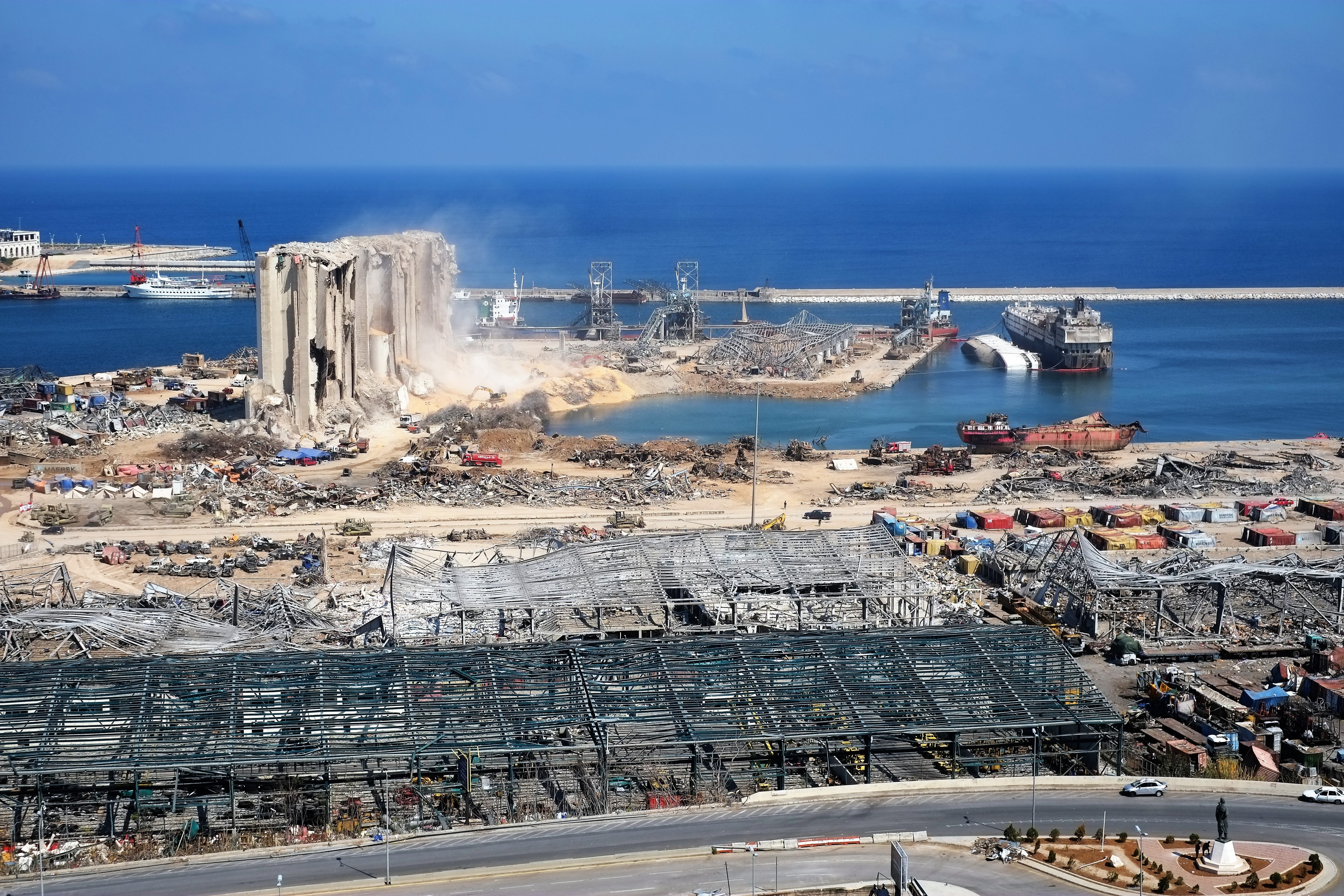
Port of Beirut after the August 4 explosion.
(Photo by rashid khreiss on Unsplash)
Lebanese authorities declared today a national day of mourning, closing all government buildings. Protestors are in the streets nationwide, accusing politicians of obstructing the investigation.
“Nobody has been held accountable because nobody wants [anyone] to be held accountable,” Atema says.
“The judge in the case [of] the port explosion, for example. He was going down a certain road, and suddenly, he resigned. The new judge calls for the same thing, and nothing ever happens,” he continues.
“Can’t hold people accountable when everything’s corrupt.”
In January 2023, [Judge Tarek Bitar’s] attempt to resume the investigation was thwarted by Lebanon’s Public Prosecutor, Ghassan Oueidat, who was himself charged by Bitar in the Beirut Blast case and summoned for investigation. Oueidat filed a lawsuit against Bitar, suspending the investigation, and ordered the release of all 17 suspects who had been detained in connection to the case. At least one suspect has since fled the country.
The “Beirut blast” is etched into the memories of thousands. Pray they will experience the healing only Christ can offer. Visit Heart for Lebanon’s website for more ways to help.
“It’s not easy talking to people that have lost everything. When you have nothing and lose something on top of nothing, the pain is deep and real. It takes months and months of conversations by our team and others in the country to help people deal with the pain,” Atema says.
“We always work with people to say, ‘You’ll never forgive and forget.’ You can’t forget the Beirut explosion. It’s too terrific. It’s too life-altering. [But] you have to forgive. Whatever that means in your world, you have to forgive so you can move on in a relationship with your family, your friends, and most importantly, a relationship with Jesus Christ.”
Header image is a screenshot of the August 4, 2020 explosion recorded on a Beirut security camera.
Middle East/North Africa (MNN) — The Holy Spirit is moving across the Arab world, with new people coming to faith in Jesus every day.
This trend highlights a growing need for biblical leadership development. However, getting theological training in the Middle East/North Africa region is challenging. Enter: Program for Theological Education by Extension, or PTEE.
“Not everybody can afford to go to seminary or access a seminary; some countries don’t have any,” a believer we’ll call Ben* says.
“[Sometimes,] they can’t take three years out to attend a seminary, even if there is one nearby.”

This m-learning graphic explains how Satan acts and contrasts it with what God does.
(Graphic, caption courtesy of PTEE)
PTEE makes theological training accessible. More about that here. The newest program provides education on the go through mobile- or m-learning.
“M-learning is for our discipleship level and certificate of ministry courses,” Ben says.
“We’re trying to break up the lessons into 15-minute chunks. If someone is waiting in line for something, they can whip out their phone and do the next part of the lesson. There are videos, interactive quizzes, and other things to keep the students engaged.”
PTEE needs your help to meet increasing demand. Support from believers like you allows the ministry to provide theological training at a minimal cost. Become a PTEE partner here.
“We see that this (m-learning) is going to be the future of PTEE,” Ben says.
“We’re trying to build a studio where we can create in-house content, videos, and audio material; please pray for the progress of that.”
*Name withheld for security purposes.
Header and story images courtesy of PTEE.
Lebanon (MNN) – Farah was a young girl when her parents fled the war in Syria, abandoning her with distant relatives.
At the age of 14, those relatives forced her to marry the first man who paid for her to be his wife. Not long after, Farah became pregnant and was abandoned by her husband who wanted nothing to do with her or their child.
Desperate and with few choices available to a young, pregnant teenager, Farah fled Syria and was smuggled into Lebanon.
The Hope Ministry Center, located in the Bekka valley in Lebanon, took Farah in as part of their Bible study.
“Farah, at the beginning, had a lot of trouble (understanding) who Jesus was,” Camille Melki, the Founder and Executive Director of Heart For Lebanon said. “And if you asked her, she said, ‘I was rebellious, I was against the Gospel teaching,’ because she felt like she was betraying her own Muslim religion.”
But Farah saw something in the eyes of the staff at Heart For Lebanon that she hadn’t seen anywhere else: true love and compassion for Farah and her baby.
To provide the very basic necessities for her son, Farah worked from 5 a.m. to 9 a.m. each day in the fields.
Now, 16 with a two-and-a-half-year-old son, Farah still attends Bible studies at the Hope Ministry Center.
Each day she faces the challenges of her past, living in a foreign country as a refugee, raising her son alone, and working meager jobs each day to provide for them.
However, she also faces each day with hope and the knowledge that Christ loves her.
“People like (Farah) need Jesus,” Melki said. “And they will only meet Him if you and I care for them.”
Heart For Lebanon cares for over 28,000 individuals. Many, like Farah, have participated in Bible studies and worship gatherings. But Melki understands that many do not.
Simply, he wants these refugees to understand that all the good things they are able to give out don’t come from their own goodness. They come from the love, faith, and mercy of Jesus.
Melki says the best way to support Heart For Lebanon and make an eternal difference is to extend a gift that helps ease not only the physical poverty of the 90% of war refugees living in extreme poverty in Lebanon, but also the spiritual poverty these people are facing.
Nearly 60% of the citizens of Lebanon have never heard the Gospel of Jesus Christ.
Visit HeartForLebanon.org to learn more about the work Melki and his team are doing to help refugees like Farah and find out how you can help provide the gift of eternal hope in Jesus.
Header photo is a representative image courtesy of Heart For Lebanon.
Iraq (MNN) — Iraq turns to a coalition of Gulf nations for relief from the scorching summer heat.
Temperatures climbed to 122 degrees Fahrenheit (50 degrees Celsius) as Baghdad hosted the Gulf Cooperation Council on Monday. Iraqi leaders want to connect their power-poor country to the GCC power grid.
A Gulf deal could provide aid sooner than Iran, the traditional go-to for Iraq. Samuel* of Redemptive Stories explains, “Since the U.S. pulled out [of Iraq] a few years back, the connection between Iran and Iraq has become stronger and stronger.”
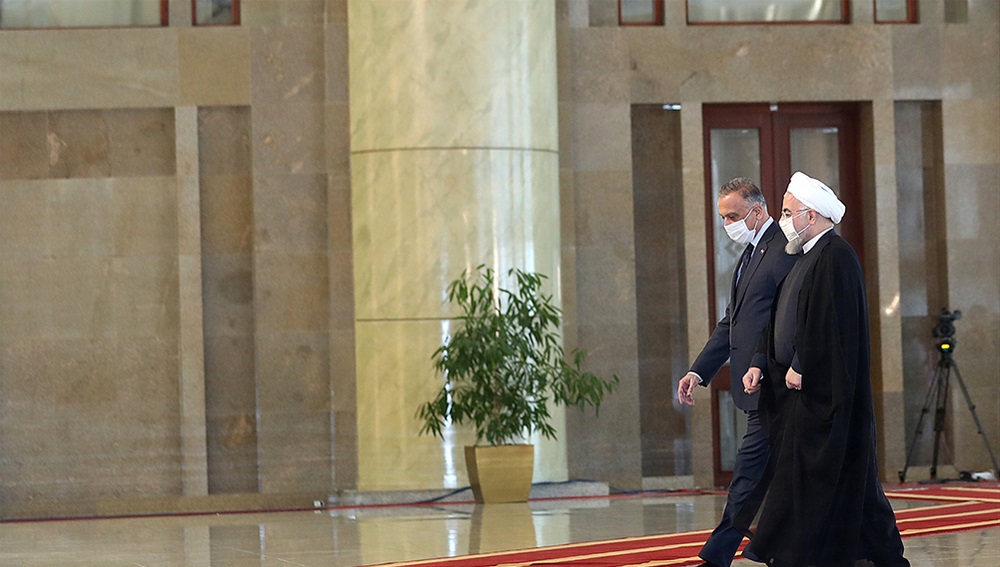
Iranian President Hassan Rouhani meets Iraqi Prime Minister Mustafa Al-Kadhimi in Iran International Conference Hall in July 2020.
(Photo, caption courtesy of Mehdi Ghorbani/Wikimedia Commons)
The U.S. uses Iraq to keep pressure on Iran, sanctioning 14 private banks in Iraq on Thursday. Nearly a third of Iraqi banks are now blacklisted. “Certain banks are funneling money to Iran through Iraq,” Samuel says.
“Thus, sanctions are imposed primarily on these banks, but [they] will also have a secondary effect on the overall economy.”
Iraq’s war-torn economy is already faltering. “Anywhere from 50 to 60 percent of the population are under the poverty line and struggling to make ends meet,” Samuel says.
The latest sanctions will “most likely result in increased inflation, which we’ve seen in Syria, and then that will only exacerbate the existing humanitarian crisis.”
And yet, hope remains. “God seems to use bad things to make amazing things happen,” Samuel says.
“Whenever an economic crisis occurs, unique new opportunities arise because there’s more need and desperation.”
Pray that Iraqi Christians will be faithful to share the Gospel with those searching for truth. Pray for Muslim-background believers in Baghdad, where persecution is rising.
“Pray for governmental transformation in Iraq,” Samuel requests.
“[Iraq] has amazing natural resources. [It] could be another beautiful place of human flourishing. But because people in power use those resources for their own gain, the regular people suffer.”
*Pseudonym
Header image depicts a pile of Iraqi money. (Photo courtesy of Haider AL\_Baghdady/Unsplash)
Iran (MNN) — Amnesty International describes a new crackdown in Iran enforced by morality police. Social media videos depict officials violently assaulting women and security forces firing teargas toward people helping women escape arrests.
Iran restored the controversial morality police department earlier this month to counter “hijab negligence.” Analysts say the move only fuels an anti-regime movement approaching its first anniversary.
Last September, 22-year-old Mahsa Amini died in morality police custody, sparking the most significant anti-government movement to date.
Revolt carries a heavy price in Iran. Heart4Iran’s Nazanin Baghestani says, “We get calls every day from women [inside Iran] being traumatized, just being on edge.”
Of fear and freedom
Baghestani oversees Heart4Iran’s 24/7 call center ministry. More about that here. Many young girls like Samira* reach out because they are afraid and have nowhere else to turn.
“People print our phone number and put it on the streets in Tehran and other cities. She found our number on one of these stickers and called us,” Baghestani says.
“She said, ‘Can you help me? I’ve heard you pray for us. I need prayer.’”
Fear ruled Samira’s life after the police took her into custody. “She was always on edge; she was paranoid [about] everything, so she wouldn’t leave the house,” Baghestani says.
“She fainted a couple of times on the street because of her stress.”
Baghestani counseled Samira over several calls, reading God’s Word and praying together. “One night, she encountered Jesus in her room,” Baghestani says.

(Photo courtesy of Heart4Iran)
“She said, ‘I didn’t see anything, but I knew Jesus was there loving and protecting me.’ From then on, she was free. She said, ‘I go out [now]. I’m not afraid anymore because I know Jesus is protecting me.’”
Find your place in the story
You can help women and girls like Samira through Heart4Iran. Learn how here.
A simultaneous clampdown on religious minorities needs your prayerful response as well. More than 50 believers were arrested on unknown charges immediately following the reinstatement of the morality police.
“The reason for this sudden surge in nationwide arrests of Christians is unclear at this stage,” Article18’s advocacy director Mansour Borji says.
“What is obvious is that Iran has begun a fresh crackdown on civil liberties, and the traditionally vulnerable groups, like Christians, are on the front line of those targeted.”
*Pseudonym
Header and story images courtesy of Heart4Iran.
Lebanon (MNN) – Lebanon narrowly avoided a grey list of countries under special scrutiny by The Financial Action Task Force. Countries are listed for practices connected to money laundering and terrorism financing.
See the countries currently on the FATF’s black and grey lists.
Tom Atema with Heart For Lebanon says leaders have passed the blame for the country’s crises. He says, “Now, what you have because of the corruption is Lebanese government saying all of our problems is all blamed on the Syrian refugees.”

Photo courtesy of Heart for Lebanon.
Lebanon hosts roughly 1.5 million Syrian refugees but has deported thousands this year. Most immediately return because there is nothing left for them in Syria. Heart For Lebanon serves the physical needs of many refugees while also sharing hope in the Gospel. Read more here.
“I don’t want any Syrians to go back to Syria until they had an opportunity to encounter Jesus Christ. Because once they hit that border here in a closed country, chances of them hearing about Jesus, never mind responding and being discipled is pretty close to zero,” says Atema.
Heart For Lebanon believes the solution to Lebanon’s corruption is a new generation of leaders rooted in God’s Word. That’s why the ministry pairs discipleship with everything they do and empowers people to use their gifts such as leadership ability.
“These men and women, boys and girls, that are coming up through a H.O.P.E. educational program, someday will be in places of some huge influence that will change the country,” says Atema. “Because there’s a new value base to it that’s rooted in Scripture.”
Some of these young leaders empowered by Heart For Lebanon are already beginning to have a positive influence and point others to hope in Jesus.
“We need to do humanitarian aid. We do that. But we’re not a humanitarian aid organization. We do education, but we’re not an educational organization,” says Atema. “We are an organization, a ministry, that’s all about the Great Commission. And to make disciples, it’s all about the gospel.”
Pray for leaders in Lebanon who will obey God and serve the people. Also pray for more Syrian refugees to hear and believe in the Gospel.
Learn more about Heart For Lebanon and how to support the ministry here.
Family Care is about helping families in Lebanon meet their basic needs while also helping them meet Jesus, in very real and practical ways. Header photo, caption courtesy of Heart for Lebanon.
Lebanon (MNN) — Syrian refugees are running out of options in the Middle East.
The United Nations is cutting monthly cash aid to refugees in Jordan due to an “unprecedented funding crisis.” At the same time, Lebanon is moving forward with its plan to force all Syrian refugees back across the border.
“Busses are picking up the refugees, taking them to the border, and pushing them into Syria,” Heart for Lebanon’s Tom Atema says.
“What you don’t hear is about 98 percent of them are back in Lebanon within 24 to 48 hours because the regime doesn’t want them [and] there’s nothing to go home to.”
The ministry offers holistic help to refugees in the name of Jesus. More about that here.

“We don’t differentiate between refugees and the local population. Hungry people are individuals created in God’s own liking (image), not after any political leader in Syria or a political leader in Lebanon.”
(Photo courtesy of Heart for Lebanon)
“We have several different ways to help them. We have the family care package filled with the essentials for survival; children have access to education for free,” Heart for Lebanon’s Elio Constantine says.
“Most importantly, they can enroll in our Bible study programs to hear the [Gospel] message [and] engage with others that have accepted Jesus as their personal Savior.”
Heart for Lebanon helps 2,500 Syrian refugee families. None of them have been forcibly deported, but the refugees’ friends have. Pray that desperation leads to Gospel opportunities.
“While they were on the bus going into Syria, their tents, or wherever they were living, were bulldozed down, cleaned up, pushed away, and now they have nothing to return to,” Atema says.
“The despair starts all over again. It’s like the third or fourth round for some poor people.”
Header and story images courtesy of Heart for Lebanon.
Lebanon (MNN) — Hezbollah expands its reach as Lebanon drowns in despair. The political crisis is nowhere near resolution, and the army has no resources to keep terrorists at bay.
Lebanon could lose an entire generation, just like Syria. Heart for Lebanon’s Elio Constantine explains, “Extremist and radical organizations target marginalized and vulnerable communities; these children start getting fed the most extreme ideas.”
Extremists target kids because they’re easy prey. “They (children) still have a fresh mind like a sponge that would absorb almost anything, especially given that they are in a desperate situation,” Constantine says.
Introducing kids to Jesus through games, crafts, songs, and Bible lessons provides an alternative to hate. “Heart for Lebanon disrupts the cycle; it puts a stop to it,” Constantine says.
“We create this ripple effect of hope among these marginalized communities.”
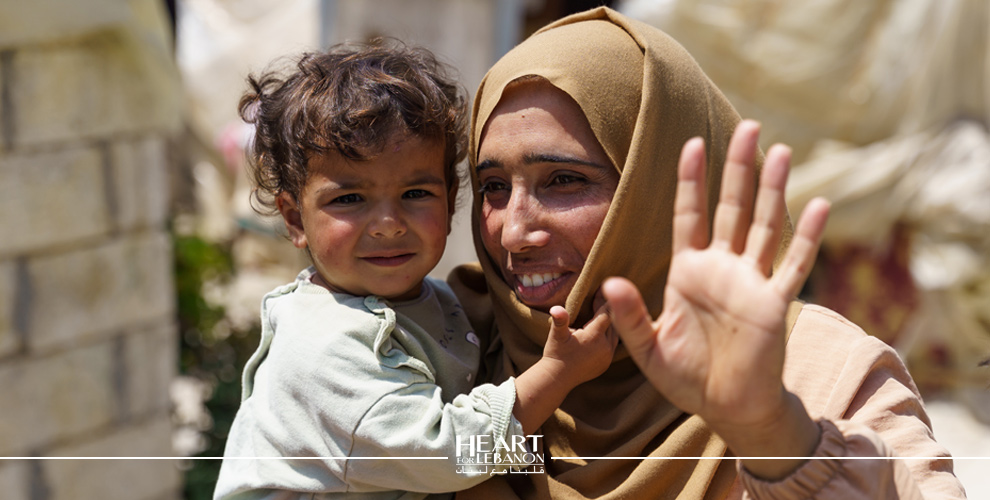
(Photo courtesy of Heart for Lebanon)
That’s the goal of the ministry’s “Summer of Hope” program. “‘Summer of Hope’ is an initiative that we’re doing [in] June, July, and August,” Heart for Lebanon co-founder Tom Atema says.
“The ultimate goal is to reach 2,500 children. During the month of June, [we reached] 1,269 [kids] in 187 different environments.”
Here’s how you can help kids in Lebanon meet Jesus this summer.
“Right now, three-quarters of the country is living at [or below] the poverty line. Families living in poverty don’t take vacations, they don’t become tourists. They just live in everyday reality that leads to more and more despair,” Atema says.
“We as Christians show up with a fun truck [and] games and crafts, and Bible lessons. We just let the kids have fun as kids for a couple of hours but with a purpose [of] sharing the Gospel of Jesus Christ.”
Header and story images courtesy of Heart for Lebanon.
Iran (MNN) — Morality police are back on patrol as Iran announces a new campaign enforcing the mandatory hijab. On Sunday, officers patrolled the streets of Tehran in marked vans.
Women reach out to Heart4Iran’s 24/7 call center daily for prayer and counseling. “The stress, the threat, the anxiousness is with every woman inside the country,” Heart4Iran’s Nazanin Baghestani says.
“They cannot go on the streets [because] they are afraid that they will be caught; they are being followed.”
Last year, 22-year-old Mahsa Amini died in morality police custody, sparking the most significant anti-government protest movement in Iran’s modern history. A severe crackdown largely quelled protests earlier this year, but women continue to ignore the hijab mandate.
One criminal court sentenced a woman to prison last week after tracking her hijab violations using public surveillance cameras. It was the first known instance of security cameras, installed nationwide in April, officially being used in the crackdown on women’s rights.
Pray that women with nowhere else to turn will meet the Prince of Peace.

Soosan called Heart4Iran’s trauma counseling center and the staff prayed with her. She called back later and shared, “Jesus blessed us with so much peace and joy!”
(Photo courtesy of Heart4Iran)
“Pray for wisdom; pray that we will discern what’s going on and that people will open up. Pray that Jesus will meet them individually,” Baghestani requests.
Help the call center continue its vital work here.
“It’s only us (Christians) that can pray for them; they cannot go to the mosque for prayer,” Baghestani says.
“Muslims write a prayer on paper, and you must attach it to yourself. That’s how they pray.”
Header and story images courtesy of Heart4Iran.
Middle East (MNN) – What would it be like to be the only Christian in your community? SAT-7 began its media ministry in the Middle East to both share the Gospel and serve isolated believers.
Founder Terry Ascott says,“Since COVID, we all know what it means to be at home and yet take part in a church service, or fellowship with others online. For many of the people that we’ve been ministering to over the past two decades, this has always been their reality.”
Some isolated believers may be the only Christian where they live or may not know another Christian personally. TV and online video programming by SAT-7 could be their only connection with the Body of Christ. Learn how a new program supports isolated believers in North Africa.
Even the leaders of small house churches often lack theological training. Responding to the need, SAT-7 formed the TEACH program, which stands for Theological Education for Arab Christians at Home.
“We take people through all the kinds of things they’d learn in a seminary because some of these house groups or little family Fellowships are led by people, of course, who would just happen to be the first person to come to Christ in their community, and they haven’t had any training,” Ascott says.
“Providing systematic fellowship and teaching is very important for this underground church, this isolated groups of believers in different countries.”
The ministry also offers counseling lines viewers can call and other ways to connect with their audience.
“We’re getting 1000 reactions from our audience every day. And trying to you know, process these and to respond to all kinds of needs, in a way that’s helpful to the viewers is quite challenging,” says Ascott.
If you speak Arabic, Farsi, or Turkish, SAT-7 could use your help. Get in touch at SAT7USA.ORG.
Header photo courtesy of SAT-7 USA.
Syria (MNN) — Fighting slows in Syria as President Bashir al-Assad tries to curry favor abroad by appealing to religious minorities.
“The regime has run out of funds,” Samuel* of Redemptive Stories says. A staunch ally, “Russia, [is] occupied elsewhere, which has led them to” decrease efforts in Syria.
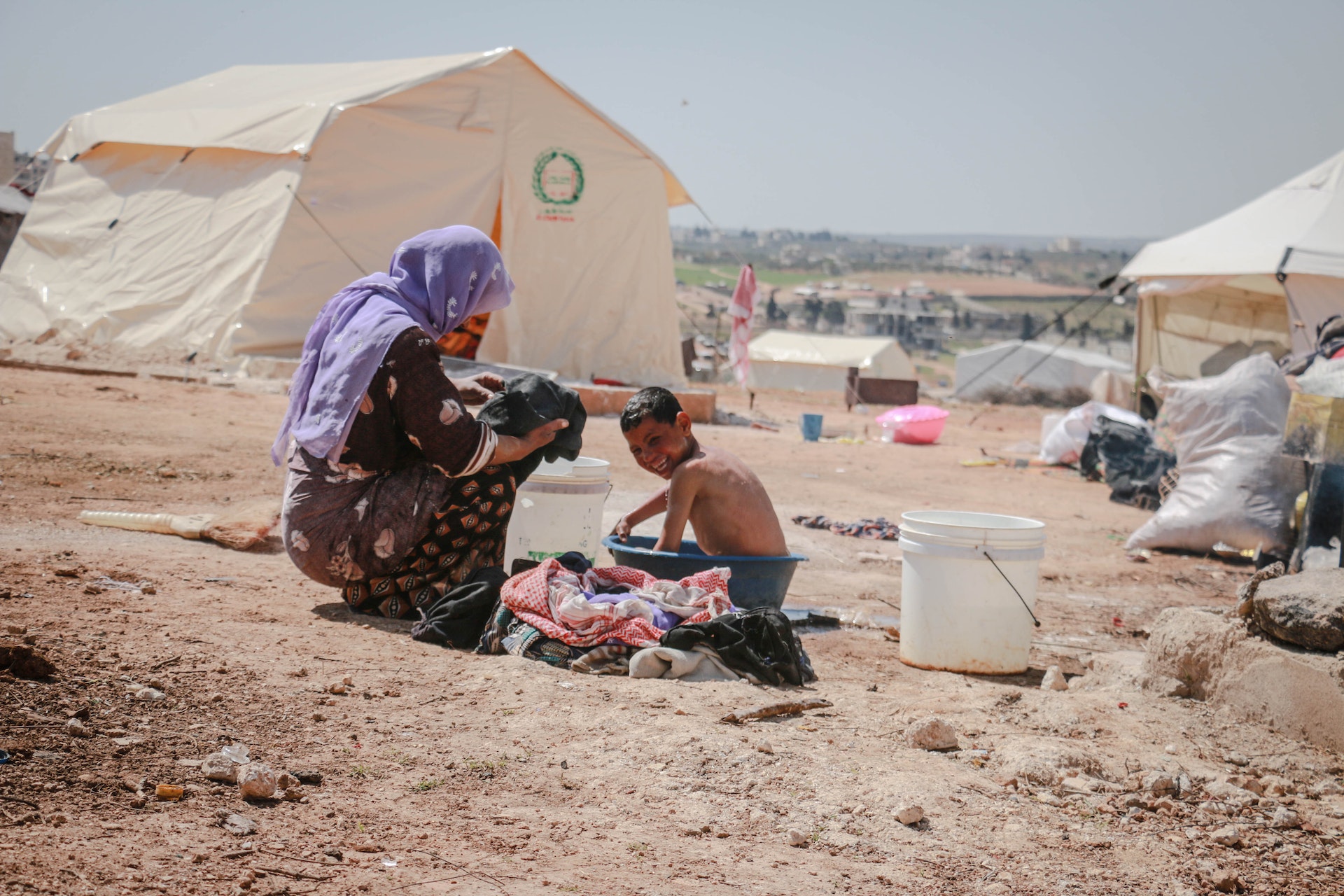
A mother washes her child in a makeshift settlement in Idlib, Syria.
(Photo courtesy of Ahmed Akacha/Pexels)
The Arab League raised global concerns in May by welcoming Syria back into the fold, but potential investors remain wary of U.S. sanctions.
Meanwhile, the Syrian currency dropped to a historic low last week, trading at 9,500 pounds to the U.S. dollar on Saturday. “The economic situation still is in shambles, and it continues to get worse and worse,” Samuel says.
Local churches are doing the best they can to help people in the name of Jesus. But even Syrian Christians who still have a paid job are falling into poverty.
“The average salary amounts to about $17 a month because everything’s paid in the local currency due to inflation,” Samuel says.
According to the United Nations, over 15 million people need help to survive another day. “Ninety percent of people living in Syria right now would be starving if they did not have financial aid of some sort,” Samuel says.
“The whole country is subsisting [on] relatives and friends around the world sending back cash.”
It’s easy to lose interest in Syria after 13 years of war but remember – every statistic has a name and a face. “These are real stories of real people, of young people saying, ‘Our only hope is to get out of the country,’” Samuel says.
Another man Samuel and his team met was “90 years old, living all by himself on the top floor, almost imprisoned in his own house because all of his family had to leave the country. He lost a son in the war.”
Will you pray for Syria today?
“Pray the (Syrian) government will back down and make some compromises. Pray that God would intervene in the hearts of [global] leaders to change the situation,” Samuel requests.
*Pseudonym
Header image courtesy of…
Iran (MNN) — Iran is one of the world’s most challenging places to be a Christian. However difficult it may be, Gospel growth is not impossible.
Three years ago, a secular survey revealed that the number of Iranians identifying as Christian rose from less than one percent to 1.5 percent – roughly one million people. The percentage has only gone up since then.
“In the West, we’re busy trying to tell people about the Good News, and we meet a lot of resistance. In Iran, people are coming to Jesus readily,” Transform Iran’s Lana Silk says.
“[Iran doesn’t] have a shortage of converts.”
Discipleship is the real challenge. Transform Iran is committed to making disciples who pass on what they’ve learned. More about that here.
“The important challenge is [making] sure people are grafted into the body of Christ, rooted in the Word of God, nurtured, and nourished so that they can grow and reproduce because that’s God’s heart for them,” Silk says.

Transform Iran is passionate about leadership development. The Church in Iran is growing fast.
(Photo, caption courtesy of Transform Iran)
Iranian Christians tell new believers, “Come walk with us, meet with us every week, learn about Jesus, learn about this hope that you’ve now found,” she continues.
For approximately one year, “we take them through a curriculum of basic Christian doctrine, and then as they grow, we teach them about church planting, evangelism, [and] apologetics,” Silk says.
“Often through that process, they will have planted a church, and now we’re nurturing them as young leaders.”
“This is a partnership. I can’t be on the streets in Iran talking to the people face to face, and they (believers) can’t do what they’re doing without me enabling them, whether it’s in prayer or finance, raising awareness, getting action from governments and authorities,” Silk says.
“We are one connected body in the Lord. Let’s find our part in all of this and make it happen together.”
Header and story images courtesy of Transform Iran.
Middle East/North Africa (MNN) – The media ministry of SAT-7 serves a part of the world that has suffered numerous crises in recent years. Christians in the Middle East and North Africa region face the additional difficulty of persecution for their faith.

Photo courtesy of SAT-7 on Facebook.
CEO Rita El-Mounayer says, “And in the midst of all this, we are, SAT-7 broadcasts, or satellite social media, videos on demand, trying our best to give hope to these people, trying our best to tell them that we are there for you because we live in the region.”
SAT-7 staff have personally felt the effects of Turkiye’s devastating earthquakes, Iran’s government oppression, Lebanon’s crumbling economy, and more. They understand the difficulties of the region and bear the struggles of their audiences. Yet, through various media, SAT-7 continues to share hope and encouragement.
Watch SAT-7 PLUS on-demand videos here.
El-Mounayer says, “This is the biggest challenge for SAT-7 today: how we can remain relevant with all the problems around and how we can give them the hope and the strength in Christ.”
So what can be done to encourage and disciple people living in this region? El-Mounayer says it should push us to our knees.
“We need to pray that whatever is happening now in the region, with the oppression and difficulties and some, you know, just persecution, the Church remain strong. To use all this pain, and oppression, to strengthen the church,” says El-Mounayer. “We really need to pray that what’s happening now on the ground, in Afghanistan, in Iran, in Algeria and other places, that these things will not harden the heart of people.”
Pray for the MENA Church. May the Holy Spirit use the programming and resources of SAT-7 to strengthen believers and bring many more to faith in Christ.
Read El-Mounayer’s “Three Reasons Not to Give Up on the Middle East” here.
Header photo courtesy of SAT-7.
Lebanon (MNN) — Jesus once told His disciples, “They will know you by your love.” In Lebanon, people know you by your shoes.
Nuna with Triumphant Mercy Lebanon says Hannah’s dirty boots left quite an impression.
Whenever “she goes to a supermarket or pharmacy, [people] know that this is a person serving in the camps because of her dirty boots,” Nuna explains.
“They would ask her, ‘Why are you here?’ That is an open door for a testimony of God’s love for people.”
Hannah contacted Triumphant Mercy Lebanon after learning about its short-term volunteer opportunities. “She wanted to serve the region and be a blessing,” Nuna recalls.
“When she came, she plugged in immediately into [the] camps with refugees and did an amazing job.”
Lebanon and its overcrowded refugee camps aren’t exactly a tourist hotspot in the Middle East. Yet the Holy Spirit moves in the most desperate situations. “It’s difficult to see people in such hard times, [surrounded by] fear, uncertainty, and poverty,” Nuna says.
“[Lebanon’s environment is] so difficult emotionally; it is psychologically heavy. And yet people come.”
Got some free time this summer? You can make a difference like Hannah. Triumphant Mercy Lebanon needs volunteers to help run its summer camps.

(Photo courtesy of TM Lebanon)
“Summer camps are a great time to evangelize,” Nuna says.
“We have Bible stories for the unbelievers, the Muslims; we start with the prophetic stories leading up to Jesus and explain salvation. It’s hard to start with Jesus [because] they don’t know who He is.”
Connect with TM Lebanon here to learn more.
“We send an application, people send us their availability, and then we can figure out the rest,” Nuna says.
“We’re looking for people who are believers, who are ethically good, and who are available to do whatever. They have to have a servant’s heart.”
Header and story images courtesy of Triumphant Mercy Lebanon.
Lebanon (MNN) — Leaders canceled nationwide “Brevet” exams in Lebanon on Wednesday, saying the tests were “not critical.” Students may dream of a decision like this, but the cancellation will likely become another barrier to long-term success.
Traditionally, students have to pass the national exam to enter high school. Now, over 62,000 students will receive a certificate of completion and start high school in the fall – whether they’re ready or not.
Triumphant Mercy Lebanon’s Nuna says the cancellation came as no surprise. “Public schools closed, so kids have not been in school since January,” she says.
“The whole (school) year [was] wasted.”
Triumphant Mercy Lebanon helps children prepare for the future through Christian education and more. More about that here. Now, the ministry is expanding its focus.

(Photo courtesy of Triumphant Mercy Lebanon)
“We’ve been working with kids [for] education, digital learning; all these things for their future. But this is not enough,” Nuna says.
“They need activities that are not schooling. They need friendships and the joy of being a young person with a life before them.”
Help cover the extra costs associated with expansion here. “We’re opening [our program] up not only for education but summer camp and outings,” Nuna says.
“Having this opportunity to open up a place where they (kids) can be themselves and laugh, shout, is amazing.”
Pray believers can holistically meet the needs of children.
“Christ is not limited to salvation [alone], so it’s not just bringing people to salvation, and that’s it. We have to be there and live life with people,” Nuna says.
Header image shows students who passed Brevet exams thanks to educational support from Triumphant Mercy Lebanon. (Photo courtesy of TM Lebanon)
Syria (MNN) — Ten United Nations trucks carrying relief aid finally reached northwest Syria on Friday, four months after historic earthquakes rocked the region.
This was the first aid convoy to cross from government territory into a rebel-held enclave since January. Aid deliveries quickly became a political pawn after the disaster.
February earthquakes added another layer of calamity to Syria’s 13-year crisis. Millions displaced by war found themselves homeless yet again.
Samuel* with Redemptive Stories says the Syrian war is on hold – for now.
“The situation seems pretty stable ever since the earthquake; [an] understood ceasefire has held for the most part since February,” he says.
The UN reports that over 15 million Syrians need help to survive today, and an estimated 8.8 million people have been affected by the February earthquakes.
Thousands of earthquake survivors may have a roof over their heads, but their hearts remain unsettled. Every new tremor triggers a flashback, and no one knows when the earth will stop moving.
“The aftershocks could continue for another period of time; months, in fact,” Samuel says.
“Earthquake realities are still quite fresh for a lot of people, particularly on the side of trauma.”
The global Body of Christ continues to offer help and hope. “In general, the response has been great from a lot of organizations; a lot of them are evangelical organizations and churches,” Samuel says.
Syrian Christians have been helping earthquake survivors from day one. Believers tell people about God’s love and truth; their consistent presence shows it’s real.
“Our friends there locally are responding both in practical love and spiritual communication of what the Gospel is,” Samuel says.
“God is using, as He always does, the brokenness to carry forth His story.”
*Pseudonym
Header image depicts damages immediately following the February earthquakes. Photo courtesy of Heart4Iran.
Iran (MNN) – Since 2021 the number of child marriages in Iran has steadily increased. Many of these marriages involve young girls and men who are at least 10 years older than them.
The Statistical Center of Iran (SCI) reported that 27,448 girls under the age of 15 were married in Iran between December 2021 and November 2022.
Lily Meschi of Iran Alive Ministries says, “Part of it is very much cultural, it is ingrained in the Iranian culture, in the Middle Eastern culture, to really give girls of young age to marriage. Which is a very, very wicked practice.”
Lowering the Marriage Age
Before the 1979 Revolution, women had to be at least eighteen to be married. With the new government in power, that law was abolished, setting the legal age of marriage at thirteen. In 2000 that age was further dropped to pre-puberty if the child’s male guardian gives consent. The age of puberty is defined at ten years old.

(Image courtesy of Mostafa Meraji on Unsplash)
“It is legal in Iran to for girls to marry a guy that’s much older than them at age nine,” Meschi states. “That, to me, is absurd. I can’t even fathom what a nine-year-old psychologically goes through when they’re given in marriage at that early age.”
These child marriages often lead to isolation and abuse as young girls struggle to adapt to situations beyond their control.
Personal Trauma and Freedom
Meschi herself was part of an arranged marriage at the age of 18. For fourteen years she suffered in the abusive relationship. Yet, at that point it felt normal. Many of her peers, cousins, and neighbors lived in similar situations.
She explains, “One of the things that keeps the abused, or the victim in isolation is the fear of shame, or fear and shame, I should say. We want to put on a persona that, ‘Hey, we are a whole person even though we are mistreated.’ We are abused. We don’t want others to see the shame that we carry. So as a result, we isolate ourselves. I isolated myself for fourteen long years.”
However, through Christ, Meschi experienced joy and release from her past pain, trauma, and relationship. She was alone for a long time, however, that was not the end of her story. This freedom is something she seeks to help other women experience.
“Through the ministry that I am serving right now at Iran Alive ministries, my lifelong purpose has become to help Iranian women realize their true identity in Christ. Over the years this ministry has been able to share the Gospel – share the love of Christ – with many, many Iranian women. [They] then became agents of transformation in their communities, in their families, and [have] brought so many others to faith.”
Seeing Those Forced into Isolation
Iran Alive provides trauma counseling and other programs aimed to support abused women as well as victims of child marriages.
However, Meschi says that all Christians can support the community of abused women.
“When we see a woman tearing up when we touch on a certain subject of love of care of home of peaceful relationships – be on the lookout to see those signs of if a woman around you get is getting uneasy, is getting teary eyes. Ask, ‘Hey, Is everything okay? Is there anything I can pray for you or with you about? You know, is there anything we can do?’ Let them open up. Create that safe environment for women that are abused to be able to speak with us about the abuse that they’re going through.”
She also asks that the Church prays for freedom for these women and eyes to see them.
Help Iran Alive Ministries support women today.
Header image courtesy of Mostafa Meraji on Unsplash.
Middle East/North Africa (MNN) — When you hear “theological education,” what comes to mind? You might think of stuffy lecture halls, hours of bookwork, or prestigious seminaries.
Program for Theological Education by Extension (PTEE) spearheads a new theological training approach. Ben* says, “‘M-learning’ is learning on the mobile phone, and it can’t be done in the same way as regular online learning courses.”
PTEE is known for its accredited live and online programs. Now, they’re trying to make quality training accessible to the average believer. “All of our courses are designed to help people lead others,” Ben says.
“That (leadership) might be in an official church capacity [or] there are also lots of other ways. You might lead in a small group; you might lead a friend one-on-one as you read the Bible with them.”
PTEE recently hired two new staff members to work on the m-learning program. The courses they’re developing are best suited for new believers. “These discipleship-level courses can be used to grow spiritually and in service,” Ben says.
“As somebody learns to trust the Lord, they express their love for Him by loving and serving others. We hope that discipleship courses will equip [believers] to do that right from the beginning.”
You can help Christians throughout the Middle East and North Africa become strong leaders. Connect with PTEE here to learn how.
“We have a goal of developing 20 m-learning courses overall,” Ben says.
“We are kind of pioneering this; our big hope is that our work will enable others in the region to put their theological education onto mobile devices as well.”
*Name withheld for security purposes.
Header image is a representative stock photo courtesy of Wendy Wei/Pexels.
Middle East (MNN) — A senior cleric made waves in Iran earlier this month by saying Islam was weak. Roughly two-thirds of Iran’s mosques have closed, he said – a “worrying admission” for a state built around the principles of Islam.
Uncharted Ministries’ Tom Doyle says it’s part of a broader trend. “There’s just not that general excitement, that fervency to spread Islam that we saw when we started going to the Middle East 25 years ago,” he explains.
“We see tolerance for it. In places like the Gaza Strip, people are forced to make that the issue. For at least ten years, we’ve seen attendance [declining] in mosques, and many Muslims, especially young ones, becoming agnostic.”
Additionally, “we’ve been privileged to go into Iran a couple of times, and [in] the mosques that we visited, we didn’t see any young people; just a bunch of old people, and there weren’t that many of them. We saw the same thing in Syria, in Iraq,” Doyle says.
“I think we’re seeing the collapse of Islam.”
You could say the same about Christianity in America. Church attendance is down across denominations. However, Muslims in the Middle East are not only turning away from Islam. Many are turning to Jesus.
You won’t see them listed on a church roster. “Former Muslim communities meet together in secret,” Doyle says.
“They can’t go into a regular above-ground church; they go to an underground church. An online community of believers meets in several formats because of fear and the need for security.”
Uncharted Ministries partners with secret Christians throughout the Middle East, and you can, too. Contact Uncharted here to learn more.
“You can give and help support the underground churches in difficult places like Iran, Syria, Afghanistan, Pakistan,” Doyle says.
Or, get training from Uncharted so you can reach a Muslim neighbor for Christ. “We do a seminar [called] ‘How to love Muslims to Christ,’” Doyle says.
“Start learning how to build relationships with Muslims, getting some practical help; [there is] inspiration, and then some on-the-job training.”
Header image is a stock photo depicting an empty mosque. (Photo courtesy of mohammad ramezani/Pexels)
Iran (MNN) — Western sanctions and diplomacy lose effect as Iran strengthens ties with China and Saudi Arabia.
In 2018, former U.S. President Donald Trump exited a 2015 nuclear accord and reimposed sanctions to curb oil exports and the associated revenue to Iran’s government. Sanctions continued during President Joe Biden’s term, yet Iran’s oil exports rose, hitting a five-year high in 2023.
Previously, sanctions could sway Iran toward diplomatic efforts. Now, a weakened U.S. presence in the region and new geopolitical partnerships allow Iran to pursue its own agenda.
“Iran has not been held accountable for the executions and atrocities it has committed since September of 2022’s uprising. The international community is not doing anything,” Heart4Iran’s Mike Ansari says.
“We’re going to see a new era where Iran is not held accountable to anyone. They will continue ruling by power, with an iron fist.”
Technology will likely play a key role in Iran’s authoritarian governance. Last year, China helped Iran install security cameras nationwide to crack down on protests. Saudi Arabia uses similar technology from China to build a futuristic “smart city” run on A.I. and user data.
Smart cities allegedly use data and surveillance to improve efficiency and safety. Skeptics voice concern about privacy and individual freedoms.

(Graphic courtesy of Heart4Iran)
“The whole conversation is not revolving around the safety and security of these nations. It’s revolving around espionage, or spying on people and violating people’s rights,” Ansari says.
“Countries that are willing to violate human rights and religious freedom are the ones using these extreme measures to [control the population.]”
Iran already uses digital means to target and persecute Christians. Chinese support could make the Islamic regime even more dangerous.
“Anything that may threaten the foundations of Islamic tenants is an enemy, and they’re going to deal with it very sternly,” Ansari says of Iran’s regime.
The digital world may be full of threats, but God is there, too. Heart4Iran’s virtual church provides a haven for secret believers. A platform called “My Kelisa” hosts evangelism and discipleship resources. Learn more here.
Pray that the Lord will help people in Iran discover His truth. “Pray that God would open the door for freedom to reign and for people to start experiencing their God-given right,” Ansari requests.
Header and story images courtesy of Heart4Iran.
Iran (MNN) — Iran makes a show of strength on America’s doorstep this week. Iranian President Ebrahim Raisi toured fellow sanctioned nations Cuba, Nicaragua, and Venezuela, signing economic agreements and emphasizing unity.
Iran’s geopolitical saber-rattling and nuclear threats fill the headlines while discontent swells at home.
Protestors are back in the streets in at least ten cities, including Mahsa Amini’s hometown. Amini has become the “face” of anti-government protests, and officials want to hide her grave to squelch the protest movement. Amini’s death in police custody sparked nationwide protests last year.
“There [is] a lot that the government thinks has been burned away and silenced. But there is fire under the ashes,” Transform Iran’s Lana Silk says.
“When [the] wind comes and blows it all up again, those sparks will engulf that whole region. There is much more to come still.”
The next catalyst could be Iran’s failing economy. Or the death of supreme leader Ayatollah Ali Khamenei. The 84-year-old leader has no clear successor. The battle for control after Khamenei eventually dies will be intense.

Uncertainty often drives people to truth and meaning.
(Photo courtesy of Transform Iran)
Whatever the winds of change may bring, “there is a sense of urgency now to make sure we are prepared and focused because there will be a window of opportunity” to reach Iran’s people, Silk says.
Uncertainty often drives people to truth and meaning. “We better be sure the (Gospel) truth is front and center when those doors open,” Silk says.
“I don’t know how long that great hunger the people of Iran have will last before all sorts of alternatives quench it.”
Support Transform Iran’s efforts here.
Now that you know, will you help us spread the word? Use the buttons at the bottom of the page to share this report.
“Be informed, tell others about it, and pray,” Silk says.
“Prayer is so powerful, so active, and so effective. We must not diminish the power of the global Church knowing what’s happening and praying about it.”
Header image courtesy of Transform Iran.
Iran (MNN) — The Iranian embassy in Saudi Arabia’s capital re-opened for the first time in seven years. According to the BBC, Iran is calling it a “new era.”
Why is this a big deal?
Mike Ansari with Heart4Iran explains, “Iranians and Saudis have been adversaries for years, especially after the last 20 years of the Islamic Revolution. The relationship has soured because Saudi Arabia believes that Iran is actively trying to export Shiite Islam, and Saudis are Sunnis.
“The Iranian regime has had a major influence in reshaping the politics of Iraq post-Saddam Hussein. They were involved in Yemen and directly involved with the Houthi rebels. Also, Iran has had influence and presence in Syria fighting ISIS and in other regions as well. So Saudi Arabia sees that as a threat of exportation of Shiite Islam to the rest of the Muslim world.”

A mural in the holy city of Qom depicts Ayatollah Khomeini, leader of the 1979 Iranian Revolution, on the left and Ali Khamenei, the current Supreme Leader of Iran, on the right. (Photo/Caption courtesy of David Stanley via Flicker: https://flic.kr/p/ez3Q3N)
On one hand, Saudis and Iranians re-establishing diplomatic ties would be good for stabilizing geopolitics in the Middle East.
On the other hand, Ansari says, “The peace that has been brokered between Saudis and Iran by China is extremely telling of the fact that America and the West are soon losing their footing and influence that they once had across Middle East; specifically, in the region that is an oil-producing region.”
Less Western influence in this region of the Middle East means less oversight of Iran’s human rights abuses.
“We are going to continue to see more pressure on the religious minorities, more pressure on anyone who stands up to speak against the atrocities and the crimes that the Iranian government is committing,” says Ansari.
Thankfully, we serve God who is sovereign over the nations.
Please pray for spiritual strength and wisdom for Christians both in Iran and Saudi Arabia sharing the Gospel at the risk of their own lives.
Learn more about Heart4Iran’s ministry here!
Header photo courtesy of Heart4Iran.
Iran (MNN) – Long before the current oppression and unrest of women and youth in Iran, there was another woman who stood up to save the lives of a marginalized group. International Media Ministries wants to share her inspiring story with modern Iranians.
President Denise Godwin says, “The original Bible story actually happened in Iran, what is today Iran.”
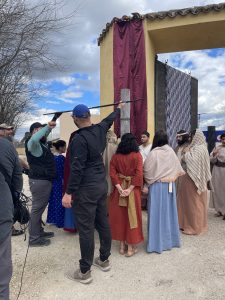
Photo from the IMM filming of the short video about Esther.
IMM filmed a short video to introduce Iranians on social media to Esther. Next year, the team plans to develop the story further with a miniseries. You can support the project here.
Godwin says, “Here’s one woman who was influential in the empire. And she actually stood up for many people. And so in the end, we’re asking the question for social media, ‘Where’s your hope?’”
Iran is officially an Islamic state, yet more and more Iranians are leaving Islam. A senior Iranian cleric recently reported that 50,000 mosques have closed out of 75,000. With no faith in the government or Islam, many search for help elsewhere. The Iranian Church is considered to be the fastest-growing worldwide. Meanwhile, the Iranian government’s brutal treatment of its citizens is growing worse and hasn’t showed any signs of relenting.
Godwin says, “We’re excited to open up this discussion in a place that is really subjugating and persecuting young people and women right now.”
Godwin also encourages believers to continue praying for change in Iran.
“This is a really important time for Christians all over the world to be praying with Iranians to break the chains of darkness that have dominated that country for more than 40 years,” says Godwin.
Pray also for those who will watch the story of Esther produced by IMM. May they be inspired and find lasting hope in the God of the Bible.
Learn more about IMM’s projects and how you can help at IMM.edu.
Photos provided courtesy of International Media Ministries.
Lebanon (MNN) — Lebanon’s Parliament is scheduled to meet on Wednesday, June 14, to elect a new president. After seven months of political stalemate, opposition parties finally chose a presidential candidate last week.
The country is nearing a critical tipping point. “We [have] almost a complete vacuum in government,” Heart for Lebanon’s Camille Melki says
“Lebanon has been without a president since November 1. We don’t even have a prime minister; we have a caretaker prime minister. The parliament is completely paralyzed. The central bank chair’s term will end in a month; the head of the Lebanese army’s term will end in few months.”
Inflation hit 269 percent in April amid currency devaluation, a nine percent increase from March. On Thursday, International Monetary Fund spokesperson Julie Kozack told reporters:
Lebanon needs urgent action to implement a comprehensive economic reform program… We are concerned about irreversible consequences for the economy, especially for the poor citizens of Lebanon and the middle class.

Ask the Lord to intervene in Lebanon’s political chaos so that millions of people can get the help they need to survive.
(Photo courtesy of Heart for Lebanon)
Stuck in a crippling economic crisis since late 2019, Lebanon desperately needs reorganization. Setting up a functional government is the first change required to unlock foreign aid.
“The International Monetary Fund, World Bank, and all donor nations have said, ‘We can no longer bail out Lebanon without specific reforms,’” Melki says.
If everything goes as planned, Parliament members will meet on June 14 to “elect one of those two candidates with the majority of two-thirds for the first round, or the majority of 50 plus one and the second round,” Melki explains.
“But Hezbollah is already talking about sabotaging the meeting. [Hezbollah wants to] ensure that there will be no two-thirds quorum for the first round because they know the opposition nominee has a very strong possibility of winning the election.”
Ask the Lord to intervene in Lebanon’s chaos so that millions can get the help they need to survive. “It’s not only the economic struggle,” Melki says.
“Everything is broken, and we really need a miracle.”
Partner with Heart for Lebanon here to meet physical and spiritual needs. “Let’s pray that hope is restored – not in political figures, not in presidential elections – but hope in Christ,” Melki requests.
Header image depicts Lebanon’s Parliament building in downtown Beirut. (Wikimedia Commons)
Iran (MNN) — Over 300 people have been executed in Iran so far this year — up 76% from the same time last year. The Iranian government has been cracking down on anti-government protestors. The protests began in September 2022 sparked by the death of Mahsa Amini while in police custody.
Amnesty International and other watchdog groups have called out Iran’s gross violations of human rights — which include torturing protestors, forced confessions, and denying the right to a fair trial.
Denise Godwin with International Media Ministries says, “They use certain phrases and call them criminals. You can be a criminal for not being dressed properly. You can be in the wrong place at the wrong time in a protest situation, and they just gather up everyone and call them criminals.”
Protesters, women, Christians, and other religious minorities are often targeted for arrest and interrogation. When someone is taken in by the morality police, there’s no telling if they will come back or if it will be another forced disappearance case.
“I’ve heard specific stories of people begging for their one child not to be executed, and they were executed anyway. We’ve all heard the story of the Iranian British citizen who was forced into a confession from torture,” says Godwin.
“A lot of times the people there are asked to sign a confession of some sort that isn’t true and then they’ll let them leave. So it’s probably on a more minor offense that they would actually let them leave, but they make them sign a confession and who knows if you’re really going to get to leave or not.”
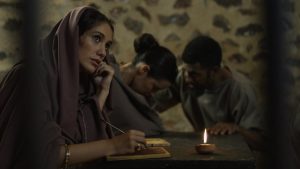
Esther: Queen of Hope (Photo courtesy of International Media Ministries)
IMM uses biblical media to encourage believers around the world including Farsi-speakers in Iran.
Godwin says, “In the next week, we’re going to be releasing a short social media piece that asks the question, what is worth risking your life for? And we are asking this question in the context of Esther’s story. What was Esther willing to risk her life for? For her people.”
Click here to give towards IMM’s Esther: Queen of Hope project.
Pray that IMM’s depiction of Esther in Scripture and the connection to Persian history will point Iranians to Jesus Christ.
Also, Godwin says, “It’s an important time to be praying for Iran and thinking about the believers that are there that are either getting arrested or trying to hold up the community. It’s a fast-growing Christian community, but very highly secret because of the dangers they face.”
Finally, ask God to bring justice to Iran, true peace, and to ultimately change Iranian hearts with the Gospel.
Header photo of Evin Prison in Iran. (Photo courtesy of Wikimedia Commons)
Lebanon (MNN) — Conditions worsen weekly in Lebanon. The World Food Program just released another cash infusion to keep thousands of Lebanon’s most vulnerable families from starving.
Between January and April, the Lebanese pound lost nearly 50 percent of its already-depreciated value. Today, the pound is worth less than one percent of a penny, and inflation is in triple digits.
“There are so many problems, so many crises; so many people knocking on our door every day – Syrian, Iraqi, Palestinian, Lebanese – all [need] help,” Heart for Lebanon’s Tom Atema says.
Even essentials like food and clean water are hard to come by. The prices of food have increased by 115 percent since January.
Along with meeting the needs of today, Heart for Lebanon offers hope for tomorrow.
As they receive aid from Heart for Lebanon, “people regularly say, ‘What’s the answer to all these problems? Where’s this headed?’” Atema says.
“We take those conversations, turn them around, and say, ‘Well, I don’t know what the future holds. But I know Who holds the future, and His name is Jesus.’ More times than not, they’ll say, ‘Who’s Jesus? We have no idea.’”
Join Heart for Lebanon’s prayer team here.
Pray for the many Bible studies underway, reaching over a thousand participants each month. Pray that as people change by knowing and following Jesus, the country will change for the better.
Atema says corruption led to Lebanon’s current state of affairs. “[Politicians] focused on themselves and not on the good of the country or the good of the people,” he explains.
“The only way you’re going to fight corruption is by building a team of value-based people firmly rooted in the Word of God so they can share their faith personally and openly [with] their people group.”
Header image courtesy of Heart for Lebanon.
Iran (MNN) — The death of 22-year-old Kurdish woman Mahsa Amini sparked months of unrest last fall in Iran. Two female reporters faced a Revolutionary Court this week for their coverage of Amini’s case.
Amini quickly became the poster child for how Iranian authorities treat women and minorities. Today, “ethnic minorities are facing the brunt of the [regime’s] control, oppression, and violence,” Transform Iran’s Lana Silk says.
“Now, more than ever, Iranians need to be able to access the Gospel in their heart languages.”
Persians are the largest ethnic group in Iran, comprising roughly 60 percent of the population. Dozens of other ethnic groups speaking various languages make up the remaining 40 percent.
“These minorities need ways to fellowship in safe places and connect with the Gospel in their own languages. That is the future of the digital church,” Silk says.

(Photo courtesy of Transform Iran)
Transform Iran gathers and strengthens Iranian Christians in a digital platform called the Persian Community Church. More than 20,000 believers and seekers meet online each month.
“Right now, our digital services are largely in the Farsi language,” Silk says.
“We have begun creating breakout rooms [and] prayer rooms in the different ethnic languages of Iran.”
Help Transform Iran expand its reach here.
Most importantly, pray. Ask the Lord “to give us wisdom, openings, favor,” Silk requests.
“[Pray for] resources to get these projects off the ground and to reach communities that need to hear the Gospel.”
Header and story images courtesy of Transform Iran.
Palestine (MNN) — Only about 2% of Palestinians are Christian. These Palestinian believers are vastly outnumbered and persecuted among their Muslim neighbors, yet they also face marginalization outside their Palestinian community under occupation.
Despite these challenges, would you believe Palestine is a top missionary-sending country?
The Palestinian Church sends out roughly 3,400 missionaries per one million Christians.
Jack Sara, President of Bethlehem Bible College says, “One of the cool things about Palestinian Christians is they are very proud of their faith and they are willing to share it wherever they are. The situation with occupation and difficulty suffering certainly has made out of them a resilient people, particularly the Christians.”

(Photo courtesy of Brett Zeck/Unsplash)
This commitment to missions reveals the Gospel heart cultivated in the Palestinian Church, and serves as a challenge and encouragement to other believers.
“The global Church would do a good thing to provide a platform for Palestinian Christians to speak, to come and share experiences there [and] some of the lessons learned from living the Gospel in such hard circumstances,” says Sara.
These hard circumstances often qualify Palestinian missionaries to connect with people in other countries where life is difficult — and offer them the Living Hope of Jesus Christ.
Sara says, “We’re living in an atmosphere where you’re, in all circumstances, between a rock and a hard place. So you learn to grow your faith, you learn to depend on the Lord, [and] your faith grows as you get deeper in the Word of God.”
Do you know any Palestinian Christians, especially on the mission field? As the Lord brings the people of Palestine to your mind and heart, please take the time to join them in prayer.
Sara offers these requests: “Pray for the unity of the Palestinian Church. Pray that the Lord will transform more churches in places that are with no Church.
“Pray that really the Church would continue sending people outside…. Even when they are becoming immigrants sometimes, they are missionaries wherever they go. In every circumstance, [pray] that the Lord would keep us mission-minded first.”
Click here to learn more about Bethlehem Bible College.
Header photo courtesy of Bethlehem Bible College.
Syria (MNN) — Syria’s president may be regaining political clout in the Arab world, but it’s not changing much for millions in need today.
Nearly 90 percent of all households in Syria could not meet their basic needs last year. Historic earthquakes in February made things even worse. According to a UN assessment report released earlier this month, Syria needs almost $15 billion to recover following the February earthquakes.
“The needs are humongous. The country is collapsing in terms of the economy; they need to rebuild cities and Christian towns; also, there is a need for trauma healing,” Fadi Sharaiha with MENA Leadership Center says.
Over one million people in northwest Syria need mental health support. Reports say there are only 24 psychologists in the area. MENA Leadership Center equips local Christian leaders to meet the needs of their communities. More about that here.
“I want to take a moment to salute those Christian leaders and Christians still living and surviving in Syria. The current situation is unfortunate,” Sharaiha says.
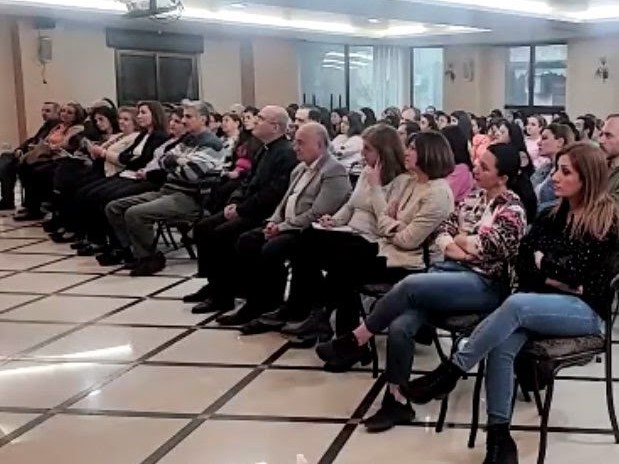
MLC’s training primarily takes place online, but they could use your help to “go offline” in Syria, coordinating in-person meetings and coaching sessions.
(Photo courtesy of MENA Leadership Center)
Along with training Christian leaders in trauma healing, “we’re focusing more on how to support Christian leaders,” he continues.
“We have managed to train in the last few weeks 264 Christian leaders, including 54 different ministries and churches in Syria [and the MENA.]”
MLC’s training primarily takes place online, but they could use your help to “go offline” in Syria, coordinating in-person meetings and coaching sessions. Connect with MLC here to learn more about this opportunity.
“Just being there with them is very important; [to] have a cup of tea and talk about the problems. We’re [hoping to] find funding so we can go on the ground,” Sharaiha says.
A personal connection would help reinforce the training MLC provides online. Syrian Christians are weary after 12 years of war.
“We’re focusing on the heart issues right now. The war made people feel isolated, and [many are] questioning, ‘Why did God allow this to happen?’ They lost their loved ones, friends, and jobs,” Sharaiha says.
Header image is a representative stock photo courtesy of Mahmoud Sulaiman/Unsplash.
Iran (MNN) — While Iran’s hangings and brutal crackdowns on dissenters have taken the spotlight recently, the regime’s oppression extends to the worldwide web.
“They have this huge Revolutionary Guard hacker community taking down Christian sites and checking on people who might be Christian,” Denise Godwin with International Media Ministries says.
Regime hackers met their match earlier this month. However, the challenge did not come from Iranian Christians.
“Somehow, another Islamic organization has hacked their (Revolutionary Guard) websites and defamed them online,” Godwin says.
Hacking groups have increasingly targeted government agencies since protests began last fall. This month’s breach released hundreds of documents and disabled over 200 sites.
Clever internet navigation also allows IMM to bring messages of hope to Iran – the country formerly known as Persia. “We are working towards telling the story of Esther coming to the palace in Persia thousands of years ago,” Godwin says.
Noting the Crown Prince of Iran’s recent visit to Israel, “We feel a sense of urgency at International Media Ministries to be standing alongside [Iranians], helping tell some biblical stories that point back to a time when God used Persia to set Israel free from Babylon,” she adds.

(Graphic courtesy of IMM)
“It’s an important time to pray for Iran.”
Pray for wisdom as IMM finishes work on the Esther project. Pray that its messages will be relevant and compelling to people inside Iran.
Learn more about IMM’s work and find ways to help here.
“Pray for the Body of Christ under persecution in Iran, that God would give them strength and miraculously protect them. You hear amazing stories of people who get let go or have a way to get out,” Godwin says.
Header image courtesy of International Media Ministries.
Iran (MNN) — Over 100 former world leaders just sent a joint letter to current administrations, urging them to get tough on Iran.
The letter — addressed to heads of state in the U.S., Canada, the U.K., and more – condemns Iran’s meddling in Ukraine. It also calls on leaders to support the Iranian people.
Executions spiked in May, making it Iran’s bloodiest month in the last five years. Iran led the world in executions last year with 576 – almost double the previous year – and is currently on pace to meet or exceed that total.
The regime’s violent crackdown comes in response to ongoing unrest. Tensions came to a head last fall after the death of 22-year-old Mahsa Amini in police custody. See our coverage here.
“The attention protesters got from the government as a result of their standing up is so horrific and brutal,” Transform Iran’s Lana Silk says.
“The government was embarrassed on a global scale for months last year, and they are retaliating.”
Even the families of protestors pay a high price. Members of the Basij – volunteers aligned with the Islamic Revolutionary Guard Corps – ransacked the home of Majeed Kazemi, one of three protestors executed last Friday, two days after he was killed.
“They (Basij) beat his two brothers badly in front of his parents. They even beat his parents; they took the brothers away; no one knows where they are,” Silk says.
Protestors were back in the streets of Tehran this week after the government hung Kazim and two others. “These three men were accused of murder [but the] charges were made up. They were forced confessions. We know how it works in Iran,” Silk says.
“What happened to Majid and Saeed and Saleh [is] an example of the control that the government is putting onto the people.”
Connect with Transform Iran here to send tangible help and hope. Pray for God’s protective hedge around Transform Iran and its partners as they share the Good News of Jesus inside Iran.
“The people of Iran feel very isolated and hopeless. When we, as the body of Christ, come around them and say ‘We hear you, we see you’ – that is powerful,” Silk says.
“It’s encouraging and strengthening.”
Header image depicts former U.S. Vice President Mike Pence meeting with European leaders in 2017. Many of these leaders, Pence included, were signatories to the joint letter condemning Iran. (Wikimedia Commons)
Syria (MNN) — On Friday, Syrian President Bashar al-Assad made his first appearance at the Arab League Summit in 12 years. Though indeed a political victory, will this development improve dire conditions on the ground?
Joshua Landis, director of both the Center of Middle East Studies and the Farzaneh Family Center for Iranian and Arabian Gulf Studies at the University of Oklahoma, told Arab News:
“Arab countries will now have to decide how they want to chip away at Western sanctions and defy the West’s efforts to maintain a strict boycott of Syria… and help facilitate the return of trade, the restoration of Syria’s energy sector and the electric grid. Until that happens, Syrians will continue to live in misery and privation.”
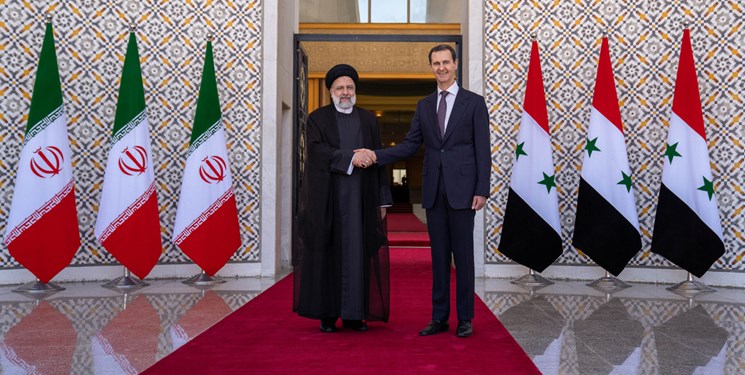
Iranian President Ebrahim Raisi visits Syria’s Bashar al-Assad in Damascus on May 3, 2023.
(Wikimedia Commons)
The Arab League kicked Syria out when the regime’s crackdown on protestors sparked a civil war in 2011. Earlier this month, the league reinstated Syria’s membership – even though the war has not officially ended.
If the war is still going on, what changed?
The shift resulted from “not internal as much as external factors. What changed is, basically, two things: one, Daesh (the Islamic State) is done. [Two,] Iran and Saudi are now on good terms,” Fadi Sharaiha with MENA Leadership Center says.
“This will change the whole environment in the region in terms of [proxy war countries like] Syria, Lebanon, Libya, and Yemen.”
After China brokered peace between Iran and Saudi Arabia, former regional rivals, conflicts in neighboring countries began to shift – Syria included.
“Maybe the proxy war [between Saudi Arabia and Iran] is now coming to an end? I hope, and I think [it is]. It’s a complicated [matter], to say the least,” Sharaiha says.
No easy answers
Even if proxy wars end, challenges remain. “Things in Syria are much calmer, although you still see some of the ISIS fighters here and there. Also, remember that Syria and Turkey are now not on good terms,” Sharaiha says.
Tremendous needs remain as well. Syria’s war has killed over a half-million people, drove millions more into neighboring countries as refugees, and destroyed infrastructure nationwide. The February 6 earthquakes made life even worse in northern Syria.
Discussions at the Arab League Summit involved “not only the (earthquake) rebuild, but also refugees going back to Syria,” Sharaiha says.
“They cannot go back until some kind of rebuild happens, and for the rebuild, they (Syrian authorities) need money.”
MENA Leadership Center equips Syrian believers to do the work of Christ, sharing help and hope with those who need it most. With support from believers like you, MLC provides essential training to help leaders plan, think, and lead more strategically.
“Pray for Christian leaders to lead well and not to give up,” Sharaiha requests.
“Please pray for them to be rooted in Christ; to know that their identity is in Christ, that God is sovereign, and whatever is happening around them, God is still in control.”
Header image depicts a meeting at the 2018 Arab League Summit. (Wikimedia Commons)
Lebanon (MNN) — Survival is increasingly difficult in Lebanon, especially for Syrian refugees. Nine in 10 refugees have fallen into extreme poverty, the United Nations reports, and two-thirds live in slum-like conditions.

“It’s common to see the mother and her children (in Lebanon) without a husband.”
(Photo courtesy of Heart for Lebanon)
Refugee women emerge as the primary overcomers. “It’s common to see the mother and her children (in Lebanon) without a husband,” Camille Melki with Heart for Lebanon says.
“Most men have either been killed or are in Syria protecting whatever’s left of their livelihood. Or, they are fighting with or against the regime.”
Some refugee women, like Frenge, function as single parents. Even though he is physically present, Frenge’s husband may as well be a million miles away.
“The dad is there but, unfortunately, has been so traumatized by the war in Syria that he is not involved in any family responsibilities. He doesn’t pay attention to the children nor tries to earn any income,” Melki says.
Meeting with Heart for Lebanon’s team encouraged Frenge. The God these believers prayed to filled her heart with peace. Through Christ, Frenge found a strength she didn’t know existed.
“Frenge is now a believer. She is devoted in her attendance and participation in Bible studies,” Melki says.
“Discipleship takes time, but we are already seeing a transformation in her behavior, demeanor, [and] confidence in herself and Christ.”
Pray Frenge’s husband will turn to Jesus for healing and salvation. Ask God to help Frenge raise her kids to follow the Lord.
“We need to raise a new generation that hasn’t been indoctrinated by Islamic teaching. It hasn’t been influenced by radicalism, but rather is peaceful,” Melki says.
“Investment in education is highly needed, and it’s our opportunity to transform the communities for the future.”
Header and story images courtesy of Heart for Lebanon.
Iran (MNN) — State-sanctioned killings surge in Iran. Sixteen took place on Thursday alone, bringing the total to at least 112 executions in four weeks, according to The National Council of Resistance of Iran.
Authorities perform most executions inside prison walls. Three men killed on Friday were tortured in an Iranian prison for months because they joined anti-government protests.
“It just shows what they’re made of and who they are,” International Media Ministries President Denise Godwin says of the executions and the Iranian regime.
“[Iranian authorities] told the UN they weren’t going to do as many executions a couple of months ago, and here we are doing executions.”
Iran’s government is one of the most oppressive regimes in the world. It’s illegal to leave Islam, and Christians face never-ending threats. More about that here.
“People imprisoned for Christ say, ‘The most important thing is to pray for strength.’ They don’t want to give in,” Godwin says.
“A lot of the torture seems to involve [oppressors who say] ‘If you deny Christ, we’ll let you go.’”
As its name implies, International Media Ministries uses media to shine the light of Christ into the world’s darkest places. More about that here. In the next two weeks, IMM is launching a social media piece about Esther in Farsi, the national language of Iran.
“We’re hoping this social media piece will be a good tool to begin deeper conversations,” Godwin says.
IMM focused on Esther because “this one woman had to risk her life to stand up for many people,” Godwin continues.
“What is worth standing for? What is worth risking yourself for? The answer is Jesus Christ because He stood up and gave His life for us.”
Pray IMM’s video helps truth seekers learn about God’s Word and Jesus. “Pray that the video is useful, that God is in it, and that it’s able to change hearts and lives through God’s Holy Spirit,” Godwin requests.
Header image is a representative stock photo courtesy of Unsplash.
Iran (MNN) — According to the United Nations, over ten people are executed weekly in Iran. Iran’s regime is trying to suppress the biggest challenge to its authority in decades.
Young people throughout the nation are pushing back against Islamic doctrine.
“The Islamic government doesn’t allow for freedom of ideas or speech. The way they teach the Koran is you memorize it and spout it back. You don’t question or debate it,” International Media Ministries President Denise Godwin says.
IMM uses biblical media to share the Gospel online and give believers hope. More about that here.
“There’s a very fast-growing community of believers in Iran,” Godwin says.
Emergencies in other parts of the world may have pushed Iran out of the spotlight, but “we need to be careful not to imagine everything’s okay now for the young people or the Christians in this part of the world,” Godwin says.
“There is wrestling on Earth as well as in the powers and the principalities of the air right now. It’s so important to pray for the powers of darkness to be broken.”
Ask the Lord to encourage Christians in Iran and surround them with His peace. “Pray [believers] can be strong under pressure to convert or give up their faith,” Godwin requests.
“Most of our Islamic-background friends who’ve changed to become believers are [constantly] saying, ‘Pray that I can be strong.’ We can do these things tangibly as we watch a culture wrestling for its future identity.”
Header image courtesy of IMM.
Lebanon (MNN) — Another emergency surfaces in Lebanon, a nation already plagued by political deadlock, failing infrastructure, and a penniless economy.
Worsening water scarcity is “one more on top of seven or eight crises that are going on in that country,” Heart for Lebanon’s Tom Atema says.
“Lebanon had snow this winter, and they’ve had rain, but not enough to take care of the water deficit.”
The national power grid barely functions; without power, there’s no water supply system. More about that here. Farmers struggle to grow food in fertile southern Lebanon without access to water.
Challenges surge as the growing season begins.
“Specifically, in the Bekaa Valley, irrigation will be limited. They (authorities) might be rationing water to like two days a week to the farmers [and] that will have some impact on the yield per crop,” Atema says.
“When you have [fewer crops], it will drive prices up. And if you have to import it (food), prices are going up. Lebanon already has high prices, so now you’re putting another strain on the people living at or below the poverty line.”

(Photo courtesy Heart for Lebanon)
Ask God to give wisdom and discernment to Heart for Lebanon leaders. They may need to restart old programs if water scarcity worsens further.
“We had, in years past, a water ministry in southern Lebanon. We provided water tanks and water purification systems, but then Lebanon got pretty good at supplying water” to its citizens, eliminating the need for their program, Atema says.
Today, “we’re in investigative mode [to see] if we need to reestablish that part of our ministry. We’ll see what happens in the weeks ahead.”
Heart for Lebanon offers holistic and unconditional physical aid, which builds relationships. These friendships often lead to Gospel opportunities. Connect with Heart for Lebanon here to give a cup of cold water in Jesus’s name.
“In the middle of all this despair, our answer is Jesus because He can change a life. He’ll make your life better because you’ll become better at life,” Atema says.
Header and story images courtesy of Heart for Lebanon.
Middle East (MNN) – In the Middle East, new followers of Jesus often face rejection from their own families. Two brothers were recently forced into hiding after their family learned of their new faith.
“These two brothers came to faith in Jesus about a year ago through dreams that both their parents had about 30 years ago. The parents never came to faith,” says David* with Cry Out Now, a ministry leading Christians in prayer for the Middle East.
The brothers kept their faith secret until a Bible was found in the family’s home. The older brother then received a call to come home immediately because his mother was sick. He drove home as fast as he could. When he arrived, his father, oldest brother, and cousin were waiting for him.
“As soon as he stepped into the house, he realized it was a trap,” says David.
“His dad held up this Bible. And he said, ‘Is this Bible yours?’ And at this moment, he had a decision to make. What should he say? Should he deny Jesus? Or should he acknowledge that it is his Bible?”
Instead of denying Jesus, he said yes and told his family that he had become a Christian. They began screaming at him, calling him offensive names, and then beat him. He tried to fight back but was outnumbered.
Just when he was lying on the floor and had given up hope, his younger brother, who was also a secret Christian, came home.
“Miraculously, [the younger brother] threw these three guys off of him, and screamed at him and said, ‘Get out of the house! Run!” says David.
“So he ran out the door. His shirt was all torn up; his eyes were puffy from being beaten up. He ran out and he ended up escaping.”
The other men tried to look for him, but when they couldn’t find the brother who escaped, they turned to the younger brother. David says, “They put a gun to his head. And they said, ‘You have three days to give us your brother, or we’re going to kill you.’”
After that, the two brothers soon fled together in the middle of the night to another country. Pray that God will continue to protect and provide for the brothers while they remain in hiding from their family.
“Persecution is real and following Jesus often is very hard,” says David. “It’s important for us to pray for these two guys, and to pray in general for the Church of God, our brothers and sisters, all over the world who, just for having a Bible in their possession, can face physical, psychological persecution, and even physical death.”
Join Cry Out Now in prayer for these brothers and other persecuted believers.
*Name changed for security.
Header photo is a representative stock image courtesy of Sara Calado via Unsplash.
Syria (MNN) — Syria has been invited back to the Arab League Summit this week Friday, May 19. It’s a big deal because the last one Syrian President Bashar al-Assad attended was twelve years ago. Syria’s membership with the Arab League was cut off in March 2011 after Assad ordered crackdowns on protestors that spiraled into civil war.
With Syria welcomed back, the question is: Why now?
For one, the earthquake on February 6 that hit Syria and Turkiye opened humanitarian doors into Syria and strengthened international ties.
Also, Samuel* with Redemptive Stories explains, “Iran and Saudi — who had been in proxy wars probably since the beginning of the Arab Spring, if not way before then — are now beginning to normalize their relationship…. Hopefully, that will begin to dissipate some of the fighting that’s happening through them in Yemen and Syria.”
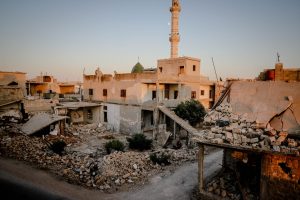
Abandoned buildings in Idlib, Syria.
(Photo courtesy of Ahmed akacha/Pexels)
Between shortages of fuel and food, international sanctions, and skyrocketing inflation, Syria’s economy is severely crippled. The February earthquake that killed over 7,000 Syrians only worsened the economic crisis.
“The hope is that if relationships are normalized — particularly from the Syrian perspective, even the Syrian Christian perspective — then that will begin to dissipate some of the issues that we’re seeing of the hyperinflation,” says Samuel.
“If we can get to the point where the sanctions are reduced, then [Syria] would really be able to import and export more products, which would then allow the country to economically re-stabilize.
“People’s salaries that used to be in local currency that would provide about $200 to $300 a month now provide $10 to $20 a month. Yet, the same goods are now the same price that they would have been previously.”
With over a decade since the civil war began, Syrians are short on hope. Yet, Redemptive Stories is seeing Syrian Christians persist as a Gospel remnant to their Muslim neighbors — providing emergency aid and the hope of Christ.
In fact, the only way Syrians are able to get by month to month is either through family and friends outside the country sending money back in, or “aid relief that is happening by churches and other organizations,” says Samuel.
Pray for Syrian Christians and churches not to grow weary in doing good. Ask God to use even this hour to soften Syrian hearts with the Gospel.
*Psuedonym
Header photo of Syrian President Bashar al-Assad and Iranian President Seyyed Ibrahim Raisi meeting with Supreme Leader of the Islamic Republic of Iran Seyyed Ali Khamenei on May 8, 2022. (Wikimedia Commons)
Lebanon (MNN) – As the Lebanese economic crisis persists, believers struggle to find jobs and provide for their families.
Pierre Houssney with Horizons International says that the Church in Lebanon faces great threats despite God’s evident work. “This is a paradox, really, because it’s true that the community is vibrant. It’s growing and it’s spreading its light, but also it is definitely under fire. It is struggling mostly economically to survive.”
People can’t find employment. Many young, bright workers are leaving to seek jobs in other countries. They go where work is available and send back money to their families as they are able.
Even some with jobs are feeling the need to move to an economy where they can take home a higher wage. Houssney shares that in one family two members each previously made the equivalent of $1000 a month, but now they bring in just $120 a month total. People cannot survive on their wages and so more and more are moving away.
This poses a serious potential threat to the Church. Suddenly church bodies are losing younger Lebanese Christians to other countries.

(Photo by Ben White on Unsplash)
Houssney states that they’ve seen many recent converts in this age demographic, but they are subject to the same economic struggles. “I praise God the church is becoming more and more Muslim background. The church is becoming filled with refugees, but also these refugees are turning around and traveling to the west, traveling to Canada, traveling to Europe. So, there is a turnover rate that is a bit alarming in the church in Lebanon.”
To keep the church healthy, there must be a shift.
Outsourcing Work to Keep the Church Intact
Horizons International is getting creative to help provide for the employment need. “Our organization has been experimenting a lot and expanding a lot in outsourcing, so that we can provide jobs for evangelical Christians. [This means] that they can stay, not only by receiving food portions or medical aid – things that we’re getting to refugees – but also by having a gainful income and having productive jobs either in ministry or things that can support them to stay, so that they can do ministry in their churches.”
Houssney sees this as a broader opportunity for the Church. There are many talented workers in Lebanon who can add value to the global economy, yet they are out of work. Christians in Lebanon don’t solely need emergency funds to get food. They need work. Now is the time to help start new companies or non-profits that will provide jobs for the evangelical community, allowing them to stay and have a future in Lebanon.
Consider the needs at your own place of work. “Do you need a personal assistant? Do you need a bookkeeper? Do you need a graphic designer? Do you need a web designer? Do you need a social media manager?” Houssney asks. “The evangelicals here that don’t have opportunities, they can do those jobs. We’re training them to do those jobs and we’re starting to have a growing number of US partners, and even partners in Europe that are providing us these tasks.”
Pray that God would provide sustainable work for Christians in Lebanon and consider how you might be able to support this need.
Header Photo by Pedro Lima on Unsplash
MENA (MNN) — The International Day for the Unreached (IDU) is Sunday, May 28; a day to raise awareness for one-third of the global population who’ve never heard of Jesus Christ. Most unreached people groups live in the Middle East and North Africa (MENA), and it’s often dangerous to reach the unreached in these countries with the Gospel.
Yet, the Gospel is still going out. Every year, unreached people across the MENA region are being touched by the Good News of God’s Word!
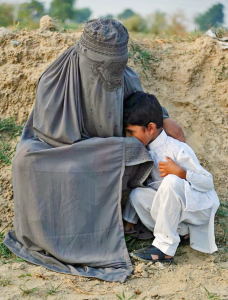
(Photo courtesy of FMI)
We’ve connected with our partners at FMI who work in these hard places. FMI’s Nehemiah explains, “The countries FMI is serving, they’re some of the spiritually darkest places on the face of the earth. We serve in Muslim-dominant nations. We are in Pakistan, Indonesia, Turkiye, [and] we are in Bangladesh.”
Around 70% of Indonesia’s population is unreached with the Gospel; and Pakistan, Bangladesh, and Turkiye are all 99% unreached.
Also, Nehemiah says, “We are serving in Kenya, which is not really a Muslim country. But we are in Kenya because we see that Islam is storming this African nation like anything. We are there because Kenya is on the base of the Horn of Africa so we can reach out to Muslim nations from Kenya.”
To support Gospel initiatives among the unreached, FMI has trained over 100 pastors, church planters, and evangelists in these nations.
Every Christian leader FMI supports is indigenous to the country they are reaching. These ministry workers don’t need visas, they don’t need to learn the language, and they already have a deep understanding of the culture and Gospel context to reach the unreached in their nation.
“It’s very difficult now — nearly impossible — for people travel to these countries. This is a unique and great opportunity for the people who want to serve God in such areas by praying for these indigenous pastors, church planters, [and] evangelists,…and by giving them financial support, which is about $150 for a month to support a pastor.”
Click here to support a Gospel partner with FMI!
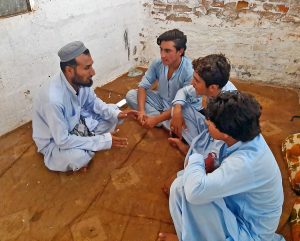
(Photo courtesy of FMI)
“We understand because of the financial realities, $1 goes very far in countries like Pakistan or countries like Bangladesh. When we send $150, that helps an indigenous church planter and disciple maker not worry for the rest of the month so he can perform his ministry in a very effective way.”
As we approach the International Day for the Unreached, Nehemiah asks, “Please pray that God would open the minds and hearts of the unreached to the light of the Gospel. Pray that God sustains the faith of missionaries and indigenous believers through trials, persecution, and pressure they face every day.”
Header photo courtesy of FMI.
Iran/Syria (MNN) — Recent reports show that Iran used earthquake relief flights to secretly deliver weapons and military equipment to Syria — weapons that would be used to attack Israel. Most of the shipments were brought in through Syria’s northern Aleppo airport, according to an Israeli defense official.
Iran and Syria have been scratching each other’s backs for decades. Iranian support for Syria in its conflict with Israel is primarily based on shared political and ideological interests.
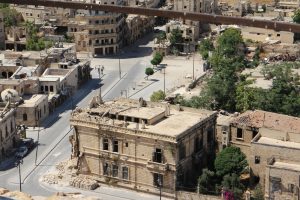
Aleppo, Syria. (Photo courtesy of aladdin hammami/Unsplash)
Syria helps Iran advance Shiite Muslim influence in the region, and Iran provides support to Syria’s president Bashar al-Assad with military and financial aid to help it withstand the ongoing civil war. And they both have Israel as a common enemy.
Iran’s support of the Assad regime is also driven by a desire to counter the influence of its regional rival, Saudi Arabia.
However, Samuel* with Redemptive Stories says, “As Iran is trying to bring in weapons, Saudi may actually support that because they’re trying to target Israel.”
Rather than sitting on defense, Israel proactively responded to this move arming political opponents.
Samuel says, “We’ve seen within maybe the last month, in particular, that there have been Israeli strikes into Syria particularly at targets that they suspect are bringing weapons in from Iran under the guise of earthquake aid.”
Despite significant political players on the stage of conflict in the Middle East, God is still on the throne and working through His Church.
Pray for Christians throughout Iran, Syria, and Israel working to advance the Gospel – the only thing that changes hearts.
“As we look at this situation, we don’t perceive or desire to have any sort of political power to make transformation happen on a scale that large,” says Samuel. “But we do have an amazing power through the Holy Spirit to be able to pray with and pray for our brothers and sisters who are responding.”
Header photo courtesy of Benjamin Rascoe/Unsplash.
*Psuedonym
Iran (MNN) — A new report from Human Rights Watch describes the brutal extent of Iran’s recent crackdown. Security forces killed, tortured, and sexually assaulted children to stop mass protests last fall.
In one case, a 13-year-old boy sustained a broken rib after police beat him, and authorities refused medical care. An Iranian lawyer says 28 children have been charged with crimes punishable by death or amputation.
“I hear a lot of hostility and resentment [towards the government] from the people in Iran,” Transform Iran’s Lana Silk says.
“Despite all that’s happened in the last six months, the government refuses to listen. Not only that, they’re increasing their grip on the population.”
As Iran tries to rule its people by fear, Iranians seek alternatives.

Transform Iran, formerly known as 222 Ministries, posted this on Facebook at the height of nationwide protests in October 2022.
(Graphic courtesy of Transform Iran)
“It is so important to be there, ready with the truth when people are looking for it, and we are presenting the Gospel in constant, accessible ways,” Silk says.
At the same time, “cults are there, ready with false doctrines that pretend to bring people to the truth. But really, they’re taking them off track.”
Help believers shine the light of Jesus boldly in Iran. Pray the Holy Spirit will help people realize that only Jesus can save them.
“When we go witnessing in countries where Iranians are tourists, or even in Iran, we are there together with the Jehovah’s Witnesses, the Mormons, and a whole lot of other alternatives offered to Iranians as an escape,” Silk says.
“That’s why it’s essential that we are present, and we have Bibles in hand, ready to bring people to the only [One who] can save them.”
Header image depicts an impovershed young boy sitting in a cart in Tehran. (Photo courtesy of Fateme Alaie/Unsplash)
Lebanon (MNN) — Authorities in Lebanon are once again forcing Syrian refugees back into Syria.
The Lebanese military raided homes and detained up to 100 refugees throughout the month. Then, armed forces reportedly drove the refugees across the border, handing them over to the Syrian military in batches.
Heart for Lebanon’s Camille Melki says the Syrian refugee population makes an easy scapegoat.
“Lebanese politicians are deceiving the population by convincing them that all their problems are because of the Syrian refugees in our country,” Melki says.
Lebanon is in one of the world’s most severe and prolonged financial crises. In March, Lebanon switched its currency to dollars to save its failed economy.
This “dollarization” set up another barrier for Syrian refugees in Lebanese society.
“Some of the Syrian refugees receive help from UNHCR [and] they receive that (aid) in U.S. dollars. They can then go to the bank and withdraw around $17 to $23 a month from the ATM,” Melki says.
It’s not a significant amount of money, but “[the average] Lebanese has no access to any U.S. banknotes,” he adds, saying that politicians quickly turn this disparity into ammunition.
“The Lebanese authorities and politicians [say], ‘The Syrian refugees are taking your banknotes; they are creating this downfall in the economy.’”
“We don’t differentiate between refugees and the local population. Hungry people are individuals created in God’s own liking (image), not after any political leader in Syria or a political leader in Lebanon.”
(Photo courtesy of Heart for Lebanon)
Pray Syrian refugees will place their faith in God as they experience His love through Heart for Lebanon. Learn how you can support Heart for Lebanon’s work here.
“We don’t draw a line between local and refugee people. Hungry people are individuals created in God’s own liking (image), not after any political leader in Syria or a political leader in Lebanon,” Melki says.
“Heart for Lebanon [balances] what we provide to the refugee population and the local host communities in order to help both move from despair to hope in Christ.”
Header and story images courtesy of Heart for Lebanon.
Iran (MNN) — The regime in Tehran continues its brutal oppression of the Iranian people.
Speaking to university students last week, President Ebrahim Raisi said Iran would unblock social media platforms if the parent companies set up shop in Tehran. Iran’s communications minister now says he wants to keep the restrictions on foreign social media in place.
Iranian lawmakers tightened the country’s internet censorship legislation last year amid widespread civil unrest.
“Right now, the authorities are extremely controlling any kind of communication in or out of Iran,” Transform Iran’s Lana Silk says.
“It’s harder for people to connect with us on social media or using any kind of internet-based means, even phone calls.”
But difficult is not impossible. Most Iranians use VPNs or other workarounds to bypass government restrictions. This opens the door for digital evangelism and discipleship.
“On a Sunday, we have a fully interactive Zoom meeting where hundreds of devices will join. It doesn’t replace church; we’re not saying, ‘Nobody should gather together in person; let’s just do it all on Zoom.’ It is an essential tool for this climate, and it’s a great partner tool for physical churches,” Silk says.
“Iranians are coming to the Lord in the thousands. We need to find creative ways [to] speak to them, nurture them, ensure they’re growing with biblical theology so that heresy doesn’t creep into the Church.”
Transform Iran began its digital church community in 2018. Learn more here.

(Graphic courtesy of Transform Iran)
“The digital church started years before COVID as a response to a need. We began collecting isolated Christians together using Zoom and building community with them,” Silk says.
“They needed nurturing, encouragement, and strengthening; some [were] in isolated locations in Iran, unable to connect with others.”
Pray for wisdom as Transform Iran grows its digital church ministry. Pray for opportunities and resources to develop digital church communities in Iran’s minority language groups.
Spread the word. Use the links at the bottom of this page to share this report on your social media platforms.
“The people of Iran – now more than ever – need the global Christian community to be their voice and intercede on their behalf,” Silk says.
Header image is a representative stock photo courtesy of Pixabay.
Lebanon (MNN) — Riots and protests broke out last week in Lebanon when parliament announced they are postponing municipal elections that were slated for next month, citing lack of government funds for polling.
This is the second time Lebanon’s municipal elections have been postponed. They were originally supposed to take place in May 2022 but were delayed one year.
Municipal and parliamentary elections are the only elections in Lebanon that allow for citizens to vote directly.
Additionally, Lebanon is approaching six months now without a president, and one year without a fully functioning government. Three-quarters of the population lives in poverty.

(Photo courtesy of Heart for Lebanon)
As Camille Melki with Heart for Lebanon puts it, the Lebanese have been “holding our breath.” With the elections postponed again, disappointment and anger has taken hold.
Lebanon has shown over and over again that the people cannot rely on politicians for solutions.
Melki explains, “The municipalities are the smallest sized government that provides daily services to the citizens of that village, town, and city…. Those municipalities are out of cash, out of resources, and they can’t even pay their own staff salaries. So their basic needs and basic services are lacking all throughout the country of Lebanon.”
In this time of political uncertainty, the Lebanese Church is pointing people to a better hope in Christ.
“The citizens of Lebanon are seeking help predominantly from non-government agencies and from places of worship, which put the Church at the forefront addressing basic needs, immediate needs of survival — whether it’s food, education, or medicine. The Church is playing a significant role to be the hands and feet of Jesus today more than it has ever done so.”
Melki says, “The Church does all that with Christ’s love without anything expected in return. Your politicians might love and care on you, but basically they’re loving and caring on their position. They want a return on their daily investment.

Aid distribution
(Photo courtesy of Heart for Lebanon)
“So when people see the Church loving freely and unconditionally and understanding that is in the ethos of our Christian faith, then it gives us the opportunity to answer the next question: ‘Who is Jesus? What does the Bible teach us?’”
Heart for Lebanon works with a network of churches in Lebanon of various sizes and denominations. However, like most organizations in the country, they have limited resources.
You can come alongside Heart for Lebanon with financial support so they can provide food packages, blankets, medical supplies, and even education scholarships to struggling Lebanese families!
Visit HeartforLebanon.org.
Also, Melki asks, “Pray for us that we would persevere and continue pressing on, knowing that our God is a God of strength, empowerment, encouragement, perseverance, and resources. We cannot give up. We can be motivated and encouraged by the greater Body of Christ that is praying for us.”
Header photo of Lebanon flag, courtesy of Charbel Karam/Unsplash.
Syria (MNN) — Syria is a prime example of a compounded crisis — 12 years of civil war followed by economic collapse and a food shortage. Then, the 7.8-magnitude earthquake just two months ago killed over 7,000 Syrians. (Combined with Turkiye, the total quake death toll was over 50,000.)
The barrage of devastating news out of Syria can leave viewers and responders with a dizzying sense of compassion fatigue.

(Photo courtesy of Adrian Swancar/Unsplash)
Compassion fatigue can be defined as “the feeling that you have no more empathy left to give.”
Samuel with Redemptive Stories says, “It’s a coping mechanism that we have in the West. We’d like to be able to disconnect from some of those things, and that’s a natural human response, because we can only take in so much pain. So to be able to engage with this, it requires effort. It requires intentionality. It requires engagement.”
An antidote to compassion fatigue is meaningful engagement in the story with eyes to see how God is moving.
There is some good news coming out of Syria as Samuel describes how God has used Syrian believers as His ambassadors to quake survivors.
“The Church responded with compassion. They responded with togetherness across denominational walls, and an ecumenical spirit that really showed what the Church is supposed to be in times of crisis,” says Samuel.
“They gave of their own resources before they even had resources from the outside, which, again, if anyone who knows the understanding of the realities of Syria, not many people have much right now.”
Praise God for activating His Church in Syria! It’s already producing a harvest of righteousness.
Samuel says, “There’s continuing to be an openness, particularly among Muslims and people of different faiths, as they see the church respond.”

(Photo courtesy of Horizons International)
We’ll end on a good story Samuel shares from Syria:
“There was a young lady, she’s 17-years-old and she was in the earthquake and her parents were in the other room. She got down on her knees as soon as everything started shaking because she knew she couldn’t get out. As she got down on her knees, she began to pray.
“The whole building collapsed. Her parents were able to get out with her younger brother because they were in the front and they got down the stairs, but the top roof collapsed onto her room.
“As she says in the story, there was this man dressed in white that actually caught the beam and placed it on the ground. She was actually able to be protected under this building’s space. As she was sitting there praying, she saw this man standing there.
“She’s a believer and she understood Who this was that had protected her. But she wanted to make sure everyone else knew, and so she was beginning to tell this story to all of her friends — Muslim and Christian — about this man all dressed in white who protected her and saved her. I’m sure that God is going to do some amazing things in that young lady’s life.”
Header photo courtesy of Ahmed Akacha/Pexels.
Syria (MNN) — It’s been just over two months since earthquakes devastated Syria and Turkey on February 6. In Syria, around 7,200 people were killed. People are still reeling, yet the crisis doesn’t top news reels anymore.
Samuel* with Redemptive Stories encourages readers to step into Syrians’ shoes. If the barrage of post-earthquake updates is fostering compassion fatigue, it’s not hard to imagine what Syrians must feel.
“You’ve heard about the big two earthquakes that happened on the same day on February 6, but there was another earthquake that occurred two weeks later on February 20 that had a significant effect,” Samuel says. “Everyone who was finally starting to get back to their homes once again had to run fleeing through the streets.
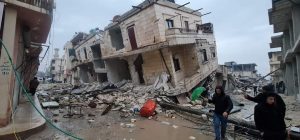
(Photo courtesy of Horizons International)
“Excessive fear is continually part of their lives. There’s been over 60,000 aftershocks that have occurred…. So the level of fear that people are living under, particularly children, is staggering.”
For Syrians, fatigue runs deep with fear. It’s been 12 years since the civil war began, followed by an economic crisis, COVID, food shortages, displacement, sanctions, and the list goes on.
It’s a problem too big for one person or even one ministry to solve. But nothing is too big for the Lord.
Your compassion and prayers are making a difference.
Pray the peace of Christ over all of Syria as people seek healing and hope.
Samuel asks, “Pray against the spirit of fear that exists currently through Syria, through Turkey, and through Lebanon. I’ve even heard today someone say that it’s a spirit [or] principality that is across the Middle East.
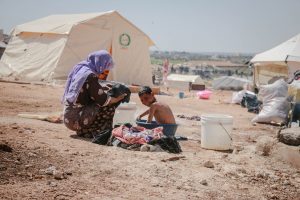
(Photo courtesy of Ahmed Akacha/Pexels)
“Secondly, the deepest prayer is that God would continue to provide for the needs of suffering people — 85-90% of the people that live in Syria continue to subsist on the relief aid packages because of the sanctions [and] the economic crisis.
“[Pray] that there would be healthy churches, healthy communities of believers that would continue to share as they are caring, and that they would respond well.”
Redemptive Stories supports Christian ministry efforts among Syrians. Amidst the rubble and devastation of war, they are seeing miraculous Gospel fruits.
“God is already moving,” says Samuel. “He’s going to keep moving and He’s going to keep changing people’s hearts and bringing them to Himself.”
Check back tomorrow as we talk about another antidote to compassion fatigue for Syria. Find your place in the story!
*Psuedonym
Header photo of boy sitting in a broken car in Syria, courtesy of Ahmed akacha/Pexels.
Lebanon (MNN) — Tensions between Israel and Lebanon reached an all-time high earlier this month. “We had some shooting going from Lebanon and coming into Lebanon,” Nuna with Triumphant Mercy Lebanon says.
“People [were] killed in Israel and wounded here in Lebanon.”
Fear drove people to desperate measures. “People are trying to leave Lebanon like never before,” she says.
“You can see hundreds of people in front of any embassy [trying] to get out of Lebanon.”
War is the last thing Lebanon needs. It’s already a failed state. “The government of Lebanon doesn’t want the war, which is a good thing. But, at the same time, we cannot stop Hezbollah,” Nuna says.
“It’s Hezbollah who wants war; Iran wants war.”
Since Israel and Lebanon last exchanged rocket fire, pressure has lowered, but tensions simmer just below the surface. Believers in Lebanon are asking the Lord to intervene.
“We’ll stay at the prayer house and just plead with heaven. On Thursday night, the 20th of April, we start at 6 pm and go on [praying] night and day till Saturday evening,” Nuna says.
“I’m reminded of the Israelites when they were in bondage in Egypt. They cried to the Lord, and He heard their cries. We want to see this in Lebanon.”
Christians in Jordan and Iraq are praying, too. Will you join them? “We’re not an island; we have to tackle issues on a regional basis; we have to pray regionally,” Nuna says.
“It’s our unity that will make a difference. The prayer of unity in one voice, one heart, just asking for deliverance.”
Ask the Lord to move according to His will. “We’re trying to have a large invitation of people to join [in prayer] from different places, different denominations, so we can see a national cry arising,” Nuna says.
Header image courtesy of LSESD.
Syria (MNN) — Researchers say the twin earthquakes that rocked Türkiye and Syria two months ago were likely the most powerful to ever occur on land anywhere in the world.
Today, people who survived the earthquakes struggle to stay alive in northwest Syria. Of the region’s 4.5 million people, 4.1 million need humanitarian aid to survive.
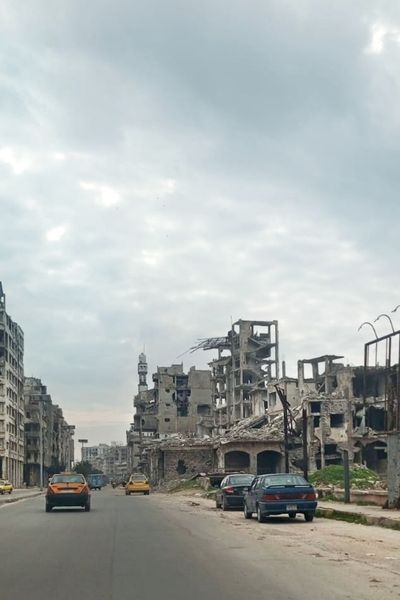
Although most church buildings in Aleppo are damaged, the congregations are uniting to help anyone in need.
(Photo, caption courtesy of TWR)
“The situation is quite bad regarding basic needs,” Trans World Radio’s Alenka Stephenson says.
“They (Syrians) were already [in] massive distress before the earthquake.”
Thankfully, the February earthquakes did not affect TWR’s team in Syria. They’re helping earthquake survivors through local church partners.
“We are not a humanitarian organization, but we have trusted local churches doing a lot of humanitarian work,” Stephenson says.
The team only gets one hour of electricity every seven to eight hours, but they’re determined to share the hope of Christ.
“It’s a massive undertaking, but they’re dedicated and motivated to keep producing programs,” Stephenson says.
“Hope for Syria started some years ago as a response to the war, but they have changed some content to address the current needs [from] the earthquake. They’re recording programming to help [people] deal with trauma and support them in healing.”
Partner with TWR in bringing help for today and hope for tomorrow to people in northern Syria.
“We have a crisis fund for Türkiye and Syria that is helping with the production of trauma healing programs [and] providing some humanitarian aid,” Stephenson says.
Many people in earthquake-stricken areas of Syria are homeless and lack basic needs. TWR strives to bring hope to the hopeless. (Photo, caption courtesy of TWR)
Iran (MNN) — We often talk about the paradox of persecution: When the Church experiences oppression, growth follows.
But is that always the case? Are there products of persecution that pose spiritual threats to the persecuted Church?
The Iranian Church is one of the fastest-growing Christian populations in the world. In 1979, there were only around 500 known Christians in Iran. Today, the Iranian Christian population has grown to between 800,000 and one million people.
(Photo courtesy of Mohammad Mardani via Unsplash)
However, the people of Iran do not have basic freedom of religion. Islam is the state religion, and Sharia law is the rule of the land. Around 98% of the population is Muslim. It is illegal for Muslims to convert to Christianity, and house church gatherings are banned.
The rapid growth of the Iranian Church amidst severe oppression often leads to discussion of the merits of persecution for the Church.
Joe Willey with SAT-7 says, “One [question] we have spoken about was, ‘Does persecution make a church grow? And if so, should we be praying for persecution? Should we say that persecution is the best thing for the Church?’”
“Often, we can say that with a glib response, and we can say it having a very romanticized notion of what persecution is or would look like. And often, that is said by people who are not being persecuted.”
SAT-7 PARS is a channel of SAT-7 broadcasting Gospel hope via satellite television to the Persian world. Most Iranians speak Farsi (a Persian dialect) and can access SAT-7 PARS on the unrestricted satellite broadcasts.
Willey says a SAT-7 PARS program called New Identity recently featured special guest Mansour Borji, the advocacy director of London-based religious freedom organization Article 18.

(Photo courtesy of Jeremy Jap via Unsplash)
On the program, Borji addressed the questions: “Is persecution good for the Church in Iran? If there is greater freedom in the country, will the Church shrink?”
Willey shares, “What [Borji] says is that ‘by God’s grace, the underground Church has grown despite persecution.’ I found that to be really interesting because coming with the premise that, yes, persecution is good for the Church, he brought it right back to ‘by God’s grace,’ ‘despite the persecution.’”
Willey goes on to explain, “When churches in Iran were closed, the fellowships and people that were attending a Christian church, they spread back to villages, they spread to remote areas in the country that the Church couldn’t reach or didn’t have a building.
“And [Borji] said something again, that’s really interesting…. He said that unity is one of the fruits of persecution, which the Church has seen in Iran. But he also says that the persistence of extreme persecution can halt the progress of the Church.”
Willey lays out three things that persistent, extreme persecution could potentially lead to:
- Disunity
- Mistrust
- False Teaching
(Photo courtesy of Amu via Unsplash)
These dangerous products of persecution can eventually choke out a faithful, biblical Church population rather than experiencing growth.
“When there’s no access to biblical teaching, people will adopt their own ideas,” Willey says.
That’s why “SAT-7 PARS and the theological teaching programs are really invaluable for isolated believers in countries like Iran.”
Willey shares, “I’m happy with what SAT-7 does to help disciple and to not leave a Church that, in some ways, is completely alone. We don’t leave them alone. We help them. We aid them with programs.”
Pray for the Iranian Church to continue to grow despite persecution. Ask the Lord to raise up wise, biblical leaders and protect Iranian believers from disunity, mistrust, and false teachings.
Finally, ask the Holy Spirit to strengthen and comfort Iranian Christians who are imprisoned for faithful Gospel ministry.
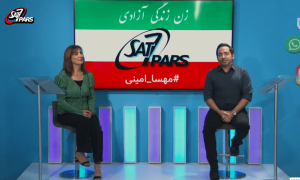
(Photo courtesy of SAT-7 PARS)
You can learn more about SAT-7’s Gospel broadcast ministry here.
Header photo courtesy of Lucas Sankey via Unsplash.
Iran (MNN) — Iran killed nearly 600 people in 2022, human rights watchdogs report. This is the highest number of hangings since 2015 and 75 percent more than 2021’s total.
Human rights groups say executions could be even higher this year due to ongoing protests.
Death certificates released online show the extent of state-sanctioned violence. “The action that the government has taken against protesters has been absolutely brutal,” Lana Silk with Transform Iran says.
“They are torturing [protestors] in the most horrific way: sexually, mentally, [and] physically. I have read reports of people who were blindfolded, disoriented, and taken to clandestine torture centers because there is no room now in the general penal system,” she continues.
“Kurdish girls are being raped, sent home, and told, ‘Go and have our babies now.’ This is the kind of thing you watch in terrifying movies, and it’s happening right now in Iran.”
Today’s protest movement began in late September following the death of 22-year-old Mahsa Amini in police custody. See our full coverage here.
“It’s so difficult to understand the pain and suffering the people of Iran are now enduring [because] they have stood up and said, ‘Enough is enough,’” Silk says.

(Photo courtesy of Transform Iran)
Iran is one of the world’s most difficult places to follow Christ, yet “people are prepared to risk much to call and connect with us because they are looking for hope in this darkness. And they’re finding it in Jesus,” Silk says.
Learn more about Transform Iran’s work here and discover ways to help. Pray that Christians in Iran will find strength and endurance in the Lord.
“The Word of God tells us that the darkness cannot put out the light, and right now, that is our hope,” Silk says.
“We’re sharing the Gospel through a range of media, internet, TV, [and] radio. We have the digital church there to welcome [Iranians]. It’s safe for them; they can stay anonymous if needed.”
Header image is a representative stock photo courtesy of Ollie Barker-Jones/Unsplash.
Lebanon (MNN) — The refugee crisis in Lebanon still hasn’t gone away, and now, it’s affecting a new generation of children born as refugees. Pierre Houssney of Horizons International says that ten years ago, there were some 200,000 refugee children in Lebanon who didn’t have a school. Now, those same children have grown up to become parents in their own right.
“We’re having an intergenerational educational breakdown,” Houssney says. “It’s one of the main issues that lead to the extremism of a population. When kids go uneducated, they become… easy targets for terrorist extremist groups to recruit.”
How does someone go from missing out on classes to joining an extremist group?
“If you fill a child’s head with information and teach them to read and write, they can be educated, and they’ll be driven toward a career. But if you don’t, then anybody who comes along and puts… a machine gun to their head and says ‘let’s go,’ then they’re going to be compelled by that because they don’t have anything else compelling in their life.”
In other words, their options are limited. Without an education, there are very few jobs they can get – and the fact that they’re refugees makes things even worse. As Houssney puts it, they’re “stateless kids.” And when they can’t get jobs, they can’t provide for their families, which makes it harder for their families to get jobs, and so the crisis compounds. This makes young refugees easy targets for fundamentalism and exploitation.
What’s the solution? While local Lebanese schools do provide some education, Syrian refugee children can only join for the day starting in the afternoon, meaning they only get a half day of school while locals get the entire day. But even then, the teachers are often underqualified and not motivated to help. “It’s kind of like they bring in some babysitters, and they do it for a little bit of money,” Houssney says.
When those kids come to Horizons International schools, “They need a lot of catch-up. We’ve had 12-year-olds who had never learned how to cut paper with scissors. We had to start first-grade classes that were for mixed ages between eight and 12 years old.”
What help Horizons can give is limited by the organization’s resources. Their Beirut facility is too small to meet the needs of that area. Horizons would like to take over failed or bankrupt schools around the country and revitalize them, but financial resources are scarce.
These schools represent a chance for kids to build a new future – not only in their earthly lives, but in their eternal ones. “We really regard it as a discipleship program first and foremost,” Houssney says. “We teach not only all the school subjects, but we teach the Bible… that is really what makes this a spiritual, especially impactful endeavor.”
Want to help? Ask God how He wants to use you. Pray specifically for children in Lebanon to find Him as they look for purpose and fulfillment. Consider giving to help support Horizons and the schools the organization runs.
Learn more about Horizons International here.
Header photo courtesy of Unsplash.
Israel (MNN) — In 2018, Israeli Prime Minister Benjamin Netanyahu told a group of believers in Brazil, “If you are a Christian in the Middle East, there’s only one place where you are safe… the State of Israel.”
That claim does not hold true today, especially for Christians from a Jewish background known as Messianic Jews. “They’re not being killed like Muslim-background believers are in Muslim countries, but they are being pressured,” Uncharted Ministries’ Tom Doyle says.
“Jewish[-background] believers were showing us videos of ultra-Orthodox [Jews] breaking up meetings, blowing whistles in their faces, screaming at them.”
Only two percent of Israel’s eight million people identify as Christian, and Messianic Jews comprise an even smaller community.
Israeli law protects religious minorities, but “it is that spirit from the first century that Jesus and the apostles faced – you cannot be Jewish and believe in Jesus,” Doyle says.
“You can be an atheist Jew or a secular Jew. But if you are a Jew that embraces Jesus as Messiah, you’re no longer a Jew.”
Ask the Lord to strengthen and encourage believers from Jewish backgrounds in Israel. Attacks targeting Christians have increased since the new right-wing government came to power earlier this year. Victims say police do little to catch or punish the attackers.
“In some political circles or educational circles, when it’s found out they (believers) are a Messianic Jew, they become a ‘persona non grata’ and lose everything,” Doyle says.
“We (Christians) know Jesus as Yeshua. If you talk to a Jewish Orthodox and say, ‘Have you heard of Yeshua?’ they probably will say no. They hear the term ‘Yeshu,’ which is an acrostic for, ‘may his name be blotted out forever.’”
Uncharted Ministries raises awareness of the Gospel needs among today’s Jewish communities in Israel and beyond. Learn more here and find your place in the story!
Header image is a representative stock photo courtesy of Jonny Gios/Unsplash.
Iran (MNN) — Officials set up surveillance cameras nationwide to enforce the new hijab law in Iran. Authorities also use traffic cameras to spot women and girls removing their hijabs or protesting in the streets.
In the past six months, thousands of women have set fire to their headscarves to protest Islamic laws. Todd Nettleton with The Voice of the Martyrs USA says the anti-hijab movement is tied to a broader push for change in Iran.
“You see people saying, ‘We want secularism,’ or we want a government separate from Islam,” Nettleton says.
“In many cases, they have rejected Islam itself. In other cases, they say, ‘Yes, I still want to be a Muslim. But I want my government to be secular; I want it to be separate from any religion.’”
Before the Islamic Revolution in 1979, Iranian women could vote and wear Western clothing. Religious minorities, like Christians, were protected by law. Everything changed when Islamic hardliners took over.
“Since 1979, their (Iranians’) government has told them, ‘We are running our country according to Islamic principles; we’re going to do everything according to what the Quran teaches us,’” Nettleton says.
“This government, which is doing everything according to Islamic principles, is driving people to look for something else. Jesus is ‘something else,’ something separate from Islam, so many Iranians are finding Him.”

To help Iranian believers reach loved ones and neighbors for Christ. VOM USA is sending 300,000 Bibles into Iran this month.
(Graphic courtesy of VOM USA)
To help Iranian believers reach loved ones and neighbors for Christ. VOM USA is sending 300,000 Bibles into Iran this month.
Help get God’s Word into the hands of Iranian Christians.
“This Bible campaign is a significant effort to get God’s Word into Iran,” Nettleton says.
Many Iranian believers have “Muslim friends and family members who are sick of Islam, are sick of what is happening in their country, and want something else,” he continues.
When equipped with Scripture, Iranian believers can “hand those (frustrated) people a Bible and say, ‘Hey, why don’t you read this? This is a different path.’”
Header image courtesy of Heart4Iran.
Lebanon (MNN) — The pile-on of crisis after crisis in Lebanon is leading to accumulated emotional trauma. Lebanon was recently ranked as the angriest country in the world, and a hopeless fatalism pervades the country.
Triumphant Mercy Lebanon is a local Christian ministry with a finger on the population’s racing pulse.
Nuna with Triumphant Mercy explains, “With the earthquake and the fear and, of course, you know about the economic collapse, people are living in constant fear – of not being able to live tomorrow, of an impending death or something that’s going to happen, a catastrophe. They really feel that, especially the young people.
“We as an older generation, we lived through war, we lived through many things, so we’re more resilient. We kind of say, ‘Okay, I’ve been through a lot of hot issues in the past. I’ve been under bombs and under explosions and under all this, and I lived. So now, this is a new crisis and I’ll live.’ But the younger generation, they’re not equipped for that. I feel the depression, I feel the anxiety, I feel the fear.”
(Photo courtesy of Triumphant Mercy Lebanon)
Triumphant Mercy already works with individuals and small groups in Lebanon to provide biblical trauma support. Yet, they want to help more people with a wider reach, so the idea of a trauma healing podcast was born.
Nuna says, “The trauma healing podcast would unlock people’s minds, maybe will open eyes, maybe release the tension, talk about it. When we talk about it in a podcast, it’s released is a taboo. Then [people think], ‘If they’re talking about it, I can talk about it.’”
On the podcast, they will discuss various traumas and acknowledge these very real griefs. Nuna emphasizes they will also address that hope for trauma is ultimately found in the Gospel.
“What is our solution? Where do we find peace? I cannot give peace to anyone, I cannot do anything except if Jesus is in the equation,” says Nuna. “We don’t have any other solution. Maybe in the world, there are techniques of some kind of meditation or focusing on something, but we don’t have that. What we have is Jesus.”
Pray for the Lebanese to be filled with Christ’s living hope!
Click here to learn more about Triumphant Mercy.
Header photo courtesy of Triumphant Mercy Lebanon.
Iran (MNN) — Protestors gathered recently in Tehran to remember an activist killed by security forces. Then, authorities launched chemical attacks on several all-girl schools in response.
This wasn’t the first time. Repeated poisonings alarm human rights groups; how far will Iran’s leaders go for revenge? Mayra* with Heart4Iran says the Iranian people won’t let anything stop them.
“It is very important to understand that this is a revolution. This is a young generation revolution against an oppressive regime that has taken our country hostage for 44 years,” she explains.
“It is not only about wearing or not wearing headscarves. It is not only about the economy. It is about the entire system.”
Nationwide protests gained global attention last September following the death of Mahsa Amini in police custody. Today, “the revolution is in its new phase; people are confronting the regime by civil disobedience,” Mayra says.
Despite a harsh new hijab law and surveillance threats, “women are taking their scarves off,” she continues.
“When women are attacked by the regime agents and plain clothes [agents], men [defend] them. Men are intervening and supporting the women.”
Heart4Iran’s trauma team offers the hope and healing of Christ to brokenhearted people throughout Iran. Heart4Iran also empowers women to reach their God-given potential. Learn how you can help here.
Most importantly, pray. “Pray for a free Iran,” Mayra requests.
“Pray that people can take their country back so they can practice all kinds of freedoms: freedom of speech, religion, freedom of belief.”
*Name withheld for security purposes
Header image courtesy of Global Catalytic Ministries.
Israel (MNN) — Conflict soars today in Israel as the national defense trades rocket fire with Hamas terrorists.
Islamic militants in Gaza and Lebanon fired rockets into Israel yesterday following an Israeli airstrike and arrests on Wednesday. The largest volley of rockets from Lebanon since 2006 injured three people and damaged several buildings in northern Israel.
Today, known to believers as Good Friday, overlaps Passover and day 16 of Ramadan. “The three faiths that have an attachment to Jerusalem are in conflict right now, and we’re seeing it played out on the news,” Uncharted Ministries co-founder Tom Doyle says.
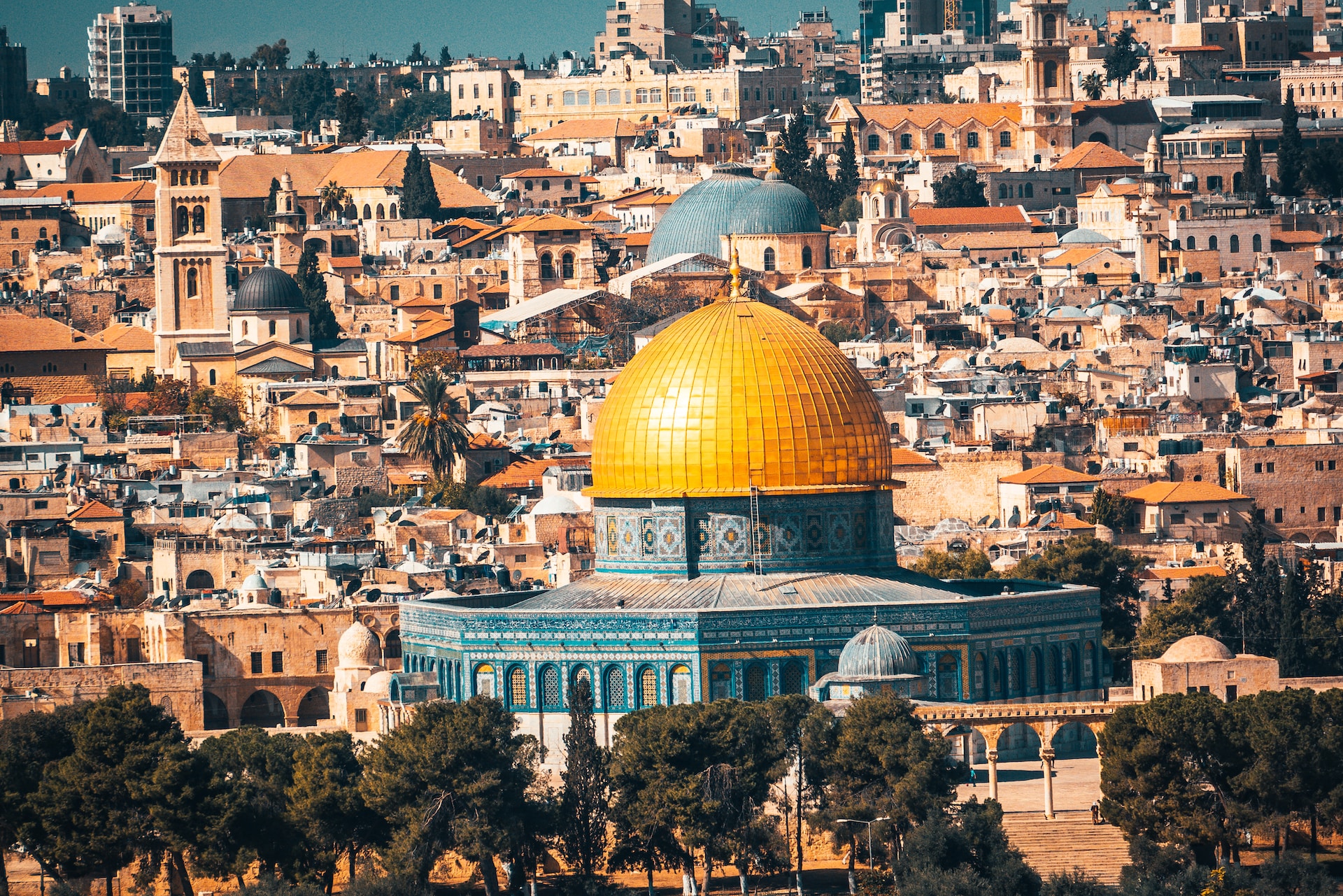
(Photo courtesy of Raimond Klavins/Unsplash)
Hundreds of Palestinians armed with clubs and fireworks barricaded themselves in Jerusalem’s Al-Aqsa Mosque as Passover began. Israeli police detained 350 agitators.
“Threats from surrounding Muslim nations are given to the Palestinians saying, ‘The Jews are going to take over the Temple Mount, they’re going to kick everybody out of the Al-Aqsa Mosque,’” Doyle explains.
“That’s the last thing that Israel wants to do. They’re surrounded by Muslim nations. They don’t want to bring problems on themselves.”
At the same time, “the believers in the midst of this are in an impossible situation,” Doyle says.
“Orthodox Jews detest Christians and don’t want them sharing the Gospel. Muslim background believers in Gaza [are] already in hiding because they know what’s going to happen during this week.”
The best thing you can do right now? Pray. “Pray for believers on both sides, Jews and those who have come from a Muslim background. It’s costly to live there (in Israel) during this time of year,” Doyle says.
“The physical war on the ground is a mere reflection of the spiritual war raging in the heavens.”
Header image is a representative stock photo courtesy of Taylor Brandon/Unsplash.
Israel (MNN) — A recent push for anti-conversion legislation in Israel met resistance from the United States.
“An anti-conversion law [was] proposed in the Knesset by two ultra-Orthodox Jewish members who are also part of the government,” Todd Nettleton with The Voice of the Martyrs USA says.
If passed, the law would have “put someone in prison for a year if they encourage someone to convert, to change their religion. That [could include] sending them an email or putting something online,” Nettleton continues.
“If the person who converts is under 18, the prison term is two years.”
Pro-Israel evangelical Christians in the U.S. provide strong and vocal support for Israeli Prime Minister Benjamin Netanyahu. When evangelical leaders pressured Netanyahu to reject the bill, he obliged, tweeting, “We will not advance any law against the Christian community.”
A few days later, one of the bill’s authors said he would withdraw it from consideration. However, the issue could quickly resurface. “These two guys have proposed it (the anti-conversion law) several times; this is not necessarily something new,” Nettleton says.
“In the past, this law has never gotten any traction. We’ll see if it’s different [now] because they (the authors) are part of the governing coalition.”
Ask the Lord to strengthen and encourage believers from Jewish backgrounds in Israel. Learn how you can help meet tangible needs through VOM USA.
“Ultra-Orthodox Jewish groups are very much anti-missionary and doing some things to put pressure on Gospel workers,” Nettleton says.
Header image is a representative stock photo courtesy of Maayan Nemanov/Unsplash.
MENA (MNN) — It’s no secret that in Arab societies, women are often devalued and even abused. Wives are shamed and beaten. Daughters are pulled out of school to work at home while sons get a comprehensive education.
That’s why SAT-7, a satellite television broadcast ministry to the Middle East and North Africa (MENA), is infusing biblical dignity and hope in Arab women with the Gospel.
Joe Willey with SAT-7 explains, “Within families in those cultures, women truly are a possession. They may be viewed as chattel.
“Women need to understand in these cultures about the dignity that they deserve because they’re made in the image of God. So we have a new TV series that is a five-year program.”

(Photo courtesy of SAT-7)
The new SAT-7 series is called Today Not Tomorrow. The show travels around to different communities in Egypt interviewing women and girls and sharing their stories with discussion of Scripture. Their stories reflect the reality of many Arab women across the MENA region.
“The point of this program is to use Biblical understanding to show women in the Arab world that they are not less, that they are made in the image of God [and] have the same intrinsic value as men in that society,” says Willey.
“It sounds perhaps to a Western listener something that’s obvious, but it truly isn’t in all cultures. In the Middle East and North Africa, that is an area where the rights of women to be treated as a human being are really not being addressed.”
Pray for Arab women watching SAT-7 to find their worth in Jesus Christ.
“We often say at SAT-7 that prayer is really what we need most, especially in an area of the world where 97% of people are not Christians. They do not have a biblical worldview,” says Willey. “So the prayers that go before the broadcast, the prayers that go before the social media programs, the prayers that go before the Church — the underground Church in some of these countries — they really need to be there as a foundation. Then the rest of the work is done because of those prayers.”
Learn more about SAT-7’s ministry at sat7usa.org.
Header photo courtesy of SAT-7.
Middle East (MNN) — Six United States troops were diagnosed with traumatic brain injuries due to a recent attack in Syria. Fighters backed by Iran killed one U.S. contractor when they targeted a coalition military base on March 23.
“The Islamic Republic doesn’t like the United States’ presence in the Middle East. They will do everything in their power to force them to leave,” Heart4Iran’s Mayra* says.
“These attacks and conflicts are an example of their intention.”
Iran remains one of the world’s most dangerous places to follow Christ. More about that here. Religious minorities in Iran stand to lose a powerful ally and advocate as the United States loses its voice in the region.
Religious freedom, at least in theory, influences U.S. foreign policy. When the U.S. loses influence in a place like the Middle East, “the evils [have] more influence; the evils [become] more powerful,” Mayra says.
“Look at China’s presence in the Middle East. Look at the role they (China) played in Iran and Saudi’s new ties and relations. That doesn’t serve religious freedom or any freedom.”
Ask the Lord to protect and sustain persecuted Christians in Iran.
“The more weakness the regime sees from [the] Biden administration is a signal and gives them more confidence and power to oppress their people,” Mayra says.
“Look at the past six months. Since the new wave of the revolution sparked in September, [the] Biden administration has not taken a firmer stand against the regime. It’s been only empty words.”
It costs only $7 to translate, print, package, and deliver a Bible to a new believer in Iran. Here’s how you can help.
*Name withheld for security purposes
Header image is a representative stock photo courtesy of Lara Jameson/Pexels.
Iran (MNN) — On Saturday, reports say judicial authorities in Iran ordered the arrest of a mother and daughter for not wearing hijab coverings after a video went viral. In the video, the women entered a shop and appeared to be confronted by a man for not wearing hijabs before he threw a large pot of yogurt on them.
Soon after, Iran’s President Ebrahim Raisi made a statement supporting the legal requirement of hijabs for women.

A 2016 photo of Ebrahim Raisi when he ran as a candidate for the 2017 Iranian presidential election.
(Wikimedia Commons)
In live remarks on state television, Raisi said: “If some people say they don’t believe [in the hijab] … it’s good to use persuasion … But the important point is that there is a legal requirement … and the hijab is today a legal matter.”
Hijabs have been required for Iranian women since the 1979 Islamic Revolution, although the law has been selectively enforced.
Denise Godwin with International Media Ministries says, “Women are being subjugated with the hijab. They’ve been protesting for months over this. I know one of my friends said her sister went out for maybe the first time in decades without something and her mom was worried about that. It’s a big deal for them, not just culturally, but it’s a freedom issue. It’s a voice issue.”
Another Iranian friend of IMM who escaped to Europe was once arrested in Iran for not wearing any socks.
“She had on full covering with the hijab and body covering, but in a rush to leave the house and in the heat, she had no socks,” Godwin says. “She was detained with her sister and the only way [police] would let them go [was] they said, ‘Okay, you can sign this paper and you can go home.’
“The paper basically said, ‘I will stop being a prostitute. I won’t do it again.’ So suddenly you go from something as simple as not wearing socks to having to declare yourself some kind of criminal in order to go home.”
Godwin says, “I just can’t help but imagine these women who had the yogurt thrown on them were trying to express themselves in freedom that they didn’t have a hijab on, and now they’ve become criminals of some sort [because] the hijab is a legal matter.”
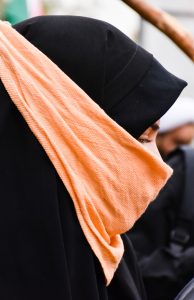
(Photo courtesy of Mhrezaa via Unsplash)
More and more Iranians are becoming disillusioned with Islam, and the religious landscape of the nation is changing.
“Many have become atheists. They have no sympathy for Islam. They have no sympathy for other religion. It’s an important time to be able to contact them via social media and satellites and give them a message of hope.”
IMM uses various media to share the critical hope of the Gospel with the people of Iran.
Godwin says, “As we are working in the long run on a larger version of Esther, we went ahead and shot a short social media piece that is bringing just a little slice of Esther out for social media…to try to say to people, ‘What is important in your life? What is important in the long run? What’s worth your freedom? What’s worth standing up for?’ Because Esther, as one person by herself, had to stand up for many and it was at great risk. But she had a hope of eternity and she knew that if she died, she died, but that she would have stood up for her people.
“In Iran, so many people don’t know about the hope of Christ and the hope of eternity. It’s important as they’re frustrated with their circumstances, with the politics, that they know not just about standing up for freedom, but finding who they really are in this world in Christ and finding their purpose in what God would say about them and to them.”
Please pray for all Iranians — Muslim or atheist, devout or searching — to know true freedom in Jesus Christ. Pray also for the spiritual vitality and encouragement of the Iranian Church.
“I know believers who are arrested often ask for prayer to be strong, that they would not slip, they would not deny,” says Godwin. “So I think that is so important to pray for them because they are being persecuted. Maybe it’s for socks, maybe it’s for a hijab, and maybe it’s for something else. But the underlying thing is freedom of religion and freedom to make choices in this world and Christ ultimately gave us the chance to choose Him or not choose Him.
“Also for IMM, if you would pray for us and the means to deliver and the opportunities that we have to communicate with different parts of the world and the funding needed to make that possible. It’s a lot of nitty-gritty work, but we know that God has called us to it and we appreciate anyone who can stand with us in prayer, in giving, or in considering to come and work alongside us in some way.”
Click here to learn more about IMM’s ministry.
Header photo courtesy of Majid Korang beheshti via Unsplash.
Middle East (MNN) — Tom and JoAnn Doyle began Uncharted Ministries after nearly three decades of ministry in the Middle East. “It all goes back to 1995 [when] I went to the Middle East for the first time,” Doyle says.
During that fateful visit, the pair came “face to face with Muslims that had come to Jesus and were willing to die for Him.”
Doyle says, “We just started writing [their stories] down on yellow legal pads to get every detail right, and then [we began] telling them in churches. Suddenly, we were writing books about what God was doing.”

(Photo courtesy of Sajimon Sahadevan/Unsplash)
Recently, “a great film crew got the fire to put these ‘God stories’ on film,” Doyle says.
In a few months, “it’ll be all ready to go. Jo Ann and I tell the stories, but then there are people acting out these stories from the books – these miraculous visitations and rescues by Jesus.”
Uncharted Ministries works alongside believers and churches in the Middle East to bring the Good News of Jesus to Jewish and Muslim communities. Learn more about Uncharted’s work here.
“We get there (to the Middle East) a lot during the year. We bring Bible tours in; we bring mission teams in, [and we] do a lot of humanitarian work,” Uncharted co-founder Tom Doyle says.
The Lord is moving in miraculous ways to transform hearts and lives. “God’s doing much with Jews and Muslims today,” Doyle says.
“The world’s a mess; the evil is over the top. Does that slow down the progress of the Gospel? No, absolutely not.”
Now that you know, how will you respond? Doyle describes three ways to activate your faith and step out of your comfort zone.
The first phase is easy, and everyone can do it. “Number one is prayer. Pray for the strength of the Church in whatever form it meets Him,” Doyle says.
“Because of security, many churches had to go underground in Saudi Arabia, the Gaza Strip, and Afghanistan. Now, we have churches totally above the ground: cyber churches.”
The next step requires a little personal sacrifice for the sake of helping others. “We have ‘first response’ initiatives through Uncharted,” Doyle says. Learn more about giving here.
“We’ve been able to help a lot of Ukrainian and Russian believers amid the war; [we’ve helped] Afghan believers with underground things happening with the Gospel there.”
Last but not least, you can “go on a Bible tour. When we go to the Middle East, you’ll get a chance to get off the beaten path, see the great Bible sights, and then meet believers from a Muslim background who love Jesus,” Doyle says.
“To meet modern-day saints who are risking their lives for the sake of Jesus – nothing compares to that.”
Header image depicts a street scene in Jerusalem, Israel. (Photo courtesy of Dave Herring/Unsplash)
Lebanon (MNN) — Lebanon faces continued rapid inflation without any signs of change. As described here, inflation measures the pace of rising prices. Hyperinflation is out-of-control inflation, typically rising more than 50 percent each month.
The International Monetary Fund issued grim warnings after meeting with Lebanese leaders for nine days, and protestors filled the streets. The Lebanese lira fluctuated wildly in value throughout the month, ranging from 76,000 lira per $1 USD on March 6 to as high as 140,000 lira per dollar.
Believers are in the streets too, but for different reasons. “Our staff [members] are blitzing homes with visits to bring medicine, food portions,” Pierre Houssney with Horizons International says.
“We’re spread thin trying to care for refugees and poor Lebanese people in desperate situations.”
With each visit, believers give help and hope at the same time. “The Gospel is the central driving force” of Horizons’ efforts, Houssney says.
“We share God’s love for people freely while giving freely of whatever resources we have, whether it’s medicine or food.”

Horizons International staff deliver aid to a needy family.
(Photo courtesy of Horizons International)
The silver lining is Galatians 6:9 in action. “‘Let us not become weary in doing good for at the proper time, we will reap a harvest if we do not give up,’” Houssney says, quoting the verse.
“Even though there are hard things around, there’s so much joy among the believers,” he continues.
“They’re weary and tired, but as they’re doing all this good, they’re encouraged to press forward.”
Support Horizons’ efforts here through the Lebanon Crisis Fund. Or, consider going to Lebanon with Horizons and serving alongside indigenous Gospel workers.
“The global Church would be blessed and is blessed whenever it’s involved in these crises,” Houssney says.
“When they (believers) come to difficult places, they see God do amazing things.”
Header image depicts street protests in October 2019. (Photo credit: Walid Houweyek via Triumphant Mercy Lebanon)
Lebanon (MNN) — Daylight savings time is back on the agenda in Lebanon following days of confusion.
After an emergency meeting of the caretaker government, Lebanon’s caretaker Prime Minister Najib Mikati said clocks would go forward one hour overnight from Wednesday to Thursday. Mikati reversed his original decision following a massive uproar.
Last week, Mikati abruptly decided to delay the time change until April 20 – the day Ramadan ends – instead of moving the clocks forward on Sunday. As a result, Lebanese society woke up in two different time zones.
“Basically, you had Muslim time and Christian time,” Heart for Lebanon’s Tom Atema says.
“This Muslim leader (Mikati) declared that they’re not going to change their clocks because it’s Ramadan, and they would like to keep that extra hour the way it is,” he continues.
“The Maronites (Christians) simply said, ‘No, we’ve been doing this time change thing – like the whole world has – for decades, and we’re changing our time.’”
The debate deepened religious divides in a country rocked by a 15-year civil war between Christian and Muslim factions. “This time issue is bigger than you think because it’s not like a border from one country to the next,” Atema says.
“This is within communities, within people groups, which makes it far more complicated.”
Plus, there’s no end in sight to Lebanon’s economic woes. The best thing you can do now? “Pray that this doesn’t hinder the work God is doing in [Lebanon, and] that people will not get discouraged,” Atema says.
“Many people in Lebanon are seeking answers to these problems, and they’re finding answers in the Gospel.”
Header image is a representative stock photo courtesy of Anete Lusina/Pexels.
Middle East/North Africa (MNN) — Countries in the Middle East North Africa (MENA) region hosted at least six million refugees at the end of 2022. Most of these refugees came from either Syria or Iraq.
Many host communities in the MENA view refugees as a “blight” or the scourge of broader society. In Lebanon, for example, the blame for government corruption and mismanagement often falls on Syrian refugees.
An emerging trend turns this concept on its head. Instead of being a societal detriment, many refugees want to give back.
“[It is] very interesting to see (Christian) leaders from Egypt, Morocco, Tunisia, Jordan, Syria, [and] Lebanon looking at volunteer management,” Fadi Sharaiha with MENA Leadership Center says.
“They’re [saying], ‘We have refugees who want to be volunteers. How can we do this (train them)?’”
Refugee volunteers seem like a simple solution to meet increasing demand. “Because of the economic crisis [in the MENA], Christian ministries want to do more,” Sharaiha says.
“Whether it’s a food bank or outreach, they want to do more. They want to help people in the streets.”

Distributing aid to refugees.
(Photo courtesy VOM USA)
There’s only one problem. “It’s very tricky [working] with refugees regarding volunteering. You need not to build [refugee] expectations [of paid employment] but also be realistic” about the needs of your organization, Sharaiha says.
Gospel workers turn to MENA Leadership Center for help. “The MENA Leadership Center is a one-stop shop for capacity-building, training, and coaching for Christian leaders in the Middle East and North Africa,” Sharaiha says.
MLC needs help from believers like you to keep the costs low for Christian leaders. More about that here. “The volunteer management course is still in process, and I hope we will find a solution,” Sharaiha says.
Pray MLC will receive the resources it needs to create the volunteer management course.
Header image depicts a sticker on a street lamp in Sebnitz, Germany on March 22, 2022. (Wikimedia Commons)
Middle East (MNN) — A recent gathering in the Middle East brought together Church-Centric Bible translators from around the world.
Christian leaders representing 16 different nations gathered to learn from each other and develop strategies. “We had 11 different church network entities there [from] places like Russia, Ukraine, and Iran,” unfoldingWord’s David Reeves says.
unfoldingWord comes alongside church-planting networks as they translate Scripture into minority languages. More about that here. Each network focuses on the unreached people groups in its region, making the work dangerous and difficult by nature.
“Almost every one of them [faces] huge obstacles: pressure from their government, Communism, Islam, Hinduism – there’s always some issue they’re facing,” Reeves says.
“But, in the midst of it all, they continue to press ahead because they love their people deeply.”

(Photo courtesy of unfoldingWord)
Connecting in person instead of over Zoom allowed the translators to deepen relationships. “They got to share ideas [about] processes, what they’re doing in Church-Centric Bible Translation, information about their software tools,” Reeves says.
During one of the event’s breakout sessions, team leaders from Eurasia and South America collaborated to teach the entire group about highly technical topics.
One event overseer, unnamed for security purposes, spoke of “a tremendous victory to hand off the microphone and see our partners train each other!”
Believers also created ministry plans during the conference, which they are implementing today. Pray that global collaboration will continue and grow.
“We’re seeing a phenomenal sense of unity across these networks. They have a common cause, and they realize they need each other. No one of them can do this by themselves,” Reeves says.
Header and story images courtesy of unfoldingWord.
Iran (H4I) — Iran is a country known for its strict adherence to Islamic law, which makes practicing any religion other than Islam difficult, especially for Christians. Despite the challenges, the underground church in Iran has been growing over the past few decades, and it is shaping the future of the Church in this restricted country.
The underground church in Iran comprises a network of secret Christian believers who gather in homes, in small groups, and online. They do not have access to church buildings, and they often worship in secrecy to avoid persecution. Iranian authorities view Christianity as a threat to their Islamic regime, and Christians who openly express their faith face arrest, torture, and even death.
Despite the risks, the underground church in Iran is thriving. Estimates suggest that there are currently between 300,000 to one million Christians in Iran, most of whom are part of the underground church. This growth can be attributed to several factors.
Firstly, the underground church in Iran has a strong sense of community. Christians in Iran face many challenges, including social isolation, discrimination, and persecution. The underground church provides a sense of belonging and support to believers who might otherwise feel alone.
Secondly, the underground church in Iran is innovative in finding ways to connect with other believers and spread the Gospel. They use social media, satellite TV, and other online platforms to connect with each other and share the good news of Jesus Christ. This has been particularly important during the COVID-19 pandemic, which has made physical gatherings impossible.
Thirdly, the underground church in Iran is committed to discipleship and training new leaders. Christian leaders in Iran face significant risks, and there is a shortage of trained pastors and teachers. The underground church has taken on the responsibility of training new leaders and helping them to grow in their faith.

(Photo courtesy of Heart4Iran)
Despite the growth and resilience of the underground church in Iran, it is important to acknowledge that Christians in Iran still face significant challenges. The Iranian government continues to restrict religious freedom and punish those who express their faith openly. Christians in Iran are often subjected to harassment, arrest, torture, and imprisonment.
However, the underground church in Iran is also a source of hope. It is a reminder that God’s kingdom is not confined to physical borders or political systems. The Church in Iran is growing, and it is shaping the future of Christianity in this restricted country. As the apostle Paul wrote to the church in Rome, “I am not ashamed of the gospel, because it is the power of God that brings salvation to everyone who believes.” (Romans 1:16).
In conclusion, the current state of the underground church in Iran is a testament to the resilience of the human spirit and the power of God’s love. Despite facing immense challenges, the underground church in Iran continues to grow and thrive. It is a source of hope and inspiration for Christians around the world who face persecution and discrimination for their faith.
By Dr. Mike Ansari
President, Heart4Iran
Header and story images courtesy of Heart4Iran.
Syria (MNN) — Today marks the 12th year of war in Syria. What began as a violent crackdown on Arab Spring protests escalated into a multifaceted proxy war.
A believer we’ll call Ben* says, “When the war began, most people believed it would last a short while, but then it went on and on.”
The Syrian government, supported by Russia and Iran, has been fighting against various rebel groups backed by the United States, Turkey, and several Gulf states for twelve years. At least 500,000 people have died since the conflict began, while millions have lost their homes and livelihoods.
Yet, hope remains. Ben works with The Program for Theological Education by Extension or PTEE. “Many people have come to Christ [in Syria] because of the war; God has used it to bring many people to Himself,” he says.
“Because security was shaken in a big way, people threw themselves into the arms of the Lord.”
Jesus once said, “The harvest is plentiful, but the workers are few.” With so many people coming to Christ in Syria, the Church needs workers! PTEE provides certified theological training and more.
“Some countries in the region have theological seminaries, but Syria doesn’t. [It was a good fit] because PTEE offers theology courses on location. Students can study weekly alongside their regular lives and ministries; they don’t have to go anywhere,” Ben says.
“For the last decade, we’ve had more students in Syria than any other country, which is remarkable considering the circumstances there.”
Support from people like you makes it all possible.
“What’s God doing in Syria? He is working His purposes out to draw people from different tribes, tongues, and nations together under the banner of Christ,” Ben says.
“Spiritually, there’s new hunger that wasn’t there before.”
*Name withheld for security purposes.
Header image is a representative stock photo courtesy of Alexas\_Fotos/Pixabay.
Syria (MNN) — A commission of inquiry appointed by the United Nations blames the Syrian government and the U.N. for delaying aid to earthquake victims last month.
The first 72 hours are critical for survival following a major disaster. It took a whole week for the first U.N. truck to reach northern Syria.
The delay didn’t stop local Christians from helping people in need. Believers reached out with help for today and hope for tomorrow.
“Jesus said, ‘they will see your good deeds and glorify your heavenly Father,’” pastor and evangelist Fayez Youssef says. Youssef partners with The Voice of the Martyrs Canada to support and encourage Syrian believers.
“It’s the natural role of a church to be light in the darkness, show God’s love and mercy towards the people, and share the Good News. The [Body of Christ] in Syria is doing a great job.”
Tomorrow marks the 12th anniversary of Syria’s civil war. Hundreds of thousands have died, and six million have fled to neighboring countries and overseas nations, including Canada.

House destroyed in 2012 by a Syrian army tank shell in Al Qsair.
(Photo, caption credit Freedom House via Flickr)
“People in Syria [are] greatly suffering from this long, exhausting civil war. Many young people, especially the men, had to leave because they [faced conscription], so many escaped,” Youssef says.
“You have a [generation gap] in the Christians because they (Christian men) left, or they were in the army, or they died. This has affected the future [of the Syrian Church] very much.”
Last month’s devastating earthquakes added insult to injury. You can help Syrian Christians through VOM Canada. Most importantly, pray. Pray believers will have continued perseverance and stamina.
“In the Middle East, [in] some places church has disappeared completely, like the Arab peninsula and all the Gulf states. But in Syria, Christianity stayed,” Youssef says.
“They are suffering [the same as] all the Syrian peoples, but they are serving [at] the same time.”
Header image courtesy of…
Lebanon (MNN) — Lebanon turns to United States currency in the latest attempt to save its failed economy. Business owners say they’ll only accept U.S. dollars (USD) because the Lebanese pound or lira is practically worthless.
“The (Lebanese) currency depreciates two or three times a day, which means you don’t have a stable [value],” Heart for Lebanon’s Camille Melki says.
“[Business owners] want to ensure that what they get paid in the mornings keeps its value the next day, rather than depreciate so sharply. A lot of supermarkets, hotels, [and] restaurants started to price their goods and services in USD; meaning [it] doesn’t matter what the value [is] in Lebanese.”
Lebanese currency has lost 98 percent of its value since 2019. “In 2019, if you want to fill up your car with gas, [it cost] 90,000 [Lebanese pound]. Now, you will pay 10 million [Lebanese pound] to fill up your car,” Melki says.
“[As a result,] you’re carrying a paper bag full of worthless Lebanese currency. This is why they’re (business owners) asking for foreign currency, predominantly USD.”
While “dollarization” aims to stabilize the economy, it also threatens to deepen the crisis.
Three-quarters of Lebanon’s six million people live in poverty, and few have access to dollars.

Aid distribution
(Photo courtesy of Heart for Lebanon)
“Most citizens in Lebanon still make their salary in Lebanese pounds” and cannot convert their earnings to dollars because the banking system has collapsed, Melki explains.
“So, where [will locals] get the U.S. banknote? And how can you afford such a sharp price increase (inflation)?”
Help meet physical and spiritual needs through Heart for Lebanon here. “We give unconditionally, but we also give with the joy to share the Gospel,” Melki says.
“When asked and prompted, we want to tell people that we come in the name of our Lord and Savior, Jesus Christ.”
Header and story images courtesy of Heart for Lebanon.
Middle East (MNN) — Damage costs from the February 6 earthquakes in Türkiye will now exceed $100 billion. Previous World Bank estimates placed damages at around $34.2 billion.

(Photo courtesy of Heart4Iran)
“This destruction is a physical picture of the scale of spiritual need in many [Middle East] countries. Many people are cut off from the Gospel,” Rob Myers of DOOR International says.
Less than two percent of Deaf people in the Middle East know Jesus. “Even if there are churches, even if there are printed Bibles, Deaf people [often] are cut off from access to those,” Myers explains.
“They need Scripture in sign language [and] Deaf leaders trained and empowered to bring the Gospel into their communities.”
Plus, “Deaf people face this stigma that a child is born deaf because parents sinned, or somehow this is a punishment from God on the parents,” Myers says.
“That shame follows those Deaf people into their access to school, language, and how [they] interact.”
DOOR International is a Deaf-led training and translation ministry. It trains Deaf church planters and translates God’s Word into sign languages to support church planting efforts. Learn more here.
Right now, every gift to DOOR’s work in the Middle East will be doubled, up to $25,000. Double your impact today! Hurry, the matching gift ends on March 31.
“We are working on a matching grant to foster Gospel work in three particular countries to see the Gospel go out to Deaf people throughout the Middle East,” Myers says.
Header image courtesy of DOOR International.
Syria (MNN) — We recently reported how an airstrike in Aleppo shut down a major airport and cut off a vast amount of earthquake aid to the northern region. Horizons International is getting around the issue by driving in aid with Lebanese and Syrian church partners.
Pierre Houssney, executive director with Horizons International explains, “Northern Syria is just a patchwork of different really kind of fiefdoms. There are certain areas that are controlled by government groups there and government-aligned groups, militias, and things. There are other areas that are controlled by different other armed groups that are against the [government] — the rebels, the Kurdish people, and there [are] all kinds of militias. It’s a huge patchwork.”
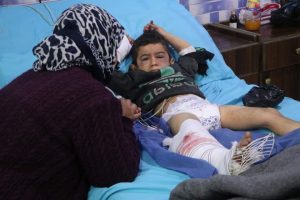
(Photo courtesy of Horizons International)
It’s a complex challenge for the ministry providing emergency relief. “We have to go through different checkpoints [and] avenues to get into the affected areas,” says Houssney.
“There are some areas where our Lebanese staff are not able to get into, so we have to send Kurdish-Syrian staff members into the Kurdish areas because they can pass through the checkpoints. We have different partnerships with churches that let us into different areas.”
Another threat to earthquake relief is the war of attrition between various groups in nothern Syria. Starvation is the violent method used to inflict harm as different factions keep aid from reaching certain people.
Houssney says, “In that kind of a landscape where people are just struggling to survive and all the factions are struggling against each other — armed struggle and economic struggle and intentional starvation of different people — how is aid going to get to the right places in that kind of a climate?”
This is where the Syrian Church is going against the grain and serving their neighbors, no matter their ethnicity or religion.
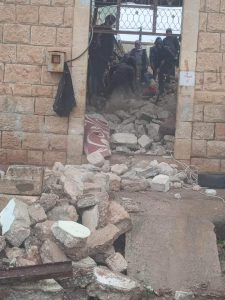
(Photo courtesy of Horizons International)
“One miracle that we can just thank God for is that there are still evangelical churches in this region. People don’t know that. People don’t seem to realize that,” Houssney says.
“Muslims are streaming into churches. They’re sleeping in churches in shifts, day and night, 24 hours a day on the pews of churches. Church people are helping them and feeding them and caring for them.
“One person said, ‘There’s no difference between Muslim and Christian anymore in that area. They don’t even care where the aid comes from or where the aid is going. Everybody is helping each other, and that has really opened doors for the Gospel.’”
You can support Horizons International’s ministry here.
Houssney says Syrian believers need the prayers and vigilant support of the global Body of Christ.
“It’s my fear that the headlines are going to move on and then the churches are going to be left again. After having helped the people around them, they’re going to be left without support. So I want to make sure that people don’t forget the Church in the Middle East just because a few months passed since the earthquake.”
Houssney asks, “Be praying that the Lord would keep this open door for the Gospel open, that people’s hearts would still be open in northern Syria.”
Header photo courtesy of Horizons International.
Iran (MNN) — Investigators say more than 5,000 students in Iran have been affected by school poisonings since the peak of anti-government unrest last fall.
“In November, 18 schoolgirls in Qom were taken to a hospital. They were complaining of nausea, headaches, coughing, breathing difficulties, heart palpitations, and even pain in their hands and legs,” Lana Silk with Transform Iran says.
Videos uploaded to the internet show mostly female students gasping for breath and choking. On Monday, White House press secretary Karine Jean-Pierre called for a “credible, independent investigation” into the incidents by the United Nations.
“They’re locking these girls in their classrooms and sending poisonous gases. We’ve had experts analyze these gases, and they’re saying these gases are weapons-grade,” Silk says.
“The government is trying very hard to whitewash it. But there’s no getting away from the fact that only those girls who stood up against the government were attacked.”
While human rights groups and activists blame the regime, the government blames protestors. “There are attempts by the government to make it sound random, but it’s not,” Silk says.

(Photo courtesy of Transform Iran)
“We know that this is targeted. These are schools where girls actively participated in the protests, and we believe the leaders of these schools turn them into the government.”
Nonetheless, hope remains. “People in Iran have recognized how dark the land is that they live in, and they are turning to light. They’re looking for it,” Silk says.
Transform Iran introduces people to Christ online. Learn more here.
“We’re sharing the Gospel through a whole range of media: internet, TV, radio, and of course, the digital church is there to welcome them in a way that it’s safe for them,” Silk says.
“Even though we offer anonymity, people are prepared to risk much to call and connect with us in a personal way because they are looking for hope in this darkness. And they’re finding it in Jesus.”
Header and story images courtesy of Transform Iran.
Palestine (MNN) — Today is International Women’s Day, and Bethlehem Bible College has been featuring women among their staff and students over the last few weeks with a campaign called “Celebrating the Lives of Ordinary Women.”
The reality is Palestinian women in Arabic culture are not often celebrated. In fact, women tend to be treated as second-class citizens.
Bethlehem Bible College’s communications officer Amira Farhoud says, “Each house here has a different story. There is a lot of beating, a lot of threatening, [and] a lot of abuse for women and for kids all behind closed doors. We know a few, but there are a lot of stories that are hidden.
“A woman can’t defend herself because your father will tell you that your husband can do whatever he wants with you — beat you, hit you, humiliate you. You’re his now. So yeah, we have this culture.”
At home and in society, Arabic women often hear they are worthless, or at least “worth less” than men. Then they open up social media and are bombarded with messages that if they want to achieve a sense of worth, they have to strive for impossible beauty standards or become a counter-cultural “boss babe.” Neither messages are ultimately fulfilling.
(Photo courtesy of Bethlehem Bible College)
The Gospel’s message to women is entirely different in every way: God has instilled women with inherent dignity, value, and worth as co-heirs to the Kingdom of Heaven.
“Our worth is in Jesus,” Farhoud says. “We know that He loves us. He respects us. He gave us our dignity. He gave us our worth. The Gospel of God makes the whole difference.”
Ultimately, Bethlehem Bible College is educating and uplifting women in the heart of the Gospel. The college even has a women’s ministry that encourages female staff and students with biblical counseling. Today, their aim is to celebrate these women!
“In a society that doesn’t respect women a lot, here at Bethlehem Bible College we are well respected [and] well treated,” Farhoud says.
“We came to say that you are celebrated even if you are an ordinary woman…. The small things that you do are extraordinary, like cooking for your kids, like teaching them, like managing all of that while being a full-time staff or a full-time working mom. You are extraordinary. So that’s the idea of the campaign.”
This International Women’s Day, Farhoud asks, “[Be] praying for us, of course — especially for us as women in our daily life jobs that we do and for our families, for our children, and even for Arabic society.”
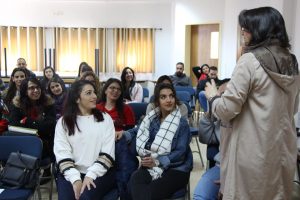
(Photo courtesy of Bethlehem Bible College)
Pray for Palestinian women to embrace their worth in Jesus Christ and be beacons of confident faith to their families, friends, and communities.
Click here to learn more about Bethlehem Bible College.
Header photo courtesy of Bethlehem Bible College.
Syria (MNN) — Troubling reports emerge from Syria. Ambassador Robert Wood tells a United Nations council that lifesaving aid meant for earthquake survivors in Syria is being diverted.
Sometimes, Syrian officials take materials to sell in the market for personal gain. In other cases, bandits block aid deliveries. Plus, Syria’s government has resumed shelling in northwest Syria, adding insult to injury.
On the ground, “people are worried, scared, and depressed; they are traumatized,” says Pastor Fayez Youssef, a believer working in Syria with The Voice of the Martyrs Canada.
“There is no trust in what is coming in the future. The only hope is when you meet with Christ.”
Nearly nine million people live in earthquake-affected areas across northern Syria. Two of the worst-hit quake zones have a significant Christian presence.
“The Church is in Aleppo. In Lattakia, Christianity is there,” Youssef says.
In the physical world, high heat and intense pressure turn carbon molecules into diamonds. In Syria, the fires of persecution combined with pressure from the war and earthquakes create spiritual diamonds.
“When people are pressured, they share fears, and this kind of solidarity exists. This has opened a great door for many people to hear the Good News and to meet with the true Light,” Youssef says.
May the Lord provide for Syria’s churches, equipping them to serve faithfully as lights in the darkness. Support Christ-centered earthquake recovery efforts here.
“The Christians in Syria have done a great job reaching out to the poor and needy, being very active in the community, opening clinics, advocating for the people who go through a lot of crisis,” Youssef says.
Header image courtesy of Heart4Iran.
Syria (MNN) — Syrians displaced by the February 6 earthquakes face blow after blow.
An airstrike in northwest Syria hit one of the quake zones, killing two. Millions depend on humanitarian aid to survive, and the World Food Program will soon cut emergency feeding programs in Syria. Finally, kids and adults alike contend with post-traumatic stress every day.
“There are traumatic responses, deep loss, and that spirit of fear,” Samuel* of Redemptive Stories says.
“[For example,] people had begun returning to their homes, and then tremors hit. They, in fear, fled back to the hostels [and] schools to feel some semblance of peace and comfort again.”
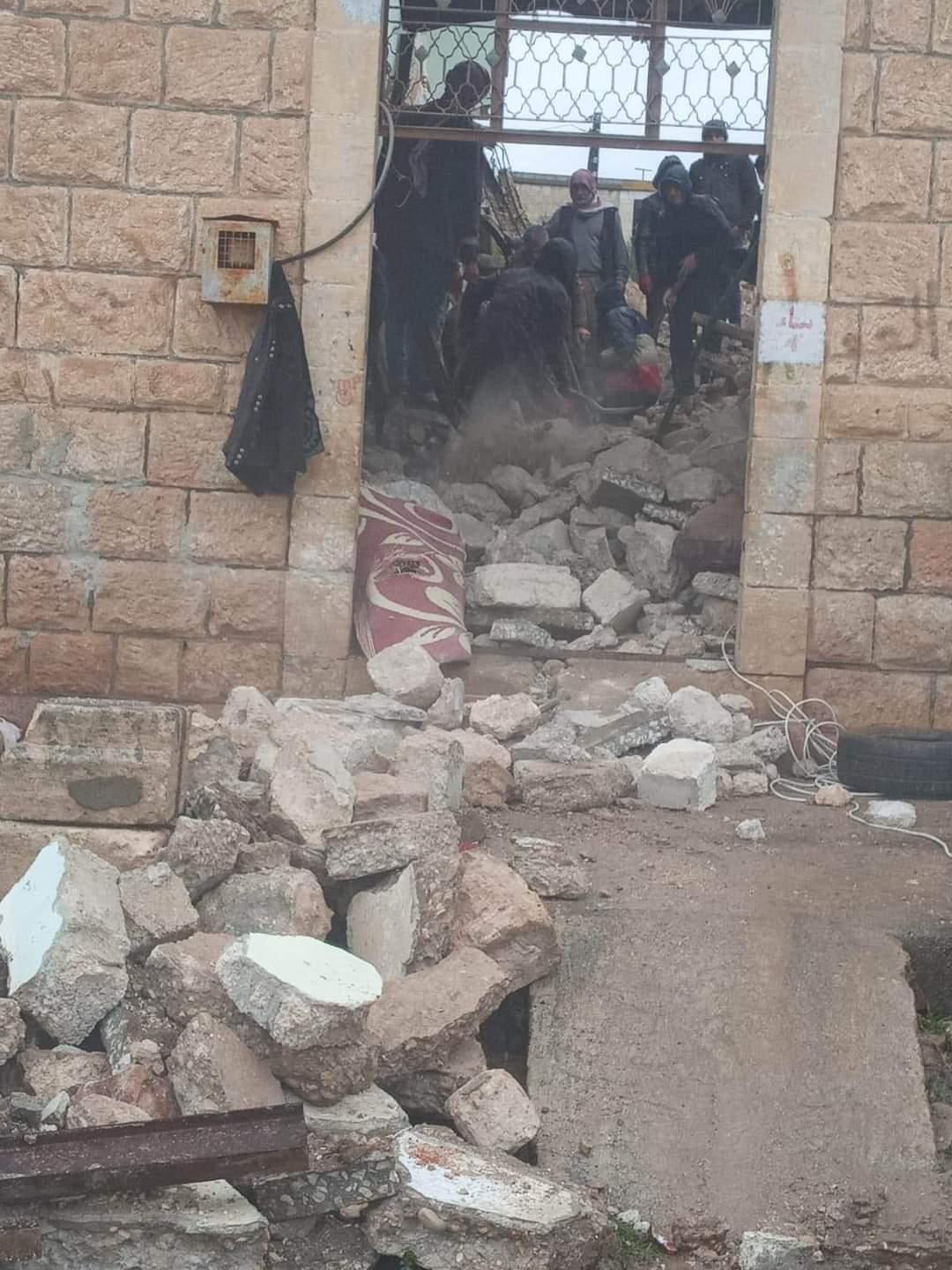
(Photo courtesy of Horizons International)
The earthquakes hit rebel-held areas in northern Syria. Aid trucks took almost a week to reach the quake zone, raising concern that some lives were lost because of the delay.
The Syrian government opened more border crossings for aid deliveries, but “it’s not going to be enough to take care of the current needs,” Samuel says.
Visit our earthquake response page to equip Gospel workers on the ground.
Ask the Lord to give Samuel and his team wisdom as they meet with partners in Syria. “The goal is to be there for people – pray with them, encourage them, walk with them,” Samuel says.
“Pray for opportunities for the Church to respond, to use this terrible situation, as God always does, to bring many Syrians to Himself,” he requests.
“[Pray] that the Holy Spirit would give both our brothers and sisters, and those not yet a part of the kingdom, comfort, and strength, and that He would ultimately give them hope.”
*Pseudonym
Header image courtesy of Heart4Iran.
Turkiye/Syria (MNN) — Earthquake search and rescue efforts are sadly coming to a close now — over two weeks after the 7.8-magnitude earthquake in Turkiye and Syria killed 47,000 people and displaced one million.
Peter Macharia with World Concern says, “People are giving up on hope. There are still many people that are in shock, people that are suffering [and] looking for their beloved ones.”
Some search and rescue teams are focused on Turkiye’s southern Hatay province where a 6.4-magnitude aftershock struck Monday, as well as the surrounding area. Around 300 people were injured and at least six killed.
(Photo courtesy of Horizons International)
Shallow aftershocks like this are incredibly dangerous, causing falling debris and more buildings to collapse. Aftershocks of varying levels are likely to continue for months, even years.
World Concern is helping survivors get everything from food and shelter to clean water and biblical counseling.
Macharia says, “People are wondering, ‘Why does God allow such kind of things to happen to His people?’ I would say it’s not been easy. But I would say God is demonstrating His love through His people. He’s showing kindness to His people through the people that are coming to help.
“We are there on the ground telling people God cares, God is concerned. For us to demonstrate that love, that caring attitude, that help, people are able to see the love of Christ.”
Rescue efforts may be slowing or stopping altogether. But now is not to the time to stop covering Turkiye and Syria in prayers and support.
The road to restoration is long and laden with grief.

(Photo courtesy of World Concern)
“This is not the time to give up. It’s the time to help,” says Macharia. “It’s a time to do that extra thing that you can do — that $1 [or] that $10,000 will go a very long way.”
Learn more about supporting World Concern’s outreach.
“At a time like this, I’m reminded of the words of Jesus, that He looked at people and said, ‘They are like sheep without a shepherd.’ When I looked at the pictures and I look at what’s going on on the ground, I see people walking without a Shepherd — people wondering, ‘Where is our help?’”
Pray for the Prince of Peace to comfort the people of Turkiye and Syria.
Header photo by Mahmut Bozarslan, VOA via TWR.
Lebanon (MNN) — Lebanon remains on edge following Monday’s 6.4-magnitude earthquake in southern Türkiye. Thousands of smaller aftershocks have jolted the region in the past two weeks, but this was the strongest tremor since February 6.
Traffic jams were reported across Beirut as people fled their homes on Monday evening. “They are reliving the (2020) explosion [and] the memories of these events,” Nuna of Triumphant Mercy Lebanon says.
“When the [2020 Beirut port] blast came, it shook all the buildings, and the same shaking happened during the earthquake. It brought back all the memories and the fear.”
On August 4, 2020, one of the largest non-nuclear explosions in history obliterated part of the Beirut port and caused damages throughout the city. A few days after the blast, one believer described what he saw to MNN:
“Parts of the city lie in apocalyptic ruin… It looks like a war zone. The devastation is huge. The shockwave shattered windows. Buildings are collapsing. Balconies are blown away.”

Before (left) and after (right) of the crater caused by the Beirut explosion on Aug. 4, 2020.
(Photo, caption courtesy of LLNL-Lawrence Livermore National Laboratory)
Many Lebanese thought they were reliving history on February 6, 2023. “We woke up, and we felt everything rocking,” Nuna says.
“The next day, everyone who came to our distribution center in Beirut talked about the same thing. They have all this trauma that came up… people live in fear.”
Updates related to the historic Türkiye-Syria disaster earlier this month permeate neighboring Lebanon. “Everything we hear on the news is ‘earthquake, earthquake, earthquake,’” Nuna says.
“We’re not hearing anything else now. It’s the talk of everyone.”
Triumphant Mercy and its church partners point people to the Prince of Peace, but fear and trauma are hard to overcome.
“The words make sense to your brain – ‘Yes, yes, God is in control’ – but at the same time, it’s so hard for people to surrender and say, ‘Lord, you have my life. I will not fear, and I will trust You’,” Nuna says.
“Fear is a stronghold the devil uses to undermine our faith and keep us in bondage.”
Pray that believers and nonbelievers alike will find freedom by placing their trust in Jesus.
Header image depicts damages from the February 6 earthquake in Turkiye. (Photo courtesy of Horizons International)
Syria (MNN) — Health and hunger concerns mount in Syria as aid workers struggle to reach needy people. Harsh winter weather hinders emergency response and the wellbeing of survivors.
“The minute this (February 6 disaster) happened, we tried to connect with our participants. Some don’t have [any] place to go to right now, especially in Aleppo,” MENA Leadership Center’s Fadi Sharaiha says.
The catastrophic February 6 earthquakes affected over four million people in Aleppo and three million in Idlib, the United Nations reports. A 6.4-magnitude earthquake in southern Türkiye yesterday sent a fresh wave of fear rippling throughout northern Syria, injuring 470 people.
Needs vary widely, and they’re all urgent. “It (the disaster) is affecting [MLC] participants in so many ways. [Our contacts in Syria are] talking about basic needs like clean water, milk for the babies, and dealing with the trauma,” Sharaiha says.
“So many people cannot even sleep because of the trauma.”
MENA Leadership Center may not provide direct relief aid, but they’re helping the people who can – believers on the ground in Syria. Christian leaders throughout the country attend MENA Leadership Center for training and development. More about that here.
Today, “we [have] our first session on psychological first aid,” Sharaiha says.
“[The course provides] participants with psychological first aid tips: how to take care of other people, and how to take care of themselves.”
Although courses are free for church leaders, it costs MLC to provide this service. You can help by sponsoring a leader here.
Most importantly, “please pray for us. So far, we have more than 30 people registered for the course,” Sharaiha says.
Header image depicts damages from the February 6 earthquakes. (Wikimedia Commons)
Lebanon (MNN) — A fuller view of the displacement caused by last week’s disaster is starting to emerge in Syria.
According to the United Nations, the earthquakes and aftershocks destroyed more than 8,900 buildings, leaving at least 11,000 people homeless. These tolls are expected to rise as more information comes in.
“There is a strong possibility that Lebanon will host more Syrian refugee families, which means Heart for Lebanon would need to ramp up its care,” co-founder Camille Melki says.
Nuna from Triumphant Mercy Lebanon adds, “There are people who are now, [for] a second time, displaced inside Syria. They had already been displaced from the north, near Turkey, and then went to Aleppo, for example. And now they’re displaced again.”
With nowhere else to turn, “people will be leaving the country. It is going to create a new refugee crisis,” she continues.
“Germany, for example, has opened easy visa applications for people to go [from Syria to Germany.].”
Ask God to give wisdom to the leaders of Heart for Lebanon, Triumphant Mercy, and others as they prepare for a new wave of refugees.
“Half of our staff is originally from Syria. We’re starting to plan how to care for the immediate families, friends, and relatives [of our staff],” Melki says.
“We’re building our database [to] see whether we can receive more people here in Lebanon if they would be allowed to cross the borders,” he continues.
“Many people affected [by the earthquakes] were already displaced from the war in Syria. It’s an insult over the injury for many of those families.”
Header image courtesy of Horizons International.
Syria (MNN) — Syria may have opened two new crossing points for earthquake aid deliveries, but it’s barely a drop in the bucket of phenomenal need. Yesterday, the United Nations issued an emergency appeal to mobilize lifesaving help for Syria.
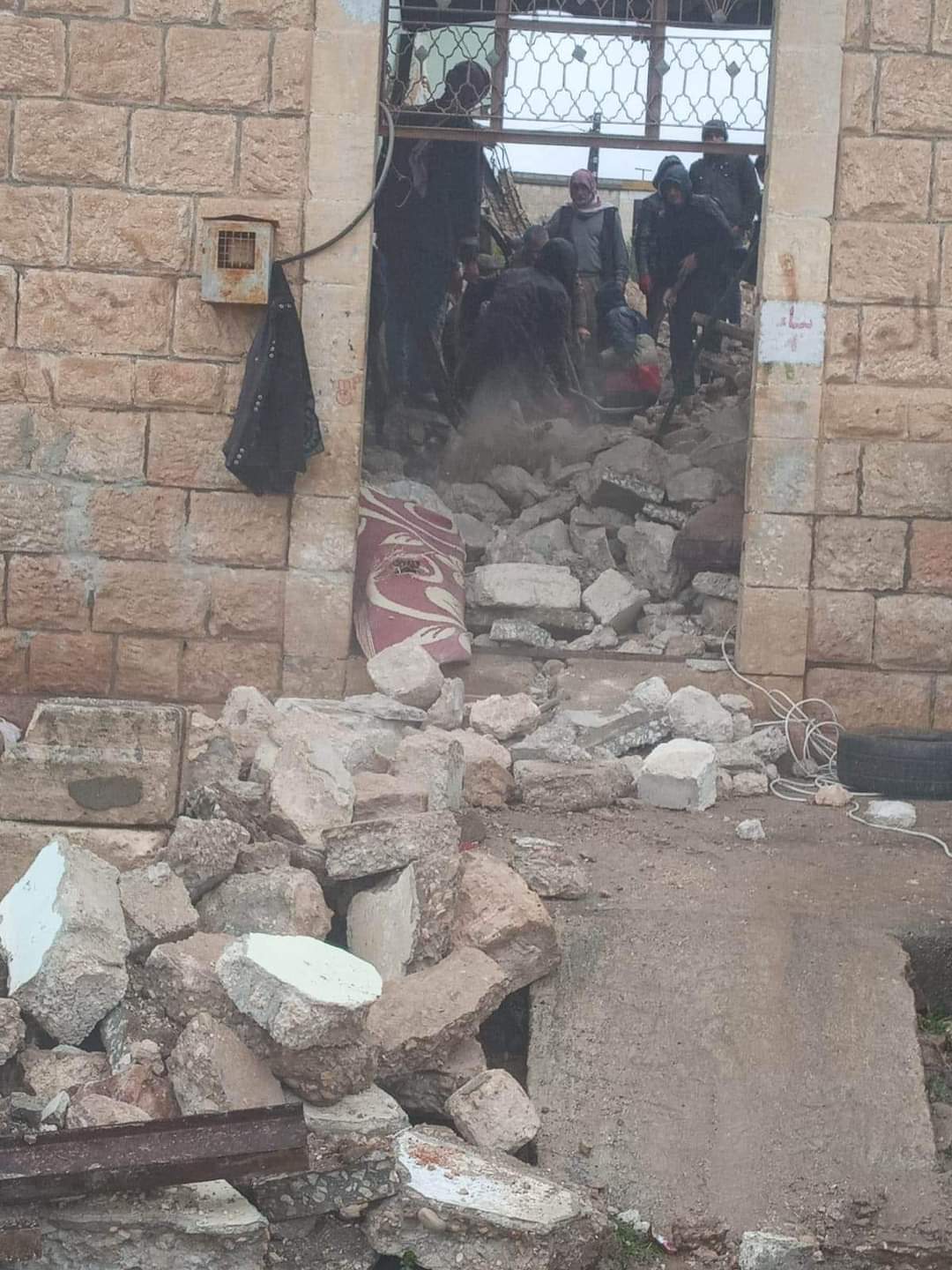
(Photo courtesy of Horizons International)
“I read somewhere that a geologist said [about] the earthquake’s magnitude, ‘It’s like 500 atomic bombs.’ That’s the intensity, and you can [only] imagine the destruction,” Nuna of Triumphant Mercy Lebanon says.
Ten days ago, historic earthquakes flattened communities throughout northern Syria and Türkiye, killing more than 37,000 people. The UN expects that number to rise above 50,000 as the window for survival closes.
Today, some survivors in Syria are still waiting to receive help. “The survivors have no homes, no blankets, no shoes, nowhere to heat themselves,” Nuna says.
“I’ve been talking to people running a shelter, and they said, ‘The problem is that not much [humanitarian aid] can come into Syria.’”
Thankfully, “the U.S. [State] Department lifted sanctions [on Syria] for six months, just for the victims of the earthquake,” she continues.
Triumphant Mercy Lebanon stands ready to respond. “We have a small team going into Syria this week. We’re going to see how we can help and [encourage] the believers there,” Nuna says.
“They (believers) are tired. They lost people from their own families and live under the same heaviness as the people [they’re helping].”
Contact Triumphant Mercy Lebanon through Facebook to learn how you can send help. Your gift helps earthquake survivors know that Jesus cares for them.
“Maybe you [feel,] ‘I wish I could go; I wish I could do something!’ [When you] give, it is the same as if you went because this is how God works. He works through us,” Nuna says.
Header and story images courtesy of Horizons International.
Iran (MNN) — Tensions simmer in Iran following Revolution Day celebrations and symbolic pardons.
Every year on February 11, state-sponsored festivities mark the 1979 revolution that ushered in today’s Islamic rule. Iran’s supreme leader, Ali Hosseini Khamenei, pardoned thousands of prisoners ahead of last week’s anniversary.
“We need to be careful not to imagine everything’s okay now for the young people or the Christians in this part of the world. A lot of people are still slated to lose their lives despite this announcement from Khamenei,” Denise Godwin of International Media Ministries says.
“A show of mercy isn’t necessarily a cure.”
More than 100 people arrested in connection to the protests could face the death penalty, and four have been hanged. Police have detained at least 20,000 people since the unrest began in September.
“While it’s great that some people are going to get pardoned, we need to keep praying for the freedoms of those that have been held,” Godwin says.
“There are people still suffering, and many are probably believers. There’s a very fast-growing community of believers in Iran.”

(Graphic courtesy of Transform Iran)
IMM uses media to reach closed countries like Iran with the Gospel message. Learn more here. “We are planning to do a social media piece to encourage people that sometimes we have to speak up on behalf of others,” Godwin says.
“In the case of Esther, to avoid genocide of her people, she had to stand up and speak even though it risked her life.”
Ask the Lord to give Iranian believers supernatural courage and strength.
“Most of our Islamic-background friends who’ve changed to be believers are [asking us], ‘Pray that I can be strong,’” Godwin says.
Header image courtesy of Heart4Iran.
Syria (MNN) — One week ago, twin earthquakes flattened entire villages in Türkiye (formerly known as Turkey) and northern Syria. See our coverage here.
Quakes affected more than 10 million Syrians in five provinces, the United Nations Resident Coordinator for Syria El-Mostafa Benlamlih told reporters. Initial estimates indicated that 100,000 people lost their homes in Aleppo alone.
Search efforts continue, but winter weather leaves survival odds slim to none. Death tolls climb daily in both countries as workers uncover more bodies.
In Syria, “unfortunately, rescue efforts are hampered by bad weather and unsuitable equipment,” says Ben*, the Program for Theological Education by Extension (PTEE)’s Communications Director.
“None of our partners were killed in the earthquake. But it’s a massive catastrophe [that] affected the whole country very deeply.”
Small glimmers of hope emerge from the destruction. Rescuers found a newborn in the rubble and rushed her to one of the only standing hospitals nearby. Her mother died giving birth, but Baby Aya survived.
Other survivors find refuge in churches near the disaster zone. Training from PTEE helped Syrian believers prepare for a moment like this. The program provides “theological study and practical ministry skills, which are so needed in this country right now,” Ben says.
“People have lost their homes, and churches are giving people shelter, opening their doors for people to have places to stay.”
Through PTEE, Arabic-speaking Christians in the Middle East and North Africa gain theological education without stepping foot in a seminary. More about that here. Syria holds the most PTEE students.
Pray for Gospel opportunities as Syrian Christians display the love and care of Christ. “I remember how Jesus responded when the Tower of Siloam fell on people, and His disciples asked Him about that. He said, ‘You know, this should be a wake-up call,’” Ben says.
“Pray people would run to the Lord; that it (the disaster) might draw people to Him.”
*Name withheld for security purposes
Header image courtesy of Horizons International.
Lebanon (MNN) — Hope for survival begins to wane three days after record-setting twin earthquakes rocked Türkiye (formerly known as Turkey) and Syria. See our coverage here.
The first earthquake on Monday was so big that 300 miles south of the epicenter, “we had a tremendous scare here in Lebanon,” Heart for Lebanon co-founder Camille Melki says.
“We felt a 4.8- to 5.0 [magnitude] earthquake here in the Bekaa [Valley]. Thankfully, there were no damages compared to the tremendous damages in Syria and Türkiye. But definitely, it was a scary evening.”
Though relatively short, the tremors triggered traumatic reactions. People in Beirut had flashbacks of the 2020 port explosion.
“Many people in Beirut went out and started pointing to safe places to run to. On the night [of the earthquake,] many stayed in their cars in large open parking lots because of fear,” Melki says.
“We heard [about] people who fainted from fear.”
Tsunami warnings quickly went viral on social media. “There was fear, unjustified by all scientists, but people who have lost a lot lose hope quickly,” Melki says.
Praise God for sparing Lebanon from earthquake damage. Pray for search and rescue efforts in Türkiye and Syria.
“One of our biggest prayer concerns is the weather conditions. The region has been experiencing a very, very cold winter front. People without shelter are living at night in very dire conditions,” Melki says.
Half of Heart for Lebanon’s staff has family members in Syria. Many remain unaccounted for; pray for their safety.
“We pray that it’s a broken cell phone communication and not that they are under the rubble,” Melki says.
Header and story images courtesy of Horizons International.
Middle East/North Africa (MNN) — The global refugee crisis has more than doubled in scope over the past decade.
According to the United Nations, over 70 percent of refugees come from one of five countries: Syria, Venezuela, Ukraine, Afghanistan, and South Sudan. The Middle East bears an uncomfortable burden in the refugee arena. Türkiye hosts the largest number of refugees, with 3.7 million people, and Lebanon hosts the most refugees per capita.
Believers here often find that Gospel conversations abound in refugee populations because these people are surrounded by uncertainty and desperate for hope. Perhaps more than any other historical period, “now” is a perfect time to reach refugees for Christ.
“The window (of opportunity) is today,” Fadi Sharaiha with MENA Leadership Center says.
“Most of the research [says] you have only the first nine- to 12 months [to] share the Gospel with a refugee. After that, they don’t care anymore, so it’s very important to seize the day.”
Churches throughout the Middle East and North Africa want to help refugees in the name of Jesus. In Sharaiha’s home country of Jordan, “the Church is active on this; most churches have a refugee ministry,” he says.
“The only problem is that they are not equipped [to] deal with refugees. They don’t understand what a refugee camp is, the different bureau of legal terms, and the ‘do’s’ and ‘don’ts’ [of] working with refugees.”

(Photo courtesy of MENA Leadership Center)
That’s where the MENA Leadership Center comes in. It helps believers care for more refugees by growing the church leaders’ capacity. Learn more here.
Last year, “we did training programs for churches working with refugees in Jordan, Lebanon, Syria, and Turkey,” Sharaiha says.
“We’re doing this [training] again in March, and we need your prayers and support to have more people come from different countries.”
Sponsorship from you removes enrollment barriers, allowing Gospel workers to participate in the program. “We’re not working directly with refugees, but we’re helping ministers [who work] with refugees,” Sharaiha says.
“Please support us so that we can [train more leaders] on how to create a plan, do trauma healing for those refugees, and serve them better in a Christian way.”
Header image depicts Afghan refugees in Iran. (Photo credit: EU/ECHO Pierre Prakash)
Lebanon (MNN) — In 2022, Lebanon ranked as the angriest country in the world. But why?
Gallup’s annual Global Emotions report ranks several nations based on positive and negative emotions surveyed.
The top five angriest countries last year include Turkey, Armenia, Iraq, and Afghanistan, with Lebanon in first place.
At first glance, this may be surprising. But Lebanon has been reeling from an onslaught of crisis after crisis — from plummeting currency value, an influx of refugees, terrorist activity, international conflicts, a presidential power vacuum, and severe shortages on fuel, food, electricity, and medicine.

(Photo courtesy of Triumphant Mercy Lebanon)
The strain on everyday life in Lebanon can easily reach a boiling point.
Nuna with Triumphant Mercy Lebanon says, “When you have no solution,…it’s like when you’re in prison. You know how prisoners are. There is so much violence and anger in prison. It’s the same thing. It’s the whole country that is in prison.”
The social and political climates of the country are especially taking a toll on the younger generation.
“The mental health of the youth is incredibly disturbed,” Nuna says. “I’ve been talking with my own kids, and they all tell me the same thing: Mental health, mental health. All their friends, all the people in their classes, their neighbors, everyone has a mental health problem. So this is what they’re talking about.”
TM Lebanon is a non-government organization run by local Christians. They serve refugees and the people of Lebanon through critical aid, education, vocational training, spiritual and psychosocial services, and livelihoods.
“Our presence in the midst of people who are angry just calms them down because we are offering some kind of solution. We can’t have a solution for the whole country, but we are considered as the solution to many people — not only physically, like just giving them food or something like that, but also emotionally,” says Nuna.
“We do have some trauma healing [and] counseling sessions that are happening. When you let people talk, they will just get their frustrations and their anger out. This is a good thing.”

(Photo courtesy of Triumphant Mercy Lebanon)
Lebanese believers with TM Lebanon listen as people share their anger and pain. “You start to talk to them about how, even in the midst of everything, you can still have some peace. You can still have some knowledge that God is in control and God sees you and God did not forget about you.”
Nuna asks for prayers. “The laborers are tired. We have the laborers, but we need strength — emotional strength and physical strength and spiritual strength. So really pray for the laborers, wherever they are, whatever they’re doing. I think that’s the most important thing because we need to keep our hands up. When we feel that there are people who are lifting our hands, that’s such a relief for us.”
Learn more about TM Lebanon and how you can come alongside their ministry!
Header photo courtesy of Hello I’m Nick via Unsplash.
Israel (MNN) — A visit from U.S. Secretary of State Anthony Blinken does little to ease tensions between Israel and the Palestinians.
Arriving in Tel Aviv yesterday, Blinken condemned weekend attacks in Jerusalem and cautioned against retaliation. According to the State agenda planned weeks ago, Secretary Blinken met with Palestinian leaders today:
In the West Bank, the Secretary will meet with Palestinian Authority (P.A.) President Mahmoud Abbas and senior P.A. officials to discuss Israeli-Palestinian relations and the importance of a two-state solution, political reforms, and further strengthening the U.S. relationship with the Palestinian people and leadership.
“Promises will be made, but who knows what’s going to happen? There’s a lot of rage in the West Bank and Gaza right now,” Uncharted Ministries’ Tom Doyle says.
“Israel and the Palestinians don’t look to America as the power in the region because of what’s happened in the last few years.”
Israeli-Palestinian violence reached new heights last week after Israel raided a West Bank terrorist hideout, killing two Palestinian civilians and seven extremists. The death toll was one of the highest for a single raid in years.
“Hamas is going to use that (the Jenin raid) to incite the people against Israel because the people are not with Hamas. So, the only way they can join forces with the people is when they go against Israel,” Doyle says.
On Friday, one day after the raid, a Palestinian militant killed seven Israelis outside a synagogue in Jerusalem. Then, a 13-year-old Palestinian boy shot and wounded an Israeli man and his son.
Pray that the current tensions do not escalate. Ask the Lord to empower believers on both sides of the conflict. “Once there is a change of heart, anything can happen,” Doyle says.
“We are privileged to work with Jews and Palestinians that love Jesus and don’t hate anyone anymore. They don’t hate each other, and that’s a miracle.”
Learn more about Uncharted Ministries here.
Header image depicts U.S. Secretary of State Antony Blinken visiting Israel in March 2022. (Wikimedia Commons)
Lebanon (MNN) — Lebanon’s currency rebounds slightly after reaching a new record low on Thursday. The latest downfall leads some to wonder if conditions can get any worse.
“I don’t think there is a bottom; things can keep going lower. We’ve seen other situations like Venezuela [and] Zimbabwe where the currency can be in freefall for a long time,” Pierre Houssney of Horizons International says.
“If draining the value out of the local currency by printing more and more of it leads to a profit, why would they (the people behind this trend) ever stop?”
The Lebanese pound has lost over 97 percent of its value since the country’s financial crisis began in 2019. See our complete coverage of Lebanon’s catastrophe here.
Protestors filled the streets throughout Lebanon last week, fueled by anger over the currency devaluation and port explosion investigation. A Beirut judge renewed the inquiry yesterday after it was delayed for more than a year.
“It’s a joke; justice is nowhere to be seen,” Houssney says.
“It doesn’t take a genius to know that investigation is a farce. [The government is] responsible for this (the explosion) happening, and they’re not holding themselves accountable.”

A Horizons church partner distributes food aid.
(Photo courtesy of Horizons International)
And yet, hope remains. “The more frustration, helplessness, and hopelessness increase, the more [people] turn toward God,” Houssney says.
Horizons International empowers the local evangelical Church to address refugee and Lebanese families’ practical, emotional, and spiritual needs. Here’s how you can help.
“We’re here to spread the light of Christ, to give as much as we can to the poor and oppressed, and to care for them, and we’re seeing amazing spiritual fruit,” Houssney says.
Through the Lebanon Crisis Fund, Horizons International and its local church partners help vulnerable populations survive another week. (Header and story images courtesy of Horizons International)
Syria (MNN) — Syria teeters on the brink of collapse. Critical infrastructure is failing, and so is the economy. Ninety percent of the population lives in poverty, and 70 percent, or 15.3 million Syrians, need humanitarian aid to survive.
“No one seems to have great answers for the future [regarding] Syria,” Samuel of Redemptive Stories says.
“Everything continues to go downward in economics, opportunity, rebuilding – nothing is on an upward trajectory.”
Extended power cuts have sunk most of the country into a perpetual blackout. At nighttime, “no light can be seen for miles because nobody has money for electricity, and so it’s just dark,” Samuel says.
Most Syrians rely on generators for electricity, but those need gasoline to operate – and fuel is unavailable. “They (the government) recently canceled work for various things to help people save on gas money,” Samuel says.
Nonetheless, hope remains. “The Gospel always intersects brokenness; when people are so broken, they have nothing else to turn to except God,” Samuel says.
“It’s in those times of desperation that we look to God and say, ‘Help!’ When people do that, we pray the Church is there to help them and to speak truth into those situations.”
Pray that Syrian Christians who share help and hope in the name of Jesus will have strength and endurance. Believers are helping people throughout the country by meeting basic daily needs.
“Pray that the Church will be a beautiful light as much as possible to communicate hope through aid and relief,” Samuel requests.
*Pseudonym
Header image depicts malnourished children in Idlib, Syria. (Photo courtesy of Ahmed akacha/Pexels)
Lebanon (MNN) — Lebanon’s ministry of education has decided to suspend classes for Syrian refugee students. Officials claim the decision was made out of concern for Lebanese students.
Camille Melki with Heart for Lebanon says, “This announcement is more political than anything else because our government is putting a lot of restraints on aid given to Syrian refugees, whether educational, whether health care, or whether food parcels or subsidiaries.”
In addition, teachers are being woefully underpaid, with the government offering only 70 dollars per month. In response, teachers across the country have protested, holding sit-ins in school playgrounds.
Corruption
The government says 50 percent of any donation money to Lebanon should go to Lebanese families. Melki says, “But here is the question about this request that our government is giving to international donor agencies. Is it meant to really go towards impoverished, underprivileged Lebanese families? Or is it going to end up like any other project under so much corruption, with most of that money going to the pockets of our politicians?”
“So that mistrust between international donor agencies and the government has limited the resources.”
But Heart for Lebanon will continue its education programs for Syrian refugee students. They serve 925 students at two different facilities. One is in Lebanon’s Bekaa Valley, and the other is in the South.
Ask God to strengthen the team.
Header photo courtesy of Heart for Lebanon on Facebook.
Iran (MNN) — Widespread demonstrations may have diminished in Iran, but the civilian fight against Islamic leaders continues.
Iran charged 16 people with espionage on Monday, including several teenagers, because they participated in widespread protests in November. A 15-year-old girl and eight women are among those waiting to learn their fate. Meanwhile, two older teens received death sentences from a court in northern Iran.
Young people began organizing demonstrations in mid-October. They found workarounds to Iran’s internet blocks and used popular social media platforms to mobilize “neighborhood-centered” protests. Iranian authorities told Al-Monitor last fall that the average age of an arrested protestor was 15 years old.

(Photo courtesy of Closeup Foundation via Heart4Iran)
Although Tehran demonstrations have quieted since November, Heart4Iran’s Nazanin Baghestani says public rage simmers just below the surface.
“The more they (the government) kill, the more people protest. Many of those youth are so angry at the government. They don’t want to sit at home and do nothing,” Baghestani says.
“They’re screaming [from their windows at night]; people are so [en]raged and so upset.”
New data from Iran’s National Organization for Civil Registration suggests security forces killed more protestors than human rights groups previously estimated. The number of registered deaths in Iran between October 23 to November 21 rose by 5,000 compared to the previous month’s toll.
The European Union, the United Kingdom, and the United States rolled out new sanctions this week, hoping to increase political pressure on Iran. However, “I don’t think the government will quiet down. They’re going to raid more houses; they’re going to hang more people,” Baghestani says.
“The regime has to collapse, and it’s going to happen sooner or later – six months [or a] year. We pray it doesn’t [take] that long because the killing will increase.”
We cannot change Iran’s leaders. But we know the One who holds our world in His hands. “Ask God to intervene and bring an end to this chaos,” Baghestani requests.
“It’s heartbreaking to see all these young girls and boys getting killed.”
Help Heart4Iran reach Iran for Christ here.
Header and story images courtesy of Heart4Iran.
Lebanon (MNN) — Lebanon’s caretaker government is considering blocking aid to Syrian refugees. The move would allow only government-approved organizations to help Syrian refugees in need.
Under the proposed plan, groups like Heart for Lebanon could only enter Syrian refugee camps if they carry out projects that the government considers “just and fair.”
“You’re talking about not only forbidding education from children; we’re now talking about forbidding much-needed basic aid to families,” Camille Melki with Heart for Lebanon says.
“There’s some logic to it (the proposal) – you can only help Syrian refugees if you help locals – but I think it’s a political dance more than anything else.”
Refugees comprise roughly half of the total people living in Lebanon today. Most refugees are Syrians who remain at odds with the host Lebanese community.
“I remind your [readers] that’s what caused the civil war in 1975 – 13 years of deadly war in Lebanon started by Lebanese and Palestinians fighting each other. It seems that history right now is repeating itself,” Melki says.
“[Lebanon’s] political bickering is forcing those two communities to go head-to-head against one another, each blaming the other for their miseries.”
Heart for Lebanon helps both refugees and Lebanese in the name of Christ. Find ways you can come alongside this work here. Most importantly, pray. “Prayer is [at the] top of our list; that’s what we need the most,” Melki says.
“Let’s pray for calm; pray for wisdom, for protection.”
Header image courtesy of Heart for Lebanon.
Iraq (MNN) — Iraq was recently called out for “engaging in or tolerating severe violations of religious freedom.” In a new report, the United States Commission on International Religious Freedom recommended Iraq for the US State Department’s Special Watch List.
Iraq’s political scene relies heavily on sectarianism, favoring Shia Muslims. Meanwhile, Sunni Muslims, Kurds, and Yazidis are among the minority groups that are often ostracized in society and even face persecution.
Samuel with Redemptive Stories says in Iraq, “The number of ethnic Christians continues to deteriorate and reduce as many of them are trying to find ways out to Western countries. Yazidis are still reeling from the genocide. You have so many other minority groups.

Mustafa Al-Kadhimi in May 2020 / Media Office of the Prime Minister of Iraq.
(Wikimedia Commons)
“Meanwhile, with the borders that were drawn a long time ago, you still have so many Sunni and Shia that are trying to figure out a way to live together and to interact with one another, particularly on a political level, and we don’t have any great examples of that.”
Redemptive Stories empowers local believers in Jordan to provide Christ’s hope and break poverty cycles through community programs, business development, and refugee outreach.
“Jordan is a peaceable country, but primarily because of the fact that it is 98% Sunni Muslim. We don’t have Shia here to deal with and to interact with and to try to find a way to live at peace. But meanwhile, Iraq is one of the most diverse countries in our region (if not the most diverse), and because of that, it continues to create ongoing religious and sectarian tensions that are still under the surface.”
Samuel says the ministry has connected with church leaders in Iraq for support and encouragement. “This week, I’ve been trying to discuss with various evangelical church leaders as they’ve been looking at, ‘Okay, we have these programs in our community. We want to expand. We want to grow. How do we look at these as legitimate opportunities to reach out to our overall community?’”
In addition to religious differences, there are also ethnic and language barriers between minority groups in Iraq.

A church in Baghdad. (Image courtesy of Wikimedia Commons)
“Many of the churches, as you can imagine, are located in large cities across Iraq — places like…Baghdad and Erbil and Duhok in the north. In many cases, they’re surrounded by some of these ethnic minorities.”
Samuel says Redemptive Stories is “working with these churches trying to say, ‘Okay, maybe you need to raise up leaders that already speak this language. Maybe you need to look at opportunities to break down some of the barriers that exist between you and the host community that you’re living in or the minority groups that are around you so that you can really seek and engage and be salt and light to them.”
Please pray for persecuted Christians and churches in Iraq to be bold witnesses for the Gospel. Ask the Lord to open ministry doors into unreached people groups and communities.
Samuel also encourages, “Stay engaged! There are articles that can be read. There are organizations that are constantly talking about opportunities to invest and to engage in Iraq and across the Middle East.”
Header photo courtesy of Levi Meir Clancy via Unsplash.
Middle East (MNN) — When you see “Asian Access” you probably don’t think of the Middle East. But last year, the Lord led Asian Access to this region so they could help new believers become effective leaders.

(Graphic courtesy of Asian Access)
Khalifa*, one of Asian Access’ cohort leaders, met Talib* along the way. “We came across a fellow who is an imam; he is an established leader in [his] mosque,” Asian Access President Joe Handley says.
When they met, Talib had been researching Christ online, and he was full of questions. When Khalifa shared the Gospel with Talib and his wife, they gave their lives to Jesus.
Shortly thereafter, “his (Talib’s) contract with his mosque came up for renewal, and he’s disillusioned with Islam,” Handley says.
Talib discussed the situation with his new friend, Khalifa. “Surprisingly enough, an opening came up in an administrative role for Religious Affairs within his government. My colleague said, ‘Why don’t you resign from the mosque and take that post?’” Handley says.
“Then, you can [disciple] other imams, leading them to this life-giving hope we have in Jesus Christ.’”
Other imams have also come to know the Lord as Talib did. Many can become strategic leaders within the Body of Christ, they only need training.
That’s where you can help. Giving $100, $150, or $250 will help Asian Access continue to develop leaders like Khalifa and Talib. Support dramatic church growth in the Muslim world through Asian Access.
*Pseudonyms
Header image is a representative stock photo courtesy of Monstera/Pexels.
Lebanon (MNN) — Lebanon’s energy minister proposes a workaround amid state paralysis. The proposal supplies a rolling line of credit so the government can offload imported fuel.
Currently, “the fuel tankers are by our coasts, sitting there full of fuel oil, ready to help us have electricity,” Camille Melki of Heart for Lebanon says.
“Two tankers cost us each $32,000 just for docking outside and not unloading.”
Most Lebanese rely on generators anyway. But without fuel, those can’t run either. “Imagine a country with power cuts every day,” Melki says.
“If we can’t find a quick solution, the whole nation will go total blackout.”
Ask the Lord to have mercy on Lebanon, and pray things don’t get worse. “Right now, many water companies have stopped providing fresh water because they need electricity to pump it,” Melki says.
“Hospitals are screaming loud because they cannot run on generators 24 hours, seven days a week.”

Heart for Lebanon works hard to create fun, safe environments where children in Lebanon learn about the Lord and themselves.
(Photo, caption courtesy of Heart for Lebanon)
Connect with Heart for Lebanon here. You can give the poorest of Lebanon’s poor a safe haven where they learn about Christ.
“A generous donor put a solar [energy] system for our Hope Ministry Center, so we get a minimum of eight to a maximum of 10 hours of solar energy that way, and then a few more hours of [power from] the generator,” Melki says.
“That’s not the case for refugees staying in tents [or] for most underprivileged, impoverished Lebanese families.”
Header and story images courtesy of Heart for Lebanon.
Iran (MNN) — Iran targets the West in a tit-for-tat response to heavy sanctions, executing a British-Iranian citizen and sending a Belgian aid worker to prison. Critics accuse Iran of using prisoners and death threats as bargaining chips with the West.
Meanwhile, the United Nations accused Iran of “weaponizing” its death penalty following last week’s hangings. The murders may have paused the protest movement, but Heart4Iran’s Program Response Manager, Nazanin Baghestani, says unrest won’t stop. There’s too much anger.
“Youth are angry and want to come out and yell and protest,” Baghestani says.
“During the midnight [hour] when it’s quiet, they open the window and shout from the houses: ‘Death to Islamic regime! Death to Khamenei!’”
This is the most significant movement to threaten Iran’s regime since 2019. Known as “Bloody November,” police killed 1,500 anti-government protestors in November 2019. Compared to that uprising, today’s protests have a chance to succeed.

(Photo courtesy of Heart4Iran)
In these protests, “people are united; they all want the same thing,” Baghestani says.
“They do not want reformation. They want the regime to collapse and completely give them freedom.”
Fear and anger are two sides of the same coin in Iran. “The government raids the houses and tortures” people, Baghestani says.
“The fear is paralyzing some people. Fear is a horrible thing.”
Heart4Iran’s call center offers the hope and peace of Christ. “When they call in, we give them strength; we encourage them,” Baghestani says.
Help bring Christ’s love to hurting people in Iran.
*Name withheld for security purposes
Header image courtesy of SalamPix/ABACA/picture alliance via Heart4Iran.
Iran (MNN) — A concerted push for women’s rights began the movement we see today in Iran. A closer examination reveals three ways Iran violates women and girls.
(Graphic courtesy of Transform Iran)
First, society says women are worthless. “The women of Iran have been brought up in a Muslim culture,” Lana Silk explains. Silk is the U.S.-based CEO of Transform Iran, an unfoldingWord partner.
“The Muslim culture says that a woman’s worth is less than half that of a man; even a camel could be valued more than a woman.”
Second, feelings of worthlessness often lead to self-harm and reckless living. “Women find themselves trapped in abuse, prostitution, and then looking to drugs to numb the pain,” Silk says.
“Right now, there’s easy access to opiate drugs from Afghanistan, and not much has been done about it.”
Third, there’s the “temporary marriage” rule. This loophole in Islamic law allows a man to marry a woman or girl for however long he wants.
“He can take a 10-year-old girl to [an] Islamic leader and ask that person to bless a temporary marriage. That temporary marriage could be two hours; a week. It creates legalized abuse,” Silk says.
“It cements the sense that women are only good for the pleasure and agenda of men around them.”
Through “Pearl of Persia,” Transform Iran introduces women and girls to a new identity. The program tells women, “You may have heard otherwise, but Jesus says you are worthy of His love; you are a jewel in His crown,” Silk says.
Women aren’t the only ones receiving Christ’s healing and hope through this program. Learn how you can help Iran’s outcasts here.
Header and story images courtesy of Transform Iran.
Syria (MNN) — Foreign ministers from Turkey, Syria, and Russia plan to meet this month, and it could happen as early as this week.
Such a meeting would mark the highest-level talks between Turkey and Syria since the Syrian war began 12 years ago. As explained here, Turkey supported Syria’s opposition for more than a decade of war, while Russia backed the Syrian government.
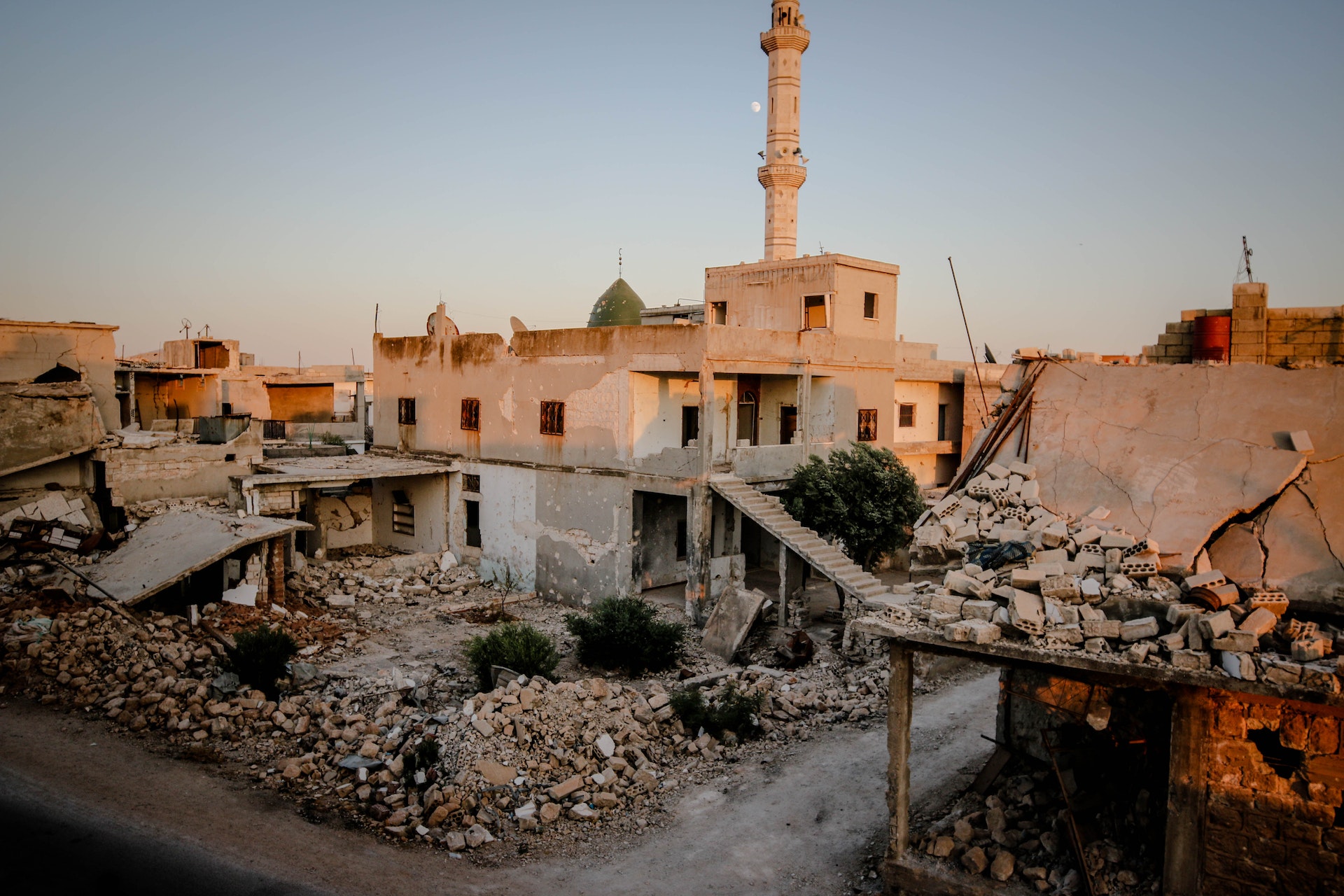
Abandoned buildings in Idlib, Syria.
(Photo courtesy of Ahmed akacha/Pexels)
Unfortunately, diplomacy remains largely disconnected from needs on the ground. The United Nations calls Syria “one of the most complex humanitarian and protection emergencies on the planet.” Extreme poverty haunts nearly every household, and disease runs rampant.
“It’s an ugly, ugly, and continuing-to-worsen situation, particularly with winter coming,” Samuel* with Redemptive Stories says.
Fighting has lessened on the ground. Still, it shows no signs of completely stopping. “It would be easy if two factions were fighting each other. But you’ve got Turkey in the mix, Iran, rebel holdouts, the [Kurds],” Samuel says.
Physical danger is a minor threat compared to the economic challenges Syrians face daily. “A pound of sugar is over $3.50; gas prices are continuing to rise,” Samuel says.
“The greatest war they’re facing now is the economic war. Rising prices continue to make it unbearable for people to live.”
Believers see no light at the end of the proverbial tunnel. “The [only] hope is in Jesus. It feels like a slow decline into uncertainty and nothingness,” Samuel says.
And yet, hope remains. Though many Christians fled Syria during times of heightened crisis, those who remain are committed to reaching their communities for Christ.
“In the midst of this brokenness, God’s doing some amazing things. People are coming to faith and seeing true hope,” Samuel says.
Pray for strength as Syrian believers offer help and hope in Christ’s name. Use this resource from our sister ministry, Prayercast, to further guide your intercession.
“Pray against the powers that continue to negatively affect the stability of the country, the economic situation,” he adds.
*Pseudonym
Header image depicts a little boy sitting in a broken car in Idlib, Syria. (Photo courtesy of Ahmed akacha/Pexels)
Israel (MNN) — An ultranationalist Israeli minister visited the Temple Mount earlier in January, drawing international criticism.
It was the first visit by a high-ranking Israeli official in years due to a tenuous political situation. The site is revered by both Jews and Muslims.
Denise Godwin with International Media Ministries says, “What I find fascinating is the wrestling over where you can pray and who holds a piece of the religious market. It’s just fascinating that in history, these things repeat themselves, whether that’s in Jerusalem or other parts of the world.”
Protests
Critics of Israel’s new government call it far-right or even theocratic. Protests have broken out across the country. Israelis have taken to the streets, holding signs saying “Democracy in danger” and “Together against fascism and apartheid.”
Israel’s new justice minister introduced a reform to allow parliament to override the supreme court.
Prime Minister Benjamin Netanyahu regained power in December with the aid of far-right and ultra-Orthodox Jewish parties.
IMM
IMM recreates biblical stories through film, including many that took place in Jerusalem and surrounding areas. Godwin says, “We have always been very intentional, very careful to focus on basic biblical truths in our stories and actual history that’s provable. We don’t ever talk about politics. We don’t ever talk about other religions.”
“When we create a program in partnership with North Africa, for example, we never mention Islam or anything to do with that.”
Ask God to bring peace and justice to Jerusalem and the surrounding land. Pray the love of Jesus would foster healing.
Header photo courtesy of Wikimedia Commons.
Lebanon (MNN) — Extreme hunger is the next crisis on Lebanon’s horizon. Thirty-seven percent of Lebanese and Syrian refugee children don’t get enough to eat every day. That number will rise to 42 percent in the first quarter of 2023 unless something changes.
Healthy snacks at Horizons International’s School of Hope help take the edge off child hunger. With 140 needy children enrolled, Horizons wants to reach even more in 2023.
“We’re bursting at the seams in our Beirut building, and there are so many more kids that we would love to educate,” Executive Director Pierre Houssney says.

(Photo courtesy of Horizons International)
Horizons began School of Hope to provide Syrian refugee children with an education. In previous years, these kids could not attend regular school in Lebanon. However, due to Lebanon’s financial crisis, much of “the public school system is privatized,” Houssney says.
“Anyone who has a privately-owned building could have a school in it. They can get a public school license and receive funds from the government to run a public school, but it’s still a private business.”
Today, “we have opportunities to take over schools that are going bankrupt,” Houssney says.
“A lot of these public schools are going out of business because the money coming from the government is in local currency, which has crashed.”
Some facilities already have a Gospel-centric program in place. For example, “there is a missionary-run school in the north of Lebanon that is going to shut down this coming summer if we don’t intervene,” Houssney describes.
Others will become Christ-centered Schools of Hope if the Lord wills.
“At this point, we have the human resources side lined up; we have local believers willing and qualified to teach. It’s just securing the location and setting things up,” Houssney says.
Pray about it, and ask the Lord if He wants you to get involved. Dozens of students need sponsors. Find your place in the story here.
In the header image, Syrian refugee students pose for a photo during snack time. (Photo courtesy of Horizons International)
Iraq (MNN) — Iraq’s newly-appointed leaders strengthened ties with the West, meeting ambassadors from the Netherlands and Saudi Arabia last week. Iran casts a heavy shadow over the war-torn nation, making it difficult for Iraq to gain foreign allies.
Fadi Sharaiha with MENA Leadership Center says Iraq is one more pawn for global superpowers to fight over. “It is a proxy for Iran; for Saudi, the U.S., Russia, China; everybody’s there, just like Lebanon,” he explains.
Widespread protests in late 2019 began a series of changes and political upheaval that failed to move toward any semblance of resolution until October 2022.
According to a new report from the United States Commission on International Religious Freedom, the last two years of political chaos hurt believers in Iraq:
Iraq’s political crises have significantly complicated circumstances for religious minority groups and hampered the federal government’s progress in improving religious freedom conditions throughout the country for all communities, including Yazidis, Christians, and other religious minorities … the government demonstrated a lack of “real will” to address the significant and persistent challenges facing religious minorities.
Nonetheless, believers are pressing on. “Churches coming from a non-Christian background are facing a bit of a challenge, but also an opportunity,” Sharaiha says.
“Whenever we [face] a challenge in the Christian faith, it is an opportunity for the Lord to pour His grace, His Spirit out so that people will know this (overcoming the challenge) is not from our strength. It is from the Holy Spirit.”
MLC courses help believers overcome challenges of every kind. More about that here. For example, authorities forced one Kurdish church in northern Iraq to close down.
“At the same time – it’s very interesting – they were taking a course with us on religious freedom. We were praying for them and giving them some tips, and by the end [of the course], the Lord responded, and they reopened the church,” Sharaiha says.
Watch a Kurdish church leader describe the experience here.
Ask the Lord to protect His followers in Iraq. Pray for God’s healing, provision, and restoration.
Header image depicts October 2019 protests in Baghdad, Iraq. Many protestors wanted less influence from Iran in Iraq’s government. (Photo courtesy of Wikimedia Commons)
Syria (MNN) — Twelve years of ongoing war leave little hope for a future in Syria. Conflict on three fronts drives destruction and instability.
Pierre Houssney of Horizons International says the nearly six million Syrian refugees scattered near and far have no incentive to return. “Many of the people that fled had political issues with the (Assad) regime,” he explains.
“The regime has put a black X on entire tribes and entire families [so] if they come back, they’re going to be captured, tortured, or killed.”
Lebanon houses more than a million Syrian refugees, often in dire conditions. Without access to school, refugee kids make prime targets for extremist recruiters.

Refugee kids find a chance to learn at Horizons’ School of Hope. Best of all, each student gets to meet Jesus.
(Photo courtesy of Horizons International)
“If you fill a child’s head with information and teach them to read and write, they’ll be driven toward a career,” Houssney says.
“But if you don’t, then anybody who comes along and gives them some kind of purpose – puts a machine gun in their hand, [for example], and says ‘let’s go’ – [kids are] going to be compelled by that because they don’t have anything else.”
Refugee kids find a chance to learn at Horizons’ School of Hope. Nearly 150 students in this program learn how to read and write. They also learn essential comprehension skills needed for a successful life. Best of all, each student gets to meet Jesus.
Sponsorship makes it all possible. Learn how you can help here.
“Syrian refugee kids need a lot of catch-ups. We’ve had 12-year-olds that never learned how to cut paper with scissors,” Houssney says.
“We had to start first-grade classes for mixed ages between eight- and 12 years old.”
Header image depicts Syrian refugees living in an abandoned factory near Saida, Lebanon. (Photo, caption courtesy of Anthony Gale on Flickr)
Saudi Arabia (MNN) — FMI staff recently visited Saudi Arabia. Bruce Allen says it was an exploratory trip for potential future ministry.
In recent years, Saudi Arabia has issued tourist visas, wanting to be open to the West. Allen says, “I expected to see a bit more opulent wealth in the country from all their petroleum dollars. But that’s not what I saw.” For instance, about a third of all the cars he saw had significant dents.
Allen says, “I’m realizing that one of the reasons they’re opening up to the West is they want to develop tourism and business opportunities. Because they realize that the oil industry for their country is going to dry up soon.”
Local churches
Allen moved around the country freely, interacting with many different people. Everyone greeted him in a friendly manner. He saw fewer women out and about, and those he did see had to wear black veils.
Allen encountered underground churches for foreign workers in the country. He visited three congregations, each with 15 to 30 people.“Some of the congregations that I visited were meeting in a rented apartment building. They converted the living room of that flat to be the worship center. One of the bedrooms in the apartment became the pastor’s office.”
“It’s convenient, but also means that the churches are small.”
Saudi believers must be even more careful, as the government forbids citizens from leaving Islam. Allen hopes to meet more of these people on future trips. “Because if FMI wants to come in and develop partnerships with indigenous church planters, it’s going to take some time to build relationships and trust. We first need to identify the key leaders of Saudi Christians.”
Ask God to give FMI wisdom about future ministry in Saudi Arabia.
(Header photo courtesy of Abdullah Shakoor from Pixabay)
Syria (MNN) — 13 million Syrian refugees have been displaced from their homes by violence and war. Nearly 6 million have fled the country altogether. Now, many countries where Syrians have sought asylum are forcing them to return. But according to Tom Doyle of Uncharted Ministries, Syria now is very different from the one these refugees called home.
Because many of their homes have been destroyed by the war, “many will be coming back to nothing,” Doyle says. “The country is still not stable, and there are major powers calling the shots there. So it’s still super dangerous.”
That’s not to say things are safe for refugees who are no longer in Syria. In particular, some children have lost their families and live on their own. Uncharted Ministries provides food, clothing, and other practical resources when they can, but these kids are still facing desperation.
For example, Doyle says Uncharted Ministries held a pajama drive for refugee kids. Many children only have one set of clothes that they live and sleep in, so pajamas were a comforting and practically essential gift. But during a meeting two years later, Uncharted Ministries workers realized that many of the kids were still wearing the same pajamas, now as their primary sets of clothes.
In short, “poverty is off the charts,” Doyle says.
And yet God can use even the smallest hands to build His kingdom. Jesus’s heart went out to the hopeless, Doyle says, and that’s something believers who work with refugees keep in mind.
“There are meetings happening across Syria where these young children are coming to faith in Christ,” Doyle says. “There are families that are watching over them now, churches that are helping them with whatever they need. The believers there see them as a force for good in the next generation of church leaders. They believe some of the church leaders will be these homeless kids that have come to faith in Christ.”
Already, refugee kids are having a positive spiritual impact on the people around them. Doyle tells the story of one boy who lived in an impoverished community. He started attending children’s ministry events hosted by Uncharted Ministries, and Christ’s joy followed him home. He was suddenly singing songs and happy in the face of despair. Confused and angry at what he didn’t understand, the boy’s father followed him and sat in on the children’s event.
“He was so pierced by the Scripture and by the joy of the children as they sang that he heard the message and gave his life to Christ there that night,” Doyle says. “In the midst of everything, Jesus’s heart goes out to all those who are in desperation.”
Pray for the spiritual well-being of desperate refugees who may be forced to return to Syria. Consider helping Uncharted Ministries meet both their practical and spiritual needs, especially as winter intensifies.
Iran (MNN) — You may associate Iran with persecution, and rightly so. But did you know the Lord is doing amazing things here, too?
“Iran has the fastest-growing Church in the world,” CEO Lana Silk says.
“This is a country that God has His eye on.”
Silk is the U.S.-based CEO of a group formerly known as 222 Ministries. Established in 1991, the group based its name on 2 Timothy 2:2, “which is a discipleship verse,” Silk says.
“We have a strong foundation of discipleship and leadership development. That is the bedrock of what we do.”
While noble, the name ‘222 Ministries’ also creates some confusion. “It’s difficult for people to understand what that is about, and it’s difficult for them to connect it to Iran,” Silk says.
“Earlier this year, God showed us a new name – Transform Iran – which we feel is a better representation of the whole picture of what we do.”

Formerly known as 222 Ministries, Transform Iran will continue what it has been doing for decades.
(Photo courtesy of Transform Iran)
Moving forward, Transform Iran will continue what it’s been doing for decades.
“We are purposefully and constantly training people, equipping people, resourcing them, and then envisioning them to do that for others,” Silk says.
Plus, supported by a partnership with unfoldingWord, Transform Iran added Bible translation to its portfolio. Learn more here.
“More than 50 percent of Iranians do not speak the national language, Farsi, in their home,” Silk says.
“Iran is made up of a beautiful tapestry of all sorts of ethnic minorities. Only four of these people groups have the Word of God in their language. [unfoldingWord] trained our team and got us onto the CCBT method, which we wholeheartedly agree with and love.”
Consider sharing this story on social media to help spread the word. Use the buttons at the bottom of this page to get started.
“The more people know what is going on in Iran and get involved, the better,” Silk says.
Header image courtesy of Transform Iran.
Iran (MNN) — Many people in Iran have seen a very ugly side of the state religion, Shia Islam. They have watched women and minorities be oppressed in the name of God.
Mike Ansari with Heart4Iran says, “They’re asking the hard questions. Is there a God? Am I just an accident on this Earth? What is happening? What is the divine plan?”
Many Iranian Christians think they are alone. When they connect with Heart4Iran through Mohabat TV, they learn how many others Christians live in the country. Ansari says, “They think they are the only Christian families, isolated converts. And then they get to know that there is a huge family of Iranian believers outside of Iran and inside the country, praying for them.”
The power of prayer
Ansari has seen the power of this prayer.
One day, he met two Muslim men who wandered into a church. Their father was dying, and they were sad. Ansari went with them to the hospital and asked if he could pray to Jesus for the man. They not only agreed, but the whole family joined in.
Then, something remarkable happened. Ansari says, “As we prayed, the wife had her hands on the toes of her dying husband, just praying for him. And all of a sudden, she started screaming.”
The sick man moved in the middle of the prayer, despite having suffered a stroke and paralysis. Ansari says, “In about 30 seconds, the patient in a coma opened his eyes. And he sat up and said, ‘Jesus.’ And then he just laid back down.”
A family changed
Months later, the father and his family visited Ansari’s church. They said, “We want Jesus.”
The entire family, including in-laws and grandparents, became Christians. Ansari says, “Their son, the one that had come to church the first time, eventually became our Christianity 101 teacher at the church.”
(Header photo courtesy of Heart4Iran on Facebook)
Iran (MNN) — It has been three months since Mahsa Amini’s death in police custody sparked protests across Iran. Amini was arrested by the morality police for improper hijab and beaten to death.
Three months in — despite police crackdowns, arrests, and even public executions — protestors are not backing down.

(Photo courtesy of Global Catalytic Ministries)
Tens of thousands of Iranians continue to flood the streets in opposition to government brutality. So far, roughly 600 protestors have been killed, including several children.
We asked Reza* of Global Catalytic Ministries: What makes these protests different from previous ones?
“Honestly, I think it’s just the tenacity of the people. They’re not afraid anymore. They are not afraid to die anymore, and that has really changed a lot of things,” Reza says.
“To see their tenacity, to see their willingness to die, to see them getting shot,…even the sayings or the slogans they are using like, ‘We’re not afraid of tanks or bullets,’ — these are sayings that usually they don’t say.”
It has been the country’s largest wave of protests in years. Since the Islamic Revolution in 1979, Iran has had a history of uprisings — that were all crushed.
Reza says, “When I was in the country during these riots in 2009, they brought out the IRGC (Islamic Revolutionary Guard Corps) and they put military law on the streets so the streets were empty. But this time around, they haven’t. Which shows that the IRGC is also very upset with the government, maybe even to the point where some of them are actually going with the people…. That is super unique and distinguishable.”

(Photo courtesy of Global Catalytic Ministries)
Global Catalytic Ministries is concerned about protestors safety and their eternal souls! If they die, do they know Jesus as their Savior?
The ministry is raising $2 million through their campaign called Project Mahsa. The purpose is to support the underground Church in Iran. It would also enable Iranian believers to reach protestors with the Gospel.
“We want to be able to serve them. We want to be able to basically take care of them as they’re rioting and protesting so we can tell them about true freedom, true peace, true joy, and true love,” Reza says.
Learn more about Project Mahsa with Global Catalytic Ministries!
“Pray about it and see how the Lord leads you to help us financially for this special time — this Kairos time — inside of Iran.”
Header photo courtesy of Global Catalytic Ministries.
*Pseudonym
Lebanon (MNN) — Christmas finds Lebanon in a dire economic situation. Corruption in the government has created what the World Bank calls a “deliberate depression.”
According to the United Nations, four of five Lebanese people have become poor. It has led to the most significant migration out of the country since the 1975-1990 Civil War. Many middle-class families now struggle to pay for food and medicine.
Christmas celebration
But Nuna with Triumphant Mercy Lebanon says the ministry is handing out Christmas baskets to 400 families. “No matter what happens around you, no matter the situation, His birth, the birth of Christ, is reason enough to celebrate. So we try to do anything we can to help. Yes, we cater to the physical needs of people. We have food to bring and sweets for the children. We do have to do this. But at the same time, we have a message to bring to people.”
TM Lebanon is also holding Christmas concerts open to the general public. It’s an effort to share the story of Jesus’ birth and His continuing work in the world.
After all, Jesus himself was born into a people in terrible economic straits, ruled mercilessly by cruel authorities.
Nuna says many people in Lebanon are curious about Christianity. “Why do you have joy? Why do you have hope? You have the opportunity to leave Lebanon, yet you’re here to stay and don’t want to leave. Why? And then when we tell them, and they see the joy in our lives, they ask questions.”
“It’s not just a theoretical message. It’s a message that says, ‘We are here for you.’”
This Christmas, pray for many Lebanese to find hope in Jesus.
Header photo courtesy of Triumphant Mercy Lebanon on Facebook.
Jordan (MNN) — During protests in the Middle Eastern country of Jordan, one police officer was shot and killed. Police conducted a raid to catch the perpetrator, and three more officers died.
Demonstrations against high fuel prices have spread across Jordan in recent weeks. The government banned the social media app TikTok after videos of the protests appeared on the site.
Samuel with Redemptive Stories says, “There have been various unions like the trucker’s union, as well as the taxi union, that have been frustrated by rising gas prices and the lack of response by the government to help stave off some of the economic issues that we’re facing. Most of this is occurring in the South of Jordan.”
Things could get worse, Samuel says. Police initially believed small ISIS cells were involved in the shootings. “But there could be more of an organized plot to continue to try to effect change at the top, even so far as the king. If you remember, there was a coup attempt, even just a little over a year ago. Some people believe that may be connected or intertwined with this.”
Churches
Samuel says churches across Jordan have decided to forego Christmas services, mourning the violence. Join them in a prayer for peace and healing.
Samuel says, “This country is, in many ways, a Switzerland for the rest of this region. And it must stay well cared for and at peace. It is our prayer that will continue. But in terms of continued partnership, the southern cities are in most cases unreached with the Gospel.”
Ask God to reach many people across Jordan with the good news of Jesus.
(Header photo courtesy of Jmossjm, CC BY-SA 4.0 <https://creativecommons.org/licenses/by-sa/4.0>, via Wikimedia Commons)
Iraq (CAM) — A young man in Iraq who had left Islam to follow Christ recently began teaching school in an area where children of Islamic State (ISIS) fighters were living.
Kassim Mahdi* had grown up watching ISIS militants destroy buildings and lives in his hometown, the leader of a native ministry said.
“He saw many of his friends and relatives killed, and he did not believe that God sent His messengers in this way,” the leader said.
Believing only Satan would send people to inflict such harm, Mahdi became an outspoken critic of Islam and was targeted as an infidel who must be killed.
“He did not know anything about Christianity, but this accusation of being an infidel aroused his curiosity to know more about Christ,” the leader said.
“He fled with his family to a camp for the displaced, where he obtained a Bible, got to know the Lord, and surrendered his life to Christ.”
Later obtaining a government position as a teacher, he was assigned to the area where captured ISIS fighters had been relocated. Many of his students were children of the ISIS militants.

Refugees from Iraq rely on local missionaries to keep their families alive with food, blankets, diapers, medicines, school supplies, and more. In some areas, workers also provide aid to nationals impoverished by the pandemic, economic collapse, or war, and poor children and refugees receive Christmas boxes.
(Photo, caption courtesy of Christian Aid Mission)
“The Lord opened many doors for him to deliver the message of the gospel and the love of Christ during classes to these children who grew up amid violence and the ideology of hate,” the leader said. “Some of the kids accepted Christ and are learning Bible verses in secret.”
Local missionaries see Muslims come to faith in Christ through Bible distributions, social media and a mobile medical clinic. Earlier this year, workers with the clinic prayed for a girl who was unable to walk due to a brain injury.
“On our last visit,” the leader said, “she received us at the entrance to the village, walking normally, and was jumping for joy, saying, ‘For many years I have been asking for intercession from false gods and prophets, but when I came to Christ, He alone healed me.’”
Local missionaries are bringing the love of Christ to hurting people throughout Iraq. You can help them in this task through Christian Aid Mission.
*Name changed for security reasons
Header and story images courtesy of Christian Aid Mission.
Lebanon (MNN) — It’s been over six weeks since Lebanon’s president left office. The parliament has failed to elect a new one, despite meeting nine times.
This isn’t the first time Lebanon has gone without a President, says Camille Melki with Heart for Lebanon. “In fact, this is the third time we have had an extended vacuum in the top role of our Lebanese leadership. Now, the difference this year from all others is that we are also without a prime minister and without a ruling government. So basically, we have a vacuum in all the executive levels.”
“We have a caretaker government that is not allowed to convene by the constitution.”
Parliament can only meet to elect a new president. So nothing is getting done in Lebanon. The World Bank and the International Monetary Fund can’t aid the country. Melki says, “Think about it in a US context. All lights are off at the White House. All lights are off anywhere else except Congress. That is only allowed to convene to elect a president.”
Economic troubles
In 2022, over 65 percent of all Lebanese households could not pay for heating. Over 55 percent couldn’t afford clothing or education. Over 40 percent couldn’t afford medicine or transportation.
Despite this, less than five percent of Lebanese households received government assistance. Melki says, “We have doubled the refugee families that we serve, as well as the Lebanese families that we serve. We have doubled the student population, which is still a small drop in the bucket. We are loving and caring for 5000 roughly 5000 families every month. That’s an average of 28,000 individuals.”
Pray the love of Jesus would touch many lives in Lebanon. And ask God to strengthen the staff at Heart for Lebanon. Melki says, “When there are so many needs around you, caregivers get tired. They see, day in and day out, the same stories. They experienced the same hardships. It makes us physically and emotionally tired.”
Header photo courtesy of Heart for Lebanon on Facebook.
Iran (MNN) — Global leaders will vote tomorrow on ousting Iran from the United Nations’ top women’s rights body. Although it consistently has one of the lowest gender equality scores globally, Iran started its four-year term on the Commission on the Status of Women (CSW) in March.
Meanwhile, protests continue in the streets of Iran despite the regime’s increasing crackdown. On Monday, the government publicly executed the second protestor in five days. According to BBC News, 23-year-old Majidreza Rahnavard was put to death 23 days after his arrest.
“The riots we’re seeing inside of Iran have so much tenacity because it’s about a human rights issue,” Reza* with Global Catalytic Ministries says.
“Everyone in the country has a sister, a mother, a daughter affected by this.”

The people of Iran are seeing the hypocrisy of Islamic leaders and are beginning to question the religion itself…
(Photo, caption courtesy of Global Catalytic Ministries)
The movement quickly gained international support after 22-year-old Mahsa Amini’s death in September. TIME Magazine readers chose women protesters in Iran as Person of the Year and Heroes of the Year earlier this month.
“This is unique, what TIME did. If I remember correctly, Iran has a slight tilt in population; there are more women than men,” Reza says.
“Over 40 million people are affected by this right now.”
Global Catalytic Ministries is raising $2 million to support the underground Church in Iran. Help GCM make disciples in the darkest places on earth.
Pray the Lord will use Iran’s chaos to introduce many people to Christ. “Iran is super volatile right now; we’ve never seen Iran like this ever,” Reza says.
“The government is very much [aware] that they’re losing power. Now, where’s it going to lead, or what’s going to happen? Honestly, only God knows.”
*Pseudonym
Header and story images courtesy of Global Catalytic Ministries.
Palestine (MNN) — Bethlehem Bible College will explore rulers of ancient Palestine in a new course: Herods in the Holy Land.
The course will cover Herod the Great and also his sons and grandsons. The Herods ruled in the 1st century BC and the 1st century AD, including the time of Jesus’ ministry.
Haytham Dieck, the course instructor, says, “They had a wide impact, especially in the Bible. Each one of them did something in some way or another. Truly, there is a Herod’s heritage. Of course, the biggest heritage is of Herod the Great, his building, and his legacy.”
Herod the Great built a temple in Jerusalem that was even larger and more magnificent than Solomon’s. He also constructed the Herodium, a lavish palace built into a small hill.
Herods vs. kingdom of God
But he treated his people brutally, slaughtering Jewish scholars and even members of his own family. The magi visited Herod the Great on their quest to find Jesus. His fear of losing power led to a massacre of children in the region.
His son Herod Antipas followed in his footsteps. Dieck says, “He ordered the beheading of John the Baptist. Jesus called him a fox (Luke 12:32), and even in the trial of Jesus, the Herod he met was Herod Antipas. He mocked Jesus.”
The course contrasts the Herods with the kingdom of Jesus. The Herods constructed buildings, but Jesus builds a people. The Herods ruled through force, But Jesus through love.
The course goes on to cover Herod Agrippa. Dieck says, “He died in Caesarea when people start to glorify Him as a god. And he accepted that. He did not say anything. In a way, he was happy to know that. And then suddenly, he was struck down. And according to the Bible, worms actually ate him.”
“For this kind of Kingdom, eventually the ruler wants to stay here forever. They want to be glorified as a god.”
Paul encountered Herod Agrippa II, who expressed interest in the news of Jesus.
Header photo courtesy of Bethlehem Bible College.
Iran (MNN) — Tensions remain high in Iran following last week’s protestor execution. “This is a huge escalation,” Reza* with Global Catalytic Ministries says.
“We are at a tipping point inside of Iran.”
Passionate activists vow to remain in the streets despite the government’s intensified crackdown. “It’s going to get worse because anger and grief are mobilizing families, friends, and acquaintances of the killed protesters,” an Iranian university student told DW.
Comprised of former Muslims, GCM disciples believers from a Muslim background in Iran and worldwide. More about that here. Reza and his cohorts have been monitoring the situation carefully, constantly communicating with believers on the ground.
“Iran is a powder keg waiting for something to ignite it, and this (protest movement) might be it,” Reza says.
“[When] riots were happening back in September, I said, ‘Until the IRGC, the Iranian Revolutionary Guard Corps, comes out and starts to stop this, we won’t see what the riots are made of,’” he recalls.

The underground Church in Iran isn’t stopping or giving up in the face of the chaos.
(Photo, caption courtesy of Global Catalytic Ministries)
An international response could affect what happens next in Iran. “It’s really important to see what the (global) community does because if [it] doesn’t do anything, doesn’t show how evil and wrong this is, Iran will continue doing [these executions],” Reza explains.
“They’re going to do everything in their power to stay in power, which is a great fear tactic. This is a great way to control people because [they] will be terrified to protest against the government.”
Protestor execution #1
Authorities hung 23-year-old protestor Mohsen Shekari on Thursday, the first known death penalty execution since demonstrations began in September. Ongoing mass protests signify the most significant uprising in Iran since 2019.
“It (Shekari’s execution) sent shockwaves [throughout] the country. People are so shocked that a very young man [was] forced [to confess],” Reza says.
“Even after he was executed, they showed his false confession, [and Shekari had] bruises on his face.”
Today, more than a dozen protestors that received death sentences could go the same way as Shekari. He was charged with “moharebeh,” a Farsi phrase that means “waging war against God.”
“Iran is an Islamic country [with] the rules and laws of the land based on the Quran. It’s also a theocracy where the Supreme Leader hears from Allah Himself and then runs the country based on what he’s heard,” Reza says.
“They’re using Islamic law to execute people.”
These laws also keep foreign powers at bay. While acknowledging the execution was “very troubling,” the U.N.’s top human rights official admitted his powers were limited.
“I can only … call on the authorities to immediately institute a moratorium on the death penalty, to release the ones who were arrested in connection with the protests, and to work towards the abolition of the death penalty,” he told reporters.
We can’t change Iran’s leaders, but we know the God who holds our world in His hands. “It’s a very special time inside of Iran; it is a kairos moment: ‘for such a time as this,’” Reza says.
“Inside of Iran is a perfect storm: social unrest, economic unrest, political unrest, and religious unrest. And God is moving so powerfully through dreams and visions. People are seeing ‘the man in white’ and coming to Christ,” he continues.
“Pray that this continues to happen, that God’s Holy Spirit continues to move mightily inside of Iran.”
*Pseudonym
Though it’s difficult for people not experiencing religious persecution to understand the situation, it’s important to note that Iran’s situation is about to worsen. (Photo, caption courtesy of Global Catalytic Ministries)
Jordan (MNN) — While the Syrian refugee crisis has been on the metaphorical “back burner” for several years, it hasn’t gone away.
A mother washes her child in a makeshift settlement in Idlib, Syria.
(Photo courtesy of Ahmed Akacha/Pexels)
Hostility towards refugees grows in host countries like Lebanon as economic conditions deteriorate. Mass cholera outbreaks in refugee camps apply even more pressure.
“It’s a different case in Jordan for a few reasons,” MENA Leadership Center’s Fadi Sharaiha says.
“One, Jordanians are used to refugees. The second thing is that in Lebanon, they have them in refugee camps, while in Jordan, you can be in a refugee camp or integrate into the culture and the community.”
Last year, Jordan gave the highest amount of work permits to Syrian refugees since 2016. Worsening conditions in Syria provide little incentive for refugees to return voluntarily.
Instead of forcing Syrian refugees back into Syria, Jordan makes the process optional. “That’s why you have only a few thousand going back,” Sharaiha says.
“I don’t think most of them (Syrian refugees) are planning to go back. I’ve seen them putting down roots in Jordan.”
Opportunities to succeed exist in Jordan, but it’s not always easy for refugees to find them. That’s where MENA Leadership Center comes in.
MLC helps local churches connect with refugees and support them in their journey. Believers introduce the hope of Christ along the way.
You can help by sponsoring the training for a local church leader.
This ministry is not limited to Syrian refugees. “Around 30 percent of the people who live in Jordan are refugees. They’re coming from Syrian origin, Iraqis, some Yemenis, and some Sudanese, and they have now become a part of the economy,” Sharaiha says.
“It’s funny, but I sometimes miss the Jordanian accent whenever I go to Jordan. What you hear is a Syrian, Iraqi, and Lebanese accent, but you rarely hear the Jordanian accent.”
Header image is a stock photo courtesy of Yazan obeidat/Unsplash.
Lebanon (MNN) — The fallout from multilayered crises continues in Lebanon.
People are leaving the country in droves, Lebanese experts warn, taking their resources and job skills with them. The departure doesn’t automatically lead to disaster; remittances make up 38 percent of Lebanon’s GDP.
However, according to a new World Bank report, Lebanese ex-pats send less money back to their homeland than in previous years.
For those in Lebanon, surviving today’s devastation often takes priority over investing in future gains.
“We’re trying as much as possible to keep people educated. And this is hard because the kids are not motivated,” Nuna of Triumphant Mercy Lebanon says.
“When they see what’s happening around them, they don’t plan for anything in the future, so they’re not motivated to learn.”
A steep economic crisis and currency collapse has pushed nearly 80 percent of Lebanon’s population into poverty. Refugees suffer even more, and there’s no end in sight to despair.

(Photo courtesy of TM Lebanon)
“We are in a long-term crisis. I know people get tired [of giving], and they say, ‘Okay, it’s been years we’ve been helping with refugees.’ But the reality is that it’s getting even worse,” Nuna says.
And yet, hope remains. People find Jesus when they reach the end of themselves. Read one example here.
“When they are with us, we try to share the hope of Christ. People are very, very open [to the Gospel] because of the help, because of our smile, and our love for them,” Nuna says.
“I’m so happy to report many baptisms have happened in the last couple of months.”
Help Triumphant Mercy Lebanon share the Good News of Jesus through education.
Header and story images courtesy of Triumphant Mercy Lebanon.
Iran (MNN) — Iran’s Attorney General says the country will review its mandatory hijab law. He also said the infamous morality police had been abolished, though the state media contradicted that statement.
Protests have raged across Iran since September. The morality police accosted a young woman for not wearing the hijab correctly, and she later died in custody.
Denise Godwin with International Media Ministries (IMM) remains skeptical. “Just a couple of weeks ago, they started killing young people who have protested. Iran has a history of saying what the international community wants to hear. And that’s regarding freedom. That’s regarding politics and other things to get what they want.”
Iranian Christians
Despite the danger, Christians are finding ways to help. Godwin says, “I know there are some organizations who are sending Iranian doctors and nurses or people who can get inside the country in to help protesters who are being injured.”
“Because if they go to the hospital, they’re arrested and not treated.”
About 60 percent of people in Iran are under 35. They know how to use social media and circumvent government restrictions. Pray many will hear about Jesus through these channels. Some will encounter IMM dramas that portray biblical stories through film.
As the Islamic government tries to crack down on protests, more and more Iranians are abandoning Islam. Godwin says, “In a country that declares itself 99 percent Islamic, only around 30 to 35 percent will claim Islam. So we’ve got a large culture of people who are not satisfied with the religion and the official storyline that’s been given to them.”
Pray for the Christians helping protesters in Jesus’ name. Godwin says, “They’re dealing with a crafty government that will do one thing and says another to the world at large.”
The header photo shows a protest at a university in Iran. (Photo courtesy of Darafsh, CC BY-SA 4.0 <https://creativecommons.org/licenses/by-sa/4.0>, via Wikimedia Commons)
Qatar (MNN) — The U.S. soccer team defeated Iran 1-0 on Tuesday, advancing to the knockout stage of the World Cup. But a shadow hangs over the games, held in the small Middle Eastern country of Qatar.
Todd Nettleton with The Voice of the Martyrs USA says the economy of Qatar is powered by immigrant workers. “Many come from Asia and Africa. And many of those are Christians. Most of the talk about the World Cup as it relates to human rights has been about the workers who were hired to build the stadiums, hotels, roads, and everything needed to put on the Cup. And the working conditions were very difficult and bad for those people.”
Human rights advocates have also criticized Qatar for its harsh treatment of women and LGBT people. Women in Qatar cannot leave the house without a male escort. To marry, work in a government job, or access healthcare, they first need male permission. LGBT people have often been arrested without cause and assaulted by police.
Religious persecution
Nettleton says Christians have a similar target on their backs. “Qatari citizens are predominantly Sunni Muslim. They are expected to remain Sunni Muslim until they die. Outreach to them is closely watched and is forbidden. Anyone who is a Qatari Christian must be very secretive about that.”
“There are places where foreign Christians can worship in Qatar. But they cannot evangelize.”
The danger comes from the government but also from their own families. Ask God to give them boldness as they share Jesus’ story.
Pray also that they have access to Bibles, whether in paper or digital form. Nettleton says, “The Voice of the Martyrs is also working with Qatari Christians, especially converts who face persecution, maybe being kicked out of their families. So you can respond practically through ministries like The Voice of the Martyrs.”
The header photo shows a scene from the World Cup in Qatar before a match between Korea and Uraguay. (Photo courtesy of Korea.net / Korean Culture and Information Service [Photographer name], CC BY-SA 2.0 <https://creativecommons.org/licenses/by-sa/2.0>, via Wikimedia Commons)
Lebanon (MNN) — As Lebanon’s economy falls apart, the education sector continues to suffer. That makes the work of the Lebanese Society for Educational and Social Development (LSESD) even more important.
Beirut Baptist School and the SKILD special education program offer an inclusive environment for kids with learning differences. Wissam Nasrallah says, “Providing education, which is the best investment we can make for the future, is crucial and necessary. The role of schools like Beirut Baptist School is essential, not only from an educational perspective but also from a spiritual one.”
“As our country is falling deeper into the abyss, more and more people are asking questions or facing massive doubts about life.”
Most students at these schools come from non-Christian families. Nasrallah says it’s a great opportunity to demonstrate Jesus’ love. “People all around us are desperate for hope. But they are also very thirsty for truth. And this is where LSESD, throughout its six ministries but also the 50 churches that we work with, needs to be present, to step up, and be faithful witnesses.”
Ask God to strengthen and encourage the staff.
Education for refugees
LSESD provides education to many kids who otherwise would not have access. This is true not only regarding special education but also among Syrian refugees. LSESD’s MERATH arm operates eight non-formal education centers that mostly serve refugee kids.
Nasrallah says it’s all done with the support of the local churches. “So it’s very valuable for these families and children to learn and grow. But they also have a community that cares for them, loves them, and knows them by name. This is what the local church can offer through these programs.”
Support this work at mebo.org.
Header photo courtesy of LSESD on Facebook.
Palestine (MNN) — The Gaza Strip is surrounded by Israeli territory, except for a small border with Egypt. Ever since the conflict erupted in 2006, civilians living there can’t easily get in or out. Read more here.
To make things more difficult, Israel controls the airspace overhead and the waters offshore. Yousef AlKhouri of Bethlehem Bible College, who grew up in the Gaza Strip, explains. “There are many goods that are not allowed to enter Gaza, or, like vegetables and flowers, to be exported out of Gaza. These are the main exports from Gaza. Gaza is also on the Mediterranean Sea, so its economy relies heavily on fishing. However, Israel controls the water and doesn’t allow fishermen to go past six miles, sometimes only three miles.”
“According to many international organizations, for good fishing to happen, it has to be over 12 miles into the sea or ocean.”
AlKhouri’s family only gets four hours of electricity daily, and drinkable water is in short supply. He says, “I have two nephews and one niece. The oldest is nine years old. And the youngest is four years old. Neither has experienced in their lifetime 24 hours of electricity or clean tap water. In fact, the statistics say that 50 percent of Gaza children wish not to live.”
Pray for the healing and hope of Jesus in Gaza.
(Header photo courtesy of Marius Arnesen, CC BY-SA 3.0 NO <https://creativecommons.org/licenses/by-sa/3.0/no/deed.en>, via Wikimedia Commons)
Gaza Strip (MNN) — If you line up a row of dominoes on edge and then tip the last one forward, what happens? The whole row falls as the momentum of one carries on, right? That’s exactly what happened – in a spiritual sense – with Shareen and her family.
Uncharted Ministries’ Tom Doyle says he and his wife JoAnn met Shareen two decades ago in a refugee camp in the Gaza Strip. “Later, we were privileged to pray with her to faith in Christ,” he says.
You can read Shareen’s full story in the Doyles’ book, Women Who Risk.
Following Jesus in the Gaza Strip is not easy, and it’s even harder when you feel alone. Like many Muslim-background believers, Shareen was the only Christian in her family for years.
“When someone comes to faith in Christ, we automatically assume there’ll be more [who also turn to Jesus for salvation] …but it doesn’t always happen in our timing,” Doyle says.
One day, everything began to change. Shareen’s family members started turning to Christ one by one.
“When we told her story [in Women Who Risk] and people started to pray, dominoes started to fall. Through this one believer, her husband came to faith, then her sister; the children, her (Shareen’s) parents, her husband’s parents,” Doyle says.
“It’s God’s divine domino effect!”
The movement didn’t end with Shareen’s family. Today, “we’re hearing about people from a Muslim background coming to faith weekly in Gaza. It’s super dangerous there, but they are willing to count the cost,” Doyle says.
Connect with Uncharted here to learn more.
“Jesus is moving in places like Gaza, but it is not easy for the brothers and sisters. They’re like the Thessalonian Christians – immediately they were persecuted, but they stood strong,” Doyle says.
“We need to pray for them.”
Praise God for the changes taking place in the Muslim world! Pray new believers will grow in their knowledge of Christ.
Header image is a representative stock photo courtesy of Bradyn Trollip/Unsplash.
Lebanon (MNN) — Lebanon has begun vaccinations against cholera after the first outbreak in almost 30 years. So far, health workers have vaccinated over 15,000 people.
But thousands more have fallen sick, many of them Syrian refugees. Pierre Houssney with Horizons International says, “It’s a threat to everyone who lives in Lebanon; anybody who eats vegetables is potentially exposed to cholera. Because a lot of the agricultural community is mostly run by Syrian refugees. As we have cholera spilling over the border from Syria into the Bekaa Valley, there’s a lot of uncertainty.”
Refugee living conditions
The Syrian refugees in Lebanon don’t have good waste disposal systems, and flooding can bring wastewater into the tents. Refugees must build their homes out of whatever stray materials they can find. Houssney says, “They’re made out of billboard plastic that’s been pulled down from somewhere, or vinyl tarps and things like that. It’s a patchwork. They’re not waterproof. They have kitchen fires all the time because they’re trying to cook in such structures.”
The response from the Lebanese government has been slow. Houssney says, “They’re more concerned with squabbling over who will be the next president than actually doing anything that would benefit the Lebanese people. But even more so, the Syrian people. It just seems like nobody in power cares about them anymore.”
“Even if there were a functioning government in place, there wouldn’t be a quick response because it’s not a priority.”
Horizons works with a network of 120 churches in Lebanon. They distribute food, medicine, and winterization materials to those in need. Pray their love will reveal Jesus.
You can support their work here.
Header photo courtesy of Horizons International on Facebook.
Iran (MNN) — The protests in Iran have captured headlines since September. But the increasing persecution of Iranian Christians has gone largely unnoticed.
That’s on purpose, says Nazanin Baghestani. She works with Heart4Iran’s Mohabat TV. “We’ve been hearing from inside the country how the government is just raiding houses. They’re finding believers, and they’re unexpectedly barging into the houses and confiscating everything, their belongings, the furniture.”
After the raids, police warn Christian not to tell anyone and punish them more harshly if the word does get out. They don’t want to look bad in the international media.
The police see Christianity as a threat to the stability of the Islamic Republic. Baghestani says, “They say you’re not worth anything. You should not you should be a beggar because you become a Christian. You don’t deserve to have this stuff.”
“They say, ‘You are trash. You should be on the street.’”
The ultimate goal? Making Christians leave Iran. Baghestani says, “They tell them, ‘Leave the country, or we will imprison you for 10 years.’ They say Christians will be a bad influence on their neighbors. They’re going to ‘Christian’ their family or ‘Christian’ the neighborhood and the community. So they don’t want them there.”
To avoid prison, many Christians have already left the country. Baghestani says, “Some are warned that the authorities have raided their houses. So they leave the country quietly.”
Thank God for the faithfulness of Iranian Christians. Ask God to strengthen them as they face rampant persecution. Baghestani says, “We must be aware of persecution inside Iran, inside families, and even remote villages.”
Header photo courtesy of Heart4Iran on Facebook.
Iraq (MNN) — Iraq and Lebanon: two countries headed down a chaotic path. Both governments struggle to function and pass legislation. Political parties tied to ethnic and religious groups vie for control. In both countries, Iran-backed militias hold more power than the military.
Samuel, with Redemptive Stories, says, “I believe there are many parallels between Lebanon, Syria, and Iraq because the nation-state borders have been drawn around them by colonial nations around 100 years ago. Those continue to stand.”
Ethnic groups thrown together by these borders often find it difficult to make their own voices heard and cooperate. Samuel says, “It’s an ongoing process that has only been successful if there has been a strong hand, i.e., dictator or authoritarian government.”
Youth
Both countries struggle to take steps forward due to government corruption. Outside countries constantly interfere in their political processes. Samuel says, “I think that the instability, as well as the lack of hopefulness that many Iraqi young people have faced, has opened the door. They’re opening their eyes to opportunities for truth, particularly in the South, which has been much more unstable than the North.”
“I think what we’re seeing is a time of harvest, particularly among the Shia community in the South.”
Pray the churches in Iraq and Lebanon will grow and flourish, revealing the love of Jesus.
The church in Iraq particularly faces persecution by larger religious groups. But Samuel says, “They’re boldly proclaiming the Gospel repeatedly to all peoples and all backgrounds or ethnic minorities or majorities in their communities. God is doing some pretty amazing things, particularly in the south.
(Header photo courtesy of Photo by Lara Jameson: https://www.pexels.com/photo/middle-eastern-countries-in-a-world-map-8828624/)
Lebanon (MNN) — Lebanon remains leaderless after the sixth failed attempt to elect a new president. It’s been nearly a month since former president Michel Aoun’s term ended, and the parliament has yet to agree on his replacement.
“We have lost all hope in the government. I didn’t even pay attention to the news headlines because that’s how certain we are from history that, ‘Oh, they’re not going to elect a president,’” says Pierre Houssney, Executive Director of Horizons International.
Few Lebanese hold any hope for lasting change or reform in this election cycle. “We’re used to long periods not having a president,” Houssney says.
It took two and a half years and a series of political deals behind closed doors for Aoun to be elected in 2016.
“The voting that happens in the parliament gets reported internationally. But the actual power structures that decide the elections are completely outside those government structures,” Houssney says.
“That’s how far the corruption has gone.”
Meanwhile, the Lebanese people suffer. Unlocking billions in international aid depends on concrete reforms in government.
Horizons works alongside Lebanese churches to meet physical and spiritual needs. As a result, thousands of refugees and Lebanese citizens have proclaimed faith in Christ. More about that here.
As the Arab League country with the most freedom of religion, Lebanon is a critical Gospel gateway to the rest of the Middle East. “Pray and act so the global Church would [realize] how important things are for the body of Christ in the Middle East right now,” Houssney says.
“Things are being decided for the next century in this geographical area.”
Lebanese Caretaker Prime Minister Najib Mikati leads a cabinet with extremely limited powers. The header image depicts Mikati meeting with the United States Secretary of State Antony J. Blinken in September 2022. [State Department photo by Ron Przysucha/ Public Domain]
Lebanon (MNN) — Lebanon’s economy has been in freefall since 2019, pushing nearly three-quarters of the population into poverty. Education is the latest victim in Lebanon’s collapse.
“Education has taken a big setback. Many people cannot afford school,” Nuna with Triumphant Mercy Lebanon says.
“Many kids in private schools have now been obliged to go to a public school, and they’re not happy.”

(Photo courtesy of Triumphant Mercy Lebanon)
Private schools have long been the educational “norm” in Lebanon, schooling 60 percent of the country’s 1.25 million students. However, in the 2020–2021 academic year, 55,000 students shifted from private to public schools, putting more strain on another failed state system.
“Usually, public schools are not so great because the teachers’ salaries are not high. So, people are going to spend time there, not educate kids,” Nuna says.
Triumphant Mercy opened its first learning center in a refugee camp in 2013. Now, it operates four centers helping 500 kids.
Usually, the classrooms fill up with refugee children, but “we have seen an increase of Lebanese people coming to our centers because they’re not able to afford regular schools,” Nuna says.
Meeting a practical need like education segues naturally to spiritual needs and sharing the hope of Christ. “People know who we are. We’re not hiding our identity, so they know we are Christians,” Nuna says.
“When they see we are genuinely trying to help them, it’s very easy to open up and talk about the Gospel.”
Based in Beirut, Triumphant Mercy is not immune from Lebanon’s economic woes, and they need your help to keep programs going. You can give safely on Triumphant Mercy’s website.
“We need help to [help others],” Nuna says.
“We’re trying to do as [much] as possible, but we cannot be there for them (needy families) every month because we cannot afford it.”
Header and story images courtesy of Triumphant Mercy Lebanon.
Iran (MNN) — Judges in Iran have sentenced five protestors to death since Sunday, accusing them of “enmity against God.” At least 20 people may be facing similar charges, Iran Human Rights warns.
According to Human Rights Activists in Iran (HRANA), 341 protesters have now been killed in the unrest sweeping Iran, including 52 minors. At least 15,820 people had been arrested as of Sunday, and some reports indicate that over 20,000 are currently incarcerated in crowded cells.

Help us help the voiceless in Iran.
(Photo, caption courtesy of Transform Iran)
Despite the regime’s increasing crackdown, women remain on the frontlines of Iran’s protest movement.
“The current dynamics in Iran are exactly where our heart is – to help women find the courage and the audacity to stand up and say, ‘No, I want more. I want more, and I’m worth more,’” Transform Iran CEO Lana Silk says.
The coals of an anti-hijab movement smoldered for years. In September, Mahsa Amini’s death in police custody stirred those coals into a nationwide inferno. Today, unjust government responses add fuel to the fire.
“The hijab is a symbol; it’s all about silencing and hiding,” Silk says.
“These women are saying, ‘We don’t want to be hidden anymore. We have a voice, and we want to use it.’”
How to help women in Iran
Transform Iran’s Pearl of Persia ministry serves women on the lowest tiers of society. Iran holds more than five million drug addicts, victims of sexual abuse, and prostitutes.
“We disciple [these women] weekly over a year; we give them access to trauma counseling – here’s how you deal with the stuff that’s happened to you in the past; here is a biblical outlook on who you are in terms of your Maker – and then we find a way out for them,” Silk says.
“We’re building a section on our website that educates people on the background of Iran. If you want to know ‘what is life like as a woman in Iran? How are girls being educated? What’s being put into their heads?’ – all that will be available for reading.”
Find your place in the story here. “Could you partner with us in prayer?” Silk requests.
“This is a supernatural battle. We rely on prayerful support that covers, protects, gives us wisdom, and anoints the work.”
222 Ministries rebranded as Transform Iran earlier this week to better reflect its mission. More about that here.
Header and story images courtesy of Transform Iran.
Iran (MNN) — A new wave of unrest sweeps Iran as demonstrators mark the third anniversary of “Bloody November.”
The government cracked down severely on protests in 2019, killing 304 people. Aid groups say at least 326 people have died in the current turmoil, including 43 children.
The United Nations will hold a special emergency session on Iran next Thursday. Mayra Yazdari with Heart4Iran says UN attention is essential for two reasons.
“First of all, it shows that finally, leaders of the free world are standing for the values they claim they stand for. Second, it shows they are taking this revolution more seriously. That’s what people from Iran are asking,” Yazdari says.
“We already have lost too many lives, including kids and teenagers, and more than 14,000 lives are at risk.”

(Photo courtesy of Heart4Iran)
Judges sentenced the first protestor to death on Monday, followed quickly by additional sentences yesterday. “That’s the regime’s way of oppressing opponents to remain in power,” Yazdari says.
“In 1988, authorities executed three- to five-thousand political prisoners across the country. The current regime president, Ibrahim Raisi, was a central player in the mass executions during those years.”
Heart4Iran injects the hope of Christ into national conversation through Mohabat TV. Learn how you can help here.
“Mohabat TV and Heart4Iran have focused on Iran incidents in the past two months. In the live programs, people can call the host and talk on the air or connect with mentors and counselors,” Yazdari says.
Most importantly, pray. “Pray that our people achieve freedom and liberty and that the world leaders would change their policies from supporting the oppressor to supporting the oppressed,” Yazdari requests.
“[Pray that] criminals would be held accountable for their crimes against humanity so that justice would be served.”
Header image depicts protestors in Iran. (Photo courtesy of SalamPix/ABACA/picture alliance via Heart4Iran)
Lebanon (MNN) — A cholera outbreak in Lebanon is hitting Syrian refugees the hardest, with hundreds of cases reported in the camps.
The World Health Organization says the bacteria first appeared in Afghanistan in June and has spread to Pakistan, Iran, Iraq, and Syria. It’s the first appearance of cholera in Lebanon in 30 years.
Heart for Lebanon
In 2018, Heart for Lebanon opened up a ministry in Lebanon’s Bekaa Valley. Part of the building was dedicated to medical care.
Tom Atema says the ministry has now expanded the medical portion, adding a second floor. “On the first floors, as the refugees come in, they will be triaged. We find out what they are there for.”
Upstairs, the ministry operates a full-fledged dental unit with an x-ray machine. Atema says, “In the other room is a medical area to find out what their problems are and if we can solve them with simple medicines.”
If the clinic can’t treat patients, including those with cholera, they arrange for them to go to another doctor or the hospital. Atema says, “It’s just one more level of service of need that they have that we can provide. And we must provide it because really the people we’re working with nobody else is working with.”
Ministry
As they work, the team talks to their patients and gets to know them. Atema says, “We want to strengthen that relationship. Ultimately, we want to talk to them about the great physician, who is Jesus Christ.”
Pray for wisdom for the Heart for Lebanon team. “There’s a lot of Syrian refugees in the Bekaa Valley. We can’t treat all of them in this clinic. It takes wisdom for our team to say, ‘Yes, this is something we can handle, this is something we can help you with,’ Or to say, ‘This is serious, we can help you get to the right resource.’”
Header photo courtesy of Heart for Lebanon.
Lebanon (MNN) — Lebanese President Michel Aoun ended his term last week, but Parliament has yet to pick a replacement. Some fear the power vacuum could delay promised help from the International Monetary Fund.
Wissam Nasrallah with the Society for Education and Social Development (LSESD) says, “While we’ve had vacancies in the presidency before, this is the first time the government is not empowered to take decisions, as it is a caretaker government. Most likely, we’re going to face a prolonged power vacuum.”
“This country is going through hyperinflation, massive devaluation of the currency, and an exodus of people.”
Lebanese have mixed feelings about Aoun, a Maronite Christian. Some saw him as a defender of the Christian community. Others criticized him for participating in the 1975-1990 civil war in Lebanon.
Nasrallah says, “His presidency was marked by a lot of turmoil and changes in the country. Lebanon is going through an unprecedented crisis. He’s not the only one to blame for that.”
Lebanon’s future
Nasrallah expects even more people to leave Lebanon in the coming months. Nasrallah says, “If you want to be optimistic, we might say some of some people could return when things get better. But many of those leaving are fleeing despair and leaving the country with a lot of hurts. I’m not too optimistic about a lot of them coming back.”
The more that leave, the harder it will be to rebuild Lebanon’s economy in the future.
LSESD provides education for kids who otherwise wouldn’t have access to it. Nasrallah says, “Especially within the relief and development arm, MERATH, we have about eight informal education centers throughout the country that cater mainly to Syrian refugee children. These programs are operated through the local church.”
In a situation that seems hopeless, pray the care of Lebanese Christians will point to Jesus.
To support LSESD’s work, visit mebo.org.
The header photo shows kids at Beirut Baptist School, run by LSESD. (Photo courtesy of LSESD on Facebook)
Iran (MNN) — The Iranian parliament has voted in favor of the death penalty for people arrested during nationwide protests. So far, 15,000 people have been arrested. Out of 290 seats, 227 voted in favor of the action.
What’s behind such a brutal strategy? Denise Godwin with International Media Ministries (IMM) says, “The threat for them is a threat to power. The threat for them is a threat to religion. They see it as a threat to the way of life. But I think what we see when we look in from the outside is people who are ready for freedom and choice.”
The unrest began in September after a 22-year-old woman died in police custody. She was detained for wearing the hijab improperly.
The protests have all grown from this one incident, Godwin says, focusing on freedom for women especially. “They’ve carefully stayed away from saying too much about religion. But some of that is under the surface. We talked to a ministry that’s doing stuff on the ground there recently, and their surveys and reporting have shown that only 35 percent are still feeling connected to Islam.”
Esther
IMM is currently producing a dramatization of the story of Esther. Godwin hopes to get it into the hands of Iranians soon. “There’s this threat of killing many, many people. And one person, Esther, rises up to stand in the gap. And that was in the Persian Empire (modern-day Iran). Who will stand up at this time? Will someone stand in the gap?”
“Could the world stage actually put pressure on this regime to not kill those 15,000 people?”
Pray many Iranians would find hope in Jesus.
Also, ask God to strengthen Iranian Christians. Godwin says, “We need to pray against the spiritual oppression that’s occurring when the majority of the government votes to kill protesters.”
The header photo shows a vehicle damaged during the protests. (Photo courtesy of Tasnim News Agency, CC BY 4.0 <https://creativecommons.org/licenses/by/4.0>, via Wikimedia Commons)
Iran (MNN) — Security forces in Iran fired on protestors from rooftops during the latest crackdown, killing 10.

Eight-year-old Sobhan Naroee.
(Photo courtesy of Heart4Iran)
The victims include children, Amnesty International reports. Security forces have killed more than 27 children since the uprising began in September.
Heart4Iran’s Jennifer Rost launched a live weekly TV show on Mohabat TV, addressing the struggles women and children are facing in Iran. “Kids are joining the voices of their mothers and sisters in protest of the oppressive regime,” Rost says.
“The children are caught in the crossfire or directly targeted by the Iranian police force.”
The Iranian regime shows no age discretion when choosing its victims.
Security forces in Mashhad shot 16-year-old Abolfzl Adeneh Zadeh 24 times in the stomach. In Zahedan, police shot eight-year-old Sobhan Naroee. A “supposedly non-lethal projectile” injured a two-year-old in a separate incident, Rost says.
“Innocent kids are being killed – whether in the street or by a morality court, the government forces are killing minors,” she continues.
“This regime seemingly will do anything to hold on to power regardless of the physical or moral cost.”
Minors languish behind bars, too. Fifteen-year-old Asal Nahe is one of many underage kids detained for more than 40 days.

Fifteen-year-old Asal Nahe is one of many underage kids detained in Iran for more than 40 days. No one knows if she is dead or alive.
(Photo courtesy of Heart4Iran)
“She is believed to be held in the central jail in Tabreeze, but no one has confirmed whether she is still alive or dead. The authorities are unresponsive to families of protestors or those who may have been caught in a crowd,” Rost says.
Only the Lord can change a situation this hopeless. “Pray the Holy Spirit will reveal Himself to everyone in Iran – to change hearts, minds, attitudes, and behavior,” Rost requests.
“Our hope is that none would be lost. We pray for the salvation of those in Iran and a revival within the culture.”
Help Heart4Iran reach Iran for Christ here.
“Heart4Iran began producing Superbook Virtual Sunday school programs in December 2021. We have grown our content to support children and parents struggling with family life problems,” Rost says.
“Additionally, we have been working to create small classes of four to five kids through Zoom to disciple and mentor them face-to-face. The challenge is Internet access has been severely limited in Iran over the past two months. However, there are signs of help in restoring connections in-country through Elon Musk’s Starlink system.”
Header image depicts Iranian girls supporting the protest movement at school. (Photo courtesy of Heart4Iran)
Iran (MNN) — The average age of protestors arrested in Iran is just 15.
Iranian leaders have cracked down on schools, arresting several minors and beating others. Some have disappeared altogether. Parents have been warned to keep their children out of the protests. Security forces have entered some schools, demanding security footage.
Greg Yoder with Keys for Kids Ministries says, “These kids and teens want to know the truth. They’ve seen the collapse of their culture. They’ve seen the lies they’re getting from the Ayatollah, and they’re seeing the oppression that comes with that. As they look for the spiritual truth, they’re rebelling against something they know is a lie.”
Iranian church
Iran has one of the fastest-growing Christian communities in the world. Iranian believers live isolated lives, but they still have access to Christian tv, radio, and other media.
Keys for Kids Ministries had big plans for Iran. Yoder says, “One of the next languages that we’re going to be translating Keys for Kids and Unlocked into is Farsi. We already have a relationship, we already have an understanding. The only thing that’s really preventing us from doing it is funding.”
“We know that if we provided Keys for Kids and Unlocked into Iran and into Farsi, that it would be exponentially used in Christians’ lives and kids’ lives.”
You can support the translation work here.
Keys for Kids is partnering with FMI to do the Farsi translation work. But before that, they are working on getting the Unlocked and Keys for Kids devotionals translated into Urdu for readers in Pakistan and Pashto for readers in Afghanistan.
Ask the Holy Spirit to move in young people across Iran, giving them hope, strength, and love.
And pray the violence against Iranian children would end.
The header photo shows scenes from a protest in Iran. (Photo courtesy of Darafsh, CC BY-SA 4.0 <https://creativecommons.org/licenses/by-sa/4.0>, via Wikimedia Commons)
Lebanon (MNN) — Lebanon’s government is only providing one or two hours of electricity each day. Those who can afford it pay private groups who run generators.
Solar power
Pierre Houssney with Horizons International says others are installing solar panels. “You see them all over the place. Because when the government doesn’t provide you with basic needs, you have to figure out how to be your own government. You have to figure out how to make your own system.”
“I personally was able to put solar panels on our roof and put in a back a backup battery in our building.”
Some people have sold their cars, family valuables, or even land to buy solar panels. Solar power work very well in Lebanon, which receives sunlight about 300 days of the year.
Many in Lebanon would love to see large-scale adoption of renewable energy like solar panels or wind turbines. But the government has been slow to implement any such programs.
Ministry
The power cuts have had a big impact on the ministry in Lebanon as well. Houssney says, “We bought a generator for a church recently because they, like others, have the power cut out during their ministry services. So there are no lights, the sound system goes out, and you can’t hear very well.
Houssney says churches have to plan around the power cuts. “Just imagine that’s the kind of thing you must deal with. You have to say, ‘Oh, the electricity is coming at six. Let’s start the ministry at six.’”
Abandoned by the government, many Lebanese are drawn to Jesus. Pray the local church would be strengthened.
Header photo courtesy of Photo by Biel Morro on Unsplash.
Iran (MNN) — Iran will hold public trials for over 1,000 people involved in the nationwide protests.
Isolated Iranian Christians are wondering how to live in light of the unrest. The current regime severely curtails human rights in the country, especially for women. On the other hand, many protestors have called for the death of those in power.
Joe Willey says SAT-7 PARS recently addressed this dilemma on a show called Sanctuary of the Heart. “God is the judge. But at the same time, it must be so very difficult to be in the middle of such turmoil and want such change. Remember, this was sparked by the death of a 22-year-old woman who was not wearing the hijab, and she ended up dying in police custody.
“We as Christians also know that’s not just.”
Iranian pastors came on the show, talking through Romans 13. Being subject to governing authorities doesn’t mean staying silent before injustice, they said. They encouraged Christians to care for those wounded during the protests.
Sanctuary of the Heart is an interactive prayer program founded over the summer. Normally, it is only broadcast over Instagram. Willey says, “But because the Iranian authorities have blocked internet access for many people, they can’t go online to Instagram. So the show continues to be on Instagram, but it’s also been shown on satellite broadcast so anyone who has a satellite can still receive it.”
How to pray
Pray the violence in Iran would end.
Willey says, “I’m also praying that the people of Iran would be able to hear the Gospel freely, and that God would move on their hearts. Pray they not only would say, ‘I want to be free in a civil sense,’ but to truly be free eternally in Christ.”
The header photo shows an episode of Sanctuary of the Heart in progress. (Photo courtesy of SAT-7 USA)
Lebanon (MNN) — Lebanon’s parliament has failed to elect a president for the fourth and final time. It means Michel Aoun’s term ended on October 31 with a presidential vacuum.
A two-thirds majority vote would be needed to choose a successor, and a unanimous vote to install them.
Pierre Houssney with Horizons International says, “It’s really something we’ve become accustomed to, operating the country without a government. And really, when the government is operating and functioning, its main function is just to steal resources from the taxpayers. It’s kind of a strange status quo, having governments come and governments go, not have a president for 18 months.”
“And then there is lots of bargaining before they finally agree on somebody, and then not much changes even when there is a president.”
The way Lebanon’s government is structured; a Maronite Christian occupies the position of president. Meanwhile, A Sunni Muslim acts as Prime Minister and a Shia Muslim as the Speaker of the Parliament.
The current government already operates in a limited capacity, having resigned after the May 15 parliamentary elections.
Financial struggles
In the meantime, people in Lebanon are struggling to keep the lights on. Houssney says, “A lot of people rely on family members that are abroad to send them remittance payments. It’s just like in Venezuela, when the economy was collapsing and super inflation hyperinflation were going on. They just have to have somebody on the outside that sends them 100 bucks for 200 bucks every once in a while, and that’ll get them by.”
But many people in Lebanon also do not have anybody on the outside. During difficult times, pray the love of Christians would point to Jesus.
The header photo shows the outgoing Lebanese President, Michel Aoun. (Photo courtesy of Quirinale.it, Attribution, via Wikimedia Commons)
Syria (MNN) — Syria’s never-ending humanitarian crisis, already more than a decade in the making, reached a historic low this week.
Drought-like conditions have led to the lowest wheat harvest since 2011. The severe water shortage is making Syria’s cholera outbreak even worse. Furthermore, the U.N. reports that the number of people needing help to survive winter is up by 30 percent since last year.
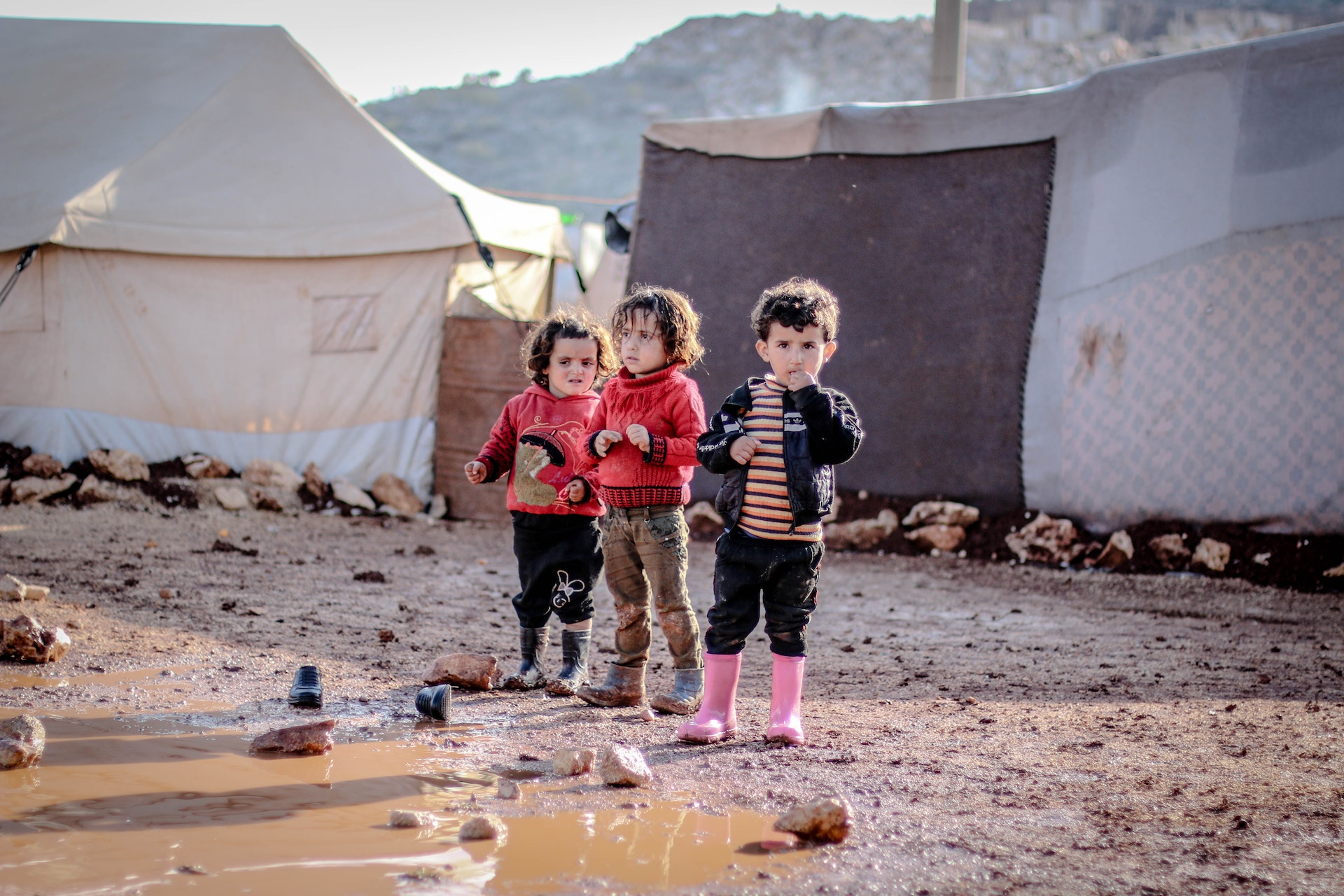
Malnourished children in Idlib, Syria.
(Photo courtesy of Ahmed akacha/Pexels)
“There are more urgent priorities regarding the global scope of need, particularly with Ukraine, forcing people’s attention away from Syria. But the reality is they’re in a dire crisis,” Samuel* of Redemptive Stories says.
Like neighboring Lebanon, a series of crises in Syria make survival increasingly difficult. “The only way most families are subsisting right now is because they have relatives, particularly their sons, who have fled to other countries and are now sending money back,” Samuel says.
“We see young men fleeing the country at alarming rates, particularly Christian men, so that they can provide for their families.”
The Body of Christ in Syria is addressing community needs. “Lots of different churches, denominations, and backgrounds are doing amazing work amid this chaos – education programs, children’s activities, micro-enterprises that are helping create income for these families – all of these amazing things,” Samuel says.
“All the time [believers are] working hard to share Jesus’s love and Word.”
Partner with local missionaries in Syria through Christian Aid Mission or support persecuted believers through Voice of the Martyrs USA.
“Find an organization doing work in the region, and give to help your brothers and sisters choosing to stay and to be a light in the midst of this,” Samuel suggests.
Most importantly, pray. Ask the Lord to have mercy on Syria. Pray for pastors and church staff who are exhausted by war and unrest.
“Pray that God would reveal himself to the people, and they would see and experience hope again through Jesus Christ,” Samuel says.
*Pseudonym
Header image courtesy of Khaled Akacha/Pexels.
Lebanon (MNN) — Lebanon is in a race against time to contain a cholera outbreak in its most vulnerable communities.
Nealy 290 cholera cases and 11 deaths have been confirmed since October sixth. According to the World Health Organization, a rampaging outbreak began in Afghanistan in June and then spread to Pakistan, Iran, Iraq, Syria, and now Lebanon.
“It (the cholera outbreak) is a natural result of crumbling infrastructure. [Many] parts of Syria don’t have clean water, and it’s spilling into Lebanon through these rural communities of refugees,” Pierre Houssney of Horizons International says.
Cholera, a contagious bacterial infection caused by contaminated water or food, often thrives in areas with limited access to clean water, sanitation, and health care. Although it’s completely preventable, cholera spreads quickly and can kill within hours by causing severe dehydration.
The people need clean water and sanitation access – usually provided by public utilities – to combat this outbreak and prevent new infections.
“Unfortunately, the people empowered to address it (the outbreak) have already made off with the money budgeted for the infrastructure that could have prevented this,” Houssney says.
With nowhere else to turn, people in need rely on nongovernment organizations for help. “It’s a little intimidating because [the outbreak is] such a huge problem,” Houssney says.
“It’s not something you can put a band-aid on real quick; a lot of infrastructure needs to be implemented to get clean water to millions of people.”
Pray for wisdom as Horizons International helps church partners address this crisis in the name of Jesus. “Pray that the Church would stand up and continue being a faithful witness in this Muslim region,” Houssney requests.
“I believe that a bigger harvest is coming, so pray that God would encourage the hearts of [believers] and they would rise and reach out to others.”
Learn more about Horizons’ work in Lebanon here.
Header image is a representative stock photo courtesy of Pixabay.
Middle East/North Africa (MNN) — Today begins a new learning module for Gospel workers in the Middle East/North Africa region. “Understanding the Religions of the MENA” pairs theological education with practical application.
Believers from a non-Christian background don’t always know how to reach across religious lines and share their new faith. This course helps to remedy that problem for Christian leaders.
“Hopefully, they (participants) will [gain] from this course a proper discipleship program for Christians coming from a non-Christian background in the Middle East and North Africa,” MENA Leadership Center’s Fadi Sharaiha says.
“The Holy Spirit is bringing people from different backgrounds to Christ. This course will train Christian workers, Gospel workers, how to disciple those people.”

(Graphic courtesy of MENA Leadership Center)
Leading the course is instructor Dr. Yassir Eric, who used to be a non-Christian extremist. When he met the God of the Bible, everything changed. Today, he disciples global networks of believers from non-Christian backgrounds.
“Pray for him while he prepares for this course. Pray for the recruitment efforts; please pray for the right people to come to the course,” Sharaiha requests.
You can help Gospel workers get the training they need through sponsorship.
“It’s very important for people in North America to support the MENA Leadership Center,” Sharaiha says.
“By supporting us, you’re supporting the work of the Holy Spirit in the MENA – accelerating the Gospel and building the capacity of Christian leaders working in the Middle East and North Africa.”
Header image is a representative stock photo courtesy of Monstera/Pexels.
Lebanon (MNN) — Lebanon’s Parliament met yesterday to choose a new president and failed to reach a consensus for the fourth time. Officials will try again on Thursday and have until October 31 to select a replacement for the current president, Michel Aoun.
“The old president (Aoun) finishes [his term] at the end of October, and we still have no consensus on who the next president will be,” Nuna of Triumphant Mercy Lebanon says.
“We are going towards a vacuum, which means the prime minister will be taking over the government – which is not good.”

Michel Naim Aoun is Lebanon’s current president. His term expires on October 31, 2022.
(Wikimedia Commons)
Lebanon’s government has been functioning under a limited caretaker capacity for months. More about that here. Political parties cannot agree on a new leadership lineup, so they cannot “unlock” the global financial assistance needed to relieve Lebanon’s collapsed economy.
Meanwhile, the Lebanese people suffer. “We have a lot of humanitarian needs that are not taken care of because we [do] not have a Ministry of Social Affairs that [can] work,” Nuna says.
“We still have a country that is bankrupt.”
Nongovernment organizations like Triumphant Mercy play a critical role by helping people survive. Every food or fuel delivery shows the tangible love of Christ.
Help Triumphant Mercy continue this critical work here.
“Winter [is starting], and people are [afraid] because there’s no fuel. The fuel price is hiking so much that people cannot afford it,” Nuna says.
“Pray that God will do something [to save Lebanon] and that the economy will rise from the ashes.”
In the header image, U.S. Secretary of State Antony J. Blinken meets with Lebanese Caretaker Prime Minister Najib Mikati, on the margins of the 77th Session of the United Nations General Assembly High-Level Week in New York City on September 20, 2022. [State Department photo by Ron Przysucha/ Public Domain]
Iran (MNN) — A teacher’s union in Iran has called for a strike, the latest sector affected by nationwide protests. At least 27 children have died since the protests began in September, according to human rights groups.
Over the weekend, many shopkeepers and factory workers went on strike as well. Earlier in October, oil workers stopped working and blocked roads.
Mike Ansari with Heart4Iran says this is different from past uprisings. “In the past, people were asking for reformation. But this time, in this new uprising, people are no longer asking for reformation. They’re asking for Islam to be completely out of the picture in the government. And they’re very vocal about it.”
“You’re seeing women at the helm. They are the ones who are basically moving this recent uprising forward.”
Iranian young people feel they have nothing to lose and nothing to look forward to under Iran’s current government.
Many women have removed their hijab and cut their hair, a sign of desperation. Ansari says, “We’re seeing a lot of school-aged girls also take to the streets. Unfortunately, they are being detained or beaten, and some are also being killed. It appears that there is no accountability from the international community and human rights groups regarding these violations of human rights across Iran.”
Prayer
Pray young people across Iran would find hope in Jesus. Ask God to end the violence against them.
Ansari says it’s important for Iranian Christians to know that their brothers and sisters around the world stand with them. “Freedom and civil liberty are near and dear to the hearts of every person in the world. We just hope there will come a day when we will see that level of freedom exercised in Iran once more.”
Header photo courtesy of Heart4Iran on Facebook.
Middle East/North Africa (MNN) — Gospel workers face significant challenges in the Middle East/North Africa region: illiteracy, unemployment, honor killings, war, massive displacement, food insecurity, and persecution – to name a few.
“According to Pew, this is the worst persecution in 1,000 years for Christians globally,” Dr. Terence Ascott says. Dr. Ascott is a founding member and former CEO of SAT-7, a satellite TV ministry to the MENA.
Militant Islamic leaders and terrorist groups pose additional problems. “Some people say ISIS did more to convert people in the 2014-16 era than Billy Graham could have done. People were so disgusted at how ISIS treated other Muslims in the name of Islam that it led to a bad reaction in many countries,” Dr. Ascott says.
“People have rejected the hypocrisy they see in Muslim leaders and the misuse of Islamic labels to manipulate.”
Additionally, “the more Islamic the country, like Iran or Saudi Arabia, the more people are disowning Islam and becoming deists or atheists,” he continues.
“There’s a growing atheism in Egypt – something that would have been unthinkable a couple of decades ago.”
If these are the latest trends, what’s the good news? More Muslims are turning to Christ in the MENA than ever before. New fellowships filled with Muslim-background believers are forming faster than anyone can count.
SAT-7 supports persecuted and oppressed Christians, isolated Christians, and church leaders in the MENA through its “Discipleship Across Borders” programming. As described here:
SAT-7 offers content providing scripture-based teaching, shared testimonies and viewer stories, and prayer and counseling. And the programs act as a platform through which believers can join a wider Christian community, participate in worship, and experience fellowship.
Learn more about SAT-7 here. Pray the Lord will raise up faithful supporters to keep Gospel work going in the MENA.
Header image is a representative photo courtesy of SAT-7.
Syria (MNN) — The United Nations pushes for a national ceasefire in Syria. Russia and Turkey brokered a truce two years ago, but it’s not holding; airstrikes have killed hundreds of civilians. This instability stops aid workers from reaching people in need, like the 80 percent of Syria’s population who live in poverty.
Samuel* of Redemptive Stories recently visited believers in Syria. The situation is beyond desperate. “Because of the economic crisis, the [United States] sanctions, and the significant inflation, they’re not able to survive,” Samuel says.
“We met fathers choosing not to have cancer treatment because the cost of the medication will preclude them from being able to provide [food] for their family.”
Nonetheless, neighboring Lebanon is sending its first batch of refugees back into Syria this week. The UN says repatriation is illegal under international law, but Lebanon plans to send 15,000 refugees back each month.
Samuel asks, “What are they coming back to? We drove through town after town that was just completely demolished.”
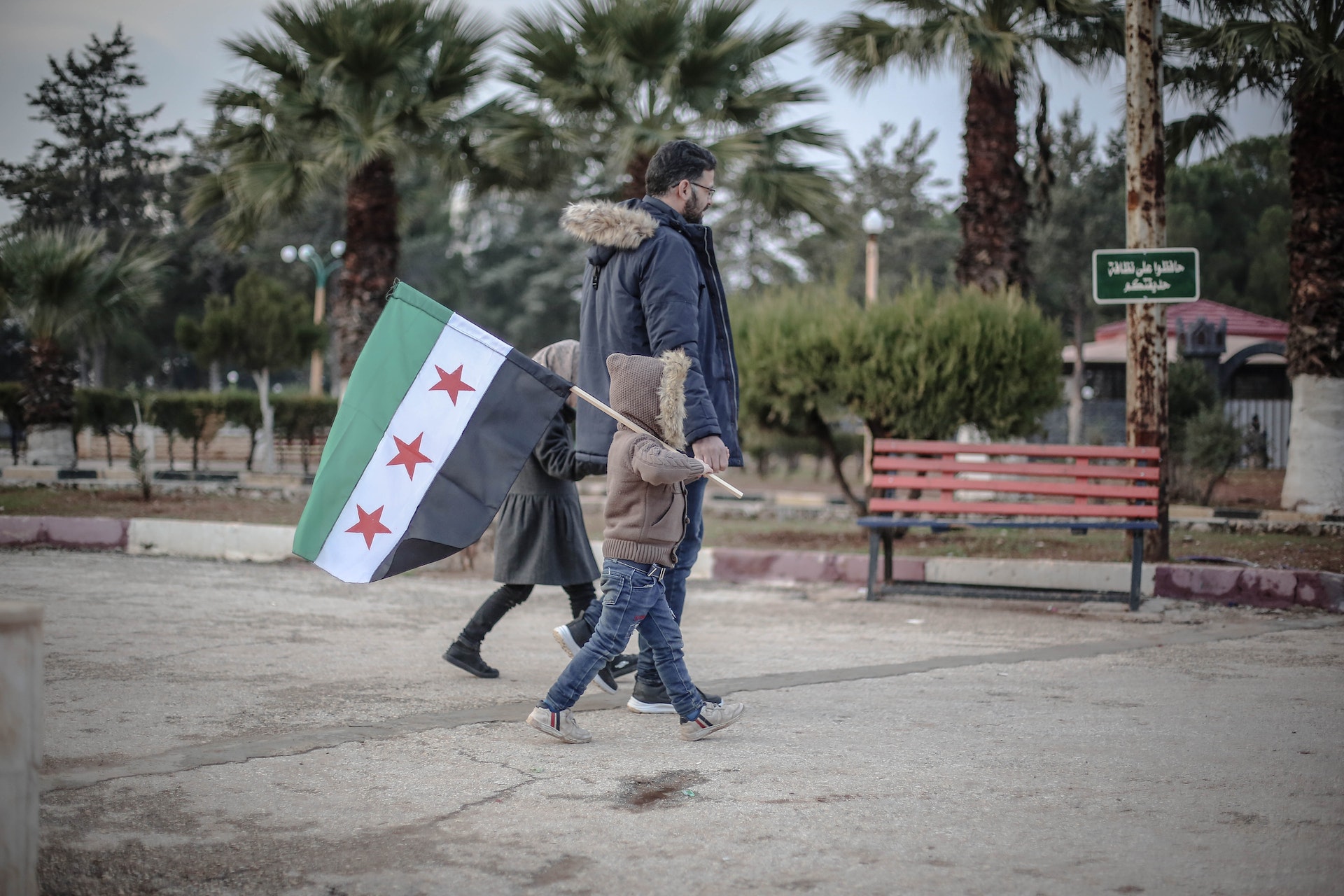
Child holding a Syrian flag.
(Photo courtesy of Ahmed akacha/Pexels)
Only the Lord can make something good from Syria’s disaster. Pray He will help those in need and bring beauty from ashes.
“People in those crisis situations are asking existential questions. Many are choosing to follow Jesus in the midst of this because Jesus offers both practical and eternal hope that they don’t have otherwise.”
Pray the Lord will strengthen and sustain Gospel workers in Syria. Believers in “lots of different churches, in lots of different denominations and backgrounds, are doing amazing work in the midst of this chaos,” Samuel says.
Programs include “children’s activities, working with young people to encourage them to stay [in Syria], microenterprises that are helping create income for these families,” he continues.
“All of these are meeting practical needs, but [at the same time] believers are working hard to share Jesus’s love and Word.”
*Pseudonym
Header image depicts abandoned buildings in Idlib, Syria. (Photo courtesy of Ahmed akacha/Pexels)
Iran (MNN) — School children are participating in protests across Iran in large numbers.
The Iranian government has responded by sending them to mental health centers. The regime has also killed at least 23 children, according to Amnesty International.
The nationwide protests began one month ago. Denise Godwin with International Media Ministries says, “It’s unrest at the soul level of the country. The police are arresting people in hospitals and rerouting the ambulances to prisons. So people are beginning to die of injuries in the street or at home because they’re not feeling safe to go to hospitals.”
Esther
IMM is working on filming the story of Esther, who stood up to authorities in the Persian Empire (which covered much of modern-day Iran).
Likewise, young people in Iran today are standing up against the corruption of the current ruler in Iran. Godwin says, “I heard from another group of people doing media work. They said the numbers of people responding to the media and wanting to know who Jesus is are incredible right now. The echoing cry is, ‘God is at work in this,’ and people are coming to Christ.”
“They said what you are doing through media is helping us. Please continue.”
Godwin recently spoke to a woman who grew up in Iran. “Prior to the Islamic Revolution in 1978-1979, women could wear whatever they wanted. I remember her telling me a story of the morality police stopping her because she didn’t have socks under her sandals. She says today, women and young people are standing up to the forces of darkness. They’re willing to pay the price to regain their freedom. Please pray for them.”
Pray officials in Iran will stop the violence against their own people. Ask God to strengthen the young people of Iran and give them the hope of Jesus.
The header photo shows a still from the Esther project. (Header photo courtesy of International media Ministries)
Iran (MN) — A fire broke out at Evin Prison in Iran on Saturday night, killing at least eight.
The prison is notorious for holding political prisoners, including many people arrested during the recent nationwide protests. The government of Iran claims it was part of an escape attempt, but a witness inside the prison denied it.
Peter Smith from Global Catalytic Ministries says, “Remember, during the protests over the last four weeks, there have been thousands of people arrested. Unfortunately, many of them are being held in Evin Prison. The prison guards and wardens are saying, ‘Look, we’re in control. And to show that we’re in control, we’re going to set a fire.”
“And we’re going to shoot some of the prisoners so that it creates a spirit of fear among these newly arrested people.’”
Evin Prison has a long history of human rights abuses, including lengthy interrogations and torture. And the Iranian government has responded brutally to the month-long protests, killing over 200 people using live fire and beatings. Nevertheless, huge crowds continue to gather, chanting “Death to the dictator.”
Iranian Christians
When Iranian authorities arrest Christians, they often send them to Evin Prison. Pray for the safety of prisoners and protestors.
Ask God to give wisdom to GCM partners, house church leaders, and other Iranian Christians. Smith says, “The decision to set the fire in prison, will this cause further unrest and maybe even civil war? We’ll have to wait and see. But ultimately, the people inside the country want a change. They want to have inner peace. What we find from GCM’s point of view is this is the prime time for believers to share the Gospel.”
The header photo shows the entrance to Evin Prison in 2008. (Photo courtesy of Ehsan Iran, CC BY-SA 2.0 <https://creativecommons.org/licenses/by-sa/2.0>, via Wikimedia Commons)
Palestine (MNN) — In 1992, the government of Israel expelled 415 Hamas militants to a Lebanese mountainside during the winter. Brother Andrew, famous for smuggling Bibles in to the former Soviet Union, brought them supplies.
Jack Sara, President of Bethlehem Bible College, says, “He was probably the first Christian to reach out to them with blankets with food parcels and tents. He just treated them as humans. He helped with bringing letters to their families, reaching out to their families in Gaza and elsewhere.”
Until his death, Brother Andrew was welcome in Gaza. He once presented a Bible to President Yasser Arafat. He once wrote, “There are no terrorists . . . As long as we see any person—Muslim, Communist, terrorist—as an enemy, then the love of God cannot flow through us to reach him.”
Work with Palestinians
1992 was also the year Sara first met Brother Andrew. “He was very much, I would say, involved in seeing that Bethlehem Bible College will continue to advance in its both training of students, but also outreach to the community around us.”
“When I wanted to go to seminary (I didn’t know this till after a while), Andrew was the guy who paid for my ticket to study in the Philippines for my Masters of Divinity.”
Brother Andrew angered many Christians in the U.S. through his gentleness. He mourned the wars in Iraq and Afghanistan and called the killing of Osama Bin Laden a murder.
Sara says Brother Andrew practiced “Aggressive bridge-building. He was a supporter of reconciliation work with Palestinian Christians and Messianic Jews. He tried to help even those who would be looked at as fundamentalists or fanatics.”
Pray Christians around the world would learn from Brother Andrew’s gentleness and love.
The header photo shows Sara with Brother Andrew. (Photo courtesy of Bethlehem Bible College)
Middle East (MNN) — Israel and Lebanon are closer than ever to confirming boundary lines in the Mediterranean Sea. A maritime deal, brokered by the United States, indicates where each country can explore, drill, and export oil and natural gas.
Supporters say the deal provides Israel with security and Lebanon with resources. Critics voice concern about terrorist involvement. “It (the deal) would open up a front for the Iranian Revolutionary Guard to operate in that maritime border,” Uncharted Ministries’ Tom Doyle explains.
“Iran is the big bully of the Middle East. They fund Hezbollah in Lebanon. There’s an agenda there to get control of some oil and gas.”
Uncharted works with believers in both countries. More about that here. “Being there on the Lebanese side, we’ve seen how people have suffered because of the terrible control influenced in the government by Hezbollah,” Doyle says.
“The poor people of Lebanon, many live in refugee camps in that southern area. Palestinians [in Lebanon] can’t get a job, can’t get citizenship; they’re kept in refugee camps.”
The maritime deal is not yet finalized; many political steps and paperwork remain. Pray for Gospel opportunities as people lose hope in government solutions.
“We must look at the headlines, realize the problems, but then also pray for the spiritual solutions,” Doyle says.
“The people of Israel are frustrated with their government; they don’t have solutions, and this is causing people to look toward Christ as Savior. We’re seeing Muslims so open to the Gospel right now. The young people feel like there’s a lack of hope, and we know that Jesus brings hope in great abundance.”
Header image depicts an oil-digging rig similar to those used in the Mediterranean Sea. (Photo courtesy of wasi1370/Pixabay)
Iran (MNN) — Over 200 Iranian people, mostly women, have been murdered since nationwide protests broke out against the regime on September 17. Thousands have been arrested.
Women in Iran are familiar with this kind of violence. But these protests are different, says Joe Willy with SAT-7 USA, because this time, Iranian men are standing up as well. “That shows another cultural shift. Of course, it’s not all men. But some are saying, ‘We as men also want and value rights for women in this country.’”
“I think that is an important shift. And as Christians, we certainly see the value in all men, women, girls, and boys.”
Willey says these are important Christian teachings and something that is bringing real change to Iran. “SAT-7 as a broadcaster in the Middle East and North Africa is, in some of these countries like Iran, going against the grain.”
SAT-7 content
In 2021, SAT-7 had 47,000 discussions with Iranians over social media channels. Now, authorities have throttled the internet to slow down protests. But that doesn’t affect satellite tv.
Willey talks about a program called Sanctuary of the Heart. “On September 29, there was a program that was presented not only on Instagram Live but also on satellite broadcasting. This program is addressing the fact that women are made in the image of God. They have intrinsic value.”
How to pray
Ask God to continue changing Iranian power structures.
Pray also that the protestors would be safe from violence instigated by the authorities. Willey says, “Just pray that there would be freedom for men or women to have a choice.”
Header photo courtesy of SAT-7 USA.
Iraq (MNN) — Iraq’s parliament meets today to elect a new president. Officials failed to elect a president three times this past spring.
Iraq held its last elections in October of 2021. Popular Muslim cleric Muqtada al-Sadr won the most support but not enough to form a government. Samuel with Redemptive Stories says, “A little over a month ago, there were also some riots. His party was so angry that no one would stand with them in order to form this government. Muqtada al-Sadr even got on TV and said he was no longer going to be a man of politics, just going to be a religious figure.”
“Currently, the previous government is still standing.”
The president and prime minister tried to quit, but their resignation was not accepted.
Looking for answers
As the uncertainty piles up, Samuel says people in Iraq are looking for answers. “A lot of them, particularly in the south of Iraq, is asking those deep questions. They’re saying, ‘Well, Islam has failed us. What other things are out there?”
Some have turned to atheism, Samuel says. “Those that don’t look for other answers, including Christianity. We just had the joy of being part of a wonderful event where over 40 people from the South of Iraq were baptized. A large majority of them are from a Muslim background.”
How to pray
Pray Iraq’s president will care for the people and not steal for himself. Ask God to strengthen local Christians.
Christianity has a long history in Iraq, Samuel says. “We didn’t bring it. Our brothers and sisters have stood strong over the past years, and continue to do so even amongst severe pressure, oppression, disappointment, and struggle.”
The header photo shows the Baghdad Convention Center, where Iraq’s Parliament meets. (Photo courtesy of James (Jim) Gordon, CC BY 2.0 <https://creativecommons.org/licenses/by/2.0>, via Wikimedia Commons)
Iran (MNN) — Nationwide protests enter the fourth week in Iran. The current unrest began in mid-September following Mahsa Amini’s suspicious death in morality police custody.
Questions also surround 16-year-old Nika Shahkarami’s death. Her mother claims she died in the police crackdown on September 20 protests in Tehran. Meanwhile, state officials denied any connection between Shahkarami’s death and the demonstrations.
At least 150 people have been killed so far in clashes between protestors and the police, human rights groups say. See a timeline of the antigovernment movement here.
“Many people are being killed viciously; shot point blank. They are being detained; young people are going missing,” Heart4Iran’s Mike Ansari says.
“It is no secret that the Iranian regime does not tolerate any kind of uprising.”
Reuters reports that despite the most significant civil unrest since 2019, analysts don’t expect Iran’s leaders to lose power soon. Last week, United States President Joe Biden announced new sanctions on Iran in response to the regime’s reported crackdown.

(Photo courtesy of Heart4Iran)
“Iran is quelling protests [and] arresting journalists, athletes, celebrities — any voice they find to be in opposition to Islamic institution,” Ansari says.
“We are asking international advocacy groups to keep Iran accountable for the lives of every single individual that is arrested.”
This includes advocacy for believers, many of whom were arrested for their faith.
Persecution watchdogs voice concern about an uptick in Christian arrests. Police arrested nearly 60 believers in the first six months of 2022. The whole of 2021 saw 72 arrests. Sentencings also rose; 15 last year compared to 25 this year.
Police arrested and detained 64-year-old Homayoun Zhaveh “because he converted from Islam to Christianity. That gentleman has Parkinson’s, and Iranian prison authorities are refusing to give him medication,” Ansari reports.
“This injustice we’re encountering for people converting from Islam to Christianity, or other religions, goes hand-in-hand with the injustice every citizen in Iran is experiencing.”
Use the buttons at the bottom of this page to share this report and help spread the word. Most importantly, pray. “We beseech you, please lift up Iran in your prayers; for God to shine His light across this land that is in pain and agony,” Ansari says.
“We are asking people to adopt Iran as a country they could pray for across your churches, communities, and home groups.”
Header image depicts protests in Melbourne, Australia on September 29, 2022. Iranian protests have gained international support in recent weeks. (Matt Hrkac/Wikimedia Commons)
Iran (MNN) — While Islam and Christianity share monotheism and an Abrahamic background, they have significant differences in belief and practice.
When Muslims in the Middle East become Christians, they have a lot to learn. And most materials written in the West do not understand the Muslim context they are coming out of.
Hormoz Shariat with the ministry Iran Alive Ministries says, “Yes, we need new material, probably returned by Muslim background believer pastors and leaders like myself or others who know the Islamic root. But teaching is not enough. It’s a practice. So what I’m doing is I’m starting with leaders around me. We pray, and we continue to minister. I’ve seen changes.”
Ministry in Iran
Since before the COVID-19 pandemic, people in Iran have started becoming Christians in huge numbers. The number of people contacting Iran Alive has grown exponentially.
However, Shariat says, “Discipleship is lacking greatly. Even the basic discipleship of how you study your Bible is missing right now. How do you pray? How do you walk with the Spirit? And how do you share your faith with others?”
“So pray, get involved with discipleship, and support the churches that disciple.”
Of course, this problem isn’t unique to Islam. Believers coming into the Western church bring cultural beliefs and practices with them that may contradict the teachings of Jesus.
Shariat gives an example that may apply to both Muslim culture and the West. “In Persian culture, you have to be kind to people, you have to be loving on the outside. But on the inside, you could be totally different towards that person. In the church, that can cause very superficial relationships.”
God loves the people of Iran. Ask Him to strengthen the Church there.
Header photo courtesy of Iran Alive Ministries.
Iran (MNN) — Iran’s president blames the United States and Israel for anti-government protests sweeping the nation. The current unrest poses the biggest threat to Iran’s leadership in years.
“There is something big going on, and that is standing against tyranny and proclaiming the basic rights that every citizen needs across Iran,” Mike Ansari, President of Heart4Iran and MohabatTV, says.
“MohabatTV stands in solidarity with the people of Iran in seeking freedom and human rights.”
At the same time, Iran is launching missile and drone strikes on Kurdish communities in neighboring Iraq. “The general sentiment among many experts in the region is that Iran is testing its reach [by] taking action against the sovereignty of another country,” Ansari says.
(Photo courtesy of Heart4Iran)
“[Additionally,] Iran is acting as an extension of Turkey and the Erdogan administration to crush the Kurds. Also, Mahsa Amini, who was murdered by the Iranian morality police, was from the Iranian Kurdish territory.”
Pray the Lord will overcome manmade barriers so that Gospel broadcasts can reach inside the country and people can connect with Heart4Iran.
“Calls from Iran have dropped dramatically because the Iranian Revolutionary Guard controls and limits communications and internet access to its citizens,” Ansari says.
“The few reaching our call center seek the international community’s support. People contacting us ask, ‘would you guys please talk about our plight on your broadcast?’ That’s exactly what we have done. We have launched programs on both TV and social media.”
Learn more about Heart4Iran and MohabatTV here.
One new program, Freedom Iran, provides up-to-date information. “We’re bringing in experts, and we share videos from inside Iran with the international community to let them know the Iranian Christian community sees itself as a part of this movement,” Ansari says.
Header image depicts Iranian protestors on the Keshavrz Boulevard in Tehran. (Wikimedia Commons)
Iran (MNN) — In Iran, 15 people die by suicide every day. Some experts say the true numbers may be higher. Many of these people are either in high school or college.
Mike Ansari with Heart4Iran says, “A lot of Iranians don’t have access to mental health facilities or situations where they can get diagnosed properly and get treatment. So I think that would be a part of it. But the other part of it is about a lack of hope.”
Iranian young people are highly educated and connected to the outside world through the internet. Ansari says they see how far their country has fallen behind in relation to human rights and even economics. “They ask the question, ‘Why is it that I can’t have the freedom that these people have? Why is it that my future is so bleak? Why is it that I cannot, as a woman, be able to enjoy certain civil liberties that other women have?’”
“The simplest thing is being forced to have a hijab, to have a covering.”
Protests against Iran’s harsh regime erupted two weeks ago. But demonstrations against the hijab law have been going on even longer. Ansari says, “About a month ago, there was a major uprising in Iran, where Iranian women took on the street, and they said, ‘We want to get rid of the hijab.’” Officials want to enforce hijab laws through facial recognition technology.
The uptick in deaths by suicide has other causes as well. Anxiety and depression have increased globally after the COVID-19 pandemic, especially among young people.
Heart4Iran
Through social media, Heart4Iran is reaching young people in the country. Ansari says, “If they are contemplating suicide, we say, ‘Have you heard that there is hope? Would you be willing to hear about Jesus?’ And in many cases, they say, ‘Yes, tell me more.’”
Pray young people across Iran will see the love and hope of Jesus.
Header photo courtesy of Heart4Iran on Facebook.
Iran (MNN) — Authorities crackdown as protests sweep Iran, arresting more than 1,200 demonstrators.
Dozens have lost their lives in the unrest, which Iran blames on the United States. The U.S. recently allowed tech firms to expand business in Iran, where the government squelched most internet access in response to the protests.
In a statement emailed to the Associated Press, Secretary of State Antony Blinken said the move will help counter Iran’s surveillance efforts:
“It is clear that the Iranian government is afraid of its own people. Mahsa Amini is senselessly, tragically dead, and now the government is violently suppressing peaceful protesters rightly angry about her loss.”

Iranian protestors on the Keshavrz Boulvard in Tehran.
(Wikimedia Commons)
Public anger erupted last week following the death of 22-year-old Amini in police custody. She’s become the face of a nationwide push for women’s rights.
Lily Meschi of Iran Alive Ministries says Iran treats its women like second-class citizens. “They (women) have been oppressed in law and by the government,” Meschi says.
“They are always “less than”; for instance, if a woman gets raped in Iran, they can’t even take the matter to court because a woman’s testimony counts as half of a man’s. So, the woman is unable to testify against her rapist.”
Untapped potential
Iran Alive broadcasts the hope of Christ through satellite T.V. More about that here. “About 7.7 percent of the population watches our network in Iran daily; that would be equivalent to 6 million people,” Meschi says.
Women comprise a growing segment of Iran Alive’s audience and workforce. “A high percentage of our ministry leaders are women,” Meschi says.
“When they receive their identity in Christ, they truly become influential. They become agents of transformation in their communities and family.”
Help Iran Alive Ministries keep its programs on the air here.
“We hear a lot of different testimonies from women who charge their entire family to come together and be discipled, be learning from the Word of God,” Meschi says.
“As they receive the message of the Gospel, they’re discipling [their families].”
Header image depicts Amir Kabir University students protesting on September 20, 2022. (Wikimedia Commons)
Saudi Arabia (MNN) — In Saudi Arabia, a woman has been sentenced to 45 years in prison for social media posts. A terrorism court said she used the internet to tear the fabric of society and violate public order.
Her posts criticized leaders in the country. But independent investigators say nothing in the posts included violent material.
Todd Nettleton with The Voice of the Martyrs USA says, “There was another woman jailed for 34 years earlier in August for activity on Twitter. Both are good reminders that even though Saudi Arabia is trying to present itself as reformed, new, and modern, there are still these draconian restrictions on the people.”
This move complicates Saudi Arabia’s already fraught relationship with the West. Nettleton says, “Whether it be Jamal Khashoggi, whether it be the treatment of women or the treatment of Christians, Saudi Arabia is not a free country. It is not a place where the human rights of every person are respected and upheld.”
How to pray
These challenges extend to converts from Sunni Islam to Christianity. But the persecution often comes first from their families.
Ask God to fill them with peace. Nettleton says, “The other specific prayer request is to pray for Christian women. Women are often isolated anyway because they’re women. And then, if you’re a Christian woman, you have even more isolation. In some cases, they don’t have a physical relationship with other Christians.”
“They may read the Bible online. They may watch satellite television that has a pastor who is discipling them and communicating to them.”
The header photo shows a pilgrim at Masjid Al Haram in Saudi Arabia. (Photo courtesy of Ali Mansuri via Wikimedia Commons.)
Iran (MNN) — In Iran, 22-year-old Mahsa Amini went from police custody to the hospital, her uncle tells Reuters. She then fell into a coma and passed away on Friday.
Morality police deny beating her, saying instead that she suffered a heart attack. The police detained Mahsa for refusing to wear a hijab.
Like Mahsa, thousands of women across Iran have joined the anti-hijab movement. Weeks of protests and social media campaigns have led to countless arrests.
“Iranian women are seeking freedom and liberty. They have come to the realization that Islam can no longer dictate to us to wear hijab to cover our hair,” Lily Meschi with Iran Alive Ministries says.
“They say, ‘Even if they kill us out in the streets, we’ve got nothing else to lose. We’re going to stand up together to earn our rights here.’”
Imposed after the 1979 revolution, Iran’s sharia (Islamic) law demands women cover their hair and wear long, loose-fitting clothes to disguise their figures. Violators face public rebuke, fines, or arrest.
“People of Iran thought the Islamic Revolution would bring them the democracy they sought. After 40+ years, they realize that the government oppresses the people, especially Iranian women,” Meschi says.
Pray Iran Alive Ministries can introduce women to the freedom that comes only through Christ. “We utilize satellite TV to share the Gospel with women, and we also disciple them through the broadcast,” Meschi says.
Learn more about the work of Iran Alive Ministries here.
Header image depicts women in Iran wearing the traditional hijab and loose-fitting clothing required by sharia law. (Photo courtesy of mostafa meraji/Unsplash)
Middle East/North Africa (MNN) — September marks a new school year for students and faculty across the education spectrum. It’s also a new beginning for learners in a nontraditional classroom.
MENA Leadership Center equips Gospel workers across the Middle East/North Africa region. “Starting in September, we have three new courses,” Vice President Fadi Sharaiha says.
“One is on how to grow the digital church. You have established your digital church; now, how do you grow? What are the best practices; what you need to grow through digital engagement and social media-based evangelism, etc.,” he continues.
“Another course focuses on multiplying organization impact, and the third course is dear to my heart – course design strategies: how to do online teaching and training.”

(Photo courtesy MENA Leadership Center)
Like many business leaders worldwide, Gospel workers discovered the benefits of an online social and work environment during the pandemic.
“They can reach more people; it’s less expensive. They have been training on evangelism, discipleship, and so many things. But now they can do this more professionally,” Sharaiha says.
“We are working with ministries on online training and using the best LMS, which is the Learning Management System. There are so many LMS worldwide, but [we are teaching leaders] how to choose the right one for ministry.”
Why does this matter?
A recent survey found that Christian ministries across the MENA region have significant professional and personal gaps. If believers could access proper training and development, their improvements would lead to a more significant Kingdom impact.
MENA Leadership Center exists to bridge these gaps. Help equip Christian leaders in the MENA here.
“Please pray for us as we navigate those (new) courses and as we do the recruitment that the Lord will help us to choose the right people,” Sharaiha requests.
“We have so many people applying. We want to ensure we are choosing the right people to impact their ministries, thus impacting the Kingdom of God.”
Header and story images courtesy of MENA Leadership Center.
Middle East/North Africa (MNN) — More Majority Faith people are turning to Christ now than at any other time in modern history. The Program for Theological Education by Extension, or PTEE, helps these believers become leaders.
Getting theological training in places like the Middle East or North Africa is not always easy. PTEE leader Jacob* says, “In Syria, for instance, they don’t have any Bible colleges.”
Revealing your faith in this region can sometimes make you a target, especially when you come from a Majority Faith background. PTEE helps believers become leaders through “undercover” theological training.
Self-study and local learning groups make the material easier to access and retain. “In our culture here, people [who] want to learn [will] look for a teacher because this is the system,” Jacob says.
“We wanted to change this kind of culture [so] that the student can study by himself, can teach himself.”
Arab Christians develop PTEE courses for Arabic-speaking believers who want to serve in church leadership. More about that here.
“It [is] an opportunity for them (Arabic-speaking Christians) to study academic theology and get a certificate or a diploma in theology,” Jacob says.
The ministry celebrated its 40th anniversary last year, training more than 7,500 leaders since its inception. Believers in the diaspora study with PTEE, too.
“In Sweden, Germany, Australia, and the U.S., we have some students among the immigrant people because they don’t know English very well. They wanted to complete their studying in Arabic,” Jacob says.
Do you know Arabic? PTEE needs help developing coursework. Maybe this is God’s next step for you. Contact PTEE here for more information.
“We need to pray that God will send us some people who are qualified to develop new courses,” Jacob says.
“I am the only one [developing courses], and I am getting old now. I cannot do it [alone] because it takes time to prepare a course like this.”
*Pseudonym
Header image depicts an English-Arabic Bible. (Photo courtesy of Sara Calado/Unsplash)
Middle East (MNN) — Church-centric Bible translation continues despite heavy opposition in the Middle East. unfoldingWord works alongside local church planters in an undisclosed nation*.
The country is one of the world’s most difficult places to follow Christ, with a “very hostile religious context – difficulties, persecution – yet the Church is vibrant and healthy and reproducing,” unfoldingWord CEO David Reeves says.
“The Church is underground. They’re scattered in house churches led by some very passionate and wonderful godly men.”
Governmental leaders view religious minorities as threats that must be eliminated. “Christianity is something they’re trying to fight against because it’s growing rapidly and expanding,” Reeves says.
“You’re dealing with hostile religious contexts that would love to see them (believers) wiped off the planet.”
A church-centric approach to Bible translation works well in places the traditional model cannot reach. For example, in this country, “you can’t bring in outsiders to learn the language, or do training and consulting, things like that,” Reeves explains.
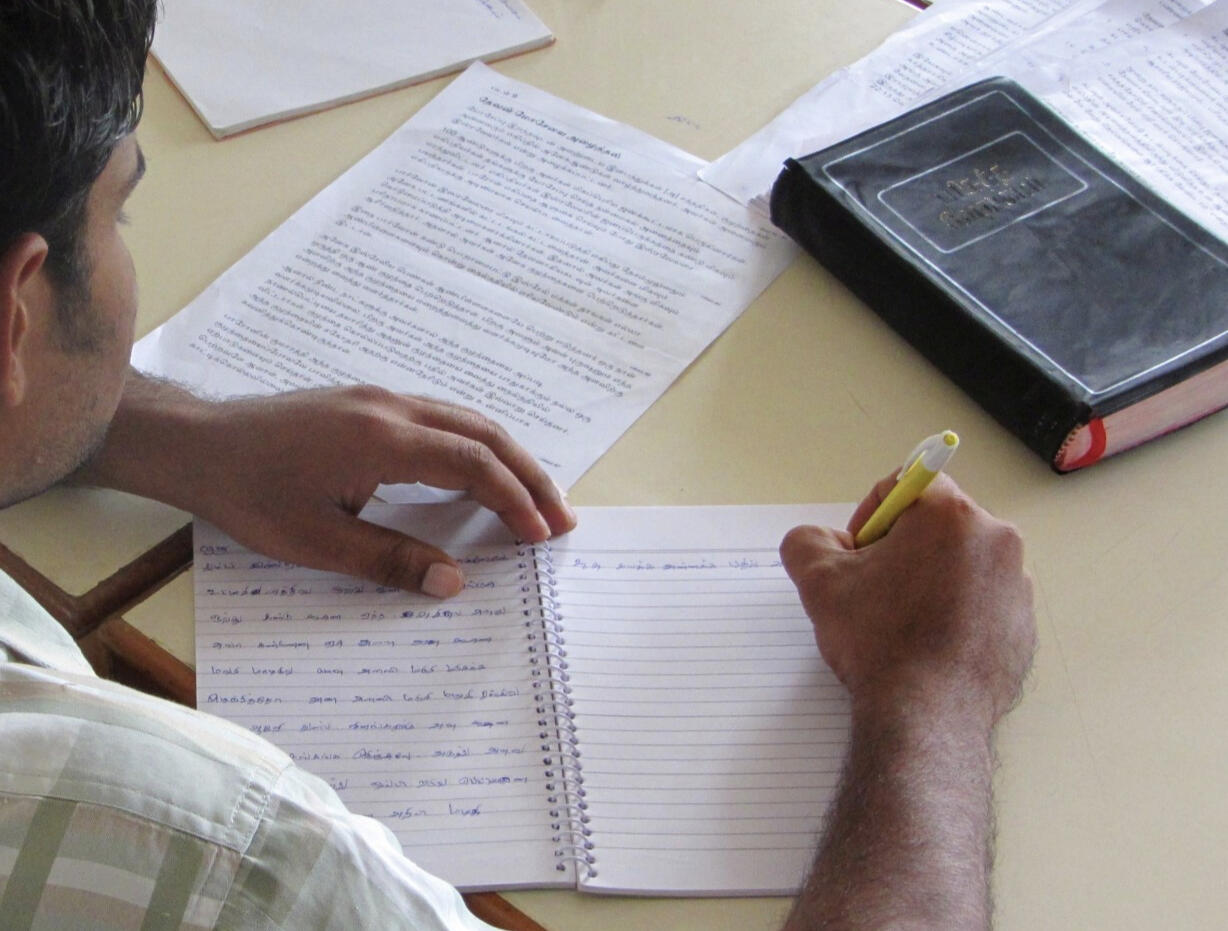
(Photo courtesy of ccbt.bible)
unfoldingWord equips large-scale church planting networks with the tools and training they need to translate God’s Word into regional languages. Learn more about Church-Centric Bible Translation here.
“We’re coming alongside and helping them with their Scripture translation needs and a theological formation for these new young churches,” Reeves says.
Pray unfoldingWord’s partners in this country will have the courage and endurance to withstand persecution.
“One guy we talked to and his wife had just gotten out of prison from simply sharing their faith and planting churches,” Reeves says.
“Time in prison is a normal part of their walk with Christ.”
Prayer is the believers’ top need in a location like this. See the latest requests here.
“There’s spiritual darkness trying to push back against what is happening here. Sometimes we see it in terms of the opposition, whether it’s someone being thrown into prison or beaten, or other things like that,” Reeves says.
*Location withheld for security reasons.
Header image is a representative stock photo courtesy of OpenClipart-Vectors/Pixabay.
Iraq (MNN) — Violence erupted in Baghdad, Iraq, on Monday, killing 30 people and injuring hundreds. The Iraqi military said several rockets were fired in the Green Zone, the area of Baghdad that hosts government buildings.
Muqtada al-Sadr
Tuesday, rival Shia factions continue to battle each other, some aligned with popular cleric Muqtada al-Sadr. Others support Iran.
Samuel with Redemptive Stories says, “al-Sadr got up and did a press conference. He said, ‘I’m just going to quit politics. I’m not going to be a politician anymore.’ And this was after his people had already begun to occupy things to have peaceful protests and demonstrations. And then when he said that, it kind of just set them off.”
Al-Sadr ordered his supporters to leave the Green Zone, which they did quickly. Experts say he wants to demonstrate his control over the crowds, intimidating his opposition. Al-Sadr has promised to quit politics before and has backtracked each time.
Could this lead to further unrest? Samuel says, “I have been talking to our local partners and local friends there. They were very concerned. Maybe we’re moving back towards a peaceable solution. But still, it’s on the knife’s edge as it always it is in Iraq. Because what does this mean for elections?”
“Does this throw out the elections that were done last year? Do we have to redo them again?”
Ask God to strengthen Christians in Iraq. Pray they would be a source of hope. Samuel says, “Just be praying that God would be faithful to intervene here on behalf of all of Iraq and bring peace to the situation. Pray our partners there will continue to stand strong, to speak into the formation of a new government, and to speak into what true and eternal hope looks like in Jesus Christ.”
The header photo shows supporters of Muqtada al-Sadr in Baghdad after an election. (Photo courtesy of Fars Media Corporation, CC BY 4.0 <https://creativecommons.org/licenses/by/4.0>, via Wikimedia Commons)
Middle East (MNN) — The term “Muslim-majority country” applies to places where nearly everyone follows Islam. It can also describe countries where Islam is the state religion.
Seems pretty straightforward, right? This term doesn’t always apply to the Deaf community.
“Often, religion is not communicated well to Deaf people,” Dan* from DOOR International explains.
“Many Deaf people, regardless of where they live, tend to think of religion as something that the Hearing culture does.”
Language barriers present the biggest problem in most cases, he continues. Most parents of Deaf children do not learn a sign language, thereby limiting communication and access to information.
“Generally speaking, the experience of Deaf people [worldwide] with religion tends to be rather shallow,” Dan says.
“The culture is not well communicated to Deaf people. They’re not learning language from their parents; why should they learn religion from their parents? Language is so foundational to be able to understand a religion and a religious system.”

(Photo courtesy of DOOR International)
DOOR recently began work in a Middle Eastern country we cannot name for security purposes. The Deaf-led organization is helping a small group of Deaf believers reach their neighbors for Christ.
Persecution presents problems for believers in general society in this region. However, “we don’t encounter hostility towards Christianity in the Deaf community,” Dan says.
“That’s, of course, a generalization, and situations do come up. But for the most part, it’s easier to minister and evangelize to people in Deaf communities because they’re not entrenched in the broader religions of their culture.”
Visit DOOR’s website to learn how you can support their work. Most importantly, pray. Ask the Lord to multiply the fruit of DOOR’s efforts so many Middle Eastern Deaf can know Christ.
“It’s pretty rare for a confirmed, devout Deaf Muslim to be experiencing Christ for the first time. Much more often, somebody from a Muslim family – who doesn’t understand what their family believes and what Islam means — encounters a (Deaf) Christian who understands what they believe and is intrigued,” Dan says.
“It’s unfortunate that Deaf people do not have access to information so they can make their own decisions about what they believe. But, in this sense, it provides an opportunity for us because they’re not actively hostile towards Christianity.”
*Name withheld for security purposes.
Header and story images courtesy of DOOR International.
Iran (MNN) — Few would call Iran a safe place to pursue Christianity. Iran’s militant Islamic government actively hunts for religious minorities and severely persecutes them.
Despite the risk, people inside Iran connect daily with Heart4Iran’s call center operators.
Nazanin*, an Iranian Christian, oversees the call center ministry. “When somebody calls for the first time, they are desperate; they need prayer,” she says.
“Every caller, we get their information, register it in our database, and we keep them in our daily prayers. We have a chain of prayer within my team.”
Along with prayer, operators follow up with each caller. “We call them back and say, ‘Okay, have you received an answer to prayer? How can we help you?’” Nazanin says.
“If they are Christians, we strengthen them. It takes time for them if they are Muslims and know Jesus as only a prophet.”
The journey to Jesus comes with tremendous risk. “They’re Muslims; they believe, ‘okay, I’m calling a Christian channel. So what?’ They don’t understand the danger,” Nazanin says.
“First of all, we teach them to be very careful. We warn them, ‘you might get a call and threat from authorities.’ Second thing, we tell them, ‘Don’t fear, trust Jesus; He’s the one who will protect you. Third thing, we tell them to go online, connect with us on VPN (Virtual Private Network),” she continues.
“We discourage them from calling us and try to call them because our system is anonymous. When we call them, it’s much safer.”
Eventually, Muslim callers learn who Jesus is. “99 percent give their heart to Jesus when they experience the Lord,” Nazanin says.
“They cannot walk away. They see that we care, that Jesus cares, and He answers prayer.”
*Pseudonym
Header image is a representative stock photo courtesy of Emir Bozkurt/Pexels.
Middle East/North Africa (MNN) — In the West, we have limitless access to information and, in some cases, resources. For example, if you don’t know how to start your own business, you could do research online or use social networks to connect with nearby business people.
Many Gospel workers in the Middle East/North Africa region lack those opportunities. “What they need is capacity building other than theological education,” Fadi Sharaiha with MENA Leadership Center says.
“[For example:] how to do proper strategy; how to raise funds, how to do volunteer recruitment.”
MENA Leadership Center fills that void. “Christian leaders want to respond to the need [around them]. The problem is they don’t have the right training. That’s why we exist, and that’s who we serve,” Sharaiha says.
MLC currently offers 12 “live” six-week online courses during 2022. Next, they want to add “on-demand” programs. “We are offering many courses, including how to do discipleship for Christians from a non-Christian background,” Sharaiha says.
“Our vision is to have the MENA Leadership Center as a ‘one-stop shop’ for all Christian leaders in the Middle East North Africa area.”
Incorporating marketplace “best practices,” MLC also seeks to serve Christian leaders who live “off the grid” without internet access.
“We are going to be the hub for Christian leaders using both the asynchronous (on-demand) and also the synchronous (live) courses, in addition to on-site training or on-site capacity building,” Sharaiha says.
“For example, in a remote area where the internet is really bad, like Syria, we can gather Christian leaders from certain parts of Syria, then do on-site training for them. That would be more beneficial for them than anything else.”
Connect with MLC here to help train Christian leaders in this critical region.
“We aim to have the best learning experiences in their own native languages for those Christian leaders. For that, my friends, we need your support. We have a matching grant and are short of $15,000,” Sharaiha says.
Header image is a representative stock photo courtesy of fauxels/Pexels.
Israel (MNN) — More than 30,000 people have fled from Russia and Ukraine to Israel in the past six months. Most of them are Jews.
For those who came from Ukraine, the conflict in the Gaza Strip brings back haunting memories.
“Here’s an email we received: ‘I’m watching the news, and it’s scary. In general, I’m not sure. What should I do? I don’t feel comfortable in this situation. To be home in Ukraine was not as frightening as being in this foreign country of Israel,’” Uncharted Ministries co-founder Tom Doyle says.
“Here is a Ukrainian that immigrated to Israel, [going] from the frontlines of that war to the frontlines of the Gaza war.”
Earlier this month, Israeli air strikes hit several targets in the Gaza Strip. In response, the Palestinian Islamic Jihad terror group fired more than a thousand rockets toward Israel.
“A lot of Holocaust survivors there that we work with made it through World War Two, and then they’re under attack (in Israel). They were in bomb shelters for a couple of days,” Doyle says.
Believers from Arab and Jewish backgrounds break social norms when they gather together to pray for their countries. More about that here. “Pray for believers on both sides of the fence. The enemy would try to divide the body of Christ; we have to fight against that,” Doyle says.
“We can even send letters to the believers on the frontlines. If they (readers) want to send something through Uncharted, we can get words of encouragement to them.”
Pray the Ukrainian Jewish woman who contacted Uncharted’s partners will place her faith in Christ.
“The woman that sent this letter is not a believer but is getting very close to coming to faith in Christ. We should pray for her,” Doyle says.
“She’s seen that the only hope for reconciliation and change is in Christ. She’s seen that as she’s come to Israel and saw (Christian) brothers and sisters that live in harmony. There are Jews and Arabs that get together and pray in Israel.”
In the header image, a family from Zhytomyr, Ukraine arrives in Israel after fleeing Ukraine on March 6, 2022. (Photo credit: Chabad.org/Wikimedia Commons)
Lebanon (MNN) — Murders in Lebanon have risen by 68 percent in July of 2022, compared to July 2021. Suicides rose by 42 percent. The information comes from a Beirut-based research center. Since 2022 started, murders are up by 18 percent, and suicides are up by 8 percent.
Pierre Houssney with Horizons International points to the severe economic problems facing the country. “It just feels like the Lebanese people are trapped. Some people have called it the largest open-air prison in the world currently. Because the Lebanese government has even stopped issuing passports for the people that have the resources to emigrate out of the country.”
“They have no opportunity or income. They’re relying on people that they might know outside of the country to support them.”
Many kids can’t afford school, so they simply stay home.
Anger
US company Gallup recently named Lebanon the world’s angriest country. Houssney says, “It’s like we’re going back into a previous century. And if you look at Lebanon 100 years ago, it was actually more developed in many ways than it is now.”
Houssney says Lebanon’s powerful elite have run the country into the ground with no hope in sight. “The same warlords fighting, killing people, dealing drugs, and dealing arms in the 70s and 80s are still in power today. Every election cycle, people seem to have some kind of hope. But then nothing ever happens.”
Horizons International works to provide food, medicine, and biblical counseling for people in Lebanon. They want to manifest God’s love in every part of Lebanese life. Houssney says, “Jesus came for us to have life and life to the fullest. So he cared for people and all their needs. He cared for their spiritual needs, healed them, and fed them.”
You can be a part of this work.
Header photo courtesy of Horizons International on Facebook.
Lebanon (MNN) — Times are tough for everyone in Lebanon. But women suffer the worst of it.
Nuna with Triumphant Mercy Lebanon explains the cultural barriers many women face. “Women are suppressed like second-class citizens in many places. Women don’t feel that they are valued.”
That’s where TM Lebanon comes in. Nuna says, “We try to show them their value, how precious they are in the eyes of God, and how important they are for society.”
Breakfast
The ministry regularly hosts groups of women for breakfast. They can talk about their lives in an open, safe environment. Nuna says, “Some of them have been beaten; some of them are not allowed to do things at home or to go out and about.”
TM Lebanon also held a women’s retreat, bringing together all the different breakfast groups. “We brought a big bus and we took them out. They were singing in the bus. The bus driver would not believe it. He said, ‘Have you never been in a bus before? Why are you so happy, clapping and singing?’”
“And they said, ‘You don’t realize that we have not been out for decades.’”
Ask God to bring freedom and hope to women in Lebanon.
One woman’s story
Nuna says God has used the breakfasts to bring about change in the lives of women.
One woman was known for her criticism and distrust of others. Nuna says, “Last week, we were in a meeting, and she started to give testimony. She said, ‘You know, I don’t even know how things are happening. I don’t know why. But God is just answering every prayer of mine.’”
Her family had enough money to take care of their needs, but when she added up the numbers on paper, they didn’t make sense. Praise God for this provision!
Header photo courtesy of Triumphant Mercy Lebanon.
Palestine (MNN) — On Friday, Israeli troops raided the offices of several Palestinian human rights and aid organizations. Last year, the Israeli government claimed these organizations had ties with terrorism.
al-Haq
Jonathan Kuttab serves on the board of Bethlehem Bible College. He is a human rights attorney, and he founded one of these organizations: al-Haq. He says, “Al-Haq is a world-class, world-famous human rights organization that has received more than 46 international awards for human rights advocacy. And it doesn’t hesitate to criticize the Palestinian Authority and Hamas as well as the Israeli government.”
Some European governments froze their support to al-Haq and the other organizations to investigate the claims. But they found no evidence of terrorism. Kuttab says, “So the Israelis went one step further. They sealed these organizations up with metal sheets. Then people just came and tore off the metal sheets, and they continued working.”
Human rights can be dangerous work, Kuttab says, especially since it often involves criticizing governments. “But it’s a struggle that is wholesome. And it’s a struggle that doesn’t hurt. It does expose the violations of human rights. It does call for greater respect for international law. It does call for freedom and democracy. But it works for it in very positive ways.”
“People who work for human rights don’t have weapons. We don’t have armies.”
Palestinian Christians work for nonviolence and peacemaking. Kuttab says, “I really think that Jesus doesn’t want us to kill. He doesn’t want us to use violence. He wants us to use different methods of working for the Kingdom of God.”
Pray the love of Palestinian Christians will bring peace and healing to the region.
The header photo shows part of the border wall between Israeli and Palestinian territory, near Ramallah, where the al-Haq office is located. (Photo courtesy of W. Hagens: senadmessage.nl took the picture, for W. Hagens: copyrights have been transferred to him., Public domain, via Wikimedia Commons)
Gaza Strip (MNN) — The latest flare-up in Gaza triggers ripple effects throughout the Middle East. Israel remains at odds with Egypt over last week’s attacks. Earlier this month, Egypt brokered a ceasefire between Israel and Islamic Jihad in the Gaza Strip.
Additionally, Iran’s growing influence through proxy parties in the region cannot be ignored. “You’ve got Hezbollah from southern Lebanon. In Gaza, you have two terrorist groups that hate each other, Hamas and Islamic Jihad. They’re both funded by Iran,” Uncharted Ministries co-founder Tom Doyle says.
“Hamas is the ruling government in Gaza. Islamic Jihad has no political aspirations. They want one thing: to agitate and destroy Israel. That’s the reason they exist,” he continues.
“Iran is [working] behind the scenes, stoking the fires of war. If Iran is ready to attack Israel and send a nuclear-tipped missile, then stirring up the proxy militias to make it a regional attack makes sense to them.”
Meanwhile, in Gaza…
The situation in Gaza is complex. There are few winners in a centuries-old land war pitting two ideologies against each other – Judaism and Islam. A third ideology – Christianity – often goes unseen.
“Muslim background believers are serving Jesus in Gaza,” Doyle says.
“They (believers) are caught in the middle of the war between Israel and the terrorist groups. It’s just awful what they’ve been through.”
Yet, hope remains. God is working on both sides of the fence. Uncharted partners with believers in Palestine and Israel.

(Photo courtesy of hosny salah/Pixabay)
“There can be true reconciliation. We know of Jews who formerly hated Palestinians that have come to faith in Christ [and] are praying for their brothers and sisters in Gaza. The same thing with the Muslim background believers,” Doyle says.
“Only Jesus can do that; no peace treaty, no foreign power intervention.”
Uncharted exists to connect believers in the West with their Christian brothers and sisters in the Middle East. Learn more here.
“Pray for the new believers in Gaza. All of them have PTSD from being in the war zone. Yet, they are standing strong in their faith, and they know the answer is not politics or war, or any of that,” Doyle says.
“They know true reconciliation first comes with God through Jesus, and then with each other through Christ.”
Pray Palestinians will believe in and trust the Lord. Only He – not the government – can provide the hope they so desperately need. “Hamas raised all the prices in the grocery stores as they’re getting ready for the kids to go to school, showing that they really don’t care about their people,” Doyle says.
“It’s all about the money and the power.”
Header image is a representative stock photo courtesy of Chuttersnap/Unsplash.
Iraq (MNN) — As the world watches Ukraine, another potential crisis unfolds in Iraq. The war-torn country has been without a leader since October of last year. Learn why here.
MENA Leadership Center VP Fadi Shareiha says Iraq’s two main political parties remain deadlocked. “One of them is pro-Iran; both are not agreeing on how to move forward,” he explains.
“They will not agree on a president [or] even Prime Minister, so everything is basically on hold.”
This is Iraq’s longest political impasse since the United States invasion in 2003. Back then, Iraq descended into civil war. See a timeline of Iraq’s tumultuous transition to civil governance.
Will history repeat itself? Will the political conflict devolve into war? “Define ‘war’ in the region,” Sharaiha replies.
“Bombs? Yes, for sure. Killing here and there? Yeah, for sure. Going to war? I really pray that they will not.”
The region cannot afford another shockwave of instability and refugees, Sharaiha explains. “Jordan cannot afford more refugees; Lebanon cannot afford any more; Syria is in a war,” he says.
Plus, “what is happening in Iraq is being decided outside of Iraq. It is a very complicated deal,” Sharaiha says. More about that here.
Several years ago, the Islamic State (also known as Daesh) leveraged Iraq’s political instability to gain a foothold in the country. “When Daesh came overnight, Christians were thrown out of their homes. Some Christian women were raped; some Christians were robbed. Join us and pray that this will not happen again,” Sharaiha requests.
Unlike some of Iraq’s people groups, like the Kurds, Iraqi Christians “do not have militias, so they are not armed. They don’t have anybody to defend them but God Himself,” he adds.
“Pray war will not happen in Iraq. Please pray that Christians will be secure and protected by the Lord.”
Header image is a representative stock photo courtesy of أخٌفيالله/Unsplash.
Palestine (MNN) — Against a backdrop of frequent shootings and explosions in the West Bank, the Bethlehem Institute for Peace and Justice (out of Bethlehem Bible College) works for non-violence.
Andrew Bush talks about the new Master of Arts in Peace and Justice. “This is a program, an innovative, accredited, and primarily online degree is offered in partnership with St. Stephen’s University in New Brunswick, Canada. We’ve been working on this project for about three years.”
The MAPJ is a 2-year, 39-credit program. It offers courses about peacemaking and justice in the Palestinian context. Bush says, “Then, provided by St. Stephen’s University, there are courses such as The Inner Transformation of a Peacemaker (speaking of the inner spiritual development of a peacemaker).”
Other courses cover the biblical theology of peace and justice, peace and violence in the Old and New Testaments, practical non-violence, and how peacebuilding interacts with religion.
Take the course
People anywhere in the world can take this course. Interested? Visit bipj.org to learn more or to sign up.
Most of the course is fully online. Students can access lectures at their convenience. In the second year of the program, students will visit the BBC campus for a two-week field study. They will visit Bethlehem, Jericho, Hebron, Jerusalem, Nablus, and Nazareth.
Who will benefit from these courses? Bush says, “This will help people in any context. They can develop their understanding of peacemaking, reconciliation, and the complex art, so to speak, of pursuing peace and justice.”
Many students who have taken the BIPJ certificate program have gone on to work with refugees and human rights in the Middle East.
Header photo courtesy of Bethlehem Bible College.
Iraq (MNN) — Over the last few years, Christians in Iraq have built a thriving digital church. Samuel with Redemptive Stories says there are two main reasons.
Firstly, women who come to faith often face persecution, finding it hard to travel alone. Samuel says, “Maybe God has appeared to them in a vision or a dream, or even social media. But still, they might live in their family home. But having access to smartphones has opened up an avenue for them to hear about the Gospel and the hope and the joy offered in Jesus Christ.”
“After that, there needs to be an opportunity for discipleship. And that’s where digital church comes in.”
Secondly, Samuel says, many people have come to faith in places without physical churches. This especially applies to places in the rural south and west, far away from the big cities.
Church growth
And many people are coming to faith in the risen Jesus. Samuel says, “I think the biggest shock has been the sheer numbers. If you look at the numbers from different organizations, in terms of those that have responded to the Gospel, some are counting numbers in the millions.”
Praise God for the connections being built between Christians in Iraq.
As people move back into areas destroyed by the Islamic State, some have begun rebuilding churches. Samuel says, “That is the ideal. And we look at digital churches in many cases as the bridge to the ideal.”
In the meantime, pray for boldness and encouragement from the Holy Spirit to rest upon Christian in Iraq.
Lebanon (MNN) — In Lebanon, discrimination and violence against Syrian refugees rose sharply in recent weeks.
The report comes from a U.N. refugee agency. They noted more confrontations occurring at bakeries, where refugees have often been made to wait for bread behind Lebanese citizens.
Rawan Haddad with Tent schools International says, “The situation of the refugees is sometimes better than most Lebanese. Nations do provide basic support and limited facilities for refugees. But the Lebanese below the poverty line have no one to support them.”
Difficult conditions
Haddad recently traveled to Lebanon. She saw shortages of bread, flour, and medicine. People don’t make enough to buy what they need, and the government won’t help.
With these concerns in mind, Lebanese officials have announced plans to repatriate refugees back to Syria. Haddad says, “Despite this, Lebanon cannot return them to Syria, because the European countries will not agree to it.”
Tent Schools
Tent Schools continues working to provide education for refugees in Lebanon. Haddad says, “Please continue to pray for Tent Schools International, so we can continue to help the children and their families there. Because this next generation of children needs love, compassion and attention.”
“They need a place to grow mentally, emotionally, physically and educationally, more than ever before.”
Pray for healing to come to Lebanon. And pray for stability in the economic situation of the Middle East.
Header photo courtesy of Tent Schools International on Facebook.
Iraq (MNN) — Security officials in Iraq recently wrote a negative report on an evangelical team with Redemptive Stories. Samuel says, “It just outlined some activities that they had done and highlighted individual persons within their organization, reporting on some of the things that they had done.”
“Most of it was actually, in my opinion, false. And it painted them in a poor light.”
It’s an example of the cultural resistance evangelical Christians face in Iraq.
But it doesn’t just come from Muslim officials in the government. Samuel says it can come from other groups of Christians as well. “The Chaldean Catholic Church and other more historical churches view them as outsiders and view them as not part of the community of God. They might use the word ‘cult.’”
The Chaldean Catholic Church has a long history in Iraq. Their rites and bishops descend from the Church of the East, which at one time stretched from the Middle East through large parts of Asia. Chaldean Catholics make up about 80 percent of the Christian population of Iraq.
How to pray
This has caused some discouragement among evangelical Christians. Pray God will give them boldness and empower them to walk in faithfulness.
What could this report mean, practically? Samuel says, “The reality of arrest is very minimal. It’s possible but minimal. The more realistic concern is some sort of attack on the church or on the organization because there is no real policing of life in Iraq.”
The header photo shows the interior of a Chaldean Catholic Church in Baghdad, Iraq. (Photo courtesy of Christian World, CC BY 2.0 <https://creativecommons.org/licenses/by/2.0>, via Wikimedia Commons)
Lebanon (MNN) — Tales of need and despair abound in Lebanon. The currency has lost 90-percent of its value since 2019, and more than 75-percent of the population lives in poverty. More Lebanon headlines here.
Yet, hope remains. God is moving, and hearts are changing amid Lebanon’s desperation. “We have seen a ripening of hearts,” Pierre Houssney of Horizons International says.
“So many people are open to the Gospel. We’ve seen genuine spiritual thirst.”
As traditional barriers crumble, people open up to the hope of Christ. One man in Beirut, who worked at a prestigious real estate company, asked if Horizons could help him. “He very shyly asked me where he could sign up for a food portion because he works on commission and has no salary,” Houssney says.
“That’s unheard of in Lebanon. People are so proud of their rich lifestyle, and they would never admit they need help.”

Horizons workers visit with children at a refugee camp.
(Photo courtesy of Horizons International)
Two Catholic women met an evangelical believer one day in a nearby village and formed an unexpected friendship. After a two-hour visit, the Gospel worker invited the Catholic women to a discipleship course at Horizons’ center.
“In the past, traditional Christians like Orthodox and Catholics would be very reticent to get involved in any kind of evangelical activity because they viewed us as a cult or like a Jehovah’s Witness type of group,” Houssney explains.
“Openness to the Gospel has been just off the charts for Christian background, as well as Muslim background people in Lebanon.”
Find ways to partner with Horizons International here. Pray nonbelievers find the hope only Christ can offer. According to His will and purpose, ask the Lord to intervene on behalf of His followers in Lebanon.
“Amid any crisis, people need leaders… pray God would raise up leaders after His own heart, and give them a vision for serving their communities – even when they are the ones deeply in need,” Houssney says.
“While we rejoice for the spiritual fruit, we also have a great sadness because so many people are in despair.”
In the header image, Lebanese believers lift their hands to the Lord during a meeting. (Photo courtesy of Horizons International)
Iran (MNN) — What happens when you send a Bible to Iran? God uses it to change multiple lives.
Iran hosts the world’s fastest-growing church. “There’s huge demand” for Bibles, Heart4Iran’s Mike Ansari says.
“When we send [a Bible] to one family member, they share it with other people.”

(Photo courtesy of Heart4Iran)
One woman received a Bible from Heart4Iran and sent it on to a troubled youth. “A 15-year old girl, her mom and dad got a divorce. About a year ago, she had to leave her mom and go find her dad in a remote village and live with him,” Ansari says.
“She said, ‘The living situation here is very harsh; we don’t have many amenities. I was contemplating suicide.’”
The woman mentioned earlier, who received a Bible from Heart4Iran, happened to be a family friend. When she learned of the girl’s suicidal intent, Ansari says she immediately reached out.
She told the young woman, “You don’t want to commit suicide because God loves you. I want to give you a Bible that was sent to me. Why don’t you read it?” Ansari says.
The young girl began reading the Bible, and everything changed. “She says, ‘Ever since I got my hands on the Bible, there is joy. This is the best news that I have received. Would you please pray for my mom, who needs to know of Jesus?” Ansari says.
“This is the power of the Word of God.”
“It’s a great opportunity to be a part of the bigger vision we call the Great Commission. And that, folks, is not optional. Jesus gives us a command, [saying], ‘Go out tell everybody around the world about Me, about My Father, and baptize them,” Ansari says.
“The vision of Heart for Iran all along has been to partner with God in getting the Great Commission done in Iran.”
Learn more about Heart4Iran’s ministry here.
Header and story images courtesy of Heart4Iran.
Syria (MNN) — Lebanon will begin repatriating Syrian refugees to their home country. But this move makes many refugees feel unsafe.
Samuel with Redemptive Stories explains the economic side of things. “The economics of inflation, and the sanctions that have been placed on Bashar al-Assad from the international community, have only exacerbated already existing economic issues.”
“Four years ago, there was a lot of war. But at least the currency was stable.”
At that time, $100 was worth 5000 Lira. Four years later, it’s only worth 400,000 Lira. Even if Syrians have the money to buy what they need, the war in Ukraine means shortages of bread, gas, and electricity.
ISIS
But economics isn’t the only concern. ISIS had made a resurgence in parts of Syria. Samuel says, “They control an area that’s quite desolate, a certain area that is also able to access Iraq, because there is ongoing ISIS influence in Iraq.”
Years of attacks against ISIS have failed to rid the country of its presence. Samuel says, “ISIS is an ideology. It is theology. And you can’t root that out with violence. It has to be transformed out of a person, I believe.”
How to pray
As Syrians flee ISIS violence, many encounter Christians for the first time. Ask God to move among them. Samuel says, “In the areas where churches are responding, they’re seeing actual fruit from those engagements. And that is causing part of this transformation that I just spoke of.”
And pray for an end to the U.S. sanctions against Syria. Samuel says they are not having the hoped-for effect and are hurting the Syrian people.
He even encourages readers to write their senators about the issue. “If you talk to an average Syrian Christian or Muslim, they’re begging the world stage for the sanctions to be removed.”
Header photo courtesy of Christian Aid Mission.
Lebanon (MNN) — Lebanon desperately needs foreign funding to avoid total collapse. However, to unlock that funding, it has to remove subsidies on wheat.
“The wheat crisis is getting worse and worse. At the bakeries today, you can find 300 to 400 people waiting in line for one bag of bread,” Heart for Lebanon co-founder Camille Melki says.
“If the government raises or removes the subsidy, this bread [cost] will multiply tenfold.”
According to Mercy Corps, the price of wheat flour rose 209 percent following Russia’s onslaught in Ukraine, and it’s up by 330 percent since the 2019 economic crisis began. On Tuesday, Lebanon’s Parliament secured a World Bank loan to purchase wheat for the next six- to nine months.

(Photo courtesy of Karolina Grabowska/Pexels)
“The government has been threatening to remove that (wheat) subsidy for the last two months,” he says.
“[Subsidies] cross over [everyone] whether you’re poor or not. They (foreign aid agencies) want to change it to food coupons, food vouchers, to [ensure resources go] to people in greater need.”
So far, wheat subsidies remain in place. However, changing or removing that provision could affect Lebanon’s relationship with neighboring Syria. Right now, some people in Lebanon use subsidies to buy extra bread and other supplies, smuggling them across the border to sell at a profit.
“Our products, though expensive and hard to get, are cheaper and more accessible than in Syria. Syria is not very happy [about proposed changes] and putting a lot of pressure on its allies in Lebanon not to remove those subsidies,” Melki says.
“Our country is tied at the hip with Syria. Half of what comes here to Lebanon goes across the border (to Syria).”
Heart for Lebanon pairs emergency food aid with the Bread of Life in its holistic outreach programs. Learn more here. Pray Heart for Lebanon gets the funding it needs to meet rising operational costs.
Header image is a representative stock photo courtesy of Paz Arando/Unsplash.
Iraq (MNN) — It’s been a chaotic week for Iraq.
On Wednesday, protestors stormed the Iraqi Parliament in Baghdad. Hundreds pushed into the building, waving flags in support of powerful Shia leader Muqtada al-Sadr. They only left after al-Sadr asked them over Twitter.
Nine months after the 2021 elections, Iraqi politicians have been unable to form a government. Samuel with Redemptive Stories says, “Iraq is so fragmented, especially right now, because of the political instability as well as even just social instability.”
Civilians killed
Meanwhile, tensions between Iraq and Turkey remain high. On July 20, artillery fire killed five Iraqi tourists at a resort in Kurdistan, near the Turkish border.
The attack was meant to target the PKK (Kurdistan Worker’s Party), which Turkey considers a terrorist organization. The PKK fights against Turkey for independence in Kurdish areas. Samuel says, “They often have forces that hide in Kurdistan. And Turkey was targeting one of them. Apparently, the targeting went awry, and shells landed in a populated area.”
Samuel says these incursions happen regularly. “They are drone strikes, but also missile strikes. These happen on a weekly basis, or maybe even twice a week. But this was one of the first attacks that actually caused civilian casualties.”
“So there are protests all throughout Kurdistan and down all the way into Baghdad.”
This region has a Christian community that always seeks to engage its neighbors. Ask God to give them a voice during this time. Samuel says, “Pray they can also be a light to their Kurdish brothers and sisters who have suffered great loss. They too have continually faced traumas as a persecuted minority group within the context of Iraq.”
The header photo shows Muqtada al-Sadr in 2019. (Photo courtesy of Khamenei.ir, CC BY 4.0 <https://creativecommons.org/licenses/by/4.0>, via Wikimedia Commons)
Lebanon (MNN) — A new report from the United Nations highlights Lebanon’s latest crisis. Water supply systems are about to collapse, the UN warns.
A company that provides water for roughly half of Lebanon recently announced the start of severe water rationing. System breakdowns and water shortages directly result from the country’s poor governance.
“Lebanon is considered one of the richest nations in the Middle East with water. But we don’t know how to preserve [it],” Heart for Lebanon cofounder Camille Melki says.
“Most of our water washes out to the sea.”
Some households rely on private companies to fill rooftop water tanks. A weekly fill-up costs more than a minimum-wage worker makes in a year. Many families rely on bottled water. “And, if you’re buying bottled water, you’re paying six times more” than in the past, Melki says.
“The cost of a 1000 liter [bottle of water] has gone [up] six times since 2019.”
Lebanon’s economy and public service sectors remain on life support with little hope of change. Decades of governmental corruption and negligence, paired with recent disasters, have pushed Lebanon to the edge of ruin.
“We’ve been on the brink of collapse for the last two and a half years; since October 2019,” Melki says.
“There hasn’t been one report showing any progress our government has made or any change [made] to build trust among international communities. In fact, things keep going worse to worse.”
A cup of cold water in Jesus’ name
Heart for Lebanon helps vulnerable communities quench their physical and spiritual thirst. More about that here. “We have worked at providing both; the Living Water that is Jesus Christ and the basic necessity of clean water,” Melki says.

Jesus showed us how to care for people – by spending time with them, acknowledging them, and hearing them.
(Photo, caption courtesy of Heart for Lebanon)
In “refugee tent settlements, [we teach people] how to use water purification. We have set up a huge water purification system at our center in the Bekaa Valley to use the water we dig out of the well,” he continues.
“We teach physical cleanliness, [as well as] spiritual and soul cleanliness.”
Consider giving to support Heart for Lebanon’s work. Each donation goes even farther right now because of Lebanon’s economic crisis. “You’re helping us provide that water we were talking about. But you’re also helping us build relationships of trust,” Melki says.
“It (trust-building) is important because every visit we make, we hear people say, ‘You are the only ones who come to listen to us, the only ones who are willing to spend time with us.’”
Header and story images courtesy of Heart for Lebanon.
Lebanon (MNN) — Energy shortages in Lebanon mean most citizens get only 2 hours of state-provided electricity every day.
Many people turn to Lebanon’s sunny skies. Solar panels have sprouted on rooftops across the country, powering refrigerators, washing machines, fans, and lights.
Loulwa El Maalouf with the Arab Baptist Theological Seminary (ABTS) says, “Lebanon has more than 300 days of summer. We have more than eight hours of sun every day.”
ABTS solar project
ABTS will soon install solar panels on campus for their online classrooms. They work to remotely train church leaders all across the Middle East and North Africa. El Maalouf says, “Because now, all of our programs are either fully online or in a hybrid model. So students wherever they are, in Morocco, Sudan, Egypt, or Iraq, study over distance.”
“To continue to train and equip them, we need to have this basic thing that is internet.”
This isn’t a new situation for Lebanese citizens. The state has not provided stable electricity for the past 40 years. Many homes and businesses have their own generators. But now, with skyrocketing fuel costs, people can no longer rely on generators to provide power.
El Maalouf says, “This is one of the things that people are using to doing in Lebanon. The government fails at providing the necessities, or the obvious things, and people find different solutions.”
Ask God to strengthen church leaders across the MENA region. And pray God will rest upon the ABTS staff in Lebanon as they participate in this work.
Header photo courtesy of andreas160578 from Pixabay.
Lebanon (MNN) — According to the United Nations, Lebanon’s multifaceted crises cost the next generation its future.
“The economic downfall in Lebanon has put so many children out of school in the streets or picking small jobs to bring a little income to their families,” Heart for Lebanon co-founder Camille Melki says.
Two years ago, Heart for Lebanon began empowering kids to stay in the classroom. “Right after the port of Beirut explosion, Heart for Lebanon joined seven Christian schools in Beirut to help provide scholarship support for 350 students,” Melki says.
Despite a further decline in economic conditions, education remains a priority for many Lebanese. Furthermore, Melki says the Lebanese value Christian education for academic excellence and character development.
“The Arab world is rich with natural resources. Lebanese families say, ‘maybe Lebanon does not have the natural resources to build a strong economy. But we have the education.’ This is why parents consider education a major investment in their children,” Melki says.
“We are going through a lot of hardships today. This is true. The future of the next generation is more important than that.”
Heart for Lebanon staff visit students and their families at the seven Christian schools. Pray for deep relationships that lead to Gospel conversations.
“[In] every school that we partner [with], the Gospel is clearly and boldly shared,” Melki says.
“We’re not only building [young people] to have a good character, but we want them to meet Christ as their personal Savior.”
Header image courtesy of Heart for Lebanon.
Jordan (MNN) — In 2017, Islamic State violence in Iraq forced a woman we’ll call “Susie” to run for her life. Today, Susie is learning how she can empower other Arabic-speaking women – wherever the Lord may lead her.
Five years ago, Susie fled from Iraq to Jordan, where her husband later joined her. “I lived near a Free Evangelical Church in Jordan [so] I attended the church,” Susie says, speaking through an interpreter.
“After I [fled] from the persecution of ISIS, I felt I needed the Word of God.”
Susie and her husband came to know Christ through the church. During a discipleship course, they learned about serving God. Then, Susie discovered PTEE, or the Program for Theological Education by Extension.
“I got to know about PTEE and was encouraged by the pastor to study with PTEE. They offer us different ways to help me continue studying,” Susie says.

(Representative stock photo courtesy of Levi Meir Clancy/Unsplash)
Susie’s story
PTEE courses teach Susie how to lead, whether it’s a small group or a ministry. She tells PTEE leaders that she wants other women to learn what she’s discovered. Susie plans to lead PTEE courses once she’s completed her training.
Sometimes, home is the best place to apply what you’ve learned.
“I studied more than five [PTEE] courses, but the [course that] affected my life is the stewardship course. Before, I [thought] that they have to obey me and to obey my teaching, but when I started this course, [I learned] they have to obey the Word of God,” Susie says.
“I [began] to look to my daughters as belonging to the Lord, and I began to pray for my daughters.”
Help empower Arab-speaking Christian leaders through PTEE.
Ask the Lord to give Susie and her husband discernment. They must decide whether they will stay in Jordan or find another country to call home. “We are struggling in different ways” as non-citizens, Susie says. Refugees cannot work in Jordan.
“We need God to help us get visas and emigrate to another country.”
Header image is a representative stock photo courtesy of Yazan obeidat/Unsplash.
Lebanon (MNN) — Lebanese officials have a plan to send 15,000 refugees back to Syria every month. They blame the presence of the refugees for Lebanon’s economic woes. The move will begin in about six months.
Concerns
The UN and rights groups oppose the move, saying involuntary repatriation puts the refugees at risk.
Nuna with Triumphant Mercy Lebanon says, “The reality is that Syrian refugees don’t want to go back. They are not sure that they will actually not be taken to prison. There is no assurance that they will not be taken to prison, forced to join the army, or anything like that.”
The Lebanese minister of refugees will go to Syria and oversee infrastructure for the returning refugees. But many refugees doubt the infrastructure will actually be ready for them.
Preparation
TM Lebanon has begun preparing refugees for the return. Nuna says, “Even our teachers are saying, ‘We’re going to train you to go back and open your own little education centers to your own neighborhoods and your own surroundings. You have so many skills now. We have trained you so much. Maybe now we can train you how to actually start something.'”
“We’re trying to push them to become a solution for their country.”
TM Lebanon will continue communicating with the refugees and helping them, even once they return to Syria, Nuna says. “We’re not leaving them. We will still be with them.”
Ask God to give the TM Lebanon staff wisdom as they navigate this difficult and ever-changing situation. Nuna says, “We have to discern if this is good or not good. Is this just a political game? What is it?”
Also, ask God to comfort and strengthen the refugees.
Header photo courtesy of Triumphant Mercy Lebanon on Facebook.
Iran (MNN) — Iran is notorious for cracking down on Jesus followers. It’s number nine on Open Doors’ list of the top 50 countries that persecute Christians.
“Persecution is putting fear inside someone’s heart, someone’s mind, and just paralyzing them with fear. Fear is so dangerous,” Nazanin* says.
Nazanin and her husband were church planters in Iran but had to flee decades ago because of persecution. “Government authorities hated Christians with a passion,” she recalls.
“They wanted to close down the church, persecute the Christians; I remember they would come and just terrorize people.”
Faith leaders are not immune from this spirit of fear. Sometimes, when her husband left home to lead a Bible study, “I would walk with him [due to the] fear of something happening to him; [being] kidnapped or something,” Nazanin says.
Fear vs. faith
Today, Nazanin oversees Heart4Iran’s 24-hour Call Center. Learn more about the Call Center ministry here.

So far in 2022, Heart4Iran received 515 professions of faith from new believers in Iran and the surrounding regions. Its 24/7 prayer and trauma counselors are receiving calls every day from those ready to put their faith in Jesus!
(Photo, caption courtesy of Heart4Iran)
When Iranians call in requesting prayer or they have questions about Jesus, the government tries to drive them away. “After they hang up, they get a recording: ‘you have called, and you are in danger, we will persecute you, we will imprison you; we’ll find you,’” Nazanin says.
“It’s scary so that they won’t call us again.”
Pray the Holy Spirit will work powerfully through Heart4Iran’s Call Center to overcome fear with faith. “Fear makes people look for peace and stick to Jesus more desperately because Jesus is the only one who can defeat death and fear,” Nazanin says.
Call Center operators also minister to people through social media. Opportunities abound on Facebook, where “we receive a lot of chats and (young) people engaging with us,” Nazanin says.
For Afghans and Iranians, “it’s the first time they’re hearing about the Gospel [so] they’re shocked,” she continues.
“They ask so many questions and [keep] all of us busy. Some of us had to work late at night, just chatting and answering their questions, bringing Bible verses, teaching them the basics.”
*Name withheld for security purposes
The persecution rate in Iran has risen by 25%. Yet, people are still turning to Christ amidst the threat of extreme danger and even death. (Photo courtesy of Heart4Iran)
Lebanon (MNN) — Decades of corruption and massive leadership failures in Lebanon led to an economic and political breakdown in 2019. Today, the country’s future remains in limbo.
“After the Civil War ended in 1990, there was a period of rebuilding. That rebuilding period devolved over 30 years into economic collapse,” Pierre Houssney of Horizons International says.
“All of the warlords of the Civil War just took off their camo uniforms, put on suits, and became politicians.”
Multiple calamities have led to unexpected spiritual results. “That’s a painful truth about humanity, right? It is like the prodigal son story. When he has his father’s inheritance and is going off and spending freely, he’s happy. He doesn’t feel like he needs God,” Houssney continues.
“But when he runs out of money and finds himself in the filth among the pigs, that’s when he realizes his need for his father.”
Widespread uncertainty in Lebanon leaves people looking for more. “The people of Lebanon, including almost two million refugees, have really ‘ripened’ to the Gospel,” Houssney says.
Believers recently held an outreach event in Beirut to introduce the hope available only through Christ. “It was a public evangelistic event; open-air worship and preaching the Gospel,” Houssney says.
“Thousands of people attended. The numbers were much higher than even what we saw in 2019.”

Through the Lebanon Crisis Fund and the Middle East Center for World Missions, Horizons seeks to support, uplift, and empower the local Church in Lebanon to make Kingdom impact across the entire region.
(Photo, caption courtesy of Horizons International)
Pray for a spirit of unity as churches and ministries like Horizons work together to reach Lebanon for Christ. “It has to be a team effort because this has become bigger than one organization or church,” Houssney says.
“It’s mass openness and a sort of mass revival.”
Help Horizons meet physical and spiritual needs amid Lebanon’s ongoing economic collapse.
Header and story images courtesy of Horizons International.
Lebanon (MNN) — Lebanon solidifies plans to rehome thousands of Syrian refugees. Within weeks, officials say they’ll start moving 15,000 refugees back to Syria each month.
The good news is some refugees will bring Jesus back with them. Heart for Lebanon co-founder Tom Atema says, “We’ve been privileged to take five different people groups off the unreached people group list.”
Take a closer look at Heart for Lebanon here.
Three of the five people groups are Syrian, Atema says. A people group is “unreached” if less than two percent of the population knows or follows Christ. Heart for Lebanon helps new believers grow to become disciple-makers and leaders.
“Our Bible studies are exploding at the seams; [our] Mission Leadership Development Program is getting ready to start another season with a new group of people,” Atema says.
The hope of Christ becomes contagious when people see it in word and deed.

(Photo courtesy of Heart for Lebanon)
“If you listen to their testimonies, [they place their faith in Jesus] because they’ve seen the Gospel being lived out unconditionally,” Atema says.
“In Islam, there is no word for love. When you show love, it draws people into a deeper conversation.”
Pray Syrian Christians will trust the Lord as their living situation becomes uncertain. Pray for wisdom for ministry leaders as they address the overwhelming need in Lebanon.
“We can’t say yes to everybody. So who do we say yes to, and who do we say no [to]? That’s what I mean by wisdom,” Atema says.
“We only can do what God sends in through the finances.”
Header and story photos courtesy of Heart for Lebanon.
Lebanon (MNN) — For decades, evangelical and Catholic communities in Lebanon have lived in their own bubbles.
But in May, a small Catholic parish invited LSESD to hold a children’s event. Over 170 children met in Maghdouche, a small village with Greek Catholic roots and home to a well-known statue of Mary.
Wissam Nasrallah says their first interaction with this community happened during the pandemic. “We were able to step in and support with some food aid to the most vulnerable people of the community. We also had the opportunity in the past to organize a medical camp in this town and a Christianity Explored workshop.”
“So with time, we were able to develop a relationship with the Catholic leadership there.”
LSESD staff spent the day in town, teaching Bible stories, singing, and eating food with the community. Nasrallah says, “We picked some of the hymns that they already knew from the Catholic Church. And we’ve integrated these as part of our worship time. This was one way to adapt and to build bridges.”
The Catholic leadership stayed closely involved with the teaching, Nasrallah says. “We were working hand in hand with them. This really removed any idea or perception that we were trying to impose or hijack the event.”
Religion in Lebanon
Lebanon has 18 official religions, including several Christian denominations. All these groups tend to huddle together.
In fact, they have separate legal systems. Nasrallah says, “Everything related to marriage, adoption, and personal status is determined by one’s religion. You need to belong to a religious community to get married, to get a proper burial, and so on.”
Amid the financial crisis, people in Lebanon are looking for hope. Pray the radical unity of God’s people will attract many to Jesus.
The header photo shows kids gathered for the event. (Photo courtesy of LSESD)
Lebanon (MNN) — Russia’s invasion of Ukraine has cut off the supply of wheat to many countries in Africa and the Middle East. The Russians blockaded Ukrainian Black Sea ports, leaving last year’s wheat harvest to rot in warehouses.
Pierre Houssney with Horizons International says, “Lebanon is one of those countries. Around 80 percent of the wheat that comes into Lebanon is from Ukraine. We are still bracing ourselves for the impact throughout the Middle East that it’s going to make.”
“It’s really remarkable how interconnected we’re realizing that the world is in these days.”
Ukrainian partnership
But God has prepared Horizons for this time. And not just because the ministry started sustainable farming in Lebanon’s Bekaa Valley last year.
In 2018, Horizons trained Ukrainian churches as they cared for Muslim refugees from places like Syria. The Ukrainian churches actually translated a Horizons curriculum on how to reach Muslims.
Today, many Ukrainians have themselves become refugees.
Houssney says Horizons has built a network of relationships with Ukrainian churches. It leaves them in a position to help. “We’re now actually sending a Ukrainian Lebanese family (who’s been on staff with us for years) to Ukraine and bringing on Ukrainian staff. This way, we can pivot to help Ukraine in its time of refugee crisis.”
Get involved
Pray this partnership will show God’s love to many Ukrainians.
You can support Horizons’ efforts in Ukraine and among Ukrainian refugees. Houssney says, “After the headlines have cooled out, there needs to be continued support of these Ukrainian churches so that we can take advantage of the Gospel opportunities, and then also care for the huge needs.”
During the invasion, Ukrainian churches opened up to house people. Houssney describes some of them as large dormitories.
The header photo shows wheat growing in a field soon to be farmed by Horizons international. (Photo courtesy of Horizons International on Facebook)
Palestine (MNN) — U.S. Secretary of State Anthony Blinken has called for an independent investigation into the killing of Palestinian Christian and journalist Shireen Abu Akleh. Her death caused international outrage last month.
Several media sources and rights groups say an Israeli gunman killed her. The Israeli government says it has not reached a conclusion about what happened.
But the incident took place in Palestinian territory, says Jack Sara, President of the Bethlehem Bible College (BBC). “Just imagine a crime happening somewhere near the border between Canada and the U.S., on the U.S. side. [An investigation] would be done by the country or by the ruling government that is on the ground there.”

People gathered to hear the Christ at the Checkpoint Conference at BBC. (Photo courtesy of the Bethlehem Bible College on Facebook)
Christ as the Checkpoint
Sara encourages listeners to visit Palestinian territory and see the conditions for themselves. “The Israeli army is an occupation in the West Bank, and they have the upper hand. Their existence in the West Bank is illegal. Nobody’s talking about it, sadly, because people don’t see things from the ground here.”
Many Christian tourists spend as little as five hours on the Palestinian side of the wall.
That’s the focus of the Christ at the Checkpoint Conference, recently held at BBC. Sara says, “We’re asking people to really see the Palestinians and Israelis in the same lens, using the same criticism they use against the Palestinians, towards the Israelis.”
“The Church, sadly, because of certain theologies, politics, or propaganda, sometimes also takes positions.”
The conference featured several different speakers talking about the things Palestinians experience in occupied territory. See a video about the event here.
One speaker, Dr. Muncher Isaac, said the solution to these troubles will not come through big events, but through the Kingdom of God. He said, “Hope is like the small mustard seed. It is our hope that this conference is just one of many small mustard seeds.”
Pray for peace in Palestinian territory.
The header photo shows the podium used in the Christ at the Checkpoint Conference at BBC. (Photo courtesy of Bethlehem Bible College on Facebook)
Iran (MNN) — In April, seven Iranian Christians received a combined 32 years in prison. Two women, both leaders in small house churches, will each serve six years.
Todd Nettleton with The Voice of the Martyrs USA says the most significant sentence came against an ethnically Armenian pastor. “Anooshavan Avedian was sentenced to 10 years in prison. He just turned 60, so that would put him in prison until he is 70.”
Exile
But he isn’t done after 10 years, Nettleton says. “They added on to the sentence two more years of really what I would call internal exile. Basically, he cannot live in the city of Tehran, where he lives. He’s being sent to a very isolated, rural part of the country, far away from his family and far away from his home.”
Why did the judge add two years of exile? Nettleton says this isn’t the first time a similar sentence has been handed down. “Ibrahim Firouzi, I believe, served six years in prison. And then they said, ‘Okay, now two more years, in this rural area along the Pakistani border.’ They watched his house where he was living and they limited his internet access.”
Nettleton says the Iranian government likely wants to keep these Christians quiet beyond their prison sentences.
Questions
The other 6 Christians had all converted from Islam. But Iran views Armenians as Christians already. Nettleton says, “So it’s not a crime for an Armenian person to be a follower of Christ. In fact, it’s kind of expected that they would be. This is an Armenian pastor who was sentenced for, ‘propaganda contrary to and disturbing to the holy religion of Islam.’ That raises questions.”
Nettleton says the judge who handed down the ruling has a reputation for harshness towards Christians.
Ask God to encourage and strengthen these believers. As they appeal the rulings, pray their sentences will get reversed.
(Header photo by Masih Shahbazi: https://www.pexels.com/photo/the-gate-of-all-nations-palace-in-persepolis-iran-7760091/)
Lebanon (MNN) — Nearly everything in Lebanon describes the status of a failed state. For example, the government cannot perform essential functions, and people have lost faith in their leaders.
“When despair overshadows everything around you, sometimes it is hard to find a small flicker of hope,” Camille Melki of Heart for Lebanon says.
Yet God is still at work here. Melki points to a Syrian refugee named Frenge as one example. “She found this hope in Scripture and Jesus, and she is a strong follower of Christ now, faithful and devoted to attending our worship community,” he says.
Frenge’s story
Her journey through darkness began more than a decade ago. “She is from a Muslim Arab tribal background. She and her husband and four children came to Lebanon, fleeing a war-torn country (Syria) only to find as much hardship here in Lebanon, especially in the last two years,” Melki says.
Frenge’s anger grew as Lebanon’s crisis deepened over the years. Soon, she could no longer buy medicine for her epileptic daughter.
“The refugees cannot work legally in Lebanon. Frenge works in the agricultural fields only to make less than $4 a day,” Melki says.
“In the last two years, that $4 has dropped to less than $2 a day, so her income is very limited.”
Then, Frenge met Gospel workers serving alongside Heart for Lebanon. “Heart for Lebanon provided some assistance through the (monthly) food package, but we also have provided some encouragement and social care for her sick daughter,” Melki says.

Representative image
(Photo courtesy of Heart for Lebanon)
Soon, Gospel conversations introduced Frenge to Christ. “We have allowed Frenge to experience hope on multiple levels. [Believers] continued to care, pray, visit, encourage and support. She couldn’t find that [level of care] before in anyone else,” Melki says.
You can help refugees like Frenge move from despair to hope.
Pray for ministry leaders facing difficult decisions. “[The cost of] providing basic food and hygiene supplies each month is now increasing roughly 25- to 30-percent because of the (global) spike in prices of goods,” Melki says.
“At Heart for Lebanon, we are torn between giving less food and [the ability to] raise more (money for food packages) … We have chosen to take the hit as a ministry and continue to give the same quantity of food that we have given normally every month, regardless of the increase in costs.”
Header and story images courtesy of Heart for Lebanon.
Lebanon (MNN) — Students in Lebanon have returned to school after years of complications due to COVID-19.
Wissam Nasrallah with the Lebanese Society for Educational and Social Development (LSESD) says, “Two years out of school has had a tremendous impact on kids and students. Our teachers have a lot on their hands. But they’re doing an amazing job day in and day out.”
LSESD education wing
LSESD operates Beirut Baptist School, an inclusive K-12 school, as well as the SKILD program, which focuses on learning differences. SKILD, which stands for Smart Kids with Individual Learning Differences, was started in 2011.
The Lebanese government often provides no educational aid to these kids. And that’s even more true as the country falls deeper into financial crisis. Nasrallah says, “Students are tired. They know that they live in a country that can offer them very few prospects of a better future. Most of them just want to want to leave.”
“But at the same time, kids know that education is one of the only lifelines they have. So they work very hard.”
Nasrallah says the stress on families is severe. “When you have to worry whether you will have electricity tonight, or enough to eat, or enough for your parents to pay for tuition, it affects children. We’re seeing this at the schools. We hear this from the school counselors and the therapists.”
Get involved
Ask God to strengthen the LSESD team as they show Jesus’ love to their students. While many Lebanese want to leave the country, they are choosing to stay.
Want to visit LSESD? You can, either through a Virtual Vision Trip or by volunteering.
Header photo courtesy of LSESD on Facebook.
Lebanon (MNN) — The World Bank extends one more year of financial aid to Lebanon despite political bickering. Directors warn Lebanon’s leaders must take urgent action to save the country.
Inflation reached 206-percent in April and Lebanon’s currency dropped yet again last week, plunging the bedraggled nation further into despair. Heart for Lebanon’s Tom Atema says there are shortages on everything from electricity to fuel to bread. “That affects our ministry in two ways,” he says.
“Number one, everything costs more so it makes life more expensive. At the same time, about 78-percent of the total population in Lebanon needs some kind of food assistance to survive, and that number is becoming more desperate every day.”
Divisions are deepening among Lebanon’s newly-elected Parliament members. Fighting between parties that are for and against Hezbollah is taking priority over much-needed reform.

The “bad news” seems never-ending, but hope remains.
(Photo courtesy of Heart for Lebanon)
The “bad news” seems never-ending, but hope remains. “Over [the past] 15 years, we have found that when we show the love of Christ in an unconditional way, they will draw us into a conversation about our Heavenly Father,” Atema says.
“People are looking for answers. They’re turning to God in record numbers.”
Heart for Lebanon teams up with local churches to offer practical aid and encouragement. More about that here. “We provide food assistance to people; we help them with what we call ‘family care’ items,” Atema says.
“We want to show them the love of Christ before we tell them about the love of Christ.”
Ask the Lord to strengthen and encourage Lebanese believers. They’re staying put to care for people in need, instead of leaving the country to benefit themselves.
“God has blessed us in a tremendous way. Everybody on our team views their ministry with Heart for Lebanon as a calling; it’s not a job,” Atema says.
Header image depicts political commentary on the streets of Gemmayze, East Beirut, Lebanon. (Photo, caption courtesy of Brian Wertheim/Unsplash)
Lebanon (MNN) — The battle for Lebanon’s leadership continues. Today, what began as a boisterous rallying cry for change in October 2019, is a desperate plea wearied by political delay.
The Lebanese people are resilient, but so are their politicians. Speaker of Parliament and Hezbollah ally Nabih Berri was reelected this week for a seventh consecutive term. Opponents predicted a “major confrontation” following Berri’s appointment.
“The fight is not over,” Nuna of Triumphant Mercy Lebanon says, describing a power struggle between corrupt officials and public representatives to decide the country’s fate.
“If the Hezbollah group is strong and united, and the opponent’s group is not united, that’s bad. So [believers are] praying now for unity.”
Changes underway
Elected on May 15, Lebanon’s new parliament remains deeply divided. However, one result encouraged many voters – Hezbollah lost its hold on power.
“Even some of their (Hezbollah’s) politicians who were supposed to win are not there anymore,” Nuna says.

Sunday of Unity protests in Beirut, Lebanon, on November 3, 2019.
(Wikimedia Commons)
The presence of new, independent legislators is a significant achievement. Hezbollah and its allies have held a majority in Parliament since 2018. More change is in the works.
“On the day of the elections, there [was] lots of cheating happening. But some people actually stopped [the cheating]; like a judge would say, ‘I am not working with you, I am working for the Lebanese government. You are not allowed to do this’,” Nuna says.
“This is new in Lebanon, that people would stand and speak justice.”
Find your place in the story
Pray for unity among Lebanon’s elected leaders. Representatives need to work together to implement crucial reform and unlock foreign funding.
Pray Lebanon’s decision-makers will not remove religious freedom. Pray believers can keep sharing Jesus with people who need hope.
“We feel the Spirit is moving, and change is coming. We don’t know how big the change will be or where things will go, but we see it and feel it,” Nuna says, summarizing thoughts from a prayer movement for the region.
“It’s only in Lebanon [where] Christians still have a voice and can do something. It’s crucial we keep that lampstand up and shining bright.”
In the header image, Nabih Berri, Speaker of the Lebanese Parliament, meets with Estonian Foreign Minister Sven Mikser in 2018. (Wikimedia Commons)
Syria (MNN) — Syria strengthens ties with Iran as Russia remains preoccupied with its war in Ukraine. Syria has been tightly aligned with Russia since the Soviet era, but some analysts say President Bashar Assad is looking for alternative allies.
Assad met with Iran’s President and Supreme Leader in Tehran in early May. The Syrian president has rarely traveled abroad since 2011, when his crackdown on protests during the Arab Spring led to a devastating civil war.

Russian Defense Minister Sergei Shoigu meets with Syrian President Bashar al-Assad in Damascus on February 15, 2022.
(Wikimedia Commons)
Officials remain tight-lipped about the details of their meeting. But Uncharted Ministries’ Tom Doyle says the geopolitical differences among Syrian leadership are no secret.
“Internally, Syria is falling apart. There’s a major division between the two brothers [holding positions of power in Syria] – one runs the Elite Guard, while the other runs the country as president,” Doyle says.
“Bashar Assad wants Russia to have the control (of Syria); his brother (Maher) wants Iran to have the control. This is known all over in Syria; the man on the street knows it.”
The silver lining
President Assad’s next political move may be in question, but there’s no doubt about what God is doing in Syria. “What we’re hearing out of Syria parallels what we’re hearing out of Iran [regarding] how fast God is moving and how deeply He’s touching people’s hearts,” Doyle says.
“Whole families are coming to faith in Christ; there’s an openness like we haven’t seen in all the years we’ve worked there.”
Uncharted partners with 15 national leaders to train Christ-followers in Syria. Contact the Uncharted team here to learn how you can help.
“Discipleship is everything,” Doyle says.
“We don’t want people just to come to faith in Christ, we want them to be transformed in Christ, which happens through daily discipleship in the Word, learning how to pray.”
Header image depicts Syrian President Bashar al-Assad meeting with Iranian President Seyyed Ibrahim Raisi and the Supreme Leader of the Islamic Republic of Iran Seyyed Ali Khamenei on May 8, 2022. (Wikimedia Commons)
Iran (MNN) — Iran’s Foreign Minister calls for an end to United States sanctions. Speaking at an event held by the World Economic Forum, he said Tehran won’t consider nuclear talks until the “maximum pressure” campaign is off.
The demands come as nationwide protests in Iran turn violent. State media reports dozens of arrests, and at least five have died. Demonstrations began earlier this month when the government ended subsidies for wheat and flour; food costs skyrocketed as much as 300 percent.
“I’m happy to see that some people are expressing their opinion over price hikes, but you never know; what will this lead to?” Fadi Shariha of the MENA Leadership Center says.
Similar rallies over fuel price hikes brought Iranians to the streets in 2019. The government’s crackdown turned them into the deadliest protests since the Islamic Republic’s founding in 1979.
Organizing a coup under this regime is easier said than done. “Iran is under extremely high [security] in terms of different armies that they have. You have secret police watching over the police and over the army. It’s very complicated,” Shariha says.
Perceived losses in proxy wars and high geopolitical pressure mean Iran’s leaders are likely to look for a scapegoat. “In the MENA, nothing happens in isolation,” Shariha says.
“What is happening between Russia and Ukraine and the impact on Syria; and, last week with the election in Lebanon [when] the whole coalition of Hezbollah and other parties lost. The impact is great.”
Ask the Lord to protect His secret followers in Iran.
“Please pray for the Church in Iran. Pray that they will have wisdom [regarding] how to navigate around this” situation, Shariha says.
Header image is a representative stock photo from Pixabay.
Lebanon (MNN) — We reported last year that Tent Schools International was planning a mobile school in Lebanon. Now, the school has officially launched, bringing education to Syrian refugee kids in the Bekaa Valley.
The entire school rides on the bed of a truck and includes space for kids to sit and learn.
Rawan Haddad says 12 children have been enrolled during the first month. “With increased funding, our partner will later add two more classes during warmer months, for a total of 36 Syrian children who would otherwise have no access to education.”
“The mobile school includes a bathroom, a small kitchen to serve healthy school lunches, and learning materials.”
In fact, Tent Schools hopes to see more mobile schools working across the Bekaa Valley. Haddad says, “All the kids are excited to start their new classes, inside and outside the truck. They are amazed that the school will come to them instead of walking miles to get there. With loving teachers, of course.”
Get involved
Want to help this work? You can donate to Tent Schools International here.
Ask God to open doors so that Tent Schools can reach many more kids with education in Jesus’ name. Haddad says, “And please pray for our partners in the field, that God gives them health, wisdom, and strength so they can continue what they are doing.”
Header photo courtesy of Tent Schools International.
Lebanon (MNN) — Several anti-establishment candidates won seats in Lebanon’s recent election.
Wissam Nasrallah with the Lebanese Society for Education and Social Development (LSESD) says, “For the first time in our modern history, we have approximately 15 independent figures that were elected. And these figures come from the civil society that was the spearhead of the 2019 uprising.”
“These do not belong to a specific political party. They have been on the ground, working with the poor or on environmental issues.”
Hezbollah
Iran-backed Hezbollah retained the same number of seats they held before. But their allies in parliament, a Christian party called the Free Patriotic movement, lost seats.
This cost Hezbollah their parliamentary majority. Nasrallah says, “They provided Hezbollah with a Christian cover. This was very useful for Hezbollah on the international level, but also in terms of saying, ‘You’re accusing me of being radical, I’m allied with the biggest Christian party in Lebanon.’”
Lebanese Forces
Another Christian party, the Lebanese Forces, is now the biggest in Parliament.
They support the Sovereigntist camp, which believes Lebanon should rule itself. Nasrallah says the Sovereigntists include other Christian groups as well as inter-denominational parties and independents.
The Lebanese Forces have a history stretching back to the Lebanese Civil War. Nasrallah says, “They were one of the biggest Christian militias defending the Christian regions in Lebanon. In the 90s, they surrendered their weapons to the state and became a political party.”
How to pray
Nasrallah says the change will happen slowly. But he believes disrupting the rule of the political elite will have a positive effect.
In the meantime, people still live in poverty, expecting things to get worse before they get better. Pray the love of Christians for their neighbors will point to Jesus.
The header photo shows protesters in Beirut in 2019. (Photo courtesy of Nadim Kobeissi, CC BY-SA 4.0 <https://creativecommons.org/licenses/by-sa/4.0>, via Wikimedia Commons)
Lebanon (MNN) — As Lebanon’s financial crisis worsens, people aren’t being paid enough to buy food. Even very educated men and women can’t get jobs that make enough money.
Horizons International wants to help by joining these people in Lebanon with businesses and ministries in the U.S. Pierre Houssney says, “Some of my friends in the US have businesses that they work for, or that they own. They are figuring out what little tasks here and there they could outsource to somebody that’s capable and that would only need a little bit of training and guidance.”
It’s all about paying these believers a sustainable, living wage. The tasks might include graphic design, video editing, or even accounting services. Houssney says one American pastor employs people in Lebanon for an E-commerce website that supports his ministry.
Kingdom work
How does this intersect with the Great Commission? Houssney says, “One of the most strategic things that we can do today for the Great Commission in the Middle East is helping the believers in Lebanon remain in Lebanon.”
“Not only are we giving them opportunities to make income, we’re also helping them apply their newfound skills to ministry contexts.”
Do you have any work or roles that can be done online? Consider outsourcing to Lebanese believers. Houssney says, “Reach out to us and we will let you know if we have staff available. Or we can recruit new staff that are skilled in these things. There’s a high education level in Lebanon. These are ambitious people that can really help your business or ministry out.”
Contact Horizons International here.
Header photo courtesy of Horizons International.
Palestine (MNN) — A Palestinian journalist working with Al Jazeera was killed last week while covering an Israeli raid in the West Bank. Shireen Abu Akleh was a Christian.
The UN has condemned the killing and called for an investigation. Jonathan Kuttab with Bethlehem Bible College says Aklah was wearing her journalist gear and took a position away from the raid. Suddenly, she was shot. “Her colleagues were under fire and one of them was wounded. Somebody who tried to rescue them had to climb around a wall in order to basically drag her. He hoped to get to some kind of ambulance. But by that time, she was dead.”
“Because Israeli snipers use a kind of bullet that explodes inside the body.”
Over 40 Palestinian journalists have been killed in the past 2 decades, the UN report noted.

This poster says, “Goodbye, Shireen. Peace to your pure soul.” Photo courtesy of Osps7 on Wikimedia Commons)
Funeral
During Akleh’s funeral, police attacked the hearse that carried her body. Kuttab says, “The Israelis didn’t want a big funeral with Palestinian flags or people carrying posters of her picture. They went in with their batons and started hitting the mourners to prevent them from carrying her casket.”
Many international and religious authorities, including the Vatican, condemned the violence at the funeral.
Palestinian Christians
Kuttab knew Akleh. He describes her as a beloved figure in the Palestinian community. She had covered news in the area for over 20 years. “The Palestinian Christian community is really a small community. Their numbers are few but their effect is very large.”
Kuttab says many Palestinian Christians work in hospitals, schools, human rights, and humanitarian work. “So Christians are a really an integral part of Palestinian society.”
Ask God to comfort and strengthen beleivers throughout Palestine. Pray for an end to the violence.
The header photo shows mourners carrying Akleh’s casket. (Photo courtesy of alwatan\_live, CC BY 3.0 <https://creativecommons.org/licenses/by/3.0>, via Wikimedia Commons)
Lebanon (MNN) — It’s official; Hezbollah lost its majority power in Lebanon’s Parliament.
With strong backing from Iran, Hezbollah operates as both a Shi’ite Muslim political party and a militant group in Lebanon. Forecasts leading up to the May 15 election predicted Hezbollah’s current grip on power would grow.
People worried their country would become another Iran. “We were under the impression, or the threat that Iran is taking over and [Lebanon] is going to become an Islamic nation,” Nuna of Triumphant Mercy Lebanon says.
“I think this (election result) is a miracle, really; we have been praying hard for this.”
According to BBC News, Hezbollah and its allies came three seats short of a majority.
“They’re still in the Parliament, but they don’t have the power of the number. We couldn’t do anything while they were in power. Now, they don’t have that (majority power) anymore, and the new ones (leaders) have a strong opposition to Hezbollah,” Nuna says.
“We have been praying hard for this election, and I’m so thankful for what God did.”

Lebanese protestors wearing Guy Fawkes masks in February 2022.
(Photo courtesy of fahed27/Pixabay)
Dislodging Hezbollah’s grip on Parliament is a critical but small victory in the battle for Lebanon’s future. “The fight isn’t over. We have to keep praying,” Nuna says.
A new chapter in Lebanon?
Many hope the 2022 elections will lead to a working government and desperately-needed foreign investment. Authorities stepped down in late 2019 following nationwide protests, refusing to fix one of the world’s worst economic depressions in 150 years.
The coronavirus compounded Lebanon’s problems in 2020, and a port explosion in Beirut killed more than 200 people. Today, approximately 80-percent of Lebanon’s population lives in poverty, and there are severe shortages of food, fuel, and medicines.
Triumphant Mercy Lebanon provides physical help for today and hope for a better tomorrow. More about that here. “God is changing things in this whole area (region), and I can see it. Those who don’t live here cannot feel it or sense it, but we feel the change,” Nuna says.
“Change is coming to Lebanon. We don’t know how big the change will be or where things will go, but we see it and feel it.”
Pray for a spirit of unity among Lebanon’s newly-elected leaders. “[Pray] that people would want to see Lebanon rise from the ashes instead of just fighting for positions and powers,” Nuna requests.
Header image is a political poster of Sayyed Hassan Nasrallah, Hezbollah’s Secretary-General, in Lebanon. (Photo courtesy of djedj/Pixabay)
Iraq (MNN) — Iran and Iraq have recently witnessed two “honor killings” of women.
Joe Willey with SAT-7 USA talks about a case from Northern Iraq. “Now these so-called honor killings can be defined as the killing of a relative, especially a girl or a woman, who is perceived to have brought dishonor to the family. One of these two women was killed after she posted a video of herself on TikTok singing Christian songs.”
“It’s suspected that her murder was in retaliation for her apparent Christian beliefs.”
This woman was the daughter of a Muslim cleric and had been married off at age 12. She had separated from her husband and had become an activist for women’s rights. Her brother and uncle killed her.
In Iran, a husband beheaded his 17-year-old wife after she returned from fleeing to Turkey. People took pictures of him parading her remains through the streets. She had also been married at 12 years old, younger than Iran’s legal limit of 13 for girls (15 for boys).
Sadly, the Iranian government’s response was to shut down the news agency that first broke the story.
Value of women
It’s an illustration of how little these societies value women. Willey says, “Iran’s civil law says that if a woman withholds her duties toward her husband, she does not receive financial support. Women face tension and challenges if they leave their home without the right kind of clothing. And I found this to be startling from my American perspective, but even riding a bicycle may subject a woman to criminal proceedings.”
SAT-7 programs work to change this culture through programs like Insiders, which airs on the Farsi language channel SAT-7 PARS. Willey says, “Viewers in Iran are presented with the biblical truth that women are made in the image of God and have intrinsic value. That’s the same value as a man. SAT-7 programming is also breaking a cultural taboo by even discussing these topics.”
Ask God to change the cultural view of women in Iraq and Iran.
Header photo courtesy of SAT-7 USA.
Middle East/North Africa (MNN) — The Middle East North Africa region, or MENA, is a hotbed of persecution. “I don’t think we can look at the news and not see the Middle East in it; there are challenges every day,” CEO Jennifer Murff says.
Murff heads up the MENA Leadership Center, a group helping Gospel workers expand their capacity. MLC offers knowledge and networking through online platforms. A recent series focused on religious freedom.
“At the MENA Leadership Center, we help ministries and Christians understand their rights in their country. A Christian’s rights in Turkey look very different from Jordan, which is a bit more moderate. We had participants from Jordan, Kurdistan, Baghdad, Morocco,” Murff says.
“I don’t think we quite understood how relevant this course would be.”
One leader received an unexpected “real life” test during the course. “They were in the middle of a class, and this participant got a knock at the door,” Murff says.
“The authorities [were] there to shut down his church.”

(Graphic courtesy of MENA Leadership Center)
God provided the right people at precisely the right time. “His cohorts and the instructor were there to walk him through what he needs to do so that he can keep his church open,” Muff explains.
The course provided more than knowledge, she continues. It gave him a support network.
“Many of the leaders going through our courses, especially if they come from a Muslim background, do not have the support a Christian-background believer may have,” Murff says.
“[Participants] built such a bond during the course. Even though it was online, they built a sense of family. After the class, they created an online group so they can communicate weekly.”
Learn how you can be part of the process here.
“One way you can get involved is by providing scholarships. Almost 600 participants have come through the center, and we never want money to stop them,” Murff says.
Header image is a stock photo courtesy of Aaron Burden/Unsplash.
Lebanon (MNN) — On Sunday, May 15, people across Lebanon will vote in parliamentary elections. Around 200,000 Lebanese citizens outside the country have cast ballots remotely. In the 2018 elections, the Iran-backed Hezbollah party won a majority in parliament. In this cycle, they hope to increase their power.
Can this election bring positive change to the government? David with Cry Out Now says, “I overheard someone today in a supermarket basically declaring their hope that everybody in the political class would just die because “all they do is steal” – and that’s not an unusual comment.”
People in Lebanon have the freedom to speak their minds about government officials. David says, “The most common opinion is that there is no hope for anything to change.”
Lebanese people have watched the ruling political class steal from them for decades. But to remove them from power, the religious factions would have to come together. Lebanon’s government divides the power among Shia Muslims, Sunni Muslims, and Christians.
“The general tendency is not to come together in unity, but actually to divide and try to protect your own. That just kind of feeds this crisis.”
Ask God to change the hearts of Lebanon’s corrupt ruling class, no matter the outcome of the elections. Pray Lebanon’s church would display the love of Jesus and the unity of His people. David says, “We’re seeing a younger generation of people in their 20s and 30s. They are going along to churches and expressing an interest to find out more.”
As for practical election outcomes, David says, “We’d love to see the currency stabilize because at the moment is just going up and up and up. The cost of living is becoming extremely high.”
The header photo shows Lebanon’s parliament building in Beirut. (Photo courtesy of Heretiq, CC BY-SA 2.5 <https://creativecommons.org/licenses/by-sa/2.5>, via Wikimedia Commons)
Lebanon (MNN) — State workers head to the polls today in Lebanon. Some 15,000 employees from public institutions are eligible to vote.

Heart for Lebanon workers help clean up in the aftermath of the 2020 port explosion in Beirut.
(Photo courtesy of Heart for Lebanon)
Ballot-casting takes place in the shadow of overlapping and overwhelming crises. Lebanon has been without a functioning government since 2019 when leaders stepped down in response to nationwide protests. COVID-19 further complicated matters, driving even more Lebanese into poverty.
Then, the 2020 port explosion in Beirut added a new level of chaos. Lebanon held the world’s highest inflation rate in 2021, and the fallout from the Russia-Ukraine war cut food supplies earlier this year.
May 15 elections
The world views the upcoming elections as a catalyst for International Monetary Fund and World Bank loans. These loans are Lebanon’s only way to save a collapsing financial sector. Lebanese voters will pick leaders to fill the 128 seats of Parliament, divided among religious lines.
“Half of those are nominal Christians of all Christian faith groups, the Catholics, Orthodox, [etc.] and then the remaining 64 are divided among the Muslim faith groups,” Heart for Lebanon’s Camille Melki says.
“[Voters in] Lebanon were hoping for more bipartisan groups that put the country of Lebanon first, the needs of the people first. That doesn’t look like it’s going to happen.”
Voting in Lebanon’s first parliamentary election in four years happens in phases. More than 100,000 Lebanese living abroad voted last weekend. The ballot papers will be shipped back to Lebanon and stored at the central bank before being counted.
Nearly 60-percent of the Lebanese diaspora participated in this year’s elections, up slightly from the last election cycle in 2018. Polls will open for the general public on Sunday.
Winner takes all
Parties aligning with Hezbollah currently hold a slight majority in Parliament. “Unfortunately, many statistics say Hezbollah will even get a greater majority than what it currently has,” Melki says.

(Photo courtesy of Heart for Lebanon)
“This puts a discouraging view in the minds and hearts of the Lebanese [because] Parliament is assigned to elect the next president at the end of October. A lot of hope was based on this election to see a change in the presidential elections, but it doesn’t look like that will happen.”
Nonetheless, hope remains. “Regardless [of] who gets elected, we are already seeing a significant change in the lives of the people of Lebanon because they have given up on earthly leaders; they’re looking for change elsewhere. That change is found in our spiritual message (the Gospel),” Melki says.
“Peace can only be attained through Christ, and changing to be a better person only happens through Christ.”
Help Heart for Lebanon spread the Good News here.
Header image displays a polling place in France for the 2022 Lebanese general election. (Wikimedia Commons)
Syria (MNN) — Syrian refugees could soon be on the run… again. Turkey is working on a new housing project that would facilitate the return of one million refugees to northwest Syria.
More than half of the proposed houses have been built so far, in a so-called “safe zone” in Idlib province. Most of the four million Syrians currently living in Idlib rely on humanitarian aid to survive.
Syrian refugees in Turkey do not wish to leave, Daily Sabah reports. Turkey President Recep Tayyip Erdoğan said yesterday the government would not force their departure.
“There’s still some fighting going on” in northwest Syria, Uncharted Ministries’ Tom Doyle says.
“To just open the gates for a million people and say ‘Go back’ [would] be chaos.”
Turkey has played the role of gracious host to Syrian refugees since the civil war began in March 2011. It currently hosts nearly five million Syrian refugees, and some Turkish political parties say it’s past time for the Syrians to return home.
Meanwhile, in Syria…
Living conditions throughout Syria remain dire. Key infrastructure throughout the country – hospitals, schools, utility buildings – remains in rubble, destroyed by more than a decade of war. Approximately 14 million people in Syria need humanitarian assistance; nearly half of them are children.
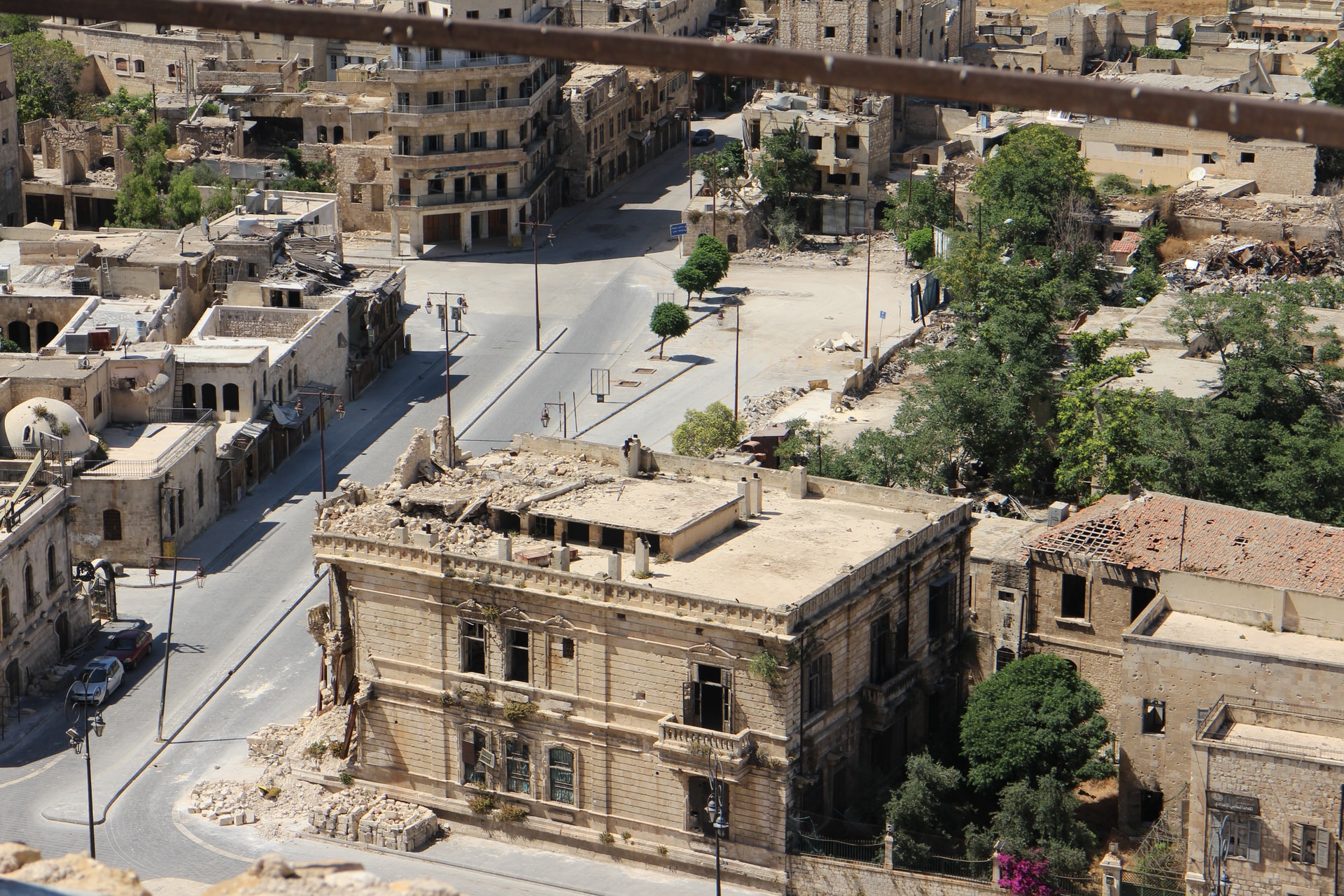
A view of destruction in Aleppo, Syria.
(Photo courtesy of aladdin hammami/Unsplash)
Plus, a recent assassination attempt on President Assad reflects instability at the highest level.
Citing reports from Iran and Lebanon, Doyle says, “There was an attempt on his life [when] he was going into the central mosque in Damascus, on the last day of Ramadan. His wife Esma tweeted [about] how they were going to find the people responsible for this attempt, and there would be severe justice.”
Yet, hope remains. “It is a great opportunity for the Gospel because right now, Syria has problems that seem unsolvable,” Doyle says.
Help fuel Gospel growth in Syria through Uncharted Ministries.
“The news (in Syria) is horrible, but look at what Christ is doing. The leaders we work with [tell] us they’re having trouble keeping up with the massive number of new converts,” Doyle says.
“The kingdom of God is advancing in the midst of the ashes, and people are coming to faith in Christ.”
Header image is a representative photo depicting a Syrian refugee camp in the outskirts of Athens, Greece. (Photo courtesy of Julie Ricard/Unsplash)
Iran (MNN) — Executions are up 25-percent in Iran, according to a new report from human rights groups in Europe. “The correlation between Raisi’s election and the increase of executions is to be noted,” Edwin Keshish-Abnous of Heart4Iran says.
Iranians chose the hardline Islamic cleric Ibrahim Raisi for president in June last year. More than 50 executions took place in July, the report reveals, and numbers surged again in September and December. At least 333 people were put to death in 2021.
“[People in Iran] can be executed for crimes that are not really considered among the most serious under international law, such as drug trafficking,” Keshish-Abnous says.
“It is also worth mentioning we have had cases in the past [where] Christians have been executed for [their] newfound faith.”
Death may be rampant inside Iran, but so is the life and hope of Christ. “Iran is in a very unique spiritual climate right now,” Keshish-Abnous says.
“A Netherlands-based research group, back in 2020, revealed that one-point-five-percent of Iranians inside the country identify themselves as Christians.”

Men, women and children in Iran are making life-changing decisions to leave Islam behind to receive salvation through Jesus Christ!
(Photo, caption courtesy of Heart4Iran)
Heart4Iran brings the hope and love of Christ to people throughout Iran. Connect with Heart4Iran and find tangible ways to help.
“Pray for the security of [the] Iranian Church inside the country and for God to open more doors to preach the Gospel,” Keshish-Abnous requests.
“The spiritual hunger is not limited to a certain group of people. Iranians from all walks of life respond to the Gospel.”
Execution by hanging is common practice in Iran. Header image is a representative stock photo courtesy of kalhh/Pixabay.
Lebanon (MNN) — Lebanon will hold elections on May 15. But the largest Sunni political bloc, the Future Movement, has decided not to run.
The leader Saad Hariri comes from a long line of politicians. But in January he suspended his involvement in politics, and other family members followed suit.
Nuna with Triumphant Mercy Lebanon says, “So now the Sunnis have no leader, they have no one that represents them in the government. So this makes the balance of power a bit difficult. The Shiites are really working hard to get more power.”
Nuna says this imbalance may give more power to Iran in the end, since the Iranian government embraces Shia Islam. “So the Christians have a big vote to do. And they are the ones who will determine later if the Shia will take more power or not. Because they do have a voice.”
“The problem is that many Christians don’t want to vote. They think, ‘Oh, my voice doesn’t matter.’”
Christians make up a significant portion of Lebanon’s population, and the government has traditionally shared power between Christians, Sunni Muslims, and Shia Muslims.
Nuna says an attempt to force Iran’s strict Islamic law on Lebanon could lead to civil war. It would certainly lead to more sanctions and poverty. “Later on, we might be forbidden to evangelize, forbidden to speak plainly about Jesus, even on the streets or during our ministries or during our home visits.”
How to pray
Pray many will experience Jesus’ love through the care of TM Lebanon.
And pray Iran’s government will not gain more power over Lebanon’s people through these elections. Ask God to empower Christians to use their voices for peace and justice.
Header photo courtesy of Clker-Free-Vector-Images on Pixabay.
Lebanon (MNN) — Lebanon seemingly faces another new crisis every month, and it’s been that way since 2019. How do Gospel workers continue meeting needs without burning out?
“We are equally affected by all the mess and political turmoil that our country goes through,” Heart for Lebanon’s Camille Melki says.
“We want to stay focused on what’s important, and that is to share the Gospel. So we do a minimum of three, sometimes four, spiritual retreats every year, where we are caring for ourselves and caring for one another, trying to spend time in prayer.”

(Photo courtesy of Heart for Lebanon)
The next retreat is just around the corner, and its theme is “Victory in Jesus.” “We’re facing a physical, emotional, but more importantly, a spiritual battle,” Melki says.
“We’re not going to be victorious by our own strength; we can only be victorious in Christ.”
Pray for Melki and other leaders as they monitor compassion fatigue in their staff.
“We do a lot of member care and very important checks and balances [to look for] compassion fatigue among our staff. When we do that, we have to circle back and see how we can love on each other, encourage one another,” Melki says.
Pray for effective communication between Heart for Lebanon workers and leaders. “It’s very important those two things happen: the leadership is aware and diligent, but also that the staff has the courage and the ability to ask when help is needed,” Melki says.
Header image depicts a worship service in Lebanon. (Photo courtesy of Heart for Lebanon)
Lebanon (MNN) — On April 7, the International Monetary Fund reached an agreement with Lebanon for an economic reform plan. It could unlock $3 billion in funding over several years.
But the deal depends on Lebanese authorities making several reforms. They must restructure the banking sector, and improve transparency.
Pierre Houssney with Horizons International says, “There’s a sense that we’ve seen this before, for example, back in 2018. It was the summer before an election. We had $11 billion of foreign aid come in. And we saw the politicians use that to basically rig the elections, stay in power, and embezzle the money.”
“I personally am a little bit too jaded to see this as good news, because we’re coming up on some really important elections.”
No one sees any hope in Lebanon’s corrupt ruling class. But Houssney says hope shines from the Lebanese Church. “Lebanon is a small country, but we have been supporting over 115 churches, local ministries in Lebanon, through food portions, through medical aid.”
Horizons also supports Lebanese Christians through employment opportunities. “So we’ve been actually training believers on job skills that can be outsourced via the internet to global economies.”
Find your place in the story
Pray many people in Lebanon would see the love of Jesus reflected in the Church.
Want to hire a Lebanese Christian and support them with reliable income? Learn more here.
Houssney talks about other ways to get involved. “We need prayer. We need financial support continued for the Lebanon Crisis Fund. Because the news headlines have very much moved on since the August 2020 explosion. We’ve had to cut our aid for the churches by half this year because the headline funds have run out.”
Photo courtesy of Horizons International on Facebook.
Iran (MNN) — You won’t hear reports like the next one in mainstream news outlets, but these events are more common than you realize. In Iran, “people’s lives are being transformed through the Scriptures,” Lucy Boston of Global Catalytic Ministries says.
“The Word is mighty; it’s a much more powerful evangelist than me or you.”
GCM received the following account from its network of underground believers:
An Iranian man was in prison facing the death penalty for a crime he didn’t commit. One day, he heard a story from the Old Testament and believed in the God of the Bible. As his trial approached, he said, ‘I believe in You, God; please create a miracle for my situation.’ The next day, everyone in the courtroom was puzzled. They couldn’t figure out why the man was there, and the judge released him.
(Photo courtesy of Priscilla Du Preez/Unsplash)
Upon release, the man dedicated his life to Christ. “This man said, ‘this is the God I’m going to serve now,’ and he’s reading the Bible with three different groups of Muslims right now,” Boston says.
“The Word is discipling them unto Jesus. It’s so powerful.”
This testimony is one example of a broader trend sweeping the country. Throughout Iran, “the Lord is teaching Muslims who He is,” Boston says.
“The God of the Bible is not Allah. They (Muslims) quickly realize this as they see God working in their lives through the Scripture.”
Download a new e-book from Heart4Iran to learn how the Holy Spirit is moving in Iran.
Header image depicts former Iranian prison. Qasr Museum-Garden, formerly called Qasr prison, was Tehran’s first centralized prison. (Photo courtesy of Khashayar Kouchpeydeh/Unsplash)
Palestine (MNN) — Between the fourth and seventh centuries, Christians transformed the Judean wilderness into a place of worship, prayer, and community.
Haytham Dieck is teaching a new course about monasticism with Bethlehem Bible College. He says, “When you go deeply into the history of monasticism, you get really surprised. People just left their materialistic lives to follow Jesus as He said. They went in the desert, to the Judean Desert, the same place where Jesus fasted for 40 days and 40 nights.”
The Judean Desert is a very harsh environment. But Christians turned it into a city with 70 monasteries. At different times of day, one could hear bells ringing from all directions.
From here, monasticism spread out to other parts of the Christian world as well. It also led to a lot of theological development. Dieck says, “Probably the first establishment of Arab theology started in the monasteries in the Judean Desert, which is absolutely phenomenal. That is exactly the concentration of the course.”
Course details
The course will be taught in nine sessions, Dieck says, “Each class will run for almost an hour and a half. That means the class will total almost 13 hours.”
Dieck has previously taught courses on discovering Jerusalem, Galilee, and Bethlehem. In the future, he hopes to teach on the women of the Bible.
Want to learn more? Consider signing up for the online class here.
Header photo courtesy of Bethlehem Bible College.
Lebanon (MNN) — Deepening discontent in Lebanon casts a shadow over upcoming elections. In a recent survey, only 50-percent of Lebanese said they were likely to vote.
“Many people are not going (to the polls to vote), and it’s a shame,” Nuna of Triumphant Mercy Lebanon says.
“We have a civil duty to choose our leaders. Otherwise, the people we don’t want will be in power.”
The global community views May 15 elections as a catalyst for the International Monetary Fund and World Bank loans. These loans are Lebanon’s only option to save a crumbling infrastructure and financial sector.
Lebanon is in a record-breaking economic depression, which began with the meltdown of its financial system in 2019. The collapse, which drove three-quarters of Lebanese into poverty and sunk the currency by 90-percent, resulted from decades of financial mismanagement and corruption by sectarian leaders.

Gospel workers prepare to help queues of Lebanese needing relief aid.
(Photo courtesy of Triumphant Mercy Lebanon)
Hope remains in Lebanon
Politics in Lebanon are based on a complicated structure that, theoretically, balances power among several religious communities. Elections typically provide a chance to start over with different leaders at the helm, but corruption corrodes the process.
“The Sunnis, for example, lost their leader, and none of the Sunnis will be represented [on the ballot]. So now the Sunni people don’t want to elect anyone,” Nuna says.
“Others, like the Christians, say there’s no need to do this (elections) because the same people will be re-elected.”
In a downcast society, believers share their reason for hope. “God is still in control. We are not alone; He is there for us, and He can fight for us. We bring that perspective to people, and it encourages them,” Nuna says.
“We are making a small difference, and I know God gave us this area of influence. But, the big mass of people (the wider public) doesn’t have hope for a future.”
Support Triumphant Mercy Lebanon as they deliver help for today and hope for tomorrow.
Header image is a representative stock image courtesy of jorono from Pixabay.
Lebanon (MNN) — In 2014, the Islamic State carried out a genocide against the Yazidi people. They forced women and girls into sexual slavery and killed as many men as they could.
The Yazidi had lived in Upper Mesopotamia for centuries, but hundreds of thousands dispersed from Northern Iraq to nearby countries. Many Yazidi made their way to rural Lebanon.
That’s where the ministry Cry Out Now started working with them. David says, “We got to meet one family. We discovered, after listening to their story, that before they fled, some people connected to ISIS actually took some of their daughters. They essentially brainwashed them and took them away from their parents. The family was heartbroken.”
Ministering to the Yazidi
David says they began to tell this family about Jesus, his love for them, and his sorrow over evil. The family soon became Christians.
Yazidis speak Kurdish and Arabic, but most cannot read in either language. David says, “So maybe they’ve made a decision to say, ‘Yes, we follow Jesus.’ But then they don’t really know anything else, because they don’t know how to read.”
“So what we’ve been doing is making visits to people like this, and teaching them using audio Bible stories.”
The Yazidi people do not practice Islam, but a monotheistic religion that draws influence from ancient Iranian religion, Judaism, and Nestorian Christianity. Yazidis believe that one supreme god created the world, but then ended his involvement with it.
How to pray
The Yazidi have suffered greatly during Lebanon’s financial crisis. Ask God to strengthen these new believers. And pray they themselves would be able to share about Jesus’ love and make disciples.
The header photo shows Yazidi refugees. (Photo courtesy of DFID – UK Department for International Development [picture: Rachel Unkovic/International Rescue Committee], CC BY 2.0 <https://creativecommons.org/licenses/by/2.0>, via Wikimedia Commons)
Middle East/North Africa (MNN) — Some of the world’s most difficult places to follow Christ are in the Middle East North Africa region or the MENA. Program for Theological Education by Extension, or PTEE, trains church leaders in these countries.
“Last year, we concentrated on reaching new countries [with] no church, no leaders,” PTEE Executive Director Victor Sadek says.
“New people began to study [with PTEE] in Sudan, Uganda, North Iraq, and countries in North Africa. We had 78 new classes begin, and 619 students.”
PTEE offers recognized theological courses for Gospel workers in the Arab world. More about that here. By studying online, believers can avoid unwanted attention, which often leads to persecution.
“We have many, many people asking to join our courses,” Sadek says.
The ministry’s holistic approach allows leaders to serve their churches and communities and train others for service. Having Arabic coursework and national facilitators makes PTEE a natural fit for Arabic-speaking believers.
In 2021, “we had to translate courses into [the] Kurdish language, which is needed in some countries like North Iraq. We also [translated] the course, ‘Come Follow Me’ [from] English into Arabic,” Sadek says.

(Photo courtesy of PTEE)
Gospel workers see two primary goals on the horizon for 2022.
“In 2022, we are going to put all our courses in a mobile phone study by creating some videos and some interviews,” Sadek says.
“We need people who will lead us in creating this new method of learning through mobile.”
Pray the Lord will bring PTEE the workers and the funding it needs to complete the mobile study project. Pray also for PTEE team leaders as they plan for an in-person gathering.
“We are planning this year to invite leaders from these (new) countries to have a face-to-face gathering in our school [to] encourage them and to train them more. [To this point,] we have been contacting them through Zoom,” Sadek says.
Header and story images courtesy of PTEE.
Iran (MNN) — Trans World Radio has launched Persian World Radio, an online Farsi radio station that will serve audiences in Iran, Afghanistan, and Tajikistan.
More than 100 million people speak Farsi worldwide. The programming will run 24 hours a day. The station carries music and discipleship programs. It’s a great resource for Iranian Christians who don’t have access to many Christian materials – printing Bibles is illegal in Iran.
Daniel says nearly 70 percent of Iranian people don’t want to be Muslim anymore. “They actually don’t want to be connected to any religion at all. What we pass to them through the radio is a God who wants to have a relationship with them. We do not give them religion, but a relationship.
“And I believe that through this message they will come to Christ, and reach for the love of God.”
Why use an internet station? Daniel says Iranians love using internet programs like blogs and podcasts, and they don’t appreciate government restrictions blocking online activities. “The Iranian regime is pushing back. They say, ‘Don’t use the internet. It’s not good for you.’ They close the internet sometimes. But because of that, people use VPNs, reaching more websites.”
How to pray
The goal of this program is to encourage Iranian Christians and give them a sense of community with each other and the Global Church. Daniel says TWR hopes to include children’s programming in the future.
But it doesn’t stop at Farsi. Throughout the year, more languages will appear on the schedule, including Laki, Luri, and Balochi.
Ask God to strengthen believers in Iran. Daniel says they are often barred from schools, jobs, and government positions because of their faith in Jesus.
Header photo courtesy of Peggy\_Marco on Pixabay.
Lebanon (MNN) — For over a decade, LSESD’s SKILD program has supported children with special needs in Lebanon. But more recently, they have begun a partnership with Lebanon’s Notre Dame University with the goal of improving access to education.
LSESD Partner Relations Coordinator Daniella Daou says, “In Lebanon, we have no mandated special education, so students we serve at schools would leave at grade 9 or 10, with no future in sight in terms of academic or vocational education.”
How the partnership works
On NDU’s campus, SKILD operates an office that helps students struggling with their academic performance. NDU psychologists work with the students to help them find the best academic practices for their education.
The partnership also led to a new, 2-year certificate program for students that cannot enroll in traditional institutions. Daou says this program is the only one of its kind in Lebanon. “The students take academic courses, as well as life and social skills courses. They audit regular university courses, they have internships on campus and off-campus.”
“We want them to be equipped academically and in their social skills to become independent citizens.”
Daou says LSESD wants to foster a culture of inclusion in higher education. “That’s what we don’t have right now. We are modeling the inclusive community on campus that we hope to see on a larger scale someday.”
SKILD’s work has brought together Christians from many different Christian and religious groups in Lebanon.
How to pray
Pray God’s love would be evident in the work of SKILD and the other branches of LSESD.
Since the economic crisis began, SKILD has lost a lot of qualified staff members as people flee the country. Daou says, “This has affected our capacity to run assessments as usual and serve kids. Please pray that we find qualified, passionate, people.”
LSESD expects more power cuts this month as well, due to Russia’s invasion of Ukraine. Ask God to sustain the ministry.
The header photo shows Lebanon’s Notre Dame University. (Photo courtesy of Wikimedia Commons, Public Domain)
Palestine (MNN) — The West continues to rain sanctions down on Russia after the invasion of Ukraine. Most measures have specifically targeted wealthy oligarchs and banks in an attempt to isolate Russia from the world economy.
But have these sanctions extended to other conflicts in the world? Andrew Bush with the Bethlehem Bible College says, “International law is international law. From the perspective of the U.S. or Europe, you can’t apply it in one place and not apply it in the other.” Bush says bad actors of the world will notice if their actions are ignored on the international stage.
Peacemaking class
Conflict and injustice continue to rage in places like Myanmar, Yemen, Palestine.
Bush serves as the director of the Bethlehem Institute of Peace and Justice. In the fall, the class “Peacemaking and Justice in the Palestinian Context 1” will let students hear from peacemakers in Palestine, Israel, Myanmar, and other places.
For instance, Bush says, “Reverend Frank Chikane in South Africa has spoken with us about his role and experience in peacemaking, as it opposed apartheid and ended the apartheid regime. Then we have a very excellent lecturer on the Dalit people and their pursuit of social justice in India.”
Class details
Bush says the course will cover a wide variety of topics, including: “the theology of peacemaking, the history of the Israeli-Palestinian conflict, women in peacemaking in Israel and Palestine, the role of international law in resolving conflict, and more.”
The class looks at religious dimensions to peacemaking, including a deep dive into Jewish and Muslim thinking. Bush says, “Our goal is to bring the voices of Palestinian theologians and leaders that have worked in peacemaking, and to value the role of peacemaking as Christ called us to.”
Anyone can take this course for credit or audit for half the price. Learn more here. And ask God to raise up more Kingdom peacemakers all over the world.
The header photo shows the separation wall between Israel and Palestine. Photo courtesy of Bethlehem Bible College.
Middle East/North Africa (MNN) — Have you noticed the Ukraine crisis getting more attention than the Taliban’s reign of terror in Afghanistan or the massive humanitarian catastrophe in Yemen? If so, you’re not the only one.
“People in the MENA (Middle East/North Africa) have been facing [war and refugee crises] in the last 30 years regularly,” Fadi Sharaiha with MENA Leadership Center says.
“But what’s happening in Ukraine has so much exposure in the media, especially in the West. Meanwhile, people being killed in Syria or Iraq is some ‘other’ news, like helping rescue a cat from a tree,”
“What is happening (the world’s response to the Ukraine crisis) is causing the Christians in the MENA, especially the Christian minorities in Syria, Iraq, [to feel] ‘we have been left alone.’”
Media bias isn’t the only problem. According to Politico, more than 25 nations have joined in purchasing and delivering weapons to support Ukraine’s war effort. The United States sent $1 billion to Ukraine in early March, bringing the total to $2 billion since the start of the Biden administration.

“We just finished an eight-week course on understanding refugee ministry; the Holy Spirit led us to do this training before the Ukrainian situation [began].”
(Graphic courtesy of MLC)
“Canada [gave] the Ukrainians $50 million for specialized equipment and weapons. [Conversely,] I’ve just seen the (unanswered) call from the U.N. for $4 million for the famine in Yemen,” Sharaiha says.
“Life is not fair. But, as Christians, we are called to do justice. It’s traumatic; I feel [for the] Ukrainian immigrants, but at the same time, we (non-European immigrants) need not be discriminated against. An immigrant is an immigrant, regardless of their skin color.”
Pray the Lord will provide support for urgent needs in the MENA region. And praise God for His timing! Some MENA countries have begun to accept Ukraine refugees, and believers are ready to help them thanks to MLC.
“We just finished an eight-week course on understanding refugee ministry; the Holy Spirit led us to do this training before the Ukrainian situation [began],” Sharaiha says.
“Now they are more equipped, more ready, to do more in the MENA for the Kingdom [of God].”
Support of Ukraine isn’t bad, but the perceived bias of Western media and military leaves MENA Christians feeling isolated and less important. (Photo courtesy of Mathias P.R. Reding/Unsplash)
Middle East/North Africa (MNN) — Will Ukraine take priority over crises in the Middle East and North Africa? See our full coverage of the Ukraine crisis here.
Speaking to the United Nations Security Council midweek, U.N. chief António Guterres warned members not to forget millions in need across the MENA.
“It’s crazy time we’re going through,” MENA Leadership Center’s Fadi Sharaiha says.
“Something is boiling; something is going to happen, and people have no clue what will happen.”
Some 20 million people in Yemen need immediate humanitarian aid and protection. More than a decade of war has left Syria in ruins. Plus, people throughout the region are “not sure about their daily bread,” Sharaiha says.
“Forty percent of wheat coming from Russia and Ukraine goes to the MENA, which means that bread prices will go high. Next month is Ramadan, where Muslims pray and fast the whole month. Usually, prices go up during this month, and this is without the Ukrainian thing.”

Map of commonly included MENA (Middle East & North Africa) countries.
(Wikimedia Commons)
Political uncertainty leaves many on edge. “Russia is a major player in the MENA, especially in Syria,” Sharaiha says.
“Their (Russia’s) relationship with Iran and Iraq is also being affected because we never know what could happen. Even in Saudi [Arabia] and the UAE, now [there is uncertainty because] they did not answer the U.S. calls to raise the oil production.”
MENA Leadership Center equips Gospel workers to respond. You can help by sponsoring a leader in training. Pray those who feel forgotten by the world will know the Lord sees them.
“Please pray for people in the MENA, especially refugees. We have so many Christian refugees or asylum seekers.”
As the Syria crisis enters its eleventh year, the humanitarian situation is more difficult than ever. More than half of the population remains displaced from their homes – including 5.6 million refugees living in neighboring countries and more than 6.9 million internally displaced inside Syria.
(Photo courtesy of Ahmed akacha/Pexels)
Syria (MNN) — There’s a war underway for the hearts and loyalty of Syrian men. Russia calls militia from the Middle East to join their ranks in the war against Ukraine. Many answering the call are experienced fighters from Syria, The National reports.
“There is a saying in Arabic, ‘The enemy of my friend is my enemy as well.’ This is a fight that they (Syrians) feel is unfair – against Russia from the West – and they want to be part of it,” MENA Leadership Center’s Fadi Sharaiha says.
History is another factor driving Syrian loyalty to Russia. “People in the MENA, they appreciate history. Russia supported the Syrian regime, supported the Syrian people, by [helping them to] not have their country divided,” Sharaiha says.
“They (Syrians) feel grateful, and that’s why they want to jump on the first opportunity to pay (Russia) back.”
According to a Syrian non-governmental group, over 40,000 Syrians have registered to travel to Ukraine and fight for Russia. None had left as of last Monday, but Russian President Vladimir Putin said foreign volunteers who wanted to fight with Russia should be allowed to do so earlier this month.
“In Syria right now, we have so many Russian military [forces],” Sharaiha says.
“The first opportunity [to] go and help the Russians, they (Syrians) will do this; especially if this is encouraged somehow by the government of Syria.”

A Russian soldier cares for Syrian children during a mine detection exercise in Aleppo, 2016.
(Wikimedia Commons)
A different kind of war
The Lord is also calling Syrian men but to a vastly different battlefield. This one is spiritual, and the mission is to win hearts for Christ. MENA Leadership Center equips Syrian believers to accomplish that mission.
“Right now, we have two courses running. One is on human capital, and how to develop the human capital in your ministry; 25-percent of the class is Syrians,” Sharaiha says.
“Another training [focuses on] how to strategize and develop an action plan for the ministry. We have Syrians in [that class, too].”
MLC also teaches Syrian believers how to care for one another practically. “People are going through a lot in Syria, especially Christians,” Sharaiha says.
“Their (ministry leaders’) focus is on helping the Christian minorities in Syria [holistically:] sharing the Gospel with them, encouraging them and, at the same time, trying to do some kind of support on the ground – helping them with food whenever it’s needed, and clothing.”
Through sponsorship, you can help Gospel workers receive training from MENA Leadership Center. Most importantly, pray. “Let’s pray for our brothers and sisters in Syria, that they will be rooted in Christ, encouraged in the Holy Spirit, and the Lord will help them go through this very difficult time,” Sharaiha suggests.
“Syrians right now have most of their resources going to support Russia. They’re not sure about the future because, in politics, Syria could be one card in a big game. They don’t know if this card will be dropped or not, [creating] a lot of anxiety.”
Header image depicts a 2019 demonstration in Ufa, Russia, showing Russian support for Syria. (Wikimedia Commons)
Lebanon (MNN) — Lebanon could face food shortages in as little as a month if the Ukraine crisis continues. The country’s heavy reliance upon imports for food security leaves its population in limbo.
“[Approximately] 81-percent of the wheat that Lebanon imports comes from Ukraine [and] 15-percent from Russia,” Heart for Lebanon’s Camille Melki explains.
Without these sources, “Lebanon is left with only four-percent of [its total wheat supply] that we produce here.”
Lebanese rely on bread for a large portion of their daily caloric intake, and government subsidies keep supply costs within reach. But without any wheat, there is no bread.
“Rice would be the number one substitute for bread,” Melki says.
“But the challenge is that prices of essentials have gone up 20 to 40-percent; you have a country struggling under such an economic downfall, and we have very severe banking restrictions.”
Part of the Lord’s prayer is, “Give us this day our daily bread.” Heart for Lebanon’s food program supplies an answer to that request. “We distribute 3,600 food packages every month; we already have stocked [supplies] for the next two months,” Melki says.
Meeting a felt need like this helps believers bring people from despair to hope.
Heart for Lebanon’s focus on holistic, relational, and unconditional ministry provides essentials to families, allowing believers to reach and engage them in a relationship. Ongoing visits offer an opportunity to invest in their lives on a deeper level than just humanitarian aid.
Learn more about Heart for Lebanon’s approach here.

Pray Heart for Lebanon can continue getting supplies for its food ministry.
(Photo courtesy of Heart for Lebanon)
“Pray that we can continue to share the Gospel,” Melki requests.
“From a physical, human perspective, it is bad; but from a spiritual perspective, we have an opportunity like never before to share the love of Jesus Christ.”
Pray also that Heart for Lebanon can continue getting supplies for its food ministry. “We’re already seeing that wholesalers are skyrocketing their prices and limiting the quantities we can purchase,” Melki says.
“We are concerned that the amount of food we can purchase per family will be limited coming in April and May if the crisis in Ukraine is not resolved by then.”
Header image is a representative stock photo courtesy of Karolina Grabowska/Pexels.
Lebanon (MNN) — Lebanon’s ongoing crisis just hit a new low. Crime already began to rise last year. Now, people are even stealing state property and selling it for scrap metal.
Maintenance hole covers and iron railings are hot commodities, according to Arab News.
“People need [a way to earn money], and if the government is not providing it, they’re taking it by force,” Nuna with Triumphant Mercy Lebanon says.
“People don’t care anymore because people are hungry.”
Lebanon’s economic crisis has pushed two-thirds of the population into poverty since 2019. Desperate times call for desperate measures. For example, a man in Lebanon’s Bekaa Valley robbed a bank last month to withdraw his own money.
“They’re stealing electrical wire, electricity poles; they’re stealing all these things, especially at night. It’s completely dark, and nothing will hinder anyone from stealing; there are no alarms, no lights. There’s nothing,” Nuna says.
“We’re hearing of stealing everywhere. We had our generators stolen [in 2021].”
Hope for a brighter tomorrow
TM Lebanon provides physical help for today and hope for a better tomorrow. More about that here.
“Our job is to bring the hope of Christ to people, to show them a brighter future. They need people who are looking forward to a brighter future, which is not the case anywhere in any government,” Nuna says.
“There is no hope in the natural, but we have a God who is in the supernatural.”
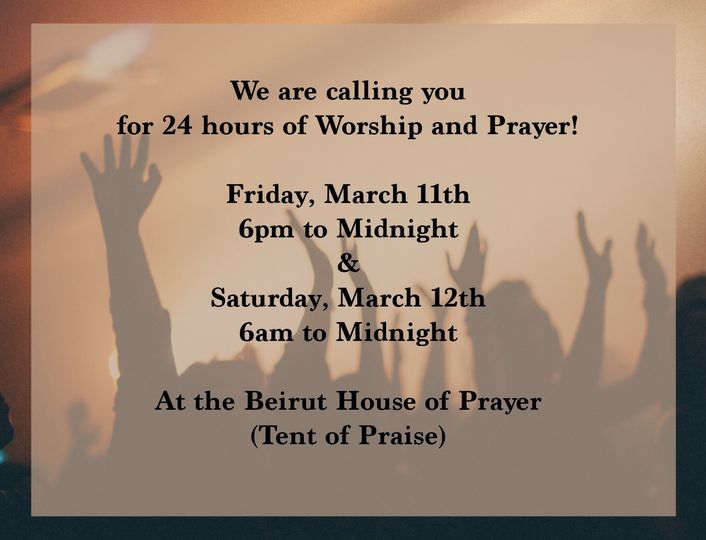
(Graphic courtesy of “Pray for Lebanon” Facebook Group)
A 24-hour prayer event starts tomorrow. “If people want to join, we’re going to open a Zoom meeting for people who are like-minded, who want to pray for the region, or hear the things that Lebanon is praying for,” Nuna says.
Connect here through the “Pray for Lebanon” Facebook page.
“This (prayer movement) is not only in Lebanon; [throughout] the whole Middle East, these initiatives are happening,” Nuna says.
“This initiative is happening in Iraq, Jordan, Turkey, Egypt. The format is different every time according to the country and the resources we have.”
Header image depicts a street in Beirut, Lebanon. (Photo courtesy of Maxime Guy/Unsplash)
Middle East/North Africa (MNN) — If you live in the West and God lays a passion on your heart to start a nonprofit ministry, it’s pretty easy to find the resources and training you need.
But pretend you’re a believer in Iran or Yemen, where revealing your faith could get you killed. Even if you started a ministry and kept it secret, who would you turn to for answers or advice?
Enter: the MENA Leadership Center. “The mission of the MENA Leadership Center is to bridge leadership gaps and expand the capacity of high impact ministries throughout the greater Middle East,” CEO Jennifer Murff says.
“We help these ministries build their capacity so they can continue the work that God put in their heart.”
MLC offers online courses with immediate application. “We assessed ministries throughout the greater Middle East, asking them, ‘outside of money, what do you need?’ They told us, and so we created courses around their needs,” Murff says.
Each course connects Gospel workers with subject matter experts. “We work with experts both from the West and the MENA. It depends on the type of course,” Murff says.

(Photo courtesy of MENA Leadership Center)
For example, in a human resources course, “The instructor is one of the executive vice presidents of a large, influential bank in the region. He’s a strong believer, and he’s using his giftedness to help strengthen ministries in the human resource side of operations,” Murff says.
“These are things ministries in the MENA don’t have access to, and we provide that so they can be sustainable long term.”
This year, MLC offers courses on religious freedom, refugees, digital outreach and the online church, human resources, strategic planning, fundraising, and more. See a list here.
Depending on the country, helping refugees can present distinct challenges. “We want to help ministries build a working space that brings awareness to the unique dynamics within a refugee camp or refugee ministry,” Murff says.
You can give leaders the skills they need by providing a scholarship. “They’re giving what they can, but it’s not enough to cover the class,” Murff says.
“We’re not going to turn anyone away, so we are always looking for partners to provide scholarship funds.”
Over 91% of the MENA is unreached with the Gospel. The MENA Leadership Center is dedicated to equipping ministries whose mission is to reach unreached people groups throughout the Greater Middle East with the power of the Gospel! (Header photo and caption courtesy of MENA Leadership Center)
Lebanon (MNN) — When Islamic State fighters took control of Iraq and Syria eight years ago, refugees flooded into Lebanon. Now, as Lebanon falls apart, displaced individuals are at risk once again.
Syrian refugees tell Heart for Lebanon’s Tom Atema that militants come to their camps in disguise, offering food, housing, protection, and more.
“They’ve told me, ‘This fellow came into my tent, and said, ‘I’ll give you everything that Heart for Lebanon is giving you, but [I’ll] also give you $500 a month cash’,’” Atema says.
The offer is appealing to refugees who see no future in Lebanon. “If you’re a Syrian refugee, you’re living at or below the extreme poverty line,” Atema says.
“You have no legal documents to know that you exist. On top of that, you’re not allowed to work.”
Some desperate families accept, only to find out “they had moved to an ISIS camp,” Atema says.
“The children would not receive an academic education; they receive a military education, where they learn how to hate and shoot guns.”

(Photo courtesy of Heart for Lebanon)
Heart for Lebanon facilitates change from the bottom up. By introducing biblical, value-based education, they’re raising a generation of godly leaders. Learn more here.
“Lebanon does not need a new system as much as they need a Savior. I’m asking God to give us ten more years,” Atema says.
“We have this golden opportunity, this ‘Esther moment’ to reach these children. In ten years, we can have enough students in places of influence where they can start to change the country for the better,” he continues.
“Reaching the children is extremely important [because] it’s the only hope we have, with the Gospel of Jesus Christ, to ‘fix’ Lebanon.”
Give kids a future through Heart for Lebanon.
Most importantly, pray. Use the prompts listed alongside this article to guide your intercession. “We’re praying that God will give us another 500 prayer partners this year,” Atema says.
“We need wisdom. We need the power of the Holy Spirit to go before us.”
Header image depicts Heart for Lebanon’s Hope on Wheels club. Hope on Wheels Clubs are empowerment programs that invest in at-risk children, helping them realize they have value and building their self-esteem. One of those programs is hairdressing, and it inspires young girls to dream for their futures! (Photo, caption courtesy of Heart for Lebanon)
Lebanon (MNN) — Jordan will begin exporting electricity to Lebanon this month. It’s part of an energy deal brokered in 2021 between Egypt, Jordan, Syria, and Lebanon. Here’s why Lebanon needs so much help.
Nuna of Triumphant Mercy Lebanon says her country’s ongoing energy crisis becomes unbearable during the winter months. Millions of refugees and the poorest Lebanese live in makeshift shelters.
“It’s really hard. The snow is piling up; the roof of the tent is made of cardboard,” Nuna says.
“After a while, the roof collapses; people had all their clothes, mattresses, blankets – everything is wet.”
Triumphant Mercy provides tarps, extra blankets, and fuel for cooking or to heat the home. “We print a coupon, and the people with this coupon can just go and get fuel,” Nuna explains.
But helping in the name of Jesus isn’t always easy. “Fuel is not available. So, by the time we found a station and start to give coupons to people, then they call us and say they’re not delivering the fuel,” Nuna says.
“We’re trying to do what we can, as much as we can, but it’s difficult. The government is not doing anything; it’s not even lowering the price of fuel.”

Kids having fun at one of Triumphant Mercy’s care centers.
(Photo courtesy of Triumphant Mercy Lebanon)
Believers won’t let the challenges stop them. Aid deliveries lead to conversations about Christ’s love and the Gospel message.
“We’re telling them (the people we help), ‘God has not forgotten you; He is near you, and He loves you. God is sending help,’” Nuna says.
“We’re here because some people are helping us to help you. People are sending funds so that we can buy fuel for you.”
Partner with Triumphant Mercy Lebanon here to provide tangible help and Gospel hope.
“[Givers] don’t have to think large; even if it’s very small, we can think of something. Think about providing maybe one gallon of fuel for one family,” Nuna suggests.
“We still have six- to eight weeks ahead of us with winter. They (vulnerable groups) would do anything to get warm, [and solutions are] not available. Even the hot water bottle is expensive, so people cannot afford that.”
The header image shows makeshift refugee shelters collapsing under the weight of snow. (Photo courtesy of Heart for Lebanon)
Iran (MNN) — A leaked state document from Iran warns of “rising discontent” in the country. The economy has suffered from years of mismanagement by the religious authoritarian regime.
The prices of food, energy, and other goods have skyrocketed. Iran faces heavy U.S. sanctions over its nuclear programs, adding to the economic woes.
Iranian Christians
Iranian Christians risk severe persecution, often unable to meet together openly.
Gilbert Hovsepian, whose father was kidnapped and murdered in Iran in 1994, has started writing songs specifically for the Iranian church. Rev. Haik Hovsepian Mehr was the President of the Council of Protestant Churches in Iran. Five years later, the family fled Iran.
Joe Willey talks about the SAT-7 PARS show Songwriting with Gilbert. “Gilbert and his guests collaborate both musically and lyrically. One may be on guitar while another writes lyrics and Gilbert joins on a keyboard. It’s really fascinating to look at the collaborative process.”
The musicians share one goal: writing worship songs in Farsi, the heart language of Iranian Christians. Willey says, “They do not want to translate the songs of others into that language. They are trying to build a catalog of songs from Iranians, for the Iranian Church.”
Guests on the show
Gilbert hosts other Iranian musicians on the show, most of whom are refugees. One suffered beatings from his father-in-law over becoming a Christian. Another left a life of sorcery to follow Jesus. Willey says, “So the songs were born out of hardship and trouble. But the songs are also a fantastic reminder to worship Christ regardless of the circumstances.”
Read more about this program and even see a clip from the show here.
Pray these songs will strengthen isolated Christians in Iran. And pray their love for Jesus will be a witness to the entire country.
Header photo courtesy of SAT-7 USA.
Lebanon (MNN) — Winter packs a punch in Lebanon. Back-to-back storms in January buried makeshift refugee settlements. Temperatures continue to plummet in Syria while resources move farther out of reach. The same is true in neighboring Lebanon.
Nuna from Triumphant Mercy Lebanon says snow is typical. But local reports describe the weather this year as strange. “We have another storm arriving; it’s like a storm after storm after storm. We hardly get out of one, and we start another one,” Nuna says.
“They said that these (storms) are coming from the Arctic, so this is a really unusual winter, unusual cold.”
It’s wreaking havoc on Lebanon’s most vulnerable populations. “You have the elderly who have no heating; the refugees who are under tents, the sick, the handicapped,” Nuna says.
“Many people don’t have any kind of heating system whatsoever.”

This is what snow removal looks like in refugee camps.
(Photo courtesy of TM Lebanon)
Roughly 1.5 million refugees live in Lebanon, and over 75-percent of the total population has fallen into poverty. More about that here. “With the financial crisis, the economic crisis, it’s very, very hard for people to find a way to warm themselves,” Nuna says.
“We even hear of people who are dying from cold [because] they cannot afford to buy fuel to heat themselves.”
A gift to Triumphant Mercy Lebanon provides emergency aid. Most importantly, it introduces people to “El Roi” – the God who sees. Teams tell people, “God has not forgotten. God has seen your misery, God has seen how much you’re suffering, and this is why we’re here,” Nuna says.
“They know we are believers, that we are doing this because of the love of Christ.”
Header image is a representative photo depicting the Ain Zhalta cedar forest in winter 2016. (Wikimedia Commons)
Lebanon (MNN) — As Lebanon collapses, scores of young people join the ranks of extremist groups. At least 48 young men disappeared from Tripoli in recent months. Families believe they’ve joined the Islamic State in nearby Iraq.
Associated Press reports that between 70 and 100 young men have disappeared from Tripoli, with a notable uptick tracing back to August. Five Lebanese were among the Islamic State militants killed by Iraq’s military in late January.
“One of the big factors with the crisis in Lebanon is a lot of people not feeling like they belong in this country anymore,” David* from the prayer ministry Cry Out Now says.
“It seems crazy that they would go to something like a terrorist organization, but I guess there’s a sense of belonging.”
Lebanon’s corrupt leaders and economic failure are the roots of instability and dissatisfaction. The GDP fell by $33 billion between 2018 and 2021. Today, poverty affects roughly 75-percent of the total population.
“Lebanon has been extremely divided for a very long time. [It has] always been very diverse; lots of different religious groups [with] different Christian sects and different Islamic sects,” David says, describing Lebanon’s complicated power-sharing structure.
“Their country works whenever the economy works. But whenever the economy does not work, everything falls apart.”
(Photo courtesy Uncharted Ministries)
Restoring the economy and getting money back into people’s hands won’t fix everything. Only Jesus can do that.
“Particularly Westerners, we sometimes feel that the answer to deal with poverty is to throw money at it,” David says.
“People can help organizations do aid relief or development work; okay, that’s one route. However, when it comes down to it, poverty is a spiritual battle.”
Some people escape poverty’s despair by joining terrorist groups. Others compromise their values when they see no other choice.
“Families are marrying off their teenage daughters because they can’t afford to look after them. These things happen because of poverty. It’s a spiritual battle, so we need to pray,” David says.
Use the prompts listed alongside this article to guide your intercession. Or, become a Cry Out prayer partner here. “Pray that God would help us as we disciple these people; that we can help them find hope in Jesus,” David requests.
“People are getting desperate. They aren’t finding the answers in their existing systems and structures. They’re desperate, and they’re searching.”
*Pseudonym
Header image is a 2015 photo depicting Islamic State fighters. (Wikipedia)
Lebanon (MNN) — A man in the Bekaa Valley recently broke into a bank to steal $50,000 from his own savings account. More about that here. It’s a sign of severe desperation in Lebanon.
Abdallah Assaii, 37, stole his own money from a branch of the Lebanese bank BBAC in Jeb Jannine, Bekaa Valley, Lebanon.
(Logo obtained via Google Maps)
“Desperate times require desperate measures. This gentleman was able, by force, to retrieve $50,000 he had saved,” Heart for Lebanon’s Camille Melki says.
“But the question is, if every one of us is going to do that, what will happen? Each one of us trying to break into the bank, take the bank employees hostage until they release the money – that’s scary.”
Many in Lebanon call the man a hero, but he is a criminal to others. He allegedly held seven bank employees hostage and threatened to light a match after dousing himself and the employees with gasoline.
Lebanese resonate with the man’s actions because they find themselves in a similar position. Families who used to maintain a middle-class status now live in poverty.
“Since October 2019, all banks in Lebanon froze everyone’s assets, so everything you have earned and saved for years for your retirement or your children’s education [is gone],” Melki explains.
“You wake up one day, and your assets are all frozen in the banks, and [you] can’t access them.”
Thankfully, Heart for Lebanon can access a majority of its funds and keep serving families in the name of Jesus. Pray this access continues, and learn more about Heart for Lebanon here.
“Though we did lose a significant amount of money in the banks here in Lebanon, we have a majority of our resources in the U.S.,” Melki says.
“New money that comes to Lebanon they call ‘fresh dollars’ and you have 100-percent access to it. Each month, Heart for Lebanon transfers ‘fresh money,’ and we use those resources to help over 4,800 families.”
The Bekaa Valley is Lebanon’s most important agricultural region. (Wikimedia Commons)
Iran (MNN) — Hope is on the horizon for vulnerable kids in Iran. Heart4Iran’s Mike Ansari says the picture today is bleak.

(Photo courtesy of Heart4Iran)
“More than 51,000 children have lost one or more of their parents due to the COVID pandemic, and that’s leaving these children very vulnerable. Thousands of them have to fend for themselves; they become either homeless or victims of trafficking or abuse, or become refugees,” Ansari explains.
Heart4Iran is working on a new program to connect these kids with the hope of Christ.
“Our ministry is starting 2022 by raising funds for the future church of Iran. This includes launching a Virtual Sunday School, continuing to partner with Superbook to create shows in the Farsi language, and increasing our outreach to this younger community through our counseling center,” Ansari says.
“The Virtual Sunday School is not another platform to teach the Bible to children. It is a place where they become part of a bigger family.”
Led by believers from a Muslim background, these new efforts will introduce kids and families to the message of redemption.
“Remember, Iran [has] a worldview of honor and shame, and whenever they are going through difficult times, they feel ashamed,” Ansari says.
“We need to cut through those barriers and bring the Gospel to them.”
Partner with Heart4Iran in this new initiative here. Most importantly, pray.
“Pray for the families, for the moms and dads or single parents, to come to know about Jesus. Pray for God’s mercy and protection and grace over the children finding themselves as orphans or highly marginalized,” Ansari requests.
“Pray for Mohabat TV to walk in God’s accuracy, wisdom, and favor. Pray that we will have God’s DNA in everything that we do.”
Header and story images courtesy of Heart4Iran.
Syria (CAM) — Recently native missionaries in Syria were visiting the home of a Muslim mother whose children had put their faith in Christ when her husband came in with another woman.
“What the team didn’t know is that they were sitting with one mom and her kids, but the other kids had a different mom,” the ministry leader said. “The guy was actually married to two.”
The kids had given their lives to Christ at a local ministry’s children’s camp, and they had asked the local missionaries if they would visit their home. Such visits are key to workers making contact with Muslims and leading them to Christ.
The parents were not devout Muslims, but Islam allows men to take up to four wives. The father, Usama*, and his other wife sat down and introduced themselves. After spending a little time getting to know Usama, the team decided to let the visit stand as an introduction and left.
“This man in white came to me, and He said, ‘I love you,’ and He just put his arms around me and hugged me, and since that night I don’t know what to do.”
The first mother later indicated she would like them to visit again, as she wanted to ask how she could have a closer relationship with her daughter, the ministry leader said.
“After several meetings with her, the father also started to ask some questions,” the leader said. “He asked us, ‘I can see the difference in our 10-year-old daughter – every time before we eat, she prays, and before she goes to bed, she prays for everyone. And that is something she didn’t have before.’”

Many Syrian children encounter Christ through special outreach and events.
(Photo courtesy of Christian Aid Mission)
Workers explained that she learned at camp about God and how to pray to Him, and they told him how the Lord is a loving God who desires to see all people saved from sin. When they asked if he had requests for prayer, he mentioned general health and family issues, and they asked if there was anything specific.
“He said, ‘I want to have the joy that my daughter has,’” the ministry leader said.
They prayed together and left, and two days later his daughter asked if they could visit again. During the next visit, team members learned that the same night they had prayed with him, he had dreamt of Christ.
“This man in white came to me,” Usama told the workers, “and He said, ‘I love you,’ and He just put his arms around me and hugged me, and since that night I don’t know what to do.”
The ministry leader said, “You could tell from his face that something had happened to him.”
The local missionaries prayed with him again, and before they departed, they advised him, “Just be open to what God wants to do in your life.”
The next time the team visited, Usama and his first wife prayed to receive Christ, the leader said.
“Now I am married to two, what shall I do?” Usama asked the workers. “I can’t leave one. I love them both, and I love my family.”
The ministry leader told Usama that since Christ was revealed to him in a dream, then he should pray that He reveal Himself to his second wife as well.
Over the course of several weeks, they prayed for his second wife, and after much prayer and fasting, team members began a Bible study with the family. Saying she wanted the same peace that everyone else in the family had, the second wife also received Christ, the leader said.
As do Christian workers throughout the Islamic world, the local missionaries continue to pray and advise the family over the thorny issue of how to bring polygamist converts into compliance with God’s will for marriage. Workers would rather have that discipleship challenge than unredeemed souls.
“This is the type of fruit and work you get when you go and visit people in their homes, and you follow up,” the leader said. “The beautiful thing is how the kids’ ministry connected us to the parents. It’s all wonderful how God works.”
Grief amid Persecution
Leading Muslims to faith in Christ also brings the discipleship challenge of helping them to withstand persecution.
Relocating persecuted Christians is a last resort, as workers do all they can to encourage threatened converts from Islam to withstand opposition from relatives, friends and neighbors. That means standing with new Christians with emotional and spiritual support.
Recently they stood with a woman whose husband and son were killed for refusing to deny Christ.
“That is a hard thing,” the ministry leader said. “She says, ‘Every time I close my eyes, I see my husband and my son in front of me, how they killed them.’ We spend a lot of time caring and loving, to help as much as we can.”
The workers know they are making a difference when they see the steps she has made to recovery, he said.
“When she first came in, she wasn’t able to focus for a very long time, or the moment you start talking with her, she starts to cry,” he said. “Now she is more open, and she takes more time in prayer. When someone comes in to check on her and visit her, she gives them big hugs and smiles. You see more joy, and what her closeness to Jesus has brought to her.”
Local missionaries in Syria are ministering to many such people. You can help equip them to bring the love of Christ to hungry and hurting souls.
*Name changed for security reasons
Header and story images courtesy of Christian Aid Mission.
Lebanon (MNN) — Kees van der Knijff always had an interest in theology. Growing up in the Netherlands, he felt the call to minister to the global Church.
At first, van der Knijff studied econometrics, which is the mathematical side of economics. But he eventually left that line of study to attend a seminary in Amsterdam. There, he obtained a Ph.D. in Systematic Theology.
Teaching theology
In the spring of 2021, he and his family moved to Lebanon, where he began teaching at the Arab Baptist Theological Seminary. He says, “I’ve been teaching a course on providence and prayer, the relationship between God’s plans, God’s care for creation, and our influence when we pray. That has been a joy to do. In the future, I will be mainly teaching systematic theology and historical theology.”
What is the difference between historical and systematic theology? van der Knijff says, “Historical theology is mainly where we study the development of Christian thought throughout history and the worldwide church.” Meanwhile, systematic theology looks at different doctrinal topics and expresses what the Church believes and why.
Challenges in Lebanon
Right now, van der Knijff spends a lot of his time learning Arabic. He intends to stay in the country, despite the financial crisis and unstable political situation. “Prayer for Lebanon and for the people who are suffering is much needed. For the region, I would say in almost all the countries where students from ABTS live, the church is in a difficult situation. It takes great courage and great wisdom to be a pastor and to be a church in those circumstances.”
ABTS students work in churches across the Middle East and North Africa. The seminary gives them affordable education they can use right away in their ministries. Ask God to strengthen these churches.
And pray that God will equip van der Knijff and his family as they adjust to life and ministry in Lebanon.
The header photo shows Kees van der Knijff. (Photo courtesy of ABTS)
Lebanon (MNN) — SAT-7 ACADEMY has announced a new partnership with the ministry Heart For Lebanon. SAT-7 will bring the primary education program My School to Syrian refugee students. It’s all part of the goal to overcome poverty through education.
John Frick with SAT-7 says, “SAT-7 is providing four years’ worth of educational programming for the younger ages: kindergarten through third grade. Heart For Lebanon will implement this curriculum with kids who are just not able to go to any of the schools, even the ones Heart For Lebanon is putting together.”
Children attend the My School programs three days a week at Heart For Lebanon’s two centers in the Bekaa Valley and in Southern Lebanon. They primarily learn Arabic, English, and Math.
Changing lives through education
The program has already changed the trajectory of many children’s lives. Some lived in suspicion of teachers, even throwing rocks at them as they approached. Now they have hope for the future.
Education is so important for these kids, Frick says. That’s what fueled the partnership. “Conversations began probably six months, maybe a year ago about this. The question was: how can SAT-7 come alongside and serve or complement what Heart For Lebanon was doing on the ground? It came to this opportunity for SAT-7 to share programming.”
Pray this ministry will clearly display the love of Jesus for all people.
Pray also for the continuing financial and political crisis happening in Lebanon. Frick says, “And COVID-19 has piled on top of these other issues. There are a lot of people that are hurting. And the church continues to need prayers to be the light in a dark area. So pray for the church, pray for leadership, and pray that God’s name would be lifted up and be glorified.”
Header photo courtesy of SAT-7 USA.
Middle East (MNN) — Amnesty International’s recent accusation about Israel is bold, triggering strong reactions in both the Palestinian and Jewish communities.
When asking our partners to discuss the issue, we encountered a field of rhetorical landmines. So, how do we discuss a situation that directly affects the body of Christ when words get in the way?
Uncharted Ministries works in both Palestinian and Jewish communities. Learn more here.
Drawing upon decades of experience, Uncharted co-founder Tom Doyle describes four ways to navigate divisive issues like these. Listen to the full interview here.
1. Refuse to give labels.
“As believers, we have to avoid labels because Jesus has given us our full identity,” Doyle says.
“I go back to an old quote by Chuck Colson, who said, ‘If I can label you, then I can dismiss you as irrelevant and cease any kind of dialogue.’”
2. Define your worldview by God’s Word, not man’s.
Opinions vary widely regarding the Israel-Palestine issue and cover the entire political and spiritual spectrum – even within the Body of Christ. “We don’t want to define issues solely by politics; we, as believers, need to define issues spiritually,” Doyle says.
“But the world tries to force us into political identities. Our identity is found in Jesus Christ and not our political beliefs.”
3. Don’t let headlines cause you to despise either side.
Words matter and inflammatory rhetoric can cause substantial social divides. “You have brothers and sisters on both sides. Love them. Pray for them,” Doyle says.
“I see Christians that tend to side with the Jews over the Palestinians; or, [they side with] the Palestinians over the Jews because of some of the social issues. God’s heart is big enough to love both of them, and I pray for the body of Christ to love Palestinians and Jews together.”
4. Weigh the facts, and consider more than one source of information.
Amnesty International’s report presents one side of a highly complex story. “The Amnesty International report is not a fair presentation of the state of Israel,” Doyle says.
“Israel is not an apartheid state. Consider this quote by [Bassem Eid], a Palestinian activist: ‘While it is not a perfect country it is definitely not an apartheid state.’ Eid is right.”
Furthermore, “21-percent of the population of Israel is Arab, and they have full rights and voting privileges with Arabs in the governing body, which is the Knesset. Several Arab nations have fully normalized relations with Israel as of today,” Doyle continues.
“But as believers, we are called to have compassion on all people. Jesus did. Palestinians in Gaza are in a horrible situation because of the Hamas government and being trapped inside. Our hearts break for Palestinians in Gaza who just want to live a normal life. One thing Palestinians and Jews can agree on is this – Hamas is not good for anyone. Please pray for the people of Gaza who want nothing to do with the ongoing war between Gaza and Israel. They are trapped in the middle and suffer daily. Pray for Jewish people, especially near Gaza, who endure rocket attacks from Hamas. Pray for Israel, that there would be a sustainable peace between Jews and Arabs.”
Header image is a representative stock photo courtesy of Jorge Fernández Salas/Unsplash)
Palestine (MNN) — Amnesty International, a human rights organization, says laws and practices in Israel towards Palestinians amount to apartheid. Read the full report here.
That’s a volatile word, but what does it mean?
Jonathan Kuttab with Bethlehem Bible College is an international human rights attorney. He says, “International law (in three different conventions) has a clear definition of what constitutes apartheid as a crime. One of them, of course, is separation, creating a system of separation for one group from the others.” An apartheid system also uses laws to give one group the upper hand over another.
Israel denied these charges, saying they originate from antisemitism. Kuttab says it’s important to distinguish between the Israeli government and the Jewish people. “We oppose antisemitism, and we also oppose racism. We oppose it because God loves everybody. Because we are created in the image of God. Jesus came to destroy the distinction between Jew and Gentile, male and female, master and slave. Jesus came to bring us all together.”
Apartheid in South Africa
Kuttab says apartheid is a relatively new crime under international law. People often think of South Africa when they hear the word. “A lot of the conversation goes, ‘Is this like South Africa or isn’t it? How different it is? How do we compare it?’ And this is not really a very useful approach, because every country is different.”
For instance, large dividing walls separate Israeli and Palestinian populations, something South Africa did not have.
South Africa did separate white and black populations in all aspects of life and prevented black people from voting or owning land. These laws lasted from 1948 until 1991, when Nelson Mandela was elected as president.
How to Pray
Pray for Palestinian Christians. They live in difficult conditions, but they have a strong love for Jesus. And ask God to bring peace and break down walls in Israel and Palestine.
The heard photo shows a separation wall in the West Bank. (Photo courtesy of Marc Venezia, CC BY-SA 3.0 <https://creativecommons.org/licenses/by-sa/3.0>, via Wikimedia Commons)
Lebanon (MNN) — The latest winter storm to move through the Middle East brought severe flooding to southern Lebanon. Believers are assessing damages and helping refugee families.
Whether they’re from Iraq or Syria, most refugees in this area live in extreme poverty in makeshift camps next to banana fields. Increasing numbers of poorer Lebanese are moving to the area, too. “These tents on the side of the banana fields – banana camps, we call them – get flooded out,” Heart for Lebanon co-founder Tom Atema says.
Heart for Lebanon teams build friendships with affected families, letting them know someone cares. Encouragement from believers gives people a reason to hope.

(Photo courtesy of Heart for Lebanon)
“Weather-related issues like this [add] to the turbulent times these refugees [and Lebanese] are going through,” Atema says.
“It gets pretty desperate in a country [with] 145-percent inflation rate; 99-percent of all Syrian refugees are missing one meal a day because of the economic situations in Lebanon.”
Pray the Lord blesses Heart for Lebanon’s efforts and uses their work to reach many Muslims for Christ. “Prayer is our biggest thing,” Atema says.
“We’re working in a country where Hezbollah, ISIS, and other radical groups are working as well. We need wisdom; we need strength.”
Header image depicts floodwaters entering a makeshift building that refugees and impoverished Lebanese call “home.” (Photo courtesy of Heart for Lebanon)
Yemen (MNN) — According to the World Food Program, people in Yemen are more vulnerable than ever as the new year begins.
Currency devaluation and hyper-inflation drove hunger rates sky-high in the final months of 2021, affecting half of all Yemeni families. Plus, the WFP is reducing food rations for eight million Yemenis due to funding shortfalls.
At the same time, hostilities peaked in January. Yemen’s Iran-backed Houthi rebels claimed responsibility for a fuel tanker explosion in Abu Dhabi that killed three people and injured six. The strike provoked 24 hours of aerial bombardment by the Saudi-led coalition across Houthi-held territories.
Intensifying hostilities have deepened the hardships faced by Yemeni families, with 15,000 people displaced in a one-month period. Severe movement restrictions on civilians have also worsened, including road closures, checkpoints, and fuel ship clearances. With fuel ships held up in the ports, fuel shortages are affecting supply chains and driving up prices around the country.
Through seven years of war, believers have experienced God’s provision despite hopeless circumstances. His faithfulness continues to build the trust of these frontline believers, who closed 2021 crying out for Him to intervene in their lives and their nation.
One Yemeni woman recently prayed:
“Give us strength, guidance, guts, and compassion. In the name of Jesus, we pray that every wall and every stronghold and every problem in our lives would fall. Free us from every chain that binds us and heal us.”
Header image courtesy of Carl Waldmeier/Flickr/CC2.0.
Lebanon (MNN) — Officials from Lebanon, Syria, and Jordan have signed a deal to supply electricity to Lebanon. Jordan will produce the power and send it through Syria to Lebanon. The World Bank will fund the project.
In Beirut, some people have access to four or five hours of electricity per day. In rural areas, people may have only one hour. Wissam Nasrallah with LSESD (The Lebanese Society for Educational and Social development) says, “At first, it was hard. But then you have to reorganize your life and your schedule around these power outages, and just adapt to a new reality and a new normal.”
Long-term change
Critics of the deal say it will do nothing to solve the long-term infrastructure problems of Lebanon’s power grid. Nasrallah says, “These deals are probably good for a temporary fix. But again, there is a lot of geopolitics around these deals. Whatever pipeline comes from Egypt, or electrical lines from Jordan, they’ll have to pass through Syria. Syria is still unstable.”
Many have turned to solar power as a way to ease Lebanon’s electricity shortages. The country has some of the highest solar energy potential in the world, with sunny skies throughout most of the year.
Many Lebanese houses and businesses have already purchased solar installations, less expensive than running generators. Solar equipment has become one of the most demanded imports into the country.
How to pray
Meanwhile, LSESD continues to spread the love of Jesus through aid and education. They operate two inclusive schools and provide help to children and refugees. Nasrallah says, “These are the prayers we need: to not lose hope, to keep on going, to keep sharing the love of Christ around us, and to be the hope in the midst of this darkness.”
You can donate to support this work here.
Pray parliamentary elections this spring could bring some change to Lebanon’s situation. Nasrallah says, “But also pray for those who are in positions of leadership, that they may make the right decisions for the people for the country long-term, and not for some private interest.”
Header photos courtesy of Pexels on Pixabay.
Lebanon (MNN) — Strife between religious factions has stalled government progress in Lebanon.
David with the ministry Cry Out Now says Lebanon finds itself caught up in the wider Sunni-Shia conflict in the Middle East. “Two of the political groups who would be supported by Iran have basically been boycotting meeting together as a government. Their representatives and people in the cabinet have refused to meet with other politicians.”
Iran represents Shia Islam, while Saudi Arabi or other surrounding countries are predominantly Sunni. Lebanon holds large populations of both groups, as well as many Christians.
No government meetings mean international aid money can’t reach Lebanese in need. David talks about the continuing economic crisis. “Just over two years ago, $1 would have got you 1,500 Lira. Today, $1 will get you almost 30,000 Lira. The currency just keeps changing and changing. Businesses are closing. And there’s not a lot of prospects for people economically.”
Response to the Good News
But Jesus remains a source of hope. Cry Out Now has seen an increased response to their media campaigns in recent months, David says. “Anybody that seems to be really quite serious and wanting to know more eventually can meet with someone face to face. We’re definitely noticing more people, especially from a Muslim background.”
Many of these people have now become Christian leaders. David says, “Several years ago, more of my energy and time would have been spent with people that might be a little bit interested. But it was certainly not with people that we would call emerging leaders. That’s a noticeable change. I think it does show how God answers our prayers.”
As religious squabbles cause more suffering in Lebanon, pray many will find hope in Jesus.
The header photo shows a mosque and a church next to each other in Lebanon. (Photo courtesy of Lebnen 18, CC BY-SA 3.0 <https://creativecommons.org/licenses/by-sa/3.0>, via Wikimedia Commons)
Lebanon (MNN) — Syrian refugees in Lebanon’s Beqaa Valley emerge from the worst snowstorm in decades.
The same system compounded challenges for refugees scattered throughout the region. According to the United Nations, 6.2 million Syrians are internally displaced, while 5.7 million have registered as refugees in Egypt, Iraq, Jordan, Lebanon and Turkey.
Piles of heavy snow collapsed tent walls and roofs. “We went in with our team and shoveled off roofs, fixed two-by-four ceilings, and got [the tents] livable again,” Heart for Lebanon’s Tom Atema says.
“Locals tell us this is the worst snowstorm they’ve seen since 1985.”

Heavy snow collapsed many tent walls and roofs.
(Photo courtesy of Heart for Lebanon)
Winter brings snow to this region every year, “but usually not to this degree. [It’s] very unusual to get this much snow in one snowstorm, plus the bitter cold on top of it,” Atema says.
Plus, when you’re a refugee living far below the poverty line, winterization supplies cost more than a typical budget allows. Atema asks, “When you have nothing, and the best you can do [to construct a home] is a couple of two-by-fours and some tarps thrown over the top… how can you prepare for snow?”
Assistance opens doors for the Gospel
Along with the home repair, Heart for Lebanon teams provide food aid to refugees in need. “We don’t give out milk, bread, meat, and those kinds of things, but we do provide food assistance to some 4,500 families every month,” Atema says.
Believers’ help is a tangible expression of Christ’s love and compassion, and it soon leads to Gospel conversations. “Within a short period, they’ll [ask] us, ‘Why are you helping me? Why are you providing this aid?” Atema says.
“‘Nobody else is helping me. If they help me, they want something in return almost immediately. You’ve never asked for anything.’ Well, that’s because it’s the love of Jesus Christ.”
Support Heart for Lebanon’s work here. Pray refugees will seek to know Christ after experiencing His kindness through believers.
“Estimates say 58-percent of the total population of Lebanon has never heard the name of Jesus. It (providing aid) allows us to invite them to a Bible study,” Atema says.
“Before long, not all but most come to faith in Jesus Christ, and then we start our discipleship program.”
Header and story images courtesy of Heart for Lebanon.
Lebanon (MNN) — Lebanon’s financial crisis worsens. The currency has lost 15 percent of its value since the start of the year. Protestors took to the streets in January, blocking roads and burning tires.
Pierre Houssney with Horizons International says, “Whereas it used to be 1,500 Lira per dollar, it has now skyrocketed to 33,000 Lira per dollar. People are having so much trouble putting food on the table,. Anybody who can get out of Lebanon is really trying to get out. There’s just a widespread loss of hope.”
“The old Lebanon that we knew is really gone to a large degree.”
Internet outages
The country now risks being cut off from the rest of the world amid internet outages. Lebanon once had the best internet in the region. But cuts first began last summer when the government lifted fuel subsidies. Ogero Telecom, the sole provider of internet in Lebanon, began having trouble powering their generators.
Houssney says it’s important not to lose sight of Lebanon, or what God is doing in the country. “We’re seeing people finally open to putting their hope in Christ. Because their hope needs a place to go.”
Open to the Good News
Houssney says many people in Lebanon want to hear about the risen Jesus. That includes many Muslims.
But it’s not easy leaving Islam for Christianity. That’s why Horizons International has a new curriculum, written in Arabic, to help new Christians navigate these changes. Houssney says, “Let’s say we have a Muslim convert, who is trying to figure out if she should marry the man that her family wants her to marry, who may be a Muslim?”
The curriculum is written to families and is based on the Horizons International Cubs to Lions training program. This five-day course helps new believers engage with Christianity, navigating the loss of their old communities in many cases. Learn more here.
The header photo shows Beirut, Lebanon at night. (Photo courtesy of paul saad, CC BY-SA 4.0 <https://creativecommons.org/licenses/by-sa/4.0>, via Wikimedia Commons
Lebanon (MNN) — Lebanese Prime Minister Sa’ad Hariri steps away from Parliament, turning an already-complicated political landscape on its head.
“Hariri plays at least three roles in the political life of Lebanon. What he had announced (on Monday) is that he will not run for re-election in the Parliament coming up on May 15,” Camille Melki of Heart for Lebanon says.
“That’s a major blow because he’s the leader of the Sunni moderate political party here in Lebanon, and his decision is going to create a major political vacuum.”
Some analysts say the departure leaves room for Iran-backed Hezbollah to expand its influence in Lebanon. Like Iraq and Yemen, Lebanon is merely a pawn in the regional power struggle between Iran and Saudi Arabia.
As leaders play political chess, the people suffer. Lebanon’s economic collapse, a direct result of politicians’ corruption, is one of the world’s worst since the 1850s. More than 75-percent of Lebanese have fallen into poverty since late 2019, and the currency lost 90-percent of its value.
Heart for Lebanon provides help and hope in the name of Jesus. The ministry uses “everything that God puts in our hands to help lead people from despair to hope – hope in Christ and Christ alone,” Melki says.
“Heart for Lebanon not only provides food and basic hygiene supplies, but, in (cold) weather like today, [we provide] blankets, warm clothing, care, and informal education programs [with] fun activities for children.”
You can partner with Heart for Lebanon here.

“Heart for Lebanon not only provides food and basic hygiene supplies, but, in cold weather like today, we provide blankets, warm clothing, care, and fun activities for children.”
(Photo courtesy of Heart for Lebanon)
There are plenty of needs but few resources. “Nearly half [of Lebanon’s total] population is refugees from Iraq, Syria, Palestine, or other neighboring countries,” Melki says.
“The refugees and the locals alike are suffering tremendously because of the economic downfall in Lebanon.”
Although the ministry began with refugees, it now serves both populations equally.
“Heart for Lebanon came to existence in 2006 to respond to a major crisis between Hezbollah and Israel. After that, for years, we’ve been serving the refugee population in Lebanon,” Melki says.
“Today, Heart for Lebanon cares equally for the refugee population and the local distressed communities. We reach out to 2,400 Lebanese families in the Bekaa Valley and southern Lebanon, as well as another 2,400 refugee families in those two sectors.”
Header image depicts Sa’ad Hariri, ex-Prime Minister of Lebanon commenting on the Special Tribunal for Lebanon at Leidschendam (NL), 18 August 2020. (Wikimedia Commons)
Iraq (MNN) — Iraq’s political turmoil reflects a broader battle for control in the Middle East.
“Three months ago, there was an election, and [Sadr’s] group won. This is not aligned with what [Iran wants]; they are not trying to do what Iran tells them to do,” Fadi Sharaiha with MENA Leadership Center says.
“Iranians lost their seat in the parliament, and they (Iran’s leaders) did not take this lightly. They are challenging this in the courts and the streets.”
Attacks on various political institutions in Iraq fill the headlines continuously. Shooters attacked a Kurdish leader last week, days after twin explosions rocked Kurdish-owned banks in Baghdad.
“This is a clear impact of the proxy war in Iraq, as it is happening in Yemen, Lebanon, and in Libya, unfortunately,” Sharaiha says.
He adds that the battlefields change, but most of the conflict traces its roots to one issue.
“Sunnis and Shiites are fighting for control. The war is not only on land; the war is because of dogma, because of faith.”
Stay or go?
Yesterday, Iraq’s Supreme Court met to decide whether the results of a January 9 election are valid, a critical step in the process of government formation. Middle Eastern politics are complex; the Iraqi government formation process has taken three months so far. Previously, the timeline from elections to government was five months in 2018 and eight months in 2010.
Meanwhile, Islamic State militants are taking advantage of this transition period. On Friday, the terrorists killed 11 Iraqi soldiers in a night raid. Iraq declared victory over the Islamic State in late 2017, but remnants of the group have been carrying out a low-level insurgency.
Between political tensions and terrorist attacks, Iraq is full of instability. Often, the battle for control claims innocent victims.
Some believers leave Iraq and find a safer place to call home. Others sacrifice everything to serve the Lord.
“They are going through a lot. Last night, I talked to one of my friends over there; he is a leader at one of the big churches in Iraq. He was saying, ‘At this point, I feel that ministry needs me more than anything else,’” Sharaiha says.

(Photo courtesy of MENA Leadership Center)
By choosing to stay in Iraq, “he’s sacrificing a good future for his kids, meaning education,” Sharaiha continues.
“He’s sacrificing [personal safety]; he might be targeted by militias or killed because of his faith.”
Pray Iraqi believers won’t be discouraged by the chaos surrounding them. Pray they will understand and trust in God’s sovereignty. Learn how you can equip Iraqi church leaders through MENA Leadership Center.
“What an encouragement for us [who live] in the U.S. and Canada; wherever we are living our comfy lives. They are living in obedience to the Lord, and being blessed by that,” Sharaiha says.
“Let’s not pity them; let’s not feel bad for them. This is a great opportunity to be blessed by partnering with those leaders, by praying for them.”
Header image is a representative stock photo courtesy of 12019/Pixabay.
Middle East (CAM) — A young refugee woman in a Middle Eastern country recently woke from a frightening dream.
Hala*, a Muslim from Syria, feared the dream about her feet bleeding foretold illness or some other misfortune.
“When I woke up, I was afraid,” she said. “Was something bad going to happen to me?”
Hala had visited a church several times at the invitation of a local missionary; he had told her the gospel, and she recognized a man in white in her dream as Jesus of Nazareth. In the dream, people were rushing to join a crowd of people at the top of a hill, she said.
“I heard a voice saying, ‘Leave your shoes and come.’”
“I too wanted to go, but I couldn’t find my shoes,” Hala said. “I heard a voice saying, ‘Leave your shoes and come.’ So I came running and found that everyone was listening to a man wearing bright white clothes standing in the middle of the crowd. Someone screamed and told me that my feet were bleeding. When the man dressed in white heard this sound, he looked at me. Right at that moment, I looked at my feet, and they had stopped bleeding – all the blood was gone. But when I looked at the man dressed in white, I saw that his feet had started bleeding.”
She recalled that the local missionary had given her a Christian book while distributing aid for refugee children. Hala found it and read in it, “He has taken on Himself our sicknesses.”
She recalled that the local missionary had given her a Christian book while distributing aid for refugee children. Hala found it and read in it, “He has taken on Himself our sicknesses.”
“That night, I understood that actually the blood that was coming from my feet was my sin, and Jesus took my sin,” she said. “My feet should have been bleeding, but it went to Jesus’ feet.”
The next morning, she called the worker, who was also from Syria, as soon as she could. She told him that she wanted to put her faith in Christ and, as she had seen others do, announce her decision to the church at a Sunday service.
Nowhere to Work or Live
In the undisclosed city where Hala lives, the local ministry brings refugee children food, clothes and other aid – along with Bibles and the gospel – as part of its outreach to Syrians and others who have fled areas of conflict.
“Many of these children have trusted in Jesus,” the ministry leader said. “They are very gifted and faithful to God in difficult circumstances. Actually, God has used some of these believing children to bring their families to church as well.”
Many refugees have lost all their property and possessions in Syria to military airstrikes or land seizures, some are in danger of being identified as sympathizers or combatants with one side or the other, while others simply have no resources to return.
“Especially during COVID-19 lockdowns, a lot of them lost their jobs and couldn’t find new work,” the leader said. “Even those who were able to continue working often had reduced hours and made less money than before. There were a lot of needs to be met.”

While refugee needs far outweigh local missionaries’ resources, workers are putting in long hours to keep traumatized people from further suffering.
(Photo, caption courtesy of Christian Aid Mission)
Depending on family size and level of need, the ministry provided refugees help with rent and utility bill payments, as well as grocery store gift cards, he said. Families who have looked for work without success for several months or those with single mothers who have limited work opportunities received high priority, he said.
Giving aid opened ample opportunities to share the Gospel.
“If it weren’t for your generous support, we could not have given these books that explain God’s Word to children, and hundreds of people would not have read God’s Word, understood, and believed,” the leader said. “Even if these people are facing difficulty and persecution, they are proclaiming that Jesus Christ is their Savior.”
‘Something Different’
Workers regularly pray with refugees for physical needs and other problems as they gain trust and learn of relational, emotional and spiritual issues.
In another Middle Eastern country, workers from a local ministry visited the home of a 21-year-old refugee suffering severe depression.
“His father was dead, and he was under pressure to care for his family as the sole provider for himself, a sick mother and two handicapped sisters,” the ministry director said. “He felt powerless as he battled severe depression under the burden.”
One of the team members asked if he could pray with the young Muslim man.
“At the end of the prayer time, he felt something different but didn’t know what it was, so he asked the team leader to come and visit again,” the director said. “And so began a journey of Bible study at his home that after several weeks led to life change. He and his family gave their lives to Jesus.”
Discipleship for refugees who come to Christ takes place in different ways. In a refugee camp in another area of the country, the ministry erected a tent for three discipleship groups; one for people ready to be baptized, a second group for study of the entire Bible and a third for women.
“Our work is not only spiritual but social,” the leader said. “We guide the men not to marry more than one woman. Two men decided not to divorce their wives to marry other women. Our refugee program is ongoing, but there remains a greater need than there is funding.”
*Name changed for security reasons
Header image courtesy of Christian Aid Mission.
Iran (MNN) — Believers from a Muslim background, also known as Muslim-background believers or MBBs, lead a new initiative reaching Muslim families for Christ. In partnership with Superbook, Heart4Iran is launching a new virtual Sunday School program designed for families.
Register here for a January 28 webinar to learn more about this outreach.
Program Director Jennifer Shamoon says her passion for this work comes from experience. “Salvation [came] to our family through us (the children) going to Sunday school,” she says.
“I was seven years old, my sister was four years older than me; we were invited to Sunday school in Iran [at an] Assembly of God [church]. Back then, they gave us a small picture of each story, and we would bring it home and tell the story to my parents,” Shamoon says.
“It triggered a thirst (in my parents) to go and read Bible, and that brings salvation.”

Superbook is the Bible brought to life through animation — a timeless form of storytelling — to introduce children to Jesus and help develop their faith.
(Photo courtesy of Heart4Iran, caption courtesy of CBN)
The host of the new virtual Sunday School program – also an Iranian believer from a Muslim background – came to a saving faith in Christ through Heart4Iran’s Mohabat TV. Additionally, “to translate and prepare this Superbook curriculum, we used very knowledgeable Christian pastors,” Shamoon says.
“One of the [people] that helped us in translation was my Sunday school teacher.”
Hope for Iran
Created in 1981 by The Christian Broadcasting Network, the Superbook series has now been broadcast in over 106 countries, translated into 43 languages, and viewed by over 500 million people.
During Superbook’s premiere in Japan, an estimated 4 million people watched each week on television, resulting in the Bible becoming the best-selling book in that country. Heart4Iran hopes to see a similar effect in Iran, and transformation through the Gospel of Christ.
“We’re hoping God [will] work through this to touch kids’ hearts,” Shamoon says.
“Islam has corrupted and changed the standard of human [life], and the only way that we can help people in Iran is by introducing them to Jesus.”
Help bring Christ to the children of Iran here. Pray the Lord helps all the necessary components come together so the new program can flourish. Pray many Iranians will turn to Christ for salvation and place their faith in Him.
The host of the new virtual Sunday School program, also an Iranian believer from a Muslim background, came to Christ through Heart4Iran’s Mohabat TV. (Photo courtesy of Heart4Iran)
Gaza Strip (MNN) — Egypt’s President calls on the global community to help the rebuilding efforts in the Gaza Strip. Speaking at a panel of the World Youth Forum, he said recovery from last year’s 11-day war between Hamas and Israel requires far more than the $500 million his country already gave.
The underground Church is struggling. “Most of the people we work with in Gaza only have electricity for half an hour [to] an hour a day,” Tom Doyle of Uncharted Ministries says.
“A friend of ours sent a picture of her hair falling out in clumps, and we know it’s from stress and the constant threat of war.”
These believers won’t give up, though. They’re clinging to hope and strength that comes only from Christ, and it’s leading to Gospel opportunities.
“The fruit of the Spirit is something that the world can see, and it’s magnetic; that’s attractive to people,” Doyle says.
“[People say,] ‘Why would you even smile? You live in Gaza; why do you have hope?’ And they’re (believers) able to share the Gospel.”
One new believer came to the Lord only a few months ago, yet “he’s in deep (spiritual) waters already,” Doyle says.
“He said, ‘I have four new friends that I spend time with every day: Matthew, Mark, Luke, and John. I’m in the Scriptures; I’m falling deeper in love with Jesus every day.’ He’s not focusing on the depravity of the situation and horrific conditions; he’s focusing on Jesus, and that’s why he has joy and passion and cares about others.”
Still, it’s not easy to live in Gaza, and these believers need your prayers. Pray for endurance, and ask the Lord to give them comfort. Pray they’ll connect with people who are searching for answers.
“We have some relationships that go back about 20 years there in Gaza. The(spiritual) ground [used to be] so hard; but within the last decade, there’s been a breakthrough and an opening to the Gospel,” Doyle says.
“Out of that desperation, people are calling on the name of the Lord. They have turned their back on religion; Islam was not providing answers or hope.”
Header image is a representative stock photo courtesy of Chuttersnap/Unsplash.
Syria (MNN) — A bitterly cold winter has descended on northwest Syria, putting refugees from the civil war at risk. With no money to buy warm clothes or a furnace, some resort to burning garbage. Heavy, noxious smoke puts people at risk for suffocation, and fires can easily get out of control.
The U.N. refugee agency says the region needs 182 million dollars in aid this year but has only secured half that amount.
Brutal conditions
Samuel with Redemptive Stories says, “Where we live, it’s all cement construction, cinderblock. We have very little insulation. Whatever the temperature is outside is often what it is inside. There has been flooding, regular snow, and other storms that are hitting the northern part of Syria in particular.”
Hyperinflation means buying food or fuel has become even more difficult. The value of an average salary has dropped from about 200 dollars to about 20 dollars.
Samuel says, “In many cases, unfortunately, churches and even families have to go to the black market in order to be able to purchase needs. In those cases, the prices are four to five times what they would normally be.”
“We’re hearing this again and again from pastors locally: ‘It’s worse now than even in the midst of the heaviest fighting. Because people are just truly suffering in this economic situation.’”
Syrian churches continue providing food and warmth to Christians and non-Christians alike. Samuel says, “Syria has a lot of churches, and there are a lot of Christian believers that have stayed there, so it’s important for us to stand with our brothers and sisters through this season.”
The header photo shows a Syrian refugee child. (Photo courtesy of Ahill34, CC BY-SA 4.0 <https://creativecommons.org/licenses/by-sa/4.0>, via Wikimedia Commons)
Iran (MNN) — According to Humanium.org, more than 100 Iranian children die from famine, street fights, and illness each month. These aren’t the only dangers threatening Iran’s next generation.
In an unexpected move, Iranian leaders recently acknowledged the exploitation of children. However, Heart4Iran’s Jennifer Shamoon says the data is vastly underestimated.
“Iranian officials reported about 4,600 children were living in poverty and collecting garbage on the streets of Tehran to sell,” Shamoon says.
“When Iranian officials announce a number, you can double it because they’re not telling the truth. They’re trying to mask everything.”
Officials claim up to 95-percent of at-risk children are Afghan refugees. “Ever since the Russian involvement, there has been [an influx] of Afghan refugees living below the line of poverty in Iran,” Heart4Iran’s Mike Ansari says.
“However, we cannot deny that the problem has been magnified since August of last year when the Taliban took over Afghanistan. Not only in Iran but also in the neighboring countries where you have refugees.”
Jesus loves the little children
Last week, a state-run media outlet blamed poverty for increasing child marriages. Zahra Nejad Bahram, a women’s rights activist, told the outlet:
“We are witnessing the rise of child marriage in society. Some officials openly encourage child marriage. According to published statistics, the number of child marriages in 2020 and spring 2021 has increased sharply in different parts of the country.”
Widespread hopelessness and despair drive this trend and others. “Child trafficking [is] one of the biggest problems. Sometimes, [parents] cannot afford to feed all the children; they have [up to] seven kids,” Shamoon says.
“They know [these children] don’t have any future, so they sell [a few] to feed [the rest].”

(Photo courtesy of Heart4Iran)
Shamoon leads a new Heart4Iran initiative reaching families with God’s Word and the hope of Christ. By introducing parents to a biblical perspective, Heart4Iran hopes to protect children and reverse the current trends.
“When there isn’t a strong family, these people (children) are not being protected, and they are being abused in different ways,” Shamoon says.
Heart4Iran is launching a Virtual Sunday School, continuing to partner with Superbook to create shows in the Farsi language, and increasing outreach to at-risk children through its 24-7 counseling center. Pray the Lord will move mightily through this new program and help parents see the value God places upon every life.
“Pray for God’s mercy, protection, and grace over the children [who find] themselves as orphans or highly marginalized. There are quite a few of them,” Ansari says.
Header image courtesy of Heart4Iran.
Iraq (MNN) — Years after the defeat of ISIS in Iraq, many Iraqi Christians remain in limbo. ISIS forced them to leave their homes because of their faith.
Todd Nettleton with The Voice of the Martyrs USA says ISIS gave them the choice. ‘Become a Muslim, and you can be part of us. You can keep your house and you can stay here. They didn’t do that. They said, ‘No, I am a Christian.’”
Challenges
They fled into several surrounding countries like Turkey or Lebanon. Nettleton recently met some of these Christians. “They don’t have any kind of status, and they don’t have legal protection. They’re not allowed to work. Their kids aren’t allowed to go to school. And now we are five years down the road, six years down the road. We talked to one guy who’s been waiting for eight years to get into another country like Canada or the US or Australia.”
During their wait, these refugees don’t have much to do. Nettleton spoke to one man about his daily routine. “He said, ‘Well, I wake up in the morning, and I eat breakfast. Then I go down to the park. A lot of the men go there, and we hang out together and we talk. And then I come home, and I eat lunch, and I usually take a nap.”
He repeats this same cycle day after day, unable to legally work or do anything else.
Get involved
Nettleton says listeners can take action. First, we can pray. Ask God to comfort and strengthen these Christians. Many are traumatized. Their children have lost their childhoods, and education. Then, “We need to remind our government leaders. Our government has said. ‘Yes, we’ll take some of the refugees.’ Okay, then let’s take some! Let’s get them through the approval process.” Ask God to protect them from radical ideologies as well.
The header photo shows damage after the ISIS invasion of Mosul. (Photo courtesy of Omar Siddeeq Yousif, CC BY-SA 4.0 <https://creativecommons.org/licenses/by-sa/4.0>, via Wikimedia Commons)
[EDITOR’S NOTE: Early Friday morning, gunmen attacked the offices of two main Sunni parties in Baghdad. No one was hurt in the attack, which comes amid continuing tensions over the formation of Iraq’s new government.]
Iraq (MNN) — Chaos engulfed the new parliament of Iraq on January 9. A Shia faction of the government rejects the results of last year’s election. During the session, they claimed they had the seats to pick the next prime minister. Shouting and even fistfights broke out.
The Iran-backed Shia factions suffered losses in the elections. They contested the count, saying voter fraud cost them several seats. But Iraq’s federal court upheld the results.
Iraq’s government splits power among the major groups, with a Sunni parliamentary speaker, a Shia prime minister, and a Kurdish president.
Samuel with Redemptive Stories says no party gained a majority in the election, so the groups had to compromise. “They had finally written the outline for an agreement just last week. They got there and sat down for their meeting. Within one hour all the agreements that had been written and outlined had fallen apart and they were fighting. So they just left. And so again, we’re back to square one.”
The Church in Iraq
But the absence of a functioning government may provide an opportunity for the Church in Iraq. Samuel says, “People are a lot less concerned about what Christians are doing, or what they’re not doing. And it gives an opportunity for them to boldly proclaim their faith.”
Churches have seen many people interested in Jesus. They especially connect over social media or even more private Zoom meetings.
Ask God to strengthen and grow the Church in Iraq. Samuel says, “One of our partners says, ‘Now is the time of harvest. Now is the time to see God’s Kingdom build,’ He speaks particularly of the south of Iraq, which has been far more unreached than other places. This area has been controlled by Shia for a long, long time. So it is a place that remains very unreached.”
The header photo shows the Baghdad Convention Center, where the Council of Representatives of Iraq meets. (Photo courtesy of James (Jim) Gordon, CC BY 2.0 <https://creativecommons.org/licenses/by/2.0>, via Wikimedia Commons)
Lebanon (MNN) — Lebanon prepares to hold parliamentary elections on March 27. The announcement comes as much of the country deals with rolling blackouts. Anger over the economic collapse led to protestors damaging the state electric company’s equipment.
The World Bank has called Lebanon’s financial crisis one of the worst in modern history. The government has struggled to put together any kind of recovery plan. The currency lost 90 percent of its value, and ¾ of the population now lives in poverty.
Hezbollah
Big picture? Nuna with Triumphant Mercy Lebanon says Hezbollah hopes to benefit from the crisis, gaining power in the election. “I think this is all a game that Hezbollah playing so that the government would be completely corrupt, completely collapsing. Then they will take over. I think that’s the game. They’re playing with the currency so that we reach that point.”
The goal, Nuna says, is to make people so desperate they will vote for Hezbollah. But the real power behind Hezbollah is Iran, which wants more influence in Lebanon.
Nuna asks readers to pray for something to break Iran’s power in the country. “I don’t know how to pray about this. But I pray that the Lord will just do something that is above and beyond our expectations, because with our natural eyes, we don’t see an end to it.”
Hope in Jesus
Disillusioned with corrupt power structures, people in Lebanon have a deep hunger to know Jesus. Nuna says Triumphant Mercy recently planted a new church. “I have never seen this in Lebanon. I’ve lived here all my life, and we’ve been ministering in Lebanon for more than 30 years.”
Ask God to strengthen this church and all others across Lebanon.
The header photo shows Lebanon’s parliament building. (Photo courtesy of Heretiq, CC BY-SA 2.5 <https://creativecommons.org/licenses/by-sa/2.5>, via Wikimedia Commons)
Yemen (MNN) — In 2019, a Yemeni child under the age of five died every 12 minutes because of the conflict. Today, it’s every five minutes. According to the latest United Nations report, the conflict’s total death toll rose 60-percent in the last three years.
The Norwegian Refugee Council recently surveyed vulnerable families in southern Yemen, where living costs reached an all-time high last year. Nearly half reduced their number of daily meals in 2021 because they could no longer afford food. Two-thirds now have to use firewood for cooking because propane is too expensive.

The fighting in the Hodeidah governorate forced Ridha Saleh, 35, and her ten family members to flee to the Lahj governorate, where there are other displaced families. Ridha has been struggling to provide her family with enough food as the prices are unaffordable.
(Photo, caption courtesy of Norwegian Refugee Council)
Despair haunts every household in Yemen, but the Lord is working here, too. God continues to reconcile Yemenis to Himself, and He’s uniting entire households with a shared faith in Christ.
One man, whose wife is not a believer yet, says he woke up early one morning to read Ephesians. The man thought his wife was sleepwalking when she approached him, but then she asked what he was reading. He read some of the Scripture to her, and she exploded with questions, wanting to know more. Now, they’ve started reading the Bible together.
Pray this woman will place her faith in Christ as she learns the Gospel message. Pray for a deep work of reconciliation in Yemen that will pave a pathway for peace across bitter dividing lines.
Header and story image courtesy of Norwegian Refugee Council.
Palestine (MNN) — In the city where Jesus was born, kids and families got a chance to celebrate this year. Bethlehem Bible College hosted its first Christmas Festival.
Hundreds of kids, teens, and adults attended. The 2-day celebration featured games, hymns, a nativity play, and even face-painting. Yousef Qumsieh says, “The whole reason for this is our Lord and Savior, Jesus Christ. He is the whole reason we celebrate. It’s not just the season, just because it’s that time of the year. There is a purpose for it. We also want to raise more awareness across the local community, that we exist as Bethlehem Bible college.”
“We’re here to spread the word of Jesus, and we want to do what we can to bring people back to Christ.”
The celebration continues through the Eastern Orthodox celebration of Christmas, which began on January 7. You can watch a video detailing all of the festivities here.
Christians leaving Bethlehem
Many Christians once lived in Bethlehem and throughout Palestine. But over the past few decades, many have left for better economic opportunities elsewhere. Qumsieh says, “Christians used to consist (just in the Holy Land) of about 33 percent of the population. And now it’s less than one percent.”
He asks readers to pray that Christians still living in Bethlehem and the rest of Palestine would remain. “Because they’ve been leaving at an alarming rate. And if it continues this way, we were afraid there will be no Christians left in the next 10 or 20 years.”
Qumsieh’s family left Palestine to live in the U.S. when he was young. But after graduating college, he decided to move back. He says, “Nobody does that. It’s always the opposite. Please pray for better living conditions in Palestine. Pray for better opportunities, and more importantly for people to keep their faith in what they’re doing.”
Pray the Church will always have a presence in the city where Jesus was born.
Header photo courtesy of Bethlehem Bible College.
Lebanon (MNN) — A Lebanese lawmaker said on Monday that Lebanon has two presidents. The second president refers to the leader of Hezbollah, who holds a lot of power.
Camille Melki with Heart For Lebanon says, “Now, this is a little bit of a stretch, but definitely I can understand why people would say that, especially since Hezbollah dictates a lot of what happens in Lebanon. It holds a lot of political and paramilitary military power.”
Hezbollah’s conflicting goals
Meanwhile, the leader of Hezbollah made a tv address accusing Saudi Arabia of terrorism. The Lebanese Prime Minister distanced his office from the remarks, not wanting to get involved in regional conflicts. Melki says, “We are almost a failed state, so they want to be careful how they make their statements. They don’t want to keep making more enemies.”
Melki says Hezbollah isn’t just thinking about the good of Lebanon. “They are also aligned – strongly aligned – with the governing body of the country of Syria, the Assad regime. And they are, of course, tied to the hip with the Iranian government. Those are the two nations that Hezbollah tries to keep happy.”
God is moving
But God continues working in Lebanon despite political turmoil. Heart for Lebanon has seen so many people show an interest in the story of Jesus. Melki says, “We see people in the hundreds coming to participate in our weekly Bible studies. Our church communities are packed full of Kurds, people from a Muslim background, individuals from Lebanon, Syria, and Iraq. We have refugees and locals, traditional Christian communities, Armenians, you name it. Everybody is coming together.”
As Christians share their resources with those in need, Melki says more people become interested. “Of course, everything we say or do is done through the love of Jesus Christ, so that is an opportunity for us to not only physically care for people’s needs, but also emotionally and spiritually care.”
The header photo shows Hassan Nasrallah, the leader of Hezbollah. (Photo courtesy of Khamenei.ir, CC BY 4.0 <https://creativecommons.org/licenses/by/4.0>, via Wikimedia Commons)
Lebanon (MNN) — Resources intended to help the poorest of the poor in Lebanon now fill the pockets of bandits. Lebanon’s Central Security Council recently installed more checkpoints to prevent a rising tide of theft.
“Because we don’t have a banking system that’s working, people carry cash, and this is a big risk,” Nuna of Triumphant Mercy Lebanon says.
“Ministries and other NGOs, even the secular NGOs, [are] reporting people [robbing] them because they know NGOs are helping people and always have money with them.”
So far, none of Triumphant Mercy’s workers have been robbed, but thieves broke in last month and stole a generator. Nuna says she’s considering installing cameras or hiring a security guard.
“I can do what I can, but at the end of the day, I [say], ‘Everything is Yours, Jesus. You protect Your stuff; You protect Your money.’”
Lebanon’s financial and economic crisis is one of the worst in modern history. Frequent power cuts plunge Beirut and other major cities into darkness, giving criminals plenty of opportunities. More Lebanon headlines here.
Pray the Lord will protect ministries like Triumphant Mercy Lebanon so they can make Christ known in tangible ways. “I’m asking that there will be angels protecting all the equipment so it will be beneficial for the Kingdom and not just be stolen,” Nuna says.
Ask God to give Nuna and other leaders wisdom. Pray they can find clever “workarounds” to avoid theft and continue their ministry.
“The Bible says that Satan comes only to steal, kill and destroy. All the stealing is not just a random act; it is an act of the devil.”
Header image is a representative stock photo courtesy of Maxim Hopman/Unsplash.
Iran (MNN) — Iran frees nine believers from a Muslim background who were serving five-year prison sentences for their involvement in house churches. The freedom is conditional for now; a review of the believers’ case is pending. Iran’s Supreme Court questioned the legality of the convictions in November.
Developments like these show the Lord has not forgotten about Iran. “The good news is God is way ahead of all of us. He’s already meeting the people through dreams and visions,” Heart4Iran’s Mike Ansari says.
Iran has one of the world’s fastest-growing church movements. “People in Iran are hungry for the Word of God, for the truth,” Ansari says.
“In the West, you have a choice to have your own life. Islam is the main culture in Iran, and your life is forced within it. You cannot have an individual identity outside of the realm of Islam and the social rules,” he continues.
“When we bring the Word of God [into Iran], we are allowing these people – for once in their life – to think for themselves. We present it to them, but we let Holy Spirit do the rest of the work.”
Help send 1,000 Bibles into Iran!

Representative photo
(Photo courtesy of Heart4Iran)
Fatima’s story
Fatima requested a Bible from Heart4Iran after the Lord got her attention through a vision. One day, as Fatima returned home from the mosque, she noticed a strange light in one of the rooms. “It was bright, and I felt that there was a dove in my house. The house smelled like daisies; it was amazing!” she tells Heart4Iran.
As if led by an unseen hand, Fatima went inside and turned on the TV. She flipped through the channels and found one called MohabatTV.
“I started watching a movie about Jesus. I noticed Jesus was being beaten, and he wasn’t defending himself, and I said, ‘Oh, my gosh, He’s so much like our Islamic prophets that were persecuted, and nobody did anything!’ I started weeping, saying what an innocent prophet Jesus is, just like our Islamic prophet,” Fatima says.
“I started talking to Jesus. Little by little, I began asking, ‘well, who is this Jesus?’ I picked up the phone, and I called MohabatTV [to find out],” she continues.
“Slowly, after some time, I gave my heart to Christ.”
Soon, Fatima’s husband noticed she wasn’t pursuing Islamic activities with vigor anymore. “My husband and I thought that going and doing God’s (Allah’s) work was giving us purpose,” Fatima says, describing the activities she used to do on behalf of her mosque.
“After ten years of going head-to-head with my husband, he finally came to Christ. Your Bible came in at a good time because now he is a believer as well, and we are reading the Word of God.”
Header image courtesy of Heart4Iran.
Palestine (MNN) — Is peace possible without justice? Andrew Bush with the Bethlehem Bible College Institute of Peace and Justice says no.
He believes the biblical concept of peace includes the repairing of the world and justice for all. “In a place of conflict that is fueled by an underlying injustice, that injustice has to be addressed.”
The Palestinian context
Bush talks about what this looks like in Palestine, a region often known for conflict and violence today. “For instance, many people have seen on the news the Palestinian families that were being evicted from a part of Jerusalem called Sheikh Jarrah. Israel wrote into law a number of years ago that Israeli citizens have the right to reclaim houses that had belonged to their ancestors decades previously. But Palestinians don’t have the same reciprocal, right.”
Bush says whenever a government or legal system treats two groups of people differently, injustice and conflict follow. “It’s a law that benefits only one people. And that’s just one small example of how there are basically two systems of law in Israel and Palestine.”
The institute
The Institute of Peace and Justice seeks to promote peace and justice, based on God’s love for all people. Ask God to equip the students to bring peace and justice in their own contexts. Bush says they have about 30 students from countries like Liberia, the Philippines, Scotland, and the Netherlands.
Courses are taught in English, Bush says. Learn more or register for a course here.
And pray for God’s true and lasting peace in Palestine. Pray old wounds will be healed and present injustices dissolved.
Header photo courtesy of Bethlehem Bible College on Facebook.
Iran (MNN) — The Islamic regime in Iran seeks even more power over religious minorities.
As described here, Iran is planting leaders inside different faith groups to protect and advance its interests. “Iranians have opened up with great thirst and hunger towards the Scripture. The Iranian population is open for change,” says Pastor Lazarus*.
“It’s this evil regime that [is] hostile. Not only to Christianity, but they’re hostile to democracy, religious liberty; they’re hostile to freedom.”
Pastor Lazarus leads 222 Ministries, a church planting ministry in Iran. They’re partnering with unfoldingWord to translate God’s Word into minority languages. More about that here.
“There are many scholars in Iran who are disillusioned with their faith! Some are eager to participate in our effort, in translating God’s word into the ethnic languages of Iran. We believe they will meet the resurrected Christ, as they translate His word!” Pastor Lazarus says.
Context
Iran is one of the world’s most hostile environments for Christians, but it wasn’t always this way. Before the 1979 Islamic Revolution, religious minorities in Iran flourished as independent communities.
“Churches were free to operate, and we were free to evangelize. We are going out in big numbers and distributing tracts, but nobody was interested,” Pastor Lazarus says.
“Everybody was after fame and making riches for themselves, and living a comfortable life. People were not interested in the Gospel.”

(Graphic courtesy of 222 Ministries)
Religious minorities lost everything when the ayatollahs took over, but God used it for His glory.
“People started being thirsty and hungry for the truth. What they taught is their accommodative, nice religion, peaceful religion; they realize no, this (Islam) is a warring religion,” Pastor Lazarus says.
“People started opening to the Gospel; first hundreds, and then thousands started accepting Jesus Christ.”
Find your place in the story
Today, as the ayatollahs tighten their grip on power, Iranians become even more desperate for truth and freedom. “My encouragement is to pray. But be informed in your praying, and see the progress which your prayers are making,” Pastor Lazarus says.
“Uninformed prayer is shooting into the air without aim. But informed praying is praying with aiming, intention, and knowing what we’re praying for.”
Use the prompts listed alongside this report to guide your intercession. Learn more about church planting in Iran here.
*Name withheld for security purposes.
Header image is a representative stock photo courtesy of Javad Esmaeili/Unsplash.
Syria (MNN) — COVID-19 has ravaged churches throughout the world since its emergence in early 2020. Many Christian countries like Syria still don’t have access to vaccines.
Tom Doyle with Uncharted ministries tells the story of one Christian leader in Syria. “Rami got COVID-19. And he’s about 40. He was sick. In fact, he was so sick that the team for Uncharted in Syria kept going back and forth about taking him to the hospital or not. He looked like he was going to die. Yet, on the other hand, our whole team does not know one person that went to a hospital in Syria with COVID-19 and came out alive.”
The team prayed urgently for Rami to recover. His condition only worsened, and he could barely breathe.
A mysterious man visits
But then late at night, Doyle says, “He saw a man come in the room and put an oxygen mask on him. And the man said, ‘Breathe through your nose.’ So we started to do that, and he could feel it filling his lungs. Rami, by the way, has never been able to breathe out of his nose. He’s just had a blockage there.”
The man visited Rami throughout the night until he felt better. A doctor later confirmed he had recovered.
As the man kept appearing, Rami noticed something written on the mask. He tried to focus on the words, but couldn’t read them. Finally, he asked the man. Doyle says, “And the man said, ‘Those are the names of the people that are praying for you right now.’ And then he put one more mask on him. And on that mask, he could read the name, Jesus.”
Doyle encourages listeners to keep praying for those suffering from COVID-19. “I think it doesn’t take a genius to figure out when we turn on the news, we live in some dark times. But has that stopped the advances in the Kingdom of God? Absolutely not.”
Header photo courtesy of Chickenonline on Pixabay.
Lebanon (MNN) — As Lebanon continues to struggle through a crippling financial crisis, Beirut Baptist School provides more than education.
Julia Wallace, a development officer with parent ministry LSESD, says, “The mission of the school is becoming more holistic, it’s walking alongside families. Just recently, the school gave out food boxes and vouchers to every family in the school, just as an act of solidarity and love. We recognize that many families have lost jobs and income. They are just completely stressed about how to keep their students at the school.”
Wallace says service like this transforms the K-12 schools into a way to break down religious barriers. “Most of our students come from non-Christian backgrounds, over 90%. Families are asking why we are doing this for them when they are not part of our own religious affiliation. But they know our Christian mission, they know our Christian identity. Through the all-encompassing support of the school, we’re able to witness in ways that direct evangelism maybe wouldn’t have as strong of an impact in this context.”
Ask God to give the leaders at BBS wisdom. They seek to make their decisions in a way that shows who Jesus is and how much he loves all people.
Header photo courtesy of Beirut Baptist School on Facebook.
Lebanon (MNN) — In a sea of Lebanon’s economic chaos, Horizons International is providing an oasis of job stability for local Christians.
In the last two years, the Lebanese currency has lost more than 93 percent of its value against the dollar. Wages alone barely cover basic necessities. Rising inflation means the average family is struggling to buy food or medicine. Many have to run up unpaid bills or borrow money just to put food on the table.
Horizons International works in Lebanon with a focus on evangelism, discipleship, and training. But in this economic collapse, the ministry’s Middle East Center for World Missions launched a new initiative connecting Lebanese believers with Western companies and ministries for remote employment.

Horizons International staff delivering food. (Photo courtesy of Horizons International via Facebook)
Pierre Houssney with Horizons International says, “There are a lot of really highly educated and capable men and women of God who have a lot to offer on the world scale, but they don’t have job opportunities and the money that they’re receiving in the local currency for their current jobs is just not enough to even start paying their most basic bills because it has just lost all of its value.
“We’re working with Western companies and also ministries to provide accounting, graphic design, web development, social media management, [and] all kinds of different services. We can be providing a living wage to Middle Easterners so they can tough it out in the Middle East right now, and specifically Lebanon during this economic collapse.”
Houssney says providing these job opportunities to church members in Lebanon has a direct impact on the Great Commission in the Middle East.
“The Christian presence in these Muslim-dominated areas is one of the most strategic things for reaching the Muslims for Christ,” says Houssney.
“So not only are we providing jobs for these people to be able to put food on the table so that they can remain in the Middle East, we’re also training them for ministry. We’re helping them to equip their churches, to be supporting their churches and families, and this is all part of our strategy for reaching the region for Christ.”
The Middle East Center has partnered with over 90 Lebanese churches, “which is most of the churches in Lebanon because there’s only about 105 churches in Lebanon,” Houssney says.
The language barrier between Lebanese employees and Western companies is a consideration. But many in Lebanon speak English and have done well in markets around the world. For those who come to Horizons International’s Middle East Center and want English lessons, the ministry connects them with the Language Academy of Beirut.
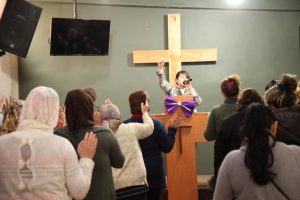
(Photo courtesy of Horizons International)
Interested in getting involved? Houssney asks, “What business are you involved in? Do you have a small business? Do you have a ministry or your church? What are the needs administratively that could be outsourced in your business or ministry?
“If we could just start a discussion about that and you tell us what your needs are in these areas we are offering, then there’s something immediate you can do. You can provide jobs for Lebanese and Syrian believers so they can remain in the Middle East. Then it can also add tremendous value to your business.”
Click here to connect with Horizons International!
Finally, Houssney asks, “We can just be praying that the Lord will provide the right opportunities, that the right businesses will come forward, and that God would provide wisdom and ingenuity in figuring out where these Middle Eastern believers can add the most value to the ministries and businesses that they’ll be serving through the outsourcing project.”
Header photo courtesy of Michal Gadek via Unsplash.
Lebanon (MNN) — Theft in Lebanon is up by 265-percent. A research firm based in Beirut compared crime rates during the first ten months of 2021 to the same period in 2019.
Lebanon’s never-ending crises drive widespread desperation. UNESCO estimates 1.25 million Lebanese families live below the poverty line, and 40-percent are below the extreme poverty line.
“The increase in crimes, and theft, in particular, is the result of the political and economic instability,” a security source told Beirut Today.
Officials received more than 500 theft reports in October alone. Ministries are not immune.
“Last week, we had one of our generators stolen. We had it in a metal box with a double lock but still, people came in at night, and they broke all the locks,” Nuna of Triumphant Mercy Lebanon says.
“Last night, we had somebody also trying to open one of our centers because we have computers and sewing machines. It was not stolen, praise God, but people are trying to steal.”
The loss comes as Triumphant Mercy prepares a Christmas celebration for the poorest of the poor. “We’re going to have a celebration with children; taking them to a playground and do a Christmas activity, and give them gifts,” Nuna says.

(Photo courtesy of Triumphant Mercy)
“We’re trying to make people feel a little bit better, which means not a regular food pack – beans and pasta and rice – it’s meat and vegetables and a whole dinner,” she continues.
“We’re trying to celebrate in an extravagant way because I want people to feast on Jesus.”
Pray the celebration points people to Christ. Help provide supplies for the Christmas celebration by giving online here.
Pray that “even with a desperate situation, we will be a ray of light and bring some joy into people’s lives,” Nuna requests.
“We want to give hope and bring a knowledge that Jesus is close. He’s Emanuel. He is God with us, and He has not left people.”
Header image is a representative stock photo courtesy of Flex Point Security/Unsplash.
Iraq (CAM) — Thousands of people in Iraq amassed when the first Roman Catholic pope ever to visit the country arrived earlier this year, presenting local missionaries with an opportunity for mass distribution of Bibles – except when soldiers at a checkpoint confiscated them.
Pope Francis’ visit to Iraq in March presented massive security challenges in the overwhelmingly Muslim country long battered by Islamic extremists, with all military and civil security forces taking stringent measures. Soldiers at checkpoints were instructed to seize the cargo of any transport vehicle, and before one major papal event, they confiscated local missionaries’ carload of Bibles.
The soldiers told the workers they would return the Bibles after the event, the ministry leader said. The team had prayed that they would be able to distribute at least 1,000 Bibles during the event.
“The strange thing is that we met several people while walking in the streets carrying the same Bibles that we distribute, and when we asked them, they said that they got them from the checkpoint,” the leader said.
On the way back to the ministry base, the workers stopped at the checkpoint to retrieve the Bibles but found they were gone, he said.
“When we asked the soldiers, they said, ‘It was written on them to be distributed free of charge, so we gave them to everyone who was stopped for inspection,’” the ministry leader said.
“It seems that the Lord ensured the distribution of His Word in His own way. God’s plans are not like our plans, and His ways are not like our ways, for He is wiser and greater.”
The workers distributed other Bibles to crowds at various cities and villages that the pope visited.
“We had a team of 10 people, and each person was able to talk to 10 families to deliver them Bibles and visit them,” the ministry leader said.
“We were able to reach 100 families in just two days. We visited these families after we presented Bibles to them and their children, and we invited them to accept Christ and His salvation. Many of them accepted Christ.”
Surprised by Christ
Distributing Bibles in one town on the pope’s itinerary, the ministry leader asked a Catholic man what Christ meant to him.
“He said, ‘Everything!’ And I said, what do you know about Christ?” the ministry leader said. “He mentioned things like He is born of a virgin, the crucifixion, and salvation. I asked him if he had experienced that salvation in his life. He said, ‘No.’”
The leader said he received the same answer when he asked him if he read the Bible, if he owned a Bible and if he prayed to Christ.
“When I asked him why not, he said, ‘No one guided me to that,’” he said.
“I told him, ‘Would you like to learn everything about the Bible and Christ?’ He said, ‘Of course.’”
The leader and his team visited him at his home, telling him about Christ’s salvation, the power of God’s Word, and fellowship with the Lord, he said.
“It was a great surprise for him to hear about Christ in this way,” the leader said. “He accepted Christ as a personal Savior, and he and his family began reading the Bible and learning the biblical faith.”
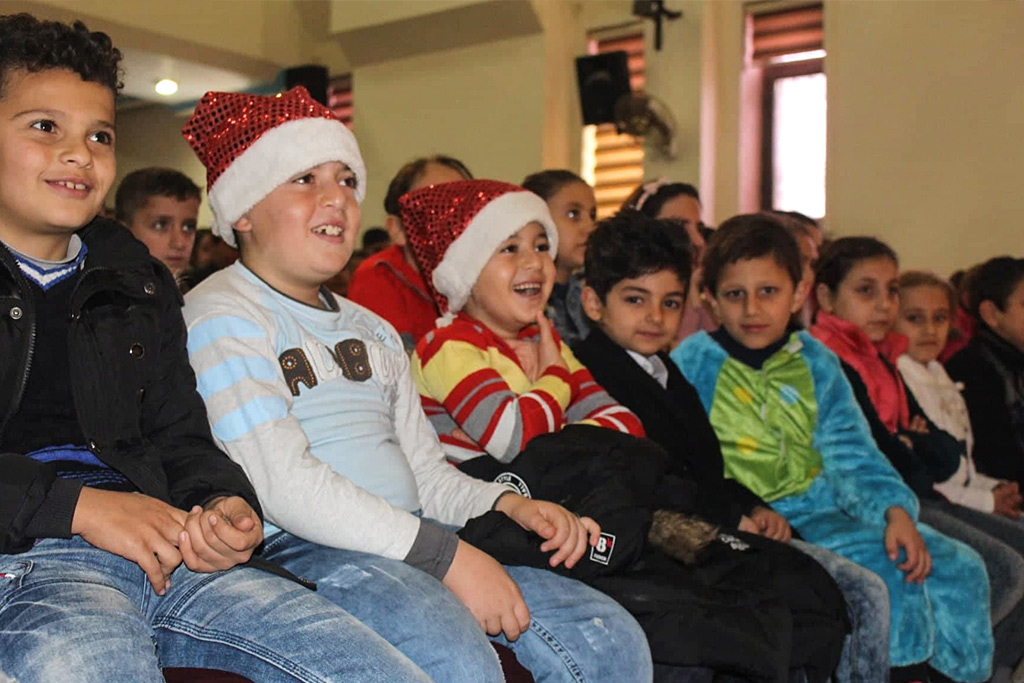
Gospel workers organize special Christmas parties for children and their families where they distribute gifts and the Bibles.
(Photo courtesy of Christian Aid Mission)
Youthful Faith
About half of the Bibles that team members distribute are children’s Bibles, the ministry leader said.
Workers devote much of their energies toward children, and many receive Christ and act as bridges to their parents and other relatives.
In two refugee camps where local missionaries provide medicines and school supplies, about 300 children attend Sunday school meetings, the leader said.
“Our ministry to children is not only spiritual, but regularly we provide them with clothing, food, medications and school supplies when needed,” he said.
“We lead about five children to Christ every month through Sunday school meetings in the camps – kids from Muslim backgrounds, traditional churches and orphans.”
At a camp for persons displaced by violence in Iraq and elsewhere, two young brothers who had lost their mother as they fled an Islamic State (ISIS) offensive received children’s Bibles, he said. Workers provided their father with an audio Bible, as vision problems hindered his ability to read.
“Two weeks later we came back to the same tent, and the father said the kids don’t have school, so they were reading the Bible all the time,” the leader said. “He said, ‘Here, listen to them memorizing verses,’ and that their behavior and attitude had changed so much that they were like angels.”
The Holy Spirit transformed their hearts through the Word of God and prepared the family to receive Christ’s sacrificial death and resurrection, the leader said.
“We led this family to Christ, and the kids now attend all our home church meetings in one of our refugee camps.”
Local missionaries are bringing Bibles and other tools for gospel proclamation and discipleship to people throughout Iraq. Help equip and encourage these Gospel workers through Christian Aid Mission.
Header and story images courtesy of Christian Aid Mission.
Iraq (MNN) — On December 9th, the U.S. formally ended its combat operations in Iraq, according to the Pentagon. Only a few thousand members of the U.S. military remain to support and train Iraqi security forces.
The U.S. military has maintained a presence in Iraq since 2014 when it helped beat back the Islamic State. At the time, ISIS had seized large chunks of territory in Iraq and Syria.
However, attacks from the Islamic State have increased throughout Iraq, especially in the northern regions. Samuel with Redemptive Stories says, “In the towns surrounding the northern capital of Erbil, there have been skirmishes pretty much daily. Small forces will attack either villages or checkpoints. Recently, there was an attack that resulted in about 15 security forces being killed.”
Gospel Opportunities
Samuel says ISIS sees the departure of U.S. troops as an opportunity. “It’s kind of like the wild, wild East right now. So many things are just up in the air. Elections have just happened, and the government still isn’t quite solidified. Because of that, everything is right on the knife’s edge.”
But God continues to move in turbulent times. Samuel reports 150 new Christians in various communities. Local pastors say people are very open to hearing about Jesus. “We’re seeing many, many people ask questions that they would never have asked before. And all because of the failures, in many cases, of Islam, and what they’ve experienced, what they’ve seen with their own eyes.”
Pray the Church in Iraq would continue to grow, and that God’s peace and hope would bring healing to the country. Samuel says, “Now is the time of harvest in Iraq. God is doing amazing, wonderful things. And that we need to keep praying, not forgetting this place.”
The header photo shows U.S. marines withdrawing from Iraq in March 2020. (Photo courtesy of Wikimedia Commons, Public Domain)
Middle East/North Africa (MNN) — Last year, believers worldwide stayed connected with their home groups and church fellowships by going online, even though COVID-19 restrictions kept them physically apart.
The online church provides more than convenience in the Middle East and North Africa. Sometimes, it saves lives. “I think about the moms who’ve come to faith, and they’re married to someone who is a non-Christian,” MENA Leadership Center (MLC) CEO Jennifer Murff says.
“It’s very dangerous for them and their children to just step into a local church.”
Following Jesus leads to a death sentence in many MENA countries. “Local churches need a safety outlet, which is the digital church,” Murff says.
“People who come to faith, whether it’s through evangelism, dreams or visions, or however God meets them, [can] step into discipleship in a safe way that doesn’t put their family at risk.”
How to “do church” online
MENA Leadership Center equips Christian leaders throughout the Middle East North Africa region. More about that here. Training and resources from MLC help Gospel workers set up and grow their online churches.

(Photo courtesy of Samantha Borges/Unsplash)
“In many countries in the MENA, it’s illegal to change your religion. The digital church provides an outlet [where] they (new believers) can continue to grow in their faith and get discipled until they can step into a physical location,” Murff says.
MLC training helps leaders understand all aspects of the online church.
“There is the technical element of the digital church: lighting, setup. But what’s the theological framework of an online church? How do you marry someone?” Murff says. She points to recent training in Iraq as one example of capacity-building.
Digital fellowships can also help church planters in the region. “Church planters use the online church to micro-target where people are coming from, and then they’re able to use that data to plant churches physically,” Murff says.
Now that you know, how will you respond? Prayer is a natural place to start. Use the prompts listed alongside this report to guide your intercession.
If the Lord leads you to financial involvement, learn how to sponsor a MENA leader here.
Header image is a representative stock photo courtesy of Sergey Zolkin/Unsplash.
Jordan (MNN) — Another major challenge surfaces in Jordan. The country’s Deputy Prime Minister says hardly a day passes without drug busts at the border with Syria. According to the United Nations, new production techniques and increased demand led to more drug smuggling this year.
Jordan already struggles on several fronts. “Jordan is the only country in the Middle East without oil, and natural resources are [scarce],” Fadi Sharaiha with MENA Leadership Center says.
“It is very tough, not to mention the impact of COVID-19 and [shutdowns] on a very fragile and struggling economy,” he continues. Plus, unemployment is skyrocketing, and Jordan hosts the second-largest number of refugees per capita in the world.
“Those, I would say, are ingredients for disaster in any country.”
The crises make life even harder in Jordan. The increased need provides Gospel opportunities, but believers aren’t always able to respond. MLC helps ministries get the tools and training they need to do more in the name of Jesus.
Do more good
A few years ago, MENA Leadership Center helped ministry leaders in Jordan identify problem areas. Now, those same believers are discovering solutions to their biggest challenges.
MLC provides more than education, Sharaiha explains. “It’s not only signing up for a course. Yes, we do have online courses. We have on-site courses as well, but it is a process; it’s not a transactional thing,” he says.
“It’s counseling [and] coaching; it’s a relationship.”

“The training inspired me to new approaches to ministry… I began to implement the material, combining both the passion and skills for a more significant impact in God’s kingdom. Thank you for the abundant, precious resources you left in our hands.” – Key Ministry Leader from Jordan
(Photo, caption courtesy of MLC)
Along with mentorship, Christian leaders gain networking opportunities. Soon, believers can expand their reach using the skills they acquired through MLC, Sharaiha says.
“We are building the capacities of those different ministries and thus will increase their impact. That will also affect their presence as Christians in the region.”
Help MLC train 300 leaders across the MENA in 2022.
“Please pray for unity among the Bride of Christ in Jordan, and also that they will have a fresh vision,” Sharaiha requests.
“Pray that Jordan will remain a safe place for people to come from all over the region and that the Church would be light and salt.”
Header image depicts a skyline in Amman, Jordan. (Photo courtesy of Claire/Pexels)
Iran (MNN) — The Iranian government is among the most oppressive regimes globally. More about that here.
Good thing God’s at work! “It is impossible not to be passionate about what God is doing in Iran. God is doing something enormously amazing! Over a million Muslims in Iran have come to Christ. The harvest is plenty, and millions more are waiting,” Pastor Lazarus* says.
“But this is the catch: if we don’t have the Word of God in their soul languages, this excitement will vanish into thin air in a generation or two.”
Pastor Lazarus leads a ministry partnering with unfoldingWord in Iran. Although there is a Bible in Farsi, it won’t help millions of ethnic Iranians. “If you don’t have the Word of God in their language, they cannot read and study,” Pastor Lazarus explains.
“Iranian culture is a tapestry. There are over 74 different ethnic-background Iranians. [The] majority speaks Farsi, but the soul language is different. Sadly, [the] Word of God does not exist in these languages.”
God’s Word for Iran
With help from unfoldingWord, Iranian believers translate John’s Gospel account into five ethnic languages: Luri, Laki, Gilaki, Bakhtiari, and Qashqai. Church leaders chose to begin with John because its claims contradict basic Islamic teachings.
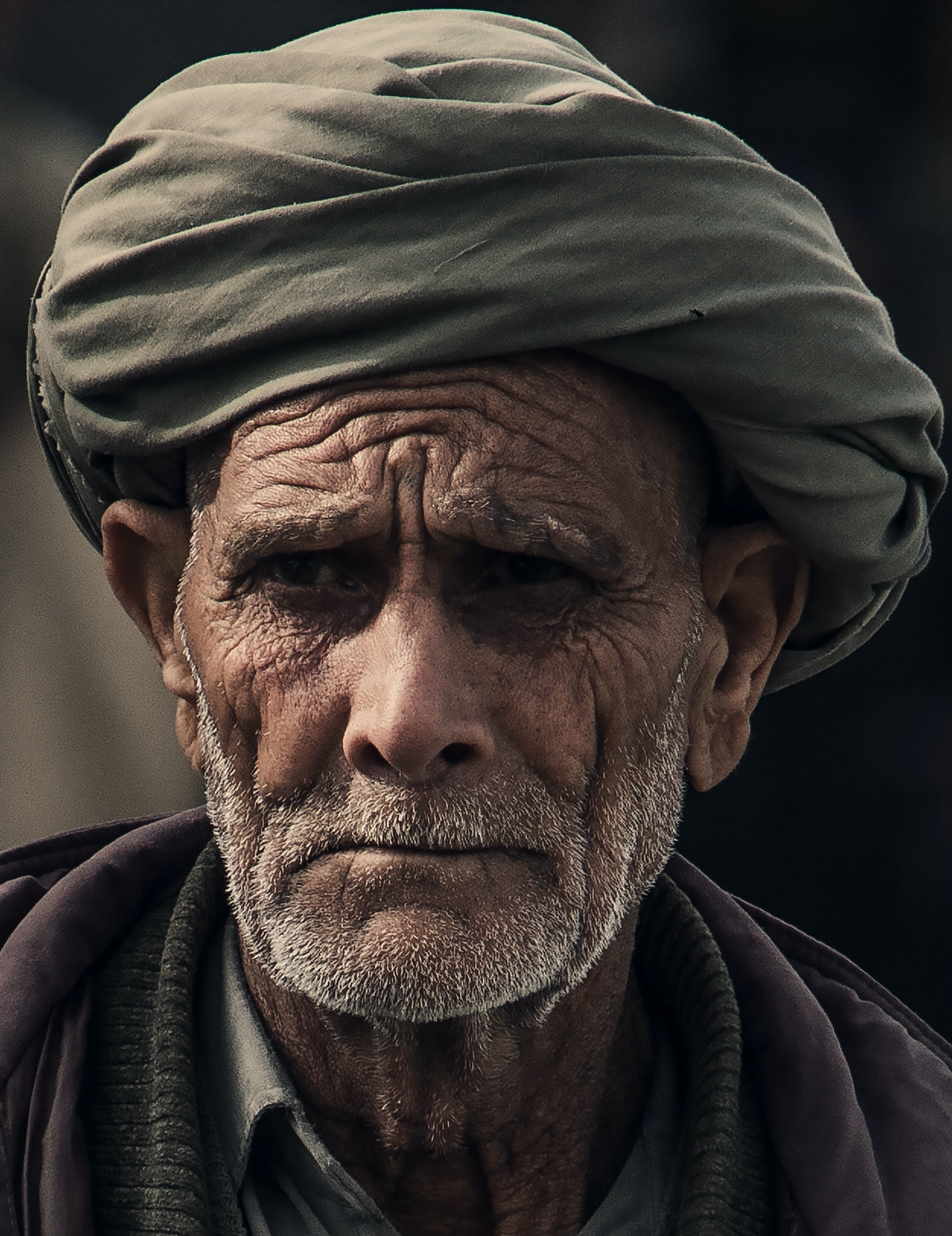
(Photo courtesy of michael Bayazidi/ Pexels)
“For the Muslim, everything is about Allah. Quran was in the heart of Allah; [it] came down to the bosom of Muhammad and was given to humanity as a gift. It is the word,” Pastor Lazarus says.
“We chose the Gospel of John because it shakes a Muslim. He says either the Gospel of John is correct, or Quran is correct; both of them cannot be equal.”
Many of Iran’s ethnic languages are oral, lacking written form and structure. “We have done a dramatization” of John, Pastor Lazarus says, and “it’s going to be aired on TransWorld Radio, beaming across Iran.”
Find your place in the story
Contact unfoldingWord to learn how you can best support this project. “Brothers and sisters, if you’re interested in what is happening in the Middle East, particularly in Iran, please partner with us,” Pastor Lazarus says.
“We hope that [beginning with] the New Testament, the whole Bible will be produced in these ethnic languages. This is not only translating the Word of God; this is outreach [and] theological formation,” he continues.
“This is making the Church take root and withstand temptations in the future.”
*Pseudonym
Header image is a representative stock photo depicting a man and four women in Qom, Iran. (Photo courtesy of Javad Esmaeili/Pexels)
Iran (MNN) — Iran’s Supreme Court declares nine Christians “not guilty” of leading house churches. Heart4Iran’s Mike Ansari says it’s a move to curry international favor, not a sign of actual change.
“It’s simply politics. It’s simply a game of chess. They (Iranian authorities) allow for the certain release of people and pressure so that they could have a better optic in the international community; so they could say, ‘Look, we are a democratic country, we’re fine,’” Ansari says.
“Don’t buy it. The situation in Iran is still dire.”
The ruling comes as diplomats continue negotiations aimed at renewing the 2015 nuclear accord.

Nuclear negotiations in 2019.
(Wikimedia Commons)
Nuclear negotiations
Iran struck a hard-hitting position in conversations earlier this week. European diplomats say they’re unsure if they can build on agreements reached in June or if they’ll have to start over from scratch.
“If they don’t show that they are serious about this work, then we’ll have a problem. The next 48 hours will be very important,” diplomats from the E3 nations of Britain, France, and Germany said yesterday.
“Iran is dealing with a lot of various sanctions, including human rights violations. [Iranian officials] are saying, ‘if you want us to sit at a table and talk about not enriching nuclear material, then you have to drop all the sanctions,’” Ansari says.
Under the 2015 agreement, Iran limited its uranium enrichment program, a process that can yield fissile material for bombs, in return for relief from U.S., E.U., and U.N. economic sanctions.
If parties reach a new deal without sanctions on Iran, Ansari says Christians and other religious minorities will pay the price.
“That’s not fair because it (removing sanctions) will allow them (Iran) to continue repressions against religious minorities, including new believers.”
On Monday, Israel issued a warning to U.S. officials regarding Iran’s nuclear enrichment status.
“The government of Israel warned the U.S. government about sitting and having a conversation with Iranian authorities on uranium enrichment because Iran, after [the U.S.] pulled out of the talks [in 2018], started doing uranium enrichment actively,” Ansari says.
Find your place in the story
Iran is one of the world’s top oppressors of Christians, yet it’s also where the underground Church is flourishing and multiplying. Learn how to empower persecuted believers through Heart4Iran.
“Iran and its Islamic tactics [are] going to stay around for quite some time,” Ansari says.
“[The] Iranian government is not going to sit idly [by] when they see the Islamic population converting to Christianity. It goes against every fiber of their control of the society.”
Download a 30-day prayer guide from Heart4Iran.
Ask the Lord to protect the nine Christians declared innocent by Iran’s Supreme Court. “They’re probably going to release these nine Christians, but they’re (the believers) going to be monitored,” Ansari says.
“They (the government) may continue harassing them at some level; we don’t know. We just need to wait and see what happens.”
Header image courtesy of Heart4Iran.
Iran (MNN) — Honor killings and abuse have become increasingly common in Iran; approximately 70-percent of women experience rape or sexual trauma. Earlier this month, a man set his wife on fire after learning she was pregnant with their sixth daughter.
“We’ve [heard about] men who sold their wives to other men for money. We’ve [talked to] young girls raped by their own fathers, by their brothers,” says Nazanin Baghestani, who oversees the follow-up component of Heart4Iran’s trauma counseling program.
“Muslim men treat women as an object; they don’t care about their lives.”
Heart4Iran operates a call center alongside its satellite TV broadcast, Mohabat TV. Trauma counselors speak to approximately 1,000 callers each month, offering compassion and hope.
“It takes time, but I would say 95-percent [of the callers] open up to us and tell all their secrets. That’s the first step of healing because they acknowledge what they have gone through,” Baghestani says.
“In severe cases, we try to connect [callers] to a home leader inside the country that will get them connected to actual help.”

(Photo courtesy of Afsane Bz/Unsplash)
Healing and hope
Along with listening, trauma counselors help each caller work through grim questions.
“What do I do? I cannot divorce’,” Baghestani says, describing one of the questions callers and counselors discuss.
“I cannot leave this house because that’s my source of income. If I go, where do I go? My reputation is going to be ruined. Nobody’s going to marry me again, and I will end up on the streets.”
Most importantly, the counselors point callers to Jesus, the Great Physician.
“They hear the Gospel, and they cannot resist. I haven’t known anyone who will not give their heart to Jesus,” Baghestani says.
“We’ve had women (callers) who’ve been raped, and once they encountered Jesus, that [trauma was] completely healed.”
Pray for Heart4Iran’s trauma counselors; secondary trauma is a genuine threat. Pray callers who place their faith in Christ find healing and forgiveness, as well as a new purpose.
Help keep the call center open by donating to Heart4Iran. Your gift provides light and hope in a dark society.
Header image is a representative stock photo courtesy of Fakurian Design/Unsplash.
Lebanon (MNN) — Syria and Lebanon have a tumultuous history, as Syria occupied Lebanon from 1976 to 2005. The Syrian civil war that began six years later resulted in millions of refugees, many of whom now live in Lebanon.
Some Lebanese aren’t ready to forgive those whose country inflicted hardships on them not long ago. However, Nuna* from Triumphant Mercy Lebanon has found that letting go of the past enables her to show God’s love in the present.
A Difficult History
The Syrian occupation is still on the minds of many who suffered and lost loved ones as a result of the conflict.
“My father was killed during the war, and we lost our home. We lost many friends,” Nuna says.
“I know of people who died because of Syrian shelling. The whole occupation was so hard and so heartless. It just created a hatred in me.”
“Most Lebanese have this background. I don’t think there’s a Lebanese family that didn’t lose somebody because of the Syrian occupation. Every Lebanese family has had to deal with some loss, if it’s family members or friends or businesses or homes.”
With this difficult background, many Lebanese view or treat Syrian refugees poorly. While the long process of forgiveness wasn’t easy, Nuna has found it enables her to share God’s hope with others.

Helping a refugee family “winter-proof” its home.
(Photo courtesy of TM Lebanon)
Bringing Hope
Nuna tries to focus on helping the refugees as opposed to dwelling on the past, but when Syrian refugees voice their frustrations about treatment from the Lebanese, she sometimes has to explain the history between the two countries.
“The people we serve don’t even know what their country did to Lebanon. When they say, ‘the Lebanese don’t like us; they hate us,’ I sometimes have to share this history with the Syrians because they don’t know [about it],” Nuna explains.
The way many Lebanese people feel about the Syrian refugees can sometimes start a conversation about why Nuna and other Christians come to help them.
“[They ask,] ‘why are you helping us? Even the Muslims are not helping us.’ They live in a place where there are many Muslim communities, and the Muslims are not helping them even though they are Muslims too,” Nuna says.
“They come to me as a Christian and ask, ‘why are you, a Christian, helping us?’ [This] starts the conversation of who God is, and how I have inside me this hope that I want to bring to them because they are living in such a hard place.”
Learn more about Triumphant Mercy Lebanon and how you can support their ministry here.
*Name changed for security purposes.
The header image shows Triumphant Mercy food distribution. (Photo courtesy of TM Lebanon on Facebook)
Middle East (CAM) — An Afghan woman who fled Taliban rule lived the nightmare that tens of thousands of other Afghan refugees are trying to avoid.
Taiba* and her two young children arrived at the office of a Middle East-based ministry exhausted, hungry and destitute after fleeing a Taliban raid on their household, which the new rulers suspected was not sufficiently Islamic. Witnessing the execution of her father and the abduction of her husband, she and her children had to leave home, town and country with only the clothes on their backs.
“They said to my father, ‘Turn around,’ and then shot him as they shouted out, “Allahu Akbar [jihadist slogan “Allah is greater”], and he died,” Taiba said. “They abducted my husband, and I took my two children and fled through Iran by bus.”

(Photo courtesy of Christian Aid Mission)
Since the Taliban took control of Afghanistan in mid-August, Afghans fleeing their harsh rule by land have few options; the Taliban control most exit points and have said only those with valid travel documents are allowed to leave – which excludes refugees fleeing in terror without any paperwork.
To the east and south lies Pakistan, which has said it will not accept Afghans after previous waves of refugees turned police and much of society against them; to the north are the largely unwelcoming borders of Tajikistan, Uzbekistan and Turkmenistan; to the west, Iran’s vast border is difficult to control and has long been a key transit route to Europe or the Middle East.
Even before the Taliban regained power, 2.2 million Afghan refugees had already landed in neighboring countries, and 550,000 people were forced from their homes this year, adding to the more than 3 million people who were already internally displaced, according to U.N. figures.
Taiba said the Taliban took everything from their home and killed several members of her ethnic group.
She expressed gratefulness for the local ministry helping her family to buy food. Local missionaries are also helping her and other Afghan refugees pay rent and utility bills as they consider where to go and how to survive, the leader of a local ministry said.
“Taiba shared how she’s decided to believe in Jesus because of the love we’ve expressed to them by providing for their urgent needs,” the leader said. “There are other families with similar stories from Afghanistan.”
Uniquely Ready
Afghan refugees are in worse condition than previous refugee waves from Syria, Iran and other countries, he said.
“Sadly, these Afghans come burdened with more pain and suffering than the others,” the leader said. “But it’s as if God knew this trauma was coming and prepared us for the opportunity; we have two Afghan workers we have discipled, and they are ready to help those refugees fleeing from Taliban dictatorship.”
Many of the refugees have walked thousands of miles and are in deep need of love and mercy, he said. The Afghan workers’ ability to interpret for the refugees has been crucial, aiding in their efforts to help them find food and housing, he added.
Donations from Christian Aid Mission donors have gone toward putting together food packages or gift cards for the Afghan refugees.
The continued influx of Afghan refugees, however, is outstripping expectations and available resources, the leader said. About 100 Afghan families have arrived in need of help, and until they can somehow find work, they need help paying for rent, food and medical needs, he said.
“When we’re helping these people, it’s not only physical food they want, but spiritual food as well,” he said. “So, we recently purchased Afghan New Testaments for them. Some of them sit in our church grounds reading these Bibles, and some have come to Christ.”
Uniquely Qualified
One of the Afghan workers aiding Afghan refugees has welcomed Christians among them to his weathered, crumbling apartment for worship, and he helps them meet for services in the ministry’s church building as well.
He knows the cost that Afghans pay for embracing Christ; after he left Islam, his family in Afghanistan cut off all communication with him.
“Praise the Lord that I have a very big family right now; I’m part of God’s people and have a lot of brothers and sisters here,” he said.
Coming to trust in Christ after several dreams and much prayer and study, he has continued feeding his hunger for Scripture with formal study of theology, he said.
“I had a desire in my heart to serve the Afghans. Thank God He provided it, and I have served the Afghans, sharing the Gospel of God with them,” he said.
“God used me to create a home community for Afghans.”
Some of the recent Afghan refugees had to flee their country because they had already committed their lives to Christ, the ministry leader said.
“Others have just heard the gospel,” he said. “Pray that we show God’s love to them so that they sense God’s healing power over their hurts.”
Help missionaries based in the Middle East meet refugees’ deep physical and spiritual needs.
*Name changed for security reasons
Header and story images courtesy of Christian Aid Mission.
Lebanon (MNN) — Lebanon’s tourism minister has unveiled a new slogan. It translates to “Crazy Love,” or, “I love you in your madness.” It means to portray the instability of the country as something to be proud of.
Nuna with Triumphant Mercy Lebanon says this phrase actually captures well the feelings of Lebanon’s Christians. “I love this country, I want to stay. I want to stay even though, really, it’s so unstable. We are on verge of maybe a civil war. We are on a verge of having an Islamization of the country and so many other things. And yet, we just keep our feet here. We just want to love it, and we want to love its people. So I think it is crazy, but I think it’s godly too.”
Staying and serving people is the best way to show that Jesus cares deeply about Lebanon, Nuna says.
Hope for Lebanon
Nuna describes many of Lebanon’s people as downcast and weary. “They look like walking dead. They have no future, no vision, no nothing. Then we just breathe a breath of life into them with a simple word, with a smile, with a word of hope, or with a verse in the Bible. We’re just saying, ‘God is in control. God loves you, God is with you.’”
Whether or not the phrase “Crazy Love” works as a tourism slogan remains to be seen. Nuna says, “I understand when people say this is crazy. This is even crazy to invite people at this time. But why not? It’s not as unsafe as people say that it is. If you watch the news, it’s [portrayed as] complete chaos, but in reality, people are just living.”
Pray the “crazy love’ of the church will bring change to Lebanon. Nuna believes the country will flourish again.
The header photo shows Lebanese children playing a game during an electricity outage. (Photo courtesy of Triumphant Mercy Lebanon on Facebook)
Lebanon (MNN) — Britain delivers a fresh blow to Lebanon, advising against all but essential travel to the crisis-worn nation. Last week, a United Nations envoy described Lebanon as “a rapidly-failing state.” He added that the Lebanese government is failing its people after seeing extreme poverty during a 12-day visit.
The government has long promised a ration-card program to help the country’s poorest. Instead, authorities have begun removing subsidies on essentials like flour and medicine.
Pierre Houssney with Horizons International says, “Basically, the government has become a kleptocracy, where their job is just to steal as much as possible. So even when a UN envoy comes, or when an OMF negotiation happens, the politicians are only seeing this as an extra opportunity to squeeze some cash out of the system.”
Churches in Lebanon
Lebanese Christians feel the pinch as much as everyone else. Houssney says, “[We see] A lot of joblessness among believers. But it’s amazing to see their faithfulness to God. They are keeping their eyes on Christ. We are having a prayer event coming up on the Independence Day of Lebanon. And many, many churches have already expressed such excitement to come together.”
Lebanon will observe its Independence Day on Monday, November 22. Set aside some time to pray along with many Lebanese churches.
As Horizons visits homes and refugee camps, most have someone open to the love of Jesus. Houssney says, “People that are just receiving the message with joy, and entering discipleship. There is just such a growing number of people that are professing faith in Christ, it’s uncanny.” Pray the churches would grow as Lebanon’s government fails its people.
Houssney encourages listeners to find ways to support churches in Lebanon. “Lebanon is in the core of the Middle East, of the Arab-speaking world, which is the heart of the Islamic world. It’s an unprecedented opportunity. I really think that people should pray about how they can follow the movement of the Holy Spirit through Lebanon.”
Header photo courtesy of Horizons International on Facebook.
Lebanon (MNN) — Syrian refugee children lose valuable years of education as their families flee war-torn areas, looking for stability. It’s often too late for these children to catch up, says Anne Hamming with Tent Schools International.
That’s why the Tent Schools partner in Lebanon takes a different approach. Hamming says, “Once they get past, say, the sixth grade or so, many of them never return to school. And instead of fighting that, instead of trying to fill these impossible gaps, he accepts that. His school tries to still give them an avenue to access employment. And he does that through languages.”
This partner has learned that if his students know just 500-1000 words in Lebanon’s most-spoken languages, they can get several different jobs. By learning English and French, for example, they will be able to work in tourism or retail.
Get involved
Pray the love of Jesus will shine through this school. Syrian refugees still face an unsettled situation in Lebanon as well. Hamming says, “Lebanon seems to be a land where the bigger nations around them like to carry out their squabbles, which creates great instability there. So pray for peace and stability and strength for the nation of Lebanon and the neighboring nation of Jordan.”
Lebanon and Jordan are not wealthy countries. But they bear the heaviest strain of caring for Syrian refugees. Hamming says, “Our support for them is critical for helping them meet the need. I think people need to appreciate how far U.S. support goes. Dollars go very far in Jordan and Lebanon. It’s the currency of choice compared to their home currencies, which are under distress and devaluation.”
Want to help? Click here to learn more about Tent Schools and donate. Hamming says, “Your support for Tent Schools goes directly to very tangible support like teacher salaries, fuel, food for students, and textbooks.
Photo courtesy of Tent Schools International on Facebook.
Lebanon (MNN) — The average Lebanese citizen now struggles to afford gas. It had been subsidized by the government, but the greed of some in the wealthy class put an end to that.
Andrew with Cry Out Now says, “It was subsidized, so low, so cheap that the people who were in power and people who had the ability were storing up gas. And they were actually buying whole truckloads and then putting it in a pipeline and selling it to Syria for profit.”
Some citizens are spending most of their paycheck just to get to work and back. It depends on if people are being paid in dollars, or Lebanon’s extremely devalued currency.
Some improvements
Still, the country has seen some improvement. Andrew says, “Our electricity has been so much better. It’s a night and day difference than over summer. And it seems like people are expecting that their salaries are going to come up. They’ll be able to actually have a living wage to be able to pay for their gas and to be able to go out and afford the normal things.”
But the crisis has exposed a deep rift of wealth inequality. Andrew tells a story from the summer of losing electricity in the city. Then, he travelled to a rich village in the mountains. “It was just a shocking thing to see. ‘Oh, you’re living your life normally. You even have enough electricity to run your twinkle lights.’”
Leave or stay?
Andrew says many wealthy people left Lebanon during the crisis. But he has seen Christians turning to prayer.
Even staying in the country can show the hope of Jesus to those who are hurting. “They genuinely can’t understand why would we be here? And in their minds, if you have the opportunity to leave, why wouldn’t you just go? They think, ‘If I could just go, I would go.’ Or you can choose to lean into the difficulty, which my experience with the Lebanese church has been.”
(Header photo courtesy of Wikimedia Commons)
EDITOR’S NOTE: Mission Network News received the following report from a partner of International Christian Response (ICR).
Yemen (MNN/ICR) — Hunger is getting worse in Yemen, where 16 million people were already “marching towards starvation” according to the World Food Program (WFP). Today, some 20.7 million Yemenis need immediate help, the United Nations reports.
By September 2021, food prices had risen by as much as 60 percent from the start of the year. This was largely precipitated by the Yemeni rial’s plunge of nearly 40 percent over the same period in southern areas under the control of the Internationally Recognized Government (IRG).
The ever-rising prices have made it substantially harder for ordinary Yemenis to afford their basic needs, as an estimated 80 percent of the total population was already living below the poverty line due to the impact of nearly seven years of war and Covid-19.

Bombing in Yemen, April 2020.
(Photo courtesy of Felton Davis/Flickr/CC2.0)
By September 30th, Yemen’s third wave of Covid-19 had increased the total number of confirmed cases in the south to 9,000, with over 1,700 deaths since the start of the pandemic. These figures greatly underestimate the actual spread, given the lack of testing capacity across the country as well as the failure of the De Facto Authorities (DFA) in Yemen’s north to report any cases at all.
While Yemen is expected to receive 14 million doses of Covid-19 vaccines through the COVAX global vaccine-sharing scheme, so far the doses delivered have only been sufficient to fully vaccinate just over 500,000 Yemenis. To date, only 0.1 percent of Yemen’s population has been fully vaccinated.
According to Medecins Sans Frontieres (MSF), disinformation, fear of detention, and lack of knowledge on the presence of isolation centers also continue to deter Yemenis from seeking timely treatment for the disease. People fear that they will receive lethal injections, or even be detained against their will if they visit a Covid-19 isolation center.
Meanwhile, many patients and caretakers insist on leaving the hospital early, against medical advice, because they worry the longer they stay, the higher the chances that they may be stigmatized by relatives and friends. An estimated 15 percent of Yemen’s functioning health system has been repurposed for the Covid-19 response, reducing overall health coverage by a further 20 to 30 percent.
Half of the country’s hospitals were already out of service prior to the pandemic, leaving the population vulnerable to endemic diseases including cholera, polio, diphtheria, and dengue fever. Now, at least one child dies every 10 minutes because of preventable diseases.
Frustration and despair over the ever-deepening crisis sparked protests across Yemen’s south beginning in mid-September. By October the unrest had turned deadly, as street battles broke out in Aden’s Crater neighborhood. On October 10, at least six people were killed in a car bombing in Aden, targeting Aden Governor Ahmed Lamlas and Environment Minister Salem al Socotri. Both officials survived the blast.
This new spate of violence in the south emerged in addition to over 50 frontlines currently active across the country, which have forcibly displaced over 67,000 individuals in 2021 alone. However, it is the rising prices, lost livelihoods, and lack of economic opportunity – not the ongoing battles – that continue to deepen the desperation of most Yemeni households as they continue to exhaust more severe coping strategies in the face of the rial’s intractable plunge.
“The conflict’s military aspects are limited to specific fronts in the country,” said Rafat Al-Akhali, convener of the Council on State Fragility at Oxford’s International Growth Center. “But economic conflict is impacting every single person in the country and is driving millions of Yemenis to the edge of famine.”
Within this shattered economy, God’s blessing has been evident through an Economic Development program granting small business loans.
A father of five received the program’s first loan in late 2020. He shared the following in a recent update:
“I’ve been waking up early to run the business and I’ve met many businessmen, and most importantly I have a good customer base. Now that things are going smoothly, the daily work is manageable. With the income from the project, I’ve been able to give my children daily spending money when they go to school and provide for my household’s needs. This is a great blessing. I’ve been paying back the loan and praise God, I will be able to pay off the remaining amount over the next four months. Once I’ve paid it off, I will ask for another loan so that I can continue to grow the business.”
Header image depicts a school in Yemen’s Taiz city badly damaged as a result of the fighting. (Photo, caption courtesy of Felton Davis/Flickr/CC2.0)
Lebanon (MNN) — The Arab League has sent an envoy to mediate a rift between Lebanon and Saudi Arabia. The gulf Kingdom last week expelled a Lebanese ambassador and banned all Lebanese imports.
It all started when a Lebanese political official made remarks about Saudi Arabia’s military campaign in Yemen, seeming to call them the aggressors in the war. To make matters more complicated, Hezbollah, a powerful political force in Lebanon, openly backs the rebel groups fighting Saudi Arabia in Yemen.
The Yemen war
The civil war has ravaged Yemen, one of the world’s poorest countries, since 2014. The Houthi government, championing Shia Islam, took control of the capital in 2015.
Alarmed by what they perceived as Iranian influence, Saudi Arabia and several other Sunni states began a military campaign to defeat the Houthis. This campaign has received support from Western powers, including the U.S.
Since then, the war has killed 233,000 people and put Yemen at serious risk of famine. The U.N. calls the situation the world’s worst humanitarian crisis.
Sectarianism in Lebanon
Andrew with Cry Out Now says the spat isn’t helping Lebanon’s economic crisis. “The normal wage for a middle-class Lebanese person is about $400 a month whereas it used to be $4,000 a month. Just the gap between those who have and have not has just been split wide open with this economic crisis.”
Andrew says the diplomatic crisis also highlights sectarian divides in Lebanon, a diverse country with a government composed of Shia Muslims, Sunni Muslims, and Christians. Andrew says, “So many people, half the country, are indifferent to it. They just want a modern system. The other half of the country identifies with one group. That is who they are. That’s their identity. They’re so tied to it that it’s a party before nation.”
Pray that Lebanese Christians will be peacemakers, always pointing to Jesus and bringing unity in a fractured country.
The header photo shows the provinces of the Arab League. (Photo courtesy of Arab Hafez at English Wikipedia, CC BY-SA 3.0 <https://creativecommons.org/licenses/by-sa/3.0>, via Wikimedia Commons)
Iraq (MNN) — Iran seeks to make peace following a failed assassination attempt on Iraq’s Prime Minister, Mustafa al-Kadhimi. According to The Associated Press, a top Iranian general visited Iraqi leaders in-person yesterday to assure them that Iran had nothing to do with Sunday’s drone attack on Kadhimi’s home.
No one immediately claimed responsibility for the assassination attempt, but suspicion surrounded Iranian proxies. Since last month’s elections, tensions have been ratcheting up in Iraq, where militias backed by Iran lost majority power. More about that here.
MENA Leadership Center’s Fadi Sharaiha says Iraqi Christians face problems on all fronts.
“Right now, it’s a very challenging environment for Christians to live in Iraq. But they are hanging in there,” Sharaiha says.
Believers face several difficulties, including – but not limited to – proxies or militias. There are “so many proxies in Iraq,” Sharaiha says, “and the problem is that [no one has] control over them.”
Iranian-backed militias may not specifically target Iraqi believers, “but are minorities like Christians being targeted by different proxies? Yes.”
“The whole environment is a hostile environment for Christians, unfortunately. [It began with] the Iraq invasion, but right now, things are even worse.”
Political and economic turmoil combine to create an uncertain atmosphere. “The Iran proxies are not liking what they have seen in the election, so you [do not know] what will happen (next). The uncertainty of the future is a huge challenge for people, especially for young families wanting to plan for their lives,” Sharaiha says.

A cross atop Saint Matthew Monastery (Der Mar Matti), a Syriac Orthodox monastery overlooking the Nineveh Plains towns of Bashiqa and Bartella, in between the Kurdistan Region and Iraq.
(Photo, caption courtesy Levi Clancy via Wikimedia Commons/CC4.0)
Also, “the state (government) is not taking care of [essential service], and this is affecting not only Christians but the whole country. One example is electricity. [Iraqis] don’t have electricity 24/7 right now, and this is hard, especially during the summertime.”
As described here, MENA Leadership Center helps Gospel workers grow their capacity so they can “go and make disciples” in their homeland.
“We’ve trained, in 2021, around 70 [or] 80 Christian key leaders in Iraq, and mostly from different denominations in Iraq. We train them on different skills like how to do virtual church or having their own strategic plan for their ministries,” Sharaiha says.
Use prompts listed alongside this report to guide your intercession for Iraq. Help MLC provide training to Christian leaders throughout the MENA region.
In the header image, Iranian President Hassan Rouhani meets Iraqi Prime Minister Mustafa Al-Kadhimi in Iran International Conference Hall in July 2020. (Photo, caption courtesy of Mehdi Ghorbani/Wikimedia Commons)
Palestine (MNN) — The United Nations has condemned a decision by the Israeli Minister of Defense to label six Palestinian human rights groups as terrorist organizations.
Jonathan Kuttab serves on the board of Bethlehem Bible College, and he also founded one of these six organizations. He says, “The one I’m associated with, Al-Haq, is a human rights organization. It documents human rights violations, urges people to follow international law, works for equality, and works for peace and nonviolence.”
Al-Haq
Kuttab says he helped create Al-Haq over 40 years ago as an affiliate of the International Commission of Jurists. “As a Christian, I felt that Jesus doesn’t call us to pick up arms and kill anybody, including our enemies. So we have to find ways to fight for our rights that are nonviolent. And we thought that law is a very good instrument.”
The organization calls for the human rights of all people, regardless of nationality or ethnicity.
Other organizations on the list advocate for women and children or work with research and agriculture. The ban will allow the Israeli military to arrest staff, close offices, and seize their assets.
War crimes
Kuttab explains the politics behind the scenes. “I think the defense minister is worried because some of these organizations, including Al-Haq, are preparing documentation on war crimes and crimes against humanity.”
Some of these reports have to do with the fighting this spring, during which artillery fire into Gaza killed hundreds of Palestinians, including 66 children.
How to pray
Pray the love and nonviolence of Palestinian Christians would point others to Jesus: “Who opened God’s love to all mankind,” Kuttab says, “not just to one tribe. He opens God’s caring to the whole world.”
Kuttab also asks listeners to pray for peace in this region, based on equality. “Anti-Semitism and Islamophobia are things that we should be fighting all the time.”
Header photo shows Palestinians harvesting olives. (Photo courtesy of Bethlehem Bible College on Facebook)
Iraq (MNN) — Discipleship seeds planted in March are beginning to bear fruit in Iraq.
MENA Leadership Center held a unique course for Iraqi leaders this spring. “There were 40 leaders across several denominations, everything from Roman Catholic to Missionary Alliance,” CEO Jennifer Murff says.
“They all gathered to learn how to create a digital Church.”
Leaders from each denomination could apply the material differently according to their traditions. A central theme brought participants together.
“These ministry leaders took three days out of their schedules not just to learn how to broadcast an online service,” Murff says, “but how to build an intentional online community that provides worship, ministry, fellowship, and discipleship, so that the church can be effective.”

MENA Leadership Center partners with more than 132 ministries throughout the Middle East and North Africa.
(Photo courtesy of MENA Leadership Center)
What happened in the eight months since MLC held its training course? In one example, “The Alliance churches not only took the content, but they started building their online digital church,” Muff says.
“The Alliance churches meet the practical needs of people on the ground. But even more than that, they’re meeting the spiritual needs through discipleship groups and small groups.”
It’s part of a Holy Spirit movement sweeping Iraq. “We see a lot of fruit come out of Baghdad, almost as if revival’s beginning to happen; churches are growing,” Murff says.
“We’re seeing God take a land that was desolate and put life into it.”
Use prompts listed alongside this article to guide your prayers for Iraq.
“The (Iraqi) Church is so eager to reach their people for Jesus. Pray that God gives the Church creativity and wisdom; they are really in a battleground,” Murff requests.
Header image is a representative stock photo courtesy of Glenn Carstens-Peters/Unsplash.
Lebanon (MNN) — The World Bank says Lebanon’s financial disaster is the worst since 1850. The country, which many have begun calling a failed state, needs help from the International Monetary Fund. But the government must start meeting again before a deal can be struck.
The “failed state” label would categorize Lebanon with countries like Nigeria or Afghanistan. A big part of that has to do with last year’s Beirut explosion, one of the biggest man-made, non-nuclear explosions in history.
The ruling class
Pierre Houssney with Horizons International says the inaction and greed of the ruling class created this crisis in the first place. “For example, if a road project gets funding approved by the government for $2 million, they will spend $100,000 or less, filling potholes instead of doing the job. And then the rest of the money will disappear.”
Houssney explains how this ruling class first came to power after the Lebanese Civil War from 1975-1990. “Even going back to the early 1900s, there was a tramway in Beirut. There was great infrastructure. But in the war, there was a new ruling class that took power: these militia leaders. They took over everything, and they’re still the same guys who are running things today.”
The future
The worst-case scenario for Lebanon? Houssney says if the armed Shia group Hezbollah takes power, the country could become a little Iran. “So far, we have not lost our religious freedom. Lebanon enjoys more religious freedom, I would say, than even the U.S. But if things do slide into a mini Iran scenario, there will are going to be more and more limitations on the free press, free thought, and free religious expression.”
As Horizons International visits homes across Lebanon, most have someone who is open to hearing about Jesus. Pray many would find hope in Him as their government fails them.
Lebanon (MNN) — Surviving another week is the goal of many in Lebanon. Others try to profit by hoarding handouts from non-governmental organizations (NGOs) and selling them on the black market.
“There are [like] ‘sharks’ around us, you know? They know that NGOs are receiving money, so they all try to get as much as possible from NGOs,” Nuna of Triumphant Mercy Lebanon says.
“Some commodities are not available anymore, so people can monopolize it, put it at the price they want.”
Governmental collapse and back-to-back crises have placed incredible pressure on NGOs like Triumphant Mercy in the past two years. See our full Lebanon coverage here.
“It’s so much to deal with every day; so much pain, so much need that you’re not able to meet,” Nuna says.
“We’re not the government. We’re not at the position to be helping everyone, so when you have to refuse people, it’s a hard choice to make.”
Lebanon’s silver lining

Each backpack is worth around 600,000 Lebanese Lira. This is more than some Lebanese families make in a month.
(Photo, caption courtesy of TM Lebanon)
Triumphant Mercy demonstrates the love of Christ by meeting everyday needs. Learn more here. September “was the back-to-school month,” Nuna says.
TM Lebanon partnered with School in a Bag to distribute school supplies and children’s backpacks to needy families. Read the report here.
“That was such a relief; many people cannot afford a backpack with notebooks and pens, and all these [basic supplies] that they need,” Nuna says.
Grateful parents couldn’t stop thanking Triumphant Mercy team members. “We didn’t know how we could do this (get school supplies for our children), and then this specific help came,” parents told Nuna and her team.
Believers gladly shared the reason and source of their generosity.
“We keep on turning people’s eyes towards God, and I’ve never seen Lebanese people so open,” Nuna says.
“There’s so much pride in Lebanon; they did not need Jesus. But now everybody needs Him, and that’s amazing; we’re seeing people open to receiving Christ.”
Ask the Lord to strengthen Nuna and her team at Triumphant Mercy Lebanon. Pray for the fresh renewal of the Holy Spirit’s power.
“Seeing people with gratitude and just knowing that you have made a difference in one life – it keeps us moving,” Nuna says.
In the header image, Triumphant Mercy Lebanon provides food aid at its community center in Beirut. (Photo courtesy of TM Lebanon)
Lebanon (MNN) — If you’re looking to move anywhere in the world, Lebanon may not seem like the best option right now.
The infrastructure is crumbling. Multiple ongoing crises have increased poverty and put society on edge. See our full Lebanon coverage here.
However, Alesha* with Cry Out Now says the move makes sense from a business perspective.
“Right now, the country is in a dire situation, but the dollar goes far here, and we have dollars. Financially, that opens up many doors. As long as you have dollars, you have an opportunity here,” Alesha explains.
Alesha recently moved to Lebanon with her husband and new baby. Because Alesha’s business is brand new and still getting off the ground, we’re not sharing many details for security purposes.
We can say it’s creating various opportunities for believers to interact with people from different religions. “While we’re not broadcasting that we’re doing that, we are very open with the people who will connect with our business,” Alesha says.
It’s hard work to start a new business, even in a good economy. Very few in Lebanon have purchasing power right now; most people struggle to meet their daily needs. Only God can make this idea work.
“[We tell people] ‘hey, we believe in prayer first; that prayer takes you further than just striving.’ There’s a quote that says, ‘Grace takes you further than the grind ever will,’” Alesha says.
“We want to bring in jobs, but we want the hand of the Lord in it. And that only comes from first honoring Him in prayer.”
Pray the future of Alesha’s business will unfold as God intends. Pray believers can share the Gospel in daily conversations.
“We believe in the power of prayer and breakthrough through Jesus Christ,” Alesha says.
“Many people have been softened by the idea that only God can breakthrough, and there’s not a man-made solution.”
*Pseudonym
Header image is a representative stock photo courtesy of Paul Melki/Unsplash.
Syria (MNN) — Syria has at last begun to reconnect with its neighboring countries, including Lebanon, Jordan, and the United Arab Emirates.
Syrian President Bashar al-Assad has survived a decade of civil war, but fighting has left the country in economic ruins. Additionally, Bashar’s grip on the country remains tenuous. Areas near the border of Turkey and Iraq are controlled by rebel groups.
Poverty among Syrian people
Samuel with Redemptive Stories recently sat down with 15 partners out of Syria. “We heard stories about families that used to have more than sufficient enough income to provide for themselves. Salaries that used to be worth $1,200 now are only worth $40, because of hyperinflation.”
This means families often need to make very difficult choices. Samuel says, “We heard stories of men who have cancer who have decided not to follow through with treatment. The cost of the medication is too great, and that it’s better that, ‘one of them dies, rather than all of them die.’”
“One family doesn’t have enough funds to provide food for all of their children. So two of them get lunch and two of them get dinner.”
But God continues to work in Syria. Christianity has an established presence in the country going back thousands of years. Now, the story of Jesus is reaching new populations. Samuel says, “We’re beginning to see a budding movement of the Holy Spirit and a church movement forming among the Druze population, which is primarily in the South. And then also among the Kurdish population, which is primarily in the North, across the North.”
Pray this trend continues.
Rebuilding Syria after years of war will be no easy task. But Samuel is hopeful that some Syrian Christians who fled will return to strengthen the Church there. “We’re hearing stories now of families that were in European countries, or other nearby countries. They have just sensed God’s call to go back, that they need to go back. They feel God has put His hand upon them.”
The header photo shows the damage done to a church in Syria during the civil war. (Photo courtesy of Tasnim News Agency, CC BY 4.0 <https://creativecommons.org/licenses/by/4.0>, via Wikimedia Commons)
Iran (MNN) — Iranians all around the world have joined a Bible reading plan together. It is organized by the Iranian Bible Society in Diaspora.
A Christian worker named Nahid says it’s a great way for these Christians to connect with each other. It’s important for them to know they are not alone. “If they think they are alone, they get depressed. I’m not just by myself when I know somebody else is in this pain with me. It’s healing. When they are reading Bibles together, they know there is another one. There is another sister or brother reading this, and they are together, they are not alone.”
The Bible reading plan has been especially helpful during the pandemic, Nahid says. “David sings, ‘I have a victory in God, God is with me,’ they know that, during this COVID-19 season, and during all these other challenges. They have the government chasing them to arrest them because they are Christians. God is with them as God was with David when Saul was chasing him.”
Struggles of Iranian Christians
These Iranian Christians love Jesus with all their hearts, and seek to show His love to the world. But some in the West have not been ready to see them this way, Nahid says. “Right now, it’s a little bit better. But years ago, it was hard for people in the West to see that Iranians can be Christians too. Most people saw Iranians as terrorists. But right now, they see Iranians can be Christians.”
Pray for the safety of Christians living in Iran. Though the government oppresses them, these faithful believers continue not only worshipping Jesus but proclaiming what He has done in their lives.
Header photo courtesy of Jeff Jacobs from Pixabay.
Lebanon (MNN) — Tension surrounding the Beirut blast investigation turned violent yesterday. Gunmen exchanged fire in Lebanon’s capital, killing at least six people. Explosions wounded dozens more.
See our full Lebanon coverage here.
It’s the latest chapter in Lebanon’s dramatic saga. An ongoing fuel crisis is getting worse, triggering a further decline in the food and health sectors.
As described here, Lebanese who can afford food are afraid to buy perishable items because refrigerators are useless without electricity. Food poisoning is a severe risk. Plus, hospitals have had to suspend operations because the power grid is unreliable.
“It’s been really hard to see so many people struggling so much. Even [during] the civil war, [we] never lived this way,” Nuna of Triumphant Mercy Lebanon says.
“This is a situation I am finding hard to navigate. How much more [difficult is it] for people who cannot even afford the minimum?”
Around 78-percent of Lebanese live in poverty now, according to the United Nations, and scores have turned to Triumphant Mercy for help. However, the prices of daily goods are constantly changing, Nuna says. The fluctuation makes it nearly impossible for ministry leaders to budget and plan.

TM Lebanon workers oversee food aid distributions to needy Lebanese.
(Photo courtesy of TM Lebanon)
“We have to keep on revising everything, and it’s a headache. We all have this struggle every day,” Nuna says.
“What am I paying for the food pack this month? I don’t know. Every time [we plan an outreach], we have to revise everything; it’s complicated.”
There’s at least one silver lining. “People are so open now; they need something to hold on to. It’s so easy now to preach the Gospel. That’s the biggest advantage of the situation,” Nuna says.
“In the beginning, people did not need Jesus. They were relying on their work, strength, money in the bank, or whatever. But now, the situation is so different [and] they have to rely on something, so it’s easy to preach the Gospel.”
TM Lebanon seeks to transform lives by holistically meeting needs through its community centers. Learn more here.
Header image depicts the aftermath of the August 2020 port explosions in Beirut, Lebanon. (Wikimedia Commons)
Iraq (MNN) — In 2019, protestors across Iraq demanded new parliamentary elections. They finally took place on Sunday, but the election was plagued by low voter turnout. Samuel with Redemptive Stories says, “In many cases, and particularly in the governance regions away from major cities, turnout was only around 25 to 30 percent of the potential voting population.”
Many protestors chose to boycott the election, saying it wouldn’t bring actual change to the corrupt system. Samuel says votes are still being tallied, but no party currently has enough to gain a majority. Now, the backroom deals begin.
Election results
Still, the election did bring some definite results. Samuel says, “One of the positives to come out has been the hits that many of the Iranian militia parties have taken in the election. They have not done very well.”
The party that won the most seats is a Shia party, which Samuel says may be friendlier to Christians. “The evangelical church, in particular, feels like they still have good relationships with the local government in Iraq. They are asking for prayer that God would continue to give them favor with officials. Pray that God would open the door for them to register locally as entities, particularly after the new government is formed. That’s their biggest prayer request right now.”
The fight against ISIS
Shia leadership might mean a harsher crackdown on the extremist side of the Sunni paradigm. For instance, Samuel hopes to see ISIS more limited in Iraq’s future.
Recently, Iraqi forces captured the ISIS finance chief. But Samuel says, “The fight with ISIS is not done, and it won’t be done. But I think having a Shia majority will lean towards staving off some of the ISIS influence.”
The header image shows a 2019 protest in Baghdad, part of the movement which called for new parliamentary elections. (Photo courtesy of Mohmmd Abd, CC BY-SA 4.0 <https://creativecommons.org/licenses/by-sa/4.0>, via Wikimedia Commons)
Lebanon (MNN) — Families skip meals and go without daily essentials as Lebanon’s fuel crisis causes food prices to skyrocket – again. Food prices are up by 628-percent since 2019.
“People are barely making it. A lot of people have enough to get their bread [and] cheese, but that gives them no wiggle room. Right now, you see a lot of people able to get the basics, but nothing more,” says a Gospel worker we’ll call Alesha*.
The food and fuel crises are two of many plaguing Lebanon today: economic and financial meltdowns, political deadlock, and last year’s massive port explosions in the capital, Beirut. See our full Lebanon coverage here.
Alesha just moved to Beirut with her family to serve alongside the prayer ministry Cry Out Now. “Everyone, unfortunately, seems very hopeless and very pessimistic about the current situation,” she says.
“[There] is a lot of hopelessness and despair, and [people are] expecting it to only get worse.”
As believers, Alesha and her husband want to demonstrate Christ’s love through practical means and prayer. First, they have to gain Lebanese trust. “[People] are very shocked, and because we are American entering into a very chaotic situation, they’re very suspicious,” Alesha says.
“It doesn’t make sense [for Americans to come to Lebanon] because any Lebanese with any sort of means is leaving. There are people leaving by the floods.”
Pray these Gospel workers will have patience as they form new relationships and friendships. Pray God will use them mightily in Lebanon.
“The joy of the Lord is our strength. But it’s easy to get clouded by the current circumstances around you,” Alesha says.
*Name withheld for security purposes.
In the header image, people wait in line for hours to fuel their cars. (Photo courtesy of Cry Out Now)
Lebanon (MNN) — Leaked documents have revealed the financial secrets of the world’s ultra-rich, including 35 current world leaders and hundreds of politicians in 91 countries.
The documents, known as the Pandora Papers, detail how these figures hid wealth in various offshore accounts. In many cases, they siphoned money away from their impoverished people.
Wissam Nasrallah with LSESD says the papers exposed many Lebanese officials. “Lebanon topped the list for the country with the most offshore companies. According to the Pandora Papers, it was 346 companies for such a small country. One that is completely bankrupt. It’s disgusting. It’s outrageous. Prime Minister Najib Mikati, his predecessor Hassan Diab, central bank governor Riad Salameh, all are putting their wealth in these offshore companies.”
Banking system
Ever since Lebanon’s banking system collapsed in October 2019, Lebanon’s banks have been illegally holding people’s savings hostage. Meanwhile, the politicians continue to freely transfer money out of the country. Nasrallah says, “Between 2019 and today, more than $6 billion have been taken out of the country through wire transfer. And these obviously belong to politicians and those who are super connected.”
Hardworking citizens get left in the dust, Nasrallah says. “When you walk around Beirut today, or around Lebanon, it’s heartbreaking. There’s no electricity, no gas, no medicines. It’s a country that has completely collapsed by every measure.”
Being a light
Those governing Lebanon have no incentive to change a corrupt system they benefit from. Nasrallah says, “We’ve realized that there’s no light at the end of the tunnel for our country. We’ve also realized that we need to be the light within the tunnel. Please pray that we may be the light we’re called to be during such a time.”
Ask God to give renewed strength to LSESD’s team. They battle exhaustion and discouragement every day as the crisis continues.
The header photo shows LSESD staff giving help to refugees. (Photo courtesy of LSESD on Facebook)
Lebanon (MNN) — Saturday, Lebanon’s power grid shut down completely. The total blackout ended Sunday when the army supplied emergency fuel. The Energy Ministry says the central bank has loaned $100 million to import fuel and keep the grid up and running.
Beirut airport
This continuing economic crisis is pushing Lebanons’ citizens out of the country.
Tom Atema of Heart for Lebanon describes the scene at the Beirut airport. “People are lined up out the front door trying to get into the airport to get their flight and leave the country forever. They’re weighing every piece of luggage, and if you’re half of a kilogram over, you take stuff out of your suitcase. There are clothes and stuff lying all over that airport floor. And you can tell they’re leaving because their pets are going and everything else.”
Education
For those who remain in Lebanon, education becomes more important than ever. Heart for Lebanon has launched its school for the 2021-2022 academic year.
Last year, this program hosted about 300 students. But this year, Atema says, “We’ve got 950 students. Because of the poverty, we are doing about 350 students in Beirut through local Christian schools. Rather than us run the schools, we’re partnering with schools in Beirut. It helps them, it helps the family and it gives the kids a good Christian education.”
In addition, Atema says the ministry has partnered with SAT-7. “That’s a unique partnership, where some of their students from their educational program join our students in those classrooms.”
Heart for Lebanon recently finished remodeling their school building in the South in preparation to host more students. Ask God to give the whole team wisdom as they continue to navigate Lebanon’s crisis.
Pray many hearts would open to the love of Jesus. Atema doesn’t know a solution for Lebanon’s political and economic woes. But he says the Holy Spirit continues to move in a desperate time. “In the next in two weeks, we’ll be baptizing probably 10 people. Numbers grow every day.”
The header photo shows students in Heart for Lebanon’s Helping Overcome Poverty through Education (H.O.P.E.) program. (Photo courtesy of Heart for Lebanon on Facebook)
Yemen (MNN) — Following a short lull, renewed fighting in Yemen killed around 400 people last month. Houthi forces backed by Iran are fighting Yemen’s Internationally Recognized Government (IRG) for control of Marib, a key city in northern Yemen, raising fear among the two million Internally Displaced People (IDPs) who’ve fled there from other frontline cities.
Meanwhile, Houthi forces based in Sana’a, the historic Yemeni capital, have also made advances against IRG forces in al-Baydha province. The Houthis also claim to have defeated forces belonging to Al-Qaeda in the Arabian Peninsula (AQAP) in Al Baydha, with those AQAP fighters now said to have moved into Abyan and Shebwa provinces, further increasing instability in the South.
Earlier in September, Hans Grundberg, the Special Envoy for Yemen told the UN Security Council, “From unrelenting violence to fuel and electricity shortages to surging food prices, every detail of daily life in Yemen is somehow tied to difficult political questions that demand a comprehensive resolution.”
According to Grunberg, “Yemenis all over the country live with severe limitations on their freedom of movement and of the movement of essential goods due to ongoing fighting, checkpoints, road, port, and airport restrictions.” He also explained that state institutions have split apart, hobbling the economy and leaving citizens and businesses to “navigate dizzying and often contradictory administrative requirements.”
He warned that the “economic warfare…is sowing devastating long-term consequences.”
Life lessons from Joseph
Yemen remains the world’s worst humanitarian crisis. Some 233,000 people have died since 2015 from indirect causes of the ongoing conflict – things like famine, disease, and a collapsed economy. Women, children, and minority groups suffer the most.
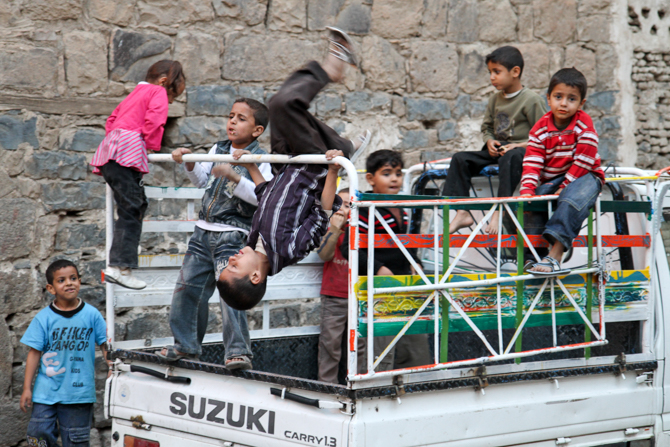
Approximately 8 children are caught in the cross-hairs of Yemen’s conflict every day.
(Photo courtesy Open Doors USA)
According to the United Nations, over 8,500 “grave violations” took place against Yemeni children in the last two years.
As Yemeni Christian parents face the daily pressures of providing for their children’s physical, emotional, and spiritual needs amid the climate of fear around them, they find encouragement from the Body of Christ. International partners continue to stand with them in prayer and through material support.
Meanwhile, children in Yemeni Christian households are learning about their identity in Christ, and other lessons from Scripture.
One trainer recently said Joseph’s life held valuable lessons for Yemeni children:
“The events found in Joseph’s life can be paralleled with the lives of these children today. The harsh reality of life can sometimes knock us down. Yet the life of Joseph demonstrates God’s ability to transform undeserved adversities into a positive result. Also, many relationships stay broken for years because of an unwillingness to apologize and forgive. We can see that the children are participating in reconciliation now as they are taught these principles at a young age, and they are lessons that will have lifelong benefits.”
Header image depicts Yemeni soldiers. (Screenshot captured from Prayercast|Yemen)
Iran (MNN) — In Iran, Muslim settings often ignore the thoughts, feeling, and ideas of women. Learn more about this issue here.
That’s why Omid Sabouki operates a ministry that focuses on the value of women. He says many Iranian women have been brought up to think this way about themselves. “They don’t know they are valuable. That’s why they think, ‘I’m only a thing that men can buy,’ or something similar.”
Sabouki traces this kind of thinking back to the Quran itself, which focuses most of its teachings on the lives of men. Many communities believe women exist to bear children, and not much more than that.
The magazine
Sabouki works on a magazine for women that allows them to share their voices about different topics. He says the simple fact that the cover shows a picture of a woman increased interest in it. “Wow, a woman is there. The woman is important, right on the cover. And they ask, “what is this about?’ “We say, ‘it’s about your identity.”
“They are thinking about that. They are very to open accepting that anything is for women.”
As women want to learn more, Sabouki and his team share the Bible with them. He says, “We invite them to small groups, or to share in the magazine. We also share books about women’s identity.” Many are surprised for example, to find out that a woman was the first to proclaim Jesus’ resurrection.
Ask God to protect the team creating this magazine, most of whom live inside Iran. Pray also that many Iranian women will find hope in Jesus through this ministry.
The header photo shows pages from the magazine, including recipes and movie reviews. (Photo property of Mission Network News)
Iraq (CAM) — When Ariya* returned to northern Iraq with her two daughters after three years in captivity by Islamic State (ISIS) and other militias, her parents did not recognize her.
The 30-year-old Kurdish woman was one of 6,000 Yazidis seized when ISIS militants invaded Iraq in 2014. Yazidi religion being especially despised by Muslim extremists, over the next three years she was sold to fighters of different factions who raped her and her daughters.
She and her daughters were in the ISIS stronghold of Raqqa, Syria when U.S.-backed Syrian Democratic Forces liberated the city in October 2017. She found her way back to northern Iraq, eventually reuniting with her parents in a camp for displaced persons where local missionaries ministered to her.
“Her parents could not recognize her, as she looked as if she was 60 years old,” the leader of the native ministry said. “Her two daughters were exposed to trauma, still waking up every night and crying out in fear.”
“She thought about committing suicide repeatedly, but every time she was afraid to leave her two children.”
ISIS forces killed an estimated 3,000 Yazidis in their invasion of Kurdish Iraq, including Ariya’s husband. The terrorists carried buses full of captured Yazidi women and girls through market areas of towns, calling out, “If you don’t have an infidel yet, this is your chance to take one,” according to National Public Radio.
Middle East Muslims consider Yazidis among the worst of “infidels.” Yazidi religion holds that a divine being created the world and gave stewardship of it to seven angels, including a preeminent figure known as Melek Taus (“Peacock Angel”). Later Muslims mistakenly identified Melek Taus with Satan, leading to centuries of persecution of Yazidis as “devil-worshippers.”
Local missionaries found Ariya in critical need of medical and psychological care, the ministry leader said.
“She was raped on a daily basis for three years, and she was sold 21 times to fighters of different nationalities who attacked her children in front of her eyes repeatedly,” he said. “She thought about committing suicide repeatedly, but every time she was afraid to leave her two children.”
The ministry’s mobile medical clinic provided medicines and treatments that helped restore the family’s health, and the ministry leader helped arrange for them to receive Christian counseling. He connected them with women from the ministry’s church that took the family in and cared for them.
“The family believed in Christ,” the ministry leader said. “Ariya’s father said, ‘If Satan had thought about inventing a religion, he wouldn’t have done what that criminal gang did; what religion is this who sells a mother with two daughters 21 times? I have not seen anything more beautiful and sweeter than Jesus Christ.’”
Gospel Opportunities
Yazidis in Iraq are only 0.14 percent evangelical, according to the Joshua Project.
They are among the various displaced people from within and outside of Iraq trying to rebuild their lives following violence that has left their homes and businesses in ruins. Local missionaries are providing aid to 170 families, including about 300 children and 100 seniors, housed in two camps for displaced persons.
“During the first coronavirus period, we helped each family with $150 per month, and after that we opened markets and a free pharmacy inside the compound, providing food and baby food with medicines to all for free,” the ministry leader said. “The most important medicines that we bought and distributed are medicines that raise the immunity of children to protect them from diseases and winter viruses.” 
By distributing Bibles along with the aid, workers have ample opportunity to share the gospel. They also bring the message of salvation in home visits, special programs and gatherings and at a mobile medical clinic, he said.
Those who have received Christ meet weekly for discipleship and daily for online group lessons, the leader said. Over one six-month stretch, 12 families put their faith in Christ, and a program to teach the Bible to children led to 64 of them committing their lives to Him, he said.
“Church meetings in the two camps did not stop, but they were slightly affected by the pandemic,” he said. “More than 100 families joined the discipleship program in the camp, where we saw the Lord’s work in the lives of many who had believed.”
Surviving Trauma
Terrorist and other armed violence continue in Iraq, which is also among the worst-hit by COVID-19.
“In the midst of all the stories, tragedies and the great number of deaths of the elderly and youth, the Word of the Lord comes to heal the sick bodies and broken souls,” the leader said. “So everyone who did not seek the Lord when he was strong and standing has sought the Lord when he became ill and on his knees.”
Many families say they would not have survived trauma without the Lord. A family in northern Iraq that received Christ two years ago was isolated amid the pandemic when their son suffered burns in an accident that left him deformed.
“As there was no means of transportation, it was difficult to go to the hospital and find medicine,” the ministry leader said. “His mother said, ‘Had it not been for the presence of Jesus in our life, had it not been that we had known that the Lord permitted the test of our faith, then we would not have been able to continue in circumstances like these.’”
Local missionaries are bringing the hope of Christ to such people throughout Iraq. Help equip and encourage them during this challenging time through Christian Aid Mission.
*Name changed for security reasons
Header and story images courtesy of Christian Aid Mission.
Syria (MNN) — Syria’s top diplomat encourages refugees to come home, while experts and aid groups advise the opposite. United Nations Commissioner Karen Koning AbuZayd warned earlier this week, “The war on Syrian civilians continues.”
According to Amnesty International, Syrian refugees who returned home faced torture at the hands of security forces. One former refugee said a Syrian official told him, “You’re a terrorist … Syria is not a hotel that you leave and return to when you want.”
Nearly six million Syrian refugees remain in neighboring countries, making this the world’s largest refugee crisis. Nonetheless, hope remains. “We’ve been able to send two couples back into Syria,” Heart for Lebanon’s Tom Atema says.
The Syrian couples fled to Lebanon years ago as refugees. They met Lebanese believers through Heart for Lebanon’s access ministry.
“These two couples [are] the first official two couples that have been through our whole program; starting with food packages, all the way through Bible studies,” Atema says.
“Now they’re reaching Syria with the Gospel of Jesus Christ.”
Although Syria is an Islamic nation, “many Muslims have come to Christ as Christians have reached out with acts of compassion and practical assistance,” The Voice of the Martyrs USA reports. Like the couples trained by Heart for Lebanon, Christian refugees who return to Syria often find unique Gospel opportunities.

Heart for Lebanon’s focus on holistic, relational, and unconditional ministry allows believers to reach and engage Syrian refugees in a relationship.
(Photo, caption courtesy of Heart for Lebanon)
“One of the couples [has] led two people to the Lord already. They’ve started a house church, and they’re helping people in the community rebuild and do what they need to do to sustain life,” Atema says.
Learn more about Heart for Lebanon’s approach here and how you can be part of the process. Pray efforts to share the Gospel in Syria will be successful.
Header image depicts Muslim-background believers at a church service in Lebanon. Heart for Lebanon reaches Syrian refugees in Lebanon with the Gospel of Jesus Christ. (Photo courtesy of Heart for Lebanon)
Palestine (MNN) — At Jesus’ birth, the Gospel of Luke says angels proclaimed peace on Earth. Today, Bethlehem Bible College carries on the work of peacemaking.
Andrew Bush, Director of the Institute of Peace and Justice, talks about the fall classes now underway. “We have 30 students from several different nations involved. Most of these are seasoned peacemakers themselves. They hail from Liberia, Scotland, England, Holland, Canada, the Philippines, and the United States.”
This is such important work for churches to be doing, Bush says. In fact, it’s part of the Great Commission, since Jesus commanded his disciples to bring peace. “Jesus said, ‘Blessed are the peacemakers.’ This is often a neglected agenda in Christian work. We see it as something perhaps superfluous to our ministries in our churches.”
The classes

This photo shows Andrew Bush welcoming students at the beginning of classes. (Photo courtesy of Bethlehem Bible College on Facebook)
The classes are taught in English, and the lectures are posted online to be available to students with any schedule living in different time zones.
Peace-making isn’t easy in the 21st century, as demonstrated by the sorrow and complexity of the Israel-Palestine conflicts. That’s why the Institute tackles the subject from the perspective of Palestinians.
Bush says students tie this conflict into their own experiences. “They have seen their families divided over issues and friendships broken up over particular issues. They feel a real sense of grief at that which they experienced on a personal level.”
Get involved
Pray the Institute will help bring God’s lasting peace to Palestine and around the world. Bush says, “We’re currently forming a course with Indian Christian theologians. We’re also preparing an anti-bullying campaign for the local schools because we are intent on helping promote peace within Palestinian society.”
Interested in joining courses at the Institute? Visit bipj.org to sign up or learn more.
The header photo shows murals painted on a segment of the separation wall between Israel and Palestine. (Photo courtesy of Bethlehem Bible College)
Middle East (MNN) – Earlier this month, somber events in the United States marked the 20-year anniversary of the 9/11 attacks. Nearly 3,000 people lost their lives when 19 terrorists – all from the Middle East and connected to al Qaeda – hijacked four commercial airplanes to carry out suicide attacks in the U.S.
The attacks left indelible marks on U.S. history and foreign policy. Uncharted Ministries co-founder Tom Doyle says they also had far-reaching consequences in the Middle East.
“Every Muslim out there, wherever we go around the globe, knows 9/11; even villages in Egypt where they don’t have a TV or radio,” Doyle says.
“It was a dividing line for Muslims. That was a ‘line in the sand’ where Muslims had to step over [and say], ‘yes, I want to be involved in terrorism; I believe jihad is the way.’ [The] majority of them do not.”
9/11 and the Middle East
Many countries in the Middle East region are known hotbeds of Islamic extremism and persecution. For example, 15 of the 19 hijackers involved in the 9/11 attacks hailed from Saudi Arabia. As described here, “Saudi Arabia is one of the world’s most restricted and difficult environments for Christians, especially those who convert from Islam.”

On September 11, 2001, al Qaeda hijackers crashed two planes into the World Trade Center in the heart of New York City.
(Wikimedia Commons)
“Some of these dangerous areas are literally the gates of hell, where Satan is so active, but Jesus is victorious. God’s moving powerfully; salvations and reconciliations are happening. So keep your nose to the grindstone, and pray for the church in the Middle East,” Doyle says.
“They are victorious. They are passionate for Jesus, and we can learn a lot from them.”
Most headlines from the Middle East may be discouraging, but God is writing a new story. “Globally, about 60-percent of Muslims don’t even practice their faith. They were just born into it,” Doyle says.
“In the last 20 years since 9/11, far more Muslims have come to faith in Christ than in the last 1,400 years of Islam.”
Uncharted Ministries equips believers in the West to advocate and pray for believers from a Muslim background. Learn more about Uncharted’s work here.
Find your place in the story
Join our email list, or follow MNN on social media for the latest updates. You can connect using icons at the top of this page.
“Iran is the fastest-growing Church per capita in the world; Afghanistan is number two. Great things are happening in Syria. Things are happening in difficult places like the Gaza Strip,” Doyle says.
Keep an eye on the headlines so you can effectively “pray the news,” but don’t lose Kingdom focus. “It’s a very unsettling time for us as believers as we look at things going on, but we have to remember that Almighty God is on the throne and there’s no panic in heaven,” Doyle says.
“Jesus is returning. Let’s make the most of our efforts and our opportunities now before He comes.”
In the header image, Chief Master Sgt. of the Space Force Roger A. Towberman bows his head during a moment of silence during the Pentagon September 11th Memorial Service on the 20th anniversary of the 9/11 terrorist attacks at the Pentagon, Washington, D.C., Sept. 11, 2021. (DOD Photo by Navy Petty Officer 1st Class Carlos M. Vazquez II)
Iran (MNN) — In Iran, even having a Bible can lead to a prison sentence. A Christian ministry worker we’ll call Joe says, “We have two people living at our home right now whose friends were sentenced to six years in prison for having a Bible. There’s a real concern. And yet there’s a real zeal and desire for freedom.”
That’s why Joe helps smuggle Bibles into Iran.
How it works
Regular smugglers get the Bibles across the border, along with the rest of their contraband. Joe says, “They do this as a business. We’re not concerned about them turning anyone in because that’s their business. They don’t want to lose money.”
From there, Christians distribute them among their own networks. Joe says, “They also distribute into other networks of believers that we haven’t met. They use secure drop-off points where no one meets each other so that they can be secure themselves.” The Bibles come as books or on SD cards.
Joe has no qualms about being involved in work that breaks Iranian laws. “We’re supposed to render to Caesar the things that are Caesar’s, and to God the things that are God’s. Whenever Caesar starts opposing God and His love, I’m willing to step beyond Caesar at that point.”
Iranians open to the Good News
Joe says Iranians are remarkably open to hearing the good news of Jesus. “I believe it’s due to the oppression and the persecution that they’ve endured. They’re rebelling, and within that rebellion, they meet Christ Jesus. They feel freedom and the love of God.”
Ask God to protect the smugglers and the Christians distributing the Bibles throughout the country. Joe says, “Pray we would continue to be emboldened to trust in Him as we go forth. Pray that many people would come to faith, that many people would receive the Word of God and be called out of darkness into His light.”
Header photo courtesy of Peggy und Marco Lachmann-Anke from Pixabay.
Iran (MNN) — Fear rises in Iran as officials tear down camps housing Afghan refugees. Afghan refugees in Iran recently discussed their concerns with France24.
According to local sources, Iranian authorities forced thousands of Afghan refugees to return to their homeland “after coming to an agreement with the Taliban.” Iran currently hosts an estimated four million Afghan refugees, and another influx poses economic and security problems.
In a report released last week, Middle East Institute analyst Fatemeh Aman explains Iran’s vulnerability and security concerns:
Tehran has a genuine fear that Islamic State-Khorasan Province (ISKP) insurgents might infiltrate into Iran as refugees. This concern is so serious within the government and the Islamic Revolutionary Guard Corps that it may have been the driving factor behind Iran’s efforts to cozy up with the Taliban since 2016. They feel the eastern borders are vulnerable and consider only the Taliban able to fight ISKP.
Meanwhile, Christians and other minorities face increasing danger in Afghanistan. On Thursday, one of the founders of the Taliban promised the return of hardline Islamic rule and punishments. Amnesty International documents the Taliban’s ongoing human rights abuses.
The situation remains fluid, and believers warn against misinformation regarding Afghan Christians.
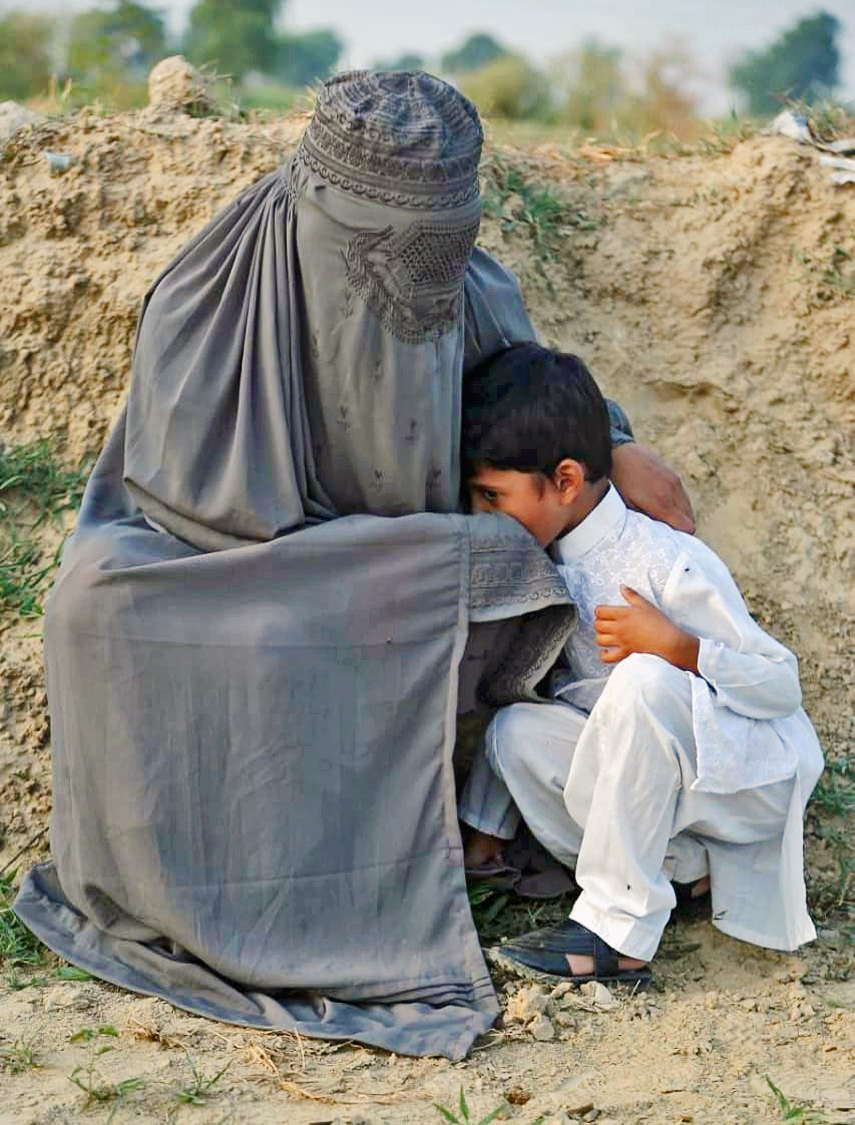
This photo shows Afghan Christians who made the trip from Afghanistan to Pakistan. Approximately 400 known believers escaped with help from FMI.
(Photo courtesy of FMI)
An Afghan pastor partnering with Heart4Iran says some desperate Afghans “fake it until they make it” – out of the country, that is. “We should be very careful. Many people [go] by the name of Christian [because] they want to come out of Afghanistan. They are false believers,” the pastor says.
Afghan Christians: fact vs. fiction
A leader serving with persecution watchdog Open Doors confirms the pastor’s claims:
“There are thousands of people who realize this is one way to gain sympathy, so they are saying they are Christians, but they are not. They are claiming this to get out of the country. This puts a lot of people at risk, even those who are not believers.”
“The real believers, who are still [undiscovered] by [the Taliban and] other people, they still want to stay in Afghanistan,” the Afghan pastor says. This believer says he’s read reports describing “thousands” of Afghan Christians fleeing the country, but “I don’t think that’s all true,” he says.
Many “known” believers – Afghan Christians on a Taliban hit list – seek to escape because they are being hunted. However, those who remain “undiscovered” want to stay in the country.
Heart4Iran President Mike Ansari suggests going “straight to the source” for reliable information about Afghan Christians: “Go to people who are working on the ground with Afghans, or are dealing with refugees,” he says.
“There’s a lot of fog; there’s a lot of noise. The intentions are good, but there’s a lot of confusion.”
For example, U.S. talk show host Glenn Beck discussed evacuation efforts with CBN News, saying, “By the end of the week, we will be able to move 7,000 Christians. It’s pretty remarkable.” However, fact-checkers from Snopes Media Group question the validity of Beck’s claims in this September 4 report.
According to Open Doors, Afghanistan is the world’s second-worst persecutor of Christians. It’s challenging to know exactly how many Afghan Christians exist, but the population is likely only between 8,000 and 12,000 believers.
See our full coverage of the Afghanistan crisis to partner with credible organizations, including Heart4Iran. A new $15,000 matching grant will help their efforts go even further.
Find your place in the story
A generous partner provided Heart4Iran with a $15,000 matching grant to help meet Afghan Christians’ spiritual and emotional needs. See how it’ll be used and give securely online here.

Click the photo to help Afghan Christians through Heart4Iran!
(Photo courtesy of Heart4Iran)
“We would like to continue live weekly Dari shows bringing the Gospel to the wonderful people of Afghanistan and Afghans who have left the country,” Ansari says.
“A lot of Afghan refugees are going to Iran; we have ways to send Bibles to this demographic.”
Pray for the country of Afghanistan and its hurting people. Pray Afghans will find peace, strength, and the light of Christ during this tragedy. Several Afghan Christians turn to Heart4Iran weekly for counseling, prayers, and resources.
“A large number of people reaching out to us are absolutely traumatized; they have gone through a huge crisis,” Ansari says.
“We are hiring several Afghan counselors [and training] them as crisis counselors; so, when people call us, we’ll be able to guide them through a clinical and a spiritual healing process.”
Karim from Afghanistan emailed the Heart4Iran team begging for prayer on August 18. His family is stuck in hiding and they are desperate to flee to safety and find peace. He is just one of the hundreds of chats Heart4Iran received from Christ-seekers in Afghanistan, seeking peace from their fears and overall freedom in their homeland. (Photo, caption courtesy of Heart4Iran)
Lebanon (MNN) — As the financial crisis worsens, 78 percent of Lebanon’s population lives in poverty. Even food is becoming scarce, and many industries cannot function with the low levels of fuel available in the country.
COVID-19 continues to be a problem, especially without hygiene supplies available. But remote work or learning can be difficult as well since many people don’t have electricity for the internet most of the day.
Joe Willey with SAT-7 USA says the SAT-7 Lebanon office has a generator but has to conserve fuel. Many of the staff work from home to keep programs like SAT-7 KIDS, SAT-7 ARABIC, and SAT-7 ACADEMY on the air. “There have been special programs, with prayer times and testimonies that have focused on the Lebanon crisis. And SAT-7 continues to offer personal follow-up with those who contact our audience relations team. That is a unique way that SAT-7 can help and reach out to people who you really need hope.”
Many people have reached out, saying they found hope in Jesus through SAT-7 programming. Read some of the replies here.
How to pray
Willey asks listeners to pray that God will work in amazing ways. “Not just in Beirut, not just for the SAT-7 studios, but for the nation and people that are within its borders. We are praying that there would be hope and peace for those who are struggling through job losses or loss of just daily needs. They face what I think I could truly characterize as a very dark discouragement.”
Ask God to strengthen SAT-7 employees trying to keep programs on the air. Pray their needs would be provided for, and that they would feel God’s presence always.
Header photo courtesy of SAT-7.
Middle East/North Africa (MNN) — Christian leadership training is hard to find in the Middle East/North Africa region. But a new organization is changing the status quo.
President/CEO Jennifer Murff says the MENA Leadership Center trains believers already working in ministry. These leaders “already have an impact on the ground, but they’re looking to expand their capacity,” she explains.
“God is at work in the Middle East/North Africa. We want to give leaders the tools that are essential to their expansion, the acceleration and the impact of their mission.”
If you’ve ever seen a late-night infomercial, you know the power of a “before and after” testimony. Usually, the “before” story describes struggle or dismay, while “after” highlights positive results from a product or service.
The MENA Leadership Center operates on similar principles, except it turns “good” into “better” and, eventually, “best.”
From “good” to “better”

(Graphic courtesy of MENA Leadership Center)
One Gospel worker took courses in fundraising and discipleship. “He’s a medical doctor, [so he’s] highly, highly educated, and he just wants more,” Murff says.
“The center filled that gap. He’s taking all these tools that we’ve given him, and he’s applying [them].”
By expanding his capacity, this believer can help more people in the MENA region know Christ.
“He runs a media ministry [with] a television show that focuses on discipleship and evangelism for Muslim background believers,” Murff says. Last year, this leader and 140 others gained critical skills through the MENA Leadership Center.
Help MENA Leadership Center equip 220 Gospel workers in the 2021-2022 academic year.
“In 2013, an organization we are affiliated with began to do research among the leading 120 ministries in the Middle East, and they began to ask them, ‘What do you need? What exactly would help you reach more people for Christ?’,” Murff says, describing how the MENA Leadership Center originated.
“It was discovered that 11 gap areas existed, and in light of that discovery, the MENA Leadership Center was created.”
Header image is a representative stock photo courtesy of Vaida Tamošauskaitė/Unsplash.
Iran (MNN) — Jesus Film Project recently released a new translation of the “JESUS” film. But it’s not a spoken translation. It’s in Persian Sign Language!
Persian, also known as Farsi, is the nation of Iran’s official language. And there are over 400,000 Deaf in Iran. The “JESUS” film has been available in Farsi for a while. But now, Iranian Deaf communities also have access to the movie and its powerful representation of the Gospel!
Brian* with Jesus Film Project says, “They were hoping to actually have it premiered last year at [a] conference, but COVID canceled it. But it is now officially completed!”
Persian Sign Language translation of the “JESUS” film. (Screenshot courtesy of Jesus Film Project)
Jesus Film Project was connected with a woman in Dallas, Texas who helped with the Persian Sign Language in the film. Now the next step is to get the word out!
But that can be easier said than done, especially in a closed country like Iran.
The Deaf in Iran — like the rest of the nation — largely follow Shia Islam. Converting to Christianity is extremely dangerous and can cost your life.
A friend of Jesus Film Project is getting micro SD cards into Iran with the “JESUS” film in Persian Sign Language. And it is also available on Jesus Film Project’s website.
Brian says, “We’re connecting with other ministries who do Deaf ministry, and so we try to network with them,…letting people know this is out there. Because before, people didn’t even know there was such a thing.”
Currently, the “JESUS” film is available in over 1,900 languages.
The Persian Sign Language translation is part of Jesus Film Project’s initiative, Mission 865. The ministry hopes to complete 865 translations of the “JESUS” film in minority languages by 2025.
“These languages are in Middle East, Central Asia, and some of those are North Africa — really hard to reach places,” Brian says. “So pray that [Mission 865] will be completed so that people everywhere will have a chance to hear the Gospel.”
Pray also that Deaf Iranians and other Persian Sign Language users would access the “JESUS” film and find eternal life in Christ!
Header photo courtesy of Pixabay.
*Last name omitted for security purposes.
Lebanon (MNN) — Lebanon’s new government is taking steps to fix the broken economy. It raised fuel prices for the second time in five days, part of a gradual effort to end subsidies.
Gas and diesel now cost 10-times more than they did before the 2019 crisis – if you can make it to the pump.
“The government instituted an app to control who’s buying gas and how often you can buy gas. You sign up, make an appointment, go to the local gas station where you made the appointment, and nobody will let you in line because they’ve been waiting in line for three hours,” Heart for Lebanon’s Tom Atema says.
“The legal system doesn’t work. The black market system works well.”
Geopolitics adds another complication. Securing fuel from Iran has seemingly protected Hezbollah’s influence in Lebanon. More about that here.
“The (Iranian) ships are sitting off the coast. But if they deliver it (fuel) to the part of Beirut, they will break the American treaty, and that means the banking systems from the West will shut down,” Atema explains.
“So these ships are going north and unloading, technically, in Syria and then bringing it into Lebanon through Tripoli.”
Finding hope amid hardship
The fuel crisis is one of many. Lebanon also now holds the highest inflation rate in the world, according to Bloomberg. The currency lost nearly 90-percent of its value.
In the past two years, multiple crises spiraled out of control, plunging three-quarters of the population into poverty. See our full Lebanon coverage here.
“The latest statistics from the UN say that 87-percent of people living in Lebanon need some humanitarian aid to survive. That’s Lebanese, Syrian refugees; everybody in the country,” Atema says.

Heart for Lebanon’s Family Care program looks like this… caring for families who are at or below the poverty line. Regardless of where they came from or what they believe, Heart for Lebanon serves every family unconditionally because that is what shows the love of Jesus best.
(Photo, caption courtesy of Heart for Lebanon)
There’s at least one silver lining. “When major catastrophes take place, people are wide open to answers [from different sources],” Atema says.
“They’re asking questions, and we have opportunities like never before to share the Gospel of Jesus Christ.”
Support Heart for Lebanon’s efforts here.
“The need is there; that opens up the door [to] what we call access ministries,” Atema says.
Heart for Lebanon teams assess the specific needs of each family and offer unconditional physical care by providing essential survival items – supplemental food, hygiene supplies, wood stoves, bedding, mattresses, etc. During home visits, believers begin to share about the person of Jesus Christ.
What starts as a simple conversation often turns into a life transformed by hope.
“[We have] added 3,600 families we’re serving every month [and] we’re helping 700 families through local church partnerships,” Atema says.
Header image courtesy of Heart for Lebanon.
Iran (MNN) — The Islamic Republic of Iran and the Taliban in Afghanistan represent two very different branches of thought in Islam: Shi’ite and Sunni. As the Sunni Taliban has seized control of Afghanistan, many Shi’ite Muslims have fled the country.
Dr. Hormoz Shariat with Iran Alive Ministries says, “The history of their conflict is long. In Iran, for example, Sunnis do not have the right to have any mosques. But in Sunni countries like Afghanistan, Shi’ite Muslims are in danger.”
Sunni and Shi’ite
Hormoz Shariat with Iran Alive explains the differences between these schools of thought. “Shi’ite Islam is more shallow, I would say, but the more emotional type of Islam. And Sunni is deeper but more mental. There’s less emotion. But basic beliefs are the same.”
This sets up a potentially tense political situation between Afghanistan and Iran. “The Taliban and the Islamic Republic of Iran, I can say they’re afraid of each other. They are trying not to get into any conflict with each other because of the fear.”
Shariat says Iran would love to gain political influence in Afghanistan. But right now, many other projects and internal problems have stretched their resources too thin.
Christians in Afghanistan and Iran
Iran Alive broadcasts Christian television into both Iran and Afghanistan. Pray for the safety of Christians and the growth of churches in these countries.
Shariat says, “The people of Afghanistan, for the majority, still believe in Islam. But the majority of Iranian Muslims don’t believe in Islam. So it makes it easier for Christians in Iran, except that the government of Iran is after them. In Afghanistan, not only will the Taliban be after Christians, but many of the Afghans will turn the Christians in. Christians in Afghanistan feel very much in danger right now.”
The header photo shows the shrine of Imam Ali Reda in Mashad, Iran. (Photo courtesy of Iahsan at the English-language Wikipedia, CC BY-SA 3.0 <http://creativecommons.org/licenses/by-sa/3.0/>, via Wikimedia Commons)
Jordan (MNN) — When the Lord called the prophet Elijah home, his dedicated and trustworthy apprentice Elisha immediately took up the mantle and continued Elijah’s work. Ready and willing “Elisha’s” are a little harder to find in Jordan.
“Young people are not really joining the meetings [when we hold them] in a church. Sometimes, they are not even going to the church [at all],” says Abraham* of the Program for Theological Education by Extension (PTEE).
PTEE provides theological training to Arabic-speaking Christians and church leaders throughout the Arab World. Abraham and his fellow Gospel workers noticed young people, individuals between 17- and 20-years old, weren’t interested in PTEE’s traditional classroom approach.
“We call this [the] Youth Center program, [and it’s] connected with our schools,” Abraham says.
“If we say to them from the beginning, ‘we will give you a course or lecture’ they will not come.”
Then, PTEE took a different approach, and everything changed. Now, young Jordanians in their upper-teens meet with PTEE leaders each month. Each meeting has a theme geared toward young adults – music, film, sports, etc.
(Photo courtesy of Daniel Twal/Unsplash)
“Through football games or music, we have discussions,” Abraham says.
“We have received good feedback from many of them. They ask us to repeat these events again. We shared a story from the Old Testament and some Scripture from the New Testament; they liked it and asked us to repeat this again.”
Abraham says emerging young leaders are happy to join PTEE’s monthly meetings, and he hopes the conversations produce spiritual fruit.
“Our goal is to draw these young people near to the Lord, to give some discipleship teaching.”
They need your help to keep it going. Send an email to PTEE for details.
“We need some people who are interested in this [type of] work. If they are in Jordan, they can join us,” Abraham says.
“We need some people experienced in games and creative activities.”
*Pseudonym
Header image depicts a boy walking on the street in Jordan. (Photo courtesy of Craig Boudreaux/Unsplash)
Iran (MNN) — Leaked security footage shows ruthless mistreatment and deplorable conditions in Iran’s notorious Evin Prison. In one clip, guards drag an emaciated man through the parking lot and up two flights of stairs. Later, guards take turns beating a prisoner.
“Somebody hacked in and got the footage. It shows us how brutal the prison authorities are actually treating the prisoners,” says Peter*, a Christian worker in the Middle East.
Ethnic and religious minorities, including Christians, are the main victims of these crimes, Article18 reports. Former prisoners tell aid organizations and advocates that physical and psychological torture are common in Evin Prison.
“[The video’s release] encourages us to pray more effectively for the Christian prisoners who are in Evin Prison. I would hope the [abuse] will stop, but I don’t think that’s going to happen,” Peter says.
“Torture is a way of getting information from the prisoners. It also puts fear into the hearts of the men and women who are in jail.”
Nonetheless, hope remains. “One of the [world’s] fastest-growing churches is in Iran. During COVID, we saw the numbers jump almost tenfold,” Peter says.
“Various ministries were averaging 300 salvations a month. Then, all of a sudden in April last year, it jumped to 1,000 a month.”
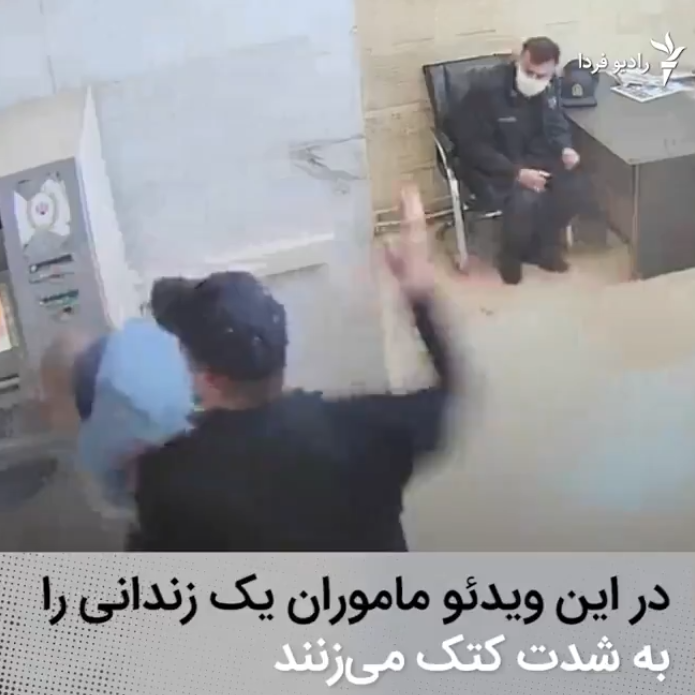
Guard beats a prisoner in footage reposted on Twitter by Radio Farda.
(Screenshot)
Pray the Lord will strengthen and encourage Christian prisoners in Evin Prison. Pray they will find supernatural peace that can only come from Him. Pray God will make Himself tangibly known to persecuted Iranian believers.
“Anytime you hear Iran in the news, just use that as a prompt to pray for the believers, for the distribution of Scriptures; for what I call the frontline workers, those who help lead house churches,” Peter says.
Many Iranian believers come to Christ from an Islamic background, and they forsake everything to follow the Lamb of God. They need mature Christian leaders to help them study God’s Word and grow in their faith.
“For example,” Peter says, “there’s one group with more than 20 women who’ve given birth over the past year. They are ‘first generation’ mothers; they’ve only been Christians for a few years. Their question is, how can I raise my child to love Jesus when it was not modeled for me?”
Women are not exempt from Iran’s harsh persecution. More about that here. Pray the Lord will help new mothers stand firm in their faith, and find mentors to help them disciple their children.
*Pseudonym
Radio Free Europe shared some of the leaked footage on its YouTube channel. In this clip, guards drag an emaciated prisoner through the prison.
(Screenshot)
Lebanon (MNN) — Some churches in Lebanon can’t even turn on the lights or run fans to combat the heat. The government has stopped supplying much electricity to the country.
David with Cry Out Now says this stems from extreme fuel shortages. “It’s also meant that there have been times when churches have not been able to meet because people don’t have enough fuel to drive their car or to get public transport to get to church. Just yesterday, I had a drive that would take me up the mountain. It takes me about an hour and a half to get there. But the cost is that today, I have to spend many, many hours looking for fuel to fill up my car.”
Amid these desperate fuel shortages, some in Lebanon have turned to solar power to keep some lights on. Unfortunately, only wealthy people currently have access to this technology for the most part. Lebanon is ideally situated for solar power, seeing about 300 days of sunshine per year.
New government
Lebanon finally formed a new government last week for the first time in over a year. However, it remains unclear if the new officials will do much to stop corruption and help the people.
This whole situation has changed Cry Out Now’s ministry. David says, “It’s forced us into a situation where we’ve had to give more responsibility to people who are newer believers. And obviously, that comes with challenges. But at the same time, it’s been a good opportunity, because people have then been able to step out in ministry that maybe they’ve not had a chance to do before.”
The power shortages also mean Lebanese Christians are losing access to the internet. David says, “When COVID-19 really started to become significantly impactful, churches were able to show things online. They held Zoom meetings or used Facebook Live. They had ways of being able to show the service to people that were not able to make it. But that’s becoming difficult because you don’t even have the internet or the electricity to be able to stream those kinds of things.”
Ask God to comfort His Lebanese Church.
The header photo shows an Eastern Orthodox church in Beirut, Lebanon. Photo courtesy of (Vladanr, CC BY-SA 3.0 <https://creativecommons.org/licenses/by-sa/3.0>, via Wikimedia Commons)
Lebanon (MNN) — Lebanon sinks to a new low. According to the United Nations, more than 70-percent of Lebanese now live below the poverty line. The rate was less than 30-percent before the 2019 revolt began. Nonetheless, hope remains.
“More people than ever are open to the Gospel. They’re searching; they’re coming and asking, ‘What’s the answer? How can you help me?’” Heart for Lebanon’s Tom Atema says.
“It gives Christians an opportunity to step up and be the salt and light God’s called us to be.”
Heart for Lebanon is rolling out a new ministry model this month. More about Heart for Lebanon’s work here. “We will be starting a new phase, partnering with 28 local churches in Beirut to help them minister to the people in their neighborhood,” Atema says.
“They’ve been adding numbers to their churches exponentially, numbers only God could produce.”
See our full Lebanon coverage here.
Partnership = paradigm shift
New endeavors also include collaborating with like-minded ministries in Beirut. “We have a unique partnership with SAT-7 moving forward in the new school year,” Atema says.
“This framework of partnership is extremely exciting for us in the days ahead.”
Teamwork is somewhat of a new concept in Lebanon. “That sort of thing is challenging in any culture, but especially in an Arabic culture or Middle East culture,” Atema explains.

Heart for Lebanon staff and church leaders work together in clean-up efforts following the 2020 Beirut blast.
(Photo courtesy of Heart for Lebanon)
However, one of the disasters that brought Lebanon to its knees led to a paradigm shift for many Lebanese. “After the explosion, we partnered with numerous Christian schools and churches in Beirut [for] cleanup efforts,” Atema says.
“Because of the explosion, they (Lebanese Christians) are now more willing to give up ego and as much of their logo as they can because they see the advantage of working together.”
The partnership model helps Heart for Lebanon expand its holistic outreach to 1,200 Lebanese families in the coming year. “All have been affected by the Beirut explosion,” Atema says.
“The economic destruction isn’t limited to one locality anymore. It covers the whole country.”
Find your place in the story
Pray Heart for Lebanon’s changes will help Syrian refugees, and the Lebanese hear the Gospel message. Pray many will turn to Christ as they see His unity and love on display.
“Pray for these partnerships with churches, that they will see the benefits. When God gets the credit, ministry expands exponentially,” Atema says.
“One of the best things [you] can do is pray for Lebanon.”
Financial support is critically important, too. Gifts to Gospel work go even farther than before because of Lebanon’s fiscal crisis. Support Heart for Lebanon projects here.
Thousands of families in Lebanon receive care, hope, and survival essentials through Heart for Lebanon.
(Photo, caption courtesy of Heart for Lebanon)
Lebanon (MNN) — Conditions are so bad in Lebanon right now that some parents decide death is better than life for their newborns.
Pierre Houssney, Executive Director of Horizons International, says people recently found a newborn baby in trash bins near their ministry centers. “Unfortunately, this is becoming more common in Lebanon as people are sinking into destitution,” Houssney says.

(Photo courtesy of PoliticalPen via Horizons International)
“The umbilical cord was torn off, and a beautiful baby girl was left in a plastic bag in a dumpster.”
Thankfully, the same desperation plaguing Lebanon led to the little girl’s rescue. “As soon as new trash bags come, a lot of people jump on them. Desperate people look through the trash for anything valuable or edible. They found the baby quickly,” Houssney says.
A Christian couple wants to adopt the baby, but courts have gridlocked the process. Horizons is raising funds to help with medical costs, as well as the adoption process. You can send a gift here through Horizons’ Facebook fundraiser.
Why are things so bad in Lebanon?
Lebanon’s 2019 protests began a series of back-to-back crises. Today, daily life essentials remain out of reach for most Lebanese. See our full Lebanon coverage here.
“The country is tearing apart at the seams. Wave after wave of destitution and collapse are hitting society, and people are getting more and more desperate,” Houssney says.
Earlier this week, the United States issued another cash infusion to keep Lebanon’s army afloat. Additionally, Jordan hosted a discussion about easing Lebanon’s electricity crisis.
“Last week, the municipal water pumps stopped working because they don’t have electricity. That affects the agricultural industry because they can’t pump water to irrigate crops,” Houssney says.
“Fruit trees that had been invested in for 20 years are now being chopped up as firewood.”
Western nations are ready and willing to help Lebanon, but that intervention hinges on meaningful government reform – something caretaker officials aren’t willing to pursue. Send relief aid and Gospel hope through Horizons International here.

Volunteers prepare food aid for delivery.
(Photo courtesy of Horizons International)
“[Lebanese are] in desperate need right now of aid of any kind – development work, infrastructure – and we’re waiting for Western countries to intervene and help,” Houssney says.
“In the meantime, organizations like Horizons are doing what we can to put a Band-Aid on arterial bleeding.”
Pray the Lord will bring something good from Lebanon’s ongoing tragedy.
“[Pray] the Lord would bring down a judgment against the people causing all this destruction, but then also that the Lord would protect His flock and bring His children that don’t know Him, into the Church at this turbulent time,” Houssney requests.
Header image is a representative stock photo courtesy of hp Koch/Unsplash.
Lebanon (MNN) — Millions of people in Lebanon now face water shortages.
Wissam Nasrallah with LSESD says the water supply system needs to be repaired, but the parts are too expensive. “The collapse of the national power grid could not be offset by private generators due to the massive fuel shortages that the country has been going through. And this is leading to major blackouts. It’s putting the water system under severe pressure because this is interrupting treatment, pumping, and distribution of water.”
The water shortage will cause further problems fighting COVID-19, Nasrallah says. People won’t be able to practice good hygiene as efficiently without a steady water supply.
Fuel shortages
Amid devastating fuel shortages, most Lebanese spend all their mental resources just trying to travel.
Nasrallah says people can wait in line for hours and still not get enough gas to run errands. “People are not able to go to work. The doctors are not able to get to hospitals. Every aspect of daily life is being severely impacted by the fuel crisis. This is really draining the morale of probably everybody I know. Good news in Lebanon is ‘Oh, I was able to fill my tank. And I’m able to go to work.’”
LSESD is caring for the suffering in Jesus’ name. But this discouragement has affected the LSESD team just as much as the rest of the country. Ask God to give renewed energy and focus to the team.
Nasrallah says, “We’re trying as much as possible to alleviate the suffering of the people and the community around us. We’re trying to source medicines, for example, through different channels since this has been also a very severe crisis where most drugs are not found in pharmacies.” You can support their work here.
Header photo courtesy of LSESD on Facebook.
Iran (MNN) — Iran lurks in the shadows of the Afghanistan crisis. “Iran is definitely a power player and is watching this very closely; they have a very vested interest in Afghanistan,” Reza* with Global Catalytic Ministries (GCM) says.
“Two weeks ago, the Taliban was [in Iran] having a high-level meeting with the Iranian government.”
See our full Afghanistan coverage here.
A brief Google search reveals plenty of complexities regarding Iran and Afghanistan relations following last week’s U.S. withdrawal. This report urges Western leaders to proceed with caution:
For the past 42 years, Iran’s clerical regime has been unsuccessful in its attempts to expand its presence in Afghanistan, but the Taliban’s takeover promises to change this. While Tehran’s ambition to fill the vacuum will surprise few, it is the nature of its new Afghan strategy that should ring alarm bells in the West.
Believers on the run…
GCM helps Christians inside Afghanistan escape persecution. More about that here. “This is not a country we’re not familiar with. We have leaders and a network; it’s our second biggest work after Iran,” Reza says.

(Graphic courtesy Global Catalytic Ministries)
“We are trying to keep them safe, as much as we can. Our policy at GCM is not to take people out of the country, but to have them keep changing cities. If it comes to a point when changing cities doesn’t work, then we will extract them out of the country.”
Last week, GCM shared the following update from a Gospel worker inside Afghanistan:
Everyone changed their clothes the way the Taliban want. I didn’t see anyone getting beaten yesterday and I’m thankful for that. So what I see today doesn’t mean it won’t happen tomorrow.
There are Taliban that are still in the streets in cars with guns. They are very proud to be using the cars from the police with their guns and clothes. I passed by the police station today and all of them have left, so the Taliban are really celebrating their victory, but it is not finished yet.
But the good thing is that it is very, very, very clear now more than ever the difference between darkness and light. People are really seeing how bad it is.
Even my neighbors, who are all Pashto Muslims, say, ‘It gives us hope to see you!’ So there is hope. Yes, the bad is still in the news, but there are good things building here and growing. It is very visible.
Follow GCM on Facebook for more updates.
…to Iran?
Reza and his cohorts also see Afghans fleeing to Iran. Taliban fighters “want to continue what Mohammed [started] in the history of Islam. [He] raped and pillaged and took over through brute force, through killing …. They want to make a name for themselves,” Reza says.
“I had a leader at the border [who] said there’s just a stream of people coming from Afghanistan into Iran.”
Even though life might be less dangerous inside Iran, it’s not easier.
“Afghans are always second-class citizens inside of Iran. They don’t have rights. They don’t have I.D. cards; they don’t have anything,” Reza says.

Testimony on the ground: “A woman and her children moved to the city and have been having a hard time. She was so happy to receive these materials. The previous night, she had a dream that God would help her. God was in her dream and told her, ‘Don’t worry. I am with you. I will help you. Not just in the city, I am with you every place you go. Just don’t worry, and don’t fear. I am with you.’ The Lord was already speaking, and today just proved that we are workers for Him.”
(Photo, caption courtesy of Global Catalytic Ministries)
With help from believers like you, GCM delivers essential daily items – food water, etc. – to Afghan Christians in hiding. Send physical aid and Gospel hope to believers here.
Most importantly, keep praying for Afghanistan. Use the prompts listed alongside this report to guide your intercession.
“In 1979, when the revolution happened in Iran, all the foreigners left and look at what happened to Iran — it became the fastest growing church within 40 years,” Reza says.
“Maybe this is another way that the Lord wants to move.”
*Pseudonym
“Sometimes you never know how fear will come. I remember how scared I was at first in 2010 when the police came into the house. I trembled so much I couldn’t even text for prayer. I never thought I’d be so afraid. You never know how you’ll react, but God is present, and He will keep you going. Thank you for your prayers.”
– underground church leader in Afghanistan
(Header image courtesy of Global Catalytic Ministries)
Lebanon (MNN) — In North America, we don’t always like the idea of loving our neighbors. Whether they don’t take care of their yard like we want them to or their dog won’t stop barking, we can have a lot to say about who we love. As it happens, God has a lot to say about it, too. He commands us to love both our neighbors and our enemies (Matthew 5:43-45, Mark 12:31).
When Lebanon began receiving Syrian refugees, Camille Melki of Heart for Lebanon found just how difficult the command to love his neighbors could be.
Years of Hardship
Syria occupied Lebanon for nearly thirty years, and this time created many hardships for those living in Lebanon.
“Many of us have seen our loved ones being killed right in front of us. Our homes were destroyed. My parents’ business was burned seven times. We were under serious occupation from 1976 all the way to 2005, so even after the Civil War in Lebanon ended in 1991, Syrians still occupied our country and ruled everything in the economy and the politics, the judiciary system, anything you would think of,” Melki says.
“My wife and I got married in 1990, and we were sniped at on our wedding day. We got married in my parents’ home because churches were closed. We were getting out of my parents’ house and going to get into the car and cross to the other side of Beirut when a Syrian soldier started sniping at us. We were running for our lives between landmines.”
Loving the Lost
Heart for Lebanon began by helping displaced Lebanese people, then moved on to helping Iraqi refugees. However, when refugees started pouring in from Syria, Melki and Heart for Lebanon had to come to terms with helping their neighbors who had been their enemies not long ago.
“I must admit when the Syrian Refugees started coming to Lebanon, all of us felt as if we were being occupied again. Immediately once the Syrian refugees started coming I told our team, ‘we’re going to start a Syrian refugee ministry,’ and I experienced so much resistance. We have several people on our team who have scars from the war when Syria was occupying Lebanon,” he says.
“Many of us carry emotional scars, many of us also carry physical scars, and so to enter into a Syrian refugee settlement was very hard. We felt like God was stretching us.”
While Melki doesn’t celebrate the hardships caused for both the Syrians and Lebanese by the refugee crisis, he does recognize the important way that Lebanese have been forced to grapple with loving their neighbors.
“I believe that the Syrian refugee presence is a lesson for every Lebanese to learn how to forgive and forget. It’s not the Syrian individual who was our enemy. Our problem was not with the Syrian people. Our problem was with an oppressive Syrian regime that occupied our land. The Syrians are human beings just like you and me, vulnerable people who are suffering tremendously,” Melki says.
Header image courtesy of Heart for Lebanon.
Lebanon (MNN) — This past Saturday, a refugee camp in Lebanon’s Beqaa Valley burned to the ground. The story hasn’t received much international notice, and Pierre Houssney of Horizons International explains why: “I think there’s local compassion fatigue in Lebanon. Meaning people in Lebanon just don’t care that much about refugees anymore. They have so many problems right now. Lebanon is becoming unrecognizable through the fuel shortages and the electricity cuts.”
“And if the local people don’t care, how is Reuters going to find out about it?”
Houssney says people are waiting in line for hours to get gas, and some even leave their cars in place overnight. People flock to businesses just to get a few minutes of air conditioning. Houssney says, “I just saw a video of hundreds and hundreds of guys on motor scooters waiting in a huge crowd to try to fill up gas in a gas station.”
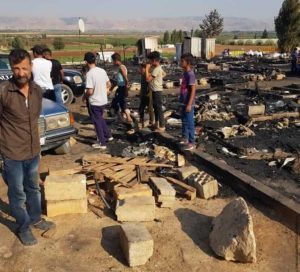
Photo courtesy of Horizons International.
Help for the refugees
Houssney says a cooking accident most likely caused the fire. “When your kitchen is made out of a tarp that’s held together by some scraps of wood or two by fours, there’s a lot of fire opportunities. When a fire happens, there’s no fire protection, so the whole camp is quickly engulfed in flames. People run out of their tents, without going back to get any of their limited possessions.”
Horizons sent food and tarps after the fire and will help the refugees rebuild to some extent. Get involved with this work by donating here.
And pray God’s love would be evident in the work of His Lebanese Church. Houssney says, “Anything that you can be doing to support the church in the Middle East, particularly in Lebanon is going to be a wonderful help.”
Header photo courtesy of Horizons International.
Syria (MNN) — How much would you risk to share your faith? Uncharted Ministries co-founder Tom Doyle says a new believer in Syria recently put her life on the line for Christ.
“We’re seeing so many young Muslims coming to faith in Christ, and they’re sharing their faith. God is using new believers; they’re spreading the Gospel rapidly throughout the Middle East,” he says.
“What we’re seeing today is a wave of holy boldness.”

(Photo courtesy of Ramy Kabalan/Unsplash)
When a Muslim woman we’ll call “Lydia” came to saving faith in Jesus, she immediately thought of her family. But not in the ways you might expect.
“She has a brother in the Islamic State [and] her brother is fighting with terrorists in Libya. She picks up the phone and calls him, and tells him she’s accepted Jesus as her Savior. He said, ‘Well, that distresses me and we will have to do something about this; I’m coming home.’ That next week she was baptized, and it wasn’t just her,” Doyle says.
“She had already led three other Sunni Muslims to faith in Christ. They were all baptized together.”
Lydia’s brother is still hunting for her, but thankfully she’s in a safe house. Pray for her continued protection, and pray the Lord will appear to her brother in a vision or dream. Pray he will understand God’s truth, and believe in Christ.
Find your place in the story
The Holy Spirit is moving among Muslims in the West, too. For example, two Muslim women in the United States recently came to faith in Christ after reading Women Who Risk: Secret Agents For Jesus In The Muslim World.
“They saw the cover photo of the woman in the pretty head covering and they started to read it,” Doyle says.
“[As] they were reading about what people had experienced in their religion, they would stop and ask each other, ‘Did you see this in Islam? Did you see women being beaten? I did, too. I guess this is the truth. Let’s keep going.’ These two Muslim best friends read all of Women Who Risk and at the end, prayed to receive Jesus as Savior.”
Once God sets a Muslim woman free, she becomes an unstoppable force for God. Women Who Risk takes readers into the intimacy of Muslim homes in Saudi Arabia, Syria, Iran, and other hot spots to see the drama of Christ at work.
(Photo, caption courtesy of Thomas Nelson)
Today, the women are actively involved in discipleship courses and eager to share their faith. “They want to start an exercise class [for] their Muslim friends who emigrated here, just to get to know them and to love on them, and eventually share the Gospel of Jesus with them,” Doyle says.
Do you have a Muslim coworker or neighbor? Pray for courage to share the Gospel with them. Maybe you can use one of Doyle’s books as a starting point for conversation.
“One-fifth of the world is Muslim, [it’s the] largest people group we need to reach,” Doyle says.
“Muslims have never been more open. We’re trying to inspire the Body of Christ to wake up and realize that the Muslim harvest is here.”
Header image is a representative stock photo courtesy of mostafa meraji/Unsplash.
Palestine (MNN) — The Human Rights Watch says Israeli forces and armed Palestinian groups committed war crimes during the fighting in May.
The report investigated three Israeli airstrikes that killed 62 civilians in Gaza, with no military targets nearby. The group Hamas also fired over 4,000 unguided rockets towards Israeli territory, killing 10 people. In total, the fighting killed 260 Palestinians, including 66 children.
Yousef *AlKhouri with Bethlehem Bible College has family living in Gaza that endured the airstrikes. “The people of Gaza, the ordinary people of Gaza, are the ultimate victims of this violence. Many of them lost their houses, the only secure place where they live and protect their families. They lost their jobs. And many Christian families lost their businesses, their only source of income.”
How to pray
The violence leaves a lasting psychological mark on Gaza’s inhabitants, especially children. But there’s no promise that fighting between Hamas and Israeli forces won’t erupt again.
AlKhouri says, “We all as followers of Christ need to unite our hearts in prayer for the people of Gaza who are seeking to live in dignity and freedom. They want to live safely, where their kids and their lives could prosper. They want the end of the war.”
The header photo shows damage to Gaza during the fighting this spring. (Photo courtesy of Bethlehem Bible College on Facebook)
Lebanon (MNN) — Hospitals in Lebanon struggle to care for survivors of Sunday’s catastrophe. At least 28 people died when a fuel tanker in north Lebanon exploded. Dozens more survived with severe burns and other injuries. More about that here.
The same fuel shortage that placed people in harm’s way this weekend prevents caretakers from adequately tending to their injuries. Medical teams do the best they can with no electricity, little or no fuel to run generators, and limited supplies. The Lebanese parliament will meet on Friday to discuss the fuel crisis, Reuters reports.
The August 15 explosion is the latest episode in Lebanon’s never-ending civil drama. See our full coverage here.
“Most of the people in Lebanon are extremely upset. They’re frustrated at government officials, the whole system, and they’re taking that out [with] rioting; civil unrest,” Heart for Lebanon’s Tom Atema says.
“One lady told me, ‘I’m sick and tired of being sick and tired. Nobody’s fixing anything.’”
Lebanon’s nonstop disasters increase the demand for support services like the ones offered by Heart for Lebanon. “We’re trying to help Christian schools. We’re looking at possibly [helping] 1,000 children this year through our H.O.P.E. (Helping Overcome Poverty through Education) Program and our Hope On Wheels programs as a result of this latest explosion, combined with the economic problems,” Atema says.
“Schools are supposed to start in about a month, and [caretaker officials say] ‘schools are not going to start, and we don’t know when or if they will start next year.’”
Support Heart for Lebanon’s efforts here. Most importantly, pray. “This is a golden opportunity for us to pray for the indigenous Christians who are out there sharing their faith the best they can with whatever resources they have,” Atema says.
“I know people on our team giving over half of their weekly salary to people who have less than they do. What an example to all of us.”
Pray local believers will set aside time for rest and renewal. “This is 24/7 pressure; pray that God will refresh them so they can continue working for Him,” Atema requests.
People encounter Christ’s love and hope through Heart for Lebanon’s programs and the believers who run them. Those encounters lead to transformation. “They’re looking for answers and this is our opportunity because we have the answer,” Atema says.
“In our two churches, on Sunday, we had record attendance; we had over 2,000 Muslim background believers between both churches.”
Header image is a representative stock photo courtesy of Piron Guillaume/Unsplash.
Lebanon (MNN) — As soon as Andrew from Cry Out Ministries arrived in Lebanon, he felt the unrest gripping the country.
A friend met Andrew and his family at the airport, but Andrew’s friend had bad news: “[He said] ‘The van is here to pick you up is stuck, unfortunately, behind some roadblocks. Because there are riots going on.’ We ended up waiting in the airport for I think two hours.” Andrew says these riots have been sporadic. Some days protestors block roads with burning tires, while other days see calm streets.
It’s exhausting, especially for people who have endured years of government corruption and financial crisis. Andrew says, “It hasn’t just been a breakneck speed since COVID-19. It’s been since the Syrian civil war and the influx of refugees, coupled with corruption in the government. Then COVID-19 hit, and an explosion in Beirut. It all has created this massive need in the country for people to bring hope and to bring peace and to bring the light of Christ.”
Hope
Many Lebanese also have hope for the future based on the work of the Holy Spirit. Andrew says, “A lot of our friends here are talking about a new season starting, a new field being turned over and ready to be planted. And I feel like right we’re on the edge of that. I really feel like there’s something new that the Lord wants to start here in this nation. And there’s got to be a tilling up of that fallow ground.”
Pray for the establishment of a stable government in Lebanon that cares for its people. Andrew says, “Pray that the Lord would come and that he would fill the hearts of the Lebanese with perseverance to just remain.”
The header photo shows murals drawn in Lebanon during protests in 2019. (Photo courtesy of Freimut Bahlo, CC BY-SA 4.0 <https://creativecommons.org/licenses/by-sa/4.0>, via Wikimedia Commons)
Gaza Strip (MNN) — Sparks flew in the Holy Land yesterday after rocket fire from the Gaza Strip reached southern Israel, the first since the 11-day war in May between Israel and Palestinian militants.
More Gaza Strip headlines here.
Dr. Jennifer Murff heads up the newly-launched MENA Leadership Center, training Gospel workers throughout the Middle East/North Africa region. “The other day, I got on the phone with a leader [from the Gaza who runs] the only Christian school in the Gaza Strip,” she says.
“I asked him, ‘What are the challenges you’re facing? We hear about the Gaza almost on a daily basis on the news, and you’re on the front lines sharing the love of Jesus in a Majority-Muslim land.’ He says, ‘I need you to pray for my children… the 300 children that go to my school’,” Dr. Murff continues.
“‘We’re under immense stress. Bombs are always flying over us. Our kids are struggling so bad.’”
Gospel growth in Gaza
This believer expanded his skillset and built capacity through the MENA Leadership Center. That leads to “staying power” for his ministry in the Gaza Strip. “They are outwardly Christian, evangelistic; they are doing incredible work and they are very bold about their faith,” Dr. Murff says.
“They teach Bible; they teach about the Christian faith, [and] the heritage that has come out of the Holy Land.”

The Gaza Strip is a highly-contested territory with frequent bouts of conflict. This 2018 photo shows Palestinian rioters burning the Kerem Shalom Crossing, used to transfer goods from Israel to the Gaza Strip.
(Photo courtesy of Israel Defense Forces/Flickr)
The Gaza Strip is a highly-contested territory with frequent bouts of conflict. “The borders are closed [and people] can’t get in and out of the country with ease; it’s restricted,” Dr. Murff explains.
Conditions like these leave Palestinian Christians, already an ethnic and religious minority community, feeling even more isolated. The leader we cannot name for security purposes “took a course with us on collaboration” and “it connected [him] with people all throughout the MENA,” Dr. Murff says.
“He thanked us for offering the class because he feels very alone.”
Taking a course through MLC enabled this believer to build a Christian ministry network, and more. He shares the following testimony with Dr. Murff:
“I was able to connect, build partnerships, and collaborate. I would not have been able to do so (previously) because of our closed borders. Another thing that I loved about your class is that my brother in the West Bank is taking the same course, and we get to learn together and grow together.”
Find your place in the story
Sponsorship from believers like you makes enrollment possible for Gospel leaders like this one. Learn more here. “Our role is to equip the fishers of men in the Holy Land and beyond. When you partner with the MENA Leadership Center, you’re directly impacting the ministries on the ground,” Dr. Murff says.
Ask the Lord to protect and sustain His followers in the Gaza Strip. “They are being very faithful stewards of what God has put in front of them,” Dr. Murff says.
“We need to pray for our brothers and sisters in the Gaza Strip that are being a light in a dark, dark place, and sharing the love of Jesus.”
Header image depicts rising smoke following an Israeli air strike in the Gaza Strip on May 4, 2019. (Photo by Hassan Jedi/Flash90/Flickr)
Lebanon (MNN) — Lebanon’s financial crisis could be one of the worst in the world since the 1800s, financial experts say. Learn more here.
Christian ministries in the country continue to provide food and other resources to those in need, but they also want to see healing in Lebanese society through sustainable growth.
Providing people jobs
Nuna with Triumphant Mercy Lebanon says, “We have visited people who just say, ‘I don’t want your help, I want you to provide me a job.’ So many people have said this, so this is what we’re trying to do. I know we cannot do much. I know we cannot provide like 100,000 jobs. This is something a government can do, but we can start to do small things.”
Nuna says they place some people working with children, some working in the kitchen on dehydrated food, and others teaching soccer or dance. These are very small jobs, but they provide people with a little income.
Healing
They also provide community and outlets for creativity. Nuna says, “When you’re in a depression, you cannot be creative. So we have groups of people who do some trauma healing.”
As people work and share their lives together, Nuna says it’s a good opportunity to share the hope of Jesus. “It’s quite easy actually to share the Gospel, to share the hope of Jesus. We say there is a way to get out of what we are in. And this is Jesus. That’s very acceptable in people’s minds. They are just open for it all the time.”
Header image courtesy of Triumphant Mercy Lebanon.
Lebanon (MNN) — Christianity fused with national identity? When this happens, it is called “Christian nationalism.”
That’s different from Christians being patriotic or loving their country, says Caleb Hutcherson, a lecturer in historical theology at the Arab Baptist Theological Seminary in Lebanon. “Christian nationalism is this fusion between Christianity, Christian beliefs and symbolism, and even practices and politics that, in some way, become focused around and centered on a national identity.”
Examples
Hutcherson gives some examples of what Christian nationalism looks like. “Probably the most recognizable, infamous example is when German Christianity blended a form of Christian doctrine, Christian beliefs, and Christian practices with Nazi ideology.”
This fusion happens in other places with large churches as well, Hutcherson says, like the U.S., England, Spain, and Russia. “But even here in the Middle East, we’ve had similar kinds of blending or fusing of these Christian religious symbols, along with national symbols.” Read more in an article by Hutcherson on the subject here.
Fighting this fusion
Ever since the Roman Empire adopted Christianity as the state religion, Christians have struggled with the relationship between faith in Jesus and political power. So how can Christians around the world prevent this sort of fusion from creeping into the life of the church?
Hutcherson quotes an early Christian writer who faced a very similar situation in his time. “‘A living faith consists in thinking little of oneself and showing tenderness towards others.’ I think that idea really points to this caring for others, and particularly the marginalized, the oppressed, those who are outside of and are crushed by empire power and by that authority.”
ABTS trains leaders for churches across the Middle East. Ask God to bless this ministry.
(Header photo courtesy of SEspider from Pixabay)
Iraq (MNN) — United States military leaders say the Islamic State remains a persistent “low-level” threat in Iraq. A new Inspector General report says terrorists exploit regional weaknesses while building their ranks and biding their time.
The extremists maintain cash reserves in the range of tens of millions of dollars. Speaking through an interpreter, an Iraqi believer named Umran* says the funding could come from several sources.
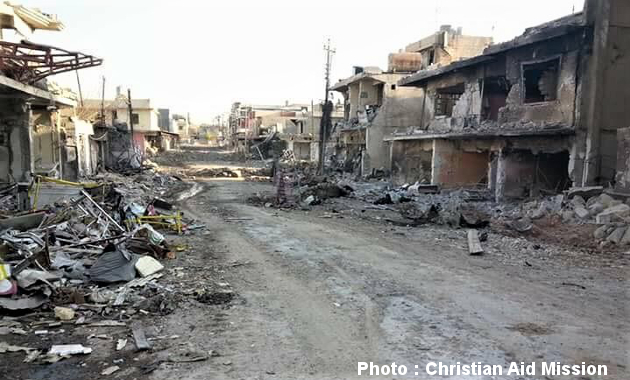
One of the towns outside Mosul destroyed by Islamic State terrorists. (Caption, photo courtesy of Christian Aid Mission)
“Countries around Iraq are the ones that many Iraqis believe are [supporting] ISIS. There are other organizations and countries that are generally against the propagation of American values and/or Christian values in the Arab world; those are also supporting ISIS,” Umran says.
“There are some people [who] believe leadership within the country is continuing to support ISIS because they want it to stay weak so that they can continue to benefit from the corruption within Iraq.”
Even as the U.S. announces plans to reduce its presence in Iraq, the Islamic State makes its “staying power” known. “Attacks in Baghdad in January and April 2021 underscore the group’s resilience despite heavy counter-terrorism pressure from Iraqi authorities,” intelligence agencies wrote in a United Nations report last month.
The Islamic State may not be leaving Iraq anytime soon. But neither is our God.
“All [of these] difficult situations, we couldn’t have gotten through any of this without God’s help. God is continuing to work, but many people are against the work of God and the development of God’s kingdom in our country,” Umran says.
Pray Iraqi believers may have the Lord’s strength, patience, and endurance. Use the prompts listed alongside this article to guide further intercession.
Join our daily email list for the latest updates on Iraq and more.
“We continue to pray, we continue to beg God, but ultimately these steps need time,” Umran says.
“We’re trusting in God’s perfect timing for His transformation of our country.”
*Pseudonym
Header image depicts a house destroyed by the war with ISIS in Sinjar, Iraq. (Photo courtesy of Levi Meir Clancy/Unsplash)
Iran (MNN) — Iran is one of the world’s most formidable persecutors of Christians. More about that here. Earlier this week, Article18 released a message from Evin Prison. In it, Christian prisoner of conscience Nasser Navard Gol-Tapeh says he bears no grudge against those who sentenced him to 10 years in prison, but questions how Christian practices can be considered an “action against national security.”
A new draft law threatens to silence voices throughout Iran.
“There is a new bill waiting to be approved by the conservative-led Iranian parliament, which will transfer control of the internet away from the government to Iranian armed forces,” Heart4Iran’s Mike Ansari says.
“They are also imposing near-complete internet blackouts, as we saw during the recent riots across southwestern Iran.”
The government already maintains tight control over the internet, but this new legislation takes it even further. See our full Iran coverage here.
“Iranian intelligence is asking social media platforms like Facebook to register with the Iranian government so they could have oversight and control over the user data. Currently, most Iranians use VPN or proxy servers to access Iran-banned platforms like Youtube or Facebook. This new law will criminalize the sale and distribution of these servers,” Ansari says.
“In essence, Iran is creating its own internal ‘halal’ internet and implementing Chinese technology to filter and censor its citizens.”
Virtual persecution
As described here, several steps remain before the bill can become law:
A small group of MPs working behind closed doors … will review the bill for the next two months. After the two-month period, the reviewed bill will be referred to a Parliament open session … then it will be sent to the Guardian Council to be ratified … Given the Guardian Council’s track record in approving legislation that impinge on human rights and objecting to more progressive one, it is largely expected that the bill will be well received by the Council.
If enacted, implementation of this bill threatens everyday Iranians, as well as at-risk religious communities. “It’s not only a matter of violation of human rights and freedom of expression – Iranians are going to incur a financial loss as well. During COVID, thousands of Iranian businesses have migrated unto popular online platforms like Instagram,” Ansari says.
“These businesses are seriously concerned about this bill and believe its implementation would further cripple the Iranian economy.”
Following Christ in Iran always carries risk, but learning and fellowshipping with other believers online allows small safety measures – or, at the very least, makes it much easier for Christians to connect. More about that here. “Any blockage of social media inside Iran will adversely affect the efforts of our ministry partners,” Ansari says.

Following Christ in Iran always carries risk, but learning and fellowshipping with other believers online allows small safety measures – or, at the very least, makes it much easier for Christians to connect.
(Photo courtesy of Heart4Iran)
“A vast number of Iranian Millennials and Gen Z are online, using popular social media platforms like WhatsApp, Telegram, Instagram and Facebook, and many of these Iranians are engaging with Mohabat TV on these platforms daily,” he continues.
“Mohabat TV’s heavy presence on social media platforms is helping shape many underground or house church groups. That’s because Mohabat TV is composed of over 100 ministry partners who have part or all of their programs hosted AND distributed on Mohabat TV.”
Ask God to make way for the light of Christ to keep shining in Iran. Use the prompts listed alongside this article to guide further intercession.
Help Heart4Iran maintain its Virtual Church platform here.
Header image is a representative stock photo courtesy of Bermix Studio/Unsplash.
Lebanon (MNN) — Israel retaliated against Hezbollah rocket attacks from inside the southern border of Lebanon last week.
But Nuna of Triumphant Mercy Lebanon says the strikes amount to little more than political theater. “The fact is that all those rockets were fired into empty fields, both ways. From the Lebanon side, they were sending rockets to empty fields and from the Israeli side, they were sending rockets to empty fields. So no one got hurt, no one got injured, and nothing was destroyed. There was nothing.”
Instead, Nuna says Hezbollah intended for the incident to distract from the anniversary of the Beirut explosion, and the demand for justice from Lebanon’s people.
The real news in Lebanon
Nuna encourages people to listen to sources inside Lebanon for news about the country. “And if it’s from a Christian perspective, it’s even better, because then you have the kingdom perspective in it. You don’t have the fear of, ‘Oh, this is going to escalate. Oh, this is becoming World War III.”
“Because God is not a God of doom, you know. It’s true that some things are escalating in some places. But God is the God of salvation, not of doom.”
The biggest story in Lebanon right now? The continuing work of God’s Spirit. Nuna says, “Pray for the unreached groups in this area. Pray for the salvation of many, and pray that God would just show up with wonders and signs. Pray that we as Christians in this land would stand firm in this warfare.”
Ask God to break the power of Hezbollah in Lebanon. The people don’t want them in charge and don’t want their influence in the country. Nuna says, “This would open the way for the relationship between Lebanon and Israel. The borders would be open. So many things would be better when this force, this principality that is over Lebanon and Iran crumbles.”
Header photo courtesy of Triumphant Mercy Lebanon on Facebook.
Middle East (CAM) — A refugee trying to recover from an injury to his skull sustained in war-torn Syria was in constant pain.
Fellow refugees who had received food and other aid from local missionaries believed that kind-hearted people were healers, so they called the leader of the native ministry, believing that he was so kind he had to have the power to heal.
“When we had gone to the camp the previous Friday, we saw that Joram* was suffering from pain,” the ministry leader said. “His wife explained that even the painkillers did not work, and he was saying that his whole body was in pain and was afraid that more of his skull would crack.”
The local missionary suggested maybe his body aches were signs of COVID-19, but Joram said he had no other symptoms.
“On my way there, I prayed to God to send His Holy Spirit and heal this person because I am nothing without God’s direction,” the ministry leader said. “And with all my heart I prayed for God to heal him.”
Joram was in agony as the leader began to pray for him, his intercession as warm and deep as his faith in God. After about three minutes of praying, he heard Joram suddenly start to cry and felt him hugging his leg – and saying the pain in his body had suddenly disappeared.
“While I tried to calm him down, I started crying, because God was so great, I could not control my feelings,” the leader said.
“Unfortunately, we do not meet with such miracles every day. After Joram calmed down, we told him that God’s love saved him from his pain and how much God cared for him. Joram said openly that he wanted to believe in our God, and I can’t tell you my surprise at that moment. He asked us to visit him later, and we said that we would come again.”
Reducing the Burden
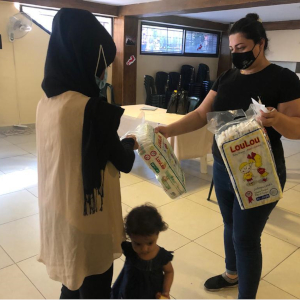
(Photo courtesy of Christian Aid Mission)
While the pandemic has struck many people in the Middle East with physical suffering and economic paralysis, refugees from Syria and other areas of conflict have been hit especially hard.
Before the pandemic they might have survived on meager incomes from scarce jobs, but now they face greater unemployment even as inflation has risen by 30 percent, the ministry leader said.
“The situation that they were barely surviving has become much worse, but your support helps to reduce the burden on their backs,” he wrote to Christian Aid Mission. “They said that being with them in this difficult process meant a lot to them.”
Refugees who have experienced this care and concern are more open to the gospel, including Muslim extremists, he said.
“While our most recent aid has been very helpful to families in distress, it has softened even some Muslim extremists, making us want to continue in our service all the more, seeing that God is actively working within us.”
Workers at another ministry are also seeing Syrian refugees more open to hearing about Christ. Still receiving food, medicine, baby food, and other aid from local missionaries, 10 Syrian refugees who have committed to Christ have begun meeting as a sub-group for worship at the ministry’s church.
“Since we’ve been providing for them over many years now, we are seeing the fruit of this service,” the ministry leader said. “They’ve decided to begin a regular meeting time for themselves in our church.”
Free in Christ
New believers show their faith to be genuine and lasting also in the ministry’s outreach in prisons.
One inmate imprisoned for seven years phoned the ministry leader a few days after his release requesting prayer. He joined a study on the meaning of baptism and, in what he said was a miracle, later obtained a job as an electrician.
“Now we visit him every week as we complete the lessons in preparation for baptism and pray together,” the leader said. “He now has a good job, is back with his family and no longer needs our economic help for clothing and goods. He is growing into being a faithful servant of our Lord.”
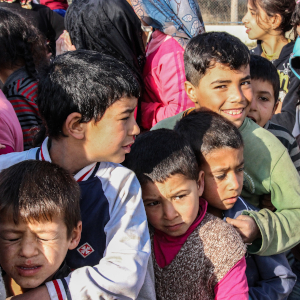
(Photo courtesy of Christian Aid Mission)
He and other prisoners who have come to faith in Christ were on the ministry leader’s heart, as a friend recently told him the prisoners were becoming Christians only because local missionaries were providing them clothes, shoes, and other items.
“This close friend told me, ‘Afterwards, they will fall away,’” the leader said. “But I’ve noticed in a number of cases that what this friend said hasn’t happened. These prisoners have continued their walk with Jesus even after being released from prison. We’re very thankful for your help in providing for these hurting people as we see them move forward in life.”
Help local missionaries throughout the Middle East show hurting people the love of Christ.
*Name changed for security reasons
Header and story images courtesy of Christian Aid Mission.
Lebanon (MNN) — ABTS has announced the Middle East Consultation 2021.
Like the 2020 Middle East Conversation, the Consultation will be livestreamed due to continuing COVID-19 restrictions. Unlike the 2020 event, which was spread out over several months, MEC 2021 will take place from September 30 to October 2.
The themes
 Brent Hamoud from ABTS says the event will discuss the future of the Middle Eastern Church through the current crises in Lebanon. “The three days will have three different themes that will all bring us back to the question of ecclesiology.
Hamoud outlines these three themes. “Making disciples: what does this mean and how does it look? Developing leaders: how do we bring up people who will bring churches and ministries forward? And engaging society: how do we think about the role of the Church within the social and public arena? How can the Church be a light and witness within the larger dynamics of society?”
Want to join this conversation? You can sign up and learn more here.
Hamoud also asks readers to pray the event will reach many Christians leaders in the Middle East and beyond. “We’re seeing a Church that is in a dynamic moment. So there’s much to celebrate, much to recognize, and much to rejoice in. But there’s also much to learn. There’s much to question and much to consider.”
Header photo courtesy of ABTS.
Lebanon (MNN) — One year ago today, one of the largest non-nuclear explosions in history rocked the port of Beirut. Over 200 people died, thousands were injured, and many lost businesses or homes.
Wissam Nasrallah of LSESD says, “When you drive by the port or walk by the explosion area, you can still see in a very visible way how the buildings and the streets in the city were impacted by the blast.”
Political corruption
Improperly stored chemicals caused the explosion, a result of corruption and inefficiency in the government.
But Nasrallah says people are no closer to getting justice. “Most of the folks that lost their businesses and homes did not recover anything from any insurance or state. They had to fix things by themselves, relying on family, friends, NGOs and so on. Add to that the emotional and psychological toll of knowing that even 11 months after such a horrendous explosion, the legal investigation is still going on.”
Lebanon’s political class still has formed no government since the explosion, and the country faces a severe financial crisis; the Lebanese pound has lost most of its value amid rampant poverty.
But the Church remains ever-present, helping those in need and providing hope.
Header photo courtesy of Horizons International.
Lebanon (MNN) — France is hosting its third global conference in twelve months today to raise funds for Lebanon. In partnership with the United Nations, France hopes to secure more than $350 million in humanitarian aid on the first anniversary of the tragic Beirut blast.
“The explosion of last year just put everything in Lebanon at a faster pace; it expedited all the problems. The World Bank calls it a ‘deliberate depression.’ That phrase has never been used by the World Bank in its history,” Heart for Lebanon co-founder Tom Atema says,
“We’ve had a year of speeches; lots of deadlines, lots of threats by the international community, but nothing has changed. Things have gotten worse.”
See our full Lebanon coverage here.
Hope for Lebanon
Decades of corruption and mismanagement brought Lebanon to the brink of breakdown in late 2019 as protests broke out nationwide and people demanded change. Then, the August 4 port explosion propelled the country into a new decline. Today, daily essentials like water are quickly becoming unavailable; food costs have risen by 700-percent since 2019.
Last year, the global community gave $1.6 billion of relief aid to Lebanon. More than a third of that total came from the United States, while the European Union provided 25-percent.

Gospel workers deliver relief aid and the hope of Jesus to families in Beirut.
(Photo courtesy of Heart for Lebanon)
Money isn’t enough to fix Lebanon’s problems. “When you look around Lebanon, everybody’s queuing up in lines waiting for one thing or another… and they’re humiliated,” Atema says.
“The situation is ripe with uncertainty, which makes the number one crisis in Lebanon hopelessness.”
That’s why Heart for Lebanon is laying foundations for a new holistic recovery plan. Starting September 1, the ministry and its local church partners will help 400 families most affected by the Beirut blast. Want to make a tangible and spiritual difference in Lebanon? Team up with Heart for Lebanon and local churches here.
Most importantly, pray. “Our team is not hopeless. We have the hope of the Gospel of Jesus Christ, but [at] the same time, we have this human side that gets tired,” Atema says.
“Pray God will not let us get weary in well-doing. Pray we will have the resources, the fuel in our bucket, to do the ministry He’s called us to do.”
In the header image, Gospel workers help clean up a church sanctuary following the August 4, 2020 port explosion in Beirut. (Photo courtesy of Heart for Lebanon)
Yemen (MNN) — Yemen is one of the hardest places in the world for anyone to hear about Jesus, and yet the Holy Spirit is moving amid war and famine. Believers we cannot name for security purposes say more than 160 people have turned to Christ each year for the past five years.
Leaving Islam is a crime punishable by death in Yemen, and even owning a Bible is dangerous. Thankfully, more and more Yemenis are gaining access to Christian media in their own dialects.
The Lord is using media platforms to make His saving truth known.
One man learned about Jesus through social media and YouTube when he escaped to another country. Other people find Christ through the radio.
Yemeni Christian hosts recently heard this from a Yemeni listener:
“I’ve been listening to the program for more than four years, and I’ve been struggling with my beliefs and my traditions. It was a long journey, but I realized I was changing. I started to see things from different perspectives and I saw the real meaning of my life through Jesus Christ. I’m so thankful that I’m part of His family now.”
(Stock photo courtesy of Alberto Bobbera/Unsplash)
Another man following the same program also contacted one of the hosts and said the issues they discussed helped him to change his perspective toward women. He said he realized they are equally valuable and deserve as much respect as men. Yemen ranks last out of 146 countries for Women’s Rights, according to a survey from the World Economic Forum.
One young man was surrounded by peers telling him to just accept Islam as the true religion without question. However, he didn’t surrender to their influence and kept researching. His soul grew tired over time as he kept searching for the truth, until one day he listened to a person sharing about Christ on social media. His spirit began to find rest, and he was drawn to believe in Jesus as Lord.
Later, this young man’s new beliefs were discovered, and he was subjected to physical and psychological torture. Although he lost his entire family and community because they now view him as an infidel, he is now connected to the Body of Christ. Yemeni believers continue to encourage him and follow up with him.
Prayer points:
- Ask God to inspire the media teams to boldly and clearly proclaim the Gospel through media production, social media outreach, and online follow-up, despite both spiritual and physical opposition and danger.
- Pray for God’s truth and grace to be presented effectively to Yemenis through media.
- Thank God for continuing to provide new men and women to serve on the social media teams. Pray for them as they begin to learn their new roles. Ask God to encourage them daily.
Header image is a representative stock photo courtesy of Warren Wong/Unsplash.
Iran (MNN) — After Thursday’s presidential ceremony, Islamic hardliners will control all branches of Iran’s civilian government. More about that here.
International tension has already escalated following this weekend’s attack on a tanker near Oman. Britain, Israel, and the United States blame Iran, while Tehran officials claim innocence and promise a “strong response” to any threats.
Reza* with Global Catalytic Ministries says the outlook for Iranian Christians isn’t good, but there’s a silver lining. “The outpouring is going to come inside of Iran, but it’s going to be through persecution. As they persecute, God is going to move even more powerfully,” he explains.
“People [often] pray that the Iranian government gets overthrown [or] a revolution happens, and I tell people, ‘No, pray it gets worse because as they [apply] more pressure, the outpouring of the Holy Spirit comes on stronger and more prevalent.”
Iranian Christians could face even more legal persecution in the days to come. On Friday, Iranian judges gave themselves more power over Christian cases. Earlier this summer, judges sentenced the first believers to five-year prison terms under controversial new amendments.
“It’s the fastest-growing church in the world; the Iranian government knows this. Also, they know that next door to them, Afghanistan is the second-fastest-growing church in the world,” Reza says.
“They’re very terrified of this, so they’re going do something to stop it, or at least try.”
Pray for strength as believers face more persecution. “Pray that God uses the Christian believers to reach more Iranians, and more people come into the Kingdom,” Reza asks.
“Jesus is coming in dreams, visions, and power encounters. He’s making a mess of the country, and we’re just a cleanup crew.”
*Pseudonym
Header image is a representative stock photo courtesy of Zahra Amiri/Unsplash.
Lebanon (MNN) — Many Christian schools in Lebanon have classes made up of mostly Muslim children. Wissam Nasrallah of LSESD says this isn’t a problem.
Children come to schools like Beirut Baptist School for high-quality education. They also get to see the love of Jesus in action. Nasrallah says, “We’re committed to providing education to the community that is Christian but also excellent. This has been a landmark of evangelical schools to serve students from all faith backgrounds and all social classes, regardless of belief or status. This is a legacy that we have in Lebanon. It started with Protestant Presbyterian missionaries in the 19th century and Catholic missions.”
Trust from the community
These students even take classes about the Bible and attend chapels with their parent’s knowledge, Nasrallah says. It all stems from the trust Christians have built in the community.
And that trust is needed right now, during COVID-19 and the current financial crisis in Lebanon. Nasrallah says, “Our resilience has been stretched thin. At one point we even wondered if we could keep on going. So what we need today is a lot of prayer for patience, wisdom, and discernment to make the right decisions. We want to be able to find favor and grace in the eyes of the community that we are serving.”
Want to get involved with this mission? Learn more here.
Header photo courtesy of LSESD on Facebook.
Iran (MNN) — Many Christians have to leave Iran, forced from their homeland by severe persecution. Many flee to Turkey, or even farther unto Europe to be able to practice freely as a Christian. Read some personal stories collected by SAT-7 here.
Joe Willey of SAT-7 USA says, “Often, they can’t speak the language of the new country, and they will not be able to get jobs. They will face severe financial problems. And they even may face deportation, which is a growing concern among refugees from other countries throughout the region.”
SAT-7 PARS
SAT-7 PARS recently talked about these believers on the show Signal. Willey talks about the show. “It’s a live 90-minute call-in program that airs on SAT-7 PARS. The show is connecting isolated Christians in Iran and Farsi-speaking Christians around the world. Each episode includes videos and presentations focused on relevant issues to viewers in Iran.” For some Christians who leave Iran, SAT-7 is their only source of Christian community.
It’s not an easy decision to leave family and home behind in Iran or to stay and face persecution. Ask God to strengthen both. “And also pray that their faith would show others how steadfast believers are when they are placing their hope in Jesus Christ. Because those believers are often so instrumental to show others the truth of Christianity.”
Header photo courtesy of SAT-7 USA.
Lebanon (MNN) — Protestors in Lebanon have been demanding new leadership who are removed from the political elite. Instead, Lebanon’s parliament has chosen a billionaire to be its next prime minister.
Najib Mikati has led Lebanon before, though not without accusations of corruption. The situation only further illustrates the growing gap between Lebanon’s wealthy ruling class and the impoverished population.
Pierre Houssney of Horizons International says, “The church in Lebanon right now is in an existential crisis. There’s collapse happening all around them. And there’s so much temptation, especially for the younger generation of believers, to just leave Lebanon, and to believe that narrative that they have no future in Lebanon.”
Farm purchase
But God’s new creation breaks through in unexpected ways. To combat food shortages, Horizons International recently purchased a parcel of farmland.
Houssney explains the plan. “On that first parcel, we’re going to be building a greenhouse so that we can actually start doing vertical farming. We will be able to increase the production of fruits and vegetables through vertical farming. It’s also going to be able to give us a year-round yield of fresh vegetables and some fruit so that we can be feeding people throughout the community.”
Pray many will see Jesus’ love through this ministry.
The header photo shows Najib Mikati. (Photo courtesy of World Economic Forum from Cologny, Switzerland, CC BY-SA 2.0 <https://creativecommons.org/licenses/by-sa/2.0>, via Wikimedia Commons)
Iran (MNN) — Pressure builds in Iran as the regime implements severe new restrictions and looks to add more. “Pray for us,” Reza* of Global Catalytic Ministries requests.
“It’s going to be another season of persecution, and I have a feeling it’s going to be the worst we’ve seen inside of Iran.”
Last month, a judge gave three Christians from a Muslim background the maximum prison sentence under a newly-amended law. Eight believers were summoned to court last week under similar charges.

(Photo courtesy Global Catalytic Ministries)
In June, “they gave the Christians the maximum sentence – which is five years – not the minimum… maybe [authorities will] let them out after two or three years, but right now, it’s a great fear technique,” Reza says.
“If you get caught, and you get arrested for breaking this law, they’re going to ‘throw the book at you.’”
See our full Iran coverage here.
Persecution is legal in Iran
Iranian judges routinely use Article 499 and Article 500 of the Islamic Penal Code to persecute believers from a Muslim background. Controversial amendments passed in February mean “anything that’s against Sharia law, you can be arrested for now; that’s a very broad net,” Reza says.
“The new law went into effect with the last president, but it was never enforced. This new president wants to enforce it.”
The amendments leave plenty of room for interpretation, which can be extremely dangerous for believers facing a hardline Islamic judge. “The problem with this law is now they are arresting Christians when they have Christian resources in their house,” Reza says.
“Before, the Iranian government would never arrest you for having Christian items because you can always say, ‘The Old Testament and the New Testament are holy books, and I’m just reading them because the Koran says to read them.’ Now, they’re not even letting you read them for understanding more of the Koran, or [for] researching.”
Another new bill threatens to make the death penalty an option for Christian activity. Ask the Lord to give Iranian believers His supernatural strength and courage. “Pray for us because we want to be used by God. We don’t want to be intimidated by the enemy,” Reza says.
“We don’t want to live in fear; we want to live in faith.”
*Pseudonym
Header image is a representative stock photo courtesy of Bill Oxford/Unsplash.
Iraq (MNN) — Believers in Iraq voice concern as the United States announces military changes. U.S. President Joe Biden formalized an agreement on Monday with Iraq’s prime minister. There will be “no forces with a combat role by December 31,” this joint statement announces.
“The Iraqi people want the combat forces to stay because when they’re around, there won’t be terrorism problems,” an Iraqi believer named Umran* says.
“We’ve already been through this experience once. When the U.S. forces pulled out, the government fell and [in] entered ISIS.”
As described here by DefenseOne.com:
American combat troops deployed in Iraq in 2003 with the goal of ridding Iraq of weapons of mass destruction and toppling dictator Saddam Hussein. Combat operations ended in 2010, and nearly all troops left the next year, only to have to return in 2014 to combat the rise of the Islamic State.
U.S. officials did not indicate whether the number of troops in Iraq will change by the end of 2021. Levels shifted under former President Trump from 5,000 to 2,500 troops deployed in Iraq. Troops focus on training and support missions.
Iraq’s Prime Minister told Associated Press his country no longer needed U.S. help fighting the Islamic State. Three days prior, Iraq’s Foreign Minister voiced the exact opposite.
“It’s just ‘empty words’ that the Prime Minister is saying to appease certain factions that want America out. A few days later, he may change his tune,” Umran says.
“It’s more [like a] political statement, rather than what the people believe they need or want.”
The Islamic State of Iraq and Syria
The latest announcement coincides with troop withdrawals in Afghanistan, where increasing attacks led to record-high civilian deaths. A similar pattern is emerging in Iraq. The Islamic State claimed last week’s Baghdad bombing, the deadliest attack in six months.
So-called “sleeper cells” continue to wage an insurgency against government forces. By targeting religious minorities – like the Shia communities where last week’s attack occurred – Islamic State militants hope to divide and conquer.

In 2014, Christian homes in Mosul were marked with the Arabic letter “N” for Nazarite and “Property of the Islamic State.”
(Image, caption courtesy Vision Beyond Borders)
“Most of the suicide bombings are happening in Shia neighborhoods,” Umran says.
“ISIS, or Dash, is trying to … to weaken the government, create divisions, [and create] chaos where ISIS can reign.”
In one recent attack, “they kidnapped various people within agricultural areas, in villages outside of the cities… [and] burned up their crop that was about ready to be harvested,” Umran says.
“They also made an attempt in Erbil in the north, which is in the Kurdish-controlled area, but that attempt failed. They were trying to attack and kidnap some Westerners.”
Find your place in the story
You may not know any world leaders, but you know the God who holds the nations in His hands. Pray for the Lord’s will to be done in Iraq. Pray “that God would change all of Iraq and all of the Middle East, and transform thoughts and hearts,” Umran requests.
Ask the Lord to give Iraqi believers wisdom and protection and a desire to stay in their homeland.
“There’s such a pull to run away, to flee to the West or other countries.”
*Pseudonym
Header image is a 2015 photo of Islamic State terrorists in Anbar Province, Iraq. (Wikimedia Commons)
Middle East (MNN) — Collectively, the Deaf are one of the world’s largest unreached people groups. More about that here. Changes to a sign language Bible translation will allow more Deaf people in the Middle East to know God.
“Technically, this is not a new project. This project has been underway for about ten years now,” Dan* from DOOR International explains.
However, “given the community, and given the needs of the people, they (Deaf translators) decided that CBT would be their next goal.”
“CBT” stands for Chronological Bible Translation, a DOOR specialty. When Deaf Bible translators learn this method, they can produce Scripture portions at a faster pace. It also gives Deaf church planters the tools they need for outreach.
See how CBT transformed Deaf lives in Tanzania.
For security purposes, we won’t name the country hosting DOOR’s new project. Dan says several components make this work a strategic launch point for future sign language Bible translations.
“It’s one of the largest sign languages in the world, and it also has the potential to be a significant gateway into the Middle East.”
Pray for Deaf believers in this country and DOOR’s staff as they prepare to start work on this translation.
“One of our IT staff has been on-site there for over a month now… and he’s doing an extreme translation project makeover. He went into it expecting to replace a few computers, do some upgrades on their studio, but upon arriving, he found that the situation there was much worse than he expected,” Dan says.

(Graphic courtesy of DOOR International)
“They emptied the entire place, threw out a bunch of furniture that was destroyed; they got a new roof put on the building. Even simple things like office chairs; they didn’t have workable equipment to do translation, as well as the quality of life things.”
Ask the Lord to give Deaf believers confidence, and pray the wider Hearing community will respect Deaf people.
“Deaf people tend to have very little power and authority in their communities. So much so that it impedes the [translators’] ability to solve problems as they arise. When they approach people in authority with a problem, it seems like their problem often gets shuffled to the end of the line … and stays there for a while,” Dan says.
“Pray that the Deaf people involved in this project would have confidence [to] approach authority and people with resources … to get [their problems] solved.”
*Name withheld for security purposes.
Header image is a representative stock photo courtesy of Tom Podmore/Unsplash.
Lebanon (MNN) — A Tent Schools International partner in Lebanon recently bought a truck to use as a mobile school for refugee students. But economic hardship in the country has made that a difficult process.
Anne Hamming says, “Every time he needs to go to a government office, he’s had to work around closures. Because the government workers are striking. Their paychecks are now worth roughly five to ten percent what they were before this economic crisis.”
Even when the truck gets registered, it might not be able to run. Hamming says, “We don’t even know if he’ll be able to secure gasoline to get to the refugee camps. Because people are waiting for hours for gas. There has been violence at some gas stations. It takes hours to secure something so basic.”
Providing food
During the crisis, Tent Schools has been providing food for refugee families in Jesus’ name. But even that has proven difficult. Hamming says, “People are living on bread, fruit, vegetables, and what cheeses they can find. Meat has become a rare luxury for everyone.”
Pray many will experience Jesus’ love through this ministry. Learn how to support Tent Schools International’s work here.
Header photo courtesy of Tent Schools International.
Middle East/North Africa (MNN) — Several countries in the Middle East/North Africa region are known for heavy conflict. While some groups provide physical aid, survivors in the MENA region find help for their souls from local believers.
“If you look at our region, from Syria and the conflict that’s been going on now 10 years; Iraq, 40 years of war; in Yemen, as well,” Samuel* of Redemptive Stories says.
“So many countries have been negatively affected by war, and with war comes trauma.”
Redemptive Stories uses a 12-week curriculum to help people process their pain and loss. “The curriculum is adapted from something that they’ve been using in Africa for a number of years, as well as here in the U.S. with victims of trauma,” Samuel explains.
(Photo courtesy of Luis Galvez/Unsplash)
“It is designed to walk them through a 12-step process [covering] what their trauma is, how they’ve experienced it, why they’re feeling the way they are; ultimately, walking them through that to help them lay their pain at the cross.”
Healing brings hope
Soldiers aren’t the only ones affected by the fallout of war. People can experience trauma in a myriad of ways. This February 2021 report describes a common source of physical trauma:
“Traumatic brain injury (TBI) represents a major health concern worldwide with a large impact in the Middle East and North Africa (MENA) region as a consequence of protracted wars and conflicts that adversely affect the general population.”
Mental and emotional distress are frequent experiences, too. In 2010, researchers examined how and why recurrent traumatic events lead to Post-Traumatic Stress Disorder (PTSD) among civilians:
“Recent research conducted in the Middle East suggests that the emotional burden carried by trauma-exposed adults and children is substantial. … Across studies, the most documented demographic risk factors for PTSD onset are female gender and young age. Notably, and consistent with other PTSD studies, the magnitude of the exposure to the event (e.g., degree of physical injury, immediate risk of life, severity of property destruction, and frequency of fatalities) is the strongest predictor of the development of PTSD.”
Faced with widespread needs, especially following the rise of Islamic State extremists, Redemptive Stories began offering Trauma Recovery Classes several years ago.
“They have these little ‘healing groups’ that study together and work together. It’s a 12-week program, but it can go much longer than that, particularly for victims of significant trauma,” Samuel says.
Many people find Christ through these Trauma Recovery Classes and hope for a better tomorrow.
“Since 2015ish, it’s continued to grow and be more and more effective,” Samuel says.
“As people [decide] what to do with their pain, what to do with trauma, many come to faith because Scripture within the curriculum leads them to the cross.”
You don’t have to live in a warzone to find healing and hope. Visit the Trauma Healing Institute here.
“There are experiences each one of us have had that causes pain, causes difficulty: the loss of a loved one, illnesses within a family. All of these things are experiences that God wants to use to help us be able to help others, and even to walk with us through them,” Samuel says.
*Pseudonym
Header image is a representative stock photo courtesy of Susan Wilkinson/Unsplash.
Middle East/North Africa (MNN) — When you hear “Middle East and North Africa,” what comes to mind?
“People think of negative things. They think of terrorism, or they think of war. We also think of great things like hummus and shwarma; they have the best food in the world!” Dr. Jennifer Murff says.
“We think of a lot of things, but we don’t usually think about how God is moving. And He’s at work.”
Dr. Murff is President and CEO of the MENA Leadership Center, a brand-new organization equipping believers in 13 countries. “Our mission is to bridge the leadership gaps and expand the capacity of Christian leaders throughout the MENA,” she says.
Last year, MLC launched six courses that trained more than 141 ministry and NGO/non-profit leaders from 13 nations and 56 organizations. This year, the organization plans to equip at least 220 leaders across the MENA region.
Take a closer look at the MENA Leadership Center.
Why does the MENA Leadership Center matter?
By offering local Christian leaders the training they need but cannot access, MLC helps believers grow and thrive in a critical territory.
“The MENA region is the home of our Christian faith. Jesus fled from his hometown to Egypt. The Gospel writer Mark was from Libya, and the apostles ministered in Lebanon, Syria, and Turkey. The Bible, as we know it today, was codified and approved in Tunisia,” Dr. Murff says.
“The whole region was once the epicenter of the Christian world. Today, God is once again at work, and the Church is seeing growth unlike any time before.”
Increased need and demand for capacity-building follow closely on the heels of exponential growth. MLC’s curriculum provides the training leaders seek.
“We provide courses that meet those particular needs they (Christian leaders) asked for, and we help them build strategies around those needs,” Dr. Murff says.

(Photo courtesy of MENA Leadership Center)
As described here on the MLC website:
While seminaries may teach theology, they often fail to teach how to run the business side of a ministry. Likewise, an effective MBA program may be great for business, but may lack pastoral training needed to lead a multi-national ministry. Out of a desire to train and equip leaders in the Greater Middle East to have greater ministry impact and effectiveness, the MENA Leadership Center was born.
Find your place in the story
Like medical workers at the forefront of the COVID-19 pandemic, Christian leaders in the MENA region often find themselves overburdened and worn thin. “They are on the frontlines, and they’re exhausted,” Dr. Murff says.
“They’re tired, and they need God to renew their hearts, so please pray for them. We (at MLC) need prayer because there’s a lot of spiritual warfare.”
Sponsorship keeps tuition affordable for Gospel workers. By supporting a leader, you can make a significant investment in the future of Christian ministry in the MENA region.
“We want to serve every single leader in the region, so scholarship funds are always needed. The funds in the region are limited,” Dr. Murff says.
Header image courtesy of MENA Leadership Center.
Iran (MNN) — Iran sets a new precedent for persecution. A judge recently gave five-year prison terms to three believers from a Muslim background. It’s the maximum sentence allowed under new controversial amendments to existing law.
“The judge denied them access to their attorney. This means Iran wants to make examples of these converts,” Heart4Iran’s Mike Ansari says.
See our full Iran coverage here.
“These are the first Christians sentenced to prison under the new law in Iran, specifically during the presidency of Ibrahim Raisi, who is known for his intolerance towards anyone who deviates from revolutionary Islamic values,” Ansari continues.

Left to right: Milad Goodarzi, Amin Khaki, and Alireza Nourmohammadi.
(Photo, caption courtesy of Article18)
“The outcome of this case will set the tone for future harassment, arrest, and persecution of any Muslim who may convert to Christianity.”
Passed in February, the new law allows police to target religious minorities in-person and online. Plus, it makes the punishment for so-called “crimes” even more severe.
“What used to be a six-month jail sentence for converts from Islam to Christianity can now be a maximum jail term of five years, coupled with mandatory Islamic reeducation,” Ansari says.
“The other thing to consider is that the Iranian intelligence is actively offering bribes to detained converts to become an informant. The Church will be going through a challenging time.”
Find your place in the story
Ask the Lord to strengthen and encourage persecuted believers. Pray God will turn what man intends for evil into blessing and favor.
“Up until February, the Christian converts living in Iran were charged with propaganda against the state. With the implementation of these new amendments, an individual or group that deviates from Twelver Shiism, including converts from Islam to Christianity, are considered a cult guilty of actions against state security,” Ansari says.
“Many agree that Iran will be cracking down on Christians more than before.”
Pray the Holy Spirit will continue drawing disillusioned Muslims to Jesus Christ.
“Iran used to be a free country… After the Islamic Revolution, conservative Iranian rulers began a methodic and a gradual purge of anything that stood in contrast to their Islamic values,” Ansari says.
“After 40 years, Iran is ranked the eighth-most dangerous country to be a follower of Jesus.”
Header image depicts Seyyed Ibrahim Raisi, who was elected president of Iran in June 2021. Heart4Iran’s Mike Ansari says Raisi is known for his intolerance towards anyone who deviates from revolutionary Islamic values. (Photo courtesy of Maryam Kamyab/MEHR News/Wikimedia Commons)
Saudi Arabia (MNN) — The hajj, an annual Muslim pilgrimage, is a vibrant six-day event this year, with pilgrims organized into color-coded groups following a strict schedule. Only 60,000 Saudi residents are allowed to participate because of the pandemic.
Saudi Arabia may have banned foreign visitors, but nothing can stop the Holy Spirit.
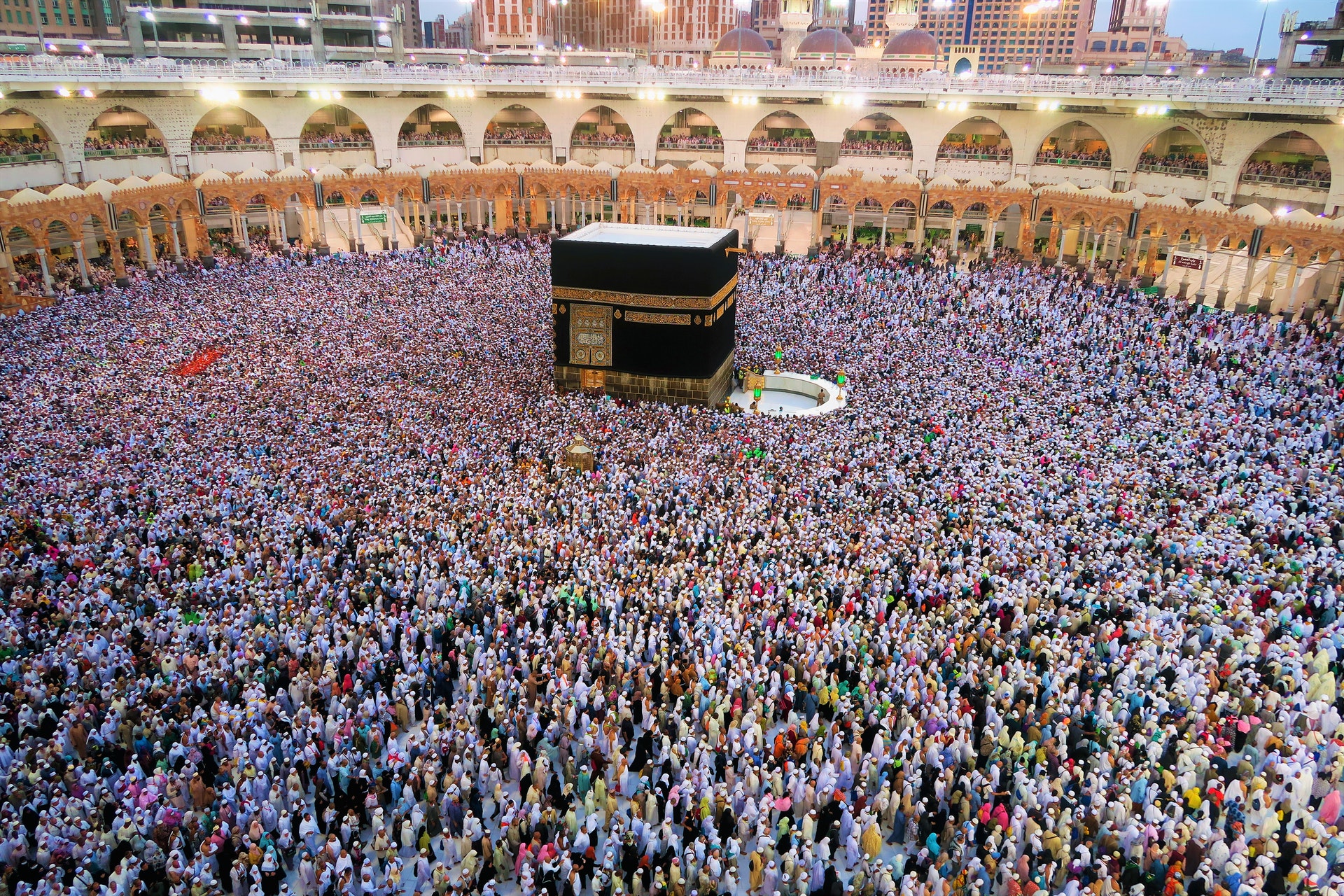
Normally, 2-3 million pilgrims participate in the hajj. This year, Saudi Arabia limited activities to 60,000 Saudi residents.
(Photo courtesy of Konevi/Pexels)
“It’s during times like the hajj, or Ramadan, when our Muslim friends around the world are submitting to God,” Greg Musselman with Voice of the Martyrs Canada says.
“God is doing a work in our Muslim friends’ lives, and we just pray that we’d see many, many more come to know Jesus.”
The same God who breaks spiritual strongholds in the Muslim world can save “Brother A” from danger. This persecuted Saudi Christian is in serious trouble, but details are hard to find.
Advocates say there’s a purpose to the secrecy. “We have to be careful; we [don’t] want to cause our brother any more harm than he’s already gone through,” Musselman says.
“He is under a lot of pressure right now [and] we’re watching this case very closely.”
Why is Brother A in trouble?
Here’s what we know about Brother A: “He was fined the equivalent of about $77,000 (around 100,000 Canadian dollars) on these charges,” Musselman says.
“In Saudi Arabia, which is the home of Islam, it’s illegal to convert to Christianity. For those that do, and then tell others about Jesus, that could [result in] a death sentence [or] imprisonment.”
Current events may influence the courts’ delay in processing Brother A’s case. “It’ll be interesting to see, because of hajj and all that’s going on in Saudi Arabia right now, whether he (Brother A) will be successful in his appeal and not to have to pay that fine,” Musselman says.
Earlier this month, VOM Canada released the following update on Brother A:
According to a recently received report, the timeline for his appeal is uncertain. In the meantime, he has thankfully been able to get his family to safety. His wife and younger son have relocated to a safe country where they are being protected, and his eldest son was able to leave Saudi Arabia earlier.
Find your place in the story
As individuals, we do not influence Saudi Arabia’s judicial system or government. But we know the God who holds the nations in His hands. Ask the Lord to give Brother A peace and protect his family.
“These cases are very sensitive. Some of these governments, like Saudi Arabia … they’re trying to be seen from the outside world as not being barbaric. As followers of Christ, we can see through some of the façades; but again, we don’t want to put people at risk where it’s not necessary,” Musselman says.
“We don’t know this ‘Brother A’ [but] certainly God does. Pray on an individual level for Brother A, his wife, children; and then also for Muslim people around the world — that they would come into a relationship with Jesus during this time.”
Header image courtesy of VOM Canada.
Lebanon (MNN) — Tensions boil over as the deadly Beirut blast approaches its one-year anniversary. Riot police clashed with victims’ families protesting outside a caretaker official’s home on Tuesday. Another group of demonstrators gathered outside the parliament building calling for justice.
Meanwhile, European Union leaders hope targeted sanctions will increase pressure on politicians to form a functioning parliament. Lebanon’s economy has been in freefall since 2019, and caretaker officials have been operating in lieu of a government for nearly 12 months. See our full Lebanon coverage here.
Everything’s in short supply, and the threat of civil war looms on the horizon. Nuna* with Triumphant Mercy Lebanon says her country’s potential collapse could have far-reaching consequences.
“There is a real threat: that the Middle East is emptied of Christians. This has happened in Iraq; the country that had 25% Christians now has less than 10% Christians,” she explains.
“In Lebanon, in the beginning, we had like 70% Christians. After the civil war, we were 50% Christian, and now we’re less than 30%.”
Lebanon’s strategic location and relative freedoms make it a critical launchpad for Middle East ministry.

Someone added a black stripe to this Lebanon flag in downtown Beirut after the port explosion.
(Photo courtesy TM Lebanon)
“Lebanon is the ‘Lighthouse of the Middle East.’ [It] is the only country in the Middle East that has freedom … and this light cannot go out,” Nuna says. “So we really need to pray. We need to see God [turn things around].”
Give online to help TM Lebanon reach more people in Christ’s name. “When people help financially, even a small amount goes a long way because … [the U.S. dollar is] a big amount compared to the Lebanese pound,” Nuna says.
Use buttons at the bottom of this page to share this story on social media. Tag Triumphant Mercy Lebanon to let believers know you’re praying for and with them.
“Their prayers, a small message of encouragement, even talking about Lebanon and not being forgotten — that’s an amazing support; we love to have those things,” Nuna says.
Ask the Lord to intervene on behalf of His followers in Lebanon. Pray something good comes from this terrible situation, and pray for God’s will to be done.
“From my point of view, we need to repent,” Nuna says. “So this is what the Church has been doing. The Church has been repenting on behalf of the nation, and the Church has been calling to God.
“We know that this is our time to stand before the throne of God and just ask for His mercy. We need His mercy.”
*Name withheld for security purposes.
Header image depicts the TM Lebanon team packing and delivering food to 200 families in Beirut in the name of Jesus. (Photo courtesy TM Lebanon)
Lebanon (MNN) — Lebanon’s Prime Minister has warned of a “social explosion” amid the economic troubles in the country. Tom Atema of Heart for Lebanon says this is a warning about civil war. “People are just done with it. And the alternative to being done with it (or even done complaining about it) is actually a revolt, civil war. It could easily turn into one.”
Hopelessness
The Prime Minister appealed to other countries for financial aid to help Lebanon out of this mess. Right now, Atema says hopelessness is Lebanon’s biggest crisis. “I sat down with a converted Muslim lady who is a single mom with five children. I asked her what made her start to look at it alternative to her Muslim faith. And she looked at me and with tears running down her eyes. She said, ‘My great-grandfather didn’t do anything to help the economy. My grandfather didn’t help anything. Nobody that I know of in my religion is helping anything for the economy.”
The corruption of government officials caused Lebanon’s crisis, Atema says. Pray they will repent and turn from their greed. And pray many Lebanese will find hope in Jesus. Atema says, “This has opened up a door that’s unprecedented for people to come to looking for hope and coming to faith in Jesus Christ.”
Header photo courtesy of Heart for Lebanon on Facebook.
Lebanon (MNN) — The Arab Baptist Theological Seminary (ABTS) held its 2021 graduation on June 19. The class of 2020 graduated as well, since the pandemic canceled graduation last year.
Forty-eight students graduated from countries all around the Arab world. ABTS livestreamed the graduation celebration, featuring speakers, music, and a heartfelt prayer for God to empower the ministry of these new graduates. Watch the livestream here.
Director of Partnerships Loulwa El Maalouf says, “We heard a few testimonies from students who are spread out in the Arab world. You also get to see the variety of students, the diversity of students that we are celebrating, coming from all different countries.”
Obstacles this past year
It was a wild ride for these two ABTS classes. They saw Lebanon fall into financial ruin, a terrible explosion that decimated Beirut last summer, and a global pandemic that forced ABTS to shed its residential program.
Students had to work from home, and some struggled to find good internet. El Maalouf says, “Especially in places like Sudan and South Sudan. One of the students used to walk and take public transportation for over an hour every day, one way, to find a cafe with internet to be able to complete his studies. He was from South Sudan. He completed his studies and graduated.”
Header photo courtesy of ABTS.
Syria (MNN) — No matter who you are or where you’re reading this today, if you follow Christ you have an important task ahead of you.
“We, as believers in Jesus Christ, have a duty, a responsibility, to seek out others,” Samuel* of Redemptive Stories says.
“We need to love our neighbor as ourselves. I have a responsibility to seek out a relationship and communicate the truth of Jesus Christ, to care for them and love them, even though they might not be someone I like or enjoy.”
Samuel and other believers at Redemptive Stories work with Syrian refugees in the Middle East. Two refugee families recently came to Christ, but they didn’t leave their conflict at the cross.
“There were new believing families that were interacting detrimentally towards one another [in] one of the programs that we run,” Samuel says.
“The youths were carrying out some of the fighting and interpersonal dynamics caused by the parents’ issues [at] the school, and causing issues among the other students.”
Redemptive Stories staff initiated Bible studies with the families, teaching these new believers about forgiveness and reconciliation. “When they (Syrians) come to faith, they [need to] see the world through a different lens. We (believers) don’t do the same thing that your Arab culture tells you to do,” Samuel says.
“Jesus has a new way, a new culture. He has a new system called the Kingdom of God that looks very different, acts very different than the system I came out of.”
The Holy Spirit moved in these new believers’ hearts as they studied God’s Word. Today, the two families live in peace. Pray these believers can teach other Syrians what they’ve learned.
“God used that experience, as well as the work of the Holy Spirit, in each one of their hearts to begin to heal those relationships and to create reconciliation,” Samuel says.
Pray for a wider reconciliation movement to sweep across Syria and through Syrian refugee populations in the Middle East. “Pray for reconciliation; that’s one of the biggest prayers that we continue to have for Syria as a whole,” Samuel says.
“The ministry of reconciliation is going to be a deep, long process. There are deep-seated issues of distrust and hatred.”
*–Name changed for security purposes.
Header image is a representative photo of Syrian refugee children. (Photo courtesy of Pietro Ferreira/Flickr/CC2.0)
Lebanon (MNN) — Horizons International wants to bring sustainable help to Lebanon. For that reason, they are buying land in the Bekaa Valley, a fertile region in Eastern Lebanon.
Pierre Houssney says, “Many Lebanese people are unemployed and hungry, so what we’re doing is securing a local food source that can provide employment for some of these people and provide a more sustainable source of humanitarian aid. We have been providing humanitarian aid to about 85 local churches here in Lebanon in the past several months.”
The land already has wheat growing on it, Houssney says, but they also plan to grow vegetables and other crops that can be grown throughout the year.
Gospel declaration
Houssney says this will be a place where food and the Gospel intersect. “I love reading about the parables that Jesus spoke that were just full of farm metaphors. To have an agricultural community that’s centered on Christ is just so exciting to me because those same parables that He spoke in an agrarian setting are going to be spoken on this farm, and we’re going to be seeing life transformation for the Syrian refugees and needy Lebanese people on the farm.”
Houssney encourages listeners to support projects like this in Lebanon. Emergency aid, while important, often evaporates quickly. Visit horizonsinternational.org to learn more and get involved.
The header photo, courtesy of Horizons International, shows the farmland.
Lebanon (MNN) — Lebanon becomes “unlivable” and a top United States official says the country’s economic collapse is imminent.
“There hasn’t been war breaking out between the parties in Lebanon, like during the civil war, and there haven’t been reports of people dying of starvation – which we’re very thankful for. But honestly, it seems like we could be headed in both of those directions,” says Pierre Houssney, Executive Director of Horizons International.
“We’re discovering a new ‘rock bottom’ every month or so.”
Foreign aid hinges on the formation of a government, which ruling parties have failed to do since 2019. See our full Lebanon coverage here.
Iran poses another looming threat. Houssney says the Islamic Republic may have a new president-elect, but its operations in Lebanon remain unchanged.
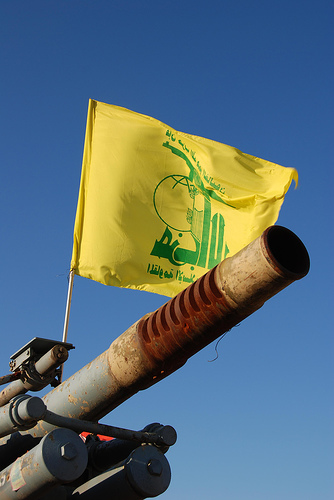
Hezbollah flag
(Photo courtesy Paul Keller via Flickr)
“Iran is the sponsor of Hezbollah. They support Hezbollah more than any other party in Lebanon gets supported, from any [source]. They’re supporting Hezbollah to gradually take over the entire country of Lebanon,” Houssney says.
“They’ve eaten away at all the institutions and the government and military; they’re pulling the puppet strings behind all of this.”
Hezbollah operates as both a political party and paramilitary group in Lebanon. The U.S. designates Hezbollah as a terrorist organization, and State Department estimates from 2019 put Iran’s cash flow to the group at $700 million per year.
Israeli Foreign Minister Yair Lapid expressed his concern about Iran’s proxy presence in a recent interview with CNBC:
“Lebanon used to be a country with a terror organization, now it’s a terror organization with a country, which is alarming.”
In Beirut and beyond, Lebanese believers are doing all they can to help people in Jesus’s name. You can support their efforts here.
“We are providing food portions to 85 Lebanese churches so that they can be supporting their communities of Lebanese people and Syrian refugees,” Houssney says.
“The Church is in desperate need of an investment right now, in humanitarian aid and in ministry, just to keep going.”
Header image is a 2009 cartoon of Hezbollah, Iran, and Hamas, with Iran as puppetmaster. (Graphic and caption courtesy of Cartoons by Barry/Wikimedia Commons)
Iran (MNN) — United Nations head Antonio Guterres urges the United States to lift all sanctions on Iran, as promised under a 2015 nuclear deal. Talks aimed at reviving the deal are underway, and the UN Security Council will meet on Tuesday for further discussion.

This 2013 photo depicts Ebrahim Raisi (right) and Mostafa Pourmohammadi (left), two members of the “Judges of Death” committee. Both became high-rank officials.
(Photo courtesy of Siamak Ebrahimi/Wikimedia Commons)
At the same time, a UN human rights expert calls for a closer look at president-elect Ebrahim Raisi’s role in Iran’s 1988 killings. In an interview with Reuters, UN investigator Javaid Rehman noted his concern about “mass graves” reportedly being destroyed as part of an ongoing cover-up.
To date, Iran has never acknowledged the killings, nor Raisi’s role as one of the four judges on a so-called “death panel.” More about that here.
“Many Iranians call Ebrahim Raisi ‘the hangman’ or the ‘Butcher of Tehran’,” Heart4Iran’s Mike Ansari says.
“In 1988, he was involved in the mass execution of 5,000 political prisoners; some say that number was as high as 30,000.”
As head of Iran’s judicial system, Raisi also intensified a crackdown on religious minorities.
“In January, six UN rapporteurs asked him about the alleged systematic persecution of Christians in Iran. He said house churches are enemy groups belonging to a Zionist cult with anti-security purposes,” Ansari says.
“This is probably a foreshadowing of what is yet to come for Iran’s fast-growing converts from Islam to Christianity.”
Pray for peace and stability in Iran. “Iran is losing its Muslim population to secularism. The regime has lost its legitimacy among the people of Iran,” Ansari says.
“The Supreme Leader’s solution is to put Raisi, his former student, in charge of a total authoritarian rule. That is why he was elected. Things will get tough for everyone. “
Ask the Lord to protect His followers in Iran and set the captives free.
“Pray for a great wave of the Holy Spirit in Iran to continue bringing disillusioned Muslims to Jesus Christ. Pray that the death curses are spoken against Christians be broken and turned into a blessing,” Ansari asks.
“He (Raisi) was involved in overseeing death sentences for over 620 Iranians that were members of minority groups. … [under his leadership], we anticipate an increase in the persecution of Christians, abuse of religious freedom, and further repression of civil liberties.”
Header image is a 2016 photo of Ebrahim Raisi when he ran as a candidate for the 2017 Iranian presidential election. (Wikimedia Commons)
Lebanon (MNN) — After ten years of war, many of the Syrian “enemy” are now living as refugees in the country they once occupied. Lebanon hosts more Syrian refugees than any other country, with at least 1.5 million Syrians inside its borders.
Georges Houssney with Horizons International says the crisis has been an opportunity for Lebanese to love their enemies as Jesus taught.
War and Family Tragedy
Lebanese know the pain of living as refugees and displaced persons. Between 1975-1990 when their country was in civil war, there were an estimated 900,000 displaced Lebanese. Many like Houssney’s family were forced to flee their homes due to Syrian fighters invading their homes and cities.
Houssney says that two years into the war, Syrian invaders reached his parent’s home:
“They knocked at the door and said you have 10 minutes to leave, because there’s an invasion of the area. But it turned out to be themselves invading the area. And my dad didn’t even wait 10 minutes, he just walked away with my stepmother, his wife, and walked into the field, running away from what they thought was going to be an invasion. It turned out the Syrians looted the whole house. They even dug out the marble from the floor, pulled the wires from the wall, just they took the house, the skeleton, and then they put a bomb in it.”
Houssney’s father remained displaced as a refugee for year after the bombing. Once he was able to get in touch with family and return, he rebuilt his home. Then it was bombed four more times during the fifteen-year war.
God’s Intervention and Compassion
In addition to the loss of his family home and witnessing the pain of his father, Houssney faced personal trials due to the war. However, the Lord was present:
“I was kidnapped and there was no way I would have been let go. But the Lord didn’t want me to die. So they let me go. They kept me for a few minutes in the camp. There were about 300 guns pointed at me – and he (the chief) was going to order one or more of them to shoot.
“I was already backed up to a wall and then he came to me and he said, ‘You know, you seem to be a nice guy, we’re gonna let you go.’ I said, ‘thank you.’”
Through all he experienced and saw, Houssney did not give into hate. He brought Bibles with him to checkpoints and distributed them to the Syrian soldiers. He wanted to live by Jesus’s teaching to love your enemy.

Georges Houssney, President and Founder of Horizons International (Photo courtesy of Horizons International)
When he was threatened, he would remember the attitude of Jesus in Matthew 9:36, “When he saw the crowds, he had compassion on them, because they were harassed and helpless, like sheep without a shepherd.”
A Calling and a Ministry of Love
God began to prepare Houssney for his future ministry before the war even started. He was saved at age twelve and then felt God’s call to minister to Muslims at age fourteen. Even then he began to look for ways to share His faith.
Years later, as Syrians began to flood Lebanon a second time, due to civil war tearing their own country apart, the way to share Christ became clear.
Now Houssney’s organization, Horizons International has seen thousands of Syrians profess faith in Christ. And dozens of them are serving Christ in ministry roles. In fact, one third of Horizon’s International staff is made up of Syrian refugees who came to the Lord because of Houssney’s ministry.
“It’s love – like God loves us though we are sinners. We must love the sinners, whoever they may be. They may be my brother, my sister, my wife, my children, my relatives, my neighbors, or people I’ve never met before or people who have come to hurt me. That’s what Jesus taught us, to love our enemies and pray for those who persecute us. . . By loving them, we win them.”
Help Horizons International love more refugees by supporting their ministry today.
Header image courtesy of Horizons International.
Iran (MNN) — Iran has its next president, but the Iranian people sent their government a very clear message by not turning out to vote.
Dr. Hormoz Shariat with Iran Alive Ministries says, “The government has been losing its influence among the people. And they’re very afraid. The minority, 10-15% are in power in Iran. They are afraid that they will lose everything. This was not an election. They chose a person: President Raisi. He is a butcher, called the Butcher of Tehran. He has killed so many people. In the 1980s, he killed tens of thousands of people.”
Dr. Shariat says the Supreme Leader picked such a violent president in order to keep the people in line through fear. “We are moving in the direction of the government of Iran becoming more and more like the North Korean government. It is very possible that this was the last election of this type.”
Iranian Christians
In this environment, Iranian Christians risk arrest and torture for even attending a church service. But they also have an incredible opportunity to show the love of Jesus to those around them. Dr. Shariat says, “I see so many stories of Christians in the hardships standing up for the Lord and shining. [They are] converting others, even converting those who are persecuting them.”
Ask God to give Iranian Christians courage in a fearful time for the country.
The header photo shows Iran’s president-elect Ebrahim Raisi in the 1980s. (Photo courtesy of Wikimedia Commons)
Middle East/North Africa (MNN) — As discontent rumbles across the Middle East and North Africa, some suggest the possibility of a second Arab Spring.
The first movement began in Tunisia in late 2010 and quickly spread. By March 2011, there were mass demonstrations in a dozen countries as people demanded change. See our full Arab Spring coverage here.
A decade later, protestors are rallying again in Tunisia and Oman.

Collage of Arab Spring protests (Credit ليبي via Wikimedia Commons)
“I think there will always be frustration, and occasionally that frustration will bubble up into protests. There is economic frustration, unemployment, education frustration; right now, there is COVID frustration,” The Voice of the Martyrs USA spokesman Todd Nettleton says.
“There will be ‘brushfires of unrest,’ and I don’t see that going away.”
Will these “brushfires” spark another wildfire of reform like they did ten years ago? “For me, that’s a bit hard to imagine,” Nettleton says.
Arab Spring uprisings led to helpful reform in some countries. “There have been some changes [and] discussion that wouldn’t have happened ten years ago. There are ‘points of light,’ if I can use that phrase,” Nettleton says.
“I think of a group of evangelical leaders from the United States invited to visit Saudi Arabia as [guests] of the Crown Prince. They (Saudi officials) have talked about the possibility of having a church, not for Arab Christians but for foreign Christians in Saudi Arabia,” he continues.
“Ten years ago… that wouldn’t have been a discussion point; Christians would not have been welcomed into the palace.”
The Arab Spring resulted in some positive religious freedom changes, but much work remains.
“There was a lot of hopefulness ten years ago at the time of the Arab Spring. I think some of that has floundered,” Nettleton says.
“The reality for a Muslim background believer is they are still going to pay a price today, just as they would have ten years ago.”
Help persecuted Christians in the MENA region through The Voice of the Martyrs USA. Most importantly, pray. “Let’s watch for the advancing of the Gospel, and let’s pray,” Nettleton says.
“Let’s pray for Gospel workers; pray for protection over them. Pray that the Holy Spirit is knocking on the hearts of Muslims, inviting them and drawing them to Jesus the Messiah, the Son of God.”
Header image depicts 2014 protestors in Tunisia. Tunisia is the birthplace of the 2011 Arab Spring. (Photo cred: Wassim Ben Rhouma/Flickr)
Lebanon (MNN) — Lebanon ups the cost of subsidized bread for the fifth time in a year. The latest hike is nearly 20-percent more than February’s increase. Plus, a top European Union official warns that if leaders cannot form a cabinet, Lebanon could face even more sanctions.
“We already have so many sanctions – on certain politicians, on the governor of the central bank, on many of the ministers,” Nuna* from Triumphant Mercy Lebanon says.
“I don’t know how much more we can go. Nothing is working.”
Earlier this month, Lebanon’s currency fell to a new record low. Daily essentials are in short supply. “There is no fuel; the electricity is not coming. It’s really a downfall and I don’t see the end of it,” Nuna says.

“Loving and blessing people is what we do best.”
(Photo, caption courtesy of Triumphant Mercy Lebanon)
The number of people living in extreme poverty tripled between 2019 and 2021. The World Bank predicts Lebanon’s economic and financial crisis will rank as one of the worst in modern history unless officials take corrective action.
However, opportunity follows every tragedy.
“Because of the economic collapse, $1 now is 10 times its value in Lebanese pound. So, when people send $100 to a church, it goes a long way; it helps many more people than $100 [did] a year ago,” Nuna says.
By helping neighbors in need, believers get a chance to talk about Christ. Visit Triumphant Mercy’s website to send physical help and the hope of Jesus.
“I praise God for all the churches all over the world that are standing by us; from the States to Canada, UK, China, to Australia. Many churches are standing by the Church of Lebanon,” Nuna says.
“We are one body and we are not left alone. It doesn’t make it easy, but this is an encouragement – that we are not alone.”
*Pseudonym
Lebanese believers distribute food and other relief aid. (Photo courtesy Triumphant Mercy Lebanon)
Iran (MNN) — Iran’s elections last week drew the lowest voter turnout in the Islamic Republic’s history. Out of 59 million eligible voters, less than 30 million voted.
The winner? Iran’s hardline judiciary chief. But Todd Nettleton of The Voice of the Martyrs USA says even politicians who advocate reform won’t bring the change many Iranians want. “Even the people who call themselves reformers are not looking to overthrow the Islamic government. They’re not looking to say, ‘Hey, the Quran is not working as a national constitution, let’s find something else.’ What they’re really doing is looking to just change the look of things just a little bit. ‘Let’s, let’s just allow a half-inch of hairline to show under our headscarf.’”
Real change
Additionally, the Supreme Leader in Iran is not elected by the people. So what can actually bring change for the country? Only the love of Jesus. By the power of the Holy Spirit, the Iranian Church continues to grow day by day.
Nettleton says, “The Gospel is being preached, Bibles are being smuggled into the country. Satellite television broadcasters, radio broadcasters, and internet websites are set up to reach Iranians with the Gospel. And that fertile soil is receiving those Gospel seeds. And it is flourishing. Because people have seen the true face of Islam, and they do not want that face any longer.”
The header photo shows posters for different candidates for Iran’s presidential election. (Photo courtesy of tasnimnews, CC BY 4.0 <https://creativecommons.org/licenses/by/4.0>, via Wikimedia Commons)
Lebanon (MNN) — Amid the severe financial crisis facing Lebanon, Triumphant Mercy Lebanon has purchased a space to be used as a house of prayer.
Nuna talks about the importance of God’s people praying. “God is operating from the prayer of the people. He doesn’t operate by Himself, He wants to engage people with Him so that he can operate in the land. So if He wants to make a change in the land, He uses people like us: every church, every prayer group. He uses us to be His hands and feet.”
At the beginning of the year, Nuna says Triumphant Mercy didn’t think they would be able to purchase such a space. They are rejoicing in God’s provision and excited to see what He wants to do.
A larger movement
Nuna says, “It’s not just for Lebanon. I believe this is only the beginning of what He wants to do in the Middle East. I have lots of expectations of the transformation that’s going to happen in Lebanon, just because people will be praying. That’s the only reason: just because people will be praying. Not because of the United Nations, not because of America, and not because of Europe.”
You can join this movement of prayer. Ask the Holy Spirit to sustain Christians and churches in Lebanon. Pray they will have the strength and unity to shine the light of Jesus.
The header photo shows Triumphant Mercy staff distributing food to Lebanese families in need. (Photo courtesy of Triumphant Mercy Lebanon on Facebook)
Iran (MNN) — Iran’s presidential elections are being held today, but many Iranians don’t care. Politicians who promise to bring reform and fight corruption have regularly been disqualified from elections. This year, only 7 candidates out of 592 were approved to appear on ballots.
On top of all this, *Reza of Global Catalytic Ministries says, “The President doesn’t really have the power inside of Iran, because the Supreme Leader has power over every presidential election. The President has lost more and more authority. So this is going to be the most restrictive presidential election and the biggest sham, in the eyes of the Iranian people.”
Iranians have also become frustrated with the actions of their government, from violence against protesting citizens to aggression against foreign powers. Reza says, “There’s no reformers, there’s no pragmatics. Everyone’s a hardliner, and they’re all very conservative.”
Iranian Church
None of this can stop Iran’s Church, the fastest growing in the world. And that’s not because westerners are getting into the country. Reza says, “God is moving very, very powerfully. So pray that the people of Iran continue to see Jesus, and have dreams and visions of Him. Continue to pray for the believers, because I believe that whoever is elected, persecution will start again.”
Ask the Holy Spirit to pour out His grace on Iranian believers.
*Name changed for security purposes.
(Header photo courtesy of Global Catalytic Ministries on Facebook)
Palestine (MNN) — On Wednesday, an Israeli parade re-ignited violence in the Gaza Strip. Militants floated fire balloons towards Israel, while Israeli aircraft launched missiles into Gaza. It’s the first violence since the 11-day war in May.
That conflict destroyed over 16,000 homes, as well as many schools and hospitals. Forty percent of those hurt in the fighting were women and children. Read more here.
Gaza is boxed in by borders, with no seaport or airport. Joe Willey of SAT-7 USA says, “During hostilities, there’s literally nowhere to run. But children are emotionally and spiritually vulnerable as well. They see destruction all around them. And they’re angry. They’re frightened. And that fear and anger it, it can be nurtured into hatred.”
Christian love amid violence
SAT-7 wants to help break the cycle of pain and violence in this region. While the conflict raged, the SAT-7 ARABIC show You are Not Alone dedicated a special episode to the subject. Willey says, “I think most importantly, the program highlighted examples of Christian faith in the middle of the turmoil.”
For instance, SAT-7 interviewed a resident helping pull survivors from damaged houses. They also spoke to a doctor in the area.
Pray for peace and wholeness to visit this region. Willey says, “Please pray that children will come to understand the hope that is found in Christ. And as they grow up, the Holy Spirit will work in their lives. And pray that they mature and become leaders who choose to love and not to hate.”
The header photo shows damage in Gaza from the conflict in May. (Photo courtesy of Bethlehem Bible College on Facebook)
Saudi Arabia (MNN) — Mystery surrounds “Brother A,” whose name is withheld for security purposes. Persecution watchdogs expected courts in Saudi Arabia to release a verdict on his case last week, but so far? Nothing.
Todd Nettleton, spokesman for The Voice of the Martyrs USA, says the silence might not be a bad thing.
“Sometimes, for the sake of justice and for the sake of the judge being free to make the right decision without pressure, it’s better if a case is sort of ‘under the radar’ of the international community,” he explains.
“The world will say, ‘hey, you can’t sentence a Christian to prison just for being a Christian.’ But within his country, devout Muslims will say, ‘you have to sentence this person who has left Islam, you have to sentence this apostate.’ It’s hard to know if this is one of those situations [because] we don’t know a lot of details.”
What happened?
Brother A stands accused of converting Muslims to Christianity. He was cleared of previous theft charges in April.
“Our friends at Middle East Concern have been covering this case, but they aren’t releasing a lot of details,” Nettleton says.
“He has been flogged, he has been locked in prison, so he has already faced a great deal of pressure and persecution. And now, potentially, he’s on the cusp of being sent back to prison.”
Brother A’s family is in danger, too.
“His wife has been pressured to divorce him. Her family has taken her, at different points, away from Brother A. There is a prayer request for her and their son because what happens to Brother A will have a direct impact on them,” Nettleton says.
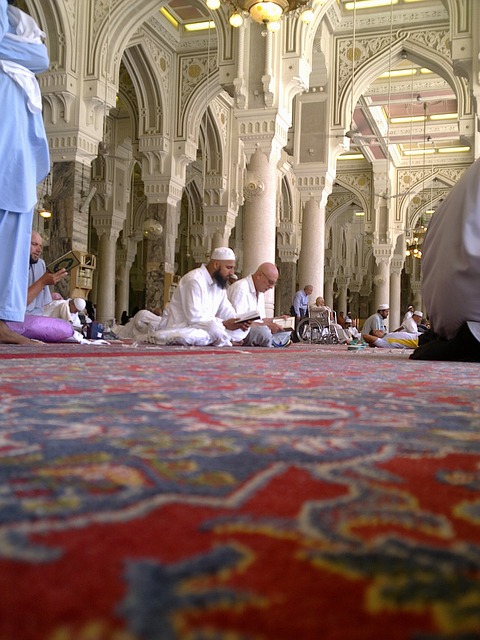
Muslims in a mosque in Saudi Arabia.
(Photo courtesy of Pixabay)
Understanding the severity of Brother A’s case requires context, he continues. “There are a couple of significant things to understand,” Nettleton says.
“First, he’s not a foreigner living in Saudi Arabia; he is an Arab, and he has lived in Saudi Arabia his whole life. Saudi Arabia recognizes the right for Saudi Arabs only to be Sunni Muslim; there’s no option of being a Christian [or] a Shia [Muslim]. If you are a Saudi Arab, you’re supposed to be a Sunni Muslim.”
Secondly, Nettleton continues, “he was instrumental in his sister coming to faith in Christ as well, and Brother A has faced pressure from the extended family.”
How can we help?
Ask the Lord to comfort Brother A, give him peace, and protect his family. Pray Brother A will not receive the death penalty and that the Lord will also spare him from a severe prison sentence.
“It is not clear in the reporting exactly what the sentence is. It doesn’t at this point mention the death penalty, but at the very least, he is facing a long prison sentence,” Nettleton says.
“There are many within Islam who would say, ‘Someone who has left Islam is an apostate. They should be given the opportunity to return to Islam, and if they choose not to, they should be executed.’”
Header image is a representative stock photo courtesy of Bill Oxford/Unsplash.
Lebanon (MNN) — Lebanon struggles under the crushing weight of a seemingly endless financial crisis. The currency has lost 90 percent of its value, and many people struggle to buy food.
But Pierre Houssney of Horizons International says many people are reaching out for God right now. “There are these touchpoints where the kingdom of heaven touches the earth, and that’s where the church is. And so of course, there’s a special blessing there, especially when the world around is struggling. People from the outside think that everything’s bad because the economy is bad. And that’s true from a worldly perspective. But at the same time, there are a lot of people that are finding hope in Christ in a way that they never have before.”
Horizons International continues to provide aid to 84 churches in Lebanon. They also pay their staff in U.S. dollars, allowing them to care for their families.
Spread awareness about the Lebanese Church
Houssney asks listeners to spread awareness about the work of the church in Lebanon. “I think that the Church in Lebanon is not what you find on the news. When you read the news, you’re going to see Hezbollah and the political side. You’re going to see Israel, you’re going to see the Palestinians and Syria. But you’re not hearing about the ministries that are in the Church. So I would say as much as you can, mobilize your churches to be thinking about Lebanon.”
“Lebanon is an incredibly strategic place in order to reach the Muslim world.”
(Header photo courtesy of Horizons International on Facebook)
Lebanon (MNN) — Lebanon continues to face the worst financial crisis in the nation’s history. Teachers have suffered significantly as a result.
Julia Wallace with the Beirut Baptist School (a ministry of LSESD) in Beirut, Lebanon says, “You have teachers being laid off. You have teachers immigrating to other countries, or you have teachers staying in Lebanon and living off of significantly reduced salaries. For instance, a teacher’s salary that used to be equivalent to about 1,600 US dollars a month is now probably worth around $240 a month.”
Most students in Lebanon attend private schools that employ roughly 59,000 teachers. During the financial crisis, many families can no longer pay tuition, meaning teachers have to work with fewer resources. Wallace says, “I do think Lebanon is at a critical juncture for its entire education sector. Because if the private education sector collapses, the entire Lebanese education sector collapses, since it is such a large portion of it. So what we see happening is lots of students are, are being pulled from private schools and put into public schools, which are already significantly underfunded. And so you have too many students for the infrastructure of public schools.”
Beirut Baptist School walks alongside students and their families in this difficult time. Pray their care will show the love of Jesus during the financial crisis.
You can also get involved with the work LSESD is doing in Lebanon by donating here.
(Photo courtesy of LSESD)
Jordan (MNN) – Proverbs 13:12 says, ‘Hope deferred makes the heart sick.’ That’s precisely how Farrah felt on her wedding day. The story begins a few weeks earlier when “she gets a phone call from her father,” JoAnn Doyle of Uncharted Ministries says.
“He says, ‘If you don’t marry this man, your mother’s going to die.’”
 Farrah grew up in Jordan, where the law requires single women to set aside a small amount of money from each paycheck until they get married. Farrah’s father needed that money to pay for her mother’s cancer treatment, so he arranged Farrah’s wedding. “Farrah is forced to marry this man, who’s older and very radical Muslim. On their honeymoon, the abuse began,” Doyle continues.
“This dear woman is beaten; she’s so depressed she wants to die. The only reason she doesn’t take her own life is [her] children.”
Life was utterly miserable until the Syrian war started. “Syrian refugees are flooding into [Jordan] now, and she keeps running into this one woman. [The woman is] a very poor-looking refugee, but her face is shining, and she’s radiating joy,” Doyle says.
“Farrah goes up to this woman and says, ‘What’s wrong with you?! Why are you so different? Why are you happy?’ This woman tells her, ‘I found Jesus. Do you want to know how He’s changed my life?’”
She met with the Syrian woman several times, Doyle says. Through a series of events, Farrah came to know Christ as her Savior.
“Immediately, depression and suicidal thoughts fled. For the first time in her life, the emptiness was filled with peace and with joy.”
Read Farrah’s full story in Women Who Risk: Secret Agents for Jesus in the Muslim World, a new book released earlier this year by JoAnn and her husband, Tom Doyle.
“The night before she was going to be baptized and celebrate the Lord’s Supper, she has a dream about Jesus for the very first time,” Doyle says.
“The next day, Farrah is baptized and celebrates the Lord’s Supper. When she was getting dressed, they handed her a towel to dry off the water, and she said, ‘No, no, I don’t want to take this water off!’ Putting clothes on her wet body, she said, ‘I just want that water to linger so I would not forget He has washed me and made me new.’”
(Header photo courtesy of john crozier/Unsplash) https://unsplash.com/photos/NJzDmlfZWz4
Lebanon (MNN) — From 1975-1990, a civil war ravaged Lebanon. Pierre Houssney of Horizons International explains why Lebanon’s current financial crisis might be even worse. “Even though there was a lot of violence at that time, and there was a war going on, people actually had enough food to eat. Even though there were shortages of fuel at times, and they had to wait in line for bread at certain times, they actually had more resources as a cushion than they do now.”
Since the war, a corrupt ruling class has slowly doomed a once-prosperous nation. Houssney says, “Basically, for the last 30 years since the war, we have slipped into this kleptocracy. The government has literally just stolen everything that they possibly could.”
Hezbollah
Iranian-backed political army Hezbollah has taken advantage of the situation to gain more power in Lebanon. Houssney says, “But at the same time, the dependence of common people on Hezbollah is actually going up, especially among the Shiite people. They’re pledging their allegiance to Hezbollah to be even able to provide for themselves.”
Still, many Lebanese are finding an entirely different source of hope. Houssney says, “People coming to Christ left and right. They are desperate to put their hope in God instead of in the government or the world around them. They’re losing hope and the things that they had been trusting in.”
The header photo shows Horizons International distributing supplies in Beirut, Lebanon. (Photo courtesy of Horizons International on Facebook.)
Lebanon (MNN) — On July 1st, the Pope will hold a summit with Lebanese Christian leaders. They will discuss the ongoing financial and political crisis in the country. The Pope has said the meeting will be an opportunity to pray for Lebanon’s stability.
And that is something many Christians have already been doing, says David from Cry Out Now. “Unfortunately, there is disunity between Christians in this country. [This occurs] not only between people from a more traditional background and people from a more evangelical background but even within various evangelical denominations. However, there was a call to pray, and approximately 50 or 60 people gathered together from various different churches. They sought the Lord for about half a night or six hours of prayer, just worshiping the Lord and asking for Him to forgive us whenever we’ve lacked unity. ”
David says many Christians gather every Friday to pray for Lebanon and the unity of its Christian factions. He encourages listeners to join this practice. “When God’s people are gathering together to pray, it seems that things just seem to start to happen. From a variety of different non-Christian groups, there are people following Jesus, north, south, east, and west, here in Lebanon. And that definitely was not the case about eight to ten years ago.”
(Header photo courtesy of Fczarnowski, CC BY-SA 3.0 <https://creativecommons.org/licenses/by-sa/3.0>, via Wikimedia Commons)
Lebanon (MNN) — Syrian refugees become the “crisis within a crisis” as Lebanon inches closer to collapse.
Lebanon houses the most Syrian refugees in the world, and 90-percent of them live in extreme poverty. Single mom households struggle the most; 68-percent resort to “crisis-level coping mechanisms” like child marriage, child labor, or selling their kids to buy food.
“When you live at extreme levels of poverty, your thinking is ‘warped,’ and unless you have Jesus, you’re going to go down this warped road,” Heart for Lebanon’s Tom Atema explains.
“Eventually, that road is going to lead you to sell your children, [or] letting your girls sell themselves because they can make money.”
Heart for Lebanon offers a different path through relief aid and family-based programs. More about that here. “Our access ministry leads us to build relationships, and that relationship is the bridge for spiritual healing,” Atema says.

(Photo courtesy of Heart for Lebanon)
To avoid the pitfalls associated with extreme poverty, Heart for Lebanon introduces Syrian refugees to a new way of thinking. Misery fills and pervades Syrian refugee camps. Believers present a God who values people so much He sent them a Savior.
Value change doesn’t happen overnight, but it can transform refugee families. “We spend a lot of time in Bible studies and discipleship with both children and moms,” Atema says.
“Everything takes time. It takes patience [and] understanding, so if you pray for our team to have a fantastic dose of wisdom from God today, that’d be awesome.”
Connect with Heart for Lebanon here to support their work among Syrian refugees.
“You can go to our website [and] invest in the journey that God has assigned as we work with women and children to prevent them from going down this road, [and] to share with them the love of Jesus Christ,” Atema says.
Misery fills and pervades Syrian refugee camps. Believers present a God who values people so much He sent them a Savior.(Photo courtesy of Heart for Lebanon)
Iran (MNN) — Iran’s Guardian Council released presidential candidates for the June 18 election yesterday. Term limits prevent current President Hassan Rouhani from serving again.
Officials warned journalists that any criticism of the state’s top picks would lead to “repercussions” as Iranian citizens called for an election boycott. The regime is also cracking down on internet and social media access to prevent mass protests.
A longer-lasting mass media blockage is probable in the weeks to come, posing a significant threat to Heart4Iran’s Gospel outreach. “We’re reaching people in Iran through satellite TV and social media,” Heart4Iran President Mike Ansari says.
“When the Iranian government implements security measures to limit and censor people’s access to both of these mediums, it is going to hinder our efforts.”
Media ministry in Iran
Iran signed a 25-year contract with China in March, the details of which are only starting to surface now. “It is our understanding that Iran has asked China to provide technology to limit their population’s access to outside internet,” Ansari says.
Currently, the “average Iranian has access to the world of internet outside of Iran,” he continues. Internet evasion tools like proxy servers allow individuals to bypass government restrictions and blockades.
The hope of Christ is permeating Iranian society through loopholes like these.
“The response from inside Iran to a virtual church was very positive. In the last two years, we’ve been able to gain momentum and traction in ministering and creating virtual communities across Iran,” Ansari says.
However, government plans like these could end virtual church communities. Under the proposed system, “institutions inside the country will be able to operate online using a high-speed internet that is only for Iran, but [the government] will limit and censor access to outside internet,” Ansari explains.
“We have realized over the last few years that the Iranian people usually find creative ways to bypass [government] limitations. We are hoping that, through some creative solutions, we’ll be able to maintain a strong presence inside the country using internet and satellite TV.”
Reaching kids for Christ
Heart4Iran will need innovative solutions to keep its online communities alive. Effective material to reach Iranian children is seriously lacking. “We decided to duplicate our virtual church platform and present a virtual Sunday School to the people of Iran,” Ansari says.

(Photo courtesy of Heart4Iran)
A new initiative brings the Gospel to Iran’s next generation. More than 60-percent of the country’s population is under 30 years old.
Long-term strategic and innovative planning is what Heart4Iran is aiming for. “Our goal is to create a bridge and provide resources to parents and children [so they can] understand the faith of Christianity [and] so they would help change and transform the future of the country,” Ansari says. One of the key resources Heart4Iran is using to reach the Iranian children is Superbook, a high-quality children’s animated Bible series.
“Many families that have left Islam for Christianity [lack] children-focused content to help their children learn the basics of their new faith.”
Help Heart4Iran develop kid-focused content here.
“We’re also hoping the community of resource and ministry partners outside of Iran would join us in making this initiative a success,” Ansari adds. Contact Heart4Iran here to discuss partnership opportunities.
Header image is a representative graphic courtesy of Gerd Altmann/Pixabay.
Gaza Strip (MNN) — Tensions remain high following a ceasefire ending 11 days of fighting between Israel and Hamas in the Gaza Strip. Two people died yesterday in a stabbing in East Jerusalem described by Israeli police as an act of terror.
Both Israel and Hamas claim victory following the latest flare-up, the fourth of its kind since Hamas gained power in 2007. The United States Secretary of State Anthony Blinken is pressing both sides to resume peace talks, which have been tabled for more than a decade.
“We’ve seen things that I never remember and I’ve been going to Israel for 25 years now – open fighting in cities where Arabs and Jews have lived together peacefully for decades,” Uncharted Ministries co-founder Tom Doyle says.
“One of the encouraging signs is that Arab and Jewish pastors are praying together during this time; the body of Christ is coming together. This is a strong message for the [global] body of Christ.”
Physical and spiritual warfare
The conflict between Israel and Hamas is complex and seemingly never-ending. More about that here. Internationally-brokered ceasefires calmed each major flare-up of violence in recent years and prevented regional war, but none addressed underlying issues – leaving tensions to simmer indefinitely.
“In 2014, Hamas attacked Israel in a major way, but this was over months of time. This [latest attack was] over 4,000 rockets in 11 days; this is massive,” Doyle says.
Fighting between Israel and Hamas reflects regional hostilities. On Friday, Hamas leader Ismail Haniyeh thanked Iran for its support in the latest conflict. “Iran is fueling Hamas and Islamic Jihad, the two major terrorist groups in Gaza. Iran gives them the money to exist and be an agitator to Israel,” Doyle says.
“We’re praying that this does not turn into a regional war.”

The Abraham Accords were signed at the White House on September 15, 2020 by UAE Foreign Minister Abdullah bin Zayed Al Nahyan, Bahrain Foreign Minister Abdullatif bin Rashid Al Zayani, and Israeli Prime Minister Benjamin Netanyahu.
(Graphic courtesy of the U.S. State Department)
The conflict puts last year’s peace deals between Israel and Arab neighbors at risk. Under former President Trump, the U.S. brokered formal peace agreements known collectively as the Abraham Accords.
“Despite the recent establishment of the Abraham Accords, it is now fairly unrealistic to assume further deepening of Arab-Israeli relations without solving the Palestinian issue beforehand,” Professor Eckart Woertz, director of the German Institute for Global and Area Studies (GIGA), told DW.
The headlines are full of geopolitical commentary, but Doyle asks believers to remember God’s focus. “There is something much more sinister than rockets going into Israel and Israel having to fire back,” he says.
“This physical war on the ground is a mere picture of the spiritual war raging in the heavenlies, and we’re the body of Christ called to fulfill the Great Commission. So let us not forget the issue is about souls; every soul matters.”
Find your place in the story
Now that you know, how will you respond? “Let’s pray for the peace of Israel, and that means Arab and Jewish peace. Pray that God restores calm; pray that the body of Christ would be major influencers in this [process],” Doyle requests.
“[Pray] that both sides [of the geopolitical process] would sit up and take notice. [Believers are] getting along because there’s something higher; [something] other than politics in this massive battle that’s going on.”

A Palestinian believer and Jewish believer pray together at the Gaza fence.
(Photo, caption courtesy of Uncharted Ministries)
Ask the Lord to strengthen and sustain believers in the Holy Land. “Pray for the body of Christ to be emboldened; for the Jews and Arabs to stick together,” Doyle says.
“It’s a beautiful thing to see in Israel when Palestinians and Jews pray together because they love Lord Jesus.”
See how God is moving in Muslim hearts around the world.
Header image depicts a wall at Netiv HaAsara facing the Gaza border continuing the words “Path to Peace” in Hebrew, Arabic, and English. (Photo and caption courtesy of Cole Keister via Unsplash)
Palestine (MNN) — Ever since the COVID-19 pandemic reached Israel and Palestine, tourists have been unable to visit Jerusalem.
That’s why Bethlehem Bible College now offers the Discover Galilee from your Place online course. Participants will get a virtual tour of significant places in the ministry of Jesus. Click the link to register or get more information.
Discover Jerusalem
This was proceeded by Discover Jerusalem from your Place. Participants in that course got a virtual tour of the city, especially locations important in the final hours before Jesus’ death and resurrection.
Haytham Dieck, who lead the course, says it explored the history and archeology of the city. “And then afterward, we will follow the path route of Jesus, the Via Dolorosa. And then, of course, the whole course will end by Golgotha, which is today the Holy Sepulcher Church.”
The college offered a similar course, Discover Bethlehem from your Place, last year. Dieck says, “At first, we thought the number would be around 10, 12, or 15. But we were very happy to see the number reaching 29. We were even thinking to do another course about Galilee.”
The Discover Galilee course will run from June 5 to July 31 and will include 9 sessions, with 13 total hours.
Dieck says, “We are so happy that so far, we are receiving very positive feedback from all those who participated. So far, everybody has said the lectures are very informative. And they are actually using this information for their ministry or their work.”
The header image shows a cross near the Sea of Galilee. (Photo courtesy of KaPilz from Pixabay)
Palestine (MNN) — Sunday, airstrikes killed at least 43 Palestinians in the Gaza strip, including 8 children. In total, this conflict has killed over 200 people.
Last week, Palestinian young people carried out protests near Bethlehem Bible College. Israeli soldiers met them with tear gas. College president Jack Sara asks readers to pray for the safety of everyone involved.
In the middle of all this, Sara says, “I don’t hear Palestinian Christians calling for revenge or violence. So may their voices be lifted high and their voices be heard by the people around us.”
How things got this bad
The current unrest began in Jerusalem, where some Palestinians were being evicted from their homes. But the situation changed when Israeli police stormed the Al-Aqsa Mosque. “And in that Dome of the Rock, basically anything happens intensifies things all over the country because people are passionate. This is the most sacred religious place for Muslims in our land.”
Sara says a lasting peace is in the best interest of both Israelis and Palestinians. Pray also for the safety of Palestinian Christians. “I have a few friends who live in Gaza, and all of them are really in fear. So let’s pray for courage, hope, and protection for the Christians in Gaza. [Pray for] the same thing in the West Bank. Christians are asking for protection and a just peace to come amongst Palestinians.”
The header photo comes courtesy of Bethlehem Bible College on Facebook.
Lebanon (MNN) — Cryptocurrency is gaining traction as Lebanon’s economic crisis worsens. Shops of all sizes increasingly began accepting bitcoin payments over the last year, Arabian Business reports.
Lebanon’s financial crisis creates an unexpected opportunity for Christian ministries.
“[Non-government organizations] are able to exchange dollar(s) at a high rate. This enables us to do much more than before,” explains Nuna*, Executive Director of Triumphant Mercy Lebanon.
Today, the Lebanese pound is worth less than a United States penny, the lowest U.S. monetary unit. That means every donated dollar goes even farther to help people in need.
“NGOs are funded mainly by international communities, so they’re not funded from inside Lebanon. This means they can bring in some ‘fresh’ dollars; [in other words,] dollars that do not exist in the country, but come from anywhere in the world,” Nuna says.
“The value of the dollar is so high that when I use $1, I can do seven to eight times more than I used to do before.”
The positive exchange comes at a valuable time. Needs in Lebanon are higher than ever. Send help through TM Lebanon.

(Photo courtesy of Triumphant Mercy Lebanon)
“People need more than just words; they need physical assistance. They need to pay the rent; they need to feed their children,” Nuna says.
At a recent aid distribution, “450 people came to receive some kind of humanitarian help.”
Pray for believers as they provide help and hope in the name of Jesus. Ask the Lord to protect desperate people from COVID-19 infections. “There’s so much need, so much despair,” Nuna says, explaining why some Lebanese gather in the streets to protest.
“People are saying ‘We are going on the streets. I don’t care if I die from COVID. I just I don’t want to die from hunger.’”
*Name changed for security purposes.
Header image is a stock photo from Pixabay.com
Lebanon (MNN) — Hezbollah is on high alert this week, watching the situation in the Gaza Strip closely. More about that here. Nuna with Triumphant Mercy Lebanon says the tension adds to despair created by ongoing political, economic, and financial crises.
“The government is not forming; there’s a deadlock there. The ratio of the dollar to the Lebanese pound is completely crazy. We have lost 90-percent of the value of our currency,” Nuna says.
“Wherever you look, it’s just – it’s just difficult.”
Last week, Lebanon’s caretaker government warned of increasing power outages starting Monday. There’s not enough money in federal reserves to keep the lights on. “We don’t know if this is only pressure, like economic, political pressure, or if it’s going to happen,” Nuna says.
(Photo courtesy of frank mckenna/Unsplash)
“During the war 30 years ago, we lived in a time when there was no electricity, but this was [before the] internet. Many people work online now; everything is online. Having no electricity and not being connected, I think, would be devastating.”
See our complete coverage of Lebanon’s crises here.
How to help Lebanon
Electricity isn’t the only essential commodity at risk. Food is becoming unattainable, too. “This week, [the government is] removing the subsidies for chicken. Chicken prices are soaring really, really high, and there is no good meat in the market,” Nuna explains.
“Everything is so much more expensive, and you cannot import things because the government is [stopping] the banks [from making] a transfer to buy the things that you want to import.”
The good news? Lebanon’s financial crisis means every gift to Gospel work goes farther than ever.
“The country is living out of donations that are coming through NGOs. The only sector that’s working is the humanitarian sector,” Nuna says.
Send help and hope in the name of Jesus through TM Lebanon.
“When people reach the bottom, there’s only one way to look, and it’s up. Either they hate God and blame God for everything that’s happening, or they turn to God and look for an anchor to hold onto. So, pray people’s eyes will be opened,” Nuna requests.
“Pray that, in the midst of this crisis, people will look up to where their salvation comes from.”
Header image is a representative stock photo courtesy of engin akyurt/Unsplash.
Palestine (MNN) — At least 90 people have died in rocket fire between Israelis and Palestinians into and out of the Gaza Strip. Most casualties have been in Gaza, where some apartment buildings have completely collapsed.

Explosions in Gaza at night. (Photo courtesy of Bethlehem Bible College on Facebook.)
The unrest began with the evictions of Palestinians from their homes in Jerusalem. Jack Sara, President of Bethlehem Bible College, says, “What happened recently was related to the confiscation of several houses and a major neighborhood in Jerusalem, called Sheikh Jarrah.”
Over the weekend, Israeli police stormed the Al-Aqsa Mosque, one of Islam’s holiest sites. Sara says the violence isn’t limited to Gaza or Jerusalem. “Last night was one of the most horrific nights. The police started to control things and wanted to calm things. So they put a curfew on all the cities. But they found buses, a lot of buses, coming into those cities from all over the Israeli cities, carrying radical groups. These groups made the call for Israeli settlers to come and attack the cities. They started attacking Arab shops. And the Arabs they found in the street, they start kicking on them. There were even two or three lynchings of Palestinians who were caught in the middle of those groups.”
Pray for lasting peace
Pray for a lasting end to the violence and that the love of Palestinian Christians will point a way forward. Sara says, “Pray for protection for Christians. Christians are not in isolated places, they live in the midst of Palestinians. And they’re Arabs, which means they are targeted as well by radicals who want to target Arabs.”
The header photo shows destruction from the bombing in Gaza. (Photo courtesy of Bethlehem Bible College on Facebook)
Iran (MNN) — It’s an important week for the world’s 1.8 billion Muslims. Whenever the new moon appears – either tonight or tomorrow night, depending on geographic location – it marks the end of Ramadan.
“The very last day of Ramadan is called Eid al Fitr, which people celebrate by breaking the fast,” Heart4Iran’s Mike Ansari says.
See our full Ramadan coverage here.
Usually, Muslims observe Eid al Fitr with massive public festivals. This year, like last, the celebrations are highly restricted due to COVID-19. Lockdowns or states of emergency in Muslim-majority countries like Iran and Egypt extend into next week.
Stay-at-home orders provide the perfect opportunity to encounter Christ.
“Please join us in praying on May 13 when we broadcast a live worship and prayer time,” Ansari requests.
“We are providing a live Farsi worship program into the country of Iran, Afghanistan, and Tajikistan to celebrate God’s goodness in the name of Jesus.” This year, the live Farsi prayer event is simultaneously broadcasted on Mohabat TV and Alhayat TV, targeting the Persian and Arab nations.

(Photo courtesy of Heart4Iran)
Heart4Iran is a network of Gospel workers striving to reach the Persian nation for Christ through media and broadcasting. Believers share the hope of Jesus boldly through satellite TV, social media, mobile technology, a counseling center, and underground church planting. More about Heart4Iran here.
“The Iranians who are reaching out to us [say they] have no Bibles, and there’s no way for them to understand Christianity. Please pray for doors to open up [so we can] send more Bibles,” Ansari says.
Send a Bible to Iran for only $7.
“The people of Iran are hungry for love, to have more hope in their lives, and they’re finding that through Jesus.”
Header image depicts a sunrise gathering in Saudi Arabia during Eid al Fitr 2018. (Photo courtesy of Abdullah Mukadam/Unsplash)
Syria (MNN) — A new group of Kurdish fighters entered the fray recently in northeast Syria. There’s been constant tension and fighting in the region since Turkey invaded in late 2019.
“It’s disputed territory, [with] regular incursions by the Turks, Russians, and the Syrian army,” Samuel of Redemptive Stories explains.
“[The territory is] held currently by the YPG, which is just a faction of the Kurdish army. It’s one of the many Kurdish ‘three-lettered armies,’ as we like to call them.”
Nonetheless, hope remains for the troubled region. “We were able to go visit there recently, and I see two things across the Middle East,” Samuel says.
“[First,] God is using media in a fresh way, particularly social media, to proliferate the Gospel across the Arab world. One of the even more beautiful things [is] the response of the Syrian Kurds.”

“Kurdistan” means “the land of Kurds”. Originally this designated a region of Western Iran. This map extends the concept to cover the greater region with any significant Kurdish population and encompasses parts of Iran, Iraq, Syria, and Turkey.
(Wikimedia Commons)
The territory Syrian Kurds call home remains a battleground for multiple foreign armies and Kurdish forces. The United States tried to withdraw in 2018, but geopolitical complexities with Turkey and Russia maintained its presence. Similar difficulties exist today.
They may have lost their homes, but God has not abandoned His purposes for Syrian Kurds. “Many families have fled to Iraqi Kurdistan and Lebanon. These Kurds have come in contact with Christians, [who] faithfully communicated the Gospel to them,” Samuel says.
“Many have come to faith, and there’s a real openness. It’s honestly a movement of God’s Spirit among them.”
Syria may look like a lost cause, but keep praying. God isn’t finished yet.
“Even amid ISIS and the atrocities that have happened over the past 10-plus years in Syria, even though God has allowed terrible things to happen, He is still making beautiful things,” Samuel says.
“There are churches in Lebanon completely made up of Syrian Kurds. So many of them have come to faith, which is a beautiful, beautiful testimony to the Spirit of God.”
Praise God for bringing many Syrian Kurds to faith! Pray that as these new believers grow and mature, they will reach other Kurds for Christ. Find more ways to pray for Syria here.
“If you look at your own life, God allows difficult times sometimes to make beautiful things,” Samuel says.
“Just remember that He is always in control, and He’s always working out His great plan.”
Header image is a representative photo depicting Kurdish people wearing traditional clothes. (Photo, caption courtesy Wikimedia Commons)
Palestine (MNN) — Hundreds of Palestinians suffered injuries this weekend in clashes with Israeli police in Jerusalem. Dozens of police officer injuries have been reported as well. These conflicts have been fueled by the eviction of Palestinians to make way for new Israeli settlements. Read more here.
But Andrew Bush with Bethlehem Bible College says through it all, Palestinian Christians remain committed to peacemaking. That’s why the school is launching the Bethlehem Institute of Peace and Justice.
A vision for peace
Bush says some might ask, why bother making peace in the Middle East? “But Jesus didn’t get that memo. He called us to be peacemakers. And Bethlehem Bible College, out in the midst of its experience of living in the midst of conflict, has just been convinced that the way forward is the way of reconciliation and promoting the dignity of all peoples and justice for all who live in the land.”
The Institute will offer courses in English for anyone who wants to attend, starting this fall. “And our goal is to assist local and international peacemakers to be part of preventing and mitigating and transforming conflict and establishing sustainable peace and justice. in Palestine, Israel and throughout the world.” You can join these classes, either traveling to Bethlehem or participating remotely.
Most of all, pray The Bethlehem Institute of Peace and Justice will foster peace and reconciliation around the world.
The header photo shows the Al-Aqsa Mosque, which Israeli police stormed over the weekend. Andrew Shiva / Wikipedia
Lebanon (MNN) — Control teams in Lebanon are on the lookout for any newly-hatched desert locusts. On April 23, a rare wind pattern carried the pests briefly to Lebanon, stirring fears of multiplication and destruction.

Desert locust.
(Photo by Heike Hartmann from Pixabay)
Farmers will likely experience severe problems if locusts multiply. Desert locusts could munch their way across Lebanon’s agricultural heartland, leaving behind a food crisis – just like the one in East Africa.
“The Bekaa Valley, as the Bible teaches us, is a fertile ground, produces all kinds of food. It’s orange season, and there are stands all over the place just packed with them,” Heart for Lebanon’s Tom Atema says.
Unfortunately, Lebanon’s produce is simply out of reach for most Lebanese.
“I was just in Lebanon for a little over two weeks, and I can tell you there’s plenty of food. It’s the price of the food that starts these fights in grocery stores,” Atema says.
“The problem is economic; people can’t afford it (food). However, it could very easily become a food crisis because of the locust issue.”
Pray that any eggs laid by mature desert locusts do not multiply in Lebanon. Earlier this week, the Food and Agriculture Organization of the United Nations issued a “low to moderate” risk forecast for the Bekaa Valley:
“There is a low to moderate risk of local breeding in a few places of the Bekaa Valley where hatching could start about the second week of May, giving rise to small hopper groups and bands. Limited cross-border movements of small adult groups from adjacent areas of Syria could take place during periods of warm southerly winds.”
Developing disciples who lead
While serious, locusts are one of several crises plaguing Lebanon right now. See our full coverage here. The country is falling apart, and its leaders are mostly to blame. “Every one of their problems – corruption, the politicians, the economy – they’re all leadership issues,” Atema says.
Heart for Lebanon introduces a Christ-centered solution. Learn more here. “We teach people to live like Jesus. We teach people to lead like Jesus; they go together,” Atema explains.

(Photo courtesy of Heart for Lebanon via Facebook)
“Discipleship is about cultivating intimacy with God; leadership development is cultivating influence with people.”
You can invest in the process here. “We’re all about making disciples, and so we connect discipleship-making and leadership as one. I had the privilege to go over and teach 162 men and women in our sphere of influence,” Atema says, explaining the purpose of his latest visit to Lebanon.
“When a life is transformed, that community begins to change, and pretty soon the region begins to change.”
Header image is a 2004 photo depicting locust swarms in the Arava desert. (Photo courtesy of Niv Singer/Flickr/CC2.0)
Lebanon (MNN) — Saudi Arabia and four neighboring countries are banning Lebanese produce after massive drug seizures.
On April 23, Saudi authorities seized millions of amphetamine pills concealed in a shipment of pomegranates from Lebanon. A day prior, Greek authorities intercepted a shipment of cannabis en route from Lebanon to Slovakia following tips from the U.S. Drug Enforcement Agency.

Grapes in a Lebanese vineyard.
(Photo courtesy of Mervat Salman/Wikimedia Commons)
Saudi Arabia’s ambassador to Beirut tweeted that his country had seized more than 600 million narcotic pills and hundreds of kilograms of hashish smuggled from Lebanon over the last six years. Reports from Arab News and The Jerusalem Post point to Hezbollah as the primary driver behind Lebanon’s drug smuggling.
“Drugs have always been an issue in Lebanon. It’s an ‘under the table’ issue,” Heart for Lebanon’s Tom Atema says.
“Lebanon’s a very conservative country, and it’s an honor/shame culture, so you don’t talk about these kinds of issues, but it is a growing problem.”
Produce exports to the Gulf states account for 55-percent of this sector’s trade, The National reports. The loss comes at a difficult time. Over half of Lebanon’s population lives in poverty due to the country’s multilayered crisis. See our full Lebanon coverage here.
“This is my 20th year going to Lebanon,” Atema says, describing an atmosphere very different than the one he experienced during his first visit in 1991.
“You can feel the country in freefall. But on the other side of the coin, this has opened up another whole group of people that are passionately seeking answers and seeking Jesus.”
The people of Lebanon, whether residents or refugees, are tired of the status quo. “They’re sick and tired of being sick and tired, and they’re saying, ‘there’s got to be something better,’” Atema says.
“Even Muslims are done with their religion. One person told me, ‘It’s empty. There’s nothing to it. Can you help me understand who Jesus is? Because I keep hearing this [name].”
Pray Heart for Lebanon staff will be bold and courageous as they introduce people to Jesus. “It’s a wide-open opportunity for us,” Atema says.
“Lebanon is poised to become one of the first Christian nations again in the Middle East. More Muslims are coming to Christ than I can even begin to tell you about.”
Header image depicts amphetamine pills, like those intercepted by Saudi authorities on April 23. (Photo courtesy of Quote Catalog/Flickr)
Middle East/North Africa (MNN) — Ramadan, the Islamic holy month of prayer and fasting, began in mid-April and ends on May 12. God often moves powerfully during Ramadan to reach Muslims for Christ. See our full coverage here.
That’s one reason why church leaders across the Middle East and North Africa (MENA) are working hard to get Scripture in their language. “The Church is exploding in this region of the world; people are coming to Christ,” unfoldingWord CEO David Reeves says,
“Many key leaders were former terrorists. You’ve got leaders that come to Jesus, love Jesus now, [and] they’re doing Bible translation.”
With tools and resources from unfoldingWord, these believers can do church-centric Bible translation. A new unfoldingWord project equips church networks in 19 MENA countries, from the farthest corner of North Africa to the Middle East.
“These church networks are trying to translate the Bible in their language. They’re going to struggle if all they have available to them are English resources,” Reeves explains.
“We put the tools [and] resources in Modern Standard Arabic.”
Equipping the Church to work
These believers may come from an Islamic background, but their passion for Christ is unmatched. They’re carving out a new space in the MENA Church.
“[It’s not] the Church that’s been in that region of the world for 2,000 years. We’re talking about the Church that is organically growing, rapidly growing, because so many people are coming to Christ,” Reeves says.
“In the midst of all that, they want Scriptures in their language.”
By putting translation tools and resources into a “trade language” – Modern Standard Arabic – unfoldingWord makes them accessible to all.
Learn more about unfoldingWord’s approach here. Passion and commitment may be equal throughout all Muslim-background communities, but specific needs vary. “You’ve got both ends of the spectrum of church networks,” Reeves says.

(Photo courtesy of unfoldingWord)
One end of the spectrum contains “brand new believers who are on that journey towards maturity in Christ. In other cases, hundreds of New Testaments are ready for checking, and they’re saying, ‘could you help us check these texts? We want to be sure that they accurately reflect, as close as possible, the Greek and Hebrew – the original languages’,” Reeves says.
“There was an organization here in our office last week with 125 New Testaments ready for that kind of checking.”
Find your place in the story
You can give online here to support church-centric Bible translation through unfoldingWord. Most importantly, please pray. Pray God will raise both field workers and financial supporters to make His Word available in new languages.
Ask the Lord to protect believers from a Muslim background, and give them courage.
“One of the guys… had his house burned down recently because he’s a Christ-follower. Other Christians are going to be persecuted; some people will lose their lives over the next several years because of all this,” Reeves says.
“But they are so deeply committed to this, and they will not stop. They know that’s part of the cost,” he continues.
“Because we’re dealing with straight-on spiritual warfare across this region, prayer is the greatest need – without a doubt.”
Fill out the “Contact Us” form and mention this article to receive prayer requests from unfoldingWord. “Prayer is the most essential component, and we’re revamping our website to make information about prayer needs readily available,” Reeves says.
Header image courtesy of unfoldingWord.
Saudi Arabia (MNN) — There are nine days left in Ramadan 2021, and over 1.5 million Muslims have visited holy sites in Saudi Arabia so far. The Kingdom is home to Mecca and Medina, two of the most revered locations in Islam.
“This is the land of religion, and people have seen it for centuries. Mecca is the place where 360 different pagan religions used to take over the city each day of the year, before Islam came and said, ‘we’re all one religion,’” Tom Doyle of Uncharted Ministries says.
The Lord is moving in this Islamic heartland.
“Saudi Arabia has been such a closed country. We used to call it ‘the forbidden nation,’ but now it’s opening up,” Doyle says.
Cracks in the armor
According to The United States Commission on International Religious Freedom, Saudi Arabia still has much work remaining. Find details here in the 2021 USCIRF report. But small changes are underway. Earlier this year, Saudi Arabia removed hate speech about Christians and Jews from its textbooks.
“Literal Islam is practiced there, yet young people are not embracing it like they were over the centuries. Saudi Arabia is modernizing. Young people are tired of religion, and hearing about a loving Jesus that cares for them is very attractive,” Doyle says.
“We have lots of conversations with Saudis that have an interest; and, [we’re] not saying they’re ready to become believers, but they want to evaluate, they want to look at some of the claims of Christ.”
Muslims in a mosque in Saudi Arabia.
(Photo courtesy of Pixabay)
Finance plays a significant role, too. “[World] nations are not as oil-dependent on [Saudi Arabia] as they once were. They (Saudis) need to replace 20-percent of their economy with something else,” Doyle says.
“There’s a lot that goes into play here, but all of this is good because it’s going to expose more people to the Gospel.”
In his comments on page 48 of the 2021 report, USCIRF Commissioner Johnnie Moore praised Saudi’s minute yet significant religious freedom progress:
The Kingdom of Saudi Arabia, under Crown Prince Mohamed bin Salman, continues to reform, outpacing expectations. This is a categorical fact. The work remains substantially incomplete, but the trajectory is undeniable – the reforms are ongoing and often remarkable. … I believe the international community should continue its positive reinforcement of the Crown Prince’s reform agenda. … In fact, Saudi Arabia should be rewarded for its progress and not face threats of coercive action from the United States. Punitive measures will not speed the effect of change in the Kingdom; rather, they would complicate and likely slow it. … It is clear that real change is possible. The change must continue and it can accelerate.
Next steps
People are following Christ in Saudi Arabia, even though it could cost them everything. Pray for these believers, and pray for Saudis who do not know Christ.
“God has been moving there in the last several decades; just that there would be underground churches meeting in Mecca and Medina is historical, when you think about what that means,” Doyle says.
“Not only would a person be killed [if discovered]; their entire family could be killed or jailed for life. And yet, Jesus followers are there.”
Consider contacting the Uncharted team to learn how you can tour Saudi Arabia and experience the nation you’re praying for. “We take teams there and see the Bible sights,” Doyle says.
“You get to see the Red Sea crossing, Mount Sinai, the split rock where the children of Israel wandered in the desert. [It is] phenomenal biblical theater that Christians can go to now.”
The Kaaba is located inside the Masjidil Haram (aka the Grand Mosque) in Mecca, Saudi Arabia. It is a requirement for Muslims who are performing the pilgrimage (Hajj or Umrah) to visit and perform the ‘tawaf’ around it. The 5 daily prayers are also performed in the area. I took this photo during the hajj season of 2018. (Photo, caption courtesy of Adli Wahid/Unsplash)
Iran (MNN) — Iran’s latest attempts to stop Christian TV from entering the country have failed. “We changed our feed to be on a different satellite broadcasting from outside of Iran into Iran,” Heart4Iran’s Mike Ansari says.
“The Iranian government is now engaging in blocking the calls [or] jamming the signal.”
Plus, by being on the same transponder signal as “some of the most popular and most viewed satellite channels in the country of Iran,” Heart4Iran reaches an even larger audience with the hope of Christ.
Iran’s government is one of the most oppressive regimes in the world. It is illegal to leave Islam, and Christians face constant threats. More about that here. Yet 347 people came to Christ in the last three months, Ansari says.
“A lot of [the] Iranian population [is] fed up with Islam, and they’re looking for other options. That’s why they call organizations like Mohabat TV, which is a 24/7 Christian satellite TV [broadcast] into Iran.”
With Ramadan underway, Ansari expects even more calls in the days ahead. “During the month of Ramadan, because of their (Muslims’) attempt to get closer to God, they are in a much better place to receive the Gospel of love from Jesus Christ,” he says.

(Photo courtesy of Heart4Iran)
Help fuel Iran’s spiritual revival here.
Pray more Iranian Muslims encounter Christ through Mohabat TV. “Ramadan is a special time where we try to reach the people of Iran with a message of love and peace and tolerance, and acceptance,” Ansari says.
Between now and May 12, when Ramadan ends, ask God to move mightily in the Muslim world. Receive daily Ramadan prayer requests here.
“This is a critical time. Muslims are fasting and they’re trying to establish a closer connection with God, and we’re asking everyone to please lift up the global Muslim population during the month of Ramadan,” Ansari says.
Header image depicts a behind-the-scenes view as Heart4Iran films a show called “I Am a Woman.” (Photo courtesy of Heart4Iran)
Lebanon (MNN) — Hezbollah is replacing the government as Lebanon nears collapse, offering food and fuel subsidies to the Lebanese people. More about that here. Critics fear the move further positions Lebanon as a proxy state for Iran.
Pierre Houssney of Horizons International encourages believers to keep their eyes on the bigger picture, no matter what happens next.
“If we can get Lebanon through this period of crisis, the Church that remains is the special force for missions in the Middle East and the Muslim world,” Houssney says.
“It’s an incredibly strategic time right now.”
God prepared Horizons and its church partners for such a time as this, Houssney says. See our full Lebanon coverage here.

Horizons International’s Lebanon Crisis Fund provided 80 appliances to families in need, in addition to food portions and medical supplies.
(Photo, caption courtesy of Horizons International)
“If we had not spent a few years prior to this crisis forging these deep, trusted partnerships with all these churches, we would not have been able to do [everything we did],” he says.
“In the past year, there has been an outpouring of giving internationally toward NGO work and Christian work in Lebanon. We would not have been able to handle that much humanitarian aid distribution if we didn’t have the network of churches.”
Believers share the love of Christ as they meet tangible needs in Beirut and beyond. “A lot of people are telling us, ‘wow you guys, evangelicals, you are doing wonderful work that nobody else is doing,” Houssney says.
“Everybody else is trying to take advantage of this situation. But you guys are here, standing with people, and giving whatever you can.’”
Help Horizons and its church partners do more in Christ’s name. “We just need to support that in prayer and resources, and encouraging anybody who is working in the kingdom of God in Lebanon at this time,” Houssney says.
“Pray the Lebanese churches would be successful in reaching out to their communities, and that the body of Christ would grow through this time of trials and tribulations as it has in the past.”
Header image depicts Hezbollah’s flag. (Wikimedia Commons)
Iran (MNN) — Iran has a very young population. Now, these young people have become increasingly discouraged about the political and religious establishments in the country. Read more about their reaction to the country’s political situation here.
Rex Rogers of SAT-7 USA says, “You’re talking about a region where religion is often a tool to power. Those 35 and younger, 65% of an 80 million population, all they’ve ever known is the current system of religion as a tool to power. They don’t remember the Shah, they don’t remember any other freedom. So they’re looking for a religion that works. They’re looking for a faith that works. They’re looking for hope, and the Church provides that.”
But Iranian Christians can often feel isolated, unable to meet together with large groups of other believers. That’s where SAT-7 comes in. They providing Iranian Christians a community and access to Christian content through satellite TV.
Rogers encourages listeners to pray that Jesus would be with this isolated but growing community. “[Imagine] being the only Christian, maybe not having ever met another Christian. Imagine not have a Bible or even if you have a Bible, no one to help you understand it. Never having actually gone to church. I can bypass five churches going to my church every Sunday morning. They don’t have that.”
Header photo courtesy of Fateme Alaie on Unsplash.
Palestine (MNN) — Palestinians have suffered through a severe wave of COVID-19. Haytham Dieck with Bethlehem Bible College says many people connected with the school have fallen sick or seen loved ones die.
Worse yet, Palestine has not received any large numbers of vaccines yet. Dieck says, “The Ministery of Health says they have some, but it’s only a limited number. I mean, in the West Bank you speak about three million people, in the Gaza strip you speak about 2 million. So about 5 million people [need vaccines]. People who were in their 20s and 30s, unfortunately, died because of COVID-19. It’s one of the saddest events ever, for someone alive today in the 21st century, to see all of this going on.”
The loss of tourism
Bethlehem thrived on tourism before the pandemic. “This is the petrol of Bethlehem,” says Dieck. “This is what makes Bethlehem actually alive.”
The lack of tourists for over a year has crushed many families economically. Dieck says, “That means families live on tourism, either if they are working in the hotel business, or tour guide agencies. You speak about at least thousands of families that are living because of tourism. Now, they don’t have any income. And what makes it complicated is if you are infected by COVID-19, this will cost lots of money for treatment.”
Ask God to comfort your Palestinian brothers and sisters. Pray they would show the hope of the risen Jesus during a difficult time. And pray Palestine would get access to large numbers of vaccines soon.
Bethlehem Bible College has suffered financially during the pandemic as well. You can support the school here.
The header photo comes courtesy of Bethlehem Bible College on Facebook.
Lebanon (MNN) — This week, Lebanon marked the 46th anniversary of its civil war. Even as the country struggles with environmental, financial, and political crises, the call is going out to ‘remember history’, so as not to repeat it. Lebanon’s first civil war raged from 1975-1990. Read more here.
Nuna of Triumphant Mercy Lebanon says some in the country have begun blaming the militant organization Hezbollah for Lebanon’s troubles. “That’s why the tension is really rising. And it’s dividing the country between the pro-Hezbollah and those against Hezbollah. Those against are the majority. However, the weapons are in the hands of Hezbollah. So there’s a struggle of power [between] weapons and numbers.”
Triumphant Mercy’s service
Triumphant Mercy continues serving people during the financial crisis. Nuna says they have given aid to many people who formerly occupied Lebanon’s middle class. “They just say ‘Please, please just register me. Please register me. I need to come. What time do you open tomorrow?’ They come at seven in the morning, just to wait before our center. So with this level of desperation, I think will lead to a crack. There will be more people who say, ‘I prefer to die trying to feed my children than to just sit there and wait.’”
Ask God to provide a solution for this crisis in Lebanon. Nuna says, “We want God to just manifest Himself. He has a solution. And He is the one who’s coming back to this area of the world. And He’s the one who’s going to come for His pure bride.”
The header photo shows a Lebanese stadium hit by an airstrike during the Lebanese Civil War. (Photo courtesy of Wikimedia Commons, Public Domain)
Lebanon (MNN) — Nationwide protests erupted mid-March in Lebanon and have become relatively common. Hundreds of protestors marched through Beirut in recent weeks to demand political resolution.
See our full Lebanon coverage here.
“Everybody’s saying, ‘Oh, we’re in a deep crisis,’ but nobody is offering any solution,” Nuna from Triumphant Mercy Lebanon says of caretaker politicians.

Protestors in October 2019.
(Photo credit: Walid Houweyek)
Two primary forces are driving Lebanese to the streets, she continues. “One is we have been without the government for almost two years. Even the caretaker government now says that they want to bail out and leave a vacuum,” Nuna explains.
“On the other side, the economic crisis. People can’t afford even basic needs anymore.”
While most of Lebanon’s protestors gather for these two reasons, others join demonstrations with a political agenda. “Some people are there just because the leaders told them to go and make problems,” Nuna says.
“Some are terrorists; some are from Hezbollah; some are from the Shiite party.”
In mid-February, Lebanese authorities charged dozens of protestors in Tripoli with terrorism-related offenses. If convicted, these protesters could face the death penalty.
Lebanon desperately needs your intercessory prayers.
“This is how we pray so you can join us. We’re praying [for] God’s intervention because we don’t know how things would change,” Nuna says.
“There is no other solution than God.”
Pray for believers as they meet physical and spiritual needs in Lebanon. You can help TM Lebanon purchase supplies here.
“The NGOs have been working day and night for the people, but the government is not doing anything. We need prayer,” Nuna states.
“God needs to intervene and shift everything from a desert to a fertile field.”
Header image depicts Beirut protestors in late 2019. (Photo courtesy of Shahen books/Wikimedia Commons)
Lebanon (MNN) — If you’ve been watching Lebanon lately, you know how bad it’s gotten. For example, it’s been nine months since the government quit following the Beirut blast. Caretaker officials still cannot agree on who should take over the country.
On Friday, a senior World Bank leader forecast further doom unless Lebanon can get its act together. Amid the seemingly endless tragedy, there’s at least one reason to celebrate. “A lot of people are finding hope in Jesus in a completely new way,” Pierre Houssney of Horizons International says.
Perceptions are changing, too.
“We’re seeing a lot of people that used to be hostile toward evangelical Christians, like some of the Catholics and Orthodox people, they are now very open and they’re very positive about the evangelical movement.”
Three years ago, Lebanese believers sought the Lord and asked Him to move mightily in their nation. God’s response was unexpected, but not unwelcomed.
“God is shaking Lebanon like never before, and the corrupt politicians are hanging on for dear life,” Houssney says.
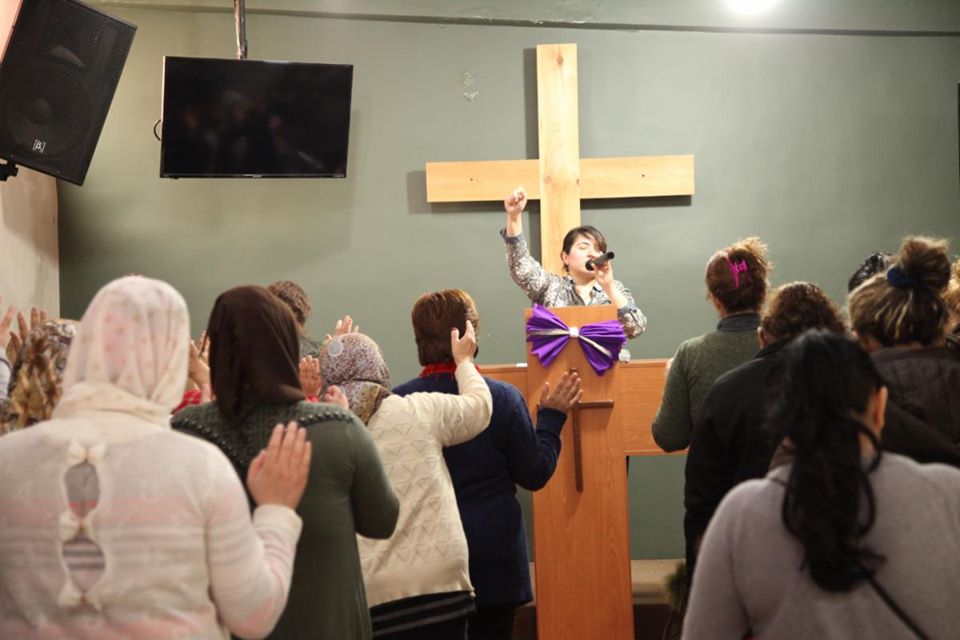
(Photo courtesy Horizons International)
“It’s really sad to see the politicians hanging on without any compassion for the people. They’re multimillionaires and they’re still not satisfied, whereas the regular people are just stuck [in] a lot of despair.”
From despair springs hope
Things the Lebanese used to trust in – their bank account, the economy, the government – are fading away one-by-one. Tangible expressions of Christ’s love from Horizons and local church partners remain.
“We’re not even getting close to reaching all the needs of the people. But hand-in-hand with the churches, we’re seeing a huge spiritual impact happen in concert with that physical aid,” Hossney says.
Send help and hope to Lebanon through Horizons International. The Lebanon Crisis Fund — formerly the Coronavirus Emergency Relief Fund — provides vital community support through humanitarian aid and Gospel outreach.
“The churches need support because there’s a lot of pressure to flee. A lot of people are trying to find any opportunity to go to the West or just get out because there are no opportunities here,” Houssney says.
“This is a very, very critical time in Lebanon. We’re not sure which direction the country is going to go.”
Header image courtesy of LSESD via Facebook.
Lebanon (MNN) — The pandemic put a halt to in-person schooling around the world. The Arab Baptist Theological Seminary (ABTS) in Lebanon made a difficult choice: switching to fully virtual courses.
Students no longer live on campus but still attend classes virtually. Loulwa El Maalouf says, “We had 35 students join us. This is the largest intake of new students in the history of the seminary. ABTs was founded in 1960. And since then, we’ve been training hundreds of leaders for the Arab world. But this is the first time we have this high number of students. And the diversity is incredible. We’re seeing students from countries that wouldn’t be able to be with us if it weren’t for this hybrid module.”
Benefits of this course
This new model allows church leaders to continue serving their communities while they attend ABTS courses. The school has students ranging from Syria to South Sudan throughout the Arab world. Maalouf says, “It doesn’t matter which background they come from. We have more than 40% of our students now who come from a non-Christian background. They face different challenges within their communities. So it’s good to be praying for them to continue to be salt and light to their communities. Another thing is important to pray about for our current students: to be able to balance well between their ministry and study.”
Pray these students will have a fruitful ministry throughout the Middle East and North Africa.
The header photo comes courtesy of ABTS on Facebook.
Syria (MNN) — Pressure builds on nonprofits as the United Nations fails to meet its fundraising goals for the Syrian crisis.
At a virtual fundraising conference last week, the UN gave its biggest appeal yet – $10 billion dollars to help people inside Syria and Syrian refugees in the region. Global donors came just short of the halfway mark for this year, pledging $4.4 billion for 2021 and another $2 billion for 2022 and beyond.
“To cut funding will cut resources so that you cannot adequately take care of the refugees, or the people inside Syria,” Heart for Lebanon’s Tom Atema says.
“It puts a lot of pressure on us because the needs are greater.”
Needs rose 20-percent last year. More than 23 million people inside of Syria and surrounding countries need humanitarian aid. That’s the highest number since the conflict started a decade ago.

A Syrian refugee carries the aid she received from Heart for Lebanon while her small children follow nearby.
(Photo courtesy of Heart for Lebanon)
Dependency on foreign aid springs from failing infrastructure in Syria and Lebanon, the largest host of Syrian refugees. “You have riots inside grocery stores now in Lebanon because people need food. The economy is in bad shape and it’s not being fixed anytime soon,” Atema says.
“It is even worse, the economy, inside Syria,”
If Syrians cannot receive help from the UN, they will turn to non-governmental organizations and nonprofits like Heart for Lebanon. There, Syrians receive help for today and hope for tomorrow. Learn more here.
“While the money is important, those of us in the faith-based world can go the extra step,” Atema notes.
Help Syrian refugees through Heart for Lebanon here. “That gift helps us provide physical help or emotional care, and the hope of the Gospel of Jesus Christ that will last forever,” Atema says.
Pray God will open the storehouses of heaven so believers can help more people in need.
“We don’t think there’s any end to these many crises, but God knows the beginning from the end. He knows where this is all headed.”
Header image courtesy of Heart for Lebanon.
Lebanon (MNN) — Lebanon’s caretaker leaders failed yet again to form a new government. Now, President Michel Aoun wants help from other countries to overcome the deadlock. Experts warn of further economic despair as the political instability drives currency to a new low.
See our full Lebanon coverage here.
“Every time the currency goes down further, Lebanon sinks below a lot of third-world countries in terms of minimum wage. We’re now below Mauritania, and we’re below Afghanistan; it’s just unbelievable how little people are making now,” Pierre Houssney of Horizons International says.

(Photo courtesy of Emil Kalibradov/Unsplash)
Lebanon is stuck in a vicious cycle with no end in sight. Each time the currency loses value, prices go up, and people can buy fewer daily essentials.
“A bottle of milk used to cost 3,000 lire. Now, it’s about 7,000 or 8,000 Lebanese lire,” Houssney describes as an example.
“The strange thing about it is that same bottle of milk when you’re buying it with US dollars is less than 50 cents. So, it’s become quarter of the price for people who have dollars, but for the poor people, it’s over doubled in price.”
Nonetheless, hope remains. “We try to be self-sufficient, and we think that we’re the reason for our successes. But when we begin to struggle, that’s when we ask ourselves what’s going on,” Houssney says.
“Since the crises have been compounding and getting worse, people have nowhere to put their hope, and they’re starting to put their hope in Christ.”
Where to find hope in Lebanon
Certain groups in Lebanon have resisted the Gospel message for decades. Over the past two years, those same groups began to soften. “We see so much openness [and] so much positivity, ever since the COVID pandemic started,” Houssney continues.
As Lebanese turn to Horizons for practical help, believers tell them about a Savior. You can come alongside their efforts here.
Volunteers prepare food aid for delivery.
(Photo courtesy of Horizons International)
“We’re posting messages of hope on social media. We’re working with several different churches to talk about how to provide psychosocial care and counseling for the communities,” Houssney says.
“We’re getting way less negative feedback on our [social media] posts about Christianity from Muslims. Also, we’ve seen among the churches a greater sense of interdependency, more willingness to work together and ‘weather the storm’ together.”
Ask the Lord to bless believers’ efforts to reach Lebanon for Christ. “Be praying that people would genuinely turn to the Lord in great numbers,” Houssney requests.
“Pray churches would be places of refuge for the communities, that the Lord would raise people from around the world to support these churches in the time of need.”
Header image depicts Lebanese President Michel Aoun speaking before the European Parliament in 2018. (Photo credit: © European Union 2018 – European Parliament)
Iraq (MNN) — Pope Francis made history earlier this month when he visited Iraq. Today, Catholic leaders praise the trip as a “milestone” for relations between the Catholic Church and Shia Islam.
Speaking to Crux last week, senior official Cardinal Miguel Angel Ayuso said:
For what concerns the relationship between Christianity and Shia Islam, the Najaf meeting is a further step forward for the dialogue of respect and friendship with the Shia community both in Iran and in Iraq, in which both the local Church and the Pontifical Council for Interreligious Dialogue, which I preside over, have been involved in for years.
“The main impetus of [the pope] coming is a political framework, not a religious or spiritual framework. The outcomes of that are about building relationships between Muslims and Christians,” Samuel* of Redemptive Stories says.
“It was very interesting and very telling that he visited Shia sites and met with Shia leaders as the primary impetus for his travels, which is something most heads of state would never do.”
The Vatican is the world’s smallest independent nation, and Pope Francis is its appointed leader. As described here, “the general politics and governance of the Vatican City are undertaken by the head of the Catholic Church, the Pope… The Pope exercises ex officio supreme legislative, executive and judicial power over the state of the Vatican City.”
Why it matters
Christianity and Islam appear diametrically opposed. However, Catholic Christians and Shia Muslims may have more in common than meets the eye. More about that here.
“There are a lot of similarities between Shia and Catholics. They have very similar belief systems and structures related to lineage and intermediaries that are needed in terms of their faith system,” Samuel notes.
While visiting with Ayatollah Sistani, the religious leader of Iraqi Shias, the pope called for peaceful coexistence and an end to religious violence. Talking points echoed a 2019 visit to the United Arab Emirates (UAE), where Pope Francis signed a peace treaty with one of the senior Sunni clerics in the world.
Religious division in the Body of Christ needs healing, too.
Pray for peace between Iraq’s traditional and evangelical churches. “There’s been a history of ongoing strife between those two parties, mostly because traditional churches fear the evangelical churches for two reasons,” Samuel explains.
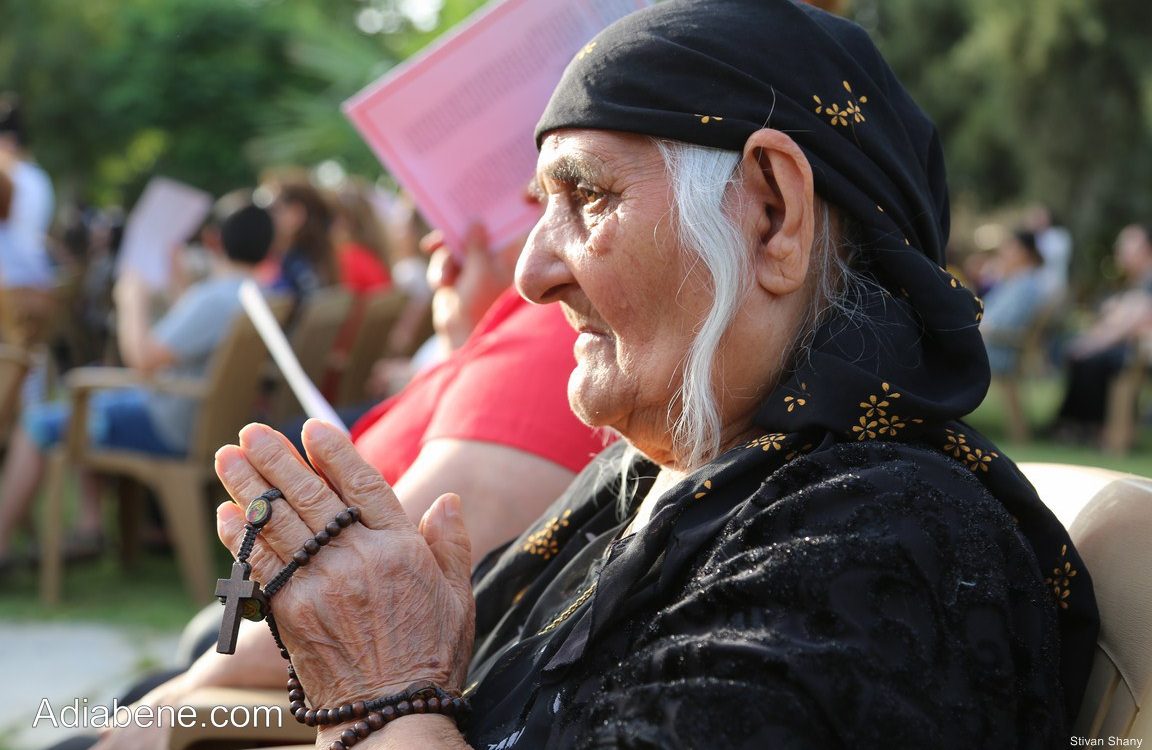
(Photo courtesy Chaldean Archdiocese of Erbil/Adiabene)
“First, the classic [cause] of ‘sheep-stealing.’ Secondarily, the evangelical churches are [bolder] in the proclamation of the Gospel to their Muslim neighbors. Oftentimes that can increase persecution on all Christians.”
These fears drive traditional Iraqi Christians to “exert pressure on evangelical churches” to stop evangelism efforts, Samuel continues.
“Our prayer is that this would not be a time of division between those two churches, but something that pushes them toward unity. They share similar concerns about safety and security, and about relationships between Muslims and Christians.”
*–Name changed for security purposes.
Header image depicts Pope Francis meeting with authorities in Baghdad on March 5, 2021. (Wikimedia Commons)
Jordan (MNN) — Normally, Jordan is a stabilizing force in the Middle East. However, discontent is growing as police strictly enforce COVID-19 lockdowns and crack down on protests.
“Currently, the situation is stable. However, as we’ve seen in Lebanon, that [status] is always just on the edge of something becoming worse,” Samuel* of Redemptive Stories says.

(Wikimedia Commons)
“COVID has gotten worse, numbers continue to rise; they have already begun Friday lockdowns.”
Jordanians are frustrated by health system failures. Earlier this month, six people died because they couldn’t get enough oxygen at a hospital treating COVID-19 patients. These failures and public mistrust come at a poor time, with experts predicting that infections will peak in April.
While opportunity lasts, the Redemptive Stories team is doing all it can to help refugees in Christ’s name.
“Jordan is often looked at as the Switzerland of the Middle East. Because of that, we have a unique opportunity to minister to refugees, provide aid and relief to them, but then also to share the truth with them,” Samuel explains.
The Kingdom of God is growing as a result.
“For the first time, many of these refugees are getting to interact with Christians who share their faith. Because of that, many of them have come to faith in Christ,” Samuel says.
“Through the strife we’ve seen all over this region, God uses that shaking to bring people to Himself.”
Use the prompts listed alongside this article to guide your intercession. Find more prayer needs here.
*– Name changed for security purposes.
Header image depicts Jordanian police officers stopping a vehicle in Amman in 2017. (Wikimedia Commons)
Lebanon (MNN) — Lebanon starts the week at a new low. The currency hit rock bottom last week; it’s now lost 90-percent of its value since protests began in 2019. Federal reserves are dwindling; there’s barely enough to keep the lights on.
“The energy minister, on public TV, he said, ‘Imagine your life without electricity, without internet. That’s about to happen unless we get a bailout from the Parliament’,” Pierre Houssney of Horizons International says.
“It’s becoming more and more clear, as the months go on, just how very, very bad things are getting.”
Experts say the financial and economic crisis poses the biggest threat to Lebanon’s stability since the 15-year civil war ended in 1990. International donors stand ready to help, but aid hinges upon Lebanese politicians forming a functional government.

Horizons International staff delivering food. (Photo courtesy of Horizons International on Facebook)
Members of the caretaker government keep arguing over who’s to blame and what to do next. With no end in sight, protestors are back in the streets demanding resolution.
“They have nowhere to turn; the government [officials] have been satisfied to hole themselves up in their mansions [and] surround themselves with the military so protesters can’t get to them,” Houssney says.
“It’s starting to get violent on the streets; people have started shutting down roads again in protest. Something’s got to give.”
The good news? You can help. Learn more here. “Your donations will go a long way right now in Lebanon,” Houssney says.
“We’re providing humanitarian aid through about 70 churches. And not just practical care, but also the message of the Gospel.”
Header image depicts Beirut protests in 2019. (Wikimedia Commons)
Lebanon (MNN) — Before COVID-19 turned everyday life upside down and sideways, the Lebanese dreamed of a new beginning. Protestors demanding a better future filled the streets of Beirut in late 2019. Demonstrations continued sporadically throughout 2020.
People still take to the streets today, but Nuna* with Triumphant Mercy says the demands look a little different than before.
“It’s not like a revolution [or] demanding changes of any kind anymore. Now we’re demanding food; we’re demanding that we could put some food on the table for our children.”

(Photo courtesy Triumphant Mercy)
Nuna and her team at Triumphant Mercy Lebanon deliver Christ’s hope in the form of food aid and other essentials. More about that here. Compounded crises and sky-high prices put these items out of reach in Lebanon.
“Every week we [are] having a delivery of foods because [there are so many] needs. Once a month we would do this [before]; now, every week we’re having a delivery of food because people are hungry,” Nuna says.
Give online to help the Triumphant Mercy team purchase supplies for food packages. Most importantly, pray. Use the prompts listed alongside this article to guide your intercession.
“Pray for us, for the fatigue; it’s tiring to keep lifting people up. Pray for believers in Lebanon, that we will be the light shining in the darkness and that we would be full of hope ourselves,” Nuna requests.
“Things are going to be better eventually. One day, Jesus will break through and change all these things.”
*–Name changed for security purposes.
Header image depicts believers organizing food aid distributions. (Photo courtesy of Triumphant Mercy)
Middle East/North Africa (MNN) — A new endeavor will fuel Bible translation in 19 countries in the Middle East and North Africa (MENA). unfoldingWord CEO David Reeves says the timing couldn’t be better.
“Now is the time to do this. So many people are hungry for the Gospel and coming to Christ,” Reeves says.
“The Holy Spirit is working in this region of the world in profound and deep ways.”
unfoldingWord’s Arabic-Speaking World project gives believers the tools and training they need to do church-centric Bible translation. First, unfoldingWord will create a training “hub” or resource for Bible translation and theological formation. Then, unfoldingWord will teach Arabic-speaking church networks how to use these tools to translate the Bible, check their translations, and train leaders.
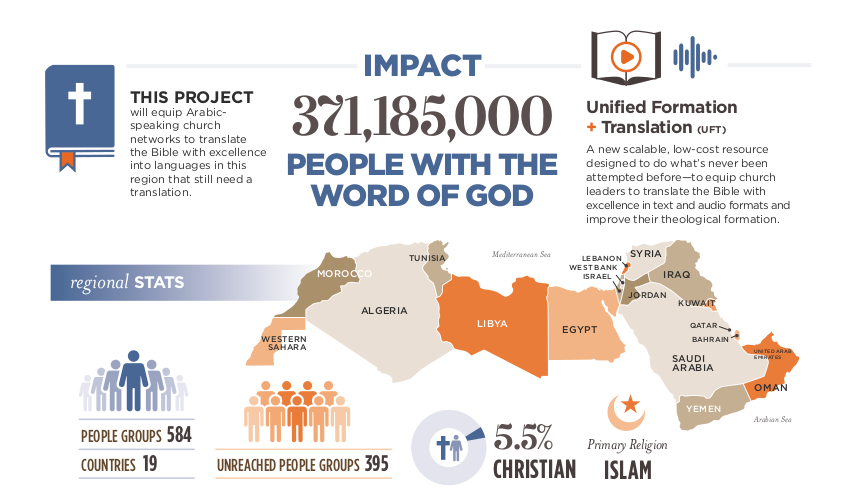
(Graphic courtesy of unfoldingWord)
While people groups across the MENA region speak dozens of different languages, nearly everyone uses Modern Standard Arabic for reading and writing. By putting tools and resources into this “trade language,” unfoldingWord makes them accessible to all.
“The Church itself can use those resources to translate the Bible into their language. They don’t have to wait on anyone,” Reeves explains.
unfoldingWord’s training also equips Christians to share what they’ve learned. “They can help others in that region [in] places we can’t go easily,” Reeves continues.
“You end up with a strategy that can permeate the entire region because you’re empowering this Arabic-speaking workforce.”
We’ll bring you more updates on this massive undertaking in the weeks to come. For now, pray for success in these early stages so the project can begin right away. Click here to give a gift on unfoldingWord’s website.
“Prayer warriors, we welcome your prayers,” Reeves says.
“[We are working in] an environment that’s very hostile to the Gospel and certainly doesn’t want to give any ground to Christianity and Christ-followers.”
Header image courtesy of unfoldingWord.
Syria (MNN) — Ten years ago today, the Arab Spring movement sparked massive protests in Damascus, Syria. Demonstrations called for “a Syria without tyranny,” Middle East Eye reports. Syrian Christians sought change too and received an answer they didn’t expect.
“I was talking with some Syrian believers recently, and they said [at that time] they were praying for a revival in their country. They were praying, ‘Lord, do what You need to do to bring a revival’,” Tom Doyle of Uncharted Ministries says.

(Photo by Alexas\_Fotos from Pixabay)
“They weren’t expecting a war; they didn’t think that was a possibility. But when it happened, it hit fast and furious; everything changed in Syria.”
Anti-government protests led to military crackdowns, which escalated into civil war. A decade later, over 13 million people in Syria need humanitarian aid to survive. More than five million Syrians live in neighboring countries as refugees.
Refugee children cannot imagine returning to Syria, while parents inside the war-torn land are afraid to leave their kids unguarded. “[There has] been a lot of kidnapping throughout Syria. People are desperate and they need money, so kidnapping happens,” Doyle says.
“The heartache is immeasurable. But even in that darkness, God can use it and turn desperate hearts to Him.”
Since the beginning of Syria’s conflict, Doyle has been in constant communication with Gospel workers throughout the country.
“There is a harvest in Syria despite the negative news and the horrible scenes that we have seen for the last decade. Syrians are coming to faith in Christ; there’s a new openness to the Gospel,” he reports.
“One pastor we know in the Damascus area says about 30-percent of his congregation on Sunday mornings [is] from the Muslim background. [They] are practicing Muslims, but they’re looking for answers.”
Pray for continued church growth as more Syrians encounter Christ’s truth. Ask the Lord to protect His followers as they bring the Gospel to former ISIS territory.
In header image, residents pick up after aerial bombings in Azaz, Syria, on August 16, 2012. (Wikimedia Commons)
Syria (MNN) — An examination of Syria’s complexity explains, at least in part, why the war is unresolved a decade after its beginning. See our coverage of Syria’s conflict here.
Both sides of the central conflict have international backing. Turkey is waging a side war against Syrian Kurds for territory, and the Islamic State won’t go away. A new report claims if the turbulence continues, another six million people could be forced to leave by 2031. Last year, for each Syrian who returned home, four more were displaced.
The good news? Displacement creates Gospel opportunities.
“Ten years ago, the number of believers that were coming from a Muslim background or Druze background or Alawite background was extremely small; you could probably count them on your hand,” David* from Cry Out Now Ministries says,
“Today, there are thousands of Syrians from different backgrounds who have come into the Kingdom and are making their own disciples. This is something to give praise to the Lord for!”
 Just as ocean tides ebb and flow, the tides of war progress and recede with each victory or defeat.
“Whenever the tide is in, it’s covering up a lot of things. But whenever the tide goes out, what’s covered up gets exposed,” David says.
“It’s also an opportunity for treasures to be exposed. We’re starting to see some of those treasures. Today, both inside Syria and outside of Syria amongst Syrian refugees.”
The treasures of war
First, David and his team celebrate unexpected opportunities for Gospel growth within Syria. “[One] brother recently completed some training with a fairly large group of Syrians who are all from a different non-Christian background. They want to learn how to share their faith and make disciples,” David says, speaking in general terms for security purposes.
“This is happening inside Syria, in a part of the country where, frankly, ten years ago it was extremely difficult to [reach].”
The second “treasure” comes from a neighboring nation that shelters Syrian refugees. The Syrians in this country are “from a part of Syria where, before the war, it was very, very difficult for anybody to go in to share the Gospel,” David describes.

Representative photo. A woman and her child walk along the ‘Champs Elysees’, the main street in the Zaatari refugee camp for Syrian refugees in Jordan, 29 August 2013.
(Wikimedia Commons)
People from this religious minority group encountered Christ while living as refugees in the neighboring country. Now, “they are now forming teams and sending them back to Syria, specifically to go and make disciples amongst their friends and relatives,” David says.
“This is a part of the country where, even if the war did settle, it would probably still be very difficult for outsiders to get in there.”
Lastly, Syrian refugees are reaching their communities for Christ. “The Lord is [moving] their hearts to reach out to the other refugees who are like them. These are opportunities that [were] a dream more than ten years ago. Yet this is happening,” David says.
“There are thousands of Syrians in the Kingdom who were not in the Kingdom before the war.”
*–Name changed for security purposes.
Header image is a screenshot of Prayercast | Syria.
Lebanon (MNN) — What false assumptions can people believe about the Middle East? That’s the theme of a new module from the Arab Baptist Theological Seminary for its Master of Religion in MENA Studies program.
This module looks at the politics, history, and economics of the Middle East and North Africa region. Brent Hamoud coordinates the course. He says, “Perhaps one assumption would be that the Middle East is pre-determined or bent towards a type of violence, of chaos, of conflict. That this is the natural state of the Middle East. That it is for others from the outside to intervene and to bring peace to the region.”
But this assumption often causes more harm than good. Hamoud says, “There’s a lot more going on in the region than the conflicts, which are very real and very dramatic. But they [don’t tell] the whole story. And the interventions from others throughout history in the region haven’t always contributed to good development.”
How to pray
Freedom from these assumptions will allow students to better serve people in their Middle East and North Africa contexts. Pray this course will lead to more fruitful ministry in this region that Jesus loves. Hamoud says, “Ultimately the whole program, and this course included, is about understanding the realities that people face and seeing how the church can respond and be the ministers of Christ’s light.”
ABTS switched to a fully online format for education last year during the COVID-19 pandemic. As the school continues navigating this change, ask God to strengthen teachers and students for the work and ministry ahead.
The header photo is courtesy of ABTS on Facebook.
Lebanon (MNN) — As Lebanon spirals into financial disaster, protesters have begun blocking roads leading into the capital, Beirut. Many protestors are calling for the removal of Lebanon’s ruling class, who most Lebanese see as completely corrupt.
Nuna of Triumphant Mercy Lebanon explains the level of desperation driving people to protest. “The Lebanese pound has had gone down by 90%. So it’s a big, big recession. And people can’t afford even basic needs anymore, because they’re getting their money in Lebanese pounds. And the Lebanese pound is not buying anything. Some items have been subsidized, like bread, or flour, or gas. But now the government is saying, ‘We are bankrupt, and we cannot subsidize these things.’”
No solution in sight
Nuna says Lebanon will not find a political solution to its troubles. “We don’t see a solution, really, [through] natural eyes. Everybody’s saying, ‘Oh, we’re in a deep crisis,’ but nobody is offering any solution.”
Nuna says most aid for those in need is coming from non-profits like Triumphant Mercy. “As NGOs, I think this is our time to just be there for the people. All the NGOs have been working really day and night for the people, but the government is not doing anything.”
As protests continue, ask God to bring healing to Lebanon. And pray the love of Christians for their neighbors will draw many to Christ.
The header image shows Triumphant Mercy food distribution. (Photo courtesy of TM Lebanon on Facebook)
Iraq (MNN) — A four-day papal tour of Iraq made history this weekend, but it leaves Christians’ problems unresolved.
On Sunday, Pope Francis encouraged Christians in Nineveh to forgive their persecutors and rebuild communities. Believers say it will take significant changes on the ground to make that happen.
Squatters or armed militia now occupy the homes left behind when Christians fled persecution.
“It’s difficult [for Christians] to get a home back because they are vulnerable. They don’t have big militia groups or other powerful forces within the country to support them, and it’s very difficult to rectify these kinds of abuses,” Middle East Concern’s Daniel Hoffman says.
“Pray for the continued presence of the Christian communities in Iraq, that they will take their place as ‘light and salt’ in the country.”
Property seizures began in 2003 when Christians started leaving Iraq in droves. More believers followed in 2014 as the Islamic State waged war on historic Christian communities, leaving homes vacant and vulnerable.

Pope poster in Erbil, Kurdistan.
(Photo, caption courtesy of Enno Lenze via Flickr/CC2.0)
“This issue of taking over property is not solely aimed at Christians. Other communities suffer from it as well, but they often have powerful forces – militia or other backings in other countries – that can help and protect them, while the Christians do not. Therefore, they (Christians) are more vulnerable,” Hoffman explains.
Activists held little hope that the papal visit would fix this ongoing issue, AFP reports. “Of the cases I know, 20 percent were resolved. But the remaining 80 percent are still a huge problem,” said Yunan al-Farid, a Greek Orthodox priest in Baghdad who advocates on behalf of victims of squatting.
MEC speaks up for believers at the highest level. Learn more here.
“We speak with politicians, saying, ‘When you discuss the future of Iraq, please be aware that this is happening and ask the Iraqi authorities to rectify these situations to make it possible for people to reclaim their property,’” Hoffman describes as an example.
Pray believers can reclaim their homes. Ask the Lord to protect Iraqi Christians from new threats.
“The Shabak community [is trying] to force Christians out of their villages in the Nineveh Plain as well so they can take over their property,” Hoffman says. More about that here.
Header image depicts a cross atop Saint Matthew Monastery (Der Mar Matti), a Syriac Orthodox monastery overlooking the Nineveh Plains towns of Bashiqa and Bartella, in between the Kurdistan Region and Iraq. (Photo, caption courtesy Levi Clancy via Wikimedia Commons/CC4.0)
Middle East (MNN) — March 8, 2021, marks the 110th International Women’s Day – a celebration of women’s achievements and a call for equal rights. More than one million people participated in the first IWD rallies in Europe in 1911, and March 8 became the official IWD date three years later.
Today, women are voiceless in many of the Middle East’s Muslim-dominated countries. “Life for women in the Middle East is so different than it is for us here in the West,” says JoAnn Doyle, co-founder of Uncharted Ministries.
“Often, they are not permitted to speak; or if they do speak, they have to be so careful that they don’t bring shame on anyone in their family or their community,” she continues, explaining the prevailing honor-shame culture.
“They are cloaked with this ‘veil’; they’re forced to hide their feelings so that they don’t bring harm on themselves.”
Doyle leads Not Forgotten, a division of Uncharted Ministries. They partner with believers in the Middle East who help women know God and follow Jesus. In a new book she co-authored with her husband, JoAnn describes how women find a new voice and value through Christ.
Once God sets a Muslim woman free, she becomes an unstoppable force for God. Women Who Risk takes readers into the intimacy of Muslim homes in Saudi Arabia, Syria, Iran, and other hot spots to see the drama of Christ at work.
(Photo, caption courtesy Thomas Nelson)
“In the Middle East, I’ve seen so many women that learned quickly they don’t have value. Then they meet Jesus and, for the first time in their life, feel love and acceptance,” she says.
“They’re like a dry sponge soaking up water, wanting to embrace what God has created for them. He created us to have value.”
On International Women’s Day, gift your favorite women with inspiration. Click here to order Women Who Risk: Secret Agents for Jesus in the Muslim World for a friend or loved one.
“Right now, we are choosing to honor women, which is a beautiful thing. But when we look at Scripture, God has honored women from creation. He created men and women equal in His image,” Doyle observes.
“If we want to know how women are honored, jump into the Word of God.”
Header image depicts women in Iran. (Photo courtesy of Majid Korang beheshti/Unsplash)
Lebanon (MNN) — Hundreds of Lebanese rallied at the Maronite church in Beirut last week to support calls for neutrality. Lebanon’s most senior Christian cleric urged political leaders to steer the country away from regional conflict and toward healing.
Lebanon cannot shake its crises; emergencies have grown increasingly worse in the past two years. See our full coverage here.
Economic hardship and governmental failures drove protestors into the streets of Beirut in late 2019. Then came the global pandemic and Beirut explosion. Today, Lebanon’s ability to receive assistance from abroad rests upon leaders who cannot form a functioning government.

(Photo courtesy of Cry Out Now via Facebook)
David* from Cry Out Now Ministries says only God can save Lebanon from self-destruction.
“Please pray for a breakthrough so political leaders would truly start to make changes in the way they operate,” he requests.
“There’s a huge level of corruption. Foreign aid money is just not available because donors are not willing to give, so people are suffering because of the corrupt actions of the leaders in the country.”
Waiting upon the Lord
Cry Out is a prayer network focused on the Near East region. Issues affecting one country often intersect with another. “Because certain groups within Lebanon [were] involved in the war in Syria, countries that previously supported Lebanon’s economy are no longer doing that,” David says, describing one factor behind Lebanon’s economic collapse.
“After several years of things getting worse and worse, the economic situation is now at the breaking point.”
While believers wait upon God for their country’s future, they see Him move powerfully in individual lives.
“As people give their allegiance to Jesus, it starts to impact the decisions they make in terms of how to handle money, how to treat other people, all of these things,” David says.
“A chain smoker gives up smoking because they realize that their body is a temple for the Lord. That one small decision means [they have] extra money to pay their rent, or to provide extra food for their family,” he describes as one example.
“Whenever someone decides to follow Jesus, they start to obey the Lord. As they read Scripture, they start to make changes in their lifestyle.”
Follow Cry Out on Facebook for more prayer needs and testimonies.
*–Name changed for security purposes.
Header image courtesy of LSESD via Facebook.
Yemen (MNN) — There are approximately 15 million people in New York City, Chicago, and Los Angeles combined. Imagine if none of them had money to buy food. In fact, what if no one had eaten a complete meal in months? You can almost picture what it’s like in Yemen.
Over 16 million Yemenis will require food aid to survive this year, the United Nations reports. Malnutrition reached its highest point ever for kids under five last year.
The ongoing Yemen war continues to fuel what the United Nations calls the worst humanitarian crisis in the world. New frontlines ensure that needs will be even higher this year.
Within these dark realities, Christ is shining His light into the hearts and lives of the Yemeni people.
In 2020, one church network in Yemen announced and observed national days of prayer on March 18th and September 4th. These are the dates when an international partner and a Yemeni Christian were martyred for their witness, in 2012 and 2015 respectively.
The church network in Yemen will again be fasting and praying on these dates in 2021, and they’re inviting the international Church to join them. Save the dates on your calendar.
The day Amin, the Yemeni Christian martyred in 2015, was killed, his social media profile included an image of the Yemeni flag with the following prayer written over it: “May the One who split the sea for Moses and led him out, bring Yemen and her people out of hardship and into rest.”
Let’s continue praying with Amin for the Yemeni people to find rest in Christ. Ask God to bring an end to the war and the horrors it has brought to Yemen.
Header image is a representative stock photo courtesy of Chickenonline/Pixabay.
Syria (MNN) — Syria’s unresolved civil war turns ten this month. The humanitarian fallout is unfathomable.
At least 400,000 Syrians have died since 2011; that’s more than the entire population of the Bahamas. Over 13 million need some type of humanitarian aid – a 20-percent rise in the last year, the United Nations reports.
Even so, hope remains. “All this persecution and killing [from] ISIS, the crisis of the government,” a Christian leader begins, describing Syria’s many woes.
“In spite of all of this, God is strengthening the Church.”
Although we cannot name him for security purposes, this believer serves with the Program for Theological Education by Extension or PTEE. This ministry works with and through local churches to provide theological education for Arabic-speaking Christians. Learn more here.
“The most students and groups coming to us each month [in the] last 10 years [came] from Syria. We are amazed how, under all [these] circumstances and all these difficulties, the number of the home groups and Bible study is growing,” he says.
Syrian Christians eager to learn
Widespread COVID-19 restrictions went into effect around the same time this leader was packing his bags to board a plane for Syria.

Under the supervision of the Syrian National Committee, a training course for counselors was held at the Evangelical Grace Church in Damascus on December 11 and 12, 2020.
(Photo, caption courtesy PTEE via Facebook)
“I was planning to visit our leaders in Syria but I couldn’t go because of this problem of COVID-19. So, I did this through Zoom meetings [instead],” he says.
“Many church leaders were really encouraged by meeting on Zoom.”
Not even a global pandemic can hold these believers back.
Although pandemic restrictions stopped believers from studying together or meeting in person for most of last year, “they didn’t stop worshipping, didn’t stop studying the Bible. They stayed connected through media,” the leader explains.
Praise God for believers’ commitment to study and grow so they can lead their people into a deeper relationship with Him.
“Pray that the Lord would revive the Church [and] strengthen the pastors and church leaders in Syria,” he requests.
Header image is a representative stock photo courtesy of Omar Ram/Unsplash.
Lebanon (MNN) — As Lebanon emerges from lockdown, other disturbing facts are surfacing, too. A report released by Lebanon’s Internal Security Forces says domestic violence rates nearly doubled in 2020.
Three women were murdered in a span of 10 days last month, including a Lebanese celebrity.

(Photo courtesy of Heart for Lebanon)
“You also have children abused at all different levels, and it’s all amplified because of the pandemic,” Heart for Lebanon’s Tom Atema adds.
Lockdowns made it worse, but domestic abuse was problematic before the pandemic.
“Number one, you’re dealing [with] a ‘no shame’ culture so you can’t talk about these topics, even though the younger generation today is talking about these subjects more and more,” Atema explains.
“The other thing to keep in mind is in a Muslim background culture, women are treated as second-rate citizens. They don’t have privileges; they don’t have rights; they do what the men say.”
Heart for Lebanon fosters societal transformation by introducing people to Jesus. As values and mindsets change, so does outward behavior. Support discipleship efforts here through Heart for Lebanon.
“One of the first behavioral changes we see when a Muslim [man] comes to faith in Jesus Christ is they start respecting their wife and their children,” Atema says.
“God changes everything. You cannot address abuse outside of a personal relationship with Jesus Christ and expect a different outcome.”
In the header image, a young girl in Heart for Lebanon’s Hope on Wheels Club shares her testimony: “Before I joined this club I was a shy girl, I had very low self-esteem, and all that I remember is that I didn’t care about anything. Today I stand before my mirror saying that I’m beautiful and knowing that God made me special and wants me to be His.” (Photo courtesy of Heart for Lebanon via Facebook)
Lebanon (MNN ) — You’ve heard about tents schools, but what about school in a truck? That’s a new project from Tent Schools International.

Photo courtesy of Tent Schools International.
Anne Hamming says the truck will be able to reach refugee kids anywhere in Lebanon. “Our partner in Lebanon has had a fair amount of success reaching out to Syrian refugees with schools in shipping containers that he has set up in or on the perimeter of different refugee camps. However, with time, we’ve learned that there is a problem with that system because the refugee camps can actually be disbanded with pretty short notice.”
“Basically, there are several camps that have a lease on farmland. And the farmer sometimes just says, ‘I’m done with this.’”
At different times, the truck will be used to train kids of different ages, including teaching trade skills to young adults. When the truck isn’t being used for school, it won’t sit idle. Hamming says, “It can be used to help meet any of several dire needs in Lebanon right now. Lebanon has been on lockdown. And they’ve only partially reopened, where only banks and grocery stores are open right now.”

Photo courtesy of Tent Schools International.
Tent Schools has finished funding for the project, and the truck school should be rolling around Lebanon by sometime this summer. If the project goes well, Hamming says they hope to replicate this format in other countries as well.
Visit the Tent Schools International website to find out how you can get involved. And pray the care of Christians for refugee kids will point many to Jesus.
The header photo shows concept art for the project. (Photo courtesy of Tent Schools International)
Lebanon (MNN) — Lebanon is slowly emerging from an austere nationwide lockdown. A 24-hour curfew was lifted today, and some non-essential businesses can reopen. More Lebanon headlines here.
It’s a tiny sign of hope after an extremely difficult six weeks. “We still have this hope that sometime it’s going to ease up. But for now, it’s even harder than it was before,” Nuna* from Triumphant Mercy Lebanon says.
“People are hungry, and they’re rioting in the streets because of the lockdown. It’s just really, really hard on people.”
Before the latest lockdown began, Triumphant Mercy received increasing requests for food aid. “Not only the poorest of the poor but middle-class people can’t afford [or buy] food now. The money they had in the bank is not available for them to take. [It’s] really tragic,” Nuna says.

A close up photo of food aid packages assembled by Triumphant Mercy staff and volunteers.
(Photo courtesy TM via Facebook)
When the total lockdown began on January 7, Triumphant Mercy had to shut down. “We’re not allowed to open but we know that people are hungry, so we’re doing door-to-door [deliveries] now. Many NGOs are doing that,” she continues.
“People are dying of hunger; you can’t just sit and say, ‘Oh, I can’t open’.”
With necessary precautions in place, ministry teams take the hope of Christ to those most in need. “We just put a few (food) packs in each car, and we go door to door. That’s the only way to do it,” Nuna explains.
The deliveries may be short, but each one opens doors for the Gospel. “These are words that we hear again and again: ‘Nobody is loving us like you [are]; nobody’s following up with us like you’re doing’ and they’re just so amazed at this,” Nuna shares.
“They know we’re believers so when they see us acting like Christ, they’re seeing it as an act of [His] love.”
Now that you know, how will you respond? Use the prompts listed alongside this article to guide your intercession. Give to keep Triumphant Mercy’s work going.
“Sometimes, we only use words; ‘Jesus is Lord, give [Him] your life.’ But when you show people love and they know why you’re doing it, I think that’s the greatest message you can give to people,” Nuna says.
“This is the proclamation of the Gospel in works, and not just with words.”
*–Name changed for security purposes.
Header image courtesy of Triumphant Mercy Lebanon.
Lebanon (MNN) — And Lebanon continues to languish in a severe lockdown, desperately trying to get its COVID-19 spike under control. The surge has peaked, but the country still sees almost 3,000 new cases per day.
Some health experts worry the spread could lead to a new strain of the virus, similar to those originating in the UK and South Africa. Uncontrolled spread in any community can give the virus a perfect environment in which to mutate.
Wissam Nasrallah of LSESD says, “From a health standpoint, we’ve reached a stage nationwide of what we call an uncontrolled epidemic, with limited additional health system capacity. Hospitals are at 97% capacity in intensive care units.” Because of this, the country has settled into a hard lockdown, with almost all businesses closed, even stores.
The effect on refugees
This crisis has taken a special toll on the country’s refugee population. Nasrallah says, “Refugees in this situation are vulnerable on both ends. If anybody falls ill, they have very little access to any type of health care. They’re suffering like most people, and probably more, from the economic fallout of the crisis. And in a situation of chaos, tension, or panic, refugees can be a scapegoat. We’ve heard, for example, a local party declare that once Lebanon gets vaccines, Lebanese need to be prioritized to get the vaccine before the refugees.”
This strategy would fail to protect the most vulnerable to the virus. It would also put more Lebanese in danger by not stopping the spread of the virus efficiently.
You can help LSESD show the love of Jesus to Lebanon during this crisis. LSESD seeks to care for the vulnerable and marginalized in society. They work heavily with relief work, inclusive education, and equipping local churches. Visit their website to learn how to pray and get involved in this work.
The header photo shows a Syrian refugees in Lebanon (Photo/caption courtesy of EU Civil Protection and Humanitarian Aid Operations via Flickr) https://flic.kr/p/ePqsiq
Palestine (MNN) — And the Biden administration has resumed diplomatic relations with Palestine. The move signals support for a two-state solution. The administration also restored aid to the U.N. Relief and Works Agency, which exists to support Palestinian refugees.
Dr. Jonathan Kuttab is a leading human rights lawyer on the board of Bethlehem Bible College. He contrasts this policy against that of the Trump administration. “The [previous] US administration cut off and closed the diplomatic offices of the Palestinian Authority in Washington. They moved the embassy from Tel Aviv to Jerusalem. And they closed off the Palestinian section of that embassy. The new administration is reversing that. At least they are allowing new contacts with the Palestinian Authority, though not with Hamas and Gaza.”
The witness of Palestinian Christians
Palestinian Christians want to see Israelis and Palestinians live together in peace and equality. That doesn’t happen very often, and the COVID-19 vaccine distribution situation in Israel and Palestine shows it. Israel has been one of the world’s most successful countries in vaccinating. But Kuttab says, “They are refusing to give vaccination to the Palestinians. And we have no ability to obtain them on our own because we are not recognized as a country.” Read more about the situation here.
Kuttab talks about the witness of Bethlehem Bible College in this context. “We have to deal with our own community, the majority of which are Muslims. We have a very good relationship in that community and a very good reputation. At the same time, we have to deal with the Israeli occupation. Even though we are pacifists, and we don’t believe in violence, we care about justice. So we’re trying to be a small candle in this very dark situation.”
Please join these believes as they pray for peace, justice, and love.
The header photo comes courtesy of Bethlehem Bible College on Facebook.
Lebanon (MNN) — More than 10 million people in five Middle Eastern countries require help to survive another day. UN officials say it is the highest level of need since the Syrian refugee crisis began in 2011.
As Lebanon crumbles, Syrian refugees weigh their options. Nearly 90-percent of the Syrian refugee population cannot access food, clean water, or essential services.
“Because there are now so many Lebanese people struggling with food insecurity, there’s more pressure put upon them,” David* from Cry Out Now Ministries explains.
“Many refugees are starting to question whether or not they need to go back to Syria, even though that could mean going back to a war zone.”

(Photo courtesy of Cry Out Now via Facebook)
The circumstances are dire, but God’s Spirit is moving. “Before the war in Syria, most people had very little opportunity to hear the Good News. Because they’ve been taking refuge in countries like Lebanon, many have ended up giving their lives to follow Jesus,” David says.
“We’re particularly seeing this amongst the Kurdish population from Syria.”
Dreams and visions
Kurds make up between 7- and 10-percent of Syria’s population and God is moving mightily among this group. Just ask Frank and Mary*, David says. “Frank had been coming in and out of Lebanon for a number of years to do work, which many of the Syrian men had been doing before the war. Once the war struck, he brought his family over,” he begins.
One night, Mary had a dream. “In the dream, she saw a man, and she was in what she assumed to be a church building. She was worshipping God in that building with other people,” David continues. Mary described the dream to her sister, who had recently attended a church near their new home in Lebanon.
“Whenever she describes the man from the dreams, her sister realized that this was the pastor from the church.”
Mary’s sister invited the couple to attend a church service with her. Afterward, they spoke with the pastor, and Mary confirmed he was the man she saw in her dream. “They ended up starting to discover more about Jesus, getting involved in Bible studies, and they give their lives to follow Jesus,” David says.
“Kurdistan” means “the land of Kurds”. Originally this designated a region of Western Iran. This map extends the concept to cover the greater region with any significant Kurdish population and encompasses parts of Iran, Iraq, Syria, and Turkey.
(Wikimedia Commons)
“[Now], they have been opening up their home and inviting other Syrians, particularly Kurds, to come and discover more about Jesus by doing Discovery Bible Studies. At least 40 or 50 people [are] involved, and quite a number of them are starting to decide whether or not they truly want to follow Jesus.”
Some new believers are taking the Gospel with them as they head back to Syria. “Be praying they would have a deeper knowledge of Scripture, and that they would start spreading the Good News further and further amongst the other Syrian Kurds,” David requests.
“The Kurds have the potential to bring the Good News to the majority of people in the Middle East who are Arabs.”
*–Names changed for security purposes.
Header image courtesy of Cry Out Now Ministries via Facebook.