Mission Network News - South America: Recent Episodes
None

Venezuela (MNN) — Venezuela’s disputed presidential election has made daily travel dangerous as demonstrators take the streets.
Incumbent President Nicolás Maduro was declared the winner on July 28 for his third six-year term. Then, the opposition party called foul.
Protests in Caracas against the re-election of Nicolás Maduro, July 2024.
(Wikimedia Commons)
The European Union, the United States, and other Latin American nations have joined in calling for election rolls to be published. Annabel Torrealba with Trans World Radio says, “Our partner office in Venezuela was closed for four days because it was impossible to go anywhere.”
TWR’s partner in Venezuela shares the same mission and vision: to create radio programs sharing the Gospel of Christ. More about that here. Youth programs, Bible studies, lessons on prayer, and more reach people across the struggling nation.
This isn’t the first or last time TWR has served the nation amid unrest. Today, they need your prayers. “You want a change, but we cannot change people. [Only] God can change hearts,” Torrealba says,
“My prayer request for Venezuela is that this government can be reached for the Word of God because that’s the only thing that can make a difference.”
Praise God that Venezuelan pastors have stayed in the country in the past decade, and the Church is still present. “Pastors in churches in Venezuela are resilient [and] they’re still there. Nobody left,” Torrealba says.
Finally, pray for the TWR team. “They are facing [hardship] like everyone else,” Torrealba says.
“Pray for strength, for them to continue what they are doing joyfully and know that God will give them the reward.”
Header image depicts protestors in Venezuela in August 2024. (Wikimedia Commons)
Ecuador (MNN) — The JESUS Film Project celebrates its 2,100th translation of the JESUS Film. This historic translation brings the Gospel to life in the Waorani tribe’s language from Ecuador.
You may recognize the Waorani tribe; their spearing party killed five American Christian missionaries back in 1956.
“We were requested about a year ago to do the Waorani language,” says Chris Deckert, JFP’s Language Studios Director. “They’ve been in the spotlight of missions for many, many years after what happened with Jim Elliot and Nate Saint.”
Redemption comes full circle on multiple fronts. First, the Waorani warrior who killed Nate Saint – Mincaye – later came to Christ.
Deckert poses for a photo with Mincaye’s grandson.
(Photo courtesy of The JESUS Film Project)
“I got to meet his three grandsons, and his older grandson helped translate the Gospel into Waorani at the end of the film premiere.”
Members of the same tribe who martyred five missionaries decades ago are now preparing to introduce their neighboring tribes to Christ.
After premiering the JESUS Film last weekend, JFP staff equipped Waorani believers to be local missionaries. “Twenty of the local leaders receive training on how to show the JESUS Film with a tablet so they could go from village to village on a weekly basis,” Deckert says.
Now, using new tools in the Waorani language, “they can go through Bible studies and understand more about who Jesus is from the Gospel of Luke.”
It’s illegal for Western missionaries to share Christ with certain Amazonian tribes, but the Waorani have full access. Pray they will yield to the Lord’s calling and direction.
“They asked for prayer for God to give them strength and vision to present the Gospel and reach out beyond their own tribe to other tribes,” Deckert says.
“They now have been resourced to go out and share the Gospel [with] other language groups of the Amazon jungle.”
Header and story images courtesy of The JESUS Film Project.
Brazil (MNN) – In northern Brazil, Scripture is beginning to be shared in a language that millions of people speak. Ed Weaver with Spoken Worldwide says these language speakers are often overlooked and humiliated by others in their country. They are marginalized, underserved, and lacking the Word of God.
An oral Bible translation team recently visited a remote village of the people group. They wanted to learn about the village life and meet some of the local people. Learn more about Oral Bible Translation here.
Weaver says, “They knocked on this one guy’s door. And the guy let them in. His name is Jackson. And they came into the house, and there were empty liquor bottles everywhere.”
They shared with Jackson an oral Bible recording of the Christmas story in Luke chapter two. As he listened, he was overwhelmed with emotion.
“It was the first time he’d ever heard his language in any kind of recording,” says Weaver. “His response was cursing and saying, ‘Oh, this is the most beautiful thing I’ve ever heard.’”
He was excited to hear more, and the team promised to return with other recordings of God’s Word. When they were leaving on a river ferry, they saw Jackson come down to the shore on a motorbike. He excitedly waved and shouted thanks to the team. They hope that he may be a person of peace on future visits who will help to share the Scripture recordings with more people in the village.
Weaver says, “Here’s somebody that, you know, is not a believer, never had heard the gospel, and now all of a sudden he says, ‘Okay, this God is somebody who cares about me, cares about my language. I want to learn more about this God.”
Pray for the Brazilian translation team and that Scripture would reach more people like Jackson. The team is currently working to finish translation of the Gospel of John.
“We’re fans of oral Bible translation, because we believe that we’re getting to the people who have been truly forgotten.”
Weaver says, “There’s at least 1500 languages that haven’t even been started yet. And these are truly the last and the least of these, and those are the people that it’s clear God wants His word to go to them.”
You can learn more and support the work of Spoken Worldwide at Spoken.org.
“Whether you want to be part of the prayer team, whether you want to be part of our donor crew, any way that you can help, we need that help,” says Weaver.
Photos courtesy of Spoken Worldwide.
Argentina (MNN) — Under decades of socialism, Argentina’s public school system has seen more and more secular ideals and anti-biblical values pushed into the classroom. Additionally, the nation now faces a teacher shortage.
Marisol Gomez, national director of TeachBeyond in Argentina says, “Teachers have extremely low salaries, so very few people want to study to become teachers. So we are running out of teachers.
“Churches now, because of the gender agenda [in public schools], are opening their own schools. But they understand that they have to hire people who are non-believers.”
Two years ago, the Lord put a burden on the hearts of Argentinian believers to open a Christian teacher training college with TeachBeyond.
(Photo courtesy of TeachBeyond)
Gomez says, “From the human perspective, it was impossible because the government is closing these institutions. They don’t want these institutions. So that was a miracle [that] it was approved after a long process. This year, in March 2023, the teacher training college opened with about 14 students.
“This is the vision of sending teachers to the schools and equipping the schools with teachers doing missions.”
Behind this push for Christian education, Gomez says, “Parents are, for the very first time, getting involved with opening schools and…the Christian movement in education.
“I can see that kind of a revival among Christian educators in Argentina as well as that interest — especially on the side of churches — getting more and more committed to opening schools and thinking of alternatives to get their own students out of the [public] system.”
Pray for Christian education to point Argentinian students to the Gospel!
Click here to learn more about TeachBeyond.
Header photo courtesy of TeachBeyond.
Argentina (MNN) — On Sunday, December 10, Argentina will inaugurate its new president, Javier Milei – the world’s first libertarian president who has been causing a stir.
Javier Milei, Argentina’s new president. (Photo courtesy of La Libertad Avanza | Wikimedia Commons)
Marisol Gomez, national director of TeachBeyond Argentina, says, “55.7% of Argentinians voted for Javier Milei as the new president. I’m not sure whether they were voting for him. They were voting for a change.”
It’s no question that change is desperately needed, with Argentina’s economy crippled by an inflation rate of 143%.
Will positive change come with President-elect Milei?
“It has been like this for the last 20 years,” says Gomez. “With a very low level of employment, the economic situation is extremely, extremely challenging.
“Fifty percent of the population is unemployed. So we have 50% in poverty and…the reason why in Argentina is because of the high level of corruption.”
Milei promises to cut several public departments, shut down Argentina’s central bank printing money, and adopt the U.S. dollar.
Argentinians hope the new administration will repair decades of socialist damage.
On the cusp of significant changes coming to the country, local Christians are also praying for spiritual revival.
“All of a sudden, the Church started getting organized and getting involved with the Kingdom of God, but [also] getting connected with society.”
(Photo courtesy of Aqu Alvarez/Unsplash)
Churches have been organizing well-attended prayer rallies and offering physical aid to people struggling to get by.
Pray with the Church in Argentina for spiritual revival. Gomez says, “We need to pray for more strength and pray for faith.”
You can learn more here about TeachBeyond’s Gospel impact in Argentina through education!
Header photo of Javier Milei, Argentina’s new president, at a political rally in August 2021. (Photo courtesy of La Libertad Avanza Ianzamiento/Wikimedia Commons)
Brazil (MNN) – Without a full Bible in their heart language many live and die without the truth of the Gospel. Of the 293 languages in Brazil about 51 do not have any Bible translation. Wycliffe Associates works with local translators to help provide full Bibles to those groups.
Steve Martin with Wycliffe Associates explains that their team is actively working on several projects in Brazil. About two years ago they finished a Brazilian Portuguese Bible. While a Portuguese Bible existed previously, it had a copyright that meant it couldn’t be reproduced to help with additional translations.
Photo by Sincerely Media on Unsplash
Wycliffe Associates’ Bible propelled translation work for the team since it allowed them to use that base translation for other similar languages in Brazil. Because of that Martin shares, “This year, in Brazil, we’ve been able to start two projects. In January, we started an Old Testament project. Then in February, we started a New Testament translation project.”
Deaf Owned TranslationsUnfortunately, there are many languages that will not be able to use the base language so easily. For instance, Deaf communities with and without sign languages remain as some of the hardest to reach groups. However, Wycliffe Associates is excited to have several Deaf projects in Brazil.
“One of those is a DOT Project. DOT for Wycliffe Associates stands for Deaf Owned Translation. We’re currently working with a Deaf group of people – a language group – with their own New Testament. Then we have three New Testaments that we’re working with, and two Old Testament projects that we’re engaged in.”
In addition to those projects Wycliffe Associates has a program called SUN: Symbolic Universal Notations. Martin says, “It’s a language that Wycliffe Associates created for people who don’t have a language. We’ll be going in to Brazil in September of this year and having our largest ever SUN conference workshop. [We will be] teaching the population of Deaf and Deafblind this language that will reach up to 9 million people who don’t have a way of knowing who Jesus Christ is.”
Translation Finish LineThey rejoice to see projects coming to completion. Martin shares that as they begin more and more translations in unreached languages, they can finally see the finish line. Fewer and fewer translations need to be started. It’s feeling realistic to actually get to all the language groups and see a partial fulfillment of the Great Commission in Brazil.
“At the end of the day, Bible translation is not about translating God’s word,” Martin asserts. “At the end of the day, Bible translation is about people knowing that Jesus Christ came, lived, died, resurrected, so that they could have life eternal, and know him personally.”
Currently Wycliffe Associates is involved in 778 Bible translation projects. They need support to continue their work among the least reached. Consider donating toward projects in Latin America or toward the DOT project specifically to help bring Gospel truth to the ends of the earth.
Header Photo by Raphael Nogueira on Unsplash
Argentina (MNN) – In Argentina, about 60 to 70 percent of youth do not finish high school. Only three out of 10 students in the poorest communities will graduate. Why is this happening?
TeachBeyond’s president, David Durance, says the educational crisis is recognized across the country. One of the primary concerns is the shortage of teachers, and Christian schools are no exception. The national director of TeachBeyond in Argentina reported that 70 percent of teachers at one Christian school are not believers simply because there were not enough Christian teachers available to hire.
“After meeting with some colleagues down there, who are now TeachBeyond members, we recognize that this is one of the countries that most desperately needs real advancement and teacher education, and specifically, teacher education for Christians,” says Durance.
TeachBeyond promotes education in dozens of countries around the world. The organization provides many services and even operates schools, but this year, the ministry is venturing into new territory — opening a Christian teachers’ college for Argentina.
“We’re so concerned that there are no Christian teachers available to staff and equip these Christian schools that are so desperate to deliver that quality education that will graduate these kids. And of course, you have an opportunity to nurture this next generation for Christ,” says Durance.
Opening a new college isn’t a simple feat. TeachBeyond had to follow a lengthy process to make sure the college would be accredited and legal. Along the way, they saw God overcome many roadblocks for the school to become a reality.
“The fingerprint of God has been all over the impossibilities that were presented in front of us as we started that process,” says Durance.
“God just kept going around those roadblocks with us and creating ways to get permission to be a legally operating Christian teacher College in Argentina. So we’re celebrating that and saying this could be a template for other things we’d like to be doing globally.”
Many other countries also struggle to meet demands for qualified teachers. Argentina’s new college is a prototype project that TeachBeyond hopes to replicate in the future to address this global issue. With full approval from Argentina’s government, TeachBeyond hopes to soon open the college with a class of 25 to 50 students.
You can learn more about the project and support the financial needs through TeachBeyond.
Reversing the educational crisis won’t be easy or quick, but Durance says the college will hopefully start a generational change for the future of Argentina.
“The Gospel needs to be at the heart of the problem,” says Durance. “And we believe this is one of the ways we can address that.”
Header image courtesy of Sadie Teper via Unsplash.
Colombia (MNN) — Distributing Gospel literature in Colombia reaps great rewards.
Helen Williams of World Missionary Press says it’s challenging to transport materials, especially through the mountainous regions. But a local partner helps move boxes of the Scripture booklets across the country into several areas, including Bogotá, Cali, and Medellin. Every box has 500 pieces of literature printed to share the Gospel.
“They’re going by motorcycle in the mud. They’re walking from village to village. They’re climbing mountains to get to villages. They’re putting the boxes on their heads and carrying them all over the place,” Williams says.
The hard journey is worth it when the Scripture booklets get into the hands of Colombian pastors.

WMPs local partner in Colombia helps to distribute Scripture booklets across the country.
“He says that pastors are happy with the literature,” Williams says. “He’s passing them on to other pastors. Even when these pastors get just one box, or whatever they’re passing it on. The Word is spreading, but it takes a lot of time and a lot of work and money to get it there.”
With more and more Venezuelans crossing the border, they also receive the literature and learn about the Gospel. At the start of 2023, Colombia had 3 million Venezuelans seeking asylum and more on the way.
Opportunities to share the Gospel continue to increase, and people are responding.
One Colombian pastor told WMP, “Many are learning about Christ and the need to be discipled more and more. We sincerely appreciate your support in this valuable work of evangelism.”
Williams wants believers to be encouraged and know that “God is at work in so many places in the world.”
To meet demand, WMP is preparing to send another 40-foot shipping container full of literature that will reach thousands more in Colombia. You can support the work of WMP here. Every dollar can produce 24 Scripture booklets for people who don’t know the Gospel.
Header and article photos courtesy of World Missionary Press on Facebook.
Peru (MNN) — Peru’s government has extended a state of emergency in the capital, Lima, and surrounding areas. It suspends freedom of movement and assembly.
Clashes between protestors and police have killed dozens since the December arrest of former president Pedro Castillo. Human rights groups say police have used firearms against protestors. The protestors themselves have improvised explosives and other weapons.
Annabel Torrealba with Trans World Radio (TWR) says, “Our partner said that the cause of these riots really emanates from the discontent of the population. But it’s also motivated by politicians or groups of politicians in Peru. He said that some of them could be foreign groups.”
“In the background, it seems like they want this new president to go out of power, and some of the members of the Congress also.”
Sitting president Dina Boluarte, Castillo’s vice president has said she will not resign. She is the first woman to serve as Peru’s president.
Castillo, a former elementary school teacher, enjoyed wide public support. But he was forced out of office and arrested after trying to dissolve congress.
TWR
TWR programming reaches about 60 percent of Peru, pointing to hope in Jesus. Torrealba says, “Pray for the opportunity to buy more frequencies, to have more radio stations in the country.”
Pray also for peace and justice in Peru. Ask God to strengthen the TWR team. Torrealba says, “Please pray for them that they can be salt and light in the midst of this darkness that is in the country right now. And pray that society can change, knowing that God is our head. As the church of Christ, we have an obligation to have an impact in the lives of those that don’t have hope.”
The header photo shows a protest in Lima on December 12, 2022. (Photo courtesy of Mayimbú, CC BY-SA 4.0 <https://creativecommons.org/licenses/by-sa/4.0>, via Wikimedia Commons)
Brazil (MNN) — Investigations and more arrests follow last Sunday’s chaos in Brazil. On Friday, Brazil’s Supreme Court added former President Jair Bolsonaro to its investigation into the Brasilia riot.
Critics accuse capital security forces of supporting the protestors. Authorities arrested one ex-security official and the former head of capital police, Anderson Torres. He reportedly “gutted” the police force before leaving on vacation.
“The conflict in Brazil reflects a climate of instability in a divided country,” Ricardo Kroskinsque with Trans World Radio Brazil says.
“We are praying for the Lord to pacify hearts and encourage leaders in the Brazilian Church to pray for the authorities. We believe they were constituted as a part of God’s plans.”
On January 8, Bolsanaro supporters stormed the presidential palace, Congress, and Supreme Court demanding a coup. “We still have people that don’t agree with this new government, but things are calm right now,” Kroskinsque says.

Pray for peace in Brazil and unity among the followers of Christ.
(Photo courtesy of TWR)
Brazil’s October election was the tightest race in the country’s history. Political loyalties run deep and keep society fragmented. TWR Brazil endorses a different response.
“We encourage the exercise of meekness and self-control – qualities of the fruit of the Holy Spirit,” Kroskinsque says.
“We’re asking listeners [to pray] for us for wisdom in this process because we need to understand that [the One] who will reign our country is God. We are asking God to do what He wants to do, what He needs to do.”
Header image depicts people at a street party in Brazil. (Photo courtesy of Anna Kapustina/Pexels)
Colombia (MNN) — Venezuela and Colombia have had tense interactions since diplomatic ties were cut in 2019. However, the icy relationship is warming and borders are now re-opening.
What changed?
Gustavo Petro, Colombia’s first leftist president, was elected in June. Petro’s predecessor, along with several other countries, called Venezuela’s 2018 election fraudulent which led to Nicolás Maduro’s return to power. However, newly-elected President Petro recognizes Maduro as the legitimate president of Venezuela.
With borders re-opening, this will likely mean easier access for people and goods between the two countries.
Colombia has many problems of its own, mostly in the form of violent guerrilla and paramilitary groups, human trafficking, and drug cartels.
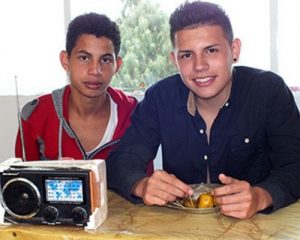
(Photo courtesy of TWR)
Annabel Torrealba with Trans World Radio (TWR) says, “In Colombia, historically, we have seen that they went through like a civil war. They had the narco traffic taking over the government. Those situations are getting better, but there are a lot of people that are still suffering from those situations.”
Yet, with Venezuela’s economic collapse, many are fleeing to Colombia in search of a better life. Colombia currently has around 3 million Venezuelans seeking asylum.
TWR has a major hub of Gospel-centered Spanish program production in Venezuela. But ministry is becoming more difficult.
To support the Venezuela team and program production, TWR is building an additional studio in Colombia.
“One of the main interests of ours to have the office there is to work with those that are still healing from that process in Colombia, and for those that are [fleeing to] Colombia because they’re facing other types of problems in Venezuela,” Torrealba says.
“Our team needs a studio to produce those programs…that address these specific things that are facing the people [arriving] there and all of those that are still healing emotionally from the war.”

(Image courtesy of TWR)
The Church in Colombia has experienced tremendous persecution from criminal and paramilitary groups. Colombian believers and Venezuelan asylum-seekers need feeding and encouragement.
TWR has already raised $20,000 in Colombia for the new studio. If you are willing to donate, your gift will help TWR establish a studio and a stronger ministry in Colombia.
Torrealba leads the team and she says, “I will tell you that these people are willing to go to those areas where we cannot…. Our team already has people in those areas working. We just need to help them to do it better.
“We need to encourage them in this way too, helping them build this studio and reach more people in Colombia in the jungle, in those places where people are afraid to go out. They were persecuted for many years and they don’t trust. But we can build that trust and tell them there is a God that loves them and gave His Son to save us.”
Header photo of Colombian flag, courtesy of Flavia Carpio via Unsplash.
Argentina (CAM) — One reason a native missionary in Argentina braved jungle dangers to reach a tribal people was that he feared no one else could.
After several trips to proclaim Christ to villagers deep in a jungle called El Impenetrable in northern Argentina’s Chaco Province, the tribal evangelist was the only one who had learned how to get to their hamlet, the leader of his native ministry said.
“He was happy and grateful because he was able to travel again on these difficult paths that only he knows,” the leader said.
Returning to the area this summer to share the gospel and bring discipleship materials to a small church plant, the worker first mounted a motorcycle into a canoe to enter the jungle reserve on the Bermejo River. Negotiating river currents in a motorcycle-bearing canoe was risky, the native ministry leader said.
“We give glory to God for the courage of our brother who keeps going, and nothing stops him.”
After disembarking, the worker knew the path would narrow quickly.
“The road can only be traveled by motorcycle,” the leader said. “There is no possibility that a truck can enter, because it is very narrow and dangerous. We give glory to God for the courage of our brother who keeps going, and nothing stops him.”
For 10 hours the worker made his way through thick foliage amid wild animals to reach the destitute tribal people, he said.
“As the name El Impenetrable indicates, the difficulty of traveling is due to its wild and dense vegetation,” the leader said. “It’s a risk; the abundance of cacti, bushes and animals such as jaguars, pumas and vipers are a threat to those who try to walk through it.”
Native ethnic groups in the area eke out a precarious existence, with food scarce, malnutrition widespread and sanitary conditions poor, he said.
“The needs are extreme in every way,” the leader said. “Our missionary knows every route and how to reach the indigenous people of this place to bring the Good News of the gospel and show the love of Christ to this remote area.”

In the course of six months, Gospel workers led more than 100 people to eternal life in Christ. Local missionaries need donations to undertake such Gospel outreaches and follow up with new believers.
(Photo, caption courtesy of Christian Aid Mission)
With hand-made benches placed beneath trees, the congregation gathered to hear God’s Word.
“They worship Christ regardless of whether the heat or the cold hits them,” the leader said. “Without luxuries or modern constructions, our missionary preached the Word of God. Many people, crying and broken, received Christ in their hearts after the message and evangelistic materials were delivered.”
The Lord delivered the worker from all evil and danger, and he was deeply grateful for the opportunity, the leader said.
“We thank God for his life and ministry, his service to God and his commitment,” he said.
Mission Accomplished
The local missionary, whose name is withheld for security reasons, visited several jungle communities on the trip despite forecasts of rain and harsh heat, the leader said.
“After making a journey of several days preaching the gospel in various places and villages of El Impenetrable, he returned to his home very tired,” he said. “He fulfilled his commitment before God. He is grateful to the Lord for allowing him to travel again and preach the gospel, since in the time of the pandemic it was impossible to leave.”
Tribal people have experienced God’s love in various ways thanks to the ministry, including meeting emergency medical needs, offering basic health care, sending those who need greater care to a city hospital and providing medicines. A local official was grateful for these outreaches and has lent his support, the ministry leader said.
“The hospital authorities and staff, moved and grateful, thanked God for this, since medicines are scarce, and patients otherwise cannot continue their treatments,” he said. “Let us pray to the Lord for new projects and continuity of the good relationship with local authorities, in order to be well received to continue witnessing for Christ.”

Families in Argentina came to know the love of God when workers provided food through “communal pots.”
(Photo, caption courtesy of Christian Aid Mission)
Tribal workers have also reached non-tribal people. A 49-year-old Argentinian of mainly Spanish descent recently approached the tribal missionary in tears, saying he did not know how to get free of depression. The workers spoke to him about the love of Christ, and the man humbly received Him into his heart.
“This testimony is very important, since in the region where our ethnic missionary serves, it is very difficult for a person who is not an aboriginal person to seek advice from an indigenous person and approach him,” the leader said. “The Holy Spirit worked in the life of this man, opening his heart without distinction of race or color. Double miracle – hallelujah!”
Such dedicated local missionaries are working throughout Argentina. Help them bring Christ’s love to the lost.
Header and story images courtesy of Christian Aid Mission.
Venezuela (MNN) — Millions of migrants bottleneck at the United States-Mexico border as Title 42 confusion continues. Thousands like Julio come from Venezuela.
For the past several years, Venezuela has been undergoing a massive economic, political, and humanitarian crisis. While the world has moved on to new headlines, many Venezuelan locals still lack basic necessities – things like gas, electricity, internet access, and even food. Many of these obstacles existed before the COVID-19 pandemic, but with the virus came renewed desperation.
Churches have faced their own struggles. Transportation was already hard to come by before Venezuela’s economy collapsed, but gas prices have risen out of the reach of most locals. As a result, very few believers can make it to church.
The crisis has spilled beyond Venezuela’s borders. In the pursuit of better opportunities, over 6 million refugees and asylum-seekers have left Venezuela. They’ve gone to Peru, Argentina, Panama, and even the United States. In particular, many refugees have gone to Colombia, a country with its own share of challenges.
Wherever they go, Trans World Radio programming has followed. Most of their Spanish broadcasts are produced in Maracay, Venezuela, and TWR’s Anna Torrealba used to live in the country.
After all, despite the difficulties they face, many Venezuelans have come to Christ. TWR produces specialized content that caters to the needs of believers who have been displaced. Educational programming, for example, reaches kids and their parents who can’t reach schools.
TWR is also raising international support. Churches around the world are supporting their Venezuelan brothers and sisters via food and clothes drives and financial aid, and TWR is finding those organizations and connecting them to people in need.
They’re also looking to the future. Colombia’s people have undergone suffering of their own, and now they’re neighbors to Venezuelan refugees. Why not minister to both?
“Our team needs a studio to produce programs… that address these specific things that are facing the people… that are still healing emotionally,” Torrealba says.
If you want to support TWR and its Colombia project, you can do so right here. “We can build trust and tell them that there is a God that loves them and gave His son to save us,” Torrealba says. “Our team there is willing to go and keep telling the message of hope in that area in Colombia.”
Header photo courtesy of Trans World Radio.
Peru (MNN) — Peru’s government has declared a 30-day state of emergency, suspending the right of people to gather or travel freely. The military has the authority to enforce these measures, and police can search homes without a warrant.
Peru has seen a week of fierce protests following the arrest of former President Pedro Castillo. Brian Dennett with AMG International says, “There’s been looting, robberies of businesses, even private homes. And in the process, I think we’re up to nearly a dozen people being killed. In one location, tear gas was released from helicopters, and a police station was set on fire. Some policemen were taken hostage.”
“Our partners are seeing a lot of unrest and some very angry people.”
In one area of the Amazon, protestors hindered travel by placing trees over the road and covering them with dirt. Dennett says, “So they’re having difficulty getting supplies around the country. People are purchasing whatever is in stores at the moment, and there is just a lot of fear.”
Future outlook
Why are people so angry? Castillo enjoyed broad public support. He was removed from office after trying to dissolve parliament, but his supporters want him reinstated. Others have called for new elections. New president Dina Boluarte offered to hold elections in December 2023, but the protestors want something more immediate.
Dennett says things could get worse as more protests have been planned. Please pray wisdom for the AMG team as they act as the hands and feet of Jesus during this unstable time; and pray for peace. “There are innocent civilians now being affected, and churches. I know among many families that we’re working with, there’s a lot of fear right now. And as always, the Lord can calm these situations and bring hope amid desperate times.”
The header photo shows clashes between police and protestors on December 8th. (Photo courtesy of Voice of America, Public domain, via Wikimedia Commons)
Peru (MNN) — Peru’s president, Pedro Castillo, tried to dissolve congress on Wednesday. Lawmakers called the move an attempted coup.
A whirlwind day
Brian Dennett with AMG International says, “The Congress responded by holding an emergency meeting and voting overwhelmingly to impeach him. This caused several hours of chaos. People picked up their children early at school, and businesses and offices closed. There was a run on grocery stores, much like we saw during the pandemic.”
All eyes watched the police and military, wondering who they would support. Very quickly, they sided with the lawmakers. Dennett says, “As soon as the Congress announced his impeachment, the president slipped out the back of the palace, most likely trying to escape to the Mexican embassy. He was immediately stuck in traffic, apprehended by the police, and taken to jail.”
Castillo was replaced by Dina Boularte, the first woman to ever serve as Peru’s president.
Castillo had called for new parliamentary elections and a new constitution. He was only installed as Peru’s president in August of 2021. At the time, many hoped he could help Peru’s suffering lower classes.
AMG in Peru
AMG works with kids in Lima, providing school support. They also conduct church planting and pastoral training in villages throughout the Amazon region. Up in the mountains, AMG focuses on both education and church planting. Dennett says, “We have a strong presence in Peru. I have visited numerous times, and it is just a beautiful country with beautiful people. We really need to be praying for them during this time.”
As the government struggles, pray many Peruvians would find hope in Jesus. Pray also for less corruption in Peru’s government in the future.
The header photo shows Pedro Castillo while in office. (Photo courtesy of Presidencia de la República del Perú, CC BY 3.0 <https://creativecommons.org/licenses/by/3.0>, via Wikimedia Commons)
Brazil (MNN) — Two years ago, World Missionary Press sent 6.4 million Scripture booklets to ministry partners through a project called “Blessings for Brazil.”
WMP Freight Coordinator Helen Williams says she’s been flooded with reports as the Holy Spirit changes hearts.
“The feedback is overwhelming in terms of excitement among our distributors down there. [They describe] new opportunities; one ministry set up regional distribution points with pastors sending 500 boxes at a time,” Williams says.
“There are places being reached that were not reached because of the lack of resources, such as these materials.”
(Graphic courtesy of World Missionary Press)
Some partners use Scripture booklets to reach troubled souls in the inner city. Others take them into the jungle to reach people in remote tribal villages. For “medical teams that do eyeglass [clinics], their reading charts are the Scripture booklets,” Williams says.
“In some of these areas, literacy is marginal. Many [partners] will take the booklets and teach the language, so their lesson plan is the Scripture booklet.”
While believers praise God for moving so powerfully in Brazil, they know He’s not finished yet. “I have six orders on my desk for Brazil,” Williams says.
“We are going to be printing eight million booklets to go out before the end of the year.”
Each donated dollar will print and ship 25 Scripture booklets. Help WMP send another eight million Scripture booklets to Brazil.
Header and story images courtesy of World Missionary Press.
Brazil (MNN) — Police crackdown on crime in Brazil’s largest city. Operation Choke, a massive anti-crime effort with no end date, targets São Paulo. Officials say they found 22 tons of drugs in the first three weeks.
The Holy Spirit is working in this region, too. “There is an area in São Paulo [called] ‘Cracklandia’ where hundreds of young people live, and they’re drugged out 24 hours a day. It’s the biggest concentration of crack users in the country,” Helen Williams of World Missionary Press says.
Local Christians use Scripture booklets from WMP to share the hope of Jesus in Cracklandia.
“They went in to share the literature, talk as people were willing to talk or able to talk; the literature [opened] the door. They (believers) could go back and follow up; as they did, there were questions and genuine desire to be out of this (drug-addicted life,” Williams says.
“There is no place where the Spirit cannot work.”
People are abandoning their addictions to follow Christ, WMP’s distribution partner says. WMP has sent him 600,000 Scripture booklets as part of its Blessings for Brazil campaign. WMP wants to ship six million booklets in total.
“This guy in São Paulo said, ‘I need two 40-foot containers. I’m going to send 500 boxes here and 500 boxes there.’ He’s not afraid to take the Gospel anywhere,” Williams says.
Help cover printing and shipping costs here.
“These Brazil shipments will probably be done in the fall, September [or] October, and on their way.”
Header image is a representative stock photo courtesy of Abstral Official/Unsplash.
Colombia (MNN) — Colombia has elected its first ever leftist president. Gustavo Petro, a former rebel, served as a senator for many years in South America’s second-largest country. He received more than 50 percent of the vote, beating out an influential businessman.
Mr. Petro will take office in August.
Brian Dennett with AMG International says Colombians are ready for a change. “As a left-wing President offering some new ideas, the poorer sectors of the country are very pleased, very hopeful. But the private sector, especially businessmen, are somewhat fearful at the moment.”
Promises
Petro has promised to make the country less reliant on oil exports and the illegal cocaine business.
He also pledged to halt deforestation in the Amazon rainforest. More than 40 percent of Colombia is in the Amazon. Cattle ranching has proven the largest reason for deforestation.
But Dennett says Colombia’s congress will most likely oppose much of his agenda. “We are encouraged by some things that the new president has discussed, like a focus on entrepreneurship, employment for the poor, and even promoting peace in the country. I think this is a reminder for us that our hope is ultimately in Jesus, not in governments.”
AMG’s work in Colombia
AMG works in several areas of Colombia hard-hit by the drug trade. Dennett says, “Our focus in Colombia is on education. Through child sponsors here in the U.S. and in Canada, we operate school programs where we’re not just educating, but we’re also feeding, providing nutrition and health care. And of course, discipleship is part of that.”
You can support AMG’s work here.
The header photo shows Gustavo Petro (left) and his running mate on the campaign trail. (Photo courtesy of Roboting, CC BY-SA 4.0 <https://creativecommons.org/licenses/by-sa/4.0>, via Wikimedia Commons)
Latin America (CAM) — In the wild west of Latin America, local missionaries face not only COVID-19 but other dangers that can unexpectedly surface.
Undaunted as they visit homes with the gospel, provide food and medical care or educate children whose teachers the pandemic has driven away, workers from Mexico to Argentina are exposed to patches where the pandemic still rages.
“One of our missionaries was struck hard by COVID-19 because she suffers from other health problems as well,” the leader of a ministry based in Mexico said. “Despite that, she continues in her call to serve Christ among the ethnic groups.”
Several of the ministry’s workers in southern Mexico have been infected with the virus – including members of the leader’s own family.
“On several occasions, the police wanted to kill our missionary, but the Lord guarded him from all harm.”
“However, none of our missionaries has been discouraged, and they continue forward in the work that God has entrusted to us,” he said. “In some cases, rural towns have been closed and do not allow home visits of the families that our missionaries are reaching, but we continue to manage to visit all these families who need the Lord so much.”
As the pandemic closed schools, schoolteachers left for other areas, leaving rural areas already suffering from low levels of education without a way for children to escape the cycle of poverty. Local missionaries have stepped up.
“One of the areas that God has opened in rural towns is the education of children,” the leader said. “The support provided by Christian Aid Mission has been key to purchasing materials that are necessary to equip the missionaries so they can teach the children. This is definitely an area in which we must invest more, because it is a door that God is opening to bring the gospel to indigenous peoples.”
Bullets and Opposition
Persecution from followers of traditional religions remains a force; the ministry has helped two widows whose husbands were killed for sharing the gospel, the leader said.

Some workers are bringing the Gospel to four unreached villages, while others are digging water wells for 10 communities that have no safe drinking water. Others are helping destitute children whose parents died from Ebola, COVID-19 or other natural disasters.
(Photo, caption courtesy of Christian Aid Mission)
One of the widows is leading the congregation her husband once pastored.
“We are looking at a way to give her more help since she has three children,” the leader said. “She is very brave, and despite the threats that have been made to her, she is still willing to move forward.”
The ministry is also helping a couple whose home was burned.
“Another of the cases that we have supported in these past months has been a sister who took charge of the church in an ethnic Mixtec community and suffers constant beatings for her faith in Christ,” the leader said. “Recently we helped her to build a greenhouse, and from there she can obtain income for support.”
Amid the hostilities, workers have carried out dental/medical outreaches in different ethnic communities that have been a great help to people, including alleviation of COVID-19 symptoms, he said.
“The truth is, we are surprised in the way that God is supporting us to bring relief to the families of the poorest ethnic regions of Mexico,” he said. “In most rural towns, the brethren have continued to meet weekly, and the medical outreach has served as a testimony of compassion to the inhabitants of the community, in addition to being used to share the gospel, especially in these moments when several are afraid of COVID-19.”
At the same time, the pandemic has increased resistance as villagers fear workers visiting from nearby areas could bring infections.
“People in many cases have become more distrustful, and in some cases, they only let outsiders in for a short time,” the leader said. “Spiritual warfare is very strong; witchcraft and ancient traditions are daily practiced. Armed conflicts in the towns are also a problem for the mobility and security of our missionaries – some bullets have even hit houses, and this reduces visits to families and contacts they have.”
Voice for the Oppressed
In another Latin American country where coronavirus restrictions were still in place in some areas, local missionaries found ways to bring aid, the gospel and social justice, but not without risks of infection and opposition.

Gospel workers are discipling new Christians one-on-one, in small group meetings and through WhatsApp. Native missionaries throughout Latin America need funding for such evangelism and discipleship work.
(Photo, caption courtesy of Christian Aid Mission)
“It is forbidden to go out to the streets to preach, but our missionary with his motorbike has traveled several kilometers, entering the jungle hills, carrying the gospel and food supplies,” said the leader of the ministry based in the country, undisclosed for security reasons.
In response to pandemic-related joblessness in a village of about 20 families, a worker began teaching young people how to make cement bricks and build their homes.
“These ventures generated favorable changes in the inhabitants,” the leader said. “After their conversion to Christ, this village has a better way of life, not only spiritually, but in all areas of their lives.”
With assistance from Christian Aid Mission, the ministry also has been able to attend to COVID-19 health emergencies and provide masks and hygiene items, along with feeding the hungry in poor communities.
One area ministry leader pursued social justice by exposing an illegal government practice of putting women, children, and elderly men who had no medical indication of COVID-19 infection into isolation centers.
The revelation led to the discovery of corruption in the province, the leader said.
“On several occasions, because of this the police wanted to kill our missionary, but the Lord guarded him from all harm,” he said. “The missionary shared the gospel with doctors and lawyers who were accompanying him. On those days his life was at risk, but God allowed nothing to go wrong. After a while, this type of persecution stopped; we give glory to God for this.”
Help Gospel workers bring the Gospel and aid to unreached people throughout the region.
Header and story images courtesy of Christian Aid Mission.
Brazil (MNN) — The Sammy Tippit Discipleship App has now been released in multiple languages spoken all around the world. Sammy Tippit is already hearing amazing stories about how Christians are using the app.
For instance, one group of Brazilian Christians uses the app as they fellowship with Afghan refugees. Tippit says, “The Afghan refugees have been sent all over the world [since the Taliban seized control of the country]. And they’re receiving in Brazil thousands of Afghan refugees. The group that we’re working with has taken in a number of them. They use the Portuguese app and the Dari app because the materials are exactly the same. They can disciple Brazilians and Afghans using both apps.”
Tippit says that’s the ultimate vision for this app: discipleship across languages. “Because you find in the book of Acts when people heard the Gospel in their own language, everyone was in amazement.”
Get involved
You can join this same work by downloading the app for free. It’s available in the Apple Store and Google Play. Tippit says, “There are people from all over the world right here in the US. Do you know someone who speaks another language like Russian, Romanian, Dari, Arabic, Spanish, or Portuguese? We have all this material in those languages.”
Just search for “Sammy Tippit” to download the English app. To download the app in another language, Tippit says, “Just type in ‘Sammy Tippet’ and put the language: ‘Sammy Tippit Punjabi’ or ‘Sammy Tippet Hindi’ or ‘Sammy Tippet Spanish.’ That discipleship app will come up and you’ll be able to download it.”
The header photo shows Afghans evacuated from Kabul, Afghanistan shortly after the Taliban takeover. (Photo courtesy of Staff Sgt. Trevor Rhynes, Public domain, via Wikimedia Commons)
Peru (MNN) — Mission Cry sends containers full of Bibles and Christian books to churches all over the world. In fact, the upcoming shipment to Peru will mark their 179th country.
Jason Woolford says, “Peru is one of the last that we have not reached. And it’s also exciting for us because as many readers may know, one of our new endeavors is creating the Mission Cry Bible in Spanish. It’s an NIV Bible with the discipleship training program that we wrote in the back of it.”
Read more about Mission Cry’s Spanish Bibles here. Woolford says, “The greatest thing about it is we produce this and then get it into the hands of somebody in South or Central America for just $2 a Bible.”
The shipping container will hold 50,000 Bibles and Christian books, all in Spanish. Woolford says partners will distribute them in both churches and schools. The container will arrive in Peru in early 2022.
Get involved
Woolford says, “We have someone that has said they will sponsor half of this container. The cost to send nearly half a million dollars worth of free Bibles and Christian books is only $10,000. We have someone who says they’ll pay for half of it. If you’re reading, and if God’s prompted your heart, you can sponsor the other portion of that or a part of it. We are doing this on faith. We’re stepping out and sending all these on faith.”
Pray these Bibles and Christian books will bless many in Peru with the good news of Jesus and His love for all people.
The header photo shows a man holding one of Mission Cry’s Spanish Bibles. (Photo courtesy of Mission Cry on Facebook)
Peru (MNN) — In Peru, rural teacher Pedro Castillo has been installed as the president after narrowly defeating a political insider in the election.
Brian Dennett of AMG International says some in Peru are optimistic that fresh leadership could lead to good things. “A commoner from the mountains was elected president. And what we’re hearing from our people is that’s given some hope to common people that maybe anyone could be elected president.”
Shining Path connections
At the same time, Castillo’s pick of a prime minister created some tension. Dennett says, “This actually even outraged some of his voters. This is a man that has sympathized with terrorists in the past, groups like the Shining Path, and that is really troubling people.”
The Shining Path has a violent history in Peru. This far-left organization was founded in 1970 and carried out numerous terrorist attacks and assassinations until the 90s. At its height, it even gained control over rural and urban districts in central and southern Peru.
Even today, the group still has some presence in Peru, as evidenced by a May attack that killed 16 shortly before the elections.
Help in Jesus’ name
But Jesus remains the true King in Peru and everywhere else. AMG works in His name to provide food and other essential aid to the country. You can get involved at amghelp.org.
Dennett says, “Like most of the Third World, COVID-19 is raging there. We continue to work hard with our church partners and with our schools down there to feed people, to feed families. And you can help by sending support so that we can help Peruvians who are really suffering in the midst of all of this.”
The header photo shows Pedro Castillo giving a speech. (Photo courtesy of Presidencia de la República del Perú, CC BY 3.0 <https://creativecommons.org/licenses/by/3.0>, via Wikimedia Commons)
Peru (NN) — Peru faces a divisive presidential election, scheduled for June 6. Everything has become politicized. The Shining Path terrorist group, once a powerful communist army in Peru, murdered 16 people last week. They left behind pamphlets warning people not to vote in the election.
Meanwhile, the country has the highest COVID-19 death rate per capita in the world according to recent statistics. Brian Dennett of AMG International says, “On the right, you have Keiko Fujimori. And she herself spent, I think, around 18 months in prison for corruption. On the left, you have a teacher’s union organizer, Pedro Castillo, really with no political experience. With COVID-19 surging, inequality, hunger, and poverty rates growing, many are leaning towards the left and his appeal to the poor.”
How to get involved
Political leaders come and go, but Jesus reigns forever. Ask God to give Peruvian Christians wisdom and love during a difficult and confusing election cycle.
Plus, you can join with AMG’s work, offering help to those in poverty. Visit amghelp.org to learn more or donate. Dennett says, “We have a number of locations in Lima, where we’re working with children and their families. We also work up in the mountains and down in the Amazon. We have quite a presence in Peru. And we have really been focusing on providing food and basic needs for people that really are suffering right now.”
The header image shows a polling station in Peru during the first round of the 2021 election. (Photo courtesy of Txolo, CC BY-SA 4.0 <https://creativecommons.org/licenses/by-sa/4.0>, via Wikimedia Commons)
Brazil (MNN) — Brazil has become a global COVID-19 hotspot. The country currently averages over 75,000 new cases every day. Hospitals are overflowing; many have run out of oxygen for very ill patients. Surrounding nations have cut off travel to and from Brazil.
This tragedy has touched the Christian community as well, says Sammy Tippit of Sammy Tippit Ministries. “They’re going through a tough time. They’ve had a number of leaders who have died from COVID, and a lot of people in churches have died from COVID. And they don’t have the vaccine. I think a very, very small percentage of people have the vaccine. They’ve got a variant coming out. What we have here, they have the same thing there, except it looks like it’s gonna be a lot longer before they get it under control.”
Praying for revival
Tippit describes the frustration and grief of Brazilian Christians who watch the current devastation with no end in sight. In response, they asked Tippit to speak at a virtual conference focusing on discipleship, revival, and suffering.
Tippit says 10,000 people viewed the conference on the first night. “Join me in praying for this. Pray the suffering that we’re going through worldwide, and especially that the people of Brazil are experiencing right now, would not be in vain. Pray it wouldn’t be just something that goes through and leaves a lot of people dead and that’s it. But through that, we want to see God take it and use it for His glory. Pray a great revival would take place among God’s people.”
The header photo shows a COVID-19 patient in São Paulo, Brazil. (Photo courtesy of Governo do Estado de São Paulo, CC BY 2.0 <https://creativecommons.org/licenses/by/2.0>, via Wikimedia Commons)
Colombia (MNN) — Colombia has granted legal status to nearly one million Venezuelan refugees. These protections will last for 10 years, allowing them to more easily work, live, and receive medical care in the country.
Brian Dennett of AMG International says refugees continue pouring in from Venezuela. “It’s really the result of just a desperate people. They come [due to] shortages, hyperinflation, the collapse (almost entirely) of public services, and malnutrition. We’ve even heard reports of professional and family women turning to prostitution to support their families.”
“Millions of people really are forced to at the very least consider leaving their own country in order to survive.”
The United Nations has applauded the decision, even suggesting it could model how the world handles the global refugee crisis.
Dennett talks about how the move benefits Colombia. “Being in the midst of a pandemic, it’s going to give them access to international funding that’s available. And it’s going to be very much required to provide health care, vaccines, and even shelter [for these refugees]. In the government’s mind, having them in local tax environments rather than running the risk of criminal activity for survival, I think just ends up making very good sense.”
AMG serves refugees in Colombia and around the world, providing for their needs and sharing the hope of Christ with them. Pray many Venezuelan refugees would embrace this living hope.
The header image shows Venezuelan refugees sleeping in Colombia. (Photo courtesy of Wikimedia Commons, Public Domain)