Native America Calling: Recent Episodes
Koahnic


Interactive, daily program featuring Native and Indigenous voices, insights, and stories from across the U.S. and around the world.
Voters will soon find out whether the bid by Lt. Gov. Peggy Flanagan (White Earth Ojibwe/D-MN) to become the first Native American woman elected to the U.S. Senate clears the primary election hurdle in a hotly-contested race. It is one of the many races with Native candidates that are coming into clearer focus after a summer of primaries. Native women are particularly well represented in national and statewide races and some progressive Democratic wins might offer clues about what’s on voters’ minds. We’ll look at some key national, state, and tribal races as the midterm election draws closer.
GUESTS
Kevin Killer (Oglala Lakota), co-founder of Advance Native Political Leadership and former president of the Oglala Sioux Tribe
Jourdan Bennett-Begaye (Diné), digital news director of ICT
Amelia Schafer (Brothertown Indian Nation descendant), north central bureau correspondent for ICT
Break 1 Music: Nakoda Healing Song (song) YB Nakota (artist)
Break 2 Music: Wolastoq Song by Saqatay (song) Mawi Sakolikapuwicik Singers (artist)
A dangerous secret lurks just under the surface in the play, “Bad Medicine,” making its debut at the Santa Fe Playhouse. Written by P.C. Verrone (Osage and Kiowa) and produced with a largely Native cast, it is a live production that claims elements of both horror and comedy. It comes with a warning that it “sheds light on how settler colonialism dehumanizes and exploits Indigenous peoples.”
Brooklyn, N.Y.’s renowned Spiderwoman Theater is marking 50 years of Indigenous plays, outreach, and education. Rising from the feminist movement of the 1970s, its core leadership under Lisa Mayo, Gloria Miguel, and Muriel Miguel have built the space into a destination for urban Native storytelling. We’ll talk with the organizers about the the mission and legacy of this groundbreaking theater.
GUESTS
P.C. Verrone (Osage and Kiowa descendant), playwright
Tara Moses (Seminole Nation of Oklahoma and Mvskoke), playwright, director, and actor
Muriel Miguel (Kuna and Rappahannock), artistic director of Spiderwoman Theater
Gloria Miguel (Kuna and Rappahannock), founding member of Spiderwoman Theater
Break 1 Music: Jesous Ahatonhia (song) Geneviève Gros-Louis (artist)
Break 2 Music: Aia lā ‘o Pele [Mele Honoring Pele] (song) ‘Iolani Luahine (artist) Ancient Hula Hawaiian Style: Vol. 1 Hula Kuahu (album)
Two separate instances are putting Native authority related to religious freedom to the test.
The Northern Arapaho Tribe demands the Christian ministry, Foundations Nations Church, leave the Wyoming reservation. The demand comes after video circulated on social media showed one of the church’s pastors characterizing Native sacred practices — including the Sun Dance — as “idol worship” and “demonic.” Top tribal leadership calls the comments “despicable” and link them to past abuses of Native Americans at the hands of Christian church officials. The Foundations Church leaders say they’ll fight the tribe’s efforts to remove them. We’ll hear about what’s next in the dispute.
At the same time, Native American inmates in a Nebraska state prison scored a victory in securing access to religious ceremonies. In a settlement of a federal civil rights lawsuit, corrections officials lifted a temporary ban on accessing a place where Native men conducted ceremonies like sweats and smudges. They instituted the ban after finding contraband at the site. We’ll hear about the legal principles behind the outcome.
GUESTS
Keenan Groesbeck (Northern Arapaho), chairman of the Northern Arapaho Business Council
Jesse Crispin (Northern Arapaho), council member of the Northern Arapaho Business Council
Andi Snowball (Muscogee and Winnebago), associate attorney with Big Fire Law and Policy Group LLP
Carter Matt, staff attorney with ACLU Nebraska
Break 1 Music: Northern Arapaho Fast Wolf Dance (song) Otto Hungary, White O. Goggles, Helen Crispin, Francis Goggles, Rose Moss (artist) Traditional Voices: Historic Recordings of Traditional Native American Music (album)
Break 2 Music: Aia lā ‘o Pele [Mele Honoring Pele] (song) ‘Iolani Luahine (artist) Ancient Hula Hawaiian Style: Vol. 1 Hula Kuahu (album)
Tribes that collectively make up the largest water rights holders along the Colorado River say the Trump Administration’s newest plan to deal with diminishing water levels is inadequate. Tribal leaders say they were left out of the decision making process and are now in store for serious water use cuts that violate existing water rights agreements as well as the federal government’s trust responsibility. We’ll hear from some of those tribal leaders.
We’ll also find out what’s next following the Michigan Supreme Court’s ruling to deny a permit to the company aiming to construct a new underwater oil pipeline to replace the aging existing structure.
GUESTS
Bidtah Becker (Diné), chief legal counsel for the Office of the President and Vice President of the Navajo Nation
David Gover (Pawnee and Choctaw), managing attorney with the Native American Rights Fund
Governor Stephen Roe Lewis, Gila River Indian Community
Jennifer Smith, director of tribal engagement for Enbridge
Break 1 Music: Water Is Life (single song) Native Roots, Joy Harjo, Def-I & Innastate (artist)
Break 2 Music: Aia lā ‘o Pele [Mele Honoring Pele] (song) ‘Iolani Luahine (artist) Ancient Hula Hawaiian Style: Vol. 1 Hula Kuahu (album)
The Osage language was declared dead in 2005 after its last fluent speaker died, but revitalization efforts since then have built the number of proficient speakers to about 40. The Caddo Nation continues its extensive language revitalization efforts more than a year after its last fluent speaker walked on. It’s an uphill battle for most tribes in the U.S. to retain their language. The new book, “How to Kill a Language: Power, Resistance, and the Race to Save Our Words”, examines the global crisis of cultures losing their languages. In a New Yorker review of the book, philosophy instructor Nikhil Krishnan uses the book’s premise to argue that the death of a language is sometimes “just how things go.” That touched off strong opposition from the language advocacy organization, The Endangered Languages Project. They and other organizations say such fatalistic thinking promotes misleading and harmful narratives and undermines efforts to preserve languages globally. We’ll hear from Indigenous language advocates who argue no expense should be spared to revive languages before we lose them.
GUESTS
N. Ha’alilio Solomon (Native Hawaiian), assistant professor of Hawaiian language at the University of Hawai’i at Mānoa
Dr. Myrna Cunningham (Miskito), Indigenous Peoples rights activist and educator
Skyler Kuczaboski (Leech Lake Band of Ojibwe), grants administration support for the Minnesota Indian Affairs Council
Break 1 Music: Caddo Victory Song (song)
Break 2 Music: Aia lā ‘o Pele [Mele Honoring Pele] (song) ‘Iolani Luahine (artist) Ancient Hula Hawaiian Style: Vol. 1 Hula Kuahu (album)
Tribal public health officials are among those reassuring citizens about the safety of their food as reports of new cases of cyclospora infections continue to rise. Michigan continues to be a hotspot with state officials reporting more than 11,000 cases. The actual number is likely much higher than that. One hurdle in tracking the cyclosporiasis outbreak is it has a long incubation period and it can’t be traced through the genetic markers that some other food-borne illnesses have. The infections are traced mainly to tainted lettuce from Mexico. Nearly all other states are also reporting cyclospora cases, many of them from a variety of sources.
GUESTS
Harleigh Moore-Wilson (Osage), director of agriculture for Flower Hill Institute
Dr. Matthew Clark, chief medical officer for the Alaska Area Native Health Service, acting deputy chief medical officer for the Indian Health Service (IHS), and chair of the IHS National Pharmacy and Therapeutics Committee
Will Seeley, tribal enterprise manager for the Indigenous Food and Agriculture Initiative
Break 1 Music: Ch’iya’a’n Biyiin/Native Food Song (song) Radmilla & Herman Cody (artist) Shi Kéyah (album)
Break 2 Music: Aia lā ‘o Pele [Mele Honoring Pele] (song) ‘Iolani Luahine (artist) Ancient Hula Hawaiian Style: Vol. 1 Hula Kuahu (album)
Over the course of a few days, a gang war erupts on the fictional Thunderstone reservation in the new film, “Gangland”. Officer Teddy Sharpe (Lou Diamond Phillips) and his trainee must navigate a community affected by a dark secret. The new film features several talented Native actors including Lane Factor (Caddo), Elisha Pratt (Cheyenne and Arapaho), Irene Bedard (Iñupiaq, Yup’ik and Cree), and more.
The famed children’s series “Little House on the Prairie” gets a new screen adaptation for Netflix. The original books the show is based on faced criticism for perpetuating racist stereotypes. Now, the new TV series includes consultation with Osage citizens.
We’ll also remember the late Seminole and Cherokee actor Randolph Mantooth, best known as the lead of the hit 1970s television show “Emergency!” Mantooth died on July 9.
GUESTS
Lou Diamond Phillips, actor and star of “Gangland”
Julie O’Keefe (Osage), cultural consultant for “Little House on the Prairie”
Robert Allen Warrior (Osage), Hall Distinguished Professor of American Literature and Culture at the University of Kansas and consultant for “Little House on the Prairie”
Monte Fronk (Red Lake Nation), tribal emergency responder with the Mille Lacs Band of Ojibwe and friend of Randolph Mantooth
Tonya Mantooth (Seminole and Cherokee), CEO and artistic director of the San Diego International Film Festival and sister to Randolph Mantooth
Break 1 Music: Wahzhazhe (song) Scott George (artist) Killers of the Flower Moon Soundtrack (album)
Break 2 Music: Show the People (song) Bear Creek (artist) On The Move – Powwow Songs Recorded Live at Apache Gold
Little House on the Prairie. (L to R) Alice Halsey as Laura Ingalls, Wren Zhawenim Gotts as Good Eagle in episode 107 of Little House on the Prairie. Cr. Eric Zachanowich/Netflix © 2026
Renowned chef Nephi Craig (White Mountain Apache, Navajo) admits he hid his alcoholism fairly well as he was making a name for himself as a Native chef throughout the 2000s. His memoir, “Our Knives Will Save Us: Dispatches from a White Mountain Apache Chef“, details his arduous recovery and how food and the kitchen helped him figure out his purpose and path to healing.
In the debut children’s novel by Christine Hartman Derr (Cherokee), “Raven, Rising“, baking was a favorite pastime for a young Cherokee girl until she is struck with sadness and anxiety at the thought of baking and the smell of ingredients like cinnamon, bread, and chocolate. She learns to cope with loss and works to make her way back to the kitchen.
Chef Candace Stock (Ho-Chunk) is the executive chef of Salt + Scoria, a restaurant in the new Theodore Roosevelt Presidential Library in North Dakota. We’ll talk with her about bringing Indigenous ingredients and flavors to the menu.
Break 1 Music: With My Son (song) Vincent Craig (artist)
Break 2 Music: Show the People (song) Bear Creek (artist) On The Move – Powwow Songs Recorded Live at Apache Gold
A bill making its way through Congress offers new hope for five Native communities in Southeast Alaska to secure their own land for the first time. For more than 50 years following the Alaska Native Claims Settlement Act (ANCSA), the five tribes left out of the pivotal agreement that fundamentally changed tribal governance and land ownership in the state have been working to secure their homelands. Tribal leaders celebrated as the bill cleared the U.S. House of Representatives. But it’s not without opposition; environmental groups and others worry the land transfer will turn over vast expanses of pristine old growth wilderness to a for-profit corporation intent on maximizing financial returns through extensive timber harvests and mining. We’ll hear about what this latest policy momentum accomplishes and discuss how we got here.
GUESTS
Cecilia Tavoliero (Tlingit), president of the Southeast Alaska Landless Corporation
Nicole Hallingstad (Tlingit), Alaska Natives Without Land representative of Petersburg
Sandy Churchill (Tlingit), vice president of the Wrangell Cooperative Association
Albert Rinehart (Tlingit), tribal administrator for Wrangell Cooperative Association
Break 1 Music: Kunax yak’ei gayshagook (song) Khu.éex’ (artist) Siyáadlan (album)
Break 2 Music: Show the People (song) Bear Creek (artist) On The Move – Powwow Songs Recorded Live at Apache Gold
A coalition of rural Alaska Native villages is launching an initiative to boost veterinary care as a way to improve public health. They aim to cut down on the increasing number of feral dogs that pose a risk to residents by offering better spay and neuter services. They also hope a vaccination program can lower the spread of rabies. Alaska Native Rural Veterinary Inc. and the Alaska Federation of Natives are moving ahead after federal legislation stalled in Congress. We’ll talk with those called to bring veterinary care to rural communities — with or without government support — to keep animals and people safe.
Robert Mirabel in the film. “Road to Everywhere.” (Photo: courtesy Driven To Films)
We also talk with acclaimed musician and actor Robert Mirabal about his role in the movie, “Road to Everywhere“. Mirabal is performing at a screening of the film in Albuquerque, N.M.
GUESTS
Mike Williams Sr. (Yupiaq), tribal chief of the Akiak Native Community
Adrianna Nicolay (Diné), volunteer with Rez Vet
Angie Fitch, executive director and co-founder of Alaska Native Rural Veterinary Inc.
Robert Mirabal (Taos Pueblo), musician and actor
Break 1 Music: Raising Goats Song [Skip Dance Song] (song) Sweethearts of Navajoland (artist) From the Heart of Diné Nation Traditional Songs of the Navajo (album)
Break 2 Music: Show the People (song) Bear Creek (artist) On The Move – Powwow Songs Recorded Live at Apache Gold
Longtime Phoenix-based professional strongman Jerry Pritchett (Chickasaw) isn’t ready to retire just yet. For now, his focus is on his son, Bubba, who at 15 years old, recently locked out a 615-pound deadlift at a competition. Pritchett is a veteran strongman and powerlifter who was named America’s Strongest Man in 2017 and was later named a World’s Strongest Man finalist. Other Native strongmen who have earned professional titles like Pritchett is Harold “Iron Bear” Collins (Lumbee). Collins was a popular competitor in the 1990s who broke six Guinness World Records, one for pulling a 50,433-pound semitruck and flatbed trailer 160 feet in 44 seconds. In Canada, Colten Sloan (Whitefish Lake First Nation) is working hard to join the ranks of these strongmen. In 2021, he became the first Indigenous man in Canada to earn a pro card in the sport and has since competed around the world.
GUESTS
Jerry Pritchett (Chickasaw), professional strongman
Colten Sloan (Whitefish Lake First Nation), professional strongman
Harold “Iron Bear” Collins (Lumbee), retired professional strongman
Break 1 Music: Bad Dude (song) Joe H Henry (artist) Real Things (album)
Break 2 Music: Show the People (song) Bear Creek (artist) On The Move – Powwow Songs Recorded Live at Apache Gold
Some residents of Zuni Pueblo in northwestern New Mexico were forced to evacuate their homes due to severe flash flooding earlier this week. The community is bracing for more storms and flooding as the monsoon season continues. Tribal leadership is working to protect tribal members and historical structures. We’ll get an update from community members, and the Pueblo’s governor, on recovery efforts and the damage caused.
We’ll also hear from an Indigenous journalist covering the worsening wildfires in Ontario, Canada. More than 13 First Nations communities were displaced.
GUESTS
Arden Kucate (Zuni), governor of the Pueblo of Zuni
Shaun Tsabetsaye (Zuni), co-founder and chief of technology of Major Market Inc.
Willow Fiddler (Sandy Lake First Nation), Indigenous affairs reporter for The Globe and Mail
Break 1 Music: Land of the Shalako (song) Zuni Midnighters (artist) Land of the Shalako (album)
Break 2 Music: I Know [feat. Sebastian Gaskin] (song) Shub (artist) Heritage [Pt. 2] (album)
More than 35 First Nations in Canada have active drinking water advisories, but a new federal bill aims to address the issue. Indigenous leaders are critical of the bill and argue that it limits federal liability and fails to protect clean water as a basic human right. Some Indigenous communities have been without clean water since the 1960s, leading First Nations leaders to demand legislative fixes to industrial pollution and longstanding neglect by the federal government. We’ll hear from leaders and experts about what’s in the new water bill and the ongoing water crisis in parts of the country.
We’ll also hear about a new scientific study by Conservation International that examines how Indigenous stewardship and cultural practices improve the ecological health of lands. Researchers looked at the unique practices of more than 40 Indigenous communities around the world and how they’re adapting to a changing climate.
GUESTS
Linda Debassige (M’Chigeeng First Nation), Grand Council Chief of the Anishinabek Nation
Leah Gazan (Wood Mountain Lakota Nation), NDP Member of Parliament
Kerry Black, associate professor and Canada Research Chair in the Department of Civil Engineering at the University of Calgary
Sushma Shrestha Sangat (Newari), conservation scientist and researcher
Break 1 Music: Red Dust Rising (song) Blue Moon Marquee (artist) Scream, Holler, and Howl (album)
Break 2 Music: I Know [feat. Sebastian Gaskin] (song) Shub (artist) Heritage [Pt. 2] (album)
Around 200 wildfires are currently burning across the country and nearly 900 are burning in Canada. Large swaths of the northeastern U.S. are blanketed in heavy, hazardous smoke coming from widespread wildfires burning in northern Minnesota and Ontario. In the neighboring Canadian province, three First Nations communities were forced to evacuate after fires ripped through their remote reserves. Significant drought and decades of hands-off wild land management factor into increasingly severe wildfire seasons that impact Indigenous people the most. We’ll get updates from Indigenous fire experts about current wildfire events, smoke impacts, and the vulnerability of Indigenous communities.
GUESTS
Dr. Amy Cardinal Christianson (Métis), senior fire advisor for the Indigenous Leadership Initiative and board member of the International Association of Wildland Fire
Arnold Lazare (Mohawk), interim CEO of the National Indigenous Fire Safety Council and the Indigenous fire marshal for Canada
Ferin Davis Anderson (Turtle Mountain Band of Chippewa Indians), natural resources manager for the Shakopee Mdewakanton Sioux Community
Tim Sexton, fire program manager for the Klamath Tribes
Break 1 Music: La Grande Gigue Simple/ Red River Jig/ Big John McNeil (song) Métis Fiddler Quartet (artist) North West Voyage Nord Ouest (album)
Break 2 Music: I Know [feat. Sebastian Gaskin] (song) Shub (artist) Heritage [Pt. 2] (album)
Acclaimed Diné writer and Arizona’s current poet laureate, Dr. Laura Tohe, is working to share her poetry across the state’s rural communities. That includes public readings and uplifting young, emerging poets in the state. Growing up in a remote community on the Navajo Nation, Tohe demonstrated a firm grasp of both Diné bizaad and English at an early age. She attributes that to growing up in a family of storytellers, including her father who was a Navajo Code Talker in World War II. She’s been recognized by some of the top literary organizations and her writing has been translated to multiple languages for an international audience. Tohe joins us for our special feature, Native in the Spotlight, to discuss her career and her work to make poetry more accessible for everyone.
Break 1 Music: Chief Manuelito (song) Vincent Craig (artist) Self-titled Release (album)
Break 2 Music: I Know [feat. Sebastian Gaskin] (song) Shub (artist) Heritage [Pt. 2] (album)
Conservation groups and at least two Pacific Northwest tribes filed lawsuits against the federal government after it redefined “harm” in the Endangered Species Act earlier this month. Now, destruction of habitat is no longer considered “harm” to endangered wildlife. Supporters of the move say it lifts burdensome restrictions to land management and development. Environmental groups and tribes like the Swinomish Indian Tribal Community and Squaxin Island Tribe say it puts endangered species, like Chinook salmon, and the environment they depend on in even greater danger.
GUESTS
Cheyenne Skye Branscum (Citizen Potawatomi Nation), Sierra Club president of the board of directors
Dr. Victoria Sutton (Lumbee), distinguished Horn Professor at Texas Tech University school of Law
Dr. Luhui Whitebear (Coastal Band of the Chumash Nation, Huastec and Cochimi), assistant professor and coordinator of Indigenous Studies at Oregon State University
Wyatt Golding, attorney at Ziontz Chestnut for the Swinomish Indian Tribal Community
Kristin Boyles, managing attorney with Earthjustice
Break 1 Music: In the River: A Protest Song (song) Raye Zaragoza (artist)
Break 2 Music: I Know [feat. Sebastian Gaskin] (song) Shub (artist) Heritage [Pt. 2] (album)
Tulsa, Okla.-based Cherokee Nation citizen Courtney Jordan used to be a federal prosecutor, but she is now on the other side of the courtroom as a defense attorney specializing in the intersection of federal Indian law and criminal law. Jordan uses TikTok and other social media platforms to inform others about their rights and key cases in Indian Country, while openly sharing her own run-in with the law. She is a convicted felon whose legal career was turned upside down after she led police on a high-speed chase in 2022. Doctors later attributed the incident to adult on-set temporal lobe epilepsy and she eventually got her law license reinstated. She’s now at the head of a burgeoning law practice and joins us for a conversation about her storied career.
Break 1 Music: Cherokee County (song) Kalyn Fey (artist) Garden (album)
Break 2 Music: In the Time of Chiefs (song) Estun-Bah (artist) From Where the Sun Rises (album)
Bears Ears National Monument (Photo by Tim Peterson).
President Donald Trump, once again, reduced the size of Bears Ears and Grand Staircase-Escalante National Monuments in Utah on Monday. Both monuments were downsized by about 90% opening up nearly three million acres to resource developers. Several tribes have cultural and sacred ties to the respective monument areas and have been fighting to protect them for years. The president’s proclamation also dismantles the Bears Ears Commission, a coalition of five tribes designated by then-President Obama in 2016 and tasked with co-management of monument lands with federal officials. Now, the move puts the Antiquities Act, which gives presidents the power to designate monuments, under the legal scrutiny of politicians, conservationists, and tribes that argue the 1906 law can or cannot be used to reduce already established national monuments.
Also, Indigenous Venezuelans are among the thousands of people affected by devastating, back-to-back earthquakes that destroyed hundreds of buildings and homes along the country’s north coast in June. The death toll is currently around 4,700 and Indigenous communities struggle to keep up with traditional burial practices amid recovery and aid initiatives.
GUESTS
Davina Smith–Idjesa (Diné), co-chair of the Bears Ears Inter-Tribal Coalition and representative for the Navajo Nation
Keitti Jake (Paiute Indian Tribe of Utah), environmental program coordinator for the Paiute Indian Tribe of Utah and member of the Grand Staircase-Escalante Inter-Tribal Coalition
David Hernández Palmer (Wayúu), Wayúu producer and storyteller from Columbia and Venezuela
Break 1 Music: This Land (song) Keith Secola (artist) Native Americana – A Coup Stick (album)
Break 2 Music: In the Time of Chiefs (song) Estun-Bah (artist) From Where the Sun Rises (album)
Mohawk DJ and music producer Shub (formerly DJ Shub) is part of the innovative force behind the “Powwow-Step” genre, a fusion of electronic styles like dance, dubstep, hip-hop, and traditional Indigenous music. Shub further explores his signature sound and pushes its potential to new heights on his latest album, “Heritage (Part Two)”. Listeners can expect party-ready tracks, chopped powwow samples, ambient soundscapes, and collaborations with Juno Award-winning Oji-Cree artist Aysanabee and legendary Three 6 Mafia member DJ Paul.
Heavy electronic musician Aaron Wallace, also known as Darksiderz, blends hard dance and industrial music to create a chaotic soundtrack fit for a vampire nightclub. The Nisenan and Washoe musician grew up in Reno, Nev. where he started playing music in local punk and metal bands. Today, Darksiderz is a popular name in the electronic music scene and he’s performed on some of the biggest EDM stages in the world. He brings a unique, dark, yet danceable sound to his recently released collaborative singles.
Both artists join us to talk about their latest works.
Break 1 Music: Origins (song) Shub (artist) Heritage [Pt. 2] (album)
Break 2 Music: In the Time of Chiefs (song) Estun-Bah (artist) From Where the Sun Rises (album)
The One Big Beautiful Bill Act expanded the Federal Pell Grant, a subsidy for undergraduate students, to cover short-term workforce training programs for the first time. Native education advocates view the new Workforce Pell Grant program as a positive initiative that could help more low-income adults get into high-demand jobs while boosting enrollment at tribal colleges and universities. The program went into effect this month so it’s still too early to tell how tribal institutions will benefit. We’ll discuss the viability of vocational school and training and how the Workforce Pell Grant will take effect at tribal post-secondary institutions.
GUESTS
Leander McDonald (Dakota, Arikara, Hidatsa, and Hunkpapa), president of the United Tribes Technical College
Nyree Kedrowski (Ho-Chunk Nation), managing partner for Five Skies
Moriah O’Brien, vice president of congressional and federal relations at the American Indian Higher Education Consortium
Break 1 Music: Brown Eyed Handsome Man (song) The Wingate Valley Boys (artist) Navajoland U.S.A. Country Happening (album)
Break 2 Music: In the Time of Chiefs (song) Estun-Bah (artist) From Where the Sun Rises (album)
Tribal officials and renewable energy advocates are celebrating a major legal victory after a Minnesota administrative judge ruled in favor of the Upper Sioux Community’s solar-powered casino. The dispute centers on the tribe’s right to supplement its power with on-site solar energy, while also highlighting the friction between tribal sovereignty and local utility monopolies. In federal court, a separate legal battle is underway to reclaim frozen funding from the $7 billion “Solar for All” program. Despite the federal standstill, Minnesota tribes like the Red Lake and White Earth Nations are forging ahead, successfully building their own solar infrastructure to secure energy independence.
GUESTS
Robert Blake (Red Lake Nation), founder and CEO of Solar Bear and executive director of Native Sun Community Power Development
Nathan Mathews, executive director of the White Earth Nation Tribal Utility Commission
Talia Martin (Shoshone-Bannock), co-executive director of Tribal Energy Alternatives
Break 1 Music: Encouragement Pipe Song (song) Joseph Shields, Jr. (artist) Wahancanka [Remember Me Grandfather] (album)
Break 2 Music: In the Time of Chiefs (song) Estun-Bah (artist) From Where the Sun Rises (album)
A new report by the New Mexico Department of Justice says Native students are disciplined more harshly and miss more school days from suspensions than other students at Gallup-McKinley County Schools. The school district has a majority Navajo student population and was the focus of a 2023 news investigation that prompted calls for further investigations.
In South Dakota, education leaders are looking into the state’s licensing exams after research shows a disproportionately low number of Native teacher candidates pass the costly exam. Native teachers are in short supply in the state and Native education advocates say that streamlining licensing requirements could be barrier.
GUESTS
Dr. Wendy Greyeyes (Diné), chair of the Navajo Nation Human Rights Commission and assistant professor of Native American Studies at the University of New Mexico
Kevin Mitchell (Diné), Gallup-McKinley County Schools Board of Education president
Priscilla Benally (Diné), Gallup-McKinley County Schools Board of Education vice president
Dr. Sherry Johnson (Sisseton Wahpeton Oyate), education director for the Sisseton Wahpeton Oyate
Break 1 Music: Dat One (song) The Delbert Anderson Trio (artist) MANITOU (album)
Break 2 Music: Medicine Wheel (song) Logan Staats (artist) Rainwater (album)
Tlingit and Haida Tribes, the Ketchikan Indian Community, and other communities in Southeast Alaska are urging tourists to stop disrespecting unique cultural symbols such as totem poles. Nearly two million tourists visit the region annually and tribal members are reporting an uptick in incidents of tourists mocking Native culture. The message from the tribes remains: all are welcome and respect is not optional. While promoting responsible tourism, the Ketchikan Indian Community is also launching a new initiative for visitors to purchase care packages for the community’s unhoused population. The initiative is also aimed at supporting the tribe’s year-round housing services for unhoused residents. In the Lower 48 states, a Navajo app developer has created Tribal Trailz. It aims to help visitors navigate Diné and Pueblo lands across Arizona and New Mexico and includes historical information and other resources designed to better educate tourists about traveling in ancestral homelands.
GUESTS
Richard Peterson (Tlingit), president of the Central Council of the Tlingit and Haida Tribes
Emily Edenshaw (Native Village of Emmonak), tribal administrator and CEO of the Ketchikan Indian Community
George R. Joe (Navajo), cultural consultant and creator of “Tribal Trailz”
Bobbie Conner (Confederated Tribes of the Umatilla Reservation), director of the Tamástslikt Cultural Institute
Break 1 Music: Honoring The Homeland (song) Radmilla & Herman Cody (artist) Shi Kéyah (album)
Break 2 Music: Medicine Wheel (song) Logan Staats (artist) Rainwater (album)
A new 162-page report just released by the White House flags a museum exhibition for what it says is “radical, activist ideology” that “seeks to teach disdain and inspire disgust of our great country.” The report faults Native land acknowledgements, mentions of stolen land, and the use of the term “genocide” connected to an ongoing exhibition by the National Museum of the American Indian (NMAI). The report by the White House Domestic Policy Council argues leaders at the Smithsonian Institution have pushed an agenda of social justice advocacy instead of objective historical research. We’ll talk with Native historians and curators about this new escalation of the Trump administration’s drive to change existing narratives about Native history.
GUESTS
Suzan Shown Harjo (Cheyenne and Arapaho Tribes and Hodulgee Muscogee), a founding trustee of NMAI, recipient of the Presidential Medal of Freedom, and the first Native woman elected to the oldest learned societies in the U.S. – the American Philosophical Society and the American Academy of Arts and Sciences
Rick Hill Sr. (Tuscarora), vice president of the Niagara Academy for Indigenous Relations
Dr. Samuel Torres (Mexica/Nahua), deputy CEO of the National Native America Boarding School Healing Coalition
Sierra Biidaaban Nadeau (Kchi Wiikwedong Anishinaabe), author of “What the Ancestors Say”, award-wining journalist, and reporting specialist for Miigwech Inc.
Break 1 Music: War Dance Song 1 (song) Burton Fisher, George Fisher, Charles Little Oldman, & Clifford Bighead (artist) 12 Northern Cheyenne Songs (album)
Break 2 Music: Medicine Wheel (song) Logan Staats (artist) Rainwater (album)
Named a “legendary Lakota horseman” by the Oglala Sioux Tribe, Fred Ecoffey (Oglala Lakota) has enjoyed a celebrated 68-year career as a jockey. After winning his debut race in 1957, Ecoffey went on to compete in more than 17,500 races, earning inductions into both the Nebraska Racing Hall of Fame and the South Dakota Sports Hall of Fame. Ecoffey, 88, has retired from professional racing, though he still helps one of his daughters with her barrel racing from time to time. Today, a new generation of young Native jockeys is taking up the mantle and finding success on the racetrack. Among them is Talliyah Timentwa (Colville Tribes), a two-time national Indian Relay champion who made her debut at Washington state’s Emerald Downs racecourse last year. We’ll speak with Native horse riders about cultivating the art of horsemanship across disciplines, from relay races and jockeying to the sport of dressage.
Fred Ecoffey (Oglala Lakota), retired jockey, elder, and “legendary Lakota horseman”
Talliyah Timentwa (Confederated Tribes of the Colville Reservation), amateur jockey and two-time Indian Relay champion
Kate Nelson (Tlingit), journalist and amateur dressage rider
Break 1 Music: My Horse (song) Courtney Yellow Fat (artist) The Lost Songs of Sitting Bull (album)
Break 2 Music: Medicine Wheel (song) Logan Staats (artist) Rainwater (album)
A piece by artist Jeffrey Gibson (Mississippi Band of Choctaw and Cherokee) titled “Yet With a Steady Beat” is part of an exhibit in the brand new Obama Presidential Center in Chicago, which opened to the public in June. The large, colorful canvas is dotted with political buttons that would’ve been seen in movements for Native rights, farmers’ rights, and civil rights. Being handpicked by the Obamas for the exhibit is just one of several prestigious honors and awards garnered by Gibson in recent years. Meanwhile, up-and-coming artist and influencer Tyler Free-LaMere (Winnebago) is being recognized for her music composition work. Her music combines the Ho-Chunk language, which caught the attention of the National Endowment for the Arts. With the organization’s partnership, Tyler is now a published musician and her work was made available for music lessons and curriculums as an example of contemporary Native music. These are two of many Native artists making waves in the arts world.
Break 1 Music: Cherokee County (song) Kalyn Fey (artist) Garden (album)
Break 2 Music: Medicine Wheel (song) Logan Staats (artist) Rainwater (album)
As the country commemorates 250 years since the Declaration of Independence, several galleries are exploring the enduring strengths of Native Americans through both traditional and contemporary works. “Paper Trails: Unfolding Indigenous Narratives” at the Museum of Contemporary Native Art in Santa Fe, N.M. aims to stretch the boundaries of the paper medium while also examining Native cultural survival in the face of colonization. “Constellations of Place” at the Center of Southwest Studies at Fort Lewis College is centered on a visual history of Native people in Colorado. And Seattle’s Tidelands Gallery compiles a narrative inspired by “Lushootseed Creation Stories”. We’ll talk with artists and curators about how art inserts itself into the narratives being told about the origin of America.
We’ll also hear about the year-long streaming Native film festival, “Everything is Connected”, developed by Vision Maker Media.
This is an encore presentation so we won’t be taking calls
GUESTS
Alana Stone (Sičhą́ǧu Lakȟóta and Diné), curatorial specialist at Vision Maker Media
Matika Wilbur (Swinomish and Tulalip), author, photographer, and CEO of Tidelands Native Art Gallery
Melissa Melero-Moose (Northern Paiute), artist and co-curator of “Paper Trails: Unfolding Indigenous Narratives”
Dr. Meranda Roberts (Yerington Paiute Tribe and Chicana) guest curator for “Constellations of Place”
Break 1 Music: Atomic Drop [feat. Northern Cree] (song) The Halluci Nation (artist) Path of the Heel (album)
Break 2 Music: Tsudadatla Tsisqwa (song) Kalyn Fay (artist) Garden (album)
Carol Juneau (Mandan, Hidatsa, and Arikara Nation) helped build and shape the foundation of what is now the Blackfeet Community College in the late 1970s. Her educational work led her to advocacy and elected office as she served 12 years in the Montana legislature. Juneau is one of six Native leaders in this year’s class of National Native American Hall of Fame inductees.
In this program, we’ll learn more about Juneau and other Native legends including Dwight Birdwell (Cherokee), an honored marine veteran who’s about to mark his 50th year practicing law.
GUESTS
James Parker Shield (Little Shell Chippewa), founder and CEO of the National Native American Hall of Fame
Carol Juneau (MHA Nation), 2026 National Native American Hall of Fame inductee, retired educator, and politician
Brandon Yellowbird Stevens (Oneida Nation of Wisconsin), strategist for the Oneida Nation of Wisconsin
Dwight Birdwell (Cherokee), 2025 NNAHOF inductee, Army veteran, and attorney
Break 1 Music: 20/20 (song) Blaine Bailey (artist) Indian Country (album)
Break 2 Music: Tsudadatla Tsisqwa (song) Kalyn Fay (artist) Garden (album)
Fifteen days after the adoption of the Declaration of Independence, the new nation signed its first international treaty with the Wolastoqey and Mi’kmaq Nations of present-day Maine. It’s a history that historian and Houlton Band of Maliseet Indians ambassador Osihkiyol Crofton-Macdonald wishes more Americans knew. Brown University assistant professor and Narragansett Nation citizen Dr. Mack Scott III is working to get Black and Indigenous histories better integrated into the K-12 curriculum in northeastern schools. This includes histories like how Narragansett citizens fought in the 1st Rhode Island Regiment, a unit long celebrated as an all-Black unit. We’ll hear from Native historians about reclaiming these narratives along with their tribes’ stories from 1776.
GUESTS
Osihkiyol Crofton-Macdonald (Wolastoqey). tribal ambassador for the Houlton Band of Maliseet
Mack Scott III (Narragansett), assistant professor at Brown University
Jeremy Johnson (Delaware Tribe of Indians), cultural education director for the Delaware Tribe of Indians
Break 1 Music: Wolastoq Song by Saqatay (song) Mawi Sakolikapuwicik Singers (artist)
Break 2 Music: Tsudadatla Tsisqwa (song) Kalyn Fay (artist) Garden (album)
A new café in Vancouver, British Columbia faced mounting criticism from the Indigenous community for its questionable use of Indigenous branding. The incident ignited conversations about the potential harms of cultural appropriation.
Santa Ana Pueblo just entered into a partnership with New Mexico’s largest winery. The vineyard on the tribe’s reservation is just one of a handful that are owned and operated by a tribe.
As the nation celebrates the 250th anniversary of the signing of the Declaration of Independence, we’ll discuss how Indigenous foods are integral to America’s historical origins and culinary identity and how the last 250 years has impacted Indigenous food.
GUESTS
Gov. Myron Armijo (Santa Ana Pueblo)
Inez Cook (Nuxalk Nation), owner of Salmon n’ Bannock Bistro
Devon Mihesuah (Choctaw), author and Cora Lee Beers Price professor at the Hall Center for the Humanities at the University of Kansas
Break 1 Music: Susqwimtmacwaw (song) Nuxalk Radio (artist) Nusximta (album)
Break 2 Music: Tsudadatla Tsisqwa (song) Kalyn Fay (artist) Garden (album)
A Swiss private collector is selling a massive collection of thousands of Indigenous pipes, firearms, and cultural items, valued at over $17 million. A group is leading an effort to repatriate the items that are nearly 200 years old. They originated with First Nations and potentially U.S. tribes. The group is hoping to raise millions of dollars to bring these items home before they fall into another private collector’s hands. We’ll discuss the struggle to reclaim items from overseas private collectors, alongside a broader push to make museums and universities return ancestral items by a 2029 deadline.
Plus, we’ll look at a pivotal U.S. Supreme Court case deciding the future of birthright citizenship, just as their current term ends.
GUESTS
Shannon O’Loughlin (Choctaw), chief executive and attorney for the Association on American Indian Affairs
Coleen Rajotte (Cree), journalist, Sixties Scoop survivor, and repatriation advocate
Lance White (Santee Dakota and Arikara), repatriation advocate
Robert Miller (Eastern Shawnee), law professor at Arizona State University and tribal judge
Gerald Neufeld, repatriation researcher and advocate
Break 1 Music: Ancestors (song) Mike Bern (artist) Ancestors (album)
Break 2 Music: Tsudadatla Tsisqwa (song) Kalyn Fay (artist) Garden (album)
If you’re looking for an alternative to screens for the youngsters and young adults in your life over summer break, a new book by a Native author might be the solution. There is a wealth of new and familiar stories that feature Native characters. We’ll hear from our panel of avid readers — who are also authors of books for kids and young adults — about some of their favorite new reads as well as some that are yet to be released.
GUESTS
Stacy Wells (Choctaw), author and librarian
Andrea L. Rogers (Cherokee), author and a PhD student at the University of Arkansas
Byron Graves (Ojibwe and Lakota), author and skateboarder
Break 1 Music: A Turtle’s Honour Song [NDN Jazz] (song) Mwalim (artist)
Break 2 Music: Feels Like [feat. Sheena Shandea] (song) Nataanii Means (artist)
First Nations and Métis leaders in Alberta are actively opposing the province’s secession movement. Alberta will hold a referendum this October on whether to separate from Canada. Premier Danielle Smith is in a war of words with First Nations leaders and faces legal challenges from tribes for pushing forward with the vote. Smith publicly admonished tribal leaders to “check themselves” after the main provincial First Nations chiefs organization said Smith’s actions amounted to “treason”. So far, the public overwhelmingly opposes separation, but the debate is highlighting a very real question whether the provincial government can actually act on separation in light of historic treaties signed with the British Crown long before Alberta was established.
GUESTS
Chief Troy Knowlton (Piikani), Chief of the Piikani Nation and president of the Blackfoot Confederacy
Danette Starblanket (Star Blanket Cree), assistant professor with the Johnson Shoyama Graduate School of Public Policy at the University of Regina
Bruce McIvor (Métis), founder and senior partner at First Peoples Law LLP and an adjunct professor at the University of British Columbia’s Allard School of Law
Matthew Wildcat (Ermineskin Cree), assistant professor and director of Indigenous Governance in the Faculty of Native Studies at the University of Alberta
Jon Eagle Sr. (Hunkpapa Lakota and Sisseton Wahpeton Oyate), former tribal historic preservation officer for the Standing Rock Sioux Tribe
Break 1 Music: Old Alberta (song) Blue Moon Marquee (artist) Scream, Holler, and Howl (album)
Break 2 Music: Feels Like [feat. Sheena Shandea] (song) Nataanii Means (artist)
Sweeping legislation in Congress is aimed at lowering the cost of housing. The fate of the 21st Century ROAD to Housing Act is still questionable, but if it is approved it would, among other things, remove some barriers to housing construction, especially in major cities. While the bill enjoys relatively rare bipartisan support, Native American affordable housing advocates say it is a missed opportunity to address long-standing issues faced by a population disproportionately affected by housing affordability. It includes provisions for tribal housing improvement, but Native housing experts say it falls far short of what’s needed. Mostly, Native advocates are pushing for reauthorizing the Native American Housing Assistance and Self Determination Act (NAHASDA), the block grant program driving the construction and repair of thousands of homes in Native communities over the last three decades. It’s authorization expired more than a dozen years ago. We’ll discuss recent progress and ongoing needs in affordable housing.
GUESTS
Jackie Pata (Tlingit), president and CEO of the Tlingit and Haida Regional Housing Authority; First Vice President of the Central Council of the Tlingit and Haida Indian Tribes of Alaska; co-chair of the HUD Secretary’s Tribal Intergovernmental Advisory Committee; and board member of the National American Indian Housing Council
Derrick Belgarde (Confederated Tribes of Siletz Indians and Chippewa Cree), executive director of the Chief Seattle Club
Lenny Fineday (Leech Lake Band of Ojibwe), general counsel for the National Congress of American Indians
Griffin Hagle-Forster, executive director of the Association of Alaska Housing Authorities
Break 1 Music: Kunax yak’ei gayshagook (song) Khu.éex’ (artist) Siyáadlan (album)
Break 2 Music: Feels Like [feat. Sheena Shandea] (song) Nataanii Means (artist)
Citizens of Lakota, Cheyenne, Arapaho, and other tribes are making their way to Montana to commemorate the 150th anniversary of the Battle of the Greasy Grass, also known as the Battle of the Little Bighorn. They are going there to mark a milestone for one of the most significant battles on U.S. soil. Many of them can directly trace their lineage to the warriors who were there. Among them is Jodi Rave Spotted Bear, whose great-great grandfather, Bear With Horns, died in the fight. His story was preserved by his younger sister Lucy Poor Buffalo, who was seven years old and witnessed the battle. Spotted Bear and others from the online news site, Buffalo’s Fire, are collecting the stories in a Memorial Wall to pay tribute to the Native warriors. We’ll hear from Spotted Bear and other descendants whose stories have been handed down over the generations.
GUESTS
Ernie LaPointe (Lakota), great-grandson of Sitting Bull and veteran
Jodi Rave Spotted Bear (Mandan, Hidatsa and Mniconjou Lakota), executive director of the Indigenous Media Freedom Alliance and editor-in-chief of Buffalo’s Fire
Donovin Sprague (Miniconjou Lakota), historian, archivist, and professor at Sheridan College
Break 1 Music: Remembering The Warrior (song) Porcupine Singers (artist) Alowanpi – Songs Of Honoring – Lakota Classics: Past & Present, Vol. 1 (album)
Break 2 Music: Feels Like [feat. Sheena Shandea] (song) Nataanii Means (artist)
The Declaration of Independence infamously contains the phrase, “merciless Indian savages”, an indication of just where Native Americans fit into this year’s celebration of the founding document’s 250th anniversary For much of that time, the federal government, colonial historians, and the general public have fetishized a version of Native culture, all while working to extinguish that culture from continued existence. Acclaimed Cherokee journalist Rebecca Nagle takes on the semiquincentennial from the Native perspective in her new six-part podcast, “First America“. Nagle is also the creator of the podcast, “This Land”, which earned a Peabody Award nomination and won the 2020 American Mosaic Journalism Prize, and she wrote the national best-selling book, “By the Fire We Carry”. We’ll hear from Nagle and some of the historians and academics who provided insights on the Native influences on early democracy and the uneasy balance between Native people and America ever since.
GUESTS
Rebecca Nagle (Cherokee), creator and host of the “First America” podcast; author of “By the Fire We Carry: The Generations-Long Fight for Justice on Native Land”; and creator of “This Land” podcast
Philip Deloria (Yankton Dakota), professor of history at Harvard University
Dr. Nick Estes (Lower Brule Sioux Tribe), associate professor of American Indian Studies at the University of Minnesota
Break 1 Music: Old Hallicrafter Radio (song) Samantha Crain (artist) Gumshoe (album)
Break 2 Music: Feels Like [feat. Sheena Shandea] (song) Nataanii Means (artist)
“Rainwater and Whiskey” and “Empty Hands” are the latest singles off Mohawk singer-songwriter Logan Staats‘ forthcoming third album. These songs further explore Staats’ vintage country, soul and blues sound that were showcased on his 2023 Juno-nominated album, A Light in The Attic. His songwriting often centers on Indigenous rights and reclaiming identity. He continues to build on his mainstream success from winning a national Canadian music competition television series in 2018.
Cherokee and Muscogee singer-songwriter Kalyn Fay‘s new album, “Garden”, channels quiet, rural life in Oklahoma. Fay waited two years before releasing the album because they “wanted to give the songs time to breathe.” The songwriting on the album is both personal and confessional, drawing inspiration from their family, their Native community, and the landscapes of Oklahoma.
Billboard Music: Seven (song) Kalyn Fay (artist) Garden (album)
Break 1 Music: Holy Man (song) Logan Staats (artist) A Light In the Attic (album)
Break 2 Music: Round Dance (song) Black Lodge (artist) Enter the Circle – Pow-Wow Songs (album)
Sweden’s surging demand for electricity to power its mid 20th Century modernization had life-changing consequences for the country’s Indigenous Sámi people. In her new novel, “The Home of the Drowned”, Elin Anna Labba tells the fictional account of a family forced out of their village by the construction of a series of hydroelectric dams that flood their village. It’s based on the real account of the creation of Lake Akkajaure that displaced hundreds of Sami people. Through the eyes of 13-year-old Iŋgá, readers live through the Sami struggle to adapt to a way of life that is removed from their traditional herding culture. “The Home of the Drowned” is a heartbreaking account of Indigenous resilience in Sweden. Elin Anna Labba joins us for our Native Bookshelf feature.
Break 1 Music: Ancient Forces (song) Berit Margrethe Oskal (artist) Fargga (album)
Break 2 Music: Round Dance (song) Black Lodge (artist) Enter the Circle – Pow-Wow Songs (album)
For decades, Leo “Bushido” Bercier (Ojibwe) balanced a full-time job and a family as he worked to make a name for himself as a professional fighter. Now, he’s hoping the controversial sport of bare-knuckle boxing will afford new opportunities. Along the way, he’s helping other amateur fighters in Great Falls, Mont. Similarly, across the country, Joshua Oxendine (Lumbee) is lining up bouts while also teaching traditional boxing at a gym he owns with his wife outside Charlotte, N.C. We’ll speak with both fighters about their passion for the sport that was banned for more than a century.
We’ll also get perspectives on the 150th anniversary of the Battle of Rosebud. Chief Crazy Horse and Lakota and Cheyenne warriors successfully turned back the U.S. Army column led by Gen. George Crook, cutting off the re-enforcements heading to the fateful Battle of Greasy Grass eight days later.
GUESTS
Leo Bercier (Turtle Mountain Band of Chippewa Indians), boxer and owner of Bushido Fight Series
Josh Oxendine (Lumbee), boxer, MMA fighter, and owner of Oxfitness
Wilma Bearshield-Robertson (Sicangu Lakota), historian and artisan
Leo Killsback (Northern Cheyenne), professor at the University of Arizona and author
Here’s an extended version of an interview with historian Dr. Leo Killsback (Northern Cheyenne). Killsback discussing the events leading up to the Battle of Rosebud:
https://nativeamericacalling-offload-media.s3.us-west-2.amazonaws.com/wp-content/uploads/2026/06/061726-Leo-Killsback-web-audio.mp3Break 1 Music: Sacrifice (song) Bloodline (artist)
Break 2 Music: Round Dance (song) Black Lodge (artist) Enter the Circle – Pow-Wow Songs (album)
Oregon’s only contribution to a time capsule organized for the America250 commemoration is a pin by Lillian Pitt, an artist from the Confederated Tribes of Warm Springs known for her focus on Native Americans’ 12,000 years of history. In a statement, Pitt says she’s gratified that the work will remind the people who open the capsule 250 years from now “of those who have made this land their home since time immemorial.” The National Museum of the American Indian is compiling a quilt with panels created in a series by different artists offering interpretations of the country’s history through a Native lens. They are among the many contributions by Native individuals and organizations during the nation’s semiquincentennial.
GUESTS
Elizabeth Woody (Warm Springs, Navajo, and Yakama), executive director of The Museum at Warm Springs
Lillian Pitt (Warm Springs, Wasco, and Yakama), artist
Gabriel Fray (Passamaquoddy), artist
Tracy Goodluck (Oneida Nation of Wisconsin and Muscogee), executive director of the Center for Native American Youth
Emma Alcazar (Chickasaw), a designer for the Quilt Along
Break 1 Music: This Land (song) Keith Secola (artist) Native Americana – A Coup Stick (album)
Break 2 Music: Round Dance (song) Black Lodge (artist) Enter the Circle – Pow-Wow Songs (album)
Once overshadowed by the myth of “Custer’s Last Stand”, Native Americans have successfully reclaimed the narrative of the Battle of Greasy Grass. 150 years after the defeat of Lt. Col. George Armstrong Custer’s 7th U.S. Cavalry, northern Plains tribes plan numerous events over multiple days to commemorate the historical milestone and to explore the ways the unexpected victory by a coalition of tribes continues to reverberate today. The sesquicentennial is less about celebrating past military dominance and more about a unified, multi-tribal declaration that, despite a century and a half of forced displacement, Indigenous cultures and identities remain vibrantly alive.
GUESTS
Tom Eagle Staff (Cheyenne River Sioux Tribe), Cheyenne River Sioux Tribe planning coordinator for the 150th Anniversary of Battle of Little Bighorn
Dave West (Cheyenne River Sioux Tribe), director of the Cheyenne River Lakota Cultural Center
Dion Killsback (Northern Cheyenne), Northern Cheyenne Tribe’s camp coordinator for the 150th Anniversary of Little Bighorn and an attorney
Break 1 Music: A War Chief I Have Been (song) Courtney Yellow Fat (artist) The Lost Songs of Sitting Bull (album)
Break 2 Music: Round Dance (song) Black Lodge (artist) Enter the Circle – Pow-Wow Songs (album)
Tribes in Washington State and Vancouver, British Columbia are presenting their culture and history to soccer fans all over the world. The Puyallup Tribe’s partnership with FIFA is the first time an Indigenous nation is formally represented at the World Cup for the games in host city, Seattle. The Musqueam Indian Band and Squamish Nation also have hosting and planning agreements in Canada. They are all contributing cultural events, visual arts, and music during the matches that are attracting fans from all over the world.
At the same time, Native victims advocates like the Seattle Indian Health Board are preparing resources to combat the expected increases in Indigenous human trafficking that inevitably accompanies such large, high-profile events.
GUESTS
Jamin Zuroski (ʼNa̱mǥis First Nation, Polish, Ukrainian), artist
Tamia Overes (səlilwətaɬ [Tsleil-Waututh Nation]), artist
Chelsea Hendrickson (citizen of the Northern Arapaho Nation, and Cup’iq), survivor leader
Hope Sandstrom (Puyallup), digital media manager for the Puyallup Tribe of Indians
Abigail Echo-Hawk (Pawnee), executive vice president of Seattle Indian Health Board and director of Urban Indian Health Institute
Break 1 Music: Seattle Theme x FIFA World Cup 26 (song) Sango (artist)
Break 2 Music: Beauty Way (song) Summit Dub Squad (artist) The Beauty Way (album)
A site of tragedy for the Northwestern Band of the Shoshone Nation has become a place of renewal and promise. The tribe has worked for the past seven years to revitalize the land of the 1863 Bear River Massacre. By eradicating invasive species, reviving native plants, and returning water canals to their natural paths, the tribe is significantly boosting both water quality and flow of the river. It is one of the biggest sources of water for the Great Salt Lake, and officials say the tribe’s efforts could be part of a solution to preventing the iconic body of water from disappearing amid an increasingly dry climate. And in Montana, The Confederated Salish and Kootenai Tribes continue work as part of a historic compact to revitalize the Jocko River. We’ll discuss how Indigenous knowledge is providing promise against a troubling trend.
GUESTS
Brad Parry (Northwestern Band of the Shoshone Nation), vice chairman of the Northwestern Band of the Shoshone Nation
Seth Makepeace, hydrologist for the Confederated Salish and Kootenai Tribes
Donella Miller (Yakama), fish science manager for the Columbia River Inter-Tribal Fish Commission
Hannah Freeze, Great Salt Lake deputy commissioner
Break 1 Music: Prayer Song (song) Salish Spirit Canoe Family (artist) Keep Singing, Keep Dancing (album)
Break 2 Music: Beauty Way (song) Summit Dub Squad (artist) The Beauty Way (album)
As the U.S. Army Corps of Engineers releases its 20-year dredging plan for the Columbia River, tribes say they want more of a say in how the operation affects their fishing and cultural priorities. The Corps acknowledges that its ongoing work to maintain the 43-foot deep channel is detrimental to salmon and other species. The Trump administration, which cancelled a historic river co-management agreement with tribes, now wants to facilitate larger, more powerful shipping barges on the river that already transports more than 26 million tons of grain a year. But the Confederated Tribes of Grand Ronde, the Cowlitz Tribe, and others say the waterway is more than just a highway for agricultural exports. They want their voices reflected in future river dredging decisions.
GUESTS
Roger Amerman (Choctaw), geologist and ethnogeologist
Virgil Lewis (Yakama), fish commissioner for Yakama Nation with the Columbia River Inter-Tribal Fish Commission
Erik Holt (Nez Perce), chairman of the Nez Perce Tribe Fish and Wildlife Commission
Break 1 Music: To Keep the World We Know (song) Bruce Cockburn (artist) O Sun O Moon (album)
Break 2 Music: Beauty Way (song) Summit Dub Squad (artist) The Beauty Way (album)
A racial discrimination lawsuit by a non-Native resident of Hawaii threatens to dismantle a Native Hawaiian land benefit established by Congress more than a century ago. The suit challenges the Hawaiian Homes Commission Act of 1921, a federal law reserving more than 200,000 acres of land in a public trust for Hawaii’s Native population. Residents need to prove they have a 50% blood quantum to qualify for 99-year lease. The plaintiff argues he was denied a lease based on an unconstitutional racial preference. It is one in a series of challenges for similar benefits including school admissions and a health studies scholarship, all giving preference for Native Hawaiians, who do not share the same political protections as Native Americans. We’ll discuss how the lawsuits brings issues of equity, blood quantum, and historic land dispossession to the forefront.
GUESTS
Robin Danner (Native Hawaiian), senior advisor to the Sovereign Council of Hawaiian Homestead Association
Elizabeth Ho’oipo Pa Nakea (Native Hawaiian), attorney, founding president of Hui Na’auao, and executive director of the Native Hawaiian Advisory Council
Patrick Kahawaiolaa (Native Hawaiian), homesteader and elder
Derek Kauanoe (Native Hawaiian), assistant professor of law at the William S. Richardson School of Law at the University of Hawaiʻi at Mānoa
Break 1 Music: Ke Aloha I Ka Pu’uwai / He ‘Ili ‘Ula Au a He Hawai’I (song) Mark Keali’i Ho’omalu (artist) Call It What You Like (album)
Break 2 Music: Beauty Way (song) Summit Dub Squad (artist) The Beauty Way (album)
Overall support for many key LGBTQ+ issues remains overwhelmingly high among Americans, but a new survey shows that support declining for the first time in years. Gallup’s annual Values and Beliefs survey shows 69% of those surveyed favor same-sex marriage, for instance. But that is down from 71% two years ago. The new direction comes as more anti-LGBTQ+ rhetoric and legislation are surfacing. A handful of cities and states are opting to show support for traditional families rather than back Pride events. At the same time, annual parades, events and public discussions show no signs of slowing down. We’ll get a view of what Pride means in 2026.
GUESTS
Dr. charlie amáyá scott (Diné), independent scholar, public speaker, and content creator
Steven Barrios (Blackfeet), co-founder of the Montana Two Spirit Society; knowledge and wisdom keeper
David Herrera (Mestizo), co-founder of the Montana Two Spirit Society
Myk Mendez (Shoshone-Bannock), cultural activist and organizer, owner of Marvelous Beads, and a published comic book author
Lenny Hayes (Sisseton Wahpeton Oyate), owner and executive director of Tate Topa Consulting, LLC
Break 1 Music: Common Feelings (song) Darksiderz (artist) Ancestors EP (album)
Break 2 Music: Beauty Way (song) Summit Dub Squad (artist) The Beauty Way (album)
A major housing and retail development proposal in Virginia threatens to pave over the birthplace of one of America’s most influential historical leader. Paramount Chief Powhatan is the notable late-1500s leader who united local tribes into what became known as the Powhatan Confederacy to face the first waves of English settlers. He was the being father of Matoaka, also known as Pocahontas. The nonprofit organization Preservation Virginia placed the site on its 2026 list of most endangered places. Tribal leaders are actively working to halt the development project, saying it would be “an immeasurable loss to tribal communities and the Commonwealth of Virginia.” We’ll hear from tribal leaders about Powhatan’s birthplace and his enduring legacy.
GUESTS
Chief Kevin Brown (Pamunkey)
Chief Frank Adams (Upper Mattaponi)
Break 1 Music: A Beautiful Darkness [Feat. Nadjiwen] (song) Sultans of String (artist)
Break 2 Music: Trick Song (song) Battle River (artist) Hard Times (album)
As the nation commemorates the 100th anniversary of historic Route 66, some historians, scholars, and curators are offering a different perspective of the famed Mother Road. An exhibition just opened at the First Americans Museum in Oklahoma City, Okla. that gives the public a view of the people, culture, and influence arising from the tribal land the road cuts through. A Diné culture educator is giving live presentations of research into the detrimental effects on Native people that the highway brought with it. And the American Indigenous Tourism Association’s Route 66 campaign encourages visitors to look beyond the neon and 1950s pop culture that is synonymous with Route 66, and take time to learn about the ways it transformed Native Americans connection to the rest of the country for the first time.
GUESTS
Shawn Price (Diné), historian and director of the Dinétah Navajo Cultural Program
Gail Chehak (Klamath Tribe), community and partner relations director for the American Indigenous Tourism Association
Adrienne Lalli Hills (Wyandotte Nation), learning and community engagement director for the First Americans Museum
Danyelle Means (Oglala Lakota), executive director of the Museum of Indian Arts and Culture
Break 1 Music: Brown Eyed Handsome Man (song) The Wingate Valley Boys (artist) Navajoland U.S.A. Country Happening (album)
Break 2 Music: Trick Song (song) Battle River (artist) Hard Times (album)
A rule change in South Dakota opened a door that allowed a sizable increase in the number of eligible foster parents. It is a boon for places like the Oglala Sioux Reservation that declared an emergency in foster child placement as recently as three years ago. The Minnesota Supreme Court turned back another challenge to the Indian Child Welfare Act (ICWA) as the legal justifications for such claims dwindle. And we’ll learn about a Pascua Yaqui tribal secretary who has opened her home to more than two dozen foster children over the years.
GUESTS
Nancy Marie Spears (Cherokee), Indigenous Children and Families reporter for The Imprint
Susan Schrader (Oglala Lakota), director of the Child Protection Services and ICWA program for the Oglala Sioux Tribe, kinship caregiver, and an elder
Toni Giago (Oglala Lakota), family developer for Oglala Sioux Tribe Child Protection Services
Anna Evans (Chickasaw and Cherokee), mother
Break 1 Music: Children’s Honoring Song (song) Red Hawk Medicine Drum (artist) New Beginnings (album)
Break 2 Music: Trick Song (song) Battle River (artist) Hard Times (album)
Before a joint legal project between the Native American Rights Fund and the National Congress of American Indians started 25 years ago, tribes were losing 80% of their cases at the U.S. Supreme Court. Now, they are winning 70% of those cases. That’s from an analysis just put out by the Tribal Supreme Court Project in conjunction with its 25th anniversary. We’ll look at some of those wins and losses and what they add up to a quarter century later.
We’ll also get updates on two important lawsuits in Oklahoma: a class action lawsuit claims the federal government owes as many as 10,000 Native land owners compensation for oil and gas development — and the Oklahoma Supreme Court ruled against a novel jurisdiction agreement between the Muscogee Nation and the city of Tulsa, Okla.
GUESTS
Hazel James (Chickasaw), plaintiff in Tyson v. United States
Peggy Immohotichey (Chickasaw), plaintiff in Tyson v. United States
Melody McCoy (Cherokee), senior staff attorney for the Native American Rights Fund
Jason Salsman (Muscogee), press secretary for the Muscogee Nation
Jeffrey Nelson, partner of mctlaw, manager of the Indian Law Practice Group
Break 1 Music: Hatchet (song) Blaine Bailey (artist) Indian Country (album)
Break 2 Music: Trick Song (song) Battle River (artist) Hard Times (album)
The State of Alaska is moving forward with a program to kill brown bears across a 40,000-square-mile swath of land in southwest Alaska. The plan to shoot bears from helicopters aims to improve declining numbers of the Mulchatna Caribou Herd. Several local tribes and the Alaska Federation of Natives support the plan. Caribou are a subsistence food source. The herd peaked at over 200,000 in the 1990s, but plummeted to 12,000 by 2022. Conservationists oppose the bear control measures, arguing it lacks scientific evidence that it achieves what officials say it goes. We’ll explore the complexities of predator management in Alaska.
GUESTS
Janet Bavilla (Yup’ik), subsistence hunter and Platinum Traditional Village council member
Doug Vincent-Lang, commissioner of the Alaska Department of Fish and Game
Break 1 Music: Bear Beats (song) Cheevers Toppah (artist) True Melodies (album)
Break 2 Music: Trick Song (song) Battle River (artist) Hard Times (album)
Taos and Skwah First Nation chef and entrepreneur Caprio “CJ” Bernal opened an expansion of their original coffee bar on Taos Pueblo. Dawn Butterfly Café is the new full-service cafe that grew from their starting concept in 2022. The name and energy that drives the project honors Bernal’s late sister.
Camas, a wild purple flower with an onion-like bulb, has been an important plant for Native people, mainly in the northwest. This is the time of year for harvesting and cooking them. Some culture keepers are reconnecting with traditional teachings and recipes handed down across generations, but environmental and land use changes are setting up more access barriers. The Confederated Tribes of Grand Ronde is one tribe working to protect this significant plant through a series of projects.
The Cultivating Culture reporting team created imagined an Indigenous version of the USDA’s food pyramid with plants and subsistence animals important to Native diets. It serves as a hub for an Indigenous food reporting project on how food and language fuels tribal sovereignty.
The Menu is a regular feature on Indigenous food news and stories hosted by producer Andi Murphy.
GUESTS
Carpio “CJ” Bernal (Taos Pueblo and Skwah First Nation), owner and chef of Dawn Butterfly Café
Jordan Mercier (Grand Ronde), cultural education coordinator at the Chachalu Museum and Cultural Center
Shaun Griswold (Laguna, Jemez, and Zuni Pueblo), correspondent at High Country News and Native News Online
Break 1 Music: Horseback Riding Song (song) The Tewa Indian Women’s Choir (artist) The Tewa Indian Women’s Social Choir: Fun and Social Songs From San Juan Pueblo (album)
Break 2 Music: Cauyaqa Nauwa [Where’s My Drum] (song) Pamyua (artist) Drums Of The North: Traditional Yup’ik Songs (album)
Iñupiaq poet Joan Kane explores themes of home and colonial dispossession in her new poetry collection, “with snow pouring southward past the window“. Kane’s poems center on Iñupiaq worldviews and language, featuring masterful experimentation with form and imagery. Her critically acclaimed work has led to faculty appointments at Harvard University, Tufts University, and Reed College. She also recently edited “Circumpolar Connections: Creative Indigenous Geographies of the Arctic”, an anthology of Indigenous writings about the region.
Ho-Chunk elder Sherman Funmaker just released his debut collection of poems and essays in “Bear Tracks“. He navigates the culture, family, loss, and racism he experienced growing up in Wisconsin. He writes with both emotional depth and humor about such life-changing decisions as dropping out of high school to be a rock-and-roll drummer and finding success as a writer later in life.
Break 1 Music: The Wild One (song) Link Wray (artist)
Break 2 Music: Cauyaqa Nauwa [Where’s My Drum] (song) Pamyua (artist) Drums Of The North: Traditional Yup’ik Songs (album)
The Trump administration is moving to undo a 20-year ban on oil and gas drilling near Chaco Canyon, a place of major cultural significance to pueblos in the Southwest. The threat of new oil leases on nearly 340,000 acres of public land surrounding Chaco Canyon has put the site on the National Trust for Historic Preservation’s list of America’s Most Endangered Spaces. It is the second time on the same list for the land that is already a protected National Historic Park and a UNESCO World Heritage Site. The moratorium was instituted in 2023 by then-Interior Secretary Deb Haaland, who is a Laguna Pueblo citizen. We’ll hear about the options ahead for the land and the cultural significance it holds.
GUESTS
Charles Riley, governor of Acoma Pueblo
Brian Vallo (Acoma Pueblo), chairman of the Chaco Heritage Tribal Association and former governor of Acoma Pueblo
Mario Atencio (Diné), Navajo allotment stakeholder
Break 1 Music: Anasazi Sun (song) Injunuity (artist) Fight For Survival (album)
Break 2 Music: Cauyaqa Nauwa [Where’s My Drum] (song) Pamyua (artist) Drums Of The North: Traditional Yup’ik Songs (album)
Construction crews working on the wall on the U.S.-Mexico border in Arizona significantly damaged a 1,000-year-old geoglyph located in Cabeza Prieta National Wildlife Refuge. It’s one of a number of places tribes on both sides of the border say are damaged or are threatened by the fast-tracked construction process. Tribal leaders say such desecration is happening at a record pace after the Trump administration sidelined cultural and environmental barriers to construction. We’ll hear from cultural historians and policy experts about that is being lost and what can be done about it.
GUESTS
Emily Burgueno (Iipay Nation of Santa Ysabel), chairwoman of the Kumeyaay Diegueño Land Conservancy
David Martinez (Akimel O’odham, Hia-Ced O’odham and Mexican), professor of American Indian Studies and Transborder Studies and director and founder of the Institute for Transborder Indigenous Nations at Arizona State University
Christina Leza (Yoeme and Chicana), professor of anthropology at Colorado College
Felicity Amaya Schaeffer, professor of feminist studies, critical race and ethnic Studies at the University of California Santa Cruz
Break 1 Music: Connections (song) R. Carlos Nakai (artist) Reconnections (album)
Break 2 Music: Cauyaqa Nauwa [Where’s My Drum] (song) Pamyua (artist) Drums Of The North: Traditional Yup’ik Songs (album)
Chelsey Luger (Anishinaabe/Lakota) and Thosh Collins (Onk Akimel O’Odham/Osage/Seneca) believe the best approaches to wellness are rooted in Indigenous knowledge. They draw from traditional teachings to find the most effective ways to improve one’s spiritual, physical, and emotional wellbeing. With their large social media presence, they educate others about healthy, traditional approaches to physical movement, sleep, masculinity, and parenthood. They are the authors of “The Seven Circles: Indigenous Teachings for Living Well” and are slated to publish a few more books on wellness. The married couple join us for a discussion about living a full and grounded life.
Break 1 Music: This Love (song) Edzi’u (artist) Tunnel Vision (album)
Break 2 Music: Traditional Side Step Song (song) Little Otter (artist) Side Step Songs (album)
The U.S. government and private mining corporations are ignoring the rights of tribes to free, prior, and informed consent when it comes to lithium mining in Nevada, according to a new report by Amnesty International. The report comes amid the Trump administration’s fast tracking of metals and minerals extraction. With more than 20,000 active mining claims across the state, tribes are having to weigh how every new proposal would impact their communities.
The Fourth Circuit U.S. Court of Appeals agreed with the Winnebago Tribe of Nebraska that the Native American Graves Protection and Repatriation Act (NAGPRA) applies to remains buried at the Carlisle Indian Industrial School, which is under the jurisdiction of the U.S. Army. The decision gets the tribe one step closer to repatriating two children from the oldest Indian boarding school, and could establish legal precedent for federal agencies to comply with NAGPRA in the future.
GUESTS
Chairman Coly Brown (Winnebago Tribe of Nebraska)
Beth Margaret Wright (Laguna Pueblo), senior staff attorney with the Native American Rights Fund
Fermina Stevens (Te-Moak Tribe of Western Shoshone), executive director of the Western Shoshone Defense Project
Clifford Banuelos (Te-Moak Tribe of the Western Shoshone), tribal-state environmental liaison for the Inter-Tribal Council of Nevada
Break 1 Music: Chant Ancestral (song) Geneviève Gros-Louis (artist)
Break 2 Music: Traditional Side Step Song (song) Little Otter (artist) Side Step Songs (album)
Former U.S. Poet Laureate and musician Joy Harjo (Mvskoke) immerses listeners in a diverse array of jazz styles and deeply emotional poetry on her new album, “Insomnia and Seven Steps to Grace”. Co-produced by Grammy-winning artist Esperanza Spalding, the album features originals and covers, including a re-interpretation of Charles Mingus’s “Goodbye Pork Pie Hat”. Harjo also transforms her 2015 poem, “I Pray for My Enemies”, into a feverish, free-form composition, while “Rabbit Is Up to Tricks” draws on the power of traditional oral storytelling and “Stomp All Night” delivers a fun, funk-filled jam.
Acclaimed jazz vocalist Julia Keefe (Nez Perce) and the 16-piece ensemble of talented Native musicians known as the Indigenous Big Band make their album debut with “Incarnadine”. The album honors Native jazz pioneers like Mildred Bailey (Coeur d’Alene) and Jim Pepper (Kaw/Muscogee), as well as featuring innovative originals like “Wawasint8Da” and “Ddat Suite, MVT. 3 Iron Horse Gallup”. The ensemble continues to earn critical praise especially for their live performances, highlighted by their 2024 spring residency at the Kennedy Center.
We’ll speak with both Joy Harjo and Julia Keefe about their new albums in this episode of Native Playlist, our regular feature on Indigenous music.
Break 1 Music: Instinct (song) Joy Harjo (artist) Insomnia and Seven Steps to Grace (album)
Break 2 Music: Traditional Side Step Song (song) Little Otter (artist) Side Step Songs (album)
Diné author Brian Lee Young puts much of his own experience in his first young adult novel, “Shards of Silence”. Protagonist Derrick Hoskie struggles with a grueling class schedule, homesickness, and the frustration over his classmates’ ignorance at a prestigious prep school. At the same time, he is researching the life of his ailing great-grandmother. It’s a story about coming of age, identity, and healing.
Native Hawaiian writer Keala Kendall offers a different view of what many vacationing outsiders consider paradise in the supernatural thriller, “That Which Feeds Us”. Lehua follows the trail of her missing twin sister to the secluded Kōpa’a Island Resort in Hawaii. She recalls the stories her grandparents told of their homeland, which is now a commodity to wealthy resort patrons. A series of terrifying visions teach Lehua an all-too-real lesson about the land’s brutal past.
We add both books to our Native Bookshelf.
Break 1 Music: Wahine U`i [Beautiful One] (song) Linda Dela Cruz (artist) Linda Dela Cruz Hawaii’s Canary (album)
Break 2 Music: Traditional Side Step Song (song) Little Otter (artist) Side Step Songs (album)
The U.S. Department of Interior just canceled grazing leases for hundreds of bison on federal land in Montana. The action halts the progress of a well-funded private group, American Prairie, that has been buying up land and acquiring leases in an ambitious conservation plan. The group often provides bison to tribes that work to revive bison herds. The canceled leases also indicate a change in federal policy away from accommodating bison in favor of domesticated cattle to make federal lands more agriculturally productive. Many tribes say such actions jeopardize efforts to restore the animal that is intrinsically associated with Native Americans from the Great Plains.
GUESTS
OJ Semans Sr. (Rosebud Sioux), executive director of the Coalition of Large Tribes
Heather Dawn Thompson (Cheyenne River Sioux), vice president of Native Nations Conservation and Food Sovereignty at the World Wildlife Fund
Dallas Gudgell (Fort Peck Assiniboine and Sioux Tribes), vice president of the Buffalo Field Campaign
Keegan King (Acoma Pueblo), founder and CEO of the Native Land Institute
Scott Heidebrink, director of landscape stewardship at American Prairie
Break 1 Music: Buffalo (song) Algin Scabby Robe (artist) Along The Way: Round Dance Songs (album)
Break 2 Music: Traditional Side Step Song (song) Little Otter (artist) Side Step Songs (album)
Raquel Montoya-Lewis (Isleta and Laguna Pueblos) built an impressive legal career that includes a foundation at tribal court systems in the Pacific Northwest. That career led her to become the first Native American to serve on the Washington State Supreme Court. She is only the second Native jurist in the country to hold a supreme court seat. That position is also a platform to educate others about her unique family lineage, offering a personal account of the history and policies that make up Native Americans’ shared experience.
Break 1 Music: Chant (song) Robert Mirabal + Ethel (artist) The River (album)
Break 2 Music: Fearless I Live (song) Courtney Yellow Fat (artist) The Lost Songs of Sitting Bull (album)
The U.S. Supreme Court has, in the words of the Native American Rights Fund, diluted Native Americans’ “ability to secure good schools, adequate infrastructure, health care access, environmental protections, and economic opportunity.” Louisiana is moving fast to redraw voting districts to further minimize the political power of Native Americans and other minorities. Other states are preparing similar changes. The High Court’s recent invalidation of Section 2 of the Voting Rights Act follows the 2013 decision striking down the Act’s Section 5. That eliminates the most powerful tools Native voters had in challenging the long history of demonstrated efforts to exclude Native voices from political dialogue. We’ll examine the looming implications of the Court’s decisions and examine the strategies Native voting advocates have going forward.
We’ll also discuss some important indicators for Native candidates in pivotal races, including the potential for history to be made in the upcoming Midterm Elections.
GUESTS
Patty Ferguson-Bohnee (Pointe-au-Chien), professor of law at Arizona State University and Native Vote Election Protection coordinator for the State of Arizona
Torey Dolan (Choctaw), assistant professor of law at the University of Wisconsin Law School
Samantha Blencke, senior staff attorney with the Native American Rights Fund
Mark Trahant (Shoshone-Bannock), journalist and former editor of ICT
Marjorie Childress, managing editor of New Mexico In Depth
Break 1 Music: Fool’s Paradise (song) Samantha Crain (artist) Gumshoe (album)
Break 2 Music: Fearless I Live (song) Courtney Yellow Fat (artist) The Lost Songs of Sitting Bull (album)
New infections aboard a cruise ship have thrust the hantavirus into the global spotlight. Hantavirus infections remain rare, with only about 1,000 cases reported in the U.S. in more than 30 years. What the world knows about the illness started in 1993 on the Navajo Nation. After struggling to identify the dangerous respiratory illness, medical researchers gained crucial insights from Navajo elders, noting that traditional oral histories had long associated spikes in deer mouse populations — driven by specific rainfall patterns — with deadly disease. That knowledge directly informed the scientific discovery of what we know now as the Sin Nombre virus. The discovery also offers a lesson in public notification of diseases. Early media reports labelled the pathogen as the “Navajo flu”, which stigmatized the community for years afterward. We’ll look at the history of the hantavirus and the current efforts to prevent its spread.
GUESTS
Dean Seneca (Seneca), CEO of Seneca Scientific Solutions+, adjunct professor at the School of Public Health and Health Professions at the University at Buffalo, and Adjunct Instructor at University of Rochester School of Medicine and Dentistry
Dr. Steven Bradfute, associate professor in the Center for Global Health at the University of New Mexico School of Medicine Department of Internal Medicine
Dr. Erin Phipps, New Mexico State public health veterinarian
Dr. Victoria Sutton (Lumbee), distinguished Horn Professor at Texas Tech University School of Law
Dr. Jonathan Iralu, Indian Health Service infectious diseases physician
Break 1 Music: Healing Song (song) Judy Trejo (artist) Circle Dance Songs of the Paiute and Shoshone (album)
Break 2 Music: Fearless I Live (song) Courtney Yellow Fat (artist) The Lost Songs of Sitting Bull (album)
The cost of fuel is a major expenditure for farmers, commercial fishermen, long-haul truckers, and dozens of other businesses. The persistently high cost of gas since February’s start of the Iran War is eroding the profit margin for those businesses. They ultimately either absorb those costs, pass them on to customers, or shut down. For individuals, the price of oil is showing up in everything from people’s vacation plans to how much they heat their homes at night. We’ll hear about where the cost of petroleum shows up beyond just the gas pump and how Native businesses and individuals are coping.
GUESTS
Boyd Gourneau (Lower Brule Sioux), chairman of the Lower Brule Sioux Tribe
Bill McCabe (Diné), principal of McCabe and Associates
Jason Pitre (Houma), owner of Bayou Rosa Oysters
Kiera McCabe (Diné), founder of Skoden Farm
Lionel Bigthumb (Diné), co-owner and CEO of Blackstreak Holdings
Break 1 Music: Mr. Businessman’s Blues (song) DM Lafortune (artist) Beauty and Hard Times (album)
Break 2 Music: Fearless I Live (song) Courtney Yellow Fat (artist) The Lost Songs of Sitting Bull (album)
A dedicated effort to learn more about Native elders living in urban areas reveals they suffer a high rate of chronic illnesses and have limited social interactions. Those conclusions come from the most recent Native Urban Elder Needs Assessment Survey that aims to fill a void of information about the needs of Native American elders — the vast majority of whom live in cities. The survey is among the efforts to better understand and provide effective services for Native elders. The effort is all the more pressing as federal cuts to Medicaid and Medicare approach, costs for medical care rise, and pressure increases to cut support for the Indian Health Service.
GUESTS
Dr. Collette Adamson (Turtle Mountain Band of Chippewa Indians), director of the National Resource Center on Native American Aging and research assistant professor at the School of Medicine and Health Sciences University of North Dakota
Michael Bird (Kewa Pueblo and Ohkay Owingeh), past president of the American Public Health Association and past national consultant for AARP
Dr. Emily Haozous (Fort Sill Chiricahua-Warm Springs Apache Tribe), research scientist for the Pacific Institute for Research and Evaluation
Break 1 Music: Grandmother’s Song (song) Fawn Wood (artist) Iskwewak (album)
Break 2 Music: Fearless I Live (song) Courtney Yellow Fat (artist) The Lost Songs of Sitting Bull (album)
A former DJ who once struggled as a student, Cailean Dakota MacColl built her way to medical school from the ground up. She’s now graduating from the University of Minnesota Medical School.
Jerrick Hope-Lang took on preserving a Tlingit clan house in Sitka, Alaska that was named on the America’s most endangered historic places. Now he’s a Henry Luce Foundation Indigenous knowledge fellow and a graduate of the Institute of American Indian Arts.
Lawren “Lulu” Goodfox is a budding actor balancing film and stage roles with especially busy extra-curricular activities like tennis, student council, honors society, and preparation for traditional dances. She is now graduating from Stillwater High School in Oklahoma and setting off to study drama at New York University’s Tisch School of Arts.
We’ll talk to each of them about what’s ahead for the class of 2026.
GUESTS
Dr. Cailean Dakota MacColl (Lac La Ronge Indian Band), University of Minnesota Doctor of Medicine graduate
Jerrick Hope-Lang ( Tlingit and Tsimshian), director of Point House Revitalization and a 2026 Luce Knowledge Fellow
Lawren “Lulu” Goodfox (Osage and Pawnee), 2026 graduate of Stillwater High School
Brandin Naabaahi Upshaw (Diné), 2026 graduate of Navajo Preparatory School
Break 1 Music: Wahzhazhe (song) Scott George (artist) Killers of the Flower Moon Soundtrack (album)
Break 2 Music: Bad Dude (song) Joe H Henry (artist) Real Things (album)
The Native fashion show was always among the most popular offerings at the annual Santa Fe Indian Market put on by the Southwest Association for Indian Arts. Now SWAIA’s Native Fashion Week returns for the third year as a standalone celebration of wearable Native creativity. Designers include Jamie Okuma and Lauren Good Day, who are making strides in the mainstream fashion arenas. This year, organizers aim for a scaled-back, intimate event that includes a curated fashion show, Indigenous food, vendors, and public discussions. We’ll get a preview of the upcoming Native Fashion Week in Santa Fe, N.M.
We’ll also talk with Ruth-Ann Thorn (Rincon Band of Luiseño Indians), founder of the brand N8iV Beauty, that was just named one of the TIME100 Most Influential Companies of 2026.
GUESTS
Jamie Schulze (Northern Cheyenne and Sisseton Wahpeton Oyate), executive director of the Southwestern Association for Indian Arts (SWAIA)
Jamie Okuma (Shoshone-Bannock, La Jolla Band of Luiseño Indians, Wailaki, and Okinawan), artist and fashion designer
Lauren Good Day (Mandan, Hidatsa, and Arikara), traditional arts designer
Ruth-Ann Thorn (Rincon Band of Luiseño Indians), founder of N8iV Beauty
Break 1 Music: Hoka Hey (feat. Jayden Paz & Dancin Dave) [Radio Version] (song) DJ krayzkree (artist) Future Generations (album)
Break 2 Music: Bad Dude (song) Joe H Henry (artist) Real Things (album)
Tribes in Wisconsin are celebrating that state’s new law that gives them exclusive control over sports betting in the state, but a similar attempt to secure tribal control of sports betting fell flat in Oklahoma. Both actions come as prediction market companies like Kalshi and Polymarket are raking in hundreds of millions of dollars offering wagers on nearly everything including sports. One attorney says prediction market companies pose an existential threat to Native American gaming. We’ll speak with tribal leaders and Native academics about the legal and political fight over ground in the multi-billion dollar sports betting market.
Also, President Donald Trump’s move to reclassify marijuana to a less restrictive status is a win for the Omaha Tribe. The tribe is working to open a medical marijuana operation after tribal council voted in 2025 to legalize medical marijuana on tribal lands, but the effort continues to face roadblocks, including the Nebraska governor, who has opposed legalization.
GUESTS
Tehassi Hill (Oneida), chairman of the Oneida Nation and vice chairman of the Indian Gaming Association
Jeff Crawford (Forest County Potawatomi), attorney general for Forest County Potawatomi Community
Patrice Kunesh (Standing Rock Sioux descent), professor of law at the University of New Mexico and fellow at The Brookings Institution
Gary Pitchlynn (Choctaw), professor of law at the University of Oklahoma
Amanda Hallowell (Omaha), cannabis commission chairwoman for the Omaha Tribe
John Cartier, attorney general for the Omaha Tribe
Break 1 Music: Porcupine Singers’ Song (song) Porcupine Singers (artist) Alowanpi – Songs Of Honoring – Lakota Classics: Past & Present, Vol. 1 (album)
Break 2 Music: Bad Dude (song) Joe H Henry (artist) Real Things (album)
MMIP advocates fault police in Anchorage for not acting fast enough when young Alaska Native woman went missing in January. Kelly Hunt’s body was discovered in April. Her death is now under investigation. It’s the latest case revealing the persistent lack of trust Native communities have when it comes to MMIP cases. Hunt’s case comes as the Trump administration is touting a surge in federal agents in selected locations to address the backlog in unsolved serious crimes, but tribal leaders and advocates say there’s no real progress on the lingering disconnect between Native people and law enforcement officials on all levels. And despite some recent progress, there are serious hurdles when it comes to jurisdictional confusion and information sharing across agencies.
GUESTS
Regina Antone (Gila River Indian Community), lieutenant governor of the Gila River Indian Community
Stephen Roe Lewis, governor of the Gila River Indian Community
Alexis Savage (Iñupiaq), MMIP advocate
LaRenda Morgan (Cheyenne and Arapaho Tribes of Oklahoma), Cheyenne and Arapaho MMIP chapter chairwoman and the governmental affairs officer for the Cheyenne and Arapaho Tribes of Oklahoma
Break 1 Music: Nakoda Healing Song (song) YB Nakota (artist)
Break 2 Music: Bad Dude (song) Joe H Henry (artist) Real Things (album)
First Nations, Inuit, and Métis leaders across Canada are calling for an investigation into the Royal Canadian Mounted Police (RCMP). That’s following a report by CBC Indigenous that uncovered evidence of a secret surveillance program targeting Indigenous organizations and individuals using wiretaps, informants, and counter subversion tactics from the late 1960s to the early 1980s. The report confirms what many Indigenous communities long suspected.
We’ll also reflect on 150 years of the Indian Act, the Canadian federal statute that defines First Nations membership or “Indian Status”. A new bill in Canada’s parliament could significantly expand status eligibility for thousands of individuals and their descendants.
GUESTS
Russ Diabo (Kahnawake Mohawk), First Nations policy analyst
Daniel Sims (Tsay Keh Dene First Nation), associate professor of First Nations Studies at the University of Northern British Columbia
Break 1 Music: Stomp Dance (song) George Hunter (artist) Haven (album)
Break 2 Music: Bad Dude (song) Joe H Henry (artist) Real Things (album)
Following the Trump administration’s lead, state elected leaders and private advocacy groups are taking on programs, scholarships, and admissions practices aimed at improving Native student achievement. An advocacy organization filed a lawsuit challenging a scholarship program that has helped support hundreds of Native Hawaiian medical students for more than three decades. The suit claims the program is unconstitutional. Another group is going after admissions policies at the K-12 Kamehameha Schools that aim to boost Native Hawaiian enrollment. Both challenges have far-reaching implications.
We’ll also hear about a report that finds Minnesota schools are falling far short of the goals enshrined in state law to teach Native languages and culture.
GUESTS
Healani Sonoda-Pale (Kanaka Maoli), educator and community organizer
Gimiwan Dustin Burnette (Ojibwe), executive director of the Midwest Indigenous Immersion Network
Jon Osorio (Kanaka Maoli), dean of the Hawaiʻinuiākea School of Hawaiian Knowledge
Regis Pecos (Cochiti Pueblo), co-director of the Leadership Institute at the Santa Fe Indian School, chair of the Tribal Education Alliance, and former governor of Cochiti Pueblo
Right now, crude oil flows unimpeded through the Dakota Access Pipeline under the dammed Missouri River in North Dakota. Construction of the pipeline that traverses Lake Oahe near the Standing Rock Sioux Reservation was a defeat for protestors who became known as “water protectors”. But the resistance against that pipeline that started ten years ago was a galvanizing moment for sovereignty and public awareness for Native Americans. It grew into a movement that eventually included thousands of Indigenous activists, tribal leaders, celebrities, and supporters from around the world. ICT News is among the outlets marking the 10-year anniversary of the #NoDAPL movement with a series of articles reflecting on the stand-off and assessing the lasting implications. We’ll hear about that and check in with people who were there.
GUESTS
Amelia Schafer (Brothertown Indian Nation descendant), north central bureau correspondent for ICT
Jon Eagle Sr. (Hunkpapa Lakota and Sisseton Wahpeton Oyate), former tribal historic preservation officer for the Standing Rock Sioux Tribe
Break 1 Music: Standing Rock [feat. Nick Ørbæk Jacobsen] (song) Uyarakq (artist) Miseraq (album)
Break 2 Music: Heartbreaker (song) Sage Lacapa (artist) Heartbreaker (single)
An intensive traditional foods program aimed at curbing diabetes is credited with major weight loss and health benefits for some of its participants. Native Food for Life is a collaboration between tribal health officials and the Physicians Committee on Responsible Medicine. Native America Calling had an inadvertent role in the program’s inception on the Navajo Nation almost two decades ago. It has since expanded beyond the Southwest.
Did pemmican bread pudding sway the judges who awarded Diné chef Justin Pioche champion of the “Indigenous Inspiration” episode of the Food Network’s “Chopped” cooking competition? Pioche is busy back to work at his Fruitland, N.M.-based Pioche Food Group business, but is taking time out to reach out to his fans, both new and old, after his high-profile success.
GUESTS
Justin Pioche (Diné), chef and owner of Pioche Food Group and James Beard Award Best Chef finalist
Jenson Yazzie (Diné), photographer
Dr. Josie Howard (Cherokee), psychiatrist
Dr. Neal Barnard, adjunct professor of medicine at the George Washington University School of Medicine in Washington, D.C. and president of the Physicians Committee for Responsible Medicine
Break 1 Music: Ch’iya’a’n Biyiin/Native Food Song (song) Radmilla & Herman Cody (artist) Shi Kéyah (album)
Break 2 Music: Heartbreaker (song) Sage Lacapa (artist) Heartbreaker (single)
The Oklahoma State Legislature is taking steps to gain more control of the state’s Medicaid payments, drawing concerns from tribal leaders and healthcare advocates. Cherokee Nation Principal Chief Chuck Hoskin Jr. warns that the predicted scaling back of expanded Medicaid eligibility enshrined in the state constitution in 2020 would disproportionately affect Native patients. He says dismantling the expansion would cost his tribe alone more than $162 million. The state’s actions come as both tribal health providers and Medicaid recipients brace for looming federal funding cuts and stricter eligibility requirements.
Also, we’ll hear from Alannah Acaq Hurley (Yup’ik). The executive director of the United Tribes of Bristol Bay recently won the Goldman Environmental Prize for her work raising awareness about a controversial open-pit copper and gold mine in the Bristol Bay region of Southwest Alaska.
GUESTS
Chuck Hoskin Jr. (Cherokee), principal chief of the Cherokee Nation
Yvonne Myers, Affordable Care Act and Medicaid consultant for Citizen Potawatomi Nation Health Services
Alannah Acaq Hurley (Yup’ik), executive director for the United Tribes of Bristol Bay
Break 1 Music: Thunder Medicine (song) Geneviève Gros-Louis (artist)
Break 2 Music: Heartbreaker (song) Sage Lacapa (artist) Heartbreaker (single)
Construction crews at the University of California, Berkeley immediately halted construction of an outdoor volleyball court when they encountered human remains. Under California law, notifications go out to state officials and to any tribes that might be descendants. Such procedures are not always followed, even when the law is clear cut. A number of recent discoveries of remains in California and elsewhere have drawn criticism from graves protections advocates and others for how they were handled. We’ll look at some recent cases and assess the current state of the public’s understanding of sacred ancestors’ remains.
GUESTS
Tanya Hill-Montour (Mohawk of Six Nations of the Grand River), Six Nations of the Grand River archaeological supervisor
Clare Apana (Kanaka Maoli), president and founder of Mālama Kakanilua
Gabriel Duncan (descendent of a federally recognized California Paiute tribe), founder of the Alameda Native History Project
Eva Cardenas (Mexica Chicana of Mazahua and Zapotec descent), director of organizing at NDN Collective
Break 1 Music: Lost and Found [Feat. Shannon Thunderbird] (song) Sultans of String (artist)
Break 2 Music: Heartbreaker (song) Sage Lacapa (artist) Heartbreaker (single)
Native Guitars Tour keeps up their busy schedule of performances with the annual signature appearance during the Gathering of Nations Powwow in Albuquerque, N.M. It is a night Under the Native Stars featuring a diverse musical line-up, a fashion show, and traditional tattoo demonstrations. It’s an annual Native America Calling tradition to get a sampling of what’s in store. The Guitars Tour is coming off a series of dates in Las Vegas. We’ll find out what’s in store for the future.
GUESTS
Jir Anderson (Cochiti Pueblo), founder and executive director of Native Guitars Tour and lead singer for the Jir Project
Cameron Osceola (Seminole and Kiowa), guitarist and singer for the Osceola Brothers
Sheldon Osceola (Seminole and Kiowa), drummer for the Oseceola Brothers
Sage Lacapa (White Mountain Apache), musician
Kirin Lacapa (Jicarilla Apache), musician
Arianna Lauren (Cowichan Tribes), traditional tattooist
Billboard Music: Heartbreaker (song) Sage Lacapa (artist)
Break 1 Music: One To Hold On To (song) The Osceola Brothers (artist) One To Hold On To (album)
Break 2 Music: Feels Like [feat. Sheena Shandea] (song) Nataanii Means (artist)
Diné hip-hop artist and educator Def-i has been a singular, independent voice in elevating Native hip-hop and championing other Native artists. This year makes 14 years that he has spearheaded the annual two-day competition, Gathering of MCs. Some of the top Native rappers from around the country bring their best beats, bars, and freestyles to vie for cash prizes. This year’s event takes place alongside what organizers say is the final Gathering of Nations Powwow in Albuquerque, N.M. We’ll speak with Def-i and other performers about the power and importance of Native hip-hop.
GUESTS
Def-i (Diné), hip-hop artist and educator
Illmac (Confederated Tribes of Siletz Indians), hip-hop artist
She Real, hip-hop artist
Billboard Music: Mmhmm feat. Paul Wall [remix] (song) Stella Standingbear (artist)
Break 1 Music: Small Things (song) Illmac (artist) Small Things (single)
Break 2 Music: Feels Like [feat. Sheena Shandea] (song) Nataanii Means (artist)
Through interviews with relatives, community knowledge keepers, and her work as a climate activist and lawyer, Katłı̨̀ą Catherine Lafferty (Yellowknives Dene) shares Dene wisdom and perspectives about the land that provide possible solutions for the climate crisis in her new book, “Mother Earth is Our Elder: A Northern Indigenous Path Toward Sustainable Living”. Her primary sources for the book include Yellowknives Dene chief Fred Sangris, former chief of the Łutsël K’é Dene First Nation Steven Nitah, and elder Randy Baillargeon. We’ll hear from Lafferty about her book and how it informs the day set aside to acknowledge the Earth.
We’ll also talk with Innu cultural guardian Jodie Ashini (Innu) about how the tribe’s flag ended up on the Artemis II mission through space around the Moon.
Break 1 Music: Our Mother the Earth [Feat. Dr. Duke Redbird] (song) Sultans of String (artist)
Break 2 Music: Feels Like [feat. Sheena Shandea] (song) Nataanii Means (artist)
The Trump administration settled a lawsuit this month challenging its year-long effort to dismantle the Institute of Museum and Library Services (IMLS) and agreed to honor past grants that were clawed back last year forcing public libraries across the country (including tribal libraries) to scramble for alternative funding, cut programming, lay off employees, or close their doors. Tribal libraries get numerous grants from the IMLS and, while library directors and advocates welcome reinstated IMLS funds, they are looking to strengthen funding and support for the long term. On National Library Week, we’ll get an update from tribal library advocates about the longevity of these much-needed programs and facilities.
We’ll also learn about continued efforts to keep all books (including those written by Indigenous writers) on public and school library shelves. A handful of states passed legislation that reduces the risk of books being banned in schools and public libraries. This is in response to numerous book ban controversies in states like Texas and Florida that pit librarians and authors of books about certain LGBTQ2+, racial, and historical subjects against conservative Christians. Now, a bill that would ban similar books has been introduced to Congress.
GUESTS
Jennifer Himmelreich (Diné), senior consultant for the Association of Tribal Archives, Libraries, and Museums’ Tribal Library Council
Cassandra Osterloh (Cherokee), New Mexico State Library tribal libraries program coordinator
Laurel Goodluck (Mandan, Hidatsa, and Tsimshian), author and member of the Freedom to Read New Mexico coalition
Break 1 Music: Dee Zee (song) The Delbert Anderson Trio (artist) MANITOU (album)
Break 2 Music: Feels Like [feat. Sheena Shandea] (song) Nataanii Means (artist)
“Python’s Kiss” by Louise Erdrich (Turtle Mountain Band of Chippewa) is a collection of short stories that are just as poignant and rich as her novels. In “Domain,” Erdrich imagines an afterlife run like a corporate business. In “Wedding Dresses”, the protagonist relives her past marriages and what led to pain and heartbreak. Each creative story is brilliantly told through Erdrich’s wide range of compelling characters and illustrated by Aza Erdrich Abe, Louise’s daughter and long-time book cover artist. Louise and Aza join us on Native Bookshelf, our regular literary feature.
Some stories in “Python’s Kiss” made previous appearances in The New Yorker, Granta, and other literary publications. Two of them are slated to appear in forthcoming prize-winning collections “The Best American Short Stories 2026” and “The Best Short Stories 2026: The O. Henry Prize Winners”. Erdrich is the author of many books that earned her multiple literary awards including the Pulitzer Prize and National Book Award.
Break 1 Music: War Dance Song A1 (song) Ponemah Chippewa Singers (artist) Chippewa War Dance Songs for Powwow (album)
Break 2 Music: Feels Like [feat. Sheena Shandea] (song) Nataanii Means (artist)
Filmmaker Kelly Moneymaker is dedicated to documenting how Indigenous people across the world — especially in the Arctic — are adapting to a rapidly changing climate. Moneymaker, who is Samoan and was raised by an adoptive Iñupiaq father, pivoted her career after a successful run in pop music to highlight Indigenous stories on film. Her work has been showcased at United Nations Climate Conferences, prestigious film festivals, and previous Arctic Encounter Summits in Anchorage, Alaska. We’ll speak to Moneymaker about her film work and Rachel Kallander, Arctic Encounter Summit founder and CEO, will join us for a review of this year’s convening of global leaders and stakeholders.
Break 1 Music: Humma [Feat. Kendra Tagoona & Tracy Sarazin] (song) Sultans of String (artist)
Break 2 Music: Me & You (song) Manitou Mkwa Singers (artist) Me & You (single)
There are no casinos or lotteries in Alaska. The state has some of the most restrictive gaming laws in the country, but the small Dena’ina Athabascan Village of Eklutna, located in Anchorage’s municipality, is pushing the envelope on tribal gaming rights in the state. The Chin’an Gaming Hall is still open even after a year of legal disputes and threats by the state to close its doors. The village is also at the forefront of climate advocacy in southcentral Alaska. They have been working to restore their river’s namesake and salmon habitat. We’ll speak with the Eklutna’s president Aaron Leggett, live from the Arctic Encounter Summit in Anchorage, an annual gathering of policymakers, diplomats, Indigenous leaders, and stakeholders.
We’ll also hear from Alaska Native elders and subsistence rights advocates from St. Lawrence Island about whaling and contamination from a former military site on the island.
GUESTS
Aaron Leggett (Dena’ina Athabascan), president of the Village of Eklutna
Vi Waghiyi (Yupik), environmental health and justice program director at the Alaska Community Action on Toxics
Merle Apassingok (Yupik), elder and leader from the Native Village of Gambell
Dr. Sara Olsvig (Inuit), chair of the Inuit Circumpolar Council
Break 1 Music: Kunax yak’ei gayshagook (song) Khu.éex’ (artist) Siyáadlan (album)
Break 2 Music: Me & You (song) Manitou Mkwa Singers (artist) Me & You (single)
President Donald Trump is pushing for more oil drilling in Alaska’s Arctic, a decision directly impacting Iñupiaq communities. Millions of acres in the National Petroleum Reserve were opened for oil and gas leasing and the administration’s reversal of Biden-era protections has the potential to open up the pristine National Wildlife Refuge for leasing and drilling. Some Iñupiaq communities welcome the potential for more oil drilling that promises to boost revenue and jobs for shareholders. Others worry about the environment and their ability to carry on subsistence lifestyles. We’ll get perspectives from Iñupiaq leaders about the future of economic development in the Arctic. We’re broadcasting live from the 2026 Arctic Encounter Summit in Anchorage, Alaska.
GUESTS
Asisaun Toovak (Iñupiaq), mayor of Utqiagvik, Alaska
Pearl Brower (Iñupiaq), president and CEO of Ukpeaġvik Iñupiat Corporation
Nagruk Harcharek (Iñupiaq), president and CEO of The Voice of the Arctic Iñupiat (VOICE)
Break 1 Music: Ikitaa (song) PIQSIQ (artist)
Break 2 Music: Me & You (song) Manitou Mkwa Singers (artist) Me & You (single)
The work of Margaret Pearce (Citizen Potawatomi) as a cartographer does not separate Indigenous people, stories, culture, and memory from a place that she is mapping. She works with tribes, Native scientists, and culture keepers to bring forth map layers often overlooked by the mainstream. One of her recent projects, “The Cold at Inuit Nunangat”, maps the ways Inuit protect their homelands in northern Canada and how colonization interferes with that connection. Her current mapping project, “Mississippi Dialogues”, depicts the Mississippi River through the perspective of Indigenous people and their stewardship. Pearce was named a National Geographic 33 in March and is a recipient of a 2025 MacArthur Fellowship and genius grant. She is our April Native in the Spotlight.
We’ll also visit with photographer and National Geographic Explorer Kiliii Yüyan (Nanai Hèzhé) about his photography book, “Guardians of Life: Indigenous Knowledge, Indigenous Science, and Restoring the Planet“. The book, which launched in April, is a culmination of photos from his travels to Indigenous communities throughout the globe with a focus on Indigenous connections and stewardship of land.
Break 1 Music: Someone Drew a Line (song) Vincent Craig (artist) Vol. 1 (album)
Break 2 Music: Me & You (song) Manitou Mkwa Singers (artist) Me & You (single)
The Seminole Nation of Oklahoma is one of the first tribes to pass a moratorium against the construction of hyperscale data centers. The nearby Muscogee Nation also turned down an opportunity to build a data center after Muscogee citizens spoke out in force against the plan. Large tech companies are stepping up the pressure to build hyperscale data centers to house the processing power for data storage and generative AI. The federal government is providing incentives for tribes to get involved in this part of the tech boom. It is part of the Trump administration’s push to unleash American technological power, but such facilities typically require a lot of power and water. Native environmentalists warn data center companies are only looking to take advantage of tribes’ sovereignty and resources.
GUESTS
Cheyenne McNeill (Coharie), editorial fellow at Mother Jones
Jordan Harmon (Muscogee), policy specialist at Indigenous Environmental Network
Ashley Leitka (Absentee Shawnee Tribe and Oglala Lakota), co-director of the sovereignty and self-determination department for Honor The Earth
Dr. Karen Jarratt Snider (Choctaw), professor of applied Indigenous studies at Northern Arizona University
Break 1 Music: Show the People (song) Bear Creek (artist) On The Move – Powwow Songs Recorded Live at Apache Gold
Break 2 Music: Me & You (song) Manitou Mkwa Singers (artist) Me & You (single)
Paying to have a sandwich delivered to your door or even replacing a broken appliance is as easy as clicking an app and worrying about the bill later. Apps like Klarna and Afterpay allow consumers to pay installments for goods they can have in hand right away. A new report by Lending Tree finds 4 in 10 Americans now use pay later loans for groceries, an increase from the previous year fueled partly in a rise in prices. Financial literacy experts warn of the potential for consumers to quickly lose control of spending with such apps, but even for consumers using conventional methods, keeping on top of increasing costs for food and gas means more disciplined spending, at least in the short term. We’ll go over ideas for keeping a lid on personal finances.
We’ll also hear about the uncertain future of a federal Native financial grant and loan program that is slated for elimination with President Donald Trump’s 2027 budget proposal. The $28 million program aids Native communities with homeownership, credit building, and entrepreneurship, but the administration says it is promoting “cultural Marxism“.
GUESTS
Chantay Moore (Diné), certified financial educator
Pete Upton (Ponca), CEO and chairperson of the Native CDFI Network and the executive director of the Native360 Loan Fund
Billboard Music: Money (song) Pink Floyd (artist) The Dark Side of the Moon (album)
Break 1 Music: C.R.E.A.M. [Instrumental] (song) Wu-Tang Clan (artist) Enter the Wu-Tang: 36 Chambers [Instrumentals] (album)
Break 2 Music: Further From the Country (song) William Prince (artist) Further From the Country (album)
Indigenous women skaters shove and elbow their way around the oval roller derby track — and along the way they are finding sisterhood and a sense of pride. Clad in helmets and knee pads, they take full-contact laps around the track that also serves as an arena for visibility and representation. The international team, Indigenous Rising, is a ground-breaking pack made up of skaters from dozens of tribes who otherwise compete on local teams. The documentary, “Rising Through the Fray”, follows the team’s journey and the personal passions and sacrifice individual players put into this unique and fast-paced sport.
GUESTS
Kristina “Krispy” Glass (Cherokee), coach and manager for Indigenous Rising Roller Derby
Sherry “Sour Cherry” Bontkes (Saulteaux Ojibwe from the Sagkeeng First Nation in Manitoba), roller derby player
Angelene “Niketah” Ketah (Tlingit), roller derby player
Kapulani “Hawaiian Blaze” Patterson (Kanaka Maoli)
Courtney Montour (Kanien’kehá:ka), filmmaker, writer, and director of “Rising Through the Fray”
Break 1 Music: Head High (song) Wavelengths (artist)
Break 2 Music: Further From the Country (song) William Prince (artist) Further From the Country (album)
President Donald Trump’s federal budget proposal includes a 75% funding cut to a diabetes prevention and treatment program specifically for Native Americans. It also calls for up to $65 million in cuts to Indian Health Care facilities improvements. The Republican-controlled Congress has a mixed record on supporting Trump’s budget cuts to Native health care, but the proposals are cause for concern for tribes like Acoma Pueblo in New Mexico that is contending with costly repairs for its aging health clinic. It also comes as the country faces the looming dropoff in Medicaid reimbursements that jeopardizes the future for hundreds of mainly rural hospitals across the country. We’ll assess the threats to Native health care as we know it and other potential challenges that the ongoing shift in federal priorities is bringing to the surface.
GUESTS
Liz Malerba (Mohegan), director of policy and legislative affairs for the United South and Eastern Tribes Sovereignty Protection Fund
A.C. Locklear (Lumbee), CEO of the National Indian Health Board
Jerilyn Church (Cheyenne River Lakota), president and CEO of the Great Plains Tribal Leader’s Health Board
Kurt Riley (Acoma Pueblo), chairman of the Acoma Pueblo Health Board and former governor of Acoma Pueblo
Break 1 Music: Intertribal (song) Blackfoot Confederacy (artist) Confederacy Style (album)
Break 2 Music: Further From the Country (song) William Prince (artist) Further From the Country (album)
The Alutiiq Museum in Kodiak, Alaska is telling the story of 11 children taken from the area and shipped off to the Carlisle Indian Boarding School more than a century ago. The museum was instrumental in securing the return of one of those children who was buried on school grounds. It is part of an ongoing effort by the museum to document and repatriate Alaska Native ancestors under the Native American Graves Protection and Repatriation Act. We’ll hear about their work.
GUESTS
Dehrich Chya (Alutiiq, Sun’aq Tribe of Kodiak), director of language and living culture at the Alutiiq Museum and Archaeological Repository
Benjamin Jacuk (Dena’ina Athabascan and Sugpiaq), director of Indigenous research at the Alaska Native Heritage Center
Nyché Andrew (Yup’ik/Iñupiaq)
Break 1 Music: They Sing to Each Other (song) Pamyua (artist) Side A Side B (album)
Break 2 Music: Further From the Country (song) William Prince (artist) Further From the Country (album)
A recent U.S. Supreme Court decision opens a new path for the controversial practice known as “conversion therapy”, a method aimed at questioning or even changing a person’s sexual orientation. More than 20 states ban the practice. It is condemned by major medial establishments including the American Psychological Association and the American Medical Association. LGBTQ2+ advocates at the Trevor Project call the Supreme Court’s ruling a “tragic step backward“. It is also one in the growing number of legal and policy challenges ranging from a ban on Pride flags to defunding HIV/AIDS treatment. We’ll hear from Native LGBTQ and Two-Spirit advocates and legal experts about the landscape for LGBTQ2 protections.
GUESTS
State Rep. Liish Kozlowski (Fond du Lac Band of Lake Superior Chippewa/D-MN), first non-binary person elected to the Minnesota Legislature
Shelby Chestnut (Assiniboine), executive director of the Transgender Law Center
Lenny Hayes (Sisseton Wahpeton Oyate), owner and executive director of Tate Topa Consulting, LLC
Mattee Jim (Diné), Native transgender advocate
Break 1 Music: ‘Cause I Like A Girl (song) Ailani (artist) Heartbroken Bones (album)
Break 2 Music: Further From the Country (song) William Prince (artist) Further From the Country (album)
This year’s Juno Awards in Hamilton, Ontario, included historic wins and high-profile performances by Indigenous artists, celebrating their roles as central, defining voices in contemporary Canadian music. Oji-Cree singer-songwriter Aysanabee secured two major honors: Alternative Album of the Year and Contemporary Indigenous Artist of the Year for his project Edge of the Earth. Veteran powwow group Bear Creek won for Traditional Indigenous Group — their first Juno in a nearly 30-year career. William Prince performed his song For the First Time, and Inuk throat singer Tanya Tagaq appeared onstage as part of a tribute to Nelly Furtado. We’ll hear more about Indigenous milestones by Indigenous artists at Canada’s biggest celebration of music.
GUESTS
Aysanabee (Oji-Cree, Sucker Clan of Sandy Lake First Nation)
Jai King-Green (Mississaugas Anishinaabe), singer from the Manitou Mkwa Singers
Joe Syrette (Ojibwe from Batchewana First Nation), head singer for Bear Creek
Yellow Bear Nakota (Nakoda), Indigenous Sioux singer
Break 1 Music: Further From the Country (song) William Prince (artist) Further From the Country (album)
Break 2 Music: Save the World (song) Tribz (artist) Trimmed (album)
A jury convicted Google and social media giant Meta of failing to do enough to prevent the harmful effects of their projects on children. Plaintiffs, including several tribes, argued children too young to be on social media platforms are subjected to bullying and suffer poor self-esteem because of content they encounter online. At the same time, retailers are able to strip personal information from young people — and others — who use social media. Does social media have any redeeming value? We’ll find out what might change in light of the recent legal decision.
GUESTS
Dr. Amanda Cheromiah (Laguna Pueblo), executive director for the Jim Thorpe Center for the Future of Native Peoples at Dickinson College
Dr. Deidre Yellowhair (Diné), research assistant professor in the division of community behavioral health for the Department of Psychiatry and Behavioral Science at the University of New Mexico
Merri Lopez-Keifer (San Luis Rey Band of Mission Indians), executive director of the Center for Indigenous Law & Justice at the University of California Berkeley School of Law
Tim Purdon, partner at Robins Kaplan LLP
Break 1 Music: Current (song) Chuck Copenace (artist) Oshki Manitou (album)
Break 2 Music: Save the World (song) Tribz (artist) Trimmed (album)
The historic heat dome moving across the country smashed hundreds of high temperature records. Several places in Arizona and California reached 112 degrees — an unheard-of high in March. The Tohono O’odham Nation in southern Arizona issued an extreme heat warning after an official high temperature hit 108 degrees. The temporary weather phenomenon is slowly moving on, but not before drying out watersheds and melting snowpack that are critical sources of summer for people and agriculture. And climate experts say the abnormally hot start to the year is only the beginning. We’ll speak with researchers and others who are keeping track of climate trends for the year on what people can expect in the months ahead.
GUESTS
Roberta “Birdie” Wilcox-Cano (Diné), mayor of Winslow, Ariz.
Mary “Cathy” Cathleen Wilson (Tohono O’odham), climate journalist and advocate
Dr. Eugene Livar, Chief Heat Officer for Arizona Department of Health Services
Alexander “Sasha” Gershunov, research meteorologist for the Scripps Institution of Oceanography at University of California San Diego
Rob Fairbanks (Leech Lake Ojibwe), comedian aka The Rez Reporter
Break 1 Music: To Keep the World We Know (song) Bruce Cockburn (artist) O Sun O Moon (album)
Break 2 Music: Save the World (song) Tribz (artist) Trimmed (album)
Kickapoo chef Crystal Wahpepah documents the intertribal flavors and characteristics of contemporary Native American cuisine and her upbringing in Oakland, Calif. in her debut cookbook, “A Feather and a Fork: 125 Intertribal Dishes from an Indigenous Food Warrior.” Woven through the recipes and gorgeous food photos, Wahpepah gives readers and cooks a tour of her restaurant, Wahpepah’s Kitchen, and present Oakland Native food sovereignty initiatives — and poignant personal and cultural stories that ingredients and flavors hold.
Near the end of winter, ooligan (eulachon or smelt), a small oily fish, would come rushing up rivers by the millions in the Pacific Northwest, according to historical accounts and elders’ stories. Today, ooligan are listed as a threatened species with sporadic springtime runs that more often do not support subsistence fishing. We’ll hear from the Nuxalk Nation in British Columbia about their ooligan studies and restoration, and from fishermen in Metlakatla, Alaska about this spring’s ooligan haul.
GUESTS
Crystal Wahpepah (Kickapoo), chef and owner of Wahpepah’s Kitchen and author of “A Feather and a Fork: 125 Intertribal Dishes from an Indigenous Food Warrior”
Cindy Wagner (Tsimshian and Haida), fisherman
Louie Wagner (Tsimshian and Tlingit), fisherman
Jason Moody (Nuxalk), Nuxalk fisheries and wildlife planning coordinator and owner of Nan Adventure Tours
Break 1 Music: Boujee Natives (song) Snotty Nose Rez Kids (artist) Trapline (album)
Break 2 Music: Save the World (song) Tribz (artist) Trimmed (album)
Editor’s Note: The publisher of “A Feather and a Fork” is a sponsor of Koahnic Broadcast Corporation. That plays no role in Native America Calling’s editorial coverage decisions.
In the early 2000s, an investigation found a handful of tribes in at least four states were paying exorbitant fees to a lobbying firm headed by Jack Abramoff. The tribes were looking to gain ground in the rapidly evolving Native gaming political landscape. The investigation and the resulting fraud and bribery trials would convict Abramoff and a dozen others, including congressional staffers, in a scheme that totaled at least $80 million. One tribal official called them “the contemporary faces of the exploitation of Native peoples“. While he was taking their money, Abramoff privately referred to the tribal officials he was dealing with as “monkeys” and “morons.” A Blackfeet tribal member was instrumental in exposing Abramoff’s crimes. We’ll look back at this significant event in tribal gaming history and what has changed in the 25 years since.
GUESTS
Philip Hogen (Oglala Lakota), former chairman of the National Indian Gaming Commission and of counsel for Hogen Adams PLLC
Tom “One Who Rides His Horse East” Rodgers (Blackfeet), founder of Carlyle Consulting and named one of Politico’s most powerful people on race, culture and politics in 2023
Monica Lubiarz-Quigley, attorney and former lawyer for the Saginaw Chippewa Tribe
Break 1 Music: Thick as Thieves (song) Blue Moon Marquee (artist) Scream, Holler, and Howl (album)
Break 2 Music: Save the World (song) Tribz (artist) Trimmed (album)
Born in Greenland, Aaju Peter did not begin to explore the breadth of her own Inuit culture until she moved to Nunavut, Canada. It was there that she got in touch with an internal drive to learn about and strengthen language, education, policy, and the arts toward improving Inuit representation on an international scale. That has resulted in a varied career as an activist, lawyer, clothing designer, and musician. Among her many accolades is the Order of Canada, awarded for her preservation and promotion of Inuit culture. Aaju Peter joins us as our Native in the Spotlight.
Break 1 Music: The Great Angakkuq [feat. Kevin Qamaniq-Mason] (song) Silla (artist) Sila Is Boss (album)
Break 2 Music: Hard Times Will Be Coming (song) Courtney Yellow Fat (artist) The Lost Songs of Sitting Bull (album)
The Oneida Nation went from having nearly all of their land stripped from them to being one of the most powerful political and economic entities in Wisconsin. In “Unsettling Territory: The Resurgence of the Oneida Nation in the Face of Settler Backlash“, Oneida author and historian Douglas Metoxen Kiel reveals how the tribe turned displacement into opportunity and managed to strengthen and grow their presence in the face of organized opposition that many Native Americans are familiar with.
Diné writer Dorothy Denetclaw and journalist Matt Fitzsimons uncover the events leading up to the murder trial involving two sons of the Navajo spiritual leader, Ahdilthdoney, also known as Gunshooter. The book, “The Sons of Gunshooter: A Navajo Resistance Story“, tells the story of the 1919 shooting death of Charles Hubbell, a member of a prominent trading family. The authors access archival research and oral storytelling to arrive at a different conclusion than what the courts and news media landed on at the time. It goes on to also tell a larger story of resistance against outside colonial oppression.
Break 1 Music: Tha Mash Up (song) Wayne Silas, Jr. (artist) Infinite Passion (album)
Break 2 Music: Hard Times Will Be Coming (song) Courtney Yellow Fat (artist) The Lost Songs of Sitting Bull (album)
The Hopi Tribe, along with several others in northeastern Arizona, is hoping a proposed $5 billion settlement in Congress can bring relief to the water-parched region. Hopis have long grappled with clean water access, encountering persistent hurdles for both quantity and quality. Some have to haul water to their homes. Others have to contend with contamination from uranium mining and other pollutants.
We’ll also talk about an effort to improve reading levels for Hopi children and get an update on the tiny, but mighty radio station KUYI.
GUESTS
Carrie Nuva Joseph (Hopi), director of the Department of Natural Resources for the Hopi Tribe
Deborah Baker (Hopi), parent liaison for Hopi Day School
Darion Kootswatewa (Hopi), operations coordinator for KUYI-Hopi Radio
Nikki Qumyintewa (Hopi), program coordinator at KUYI-Hopi Radio
Break 1 Music: The Center of the Universe (song) Clark Tenakhongva (artist) Su’Vu’Yo’Yungw (album)
Break 2 Music: Hard Times Will Be Coming (song) Courtney Yellow Fat (artist) The Lost Songs of Sitting Bull (album)
Cities are moving to take down monuments, memorials and street signs honoring César Chávez. Organizers are cancelling the annual events planned In honor of his March 31 birthday. While his contributions for migrant farmworkers and Chicano-Americans are indisputable, Chávez’ heroic status among those he fought for is now challenged by troubling allegations surfacing in a New York Times investigation decades after the fact. We’ll discuss the future of the movement Chávez is best known for, likely going forward without his name. We’ll also discuss any lessons his downfall may have for the tendency to build a cause around one man.
GUESTS
Brenda Nicolas (Zapotec), assistant professor in the Department of Global and International Studies at the University of California, Irvine
Arcenio Lopez (Ñuu Savi), executive director of the Mixteco/Indígena Community Organizing Project (MICOP)
Desiree Tody (Red Cliff Band of Lake Superior Chippewa), Ashland and Bayfield County outreach program coordinator for the Center Against Sexual & Domestic Abuse
Joaquín Baca, Albuquerque City Councilor for district 2
Break 1 Music: Healing Song (song) Red Hawk Medicine Drum (artist) New Beginnings (album)
Break 2 Music: Hard Times Will Be Coming (song) Courtney Yellow Fat (artist) The Lost Songs of Sitting Bull (album)
Tribes in Michigan oppose Enbridge the Line 5 oil pipeline replacement plan, arguing the environmental risks to their traditional waters far outweigh any benefits. The proposal to replace the 70-year-old pipeline that currently runs through Michigan and Wisconsin has faced many legal challenges over the years. Now, the U.S. Supreme Court will decide whether the state or federal government should have say over how the project proceeds. The decision could set a precedent on how much power tribes and states have in regulating fossil fuel development. We’ll speak with tribal leaders, Native legal scholars, and others about what’s next for the ongoing Line 5 pipeline legal battle.
GUESTS
Wenona Singel (Little Traverse Bay Bands of Odawa), associate professor of law at Michigan State University College of Law and associate director of the Indigenous Law and Policy Center
Elizabeth Arbuckle (Bad River), chairwoman of the Bad River Tribe
Melissa Kay, Tribal Water Institute fellow at the Native American Rights Fund
Break 1 Music: Nothing New Since 1492 (song) RematriNation (artist)
Break 2 Music: Hard Times Will Be Coming (song) Courtney Yellow Fat (artist) The Lost Songs of Sitting Bull (album)
The full statement by Enbridge on the U.S. Supreme Court case:
We are encouraged that the U.S. Supreme Court has heard arguments and is reviewing the June 2024 decision of the Sixth Circuit Court of Appeals.
The Sixth Circuit’s ruling conflicts with decisions issued by two other federal Circuit Courts of Appeals, and the Supreme Court’s review will provide needed clarity by resolving that conflict.
For more than six years, the Attorney General has attempted to shut down Line 5 based on perceived safety concerns. However, the safety of Line 5 is regulated exclusively by the Pipeline and Hazardous Materials Safety Administration (PHMSA), an agency of the U.S. Department of Transportation. PHMSA conducts annual reviews of Line 5’s safety compliance across the Straits of Mackinac and has not identified any safety issues with its continued operation.
There are also significant implications for energy security and foreign affairs if the Attorney General continues to pursue the lawsuit now in state court.
- We believe that federal law prohibits the Attorney General from shutting down Line 5. A shutdown of Line 5 would undermine the 1977 Transit Pipelines Treaty, which prohibits Michigan from impeding the operation of the pipeline. It would also undermine the legal doctrine that reserves foreign affairs matters for the federal government. The lawful operation of the Line 5 Dual Pipelines continues to be vital to provide needed petroleum products, including home heating and transportation fuels, to Michiganders, the Detroit Metro Airport, and the surrounding region.
- We value our relationships with all the communities and community members in areas where Enbridge has assets. As we continue to move closer to construction on the Great Lakes Tunnel Project, we remain committed to including Tribes and Tribal citizens in this incredibly important and consequential project and welcome constructive dialogue and engagement.
- Line 5 is critical energy infrastructure. The Great Lakes Tunnel makes a safe pipeline safer while also ensuring the continued safe, secure, and affordable delivery of essential energy to the Great Lakes region.
Jody Potts-Joseph is the first Hän Gwich’in woman to compete in Alaska’s famed Iditarod sled dog race. The musher and cast member on the reality TV show “Life Below Zero: First Alaskans“, says she was raised in the basket of a dog sled. She has raced in more than a half-dozen pro dog sled competitions, but this was her first attempt at the grueling 1,000-mile Iditarod. We’ll hear about the race and her work raising sled dogs.
We’ll also hear from athletes who competed in the annual Arctic Winter Games, held this year in Whitehorse, Yukon. In addition to common winter events like curling and figure skating, the games include traditional Indigenous competitions including single foot kick, knuckle hop, and stick pull.
GUESTS
Jody Potts-Joseph (Hän Gwich’in), Iditarod musher, environmentalist, traditional tattooist, and athlete
Kyle Worl (Tlingit, Deg-Hit’an Athabascan, and Yup’ik), traditional games coach and athlete
Candice Parker (Nome Eskimo Community), Arctic sport coach for Team Alaska
Joanna Hopson (Iñupiaq), Arctic games coach and athlete for Team Alaska
Emelia Maring (Gwich’in First Nation from the Inuvik Native Band), member of Team Wainman
Break 1 Music: Humma [Feat. Kendra Tagoona & Tracy Sarazin] (song) Sultans of String (artist)
Break 2 Music: Lowlands (song) Blue Moon Marquee (artist) Scream, Holler, and Howl (album)
Muslims around the world are marking the end of Ramadan, the holiest month in the Islamic calendar. It’s a time of prayer, fasting, and spiritual rejuvenation. Among those participating is a handful of Native Americans who have a unique relationship with Islam. We’ll speak with some Native Muslims about their faith and how they confront renewed animosity toward their beliefs as rhetoric from elected leaders and others increases.
We’ll also get Indigenous perspectives on increasing tensions between the United States and Cuba. President Donald Trump threatens to take over the country. A U.S. blockade is exacerbating Cuba’s long-standing energy crisis, shutting citizens off from many of the basics of daily life.
GUESTS
Megan Kalk (Mille Lacs Band of Ojibwe), Muslim convert
Jamila Southwind (Keeseekoose First Nation), Muslim, mother, and former translator
Raymond Matt (Crow Creek Sioux and Salish and Kootenai), Muslim Revert and father
José Barreiro (Taíno), journalist, former editor of Akwesasne Notes, and scholar emeritus at the Smithsonian Institution
Break 1 Music: Round Dance (song) Black Lodge (artist) Enter the Circle – Pow-Wow Songs (album)
Break 2 Music: Lowlands (song) Blue Moon Marquee (artist) Scream, Holler, and Howl (album)
Washington State awarded a number of tribes almost $18 million for clean energy projects — from solar installations to electric fishing and research boat conversions. It is one of the alternative funding sources as tribes and tribal economic development ventures scramble to fill a void following the withdrawal of some $1.5 billion in federal dollars. We’ll get an update on where clean energy infrastructure and development trends are headed in the absence of any new federal money.
GUESTS
David Harper (Mojave from the Colorado River Indian Tribes), CEO of Huurav Energy
John Lewis (Gila River Indian Community), managing director for Native American Energy at Avant Energy
Miacel Spotted Elk (Navajo and Northern Cheyenne), Indigenous affairs reporter at Grist
Shaun Tsabetsaye (Zuni), head of tribal technical assistance and project development for the Alliance for Tribal Clean Energy
Break 1 Music: Lightning Scarred Heart (song) Cheryl L’Hirondelle and Friends (artist) Why the Caged Bird Sings (album)
Break 2 Music: Lowlands (song) Blue Moon Marquee (artist) Scream, Holler, and Howl (album)
The American Revolution succeeded in making the 13 colonies independent from Britain, but for Native Americans, the war resulted in displacement from their homelands and an expansion of American encroachment. As the country gears up for the 250th anniversary of the U.S. declaring its independence, Native reenactors and historians are working to bring Native peoples’ involvement in key moments of this time in history to life. Their work spans events from the Siege of Boston to the divisions the war spurred within the Haudenosaunee Confederacy. We’ll hear from Native historians about the effort to better portray the time of the American Revolution with accuracy and authenticity.
GUESTS
DJ Huff (Seneca), historian
Matthew Putnam (Stockbridge-Munsee Community), president of the Stockbridge-Munsee Community cultural committee and tribal historian
Leon Sam Briggs (Tonawanda Seneca), historical reproduction specialist and traditional teacher
Break 1 Music: The Caucasity (song) Dead Pioneers (artist) PO$T AMERICAN (album)
Break 2 Music: Lowlands (song) Blue Moon Marquee (artist) Scream, Holler, and Howl (album)
The words “Sioux”, “Chippewa”, and “Crow” are some of the well-known names in the official lexicon that identify tribes, but they are also among the monikers that arise from mispronunciations, errant assumptions, and even derogatory terms by outsiders that found their way into conventional use. Over the years, some tribes have undertaken the arduous process to change their official names to take back what they have always called themselves. Others simply change how they present their names to the public, without updating the official record. We’ll talk with representatives from tribes who seek to have their names better reflect their own culture and language.
GUESTS
Jennifer Heminokeky, tribal chairwoman of the Fort Sill Chiricahua-Warm Springs Apache Tribe
Vivian Juan-Saunders (Tohono O’odham), former chairwoman of the Tohono O’odham Nation
Jonathan Hale (Diné), former tribal leader
Jason Salsman (Muscogee), press secretary for the Muscogee Nation
Break 1 Music: Coffee (song) James Bilagody (artist) Near Midnight (album)
Break 2 Music: Lowlands (song) Blue Moon Marquee (artist) Scream, Holler, and Howl (album)
John Ford’s 1956 film, “The Searchers”, is often lauded as a masterpiece. It follows Ethan Edwards (John Wayne) as an unapologetically racist ex-Confederate soldier on an obsessive odyssey to find his niece who was kidnapped by Comanches. The question of what he does when he finds her is a central tension of the plot. It was one of the first films added to the National Film Registry and ranks among the greatest films of all time by the American Film Institute. But its harmful stereotypes and other obvious drawbacks make it difficult watching for modern, informed audiences. As it marks 70 years since its release, we’ll hear from Native filmmakers and others about the place “The Searchers“ holds in film history.
Still image from the 2026 film, “Ceremony” (Photo: courtesy Banchi Hanuse)
We’ll also hear from Nuxalk filmmaker Banchi Hanuse about her documentary film, “Ceremony“, that premieres this week at South by Southwest. The documentary examines the cultural role of ooligan fish in Hanuse’s community in Bella Coola, British Columbia, Canada.
GUESTS
Sunrise Tippeconnie (Commanche, Navajo, and Cherokee), director of programming at deadCenter Film and co-host of the “Reel Indigenous” podcast
Julianna Brannum (Comanche), documentary filmmaker
Zacharias Kunuk (Inuit), filmmaker
Banchi Hanuse (Nuxalk), filmmaker, co-founder of Nuxalk Radio, and director of “Ceremony”
Break 1 Music: Country Man (song) Blue Moon Marquee (artist) Scream, Holler, and Howl (album)
Break 2 Music: Place I Call Home (song) Native Roots (artist) A Place I Call Home (album)
New Mexico is taking on an investigation into the sterilization of Native American women through coercion, deception, or by merely carrying out procedures entirely without consent. The state is mainly looking at time in the 1970s following the establishment of the federal Office of Population Affairs and a policy change that increased reimbursements for outside doctors contracting with Indian Health Service (IHS) facilities for each procedure. Native Americans were included in groups targeted for sterilizations because of the false impression they were less intelligent and that they were not as productive members of society as other groups. In 10 years, Native American birth rates were more than halved. Other states and Canada have broached the topic of forced sterilization that tried to formalize racist policies in the name of public health. New Mexico is the first to take aim at the role IHS clinics played in carrying out the policies.
GUESTS
Elena Giacci (Diné), historical trauma trainer and anti-sexual violence advocate
Josett Monette (Turtle Mountain Band of Chippewa Indians), cabinet secretary for the State of New Mexico Indian Affairs Department
Chief Don Stevens (Nulhegan Band of the Coosuk Abenaki Nation)
Jean Whitehorse (Diné)
Break 1 Music: Intertribal (song) Cree Confederation (artist) Pakosiyimitan (album)
Break 2 Music: Place I Call Home (song) Native Roots (artist) A Place I Call Home (album)
A 300-page report details the history and ongoing implications of Michigan’s role in the Indian Boarding School era. It includes dozens of interviews, public records, and a list of recommendations for state officials going forward. It details troubling accounts that have become familiar in the discussion about boarding schools — physical and sexual abuse of Native American students, oppressive methods to enforce assimilation, and limited accountability for anyone involved. But the state’s Department of Civil Rights is backing away from the report. After investing almost $1 million, the state is declining to release the final document to the public. It has since been posted online by the news site Bridge Michigan. We’ll talk to those involved about what is in the report and what it means that the state is not backing it.
Sen. Markwayne Mullin (Photo: by the U.S. Senate)
We’ll also get perspective on the appointment of U.S. Sen. Markwayne Mullin (Cherokee/R-OK) as the Secretary of Homeland Security. We’ll hear from people who know and are familiar with his work as a longtime elected leader in Oklahoma.
GUESTS
April Lindala (Mohawk and Delaware), department head for Native American Studies at Northern Michigan University
Jo Ann Kauffman (Nez Perce), founder of Kauffman and Associates
Wes Nofire (Cherokee), former Oklahoma Native American Liaison, former Cherokee Nation council member, and former professional athlete
Allen Wright (Choctaw), president and founder of the Hustings Group
Ron French, senior writer at Bridge Michigan
Break 1 Music: Oshki Manitou (song) Chuck Copenace (artist) Oshki Manitou (album)
Break 2 Music: Place I Call Home (song) Native Roots (artist) A Place I Call Home (album)
Here’s more from our interview with Allen Wright (Choctaw). Wright describes the high-level of scrutiny Sen. Mullin faces with his nomination for Department of Homeland Security Secretary.
https://nativeamericacalling-offload-media.s3.us-west-2.amazonaws.com/wp-content/uploads/2026/03/031126-Allen-Wright-Pre-Record-web.mp3
Voting rights advocates say a bill to overhaul elections could disenfranchise millions of Americans, especially Native American and other minority voters. Among other things, the SAVE Act requires all voters to prove their U.S. citizenship, either with a passport or a birth certificate. Numerous studies show Native Americans are less likely to have a valid passport or other documents readily available that prove their place of birth than other groups. It would have major implications for mail-in ballots. The bill passed the House. President Donald Trump added new pressure on members of his own party in the Senate, saying he will not sign any other legislation until the SAVE Act clears Congress. We’ll find out the details of the legislation and look ahead to how this and other measures might complicate the Midterm Elections.
Allison Renville (Photo: video screen capture)
We’ll also hear from Allison Renville (Sisseton-Wahpeton Dakota) about her decision to suspend her campaign for governor of South Dakota. Renville was running as an independent voice in the state that also elected Kristi Noem as governor. She cites the enormous cost of running a major campaign as a deterrent to welcoming diverse political voices.
GUESTS
Jacqueline De León (Isleta Pueblo), senior staff attorney for the Native American Rights Fund
Lenny Fineday (Leech Lake Band of Ojibwe), general counsel for the National Congress of American Indians
Jaynie Parrish (Diné), executive director and founder of Arizona Native Vote
Allison Renville (Sisseton and Hunkpapa Lakota and Omaha and Haudenosaunee), activist and political strategist
Break 1 Music: A War Chief I Have Been (song) Courtney Yellow Fat (artist) The Lost Songs of Sitting Bull (album)
Break 2 Music: Place I Call Home (song) Native Roots (artist) A Place I Call Home (album)
For many Native American survivors, a cancer diagnosis is more than just a biological battle. It is a matter of balancing modern oncology with community and cultural context. American Cancer Society data show a historic 70% five-year survival rate across the general population, but Native Americans continue to face unique hurdles, from geographic isolation to chronic underfunding of the Indian Health Service. Despite these disparities, survivors are reclaiming their narratives by integrating traditional healing practices with cutting-edge science. We’ll hear from Native survivors in the context of the ongoing advancements in cancer diagnosis and treatment.
GUESTS
Shannon Martin (Gun Lake Potawatomi), cancer survivor
Jamie Gomez (Tlingit and Haida), executive director of the Tlingit and Haida Foundation and American Indian Cancer Foundation board member
Alicia Mitchell (Cherokee), Partnership for Native American Cancer Prevention board member and American Indian Cancer Foundation board member
Nicole Hallingstad (Tlingit), cancer survivor
A select few Native American artists choose to express their cultural and creative passions in miniature. An exhibition starting this month at the National Museum of Toys and Miniatures celebrates those artists who make distinctive pottery, baskets, and carvings on a decidedly downsized scale.
The top Indigenous beaders, potters, painters, and weavers are headed to the Heard Museum in Phoenix, Ariz. for that institution’s 68th annual Indian Art Fair and Market. The Heard welcomes more than 600 artists from all over the world for what has become one of the must-go events for both artists and collectors.
We’ll hear from organizers and artists from both of these events.
GUESTS
Marcus Monenerkit (Comanche descendant), director of community engagement at the Heard Museum
Barbara Teller Ornelas (Diné), master Navajo weaver
Aydrian Day (Ojibwe, Odawa, Potawatomi, Dakota and Lakota and an enrolled member of the Ho-Chunk Nation), artist
Sydney Pursel (Iowa Tribe of Kansas and Nebraska), curator at the Spencer Museum of Art and an advisory group member for the “Native Arts in Miniature” exhibition
Amy McKune, curator and senior manager of collections at the National Museum of Toys and Miniatures
Break 1 Music: Crossroad Blues (song) Lakota John (artist) Lakota John and Kin (album)
Break 2 Music: Digital Winter (song) Ya Tseen (artist) Stand On My Shoulders (album)
The Seneca Nation in New York is working to correct longstanding confusion over law enforcement on their land. A nearly 80-year-old federal statute handed the state control over certain crimes on Seneca Nation’s territory. A bill in Congress could chart a path to resolving that conflict.
In Oklahoma, a Muscogee Nation citizen argues that those who work and live on the tribal land do not have to pay state income taxes. That argument could now be headed to the U.S. Supreme Court. The issue comes nearly six years after the landmark McGirt v. Oklahoma Supreme Court decision that confirmed Muscogee authority over criminal matters on tribal land. This current battle would extend that authority to civil cases.
And the Lac du Flambeau Ojibwe tribe in Wisconsin is facing off with U.S. Attorney General Pam Bondi over outside access to a road that traverses tribal land. Bondi backs an effort to force the tribe to reimburse a nearby town for fees to access the road. We’ll find out the potential implications of these cases.
GUESTS
J.C. Seneca (Seneca), president of the Seneca Nation
Jonodev Chaudhuri (Muscogee), principal at Chaudhuri Law
Jason Salsman (Muscogee), press secretary for the Muscogee (Creek) Nation
Richard Monette (Turtle Mountain Band of Chippewa), professor emeritus and former director of the Great Lakes Indian Law Center at the University of Wisconsin Law School
Break 1 Music: Keep On Keeping On (song) Tall Paul (artist) The Story of Jim Thorpe (album)
Break 2 Music: Digital Winter (song) Ya Tseen (artist) Stand On My Shoulders (album)
Advocates working to accurately portray Native Americans in the K-12 education system in Texas scored a victory when the State Board of Education renewed a curriculum that was years in the making. The approval came at a time when the Trump administration and state officials pushed hard to scrub any hint of diversity from public school classrooms. Among other things, opponents of the Texas Native Studies course worried instruction about the Catholic Church’s role in Indian Boarding Schools might demoralize Christian students. We’ll look at what saved the Texas lessons and get a status update on some other states wrestling with efforts to accurately depict Native Americans throughout history.
GUESTS
Cheyenne Rendon (Apache and Navajo), senior policy officer for the Society of Native Nations, a member of American Indian Movement of Central Texas
Stephen Silva-Brave (Sicangu Lakota), parent, licensed social worker, and Ph.D student
Sashay Schettler (Hidatsa and Nueta from the MHA Nation), assistant director in the office of Indian and Multicultural Education for the North Dakota Office of Public Instruction and a member of the National Johnson-O’Malley Association board of directors representing Region 5
Dr. Sherry Johnson (Sisseton Wahpeton Oyate), education director for the Sisseton Wahpeton Oyate
Break 1 Music: Groove Warrior (song) Delbert Anderson Trio (artist) Manitou (album)
Break 2 Music: Digital Winter (song) Ya Tseen (artist) Stand On My Shoulders (album)
Two new healing centers count on location, cultural practice, and family connections to break the destructive effects of substance abuse. In Lodge Grass, Mont., organizers plan an integrated foster care facility to complement a campus designed to support families affected by addiction. The non-profit organization behind the center estimates that number reaches as high as 60% of residents in the small town on the Crow Reservation. The Pawnee Nation in Oklahoma is also expanding adult residential and outpatient services close to home, as well as support for children whose lives are disrupted. We’ll hear about a promising focus on cultural treatment options, harm reduction, and strengthening families to break addiction’s generational cycles.
GUESTS
Mary Blackowl (Cheyenne and Arapaho, Pawnee, and Comanche), tribal opioid response prevention specialist for the Pawnee Nation of Oklahoma
Karaya Fritzler (Apsáalooke, Aaniiih, and Lakota), certified behavioral health peer specialist for the Mountain Shadow Association
Megkian Doyle, executive director of the Mountain Shadow Association
Mike Ortiz, program coordinator for the Pawnee Nation of Oklahoma’s substance abuse program
Break 1 Music: Buc Wild Intertribal (song) Buc Wild (artist) Oneida Powwow: 40th Anniversary (album)
Break 2 Music: Digital Winter (song) Ya Tseen (artist) Stand On My Shoulders (album)
A crew from Chevak, Alaska recover a submerged boat, part of the marine debris created by Typhoons Merbok (2022) and Helong (2025). (Photo: Richard Tuluk)
Typhoon Merbok swept buildings, boats, and tons of trash into the sea off the west coast of Alaska in 2022. The city of Chevak is one of many coastal Alaska Native communities tasked with helping to find and recover that and other marine debris clogging the coastal waters and shorelines. With federal funding help, the ongoing cleanup is aimed at making the waterways safe for people and marine animals. A similar project is underway in Hawai’i, where the non-profit Papahānaumokuākea Marine Debris Project works year-round, pulling tons of debris from around the northwestern Hawaiian Islands, a place sacred to Native Hawaiians. Coastal tribes are an important piece of the puzzle for solving the growing problem of derelict nets, ropes, boats, and other trash that threaten marine ecosystems. In this program, we’ll talk with some of the people involved in the cleanup about what it takes to rid marine areas of unsightly and dangerous debris.
GUESTS
Richard Tuluk (Cup’ik), project manager for the City of Chevak
Jacquie Foss, commercial fisherman and works with Alaska Sea Grant and the Alaska Center for Marine Debris
Grant Ka’ehukai Goin (Kānaka ʻŌiwi), cultural specialist and lead marine debris tech for the Papahānaumokuākea Marine Debris Project
Break 1 Music: Heavy (song) Kee’ahn (artist) For Me, For You EP (album)
Break 2 Music: Digital Winter (song) Ya Tseen (artist) Stand On My Shoulders (album)
Acclaimed singer-songwriter Cary Morin (Crow/Assiniboine) is back with a new album featuring more of his introspective lyricism, soulful singing and skillful fingerstyle guitar playing. The new album, “Pocket of Time“, captures memories and slices of everyday life on the Crow Reservation in Montana. It is a calm, mellow listen and another refreshing entry in his expansive catalogue that spans folk, blues, reggae, and “Native Americana” genres.
“Big Changes” is the forthcoming album from Status/Non-Status, a Canadian indie-rock band led by Anishinaabe musician Adam Sturgeon. It is the third studio record, following up on 2022’s “Surly Travel”, which was named one of Exclaim! Magazine’s top albums of the year. Beautiful vocals stretch overtop fat guitar chords and incidental sound effects like the unmistakable chime of jingle dress cones. Sturgeon says he never set out to represent all Indigenous musicians, but he feels a responsibility to Indigenize his own music.
Break 1 Music: Everything To Me (song) Cary Morin (artist) Pocket of Time (album)
Break 2 Music: Intertribal Song (song) Black Lodge Singers (artist) Enter the Circle – Pow-Wow Songs Recorded Live at Coeur D’Alene (album)
Honeycreepers only live in Hawai’i and the birds are interwoven into Native Hawaiian culture. Feathers from the strikingly colorful birds are a key part of ceremonial cloaks and other regalia. The birds themselves are prominent in cultural stories, but of the more than 50 original species of honeycreepers, only 17 survive — and those are threatened with extinction. Several factors contribute to the population decline, but a pressing concern is a mosquito-borne avian malaria. We’ll hear from Native Hawaiian conservationists on the efforts to save these unique and important birds.
GUESTS
Bret Mossman (Native Hawaiian), director of Birds Hawai‘i Past Present
Ben Catcho (Native Hawaiian), Indigenous communications and outreach specialist for the American Bird Conservancy and outreach lead for Birds Not Mosquitoes
Keoki Kanakaokai (Native Hawaiian and Athabascan), natural resource manager for The Nature Conservancy Maui Terrestrial Program and co-lead of the Nature Conservancy Native Network
Hina Kneubuhl (Native Hawaiian), translator, storyteller, and kapa maker
Break 1 Music: Prologue (song) Kūka’ilimoku (artist) Creation Chant (album)
Break 2 Music: Intertribal Song (song) Black Lodge Singers (artist) Enter the Circle – Pow-Wow Songs Recorded Live at Coeur D’Alene (album)
Kasey Jernigan (Choctaw) interviewed and observed Choctaw women over a period of years about food and their relationships to it. She documents what she learned in those observations in her new book, “Commod Bods: Embodied Heritage, Foodways and Indigeneity”. The book uses federal food and nutrition assistance as the jumping off point for an exploration of individual perceptions of food and colonial influences on Native health outcomes.
A quaint eatery in Arizona’s Salt River Pima-Maricopa Indian Community is attracting attention over and above the dozens of other frybread stands that dot reservation roadsides across the country. The Stand was just named one of USA Today’s 2026 Restaurants of the Year. It’s built by the same person who makes the frybread dough and serves the soup in a decidedly rustic setting.
Author, poet, educator and legal scholar Marique B. Moss (Photo: courtesy M. Moss)
Marique B. Moss explores her Black and Indigenous identity in her poetic memoir, “Sweetgrass and Soul Food”. She is among the Native people offering support to Minneapolis residents in the wake of the expanded immigration efforts from her space, Mashkiki Studios.
GUESTS
Dr. Kasey Jernigan (Choctaw), assistant professor of American studies and anthropology at the University of Virginia and the author of “Commod Bods: Embodied Heritage, Foodways, and Indigeneity”
Michael Washington (Pima and Maricopa), co-owner of The Stand
Marique Moss (Mandan, Hidatsa and Arikara and Dakota), owner of Mishkiki Studios, author, and cultural educator
Break 1 Music: Fool’s Paradise (song) Samantha Crain (artist) Gumshoe (album)
Break 2 Music: Intertribal Song (song) Black Lodge Singers (artist) Enter the Circle – Pow-Wow Songs Recorded Live at Coeur D’Alene (album)
Choctaw homicide detective Perry Antelope works on a missing persons case alongside the Choctaw Lighthorsemen tribal police in Devon Mihesuah’s (Choctaw) new mystery novel, “Blood Relay“. The story of the disappearance of a young athlete is set against the backdrop of the competitive bareback horse relay racing. The fictional fast-paced thriller also takes on the real-life issue of missing and murdered Indigenous relatives and the evolving jurisdictional complexities between federal, state, and tribal law enforcement in Oklahoma. Mihesuah, a historian and the Cora Lee Beers Price Teaching Professor at the University of Kansas, continues her tradition of creating strong leading women. She’s the author of the detective Monique Blue Hawk series (“Document of Expectations”, “Dance of the Returned“ and “The Hatak Witches“) and the 2024 collection of horror stories, “The Bone Picker“. She authored several non-fiction titles including “Recovering Our Ancestors’ Gardens: Indigenous Recipes and Guide to Diet and Fitness”. We add Mihesuah’s Blood Relay to our Native Bookshelf.
Congress just approved significant funding increases going forward for a handful of core domestic violence funding and policy initiatives. But at the same time, many services for survivors face a new level of unpredictability. Victim support funds in some states plummeted as much as 70%, leaving states to try and cover some of those costs. The Trump administration instituted requirements that domestic violence survivors prove their immigration status before being allowed into shelters and certain long-time domestic violence services remain a target in upcoming federal budget talks. We’ll get a picture of the current trends for domestic violence prevention.
GUESTS
Abigail Echo-Hawk (Pawnee), director of the Urban Indian Health Institute and executive vice president of the Seattle Indian Health Board
Melissa L. Pope, Chief Judge of the Nottawaseppi Huron Band of the Potawatomi
Rochelle Red Bone Arebalo (Apache and Commanche), chairperson of the MMIW Indian Capital Chapter
Stacey Ettawageshik (Little Traverse Bay Bands of Odawa Indians), executive director of Uniting Three Fires Against Violence
Break 1 Music: Big Crow [feat. Black Lodge Singers] (song) DJ Shub (artist) PowWowStep – EP (album)
Break 2 Music: Intertribal Song (song) Black Lodge Singers (artist) Enter the Circle – Pow-Wow Songs Recorded Live at Coeur D’Alene (album)
Former Osage Principal Chief Jim Gray is remembered as a leader who laid the foundation for a modern, self-governing tribal structure while also reconnecting the tribe with its cultural roots. Among his many accomplishments as a transformative leader, Jim Gray spearheaded the historic reform of Osage government in 2004. That secured the individual right to vote for each Osage citizen rather than headright ownership and restored the Nation’s sovereign status. During his time as principal chief, the Nation also successfully negotiated a landmark $380 million settlement with the U.S. government — at the time the largest of its kind — addressing decades of tribal trust fund mismanagement. All the while, he remained a determined advocate for cultural and language revitalization. Gray walked on this month. We’ll hear from his family and friends about his legacy.
We’ll also remember Black civil rights leader, Rev. Jesse Jackson, who died this week at the age of 84. Jackson championed various Native causes throughout his career including opposition to nuclear waste dumping on tribal lands and support for the Dakota Access Pipeline protests.
GUESTS
Olivia Gray (Osage), wife to Jim Gray
Hepsi Barnett (Osage), former chief of staff and government reform coordinator for the Osage Nation
Yancey Red Corn (Osage, Caddo, and Potawatomi), actor, CEO of White Buffalo Alliance and nephew to Jim Gray
Suzan Shown Harjo (Cheyenne and Hodulgee Muscogee), president of the Morning Star Institute and recipient of the Presidential Medal of Freedom
Break 1 Music: Wahzhazhe (song) Scott George (artist) Killers of the Flower Moon Soundtrack (album)
Break 2 Music: Keep Hope Alive (song) The Crystal Method (artist) Vegas (album)
Native Americans have worked hard for decades to counter the stereotypes perpetuated in old movies and television shows about the American West. Now a new generation of Native technology experts worry that artificial intelligence is eroding that work. Scores of AI-generated images and videos are flooding people’s social media For You pages. The creations are within easy reach of anyone typing a prompt into any AI generator that scrapes information from millions of sources. Often posted by anonymous creators, the products of those prompts present vaguely Native visual and audio characteristics with little to no authentic cultural connections. Along the way they generate hundreds of thousands of admirers. We’ll talk about the work to counter the looming onslaught of AI cultural appropriation.
GUESTS
Dr. Angelo Baca (Diné and Hopi), professor of history, philosophy, and social sciences at the Rhode Island School of Design
Trevor Reed (Hopi), professor of law at the University of California, Irvine School of Law and an associate justice for the Hopi Tribe Court of Appeals
Dr. Tamika Worrell (Gamilaroi), senior lecturer of critical Indigenous studies at Macquarie University
Break 1 Music: Obsidian (song) Red-209 (artist)
Break 2 Music: Digital Winter (song) Ya Tseen (artist) Stand On My Shoulders (album)
Keeya Wiki (Yurok and Maori) is not yet old enough to vote, but she is making waves in official discussions about climate policy and environmental sustainability. She was among a group of young people who made a historic kayak journey down the Klamath River from its source in the Cascade Mountains to its confluence with the Pacific Ocean after the largest dam removal project in history. It was both a celebration of her tribe’s accomplishments and a statement about what she sees as the future of successful, tribally-driven environmental policy. Since then she has also served as a delegate to the U.N.’s recent climate summit in Brazil. We’ll hear about her determined and creative intersection of cultural knowledge and modern climate activism.
GUESTS
Keeya Wiki (Yurok and Māori descent), Indigenous advocate
Ruby Williams (Karuk), Native water activist and kayaker
Break 1 Music: BALDH3AD! (song) Theia (artist)
Break 2 Music: Digital Winter (song) Ya Tseen (artist) Stand On My Shoulders (album)
The federal panel that oversees commercial and subsistence fishing in Alaska is putting a hard limit on the number of chum salmon that are caught — and wasted — by commercial pollack trawlers. It is a long awaited — and controversial — decision by the North Pacific Fishery Management Council after years of outcry by tribes to address the factors that go into the disappearing runs of salmon that Alaska Native people have always relied on for survival. Although presented as a compromise, the bycatch limit is seen as a severe blow by commercial fishers, who say such restrictions could be catastrophic to the industry. The decision comes as the state also instituted severe regional restrictions on king salmon fishing because of low numbers. They are among the latest measures to address the big and complex ecological threats to what is historically the most productive salmon fishery in the world.
GUESTS
Charles Wright (Athabascan), secretary/treasurer for Tanana Chiefs Conference
Jonathan Samuelson (Yup’iaq and Dene), vice-chair of the Kuskokwim River Inter-Tribal Fish Commission
Craig Chythlook (Yup’ik), executive director of the Yukon River Inter-Tribal Fish Commission
Terese Vicente, policy and programs director for the Kuskokwim River Inter-Tribal Fish Commission
Full statement from the Alaska Pollock Fishery Alliance (APFA) mentioned in today’s show:
“The Council’s decision reflects the seriousness of the challenges facing Western Alaska chum salmon and the complexity of managing a dynamic fishery. The pollock industry respects the Council process and remains committed to working within this new framework while continuing to invest in science-based, real-time avoidance tools that have already delivered meaningful reductions in Western Alaska chum bycatch.
We share the goal of protecting salmon and the communities that depend on them while also providing the flexibility to respond to real-time fishing conditions. This allows the fleet to harvest its pollock while providing important benefits to Alaskan coastal and fishery dependent communities. While the alternative chosen establishes a restrictive cap and includes elements of fixed closures that may inhibit responsiveness to changing conditions, we understand the Council’s desire for strong incentives and clear parameters for management. We adhere to the principles of continuous improvement and will work with managers, scientists, and engaged partners to ensure the use of all available tools, including the use of real-time genetic analysis, to achieve meaningful conservation outcomes.”
Break 1 Music: Canoe Song (song) Chenoa (artist) Spirit of Salishan (album)
Break 2 Music: Digital Winter (song) Ya Tseen (artist) Stand On My Shoulders (album)
With help from Congress, the Trump Administration stripped some $1.5 billion in federal funds previously promised to tribes. A lot of that was in the form of contracts for clean energy manufacturing and development — new money doled out three years earlier as part of President Joe Biden’s Inflation Reduction Act. A new analysis by the Brookings Institution identifies three funding and policy changes, including reductions in SNAP and Medicaid, that negatively affect Native Americans. The research firm says the actions continue a pattern of disinvestment and falls short of the federal government’s binding responsibility to Indian Country.
GUESTS
Robert Maxim (Mashpee Wampanoag), fellow at The Brookings Institution
Chéri Smith (Mi’kmaq descendant), president and CEO of the Alliance for Tribal Clean Energy
Timothy Nuvangyaoma (Hopi), vice president of tribal engagement for the Alliance for Tribal Clean Energy and former chairman of the Hopi Tribe
Dr. Kyle Whyte (Citizen Potawatomi Nation), professor at the School for Environment and Sustainability at the University of Michigan
Break 1 Music: Intertribal (song) Cree Confederation (artist) Pakosiyimitan (album)
Break 2 Music: Digital Winter (song) Ya Tseen (artist) Stand On My Shoulders (album)
Inuit siblings Ukaleq and Sondre Slettermark are competing for Greenland in the biathlon at the 2026 Winter Olympics in Milan, Italy. In addition to making their mark in elite athletic competition, they have used their platform to speak out against the Trump administration’s threats to take over their homeland. The Slettermarks are among the handful of Indigenous athletes at this year’s Winter Games. Other athletes include a Métis luge competitor and a Māori freestyle skier. We’ll get insights from Indigenous journalists and athletes keeping up with the high level competition in Milan.
We’ll also get hear from Native activists in Minneapolis about a prayer camp set up outside a federal building.
GUESTS
Dan Ninham (Oneida Nation of Wisconsin), freelance reporter for ICT News and co-director of the North American Indigenous Athletics Hall of Fame
Eric Varderman (Cherokee Nation), founder and president of the Tulsa Curling Club
Mike Forcia (Bad River Tribe), American Indigenous Movement (formerly American Indian Movement) Twin Cities chairman
Tall Paul (Anishinaabe and Oneida), hip-hop artist
Break 1 Music: Ain’t That Lovin’ You Baby (song) Link Wray (artist) Rumble! The Best of Link Wray (album)
Break 2 Music: Taste Of Red Bull [Crow Hop] (song) Cree Confederation (artist) Horse Dance – Mistamim Simoowin (album)
Moses Wiseman (Yup’ik) always knew he wanted to be a leader. Specifically, one with qualities that Wiseman learned from elders and other community members in the Village of Chefornak. At 24 years old, he is pursuing an MBA in strategic leadership at Alaska Pacific University, while also helping to create a Yup’ik glossary for health care providers. He and five other young, emerging Native leaders from all parts of the country have been selected for this year’s Center for Native American Youth’s Champions for Change. The program recognizes young people who exemplify leadership, taking steps to build positive outcomes in their communities. We’ll hear about these young people’s passions and what drives them to serve others.
GUESTS
Summer Wildbill (Confederated Tribes of Umatilla), 2026 Champion for Change
McKaylin Peters (Menominee), 2026 Champion for Change
Moses Wiseman (Yup’ik), 2026 Champion for Change
Kaylah Toves (Kanaka Maoli and Acoma Pueblo), 2026 Champion for Change
Break 1 Music: Generations (song) P. Town Boyz (artist) P. Town Boyz (album)
Break 2 Music: Taste Of Red Bull [Crow Hop] (song) Cree Confederation (artist) Horse Dance – Mistamim Simoowin (album)
Long before it was fully paved, the road that became Route 66 from Chicago to Santa Monica, Calif., was designated as one of the nation’s original numbered highways 100 years ago. Crossing vast stretches of Native American land in places like Oklahoma, New Mexico, and Arizona, it eventually delivered a steady stream of mobile customers to enterprising Native merchants selling everything from trinkets to fine jewelry and textiles to frybread. The signature eye-popping billboards and kitschy neon signs that defined the route are mostly gone, but a few hold-out examples of 50s road-trip culture remain. And a number of new businesses are expecting to cash in with renewed interest in an old highway.
GUESTS
Ron Solimon (Laguna Pueblo), owner of Solimon Business Development and Strategy, a board member for the National Center for American Indian Enterprise Development, and chair of the Laguna Community Foundation
Delene Santillanes (Diné), marketing and projects coordinator for the City of Gallup tourism department and a new board member of the New Mexico Route 66 Association
Dr. Troy Lovata, professor of archaeology in the University of New Mexico honors college
Break 1 Music: Brown Eyed Handsome Man (song) The Wingate Valley Boys (artist) Navajoland U.S.A. Country Happening (album)
Break 2 Music: Taste Of Red Bull [Crow Hop] (song) Cree Confederation (artist) Horse Dance – Mistamim Simoowin (album)
Millions of Americans will get a bigger tax refunds this year thanks to an array of new tax breaks, including a larger standard deduction and a child tax credit for those eligible. There is also the elimination for taxes on tips and a larger deduction for elders. But there are some things to look out for, including the move away from paper checks, which will require some additional work for those without traditional bank accounts, and a sizable reduction in the IRS staff, which could make for a more difficult time getting answers if you need help.
GUESTS
Chelsi Tsosie (Diné), Chistine A. Brunswick Public Service fellow with the DNA-People’s Legal Services low-income tax payer clinic
Leslie McLean, low-income tax payer clinic director for DNA People’s Legal Services
Break 1 Music: Coffee (song) James Bilagody (artist) Near Midnight (album)
Break 2 Music: Taste Of Red Bull [Crow Hop] (song) Cree Confederation (artist) Horse Dance – Mistamim Simoowin (album)
The past year has seen Leonard Peltier’s release from prison, record revenue from casinos and other economic development, and the addition of a new federally recognized tribe. It is also seen major upheaval in federal funds and staff that directly affect Indian Country. Looking ahead, tribes are navigating the potential loss of lucrative federal contracts and indications that consultation and treaty rights are taking a back seat. We’ll get the annual status update from National Congress of American Indians President Mark Macarro.
GUEST
Dr. Renae Ditmer (Sault Tribe of Chippewa Indians), journalist and independent economic development consultant
Break 1 Music: Intertribal (song) Blackfoot Confederacy (artist) Confederacy Style (album)
Break 2 Music: Taste Of Red Bull [Crow Hop] (song) Cree Confederation (artist) Horse Dance – Mistamim Simoowin (album)
As the country gears up to commemorate 250 years since the Declaration of Independence, several galleries are exploring the enduring strengths of Native Americans through both traditional and contemporary works. “Paper Trails: Unfolding Indigenous Narratives” at the Museum of Contemporary Native Art in Santa Fe, N.M. aims to stretch the boundaries of the paper medium while also examining Native cultural survival in the face of colonization. “Constellations of Place” at the Center of Southwest Studies at Fort Lewis College is centered on a visual history of Native people in Colorado. And Seattle’s Tidelands Gallery compiles a narrative inspired by “Lushootseed Creation Stories”. We’ll talk with artists and curators about how art inserts itself into the narratives being told about the origin of America.
We’ll also hear about the year-long streaming Native film festival, “Everything is Connected”, developed by Vision Maker Media.
GUESTS
Alana Stone (Sičhą́ǧu Lakȟóta and Diné), curatorial specialist at Vision Maker Media
Matika Wilbur (Swinomish and Tulalip), author, photographer, and CEO of Tidelands Native Art Gallery
Melissa Melero-Moose (Northern Paiute), artist and co-curator of “Paper Trails: Unfolding Indigenous Narratives”
Dr. Meranda Roberts (Yerington Paiute Tribe and Chicana) guest curator for “Constellations of Place”
Break 1 Music: Atomic Drop [feat. Northern Cree] (song) The Halluci Nation (artist) Path of the Heel (album)
Break 2 Music: Wahzhazhe (song) Scott George (artist) Killers of the Flower Moon Soundtrack (album)
An Iñupiaq village on Alaska’s North Slope is suing after the Trump administration removed protections for an area important to subsistence hunting. The suit by Nuiqsut Trilateral Inc. says the action is in response to a move to expand oil drilling beyond what is in a Biden-era agreement for the Willow project. Another fight pitting caribou and oil drilling is resurfacing over increased momentum to drill in the Arctic National Wildlife Refuge, where Gwich’in people express concern over the declines of the Porcupine caribou herd — the state’s largest — which is down to a quarter of what it was two decades ago. We’ll look at the factors that affect Alaska’s caribou and what Alaska Native people who depend on them are doing about them.
We’ll also hear about Indigenous climate activist Daria Egereva (Selkup) who is facing terrorism charges in Russia after testifying at the United Nation’s COP30 summit in favor of including Indigenous women in climate negotiations.
GUESTS
Rosemary Ahtuangaruak (Iñupiaq), former Mayor of Nuiqsut
Aivana Enmynkau (Yupik), climate activist
Luda Kinok (Yupik), Indigenous rights activist
Break 1 Music: Reindeer (song) Pamyua (artist) Caught in The Act (album)
Break 2 Music: Wahzhazhe (song) Scott George (artist) Killers of the Flower Moon Soundtrack (album)
College Native American Studies courses are engines for Native-led research in addition to serving as a welcoming academic home for Native students. As it is, Native students are already the most under-represented group on college campuses. Their numbers declined in the decade before the Covid pandemic. There are indications that the 2023 Supreme Court decision upending Affirmative Action and the Trump administration’s focus on unraveling Diversity, Equity, and Inclusion (DEI) initiatives are doing further damage to all minority enrollment. As the American Indian Studies Association convention gets underway, we’ll assess the power and challenges of college programs focusing specifically on Native issues.
GUESTS
Dr. Souksavanh Keovorabouth (Diné), assistant professor of Women’s and Gender Studies at Northern Arizona University and president of the American Indian Studies Association
Mario Atencio (Diné), Native American Studies Ph.D candidate at the University of New Mexico
Allison Shaddox (Cherokee), Native American Studies Ph.D. student at the University of New Mexico
Kelly Nalani Beym (Diné), Ph.D. candidate in geography at the University of Kansas
Break 1 Music: Manitou (song) The Delbert Anderson Trio (artist) MANITOU (album)
Break 2 Music: Wahzhazhe (song) Scott George (artist) Killers of the Flower Moon Soundtrack (album)
The Timbisha Shoshone Tribe just held an event to commemorate 25 years since the landmark legislation outlining a historic co-stewardship agreement between the tribe and the National Park Service in Death Valley. The tribe’s name is on the entrance sign to the park. At the same time, the Trump administration is calling for the removal of informational plaques in the visitor center that tells the tribe’s story. The sign’s removal is one of almost 20 at National Park sites around the country, including Little Big Horn Battlefield National Monument, the site of the allied tribes’ decisive victory over George Armstrong Custer and U.S. Army’s 7th Cavalry Regiment. We’ll talk to tribal representatives about how the information in National Parks was developed and what message removing it sends.
GUESTS
Dorothy FireCloud (Rosebud Sioux Tribe), retired assistant director of Native American affairs for the National Park Service
Otis Halfmoon (Nez Perce), retired National Park Service employee
Mandi Campbell (Timbisha Shoshone), tribal historic preservation officer for the Timbisha Shoshone Tribe
Gheri Hall (Blackfeet), co-director of the Tribal Historic Preservation Office for the Blackfeet Tribe
Break 1 Music: This Land (song) Keith Secola (artist) Native Americana – A Coup Stick (album)
Break 2 Music: Wahzhazhe (song) Scott George (artist) Killers of the Flower Moon Soundtrack (album)
The Oglala Lakota tribal president banned U.S. Immigration and Customs Enforcement (ICE) officers from the Pine Ridge Indian Reservation in South Dakota. Red Lake Band of Ojibwe officials say ICE can’t operate on their Minnesota reservation without prior consultation. A number of tribes are waiving tribal ID fees and reaching out to secure their members’ citizenship documents. Dozens of tribes are offering guidance for Native Americans who encounter ICE agents. The actions are part of the response by tribes and prominent Native organizations as more stories surface of Native residents tangling — and even being detained — in the ICE crackdown in Minneapolis and elsewhere.
GUESTS
Lenny Fineday (Leech Lake Band of Ojibwe), general counsel for the National Congress of American Indians
Beth Margaret Wright (Laguna Pueblo), senior staff attorney with the Native American Rights Fund
Frank Star Comes Out (Oglala Lakota), president of the Oglala Sioux Tribe
Break 1 Music: Our Autonomy (song) Klee Benally (artist) Appropriation (album)
Break 2 Music: Wahzhazhe (song) Scott George (artist) Killers of the Flower Moon Soundtrack (album)
Ya Tseen pushes the boundaries of the musical collaboration’s signature psych-pop sound with their latest album, “Stand on My Shoulders.” It’s the second full-length album led by musician, visual artist, and totem carver Nicholas Galanin (Tlingit/Unangax̂) under the Seattle-based Sub Pop Records label. The music features diverse collaborations from the indie rock group Portugal. The Man, famed singer-songwriter Meshell Ndegeocello, and the experimental hip hop artist Pink Siifu. It explores themes of kinship and collectivism but also pays homage to Galanin’s late father – lauded Tlingit silver carver and musician Dave Galanin.
Cochemea Gastelum‘s latest offering, “Vol. III: Ancestros Futuros“, completes an album trilogy that explores dreams, oral history, memories (both real and imagined), and Gastelum’s Yaqui identity. The new recording brings together the fruits of Gastelum’s 25 years in the music business performing with the likes of Sharon Jones and the Dap-Kings, avant-garde jazz saxophonist Archie Shepp, and the popular rap-duo Run the Jewels.
Break 1 Music: Twilight (song) Ya Tseen (artist) Stand On My Shoulders (album)
Break 2 Music: Mahaha: Tickling Demon (song) PIQSIQ (artist) Legends (album)
Do Native Americans need more encouragement to consume saturated fats? Native nutritionists are wondering how the new federal dietary guidelines just unveiled by U.S. Secretary of Health and Human Services Robert F. Kennedy, Jr. intersects with decades of scientific research urging the population with the highest rates of heart disease to limit their saturated fat intake. The new federal food pyramid shows up in recommendations for programs like Women, Infants, and Children (WIC), Head Start, Indian Health Service, and the National School Lunch Program.
Tribes in the Pacific Northwest are stuck between a rock and a hard place when it comes to seals taking a bite out of the salmon populations they worked decades to preserve. The seals are protected by the Marine Mammal Protection Act. They feast on fish that on which the tribes rely. We will look at how this situation affects tribal treaty rights and what tribes are doing in response.
A handful of organizations are working to strengthen traditional connections between urban Native residents and buffalo. Organizers in Chicago and Denver are among those working to put the animals closer to Native people who might not otherwise have exposure to a significant traditional source of food.
GUESTS
Dr. Tara Maudrie (Sault Ste. Marie Tribe of Chippewa Indians), assistant professor at the University of Michigan in the School of Social Work
Cecilia Gobin (Tulalip), conservation policy analyst with the Northwest Indian Fisheries Commission
Dnisa Oocumma (Eastern Band of Cherokee), community engagement coordinator for the American Indian Center
Lewis TallBull (Cheyenne and Arapaho Tribes of Oklahoma), co-founder and president of Sacred Return
Dr. Valarie Jernigan (Choctaw), professor of medicine and director of the Center for Indigenous Health Research and Policy at Oklahoma State University’s Center for Health Sciences
Break 1 Music: Digital Winter (song) Ya Tseen (artist) Stand On My Shoulders (album)
Break 2 Music: Mahaha: Tickling Demon (song) PIQSIQ (artist) Legends (album)
Thaioronióhte Dan David (Kanehsatà:ke Mohawk) launched the news department for Canada’s Aboriginal Peoples Television Network (APTN). In doing so, he gave Indigenous voices a national public platform they did not previously have. He started his career with the CBC covering the Yukon Territory. He reported on the Oka Crisis, among many other historic events. After establishing APTN News, he spent a decade reshaping a national newsroom in post-apartheid South Africa. We’ll speak with David’s family, friends and colleagues about his many accomplishments and the importance of putting Indigenous voices front and center in news coverage.
We’ll also hear from a founder of the Lakota Times newspaper on the Pine Ridge Reservation in South Dakota. The independent weekly newspaper ceased publication this month after decades in operation, leaving a blank space for Native news in the Great Plains region.
GUESTS
Marie David (Kanien’kehá:ke Mohawk), sister to Dan David
Karyn Pugliese (Pikwàkanagàn First Nation), host and producer Nation to Nation of APTN News
Drew Hayden Taylor (Curve Lake First Nation), playwright and author
Bruce Spence (Opaskwayak Cree Nation), producer at APTN National News
Sylvia Vollenhoven, journalist and filmmaker
Amanda War Takes Bonnett-Beauvais (Oglala Lakota), public education specialist at the Native Women’s Society of the Great Plains and former editor and publisher at the Lakota Country Times
Break 1 Music: Stomp Dance (song) George Hunter (artist) Haven (album)
Break 2 Music: Mahaha: Tickling Demon (song) PIQSIQ (artist) Legends (album)
President Donald Trump appears to have backed off his most urgent rhetoric, for now, around acquiring Greenland against the will of nearly every European nation and the vast majority of Americans. But the threat of a potential takeover of Greenland and other sovereign nations remains, with Trump officials also putting Cuba, Columbia, and even Canada and Mexico on notice for what Trump himself refers to as the “Donroe Doctrine”, a reference to the 200-year-old foreign policy asserting America’s dominance in the Western Hemisphere. The momentum for such imperialistic rhetoric is a reminder of a dark time for Native Americans and other Indigenous peoples potentially in Trump’s path.
GUESTS
Dr. Sara Olsvig (Inuk from Greenland), chair of the Inuit Circumpolar Council and holds a Ph.D in Arctic studies
Andrea Carmen (Yaqui), executive director of the International Indian Treaty Council
Tillie Martinussen (Inuit), former member of Parliament of Greenland
Malu Rosing (Inuit), advisor on Arctic and global governance for the International Work Group on Indigenous Affairs
Break 1 Music: Tikitaummata (song) Susan Aglukark (artist) The Crossing (album)
Break 2 Music: Mahaha: Tickling Demon (song) PIQSIQ (artist) Legends (album)
U.S. Secretary of Defense Pete Hegseth says he is taking a “sledgehammer” to a federal program that many tribes and tribal businesses rely on. He is referring to the Small Business Administration’s 8(a) Business Development Program that extends contract priorities to disadvantaged business owners. Hegseth uses words like “fraud” and “scheme” to describe what he says is an outdated diversity, equity, and inclusion (DEI) initiative. His is part of an overall scrutiny of the program by the federal government. Hundreds of Native small businesses have accessed the program over the past 60 years, and some Alaska Native corporations have multi-million dollar contracts.
GUESTS
Jon Panamaroff (Native Village of Afognak), co-chair of the Native American Contractors Association and CEO of Command Holdings
Kevin Allis (Forest County Potawatomi), founder and president of Thunderbird Strategic and former CEO of the National Congress of American Indians
Nick Grube, investigative reporter at Honolulu Civil Beat
Break 1 Music: Shawnee Stomp Dance (song) Little Axe Singers (artist) Traditional Voices: Historic Recordings of Traditional Native American Music (album)
Break 2 Music: Mahaha: Tickling Demon (song) PIQSIQ (artist) Legends (album)
Virginia Driving Hawk Sneve (Sicangu Lakota and Ponca) mistook her first interaction with racism — a separate gas station outhouse reserved for “Indians” — as a privileged courtesy for her and her people. It is one of the “Special Places, Sacred Circles” that she recalls in the account of her life on the dry, windy plains of South Dakota. She tells of the Great Depression, grandmothers who taught her the power of words, and the navigation of a literary world that embraced her. Sneve was one of the first authors to offer an alternative to children’s literature flush with stereotypes. Her insightful writing took her from her home along Ponca Creek to a presidential honor at the White House. We’ll hear Sneve talk about her life as a writer and public school educator.
Break 1 Music: Song of Encouragement (song) Porcupine Singers (artist) Alowanpi – Songs of Honoring – Lakota Classics: Past & Present, Vol. 1 (album)
Break 2 Music: Elle Danse [Boogat Remix] (song) Mimi O’Bonsawin (artist)
A recent agreement between a gold mining company and the Shoshone Paiute Tribes of the Duck Valley Reservation is being called “historic” by its chairman. The mining company president says the agreement follows the standards set by the United Nations Declaration on the Rights of Indigenous Peoples and gives the tribe a share of the profits from the mine. The company and tribal officials are optimistic this will set a precedent for how mining companies partner with tribes.
At the same time as the agreement, the U.S. Environmental Protection Agency proposes to severely limit the power of tribes to interfere with construction of oil and natural gas pipelines and resource-guzzling data centers.
GUESTS
Chairman Brian Mason (Shoshone Paiute)
Maranda Compton (Delaware Tribe of Indians), founder and president of Lepwe
Kate Finn (Osage), founder and director of the Tallgrass Institute
James Grijalva, professor of law at the University of North Dakota School of Law
Melissa Kay, Tribal Water Institute fellow at the Native American Rights Fund
Break 1 Music: Healing Song (song) Judy Trejo (artist) Circle Dance Songs of the Paiute and Shoshone (album)
Break 2 Music: Elle Danse [Boogat Remix] (song) Mimi O’Bonsawin (artist)
In Los Angeles, Chicago, and now Minneapolis, activists, community leaders, and concerned neighbors have organized loose-knit networks of support for what they believe will be a protracted resistance effort against the crackdowns by federal Immigration and Customs Enforcement (ICE) officers. The Powwow Grounds Coffeehouse in Minneapolis is among the locations collecting food, cash, and other support for those filling the streets with whistles, drums, and their own voices. Doing so carries risk. ICE agents shot and killed one person. Many more are injured. At least one Minneapolis restaurant fended off ICE agents who attempted to enter. We’ll hear from Native organizers in cities around the country about what they expect in the weeks and months ahead.
GUESTS
Robert Rice (White Earth Nation), owner of Pow Wow Grounds
Courtney Cochran (Anishinaabe), artist, filmmaker, and community organizer
Jennifer Marley (San Ildefonso), community organizer and a member of the Total Sovereignty Working Group
Eva Cardenas (Mexica Chicana of Mazahua and Zapotec descent), director of organizing for the NDN Collective, the LANDBACK action network
Joel Garcia (Huichol), artist, cultural organizer, and director of Meztli Projects
Break 1 Music: Hope [Featuring Werner Erb] (song) Sihasin (artist) Never Surrender (album)
Break 2 Music: Elle Danse [Boogat Remix] (song) Mimi O’Bonsawin (artist)
The village of Kwigillingok, Alaska is at a crossroads after flooding, fueled by a serious Bearing Sea storm, washed away 50 houses, killing three residents. The storm is one of the increasingly frequent and increasingly severe storms to pummel the area. Combined with thawing permafrost and rising sea levels, village leaders are pushing to move — a plan that state and Native regional corporation officials reject.
Recent flooding in Washington State also has tribal officials assessing their options. There too, major flooding — what used to be a once-in-a-lifetime event — threatens residents’ lives and property and the natural viability of the rivers than once sustained life for local tribes.
We’ll get updates about the effects of increasing floods and the difficult choices tribal officials face.
GUESTS
Daniel Paul (Yup’ik), tribal president for the Village of Kipnuk
Gavin Phillip (Yup’ik), tribal administrator for the Village of Kwigillingok
Darrel John (Yup’ik), community school advocate
Joseph Pavel (Skokomish), director of natural resources for the Skokomish Indian Tribe
Guillaume Mauger, Washington state climatologist and research scientist at the University of Washington Climate Impacts Group
Break 1 Music: Uangilaa (song) Susan Aglukark (artist) The Crossing (album)
Break 2 Music: Elle Danse [Boogat Remix] (song) Mimi O’Bonsawin (artist)
This year is the 60th anniversary of the Voting Rights Act of 1965, the federal law that promised equal access to voting regardless of race or religion. The document was a milestone in the movement championed by Martin Luther King, Jr. Among the actions that prompted the legislation was a series of violent confrontations between protestors and officials intent on preventing their progress, including law enforcement officers’ attack on hundreds of marchers on the Edmund Pettus Bridge in Selma, Ala. Many civil rights advocates say the country is now dismantling the progress that King devoted his life to that has helped Native Americans and so many others.
GUESTS
Dr. Sandy Grande (Quechua), professor of political science and Native American and Indigenous Studies at the University of Connecticut
Nick Tilsen (Oglala Lakota), founder and CEO of the NDN Collective
Wenona Singel (Little Traverse Bay Bands of Odawa Indians)
Caroline LaPorte (Little River Band of Ottawa Indians descendant), staff attorney with the Indian Law Resource Center and associate judge for the Little River Band of Ottawa Indians
Break 1 Music: Leadership Song [Naaí’áanii Biyiin] (song) Radmilla Cody (artist) K’é Hasin (album)
Break 2 Music: Elle Danse [Boogat Remix] (song) Mimi O’Bonsawin (artist)
Dakota Louis’ (Northern Cheyenne) family bull riding roots go back five generations. His father was a two-time champion at the Indian Finals Rodeo. Now, Louis is a top competitor at the same rodeo and other events around the country. He hopes to pass down his skills and inspiration to a younger generation on the Blackfeet Reservation in Montana where he grew up. On the Qualla Boundary in North Carolina, Jade Blankenship (Colville Tribes/Eastern Band of Cherokee) opened a spa and boutique with her sister. Together they are sharing their business knowledge with budding Native entrepreneurs. They are among the names on this year’s 40 under 40 list by the National Center for American Indian Enterprise Development. We’ll hear from some of the Native people on a variety of career paths recognized for their contributions to their communities.
GUESTS
Dakota Louis (Northern Cheyenne, Cree, and Blackfeet), professional bull rider
Jade Blankenship (Confederated Tribes of the Colville Reservation, Spokane and Eastern Band of Cherokee), co-owner of Indigenous Boutique and Spa and founder of UWENA
Corey Hinton (Passamaquoddy), attorney at Drummond Woodsum
Michael Charles (Diné), assistant professor in the department of Biological and Environmental Engineering at Cornell University
Break 1 Music: Rodeo Song [Skip Dance Song] (song) Sweethearts of Navajoland (artist) From the Heart of Diné Nation Traditional Songs of the Navajo (album)
Break 2 Music: Vipismal – The Hummingbird Song (song) Earl Ray (artist) Traditional Songs Of The Salt River Pima (album)
The U.S. capture of Venezuelan President Nicolás Maduro has prompted questions about what comes next. No one is more concerned about the answer to that question than Venezuela’s Wayúu people and the other Indigenous tribes that make up as much as 3% of the population. They are no fans of Maduro, enduring the same oppressive tactics as other residents, contributing to disproportionate socio-economic hurdles. They are also suffering at the hands of both legal and illegal mining operations. What will President Donald Trump’s stated interests in gas and mineral development mean going forward?
GUESTS
Alicia Moncada (Wayúu), director of advocacy and communications for Cultural Survival
Carlos Roa, journalist and editor for IQ Latino and a member and spokesperson with Asociación de Periodistas Venezolanos en el Extranjero / Association of Venezuelan Journalists Abroad (APEVEX)
Alejandro Velasco, professor of Latin American history at New York University
Laura Botero, PhD student at the University of Texas at Austin
Break 1 Music: Money Cannot Be Eaten (song) Rosary Spence (artist) Maskawisiwin (album)
Break 2 Music: Vipismal – The Hummingbird Song (song) Earl Ray (artist) Traditional Songs Of The Salt River Pima (album)
A recent decision by the U.S. Treasury Department is a major win for tribes. For the first time, tribes are on the same level as states when it comes to determining how tribal services are taxed. Advocates call the decision “historic” and say it is a significant breakthrough in tribal sovereignty. Not only will it allow tribes to keep hundreds of millions of dollars more per year, it removes the tax filing hassle for small contractors who work with tribes. We’ll hear about the decade-long push to change what is called the General Welfare Exclusion and what it means for tribal economic development.
GUESTS
Lynn Malerba (Mohegan), chief of the Mohegan Tribe and former U.S. Treasurer
Hershel Gorham (Cheyenne and Arapaho), lieutenant governor of the Cheyenne and Arapaho Tribes
OJ Semans Sr. (Rosebud Sioux), executive director of the Coalition of Large Tribes (COLT)
Scott Skaro (Standing Rock Sioux), board member of the National Association of Student Financial Aid Administrators and the financial aid director for United Tribes Technical College
Break 1 Music: C.R.E.A.M. [Instrumental] (song) Wu-Tang Clan (artist) Enter the Wu-Tang: 36 Chambers [Instrumentals] (album)
Break 2 Music: Vipismal – The Hummingbird Song (song) Earl Ray (artist) Traditional Songs Of The Salt River Pima (album)
Organizers in Chicago just broke ground on a 45-unit affordable housing project specifically for Native Americans that is scheduled to open this year. The Confederated Tribes of Siletz Indians just cut the ribbon in October for 40 new affordable housing units in Salem, Oreg. And Oakland, Calif. is working on 76 new homes for low-income Native Americans attached to a Native health facility. The surge in projects specifically geared toward urban Native Americans is meant to offset barriers that disproportionately affect their ability to keep a roof over their heads. We’ll hear about the factors fueling the surge in new affordable housing projects in various cities.
GUESTS
Shelly Tucciarelli (Oneida Nation of Wisconsin), executive director of Visionary Ventures NFP Corp. and vice president of the Chicago American Indian Community Collaborative
Sky Waters (Osage), community development director at the Native American Youth and Family Center
Anthony Guzman (Northern Ute), chief cultural officer at the Oakland, Calif., Native American Health Center
Bryan Singer (Crow), entrepreneur development specialist for the Montana Department of Commerce Indian Country Economic Development programs and member of the Mountain Shadow Association board
Break 1 Music: Journey Home (song) Susan Aglukark (artist) The Crossing (album)
Break 2 Music: Vipismal – The Hummingbird Song (song) Earl Ray (artist) Traditional Songs Of The Salt River Pima (album)
Immigration and Customs Enforcement (ICE) agents are accused of forcefully dragging a Native American man from car and detaining him during the increasing tensions in Minneapolis, Minn. More than 2,000 ICE agents and other federal officers descended on the city in what the Trump administration insists is an immigration enforcement action. At least five Native Americans have been detained, several others have had confrontations with ICE agents. The crackdown is roundly condemned by local and state community leaders. We’ll talk to some of those caught up in the action and what more might be in store elsewhere.
We’ll also hear from the leader of Virginia’s Rappahannock Tribe about their opposition to a plan by county officials to use 9,000,000 gallons of water from the tribe’s namesake river for a proposed data center, a plan that tribal leaders say was drafted without proper consultation.
GUESTS
Little Crow Bellecourt (Bad River), executive director of Indigenous Protector Movement
Shawntia Sosa-Clara (Red Lake Nation descendant), aunt to Jose Ramirez
Amelia Schafer (Brothertown Indian Nation descendant), North Central Bureau correspondent for ICT News
Chief Anne Richardson (Rappahannock)
Break 1 Music: 500 Years O’ Blues (song) Digging Roots (artist) Seeds (album)
Break 2 Music: Vipismal – The Hummingbird Song (song) Earl Ray (artist) Traditional Songs Of The Salt River Pima (album)
The celebrations of the country’s independence are not the same for Native Americans. As a year of events, re-enactments, seminars, and commemorative coin creation gets under way to mark 250 years since the signing of the Declaration of Independence, many Native Americans are asking where they stand in the historical narrative. Some states have developed dialogues with tribes as they plan out the year’s events. Some tribes have a more direct connection to the resulting Revolutionary War than others. We’ll get an idea what Native citizens are anticipating as the country collectively honors what it calls “the Founding Fathers”.
GUESTS
Darren Bonaparte (Akwesasne Mohawk), director of the St. Regis Mohawk Tribe’s tribal historic preservation office
Andrei Jacobs (Orutsararmuit Native Council), former director of Tribal Partnerships for America250, freelance consultant, and content creator
Robert Lilligren (White Earth Ojibwe Nation), chair of the Metropolitan Urban Indian Directors of Minneapolis and president and CEO of the Native American Community Development Institute
Break 1 Music: Water by Jim Pepper [Arranged by Jhoely Garay] (song) Julia Keefe Indigenous Big Band (artist) Live at Joe’s Pub, NYC on January 13th, 2024 (performance)
Break 2 Music: Put Your Feathers On (song) Blue Moon Marquee & Northern Cree (artist) Get Your Feathers Ready (Album)
The U.S. Postal Service just implemented a seemingly minor rule that is worrying Native American voting rights advocates. They and others say it is among a number of changes that add to the barriers Native voters face getting their ballots counted come this November. The new rule changes when mail, including mail-in ballots, are postmarked, shortening the time frame for when the ballots are deemed valid. It applies most directly to voters in states with large Native populations, including California, Arizona, and New Mexico along with nearly a dozen others. We’ll talk with Native voting rights advocates about this rule change and other challenges to the Native voting access in 2026.
GUESTS
Jacqueline de León (Isleta Pueblo), senior staff attorney for the Native American Rights Fund
OJ Semans Sr. (Rosebud Sioux), co-executive director of Four Directions Vote
Jonnette Paddy (Navajo), communications associate for Indigenous Voices of Nevada
Michelle Sparck (Qissunamiut Tribe of Chevak), director of Get Out the Native Vote
Break 1 Music: Get Up Stand Up (song) Bailey Wiley, Che Fu, King Kapisi, Laughton Kora, Maisey Rika & Tiki Taane (artist)
Break 2 Music: Put Your Feathers On (song) Blue Moon Marquee & Northern Cree (artist) Get Your Feathers Ready (Album)
Ben Nighthorse Campbell (Northern Cheyenne) is remembered as an effective congressional leader who passionately advocated for Native American issues. He served in both the U.S. House of Representatives and the U.S. Senate. Among other things, he was instrumental in the political advocacy for establishing the National Museum of the American Indians (NMAI).
Harvey Pratt (Cheyenne and Arapaho) was a national voice in support of Native American arts. A large part of his career was as a police sketch artist. He also headed the Indian Arts and Crafts Board for a decade. A former U.S. Marine, he was an advocate for military veterans. His design for a Native American Veterans Memorial was chosen and built on the NMAI campus in 2022.
GUESTS
Suzan Shown Harjo (Cheyenne and Hodulgee Muscogee), president of the Morning Star Institute and recipient of the Presidential Medal of Freedom
Rick West (Cheyenne and Arapaho), founding director and director emeritus of NMAI
Shanan Campbell (Northern Cheyenne), founder and CEO of Sorrel Sky Gallery and daughter of Ben Nighthorse Campbell
Gina Pratt (Muscogee and Yuchi), wife of Harvey Pratt
Nathan Pratt (Cheyenne and Arapaho), artist and son of Harvey Pratt
Dee Cordry, former Oklahoma State Bureau of Investigation and author of “Children of White Thunder”
Break 1 Music: I Walk with You (song) Joseph Fire Crow (artist) Face the Music (album)
Break 2 Music: Put Your Feathers On (song) Blue Moon Marquee & Northern Cree (artist) Get Your Feathers Ready (Album)
Anishinaabe call the cluster of seven stars in the winter sky Bugonagiizhig, or “Hole in the Sky”. Navajos say it is Dilyéhé, or “Sparkling.” And Senecas say it is the Seven Dancers. On conventional Western star maps, the cluster is known as the Pleiades, a name that refers to Greek mythology. Prominent during winter months, these stars bookmark the winter season and are important symbols for many tribes’ origin stories. We’ll hear about those stories and the teachings connected to the Pleiades.
GUESTS
Michael Waasegiizhig Price (Wikwemikong First Nation), Anishinaabe culture and language keeper
Cal Nez (Navajo), fine arts artist and graphic designer, Navajo spiritualist
Jamie Jacobs (Tonawanda Seneca), managing curator for the Rock Foundation collections at the Rochester Museum and Science Center
Break 1 Music: Starry Night (song) Dallas Arcand (artist) Modern Day Warrior (album)
Break 2 Music: Put Your Feathers On (song) Blue Moon Marquee & Northern Cree (artist) Get Your Feathers Ready (Album)
Elaine Miles (Cayuse and Nez Perce) didn’t seek out her breakout role as the humorously deadpan Lingít office manager Marilyn Whirlwind in the hit TV show, “Northern Exposure“, but after she was cast and became a beloved addition to the show, acting was her vocation from then on. She had a hilarious presence in the classic movie, “Smoke Signals“, and just appeared on the acclaimed HBO series, “The Last of Us“. Behind the scenes, Miles is an advocate for Indigenous rights and a steady voice of support for Native veterans. She is our January Native In The Spotlight.
Break 1 Music: Mama (song) LOV (artist) Mama (single)
Break 2 Music: Put Your Feathers On (song) Blue Moon Marquee & Northern Cree (artist) Get Your Feathers Ready (Album)
Whether you view the New Year as a good time for a hard reboot or just a few tweaks here and there, a few words of encouragement can’t hurt. A lot of people see January as the time to launch a new exercise routine or start being a more patient parent. It doesn’t necessarily take an established place of worship or hours in a quiet room to engage with your own internal strengths. We have a panel of experts in mindfulness and using one’s own cultural connections to help stay on a more positive and meaningful path.
GUESTS
D.J. Eagle Bear Vanas (Odawa), motivational storyteller, host of the PBS special, “Discovering your Warrior Spirit”, and author of “Warrior Within” from Penguin Random House
Michael Yellow Bird (Mandan, Hidatsa, and Arikara), professor at the faculty of social work at the University of Manitoba
Eduardo Duran (Apache, Tewa, and Lakota), psychologist and author of “Healing the Soul Wound”
Break 1 Music: On the Road Missing Home [Corn Dance] (song) Sheldon Sundown (artist) Hand Drum/Smoke N’ Round Dance (album)
Break 2 Music: Oshki Manitou (song) Chuck Copenace (artist) Oshki Manitou (album)
A team of researchers are actively sifting through archival documents, artifacts, even artwork to expand the story of Indigenous slavery. The Native Bound Unbound project includes interactive maps, digitized documents, and recent interviews with descendants whose ancestors endured enslavement. The publicly available digital archive aims to document every instance of Indigenous slavery in the Western Hemisphere to illuminate where and when slavery took place, and the lasting effects for Indigenous communities and their descendants. This is an encore show so we won’t be taking calls from listeners.
GUESTS
Philip J. Deloria (Yankton Dakota), professor of history at Harvard University
Theresa Pasqual (Acoma Pueblo), executive vice president of Indigenous Affairs at the Crow Canyon Archaeological Center and the former tribal historic preservation officer for the Pueblo of Acoma
Estevan Rael-Galvez, executive director of Native Bound Unbound: Archive of Indigenous Slavery
Break 1 Music: Crossroad Blues (song) Lakota John (artist) Lakota John and Kin (album)
Break 2 Music: Oshki Manitou (song) Chuck Copenace (artist) Oshki Manitou (album)
The scariest clown to ever appear on screen drives a storyline involving a fictional tribe in Maine. “IT: Welcome to Derry” uses horror writer Stephen King’s 1986 novel as a jumping off point. The hit HBO Max miniseries provides a new Native American theme to the plot with some veteran Native talent in front of and behind the camara. It is one of the notable projects from 2025, a list that also includes Sterlin Harjo’s “The Lowdown”, the TIFF Best Canadian Feature winner, “Uiksaringitara,” and SXSW Documentary Feature Special Jury Award winner, “Remaining Native.” We’ll recall some of the best film and TV projects from the year and see what’s in store for 2026.
GUESTS
Johnnie Jae (Otoe-Missouria and Choctaw), founder of Red Pop! News
Jason Asenap (Comanche and Muscogee), writer, critic, and filmmaker
Sunrise Tippeconnie (Commanche, Navajo and Cherokee), director of programming at deadCenter Film and co-host of the Reel Indigenous Podcast
Kimberly Guerrero (Confederated Tribes of the Colville Reservation and Salish and Kootenai), actress, screenwriter, and professor at the University of California, Riverside
Break 1 Music: Put Your Feathers On (song) Blue Moon Marquee & Northern Cree (artist) Get Your Feathers Ready (Album)
Break 2 Music: Oshki Manitou (song) Chuck Copenace (artist) Oshki Manitou (album)
Favorite films and television shows of the year
Sunrise Tippeconnie:
- Tiger – (documentary short), director Loren Waters
- Drowned Land – (documentary), director Colleen Thurston
- Legend of Fry-Roti: Rise of the Dough – (short film), director Sabrina Saleha
- Free Leonard Peltier – (documentary), directors Jesse Short Bull and David France
- Siren of the Wood – (short film), director Christopher Corsy
Jason Asenap:
- Tiger – (short doc), director Lauren Waters
- Endless Cookie – (animated film), directors Seth Scriver and Peter Scriver
- Remaining Native – (documentary), director Paige Bethmann
- The Lowdown – (television show), creator Sterlin Harjo
Johnnie Jae:
- Guardian of the Land – (documentary), director LaRonn Katchia
- Inkwo for When the Starving Return – (animated short), director Amanda Strong
- Pow! – (animated short), director Joey Clift
- Courage – (documentary short), director Eric Michael Hernandez
- Uiksaringitara (Wrong Husband) – (feature film), director Zacharias Kunuk
Here’s an extended interview with “IT: Welcome to Derry” star Kimberly Guerrero speaking on her role of Rose in the television series. She starts off describing her early career in Hollywood.
https://nativeamericacalling-offload-media.s3.us-west-2.amazonaws.com/wp-content/uploads/2025/12/123125-Kimberly-Guerrero-web-audio.wav
A historically devastating salmon die-off on the Klamath River in 2002 was among the influences putting Amy Bowers Cordalis (Yurok) on her path of conservation. She recounts that moment, along with her family’s multigenerational fight to save their ties to the river, in her memoir, “The Water Remembers.” She is an instrumental voice in what became the largest river reclamation project in U.S. history.
The story of the Blackfeet Tribe’s revitalization of their historical ties to buffalo is the subject of the documentary “Bring Them Home”/“Aiskótáhkapiyaaya.” The film is directed by Blackfeet siblings and Oscar-nominated actor Lily Gladstone (Blackfeet) is the narrator and executive producer.
Tribes and tribal organizations are still waiting for the dust to settle after a year of unprecedented upheaval and funding cuts from the federal government. We’ll get an assessment of what happened and what this moment in time means for food sovereignty going forward.
GUESTS
Carly Griffith-Hotvedt (Cherokee), executive director of the Indigenous Food and Agriculture Initiative
Amy Bowers Cordalis (Yurok), executive director of the Ridges to Riffles Indigenous Conservation Group, and author of “The Water Remembers”
Ivy MacDonald (Blackfeet), writer, director, and cinematographer
Ivan MacDonald (Blackfeet), filmmaker, director, and producer
Break 1 Music: Honor Song (song) Blackfoot Confederacy (artist) Hear the Beat (album)
Break 2 Music: Oshki Manitou (song) Chuck Copenace (artist) Oshki Manitou (album)
As South Dakota tribes mark the 135th anniversary of the Wounded Knee Massacre, they face a headwind of history revision by the Trump administration. After years of admonishment by tribal leaders to rescind the Medals of Honor awarded to the soldiers who participated in the massacre, U.S. Defense Secretary Pete Hegseth instead praised the soldiers for their bravery and declared that the medals will stand. Since then, President Donald Trump signed legislation preserving land at the site in honor of the tragedy. We’ll get perspective on how Wounded Knee is remembered.
GUESTS
Jeff Means (Oglala Lakota), associate professor of history and department chair at the University of Wyoming
Courtney Yellow Fat (Hunkpapa Lakota), historian and chief cultural consultant and co-producer with the Densmore/Lakota Songs Repatriation Project
Willard Malebear Jr. (Hunkpapa Lakota), current organizer of the Dakota 38+2 Memorial Run
Break 1 Music: Calvin Jumping Bull’s Memorial Song (song) Porcupine Singers (artist) Alowanpi – Songs Of Honoring – Lakota Classics: Past & Present, Vol. 1 (album)
Break 2 Music: Oshki Manitou (song) Chuck Copenace (artist) Oshki Manitou (album)
On the cusp of what could be a new era of Artificial Intelligence (AI), some researchers are urging caution and the need for deliberate controls to keep the developing technology from robbing Indigenous people of their cultures and sovereignty. A project with three universities provides a framework of standards to prevent AI from stripping Native Americans and all other Indigenous peoples of their right to control images, language, cultural knowledge, and other components of their identities they’ve worked so hard to retain. We’ll hear about the potential benefits and threats of AI to Native people. This is an encore show so we won’t be taking calls from listeners.
GUESTS
Danielle Boyer (Sault Ste Marie Tribe of Chippewa Indians), robotics inventor
Randy Kekoa Akee (Native Hawaiian), Julie Johnson Kidd Professor of Indigenous Governance and Development at Harvard University
Michael Running Wolf (Lakota and Cheyenne), community leader in AI research
Crystal Hill-Pennington, professor at the University of Alaska, Fairbanks
Break 1 Music: Obsidian (song) Red-209 (artist)
Break 2 Music: Coventry Carol (song) PIQSIQ (artist) Coventry Carol (album)
December is a traditional time for feasts, family, and giving, but the financial and time burdens of the holiday-heavy month, combined with the change of seasons and other factors, also make it a time ripe for breaks in a person’s mental health. We’ll find out how connections — with other people, cultural traditions, or spiritual foundations — can be a way to mitigate the added stresses of December — or any time, in this encore presentation.
GUESTS
Dr. Pamela End of Horn (Oglala Lakota), national suicide prevention consultant for the Indian Health Service
Kristin Mitchell (Diné), assistant project director for Project AWARE Wildcats (PAWS)
Dr. Jessica Saniguq Ullrich (Nome Eskimo Community and Native Village of Wales), assistant professor at the Institute for Research and Education to Advance Community Health (IREACH) at Washington State University
Break 1 Music: Dreaming of A Christmas (song) Randall Paskemin (artist) Christmas Cheer (album)
Break 2 Music: Coventry Carol (song) PIQSIQ (artist) Coventry Carol (album)
New York Times best-selling author Angeline Boulley (Sault Ste. Marie Tribe of Chippewa Indians) made a number of best-of-2025 lists with the third book in her series centered in the Ojibwe community, Sugar Island, titled “Sisters in the Wind.” Another favorite comes from young adult author and editor, Cynthia Leitich Smith (Muscogee), who challenged more than a dozen other Native authors to imagine a Native future where a frybread eatery holds community and culture in the “Legendary Frybread Drive-In.” And renowned Potawatomi botanist and writer, Robin Wall Kimmerer tapped into the curiosity of young readers with her first children’s book “Bud Finds Her Gift.” They are among the Native works highlighted by our distinguished panel of reading enthusiasts. You can find their lists of favorite books of the year below.
GUESTS
Allison Waukau (Menominee and Navajo), American Indian Library Association member -at-large
Amber McCrary (Diné), writer and poet
Stacy Wells (Choctaw Nation), author and librarian
Allison Waukau’s favorite books:
“I Am on Indigenous Land” by Katrina M. Phillips
“We Survived the Night” by Julian Brave Noisecat featured on NAC in October*
“Sisters in the Wind” by Angeline Boulley featured on NAC in September
“Across the Ice: How We Saved the Ojibwe Horse” by Darcy Whitecrow and Heather O’Connor
“Moon Song” by Michaela Goade
“Buffalo Hunter Hunter” by Stephen Graham Jones featured on NAC in October
“Bud Finds Her Gift” by Robin Wall Kimmerer *featured on NAC in September
“Ishkode: A Story of Fire” by Evan Larson and Nisogaabokwe Melonee Montano and illustrated by Moira Villiard
Minnesota Lives series
Stacy Wells’ favorite books:
“The Others” by Cheryl Issacs (sequel to “The Unfinished”)
“Legendary Frybread Drive-In” edited by Cynthia Leitich Smith featured on The Menu in August*
“Faye and the Dangerous Journey: An Ojibwe Removal Survival Story” by Kim Sigafus
“The Summer of the Bone Horses” by Virginia Driving Hawk Sneve featured on NAC in July*
Amber McCrary’s favorite books:
“The Museum of Unnatural Histories” by Annie Wenstrup
“Mele” by Kalehua Kim
“Beyond the Glittering World: an Anthology of Indigenous Feminisms and Futurisms” edited by Stacie Shannon Denetsosie, Kinsale Drake and Darcie Little Badger
“Soft as Bones” by Chyana Marie Sage
Shawn Spruce’s favorite books:
“Hole in the Sky” by Daniel H. Wilson featured on NAC in October*
“Sisters in the Wind” by Angeline Boulley featured on NAC in September
“We Survived the Night” by Julian Brave Noisecat featured on NAC in October
“Stick Houses” by Matthew Fletcher *featured on NAC in June
Andi Murphy’s (NAC producer) favorite books:
“Buffalo Hunter Hunter” by Stephen Graham Jones featured on NAC in October*
“Punished” by Ann-Helén Laestadius featured on NAC in February
“Broken Fields” by Marcie R. Rendon featured on NAC in March
“Big Chief” by Jon Hickey
“Love is a War Song” by Danica Nava
“The Whistler” by Nick Medina featured on NAC in October*
“Hole in the Sky” by Daniel H. Wilson featured on NAC in October
“Surviva: A Future Ancestral Field Guide” by Cannupa H. Luger featured on NAC in October
Break 1 Music: 12 Days of Christmas (song) Carol Adams (artist) Heartbeat of the Holiday Season (album)
Break 2 Music: Coventry Carol (song) PIQSIQ (artist) Coventry Carol (album)
With the stroke of a pen, the U.S. welcomes more than 50,000 new federally recognized tribal citizens. After numerous failed attempts, the Lumbee Nation is the 575th federally recognized tribe — the fourth-largest overall in terms of population and the largest tribe east of the Mississippi River. The recognition brings a host of potential changes, including new political power, economic development opportunities, and a sense of pride for Lumbee citizens who have worked for nearly 140 years to be counted among the country’s established sovereign nations.
GUESTS
David E. Wilkins (Lumbee), professor at the University of Richmond
Malinda Maynor Lowery (Lumbee), professor at Emory University, historian, and filmmaker
Carrie Lowry Schuettpelz (Lumbee), professor at the University of Iowa and director of the Native Policy Lab
Break 1 Music: Maple Leaf Rag (song) Lakota John (artist) Winds of Time (album)
Break 2 Music: Coventry Carol (song) PIQSIQ (artist) Coventry Carol (album)
Leonard Peltier’s release after nearly 50 years in federal prison tops our list for the most momentous events of 2025. We’ll explore what the unrepentant elder activist’s relative freedom (he remains under house arrest) means nearly a year after President Joe Biden commuted his sentence. We’ll also revisit some of the other top news events including how President Donald Trump’s first year touched everything from Native health care to federal contracts, and federal recognition for the Lumbee Nation.
GUESTS
Jourdan Bennett-Begaye (Diné), managing editor of ICT
Graham Lee Brewer (Cherokee), national reporter for The Associated Press
Levi Rickert (Prairie Band Potawatomi Nation), publisher and editor of Native News Online and Tribal Business News
Melanie Henshaw (Mvskoke), Indigenous affairs reporter for InvestigateWest
Break 1 Music: Ridin’ Out the Storm (song) Samantha Crain (artist)
Break 2 Music: Coventry Carol (song) PIQSIQ (artist) Coventry Carol (album)
“Cruel Joke”, the new album by Cherokee singer-songwriter Ken Pomeroy, scored celebratory reviews from Rolling Stone and NPR’s World Café among many other outlets. Chickasaw classical composer Jerod Impichchaachaaha’ Tate puts an Indigenous twist on classical music, teaming up with the Dover Quartet, which BBC Music magazine calls one of the greatest quartets of the last 100 years. And the popular First Nations powwow group Northern Cree released two singles with Juno-award winning blues duo Blue Moon Marquee. They are among the countless talented Native musicians who are mastering their craft and reaching new audiences in 2025. We’ll review some of the notable music from this past year.
GUESTS
Brett Maybee (Seneca), host of “The Mainstream”, “Gaënö’”, and Full Moon Radio; multi-instrumentalist; and singer- songwriter
Larry K (Ho-Chunk), CEO and program host of “Indigenous in Music”
Tory J (Quinault), host of “Sounds of Survivance” on KEXP
Break 1 Music: LUCKY8 (song) Ribbon Skirt (artist) Pensacola
Break 2 Music: Hug Room (song) Chuck Copenace (artist) Oshki Manitou (album)
The prime minister of Denmark apologized for the forced contraception of thousands of Indigenous women in Greenland dating back to the 1960s. The Danish government is also ending problematic parent competency tests associated with disproportionately high numbers of babies being taken away from Indigenous mothers. Both milestones come as Greenland — an autonomous territory of Danish rule — is making strides toward independence. The Trump administration has also made public comments about exerting U.S. control over the mineral-rich territory occupied almost entirely by Indigenous Inuit residents. We’ll talk with Greenlanders about how these developments address Denmark’s complicated past and what remains to be done.
GUESTS
Najannguaq Hegelund, chair for SILA 360
Johannes Geisler (Inuk), Greenlandic parent
Aki-Matilda Høegh-Dam, Member of the Parliament of Greenland
Ujammiugaq Engell, museum director for the Nuuk Local Museum
Break 1 Music: Ikitaa (song) PIQSIQ (artist)
Break 2 Music: Hug Room (song) Chuck Copenace (artist) Oshki Manitou (album)
During the brief time it was open, the Turtle building in Niagara Falls, N.Y. served as the Native American Center for the Living Arts. It was designed by Northern Arapaho architect Dennis Sun Rhodes. Now it stands vacant and is in the way of a proposal for a high-rise hotel. It is on the most recent list of Most Endangered Places by the National Trust for Historic Preservation. Another place on the list is the Pamunkey Indian Reservation. Tribal leaders say their land will be underwater within the next 65 years. We’ll hear about some of the threatened historic places and the efforts to save them.
GUESTS
Chief Kevin Brown (Pamunkey)
Shaun Wilson (Mohawk), president of the board of directors for the Friends of the Niagara Turtle
Emma Wilson (Mohawk), student and social media manager for the Friends of the Niagara Turtle
Charles Vaughn (Hualapai), council member and former chairman of the Hualapai Tribe
Break 1 Music: Stomp Dance (song) George Hunter (artist) Haven (album)
Break 2 Music: Hug Room (song) Chuck Copenace (artist) Oshki Manitou (album)
Rodeo announcer Randy Taylor (Cherokee) knows what he’s talking about. He was a bareback rider for nearly 20 years. Forty years ago, the Oklahoma native was the first rider out of the chute at the National Finals Rodeo in Las Vegas, Nev. After a stint in college and then as a chiropractor, Taylor turned to announcing. His voice is now recognizable all over and on his nationally syndicated show, “Word With A Champ“. He just received the Professional Rodeo Cowboys Association award for Excellence in Broadcast Journalism. He is also a dedicated advocate for Native American youth. Taylor is our December Native in the Spotlight.
Break 1 Music: Hooked on an 8 Second Ride (song) Chris LeDoux (artist) Chris LeDoux and The Saddle Boogie Band (album)
Break 2 Music: Hug Room (song) Chuck Copenace (artist) Oshki Manitou (album)
The holiday gift-giving time is when many retailers make a bulk of their annual profit. Several Native entrepreneurs have just opened their doors and are hopeful that this season will propel them forward, despite some indications that shoppers are cautious. Others are veterans of the business world, but are also pinning a lot of hope on the public’s ability to make the most of holiday shopping. We’ll hear from both rookies and long-time Native retailers about what it takes to start and stay in business.
GUESTS
Amy Denet Deal (Diné), founder of 4KINSHIP
Ruth-Ann Thorn (Rincon Band of Luiseño Indians), entrepreneur and owner of Native Star
Jeremy Arviso (Diné, Hopi, Akimel O’odham, and Tohono O’odham), artist, designer, and entrepreneur
Break 1 Music: Dat One (song) The Delbert Anderson Trio (artist) MANITOU (album)
Break 2 Music: Hug Room (song) Chuck Copenace (artist) Oshki Manitou (album)
After years of discussions, Taos, N.M. decided to remove Kit Carson’s name from a widely used park in the center of town. Carson’s renown as a Western frontiersman grew from greatly exaggerated tales in pulp novels and newspaper articles. Only later did his violent exploits against Navajos and other tribes emerge. He was among the main figures in the Long Walk, the forced march of 10,000 captive Navajos. More than a third of them died.
In Michigan, the U.S. Army Corps of Engineers removed a Washington Monument-style obelisk commemorating the construction of shipping locks on Lake Michigan. The obelisk sat atop the remainder of a burial ground. Lock construction destroyed the main part of the sacred area but the Bay Mills Indian Community and Sault Ste. Marie Tribe of Chippewa Indians continue to hold ceremonies there. We’ll talk with tribal advocates about their years-long work to change how their histories are viewed by the public.
GUESTS
Jeremy Lujan (Taos Pueblo), Taos Pueblo tribal secretary
Jesse Winters (Taos Pueblo), Taos Pueblo second sheriff
Dr. Gregorio Gonzales (Comanche and Genizaro), tribal historic preservation officer for the Pueblo of Cochiti
Paula Carrick (Bay Mills Indian Community), tribal historic preservation officer for Bay Mills Indian Community
Break 1 Music: Take Your Troubles to the River (song) Vincent Craig (artist) Self-titled Release (album)
Break 2 Music: She Raised Us (song) Joanne Shenandoah (artist) LifeGivers (album)
Paiute and Shoshone tribes in California’s Owens Valley are facing a shortage of water — an issue that spans decades, but is now exacerbated by climate change. The city of Los Angeles, more than 200 miles away, is guzzling one-third of the groundwater in the region. The city’s diversion of water from the valley began in 1913. L.A. drained Owens Lake dry within a decade. The land, once lush with springs and streams, is now a parched landscape that hinders tribes’ access to culture and economic development.
Also, we’ll hear about how a proposed weakening of federal protections for the majority of the country’s wetlands could affect tribes. Tribes manage millions of acres of wetlands. The Trump administration seeks to limit the EPA’s authority on how it regulates pollution under the Clean Water Act. Scaling back those protections has potential consequences for much of the country’s sources of clean drinking water.
GUESTS
Daniel Cordalis (Diné), staff attorney with Native American Rights Fund and leads the Tribal Water Institute
Teri Red Owl (Bishop Paiute), executive director of the Owens Valley Indian Water Commission
Break 1 Music: The Four Essential Elements [Diigo Bee’iináanii] (song) Radmilla Cody (artist) K’é Hasin (album)
Break 2 Music: She Raised Us (song) Joanne Shenandoah (artist) LifeGivers (album)
December is a traditional time for feasts, family, and giving, but the financial and time burdens of the holiday-heavy month, combined with the change of seasons and other factors, also make it a time ripe for breaks in a person’s mental health. We’ll find out how connections — with other people, cultural traditions, or spiritual foundations — can be a way to mitigate the added stresses of December — or any time.
GUESTS
Dr. Pamela End of Horn (Oglala Lakota), national suicide prevention consultant for the Indian Health Service
Kristin Mitchell (Diné), assistant project director for Project AWARE Wildcats (PAWS)
Dr. Jessica Saniguq Ullrich (Nome Eskimo Community and Native Village of Wales), assistant professor at the Institute for Research and Education to Advance Community Health (IREACH) at Washington State University
Break 1 Music: Little Sunflower (song) Chuck Copenace (artist) Oshki Manitou (album)
Break 2 Music: She Raised Us (song) Joanne Shenandoah (artist) LifeGivers (album)
Crow leadership are working toward revamping their tribal citizenship requirements. If their proposal goes through, any currently enrolled tribal citizens would be designated as having 100% Crow blood. The St. Croix Ojibwe Tribe in Wisconsin is seeing their first tribal enrollment gains in years after they got rid of their blood quantum requirement. They are among the tribes looking down the road and mapping a future away from the Indian blood requirement.
GUESTS
Levi Black Eagle (Apsáalooke), secretary of the Crow Tribe
Conrad St. John (St. Croix Chippewa Indians of Wisconsin), chairman of St. Croix Chippewa Indians of Wisconsin
Jill Doerfler (White Earth Anishinaabe), professor of American Indian Studies at the University of Minnesota-Duluth
Cheyenne Robinson (Omaha), treasurer for the Omaha Tribe of Nebraska
Jonaye Doney (Aaniih), student at the University of Montana
Break 1 Music: Intertribal (song) Blackfoot Confederacy (artist) Confederacy Style (album)
Break 2 Music: She Raised Us (song) Joanne Shenandoah (artist) LifeGivers (album)
Cuts in grants and operating funds, federal staff reductions, and department disorganization – and the federal government shutdown – all took a toll on the work done by tribal museums this year. Tribal museums are a source of economic development for many tribes, but more than that they offer an authentic and more comprehensive picture of Native culture and history than their non-Native counterparts. As Tribal Museums Week gets underway, we’ll check in with tribal museums about their work and what they hope to accomplish in the current unpredictable environment for so many cultural institutions.
GUESTS
CC Hovie (Sault Ste. Marie Tribe of Chippewa Indians), public affairs and communications director for the Association on American Indian Affairs
Janine Ledford (Makah), executive director of the Makah Museum
Selena Ortega Chiolero (Tarahumara), museum specialist for the Chickaloon Village Traditional Council’s Culture and Historic Preservation Department
Stacy Laravie (Ponca), Indigenization director for the National Association of Tribal Historic Preservation Officers
Break 1 Music: Conduit of Anguish (song) Geneviève Gros-Louis (artist)
Break 2 Music: She Raised Us (song) Joanne Shenandoah (artist) LifeGivers (album)
State by state, tribes are staking out a share in the burgeoning online sports betting business. Places like Colorado, California, Wisconsin, and Michigan all have ongoing legal and political disputes involving tribes’ ability to expand casino enterprises into online sports books. We’ll look at how the clash between states, private companies, and tribes are raising complex questions over sovereignty, regulation, and jurisdiction.
GUESTS
Jason Giles (Muscogee), executive director of the Indian Gaming Association
James Siva (Morongo Band of Mission Indians), vice chairman for the Morongo Band of Mission Indians and chairman of California Nations Indian Gaming Association
Gary Pitchlynn (Choctaw), professor of law at the University of Oklahoma
Break 1 Music: Rumble [Remastered] (song) Link Wray (artist) Rumble [Remastered] (single)
Break 2 Music: Coffee (song) James Bilagody (artist) Near Midnight (album)
Nine out of ten people seeking jobs say they have a side hustle — a second or even third job. An Express Employment Professionals-Harris Poll from October 2025 also says a higher percentage of younger job-seekers — Gen Z and Millennials —expect to be able to overlap their side jobs on company time. Money is a major factor – and the Bureau of Labor and Statistics reported this year that more employers are cutting hours. We’ll talk with some of those who are working multiple jobs about the ups and downs of juggling a side hustle.
GUESTS
Mikailah Thompson (Nimiipuu), owner of Beadwork by Mikailah and owner of Indigenous Creatives, LLC
Roberta Begaye (Diné), owner of Bitterwater Galerie
Stephanie Garcia (Santa Domingo, Laguna, and Isleta), owner of Pueblo Creations and Pueblo Collective Enterprise
Roxanne Best (Confederated Tribes of the Colville Reservation), businessowner and founder of R. Best Life: Yoga and Coaching
Break 1 Music: Working for the Man (song) Bluedog (artist) Red, White & Blues (album)
Break 2 Music: Coffee (song) James Bilagody (artist) Near Midnight (album)
A one-time allocation for Tribal Colleges and Universities unexpectedly just doubled the federal allocation compared to the previous year. And a small handful of colleges are rejoicing over multi-million-dollar windfalls from philanthropist MacKenzie Scott. But that doesn’t mean officials at any of those institutions are breathing a sigh of relief. Instead, the unpredictable nature of federal funding and other factors — including the Trump administration’s stated plan earlier this year to all but eliminate their funding, has tribal higher education administrators scrambling. We’ll speak with some of them about the educational institutions that thousands of Native students depend on.
GUESTS
Christopher Caldwell (Menominee), president of the College of Menominee Nation
Leander McDonald (Dakota, Arikara, Hidatsa and Hunkpapa), president of the United Tribes Technical College
Manoj Patil, president of Little Priest Tribal College
Break 1 Music: Intertribal Song (song) Dakota Nation (artist) Home of the Champions (album)
Break 2 Music: Coffee (song) James Bilagody (artist) Near Midnight (album)
“Braids” by director, writer, and editor Elise Aachix̂ Qağaduug Beers (Unangan) tells the story of a Native student who contends with bullying and uninformed school policy. It’s a modern-day tale with a long historical reach.
“Guts,” a comedy by Elias Gold (Diné), is a story of a drifter who wreaks havoc on the Navajo reservation in search of a particular traditional food.
We’ll talk with both filmmakers and also get an update on a new initiative to elevate Indigenous voices across film and TV.
GUESTS
Elise Aachix̂ Qağaduug Beers (Aleut, Unangan), director, writer, and editor of “Braids”
Elias Gold (Diné), filmmaker and operator of the YouTube channel “Native Media Theory”
Joey Clift (Cowlitz), comedian, Emmy-nominated producer and television writer, and the writer and director of “Pow!”
Dr. Shelly Lowe (Diné), president of the Institute of American Indian Arts
Break 1 Music: Chant Ancestral (song) Geneviève Gros-Louis (artist)
Break 2 Music: Coffee (song) James Bilagody (artist) Near Midnight (album)
Despite promises by elected leaders to address the disproportionate number of Native Americans and Alaska Natives who are murdered or go missing, Missing and Murdered Indigenous Relatives (MMIR) advocates say there is little progress and even steps backward for victims and their families. Advocates say the Trump administration’s removal of the Not One More report from the Department of Justice’s website is a setback for public awareness and the work to fight the ongoing problem. Advocates also complained that Alaska officials are not adequately acknowledging the number of unsolved cases. Since that complaint, state officials added 50 names to the unsolved cases list. Numerous data sources point to the disproportionate rate that Native people are victims of violence and their cases go unresolved.
GUESTS
Charlene Aqpik Apok (Iñupiaq), executive director of Data for Indigenous Justice
Karrisa Newkirk (Caddo), president and founder of Missing and Murdered Indigenous Women-Chahta
Cheryl Horn (Nakota and Aaniiih), Fort Belknap MMIP advocate
Break 1 Music: Remember Me (song) Fawn Wood (artist) Kikāwiynaw (album)
Break 2 Music: Coffee (song) James Bilagody (artist) Near Midnight (album)
In his second cookbook, “Turtle Island: Foods and Traditions of the Indigenous Peoples of North America,” Sean Sherman (Oglala Lakota), James Beard Award-wining chef and restaurateur, dives deeper into the Indigenous culinary communities of 13 regions of North America and Mesoamerica. He shares dozens of recipes inspired by his travels and the people he calls friends, teachers, and leaders that he encounters along the way.
Pyet DeSpain (Prairie Band Potawatomi) was already familiar with traditional everyday foods like frybread, meat pies, and corn soup growing up on the Osage reservation in Oklahoma. And on the Mexican side of her family, tamales, pozole, and atole were a staple. Now a well-known and award-winning chef, DeSpain is sharing that fusion of Native and Mexican cuisine and heritage in her debut cookbook, “Rooted in Fire: A Celebration of Native American and Mexican Cooking.”
Break 1 Music: Hoka Hey (feat. Jayden Paz & Dancin Dave) [Radio Version] (song) DJ krayzkree (artist) Future Generations (album)
Break 2 Music: Stomp Dance (song) George Hunter (artist) Haven (album)
The Aboriginal people of Australia have cemented a historic agreement with the state of Victoria that could provide a blueprint for recognizing Indigenous peoples and incorporating their voices and cultures into the political process going forward. The treaty is a first for Australia and comes after years of research, negotiation, and a failed political referendum in 2023. Among other things, those crafting the treaty look to avoid the pitfalls of federal treaties with Native Americans and First Nations peoples of Canada. In this encore show, we’ll hear from those who worked to make the treaty happen and what about their hopes and concerns following this historic action.
GUESTS
Dr. Julian Rawiri Kusabs (Ngāti Tūwharetoa, Te Arawa, Ngāti Awa, Ngāti Maru [Hauraki], and Tainui), research fellow at the University of Melbourne
Dr. Nikki Moodie (Gomeroi, Kamilaroi, and Gamilaraay), professor of Indigenous studies at the University of Melbourne
Travis Lovett (Kerrupmara Gunditjmara, Boandik), inaugural executive director of the Centre for Truth Telling and Dialogue at the University of Melbourne
Lidia Thorpe (Gunnai, Gunditjmara and Djab Wurrung), Independent Senator for Victoria and represents the Blak Sovereign Movement
Break 1 Music: Talkin’ Treaty (song) Blackfire [Australia] (artist) Regeneration (album)
Break 2 Music: Burn Your Village to The Ground (single) The Halluci-Nation (artist)
Mel Tonasket (Colville Tribes) is one of the key reasons the Colville Tribes remain thriving today. As a newly elected tribal council member in 1971, he cast the deciding vote against a deal with the federal government that traded cash payouts to individual tribal members for the tribe’s permanent termination. Tonasket credits the mentorship of tribal activist Lucy Covington for guiding his insights and energy to protect the sovereignty of the 12-tribe coalition under the Confederated Tribes of the Colville Reservation. He since went on to an ongoing vigilance for hunting, fishing, and other treaty rights. He still serves on the tribal business council after decades of service in many capacities. We’ll speak with Tonasket about the history of his tribe, his own call to leadership, and what’s next for his people.
Break 1 Music: Country Man (song) Blue Moon Marquee (artist) Scream, Holler, and Howl (album)
Break 2 Music: Stomp Dance (song) George Hunter (artist) Haven (album)
On the cusp of what could be a new era of Artificial Intelligence (AI), some researchers are urging caution and the need for deliberate controls to keep the developing technology from robbing Indigenous people of their cultures and sovereignty. A project with three universities provides a framework of standards to prevent AI from stripping Native Americans and all other Indigenous peoples of their right to control images, language, cultural knowledge, and other components of their identities they’ve worked so hard to retain. We’ll hear about the potential benefits and threats of AI to Native people.
GUESTS
Danielle Boyer (Sault Ste Marie Tribe of Chippewa Indians), robotics inventor
Randy Kekoa Akee (Native Hawaiian), Julie Johnson Kidd Professor of Indigenous Governance and Development at Harvard University
Michael Running Wolf (Lakota and Cheyenne), community leader in AI research
Crystal Hill-Pennington, professor at the University of Alaska, Fairbanks
Break 1 Music: Diyin Creates Sound (song) Randy Boogie (artist) The Blessingway Boogie (album)
Break 2 Music: Stomp Dance (song) George Hunter (artist) Haven (album)
Social worker and political newcomer Sierra Yazzie Asamoa-Tutu will take office in January 2026 as Gallup, N.M.’s first Diné city council member. Notably a city along Route 66 and on the edge of the Navajo Nation, Gallup’s population is more than half Native American. Yazzie Asamoa-Tutu is one of a number of Native candidates filling local elected seats since the mid-term elections. We’ll talk with some of them about what their hopes are for their coming term of elected public service.
GUESTS
Sierra Yazzie Asamoa-Tutu (Diné), city member-elect for the city of Gallup
Ed Lowery Jr. (Lumbee), mayor-elect of Parkton, N.C.
Chris Roberts (Choctaw), mayor of Shoreline, Wash.
David Holt (Osage), mayor of Oklahoma City, Okla.
Break 1 Music: C.R.E.A.M. [Instrumental] (song) Wu-Tang Clan (artist) Enter the Wu-Tang: 36 Chambers [Instrumentals] (album)
Break 2 Music: Stomp Dance (song) George Hunter (artist) Haven (album)
New works by two best-selling Cherokee writers intertwine riveting fictional narratives with a dose of Native American historical reality. Vanessa Lillie’s “The Bone Thief” continues the suspenseful trajectory of Syd Walker, a BIA archaeologist first introduced in Lillie’s novel, “Blood Sisters.” This time, the setting for the story is present-day Narragansett territory in New England and colonial mythology about the first Thanksgiving plays a part.
Brandon Hobson’s “The Devil is a Southpaw” takes readers back almost four decades to the heart of Cherokee country, but readers are warned upfront that the memories portrayed now may not be reliable. Hobson takes a surrealistic detour where both Salvador Dali and a character named Brandon H. make appearances. It’s an imaginative character study that propels a gripping story of love and loss.
Break 1 Music: Ghost (song) Sierra Spirit (artist)
Break 2 Music: Treemen (song) Digger Jonez (artist)
Because of a clerical error, Leticia Jacobo was told she would be handed over to ICE officials (Photo: courtesy Leticia Jacobo)
Family, friends, and tribal officials rallied to help after authorities in Iowa notified Leticia Jacobo she would be handed over to federal immigration officials instead of being released from jail. Jacobo is a member of the Salt River Pima-Maricopa Indian Community. After extensive pushback, authorities admitted her U.S. Immigration and Customs Enforcement (ICE) detainer was a clerical error. We’ll hear Jacobo’s story. We’ll also hear about what was behind the Nisqually Tribe’s public announcement that it would not house immigrant detainees at their tribal corrections facility. Tribal officials say it is against their values of treating people with dignity and respect.
GUESTS
Leticia Jacobo (Salt River Pima-Maricopa Indian Community), resident of Des Moines, Iowa
Maria Nunez (Salt River Pima-Maricopa Indian Community), Leticia’s aunt
Gabe Galanda (Round Valley Indian Tribe), managing lawyer at Galanda Broadman
David Leslie (Iñupiaq), Iñupiaq activist in Fairbanks, Alaska
Break 1 Music: Native Blood (song) Testament (artist) Dark Roots of Earth (album)
Break 2 Music: Treemen (song) Digger Jonez (artist)
As 200 nations from around the globe meet on the edge of the Amazon rainforest to hammer out cooperative goals on climate change, Indigenous people are making their presence known. They are included in discussions but have no negotiation power outside of the official representation from the countries they reside in. Many Indigenous attendees have organized marches, experienced civil disobedience, and even clashed with security officials in order to have their voices heard. Notably absent from this year’s talks is any senior Trump administration delegation. We’ll hear Indigenous perspectives about their role at COP30.
We’ll also hear from Cree journalist Brandi Morin, who spent months reporting on conflicts between Indigenous communities in Ecuador and Canadian mining companies. Currently, Ecuador’s president is working on reforming the country’s constitution to open up more natural resources for extraction.
GUESTS
Taily Terena (Terena), Indigenous climate and land activist
Andrea Carmen (Yaqui), executive director of the International Indian Treaty Council
Edson Krenak (Krenak), Brazil program manager for Cultural Survival
Brandi Morin (Cree, Iroquois, and French), journalist
Break 1 Music: Guerra (song) XOCÔ (artist) XOCÔ (album)
Break 2 Music: Treemen (song) Digger Jonez (artist)
Access to land for hunting, fishing, and gathering are foundational provisions in so many treaties between tribes and the federal government, but individual hunters and anglers are frequently challenged when out exercising those treaty rights. The legal justifications were settled decades ago following landmark rulings such as the Boldt Decision in Washington State and, more recently, in the 9th Circuit Court of Appeals judgement in favor of tribal hunting access on ceded lands in Idaho. We’ll review some of the history of hunting rights and how those continue to be scrutinized.
GUESTS
Dr. Cleve Davis (Shoshone-Bannock Tribes), a Ph.D in environmental science and the author of “So Long As Game May Be Found Thereon”
Charlie Smith (Fond Du Lac band of Lake Superior Chippewa), advisor for Indigenous Business Consulting firm and a member of the Fond du Lac Band Ceded Territory conservation committee
Derrick James (Choctaw), reporter for NonDoc.com
Break 1 Music: Edge of The Rez, Part 2 (song) The Blue Stone Project (artist) Blue Stone (album)
Break 2 Music: Treemen (song) Digger Jonez (artist)
A surprise insertion in the bill to end the federal government shutdown has thrown Native hemp producers into chaos. The language prohibits products like beverages, vapes, and gummies containing THC compounds derived from hemp. Those products were widely available and contribute to a nearly $30 billion industry. Among them is the Lac du Flambeau tribe that produces and sells hemp-derived products.
The end of the government shutdown also means the clock is ticking for Native Americans receiving health insurance subsidized by the Affordable Care Act. Without action by Congress, insurance premiums for those people will jump significantly after the start of the New Year. We’ll hear about what the possible options are foa the millions of people facing a major hike in insurance costs.
GUESTS
Angie Wilson (Pit River Tribe), tribal health director for Reno-Sparks Indian Colony
Rob Pero (Bad River Tribe), founder and president of the Indigenous Cannabis Industry Association and the owner of Canndigenous
Candace Thompson (Lac du Flambeau Band of Lake Superior Indians), director of cannabis operations for the Lac du Flambeau Band of Lake Superior Indians
Dionne Holmquist (Aztec ancestry), director of biobased solutions at Makoce Agriculture Development
Break 1 Music: Blue Dream Wedding Cake (song) Def-I (artist) Blue Hour (album)
Break 2 Music: Mary Jane (song) Janet Panic (artist) A Mighty Rip Through the Page of My Life (album)
Georgia O’Keeffe’s paintings of the northern New Mexico landscape are among the most recognizable and beloved works of art in history. So much so that the distinctive mesas, bluffs, and plateaus are sometimes referred to as O’Keeffe Country. But the land has always been home to Pueblo people that have deep cultural ties to those same iconic landscapes. A new exhibition at the Georgia O’Keeffe Museum in Santa Fe turns to a handful of Tewa Pueblo artists to offer their interpretations of the landscape and O’Keeffe’s inescapable connection to it. We’ll hear from the curators and artists behind the Tewa Nangeh/Tewa Country exhibition.
GUESTS
Jason Garcia Okuu Pín (Kha’p’o Owingeh, Santa Clara Pueblo), co-curator and artist in the Tewa Nangeh/Tewa Country exhibit at the Georgia O’Keeffe Museum
Michael Namingha (Ohkay Owingeh and Hopi), conceptual multimedia artist
Charine Pilar Gonzales (San Ildefonso Pueblo), writer, director, and filmmaker
Bess Murphy, Luce curator of art and social practice at the Georgia O’Keeffe Museum
Break 1 Music: On the Road Missing Home (Corn Dance) (song) Sheldon Sundown (artist) Hand Drum/Smoke N’ Round Dance (album)
Break 2 Music: Only A Whisper (song) Joe H Henry (artist) Real Things (album)
A relentless offensive against minority student recruiting and retention threatens more than Native American participation in school. Advocates for such outreach say it affects community well-being and even the health of Native citizens. We’ll hear from proponents for Native student achievement about President Donald Trump’s “Compact for Higher Education” and the latest trends in Native enrollment.
L. John Lufkins (Bay Mills Ojibwe) led a daring rescue of fellow fishermen the same night as the wreck of the Edmund Fitzgerald (Photo: by Ellie Katz/Points North)
Also in our discussion today is a harrowing story of survival. As the nation marks the 50th anniversary of the storied wreck of the Edmund Fitzgerald in Lake Superior, there is another remarkable account of a group of Native fishermen caught in the same storm that day. We’ll hear from Interlochen Public Radio reporter Ellie Katz who talked to some of the men for the Points North podcast.
GUESTS
Emma Grellinger (Stockbridge Munsee and descendent of the Oneida Nation), current president of the Association and medical student at UCSF
Andrew Curley (Diné), associate professor at the School of Geography, Development, & Environment at the University of Arizona
Regis Pecos (Cochiti Pueblo), co-founder and co-director of the Santa Fe Indian School Leadership Institute and former Governor of Cochiti Pueblo
Ellie Katz, reporter for Points North and Interlochen Public Radio
Break 1 Music: A Turtle’s Honour Song [NDN Jazz] (song) Mwalim (artist)
Break 2 Music: Only A Whisper (song) Joe H Henry (artist) Real Things (album)
The storm that ravaged villages along Alaska’s west coast may have washed away thousands of artifacts that promised to provide valuable insights into early Yup’ik settlements. The storm destroyed nearly 60 feet of shoreline near the village of Quinhagak. Along with it was a site that was the source of early masks, tools and other items that make up the world’s largest collection of Yup’ik artifacts housed at the local museum. Researchers, who were already racing to recover the items threatened by thawing permafrost, say as many as 10,000 artifacts could be lost.
In another blow, thieves made off with more than a thousand artifacts from the Oakland Museum of California‘s off-site storage facility. Oakland police and the FBI are working to find the culprits and recover the items. The early assessment by authorities suggest the heist may have been more of a crime of opportunity than a targeted operation.
GUESTS
Cody Groat (Kanyen’kehaka’), assistant professor at the Department of History and the Indigenous Studies Program at the University of Western Ontario
Shannon O’Loughlin (Choctaw), chief executive and attorney at the Association on American Indian Affairs
Lynn Marie Church (Yup’ik), CEO of Nalaquq, LLC
Rick Knecht, emeritus senior lecturer in archaeology at the University of Aberdeen
Break 1 Music: Drum I Carry (song) Pamyua (artist) Side A Side B (Side A)(album)
Break 2 Music: Only A Whisper (song) Joe H Henry (artist) Real Things (album)
Filmmaker and U.S. Air Force veteran Ryan Begay (Diné) set out to bring some of the stories of others Native American veterans to a broader audience. In the process, he brings those stories, especially those of Native women who serve in the military to life, in the documentary, “Honor Song“. We’ll hear about the film and from some of those featured in it.
Another Air Force veteran, Steven Sibley (Cherokee), also saw a need to connect with fellow military veterans and to provide a better source of information about the resources and benefits available to veterans and their family members. He now is co-publisher of the free Oklahoma Veterans News Magazine. We’ll talk with him about his service in the military and ways veterans can connect with the benefits available to them.
GUESTS
Ryan Begay (Diné), producer, director, actor, and Air Force veteran
Cassie Velarde Neher (Jicarilla Apache), Navy veteran and doctoral student at the University of New Mexico
Darrell Charlee (Diné), Air Force Master Sgt.
Steven Sibley (Delaware and Cherokee), retired, disabled veteran and co-publisher of Oklahoma Veterans New Magazine
Break 1 Music: Veteran’s Honoring Song (song) Red Hawk Medicine Drum (artist) New Beginnings (album)
Break 2 Music: Only A Whisper (song) Joe H Henry (artist) Real Things (album)
Vermont’s four Abenaki bands face ongoing pushback as they work to assert their Native American identity. With state recognition, the tribes enjoy certain hunting and fishing rights and the ability to list artwork as Native made. The Odanak First Nation in Canada is speaking out on social media and at press conferences, public events, and even at the United Nations, saying the people in Vermont claiming Abenaki blood have no connection to the Abenaki name and are only exploiting a legitimate and respected culture. It’s one of the remaining battlegrounds in the often-contentious discussions over identity.
GUESTS
Chief Rick O’Bomsawin (Odanak First Nation), Chief of the Abenaki Council of Odanak
Chief Don Stevens (Nulhegan Band of the Coosuk Abenaki Nation)
Margaret Bruchac (Nulhegan Band of the Coosuk Abenaki Nation), professor emerita of anthropology at the University of Pennsylvania
Break 1 Music: Seeing Two (song) Deerlady (band) Greatest Hits (album)
Break 2 Music: Only A Whisper (song) Joe H Henry (artist) Real Things (album)
Throat-singing Inuit sisters Tiffany Ayalik and Inuksuk Mackay released their sixth album, offering a soundtrack to the traditional stories they grew up with. “Legends” blends PIQSIQ’s cultural improvisational technique with sophisticated studio production.
First Nations Cree singer LOV is on tour, propelled by the success of the video releases for the singles, “Matriarch” and “Mama“. Her upbeat soulful, rhythmic style invokes Amy Winehouse, but LOV has a message all her own drawn from her roots on her Treaty Six Reserve.
Country crooner Blaine Bailey barely blinked after getting eliminated from the musical competition reality show, “The Road“. He hit the road with his own tour singing songs from his album, “Indian Country“, with a classic sound built around lyrics full of Native pride.
GUESTS
Blaine Bailey (United Keetoowah Band of Cherokee Indians), singer and songwriter
LOV (Poundmaker Cree Nation), singer and songwriter
Tiffany Ayalik (Inuit), singer and songwriter for the duo PIQSIQ
Inuksuk Mackay (Inuit), singer and songwriter for the duo PIQSIQ
Break 1 Music: Good Buddy (song) Fontine (artist) Good Buddy (album)
Break 2 Music: Traditional Side Step Song (song) Little Otter (artist) Side Step Songs (album)
The Aboriginal people of Australia are on the precipice of cementing a historic agreement with the state of Victoria, one that could provide a blueprint for recognizing Indigenous peoples and incorporating their voices and cultures into the political process going forward. The treaty is a first for Australia and comes after years of research, negotiation, and a failed political referendum in 2023. Among other things, those crafting the treaty look to avoid the pitfalls of federal treaties with Native Americans and First Nations peoples of Canada. We’ll hear from those who worked to make the treaty happen and what about their hopes and concerns following this historic action.
GUESTS
Dr. Julian Rawiri Kusabs (Ngāti Tūwharetoa, Te Arawa, Ngāti Awa, Ngāti Maru [Hauraki], and Tainui), research fellow at the University of Melbourne
Dr. Nikki Moodie (Gomeroi, Kamilaroi, and Gamilaraay), professor of Indigenous studies at the University of Melbourne
Travis Lovett (Kerrupmara Gunditjmara, Boandik), inaugural executive director of the Centre for Truth Telling and Dialogue at the University of Melbourne
Lidia Thorpe (Gunnai, Gunditjmara and Djab Wurrung), Independent Senator for Victoria and represents the Blak Sovereign Movement
Break 1 Music: Talkin’ Treaty (song) Blackfire [Australia] (artist) Regeneration (album)
Break 2 Music: Traditional Side Step Song (song) Little Otter (artist) Side Step Songs (album)
A team of researchers are actively sifting through archival documents, artifacts, even artwork to expand the story of Indigenous slavery. The Native Bound Unbound project includes interactive maps, digitized documents and recent interviews with descendants whose ancestors endured enslavement. The publicly available digital archive aims to document every instance of Indigenous slavery in the Western Hemisphere to illuminate where and when slavery took place, and the lasting effects for Indigenous communities and their descendants.
GUESTS
Philip J. Deloria (Yankton Dakota), professor of history at Harvard University
Theresa Pasqual (Acoma Pueblo), executive vice president of Indigenous Affairs at the Crow Canyon Archaeological Center and the former tribal historic preservation officer for the Pueblo of Acoma
Estevan Rael-Galvez, executive director of Native Bound Unbound: Archive of Indigenous Slavery
Break 1 Music: Crossroad Blues (song) Lakota John (artist) Lakota John and Kin (album)
Break 2 Music: Traditional Side Step Song (song) Little Otter (artist) Side Step Songs (album)
As the federal government shutdown drags on, tribes are feeling the brunt more than the general population. That’s among the conclusions in a new report from the Brookings Institution that examines how the government distributes the funds it is obligated to. The report finds that a large portion of the money for tribal necessities like health care, education, and economic well-being required under the Trust and Treaty Responsibility is dependent on annual action by Congress rather than being baked into the automatic allocations that other federal funding recipients enjoy. The report calls on a more reliable funding system for tribes.
The shutdown has prompted several tribes, including the Spirit Lake Nation, Standing Rock Tribe, and Shawnee Tribe of Oklahoma, to declare states of emergency, mainly because of the lack of food and winter heating assistance. We’ll hear more about how the shutdown is grinding away at tribes’ ability to help their citizens.
GUESTS
Chairman Joseph James (Yurok Tribe)
Nikki Stoops (Native Village of Kotzebue), vice president of engagement for the Alaska Federation of Natives
Liz Malerba (Mohegan Tribe), director of policy and legislative affairs for the United South and Eastern Tribes Sovereignty Protection Fund
Robert Maxim (Mashpee Wampanoag), fellow at the Brookings Institution
Break 1 Music: Hard Paddle (song) Salish Spirit Canoe Family (artist) Keep Singing, Keep Dancing (album)
Break 2 Music: Traditional Side Step Song (song) Little Otter (artist) Side Step Songs (album)
Researchers are documenting more and longer-lasting wildfires in northern Alaska and Canada. In fact, the increase of wildfires is a trend across the Arctic, as far as Norway and Siberia, driven by higher temperatures and dryer conditions. The trend has immediate threats to people’s homes and health. Some tribes in Alaska and Canada also worry about the possibility of a long-term cataclysmic cycle of fires burning through vast stores of peat, producing uncountable amounts of carbon into the atmosphere. We’ll get a look at the latest research and learn what concerned Alaska Native tribes and other Indigenous stakeholders are doing to prepare.
GUESTS
Edward Alexander (Gwich’in), co-chair for Gwich’in Council International and senior Arctic Lead Woodwell Climate Research Center
Dr. Amy Cardinal Christianson (Métis), senior fire advisor for the Indigenous Leadership Initiative and board member of the International Association of Wildland Fire
Malinda Chase (Deg Hit’an), tribal liaison for the Alaska Climate Adaptation Science Center under the International Arctic Research Center at the University of Alaska Fairbanks and the land manager for her village Anvik
Break 1 Music: Blueberry Hill (song) Métis Fiddler Quartet (artist) Northwest Voyage Nord Ouest (album)
Break 2 Music: Traditional Side Step Song (song) Little Otter (artist) Side Step Songs (album)
The practice of celebrating dead ancestors started long before Spanish colonizers came to what is now Mexico, but the Aztec and Mayan custom eventually engulfed the entire country, blending Catholic, Spanish, and Indigenous elements into what is now Dia de los Muertos. The festival even spills into parts of the U.S. Some people with Mexican Indigenous ties are working to cut through the contemporary pop culture trappings of the holiday and reconnect with the deeper, more spiritual origins.
We’ll also hear about Vision Maker Media’s expanded push to train and support young filmmakers to tell stories driven by mission. The Native Youth Media Project partners with tribes, organizations, and individuals to develop storytellers at a time when federal support for such projects has disappeared.
GUESTS
Janet Martinez (Zapotec), executive director of Communidades Indigenas en Liderazgo (CIELO)
Kurly Tlapoyawa (Chicano and Nahua), archaeologist and co-host of the “Tales from Aztlantis” podcast
Anita Huízar-Hernández, associate director of the Hispanic Research Center and publisher and managing editor of the Bilingual Press at Arizona State University
Francene Blythe-Lewis (Diné, Sisseton Wahpeton and Eastern Band of Cherokee), executive director of Vision Maker Media
Break 1 Music: Hechizos (song) Glass Spells (artist) Crystals (album)
Break 2 Music: Halloween (song) Blood Dance (artist) Halloween (album)
Julian Brave Noisecat’s re-established relationship with his estranged father is the jumping off point for recounting the lives of the author and his family. “We Survived The Night” is a story both unique and familiar that Noisecat delivers with a mix of journalism, memoir, and his Secwepemc people’s traditional storytelling. Coming off the acclaim that includes an Oscar nomination for his documentary, “Sugarcane“, Noisecat provides a deeper look into the personal experience, family lore, and neglected historical accounts that make up who he is.
Break 1 Music: Bad Dude (song) Joe H Henry (artist) Real Things (album)
Break 2 Music: Halloween (song) Blood Dance (artist) Halloween (album)
Federal food assistance is set to stop November 1 if lawmakers are unable to solve the government shutdown. That means the supply of food through the Supplemental Nutrition Assistance Program (SNAP) to low-income Native Americans will begin running out without help from alternative sources. Some tribes are putting funds and other efforts toward filling the sudden gap. At least one tribe is culling their own buffalo herds to provide meat for hungry citizens. We’ll get an overview of the situation for Native residents who rely on SNAP.
We’ll also hear about the lengths to which Alaska Native organizations are working to provide traditional foods to the people displaced by major storms on the state’s west coast.
GUESTS
Carly Griffith-Hotvedt (Cherokee), executive director of the Indigenous Food and Agriculture Initiative
Lyle Rutherford (Blackfeet), Blackfeet Tribal Councilman
Kelsey Ciugun Wallace (Yup’ik and Irish), president and CEO of the Alaska Native Heritage Center
Break 1 Music: Prayer Song (song) Salish Spirit Canoe Family (artist) Keep Singing, Keep Dancing (album)
Break 2 Music: Halloween (song) Blood Dance (artist) Halloween (album)
A struggle over who is running the Northern Cheyenne tribal government has resulted in arrests of government officials, frozen bank accounts, and an emergency action by traditional tribal leaders to ban women from voting. The divide started after newly elected President Gene Small authorized a forensic financial audit. Another long-standing divide is coming to a head on the Navajo Nation, prompting President Buu Nygren to state he will not resign his position. We’ll talk with reporters covering these two internal government disputes and take a look at some other notable issues and events.
GUESTS
Krista Allen (Diné), editor of the Navajo Times
Thomas Tortez (Torres Martinez Desert Cahuilla Indians), former chairman of the Torres Martinez Desert Cahuilla Indians
Brad Lopes (Aquinnah Wampanoag), Native American Teacher Retention Initiative program manager and former classroom teacher
Nora Mabie, Indigenous affairs reporter with Montana Free Press
Break 1 Music: Current (song) Chuck Copenace (artist) Oshki Manitou (album)
Break 2 Music: Halloween (song) Blood Dance (artist) Halloween (album)
A historic legal decision secures tribal land rights over a little more than four square miles within the boundaries of the city of Richmond, British Columbia. The ruling by the provincial Supreme Court sent shockwaves through an enclave of non-Indigenous property owners fearful their land and its monetary value would be handed over to the Cowichan Tribes. If the decision stands, it would have far-reaching implications for tribal land rights across Canada. We’ll hear about the legal and historical significance of the decision.
We’ll also get perspectives on the controversial King Cove Road in Alaska. The Trump administration recently signed off on the proposed 11-mile road which will connect the small Aleutian town through the Izembek National Wildlife Refuge to an airport. Supporters say it will provide reliable access to emergency medical care, but detractors say it will cause harm to millions of migratory birds who use the refuge as a stopover.
GUESTS
Terry Teegee (Takla Nation), Regional Chief of the British Columbia Assembly of First Nations
Darwin Hanna (Nlaka’pamux Nation), attorney and founding partner of Callison & Hanna
Edgar Tall Sr. (Yup’ik), Chief of the Native Village of Hooper Bay
Warren Wilson, mayor of King Cove
Break 1 Music: To Keep the World We Know (song) Bruce Cockburn (artist) O Sun O Moon (album)
Break 2 Music: Halloween (song) Blood Dance (artist) Halloween (album)
Henry is an aspiring ghost hunter on the cusp of social media fame in the novel, “The Whistler“, by Nick Medina (Tunica-Biloxi). As the title suggests, he tempts fate by intentionally whistling into the night, provoking an evil entity that turns his life upside down and forces him to confront his past wrongdoing. Daniel H. Wilson (Cherokee) imagines a frightening alien invasion where first contact happens in the middle of the Cherokee Nation in Oklahoma in “Hole in the Sky“. And Stephen Graham Jones (Blackfeet) slices open the real horrors of the late 1800s Indian Wars in “The Buffalo Hunter Hunter” with a tortured monster that wreaks vengeance on soldiers responsible for the Marias Massacre and the extermination of the buffalo. These are a few new horror novels written by Indigenous authors that we are putting on the Native Bookshelf for this year’s spooky season.
Break 1 Music: Something’s in the Air (song) Hataałii (artist) Waiting for a Sign (album)
Break 2 Music: Thunderbird (song) Blue Moon Marquee (artist) Scream, Holler, and Howl (album)
Among the thousands of staff cuts and billions of dollars eliminated from federal programs is support to prevent and respond to domestic violence. Organizations that facilitate women’s shelters, preventative outreach, case managers, and legal help are mostly going it alone without the once-powerful assistance of the federal government. Many are in survival mode after the sudden and unexpected elimination of funding that had been promised. The U.S. Department of Justice has also removed its access to research and recommendations about violence against Indigenous women. We’ll find out how some shelters are working despite the setbacks.
Charon Asetoyer, from the Native American Community Board.
We’ll also remember long-time women’s advocate Charon Asetoyer. Among other things, she founded the Native American Community Board that works to strengthen women’s health, safety, and justice. Asetoyer walked on September 26.
GUESTS
Desiree Tody (Red Cliff Band of Lake Superior Chippewa), Ashland and Bayfield County outreach program coordinator for the Center Against Sexual & Domestic Abuse
Caroline LaPorte (Little River Band of Ottawa Indians descendant), staff attorney with the Indian Law Resource Center and association judge for the Little River Band of Ottawa Indians
Michelle Sanchez-Higginbotham (Yaqui and Niitsitapi), project specialist for the Rising Together program at the California Consortium for Urban Indian Health
Ronni Fischer (Yankton Sioux), director of the Women’s Lodge, a violence prevention program of the Native American Community Board
Break 1 Music: Toxic Masculinity (song) Mystic Priestess (artist) Mystic Priestess (album)
Break 2 Music: Thunderbird (song) Blue Moon Marquee (artist) Scream, Holler, and Howl (album)
Leonard Peltier calls on Native Americans to come together in the ongoing fight for many of the same issues he championed in the early days of the American Indian Movement. After President Joe Biden commuted his life sentence in the deaths of two FBI agents, Peltier emerged from nearly a half century in federal prison to a hero’s welcome by his supporters and dismay by federal law enforcement officials and other detractors. In many respects, he picks up where he left off, speaking up for equitable treatment for Native people and defiance against a system he says is stacked against them. We’ll hear from Peltier about his life now beyond a prison cell and also discuss the coordinated effort that finally secured his release. (This show is pre-recorded so we won’t be able to take calls live on the air)
GUESTS
Leonard Peltier (Turtle Mountain Band of Chippewa, Lakota, and Dakota)
Holly Cook Macarro (Red Lake Nation), political strategist
Break 1 Music: American Indian Movement Song (song) Blackfire (artist) [Silence] is a Weapon [Double disc] (album)
Break 2 Music: Thunderbird (song) Blue Moon Marquee (artist) Scream, Holler, and Howl (album)
Tribal officials are among those pushing back against President Donald Trump’s plan to cut off some $500 million dollars in federal funds used for tribal housing, business development and infrastructure projects. The National Congress of American Indians calls the action by Trump related to the federal government shutdown “a critical threat to our communities’ economic future.” Trump’s intended elimination of the Treasury Department’s Community Development Financial Institutions (CDFI) Fund is the latest blow from the government shutdown that could have series consequences for Native Nations.
GUESTS
Larry Wright Jr. (Ponca), executive director of the National Congress of American Indians and former chairman of the Ponca Tribe of Nebraska
Sherry Rupert (Paiute and Washoe), CEO of the American Indigenous Tourism Association
Kim Pate (Eastern Band of Cherokee Indians, Mississippi Band of Choctaw), NDN Fund Managing Director
Dave Tovey (Cayuse/Joseph Band Nez Perce), Executive Director of Nixyáawii Community Financial Services (NCFS)
Break 1 Music: Song 514 (song) Judy Trejo (artist) Stick Game Songs of The Paiute (album)
Break 2 Music: Thunderbird (song) Blue Moon Marquee (artist) Scream, Holler, and Howl (album)
Gov. Mike Dunleavy (R-AK) predicts many of the more than 2,000 people uprooted by historically damaging storms may not be able to return to their villages for more than a year and a half. In at least one village, officials say 90% of the residences are destroyed – and, as their lives are suddenly and drastically changed, the mostly Alaska Native inhabitants of the hardest-hit areas face the possibility of increasingly severe weather as the climate changes. We’ll get updates on the current efforts to provide relief and assess the long-term options for the people who have always lived there.
We’ll also hear about how a new influx of $15 million in federal money over the next five years will help the StrongHearts Native Helpline, which provides culturally specific outreach for Native domestic violence survivors. The money comes at a time when the federal government is cutting back and eliminating staff for many other social programs.
GUESTS
Walter Nelson (Yup’ik), managed retreat coordinator for Village of Napakiak
Lori Jump (Sault Ste. Marie Band of Chippewa Indians), CEO of StrongHearts Native Helpline
Taylar Sausen, director of communications for American Red Cross of Alaska
Rick Thoman, Alaska climate specialist with the Alaska Center for Climate Assessment and Policy at the University of Alaska Fairbanks
Eric Stone, state government reporter for Alaska Public Media
Break 1 Music: Ocean Prayer [Version A] (song) Pamyua (artist) Side A/Side B (album)
Break 2 Music: Thunderbird (song) Blue Moon Marquee (artist) Scream, Holler, and Howl (album)
A new book is just one of multidisciplinary artist Cannupa Hanska Luger’s (Mandan, Hidatsa, & Arikara and Lakota) many current creative projects. He’s the 2025 artist-in-residence for Verbier 3-D Foundation, a contemporary art non-profit in Switzerland. He has new work that is part of an augmented reality exhibition with other Indigenous artists at the Metropolitan Museum of Art’s American Wing. He has a public sculpture installation at the University of Massachusetts Boston. And he designed a terrifying sports mascot costume for the Jordan Peele-produced horror film, “Him.” His new hybrid art book and graphic novel, “Surviva: A Future Ancestral Field Guide,” is a creative take on the Indigenous knowledge necessary for survival in a post-colonial future. We’ll hear from Luger about his creative drive and the message thread throughout all his acclaimed work.
Break 1 Music: Song of Encouragement (song) Porcupine Singers (artist) Alowanpi – Songs of Honoring – Lakota Classics: Past & Present, Vol. 1 (album)
Break 2 Music: Reservation of Education (song) XIT (artist) Silent Warrior (album)
It’s been almost a full century since Ojibwe hockey player Taffy Abel first set foot on the ice as a New York Rangers defenseman. It was a historic moment that was not acknowledged at the time in the professional hockey world or even by Abel himself. At the time, he kept his Native American identity a secret — at first to escape the forced attendance at Indian Boarding Schools, then later to avoid the discrimination that could hinder his career. Now, his descendants want him recognized, after the fact, as the man who broke the pro hockey color barrier. Abel carried the American flag in the first Winter Olympics in 1924. He went on to help both the Rangers and the Chicago Blackhawks win Stanley Cup championships.
GUESTS
Aaron Payment (Sault Ste. Marie Tribe of Chippewa Indians), tribal councilman and former chairperson for the Sault Ste. Marie Tribe of Chippewa Indians
Billy Mills (Oglala Lakota), 1964 Tokyo Olympic gold medalist
Charles Fox, regular contributor to Indian Country Today and former staff photographer for 38 years at The Philadelphia Inquirer
George Jones, retired economist and Indigenous hockey historian
Break 1 Music: Ojibwe Honor Song (song) Darren Thompson (artist)
Break 2 Music: Reservation of Education (song) XIT (artist) Silent Warrior (album)
The Trump administration just gave the final approval for a new 211-mile road that punches across the Brooks Mountain Range and the expansive wilderness that surrounds it. Ambler Road promises to clear the way for several mining operations, providing minerals like copper, cobalt and gold that President Trump says is needed to “win the AI arms race against China.” But at least 40 Alaska Native tribes have officially lined up against the controversial project citing subsistence hunting habitat among other concerns. We’ll hear about that – and get an update on struggles over tribal control over hunting permits in Oklahoma.
GUESTS
April Monroe (Evansville Village). lands manager for Tanana Chiefs Conference
Miles Cleveland Sr. (Iñupiaq), Northwest Arctic Borough Assembly Member
Robert Gifford (Cherokee), Native American Law attorney and tribal court judge
Gary Batton (Choctaw), Chief of the Choctaw Nation of Oklahoma
Emily Schwing, investigative reporter in Alaska
Break 1 Music: Humma [Feat. Kendra Tagoona & Tracy Sarazin] (song) Sultans of String (artist)
Break 2 Music: Reservation of Education (song) XIT (artist) Silent Warrior (album)
The stories and written documentation on boarding schools, Indian Agents, and even the fictional character, Paul Bunyan, all have an influence on how we view history. The Western History Association Conference in Albuquerque, N.M., this week assembles a number of discussions led by Native American historians on those and other topics, gauging how well Native perspectives are taken into account. We’ll hear from some of those historians about the changing influence of Native historical scholarship.
GUESTS
Vivien Tejada (Cherokee), assistant professor of history at University of California, Los Angeles
Dr. Farina King (Diné), professor of Native American studies and Horizon Chair of NA ecology and culture at the University of Oklahoma
Michael Holloman (Confederated Tribes of the Colville Reservation), professor in the Department of Art at Washington State University
Break 1 Music: Dat One (song) The Delbert Anderson Trio (artist) MANITOU (album)
Break 2 Music: Reservation of Education (song) XIT (artist) Silent Warrior (album)
After an intensive two-year adult immersion program, the number of fluent Spokane Salish language speakers nearly doubled. Some of those program graduates will be hired on as full-time language teaching staff as the tribe expands its language revitalization efforts. And the Yuchi Tribe in Oklahoma has established a unique partnership with an Australian Aboriginal nation to exchange ideas for revitalizing both of their endangered languages. We’ll hear about these two recent success stories.
Michelle Schenandoah (left) talks with Haudenosaunee culture keepers on the new video podcast, “Rematriated Voices”. (Photo: courtesy Rematriated Voices)
We’ll also hear about a five-part talk show, “Rematriated Voices”, centered on Haudenosaunee culture and principles. The first episode airs on Indigenous Peoples Day on New York PBS affiliate WCNY.
GUESTS
Sulustu Barry Moses (Spokane Tribe of Indians), program manager for adult fluency training and executive director of the Spokane Language House
Richard Grounds (Yuchi and Seminole), executive director of the Yuchi Language Project
Michelle Schenandoah (Oneida), founder and executive lead of Rematriation
Break 1 Music: Intertribal Song (song) Black Lodge Singers (artist) Enter the Circle – Pow-Wow Songs Recorded Live at Coeur D’Alene (album)
Break 2 Music: Reservation of Education (song) XIT (artist) Silent Warrior (album)
In the Tara Moses play, “Haunted,” two Native ghosts are caught in a seemingly endless cycle of haunting the prospective owners of a house, while also being haunted in return by racist stereotypes. The Millennial siblings have a penchant for the soundtrack of their youth that leans heavily on Britney Spears. Along the way they find themselves on a journey to a higher calling. We’ll hear from Moses about her work that comes to the stage in Los Angeles.
We’ll also hear from artists recognized with a $100,000 prize for the 2025 SHIFT – Transformative Change + Indigenous Arts Awards by the Native Arts + Culture Foundation for works that address social change through a Native lens.
GUESTS
Tara Moses (Seminole Nation of Oklahoma and Mvskoke), playwright and director
Merna Wharton (Yup’ik), artist
Demian DinéYazhi’ (Diné), transdisciplinary artist, poet, and curator
Brooke Pepion Swaney (Blackfeet Nation and Confederated Salish and Kootenai Tribes), filmmaker
Break 1 Music: I Saw the Witch Cry (song) Anasazi (artist)
Break 2 Music: Gumshoe (song) Samantha Crain (artist) Gumshoe (album)
An Indigenous anthropologist is embarking on a years-long process to document how Alaska Native hunters are changing their hunting patterns in the face of climate change. To complicate things, the war in Ukraine is preventing Native researchers from sharing information with their counterparts in Russia, which plays a role in the overall health of walrus herds. In addition to food and other uses, walrus ivory is a significant part of a traditional Native artform. We’ll talk with Indigenous people who have a stake in Pacific walruses and are working to protect them.
GUESTS
Vera Metcalf (Yu’pik), director of the Eskimo Walrus Commission
Eduard Kergytagyn Zdor (Chukchi), cultural anthropologist and postdoctoral fellow at the University of Alaska’s Arctic Leadership Initiative
Leon Misak Kinneeveauk (Iñupiaq), artist and director of the Alaska Art Alliance
Break 1 Music: Kaukuarjuk (song) Silla (artist) Inua (album)
Break 2 Music: Gumshoe (song) Samantha Crain (artist) Gumshoe (album)
President Donald Trump and his administration abruptly ended billions of dollars in aid to foreign countries, calling it wasteful and inappropriately supporting a liberal agenda. In addition to food and medicine that went directly to Indigenous people who need it, the money and goods also promoted agriculture programs and other incentives toward preventing people with few other options from resorting to the illegal drug trade and other criminal activity that has significant bearing on American interest abroad. We’ll hear about the direct effects of ending U.S. support of foreign countries as well as the long-term implications.
GUESTS
Sandra Lazarte (Quechua), former Indigenous Peoples and Climate advisor for U.S. Agency for International Development (USAID)
Leonardo Crippa (Kolla), senior attorney at the Indian Law Resource Center
Brian Keane, co-founder of Land is Life, former UN Permanent Forum rapporteur, and the first advisor on Indigenous Peoples’ Issues for U.S. Foreign Assistance
Andrew Miller, advocacy director for Amazon Watch
Break 1 Music: Côco (song) XOCÔ (artist) XOCÔ (album)
Break 2 Music: Gumshoe (song) Samantha Crain (artist) Gumshoe (album)
Sacred sites sometimes get lost in urban settings as cities prioritize the needs of non-Native residents and commercial interests over the historical and spiritual value for Native Americans, but tribes and Native organizations are having some success connecting with city officials to see that sacred spaces are protected and accessible. After years of restoration work, what were known as the Indian Mounds in St. Paul, Minn., have a whole new look, a new Dakota name — Wicaḣapi — and an educational cultural center. St. Louis, Mo. just solidified a transfer of property that signifies the city’s first-ever recognition of tribal sovereignty. We’ll talk about the difficult work to recognize and preserve sacred places in population centers.
GUESTS
Maggie Lorenz (Turtle Mountain Band of Chippewa Indians and Spirit Lake Dakota Nation), executive director of Waḳaŋ Típi Awaŋyaŋkapi
Ke’eaumoku Kapu (Native Hawaiian), executive director of Nā ‘Aikāne o Maui and cultural specialist for Lahaina Town
Break 1 Music: Intertribal Song (song) Dakota Nation (artist) Home of the Champions (album)
Break 2 Music: Gumshoe (song) Samantha Crain (artist) Gumshoe (album)
Someone looking to move to any of the Native American reservations in Montana will have a hard time finding a home. A three-part series by the Montana Free Press finds there is a chronic shortage of housing on Native land caused by confusing land ownership frameworks, hurdles for conventional financing, and a lack of infrastructure. The government shutdown, funding cuts, and other changes at the U.S. Department of Housing and Urban Development could only exacerbate the struggle Native people have for finding homes. Native people typically have the worst housing needs in the country. We’ll hear about the problems facing Native homeowners and some of the innovative ways tribes are working to solve them.
GUESTS
Rudy Soto (Shoshone-Bannock), executive director for National American Indian Housing Council
Jody Perez (Salish and Kootenai), executive director of the Salish and Kootenai Housing Authority
Nora Mabie, Indigenous affairs reporter with Montana Free Press
Christine De Los Santos, executive director of the Northern Circle Indian Housing Authority
Break 1 Music: Prayer Song (song) Salish Spirit Canoe Family (artist) Keep Singing, Keep Dancing (album)
Break 2 Music: Gumshoe (song) Samantha Crain (artist) Gumshoe (album)
Two Native American women from Oklahoma are carving distinct and inviting musical paths through the music world.
Samantha Crain’s seventh album, “Gumshoe“, offers the latest installment in the veteran Choctaw singer-songwriter’s musical evolution. The cover artwork — a photo of her own beadwork — is a clue to the roots she draws on for strength and inspiration.
And Ken Pomeroy’s debut album, “Cruel Joke“, invokes a simmering depth of feeling that transcends her young age. She is a natural storyteller from the Cherokee Nation with a lot to say.
Both of these creative artist are added to our Native Playlist.
Break 1 Music: Gumshoe (song) Samantha Crain (artist) Gumshoe (album)
Break 2 Music: Fancy Dance (Song) Yellow Hammer (artist) Yellow Hammer (album)
Payments to tribes for federal contracts, BIA law enforcement, food distribution to schools, and health care access could all be affected by the federal government shutdown. It also has a significant effect on the 30,000 Native American federal employees and members of the military who may not be furloughed, but will not receive paychecks until the shutdown is over. This is the second government shutdown in the past decade; the previous one was the longest on record. We’ll get the Native perspective on what’s potentially in store as the shutdown progresses.
GUESTS
Aaron Payment (Sault Ste. Marie Tribe of Chippewa Indians), tribal councilman and former chairperson for the Sault Ste. Marie Tribe of Chippewa Indians
A.C. Locklear (Lumbee), CEO of the National Indian Health Board
Mike Stopp (Cherokee and Muscogee), president and CEO of SevenStar Holdings, LLC
Sue Parton (Kiowa), President of the Federation of Indian Service Employees
Break 1 Music: Intertribal (song) Blackfoot Confederacy (artist) Confederacy Style (album)
Break 2 Music: Fancy Dance (Song) Yellow Hammer (artist) Yellow Hammer (album)
Culture keepers and historians are closely watching President Donald Trump’s review of the Smithsonian’s National Museum of the American Indian (NMAI) and other institutions to eliminate what he calls derisive or partisan narratives. It’s among eight museums that receive federal funding are that are currently under review. NMAI’s exhibits include Native American perspectives on historical documents and events that include treaties, Indian Boarding Schools, the Termination Era, the American Indian Movement, and the Indian Child Welfare Act, among many others. Those watching are concerned Trump’s directive could permanently alter how those topics are presented to the public. NMAI also develops educational curricula that counters incomplete instruction on historical events, like Thanksgiving. We’ll hear from those who were instrumental in NMAI’s founding, as well as get perspective on Defense Secretary Pete Hegseth’s announcement that soldiers that took part in the Wounded Knee Massacre would retain their Medals of Honor.
GUESTS
Dr. Suzan Shown Harjo (Cheyenne and Hodulgee Muscogee), president of the Morning Star Institute, a founding trustee of NMAI, and recipient of the Presidential Medal of Freedom
Rick West Jr. (Cheyenne and Arapaho), CEO emeritus of the Autry Museum of the American West and founding director of NMAI
OJ Semans Sr. (Rosebud Sioux), co-executive director of Four Directions Vote
Break 1 Music: War Dance Song 1 (song) Burton Fisher, George Fisher, Charles Little Oldman, & Clifford Bighead (artist) 12 Northern Cheyenne Songs (album)
Break 2 Music: Fancy Dance (Song) Yellow Hammer (artist) Yellow Hammer (album)
For more than three decades, Tina Kuckkahn‘s work has centered on supporting Native culture and the arts. The Lac du Flambeau Ojibwe citizen is the new head of the Native artist non-profit organization, the First Peoples Fund. She previously directed s’gʷi gʷi ʔ altxʷ: House of Welcome (The Evergreen State College Longhouse) and most recently helped build NDN Collective’s philanthropic infrastructure and grantmaking programs. She is in the process of organizing a canoe journey through the Great Lakes, retracing her ancestors’ historic migration. Tina Kuckkahn joins us as this month’s Native in the Spotlight to talk about the state of Native art, Ojibwe culture, and motorcycles.
Ernie Stevens (Photo: courtesy the Indian Gaming Association)
We’ll also look back at the life of Indian Gaming Association chairman Ernie Stevens Jr., who just walked on.
GUESTS
Tina Kuckkahn (Lac du Flambeau Band of Lake Superior Chippewa), president and CEO of the First Peoples Fund
Jason Giles (Muscogee), executive director of the Indian Gaming Association
Levi Rickert (Prairie Band Potawatomi Nation), publisher and editor of Native News Online and Tribal Business News
Break 1 Music: ABE (song) Chuck Copenace (artist) Oshki Manitou (album)
Break 2 Music: Fancy Dance (Song) Yellow Hammer (artist) Yellow Hammer (album)
The action by Republican Texas lawmakers to redraw congressional voting boundaries to favor Republican candidates has clear implications for the Alabama Coushatta Tribe of Texas. The new contorted boundaries put the tribe at least four times the distance away from their elected representative’s base of operation. The Texas move has also spurred other states to do that same and voting advocates worry about losing hard-fought ground for Native voter representation at the polls. We’ll look at what the latest potential problem areas are and how it relates to the midterm elections.
Also, we’ll talk with a New Mexico District Attorney Bernadine Martin (Diné). She is fighting to keep her job amid allegations of incompetence and misconduct. Martin is the only female Native American district attorney in the state. She says she is being unfairly targeted.
GUESTS
Cecilia Flores (Alabama-Coushatta), tribal council chairwoman of the Alabama Coushatta Tribe of Texas
Nita Battise (Alabama-Coushatta), tribal council member of the Alabama Coushatta Tribe of Texas
Lenny Powell (Hopland Band of Pomo Indians), Native American Rights Fund staff attorney
Daniel McCool, professor emeritus of political science at the University of Utah
Bernadine Martin (Diné), McKinley County District Attorney
Break 1 Music: Red Dust Rising (song) Blue Moon Marquee (artist) Scream, Holler, and Howl (album)
Break 2 Music: Fancy Dance (Song) Yellow Hammer (artist) Yellow Hammer (album)
Among the informational signs flagged for review under the Trump administration’s purge of “improper ideology” at National Parks is language at the Sitka National Monument Russian Bishop’s House explaining how missionaries worked to destroy Indigenous cultures and languages in Alaska. A panel at Florida’s Castillo de San Marcos National Monument is being questioned for including text about forced assimilation of imprisoned Native Americans. They are part of the ongoing review of parks, museums, and other institutions for information deemed disparaging to Americans. The review has prompted considerable concern over who is making decisions about how historical events are portrayed and whether Native historians have any input.
GUESTS
Michaela Pavlat (Sault Ste. Marie Tribe of Chippewa Indians), Indigenous partnerships program manager for the National Parks Conservation Association
Julie Reed (Cherokee), associate professor of history at the University of Tulsa
Morning Star Gali (Pit River Tribe), executive director of Indigenous Justice and the California tribal and community liaison for the International Indian Treaty Council
Kimberly Smith (Eastern Band of Cherokee Indians), community conservation specialist for The Wilderness Society
Break 1 Music: 500 Years O’ Blues (song) Digging Roots (artist) Seeds (album)
Break 2 Music: Seeing Two (song) Deerlady (band) Greatest Hits (album)
Propelled by the success of her runaway bestseller, “Braiding Sweetgrass”, Robin Wall Kimmerer (Citizen Potawatomi) continues a passion for weaving together the science, the cultural knowledge, and the beauty of the natural environment and importance of taking notice of it. In her new children’s picture book, “Bud Finds Her Gift,” a young girl discovers what it means to receive and give the gifts of nature. And her book, “The Serviceberry,” lands on the small fruit clusters as a starting point to awaken one’s gratitude for the environment’s abundance. We’ll hear from Kimmerer about the arc of her work and the additional knowledge she’s collected from it.
Break 1 Music: My Wild Rose (song) Blue Moon Marquee (artist) Scream, Holler, and Howl (album)
Break 2 Music: Seeing Two (song) Deerlady (band) Greatest Hits (album)
An unassuming café on Isleta Pueblo just won one of the most sought-after culinary recognitions in New Mexico. Isleta Grill is this year’s Green Chile Cheeseburger Challenge Champion for their frybread version of a regional delicacy.
In northern Wisconsin, this year’s wild rice yields are low. The state Department of Natural Resources blames wind damage and heavy rainfall from a series of strong storms. It’s part of a pattern of diminished wild rice harvests in recent years.
Cherokees cross-bred and cultivated apple varieties when they lived in the southeast U.S., but when the federal government forced a majority of Cherokees to move to Indian Territory (Oklahoma), they left their orchards behind. Now one cultural group is reviving those lost varieties of apples along with the history that goes with it.
These are among the topics we’ll hear about on The Menu, a special feature of Native America Calling on Indigenous food sovereignty and stories with Andi Murphy.
GUESTS
Leticia Romero (Isleta Pueblo), owner of the Isleta Grill
Esiban Parent (Lac Courte Oreilles Ojibwe and Purépecha descent), Manoomin Wiidookaage for the Great Lakes Indian Fish and Wildlife Commission
Amber Allen (Eastern Band of Cherokee Indians), project coordinator at the Noquisi Initiative
Elaine Eisenbraun, executive director of the Noquisi Initiative
Break 1 Music: The Wild One (song) Link Wray (artist)
Break 2 Music: Seeing Two (song) Deerlady (band) Greatest Hits (album)
After two decades of work, supporters of an international agreement are celebrating ratification of a tool aimed at reversing ongoing threats to oceans around the globe. Sixty nations have signed onto the High Seas Treaty. It’s a legally-binding document that maps a direction for marine biodiversity in international waters. It addresses threats such as pollution, overfishing, and damage caused by climate change. The goals align with those of many Indigenous populations, many of whom are bearing the brunt of diminished ocean diversity. At the same time, there are concerns about the ability to enforce the agreement against nations that choose to ignore it.
GUESTS
Steve MacLean (Iñupiaq), managing director of the World Wildlife Fund U.S. Arctic Program
Solomon Kahoʻohalahala (Native Hawaiian), chairperson of the Maui Nui Makai Network, a former Hawaii State Representative, and elder
Roberto Múkaro Borrero (Taino), Kasike of the Guainía Taíno Tribe, president of United Confederation of Taíno People, and UN Programmes Coordinator for the International Indian Treaty Council
Guillermo Ortuño Crespo, co-lead of the International Union for Conservation of Nature’s (IUCN) World Commission on Protected Areas (WCPA) High Seas Specialist Group
Break 1 Music: Ocean Prayer [Version A] (song) Pamyua (artist) Side A/Side B (album)
Break 2 Music: Seeing Two (song) Deerlady (band) Greatest Hits (album)
Seattle-based Indigenous funk/jazz band Khu.éex’ is an ensemble full of storytellers and their stories carry a punch. They are back with another double album titled, “Red Cedar in the Hour of Chaos.” They carry on their unique P Funk-inspired sound and blend it with hip-hop, doom metal and psychedelia, all while drawing from Tlingit, Haida, and other Native roots.
Earth Surface People (Photo: Cheyenne Weston/@greezy.lens)
Another band, this one from the Southwest, weaves Diné stories and concepts into their just-released album filled with neo-soul and jazz influences. “Yáágo Dootliźh” is the second album from the Indigenous soul collective Earth Surface People.
We’ll talk with members of both these groups about the power of Native storytelling through music.
GUESTS
Preston Singletary (Tlingit), co-founder of Khu.éex’, musician, and glass artist
Sondra Segundo (Haida), lead female vocalist for Khu.éex’, author, and educator
Dakota Yazzie (Diné), leader of Earth Surface People
Break 1 Music: We Pray (song) Khu.eex (artist), Red Cedar in the Hour of Chaos (album)
Break 2 Music: Seeing Two (song) Deerlady (band) Greatest Hits (album)
Lucy Smith just aged out of the foster care system but finds she needs to protect herself and her family against persistent threats from her past. She relies on the survival skills she’s learned the hard way: a lack of trust in others and a readiness to run. Along the way she connects with her own Anishinaabe identity. “Sisters in the Wind” is the third mystery by author Angeline Boulley (Sault Ste. Marie Tribe of Chippewa Indians). She weaves together themes of Indigenous identity, justice, and family through compelling characters and in a way that fans of her two previous novels, “Firekeeper’s Daughter” and “Warrior Girl Unearthed”, will recognize. “Sisters in the Wind” is on our Native Bookshelf.
Break 1 Music: Seeing Two (song) Deerlady (band) Greatest Hits (album)
Break 2 Music: Capoeirablues (song) XOCÔ (artist) XOCÔ (album)
The Gila River Indian Community in Arizona is considering a new law to banish tribal members convicted of violent crimes. A bill awaits a signature from the New York governor that aims to strengthen the Seneca Nation’s ability to enforce tribal laws, which includes removing people convicted of drug trafficking and other crimes. Those are among efforts by tribes to formalize the traditional practice of banishment as tool to combat crime, but such efforts sometimes conflict with modern legal systems. In Alaska, the Native Village of Togiak faces a legal challenge after tribal members forced a man suspected of illicit alcohol sales onto an airplane to another city. We’ll get insights from tribal leaders and Native legal experts on how banishment fits in with modern justice.
GUESTS
David E. Wilkins (Lumbee), professor at the University of Richmond
Matthew Fletcher (Grand Traverse Band of Ottawa and Chippewa Indians), law professor at the University of Michigan Law School and author of the “Turtle Talk” blog
J.C. Seneca (Seneca), president of the Seneca Nation
Anecia Kritz (Yup’ik), president of Togiak Traditional Council
Alex Cleghorn (Tangirnaq Native Village), chief operating officer for the Alaska Native Justice Center and Tangirnaq Native Village council member
Break 1 Music: This Land (song) Keith Secola (artist) Native Americana – A Coup Stick (album)
Break 2 Music: Capoeirablues (song) XOCÔ (artist) XOCÔ (album)
In life, Charlie Kirk espoused controversial opinions that many people consider repugnant. His violent and public death is now becoming a test for what other public figures—and ordinary citizens—are able to say without severe consequences. Dozens of people, including a Washington Post columnist and a U.S. Army colonel, are facing repercussions after speaking out about Kirk on social media. A Manitoba First Nations cabinet member is facing calls to resign after sharing a post criticizing Kirk for his views. One effort is collecting information on thousands of people for possible retribution for their comments about Kirk. We’ll explore some of the limits of social media posts Native Americans should be aware of in their personal and professional lives.
GUESTS
Che Jim (Diné), content creator
Kodee Artis (Navajo), tribal advocate, Navajo law practitioner, bladesmith, actor, and comedian
Judith Wright (San Pasqual Band of Mission Indians), president of the National Native American Human Resources Association board
Break 1 Music: Mean Things Happenin’ in This World (song) Blackfire (artist) Woody Guthrie Singles (album)
Break 2 Music: Capoeirablues (song) XOCÔ (artist) XOCÔ (album)
The advocacy group, Tewa Women United, is warning nearby Pueblo citizens and other local residents about Los Alamos National Laboratory (LANL) in New Mexico releasing gas containing the weak radioactive substance, tritium. The group says, despite assurances by lab experts and regulators that the substance is safe in relatively small doses, it is a dangerous substance and could pose a threat to pregnant women and others. Tritium is a naturally occuring substance, but is also produced in quantities during nuclear power generation and is a key component in nuclear weapons. LANL says it is forced to release the radioactive gas because the containers they’ve been in for decades pose a risk. We’ll discuss what tritium does and whatever threat, if any, it poses.
GUESTS
Marissa Naranjo (Santa Clara Pueblo), deputy director of Sovereign Energy and a board member for Honor Our Pueblo Existence (HOPE)
Pat Moss, deputy manager of National Nuclear Security Administration’s Los Alamos field office
Arjun Makhijani, Ph.D. in nuclear fusion from the University of California at Berkeley and the president of the Institute of Energy and Environmental Research
Martha Izenson, a tribal attorney for the Confederated Tribes of the Umatilla Indian Reservation
Break 1 Music: Current (song) Chuck Copenace (artist) Oshki Manitou (album)
Break 2 Music: Capoeirablues (song) XOCÔ (artist) XOCÔ (album)
The Eastern Band of Cherokee Indians just elected four women to what had been an all-male tribal council. The Seminole Tribe of Oklahoma just installed women in their top two leadership positions for the first time in history. As with the general population, Native women lag behind men when it comes to elected political power. The non-profit RepresentWomen finds Native women have a slightly higher average representation on tribal councils than non-Native women on local municipal elected bodies. We’ll talk with some Native women about their progress in tribal and community leadership.
GUESTS
Shelly Fyant (Bitterroot Salish), Representative for Montana’s House District 91; former Chairwoman of the Confederated Salish and Kootenai Tribes.
Shennelle Feather (Eastern Band of Cherokee Indians), councilwoman-elect for the Eastern Band of Cherokee Indians tribal council.
Shannon Swimmer (Eastern Band of Cherokee Indians), councilwoman-elect for the Eastern Band of Cherokee Indians tribal council.
Rep. Michelle Abeyta (Diné), Representative for New Mexico’s House District 69.
Break 1 Music: Women’s Honoring Song (song) Red Hawk Medicine Drum (artist) New Beginnings (album)
Break 2 Music: Capoeirablues (song) XOCÔ (artist) XOCÔ (album)
Two films take on real life accounts with strong Native cultural themes. One is a major Hollywood drama. The other is a smoldering independent documentary.
The Hulu documentary, “Blood & Myth”, follows Iñupiaq musician and writer James Dommek Jr.’s obsession with a bizarre 2012 string of violence. Dommek digs into the motivations of the fellow Alaska Native man acting on the influence of supernatural beings known as Iñukuns.
The Apple TV+ series, “Chief of War”, stars Jason Momoa in the epic account of a real-life Hawaiian leader working to unite warring factions against the threat of Western colonization.
GUESTS
James Dommek Jr. (Iñupiaq), creator and executive producer of “Blood & Myth”
Kahlil Hudson (Tlingit), filmmaker and director of “Blood & Myth”
Thomas Pa’a Sibbett (Native Hawaiian), writer, producer, and co-creator of “Chief of War”
Rick San Nicolas (Native Hawaiian and Chamorro), master Hawaiian featherwork artist and an advisor on “Chief of War”
Break 1 Music: Chief of War Main Title (song) Hans Zimmer, James Everingham and Kaumakaiwa Kanakaʻole (artist) Chief of War (album)
Break 2 Music: Rodeo Song [Skip Dance Song] (song) Sweethearts of Navajoland (artist) From the Heart of Diné Nation Traditional Songs of the Navajo (album)
Just as coronavirus infections are on the rise, federal authorities are throwing confusing recommendations about vaccinations into the mix. Many people are wondering whether they are eligible for a COVID shot, where to get one, and whether it’s covered by insurance. The answer, at least partly, depends on whether your state or tribe is filling in gaps opening up following the federal Food and Drug Administration abruptly changing its view of who should get the shot, drawing criticism and even defiance by established medial groups.
GUESTS
Janet Johnson (Nambe and Santa Clara Pueblos and Mandan-Hidatsa), tribal liaison for the New Mexico Department of Health
Dr. Beth Harp (Cherokee), executive medical director for Cherokee Nation Health Services
Dr. Miranda Durham, chief medical officer for the New Mexico Department of Health
Here is a statement from the U.S. Health and Human Services press secretary in response to a request for their participation in today’s show:
“Under the leadership of Secretary Kennedy, HHS is returning focus to the doctor-patient relationship. The Department encourages individuals to talk with their healthcare provider about any personal medical decision, including vaccines.
To be clear, HHS is not limiting vaccines. The COVID-19 vaccine remains available to anyone who chooses it in consultation with their healthcare provider. The FDA approved four COVID-19 vaccines with 2025-2026 formulas under the traditional approval processes. All four approved vaccines provide important protection against COVID-19. The specific vaccine you may choose to receive may depend on various factors. Consult with your healthcare provider about which vaccine is most appropriate for your individual circumstances.
Approved COVID-19 vaccines are available through healthcare providers, pharmacies, and other vaccination sites. Contact your healthcare provider or check local health department websites for vaccination locations and availability.
ACIP, the scientific body guiding immunization recommendations in this country, will meet next week to discuss COVID-19 vaccines. Please see: Federal Register :: Meeting of the Advisory Committee on Immunization Practices.”
Break 1 Music: Shrine of Shirl (song) Mike Bern (artist) Ancestors (album)
Break 2 Music: Rodeo Song [Skip Dance Song] (song) Sweethearts of Navajoland (artist) From the Heart of Diné Nation Traditional Songs of the Navajo (album)
Tribes are seeking to flex whatever legal muscle they have to secure Colorado River water protections, just as forecasts show the resource to continue to disappear in the foreseeable future. The tribes are hoping to gain whatever leverage they can as policymakers negotiate new water plans. More than 30 tribes and seven states utilize water from the Colorado River, which has been experiencing record low water levels from a decades-long drought. Stakeholders are having to rethink their water use and flex their legal claims to the resource as existing water use plans are set to expire. In one case, the Colorado River Indian Tribes are pursuing their own declaration, giving the river the same rights as a person. Tribal advocates say it could better protect the important lifeline that carves through several tribal lands in the arid Southwest.
GUESTS
Heather Tanana (Diné), initiative lead of the Universal Access to Clean Water for Tribal Communities and a law professor at the University of Denver
Daryl Vigil (Jicarilla Apache), co-director of the Water & Tribes Initiative
Amelia Flores (Colorado River Indian Tribe), chairwoman of the Colorado River Indian Tribes
John Bezdek, water attorney for the Colorado River Indian Tribes and a shareholder of the Water and Power Law Group
Break 1 Music: Raindrops (song) Clark Tenakhongva (artist) Su’Vu’Yo’Yungw (album)
Break 2 Music: Rodeo Song [Skip Dance Song] (song) Sweethearts of Navajoland (artist) From the Heart of Diné Nation Traditional Songs of the Navajo (album)
President Donald Trump is going to defend his tariff policy before the U.S. Supreme Court. Lower federal courts recently ruled that President Trump does not have the authority to impose tariffs under the national emergency powers. A new Pew Research Center poll found that 61% of Americans disapprove of his tariff policies. Businesses like Sisseton-Wahpeton fabric designer Denise Hill are faced with having to raise prices to make up for rising costs on goods from other countries. We’ll get a reading on the effect tariffs have had on Native-owned businesses so far.
GUESTS
State Sen. Susan Webber (Blackfeet/D-MT [Browning])
Larry Chavis (Lumbee), economist and business school professor
Jeff St. Louis (Sault Ste. Marie Band of Chippewa Indians), CEO and founder of Native Purchasing Group
Denise Hill (Sisseton Wahpeton Oyate), owner of Family Affair
Break 1 Music: Mr. Businessman’s Blues (song) DM Lafortune (artist) Beauty and Hard Times (album)
Break 2 Music: Rodeo Song [Skip Dance Song] (song) Sweethearts of Navajoland (artist) From the Heart of Diné Nation Traditional Songs of the Navajo (album)
Suicide numbers are lower in places with higher incomes, better access to broadband internet, and good health insurance coverage. Unfortunately, those are all factors that are statistically lacking for many Native Americans and Alaska Natives. Development of the nationwide 988 Suicide and Lifeline has improved the persistently high Native suicide rate, and efforts to introduce culturally sensitive prevention and intervention methods are showing promise. As the federal government dissolves much of its support for mental health services and suicide prevention efforts, we’ll highlight some of the work that is making a difference for Native populations.
GUESTS
Rachael Bogacz (Ponca and Omaha), director of Integrated Care for the Ponca Tribe of Nebraska
LuAnn Even, chief behavioral health officer for the Ponca Tribe of Nebraska
Stephanie Pasternak, director of State Affairs for National Alliance on Mental Illness (NAMI)
Kim Farris, director of Behavioral Health for the Oklahoma City Indian Clinic
Break 1 Music: Hindsight 20/20 (song) Cris Derksen (artist)
Break 2 Music: Rodeo Song [Skip Dance Song] (song) Sweethearts of Navajoland (artist) From the Heart of Diné Nation Traditional Songs of the Navajo (album)
Oneida actor Graham Greene said learning the Lakota language for his celebrated role as Kicking Bird was among his greatest challenges. Over the span of nearly five decades, Greene worked in nearly 200 television shows and films where he earned the admiration of audiences and his fellow actors. His many characters included Maximus in the acclaimed series, “Reservation Dogs,” Old Smoke in “Tulsa King,” tribal police Chief Ben Shoyo in “Wind River,” and Edgar Montrose in the Canadian TV comedy series “The Red Green Show.” He was a busy actor who expanded Indigenous representation for both audiences and filmmakers. We’ll hear from some of Greene’s friends and colleagues about how he is remembered.
GUESTS
Dallas Goldtooth (Diné and Dakota), actor, screenwriter
Gary Farmer (Cayuga, Tuscarora, and Mohawk), actor and musician
Wes Studi (Cherokee), actor and film producer
Vince Schilling (Akwesasne), editor and founder of NativeViewPoint.com and a certified Rotten Tomatoes critic
Break 1 Music: Making A Noise (song) Robbie Robertson (artist) Contact from the Underworld of Redboy (album)
Break 2 Music: Bounty (song) Deerlady (band) Greatest Hits (album)
Once plentiful, salmon that return to Alaska’s Yukon River are struggling to survive. The fishery is in the sixth straight year of restrictions, affecting commercial, sport, and subsistence salmon harvests. The reasons for the major decline in fish populations are complex. There’s little agreement on which path to take from here. Alaska Native residents along the Yukon are working to have their voices heard along with the many entities weighing in trying to develop solutions.
GUESTS
Jazmyn Vent (Iñupiaq and Koyukon), Indigenous communications director & acting administrative assistant for the Yukon River Inter-Tribal Fish Commission
Janessa Newman (Rampart Village Council), Indigenous stewardship director for the Yukon River Inter-Tribal Fish Commission
Serena Alstrom (Yup’ik and Yupiit of Andreafski Tribal Member from St. Mary’s, Alaska), executive director of Yukon River Drainage Fisheries Association
Holly Carroll, Yukon River Federal in-season salmon manager for U.S. Fish and Wildlife Service
Break 1 Music: Edge of The Rez, Part 2 (song) The Blue Stone Project (artist) Blue Stone (album)
Break 2 Music: Bounty (song) Deerlady (band) Greatest Hits (album)
Indigenous Two-Spirit and LGBTQ+ artists often add another layer of expression to their work and stories. On top of celebrating their tribal and personal identities, they’re bringing stories and voices forward that aren’t often heard from elsewhere. They can also provide recognition and support for other LGBTQ2+ people searching for connection. We’ll take a look at three new and upcoming Indigenous Two-Spirit and LGBTQ+ art exhibits: “Queering Indigeneity” coming to the Minnesota Museum of American Art, “Two-Spirit and MMIW/R Voices” touring Minnesota, and “Two-Spirit and Gender Diversity through History” at the new Orillia Recreation Centre in Ontario, Canada.
GUESTS
Penny Kagigebi (White Earth Ojibwe), artist and emerging curator
Dr. Kate Beane (Flandreau Santee Dakota and Muscogee), executive director of the Minnesota Museum of American Art
Arnold Dahl-Wooley (Leech Lake Band of Ojibwe), national public speaker, advocate for the Two-Spirit LGBTQ+ community, and Twin Cities Pride BIPOC Leader of the Year
Jessica Martin (Métis), goldsmith, fiddle player, and yoga instructor
Monica Loney, (Métis) visual artist
Break 1 Music: Out Loud (song) Ailani (artist) Heartbroken Bones (album)
Break 2 Music: Bounty (song) Deerlady (band) Greatest Hits (album)
The Trump administration is working to remove protections for more than 58 million acres of national forests. A brief public comment period is now open on a plan to rescind the federal government’s 25-year-old Roadless Rule which prohibits road construction and timber harvesting in several states. Environmental groups and leaders of Alaska Native tribes with cultural ties to the Tongass National Forest — the country’s largest national forest — are raising alarms about the plan. The vast temperate rainforest covers 17 million acres and is also the nation’s largest stand of old-growth trees, many of which are at least 800 years old. Advocates warn that road construction and increased commercial logging threaten subsistence hunting, plant harvesting, and fishing. We’ll talk with tribal leaders and others about what’s at stake in Tongass and the future of forest management.
GUESTS
Chuck Sams (Cayuse and Walla Walla), director of Indigenous Programs at Yale Center for Environmental Justice and former National Park Service director
Cody Desautel (Confederated Tribes of the Colville Reservation), president of the Intertribal Timber Council and the executive director of the Confederated Tribes of the Colville Reservation
Mike Jones (Haida), president of the Organized Village of Kasaan
Ilsxílee Stáng/Gloria Burns (Haida), president of the Ketchikan Indian Community
Joel Jackson (Tlingit and Haida), president of the Organized Village of Kake
Break 1 Music: Thick as Thieves (song) Blue Moon Marquee (artist) Scream, Holler, and Howl (album)
Break 2 Music: Bounty (song) Deerlady (band) Greatest Hits (album)
The Shinnecock Nation in New York is in an ongoing legal battle to have their fishing rights recognized. A lawsuit brought forward by a Shinnecock tribal citizen argues the tribe has never ceded their right to fish in any treaty or agreement. The tribe has no treaty with the federal government, but instead with British colonists from the 1600s. This case could possibly affirm the tribe’s unended aboriginal claim to fish in the Hamptons. We’ll talk with Shinnecock citizens about what’s at stake with the case as it moves forward in federal district court.
GUESTS
Taobi Silva (Shinnecock), fisherman
Riley Plumer (Red Lake Nation), attorney
Randy King (Shinnecock), former chairman of the Shinnecock Nation Board of Trustees
Ashley Dawn Anderson (Cherokee Nation), Tribal Water Institute Fellow at the Native American Rights Fund
Break 1 Music: C.R.E.A.M. [Instrumental] (song) Wu-Tang Clan (artist) Enter the Wu-Tang: 36 Chambers [Instrumentals] (album)
Break 2 Music: Bounty (song) Deerlady (band) Greatest Hits (album)
In the comedy thriller “Seeds”, social media influencer Ziggy is offered a lucrative sponsorship contract with a corporate seed and fertilizer company, but she’s also called back to her Mohawk reservation to help out her cousin, which gets her tangled in an all-out battle to save her tribe’s ancestral seeds. Kanienʼkehá:ka Mohawk actor Kaniehtiio Horn is Ziggy. She is also the screenwriter and director for the film.
And a new collection of stories by Indigenous authors, “Legendary Frybread Drive-In”, serves up more than just Native comfort food. Each of the stories geared toward young adult readers finds its way to Sandy June’s Legendary Frybread Drive-in, a place with a helping of elder wisdom about love, grief, culture, and healing. Editor Cynthia Leitich Smith (Muscogee) calls it “a hug of a book”. Horn and Smith both join Andi Murphy for “The Menu“, our special feature on Indigenous food sovereignty.
Break 1 Music: Heartbites (song) Kristi Lane Sinclair (artist) Super Blood Wolf Moon (album)
Break 2 Music: Bounty (song) Deerlady (band) Greatest Hits (album)
Serving on a school board is not a glamorous position, but it’s an important one that plays a big role in Native American students’ success. Elected members of school boards make decisions ranging annual budgets to what’s allowed in classroom lessons. They are also responsible for representing the community’s values and interests. As such, individual board members are lightning rods for public criticism. We’ll get a look at what school board members encounter on a daily basis and hear about a program designed to support Native school board participation.
GUESTS
Stacey Woolley (Choctaw), member on Tulsa Public Schools Board of Education
Regina Yazzie (White Mountain Apache), member for the Theodore Roosevelt School Governing Board
Michele Justice (Diné), owner of Personnel Security Consultants
Dr. Chris Bonn, owner of Bonfire Leadership Solutions
Break 1 Music: Totah (song) The Delbert Anderson Trio (artist) MANITOU (album)
Break 2 Music: Bounty (song) Deerlady (band) Greatest Hits (album)
Aquinnah Wampanoag journalist Joseph Lee investigates the difficult subject of Indigenous identity in his new book, “Nothing More Of This Land“. He uses his own family’s story as a jumping off point, exploring the reality of the people who once greeted the Mayflower. The original Wampanoag homeland includes Martha’s Vineyard, the haven for wealthy elites that has become so expensive that at least three quarters of tribal members can no longer afford to live there. Lee branches out from there to find parallels among the Native people and places he’s covered — from Alaska to the halls of the United Nations. We’ll talk with Lee about his new book, journalism, and what it means to be Native in modern America.
Break 1 Music: Going to Walk That Line (song) Donita Large (artist) Going to Walk That Line (album)
Break 2 Music: Real Things (song) Joe H Henry (artist) Real Things (album
Santa Ana Pueblo is celebrating the return of a clay bowl that was stolen in 1984, but it’s only one out of nearly 150 irreplaceable items taken during a series of burglaries and never recovered. Investigators believe the items were eventually sold to collectors around the world and authorities never tracked them down. We’ll check in on the tribe’s renewed efforts to find and bring the items back home.
We’ll also get updates on other repatriation efforts, including tribes and lawmakers putting renewed pressure on the University of California over its failure to return remains and artifacts required by law, and we’ll recount the largest Native Hawaiian repatriation in history with Edward Halealoha Ayau.
GUESTS
Shannon O’Loughlin (Choctaw), chief executive and attorney of the Association on American Indian Affairs
Jack Potter Jr. (Redding Rancheria), chairman of the Redding Rancheria
Myron Armijo (Santa Ana Pueblo), Santa Ana Pueblo governor
Monica Murrell, tribal historic preservation officer and director of the Santa Ana Historic Preservation Department
Edward Halealoha Ayau (Native Hawaiian), executive director of Hui Iwi Kuamo’o
Break 1 Music: Rise Up (song) Big Every Time (artist) Universitile (album)
Break 2 Music: Real Things (song) Joe H Henry (artist) Real Things (album)
Miccosukee Tribe of Florida scored at least a temporary legal victory when a federal judge halted construction and ordered parts of the facility dubbed “Alligator Alcatraz” removed. The decision comes in the lawsuit by the tribe and environmental groups claiming work on the abandoned airport turned emergency immigrant detention center in Florida violates environmental and national preservation laws. The facility is on traditional Miccosukee land. The Department of Homeland Security and Immigrations and Customs Enforcement along with the state of Florida see the compound as part of ramped-up immigrant deportation efforts. We’ll speak with Chairman Talbert Cypress (Miccosukee).
We’ll also hear from Lakota artist Danielle SeeWalker, who settled a lawsuit with the city of Vail, Colo. after officials cancelled a summer artist residency. The cancellation came after she posted a picture of a work criticizing Israel’s actions against the citizens of Gaza.
Break 1 Music: V. Shawi’ [Raccoon] (song) Dover Quartet (artist) Woodland Songs (album)
Break 2 Music: Real Things (song) Joe H Henry (artist) Real Things (album)
Renowned ballet dancer Jock Soto (Diné/Puerto Rican) is being celebrated by the International Museum of Dance for his career that started when he was hand-selected at age 16 by New York City Ballet founder George Balanchine as a principal dancer. He went on to an acclaimed career on stage and as a mentor to up-and-coming dancers. We’ll talk with Soto about his dancing and choreography career.
Composer Jerod Impichchaachaaha’ Tate’s (Chickasaw) new compositions are based on his tribe’s clan animals, including woodpeckers, deer, and racoons. They’re included on a new album, “Woodland Songs,” by the Dover Quartet. The album also includes songs by singer-songwriter Pura Fé (Tuscarora and Taino) that Tate arranged for the ensemble. We’ll talk with Tate about his interpreting the mix of traditional Native ideas in a classical music setting.
Break 1 Music: V. Shawi’ [Raccoon] (song) Dover Quartet (artist) Woodland Songs (album)
Break 2 Music: Real Things (song) Joe H Henry (artist) Real Things (album)
A relatively new program with proven results in improving the health of expecting and new mothers may be in jeopardy. Efforts to renew the Enhancing Reviews and Surveillance to Eliminate Maternal Mortality (ERASE MM) program by the September 30 deadline have so far been unsuccessful. ERASE MM panels review and document social and legal factors that go into providing maternal health care. Absent or inconsistent approaches state-by-state could make it harder to spot gaps for Native mothers.
Federal funding cuts also threaten access to birth control for more than 800,000 women. The Trump administration is signaling a shift in the Nixon-era program known as Title X, promoting fertility programs for low-income women rather than providing them contraception. In addition, pending cuts to Medicaid could reduce family planning services to millions more. We’ll take a look at the current trend in family planning services for Native Americans.
GUESTS
Camie Goldhammer (Sisseton Wahpeton), founding executive director of Hummingbird Indigenous Family Services
MichaeLynn Kanichy (member of the Makah Tribe), co-founder of The Hi•dubał Baʔas
Julia Wall (Pueblo and Anishinaabe), health administrator for the Changing Woman Initiative
Shireen Ghorbani, president and CEO for the Planned Parenthood Association of Utah
Break 1 Music: Women’s Honoring Song (song) Red Hawk Medicine Drum (artist) New Beginnings (album)
Break 2 Music: Real Things (song) Joe H Henry (artist) Real Things (album)
Since the technology was first made publicly available in the U.S. more than a century ago, radio has endured repeated predictions of its demise. Even with the explosion of digital streaming and on-demand podcasts, the nation’s top ratings firm finds at least 82% of Americans listen to traditional, terrestrial radio each week. We’ll mark National Radio Day by talking to Native people who have a passion for the medium, including the host of the longest-running Native radio show in Texas, a radio reporter who covers Indigenous affairs in Oklahoma, and an Alaska teenager who built his own internet radio station in his bedroom.
GUESTS
Sarah Liese (Turtle Mountain Chippewa and Diné), Indigenous Affairs reporter at KOSU
Albert Old Crow (Southern Cheyenne), Cheyenne and Arapaho tribal council coordinator and host of “Beyond Bows and Arrows”
Colton Prince (Athabascan and Iñupiaq), owner of 98.5 Music Alaska
Bob Petersen (Yup’ik), network manager for Native Voice One (NV1)
U.S. Sen. Mike Rounds (R-SD)
Listen to an extended interview NAC producer Sol Traverso did with Sen. Mike Rounds (R-SD) about securing funding for 35 tribal radio stations before the passing of the recent rescission package:
https://nativeamericacalling-offload-media.s3.us-west-2.amazonaws.com/wp-content/uploads/2025/08/082025-Sen-Rounds-web.mp3Break 1 Music: Trick Song (song) Battle River (artist) Hard Times (album)
Break 2 Music: Real Things (song) Joe H Henry (artist) Real Things (album)
Full disclosure: Native Voice One is the distribution division of Koahnic Broadcasting Corporation, Native America Calling’s parent organization.
Incoming Tishomingo High School senior golfer Carli Upton. (Photo: Christiana Alford)
Among the big wins in athletic competition this summer is the victory by the Haudenosaunee Nationals at the Pan-American Women’s Lacrosse Championship. They are first time medalists at the senior level and their win over Puerto Rico has far-reaching implications. We’ll hear from a player and a coach for the team and take the opportunity to catch up with some other notable Native athletes, from a Comanche professional boxer to the Diné college swimmer.
GUESTS
Carli Upton (Chickasaw and Choctaw), student and golfer at Tishomingo High School
Bean Minerd (Onondaga Nation), Haudenosaunee Nationals women’s lacrosse team member and head women’s lacrosse coach of Buffalo State University
George “Comanche Boy” Tahdooahnippah (Comanche), former professional boxer, North American Indigenous Athletics Hall of Fame inductee, and CEO of Numunu
Kaylah Yazzie (Navajo, Comanche, and Sac and Fox), swimmer for the University of New Mexico
Claudia Jimerson (Cayuga Nation), director of lacrosse operations and board member for the Haudenosaunee Nationals
Break 1 Music: Different Build (song) Nige B (artist) Reshape – Refashion (album)
Break 2 Music: Real Things (song) Joe H Henry (artist) Real Things (album)
Michael Steven Wilson (Tohono O’odham) was a lay pastor on the Tohono O’odham Nation in the early 2000s when he started putting out water for migrants crossing the U.S.- Mexico border. He considered it a religious and ethical calling, but it put him at odds with U.S. immigration officials, his church, and his own Native nation. Growing up in Tucson, Ariz. in the 1950s, Wilson endured racism and poverty. He witnessed injustice in Central America while serving in the military — and he confronted questions about his Christian faith while in seminary school in the 90s. His experiences and observations informed his decision to help relieve the suffering of the migrants risking their lives to cross the Sonoran Desert. They are also documented in the memoir, “What Side Are You On?” Wilson is our August Native in the Spotlight.
Break 1 Music: Willie’s Ghost Riders (song) Gertie & the T.O. Boyz (artist)
Break 2 Music: Real Things (song) Joe H Henry (artist) Real Things (album)
After 103 years, the Santa Fe Indian Market remains the biggest draw for Native artists, potters, and jewelry makers as well as those who appreciate and collect their work. More than 1.000 juried participants come from hundreds of Native communities, offering a hugely diverse range of inspiring work. We’ll take a small sample of that creativity and check in on the outlook for Native arts and arts education.
GUESTS
Lily Hope (Tlingit), Chilkat and Ravenstail weaver and artist
Jamie Schulze (Northern Cheyenne / Sisseton Wahpeton Oyate), executive director of Southwestern Association for Indian Arts (SWAIA)
Shelly Lowe (Diné), president of the Institute of American Indian Arts
Dan Vallo (Acoma Pueblo), 2024 SWAIA Best of Show winner and multimedia artist
Monica Raphael (Anishinaabe and Sicangu Lakota), quill and beadwork artist
Break 1 Music: C.R.E.A.M. [Instrumental] (song) Wu-Tang Clan (artist) Enter the Wu-Tang: 36 Chambers [Instrumentals] (album)
Break 2 Music: The Gift of Life (song) Randy Wood (artist) The Gift of Life (album)
News consumers have a constant stream of information at their fingertips, but how reliable is it and how do people check the facts? Indigenous journalists are a means to bring balanced viewpoints to newsrooms that typically have limited interaction with Indigenous populations. As the annual gathering of the Indigenous Journalists Association gets underway in Albuquerque, N.M., we’ll discuss how journalism is changing and how Indigenous journalists are responding to new pressures for transparency, fact-checking, and bias.
GUESTS
Angel Ellis (Muscogee), director of Mvskoke Media and on board of directors for Indigenous Journalists Association and Oklahoma Media Center
Shaun Griswold (Laguna, Jemez and Zuni Pueblo), correspondent at High Country News and Native News Online
Nancy Marie Spears (Cherokee), Indigenous Children and Families Reporter for The Imprint
Hattie Kauffman (Nez Perce), journalist and first Native American to file a report on a national news broadcast
Break 1 Music: On the Road Missing Home (Corn Dance) (song) Sheldon Sundown (artist) Hand Drum/Smoke N’ Round Dance (album)
Break 2 Music: The Gift of Life (song) Randy Wood (artist) The Gift of Life (album)
The summer of 1945 saw three nuclear explosions that ushered in a new era of experimentation, development, and fear when it comes to the potential for such a powerful weapon. Native people are among those suffering the most from the consequences of that path. The first test of the atomic bomb at the Trinity site in New Mexico, and the subsequent use of the bombs on Hiroshima and Nagasaki, signaled the U.S. Government’s new push to develop nuclear weapons, fueled by millions of tons of uranium ore mined near Native land in New Mexico and Arizona. And ongoing nuclear tests exposed thousands of Native people in the Southwest and in Alaska to dangerous levels of radiation. We’ll explore the ongoing effects on Native people of nuclear weapons and power development, in this encore presentation.
GUESTS
Marissa Naranjo (Santa Clara Pueblo), deputy director of Sovereign Energy and board member for Honor Our Pueblo Existence (HOPE)
Loretta Anderson (Laguna Pueblo), co-sponsor of the Southwest Uranium Miners Coalition Post-71
Tina Cordova, co-founder and executive director of the Tularosa Basin Downwinders Consortium
Break 1 Music: Atomic (song) Sunburnt Stone (artist) El Navaho (album)
Break 2 Music: I Am the Beginning and the End (song) Dorothy Tsatoke (artist) Native American Healing Songs Come to me Great Mystery (album)
Another year and another record revenue report for the tribal gaming industry. The annual report by the National Indian Gaming Commission finds slot machines, table games, sports betting, and other enterprises reaped $43.9 billion in 2024. That’s up more than $2 billion from the previous year. But there are potential setbacks on the horizon that could affect gaming, including flagging consumer confidence, confusing foreign trade policies, and federal government’s diminished regard for tribal sovereignty. We’ll get a status update and a look ahead for tribal gaming.
GUESTS
Ernie Stevens Jr. (Oneida Nation of Wisconsin), chairman of the National Indian Gaming Association
Derrick Beetso (Navajo), professor of practice and executive director of Indian Gaming and Self-Governance at Arizona State University
Break 1 Music: Happy Sundance (song) Dallas Arcand (artist) Modern Day Warrior (album)
Break 2 Music: The Gift of Life (song) Randy Wood (artist) The Gift of Life (album)
Hopes to fix the Santee Sioux Nation’s lack of clean drinking water faded as federal funding for a pipeline project is increasingly tangled in government turmoil. Tribal citizens are forced to drink bottled water to avoid the high levels of manganese in well water. On the Navajo Nation, dozens of people’s water wells are contaminated with chemicals, like benzene, associated with the oil and gas drilling industry. There are many mysterious, uncapped wells that could be contributing to the problem. They are just two of the problems tribal citizens are having when it comes to accessing the most basic resource.
GUESTS
Heather Tanana (Diné), initiative lead of the Universal Access to Clean Water for Tribal Communities and law professor at the University of Denver
Nicole Horseherder (Navajo), executive director of Tó Nizhóní Ání
Kameron Runnels (Santee Sioux), vice chairman of the Santee Sioux Nation
Jerry Redfern, staff reporter for Capital & Main
Break 1 Music: The Four Essential Elements [Diigo Bee’iináanii] (song) Radmilla Cody (artist) K’é Hasin (album)
Break 2 Music: The Gift of Life (song) Randy Wood (artist) The Gift of Life (album)
Sitting Bull is remembered for strong leadership and resistance against the U.S. government, but a series of songs by and about him reveal another side to the renowned Lakota leader. Courtney Yellow Fat (Standing Rock Sioux Tribe) has been sifting through oral and written history to identify the songs that are known to the tribe, but only recently attributed to Sitting Bull. Yellow Fat and others are recording those songs through the Densmore/Lakota Songs Repatriation Project.
(Photo: KUYI radio)
And Hopi radio station KUYI is marking 25 years on the air. The celebration comes amid new uncertainty about the future of many public and tribal radio stations. We’ll talk with the station manager about the milestone for the station and the role community radio plays for Hopi citizens.
GUESTS
Courtney Yellow Fat (Hunkpapa Lakota), chief cultural consultant and co-producer with the Densmore/Lakota Songs Repatriation Project
John Eagleshield Jr. (Hunkpapa Lakota), singer
Samantha Honani Molina (Hopi), KUYI general manager
Break 1 Music: Fearless I Live by Chief Sitting Bull (song) Courtney Yellow Fat (artist)
Break 2 Music: I Am the Beginning and the End (song) Dorothy Tsatoke (artist) Native American Healing Songs Come to me Great Mystery (album)

Some Native Americans are already bracing for next year’s semiquincentennial with worries about how patriotism might cloud historical accounts from a Native perspective. Now, the Trump Administration is promoting a program to teach “the first principles of the Founding” in classrooms. The program uses money previously meant to help low-income and underserved students. It’s part of President Donald Trump’s push to end what he says is the “radical indoctrination” of public school students. We’ll talk about what’s being done to include Native voices into an accurate accounting of history.
GUESTS
Jason Dropik (Bad River Band of Lake Superior Chippewa Indians), National Indian Education Association (NIEA) executive director
Julia Wakeford (Muscogee and Yuchi), NIEA policy director
Dr. Sandy Grande (Quechua), professor of political science and Native American and Indigenous studies at the University of Connecticut
Lenzy Krehbiel-Burton (Cherokee), member of the Alpha Pi Omega Sorority
Break 1 Music: Reservation of Education (song) XIT (artist) Silent Warrior (album)
Break 2 Music: I Am the Beginning and the End (song) Dorothy Tsatoke (artist) Native American Healing Songs Come to me Great Mystery (album)
The summer of 1945 saw three nuclear explosions that ushered in a new era of experimentation, development, and fear when it comes to the potential for such a powerful weapon. Native people are among those suffering the most from the consequences of that path. The first test of the atomic bomb at the Trinity site in New Mexico, and the subsequent use of the bombs on Hiroshima and Nagasaki, signaled the U.S. Government’s new push to develop nuclear weapons, fueled by millions of tons of uranium ore mined near Native land in New Mexico and Arizona. And ongoing nuclear tests exposed thousands of Native people in the Southwest and in Alaska to dangerous levels of radiation. We’ll explore the ongoing effects on Native people of nuclear weapons and power development.
GUESTS
Marissa Naranjo (Santa Clara Pueblo), deputy director of Sovereign Energy and board member for Honor Our Pueblo Existence (HOPE)
Loretta Anderson (Laguna Pueblo), co-sponsor of the Southwest Uranium Miners Coalition Post-71
Tina Cordova, co-founder and executive director of the Tularosa Basin Downwinders Consortium
Break 1 Music: Atomic (song) Sunburnt Stone (artist) El Navaho (album)
Break 2 Music: I Am the Beginning and the End (song) Dorothy Tsatoke (artist) Native American Healing Songs Come to me Great Mystery (album)
The Shinnecock Nation in New York is in an ongoing legal battle to have their fishing rights recognized. A lawsuit brought forward by a Shinnecock tribal citizen argues the tribe has never ceded their right to fish in any treaty or agreement. The tribe has no treaty with the federal government, but instead with British colonists from the 1600s. This case could possibly affirm the tribe’s unended aboriginal claim to fish in the Hamptons. We’ll talk with Shinnecock citizens about what’s at stake with the case as it moves forward in federal district court.
GUESTS
Taobi Silva (Shinnecock), fisherman
Riley Plumer (Red Lake Nation), attorney
Randy King (Shinnecock), former chairman of the Shinnecock Nation Board of Trustees
Ashley Dawn Anderson (Cherokee Nation), Tribal Water Institute Fellow at the Native American Rights Fund
Break 1 Music: C.R.E.A.M. [Instrumental] (song) Wu-Tang Clan (artist) Enter the Wu-Tang: 36 Chambers [Instrumentals] (album)
Break 2 Music: I Am the Beginning and the End (song) Dorothy Tsatoke (artist) Native American Healing Songs Come to me Great Mystery (album)
Heavy workloads, low pay, and increasing political pressures are among the contributing factors leading to a rise in teacher burnout. A survey by the University of Missouri of 500 public school teachers found 78% of them have considered quitting the profession since the 2020 pandemic. We’ll talk with Native educators about what it will take to recruit and retain Native teachers in the face of growing pressures.
GUESTS
Jerad Koepp (Wukchumni), Native student program specialist for North Thurston Public Schools and 2022 Washington State Teacher of the Year
Lynette Stant (Diné), third grade teacher at Salt River Elementary School and 2020 Arizona Teacher of the Year
Brad Lopes (Aquinnah Wampanoag), Native American Teacher Retention Initiative program manager and former classroom teacher
Josie Green (Oglala Lakota), executive director of Teach for America South Dakota
Break 1 Music: The Opening (song) Chuck Copenace (artist) Oshki Manitou (album)
Break 2 Music: I Am the Beginning and the End (song) Dorothy Tsatoke (artist) Native American Healing Songs Come to me Great Mystery (album)
Traditional culture meets global international economic development at the Bering Straits Native Corporation. The collection of tribes plays a key role in the Port of Nome that is working to develop the nation’s first deepwater port in the Arctic. It is among the big — and small — economic development visions for Indigenous people in the Arctic region. We’ll hear about those opportunities as well as some concerns about balancing financial and traditional environmental well-being being discussed at the Arctic Encounter Symposium in Anchorage, Alaska.
GUESTS
Haven Harris (enrolled tribal member of the Nome Eskimo Community), senior vice president of growth and strategy for the Bering Straits Native Corporation
Edward Alexander (Gwich’in), co-councilor for Gwich’in Council International
Rachel Kallander, founder and CEO of Arctic Encounter Symposium
Kuno Fencker (Inuit), member of the parliament of Greenland
Canada, Norway, Denmark, and the U.S. are among the handful of countries with land above the Arctic Circle. Each of those has significant Indigenous populations with their own cultures built around the land, sea, and ice that they have always inhabited. We’ll hear from some of those Indigenous people who are working across borders to learn from, advocate for, and work with their counterparts in other countries. We’re broadcasting live from the Arctic Encounter Symposium in Anchorage, Alaska.
GUESTS
Jackie Qataliña Schaeffer (Iñupiaq), member of the board for the Arctic Encounter Symposium
Dr. Heather Sauyaq Jean Gordon (Iñupiaq), Indigenous researcher and Arctic Fulbright Scholar
Break 1 Music: Tikitaummata (song) Susan Aglukark (artist) The Crossing (album)
Break 2 Music: Grandmother’s Song (song) Fawn Wood (artist) Iskwewak (album)
Muscogee Freedmen are closer to tribal citizenship than ever before. The Muscogee (Creek) Nation Supreme Court ruled the tribe must extend the rights of citizenship to the descendants of slaves who also have Muscogee lineage. We’ll hear from Freedman who welcome the ruling, but warn there are likely more hurdles ahead.
We’ll also talk with an Alaska Native engineer working on building clean water systems for rural villages and inspiring Native girls to consider careers in science along the way.
And we’ll hear from both U.S. Health Secretary Robert F. Kennedy and the tribal chairman about Sec. Kennedy’s visit to the Nez Perce Reservation in Idaho to tout the Trump administration’s commitment to food sovereignty.
GUESTS
Marilyn Vann (Cherokee Nation), president of the Descendants of Freedmen of the Five Civilized Tribes Association
Eli Grayson (Muscogee), radio host, Muscogee Nation Hall of Fame inductee, and a Freedmen descendant
Charitie Ropati (Yup’ik and Samoan), climate justice advocate, water engineer, and North America Regional Facilitator at the Youth Climate Justice Fund
Shannon Wheeler (Nez Perce), chairman of the Nez Perce Tribal Executive Committee
Break 1 Music: Rainbow Gratitude (song) Joy Harjo (artist) Red Dreams, A Trail Beyond Tears (album)
Break 2 Music: Grandmother’s Song (song) Fawn Wood (artist) Iskwewak (album)
After a period of colonial suppression, traditional kapa making is enjoying a sustained resurgence. In recent decades, a growing number of Native Hawaiian artists have mastered the labor-intensive process of harvesting, scraping, and soaking the bark of the wauke plant and embellishing the resulting fabric with colorful traditional designs. A new generation of artists is benefiting from this reclaimed expertise.
This is an encore show so we won’t be taking listener phone calls
Dalani Tanahy (Native Hawaiian), Hawaiian kapa artist
Lehuauakea (Native Hawaiian), Hawaiian kapa artist
Roen Hufford (Native Hawaiian), Hawaiian kapa artist
Here’s an extended interview with 2023 National Heritage Fellow Roen Hufford (Native Hawaiian). She spoke with producer Sol Traverso about her favorite part of the kapa making process and being taught by her mother Marie Leilehua McDonald.
https://nativeamericacalling-offload-media.s3.us-west-2.amazonaws.com/wp-content/uploads/2024/12/121624-ROEN_KAPA_WEB.mp3Break 1 Music: Wahine U`i (Beautiful One) (song) Linda Dela Cruz (artist) Linda Dela Cruz Hawaii’s Canary (album)
Break 2 Music: Grandmother’s Song (song) Fawn Wood (artist) Iskwewak (album)
President Donald Trump is signaling a shift in the ongoing push to deport immigrants as the reality of taking migrant farmworkers out of the fields, disrupting businesses and the country’s food supply starts to become apparent. About 40% of the 2.6 million farm workers in the U.S. are estimated to be undocumented. A portion of those are Indigenous people from Mexico and Central American countries. We’ll hear about how the Trump administration may be adjusting its stance.
A search for words in their language led a husband-and-wife team to 300-year-old texts where French Jesuit missionaries documented Seneca names for traditional foods, cooking, and even recipes.
GUESTS
Mily Treviño-Sauceda, executive director and co-founder of Alianza Nacional de Campesinas
Coreen Thompson (Tonawanda Seneca), cultural educator
Break 1 Music: Zumbi (song) XOCÔ (artist) XOCÔ (album)
Break 2 Music: Grandmother’s Song (song) Fawn Wood (artist) Iskwewak (album)
Missoula, Mont. is the setting for the inaugural festival of literature, music, and other arts known as Indigipalooza. Musician and former U.S. poet laureate Joy Harjo (Mvskoke) headlines the list of talent offering their perspectives on the state of Indigenous storytelling.
We’ll also hear from filmmaker Adam Piron about his curated selection of films screened in New York highlighting Native American urban relocation.
And we’ll get context for President Donald Trump’s demand that sports teams return to their offensive names and mascots.
GUESTS
James Vukelich Kaagegaabaw (Turtle Mountain Band of Ojibwe), author and speaker
Carrie Lowry Schuettpelz (Lumbee Tribe), assistant professor at the University of Iowa and director of the Native Policy Lab
Chris La Tray (citizen of the Little Shell Tribe of Chippewa Indians and a descendent of the Pembina Band of Chippewa Indians), author, Poet Laureate of Montana, and a coordinator for IndigiPalooza
Adam Piron (Kiowa and Mohawk), filmmaker and film curator
Larry Wright Jr. (Ponca), executive director of the National Congress of American Indians
Break 1 Music: The Wild One (song) Link Wray (artist)
Break 2 Music: Steamboat Akalii Song (song) Jay Begaye (artist) Horses Are Our Journey World (album)
The Crow Tribe is marking the 200th anniversary of their treaty with the United States. It is a document whose limits have been tested over that time, but still defines the tribe’s relationship with the federal government. This year also marks 170 years since the treaty ratifying the Confederated Tribes of the Umatilla Indians’ official relationship with the U.S. We’ll examine these important historical and legal milestones and how they fit in with the extensive and complicated history of treaties.
GUESTS
Heather Whiteman Runs Him (Apsáalooke), associate clinical professor and the director of the Tribal Justice Clinic at Rogers College of Law at the University of Arizona
Stephen Selam (Yakama Nation), executive secretary of Yakama Nation tribal council
Jeanine Gordon (Confederated Tribes of Umatilla Indian Reservation), special assistant to the president for Native American outreach for Whitman College
Jim Real Bird (Apsáalooke), horse hand and co-organizer of the 1825 Crow Tribe Treaty commemoration
Lanny Real Bird (Apsáalooke), educator, consultant, and Native language advocate
Break 1 Music: Crow Push Dance Song (song) Authentic Native American Music (artist) Authentic Native American Music (album)
Break 2 Music: Steamboat Akalii Song (song) Jay Begaye (artist) Horses Are Our Journey World (album)
Here’s more from our pre-recorded interview with Dr. Lanny Real Bird. He gives more background on the signing of the 1825 Crow Tribe Treaty as well as more understanding of Apsáalooke worldview:
https://nativeamericacalling-offload-media.s3.us-west-2.amazonaws.com/wp-content/uploads/2025/07/072525-Lanny-Real-Bird-extended-web.mp3Also, here’s more from Jim Real Bird describing the Crow Tribe’s 200th anniversary commemoration event that he co-organized:
https://nativeamericacalling-offload-media.s3.us-west-2.amazonaws.com/wp-content/uploads/2025/07/072525-Jim-Real-Bird-extended-web.mp3
Education advocates are launching a multi-year program to develop a game and to teach the Denaakk’e language in schools. That and another language teaching apps come at a time when almost all federal funding for language revitalization is eliminated. We’ll also talk with a man about his personal journey learning the Cherokee language, an undertaking that inspired him to learn more about his tribal language’s history and importance in maintaining culture.
GUESTS
Joel Isaak (Dena’ina Athabascan), director of language and culture for the Kenaitze Indian Tribe
Mariah Pitka (Louden Tribe), executive director for the Doyon Foundation
Dr. Benjamin Frey (Eastern Band of Cherokee Indians), assistant professor of Cherokee language and culture at the University of North Carolina–Asheville
Jamie Jacobs (Tonawanda Seneca), managing curator for the Rock Foundation collections at the Rochester Museum and Science Center
Break 1 Music: Siyo, Siyo (song) Paula Nelson (artist) C.H.A.N.T. Cherokee Hope And New Traditions (album)
Break 2 Music: Steamboat Akalii Song (song) Jay Begaye (artist) Horses Are Our Journey World (album)
After Congress approved President Donald Trump’s clawback of funds distributed through the Corporation for Public Broadcasting, tribal stations are frantically searching for money to keep from going dark. Tribes are stepping up in some cases, audiences are responding with increased donations, and the stations are scaling back their operations. In the meantime, higher education officials are worried about a Trump budget plan to cut federal funding to tribal colleges and universities by nearly 90%. Representatives from some of those institutions say they will have to significantly scale back their operations. Others say they will have to close outright. We’ll get more detail on both of these major funding changes.
GUESTS
Stephen Wall (citizen of the White Earth Nation and a descendent of Cattaraugus Seneca Community), interim president for the Institute of American Indian Arts
Sean Chandler (Aaniinen [Gros Ventre Nation]), president of Aaniiih Nakoda College
Aziza Smith (Eastern Shoshone), senior at Haskell Indian Nations University
Marina Decora (Winnebago Tribe of Nebraska), sophomore at Haskell Indian Nations University
Lenora Ward (Iñupiaq), general manager of KOTZ and Kotzebue Broadcasting
Karl Habeck (Lac Courte Oreilles Band of Lake Superior Chippewa), general manager of WOJB
Break 1 Music: Navajo Radio (song) Arigon Starr (artist) Meet the Diva (album)
Break 2 Music: Steamboat Akalii Song (song) Jay Begaye (artist) Horses Are Our Journey World (album)
From finding simple recipes to diagnosing complicated illnesses, artificial intelligence (AI) is becoming an increasingly useful part of everyday life, but the space and resources it takes to power that technology is immense and that is hitting close to home for some tribes. The Tonawanda Seneca Nation in New York just filed a lawsuit against a proposed 900,000-square-foot AI data center a mile away from their reservation. Chief Kenith Dale Jonathan says the center would harm air quality, water, and wildlife. We’ll hear from the tribe and the potential for data center encroachment elsewhere. We’ll also look at how the Trump administration’s push to use AI in medicine would benefit or harm Native Americans.
GUESTS
Christine Abrams (Tonawanda Seneca), office administrator for the Tonawanda Seneca Nation Council of Chiefs
Grandell “Bird” Logan (Tonawanda Seneca), media spokesperson for the Tonawanda Seneca Nation
Dr. Krystal Tsosie (Diné), assistant professor in the School of Life Sciences at Arizona State University
Dr. David Wilson (Diné), associate vice president for health research and professor and chair of Indigenous Health at the University of North Dakota
Break 1 Music: Obsidian (song) Red-209 (artist)
Break 2 Music: Steamboat Akalii Song (song) Jay Begaye (artist) Horses Are Our Journey World (album)
Indigenous people of Canada know of the horrors generations of children were forced to endure in residential schools even though records and physical proof are hard to come by. They know from the stories passed down and the traumas they witnessed. “The Knowing” is the newest book from Anishinaabe journalist and best-selling author Tanya Talaga. She takes readers on a journey through scattered residential school records — and their many dead ends — to find Annie, a long lost relative. Her story weaves together her personal quest with Canadian history, providing readers with a better understanding of how racism, greed, misplaced religious intent, and government policy played into Canada’s unforgivable treatment of Indigenous children. But Talaga also celebrates the triumph of healing and the growing momentum to demand justice, acknowledgement, and real reconciliation. “The Knowing” is on our Native Bookshelf.
Break 1 Music: Meegwetch (song) Tamara Podemski (artist) Tamara (album)
Break 2 Music: Long Black Cadillac (song) Tribz (artist)
A widely reported exit poll right after the 2024 presidential election greatly exaggerated the support for President Donald Trump by Native Americans. Native voters, by and large, lean Democrat, but it’s clear Native voters supported President Trump more than expected. And since the election, a handful of tribes and Native leaders continue to back the MAGA trend. Louisiana’s Tunica-Biloxi Tribe are among the institutions nominating Trump for a Nobel Peace Prize, citing his foreign policy and domestic economic agenda. We’ll hear from those who think Trump is moving Native interests in the right direction.
GUESTS
Myron Lizer (Diné). former vice president of the Navajo Nation and professional development consultant for Prestige with Partners LLC
Michael Stopp (Cherokee and Muscogee), CEO and president of SevenStar Holdings, LLC
Allen Wright (Choctaw), president and founder of the Hustings Group
Break 1 Music: Two-Sidedness (song) Samantha Crain (artist) You (Understood) (album)
Break 2 Music: Long Black Cadillac (song) Tribz (artist)
When the state of Idaho bowed out of a grey wolf reintroduction program and even proposed a major reduction in wolf populations, the Nez Perce tribe stepped in to help the endangered animal’s fate. With a deep spiritual and cultural connection to wolves, the tribe sought to improve wolf numbers over the objections of many decision makers and members of the public. Now the state is pushing a plan to cut wolf numbers by more than half. Tribes in Wisconsin are also weighing in on proposals to end certain protections for wolves in that state. In Idaho, the tribes say the animals have cultural significance. We’ll hear about tribal efforts to help wolves, and get a picture of a film about the Cherokee connections to the red wolf.
GUESTS
Michael Waasegiizhig Price (Anishinaabe), traditional ecological knowledge specialist for the Great Lakes Indian Fish & Wildlife Commission
Dr. Candessa Tehee (Cherokee), Cherokee Nation tribal councilor, artist and associate professor of Cherokee and Indigenous studies at Northeastern State University
Marcie Carter (Nez Perce), previous wolf project biologist with the Nez Perce Tribe
Allison Carl, wildlife biologist with the Great Lakes Indian Fish & Wildlife Commission
Break 1 Music: Hound Dog on a Chain (song) Blue Moon Marquee (artist) Scream, Holler, and Howl (album)
Break 2 Music: Long Black Cadillac (song) Tribz (artist)
The main character in Chickasaw writer Danica Nava’s debut novel gets into trouble for making some questionable claims about her Chickasaw identity to try and get ahead in the working world. Cherokee citizen Christina Berry writes about an Austin woman’s sometimes funny, sometimes heart wrenching desire to start a family. And Karen Kay’s historical novel explores an interracial connection on the mid-1800s Great Plains frontier. What each of these books has in common is the quest for true love. They also have honest, complex, and engaging portrayals of Native characters written by Native authors. We’ll hear from them about their work and Native representation in modern romance literature. (This is an encore show, so we won’t take calls from listeners)
GUESTS
Danica Nava (Chickasaw), author of The Truth According to Ember
Karen Kay (Choctaw), historical romance author
Christina Berry (citizen of the Cherokee Nation), contemporary romance author
Break 1 Music: Cry of the Wolf (song) Wade Fernandez (artist) 4 The People (album)
Break 2 Music: Long Black Cadillac (song) Tribz (artist)
For nearly a decade, state and local officials disacussed how to avoid fatalities, injuries, and property damage in the Guadalupe River valley in Texas. They failed to secure funds for a public warning siren. The flood killed more than 120 people and at least 160 are missing. Earlier this year, after numerous warnings by inspectors, a levee in Oregon gave way, damaging more than 950 homes, including those of the Burns Paiute Tribe. And on the Navajo Nation, notification was key to helping hundreds of residents evacuate as the Oak Ridge fire consumed more than 11,000 acres. We’ll hear about those and emergency plans by some other tribes aimed at keeping threats from becoming human tragedies.
GUESTS
Donovan Quintero (Diné), freelance reporter with the Navajo Times
Nelson Andrews Jr. (Mashpee Wampanoag), former tribal councilman, owner of Red Turtle Consulting LLC and CEO of American Indian Relief
Bodie Shaw (Confederated Tribes of the Warm Springs), former deputy regional director for the Northwest Region of the Bureau of Indian Affairs and former national wildland fire director for BIA
Suzanne Settle, emergency services and resiliency director for the Burns Paiute
Break 1 Music: Healing Song (song) Judy Trejo (artist) Circle Dance Songs of the Paiute and Shoshone (album)
Break 2 Music: Long Black Cadillac (song) Tribz (artist)
The 78-day armed standoff just outside of Montreal in 1990 is credited with clearing a path for reconciliation between Indigenous tribes and the Canadian federal government. The country can count a number of initiatives, government resolutions, and task forces that sprouted from the violence 35 years ago. But many of Indigenous people connected to the direct action say any progress since then is slow and insufficient. We’ll recount the conflict sparked by a town’s plan to build a golf course and condominiums on sacred Mohawk land and assess the state of awareness for Indigenous issues since then.
Ann Coulter (Photo: by Gage Skidmore via Wikimedia/CC)
Also, what is the most effective response when public figures make comments that go well past acceptable boundaries? How are they held accountable? We’ll reflect on a social media post by conservative commentator Ann Coulter that prompted rebuke by hundreds of Native American leaders and individuals.
GUESTS
Russ Diabo (Kahnawake Mohawk), policy analyst
Waneek Horn-Miller (Mohawk), Olympian and veteran of the Oka standoff
Levi Rickert (Prairie Band Potawatomi), publisher and editor of Native News Online and Tribal Business News
Anton Treuer (Leech Lake Ojibwe descendant), professor of Ojibwe at Bemidji State University
Break 1 Music: Stomp Dance (song) George Hunter (artist) Haven (album)
Break 2 Music: Coffee (song) James Bilagody (artist) Near Midnight (album)
The Muscogee Nation will assume some law enforcement duties in the city of Tulsa, Okla., when it comes to tribal citizens. The development over jurisdiction ends a federal lawsuit filed by the Muscogee Nation in the wake of the U.S. Supreme Court’s landmark McGirt decision in 2020. The Cherokee and Osage Nations also potentially have jurisdiction claims in Tulsa and other cities. Local law enforcement officials and Gov. Kevin Stitt (R-OK) oppose the agreement, saying it creates a two-tiered system of justice. We’ll find out what the new agreement solves and what it leaves unanswered.
Also, tribes connected to Florida are speaking out against the Trump administration’s fast track plans to establish a detention center for immigration actions near the Florida Everglades. Miccosukee and Seminole tribal officials and citizens say the center, dubbed the “Alligator Alcatraz,” infringes on land that is their “cultural, spiritual, and historical identity.”
GUESTS
Betty Osceola (Miccosukee), environmental educator
State Rep. Scott Fetgatter (Choctaw/R-OK 16)
Robert Miller (Eastern Shawnee), law professor at Arizona State University and tribal judge
Jason Salsman (Muscogee), press secretary for the Muscogee (Creek) Nation
Break 1 Music: One Good Reason (song) Sara Kae (artist) One Good Reason (album)
Break 2 Music: Coffee (song) James Bilagody (artist) Near Midnight (album)
President Donald Trump’s earlier executive orders and the comprehensive spending bill he just signed mark the end of dozens of tribal green energy initiatives. They mark a major shift in direction away from solar, wind, and other renewable energy sources championed during the Biden administration. Those projects aimed at energy sovereignty that can’t find new, private-sector funds will halt or scale back their original scope.
And, an Alaska tribal village is hoping a transition away from oil-fueled energy will both save money and help the environment.
GUESTS
Chéri Smith (Mi’kmaq descent), president and CEO of the Alliance for Tribal Clean Energy
Robert Blake (Red Lake Nation), founder and CEO of Solar Bear
Tim Kalke, manager for Sustainable Energy for Galena Alaska
Charlie Green, first chief of the Louden Tribe
Break 1 Music: Hug Room (song) Chuck Copenace (artist) Oshki Manitou (album)
Break 2 Music: Coffee (song) James Bilagody (artist) Near Midnight (album)
The Congressional Budget Office estimates the spending bill just signed by President Donald Trump will increase the number of people without health insurance by 16 million over the next ten years. The $1.1 trillion cuts to Medicaid will also affect Native Americans who rely on it to pay for health care through the Indian Health Service and threatens rural hospitals with a high rate of Medicaid-dependent patients. The new spending plan also substantially reduces the number of people who will collect food assistance through the federal government. We’ll get insights on what these numbers mean for Native Americans who disproportionately rely on these two federal government programs.
We’ll also find out about the significance of the new Indigenous head of Mexico’s Supreme Court.
GUESTS
A.C. Locklear (Lumbee), CEO of National Indian Health Board
Aaron Payment (Sault Ste. Marie Tribe of Chippewa Indians), tribal councilman and former chairperson for the Sault Ste. Marie Tribe of Chippewa Indians
Kelli Case (Chickasaw), senior staff attorney for the Indigenous Food and Agriculture Initiative
Gaspar Rivera-Salgado (Mixteco), director for the UCLA Center for Mexican Studies
Break 1 Music: Thick as Thieves (song) Blue Moon Marquee (artist) Scream, Holler, and Howl (album)
Break 2 Music: Coffee (song) James Bilagody (artist) Near Midnight (album)
“Fierce Aunties” by author Laurel Goodluck (Mandan, Hidatsa, Tsimshian) is a colorful, enthusiastic celebration of the Indigenous women we need in our lives. Goodluck’s children’s book explores the many ways women provide support for the young people who look up to them. Another writer, Virginia Driving Hawk Sneve (Sicangu and Ponca), also explores the power of relatives in her young readers chapter book, “The Summer of the Bone Horses.” The book is also an homage to her late brother by telling an interesting piece of his story on the Rosebud Sioux Reservation in the late 1940s. Among the awards won by the long-time children’s book author and educator is the National Humanities Medal. Both books are illustrated by the talented artist Steph Littlebird (Confederated Tribes of Grand Ronde). We’ll hear from all three women about their work.
Break 1 Music: Xgap’isgu (song) Saltwater Hank (artist) Siip’Nsk (album)
Break 2 Music: Coffee (song) James Bilagody (artist) Near Midnight (album)
An illegal voting case in Alaska highlights lingering confusion over the rights extended to the citizens of American Samoa, a U.S. territory. Eleven Samoans from Whittier, Alaska are charged with felonies for alleged voter fraud by participating in their local election. All have U.S. passports, were born on U.S. soil, and can even participate in the presidential primary process. The territory has been under heavy colonial pressure for centuries and has been under U.S. oversight for more than 125 years. But Congress never granted its citizens the right to vote in national elections.
In another case, tribes in North Dakota were dealt a serious blow in their ongoing fight against redistricting that reduces their collective power in state elections.
This is an encore presentation so we won’t be taking calls
GUESTS
Charles Ala’ilima (Samoan), attorney
Tafilisaunoa Toleafoa (Samoan), executive director of the Pacific Community of Alaska
Neil Weare, co-director of Right to Democracy
Nicole Donaghy (Hunkpapa Lakota), executive director of North Dakota Native Vote
A documentary filmmaker’s chance encounter with the Blackfoot man who became a social media sensation in connection with the phrase “skoden” (“let’s go then”), turns into a moving profile of Pernell Bad Arm. We’ll hear from Damien Eagle Bear (Blackfoot) about the person behind the meme who was initially mocked, but became a rallying cry for Indigenous people.
Lucy Tulugarjuk plays the character Tapeesa in the new film, “Mission: Impossible – The Final Reckoning” (Photo: Tony Olmos/Paramount Pictures and Skydance).
And we’ll also talk with Inuit actress Lucy Tulugarjuk who shares the screen with Tom Cruise in the summer blockbuster “Mission Impossible – The Final Reckoning”. It’s the latest in a series of notable films for the Inuit actress who is also the executive director of the Nunavut Independent Television Network in Canada and an accomplished throat singer.
GUESTS
Damien Eagle Bear (Blackfoot), filmmaker and director of “#skoden”
Lucy Tulugarjuk (Inuit), actress, throat singer, and executive director of the Nunavut Independent Television network
Break 1 Music: Honor Song (song) Blackfoot Confederacy (artist) Hear the Beat (album)
Break 2 Music: Kunax yak’ei gayshagook (song) Khu.éex’ (artist) Siyáadlan (album)
The U.S. Supreme Court didn’t rule on the constitutionality of birthright citizenship, a legal challenge closely watched by Native Americans. But their related decision in that case significantly changes the current practice in how all Americans can keep the federal government, corporations, and others from continuing actions with questionable constitutionality. We’ll review what’s at stake in the fight over birthright citizenship and how the High Court’s ruling preventing further nationwide injunctions will alter how lawyers tackle Native issues from now on.
We’ll also learn about a legal settlement in Montana that aims to ensure schools adequately teach Native American history.
GUESTS
Matthew Fletcher (Grand Traverse Band of Ottawa and Chippewa Indians), law professor at the University of Michigan Law School and author of the “Turtle Talk” blog
Danny Chrisney (Maya Q’eqchi’ descent), managing attorney of Wilner and O’Reilly Phoenix office
Lenny Powell (Hopland Band of Pomo Indians), Native American Rights Fund staff attorney
Mark Carter (Citizen Potawatomi Nation), Native American Rights Fund attorney
Break 1 Music: Take Your Troubles to the River (song) Vincent Craig (artist) Self-titled Release (album)
Break 2 Music: Kunax yak’ei gayshagook (song) Khu.éex’ (artist) Siyáadlan (album)
The Indian Health Service (IHS) remains largely misunderstood by those not directly connected to it, and often derided as a bureaucratic and confusing system by those who are. IHS marks its 70th anniversary, providing care to all Native citizens. Of course, the agency’s history is also documented in the hundreds of treaties over almost 200 years in which the U.S. Government explicitly signed on to its responsibility. We’ll trace the history of IHS from the first immunizations to Public Law 638, and chart its future amid a major reassessment of federal government services.
GUESTS
Benjamin Smith (Navajo), acting director of Indian Health Service
Retired Rear Adm. Michael Weahkee (Zuni Pueblo), former director of Indian Health Service
Mary Smith (Cherokee), former CEO of Indian Health Service
Dr. Donald Warne (Oglala Lakota), co-director of the Johns Hopkins Center for Indigenous Health
Dr. John Molina (Pascua Yaqui and Yavapai Apache), director of the Arizona Advisory Council on Indian Health Care
Break 1 Music: Intertribal Song (song) Black Lodge Singers (artist) Enter the Circle – Pow-Wow Songs Recorded Live at Coeur D’Alene (album)
Break 2 Music: Kunax yak’ei gayshagook (song) Khu.éex’ (artist) Siyáadlan (album)
Here’s more from our interview with Dr. John Molina (Pascua Yaqui and Yavapai Apache) discussing how IHS was instrumental in getting him into medical school and Congress’s failure to recognize the importance of the agency:
https://nativeamericacalling-offload-media.s3.us-west-2.amazonaws.com/wp-content/uploads/2025/07/Dr.-Molina-Web-Audio.mp3
Dune Lankard (Eyak Athabaskan), founder and president of Native Conservancy, has been working on land and habitat conservation since he witnessed the Exxon Valdez oil spill in 1989. That, and his development of kelp as a sustainable source of food and economic development for Alaska Native residents, places him among the recipients of the inaugural James Beard Impact Award.
Tribes on the East Coast are weighing in on a plan to deregulate a genetically modified variety of the American chestnut tree, which was all but wiped out by blight. Some see the engineered variety as the way to bring back what was once an abundant wild food source. Others see the potential effects on the natural ecology as too great a risk.
Buffalo are more than food. They are a connection to culture and a symbol of survival. That’s why the Tanka Fund convened the Regional Buffalo to Schools Conference with native ranchers, cultural educators, and school administrators to break down hurdles for getting buffalo into school lunches.
Break 1 Music: Cheeseburgers (song) Mogley & the Zoniez (artist) Better Late Than Never (album)
Break 2 Music: Kunax yak’ei gayshagook (song) Khu.éex’ (artist) Siyáadlan (album)
The Muscogee Nation will assume some law enforcement duties in the city of Tulsa, Okla., when it comes to tribal citizens. The development over jurisdiction ends a federal lawsuit filed by the Muscogee Nation in the wake of the U.S. Supreme Court’s landmark McGirt decision in 2020. The Cherokee and Osage Nations also potentially have jurisdiction claims in Tulsa and other cities. Local law enforcement officials and Gov. Kevin Stitt (R-OK) oppose the agreement, saying it creates a two-tiered system of justice. We’ll find out what the new agreement solves and what it leaves unanswered.
Also, tribes connected to Florida are speaking out against the Trump administration’s fast track plans to establish a detention center for immigration actions near the Florida Everglades. Miccosukee and Seminole tribal officials and citizens say the center, dubbed the “Alligator Alcatraz,” infringes on land that is their “cultural, spiritual, and historical identity.”
GUESTS
Betty Osceola (Miccosukee), environmental educator
State Rep. Scott Fetgatter (Choctaw/R-OK 16)
Robert Miller (Eastern Shawnee), law professor at Arizona State University and tribal judge
Jason Salsman (Muscogee), press secretary for the Muscogee (Creek) Nation
Break 1 Music: Dragonfly, Dragonfly (song) Joy Harjo (artist) Red Dreams, A Trail Beyond Tears (album)
Break 2 Music: The Wild One (song) Link Wray (artist)
The violent attacks on legislators in Minnesota are a shocking reminder of the pervasive threats rising from political divisions. The Brennan Center for Justice finds the volume and severity of abuse directed at public officials is increasing, and is disproportionately directed at women and people of color. As officials in Minnesota and the rest of the nation grieve the recent tragedy, we’ll look at the potential effect rising threats has on the willingness of Native Americans, and others, to hold public office.
A still image from a video shared on social media reportedly showing a Navajo spiritual leader tormented by a demon in a drama produced by a Gallup church.
We’ll also learn more about a theatrical production offered by a church in the Navajo border town Gallup, N.M. that has many Navajo citizens upset over insensitive portrayals of Navajo spiritual culture.
GUESTS
State Rep. Heather Keeler (Ihaƞktoƞwaƞ and Eastern Shoshone/DFL-MN 04A)
Louvannina Tsosie (Navajo), witness, advocate of Navajo culture, and university student
Carl Slater (Diné), Navajo Nation council delegate
Samuel Strong (Red Lake), tribal secretary for the Red Lake Nation
Break 1 Music: Navajo Waltz (song) Jonah Littlesunday (artist) Gratitiude (album)
Break 2 Music: The Wild One (song) Link Wray (artist)
An illegal voting case in Alaska highlights lingering confusion over the rights extended to the citizens of American Samoa, a U.S. territory. Eleven Samoans from Whittier, Alaska are charged with felonies for alleged voter fraud by participating in their local election. All have U.S. passports, were born on U.S. soil, and can even participate in the presidential primary process. The territory has been under heavy colonial pressure for centuries and has been under U.S. oversight for more than 125 years. But Congress never granted its citizens the right to vote in national elections.
In another case, tribes in North Dakota were dealt a serious blow in their ongoing fight against redistricting that reduces their collective power in state elections.
GUESTS
Charles Ala’ilima (Samoan), attorney
Tafilisaunoa Toleafoa (Samoan), executive director of the Pacific Community of Alaska
Neil Weare, co-director of Right to Democracy
Nicole Donaghy (Hunkpapa Lakota), executive director of North Dakota Native Vote
Break 1 Music: Matagofie (song) National University of Samoa Singers with Opeloge Ah Sam (artist)
Break 2 Music: The Wild One (song) Link Wray (artist)
Minnesota is the first state to sign compacts with tribes for cannabis operations. The White Earth Nation just opened that state’s first off-reservation recreational marijuana retail store. A second store is already in the works with the tribe envisioning as many as eight dispensaries statewide. But as some tribes lead the way with economic development potential for cannabis, some other tribes elsewhere are subject to law enforcement actions and regulatory hurdles. We’ll hear about both the success stories and dead ends for tribal cannabis operations.
GUESTS
Mary Jane Oatman (Nez Perce and Delaware), executive director of the Indigenous Cannabis Industry Association and founder of THC Magazine
Lester Marston (Cahuilla), attorney and tribal court judge
Blake Johnson (Dakota), president of Prairie Island CBH Inc.
Zach Wilson, CEO of Waabigwan Mashkiki LLC
Break 1 Music: Intertribal Song (song) Dakota Nation (artist) Home of the Champions (album)
Break 2 Music: The Wild One (song) Link Wray (artist)
Deb Haaland’s (Laguna Pueblo) political star rose fast, from heading her state party to congresswoman to U.S. Secretary of the Interior. Each step of the way she blazed a trail for Native women. As the head of the agency that oversees Indian Affairs, Haaland championed a first-of-its-kind documentation of the U.S. Government’s role in the Indian Boarding School Era, drawing on both public records and first-hand testimony from survivors and their descendants. Now, she aims to become the first female Native American governor in her home state of New Mexico. We’ll hear from Haaland about her legacy as Interior Secretary and her hopes for the future.
The Grand Coulee Dam in Washington State. It’s one of the factors endangering salmon along the Columbia River. (Photo: Bureau of Reclamation via Flickr/CC)
We’ll also get perspectives on the historic agreement between the federal government and Northwest tribes to protect endangered salmon, and the equally historic decision by President Donald Trump to rescind that agreement. We’ll discuss what it means for salmon and the trust in the federal government.
GUESTS
Deb Haaland (Laguna Pueblo), former U.S. Secretary of the Interior
Erik Holt (Nez Perce), chairman of the Nez Perce Tribe Fish and Wildlife Commission
Jeremy Takala (Yakama), member of the Yakama Nation tribal council and the chair of the Columbia River Inter-Tribal Fish Commission
Break 1 Music: On the Road Missing Home (Corn Dance) (song) Sheldon Sundown (artist) Hand Drum/Smoke N’ Round Dance (album)
Break 2 Music: The Wild One (song) Link Wray (artist)
The stage drama “Unto These Hills“, put on by the Eastern Band of Cherokee Indians, is celebrating 75 years of telling southeast American history from a Native American perspective. It is a major tourism draw every summer to the outdoor Mountainside Theatre on the Qualla Boundary.
One enterprising Navajo entrepreneur is helping out southwest tourism destinations, connecting travelers with the places they want to go while tribal businesses can hang on to more of their money.
What better time than the Summer Solstice to look around at Native American tourism draws for the season?
GUESTS
Laura Blythe (Eastern Band of Cherokee Indians), program director for the Cherokee Historical Association
DeAnnethea Long (Diné and San Carlos Apache), director of operations for Moenkopi Developers Corporation
Wyatt Gilmore (Navajo), CEO and owner of Laguna Creek and Native American Tours
Robert Hall (Blackfeet), Blackfeet Native American studies instructor at the Browning School on the Blackfeet Indian Reservation
Break 1 Music: The Wild One (song) Link Wray (artist)
Break 2 Music: Maybe (song) Mogley & the Zoniez (artist) Better Late Than Never (album)
Tulsa, Okla. Mayor Monroe Nichols is championing a $105 million reparations package for the survivors and families of his city’s 1921 Race Massacre. It’s a philanthropy-driven city and housing rejuvenation project to offset the continuing repercussions from the coordinated attack more than a century ago. At the time, thousands of white residents besieged what was among the most successful and affluent Black communities in the early 20th century. Three hundred Black people died and more than a thousand homes and businesses were destroyed. Years of efforts to compensate descendants for the violence have failed. We’ll get perspectives from Freedmen descendants about the importance of this ambitious effort to set things right.
(Photo: Great Dismal Swamp National Wildlife Refuge by Rebecca Wynn/USFWS, via Flickr/CC)
Also, we’ll learn about a swamp with connections to Indigenous people going back thousands of years. On the homelands of the Nansemond Indian Nation in Virginia, the Great Dismal Swamp was a safe space for tribes. It also became a refuge for Black freedom seekers escaping slavery. Federal officials are exploring it as a new National Heritage Area.
GUESTS
Hannibal B. Johnson, author, attorney, and consultant
Saché Primeaux-Shaw (Ponca, Yankton Dakota, Seminole, and Chickasaw Freedman), historian and genealogist
Sam Bass (Nansemond Indian Nation), Chief Emeritus of the Nansemond Indian Nation
Alexandra Sutton (African American and Yesàh), co-founder of the Great Dismal Swamp Stakeholder Collaborative and executive director of Indigenous East
Eric “Mubita” Sheppard, co-founder of Mubita LLC
Break 1 Music: Healing Song (song) Red Hawk Medicine Drum (artist) New Beginnings (album)
Break 2 Music: Maybe (song) Mogley & the Zoniez (artist) Better Late Than Never (album)
A new study finds the death rate for Native Americans — which was already higher than other groups — is much higher than previously thought. The analysis just published in the Journal of the American Medical Association (JAMA) finds the gap in life expectancy between Native Americans and Alaska Natives and the national average is almost three times wider than what official statistics say it is. The researchers point to the fact that more than 40% of death certificates misidentify Native Americans and Alaska Natives. One of the study’s researchers says the discrepancies indicate “statistical erasure” in routine public health data has obscured the severity of a mortality crisis among Native people. We’ll get a handle on the new study and what is behind the numbers.
GUESTS
Michael Bird (Kewa Pueblo and Ohkay Owingeh), past president of the American Public Health Association and past national consultant for AARP
Stephanie Woolhandler, distinguished professor at the City University of New York – Hunter College
Dr. Alec Calac (Pauma Band of Luiseño Indians), American Indian Health Policy Scholar and medical student at University of California-San Diego
Break 1 Music: Stomp Dance (song) George Hunter (artist) Haven (album)
Break 2 Music: Maybe (song) Mogley & the Zoniez (artist) Better Late Than Never (album)
If you’re one of the 1.9 million people who still get a paper tax refund check from the federal government, you will need to make a change in the coming months. It’s the same for those who still count on Social Security checks in the mail rather than electronic direct deposit. A presidential executive order requires those and other transactions by the federal government to go completely electronic by September 30. The White House claims paperless transactions will save taxpayers as much as $657 million. At the same time, it poses a significant challenge for the high percentage of Native Americans who choose not to utilize conventional banks.
GUESTS
Cory Blankenship (Eastern Band of Cherokee Indians), executive director of the Native American Finance Officers Association
Josh Lucio (Zuni), marketing director for World Financial Group
Nathan King (member of the Oneida Nation of Wisconsin), vice president of Bay Bank
Break 1 Music: Intertribal Song (song) Black Lodge Singers (artist) Enter the Circle – Pow-Wow Songs Recorded Live at Coeur D’Alene (album)
Break 2 Music: Maybe (song) Mogley & the Zoniez (artist) Better Late Than Never (album)
President Donald Trump is expected to reverse President Joe Biden’s designation of two national monuments in California supported by area tribes. The Department of Justice issued an opinion that it is in the president’s purview to do away with Chuckwalla National Monument and Sáttítla Highlands National Monument. There is additional pressure to at least reduce the side of Bears Ears National Monument and Grand Staircase Escalante as President Trump did during his first term. The changes to national monuments also come as Republicans in Congress propose selling millions of acres of federal land, some of which is important to nearby tribes. We’ll get a rundown of the likely land moves and how it affects people.
(Photo courtesy of Western Rivers Conservancy)
We’ll also hear about the final piece in a land transfer to the Yurok Tribe that comprises the largest return of land to a tribe in California history. Nearly all of the Yurok’s traditional land — 90% — was taken during the time known as the California Gold Rush.
GUESTS
Joseph Mirelez (Torres Martinez Desert Cahuilla Indians), chairman of the Torres Martinez Desert Cahuilla Indians
Davina Smith (Diné), co-chair of the Bears Ears Inter-Tribal Coalition
Matthew Campbell (Native Village of Gambell), deputy director of the Native American Rights Fund
Tiana Williams-Claussen (Yurok), wildlife director for the Yurok Tribe
Break 1 Music: Honoring The Homeland (song) Radmilla & Herman Cody (artist) Shi Kéyah (album)
Break 2 Music: Maybe (song) Mogley & the Zoniez (artist) Better Late Than Never (album)
The Faces backstage at a concert, 1975. Bobby Daniels, left, Ronnie Wood, Rod Stewart, and Jesse Ed Davis. (Photo: Patti Daley / Patti Daley Collection; courtesy The Bob Dylan Center)
Guitarist Jesse Ed Davis (Kiowa) was an in-demand session player starting in the mid 60s, appearing on dozens of recordings with artists such as Taj Mahal, Johnny Cash, Eric Clapton, and Jackson Browne. He appears on solo albums by three of the four Beatles. Davis toured with The Faces, alongside Rod Stewart and Ron Wood. The Bob Dylan Center in Tulsa, Okla., is mounting an exhibition celebrating Davis’ life and work along with a tribute concert featuring Jackson Browne, Taj Mahal, and Joy Harjo. We’ll hear from some of the people who knew and worked with the man Bonnie Raitt called “one of the most original, and soulful, and cool guitar players.”
GUESTS
Joy Harjo (Mvskoke), 23rd U.S. Poet Laureate, musician, playwright, and co-curator of the Jesse Ed Davis: Natural Anthem exhibition
Chebon Tiger (Seminole and Mvskoke), musician
Douglas Miller, author of Washita Love Child: The Rise of Indigenous Rock Star Jesse Ed Davis and co-curator of the Jesse Ed Davis: Natural Anthem exhibition
Steven Jenkins, director of the Bob Dylan Center
Break 1 Music: Beauty in a Fade (song) John Trudell (artist) Graffiti Man (album)
Break 2 Music: Another Night to Cry (song) Blue Moon Marquee (artist) Scream, Holler, and Howl (album)
Local southern California tribes will share management of a new 4,500-square-mile marine sanctuary. The designation from the Biden Administration cites the need to protect at-risk plants and animals, including whales, dolphins, and sea turtles. Establishing the Chumash Heritage National Marine Sanctuary is the first such designation initiated by Native Americans. The idea started more than a decade ago by a member of the Northern Chumash Tribe. We’ll find out about how the sanctuary designation came about and what its managers hope it accomplishes. We’ll also check in on the Gravel to Gravel Keystone Initiative in Alaska, another co-stewardship project tribes are involved in.
GUESTS
Violet Sage Walker (Chumash), chairwoman of the Northern Chumash Tribal Council
Michael Murray, deputy superintendent for programs at the NOAA Channel Islands
Kenneth Kahn, chairman of the Santa Ynez Band of Chumash Indians
Eugene Paul (Holy Cross Tribe), former tribal chief of the Holy Cross Tribe, chair of the Bering Sea-Interior Tribal Commission and a member of the Yukon River Inter-Tribal Fish Commission
Break 1 Music: Ocean Waves Song (song) Various Artists (artist) Chumash Story and Song Collection (album)
Break 2 Music: Another Night to Cry (song) Blue Moon Marquee (artist) Scream, Holler, and Howl (album)
Tensions are high in New Caledonia as the remote Pacific island nation’s Indigenous people are pushing for independence more than 170 years after the island was colonized by France. At least 13 people have died in protests triggered in May when the French government attempted to institute voting changes that would bolster the political power of New Caledonia’s white settler communities at the expense of the Indigenous Kanak people. There’s been little progress in the four decades after the Kanak tried to force better recognition from New Caledonia’s political leaders aligned with Paris. It’s a fight that has parallels to current and past struggles by Indigenous people in North America and elsewhere.
GUESTS
Joseph Xulue (Kanak and Samoan), executive member and former president of the New Zealand Pacific Lawyers’ Association
Viro Xulue (Kanak), human rights and Indigenous law officer for the Drehu Customary Council of New Caledonia
Dr. Christiane Leurquin (Kanak and French), senior lecturer in Global Studies and Social Anthropology at the University of Otago
Dr. Tate LeFevre, cultural anthropologist and Kanaky/New Caledonia specialist
Break 1 Music: Atay (song) YATA (artist)
Break 2 Music: Another Night to Cry (song) Blue Moon Marquee (artist) Scream, Holler, and Howl (album)
The stories she heard as a young girl from her own elder relatives inspired Holly Miowak Guise to research and document the experience of Alaska Native veterans of World War II. Her work is compiled in the book, Alaska Native Resilience: Voices from World War II. Her work encompasses the U.S. Government’s occupation of the Aleutian Islands, the trauma of religious boarding schools, and the historic Alaska Native fight to overcome institutionalized discrimination. We’ll talk with Guise about her work and the people she encountered.
GUEST
Dr. Holly Miowak Guise (Iñupiaq), assistant professor of History at the University of New Mexico and the author of Alaska Native Resilience: Voices from WWII
Break 1 Music: Flag Song (song) Black Lodge (artist) Veteran’s Honor Song (album)
Break 2 Music: Another Night to Cry (song) Blue Moon Marquee (artist) Scream, Holler, and Howl (album)
Native Americans have a long and rich tradition of producing artwork from behind bars. In the past, it was both a means of artistic expression and a way to document and communicate important events. Modern inmate artwork is also a vehicle for creative expression. It is also a valuable tool for personal growth and rehabilitation. We’ll hear about artwork’s healing and redemptive significance for incarcerated Native Americans.
GUESTS
Gabe Galanda (member of the Round Valley Indian Tribe), managing lawyer at Galanda Broadman
Genaro Rivas (Shoshone and Paiute), artist and tattoo artist at Feast or Famine Tattoo
Jesus Ancheta (Cowichan First Nation), artist
Dawn Lawson, Leonard Peltier’s personal assistant and a member of the official Leonard Peltier ad hoc committee
Break 1 Music: Red Dust Rising (song) Blue Moon Marquee (artist) Scream, Holler, and Howl (album)
Break 2 Music: Midnite Blues (song) Crystal Shawanda (artist) Midnight Blues (album)
Good pay and a strong job demand are among the factors that make the information technology industry an promising career choice. But a study by the Kapor Center shows Native Americans are significantly underrepresented in the IT workforce. The divide is even wider for Native women. Starting early — offering computer science instruction in high schools — is one way IT advocates say will move the statistics in the right direction. We’ll talk about that and why Native IT experts are needed.
GUESTS
Renita DiStefano (Seneca Nation), president and CEO of Second Derivative, LLC
Gary Burnette (Cheroenhaka Nottoway), current board chair for AISES and vice president of advisory consulting at Kyndryl
Richard Chance (Cherokee Nation), CEO and founder of First Americans Marketplace Exchange (FAME)
Rebecca Fisher (Little Traverse Bay Bands of Odawa Indians), account executive at Bulletproof (a GLI company)
Break 1 Music: Standing Rock [feat. Nick Ørbæk Jacobsen] (song) Uyarakq (artist) Miseraq (album)
Break 2 Music: Midnite Blues (song) Crystal Shawanda (artist) Midnight Blues (album)
President Donald Trump and Republicans pulled off a decisive victory. Are Native Americans poised to benefit from the change in power? We’ll get the early analysis about what the election results mean from a Native perspective and hear more about how Native candidates fared up and down the ballot. We’ll also find out how tribes might shift strategies to accommodate the change in political winds.
GUESTS
OJ Semans Sr. (Rosebud Sioux Tribe), co-executive director of Four Directions Vote
Allen Wright (Choctaw), president and founder of the Hustings Group
Dr. Aaron Payment (Sault Ste. Marie Tribe of Chippewa Indians), tribal councilman and former chairperson for the Sault Ste. Marie Tribe of Chippewa Indians
Rhonda McBride, journalist and producer at our Koahnic Broadcast Corp. flagship station KNBA
Break 1 Music: 500 Years O’ Blues (song) Digging Roots (artist) Seeds (album)
Break 2 Music: Midnite Blues (song) Crystal Shawanda (artist) Midnight Blues (album)
It’s the final day to cast your vote, setting the political course for the foreseeable future. All the messages to encourage Native voting, the legal and technical work to assure access, and the onslaught of campaign ads come down to Election Day. We’ll get reports from around the country to talk about progress and remaining hurdles as Native voters choose their elected leaders.
GUESTS
Gabriella Cázares-Kelly (Tohono O’odham), Pima County Recorder
April Ignacio (Tohono O’odham), co-founder of Indivisible Tohono
Kevin Killer (Oglala Lakota), former president of the Oglala Sioux Tribe and member of the South Dakota legislature
Maria Haskins (Lac Courte Oreilles Ojibwe), Wisconsin Native Vote manager and organizer
Break 1 Music: Ideal Dub (song) Casper Loma Da-Wa (artist) Honor the People (album)
Break 2 Music: Midnite Blues (song) Crystal Shawanda (artist) Midnight Blues (album)
The Lumbee Nation counts 55,000 members, and although they are not federally recognized and have no tribal trust land, they have a strong cultural identity. The possibility of federal recognition is a factor in who members support in the presidential race. Across the state, the smaller, but federally recognized, Eastern Band of Cherokee Indians has political and economic muscle and opposes Lumbee recognition. We’ll explore the dynamics of navigating the Native vote in a critical swing state.
GUESTS
John Cummings (Lumbee Tribe), chairman of the Robeson County Board of Commissioners
Christopher Reed (enrolled member of the Eastern Band of Cherokee Indians), vice chair of the North Carolina District 11 Democratic Party
Jesalyn Kaziah (Lumbee), executive director of the Triangle Native American Society
Break 1 Music: Hug Room (song) Chuck Copenace (artist) Oshki Manitou (album)
Break 2 Music: Midnite Blues (song) Crystal Shawanda (artist) Midnight Blues (album)
Before their relocation along the Trail of Tears, southeast tribes found a need to curb cattle rustling and other violations of tribal laws. The Five Tribes organized tribal law enforcement units that came to be known as Lighthorse. They would respond to crimes such as stagecoach robberies, bootlegging and murder. For several years, the Lighthorse acted as judge, jury, even executioner. The Cherokee Lighthorsemen have their origins in Georgia, but were official formed in November 1844. The tribes continue to use the term “Lighthorse” to refer to their community policing units. We’ll hear about the history of “Lighthorse” and how they paved the way for tribal law enforcement.
GUESTS
Scott Ketchum (Choctaw Nation), Chickasaw Nation Endowed Chair in Native American Studies for East Central University
Julie Reed (Cherokee Nation), associate professor in history at Penn State University
Michelle Cooke (Chickasaw Nation), senior staff writer for the Chickasaw Press and author of Protecting Our People: Chickasaw Law Enforcement in Indian Territory
Break 1 Music: Two-Sidedness (song) Samantha Crain (artist) You (Understood) (album)
Break 2 Music: Ksm Xaayda (song) Saltwater Hank (artist) Siip’nsk (album)
Halloween is the right time to dive into new spooky books by Native authors. Ramona Emerson’s new sequel, Exposure, checks back in with her character Rita Todacheene, a Navajo forensic photographer introduced in Emerson’s debut novel, Shutter, who continues to be haunted by crime victims. Dark and menacing supernatural entities follow Choctaws along the infamous Trail of Tears to Oklahoma in Devon Mihesuah’s The Bone Picker, a collection of fictional stories set in real-life histories. Nathan Adler co-edited a collection of scary stories along with Kateri Akiwenzie-Damm (Chippewas of Nawash Unceded First Nation and Saugeen First Nation) called Zegaajimo: Indigenous Horror Fiction. Hunkpapa Lakota humorist and author Tiffany Midge’s newest collection of poetry, Horns, weaves horror through her creative use of language and satire. These authors join us for a conversation about horror in Native literature.
GUESTS
Nathan Niigan Noodin Adler (Anishinaabe and member of Lac de Mille Lacs First Nation), writer, author, and editor
Devon Mihesuah (Choctaw), writer, historian, and the Cora Lee Beers Price Teaching Professor at the University of Kansas
Ramona Emerson (Diné), writer and filmmaker
Tiffany Midge (Hunkpapa Lakota), poet, humorist, and author
Break 1 Music: Halloween (song) Blood Dance (artist) Halloween (album)
Break 2 Music: Ksm Xaayda (song) Saltwater Hank (artist) Siip’nsk (album)
 Four Native Americans just received the nation’s highest honor recognizing work and dedication to enriching the community. President Joe Biden awarded the 2022-2023 National Humanities Medals to Muscogee poet Joy Harjo, long-time Cherokee educator Dr. Robert Martin, Potawatomi author and scientist Dr. Robin Wall Kimmerer, and Tlingit cultural advocate Dr. Rosita Worl. The awards, in conjunction with the National Endowment for the Humanities, honors individuals and organizations that deepen “the nation's understanding of the humanities and broadened our citizens' engagement with history, literature, languages, philosophy, and other humanities subjects.” Native America Calling was the first Native organization to receive a National Humanities Medal in 2021.
 Global business connections are a way to build economic development. But it’s also a way to promote cross-cultural relationships and understanding across borders. The World Indigenous Business Forum aims to strengthen those bonds. The annual forum returns to the U.S. for the first time in nine years with at least 1,000 Indigenous business leaders meeting in Albuquerque to talk about success stories and barriers when it comes to trade across global boundaries. We’ll hear about what they hope to accomplish.
 Indian boarding schools notoriously worked to stamp out Native languages, religions, and cultures. And part of that was an effort to cut ties between Native children and their traditional means of sustenance. In light of President Joe Biden’s apology, we’ll review another legacy of the shameful federal policy. And Alana Yazzie, who goes by The Fancy Navajo, just launched a new cookbook, which blends old and new Native food traditions. It's all today in our latest edition of our regular feature The Menu with host Andi Murphy.
 President Joe Biden is taking the historic step to formally apologize for the federal government’s role in the failed Indian Board School era. The first-of-its-kind acknowledgement comes after Department of Interior Secretary Deb Haaland released the final report from a three-year investigation that included formal listening sessions from boarding school survivors and their relatives. The report documented at least 18,000 Native children who were sent to distant live-in schools where they were forced to abandon their languages and cultures. They were subjected to extensive physical and sexual abuse. Nearly 1,000 children died while attending the institutions far from their families. We’ll hear from Sec. Haaland and others who have been working on building the infrastructure of healing from the Boarding School Era.
 Every year, thousands of Native Americans are going without the health care they’re entitled to or are risking costly medical bills for treatment that should be covered. A new report by KFF Health News focuses on the Purchased/Referred Care program in which patients seek outside treatment that IHS doesn’t offer. The report says the PRC program denied more than $550 million in payment requests from outside medical facilities in 2022, putting patients on the hook financially. Some tribes with resources are able to establish tribally-run care. Others are working on tribal health insurance programs. We’ll get a look at the problem facing those relying on IHS, and what can be done to solve it.
 Nevada is the first state to extend electronic ballots to tribal members. It allows them to register and vote from their own homes, giving rural Native voters an alternative to traveling miles to their nearest polling or ballot drop-off site. It’s an idea that other states remain wary of. In Alaska, efforts to improve voting among Native voters remain elusive. Opposition from Republican state lawmakers killed a bill eliminating witness signatures on absentee ballots. On a conservative talk show, the Alaska House Speaker admitted she opposed it because it would have favored U.S. Rep. Mary Peltola, a Democrat and the only Alaska Native in Congress. Rep. Peltola calls it "a concerted effort to silence" Native votes. We'll discuss progress and continuing hurdles for Native voters.
 Some colleges and universities say Native American admissions for the class of 2028 have suffered after the U.S. Supreme Court struck down race-conscious recruitment. Harvard University reports a drop in enrollment for Native students and other students of color. Other colleges say it’s still too early to say. We’ll get an update on the trends for Native enrollment in post-secondary education and how Native students can adjust to the new admissions reality.
 Claudia Sheinbaum has already made history as Mexico’s first female president. She also comes into office with a promise to bolster the rights and recognition for the country’s many Indigenous peoples. Her inauguration included a traditional Indigenous blessing ceremony, something that at least one church leader criticized as "witchcraft". We’ll explore what the Sheinbaum presidency means for Mexico’s Indigenous peoples and what obstacles stand in the way.
 Connecting with Native voters works best when the message comes from a Native source. In the final days before the election, the campaigns are working at a feverish pace in places like Arizona, Wisconsin, Nevada, and North Carolina, deploying specialists to connect with Native voters. We’ll hear from some of those specialists about what you might expect to hear in the final stretch of the campaigns, and what messages are resonating most.
 The U.S. Navy is scheduled to formally apologize to Alaska Native residents of Angoon, Alaska, 142 years after they bombarded the village. The Navy also just apologized to the residents of Kake for a similar assault some years earlier. Both deadly assaults on the villages came after the deaths of Tlingit residents prompting a series of escalating actions. The shellings occurred during a time of tense interactions between Alaska Natives, the U.S. military, and outside corporate interests. Navy and village leaders alike say the apologies will help healing these many years later.
 There is a decidedly imperialistic thrust to the Civilization video games. That’s why Shawnee tribal leaders were wary at first when game developers approached them about including famed Shawnee chief Tecumseh in the next version of Civilization. But after four years, the collaboration has introduced Shawnee language and culture and a new direction for the Civilization franchise. We’ll hear about this intersection of Native representation and video games and explore some new uses for video games.
 Native land is the medium Cherokee journalist and writer Rebecca Nagle (member of the Cherokee Nation) uses to convey the long fight for justice and accountability. By the Fire We Carry traces a detailed history from before the Trail of Tears to the current arguments in the halls of the U.S. Supreme Court, as Native Americans fight to retain what was always inherently theirs and win back what was taken by force and fraud by the U.S. Government. Nagel is the creator of the acclaimed This Land podcast that found a broad audience for the complex topics of Native sovereignty and jurisdiction, and the forces constantly working to dismantle them.
 Duke Redbird’s (Saugeen Ojibway First Nation) activism initially rose from hardship. He turned to writing to express his frustration after encountering racism and discrimination in school. His writing led him to a series of celebrated published poetry collections. He developed a number of artistic disciplines and professional skills. He’s a filmmaker, visual artist, actor, and educator. He remains active as a voice in the Sultans of String band. We’ll hear about his work and extraordinary life.
 Both presidential campaigns are pouring resources into Arizona, a swing state where Native American votes could make a substantial difference in the outcome of the election. But it’s also a state emblematic of laws — proof of citizenship, limits on ballot collecting — that voting advocates say hinders or discourages Native voter participation. As it is, a glitch in the state’s citizenship verification methods puts the votes of some 218,000 registered voters of all races and political persuasions in jeopardy.Also on the campaign trail, an incumbent Idaho state lawmaker angrily told a Nez Perce challenger — the only person of color in the race — go back where you came from” Candidate Trish Carter-Goodheart said she was shaken and worried about her safety. We’ll hear from Carter-Goodheart about the event.
 The Indian Health Service finds Native Americans and Alaska Natives are two and a half times more likely to report serious psychological distress than other populations. Psychiatry experts say intergenerational trauma may be one factor. There are steps both employers and employees can do to avoid the effects of stress and burnout in the office. There are additional steps that may be beneficial specifically for Native employees. On World Mental Health Day, we’ll find out ways to build a healthy workplace.
 Weary residents in the southeast United States are preparing for the inevitable destruction of Hurricane Milton just two weeks after Hurricane Helene claimed at least 230 lives and billions of dollars in property damage. Area tribes not directly affected by the storm double-punch are offering aid and assessing their own disaster preparedness in light of the devastation. We’ll hear from other tribal emergency management officials about their own evolving disaster plans.
 A portrayal of the Pine Ridge Reservation by a YouTube personality with more than 2,000,000 subscribers is drawing criticism for focusing on stereotypes of poverty and substance abuse. Tommy McGee, who goes by the name “Tommy G”, makes a name for himself producing what he calls “documentaries” that depict extremes of American life. His video of the Oglala Lakota reservation, called "The poorest place in America", has more than 3,000,000 views. He paints a picture primarily of meth and alcohol addiction, unemployment, squalor, and crime. Pine Ridge residents, including one Native youth organization, say the video crosses the line into “poverty porn.” We’ll explore current approaches for responsible media representation of Native people.
 A possible rat sighting has the remote Pribilof Island of St. Paul in Alaska on high alert. Scientists are concerned an infestation of the invasive species could threaten nesting seabirds and other wildlife. They have reason to be concerned: rats from a Japanese shipwreck more than 200 years ago inundated a series of Alaska’s Aleutian islands, devastating the native species. And a part of Louisiana offers another cautionary tale about invasive rodents. Nutria were originally introduced to help the fur trade. Now the aquatic rodents destroy the vegetation that protects land and coastal marshes from erosion. We'll look at how tribes are grappling with invasive rodents.
 In his newest album, “Waiting for a Sign,” Hitaałiinez Wheeler (Diné), better known as ‘Hitaałii,’ takes listeners through Navajo country with his signature hazy and dreamy aesthetic. Sierra Kihega (Otoe-Missouria and Keetoowah Cherokee), who goes by Sierra Spirit, released new singles from her forthcoming collection of indie pop songs, “coin toss,” about personal growth. We’ll talk with these Indigenous artists about their new tunes to add to your Native Playlist.
 An Albuquerque, N.M., organization is cutting the ribbon on a new building they say will help in their mission to developing Native entrepreneurs. New Mexico Community Capital (NMCC) has had to be flexible to meet Native business owners “where they are” to provide mentorship, business consultation, and other services that help them succeed. They’re among a number of business incubation efforts with a personal approach to help start and work with people who have ideas, but are from populations that statistically need more assistance to get going.

 Republican U.S. Senate challenger Tim Sheehy is drawing fire from Montana tribal officials for comments deemed derogatory against the state’s Native American residents. A recording of the comments at a previous public appearance surfaced at the end of August. In a candidate debate, incumbent Sen. Jon Tester (D-MT) called on Sheehy to apologize. In a state with 70,000 Native Americans and seven federally recognized Native reservations, how the candidates appeal to Native voters could make a difference in the outcome of a close race.Plus, we'll get updates on Hurricane Helene damage from North Carolina.
 The increasing demand for power is prompting challenges from a number of tribes who say the means to transmit that power is harming culturally significant tribal land. The Tohono O’odham, Hopi, Zuni, and San Carlos Apache tribes were dealt a legal setback by the U.S. Supreme Court earlier this year in their opposition to a proposed $10 billion transmission line through a pristine Arizona canyon. And pueblos and other tribes say they are concerned about additional transmission capacity planned to boost power at the Los Alamos National Laboratory in New Mexico. In both cases, tribal officials say the proposals did not adequately take cultural and archaeological significance into consideration.
 Tlingit warriors enjoyed an initial victory in defending their home against Russians intent on re-establishing their settlement in Sitka. But after first driving the Russians back and wounding their leader, Alexander Baranov, in the first week of October, 1804, the Tlingits concluded they couldn’t sustain another armed assault. They moved to the far end of the island that now bears Baranov’s name, but remained contentious cohabitants with the Russians, keeping the settlers on guard. Even though the Tlingits lost, the battle was a landmark event that influenced Russian settlement that came after. We’ll hear about the Battle of 1804, and also the 1869 American assault on the Village of Kake, for which the U.S. Navy just formally apologized.
How much do the proposed USDA Dietary Guidelines for Americans reflect what industries want to promote as opposed to what Native Americans consider nutritious? When the new version of the guidelines is released, it has implications for the food that makes its way into school lunches, the Food Distribution Program on Indian Reservations, and SNAP.
Former President Donald Trump won’t back away from promoting a false rumor about Haitian immigrants in Ohio eating cats and dogs. The Haitian residents now fear for their safety and say Trump is dehumanizing them for political gain. The same tactic has been used against Native Americans as well, and food is one means to do it.
GUESTS
Mariah Gladstone (Blackfeet and Cherokee), CEO of Indigikitchen
Sharla Strong (Confederated Tribes of Siletz Indians), traditional foods educator
Carly Griffith Hotvedt (Cherokee), interim executive director of the Indigenous Food & Agriculture Initiative
Break 1 Music: Alex Jones (song) Hataałii (artist) Singing into Darkness (album)
Break 2 Music: Zumbi (song) XOCÔ (artist) XOCÔ (album)
Kauchani Bratt plays Jimmy Holiday in Rez Ball. (Photo: Lewis Jacobs / Netflix)
With help from Lakers’ superstar Lebron James, a Native director and cast tell the story of trauma and healing playing out within a reservation small town high school basketball team. Sydney Freeland (Navajo) is a gifted storyteller (Echo, Reservation Dogs, Drunktown’s Finest), teaming up with Sterlin Harjo (Seminole/Muscogee) to tell the sometimes heartbreaking, always human drama of the fictional Chuska Warriors. It’s sure to resonate with current and past rez ball warriors and adds to the growing list of films that show the world what can be achieved when Native talent delivers Native stories.
GUESTS
Sydney Freeland (Diné), filmmaker
Kauchani Bratt (Quechua/Coahuiltecan), actor
Dallas Goldtooth (Diné and Dakota), actor
Ernest Tsosie III (Diné), actor
Break 1 Music: DefPhilthy (song) Def-I & Phillipdrummond (artist) Nomad’s Land (album)
Break 2 Music: Zumbi (song) XOCÔ (artist) XOCÔ (album)
Two years after the EPA found high levels of Perfluoroalkyl and Polyfluoroalkyl Substances (PFAS) contamination in the drinking water at the K-12 tribal school on the Leech Lake Reservation, students and staff are still forced to consume only water brought in from outside the building. Leech Lake is one place tribes are having to respond to the presence of PFAS, a class of man-made chemicals used in fire suppressing foam, water repellents on textiles, and older nonstick cookware. High PFAS exposure is connected to some health problems including cancer and thyroid disease. Nearly 100% of Americans have PFAS in their body. Information specific to Native Americans is limited. We’ll talk with some tribes that are trying to address PFAS in their water and explore what can be done.
GUESTS
Laurie Harper (Leech Lake Band of Ojibwe), director of education for the Leech Lake Band of Ojibwe
Michael Jacobs (Waccamaw Siouan Tribe), Chief of the Waccamaw Siouan Tribe
Fred Corey, natural resources assistant for the Mi’kmaq Nation
Dr. Kimberly Garrett, environmental health toxicologist at Northeastern University
Break 1 Music: The Opening (song) Chuck Copenace (artist) Oshki Manitou (album)
Break 2 Music: Zumbi (song) XOCÔ (artist) XOCÔ (album)
Playing college athletics takes more than just a love of sports. To be successful at that level takes years of dedication, focus, and a good deal of talent. We’ll hear from athletes turning athletics into a pathway to academics at Division 1 colleges about how to recognize and develop their own skills, lessons they learned along the way, and how to deal with setbacks.
GUESTS
Eliana Malnourie (Lac Courte Oreilles Ojibwe, MHA Nation, Cochiti Pueblo), fourth year undergraduate student and cross country athlete at the University of North Dakota
Julian Greendeer (Ho-Chunk/Oneida), University of Detroit Mercy Titans Men’s Lacrosse player
Grace White (Red Lake Band of Ojibwe) Red Lake Public Schools K-5 wellness counselor, former Valparaiso University basketball player
Lance Kelley (Creek, Shoshone-Paiute), college instructor at Northeast Wisconsin Technical College
Break 1 Music: The Move (song) DDAT (artist) DDAT (album)
Break 2 Music: Zumbi (song) XOCÔ (artist) XOCÔ (album)
There is a flip side to the narrative about the cultural richness that Spanish colonists brought to California. Likewise, the discovery of gold at Sutters Mill in 1848 did more than just spark the largest settler migration in the country’s history. In both cases, the damage to the lives and cultures of the state’s Indigenous populations was profound. At the time, there were far more Indigenous people than the Spanish or European-descended Americans. In its effort to provide Native-led historical instruction, the National Museum of the American Indian has developed curricula that provides perspective about the people who were there long before anyone else. We’ll learn about NMAI’s educational goal and how it’s being used.
GUESTS
Irene Kearns (citizen of the Federated Indians of Graton Rancheria), program manager for Native Knowledge 360 at the National Museum of the American Indian
Aaron Golding (Seneca Nation), co-chair of the education committee for the Chicago American Indian Collaborative and senior program administrator at the School of Education and Social Policy at Northwestern University
Maria DesJarlait (Arikara from MHA Nation and Ojibwe from the Red Lake Nation), education presenter, children’s author, and teacher
Melissa Kiesewetter, vice chair of the Native American Heritage Fund in Michigan
Break 1 Music: California Indians (song) Arigon Starr (artist) Backflip (album)
Break 2 Music: Zumbi (song) XOCÔ (artist) XOCÔ (album)
A new study finds the five federally recognized tribes in Idaho contribute some $1.5 billion to the state’s economy every year. Another new study finds the economic impact of Mississippi Band of Choctaw Indians alone reaches $1 billion for that state’s annual total bottom line. Both studies echo similar research over the years in other states that show tribes are major players in their states’ economic viability. And the sources aren’t just gaming — categories like construction, tourism, government operations, and education are major economic contributors.
GUESTS
Ann McCormack (Nez Perce), economic development planner for the Nez Perce Tribe
Tralynna Scott (citizen of the Cherokee Nation), chief economist for Cherokee Nation Businesses and special envoy to the U.S. Department of Treasury
Andrew Huff (Cree enrolled at Rocky Boys), senior policy and legal advisor to the Center for Indian Country Development at the Federal Reserve Bank of Minneapolis
Steven Peterson, clinical associate professor in economics at the College of Business and Economics at the University of Idaho
Break 1 Music: Boujee Natives (song) Snotty Nose Rez Kids (artist) Trapline (album)
Break 2 Music: Brown Fool Eyes (song) Hataałii (artist) Waiting for a Sign (album)
The fire that killed 101 people and destroyed much of the town of Lahaina on Maui Island left financial, environmental, and emotional damage in its wake that will require years and significant resources to overcome. Not least on the list is a mountain of toxic burned debris that residents and officials are having trouble finding a suitable place for. Officials are studying whether the charred landscape will harm the delicate coral reef just offshore. Somewhere in the country, a new wildfire appears at least once a week during the most active season, and many of those leave lasting implications for tribes and residents.
GUESTS
Dr. Andrea Kealoha (Native Hawaiian), assistant professor of oceanography at the University of Hawaiʻi at Mānoa
Don Gentry (Klamath Tribes), natural resource specialist and former chairman of the Klamath Tribes
Bodie Shaw (Confederated Tribes of Warm Springs), deputy regional director for the Northwest Region of the Bureau of Indian Affairs
Blaze Lovell, reporter for the Honolulu Civil Beat
Break 1 Music: To Keep the World We Know (song) Bruce Cockburn (artist) O Sun O Moon (album)
Break 2 Music: Brown Fool Eyes (song) Hataałii (artist) Waiting for a Sign (album)
Tribes in California are urging President Joe Biden to designate three new national monuments in order to protect what the tribes say are natural and cultural treasures. The proposed Sáttítla National Monument would cover 200,000 acres in northeastern California important to the Pit River and Modoc Nations. The California State Assembly also signed onto the push to designate 627,000 acres as the Chuckwalla National Monument and almost 400,00 acres as the Kw’tsán National Monument. The effort comes as the 10th Circuit Court of Appeals is expected weigh in on a challenge to President Biden’s use of the Antiquities Act to set aside some 1.5 million acres of land, including the Bears Ears National Monument in Utah.
GUESTS
Tomas Tortez Jr. (Torres Martinez Desert Cahuilla Indians), Tribal Council Chairman of the Torres Martinez Desert Cahuilla Indians
Brandy McDaniels (Pit River), Sáttítla National Monument Working Group Lead for the Pit River Nation
Delaine Spilsbury (Ely Shoshone), tribal elder
Rick Spilsbury (Ely Shoshone), tribal elder and retired engineer
Monte Sanford, Bahsahwahbee National Monument campaign director
Break 1 Music: The Power of the Land [Feat. Dr. Duke Redbird and Twin Flames] (song) Sultans of String (artist)
Break 2 Music: Brown Fool Eyes (song) Hataałii (artist) Waiting for a Sign (album)
Inadequate infrastructure is only one of the problems contributing to the fact that Native Americans and Alaska Natives lag behind everyone else when it comes to broadband access. Digital rights advocates say tribes need more say in how readily available data pathways that already exist are divvied up. We’ll hear about the role digital spectrum plays in connectivity that determines the course of business development, access to healthcare, and educational opportunities.
GUESTS
Darrah Blackwater (Diné), attorney and conceptual artist
Geoffrey Blackwell (Chickasaw, Choctaw, Omaha, and Muscogee), general counsel and chief of staff for the National Congress of American Indians
Kevin Gifford, professor at University of Colorado Boulder
Break 1 Music: Nothing Simple (song) Chuck Copenace (artist) Oshki Manitou (album)
Break 2 Music: Brown Fool Eyes (song) Hataałii (artist) Waiting for a Sign (album)
The Florida Everglades are on “life support”. That’s the assessment of Miccosukee environmental advocate Betty Osceola, who says the famed wetlands are under relentless threat from urban encroachment, pollution, and poor management. Osceola is a dedicated defender of her homelands that are also home to at least 39 endangered or threatened species including the Florida panther and the American crocodile. She is sounding the alarm over historically high water levels that are destroying habitat and drowning culturally important sites. We’ll talk with Osceola about her connection to the Everglades and her passion to preserve them. She joins us as this month’s Native in the Spotlight.
Break 1 Music: Lay Your Burden Down (song) Lee Tiger & the Tiger Tiger Band (artist) Southern Exposure (album)
Break 2 Music: Brown Fool Eyes (song) Hataałii (artist) Waiting for a Sign (album)
A Washington state man will be sentenced soon for his part in killing some 3,600 eagles and other protected birds and selling their feathers and other parts on the black market. The crime reaches a shocking new level of destruction in violation of federal law and respect for the sacred animals. But it highlights the pressure to fulfill demand for feathers and what some people are willing to do to work around established protections. We’ll find out about black market channels for eagle and hawk feathers and talk about what else can be done to protect the endangered birds.
GUESTS
Rich Janssen (Ql̓ispé), Confederated Salish & Kootenai Tribes Natural Resources Department head
Terence Mull (Navajo), eagle sanctuary manager at the Navajo Zoo
David Mikesic, Navajo Zoo manager and zoologist
Krysten Schuler, wildlife disease ecologist and director of the Cornell Wildlife Health Lab at Cornell University
Break 1 Music: Kokopelli Blues (song) Keith Secola (artist) Native Americana – A Coup Stick (album)
Break 2 Music: Ancestors In My Bones (song) Donita Large (artist) Ancestors In My Bones (album)
 Native American-run organizations are jumping into the clean energy economy with both feet. The group Indigenized Energy is administering some $135.6 million in federal grants for both solar installations and manufacturing. The Tribal Solar Accelerator Fund has a continuous string of funding opportunities to get tribes in on solar projects. We’ll get updates on some promising trends that help provide both clean energy and tribal economic development.

 The last presidential debate marked the beginning of the end for Joe Biden’s presidential campaign. What of consequence will come out of the debate between his replacement, Kamala Harris, and Donald Trump? Neither of the main party campaigns have so much as mentioned tribes and Native issues in any major public appearances. We’ll ask Native political watchers about how they think the debate propels—or hampers—the things Native voters are most concerned about.
 Millions of dollars are flowing into tribal nations right now as a means to encourage small business development. The money is an extension of the federal COVID relief package known as the Small Business Credit Initiative (SBCI), allowing tribes to administer lines of credit that are often hard to come by. We’ll find out about some of the promising plans for SBCI loans and what might come of them.
 As the 2024 Paralympic Games wrap up, we will get a glimpse into the world of competition for disabled Native Athletes. Dozens of Indigenous athletes competed in the Games in Paris. And while the big production in France is always something to shoot for, para-athletics isn’t just for elite competitors. They are also an everyday recreational and creative outlet with built-in social and health benefits.
 The main character in Chickasaw writer Danica Nava’s debut novel gets into trouble for making some questionable claims about her Choctaw identity to try and get ahead in the working world. Cherokee citizen Christina Berry writes about an Austin woman’s sometimes funny, sometimes heart wrenching desire to start a family. And Karen Kay’s historical novel explores an interracial connection on the mid-1800s Great Plains frontier. What each of these books has in common is the quest for true love. They also have honest, complex, and engaging portrayals of Native characters written by Native authors. We’ll hear from them about their work and Native representation in modern romance literature.
 As students head back into the classroom, they’ll find many of their fellow classmates are…not there. Overall, more parents are choosing to teach their kids at home. A perception of safety and the flexibility to teach their children religious or cultural values are among the top reasons parents give for homeschooling. In addition, after the COVID-19 pandemic forced students to learn from home, more parents got used to the idea of taking on the task. We’ll talk with Native homeschooling families and advocates about what is important to them this school year.
 Since the U.S. Supreme Court’s decisive confirmation of the Indian Child Welfare Act two years ago in Brackeen v. Haaland, the law has seen victories and challenges. In a win for tribal sovereignty, a decision by the California Supreme Court requires state case workers to make more of an effort to ascertain a foster child’s Native identity status. Congress is considering a bill that would strengthen state-by-state compliance with the 45-year-old law. And the investigative new outlet Reveal explores questions about how a Utah public official was able to adopt a Northern Cheyenne child without ever triggering the standard ICWA process.
 Yup’iks know them as Ircenrraat. Poncas refer to them as Gadázhe. Cherokees call them Yunwi Tsunsdi. In some cases, they are caretakers or protectors. Other times they are tricksters or menacing goblins. Most tribes have traditions that fit under the umbrella of "little people". They bear resemblance to fairies in other cultures. They are elusive supernatural beings that show up in stories or are invoked to explain good luck or misfortune.
 The Lord of the Rings film trilogy won 17 Academy Awards and its legacy endures nearly 25 years after the first film’s release. The trilogy’s success has put its filming location, New Zealand, on the industry map. The motion picture business contributes at least $2.12 billion a year to New Zealand’s economy. That’s also been a boon for Indigenous cinema. Māori film critic and programmer Leo Koziol calls it a “renaissance". The recent Māori-led film The Convert, directed by Lee Tamahori, is garnering critical acclaim. We’ll talk with Koziol and hear from Māori creatives who worked on Lord of the Rings about progress on Māori representation in film since then. This is an encore show and we won't be taking live calls from listeners.
 Hundreds of low-income Native families who depend on the Food Distribution Program on Indian Reservations are enduring delays and other system management problems. The heads of the agency that oversees the program are having to answer tough questions from lawmakers. In an unrelated dispute, those same lawmakers are squabbling over costs of a tribally run food distribution pilot program. It’s one of the reasons they can’t come to agreement on the current Farm Bill that has major implications for Indian Country. Also, adding an Indigenous ingredient to an ice cream recipe is a good way to experience a sweet and cold side of traditional flavor. That’s what First Nations chef Zach Keeshig did with sweet grass. That’s all on The Menu on Native America Calling, our special feature on Indigenous food hosted by Andi Murphy.
 Syphilis is relatively easy to treat. But that fact hasn’t stopped an unremitting increase in the disease that is hitting Native Americans hardest. Public health officials say American Indian and Alaska Native people currently suffer the highest syphilis infection rates of any group in the country – and the highest recorded since the cure was discovered in 1941. The Indian Health Service warns cases of congenital syphilis have resulted in stillbirths or infant deaths shortly after birth. Medical officials have a series of detection and treatment recommendations. We’ll revisit the problem of syphilis infections and discuss the strategies for solving it.
 With a basis in resistance to institutional authority, anarchy appeals to some politically minded Native Americans. Historically, Indigenous anarchists played a significant role in the Mexican Revolution. Although the term is often used in popular culture to be synonymous with chaos, modern Native anarchists also incorporate the development of collaborations and trade to benefit the collective good. We’ll talk with Indigenous people who adhere to an anarchist philosophy about how it guides their lives and their views on the upcoming elections.
 The acrobatic dance style known as "Breaking" started almost a half century ago with the hip-hop culture on the streets of the Bronx. Among its most enduring features is the influence of powwow fancy dance steps. Breaking’s debut at the Paris Olympics propelled awareness of the current skill and athleticism that goes into it. We’ll talk with noted Native b-boys and b-girls about the origins and future of breaking.
 This week, Indigenous leaders, climate, activists, and community members from more than 80 different nations around the world are convening in Rapid City, S.D. The 12th World Wilderness Congress will be looking at concerns and solutions to issues facing forest health, biodiversity, and wildlife. We’ll talk with elders actively addressing these issues. Also, we’ll hear updates from the group Apache Stronghold as they make their way across the country raising awareness of a copper mining project on Oak Flat in Arizona before stopping in Washington D.C. The group will turn to the U.S. Supreme Court for protections of the sacred site.
 Native America Calling was at the Democratic National Convention in Chicago, Ill.Host Shawn Spruce along with National Native News anchor Antonia Gonzales and Native Vote 2024 contributor Shaun Griswold from Source NM brought you special live coverage during Thursday night's acceptance speech by Vice President Kamala Harris.Listen to the full broadcast or watch it on YouTube.
 Hugo Morales (Mixtec) rose from his Indigenous family farming roots in Oaxaca, Mexico to found Radio Bilingue, the largest Latino radio network in the United States. The network continues to offer a diverse array of programming in English, Spanish, Mixtec, and Triqui languages. Morales earned money while going to school by picking fruit in California. Among his many accomplishments and honors, he ultimately earned a law degree from Harvard University. He continues his strong commitment to educate others. We'll hear from Morales about his journey and where he's going next.Plus, we'll hear closing coverage of the 2024 Democratic National Convention with Native Vote 2024 contributor Shaun Griswold from Source NM.
 Vice President Kamala Harris will wrap up the Democratic National Convention, a climax to the four-day political spectacle to launch the vice president into the home stretch toward the November election. A presidential candidate for barely a month, Harris makes her best case to lead the nation for the next four years. If voters choose Harris, what could her administration mean for Native Americans? We'll examine her record on the Indian Child Welfare Act, sovereignty, consultation, and honoring treaties. We'll draw from her work as a U.S. senator, California attorney general, and vice president when it comes to issues important to Native Americans.
 Even if Vice President Kamala Harris wins the White House, her agenda is dependent on what happens in Congressional elections. Since entering the race a few short weeks ago, Harris’ favorability has risen in polls—and once wary Democratic candidates are starting to see her as a strength. We’ll discuss what’s at stake for Native issues when it comes to other national elections and whether Harris has momentum enough to make a difference in races other than her own.
 Beyond building momentum for the presidential candidates, there is some work to do at the Democratic National Convention (DNC). Native delegates have a voice in developing the platform that Democrats look to as the blueprint to effect policy. How much of what the policy direction relates to issues important to Native Americans? We'll zero in on how sovereignty, ICWA, the trust responsibility, and consultation intersect with the mainstream push by Democrats and how that shows up in official party positions.
 For their most important public gathering in the presidential election, Democrats have chosen to meet on the traditional lands of the Potawatomi, Ho-Chunk, Menominee, Ojibwe, Odawa, and a handful of other nations. The state has no established federally recognized tribes, but the number of Chicago citizens who identify as Native American has more than doubled in the past ten years. We’ll be in Chicago, talking with Native Chicago residents who are also clued in to the Democratic political process about what the party is doing to reach Native voters and what sets them apart from their political rivals.
 Distinctly Native American artwork, fashion, and films converge again for the annual Santa Fe Indian Market, with at least 1,000 booths and somewhere around 100,000 visitors. Native America Calling is live from Santa Fe, hearing from Southwestern Association for Indian Arts representatives, 2023 Best In Show winner Jennifer Tafoya, curators from the Native Cinema Showcase, and others to get a preview of the largest juried Native art market in the world.
 Violinist, composer, and producer Geneviève Gros-Louis has a busy schedule of solo and group performances and discussions leading up to the release of her new album that celebrates Wendat culture and talent. She captivated the audience at the 2023 Cannes Film Festival with a piece composed specifically for the premiere of the film, Killers of the Flower Moon. She also composed the score to a season of National Geographic’s series, Life Below Zero: First Alaskans. Gros-Louis returns to the Native America Calling studio with live performances of her work.Plus, we’ll catch up with organizers of the Pathways Indigenous Arts Festival in Santa Fe, New Mexico this weekend. We’ll talk about the Native art, music and film being featured this weekend.
 The Yaqui people fought for centuries against Spanish missionaries, miners, slave-traders, and the iron-fisted, anti-Indigenous rule of the Mexican government in the latter part of the 19th Century. Once the dominant culture in what is now Sonora, Yaqui populations were eventually diminished from conflict, disease, and even deportation out of their homelands. They eventually won back a significant portion of their traditional homeland in 1930. We recognize the Yaqui people on the anniversary of a significant battle alongside Mexican revolutionaries against both Mexican and American forces.
 As an Ojibwe language teacher and expert on Native American history and issues, Anton Treuer has penned more than a dozen books that are required reading for some Native studies college courses. But Treuer turns to fiction in his newest work, Where Wolves Don’t Die. His first novel is for young readers and focuses on Ezra, a young Ojibwe teen living in Minneapolis. A serious crime prompts his family to move him to live with his grandfather on the Nigigoonsiminikaaning First Nation. There he encounters new insights into his family and culture as he navigates the consequences of circumstances beyond his control. Treuer joins us as the Native Bookshelf featured author.
 The Navajo Nation deployed its police department to hold back trucks hauling uranium ore across tribal land. The action comes after the recent resumption of uranium mining at the Pinyon Plain (formerly Canyon) Mine in northwest Arizona. It is one of 600 uranium mines considered dormant because they aren’t financially viable. They are tied to numerous health conditions by citizens of Navajo and other nearby tribes. But new interest in nuclear energy is improving prices for raw ore. We’ll hear about tribes leveraging sovereignty to halt the mining and transport of uranium.
 The Land of 10,000 Lakes, Paul Bunyan, and Tater Tot hotdish is also home to 11 federally recognized tribes. A citizen of one of those tribes, Lt. Gov. Peggy Flanagan (White Earth Ojibwe/D-MN) is already the highest ranking female Native elected executive in the country. Now that Vice President Kamala Harris has chosen Gov. Tim Walz (D-MN) as her running mate, Lt. Gov. Flanagan is one presidential election victory away from becoming the first Native female governor. We’ll hear from current and former political leaders from Minnesota and the Upper Midwest about any contributions or detriments the state's Native elected leaders bring to the national stage.
The Lord of the Rings film trilogy won 17 Academy Awards and its legacy endures nearly 25 years after the first film’s release. The trilogy’s success has put its filming location, New Zealand, on the industry map. The motion picture business contributes at least $2.12 billion a year to New Zealand’s economy. That’s also been a boon for Indigenous cinema. Māori film critic and programmer Leo Koziol calls it a “renaissance". The recent Māori-led film The Convert, directed by Lee Tamahori, is garnering critical acclaim. We’ll talk with Koziol and hear from Māori creatives who worked on Lord of the Rings about progress on Māori representation in film since then.
 Losing a loved one is a traumatic experience. The burden of paying funeral costs for a befitting honor for that person’s life can add to the stress. There are a number of alternatives in either direction, but the National Funeral Director’s Association reports the median cost of a funeral in 2024 is $7,848. More families are turning to crowd funding sites like GoFundMe to cover expenses, especially for the sudden deaths of loved ones. The website says it raised some $330 million for funerals last year. We’ll talk about ways to anticipate inevitable end-of-life costs in a culturally and financially feasible way.
 Wildfires on tribal lands have already claimed at least two lives and destroyed dozens of homes in New Mexico and Arizona. Multiple fires just forced the evacuation of hundreds of people on the Nez Perce reservation in northern Idaho. Tribal wildfire response and emergency management operations are kicking into high gear as wildfires threaten lives and property, especially in the parched West. We’ll talk with tribal officials and emergency management experts about the new and increasing threats in more than a dozen states.
 The American Museum of Natural History in New York just announced it’s repatriating remains of 124 relatives and almost 100 Native cultural items from its collection. The museum continues to hold onto remains of some 12,000 other individuals from North America and beyond. It’s among institutions re-examining practices after new rules enacted this year forces museums to consider tribal views more seriously when it comes to remains and public displays. While some tribes are seeing progress, others are expressing frustration over institutions’ lack of compliance with federal law.
 The Cherokee, Chickasaw, Muscogee, Choctaw, and Seminole Nations of Oklahoma have agreed to recognize each other’s licenses for hunting and fishing on their respective reservation lands. Tribal leaders say the agreement both strengthens their sovereignty and creates a more sustainable fish and wildlife management system. If you know where to look, there is an abundance of edible fungi available on trees and the forest floor. It’s mushroom season in the Southwest and Native foragers are collecting beefsteaks, lobsters, and chicken of the woods. And Columbia River tribes celebrate what is among their oldest food sources: lamprey. These are the topics in the latest helping of The Menu, our regular Indigenous food show hosted by Andi Murphy.
For the first time, the United States is owning up to its role in the deplorable treatment of Native American, Alaska Native and Native Hawaiian children at Indian Boarding Schools over more than a century. The report from the U.S. Department of Interior documents the deaths of nearly 1,000 children at boarding schools—many in collaboration with Catholic and other Christian institutions. The report includes distressing testimony collected at public meetings around the country from boarding school survivors and their relatives, detailing the personal costs of the government’s attempts to eradicate Native cultures and languages. It recommends the federal government not only formally apologize, but also establish a path and funding to account for the wrongs and the continuing harm resulting from it.
GUESTS
Bryan Newland (Bay Mills Indian Community), Assistant Secretary for Indian Affairs in the U.S. Department of the Interior
Ben Barnes (Shawnee Tribe), chief of the Shawnee Tribe and National Native American Boarding School Healing Coalition board member
Gwen Carr (Cayuga), executive director of the Carlisle Indian School Project
Levi Rickert (Prairie Band Potawatomi Nation), publisher and editor of Native News Online
Break 1 Music: Reservation of Education (song) XIT (artist) Silent Warrior (album)
Break 2 Music: Canoe Song (song) Chenoa (artist) Spirit of Salishan (album)
We’ll catch up on some important news including members of a U.S. House of Representatives committee grilled officials from the Bureau of Indian Affairs (BIA) over missed complaints of sexual abuse, a toxic work environment, and mismanagement at Haskell Indian Nations University – and faulted BIA for failing to release public records about the complaints in a timely way; a summer COVID surge is underway; and the residents of Lahaina assess their future a year after a deadly and devastating fire.
GUESTS
Dean Seneca (Seneca), CEO and founder of Seneca Scientific Solutions+
Paele Kiakona (Native Hawaiian), organizer with Lahaina Strong and president of Save Honolua Coalition
Healani Sonoda-Pale (Native Hawaiian), chair of Ka Lahui Hawaii Political Action Committee
Kapali Keahi (Native Hawaiian), Lahaina resident and musician
Jenna Kunze, senior reporter for Native News Online
Break 1 Music: Kū Kiaʻi Mauna (single song) Kapu System (artist)
Break 2 Music: Canoe Song (song) Chenoa (artist) Spirit of Salishan (album)
The 2024 Paris Olympics are under way with more than 50 Indigenous athletes. That number includes the national team with the highest number of Indigenous athletes in the history of the Games: New Zealand, with 37 competitors of Māori descent. The United States has three Native Hawaiian athletes and Canada has at least 5 representing various Indigenous nations. We’ll talk with expert Olympic watchers about where to find Indigenous athletic talent in Paris and Tahiti and what to keep an eye out for during the competition.
GUESTS
Dan Ninham (Oneida Nation of Wisconsin), freelance reporter for ICT News and director of North American Indigenous Athletics Hall of Fame
Waneek Horn-Miller (Mohawk), Commentator for CBC Primetime coverage of the 2024 Paris Olympics, co-captain of the Canadian Water Polo team at the 2020 Sydney Olympics
Maurice Smith (Navajo), executive director for the Sycuan Band of the Kumeyaay Nation, inductee in the North American Indigenous Athletics Hall of Fame.
Rick Baker (Hopi), head coach of the Hopi High School Cross Country Team
Break 1 Music: Hoka Hey (feat. Jayden Paz & Dancin Dave) [Radio Version] (song) DJ krayzkree (artist) Future Generations (album)
Break 2 Music: Canoe Song (song) Chenoa (artist) Spirit of Salishan (album)
As a senator and a member of the Joe Biden Administration, Vice President Kamala Harris has advocated for tribes and equity for Native Americans, explicitly promising to work with tribes to restore improperly taken lands, defending the Indian Child Welfare Act, and addressing Missing and Murdered Indigenous people. But her track record as a California attorney general is more complicated. In his short time in office, J.D. Vance has mocked Indigenous Peoples’ Day and spoke against renaming a national forest in a way that positioned Native Americans as “the enemy”. We’ll get some insights into these two candidates whose positions were just elevated in the presidential election.
GUESTS
Victor Rocha (Pechanga Band of Luiseño Indians), owner and editor of Pechanga.net
Governor Stephen Roe Lewis (Gila River Indian Community)
Matthew Fletcher (Grand Traverse Band of Ottawa and Chippewa Indians), law professor at the University of Michigan Law School and author of the Turtle Talk blog
Marin Webster Denning (Oneida), cultural speaker and educator
Break 1 Music: Intertribal (song) Sweetgrass (artist) Follow the Trail (album)
Break 2 Music: Canoe Song (song) Chenoa (artist) Spirit of Salishan (album)
Two new albums feature Native languages front and center, incorporating traditional storytelling and themes of resilience. Nuxalk Radio is celebrating ten years on the air with compilation of original songs entirely in the Nuxalk language. Nusximta is the result of a call to community members to write songs rooted in cultural tradition and to inspire language revitalization. Indigenous jazz/funk/rock band Khu.éex’ references federal Native relocation programs and other historical issues in their new album, Siyáadlan. We’ll speak with artists about their respective projects.
GUESTS
Preston Singletary (Tlingit), co-founder of Khu.éex’, musician, and glass artist
Captain Raab (Siksika Nation), guitarist and composer for Khu.éex’
Qwaxw (Nuxalk), co-founder and tech manager of Nuxalk Radio
Nuskmata (Nuxalk), artist on the album Nusximta by Nuxalk Radio
Break 1 Music: Angry Bear (song) Khu.éex’ (artist) The Wilderness Within (album)
Break 2 Music: Starlight (song) The Zoniez (artist)
The threat of a Donald Trump presidency has prompted hundreds of people from a dozen countries to begin walking to the U.S. border in an attempt to gain access before a potential ban on immigrants. It’s the latest in a surge of recent legal and illegal immigration attempts over the U.S.-Mexico border that is a focus of political campaigns portraying immigrants as a safety threat and a drain on public resources. We’ll hear from tribal representatives about how they view immigration from the southern border.
GUESTS
Dr. David Martinez (Akimel O’odham enrolled at the Gila River Indian Community), professor of American Indian studies and transborder studies and the director and founder of the Institute for Transborder Indigenous Nations at Arizona State University
Oscar Chacón, co-founder and executive director of Alianza Americas
Break 1 Music: T.O. Forever (song) T.O. Combo (artist) T.O. Forever Tohono Oodham Waila (album)
Break 2 Music: Starlight (song) The Zoniez (artist)
The U.S. House of Representatives just upped the ante on voter ID efforts by passing a bill to require proof of citizenship at polling places. Even though the idea lacks support in the Senate, it’s the latest in a relentless drive for more voting restrictions that Native American voting rights advocates say hinder access. In addition, an effort by the Walker River Paiute Tribe for more equitable voting access is getting pushback over security. We’ll get the latest efforts for equitable voting access.
GUESTS
Gabriella Cázares-Kelly (member of the Tohono O’odham Nation), Pima County recorder
Mathilda Guerrero (Kanaka Maoli), government relations director for Native Voters Alliance Nevada
Patty Ferguson Bohnee (Pointe-au-Chien), director of the Indian Legal Program and director of the Indian Legal Clinic at the Sandra Day O’Connor College of Law at Arizona State University
Break 1 Music: Song 514 (song) Judy Trejo (artist) Stick Game Songs of The Paiute (album)
Break 2 Music: Starlight (song) The Zoniez (artist)
Even before colonial contact, tribal leaders faced life and death decisions, challenges to their authority, and the judgements of their constituency. They also developed a model of governance that informed America’s burgeoning democracy. Two Native scholars take a look at the successes and stumbles of tribal leadership throughout history. Some of those provide a guide for today’s Native and non-Native leaders. We’ll hear from Dr. David E. Wilkins (Lumbee), professor at the University of Richmond and the author of Indigenous Governance, and Stephen Wall (citizen of the White Earth Nation), faculty emeritus in Indigenous Liberal Studies at the Institute of American Indian Arts and author of American Indian Tribal Governance: A Critical Perspective, about their research that is both a compelling history lesson, and a map for what leaders can become.
Break 1 Music: Intertribal (song) High Noon (artist) Generations (album)
Break 2 Music: Starlight (song) The Zoniez (artist)
Pres. Joe Biden drops out of the presidential race. What now for Native voters? (Photo: Joe Biden for President)
We’ll get a picture of what’s ahead for Native voters as Democrats muster support for a new presidential candidate.
Also: The spaces around community buildings, public spaces and campuses reflect the people, culture, and land. At Southern Oregon University, a team of Native landscape architects and planners is including native plants, medicines, and foods for a large section of campus. It’s one model for incorporating Native input to connect culture and the larger community.
GUESTS
Clara Pratte (Navajo), CEO of Strongbow Strategies and caucus chair for the Democratic National Committee
Edward Samson (Pomo from Lake County), project manager for MIG
Nate Willing (Ojibwe), project associate for MIG
Paul Fragua (Jemez Pueblo), architect and planner
Break 1 Music: Anasazi Sun (song) Injunuity (artist) Fight for Survival (album)
Break 2 Music: Starlight (song) The Zoniez (artist)
Among the earth’s most genetically pure buffalo herds in Yellowstone National Park, a rare white buffalo calf is born. It is considered sacred to surrounding tribes, such as the Lakota, Dakota, Blackfeet, and Shoshone, and was given a name, Wakan Gli, in a naming ceremony. The white calf brings with it a prophecy that some say correctly explains current human struggles with big issues like climate change. We’ll talk with Native culture bearers about the significance of Wakan Gli. We’ll also wrap up our eventful week at the Republican National Convention.
GUESTS
Chief Arvol Looking Horse (Lakota, Dakota, Nakota), 19th Generation Keeper of the White Buffalo Calf Pipe
Paula Looking Horse (Dakota), organizer of World Peace and Prayer Day
Dallas Gudgell (Yankton Dakota from Ft. Peck Assiniboine and Sioux Tribes), wildlife and tribal policy director with The International Wildlife Coexistence Network and vice president for the Buffalo Field Campaign board
Develyn Hill (Shoshone-Bannock), 2023-2024 Miss Shoshone-Bannock Queen
Break 1 Music: Buffalo (song) Algin Scabby Robe (artist) Along The Way: Round Dance Songs (album)
Break 2 Music: Four Two-Step Songs (song) Pyawasits, Silas & Webster (artist) Wild Rice: Songs From The Menominee Nation (album)
The Republican National Convention aims to end on a high note with a triumphant nomination acceptance speech by Donald Trump. It’s his first public comments since the assassination attempt over the weekend. The convention is propelling the expected momentum for the candidate, but we’ll bring it back down to earth to talk about what a Trump Presidency would mean for Native Americans.
GUESTS
U.S. Sen. Markwayne Mullin (Cherokee/R-OK)
Shaun Griswold (Laguna, Zuni, and Jemez), editor of Source New Mexico
Paul DeMain (Oneida Nation of Wisconsin/Ojibwe descendent), former journalist
Kari Lake, U.S. Senate candidate in Arizona
Break 1 Music: Mean Things (song) Sihasin (artist) Never Surrender (album)
Break 2 Music: Four Two-Step Songs (song) Pyawasits, Silas & Webster (artist) Wild Rice: Songs From The Menominee Nation (album)
Republicans hope to build momentum through the week at their national convention to galvanize party faithful—and to convince you to vote for their candidate. Not just the name at the top of the ticket but the Republican candidates to represent you in Congress. But what would a decisive Republican majority in Congress mean for Native American constituents. Are you satisfied with how Congress operates? As the party makes its case on the national stage, we explore what promise and threat Republicans in the legislative branch pose.
GUESTS
Myron Lizer (Diné), former Navajo Nation Vice President and professional development consultant for Prestige with Partners LLC
Shondiin Silversmith (Diné), Indigenous Communities Reporter for Arizona Mirror
Levi Rickert (Prairie Band Potawatomi Nation), publisher and editor of Native News Online
Shaun Griswold (Laguna/Zuni/Jemez), editor of Source New Mexico
Break 1 Music: Buc Wild Intertribal (song) Buc Wild (artist) Oneida Powwow: 40th Anniversary (album)
Break 2 Music: Four Two-Step Songs (song) Pyawasits, Silas & Webster (artist) Wild Rice: Songs From The Menominee Nation (album)
Donald Trump appeared in public for the first time since a serious attempt on his life. Delegates at the Republican National Convention heaped adulation on Trump as the parade of Republican voices tore into President Joe Biden’s record. What does the display of Republican values on the national scale look like to Native American voters? Can the momentum from the political spectacle inspire Native votes – and more candidates? We’ll hear arguments over what the current direction of the Republican Party means for the average Native American voter.
Watch today’s program on our YouTube Channel LIVE starting at 1 p.m. ET
GUESTS
Allen Wright (Choctaw), president and founder of the Hustings Group
Mike Stopp (Cherokee and Muscogee), CEO and president of SevenStar Holdings, LLC
Isiah Holmes, journalist with the Wisconsin Examiner
Shaun Griswold (Laguna/Zuni/Jemez), editor of Source New Mexico
Break 1 Music: Two-Sidedness (song) Samantha Crain (artist) You (Understood) (album)
Break 2 Music: Four Two-Step Songs (song) Pyawasits, Silas & Webster (artist) Wild Rice: Songs From The Menominee Nation (album)
The world’s attention is gripped by an assassination attempt against Donald J. Trump, as he is preparing to accept his party’s nomination in Milwaukee, Wisc. Already a tumultuous race, the violence portends a political event like no other. We’ll be in Milwaukee to hear about what is on the political minds of some of the state’s 11 federally recognized tribes as the November election begins to come into focus.
GUESTS
Brandon Yellowbird Stevens (Oneida Nation of Wisconsin), vice chairman of the Oneida Nation of Wisconsin
Bill Trepanier (Lac Courte Oreilles), secretary and treasurer of the Lac Courte Oreilles Band of Lake Superior Chippewa
Marlon WhiteEagle (Ho-Chunk), freelance writer and copy editor for Native News Online
Break 1 Music: Tha Mash Up (song) Wayne Silas, Jr. (artist) Infinite Passion (album)
Break 2 Music: Four Two-Step Songs (song) Pyawasits, Silas & Webster (artist) Wild Rice: Songs From The Menominee Nation (album)
Tourism is big money for many tribes and individual entrepreneurs. But it also has the potential to diminish people’s quality of life. Residents in Juneau, Alaska are considering a limit on the dozens of cruise ships that unload thousands of visitors there every summer. Among other things, critics say the steady stream of outsiders detracts from what they enjoy about living there. Some tribes have closed off tourist attractions altogether. We’ll find out about “overtourism” and ways to avoid it.
GUESTS
Sherry Rupert (Paiute and Washoe), CEO of American Indian Alaska Native Tourism Association (AIANTA)
Joe Nelson (Tlingit), chair of Sealaska Corporation and co-chair of the Alaska Federation of Natives (AFN)
Cory Mann (citizen of the Tlingit and Haida Indian Tribes of Alaska), business owner in Juneau, Alaska
Ilihia Gionson (Native Hawaiian), public affairs officer for the Hawai‘i Tourism Authority
Break 1 Music: Traveling Song (song) Judy Trejo (artist) Circle Dance Songs of the Paiute and Shoshone (album)
Break 2 Music: In the River: A Protest Song (song) Raye Zaragoza (artist)
In recent weeks, the U.S. Supreme Court has hampered the federal government’s ability to enforce environmental protections and set workplace safety rules, and allows cities to prosecute people without homes for sleeping outside. The rulings are a boon for some tribes and individual Native Americans and a problem for many others. We’ll find out some of the places the court’s apparent new direction helps or hurts the issues that Native Americans deem important.
GUESTS
Derrick Belgarde (Confederated Tribes of Siletz Indians and Chippewa Cree), executive director of the Chief Seattle Club
Dr. Victoria Sutton (Lumbee), distinguished professor at Texas Tech University and visiting professor at Vermont Law and Graduate School
More than half of Native American elders from rural areas have some sort of cognitive impairment, a condition that ranges from mild memory loss all the way to dementia. That’s the conclusion of a new, first-of-its-kind research by The Strong Heart Study over seven years. It focused on members of 11 tribes and included cognitive testing, neurological examinations, and brain imaging. The study points to high rates of vascular disease, diabetes, and traumatic brain injury in Native populations as contributors. We’ll hear about the study, advice for preventing and diagnosing cognitive impairments, and programs aimed at helping elders experiencing symptoms.
GUESTS
Dr. Lonnie Nelson (descendant of the Eastern Band of Cherokee Indians), clinical psychologist and researcher
David Baldridge (Cherokee), co-founder and senior advisor of the International Association for Indigenous Aging
Breana Dorame (Gabrielino Tongva), tribal public health and senior associate with the International Association for Indigenous Aging
Break 1 Music: Grandmother’s Song (song) Fawn Wood (artist) Iskwewak (album)
Break 2 Music: In the River: A Protest Song (song) Raye Zaragoza (artist)
For the first time, a bill to create a Truth and Healing Commission on Indian boarding schools has reached the floor of the U.S. Senate. A companion bill is working through the U.S. House. The concept of an official panel to look into the abuses of boarding schools has surfaced previously but failed to take hold. The action comes as the National Native American Boarding School Healing Coalition is launching a database of documents, photographs, and other records to help survivors and others connect understand the full weight of the boarding school era. And an important event to promote healing from Canada’s residential school era is taking place in Ontario. Some voices in Canada are calling for residential school “denialism” be criminalized.
GUESTS
Fallon Carey (Cherokee Nation), interim digital archives manager for the National Native American Boarding School Healing Coalition
Edward Washines (Yakama), member of the Washington State Truth & Reconciliation Tribal Advisory Committee
Eleanore Sunchild (Thunderchild First Nation), Cree Indigenous lawyer practicing law in Calgary
Break 1 Music: Healing Song (song) Red Hawk Medicine Drum (artist) New Beginnings (album)
Break 2 Music: In the River: A Protest Song (song) Raye Zaragoza (artist)
George Lepine’s (Plains Cree-Assiniboine) sixth degree black belts in Taekwondo and Hapkido inform his own form of martial arts rooted in traditional Plains Cree fighting styles. Established in 1997, the martial arts system known as Okichitaw includes hand combat training and weaponry like knives, tomahawks, and gunstocks. After decades of teaching, another Native martial arts expert, Chebon Marks (Muscogee), is stepping back from a long martial arts career. Marks, 76, is in the USA Martial Arts Hall of Fame; holds two PhDs in Martial Art Science and Philosophy; and is a master in Chinese, Filipino, and multiple Korean fighting styles. He recently held an all-women martial arts seminar. We’ll talk with both Lepine and Marks about dedication, decades of teaching, and infusing Indigenous philosophy and methods into martial arts.
Break 1 Music: Suplex (feat. Northern Voice) (song) The Halluci Nation (artist) Suplex – EP (album)
Break 2 Music: In the River: A Protest Song (song) Raye Zaragoza (artist)
A Minneapolis Lakota man is developing an archive of music by Native American artists one record and cassette tape at a time. Justis Brokenrope (Sicangu Lakota), founder of Wathéča Records, music curator, DJ, and educator, has already amassed a sizable collection of mostly folk, rock, blues, and country music by Native musicians. Now he’s converting a lot of that music to digital formats to give the music and the artists who created it new recognition. Along the way he’s expanding the conversation about the importance of Native languages. In this encore show, we’ll hear from Justis Brokenrope about the passion driving his project.
Break 1 Music: This Boy (song) The Mysterians (artist) Self-titled (album)
Break 2 Music: She’s Got the Rhythm and I Got the Blues (song) Davis Mitchell (artist) Country Road (album)
Phoenix, Ariz. is the latest city to face federal allegation of police discrimination against Native Americans and other people of color. A U.S. Department of Justice investigation cites serious statistical disparities when it comes to police interacting with and charging Native people compared to other residents. The report also accuses the department of using unnecessary and excessive force. In this encore show, we’ll hear from Native community members about how the report compares with what they know about law enforcement disparities in and around Phoenix, Minneapolis, Minn., and other cities where the Department of Justice has investigated discrimination complaints.
GUESTS
Christopher Sharp (Mohave from the Colorado River Indian Tribes), clinical assistant professor and the director of the Office of American Indian Projects in the School of Social Work at Arizona State University
Lisa Bellanger (Leech Lake Ojibwe), executive director of the American Indian Movement
Jolyana Begay-Kroupa (Diné), CEO of the Phoenix Indian Center
Break 1 Music: Mean Things Happenin’ in This World (song) Blackfire (artist) Woody Guthrie Singles (album)
Break 2 Music: She’s Got the Rhythm and I Got the Blues (song) Davis Mitchell (artist) Country Road (album)
In Métis author Conor Kerr’s new novel, Prairie Edge, a herd of stolen bison get tangled up in a scheme orchestrated by a fiery Indigenous activist and her aimless young companion. The stunt turns dangerous in a hurry. Kerr’s story dives into two very different Indigenous communities in Edmonton, Alberta through protagonists, Grey and Ezzy, who share a drive for positive change and reconnecting with the land. With both satire and sorrow, Prairie Edge builds readers’ understanding of Indigenous resilience and indignation. Kerr joins us for this installment of Native Bookshelf, our feature on current Indigenous books and authors.
Break 1 Music: Blueberry Hill (song) Métis Fiddler Quartet (artist) Northwest Voyage Nord Ouest (album)
Break 2 Music: She’s Got the Rhythm and I Got the Blues (song) Davis Mitchell (artist) Country Road (album)
While candidates for the Republican and Democratic parties reign supreme in headlines, there are those Native American voters who aren’t bound by the two-party system. A number of viable candidates for president including Robert F. Kennedy, Jr., Dr. Cornel West, and Dr. Jill Stein, who are also working to win Native votes. And there are even some third-party and independent Native candidates in local and national races. We’ll hear from some of the top presidential candidates outside the main two parties about what they offer.
GUESTS
Pauly Denetclaw (Diné), political correspondent for ICT News
Dr. Bernard Tamas, professor of Political Science at Valdosta State University and author of The Demise and Rebirth of American Third Parties
Break 1 Music: Get Up Stand Up (song) Bailey Wiley, Che Fu, King Kapisi, Laughton Kora, Maisey Rika, & Tiki Taane (artist)
Break 2 Music: She’s Got the Rhythm and I Got the Blues (song) Davis Mitchell (artist) Country Road (album)
For the first time, the federal government acknowledges the devastation to Native America tribes caused by a century of dam building on rivers in the Pacific Northwest. The report by the U.S. Department of Interior notes the benefits for the region’s burgeoning population in need of cheap power, irrigation, and steady jobs. But that same push dismissed the needs of the tribes that already occupied the land, resulting in flooding homes and sacred sites, and the decimation of salmon runs, their chief reliable food source.
GUESTS
Erik Holt (Nez Perce), chairman of the Nez Perce Tribe Fish and Wildlife Commission
Corinne Sams (Cayuse, Walla Walla, Cocopah), chair of the Columbia River Intertribal Fish Commission and member of the board of trustees and chair of the Fish and Wildlife Commission for the Confederated Tribes of the Umatilla Indian Reservation
Keola Awong (Kanaka Maoli), program manager interpretation and education
James Pepper Henry (Kaw and Muscogee), vice chairman of the Kaw Nation and director emeritus at the First Americans Museum
Break 1 Music: Intertribal (song) Thunder Hill (artist) Relentless (album)
Break 2 Music: She’s Got the Rhythm and I Got the Blues (song) Davis Mitchell (artist) Country Road (album)
Iñupiaq and Yup’ik writer Laureli Ivanoff illuminating Alaska Native foodways is recognized with a 2024 James Beard Media Award. Dakota gardener Teresa Peterson’s new book, Perennial Ceremony: Lessons and Gifts from a Dakota Garden, is a tour through the seasons and a story about how gardening, and resulting recipes, affect everyday life, family, healing, and wellness. And a pilot program by the U.S. Bureau of Indian Education at a New Mexico high school puts agriculture into the curriculum. That’s all on The Menu on Native America Calling, a special feature hosted and produced by Andi Murphy.
GUESTS
Teresa Peterson (Sisseton Wahpeton Dakota and citizen of the Upper Sioux Community), author and gardener
Laureli Ivanoff (Yup’ik and Iñupiaq, member of the Native Village Uŋalaqłiq), writer and advocate
Toni Stanger-McLaughlin (Colville Confederated Tribes), CEO of the Native American Agriculture Fund
Break 1 Music: Plant the Seeds (song) Digging Roots (artist) Plant the Seeds (album)
Break 2 Music: Working for the Man (song) Bluedog (artist) Red, White & Blue (album)
Hubert Logan, Mega Bear, Wampum Baggs, and Tad Nugget are all back for Volume 3 of the Super Indian saga. Creator Arigon Starr (Kickapoo and Muscogee Creek) continues the tale of the Native boy who developed super powers after eating commodity cheese tainted with “Rezium”. We’ll talk with Starr about the new comics and what else she’s been up to since the last edition of Super Indian.
Break 1 Music: Navajo Radio (song) Arigon Starr (artist) Meet the Diva (album)
Break 2 Music: Working for the Man (song) Bluedog (artist) Red, White & Blue (album)
The state of California has agreed to return 2,800 acres of land to the Shasta Indian Nation. It’s not just any 2,800 acres. It was home to the Shasta people, but was flooded by a series of dams in a giant hydroelectric project more than a century ago. And Congress just approved a similar transfer of 1,600 acres of land along the Missouri River for the Winnebago Tribe that the federal government acquired through eminent domain in 1970. We’ll hear about the latest transactions and other noteworthy progress in tribal land returns.
GUESTS
Chairwoman Victoria Kitcheyan (Winnebago Tribe of Nebraska)
Christina Snider-Ashtari (Dry Creek Rancheria Band of Pomo Indians), tribal affairs secretary to Gov. Gavin Newsom (D-CA) and head of the Governor’s Office of Tribal Affairs
Cris Stainbrook (Lakota), president of the Indian Land Tenure Foundation
Break 1 Music: “Sovereign Land” – Summit Dub Squad (song) The Native Movement Native Music Compilation (artist) Written in Blood (album)
Break 2 Music: Working for the Man (song) Bluedog (artist) Red, White & Blue (album)
Phoenix, Ariz. is the latest city to face federal allegation of police discrimination against Native Americans and other people of color. A U.S. Department of Justice investigation cites serious statistical disparities when it comes to police interacting with and charging Native people compared to other residents. The report also accuses the department of using unnecessary and excessive force. We’ll hear from Native community members about how the report compares with what they know about law enforcement disparities in and around Phoenix. We’ll also talk with Native advocates in other places where the Department of Justice has investigated discrimination complaints.
GUESTS
Christopher Sharp (Mohave from the Colorado River Indian Tribes), clinical assistant professor and the director of the Office of American Indian Projects in the School of Social Work at Arizona State University
Lisa Bellanger (Leech Lake Ojibwe), executive director of the American Indian Movement
Jolyana Begay-Kroupa (Diné), CEO of the Phoenix Indian Center
Break 1 Music: Mean Things Happenin’ in This World (song) Blackfire (artist) Woody Guthrie Singles (album)
Break 2 Music: Working for the Man (song) Bluedog (artist) Red, White & Blue (album)
Singer-songwriter Quinn Christopherson (Ahtna Athabascan and Iñupiaq) is on a cross-country tour along with GRAMMY award-winning Alaska (by way of Portland, Ore.) band Portugal. The Man and winning over audiences with his insightful music delivered with passion and a charismatic optimism. Christopherson burst into people’s consciousness after winning the 2019 Tiny Desk Contest. He is part of Alisa Amador’s new single “I Need to Believe” and he collaborated with Pattie Gonia and Yo Yo Ma in what might be the most hopeful song about climate change anyone’s ever heard. Sound artist Edzi’u (Taku River Tlingit and Tahltan) builds complex layers of music from instruments, their own voice, and environmental sounds in a welcoming, emotional atmospheric storytelling. They’re releasing a new album Tunnel Vision with the new single “This Love”. Both artists join Native America Calling this Monday in the latest edition of our regular feature Native Playlist.
Break 1 Music: I Need to Believe (song) Alisa Amador feat. Quinn Christopherson (artist)
Break 2 Music: Working for the Man (song) Bluedog (artist) Red, White & Blue (album)
Skateboarding has gone from a rebellious alternative culture to an Olympic sport. It’s also becoming increasingly popular among Native athletes and recreational boarders and organizers are stepping up their support with places to skate. Skateboarding has roots in Native Hawaiian surf culture, and Navajo, Hopi, and Oglala Lakota nations are among those that see the benefits of dedicated skate parks. Advocates point to the increasing knowledge about the benefits of skateboarding, especially for young people of color. It’s National Go Skate Day and we’ll hear from skaters and skating advocates about what the sport does for people and communities.
GUESTS
Amy Denet Deal (Diné), founder of 4 Kinship
Kyle Mesteth (Oglala Lakota), CEO and founder of Ground Control
Cecely Todacheenie (Navajo and Southern Ute), pro skateboarder and owner of Enchantment Skate Shop
Break 1 Music: Head High (song) Wavelengths (artist)
Break 2 Music: Over and Over (song) Celeigh Cardinal (artist)
The superintendent of schools for Rapid City, S.D. just issued an apology after a federal investigation found “persistent and statistically significant disparities” when it comes to Native American students. The report specifically cited the superintendent saying tribes don’t value education and complaining about Native students running on “Indian time”. The report comes after a series of incidents drawing the ire of tribes, including a requirement by the Gov. Kristi Noem (R-SD) Administration that state employees remove their tribal affiliations from email signatures. Is South Dakota peculiar or are they driving a trend?
GUESTS
Dr. Valeriah Big Eagle (Ihanktonwan Dakota), former co-chair of Rapid City Area Schools Indigenous Task Force
Sarah White (Oglala Lakota), founder and executive director of South Dakota Education Equity Coalition (SDEEC) and former Title VI Indian Education Manager for Rapid Area Schools
Catherine E. Lhamon, assistant secretary for Civil Rights at the U.S. Department of Education
Break 1 Music: Sioux Honor Song (song) Red Hawk Medicine Drum (artist) New Beginnings (album)
Break 2 Music: Over and Over (song) Celeigh Cardinal (artist)
As digital technology increasingly becomes the main infrastructure for information and commerce, tribes will need to create an informed strategy to make sure their voices are included. That is one of the driving factors behind the new Center for Tribal Digital Sovereignty that just launched by Arizona State University and the National Congress of American Indians. The project will research and help tribes navigate important trends and issues including broadband connectivity, AI, and data privacy protection.
GUESTS
Dr. Traci Morris (Chickasaw nation), executive director and research professor at the American Indian Policy Institute at the Sandra Day O’Connor College of Law at Arizona State University
Geoffrey Blackwell (Chickasaw, Choctaw, Omaha, and Muscogee Creek), general counsel and chief of staff for the National Congress of American Indians
Matthew Rantanen (Cree), director of technology for Southern California Tribal Chairmen’s Association, board member of the American Indian Policy Institute at Arizona State University, and co-chair of Tech and Telecom at the National Congress of American Indians
Break 1 Music: Beautiful Flower (song) Cree Confederation (artist) Kihtawasoh Wapakwani (album)
Break 2 Music: Over and Over (song) Celeigh Cardinal (artist)
More than 30 pieces of century-old Hopi pottery, baskets, and other items are making a return visit to the Hopi community, making them available to the descendants of the artists for the first time. The project is called Tuma Angwu Owya. The pieces were originally acquired by a wealthy Massachusetts family who visited the Hopi reservation during cross-country trip in the late 1920s. They forged a lasting relationship with some Hopi community members. Their collection is now housed at Wesleyan University, which is helping facilitate this unique return to their place of origin for a weekend. We’ll talk with the event organizers about bringing these works back to the Hopi reservation.
GUESTS
Patty Talahongva (Hopi), journalist and community curator
Donna Humetewa Kaye (Hopi), facilitator for Hopitutuqaiki
Lea McChesney, curator of ethnology at Maxwell Museum of Anthropology
We’ll also hear from a Freedmen descendant about the implications of the Oklahoma State Supreme Court denying reparations to the two remaining survivors of the deadly 1921 Tulsa Race Massacre in Greenwood, Oklahoma.
Dr. Maurice Franklin (Muscogee [Creek] Nation, Chickasaw, and Choctaw Freedmen descendent), lecturer and consultant on organizational sustainability and development strategies; professor at California State University, Northridge; and a founding member of the National Black Justice Coalition
Break 1 Music: We’re Going Home (song) Clark Tenakhongva (artist) Hear My Song, Hear My Prayer – Songs from the Hopi Mesas (album)
Break 2 Music: Over and Over (song) Celeigh Cardinal (artist)
Indigenous scientists often have a foot in two worlds: modern science and the wisdom that comes from sacred and traditional knowledge. Each has their strengths and their own bearing on ways to achieve ecological sustainability. First Nations ecologist Dr. Jennifer Grenz, author of Medicine Wheel for the Planet, says Western institutions have the right idea with inclusion — but their methods can still be detrimental to Indigenous scholars and communities.
GUESTS
Dr. Jennifer Grenz (Nlaka’pamux mixed ancestry), Indigenous scholar and assistant professor and faculty of Forestry and Faculty of Land and Food Systems at the University of British Columbia – Vancouver
Dr. Samantha Chisholm Hatfield (Cherokee and enrolled in the Confederated Tribes of Siletz Indians), assistant professor, senior research at Oregon State University in the Department of Fisheries, Wildlife, and Conservation Sciences
Break 1 Music: Elders Land Ballad (song) Paula Nelson (artist) C.H.A.N.T. Cherokee Hope and New Traditions (album)
Break 2 Music: Over and Over (song) Celeigh Cardinal (artist)
A Massachusetts museum is assembling works to explore how Indigenous people interacted with whales and the marine environment throughout history. The New Bedford Whaling Museum combines a one-woman show by Shinnecock multi-media artist Courtney M. Leonard with a collection of scrimshaw work by Indigenous artists around the country, putting contemporary and historical expressions side by side.
GUESTS
Courtney M. Leonard (Shinnecock)
Cora-Allan Lafaiki Twiss (Māori: Ngā Puhi, Tainui from the Island of Niue), artist
Dr. Nadia Jackinsky-Sethi (Ninilchik tribal member), historian and consultant for the CIRI Foundation
Naomi Slipp, Douglas and Cynthia Crocker endowed chair for the chief curator and director of museum learning at the New Bedford Whaling Museum
Ymelda Laxton, assistant curator of contemporary art and community projects at the New Bedford Whaling Museum
Break 1 Music: Ocean Prayer [Version A] (song) Pamyua (artist) Side A/Side B (album)
Break 2 Music: Leave It All Behind (song) Razed In Black (artist) Damaged (album)
A half dozen Indigenous leaders are getting a boost for incorporating traditional connections with making people and their communities better. The recipients of this year’s Bush Foundation Fellowship include the head of a clinic innovating culturally appropriate care, a Native-led birthing initiative, and a system for helping families affected by the Missing and Murdered Indigenous Women issue. Each receives a $100,000 grant to develop their work further. We’ll hear from the fellows about their passions and their plans for the future.
GUESTS
Autumn Cavender (Upper Sioux Community), midwife, doula, and birth worker
Dr. Antony Stately (Ojibwe and Oneida), executive officer and president of the Native American Community Clinic
Arlene Krulish (Spirit Lake Nation), tribal health care planner and future psychiatric nurse practitioner
Break 1 Music: Healing Song (song) Red Hawk Medicine Drum (artist) New Beginnings (album)
Break 2 Music: Leave It All Behind (song) Razed In Black (artist) Damaged (album)
An early summer heat wave just scorched the Southwest, breaking high temperature records, and another potentially record-breaking weather system is on it’s way. 2023 was the worst year on record for heat-related deaths in Phoenix, Ariz. A 14-year study by the Centers for Disease Control and Prevention (CDC) finds Indigenous populations in the U.S. suffer a higher percentage of heat-related deaths than any other population. NASA is just one of the agencies documenting the increasing frequency of high heat and drought, both of which put fire management officials on alert for the potential of another destructive wildfire season. We’ll find out how Native American emergency management and public health officials are gearing up to prepare for potentially deadly weather conditions.
GUESTS
Bodie Shaw (member of the Confederated Tribes of Warm Springs), deputy regional director for the northwest region of the Bureau of Indian Affairs
Dr. Tolani Francisco (from the Pueblo of Laguna and Catawba), owner of Native Healing, LLC and wild horse and burro coordinator for the U.S. Forest Service
Trevor Boucher, meteorologist at the National Weather Service
Break 1 Music: Horseback Ridingsong (song) The Tewa Indian Women’s Choir (artist) The Tewa Indian Women’s Social Choir: Fun and Social Songs From San Juan Pueblo (album)
Break 2 Music: Leave It All Behind (song) Razed In Black (artist) Damaged (album)
When it’s most relevant, Indigenous art can force people to confront important and tough issues. It’s also a creative window to view the artist’s individuality and identity. We’ll mark that creativity on this Pride Month episode, talking with Indigenous LGBTQ+ and Two-Spirit artists about the intersection of two driving issues of identity that are both a celebration and a source of contention.
GUESTS
Melody McKiver (Obishikokaang First Nation), assistant professor of Indigenous Music with the Desautels Faculty of Music at the University of Manitoba and a member of the Mizi’iwe Aana Kwat (LGBTQ2S+ Council) with the Grand Council Treaty #3
Cray Bauxmont-Flynn (Delaware Tribes of Indians and Cherokee), founder and executive director of Indigenous Arts Alliance and founder and chief creative officer of Amatoya
Evan Benally Atwood (Diné), queer filmmaker photographer
Neebinnaukzhik Southall (Chippewas of Rama First Nation), owner of Neebin Studios
Break 1 Music: ‘Cause I Like A Girl (song) Ailani (artist) Heartbroken Bones (album)
Break 2 Music: Leave It All Behind (song) Razed In Black (artist) Damaged (album)
At one point in history, the various tribes in the Plains region developed a shared universal language. But it didn’t rely on the spoken word. Plains Indian Sign Language (PISL), or Hand Talk, was a complex means of communication that spread over a large swatch of North America. It was a way for deaf people to communicate before the invention of American Sign Language (ASL). Colonial intrusion and assimilation policies caused the number of PISL practitioners to drop off drastically. Now, a handful of PISL speakers are trying to revitalize this unique language.
GUESTS
Dr. Lanny Real Bird (Apsáalooke), educator, consultant, and Native language advocate
Floyd Favel (Plains Cree from Poundmaker Cree Nation), theater artist, educator, knowledge keeper, and writer
Marvin Weatherwax Sr. (Blackfeet), language and history educator at Blackfeet Community College
Break 1 Music: Intertribal (song) Cree Confederation (artist) Pakosiyimitan (album)
Break 2 Music: Leave It All Behind (song) Razed In Black (artist) Damaged (album)
Mental health conditions tops the list of causes for pregnancy-related deaths over a three-year period in a recent study by the Centers for Disease Control and Prevention. Calling the problem an “urgent public health crisis”, the Biden Administration is forming a task force to report to Congress about ways to turn the statistics around. We’ll get reports from those who know about mental health treatments for pregnant Native Americans.
GUESTS
Dr. Jennifer Crawford, clinical psychologist and assistant professor in Psychiatry and Behavioral Sciences at the University of New Mexico School of Medicine with a secondary appointment in obstetrics and gynecology
Dr. Tina Pattara-Lau, maternal child health consultant at Indian Health Service headquarters
Dr. Jennifer Richards (Diné, Oglala Lakota and Taos Pueblo), assistant professor at Johns Hopkins Center of Indigenous Health
Break 1 Music: Strongheart (song) Sissy Goodhouse (artist) The Third Circle (album)
Break 2 Music: Bigfoot (song) Bobby Bullet (Artist) Bigfoot (album)
Native Americans, in general, have traditionally supported Democrats, and that has made a significant difference in a few key races. Some candidates are reaching out to the Native vote to get them into office, or to keep them in. The historic election of U.S. Rep. Mary Peltola (Yup’ik/D-AK) brings the number of Native Democrats in Congress to the highest it’s ever been: two. We’ll hear from some notable Native Democrats about the issues they see as important to Native voters.
GUESTS
Lt. Gov. Peggy Flanagan (White Earth Band of Ojibwe), Minnesota Lieutenant Governor
U.S. Rep. Sharice Davids (Ho-Chunk), U.S. Representative of Kansas’ 3rd Congressional District
U.S. Rep. Mary Peltola (Yup’ik), U.S. Representative of Alaska
Clara Pratte (Navajo), CEO of Strongbow Strategies and the Democratic National Committee Native American Caucus chair
Break 1 Music: Ojibwe Honor Song (song) Darren Thompson (artist)
Break 2 Music: Bigfoot (song) Bobby Bullet (Artist) Bigfoot (album)
After a report in 2011 report on disparities in Hawaii’s criminal justice system, that state has been working on ways to provide more equitable treatment of Native Hawaiians and other people of color. Those include inmate education efforts, cultural outreach, and programs to help inmates re-enter society. As they wait for a pending update to that initial report, organizers of those initiatives say they are making strides in improving the statistics while making their communities safer.
GUESTS
Shawn Kana’iaupuni (Kanaka Maoli). president and CEO of the Partners in Development Foundation
Jamee Mahealani Miller (Kanaka Maoli), co-founder of Ekolu Mea Nui
Kimberly Takata, forensic peer specialist for the Pu’a Foundation
Break 1 Music: Ke Aloha I Ka Pu’uwai / He ‘Ili ‘Ula Au a He Hawai’I (song) Mark Keali’i Ho’omalu (artist) Call It What You Like (album)
Break 2 Music: Bigfoot (song) Bobby Bullet (Artist) Bigfoot (album)
A good playlist makes the summer heat bearable and sets the mood on an invigorating road trip. In his new album titled STANKFACE STANDING SOLDIER, composer and hip-hop artist Mato Wayuhi brings listeners along on his journey with beats that range from relaxing to energetic and melodic stories that keep you thinking. Toni Heartless mixes hip-hop, punk, and goth genres in a danceable and edgy new album called DARK DAYS. And Juno-award winning artist Celeigh Cardinal summons personal strength in a couple of new singles just ahead of the June 21 release of her newest album, Boundless Possibilities. We’ll talk with Mato, Toni, and Celeigh about new music that you can add to your summer road trip playlist.
GUESTS
Mato Wayuhi (Oglala Lakota), composer, musician, and rapper
Toni Heartless (Diné, Choctaw, Filipino) artist
Celeigh Cardinal (Cree Métis), artist
Break 1 Music: Feels Like (song) Nataanii Means (artist)
Break 2 Music: Bigfoot (song) Bobby Bullet (Artist) Bigfoot (album)
Is there really a mass of Chinese immigrants forming an army within the United States? Are there legions of ineligible voters deciding elections? Are the people you disagree with politically getting influenced by Russian agents? Anymore, news consumers can choose where they get their facts from – and increasingly those facts are in dispute. A new poll by the Media Insight Project finds 53% of those asked think news organizations will report inaccuracies or misinformation about the upcoming election. We will get some clues about what Native news consumers should look out for, and what news organizations could do to restore trust in their products.
GUESTS
Cristina Azocar (Upper Mattaponi), professor of journalism at San Francisco State University
Jason Begay (Navajo), associate professor at The University of Montana School of Journalism
Angel Ellis (Muscogee [Creek] Nation), director of Mvskoke Media, treasurer for the Indigenous Journalists Association, Oklahoma Media Center board member, and co-host of the Pretendians podcast by Canadaland
Break 1 Music: Rainbow Gratitude (song) Joy Harjo (artist) Red Dreams, A Trail Beyond Tears (album)
Break 2 Music: Bigfoot (song) Bobby Bullet (Artist) Bigfoot (album)
U.S. citizenship was not a given for the people who occupied the land before there was a United States. Nor was the idea universally welcomed by all Native nations. Citizenship ensured the right to vote in national elections and equal protection under the Constitution. But it also required relinquishing a measure of sovereignty, something the Onondaga Nation and the Haudenosaunee refuse to recognize to this day. A century after President Calvin Coolidge signed the Indian Citizenship Act, we’ll look at the strengths and sacrifices of becoming American citizens.
GUESTS
Dr. Suzan Shown Harjo (Cheyenne & Hodulgee Muscogee), president of the Morning Star Institute and a recipient of the Presidential Medal of Freedom
Robert Miller (Eastern Shawnee), professor at the Sandra Day O’Connor College of Law at Arizona State University and tribal judge
Sam Deloria (Yankton Dakota enrolled in Standing Rock), former director of the American Indian Law Center and American Indian Graduate Center
Allison Neswood (Navajo), staff attorney with the Native American Rights Fund
Break 1 Music: Intertribal Song (song) Dakota Nation (artist) Home of the Champions (album)
Break 2 Music: Alligator Boots (song) Danny T and the Stealing Thunder Band (artist) Fantasyland (album)
Basketball fans are glued to their teams’ performance in the NBA conference finals, with at least two Native players still battling for the title. And the WNBA just started its season, welcoming Minnesota Lynx draft pick Alissa Pili (Iñupiaq and Samoan) onto the court. We’ll hear from Pili, as well as University of Houston Coach Kelvin Sampson (Lumbee), who the AP just named Coach of the Year, along with some other perspectives on Native representation on the court.
GUESTS
Alissa Pili (Iñupiaq and Samoan), Minnesota Lynx player
Kelvin Sampson (Lumbee), University of Houston coach
Dominic Tiger-Cortes (citizen of the Muscogee Creek Nation), basketball trainer and founder and creative director of Hoop Medicine
L.A. Williams (Diné), sportscaster and radio talent
Break 1 Music: Half Time (song) DDAT (artist) DDAT (album)
Break 2 Music: Alligator Boots (song) Danny T and the Stealing Thunder Band (artist) Fantasyland (album)
Most polls over the years show Native Americans’ substantial support for Democrats. But that hasn’t stopped strong representation in Congress by Native Republicans. That includes U.S. Rep. Tom Cole (Chickasaw Nation/R-OK), who recently took the reins of the powerful House Appropriations Committee. He is also the longest-serving Native congressman in history. We’ll get perspectives from some notable Native Republicans about what they see the party does for their Native constituents in the first of a series of profiles shedding light on political positions heading into the general election.
GUESTS
U.S. Rep. Tom Cole (citizen of the Chickasaw Nation), U.S. Representative of Oklahoma’s 4th District
Wes Nofire (citizen of the Cherokee Nation), Native American Liaison for the State of Oklahoma
Break 1 Music: Going Back (song) Paula Nelson (artist) C.H.A.N.T. Cherokee Hope and New Traditions (album)
Break 2 Music: Alligator Boots (song) Danny T and the Stealing Thunder Band (artist) Fantasyland (album)
Alexa Numkena-Anderson (Hopi, Yakama, Cree, Skokomish) shares a bit of Southwest flare with Pacific Northwest flavors—to match her tribal identity—through her pop-up food business, Javelina: Indigenous Dining in Portland, Ore. A rare confluence of periodical cicadas is a nutritional gift and a reminder of resilience for some tribes in Southeast states. And “Nothing Left for Me,” a new museum exhibit at the University of New Mexico’s Maxwell Museum of Anthropology, documents Diné perspectives on the devastating effects of the federal government’s 1930s Navajo livestock reduction program. That’s on The Menu on Native America Calling, a feature about Native food hosted by Andi Murphy.
GUESTS
Alexa Numkena-Anderson (Hopi, Yakama, Cree, and Skokomish), chef and founder of Javelina: Indigenous Dining
Dr. Jennifer Denetdale (Diné), professor and chair of American Studies at the University of New Mexico (UNM) and co-curator of the “Nothing Left for Me” exhibit at UNM’s Maxwell Museum of Anthropology
Diosa Hall (St. Regis Mohawk), chef and owner of The Cookhouse LLC and the founder of Seven Generations United Association
Break 1 Music: Insects Are Beautiful (song) Clark Tenakhongva (artist) Su’Vu’Yo’Yungw (album)
Break 2 Music: Alligator Boots (song) Danny T and the Stealing Thunder Band (artist) Fantasyland (album)
Sasquatch, also called Bigfoot, has captured the popular collective imagination around the globe for decades. But in addition to their pop icon status, Sasquatch have a deeper meaning for many Native American cultures. The name that’s often used most likely comes from the Coast Salish word “Sasq’ets.” The Sts’ailes First Nation in Canada consider Sasquatch to be a caretaker of the land. A new exhibition at the High Desert Museum in Bend, Ore. showcases work by Native artists inspired by Sasquatch. We’ll get a peek at the exhibition along with some context of the enduring cultural connection.
GUESTS
Frank Buffalo Hyde (Onondaga Nation, Beaver Clan, and Nez Perce), painter, mix media sculptor, and art writer
HollyAnna CougarTracks DeCoteau Little Bull (Yakama, Nez Perce, Cayuse, and Cree), artist
Rocky LaRock (Sts’ailes Coast Salish)
Break 1 Music: Welcome Song (song) Salish Spirit Canoe Family (artist) Keep Singing, Keep Dancing (album)
Break 2 Music: Muskwa Dance [feat. Quinton Tootoosis & Dawn Desmarais] (song) Dallas Arcand (artist) Modern Day Warrior (album)
Portrait of Donald Gover painted by Brummett Echohawk. Both Gover and Brummett were Pawnee Nation citizens and both served in the 45th Infantry Division during World War II. (Courtesy Oklahoma National Guard Museum)
The world is gearing up for the 80th anniversary of the D-Day invasion of Normandy. Of course, that decisive military action by Allied forces was more than just one day and was supported by actions across Europe. We’ll hear about what the war was like for Native Americans who served, and get a profile of one of the infantry divisions that had among the highest percentage of Native enlisted members in the military.
GUESTS
Dr. Denise Neil (Cherokee Nation), Executive Director of the Oklahoma National Guard Museum
G.M. “Choc” Charleston (Choctaw Nation), 100-year-old World War II veteran
Charles Shay (Penobscot Nation), 99-year-old elder, writer, and veteran of World War II and the Korean War
Break 1 Music: Veteran’s Honoring Song (song) Red Hawk Medicine Drum (artist) New Beginnings (album)
Break 2 Music: Fancy Dance (Song) Yellow Hammer (artist) Yellow Hammer (album)
Child support payments could be cut for hundreds of Native American mothers. The looming change revolves around a debate in Congress over access to private IRS information. Child support enforcement efforts use that information to garnish tax refunds going to non-custodial parents. It’s a system that reroutes some $2 billion across the country every year. But tribes fall into a special category that would prevent them from solutions that non-tribal agencies are able to use. North Dakota tribes have already had such child support payments cut off because of an IRS directive, but that decision is now reversed. We’ll hear about the complex issue of child support enforcement for tribes.
GUESTS
Jerl Thompson (Standing Rock Sioux Tribe), director of the Standing Rock Sioux Tribe’s Child Support Enforcement program
Sunnie Bisonette (Lac Courte Oreilles Band of Lake Superior Chippewa), assistant director of Lac Courte Oreilles Child Support
Tish Keahna (Meskwaki Nation citizen), attorney employed by Lac Courte Oreilles
Reindeer weren’t always in Alaska, but now there’s a strong connection for Alaska Native herders. It all started in 1891, when the U.S. Government signed onto a plan by a Presbyterian missionary to recruit Indigenous European Sámi people in order to spark economic development and relieve food insecurity in Alaska. The program took off, but was greatly hampered by subsequent policy decisions. Somewhere along the way, the Arctic reindeer herding lifestyle meshed well with the state’s Iñupiaq and Yup’ik residents.
GUESTS
Dr. Sean Asikłuk Topkok (Iñupiaq and Sámi), director of Center for Cross-Cultural Studies at the University of Alaska Fairbanks
Bonnie Scheele (Iñupiaq), reindeer herder and program manager for High Latitude Range Management at the University of Alaska Fairbanks Northwest Campus
Marlene Wisuri (Sámi descendant), chair of the Sámi Cultural Center of North America
Varpu Lotvonen, University of Alaska Fairbanks Anthropology PhD dissertation Ballad of the Laavlaaqs: The Relational Worlds of Sámi Reindeer Herders in Alaska
Martha James Sara Jack (Yup’ik and Sámi), daughter of a Sámi reindeer herder in Alaska
Break 1 Music: Reindeer (song) Pamyua (artist) Caught in The Act (album)
Break 2 Music: Fancy Dance (Song) Yellow Hammer (artist) Yellow Hammer (album)
There’s something for everybody on the summer reading lists by our expert panel of Native super-readers. From supernatural slashers to memoirs to poetry, there is an abundance of Native literature available right now to put in your backpack or beach bag. From the usual big names and a few hidden treasures, we’ll have ideas for you to stock up on the printed word.
GUESTS
Samantha Courchane (Chippewa Cree Tribe), library assistant and archive assistant at Stone Child College Library
Desiderya J. Costello (Diné), library paraprofessional at the San Pedro Public Library in Albuquerque
Amber McCrary (Diné), writer and poet
Break 1 Music: In the Balance (song) Sharon Burch (artist) Touch the Sweet Earth (album)
Break 2 Music: Fancy Dance (Song) Yellow Hammer (artist) Yellow Hammer (album)
Edgar Blatchford (Iñupiaq and Yup’ik), former journalist and professor, has served as Alaska’s economic development commissioner for the Frank Murkowski Administration. He was also the mayor of Seward, Alaska. He’s a college educator and oversaw a news publishing network. He’s an outspoken advocate for reforming Alaska Native corporations. We’ll hear from Blatchford about his ideas for improving the world around him.
Break 1 Music: Rise of the Inuk (song) RiverFlowz (artist) Bethel Sessions (album)
Break 2 Music: Fancy Dance (Song) Yellow Hammer (artist) Yellow Hammer (album)
This time every year for the past 30 years the Sac and Fox Nation takes a day to celebrate a momentous U. S. Supreme Court decision affirming the tribe’s right to issue vehicle license plates to its citizens. The tribal tags are an important expression of sovereignty and it generates revenue for education and other programs. Dozens of tribes in and outside of Oklahoma now extend their authority to motor vehicle tags. But Oklahoma tribes say that authority is under fire like never before. Tribal citizens are having to defend what tribal officials say is an increase in targeted stops and fines by non-tribal law enforcement. We’ll talk about celebrating a victory for sovereignty and the constant effort required to keep it.
GUESTS
Gregory H. Bigler (Euchee, enrolled in the Muscogee Nation), author, tribal judge in Oklahoma, and attorney
Matthew Fletcher (Grand Traverse Band of Ottawa and Chippewa Indians), law professor at the University of Michigan Law School and author of the Turtle Talk blog
Audrey Rose Lee (Sac & Fox Nation), second chief of the Sac & Fox Nation
Robert Gifford (Cherokee Nation), Native American law attorney and tribal court judge
Break 1 Music: Turtle Island Reggae (song) Quese IMC & Cempoalli 20 (artist) Osahwuh (album)
Break 2 Music: 2 Hour Parking (song) Cris Derksen (artist) The Cusp (album)
The graduating class of 2024 is taking one of the biggest steps in their academic careers. What’s next? We know that almost three quarters of Native students graduate high school. And college graduates reached an achievement only 1 in 5 Native people attain by age 25. We devote this show to the Native academic stars reaching a major educational milestone.
GUESTS
Dr. Waylon Decoteau (citizen of the Standing Rock Sioux, Turtle Mountain Band of Chippewa Indians), Doctor of medicine from University of North Dakota
Megan Corn, University of North Dakota
Jaime Herrell (Cherokee Nation), recent graduate of the Institute of American Indian Arts
Jaylon Romine (enrolled Muscogee creek, Kiowa, and Chickasaw), recent graduate of Haskell Indian Nations University
Break 1 Music: Keep Rising (song) House of Shem (artist) Keep Rising (album)
Break 2 Music: 2 Hour Parking (song) Cris Derksen (artist) The Cusp (album)
There are many more people on parole and probation — almost double — compared to those incarcerated behind bars. And just as Native Americans are overrepresented in jails and prisons, they make up a disproportionate number of those on supervised release. Criminal justice advocates point to policies and practices that set up hurdles that trip up Native Americans on probation and parole more than other populations. We’ll explore the problems and find out how some correction systems are responding to minimize discrepancies.
GUESTS
Kristina Lucero (Tseycum First Nation), director for American Indian Governance and Policy Institute
Alex Cleghorn (Tangirnaq Native Village), president of Tangirnaq Native Village and chief operating officer for the Alaska Native Justice Center
Ali Lacayo, social services advocate for the Montana Innocence Project and operations coordinator at Welcome Back
Christian Williams, clinical instructor for Harvard Law School’s Criminal Justice Institute
Break 1 Music: Ideal Dub (song) Casper Loma Da-Wa (artist) Honor the People (album)
Break 2 Music: 2 Hour Parking (song) Cris Derksen (artist) The Cusp (album)
Following August’s U.S. Supreme Court decision ending affirmative action, several states are rushing to rid their higher education institutions of recruitment and inclusion programs that benefit Native students. On top of that, the botched update to the FAFSA process has many families confused about their ability to pay for college in the coming academic year. Native Americans already have among the lowest college enrollment rates. Higher education advocates worry the confluence of factors might erase any recent educational attainment gains.
GUESTS
Secretary Miguel Cardona, U.S. Secretary of Education
Cheryl Crazy Bull (Sičháŋǧu Lakota), president and CEO of the American Indian College Fund
Julia Wakeford (Mvskoke and Yuchi), National Indian Education Association policy director
Dr. Corey Still (citizen of the United Keetoowah Band of Cherokee Indians), senior research director at One Fire Associates, LLC
Break 1 Music: Unity (song) Native Roots (artist) Most High (album)
Break 2 Music: 2 Hour Parking (song) Cris Derksen (artist) The Cusp (album)
A tribe once targeted for termination has established the first reservation in the state of Illinois. The U.S. Department of Interior transferred 130 acres of Northern Illinois land to the Prairie Band Potawatomi Nation. The action comes 175 years after the federal government illegally sold the tribe’s Illinois land — ten times the current trust land size — when the chief was out of the state visiting family. We’ll hear about the new land transaction and other recent notable land achievements.
GUESTS
Chairman Joseph “Zeke” Rupnick (Prairie Band Potawatomi Nation)
Joe Heath, Onondaga Nation general counsel
Sara K. Van Norman, founder of Van Norman Law
Samantha MJ Yang (Gabrieleño Tongva Band of Mission Indians), environmental biologist and ethnobotanist
Break 1 Music: “Sovereign Land” – Summit Dub Squad (song) The Native Movement Native Music Compilation (artist) Written In Blood (album)
Break 2 Music: 2 Hour Parking (song) Cris Derksen (artist) The Cusp (album)
A big band made up of Native musicians is headlining a jazz festival at the Kennedy Center in the nation’s capital this weekend. The Julia Keefe Indigenous Big Band is billed as the only all-Native jazz band in the world. It’s made up of 16 of the music disciplined genre’s most notable and talented Native musicians, including co-director Delbert Anderson (Diné), Mali Obomsawin (Odanak Abenaki), and Ed Littlefield (Tlingit).
GUESTS
Julia Keefe (Nimiipuu), jazz singer, band leader, actor, and director of Julia Keefe Indigenous Big Band
Delbert Anderson (Diné), jazz trumpet artist, composer, educator, and co-director of Julia Keefe Indigenous Big Band
Break 1 Music: Water (song) Julia Keefe Indigenous Big Band (artist)
Break 2 Music: Nd Waza Bat (song) Keith Secola (artist) Circle (album)
Links to Julia Keefe Indigenous Big Band performances:
Twenty-five year old Diné multimedia artist Kassie John is the newest cultural ambassador to wear the Miss Indian World crown. She is the first Navajo Miss Indian World in a decade. John hopes to inspire young people to tap into their own artistic talent to bring Indigenous stories to others. She’s a business owner and comes from a family with many strong ties to the powwow community. We’ll hear from her and some previous Miss Indian World winners about the power of Native royalty.
GUESTS
Kassie John (Diné), current Miss Indian World 2023-2024
Cheyenne Kippenberger (Seminole Tribe of Florida), former Miss Indian World 2019-2021 and owner of C.K. Consulting
Tori McConnell (Yurok), former Miss Indian World 2023-2024
Break 1 Music: Kinship Honor (K’é Biyiin) (song) Radmilla Cody (artist) K’é Hasin (album)
Break 2 Music: Nd Waza Bat (song) Keith Secola (artist) Circle (album)
Tribes can enact laws and take actions that relate to tribal land. But the ability for tribes to dictate what happens in the skies over that land is less clear. The Federal Aviation Administration is the main authority controlling the use of airspace. But the growing proliferation of drones and small personal aircraft is prompting researchers and some tribes to explore how to assert jurisdiction to what happens overhead. We’ll discuss some of the current limits and possibilities for exerting sovereign influence over tribal airspace.
GUESTS
Jacob Taylor (Curve Lake First Nation), CEO of Indigenous Aerospace
Jonathan Cordova, geography student at the University of Montana
Robert Gifford (citizen of the Cherokee Nation), Native American law attorney and tribal court judge
Shelly Knight, cyberinfrastructure facilitator at American Indian Higher Education Consortium
Break 1 Music: Intertribal (song) High Noon (artist) Generations (album)
Break 2 Music: Nd Waza Bat (song) Keith Secola (artist) Circle (album)
Gaming revenue hit a record $40.9 billion in the most recent report by the National Indian Gaming Commission. Gaming’s economic reliability over the years along with other tribal enterprises give some tribes multi-billion dollar annual incomes. The U.S. Census Bureau reports Native-owned businesses employ more than 243,000. We’ll hear about the unique opportunities and challenges that come with tribal wealth.
GUESTS
Lance Morgan (Winnebago Tribe of Nebraska), founder and CEO of Ho-Chunk, Inc.
Leilani Wilson Walkush (Tlingit), chief compliance officer for Breakwater Investment Group, LLC
Jason Giles (Muscogee Creek), executive director of the National Indian Gaming Association
Misty Napeahi, vice chairwoman of the Tulalip Tribes
Break 1 Music: Rainbow Gratitude (song) Joy Harjo (artist) Red Dreams, A Trail Beyond Tears (album)
Break 2 Music: Nd Waza Bat (song) Keith Secola (artist) Circle (album)
Ten years since a world-changing blackout, an Anishinaabe community must embark on a mission of discovery if they’re going to survive. First Nations author Waubgeshig Rice revisits the survivors from his first novel, Moon of the Crusted Snow, as they search south for sustainable future in his next novel, Moon of the Turning Leaves. We’ll hear from him how he works to bring hope into a post-apocalyptic story. Plus, we’ll be joined by one of Jim Thorpe’s granddaughters about his posthumous Presidential Medal of Freedom.
GUESTS
Waubgeshig Rice (Wasauksing First Nation), author and journalist
Anita Thorpe (Sac and Fox), Jim Thorpe’s granddaughter
Break 1 Music: Native Blood (song) Testament (artist) Dark Roots of Earth (album)
Break 2 Music: Nd Waza Bat (song) Keith Secola (artist) Circle (album)
The number of arrests in connection to protests against the Israel-Hamas war has now gone over 2,000. A number of Native students are among those supporting the protests generally calling for universities to cut any ties to Israel’s military efforts in Gaza. Inspired by students at Columbia University, additional protests have spread to more than two dozen campuses. The protests include occupying university buildings and setting up encampments. In addition to arrests, protesting students risk suspensions and other academic consequences. We’ll hear from Native students in support of the largest college campus protests since the Vietnam War.
GUESTS
Kianna (Diné), a Native student at Columbia University
Derek (Mixteco), an Indigenous student at Columbia University
Break 1 Music: Walking in Beauty (song) Jay Begaye (artist) The Beauty Way (album)
Break 2 Music: Flyer (song) The Zoniez (artist)
A substantial number of Native Americans are affected by Arizona’s efforts to solidify a strict ban on abortions. Even after Arizona elected leaders repealed the law affirmed by the state Supreme Court that criminalizes nearly all abortions, the state faces a new landscape with it comes to access to the procedure. Abortion access advocates are taking cues from other states with abortion restrictions on the books — a reality that affects at least 75 federally recognized tribes. We’ll get rundown from multiple perspectives on the current trends and realities for abortion access for Native women.
GUESTS
Charon Asetoyer (Comanche), executive director of the Native American Community board, which is a parent organization to the Native American Women’s Health Education Resource Center
Rachael Lorenzo (Mescalero Apache and Laguna Pueblo), executive director of Indigenous Women Rising
Wes Nofire (citizen of the Cherokee Nation), Native America liaison for the State of Oklahoma
Break 1 Music: Hope (Featuring Werner Erb) (song) Sihasin (artist) Never Surrender (album)
Break 2 Music: Flyer (song) The Zoniez (artist)
The short video social media platform TikTok is mostly a source of entertainment and information for most Native users. A ban on the app in the United States would cut that off for TikTok fans, but also close off a source of income for several talented Native producers. A new law requires TikTok’s China-based company to sell its interest in the app or lose its U.S. audience, which has a massive, mostly young base. We’ll hear from Native TikTok producers and cybersecurity experts about what’s behind the ban and what it means for users.
GUESTS
charlie amáyá scott (Diné), influencer, TikTok creator, and PhD candidate
Patuk Glenn (Iñupiaq), executive director of the Arctic Slope Community Foundation and content creator
Brandon Benallie (Diné and Hopi), cybersecurity expert
Dr. Karaitiana Taiuru (Kai Tahu, Ngāti Kahungunu, & Ngāti Toa), Māori A.I., Data, and Emerging Tech Ethicist and Governance, IP, and Critical Indigenous Researcher
Break 1 Music: Hoka Hey (feat. Jayden Paz & Dancin Dave) [Radio Version] (song) DJ krayzkree (artist) Future Generations (album)
Break 2 Music: Flyer (song) The Zoniez (artist)
In his book Rabbit Decolonizes the Forest, Euchee judge Gregory Bigler uses a mix of legal analysis, first-hand accounts, and traditional animal stories. He also includes lots of references to food and how Euchee people carried culinary tradition with them from Georgia to Oklahoma. Filmmakers in the new PBS documentary One With The Whale follow a Yupik family who endured a barrage of hate messages after a traditional whale hunt. It shows the disconnection between traditional subsistence hunting in Alaska and outsiders who don’t have to rely on nature for their existence. And some Native school gardens are no longer just a class project, but an established part of the curriculum. That’s on this episode of The Menu on Native America Calling, our regular feature on food sovereignty hosted by Andi Murphy.
GUESTS
Gregory H. Bigler (Euchee and enrolled in the Muscogee nation), author, tribal judge in Oklahoma, and attorney
Takeva Apassingok (Yupik), father of Chris Apassingok
Julie Garreau (Cheyenne River Sioux), CEO of the Cheyenne River Youth Project
Peter Chelkowski, director of One With the Whale
Break 1 Music: Pisa Ay Sobeli (song) The GrayHawk Band (artist) Worth the Wait (album)
Break 2 Music: Flyer (song) The Zoniez (artist)
Jon Proudstar (Pascua Yaqui, Jewish, and Mexican) is coming off a successful run on the TV series, Reservation Dogs, and a starring role in an all-Native movie set on the Osage Nation. On top of that, his ground-breaking 1996 comic, Tribal Force, is enjoying a triumphant return. We’ll catch up with the Pascua Yaqui actor and learn about the wisdom he’s picked up from his more than 40 films and TV shows.
Break 1 Music: Keep Rising (song) House of Shem (artist) Keep Rising (album)
Break 2 Music: Flyer (song) The Zoniez (artist)
Jon Proudstar (Pascua Yaqui, Jewish, and Mexican) is coming off a successful run on the TV series, Reservation Dogs, and a starring role in an all-Native movie set on the Osage Nation. On top of that, his ground-breaking 1996 comic, Tribal Force, is enjoying a triumphant return. We’ll catch up with the Pascua Yaqui actor and learn about the wisdom he’s picked up from his more than 40 films and TV shows.
Break 1 Music: Keep Rising (song) House of Shem (artist) Keep Rising (album)
Break 2 Music: Flyer (song) The Zoniez (artist)
The year-round creative drive, Native Guitars Tour, heads up a two-day music and fashion presentation at the annual Gathering of Nations Powwow in Albuquerque. It’s a chance for us to hear from some of the musicians including Jir Anderson, Scotti Clifford, and Geneviève Gros-Louis – an hour of live music by Native talent.
GUESTS
Jir Anderson (Cochiti Pueblo), lead singer for the Jir Project and the founder of Native Guitars Tour
Geneviève Gros-Louis (Huron-Wendat), composer, violinist, and producer
Scotti Clifford (Oglala Lakota), singer-songwriter
Sage Nizhoni (Diné), singer-songwriter, multi-instrumentalist, and producer
Break 1 Music: Rumble (Remastered) (song) Link Wray (artist) Rumble (Remastered) (single)
Break 2 Music: Intertribal Song (song) Black Lodge (artist) Enter the Circle – Pow-Wow Songs Recorded Live at Coeur D’Alene (album)
We are in the midst of a new surge of Native writing talent. And their skill for engaging readers with compelling stories is propelling a new, complex and more sophisticated narrative about who Native Americans are. Gone are the Louis L’Amour stereotypes. The new Native characters are miscreants, bored office workers, dysfunctional family members, and reluctant heroes. And they all have a story to tell, with a voice that readers wouldn’t hear otherwise. We’ll explore the arc of Native literature from two writers who are part of the torrent of creative representation.
GUESTS
Deborah Jackson Taffa (Kwatsaán and Laguna Pueblo), author of Whiskey Tender, director of the MFA in Creative Writing program at the Institute of American Indian Arts, and editor-in-chief of “River Styx” literary magazine
Ramona Emerson (Diné), former forensic videographer and photographer, filmmaker, and author of Shutter
Break 1 Music: Totah (song) The Delbert Anderson Trio (artist) MANITOU (album)
Break 2 Music: Intertribal Song (song) Black Lodge (artist) Enter the Circle – Pow-Wow Songs Recorded Live at Coeur D’Alene (album)
And listeners in Albuquerque can continue the conversation with a special live panel discussion moderated by Shawn Spruce with writers Deborah Jackson Taffa, Ramona Emerson, and Brandon Hobson at Bookworks at 6 p.m. Friday, April 25:
The early bond between Native Americans and horses was both technical and spiritual. For centuries, horses amplified the range and power for tribes, especially in the west. New discoveries are potentially rewriting what we know about the use of horses by the earliest inhabitants of North America. Those ancient bonds translate into a lasting spiritual and vocational connection that continues for those who work with horses. We’ll hear from some of them about how Native knowledge and horses go together.
GUESTS
Dustina Abrahamson (Lemhi-Shoshone and Bannock), member of the Gathering of Nations Horse Parade Committee
George Goode (Yaqui), master farrier and president of the Native American Horseshoeing Education Foundation
Emerson Sam (Diné), horse trainer and farrier
Raquel Sam (Diné), Gathering of Nations horse and rider regalia parade competitor and fashion designer
Tommy Sam (Diné), horseback and professional bull rider
Break 1 Music: For the Horses (song) Randy Wood (artist) My Heart & Soul (album)
Break 2 Music: Intertribal Song (song) Black Lodge (artist) Enter the Circle – Pow-Wow Songs Recorded Live at Coeur D’Alene (album)
Some language advocates are excited about potential for AI to help revitalize and promote Native languages. The emerging technology could create more accessible tools for second-language learners. At the same time, AI has implications for both tribes and individuals when it comes to using information they hold dear. AI is advancing fast, and Native experts are expressing the need for policy and legal safeguards to make sure it doesn’t trample Native values.
GUESTS
Dr. Ian Her Many Horses (Lakota), assistant teaching professor at the University of Colorado Boulder
Michael Running Wolf (Lakota and Cheyenne), Ph.D student studying computer science and a language advocate using AI
Dane Malenfant (citizen of Métis Nation Saskatchewan), AI researcher in Montreal
Robbie Jimerson (member of the Seneca Nation), Ph.D candidate at the Rochester Institute of Technology (RIT)
Break 1 Music: Awe Hai Hai (feat. Andrée Levesque Sioui / Lead vocal & Francois Dorion / Conductor) (song) Francois Couture, Andrée Levesque Sioui, Akienda Lainé & Francois Dorion (artist) Yahndawa’ (album)
Break 2 Music: Intertribal Song (song) Black Lodge (artist) Enter the Circle – Pow-Wow Songs Recorded Live at Coeur D’Alene (album)
Native Americans face a six-fold increased risk of flash floods because of climate change in the next two years. That is one of the predictions in a new study led by the University of Oklahoma. One of the study’s authors says “Indigenous communities are grappling with an imminent climate crisis.” And Native groups are both praising and lambasting the Biden Administration’s direction on oil leases on federal lands. Depending on where you stand, new policies are either protecting diminishing land, or denying Native people the jobs necessary to feed their families.
GUESTS
Taylor Patterson (Bishop Paiute), executive director of the Native Voters Alliance Nevada
Nagruk Harcharek (Iñupiaq), president of the Voice of the Arctic Iñupiat
Dr. Farina King (citizen of the Navajo Nation), Horizon Chair of Native American Ecology and Culture and associate professor of Native American Studies at the University of Oklahoma
Dr. Mengye Chen, research scientist at the School of Civil Engineering and Environmental Science at the University of Oklahoma
James LeClair (Laguna Pueblo), Otoe-Missouria Tribe Emergency Manager
Break 1 Music: The Gift of Life (song) Randy Wood (artist) The Gift of Life (album)
Break 2 Music: Intertribal Song (song) Black Lodge (artist) Enter the Circle – Pow-Wow Songs Recorded Live at Coeur D’Alene (album)
The torture and gruesome murders of three Navajo men by white high school students touched off a series of racially-fueled conflicts in Farmington, N.M. on the border with the Navajo Nation. The murders in April 1974 became known as the Chokecherry Massacre. One protest organizer at the time called Farmington “the Selma, Alabama of the Southwest,” referring to the simmering racial tensions. Demands by Navajos and other Native activists since then have improved relations in the border town and surrounding areas somewhat. But many residents and observers say the sources of the problems remain just below the surface. We’ll recount this little-known period of Four Corners history and discuss what community relationships are like 50 years later.
GUESTS
John Redhouse (Diné and Ute), longtime activist
Chili Yazzie (Diné), Shiprock community member
Dr. Jennifer Denetdale (Diné), professor and chair of American Studies at the University of New Mexico
Nate Duckett, Farmington mayor
Break 1 Music: Reservation of Education (song) XIT (artist) Silent Warrior (album)
Break 2 Music: Come to Life (song) Toni Heartless (artist) Dark Days (album)
Native Americans are among the populations with the lowest rate of vaccinations, whether it’s for flu, measles, COVID-19, or hepatitis B. Health professionals urge parents to immunize their infants against more than a dozen serious diseases including polio, pertussis, diphtheria, and mumps. But poverty, lack of health insurance, and distance to health providers are among the barriers that the Centers for Disease Control and Prevention says keep rates for Native Americans low. On top of that, misinformation and confusion about vaccines creates additional hesitation for parents. We’ll talk with doctors about the factors that might improve immunization rates as a way to improve overall health.
Break 1 Music: Wiconi (song) Primeaux & Mike (artist) Road to Peace (album)
Break 2 Music: Come to Life (song) Toni Heartless (artist) Dark Days (album)
Drones are for more than just appealing aerial videos. Native drone pilots are building careers using drones for scoping out landscapes for construction, searching for lost hikers, and even assessing potentially sacred areas. One First Nations enthusiast sees the novelty factor of drones, also known as Unmanned Aerial Vehicles, as a means to attract young Native people into STEM fields. We’ll talk to Native drone pilots about how they’re using their skills for enterprise and to help make their communities better.
GUESTS
Jacob Taylor (Curve Lake First Nation), CEO of Indigenous Aerospace
James Grimsley, executive director of Advanced Technology Initiatives for the Choctaw Nation
Robert Hart (Ho-Chunk and Ojibwe), owner and chief pilot of L.I.D.A.R. Drone Services
Break 1 Music: Eagle Dance REMIX (single) Jason Brown/Decontie & Brown (artist)
Break 2 Music: Come to Life (song) Toni Heartless (artist) Dark Days (album)
Nathalie Standingcloud, left, and White Robinson in a scene from The Heart Stays.
Two Native sisters venture out of their Native community to chase their dreams, only to run head on into the threats of urban life in the new film,
The Heart Stays. The Native-made drama is produced by a Native multi-arts organization and features a Native cast including Nathalie Standingcloud, Jon
Proudstar, and Irene Bedard. Another film by Spirit Lake Dakota artist Marlena Myles is her own account of creating an augmented reality installation in St. Paul, Minn. And Bad River documents a Wisconsin tribe’s struggle with efforts to build an oil pipeline through their reservation.
GUESTS
Diane Fraher (Osage and Cherokee). writer, director, and producer
Marlena Myles (Spirit Lake Dakota), Spirit Lake Dakota artist
Mary Mazzio, producer, writer, and director of Bad River
Allison Abner, producer of Bad River
Break 1 Music: Ghost (song) Sierra Spirit (artist)
Break 2 Music: Come to Life (song) Toni Heartless (artist) Dark Days (album)
Citing a troubling disparity for Native youth suicides, two tribes are suing the country’s most prominent social media companies. The lawsuit by the Spirit Lake Dakota Tribe and the Menominee Indian Tribe of Wisconsin alleges the addictive pull of the platforms is driving a mental health crisis for young people – and Native youth are particularly vulnerable. They join a long list of states and other entities taking on social media corporations saying they are degrading the country’s mental health. We’ll discuss how to recognize when social media is becoming a problem and some ideas for a healthier approach.
GUESTS
Marisa Duarte (Pascua Yaqui Tribe), associate professor in the Program for Justice and Social Inquiry at the School of Social Transformation at Arizona State University
Tim Purdon, partner at Robins Kaplan LLP
Andrea Wiglesworth (enrolled member of the Seneca-Cayuga Nation [Deer Clan] and Shawnee Tribe), doctoral candidate in clinical psychology at the University of Minnesota
Alec Calac (Pauma Band of Luiseño Indians), PhD candidate in Public Health at the University of California-San Diego
Break 1 Music: Common Feelings (song) Darksiderz (artist) Ancestors EP (album)
Break 2 Music: Come to Life (song) Toni Heartless (artist) Dark Days (album)
Ojibwe writer Marcie Rendon takes a break from her popular Cash Murder Mystery series for a new collection of poems, Anishinaabe Songs For A New Millennium. She invokes the plants, animals, wind, and people of her White Earth home. She challenges readers to listen along to the songs of their ancestors. Rendon is among the poets helping us mark National Poetry Month.
GUESTS
Tiffany Midge (Hunkpapa Lakota ), poet, humorist, and author
Marcie Rendon (White Earth Ojibwe ), writer and author
Kimberly Blaeser (Anishinaabe from the White Earth reservation ), poet, author of Ancient Light, founding director of Indigenous Nations Poets “In-Na-Po,” and MFA faculty member at Institute of American Indian Arts (IAIA)
Kinsale Drake (Diné), poet and founder of NDN Girls Book Club
Break 1 Music: The Last House Creeley Left (song) Rd Kla (artist) Streaming (album)
Break 2 Music: 500 Years O’ Blues (song) Digging Roots (artist) Seeds (album)
It’s the time of year when Native nerds, cosplayers, comic geeks, and gamers assemble for the first and biggest convention devoted to them. IndigiPopX is back at the First Americans Museum (FAM) in Oklahoma City for the second year, featuring panel discussions, vendors, musicians, a glowstick ball match, and a whole day devoted to the TV series Reservation Dogs. Amid the festival fun is the message that Native Americans enjoy Mandalorians just like everybody else. We’ll hear what’s new from the IPX organizers.
GUESTS
Dr. Lee Francis IV aka Dr. Indiginerd (Laguna Pueblo), CEO and founder of Native Realities
Tom Farris (Otoe-Missouria and Cherokee), director of retail operations for FAM
Kristin Gentry (Choctaw), director of community engagement and outreach for Native Realities, artist, photographer, writer, and curator
Connor Alexander (Cherokee Nation), owner of Coyote & Crow Games
Sarah Wilkinson (Sault Ste. Marie Tribe of Chippewa Indians), oil painter and illustrator
Break 1 Music: Big Crow (feat. Black Lodge Singers) (song) DJ Shub (artist) PowWowStep – EP (album)
Break 2 Music: 500 Years O’ Blues (song) Digging Roots (artist) Seeds (album)
With no supporting information, Gov. Kristi Noem (R-SD) claimed tribal leaders in her state are “personally benefiting” from the presence of drug cartels. While campaigning for re-election, Gov. Kevin Stitt (R-OK) warned about tribes setting up “abortion-on-demand” clinics to subvert the states new abortion laws. No Oklahoma tribe expressed any intention of setting up clinics. We’ll examine the fallout from such unfounded claims by high-ranking officials and what recourse tribal officials have to counter them.
GUESTS
Principal Chief Chuck Hoskin Jr. (Cherokee Nation)
Frank Star Comes Out (Oglala Lakota), president of the Oglala Sioux Tribe
Ryman LeBeau (Cheyenne River Lakota), chairman of the Cheyenne River Sioux Tribe
Richard Monette (Turtle Mountain Band of Chippewa Indians), professor of law at the University of Wisconsin-Madison Law School
Break 1 Music: Get Up Stand Up (song) Bailey Wiley, Che Fu, King Kapisi, Laughton Kora, Maisey Rika & Tiki Taane (artist)
Break 2 Music: 500 Years O’ Blues (song) Digging Roots (artist) Seeds (album)
Numerous studies over the years point out the overrepresentation of Native American women in U.S. prisons. The Sentencing Project found a 525% increase over more than 20 years in the incarceration of women and girls. Juvenile Native American girls had the highest rate, at more than four times that of their white counterparts. We’ll talk about the factors driving a growing trend and what advocates are doing to turn the numbers around.
GUESTS
Dr. Carma Corcoran (Cree), director of the Indian Law Program at the Lewis and Clark Law School and adjunct professor in the Indigenous Nations Studies program at Portland State University
Dr. Laurie Walker, assistant teaching professor at the Department of Native American Studies at Montana State University
Dean Williams, independent consultant
Break 1 Music: Plains Cree Prisoner’s Song (song) William Burn Stick (artist) Indian Music of the Canadian Plains (Album)
Break 2 Music: 500 Years O’ Blues (song) Digging Roots (artist) Seeds (album)
 The Lummi Nation is among the tribes that continue to face serious threats from the ongoing opioid epidemic, despite their best efforts. Lawmakers in Washington State are poised to allocate millions of dollars in opioid litigation settlement money to Lummi and other tribes in an effort to stem troubling statistics that show Native Americans are overwhelmingly affected by opioid abuse. All across the country, tribes are working to find the most promising opioid treatments funded by dozens of settlements with pharmaceutical giants. We’ll check in with the ongoing problem of Native opioid addiction and the best prospects for the $1.5 billion earmarked to help solve it.
 Most tribes have important traditional connections to the stars and other celestial bodies in the night sky. But increasing encroachment from artificial lights is diminishing those connections. A handful of tribes are supporting a dark skies initiative to preserve what night sky visibility is left and promoting methods to limit light pollution. In the process, they’re raising awareness of their own night sky traditions.
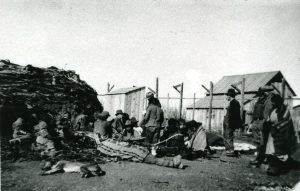 A crime spree by two Ute youths in 1923 escalated into a mob of settlers bent on suppressing the nearby Ute and Paiute populations in what is now Utah. The conflict led to the deaths of two Paiute men, including William Posey, a leader who was vilified in the press for his resistance to oppressive settler tactics. The ‘posse’ formed to retaliate against the tribes imprisoned dozens of Ute citizens in a makeshift stockade. The action, sometimes called the “Posey War” or the “Last Indian Uprising,” forever changed the tribes’ access to their land and ushered in a time of forced attendance in boarding schools for Ute children. A new exhibition in Salt Lake City, Utah recounts the Posey War a century later.
 Roberto Múkaro Borrero spent two decades surveying historical documents and piecing together fragments of written texts to create a new, comprehensive Taino language dictionary. And Alaina Tahlate is using what she learned from hours of recordings and hundreds of documents as she races to preserve the language of Oklahoma’s Caddo Nation that has only two fluent speakers remaining. We'll speak with these two passionate language scholars about the dedication it takes to make a difference.
 The most powerful earthquake ever recorded in North America struck 75 miles south of Anchorage in March 1964. More than 130 people lost their lives in the temblor and the subsequent tsunamis. The state’s largest city endured major damage to buildings, property, and infrastructure. Kodiak, Seward, Valdez, and the village of Chenega were among the places severely damaged by rising waters. The event forever changed how Alaska monitors and prepares for dangerous seismic threats.
 Bestselling Blackfeet writer Stephen Graham Jones (Blackfeet), author and English professor at the University of Colorado Boulder, caps off his horror trilogy with his new novel, The Angel of Indian Lake. It’s the usual rough ride for protagonist Jade Daniels, a slasher movie buff who keeps finding herself the target of human and supernatural malevolence. Her experiences over the years have given her unique strength and wisdom, but have also taken a physical and emotional toll. Does she have what it takes to fend off the inevitable confluence of evil?
 The future of Native agriculture depends on educating new generations of farmers and securing tribal water rights. Those are two of the conclusions from this year’s State of Native Agriculture Address. Federal ag agency leaders and Native non-profit ag representatives also praise new federal financial support programs and express the need make sure tribes’ interests are addressed in the overdue Farm Bill. Out on the land, it’s ramp (wild onion) season and time for cooks to share new and traditional wild onion dishes. And, for Women’s History Month, we’re focusing on the mothers, grandmothers, and ancestral matriarchs who keeping Indigenous foods alive. The Menu is our regular feature on Indigenous food sovereignty hosted and produced by Andi Murphy.
 A Minneapolis Lakota man is developing an archive of music by Native American artists one record and cassette tape at a time. Justis Brokenrope (Sicangu Lakota), founder of Wathéča Records, music curator, DJ, and educator, has already amassed a sizable collection of mostly folk, rock, blues, and country music by Native musicians. Now he’s converting a lot of that music to digital formats to give the music and the artists who created it new recognition. Along the way he’s expanding the conversation about the importance of Native languages.
 Minot Public Schools issued a public apology over conduct of fans at a basketball tournament this month. The action comes after reports of "potentially discriminatory conduct" targeting Native players. It’s one in a series of complaints about racially insensitive actions. The U.S. Department of Education’s Office for Civil Rights is investigating. Native American advocates successfully pushed the state School Activities Association to adopt a zero tolerance policy for racially insensitive behavior by fans.
 About one out of every six high school students report being bullied, according to data from the Centers for Disease Control and Prevention. That number goes up significantly — as much as 40% — for LGBTQ2 students. The death of non-binary Oklahoma teen Nex Benedict, ruled a suicide, is sparking widespread conversations about the consequences of bullying. The federal Government Accounting Office found in 2021 that racist bullying is also on the rise. We’ll discuss strategies that are showing promise for combatting bullying.
 Alaska sets aside a day each year to honor William Henry Seward, Secretary of State under President Abraham Lincoln. Among other things he’s known for negotiating the U.S. Government’s purchase of Alaska in 1867, ushering in subsequent American colonialism in the 49th state, including the Klondike Gold Rush and other resource exploitation that largely ignored the original inhabitants.
 When the Exxon Valdez supertanker broke open on March 24, 1989, the resulting oil spill coated 1,300 miles of shoreline in Alaska’s Prince William Sound and killed thousands of fish, birds, and wildlife. The environmental disaster is associated with the distressing images of water birds, otters, and other animals fighting for their lives through a thick coat of crude oil. The spill destroyed subsistence and commercial fishing for Alaska Native fishers, and created ecological contamination that is still recovering. We’ll look at the lasting harm from the spill 35 years later, and what’s changed to prevent future disasters.
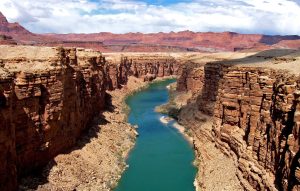 Four states and six tribes in the Colorado River Basin are working on an agreement on water usage into the future. The agreement could be finalized as early as April. It comes as a flurry of agreements — and lack of agreement — involving other states and tribes is competing for a comprehensive water sharing agreement in time for an imposed 2026 deadline. We’ll hear differing perspectives from tribal representatives about the evolving conversations about the vital and diminishing resource.
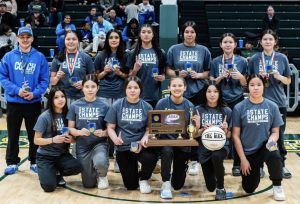 The Fort Yukon (Alaska) Lady Eagles capped off a winning streak to capture the first state championship in the school’s history. Their coach said it’s like “winning the Super Bowl”. The Navajo Prep (New Mexico) boys team, also the Eagles, won their first state championship, joined by a championship win by the school’s girls team. It’s basketball tournament time and we’re talking free throws, three-pointers, and trophies.
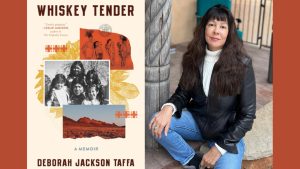 In the most compelling way, Whiskey Tender, the memoir by Deborah Jackson Taffa (Kwatsaán and Laguna Pueblo), is both an intimate personal story and Native American history lesson. It reveals her own epiphany over what she and her ancestors are pressured to sacrifice in striving for the American Dream. Her account is both poignant and humorous. Best-selling author Tommy Orange calls Taffa’s story a “drink you didn’t know you were thirsty for.”
 If the rates were equal among races, at least a thousand more Native Americans would have received life-saving liver transplants over a four-year period. An investigation by the Washington Post and The Markup shows Native Americans have the highest rate of death from liver disease, but the lowest representation on the waitlist for transplants. We’ll discuss the discrepancies and what’s being done to connect Native Americans with transplants.
 A bill just introduced in Canada would outlaw what most of the developed world has considered a human rights violation for decades. The law would prohibit sterilizing women without their consent. An Indigenous woman testified in front of lawmakers that she was sterilized without any prior discussion. Her mother was also sterilized without consent decades prior. The discussion comes as women from the U.S., Canada, and around the world confront past abuses of medical professionals who said they were working in the best interests of Indigenous woman.
 Bishop Paiute Chairwoman Meryl Picard is still in her second year in office and confronting the pressures of pit mining on traditional Paiute land. Chairman Andrew Alejandre of the Paskenta Band of Nomlaki Indians was a voice for California’s new Feather Alert MMIP notification system. They are among the 40 accomplished Native Americans being celebrated this week by the National Center for American Indian Enterprise Development. We’ll hear what’s on the minds of some of this year’s class.
 Making the most of doing business on a global scale means understanding the competitive advantages tribes bring to the table. Tribes’ unique sovereignty status and tax exemptions appeal to a number of international business ventures. And markets overseas offer the potential for a bigger and broader customer base. The key is knowing the right fit. Wednesday on a special edition of Native America Calling live from #RES2024, we’ll hear from expert international business leaders about the right time to reach out to markets beyond the usual borders.
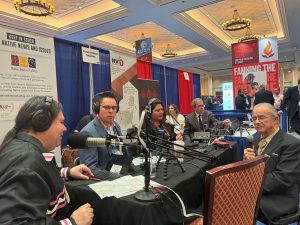 Small businesses owners put their dreams and financial futures on the line when they open their doors for the first time. In the process of improving their own skills and financial standing, they become building blocks for their tribes, providing jobs and circulating revenue within the community. The Navajo Nation just secured nearly $89 million toward promoting and supporting small business. We’re at the Reservation Economic Summit in Las Vegas to hear what that support goes for, and discuss other insights about the trends for Native small businesses.
 For most states this time of year, shifting time is as easy as moving the hour hand forward an hour. But Daylight Savings Time doesn’t change the staunch allegiance to the clock required during the typical day. But it wasn’t always that way. Tribes once had built-in schedules for harvests, ceremonies, family and feasts. Some of those traditions may have adapted to eight-hour work days, and five-day work weeks, but remnants of different cultural approaches to time remain.
 Native Americans are up for a historic three Academy Awards, thanks to Martin Scorsese’s groundbreaking film, Killers of the Flower Moon. The story of the Osage Reign of Terror earned nominations for Lily Gladstone for Best Actress, Scott George for Best Original Song, and the late Robbie Robertson for Best Soundtrack. We’ll hear from the nominees as we tap into the mounting excitement over the 96th Academy Awards.
 Two recent events are major wins for tribes in Washington State fighting to restore natural salmon runs. A federal judge just sided with the Puyallup Tribe in their lawsuit aiming to remove a dam on the Puyallup River because it harms endangered salmon and other fish. And a coalition of a half-dozen tribes just signed a $1 billion plan with the federal government to restore salmon populations in the Columbia River Basin.
 Super Tuesday is the biggest day of the primary election season, and voting in more than a dozen states increased the chances of a general election rematch between Donald Trump and Joe Biden in November. There were some other clues about what voters were thinking in several races around the country. What is on your mind as the presidential race narrows? What other candidates or issues are most important to you?
 Wandering Stars, the new novel by Tommy Orange (Cheyenne and Arapaho Tribes of Oklahoma), weaves together the complex history of the Boarding School Era as witnessed by the ancestors to the characters in his best-selling debut novel, There, There. The story takes us from the devastating Sand Creek Massacre, through the founding of the Carlisle Indian School, and into urban Indian life in Oakland, Calif. The experiences make up a constellation of experiences that define the characters and inform how all of us understand modern Native existence as only Orange's prose can.
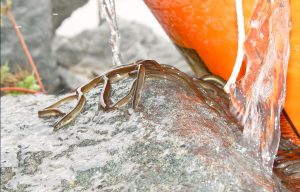 Overfishing in Japan, a thriving black market, and even the Fukushima nuclear disaster are all fanning the flames of fishing disputes involving tribes in Nova Scotia and Maine. Eels cannot reproduce in captivity. So juvenile glass eels, known as elvers, are a valuable commodity for Japanese aquaculture. They supply demand for a popular traditional dish in Japan. That demand is so high, it is threatening eel fisheries to the point that Canada is shutting down commercial seasons. Tribes maintain their treaty right to fish despite the government’s mandate. That’s causing rifts with non-Indigenous fishers and government officials.
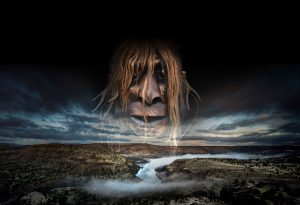 Sasquatch, also called Bigfoot, has captured the popular collective imagination around the globe for decades. But in addition to their pop icon status, Sasquatch have a deeper meaning for many Native American cultures. The name that’s often used most likely comes from the Coast Salish word “Sasq’ets.” The Sts'ailes First Nation in Canada consider Sasquatch to be a caretaker of the land. A new exhibition at the High Desert Museum in Bend, Ore. showcases work by Native artists inspired by Sasquatch. We’ll get a peek at the exhibition along with some context of the enduring cultural connection.
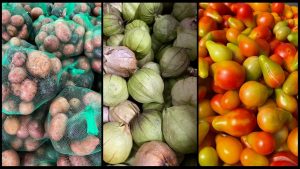 Native American agriculture sales nearly doubled from 2017 to 2022. That’s one of the takeaways from the most recent Census of Agriculture. It is now a $6.4 billion industry despite a global pandemic and a slight decrease in the number of Native farmers across the board in those five years. Also on an upward trajectory is the number of Native-owned restaurants in Albuquerque. Ohkay Owingeh chef Ryan Taylor opened Yapopup in January, settling his small catering company into a brick-and-mortar location within Tiny Grocer ABQ, which is owned by Elizabeth Gaylor (Cherokee). That’s on the latest episode of The Menu on Native America Calling, our regular feature on Indigenous food news and stories.
 There’s a richness when Black and Indigenous cultures meet. But there’s also some exclusion arising from outside expectations that someone needs to be one or the other. Artists who have a foot in more than one culture have a creative way of expressing that blended identity and the joys and drawbacks of a shared, but separate history. We’ll hear from artists who draw from two or more prominent cultural sources.
 On a typical day, Scott George is making sure elders and others at the Citizen Potawatomi Nation have safe and secure housing. Now, he’s headed to the Academy Awards for the song, “Wahzhazhe,” he and other Osage traditional singers perform that appears on the film “Killers of the Flower Moon”. And after releasing her first solo album, Odanak First Nation musician Mali Obomsawin is back in a collaboration, Deerlady’s “Greatest Hits,” that explores “relationships under colonialism”.
 Before he was dubbed “The Hurricane” by Marvel Comics icon Stan Lee, Brian Jackson (Cherokee, Muscogee, and Seminole) started out making animal balloons for a community church event. That small beginning has led him to breaking world records and traveling the world. He holds 12 Guinness World Records for blowing up balloons, exploding hot water bottles, and lifting a car off the ground — all with his own breath. His accomplishments helped him turn around his life that was headed down the wrong path and included an arrest for dealing drugs. We’ll talk to Brian Jackson about his motivation for breaking records, his commitment to culture, and his belief in second chances.
 A jury convicted Brian Steven Smith on all counts in the murders of two Alaska Native women, Kathleen Jo Henry and Veronica Abouchuk. The trial, lasting just over two weeks, made international headlines, at least in part because the killer recorded graphic video of one of the murders. The trial exposed ongoing vulnerabilities and inequities Native women in Alaska cope with, and dredges up memories of past trauma Native residents face on a disproportionate basis.
 The University of Wisconsin system takes in more than $1 million a year from lands given them by the federal government a century and a half ago. They are among the institutions that reap what a new investigation by the online publication Grist says is more than $2.2 billion dollars in 2022. The ongoing source of money comes from mining, drilling, farming, and other uses on lands granted by the U.S. Government to promote both continuing education and a policy of removing Native American possession and use of that land. Any past promised benefits to tribes and their citizens are falling short.
 President Joe Biden’s age in relation to his ability to do his job is a topic making front page news with questions about his memory, cognitive function, and physical stamina. At 81, President Biden is not that much older than his presumptive Republican election opponent, 77-year-old Donald Trump. Native Americans have a pronounced respect for the wisdom of elders. We’ll explore Native voters’ perceptions of age for elected officials as well as ways Native traditions for elders can inform the larger society’s views on aging.
 "Aloha" is a more than a word for Native Hawaiians — and its elevated importance in how people approach their own lives and wellbeing is invoked in one of society’s most controversial debates. The Hawaii Supreme Court upheld that state’s restrictions on carrying guns in public, in part saying "the spirit of Aloha" informs how the Second Amendment to the U.S. Constitution is interpreted locally. How the legal argument will play out is anyone’s guess. We’ll get guidance on what the true meaning of "Aloha" and how else it informs daily Hawaiian life.
 The Saint Regis Mohawk Tribe is making kiosks available in key locations so tribal members can access important information for their judicial and law enforcement systems. It’s part of a multi-phase effort to make their official procedures more transparent and accessible. They plan on ultimately providing digital access to their entire law library, court decisions and other documents that improve citizens’ understanding and engagement with government functions. We’ll talk with tribal representatives from Saint Regis and other tribes putting a priority on transparency and openness.
 The film professionals who perform stunts do more than just fall down. They are highly skilled and physically fit experts who make movie stars look good. Native stunt actors also fill a sought-after niche and are able to contribute expertise that takes the action in films up a notch.
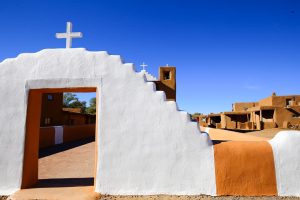 Thousands of Native American Catholics are entering the 40-day time of reflection and sacrifice known as Lent. Catholicism draws criticism for its connection to oppressive Spanish colonization and for the church’s role in boarding school abuses. At the same time the religion is a tradition—not to mention comfort—embraced by generations of observant Native Americans. On the holy day of Ash Wednesday, we’ll hear from Native Catholics about the intersection of their faith and their culture.
 It would be hard to find a legal victory any more important than the ruling named after federal judge George Hugo Boldt in 1974. It was the turning point for the fight led by Nisqually activist Billy Frank, Jr., initially affirming the treaty fishing rights for 20 tribes in western Washington State. But it provided the basis for a far-reaching transformation of Indian Law and natural resource management.
 The National Congress of American Indians’ newly-elected president Mark Macarro delivers his first address, highlighting the accomplishments and challenges of Native nations. His account comes at the start of a presidential election year. It’s also a time when tribes are seeing momentum for returned land as well as challenges to sovereignty from state and federal powers. We’ll hear an excerpt from the annual address and get some real world perspective on the State of Indian Nations.
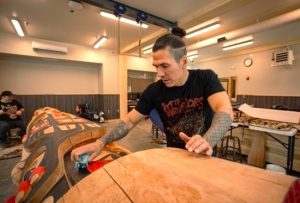 It takes more than just the right tools to carve a totem. Unless they are made by members of one of the traditional totem-carving coastal Pacific tribes, they may appropriating the often sacred symbols and methods those tribes reserve. Totems on public display by cities, schools, museums, and sports teams are coming under new scrutiny.
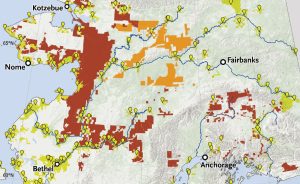 A coalition of Alaska Native tribes and organizations are urging federal officials to continue protections for 28 million acres of land in Alaska. Their action comes as the federal Bureau of Land Management is considering whether to remove protections against mining and other development that have been in place since the Alaska Native Claims Settlement Act (ANCSA) more than half a century ago. The lands are referred to as D-1 lands, referencing the section number in the ANCSA text. BLM is conducting an Environmental Impact Statement. The public comment period for that process ends soon.
 Four Native designers took a major stride when their work was included in the Louis Vuitton Men's Fall-Winter Fashion Show in Paris in January. They contributed designs to Pharrell Williams’ new collection for the fashion powerhouse that displayed a strong western feel. Dee Jay Two Bears (Standing Rock Sioux Tribe/Lakota) has worked with Williams for years and coordinated the show. We’ll visit with some of the Native designers who brought Native artistry to a new level of fashion representation.
 The Center for American Progress says about one in three U.S. adults have an incarceration, conviction, or arrest record. And research in 2023 by the MacArthur Foundation’s Safety and Justice Challenge finds Native Americans are incarcerated at a rate 38% higher than the national average. What should you do if you do if police pull you over? Are there steps you can take now to prepare or to prevent a bad situation from getting worse? We’ll speak with legal experts about educating yourself about the criminal justice system.
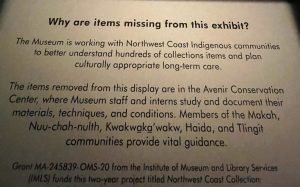 New language in the Native American Graves Protection and Repatriation Act (NAGPRA) is prompting museums to pull some Native items from public display. The rule went into effect in January that requires museums to consult with tribes more comprehensively when it comes to Native artifacts. That’s because, even though they may not be the human remains or sacred items that NAGPRA historically referenced, many items held by museums, universities, and other institutions could have been looted from Native sites or otherwise taken under suspicious circumstances.
 Two of the newest National Book Awards winners reinterpret conventional views of their homelands through their unique, Indigenous lenses. Yale historian Dr. Ned Blackhawk (Western Shoshone) reexamines five centuries of U.S. history in his new book Rediscovery of America: Native Peoples and the Unmaking of U.S. History. He explores Native people’s overlooked role from the arrival of Spanish explorers to self-determination. And a collection of experimental and visual poems, from unincorporated territory [åmot], by Dr. Craig Santos Perez (Chamoru) recounts recollections of his homeland of Guam. Åmot is the medicine he invokes to heal colonial traumas. We’ll speak with both of the authors about these new works and the Indigenous histories they rediscover.
 Navarre Scott Momaday (Kiowa) introduced the world to Ben Benally and Abel in his first novel “House Made of Dawn”. He also established himself as a literary force with a distinctly Native American voice, winning the 1969 Pulitzer Prize for Fiction. He published some 20 other works of fiction, poetry, and essays, earning many more awards and accolades and will always be known as the artist who cleared a path for a new generation of Native writers. We’ll remember Momaday with some of those who he knew and inspired.
 Sharp knives make for easier, quicker, and safer work in the kitchen and that’s why Nikki Tsabetsaye started offering her knife sharpening skills in her hometown in Zuni, N.M. These cold months, also known as “soup season,” bring out the coziest and hottest pots of Native soups and stews, swimming with traditional and wild ingredients, that make up a big part community identity and culture. And, three Native-owned food businesses are nominated for a major culinary award. That’s on The Menu, our regular food feature hosted by Andi Murphy.
 Members of the Yurok Tribe told California lawmakers that state’s first year using an alert system specifically for missing Native people is making a difference. The Feather Alert system issues public messages similar to the widely used the Amber Alert process. Yurok officials say the new alerts are widely used by tribal members and other Native residents, increasing the chances of finding people who go missing. The California effort is one of the tools in the constant battle against human trafficking that disproportionately affects Native Americans and other people of color.Anyone who has information about a potential human trafficking situation or a person who may be experiencing human trafficking should contact the FBI, local law enforcement, or the National Human Trafficking Hotline at 1-888-373-7888 (text: 233733)
 One of the biggest changes for your tax return hasn’t happened yet. Congress is still mulling over a child tax credit that could very well send more money back to families and would apply retroactively to 2023 returns. Although more modest than the 2021 credit tied to pandemic relief, the Center on Budget and Policy Priorities says Native American families will be among the groups that would benefit most. We’ll discuss child credits and help clear up the confusion that comes with every federal income tax season.
 This month marks 30 years since the Zapatista Army of National Liberation attracted worldwide attention with their rebel uprising in Chiapas, Mexico, demanding, among other things, rights for Indigenous residents. The uprising is credited with spurring several beneficial changes in Mexico. At the same time, support for the rebel group has waned in the decades since. We’ll explore the Zapatista movement’s influence toward awareness of Indigenous rights in the three decades of their existence.
 Kansas City’s NFL team either goes to the Super Bowl or plays its final game of the year on Sunday. The team has weathered sustained pressure that has seen other sports teams, like the Cleveland Guardians and the Washington Commanders, change their names and mascots. Activists have gone so far as to publicly appeal to Taylor Swift, girlfriend of Kansas City tight end Travis Kelce, to speak out against the controversial "tomahawk chop" performed by fans. We’ll assess the wins and … lack of wins … in the ongoing awareness campaign for respectful names and mascots.
 There’s a driving demand for more renewable energy projects such as wind and solar. In the rush to build, important cultural resources are threatened. The news outlet ProPublica wrote about an instance in Washington state where an archaeological survey paid for by the wind developers failed to list potential cultural sites that were obvious to state regulators. Tribes in Arizona are at odds with a solar project that would put a power transmission line across traditional cultural places. We’ll look at the intersection of sustainable energy and sacred and important sites.
 Artists like Fritz Scholder and T.C. Cannon are among the masters who inspired new generations of Native artists to express their stories and images through printmaking. The art form has a long history in Asian and European cultures, but is a relatively new tradition among Native practitioners. We’ll talk with Indigenous artists who find turn to prints as part of their creative process.
 As dangerously bitter winter weather takes hold of the country, some efforts to help unsheltered Native Americans face closure. City officials forced an emergency shelter set up in Rapid City, S.D., to shut down. Successful shelters in Seattle and Minneapolis that cater to unsheltered Native residents face pressure by outside forces that intend to develop the sites for other uses. And Anchorage continues a troubling ongoing trend of homeless fatalities. We’ll look into some of the ongoing struggles to help unhoused relatives.
 Diabetes drugs known as GLP-1 agonists, like Ozempic, are riding a wave of popularity right now. But the high cost and short supply because of their popularity as a weight loss remedy are putting the drugs out of reach for those who need them. Native Americans struggle with diabetes disproportionately. Now, is there a disparity when it comes to viable treatments?
 Author, historian, and Haskell Indian Nations University professor Daniel Wildcat (Yuchi member of the Muscogee Nation of Oklahoma) believes in the power of Indigenous knowledge to counter big problems. His newest book On Indigenuity: Learning the Lessons of Mother Earth combines Western science, tribal knowledge, and his own personal observations as a way to create path away from climate change and other looming environmental threats.
 The Upper Mattaponi Tribe has reached a major milestone toward solidifying its federally recognized status. Doors opened this month to Virginia’s first tribal court system, handling civil cases including child custody proceedings and misdemeanor criminal cases. We’ll hear about the milestone and put it in context of the legal system in Virginia. Plus, we'll remember the life and career of longtime journalist Gary Fife (Muscogee), who died this week.
 Every January, runners commemorate the tragic day in 1879 when soldiers hunted down and killed Northern Cheyenne men, women, and children who attempted to escape unbearable conditions at Fort Robinson, Neb. The captive Cheyenne were fleeing imprisonment without food, water, or heat on top of pending demands by the U.S. Army they return to confinement in Oklahoma. We’ll explore the history of the event 145 years ago and the work in recent years to promote healing.
 An aide to President Richard Nixon once paid Hank Adams a backhanded compliment, saying he could speak both Indian and “American”. As misguided as that praise is, it highlighted one of Adams’ gifts that helped him steer the armed standoff at Wounded Knee to a peaceful conclusion. Adams is probably best known for his dedicated fight for Native fishing rights in the Pacific Northwest that culminated in the Boldt Decision. We’ll remember the civil rights champion with some of the people who knew him best.
 Marvel-villain-turned-superhero Echo is now streaming on Disney+, giving audiences their first series featuring a Native American comic character, who also happens be deaf with a partially prosthetic leg. Echo is a choice lead opportunity for Menominee and Mohican actress Alaqua Cox. It’s directed by Sydney Freeland (Navajo) and boasts a large Native supporting cast including Chaske Spencer, Devery Jacobs, Graham Greene, and Tantoo Cardinal. We’ll talk with the cast, crew, cultural consultants, and comic book fans about bringing this comic book story to life while also striving for accurate Indigenous representation.
 The year 2023 saw substantially more ancestral remains returned to tribal nations than any time since the passage of the Native American Graves Protection and Repatriation Act (NAGPRA) — and more repatriations are in the works. That’s the stunning assessment by the news outlet ProPublica. The progress in complying with federal law after years of resistance follows ProPublica’s own investigation into institutions’ failure to hand over remains and steady pressure by tribes and organizations like the Association on American Indian Affairs. We’ll find out about what it took to overcome decades of resistance by museums, universities, and other institutions and what else needs to be done.
 Blackfeet actor Lily Gladstone made history as the first Native American to win a Golden Globe for best actress. She acknowledged the "allies" that supported her win for her role as Mollie in “Killers of the Flower Moon”. In her acceptance speech she spoke Blackfeet and dedicated the award to every "little rez kid, every little urban kid, every little Native kid out there who has a dream". We’ll talk to some of the people inspired by Gladstone’s words and some of the people who inspired her along her artistic journey.
 For a lot of people, a car is the second biggest purchase they’ll make. A lot more goes into picking a car than just color and style. We’ll talk with Native car sellers, mechanics, and financers about how to assess what you need in a vehicle and get tips on making decisions based on practical considerations rather than emotional ones. And we’ll get a checklist to help decide when to fix the ride you have and when to ditch it for something newer.
 The five members of the new Champions for Change class from the Center for Native American Youth have an inspiring resume already. They have demonstrated leadership in areas like health and wellness, performing arts, science, and policy research. We’ll hear from them and find out what drives their passion to make positive things happen.
 Just as the rest of us are putting away holiday lights and sweeping up New Year’s confetti, a tradition like no other gearing up in the Inuit villages of Labrador and Newfoundland, Canada. Every January 6, the Nalujuit come out of the icy sea to visit Inuit children. They have terrifying faces and carry harpoons and other menacing staffs. They give out treats to children they deem good, but chase those who are bad. It’s a beloved Labrador Inuit tradition that’s also documented by an Inuk filmmaker.
 A civil rights lawsuit brought by the Department of Justice forced a hotel owner in Rapid City, S.D. to issue a written apology and take other steps after publicly banning Native Americans as hotel guests, but another lawsuit claims the hotel is still turning away Native customers. A business owner in Arizona faced few consequences after a public tirade against Native Americans. Such disparaging actions and public comments aimed at Native Americans are a step backward in the work toward equality and civil discourse. The response to those actions can make a difference going forward. We’ll discuss what is required by individuals and institutions to make things right after publicly disrespecting Native people.
 Some of the big news stories from the past year promise to spill over into the months ahead and beyond - from the fallout for #Native #Americans caught up in a massive Medicaid fraud scheme in Arizona to the causes and ramifications of the deadly fires that destroyed Lahaina, Hawaii. Those are two of the big events that Native journalists are following in 2024.
 The New Year provides an opportunity to press the reset button and shed those intrusive negative thoughts. Improving our physical and mental health, prioritizing important relationships, and putting the worries of the world in the right context can all make a difference at home or at work. We’ll have helpful strategies and inspiration for everyone from expert self-starters to those working on a major motivation overhaul.
 The aurora borealis is more than just a dazzling natural light show for those lucky enough to see it. The northern lights are also a cultural touchstone handed down over millennia. Some tribes understand the Northern Lights as a message from the ancestors. At the same time, Native astrophysicists are working to view the phenomenon with both modern scientific and traditional knowledge.
 Crews have completed demolition of one dam on the lower portion of the Klamath River along the Oregon-California border. It's a major milestone in the area's tribes' efforts to restore salmon, traditionally the primary food source for tribes in the area. At least four Indigenous chefs released cookbooks in 2023, helping change the narrative and methods around traditional dishes. Those are two of the Indigenous food highlights we'll feature the latest helping of The Menu, our regular feature on Indigenous food and food sovereignty hosted by producer and resident foodie Andi Murphy.
 How much do you know (and remember) about Native people and events from 2023? Now is the chance to test your knowledge of things you might have heard about by listening to Native America Calling over the past year. What name was Buffy Sainte-Marie given at birth? Which justices dissented in the U.S. Supreme Court’s historic decision on ICWA? Name a river in California where dams are being demolished to benefit salmon. Those are the types of trivia questions related to Native issues that callers can answer and have a chance to compete for one of three prizes.
 What changes would you make if you were in position of authority? Now is your chance to say what you would change if you were president, chairman, or even king. Would you ban all gas-powered cars? Would you own up to all the promises from past treaties with tribes? Would you require all schools to teach at least one Indigenous language? We’ll get ideas from our audience and a few invited guests on what they would do if they had the power to change things.
 Jerry Chris Elliott-High Eagle (Cherokee, Osage) joined NASA as a young engineer before astronauts ever made it to the moon. Eventually, among other things, he was a member of the team that devised real-time solutions to bring the crew of the hobbled Apollo 13 safely back to Earth, an accomplishment that earned him a Presidential Medal of Freedom. He’s a musician, writer, inventor, and social justice advocate. He was instrumental in establishing the first national Native American Awareness Week and was a founder of the science education organization, the American Indian Science and Engineering Society. We’ll hear from Elliott-High Eagle about what it takes to succeed in the face of adversity.
 The increase in unprecedented damage from wildfires knows no boundaries and International Indigenous fire management experts see global participation as a solution. At the heart of their work is recognition that climate change is a major contributing factor. They’re bringing traditional fire knowledge to a new generation who are inheriting some of the worst conditions for destructive wildfires in history. We’ll talk with some of those gathered for this year’s Indigenous Peoples Burning Workshop, in this encore episode of Native America Calling (no calls, please).
 What music from 2023 is on repeat in your Native playlist? We’ll get recommendations from Native artists and others with their ears to the ground about this year’s new releases from veteran artists and up-and-comers, spanning genres, tribes, and styles.
The aurora borealis is more than just a dazzling natural light show for those lucky enough to see it. The northern lights are also a cultural touchstone handed down over millennia. Some tribes understand the Northern Lights as a message from the ancestors. At the same time Native astrophysicists are working to view the phenomenon with both modern scientific and traditional knowledge.
 A federal appeals court ruling is prompting a review of some previous decisions in favor of tribes seeking redistricting or ballot access changes. The recent decision by the Eighth Circuit Court of Appeals limits who can sue under the landmark Voting Rights Act. We’ll check on selected access and redistricting cases, including a redistricting case involving North Dakota tribes and a ballot drop-box initiative in Arizona, that indicate how Native voting access could change.
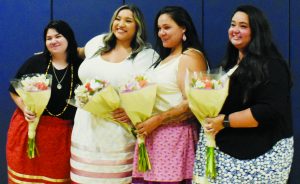 The Dadiwonsi Adult Language Program in North Carolina just welcomed its first graduates in the Cherokee Language. The program is part of an extensive network to develop new fluent Cherokee speakers on and around the Qualla Boundary. And a translation effort hopes to connect modern Cherokees with past culture keepers, Inoli and Will West Long.
 This year we said goodbye to Reservation Dogs, but welcomed a trailblazing new Native character in the Marvel franchise. A talented actress brought a tragic tale of greed and murder on the Osage Nation to the big screen and a poignant coming of age story set on the Navajo Nation is a streaming darling. We’ll recall the highlights of the Native stories that connected with audiences in 2023.
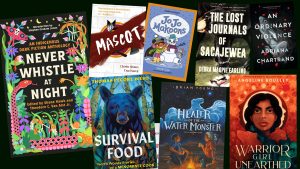 This year’s published works included a fictional account of Sacajawea, a Pulitzer Prize-nominated historical analysis of northern Anishinaabe people, a creepy anthology, and a sequel to a best-selling story. We’ll hear from both readers and writers about the standout books by Native authors from 2023.
 Indigenous leaders from around the world are assessing the results – and lack thereof – from the annual international conference to determine the direction of environmental policy. Climate activists are severely criticizing the key document that emerged from the meeting hosted by one of the world’s biggest oil producers for ignoring future petroleum phase-outs to fight climate change. We’ll take on the 28th Annual Conference of Parties from an Indigenous perspective.
 From voting rights to drinking water access to respecting important Native land, Laurie Weahkee (Diné, Cochiti, and Zuni Pueblo) has been a force to improve policies that affect Native people. She was the long-time director of the Native Voters Alliance and has worked on political campaigns and local and national issues. She's our Native In The Spotlight.
 The Biden Administration just announced more than $4.3 million in federal money for a handful of tribes to bolster meat processing. Officials say the Indigenous Animals Harvesting and Meat Processing Grants from the U.S. Department of Agriculture are designed to improve connections to traditional food sources. It’s part of a larger $68 million federal appropriation just announced that includes cooperative land management to improve wildlife habitat and fire protection. We’ll find out how tribes will utilize money to improve food sovereignty.
 President Joe Biden signed an executive order during the White House Tribal Nations Summit that his administration says will provide tribes with better access to federal funds as part of the ongoing efforts to “heal the wrongs of the past”. Other topics at the summit centered on consultation, climate change, the scourge of fentanyl, and President Biden's endorsement of the Haudenosaunee Confederacy lacrosse team competing under their own flag in the 2028 Summer Olympic Games. We’ll talk with tribal leaders about the summit and the Biden Administration’s track record on its nation-to-nation relationship with tribes.
 The Barbie brand has experienced a banner year with the record-breaking success of the Greta Gerwig film. However, the Barbie Inspiring Women collectible dolls, which includes the former Principal Chief of the Cherokee Nation of Oklahoma Wilma Mankiller, is getting praise and criticism - and spurring conversations about how non-Native companies accurately honor Native individuals and tribes. We’ll dive into the controversy.
 For fans and Native communities, volleyball matches and tournaments are sometimes as popular as football and basketball games. It’s fast-paced and rivalries are fierce. Especially popular for girls at the high school level, volleyball instills a long list of valuable lessons including the importance of fitness and exercises. Shawn Spruce talks with Native volleyball players and coaches about the 2023 season and how the sport is a dear part of Native community.
 Mainstream audiences are starting to get a taste of Native humor on television shows like Rutherford Falls and Reservation Dogs. Native stand-up comics are also receiving more recognition like Brian Bahe (Tohono O'odham, Hopi, and Navajo), who was named by the news site Vulture as a new comedian to watch out for in 2023. We’ll hear from some Native comedians about breaking into the industry and making people laugh.
 It’s that time of year when we gather around the table to share a holiday dinner with family and friends for harvest feasts and winter community meals. To keep everyone safe from foodborne illnesses like Salmonella and E. Coli, home cooks must remember some simple, but important, food safety rules. Viruses and bacteria spread by contaminated food not only cause unpleasant gastrointestinal issues, foodborne illnesses can be life-threatening for elders and those with weak immune systems. We’ll talk with food safety and medical experts about safe food handling.
 The American Revolution is mostly portrayed as an epic struggle between the colonies and the British. But Native tribes and individuals played a significant role in the historic War of Independence. It was a difficult choice for tribes, who were neither British subjects nor supporters of the encroaching colonies. We’ll get the Native perspective on America’s first war.
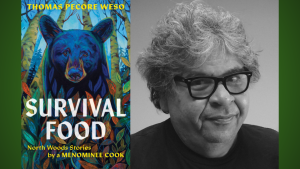 Survival Food: North Woods Stories by a Menominee Cook, the posthumous memoir of the late educator, writer, and artist Thomas Pecore Weso, was just released. It gives readers a snapshot of his years growing up on his Wisconsin reservation in the 1960s and 1970s. He threads his memories in with the food that comes from hunted, fished, and gathered sources. Also, Congress has a chance to provide a consistent source of funding for tribes and tribal organizations for managing bison herds. Those are among the topics on The Menu, our regular feature on Indigenous food and food sovereignty hosted by Andi Murphy.
 Tribal museums are on the forefront of representing Native culture and information accurately and effectively. They also advocate for best practices when it comes to repatriation and proper display of artifacts. As Tribal Museums Day approaches, we’ll get a rundown of some museums that are making a difference in their communities.
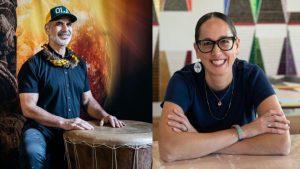 This year’s class of MacArthur Fellows includes three creative leaders from Native America. Dyani White Hawk (Sičáŋǧu Lakota) draws community and family together through contemporary and abstract multidisciplinary art. The Haskell Indian Nations University alumni has showed her work at myriad galleries including The Whitney Biennial in New York City. Patrick Makuakāne (Kanaka Maoli) is the founder and director of Nā Lei Hulu i ka Wēkiu, a hula company and cultural organization. Makuakāne is a kumu hula, a master teacher of hula, who’s work connects and promotes contemporary Hawaiian hula, music, and culture while challenging stereotypes and taking back Hawaiian narratives. And Raven Chacon (Diné), Pulitzer Prize-winning composer, who, as an artist, explores the relationships between people, space, and sound by examining the history and theft of land. We’ll visit with a couple of this year’s MacArthur Fellows and learn more about their work.
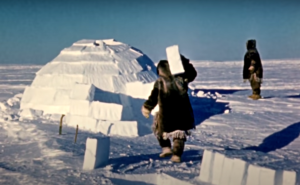 In the cold expanse of the Arctic, igloos, those dome-shaped structures made of blocks of snow, offer a cozy shelter in the wintertime. It’s one of many types of traditional winter homes tribes from the north down to the Southwest rely on. We’ll talk with traditional builders who carry on igloo and winter house building.
 Tescha Hawley’s (Aaniiih) breast cancer diagnosis started both a harrowing personal journey to fight the disease and the inspiring effort to help others facing similar health obstacles. Hawley organized funds and other resources for people on Fort Belknap Reservation in Montana who faced long drives, overnight hotel stays, and other expenses to access life-saving care. Her work grew into the Day Eagle Hope Project.
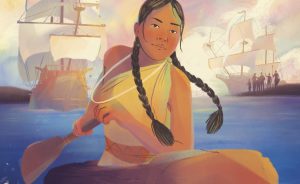 The full picture of how the earliest colonists interacted with the Native Americans they encountered is clouded by the myths constructed by those writing history. Linda Coombs (Wampanoag Tribe of Aquinnah) offers the perspective from the tribe that greeted the Pilgrims in Race to the Truth: Colonization and the Wampanoag Story for both young readers and adults. She is an author with extensive experience as a tribal historian. Her book offers insights about, among other things, the first Thanksgiving.
 Hopi musician and community leader Clark Tenakhongva pays tribute to Bears Ears Monument on his newly released album, “Hon Muru (Bear’s Ears).” The album features flutes, gentle percussion, and vocals in Hopi that make for a contemplative listen. Thursday on Native America Calling in an encore presentation of our regular feature "Native Playlist", Shawn Spruce talks with Tenakhongva about creating the album and catches up on his recent work on environmental conservation.
 Nearly three quarters of the children in South Dakota’s foster care system are Native American. That’s in a state with an overall Native population of 13%. And despite the requirements of federal law, a large portion of those children are placed in non-Native households, potentially severing their connections to family and culture. The lack of Native foster parents is one factor. But so is the lack of staff in tribal foster care programs. A comprehensive report by the Sioux Falls Argus Leader and South Dakota Searchlight offers an in-depth look at the causes and consequences of South Dakota’s foster system disparities.
 There is no more basic need than clean drinking water. That’s a need that the Santee Sioux Reservation in Nebraska has been lacking since the Environmental Protection Agency issued a no drink order in 2019. Wells on the reservation are showing levels the mineral manganese as much as 50 times higher than the agency considers safe. A long-term solution could cost upwards of $40 million. There’s no identifiable source of any funding for even a fraction of that amount.
 Teams of Native junior and high school students are competing to build the best robots. They have to build their machines from scratch to accomplish tasks competition organizers set each season. Those tasks might be as simple as moving an object to a specific space, but they also might have to get around their opponents who are trying to stop them. Just like in sports, there are competitions on the regional, state, and national levels. We’ll hear from some Native robotics competitors and their coaches who are fired up about robots.
 This year the collection of Native films by the Smithsonian Institution’s National Museum of the American Indian includes 35 films from six different countries. A selected list of films in the Native Cinema Showcase is going online free of charge. The films include a documentary about a young Navajo woman exploring the source of environmental threats on the Navajo Nation and a dramatic account of a woman’s interaction with a Maori stranger. We’ll hear about the films and filmmakers in this new curated selection of Native-produced and Native-themed film.
 Chronic wasting disease is a fatal neurological disorder that affects deer, elk, and other big game animals. It has growing implications for wildlife and the people across the country who manage them. In Minnesota, tribes are teaming up with wildlife officials and researchers in a unique collaboration aimed at reducing the spread of the disease on and near tribal lands.
 As Head Start approaches its 60th year, federal funding for the pre-kindergarten program remains well short of what it would take to cover the number of children eligible. Now, it is among the proposed budget cuts on the table as Congress works to avoid a shutdown. There’s evidence Head Start provides a life-long boost for Native children, but its future is in doubt in Alaska and some other places where the potential need is greatest.
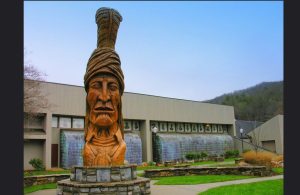 After reaching out to tribal leaders and citizens, the museum on the home of the Eastern Band of Cherokee Indians in North Carolina re-launched with a new name and purpose. It’s a major makeover that officials with the Museum of the Cherokee People say now pulls together aspects of all three federally recognized Cherokee tribes. It’s one of several Native organizations and businesses that recently saw a need to refresh their image to better reflect their changing goals and purpose. We’ll talk with museum officials as well as branding experts about taking on a change in direction.
 The state of Louisiana tried to update their state recognition process, but the task force appointed to do that adjourned without any decisions. At least two tribes vying for state recognition are left hanging. It's just one instance of the questions facing tribes that don't yet meet the requirements for federal recognition and are seeking official status from their state.
 Parades and powwows are gearing up to honor Native American veterans around the country. Native military service dates to well before Native Americans were considered citizens of the United States. In addition to financial and educational benefits, Native people look to the military as a source of honor in line with tribal traditions. We’ll celebrate Native military service and assess how Native veterans are included when it comes to understanding cultural traditions, Friday on Native America Calling with Shawn Spruce.
 Native American activists are speaking out in solidarity with Palestine as the U.S. continues its official stance supporting Israel’s right to defend itself against Hamas. Many Native observers have long connected tribal history in this country and Palestine’s resistance against Israel’s aggressive colonial actions. Some others see parallels between tribes and Israel’s defense of sovereignty and homeland.
Hopi musician and community leader Clark Tenakhongva pays tribute to Bears Ears Monument on his newly released album, “Hon Muru (Bear’s Ears).” The album features flutes, gentle percussion, and vocals in Hopi that make for a contemplative listen. Wednesday on Native America Calling in our regular feature "Native Playlist", Shawn Spruce talks with Tenakhongva about creating the album and catch up on his recent work on environmental conservation.
 After a stellar, groundbreaking career as a musician and advocate for Indigenous people and causes, Buffy Sainte-Marie’s stated connections to any tribe in Canada or the U.S. appear to be completely made up. The revelations in an investigation by the CBC’s The Fifth Estate are a heartbreaking disappointment to her fans who saw her as a trailblazer in an industry with so little positive Native representation. At least one Indigenous group is calling for a recent Juno Award for best album to be rescinded. Others like the Piapot First Nation, the Cree tribe Sainte-Marie identified with for more than a half century, stand behind her. Does she deserve complete outrage? Or can we, as Cree author Michelle Good asks, “remember the power that was there regardless of her deception?”
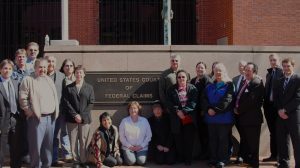 Four northern tribes won a historic $59 million settlement with the federal government after a legal battle dating back three decades. The substance of the Pembina Tribes’ lawsuit is rooted in a treaty in the mid-19th Century. We’ll talk about what it takes to hold the United States accountable for dishonorable actions and the slow, difficult process to finally prevail against the odds.
The increase in unprecedented damage from wildfires knows no boundaries and International Indigenous fire management experts see global participation as a solution. At the heart of their work is recognition that climate change is a major contributing factor. They’re bringing traditional fire knowledge to a new generation who are inheriting some of the worst conditions for destructive wildfires in history. We’ll talk with some of those gathered for this year’s Indigenous Peoples Burning Workshop.
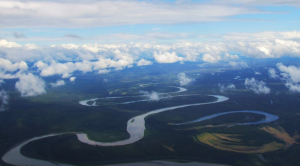 Since time immemorial, the Kuskokwim River in Southwest Alaska has fed Native families. Now, after years of failed salmon runs, Native families are confronting the potential loss of this vital resource. At the same time they are caught in the middle of a legal battle between the federal government and the state over how best to manage fishing in rivers that flow through both jurisdictions. The Alaska Federation of Natives just joined several tribal groups, taking he federal government’s side in the fight. We’ll look at what’s at stake for Alaska Native residents in this latest chapter in the evolving fight over subsistence fishing.
 A non-Native woman in Alaska refuses to abide by a tribal court order to turn an Alaska Native foster child over to the girl’s family members. It’s a blatant disregard of tribal sovereignty even after a notable re-affirmation of the Indian Child Welfare Act by the U.S. Supreme Court. The woman took custody of the child, named Chanel, at the request of the girl’s father, right before he was convicted of murdering Chanel’s mother during a domestic dispute. We’ll look at that case, as well as efforts to bolster ICWA compliance elsewhere.
 You never know what spirits you might summon when you whistle in the darkness. A new anthology Never Whistle At Night includes a story by Mi'kmaq writer Tiffany Morris, who also has a horror novella Green Fuse Burning, released on Halloween.
 Moving through all four seasons, Yurok homecook Sara Calvosa Olson tells a compassionate story about the flavors and food of her tribe through her new debut cookbook Chími Nu’am. Menominee chef Jessica Pamonicutt’s catering company Ketapanen Kitchen will be getting a lot of visibility as a member of this year’s Chicago Bears Small Business All-Pros Team. And part of Minneapolis American Indian Center’s reconstruction is a totally revamped Gatherings Café with a new executive chef Vernon DeFoe (Red Cliff). It's all part of The Menu, our regular feature on Indigenous food and food sovereignty produced and hosted by Andi Murphy (Diné).
 One way Indigenous cultures keep kids in line is with frightening traditional stories that have a moral or practical lesson. They include tales of children being dragged underwater for wandering too close to the sea or getting haunted by bad spirits if they don’t respect their parents. We’re gathering around the microphone, turning off the lights, and listening to spooky stories from Cherokee, Muskogee, Inuit, and other storytellers, with special guest host Alyssa Yáx̱ Ádi Yádi London.
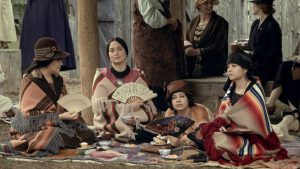 Renowned director Martin Scorsese’s vision for the new movie, “Killers of the Flower Moon”, changed early in the production. He said he realized he wanted to be more respectful of the Osage Nation and its people in telling the dark period in their history. He brought on Osage consultants and Native talent throughout all aspects of the production from the script to the wardrobe. We’ll get perspectives on how this painful history was handled on screen.
 This month marks 220 years since the ratification of the Louisiana Purchase. In one fell swoop, the United States doubled in size, adding much of the land between the Mississippi River to the Rocky Mountains. It was also the moment when colonial powers embraced the momentum of westward expansion that ushered in Manifest Destiny, the Indian Removal Act, and other actions that favored European settlement at the expense of the land’s original inhabitants.GUESTSPatty Ferguson Bonhee (Pointe-au-Chien), director of the Indian Legal Clinic and Clinical Professor of Law at Sandra Day O’Connor College of Law at Arizona State UniversityDr. Laura Kelley, professor of history at Tulane UniversityJonathan Rohrer, tribal historic preservation officer for the Caddo Nation
 Space explorers, hip-hop musicians, artists, and housing activists are among the diverse list of characters who make up season two of the PBS series “Native America”. The four-part season builds on the original series from 2018. Native filmmakers guide viewers on an inspiring and poignant exploration of modern Native life and its connection to traditions and stories from time immemorial. We’ll hear from the producers and others involved in bringing the shows to life.GUESTSPam Belgarde (Turtle Mountain Band of Anishinaabe), producer of "Native America" Charles ‘Boots’ Kennedye (Kiowa), producer of "Native America"Gary Glassman, executive producer of "Native America"
 Tribes are getting their applications in for funds from the second round of the Biden Administration’s Tribal Broadband Connectivity Program. Altogether the federal government is sinking almost $3 billion into tribal connectivity projects. From Starlink connections in Alaska to community Wi-Fi hubs in Kansas, almost 200 tribes received grants to put them on the cusp of high-speed internet infrastructure, some of them for the first time ever. We’ll hear from some tribes about what the money is paying for and how long before they see dividends toward bridging the digital divide.
 Months of qualifier rounds are wrapping up, culminating in the Indian National Finals Rodeo. Hundreds of Native barrel racers, calf ropers, bull riders, and steer wrestlers converge at the South Point Equestrian Center in Las Vegas, Nev. to compete for the world champion spot. We’ll hear about who to watch and what’s ahead in professional rodeo sports.
 Teachers, librarians, authors, and literary advocates are struggling to keep books about Native issues into public classrooms and libraries. That’s because of the increasing momentum by groups intent on removing any references, however vague, that they deem to promote racial diversity. Michigan’s Brandywine School District banned Laurel Goodluck’s children’s book Forever Cousins, an innocuous story about two Native relatives coping with living apart. We’ll get an updated list of banned Native books and what’s being done to get them in the hands of readers.
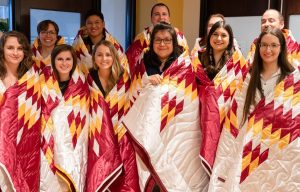 The current shortage of medical professionals is a public health crisis. And the most-often cited estimates on into the future predict it will only get worse. That’s a particular problem for Native Americans, a group with higher instances of dangerous physical and mental health conditions, many of which could be addressed with better access to health care. Several Native physicians and public health advocates are looking at ways to both recruit more medical professionals and train them on culturally-grounded methods to help improve Native patient outcomes and head off an even worse problem in the future.
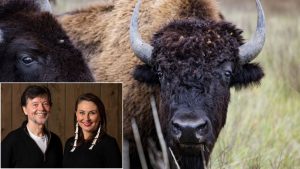 Director Ken Burns recruited Native filmmakers, producers, and actors to help tell the story of the iconic Plains animal, the buffalo. The new PBS documentary The American Buffalo chronicles the history of the buffalo - from its sacred connection to tribes to its almost complete demise - and the contemporary work by tribes to restore herds descended from the survivors of the federal government’s efforts to eradicate them. We’ll hear from the show’s creators and tribal experts dedicated to reviving the important and once plentiful species.
 More teachers and administrators are turning to trauma-informed practices in the classroom. Among other things it prioritizes communication over discipline in certain circumstances, like when students experienced violence, a major accident, or some other significant event that might cause them to act out. It could be among the tools educators use to address the disproportionate percentage of Native America students who are suspended or expelled, which could affect their overall success at school.
 Most residents of North America will be able to witness at least a partial solar eclipse this weekend. The rare celestial event evokes a variety of reactions depending on tribal beliefs. Many Cherokees go outside and make noise to scare away the giant frog trying to eat the sun. The eclipse is an auspicious time of ceremony for Hopis. The Navajo Nation plans to close some tribal operations during the eclipse. We’ll shine a light on some of the tribal traditions for the upcoming eclipse.
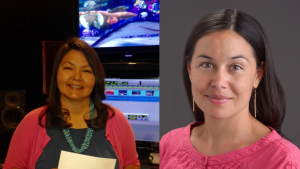 Speaking a Native language is one thing. Reading and writing it often takes another level of effort and understanding, especially for adult language learners. To help keep languages thriving, Alaska is looking for ways to develop Native language standards in public schools. A number of other tribes utilize technology, adult classes and even games to promote their written languages.
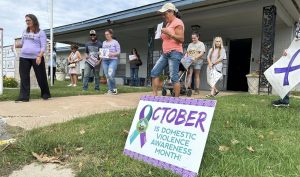 In the coming U.S. Supreme Court session, justices will hear arguments against a law that prevents people with domestic violence restraining orders from possessing guns. Native advocates for domestic violence survivors are worried a decision in favor of gun owners will jeopardize the lives of women, who are, by far, the most frequent victims of domestic violence. For Domestic Violence Awareness Month and to mark the 29th anniversary of the Violence Against Women Act, we’ll find out what actions help—and hurt—potential domestic violence victims.
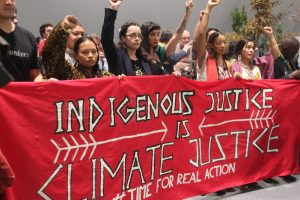 Young climate activists are zeroing in on environmental protections built into a handful of state constitutions as the basis for lawsuits to combat climate change. The Montana Supreme Court will soon hear the state’s appeal of a historic court decision that Montanans are entitled to a stable climate. A similar case is underway in Hawaii where Indigenous plaintiffs as young as 13 are suing to protect what they say is their constitutional right to healthy life and future. We’ll meet with climate activists about a new legal strategy in the face of growing concerns about the future.
 Pawnee attorney John Echohawk is among those who initiated and nurtured the most important Indian law cases in modern history. Name a momentous case—the Boldt Decision, Cobell v. Salazar, Oliphant v. Suquamish Indian Tribe—and Echohawk played a major role in advocating for strong, fact-based representation, forever changing the legal landscape for Native Americans. It’s a role he continues as the executive director of the Native American Rights Fund, a group he founded.
 Bylines for Native women are increasingly showing up in newspapers and in TV news, adding an important perspective for general readers and viewers. Once virtually absent in mainstream newsrooms, Native women are reporting on hard-hitting political issues and are often driving the narrative on issues important for all Native people. They are winning awards and recognition from established news sources.
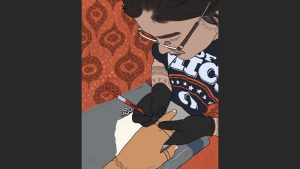 Basket designs, rug patterns, tribal images, and corn illustrations are all among the graphics many Indigenous tattoo wearers display. Some traditional images date back to tribal origin stories. Tribal members are embracing a revival of tattoo images handed down through the generations—some were all but lost because the practice fell out of fashion. We’ll hear about how Indigenous tattoo artists are reviving and perfecting their tattoo traditions.
 Eastern Band of Cherokee Indians citizens overwhelmingly voted in favor of allowing recreational cannabis use on the tribe’s reservation. If approved by the tribal council, the Qualla Boundary could be positioned as the only location for legal marijuana sales in the southeastern United States. Supporters say it is necessary to diversify a tribal economy heavily dependent on gaming. But they’ll have to persevere against opposition including some tribal officials and at least one North Carolina congressman who proposes withholding public funds from tribes that utilize their sovereign right to sell cannabis.
 A man opened fire on a group in New Mexico protesting a decision to re-install a statue many of the state’s Native Americans consider offensive. Police say the man wore a red MAGA hat and posted pro-Trump statements on social media. Ryan David Martinez is charged with attempted murder after one person was wounded in the shooting. Witnesses report he tried to antagonize the protestors beforehand. It’s the second time someone opened fire in the state during protests over controversial monuments. And it’s the latest in a growing series of shootings and other violence against protestors. We’ll hear from activists about the growing challenges to peaceful protests over racial issues.
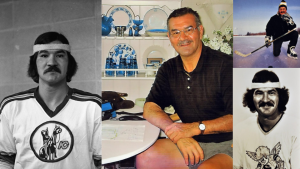 Henry Boucha (Ojibwe) served as an inspiration for many Native hockey athletes and fans. He was a star high school athlete who went on to become a member of the silver medal-winning U.S. ice hockey team in the 1972 Winter Olympics. He also played for the NHL’s Minnesota North Stars and the Detroit Red Wings. A debilitating eye injury cut his playing career short. Off the ice, he worked as an advocate for better Native representation in sports. We’ll get insights about Henry Boucha’s sports legacy with relatives and others.
 After three seasons, the hit FX series Reservation Dogs has come to an end after its finale dropped on Wednesday. It combined entertaining writing and characters, with rich Native representation in front of and behind the cameras. We’ll miss Bear, Willie Jack, Elora, and Cheese. In this program, we’ll recap hilarious and important scenes and episodes - and discuss how this show sets the bar for Native comedy TV higher than it’s ever been before.
 Diné farmer and father Zac Ben is busy harvesting and processing corn from his farm in Shiprock, N.M. to make baby food, the product of his company Bidii Baby Foods. Citizen Potawatomi chef Loretta Barrett Oden’s new cookbook Corn Dance: Inspired First American Cuisine features recipes and ingredients she’s gathered from her culinary start in Santa Fe to her current post at Thirty Nine Restaurant in the First Americans Museum in Oklahoma City. And we’ll explore the contributions Hispanic traditional foods have made to American and Native American cuisine.
 It’s been a year since Pope Francis officially apologized for the Roman Catholic Church’s role in the abuses and forced assimilation of Indigenous people at Canadian residential schools. At the time, officials said it was an important step toward healing and reconciliation. But others said it was more important for the Church to take action in addition to rhetoric. We’ll get different perspectives about the weight of the papal apology one year later.
 A coalition of tribal organizations is warning about the potential damage of a federal government shutdown to tribal citizens. Among other things, Native officials say it could disrupt important appropriations for at-risk tribal members. At the same time, COVID-19 infections are on the rise and distribution of vaccines is off to a rocky start. We’ll get perspectives on two significant events in the news.
 The British acquired a large expanse of North American territory following the French and Indian War. But their oppressive treatment of the resident Native Americans fostered discontent. It all boiled over in 1763 as Odawa Chief Pontiac or Obwaandi'eyaag, formed an alliance among several tribes against the British occupation. Violence spread from the Great Lakes region to West Virginia. The resistance forced the British to change their official stance toward Native people. We’ll recount how Chief Pontiac and his allies changed the direction of colonial expansion 260 years ago.
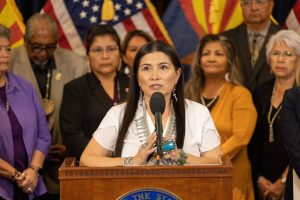 At first officials identified Navajo, Apache, and other Arizona tribal members as among those who were victims of a massive Medicaid fraud scam. Now tribes in Montana, North and South Dakota, and other states are taking stock of their members who were also caught up in the fake substance abuse treatment con that reaches into the hundreds of millions of dollars. The Blackfeet Nation declared an emergency to help gain resources to repair the fallout for its citizens. We’ll find out the latest on the efforts to help the people who were harmed and hold those responsible accountable.
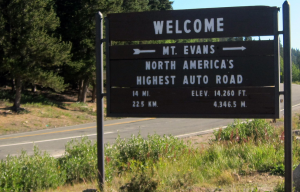 Until this month, one of Colorado’s highest peaks was named for the former state governor who fostered and supported what became known as the Sand Creek Massacre in 1864. It took years of pressure and an awareness campaign to get the name changed. Still, support is not universal. We’ll get the story on changing the Mount Evans name to Mount Blue Sky - and some updates on other important place name changes.
 Neighbors are helping each other rebuild after the historic deadly fire on Maui. The community is in line for hundreds of millions of dollars in federal and state funds, in addition to private donations from all over the world. More than a month after the blaze swept through the city of Lahaina and the surrounding area, officials are still sorting out the cause and the factors that contributed to its severity. And, while not as bad as originally feared, the death toll approaches 100 people. We’ll check back in with the rebuilding effort in Hawaii and what some of the major challenges are as residents look to the future.
 The newest survey from the Pew Charitable Trusts concludes suicide is an urgent public health issue. Their data shows that while the suicide rate increased an alarming 30% across the board over a 20-year span, the rate for Native American and Alaska Native females rose a staggering 135% over the same time. The number for Native males is close behind. At least half of those people had contact with the health care system within a month of taking their own lives, indicating an opportunity for trained professionals to intervene. It’s Suicide Awareness Month, and we’ll look at the promising work to turn around a dire trend.
 The U.S. Supreme Court ruling denying race-conscious college admissions has Native business owners on alert over the far-reaching implications beyond higher education. A recent federal judge’s decision puts an additional hurdle in front of Native businesses when it comes to a program in place to diversify federal contracts. Some experts and Native small business owners worry it’s only the beginning of a new system that will mean fewer successful Native entrepreneurs.
 The Center for Native Futures (CfNF) opens this weekend in the heart of downtown Chicago. The gallery art space is the first of its kind in the Windy City and it’s dedicated to contemporary Native artists interested in visualizing the future and setting the tone for the future of Native art. We’ll visit with the founders and artists at the new center.
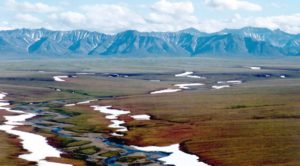 The Biden Administration reversed oil leases in the Arctic National Wildlife Refuge (ANWR), earning praise from environmental advocates and Alaska Native wildlife and subsistence hunting protectors. But the move also received criticism from Alaska Native corporations and the state's entire congressional delegation. We’ll look at the ongoing political back-and-forth that defines the pristine but resource-rich tundra of Alaska. Plus, a preview of what could be an historic marine sanctuary set-aside initiated by the Chumash Tribe in California.
The good news is high school sports injuries are decreasing, according to a study released this year by the American Academy of Orthopaedic Surgeons. The bad news is the severity of those injuries are getting worse. As fall seasons get underway, Native trainers are responding to new awareness of the dangers of life-long injuries from high school sports. Young athletes could encounter serious injuries including concussions, broken bones, ruined joints, and even anxiety and other mental health problems. The one-time advice to "walk it off" is replaced with sophisticated attention to long-term health.
GUESTS
John Sunchild (Chippewa Cree from Rocky Boy Reservation), athletic trainer
Jasmine Velasquez (Mvskoke), athletic trainer
Drew Babcock (Amskapi Pikuni), American Indian and Alaska Native outreach coordinator, Family Medicine Residency of Western Montana
The Upper Mattaponi Indian Tribe just took ownership of almost 900 acres of ancestral land in Virginia, thanks, in part, to $3 million in federal funds. And legislation in Minnesota would transfer a state park to the Upper Sioux Community in a historic act recognizing atrocities committed by state and federal officials against the Dakota people that culminated in the mass execution of 38 Dakota men in 1862. Those are two examples of a trend in governments, organizations, and individuals facilitating the return of important land to tribal control.
GUESTS
Chief Frank Adams (Upper Mattaponi)
Michelle Vassel (citizen of the Cherokee Nation), tribal administrator for the Wiyot Tribe Dr. Amber Annis (Cheyenne River Lakota), director of Native American Initiatives at the Minnesota Historical Society Scott Roemhildt, regional director for the Minnesota Department of Natural Resources southern region
Many of the trails and byways established by Native Americans and used for centuries evolved into today’s highways. They are sacred routes that tribes no longer have control over. But some tribes are working to identify and reclaim important trails to tell their own stories about them. We’ll look at a trend by tribes to find and control their own trials.
GUESTS
Judi gaiashkibos (Ponca), executive director of the Nebraska Commission on Indian Affairs Wade Campbell (Diné), archaeologist and assistant professor at Boston University Shannon Holsey (Mohican), president of the Mohican Nation Stockbridge-Munsee Band Kevin Belle, rail-to-trail project manager for the Great American Rail-Trail
A number of Native-led live productions are taking the stage. They include an all-Indigenous production about Canadian residential schools written by a First Nations playwright – and the Rolling World Premiere of “Where the Summit Meets the Stars” by Frank Henry Kaash Katasse (Tlingit) at the Autry Museum of the American West‘s Wells Fargo Theater in Los Angeles. We’ll get a look at upcoming theater productions, Friday on Native America Calling.
GUESTS
Dr. Spy Dénommé-Welch (Algonquin-Anishinaabe), librettist and co-composer for “Canoe”
Frank Henry Kaash Katasse (Tlingit), playwriter, educator, and actor
Kim Gleason (Diné), artistic director of Two Worlds Native Theater
Break 1 Music: Pomok naka Poktoinskwes (song) Jeremy Dutcher (artist) Wolastoqiyik Lintuwakonawa (album)
Break 2 Music: Memory Lane (song) Nitanis “Kit” Largo (artist) Serenity (album)
The state of Alaska released its first-ever list of missing Alaska Natives and Native Americans. The list also includes basic details about each case, including whether or not it’s suspicious. The report includes 280 names going back to 1960. It’s part of the state’s efforts to address the disproportionate percentage of Native people among missing persons cases. Meanwhile, two years after Oklahoma passed a law to address Missing and Murdered Indigenous Relatives, the effort remains largely unfunded. We’ll assess how some specific programs are progressing after a high profile push to address law enforcement disparities.
GUESTS
Charlene Aqpik Apok (Inupiaq), executive director of Data for Indigenous Justice
Kendra Kloster (Tlingit), co-director of law and policy at the Alaska Native Women’s Resource Center LaRenda Morgan (Cheyenne and Arapaho), cousin of Ida Beard and advocate for Missing and Murdered Indigenous Women
Many low-income families got an unwelcome surprise after supplemental COVID food security programs expired earlier this year. Funds available for the Supplemental Nutrition Assistance Program (SNAP) dropped to a fraction of what they were previously. Suddenly, people didn’t have enough to eat and no remedies in sight. Those cuts hit Native American families hardest, as they have a much higher percentage of SNAP participation than the population as a whole.
GUESTS
Karmela Martinez (San Ildefonso), director of the income support division at the New Mexico Human Services Department
Toni Stanger-McLaughlin (Colville Tribe), CEO of Native American Agriculture Fund and board member of Feeding America
Break 1 Music: Ch’iya’a’n Biyiin/Native Food Song (song) Radmilla & Herman Cody (artist) Shi Kéyah (album)
Break 2 Music: Memory Lane (song) Nitanis “Kit” Largo (artist) Serenity (album)
The Everson Museum of Art is featuring the work of Onondaga painter Frank Buffalo Hyde in a new exhibition, whose work meshes Native themes with pop culture images, such as sports mascots, corporate logos, celebrities, and fast food. His colorful paintings often infuse a heavy dose of satire. He recently appeared on the reality competition TV show “The Exhibit”. Today on Native America Calling, he is our Native In The Spotlight and taking your calls.
GUEST
Frank Buffalo Hyde (Onondaga and Niimíipuu), artist, art writer, and muralist
Break 1 Music: Metropolis (Mix) The Halluci-Nation (artist)
Break 2 Music: Memory Lane (song) Nitanis “Kit” Largo (artist) Serenity (album)
Where else can you get a young adult mystery and a lesson in the Native American Graves Protection Act but from Ojibwe writer Angeline Boulley (Sault Ste. Marie Tribe of Chippewa Indians)? In Warrior Girl Unearthed, a follow-up to her debut novel The Firekeeper’s Daughter, Boulley catches readers up with the Firekeeper family’s subsequent generation on Sugar Island. As the title suggests, the young protagonist digs into connections to her people and culture she never realized were there.
Ada Deer was a pioneer in education as a lecturer and researcher in social work and Native American Studies at the University of Madison-Wisconsin. She was also renowned for her tireless advocacy and policy work. She was instrumental in achieving federal recognition for Alaska Native villages, her own Menominee Tribe and several others. Along the way, she helped dismantle the federal Termination Era. She was the first Native woman to run for Congress in Wisconsin. She lost the election, but went on to hold a number of influential positions including Assistant Secretary of the Interior for Indian Affairs.
GUESTS
Gwen Carr (Cayuga Nation), executive director of the Carlisle Indian School Project Assistant Secretary Bryan Newland (Bay Mills Indian Community), Assistant Secretary of Indian Affairs in the U.S. Department of the Interior Chief Mike Williams Sr. (Yupiaq)
Joe Deer (Menominee Tribe), nephew of Ada Deer, retired coast guard captain, Iraq War veteran, and commercial pilot
Students at the Umoⁿhoⁿ Nation Public School are operating a successful farm and taking over a couple of acres on the school’s campus in Nebraska. It’s all in response to health concerns in the Native community. Former chef Brendan Shay Basham’s debut novel Swim Home to the Vanished takes readers along a journey of grief and suspense with food as a central theme. The main character, a line cook, hits the restart button after the death of his brother, but gets caught in a family’s internal conspiracies. All that and more on this month’s episode of The Menu hosted by Andi Murphy.
GUESTS
Suzi French (Omaha), farm-to-school director for the Umóⁿhoⁿ Nation Public School
Brendan Shay Basham (Diné), writer, artist, educator, and former chef
Andrea Carmen (Yaqui Nation), executive director of the International Indigenous Treaty Council
Amy Juan (Tohono O’odham), San Xavier Co-Op Farm
Break 1 Music: NDN Summer [feat. O.G.enious) (song) Litefoot (artist) Good Day to Die (album)
Break 2 Music: Losing Control (Song) Qacung (Artist) Miu (Album)
As fans mark the 50th anniversary of the birth of hip-hop, we’ll zero in on contributions by Native artists. Diné rapper Def-i is among the big winners at this month's International Indigenous Hip-Hop Awards in Vancouver, B.C. Gary Paul Davis aka Litefoot is one of the OGs of Native hip-hop, winning a handful of Native American Music Awards. We’ll hear from them and other artists about what’s fresh and current among Native talent as hip-hop pushes past middle age.
GUESTS
Litefoot (Cherokee), rapper, filmmaker, and actor
Def-i (Diné), hip-hop artist
JB The First Lady (Nuxalk and Onondaga), mother, hip-hop artist, fashion designer
SABA (Navajo and Jemez Pueblo), graffiti artist and co-owner of Arrowsoul Trading Post
Millions of low-income people will lose Medicaid coverage over the next year after a pandemic safety net is expiring. Native Americans are among the populations that are especially affected by the coming changes. We’ll find out the important information and what people can do to prepare.
GUESTS
Kristen Bitsuie (Navajo), tribal health care reform outreach and education policy coordinator for the Tribal Health Reform Resource Center, a project of the National Indian Health Board
Kitty Marx, director of the Centers for Medicare & Medicaid Services (CMS) Division of Tribal Affairs Kris Winterowd, State Health Insurance Assistance Program and Senior Medicare Patrol program manager for the New Mexico Aging and Long-Term Services Department
Officials are still sorting out the human and financial toll of the unprecedented fire on Maui. Many Native Hawaiians remain missing, hundreds more sustained serious damage to their homes and businesses. Meanwhile, Canada is dealing with a record-setting wildfire season with evacuations affecting many First Nations reserves. As the hottest summer on record winds down, we’ll get an assessment of what Native emergency management officials view as the path ahead.
GUESTS
Jake Heflin (Osage/Cherokee), president and CEO of the Tribal Emergency Management Association (iTEMA)
Leela Gilday (Dene Nation), award-winning singer-songwriter
April Sells (member of the Poarch Band of Creek Indians), Poarch Band of Creek Indians Tribal Emergency Management Administrator (EMA) Director
Kuʻuwehi Hiraishi (Native Hawaiian), reporter for Hawaii Public Radio
Adam Weintraub, communication director for Hawaii Emergency Management Agency
After penning iconic songs like “The Weight” and “Up on Cripple Creek” as a member of The Band, Robbie Robertson (Mohawk, Cayuga descent) went on to produce solo albums and major motion picture soundtracks including the upcoming Martin Scorsese film Killers of the Flower Moon. He was the voice narrating the Native America series on PBS. Along the way he crossed paths with a number of Native musicians and admirers.
GUESTS
Brian Wright-McLeod (Dakota/Anishinabe), author of The Encyclopedia of Native Music and Indigenous musicologist
Pura Fé (Tuscarora Indian Nation and Taino), musician and founding member of the trio Ulali Elliott Landy, photographer and writer
Murray Porter (Mohawk from Six Nations of the Grand River Territory), Juno award-winning musician
Elaine Bomberry (Anishinabe and Cayuga, from Six Nations of the Grand River Territory), radio and television producer and artist manager
Tribes in northern California say waterways are increasingly compromised because of the state’s outmoded water management methods. They are joining environmental groups who say the state’s water management authority is appeasing large corporate interests over ecosystems and the people who utilize the water. It’s another fight over water in the west in which tribes say they are left out of the discussion, at the expense of tribal citizens and the environment.
GUESTS
Vice Chair Malissa Tayaba (Shingle Springs Band of Miwok Band of Indians)
Chief Caleen Sisk (Winnemem Wintu tribe)
Stephanie Safdi, clinical supervising attorney and lecturer for the Environmental Law Clinic at Stanford Law School
Facebook’s parent company Meta is blocking all news content in Canada after the government demanded the media giant share profits with news companies. That’s a particular problem for people and agencies trying to get news about devastating wildfires in the country. A similar showdown is brewing in California as that state also ponders a revenue-sharing arrangement. The tussle over content affects both Native consumers and Native news operations.
GUESTS
Jourdan Bennett-Begaye (Diné), editor for Indian Country Today and vice president and board member of the Indigenous Journalists Association Alex Freedman, executive director of the Community Radio Fund of Canada Mike Rispoli, senior director of Free Press focusing on local news and civic information policy
Retirement doesn’t just mean spending your days playing dominoes at the senior center. A lot of Native elders are taking up second careers or at least new part time jobs after retiring. A 2022 survey by U.S. News and World Report found the percentage of workers over age 62 has increased significantly in the past ten years. Inflation is part of the reason. So is the desire for meaningful work. From per caps to the availability of senior housing, Native workers considering retirement have specific concerns when it comes to winding down their working years.
GUESTS
Jim Cordry (Rosebud Sioux), retired federal employee and investment advisor for 21 years
Larry Curley (Navajo), executive director of the National Indian Council on Aging Leilani Wilson Walkush (Tlingit), chief compliance officer for Breakwater Investment Group, LLC
If you’ve been watching “Reservation Dogs”, you know the music of Mato Wayuhi. He’s a young Lakota composer who drives the musical storyline for the show. He’s also a hip-hop artist and rapper who’s getting ready to release another album. We’ll talk with Wayuhi about his work and future projects. Plus, Vincent Schilling joins us to discuss "Reservation Dogs" and other Native shows and films making waves right now.
GUESTS
Mato Wayuhi (Oglala Lakota), composer, musician, rapper
Vincent Schilling (Akwesasne Mohawk), editor of NativeViewPoint.com and a certified Rotten Tomatoes critic
Santa Fe Indian Market, the nation’s oldest and largest celebration of Native arts, draws more than 100,000 artists and collectors from around the world. Native America Calling continues its tradition of bringing a snapshot of the film, fashion, and other creative talent at the event organized by the Southwest Association of Indian Arts (SWAIA).
You can listen live via audio on:
Native America Calling network stations NV1.org NV1 on TuneIn
Or watch it live on:
NativeAmericaCalling.com NV1's YouTube channel Koahnic LinkedIn page Native America Calling Facebook page
New Mexico is the center of arts celebrations this weekend, starting with the music, art, fashion, dances, and panel discussions at Pojoaque Pueblo. It’s the third year for the event that already attracts hundreds of artists. We get the rundown of the festival from organizers and some of the participants.
The unprecedented fires on Maui are blamed for a rising human toll and destroyed homes, property and cultural touchstones. The island’s original kingdom capital, Lahaina, was hard hit, losing a 200 year-old church and the Hawaiian language immersion school Pūnana Leo, among other cherished structures. We’ll get a picture of the destruction and what’s next for residents.
GUESTS
Dr. Sydney Iaukea (Native Hawaiian), author of The Queen and I: A Story of Dispossessions and Reconnections in Hawai'i and Kekaʻa: The Making and Saving of North Beach West Maui.
Eric Enos (Kanaka Maoli), executive director of Ka’ala Farm and Cultural Learning Center
Carmen Hulu Lindsey (Kanaka Maoli), representative of Maui as a chair of the board of trustees for the Office of Hawaiian Affairs
Clay Trauernicht, assistant specialist in the College of Tropical Agriculture and Human Resources at the University of Hawaii at Manoa
One of four dams on the Klamath River is already mostly demolished. Crews predict the other three will be gone by the end of next year. It’s the largest dam removal project in U.S. history and tribes along the river were instrumental in making it happen. The tribes say the dam removal will rehabilitate native salmon runs that are greatly diminished and restore sacred land that has been underwater for more than a century.
GUESTS
Barry McCovey Jr. (Yurok), Yurok Fisheries Department Director Brandi Hatcher (Klamath Tribes), treasurer of Klamath Tribes Chairwoman Frances Charles (Lower Elwha Klallam Tribe), chairwoman of the Lower Elwha Klallam Tribe Mark Bransom, chief executive officer of the Klamath River Renewal Corporation
A pilot program in a handful of New Mexico schools aims to cut down on the high number of Native American expulsions. It uses conflict resolution and restorative justice methods to both build a sense of community and hold students accountable for bad behavior. Proponents hope the program in the schools can mirror successes in other institutions. It comes after reports that Native students are expelled at a higher rate than others.
GUESTS
Dr. Pandora Mike (Diné), principal at Tsé Bit A’í Middle School and 2023 New Mexico national distinguished principal of the year
Dannell Yazzie (Diné), assistant principal at Tsé Bit A’í Middle School
Bryant Furlow, New Mexico In-Depth reporter and member of ProPublica’s Local Reporting Network Emma Green, restorative practices practitioner and consultant at New Mexico Public Education Department
Cases of the sexually transmitted bacterial infection syphilis are surging around the globe. In the U.S., Native Americans have the highest rates of syphilis than any other group. So much so, that the Indian Health Service is urging tribal leaders and health facilities that work with Native populations to institute a series of measures to fight the spread of the disease. We’ll explore why syphilis, that was once on decline, is making a dramatic comeback and what health officials are doing to fight it.
GUESTS
Dr. Loretta Christensen (Navajo), chief medical officer for the Indian Health Service Jessica Leston (Tsimshian), HIV and STI clinical programs director at the Northwest Portland Area Indian Health Board Dr. Meghan O’Connell (citizen of the Cherokee Nation), chief public health officer for the Great Plains Tribal Leaders Health Board
As the famed Sturgis Motorcycle Rally gears up for its closing weekend, a group of bikers is carrying a message on their two-wheeled machines. Along with their black leather jackets, the bikers who make up the Medicine Wheel Ride wear red to raise awareness of the ongoing problem of Missing and Murdered Indigenous Relatives. Many of the riders are Native women who organize events to get the message out.
GUESTS
Prairie Rose Seminole (Three affiliated Tribes – Arikara, Northern Cheyenne, and Dakota), co-director of the We Ride For Her documentary and MMIP Advocate
Sheela Farmer (Sicangu Lakota from Rosebud Sioux Tribe), retired civil servant with Department of the Interior and a lifelong motorcycle enthusiast
Crystaline Bauer (Cheyenne River), receptionist for Indian Motorcycles in Sturgis, S.D.
Shawnee Red Bear-Keith, Oglala Sioux tribal veteran service officer, Red Spirit WRMC member, and Marine Corps veteran
Whether they’re strays or have attentive caretakers, the dogs that occupy reservations have a bad reputation. Advocates for rez dogs are working on a number of fronts to turn that around. Mindful of the occasional safety issue, advocates for dogs are organizing veterinarian visits, spay, neuter clinics, and even dog shows, all as a way to prevent more drastic measures and to promote safer environments.
GUESTS
Tadraschell Murray (Shoshone-Bannock), recreation manager for Fort Hall Department of Recreation Chantal Wadsworth (Navajo), founder of RezRoads Rescue Podzy Wolf Granillo (member of Klamath Tribes), Warm Springs Dog Lady
Public pressure is mounting to search a municipal landfill in Winnipeg for two missing Indigenous women. Police indicated last December the privately run landfill could be where the bodies of the women ended up. Police investigators say they believe the two are victims of a serial killer, but officials all the way from the city on up to the provincial premiere are preventing the search, saying it’s much too expensive and dangerous. The victims’ families and supporters say it’s another example of officials’ lack of will to deliver justice for Indigenous crime victims.
GUESTS
Faye Joseph (Coast Salish), member of the Circle of First Nations, Inuit, and Métis Students at the Memorial University of Newfoundland and Labrador chapter
Grand Chief Cathy Merrick (Pimicikamak Cree Nation), Assembly of Manitoba Chiefs
Chief Kyra Wilson (Ojibway and Dakota), Chief of the Long Plain First Nation
A quarry in Minnesota has been a reliable source for the stone used in ceremonial pipes for dozens of tribes throughout the central U.S. and Canada. Other tribes elsewhere found their own local sources for making pipes. We’ll talk about the importance of pipes and the methods for making them passed down through the centuries.
GUESTS
Robert Sweeney (Ponca Tribe of Nebraska), Northern Ponca spiritual leader
Bud Johnston (Anishinaabe), president of the Keepers of the Sacred Tradition of Pipemakers Gabrielle Drapeau (Yankton Sioux Tribe), cultural resource specialist and park ranger at Pipestone National Monument Travis Erickson (Sisseton-Wahpeton Oyate), pipemaker and Pipestone Indian Shrine Association board member
Chief Looking Horse (Lakota/Dakota/Nakota), 19th Generation Keeper of the White Buffalo Calf Pipe
A handful of tribes are venturing into the realm of family fun in the form of water parks, amusement parks, or theme parks. The Poarch Band of Creek Indians just opened a $70 million expansion to its giant Alabama Gulf Coast water park that also offers restaurants and live entertainment venues. The Eastern Band of the Cherokee Indians has a $75 million deal for a Tennessee theme park that will also feature an interactive look at Cherokee military heroism. As the days of summer vacations begin to wane, we’ll take a look at the draw — and business — of tribal family destinations.
GUESTS
Major Robinson (Northern Cheyenne), owner and principal at Redstone Project Development
Kristin Hellmich, director of external communications for the Poarch Band of Creek Indians
Dennis Bunner (Muskogee Creek), parks and recreations director for the 4 Bears Casino & Lodge
The mortality rate for Native American women during pregnancy and childbirth have outpaced most other ethnic groups for decades. The latest numbers just published in the Journal of the American Medical Association (JAMA) show Native maternal mortality far exceeds their white, Black, and Asian counterparts in some states — especially in the upper Midwest. We’ll look at the causes and trends for high Native pregnancy death rates and what health professionals say is the solution.
GUESTS
Nicolle Gonzales (Diné), founder, health policy director, and board member for the Changing Woman Initiative Dr. Tina Pattara-Lau, maternal child health consultant at Indian Health Service headquarters
Dr. Andrew Williams, assistant professor at the School of Medicine and Health Sciences at the University of North Dakota
Oklahoma is among at least 18 states with new laws restricting how public schools can teach history about race and culture. Teachers are now wondering how to inform students about events like the Trail of Tears and the Tulsa Massacre. Some educators are defying the restrictions. Also, the Pointe-au-Chien Tribe in Louisiana is starting a new language immersion school two years after their only elementary school closed. We'll get a snapshot of what Native educators see ahead in the new school year.
GUEST INFO
Patty Ferguson-Bohnee (Pointe-au-Chien), director of the Indian Legal Program and clinical professor of Law at Sandra Day O’Connor College of Law at Arizona State University
Matt Jackson (citizen of the Seminole Tribe of Oklahoma), ethnic studies teacher for Norman Public Schools Lucyann Harjo (Diné), Indian Education coordinator for Norman Public Schools
Alicia Andrew (Alutiiq), Tribal Chief of Karluk Village
Native American ranchers and other rural New Mexico residents were among those who saw the flash of the first test of the atomic bomb in 1945. Descendants of the people downwind of the blast say they continue to pay the price with serious health conditions - and tribes also complain leaching from uranium mines to fuel subsequent nuclear reactors pose a daily health threat.
GUESTS
Leona Morgan (Diné), anti-nuclear activist
Marian Naranjo (Santa Clara Pueblo), founder and director of Honor Our Pueblo Existence (HOPE)
Marissa Naranjo (Santa Clara Pueblo), environmental justice organizer with HOPE
Ian Zabarte (Shoshone), principal man of the Western Band of Shoshone Indians and secretary of the Native Community Action Council
The Fort Belknap Indian Community is the latest tribe to sue the federal government over inadequate law enforcement. A joint legislative resolution passed this year noted “justice has eluded many Native American victims, survivors, and families” as there are not enough officers to cover the more than 1,000 square miles within the reservation boundaries. They’re one of at least three tribes that are taking on what they say is the lack of full federal funding to keep their citizens safe.
GUESTS
President Jeffrey Stiffarm, Fort Belknap Indian Community Gary LaMere Jr. (Aaniiih), supervisory criminal investigator for the Fort Belknap Indian Community
Geno LeValdo (Aaniiih and Nakoda), Gros Ventre At Large Council Member
John Grinsell (Northern Cheyenne), supervisory criminal investigator for the Northern Cheyenne Tribe
Marc Meriläinen (Chippewas of Nawash Unceded First Nation) helps bring Nadjiwan’s new album The Great Sea to life through his First Nation lens; Saltwater Hank (Ts'msyen)'s vocals in his Native language soar over a brooding country mix on Gal’uunx wil lu Holtga Liimi; and Brock Stonefish (Lenape/Delaware) puts a roots/blues beat behind stories of MMIP, boarding school trauma, and even a jungle dress song on Turtle Island. We'll hear from all three musicians this Friday with host Shawn Spruce.
Native American food sovereignty experts will soon have more say into how the U.S. Department of Agriculture approaches everything from crop subsidies to low-income nutrition programs. The agency’s new tribal advisory committee is the latest in a series of steps to add more muscle into its Indigenous Food Sovereignty Initiative. Plus, a new Lumbee-owned bakery in North Carolina’s capital city is both a spot to pick up tasty macrons and an incubator for other bakers - and the Yurok Tribe’s annual salmon festival goes ahead without any salmon because of declining fish stocks. That and more on The Menu with our resident foodie Andi Murphy.
GUESTS
Allison Vick (Lumbee), chef and owner of the Little Blue Bakehouse and Little Blue Macaron Allyson McCovey (Yurok), Klamath Salmon Festival emcee and deputy executive director of “Ner-Ger Oohl,” the tribe’s health and human services division
Josiah Griffin (Native Hawaiian), policy advisor at the USDA Office of Tribal Relations
The Seminole Tribe is poised to have exclusive control of mobile sports betting in Florida just as the NFL season gets started. Their potential windfall is part of a $5 billion compact with the state that — for now — is holding up against court challenges. It’s just one place where tribes are jockeying for better field position in the lucrative and evolving world of sports gaming.
GUESTS
State Sen. Sally Ann Gonzales (Pascua Yaqui/D-AZ 3)
Chris Garrow, director of gaming at Prairie Band Casino and Resort Kathryn Rand, law professor at the University of North Dakota School of Law Steven Light, professor & co-director, Institute for the Study of Tribal Gaming Law and Policy, Political Science, and Public Administration at University of North Dakota
Threats to water and culturally important land propels a dozen tribes to call for a new National Monument designation near the Grand Canyon. The proposed Baaj Nwaavjo I’tah Kukveni Grand Canyon National Monument would encompass more than a million acres. Among other things it would place a permanent ban on uranium mining in a place where tribes say such development contaminates the air and water and permanently scars the land.
GUESTS
Chairwoman Amelia Flores (Colorado River Indian Tribes)
Vice Chairman Shelton Scott Crozier (Hualapai)
Carletta Tilousi (Havasupai), Grand Canyon Tribal Coalition coordinator
As much as Native Americans are associated with tribal lands in the U.S., the vast majority of tribal citizens live in urban areas off their reservations. In a few selected cities, Native Americans are among the largest minority groups. Still, cities often lag in design considerations that reflect and respond to cultural and socioeconomic touch points that attract and reinforce Native urban residents. A number of Native planners, designers, and architects are pushing to create new buildings and spaces with Native residents’ needs in mind.
GUESTS
Dr. Ted Jojola (Isleta Pueblo), founder and director of the Indigenous Design + Planning Institute at the University of New Mexico
Sam Olbekson (White Earth Nation Ojibwe), CEO of Full Circle Indigenous Planning + Design Wanda Dalla Costa (Saddle Lake First Nation), Tawaw Architecture Collective Inc.
If they haven’t already, it’s only a matter of time before your favorite TV shows and movies in production go dark because of the ongoing actors and screenwriters strike. You might think of the it as a fight between A-list celebrities and movie moguls who all get paid many millions of dollars. But the SAG-AFTRA union says not even one in six actors clears the $27,460 annual minimum to qualify for the health insurance plan. The strike has put a hold on several Native acting jobs and Native-led productions, not to mention any promotional appearances by union members. We’ll hear from some acting pros about what the issues are and what they’re doing in the meantime.
GUESTS
DezBaa’ (Diné), SAG-AFTRA union actor, WGA union writer, and independent filmmaker
Marcus LaVoi (White Earth Chippewa), actor and an executive producer of Red House LaRonn Katchia (Confederated Tribes of the Warm Springs), director, cinematographer, and editor
Fifty years after his untimely death, actor and martial arts master Bruce Lee’s legacy resonates with fans across the globe. But Lee has a unique and enduring connection with Native audiences who relate to his philosophical drive, the sense of justice he portrayed on the screen, and how he propelled positive representations of his race in popular media. His films have been translated into at least two Indigenous languages. In this web exclusive audiogram, Shannon Lee, CEO and owner of the Bruce Lee Family Companies, president of the Bruce Lee Foundation, author of Be Water, My Friend, and daughter of Bruce Lee, reflects on his life and legacy.
Fifty years after his untimely death, actor and martial arts master Bruce Lee’s legacy resonates with fans across the globe. But Lee has a unique and enduring connection with Native audiences who relate to his philosophical drive, the sense of justice he portrayed on the screen, and how he propelled positive representations of his race in popular media. His films have been translated into at least two Indigenous languages. We’ll reflect on what Bruce Lee means to Native fans.
GUESTS
Fritz Bitsoie (Diné), film director
Sifu JoAnn Wabisca (Métis-Cree), co-founder of Ekata Training Center and instructor
Simon Bird (Peter Ballantyne Cree Nation), educator and Cree language advocate
Shannon Lee, CEO and owner of the Bruce Lee Family Companies, president of the Bruce Lee Foundation, author of Be Water, My Friend, and daughter of Bruce Lee
Structural racism is a contributing factor to the ongoing disparity for Native people when it comes to oral health. That’s the conclusion of a report published this year by a collection of non-profit oral health organizations. The report’s authors say poor oral health has far-reaching, life-long implications. We’ll hear about the need for recruiting and retaining more Native dentists and what else can be done to improve the oral health divide.
GUESTS
Dr. Lisa Begay (Navajo), chief dental officer at the Canoncito Band of Navajos Health Center
Mariah John (Navajo), undergraduate student at the University of Arizona and part of the Mayo Clinic’s 2023 Native American Pathway Program Dr. Darlene Sorrell (Navajo), president of Nizhoni Smiles board and first Navajo dentist
The Lake Traverse Reservation is easy to find on most maps put out by the federal government and apps like MapQuest. But the home of the federally recognized Sisseton-Wahpeton Oyate is nowhere to be seen on the state’s Department of Transportation map. It’s one of three reservations the agency chooses to leave off. The reasons are complicated and come down to interpretations of the legal definitions of each reservation. We’ll talk about what’s behind the omission and what Native scholars and others are doing to change it.
GUESTS
Angelique EagleWoman (member of Sisseton-Wahpeton Oyate), law professor and director of the Native American Law and Sovereignty Institute at Mitchell Hamline School of Law and chief justice of the Sisseton-Wahpeton Oyate Supreme Court State Rep. Tamara St. John (member of the Sisseton-Wahpeton Oyate/R-SD 1), tribal archivist
Chairman J. Garret Renville (Sisseton-Wahpeton Oyate), tribal chairman of the Sisseton-Wahpeton Oyate
Sophisticated barbecue methods predate contact with Europeans. The Indigenous Taino people first introduced pit barbecue to colonial travelers as they wandered through the Caribbean Islands. The barbecue traditions for Native Hawaiians also have a long tradition and a unique, tropical flavor. Native people in between those two locations all developed their own barbecue cooking and seasoning that grew from the ingredients they have on hand. We’ll explore the various styles of barbecue and where they came from.
GUESTS
Robert Rosa (Taino), Florida representative of the United Confederation of Taino People and president of the American Indian Movement Florida Chapter James Anderson (Lac Courte Oreilles Ojibwe), owner of Old Southern BBQ and motivational speaker
Luke Black Elk (Lakota from Cheyenne River Sioux Tribe), farm director at Hohwoju
Dave Smoke-McCluskey (Mohawk), chef and owner of The Corn Mafia Chris Szewczyk, owner of Taino Smokehouse
Nearly 17 million tons of textiles are thrown away every year, according to estimates by the U.S. Environmental Protection Agency. Some Indigenous fashion designers have an eye and mission to recycle and upcycle clothing or create from more sustainable fabrics as a way to offset the waste in the business that is creating environmental harm. We’ll take a look at the environmentally conscious side of Indigenous fashion.
GUESTS
Amy Denet Deal (Diné), founder of 4Kinship
Ira Vandever (Diné), owner of Turquoise Indigo Fibers Rebekah Jarvey (Chippewa, Cree, and Blackfeet enrolled at Rocky Boy Indian Reservation), fashion show coordinator and indigenous designer
Thómas Lopez Jr. (Chicano and Sičháŋǧu Lakota), artist and content creator
Caitlin Hein (Sičháŋǧu Lakota), owner of Garbage Tale Vintage
Nearly 12,000 amateur athletes over 50 years of age are competing in this year’s National Senior Games in Pittsburgh. The Games have an enduring focus on Indigenous elder athletes. Another long-time annual tournament, the Native American Basketball Invitational, kicks off more than 400 games over five days in Phoenix. We’ll find out who to watch at these notable summer competitions.
GUESTS
Simeon Gipson (Cherokee and Choctaw), National Senior Games Association athlete
Del Moon, National Senior Games Association communications & media director
GinaMarie Scarpa, president and CEO of the Native American Basketball Invitational
Harley Sundown (Yup’ik), teacher and basketball coach
Danny McCarter (citizen of the Cherokee Nation), interpretive guide for Cherokee Nation cultural tourism
The Nez Perce Tribe completed a number of new real estate acquisitions including a golf course within driving distance of their tribal resort and casino. Tribal officials say the links business was losing members, but is now back in the black. It’s one of several of the big and small tribal enterprises we’re featuring as promising new ventures.
GUESTS
Zeke Domebo (Nez Perce, Nimiipuu), golfer and outreach supervisor for the Red Wolf Golf Club JT Willie (Diné), CEO of Navajo Arts and Crafts Enterprise SABA - Shawna Dayish (Navajo and Jemez Pueblo) and Orlando Cruz (Navajo), owners of Arrowsoul Trading Post
Construction on a portion of a nearly $70 million highway expansion project is halted after workers discovered multiple sets of human remains. Tribes say the costly delay and potential project redesign could have been avoid had state transportation officials took warnings about the site seriously more than a quarter century ago. Another project — a luxury apartment building in Miami — is moving ahead, even after workers discovered some human remains and culturally and historically significant structures and artifacts.
GUESTS
Kathy Bancroft (member of the Lone Pine Paiute-Shoshone Tribe), tribal historic preservation officer for the Lone Pine Paiute-Shoshone Tribe Danelle Gutierrez (Big Pine Paiute Tribe of the Owens Valley), tribal historic preservation officer for the Big Pine Paiute Tribe of the Owens Valley Martha Tommie (member of the Seminole Tribe of Florida from the Deer Clan), American Indian Movement Florida Chapter member
Robert Rosa (Taino), president of the American Indian Movement Florida Chapter and chairman of the Florida Indigenous Alliance
Two climate tracking agencies say the Earth just reached its hottest average temperature on record and scientists predict it will only get hotter. That has implications for the health and comfort of Native people coping with the heat, and for those whose livelihoods depend on specific climate conditions and access to water. We’ll get perspectives from environmental health experts, farmers, and others about the risks of rising heat and what a hotter future might hold.
GUESTS
Duran Andrews (Tohono O’odham), farm manager at San Xavier Co-Op Farm Dave Lawrence, meteorologist and emergency response specialist with the National Weather Service
Robert Knapp, Environmental Planning Program Manager for the Jamestown S'Klallam Tribe
Two states and several cities have decriminalized the use of hallucinogenic mushrooms. Many more states are considering legislation to provide more widespread public access to hallucinogens. That has some Indigenous people worried about maintaining an adequate supply of natural psychoactive plants for ceremonies. We’ll hear about the evolving demand for hallucinogenic plants and what practitioners say needs to be done to protect them as the push for legalization continues.
GUESTS
Dr. Yuria Celidwen (Nahua and Maya), Indigenous scholar, activist, and senior fellow of the Othering and Belonging Institute at the University of California, Berkeley
Marlena Robbins (Diné), second-year doctoral student at the School of Public Health at University of California, Berkeley
Miriam Volat, co-director and board member of the Indigenous Medicine Conservation Fund, co-director of the Riverstyx Foundation, and board member of the Indigenous Peyote Conservation Initiative Dr. Osiris Garcia Cerqueda (Mazatec from Huautla de Jimenez in Oaxaca, Mexico), history professor at the Meritorious Autonomous University of Puebla
After decades of pressure by animal rights groups and tribes, the Miami Seaquarium announced it will release the captive orca, Lolita, also known as Tokitae. The marine mammal has spent more than a half century in captivity and no one is sure how she will adapt to the wild. The Lummi Tribe considers orca to be relatives and have been pushing for Tokitae’s release to what biologists believe is her home pod in the Pacific Northwest.
GUESTS
Squil-le-he-le Raynell Morris, (Lummi Tribe), matriarch and elder of the Lummi, board member for Friends of Toki, and vice president of the Sacred Lands Conservancy Sweetwater Nannauck (Tlingit, Haida, and Tsimshian), director of Idle No More Washington, traditional storyteller, dancer, singer, and activist
In his concurrence with the U.S. Supreme Court majority, Justice Clarence Thomas writes that “the color of a person’s skin is irrelevant to that individual’s equal status as a citizen of this nation.” The 6-3 decision does away with more than a half century of giving students of color an advantage in college recruiting in order to diversity the educational and professional population. Proponents of affirmative action say the numbers are clear: doing away with the practice of giving priority to Black, Latino, and Native students means there will be fewer of them in college.
GUESTS
Matthew Fletcher (Grand Traverse Band of Ottawa and Chippewa Indians), law professor at the University of Michigan Law School and author of the Turtle Talk blog Carmen Lopez (Navajo), executive director of College Horizons and Graduate Horizons Julia Wakeford (Mvskoke and Yuchi), policy director for the National Indian Education Association
(Encore show) At a time when Australian bands like Men At Work, Midnight Oil, and INXS were reaching worldwide recognition, a number of Aboriginal rock and reggae bands were making their own waves in the music world. Names like Coloured Stone, No Fixed Address, and others were getting broader interest from audiences and notched impressive record sales globally. All the while they faced considerable racism and their peoples’ land rights battles, themes that their songs often invoke. We’ll hear from some of those musicians about how they now look back on this important decade of music. This is an encore show so we won’t be taking live calls from listeners.
Jacob Weasel (Cheyenne River Sioux) goes down in history as the first Native American to summit Mount Everest. It’s a big step in his goal to climb the highest peak on every continent. The rest of the time, he's an emergency and trauma surgeon at Monument Health Facility in Rapid City, S.D. He also works to mentor young Native Americans, drawing from his own accomplishments to inspire others to follow their dreams.
Wampanoag chef Sherry Pocknett made history this month when she was named the Best Chef of the Northeast by the James Beard Foundation. She’s the first Native woman to be given such an award. Meanwhile, Miijim, a new Native-owned restaurant in La Pointe, Wis. is making waves with an Indigenous menu by Red Cliff Band chef Bryce Stevenson. And the new book Our Precious Corn: Yukwanénste by Rebecca Webster (Oneida) recounts the history and travels of her tribe’s traditional corn. It's all on The Menu with Andi Murphy.
GUESTS
Sherry Pocknett (Wampanoag), chef and owner of Sly Fox Den Too Bryce Stevenson (Red Cliff Band of Lake Superior Chippewa), chef and owner of Miijim Rebecca Webster (Oneida Nation of Wisconsin), assistant professor of American Indian Studies at the University of Minnesota
Whether it’s the frozen Alaska tundra or the hot, arid expanse of the Navajo Nation, tribal law enforcement officials, helped out by dedicated volunteers, make up search and rescue systems ready to deploy in a moment’s notice. They have an array of tools, ranging from trained dogs to drones to try and find people reported missing and bring them home safe. We’ll hear from search and rescue professionals about how the methods and technology they use.
GUESTS
Dan Martinez (Confederated Tribes of Warm Springs), tribal emergency manager
Alanna Wright (Yurok and Hupa), senior paralegal and special tribal criminal jurisdiction coordinator for the Yurok Tribe
Caleb Landers, deployment manager and K9 handler at Quapaw Nation Emergency Management
Hugh Murray, K9 handler
This year marks 150 years since President Ulysses S. Grant signed the executive order establishing the Mescalero Apache Reservation. Although a fraction of the wide territory the Mescalero originally occupied, the establishment of the New Mexico reservation marked a stable place where the tribe could call home and practice their ceremonies and traditions after decades of conflict with the U.S. Government. It’s now also a center of economic development and natural resource management.
GUESTS
Pascal Enjady (Mescalero Apache)
Jacob Daukei (Mescalero Apache), councilman for the Mescalero Apache Tribe Duane Duffy (Mescalero Apache), councilman for the Mescalero Apache Tribe
Tribes in southeast Alaska are sounding the alarm over low salmon numbers. They’re hoping to work with Canadian First Nations to craft a plan to help revive populations. The state of Alaska moved to halt commercial fishing of chinook salmon to protect orcas that feed on the fish, but a federal appeals court sided with opponents of the ban. The state is restricting sport fishing in Cook Inlet and some other locations. We’ll hear from Native fishers in the region about their concerns over salmon and the cultural and economic toll it is having this year.
GUESTS
Guy Archibald, executive director of the Southeast Alaska Indigenous Transboundary Commission Louie Wagner (member of the Metlakatla Indian Community), lifelong fisherman from Metlakatla, Alaska and tribal rights representative
Robert Sam (Sitka Tribe of Alaska), Tlingit elder
The National Indigenous Women’s Resource Center lists safe, affordable, accessible, and stable housing as one of the most pressing concerns for Native domestic abuse survivors, both on and off the reservation. The lack of housing increases the likelihood of a survivor being drawn into sex trafficking. It can also be the reason someone chooses to stay in an abusive situation. We’ll hear about what’s being done to make housing accessible to survivors broadcasting live from the Women Are Sacred conference.
GUESTS
Caroline LaPorte (immediate descendant of the Little River Band Of Ottawa Indians), Director of the STTARS Indigenous Safe Housing Center for the National Indigenous Women’s Resource Center
Gwen Packard (Ihanktonwan Dakota), Senior Housing Specialist, National Indigenous Women’s Resource Center
Noreen Hill (Oneida Nation of the Thames), executive director/founder, Mother Nation
Native fathers by marriage sometimes have to work a little harder to make sure they fulfil their end of the parenting partnership. Step parents often have to navigate complicated relationship situations like shared child custody, ex-husbands, and divided parent loyalty.
GUESTS
Bruce Savage (Fond du Lac Band of Lake Superior Chippewa band member), owner and operator of Spirit Lake Native Farms Troy Watlamet (Yakama Nation Tribal Member from the Klickat Cayuse Band), stepfather
Halo Tomma (Yakama, Wanapum, North Thompson, and Flathead), daughter
William Penn (Squaxin Island Tribe and Quileute Tribe), program facilitator with Native Wellness Institute
Tribes abilities to deliver everything from law enforcement to adequate health care depend on their collective strength when it comes to self-governance. Several legal and policy decisions in the past year have bolstered self-governance in both big and small ways, including a full-throated affirmation of the Indian Child Welfare Act. There were some setbacks too. We’ll assess the state of tribal self-governance in advance of the upcoming self-governance conference in Tulsa, Okla.
GUESTS
Ron Allen (Jamestown S'klallam Tribe), tribal chairman for the Jamestown S'klallam Tribe Lt. Gov. Chris Anoatubby (Chickasaw Nation), Lieutenant Governor of the Chickasaw Nation Melanie Fourkiller (Cherokee and Choctaw), director of self-governance and health policy for the Choctaw Nation of Oklahoma
The longest day of the year is a significant marker of time for many tribes. The summer solstice is a time of traditional celebrations and ceremony. Dozens of tribes throughout history built structures around the sun’s position on June 21. We’ll get an account of some of the tribal stories and traditions as well as some modern acknowledgements of the day.
GUESTS
Briday Green (Shareholder in the Sitnasuak Alaska Native Corporation and the Bering Strait Alaska Native Corp), organizer of the Nome Midnight Sun Festival Kainoa Horcajo (Kanaka Maoli), cultural consultant with the Mo’olelo Group Adrienne Lalli-Hills (Wyandot Nation citizen), director of learning and community engagement at the First Americans Museum
Nearly all tribes in Arizona have a tougher time successfully negotiating rights to the state’s scarce water than other governmental entities. And the requirements necessary for tribes to reach water agreements is tougher in Arizona than in neighboring states. An investigative project by ProPublica and High Country News exposes the concessions tribes face to access water. The stakes are high. On the Navajo Nation, for instance, a nearly-completed medical complex sits empty because there is not enough water.
GUESTS
Dr. Andrew Curley (Diné), assistant professor in the School of Geography, Development, & Environment at the University of Arizona
Jason John (Navajo), director of the Navajo Department of Water Resources
Mark Olalde, reporter for ProPublica
Umar Farooq, Ancil Payne Fellow at ProPublica
Groups of freed and fugitive slaves sought refuge in Florida and formed relationships with the Seminoles in the 18th Century. This kinship carried on through the bloody Seminole Wars into the Trail of Tears. Later, members of those groups became known as Seminole Maroons, Seminole Freedmen, or Black Seminoles. Some would find their way to Oklahoma, others to Texas, Mexico, the Caribbean, and some remained in Florida. They formed communities throughout the diaspora and held on to their history and maintained a distinct culture.
GUESTS
Windy Goodloe (Black Seminole descendant), secretary of the Seminole Indian Scouts Cemetery Association Anastasia Pittman (citizen of the Seminole Nation of Oklahoma), former state senator for District 48 in Oklahoma and a general council representative for the Seminole Nation of Oklahoma Dr. Wallis Tinnie (Seminole Maroon descendant), Project Director at the Florida Black Historical Research Project, Inc. Jason Brown (Seminole Maroon descendant from Red Bays settlement in Andros, Bahamas), archaeologist
Corina Torralba (Black Seminole descendant from Nacimiento Coahuila, Mexico), founder of Casa de la Cultura Black Seminoles of Nacimiento Coahuila, Mexico
The U.S. Supreme Court decisively rejected what many legal observers considered the most serious challenge to the Indian Child Welfare Act in the law’s 45-year history. The ruling is a relief for ICWA supporters, many of whom were fearful of a decision that could turn back or weaken the law that ensures Native foster children a home with Native guardians. We’ll get reaction and analysis from those who have been watching the legal fight closely.
You can get more context from Native America Calling on the Supreme Court's decision here.
GUESTS
Dr. Sarah Kastelic (Alutiiq), director of the National Indian Child Welfare Association Derrick Beetso (Navajo Nation), director, College of Law, Indian Gaming, and Self-Governance, Sandra Day O'Connor College of Law at Arizona State University, and former general counsel for the National Congress of American Indians Hilary Tompkins (citizen of the Navajo Nation), partner with Hogan Lovells and former Solicitor of the U.S. Department of the Interior
Erin Dougherty Lynch, Native American Rights Fund (NARF) Senior Staff Attorney and Managing Attorney of NARF’s Anchorage, Alaska, office
Beth Wright (Pueblo of Laguna), NARF
It’s the time of year when Pueblo athletes take to the dusty baseball diamonds throughout New Mexico, carrying on a tradition that their grandparents and even great-grandparents helped establish. Baseball is more than just a sport for the teams in the Pueblo leagues. It’s a tribal and family legacy.
Plus, we'll have initial analysis of the U.S. Supreme Court's 7-2 decision to uphold the Indian Child Welfare Act and reverse a circuit court ruling.
GUESTS
Derrick Toledo (Jemez Pueblo), Shortstop and pitcher for the Jemez Sun Devils
Nathan Abeyta (Ohkay Owingeh), co-founder of the Northern Pueblo League
Joseph Suina (Cochiti Pueblo), volunteer coach
Matthew Fletcher (Grand Traverse Band of Ottawa and Chippewa Indians), law professor at the University of Michigan Law School and author of the “Turtle Talk” blog
Wildfires in Canada are not just sending clouds of smoke to major U.S. cities. They’re also a threat to residents, including a dozen or more Indigenous communities that were forced to evacuate. The country’s Natural Resources ministry predicts this summer could be the worst wildfire season on record.
GUESTS
Amy Cardinal Christianson (Métis), Indigenous fire specialist with Parks Canada Brandi Morin (Cree, Iroquois, and French), journalist and author
Kenza El Bied, Director General of Sector Operations Branch, a part of the Regional Operations Sector of Indigenous Services Canada
Where else can you get a young adult mystery and a lesson in the Native American Graves Protection Act but from Ojibwe writer Angeline Boulley (Sault Ste. Marie Tribe of Chippewa Indians)? In Warrior Girl Unearthed, a follow-up to her debut novel The Firekeeper’s Daughter, Boulley catches readers up with the Firekeeper family’s subsequent generation on Sugar Island. As the title suggests, the young protagonist digs into connections to her people and culture she never realized were there.
Pueblo officials support the Biden Administration’s 20-year ban on new oil and gas leases on land surrounding Chaco Culture National Historical Park in New Mexico. The Pueblos see the land as sacred and have long pushed to limit outside intrusion from developers. They are at odds with the official position from the Navajo Nation, whose citizens stand to gain financially from new development leases. In addition the action has spurred an investigation into potential conflicts of interest by U.S. Secretary of the Interior Deb Haaland, herself a citizen of Laguna Pueblo.
GUESTS
Mario Atencio (Diné Nation), vice president of the Torreon Chapter Miya King-Flaherty, organizing representative for the Sierra Club Rio Grande chapter Bill McCabe (Navajo), principal of McCabe and Associates, a consulting business for tribal energy resource development and management
President Buu Nygren, Navajo Nation
Matika Wilbur (Swinomish and Tulalip) set out on an ambitious project more than a decade ago to photograph citizens of all the federally recognized tribes. Now, her complete work is collected in the book Project 562 and it’s as much about her own journey as it is about the vivid portraits of her subjects.
[caption id="attachment_25637" align="alignleft" width="169"] TikTok creator Victoria Cheyenne (Courtesy Victoria Cheyenne)[/caption]
Plus, in our NAC Sidebar, Montana is the first state to ban the popular TikTok app over fears it allows the Chinese government to collect information on Americans. The ban is a blow to some Native content creators who express themselves and even draw reve nue from TikTok. Filmmaker and TikTok creator Victoria Cheyenne (Northern Cheyenne and Aymara) is among those who testified against the TikTok ban in front of the Montana Legislature.
The Oceti Sakowin Community School just graduated its first class in Rapid City, S.D. The private school teaches Lakota history, culture, and language in a state that tribes and others say is watering down instruction about Native history and issues. In some other places, tribes are working collaboratively with public education officials to make sure Native issues are adequately represented.
GUESTS
Mary Bowman (Standing Rock Sioux), founder and head of Oceti Sakowin Community Academy
Samantha Cholewa Tondreau (Mohegan), Director of Curriculum and Instruction for The Mohegan Tribe Darlene Kascak (Schaghticoke), education director at The Institute For American Indian Studies and a traditional storyteller
Tribal restoration programs are making a big difference in restoring native species of trout that were once abundant in states like Montana, Arizona, and Oregon. Species introduced by humans — in some cases a century or more ago — pushed the original trout to near extinction in many places. Tribal fisheries experts will explain what it takes to revive populations both for sport and environmental rehabilitation.
GUESTS
Bradley Clarkson (White Mountain Apache), fish biologist
Mervin Wright Jr. (Pyramid Lake Paiute), executive director of Pyramid Lake Fisheries and former Pyramid Lake Paiute chairman
Shannon Hill (Mi’kmaq), natural resource director for Mi'kmaq Farms & Fish Hatchery Mike Smith, farm business manager for Mi'kmaq Farms & Fish Hatchery
Cherilynn Tsosie (Diné and White Mountain Apache), flyfishing angler
Data from Wells Fargo just last year finds women outperform men when it comes to investment performance. That backs up a number of studies that say women are less apt to take big risks that can backfire. At the same time, a new survey by Glassdoor finds almost two-thirds of women in finance believe they’re getting paid less than their male counterparts. Some programs are working to encourage more Native women to enter the finance industry for their own good and the good of their communities.
GUESTS
Leilani Wilson Walkush (Tlingit), chief compliance officer for Breakwater Investment Group, LLC Elke Chenevey (enrolled member Omaha Tribe of Nebraska), partner and financial advisor for FS Advisors Brandy Niclai (descendent of the Calista region and Doyon shareholder), chief investment officer of Multi-Asset Strategies at Alaska Permanent Capital Management
Native activists and entertainers are among those being caught up in a recent push in several states to curb events connected to 2SLGBTQIA+ issues. A library in Montana canceled a lecture t by a Native Two-Spirit writer and activist because organizers were worried it would violate the state’s new ban on drag performances in public spaces. For the start of Pride Month, we look at the new hurdles Native 2SLGBTQIA+ people are facing.
GUESTS
Sage Chanell (Shawnee, Ponca, Otoe and Lakota Sioux), drag performer and former Miss International Two-Spirit
Lady Shug (Diné), drag artist and community activist
Tomahawk Martini (Cheyenne River Sioux and Navajo), current Mother of the Year at the Albuquerque Social Club and former Miss New Mexico Pride 2022
Adria Jawort (Northern Cheyenne), journalist, fiction writer, and director of the non-profit startup Indigenous Transilience
@tomahawkmartini Still cant get over this amazing content we shot last summer. I got a lot more of my culture and indigenous influences coming soon. Until then… enjoy @darklistedphotography #DragQueens #FYP #IndigenousContent #Queendom ♬ Take My Picture – Bob The Drag Queen
Break 1 music: Yas (feat. Nukathadiva) (song) Uyarakq (artist) Miseraq (album)
Break 2 music: Our Stories (Song) Qacung (Artist) Miu (Album)
At a time when Australian bands like Men At Work, Midnight Oil, and INXS were reaching worldwide recognition, a number of Aboriginal rock and reggae bands were making their own waves in the music world. Names like Coloured Stone, No Fixed Address, and others were getting broader interest from audiences and notched impressive record sales globally. All the while they faced considerable racism and their peoples’ land rights battles, themes that their songs often invoke. We’ll hear from some of those musicians about how they now look back on this important decade of music.
GUESTS
Dr. Shino Konishi (Yawuru woman), associate professor for the Australian Catholic University
Laurie May, poet and former label manager for CAAMA Music
Ricky Harrison (Kurnai man), singer/songwriter with No Fixed Address
Grant Hansen (Kulin man), guitarist/vocals with Blackfire; television and radio broadcaster
Bunna Lawrie (Mirning man), singer and founding member of Coloured Stone, elder, whalesong, and medicine man
Jason Lee Scott (Mirning/Wirrangu man), singer/songwriter
Break 1 music: Talkin’ Treaty (song) Blackfire [Australia] (artist) Regeneration (album)
Break 2 music: Blackbird Song (song) Emma Francisco, Frances Manuel, Joaquin Garcia & Lorenzo Pablo (artist)
Arizona officials are still sorting out the details of what they say is among the biggest and costliest fraud scandals in state history. The scheme targeted Native people and involved billing for sham treatment services. Some residents were literally taken off the street and held against their will at fake treatment centers. Officials say the operators of the fraud bilked Arizona’s Medicaid system of some $100 million over several years. Tribal officials in the state say hundreds of their citizens were harmed and some remain missing.
GUESTS
Ethel Branch (Diné), attorney general of the Navajo Nation
Darren Thompson (Lac du Flambeau Ojibwe), reporter for Native News Online
Elizabeth Bryant (citizen of the Cherokee Nation), psychiatric nurse practitioner
Reva Stewart (Diné), grassroots advocate with the #StolenPeopleStolenBenefits campaign
Coleen Chatter (Diné), grassroots advocate with the #StolenPeopleStolenBenefits campaign
Break 1 music: Mean Things Happenin’ in This World (song) Blackfire (artist) Woody Guthrie Singles (album)
Break 2 music: Blackbird Song (song) Emma Francisco, Frances Manuel, Joaquin Garcia & Lorenzo Pablo (artist)
An ambitious project in Denver aims to build affordable units for the city’s Native population. It includes plans for a Native health clinic and is intended to address the disparities of homelessness for Native people. It’s one of a handful of housing projects built with collaborative health and program space around the country designed to prioritize the needs of Native people.
GUESTS
Carla Respects Nothing (Oglala Sioux from Pine Ridge), Native American housing advocate for the Native American Housing Circle Paul Lumley (citizen of the Yakama Nation), CEO of the Native American Youth and Family Center Lindsay Goes Behind (Alabama-Coushatta Tribe of Texas), chief program officer for the Chief Seattle Club
While it still happens in some places, Native tourism is moving far beyond selling rubber tomahawks, chicken feather headbands, and other trinkets. Tribes and Native-owned businesses are realizing the value for authentic, Native-made works and meaningful traveler experiences. The time between Memorial Day and Labor Day is prime tourism season. We’ll find out how tribes are making the transition to culturally sustainable tourism development.
Also, MSNBC is airing a roundtable discussion among accomplished Native women about culture, identity, and representation in a society that so often treats Indigenous people as invisible. It’s an intimate and frank conversation hosted by Alyssa London and airs on the Peacock Network. We’ll hear from Alyssa about how the show came about and what it can do to hear powerful Native women voices.
GUESTS
Richardson Etsitty (Navajo), CEO and founder of Antelope Hogan and CEO and manager of Antelope Hogan Canyon Tours
Laura Blythe (Eastern Band of Cherokee Indians), program director of the Cherokee Historical Association
Sherry Rupert (Paiute and Washoe), CEO of the American Indian and Alaska Native Tourism Association (AIANTA)
Alyssa London (Tlingit), MSNBC contributor and host of The Culture Is: Indigenous Women on the Peacock Network
Break 1 music: Honoring the Homeland (song) Radmilla & Herman Cody (artist) Shi Kéyah (album)
Break 2 music: Blackbird Song (song) Emma Francisco, Frances Manuel, Joaquin Garcia & Lorenzo Pablo (artist)
What happens if you’re a chef and you lose your sense of smell, something that is crucial for taste? For First Nations chef Gerry Brandon, it was time to call it quits at his restaurant in Temiskaming Shores, Ontario that blended French, American, and Indigenous flavors and garnered positive reviews over the last four years. And a new season of PBS’ The Great American Recipe features two Native home cooks who get to share their Native culinary traditions with the show’s judges and audience. That’s on The Menu, the Native America Calling regular feature on Indigenous food.
GUESTS
Gerry Brandon (Anishinaabe from Dokis First Nation), chef and co-owner of L’Autochtone Taverne Américaine
Maria Givens (Coeur d’Alene), co-founder of Tahoma Peak Solutions and contestant on PBS’ The Great American Recipes
Relle Lum (Native Hawaiian), nurse practitioner, home cook, and contestant on PBS’ The Great American Recipes
Break 1 music: Voodoo Child (song) Qvln (artist) Paleta – EP (album)
Break 2 music: Beautiful Flower (song) Cree Confederation (artist) Kihtawasoh Wapakwani (album)
At 77, Simeon Gipson is preparing to embark on a bicycle journey of more than 1,000 miles from Tahlequah, Okla. to Pittsburgh, Pa. Once there, he plans to compete in the National Senior Games. The thousands of miles Gipson has covered over the years started when he was nearing 70 with a last-ditch attempt to improve his declining health. He’s one of many Native elders and others that embark on epic journeys and inspire the rest of us along the way.
GUESTS
Simeon Gipson (Cherokee and Choctaw), 77 year-old bicyclist
Chief Gary Harrison (Ahtna-Athabascan), chief of Chickaloon Village
Dustin Martin (Diné), executive director of Wings of America
Kelly Linklater (Pukatawagan Cree Nation), canoeist
Jolie Varela (Tule River Yokut and Paiute), founder of Indigenous Women Hike
Break 1 music: Rumble (Remastered) (song) Link Wray (artist) Rumble (Remastered) (single)
Break 2 music: Beautiful Flower (song) Cree Confederation (artist) Kihtawasoh Wapakwani (album)
Every weekday in Gualala, Calif., radio listeners can tune into the long-running show “Peggy’s Place” on KGUA to learn about their neighbors and the rest of the world. The show is just one of the many projects spanning the 50-year radio career of its host, Peggy Berryhill. She started with the show “Living on Indian Time” on KPFA in Berkeley, Calif. in 1973. She has since worked at National Public Radio, helped develop Native stations, mentored Native broadcasters, and founded the Native Media Resource Center. She has picked up numerous awards and accolades along the way. In this encore show, we’ll get her take on her notable accomplishments and the future of Native radio.
GUEST
Peggy Berryhill (Muscogee [Creek] Nation), General Manager of KGUA
Break 1 music: Stomp Dance (song) Various Artists (artist) Stomp Dance Songs Of The Muscogee Nation, Volume 1 (album)
Break 2 music: The Spin of the Earth (song) Keith Secola (artist) Portals (album)
The less glamorous side of writing for television shows and movies is coming to the surface during the strike by the Writers Guild of America. The union says the pay for many of its 20,000 professional writers is low and remains stagnant, even while the Alliance of Motion Picture and Television Producers continues to reap new profits from streaming and other platforms. Production on most daily shows has ground to a halt, and the strike potentially threatens work on Reservation Dogs, Dark Winds, and other shows popular with Native audiences. We’ll hear from Native writers about what the strike means for audiences.
GUESTS
Sierra Teller Ornelas (Diné), screenwriter
Vera Starbard (Tlingit and Dena’ina), writer
Jana Schmieding (Mniconjou and Sicangu Lakota), writer and performer
The Association of Motion Picture and Television Professionals declined to appear on NAC, but instead provided this document that details their position on the ongoing contract negotiations.
Break 1 music: The Phaser Is Broken (song) Khu.éex’ (artist) Heen (album)
Break 2 music: Beautiful Flower (song) Cree Confederation (artist) Kihtawasoh Wapakwani (album)
It was a simple, but contested, proposition: The Cherokee Nation would relinquish its land in the southeast United States in exchange for $5 million and a new homeland in what is now Oklahoma. The document that sparked the Trail of Tears was steeped in fraud and bad faith by the federal government, but remains on the books. On the anniversary of its ratification, we re-look at the Treaty of New Echota and the promises the government has yet to deliver, including a Cherokee delegate to Congress.
GUESTS
Kimberly Teehee (citizen of the Cherokee Nation), Cherokee Nation Delegate-Designee to U.S. House of Representatives
Julie Reed (citizen of the Cherokee Nation), associate professor in history at Penn State University
Candessa Tehee (citizen of the Cherokee Nation), associate professor of Cherokee and Indigenous Studies at Northeastern State University and a Cherokee Nation councilwoman
Catherine Foreman Gray (citizen of the Cherokee Nation), Cherokee Nation history and preservation officer
Break 1 music: Cherokee Morning Song (song) Walela (artist) Walela (album)
Break 2 music: Beautiful Flower (song) Cree Confederation (artist) Kihtawasoh Wapakwani (album)
Confronting the bitter legacy of boarding schools in the United States is about more than just reconciliation and healing. It’s also about accountability. American Genocide, the new podcast by Illuminative, zeroes in on the Red Cloud Indian Boarding School, which is now a Catholic school on the Pine Ridge Indian Reservation. It sparks the difficult conversation about the past and present trauma perpetrated on Native children and who should have a say in how it’s spoken.
GUESTS
Lashay Wesley (Choctaw Nation of Oklahoma), director of communications and storytelling for Illuminative and co-host of the American Genocide podcast
Crystal Echo Hawk (Pawnee Nation of Oklahoma), executive director of Illuminative and co-host of the American Genocide podcast
Break 1 music: Healing Song (song) Red Hawk Medicine Drum (artist) New Beginnings (album)
Break 2 music: Beautiful Flower (song) Cree Confederation (artist) Kihtawasoh Wapakwani (album)
The rate of overdose deaths linked to fentanyl is skyrocketing and Native Americans are many times more likely to be affected. The cheap and potent drug is replacing its related cousins — heroin and oxycodone — as the biggest addiction threat. Among the bright spots: the Cherokee Nation is investing in a state-of-the-art in-patient treatment facility to combat the ravages of opioid addiction.
GUESTS
Chairwoman Angela Elliott-Santos (Manzanita Band of Kumeyaay Nation), chairwoman of the Manzanita Band of Kumeyaay Nation
Juli Skinner, senior director of behavioral health for the Cherokee Nation
Dr. Joseph Gone (Aaniiih), professor of Anthropology and of Global Health and Social Medicine at Harvard University
Joseph Friedman, researcher at UCLA
Break 1 music: We Are (song) DiggingRoots (artist) We Are (album)
Break 2 music: The Spin of the Earth (song) Keith Secola (artist) Portals (album)
Mortgage interest rates have trended down recently, but they’re still relatively high compared to previous years. Inflation is also going in a positive direction, but remains a factor for those in the market to buy a home. Whatever the outside variables, there are several resources for Native home buyers. We’ll get the latest trends on what is typically the largest single purchase in peoples’ lives.
GUESTS
Jonelle Yearout (enrolled at the Nez Perce Tribe), executive director of the Nimiipuu Community Development Fund
Rudy Soto (Shoshone-Bannock), USDA Rural Developoment Idaho State Director
Pamela Ranslam, homeownership services manager for Nixyáawii Community Financial Services
Dave Castillo, CEO of Native Community Capital
Break 1 music: Going Home (song) Ulali (artist) Heartbeat: Voices of First Nations Women (album)
Break 2 music: The Spin of the Earth (song) Keith Secola (artist) Portals (album)
The National Native American Boarding School Healing Coalition (NABS) is readying a new tool to help people search for information about their relatives who attended more than 500 U.S. boarding schools. The online archive will start with digitized versions of 50,000 federal documents. Those organizing the project hope to build on the number and scope of the records over time. Tens of thousands of Native children attended the schools. Some never returned home. What records there are for those children are scattered among various institutions. The NABS’s efforts are among a handful aimed to increasing and consolidating access to information about the boarding school era.
GUESTS
Selena Ortega-Chiolero (Tarahumara), museum specialist for the Chickaloon Village Traditional Council
Fallon Carey (Cherokee Nation), digital archives assistant for the National Native American Boarding School Healing Coalition
Deidre Whiteman (Meskwaki, Dakota, Ojibwe, Hidatsa), director of research and education for the National Native American Boarding School Healing Coalition
Shelly Lowe (Diné), chair of the U.S. National Endowment for the Humanities
Break 1 music: Intertribal Song (song) Dakota Nation (artist) Home of The Champions (album)
Break 2 music: The Spin of the Earth (song) Keith Secola (artist) Portals (album)
The Citizen Potawatomi Nation offers online college-level language courses. They’re among the efforts to bring new life to Bodéwadmimwen, with only four fluent speakers remaining. And a private Salish immersion school is working with elders to develop lessons. School administrators say they’ve produced dozens of new speakers of their language, both young and old. We’ll hear from Native language educators about the classroom’s role in revitalizing languages.
GUESTS
LaRae Wiley (Sinixt Arrow Lakes Band), Salish School of Spokane executive director
Christopher Parkin, Salish School of Spokane principal
Robert Collins (Citizen Potawatomi), Potawatomi Language Professor at the Citizen Potawatomi Nation Cultural Heritage Center
Dr. X̱’unei Lance Twitchell (Lingít, Haida, Yup’ik, and Sami), Professor of Alaska Native Languages at University of Alaska Southeast
Break 1 music: Wake Up Song (song) Voices of Salish & Ped d’Oreille Women (artist) Heart of the Bitterroot (album)
Break 2 music: The Spin of the Earth (song) Keith Secola (artist) Portals (album)

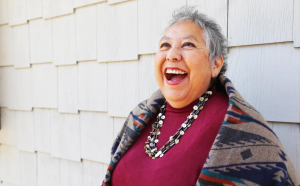 Every weekday in Gualala, Calif., radio listeners can tune into the long-running show "Peggy’s Place" on KGUA to learn about their neighbors and the rest of the world. The show is just one of the many projects spanning the 50-year radio career of its host, Peggy Berryhill. She started with the show "Living on Indian Time" on KPFA in Berkeley, Calif. in 1973. She has since worked at National Public Radio, helped develop Native stations, mentored Native broadcasters, and founded the Native Media Resource Center. She has picked up numerous awards and accolades along the way. We’ll get her take on her notable accomplishments and the future of Native radio.GUESTPeggy Berryhill (Muscogee [Creek] Nation), General Manager of KGUA
 Taking on motherhood-by-marriage comes with its own rewards and challenges. The bond between a woman and her partner’s children is often strong and fulfilling. But it might take some informed effort to get there. We take a special focus on stepmothers as we head into Mother’s Day.GUESTSPaula Johnson-Jefferson (Samson Cree), small business owner, wife, and stepmother Nico Williams (Cherokee Nation of Oklahoma), chef and stepmotherDr. Roger Kuhn (Poarch Band of Creek Indians), licensed marriage and family therapist and college professor of American Indian Studies at San Francisco State UniversityRebecca Spradlin (Prairie Band Potawatomi), student and storyteller working in media
 It’s the time of year for graduations in small, reservation high school auditoriums, big city convention centers, tribal college quads, and manicured Ivy League grounds. It will be a year with and without regalia, depending on where you are. Native graduates are taking the next step in their educational journey.GUESTS: Dr. Lennon Audrain (Cherokee and Shawnee), assistant research professor at Arizona State University and high school teacher at Mesa Public SchoolsKeely Jones Aliseo (Lumbee), UNC Pembroke graduate and recent Army ROTC second lieutenantJay Locklear (Lumbee), bachelor's in mass communicationDr. Johnny Poolaw (Delaware, Chiricahua Apache, Comanche, Kiowa), Director of Student Success for American Indian Science and Engineering Society (AISES)AJ Begay (Diné), recent graduate of Ft. Lewis College
 Indigenous activists in Central and South America are literally putting their lives on the line trying to protect their land and culture. Places like Brazil, Honduras, Colombia, and parts of Mexico are rife with murders and disappearances of Indigenous people speaking up to save their land and people from large scale mining operations, logging, and other extractive industries. In many cases, those responsible are never brought to justice. We’ll explore the factors that contribute to the threat to Indigenous people standing up against corporate development.GUESTSMaría Martin, award-winning multimedia journalist, founding executive director of Latino USA, and director of GraciasVida Center for MediaNati Garcia (Maya Mam), capacity building manager for Cultural SurvivalEdson Krenak (Krenak), Cultural Survival lead on BrazilKarla Mendes, investigative and feature reporter for Mongabay and a Rainforest Investigations Fellow with the Pulitzer Center
 For more than 30 years, the Indian Arts and Crafts Act has been an important tool for protecting the authenticity and economic value of work produced by Native Americans. It also helps buyers know they’re getting what they pay for. Now the U.S Department of Interior is reviewing the law and among the outstanding questions is whether it goes far enough. Should artwork from state-recognized tribal artists be excluded as authentic? How should artwork from Native Hawaiians be identified?GUESTSChuck Hoskin Jr. (Cherokee Nation), Principal Chief of the Cherokee NationDr. Sylvia Hussey (Native Hawaiian), chief executive officer for Office of Hawaiian Affairs (OHA)Rachel Cushman (member of the Chinook Indian Nation), tribal secretary and treasurer for the Chinook Indian NationDr. Joe Candillo (Pascua Yaqui), owner of Authentic Native America Arts
Hawai’i has a long association with pineapples. Although the precious fruit likely came to the islands in the 18th Century, it wasn’t until industrialized agriculture arrived with the Dole corporation — backed by U.S. military support to overthrow the existing Hawaiian government — that the pineapple became so ubiquitous. Sugar cane has a similar role in colonizing places like Hawai’i, Puerto Rico, and the American Southeast with plantations that flourished at the expense of Indigenous people and culture.
GUESTS
José Barreiro (Taino), scholar emeritus from the Smithsonian Institution, writer and author of Taino: A Novel
Dr. Sydney Iaukea (Native Hawaiian), author of The Queen and I: A Story of Dispossessions and Reconnections in Hawaiʻi and Kekaʻa: The Making and Saving of North Beach West Maui
Dr. Gary Okihiro, visiting professor of American studies at Yale University; professor emeritus at Columbia University
Break 1 music: Taino-Arawak Welcome Song (song) Joan Henry (artist) Kanogisgi – Song-Carrier (album)
Break 2 music: Women’s Honoring Song (song) Red Hawk Medicine Drum (artist) New Beginnings (album)
After decades of drought, the Navajo and Apache reservations in Arizona are now recovering from flooding that destroyed homes and property. Tribes in California endured record-breaking rains and are bracing for overflowing rivers from mountain snowmelt. California flooding also threatened sacred tribal burial grounds. Tribes are working with state and federal sources to both prepare for such natural disasters and also recover from the devastating damage in the wake of climate change.
GUESTS
Lisa Christensen (Washoe tribal member), Washoe Tribe Emergency Operations Center operations planning chief
Dr. Crystal Tulley-Cordova (Diné), principal hydrologist for the Navajo Nation Department of Water Resources
Dr. Lani Tsinnajinnie (Diné), assistant professor of community and regional planning at the School of Architecture and Planning at the University of New Mexico
Sandra Warlie (Bishop Paiute Tribe), public works director for the Bishop Paiute Tribe
Brian Adkins, environmental director for the Bishop Paiute Tribe
Break 1 music: Sweet Grass Water Is Life (single song) Miracle Dolls (artist)
Break 2 music: The Beautiful Dance (song) Black Eagle (artist) Flying Free (album)
Longform stories, deep dives into exclusive content, and vivid photos all presented on glossy pages are some of the reasons people continue to read magazines. Titles like “First American Art” and “Native Max” are among the Indigenous-led magazines in the evolving industry that mixes social media, online extras, and the printed page to keep readers coming back. We’ll talk with Native publishers about the continuing appeal of magazines.
GUESTS
America Meredith (enrolled member of the Cherokee Nation), publishing editor of First American Art Magazine, writer, visual artist, and independent curator
Kelly Holmes (Cheyenne River [Mnicoujou] Lakota), founder and editor-in-chief of Native Max Magazine
Montoya Whiteman (Cheyenne and Arapaho), managing director of editorial and special projects at American Indian Science and Engineering Society (AISES)
https://nativeamericacalling-offload-media.s3.us-west-2.amazonaws.com/wp-content/uploads/2023/05/050423.mp3Break Music: Tha Chosen One (song) Southern Style (artist) Blacked Out (album)
The Boy Scouts of America is asking its membership whether the organization should reconsider its long practice of incorporating Native words, concepts and ceremonial dances. We look at the organization’s history of problematic appropriation including headdresses, fake ceremonies, and public performances based on dances tribes consider sacred.
GUESTS
Graham Lee Brewer (citizen of Cherokee Nation), investigative reporter for NBC News
Stewart Koyiyumptewa (Hopi), Tribal Historic Preservation Officer for the Hopi Tribe
Robert DesJarlait (Red Lake Ojibwe), writer, artist, and dancer
Chief Brad Kills Crow (Delaware Tribe of Indians), Chief of the Delaware Tribe of Indians
Break 1 music: I’M NOT A MASCOT – I’M NOT A STEREOTYPE – I’VE BEEN WATCHING (single song) Michael Bucher (artist)
Break 2 music: The Beautiful Dance (song) Black Eagle (artist) Flying Free (album)
The battle over transgender rights is playing out in school bathrooms, sports fields, and doctors’ offices. States are enacting strict rules over gender-affirming care, and trans athletes, and even dress codes. Many of the laws face legal challenges over constitutional bans on discrimination. Native trans and Two-Spirit people look at how the new trend could play out.
GUESTS
Mattee Jim (Diné), trans advocate
Stephanie Byers (Chickasaw), former Kansas state representative for district 86
Montana Wilson (Gros Ventre, Assiniboine, and Sioux), vice chair for Western Native Voice
Break 1 music: Two Spirit (song) Tony Enos (artist)
Break 2 music: The Beautiful Dance (song) Black Eagle (artist) Flying Free (album)
Earl Old Person was a respected Blackfeet leader and strong proponent of cultural preservation. He was the longest serving elected tribal official in the country. He was an advocate for education up until his death in October 2021 at the age of 92. He lived by example, embodying the language, culture, and accomplishments of the Blackfeet Nation.
GUESTS
John Murray (Blackfeet), Blackfeet tribal historic preservation officer
Erlina Old Person (Blackfeet), daughter of Chief Earl Old Person
Sen. Susan Webber (Blackfeet), Montana State Senator (D-MT 8th)
Break 1 music: Honor Song (song) Blackfoot Confederacy (artist) Hear the Beat (album)
Break 2 music: The Beautiful Dance (song) Black Eagle (artist) Flying Free (album)
Jir Anderson’s Native music project is coming off a successful series of concerts in Las Vegas. He brings his unique artistic vision back to Albuquerque for a multi-venue celebration of music, art, and fashion.
GUESTS
Jir Anderson (Cochiti Pueblo), lead singer for the Jir Project band and founder of Native Guitars Tour
Alicia Ortega (Santa Clara and Pojoaque Pueblo), Native Guitar Tours development strategist
Mozart Gabriel (Taos Pueblo and Navajo), Native American rock artist
Break 1 music: Sun Child (song) The Jir Project Band (artist) Sun Child (album)
Break 2 music: Buffalo (song) Algin Scabby Robe (artist) Along the Way: Round Dance Songs (album)
The annual Gathering of MCs event in Albuquerque enters its second decade, celebrating hip-hop with a Native punch. Vel Nine, MAZZI & S.O.U.L Purpose, and Nataanii Means are among the artists appearing live. We talk with musician and Gathering of MCs founder DEF-I (Diné) and rapper/singer A$h Da Hunter (Yavapai-Apache Nation) about the event and the direction of Native hip-hop.
Break 1 music: Mamas [feat. Jesse Davis] (song) Def-i (artist)
Break 2 music: Buffalo (song) Algin Scabby Robe (artist) Along the Way: Round Dance Songs (album)
Twitter is one of the social media outlets that help individuals connect with each other – and is a tool for outlets like Native America Calling to connect with the public. But Twitter has been making some erratic decisions lately, some of which are giving people misleading information. And some could be dangerous. Are they crossing the line for some Twitter users?
GUESTS
B. Toastie Oaster (citizen of the Choctaw Nation of Oklahoma), staff writer at High Country News
Raven Payment (Ojibwe and Mohawk), member of the Missing and Murdered Indigenous Relatives Task Force of Colorado
Jourdan Bennett-Begaye (Diné), editor for Indian Country Today and member of the board of directors for the Native American Journalists Association
Break 1 music: Meegwetch (song) Tamara Podemski (artist) Tamara (album)
Break 2 music: Buffalo (song) Algin Scabby Robe (artist) Along the Way: Round Dance Songs (album)
Oglala Lakota chef Sean Sherman was named a TIME100, the magazine’s list of 100 most influential people of 2023. He’s a high-profile leader in the Native American food movement, the founder of non-profit groups advocating for food sovereignty, and the founder of the award-winning restaurant Owamni. Also shaking things up in the kitchen is Kickapoo chef and owner of Wahpepah’s Kitchen, Crystal Wahpepah. She went head-to-head with celebrity chef Bobby Flay on the Food Network culinary competition show “Beat Bobby Flay”. In this episode of The Menu, we catch up with both chefs and also hear about how all the tribes in one state are providing traditional foods for their elders.
GUESTS
Sean Sherman (Oglala Lakota), chef and owner of Owamni, co-founder of The Sioux Chef and North American Traditional Indigenous Food Systems (NATIFS)
Crystal Wahpepah (Kickapoo and Sac and Fox), chef and owner of Wahpepah’s Kitchen
Marlon Skenandore (Oneida Nation citizen), manager, Oneida Emergency Food Pantry
Break 1 music: Mt It (song) Mo-Town Singers (artist) Oneida Powwow: 40th Anniversary (album)
Break 2 music: Buffalo (song) Algin Scabby Robe (artist) Along The Way: Round Dance Songs (album)
Denise Lajimodiere (Turtle Mountain Ojibwe) is approaching her fifth decade in education as an elementary school teacher, principal, and college professor. She is among the founders of the National Native American Boarding School Healing Coalition. A vote by North Dakota’s legislature has just named Lajimodiere the state’s first Native American poet laureate.
Break 1 music: Track 08 (song) Red Lake Singers (artist) Old Times (album)
Break 2 music: Buffalo (song) Algin Scabby Robe (artist) Along The Way: Round Dance Songs (album)
Spring Comes Slow to North Country
by Denise Lajimodiere
The prairie chicken dances
the sun toward
its northernmost summer home,
a slow dance,
pale April light filtered
through bare birch limbs
offers little heat,
the bleak wind brittle as mica.
The ice locked lake begins to moan
a low rumbling, the sound
of thunder coming,
ice vibrates like a drum head,
sings so loud it wakes me up.
Spring comes slow
to north country. Ice rain stings
our faces, winter weary bodies crave
sun’s warmth. First thunder wakes
the sleeping earth, sap begins to flow,
calls the snakes, loons wail,
geese return, how I mourned
their leaving seven months ago.
Ojibwe inventor Danielle Boyer is on a quest to make technology more accessible to interested Native students. She’s given away some 8,000 robots through her program Every Kid Gets A Robot. She’s also developed a low-cost, wearable robot that helps teach Indigenous languages. She’s among groups of creative, science-savvy Native young people working to make connections between robots and education.
GUESTS
Danielle Boyer (enrolled citizen of the Sault Ste Marie Tribe of Chippewa Indians), robotics inventor
Myra Mendez (Mescalero Apache and Gros Ventre), elementary secretary for Mescalero Apache Schools
Nate Raynor, high school science teacher for Mescalero Apache Schools
Break 1 music: Standing Rock (feat. Nick Ørbæk Jacobsen) (song) Uyarakq (artist) Miseraq (album)
Break 2 music: A Song for Mosom (song) Fawn Wood Featuring Alan DiPerna (artist) Kikāwiynaw (album)
The Shinnecock Nation is seeing their first cannabis dispensaries opening. They are among a rush of weed businesses among New York tribes as the state starts welcoming recreational use sales. The same is happening all across the country—in Minnesota, New Mexico, California, and Nevada—as tribes see new economic development opportunities in places where cannabis is no longer prohibited by state law.
GUESTS
Mary Jane Oatman (Nez Perce and descendant of the Delaware Tribe), founder of the Indigenous Cannabis Coalition & THC Magazine and the executive director of the Indigenous Cannabis Industry Association
Rob Pero (Bad River Band of Lake Superior Chippewa), founder and president of the Indigenous Cannabis Industry Association and owner of Canndigenous
Chenae Bullock (enrolled member of the Shinnecock Indian Nation), managing director of Little Beach Harvest
Break 1 music: Let’s Get High (song) Gooder Kind (artist) The Inter-Tribal Hustle (album)
Break 2 music: A Song for Mosom (song) Fawn Wood Featuring Alan DiPerna (artist) Kikāwiynaw (album)
As the nation continues to debate restrictions on guns, a number of Native nations have their own gun laws that visitors aren’t always aware of. A number of tribes, including the Navajo Nation, prohibit possessing guns of any kind, even in vehicles on their reservations. Violating the law could mean permanently forfeiting your firearms. At the same time, proposed federal legislation would make it easier for tribal citizens to acquire guns using only their tribal ID.
GUESTS:
- Joe Talachy (from the Pueblo of Pojoaque), owner and founder of Indigenous Arms
- Katherine Florey, Martin Luther King Jr. Professor of Law at UC Davis
- Ann Tweedy, professor at the University of South Dakota School of Law
Break 1 music: Peace Calls (song) Robert Mirabal (artist) The River (Album)
Break 2 music: A Song for Mosom (song) Fawn Wood Featuring Alan DiPerna (artist) Kikāwiynaw (album)
It’s coming down to the wire for the South Dakota State Board of Education Standards to decide on the social studies standards submitted by the state Department of Education. Those standards took out many references to Indigenous history recommended by a workgroup comprised of tribal representatives and educators from across the state. Tuesday on Native America Calling, we find out why South Dakota’s nine tribes and the state School Superintendents Association oppose the standards as written with Dr. Sherry Johnson, education director for the Sisseton Wahpeton Oyate (enrolled member of the Sisseton Wahpeton Oyate); Sarah White (Oglala Lakota), executive director of the South Dakota Education Equity Coalition; and Josie Green (Oglala Lakota), executive director for Waawanglake, the South Dakota region of Teach for America.
Break 1 music: New Way Of Life (song) William Horncloud (artist) Rabbit Dance Songs Of The Lakota (album)
Break 2 music: A Song for Mosom (song) Fawn Wood Featuring Alan DiPerna (artist) Kikāwiynaw (album)
Researchers and environmental advocates don’t know much yet about mining minerals off the bottom of the ocean floor, but the race to learn is on because large mining companies will soon start scooping up unrefined cobalt, manganese, copper, and nickel from the sea bed to help satisfy growing demand for such metals for things like batteries. The environmental activist group Greenpeace lists Indigenous groups from at least 34 nations that have come out against the practice. Today on Native America Calling, we do a deep dive with Dr. Brittany Kamai (Native Hawaiian), astrophysicist, water woman, and ocean advocate, and Noah Paoa (Rapa Nui), Ph.D candidate with a focus on sea level rise at the School of Ocean and Earth Science and Technology.
Break 1 music: No Ko’olau Ku’u Aloha (song) Mailani (artist) Manawa (album)
Break 2 music: A Song for Mosom (song) Fawn Wood Featuring Alan DiPerna (artist) Kikāwiynaw (album)
When the United States took action to preserve what is now known as Yosemite National Park, they encountered a major problem: it was home to a number of Indigenous people from several tribes. The federal government expelled the Native residents. Some right away, others over time. It’s a scene that continues to play out across the globe. Today on Native America Calling, we take a look at a new graphic comic by Gord Hill (member of the Kwakwaka’wakw nation) and a series of articles from Grist which reveal the bloody legacy of conservation in light of the current push to preserve 30% of the Earth’s land by 2030 with Tristan Ahtone (Kiowa), editor-at-large at Grist; environmental journalist Blanca Begert; and Maria Parazo Rose, spatial data analyst at Grist.
Break 1 music: Original Gourd Song Sung By The Old Warriors (song) Kiowa Tiapiah Society (artist) Kiowa Gourd Dance Vol. 1 (album)
Break 2 music: Heeia (song) Henry Kapono (artist) The Wild Hawaiian (album)
The nation’s largest federally-owned public utility is making moves to repatriate nearly 4,800 human remains and 1,400 ceremonial objects. It is just a portion of what ProPublica reports is the 8th largest collection of unrepatriated Native American remains in the U.S. held by the Tennessee Valley Authority (TVA). TVA collected the remains it encountered as it developed land in at least three states. The agency, and five affiliate institutions including the University of Tennessee, are holding the remains. Today on Native America Calling, we learn more about this major repatriation effort with Shannon O’Loughlin (Choctaw), attorney and CEO of the Association on American Indian Affairs; Meg Cook, TVA senior archaeologists and NAGPRA; and Marianne Shuler, TVA senior specialist and tribal liaison.
Break 1 music: Reunion (song) Samantha Crain (artist) A Small Death (album)
Break 2 music: Heeia (song) Henry Kapono (artist) The Wild Hawaiian (album)
After removal from their home and an arduous and deadly forced march, the Muscogee (Creek) Nation arrived in Oklahoma with little more than a promise that they could revive and rebuild their homeland. Now, a century and a half later, the U.S. Supreme Court re-established the keystone of that promise in the McGirt v. Oklahoma decision that reasserted Muscogee agency over the land provided in treaty. Today on Native America Calling, Robert Miller (Eastern Shawnee), law professor at Arizona State University and tribal judge. and Robbie Ethridge, professor emerita of anthropology at University of Mississippi, explore the importance of the decision in its historical and legal context, as laid out in their new book A Promise Kept: The Muscogee (Creek) Nation and McGirt V. Oklahoma.
Break 1 Music: Stomp Dance (song) Various Artists (artist) Stomp Dance Songs Of The Muscogee Nation, Volume 1 (album)
Break 2 music: Heeia (song) Henry Kapono (artist) The Wild Hawaiian (album)
A new study confirms many tribes’ oral histories that Native Americans utilized horses long before Europeans entered the picture. Previous theories attributed Spanish settlers with introducing horses to the Indigenous people they encountered in North America. Today on Native America Calling, we dig into a new study, published in the journal Science, that finds anthropological evidence which suggests tribes domesticated horses almost a century before the Spanish brought horses to tribes in New Mexico with Chance Ward (Lakota from the Cheyenne River Sioux Tribe), grad student at the University of Colorado Boulder and a graduate research assistant at the University of Colorado Museum of Natural History; Carlton Shield Chief Gover (Pawnee Nation of Oklahoma), assistant professor of anthropology at Indiana University and curator of public archaeology at the Indiana University Museum of Archaeology and Anthropology; and Yvette Running Horse Collin (Oglala Lakota Nation), Executive Director and Principle Science Officer of Taku Skan Skan Wasakliyapi: Global Institute for Traditional Sciences.
Break 1 music: For the Horses (song) Randy Wood (artist) My Heart & Soul (album)
Break 2 music: Heeia (song) Henry Kapono (artist) The Wild Hawaiian (album)
A proposed gold mine in southwest Alaska promises riches for investors and Alaska Native workers alike over nearly three decades. The open pit Donlin Gold Mine has the necessary federal permits in place. But several Alaska Native villages and environmental groups say the cost to retrieve the gold is too high, harming the health and livelihoods of the people who live there. A coalition of tribal and environmental groups are suing to halt the mine. Today on Native America Calling, we hear more about the history, economic promise, and potential threats to the people, wilderness, and wildlife the Donlin Gold Mine poses with Thom Leonard (Tribal member, Chevak Native Village), Calista Vice President of Corporate Affairs; Tisha Kuhns (Tribal member, Akiachak Native Community), Calista Vice President of Land and Natural Resources; Tom Waldo, senior advisor for Earthjustice and the tribes; Sophie Swope (Yup’ik), director of Mother Kuskokwim Tribal Coalition; Council member and elder John Andrew (village of Kwethluk); and Organized Village of Kwethluk president Boris Epchook.
Break 1 music: Cauyaqa Nauwa (Where’s My Drum) (song) Pamyua (artist) Drums of The North: Traditional Yup’ik Songs (album)
Break 2 music: Heeia (song) Henry Kapono (artist) The Wild Hawaiian (album)
This week the Reservation Economic Summit (RES) is celebrating the new class of Native 40 under 40. The annual group selected by the National Center for American Indian Enterprise Development includes attorneys, educators, business owners, visionaries, and elected leaders who are making a difference in their respective communities, including Andi Murphy, our own senior producer and host of the Toasted Sister podcast. Today on Native America Calling, we meet Travis Ruiz (Cheyenne and Arapaho), speaker of the legislator for the Arapaho District 3 of the Cheyenne and Arapaho Tribes; model and activist Quannah Rose Chasinghorse (Hän Gwich’in and Sicangu-Oglala Lakota); and Navajo Nation President Buu Nygren (Diné).
Break 1 music: The Move (song) DDAT (artist) DDAT (album)
Break 2 music: Five Kiowa “49” Dance Songs (song) Bill Koomsa, Sr. & Kiowa Dance Group Singers (artist) Kiowa – Traditional Kiowa Songs (album)
Spring is the time when many Native athletes dust off their running shoes and compete in events like the 400-meter sprint, hurdles, relay, high jump, and shot put. Today on Native America Calling, we speak with Kutoven “Ku” Stevens (Yerington Paiute), cross country runner at the University of Oregon; Ahli-sha Stephens (Eastern Band of Cherokee Indians), Cherokee High School head track and field coach and head cross country coach (boys and girls); Tiajhae Nez (Navajo), Haskell Indian Nations University sophomore and long-distance runner; and Jeremy Bockus (Blackfeet), Haskell Indian Nations University freshman and middle distance runner.
Break 1 music: Learned from the Late Ernest Redbird, Sr. (song) Kenneth Cozad & Group (artist) Songs of Our Old People – Old-Time Round Dance Songs of Oklahoma (album)
Break 2 music: Five Kiowa “49” Dance Songs (song) Bill Koomsa, Sr. & Kiowa Dance Group Singers (artist) Kiowa – Traditional Kiowa Songs (album)
For Native folx, raising public awareness about the importance of hair is an ongoing struggle. Some North Carolina families are fighting a school policy that says their first graders must cut their hair. Their parents say the school is forcing the boys to give up an important part of their culture. A Native hair dresser helped change policy about hair in her states. And bestselling author Carole Lindstrom (Turtle Mountain Ojibwe/Métis) and illustrator Steph Littlebird (Confederated Tribes of Grand Ronde) are working to inform people with their children’s book My Powerful Hair. Today on Native America Calling, we check in on the meaning and importance of Native hair with Carole Lindstrom, author of My Powerful Hair; Ashley Lomboy (Waccamaw Siouan), mother of Logan Lomboy; and Afro-Indigenous activist Amber Starks (Muscogee Creek Nation and African-American) in a pre-recorded interview.
Logan Lomboy (Photo: Ashley Lomboy)
Break 1 music: Metropolis (Mix) The Halluci-nation (artist)
Break 2 music: Five Kiowa “49” Dance Songs (song) Bill Koomsa, Sr. & Kiowa Dance Group Singers (artist) Kiowa – Traditional Kiowa Songs (album)
The Vatican’s recent repudiation of the Doctrine of Discovery has been described as a “major step” by some Indigenous leaders, but for others, the Holy See has a long way to go before it can heal the centuries of pain caused by the doctrine’s colonization and control. Today on Native America Calling, we speak with Steve Newcomb (Shawnee and Lenape), author of Pagans in the Promised Land: Decoding the Doctrine of Christian Discovery and cofounder and director of the Indigenous Law Institute, and Bruce McIvor (Métis), lawyer and partner at First Peoples Law.
Break 1 music: Trick Song (song) Battle River (artist) Hard Times (album)
Break 2 music: Five Kiowa “49” Dance Songs (song) Bill Koomsa, Sr. & Kiowa Dance Group Singers (artist) Kiowa – Traditional Kiowa Songs (album)
There are three dozen tribal colleges and universities around the country. None of them have a doctoral program. But that’s all set to change this fall when Navajo Technical University starts up an accredited advanced degree track in Diné culture and language sustainability. Administrators say it will bolster language preservation, but also lead to research aimed at tackling specific issues on the Navajo Nation. The new program also represents a major leap forward for Native higher education and could be a model for other tribal colleges that are looking to both increase their educational attainment and provide culturally-specific academic insights to help tribal citizens. Today on Native America Calling, we speak with Dr. Wafa Hozien, Navajo Technical University Administrator, and Dr. Colleen Bowman (Navajo), provost for Navajo Technical University.
Break 1 music: We Are Going to Dance Well (song) Greyeyes/Martin Sisters/Todi Neesh Zhee (artist) Epiphany – Diné Nishłi (album)
Break 2 music: Five Kiowa “49” Dance Songs (song) Bill Koomsa, Sr. & Kiowa Dance Group Singers (artist) Kiowa – Traditional Kiowa Songs (album)
Native agriculture producers and the federal government have an opportunity right now to collaborate in everyone’s best interests. That’s one of the messages from the first-ever State of Native Agriculture Address hosted by the Native American Agriculture Fund. And the thawing ground means it’s time to start planning your garden. Today on Native America Calling, our resident foodie Andi Murphy serves up the latest helping of The Menu, our regular special feature on Native food news and sovereignty, with Zach Ducheneaux (Cheyenne River Sioux), USDA Farm Service Agency administrator; Nick Taylor (Navajo), CEO of NN Shopping Centers Inc.; and Rowen White (Akwesasne Mohawk), farmer, seed keeper, and founder of Sierra Seeds. Plus, a special treat from Andi’s sister Alisha Murphy, who caught up with Victoria Largo, the new brick-and-mortar restauranteur who defied the odds in one Navajo community when she opened Victoria’s PIZZA.
Break 1 music: Big World (song) Kinnie Starr (artist) Feed the Fire (album)
Break 2 music: Pimatisiwin (Life) (song) Young Spirit (artist) Save Me A Lead (album)
Lozen (Chiricahua Apache) was known as a fearless warrior, battle strategist, and healer in New Mexico and Arizona. Buffalo Calf Road Woman (Northern Cheyenne) fought next to her husband at the Battle of Little Bighorn and was even believed to have delivered the fatal blow to George Armstrong Custer. Today on Native America Calling, as we wrap up National Women’s History Month, we learn more about these two Native female warriors and others with Carol Murray ([Blackfeet] Pikuni), retired administrator for the Blackfeet Community College; Eryn Wise (Jicarilla Apache and Laguna Pueblo), land and body sovereignty advocate; and Sgt. First Class Keshon Smith (Ft. McDermitt Paiute and Shosone Indian Reservation), president of Native American Women Warriors (NAWW).
Break 1 Music: Strong Native Women (song) Karina Møller (artist) Simplify (album)
Break 2 music: Pimatisiwin (Life) (song) Young Spirit (artist) Save Me A Lead (album)
A spate of preventable deaths from suicide, drugs, violence, and inadequate health care has prompted a regional First Nation body in Canada to declare a state of emergency. The Keewatin Tribal Council is calling for immediate government action to correct what 11 First Nations are calling a dire situation. Today on Native America Calling, we find out how the First Nations are coping with Keewatin Tribal Council Grand Chief Walter Wastesicoot (from York Factory First Nation) and George Neepin (Fox Lake Cree Nation), chief executive officer of the Keewatin Tribal Council.
Break 1 music: Intertribal (song) Cree Confederation (artist) Pakosiyimitan (album)
Break 2 music: Pimatisiwin (Life) (song) Young Spirit (artist) Save Me A Lead (album)
The Yurok Tribe hired its own investigator to pursue unsolved cases of their citizens who are missing or murdered. Arizona is among the states establishing an MMIP task force that the new governor says will “ensure that not one more Indigenous man, woman, or child is a target of violence, abuse, or exploitation.” The actions are part of the attempts to address the slow momentum to investigate and solve cases with Native victims. Today on Native America Calling, we speak with Jessica Carter (Yurok), Yurok Tribal Court Director; Daisy Bluestar (Southern Ute), member of the MMIR Taskforce in Colorado; Skye Alloway (Forest County Potawatomi tribal member), co-chair of Wisconsin’s Missing and Murdered Indigenous Women Task Force; and Annie Forsman-Adams (Suquamish), program director for the Washington State Native American Coalition Against Domestic Violence and Sexual Assault (Women Spirit Coalition).
Break 1 music: Red Dress (feat. Chantal Kreviazuk) (song) Amanda Rheaume (artist) Red Dress (feat. Chantal Kreviazuk) (single)
Break 2 music: Pimatisiwin (Life) (song) Young Spirit (artist) Save Me A Lead (album)
Kelli Mosteller (Citizen Potawatomi Nation) is the executive director of Harvard University’s Native American Program. Prior to that position, she was the director of the Citizen Potawatomi Nation Cultural Heritage Center, as well as the tribal historic preservation officer. For over a decade she has been working on repatriating remains under the Native American Graves Protection Act (NAGPRA). Recently, it was announced she would also serve on the National Museum and Library Services Board, which does advisory work with museums, libraries, and information services throughout the country. Today on Native America Calling, Shawn Spruce speaks with Mosteller about her work with Harvard and her tribe on our regular feature Native in the Spotlight.
Break 1 music: Sisters (song) The Halluci-Nation (artist) Nation II Nation (album)
Break 2 music: Pimatisiwin (Life) (song) Young Spirit (artist) Save Me A Lead (album)
In Defense of Sovereignty: Protecting the Oneida Nation’s Inherent to Self-Determination by author Rebecca Webster (Oneida Nation of Wisconsin), assistant professor of American Indian Studies at the University of Minnesota, examines a 20-year jurisdictional dispute between the Oneida Nation of Wisconsin and the town of Hobart. Today on Native America Calling, we talk with Webster on our regular feature Native Bookshelf as well as Kinsale Drake (Diné), poet and founder of NDN Girls Book Club.
Break 1 music: Braves Against the Machine (feat. Marla Nauni) (song) Quese Imc (artist) Defover30 (album)
Break 2 music: Our Grandparents’ Song (song) Talibah (artist) Navajo Songs For Children (album)
Indigenous-owned businesses like The Rez Life, The NTVS, OXDX, and Section 35 help drive casual Native fashion by turning out jackets, shorts, and beanies stitched with Native art and shirts splashed with words and phrases like “Land Back”, “Resilient”, and “Skoden.” Streetwear is casual fashion that draws from the aesthetic elements of sportswear, hip-hop, punk, and skateboard – and mixes in community vibes and coolness. Indigenous fashion shows include the latest in streetwear and Indigenous celebrities like Amber Midthunder and the cast of Reservation Dogs drip Native streetwear and carry with them messages of cultural vibrancy, strength, and resistance everywhere they go. Today on Native America Calling, we speak with Ricko DeWilde (Athabascan), hunter and owner of HYDZ Gear; Justin Louis (member of the Samson Cree Nation), creative director and founder of Section 35; and Sean Rayland-Boubar (Anishinaabe from Sagkeeng First Nation), founder and owner of Red Rebel Armour.
Break 1 music: Indian Tacos (song) LZDRP$ (artist)
Break 2 music: Our Grandparents’ Song (song) Talibah (artist) Navajo Songs For Children (album)
The nation’s only live, call-in radio show devoted to Native issues and from a Native perspective is approaching its 28th year on the air. There have been many changes over the years, but one constant vision: to amplify the Native voices who are most needed when it comes to Native issues. Today on a special edition of Native America Calling, we hear from some of the people who make this program possible that you may not have heard from before and look to the future.
Break 1 music: Standing Rock (feat. Nick Ørbæk J (song) Uyarakq (artist) Miseraq (album)
Break 2 music: Our Grandparents’ Song (song) Talibah (artist) Navajo Songs For Children (album)
As Muslims prepare for the holy month of Ramadan, a small number of Native Americans are among them. Whether they’ve converted to Islam or it was brought into their culture by marriage, Native people who practice Islam often have to seek out fellow Muslims. Today on Native America Calling, we examine the intersection of Islam and Native culture with Ashley Wolford (Choctaw), community organizer and participant of the Native American and Indigenous Muslim Stories (NAIMS) project; NAIMS participant LaTanya Barlow (Diné and Chiricahua-Apache); and Samira Brotherson (African American), founder of Hidaya Women’s Resource and Advocacy Program.
Break 1 music: In My Heart (song) Alex Smith (artist) Rain in July – Native American Vocal Harmony (album)
Break 2 music: Our Grandparents’ Song (song) Talibah (artist) Navajo Songs For Children (album)
Community organizer and participant Ashley Wolford
https://nativeamericacalling-offload-media.s3.us-west-2.amazonaws.com/wp-content/uploads/2023/03/reclaiming-the-narrative-ashley-wolford.mp3LaTanya Barlow
https://nativeamericacalling-offload-media.s3.us-west-2.amazonaws.com/wp-content/uploads/2023/03/reclaiming-the-narrative-latanya-barlow.mp3
Listen to the full ceremony audio above or watch the video.
Koahnic Broadcast Corp. Press Release
FOR IMMEDIATE RELEASE
March 20, 2023
Native America Calling, produced by Koahnic Broadcast Corporation, receives National Humanities Medal
Anchorage, Alaska – Koahnic Broadcast Corporation is pleased to announce that its daily public affairs show Native America Calling is a recipient of the 2021 National Humanities Medal from The National Endowment for the Humanities. The award will be presented to Koahnic’s President and CEO, Jaclyn Sallee, by U.S. President Joe Biden at a White House ceremony March 21.
Since 1995, the live call-in program Native America Calling has brought public radio stations, listeners, and online audiences together every weekday for a thought-provoking national conversation about issues specific to Native communities.
Each Native America Calling program connects noted guests and experts with callers throughout the United States, and is the only program of its kind that focuses on Native American issues.
“We are grateful and humbled to receive this recognition for Native America Calling’s service to listeners across the nation, and for Native communities in particular,” said Koahnic’s President and CEO, Jaclyn Sallee, who is Iñupiaq.
“Koahnic was founded in the early 1990s by a visionary group of Alaska Native leaders who saw a media environment where Native people barely existed,” said Sallee. “Native America Calling was developed in 1995 by Native producers working together from Alaska, New Mexico, and Nebraska to create a much-needed broadcast forum for Native public affairs. Over the last three decades, Native America Calling, other Native-made programming, and Native-operated radio stations have ensured that Native voices and viewpoints are part of our national conversations.
The National Humanities Medal, inaugurated in 1997, is a prestigious honor presented to 12 or fewer awardees per year whose work has “deepened the nation’s understanding of the humanities and broadened our citizens’ engagement with history, literature, languages, philosophy, and other humanities subjects.” Past honorees include public radio host/producer Terry Gross, Director Steven Spielberg, The Iowa Writers Workshop, Novelist Toni Morrison, and musician Elton John. Native America Calling is the first non-individual Native honoree to-date.
“The humanities help us to understand ourselves as humans, what connects us. Ensuring Native voices have a platform and that our stories are told and heard is immensely important,” said Sallee.
About Native America Calling and Koahnic Broadcast Corporation.
Native America Calling, a production of Koahnic Broadcast Corporation, is produced in Albuquerque, New Mexico, and heard on nearly 90 public, community and tribal radio stations in the United States and in Canada. Shawn Spruce (Laguna Pueblo) is the Host and Producer of the program, assisted by Senior Producer Andi Murphy (Diné), Associate Producer Sol Traverso (Athabascan, Puerto Rican), Production Engineer Marino Spencer (Diné) and Executive Producer Art Hughes.
Koahnic Broadcast Corporation, established in 1992, is a multimedia Native American production and distribution nonprofit located in Anchorage, Alaska, and Albuquerque, New Mexico. Koahnic operates public radio station KNBA, and produces and distributes National Native News, Native America Calling, The RIVR, Indigefi, and also operates Native Voice One (NV1) the national Native radio distribution service. Koahnic Broadcast Corporation is committed to amplifying Native voices throughout Alaska and the nation.
Media contact:
Emily McLaughlin, 907-561-4488
emily.m@thompsonpr.com
White House/NEH Press Release
President Biden to Award 2021 National Humanities MedalsTwelve distinguished humanists to be honored on March 21 in White House ceremonyWASHINGTON, DC (March 20, 2023)
President Joseph R. Biden will present the 2021 National Humanities Medals, in conjunction with the National Medals of Arts, tomorrow, Tuesday, March 21, 2023, at 4:30 p.m. in an East Room ceremony at the White House. The 12 distinguished medal recipients include writers, historians, educators, and activists. First Lady Dr. Jill Biden will attend the medals award ceremony, which will be livestreamed at: www.whitehouse.gov/live
“The National Humanities Medal recipients have enriched our world through writing that moves and inspires us; scholarship that enlarges our understanding of the past; and through their dedication to educating, informing, and giving voice to communities and histories often overlooked,” said NEH Chair Shelly C. Lowe (Navajo). “I am proud to join President Biden in recognizing these distinguished leaders for their outstanding contributions to our nation’s cultural life.”
The National Humanities Medal honors an individual or organization whose work has deepened the nation’s understanding of the human experience, broadened citizens’ engagement with history or literature, or helped preserve and expand Americans’ access to cultural resources.
Here are the 12 recipients of the 2021 National Humanities Medal, with their White House citations:
- *Richard Blanco*: An award-winningpoet and author, professor and public speaker, and son of Cuban immigrants, Richard Blanco’s powerful storytelling challenges the boundaries of culture, gender, and class while celebrating the promise of our Nation’s highest ideals. (Read profile.)
- *Johnnetta Betsch Cole*: A scholar, anthropologist, and academic pace-setter, Johnnetta Betsch Cole’s pioneering work about the on-going contributions of Afro-Latin, Caribbean, and African communities have advanced American understanding of Black culture and the necessity and power of racial inclusion in our Nation. (Read profile.)
- *Walter Isaacson*: Through the stories of our Nation’s remarkable citizens, Walter Isaacson’s work, words, and wisdom bridge divides between science and the humanities and between opposing philosophies, elevating discourse and our understanding of who we are as a Nation. (Read profile.)
- *Earl Lewis*: As a social historian and academic leader, Earl Lewis has made vital contributions to the field of Black history, educating generations of students, while also being a leading voice for greater diversity in academia and our Nation. (Read profile.)
- *Henrietta Mann*:The pioneering efforts of Henrietta, Ho’oesto’oona’e, Mann, led to programs and institutions across the country devoted to the study of Native American history and culture, honoring ancestors that came before and benefiting generations that follow. (Read profile.)
- *Ann Patchett*: With her best-selling novels and essays, and her bookstore, readers from around the world see themselves in the pages of Ann Patchett’s books that take people to places of the heart and feed the imagination of our Nation. (Read profile.)
- *Bryan Stevenson*: An advocate fighting tirelessly for the poor, incarcerated, and condemned, Bryan Stevenson follows the Book of Micah’s instruction to act justly, love mercy, and walk humbly as he chronicles the legacy of lynching and racism in America, shining a light on what has been and all that we can be as a Nation. (Read profile.)
- *Amy Tan*: By bravely exploring experiences of immigrant families, heritage, memories, and poignant struggles, Amy Tan’s writing makes sense of the present through the past and adds ground-breaking narrative to the diverse sweep of American life and literature. (Read profile.)
- *Tara Westover*: Tara Westover’s memoirs of family, religion, and the transformative power of education, has moved millions of readers and served as a powerful example of how the humanities can set people—and a Nation—free. (Read profile.)
- *Colson Whitehead*: With genre-defying craftsmanship and creativity, Colson Whitehead’s celebrated novels make real the African American journey through our Nation’s continued reckoning with the original sin of slavery and our ongoing march toward a more perfect Union. (Read profile.)
- *Native America Calling*: Through its interactive shows on the radio and online,Native America Calling educates the American public about Indigenous issues while preserving Indigenous history and culture to honor their contributions that strengthen the sacred Nation-to-Nation relationship. (Read profile.)
- *Sir Elton John*: An enduring icon and advocate with absolute courage, who found purpose to challenge convention, shatter stigma, and advance the simple truth that everyone deserves to be treated with dignity and respect. (Read profile.)
(medal awarded separately in September 2022, during a White House event, “A Night When Hope and History Rhyme.”)
The first National Humanities Medal was awarded in 1996. Since then 206 medals have been bestowed—190 to individuals and 16 to organizations—inclusive of this year’s recipients. A complete set of previous honorees is available at this link.
The humanities medal was preceded by the Charles Frankel Prize, first awarded in 1989.
Join the conversation on Twitter at *#ArtsHumanitiesMedal*.
The 2021 National Medals of Arts will be presented at the same ceremony. Among the recipients are Vera Wang, Jose Feliciano, Gladys Knight, and Julia Louis-Dreyfus.
Created in 1965 as an independent federal agency, the National Endowment for the Humanities (NEH) supports learning in history, literature, philosophy, and other areas of the humanities by funding selected, peer-reviewed proposals from around the nation that support research in the humanities, nurture humanities infrastructure, and expand the reach of the humanities. Since 1965, NEH has awarded nearly $6 billion to cultural institutions, individual scholars, and communities. The Endowment serves and strengthens the country by bringing high-quality historical and cultural experiences to large and diverse audiences in all 50 states, the District of Columbia, and five jurisdictions; providing opportunities for lifelong learning, access to cultural and educational resources, and strengthening the base of the human stories that connect all Americans.
*National Endowment for the Humanities: Created in 1965 as an independent federal agency, the National Endowment for the Humanities supports research and learning in history, literature, philosophy, and other areas of the humanities by funding selected, peer-reviewed proposals from around the nation. Additional information about the National Endowment for the Humanities and its grant programs is available at neh.gov*.
Media Contacts:
Paula Wasley: | pwasley@neh.gov
Native America CallingNational Humanities Medal2021WHITE HOUSE CITATIONNative America Calling, for connecting tribal and non-tribal communities across the United States. Through its interactive shows on the radio and online, Native America Calling educates the American public about Indigenous issues while preserving Indigenous history and culture to honor their contributions that strengthen the sacred Nation-to-Nation relationship.
Every weekday, listeners are invited to share their questions, comments, and thoughts on Native America Calling, the live call-in show focused on issues affecting Native American and Alaska Native people in the United States. The program has been dubbed “the nation’s largest electronic talking circle,” and it is exactly what it sounds like, a safe, shared space where listeners speak with noted experts and guests over the airwaves. For one hour, community is fostered through the reciprocal exchange of words, ideas, and information; and Native voices have agency.
Topics range from the difficult—such as the devastating impact of the COVID-19 pandemic on Native communities, the trauma inflicted on generations of Native children sent to government-run boarding schools, or the epidemic of missing and murdered Indigenous people—to the more light-hearted, such as the world of superheroes and cosplay, explorations into food culture, or the fandom of Native high school basketball.
However, one thing all these conversations have in common is their ability to demonstrate, in real time, that Native peoples are contemporary peoples, with complex lives and from diverse communities, and that contemporary Indigeneity is chock-full of brilliant thinkers, problem-solvers, leaders, creatives, humorists, activists, athletes, and down-right resilient individuals—a message that has always been understood by Native peoples themselves but virtually absent from mainstream representations.
Native America Calling was produced under a partnership between Native American Public Broadcasting Consortium and Alaska Public Radio Network and began broadcasting on June 5, 1995, from KUNM at the University of New Mexico, Albuquerque. The first national talk show devoted exclusively to Native American issues aired on 14 radio stations, with the first caller chiming in from Porcupine, South Dakota, to speak with the show’s first guest, Ada Deer, the assistant secretary of Indian affairs during the Clinton administration.
The program is now broadcast on 139 main stations, repeaters, and translators (of this number, 74 are Native-controlled stations and repeaters); heard by 60 thousand listeners via radio stations, according to 2015 Nielson audio estimates (which do not include most Native and small rural stations); and has about 84 thousand podcast downloads per month. Native America Calling has now become one of the premier venues for Native artists, musicians, writers, policy makers, and other notables to engage directly with Native communities.
In 2001, Koahnic Broadcast Corporation, a Native-operated multimedia production and distribution nonprofit based in Anchorage, Alaska, took over management of the program. Like Native America Calling, Koahnic Broadcast Corporation’s mission has always been about amplifying Native voices through the lens of culture, identity, and resilience. The program continues to expand its digital capacity and audience capabilities through streaming services, social media, and a digital newsletter. While Native America Calling is primarily focused on Native American and Alaska Native people in the United States, perspectives from Indigenous populations throughout Canada, the Pacific, Australia, and Central and South America are also welcome.
According to the president and CEO of Koahnic Broadcast Corporation, Jaclyn Sallee (Inupiaq), “there is not really another public radio program like Native America Calling that is distributed and marketed to the tribal stations and offered to larger non-Native stations” and that operates as a daily call-in on issues specific to Native communities. Sallee attributes its success, in part, to the daily call-in format, which is still unique in the world of Native programming, and to the host and team,who “make it exciting,” assuring that “good conversation takes place.”
For host Shawn Spruce (Laguna Pueblo), his experience as a consultant in economic and community development in Native communities has proven helpful in facilitating the diverse conversations that take place among Indigenous people from varied backgrounds. A major part of his job, he explains, is understanding “what kind of priorities and values are at work in different Native communities across the country and being able to hone in on that,” so that he can give each one of these communities and each listener “something they can connect with.” He adds that “it’s about bringing out the best in our guests. Everybody’s got a story; everybody’s got a great story. It’s just that some of us need help telling that story.”
It is the in-depth exploration of these stories that the groundbreaking Native America Calling has been doing for nearly 30 years, every week, five days a week, and continues to do—connecting, supporting, and cultivating community, each guest, and each call, at a time.
—Kim Suina Melwani
About the National Humanities MedalThe National Humanities Medal, inaugurated in 1997, honors individuals or groups whose work has deepened the nation’s understanding of the humanities and broadened our citizens’ engagement with history, literature, languages, philosophy, and other humanities subjects. Up to 12 medals can be awarded each year.
The Indian Child Welfare Act is more than a legal argument. The law, now more than 40 years old, is an important element in individual child development, family structure, and the continuation of culture. A decision is pending from the U.S. Supreme Court that could determine the fate of ICWA. Supporters of the law worry the decision could erode the most important legacy it has forged over the decades. Today on Native America Calling, in a special live broadcast from Washington, D.C., Shawn Spruce gets a perspective of ICWA from those who have lived it with Adriann Ricker (enrolled member of the Fort Peck Assiniboine and Sioux Tribes), research associate at Johns Hopkins School for Nursing; Mary Annette Pember (Red Cliff Ojibwe), national correspondent for ICT; and Julia Lurie, journalist at Mother Jones.
Break 1 music: Little Earthlings (song) The Jir Project Band (artist) Sun Child (album)
Break 2 music: Our Grandparents’ Song (song) Talibah (artist) Navajo Songs For Children (album)
YVHIKV (Mvskoke) and Hayatheus make up the group T H R O N E and they’re out introducing audiences to their latest single “Eels in the Water//Night”. Since their debut album “Lionfish,” released last year, T_H_R_O_N_E has been garnering a big following on social media with their soulful and melodic sound. Pete Sands (Diné) & the Drifters keep releasing new singles and even ended up on the popular series “Yellowstone”. The band says it embodies the true spirit of the term “Dirt Floor Honky Tonks”. Today on Native America Calling, we sample new music with T_H_R_O_N_E and Pete Sands as well as country artist Jade Turner (member of Misipawistik Cree Nation) and Hataaliinez “Hataałii” Wheeler (Diné) on our regular feature Native Playlist.
Break 1 music: Intertribal (song) High Noon (artist) Generations (album)
Break 2 music: The Slide (song) P. Town Boyz (artist) P. Town Boyz (album)
Peterson Zah is known as the first president of the Navajo Nation and a leader with foresight and intelligence that ushered in a new era for his people. Zah died at the age of 85 and was laid to rest at his birthplace in Low Mountain, Ariz. after a memorial service and funeral procession. His legacy includes starting a permanent fund that has reached into the multiple billions and advocacy that dramatically boosted the number of Navajo students in higher education. Today on Native America Calling, we honor his life with those who knew him: Stephen Roe Lewis (Gila River), Governor of the Gila River Indian Community; Marley Shebala (Diné and Zuni), investigative journalist; Marcus Denetdale (Citizen of the Navajo Nation), program manager for the Construction in Indian Country program at Arizona State University; Jaynie Parrish (Diné), president and founder of Arizona Native Vote; and Robert Joe (Diné), managing partner with Towerhouse Group and partner Tribal Carbon.
Break 1 music: Leader’s Honor Song (song) Jay Begaye (artist) Night of the Northern Lights (album)
Break 2 music: The Slide (song) P. Town Boyz (artist) P. Town Boyz (album)
Representatives from the National Congress of American Indian (NCAI) Youth Commission say they are ready to pick up the torch on critical issues like climate change, missing and murdered Indigenous people, tribal consultation, and health disparities. The two co-presidents of the commission expressed their enthusiasm for tackling Native issues during NCAI’s State of Indian Nations Address event. Today on Native America Calling, we hear from NCAI Youth Commission Co-Presidents Yanenowi Logan (Seneca Nation of Indians) and Caleb Dash (Salt River Pima-Maricopa Indian Community) about their coming priorities on behalf of Native people.
Break 1 music: Generations (song) P. Town Boyz (artist) P. Town Boyz (album)
Break 2 music: The Slide (song) P. Town Boyz (artist) P. Town Boyz (album)
The federal Low Income Home Energy Assistance Program is one of those programs that flies under the radar for a lot of tribal citizens. But as much as $1 billion is going out to states and tribes right now to help pay household heating and cooling costs. Program administrators say many of the people who are eligible neglect to sign up or they might not even know it exists. Today on Native America Calling, find out if you can get some financial help for those soaring utility bills with LIHEAP program specialist Vikki Pretlow; Melanie Conners (Akwesasne Mohawk), LIHEAP Coordinator for St. Regis Mohawk; Margaret Zientek (Citizen Potawatomi Nation tribal member), director for Workforce and Social Services at Citizen Potawatomi Nation; Mary Simon (Yup’ik), 477 director for Orutsararmiut Native Council; Richard Tonasket (Colville tribal member), LIHEAP program manager; and Ann Jagger (Jamestown S’Klallam tribal member), Housing Manager for the Jamestown S’Klallam Tribe.
More information at energyhelp.us and the Office of Community Services.
Break 1 music: Crossroads Blues (song) Lakota John (artist) Lakota John and Kin (album)
Break 2 music: The Slide (song) P. Town Boyz (artist) P. Town Boyz (album)
President Joe Biden is expected to designate Avi Kwa Ame a national monument, but the action will have to wait. Tribes and environmental organizations pushed for the federal designation for a number of years before President Biden expressed his intentions to protect the 450,000 acre site last November. The White House announced he would make the trip to the Nevada location to formally make the designation this week, but subsequently cancelled those plans. Today on Native America Calling, we get an update on the status of the sacred space also known as Spirit Mountain with Alan O’Neill, advisor for the National Parks Conservation Association and founder of Get Outdoors Nevada, and Taylor Patterson (Bishop Paiute), executive director of the Native Voters Alliance Nevada.
Break 1 music: Song 514 (song) Judy Trejo (artist) Stick Game Songs of The Paiute (album)
Break 2 music: The Slide (song) P. Town Boyz (artist) P. Town Boyz (album)
High school and college basketball seasons are culminating at state tournaments all over the country. Native ballplayers, with their families, fans, and sometimes whole Native communities in tow, are among those traveling to tournaments for high-stakes games. Today on Native America Calling, we speak with Zachary Eastman (Crow), head coach for the Lapwai High School varsity boys basketball team; Andrea Nield (Koyukon Athabascan), Assistant Director of Testing and Student Support for the Yukon Koyukuk School District; Dan Hale, head basketball coach for the St. Louis High School boys’ basketball team, associate athletic director, 8th grade teacher, and counselor; Robin Marquez (Pacific Islander), athletic trainer for Kohala High School and an assistant coach for the boys basketball team; and Tanisha Bitsoi (Navajo), head coach for the Tohatchi High School Lady Cougars basketball team.
Break 1 music: Indian Tacos (song) LZDRP$ (artist)
Break 2 music: Blackbird Song (song) Emma Francisco, Frances Manuel, Joaquin Garcia & Lorenzo Pablo (artist)
The only comic convention from an Indigenous standpoint returns in-person in a big way. IndigiPopX reemerges in person at the First Americans Museum in Oklahoma City after a hiatus because of the pandemic. The slate of events includes Indigenous super heroes, cosplayers, artists, and Indigenous panel discussions on representation in media and entertainment. Today on Native America Calling, we visit with IndigiPopX organizers and participants Dr. Lee Francis IV (Laguna Pueblo), CEO and founder of Native Realities; Tom Farris (Otoe-Missouria and Cherokee), manager of the FAM store; Kristin Gentry (Choctaw), director of community engagement and outreach for Native Realities, artist, photographer, writer, and curator; and video game developer Miranda Due (Pawnee and Cherokee) for a preview of the biggest event in Indigenous comics and pop culture.
Break 1 music: Ideal Dub (song) Casper Loma Da-Wa (artist) Honor the People (album)
Break 2 music: Blackbird Song (song) Emma Francisco, Frances Manuel, Joaquin Garcia & Lorenzo Pablo (artist)
How the Sand Creek Massacre is remembered has changed over the years. The original narrative described the attack as a battle victory for the U.S. Army led by Col. John Chivington. But a more accurate and sinister account soon emerged that described a deplorable attack on mostly women, children, and elders from the Cheyenne and Arapahoe tribes. Today on Native America Calling, we learn how organizers of the new exhibit “The Sand Creek Massacre: The Betrayal that Changed Cheyenne and Arapaho People Forever” at the History Colorado Center worked with tribal representatives to tell an accurate and sensitive portrayal of the tragic event in 1864 with Chester Whiteman (Southern Cheyenne), Cheyenne coordinator of the Culture Program of the Cheyenne and Arapaho tribes; Fred Mosqueda (Arapaho), Arapaho Language and Culture Program Coordinator for the Cheyenne and Arapaho Tribes of Oklahoma; and Sam Bock, lead exhibit developer for the Sand Creek Massacre exhibition and historian for History Colorado.
Break 1 music: Memorial Song (song) Porcupine Singers (artist) Alowanpi – Songs of Honoring – Lakota Classics: Past & Present, Vol. 1 (album)
Break 2 music: Blackbird Song (song) Emma Francisco, Frances Manuel, Joaquin Garcia & Lorenzo Pablo (artist)
Two adolescent cousins—one from the city and one from the rez—bond during a summer herding sheep on their grandmother’s Navajo Nation ranch in the 1990s. They learn about their family’s past and themselves. That’s the story told in a new Native-led indie comedy Frybread Face and Me. Writer and director Billy Luther (Navajo/Hopi/Laguna Pueblo) creates a semi-autobiographical coming-of-age story starring Martin Sensmeier and executive produced by Taika Waititi. Today on Native America Calling, Billy Luther takes your calls along with Morningstar Angeline (Navajo, Chippewa, Blackfoot, Shoshone), who plays Ann, and Nasheen Sleuth (Diné), who plays Aunt Sharon.
Break 1 music: Frybread (song) Keith Secola (artist) Wild Band of Indians (album)
Break 2 music: Blackbird Song (song) Emma Francisco, Frances Manuel, Joaquin Garcia & Lorenzo Pablo (artist)
The federal government is mulling a plan to extend the height of the Shasta Dam in California. That would raise the level of the reservoir, permanently submerging even more of the sacred land cherished by the Winnemem Wintu and other tribes upstream. It also further diminishes hopes of restoring salmon runs to the levels the tribes once counted on as sustenance and ceremony. A new podcast A Prayer for Salmon explores the tribal connections to the rivers and documents efforts to not only halt the dam expansion, but to build momentum to remove the 1945 dam completely.
Today on Native America Calling, we hear highlights from the podcast and learn more about the federal plan with Caleen Sisk (Winnemem Wintu), chief of the Winnemem Wintu tribe; Judy Silber, executive editor of the Spiritual Edge and reporter for A Prayer for Salmon series; Dr. Lyla June (Diné and Tsétsêhéstâhese [Cheyenne]), musician, scholar, and community organizer; and Joseph Orozco (Hoopa), website content coordinator and a member of the advisory board for A Prayer for Salmon.
Break 1 music: Cheyenne Flag Song (song) Phillip Whiteman Jr. (artist) Spirit Seeker: Votoestatane (album)
Break 2 music: Blackbird Song (song) Emma Francisco, Frances Manuel, Joaquin Garcia & Lorenzo Pablo (artist)
Listen or read the latest headlines from National Native News with Antonia Gonzales
Monday, March 6, 2023
Watch the series A Prayer for Salmon:
Kahulehele Farmstead on the Oneida Nation reservation in Wisconsin is developing a traditional food bartering system.
Bleu Adams (Mandan/Hidatsa/Diné) joins a list of 80 volunteer chefs working with the U.S. State Department’s American Culinary Corps to build diplomatic connections around the globe through food.
Shinnecock ambassador Lance Gumbs (Shinnecock) explains his tribe’s mastery of the ubiquitous Northeast staple: the lobster roll.
And, by popular demand, a Navajo-owned bakery expands and creates a tea room for tea time.
Today on Native America Calling, Andi Murphy delivers a new helping of our regular feature The Menu withJen Falck (Oneida Nation Wisconsin), owner and operator of Kahulahele Farmstead; Lance Gumbs, tribal ambassador for the Shinnecock Nation, former tribal chairman, and owner of the Shinnecock Lobster Factory; Bleu Adams, chef, entrepreneur, IndigeHub director, and a member of the U.S. State Department’s Diplomatic Culinary Partnership American Culinary Corps; and Jacqueline Ahasteen (Diné), owner of I Knead Sugar bakery and tea room.
Break 1 music: Wu (song) RiverFlowz (artist)
Break 2 music: The Water Will Cleanse Me (song) Russell Wallace (artist) Unceded Tongues (album)
The Biden Administration is set to sign off on the beginning phases of an oil drilling plan in Alaska that promises big dividends for Alaska Native corporations and the state. Willow could ultimately produce 180,000 barrels a day and perhaps 300 long-term jobs. But, in addition to the other potential environmental damages, the drilling comes in the same place where climate change is melting permafrost and villages are having to move out of the way of rising sea levels. Today on Native America Calling, we hear from both sides of this timely and contentious debate with Nagruk Harcharek (Iñupiaq), president of the Voices of the Arctic Iñupiat; Doreen Leavitt (Iñupiaq), director of natural resources for the Iñupiat Community of the Arctic Slope; State Rep. Josiah Patkotak (I-AK); Eunice Brower (Inupiaq), tribal treasurer for Nuiqsut; Adam Ortega, communications coordinator for Alaska Community Action on Toxics; and Deloole’aanh Erickson (from the village of Kaltag), environmental justice director for the Native Movement.
Break 1 music: Storm (song) PIQSIQ (artist) Live from Christ Church Cathedral (album)
Break 2 music: The Water Will Cleanse Me (song) Russell Wallace (artist) Unceded Tongues (album)
Full disclosure: ConocoPhillips is an underwriter of our flagship station KNBA.
Larry Casuse was shot to death by Gallup, NM police in 1973 as he carried out a desperate, radical act to try and help his people. Casuse was still a teenager, trying to call attention to unscrupulous business practices at a bar that was the epicenter of a disproportionate number of Native American deaths. His frustration boiled over when the bar’s owner—the city’s mayor—kept getting rewarded instead of punished by elected leaders. Today on Native America Calling, we learn about this forgotten story from a complicated era with John Redhouse (Diné and Ute), longtime Native American activist; David Correia, associate professor of American Studies at the University of New Mexico and the author of Enemy Such As This: Larry Casuse and the Fight for Native Liberation in One Family on Two Continents over Three Centuries; investigative journalist Marley Shebala (Diné and Zuni); and Lenny Foster (Diné), spiritual advisor for Leonard Peltier and retired program supervisor for the Navajo Nation Corrections Project.
Break 1 music: Someone Drew a Line (song) Vincent Craig (artist) Vol. 1 (album)
Break 2 music: The Water Will Cleanse Me (song) Russell Wallace (artist) Unceded Tongues (album)
New Mexico just joined the growing list of states to cap loan interest rates at 36%. While still onerous compared to conventional bank loans, it’s a far cry from the up to 175% annual interest rates some store front businesses were charging. In New Mexico, proponents of the interest rate limit noted that 60% of the high interest establishments were within 10 miles of Native reservation boundaries. Today on Native America Calling, we find out about how interest rate caps work and what alternatives there are for low-income or low credit score borrowers with Ahtza Dawn Chavez (Diné/Kewa Pueblo), executive director of NAVA; Kristina Fisher, associate director at Think New Mexico; and Kristen Stambach, director of lending at Four Bands.
Break 1 Music: Anasazi Sun (song) Injunuity (artist) Fight for Survival (album)
Break 2 music: The Water Will Cleanse Me (song) Russell Wallace (artist) Unceded Tongues (album)
Fifty years later, it’s hard to paint an adequate picture of the injustice, corruption, oppression, and chaos that led up to and pervaded the occupation of Wounded Knee, SD starting on February 27, 1973. Afterwards, as he dismissed misconduct charges against AIM leaders Russell Means and Dennis Banks, Federal Judge Fred Nichol famously said the FBI had “polluted the waters of justice.” Today on Native America Calling, we hear from people who were there and discuss what the event means a half century later with Dwain Camp (Ponca), warrior from Wounded Knee and elder; Walter Littlemoon (Oglala Lakota and Northern Cheyenne), resident of the 1973 Wounded Knee occupation; and policy analyst Russ Diabo (Kahnawake Mohawk).
Break 1 music: American Indian Movement Song (song) Blackfire (artist) [Silence] is a Weapon [Double disc] (album)
Break 1 music: The Water Will Cleanse Me (song) Russell Wallace (artist) Unceded Tongues (album)
Julian Brave NoiseCat (Canim Lake Band Tsq’escen) is a writer, filmmaker, and former champion powwow traditional dancer currently working on his first novel. His columns in publications like the New York Times, the Washington Post, and The New Yorker highlighting underreported stories contributed to his winning the American Mosaic Journalism Prize in 2022. He is currently the visiting fellow at the Gerald R. Ford School of Public Policy’s Center for Racial Justice. NoiseCat previously worked as a progressive policy analyst and political strategist. Friday on Native America Calling, we learn more about NoiseCat’s life and career in our regular feature, Native in the Spotlight.
Break 1 music: 5TH WORLD ORDER instrumental (song) Randy Boogie (artist) THE BLESSINGWAY BOOGIE (Deluxe Edition) (album)
Break 2 music: Creation Story (song) John-Carlos Perea (artist) Creation Story (album)
@nativevoiceone Journalist Julian Brave Noisecat on growing up urban and #Native: "Oakland was #woke ♬ original sound – Native Voice One
Three Native photographers tackle topics they’re personally drawn to in a new series of photo essays at the National Museum of the American Indian. One captures the culture and people of the Genizaro in New Mexico. Another looks at the complexity couples face navigating blood quantum as they build a family. And another documents the Navajo Nations struggles to cope with the COVID-19 pandemic. Today on Native America Calling, we guide you through the “Developing Stories: Native Photographers in the Field” exhibit with Tailyr Irvine (Salish and Kootenai), photojournalist and co-founder of Indigenous Photograph; Donovan Quintero (Diné), assistant editor at the Navajo Times; and Russel Albert Daniels (Diné and Ho-Chunk).
Break 1 music: Dancing Colors (song) Black Eagle (artist) Flying Free (album)
Break 2 music: Creation Story (song) John-Carlos Perea (artist) Creation Story (album)
The Biden Administration is getting ready to declare an official end to the COVID-19 public health emergency. Several states and cities have already done so. Health officials also suggest contracting and recovering from the virus provides significant protection against serious illness, but say that isn’t an excuse to forego vaccinations. Today on Native America Calling, we assess where we are in the lingering threat the pandemic poses for Native nations with Dean Seneca (Seneca), CEO of Seneca Scientific Solutions+ and adjunct professor at the School of Public Health and health Professions at the University of Buffalo; Dr. Rachel Bender Ignacio, adjunct assistant professor in the Department of Epidemiology School of Public Health and an assistant professor of medicine focusing on allergy and infectious diseases at the University of Washington; Kody Becenti (Diné), second year medical student at the University of New Mexico.
Break 1 music: Medicine Power (song) Joseph FireCrow (artist) Face the Music (album)
Break 2 music: Creation Story (song) John-Carlos Perea (artist) Creation Story (album)
Listen to Sen. Elizabeth Warren’s Congressional Response to the annual State of Indian Nations Address from National Congress by American Indians President Fawn Sharp (Quinault).
Listen to the full State of Indian Nations Address from National Congress of American Indians President Fawn Sharp (Quinault), delivered in Washington, DC.
The most severe ravages of the COVID-19 pandemic continue to diminish, inflation remains a problem but is slowing, and employment, on the whole, is moving in the right direction. At the same time, pending legislation and court decisions pose the biggest threat to tribal sovereignty in a generation — and progress to improve the plight of Missing and Murdered Indigenous People remains slow. Today on Native America Calling, we hear the annual State of Indian Nations Address from National Congress of American Indians President Fawn Sharp (Quinault) as well as the Congressional response from U.S. Sen. Elizabeth Warren (D-MA).
Break 1 music: Intertribal Song (song) Black Lodge (artist) Enter the Circle – Pow-Wow Songs Recorded Live at Coeur D’Alene (album)
Break 2 Music: Creation Story (song) John-Carlos Perea (artist) Creation Story (album)
Listen to President Sharp’s Address:
https://nativeamericacalling-offload-media.s3.us-west-2.amazonaws.com/wp-content/uploads/2023/02/Fawn-Sharp-State-of-Indian-Nations-2023-Address.mp3Listen to the Congressional Response from Sen. Elizabeth Warren (D-MA):
https://nativeamericacalling-offload-media.s3.us-west-2.amazonaws.com/wp-content/uploads/2023/02/Elizabeth-Warren-Congressional-Response.mp3
There is arguably no art form more widely associated with Native Americans than bead work. It started as ornamental applications with shells, stones, or quills and evolved into intricate and colorful pieces encompassing jewelry, regalia, and fine art. Today on Native America Calling, we speak with Cathy Mattes (Michif), curator, writer, and Associate Professor in History of Art at the University of Winnipeg; Sherry Farrell-Racette (Métis, Algonquin, and member of the Timiskaming First Nation in Quebec), scholar, author, curator, and artist; and artists Nico Williams (Anishinaabe and member of Aamjiwnaang First Nation community), Brocade Stops Black Eagle (Crow/Mandan-Hidatsa), Tally Monteau (Hunkpati Dakota Oyate, and Chippewa Cree), and Hollis Chitto (Isleta Pueblo, Laguna Pueblo, Mississippi Choctaw).
Break 1 music: Kwelosoet (song) Fawn Wood (artist) Kikāwiynaw (album)
Break 2 Music: Creation Story (song) John-Carlos Perea (artist) Creation Story (album)
Photos courtesy: Nico Williams
If there’s an epicenter of the more than 20-year drought in the west and Southwest, it’s the Colorado River. It’s a significant water source for nearly 30 tribes that call the river basin home. Many of those tribes fought hard to secure water rights that were handed out to states and municipalities a century ago without regard for the tribes’ concerns. Now, the Colorado River is in a worsening crisis. Today on Native America Calling, we learn how tribes are part of the discussions to reach a drastic water use reduction plan and find out if the stakeholders can all reach consensus with Jason John (Navajo), director of the Navajo Department of Water Resources; Daryl Vigil (Jicarilla Apache), former water administrator for the Jicarilla Apache Nation and co-facilitator of the Water & Tribes in the Colorado River Basin; Dr. Karletta Chief (Diné), Professor & Extension Specialist in Environmental Science at the University of Arizona and director of the Indigenous Resilience Center; and Dr. Crystal Tulley-Cordova, principal hydrologist for the Navajo Nation Department of Water Resources.
Break 1 music: Water Is Life (single song) Native Roots, Joy Harjo, Def-I & Innastate (artist)
Break 2 music: Straight (song) Northern Cree Singers (artist) Pow-Wow Songs Recorded Live at Samson: Nikamo – “Sing!” (album)
A merchant who sells works by Native artists is under fire for derogatory and offensive comments to Native dancers outside his Scottsdale, AZ shop. The incident revives long-standing concerns about non-Native opportunists exploiting the richness of Native talent. Today on Native America Calling, we discuss ways to ensure you patronize establishments that treat Native artists and craftspeople respectfully and ethically with Cody Blackbird (Eastern Band Cherokee and Dakota descent), six-time Native American Music Award winning artist; Heather Tracy (Navajo), co-owner of Native Art Market; Kandis Quam (Zuni and Navajo), artist with the ARTZ Cooperative Gallery; and Dr. Suzanne Newman Fricke, director of Gallery Hózhó at Hotel Chaco.
Break 1 music: Don’t Make Trouble in Your Heart (song) Cheevers Toppah (artist) Renewed Spirit – Harmonized Church Hymns of The Kiowa (album)
Break 2 music: Straight (song) Northern Cree Singers (artist) Pow-Wow Songs Recorded Live at Samson: Nikamo – “Sing!” (album)
As Leonard Peltier enters his 48th year behind bars, his supporters and legal advocates are renewing the push to have him released through whatever means: clemency, pardon, or compassionate release based on his advanced age and declining health. Seventy-eight-year-old Peltier was first convicted of murdering two FBI agents on the Pine Ridge Reservation in April 1977. It was a complicated and controversial trial and he has been turned back from every legal challenge and political plea since. Every change in presidential administrations offers new optimism of a favorable look into his plight. His prominent supporters range from Mother Theresa to Pamela Anderson. His detractors include high-ranking judicial officials and the family of Anna Mae Pictou-Aquash.
Today on Native America Calling, we get an update on Peltier’s status in prison and the efforts to maintain justice with Ruth Buffalo (enrolled citizen of the Mandan, Hidatsa, and Arikara Nation), former North Dakota State Representative and the first Native American woman elected to the North Dakota legislature; Kevin Sharp, former Federal District Court Judge and the pro-bono council for Leonard Peltier’s clemency petition; and Paul DeMain (Oneida Nation of Wisconsin and Ojibwe descendent), journalist and former editor of News from Indian Country.
Break 1 music: American Indian Movement Song (song) Blackfire (artist) [Silence] is a Weapon [Double disc] (album)
Break 2 music: Straight (song) Northern Cree Singers (artist) Pow-Wow Songs Recorded Live at Samson: Nikamo – “Sing!” (album)
Eighteenth Century British explorer James Cook is revered for his drive and seamanship from Tonga and the South Pacific to the Bering Strait. He put more than 120 English place names on the map from Mount Edgecombe in Alaska to the Bay of Plenty in New Zealand. That doesn’t count the many places named after him. But his colonial exploits were often at odds with the Indigenous peoples of the places he visited, culminating in his death at the hands of Native Hawaiians on this date in 1779. Today on Native America Calling, we examine his complicated legacy with political scientist Dr. Keanu Sai (Hawaiian subject) and Benjamin Jacuk (Dena’ina, Athabascan, and Sugpiaq), researcher at the Alaska Native Heritage Center.
Break 1 music: Kaulana Na Pua (song) Marlene Sai (artist) Mele No Ka ‘Oe (Digital Only,Re-mastered) (song)
Break 2 music: Straight (song) Northern Cree Singers (artist) Pow-Wow Songs Recorded Live at Samson: Nikamo – “Sing!” (album)
The Biden Administration touts support for tribal consultation; policies aimed at helping Native businesses; federal money for energy projects, infrastructure, and connectivity; and respect for Native land among the accomplishments that favor Indian Country since he took office. Some other federal land and energy policies have drawn both praise and criticism. With President’s Day coming up, we discuss how President Joe Biden’s term so far resonates with tribal interests with Torivio Fodder (Taos Pueblo), manager of the Indigenous Governance Program at the University of Arizona and professor of practice at James E. Rogers College of Law, and Jordan Harmon (Muscogee Creek Nation citizen), policy analyst and legislative advocate for the Indigenous Environmental Network. Plus, we celebrate World Radio Day with Joseph Orozco (Hoopa), website content coordinator at KIDE.
Break 1 music: Great Grandpah’s Banjo (song) Pura Fe (artist) Full Moon Rising (album)
Break 2 music: Straight (song) Northern Cree Singers (artist) Pow-Wow Songs Recorded Live at Samson: Nikamo – “Sing!” (album)
The Super Bowl is the last remaining television event which can attract more than 100 million viewers. That’s a whole lot of people witnessing the offensive name and imagery for the team from Kansas City and its fans’ problematic chants. At the same time, the organizers are making an effort to include Native fans in more appropriate ways and some Native fans are expressing their love for football in creative ways. Today on Native America Calling, we survey the good and bad about the Super Bowl with Kolby KickingWoman (Blackfeet), reporter and producer for Indian Country Today; Jared Yazzie (Navajo), artist, designer, and owner of OXDX Clothing; artist/designer Randy L. Barton AKA Randy Boogie (Diné); and Amanda Blackhorse (Diné), founder of Arizona to Rally Against Native American Mascots.
Break 1 music: last night in Chaco (song) Randy Boogie (artist) THE BLESSINGWAY BOOGIE (Deluxe Edition) (album)
Break 2 music: El Danzante (song) Xavier Quijas Yxayotl (artist) Aztec Dances (album)
Bikes have always been an affordable and healthy option for getting around, especially for urban Native Americans. You just need to build in a little extra time and effort in order to get where you’re going. There’s more incentive now than ever to reduce consumption of fossil fuels. The Navajo Nation has a reservation-wide program to encourage bike riding. They’re just one tribe capitalizing on the environmental, health, and tourism benefits of bikes. Today on Native America Calling, we catch up with Rezduro co-founder Adrian Herder (Diné); LaJuanda Stands And Looks Back (enrolled Rosebud Sioux Tribe member), tribal transportation planner; and Vanessa Bowen (Diné), product designer and cyclist.
Break 1 music: Dat One (song) The Delbert Anderson Trio (artist) MANITOU (album)
Break 2 music: El Danzante (song) Xavier Quijas Yxayotl (artist) Aztec Dances (album)
The recent death of Tyre Nichols at the hands of Memphis, TN police officers has sparked a nationwide conversation about reforming police culture. Solid statistics about interactions between police and Native Americans are hard to come by, because the numbers are relatively small, but at least one recent study finds Native people are disproportionately killed by police. Today on Native America Calling, we get Native perspectives on what is needed to improve those statistics and whether there are any promising advances in bridging the trust gap between police and our communities with Stephanie Lumsden (Hupa), PhD candidate in gender studies at UCLA; Dave Rogers (Nez Perce/Winnebago/Lakota), CEO of Tribal Public Safety; criminal justice advisor Martin “Marty” Antone (enrolled member of the Oneida Tribe of Wisconsin); and Mike Forcia (member of the Bad River Tribe), chairman of the American Indian Movement in Minneapolis.
Break 1 music: Buc Wild Intertribal (song) Buc Wild (artist) Oneida Powwow: 40th Anniversary (album)
Break 2 music: El Danzante (song) Xavier Quijas Yxayotl (artist) Aztec Dances (album)
Image Courtesy: Center on Juvenile and Criminal Justice using data from the Centers for Disease Control and Prevention (CDC)’s National Center for Health Statistics.
It’s the time of year to start calculating your taxable income and looking over any receipts you have collected in a shoebox. The IRS deadline isn’t until April, but the earlier you start the better prepared you are. Today on Native America Calling, we’ve got expert tax advice with Luella Brien (Apsáalooke), volunteer tax preparer since 2016 through the Chief Dull Knife Extension Office’s Volunteer Income Tax Assistance (VITA) program; Phyllis George (Nez Perce), VITA tax preparer; and Sunny Guillory (Standing Rock Sioux), financial literacy coordinator at Northwest Indian College and VITA site coordinator.
Break 1 music: The Spin of the Earth (song) Keith Secola (artist) Portals (album)
Break 2 music: El Danzante (song) Xavier Quijas Yxayotl (artist) Aztec Dances (album)
Sturgeon survive from the time dinosaurs roamed the earth, but some species are having a tough time weathering human-made encroachment. While some lake sturgeon live to be 100 years old, the species is on track to be designated endangered next year, threatening traditional Native fishing methods. Today on Native America Calling, as the brief sturgeon spearfishing seasons are getting underway, we look at the ecological status of sturgeons, the traditional harvest methods, and tribal efforts to protect them with elder Marvin DeFoe (Red Cliff Band of Lake Superior Chippewa Indians), tribal historic preservation officer for the Red Cliff Band of Lake Superior Indians; Douglas Cox (member of the Menominee Indian Tribe), land management director for the Menominee Indian Tribe of Wisconsin; and Biskakone Johnson (Lac du Flambeau Ojibwe), language and art teacher for the Lac du Flambeau Tribe.
Break 1 music: Edge of The Rez, Part 2 (song) The Blue Stone Project (artist) Blue Stone (album)
Break 2 music: El Danzante (song) Xavier Quijas Yxayotl (artist) Aztec Dances (album)
The fatal polar bear attack in western Alaska in January is an anomaly. There hasn’t been one in the state for more than 30 years. Alaska Natives have always coexisted with the large predator, but polar bears are in a fight for survival as climate change robs them of the sea ice that serves as their primary hunting habitat. Today on Native America Calling, we explore what living in the proximity of polar bears is like and what the trends are for their immediate future with whaling captain Herman Ahsoak (Inupiaq); Kiliii Yuyan (Nanai/Hèzhé and Chinese), National Geographic photographer; Mary Patkotak (Inupiaq); and Allison Warden (Inupiaq).
Break 1 music: Cauyaqa Nauwa (Where’s My Drum) (song) Pamyua (artist) Drums of The North: Traditional Yup’ik Songs (album)
Break 2 music: Kakiyaw Iyisinowak (All the People) (song) Young Spirit (artist) Akameyimoh Baby Boy (album)
Organizers say this year’s Sundance Film Festival line-up is among the strongest in terms of number and scope of Indigenous films. They include a powerful documentary and a dramatic take on the MMIP issue, a review of a tribal media’s fight for editorial control, and a collection of shorts about Native history. Today on Native America Calling, we sample some of the eleven films by Indigenous producers presented to audiences at the seminal Park City, UT event with Razelle Benally (Diné and Oglala Lakota) and Matthew Galkin, directors and producers of “Murder in Big Horn”; Sky Hopinka (Ho-Chunk and Pechanga Band of Luiseño Indians); and Kymon Greyhorse (Diné and Tongan), film director and writer.
Break 1 music: Happy Sundance (song) Dallas Arcand (artist) Modern Day Warrior (album)
Break 2 music: Kakiyaw Iyisinowak (All the People) (song) Young Spirit (artist) Akameyimoh Baby Boy (album)
Watch our #Indigenous Sundance special recorded live in 2022
For Native people in the service industry, tips are a sizable part of their income. But there’s a lot of gray area and confusion when it comes to how much—and who—to tip. Food servers is an easy one. But what about tattoo artists? FedEx drivers? Roofing contractors? Today on Native America Calling, we get the latest recommendations on gratuity and explore the stereotype that Native customers are bad tippers with Kimberly Tilsen-Brave Heart (Oglala Lakota), owner and executive chef of Chef Brave Heart; taxi driver Lynette Hinz (Tlingit); housekeeper Katalina Kellywood (Diné); and Professor Courtney Lewis (citizen of Cherokee Nation).
Break 1 music: Intertribal (song) Thunderhill (artist) The Clash of The Titans (album)
Break 2 music: Kakiyaw Iyisinowak (All the People) (song) Young Spirit (artist) Akameyimoh Baby Boy (album)

A city lot in Juneau recently became the first land ever put into trust for the Tlingit and Haida Indian Tribes of Alaska. It’s only the second tribal land put into trust in the country’s largest state. The trouble is, the state believes the trust designation by the U.S. Department of Interior undermines the 1971 Alaska Native Claims Settlement Act, that specifically prohibits the federal government from considering land-into-trust applications in Alaska. Today on Native America Calling, we get the back story on the Alaska trust land process and what it means for Alaska Natives with Richard Peterson (Tlingit from the Kaagwaantaan clan), president of the Tlingit and Haida Indian Tribes of Alaska; Joe Nelson (Tlingit), board chair of Sealaska; and Lloyd Miller, partner of Sonosky, Chambers, Sachse, Miller, and Monkman.
Break 1 music: Seal Hunt (song) Pamyua (artist) Side A Side B (Side A) (album)
Break 2 music: Kakiyaw Iyisinowak (All the People) (song) Young Spirit (artist) Akameyimoh Baby Boy (album)
By now you might be wondering if you can follow through on your New Year’s resolution to get in shape and go to the gym more. Even the most dedicated fitness enthusiasts are tempted to skip a workout to accommodate busy schedules and those days they just aren’t up for lifting. Today on Native America Calling, we get some tips from Native exercise experts about making the most of your regimen and for keeping the motivation going with Orien Fiander (enrolled member of the Grand Ronde Tribe), founder of Native Fitness; powerlifter Ray Fougnier (member of the Oneida Indian Nation): and community warrior Loren Anthony (Diné).
Break 1 music: Sacrifice (song) Bloodline (artist)
Break 2 music: Kakiyaw Iyisinowak (All the People) (song) Young Spirit (artist) Akameyimoh Baby Boy (album)
Indigenous chefs Nephi Craig (White Mountain Apache), Justin Pioche (Diné), Jaren Bates (Navajo), and Sherry Pocknett (Wampanoag) are semi-finalists for the James Beard Foundation award for best regional chef. ɁálɁal Café opened up at the urban housing complex recently opened by the Chief Seattle Club and it’s turning out a fresh line of healthy Indigenous menu items. And, as the much of the country grapples with an egg supply problem, some Native egg farmers are sitting pretty. Friday on Native America Calling, Andi Murphy serves up a new helping of our regular feature The Menu with ɁálɁal Café manager Anthony Johnson (Anishinaabe and a citizen of Red Lake Nation), chef Justin Pioche, and Katherine Minthorn (Umatilla), Intertribal Agriculture Council technical assistance specialist (Idaho region) and an owner of Rez Chicks Co-Op.
Break 1 music: Yuve Yuve Yu (song) The Hu (artist) The Gereg
Break 2 music: Soar (song) Injunuity (artist) Spirits (album)
The post Roe vs. Wade landscape changes some reproductive health choices, but informed planning about starting and building families remains the best chance for health outcomes for everyone concerned. The federal government recently distributed $350 million to states to help address health disparities for mothers and babies who are most at risk. Today on Native America Calling, we get updates from Captain Stacey Dawson, Senior Women’s Health Nurse Consultant for IHS Division of Nursing Services; Sarah Adams (citizen of the Choctaw Nation of Oklahoma), co-founder of Matriarch; Charon Asetoyer (Comanche), executive director and CEO of the Native American Community board, parent organization to the Native American Women’s Health Education Resource Center; and Nicole Martin (Navajo, Laguna, Chiricahua Apache, Zuni), co-founder and sex educator with Indigenous Women Rising.
Break 1 music: The Gift of Life (song) Randy Wood (artist) The Gift of Life (album)
Break 2 music: Soar (song) Injunuity (artist) Spirits (album)
Increasing demand for electric vehicles and other electric storage devices makes lithium an important and valuable commodity. The metal is used in batteries. Today on Native America Calling, we learn about plans to expand the only lithium mine in the United States to meet the demand and why it’s considered an environmental and cultural affront to tribes in Nevada with Reno-Sparks Indian Colony Chairman Arlan Melendez; Ft. McDermitt Paiute and Shoshone tribal member Arlo Crutcher; and Gary McKinney (Shoshone-Paiute Tribes of Duck Valley), spokesperson for the People of Red Mountain and American Indian Movement Northern Nevada chapter member.
Break 1 music: Money Cannot Be Eaten (song) Rosary Spence (artist) Maskawisiwin (album)
Break 2 music: Soar (song) Injunuity (artist) Spirits (album)
The research on the overrepresentation of Native Americans behind bars is long and vast. But a new report shows numbers that exceed what we’ve seen in the past: Native people are incarcerated at a rate 38% higher than the national average and are held in proportions higher than any other ethnic group in at least 19 states. Today on Native America Calling, we’ll look at how, according to the report, tribes and tribal courts are part of the problem and could be part of the solution with Nikcole Whipple (Round Valley Indian Tribe member), Justice Fellow at the Education Trust; Amber Miller, reentry staff attorney for the Yurok Tribal Court; and attorney Nikki Borchardt Campbell (Paiute Indian Tribe of Utah and Ute Indian Tribe), executive director of the National American Indian Court Judges Association.
Break 1 music: Healing Song (song) Judy Trejo (artist) Circle Dance Songs of the Paiute and Shoshone (album)
Break 2 music: Soar (song) Injunuity (artist) Spirits (album)
You already interact with artificial intelligence when you ask Siri for directions or create an algorithmic path by thumbing through TikTok videos. But AI is fast becoming a place for individual—and corporate—creativity and technology. That brings up a lot of questions about copyright protections for Native creatives and worries about appropriation. Today on Native America Calling, we look at how it all works with Michael Running Wolf (Lakota and Cheyenne), a Ph.D student studying computer science and a language advocate using AI; Amelia Winger-Bearskin (Seneca-Cayuga Nation of Oklahoma), artist, technologist, and the Banks endowed chair and associate professor of artificial intelligence and the arts at the Digital Worlds Institute at the University of Florida; Dr. Jason Edward Lewis (Hawaiian, Samoan), university research chair in Computational Media and the Indigenous Future Imaginary at Concordia University in Montreal, Canada; and Suzanne Kite (Oglala Lakota), artist and organizer of the group Indigenous AI.
Break 1 music: Light Is All I Have (song) Indian Agent (artist) Meditations in the Key of Red (album)
Break 2 music: Soar (song) Injunuity (artist) Spirits (album)
Alligators are known as large and fearsome reptiles. But they are also traditional touchstones and an important source of food for Southern and Southeastern tribes. Overhunting and human encroachment nearly drove the animal to extinction, but protections and habitat improvement helped them make a dramatic recovery. Today on Native America Calling, we’ll hear about ongoing tribal efforts to manage populations of the animal that continues to have an important and enduring connection with Everett Osceola (Seminole Tribe of Florida), cultural ambassador for the Seminole Tribe of Florida; Principal Chief Lora Ann Chaisson (United Houma Nation); and RJ Molinere (United Houma Nation), alligator hunter, arm wrestling champion, and star on the History Channel reality series “Swamp People”.
Break 1 music: Big Alligator (song) Chief Jim Billie (artist) Alligator Tales (album)
Break 2 music: Mistahi Mewasin (Really Delighted) (song) Young Spirit (artist) Akameyimoh Baby Boy (album)
Montana—home to 12 federally recognized tribes—is the latest battleground over damaging rhetoric by public officials. One legislator floated a resolution calling on Congress to abolish reservations. The text was reportedly drafted by a businessman heading up what he calls “The States Rights Coalition”. Another official publicly questioned why Native Americans should be allowed to vote. He told a reporter that view is “the consensus opinion among conservatives” in the state. Today on Native America Calling, we’ll look at the continuing verbal, legal, and legislative affronts to tribal sovereignty based on outdated, stereotypical, and uninformed perspectives to which tribal officials are forced to respond with Ta’jin Perez (Totanac), deputy director for Western Native Voice; State Sen. Shane Morigeau (D-MT 48th/member of the Confederated Tribes of Salish and Kootenai Tribes); and State Sen. Susan Webber (D-MT 8th/member of the Blackfeet Nation).
Break 1 music: Wake Up Song (song) Voices of Salish & Ped d’Oreille Women (artist) Heart of the Bitterroot (album)
Break 2 music: Mistahi Mewasin (Really Delighted) (song) Young Spirit (artist) Akameyimoh Baby Boy (album)
The Battle of Hayes Pond in 1958 wasn’t much of a battle. But it was a major victory in the effort to stop the momentum of the Ku Klux Klan in the South. Today on Native America Calling, on the 65th anniversary of the night members of the Lumbee tribe showed up in force to stop a KKK rally in Robeson County, we’ll revisit the event and how it continues to be a source of strength and pride for a tribe as it struggles for federal recognition with Dr. Lawrence Locklear (Lumbee), director of the Office of Student Inclusion and Diversity and adjunct associate professor in the Department of American Indian Studies at the University of North Carolina at Pembroke; Dr. Ryan Emanuel (Lumbee), associate professor at Duke University; Chelsea Barnes (Lumbee), attorney and senior associate at Nelson Mullins Riley & Scarborough; and Tammy Maynor (Lumbee), Director of Governmental Affairs for the Lumbee Tribe.
Break 1 Music: Remembering The Warrior (song) Porcupine Singers (artist) Alowanpi – Songs Of Honoring – Lakota Classics: Past & Present, Vol. 1 (album)
Break 2 music: Mistahi Mewasin (Really Delighted) (song) Young Spirit (artist) Akameyimoh Baby Boy (album)
Today on Native America Calling, Jana Schmieding (Mniconjou and Sicangu Lakota) joins us for an hour-long conversation about her life and career as part of our feature Native in the Spotlight. Got a question you’re dying to ask her? Or maybe you just want to tell her how awesome she is. You can reach her on 1-800-99-NATIVE.
Break 1 music: New Orleans Rag (song) Lakota John (artist) The Winds of Time: Ragtime,Piedmont Blues, Folk and Native Americana (album)
Break 2 music: Mistahi Mewasin (Really Delighted) (song) Young Spirit (artist) Akameyimoh Baby Boy (album)
FUN FACT:
Jana previously hosted the podcast Woman of Size including a conversation with our own senior producer and “Toasted Sister” podcast host Andi Murphy.
Native educators have a keen eye for guiding how schools teach students about Native history and culture. Does that experience also help when teaching Native students about other races and cultures? We’re well aware that colonial educational influences steered generations of students wrong when it comes to understanding Native people. Today on Native America Calling, we’ll find out what Native educators do to avoid the same mistakes with Jerad Koepp (Wukchumni), Native student program specialist and 2022 Washington state teacher of the year; Alberta Nells (Diné), art, social studies, and service learning teacher at the STAR School; Nate Taylor (Member of the Red Lake Nation), director of Red Lake’s Waasabiik Ojibwemotaadiwin Immersion Program and founder of Red Lake’s Charter School, Endazhi-Niitaawiging; and Zane Rosette (Chippewa-Cree tribal member), executive director of the Native American Community Academy.
Break 1 music: Pow Wow Song #7 (song) Red Lake Singers (artist) Old Times (album)
Break 2 music: Mistahi Mewasin (Really Delighted) (song) Young Spirit (artist) Akameyimoh Baby Boy (album)
The creators of the new Avatar sequel continue what they see as a science fiction account of colonialism and Indigenous resistance. It’s getting plenty of pushback from Native audiences for some significant missteps. The good news is there are plenty of films, comics, and artwork from Native creators that have a more informed take. Today on Native America Calling, we’ll hear from artist Virgil Ortiz (Cochiti Pueblo); Sadekaronhes Esquivel (Tyendinaga Mohawk), art lead and character designer for “Hill Agency: PURITYdecay”; Michael Sheyahshe (Caddo), artist and founder and technologist at alterNative Media; and Johnnie Jae (Otoe-Missouria and Choctaw), founder of A Tribe Called Geek and co-founding member of the Fan Organizer Coalition.
Music Break: Tha Tribe (World) (song) Anthony Wakeman (artist) Butterfly Dreams – Native American Flute Music (album)
In a city known for celebrities, a mountain lion’s improbable, decade-long occupation of Los Angeles’ Griffith Park earned him a status any movie star would envy. P-22 was euthanized after wildlife officials determined his injuries and illnesses made it impossible for him to continue living in the wild without significant suffering. Now, area tribes say they want a say in what happens to the famous lion’s remains. Today on Native America Calling, we’ll look back on the life of P-22 and get an overview of how some tribes view mountain lions with tribal secretary Kimberly Johnson (Gabrieliño Tongva from the San Gabriel Band of Mission Indians), Alan Salazar (Fernandeño Tataviam Band of Mission Indians), tribal elder on the elder’s council and traditional storyteller; and Dr. Christina Swindall (Gabrieleño), secretary for the Gabrieleño Band of Mission Indians–Kizh Nation.
The federal government issued translations on official documents to help Alaska Natives following destructive storms there. The trouble is, the text is indecipherable for those it was intended to help. An investigative report found the Iñupiaq and Yup’ik translations from FEMA are essentially unreadable for those familiar with the languages. One appears to be at least partly taken from a World War Two-era publication in the Soviet Union. Today on Native America Calling, we’ll check in with Tara Sweeney (Inupiaq), Principal and CEO of Tack 71 Strategies and former Assistant Secretary of Indian Affairs at the U.S. Department of Interior; Julia Jimmie (Yup’ik), translator and Yup’ik language programming producer; Sam Berlin (Yup’ik), translator and KYUK talk show host; linguist Gary Houlton; and Emily Schwing, freelance reporter based in Alaska.
Break Music: Diamond Ring (song) The Jir Project Band (artist) The Pueblo (album)
Federal law already protects artwork legitimately made by Native Americans. But once artwork is sold, the artists typically don’t benefit from any residual appreciation of the work’s value. Some Native-owned galleries and organizations are working to ensure artists get full value for their work. And an effort in Canada aims to pay artists and their heirs resale rights. Today on Native America Calling, we’ll hear from Theresie Tungilik (Inuk), arts and traditional economy advisor for Nunavut government; Mathew Nuqingaq (Inuk), jewelry artist and sculptor; Dawn Iehstoseranón:nha Setford Whiteman Francis (Akwesasne Mohawk), president and founder of Indigenous Arts Collective of Canada; and Colleen Echohawk (Pawnee and Athabascan), CEO of Eight Generation.
Break Bed: Siku (song) Pamyua (artist) Caught in the Act (album)
Antonia Gonzales visited Eighth Generation on her way to AFN in 2021 and sent us this video:
Social connections and career networking are two of the top reasons college students seek out fraternities and sororities. Greek life supporters also say they offer mentorship, academic support, and life-long friendships. Native fraternities and sororities began in the mid 1990s and also offer a chance for Native students to connect with each other and draw support from shared cultural values. Today on Native America Calling, we’ll speak with Mardella Richardson (member of the Lumbee Tribe of NC), national president of Alpha Pi Omega, and Destiny Hutson (Cheyenne and Arapaho), vice president and historian of the Theta Chapter (Northeastern State University) of Alpha Pi Omega, as well as Dr. Corey Still (citizen of the United Keetoowah Band of Cherokee Indians), member on the national governance board for Iota Gamma.
Guests:
Mardella Richardson (member of the Lumbee Tribe of NC) – national president of Alpha Pi Omega
Dr. Corey Still (citizen of the United Keetoowah Band of Cherokee Indian) – member on the national governance board for Iota Gamma
Destinne Hutson Desteny (Cheyenne and Arapaho) – vice president and historian of the Theta Chapter (Northeastern State University) of Alpha Pi Omega
Break music: Blood Land (song) Ethnic De Generation (artist) Blood Land (album)
Professional wrestling draws fans in with a mix of theatrics, colorful characters, and campy violence. Indigenous wrestlers comprise only a small faction of the wrestling world, but they are making names for themselves. In the process of entertaining their fans, they risk broken bones, concussions, cuts, and bruises in the ring. Today on Native America Calling, we’ll hear from Native wrestlers Kyle Hawk (Hopi Laguna and Lakota), professional wrestler and actor; Eric Bearspaw aka Chief Little Foot (Stony Nakoda), traditional dancer, musician, and professional wrestler; and Victoria Otis aka Princess Victoria (Samish Nation), wrestling booking agent and former professional wrestler.
Break 1 music: Blood Land (song) Ethnic De Generation (artist) Blood Land (album)
Break 2 music: Four Two-Step Songs (song) Pyawasits, Silas & Webster (artist) Wild Rice: Songs from The Menominee Nation (album)
An investigative report in New Mexico finds Native students are expelled at a far greater rate than their white counterparts. The report focuses on the public school district on the edge of the Navajo Nation with the highest percentage of Native students in the country. Today on Native America Calling, we’ll hear from Bryant Furlow, a New Mexico In-Depth reporter and member of ProPublica’s Local Reporting Network who pursued the story, as well as Native education experts Dr. Wendy Greyeyes (Diné), assistant professor of Native American Studies at the University of New Mexico, and Regis Pecos (Cochiti Pueblo), co-director of the Leadership Institute at the Santa Fe Indian School and former governor of Cochiti Pueblo.
Break 1 music: Narbona (song) The Delbert Anderson Trio (artist) MANITOU (album)
Break 2 music: Four Two-Step Songs (song) Pyawasits, Silas & Webster (artist) Wild Rice: Songs from The Menominee Nation (album)
If you have information that could help Bryant Furlow’s reporting, reach out via bryant.furlow@gmail.com or Twitter @bryantfurlow.
Thousands of migrants, many of whom are seeking asylum as they escape violence, extreme poverty, and oppression, are stopped at the U.S. border. The lack of resources available to them is a serious life-and-death concern. Adding to the many other hurdles is a language disconnect for Indigenous migrants. Today on Native America Calling, we get an update on the crisis at the US-Mexican border and how it affects Indigenous people from Mexico and Central and South America with Odilia Romero (Zapotec), co-founder and executive director of Comunidades Indigenas en Liderazgo (CIELO); Javier Garcia (San Martín Peras from Juxtlahuaca in Oaxaca), interpreters program coordinator for the Mixteco/Indigena Community Organizing Project; and attorney Allegra Love.
Break 1 music: Quiero Que Me Salves (feat. Sexteto Tabala) (song) Lido Pimienta (artist) Miss Colombia (album)
Break 2 music: Four Two-Step Songs (song) Pyawasits, Silas & Webster (artist) Wild Rice: Songs from The Menominee Nation (album)
A new year offers a sense of promise. But that promise this year comes with the backdrop of lingering division that infects our personal and professional relationships. Heated political discourse is at the top of the list and permeates everything from how we protect our own health to how we approach international security. Today on Native America Calling, we’ll speak with Theda New Breast (Blackfeet), master trainer and facilitator for the Native Wellness Institute and board member of the Sovereign Bodies Institute; James Anderson (Lac Courte Oreilles Ojibwe), motivational speaker and success trainer; and D.J. Eagle Bear Vanas (Odawa Nation), motivational storyteller, bestselling author, and owner of Native Discovery Inc., about bridging divisions and avoiding the traps that drive wedges between us.
Break 1 music: Change of Life (song) Young Bird (artist) Change of Life (album)
Break 2 music: Four Two-Step Songs (song) Pyawasits, Silas & Webster (artist) Wild Rice: Songs from The Menominee Nation (album)
Host: Shawn Spruce
This is an encore presentation, so we won’t be taking calls
Stickball is the older, rougher cousin of lacrosse, developed many centuries ago as both a game and a training exercise. The U.S. government once deemed stickball one of the cultural connections they needed to eliminate in the effort to assimilate Native children through missionary-run boarding schools. The game survived that assault and keeps gaining momentum, played by local clubs and in competitive national tournaments. Today on Native America Calling, Shawn Spruce learns about the origins and growing future for the nation’s oldest team sport with Mike Slee (Eastern Band of Cherokee Indians), stickball player for the Walelu Cherokee Indian Ball team and the director of operations for the Museum of the Cherokee Indian; Miranda Long Stamper (Creek and a citizen of the Eastern Band of Cherokee), teacher, coach and stickball player; announcer and player Jeremy Bell (Mississippi Band of Choctaw member); Dr. Scott Ketchum (Choctaw Nation of Oklahoma), Chickasaw Nation endowed chair in Native American Studies for East Central University; and Casey Bigpond (Mississippi Band of Choctaw member), cultural revitalization specialist for the Mississippi Band of Choctaw Indians.
Break 1 music: Stick Game Jam (song) Inez F. BIG Phil (Beat by Magic Touch, Mixed by EV Of A-Slam.Com) (artist) Singsoulgirl (album)
Break 2 music: Sahkaweyohk Ota (Give A War Cry Here) (song) Young Spirit (artist) Akameyimoh Baby Boy (album)
It’s not the holidays in the Southwest without your favorite tamales or without attending an all-night tamale making party. These delicious, corn-wrapped gifts have origins dating back more than 10,000 years in Mexico. Today on Native America Calling in the latest helping of The Menu, Andi Murphy talks tamales with chef Neftalí Durán (Mixteco from Oaxaca) and Eric J. Garcia, the artist behind the Tamale Man comic book series. Plus, we check in with Inez Cook (Nuxalk Nation), owner of Salmon n’ Bannock Bistro and Salmon n’ Bannock on the Fly, a brand-new Indigenous restaurant opening at Vancouver International Airport.
Break 1 music: Ideal Dub (song) Casper Loma Da-Wa (artist) Honor the People (album)
Break 2 music: Rattle Dance (song) Asani (artist) Rattle and Drum (album)
Which federal appeals court sent an ICWA challenge to the U.S. Supreme Court? In how many sports did Jim Thorpe compete? Those are the types of questions you might know the answers to if you’ve been paying attention to Native issues in 2022. Today on Native America Calling, Shawn Spruce presents the Native American Trivia Show where our listeners can compete for prizes (don’t get too excited) and bragging rights about key events from the year with special guests Debra Krol (enrolled member of the Xolon Salinan Tribe), Indigenous affairs reporter for The Arizona Republic reporting on the intersection of climate, commerce, and culture; Matthew Fletcher (Grand Traverse Band of Ottawa and Chippewa Indians), law professor at the University of Michigan Law School and author of the “Turtle Talk” blog; and Vincent Schilling (Akwesasne Mohawk), editor of NativeViewPoint.com and a certified Rotten Tomatoes critic.
Break 1 music: Light Is All I Have (song) Indian Agent (artist) Meditations in the Key of Red (album)
Break 2 music: Rattle Dance (song) Asani (artist) Rattle and Drum (album)
The U.S. Supreme Court’s decision to entertain a serious threat against the Indian Child Welfare Act, historic elections, in-person apology from a headdress-adorned Pope for past residential school abuses, and a Native woman blasts off to space. Those are among the events that stand out in a memorable year for Native American issues. Today on Native America Calling, Shawn Spruce reviews ’22 with Shaun Griswold (Laguna/Zuni/Jemez), reporter for Source New Mexico; Allison Herrera (Xolon Salinan), Indigenous Affairs reporter at KOSU; journalist Brandi Morin (Cree/Iroquois/French); and Rhonda McBride, news director at our flagship station KNBA.
Break 1 music: A Song for Mosom (song) Fawn Wood Featuring Alan DiPerna (artist) Kikāwiynaw (album)
Break 2 music: Rattle Dance (song) Asani (artist) Rattle and Drum (album)
Shawn Spruce didn’t start out to be the host of the nation’s premier Native American radio talk show. It just turned out that way. He started hosting in 2021 and officially took over as permanent host this past summer. Tuesday on Native America Calling, senior producer Andi Murphy took us behind the scenes and introduced Shawn to our audience.
Break 1 music: Wim Ah I Wem, Tiwa (single) Gregg Analla (artist)
Break 2 music: Rattle Dance (song) Asani (artist) Rattle and Drum (album)
Cedar is an important part of many tribal cultures. The tall evergreens in the Pacific Northwest are carved into totem poles and canoes. The spiny and fragrant leaves can be used to flavor food. It’s also incorporated into ceremony and has some medicinal use. On this encore presentation, Shawn Spruce talks about the significance of cedar with Harold Joe (Cowichan First Nation) and Leslie Bland, the directors, producers, and writers of “A Cedar is Life”; Dave Smoke-McCluskey (Mohawk), chef and owner of the Corn Mafia; and Ruben Littlehead (Northern Cheyenne), announcer for the Gathering of Nations Powwow. (This is an encore show so we won’t be taking listener calls live)
2022 witnessed a rebirth for Native art. More galleries, museums, and art spaces reopened following pandemic restrictions – and organizers brought back public shows featuring Native fashion designers. The Santa Fe Indian Market and the Gallup Inter-Tribal Indian Ceremonial, both a nexus for regional and national Native artists, marked their 100th year.
Today on Native America Calling, Shawn Spruce recaps the year in Indigenous art and fashion with Joe Williams (Sisseton Wahpeton Oyate), director of Native American programs at the Plains Art Museum, and Miranda Belarde-Lewis (Zuni and Tlingit), independent curator and assistant professor in the Information School at the University of Washington.
Break 1 music: Santa I’m Broke (song) Andrea Menard (artist) Sparkle (album)
Break 2 music: Night of the Northern Lights (song) Jay Begaye (artist) Night of the Northern Lights (album)
Host: Shawn Spruce
Métis Nation of Alberta citizens came out for a historic vote to ratify their constitution. The decision is now in the hands of the Canadian federal government. Nation officials say this is an important first step toward proper representation and self-governance. At the same time, a number of other Métis groups that say their people are being left out of the process. Today on Native America Calling, Shawn Spruce looks at the evolving definition of what it means to be Métis with Jean Teillet (Red River Métis), writer and Indigenous Rights lawyer; Garrett Tomlinson (citizen of the Métis Nation), senior director of Self Government Implementation for the Métis Nation of Alberta; Dr. Adam Browning (Métis), president of the Métis Nation of Alberta local for Lethbridge; and Bruce McIvor (Red River Métis), lawyer and partner at First Peoples Law.
Break 1 music: Trade Song (song) Métis Fiddler Quartet (artist) Northwest Voyage Nord Ouest (album)
Break 2 music: Night of the Northern Lights (song) Jay Begaye (artist) Night of the Northern Lights (album)
Host: Shawn Spruce
It’s hard to stock a stuffing with the gift of a digital audio file, but the holidays are still a great time to catch up on and share new music. Native musicians continue to flood our culture with a diverse range of genres. Today on Native America Calling, Shawn Spruce jams to First Nations free jazz, rock and roll tinged with punk, country music driven through the Navajo Nation, and an Inuit holiday gem with Native American rock artist Mozart Gabriel (Taos Pueblo and Navajo); county artist Dirt Rhodes (Navajo); Tiffany Ayalik and Inuksuk Mackay (Inuit), the singers and songwriters from the duo P I Q S I Q; and Mali Obomsawin (Wabanaki from the Odanak First Nation), composer of the new album “Sweet Tooth.”
Break 1 music: Dance of the Sugar Plum Fairy (song) PIQSIQ (artist)
Break 2 music: Night of the Northern Lights (song) Jay Begaye (artist) Night of the Northern Lights (album)
Host: Shawn Spruce
Data helps guide governments, organizations, and people interested in everything from business growth to health outcomes. But accurate data specific to Native Americans is hard to come by. Today on Native America Calling, Shawn Spruce looks at how tribes and agencies like the Federal Reserve Bank are working on ways to collect and distribute meaningful information that helps Native communities achieve their goals with Casey Lozar (Confederated Salish and Kootenai Tribes and Fort Peck Assiniboine & Sioux Tribes), vice president of the Center for Indian Country Development (CICD) at the Federal Reserve Bank of Minneapolis; Alisha Murphy (Diné), Navajo Nation Division of Economic Development economist; and Matthew Roskruge (Te Atiawa, Ngāti Tama), Rutherford Discovery Fellow, Director of Te Au Rangahau, and Associate Dean Māori and Professor in the School of Economics and Finance at Te Kunenga ki Pūrehuroa.
Tribe:
Break 1 music: Someone Drew a Line (song) Vincent Craig (artist) Vol. 1 (album)
Break 2 music: Night of the Northern Lights (song) Jay Begaye (artist) Night of the Northern Lights (album)
Episode 10: Laine Neech.yanagút Yéil RinehartHosted by Chandre SzafranLaine Neech.yanagút Yéil Rinehart (Lingít/Taos Pueblo), based in Lingít lands in what’s today known as Juneau, AK., practices the traditional Lingít artform of Chilkat weaving, an intricate craft that retains its traditional designs, meanings, and uses.
In this episode, Laine shares how their art practice is a natural way to express personal and cultural identity, and makes space to acknowledge the harms of colonization. Also, a peek at their ambition to increase access to the mountain goat wool used in original weaving practices. Their stories are imbued with gratitude for the communities of teachers from whom they’ve learned.
Native Artist Series
The Native Artist Series takes a deep dive into the stories of Indigenous artists, spanning a wide range of artistic disciplines. From performance artists and writers, to carvers and weavers, artists share their unique stories and perspectives on navigating these fields while reclaiming native identity.
Host: Shawn Spruce
Buffy Sainte-Marie’s singing career began at a time when the country’s knowledge and awareness of Indigenous people was limited. Growing up as an adoptee, she admits limited knowledge of her own heritage. But by educating herself, connecting with like-minded people, and honing her talent, Sainte-Marie became a trailblazer and an artist whose gift remains current and laudable. Monday on Native America Calling in this encore presentation, Shawn Spruce talks with her about the early years of singing, the foundation it provided for her current work, and the PBS documentary that paints a portrait of her many talents.
Please note: This is a pre-recorded conversation, so we won’t be taking calls.
Or if you prefer, you can watch the interview:
Host: Shawn Spruce
2022 was a strong year for features films, documentaries, shorts, and TV shows produced by Native filmmakers, relied on Native talent, or focused on Native issues. ABC’s “Alaska Daily” takes on the serious real life inequities that lead to high rates of unsolved sexual assaults, disappearances, and deaths for Alaska Native women. And unsung gems like the documentary “Daughter of a Lost Bird” paints a poignant portrait of adoption and identity. Today on Native America Calling, Shawn Spruce looks back at some of the films and TV shows you may have seen and some you might have missed from the past year with Vincent Schilling (Akwesasne Mohawk), editor of NativeViewPoint.com and certified Rotten Tomatoes critic; Johnnie Jae (Oto-Missouria and Choctaw), founder of A Tribe Called Geek and co-founding member of the Fan Organizer Coalition; and Jason Asenap (Comanche and Muscogee), writer, critic, and filmmaker.
Break 1 music: NDN Kars (Remix) (song) A Tribe Called Red & Keith Secola (artist) NDN Kars (Remix) (single)
Break 2 music: Fancy Dance (Song) Yellow Hammer (artist) Yellow Hammer (album)
Host: Andi Murphy
The village of Newtok, AK is losing its battle with climate change. The thawing permafrost is giving up as much as 70 feet of land every year that the Newtok residents called home. The effort to move residents is ongoing, but slow. The village is one of nearly a dozen Native communities that will receive federal climate change relocation money. The total allocation is $135 million. Today on Native America Calling, Andi Murphy talks with Bernice John (Yup’ik), president of the Newtok Native Corporation; Sam Fortier, general counsel for the Newtok Native Corporation; Jackie Schaeffer (Inupiaq), director of climate initiatives for the Alaska Native Tribal Health Consortium; Phillip Carl (Yup’ik), Newtok tribal administrator; and Joseph John (Yup’ik), Newtok council member.
Break 1 music: Qalurru (Dip Netting) (song) Pamyua (artist) Drums of The North: Traditional Yup’ik Songs (album)
Break 2 music: Fancy Dance (Song) Yellow Hammer (artist) Yellow Hammer (album)
Host: Shawn Spruce
The 45th annual Lakota Nation Invitational (LNI) in Rapid City, SD is underway and hundreds of Native athletes are not letting a little winter storm get in their way. What started as a basketball tournament in 1977 is now a not-to-be-missed five-day event that includes multiple sports including wresting, volleyball, and cheerleading and cultural competitions for hand games, language, and archery. Today on Native America Calling, Shawn Spruce talks with Chuck Wilson (Rosebud Sioux), president of the board for LNI; Bryan Brewer (Oglala Lakota from Pine Ridge), founder and director of LNI; Kellee Brewer (Oglala Lakota), coordinator of the Cheerleading championship at LNI; and Corey YellowBoy (Oglala Lakota), coordinator of the Lakota Language Bowl at LNI, about the evolution and importance of this event.
Break 1 music: Remembering the Warrior (song) Porcupine Singers (artist) Alowanpi – Songs Of Honoring – Lakota Classics: Past & Present, Vol. 1 (album)
Break 2 music: Fancy Dance (Song) Yellow Hammer (artist) Yellow Hammer (album)
Host: Shawn Spruce
The International Indigenous Forum on Biodiversity warns Indigenous priorities may not be heard or heeded at the COP15 UN Biodiversity Conference that just got underway in Montreal. They worry the direction of the new set of international conservation goals could set up “the largest land grab in history”. Today on Native America Calling, Shawn Spruce takes us inside this major event with Ta’Kaiya Blaney (Tla’Amin First Nation), environmental activist, actor, singer-songwriter, and speaker; Rochelle Diver (Fond du Lac Band of Lake Superior Ojibwe), NDN Collective Changemaker and international Indigenous rights consultant; and Thomas Joseph (Hoopa), carbon pricing organizer for the Indigenous Environmental Network.
Break 1 music: Place I Call Home (song) Native Roots (artist) A Place I Call Home (album)
Break 2 music: Fancy Dance (Song) Yellow Hammer (artist) Yellow Hammer (album)
Host: Shawn Spruce
The Colorado Springs shooting and the passage of The Respect for Marriage Act present competing narratives about public acceptance of LGBTQ2 people. Today on Native America Calling, Shawn Spruce checks in with Alray Nelson (Diné), lead organizer for Diné Equality and executive director for Navajo Nation Pride; writer, musician, activist, and artist Miko Thomas aka Landa Lakes (Chickasaw); Sergio Ruark (Huaylas Quechua Nation), this year’s Mr. Montana Two-Spirit; and Professor Chris Finley (Colville Confederated Tribes), assistant professor of American and Ethnic Studies at the University of Southern California.
Break 1 music: ‘Cause I Like a Girl (song) Ailani (artist) Heartbroken Bones (album)
Break 2 music: Fancy Dance (Song) Yellow Hammer (artist) Yellow Hammer (album)
Host: Shawn Spruce
Cedar is an important part of many tribal cultures. The tall evergreens in the Pacific Northwest are carved into totem poles and canoes. The spiny and fragrant leaves can be used to flavor food. It’s also incorporated into ceremony and has some medicinal use. Today on Native America Calling, Shawn Spruce talks about the significance of cedar in Native America with Harold Joe (Cowichan First Nation) and Leslie Bland, the directors, producers, and writers of “A Cedar is Life”; Dave Smoke-McCluskey (Mohawk), chef and owner of the Corn Mafia; and Ruben Littlehead (Northern Cheyenne), announcer for the Gathering of Nations Powwow.
Break 1 music: Grandmother’s Song (song) Fawn Wood (artist) Iskwewak (album)
Break 2 music: Destiny (song) Mary Youngblood (artist) Feed the Fire (album)
Host: Shawn Spruce
Today on Native America Calling, “In Case You Missed It”, Shawn Spruce catches up on some interesting and engaging topics that are important to Native people. Dean Seneca (Seneca), CEO of Seneca Scientific Solutions Plus, has a winter update on COVID-19; Dr. Terri Bissonette (Gnoozhekaaning Anishinaabe), head of school and founder of the American Indian Academy of Denver, talks about the future of the Native-focused charter school; and Robby Goldman (Native Hawaiian), PhD candidate at the University of Illinois at Urbana-Champaign and a National Science Foundation graduate research fellow, tells us why the simultaneous eruptions of Mauna Loa and Kilauea in Hawaii is a rare, sacred occurrence.
Break 1 music: Kū Kiaʻi Mauna (single song) Kapu System (artist)
Break 2 music: Destiny (song) Mary Youngblood (artist) Feed the Fire (album)
Host: Shawn Spruce
Even after spending all that time writing your own book, there’s no guarantee an established publisher will pick it up. A growing number of Native writers are turning to self-publishing – and there’s a number of supportive organizations and independent publishers that can help. Today on Native America Calling, Shawn Spruce takes us inside the Native self-publishing industry with Jessie Taken Alive-Rencountre (Hunkpapa Lakota); Brian Lush (Yankton Sioux), author of Roger’s War; and comic book artist Kayla Shaggy (Diné/Anishinaabe).
Break 1 music: Victory Song (song) Thunder Hill (artist) Relentless (album)
Break 2 music: Destiny (song) Mary Youngblood (artist) Feed the Fire (album)
Host: Shawn Spruce
The forensic field uses science to help gather evidence for criminal cases and some archeological investigations. Crimes involving Native people and renewed scrutiny of past boarding school practices highlight the importance for Native forensic professionals. Today on Native America Calling, Shawn Spruce hears from Native forensic experts about what the profession entails and how they work to solve difficult cases with Dr. Kona Williams (Cree and Mohawk), forensic pathologist and coroner; Ramona Emerson (Diné), writer, filmmaker, retired forensic photographer, and author of the novel Shutter; and Harvey Pratt (Cheyenne and Arapaho), veteran and forensic artist.
Break 1 music: Talking with Grandmothers (song) Fawn Wood (artist) Kikāwiynaw (album)
Break 2 music: Destiny (song) Mary Youngblood (artist) Feed the Fire (album)
Host: Shawn Spruce
For all its faults, Twitter is an effective means for sharing and discussing Native issues, culture, language, and business. But for many #NativeTwitter users, the social media platform is increasingly losing its luster after its takeover by Elon Musk. There are fears that un-muzzling far right and white supremacist voices is making it a hotbed of hate speech against people of color. Is that a good reason to leave? Today on Native America Calling, Shawn Spruce reveals the results of our Twitter poll and takes your calls about the platform-in-transition with author Traci Sorell (Cherokee); Dr. Twyla Baker (member of the Mandan, Hidatsa and Arikara Nation), president of Nueta Hidatsa Sahnish College; Aylan Couchie (Anishinaabe from the Nipissing First Nation), interdisciplinary artist and writer; and Dr. Emily Haozous (Enrolled Chiricahua Fort Sill Apache), research scientist for the Pacific Institute for Research and Evaluation.
Break 1 music: The Move (song) DDAT (artist) DDAT (album)
Break 2 music: Destiny (song) Mary Youngblood (artist) Feed the Fire (album)
Forty years after four brothers first formed the famed powwow and Round Dance band Northern Cree, they are releasing their first fully self-published and owned record, “Ôskimacîtahowin: A New Beginning”. The album is produced by Bear Witness and 2oolman from The Halluci Nation. As many as 16 musicians perform with Northern Cree at any given time. Today on Native America Calling, Shawn Spruce speaks with Steve Wood about the new album and what’s next for this band originally from Treaty Six Territory.
Tribally-run museums offer two important benefits: they offer a Native voice for Native history within a system dominated by traditional European perspectives – and they bring the promise of economic development. Today on Native America Calling, Shawn Spruce takes us on a field trip to celebrate Tribal Museums Day with Shannon O’Loughlin (Choctaw), attorney and the CEO of the Association on American Indian Affairs; Dehrich Chya (Sun'aq Tribe of Kodiak), language and living culture manager for the Alutiiq Museum; Billie Jean Guerrero (Pyramid Lake Paiute and Walker River Paiute), museum director for the Pyramid Lake Paiute Tribe Museum and Visitors Center; and Sunshine Thomas-Bear (member of Winnebago Tribe of Nebraska), tribal historic preservation officer, NAGPRA representative, and cultural preservation director for the Winnebago Tribe of Nebraska and museum director for the Angel de Cora Museum.
After decades of fighting, tribes in Northern California can celebrate the pending removal of four dams on the Klamath River. Federal regulators cleared the way to remove the dams starting as early as next summer. If the plan comes to fruition, it will be the largest dam removal and salmon restoration project in history, something tribes say is sorely need to bring salmon back to their people. Today on Native America Calling, Shawn Spruce checks in with tribal chairman Russell "Buster" Attebery (Karuk) and Charley Reed (Hupa, Yurok, and Karuk), educational director for Save California Salmon and a cultural practitioner for the Karuk Tribe.
From designing theme park rides for Disney and Universal Studios to overseeing construction of important tribal buildings in Montana and elsewhere, the architectural design career of Major Robinson (Northern Cheyenne) has a lot of diverse breadth. Along the way he’s been a cultural advisor for the Federal Reserve and an Indian Affairs Coordinator for the state. Today on Native America Calling, Shawn Spruce gets Robinson’s perspective on his life and some ideas on why Native concepts are important for architecture and design.
Are you wondering where you might find blue corn meal grown and processed by Native producers? Or would you like to give someone bison meat grown and prepared on tribal land? Today on The Menu, a regular feature on Native America Calling, Andi Murphy hears from representatives at American Indian Foods, the largest food hub showcasing dozens of Native food providers about some of the options people for gifting authentically prepared food and ingredients.
Business experts are mostly optimistic about the retail business outlook for the last part of this year. It all depends on the bite that things like inflation, gas prices, and other factors will take out of the time that is traditionally the busiest of the year. Today on Native America Calling, Shawn Spruce takes the holiday season temperature with Native retailers Angelo McHorse (Taos Pueblo), owner and co-founder of Bison Star Naturals; Tudor Montague (member of the Fort Yuma Quechan Tribe), owner of Spirit Mountain Roasting Company; and Megan Schnitker (Sicangu Lakota), owner and founder of Lakota Made LLC, about how they’re planning for the coming weeks.
The Native American Music Awards are back. The event is live from original territory of the Seneca Nation. Lifetime Achievement Recipient Rodney Grant hosts the live event to celebrate the best among veteran and up-and-coming Indigenous artists. Today on Native America Calling, Shawn Spruce speaks with Edward Koban (Mohawk), NAMA music director; Strong Buffalo (Sisseton-Wahpeton Dakota), NAMA winner of the Best Duo/Group award for Buffalo Weavers; Jacob Faithful (Frog Lake Cree First Nation), head singer of the Young Spirit; Rex Lyons (member of the Onondaga Nation), founding member of the Ripcords; and Brett Maybee (Seneca Nation), producer and host of Gaënö’.
Federal law enforcement officials in New Mexico developed a list of roughly 200 names to help track and raise awareness of Indigenous people who go missing. Since it started in July, they have both added and taken off names using information from the public, partner law enforcement agencies, and community advocates. Agency officials say it’s one tool in helping battle the disproportionate, pervasive issue of missing Indigenous people. Today on Native America Calling, Shawn Spruce speaks with Amber Kanazbah Crotty (Diné), Navajo Nation Council Delegate and a member of the Missing & Murdered Indigenous Women & Relatives Task Force; Beata Tsosie Pena (citizen of Santa Clara Pueblo), organizational director for Breath of My Heart Birthplace and task force member; Lynn Trujillo (Sandia Pueblo), secretary for the New Mexico Indian Affairs Department; and Frank Fisher, public affairs specialist for the FBI in New Mexico.
Competitive weight lifting is about more than just strength. Stepping away from the rack with a weight you know you’ve never managed before also takes mental preparedness and technique. It’s a spot dominated by men, but the number of female lifters is growing. A First Nations woman just became the first Indigenous female lifter in Canada to earn a pro card. Today on Native America Calling, Shawn Spruce talks with Indigenous female powerlifters Angela Houle (member of the Whitefish Lake First Nation), Aboriginal artist Zoe Raymond (Yindjibarndi and Pinikura), and Monica Chaffin (Diné), hospice nurse and TikTok extraordinaire, about what draws them to the sport and what keeps them going.
Buffy Sainte-Marie’s singing career began at a time when the country’s knowledge and awareness of Indigenous people was limited. Growing up as an adoptee, she admits limited knowledge of her own heritage. But by educating herself, connecting with like-minded people, and honing her talent, Sainte-Marie became a trailblazer and an artist whose gift remains current and laudable. Today on Native America Calling, Shawn Spruce talks with her about the early years of singing, the foundation it provided for her current work, and the PBS documentary that paints a portrait of her many talents.
Everything changed for hip-hop artist Tall Paul (enrolled member of the Leech Lake Band of Ojibwe tribe and Oneida) when he first heard about iconic Sac and Fox athlete Jim Thorpe. The more he learned the more strength he drew from the story of Thorpe’s against-the-odds achievements. Paul took that story and embarked on a journey—both literally and artistically. That journey culminates in the album, “The Story of Jim Thorpe”. Today on Native America Calling, Shawn Spruce hears from Paul about the touchstones and inspirations for the new album.
Whitney Rencountre (CrowCreek Hunkpati Dakota) is the new head of the Crazy Horse Memorial Foundation. He takes over from the heirs of the sculptor of the rock carving of Tasunka Witko that was started before World War Two. The carving has grown to include the Indian Museum of North America, the Native American Educational and Cultural Center, and the Indian University of North America, the latter of which Rencountre served as associate director since 2021. Today on Native America Calling, Shawn Spruce talks to Rencountre about the goals for the iconic monument as well as enrollment manager Dianne Amiotte-Seidel (Oglala Lakota), and Andrew Dunehoo, director of museums and cultural affairs, from The Indian Museum of North America of the Crazy Horse Memorial.
At a time when some holdout sports teams ignore calls to end problematic mascots and imagery, some teams are turning to Native American designers for appropriate designs. The NBA’s Phoenix Suns are debuting new uniforms, jersey logos and center court design created in collaboration with a Navajo artist that honors the state’s tribes and cultural references to tribes elsewhere. Today on Native America Calling, Shawn Spruce meets the Native artists behind the team’s graphics with Shawn Martinez (Navajo), senior director of live presentation for the Phoenix Suns and the Phoenix Mercury; artist and designer Jeremy Donavan Arviso (Diné, Hopi, Pima and Tohono O’odham); and Patrick Hunter (Ojibwe), two-spirit woodland artist and graphic designer.
Among the deluge of podcasts, Native producers are tackling subjects ranging from mental health and sobriety, issues within their own tribes, and language revitalization. Tuesday on Native America Calling, Shawn Spruce sampled some podcasts that are reaching their audiences through the spoken word with Paige Willett (Citizen Potawatomi Nation tribal member), host and producer of the Hownikan Podcast; Majerle Lister (Diné ), PhD student at the University of Arizona and host of the Wósdéé Podcast; Ralph Sara (Yup’ik and Sami), host of The Anonymous Eskimo Podcast; Dr. X̱’unei Lance Twitchell (Lingít, Haida, Yup’ik, and Sami), host of the podcast Tongue Unbroken.
A new study by North Carolina State University finds the number of acres destroyed by wildfire in the United States in the past two years is double the number just 30 years ago. Their researchers point to warmer-than-average surface temperatures and shifting precipitation patterns, which they predict will only get worse. Those trends mean forestry officials have to work both to prevent the most destructive fires and restore areas that burned. Traditional tribal ecological knowledge can inform that work and some non-tribal officials are taking notice. Monday on Native America Calling, Shawn Spruce spoke with Daniel Denipah (Ohkay Owingeh), forestry director for Santa Clara Pueblo; Tommy Cabe (Eastern Band of Cherokee), forest resource specialist for Eastern Band of Cherokee Indians; and ShiNaasha Pete (Navajo and Eastern Shawnee), reforestation forester with the Confederated Salish and Kootenai Tribes.
Each side presented their oral arguments Wednesday to the U.S. Supreme Court for the most serious challenge to the Indian Child Welfare Act in recent memory. The decision in Haaland v. Brackeen will be a major force in the future of ICWA and the scope of tribal sovereignty. Today on Native America Calling, Shawn Spruce analyzes the legal debate from a Native perspective with Matthew Fletcher (Grand Traverse Band of Ottawa and Chippewa Indians), law professor at the University of Michigan Law School and author of the “Turtle Talk” blog; independent journalist Suzette Brewer (citizen of the Cherokee Nation); and Dr. Sarah Kastelic (Alutiiq), director of the National Indian Child Welfare Association.
The stakes were high for Native voters and election night delivered with some big surprises, a few lingering mysteries, and no indication of which party will dominate Capitol Hill. Today on Native America Calling, Shawn Spruce analyzes the races across the country where Native candidates are on the ballot and issues important to Native people are on the line with Jourdan Bennett-Begaye (Diné), editor at ICT; Angela Willeford (member of the Salt River Pima-Maricopa Indian Community), intergovernmental relations project manager for the tribe; Allen Wright (Choctaw), president and founder of the Hustings Group; Michelle Sparck (Qissunamuit/Tribe of Chevak), director of strategic initiatives at Get Out the Native Vote; and Rhonda McBride, the new news director of our flagship station in Anchorage - KNBA.
This Veterans Day, officials are formally dedicating the National Native American Veterans Memorial in Washington D.C. It’s been years in the making and the design is like no other veterans monument, welcoming members of the public since 2020. Today on Native America Calling, Shawn Spruce learns about the progress in awareness and recognition for the population that has the highest per capita participation in military service with artist and veteran Harvey Pratt (Cheyenne and Arapaho); Alexandra Harris, senior editor at the National Museum of the American Indian and co-author of Why We Serve: Native Americans in the United States Armed Forces; and Candy Grimes, Adjudication Services Section Chief for the Bureau of Land Management.
Many Native hunters have mastered big game hunting, providing for themselves and their families. Some go on to guide other hunters. But there remain a number of ongoing barriers, ranging from climate change to sovereign rights challenges. Today on Native America Calling, Shawn Spruce gets a snapshot of what this year’s elk, caribou, and moose season is like in selected places and how tribes are working to solve hurdles to traditional practices with Bobby Mercier (Confederated Tribes of Grand Ronde member), cultural advisor for CTGR and artist; Ricko DeWilde (Athabascan), hunter and fisherman; and Gary Roybal (San Ildefonso Pueblo), outdoorsman, avid hunter, and fishing and hunting guide for the Santa Fe Guiding Company.
Stickball is the older, rougher cousin of lacrosse, developed many centuries ago as both a game and a training exercise. The U.S. government once deemed stickball one of the cultural connections they needed to eliminate in the effort to assimilate Native children through missionary-run boarding schools. The game survived that assault and keeps gaining momentum, played by local clubs and in competitive national tournaments. Today on Native America Calling, Shawn Spruce learns about the origins and growing future for the nation’s oldest team sport with Mike Slee (Eastern Band of Cherokee Indians), stickball player for the Walelu Cherokee Indian Ball team and the director of operations for the Museum of the Cherokee Indian; Miranda Long Stamper (Creek and a citizen of the Eastern Band of Cherokee), teacher, coach and stickball player; announcer and player Jeremy Bell (Mississippi Band of Choctaw member); and Casey Bigpond (Mississippi Band of Choctaw member), cultural revitalization specialist for the Mississippi Band of Choctaw Indians.
Tribes in Oklahoma are actively working to unseat the incumbent governor—who is a Cherokee citizen—because they say he is the most anti-Native American state leader in recent memory. A judge recently dissolved the Osage Nation reservation, saying Congress probably would have gotten around to disestablishment at some point anyway. And tribes are fighting the state’s new anti-Critical Race Theory law, saying it hampers students learning about the state’s long history of Native American oppression. Today on Native America Calling, Shawn Spruce checks in on the unique relationship between tribes and the state of Oklahoma with Allison Herrera (Xolon Salinan), Indigenous Affairs reporter at KOSU; Sarah Gray (Cherokee, Muscogee, Kiowa), partner at the Muscogee Nation-based PR firm ST. Comms Shop; Reese Gorman, political reporter for The Frontier; and Allen Wright (Choctaw), president and founder of the Hustings Group.
Citizenship is one of the keystones of sovereignty for every tribe. And it’s absolute: you’re either a tribal citizen through lineal descendancy, blood quantum, or another agreed-up measurement, or you’re not. But Native identity sometimes extends beyond citizenship and there’s little agreement about those boundaries. Today on Native America Calling, at a time of increasing scrutiny of those who claim—and build careers on—Native identity, Shawn Spruce gets the perspectives from tribal leaders on what makes identity and why it’s so important to get it right with Cathy Chavers, chairwoman of the Bois Forte Band of Chippewa Indians and the president of the Minnesota Chippewa Tribe; Dr. Aaron Payment, former chairman of the Sault Ste. Marie Tribe of Chippewa Indians; Nathan McCowan (Tlingit and Haida), president and CEO of St. George Tanaq Corporation; Patt Iron Cloud AKA “GrandmaPatt”, councilwoman for the Fort Peck Tribes; and Harold “Buster” Hatcher, chief of the Waccamaw Indian People.
Indigenous people in Mexico are much more likely to face poverty, human rights abuses, and discrimination than the rest of the country’s population. The UN Special Rapporteur on Indigenous Peoples Rights has repeatedly called out Mexico’s government for a "serious pattern" of abuses against Indigenous people that includes the murder or disappearance of Indigenous environmental or human rights activists. Unlike in the United States, Mexico’s government does not official recognize or support the country’s Indigenous populations. Today on Native America Calling, Shawn Spruce meets those fighting for Indigenous rights in Mexico with Odilia Romero (Zapotec), co-founder and executive director of Comunidades Indigenas en Liderazgo (CIELO); Alan Dillingham (Choctaw), assistant professor of history at Arizona State University and author of Oaxaca Resurgent; Arcenio Lopez (Ñuu Savi), executive director of the Mixteco Indígena Community Organizing Project; and Dr. Shannon Speed (Chickasaw), director of the American Indian Studies Center (AISC) and professor of gender Studies and anthropology at UCLA.
Halloween cries out like a banshee for scary stories and there are many traditional and modern Native narratives that fit the bill. Today on Native America Calling, Shawn Spruce hears some favorite stories for the season and checks in on folks whose experiences will give you goosebumps with storyteller Leeora White (Seneca); Lopaka Kapanui (Kanaka Maoli), storyteller, author, and founder of the ghost tour “Mysteries of Hawaii"; Nancy Fields (Lumbee), director and curator at The Museum of the Southeast American Indian; and Ishmael Hope (Tlingit and Inupiaq), poet, storyteller, and Indigenous scholar.
Trick-or-treating and costume parties are back on this year after pandemic fits and starts. That means lots of candy and chocolate. Today on Native America Calling, in our regular feature The Menu, our resident foodie Andi Murphy takes a look at the Indigenous origins of chocolate with Julio Saqui (Mayan), founder and owner of Che’il Mayan Chocolate; checks out Itality, a new plant-based Native restaurant in Albuquerque, NM with founder and owner Tina Archuleta (Jemez Pueblo); and chats with Monie Horsechief (Pawnee and Cherokee), owner of Horsechief Catering and this year’s National Indian Taco champion. Plus, Acee Agoyo (Ohkay Owingeh/Cochiti/Kewa-New Mexico), co-founder of Indianz.com, gives us an update on the Elizabeth Hoover situation.
Tribal courts are asserting their ability to mete out justice and work toward healing. Many tribal courts are being recognized for restorative justice and for providing a means to address wrongs that go unresolved in other courts. Today on Native America Calling, Shawn Spruce speaks with Matthew Fletcher (Grand Traverse Band of Ottawa and Chippewa Indians), law professor at the University of Michigan Law School and author of the “Turtle Talk” blog, and Matt Johnson (enrolled in the Cayuse, Umatilla, and Walla Walla; the Confederated Tribes of the Umatilla Indian Reservation), court director of the Umatilla Tribal Court.
The Native American Graves Protection and Repatriation Act dictates remains from federal lands or in institutions receiving federal funds be returned to their tribal descendants. But what of remains from private lands or in museums that don’t take government funds? It was once common practice for archaeologists—both professional and amateur—to plunder burial sites. Some unscrupulous outlets still have ancestors’ remains on public display. Today on Native America Calling, Shawn Spruce gets a rundown of places that enjoy NAGPRA’s loopholes with Shannon Keller O’Loughlin (Choctaw), attorney and the executive director of the Association on American Indian Affairs; Kenny Bowekaty (Zuni), tour guide and archaeologist for the Pueblo of Zuni; and Bryon Schroeder, director of the Center for Big Bend Studies at Sul Russ State University.
There is no break in election campaigns anymore. Party operatives work long hours year round to find ways to bring voters to their side—or at least away from their opponents’ side. Even so, as the Midterm Election nears, information is moving at light speed and so much of it is exaggerated, misleading, and even false. Today on Native America Calling, Shawn Spruce provides tools the average citizen can use to make informed election decisions with Jason Begay (Navajo), associate professor at The University of Montana School of Journalism; Angela Willeford (Salt River Pima-Maricopa Indian Community member), intergovernmental relations project manager at Salt River Pima-Maricopa Indian Community; Adrian Jawort (Northern Cheyenne), transgender two-spirit journalist, fiction writer, fact checker, and research and Political Director Indigenous Transilience in Montana; and Dr. Torivio A Fodder (Taos Pueblo), manager of the Indigenous Governance Program at the University of Arizona.
Alaska’s snow crab season is cancelled for the first time ever after a mass die-off all but wiped out the crustaceans in the Bering Sea. Officials estimate the snow crab population plummeted by at least 11 billion in a relatively short time. Many experts theorize warming waters are the main culprit. The harvest is crucial for local economies. Today on Native America Calling, Shawn Spruce hears about the immediate implications and concerns about the future of crab harvests with Mike Litzow, marine biologist and director of the Kodiak Lab for the National Oceanic Atmospheric Administration Fisheries; Phillip Zavadil, city manager of St. Paul Island, AK; and Dennis Robinson (Qawalangin Tribe), president of the Qawalangin Tribe of Unalaska.
Four Inuit teenage girls face off against murderous aliens that inhabit the bodies of people and animals in the film “Slash/Back”. The girls must save the world using mainly makeshift weapons, but first they will have to save their small Arctic community. The film is filled with First Nations talent both in front of and behind the camera. Today on Native America Calling, Shawn Spruce speaks with director and co-writer Nyla Innuksuk (Inuk) and lead actor Tasiana Shirley (Inuk) about the film coming to theaters, and on-demand and digital platforms.
The family of private land-owners just donated a valuable piece of land in California to the state-recognized Gabrielino Tongva tribe. It will be a place of ceremonial gatherings and conservation. Another California tribe, the Esselen, also regained ownership of more than 1,000 acres of land for conservation. Land donations by both private individuals and government entities are putting pieces of ancestral land back into tribal hands. Today on Native America Calling, Shawn Spruce talks more about the importance of donations toward restoring culturally-important land with Cris Stainbrook (Lakota), president of the Indian Land Tenure Foundation; Hillary Renick (enrolled member of the Sherwood Valley Band of Pomo Indians and descendant of the Hopland Shanel, Noyo River, and Ft. McDermitt Paiute-Shoshone communities), co-founder of the California Indian Land Institute; and David Weeden (Wampanoag), tribal council member and tribal historic preservation officer for the Mashpee Wampanoag Tribe, chairman of the Mashpee Board of Selectmen, and a Cape Cod Commission member.
Tribal leaders make major decisions about finances, public safety, and societal well being. They need vision, dedication, and a thick skin. Wednesday on Native America Calling, in the latest conversation of our tribal leadership series, Shawn Spruce talks with tribal president Kevin Killer (Oglala Sioux), Chairman Jordan Dresser (Northern Arapaho), and Tribal Chief Mike Williams Sr. (Yupiit Nation) about what drives them to be in a position of authority and how they prepare for inevitable criticisms.
Getting signed to a college sports team is a dream for many Native athletes. It appeals to the competitive spirit and can be a major higher education financial boost. But it comes with responsibilities, pressures, and the possibility for injury. Today on Native America Calling, Shawn Spruce explores what it takes to reach and sustain NCAA status with Bennae Calac (Pauma Band of Luiseno Indians), co-founder, president, and executive director of the 7G Foundation; Zach Blankenship (Cherokee and Navajo), freshman at Oklahoma State University; and Amil Mitchell (Nez Perce), shooting guard for LeMoyne-Owen College.
Traditional Mohegan stories and William Shakespeare don’t automatically come to mind as complimentary influences. But Madeline Sayet (Mohegan) draws on these and other creative forces for her one-woman show "Where We Belong". It premiered at Shakespeare's Globe theater in London and is now headed to New York City's Public Theater. Sayet is an accomplished writer, playwright, and actress. Today on Native America Calling, Shawn Spruce catches up with her current show and her creative spirit, as part of our ongoing series Native In The Spotlight.
A new Netflix show for preschoolers features all Native writers and a storyline which centers around California’s Cowlitz tribe and culture. The voice cast is largely Native and includes heavy-hitting veterans Wes Studi and Tantoo Cardinal. Today on Native America Calling, Shawn Spruce speaks with showrunner and creator Karissa Valencia (Santa Ynez Chumash) as well as “Spirit Rangers” singer-songwriter Raye Zaragoza (Akimel O’odham descent) about bringing Native awareness to young viewers around the world.
Native candidates have a lot at stake coming up in the midterm elections. After redistricting, some incumbents find themselves in tight races, while others are expected to sail into office. Today on Native America Calling, Shawn Spruce zeroes in on a few Native candidates, both newcomers and veterans, and looks at how a win or loss impacts the larger picture with O.J. Semans Sr. (Rosebud Sioux), co-executive director for Four Directions Vote, and Jordan James Harville (Cherokee/Choctaw), National Program Director for Advance Native Political Leadership.
A new Dept. of Interior pilot program aims to put Indigenous food hubs at a handful of Bureau of Indian Education schools and BIA-operated detention centers. It follows a similar program to distribute traditional food on Indian Reservations. It's part of an effort to make sure Native people who receive help from the U.S. government have access to healthy, local food produced by tribal food vendors. Today on Native America Calling, Shawn Spruce talks about how this new pilot program will work and what it means for Native food sovereignty with Foster Cournoyer-Hogan (Ihanktonwan Dakota/enrolled Siċaŋġu Lakota), Lakota foods coordinator for Wakanyeja Tokeyahci Wounspe Oti, the Lakota Immersion School, and Bradley Harrington (member of the Mille Lacs Band of Ojibwe), culture and language revitalization advocate.
A number of tribes remain on the waiting list for federal recognition. Some want to legally secure their sovereign rights and access to trust land status, while others hope to gain federal emergency assistance or the power to take on civil lawsuits against corporate polluters. Today on Native America Calling, Shawn Spruce hears from some tribes on the cusp of federal recognition about what it could mean for them with Professor Kerri Malloy (Yurok/Karuk), assistant professor at San Jose University; Rachel Cushman (Chinook Indian Nation), secretary and treasurer for the Chinook Indian Nation; and Patty Ferguson-Bohnee (Pointe-au-Chien), director of the Indian legal program and clinical professor of Law at Sandra Day O’Connor College of Law at Arizona State University.
The day to honor Indigenous people is catching on in schools, cities, and states. Organizers in Phoenix, AZ are putting on an all-day festival that includes food trucks, a vendor market, skateboard competitions, music, and Indigenous film screenings. New York State might be getting resistance to the idea of officially renaming the holiday, but its largest city is celebrating its eighth, two-day Indigenous festival. And Bethel, AK scheduled a march and potluck. Today on Native America Calling, Shawn Spruce checks in on Indigenous Peoples Day celebrations around the country with Martha Atmaun Glore (Cup’ik), office manager at the Kuskokwim Campus at the University of Alaska Fairbanks; Jir Anderson (Cochiti Pueblo), lead singer for the Jir Project and founder of Native Guitars Tour; Candace Hamana (Hopi), owner of Badger PR and the founder of Indigenous Peoples Public Relations Association; and Ray Bacasegua (Yaqui/Yoeme), director of AIM Northern Nevada and the executive grand council for AIM.
Chelsea Hicks (Wazhazhe) includes her tribal language throughout the short stories assembled in A Calm and Normal Heart. She is winning praise for her debut collection described as both dark and humorous. The new detective novel Dance of the Returned by Devon Mihesuah (Choctaw) puts tribal tradition into a suspenseful contemporary light. Today on Native America Calling, Shawn Spruce hears from both authors as well as poet, humorist, columnist, and author Tiffany Midge (Hunkpapa Lakota) as they discuss works on our Native Bookshelf.
The COVID pandemic challenged every tribal leader to keep their citizens safe. Any plans they may have had for economic advancements or structural reforms were quickly replaced with life-and-death decisions about public health, business shut-downs, and conflicting priorities with surrounding government leaders. Today on Native America Calling, in the first of a series of discussions with tribal leaders, Shawn Spruce hears how the pandemic changed things for the foreseeable future with former White Mountain Apache Tribal chairwoman Gwendena Lee-Gatewood; Navajo Nation president Jonathan Nez; and Donald Dardar, second chairperson for the Pointe-au-Chien Indian Tribe.
Hurricane Ian caused catastrophic damage, but most tribal members and communities weathered the storm, although they still require federal assistance. Today on Native America Calling, Shawn Spruce gets an update on recovery efforts and looks at how other tribes are preparing for impending disasters with Jake Heflin (Osage and Cherokee), president and CEO of Tribal Emergency Management Association (iTEMA); Adam Weintraub, communications director for the Hawaii Emergency Management Agency; and Monse Torres, radio producer and activist.
Practitioners in the Native American Church (or as we like to call it, the other NAC) officially won the right to use peyote as a religious right in 1994. Now they are working to secure environmental protections for the plant that is losing habitat to development, land use policies, and climate change. Among other things, NAC representatives call for setting aside land where peyote grows.
Today on Native America Calling, Shawn Spruce looks at the practice and the politics of peyote with Jon Brady (Mandan, Hidatsa, and Arikara), president of the Native American Church of North America; Dr. Martin Terry, board member for the Cactus Conservation Institute and professor emeritus of Sul Ross University; elder Steven Benally (Diné), founding member of the Indigenous Peyote Conservation Initiative (IPCI) and co-organizer of the Annual Spiritual Pilgrimage; and Sandor Iron Rope (Oglala Lakota Oyate from the Pine Ridge agency), founding IPCI board member.
If you haven’t been summoned back to the office after the pandemic disruption, you likely will soon. The threat from COVID-19 has receded. President Joe Biden declared the pandemic "over", even though scientists like Dr. Anthony Fauci say the reality is much more nuanced than that. Tribal offices, casinos, and businesses have a wide range of policies to address the ongoing health of their employees and patrons. Today on Native America Calling, Shawn Spruce finds out what’s changed and what still needs to when working face-to-face with Tamara Henderson (Laguna Pueblo), chief operating officer for the Native American Youth and Family Center (NAYA); Montoya Whiteman (Cheyenne and Arapho), senior director of marketing for the American Indian Science and Engineering Society (AISES); Rick Waters (Kiowa and Cherokee), executive director for the Denver Indian Center; and Lynnette Toya (Jemez Pueblo), senior human resources generalist for Amerind.
The new Hulu show “Chefs vs. Wild” dropped this week and it pits a handful of chefs, some of whom are Indigenous, against each other in cooking challenges in the wilderness. On Canadian TV, Mohawk chef Tawnya Brant will compete on “Next Level Chef Canada.” And a new Spokane restaurant called Indigenous Eats serves up customers’ choices of ingredients on top of a large fluffy frybread. Today on Native America Calling, our resident foodie Andi Murphy cooks up another helping of the Native culinary world on our regular feature "The Menu" with Jenny Slagle (Yakama and Northern Arapaho), owner of Indigenous Eats, and Valerie Segrest (Muckleshoot), co-host and judge for “Chefs vs. Wild” and co-founder of Tahoma Peak Solutions.
Native athletes helped kick off football’s popularity in the early days and there are a number of talented Native NFL players, including Detroit Lions rookie linebacker Malcolm Rodriguez, who was named MVP of the 2022 Fiesta Bowl. The sport attracts a large Native following despite problematic mascots, tomahawk chops, and headdresses. The season is still young, rivalries are heating up, and fans have their sights set for a post-season appearance. Today on Native America Calling, Shawn Spruce huddles with Marlin Fryberg (member of the Tulalip Tribes), 7G Foundation northwestern states region board member; Levi Horn (Northern Cheyenne), former Chicago Bear and current drug and alcohol counselor; and Eric Brock, athletic director for Santa Fe Indian School.
Some tribes are already finding economic opportunities with clean energy. Now the Biden Administration is appealing directly to tribes to add wind, solar, and other clean alternatives to help boost their budgets. Today on Native America Calling, Shawn Spruce finds out why more tribes are willing to take a chance on these burgeoning technologies with Daniel Wiggins Jr. (Bad River Band citizen), Air Quality Technician with the Bad River Band Natural Resources Department; Liliana Napoleon (Native Hawaiian and a Cherokee descendant), program director for Ho’ahu Energy Cooperative; Robert Blake (tribal citizen of the Red Lake Nation), owner of Solar Bear, executive director for Native Sun Community Power Development, and chief executive officer for Indigenized Energy Initiative; Tanksi Clairmont (Sisseton Wahpeton Dakota tribal member and Sicangu Lakota), managing director of the Tribal Solar Accelerator Fund; and Dr. Suzanne Singer (Diné), co-founder of Native Renewables.
Post-pandemic burn out, persistently low pay, and a disparaging political climate are helping fuel a high number of teacher vacancies. Some school districts have an easier time recruiting teachers from other countries than finding candidates from within their own borders. Today on Native America Calling, Shawn Spruce looks at how rising class sizes, decreased attention on cultural connections, and the shifting political pressures mean Native students are at an increasing disadvantage with Jerad Koepp (Wukchumni), a Native Student Program Specialist and 2022 Washington state teacher of the year; Joe Carrier (Turtle Mountain Band of Chippewa), American Indian education program coordinator for Detroit Lakes Public Schools; and Dr. Casie Wise, senior program director for the National Indian Education Association.
The Biden Administration says it wants to work with tribes to co-manage federal land that is also sacred or culturally important. Tribal leaders are talking with officials in the Interior and Agriculture departments about what that might look like. Today on Native America Calling, Shawn Spruce speaks with Dr. Suzan Shown Harjo (Cheyenne and Hodulgee Muscogee), advisor for the “Sacred Places Project” from the Native American Rights Fund, founding trustee of the Smithsonian National Museum of the American Indian, president of the Morningstar Institute, and the recipient of the Presidential Medal of Freedom; Oglala Lakota Tribe President Kevin Killer (Oglala Lakota); and head councilman Joe Garcia (Ohkay Owingeh), advisor for the Sacred Places Project from the Native American Rights Fund.
Tlingit clan houses are both physical structures and important traditional entities encompassing family, ceremony, and connectedness. In Sitka, clan houses are slowly disappearing, caught between Tlingit custom and conventional legal constraints. But now there’s new hope on the horizon with the repatriation of one of the properties in Sitka. It’s reviving awareness and the possibility of finding solutions to preserve these important cultural touchstones. Today on Native America Calling, Shawn Spruce speaks with Jerrick Hope-Lange (Tlingit); Louise Brady (Tlingit); Chuck Miller (Tlingit), caretaker of the Platform House; and James Poulson, architecture historian and photo editor for the Daily Sitka Sentinel.
Gov. Mike Dunleavy (R-AK) is seeking federal disaster funds after a major storm battered a thousand-mile stretch of the state’s western coastline. The storm caused flooding and wind damage that destroyed homes, roads, power lines, and other infrastructure – and displaced hundreds of residents. Today on Native America Calling, Shawn Spruce hears about the immediate effects of the storm and measures to help residents with Jan Olson (Yup'ik), tribal administrator for the Native Village of Hooper Bay; Peter Tuluk (Kashunamiut), general manager for KCUK Radio; and Rick Thoman, climate specialist for the Alaska Center for Climate Assessment and Policy. Plus, Gualterio Alomar (Taino), president of the Organization for Culture of Hispanic Origins, provides an update on the Hurricane Fiona disaster in Puerto Rico.
The story of the Dust Bowl often focuses on the plight of European settlers whose agricultural promise descended into absolute ruin during decades of drought, but the nation’s most infamous climate disaster also precipitated the needless forced slaughter of masses of Native-owned livestock and subsequent land and water use policies to the detriment of many tribes. Today on Native America Calling, Andi Murphy reflects on the Dust Bowl's legacy for Native Americans with Dr. David Chang (Native Hawaiian), professor of history and American Indian Studies at the University of Minnesota; Dr. David Wilkins (Lumbee), professor at the University of Richmond; Larry O’Dell, director of communications at the Oklahoma Historical Society; and Greg Scott, Oklahoma Conservation Commission soil scientist and geomorphologist.
Today on Native America Calling, as summer wanes, Andi Murphy welcomes the beginning of autumn with a look at some brand-new music from established Indigenous musicians and newer acts that get us excited like rapper Nataanii Means (Oglala Lakota, Diné and Omaha) with his new album “GROWTH”; singer-songwriter Wayne Garner (citizen of the Cherokee Nation of Oklahoma) with his new album “School for Savages”; and vocalist Nico Williams (Cherokee) and guitarist Kyle Williams (Ponca, Otoe, and Ioway) from Medicine Horse, who have dropped a few songs from their upcoming debut album.
Just as courts are working through jurisdictional boundaries for the other tribes in Oklahoma, a district court judge determined the Osage Nation reservation does not exist. The judge asserts Congress disestablished the Osage reservation. Lawyers for the tribe and the criminal defendant in question promise to take the issue to a federal appeals court. It’s part of the ongoing legal push-and-pull in Oklahoma over criminal jurisdiction that has far-reaching implications. Today on Native America Calling, Shawn Spruce speaks with Billy Keene (Osage), Osage Nation Congress member; Elizabeth Homer (Osage), attorney and associate justice on the Osage Nation Supreme Court; and Matthew Fletcher (Grand Traverse Band of Ottawa and Chippewa Indians), law professor at the University of Michigan Law School and author of the “Turtle Talk” blog.
Anime, a style of Japanese animation, is wildly popular everywhere. It’s no wonder some contemporary Native artists draw from anime styles and vibes for their own works.
Today on Native America Calling, Andi Murphy talks with Indigenous graphic artist and designer Ovila Mailhot (Stó:lō and Nlaka’pamux Nations), comic book artist Kayla Shaggy (Diné/Anishinaabe) from Triple Jeopardy Publications, and Dimi Macheras (Ahtna-Athabascan), artist, illustrator, and graphic novelist with 80% Studios, about their love for anime and manga and how they implement the style in their own storytelling.
Indigenous leaders are among those reflecting on the legacy of Queen Elizabeth II. Her supporters mourn her recent death. Many others take the opportunity to question her role in important issues such as reconciliation for Indigenous peoples in Canada. The Queen and the rest of the Royal Family are largely figureheads for the United Kingdom, but have a significant platform for advancing important causes. Today on Native America Calling, Shawn Spruce examines the late Queen’s 70-year reign and the prospect of a new British monarch from an Indigenous perspective with Adam Olsen (member of the Tsartlip First Nation), member of the Legislative Assembly for Saanich North and the Islands; Dr. Natasha Lightfoot, professor of history at Columbia University; Niigaan Sinclair (Anishinaabe), columnist for the Winnipeg Free Press and professor of Indigenous studies at the University of Manitoba; and Nancy Kelsey (Anishinaabe of Little River Band of Ottawa Indians and Indigenous Salvadoran), columnist for Cleveland.com.
A new survey finds Native American renters faced evictions at a far higher rate than other ethnic groups over the past year. The report comes as the U.S. Census Bureau estimates there could be as many as 3.8 million evictions by October. At the same time, there is some glimmer of hope for renters. Realtor.com shows average rent prices were mostly flat compared to a year ago and employment data shows the labor market is rebounding following the pandemic. Today on Native America Calling, Shawn Spruce talks about the status of the rental market and evictions with Earl Tulley (Navajo), Emergency Rent Assistance Program manager for the Navajo Nation; Tony Walters (citizen of the Cherokee Nation of Oklahoma), executive director of the Native American Indian Housing Council; Coya Delfina Crespin (Acjachemen Nation), senior metro community organizer for the Community Alliance of Tenants; and Elizabeth Elliott (they/them), executive director for the Northern Circle Indian Housing Authority.
Native borrowers have a number of choices beyond the bank loan to finance big items like homes and starting a business. Today on Native America Calling, Shawn Spruce looks at who’s eligible for various alternative financing options and whether they’re appropriate for your next major endeavor with Jaime Gloshay (Navajo, White Mountain Apache, and Kiowa), co-founder of Native Women Lead; Jodi Fisher (Wyandotte), senior projects manager at First Nations Community Financial; and Russ Seagle, executive director of the Sequoyah Fund.
Nicole Aunapu Mann is scheduled to become the first Indigenous woman in space later this month with the launch of NASA’s SpaceX Crew Dragon. The Wailacki Nation astronaut is headed to the International Space Station as the mission commander. The space flight also comes as NASA’s new James Webb Space Telescope is providing awe-inspiring images and scientific revelations that promise new insights into the origins of the universe. Today on Native America Calling, Shawn Spruce hears from Dr. Aaron Yazzie (Diné), mechanical engineer at NASA’s Jet Propulsion Laboratory; George Gorospe (Laguna Pueblo), senior research engineer at NASA Ames Research Center; and Edward Gonzales (Apache and Mexican), Diversity, Equity, and Inclusion Lead for NASA about how Native people are playing bigger roles in major space exploration advances.
TheRA11N, Pooky G, She Rōze, and Sten Joddi are some of the artists who won big this year at the annual International Indigenous Hip Hop Awards. Today on Native America Calling, Shawn Spruce gets to know some of the artists and hear their perspectives of the awards and the direction of Native Hip Hop with Melody McArthur (Big Stone Cree Nation), Best R&B Single of the Year winner; Sten Joddi (Muscogee Creek from Oklahoma), Best Male Artist of the Year winner, tattoo artist, musician, rapper, actor, and entrepreneur; Roni Gauthier AKA Pooky G (Treaty 6, Misquitchi weskiegen First Nation), Best Hip Hop Album of the Year winner, hip hop artist, model, and actor; and Michelle Lee Runns AKA MZShellz (Cree), Best Female Artist of the Year winner, hip-hop artist, and owner of “Native by Nature” apparel.
A number of Native DIY-ers are taking on what is traditionally the largest expense of their lives: their own home. By putting the work in, homeowners are reducing their mortgages - or eliminating it altogether. One initiative also has home owner/builders share their experience with others just getting started. Today on Native America Calling, Shawn Spruce speaks with those who are sweating it out like Carmirae Holguin (Diné), co-founder and executive director of the Nááts'íilid Initiative and Bettina Sandoval (Pueblo), who is in the process of building her own home.
The failed water treatment system in Jackson, MS. disproportionately affects that state’s Black residents. The crisis there is a reminder of the dozens of failed drinking water systems for tribes across the country. Today on Native America Calling, Shawn Spruce examines the lingering problem of failing to provide the most basic utility for all of America’s residents with State Rep. Ronnie Crudup Jr. (D-MS), executive director for New Horizon Ministries Incorporated; Dr. Carrie Nuva Joseph (Hopi), director of the department of natural resources for the Hopi tribe; Clayton Dumont Jr. (Klamath), chairman of the Klamath Tribes; Iqaluit Mayor Kenny Bell; and Dr. Tommy Rock (Diné), environmental scientist and postdoctoral researcher fellow at Princeton University.
As the nation’s mental health crisis worsens, Native American youth are those at highest risk. Native Americans and Alaska Natives have the highest suicide rate of any other group. The Centers for Disease Control and Prevention list suicide as the second leading cause of death for Native people between the ages of 10 and 34. National experts warn mental health has reached emergency crisis levels. The good news is there are increasing numbers of tools and methods to fight the problem. Tuesday on Native America Calling, as part of National Suicide Prevention Week, Shawn Spruce looks at the factors contributing to the problem and what is available to turn it around with Cheyenne Kippenberger (Seminole), communications coordinator for the Center for Native American Youth at the Aspen Institute; Dr. Mark Standing Eagle Baez (Mohawk, Pawnee, Coahuiltecan and Mexican descent), assistant professor of Counseling and Clinical Psychology at Bemidji State University; and behavioral health consultant Ray Daw (Diné).
From the rich colors used in Navajo weaving to all the colors of the rainbow beaded into medallions and regalia, Indigenous hues carry meaning, stories, and emotion. Some colors specific to tribes represent the available animals, plants, and minerals used to make them. This Labor Day on Native America Calling in a special encore presentation, Shawn Spruce talks with Native artists about traditional and contemporary meanings, sources, and uses of color: Anong Beam (M’Chigeeng), founder of Beam Paints; Michael Sheyahshe (Caddo), founder and technologist at alterNative Media; Zefren Anderson (Diné), experimental archaeological weaver and silversmith.
Depression and anxiety disorders are on the rise — and there is little progress in reducing the effects of historical trauma among Native Americans. There are, however, a number of potential solutions that are providing results in relieving what has become a mental health crisis. Art therapy is an effective means to relieve mental health trauma, particularly among people who have difficulty expressing their concerns verbally. Today on Native America Calling, Shawn Spruce hears about efforts to use artistic expression as a mean to help Native Americans’ mental health with First Nations art educator Michael “Cy” Cywink (Odawa); Carey MacCarthy, founder and CEO of Start Up! Art Therapy and the Indigenous Healing Arts Alliance; and Danielle Rose (Sioux), clinical social worker, addictions counselor, and auricular acupuncturist.
The Native American Rights Fund and other organizations filed a legal challenge against the state for discounting ballots in a way that disproportionately affects Alaska Native voters. The Mississippi Supreme Court upheld voter restrictions in the state constitution originally instituted by white supremacists specifically to limit participation by people of color. Thursday on Native America Calling, Shawn Spruce gets a rundown of the evolving landscape of voter restrictions that affect Native Americans with Megan Condon, staff attorney with the Native American Rights Fund; O.J. Semans Sr. (Rosebud Sioux), co-executive director of Four Directions Vote; and Nicole Donaghy (Lakota), executive director of North Dakota Native Vote.
Just in time for the mid-term elections, President Joe Biden announced his executive action to extend the current student loan payment pause until January and forgive up to $20,000 of debt. It's a compromise between the full forgiveness pushed for years by progressive Democrats and the inflationary concerns of moderate Democrats and conservative Republicans. Today on Native America Calling, Shawn Spruce gets an assessment for what’s in the student loan forgiveness plan, who qualifies, and what it might do for current and future Native college students with Carmen Lopez (Navajo), executive director of College Horizons and Graduate Horizons, and Carrie Billy (Navajo), CEO of the American Indian Higher Education Consortium.
The volcanic eruptions near Tonga, Japan, and Ecuador are all making headlines and remind us of the role they play in Indigenous culture. Native Hawaiians have a direct spiritual connection to the explosive giants while many tribes in the continental U.S. have their own stories and links. Today on Native America Calling, Shawn Spruce learns more about these mystical mountains with Robert "Robby" Goldman (Native Hawaiian), PhD. candidate at the University of Illinois at Urbana-Champaign and a National Science Foundation graduate research fellow, and Dr. Jon Major, scientist-in-charge of the U.S. Geological Survey Cascades Volcano Observatory.
L.A. Williams is a prominent Navajo language sports announcer, calling everything from high school games to the Super Bowl along with a few rodeos, WNBA seasons, and the 2002 Winter Olympics. Now she's calling Phoenix Suns games in Navajo. Today on Native America Calling, Shawn Spruce speaks with the trailblazing broadcaster as part of our ongoing feature Native in the Spotlight.
The Farm Bill is a huge piece of legislation dealing with every aspect of agriculture and nutrition and it’s set to be reauthorized in 2023. That’s a chance for Native food advocates to insert critical policies, change old policies, and promote food sovereignty. Plus, tribes are getting a big funding boost from the Inflation Reduction Act with millions of dollars dedicated to Indigenous climate resilience and adaptation projects in tribal fisheries and hatcheries. Friday on Native America Calling, Andi Murphy serves up a new helping of “The Menu,” our regular roundup of the Indigenous food movement, with attorney Carly Griffith Hotvedt (Cherokee), associate director of the Indigenous Food and Agriculture Initiative at the University of Arkansas School of Law and committee member of the Oklahoma state office for the Farm Service Agency; Alexander Ashley (Navajo), chef, owner, and operator of Bidii Chidi; and Michael Orcutt (Hupa), fisheries department director for the Hoopa Valley Tribe.
There’s a fair amount of romanticizing historical outlaws like Billy the Kid and Jesse James. A fistful of Native Americans like Cherokee Bill, Willie Boy, and Henry Lowry were among the criminals who terrorized citizens on their own or as part of a gang of ne’er-do-wells. Some were lawless marauders out for their own gain. Others were folk heroes who railed against Colonial oppression. Today on Native America Calling, Shawn Spruce speaks with Nancy Fields (Lumbee), director and curator at The Museum of the Southeast American Indian; elder John Anderson (Potawatomi), great-grandson of a Bly gang victim and chairman emeritus and director at F&M bank in central Oklahoma; elder Matthew Leivas Sr (Chemehuevi), member of The Cultural Conservancy; and author and historian Art T. Burton.
Saddle up 'cause Thursday on Native America Calling, Shawn Spruce looks at the history of Native and Indigenous outlaws like the Apache Kid and Cherokee Bill.
The Alabama Department of Archives and History is the latest institution going through a repatriation process starting this month. The museum, which has dozens of human remains and hundreds of Indigenous funerary objects in its collection, hasn’t been in compliance with the Native American Graves Protection & Repatriation Act (NAGPRA) of 1990. And in Montana, several items were repatriated from the University of Missoula and will now be in the care of the Fort Peck Interpretive Center. Several other institutions still have collections containing thousands of human remains and objects that fall under NAGPRA but it’s been slow work to get actual objects back into the care of tribes. Today on Native America Calling, Shawn Spruce talks with Steve Murray, director of the Alabama Department of Archives and History; Shannon Keller O’Loughlin (Choctaw), executive director of the Association on American Indian Affairs; and Dyan Youpee (Lakota, Dakota, and Nakota), Fort Peck Tribes cultural resource director and tribal historic preservation officer about current efforts.
The new legislation just signed into law includes unprecedented investment into measures intended to reduce climate change. It sends millions of dollars to tribal projects, but also keeps in place reliance on polluters. Today on Native America Calling, Shawn Spruce finds how the Inflation Reduction Act is a boost for the planet with Pilar Thomas (Pascua Yaqui), partner in the Quarles and Brady law firm’s Energy, Environment, and Natural Resources Practice Group and a law professor at Arizona State University; Jordan Harmon (Muscogee Creek), policy analyst and legislative advocate for the Indigenous Environmental Network; Brett Isaac (Diné), executive chairman at Navajo Power; and Jill Sherman-Warne (Hoopa), executive director for the Native American Environmental Protection Coalition and a Hoopa tribal councilmember.
The resurgence of language revitalization helps keep cultural connections and exercise sovereignty. Those connections are diminished somewhat for those who are visually impaired and can’t read the written page. But there are those who are taking on the work of merging Native languages with braille, extending the full power of their culture to more of their citizens. Today on Native America Calling, Shawn Spruce speaks with Carol Begay Green (Diné), teacher of students with visual impairments at Utah Schools for the Deaf and Blind; students Heather Joe and Bryant Becenti (Diné); and Christine Muise, contract Braille transcriber and tactile illustrator.
Artists from hundreds of Native nations are tending to their booths in the streets of Santa Fe, selling works they’ve labored for months to prepare. SWAIA’s Santa Fe Indian Market has come a long way in 100 years. Today on Native America Calling, Shawn Spruce is live from Indian Market for a second day with Dr. Suzanne Newman Fricke, director of Gallery Hózhó at Hotel Chaco; Dr. Robert Martin (Cherokee), Institute of American Indian Arts president, to get a feel for what’s in store for the next century; Amber Dawn Bear Robe (Siksika Nation), Indigenous Fashion Show producer for the Southwestern Association for Indian Arts and art history professor at the Institute for American Indian Arts; Dr. Jessica Metcalfe (Turtle Mountain Chippewa), owner of Beyond Buckskin; and Kristin Gentry (Choctaw), artist, photographer, writer, and curator.
It survived the Termination Era, The Depression, a World War, and, most recently, a pandemic. The Southwestern Association for Indian Arts marks the 100th Santa Fe Indian Market, a place to buy works directly from artists, to experience the creative vision of Native designers, and watch films by Indigenous filmmakers.
Today on Native America Calling, Shawn Spruce is live from the Market to get a rundown of this year’s schedule and reflect on the evolution of this major achievement of Native creativity and commerce with Cindy Benitez, program manager for the Native Cinema Showcase by the National Museum of the American Indian Tribe; film director Fritz Bitsoie (Diné); Amber Dawn Bear Robe (Siksika Nation), Indigenous Fashion Show producer for the Southwestern Association for Indian Arts and art history professor at the Institute for American Indian Arts; and Stephine Poston (Pueblo of Sandia), board chair for the Southwestern Association for Indian Arts.
A federal court ruling has implications for Southeast Alaska commercial salmon fishing. The ruling says federal fisheries officials neglected to consider dwindling orca populations when approving Chinook salmon harvests. At the same time, tribes in the Pacific Northwest are putting additional pressure on federal officials to come up with a sustainable plan for endangered salmon in the Snake River system. Wednesday on Native America Calling, Shawn Spruce gets updates on trouble spots for salmon with Bob Chamberlin (Kwikwasut'inuxw Haxwa'mis), chair of the First Nation Wild Salmon Alliance and previous vice president of the Union of BC Indian Chiefs; Michael Orcutt (Hupa), fisheries department director for the Hoopa Valley Tribe; and Olivia Ebertz, KYUK news reporter.
During his peak, Elvis Presley’s appeal crossed cultural boundaries. His profound popularity continues to resonate with many Native Americans, including a handful who are Elvis tribute artists and a hilarious Elvis reference in the hit series Dark Winds. On the anniversary of his death in 1977, Shawn Spruce checks in with Elvis fans about what the King of Rock and Roll means to them these many years later and speak with Gerry “Ojibwe Elvis” Barrett (Saugeen First Nation), musician, stand-up comedian, veteran radio personality, and Elvis tribute artist; Donovin Sprague (Cheyenne River Sioux), professor of history at Sheridan College, musician, and Elvis aficionado; Michael Loman aka NDN Elvis (Choctaw); and in a pre-recorded conversation due to his Australian time zone, Elvis tribute artist Len Connolly (Wiraadjuri).
With some success, Native Americans have fought hard to have their voices heard in the narratives about them by predominantly non-Native sources. Those gains are under assault by a new surge of efforts to ban books by Native authors and other works that challenge colonial conventional wisdom. Monday on Native America Calling, Shawn Spruce gets a sampling of books that well-meaning parents, administrators, and policy-makers want to keep off of school reading lists and public spaces with Dr. Debbie Reese (Nambe Pueblo), founder of American Indians in Children’s Literature blog; Kevin Maillard (Seminole), author and professor of Law at Syracuse University; Mandi Harris (Cherokee), a children's librarian and PhD student in Information Science at the University of Washington; and Lynette Dial (Lumbee), a library supervisor for Hoke County Library.
The fragile-looking Monarch butterfly possesses a strength and resilience that allows it to survive a migration that covers thousands of miles through the heart of the country. That resilience is now put to the test, as habitat destruction and climate change have made it necessary to officially list the insect’s status as "endangered". Tribes are among those helping to protect Monarchs, for both cultural and environmental reasons. Friday on Native America Calling, Shawn Spruce speaks with Jane Breckinridge (Muscogee Creek Nation and Yuchi), director of the Tribal Environmental Action for Monarchs (TEAM); artist and designer Marlena Myles (Spirit Lake Dakota); Melanie Kirby, extension educator at the Institute for American Indian Arts (IAIA); and Kevin Pourier (Oglala Lakota), a buffalo horn artist.
For the first time in a century, Native people have a voice in how a massive collection of pottery is treated. That voice is represented in the new exhibition, “Grounded in Clay: The Spirit of Pueblo Pottery” at the Museum of Indian Arts and Culture. The exhibition gets perspectives from Native artists, storytellers, political leaders, and others on a representative sample from the collection. Today on Native America Calling, Shawn Spruce hears from organizers and guest curators of the exhibition as they express their personal and cultural connections to the pieces with Tony Chavarria (Santa Clara Pueblo), curator of ethnology at the Museum of American Indian Arts; contemporary and traditional potter Josephine "Josie" Kie (Laguna Pueblo); Tara Gatewood (Isleta Pueblo), director with the International Women's Media Foundation, curator with the Grounded in Clay project, and longtime host and producer of Native America Calling; and Elysia Poon, Indian Arts Research Center Director at the School for Advanced Research.
A film crew follows an Inuit and Gwich’in hunter as he builds a traditional Inuvialuit log cabin off the grid in the new documentary “Okpik: Little Village in the Arctic”. Those behind the film wanted to highlight an example of creating housing security with traditional methods and values at the forefront. The COVID-19 pandemic brought to light the severity of the housing crisis in Indigenous communities in the Arctic, including Canada and Alaska. Climate change, rural locations, and underfunding of housing programs only exacerbates the problem. Wednesday on Native America Calling, Shawn Spruce talks with filmmaker and singer Tiffany Ayalik (Inuit) and Kylik Kisoun Taylor (Inuvialuit), who is featured in the documentary, about the challenges and solutions.
The newest report from the Centers for Disease Control and Prevention paint a distressing increase in the number of overdose deaths among Native Americans. It shows Native fatalities rose 39% from 2019 to 2020. That far outpaces the increase for the population as a whole. Also, an investigative report looks into alcohol-related fatalities in the state of New Mexico and finds that, while disproportionately high, the number for Native populations is not the main driving force in the overall problem. Today on Native America Calling, Shawn Spruce talks with Heather Benjamin (Ojibwe), Indian Health Board’s opioid intervention and prevention health educator; Dr. Spero Manson (Pembina Chippewa), Centers for American Indian and Alaska Native Health director at the University of Colorado Medical Campus; and independent journalist Ted Alcorn.
A group of Native tennis enthusiasts formed their own organization 50 years ago and it’s grown into a collection of competitions, youth tennis camps and regular recreational meet-ups. The North American Indian Tennis Association holds an annual tournament Memorial Day weekend. It’s all aimed toward improving people’s skills and fostering interest among Native players. Today on Native America Calling, Shawn Spruce talks with Lee Maytubby (Chickasaw), North American Indian Tennis Association Tournament director; Jessica Redcorn (Osage), United States Tennis Association Player and co-organizer for the North American Indian Tennis Association Tournament; and Tony Mulligan (Chickasaw), tennis player and co-organizer for the North American Indian Tennis Association Tournament.
Move over Arnold Schwarzenegger and Danny Glover, Amber Midthunder (Fort Peck Sioux Tribe) is the new hero of the Predator sci-fi franchise. “Prey” is released on Hulu August 5. The story takes place 300 years ago as a female Comanche warrior battles a species of alien that comes to Earth hunting other dangerous species. The film is offered in both English and dubbed Comanche versions. We’ll talk about the film in terms of Native representation and its place in the ‘Predator’ line of films. Friday on Native America Calling, Shawn Spruce talks with Amber Midthunder; her breakout co-star Dakota Beavers (Pueblo descendant and Mexican); producer Jhane Myers (Comanche and Blackfeet); director Dan Trachtenberg; Sarae Ticeahkie, public relations officer for the Comanche Nation of Oklahoma; Dr. Kate Briner, Comanche language translator for “Prey” and director of the language department for the Comanche Nation of Oklahoma; and Vincent Schilling (Akwesasne Mohawk), editor of NativeViewPoint.com and certified Rotten Tomatoes critic about the film in terms of Native representation and its place in the Predator line of films.
For these four students, attending college is more than just their own personal achievement. It’s a way to honor their people and give a part of themselves to their communities. It’s also a way to represent their cultures within a system that often struggles to adequately understand where they come from. Thursday on Native America Calling, Shawn Spruce talks with four students who share their struggles and triumphs working toward their educational dreams in the audio documentary from American Public Media, Standing In Two Worlds: Native American College Diaries: Nevaeh Nez (Hopi and Navajo), graduate student at the University of North Carolina; Reuben Kitto Stately (Red Lake Nation citizen and Santee Sioux), graduate from Augsburg University; Archie Yellow (Fond du Lac Band of Lake Superior Chippewa), Fond du Lac Tribal and Community College student; and Camille Leihulu Slagle (Native Hawaiian), a Stanford University student.
The city of Gallup, NM is marking 100 years of celebrating the region’s Indigenous culture with events like a parade and traditional song and dance. The annual celebration Aug. 4-14 has grown to include a rodeo and an arts market and it welcomes representatives from tribes across the globe. Today on Native America Calling, Shawn Spruce talks with Melissa Sanchez (Acoma Pueblo and Laguna Pueblo), executive director of the Gallup Intertribal Ceremonial; Amber Ballenger (Diné), current Gallup Intertribal Ceremonial Queen; Stephen Qacung Blanchet (Yup’ik), founding member of Pamyua; and Kyle Tom (Navajo), Gallup Intertribal Ceremonial Association board president, co-coordinator for the rodeo, and an INFR and PRCA rodeo announcer.
Heat, COVID, and Monkeypox are all health threats that are looming this summer. Monkeypox comes from a virus and is rarely fatal, but the World Health Organization just declared it a global health concern. Meanwhile, COVID infections persist even through public health agencies are not tracking it as comprehensively as before. And as the climate changes, illnesses related to heat are becoming more of a concern for farm workers and vulnerable populations. Today on Native America Calling, Shawn Spruce speaks with health experts Dean Seneca (Seneca), CEO of Seneca Scientific Solutions, and Steven Bradfute, Assistant Professor in the UNM Center for Global Health and Department of Internal Medicine.
The pictures of Pope Francis wearing a headdress spurred controversy across the globe - and on our social media channels! A Cree elder and chief gifted the high honor to the leader of the Catholic Church during his visit to Canada last week during a visit specifically to apologize to Indigenous people for the church's role in residential school abuses. Indigenous leaders throughout history have given headdresses to numerous non-Native people including Canadian Prime Minister Justin Trudeau and many U.S. presidents. Some tribes have very specific traditions and ceremonies connected to making and receiving headdresses. Today on Native America Calling, Shawn Spruce discusses headdress protocols and traditions and why the headdress on the pope sparked particular concern with Dana Wilson (Crow), former member of Crow Tribal executive and legislative government; Dr. Don Pepion (Pikunni), emeritus professor of Native American studies at New Mexico State University; and Niigaan Sinclair (Anishinaabe), Winnipeg Free Press columnist and Indigenous studies professor.
A Yurok-owned craft brewery in California. A Navajo restaurateur's new coffee venture. And a blanket that honors traditional food of the Great Lakes. Today on Native America Calling, Andi Murphy hosts our regular Indigenous food show The Menu with Linda Cooley (Yurok), CEO of the Mad River Brewing Company, Sarah Agaton Howes (Anishinaabe Ojibwe), CEO and artist of Heart Berry, and Bleu Adams (Mandan, Hidatsa and Diné), chef, entrepreneur, and director of Indigehub.
The son of a single mother on Isleta Pueblo, Miguel Trujillo became an important figure in civil rights history. After serving as a Marine in World War II, Trujillo came home to find he could not vote in his home state of New Mexico. The state constitution barred Native Americans under the pretense that they paid no property taxes. Trujillo filed suit after he was turned away at his polling place. He won his suit, opening the door for voting rights for all New Mexico tribal members. Today on Native America Calling, Shawn Spruce honors Trujillo's legacy with Pat Abeita (Isleta Pueblo), Miguel Trujillo’s granddaughter; Alec Bright, museum professional and Miguel Trujillo researcher; and Janice Lucero (Isleta Pueblo), voting rights advocate and community organizer.
The U.S. Congress passed both the Native American Graves Protection and Repatriation Act and the Indian Arts And Crafts Act in 1990—two pieces of legislation with significant power to protect culture. On the international front, the Zapatista Army of National Liberation in Mexico rose up in an effort to reclaim their land and resist globalization. Dances With Wolves captured audiences’ attention with a Native cast and a Best Supporting Actor Oscar nomination for Graham Greene, while a new generation of Native writers and directors made their voices heard. Today on Native America Calling, Shawn Spruce remembers the Native '90s, as part of our series Through The Decades. Shannon Keller O’Loughlin (Choctaw), executive director of the Association on American Indian Affairs, and Vincent Schilling (Akwesasne Mohawk), editor of NativeViewPoint.com and certified Rotten Tomatoes critic.
The Sealaska Corporation just dropped their blood quantum requirement for shareholder enrollment. Members of the Minnesota Chippewa Tribe voted to end their requirements in an advisory referendum. Advocates for eliminating the blood quantum hurdle say it’s necessary to ensure future generations of thriving tribal culture. Today on Native America Calling, Shawn Spruce hears from Joe Nelson (Tlingit), board chair of Sealaska, and Dr. Jill Doerfler (Anishinaabe), professor and department head of American Indian Studies at the University of Minnesota Duluth. Plus, Levi Rickert (Potawatomi), publisher and editor of “Native News Online” and “Tribal Business News”, remembers the life and work of Tim Giago, who passed away Sunday at age 88.
The International Olympic Committee recently restored the gold medals Sac and Fox athlete Jim Thorpe won at the 1912 Olympics in Stockholm. The decision comes after decades of work by advocates who considered stripping the medals an injustice. Thorpe was the first Native American to win gold medals for the United States. He was an athletic pioneer, playing professional baseball, football, and even basketball. Today on Native America Calling, Shawn Spruce celebrates Thorpe’s legacy and discusses his influence in American sports with Nedra Darling (Cherokee and Potawatomi), co-founder of Bright Path Strong and producer for the film Bright Path; Teresa Thorpe, (Sac and Fox, Potawatomi, and Kickapoo), Jim Thorpe’s granddaughter; and Bob Wheeler, honorary board member of Bright Path Strong, Jim Thorpe biographer, and founder of the Jim Thorpe Foundation.
A number of Native artists are among those perfecting the growing trend of public murals. They’re putting Native inspiration on a large scale. Today on Native America Calling, Shawn Spruce hears from Native muralists Michael Toya (Isleta Pueblo), Moira Villiard (Ojibwe), and Andrew Morrison (Haida, San Carlos Apache) about what it takes to work in the public sphere facing challenges of both size and materials.
Pope Francis is set to visit with First Nations leaders again. This time in Canada where he’s expected to issue a formal apology for Catholic Church’s role in running residential schools. Today on Native America Calling, Andi Murphy discusses how a formal papal apology fits into Indigenous healing and Canada’s truth and reconciliation process with Andrew Carrier (Métis), vice president of the Manitoba Métis Federation, the national government of the Red River Metis; Angela White (Snuneymuxw), executive director of the Indian Residential School Survivors Society of British Columbia; and Michelle Schenandoah (Oneida), executive and creative director of Rematriation magazine.
The 1980s saw the rise of gaming on Native nations, a momentum that brought about the Indian Gaming Regulatory Act in 1988 with revenue quickly hitting $100 million. Wilma Mankiller became the first female Principal Chief of the Cherokee Nation and Ben Nighthorse Campbell started his long and historic career as an elected leader. Today on Native America Calling, Shawn Spruce has the next installment of our new series Through the Decades with Dr. James Riding (Pawnee), a retired professor and founding member of the American Indian Studies program at Arizona State University focusing on repatriation, sacred sites protection, and Pawnee history and culture; Larry Nesper, Emeritus Professor of Anthropology and American Indian Studies at the University of Wisconsin-Madison and author of the book The Walleye War: The Struggle for Ojibwe Spearfishing and Treaty Rights; America Meredith (Cherokee), writer, visual artist, independent curator, and publishing editor of “First American Art Magazine”.
Cherokee pitcher Ryan Helsley is headed to his first MLB All Star game. The St. Louis Cardinals’ flame-throwing, right-handed reliever from Tahlequah, OK is having a career year with a miniscule 0.69 ERA and fastballs topping out at 103mph. Helsley, along with fellow Cherokee reliever Adrian Houser on the Milwaukee Brewers, are the two Native players in the show right now and are part of a long line of Native Major Leaguers providing inspiration for players on reservation diamonds all over the country. Today on Native America Calling, Shawn Spruce takes us out to the ballgame with Ryan's dad Jason Helsley (Cherokee), who is in Los Angeles for All-Star game; Brandon Bailey (Chicksaw), a pitcher in Cincinnati Reds organization; Kailyn Bearpaw (Euchee and Creek), rightfielder for the University of Tulsa and member of the American Athletic Conference All-Rookie Team; and Curt Brown, history columnist for the Minneapolis Star-Tribune and champion for the often-forgotten career of Native Hall of Famer Charles Bender.
Chances are, at some point in your life, you will get a per-capita payment, an insurance payout, or an inheritance. Even a tax refund can be a large amount of cash for most people. A larger-than-usual payout offers a chance to buy a car, a boat or some other material item. It can also provide a chance to invest, start a business, or reduce your debt. Today on Native America Calling, Shawn Spruce looks at how to prepare for when you have more money with which you know what to do with Leilani Wilson Walkush (Tlingit), chief compliance officer for Breakwater Investment Group; Miranda Lente (Isleta Pueblo), loan officer for Tiwa Lending Services; and Yolanda Pushetonequa (Meskwaki).
A Michigan non-profit is taking on the task of forming a Truth and Reconciliation Commission to help heal from past Indian Boarding School abuses. The state of Maine previously mounted its own effort to help move on from Native child welfare traumas. Both are smaller-scale attempts to confront and process past abuses in the absence of a formal federal system to do so. Today on Native America Calling, Andi Murphy speaks with two folx from National Native American Boarding School Healing Coalition: Theresa Sheldon (Tulalip), director of policy and advocacy, and Lacey Kinnart (Chippewa), program and operations coordinator.
The government of Canada will pay $20 billion dollars to Indigenous children and their families following a historic settlement. The agreement, just finalized, compensates Indigenous children harmed through discriminatory practices by the First Nations Child and Family Services from 1991 to 2022. Another $20 billion will go toward reforming the federal child welfare service that allowed thousands of Indigenous children to fall through gaps. Today on Native America Calling, Shawn Spruce discusses the history that led up to the settlement and the changes in store that could make a difference going forward with Mary Burton (Cree), executive director and co-founder of Fearless R2W; Cora Morgan (Sagkeeng), First Nations Family Advocate from the Assembly of Manitoba Chiefs; and Dr. Jacqueline Marie Maurice (Métis descendant), CEO of the Sixties Scoop Healing Foundation.
Watergate, Vietnam, and disco are some of the major highlights that define the 1970s. For Native people, it’s the decade of the Wounded Knee occupation, Self-determination, the federal Boldt decision, and Redbone’s “Come and Get Your Love.” Today on Native America Calling, as we continue our trip through the decades, Shawn Spruce looks at some of the highs and lows of the ‘70s through a Native lens with Dr. David Wilkins (Lumbee), professor at the University of Richmond; Dr. LaNada War Jack (Shoshone-Bannock), writer, activist, and the chair of Indians of All Tribes in San Francisco, CA; Vincent Schilling (Akwesasne Mohawk), editor of NativeViewPoint.com and certified Rotten Tomatoes critic; and Pat Vegas (Mexican/Yaqui/Shoshone descent), singer, songwriter, producer, and bass player for the band Redbone.
A citizen of the Oneida Nation of Wisconsin just walked free after serving 18 years in prison for a wrongful conviction. Danny Wilber (Oneida) spent those 18 years behind bars working to prove his innocence. With help from his partner and legal representation, he was recently exonerated. His journey sheds light on the difficulty that those who are improperly convicted face to prove their innocence. Tuesday on Native America Calling, Shawn Spruce speaks with Wilber about his experience and how he maintained hope as well as Lacey Kinnart (Chippewa), program and operations coordinator at National Native American Boarding School Healing Coalition.
Tribal leaders and legal scholars are preparing for what they say are the significant and long lasting effects of the Supreme Court’s decision in Oklahoma v. Castro-Huerta. The High Court ruled that states have jurisdiction on tribal land for crimes committed by non-Native people. The implications have yet to play out, but experts are raising the alarm about a major departure in the legal and practical understanding of sovereignty. Today on Native America Calling, Shawn Spruce gets additional perspectives on the ruling and discusses the strategies tribes are considering in the coming days and years with Rebecca Nagle (Cherokee), writer, advocate, and host of This Land podcast; Robert Miller (Eastern Shawnee), law professor at Arizona State University and tribal judge; and Elizabeth Hidalgo Reese (Nambe Pueblo), assistant professor at Stanford Law School.
Museums are offering unique Native exhibitions this summer as people are feeling more comfortable traveling and attending public events. In New Mexico, the Museum of Indian Arts & Culture is reimagining its permanent exhibit, “Here Now and Always.” And the Albuquerque Museum opened its “Traitor, Survivor, Icon: The Legacy of La Malinche” exhibit, which examines the life and influence of an Indigenous woman caught in the conflict between Spanish and Indigenous people of Mexico. The National Museum of the American Indian is featuring Black-Indigenous artists in the new exhibit “Ancestors Know Who We Are.” Shawn Spruce previews some of the brand-new Native museum exhibits with Anya Montiel (Mexican and Tohono O’odham), curator at the Smithsonian’s National Museum of the American Indian; Terezita Romo, independent curator and an affiliate faculty at University of California-Davis; Manuelito Wheeler Jr. (Navajo), director of the Navajo Nation Museum; Aaron Roth, historic site staff manager for Bosque Redondo Memorial at Fort Sumner Historic Site; and Tony Chavarria (Santa Clara Pueblo), curator at the Museum of Indian Arts and Culture.
For those who have the desire to operate their own business, but are more worried about the risks that come with any venture, co-ops offer a potential model. From reservation energy utilities to farm stands, co-ops bring both financial and social benefits for Native business. It's an age-old practice that is getting new attention. Today on Native America Calling, Shawn Spruce marks the 100th anniversary of the International Day of Cooperatives by looking at the pros and cons of the co-op business model with Pamela Standing (Cherokee), co-executive director of programs and partnership for the Minnesota Indigenous Business Alliance, and Brian Boswell, general manager of the Umpqua Indian Utility Cooperative.
The 1960s were the genesis of Native American activism. Urban Native communities, formed by the American Indian Urban Relocation program of the 1950s, were tough and deplorable places to live. The American Indian Movement formed as a result and by 1968, the Indian Civil Rights Act was passed. This decade is also marked by the arrival of the color TV, an explosion of (rock) music, and a new style of Native art. In the first episode in our new series “Through the Decades”, Shawn Spruce remembers the politics, significant events, and pop culture that helped shape Native America with Donovin Sprague (Sioux), author, historian, and professor of history at Sheridan College; actress Dawn Little Sky (Sioux); Dr. Jonathan Tomhave (MHA), lecturer at the University of Washington; America Meredith (Cherokee), publishing editor of First American Art Magazine, art writer, visual artist, and independent curator; and Deanna Aquiar (Ysleta Del Sur Pueblo), director of programs and development for the National Indian Youth Council.
Land Back, as a hashtag and a movement, expands beyond our U.S. borders. For Indigenous people, it means taking back positions as stewards of the land and bringing balance to the community. First Nations, Métis, and Inuit Land Back movements and initiatives are very similar to those in the U.S., but with a different history of colonialism, an era of Truth and Reconciliation, and a growing number of land management programming. Today on Native America Calling, Shawn Spruce speaks with Qwustenuxun (Cowichan), Quw'utsun chef, award-winning writer, and Indigenous foods educator; dr. linda many guns (Blackfoot), associate vice-president of Indigenization and decolonization at Mount Royal University; and Tiffany Traverse (Secwépemc), Indigenous Land and Seed Steward at Fourth Sister Farm.
Today on Native America Calling, as we head into the three-day weekend, Shawn Spruce takes you to a place that knows how to celebrate with family-friendly cultural authenticity - for a special live broadcast from Cherokee, NC. This year, the Eastern Band of Cherokee marks the 47th year for their annual powwow. The tribe promises an "explosion" of regalia, dancing competitions, food, crafts, and music - and we’ll learn more about the Qualla Boundary and Cherokee history in the Southeast with fancy dancer Eric Bird; Museum of the Cherokee Indian director Shana Bushyhead Condill; Daniel Tramper, Deer Clan Productions owner and powwow organizer; and Frieda Saylor, clinical director of Behavioral Health Services at Cherokee Indian Hospital.
Watch or listen to this full conversation about the second season of “Rutherford Falls”, now out on Peacock, between Alyssa Yáx̱ Ádi Yádi London and key creators and cast members Sierra Teller Ornelas (Navajo), Michael Greyeyes (Cree), Jana Schmieding (Lakota), Dustin Milligan, Jesse Leigh, and Ed Helms.
It’s an exciting time for Native audiences to see Native stories and talent on screen. Today on Native America Calling, Shawn Spruce reviews some new series and new seasons of Native shows that are available to stream with Vincent Schilling (Akwesasne Mohawk), editor of NativeViewPoint.com and a certified Rotten Tomatoes critic, and Jody Potts-Joseph (Han Gwich’in), cast member of “Life Below Zero: First Alaskans” (streaming on National Geographic and Disney+), a series about four Alaska Native communities and subsistence hunting. We also discuss “Wildhood” (streaming on Hulu), a road trip with a pair of Mi’kmaq youth to exploring family history and their Indigenous and Two-Spirit identity. Plus, an exclusive conversation about the second season of “Rutherford Falls”, now out on Peacock, between Alyssa Yáx̱ Ádi Yádi London and key creators and cast members Sierra Teller Ornelas (Navajo), Michael Greyeyes (Cree), Jana Schmieding (Lakota), Dustin Milligan, Jesse Leigh, and Ed Helms.
The U.S. Supreme Court has officially overturned Roe v. Wade, a decision that protected the right for women to choose to have an abortion. The decision sparked protests and praise on either side of the political divide. When a conservative Supreme Court can revisit and overturn an important decision like Roe v. Wade, how likely is it they’ll revisit cases like McGirt or those which affect Two-Spirit rights or tribal sovereignty? Wednesday on Native America Calling, Shawn Spruce talks with legal experts Matthew Fletcher (Ottawa and Chippewa), law professor at the University of Michigan Law School and author of the “Turtle Talk” blog; Ann Tweedy, professor at the University of South Dakota School of Law; and Melody McCoy (Cherokee), staff attorney for the Native American Rights Fund about how Indian Country is affected by decisions of the Supreme Court—and could be affected by future decisions.
Commercial piloting is an industry that for decades has been largely dominated by men. But a growing number of Native women are trying to break through the glass ceiling. For many Native communities, bush and commercial piloting is an essential service to remote areas. Tuesday on Native America Calling, Shawn Spruce hears from commercial pilots Dolena Fox (Yup’ik) and Shadunjen van Kampen (Champagne and Aishihik) as well as Daniella Pettiti (Cree), flight instructor with First Nations Technical Institute.
The James Beard Foundation gave high honors to Owanmi for best new restaurant. The popular Indigenous restaurant in Minneapolis is a product Shawn Sherman and Dana Thompson. It’s one of a growing number of Native-run restaurant and businesses opening across the country. In the Southwest, chef Raymond Naranjo (Santa Clara Pueblo and Odawa) broke out on his own and started a new mobile food business, Manko. Today on Native America Calling's regular feature The Menu, Andi Murphy talks with Raymond; Jacque Seigfried (Shawnee and Cherokee), chef and owner of Nātv; and Camie Goldhammer (Sisseton Wahpeton), founding executive director of Hummingbird Indigenous Family Services, instructor for the Indigenous lactation counselor training, and lactation consultant.
From the rich colors used in Navajo weaving to all the colors of the rainbow beaded into medallions and regalia, Indigenous hues carry meaning, stories, and emotion. Some colors specific to tribes represent the available animals, plants, and minerals used to make them. Today on Native America Calling, Shawn Spruce talks with Native artists about traditional and contemporary meanings, sources, and uses of color: Anong Beam (M’Chigeeng), founder of Beam Paints; Michael Sheyahshe (Caddo), founder and technologist at alterNative Media; Zefren Anderson (Diné), experimental archaeological weaver and silversmith.
When the cost of living goes up, your choices boil down to increasing your own income or cutting costs. Inflation is taking a bite out of our personal budgets. Today on Native America Calling, Shawn Spruce explores just how much inflation is costing you, how long it’s expected to stick around, what causes it, and which approaches can help you be less strapped for cash with Sunny Guillory (Sioux), Northwest Indian College financial literacy coordinator; Kerry Shabi (Aaniih/Nakoda), business development coordinator at Montana Native Growth Fund; Summer Red, education senior manager at the Association for Financial Counseling and Planning Education (AFCPE); and Cora Mae Haskell, retiree from Four Bands Community Fund.
Tax breaks and other incentives are driving wealthy, outside investors to buy up property in Puerto Rico. That’s pushing housing prices up, exacerbating the island’s debt crisis, and threatening the country’s long-held tradition of public access to beaches. Today on Native America Calling, Shawn Spruce speaks with Roberto Borrero (Taino), president of United Confederation of Taino People; Gualterio Alomar (Taino), president of the Organization for Culture of Hispanic Origins; and Tai Pelli (Taino), international relations and human rights officer for the United Confederation of Taino People.
The Winnebago Tribe of Nebraska Tribal Council reversed course on recognizing marriage equality after their citizens and others spoke up. Today on Native America Calling, in celebration of Pride month, Shawn Spruce takes a look at the varying actions across Native nations to acknowledge same-sex unions in light of the growing trend among states to do so with Curtis Alexander Jr. (Omaha-He/She/Bitch), president and public relations chair for Winnebago Two-Spirits, and Alray Nelson (Diné-He/His/Him), lead organizer for Diné Equality and executive director for Navajo Nation Pride.
The American Academy of Physical Medicine and Rehabilitation estimates as many as 25 million Americans are experiencing long COVID. So little is known about the condition that the number could be much higher or significantly lower. But medical experts suggest a large percentage of the population could suffer serious symptoms from the virus for a long time. Those symptoms might be as mild as a loss of smell, or as severe as difficulty breathing. And the significant rate of infections is far from over. Today on Native America Calling, Shawn Spruce speaks with Dr. Jill Jim (Navajo), executive director of the Navajo Nation Department of Health; Dr. Anthony Fleg, physician with the University of New Mexico and co-founder of the Native Health Initiative; and Chasity Salvador (Acoma Pueblo), long COVID survivor, community partner with the Coalition to Stop Violence Against Native Women, poet, community doula, seedkeeper, and farmer.
The Standing Rock Sioux Tribe’s experience is a cautionary tale for tribes working with outsiders to help preserve their language. Tribal members worked with the Lakota Language Consortium for years, recording elders, developing workshops, and translating books. When the tribe wanted to utilize the materials they’d worked on, they discovered they were copyrighted and controlled by a non-Native entrepreneur and tribal members would have to purchase the books and other materials. The tribe has since taken the rare step of banishing the organization. Today on Native America Calling, Shawn Spruce speaks with Graham Lee Brewer (Cherokee), investigative reporter for NBC News; Alex FireThunder (Oglala Lakota), Lakota language instructor, musician, and incoming deputy director for the Lakota Language Consortium; Tipiziwin Tolman (Standing Rock Sioux), Indigenous language revitalization student and board member on the Lakota Language Consortium; Jennifer Weston (Standing Rock Sioux), co-author of the resolution to ban the Lakota Language Consortium from the tribe; and Waniya Locke (Ahtna Dene, Lakota/Dakota, and Anishinaabe), community organizer, Indigenous doula, former Lakota Language teacher, and transcriber of Lakota language.
An all-Native send-up of the Tony Award-winning musical-turned-hit-movie “Grease” is connecting with audiences in Canada and playing in selected theaters in the U.S. “Bear Grease” is the brainchild of Crystle Lightning (Cree) and MC RedCloud (Huichol), a husband and wife hip-hop duo who go by the name Lightning Cloud. It’s a follow-up to their “hip-hopera” “Dr. Sioux’s The Neech Who Stole Christmas.” With songs like “Boarding School Dropout”, this is not the nearly all-white musical depicting the fun-loving 50s era. Today on Native America Calling, Shawn Spruce talks with MC RedCloud as well as Nipîy Iskwew (Cree and Beaver First Nation), fashion designer, entrepreneur, and performer, and Teneil Whiskeyjack (Cree), artist, playwright, and entrepreneur who plays Marty in the show, about Indigenizing the classic plot, lyrics, and fashion of “Grease”.
Wilma Mankiller’s image on the U.S. quarter coin is the latest recognition for the pioneering Cherokee leader. Among her other honors was the Presidential Medal of Freedom. During the event celebrating her likeness on the quarter, Principle Chief Chuck Hoskin, Jr. said, years after her death, Mankiller "keeps changing the world for the better". Today on Native America Calling, Shawn Spruce looks back at Mankiller’s legacy as an advocate for Cherokee people and the tribe’s first female principal chief.
Diné composer Raven Chacon originally bristled at the invitation to create a work for the annual Thanksgiving concert at a Milwaukee Catholic Church. But he was drawn to the opportunity to write music features the magnificent organ at the Cathedral of St. John the Evangelist. That work, Voiceless Mass, led to Chacon being the first Native composer to win a Pulitzer Prize in Music. Chacon returns to the Native America Calling studio for a discussion about his art and his inspiring journey.
The Metropolitan State University of Denver will provide Native students waivers for both tuition and fees. The move follows action by the Colorado Legislature last fall to offer in-state tuition to any student enrolled in a federally recognized tribe with historical ties to Colorado. The state of Oregon and the University of California system also have tuition waivers for Native students. Today on Native America Calling, Shawn Spruce looks at the trend and who it helps with Phenocia Bauerle (Crow), director of the Native American Student Development at the University of California-Berkeley; Karen Diver (Chippewa), senior advisor to the president for Native American Affairs at the University of Minnesota; and Joseph Lindsay (Chemehuevi), director of admission and operation at Berkeley Law.
AMC’s new television series "Dark Winds" is a thriller set in the 1970s on the Navajo Nation and the production is filled with Native talent. Showrunner Graham Roland (Chickasaw) and veteran director Chris Eyre (Cheyenne and Arapaho) are getting big name production credentials from Robert Redford and George R.R. Martin. They’re also navigating some touchy source material from non-Native author Tony Hillerman’s Leaphorn and Chee murder mystery novels. Today on Native America Calling, Shawn Spruce hears from those involved in the series about what adapting the work was like and their experiences on the set with writers Billy Luther (Navajo, Hopi, and Laguna Pueblo) and Razelle Benally (Oglala Lakota and Diné) - and actors Eugene Brave Rock (Blackfeet) and Kiowa Gordon (Hualapai).
This month marks the 60th anniversary of Samoa’s independence from colonial rule. Self rule came to the Pacific island nation in 1962, after decades of frustration with occupation by New Zealand, and Germany before that. During those times, Samoans had little say in the administration of their own people, and their culture and language were systematically diminished. Now, Samoa thrives and works to revitalize the core elements of their identity.
Chances are you won’t be limited to a single career your whole life. But there are ways to build skills and knowledge that will help you throughout your lifetime regardless where your vocation takes you. Once you leave school or enter a trade, there are some things to know about what to expect and what’s expected of you no matter what you do. Today on Native America Calling, Shawn Spruce learns what to know as you start the journey of your working life with Rafael Tapia (Pascua Yaqui), vice president of program at Partnership With Native Americans; David Bledsoe, senior manager of student success engagement and communications for the American Indian College Fund; and Dr. Corey Still (Cherokee), vice president of academic affairs for Bacone College.
More than six decades after it errantly took land away from the Leech Lake Band of Ojibwe, the federal government is returning nearly 12,000 acres. The transaction resolves a dispute over the Minnesota tribe’s land that began when federal officials improperly interpreted a U.S. Department of Interior order and started selling off what was clearly Leech Lake land. Reversing the process was no easy feat and required a unique collaboration with county officials. Today on Native America Calling, Shawn Spruce speaks with Faron Jackson Sr. (Ojibwe), chairman of the Leech Lake Band of Ojibwe; Ben Benoit (Ojibwe), environmental director for the Leech Lake Band of Ojibwe; and Josh Stevenson, Cass County Administrator.
In response to meat shortages spurred by the pandemic and a consolidated meat industry, the Biden-Harris Administration is dedicating $1 billion to smaller, independent meat processing endeavors. That’s a promising boost for a handful of local, tribally operated meat processing facilities that service tribal ranchers and consumers. Today on Native America Calling, Shawn Spruce talks with agriculture advocates about efforts to leverage the federal money to diversify the meat processing industry with Roger Fragua (Jemez Pueblo), executive director of the Flower Hill Institute, as well as Chris Roper and Dave Carter, directors of regional technical assistance for the Flower Hill Institute.
Greg Sarris’ memoir gives voice to all Indigenous people’s connection to land and culture as he recounts his own personal journey. Sarris is chairman of the Federated Indians of Graton Rancheria and a prolific novelist. In his new memoir, “Becoming Story: A Journey Among Seasons, Places, Trees, and Ancestors,” he gathers a series of essays about his life and his encounters with the land, the people and the important places and events that define who he is.
Wayne Newton’s legacy as a stage and screen performer is well established over his six decades in show business. He’s also a strong advocate for Native people, working for years to help his tribe gain recognition and on behalf of Native veterans. Host Alyssa London interviewed Newton in front of a live audience at the NCAIED RES conference in his hometown, Las Vegas, NV. We bring you their entire conversation and might have time for a bit of "Danke Schoen".
The mass shootings in Buffalo, NY and Uvalde, TX are a shock to our collective sense of security. In addition to those two high-profile incidents, the Gun Violence Archive lists at least 14 shootings with four or more victims in the U.S. just over the Memorial Day weekend. Solutions for such violence seem beyond the reach of law enforcement officials and elected leaders. Today on Native America Calling, Shawn Spruce asks Native experts about ways to approach the prevention and healing of violence with Dr. Mark Standing Eagle Baez (Mohawk, Pawnee, Coahuiltecan, and Mexican), assistant professor of Counseling and Clinical Psychology at Bemidji State University; Leslie Logan (Seneca), founding member of the Mothers of the Seneca Nation and contributing writer for Indian Country Today; and Lynette Stant (Diné), 3rd grade teacher at Salt River Elementary School and 2020 Arizona Teacher of the Year.
This year’s National Senior Games just wrapped up in Ft. Lauderdale, Florida. The games have a sizeable turnout of Native elders that compete in over 20 different events ranging from shuffleboard to track and field. For nearly 35 years the games aim at promoting athletics as well as health and wellness for elders. We talk with some of those that were involved in the games and get a glimpse of what it was like on the scene.
Storytelling is a powerful tradition in Native communities. Now, that tradition has become a strategic tool for Native businesses and nations to navigate politics and protect their interests. Shaping your own narrative is a matter of strategy, consistency, preparation, and partnerships. We'll hear why this is important during our live broadcast from the Reservation Economic Summit (RES) in Las Vegas.
Reputable, community minded financial services and tools are a prerequisite for a healthy local economy. They also play a vital role in empowering Native people with skills and resources to manage money while making informed financial decisions. But not every Native community has a bank where people can open a savings account, an ATM to make a deposit or withdraw cash, or a financial institution that offers home loans, credit cards, and other types of consumer credit. We talk about the importance of financial services and technology that meet the needs of tribal citizens and what some tribes and native led organizations are doing to bridge the gap.
Reputable, community minded financial services and tools are a prerequisite for a healthy local economy. They also play a vital role in empowering Native people with skills and resources to manage money while making informed financial decisions. But not every Native community has a bank where people can open a savings account, an ATM to make a deposit or withdraw cash, or a financial institution that offers home loans, credit cards, and other types of consumer credit. We'll talk about the importance of financial services and technology that meet the needs of tribal citizens and what some tribes and native led organizations are doing to bridge the gap.
Attention-deficit hyperactivity disorder, or ADHD, is often thought of as a disorder affecting children. But adults live with this condition too. It’s notoriously difficult to diagnose, but adult ADHD symptoms include impulsiveness, poor time management skills and trouble coping with stress. That all has implications for maintaining regular work schedules and social interactions.
It’s the time of year to throw our mortar boards in the air and mark new educational milestones. It’s also a time to fight back against school officials trying to keep Native students from wearing eagle feathers at graduation ceremonies. For many high schools and colleges this year is the first in-person graduation celebration in three years. We’ll take a snapshot of what the class of 2022 has in store.
The U.S. Department of Interior released its much-anticipated report chronicling a century and a half of widespread abuses at federally sanctioned boarding schools. Interior Secretary Deb Haaland now promises a year-long tour of the country, establishing an oral record, from a Native viewpoint, of a devastating period in history. As important and historic as the DOI report is, how much confidence should we put into the federal government’s role in mitigating the trauma?
A congressional report lists a number of persistent barriers for Native students when it comes to higher education. Because of that, Native people have statistically lower educational attainment and lower incomes over their lifetimes. We assess those barriers and what’s being done to help students achieve their highest educational potential.
The story of Mohawk ironworkers building the skyline of New York is legendary. Mohawk tradesmen battled prejudice, immigration officials and perilous working conditions to continue a century-old steel construction tradition. It’s physically demanding and dangerous work, and many Mohawks made it their niche. We remember the contributions of Native steelworkers and find the modern examples of their work.
If you know the names Brian Trottier, Reggie Leach, and Theo Fleury, you are a hockey fan. If you don’t know those names, you can look forward to hearing about a sport where Indigenous players excel. Many NHL standouts are Native. And the sport has long been an outlet for Indigenous youth from the reservations […]
Fire season is well under way in parts of the country. Tribal forestry officials are watching the landscape, and Native firefighters are already on the scene at several hot spots, trying to contain forest fires. We get updates on where the problem areas are and what the experts are doing to try and head off […]
There was never a significant Indigenous settlement near Manitou Springs, Colorado. But the Manitou Cliff Dwellings site is drawing 100,000 paying tourists a year with the promise of seeing "ancestral Puebloan ruins that date back 800 to 1000 years". The structures are really non-Native interpretations of a once-thriving pueblo that organizers built nearly a century ago using materials stolen from their original site. Those original organizers looted and destroyed the pueblo ruins under the guise of protecting them from being looted and destroyed. We hear about the importance of encouraging tourism and other experiences that originate from Native sources.
If the news that the U.S. Supreme Court is about to overturn Roe v. Wade is accurate, states will soon have control over the ability for people to access legal abortions. That will further restrict abortions for many Native folx who already face major obstacles to the procedure. At the same time, many Native individuals […]
After decades of planning, the Yurok Tribe was instrumental in releasing two California condors into the skies over the redwoods of Northern California. The tribe’s chairman says it’s part of the ‘sacred responsibility to maintain balance in the natural world’. Other tribes are also working to restore habitat and manage reintroduction of the largest bird […]
Sage Mountainflower (Ohkay Owingeh Pueblo, Taos Pueblo, and Navajo) draws from traditional designs for inspiration and applies them to her wearable creations meant to go well past traditional boundaries. Mountainflower is coming off a Blue Ribbon-winning exhibition at the Heard Indian Fair and Market and has a full schedule ahead. Scott Wabano (Cree) is another […]
Awareness of missing and murdered Indigenous people continues to grow, even in mainstream circles. In Colorado, an effort to establish an office to tackle MMIP cases is making progress in the legislature, but faces some opposition. In California, tribal leaders are pushing for more support to help tribes address the issue. Many other states are working on combating the problem in their own ways. But has that translated to action and policy? We’ll get perspectives on the National Missing and Murdered Indigenous Persons Awareness Day.
Handmade regalia, eagle feathers, and items handed down through the generations are among the items we keep in our homes and take with us to powwows and other events. Losing them or having them damaged would be a severe blow. Putting any kind of monetary value on them is difficult, but could provide some sense […]
Since the Cherokee Phoenix first started in 1828, Native newspapers have filled a vital role in informing the public and giving a critical Native perspective on issues. Broadcast news, online outlets, and social media have all cut into the reach of printed newspapers. But newspapers still hold a vital connection for many Native people wanting […]
A prominent Native artist is accused of serious—potentially criminal—conduct with young women he’s crossed paths with. The allegations are mostly playing out on social media. The incidents are a reminder of the near-constant threat people—mostly women—face from unscrupulous men. We get guidance on how individuals can recognize troubling situations as they arise and talk about raising awareness for responsible behavior on a broad scale.
Native America Calling’s two-day premiere of our performance series Live From Studio ABQ, a celebration of Native talent hosted by Brett Maybee, with musicians Travis Thompson, Def-I, and Irv Wauneka. They’re sharing the bill for the “Merciless Savages” show in Albuquerque and gives us a preview of the show. GUESTS Randall Hoskie (Diné), […]
Both big name Native acts and up-and-coming artists are sharing the bill with the Native Guitars Tour. It’s a celebration of Native music, art and fashion, emerging from the pandemic with renewed energy and vision to provide a space for Native talent. We hear from a handful of Native Guitars artists on day one of our special multimedia series Live From Studio ABQ, featuring performances in Albuquerque's National Native Voice Studios on Native America Calling.
Native ranchers support a bill that makes labeling beef from its exact country of origin mandatory. After years of hard work, Kus, a variety of corn, is rematriated and brought back for members of the Catawba tribe to grow. These are a few topics on The Menu, our regular roundup of Indigenous food news and stories with our resident foodie Andi Murphy, Native America Calling senior producer and host of the Toasted Sister Podcast.
After two dark years, the Gathering of Nations Powwow returns as an in-person event. That follows the successful completion of Denver March last month, and the Crow Fair last July. The events and the many others that are planned are a force of optimism even as coronavirus cases continue to climb in certain places. We’ll […]
During the nomination hearings for Department of Interior Secretary a year ago, Deb Haaland was labeled a “radical” by some of her conservative opponents. At the same time, Indigenous people looked to the Laguna Pueblo citizen as a long overdue symbol of Native representation at the highest levels of federal government. Now that she has […]
Native Americans are less likely to have reliable access to adequate wastewater systems than any other population in the country. Not only is that a health threat for individual Native people, it also poses significant environmental concerns. Tribes with resources can develop sophisticated treatment networks. Some individuals are able to maintain home treatment systems. There are many others who fall through the cracks. But there is hope on the horizon with new infrastructure money and recognition that addressing the wastewater gap is necessary.
The FBI is seeking leads into those responsible for spray painting graffiti over petroglyphs on Bureau of Land Management land near Santa Fe. In January, vandals destroyed rock art in Texas’ Big Bend National Park dating back thousands of years. They’re the latest in an ongoing stream of vandalism on sacred and important Native treasures around the country. We explore what drives people to disrespect irreplaceable Native items and what can be done to prevent it.
New Mexico is the latest state to allow recreational cannabis sales to the public, setting up a potential new revenue stream for that state’s tribes. The trouble is, New Mexico tribes are in a precarious limbo between the new state law, and the federal government, which considers cannabis an illegal Schedule 1 controlled substance. We check in with tribes on the possibility of new economic development and hear from others that are veterans of the business.
Modern medicine relies heavily on pharmaceutical remedies for many mental health disorders like depression and anxiety. But there is some evidence that traditional ceremony and cultural connections can also provide a measure of healing. There is hope that adherence to traditional methods might be part of a regimen to improve the outsized representation of Native people for outcomes such as suicide and substance abuse. They may even be linked to improving some physical health maladies.
The percentage of Americans wearing face masks as a way to prevent the spread of the coronavirus is the lowest it’s been in two years. At the same time, a new subvariant of the virus is the likely cause behind a new surge in infections. While the vast majority of cities and states have dropped mask mandates in public places, many tribes remain wary and continue with safety measures beyond what their surrounding states have. We get updates on the second booster, BA.2 and long COVID, along with other updates on the evolving pandemic.
Spring often fuels the impulse to plant seeds in the ground and create a garden. Veteran Native gardeners have taken steps throughout the winter to prepare for the start of the growing season. There’s room at the vegetable patch for gardeners of all levels. And traditional knowledge has guidance on the right methods for your region.
Building effective systems where people live and work takes planning. And the Colonial-based planning methods that grew from a viewpoint of dispossessing Native people might not be the best starting point for sustainable and evolving Native places. We take a look at Indigenous community planning ideas and discuss the importance of including Indigenous voices and […]
A new program offers low-income people help paying their water bills. The federal Low Income Water Assistance Program has more than a billion dollars available to help keep people’s water utility from getting shut off. The money also could go toward helping individuals fix critical household water problems. We learn more about the program and […]
Leonard Peltier (Turtle Mountain Band of Chippewa) has been in federal prison for 45 years for his role in the 1975 shooting deaths of two FBI agents in Pine Ridge, South Dakota. There is mounting momentum by the ailing 77-year-old Peltier’s supporters, calling for President Joe Biden to grant him clemency. Peltier has reportedly said […]
Edith Kanaka’ole (Kanaka Maoli) was an acclaimed composer, chanter, hula dancer and educator. Her work in Hawaiian cultural and language revitalization helped strengthen Indigenous Hawaiian culture, science, identity and sovereignty. Her image will be featured on U.S. quarter coins in 2023. We take this hour to learn more about the legacy of “Aunty” Edith Kanaka’ole. […]
The Bureau of Indian Affairs is promising reforms after a disproportionate number of inmates died while in custody in tribal detention facilities the bureau oversees. We find out what the agency plans and what an internal investigation found out about the deaths of at least 19 jail inmates stemming from what a report referred to […]
The apology from Pope Francis sought forgiveness for the role the Catholic Church played in the atrocities meted out in church-run residential schools in Canada. It was a message of contrition and healing for the century of abuses and cultural oppression, delivered to an audience that included First Nations, Inuit, and Metis representatives. But it […]
Remnants of more than 500 uranium mines on the Navajo Nation have been a threat to residents for decades. But on the horizon is the promise of jobs and economic development funded by corporate settlements and federal sources to clean up the tailings and other contaminated waste left behind. There are many details and concerns […]
Long before it became the inspiration to build what became Utah’s largest city, the Great Salt Lake was an important place for the Ute, Paiute, Goshute, and Shoshone nations among many others. Now, the lake is at half the volume it was just a few decades ago and it continues to shrink. Ongoing climate change […]
Native graphics and images are at the heart of the new art exhibition “Pivot” at the Indian Pueblo Cultural Center in Albuquerque. What’s different is the images are all on skateboard decks. The creators of the show say it melds together the resilient Native work adapted to a decidedly non-Native medium. GUESTS Landis Bahe […]
It’s the day to question (more than usual) every news article, social media post, and conversation. Every year, April Fools’ Day recalibrates our gullibility meter. We’ll spend an hour getting the absolute truth from Native comedians and others about what makes things funny. GUESTS Howie Miller (Cree from the Paul Band First Nation) – […]
Itinerant farm work means putting in long, hard hours. It’s a job most people pass up. But it’s long been an avenue for employment for people from south of the U.S. border. Numbers are hard to come by, but one survey found the number of Indigenous farmworkers in California alone reached 140,000. On a day […]
Native Americans are well-represented on the wrestling mat at the high school and college levels. The NCAA wrestling championships have just ended and athletes and coaches are already eyeing prospects for next season. We’ll hear about notable Native wrestlers and find out the appeal wrestling presents for Native athletes. GUESTS Mark Branch (Kaw […]
More than 42,000 Native Americans fought in Vietnam. Nearly all were volunteers. We’ll take time on Vietnam Veterans Day to honor all those who served during what was initially called “a policy action” – and hear the stories of heroism and healing from and about those who were there. GUESTS Michael Coon (Muskogee Creek […]
A series of troubling incidents around the country appear to harken to a time of unchecked discrimination, racism and basic disregard for Native people. A South Dakota hotel owner publicly announces a ban on all Native Americans. Students at an Oklahoma school forcibly cut off a Kickapoo first grader’s hair. And a Texas high school […]
Chef Pyet DeSpain takes cooking to the Next Level, Tulalip citizens are cleared of illegal shellfish trafficking, and a Midwest tribal consortium gets funding to create cultural instructional videos. Those are some of the food highlights that are on The Menu with our resident foodie Andi Murphy. GUESTS Jerry Jondreau (Wiikwedong), owner of […]
Affording the basics is becoming harder every day as inflation continues to creep higher. Add to that the rising costs for gas and lingering supply-chain breakdowns. And a new study reminds us that people of color pay a steeper cost during economic hard times than the rest of the population. Shawn Spruce examines where and […]
After decades of legal and political battles have pushed Nevada’s Yucca Mountain out of discussion as the permanent nuclear waste repository. But that means tribes like the Prairie Island Indian Community and the Yakama Nation in Washington will have to endure waste storage at temporary holding sites nearby. GUESTS Mike Childs Jr. (Prairie […]
As the Academy Awards show approaches, audiences are catching up on the nominees and weighing in on their top movies of the year. Native talent is largely absent from this year’s Oscars, but that doesn’t mean there isn’t some standout work on screens. We go over the media that has Native audiences buzzing. GUESTS […]
Native Americans are much more likely to get certain cancers than the rest of the population. And cultural and geographic separations are two major factors that could determine life or death when it comes to cancer treatment. Congress just approved $8 million in federal money to expand a tribally run cancer treatment center on the […]
Affording the basics is becoming harder every day as inflation continues to creep higher. Add to that the rising costs for gas and lingering supply-chain breakdowns. And a new study reminds us that people of color pay a steeper cost during economic hard times than the rest of the population. Shawn Spruce examines where and […]
This St. Patrick’s Day we explore the historic links between Ireland and Native Americans – from mutual aid during times of crisis to their shared battle against colonization and the extended trauma that comes with it. We also preview the new show “Aaron Power! The Musical” premiering today that tells the story of a Navajo […]
As Russia works to forcibly annex a neighboring country, it’s instructive to recount its checkered history among Alaska Natives. Russian explorers in the early 18th Century cleared the path for a period of influence that continues today. Alaskan landmarks still bear the names of early Russian settlers and the Russian Orthodox religion remains a touchstone […]
Ukraine is a distant Eastern European foreign land. But the invasion by Russia has awakened a sense of solidarity around the world. One expression of support comes from brightly colored headscarves called ‘kokum’ that First Nations tribes traded with Ukrainian immigrants. The scarves extended to tribes well beyond Canada. Many tribes are also expressing support […]
As this year’s tax filing deadline approaches, millions of people are still waiting for refunds from the IRS from last year. That’s because a staff shortage and complications from the pandemic have created a massive backlog at the IRS. The agency is hiring thousands of people in the coming weeks to help, but relief might […]
Shinnecock Nation artists feature prominently in an all-Indigenous exhibition in Southampton, New York. “Outcropping — Indigenous Art Now” features more than 50 artists from around the world. It’s a platform for Indigenous issues from a variety of perspectives, but it is curated by Jeremy Dennis from the Shinnecock Nation, the original Native inhabitants of the […]
March is a busy month for basketball teams at all levels. Native athletes, along with their parents and loved ones are gearing up for important conference match-ups and tournaments. We’ll highlight some standout teams and the notable on-court competitions. GUESTS Edward Kiokun – Mekoryuk Herders coach Cuyler Frank – KCZY radio manager Josh […]
The U.S. Supreme Court says it will hear a case from Texas that challenges the Indian Child Welfare Act. ICWA supporters worry about the threat of diluting what has been considered the gold standard of Indian law for more than 40 years. The High Court is also hearing arguments on two other cases that speak […]
A new study finds almost half of all eagles sampled suffer from lead poisoning. The groundbreaking study published in the journal, Science, is based on samples from more than 1,200 bald and golden eagles in 38 states. The study predicts an almost 4 percent reduction in eagle populations each year because of the toxin that […]
After more than a century, a pending update to the Buy Indian Act could provide a major boost for Native contractors and other Native-owned businesses doing business with the U.S. Department of Interior. One key provision of the update would clear regulatory hurdles for Native contractors working with the Indian Health Service and prioritize hiring […]
Native mothers are more than twice as likely to die from pregnancy-related complications than their white counterparts. The numbers are much worse for urban Native populations. We’ll have pre-natal experts go over the risks and the efforts to improve the troubling statistics. GUESTS Troy Heinert, executive director of the Intertribal Buffalo Council Lucille […]
Native mothers are more than twice as likely to die from pregnancy-related complications than their white counterparts. The numbers are much worse for urban Native populations. We’ll have pre-natal experts go over the risks and the efforts to improve the troubling statistics. GUESTS Nicolle Gonzales, founder and midwifery director of the Changing […]
The U.S. Interior Department identified nearly 700 federal place names using the S word. The list is the most significant step yet in forever removing the term from maps and signposts, much less the lexicon of acceptable place names. Some states are moving ahead with laws to legally force the name change in places not […]
Long before it was a national park, Yellowstone was an important place for at least two dozen tribes. Documented Native connections to the land go back at least 10,000 years. This year, Yellowstone is marking its 150th year as a federal national park. The dedication by President Ulysses S. Grant was the final blow to […]
Wisconsin is the latest state to pass a slate of new voting laws that put up barriers for many voters. Native voters and those of color could be disproportionately turned away by the measures. Wisconsin’s governor promised to veto the legislature’s bills. Native voting advocates in Montana, North Dakota, South Dakota, Utah and elsewhere are […]
The Detroit Police Department issued an apology after officers abruptly closed down a sugarbush ceremony in a public park. Café Gozhóó in Arizona is back open fulfilling and healing meals for those recovering from substance abuse. A herd of bison are adjusting to their new home in Waelder, Texas, the traditional homelands of the Lipan […]
When Cynthia Chavez Lamar (San Felipe Pueblo) took the helm of the National Museum of the American Indian in Washington, D.C., she became the first Native woman to serve as a Smithsonian museum director. She has a long history of museum administration, which includes directing the Indian Arts Research Center at the School for Advanced […]
It’s the time of year when snow snakes are racing across the frozen open spaces in the Upper Midwest, northeast and wherever else there is adequate snow cover. They are not actual snakes, but a game to see who can throw carved and decorated wooden sticks the farthest. It’s one of the traditional Native winter […]
5G wireless technology promises to revolutionize everything from business transactions to online gaming. But already worries are surfacing about how smooth the transition will be. What will be the fallout—and costs—for rural reservation residents that already come up short when it comes to connectivity? Guests: Geoffrey Blackwell (Omaha/Chickasaw/Choctaw/Muscogee Creek) – chief strategy officer and general […]
More than a decade before Alaska became a state and two decades before Martin Luther King, Jr.’s March on Selma Alabama, Elizabeth Peratrovich (Tlinget) made a lasting mark on the future of civil rights. Alaska just celebrated the annual day set aside for her. We’ll take another look at her contributions to civil rights in […]
Valentine’s Day is a time of romance for some, and heartache for others. Whether or not you’ve adequately processed Valentine’s Day 2022, we’ll extend the discussion with a look at Native singles’ worst dates. We’ll hear your stories of dating gone wrong and get advice from relationship experts on how to stay strong despite romance […]
A tiny Nebraska town once known for being a destructive source of alcohol for Pine Ridge Reservation residents, could be a model of hope and healing. White Clay’s liquor establishments were closed down in 2017. Now a collection of visionary community members see the town as a potential hub for substance abuse treatment and transition […]
The 2016 shooting death in Saskatchewan of Coulton Boushie, from the Red Pheasant Cree Nation, touched off a national discussion about race and justice. The public pressure of the debate compounded the trauma of Boushie’s family, who were thrust into the spotlight at the worst time of their lives. Since that time, the family has […]
A revamped version of the Violence Against Women Act has bipartisan support in Congress. Originally enacted in 1995 and later amended to give tribes more authority to hold domestic abusers and other violent offenders accountable, the law expired in 2018. Congressional lawmakers supporting the re-authorization say it includes provisions allowing tribes to go after non-Native […]
This year’s annual State of Indian Nations address is the third under threat of the COVID-19 pandemic that is disproportionately affecting Native Americans. Also, tribes in Oklahoma continue to battle with the state since the U.S. Supreme Court weighed in on criminal jurisdiction. And the U.S. and Canada are forced to face their past transgressions […]
It’s a big week for Indigenous landmarks in sports. The U.S. women’s Olympic hockey team welcomes Abby Roque (Wahnapitae First Nation), their first-ever Indigenous player. She is one of at least four Indigenous athletes at the Olympics in Beijing. The coming weekend also marks the most-watched American sports match-up of the year: the Super Bowl. […]
Wall Street uncertainty, inflation, meme stock, and wide swings with crypto currency might have you wary of investing, whether you’re new to the stock market or a veteran investor. But investing has never been more accessible and it’s a viable option for Native people to build wealth. We’ll get a run down on the current […]
As the nation just marked the 100th anniversary of the Tulsa Race Massacre along what was known as Black Wall Street, there’s one story that is largely overlooked. Allotments by Oklahoma tribes for their former slaves were among the key reasons the Black residents—including Freedmen—were able to build wealth.
As the nation just marked the 100th anniversary of the Tulsa Race Massacre along what was known as Black Wall Street, there’s one story that is largely overlooked. Allotments by Oklahoma tribes for their former slaves were among the key reasons the Black residents—including Freedmen—were able to build wealth. Guests: Saché Primeaux-Shaw (enrolled in the […]
Tribes reached a $590 million settlement against pharmaceutical companies in ongoing legal fights to hold them accountable for the opioid addiction and overdose crisis. The money will be divided among all federally recognized tribes. The settlement is with Johnson & Johnson and three drug distributors. We’ll learn about the details of the settlement and how it might help tribes build back healing from the disproportionate effect opioid addiction has had among Native Americans.
Tribes reached a $590 million settlement against pharmaceutical companies in ongoing legal fights to hold them accountable for the opioid addiction and overdose crisis. The money will be divided among all federally recognized tribes. The settlement is with Johnson & Johnson and three drug distributors. We’ll learn about the details of the settlement and how […]
Five young Native leaders are the latest to be recognized by the Center for Native Youth for addressing injustices and shaping their collective future. This 2022 class of Champions for Change includes individuals working “increase Native representation in research, restore Indigenous landscapes, end derogatory mascots, and preserve language, culture, and traditional ways of knowing.” We’ll talk with this year’s Champions about what inspires them and what the coming year holds.
Five young Native leaders are the latest to be recognized by the Center for Native Youth for addressing injustices and shaping their collective future. This 2022 class of Champions for Change includes individuals working “increase Native representation in research, restore Indigenous landscapes, end derogatory mascots, and preserve language, culture, and traditional ways of knowing.” We’ll talk with this year’s Champions about what inspires […]
The creator of the first all-Native comic-con brings you a new public television series exploring the contributions of Indigenous knowledge. Dr. Lee Francis IV looks into the scientific basis behind traditional methods for building materials, agriculture, clothing and even cosmetics. We’ll get a glimpse of what’s in store.
The creator of the first all-Native comic-con brings you a new public television series exploring the contributions of Indigenous knowledge. Dr. Lee Francis IV looks into the scientific basis behind traditional methods for building materials, agriculture, clothing and even cosmetics. We’ll get a glimpse of what’s in store. Guests: Anthony Rodriguez – concept creator and […]
This month kicks off the United Nations International Decade of Indigenous Languages. The declaration aims to raise global awareness of the importance of language and to improve resources, especially for languages most in danger of being lost. To mark the occasion the First Nations Development Institute released its report highlighting the importance of immersion programs.
This month kicks off the United Nations International Decade of Indigenous Languages. The declaration aims to raise global awareness of the importance of language and to improve resources, especially for languages most in danger of being lost. To mark the occasion the First Nations Development Institute released its report highlighting the importance of immersion programs. […]
It’s no stretch to find Native influences in many of the defining dishes of African-American food in the South—grits, cornbread, beans, and barbecue. Southeastern and southern tribes introduced staples, spices and methods that were incorporated by slaves and European settlers alike and grew into a distinctive cultural cuisine.
It’s no stretch to find Native influences in many of the defining dishes of African-American food in the South—grits, cornbread, beans, and barbecue. Southeastern and southern tribes introduced staples, spices and methods that were incorporated by slaves and European settlers alike and grew into a distinctive cultural cuisine. Guest: Amethyst Ganaway – chef and food writer […]
The least favorite person on the Rezball court is usually the referee. The refrain “C’mon ref!” is just as likely to be heard shouted in exasperation from either side of the bleachers. But there is no one who isn’t glad there is an objective arbiter on the court. As it turns out, in a lot of places, the shortage of Native refs means those willing to put on the striped shirt are stretched thin. They are in such high demand they are paid a premium.
The least favorite person on the Rezball court is usually the referee. The refrain “C’mon ref!” is just as likely to be heard shouted in exasperation from either side of the bleachers. But there is no one who isn’t glad there is an objective arbiter on the court. As it turns out, in a lot […]
Do cloth masks work? Does the booster vaccine protect you against Omicron? How long before the next variant is a major threat? There are a lot of questions—and confusing answers—out there as the COVID-19 pandemic heads into its third year. We’ll get updates from Native medical professionals and tribal leaders about the key information to tune into.
Do cloth masks work? Does the booster vaccine protect you against Omicron? How long before the next variant is a major threat? There are a lot of questions—and confusing answers—out there as the COVID-19 pandemic heads into its third year. We’ll get updates from Native medical professionals and tribal leaders about the key information to […]
A resurgence of COVID-19 is wreaking new havoc on the restaurant industry but that’s not stopping some of the toughest, long-standing Native establishments from closing. Plus, Mexico's new 50 peso bill celebrates Indigenous food and the sacred salamander. And we'll learn more about U.S. Department of Agriculture's initiative with a handful of Native non-profits to promote food sovereignty. Those are among the topics covered in our regular feature “The Menu” hosted by our resident foodie Andi Murphy.
A resurgence of COVID-19 is wreaking new havoc on the restaurant industry but that’s not stopping some of the toughest, long-standing Native establishments from closing. Plus, Mexico’s new 50 peso bill celebrates Indigenous food and the sacred salamander. And we’ll learn more about U.S. Department of Agriculture’s initiative with a handful of Native non-profits to […]
Generational trauma is woven into the fabric of Native life. It comes from ancestors and elders experiencing violence, and the loss of land, language and culture. Those feelings of grief and depression are passed down in myriad ways to newer generations. So what does it take to stop the cycle of generational trauma? Programs like the Freedom Lodge and many others aim to help people recognize the counter the harmful manifestations of trauma. We’ll talk with program leaders about the work they do and how the new Native generations are addressing generational trauma.
Generational trauma is woven into the fabric of Native life. It comes from ancestors and elders experiencing violence, and the loss of land, language and culture. Those feelings of grief and depression are passed down in myriad ways to newer generations. So what does it take to stop the cycle of generational trauma? Programs like […]
Much like Columbus Day in the United States, ‘Australia Day’ marks the start of colonial oppression. It’s a holiday celebrating the establishment of the first British colony in 1788. Aboriginal and Torres Strait Islanders call this day ‘Invasion Day’ because, for them, the narrative is filled with conflict, massacre, forced assimilation and land theft. We’ll discuss the history and lasting legacy of colonization in Australia and rethinking the prevailing message of Australia Day.
Much like Columbus Day in the United States, ‘Australia Day’ marks the start of colonial oppression. It’s a holiday celebrating the establishment of the first British colony in 1788. Aboriginal and Torres Strait Islanders call this day ‘Invasion Day’ because, for them, the narrative is filled with conflict, massacre, forced assimilation and land theft. We’ll […]
Ah, Hawaii… sunny beaches, hotel resorts and swimming with dolphins. Hawaii is a major vacation destination…and that’s a problem, according to Native Hawaiians who are fed up with the relentless invasion of visitors. Crowds of outsiders and the pollution and lack of cultural understanding they bring are a constant sore spot. The governor of Hawaii and the Hawaii Tourism Authority are looking to revamp tourism. They hope to attract more mindful visitors who might help clean up and care for the land. We’ll talk with locals about tourism's effects on land and culture in Hawaii and whether re-branding is enough.
Ah, Hawaii… sunny beaches, hotel resorts and swimming with dolphins. Hawaii is a major vacation destination…and that’s a problem, according to Native Hawaiians who are fed up with the relentless invasion of visitors. Crowds of outsiders and the pollution and lack of cultural understanding they bring are a constant sore spot. The governor of Hawaii […]
A graduate degree can boost your earning potential and your job prospects. The U.S. Bureau of Labor Statistics reports people with master’s degrees make an average $13,000 more per year than those with bachelor’s degrees. But getting there takes an enormous time and money commitment. Many Native students consider advanced degrees out of reach. But there are support programs that help Native student pay for and cope with the rigors of graduate school.
A graduate degree can boost your earning potential and your job prospects. The U.S. Bureau of Labor Statistics reports people with master’s degrees make an average $13,000 more per year than those with bachelor’s degrees. But getting there takes an enormous time and money commitment. Many Native students consider advanced degrees out of reach. But […]
A Karuk girl embarks on a journey with her tribe’s revived coming of age ceremony; exploring the connection of creative expression balanced with Cherokee tradition, language and land; a virtual reality experience that uses humor, narrative and dream-like images that demand viewers bear witness to colonialism's legacy. Those are among the films utilizing Native filmmakers recognized at the 2022 Sundance Film Festival.
A Karuk girl embarks on a journey with her tribe’s revived coming of age ceremony; exploring the connection of creative expression balanced with Cherokee tradition, language and land; a virtual reality experience that uses humor, narrative and dream-like images that demand viewers bear witness to colonialism’s legacy. Those are among the films utilizing Native filmmakers […]
The Indigenous Futures Survey is entering its third year. In that time it has been the most comprehensive data set for Native priorities, opinions and perspectives ever collected. The most recent survey counted more than 6,500 Native respondents. The results inform federal policy decisions and paint a more accurate picture of the issues important to Native people. We’ll review the contributions of the Indigenous Futures project and get a look at what else is in store.
The Indigenous Futures Survey is entering its third year. In that time it has been the most comprehensive data set for Native priorities, opinions and perspectives ever collected. The most recent survey counted more than 6,500 Native respondents. The results inform federal policy decisions and paint a more accurate picture of the issues important to […]
Clyde Bellecourt is among the handful of true giants of the American Indian Movement. He devoted his life to challenging injustices and building a more equitable world for Native Americans. From his early years patrolling the streets of Minneapolis to curb police brutality against Native residents, to his work helping establish job, education and health centers, Bellecourt formed a foundation that all Native people can now stand on.
Clyde Bellecourt is among the handful of true giants of the American Indian Movement. He devoted his life to challenging injustices and building a more equitable world for Native Americans. From his early years patrolling the streets of Minneapolis to curb police brutality against Native residents, to his work helping establish job, education and health […]
If you’ve been putting it off, January is a good time to prepare your financial goals for the coming year. Also, it’s never too early to start preparing your annual tax forms. We’ll talk about some steps you can take to get yourself financially ready for 2022.
If you’ve been putting it off, January is a good time to prepare your financial goals for the coming year. Also, it’s never too early to start preparing your annual tax forms. We’ll talk about some steps you can take to get yourself financially ready for 2022. Guests: Stephanie Cote (Potawatomi and Grand Traverse Band […]
Although his focus was primarily on improving conditions for African Americans, Dr. Martin Luther King often included Native people in his push to end racial oppression and segregationist policies. His monumental efforts to change the course of history built a foundation that Native Americans continue to build on. As we mark the federal holiday, we’ll reflect on the progress and setbacks since his historic civil rights fight.
Although his focus was primarily on improving conditions for African Americans, Dr. Martin Luther King often included Native people in his push to end racial oppression and segregationist policies. His monumental efforts to change the course of history built a foundation that Native Americans continue to build on. As we mark the federal holiday, we’ll […]
The movie industry isn’t always about fame and glamour. There are a number of Native screen actors who are just fine staying out of the limelight and manage to at least supplement their income by securing jobs as movie extras. We’ll get tips from the pros about what it takes to be a face in the movie crowd.
The movie industry isn’t always about fame and glamour. There are a number of Native screen actors who are just fine staying out of the limelight and manage to at least supplement their income by securing jobs as movie extras. We’ll get tips from the pros about what it takes to be a face in […]
The Nooksack Tribe’s efforts to expel 306 former citizens reached a new deadline. The tribe is working to evict more than 60 people from tribal housing. Many of them are children or elders and have few other housing options. Federal officials express their intention to respect tribal sovereignty, but also request the tribe hold off on the evictions temporarily.
The Nooksack Tribe’s efforts to expel 306 former citizens reached a new deadline. The tribe is working to evict more than 60 people from tribal housing. Many of them are children or elders and have few other housing options. Federal officials express their intention to respect tribal sovereignty, but also request the tribe hold off […]
When the Burlington Northern Santa Fe Railroad extended a line across pueblo land in the Southwest, they promised jobs for pueblo workers. That promise led to the rise of pueblo colonies in urban areas. One of those is a thriving group of Laguna Pueblo citizens in Albuquerque who maintain their tribal connections at a distance.
When the Burlington Northern Santa Fe Railroad extended a line across pueblo land in the Southwest, they promised jobs for pueblo workers. That promise led to the rise of pueblo colonies in urban areas. One of those is a thriving group of Laguna Pueblo citizens in Albuquerque who maintain their tribal connections at a distance. […]
One year on from the start of Deb Haaland's historic term as America's first Indigenous Interior Secretary, Native political watchers give their insights into the major issues likely to make waves in 2022. Experts have their eyes on the future of the Indian Child Welfare Act, the jurisdiction questions unfolding in Oklahoma, rising Native political leaders and the back-and-forth over protecting important land.
One year on from the start of Deb Haaland’s historic term as America’s first Indigenous Interior Secretary, Native political watchers give their insights into the major issues likely to make waves in 2022. Experts have their eyes on the future of the Indian Child Welfare Act, the jurisdiction questions unfolding in Oklahoma, rising Native political […]
A person convicted of a felony faces very serious consequences even after prison. A felony conviction strips people of certain privileges—such as voting or running for office--that others take for granted. A person who’s done time might also have trouble finding a job or a place to live. We’ll find out the barriers for people with a criminal past and ways to overcome them.
A person convicted of a felony faces very serious consequences even after prison. A felony conviction strips people of certain privileges—such as voting or running for office–that others take for granted. A person who’s done time might also have trouble finding a job or a place to live. We’ll find out the barriers for people […]
The tragedy of a contagious disease set against the dramatic backdrop of Montana’s Blackfeet reservation, Sooyii tells a story of resilience in the face of devastating loss. With a dialogue entirely in the Blackfeet language, Sooyii is also an exercise in language revitalization.
The tragedy of a contagious disease set against the dramatic backdrop of Montana’s Blackfeet reservation, Sooyii tells a story of resilience in the face of devastating loss. With a dialogue entirely in the Blackfeet language, Sooyii is also an exercise in language revitalization. Guests: Krisztian Kery – director of “Sooyii” Jesse Desrosier (Blackfoot) – Blackfoot […]
In response to ongoing tragedies and increased reports of human trafficking attempts, the Yurok Tribe declared a missing and murdered Indigenous women emergency. Tribal officials intend to raise awareness in an attempt to fight statistics that Native women are trafficked at disproportionate rates and murders of Native women are much more likely to go unsolved.
In response to ongoing tragedies and increased reports of human trafficking attempts, the Yurok Tribe declared a missing and murdered Indigenous women emergency. Tribal officials intend to raise awareness in an attempt to fight statistics that Native women are trafficked at disproportionate rates and murders of Native women are much more likely to go unsolved. […]
Some residents of the Passamaquoddy Pleasant Point Reservation have either hauled water or used bottled water for years, even decades. The tribe’s water source is a lake that members say is unsafe despite tests show that it is largely within federal limits. Tribal leaders say a long-term solution requires a change to a 1980 law that limits the tribe’s ability to acquire land where the tribe could establish wells.
Some residents of the Passamaquoddy Pleasant Point Reservation have either hauled water or used bottled water for years, even decades. The tribe’s water source is a lake that members say is unsafe despite tests show that it is largely within federal limits. Tribal leaders say a long-term solution requires a change to a 1980 law […]
The 2020 U-S Supreme Court decision related to the McGirt criminal conviction is forcing significant changes in Oklahoma. State officials describe the scenario as ‘chaos’. In asserting their sovereignty, tribes say the state’s reactions are more than exaggerated. Still, there are a lot of details to be worked out, almost all through the courts. There’s a chance the Supreme Court could reconsider its previous decision.
The 2020 U-S Supreme Court decision related to the McGirt criminal conviction is forcing significant changes in Oklahoma. State officials describe the scenario as ‘chaos’. In asserting their sovereignty, tribes say the state’s reactions are more than exaggerated. Still, there are a lot of details to be worked out, almost all through the courts. There’s […]
People think nothing these days of snapping selfies and sharing it with their followers on social media. But that can be problematic on tribal land or in places considered sacred. Tribes have a variety of rules and guidelines to help protect places from unwanted exposure. We’ll learn what works and what doesn’t when it comes to social media on tribal land.
People think nothing these days of snapping selfies and sharing it with their followers on social media. But that can be problematic on tribal land or in places considered sacred. Tribes have a variety of rules and guidelines to help protect places from unwanted exposure. We’ll learn what works and what doesn’t when it comes […]
We celebrate a great year in Native music. We touched in with old favorites like Keith Secola, established artists like PIQSIQ taking their connection to culture to new frontiers, and up-and-coming talents like Ailani making connections with new audiences. We’ll take a look at the last 12 months of outstanding Native talent. This is a pre-recorded show so we will not be taking callers live on the air.
We celebrate a great year in Native music. We touched in with old favorites like Keith Secola, established artists like PIQSIQ taking their connection to culture to new frontiers, and up-and-coming talents like Ailani making connections with new audiences. We’ll take a look at the last 12 months of outstanding Native talent. This is a […]
A group of young Native artists received VIP treatment leading up to what became the storied event starting on August 15, 1969. They were excited to offer their work to a new East Coast audience and take in the impressive line-up of musical acts. But they were in for a big surprise as the adventure on Max Yasgur’s farm in New York took on a life of its own and became a historic gathering. We’ll get remembrances from those who were there and what the experience means to them now. This is an encore show so we will not be taking callers live on the air.
A group of young Native artists received VIP treatment leading up to what became the storied event starting on August 15, 1969. They were excited to offer their work to a new East Coast audience and take in the impressive line-up of musical acts. But they were in for a big surprise as the adventure […]
The documentary film, “Pure Grit,” follows a young champion as she competes in the exhilarating and dangerous sport of horse relay racing. It’s more than a movie about competition; With visuals of both breakneck action and quiet, kitchen table confessions, it delves into the personal successes and setbacks of rider Sharmaine Weed and her family on the Wind River Reservation. This is an encore show so we will not be taking callers live on the air.
The documentary film, “Pure Grit,” follows a young champion as she competes in the exhilarating and dangerous sport of horse relay racing. It’s more than a movie about competition; With visuals of both breakneck action and quiet, kitchen table confessions, it delves into the personal successes and setbacks of rider Sharmaine Weed and her family […]
For the longest time, history books and local festivals celebrated California’s missions with pride. But the missions have another legacy when it comes to that state's Indigenous people that includes slavery, abuse, disease and massacres that cut the Native population to a fifth of what it was. We’ll find out how California is coming to grips with its past treatment of Native people.
For the longest time, history books and local festivals celebrated California’s missions with pride. But the missions have another legacy when it comes to that state’s Indigenous people that includes slavery, abuse, disease and massacres that cut the Native population to a fifth of what it was. We’ll find out how California is coming to […]
They don’t call this an Indigenous food movement for nothing. Every year, Native food warriors are taking bigger strides creating a wholesome Native food system, one based on tradition and culture and supported by today’s markets, media and palate. 2021 included Native restaurant openings, new food businesses, cookbook releases and tribes fighting to protect traditional resources from a variety of threats. We’ll review 2021 in Indigenous food and discuss the trajectory of this culinary movement.
They don’t call this an Indigenous food movement for nothing. Every year, Native food warriors are taking bigger strides creating a wholesome Native food system, one based on tradition and culture and supported by today’s markets, media and palate. 2021 included Native restaurant openings, new food businesses, cookbook releases and tribes fighting to protect traditional […]
The documentary film ‘Alaska Nets’ follows the quest by a pair of athletes from Alaska’s only reservation. It premiered at the Santa Barbara Film Festival and focuses on the two main concerns in these young mens’ lives: basketball and salmon fishing. We’ll hear about the film and get a glimpse of life on the remote island of Metlakatla. This is an encore show so we will not be taking live phone calls.
The documentary film ‘Alaska Nets’ follows the quest by a pair of athletes from Alaska’s only reservation. It premiered at the Santa Barbara Film Festival and focuses on the two main concerns in these young men’s lives: basketball and salmon fishing. We’ll hear about the film and get a glimpse of life on the remote […]
A year ago at the height of the pandemic, your resolution for the coming year might have included getting out more, maybe seeing a live band with a crowd of other vaccinated fans. The expectation that we’d see the end of the pandemic never materialized. But that doesn’t mean you aren’t looking forward to a healthier, more social 2022.
A year ago, at the height of the pandemic, your resolution for the coming year might have included getting out more, maybe seeing a live band with a crowd of other vaccinated fans. The expectation that we’d see the end of the pandemic never materialized. But that doesn’t mean you aren’t looking forward to a […]
“Solar warriors” are touting the benefits to tribes of solar power, both as economic development and as a sustainable energy solution. For some rural tribal areas, solar power is the best alternative compared to getting connected to the grid.
“Solar warriors” are touting the benefits to tribes of solar power, both as economic development and as a sustainable energy solution. For some rural tribal areas, solar power is the best alternative compared to getting connected to the grid. Guests: Cody Two Bears (Standing Rock Sioux) – co-founder of Indigenized Energy Initiative […]
Many tribes believe people enter the world whole and leave the world in the same way. But, because of injuries or disease, limb amputations are part of healing. Prosthetics offer better mobility and a way to manage daily tasks. We’ll discuss the high-tech advancements for prosthetics and the benefits they provide for the people who need them.
Many tribes believe people enter the world whole and leave the world in the same way. But, because of injuries or disease, limb amputations are part of healing. Prosthetics offer better mobility and a way to manage daily tasks. We’ll discuss the high-tech advancements for prosthetics and the benefits they provide for the people who […]
From seafood to information technology to staffing consultation, tribes are finding additional markets in foreign countries. Businesses are always working to expand their customer base and tribes are uniquely positioned to capitalize on international expansion. We’ll find out what goods and services are in demand outside the U.S.
From seafood to information technology to staffing consultation, tribes are finding additional markets in foreign countries. Businesses are always working to expand their customer base and tribes are uniquely positioned to capitalize on international expansion. We’ll find out what goods and services are in demand outside the U.S. Break 1 music: Happy Sundance […]
“The Diné Reader: An Anthology of Navajo Literature” brings together many voices to speak about the life and culture of the Diné Nation. From creatives to academics, the contributors to this collection of nonfiction prose, fiction and poetry offer a deeper understanding of Diné history and culture. The anthology includes interviews with the authors and is a resource for teachers and students.
“The Diné Reader: An Anthology of Navajo Literature” brings together many voices to speak about the life and culture of the Diné Nation. From creatives to academics, the contributors to this collection of nonfiction prose, fiction and poetry offer a deeper understanding of Diné history and culture. The anthology includes interviews with the authors and […]
Omicron, booster vaccines. travel restrictions. The ongoing COVID-19 pandemic continues to make global headlines and require constant vigilance by tribal health officials. We’ll sort through the rush of information to find the key details you need to know as you navigate family get-togethers.
Omicron, booster vaccines. travel restrictions. The ongoing COVID-19 pandemic continues to make global headlines and require constant vigilance by tribal health officials. We’ll sort through the rush of information to find the key details you need to know as you navigate family get-togethers. Guests: Dr. Jill Jim (Navajo) – executive director of the Navajo Nation […]
At least 44% of Native caregivers surveyed say they are the only person available to tend to their loved one. And at least 8 out of 10 say their cultural commitment is an important factor in caring for an elder or someone else needing it. But people don’t always have to take on giving care alone. Tribes and organizations offer a wide range of options to ease the burden.
Just as tribes were getting a handle on the spread of COVID-19 infections, a new variant and uneven vaccination rates revived the virus and brought new threats. That’s one of the key issues tribes faced in 2021. Other important issues of the year include Debra Haaland’s first months in office as the Secretary of the Interior, Oklahoma’s first full year adjusting to the McGirt Supreme Court decision, and an unprecedented level of emergency federal aid for tribes. We’ll look back at 2021 from an Indigenous perspective.
Just as tribes were getting a handle on the spread of COVID-19 infections, a new variant and uneven vaccination rates revived the virus and brought new threats. That’s one of the key issues tribes faced in 2021. Other important issues of the year include Debra Haaland’s first months in office as the Secretary of the […]
Leadership, initiative, dedication. Those are the three words inscribed on the National Center for American Indian Economic Development’s 40 Under 40 badge. The organization is celebrating this year’s inductees who exemplify those qualities, including the Yup’ik, Global Director of the Nature Conservancy, the Choctaw executive at Microsoft, and the Lakota legislative assistant for U.S. Sen. Chuck Schumer. We’ll hear from members of this year’s class of 40 inspiring Native leaders under the age of 40.
Leadership, initiative, dedication. Those are the three words inscribed on the National Center for American Indian Economic Development’s 40 Under 40 badge. The organization is celebrating this year’s inductees who exemplify those qualities, including the Yup’ik, Global Director of the Nature Conservancy, the Choctaw executive at Microsoft, and the Lakota legislative assistant for U.S. Sen. […]
Growing up on the Navajo Reservation, Ahsaki Baa LaFrance-Chachere says she could not have guessed she would one day open the country’s first Native American luxury cosmetics storefront. Now, the founder and CEO of Ah-Shi Beauty is looking beyond Window Rock to Houston and New York City in addition to her regular online sales. The National Center for American Indian Economic Development named her the 2021 Native Woman Entrepreneur of the Year. We’ll hear about her story and her drive to revolutionize the industry for people of color.
At least 44% of Native caregivers surveyed say they are the only person available to tend to their loved one. And at least 8 out of 10 say their cultural commitment is an important factor in caring for an elder or someone else needing it. But people don’t always have to take on giving care […]
Growing up on the Navajo Reservation, Ahsaki Baa LaFrance-Chachere says she could not have guessed she would one day open the country’s first Native American luxury cosmetics storefront. Now, the founder and CEO of Ah-Shi Beauty is looking beyond Window Rock to Houston and New York City in addition to her regular online sales. The […]
Academic studies continue to find much higher rates of brain injuries among Native Americans than any other group in the United States. Accidents at home and in cars are one of the main drivers. Now, health advocates are working to lower that statistic with prevention and awareness efforts. And advancements for recognizing and treating brain injuries offer hope for brain injury survivors and their families.
Academic studies continue to find much higher rates of brain injuries among Native Americans than any other group in the United States. Accidents at home and in cars are one of the main drivers. Now, health advocates are working to lower that statistic with prevention and awareness efforts. And advancements for recognizing and treating brain […]
The Biden Administration is forming a working group on Indigenous Traditional and Ecological Knowledge. That is among the innovations announced at the recent White House Tribal Nations Summit. It’s also a sign of increasing awareness about the value of Native knowledge and science. We’ll talk with Indigenous scholars about acceptance and recognition of Indigenous knowledge and science in academia in light of so many past efforts to suppress them.
The Biden Administration is forming a working group on Indigenous Traditional and Ecological Knowledge. That is among the innovations announced at the recent White House Tribal Nations Summit. It’s also a sign of increasing awareness about the value of Native knowledge and science. We’ll talk with Indigenous scholars about acceptance and recognition of Indigenous knowledge […]
Districts with predominantly Native voters are targets as states start redrawing boundaries. Large blocks of Navajo voters in Arizona were instrumental in putting that state in the ‘blue’ column in the last presidential race. Now, Arizona, New Mexico, North Dakota and Montana are among the states where tribal leaders and voting rights advocates are urging officials not to weaken Native voting power as the legislative and congressional district lines are being drawn.
Districts with predominantly Native voters are targets as states start redrawing boundaries. Large blocks of Navajo voters in Arizona were instrumental in putting that state in the ‘blue’ column in the last presidential race. Now, Arizona, New Mexico, North Dakota and Montana are among the states where tribal leaders and voting rights advocates are urging […]
As the nation commemorates 80 years since the Japanese surprise invasion of Pearl Harbor, or Wai Momi, we’ll take a moment to also reflect on the lasting legacy for the Indigenous people of Hawaii. The islands remain a strategic U.S. military post. But militarization before and since the attack has had deep and pervasive effect on the culture and sovereignty of Kanaka Maoli.
As the nation commemorates 80 years since the Japanese surprise invasion of Pearl Harbor, or Wai Momi, we’ll take a moment to also reflect on the lasting legacy for the Indigenous people of Hawaii. The islands remain a strategic U.S. military post. But militarization before and since the attack has had deep and pervasive effect […]
It’s the time of year many small Native businesses rely on for a major portion of their annual income. There are always challenges to stand out among the big box stores and online retailers during the gift-giving season. In addition to the ongoing pandemic, many small merchants have to also cope with difficulties getting materials through a supply chain slowdown. We’ll check in with some Native sellers about the joys and difficulties of this time of year.
It’s the time of year many small Native businesses rely on for a major portion of their annual income. There are always challenges to stand out among the big box stores and online retailers during the gift-giving season. In addition to the ongoing pandemic, many small merchants have to also cope with difficulties getting materials […]
The Oneida and Lummi nations and the Alaska Native Tribal Health Consortium are among those taking part in an effort to operate their own federal commodity food programs, known as “Commods”. The Food Distribution Program on Indian Reservation’s Self-Determination Demonstration Project offers authorization to tribes under Public Law 93-638 to select foods included in program food packages for the first time. It’s a big step toward tribal food sovereignty and a move that could boost local and tribal food economies.
The Oneida and Lummi nations and the Alaska Native Tribal Health Consortium are among those taking part in an effort to operate their own federal commodity food programs, known as “Commods”. The Food Distribution Program on Indian Reservation’s Self-Determination Demonstration Project offers authorization to tribes under Public Law 93-638 to select foods included in program […]
The Indigenous voice has a lot of power. That power is amplified when it echoes the sounds of our Indigenous nations. The Indigenous artistry of Inuksuk Mackay (Inuit) and Tiffany Ayalik (Inuit), known as PIQSIQ, exemplify that power with their latest album “Live from Christ Church Cathedral.” You hear Inuit throat singing in a space that the duo says was once forbidden and highlights a lively moment in time when the duo improvised on the spot. Each song narrates a part of the journey to resist the colonization that once demonized Inuit culture and identity.
The Indigenous voice has a lot of power. That power is amplified when it echoes the sounds of our Indigenous nations. The Indigenous artistry of Inuksuk Mackay (Inuit) and Tiffany Ayalik (Inuit), known as PIQSIQ, exemplify that power with their latest album “Live from Christ Church Cathedral.” You hear Inuit throat singing in […]
Researchers in Nebraska have worked for years to find and organize documents from the Genoa U.S. Indian Industrial School. Part of the project includes identifying students who were buried on school grounds whose records were lost over the years. As the federal government begins its scrutiny of the country’s boarding schools, we’ll hear about what it takes to adequately uncover the truth about the 300 schools aimed at forced assimilation of Native children.
Researchers in Nebraska have worked for years to find and organize documents from the Genoa U.S. Indian Industrial School. Part of the project includes identifying students who were buried on school grounds whose records were lost over the years. As the federal government begins its scrutiny of the country’s boarding schools, we’ll hear about what […]
A survey in 2019 backed by the National Congress of American Indians concluded that the lack of access to adequate funding, equitable curricula, and professional development hinders suitable Native American lessons in schools. The good news is many states since then have recognized those barriers and are making strides to introduce Native-led curricula into schools. The state of Minnesota, for instance, is committing an extra $1.3 million for recruiting and training Native teachers, bringing in more input from Native educators and connecting better with Native students.
A survey in 2019 backed by the National Congress of American Indians concluded that the lack of access to adequate funding, equitable curricula, and professional development hinders suitable Native American lessons in schools. The good news is many states since then have recognized those barriers and are making strides to introduce Native-led curricula into schools. […]
A viral video of a California teacher resorting to objectionable Native stereotypes in the classroom begs the question: what will it take to get the message across? Some pockets of the population remain blind to mandatory diversity training and public education campaigns designed to end culturally insensitive comments and actions. (This is an encore show so we won’t be taking listeners’ calls)
A viral video of a California teacher resorting to objectionable Native stereotypes in the classroom begs the question: what will it take to get the message across? Some pockets of the population remain blind to mandatory diversity training and public education campaigns designed to end culturally insensitive comments and actions. (This is an encore show […]
The scourge of slavery was an unfortunate reality for Indigenous people in the history of North America. Spanish colonizers set in motion a complicated legacy of slavery throughout the Americas that changed identity, culture and relationships forever. We’ll talk about the history and legacy of Indigenous slavery and get insights from speakers with the National Museum of the American Indian’s symposium, “The Other Slavery: Histories of Indian Bondage from New Spain to the Southwestern United States.” (This is an encore show so we won’t be taking listeners’ calls)
The scourge of slavery was an unfortunate reality for Indigenous people in the history of North America. Spanish colonizers set in motion a complicated legacy of slavery throughout the Americas that changed identity, culture and relationships forever. We’ll talk about the history and legacy of Indigenous slavery and get insights from speakers with the National […]
Crystal Wahpepah (Kickapoo and Sac and Fox) opened Wahpepah’s Kitchen in Oakland, California, one of the area’s first Native restaurants, after years of catering and teaching diners about the richness of Indigenous food. Felicia Cocotzin Ruiz (Tewa and Chicana) debuts her book “Earth Medicines,” a collection of healthy recipes and ancestral knowledge. Native America Calling’s resident foodie Andi Murphy explores the latest developments in Indigenous food and food sovereignty.
Crystal Wahpepah (Kickapoo and Sac and Fox) opened Wahpepah’s Kitchen in Oakland, California, one of the area’s first Native restaurants, after years of catering and teaching diners about the richness of Indigenous food. Felicia Cocotzin Ruiz (Tewa and Chicana) debuts her book “Earth Medicines,” a collection of healthy recipes and ancestral knowledge. Native America Calling’s […]
The $1-trillion infrastructure bill just signed by President Biden is an unprecedented infusion of federal funds for thousands of projects across the country. Tribal leaders applauded the action that could go toward beefing up water systems at Warm Springs, Oregon, the Navajo Nation and parts of rural Alaska. Other funds will go toward broadband connections and helping coastal tribes cope with climate change. We’ll get a picture of the opportunities for what many tribes are calling a ‘historic’ opportunity.
From the Coushatta Tribe of Louisiana’s living history installation to the Red Lake Nation’s charter school, dozens of tribes are devoting emergency federal relief aid to projects to preserve traditional language and culture. The U.S. Government is distributing close to $88 million in American Rescue Plan funding to some 300 arts and cultural institutions, including tribal projects. We’ll hear how plans are coming along for some selected tribes.
From the Coushatta Tribe of Louisiana’s living history installation to the Red Lake Nation’s charter school, dozens of tribes are devoting emergency federal relief aid to projects to preserve traditional language and culture. The U.S. Government is distributing close to $88 million in American Rescue Plan funding to some 300 arts and cultural institutions, including […]
Navajo, Hopi, Shawnee and Creek tribes are among the many Native nations that have turkey clans. Southwest tribes domesticated the bird long before settlers arrived and the animal is a character in many tribal stories. At a time of the year when the bird plays a big role on the dinner table, we’ll look at the significance of turkeys from a Native perspective.
Navajo, Hopi, Shawnee and Creek tribes are among the many Native nations that have turkey clans. Southwest tribes domesticated the bird long before settlers arrived and the animal is a character in many tribal stories. At a time of the year when the bird plays a big role on the dinner table, we’ll look at […]
The organizers of the COP26 summit in Glasgow, Scotland faced criticism that attendees heard little from the very groups that are most affected by climate change around the globe. Indigenous people, youth and women clamored to have their voices included in the climate discussions. We’ll hear from those who were there to assess the benefits and missteps of the recently-concluded event.
The organizers of the COP26 summit in Glasgow, Scotland faced criticism that attendees heard little from the very groups that are most affected by climate change around the globe. Indigenous people, youth and women clamored to have their voices included in the climate discussions. We’ll hear from those who were there to assess the benefits […]
The Aanjibimaadizing, a program of the Mille Lacs Band, is committed to keeping Indigenous language thriving. To help this mission along they launched a project to bring their language to the pages of a multi-book series. We are putting the spotlight on the latest book in the collection “Gaa-Pi-Izhiwebak.” It features stories that stem from cultural teachings, histories and memories that a group of tribal elders hold dear. We’ll hear from those involved in the project including the book’s illustrator who had the charge of rendering elders’ stories into colorful images.
The Aanjibimaadizing, a program of the Mille Lacs Band, is committed to keeping Indigenous language thriving. To help this mission along they launched a project to bring their language to the pages of a multi-book series. We are putting the spotlight on the latest book in the collection “Gaa-Pi-Izhiwebak.” It features stories that stem from […]
Many Native nations suffered disproportionate harm from the COVID-19 pandemic. New research suggests state and federal policy decisions and long standing structural inequities increased the magnitude of the pandemic for Native people and unnecessarily cost additional lives. We’ll talk with the researchers about the study and hear from tribal leaders and health officials about what they are experiencing.
Many Native nations suffered disproportionate harm from the COVID-19 pandemic. New research suggests state and federal policy decisions and long standing structural inequities increased the magnitude of the pandemic for Native people and unnecessarily cost additional lives. We’ll talk with the researchers about the study and hear from tribal leaders and health officials about what […]
Pueblo educators have just updated a K-12 curriculum and teacher training regimen for New Mexico schools designed from a Native viewpoint. It offers guidance on Pueblo history and culture with a basis in Pueblo core values including respect, compassion, balance and service. The original idea stemmed from the state’s celebration of 100 years of statehood, which also didn’t fully incorporate Pueblo historical contributions and wisdom.
Pueblo educators have just updated a K-12 curriculum and teacher training regimen for New Mexico schools designed from a Native viewpoint. It offers guidance on Pueblo history and culture with a basis in Pueblo core values including respect, compassion, balance and service. The original idea stemmed from the state’s celebration of 100 years of statehood, […]
The documentary film, “Pure Grit,” follows a young champion as she competes in the exhilarating and dangerous sport of horse relay racing. It’s more than a movie about competition; With visuals of both breakneck action and quiet, kitchen table confessions, it delves into the personal successes and setbacks of rider Sharmaine Weed and her family on the Wind River Reservation.
The documentary film, “Pure Grit,” follows a young champion as she competes in the exhilarating and dangerous sport of horse relay racing. It’s more than a movie about competition; With visuals of both breakneck action and quiet, kitchen table confessions, it delves into the personal successes and setbacks of rider Sharmaine Weed and her family […]
The stories by Native American veterans offer lasting messages of both courage and healing. The Citizen Potawatomi Nation is among the tribes working to preserve their veterans’ stories. The Tribal Heritage Project is recording the memories of their citizens who served in the U.S. Military. We’ll discuss the importance of the project from both sides of the camera lens and hear some of the stories that will forever be part of the Nation’s legacy.
The stories by Native American veterans offer lasting messages of both courage and healing. The Citizen Potawatomi Nation is among the tribes working to preserve their veterans’ stories. The Tribal Heritage Project is recording the memories of their citizens who served in the U.S. Military. We’ll discuss the importance of the project from both sides […]
Anishinaabe artist, Keith Secola is an iconic figure in the world of Indigenous music. From “NDN Kars” to “Frybread” and way beyond, his songs hold a special place in people’s hearts. We get a taste of what happens live when he steps to the stage with his release “Grassroots Festival, Trumansburg, NY 7/20/19”. Listeners even get a chance to hear his cover of “Riders on the Storm.”
Anishinaabe artist, Keith Secola is an iconic figure in the world of Indigenous music. From “NDN Kars” to “Frybread” and way beyond, his songs hold a special place in people’s hearts. We get a taste of what happens live when he steps to the stage with his release “Grassroots Festival, Trumansburg, NY 7/20/19”. Listeners even […]
So many school students and members of the public are subjected to myths and misinformation about the tribes in what is now New York. For so long, Native history is presented from a European perspective. Three separate exhibitions are currently offering Native-informed perspectives on the current and historical role tribes play in the region. Native New York at the Native American Museum of the American Indian New York takes visitors to 12 present-day New York City destinations that have ties to the Haudenosaunee, Lenape, Delaware, Mohican and other tribes. It includes a lesson for 4th and 5th graders that teachers can access for accurate and respectful classroom lessons and offers a Native-informed model for the state’s social studies standards.
So many school students and members of the public are subjected to myths and misinformation about the tribes in what is now New York. For so long, Native history is presented from a European perspective. Three separate exhibitions are currently offering Native-informed perspectives on the current and historical role tribes play in the region. Native […]
A program in Washington State works to protect the legal rights of Native inmates in prison. Huy works to maintain access to Native ceremonies and traditional medicine. But they also help expand educational, vocational and economic opportunities. The program is designed to improve inmates’ chances for success once the re-enter society.
A program in Washington State works to protect the legal rights of Native inmates in prison. Huy works to maintain access to Native ceremonies and traditional medicine. But they also help expand educational, vocational and economic opportunities. The program is designed to improve inmates’ chances for success once the re-enter society. Guests: Gabe […]
A group of young Native artists received VIP treatment leading up to what became the storied event starting on August 15, 1969. They were excited to offer their work to a new East Coast audience and take in the impressive line-up of musical acts. But they were in for a big surprise as the adventure on Max Yasgur's farm in New York took on a life of its own and became a historic gathering. We’ll get remembrances from those who were there and what the experience means to them now.
A group of young Native artists received VIP treatment leading up to what became the storied event starting on August 15, 1969. They were excited to offer their work to a new East Coast audience and take in the impressive line-up of musical acts. But they were in for a big surprise as the adventure […]
Pope Francis is scheduled to meet with an Indigenous delegation when he visits Canada in December. His trip is billed as part “of the long-standing pastoral process of reconciliation with Indigenous peoples." It comes after the discovery of hundreds of potential unmarked grave sites on the grounds of former residential schools operated by the church. The schools housed mainly Indigenous children who were forced to attend. We’ll explore the significance of the visit and what it might accomplish.
Pope Francis is scheduled to meet with an Indigenous delegation when he visits Canada in December. His trip is billed as part “of the long-standing pastoral process of reconciliation with Indigenous peoples.” It comes after the discovery of hundreds of potential unmarked grave sites on the grounds of former residential schools operated by the church. […]
Divorce takes a major emotional toll. It also usually brings a serious financial burden as well. Couples that have combined resources and bank accounts now have to fairly divide up assets and face the reality of going it alone again. There are also lawyer’s fees, child support and other considerations. Native couples also might face residency restrictions on tribal land once they’re no longer married. We’ll find out about ways Native couples can face the realities of divorce without making a difficult process harder.
Divorce takes a major emotional toll. It also usually brings a serious financial burden as well. Couples that have combined resources and bank accounts now have to fairly divide up assets and face the reality of going it alone again. There are also lawyer’s fees, child support and other considerations. Native couples also might face […]
After a three game stretch in Atlanta during Major League Baseball’s premiere event, audiences worldwide will have witnessed multiple examples of the objectionable ‘tomahawk chop’ and a chant borne from ill-informed Native stereotypes. As Atlanta and Houston battle for the World Series title, we revisit the ongoing efforts by professional sports teams to hang on to names and images that denigrate Native people and culture.
After a three game stretch in Atlanta during Major League Baseball’s premiere event, audiences worldwide will have witnessed multiple examples of the objectionable ‘tomahawk chop’ and a chant borne from ill-informed Native stereotypes. As Atlanta and Houston battle for the World Series title, we revisit the ongoing efforts by professional sports teams to hang on […]
The start of the Santa Fe Trail turns 200 this year. For most of that time the narrative of the influential route that took scores of settlers and U.S. Army soldiers across established Native land has been told from a non-Native perspective. Although it's mainly a story of displacement and violence, the full history is richer and more nuanced. We'll hear the Native side of the history and legacy of the Santa Fe Trail.
The start of the Santa Fe Trail turns 200 this year. For most of that time the narrative of the influential route that took scores of settlers and U.S. Army soldiers across established Native land has been told from a non-Native perspective. Although it’s mainly a story of displacement and violence, the full history is […]
In Native America, we love a good scary story. Some creatives take that love to a whole other level and center some of their work around things that go bump in the night. ACONAV fashion designer Loren Aragon is obsessed with acid-blooded Xenomorphs from “Alien.” And, coming down the pipe is an Indigenous anthology of werewolves by Native creatives. Leading up to Halloween weekend, we’re taking a haunted tour with Native artists through their odd, unsettling and downright scary works of multimedia storytelling.
In Native America, we love a good scary story. Some creatives take that love to a whole other level and center some of their work around things that go bump in the night. ACONAV fashion designer Loren Aragon is obsessed with acid-blooded Xenomorphs from “Alien.” And, coming down the pipe is an Indigenous anthology of […]
Injuries, some disorders and ill-fitting shoes can throw off what is essentially your body’s foundation: your feet. Foot care doesn’t typically come to mind unless something causes you pain. But it’s important for everyday functions like exercising and work activities. Diabetes, obesity and high blood pressure all play a role in maintaining the health of your feet and are all health issues that disproportionately affect Native Americans. We’ll talk with health experts about the importance of good foot care and hygiene.
One Indigenous author is challenging common notions of when the Indigenous story began in the Western Hemisphere. Paulette Steeves (Métis-Cree) presents the non-fiction book, “The Indigenous Paleolithic of the Western Hemisphere.” Her work not only challenges the politics behind American anthropology, but also gives credit to oral traditions and Indigenous knowledge as keys to understanding what was taking place thousands of years ago on the lands that tribes today call home.
One Indigenous author is challenging common notions of when the Indigenous story began in the Western Hemisphere. Paulette Steeves (Métis-Cree) presents the non-fiction book, “The Indigenous Paleolithic of the Western Hemisphere.” Her work not only challenges the politics behind American anthropology, but also gives credit to oral traditions and Indigenous knowledge as keys to understanding […]
A viral video of a California teacher resorting to objectionable Native stereotypes in the classroom begs the question: what will it take to get the message across? Some pockets of the population remain blind to mandatory diversity training and public education campaigns designed to end culturally insensitive comments and actions.
A viral video of a California teacher resorting to objectionable Native stereotypes in the classroom begs the question: what will it take to get the message across? Some pockets of the population remain blind to mandatory diversity training and public education campaigns designed to end culturally insensitive comments and actions. Guests: Dr. Sherry Johnson (enrolled […]
When businesses or media productions take on Native themes, images or storylines, they turn to Native consultants to avoid stereotypes or offensive messages. It takes a broad knowledge of Native cultures and often requires standing up to executives with entrenched ideas. We’ll hear from Native consultants about what the job is like and the growing importance to have Native voices in the corporate and media world.
For the debut of The Menu food show we'll hear about Chef Sean Sherman's successful launch of the full-service Minneapolis restaurant Owamni, a brand new Native cookbook and those meat pies featured in the HULU show “Reservation Dogs.” Native America Calling's resident foodie Andi Murphy explores the latest developments in Indigenous food and food sovereignty.
The more than $20 billion in federal pandemic aid to tribes provided welcome financial relief at a critical time. But a new analysis points out what the study’s authors say is vastly inequitable distribution of that money. Scholars with the Harvard Project on American Indian Economic Development say flaws in the formula established to distribute the money are the main culprit and both the Biden and Trump administrations chose to ignore recommendations by tribes and others to make the allocations more equitable.
The more than $20 billion in federal pandemic aid to tribes provided welcome financial relief at a critical time. But a new analysis points out what the study’s authors say is vastly inequitable distribution of that money. Scholars with the Harvard Project on American Indian Economic Development say flaws in the formula established to distribute […]
The Makah Tribe is one step closer to resuming whale hunts, decades after their last grey whale harvest. After numerous legal challenges, a federal judge how recommends the tribe be allowed the practice that is at the heart of their cultural and spiritual identity. Their last hunt—after grey whales were removed from the endangered species list—was marred by protests, active interference and even death threats against members of the tribe. We’ll learn the cultural importance behind whale hunting and discuss the prospect it will begin again.
The Makah Tribe is one step closer to resuming whale hunts, decades after their last grey whale harvest. After numerous legal challenges, a federal judge how recommends the tribe be allowed the practice that is at the heart of their cultural and spiritual identity. Their last hunt—after grey whales were removed from the endangered species […]
When businesses or media productions take on Native themes, images or storylines, they turn to Native consultants to avoid stereotypes or offensive messages. It takes a broad knowledge of Native cultures and often requires standing up to executives with entrenched ideas. We’ll hear from Native consultants about what the job is like and the growing importance to have Native voices in the corporate and media world.
When businesses or media productions take on Native themes, images or storylines, they turn to Native consultants to avoid stereotypes or offensive messages. It takes a broad knowledge of Native cultures and often requires standing up to executives with entrenched ideas. We’ll hear from Native consultants about what the job is like and the growing […]
In many Native American cultures, there’s an understanding and respect for those who identify with a gender that is neither male nor female. Only recently have the terms “nonbinary,” “them” and “they,” entered the mainstream lexicon in reference to gender. “Nonbinary” is a catch-all term meaning not strictly male or female. That includes many—but not all—of those who call themselves “Two-Spirit.” We’ll learn more about nonbinary identities how some advocates want to change the way nonbinary Native people are treated in healthcare settings.
In many Native American cultures, there’s an understanding and respect for those who identify with a gender that is neither male nor female. Only recently have the terms “nonbinary,” “them” and “they,” entered the mainstream lexicon in reference to gender. “Nonbinary” is a catch-all term meaning not strictly male or female. That includes many—but not […]
Tribal members hoping to purchase a home on tribal land often face a gauntlet of red tape, delays and complicated legal arrangements. Even if they manage to satisfy all the requirements, they may still be unable to get a mortgage from a standard lender. In addition, some tribal members who benefited from HUD’s Indian Home Loan Guaranteed Program are coming up against constraints.
Tribal members hoping to purchase a home on tribal land often face a gauntlet of red tape, delays and complicated legal arrangements. Even if they manage to satisfy all the requirements, they may still be unable to get a mortgage from a standard lender. In addition, some tribal members who benefited from HUD’s Indian Home […]
California officials are still tallying the damage from an underwater oil pipeline rupture that leaked nearly 150,000 gallons of oil along a sensitive Pacific Coast area. National Congress of American Indians President Fawn Sharp issued a statement urging the federal government and others to “take this opportunity to engage with Tribal Nations to protect our natural resources and find solutions to prevent these devastating events from happening again.” It’s also a harbinger of the threat confronting tribes that have unsuccessfully fought against pipelines on their ancestral homelands.
California officials are still tallying the damage from an underwater oil pipeline rupture that leaked nearly 150,000 gallons of oil along a sensitive Pacific Coast area. National Congress of American Indians President Fawn Sharp issued a statement urging the federal government and others to “take this opportunity to engage with Tribal Nations to protect our […]
The album “Heartbroken Bones” is Ailani’s gift to the world and it’s full of youthful energy. It pulls in listeners with a clean sound and a voice that soulfully speaks with honesty. This young Santa Clara Pueblo musician uses their music to dialogue about love, identity and human nature through playful indie pop compositions. We’ll hear what led this melodic creative down a musical and artful path and what it means to share stories through sound.
The album “Heartbroken Bones” is Ailani’s gift to the world and it’s full of youthful energy. It pulls in listeners with a clean sound and a voice that soulfully speaks with honesty. This young Santa Clara Pueblo musician uses their music to dialogue about love, identity and human nature through playful indie pop compositions. We’ll […]
Some civic-minded young Native people are devoting their energy to promoting healthy living for themselves and those around them. Several groups are hoping to deploy Native youth to help improve statistics for Native Americans who are disproportionately affected by many adverse health problems, from diabetes to obesity.
Some civic-minded young Native people are devoting their energy to promoting healthy living for themselves and those around them. Several groups are hoping to deploy Native youth to help improve statistics for Native Americans who are disproportionately affected by many adverse health problems, from diabetes to obesity. Guests: Cami Riley (Laguna Pueblo) – high school […]
The Black Lives Matter social justice movement called attention to just how unbalanced public awareness and recognition is for Native American issues. Native people and their allies took to the streets, toppling statues and monuments that civic leaders long ago established to promote a decidedly white, colonialist—sometimes racist—viewpoint. Now elected officials are pondering what to do with statues of Christopher Columbus, Father Junipero Serra, and others. Meanwhile the number of places recognizing Indigenous Peoples Day is growing and getting more organized.
The Black Lives Matter social justice movement called attention to just how unbalanced public awareness and recognition is for Native American issues. Native people and their allies took to the streets, toppling statues and monuments that civic leaders long ago established to promote a decidedly white, colonialist—sometimes racist—viewpoint. Now elected officials are pondering what to […]
Tribes in Nevada are among those turning to the federal government to permanently protect almost 400,000 acres of land with a National Monument designation. The area known as Avi Kwa Ame is sacred or culturally significant to at least 10 tribes. There’s pressure from developers who want to establish wind energy farms that supporters of the protections say would significantly harm the beauty and cultural importance of the landscape.
Tribes in Nevada are among those turning to the federal government to permanently protect almost 400,000 acres of land with a National Monument designation. The area known as Avi Kwa Ame is sacred or culturally significant to at least 10 tribes. There’s pressure from developers who want to establish wind energy farms that supporters of […]
Farming kelp provides a nutritious food source as well as habitat for sea creatures further up the food chain. It’s also a potentially profitable venture for some coastal tribes. That’s just one of the plants and animals that show promise for cultivation for economic development. And aquaculture connects to traditional Indigenous methods while also fitting in with efforts to offer long-term employment solutions that are environmentally sustainable.
Farming kelp provides a nutritious food source as well as habitat for sea creatures further up the food chain. It’s also a potentially profitable venture for some coastal tribes. That’s just one of the plants and animals that show promise for cultivation for economic development. And aquaculture connects to traditional Indigenous methods while also fitting […]
The scourge of slavery was an unfortunate reality for Indigenous people in the history of North America. Spanish colonizers set in motion a complicated legacy of slavery throughout the Americas that changed identity, culture and relationships forever. We’ll talk about the history and legacy of Indigenous slavery and get insights from speakers with the National Museum of the American Indian’s symposium, “The Other Slavery: Histories of Indian Bondage from New Spain to the Southwestern United States.”
The scourge of slavery was an unfortunate reality for Indigenous people in the history of North America. Spanish colonizers set in motion a complicated legacy of slavery throughout the Americas that changed identity, culture and relationships forever. We’ll talk about the history and legacy of Indigenous slavery and get insights from speakers with the National […]
Elders are already at risk for isolation. The pandemic only worsens the problem as the best way to protect them from the threat of COVID-19 is to keep them separated from other people. But that isolation can increase the risk of serious illnesses like heart disease and stroke and mental health issues like anxiety and depression, according to the CDC. The National Indian Council On Aging launched the Connected Indigenous Elders campaign to keep elders engaged. We’ll hear about the program and what families and communities can do make sure elders are connected and healthy.
Elders are already at risk for isolation. The pandemic only worsens the problem as the best way to protect them from the threat of COVID-19 is to keep them separated from other people. But that isolation can increase the risk of serious illnesses like heart disease and stroke and mental health issues like anxiety and […]
Newly discovered fossilized human footprints issue another blow to the conventional scientific theory about when humans came to North America. Many tribes have pushed back against the so-called land bridge across the Bering Strait theory because it conflicts with traditional knowledge. The new fossil evidence could add weight to their case. We’ll talk with Indigenous archaeologists about the new scientific revelations and inclusion of Indigenous knowledge in archaeological science.
Newly discovered fossilized human footprints issue another blow to the conventional scientific theory about when humans came to North America. Many tribes have pushed back against the so-called land bridge across the Bering Strait theory because it conflicts with traditional knowledge. The new fossil evidence could add weight to their case. We’ll talk with Indigenous […]
Corn was originally cultivated by Indigenous people in what is now Mexico. That led to another important Indigenous innovation whose origin dates back about 3,000 years: nixtamalization. It’s the process of soaking corn in an alkaline solution with hardwood ash or limestone to break down its natural barrier, releasing niacin, an integral part of human nutrition. It’s also turned corn into a culinary staple leading to commonly used foods like corn tortillas and hominy. We’ll talk about the origins and science that made its way into the historical and contemporary culinary traditions.
Corn was originally cultivated by Indigenous people in what is now Mexico. That led to another important Indigenous innovation whose origin dates back about 3,000 years: nixtamalization. It’s the process of soaking corn in an alkaline solution with hardwood ash or limestone to break down its natural barrier, releasing niacin, an integral part of human […]
Preston Singletary (Tlingit) has a new album coming out with his band Khu.éex. He also has a traveling exhibition of his glass artwork, heading next to the National Museum of the American Indian. And his design for a public work of art was chosen to be installed outside Seattle’s Climate Pledge Arena. Nick Galanin is another busy artist with one-man shows all over the globe. He also has a new album of his music out. They are among several Native multidisciplinary artists who draw inspiration and support from their culture and each other to keep their creativity thriving.
Preston Singletary (Tlingit) has a new album coming out with his band Khu.éex. He also has a traveling exhibition of his glass artwork, heading next to the National Museum of the American Indian. And his design for a public work of art was chosen to be installed outside Seattle’s Climate Pledge Arena. Nick Galanin is […]
Puzzles stimulate the brain and provide entertainment. And they can reveal a person’s creativity and ability to solve problems. Today they are also being used to celebrate Native art and culture thanks to Wahani Puzzles. September’s Book of the Month is an Indigenous creative effort that showcases work by Native artists Cara Romero, Dyani White Hawk and Kevin Pourier in a jigsaw puzzle collection. It’s the brainchild of Singer Horse Capture (A'aninin). We visit with her about this unique tool for showing the diversity and beauty of our Native nations.
Puzzles stimulate the brain and provide entertainment. And they can reveal a person’s creativity and ability to solve problems. Today they are also being used to celebrate Native art and culture thanks to Wahani Puzzles. September’s Book of the Month is an Indigenous creative effort that showcases work by Native artists Cara Romero, Dyani White […]
Land stewardship is at the core of the Alaska Native Claims Settlement Act. The valuable resources that come with the land were a primary catalyst for the groundbreaking legislation passed 50 years ago. ANCSA also permanently merged Alaska Native identity with corporate entities, requiring a new vision for cultural progress and responsibility.
Land stewardship is at the core of the Alaska Native Claims Settlement Act. The valuable resources that come with the land were a primary catalyst for the groundbreaking legislation passed 50 years ago. ANCSA also permanently merged Alaska Native identity with corporate entities, requiring a new vision for cultural progress and responsibility. Guests: […]
This year marks the 50th Anniversary of the Alaska Native Claims Settlement Act. It was an innovative approach to land stewardship and capitalism mixed with Native values. It has set the stage for Alaska Native governance and identity in the state ever since. We’ll get a glimpse of the strengths and drawbacks of ANCSA at 50, both intended and unintended, and how this unprecedented legislation continues to unfold and shape the lives of its shareholders and descendants.
This year marks the 50th Anniversary of the Alaska Native Claims Settlement Act. It was an innovative approach to land stewardship and capitalism mixed with Native values. It has set the stage for Alaska Native governance and identity in the state ever since. We’ll get a glimpse of the strengths and drawbacks of ANCSA at […]
The documentary film ‘Alaska Nets’ follows the quest by a pair of athletes from Alaska’s only reservation. It premiered at the Santa Barbara Film Festival and focuses on the two main concerns in these young mens’ lives: basketball and salmon fishing. We’ll hear about the film and get a glimpse of life on the remote island of Metlakatla.
The documentary film ‘Alaska Nets’ follows the quest by a pair of athletes from Alaska’s only reservation. It premiered at the Santa Barbara Film Festival and focuses on the two main concerns in these young mens’ lives: basketball and salmon fishing. We’ll hear about the film and get a glimpse of life on the remote […]
Native people are over-represented in the number of people with disabilities. The U.S. Census finds almost a quarter of the Native population has a disability. At the same time they are underserved when it comes to treatment because of inadequate funding, staff shortages or bureaucratic barriers. There are efforts to both reduce the number of Native people with disabilities, and find ways to improve the lives of those living with disabilities.
Native people are over-represented in the number of people with disabilities. The U.S. Census finds almost a quarter of the Native population has a disability. At the same time they are underserved when it comes to treatment because of inadequate funding, staff shortages or bureaucratic barriers. There are efforts to both reduce the number of […]
Diné musician Klee Benally calls his latest set of creations “performance art intervention.” It’s called “Appropriation” consisting of 13 tracks and is a stance against cultural genocide. It’s set to some very energetic sounds and brought further to life with strong vocals. The former Blackfire guitarist and vocalist writes: “The music and accompanying propaganda was created for collective disruption of the dehumanizing forces attacking Indigenous existence.” We visit with Klee to find out why he’s calling out settler colonial order.
Diné musician Klee Benally calls his latest set of creations “performance art intervention.” It’s called “Appropriation” consisting of 13 tracks and is a stance against cultural genocide. It’s set to some very energetic sounds and brought further to life with strong vocals. The former Blackfire guitarist and vocalist writes: “The music and accompanying propaganda was […]
Patients have better outcomes when they don’t have to confront cultural barriers. A 2020 study by Penn Medicine researchers found patients prefer medical professionals of the same race or ethnicity. But Native doctors and nurses are in short supply. We’ll hear about the importance of Native medical professionals and efforts to recruit more of them into the industry.
Patients have better outcomes when they don’t have to confront cultural barriers. A 2020 study by Penn Medicine researchers found patients prefer medical professionals of the same race or ethnicity. But Native doctors and nurses are in short supply. We’ll hear about the importance of Native medical professionals and efforts to recruit more of them […]
The Indian Child Welfare Act has been upheld in dozens of court decisions as a vital federal protection for Native adoptees and foster children. That string of wins ended when a Texas district court judge ruled the more than 40-year-old law unconstitutional. A subsequent federal appeals court agreed that at least parts of ICWA are unconstitutional. Long considered by legal experts as the gold standard of adoption law, ICWA faces its most significant legal challenge. We’ll examine how we got here and who is behind the legal efforts to dismantle ICWA.
The Indian Child Welfare Act has been upheld in dozens of court decisions as a vital federal protection for Native adoptees and foster children. That string of wins ended when a Texas district court judge ruled the more than 40-year-old law unconstitutional. A subsequent federal appeals court agreed that at least parts of ICWA are […]
After years of start-and-stop planning and construction, the First Americans Museum of Oklahoma is opening to the public. The 175,000 square foot facility and grounds in Oklahoma City house theaters, art galleries, multimedia narratives, restaurants and space for powwows and concerts. It honors the state’s 39 tribes, and incorporates state-of-the-art technology to provide an accurate and appropriate portrayal of Native culture to the public.
After years of start-and-stop planning and construction, the First Americans Museum of Oklahoma is opening to the public. The 175,000 square foot facility and grounds in Oklahoma City house theaters, art galleries, multimedia narratives, restaurants and space for powwows and concerts. It honors the state’s 39 tribes, and incorporates state-of-the-art technology to provide an accurate […]
September 16th is a national holiday in Mexico, but it doesn’t mark the day the country achieved independence from Spain. It commemorates the day a revered priest rallied his townspeople with his Cry of Independence. The country’s Indigenous people were instrumental in the battles that followed, as they fought to get out from under Spain’s oppressive caste system. We’ll get the history and explore the role of Indigenous Mexicans in this important commemoration.
September 16th is a national holiday in Mexico, but it doesn’t mark the day the country achieved independence from Spain. It commemorates the day a revered priest rallied his townspeople with his Cry of Independence. The country’s Indigenous people were instrumental in the battles that followed, as they fought to get out from under Spain’s […]
Summer pageants and fairs offer a chance for young Native women to represent their nations as royalty. They carry a title and a platform to educate and inform others about important issues and their culture. At the same time, the ‘Indian Princess’ label brings with it a number of problematic stereotypes that don’t fully reflect Native women’s strength, beauty and intelligence. We’ll talk about redefining pageants and the ways Native women exemplify poise, strength and use the platform to shine a positive light on their communities and inspire others to pursue their goals and dreams.
Summer pageants and fairs offer a chance for young Native women to represent their nations as royalty. They carry a title and a platform to educate and inform others about important issues and their culture. At the same time, the ‘Indian Princess’ label brings with it a number of problematic stereotypes that don’t fully reflect […]
The nation’s premier Native journalist’s organization is marking the best of their craft from the past year. The honors by the Native American Journalists Association include Navajo Times CEO and publisher Tom Arviso and the staff of Haskell Indian Nations University student newspaper, among many others. We’ll review some of the recent major achievements in Native journalism.
The nation’s premier Native journalist’s organization is marking the best of their craft from the past year. The honors by the Native American Journalists Association include Navajo Times CEO and publisher Tom Arviso and the staff of Haskell Indian Nations University student newspaper, among many others. We’ll review some of the recent major achievements in […]
Low water levels are forcing federal officials to cut the Colorado River’s water supply for the first time in history. In addition to supplying water to several major cities, it’s a source of drinking water and an agricultural resource for more than 30 tribes. Those tribes also have spiritual connections to the Colorado. We’ll talk with tribes about how they are coping with two decades of extreme drought and how they’re preparing for a drier future.
Low water levels are forcing federal officials to cut the Colorado River’s water supply for the first time in history. In addition to supplying water to several major cities, it’s a source of drinking water and an agricultural resource for more than 30 tribes. Those tribes also have spiritual connections to the Colorado. We’ll talk […]
Indigenous artists from North America and beyond document their relationships with nuclear testing and uranium contamination in their homelands in “Exposure: Native Art and Political Ecology,” an exhibit at the IAIA Museum of Contemporary Native Arts in Santa Fe, New Mexico. We’ll speak with curators and artists about the exhibit that combines frustration with the power of artistic expression.
Indigenous artists from North America and beyond document their relationships with nuclear testing and uranium contamination in their homelands in “Exposure: Native Art and Political Ecology,” an exhibit at the IAIA Museum of Contemporary Native Arts in Santa Fe, New Mexico. We’ll speak with curators and artists about the exhibit that combines frustration with the […]
In a state with a vaccination rate of just 44 percent, the Cherokee Nation of Oklahoma reports a tribal employee rate of more than 70 percent. More than 90 percent of eligible tribal members in Virginia have received at least one dose of the COVID-19 vaccine. In states with low vaccination rates and high COVID resurgence numbers, many tribes are far outpacing their non-tribal neighbors and adhering to safety guidelines. We’ll hear from health experts and tribal leaders about the messages that are connecting with tribal citizens.
In a state with a vaccination rate of just 44 percent, the Cherokee Nation of Oklahoma reports a tribal employee rate of more than 70 percent. More than 90 percent of eligible tribal members in Virginia have received at least one dose of the COVID-19 vaccine. In states with low vaccination rates and high COVID […]
This year’s fashion show at Santa Fe Indian Market is a reminder of just how hot Indigenous fashion is. The show put on by the Southwest Association for Indian Arts featured Anishinaabe florals, bold formline prints, layers of ribbon and custom Native jewelry. We’ll celebrate Indigenous fashion with designers and take a look at how international partnerships are shaping up for more glamorous shows and collections.
This year’s fashion show at Santa Fe Indian Market is a reminder of just how hot Indigenous fashion is. The show put on by the Southwest Association for Indian Arts featured Anishinaabe florals, bold formline prints, layers of ribbon and custom Native jewelry. We’ll celebrate Indigenous fashion with designers and take a look at how […]
Tribes in Louisiana are assessing damage, checking in with citizens and cleaning up their communities in the aftermath of Hurricane Ida. The Category 4 hurricane that swept through Gulf Coast states also cut power to millions of people. In the Southwest, flash flooding turned fatal on the Hopi reservation. When disaster strikes, tribes have to be ready to mobilize response teams, work with surrounding jurisdictions, render aid to community members and help the rebuilding process. We’ll check in with tribal emergency management experts about current disaster zones and how far emergency preparedness can go at home and in the community.
Tribes in Louisiana are assessing damage, checking in with citizens and cleaning up their communities in the aftermath of Hurricane Ida. The Category 4 hurricane that swept through Gulf Coast states also cut power to millions of people. In the Southwest, flash flooding turned fatal on the Hopi reservation. When disaster strikes, tribes have to […]
Homelessness is an unfortunate reality for a disproportionate number of Native Americans, especially in urban areas. Some tribes are having some success with ‘tiny homes’ as one solution. The Menominee tribe recently completed tiny home village on their reservation in Wisconsin. The Puyallup Tribe is planning a similar project in Tacoma. The homes with a small footprint and lower costs than conventional sized dwellings, but they are not always welcomed by surrounding neighborhoods.
Homelessness is an unfortunate reality for a disproportionate number of Native Americans, especially in urban areas. Some tribes are having some success with ‘tiny homes’ as one solution. The Menominee tribe recently completed tiny home village on their reservation in Wisconsin. The Puyallup Tribe is planning a similar project in Tacoma. The homes with a […]
Australia is paying out close to $379 million directly to Indigenous people who suffered from the government’s forced removal of children from families. It has renewed conversations in this country over reparations for the federal government’s role in broken treaties, land theft, forced relocations and compulsory boarding school attendance.
Australia is paying out close to $379 million directly to Indigenous people who suffered from the government’s forced removal of children from families. It has renewed conversations in this country over reparations for the federal government’s role in broken treaties, land theft, forced relocations and compulsory boarding school attendance. Guests: Matthew Fletcher (Grand Traverse Band […]
A proposed change in the Native American Graves Protection and Repatriation Act would give tribes added muscle to hold museums accountable for the human remains they continue to keep in their collections. Museums still hold remains of thousands of Indigenous ancestors. Many times the burden is on tribes to prove their origins. Changes to the law would shift the burden to institutions to justify retaining the items.
A proposed change in the Native American Graves Protection and Repatriation Act would give tribes added muscle to hold museums accountable for the human remains they continue to keep in their collections. Museums still hold remains of thousands of Indigenous ancestors. Many times the burden is on tribes to prove their origins. Changes to the […]
Fishing for king and chum salmon on the Yukon River in Alaska is cancelled this year because fish numbers are so low. Regional tribal groups say it’s creating a dire situation for those who count on salmon for food and income to get them through the winter. Although the overall threat is mixed, it’s part of a worrying trend that has seen fish numbers in decline for decades in some areas.
Fishing for king and chum salmon on the Yukon River in Alaska is cancelled this year because fish numbers are so low. Regional tribal groups say it’s creating a dire situation for those who count on salmon for food and income to get them through the winter. Although the overall threat is mixed, it’s part […]
We welcome Sault Ste. Marie Tribe of Chippewa Indians author Angeline Boulley to discuss her novel “Firekeeper’s Daughter.” It follows the life of Daunis Fontaine who is a biracial, unenrolled tribal member and, as the author says, the product of a scandal. A swirl of events, including caretaking her mother, causes Daunis to put off her own dreams. The book takes a suspenseful turn when the main character witnesses a murder and becomes part of the FBI investigation.
We welcome Sault Ste. Marie Tribe of Chippewa Indians author Angeline Boulley to discuss her novel “Firekeeper’s Daughter.” It follows the life of Daunis Fontaine who is a biracial, unenrolled tribal member and, as the author says, the product of a scandal. A swirl of events, including caretaking her mother, causes Daunis to put off […]
Pregnant women need a healthy diet to minimize the risk of developmental problems with their babies. But many Indigenous people have limited access to fresh food and good nutritional guidance. A 2019 study of Indigenous women by the National Center for Chronic Disease Prevention and Health Promotion found high sodium levels, empty calories and limited vegetables in their diets. There’s growing interest in incorporating ancestral foods in prenatal and postnatal diets.
Pregnant women need a healthy diet to minimize the risk of developmental problems with their babies. But many Indigenous people have limited access to fresh food and good nutritional guidance. A 2019 study of Indigenous women by the National Center for Chronic Disease Prevention and Health Promotion found high sodium levels, empty calories and limited […]
Certain hills, mountains, valleys, forests and rivers are among some of the most sacred spaces for Indigenous culture and spirituality. They are included in creation stories. They include places like Oak Flat, San Francisco Peak, the Grand Canyon, South Mountain and the Blythe Intaglios. But many of those places are not controlled by tribes. They fight to protect sacred places from local and federal governments, private landowners and resource development companies. A series of articles by The Arizona Republic finds Western laws about land ownership and what is considered sacred stacks the deck against tribal interests. We’ll hear about the series and from some of the people who continue to work toward protecting sacred land.
Certain hills, mountains, valleys, forests and rivers are among some of the most sacred spaces for Indigenous culture and spirituality. They are included in creation stories. They include places like Oak Flat, San Francisco Peak, the Grand Canyon, South Mountain and the Blythe Intaglios. But many of those places are not controlled by tribes. They […]
Native Nations have been hit hard by COVID-19. There is the toll of lost loved ones and the economic devastation that is still far from recovered. Out of hardship, however, comes hope. Many individuals, organizations and grassroots groups continue to step up. Giving and helping those in need are key values among many tribes. During the pandemic, giving or getting a helping hand is more important than ever. We’ll talk with representatives of Native organizations and grassroots groups who’ve been instrumental in giving during the pandemic.
Native Nations have been hit hard by COVID-19. There is the toll of lost loved ones and the economic devastation that is still far from recovered. Out of hardship, however, comes hope. Many individuals, organizations and grassroots groups continue to step up. Giving and helping those in need are key values among many tribes. During […]
Qacung aka Stephen Blanchet is out with his first solo album, “Miu.” In it, we hear about his love for First Alaskans. It’s celebration of jazz, R&B and the traditional sounds and Indigenous language fill each track with soulful fun, something that stems from Qacung’s many years with his group Pamyua. Now, he is telling his own story of love, loss and place. It’s also dedicated to the ancestors and, as he says, the future of Alaska Natives to come.
Qacung aka Stephen Blanchet is out with his first solo album, “Miu.” In it, we hear about his love for First Alaskans. It’s celebration of jazz, R&B and the traditional sounds and Indigenous language fill each track with soulful fun, something that stems from Qacung’s many years with his group Pamyua. Now, he is telling […]
The release of 2020 data from the U.S. Census Bureau shows significant increases in the country’s Native populations. All multiracial groups gained percentages compared to the overall population. In the ten years since 2010, the number of people the Census categorizes as American Indian and Alaska Natives increased from 5.2 million to 9.7 million. The population jump has implications for things like congressional and legislative districts. It also affects representation in civic engagement and resource distribution. We’ll find out the possible causes for the increase and what it means for the future.
The release of 2020 data from the U.S. Census Bureau shows significant increases in the country’s Native populations. All multiracial groups gained percentages compared to the overall population. In the ten years since 2010, the number of people the Census categorizes as American Indian and Alaska Natives increased from 5.2 million to 9.7 million. The […]
Opponents of the Line 3 oil pipeline across Minnesota continue to work to halt construction. Tribes, environmental groups and celebrities continue to devote considerable energy against the project that Enbridge Energy, the company backing the pipeline, says is more than 80 percent complete. Potential environmental disasters, inadequate tribal consultation, and further reliance on a climate changing energy source are all issues in the mix. The company says the project offers thousands of local jobs and a safer alternative to the aging existing pipeline.
Opponents of the Line 3 oil pipeline across Minnesota continue to work to halt construction. Tribes, environmental groups and celebrities continue to devote considerable energy against the project that Enbridge Energy, the company backing the pipeline, says is more than 80 percent complete. Potential environmental disasters, inadequate tribal consultation, and further reliance on a climate […]
It’s a big week coming up in the Native arts world. The largest assembly of Native artists is resuming in Santa Fe on a limited scale. The Santa Fe Indian Market was an online-only event last year because of the pandemic. A number of other in-person events are also scheduled, all featuring the talents of Native artists, many of whom lost their primary or supplemental incomes over the last year. We’ll get a look at what’s in store and hear from artists who had to find creative ways to stay afloat.
It’s a big week coming up in the Native arts world. The largest assembly of Native artists is resuming in Santa Fe on a limited scale. The Santa Fe Indian Market was an online-only event last year because of the pandemic. A number of other in-person events are also scheduled, all featuring the talents of […]
Native people across the country are learning to adjust to life in the pandemic after a bumpy road this past year. Over the next two days, we’re going to be lifting up Indigenous people, culture, and traditions. We'll be live at the Poeh Cultural Center for the Pathways Native Arts Festival, bringing in Native artists to reflect on the hardship of the pandemic, talk about the resiliency of Indigenous people, and shine a bright light on the future. Hundreds of artists from Native Nations are gathering in Santa Fe, New Mexico for markets, events and festivals featuring arts and crafts, food, fashion, music, film and more.
Native people across the country are learning to adjust to life in the pandemic after a bumpy road this past year. Over the next two days, we’re going to be lifting up Indigenous people, culture, and traditions. We’ll be live at the Poeh Cultural Center for the Pathways Native Arts Festival, bringing in Native artists […]
Native students are heading back into classrooms. After more than a year of forced distance learning and canceled events because of the pandemic, there was some excitement about resuming regular K-12 and post-secondary classes. But new COVID-19 variants and inconsistent vaccinations and mask-wearing requirements prompt concern and confusion as the school year starts.
Native students are heading back into classrooms. After more than a year of forced distance learning and canceled events because of the pandemic, there was some excitement about resuming regular K-12 and post-secondary classes. But new COVID-19 variants and inconsistent vaccinations and mask-wearing requirements prompt concern and confusion as the school year starts. Guests: Dr. […]
Native filmmakers from more than two dozen tribes are ready working on a number of film projects. When finished, the documentaries, short films and episodic series supported by Vision Maker Media will broadcast on PBS. The subjects include Native doctors working through the COVID-19 pandemic, the decline of wild salmon, traditional fire management and confronting gender norms. We’ll hear from filmmakers and representatives from Vision Maker Media about the projects and the power of Native documentary film.
Native filmmakers from more than two dozen tribes are ready working on a number of film projects. When finished, the documentaries, short films and episodic series supported by Vision Maker Media will broadcast on PBS. The subjects include Native doctors working through the COVID-19 pandemic, the decline of wild salmon, traditional fire management and confronting […]
South Dakota’s Department of Education drastically reduced the number of references to Oceti Sakowin in school social studies standards recommended by a working group of educators, public officials and parents. That would limit lessons on important concepts like treaties, the development of the state’s reservations and key historical figures. At the same time, tribes in Montana are suing the state for failing to adequately comply with a constitutional mandate to integrate Indigenous lessons into public education.
South Dakota’s Department of Education drastically reduced the number of references to Oceti Sakowin in school social studies standards recommended by a working group of educators, public officials and parents. That would limit lessons on important concepts like treaties, the development of the state’s reservations and key historical figures. At the same time, tribes in […]
Olympic gymnast Simone Biles and pro tennis player Naomi Osaka are two top athletes who made high profile professional sacrifices in favor of their own mental health. They helped spark conversations about knowing your limits and when to tap the brakes on your goals to avoid problems down the road. We’ll get some perspectives on maintaining balance to avoid serious injuries, major health problems and work burnout.
Olympic gymnast Simone Biles and pro tennis player Naomi Osaka are two top athletes who made high profile professional sacrifices in favor of their own mental health. They helped spark conversations about knowing your limits and when to tap the brakes on your goals to avoid problems down the road. We’ll get some perspectives on […]
President Joe Biden has received the totem gifted to him by members of the Lummi Nation and other tribal leaders. The totem’s journey from Washington State to Washington D.C. may be complete, but the message that accompanies it will be harder to fulfill. We’ll hear about the totem and the ongoing movement behind it to protect sacred places and to honor tribal consultation.
President Joe Biden has received the totem gifted to him by members of the Lummi Nation and other tribal leaders. The totem’s journey from Washington State to Washington D.C. may be complete, but the message that accompanies it will be harder to fulfill. We’ll hear about the totem and the ongoing movement behind it to […]
Women are statistically paid less in the workplace. And they face additional hurdles as entrepreneurs. A report by American Express found Native women make up just 1.4% of all women-owned businesses. The good news is, they are growing at almost twice the rate of women-owned business overall. Two of the world's wealthiest women just awarded a Native women's business group $10 million as part of their vision to improve the statistics for female entrepreneurs. We’ll look at the contributions Native women are making in the business world and how they cope with persistent obstacles they encounter.
Women are statistically paid less in the workplace. And they face additional hurdles as entrepreneurs. A report by American Express found Native women make up just 1.4% of all women-owned businesses. The good news is, they are growing at almost twice the rate of women-owned business overall. Two of the world’s wealthiest women just awarded […]
A report from the Centers for Disease Control and Prevention found Native Americans are vaccinated at a higher rate than the rest of the population. Many tribes are success stories for getting COVID-19 under control. At the same time, persistent distrust and misinformation has taken hold in parts of the country, many of which are seeing new spikes in infections. We’ll get updates on vaccine progress and stumbles and get a glimpse of a documentary that puts the COVID-19 vaccine in context with similar efforts throughout history.
A report from the Centers for Disease Control and Prevention found Native Americans are vaccinated at a higher rate than the rest of the population. Many tribes are success stories for getting COVID-19 under control. At the same time, persistent distrust and misinformation has taken hold in parts of the country, many of which are […]
Homelessness is an unfortunate reality for a disproportionate number of Native Americans, especially in urban areas. Some tribes are having some success with ‘tiny homes’ as one solution. The Menominee tribe recently completed tiny home village on their reservation in Wisconsin. The Puyallup Tribe is planning a similar project in Tacoma. The homes with a small footprint and lower costs than conventional sized dwellings, but they are not always welcomed by surrounding neighborhoods.
People are hitting the roads, boarding flights and planning late-summer vacations across the U.S. They are looking forward to traveling after COVID-19 restrictions kept them close to home for months. Native tourism destinations are among the popular places attracting sightseers and tribes, cultural centers, businesses and artists have all felt the economic hit from the pandemic. Some reservations remain closed, but many tribes and Native centers are welcoming tourists back, with some precautions, to help their economic recovery and extend programs, recreation and educational resources to the public.
Homelessness is an unfortunate reality for a disproportionate number of Native Americans, especially in urban areas. Some tribes are having some success with ‘tiny homes’ as one solution. The Menominee tribe recently completed tiny home village on their reservation in Wisconsin. The Puyallup Tribe is planning a similar project in Tacoma. The homes with a […]
People are hitting the roads, boarding flights and planning late-summer vacations across the U.S. They are looking forward to traveling after COVID-19 restrictions kept them close to home for months. Native tourism destinations are among the popular places attracting sightseers and tribes, cultural centers, businesses and artists have all felt the economic hit from the […]
Toxic sludge from the Gold King Mine in Colorado poured into the Animas and San Juan rivers on Aug. 5, 2015. It created an environmental disaster for hundreds of miles downstream, including parts of the Navajo Nation. The bright orange plume from the original spill is gone, but legal fights and restoration projects continue. And heavy metals from the three million gallons of mining wastewater remain in waterways used by communities, farmers and ranchers. We’ll review the lasting effects these many years later.
Toxic sludge from the Gold King Mine in Colorado poured into the Animas and San Juan rivers on Aug. 5, 2015. It created an environmental disaster for hundreds of miles downstream, including parts of the Navajo Nation. The bright orange plume from the original spill is gone, but legal fights and restoration projects continue. And […]
As the pandemic subsides, the number of job openings is soaring. The U.S. Bureau of Labor Statistics said new job openings rose to an unprecedented 9.3 million in April. That’s good news for job seekers. Not so much for small businesses and other employers who are having a hard time finding qualified workers. At the same time, Native Americans typically face higher unemployment conditions than the population as a whole. The Minneapolis Federal Reserve is putting what they say is good data and research toward helping policy makers and elected leaders make informed decisions for Native employees and employers both.
As the pandemic subsides, the number of job openings is soaring. The U.S. Bureau of Labor Statistics said new job openings rose to an unprecedented 9.3 million in April. That’s good news for job seekers. Not so much for small businesses and other employers who are having a hard time finding qualified workers. At the […]
Cases of missing and murdered Indigenous women, girls and relatives continue to make headlines across the country. And their family members and Native women’s advocates continue working to keep their memories in the eyes of the public, law enforcement and policy makers. Tribal efforts to address MMIWR across the country include collaborations with local, state and federal law enforcement. We’ll look at promising initiatives to address the issue.
Cases of missing and murdered Indigenous women, girls and relatives continue to make headlines across the country. And their family members and Native women’s advocates continue working to keep their memories in the eyes of the public, law enforcement and policy makers. Tribal efforts to address MMIWR across the country include collaborations with local, state […]
The United States Postal Service just picked Rico Worl’s (Tlingit and Athabaskan) illustration for a new forever stamp. It’s the first stamp design by an Alaska Native artist. Worl’s work as an artist and as the owner a design shop aims to celebrate and uplift Indigenous art, culture and stories from southeast Alaska. We’ll talk with Worl about his work, the raven story and his collaboration with his sister, also an accomplished artist
The United States Postal Service just picked Rico Worl’s (Tlingit and Athabaskan) illustration for a new forever stamp. It’s the first stamp design by an Alaska Native artist. Worl’s work as an artist and as the owner a design shop aims to celebrate and uplift Indigenous art, culture and stories from southeast Alaska. We’ll talk […]
In September of 2005, Tara Gatewood (Isleta Pueblo/Diné) joined Native America Calling as an associate producer. She later moved into hosting our national talking circle where each weekday she has engaged with many guests and experts connected to our different Indigenous circles. For nearly 16 years she has worked diligently with a full heart to help uplift the voices of our Native nations through our Indigenous airwaves. Her work has helped open up more understanding of who we are as Native people and the strong foundations that we come from and the issues we face. Today Tara honors her time with Native America Calling and the many voices who’ve shared space with her on-air as she gets ready to take on a new chapter in her life. Join us as we celebrate her work and wish her well on her new journeys.
In September of 2005, Tara Gatewood (Isleta Pueblo/Diné) joined Native America Calling as an associate producer. She later moved into hosting our national talking circle where each weekday she has engaged with many guests and experts connected to our different Indigenous circles. For nearly 16 years she has worked diligently with a full heart to […]
With both grief and relief, the Rosebud Sioux Tribe welcomed the return of nine children who were buried at the Carlisle Indian School in Pennsylvania 140 years ago. The effort took more than six years and was driven by young people from the tribe. It’s part of the ongoing effort to repatriate remains from the U.S. boarding schools that aimed to assimilate Native children.
With both grief and relief, the Rosebud Sioux Tribe welcomed the return of nine children who were buried at the Carlisle Indian School in Pennsylvania 140 years ago. The effort took more than six years and was driven by young people from the tribe. It’s part of the ongoing effort to repatriate remains from the […]
Navajo writer Brian Young’s debut novel “Healer of the Water Monster,” features the story of Nathan who makes a trip to his grandmother’s place on the Navajo Nation. He encounters a holy being who prompts him to become a helper. It’s his courage that lands him the role of being the big thinker. As Young says, his kindness makes him the true hero of the story inspired by a dream the author had when he was seven. We’ll hear more about the book on our July Book of the Month when we visit with Brian Young.
Navajo writer Brian Young’s debut novel “Healer of the Water Monster,” features the story of Nathan who makes a trip to his grandmother’s place on the Navajo Nation. He encounters a holy being who prompts him to become a helper. It’s his courage that lands him the role of being the big thinker. As Young […]
The breakthrough series, Reservation Dogs, is ready to drop its first two episodes on FX on Hulu Aug. 9. The highly anticipated show from Sterlin Harjo and Taika Waititi zeroes in on four Indigenous teenagers getting by and dreaming big growing up in rural Oklahoma. The production is rich with Indigenous talent on both sides of the camera.
The breakthrough series, Reservation Dogs, is ready to drop its first two episodes on FX on Hulu Aug. 9. The highly anticipated show from Sterlin Harjo and Taika Waititi zeroes in on four Indigenous teenagers getting by and dreaming big growing up in rural Oklahoma. The production is rich with Indigenous talent on both sides […]
Known for her incredibly strong voice and fierce love for her people and land of Hawaii, Dr. Haunani-Kay Trask was a force to be reckoned with. She is one of the founders of Hawaii’s sovereignty movement who inspired generations of Kanaka Maoli to speak up and take back space in academia, politics and the cultural landscape. She was an author, poet, activist, professor and founder of Kamakakūokalani Center for Hawaiian Studies. Trask passed away on July 3, 2021 at the age of 71. We’ll remember her accomplishments.
Known for her incredibly strong voice and fierce love for her people and land of Hawaii, Dr. Haunani-Kay Trask was a force to be reckoned with. She is one of the founders of Hawaii’s sovereignty movement who inspired generations of Kanaka Maoli to speak up and take back space in academia, politics and the cultural […]
A new pictorial collection gives a unique outlet to Native photographers to express stories of identity and the effects of colonialism. The 400 Years Project also adds to efforts to correct the enduring myths about what the Pilgrims encountered when the Mayflower landed.
A new pictorial collection gives a unique outlet to Native photographers to express stories of identity and the effects of colonialism. The 400 Years Project also adds to efforts to correct the enduring myths about what the Pilgrims encountered when the Mayflower landed. Guests: Brian Adams (Iñupiaq) – photographer and co-founder of The 400 Years […]
Some talented young people are making marks in the Native business world. They are early to adopt the benefits of being their own boss and developing a useful product to sell. There are a number of tools, techniques and mentors young people can utilize to help them realize their entrepreneurial vision.
Some talented young people are making marks in the Native business world. They are early to adopt the benefits of being their own boss and developing a useful product to sell. There are a number of tools, techniques and mentors young people can utilize to help them realize their entrepreneurial vision. Guests: Lynshell Begay (Navajo) […]
The Centers for Disease Control and Prevention says 2020 was the worst year on record for drug overdose deaths. The number jumped by nearly 30% from the year before. Medically assisted treatment remains one of the standards for opioid treatment and a public benefit corporation is working with tribes to build a model of equitable options for Native people. In addition, the Muckleshoot Indian Tribe is providing options like employment training to help support those recovering from addiction.
The Centers for Disease Control and Prevention says 2020 was the worst year on record for drug overdose deaths. The number jumped by nearly 30% from the year before. Medically assisted treatment remains one of the standards for opioid treatment and a public benefit corporation is working with tribes to build a model of equitable […]
The National Interagency Fire Center counts more than 70 wildfires in recent weeks. The Confederated Tribes of the Colville Reservation in Washington issued a state of emergency and evacuated residents from the town of Nespelem because of an encroaching fire. Meanwhile, heatwaves are scorching much of the western half of the country and weather experts say there’s more to come. The Spokane Tribe of Indians and Colville tribes established heat shelters for community members who don’t have cooling systems in their homes. We’ll check in with tribes about these recent climate-related emergencies.
The National Interagency Fire Center counts more than 70 wildfires in recent weeks. The Confederated Tribes of the Colville Reservation in Washington issued a state of emergency and evacuated residents from the town of Nespelem because of an encroaching fire. Meanwhile, heatwaves are scorching much of the western half of the country and weather experts […]
Large, expensive infrastructure projects would go a long way toward solving drinking water access problems on tribal lands. But they are very slow coming. In the meantime, non-profits, tribes and others are coming up with innovative and experimental water projects for individual homes and small communities.
Large, expensive infrastructure projects would go a long way toward solving drinking water access problems on tribal lands. But they are very slow coming. In the meantime, non-profits, tribes and others are coming up with innovative and experimental water projects for individual homes and small communities. Guests: Ann Marie Chishchilly (Diné) – Northern Arizona University […]
Mattmac is a Garden Hill First Nation musician who’s known for his hard-hitting beats. This self-taught artist and music producer was born blind. Among other things, he uses music fight back against depression and celebrate love and an indigenous life. His sound has garnered a lot of attention, including thousands of views and streams of his debut album “20/20.” From harmonious trap sounds sprinkled with poppy vocals Mattmac is leading a positive musical revolution for Native people living with disabilities.
Mattmac is a Garden Hill First Nation musician who’s known for his hard-hitting beats. This self-taught artist and music producer was born blind. Among other things, he uses music fight back against depression and celebrate love and an indigenous life. His sound has garnered a lot of attention, including thousands of views and streams of […]
The revelation that more unmarked graves were found at a Canadian residential school adds additional injury for Indigenous people. The grim toll of children whose deaths are not properly documented continues to open wounds and spark questions, not least of which is: how many more are there?
The revelation that more unmarked graves were found at a Canadian residential school adds additional injury for Indigenous people. The grim toll of children whose deaths are not properly documented continues to open wounds and spark questions, not least of which is: how many more are there? Guests: Angela White (Snuneymuxw) – executive director of […]
The IAIA Museum of Contemporary Native Arts in Santa Fe just received its largest donation ever. The $3 million unrestricted donation comes from MacKenzie Scott and her husband Dan Jewett, and was among the 286 gifts to help change the narrative about people struggling against inequities. The gift follows a $1.7 million grant from the Ford Foundation in 2020. And Scott previously donated $5 million to the IAIA. We’ll check in with the country’s only institution dedicated to progressive work by contemporary Indigenous artists.
The IAIA Museum of Contemporary Native Arts in Santa Fe just received its largest donation ever. The $3 million unrestricted donation comes from MacKenzie Scott and her husband Dan Jewett, and was among the 286 gifts to help change the narrative about people struggling against inequities. The gift follows a $1.7 million grant from the […]
For more than a century, county extension offices have worked to instill the importance of agriculture in young people through local 4-H programs. At first the programs attempted to bring outside practices to Native communities. But they evolved to incorporate Native farming and ranching methods to both educate young people and keep Native knowledge thriving.
For more than a century, county extension offices have worked to instill the importance of agriculture in young people through local 4-H programs. At first the programs attempted to bring outside practices to Native communities. But they evolved to incorporate Native farming and ranching methods to both educate young people and keep Native knowledge thriving. […]
Navajo sheep herders are busy at this time of year. Depending on the size of their herd, shearing sheep is is a process that can take weeks. Clipping raw wool from sheep is one of the first steps to making famous Navajo rugs and dresses. Weavers then take over to process and dye wool and spin it into yarn. We’ll talk with sheep herders and weavers about the cultural and artistic process of taking wool from sheep to the loom (this is an encore show so we aren’t taking calls live on the air).
Navajo sheep herders are busy at this time of year. Depending on the size of their herd, shearing sheep is is a process that can take weeks. Clipping raw wool from sheep is one of the first steps to making famous Navajo rugs and dresses. Weavers then take over to process and dye wool and […]
The COVID-19 pandemic disrupted the educations, social lives and after-school opportunities for millions of high school students. Native students navigated online classes, spotty internet access, and isolation but many thrived and even secured scholarships and acceptance at choice colleges. Native America Calling and the Hechinger Report followed a group of students throughout the school year to document their struggles and triumphs during a school year like no other. Here are their stories.
The COVID-19 pandemic disrupted the educations, social lives and after-school opportunities for millions of high school students. Native students navigated online classes, spotty internet access, and isolation but many thrived and even secured scholarships and acceptance at choice colleges. Native America Calling and the Hechinger Report followed a group of students throughout the school year […]
Indigenous people are calling on the Catholic Church to be held accountable after continued revelations of unmarked graves on grounds of residential schools the church operated. Christian-based boarding schools are an enduring symbol of forced assimilation of Native children in the United States. At the same time, Christianity is a strong component of many Indigenous people’s lives. We’ll explore the history and complexity of the Christian faith among Native traditions.
Indigenous people are calling on the Catholic Church to be held accountable after continued revelations of unmarked graves on grounds of residential schools the church operated. Christian-based boarding schools are an enduring symbol of forced assimilation of Native children in the United States. At the same time, Christianity is a strong component of many Indigenous […]
Rep. Sharice Davids (Ho-Chunk, D-KS) took time from her busy schedule representing Kansas' 3rd District in Congress to write a children's book. "Sharice’s Big Voice" is a memoir illustrated for children and depicts her journey as an attorney, a mixed martial artist and one of the first two Native women elected to Congress. We'll talk with Davids about her life, her wins and losses and what she hopes her book can accomplish.
Rep. Sharice Davids (Ho-Chunk, D-KS) took time from her busy schedule representing Kansas’ 3rd District in Congress to write a children’s book. “Sharice’s Big Voice” is a memoir illustrated for children and depicts her journey as an attorney, a mixed martial artist and one of the first two Native women elected to Congress. We’ll talk […]
The Navajo Nation just confirmed its first case of the COVID-19 delta variant. The Southern Ute Tribe in Utah says a variant strain took the life of one of its citizens. The Centers for Disease Control and Prevention warns of a rise in COVID cases as the highly contagious virus starts to take hold.
The Navajo Nation just confirmed its first case of the COVID-19 delta variant. The Southern Ute Tribe in Utah says a variant strain took the life of one of its citizens. The Centers for Disease Control and Prevention warns of a rise in COVID cases as the highly contagious virus starts to take hold. Guests: […]
Are workshops about racial discrimination discriminatory? Elected leaders across the country are proposing laws and classroom changes that aim to weaken instruction about America’s racist past. Instead, they say they want more emphasis on subjects that paint the country in a more favorable, patriotic light. It’s part of the backlash against what is sometimes called “Critical Race Theory,” which some Native scholars point to as a vital piece of fully understanding the ongoing legacy of colonialism.
Are workshops about racial discrimination discriminatory? Elected leaders across the country are proposing laws and classroom changes that aim to weaken instruction about America’s racist past. Instead, they say they want more emphasis on subjects that paint the country in a more favorable, patriotic light. It’s part of the backlash against what is sometimes called […]
By and large Native Americans are patriotic. The American flag and U.S. military veteran honors are prominent in most powwows, fairs and other Native events. But America’s Independence Day brings some ambivalence from Native citizens. It’s difficult to get past the reference to “merciless Indian savages” in the very document that declares independence from the British. The Colonies’ demand to launch their own separate country was fueled by the promise of conquering the land and resources that Native people relied on since time immemorial. What followed were massacres, land theft, broken treaties and enduring racism. We’ll get Native perspectives on the coming Independence Day celebrations.
By and large Native Americans are patriotic. The American flag and U.S. military veteran honors are prominent in most powwows, fairs and other Native events. But America’s Independence Day brings some ambivalence from Native citizens. It’s difficult to get past the reference to “merciless Indian savages” in the very document that declares independence from the […]
Two Native Americans took home Pulitzer Prizes this year and a third was a finalist. It’s remarkable since the last time a Native American won a Pulitzer was Kiowa writer N. Scott Momaday for the "House Made of Dawn in 1969." Louise Erdrich (Turtle Mountain Band of Chippewa) got top honors in fiction for her novel “The Night Watchman.” Natalie Diaz (Mojave) won for her work “Postcolonial Love Poem.” Cartoonist Marty Two Bulls (Lakota) was a finalist in the editorial cartooning category, but no award was given in that category. It’s widely considered one of the top honors in the areas of literature and journalism. We’ll revisit our previous shows with Diaz and Erdrich as well as talk with Two Bulls about his work.
Two Native Americans took home Pulitzer Prizes this year and a third was a finalist. It’s remarkable since the last time a Native American won a Pulitzer was Kiowa writer N. Scott Momaday for the “House Made of Dawn in 1969.” Louise Erdrich (Turtle Mountain Band of Chippewa) got top honors in fiction for her […]
Clayton Thomas-Muller (Mathias Colomb Cree Nation) is sharing his life story in his new book “Life in the City of Dirty Water.” This memoir gives readers a clear view into his life as a young man living a tough life on the streets of Winnipeg, Manitoba. Along with encounters with violence and pain was his connection to his Cree spirituality that helped form him into the man he is today. Many now know of him through his activist works and resistance to environmental injustice and Big Oil.
The federal government will investigate the tragic legacy of American Indian boarding schools through a new program that will search for and identify remains of children who did not return home. The initiative follows the grim discovery of previously undocumented remains of 215 children on the grounds of a Canadian residential school. Also, the Supreme Court ruled that Alaska Native Corporations can receive a share of federal funding for COVID-19 relief. And Shawnee leaders travel to the Serpent Mound in Ohio to educate tourists and new agers about the significance of the area to their tribe.
The federal government will investigate the tragic legacy of American Indian boarding schools through a new program that will search for and identify remains of children who did not return home. The initiative follows the grim discovery of previously undocumented remains of 215 children on the grounds of a Canadian residential school. Also, the Supreme […]
Spring and early summer means many Native communities are celebrating the cultural and culinary significance of strawberries. For many tribes, the strawberry symbolizes the heart and carries origin stories, medicine and good teachings. In the culinary world, strawberries are a blessing for the palate and commonly used in myriad traditional diets and drinks.
Spring and early summer means many Native communities are celebrating the cultural and culinary significance of strawberries. For many tribes, the strawberry symbolizes the heart and carries origin stories, medicine and good teachings. In the culinary world, strawberries are a blessing for the palate and commonly used in myriad traditional diets and drinks. Guests: Blu […]
The Battle of Greasy Grass was over in an hour, but its legacy continues to this day. The fight continues over how the story is told and who deserves honors after the major defeat of the U.S. Army’s 7th Cavalry on the banks of Montana’s Little Bighorn River on this day in 1876. The combined force of the Oceti Sakowin along with other tribes ended Lt. Col. George Armstrong Custer’s repeated violent attacks in violation of the Treaty of Fort Laramie. We’ll go over the history of the battle and its reverberations 145 years later.
Clayton Thomas-Muller (Mathias Colomb Cree Nation) is sharing his life story in his new book “Life in the City of Dirty Water.” This memoir gives readers a clear view into his life as a young man living a tough life on the streets of Winnipeg, Manitoba. Along with encounters with violence and pain was his […]
The Battle of Greasy Grass was over in an hour, but its legacy continues to this day. The fight continues over how the story is told and who deserves honors after the major defeat of the U.S. Army’s 7th Cavalry on the banks of Montana’s Little Bighorn River on this day in 1876. The combined […]
The husband-wife duo Twin Flames recently took home the Pop/Alternative/Rock Album of the Year award at the inaugural Summer Solstice Indigenous Music Awards for their album “Omen.” We connect with band members Jaaji, (Inuk and Mohawk) and Chelsey June (Métis/Algonquin Cree) to hear about their blend of rock, pop and folk and who they are honoring with their songs. We’ll also hear about the work the duo does with schools to help youth realize their potential through music and Indigenous culture.
The husband-wife duo Twin Flames recently took home the Pop/Alternative/Rock Album of the Year award at the inaugural Summer Solstice Indigenous Music Awards for their album “Omen.” We connect with band members Jaaji, (Inuk and Mohawk) and Chelsey June (Métis/Algonquin Cree) to hear about their blend of rock, pop and folk and who they are […]
Native Hip-Hop artists are getting broader acclaim with each new release. And now they have a forum for recognizing their achievements. The first-ever International Indigenous Hip-Hop Awards honored more than a dozen artists for their musical and lyrical talents. Some of the standouts include Mi’kmaq producer and engineer, David Strickland, who cleaned up with single, collaboration and producer of the year awards, the Snotty Nose Rez Kids with the album of the year, and The Ra11n for best female artist. We’ll talk with some of the winners and hear about the rise of Indigenous Hip-Hop.
Native Hip-Hop artists are getting broader acclaim with each new release. And now they have a forum for recognizing their achievements. The first-ever International Indigenous Hip-Hop Awards honored more than a dozen artists for their musical and lyrical talents. Some of the standouts include Mi’kmaq producer and engineer, David Strickland, who cleaned up with single, […]
Scientists have deemed the current drought in the western states a “megadrought.” That’s because the extreme dry conditions have already lasted two decades and there’s no end in sight. The U.S. Drought Monitor calls it the worst on record. The resulting constrictions on surface and ground water is creating hardships for Native farmers and ranchers. It’s also further endangering salmon and other wildlife important to tribes.
Scientists have deemed the current drought in the western states a “megadrought.” That’s because the extreme dry conditions have already lasted two decades and there’s no end in sight. The U.S. Drought Monitor calls it the worst on record. The resulting constrictions on surface and ground water is creating hardships for Native farmers and ranchers. […]
The panel that oversees health recommendations for the U.S. is lowering the age that adults should get colon cancer screenings. In May, the U.S. Preventative Services Task Force reduced the recommended screening age from 50 to 45. Native American colon cancer rates are higher than the population as a whole. We’ll talk with experts about the types of colon cancer screenings available and who should consider talking to their doctor about them.
The panel that oversees health recommendations for the U.S. is lowering the age that adults should get colon cancer screenings. In May, the U.S. Preventative Services Task Force reduced the recommended screening age from 50 to 45. Native American colon cancer rates are higher than the population as a whole. We’ll talk with experts about […]
How many apples grow on a tree? All of them. Bad puns, one-liners to nowhere, and corny punchlines. Dad jokes are infamous for being real groaners. Most dads aren’t comedians, but that doesn’t stop them from dispensing their own brand of humor. Many dads also consider themselves creative pranksters. For Father’s Day we’ll zero in on the special humor that only Native dads know about. Do you have a funny story about your funny dad?
How many apples grow on a tree? All of them. Bad puns, one-liners to nowhere, and corny punchlines. Dad jokes are infamous for being real groaners. Most dads aren’t comedians, but that doesn’t stop them from dispensing their own brand of humor. Many dads also consider themselves creative pranksters. For Father’s Day we’ll zero in […]
Are workshops about racial discrimination discriminatory? Elected leaders across the country are proposing laws and classroom changes that aim to weaken instruction about America’s racist past. Instead, they say they want more emphasis on subjects that paint the country in a more favorable, patriotic light. It’s part of the backlash against what is sometimes called “Critical Race Theory,” which some Native scholars point to as a vital piece of fully understanding the ongoing legacy of colonialism.
Are workshops about racial discrimination discriminatory? Elected leaders across the country are proposing laws and classroom changes that aim to weaken instruction about America’s racist past. Instead, they say they want more emphasis on subjects that paint the country in a more favorable, patriotic light. It’s part of the backlash against what is sometimes called […]
Modeling is seen as glamorous work. But there are frequent complaints that its commitment to diversity is barely skin deep. Indigenous models are making names for themselves and are insisting on better representation in an industry doesn’t always present beauty accurately or sensitively. In addition to exemplifying physical beauty, they are raising their voices against stereotypes and toxic environments that discourage diverse voices. We’ll talk with Indigenous models about what it means to represent Indigenous people and culture on the runway.
Modeling is seen as glamorous work. But there are frequent complaints that its commitment to diversity is barely skin deep. Indigenous models are making names for themselves and are insisting on better representation in an industry doesn’t always present beauty accurately or sensitively. In addition to exemplifying physical beauty, they are raising their voices against […]
Native deaths from COVID-19 are already disproportionately higher than the rest of the population. But the numbers from official sources like the Centers for Disease Control and Prevention are likely much higher than what is being reported. That’s the conclusion of a reporting project by a group of media organizations that make up the Indigenous Investigative Collective. The reporting finds barriers to compiling accurate information on Native Americans because of medical privacy laws and the patchwork of tribal, state and federal services Native patients rely on. We’ll discuss the project and learn how the lack of good information is hurting the response to the pandemic.
Native deaths from COVID-19 are already disproportionately higher than the rest of the population. But the numbers from official sources like the Centers for Disease Control and Prevention are likely much higher than what is being reported. That’s the conclusion of a reporting project by a group of media organizations that make up the Indigenous […]
Many people see the 17-year emergence of Brood X cicadas in the Northeast and Midwest as disruption, like when the bugs in swarms large enough to be seen on weather radar grounded the White House press corps plane. Some Native observers, however, see a feast. Insects are a source of protein many tribes traditionally utilized. We’ll get some Native entomology and talk about the culinary bounty of cicada season and the role they and other insects play in Indigenous diets.
Many people see the 17-year emergence of Brood X cicadas in the Northeast and Midwest as disruption, like when the bugs in swarms large enough to be seen on weather radar grounded the White House press corps plane. Some Native observers, however, see a feast. Insects are a source of protein many tribes traditionally utilized. […]
Some experts believe now is a good time to start a business. Spending online increased by almost 40% in the first quarter of 2021. If you’ve been thinking about starting a business, this is the show for you. Carmen Davis (Makah Nation) and Gary Davis (Cherokee Nation), the founders and publishers of Native Business Magazine, will offer advice for budding businesses, whether it’s a roadside food stand or a financial consulting firm. If you’d like to pitch your business idea and get feedback, send an email to comments@nativeamericacalling.com.
Some experts believe now is a good time to start a business. Spending online increased by almost 40% in the first quarter of 2021. If you’ve been thinking about starting a business, this is the show for you. Carmen Davis (Makah Nation) and Gary Davis (Cherokee Nation), the founders and publishers of Native Business Magazine, […]
When chef Lois Ellen Frank talks to groups about why she doesn’t eat dairy she jokes about the difficulty her ancestors must have had trying to milk wild animals. She and Walter Whitewater (Diné) have teamed up with the Physicians Committee for Responsible Medicine to create the food program called Native Power Plate which focuses on fruits, grains, beans and vegetables. They believe their eating plan will help Native Americans address diabetes and other health-related issues. We’ll talk with them about how to include more traditional foods into what we put on our plates every day.
When chef Lois Ellen Frank talks to groups about why she doesn’t eat dairy she jokes about the difficulty her ancestors must have had trying to milk wild animals. She and Walter Whitewater (Diné) have teamed up with the Physicians Committee for Responsible Medicine to create the food program called Native Power Plate which focuses […]
Native health officials say information is key to improving men’s health. A survey by the American Academy of Family Physicians found 55 percent of men had not seen their physician within the previous year. Routine screening detects developing problems that frequently affect men, including diabetes, high blood pressure, cholesterol and prostate cancer. Men are also more likely to engage in unhealthy habits like smoking. We’ll get reminders on the importance for men to pay attention to their health and address potential problems early.
Native health officials say information is key to improving men’s health. A survey by the American Academy of Family Physicians found 55 percent of men had not seen their physician within the previous year. Routine screening detects developing problems that frequently affect men, including diabetes, high blood pressure, cholesterol and prostate cancer. Men are also […]
Coming out as LGBTQ or Two-Spirit is often an important milestone. It means coming to terms with one’s own sexuality or gender identity and sharing it with family and other important people in one’s life. It can be both difficult and liberating. Some are greeted with love, acceptance and support. Others face rejection. As part of Pride Month, we’re talking about what it means to come out as an Indigenous LGBTQ or Two-Spirit person.
Coming out as LGBTQ or Two-Spirit is often an important milestone. It means coming to terms with one’s own sexuality or gender identity and sharing it with family and other important people in one’s life. It can be both difficult and liberating. Some are greeted with love, acceptance and support. Others face rejection. As part […]
Navajo sheep herders are usually busy at this time of year. Depending on the size of their herd, shearing sheep is is a process that can take weeks. Clipping raw wool from sheep is one of the first steps to making famous Navajo rugs and dresses. Weavers then take over to process and dye wool and spin it into yarn. We’ll talk with sheep herders and weavers about the cultural and artistic process of taking wool from sheep to the loom.
Navajo sheep herders are usually busy at this time of year. Depending on the size of their herd, shearing sheep is is a process that can take weeks. Clipping raw wool from sheep is one of the first steps to making famous Navajo rugs and dresses. Weavers then take over to process and dye wool […]
People all over the world are still absorbing the news that remains of more than 200 children were found buried on the grounds of a British Columbia residential school. The revelation comes from a preliminary report by the Tk'emlúps te Secwépemc First Nation that said it hired a specialist to locate remains using ground-scanning radar. By all accounts, the deaths of the children were not documented by the school or anyone else. It’s a shocking disclosure on top of all the atrocities against Indigenous people in boarding schools that are already documented in Canada and the United States. The news prompts numerous questions, not least of which is who should be held accountable and how many other boarding schools hold similar secrets?
People all over the world are still absorbing the news that remains of more than 200 children were found buried on the grounds of a British Columbia residential school. The revelation comes from a preliminary report by the Tk’emlúps te Secwépemc First Nation that said it hired a specialist to locate remains using ground-scanning radar. […]
When a crime occurs, you call the police. There are questions, investigations and evidence-collecting. What happens then? Depending on the crime, you may not hear back for days or weeks about the status of the case. Does that mean nobody’s working on it? How much of what we see in TV shows and movies is accurate? We’ll hear about crime scene investigations, jurisdiction, and how crime victims can advocate for themselves to help law enforcement officials succeed.
When a crime occurs, you call the police. There are questions, investigations and evidence-collecting. What happens then? Depending on the crime, you may not hear back for days or weeks about the status of the case. Does that mean nobody’s working on it? How much of what we see in TV shows and movies is […]
The state of Montana eliminated same day registration and put limits on ballot collection. The Native American Rights Fund is among those fighting the law, saying it puts barriers up for Native voters who often live in rural areas. It’s part of a renewed trend to restrict polling places, absentee voting, and mail-in registrations. Critics say they are designed to reduce participation by Native voters and other people of color. We’ll get a look at the latest voting laws and what voting advocates are doing to counter them.
The state of Montana eliminated same day registration and put limits on ballot collection. The Native American Rights Fund is among those fighting the law, saying it puts barriers up for Native voters who often live in rural areas. It’s part of a renewed trend to restrict polling places, absentee voting, and mail-in registrations. Critics […]
People living on tribal lands can now get up to $75 toward their monthly internet bill thanks to a new program from the Federal Communications Commission. It’s a step towards bridging the gap for Native people when it comes to broadband access. It’s one of several efforts to bring high speed internet to people, especially those living on rural tribal land. The lack of access hurts tribal economies, hinders communication and limits educational opportunities.
People living on tribal lands can now get up to $75 toward their monthly internet bill thanks to a new program from the Federal Communications Commission. It’s a step towards bridging the gap for Native people when it comes to broadband access. It’s one of several efforts to bring high speed internet to people, especially […]
Hubert Logan, Wampum Baggs, Blud Kwan’Tum and the other characters created by Arigon Starr (Kickapoo Tribe of Oklahoma) are coming back to life in an audio podcast. It’s full circle for the Super Indian cast that started as radio theater in 2006 distributed by Native Voice One. Starr then developed the idea into a graphic novel. Now the enterprising writer, artist and musician revives the Super Indian story with three installments of a streaming audio podcast. We’ll catch up with Starr as she re-introduces the “Super Indian” team.
Hubert Logan, Wampum Baggs, Blud Kwan’Tum and the other characters created by Arigon Starr (Kickapoo Tribe of Oklahoma) are coming back to life in an audio podcast. It’s full circle for the Super Indian cast that started as radio theater in 2006 distributed by Native Voice One. Starr then developed the idea into a graphic […]
Tribes and the state of South Dakota disagree whether tribes were consulted about the upcoming Independence Day fireworks display planned at Mount Rushmore. The U.S. Department of Interior cited tribal concerns as one of the main reasons for rescinding the agreement for the celebration. Also a Nebraska school district is facing scrutiny after a staff member cut Native students' hair. We’ll also hear about how Native practices led the way for processing corn into many of the food products we now take for granted.
Tribes and the state of South Dakota disagree whether tribes were consulted about the upcoming Independence Day fireworks display planned at Mount Rushmore. The U.S. Department of Interior cited tribal concerns as one of the main reasons for rescinding the agreement for the celebration. Also a Nebraska school district is facing scrutiny after a staff […]
Resilience and strong faith are two of the cornerstones supporting the dynamic memoir, “His Hands Upon Me” by Katherine Gottlieb, an Alaska Native leader and health and family advocate. She is a member of the Old Harbor Village. She is also a 2004 MacArthur Fellow. She credits her achievements in life to hard work and dedication and coming to terms with a challenging early life. Our May Book of the Month is a story of breaking the silence on abuse and pushing forward.
Resilience and strong faith are two of the cornerstones supporting the dynamic memoir, “His Hands Upon Me” by Katherine Gottlieb, an Alaska Native leader and health and family advocate. She is a member of the Old Harbor Village. She is also a 2004 MacArthur Fellow. She credits her achievements in life to hard work and […]
Members of a Nevada tribe are at odds with a lithium mine proposal that was fast-tracked by the Trump Administration. They’re concerned about damage to environmental and cultural treasures. A federal judge dealt a legal setback for backers of a different mine proposal in Michigan. It’s the second blow in recent months for the Back Forty Mine proposal that is opposed by the Menominee Indian Tribe of Wisconsin and other tribes. And a Minnesota Supreme Court decision blocks a key part of the PolyMet copper-nickel mine proposal in Minnesota. We’ll hear the status of these and other projects.
Members of a Nevada tribe are at odds with a lithium mine proposal that was fast-tracked by the Trump Administration. They’re concerned about damage to environmental and cultural treasures. A federal judge dealt a legal setback for backers of a different mine proposal in Michigan. It’s the second blow in recent months for the Back […]
Investing in cryptocurrencies like Bitcoin offer the possibility of high financial rewards. But they also come with high risks. Some tribes are considering adding cryptocurrencies to their portfolios to stake out a place in the volatile market. At least two Native entrepreneurs have developed their own cryptocurrencies—Mazacoin and N8Vcoin. They are among the at least 4,000 cryptocurrencies Investopedia says are currently traded publicly. We’ll get a primer on cryptocurrency and hear about why or why not they are a worthy financial risk.
Investing in cryptocurrencies like Bitcoin offer the possibility of high financial rewards. But they also come with high risks. Some tribes are considering adding cryptocurrencies to their portfolios to stake out a place in the volatile market. At least two Native entrepreneurs have developed their own cryptocurrencies—Mazacoin and N8Vcoin. They are among the at least […]
The COVID-19 pandemic forced Native small businesses to change tactics and cobble together various loans and government assistance in order to survive. Arts and crafts merchants and food vendors that made it through are cautiously optimistic that the vaccine will help bring back tourism and the in-person events they rely on. We’ll hear from some vendors about their experience through the pandemic and whether things are looking up as safety restrictions loosen.
The COVID-19 pandemic forced Native small businesses to change tactics and cobble together various loans and government assistance in order to survive. Arts and crafts merchants and food vendors that made it through are cautiously optimistic that the vaccine will help bring back tourism and the in-person events they rely on. We’ll hear from some […]
Stray or feral dogs are a fixture in many Native communities. They often have to fend for themselves and suffer injuries and mistreatment. With no one responsible for spay and neutering, their populations can get out of hand. But groups like Save Rez Dogs in Canada and Crownpoint Animal House in New Mexico are dedicated to the health and wellbeing of these animals and encouraging positive animal management through community education and advocacy.
Stray or feral dogs are a fixture in many Native communities. They often have to fend for themselves and suffer injuries and mistreatment. With no one responsible for spay and neutering, their populations can get out of hand. But groups like Save Rez Dogs in Canada and Crownpoint Animal House in New Mexico are dedicated […]
We turn our musical gaze to the work of Lil'wat artist Russell Wallace. His new album, “Unceded Tongues” is a mix of pop, jazz and blues that’s sure to wake up the senses. It includes tracks that explore the beauty of the St'át'imc language. Much of the album is a tribute to the gifts his ancestors passed on to him, including the words of his mother. We’ll hear how he is blending contemporary sounds with the resilience of his culture.
We turn our musical gaze to the work of Lil’wat artist Russell Wallace. His new album, “Unceded Tongues” is a mix of pop, jazz and blues that’s sure to wake up the senses. It includes tracks that explore the beauty of the St’át’imc language. Much of the album is a tribute to the gifts his […]
Dr. Pearl Kiyawn Brower (Inupiat) is an education leader in Alaska. She served as president of Iḷisaġvik College, the only tribal college in the state, for more than seven years. She took the job when her child was just six weeks old. In all, she served the college as an administrator for 12 years. She was also in the running to be the chancellor of the University of Alaska Anchorage. We’ll learn about Brower’s educational journey and her vision to help Native students succeed.
Dr. Pearl Kiyawn Brower (Inupiat) is an education leader in Alaska. She served as president of Iḷisaġvik College, the only tribal college in the state, for more than seven years. She took the job when her child was just six weeks old. In all, she served the college as an administrator for 12 years. She […]
Tribal efforts to fight COVID-19, bolstering the Indian Health Service response and tribal housing programs are among the biggest beneficiaries of the federal $31.2 billion coronavirus relief package approved in March. It is the largest chunk of federal money ever distributed to tribal programs. Authors of the bill hope to avoid the confusion from the last relief package over whether for-profit Alaska Native Corporations are eligible. We’ll talk with tribal leaders and others about how this round of relief funding could offset pandemic health and economic setbacks.
Tribal efforts to fight COVID-19, bolstering the Indian Health Service response and tribal housing programs are among the biggest beneficiaries of the federal $31.2 billion coronavirus relief package approved in March. It is the largest chunk of federal money ever distributed to tribal programs. Authors of the bill hope to avoid the confusion from the […]
President Joe Biden proposes $111 billion to help solve persistent drinking water access problems, including for tribes. The Water & Tribes Initiative found the Navajo Nation and other tribes in the Colorado River Basin are up to 67 times more likely to lack running water compared to other Americans. Researchers recommend sustainable and comprehensive water projects with assistance from the federal agencies to address the long-standing problem. Biden’s plan offers hope but there’s no guarantee it will get through Congress.
President Joe Biden proposes $111 billion to help solve persistent drinking water access problems, including for tribes. The Water & Tribes Initiative found the Navajo Nation and other tribes in the Colorado River Basin are up to 67 times more likely to lack running water compared to other Americans. Researchers recommend sustainable and comprehensive water […]
Vaccinations, social distance meet-ups, and masks are some of the new required topics for pre-date conversations. Experts recommend having a ‘COVID talk’ with potential partners to make sure each person has the same pandemic comfort level. It’s a new level of awkward—and potentially politically-charged—negotiation in an already tricky social ritual. We’ll hear from singles and dating experts about how to date safely in the pandemic.
Vaccinations, social distance meet-ups, and masks are some of the new required topics for pre-date conversations. Experts recommend having a ‘COVID talk’ with potential partners to make sure each person has the same pandemic comfort level. It’s a new level of awkward—and potentially politically-charged—negotiation in an already tricky social ritual. We’ll hear from singles and […]
The Eastern Band of Cherokee council legalized medical marijuana on tribal land. Pot is still illegal in the rest of the state. New Mexico recently became the 18th state to legalize recreational cannabis use. Tribes there are exploring options for production and sales of marijuana. Several other tribes and states are on the cusp of opening up marijuana markets. Possessing and using the drug remains a crime under federal law. We’ll get an update on the marijuana industry as tribal economic development.
The Eastern Band of Cherokee council legalized medical marijuana on tribal land. Pot is still illegal in the rest of the state. New Mexico recently became the 18th state to legalize recreational cannabis use. Tribes there are exploring options for production and sales of marijuana. Several other tribes and states are on the cusp of […]
Some of the new inductees into the National Native American Hall of Fame this year include entrepreneur Dave Anderson (Chippewa), former U.S. Senator Ben Nighthorse Campbell (Northern Cheyenne) and Emil Notti (Athabascan) the first president of the Alaska Federation of Natives. The award is an opportunity to educate the general public about notable Native Americans and their contributions. We’ll talk with the Hall of Fame founders about the importance of the award and what it takes to to make the list.
Some of the new inductees into the National Native American Hall of Fame this year include entrepreneur Dave Anderson (Chippewa), former U.S. Senator Ben Nighthorse Campbell (Northern Cheyenne) and Emil Notti (Athabascan) the first president of the Alaska Federation of Natives. The award is an opportunity to educate the general public about notable Native Americans […]
COVID-19 vaccinations are helping lower infection rates. Some tribes are having days with no new infections. Many cities are easing restrictions on public gatherings imposed more than a year ago. Offices, movie theaters and restaurants are all making attempts to bring people back together under one roof. But how close are we to living life like we did before the pandemic? We’ll ask experts about the likely scenarios for returning to work and life following a major public health threat.
COVID-19 vaccinations are helping lower infection rates. Some tribes are having days with no new infections. Many cities are easing restrictions on public gatherings imposed more than a year ago. Offices, movie theaters and restaurants are all making attempts to bring people back together under one roof. But how close are we to living life […]
Our mothers are the backbones of Native families and communities. They have the drive to nurture and heal. This year’s Mother’s Day was a particularly sweet one as many families are able to gather again as the COVID-19 threat subsides. We’re honoring Native mothers and thanking them for all they do.
Our mothers are the backbones of Native families and communities. They have the drive to nurture and heal. This year’s Mother’s Day was a particularly sweet one as many families are able to gather again as the COVID-19 threat subsides. We’re honoring Native mothers and thanking them for all they do. Guests: Brittany Schulman (Waccamaw […]
Red dresses hanging in forests and government meeting spaces; Red hand prints on people’s faces and shirts; photo portraits of grieving family members. They are among the artistic expressions that raise awareness of missing and murdered Native people to the general public. The issue is a touchstone for creative individuals. We’ll talk with artists about what draws them to the issue and what effect they hope to have.
Red dresses hanging in forests and government meeting spaces; Red hand prints on people’s faces and shirts; photo portraits of grieving family members. They are among the artistic expressions that raise awareness of missing and murdered Native people to the general public. The issue is a touchstone for creative individuals. We’ll talk with artists about […]
Indigenous people all over the world are disproportionately represented among those who are missing or murdered. Canada released a national inquiry into missing and murdered women and others in 2019, calling for major reforms among governments, businesses, advocacy organizations and social service providers. The country likely will not meet the deadline this June for an action plan, but lawmakers just allocated more than $2.2 billion to help Indigenous women. In Mexico, the murder of women is becoming one of the country's top criminal issues. Lack of funding, corruption and poverty all fuel a growing crisis where few of the murders, especially of Indigenous women, are investigated, much less prosecuted. We'll take time to look at the Missing and Murdered issue in our neighboring countries.
Indigenous people all over the world are disproportionately represented among those who are missing or murdered. Canada released a national inquiry into missing and murdered women and others in 2019, calling for major reforms among governments, businesses, advocacy organizations and social service providers. The country likely will not meet the deadline this June for an […]
Each missing and murdered Indigenous person retains a connection to family members, loved ones, and friends. Their absence leaves an empty space in their communities and a lifetime of pain and trauma. Unanswered questions surrounding a missing person or unresolved crime just compound the misery. In this hour, family members of missing and murdered people remember their loved ones and discuss the legacy they are forced to carry.
Each missing and murdered Indigenous person retains a connection to family members, loved ones, and friends. Their absence leaves an empty space in their communities and a lifetime of pain and trauma. Unanswered questions surrounding a missing person or unresolved crime just compound the misery. In this hour, family members of missing and murdered people […]
Many advocates focus on solving the problem of missing and murdered women and girls because they are vulnerable to the prevalent violence and neglect that contributes to the problem. But the missing and murdered efforts are expanding to include other groups. A 2016 study funded by the National Institute of Justice found significantly more Indigenous men are missing than women. Native gay and trans men and women are targets of persecution and exploitation, increasing their chances of falling victim to violence. We’ll take a look at some of the groups and individuals who aren’t as prominent in the effort to raise awareness of missing and murdered Indigenous people.
Many advocates focus on solving the problem of missing and murdered women and girls because they are vulnerable to the prevalent violence and neglect that contributes to the problem. But the missing and murdered efforts are expanding to include other groups. A 2016 study funded by the National Institute of Justice found significantly more Indigenous […]
U.S. Department of Interior Secretary Debra Haaland created a new unit to seek justice for missing and murdered Indigenous people. The initiative includes the influx of $5 million to review unsolved cases and coordinate work among other agencies and organizations. Oklahoma just instituted a law that requires coordination among state and federal officials on cases involving missing and murdered Native people. These are among the efforts elected leaders have instituted to try and address the problem. We’ll get a view of what’s showing promise in combating the epidemic taking a toll on Indigenous people in the United States.
U.S. Department of Interior Secretary Debra Haaland created a new unit to seek justice for missing and murdered Indigenous people. The initiative includes the influx of $5 million to review unsolved cases and coordinate work among other agencies and organizations. Oklahoma just instituted a law that requires coordination among state and federal officials on cases […]
Former U.S. Sen. Rick Santorum sparked immediate backlash when he told a conservative youth gathering that European Christians built America from 'nothing,' and that there is little Native American culture in American culture. He's not the first, nor probably the last, to try to rewrite Native Americans out of history. Also, the fate of hundreds of millions of dollars in federal coronavirus relief money is now in the hands of the United States Supreme Court. The High Court heard arguments over whether Congress intended to include for-profit Alaska Native Corporations in aid intended for tribes. The arguments hinge on the language of one particularly confusing sentence in the legislation. Also federal health officials are considering resuming the Johnson & Johnson COVID-19 vaccine after complications surfaced. We’ll talk with a medical professional about the latest. And #NativeNerd Vincent Schilling (Akwesasne Mohawk) will round out the hour with the latest in pop culture including his new favorite show, “Rutherford Falls”.
Former U.S. Sen. Rick Santorum sparked immediate backlash when he told a conservative youth gathering that European Christians built America from ‘nothing,’ and that there is little Native American culture in American culture. He’s not the first, nor probably the last, to try to rewrite Native Americans out of history. Also, the fate of hundreds […]
Hubert Logan, Wampum Baggs, Blud Kwan’Tum and the other characters created by Arigon Starr (Kickapoo Tribe of Oklahoma) are coming back to life in an audio podcast. It’s full circle for the Super Indian cast that started as radio theater in 2006 distributed by Native Voice One. Starr then developed the idea into a graphic novel. Now the enterprising writer, artist and musician revives the Super Indian story with three installments of a streaming audio podcast. We’ll catch up with Starr as she re-introduces the “Super Indian” team.
Hubert Logan, Wampum Baggs, Blud Kwan’Tum and the other characters created by Arigon Starr (Kickapoo Tribe of Oklahoma) are coming back to life in an audio podcast. It’s full circle for the Super Indian cast that started as radio theater in 2006 distributed by Native Voice One. Starr then developed the idea into a graphic […]
White Earth Ojibwe poet Kimberly Blaeser is helping us celebrate National Poetry Month by sharing her book “Copper Yearning.” It’s full of poems that speak about Native people’s place in the world. That includes the connection to sacred places and lands and waterways that are challenged. Other poetic gems give the details of Native life center stage, down to the ribbon and jingles on a dancer’s dress. Join us for our April Book of the Month and our visit with Kimberly Blaeser.
White Earth Ojibwe poet Kimberly Blaeser is helping us celebrate National Poetry Month by sharing her book “Copper Yearning.” It’s full of poems that speak about Native people’s place in the world. That includes the connection to sacred places and lands and waterways that are challenged. Other poetic gems give the details of Native life […]
The pandemic is a serious threat to people of all Native nations. But it posed an added danger when Yuchi elder Maxine Wildcat Barnett got sick with COVID-19. She is the last fluent speaker of the Yuchi language. Fortunately she recovered. But it puts into perspective the importance of Native language revitalization programs. Some language instruction turned to online classes and social media to keep up momentum during the pandemic. The Cherokee Nation is among those that prioritized fluent language speakers for the vaccine. We’ll check in with Native language program organizers about how they refuse to let the global pandemic slow the progress of language revitalization.
The pandemic is a serious threat to people of all Native nations. But it posed an added danger when Yuchi elder Maxine Wildcat Barnett got sick with COVID-19. She is the last fluent speaker of the Yuchi language. Fortunately she recovered. But it puts into perspective the importance of Native language revitalization programs. Some language […]
A new comedy on NBC’s streaming service, Peacock TV, proves border towns can be funny. The setting is a town near the fictional Minishonka reservation. The two main characters, Nathan Rutherford, played by Ed Helms, and Regan Wells played by Jana Schmieding (Mniconjou and Sicangu Lakota) are best friends who are trying to get their communities excited about history and culture. Half of the writers are Native, as are the showrunner and main character. Sierra Teller Ornelas (Navajo) is the first Native American to run a TV comedy. We’ll talk with Teller Ornelas, Schmieding and writer/actor Bobby Wilson (Sisseton Wahpeton Dakota) about this history-making TV series.
A new comedy on NBC’s streaming service, Peacock TV, proves border towns can be funny. The setting is a town near the fictional Minishonka reservation. The two main characters, Nathan Rutherford, played by Ed Helms, and Regan Wells played by Jana Schmieding (Mniconjou and Sicangu Lakota) are best friends who are trying to get their […]
Ojibwe fishermen launch their boats in shallow water in the Great Lakes at dusk. They shine flashlights into the water looking for the iridescent shimmer of walleye eyes. In an age-old tradition, they take their catch with a spear. The tradition and tribes’ right to spearfish is affirmed in past treaties and legal decisions. Still, Native fishers face occasional confrontations by uninformed non-Native fishermen. We’ll hear about the cultural significance of spearfishing as well as some history of past political tensions of subsistence fishing.
Ojibwe fishermen launch their boats in shallow water in the Great Lakes at dusk. They shine flashlights into the water looking for the iridescent shimmer of walleye eyes. In an age-old tradition, they take their catch with a spear. The tradition and tribes’ right to spearfish is affirmed in past treaties and legal decisions. Still, […]
Native people are traditionally closely associated with the land. Ecological destruction and the loss of land from the effects of climate change can affect Native people’s sense of identity. A pair of researchers gathered stories from Inuit people who suffered grief for the loss of ice and animals they rely on. Tribes continue fights on many fronts to stop further loss of land important to them to mineral extraction, development or flawed government management. On Earth Day we’ll zero in on the link between the land and identity and mental well-being.
Native people are traditionally closely associated with the land. Ecological destruction and the loss of land from the effects of climate change can affect Native people’s sense of identity. A pair of researchers gathered stories from Inuit people who suffered grief for the loss of ice and animals they rely on. Tribes continue fights on […]
Mexico and some Central and South American countries are struggling with the COVID-19 pandemic much more than most of the rest of the world. Mexico’s Health Department estimates the death toll could be as high as 330,000 people in a country with a population a 126 million. Global health organizations blame the country’s lack of investment in testing, treatment and education when it comes to the virus. Making matters worse is a disjointed vaccination effort. Some Indigenous populations are also refusing vaccinations because of mistrust and misinformation. We’ll get perspective on how the pandemic is affecting Indigenous peoples south of the U.S. border.
Mexico and some Central and South American countries are struggling with the COVID-19 pandemic much more than most of the rest of the world. Mexico’s Health Department estimates the death toll could be as high as 330,000 people in a country with a population a 126 million. Global health organizations blame the country’s lack of […]
Just north of the courtroom where a police officer is on trial in the death of George Floyd, another officer shot and killed Daunte Wright, an unarmed black man. The Brooklyn Center Police Department acknowledges the shooting was accidental, and charged the officer with manslaughter. Such incidents are gaining higher scrutiny and continue to raise alarm among people of color. At least one analysis of Centers for Disease Control and Prevention data finds Native Americans die at the hands of police three times the rate of their white counterparts. We’ll look at what is changing and what still needs to change to prevent the high rates of deaths of Native people and other people of color.
Just north of the courtroom where a police officer is on trial in the death of George Floyd, another officer shot and killed Daunte Wright, an unarmed black man. The Brooklyn Center Police Department acknowledges the shooting was accidental, and charged the officer with manslaughter. Such incidents are gaining higher scrutiny and continue to raise […]
Tribal leaders and climate activists are at odds with the Biden Administration after a missed opportunity to shut off the flow of oil in the Dakota Access Pipeline. Since the end of the DAPL-supporting Trump Administration, opponents of the pipeline saw a recent federal court hearing as a key chance for Biden to set a new course for the future of the project. Instead, the U.S. Department of Justice neglected to weigh in one way or the other. Biden has already nixed the controversial Keystone XL pipeline expansion and temporarily halted new oil and gas leases on federal land. What does the next four years hold for the direction of the controversial DAPL project?
Tribal leaders and climate activists are at odds with the Biden Administration after a missed opportunity to shut off the flow of oil in the Dakota Access Pipeline. Since the end of the DAPL-supporting Trump Administration, opponents of the pipeline saw a recent federal court hearing as a key chance for Biden to set a […]
More and more school districts across the country are reopening their doors to students as states start seeing improving COVID-19 infection numbers. Vaccinations help and tribes are among the leaders in vaccine distribution. But teachers, students and parents still remain cautious about the safety of their children and the family members they come in contact with. Many health officials warn of another surge in cases if schools and businesses reopen too soon.
More and more school districts across the country are reopening their doors to students as states start seeing improving COVID-19 infection numbers. Vaccinations help and tribes are among the leaders in vaccine distribution. But teachers, students and parents still remain cautious about the safety of their children and the family members they come in contact […]
There are plenty of warnings about the accuracy of information on publicly-edited online sources like Wikipedia, but those are one of the first places people go to research a topic. The National Museum of the American Indian is hosting a Wikipedia Edit-a-thon. They want to add entries to the public online encyclopedia, specifically on Native women. Organizers maintain entries are often inaccurate, one-sided or missing. We’ll talk about the state of accurate representation and inclusion in online educational and research resources.
There are plenty of warnings about the accuracy of information on publicly-edited online sources like Wikipedia, but those are one of the first places people go to research a topic. The National Museum of the American Indian is hosting a Wikipedia Edit-a-thon. They want to add entries to the public online encyclopedia, specifically on Native […]
With a mix of spoken word and jazzy soul sounds, Muscogee Creek Nation musician Joy Harjo might make listeners want to dance to her new album “I Pray for My Enemies”. But her creations are also meant to make people think and feel. Harjo, the nation’s first Native American Poet Laureate, features words in her Muscogee language layered with graceful jazz. And listeners are treated to her inviting saxophone sounds. Our April Music Maker is a celebration of the music and poetry of Joy Harjo.
With a mix of spoken word and jazzy soul sounds, Muscogee Creek Nation musician Joy Harjo might make listeners want to dance to her new album “I Pray for My Enemies”. But her creations are also meant to make people think and feel. Harjo, the nation’s first Native American Poet Laureate, features words in her […]
The research firm NielsenIQ noted alcohol sales dipped some in March after a significant surge since the start of the COVID-19 pandemic. But sales remain much higher than they were before the pandemic. On top of that, in a study by Iowa State University, women reported drinking more and more often during the pandemic. We’ll look into what’s behind the statistics, and concerns about what they mean for issues like drunk driving and alcohol related health problems that already affect Native Americans disproportionately.
The research firm NielsenIQ noted alcohol sales dipped some in March after a significant surge since the start of the COVID-19 pandemic. But sales remain much higher than they were before the pandemic. On top of that, in a study by Iowa State University, women reported drinking more and more often during the pandemic. We’ll […]
A federal appeals court struck down some previsions of the Indian Child Welfare Act while upholding others in a complex and sometimes divided 325 page ruling. ICWA advocates express concern about far-reaching implications of the decision by the Fifth Circuit Court of Appeals. At the same time, they find some things to cheer. Those working against ICWA are calling it a partial victory. At issue is the long-standing ability of tribes to keep Native foster children in Native families. We’ll learn more about the most recent decision and what it means for the future of ICWA.
A federal appeals court struck down some previsions of the Indian Child Welfare Act while upholding others in a complex and sometimes divided 325 page ruling. ICWA advocates express concern about far-reaching implications of the decision by the Fifth Circuit Court of Appeals. At the same time, they find some things to cheer. Those working […]
For the second year in a row the Denver March Powwow was cancelled because of the pandemic. The Gathering of Nations will hold a virtual powwow this month. Still, some arenas are open for in-person powwows. Dancers and spectators gathered in February for the Thunder on the Beach powwow in Florida. And the Mashantucket Pequot Tribe is scheduled to resume the Schemitzun powwow this August. We’ll take the hour to discuss how organizers are responding to the pent-up demand for live, in-person powwows and what the 2021 powwow season looks like.
For the second year in a row the Denver March Powwow was cancelled because of the pandemic. The Gathering of Nations will hold a virtual powwow this month. Still, some arenas are open for in-person powwows. Dancers and spectators gathered in February for the Thunder on the Beach powwow in Florida. And the Mashantucket Pequot […]
The pandemic has taken a toll on one of Native America’s leading economic development sources. But that doesn’t mean cultural tourism and gaming are finished. The American Indian Alaska Native Tourism Association lists a number of destinations and experiences that remain viable despite the lingering worries about COVID-19. And despite the slow pace of reopened businesses and public spaces, AIANTA and tribal tourism officials are also looking ahead with optimism about the prospects for 2021.
The pandemic has taken a toll on one of Native America’s leading economic development sources. But that doesn’t mean cultural tourism and gaming are finished. The American Indian Alaska Native Tourism Association lists a number of destinations and experiences that remain viable despite the lingering worries about COVID-19. And despite the slow pace of reopened […]
Native Americans are suffering a disproportionate toll from COVID-19. That’s in addition to long-standing health disparities when it comes to diabetes, heart disease, addiction and many other health threats. Some Native health organizations are taking on the huge task of closing the health equity gap and ensuring Native people encounter no disadvantages when it comes to access. For World Health Day, we’ll take a look at how historical health disparities inform current and future efforts to achieve health equity.
Native Americans are suffering a disproportionate toll from COVID-19. That’s in addition to long-standing health disparities when it comes to diabetes, heart disease, addiction and many other health threats. Some Native health organizations are taking on the huge task of closing the health equity gap and ensuring Native people encounter no disadvantages when it comes […]
It’s that time of year when people are planning and planting gardens with traditional vegetables. But many Native people don’t have the space or time for elaborate cultivated plots. Given the surge of interest in gardening since the start of the COVID-19 pandemic, several organizations are offering guidance on small gardens in containers, pots, and on patios and even window sills.
It’s that time of year when people are planning and planting gardens with traditional vegetables. But many Native people don’t have the space or time for elaborate cultivated plots. Given the surge of interest in gardening since the start of the COVID-19 pandemic, several organizations are offering guidance on small gardens in containers, pots, and […]
Many tribes are leading the effort to vaccinate residents against COVID-19. The Navajo Nation boasts a vaccination rate exceeding 50 percent of its citizens. At the same time, some tribal vaccination efforts are operating below capacity because their citizens remain wary. Even after watching their relatives and neighbors die of the virus at nearly twice the rate of their white counterparts, some Native Americans are leery of the vaccine. We’ll look into the source of vaccination misgivings and hear what health officials are doing to overcome them.
Many tribes are leading the effort to vaccinate residents against COVID-19. The Navajo Nation boasts a vaccination rate exceeding 50 percent of its citizens. At the same time, some tribal vaccination efforts are operating below capacity because their citizens remain wary. Even after watching their relatives and neighbors die of the virus at nearly twice […]
A young Navajo woman skateboards in traditional clothing. An Inupiaq woman demonstrates cutting up bowhead whale meat. A Cree man hoop dances in regalia. These are among the videos by Native people that are gaining attention on the TikTok app. #NativeTikTok also includes history lessons and information about missing and murdered Indigenous people. We’ll talk with TikTok creators about getting noticed on the popular video platform and other social media.
A young Navajo woman skateboards in traditional clothing. An Inupiaq woman demonstrates cutting up bowhead whale meat. A Cree man hoop dances in regalia. These are among the videos by Native people that are gaining attention on the TikTok app. #NativeTikTok also includes history lessons and information about missing and murdered Indigenous people. We’ll talk […]
The U.S. Department of Interior reversed a Trump Administration decision that removed the Mandan, Hidatsa and Arikara Tribe’s control over Missouri River mineral rights. The recent action returns tribal control that had been in place for decades. Dozens of other decisions that affected tribes during the Trump years are awaiting scrutiny, including the reduction of Bears Ears National Monument, rolling back key provisions in the National Environmental Policy Act, and worked to disestablish the Mashpee Wampanoag Tribe’s reservation lands. We’ll look at some of the policies from the Trump Administration that tribes are working to reverse, and those they want to continue.
The U.S. Department of Interior reversed a Trump Administration decision that removed the Mandan, Hidatsa and Arikara Tribe’s control over Missouri River mineral rights. The recent action returns tribal control that had been in place for decades. Dozens of other decisions that affected tribes during the Trump years are awaiting scrutiny, including the reduction of […]
The Southern Ute tribe holds annual spring bear dances which show respect for the bear spirit. Oneida, Ojibwe and Hopi are among the many tribes that have bear clans. As spring begins, bears begin waking up from hibernation. We’ll awaken your interest in the traditional significance of bears with conversations with elders, culture bearers and biologists.
The Southern Ute tribe holds annual spring bear dances which show respect for the bear spirit. Oneida, Ojibwe and Hopi are among the many tribes that have bear clans. As spring begins, bears begin waking up from hibernation. We’ll awaken your interest in the traditional significance of bears with conversations with elders, culture bearers and […]
In “Noopiming” The Cure for White Ladies,” seven beings within one entity named Mashkawaji help the narrative along through literary prose, dialogue and poetry. Writer Leanne Betasamosake Simpson (Michi Saagiig Nishnaabeg) presents a different kind of novel that takes a deep dive into poetic storytelling. It is not meant to fit into a particular genre, but instead serves as an invitation into Nishnaabeg ways of thinking and telling stories. Readers are invited to reflect on the ways the characters relate to the world they are connected to which goes beyond boundaries of typical Western thought. Get ready to expand how you take in story with our March Book of the Month author.
In “Noopiming” The Cure for White Ladies,” seven beings within one entity named Mashkawaji help the narrative along through literary prose, dialogue and poetry. Writer Leanne Betasamosake Simpson (Michi Saagiig Nishnaabeg) presents a different kind of novel that takes a deep dive into poetic storytelling. It is not meant to fit into a particular genre, […]
Mary Thompson “Te Ata” Fisher (Chickasaw) was an actor and storyteller and one of the very first ambassadors of Native culture on stages throughout the world from the 1920s until her death in 1995. Maria Tallchief (Osage) broke barriers as a ballerina, becoming prima ballerina of the New City Ballet, all while remaining outspoken for Native rights. They are among the Native women who create memorable art and provide inspiration for artists who come after them. During March, we’re celebrating historic Native women.
Mary Thompson “Te Ata” Fisher (Chickasaw) was an actor and storyteller and one of the very first ambassadors of Native culture on stages throughout the world from the 1920s until her death in 1995. Maria Tallchief (Osage) broke barriers as a ballerina, becoming prima ballerina of the New City Ballet, all while remaining outspoken for […]
Debra Haaland continues to make history and in the process reaches out to Native media. Also the Native American Journalist Association is standing in solidarity with Asian journalists calling for more responsible reporting on the rise in anti-Asian violence and the spa shooting in Atlanta. And the Violence Against Women Act advances in Congress. We’ll get updates on recent news important to Native people.
Debra Haaland continues to make history and in the process reaches out to Native media. Also the Native American Journalist Association is standing in solidarity with Asian journalists calling for more responsible reporting on the rise in anti-Asian violence and the spa shooting in Atlanta. And the Violence Against Women Act advances in Congress. We’ll […]
If you’re one of the nearly 160 million Americans getting a $1,400 stimulus payment from the federal government you should put some thought into what to do with it. The best use of the money depends what your immediate needs are, whether you have a lot of credit card debt, and whether you face more reduced income down the road. In this hour we’ll talk with financial experts about how to manage money through tough economic times.
If you’re one of the nearly 160 million Americans getting a $1,400 stimulus payment from the federal government you should put some thought into what to do with it. The best use of the money depends what your immediate needs are, whether you have a lot of credit card debt, and whether you face more […]
The Navajo Nation says it’s vaccinated more than 20% of enrolled citizens. That’s compared to less than 14% of the United States population. Despite successful vaccine roll-outs by many tribes, some Native people living in urban areas are finding access to the vaccine elusive. Some travel thousands of miles to get the shot on their home reservations. Others have to wait it out. The National Indian Health Board is asking the U.S. Department of Health and Human Services to prioritize vaccine distribution to the estimated 4,000 Native Americans in Washington, D.C. because the Indian Health Service cannot adequately tend to them. We’ll get an update on where vaccine distribution is working and where it’s not.
The Navajo Nation says it’s vaccinated more than 20% of enrolled citizens. That’s compared to less than 14% of the United States population. Despite successful vaccine roll-outs by many tribes, some Native people living in urban areas are finding access to the vaccine elusive. Some travel thousands of miles to get the shot on their […]
Among the recently retracted books by Dr. Seuss is one that includes a stereotypical drawing of an ‘Eskimo’. The company handling publication of the beloved children’s author/illustrator discontinued the books because of problematic portrayals that don’t stand the test of time. The action earned praise from some and backlash from others who say it’s cancel culture run amok. Individuals, institutions, public monuments and works of art and literature are all facing new accountability over current or past actions and statements that don’t align with modern sensitivities. But is the accountability fair? Who decides what the standard is?
Among the recently retracted books by Dr. Seuss is one that includes a stereotypical drawing of an ‘Eskimo’. The company handling publication of the beloved children’s author/illustrator discontinued the books because of problematic portrayals that don’t stand the test of time. The action earned praise from some and backlash from others who say it’s cancel […]
There are a several exceptional Native women who’ve spoken out, broken barriers and improved the lives of Native Americans. Elizabeth Peratrovich (Tlingit) is a civil rights activist who helped end discrimination against Alaska Natives in Alaska. Elouise Cobell (Blackfeet) went toe-to-toe in court with the U.S. government over its mismanagement of Indian land. And Deb Haaland (Laguna Pueblo) is the first Native American U.S. Interior secretary. We’re continuing our celebration of historic Native women with a program about warrior women who shook things up to improve people’s lives.
There are a several exceptional Native women who’ve spoken out, broken barriers and improved the lives of Native Americans. Elizabeth Peratrovich (Tlingit) is a civil rights activist who helped end discrimination against Alaska Natives in Alaska. Elouise Cobell (Blackfeet) went toe-to-toe in court with the U.S. government over its mismanagement of Indian land. And Deb […]
A new tabletop role-playing game focuses on Indigenous people in a future where colonization never happened. Coyote & Crow blew past the game designers’ $18,000 Kickstarter goal in 45 minutes, and currently is almost $500,000 and counting. The game joins a list of other mainstream role-playing games like Dungeons and Dragons that have their own Native following. We’ll hear from Native role-playing gamers who are passionate about playing these types of games.
A new tabletop role-playing game focuses on Indigenous people in a future where colonization never happened. Coyote & Crow blew past the game designers’ $18,000 Kickstarter goal in 45 minutes, and currently is almost $500,000 and counting. The game joins a list of other mainstream role-playing games like Dungeons and Dragons that have their own […]
The Oneida Nation successfully restored wetlands that can now support culturally significant fish. Bizhibayaash (Circle of Flight) was a large project that was successful in restoring wetlands which helped revitalize waterfowl and wild rice in Michigan, Minnesota and Wisconsin. The St. Regis Mohawk Tribe has multiple land and animal restoration programs in and around the St. Lawrence River that are supported by a 2013 settlement. We’ll highlight recent examples about how tribes are helping the land with traditional ecological knowledge, science and environmental justice work, at a time when preservation is as important as ever.
The Oneida Nation successfully restored wetlands that can now support culturally significant fish. Bizhibayaash (Circle of Flight) was a large project that was successful in restoring wetlands which helped revitalize waterfowl and wild rice in Michigan, Minnesota and Wisconsin. The St. Regis Mohawk Tribe has multiple land and animal restoration programs in and around the […]
After the recent historic change in the Cherokee constitution opening the door to Black Cherokee citizenship, the Choctaw Nation is now facing a fight pitting sovereignty against formal recognition for Choctaw Freedmen. The chief of the Choctaw Nation opposes proposed language in congressional legislation that would require the tribe to allow Freedmen enrollment. The bill is in response to Freedmen—descendants of slaves who also claim Choctaw heritage—who say they are denied citizenship because of their race. But Choctaw Chief Gary Batton says the tribe, not Congress, determines enrollment. We’ll get an update on the status of the ongoing Choctaw Freedmen issue.
After the recent historic change in the Cherokee constitution opening the door to Black Cherokee citizenship, the Choctaw Nation is now facing a fight pitting sovereignty against formal recognition for Choctaw Freedmen. The chief of the Choctaw Nation opposes proposed language in congressional legislation that would require the tribe to allow Freedmen enrollment. The bill […]
A Mi’kmaw man in Nova Scotia is mounting a legal challenge in the ongoing fight over lobster fishing rights. Wet’suwet’en Nation traditional leaders continue their stand against a pipeline in western Canada. And advocates are calling for better services after a Yellow Quill First Nation woman froze to death following her release from jail. We’ll catch up on the major issues in Canada and how Indigenous people are setting the course to influence change.
A Mi’kmaw man in Nova Scotia is mounting a legal challenge in the ongoing fight over lobster fishing rights. Wet’suwet’en Nation traditional leaders continue their stand against a pipeline in western Canada. And advocates are calling for better services after a Yellow Quill First Nation woman froze to death following her release from jail. We’ll […]
Hawaii’s Queen Liliuokalani (Kanaka Maoli) is remembered as a fierce advocate for her people. Wilma Mankiller (Cherokee) was a trailblazer and an important figure in developing the Cherokee Nation’s self-governance. Those are among the many Native women who distinguished themselves in the face of adversity. For Women’s History Month we’re celebrating prominent Native American women leaders.
On their newest album, Sunburnt Stone invites listeners into soulful stories that travel from the dustiest rez roads to the hardest pavement. The band from the Navajo Nation says the title cut, “El Navaho,” oozes with spaghetti western undertones. From there they demonstrate their guitar mastery on songs like “Every Single Second”. We’ll hear from the band about the road they took to bring their music to life.
A new study just released by John Hopkins Medicine researchers suggests lab tests could help predict the likelihood of serious kidney problems. In the UK, health officials are trying out a smartphone app that uses artificial intelligence to diagnose kidney disease earlier. Those are among the advances that offer promise for earlier detection of kidney disease, one of the key factors for saving lives. It’s all the more important now, since one out of every 7 people hospitalized for COVID-19 end up with kidney injury. For Kidney Health Awareness Month we’ll learn the biggest threats to kidney health and how to avoid them.
The proposed $1.9 trillion COVID stimulus plan includes another $31.2billion for tribes and Native families. .It also includes additional funding for housing assistance and the Bureau of Indian Education. It’s the largest infusion of federal cash for Native people in history, to offset the economic devastation in the wake of the pandemic. We’ll learn more about the current funding plan and whether it and the previous CARES Act money are enough to keep tribes afloat until the public health threat and its subsequent financial crisis passes.
With COVID-19 infection rates decreasing across the country, there’s added pressure on schools and rec leagues to start up again. A court settlement just opened up school sports in the state of California. Many states continue to hold off or are debating whether or not to resume. Sports are an important part of life for Native athletes and their parents.
Indigenous women in the United States and Canada are leading efforts to reclaim culture and knowledge through matrilineal power. On International Women’s Day, we’ll learn about re-matriation to honor Mother Earth and to change the narrative about Indigenous women.
Sewing was an important tradition for Native Americans long before it became a popular pandemic pastime. Many tribes, especially the Seminoles and those from the Great Plains, took up quilting around the turn of the 20th Century. The intricate patterns in Native quilts reflect tribal heritage and the artistry of the individual quilters. Native quilts are used to tell stories and are offered as gifts to honor achievements. We’ll talk with quilters about how their craft goes beyond merely making covers for beds.
A U.S. Supreme Court decision in March, 1978 continues to hinder tribal sovereignty on a daily basis. The ruling in Oliphant v. Suquamish Indian Tribe stripped tribes of most criminal prosecutions against non-Indians. Those cases became the responsibility of the federal government. In his dissent, Justice Thurgood Marshall wrote “I am of the view that Indian tribes enjoy, as a necessary aspect of their retained sovereignty, the right to try and punish all persons who commit offenses against tribal law within the reservation.” The Violence Against Women Act was an attempt to remedy the persistent trend of non-Native abusers of Native women slipping through the cracks of the federal justice system. We’ll look at the distressing consequences of Oliphant and efforts through the years to fix it.
Native healthcare workers provide healing during the most painful and frightening times of our lives. Throughout the COVID-19 pandemic, they are the superheroes on the front lines, facing down the effects of the deadly virus. They work long hours, make life-and-death decisions, and don’t often get the thanks they deserve. We’ll take time to hear what healthcare workers do and show them gratitude for taking on the tough jobs.
Indigenous identity is viewed differently by the Mexican government. There aren’t registered tribes but there are autonomous Indigenous communities. Indigenous Mexicans self-identify, come from Indigenous communities, speak an Indigenous language and practice traditional and cultural ways. How that translates across the border and in U.S. Indigenous communities is complicated.
It’s hard for tribes and individuals to think about future crises while dealing with the current one. But tribal public health and emergency management officials are taking what they’re learning now to prepare for potential threats to come. Shortages of food, supplies and medical care are all problems that surfaced in the past year of the pandemic. Some tribes found themselves worse off than some others. We’ll hear what ideas are emerging about what to do to be ready for the next pandemic.
Deb Haaland faces her critics and supporters on her way to heading the U.S. Department of Interior, the Navajo Nation vaccinates nearly a third of their citizens in under a month, and the Biden Administration’s $1.9 trillion coronavirus aid package includes relief for tribes. These are some of the stories we’ll look into on the regular news roundup.
U.S. Secretary of Interior nominee Deb Haaland (Laguna Pueblo) faces questioning from senators during her confirmation hearings. She faces some opposition, but if all goes as expected she will be the first Native American cabinet secretary. Then she has to do the job of overseeing public lands, Indian Country land policy, and balancing conservation with the demands of an energy-hungry nation. We’ll recap the confirmation hearing and discuss what opportunities and pitfalls Haaland faces in the position.
Cherokee author Annette Saunooke Clapsaddle invites readers back to 1942 and the time of World War II. In “Even As We Breathe,” cultures of her fictional characters collide in the secluded Grove Park Inn in North Carolina. That’s where foreign diplomats held as prisoners of war come face-to-face with Cowney Sequoya and the other rural Cherokees who live there. We’ll hear more about the dynamic storyline from the author in for our February Book of the Month.
National Congress of American Indians President Fawn Sharp delivers her second State of Indian Nations address. It is the first time the address, along with the Executive Council Winter Session, will be presented virtually. The COVID-19 pandemic and its disproportionate effect on Native people, federal COVID relief funds distribution, equitable funding for the Indian Health Service, the pending confirmation of Rep. Deb Haaland as Secretary of the Department of Interior, and the Native agenda for the new presidential administration are some of the hot topics important to Indian Country. We’ll have the address and the Congressional response.
While Native traditions favor family bonds, a year cooped up in the house together can strain even the closest relationships. Kids learning from home, parents working from their living room, and few of the welcome distractions like sports and entertainment venues to relieve the monotony are a recipe for family discord. We’ll get reminders about the importance of keeping the harmony and learn strategies for improving relationships in the home.
Four films made by Indigenous filmmakers from around the globe premiered at this year’s Sundance Festival. The fictional portrayals and real-life documentaries tell stories of Indigenous traditions, righteous protest and dark criminal dramas. We’ll catch up with a few of the filmmakers to discuss their art and the future of film during the COVID-19 pandemic.
COVID-19 rates are going down overall and vaccines are promising relief. But officials warn that the pandemic is far from over and this is no time to get complacent. While strict precautions are improving the picture, some places continue to feel the pressure on medical and support resources. We’ll get updates from tribal leaders and health officials about how they’re keeping their communities engaged and on alert after more than a year since the start of the pandemic. We’ll also hear from a medical expert about the threat from new strains of COVID-19.
Advocates for people with disabilities praised initial federal efforts at the start of the pandemic such as expanding food access through the Supplemental Nutrition Assistance Program (SNAP). But they worry efforts since then have fallen short. In addition, support programs are subject to closures or limited access for safety reasons. The U.S. Department of Health and Human Services Office of Civil Rights issued guidance to Indian Health Service facilities for serving the needs of individuals with disabilities. We’ll discuss what that guidance means and whether it’s working for Native people with disabilities.
Two recent court decisions denied efforts by Minnesota tribes and environmental groups to halt the controversial Line 3 Replacement Project last week. Despite the setback, the chairman of the Red Lake Band of Chippewa says his tribe will not stop fighting the 1,097-mile pipeline project. The Enbridge Energy pipeline is slated to go across northern Minnesota, carrying crude oil from Alberta, Canada to Superior, Wisconsin. The planned route skirts the Red Lake and White Earth reservations and crosses through the Fond du Lac reservation. The company expects the project to take about 9 months to complete.
Medical professionals are pointing to possible long-term heart problems in some COVID-19 patients. The American Heart Association says it’s too soon to tell for sure, but widespread COVID-19 infections might cause a surge in cardiovascular disease and death in the coming months and years. In addition, people with heart problems are more at risk from the COVID-19. The good news is healthy life choices is good at lowering people’s risks. For Heath Health Month we’ll get reminders of the benefits that exercise, stress reduction and a healthy diet have on your heart.
Bandolier bags come from Woodlands tribes like the Ojibwe, and can include glass seed beads, spot stitching and woven straps. Pipe bags are often from Plains tribes and serve as holders for sacred ceremonial pipes. In the Pacific Northwest octopus or finger bags have intricately decorated ‘fingers’ hanging from the bottom of the bag. We’ll explore the utility and decoration of Native bags. We’ll also hear from bag makers about their craft and passion for the things they carry.
There are many vibrant examples of culture blending by Native artists. Traditional powwow singer and song maker Bryden Gwiss (Ojibway, Odawa, Potawatomi, Delare, Mik Maq and Oneida) uses what he’s learned—and taught—on the Powwow Trail to create a new sound. It both highlights the energy of the traditional dance circle and takes it to a new circle rich in hip-hop, electronic and dubstep sounds. The 2017 Juno Award nominee is our January Music Maker and he’ll be sharing compositions from his second album, “The Forgotten T.R.U.T.H ( The.Real.Un.Told.History).”
After a CBC investigation called her claimed Indigenous heritage into question, Canadian filmmaker Michelle Latimer resigned as director of the CBC-TV series “Trickster,” a show she co-created. The National Film Board also dropped its intention to distribute her film “Inconvenient Indian” and pulled it from a Sundance Film Festival screening. It’s the latest in a continuing series of prominent people who initially benefitted from their Indigenous identity but were forced to backtrack when those claims couldn’t be documented. We’ll hear about the latest incident and an effort to expose those who improperly cash in on Native heritage.
It’s been a year since the first case of COVID-19 arrived in the United States. The first weeks were marked with uncertainty and fear as public health experts and policy makers could only guess what the full effect would be. Now we know Native nations have been disproportionately affected, both by the human toll and economic losses. The Indian Health Service alone reports nearly 180,000 positive coronavirus tests and that’s likely a fraction of the total number of Native COVID-10 cases. We’ll hear about what lessons have been learned in the past year and get updates from communities continuing to cope with the ongoing pandemic.
President Joe Biden signed executive orders within days of taking office reversing some of the previous administration’s immigration policies. The new president called to reunite immigrant families and protect asylum seekers and he proposed legislation to give legal status to about 11 million immigrants who are currently living in the U.S. without documentation. Biden also halted border wall construction and diverted the funds elsewhere. Displaced Indigenous people are part of the migrant groups that come to the U.S. from Mexico and Central and South America. What does a new presidential administration mean for future immigration policy and the treatment of Indigenous people who cross the border?
Every culture has its own version of bread. Among Native cultures, Pueblos in New Mexico have a distinctive loaf, Canadian First Nations in Canada have variations on bannock, and almost everyone is familiar with fry bread. Different tribes have unique approaches to bread even though recipes can be vastly different among bakers within a tribe. Many Native versions of bread are adaptations from recipes and ingredients introduced by outsiders, but the flatbreads and loaves have become a big part of tribal food culture today. We’ll hear about corn and wheat and crusts and crumbs as we celebrate Native bread.
When Cherokee leader Sequoyah introduced a written version of his language 200 years ago, his fellow Cherokees were skeptical. He eventually won them over and now the Cherokee Syllabary evolved to be included on typewriters, printing presses, and even mobile phone apps. This year the Cherokee Nation is celebrating the bicentennial of its written language. We’ll get the history of Sequoyah’s 12-year process to develop the series of symbols and letters that represent the spoken language. We’ll also talk about ways the syllabary is helping keep the language thriving.
A lot of people are turning to stress relievers to help cope with the ongoing pandemic, economic worries, and political anxiety, all on top of the regular day-to-day pressures. Without proper management, stress can cause symptoms such as changes in appetite, difficulty concentrating, headaches, and even worse health problems. Some people resort to unhealthy remedies to stress like self-medicating with alcohol or drugs. But there are a number of healthy alternatives, including traditional Native methods. We’ll devote some time to talk with experts about techniques that provide results and are easy to incorporate in your daily routine.
Kevin Washburn (Chickasaw) took a temporary leave as dean of the University of Iowa College of Law to head the U.S. Department of Interior review team for Joe Biden’s transition into the White House. Washburn served as Interior’s assistant secretary of Indian Affairs for the Obama Administration. He was also an attorney for the U.S. Justice Department and a federal prosecutor. He is an expert on tribal gaming and the intersection of federal Indian law and criminal law. We’ll talk with him about his passion for teaching and his influence on the new administration’s approach to Indian Country.
The vaccine is already offering a sigh of relief to thousands of people. But many Native people remain wary for a variety of reasons. Health officials are looking for ways to get the message out that the vaccine is safe and effective, especially compared to the alternative. Meanwhile, tribal leaders and others are particularly worried about the toll the disease is taking on elders and what that means for tribal language and culture.
What lessons are we left with from the violent insurrection at the U.S. Capitol, Donald Trump’s second impeachment and Joe Biden’s inauguration all within the first month of 2021. Also, among the many pardons President Trump issued in the final hours of his presidency included one for a Lakota woman serving a 30 year sentence for dealing methamphetamine. We’ll take a look at those stories and more on our regular news roundup.
Digawolf's new album is a true reflection of the times. The band calls it their COVIDian epoch: it is the product of what happens when creativity meets trying times. “High Artic” is full of rock rhythms and ballads that highlight the iconic growling sound the band is known for. Join us has we hear from Diga, the mastermind behind the new album.
In his first day in office, President Joe Biden revoked the permit for the controversial Keystone XL Pipeline which would’ve transported crude oil from Alberta, Canada to the Gulf Coast. Indigenous environmental rights groups and some tribes along the pipeline route, like the Fort Belknap Indian Community and Rosebud Sioux Tribe, praise the move and are hopeful that a new administration will usher in a change in climate and energy policy making. What does a halt on the Keystone LX Pipeline mean for the environment and the future of extractive industry in and around Native land?
Native American organizations raised and donated $32 million during the first seven months of the pandemic according to a new report from Native Americans in Philanthropy. A portion of the money was through funding platforms like Go Fund Me. The money is aimed at helping other Native institutions and individuals thrive during difficult economic times. We’ll take a look at Native philanthropy and the difference it’s making in Native nations.
The National Institutes of Health says early intervention and speech therapy are key to helping children with speech and language disorders learn to communicate. But many children who need help don’t always get it. Also, one study suggests looking at disorders from a Native perspective can help professionals distinguish actual language disorders from speech associated with cultural and linguistic traits. We’ll look at the benefits of speech therapy and how to recognize when it’s in order.
You can find books by several big-name Native authors in the mainstream online outlets. But Native-owned bookstores have a commitment to carrying and promoting books the public might not find otherwise. The number of Native-owned bookstores remains small, but it’s growing. We’ll talk with bookstore owners about what it takes to compete with Amazon and Barnes & Noble and what literary gems they have to offer.
Just days before the end of the Trump Administration, the U.S. Forest Service took action that paves the way for a massive copper mine on sacred Apache land in Arizona. The grassroots Apache Stronghold group filed a lawsuit to save Chi'chil Bildagoteel, also known as Oak Flat. They say the Forest Service’s environmental review was rushed in order to take advantage of the Trump Administration’s pro-development stance. The Stronghold maintains the mine proposal violates an 1852 treaty and First Amendment rights to religious practice. We’ll get an update on this years-long battle.
Joe Biden and Kamala Harris are set to be sworn in and turn the page on a contentious political chapter. But even as a new administration starts, there is little optimism for bridging the issues that divide the nation. Still, Biden has signaled a willingness to include tribes in his agenda. The nomination of Rep. Deb Haaland (Laguna Pueblo) for Secretary of Interior sends a strong message. Restoring protections for Bears Ears National Monument, placing Mashpee land into trust, and reestablishing the White House Tribal Nations Conference are some of the items that tribal leaders would like the administration to tackle. We’ll talk with policy experts about what they hope is in store for the next four years.
Both those who stormed the U.S. Capitol and those who condemn the action claim the fate of democracy is at stake. Centuries ago, the Haudenosaunee Confederacy assembled a system of governance to create peace among warring Native Nations. Colonial leaders used similar principles to draft the Constitution and give birth to the United States. Can Indigenous values provide any guidance now on where to go from here? We’ll look at the legal issues and get a historical perspective, from the Boston Tea Party to the rise of the Confederacy, and how history may view what we’re living through now.
Indigenous and Black people share experiences of oppression in this country and both groups still grapple with systemic racism. Indigenous support for the Black Lives Matter movement during the protest spurred by the death of George Floyd, shined a light on what solidarity could look like and how both communities need to do more to include one another. In honor of Martin Luther King Jr. Day, we’ll talk with some Indigenous community leaders and others who are forging tighter bonds among racial groups.
A biography of Lieutenant Governor Peggy Flannagan (White Earth Ojibwe), rez dogs and protecting sacred water are all topics of books that made American Indians in Children’s Literature best of 2020 list. It’s been a challenging year, but Native authors made significant contributions to the list of books published. We’ll go over the AICL list and hear about what people consider the best Native books are for all ages. What books by Native authors did you curl up with this year? Send us your best-of list to comments@nativeamericacalling.com.
Clara Pratte (Navajo) was the Joe Biden campaign’s director for tribal engagement. She is also working with the Biden transition for the Department of Interior. After working her way up as an advisor for the Navajo Nation president’s office, Pratte also worked for two U.S. presidential administrations. She founded Strongbow Strategies to help tribes across the country with economic development and technology issues. Along the way she has picked up numerous accolades including being named one of Native Business Magazine’s Top 50 Entrepreneurs and the National Center for American Indian Enterprise Development’s 40 Under 40. Now, she’s won the 2020 Pritzker Emerging Environmental Genius Award, presented by the UCLA Institute of the Environment and Sustainability. We’ll catch up with Clara Pratte on her success and what opportunities she thinks tribes have in store.
Education officials warned at the outset of the COVID-19 pandemic that closing in-person classes would diminish K-12 students’ educations. Now, a study by McKinsey & Company documents the loss of learning since then. They show how Native Americans and other students of color are even further behind students as a whole. The study’s organizers point to the digital divide as the main culprit, but there are other factors. We’ll check in with Native educators and education experts about how Native students are doing and what can be done to get them back on track.
Two-Spirit storyteller, Joshua Whitehead (Ojibwe Cree), says a poet’s job is to “to speak truthfully and honestly about how the world filters through your body.” While not all Native LGBTQ2 poetry is about Native identity or sexuality, those elements color the poets’ work. We will get a sampling of works by Indigenous LGBTQ2 poets and discuss how their deeply personal stories paint a vivid picture of adversity, strength, and their relationships with their culture and the world around them.
A restaurant kitchen can be an intimidating place. Women, especially, complain about abuse or misdirected anger they’ve had to endure in the mostly male-dominated industry. One Indigenous chef started her own catering company after witnessing physical violence at work. Another was told women were only good for making pastries. An upcoming webinar aims to celebrate the accomplishments of Indigenous women chefs, who turn to cultural values and healing while nourishing people with food and knowledge. We’ll hear about how they are carving a space for themselves and an alternative to toxic work environments.
We kick off 2021 with a view into Hopi life. We’re doing it one day at a time with the “2021 Hopiyaasangwni (Hopi Calendar).” The different months feature images that reflect Hopi culture and teachings courtesy of young Hopi artists. Important dates and phases of the moon are woven in with monthly reflections in the Hopi language. It’s put out by Mesa Media, which says the aim is to get people of all ages speaking Hopi in daily life.
Spurred by unfounded and dangerous rhetoric, a mob of Donald Trump supporters angry over the election pushed past police and stormed the U.S. Capitol Wednesday. The images, video and messages from the violent scene are jarring: tear gas deployed in the Capitol rotunda; law enforcement officers, with guns drawn, barricade the doors of the U.S. House of Representatives while people inside take cover; members of Congress either evacuating or barricading themselves in their offices. The violence interrupted the Senate’s certification of Joe Biden’s electoral victory in the presidential election, but it also strikes a blow against fair and free elections and the peaceful transfer of power Americans take for granted. Trump denounced the violence, but referred to the protesters as ‘very special.’ We will take listeners’ calls and get perspectives from Native political watchers to get reactions on the violence and look ahead for possible strategies for healing the divide.
Hide tanning was a traditional practice long before mass produced leather. Many people still put in the many hours and years of skill required to tan hides by hand. We’ll get a look into the world of Native hide tanning and traditional techniques like brain and smoke tanning. We’ll also hear why Native tanners place such importance on traditional methods.
COVID-19 vaccines from two pharmaceutical companies are making their way to Native populations and tribes are among those creating vaccine distribution plans. Hundreds of Native health workers, elders and others were among the first to receive the vaccine. It’s among the more promising developments in at least a year in the fight against the pandemic that has disproportionately affected Native Americans. But many individuals remain wary of the vaccine, citing possible unforeseen side effects, and a general distrust of the federal government and the Indian Health Service. We’ll get an update from health leaders and tribal leaders about vaccine distribution.
Hoop dancing competitions, stand-up comedy and an annual gathering of Native elders and youth are all events the pandemic forced online. The switch to Zoom and other online meeting spaces created significant technical challenges in the past year like getting the picture and sound to work and maintaining internet connections. It also highlighted other hurdles like getting input from all those who want to contribute and finding ways to network with fellow attendees. We’ll look at how some event planners have made the most of online gatherings. We’ll also hear how virtual meetings have evolved and whether they’re here to stay.
From powwows to boardrooms, ribbon shirts are a visual symbol of Native pride. They can be subtle or showy, but ribbon shirts almost always have a hint of personal expression and tribal tradition. They are usually made from cotton or linen, often with long sleeves but not always, with colorful ribbons appliqued or sewn into seams as tassels. Like many Native fashion trends, ribbon shirts owe their origins and inspirations to a number of sources. We’ll spend the hour discussing the history and evolution of ribbon shirts.
The COVID-19 pandemic and a contentious presidential election dominated the news is 2020. But there were many other news stories that exemplified Native issues and people. We’ll look back on some of the top stories of the year and get a glimpse of some of the stories you may have missed. We’ll also check up on recent news dominating the headlines.
The COVID-19 is a major contributor to making 2020 the deadliest year in U.S. history. The Centers for Disease Control and Prevention report deaths from COVID-19 putting the nation on track to registering 3 million deaths for the first time. The threat of the disease also devastated the economy and costs millions of people their jobs. Time Magazine officially dubbed 2020 as “The Worst Year Ever.” But if you’re one to look at the glass half full, this year was also filled with a lot of small, positive things for many of us. Quarantines afforded an opportunity to learn new skills, reassess goals, volunteer for a cause or get closer with friends and family. As the “worst year” comes to a close, we’ll take time to focus on some of the hidden blessings.
Best Beginnings Alaska published four baby board books to help fill a gap in Alaska children’s literature. They call the project “Seasons of Alaska” and it lines up with their mission of ensuring children have the tools they need to succeed in school and to include books that have an accurate representation of Native life in Alaska. Each book covers one season and highlights the beauty of rural Alaska. They feature the creativity of four Alaska Native authors who teamed up with photographers to celebrate the different seasons. We’ll visit with those who helped bring the pages to life.
Eddie Benton-Banai (Anishinaabe Ojibwe) was one of the founders of the American Indian Movement. He met his fellow co-founder Clyde Bellecourt (White Earth Ojibwe) in jail in the late 1960s and they and others fought for sovereign land rights and against police brutality. Benton-Banai walked on in November at the age of 89. Maxine Racehorse Edmo (Shoshone-Bannock), a longtime Native education and language revitalization advocate, was appointed to the National Advisory Council on Indian Education by President Jimmy Carter. She walked on in September at the age of 91. Those are two of the many Native Americans who died this year that we will take time to honor.
Our conversations with a dozen Native musicians through the year were full of some eventful moments. The music they shared inspired us and also taught us more about the different tribal nations that our Native airwaves reach each weekday. In this prerecorded program we’ll take a look back at some of the highlights from our program and revisit some of our 2020 Music Makers to check in on where their musical path has taken them since we last talked. We’ll also get their perspectives on creating and performing during the pandemic.
We take a look back at some of the highlights in 2020 movies, TV and comics with Native themes, characters and entertainers. We’ll also get a glimpse of some highlights coming up, including the Peacock streaming TV show Rutherford Falls, created by Sierra Teller Ornelas (Navajo). Indian Country Today’s Vincent Schilling give us his top movie and TV picks for the year and what is on his radar for 2021.
Rep. Deb Haaland (Laguna Pueblo, D-NM) is set to make history as the first Native American to hold a presidential cabinet position. The Washington Post reported President-elect Joe Biden is naming Haaland to the post that oversees public lands and all the Native reservation trust land. Haaland’s nomination would need to be confirmed by the U.S. Senate. The Bureau of Indian Affairs is within DOI. We’ll examine what this historic appointment means for tribes and the public lands under Interior’s purvue. We’ll also explore what some of the department’s priorities might be during the Biden Administration.
Veterinarians and vet techs stitch wounds, reset bones, vaccinate and generally ease the pain for animals that can’t tell us what ails them. We’ll visit with veterinarians about the unique perspectives Native people bring to the profession and the need for more Native vets to keep animals in our lives health.
Podcasts featuring Native producers and perspectives are gaining increased recognition. Rebecca Nagle (Cherokee Nation) won the 2020 American Mosaic Journalism Prize for her podcast ‘This Land’. Native America Calling producer Andi Murphy’s Native foodways podcast ‘Toasted Sister’ was among Saveur Magazine’s top 100 favorite things of 2020 and won the Native American Journalists Association first place award for general excellence. We will sample some of the stand-outs in the rapidly growing number of Native-produced audio and video you might want to add to your podcast subscriptions list.
The Red and Blues Band started as a creative outlet playing gigs at Haskell Indian Nations University. Now its members have built their talents into a strong musical force with charging rock rhythms. And the band’s biting lyrics take on the injustices foisted on Indigenous peoples across the globe. Our final Music Makers of the year offer their gift to the world with their latest album “Resistance is Fuel.” The musicians will talk to us about the songs they say are a direct response to continued brutality against Indigenous people and the fight for justice.
Every December, Dakotas commemorate the executions of 38 men following the U.S.-Dakota War of 1862. President Abraham Lincoln ordered the hanging of the warriors on December 26, 1862 in Mankato, Minnesota. Two other chiefs were hanged three years later. The commemoration draws attention to the events leading up to the hangings that aren’t often included in history books about the years of broken promises, oppression and imprisonment by the U.S. Government that led to starvation and other hardships for the tribes. The pandemic has cancelled the annual 330-mile memorial horseback ride from the Lower Brule Reservation in South Dakota to Mankato. We’ll take time to remember this tragic chapter in history.
Tribes closed casinos and hotels at the beginning of the pandemic in order to prevent further spread of the virus. A few tribes have turned their closed casinos into pandemic support centers with drive-up testing and isolation rooms for people who test positive for COVID-19. But closing casinos cuts off a key source of revenue from gaming and the associated hospitality industries like lodging, restaurants, golf, and merchandise sales. We’ll talk about the risks of operating during a pandemic weighed against the reality of severe economic hardship of not operating.
Tribally-run health care clinics have never been more important than right now. Since the start of the pandemic, the Winslow Indian Health Care Center in Arizona has maintained in-patient services, urgent care and comprehensive health services. It is a crucial source of health care during a major health crisis on the Navajo Nation. Like all medical facilities across the country WIHCC is feeling the strain of unrelenting health care demands. We’ll zero in on how one tribally-run clinic is meeting the health care needs of citizens when they need it most.
This year’s 40 under 40 list includes a college vice president, a foundation coordinator and a neurosurgeon. The National Center for American Indian Enterprise Development recognizes 40 people 40 years of age or younger every year who demonstrate notable leadership, initiative, and dedication and who make significant contributions to business or their community. They are tribal leaders, storytellers, business owners and healthcare workers doing good work. We’ll talk with some of this year’s winners to highlight some of the promising Native leaders who are on the move.
Five states this year legalized marijuana use, either for medicinal or recreational purposes. Four of those states cleared marijuana use in ballot measures on Election Day. That brings the total number of states allowing some kind of marijuana use to 35. The landscape is changing rapidly for tribes aiming to capitalize on the growing legal cannabis market. States don’t have jurisdiction to enforce marijuana laws on reservations, but tribes have encountered resistance from some states where the drug is outlawed. In addition, tribes and states are both technically subject to federal law that classifies cannabis as a Schedule 1 controlled substance. We’ll get an overview of evolving tribal marijuana economic development efforts.
Drug makers will start distributing doses of the vaccine against the coronavirus within days. Tribes, along with the Indian Health Service, have distribution plans in place that put health care workers and elders at the front of the line. It could be many more months before it’s available for many citizens. While the prospect of the vaccine offers relief, there remains some uncertainty over the distribution schedule and the logistical requirements. In addition, distribution among Native Nations could be hampered by lingering distrust of outside medical treatments. We’ll get updates on the latest information and perspectives on the coronavirus vaccine.
The challenge of remote college classes combined with the high cost of post-secondary education is taking a toll. A survey by a higher education marketing agency found a third of all prospective students say they are less likely than before the pandemic to pursue a college degree. Students are also rebelling against high tuition costs in light of the reduced quality of education. Many colleges across the country optimistically opened to in-person classes at the beginning of the school year, only to revert to online-only instruction weeks, or even days, later. We’ll check in on the latest from educators and students.
Tribes have until the end of this month to spend their share of the $8 billion in federal emergency coronavirus funds. The money comes with a number of restrictions that are causing some confusion. The money can only go for expenses directly related to losses caused by the pandemic. Lawsuits delayed distribution of the funds, shortening the window of time tribes have to make use of them. We’ll hear from tribal officials about some of the challenges that come with the federal money meant to offset the economic crisis caused by the pandemic.
When someone in a multi-person household contracts COVID-19, it puts everyone else living there at greater risk. The Centers for Disease Control and Prevention recommends strict use of masks and gloves and establishing rigorous cleaning routines. The CDC also recommends isolating the infected person away from others in the home. Native Americans have a higher average number of household members than the general population, ramping up the chances for infection in the home. We’ll hear first-hand accounts from those who cared for loved ones with COVID-19 and get a rundown of best practices when the pandemic hits close to home.
Wearing face masks is proven to be effective for slowing the spread of the coronavirus. The Centers for Disease Control and Prevention conclude wearing a mask protects the wearer and the people they come in contact with. The CDC recommends everyone over the age of two wear a mask in public settings. But it’s a new concept for most people and it’s getting pushback by some who see mask mandates as an infringement of personal liberties. Officials in 13 states, including some with the highest infection rates, refuse to issue statewide mask mandates. We’ll go over some of the facts about masks and gauge predictions about how long they’ll be needed.
The federal government is removing protections under the Endangered Species Act for gray wolves. Starting in January, tribes and states will take on managing wolf populations for the first time in 45 years. It’s a controversial decision for an animal that is both reviled and revered. And while wolves have rebounded in some states, there is no consensus that removing federal protections is warranted. We’ll check in with tribal officials about how delisting gray wolves affects their wildlife management plans.
While much of the nation was enthralled in daily developments during the recent presidential election, dozens of tribes held elections, some with dramatic changes in governance. In South Dakota, the president of the Oglala Sioux Tribe was ousted in the primary after several controversies. In Oklahoma, the Seneca-Cayuga Nation elected their first female chief. In Montana, the Little Shell Tribe posted record voter turnout numbers for their first election as a federally recognized tribe. We’ll look at what goes into making secure, trustworthy tribal elections and talk to some of the newly elected leaders.
Holiday shoppers are turning to major online retailers now that the pandemic has stalled regular shopping at malls, brick-and-mortar stores and galleries. Native entrepreneurs, though, are offering more local and specialized options to online giants like Amazon.com. Some have been around for years. Others started as a way to offset the decline in sales facing Native creators. We’ll discuss the new reliance on online sales, and now Native businesses are adapting.
Heid Erdrich’s (Turtle Mountain Ojibwe) latest book of poetry, “Big Little Bully” won a National Poetry Series Award. Ms. Magazine says the collection is written “in her characteristic voice: fierce, witty, personal and political.” Erdrich told Publisher’s Weekly that, after a drought, Native poetry is seeing a resurgence thanks to efforts to bring new voices into the spotlight. Also, Erdrich’s talents extend beyond poetry. She writes plays, curates art exhibits, and collaborates with dance troupes. We’ll hear about her newest poetry collection and discuss her rich portfolio of artistic endeavors.
(Encore show; we aren’t taking live calls) Over the years Keith Secola, creator of the song “NDN Kars,” has brought a lot to our Native communities with his creativity and voice. We take time to check in with this Anishinabe artist and learn about his latest creations including the podcast project, Native Americana Audio Café, where he visits with musicians, artists and others. We’ll find out how music is taking him through these times, and get to the roots of where his love of music began.
It’s been four centuries since the Pilgrims stepped off the Mayflower onto the shores of present day Massachusetts. The white, Christian Europeans established a colony at Plymouth and the rest is history. But it’s a one-sided history that too often omits the Indigenous experience outside of a revisionist Thanksgiving story. This year, the Plymouth, Massachusetts 400th Anniversary Commission is commemorating the shared history among the Wampanoag tribes and settlers. It’s an inclusive celebration with Wampanoag perspectives. We’ll look at how representation of the Pilgrims on the Mayflower has changed over the years and what perspectives still need to be voiced.
In Native languages, some of our favorite words and phrases pack much more meaning than any English translation can encompass. The Navajo word, “hózhó” refers to a way of life; balance, harmony and order. As the country marks Native American Heritage Month and 30 years of the Native American Languages Act, ensuring tribes’ use of their languages without any government interference, we’ll honor the importance of language and celebrate with some of the most notable words and phrases.
North Dakota reached the highest COVID-19 fatality rate per capita in the world, according to the Federation of American Scientists. South Dakota, Wisconsin and Montana are all in the top 20 highest COVID-19 death rates. Infection rates all over the country are spiking and tribes are reissuing strict shutdown orders aiming to slow down the spread. We’ll get insights from tribal leaders and health officials about their hopes for fighting the new deadly wave of the pandemic.
Bluedog is not only a family affair but a group that prides itself on sharing the life experiences of Native people through sound. In their new album “Take a Stand” the blues riffs are solid and the vocals are inviting. This time around the blues band out of Minnesota's Twin Cities has teamed up with guest musicians including Ojibwe recording artist Keith Secola. We’ll hear more from the band about keeping the legacy of Native blues strong.
Those struggling with addiction are at greater risk for contracting COVID-19 according to a recent study from the National Institutes of Health. In Native communities, public health officials are working to reduce those risks with a harm reduction approach. Harm reduction involves supporting individuals struggling with addiction, not punishing them. It can involve providing clean needles for intravenous drug users or arming the community with the overdose-reversing drug, Naloxone. We’ll talk with public health experts advocating for harm reduction as a way to offset the added risks the pandemic poses for addicts.
The annual celebration is about more than just what Native people traditionally wear on their feet. Started in 2011 as a way to show Native pride, Rock Your Mocs has grown into a multi-day collection of events and discussions. We’ll get perspectives on how people in many nations are marking the celebration of traditional culture.
When CNN aired a graphic with racial breakdowns of voters, it included a category called “Something Else” for those not under the white, Black, Latino or Asian labels. Native Americans were quick to respond with sharp criticism that spread across social media. The Native American Journalists Association called for an apology from the media network. “Something Else” also speaks to the pervasive exclusion of Indigenous people in polls and research. In this program, we’ll talk about how being in a “Something Else” category affects Indigenous voices and experiences.
Of the nearly 3.5 million people in the United States who have epilepsy, the Epilepsy Foundation estimates about 51,000 are Native Americans. The Foundation also says at least 150,000 people are diagnosed with epilepsy every year. The non-profit calls it one of the most misunderstood health disorders because so little is known about its causes. Nearly half of all those with epilepsy continue to have uncontrolled, recurring seizures, despite medication and other treatments. There are some things everyone should know about epilepsy, even if they aren't directly affected. We’ll get a rundown on the latest research and recommendations.
Coronavirus infection rates continue to climb just as families are planning holiday gatherings. The Centers for Disease Control and Prevention report record-breaking numbers of new infections as the pandemic reaches its tenth month. The CDC is recommending people take extra precautions and even consider cancelling or postponing family gatherings altogether this season. States and tribes are making their own COVID-19 safety protocols. We’ll get details on what public health officials say about holiday gatherings and whether families are likely to make any changes.
Landmark legislation protecting Native American cultural items turns 30. The Native American Graves Protection and Repatriation Act requires museums and any institution that receives federal funds to return items of tribal cultural significance taken from federal land. The legislation was the result of decades of work by Native experts and activists who were fighting the theft of Native items over the years. We’ll talk with the people who were instrumental in getting the legislation passed as well as tribal historic preservation officers who rely on it to protect their cultural patrimony.
With the help of his sister, Edward J. Driving Hawk (Rosebud Sioux Tribe/Ponca/Lower Brule) recounts his life as a veteran of the Korean and Vietnam wars and former chairman of the Rosebud Sioux Tribe. “Too Strong To Be Broken: The Life of Edward J. Driving Hawk” also follows pivotal moments in his life including his struggle with alcoholism and suffering the effects of exposure to Agent Orange. Edward J. Driving Hawk says it’s also his hope that readers, especially his decedents, understand the importance of Native heritage in building strength. We’ll hear from the authors for our November Book of the Month.
It’s easy to pack on an extra pound or two as the pandemic throws off your regular schedules and limits the people and places you normally connect with. At the same time, the Centers for Disease Control and Prevention warns carrying extra weight can increase the severity of COVID-19 for those who contract the disease. Staying fit during the pandemic doesn’t necessarily mean a strict exercise regimen. It can be as simple as adding extra movement to your day and mixing in healthier food choices. We’ll talk with health experts about how to get motivated to stay fit during these challenging times.
The makers of the new film “Gather” assert that Native food rights are human rights and food helps keep Native people connected to culture. The film tells personal stories of food warriors from the White Mountain Apache, Yurok and Lakota nations that exemplify the importance of maintaining Indigenous foods in the face of centuries of colonial efforts to break that connection. The film, directed by Sanjay Rawal, is a New York Times Critic’s Pick. We’ll speak with Rawal and some of the film’s subjects about their work and how it strengthens Indigenous food sovereignty.
David Heska Wanbli Weiden, Tommy Orange, Stephen Graham Jones and Terese Mailhot are some of the Native authors making reading lists across the country. They’re also inspiring other would-be writers. We'll be talking to Native writers about their craft and how to get those first words on paper. They’ll discuss how to overcome writers’ block, how to structure a narrative, and essential elements of a good book like plot and scene. November is National Novel Writing Month with the challenge to amateur authors to pen an entire book in 30 days. Maybe one of them will write the next bestseller.
We catch up with playwright Larissa FastHorse (Sičháŋǧu Lakota), who just won a MacArthur Fellowship, also called the “Genius Grant.” She is the creator of “Thanksgiving Play” and “What Would Crazy Horse Do?” challenging Native stereotypes with smart writing and satire. She is in the midst of creating a collaborative trilogy that includes spending time embedded with Native communities.
The election is over and it’s time to add up the results. Poll watchers and pundits warn many important races—including the one for president of the United States—may not be decided for days, if not weeks. We’ll talk about what the sure things are, what they mean for Native voters and how any undecided races might play out.
Election Day always brings surprises, but so much is up in the air this year. The pandemic is changing how people cast their ballots. The incumbent president hasn’t committed to stepping down if he loses. Law enforcement and elections officials are grappling with the possibility of armed, right wing militia members showing up at polling places. Still, there are many reasons to be hopeful. We’ll talk with political and public policy experts about the issues driving Native voters to the polls and what bright spots are in play for the 2020 election.
Most states are seeing a rise in COVID-19 infections. In response, tribes are reinstating curfews and monitoring borders to keep infections numbers down. In October, the Mississippi Band of Choctaw saw an alarming rise in COVID-19 infection rates and deaths. Numbers compiled by the New York Times showed 10% of tribal members were infected and made up the majority of deaths for the Mississippi county where most tribal members live. We’ll look at what’s behind the increases and check in with tribal community members about what they’re doing to keep their communities safe.
After largely ignoring important Native issues during most of the campaign, President Donald Trump recently has highlighted what he says are accomplishments for Native people in key states. He voiced his support for federal recognition of the Lumbee Nation in North Carolina, two weeks after Democratic challenger Joe Biden did. It’s an acknowledgement that Native voters could make the difference in close races in battleground states. But are the candidates merely pandering to tribes during the election? We’ll get some expert opinions and explore what’s making news in our regular news round up.
Ongoing violence marks a dispute over treaty rights and commercial lobster fishing in Nova Scotia. Arson, property destruction, vandalism and physical confrontations erupted after the Sipekne’katik First Nation exerted their treaty rights and started harvesting lobster outside the federally-mandated season. The actions echo the Fish Wars in the U.S. in the 1970s. Canada’s Supreme Court affirmed Indigenous fishing rights off season in 1999 to make what the court said was “a moderate living”. Interpretations of those words are among the key points of contention.
Over the years Keith Secola, creator of the song “NDN Kars,” has brought a lot to our Native communities with his creativity and voice. We take time to check in with this Anishinabe artist and learn about his latest creations including the podcast project, Native Americana Audio Café, where he visits with musicians, artists and others. We’ll find out how music is taking him through these times, and get to the roots of where his love of music began.
Horror has a long history, and Indigenous artists are mastering the genre, finding new ways to make peoples’ skin crawl. As Halloween approaches we’re taking the hour to celebrate the darker side of Native pop culture with Indigenous artists who are telling some terrifying stories through film, illustration and literature. What draws you to Native horror?
The decision of who to vote for comes down to a personal choice. The same goes for the decision whether or not to vote in the first place. People complain about disillusionment with candidates and government, a lack of interest in politics, or a disgust with the divisive nature of elections. Some Native voters view not voting as an act of decolonization. Research by the U.S. Census finds the turnout rate for Native voters is lower than the national average. More than a third of Native voters who are eligible are not registered. We’ll talk with voters about their decision to vote or not in the upcoming election. Are you voting this year? Email us why or why not to comments@nativeamericacalling.com.
Matthew Fletcher, creator of the Turtle Talk blog and member of the Grand Traverse Band of Ottawa and Chippewa Indians, uncovers the story on how the law has harmed Native people and shaped the policies that govern them today. His book “The Ghost Road: Anishinaabe Responses to Indian Hating” also offers an Anishinaabe take on how to push back against the inequality created by hate-rooted actions. We’ll hear more about it from the author and law professor on our October Book of the Month.
Traditionally, people over 65 years of age have the highest voting rates, so their issues are well represented in elections. But there are several initiatives to get young people to the polls, including registration drives and voter education. Those efforts may have paid off in the 2018 election when the U.S. Census reported a 79 percent increase in voters 18-29 years old. What are the issues that are important to young Native voters? We’ll talk with Native youth who have their eyes on the coming election about the issues that are important to them.
When domestic violence happens there’s a number of agencies involved including the justice system, police, and social service agencies. In St. Paul, Minnesota, a ten-year-old program called Blueprint for Safety focuses on making sure all of those agencies work together to get the victim help and hold the perpetrator responsible. And the program appears to be working, domestic violence calls are down by 45% since the program started according to the St. Paul Police Department. October is Domestic Violence Awareness Month. In this hour we’ll hear from the St. Paul Police Department including a Native police officer, about how this program works and is seeing success.
COVID-19 isn’t the only infectious disease to be concerned about as the weather gets colder. Every year millions of people contract influenza and the common cold. Both are little more than an inconvenience for most people, but the Centers for Disease Control and Prevention reports thousands of people develop serious health complications. The CDC also says Native Americans are at a higher risk for developing serious problems from the flu. Pneumonia is among the most common and Native people are at a higher risk. We’ll talk about prevention and treatment.
The LANDBACK campaign calls out the social and political structures built on stolen land and advocates for returning land to Native nations. But it's much larger than that. Those behind the movement say it's also rooted in climate change solutions, global environmental stewardship and dissolving racial inequities. Momentum rose to the surface when Land Defenders greeted President Trump at his July 4 rally at Mt. Rushmore, calling for the federal government to return the Black Hills to Native control. Organizers hope to make #Landback a rallying cry for a brighter future.
As Election Day nears, worries about adequate access to the polls increase. The Pasqua Yaqui Tribe in Arizona is fighting in court to restore the reservation’s only early voting station. In Alaska, the Arctic Village tribe and the League of Women’s Voters won the first round in their legal fight against the state’s new requirements for witness signatures on mail-in ballots. And a Montana judge struck down a state law against collecting absentee ballots that Native voting rights advocates say would’ve limited voting access for tribes. We’ll get the latest in the evolving landscape determining what is limiting and strengthening access for Native Americans.
In the last moments of her life, Joyce Echaquan (Atikamekw Nation) recorded staff at the Quebec hospital taunting her with racist comments. The hospital fired two workers and opened an investigation. Quebec’s premier issued an apology, but insisted there is not a systemic problem with racism in the medical establishment. At least one 2017 study found a quarter of Native Americans say they experienced discrimination while seeking medical attention. The Association of American Medical Colleges recently released guidelines for addressing racism against students and patients.
A new study in JAMA finds nearly a quarter of all Americans now say they are experiencing symptoms of depression. That’s three times higher than the number before the start of the pandemic. Symptoms may come and go, but they can also get progressively worse. And previous studies indicate many of those with clinical depression don’t seek professional treatment because of persistent stigma about the disease. For Depression Awareness Month we’ll get reminders about recognizing and treating depression and how to clear hurdles to treatment when you may feel you’re least able to do so.
The Trump Administration is moving to lift environmental protections on seven million acres in the Tongass National Forest in Alaska. It would allow logging virgin forests that sprouted before first contact with European settlers. Alaska Native tribes are fighting the U.S. Forest Service’s recommendations to remove the Clinton-era “roadless designation” paving the way for roads, logging and other development. The tribes say it poses a serious threat to subsistence hunting, fishing and foraging in the nation’s largest national forest.
Teachers, elected leaders and some curious individuals might look to Indigenous Peoples Day as the time to brush up on Native history. There’s a basic level of knowledge every American should know, but so much of what is available comes from non-Native sources and are just plain wrong. We’re cracking the books and bringing in the experts to discuss the go-to sources for learning about history from the Native perspective.
A global pandemic, devastating forest fires, record unemployment, a historic recession, racial unrest and a contentious election are all piling up to make for a stressful year. The onslaught of disasters has earned 2020 derogatory labels. And all signs point to a long, drawn-out recovery extending well into 2021. It takes fortitude and a personal strategy of resilience to stay above worrisome headlines. We’ll get insights from motivational speakers about how they are living their best life despite the long list of bad news.
People who get COVID-19 face many more potential outcomes than either death or full recovery. The Mayo Clinic says many long-term effects of the disease are still unknown but lists a number of potential health problems including permanent lung and heart damage, blood clots and weakened blood vessels. It can even lead to Post Traumatic Stress for people who endured extended intensive care to fight the infection.
Of all the issues that go into making election decisions, a mere handful are deal-breakers for a lot of voters. The economy, abortion, the environment, criminal justice and tribal sovereignty are among those that top the list of non-negotiable election topics. But what are voters willing to give up to ensure their key issues are covered? We’ll hear from some voters about what their key election issues are. We’ll also trace the history of what are known as wedge issues, requiring candidates and voters to make stark choices.
Car accidents often make headlines. But the Centers for Disease Control and Prevention list falls above crashes as the leading cause of fatal injuries for Native Americans over the age of 65. Preventing falls can be as simple as moving a coffee table. Additional measures like creating a strength-training routine also greatly reduce the risk from falling. We’ll get practical advice about preventing falls and recovering from injuries from falls.
One of Ruth Bader Ginsburg’s last U.S. Supreme Court votes was to re-affirm the Muscogee Creek Nation’s reservation boundaries in McGirt v. Oklahoma. But her record for recognizing tribal sovereignty remains mixed. Now, there’s a rush to fill the late justice’s seat. Several names are reported to be on President Donald Trump’s short list of potential appointees. Do any of them have a track record for Indian law? What do Native Americans look for in a Supreme Court justice?
The federal government is pouring billions of dollars into the effort to develop a vaccine against the coronavirus. At least four pharmaceutical companies say they are ready to conduct vaccine trials on human volunteers—a needed step before widespread distribution. Scientists emphasize the importance of testing the vaccine in diverse populations. Leaders of at least three tribes, the Navajo Nation, the Lummi Nation and the Nooksack Indian Tribe, agreed to allow vaccine trials involving their citizens. But many of those citizens harbor distrust of scientific experiments because of previous missteps.
The Bureau of Indian Education reversed an ambitious plan to open up BIE schools after criticism by tribal leaders. Also, officials with least three tribes signed up for COVID-19 vaccine trials, but some citizens remain wary. And the CEO of the company pushing a major mine proposal in Alaska stepped down after an environmental activist group secretly taped him saying the mine could grow to be much larger than what the company told federal regulators. We’ll talk with people involved in covering these stories and more are on our regular news round up.
We hear from Choctaw recording artists Samantha Crain about her album “A Small Death”. This self-produced venture is her sixth full-length album that explores the beauty of a layered life. To her, it’s about resetting and regrouping, two skills we call on especially when life deals cards that we don’t expect. The songs highlight her distinct sound, full of strong vocals and folk and rock rhythms. She’s a Native music icon and is our September Music Maker.
The deadline for all U.S. residents to fill out the 2020 Census is approaching fast. Census officials are scrambling to collect information on Native Americans in time. A last-minute court decision extended the deadline to the end of October. The Trump Administration sought to end Census data collection September 30. Census watchers still worry the coronavirus pandemic and other barriers will make it hard for Native Americans, traditionally one of the most undercounted populations in the Census, to be adequately represented. Billions of dollars and accurate political representation are at stake.
Tribal leaders in the Southwest are praising the successful return of items stolen from Mesa Verde almost 130 years ago. It’s the culmination of an agreement with Finland originally announced last year to repatriate ancestors and funerary items taken by a Finnish scholar in 1891. The incident helped spark establishment of the 1906 Antiquities Act and the establishment of Mesa Verde National Park. Leaders from the four tribes that have cultural affiliations with Mesa Verde worked with the U.S. State Department to return and reinter them this month. We’ll hear from tribal leaders about the significance of the items and what it took to have them returned.
“Becoming Miss Navajo” is a young readers’ book that shares the story of what it means to earn this esteemed title. The author writes the competition cannot be categorized as a beauty pageant. Instead she sees it as a way to revitalize Navajo cultural heritage. Begay-Kroupa tells her own personal journey and brings readers through the ins and outs of the yearly event. The book features photos that include parts of the competition that asks contestants to demonstrate cultural knowledge.
Gathering, processing and cooking indigenous nuts like acorns and pine nuts is in full swing in late summer and early autumn. These small gifts of protein and flavor are important to Indigenous culture. Picking and preparing them in the traditional way creates stronger connections to culture and nature and promotes a deeper understanding of food and flavor. We’ll talk about nuts with Native food educators and culture keepers.
Scientists have observed the disappearance of Arctic sea ice for decades. Indigenous people who live and hunt on and near the ice are forced to confront the changes in their environment and adapt where they can. A new study published in the journal, Nature Climate Change, predicts ice-free summers in the Arctic for the first time in recorded history far sooner than previous estimates. We’ll hear more about why the ice is melting and its effects on Indigenous people.
Advocates fear the coronavirus pandemic increases the risk for Native American women experiencing domestic violence. Quarantines and stay-at-home orders might make it difficult for women to get away from abusers. There are few studies that provide evidence but a survey by the United Nations reports increased calls to help lines in several cities around the globe since the start of the pandemic. A limited survey of radiologists in the U.S. shows an increase in injuries attributed to domestic violence in 2020 compared to the previous three years. We explore the factors that could contribute to the domestic violence risk and some possible solutions for those experiencing it.
The comic book giant, Marvel, is releasing a new anthology dedicated to Indigenous superheroes, all produced by Indigenous artists and writers. In addition to giving new story lines to names like Echo and Dani Moonstar, the project in the Marvel Voices series intends to correct some of the mistakes of previous non-Native led efforts that relied on offensive stereotypes and inauthentic character development. Jeffrey Veregge (Port Gamble S'Klallam Tribe) curates the new volume set to coincide with Native American History Month. Veregge and others from the project will talk about the growing momentum for authentic Native comic book characters.
The Trump Administration promises new efforts to clean up mineral mining sites that continue to contaminate water, soil and air decades after the companies that started them pulled out. The U.S. Environmental Protection Agency announced it’s opening up offices to focus on tracking and cleaning up the environmental threats from abandoned mines in several Western states. There are more than 500 abandoned uranium mines on the Navajo Nation alone. Tribal leaders and environmental advocates are cautiously optimistic, praising any progress toward addressing the lingering threat of former gold, mercury, uranium and molybdenum mines. But critics remain skeptical about the commitment for taking on such an expansive and expensive operation.
There is no national COVID-19 testing strategy and so procedures and results vary from place to place. Recently, the nation’s top public health agency, the Centers for Disease Control and Prevention, faced backlash after recommending against testing people who don’t show symptoms, even though there’s evidence asymptomatic people can spread the disease. As many tribes struggle to get control over the coronavirus, consistent testing is among the most effective tools they have. We’ll check in on how COVID-19 testing has changed since the start of the pandemic, and how testing informs efforts to prevent more infections.
Dozens of Oklahoma tribal members convicted of crimes in state court are asking for a second look at their cases in the wake of the U.S. Supreme Court’s landmark McGirt vs. Oklahoma decision in July. But the decision that reaffirmed Muskogee Reservation status has implications well beyond criminal convictions. Tribes and state officials are now working to map out how the decision affects key areas like taxes, Indian child welfare and public safety. We’ll get an update on what potential changes tribal leaders and scholars see in the wake of this major victory for tribal sovereignty and jurisdiction.
Storytelling has always been an important tradition for Indigenous people. And modern personal technology provides a means to share that tradition more broadly. A collaborative effort by KSUT Tribal Radio and Rocky Mountain PBS aims to amplify Native voices by collecting personal stories from Native people of all ages and backgrounds. Each storyteller is encouraged to talk about what they think is important. The results—individually produced short videos, audio recordings, and even photographs—will be compiled in the project called “Native Lens.” We’ll talk about the power of stories and the way they help others understand Native people and issues.
The four Native Americans in Congress are poised for re-election in November. And there are dozens of other new Native candidates to keep an eye on all over the country. One, Christina Haswood (Diné), won her primary race and is the presumptive winner since she has no major party challengers for the Kansas House of Representatives seat. If elected, the 26-year-old will be the youngest sitting legislator in the state. She’s one of four Native candidates in Kansas following the primaries. In Wyoming, Lynnette Grey Bull (Northern Arapaho/Hunkpapa Lakota) won the Democratic primary for the only congressional district in the state. Local media report she is the only Native woman to ever run for federal office in Wyoming. We’ll take a look at some notable Native candidates heading to November.
The death of Chadwick Boseman sparks a new national discussion about colon cancer. It also highlights racial disparities for what doctors say is among the most preventable and curable cancers. Boseman, the actor known for the lead role in the film, Black Panther, was only 43 when he died of the disease. Native American colon cancer rates are about the same as other minority groups, which are generally higher than the population as a whole. We’ll get reminders on prevention, treatment and warning signs.
Another series of destructive fires in California prompt new questions about how best to prevent and prepare for wildfires. Many of the state’s tribes have cultural fire management practices that go back centuries, and include minimizing wildfire risks through controlled burns, something California officials once banned. We’ll take a look at wildfires in California and elsewhere through a Native lens and hear from tribes that are on the ground about what it takes to heal with fire rather than just fight it.
The dead speak to Renee “Cash” Black Bear in her dreams. They help her solve gruesome murders in the Upper Midwest. She is the protagonist in Marcie Rendon’s (White Earth Anishinaabe) Cash Blackbear Mysteries Series who brings Native knowledge to a crowded genre that so often gets it wrong. In addition to writing mysteries and short stories, Rendon is a playwright, poet and educator. She is a champion of other Native artists. She was just awarded the McKnight Foundation’s Distinguished Artist Award. We’ll talk with her about how she created Cash and the many other characters and plot lines she’s developed.
(Pre-recorded show) Since 2007, the Leadership Institute has invited Native American high school and college students in New Mexico to its Summer Policy Academy out of the Santa Fe Indian School. The students team up with professionals in different fields including law and cultural revitalization. The Academy encourages the students to draw from the richness of their culture to build strong leadership skills. The goal is to get them thinking critically about how public policy affects their communities and bring about positive changes. We’ll hear from the organizers of this unique opportunity about utilizing the gifts handed down from past generations to fortify a resilient future.
Creating animated films takes months of artistic and technical work; from character design and storyboards to voiceover recording and digitizing. Native artists are among those bringing unique and compelling stories to life with hand-drawn, digital, stop-motion and clay animation. We’ll talk with Indigenous animators about their passion and get a look behind the scenes.
Traditional Native ceremonies present a mixed blessing right now for those who participate. They are a critical part of traditional life, but pose a serious risk for spreading the coronavirus. The Centers for Disease Control and Prevention acknowledges the role ceremonies and other cultural gatherings serve, but recommends tribal leaders consider cancelling or postponing them until the deadly virus is contained. Some organizers are continuing ceremonies, but with changes to improve safety. We’ll hear about the range of options available for practicing ceremony during a pandemic.
Many Native college students are starting classes thanks to scholarships that pay for tuition, books or other expenses during the school year. The fall semester may be under way, but there are a number of scholarships that are still available, including COVID-19 recovery funds. We’ll hear about money that’s still on the table for Native college students and what some of the key deadlines are coming up. We’ll also learn what effect COVD-19 has on scholarship availability and Native student enrollment.
Groups of Native civilians are helping watch over reservation communities and urban Native neighborhoods. In Minneapolis, the American Indian Movement was instrumental in protecting properties during the unrest following the death of George Floyd. Now, volunteers are patrolling that city’s Little Earth community. In Regina, Canada volunteers with the non-profit White Pony Lodge walk the streets of the predominantly Native North Central neighborhood that experiences high rates of gun violence and Native gang activity. They pick up trash and used needles. They are ready to administer aid to drug overdose victims. They’re known for giving out fresh-baked bread to people they meet up with. We’ll talk with organizers about their efforts to help make their communities safer.
The U.S. Department of Justice opened six offices around the country dedicated to solving Native missing and murdered cold cases. There are technological advances that help solve older cases, but it remains a difficult task. Over time, witness memories may fade, evidence may get lost or degrade. The FBI counts about 250,000 unsolved homicides in the United States, and less than two-thirds of new cases are successfully closed each year. We’ll hear from cold case experts about what goes into securing justice for Native victims and their families.
Stories we're taking a look at during our news round-up: Politics took the national stage with the national party conventions, but did Native issues? We’ll get a run-down. Also, the city of Omaha is paying a $550,000 settlement to the family of Zachary Bear Heels. The Lakota and Kiowa man died after Omaha police punched him and shocked him repeatedly with a Taser. And a school district in New Mexico is using some innovative work-arounds to help students learning from home who don’t have adequate internet access.
Preterm birth rates for Native mothers are consistently higher than the national average. More than one in ten Native pregnancies fail to reach full term. Any birth before 37 weeks has statistical risks, but depending on how premature they are, preterm newborns face a myriad of health dangers including serious brain, heart, and gastrointestinal problems. There are a number of prenatal risk factors, some of which mothers have control over to help their babies go to full term. We’ll talk about premature births and what parents of premature babies should expect.
Mni Wiconi – “Water is Life” – is a phrase a phrase that echoed around the planet in the fight against the Dakota Access Pipeline. It united people and gave a renewed unity to the Oceti Sakowin. We reflect on this movement with “Standing with Standing Rock: Voices from the #NoDAPL Movement” which features the words of many people who were moved to take a stance and those who made the struggle to protect water stronger. The book captures this moment in time with poetry and prose, essays, photography and interviews. We visit with one of the book’s editor’s Nick Estes, a citizen of the Lower Brule Sioux Tribe.
The U.S. Department of Interior could put oil and gas leases up for auction in the Arctic Wildlife National Refuge by the end of next year according to Secretary David Bernhardt. The Trump administration recently cleared another hurdle for resource extraction in in the pristine wilderness. Some tribes in the area oppose drilling, saying that it will harm the caribou populations that are critical to their cultural survival. Others support drilling because of the added jobs and other economic benefits.
This year’s Vision Maker Media Film Festival is premiering online. That means audiences will have free access to more than a dozen Indigenous-made films including “Powwow Highway: The Lego Movie” by Jonathan Thunder, “Sweetheart Dancers” a short film about a two-spirit couple by Ben-Alex Dupris, and “Wildfire” a short drama about a runaway teen by Bretten Hannam. We’ll get a behind-the-scenes look at a sampling of films from some of the filmmakers.
It’s been months since businesses, restaurants, entertainment venues and schools closed down because of the pandemic. There are no accurate predictions when they will safely reopen. With no end in sight, it can be difficult to stay optimistic and maintain the stamina needed and find positive alternatives to simple tasks and interactions we all once took for granted. We’d like to hear how you are enduring the COVID-19 pandemic. We’ll also have some advice on how to address pandemic fatigue in a way that is healthy and hopeful.
Many Native parents welcome the opportunity to have their children learning at home until the COVID-19 threat subsides. Some might be adept at homeschooling. Others are struggling to find the time and resources to get the most out of home learning. And still others won’t have adequate technology in the form of computers and internet connectivity. We’ll present some tips on how to get through the school year whether you are homeschooling or online learning. We’ll also hear about free curricula on Native American history and culture that are helpful for instruction anywhere.
Most states allow some type of mail-in voting. Health officials and elected leaders are recommending expanded vote-by-mail options to limit the spread of the coronavirus at in-person polling places. But President Trump continues to rail against the mailed ballots, warning—without evidence—that it increases the risk of fraud. He’s also withholding emergency funds for the U.S. Postal Service to accommodate an expected increase in mail volume. That’s all on top of local safety restrictions some tribes have in place that can also limit access to polling places. Voting advocates worry these and other factors might hinder Native voters who already face disproportionate barriers during elections.
Edmonton’s (Canada) professional football team dropped the word “Eskimo” as their team name. The makers of Eskimo Pie ice cream are also retiring the brand. Inuit people and organizations have campaigned for years to get rid of the Eskimo name. They have new momentum during a wave of reassessments by sports teams, corporations and elected leaders of names, logos and monuments that don’t hold up under modern scrutiny. The word ‘Eskimo’ comes from a non-Indigenous interpretation of one or more Indigenous words. Some Inuit and Yupik people identify themselves as Eskimo while others see it as a slur.
The Navajo Nation is asking President Trump to halt the execution of Lezmond Mitchell, scheduled for Aug. 26. He is the only enrolled citizen on federal death row. The federal government resumed executions in July after an almost two-decade suspension. Navajo Nation President Jonathan Nez issued a statement, saying the request is based on “religious and traditional beliefs, the Navajo Nation’s long-standing position on the death penalty for Native Americans, and our respect for the decision of the victim’s family.” Ignoring the Navajo Nation’s request could set a precedent that undermines the long-standing ability for tribes to weigh in on crimes that warrant the death penalty committed by tribal citizens on tribal land.
First Nations Cree recording artist Angel Baribeau brings us their debut solo album, “For Those I Love(d).” After years of growing their voice they are pushing forward with a powerful pop sound. Using this art form to create more space for their thoughts and emotions has helped them understand their path as an Indigenous, queer, non-binary, singer-songwriter. Join as we sample their album and learn what went into creating it.
The Trump Administration dealt a severe blow to tribes in Washington State that have been fighting for decades to remove dams to improve salmon populations. The U.S. Army Corps of Engineers says there’s no need to remove four dams along the Snake River, but instead will continue a mix of measures that have so far had little effect on helping salmon in the more than 40 years since the dams were built. Some lawmakers, though, praise the decision since the dams help manage the water resource and provide low-cost electricity for industry and residents.
When the coronavirus struck, it became clear to the staff at the Thunder Valley Community Development Corporation that they would have to use their expertise in community-building to help the Pine Ridge Reservation adjust. The non-profit usually tackles a broad range of issues, ranging from language revitalization to housing to education, to help the Oglala Lakota people thrive. Now Thunder Valley is drawing on their skills and connections to find resources for the reservation that is disproportionately affected by health and economic setbacks in South Dakota.
Telemedicine has been a big help for rural patients who would otherwise have to travel long distances to see a doctor in person. Now, urban residents are getting into the act as both medical professionals and patients seek to cut down on COVID-19 risks. The Indian Health Service announced a telehealth expansion in April, and President Trump signed an executive order this month increasing telehealth services for some parts of the country. Still a lot of barriers remain as patients and doctors adjust to new technology and tribal areas contend with a lack of connectivity.
Schools across the country are struggling to come up with plans to adequately educate students while also protecting them from the coronavirus. As the first day of class nears, there’s a growing list of K-12 schools that are at least starting with online-only education. But that plan leaves a lot of Native students at a disadvantage since they are statistically less likely to have adequate tools and connectivity than other students. Some schools remained committed to providing in-person instruction with increased precautions. We’ll get an update on what school administrators and students are facing.
From powwows to boardrooms, ribbon shirts are a visual symbol of Native pride. They can be subtle or showy, but ribbon shirts almost always have a hint of personal expression and tribal tradition. They are usually made from cotton or linen, often with long sleeves but not always, with colorful ribbons appliqued or sewn into seams as tassels. Like many Native fashion trends, ribbon shirts owe their origins and inspirations to a number of sources. We’ll spend the hour discussing the history and evolution of ribbon shirts.
Normally this week, thousands of Native artists would be setting up for the annual Santa Fe Indian Market by the Southwestern Association for Indian Arts. Instead, the event—in its 99th year—is taking place only online. Organizers are appealing to potential market buyers with virtual tours of artists’ studios, concerts, panel discussions, films, fashion shows and auctions. We’ll hear from artists and organizers about moving this popular event to a virtual space.
A video promoted by President Trump and viewed by millions of people touts a cure for the coronavirus that is disputed by every reputable medical establishment. Social media outlets are now flagging the president’s messages and other sources that pass on false information. But that doesn’t stop a large number of people from accepting false and unproven information as fact, especially when it reinforces existing beliefs. Social media is awash in misinformation, conspiracy theories and memes that contradict established evidence. As we do periodically, we’re checking in with media literacy experts about how to recognize reliable—and unreliable—sources in the constant stream of available information.
Digestion is hard work that requires several internal organs functioning together. It also requires a complex balance of microorganisms that thrive in the gastrointestinal tract. Maintaining these systems takes some attention to how you treat your body and what you eat. When something’s off, a person might experience mild symptoms most of us have encountered like bloating, cramps or indigestion. There are other serious potential problems like irritable bowel syndrome, gallstones or acid reflux. We’re talking with experts about what it takes to maintain good gut health and how it’s connected to overall well-being.
Native Americans who receive health care through the Indian Health Service might think signing up for federal Medicare programs might seem redundant and costly. But for many elders over 65, it could add up to a significant cost savings and improve care in the long run. Medicare, for instance, can help cover the cost of prescriptions that IHS might not. The program has a reputation as being complicated, but elder advocates say it’s usually worth the effort and there are lots of resources to help.
Federal officials are trying to reach eligible Alaska Native Vietnam-era veterans to let them know about a program to give them land allotments of up to 100 acres in Alaska. Also, the U.S. Supreme Court’s momentous decision is the final word on recognizing the Muscogee Creek Nation reservation in Oklahoma. The ruling likely has implications for the state’s other tribes. But state officials are already pushing federal legislation to extend the state’s criminal jurisdiction to tribal land to offset the impact of the High Court’s decision. We'll try to untangle this maze of jurisdictional lines with tribal experts. Also the election is not far off, but COVID
In order to know how to decolonize it’s important to know where we came from. This is something that the author Leo Killsback, a citizen of the Northern Cheyenne Nation touches on in the book, “A Sacred People.” It is part one of a two-volume set that opens up the discussion on traditional leadership. The book explores the Cheyenne ways of thinking and the pre-contact Cheyenne world view.
The number of COVID-19 cases in Alaska remains relatively low, but the high rate of infection makes it a coronavirus hotspot. While urban centers are hit hard, many remote villages remain virus free. Also, the commercial fishing industry remains up and running posing a continuing threat to residents in port communities. Is there a single health protection policy that can apply to a places as vast and diverse as Alaska?
The environmental components of a controversial gold and copper mine in Alaska got a stamp of approval in the Army Corps of Engineers' Environmental Impact Statement. The Corps contends the mine will not harm commercial fisheries in the Bristol Bay Area. But some tribal groups say the mine puts the health of the largest salmon fishery in the world at risk. We’ll hear multiple perspectives on this contentious proposal moving forward.
Tribes from several regions have salt harvesting traditions. They include processing natural salt from sea water, saline ponds and lakes, and underground deposits. The tribes use the mineral for flavoring and preserving food, and for ceremonial purposes. The Zuni tribe had to fight for almost a century to secure control of a sacred natural salt lake in New Mexico. Then they had to fight to protect it from a coal mine plan that could have drawn water successfully fought off a mining company’s plans that could have harmed a sacred natural salt lake in New Mexico. Native Hawaiian salt processers are currently working to protect their natural salt pans from development and contamination.
After halting door-to-door visits for nearly five months, the U.S. Census Bureau plans to send out workers for in-person counts again in August. Census officials fear the delay in personal outreach could further hamper the efforts to get an accurate number of Native Americans and other populations that are traditionally hard to count. The Census estimates the self-reporting rate nationwide is more than 62 percent. That number for Native Americans is just 11 percent. We’ll get an update on the Census effort and what experts think the best options for accurately counting Native populations.
The Fort Laramie Treaty of 1868 explicitly provides the land that encompasses the Black Hills in South Dakota to the tribes that make up the Great Sioux Nation. The U.S. Supreme Court reaffirmed that fact in 1980. The federal government still retains control over the land after seizing it when gold was discovered. Now, more than $1 billion is set aside in a trust to buy the land from the tribes, who say it’s not for sale. The land continues to reap profits for the government and for the companies allowed to extract minerals and other resources. Resistance to President Trump’s recent appearance at Mount Rushmore is only the latest battle over what the Lakota know as He Sápa.
Dentists adhering to Centers for Disease Control and Prevention recommendations are prioritizing the most critical dental needs during the pandemic. But a good portion of dental care is prevention, like regular cleanings and check-ups. In some remote areas of Native America, dentists are in short supply. Some programs are training people to step in as dental health aides to fill in gaps in dental care. We’ll hear from experts about what Native people can expect as they work to access dental care.
In hotspots for COVID-19 around the United States, Native people make up a disproportionate percentage of infections. This is especially true in the Southwest, where Native American residents significantly outnumber other populations who test positive for the coronavirus. In addition, a new report finds young people of color experience social conditions that put them at greater risk if they contract COVID-19. We'll take a look at some of the factors that contribute to increased Native representation among those who are infected and how some tribes are working to turn it around.
Colleges and high schools across the country have already cancelled upcoming sports activities because of the coronavirus pandemic. That puts thousands of young Native athletes on the bench and cuts out a key Friday night social event for even more Native sports fans. We’ll talk about what athletic programs are doing to state of Native sports while gyms and schools are closed because of the coronavirus.
Two lawsuits are shining a harsh light on New Mexico’s learning environments for Native American students. The American Civil Liberties Union of New Mexico is suing the Albuquerque Public Schools after a allegedly called a Navajo student a “bloody Indian.” Another maintains the state has not made enough progress in correcting inequities for Native students as ordered by a court in a previous lawsuit. We’ll hear about both of these cases and explore what hopes there are for providing an equitable public education for all students.
Waiters, hair dressers, clerks and others who work face-to-face with customers face a lot of uncertainty. Their jobs have been on the line or eliminated since coronavirus restrictions began in March. As some states start reopening, service workers also put themselves at greater risk dealing with the public. At the same time, business owners are confronting significant revenue losses, state health restrictions, and evolving CDC guidelines in order to navigate through the pandemic.
Minneapolis was the epicenter of a revolt against ongoing oppression of people of color. Sadly the progress toward ending injustice took the life of George Floyd and sparked a rash of fires, property destruction, and looting. Native organizations are among those caught up in the chaos during days of violent protests. Now, they are among those looking for ways to build a brighter future amid the ashes and boarded up windows. We’ll hear from those who are set on turning trauma into opportunity for the Twin Cities urban Native residents.
This week, Mohawks from Kanesatake, Canada are acknowledging a 30-year-old land conflict that is still not resolved. On July 11th, 1990, a protest against a proposed golf course expansion and condominium project on land significant to the Mohawk erupted into an armed standoff. For 78 days, Mohawks blocked roads, demanding the Canadian government return the land to the tribe. A provincial police officer was shot and killed. A Canadian soldier stabbed and a Mohawk girl in the chest with his bayonet while the girl held her 4 year old sister. The development project was cancelled, but the land is still not returned to the tribe. We’ll get a review of the original resistance and hear about the legacy three decades later.
Tribes in the Dakotas and their allies declared victory when a U.S. District Court judge stopped the flow of oil through the Dakota Access Pipeline and ordered the U.S. Army Corps of Engineers to do another, more extensive environmental review. Still, the company that operates the pipeline plans to appeal the judge’s decision saying oil will flow again “once the law and full record are fully considered.” The DAPL decision was one in a series of setbacks for pipelines all over the country that tribes expressed concerns about. We’ll analyze where these court decisions fit in with the ongoing fight against the encroachment of oil pipelines on traditional tribal land.
Having good communication with your health provider can make a big difference in the care you receive. But being an advocate for your health takes some work. Whether you get an occasional check-up or regular dialysis, it’s important to be informed about your options. Experts also recommend reading up on your payment options and keeping track of bills and medical records. We’ll get advice on advocating for yourself in the doctor’s office.
Native fisheries help stock waterways with species of fish that might not be able to sustain their populations without help. From salmon to trout to walleye, fish are an important resource and often have a cultural tie to the tribes that help keep up their numbers. We’ll hear from several tribes that maintain fish hatcheries to keep this key resource thriving.
After decades of outcry by Native American leaders, the ball may finally be moving down the field in the fight to change offensive pro sports team names and mascots. Both the Cleveland Major League Baseball team and the Washington, D.C. NFL team are making moves to reconsider their teams’ names. In addition to pressure from Native leaders and momentum against memorializing racist and oppressive historical figures, major corporations are signaling it’s time for a change. We’ll explore this moment in history and how we got here.
Finger picking bluesman Cary Morin (Crow Nation) is a musician that likes to bring his life into his work. We touch in with him to hear about his new release “Dockside Saints” where he stretches what he calls Native Americana to include the beloved musical flavors of Cajun and zydeco. We’ll hear how this blending happened for what Morin says are stories about love, faith, hardship and heritage.
The state of Arizona is struggling to gain control of record-breaking increases of coronavirus infections that threaten to overwhelm health care systems. The surge comes after state officials relaxed measures designed to help prevent the spread of the virus. Tribes within the state, many of whom struggled to gain control of infections within their own borders, are expanding or enacting new measures to try to keep their citizens healthy.
(Encore show) A Brazilian motivational speaker faced backlash for including haka in his programming. He’s not Maori, but uses the traditional Maori dance that he says he learned from videos. He’s one of several Brazilian companies criticized for using haka in corporate retreats. The Maori ceremonial dance is accompanied by chanting and intimidating postures and facial expressions. Modern presentations of it include important events like weddings and funerals and some sports teams perform haka before competitions. We’ll get the basics of what haka is and when it turns into appropriation.
The coronavirus threat has closed theaters across the country, from New York’s Broadway to South Dakota’s Black Hills Playhouse. Theater companies and individual actors are still finding ways to connect with audiences. One way is to stage live script readings over Zoom. Table reads are usually the first step of a play’s production as the cast and crew get acquainted with the story and characters. We’ll stage our own table reads for a taste of Native theater on the radio.
After lawsuits and numerous delays, the Trump Administration distributed billions of dollars in federal coronavirus relief money to tribes. But there remain some challenges and frustrations. Federal lawsuits have yet to decide whether Alaska Native corporations should receive any of the funds. Also tribes now confront the bureaucracy of conforming to the narrow scope of criteria required by the federal legislation for eligibility. We’ll check in with tribes on some of the good and bad outcomes of receiving federal relief aid.
This month’s literary feature provides a unique opportunity to hear about an important historical figure in Native America. “Help Indians Help Themselves” presents the writings of Gertrude Simmons Bonnin (Zitkala-Sa), who was born on the Yankton Sioux reservation in 1876. Many readers have turned to her wisdom over the years to understand the impact of boarding schools and Native political activism in early U.S. history. The book is edited by English Professor Jane Hafen (Taos Pueblo). The forward is by educator Dr. Margaret Noodin (Anishinaabe). Both will help us take a deeper look into the work of this revolutionary writer.
Numbers from the Centers for Disease Control and Prevention show new surges of COVID-19 cases in Arizona, Texas, Florida and other states. Many governors loosened restrictions on public interactions and are leaving it up to local officials to enact health and safety measures. Tribes, meanwhile, continue to hold down strict social distancing orders, curfews, and border monitoring. Such measures helped the Navajo Nation mark a day with no new COVID-19 deaths in the past week, even as they struggle to keep control of new cases. We’ll check in with tribal leaders to get their views on what’s next and how they are protect their citizens.
Pregnant Native American women were singled out for coronavirus testing by a hospital in Albuquerque. Some new Native mothers were also separated from their newborns until test results came back. Those are troubling findings in an investigation by ProPublica and New Mexico In Depth. We’ll talk to the reporters. In Montana a federal court cancelled oil leases in an area sacred to the Blackfeet. The ruling reverses the Trump administration’s decision to push the leases through. And some tribes are still waiting on CARES Act funding even after a federal judge ordered the Trump Administration to release $679-million allocated to tribes. We’ll get the inside story on these and other news important to Native Americans on our regular news round up.
As businesses and public gatherings start opening up, elders face a unique dilemma. The Centers for Disease Control and Prevention says people 65 years and older are at higher risks from COVID-19. At the same time, socializing with others face-to-face and services like senior center meals help elders stay engaged and connected. We’ll check in with elders to see what specific challenges they face and how elder services are adjusting to keep elders in their communities healthy and connected.
Since March, Indigenous musicians, comedians and other entertainers suddenly found their calendars empty as coronavirus fears cancelled their gigs. Some states are slowly opening up, but most entertainment venues remain closed and there’s no prediction for when they will be back in business. For some entertainers, the show goes on digitally through Facebook and Instagram videos, Zoom, YouTube and TikTok. We’ll get Native entertainers’ perspective on performing during the coronavirus pandemic.
As the nation marks Pride Month, we’ll take a look at two key issues affecting LGBTQ2 people. A Supreme Court decision bars discrimination against LGBTQ2 employees in the workplace. At the same time, the Trump Administration rolled back Obama-era protections against health care discrimination based on sexual orientation and gender identification. Both decisions come as Native LGBTQ2 people face unique challenges accessing health care during the coronavirus pandemic.
After little progress from decades of pressure through official channels, dozens of statues of Confederate war figures are coming down across the South over fear of vandalism by groups of protestors. The same is true of monuments to Christopher Columbus, early Spanish conquistadors and other figures with troublesome histories with Native Americans. Is the time of honoring history through the lens that excludes people of color coming to an end? We will explore this latest chapter in the national conversation about racism.
A majority of the Minneapolis city council pledge to dismantle that city’s police department. It’s an idea that’s gaining momentum after George Floyd died when a Minneapolis police officer kneeled on his neck. Does dismantling the police mean there’s no one to respond to 911 calls? Proponents say it diverts public money to social services like mental health workers or homelessness experts instead of relying mainly on armed officers. Native Americans are among the populations disproportionately injured and killed by police. Could a new approach save Native lives? We’ll check in with a variety of opinions.
Alaska has been spared the high coronavirus infections rates of most other states, but cases are on the rise. It’s a worry, particularly for rural villages that have few medical resources to adequately tackle a major outbreak. At the same time, measures to prevent the spread of the virus have some more remote hospitals on the verge of closing down.
Wanbli Ceya or JUQ is providing fresh sounds on his new album “nya.” This Oglala Oyanke of the Oceti Sakowin artist hopes to inspire change with his music. What we’ll hear this month is the second chapter of what he calls the Oglala Wolf Puppy with PTSD story. The songs give way to electronic sound bending and layering topped off with the language of his Indigenous nation. He’s not afraid to think and dance outside of the box.
It’s been months since we all had to give up regular interactions with friends and family at restaurants, parties and community events. Even as government and health officials are lifting stay-at-home restrictions, lingering fears of spreading the coronavirus keeps many of us isolated. Social distancing can take toll on our mental health. We’ll talk with mental health experts about dealing specifically with loneliness.
A surge of new COVID-19 cases in several states is prompting fears by medical experts a second wave of the virus has already begun. Montana tribes are remaining cautious despite the rest of the state’s easing of coronavirus restrictions. Navajo officials warn of enacting stricter controls if COVID-19 cases start increasing. The White Mountain Apache Tribe instituted new measures as they surpassed the Navajo Nation for having the most per capita coronavirus cases. We’ll check in with tribes about what they’re facing and what solutions they see on the horizon.
A new report finds serious barriers to the polls for some Native American voters. As the presidential election nears, the Native American Rights Fund warns voting registration purges, I.D. laws, address requirements, and limited polling stations all hamper Native voter participation. The report is drawn from personal accounts by hundreds of Native voters in listening sessions around the country. The coronavirus pandemic could exacerbate an already challenging situation as some states are moving to also restrict mail-in ballots. We’ll talk to the authors of the report about what they say needs to happen to make voting more accessible to Native people.
After the tribes and pueblos in the area applied pressure, Sec. David Bernhardt announced the U.S. Department of Interior would extend the public comment period on a proposal to allow fracking near Chaco Canyon in New Mexico. It is a concession to the tribes hoping to keep intact a ban on oil and gas drilling on federal land within 10 miles of the historic and spiritual site. The buffer zone moratorium expires this year.
There are a lot of questions about the coming school year as colleges grapple with the continuing coronavirus threat. A survey of the American Council on Education Presidents finds 53% of institutions are “very likely” to have in-person classes in the fall. It’s not clear what some other institutions are planning. The entire California State University system is among those going completely online for at least the first semester of the school year. We’ll talk about the concerns Native students have navigating an uncertain higher education landscape during the pandemic.
As public spaces begin re-opening, doctors, nurses, and emergency medical technicians remain on the front lines of fighting the coronavirus pandemic. They are working long hours testing and treating people, increasing their chances of infection. In some cases they are working without adequate equipment and rapidly changing information. We’ll talk with Native professionals on the front lines of the pandemic about how they’re coping. We’ll also hear about how the response has evolved, what health policy makers are getting right, and where things need to improve.
Meat processors are having a hard time getting back to pre-coronavirus production levels because of the potential for large infection outbreaks among their employees. That’s a kink in the system that has implications for Native ranchers, packing plants, and ultimately consumers. The same threat is present for all food industries that rely on humans to keep the system moving, like commercial fishing, poultry farmers, and some grain and vegetable suppliers.
Millions of truck drivers crisscross the country every day delivering tons of products to stores, businesses and factories. They make up a vital connection between producers and customers. Drivers can spend days and weeks on the road. With the COVID-19 pandemic, truckers are reporting more difficult times on the highway with gas station and restaurant closures. We’ll check in with Native truckers and get to know the ins and outs of a career behind the steering wheel.
Relationships are they key to keeping people healthy. That’s an idea that informs a health care system serving 65,000 Alaska Native and American Indian people in Alaska. They don’t use the word “patient,” but instead refer to the people receiving care as “customer-owners.” The Nuka System of Care at the Southcentral Foundation focuses on treating the whole person. They are utilizing this system to help prevent the spread of coronavirus and to prepare to treat those infected. We’ll learn more about different types of health care systems and possible models for going forward.
Both peaceful protests and rioting continue across the country in response to the death of George Floyd at the hands of Minneapolis police. In Minneapolis, members of the American Indian Movement are patrolling the streets, protecting a stretch of businesses, organizations and housing known at the Native American Cultural Corridor from looting and vandalism. The city and dozens of others have enacted curfews and are utilizing National Guard units to maintain control. We’ll check in with Native people about how the protests and violence resonate where they are and what George Floyd’s legacy will be for Native Americans.
The arrival of smallpox, measles and other diseases brought by foreign settlers is forever linked to the widespread devastation of Native Americans, who had limited or no immunity. The ultimate survival of both the inadvertent and deliberate spread of deadly contagions is an enduring testament to the resilience of Native people. Now, as we face a new disease threat, we’ll get a history lesson on how past outbreaks shaped subsequent generations and what more we can learn from those hardships.
Director Tasha Hubbard’s (Cree) 2019 film “nîpawistamâsowin: We Will Stand Up,” is picking up accolades and new attention. It recently won the 2020 Ted Rogers Best Feature Length Documentary at the Canadian Screen Awards. It recounts the story of Colten Boushie (Cree from Red Pheasant First Nation) who was shot to death after he wandered onto the property of a white farmer in 2016. His death and the acquittal of the man who shot him prompted concern, frustration and anger among First Nations people in Canada. Hubbard puts the shooting in context of the broader racial and cultural divide and her own personal experiences.
Many tribal casinos are re-opening, but with added restrictions to try and prevent spreading the coronavirus. We’ll hear about the potential benefits and dangers as businesses open their doors to the public. Specifically, we’ll focus on what contact tracing involves and how data is helpful in keeping the public safe. Also a Montana judge blocked a law limiting the number of absentee ballots one individual could bring to the post office or polling place. The American Civil Liberties Union of Montana says the law disproportionately affects Native voters who live in rural areas and may have limited access to post offices or polling places. These stories and more are in our regular news round up.
Polar bears have a strong cultural significance for Alaska Natives and Indigenous people of the Arctic. They’re a food source and are included in traditional stories throughout Alaska and northern Canada. They are the top predator in their food web. Now they are listed as threatened under the U.S. Endangered Species Act. Melting ice caused by climate change is changing polar bear habitat, forcing them away from their main method for gathering food. As a symbol of climate change, they’re in the middle of debates over natural resources and climate change policy. We continue our series on the cultural and environmental importance of animals with a look at polar bears, their relationship to Indigenous people and their struggle for survival.
We’re turning the pages of a different kind of work that’s aimed at building Native identity and language. The “Native California Flash Cards: For Culture and Language Learning” come from the creative minds of artist Lyn Risling (Karuk/Yurok/Hupa) and writer and artist Analisa Tripp (Karuk). They are a tool that could inspire a deeper understanding of California Native culture through illustrations of people, plants, animals and designs. Each card has space for instructors to write the word for those illustrations in their own language.
The Native Services arm of the Boys & Girls Club of America is rethinking how it’s reaching out to help young people so they, in turn, can help out in their communities. Ordinarily they promote healthy choices, support students and provide programs to help youth succeed. Since so many of their efforts rely on in-person group programs, organizers are restructuring to reach young people virtually to also reduce the spread of the coronavirus. Native Services has about a dozen chapters nationwide that offer culturally-appropriate programs that build social, emotional, intellectual and physical capacity in the communities they serve.
“Reconciliation is dead.” That’s the message from Canadian broadcaster and artist Jesse Wente (Serpent River First Nation) in a commentary about the Coastal GasLink pipeline protests. While his comments might seem controversial, he often speaks his mind directly in a sea of “Canada nice.” In this hour we’ll talk with him about his career as a broadcaster, film curator and his role as director of the Indigenous Screen Office. (This is an encore show from March 12, 2020).
The coronavirus pandemic has shuttered every major public event that serves as an outlet for Native artists and craftspeople. Some, like the Santa Fe Indian Market, are among the single most lucrative events for many artists. Some are relying on online or social media sales to make a living in the meantime. We’ll check in with how Native artists are responding to the coronavirus pandemic.
Kanaka Oiwi singer Hāwane Rios is weaving her upbringing of traditional hula and chant into her latest release “Kū Kia´í Mauna - Together We Rise.” It features songs that reflect her love and connection to the land. Her time standing up for the protection of Mauna Kea has inspired her compositions.
The coronavirus pandemic is putting barriers between family members and their grief over loved ones who have walked on. Families often can’t be with their relatives in the last hours of their lives because of the increased coronavirus threat. In addition, bans on public gatherings hinder funerals and traditional tribal practices to send off relatives. We’ll hear from those helping others cope with loss. And we’ll talk with friends and family members confronting the inability to express their grief in the way they’ve come to expect.
Home gardening is enjoying renewed growth. It may have started with fears of food shortages and limited access to grocery stores. But it’s also a satisfying outlet for people stuck at home running out of Netflix options. Whether it’s a monster waffle garden with corn, beans and zucchini, or nursing one small tomato plant through the season, there is a garden for just about everybody. We’ll talk with seasoned gardeners about how to put together a garden to fit your lifestyle.
South Dakota Governor Kristi Noem and leaders of the Cheyenne River Sioux and Oglala Sioux tribes remain in a verbal and legal standoff. The governor demands tribal leaders remove coronavirus checkpoints on roads into tribal land. Cheyenne River Chairman Harold Frazier insists the checkpoints are legal and necessary to protect citizens on the reservation. Elsewhere, tribal leaders and health officials also continue to try and find the right balance between public safety and economic survival.
Graduation time this year comes with a moratorium on public gatherings because of the COVID-19 pandemic. But high school and college seniors are not letting social distancing keep them from celebrating their educational accomplishments. Social media and family gatherings are among the ways the Native senior class of 2020 is marking the occasion.
The U.S. Supreme Court is hearing oral arguments in a pivotal jurisdiction case about tribal land in Oklahoma. For the first time in history the hearing is available to the public as it happens. In question is the disestablishment of the Muscogee (Creek) reservation in McGirt v. Oklahoma. The defendant is a citizen of the Muscogee (Creek) Nation. He claims he was convicted in the wrong court because the crime was committed in traditional Muscogee territory. We’ll bring you parts of the hearing and analysis of the arguments.
Almost 5,000 inmates in prisons and jails across the country have tested positive for the coronavirus. Nearly 100 of them have died according to the Centers for Disease Control and Prevention. Andrea Circle Bear (Cheyenne River Sioux) was the first female inmate in the country to die of COVID-19. Her family says she should’ve been treated much sooner than she was. In New Mexico, the state Supreme Court denied a petition to release certain inmates to prevent the spread of the virus there. We’ll check on the dilemma of those who have no way to isolate themselves from the pandemic.
As the commercial fishing season in Alaska nears, residents and medical professionals are worried about the potential coronavirus threat posed by the thousands of seasonal workers who arrive from all over the world. The only hospital in Dillingham has two ventilators, which officials say would not be adequate if there’s a major COVID-19 outbreak. The tribally-owned Bristol Bay Area Health Corporation urges the state to postpone the fishing season, citing the health risk to the 28 Alaska Native villages it serves. A group of mayors from the area sent a letter to Alaska Governor Mike Dunleavy to consider closing the fishing season. So far, there is no plan to do so.
Along with some states, tribes are opening up their businesses despite the continued threat from the coronavirus. Idaho’s Coeur d’Alene Tribe opened its casino with added precautions May 1. In Washington, the Kalispel tribe opened its facilities May 5. At least four other tribes in the state are planning on casino openings in the coming days despite state-mandated stay-at-home orders. The debate over opening businesses to the public weighs economic survival against the health and safety of citizens. The Centers for Disease Control and Prevention reports cases of COVID-19 are declining nationally, but some tribes continue to struggle with increasing infection rates despite the national trend. Experts also warn about a possible spike of new infections if public interactions increase too soon.
The global COVID-19 pandemic generates fear and confusion for a lot of people. As always, scam artists are ready with new and creative ways to exploit people’s fears and steal their money. The Federal Trade Commission is coming down on marketers who falsely claim to have COVID-19 cures. The agency is also warning about phone calls from criminals pretending to be sick family members needing money. We’ll get reminders on how to protect yourself from the latest frauds and scams.
Expecting mothers face added anxiety because of the coronavirus pandemic. They may be separated from their newborn if they test positive for the virus or are showing symptoms. At the same time, just going to a hospital to give birth increases the chances of getting exposed to coronavirus. We’ll get medical advice on what precautions pregnant women can take and hear from those who facing difficult decisions during their pregnancies.
The COVID-19 pandemic axed the much-anticipated U.S. theater release of the film, “Blood Quantum.” The good news is audiences can now see it online. The film is about a zombie outbreak near a Mi’gmaq reserve in Canada. It’s directed by First Nations filmmaker, Jeff Barnaby and has a host of Native stars, including Michael Greyeyes (Cree), Elle-Máijá Tailfeathers (Blackfoot and Sami), Forrest Goodluck (Diné/Mandan/Hidatsa /Tsimshian) and Gary Farmer (Cayuga/Tuscarora/Mohawk).
Isolation because of the coronavirus doesn’t stop the need to raise awareness of a tragic statistic for Native people. May 5th is the National Day of Awareness for Missing and Murdered Native Women and Girls. Organizers are encouraging virtual walks, candles in windows, and twitter campaigns to keep the light on the disproportionate number of victimized Indigenous women and girls.
There is no one way to address the coronavirus threat. The state of Alaska has relatively few COVID-19 cases. But some vital modes of transportation are already shut down and Native villages are working on keeping potential virus exposures at bay. It’s a different story in urban centers that the U.S. Census says is home to nearly seven out of every 10 Native Americans. In Los Angeles, the Native population is large and diverse. Organizations like United American Indian Involvement is helping elders and others coping with a significant and growing health threat. We’ll hear the various ways leaders are tackling the coronavirus emergency to suit the needs of their people.
Protecting seeds for Native vegetable varieties and relying on traditional subsistence methods only go so far for ensuring enough food for tribal citizens. The coronavirus is only making it harder as disruptions in supply chains, business closures and delayed food shipments increasingly pop up. As federal relief money is scheduled to start flowing, tribes and relief organizations are working in the meantime to cover some of the basics.
Some tribes are taking over sage-grouse conservation where federal and state governments are not acting. Once numerous, grouse populations are in decline because of development, ranching and mineral extraction. The Trump administration just declined to protect the birds along a stretch of the California-Nevada border where environmental groups say the populations are in trouble. A federal judge rejected lawsuits in Washington State filed in part to protect grouse habitat. But several tribes are working to preserve habitat using traditional ecological knowledge. They’re also monitoring bird numbers and securing collaborative agreements with governments and businesses to help the animals recover.
We celebrate National Poetry Month with two collections from Indigenous poets. We’ll hear from Santee Frazier (Cherokee) about his book “Aurum” and Molly McGlennen (Ojibwe) about her book “Our Bearings”. Both of these creative minds will give us a modern take on Indigenous life, including what it means to celebrate culture in an urban setting and what happens when erasure challenges the beauty of a strong culture.
As the COVID-19 crisis continues to expand, we’ll hear from key Trump Administration officials guiding federal health and economic relief for Indian Country. Assistant Secretary of Indian Affairs Tara Katuk Mac Lean Sweeney (Inupiaq), Indian Health Service Director Michael D. Weahkee (Zuni) and Tyler Fish (Cherokee Nation), the senior policy adviser and tribal liaison to the White House Office of Intergovernmental Affairs will answer questions about stimulus relief money to tribes, coronavirus testing on reservations, how and when to begin opening businesses to the public and other questions on your mind.
When Alastair Bitsoi (Dine) got a positive coronavirus test result, he quarantined himself and weathered a storm of fever, body aches and chest pain. Today, he’s one of the more than 780,000 people in this country who recovered from their coronavirus infections. Bitsoi is telling his story to raise awareness of the seriousness of the disease. We’ll talk with him and other people who recovered from COVID-19 about their experience and we’ll get insights on treatments as the pandemic continues.
Native Americans remain among the most vulnerable to COVID-19 infections and it turns out a hastily-passed multi-billion dollar relief fund package has some administration and distribution problems. Meanwhile, amid all the worry and confusion, some tribes and individuals are finding innovative ways to save lives, reach out to one another and entertain themselves. We’ll get a sampling in our regular news round-up.
Collectively, tribes will need about $50 billion to adequately address the COVID 19 pandemic and to make up for lost revenue. That’s an estimate from the Harvard Project on American Indian Economic Development. The current stimulus package provides $10 billion for tribes and the federal administrations that work with them. And already there are disagreements about how the money is distributed. We’ll hear more about the questions and concerns over the effort to provide coronavirus relief funds in the hands of those who need it.
“Eat What You Kill” is the latest album by Leech Lake Band of Ojibwe recording artist Annie Humphrey. It features her poetic lyrics that speak of accountability and truth. When her powerful voice starts to pour out over her piano playing listeners can find themselves swept up into a swarm of emotions and stories. We’ll visit with Humphrey and talk about how important the music is to her life and upbringing.
One year rain nearly flooded out the Gathering of Nations Powwow in Albuquerque. Another year the musician's tent almost blew away in high winds. But disasters big and small failed to halt the event that attracts tens of thousands of participants and spectators every year. “But this … this is something else,” said GON founder Derek Mathews, speaking about the coronavirus bringing his and all other public gatherings across the globe to a screeching halt. The health emergency is cancelling big and small powwows for the foreseeable future leaving event organizers, dancers and vendors in uncertainty.
As the cases of COVID-19 surge past two million worldwide, people continue to have lingering questions about how the virus is spread, how to prevent it and who’s most at risk. In some places, Native Americans are infected at a disproportionate rate. In addition, Native Americans may be more vulnerable to the disease because of other disproportionate risk factors like obesity and diabetes. We will have medical professionals on hand to provide the very latest information about the effectiveness of face masks, hand sanitizer and social distancing. We’ll also get updates on what to look out for and what treatment options there are. Send your questions to comments@nativeamericacalling.com
Cooking from home has become a necessity as people adhere to social distancing and self-quarantine to prevent the spread of the coronavirus. Capable cooks are posting pictures of fresh baked sour dough bread and delicious meals on social media. Others are showing their kitchen mistakes and asking questions about what to do with sprigs of dill, expired bags of baby carrots and leftover wild rice. We’ll get some culinary inspiration from Native chefs for those at home stretching their available ingredients as far as possible.
Tribal leaders are learning their strengths and weaknesses during the coronavirus crisis. Some are closing reservations boundaries, imposing curfews and even declaring medical martial law. The promise of federal help comes with another layer of bureaucracy and challenges for tribal leaders. We’ll hear from tribal leaders about the tough decisions they are making to make it through the health and economic challenges.
The window for tribes to secure wireless channels from the Federal Communication Commission is underway. The deadline is August 2nd. That’s a tight time frame for tribes given the complex process. Even before the coronavirus pandemic, tribes urged the FCC to delay the application timeline. The channels are reserved for tribal cell networks or internet access. We’ll talk with experts who are working to comply with the complicated FCC process.
One comfort during the current pandemic is the coronavirus does not affect municipal water sources. But for some Native Americans, every day can be a struggle to access clean drinking water. Native households are 19 times more likely to have incomplete plumbing than their white counterparts. That number is from a 2019 study by DigDeep, a nonprofit that tracks water access in the U.S. The group estimates that at least 30 percent of those living on the Navajo Nation lack access to running water. Dozens of First Nations in Canada, like the Neskantaga First Nation, have gone years without clean water. Building clean water infrastructure can require years of work, millions of dollars, and protracted legal fights. We’ll take a look at what’s being done to connect Native people with clean water.
Social distancing and other restrictions mean people in recovery have an added barrier in their efforts to stay drug and alcohol free. Regular meetings with others and one-on-one face time are among the tools people rely on to avoid relapsing. In addition, some addictions put people in a higher risk category for developing serious COVID-19 complications. We’ll talk with Native specialists to hear how what solutions are helping prevent relapse during the prolonged emergency.
Many people turn to prayer, traditional practices or messages of encouragement during times of personal or communal crisis. The COVID-19 pandemic limits people’s ability to connect in groups to heal. But there are still ways to find fellowship and access spiritual solace. We’ll get perspective from three people about what they are leaning on during this crisis. How are you managing? Send us an email to comments@nativeamericacalling.com with how you are getting through this challenging time.
As the country grapples with an unprecedented pandemic threat, there is another health concern on the rise. The Centers for Disease Control and Prevention’s most recent report shows rates of sexual transmitted disease (STDs) are at an all-time high. The revelation comes in the Sexually Transmitted Disease Surveillance 2018 report. Native Americans have some of the highest rates for diseases like chlamydia, gonorrhea and syphilis. We’ll talk about what can be done to prevent further infections and how that is affected by COVID-19 pandemic.
The Trump Administration took the unprecedented step of disestablishing the Mashpee Wampanoag’s more than 300 acre reservation in Massachusetts. Tribal Chairman Cedric Cromwell described the action as “cruel” and “unnecessary.” It sent shock waves through Indian Country and unnerved some tribal leaders who fear such a precedent could lead to more trust land reversals in the future. We’ll get updates about the issue and get reaction from tribal leaders.
Native child adoptions, court hearings and in-person family visitations are some of the things grinding to a halt because of efforts to slow the spread of coronavirus. Many child welfare advocates are also worried that states may use the current confusion to withhold information important to adequately assessing cases where the Indian Child Welfare Act may apply. We’ll check in with the National Indian Child Welfare Association on suggestions they are providing for tribal child welfare agencies, attorneys and individuals about how to navigate the new normal of COVID-19 restrictions.
The federal government’s response to the COVID-19 crisis includes a $2.2 trillion stimulus package. Of that, $10 billion is aimed specifically toward helping tribal health, housing, education, and business recovery, among other things. The crisis is already severely affecting tribes, businesses and individuals. Health and business experts are still not able to predict the full extent of the financial damage. We’ll talk with tribal policy and economic experts about what the stimulus package makes available for tribes and how you might see those funds working in your community.
Self-isolation and handwashing are a large part of the national game plan for combatting COVID-19. But those experiencing homelessness have far fewer options when it comes to heeding health experts’ basic recommendations. Urban Native homeless resource centers like the Chief Seattle Club and Central Arizona Shelter Services are continuing to offer health, nutrition and shelter services to those in need. But complying with the Centers for Disease Control and Prevention’s COVID-19 guidelines is difficult with already limited space and resources. We’ll check in with those who are helping vulnerable Native Americans.
The response to the coronavirus is threatening the survival of big and small Native businesses. Worries about the economy are on everyone’s mind even as U.S. politicians are working to deliver a $2.2 trillion relief package. It’s difficult to see how Native businesses will fare through the looming economic crisis. We’ll take the pulse of Native professionals about what the situation is and get predictions about how long and how severe it might be.
Is it too soon to laugh about the coronavirus? No matter what happens to Native people, humor remains a long-standing form of coping. For 25 years, Canadian comedian Don Burnstick (Cree) has been making people laugh across Turtle Island. He’s been sharing his jokes on Facebook Live videos including “they went from guarding pipelines to guarding the toilet paper.” We’ll talk with him and a few other Native comedians about how to keep laughing during a crisis.
Lindy Vision is made up of sisters who have a dynamic sound and a deep love of music. We welcome them back to hear about their album “Adult Children Part II.” It’s filled with electric beats and bold female vocals. They are definitely breaking new ground for the Indigenous genre with a lot of force.
You can watch the local news and daily briefings from the White House, read the updates from the CDC, and scour the newspaper for the latest on the coronavirus pandemic. Even after doing all that, you might still have questions. We’ll take an hour and find out what misinformation, knowledge gaps and lingering questions are still out there at a time when accurate information is crucial.
The COVID-19 pandemic postponed the IndigiPop X Indigenous popular culture festival this month. Indigenous nerds will have to store their cosplay costumes and keep their comics pristine until the crisis passes. But don’t despair, we’re tiding you over with an audio version of some highlights from the postponed festival. We’ll touch on Indigenous futurisms, living through a zombie apocalypse and experiencing literature one panel at a time.
Even as COVID-19 concerns were rising, San Carlos Apache leaders and allies spoke up at a U.S. House of Representatives committee hearing. It is the latest attempt to express concerns over the looming copper mine proposed for Oak Flat, Ariz. Tribal members say the project by the Resolution Copper mining company will destroy sacred places near the Tonto National Forest east of Phoenix. Scientists also warn of irreversible environmental damage. We’ll take time to get an update on the efforts to preserve Oak Flat.
Words like “pandemic,” “highly contagious” and “mortality rate” in the news and on social media can be frightening. Isolation from others and financial uncertainty also trigger anxiety. A number of organizations are offering resources to keep anxiety in check. Some ideas include taking breaks, staying connected with others and eating healthy. We’ll access some of those tips and get some help from Native experts about calming down, recharging and remaining optimistic.
Schools are closed and most colleges are either shut down or jumping to online-only classes during the COVID-19 crisis. There are a lot of barriers to overcome. Some are technical, like navigating apps and securing consistent internet access. Others are less tangible, including maintaining focus and coping with isolation. We’ll hear from education experts about what we might expect in the coming weeks of the evolving COVID-19. We’ll also get some advice about getting the most from remote learning.
It’s important to put thought into how you explain the current uncertainty and confusion to your kids. Adults play an important role in making sense of world events that cause anxiety for children. The Centers for Disease Control and Prevention has a list of recommendations for being honest and direct while also minimizing undo stress. The good news is many parents are finding the opportunity to spend more time at home with their kids. It’s a time to finish 1,0000 piece jigsaw puzzles and make Tik Tok videos. But it can also be a time to strengthen traditional practices. We’ll talk with parents and counselors about getting the most out of time with your kids.
Goliath, Stumptown, and Longmire are among the popular TV shows that take a stab at storylines that feature Indian law. The fictional accounts sometimes attempt to delve into the real-life encounters with complex concepts such as Public Law 280, tribal-state memorandums of agreement and jurisdiction. We’ll flesh out whether city police have to break off a high speed chase when the suspects hit the reservation boundary, and how accurately shows portray the Indian Child Welfare Act. We’ll talk with attorney and avid TV watcher Matthew Fletcher and others about Indian law on the screen.
Fears of the evolving coronavirus pandemic have already shut down sports events, conferences, school functions and major powwows. It also has people wary of public places and fearful of anyone nearby who so much as sneezes. The threat of the virus poses a serious threat to both people’s health and the economy. We’ll get some updates on what the effect of Covid-19 might ultimately be, how long it might last and what experts recommend to avoid it.
Woodland Art is often associated with colorful, two-dimensional representations of animals and natural landscapes. It’s a specific style that often incorporates spiritual imagery. It originates from the Great Lakes area and now includes artists from many Native Nations and regions. We’ll talk with some Woodland artists about their style and how they’ve adapted it to tell contemporary stories.
The decennial census is now underway. Tribes and organizations are making a push to get an accurate count of all Native Americans. They are also working to see that residents receive factual information about filling out the Census form. For example, they urge tribal members to use the name of their tribe exactly as it’s listed by the Bureau of Indian Affairs. Otherwise they risk not having their tribal affiliation represented. We’ll talk with experts about what Native Americans need to know about the Census.
Information about the coronavirus is changing fast. State by state, tribe by tribe, elected leaders and policymakers are responding to new details about Covid-19 on an hourly basis. Even if you don’t have any symptoms, you are no doubt dealing with the fallout from the response and the actions of public health directives. We will get the perspectives of a variety of tribal officials, health policy experts and others.
After years of effort by the Pyramid Lake Paiute Tribe, bighorn sheep have returned to Paiute tribal land in Nevada for the first time in about a century. The animals were a source of sustenance for the tribe. The meat was food, hides were used for clothing and shelter, their horns were used in ceremony. Habitat loss and overhunting caused them to disappear. Other tribes throughout the West also have close ties to bighorn sheep. As part of our regular exploration of the environmental and cultural contributions of animals, we’ll learn about the importance of bighorn sheep.
“Reconciliation is dead and it was never really alive.” That’s the bold assertion from broadcaster and artist Jesse Wente (Serpent River First Nation) in a commentary about Canada’s official efforts since 2013 to come to grips with the country’s historical treatment of its Indigenous residents. His comments come as Canadian elected leaders fail to find a viable solution for the resistance against the Coastal GasLink pipeline across traditional Wet’suwet’en territory. We’ll get Wente’s views and hear about his career as a broadcaster, film curator and his role as director of the Indigenous Screen Office.
Airbnb might be good if you’re traveling to Eugene or New Orleans, but you’ll have to work a little harder to find an alternative room for the night on tribal land. Your hard work will be rewarded. Navajo-owned Shash Diné Eco-Retreat south of Page, Ariz. serves a traditional mutton dinner before a night of “glamping” in spacious tents or a restored sheepherder wagon. The historic Requa Inn on the Yurok reservation offers access to the Pacific Ocean as well as California redwood forests. Guests dine family style on steelhead and local organic greens. We’ll explore a few unique places to stay in Native America that are also adding economic development opportunities.