Mission Network News - Jordan: Recent Episodes
None

Jordan (MNN) — A convoy of 70 trucks containing humanitarian aid entered northern Gaza earlier this week from Jordan.
The Hashemite Kingdom has sent more than 2,100 aid trucks to date, and Jordan’s King Abdullah advocates frequently on the global stage for Gaza’s Palestinian people.
In Jordan, “People carry this ongoing heaviness of the war because many still have ties back into Palestine; 70 percent of them, as a matter of fact,” Samuel* with Redemptive Stories says.
“Everything that happens in Gaza, and even the West Bank, has direct emotional, spiritual, and familial effects.”
Daily headlines keep the Gaza war front and center for most Jordanians, heightening unrest and anxiety. “It’s not just a matter of economics or the unsettledness, but even like simple things where we haven’t been able to celebrate anything since October 7,” Samuel says.
“Often at weddings or even graduation ceremonies, we love to shoot off fireworks, but we have not had any fireworks or celebration except for the Jordanian Independence Day. It’s a loss to the community in the sense of an ability to celebrate the moments of life.”
The war is also affecting Gospel work. “There’s been even more closure to the Gospel because of what’s taking place in Gaza,” Samuel notes.
“Evangelical Christianity is often associated with the United States, and political decisions made by the United States affect people’s realities.”
Ask the Lord to empower and strengthen Gospel workers in Jordan. “Encouragement is number one. Number two would be continued boldness,” Samuel says. “Pray for wisdom and boldness in sharing and speaking truth into the situation.”
*Pseudonym
Header image depicts a worker loading humanitarian aid onto a truck in Jordan. (Wikimedia Commons)
Jordan (MNN) — For countless Christians, following Jesus costs them everything. For others, being a Christian actually brings some sort of gain within their culture. Yet over every Christian’s life is this truth: Jesus is worth it all.
Samuel* with Redemptive Stories shares the story of a dear friend of his that we’ll call Peter.
Peter is from Iraq. He lived as a refugee in another country with his wife and children. About a year ago, he came to faith in Christ after months of meeting with Samuel and other team members in their ministry.
“He knew that there was God, but he didn’t believe in Islam anymore,” Samuel says. “So when he met a team of believers that were engaged with him and began to share with him, he felt something different that he had never seen before in someone’s life. He felt a joy and a peace.”
As these Christians drew closer and closer to telling Peter the story of why Jesus really came, they saw evidence of God’s work in his heart.
“Every time that the team would meet with him, he would just cry, just tears of repentance,” Samuel says.
“Fast forward a year, and he’s been working with his family, trying to share with them (and) others. (He) is just on fire for God and communicating the story of redemption, God’s story, with whomever will listen.”
But there has been a deep cost recently. At first, Peter’s wife was glad for his faith. She saw a difference in him and the new peace he had. But when Peter grew more bold in sharing his faith, she began to recognize its impact on their family. Their children’s reputations, future marriages and jobs within the Muslim community were at stake. For her, that was too much. Earlier this year, she left with their kids to return to Iraq.
This devastating loss for Peter raises other concerns. If his extended family learns he has renounced Islam, there is a chance they will do something to harm him even in the host country he is remaining in.
“Those realities are real,” Samuel says, “but he’s said over and over again to our team that it’s worth it, Jesus is worth it.”
The team read Luke 14 with Peter.
“It talks about this reality of ‘anyone who comes after Me and follows Me must deny (himself)’ — it would look like hate towards their mother and their father and their son and their daughter, their wives,” Samuel says.
Would you let Peter’s story be a call forward in your discipleship after Christ?
“I would say the same thing that my dear brother demands of himself, which is to follow Christ — which means give everything for the sake of winning some others to walk this journey with him,” Samuel says.
“That we all might count that cost and realize that any sort of other god that (we have) put before God Himself is not worth it compared to eternal riches that come through following Jesus Christ.” (cf. Philippians 3:7-11)
*Pseudonym
Header photo is a representative stock image courtesy of Abyan Athif/Unsplash.
Jordan (MNN) — During protests in the Middle Eastern country of Jordan, one police officer was shot and killed. Police conducted a raid to catch the perpetrator, and three more officers died.
Demonstrations against high fuel prices have spread across Jordan in recent weeks. The government banned the social media app TikTok after videos of the protests appeared on the site.
Samuel with Redemptive Stories says, “There have been various unions like the trucker’s union, as well as the taxi union, that have been frustrated by rising gas prices and the lack of response by the government to help stave off some of the economic issues that we’re facing. Most of this is occurring in the South of Jordan.”
Things could get worse, Samuel says. Police initially believed small ISIS cells were involved in the shootings. “But there could be more of an organized plot to continue to try to effect change at the top, even so far as the king. If you remember, there was a coup attempt, even just a little over a year ago. Some people believe that may be connected or intertwined with this.”
Churches
Samuel says churches across Jordan have decided to forego Christmas services, mourning the violence. Join them in a prayer for peace and healing.
Samuel says, “This country is, in many ways, a Switzerland for the rest of this region. And it must stay well cared for and at peace. It is our prayer that will continue. But in terms of continued partnership, the southern cities are in most cases unreached with the Gospel.”
Ask God to reach many people across Jordan with the good news of Jesus.
(Header photo courtesy of Jmossjm, CC BY-SA 4.0 <https://creativecommons.org/licenses/by-sa/4.0>, via Wikimedia Commons)
Jordan (MNN) — While the Syrian refugee crisis has been on the metaphorical “back burner” for several years, it hasn’t gone away.
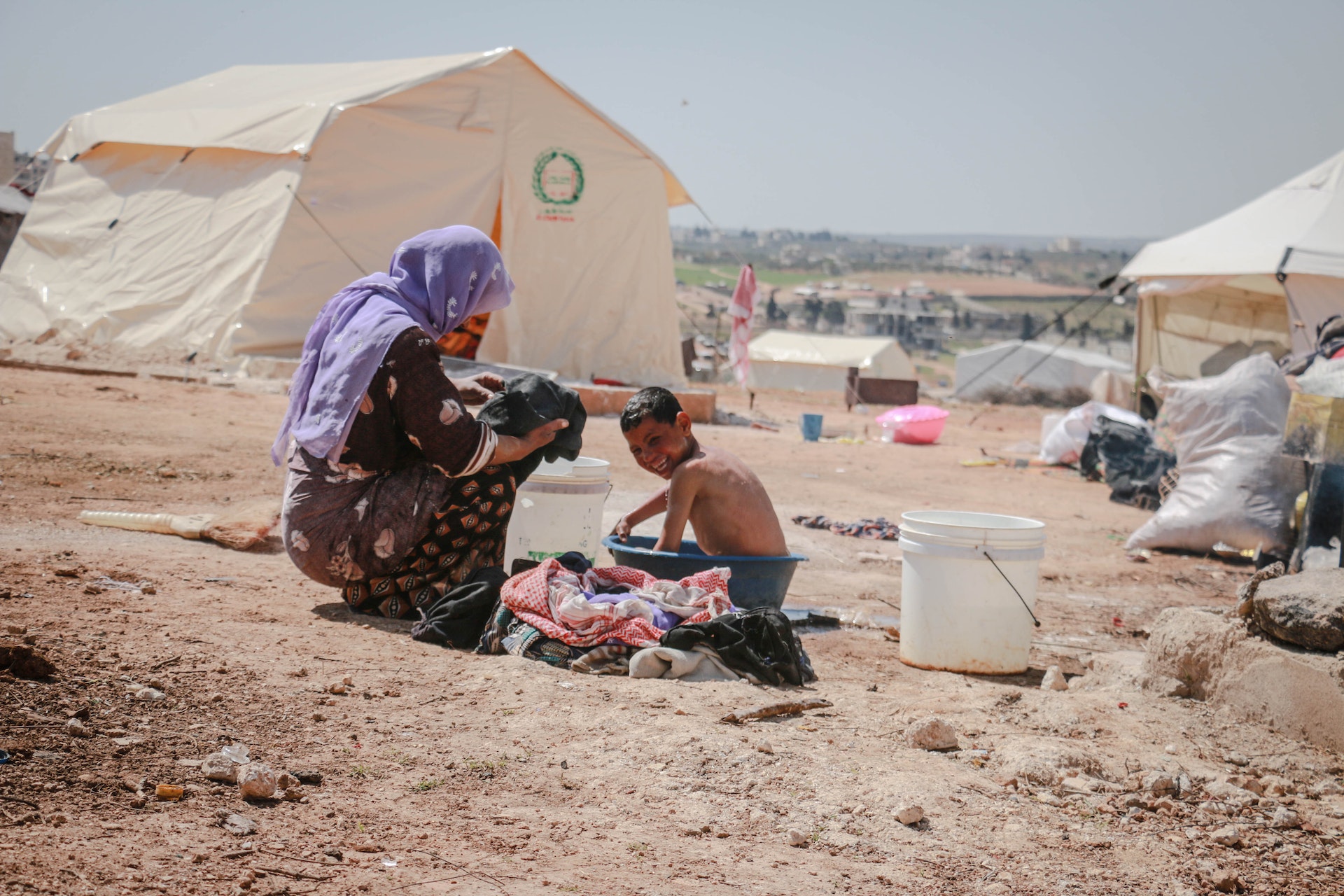
A mother washes her child in a makeshift settlement in Idlib, Syria.
(Photo courtesy of Ahmed Akacha/Pexels)
Hostility towards refugees grows in host countries like Lebanon as economic conditions deteriorate. Mass cholera outbreaks in refugee camps apply even more pressure.
“It’s a different case in Jordan for a few reasons,” MENA Leadership Center’s Fadi Sharaiha says.
“One, Jordanians are used to refugees. The second thing is that in Lebanon, they have them in refugee camps, while in Jordan, you can be in a refugee camp or integrate into the culture and the community.”
Last year, Jordan gave the highest amount of work permits to Syrian refugees since 2016. Worsening conditions in Syria provide little incentive for refugees to return voluntarily.
Instead of forcing Syrian refugees back into Syria, Jordan makes the process optional. “That’s why you have only a few thousand going back,” Sharaiha says.
“I don’t think most of them (Syrian refugees) are planning to go back. I’ve seen them putting down roots in Jordan.”
Opportunities to succeed exist in Jordan, but it’s not always easy for refugees to find them. That’s where MENA Leadership Center comes in.
MLC helps local churches connect with refugees and support them in their journey. Believers introduce the hope of Christ along the way.
You can help by sponsoring the training for a local church leader.
This ministry is not limited to Syrian refugees. “Around 30 percent of the people who live in Jordan are refugees. They’re coming from Syrian origin, Iraqis, some Yemenis, and some Sudanese, and they have now become a part of the economy,” Sharaiha says.
“It’s funny, but I sometimes miss the Jordanian accent whenever I go to Jordan. What you hear is a Syrian, Iraqi, and Lebanese accent, but you rarely hear the Jordanian accent.”
Header image is a stock photo courtesy of Yazan obeidat/Unsplash.
Jordan (MNN) — In 2017, Islamic State violence in Iraq forced a woman we’ll call “Susie” to run for her life. Today, Susie is learning how she can empower other Arabic-speaking women – wherever the Lord may lead her.
Five years ago, Susie fled from Iraq to Jordan, where her husband later joined her. “I lived near a Free Evangelical Church in Jordan [so] I attended the church,” Susie says, speaking through an interpreter.
“After I [fled] from the persecution of ISIS, I felt I needed the Word of God.”
Susie and her husband came to know Christ through the church. During a discipleship course, they learned about serving God. Then, Susie discovered PTEE, or the Program for Theological Education by Extension.
“I got to know about PTEE and was encouraged by the pastor to study with PTEE. They offer us different ways to help me continue studying,” Susie says.

(Representative stock photo courtesy of Levi Meir Clancy/Unsplash)
Susie’s story
PTEE courses teach Susie how to lead, whether it’s a small group or a ministry. She tells PTEE leaders that she wants other women to learn what she’s discovered. Susie plans to lead PTEE courses once she’s completed her training.
Sometimes, home is the best place to apply what you’ve learned.
“I studied more than five [PTEE] courses, but the [course that] affected my life is the stewardship course. Before, I [thought] that they have to obey me and to obey my teaching, but when I started this course, [I learned] they have to obey the Word of God,” Susie says.
“I [began] to look to my daughters as belonging to the Lord, and I began to pray for my daughters.”
Help empower Arab-speaking Christian leaders through PTEE.
Ask the Lord to give Susie and her husband discernment. They must decide whether they will stay in Jordan or find another country to call home. “We are struggling in different ways” as non-citizens, Susie says. Refugees cannot work in Jordan.
“We need God to help us get visas and emigrate to another country.”
Header image is a representative stock photo courtesy of Yazan obeidat/Unsplash.
Jordan (MNN) — Another major challenge surfaces in Jordan. The country’s Deputy Prime Minister says hardly a day passes without drug busts at the border with Syria. According to the United Nations, new production techniques and increased demand led to more drug smuggling this year.
Jordan already struggles on several fronts. “Jordan is the only country in the Middle East without oil, and natural resources are [scarce],” Fadi Sharaiha with MENA Leadership Center says.
“It is very tough, not to mention the impact of COVID-19 and [shutdowns] on a very fragile and struggling economy,” he continues. Plus, unemployment is skyrocketing, and Jordan hosts the second-largest number of refugees per capita in the world.
“Those, I would say, are ingredients for disaster in any country.”
The crises make life even harder in Jordan. The increased need provides Gospel opportunities, but believers aren’t always able to respond. MLC helps ministries get the tools and training they need to do more in the name of Jesus.
Do more good
A few years ago, MENA Leadership Center helped ministry leaders in Jordan identify problem areas. Now, those same believers are discovering solutions to their biggest challenges.
MLC provides more than education, Sharaiha explains. “It’s not only signing up for a course. Yes, we do have online courses. We have on-site courses as well, but it is a process; it’s not a transactional thing,” he says.
“It’s counseling [and] coaching; it’s a relationship.”

“The training inspired me to new approaches to ministry… I began to implement the material, combining both the passion and skills for a more significant impact in God’s kingdom. Thank you for the abundant, precious resources you left in our hands.” – Key Ministry Leader from Jordan
(Photo, caption courtesy of MLC)
Along with mentorship, Christian leaders gain networking opportunities. Soon, believers can expand their reach using the skills they acquired through MLC, Sharaiha says.
“We are building the capacities of those different ministries and thus will increase their impact. That will also affect their presence as Christians in the region.”
Help MLC train 300 leaders across the MENA in 2022.
“Please pray for unity among the Bride of Christ in Jordan, and also that they will have a fresh vision,” Sharaiha requests.
“Pray that Jordan will remain a safe place for people to come from all over the region and that the Church would be light and salt.”
Header image depicts a skyline in Amman, Jordan. (Photo courtesy of Claire/Pexels)
Jordan (MNN) — When the Lord called the prophet Elijah home, his dedicated and trustworthy apprentice Elisha immediately took up the mantle and continued Elijah’s work. Ready and willing “Elisha’s” are a little harder to find in Jordan.
“Young people are not really joining the meetings [when we hold them] in a church. Sometimes, they are not even going to the church [at all],” says Abraham* of the Program for Theological Education by Extension (PTEE).
PTEE provides theological training to Arabic-speaking Christians and church leaders throughout the Arab World. Abraham and his fellow Gospel workers noticed young people, individuals between 17- and 20-years old, weren’t interested in PTEE’s traditional classroom approach.
“We call this [the] Youth Center program, [and it’s] connected with our schools,” Abraham says.
“If we say to them from the beginning, ‘we will give you a course or lecture’ they will not come.”
Then, PTEE took a different approach, and everything changed. Now, young Jordanians in their upper-teens meet with PTEE leaders each month. Each meeting has a theme geared toward young adults – music, film, sports, etc.
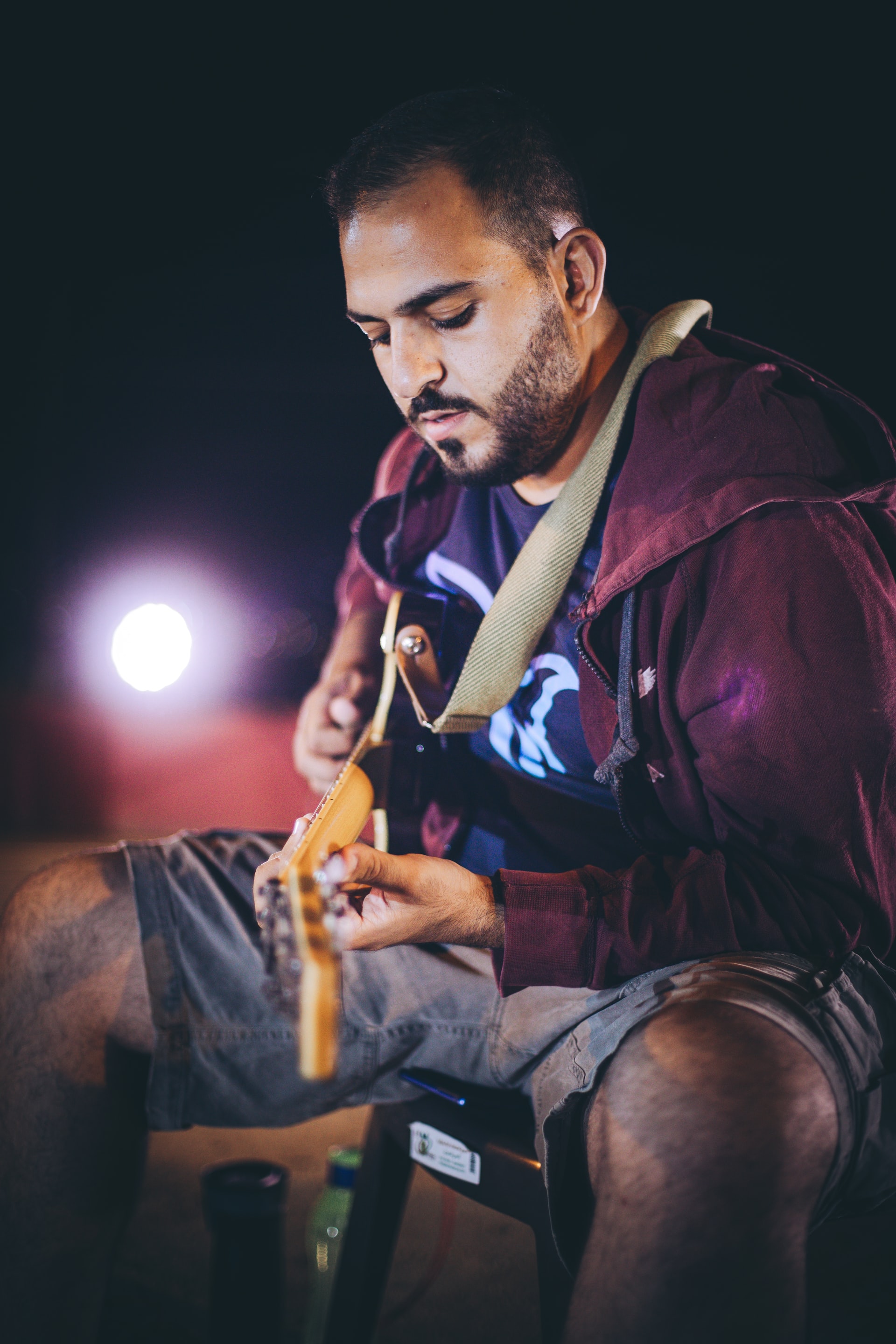
(Photo courtesy of Daniel Twal/Unsplash)
“Through football games or music, we have discussions,” Abraham says.
“We have received good feedback from many of them. They ask us to repeat these events again. We shared a story from the Old Testament and some Scripture from the New Testament; they liked it and asked us to repeat this again.”
Abraham says emerging young leaders are happy to join PTEE’s monthly meetings, and he hopes the conversations produce spiritual fruit.
“Our goal is to draw these young people near to the Lord, to give some discipleship teaching.”
They need your help to keep it going. Send an email to PTEE for details.
“We need some people who are interested in this [type of] work. If they are in Jordan, they can join us,” Abraham says.
“We need some people experienced in games and creative activities.”
*Pseudonym
Header image depicts a boy walking on the street in Jordan. (Photo courtesy of Craig Boudreaux/Unsplash)
Jordan (MNN) – Proverbs 13:12 says, ‘Hope deferred makes the heart sick.’ That’s precisely how Farrah felt on her wedding day. The story begins a few weeks earlier when “she gets a phone call from her father,” JoAnn Doyle of Uncharted Ministries says.
“He says, ‘If you don’t marry this man, your mother’s going to die.’”
 Farrah grew up in Jordan, where the law requires single women to set aside a small amount of money from each paycheck until they get married. Farrah’s father needed that money to pay for her mother’s cancer treatment, so he arranged Farrah’s wedding. “Farrah is forced to marry this man, who’s older and very radical Muslim. On their honeymoon, the abuse began,” Doyle continues.
“This dear woman is beaten; she’s so depressed she wants to die. The only reason she doesn’t take her own life is [her] children.”
Life was utterly miserable until the Syrian war started. “Syrian refugees are flooding into [Jordan] now, and she keeps running into this one woman. [The woman is] a very poor-looking refugee, but her face is shining, and she’s radiating joy,” Doyle says.
“Farrah goes up to this woman and says, ‘What’s wrong with you?! Why are you so different? Why are you happy?’ This woman tells her, ‘I found Jesus. Do you want to know how He’s changed my life?’”
She met with the Syrian woman several times, Doyle says. Through a series of events, Farrah came to know Christ as her Savior.
“Immediately, depression and suicidal thoughts fled. For the first time in her life, the emptiness was filled with peace and with joy.”
Read Farrah’s full story in Women Who Risk: Secret Agents for Jesus in the Muslim World, a new book released earlier this year by JoAnn and her husband, Tom Doyle.
“The night before she was going to be baptized and celebrate the Lord’s Supper, she has a dream about Jesus for the very first time,” Doyle says.
“The next day, Farrah is baptized and celebrates the Lord’s Supper. When she was getting dressed, they handed her a towel to dry off the water, and she said, ‘No, no, I don’t want to take this water off!’ Putting clothes on her wet body, she said, ‘I just want that water to linger so I would not forget He has washed me and made me new.’”
(Header photo courtesy of john crozier/Unsplash) https://unsplash.com/photos/NJzDmlfZWz4
Jordan (MNN) — Normally, Jordan is a stabilizing force in the Middle East. However, discontent is growing as police strictly enforce COVID-19 lockdowns and crack down on protests.
“Currently, the situation is stable. However, as we’ve seen in Lebanon, that [status] is always just on the edge of something becoming worse,” Samuel* of Redemptive Stories says.

(Wikimedia Commons)
“COVID has gotten worse, numbers continue to rise; they have already begun Friday lockdowns.”
Jordanians are frustrated by health system failures. Earlier this month, six people died because they couldn’t get enough oxygen at a hospital treating COVID-19 patients. These failures and public mistrust come at a poor time, with experts predicting that infections will peak in April.
While opportunity lasts, the Redemptive Stories team is doing all it can to help refugees in Christ’s name.
“Jordan is often looked at as the Switzerland of the Middle East. Because of that, we have a unique opportunity to minister to refugees, provide aid and relief to them, but then also to share the truth with them,” Samuel explains.
The Kingdom of God is growing as a result.
“For the first time, many of these refugees are getting to interact with Christians who share their faith. Because of that, many of them have come to faith in Christ,” Samuel says.
“Through the strife we’ve seen all over this region, God uses that shaking to bring people to Himself.”
Use the prompts listed alongside this article to guide your intercession. Find more prayer needs here.
*– Name changed for security purposes.
Header image depicts Jordanian police officers stopping a vehicle in Amman in 2017. (Wikimedia Commons)
Jordan (MNN) – After fleeing homes and struggling with job losses due to the COVID-19 pandemic, refugee families settle in for a new hardship: winter.
Samuel with Redemptive Stories says that despite COVID-19 cases stabilizing to around 1000 per day in Jordan, many Syrian refugees continue to feel the strain of hard times. Frequently these families live off day laborer incomes in sectors that pay poorly even during good times.
It’s common to see a household of six to ten people living off about five to seven US dollars a day. However, with lockdowns slowing or stopping day laborer work, covering necessities for a family has gotten even harder.
Samuel says this problem grows urgent in winter. Not only are basics like food and clothing a problem, suddenly heat and staying dry become an issue. Many families cannot afford to keep a heater all year long. They sell it when the weather warms up and look for one again in the winter.
Physical Needs and Gospel Witness
Redemptive Stories partners with local organizations to help provide some of these basic supplies and offer in person encouragement to refugee families in need.

(Image courtesy of DFID – UK Department for International Development on Flickr https://bit.ly/367L1Nx)
“In this case, we have a visitation program,” Samuel says. “It’s a partnership with a local church that goes out and interacts with these families that we work with. We provide some basic aid for them, whatever their unique needs are and then we share the Gospel with them. We share the hope of Jesus Christ with them.”
In a time of face-to-face restrictions, visits have changed. However, Redemptive Stories and their partners have been able to continue their work.
“Home visits look a lot different, you know, we’re socially distanced. We’re wearing masks. We’re trying to do what we can to help protect these families, particularly for our staff members, and as well as our staff members who are regularly in homes and out of homes and into other homes.”
Help Provide for New Believers
People may be wearing masks, but God is still drawing near during these visits. Samuel says they are seeing lives changed for Christ. Redemptive Stories hopes that this will motivate the Church to prayer and action on behalf of refugees.

(Courtesy of MaximillianV on Flickr https://bit.ly/3pgXYvJ)
“Many Syrian refugees that have had to flee their country have come in contact with Christians and have come to faith in Jesus Christ, and are growing in their faith and desiring to serve Him. So I mean, the thing that should motivate all of us is to care for our brothers and sisters.”
Samuel asks the Church to pray for these new Christians. Pray that God would provide for their physical needs this winter and also draw them closer to Him through discipleship.
He also encourages Christians to help their brothers and sisters financially.
“One of the faithful organizations that gives to our organization is called MENA Collective. And I would encourage people to, if they have a desire to help with some of these winter packets, to look into perhaps giving to them through that organization. And, in general, as I said, just keep praying for your brothers and sisters. That they would stand strong. That they would grow in their faith and be faithful to be witnesses for the new hope that they have in Jesus Christ.”
Learn more about the MENA Collective here.
Header image courtesy of CDC Global on Flickr https://bit.ly/3qLmLZm