Mission Network News - Algeria: Recent Episodes
None

Algeria (MNN) — The president of Algeria, Abdelmadjid Tebboune, announced on March 21 that the nation’s next presidential election will be held September 7. Since 2019, the year Tebboune’s term in office began, Algeria’s government has pressured and shut down more than forty churches.
Yet Algeria’s capital-C Church is far from crushed.
“God’s churches are human beings, and they cannot be shut down,” says Yernathen, a North African leader serving with A3*.
(Graphic courtesy of A3)
“They (the government) cannot prevent the Holy Spirit to work in people’s hearts. People are continuing to come to the Lord. Families and (a) number of our leaders are bringing people into fellowships in the homes in different places,” Yernathen says.
He admits that most of the church buildings have been closed. For people who consider a building the only way to have church gatherings, this leaves them with little to no options.
But there is a plan B, in which Yernathen says “just like the Acts of the Apostles, they have to meet wherever they find peace.” Sometimes that means private homes, and sometimes that means out in forests where there is greater freedom.
The fact that churches have even received the government’s attention is encouraging to Yernathen in a country that is 97% Muslim.
“To see the church, the Body of Christ, getting to a point where it disturbed the government and the government has to make a decision to see how they can regulate that, that means a lot. That means God is working,” he says.
“There is a persecution, there is an oppression. But that joy that is overflowing covers the multitude of those persecution(s). It has furthered the kingdom of God, no matter how they persecuted the church.”
Yernathen asks for prayer for Algeria’s leaders facing immense pressure from the government and families.
He also invites the Church of the West to share insights and experiences for the struggles Algerian churches are dealing with. Those challenges include how to best counsel abused women as well as help Christians from Muslim backgrounds walk with the Lord despite the pressure of their culture.
A3 is working to equip North African leaders with mentorship and resources for godly leadership. Would you prayerfully consider partnering with them? Learn more here.
*Pseudonym
Header photo is a representative stock image in Algeria courtesy of Nasro Azaizia/Unsplash.
Algeria (MNN) — Christians in Algeria are allowed to practice their faith, but it isn’t made easy for them. Since 2019, Algerian churches have faced forcible closure and opposition from the government — or what Voice of the Martyrs calls “squeeze” persecution. Furthermore, evangelism of Muslims by non-Muslims is prohibited by the nation’s Constitution.
Karim Arezki is a professor of comparative religions involved in the North African Christian community. In a recent conversation with The Voice of the Martyrs Canada, he described the big picture this way:
“The underground church and ministries are growing and God is opening many doors through persecution, which is part of our faith. But our leaders and people in our Christian community are tired because of the situation.”
Karim Madi, an Algerian pastor living in Europe, says, “Before 2019 when we could say there was persecution in society and from the family. But after 2019 the persecution started to come from the government.”
With only a few churches open across the country today, many believers meet online or underground.
Arezki says that when Algeria gained its independence from France in 1962, it allowed for more freedom for missionaries. This led to people coming to know Christ, and, eventually, revival.
Photo of Bejaia, Algeria courtesy of SLPix via Pixabay
“In the 1970s, more Algerians were accepting the Lord. But it wasn’t easy. From 1982 until 1999, Christianity was growing, and people of all generations — teenagers, older people, men and women — accepted the Lord. There was a revival in the Kabyle area. In every village, there were underground churches, and they were growing in the Arab areas as well,” says Arezki.
“The revival of Christianity in Algeria started in 1990, with a new generation of believers. This encouraged others in their faith in Jesus and to share, but they paid the price. Some of them went on to have a good position in society, including in the government. The persecution began when it was learned there were many Christians.”
Arezki says Christians lost their jobs and faced verbal and physical abuse when their faith in Christ became known.
“What we see in this second generation of Christians [who are] growing up in Christian homes [is] the fruit because of their faith of their parents, and how they educated their children in school and in faith.”
Pray for Algerian believers as they face pressure from the government in addition to pressure from their family and society. Pray that Muslims will be curious about the Christianity they see and will turn to Christ.
“The persecution isn’t stopping us from our faith. Yes, we have had arrests and we will never know what will happen next. Many churches are closed and few are open. But we have underground churches that continue to practice their faith under these circumstances.”
Find out more about how you can be invested in the persecuted Church at Voice of the Martyrs Canada.
(Header image is a representative stock photo courtesy of Himsan via Pixabay.)
Algeria (MNN) — The Body of Christ is growing in Algeria. Believers proclaim Jesus boldly in and around al-Qaida terrorist camps. However, sharing the Gospel with Arabs can cause serious problems.
As part of an effort to stem Christianity’s rapid growth, Algeria’s government banned unregistered religious gatherings. Yet, it won’t give meeting or building permits to Christians.
“They assume every group that gathers together is against the law and the government,” A3’s Yemathen* says.
After dozens of church closures in recent years, Algerian Christians found a workaround.
“Most Christians are now training to find another way of doing church or getting together without risking another [church] closure,” Yemathen says.
“A number of leaders are convening their meetings in their homes, and sometimes in the wilderness or the forests.”
Unfortunately, this approach is not foolproof. “One of my leaders in Algeria decided to meet in ‘the bush’ (wilderness) because they had just started a church,” Yemathen says.
“They were followed by 20 policemen who stopped the meeting and inquired about the nature of the meeting. They (police) asked for their IDs, recorded their names, and [the believers] may be called for a court case.”
Ask the Lord to strengthen and encourage persecuted Christians in Algeria. Learn more about A3’s work in the Middle East/North Africa region here.
“The churches are growing, not necessarily in buildings, but spreading all over the place,” Yemathen says.
“The fact that they are persecuted [adds] value to the faith professed by our brothers and sisters because they stand on the truth and the conviction that Jesus Christ is the Way, the Truth, and Life, and there is no other way.”
*Pseudonym
Header image is a representative stock photo courtesy of Artem Zhukov/Pexels.
Algeria (MNN) — The Algerian government continues to pressure Protestant churches.
“More than 40 churches have been closed down in Algeria over the last six years,” Todd Nettleton with The Voice of the Martyrs USA says.
Like water erodes stone over time, government pressure wears down the Christian community and avoids international attention.
“At Voice of the Martyrs, we discuss ‘smash’ and ‘squeeze’ persecution. ‘Smash’ persecution is [when] you come in and burn down our church, beat somebody up, arrest a bunch of Christians, and take them off to jail.
“‘Squeeze’ persecution is a little different. You try to make them uncomfortable, to make life harder – that’s what we’re seeing in Algeria.”
So far, believers have overcome this pressure and continue their work for Jesus.
“Christians in Algeria have had to move to an ‘underground’ form of worship, meeting in private homes,” Nettleton says.
Pray Gospel workers will not be discouraged.
“As you see your church [getting] a padlock on the door and you can no longer go there, it would be discouraging and hard to go through that experience,” Nettleton says.
Pray believers will always be ready to share the reason why they hope.
“Muslims are watching what is happening [to Algerian Christians.] I have talked to Algerian Christians who say [that] when their church was closed down, Muslim neighbors reached out and said, ‘Hey, we’re sorry this happened to you. We know you guys are good people; they shouldn’t have done this,’” Nettleton says.
As they watch events unfold, “Muslims grow curious,” he says.
They ask themselves, “‘Why does our government see the churches such a threat? I wonder what those Christians believe that is so dangerous for the government.’ Maybe they go on to Google or turn on a satellite TV channel and hear the Gospel message.”
In the header image, Algerian special police put a lock on a church door while Christians took photos. (Photo, caption courtesy of VOM USA)
Algeria (MNN) — The Church is thriving in Algeria, but it’s thriving underground. Algeria’s government recognizes an official organization called the Association of the Protestant Church of Algeria (APCA), but getting certified as part of that organization is next to impossible. And for churches that don’t register? According to Riadh Jaballah of Voice of the Martyrs Canada, they become targets.
To date, Jaballah’s contacts have counted 46 closed churches without any newly opened ones. Churches that are not a part of the APCA are not formally allowed to open, and any attempt to do so would be met with automatic government shutdowns.
This essentially shuts down any opportunity for smaller churches to grow or remote plants to start. The churches that do fall under the APCA umbrella are so big – some reaching 2,000 congregants – that there is little space for personal connections or discipleship.
The size of these legal churches confuses local believers, Jaballah says. How can churches have the negative social impact that the Algerian government claims they have when these registered churches have so many members already? “The government searches for any excuse to persecute them and close the churches,” he says.
Plus, the rules are applied inconsistently. Some Catholic churches or churches that promise not to engage in vandalism, for example, don’t seem to require government oversight. This can potentially create division within the Algerian Church as a whole and drives leadership into unnecessary conflict.
“Our brothers [are] still fighting for their faith,” Jaballah says. “They’re [still] worshipping God.”
Christians in Algeria are trying to turn crisis into opportunity. Amazingly, Jaballah says, “We are happy that the church buildings are closed because God opened many opportunities for the underground Church.”
Christians are careful to exercise caution. “If more than 10 or 15 people [meet], they suspect; why are you together?” Jaballah says. “If the number is more than that, they suspect them, and right away they can stop them.” Instead, Christians enter churches one by one so they don’t draw too much attention.
Jaballah draws comparisons to the first-century Church, which met in houses and found creative ways to worship. Like the early Church, Algerian believers are hungry for sound theology and meaningful discipleship.
“We keep praying for our brothers and sisters,” Jaballah says. “We need to pray for unity among the believers. Secondly, I want to pray for wisdom. It’s not about us. It’s about him at the end of the day, for all of us when we serve the ministry.”
Pray for humility, courage, and faith. Learn more about how you can pray with Voice of the Martyrs Canada.
Header photo courtesy of Unsplash.
Algeria (MNN) — An Algerian Christian is free today after spending over two years in prison. Hamid Soudad was arrested two years ago on blasphemy charges for a social media post he made back in 2018.
We spoke with The Voice of the Marytrs Canada’s Riadh Jabballah who knows Hamid. “I met him many years ago when I was there in Algeria. He’s a very humble man and a really simple believer. He received a message from his friend about the caricature about the Prophet Muhammad. Right away, he shared this caricature on his Facebook page.”

Man with Algerian flag. (Photo courtesy of Nasro Azaizia/Unsplash)
The husband and father of four young children thought the charges would be dropped, but he was sentenced to five years in prison.
Yet, in July, Soudad was released early as part of Algeria’s Independence Day celebrations. At least 8,500 prisoners were pardoned or had sentences decreased.
As the Body of Christ, we can pray for persecuted Algerian Christians like Soudad to have wisdom and be encouraged in their faith. And praise God for Soudad’s release!
Jabballah says, “We need to build a bridge. We need to open doors interfaith. We need also to plant the seeds here and there.”
It’s only the seeds of the Gospel that will soften hearts. Algeria is almost totally unreached with the Gospel, and Islam is the state religion. Yet the small underground Church in Algeria is growing.
Learn more about VOM Canada’s ministry to persecuted believers.
Header photo courtesy of Pixabay.
Algeria (MNN) — Persecution can lead to purification in Christian teaching. In Algeria, pastors used to teach believers that “this building is your church,” says Youssef*, a Protestant Christian leader who partners with Operation Mobilization USA.
“A lot of the leaders focused on [growing] their own kingdom” with big and beautiful church buildings, he continues. As a result, the average Christian in Algeria understood that “the building has something to do with their faith.”
The government has closed Protestant churches nationwide in recent years, forcing believers underground. Initially, fear filled the hearts of most Algerian Christians. Many wondered how they could worship without a church building.
“Overcoming fear [has been] very, very important. When the churches closed, they (Christians) were lost [and] didn’t know what to do,” Youssef says.
Today, “we are trying to encourage [believers to meet in] house churches and cell groups.”
Believers rely on God for the strength and will to press on, and His mercies are new every morning.
“Where we are facing this persecution, there is an incredible movement of prayer and fasting. We’re not giving in; we must persevere by faith,” Youssef says.
“We were not prepared for this persecution, honestly. But God is in control.”
Yousseff and his wife Hee-Tee train Christian leaders and disciple-makers in Algeria with help from OM. You can support their efforts here.
“We want to pray for the best ones to be recruited for training and then for sending off. We hope we can send out 15 missionaries this year,” Hee-Tee says.
“Please pray that the Lord would bring quality people to us. We are very keen to train them [to] go [to] Jerusalem, Judea, Samaria [and] the ends of the earth.”
*Name withheld for security purposes.
Header image courtesy of Operation Mobilization USA.
Algeria (MNN) — Secretary of State Anthony Blinken met with his cohorts in Algeria’s capital a year ago today. The United States added Algeria to its Special Watch List for religious freedom violations, but it didn’t change much for believers.
Government pressure increased throughout 2022, and persecution continues now. Yet hope remains. “We have a victorious God,” says Hie-Tee*, a Gospel worker partnering with Operation Mobilization USA in Algeria.
“By His grace and protection, we are able to continue very prudently and watchfully.”
As described here, life is a continual challenge for believers in Algeria. Even so, “it is not accidental that you have so many converts, so many believers from Algeria and not in Tunisia or Libya or Morocco, Mauritania,” Hie-Tee says.
“God has chosen Algeria.”

Algeria’s government has closed more than 40 Protestant churches since 2018.
(Photo courtesy Middle East Concern)
Purpose-driven living
Hie-Tee and her husband, Youssef*, oversee several OM ministries in Algeria. Authorities closed and sealed the couple’s formal ministry center – the House of Hope – in 2018. However, the mission’s initiatives continue and grow.
“By God’s grace, we have classes going on and women’s ministry; we have people going into missions to the Middle East and North Africa,” Hie-Tee says.
“Hundreds and hundreds of thousands [of people have] been reached through our media ministry,” Youssef adds.
The government may be closing church buildings, but Algeria is home to one of the fastest-growing church movements in the Muslim world. These believers from a Muslim background have a Great Commission focus.
“At least 7,000 Algerian believers [have come] through summer camp, and 500 or more have graduated from Timothy Schools,” Hie-Tee says.
“Those believers are not just [claiming faith] for decoration, but they are equipped and sent out to make other disciples.”
Support Gospel work in Algeria through OM USA. Ask the Lord to give His followers courage, boldness, and wisdom.
“One of the government’s tactics at the moment is to create fear among the Christians,” Youssef says.
“They are watching your phone, your Facebook; whatever you do now, you can be in trouble.”
*Names withheld for security purposes.
Header image is a representative stock photo courtesy of Daoud Abismail/Unsplash.
Algeria (MNN) — Ramadan started last Wednesday for Muslims around the world. In countries like Algeria where Islam is the state religion, Ramadan is strictly observed. Muslims must fast in the daytime as they seek Allah’s favor. And even non-Muslims during Ramadan are forbidden by law from eating and drinking during the day in public.
Life for Algerian Christians is increasingly difficult as the government closes churches and buries the religious group registration process in red tape.
We spoke with Yemathen*, a Christian worker in North Africa with Fidel, a ministry partner of A3 (formerly Asian Access). He says, “It’s so sad to hear that the [church] buildings are shut down because a lot of families come together and also are helping the kids to grow together and teach them in Sunday school and so forth.”
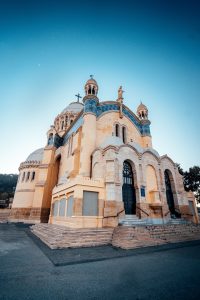
Church in Algiers, Algeria. (Photo courtesy of Nabil Saleh via Unsplash)
Yet there is hope.
“The government cannot do anything else but close the buildings. The churches actually are forming in different places being together.”
While these small house congregations are still persisting to meet, they feel the impact of having to go underground and how it stifles their programs, especially for young people.
“The youth and the young adults have their own activities, and they work together for their own programs. Unfortunately…they cannot get that in house churches,” Yemathen says.
“However, the churches are still growing. The impact is still the same. The Gospel is spreading. While the government is trying to shut down all the churches because they believe the Christians don’t have the right to exist in a Muslim context, these churches have blossomed and grown over the years, despite the persecution and the difficulties and the harsh persecution that the government has caused them.”
In Algeria, most Christians come from a Muslim background. The country ranks at number 19 for high levels of Christian persecution on the Open Doors World Watch List. Families, friends, and the government target these believers with discrimination and harassment.
Yemathen explains, “They believe the only religion that should exist and has the right to exist in Algeria is the Muslim religion. Politically, they would say that we are open to the Christians, but in the way they perceive they should be and with limitations.
“A number of Christians have counted the cost and they prefer to carry the cross no matter how hard it may be for them, even to a point maybe to lose their lives. They still would consider following Jesus better than anything else.”
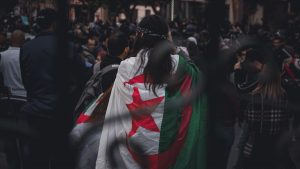
(Photo courtesy of Daoud Abismail via Unsplash)
Against all odds, however, the underground Church is remaining faithful in Algeria.
“There is a bold witness of those Christians because they have, over the years, discovered that the government or the schools have lied to them about the truth,” Yemathen says. “Now that they have discovered Jesus Christ, they are outspoken about their faith and they believe that God has assigned those times for them to be set free.”
You can be an encouragement to Algerian brothers and sisters in Christ right now. The answer is simple: Pray.
Yemathen says, “Christians over in Algeria are going through difficult times. I think one way you can pray for Algerians is to be bold, to continue to have that bold witness, but also to intercede with them, adopt them in prayers, lift them to the Lord in prayer so that they will continue to withstand the trials and the difficulties no matter what that will lead to in terms of persecution.”
Header photo courtesy of Daoud Abismail via Unsplash.
Algeria (MNN) — A state-led campaign against Protestant churches continues in Algeria. Last month, believers told MNN that only ten churches remained open in the entire country.
Today, “there are eight (churches) left open, but you never know for how long,” says Youssef*, a Protestant leader partnering with Operation Mobilization USA.
“[The remaining churches] have been visited by the authorities, and you never know what will happen tomorrow.”
A 2006 law set the tone for legal persecution. Then, “the plan started in 2018 to close down all the churches,” Youssef says.
“[From] 2019 to today, they have closed down 43 churches.”
The systematic church closures are part of a broader lockdown on individual freedoms. Last month, Algeria’s government shut down several civic groups. It also forced Algeria’s oldest independent human rights organization to close its doors.
“This is the situation we’re in. It’s quite sensitive, delicate, and challenging,” Youssef says.
The small but growing indigenous Christian population – mainly converts from Islam and their children – stands firm. “The Church in Algeria will never disappear because the vast majority of the Christians are Berber [and] Kabyle,” Youssef says.
As nomadic people groups, “they can meet anywhere. They have [the] Bible in their mother tongue; they have the worship songs in their mother tongues.”
Pray the Body of Christ will continue to grow in Algeria. Pray that many who are traumatized by violence will meet the Great Physician.
Support Algerian Christians through OM USA.
*Name withheld for security purposes
Header image is a representative stock photo courtesy of Nerosable/Pexels.
Algeria (MNN) — Persecution escalates in Algeria. Local believers tell Asian Access, or A3, that the government is closing more churches and targeting Christian leaders.
Four pastors face trial this week and could be sentenced to prison. One leader was arrested for holding a church service in his home, and two others were detained for producing Christian media content.
“We don’t know what’s going to happen,” says a believer we’ll call Yemathen*.
“Algeria doesn’t have democracy or freedom, so they can charge them with anything.”
The Algerian government also shut down another church last month, Yemathen says. Only ten churches remain open in the entire country.
Religious freedom conditions have declined since 2020 when a constitutional amendment declared Islam the national religion. Last year, the United States placed Algeria on its Special Watch List for international religious freedom.
“Algeria has two facets,” Yemathen says.
“Outside, it shows that it’s open to any religion and freedom for people to worship; yet, in reality, Algeria has never been open to other peoples of faith.”
Mass protests in 2019 sparked hope for change, leading to a new government formation. However, “the government has not changed its threats on churches,” Yemathen says.
“We thought the government was going to help, but they were just checking on Christians — where they are, and where they may be – [to] not allow them to evangelize and expand the Gospel.”
Ask the Lord to strengthen and encourage persecuted Christians in Algeria.
“Pray that this persecution may lead into a greater expansion [of the church] and the Gospel may spread even to different nations across North Africa,” Yemathen says.
*Pseudonym
Header image depicts closure announcement and government seal on church doors in Algeria. (Photo courtesy of Middle East Concern)
Algeria (MNN) — Believers in Algeria need your help. Government persecution is forcing the Church underground.
Meeting online is viable, but managing the process isn’t always easy. Plus, there’s the discipleship component, which can be difficult for young Christians.
“Revival [happened] in Algeria in the ‘90s,” Fadi Sharaiha with MENA Leadership Center explains.
“These are new believers; they need some support and help. Mature Christian leaders left the country.”
MLC’s online training format is ideally suited for church leaders in Algeria. More about that here.
“We have so many brothers and sisters from Algeria joining our courses. ‘How to do digital church’ is one example [of the courses they are joining]. Another example: ‘How to do cybersecurity for online services and ministry,’” Sharaiha says.
Learn how to support church leaders through MLC here. Most importantly, pray. Pray that persecuted Christians in Algeria will know they are not alone.
“Please pray for them as they go through the persecution, that they would not leave the faith [and] stay strong and rooted in Christ,” Sharaiha requests.
“What is happening in Algeria [is] what happened to the first Church in Acts. They (persecutors) are closing down the buildings, but the Church is a group of people who believe in Jesus Christ, and they can meet wherever.”
Header image is a representative stock photo courtesy of Peggy und Marco Lachmann-Anke from Pixabay.
Algeria (MNN) — The Algerian government has stepped up restrictions on non-Muslim religious organizations and activities.
It’s already against the law to evangelize or even challenge the teachings of Sunni Islam. But Todd Nettleton with The Voice of the Martyrs USA says, “What we have seen in the last couple of years is a lot of churches being closed down.”
Authorities don’t openly say they are closing down churches for religious reasons. Nettleton says, “They will find some construction code or something. ‘Oh, you don’t have enough parking spots.’ They find some reason to close down a church. They want all of the churches to register, and they want them to meet only in a specific, approved location.”
Blasphemy laws
Algeria’s blasphemy laws can be broadly interpreted, making them useful for persecuting minorities.
For instance, one law forbids offending the Prophet Muhammed, something impossible to quantify. Nettleton says, “In almost any circumstance that a Christian is doing any outreach, they could face charges under this law. They can find some part of this law they say you’ve broken to bring charges against you.”
Ultimately, blasphemy laws often get used by those in power for financial reasons. Nettleton says, “It’s used commonly to settle any dispute because you can accuse someone of blasphemy, they’ll be arrested, and your dispute is settled. You won because they’re in jail.”
How to pray
Many Algerians hear the story of Jesus from people they know, the internet, or from radio broadcasts. Pray the love of Jesus will transform Algeria. Ask God to strengthen the churches.
A thriving Christian community exists in Algeria, Nettleton says. “There is a large Christian population among the Berbers. Among the Arabs, there are fewer, but they certainly exist. They typically face more pressure and more persecution.”
The header photo shows a mosque in Algeria. (Photo courtesy of Yaakoub45, CC BY-SA 4.0 <https://creativecommons.org/licenses/by-sa/4.0>, via Wikimedia Commons)
Algeria (MNN) — Another church in Algeria folds to state-sponsored persecution. Only 11 churches remain open in the entire country.
The pastor of a Protestant church in Aït-Atelli closed his doors following intense pressure from governing authorities.
“Last week, they closed another church in the Kabyle area. The government sent the police, and they spoke to the pastor,” Pastor Riadh* with Voice of the Martyrs Canada says.
“We are not allowed to [re-]open the church.”

Church closure documents
(Photo courtesy of VOM Canada)
The church belonged to the EPA, an officially recognized umbrella organization for Protestant churches. Believers formed the EPA in 2006 to protect their right to exist.
Starting in “2006, under EPA, all these churches have activity and no problem,” Pastor Riadh says.
“In 2017, when the new government came to power, they started this persecution.”
State-sponsored persecution
Algeria’s government shut down over 20 churches in the past four years. More about that here. Most of these churches belonged to the EPA. “They (government officials) are not open” to religious freedom, Pastor Riadh says.
“The government [says], ‘Oh, we are [a] Muslim country. We don’t want any other religion or faith [to be] practiced besides Islam.’”
Yet, hope remains. Algerian church leaders tell Pastor Riadh, “‘we are happy when we see persecution come in our country.’ People are thirsty to know more about the faith when they don’t see any hope,” he says.
“Some pastors and leaders said, ‘We thank God that our churches closed. We see more believers because we started planting underground churches, [which are outside of] control from the government.’”
Help persecuted Christians in Algeria through VOM Canada.
Pray for unity among church leaders. “Pray for our brother and sisters [to] not be afraid to share the hope they have in their heart,” Pastor Riadh requests.
“God [has] opened many (Gospel) opportunities.”
*Name withheld for security reasons
Header image is a stock photo courtesy of Peggy und Marco Lachmann-Anke/Pixabay.
Algeria (MNN) — Algeria gained new leadership this summer, but believers face the same persecution and oppression as before.
“Unfortunately, church closures are continuing. Four more churches have been ordered to cease all their activities, but they have not been physically sealed,” Daniel Hoffman of Middle East Concern says.
“In total, 20 churches have been stopped from meeting and operating by the authorities.”
Algerian Christians face systemic persecution through the legal system. A 2006 law requires all non-Muslim religions to register their place of worship, but officials have yet to approve any applications. More about that here.
Earlier this year, three previously-closed churches appealed their court-ordered closure. A judge allowed the churches to reopen and stay open during the legal proceedings, but the final ruling did not favor the believers.
“In July of this year, those three churches were [re-closed and] sealed,” Hoffman says.
Once a court orders a church to close, “the police come, and they put wax on the door, so you can’t open the door without breaking the seal. That’s a crime in itself,” he continues.
“No churches have been allowed to reopen.”
Connect with Middle East Concern here for practical ways to help. “Pray Christians in Algeria will remain encouraged during the challenges and difficulties they’re facing,” Hoffman requests.
“Pray for their protection, and for justice to be done in these different court cases and the church closures, and for them to be reversed.”
You can post your prayer for Algerian Christians on Twitter by tagging @MiddleEConcern.
“If we’re able to tell them people are praying for them, that is always a great encouragement, and it strengthens them in the midst of their challenges,” Hoffman says.
Header image depicts a church that was closed and sealed in 2019. (Photo courtesy of Middle East Concern)
Algeria (MNN) — Algeria boasts a rich Christian history; as described here, “The early church father Augustine of Hippo is thought to have been a Berber from Algeria.” Today, Islam is the state religion of Algeria, and the government actively oppresses Christians.
“In the last 12 months, there have been at least eight Christians involved in legal proceedings started by the authorities against them. Either they’re accused of performing religious activities in a building that doesn’t have a permit or a few of them have been accused of blasphemy,” Middle East Concern’s Daniel Hoffman says.
“One person was sentenced to five years in prison because he liked a Facebook post that, in the eyes of the government, insulted Islam.”
Additionally, authorities have yet to approve any church request to use a building for non-Islamic worship – a legal requirement added in 2006. As stated on Middle East Concern’s website:
Intensification of these pressures since November 2017 has led to a wave of church closure orders in the Kabyle region and the south of Algeria. Any Christian activities conducted outside places of worship approved for that purpose are subjected to sanctions, especially if those activities are construed as proselytism or blasphemy.
Pray for Foudhil
Believers from a Muslim background, like Foudhil, face difficulty on every front. “When he became a Christian, his family disowned him and they physically destroyed his business,” Hoffman says.
“He’s struggling, because of his faith, to find employment. Sometimes, his employer discovers he is a Christian and he’s fired again.”
Foudhil’s wife divorced him when he became a Christian and has full custody of their kids. Fellow believers gave Foudhil money when he was out of work to help pay for his living expenses. “Because of that, he was charged with receiving donations illegally,” Hoffman says.
Read the latest update on Foudhil’s case here. Pray Foudhil will know the peace of Jesus and His encouragement while facing these ongoing trials.
“He was just informed of the verdict of the appeal; the prison sentence has become a suspended prison sentence but the fine remains, so he will further appeal that sentence,” Hoffman says.
Header image is a representative stock photo courtesy of Christian Weiss/Unsplash.
Algeria (MNN) — In August, sudden wildfires swept through Algeria’s Kabyle region. Ninety people died, and many others lost their homes and farms. The Algerian army came to battle the flames after they overwhelmed local firefighters.
Joe Willey with SAT-7 USA says, “SAT-7 staff witnessed the destruction firsthand. In fact, their immediate family members live less than a mile away from the perimeter of the fire.” Thankfully, the blaze did not reach their homes.
Challenges in the region
But this region of Algeria has already suffered greatly due to COVID-19. Many families have lost multiple people to the virus. Christians often feel isolated, as churches remain closed.
That’s where SAT-7 comes in. Willey says, “The Algeria programs are varied. They have worship programs, teaching, and testimony programs too. Now importantly, all reach Christians in their homes. There is also a new social media brand called Free Souls that is designed to spread the hope of the Gospel throughout the region using social media.”
This strategy complements SAT-7 PLUS, an online streaming platform launched earlier this year. Willey says, “People in the Middle East and North Africa, especially young people, are now able to view Christian programming on their smartphone, on their device, or on their television, over the internet and anytime they want.”
How to pray
Algeria faces great economic and political uncertainty as well. Many people are searching for God in these troubled times.
Willey says, “Please pray that Algerian Christians would be comforted through these difficult economic times and these disasters. Also pray that the SAT-7 team in North Africa would be protected and that God would provide the resources they need to continue sharing the hope of Christ.”
The header photo shows smoke over northern Nigeria on August 11. (Photo courtesy of Wikimedia Commons, Public Domain)
Algeria (MNN) — Christianity once had a large following in North Africa. Today, followers of Jesus are few and far between. But they display a tremendous devotion to God and each other.
Joe Willey with SAT-7 USA says, “Because of the oppression and the lack of Christian resources, many believers are young in their faith. But there is really great enthusiasm. We know that when they become believers, they also become sincere servants of God, and they open their hearts and their homes.”
Samia
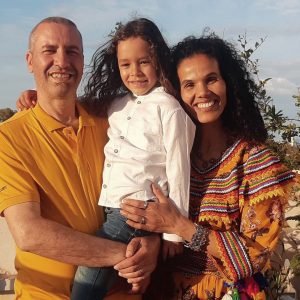
Samia and her family. (Photo courtesy of SAT-7 USA)
One Christian in Algeria, Samia, spoke to SAT-7. She says life isn’t easy under an increasingly strict government that has forced some churches to close down.
But Samia says believers wear persecution like a “crown on their heads.” She compared her community to the early church, with everyone sharing their possessions and being devoted to prayer.
Samia says the Algerian Church hopes to build a bridge to the rest of society. They even aspire to end regional conflicts between the Arab and Amazigh peoples. Learn more about Samia and hear from other North African Christians here.
SAT-7’s work in North Africa
Willey says SAT-7 walks alongside North African Christians. “Because North African believers are often young in their faith, they have questions. They want to know more. So SAT-7 created the program Standard Talk to explain basic theology, and also explain the Christian faith to non-believers.”
Despite resistance, Samia says the Church is reaching out to their neighbors in love. Pray God will bring healing to Algeria through the love of these Christians. Willey says, “We can just pray that God would allow the churches to open and that Christians would be allowed to worship freely.”
Header photo courtesy of SAT-7 USA.
Algeria (MNN) — The mortar and pestle, an ancient tool used for crushing food like spices and nuts, has become a symbol of the protests in Algeria.
George Makeen from SAT-7 explains. “They were using it in the demonstrations to just make noise and revive people. Then, those who are against the movement said, ‘This is the noise of church bells. And this is why Christians are not national, not part of the nation.”
However, many Muslims defended Christians against this accusation. They pointed out that Christians too want a better Algeria, with less government corruption. Makeen says, “So our prayers are for the state to understand and to treat Christians with respect. Pray for Christians to continue to be engaged, to have that sense they are not alone, not left behind, and not forgotten.”
Pray for true change
Those in power have reason to turn Algerians against each other. These protests forced the former president to step down in 2019. Makeen says, “[The protestors] are upset because they are not sure about their future. They’re not sure if there is enough employment for them or not.”
As a sound like church bells rings over Algeria, pray for justice in the country. Ask God to build His kingdom and bring many people to the love of Jesus.
Header photo courtesy of Jiří Sedláček, CC BY-SA 4.0 <https://creativecommons.org/licenses/by-sa/4.0>, via Wikimedia Commons.
Algeria (MNN) — The North African country of Algeria has formed a new government. However, many of the same people from the old government still hold positions of power.
Algeria continues to suffer an economic crisis, with high rates of unemployment and poverty. Mass protests in 2019 forced the previous president to step down.
But George Makeen of SAT-7 says Algerians want more. “They want more freedom and more democracy: real change. And they see that didn’t happen yet. This is why, every now and then, there are lots of demonstrations. People are still in the street. The movement is still very powerful. And (Algerian President Abdelmadjid Tebboune) although he says, ‘I’m totally for democracy,’ he used the COVID-19 situation in a way to control people.”
COVID-19 and Algerian churches
COVID-19 closed down many Algerian churches as well, but Makeen says that’s not stopping Christians from making a difference in the country. “They already closed lots of churches and gave warning to other churches. The justification they are using is they are not following the rules or regulations of safety: (not enough exits, not enough fire extinguishers, all this stuff). And then when you ask to apply for regulations, they give you a hard time.”
But Algerian Christians remain encouraged by the good news of Jesus. Makeen says, “They are saying, ‘Even if they close the physical place, they cannot take the church out of our hearts.’” SAT-7 broadcasts weekly church services for Algerian Christians who have no building to gather in.
The header photo shows protests in Algeria in 2019. (Photo courtesy of Fethi Hamlati, CC BY-SA 4.0 <https://creativecommons.org/licenses/by-sa/4.0>, via Wikimedia Commons)
UPDATE: Newly appointed Algerian Prime Minister Ayman Benabderrahmane is infected with COVID-19, Reuters reports. The prime minister will quarantine for seven days but continue performing his duties virtually.
Algeria (MNN) — There may be a new Prime Minister at the helm in Algeria, but persecution isn’t likely to let up. See our full Algeria coverage here.
“The problems Christians face are largely coming from the Ministry of Interior, who looks at the Christian community — especially the Protestant community — and sees them as a political threat. That is why they are clamping down on them,” Daniel Hoffman, Executive Director of Middle East Concern, explains.
“As long as that doesn’t change, the situation for Christians is probably not going to improve.”
When Algeria’s former Prime Minister, Abdelaziz Djerad, resigned in late June, Finance Minister Ayman Benabderrahmane stepped forward to take his place. The president has tasked Benabderrahmane with forming a new government.

The Hirak movement led to Bouteflika’s ouster in 2019, and hasn’t lost any steam.
(Photo courtesy of Amine Rock Hoovr/Unsplash)
It’s only the third vote in Africa’s biggest nation since long-time President Abdelaziz Bouteflika resigned in April 2019. The same protest movement that called for his ouster continues today.
“Some figureheads have changed, but overall, policies towards Christians, [as well as] the wider political direction of the country, will not be affected,” Hoffman says.
Legal persecution
As described here, 98-percent of Algeria’s population follows Islam, and the constitution establishes Islam as the national religion. Believers face challenges on many levels, especially those who turn to Christ from a Muslim background.
One believer, “Hamid Soudad, is sentenced under the blasphemy law,” Hoffman says.
“He is accused of having insulted the Prophet of Islam, Muhammad, [and] he has been sentenced to five years in prison…. He is now serving his sentence; even though he’s further appealing, he is in prison at the moment.”
Algerian officials commonly use Islamic laws to persecute the Christian community. See examples here. “In addition to people who have been sentenced to prison, there are court cases involving (church) buildings,” Hoffman says.
“Since late 2017, the government has been closing church buildings and ordering the leadership of the churches to seize their activities … [16 churches have been physically sealed and] another four churches have been closed. Some of them were house churches, so the government could not forcibly seal those buildings, but they have been closed.”
Support persecuted Algerian Christians through Middle East Concern.
Find your place in the story
Despite forced church closures, false accusations, and incarcerations, the Body of Christ is growing. “The Church, especially the Protestant Church, in Algeria is strong,” Hoffman says.
“One of the main reasons the government perceives them as a threat is because they are growing, and they are predominantly composed of Algerians who were born as Muslims and then came to faith [in] Jesus later in life.”
Thank God for continuing to draw people into a saving relationship with Christ despite widespread opposition. “That is continuing, regardless of the actions of the authorities,” Hoffman says.
“The most important things that Algerian Christians [ask] for is prayers; both prayer for the Church in Algeria, they will remain encouraged, that they will remain strong, and for those Christians who have been sentenced or who are currently before the court. [Pray] for them to be released or to be acquitted of the charges.”
Header image is a representative stock photo courtesy of nasro azaizia/Unsplash.
Algeria (MNN) — Questions in North Africa lead to digital Gospel opportunities. “People who are engaged on social media are beginning to question, of course, their traditions,” TWR’s Nathan Anderson explains.
“A lot of those who are [turning] to Christ now are the younger generation; those in their late 20s up to the mid-40s.”
The team at TransWorld Radio is sharing Christ across multiple media platforms. TWR encourages believers of all ages and presents the Gospel through social media and radio.
“There are many Arabic programs broadcast from Radio Monte Carlo into North Africa; from Morocco to Egypt,” Anderson says.
Reaching North Africa for Christ
In October 1960, TWR began airing its first program from Radio Monte Carlo. The shortwave transmitter sits in a building with a sordid past. Nazis intended to use this facility to broadcast propaganda during World War II. More about that here.
Never used for its original purpose, the building now serves a redemptive task — transmitting the Good News of Jesus Christ to millions of listeners daily throughout Europe, the Middle East, and North Africa.
(Photo courtesy of TWR)
“Our main focus right now in North Africa is Algeria,” Anderson says.
Algeria has one of the world’s largest movements of Muslims coming to faith in Christ. Pray TWR’s programs will help these new believers grow.
“We have some Bible teaching programs; we also broadcast Women of Hope, which is a program to encourage women who find themselves in difficult situations. Many of them are the only believer in their family or their home,” Anderson continues.
Although the Christian faith has a long history in North Africa, centuries of Muslim control results in frequent persecution. Most of Algeria’s Christians come from the Berber ethnic group, and sharing Christ with an Algerian Arab can be problematic. Nonetheless, Berber Christians share the Gospel boldly in and around al-Qaeda terrorist camps. More about that here.
Pray TWR’s programs will encourage Algerian believers. Pray the Gospel message will reach Algeria’s Arab communities.
Header image is a representative stock photo depicting a young person in Algeria. (Stock photo courtesy of Sami Boudjelti/Unsplash)
Algeria (MNN) — Algeria bore the brunt of multiple human rights denigrations at yesterday’s virtual United Nations meeting. Criticisms ranged from refugee camp violations to forcible church closures.
See our full Algeria coverage here.
“All Protestant churches that were officially recognized at one point in time are now closed in Algeria. Recently, the government allowed other religions to reopen their places of worship, yet they have denied the applications by Protestant churches to reopen,” TransWorld Radio (TWR)’s Nathan Anderson says,
(Photo courtesy of TWR)
Following Christ leads to trouble in this North African nation. More about that here. Church used to be a place of respite, but now that’s gone, too.
“[Gathering at church] was their opportunity to engage with one another; talk and learn from the Lord, and learn from each other and fellowship. It’s been a very difficult time,” Anderson says.
Believers can still learn and grow online or through radio, thanks to TWR.
Programs like Thru the Bible bring Scripture and hope to persecuted Christians. “We’re developing a program for the Kabyle people of Algeria called Power In Persecution,” Anderson adds.
“It’s a 15-minute program that will be aired once a week. This program is a collection of testimonies from believers around the world [about] how God has helped them and strengthened them in the midst of persecution.”
Visit TWR’s website to help launch Power in Persecution. “Pray for this program to have an impact among the people of Algeria,” Anderson requests.
“Many of them are believers who find themselves in very difficult situations.”
Header image is a representative stock photo courtesy of Sheldon Kennedy/Unsplash.