Mission Network News - Egypt: Recent Episodes
None

Egypt (MNN) — As a young girl growing up in Egypt, Wakeela* was treated differently than her brothers. Her parents had only wanted boys, and they made sure Wakeela knew that.
Later, as a young woman, Wakeela struggled to feel loved and accepted. She saw herself as worthless.
That all started to change when Wakeela began watching SAT-7’s satellite television program My Mirror. The program encourages Arab women in their God-given value and identity in Christ.
Marianne Awaraji, presenter of My Mirror. (Photo, caption courtesy of SAT-7 USA)
Joe Willey with SAT-7 says Wakeela eventually connected with their Viewer Support Team. “The program My Mirror gave her an opportunity to say, ‘I’m really struggling with this.’ But the Viewer Support Team was also able to show her that these negative beliefs that she had about herself aren’t true according to Scripture and according to how God sees her.”
Through SAT-7’s encouragement and programming that pointed her to the Bible, Wakeela came to understand her worth in the eyes of her Heavenly Father.
There are other Arab women like Wakeela in Egypt who need your prayers!
Willey asks, “Pray for young girls, young women, women who are mature – first and foremost, that they would understand how they are valued in the eyes of God. That is a bedrock principle.
“But secondly, [pray] that they would be valued by their husbands, by their families, by their siblings. Then that value, I believe, will be translated into being valued in the culture – and that is what SAT-7 is going to say. Women [and] girls are not pieces of property. They’re not to be bought or sold or treated poorly. They are a person made in the image of God.”
Click here to learn more about SAT-7’s satellite television ministry in the Middle East and North Africa!
*Name changed by SAT-7 for security.
Header photo courtesy of SAT-7 USA.
Egypt (MNN) — In the run-up to the May 5 Orthodox Easter celebrations, extremists attacked a Christian village in Upper Egypt and set fire to several homes and a new church building.
Many Christians received threats from extremists over the construction of a new church building in Al-Fawakher, Minya. Although they appealed to the police for help, none came. Then, on Tuesday night, April 23, militants burned the new construction and many Christian homes in the village.
Abna Makarios, Archbishop of Minya, alerted authorities. Riadh Jaballah, a spokesperson for The Voice of the Martyrs Canada, says, “Egyptian security force(s) received a report about a dangerous wildfire near the construction site of a new church. Many Copts have been subjected to attacks, (including) their homes being burned and being prevented from leaving.”
The area is where approximately one-third of the country’s Christians live. The village itself is home to roughly 3,000 families.
The Minya governorate in Upper Egypt.
(Wikimedia Commons)
Despite a warning, nobody was there to stop the attack. However, in the aftermath, Jaballah says, “The instigators of the attack on the population were arrested, and the damages were recorded. This attack was to create sedition and division between Muslims and Christians. This is not new, especially coinciding with their Easter.”
While discouraging, the response from the community was not one of violence. Instead, “Always, they forgive their enemy, their killer, and persecutor. So always, this is the reaction of the Christian, because it’s biblical. It’s not about us. This is what we believe; this is our faith.”
Because many of the Christians in the area also live side-by-side with Muslim neighbors, they don’t want to sabotage those relationships. Jaballah says the response of believers says a lot about the Jesus they follow. “They won’t enter in(to) conflict with the neighborhood, especially Muslims. Always, they react with peace, with love, and forgiveness.”
Although Open Doors ranks Egypt as the 38th most dangerous country in the world to be a Christian, Jaballah says there is room for the Gospel. He tells church leaders in Egypt:
“You need, as Christian(s), to stand up about our faith, to face our reality. We are here, part of this country, and by law, our Constitution, they gave us the freedom to share our faith.”He encourages them to embrace the paradox of persecution. “Our Lord (taught) us: ‘they’re going to kill us; they’re going to persecute us’. We’re aware of that. We need to go. And we need to share. If we (give in to) fear, we’re going to lose our faith.”
The April 23, 2024, attack is just one incident. History has proven that Easter gatherings in Egypt are prime targets for extremists to send a message. In 2017, twin attacks hit church gatherings at St. George’s Church in Tanta and St. Mark’s Coptic Orthodox Cathedral in Alexandria. Those attacks are recent enough in light of Tuesday’s violence to send waves of concern as this Coptic Easter celebration approaches.
Jaballah says there are four things we can do as the body of Christ. We need: “…to encourage each other; to be aware about our situation; to share the information and to pray. We are believers–it doesn’t matter (about) your denomination. We need to stand up together.”
Header image is a representative stock photo courtesy of Max Kukurudziak/Unsplash.
Egypt (MNN) — SAT-7’s program You Are Not Alone recently interviewed a Gazan refugee family who fled to Egypt for urgent medical care for their four-year-old daughter, Kanzi. She was critically injured in a missile strike as their family moved from shelter to shelter in Gaza.
Egypt has allowed roughly 400 Palestinian refugees from Gaza to cross into the country for medical treatment.
Joe Willey with SAT-7 says, “A refugee family was trying to get out of Gaza into Egypt because their daughter had been wounded…. Her arm was amputated. She had fractures of her skull, her hip and leg. Then they finally got to go into Egypt and compassionate care was given to this young girl.”
As refugees flee into Egypt from Gaza, they are meeting Egyptian Christians offering aid and Christ’s hope.
(Screenshot courtesy of SAT-7)
“As I see the role of Egypt in this situation – and especially the Church that is, again, shining the light of the truth of God’s Word – it is reflected in the way that there is help for, say, a young girl. It is reflected in the way it is helping others who are in need. And I think it’s truly showing that the Church is making an impact in the culture of Egypt.”
SAT-7’s role is to support the Church and reach non-believers with biblical satellite television programming. Their ministry reaches countries across the Middle East and North Africa, including Egypt and the Holy Land.
Willey says, “Whether there is a conflict or whether there is peace, SAT-7 broadcast programming is making the Gospel available, it is making God’s love visible.”
For more SAT-7 impact stories, click here to visit SAT-7’s website.
Willey encourages, “Learn from a perspective of people in the Middle East and North Africa – what the region is really like, the strength of the Church, the mission of SAT-7, [and] the programming.
“It is important to be educated. It is important to understand the world. And it is really important to understand that we have brothers and sisters in Christ who are in the Middle East and North Africa, and they they love knowing we’re praying for them.”
Header photo courtesy of Mohammed Ibrahim/Unsplash.
Egypt (MNN) — Life for Christians in Egypt looks different from just ten years ago when the Muslim Brotherhood was in power. Now, the Egyptian government has given Christians more freedom, and there are more licensed churches than ever in modern history. Tasos Ioannidis, president and CEO of AMG International, says there is also increased safety although some churches are not officially recognized.
It is easiest to establish a Coptic Orthodox Church. Other Christian groups may freely gather for worship whether or not they are officially registered as a church.
“Evangelical Christians still face challenges, especially for Christians in Egypt that come as refugees from Sudan or other places, or former Muslims,” says Ioannidis.
According to the UN Refugee Agency, Egypt hosts refugees from 59 countries. Since April, when war broke out in Sudan, close to 300,000 Sudanese refugees have fled into neighboring Egypt. Ioannidis says Christian refugees are normally able to meet for worship but are at risk of deportation if they entered the country illegally.
Even so, the relative peace and religious freedom in Egypt provide opportunities for the Gospel to spread. He says,
“There is growing hunger and interest in learning more about the Gospel. There are a number of former Muslims and Muslim background believers that are now being discipled. And it is exciting to see that.”
AMG supports national leaders who drive outreach through personal interactions, conferences, and intentional discipleship.
“Right now we are in a period of calm. So there is opportunity, but it is very possible that in the future things will revert to a more challenging environment,” says Ioannidis.
“[Believers] can be praying for wisdom for the national missionaries who are engaged in sharing the gospel. They can pray for the new believers who are coming to faith, and they are in an environment that is hostile to them, especially if they are refugees.”
Header photo by George Youssef on Unsplash.
Egypt (MNN) — In 2016, the Egyptian government formed a committee dedicated to processing applications to legalize unlicensed church buildings. At the time, there were 3,730 outstanding applications. Now, seven years later, almost three thousand applications have been approved.
It’s a big shift in the way officials treat Christians in Egypt. On a podcast with Voice of the Martyrs Canda, Fayez Youssef said that it was “unprecedented in our modern history to have this number of legalized and licensed Christian churches and church buildings and conference centers.”
Before this committee took action, Christians might have to wait as long as 20 years to get a license to build just one building. With recent efficiency boosts, however, churches can get approval for their buildings in a much shorter amount of time, meaning they can start meeting in physical buildings for community and worship.
Youssef believes that this committee is a way for the government to say, “‘We want to give you your rights. We know this is your right. You didn’t have it before, and this is time to have it.’” He also believes that this is unprecedented.
“It [has] never happened in all my life to see this number of licensed churches,” he says. “We are in a positive change now.”
Why the shift? Some might point to pressure from both local and international communities calling for more religious freedom in Egypt. Youssef, on the other hand, has a different theory: “This is coming from a very deep conviction that this is the right thing to do.”
Keep praying for Christians in Egypt, and consider supporting Voice of the Martyrs Canada and their work in Egypt and around the world. Believers in the Egyptian Church are encouraged by the presence of their God, the support of a global Church, and the promises of Scripture. While in many parts of the Bible, Egyptians are antagonists, there’s one passage that Youssef says Egyptians find encouraging: Isaiah 19:19-21.
“In that day there will be an altar to the Lord in the midst of the land of Egypt, and a pillar to the Lord at its border. It will be a sign and a witness to the Lord of hosts in the land of Egypt. When they cry to the Lord because of oppressors, he will send them a savior and defender, and deliver them. And the Lord will make himself known to the Egyptians, and the Egyptians will know the Lord in that day and worship with sacrifice and offering, and they will make vows to the Lord and perform them.”
Header photo courtesy of Voice of the Martyrs Canada.
Egypt (MNN) — Last week marked the 12th anniversary of Egypt’s Arab Spring revolution. Mass protests on January 25, 2011, led to then-President Hosni Mubarak’s ouster, and several years of chaos followed.

Man holding Egyptian flag during the 2011 Egyptian Revolution
(Wikimedia Commons)
Christians saw record-level persecution when the Muslim Brotherhood came to power. In 2013, it seemed a new day was rising with Morsi’s military overthrow, led by the former army chief and current Egyptian President, Abdul Fattah al-Sisi. Hopes quickly dimmed when the path cleared for al-Sisi to take the helm the following year.
Today, as in most countries, the average Egyptian complains about inflation and a struggling economy. “Yes, prices are going crazy; but at the same time, I can see positive things happening,” MENA Leadership Center’s Fadi Sharaiha says.
“I was in Egypt a few weeks ago, and the infrastructure has changed so much. Things are getting better. [Additionally,] they (Egyptian leaders) are talking to the World Bank and the IMF.”
MENA Leadership Center helps church leaders throughout the Middle East/North Africa region expand their capacity. More about that here.
“We’re in Term One right now [and] we have three courses: religious freedom, leadership building capacity, and volunteer management. Two [of the three] instructors are from Egypt,” Sharaiha says.
One course has already set a new record. “I don’t know what happened [to create this phenomenon],” Sharaiha says.
“We ended up having 120 participants, and the target was 60. Most of them are coming from Egypt.”
Pray that MLC receives additional funding so more Christian leaders can attend these courses. Consider sponsoring a church leader through MENA Leadership Center.
Most importantly, pray. “Please, please, please pray for Christians in the Middle East and North Africa,” Sharaiha says.
“Pray that the Holy Spirit will continue working, and pray for wisdom for us while [we are] working around these topics, navigating things happening in the Middle East.”
Header image depicts protestors in Cairo on February 18, 2011. (Wikimedia Commons)
Egypt (MNN) — An Egyptian app developer wants to bridge the communication gap between hearing and Deaf communities. Mohammed Aboelazm, 28, developed a mobile app that translates sign language to text and audio and vice versa.
“The value proposition of I Hear You is to become a Google translator for sign language. Sign languages are equal to other languages in the world and deserve attention,” Aboelazm tells The National.

(Graphic courtesy of DOOR International)
While noble, a project like this is easier said than done. “Many hearing people have assumptions about sign language and Deaf communities. I’m not saying that’s the case in this specific instance, but in a lot of cases, technologies get developed with those assumptions in mind,” Rob Myers of DOOR International says.
“Then, when those assumptions aren’t true, it ends up sidelining the project, or the project has to take a very, very different turn.”
See a list of common assumptions here.
“When you consider approaches like Google Translate for sign language, you’re trying to go from a written or spoken language to a sign language. Both directions (written text to sign language and vice-versa) have their interesting complications,” Myers explains.
“The intentions in trying to eliminate some of those communication barriers have been good,” he continues, but most efforts miss a core principle.
“If you want to be successful in working with any Deaf communities, in any context whatsoever, do that work with the Deaf community rather than doing it for [the Deaf community].”
Led by a team of Deaf Christians, DOOR International equips Deaf believers to reach their communities for Christ. Learn more here. Empowerment and collaboration are “guiding principles that DOOR International stands by,” Myers says.
“Out of 230 DOOR staff, over 85 percent are Deaf.”
Deaf empowerment does not mean hearing people have no role whatsoever. “God has gifted hearing and Deaf believers as part of the body of Christ to work together,” Myers says.
The partnership is essential to reaching the world’s Deaf communities for Christ. Less than two percent of the world’s 70 million Deaf people know and follow Jesus. Find your place in the story here!
Header and story images courtesy of DOOR International.
Egypt (MNN) — On August 14, a fire broke out at an Egyptian Coptic church in Giza during morning Mass. Forty-one worshippers, including 18 children, died.
The children ranged from age 3 to 16.
SAT-7
The SAT-7 show You are Not Alone talked to local people as well as civil and church representatives. One neighbor told of rushing in to help, only to find triplets who had died. The son of the deceased church leader talked about his father’s leadership in the community.
Joe Willey with SAT-7 USA says, “I’m a parent. And I can’t imagine the grief. There were triplets, and all three died in the fire. I can’t imagine the darkened days. I think that’s the importance of these programs. Not to have a pat answer, but to offer hope.”
Some people suggested God allowed the fire in order to “take the children up to heaven.” But experts on the show say this is harmful to the parents who lost children. Willey says, “It reminded me of the book of Job. Often, silence is really what a person who is suffering needs at the moment.”
“God will not use evil purposes for his good plans.”
SAT-7 aired a special about the fire called In the Midst of the Darkness. It talked to experts who helped people deal with grief.
Additionally, Willey says, “It looked into the history of informally constructed churches in Egypt. Experts were speaking about fire codes and also fire safety for homes in Egypt. So that was, in a sense, a real public service announcement.”
Ask God to comfort the Egyptian Christian community after this tragedy. Pray their faith would reveal Jesus.
Header photo courtesy of SAT-7 USA.
Egypt (MNN) — In late May, the Middle East Council of Churches (MECC) met in Egypt for the very first time since its founding in 1968. The Coptic Orthodox Church hosted the meeting in Cairo.
Mary Joseph, a SAT-7 Communications Officer based in Cairo says, “It was a good thing to see all the leaders gather together in Egypt and discuss things. Maybe they have not reached the solution for every problem ecumenically. But it’s good to see them gathered here after a long time of not gathering. The MEC has not been gathering every year.”
The Egyptian president even addressed the assembly, saying he wanted to spread a culture of diversity and religious freedom in the country.
Violence against Christians
The statement comes after the stabbing of an Egyptian priest in Alexandria, Egypt. Joseph says, “Because it happened during Lent, it had a very special closeness. Lent is a very spiritual time here for Christians in Egypt. And it was very heartbreaking, of course, and there was a lot of indignation on social media.”
This isn’t the first incident of violence against Egyptian Christians, of course. Joseph says, “In 2016, there was a blast at a church in downtown Cairo that killed 29 people and left many disabled and injured. Two of the people killed were my aunt and her daughter.”
Joseph’s surviving cousin was recently invited onto the SAT-7 program Needle and New Thread, where she talked about her journey and her faith. “It was very encouraging for the viewers. Even the crew themselves were telling me (because I’m her cousin) how they were supported by her testimony.”
How to pray
Joseph says the Egyptian Church is facing a lot of division, often fueled by social media. Pray for unity among the believers.
And ask God to unify churches across the Middle East and North Africa.
Header photo courtesy of SAT-7.
Egypt (MNN) — Believers in Egypt see continued improvements under President el-Sisi.
“The Church is better than ever before,” says Nabil*, a Gospel worker focused on Egypt.
“We [are living in a] good time for Christianity, and this is not coming by luck. This is a prayer of the Church all the time, and we thank God for that.”
Over the past nine years, Sisi’s administration rebuilt dozens of churches that the Muslim Brotherhood torched. The government is also working to resolve issues that are centuries old, like legal problems that prevent new church construction.

Saint Mark’s Coptic Orthodox Cathedral in Cairo is the largest cathedral of any denomination in Africa and the Middle East.
(Wikimedia Commons)
“The government and Sisi himself [are] open-minded,” Nabil says.
“It was difficult to worship God in some areas. But now the Church has become more legal and we can worship God.”
Pockets of persecution remain, but nothing like what believers faced under the previous government. “The government’s attitude [toward Christians] is good now,” Nabil reiterates.
“They want to help you; they want to rebuild churches.”
Pray these positive changes will extend to believers from a Muslim background. Government-issued ID cards show religion, and these believers aren’t allowed to change from “Muslim” to “Christian.”
“There is a discussion about [removing] the religion from their ID. We pray for that change, for freedom for all the people,” Nabil says.
“This is a relation[ship] with you and with God, not a political thing.”
*Pseudonym
Egypt is home to the fastest-growing population in the Middle East and the largest Christian population in the Arab world. (Photo courtesy of Murat Şahin/Pexels)
Egypt (MNN) — A Muslim fundamentalist stabbed a Coptic Orthodox priest in Alexandria, Egypt. The attack took place on April 6, and the priest later died of his wounds. Several Christians had gathered at the beach, and the priest was just leaving when the stabbing took place.
The government of Egypt condemned the violence.
SAT-7
George Makeen with SAT-7 says, “We addressed the stabbing by talking to different church leaders from the evangelical and from the Coptic Orthodox Church. And that was great, because it brings that sense of unity between different churches in times of difficulty.”
SAT-7 asked the question: should Christians expect to suffer, or should they fight for their rights? Makeen says, “We are not defending Christians as our own group or as a closed group. But we are defending all people to live equally and live out their rights. So I, as an Egyptian Christian, am ready to die for my faith. If I have to, I’m not going to seek it.
“But I’m not going to accept my brother being killed or persecuted for his belief.”
Egyptian Christians have enjoyed better treatment by the state since 2013, after the ousting of an Islamist president. They now have more representation in parliament. Plus, Egypt has allowed the construction of many new churches.
Religious rifts
However, many Christians remain nervous. Makeen says, “Many Christians also have this bitterness towards their fellow Muslims. They feel that they are not treated equally, that there is some discrimination.”
And the rifts go beyond Christian communities as well. Many Muslims resent the new government. Makeen says, “This Ramadan, the regime produced a documentary about how the army moved against the Muslim Brotherhood. It’s meant to make you feel like the army is the good guys, and the devil is the Islamicists.”
The propaganda created a lot of anger in the country. Ask God to heal wounds in Egypt.
The header photo shows Alexandria, Egypt. (Phot courtesy of Argenberg, CC BY 2.0 <https://creativecommons.org/licenses/by/2.0>, via Wikimedia Commons)
Middle East (MNN) — “He said, ‘It is worth it.’ And he said, ‘I will gladly go to prison or even give my life for the Gospel to be proclaimed.’” Pastor Breck Ladd describes an e3 Partners mission trip he recently joined in the Middle East.
“Gladly? We [in the West] don’t understand that, I’m sorry. I don’t understand that.”
He met with several pastors and even had to be protected by a large security force during the event. Christians in this country risk severe persecution for their faith. Ladd says, “One guy began sharing with me what was going on in his life. I asked him if he faced any persecution. He said, “No, no, I live in an easy village, an easy community. I face hardly any persecution. I’ve only been arrested twice this year.”
Ladd watched these believers sing with utter joy in their hearts, despite their circumstances. Shortly before the group departed for the States, Ladd was invited to visit an underground church. He says, “We drove down an alleyway. We had to open the door, get out, and get inside as fast as possible.”
Inside, the Christians began to sing. Ladd says, “I’m a Mississippi State football fan. I’ve sat in a stadium full of cowbells. They pale in comparison to the volume that was in that room.”
Benefits of e3 Partner’s mission trips
He says going on trips like this challenges Western Christians to focus on Jesus. “We sometimes get confused. We think the answer is found on Capitol Hill. It’s not. The answer to everything we face is found on Calvary’s hill. Period. We need to make sure as the American Church we’re not teaching Gospel plus something. It’s not Gospel plus the government or Gospel plus politics. It’s just the Gospel.”
Ladd says joining a trip like this also allows Christians to encourage their persecuted brothers and sisters. Many live very isolated lives, cut off from any community.
Learn about future trips from e3 Partners here.
Header photo courtesy of derMolf on Pixabay.
Egypt (MNN) — Religious freedom has come a long way in Egypt since the Arab Spring and subsequent persecution. More about that here.
President el-Sisi took over in 2014 and recently lifted a four-and-half year state of emergency order, citing stability. He put the state of emergency in place after several terrorist bombings at churches.
“El-Sisi has been very gracious to Christians in Egypt. [He’s] been one of the best leaders, as far as respecting Christian beliefs, in the Middle East for a long time. But, of course, that doesn’t mean everybody follows the leader,” Uncharted Ministries’ Tom Doyle says.
Egyptian believers, especially those from a Muslim background, still have to watch their backs. “Even though the leader of the government says ‘We’re not going to allow persecution of Christians,’ it’s still happening,” Doyle says.
“It’s typical for people sharing the Gospel with Muslims to get threats routinely. These can come from terrorist groups; the oppressive Muslim brotherhood is there (in Egypt).”
Abel’s story
Abel and his wife Anna have a thriving ministry reaching Muslims for Christ in Egypt. It quickly drew the wrong sort of attention, but the Lord had a different plan in mind for Abel’s family.
“We thank God for a miracle. This is a beautiful picture of redemption and deliverance,” Doyle says.
“They didn’t die as martyrs. God’s not finished with them, and He’s going to use them more.”
A few weeks ago, Uncharted Ministries shared the following on its 8thirty8 Facebook page:
Abel and his wife Anna have a thriving ministry reaching Muslims for Christ in Egypt.
They often received threats to their life.
This phone call was different. The angry man on the other end explicitly promised to kill Abel, his wife and daughter with details of where they lived. Abel immediately sent his wife and 4-year-old Sofia to stay with her parents in another city in Egypt.
For three months Abel laid low during the day and only went out at night under the cover of darkness.
But then the unthinkable happened. On a short errand one evening, Abel was abducted. The kidnappers grabbed him, threw a black hood over his face, forced him into a van and sped away.
They drove for 3-4 hours. Abel prayed and the Lord gave him peace in his heart even though he was sure that the men intended to kill him. They drove deep into the desert where the car came to an abrupt stop. They dragged Abel onto the sand and beat him terribly with the hood still over his face. Then they left him to die.
Even though he was badly hurt he was miraculously alive!
Still unsure of where he was, Abel prayed asking the Lord which direction to walk. It took him hours to find a road. A driver pulled over and Abel asked: “Where am I?” He borrowed the driver’s cell phone and called his wife.

Abel, Anna, and little Sophia
(Photo courtesy of Uncharted/8thirty8)
A day later he and Anna were reunited and then went further underground. After a month they headed to the airport not knowing if they would be recognized and detained in Cairo.
Praise God, they made it safely to another country in the Middle East this month! They plan to remain there for 3-6 months and are praying about returning to Egypt to resume their work.
Father, we give You great praise for saving Abel’s life! It was a miracle as his kidnappers were intent on his death. We thank You for making them invisible to pass through airport security undetected and arriving at a place of safety with other believers who are caring for them. Give them wisdom to know whether they should return to Egypt to continue their ministry. They have put their lives into Your hands and trust You completely for their future. Bless their ministry for You and may countless other Muslims who are searching for spiritual answers find their hope in Jesus. With great thankfulness we pray in Your amazing name. Amen.
“God is to us a God of deliverances; and to GOD the Lord belong escapes from death.” –Psalm 68:20
Follow 8thirty8 on Facebook for more updates like these. Or, add MNN to your inbox.
Header image is a representative stock photo courtesy of Kate Druchenko/Unsplash.
Middle East (MNN) — In the Middle East and North Africa, millions of kids with disabilities often find themselves excluded and shunned. The SAT-7 KIDS show City of Stars, now entering its third season, helps kids to see their disabled neighbors in a whole new way.
Joe Willey with SAT-7 USA says, “It’s a program that helps children in the Middle East in North Africa understand that despite differences in outward appearance… the actors on this program are still children, just like the viewers. Really, the purpose is to show the biblical truth that everyone is made in God’s image and has value.”
Between 2 to 12 million people live with disabilities in Egypt alone. Very few have any access to the care and education they need to thrive.
A change of attitude
City of Stars takes place in a toy shop. The show stars two children: Romany, who was born with no limbs, and Viva, who was born with Down syndrome.
Willey says SAT-7 interviewed children before and after watching the show. Before watching City of Stars, some children said they did not want children with disabilities to attend their schools.
But after watching the show, Willey says, “Attitudes are changing. After seeing the program, now many children are welcoming those with special needs. They want to help, they’re standing up for children that are being bullied. One young girl told the story of a young man who was deaf. He was being bullied and she stood up for him.”
Pray these children would become wise and compassionate leaders in the Middle East and North Africa.
The third season of City of Stars will focus on the love of Jesus as described in 1 Corinthians 13. It will also take to the streets to interview more kids.
Header photo courtesy of SAT-7
Egypt (MNN) — Of all the Majority-Arab countries in the Middle East, Egypt has the largest Christian population. More about that here. There are many well-established churches and parachurch ministries in Egypt, but seminaries are more difficult to find.
“PTEE [is] needed because there [are] no seminaries in Upper Egypt and in the south. The seminaries are, most of them, in Cairo,” says Abraham*, a believer serving with the Program for Theological Education by Extension (PTEE).
PTEE offers accredited theological courses for Gospel workers in the Arab world. Learn more about PTEE’s work here. By studying online, believers can avoid unwanted attention, which often leads to persecution.
“We teach them how to do discipleship for the new believer, how to do a lot of work inside the church, and also about evangelism outside the church,” Abraham says.
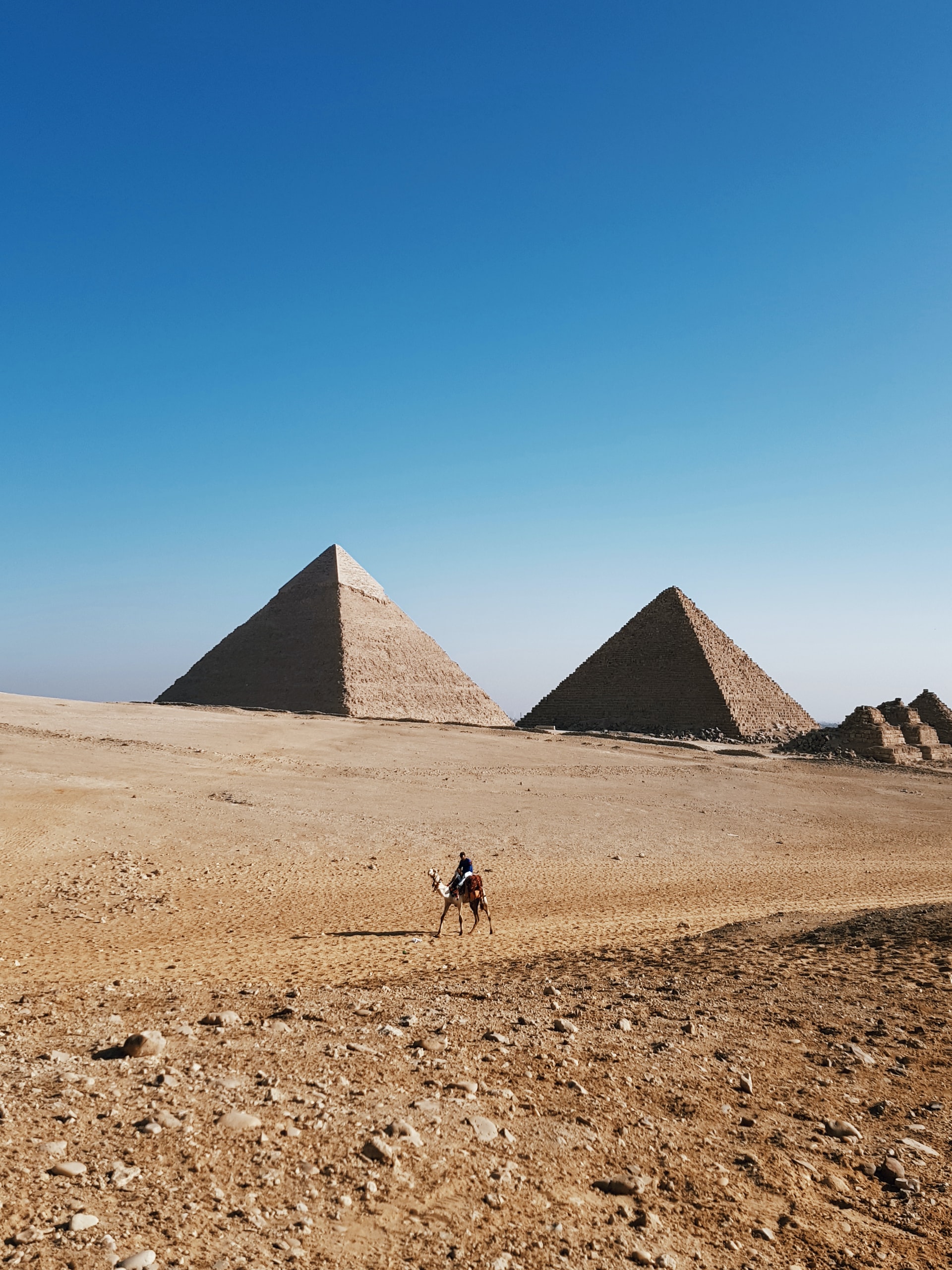
“[When] leaders cannot go to Cairo to study in Bible school, the program [goes] to the church.”
(Photo courtesy of Martin Widenka/Unsplash)
“We have more than 150 students studying from Egypt. [In] places where leaders cannot go to Cairo to study in Bible school, the program [goes] to the church.”
Plus, the training can be multiplied. This allows every PTEE graduate to develop more Egyptian Christian leaders. “We train a pastor or a church leader and he gives training to other people in the village,” Abraham says.
Equipping believers remotely furthers their “attempts to reach unreached villages and unreached (people) groups in the south of Egypt,” he adds.
Find critical prayer needs here. “Pray for leaders who suffer from some difficulties, and also for the families which have no chance to go to school,” Abraham requests.
“We have a lot of people who [do] not know how to read [or] write, and we try to teach this [through] discipleship groups.”
*Pseudonym
Header image is a representative stock photo courtesy of Aaron Burden/Unsplash.
Egypt (MNN) — This week in history, ten years ago, anti-government protests were sweeping through the Middle East and North Africa. The Arab Spring was gaining traction. By March 3, 2011, rumblings of revolt could be heard in the streets of Syria. Unhappy citizens overturned two dictators in Tunisia and Egypt. See our coverage here.
Uncharted Ministries’ Tom Doyle was in Cairo during the height of Arab Spring protests.
“There was power; there was strength in Tahrir Square. It was the most significant crowd I’ve ever seen in my life, and there was absolutely no way that the government of Egypt was going to stop that election,” Doyle describes.
Today, there’s a spiritual insurgence underway in Egypt and beyond.

(Prayercast “Love Muslims” screenshot)
“When we look at the progress of Bible translations, the Gospel being preached to unreached people groups, we just have to conclude that Jesus is standing at the door ready to come back,” Doyle says.
“This is the last stand for the Gospel: the Muslim world.”
Spiritual dissatisfaction is due, at least in part, to Arab Spring disappointment. “The Arab Spring didn’t work. It backfired,” Doyle says. Frustrated by the failures of Islamic governments and disillusioned by extremists, Muslims want a substantial source of hope.
Contact the Uncharted team to learn how you can share Jesus with a Muslim neighbor or coworker.
“It’s an ‘all hands on deck’ [call] for believers to reach out to Muslims right now. When we start to pray, we start to get a heart [for Muslims] and then a little bit of training, and you’re ready to go,” Doyle says.
Describing Uncharted’s training seminars, he adds, “It’s just a little bit of training that will help people feel a little more confident and ready to take Jesus into the Muslim world.”
Pray that Muslims seeking truth will meet Christ through dreams and visions and ask the Lord to encourage His persecuted followers in Egypt. Find more ways to pray for Egypt here.
Header image depicts protestors in Cairo on February 18, 2011. (Wikimedia Commons)
Egypt (MNN) — Egypt will now allow Muslims to build Christian churches as paid laborers. Egyptian Muslims in the past have often seen this kind of work as taboo.
The pronouncement allows Muslims to help build any of the 44 churches now under construction around Egypt. They can also join the work on 16 historic Coptic churches now being restored. Read more and see a map of the churches being built here.

The entrance to Al-Azher University. (Photo courtesy of Daniel Mayer, CC BY-SA 4.0 <https://creativecommons.org/licenses/by-sa/4.0>, via Wikimedia Commons)
Tom Doyle of Uncharted Ministries says, “This is a big step. This is the government saying, ‘We are giving our okay for this.’ And that’s another good sign. So we are thankful for that. And we pray that there will be better relations between Muslims and Christians. Because we know as Muslims become exposed to the Gospel and see the joy of the Lord and believers, it’s attractive to them. They want to know more.”
A good sign for the future
Doyle says this might be good news for the future of Christian-Muslim relations throughout the entire MENA region. “Saudi Arabia is the heart of Arab Islam. But Egypt is the brains of Arab Islam. Their Al-Azhar University is the place where clerics go to get trained to be the most respected theologians in the religion of Islam all throughout the Arab Middle East.”
Doyle says this openness isn’t just religious, but political. “Egypt is wanting to open up. The nations of the world realize that they need each other. To just push Sharia law and close countries from outside contact, from other groups, from other religions, it’s just not feasible anymore.”
Pray Christians would take advantage of this openness in Egypt and in academic Islam for greater collaboration and Gospel witness. Doyle says, “We’re going to see greater progress for the Gospel in Egypt because of some of these things opening up.”
The header image shows a Coptic Orthodox church in Cairo, Egypt. (Photo courtesy of Ashashyou, CC BY-SA 3.0 <https://creativecommons.org/licenses/by-sa/3.0>, via Wikimedia Commons)