Aviation Marketing Hangar Flying: Recent Episodes
Paula Williams


Advice, commentary and fun for sales and marketing professionals in the aviation industry. Contact us at paula@aviationbusinessconsultants.com with show ideas.
Flight schools rarely fail because people have stopped dreaming about flying. More often, they struggle because their marketing is inconsistent, their sales follow-up breaks down, or their operations cannot handle […]
Why Aviation Entrepreneurs Feel So Busy (and What to Do About It) every direction. In this episode, Paula Williams talks with former U.S. Air Force C-130 Loadmaster and entrepreneur James […]
Aviation trade shows can create far more value than booth traffic and a stack of business cards—but only when they are treated as part of a larger sales and marketing […]
Learn how aviation companies can use simple, authentic video to build trust, explain complex ideas, support sales, improve SEO, and stand out from AI-generated content.
[fusion_builder_container type=”flex” hundred_percent=”no” hundred_percent_height=”no” min_height_medium=”” min_height_small=”” min_height=”” hundred_percent_height_scroll=”no” align_content=”stretch” flex_align_items=”flex-start” flex_justify_content=”flex-start” flex_wrap_medium=”” flex_wrap_small=”” flex_wrap=”wrap” flex_column_spacing=”” hundred_percent_height_center_content=”yes” equal_height_columns=”no” container_tag=”div” menu_anchor=”” hide_on_mobile=”small-visibility,medium-visibility,large-visibility” status=”published” publish_date=”” class=”” id=”” html_attributes=”” spacing_medium=”” margin_top_medium=”” margin_bottom_medium=”” spacing_small=”” margin_top_small=”” […]
[fusion_builder_container admin_label=”” type=”flex” hundred_percent=”no” hundred_percent_height=”no” min_height_medium=”” min_height_small=”” min_height=”” hundred_percent_height_scroll=”no” align_content=”stretch” flex_align_items=”flex-start” flex_justify_content=”flex-start” flex_wrap_medium=”” flex_wrap_small=”” flex_wrap=”wrap” flex_column_spacing=”” hundred_percent_height_center_content=”yes” equal_height_columns=”no” container_tag=”div” menu_anchor=”” hide_on_mobile=”small-visibility,medium-visibility,large-visibility” status=”published” publish_date=”” class=”” id=”” html_attributes=”W10=” margin_top_medium=”” margin_bottom_medium=”” margin_top_small=”” margin_bottom_small=”” […]
[fusion_builder_container admin_label=”” type=”flex” hundred_percent=”no” hundred_percent_height=”no” min_height_medium=”” min_height_small=”” min_height=”” hundred_percent_height_scroll=”no” align_content=”stretch” flex_align_items=”flex-start” flex_justify_content=”flex-start” flex_wrap_medium=”” flex_wrap_small=”” flex_wrap=”wrap” flex_column_spacing=”” hundred_percent_height_center_content=”yes” equal_height_columns=”no” container_tag=”div” menu_anchor=”” hide_on_mobile=”small-visibility,medium-visibility,large-visibility” status=”published” publish_date=”” class=”” id=”” html_attributes=”W10=” margin_top_medium=”” margin_bottom_medium=”” margin_top_small=”” margin_bottom_small=”” […]
[fusion_builder_container type=”flex” hundred_percent=”no” hundred_percent_height=”no” min_height_medium=”” min_height_small=”” min_height=”” hundred_percent_height_scroll=”no” align_content=”stretch” flex_align_items=”flex-start” flex_justify_content=”flex-start” flex_wrap_medium=”” flex_wrap_small=”” flex_wrap=”wrap” flex_column_spacing=”” hundred_percent_height_center_content=”yes” equal_height_columns=”no” container_tag=”div” menu_anchor=”” hide_on_mobile=”small-visibility,medium-visibility,large-visibility” status=”published” publish_date=”” class=”” id=”” html_attributes=”W10=” margin_top_medium=”” margin_bottom_medium=”” margin_top_small=”” margin_bottom_small=”” margin_top=”” […]
[fusion_builder_container type=”flex” hundred_percent=”no” hundred_percent_height=”no” min_height_medium=”” min_height_small=”” min_height=”” hundred_percent_height_scroll=”no” align_content=”stretch” flex_align_items=”flex-start” flex_justify_content=”flex-start” flex_wrap_medium=”” flex_wrap_small=”” flex_wrap=”wrap” flex_column_spacing=”” hundred_percent_height_center_content=”yes” equal_height_columns=”no” container_tag=”div” menu_anchor=”” hide_on_mobile=”small-visibility,medium-visibility,large-visibility” status=”published” publish_date=”” class=”” id=”” html_attributes=”W10=” margin_top_medium=”” margin_bottom_medium=”” margin_top_small=”” margin_bottom_small=”” margin_top=”” […]
[fusion_builder_container type=”flex” hundred_percent=”no” hundred_percent_height=”no” min_height_medium=”” min_height_small=”” min_height=”” hundred_percent_height_scroll=”no” align_content=”stretch” flex_align_items=”flex-start” flex_justify_content=”flex-start” flex_wrap_medium=”” flex_wrap_small=”” flex_wrap=”wrap” flex_column_spacing=”” hundred_percent_height_center_content=”yes” equal_height_columns=”no” container_tag=”div” menu_anchor=”” hide_on_mobile=”small-visibility,medium-visibility,large-visibility” status=”published” publish_date=”” class=”” id=”” html_attributes=”” spacing_medium=”” margin_top_medium=”” margin_bottom_medium=”” spacing_small=”” margin_top_small=”” […]
[fusion_builder_container type=”flex” hundred_percent=”no” hundred_percent_height=”no” min_height_medium=”” min_height_small=”” min_height=”” hundred_percent_height_scroll=”no” align_content=”stretch” flex_align_items=”flex-start” flex_justify_content=”flex-start” flex_wrap_medium=”” flex_wrap_small=”” flex_wrap=”wrap” flex_column_spacing=”” hundred_percent_height_center_content=”yes” equal_height_columns=”no” container_tag=”div” menu_anchor=”” hide_on_mobile=”small-visibility,medium-visibility,large-visibility” status=”published” publish_date=”” class=”” id=”” html_attributes=”” spacing_medium=”” margin_top_medium=”” margin_bottom_medium=”” spacing_small=”” margin_top_small=”” […]
[fusion_builder_container type=”flex” hundred_percent=”no” hundred_percent_height=”no” min_height_medium=”” min_height_small=”” min_height=”” hundred_percent_height_scroll=”no” align_content=”stretch” flex_align_items=”flex-start” flex_justify_content=”flex-start” flex_wrap_medium=”” flex_wrap_small=”” flex_wrap=”wrap” flex_column_spacing=”” hundred_percent_height_center_content=”yes” equal_height_columns=”no” container_tag=”div” menu_anchor=”” hide_on_mobile=”small-visibility,medium-visibility,large-visibility” status=”published” publish_date=”” class=”” id=”” html_attributes=”W10=” margin_top_medium=”” margin_bottom_medium=”” margin_top_small=”” margin_bottom_small=”” margin_top=”” […]
[fusion_builder_container type=”flex” hundred_percent=”no” hundred_percent_height=”no” min_height_medium=”” min_height_small=”” min_height=”” hundred_percent_height_scroll=”no” align_content=”stretch” flex_align_items=”flex-start” flex_justify_content=”flex-start” flex_wrap_medium=”” flex_wrap_small=”” flex_wrap=”wrap” flex_column_spacing=”” hundred_percent_height_center_content=”yes” equal_height_columns=”no” container_tag=”div” menu_anchor=”” hide_on_mobile=”small-visibility,medium-visibility,large-visibility” status=”published” publish_date=”” class=”” id=”” html_attributes=”W10=” margin_top_medium=”” margin_bottom_medium=”” margin_top_small=”” margin_bottom_small=”” margin_top=”” […]
[fusion_builder_container type=”flex” hundred_percent=”no” hundred_percent_height=”no” min_height_medium=”” min_height_small=”” min_height=”” hundred_percent_height_scroll=”no” align_content=”stretch” flex_align_items=”flex-start” flex_justify_content=”flex-start” flex_wrap_medium=”” flex_wrap_small=”” flex_wrap=”wrap” flex_column_spacing=”” hundred_percent_height_center_content=”yes” equal_height_columns=”no” container_tag=”div” menu_anchor=”” hide_on_mobile=”small-visibility,medium-visibility,large-visibility” status=”published” publish_date=”” class=”” id=”” html_attributes=”W10=” margin_top_medium=”” margin_bottom_medium=”” margin_top_small=”” margin_bottom_small=”” margin_top=”” […]
(And Why Most Agencies Get It Wrong) By Paula Williams If you search for an aviation marketing agency or aerospace digital marketing company, you’ll find no shortage of firms claiming […]
[fusion_builder_container type=”flex” hundred_percent=”no” hundred_percent_height=”no” min_height_medium=”” min_height_small=”” min_height=”” hundred_percent_height_scroll=”no” align_content=”stretch” flex_align_items=”flex-start” flex_justify_content=”flex-start” flex_wrap_medium=”” flex_wrap_small=”” flex_wrap=”wrap” flex_column_spacing=”” hundred_percent_height_center_content=”yes” equal_height_columns=”no” container_tag=”div” menu_anchor=”” hide_on_mobile=”small-visibility,medium-visibility,large-visibility” status=”published” publish_date=”” class=”” id=”” html_attributes=”” spacing_medium=”” margin_top_medium=”” margin_bottom_medium=”” spacing_small=”” margin_top_small=”” […]
[fusion_builder_container type=”flex” hundred_percent=”no” hundred_percent_height=”no” min_height_medium=”” min_height_small=”” min_height=”” hundred_percent_height_scroll=”no” align_content=”stretch” flex_align_items=”flex-start” flex_justify_content=”flex-start” flex_wrap_medium=”” flex_wrap_small=”” flex_wrap=”wrap” flex_column_spacing=”” hundred_percent_height_center_content=”yes” equal_height_columns=”no” container_tag=”div” menu_anchor=”” hide_on_mobile=”small-visibility,medium-visibility,large-visibility” status=”published” publish_date=”” class=”” id=”” html_attributes=”” spacing_medium=”” margin_top_medium=”” margin_bottom_medium=”” spacing_small=”” margin_top_small=”” […]
[fusion_builder_container type=”flex” hundred_percent=”no” hundred_percent_height=”no” min_height_medium=”” min_height_small=”” min_height=”” hundred_percent_height_scroll=”no” align_content=”stretch” flex_align_items=”flex-start” flex_justify_content=”flex-start” flex_wrap_medium=”” flex_wrap_small=”” flex_wrap=”wrap” flex_column_spacing=”” hundred_percent_height_center_content=”yes” equal_height_columns=”no” container_tag=”div” menu_anchor=”” hide_on_mobile=”small-visibility,medium-visibility,large-visibility” status=”published” publish_date=”” class=”” id=”” html_attributes=”” spacing_medium=”” margin_top_medium=”” margin_bottom_medium=”” spacing_small=”” margin_top_small=”” […]
[fusion_builder_container type=”flex” hundred_percent=”no” hundred_percent_height=”no” min_height_medium=”” min_height_small=”” min_height=”” hundred_percent_height_scroll=”no” align_content=”stretch” flex_align_items=”flex-start” flex_justify_content=”flex-start” flex_wrap_medium=”” flex_wrap_small=”” flex_wrap=”wrap” flex_column_spacing=”” hundred_percent_height_center_content=”yes” equal_height_columns=”no” container_tag=”div” menu_anchor=”” hide_on_mobile=”small-visibility,medium-visibility,large-visibility” status=”published” publish_date=”” class=”” id=”” spacing_medium=”” margin_top_medium=”” margin_bottom_medium=”” spacing_small=”” margin_top_small=”” margin_bottom_small=”” […]
[fusion_builder_container type=”flex” hundred_percent=”no” hundred_percent_height=”no” min_height_medium=”” min_height_small=”” min_height=”” hundred_percent_height_scroll=”no” align_content=”stretch” flex_align_items=”flex-start” flex_justify_content=”flex-start” flex_wrap_medium=”” flex_wrap_small=”” flex_wrap=”wrap” flex_column_spacing=”” hundred_percent_height_center_content=”yes” equal_height_columns=”no” container_tag=”div” menu_anchor=”” hide_on_mobile=”small-visibility,medium-visibility,large-visibility” status=”published” publish_date=”” class=”” id=”” spacing_medium=”” margin_top_medium=”” margin_bottom_medium=”” spacing_small=”” margin_top_small=”” margin_bottom_small=”” […]
From hangar fires to cyberattacks to PR nightmares—every aviation company will face a crisis at some point. This workshop from ABCI breaks down how to prepare, respond, and recover without losing your business or your reputation. Join me (Paula Williams) and the ABCI team plus Ericka Essington of @AirNurses as we walk through real [...]
In this thought-provoking book club session, the team dives into Unconscious Branding by Douglas Van Praet—a marketing book that challenges the 100-year-old AIDA model (Attention, Interest, Desire, Action) and proposes a more modern, emotional, and behavior-driven seven-step process. From pattern interruption to shifting brand associations, the group explores how to apply these concepts to [...]
In this Brand Workshop session, we dive deep into what makes a brand truly effective—starting with the bold moves (and missteps) made by major names like Cracker Barrel and Jaguar. Whether you’re building a brand from scratch or managing a legacy logo with loyal fans, this session is packed with real-world examples, aviation insights, [...]
As someone who’s helped aviation companies sell more for years, I’ve watched “aviation” expand to include UAVs and drones—and it’s changing the rules for everyone from airlines to apple orchards. it is one of the sectors we serve, and is rapidly evolving. In this roundtable, I invited Dana Knight of SkedFlex Vertical UAV Software, [...]
In this insightful ABCI Book Club session, our team dives deep into No B.S. Marketing to the Affluent by Dan Kennedy — a timeless classic that’s more relevant than ever in today’s shifting economy. With team members and aviation professionals from around the world, we discuss what it really takes to market to high-net-worth [...]
Seasoned exhibitor or attending your first show this year? This session will help you get more return from your trade show investment. We talk about what actually works on the floor—and what doesn’t—including setting realistic expectations, finding the right shows, creating engaging experiences, and mastering the all-important follow-up. Trade shows are still incredibly powerful [...]
In this wide-ranging and candid book club session, the ABCI team dives into the unpredictable world of YouTube—its power, pitfalls, and potential for aviation marketers. The conversation kicks off with a mysterious disappearing book, then pivots to how-to content, ethical video creation, and the surprising staying power of longer videos. The team debates faceless [...]
We’re diving into a timely and impactful read published by Trailblazer Media—focused on one of the most pressing topics for us and our aviation clients: effective social media. From battling the ever-shifting algorithms to creating content that actually resonates, this discussion taps into both our team’s insights and the collective experience of our marketing [...]
Struggling to network effectively on LinkedIn or other social platforms? You’re not alone. In this down-to-earth session, we explore the real challenges aviation professionals face when it comes to online networking—like not knowing what to say, finding the right people, and making the awkward transition from small talk to meaningful business conversations. You’ll hear [...]
When I first picked up They Buy Your Because, I expected another tactical manual, filled with checklists and to-do items — and I love those! But what I found was something deeper: a thoughtful, surprisingly emotional exploration of why people truly make decisions. It was a refreshing reminder that even in aviation marketing, where [...]
In both aviation and marketing, when unexpected turbulence hits—be it a global economic downturn, a budget crunch, or an industry shakeup—the most effective response isn’t panic. It’s strategy. Just as a seasoned pilot sets a best glide path when an engine fails, smart aviation companies can set a sustainable course with their marketing efforts [...]
Q1 2025 Highlights from ABCI There are two things that we think are VERY helpful for successful marketing. Openness and transparency (this helps build trust) and Knowing your numbers! So in the interest of practicing what we preach, and modeling good behavior 😇 we're committed to publicly sharing quarterly reports. As we wrap up [...]
In times of economic uncertainty, one of the first budget items to hit the chopping block is often marketing. From Fortune 500 companies to small aviation businesses, leaders under pressure to reduce costs often view marketing as discretionary spending. However, history, data, and current trends tell a very different story: pulling back on marketing [...]
In this month’s Aviation Marketing Book Club, we had the absolute pleasure of speaking with Steve Krug, author of Don’t Make Me Think—a fan favorite and one of the most practical books on usability out there. This was not only the most expensive book we’ve featured in our book club this year, but also [...]
If you’re in aviation sales and marketing, you know one thing for sure—selling in this industry takes time. Unlike fast-moving consumer sales, our transactions are complex, high-value, and involve multiple decision-makers. That means most of us spend months—sometimes even years—nurturing potential clients before closing a deal. So, how do you keep your prospects engaged [...]
Prospecting—it’s the one thing that every business needs, but few people truly enjoy. Whether you’re a seasoned sales professional or just getting started, chances are you’ve had moments where you dreaded making that next call or sending that next message. In aviation, where relationships last decades and deals can take years to close, prospecting [...]
Prospecting is the lifeblood of aviation sales, yet it’s often the most intimidating part of the process. In our latest workshop, we tackled this challenge head-on, breaking down the key steps to building a full pipeline in 90 days—without resorting to spammy, high-pressure tactics. From targeting the right prospects with precision to making confident [...]
In this week’s podcast episode, we’re tackling one of the most nerve-wracking yet crucial parts of aviation sales—how to approach your top 10 prospective customers effectively. In a previous episode, we covered finding ideal targets using ChatGPT and Linkedin. That's great and all, but what do we do from there? Whether you’re a seasoned [...]
We were absolutely delighted to welcome Brian Galicia, co-author of Navigating LinkedIn for Sales, to our Aviation Sales and Marketing Book Club discussion! Brian brought an incredible depth of knowledge about using LinkedIn effectively—not just as a networking tool, but as a powerful way to build real, meaningful business relationships in the aviation industry. [...]
In this episode, Paula and John Williams of ABCI dive into the art of smarter prospecting for aviation sales using cutting-edge tools like FAA data, ChatGPT, and LinkedIn. They walk through a step-by-step process to identify ideal customers, focusing on an MRO targeting Citation XLS+ operators. With practical tips for narrowing down massive datasets, [...]
Great discussion with Stella Bouldin and Ben Neivert about Drew Neisser's book Renegade Marketing. A few highlights- Renegade Marketing is to strategy what Jay Conrad Levinson's Guerilla Marketing is to tactics - a very complete overview with some very actionable exercises to be sure you're "doing it right." We discussed key strategies and trends [...]
In this insightful interview, Shannon Dousharm, a content creator and marketing coordinator at ABCI, shares her journey into the aviation marketing industry. She highlights the excitement and challenges of working in such a dynamic environment, where every day brings something new and interactions with different clients. Shannon also talks about her passion for marketing, [...]
In this discussion, we dive into the ups and downs of implementing structured processes in our business. Of course we have a special interest in aviation marketing processes and aviation sales processes. We share "war stories" about process implementations gone well or badly. We talk about that constant push-pull between needing flexibility and enforcing [...]
In this insightful interview, Adeela Shahid shares her journey into aviation marketing, the challenges of content creation in a niche industry, and how she combines her passion for aviation and marketing. Adeela also discusses her day-to-day role at ABCI, key projects like Aeris Insurance, and the tools and trends she finds most exciting in [...]
The Art and Science of Getting It All Done, and Getting Better Every Time! If you're doing something more than once, you should make a system out of it. This is particularly true about sales and marketing, which is based on relationships, which are based on repeated actions and interactions. Not that you should [...]
Welcome to this week's episode! Join us as we dive into the essential guide, "Trade Show 411" by Lisa M. Macielo. Whether you're new to trade shows or a seasoned exhibitor, this episode is packed with valuable tips and strategies to help you maximize your trade show experience. [...]
"They Ask, You Answer" is one that enters the conversations in our Office Hours with clients regularly, so it was great to devote a month to reading it and an hour to talking about it with John and Stella! The philosophy of "TAYA" is a definite departure from a lot of tradition in aviation [...]
In our latest book club discussion, we dove into Seth Godin's marketing classic, "Purple Cow." It's been on our radar for a while, and we finally got around to it. We've read other books by Seth Godin and similar titles, but this one had a unique spin that we were excited to explore. [...]
I just wrapped up an awesome workshop on effective networking and building a strong online presence. We always learn a lot from the participants in these sessions - Ben Neivert of DBT.Aero, Stella Bouldin our talented digital copywriter, and Kellie Rittenhouse, CAM of Hangar Aviation Management in Michigan. Gene from Great Circle Aircraft also [...]
"How do you price aviation marketing services?" Pricing for complex, custom services is balancing act. Here's our philosophy - we balance three factors - quality, flexibility, and value. 0:00 - Delving into the three factors we consider when determining pricing for aviation marketing services. 0:39 - Quality is key! [...]
John and I, together with copywriter Stella Bouldin, explored "The Referral Engine" by John Jantsch, a pivotal read that delves into creating and sustaining a referral-based business strategy. As aviation marketing professionals, we found the book's principles incredibly relevant, especially the emphasis on using case studies and effective storytelling to fuel referrals. We also [...]
In our final installment of a four-part series at ABCI, John and I explore the crucial role that Key Performance Indicators (KPIs) and accurate measurements play in steering aviation and aerospace businesses towards success. I've always believed in the power of precision, much like the clarity an instrument rating brings to a pilot navigating [...]
Join hosts Paula and John Williams, author and youth pastor-turned broker Tom Lelyo; Michael Duke, the innovative mind behind DBT Aero; Annamarie Buonocore, editor of InFlight USA and broker with USA Aircraft Brokers; and Roman Sapelkin, an experienced aircraft maintenance technician and entrepreneur. This conversation explores the multifaceted world of aviation through the lens [...]
So, we typically do marketing to sell aviation products and services. But in the last two years, we've also been engaged to help companies find and retain great employees. Here's what we've learned. A lot of turnover happens because people feel like they aren't properly trained, supported and engaged. And many great future employees [...]
This discussion ventured into an enlightening discussion on "The Revenue Acceleration Playbook" by Brent Keltner. The book proposes an innovative approach to integrating sales, marketing, and customer success to streamline the buyer’s journey and enhance revenue growth. Here’s a snapshot of our engaging conversation. Beyond Departmental Silos John initiated the discussion by highlighting the [...]
In the vast expanse of large organizations, especially within the dynamic realms of sales and marketing, the essence of team cooperation cannot be overstated. The synergy of well-coordinated teams fuels not just productivity but also cultivates an environment brimming with innovation and commitment. However, the path to achieving seamless team collaboration is often littered [...]
We understand big companies. And we understand CEOs! It's a challenge to be responsible for EVERYTHING you do internally, and still have time to be a public advocate for your company's products and causes. You're far to busy to be famous. And yet some level of public advocacy is SUCH an advantage to your [...]
Our clients are NOT (usually) beginners. They are marketing professionals at the top of their game. They come to us to get to the NEXT level. So why do we start with the absolute basics? We'll be sharing insights inspired by iconic figures like Vince Lombardi and Ben Franklin, demonstrating how mastering basic principles [...]
How do we set prices for aviation services? We want our pricing model to be a great value, and simple to understand. Unfortunately, the process to DEVELOP a great pricing policy is anything but simple! Feel free to borrow or steal from our methodology - we've been tweaking it for ten+ years (and will [...]
From Sesame Street to Sims - the Connection between Marketing, Education and Aviation! You don't have to talk like a giant yellow bird on helium to get the attention of potential buyers. But under the right circumstances, we're not above learning some interesting lessons from one! 00:00 [Opening] Hi, I'm Paula Williams with ABCI. [...]
00:52 Introduction to the Best Marketing Campaigns of 2023 06:26 The Three Key Elements: List, Offer, Presentation 07:49 Why do campaigns fail? Most common problems Major Campaigns Unpacked: 23:50 Prospecting Campaign: Continuous Engagement Strategies 28:26 Valentine's Day Campaign: Leveraging Seasonal Opportunities 34:15 Trade Show Event Campaign: Maximizing Impact at Live Events Evaluating and Improving [...]
✈️ Welcome to our book club discussion, hosted by ABCI, where we delve into the dynamic world of aviation and marketing! This month's session features a vibrant conversation between aviation experts Paula and John Williams, Gene Clow, of Great Circle Aircraft; and Dana Knight, a product director with eTT Aviation focused on innovative aviation [...]
Tom Lelyo of JET LIFE AERO was kind enough (and BRAVE enough) to let us dissect his personal LinkedIn profile in front of a live studio audience. We went over some of the best practices we've learned in our MANY years of working with aviation professionals. In our experience, when your personal branding is [...]
Famous Ads from the Automotive industry The idea from this podcast came to me when we were driving across Europe in a very nice new BMW rental car. And John had the slogan from an ad spontaneously come out of his mouth. I was really surprised, because he’s in a demographic that is the [...]
In today’s aviation landscape, it's crucial to recalibrate our approach to conferences and events. The pandemic offered a pause, allowing us to break from tradition and reassess the value of these large gatherings. Notably, Gulfstream's absence from NBAA this year sparked discussions - a reminder that not all industry events align perfectly with every [...]
As you've probably guessed, this whole series is just so that John and I have an excuse to share our vacation photos. But we do have a couple of points to make here: With your aviation marketing analytics - are you looking at the right things? How do you know what numbers are good? [...]
Exclusive versus inclusive marketing strategies. I’ve lived in Salt Lake City my entire life and have never been inside a working LDS temple. I was in Rome for two days and I toured the Vatican museums, including the Sistine Chapel. Entry into the Vatican Basilica itself is free to anyone. Two very different strategies, [...]
Some very successful people are NOT specialists. They are generalists. The entire education system can get very good at one thing, and it’s great to have people on your team who have very specialized skills. And there are marketing professionals who make a VERY good living doing just one thing. There are people who [...]
At ABCI, we're passionate about supporting youth and fostering career opportunities in the aviation industry. ✈️ For this week’s Wins Wednesday, we're thrilled to share a short video highlighting some of our incredible clients who share this vision and are making a positive impact on the aviation community.🌟 Our clients go above and beyond: [...]
Paula, John, and Michael Duke of DBT.aero discuss Simon Sinek's book, "Start With Why - How Great Leaders Inspire Everyone to Take Action."
Fear is a powerful emotion. Let‘s have some fun with it! What do your customers have to fear from NOT doing business with you? 👻 Fear of missing out 👻 Fear of regulatory issues 👻 Fear of living an ordinary life 👻 Fear of inconvenience or extra work 👻 Fear of missing travel or [...]
Many of our clients have been getting solicitations from SEO vendors that are, shall we say, somewhat less than credible. So, we talk about how SEO really works, and legitimate, sustainable ways for FBOs to achieve it. 00:00 Why FBOs should invest in SEO. 00:48 Email spam from SEO companies 01:44 Why is SEO [...]
Like most marketing tactics, people tend to expect way too much, AND way too little, of any particular marketing tool or tactic. In spite of all the hype, content is merely a means to an end. It's the best way to accomplish MANY sales and marketing tasks - Attracting leads and prospects Smoothing the [...]
It's the middle of summer, so it's hard to get a lot of reading done, but here's one that was worth the time.We found Masterful Marketing to be pretty "nutrient dense" because of great examples and marketing case studies.Join John Williams, Paula Williams, Michael Duke, John "Grumpy" Davies, and Stella Bouldin for this conversation about [...]
John and I have this little problem. We have trouble taking off our “sales coach” hats. You know how, if you’ve ever waited tables you have a hard time switching that off and not passing judgement when you go out to a restaurant as a customer? Sometimes you just want to take the waitress [...]
We've discussed many books about the topic of brand or product storytelling in the last few years. We've discussed StoryBrand by Donald Miller Marketing Made Simple by Donald Miller The Visual Sale with Tyler Lessard Why choose another one? Because storytelling is SUCH a powerful skill for sales and marketing professionals, that we think [...]
This week's topic? Video! Why video, and why now? Because of our shiny new studio Because we're having a live workshop this week about storyboarding promo videos for your product or service. We hope you can make it. Because it's amazingly effective. We can't sell things in person to everyone all the time, but [...]
Is it true that only the big OEMs and fuel companies get noticed in aviation publications and at trade shows? Not at all! In this episode, we talk with our dear friend Chad Trautvetter about how marketing people and media people work together, and about how even small and medium-sized organizations can get the [...]
Sex, money and politics aren't fit topics for polite company. At least that's what many of us have been taught. And yet, there IS a place for activism in business. We discuss examples from the book, and from the aviation industry. REI Opt-Outside campaign. The sporting goods store defies retail convention by keeping stores [...]
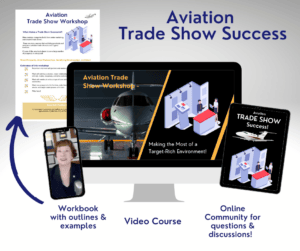 Free Workshop - Aviation Trade Show Success Resales, recaptures, and referral campaigns are the most profitable campaigns you can run in the aviation industry. Trade shows are an important activity for us, and for many of our clients. Where else can you be in the SAME ROOM with SO MANY prospective clients, investors, and [...]
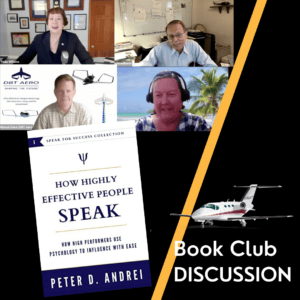 Speaking is a huge part of sales, especially in the aviation industry. So, you might as well get good at it! This book is a great place to start. Despite the title, it's not really about speaking, in the sense of delivery of information through public speaking, which is what we were expecting. This [...]
 I am still in denial. I'm still checking my phone, expecting to hear his booming voice on a phone call, or one of his hysterically funny text messages. John and I miss our dear friend, Jeremy Cox, who passed away unexpectedly last week. But here are ten - just a few of the many, [...]
 Marketing in aviation often means marketing to the affluent. And that makes some people new to the industry, or people from other backgrounds, a little uncomfortable. Many people have misconceptions about the affluent, brought about by Robin Leach's "Homes of the Rich and Famous," MTV specials, and the Kardashians. The thing about those articles and shows [...]
 You've worked hard to create a great brand, and you know how important it is to create positive associations among the community! Once you have a great brand, you want to make sure you're taking every possible opportunity to get the word out. Besides expensive magazines and trade shows, how do you become known [...]
 Customer service interactions are an important opportunity for a company to build brand equity and encourage testimonials and referrals. Here are some ways a company can do this: Consistent brand messaging - Ensure that customer service representatives are trained to communicate the company's brand messaging and values in their interactions with customers. This will [...]
 Most companies are too heavy-handed with their branding in initial advertising. We think your ads, your website home page, other “first contact” opportunities should be branded very lightly. Your logo should be be barely noticeable and the focus should be on your customer and their problems. Once you’ve transacted a sale, however, that equation [...]
 This is Marketing by Seth Godin is actually the third Seth Godin book we've reviewed in our Book Club - (We've also read Tribes and All Marketers Tell Lies.) Paula Williams, John Williams and Michael Duke discuss what we liked, what was useful, and why the Audible version is a thousand times better. [...]
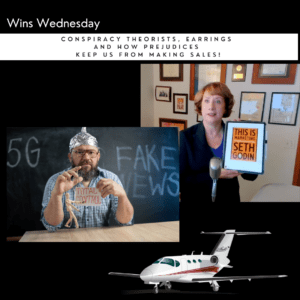 So, all of us have prejudices we didn’t know we had, and the best marketers and sales folks among us have learned to manage those prejudices. And these prejudices are not what we think they are. Seth Godin quotes Professor Roland Imhoff, who has made a study of conspiracy theorists. In one study he [...]
 If you're in the aviation B2B industry, you know that it takes some time to bring prospects in for a landing. Prospects you approach with your offer will have one of three reactions: Yes (5%) No (10%) Not Yet (85%) (These are rough stats based on our experience, your mileage may vary. If you [...]
 I probably don’t need to tell you that video is incredibly effective in marketing these days. And you probably already have all the equipment you need to shoot great raw footage that can be turned into marketing gold. But you might still have a hard time figuring out what types of videos to shoot. [...]
 What type of marketing videos perform best with a business aviation audience? In our experience, the best-performing videos are those that feature a human face and voice as a "guide" with varied visuals, including relevant footage and animations. This format is best for long-format videos (anything over two minutes.) Animated videos with music background [...]
 This episode is about aviation marketing and AI- ChatGPT and MidJourney are all people seem to be talking about these days - "Is AI going to take my job?" While some of the things we're seeing produced by the latest AI tools are astonishing, you have good reasons not to worry. In this episode, [...]
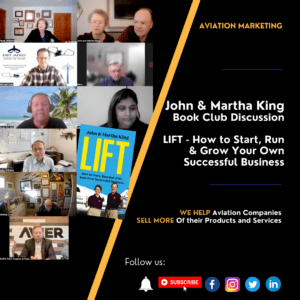 We had a visit from aviation industry royalty as John & Martha King joined our Book Club Discussion this month. We discussed their new book LIFT, about our favorite subjects - aviation, business, marketing and entrepreneurship! Paula Williams: Let's go ahead and get started [...]
 We feature one of our on-demand workshops each month. For January, we're featuring our Focused Social Media workshop. To kick it off, we'll have a live social media discussion and talk about: The most-asked question on Google is “what’s the best social media platform?” We will answer the question with ABCI’s actual 2022 data. [...]
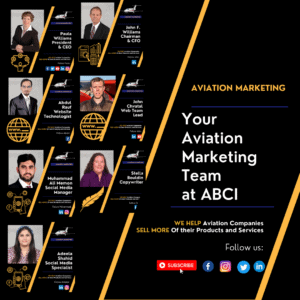 Good people are hard to find. And don't we know it! It's taken MANY YEARS and a lot of trial and error to find a team that really, truly delivers for us and for our clients. Five of the most important reasons FBOs, MROs, charters, flight schools, software companies, and aviation professionals trust ABCI [...]
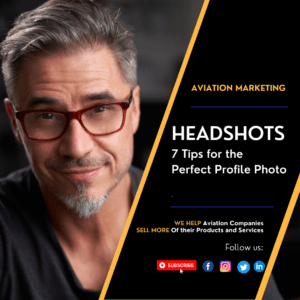 “Oh. I’ve been dreading this part!” People in our Personal Branding Workshop often groan when we start talking about profile photos. “I don’t like ANY photo ever taken of me.” Otherwise confident, successful professionals get a little . . . well, insecure about their profile photo. Until now, they’ve either thrown in an old [...]
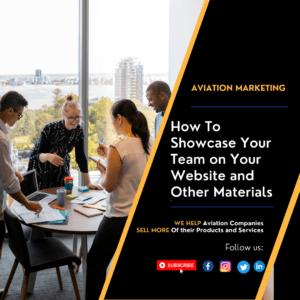 "Our people are our competitive advantage." "We offer better service than any of our competitors." "Our people make the difference." Many aviation companies say this. But very few of them reflect it when you actually look at the "About Us" page of their website, or the "Meet the Team" section that comes with many [...]
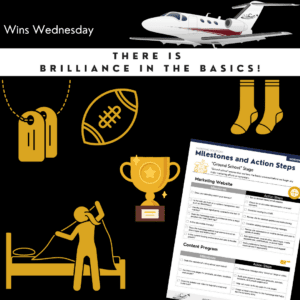 When we got married, one of my husband’s friends told me - “Air Force men make great housewives.” He was absolutely correct. And this is important, but probably not for the reason you think. My husband John is one of the neatest, cleanest people I have ever lived with. To the point that it [...]
 What was our most popular episode of 2022? Aviation Startups and Side-Hustles! Everyone's got a side-hustle these days - airline pilots, industry execs, and others - And for good reasons! It's great to put SOME of your time, energy and passion into a second stream of income, in case of Fluctuations in the economy [...]
 Happy New Year! Thrilled to be going into a shiny new year in the aviation industry. There are SO many promising things on the horizon, and a few dark clouds too. We thought we would sum up our aviation marketing advice for 2023. . . Three things to do in 2023: 1. Plan & [...]
 A word on marketing for avionics companies. I had someone write me a DM own LinkedIn, saying they had searched our entire website and they found advice specifically for brokers, FBOs, MROs, consultants, appraisers, etc. but nothing at all for avionics manufacturers or installers. You’re right! This was an oversight. In our experience, avionics companies tend [...]
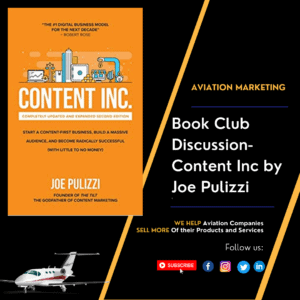 The reality these days is that the best product doesn't always win. The best KNOWN product tends to win. But how do we get our product or service to be the best known and most familiar option in a crowded marketplace? We're all doing more than selling products. Unless we want to be just [...]
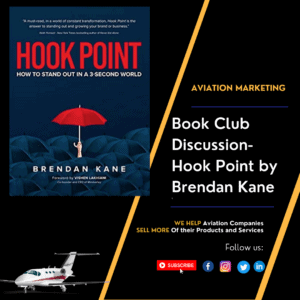 Hook Point: How to Stand Out in a 3-Second World by out-of-the-box thinker Brendan Kane breaks down the most effective strategies to generate new opportunities, innovate and scale your business, and create a compelling brand - both online and off - so you can thrive in the new micro-attention world in which we live. [...]
 All three are very versatile. And helpful in a pinch. And kind of fun to work with. So, what exactly IS the Aviation Marketing Lab? There’s a bunch of stuff that you get every month - Networking opportunities Workshops (on topics like Prospecting, Trade Shows, or Referral Programs) Our famous Book Club SEO, Social Media, [...]
 Could your airport become a spaceport? And how could this impact your opportunities to work in the aerospace industry? Here's how to find out! 2:54 Be ready to prove you can do the job 4:45 FAA Requirements for Spaceports 6:00 Top Ten Space Launch Companies in the US 8:05 Find the Decision Makers (LinkedIn [...]
 Trade shows and magazines have gotten more expensive, the competition for your products and services has gotten stiffer, and customers have gotten smarter. What do you do now? 1) Invest in quality content! It's a permanent, versatile asset! (As opposed to advertising, which is a temporary benefit.) 2) Repurpose the heck out of that [...]
For a small- to medium-sized aviation company, making the leap to approach aerospace companies can seem daunting. And it certainly can be! But working with the big aerospace companies can also be very exciting and rewarding, and there is lots of room for smaller companies to provide products and services and subcontracts. But like [...]
🐦 What the heck is up with Twitter? 🐦 Should we be staying on Twitter? 🐦 Should we be paying for the blue checkmark? Our clients have been asking these questions all month in our Office Hours. People have always over AND underestimated Twitter, since the beginning. First it was trivial and silly. Then [...]
How do you market to customers that have the intention and the technology to actively avoid almost all of your advertising? According to author Mark Schaefer, there have been three Marketing Rebellions. The first was a reaction to the turn-of-the-century snake oil salesmen and resulted in the Pure Food & Drug Act of 1906. [...]
I probably don't need to tell you that there are great reasons to post regularly on LinkedIn. It makes it easier to get found when your prospect is searching "who do I know with this specific expertise?" Busy decision makers check you out online (and most often on LinkedIn!) before they agree to meet [...]
The concept of fractional ownership has revolutionized business aviation. Individuals and companies that would NEVER have considered aircraft ownership now happily tote jet cards and "own" fractions of aircraft, or fractions of an entire fleet. They can fly a Lear for a short trip and a Gulfstream for a long one, enjoying unprecedented flexibility [...]
The one big question: “Why Should I Choose You?” Is made up of many smaller questions: Why are you qualified? Who else are you doing business with? What are your core values and beliefs? Why did you get into this business? What kind of results do your customers achieve? What unique qualifications and certifications [...]
Does aviation marketing have to be slick and glamorous to be effective? There is a long-held tradition in aviation that ads must be dignified, beautiful, glossy and perfect. But there are three reasons this is just not true. (If it ever was! We suspect some advertising agencies have been perpetuating this myth with industry [...]
If your business is smaller than you would like it to be, you are probably making one (or all) of these mistakes! I had to root these out for myself and work on them continuously since I set a goal for myself this year to 10X my business. (Thanks, in part, to our discussion [...]
Please, please please stop creating terrible webinars. Not only do they not do any good, they actually damage your brand. Webinars became pretty ubiquitous during the pandemic, and they ARE a great way to present information and create engagement about a specific topic. And we've all been told by all the marketing gurus that [...]
How do we use AI to improve our marketing? What are some of the ways our competitors are using it? Isn't AI just for big companies like Google and Amazon? Do AI tools and methods actually provide results? What is the pathway for incorporating AI tools so we don't get left behind? John and [...]
The NBAA BACE is coming up October 18-20, it always arrives faster than we believe possible, but we're looking forward to it! We enjoy catching up with our clients and future clients in person at the NBAA BACE convention each year! Besides general catching up and shaking hands, here are three of the most [...]
You can't count on HR or any company to create your ideal future. Only you can do that. Your company may or may not be part of that plan. But we share our formula for making your current job work for your future self. [...]
If you're frustrated with your job, there is an alternative to "quiet quitting." If you're going to be subversive, do it for good reasons and make it a win-win for you and your employer! We talk about this phenomenon in a series of three episodes: This one - the history of skunkworks Our own [...]
"Quiet Quitting," or employees' responses to being bored, frustrated, burned out and otherwise unhappy at work is nothing new. In some cases, it's not about the employer expecting too much, it's about them allowing too little! John and I worked together at a large financial institution in the late '90s early '00s and had [...]
Why do we recommend aviation email marketing? Three reasons, really. Good decisions take time Email is still really effective Autoresponders help you get to the sale! Email is still effective. Especially when it's combined with great content, like articles, podcast episodes, or videos.
Why do we recommend email autoresponders for aviation? Three reasons, really. Good decisions take time Email is still really effective Autoresponders help you get to the sale! Working in the aviation industry, we know our clients didn't become successful by making precipitous decisions! So, it's our job to help them make good ones. Most [...]
If you're frustrated with your job, there is an alternative to "quiet quitting." If you're going to be subversive, do it for good reasons and make it a win-win for you and your employer! We talk about this phenomenon in a series of three episodes: This one - the history of skunkworks Our own [...]
So, we've all heard about how hard it is to get and keep great people, and we've all heard the noise about "quiet quitting." Our solution? Every problem is a marketing problem, including the problem of employee retention. It is worth putting some energy into building a campaign to keep your best people. And [...]
"Is Social Media Dead?" The headlines say it is . . . but they say a lot of things that aren't precisely true. Like every other advertising medium, social media is evolving. Here are three things you need to know if you're using social media to sell aviation products or services in 2022 and [...]
Of course, in the aviation industry we have a lot of directories like GlobalAir, FlightAware and AviaPages, but how important is it to be listed in the many, many other online business directories? It is definitely worth it! Listings are often free but do take time to set up. Here are three reasons it's [...]
John and I discuss three of the most popular questions from our Office Hours these days: Are our customers impacted by a recession? How long do recessions last? Should you slow or stop your marketing? We don't have all the answers, but we've been through a recession or two (or more than that, if [...]
There have been a lot of articles about Zoom Fatigue, and how people are not using cameras during meetings. I have a bit of a rant about this: In-person sales are MOST effective, Zoom is the next best thing. Presence and attention are the ultimate currency. This is one of the reasons managers don't [...]
Debbie Murphy of JetBrokers joins us to discuss John Jantsch's "The Ultimate Marketing Engine." We've read "Duct Tape Marketing" and "The Ultimate Referral Engine" before, and true to form, Jantsch includes a LOT of great worksheets, calculators and other reference materials that make life easier for marketing nerds! From Amazon - A STEP-BY-STEP [...]
The "Marketing Maturity Model" is nothing new - they've been teaching it in university marketing courses for years now. But it's always been nerdy, dense, daunting and unapproachable. We found a structure in John Jansch's "The Utimate Marketing Engine" that is much easier to understand and apply - so we put our contents into [...]
A search for "air charter" on Google yields about 231,000,000 results. Google also reports that advertisers are willing to pay $2.31 PER CLICK for advertising on this topic. How does a charter operator or charter broker compete in this saturated market? Paula Williams: [...]
Young (and Young At Heart) Aviation Fans - Enter our Coloring Contest to win a Top Gun T-Shirt! Choose your weapon! Crayons, pencils, markers, paint, whatever you like! Enter our Coloring Contest to celebrate National Coloring Book Day! (National Coloring Book Day will be August 2, [...]
How do you best showcase the reasons dispatchers, pilots and owner-operators should choose your FBO? We share some of the content elements your clients look for most. Paula Williams: Hey, Paula Williams. John Williams: And John Williams. Paula: And we are ABCI, and [...]
When talking about social media marketing in aviation, LinkedIn is always discussed as the most credible. And yet, far more of the people we talk to are familiar with boosting posts on Facebook, but have never considered LinkedIn ads. Why is that? And are there reasons to devote some of that social media advertising [...]
What are the best content features to include in an MRO website? Most MRO web sites read something like this: "Established in 1985, we are the leading provider of aviation services in the XX area, and are committed to providing the highest quality products and services with the utmost care for our clients and [...]
Our book club selection for June is the Visual Sale by Marcus Sheridan and Tyler Lessard. I had a hard time finishing this book since I kept having great ideas and interrupting myself to shoot off an email or a Basecamp message to a client about a video project we need to do! Short [...]
Things to consider in an Aviation Web Site Redesign - Does your site get attention? Does your site inspire confidence? Does your site inspire action in your sales process? Other things that have changed recently: Update Frequency Privacy Retina Displays
Seven Questions about the Aviation Marketing Lab! What is the Marketing Lab What Results Can I Expect? Who Should Be In the Marketing Lab? How Long Will It Take to Get the Results I Want? What's Included in the Marketing Lab? What Investment of Time and Money Does It Take? Who Is (and Isn't) [...]
Paula Williams: Hey, Paula Williams. John Williams: And John Williams. Paula: And we are ABCI. And ABCI's mission is... John: To help all you ladies and gents out there sell more of your products and services in the aviation world. Paula: Absolutely. John: I [...]
Debbie is one of the best designers I know. And I know a LOT of designers! She very prolifically publishes perfectly branded content supporting JetBrokers team of aircraft brokers, including "Aircraft Wanted" notices that get noticed A popular Business Jet Values Bulletin Market Insights Every major aviation-related holiday Photos of events Inspirational quotes with [...]
"What's the point of having a book club if you don't get to eat brownies and drink wine?" Jami Attenberg Since this is a virtual book club, of course you're welcome to bring your own brownies and wine, but the main point is sharing ideas with other aviation sales and marketing professionals. It can [...]
“People are really listening and want to consume all of the content that is there and available. There’s a level of dedication that comes from podcast listeners that you don’t otherwise find. And now the numbers prove it. Podcasts aren’t a bubble, they’re a boom—and that boom is only getting louder.” - Miranda Katz [...]
Nothing happens until somebody sells something. If you get good at sales, you enable your whole company to provide products and services, to pay your people better, to have revenue for research and development - it all starts with good sales! [...]
“Once you demonstrate that you care and will go the extra mile to produce added value, your prospective clients will want you to succeed.” ― Anthony Iannarino, The Only Sales Guide You'll Ever Need Most new companies and new salespeople struggle with prospecting. [...]
What can you do with your Group Office Hours? Check those sales and marketing tasks off your list that you're a little uncertain of or held up on! Setting up an ad campaign Preparing for sales call Solving a problem or puzzle Not [...]
Are you thinking big enough? What would it mean to your business if you could scale to 10X your current revenue? Wouldn't it be fun to find out? Join us for this discussion. Debbie Murphy of JetBrokers, Eli Stepp of BizAvJet Inc and BizAvJets USA Magazine, and social media expert Muhammad Ali join us [...]
"Success is a series of small wins" -Jaime Tardy, from "The Eventual Millionaire" The best companies celebrate their wins. Make it a habit to post weekly about the great things you've accomplished this week - could be personal or marketing-related: You reached a goal 🎉 Published a new article, video or episode 🎥 Achieved [...]
"YouTube is, at the end of the day, a search engine... that's why Google bought it." Jake Paul Imagine having your very own TV channel, and that you can publish anything you like on it: - Customer stories - Product demos - Topic explainers - Employee highlights - "Behind the scenes" glimpses And you [...]
How to Pitch Your Product on Social Media. In Aviation, we often have very long sales cycles - we do prospecting, we qualify, we do competitive analyses, we negotiate, we structure deals, etc. etc. etc. But sometimes not all of that is necessary - a simple pitch is all we need! And on social [...]
Today, we talk about one of our favorite ways to help clients get better results - better copywriting! Three of our favorite projects to do, because they always result in a good return on investment, are these: Website copywriting Featured Articles Email Sequences or Autoresponders [...]
“The currency of real networking is not greed but generosity.” — Keith Ferrazzi One of the great things about our new Marketing Lab community is that it's a safe place for aviation sales and marketing professionals to practice networking with each other. It's. not on Facebook, LinkedIn, or Twitter, where your remarks will be [...]
Tylor Hall and Muhammad Ali join John and Paula with special guest speaker, author and editor Annamarie Buonocore for this conversation on a wide variety of topics. Annamarie Buonocore is a partner publisher with In Flight USA and BizAvJets USA. She started off in the editorial department roughly 10 years ago and currently wears [...]
In this week's episode, I wanted to give a little bit of a tutorial about "free consultations." It's an important (or even expected!) part of the sales process, especially for large ticket or complex purchases. People want to be able to talk to someone, ask questions about their specific situation and priorities. Sadly, "free [...]
If you were worried about aviation trade shows coming back after COVID-19, you can stop worrying now. They're back, and with good reasons! There is simply no substitute for meeting with clients, partners, vendors and prospects IN PERSON and being in the same room with fabulous airplanes and components and talking IN PERSON with [...]
“A business without a mailing list is not a business.” – Dan S. Kennedy Do people actually still send real mail to people's actual, physical mailboxes anymore? Do people READ what comes to their actual, physical mailbox? The answer to the first question? Yes, but not as many as a few years ago. The [...]
Think Again by Adam Grant "The road of life is paved by flat squirrels that couldn't make a decision" -Anonymous We're all running businesses, and doing sales and marketing in a world where just about everything has changed in the last two or three years. How do you function, make decisions, choose courage over [...]
“When I write an advertisement, I don’t want you to tell me that you find it ‘creative.’ I want you to find it so interesting that you buy the product.” – David Ogilvy Aviation copywriting was the first product ABCI offered the industry when we got started about 15 years ago. Since then, we've added [...]
Mickey started a company from scratch over the past five years while balancing his time with a career in the Army Reserves and 9 to 5 gig, getting married, and buying a house. In this episode, John and Paula and Mark Parry ask Mickey: 1. How hard is it to create a startup company? [...]
"Technology is a useful servant but a dangerous master" - Christian Lous Lange Many of our "first calls" or free consultations with prospective clients come after they've made a significant investment in digital marketing, and they're wondering how to make sense of all the data they have acquired. They know they spent a lot [...]
Is a website still important for an aviation company these days? What should your website do (and not do) for your marketing and sales teams? How should your site interact with social media, lead capture software, CRMs, trade shows, and postal mail? “Websites promote you 24/7: No employee will do that.” ― Paul Cookson [...]
Many people feel that their company has an up to date brand if they have revised their logo in the last few years. There's a bit more to it than that! What is aviation branding? Branding is simply the art of becoming knowable, likeable, and trustable. - John Jansch Having a recognizable logo and [...]
How can you make Instagram work better for * Aircraft brokers, appraisers and other professionals?
-
Repair stations and MROs?
-
Flight schools?
-
Charter organizations?
-
FBOs?
What are your favorite tools for Instagram?
What are your favorite (and NOT so favorite) things about Instagram?
How can you make it easier and more effective?
Paula and John Williams talk with Debbie Murphy of JetBrokers, Wendy Harris of the Av Center, Ashley Harris of American Aero, Mark Parry of Global Aircraft Group, and Tylor Hall of Shrike Eagle Aviation to compare notes!
“My career should adapt to me. Fame is a VIP pass to wherever you want to go.”
-Leonardo DiCaprio
Most of us don’t want or need to be Leonardo DiCaprio.
But everyone is famous with a small group of people.
In the aviation industry, you might only be famous to the people who fly a particular make or model of aircraft.
Or with businesses that need the very specific product or service you provide.
But in any case, we could all profit from being a just a bit MORE famous, or being known as “the guy (or gal) to talk to” about your specific topic. No amount of paid advertising can buy what you can get from a great reputation and being known as the expert on your specific topic.
That’s why we consider it part of Aviation Marketing.
“Live as if you were to die tomorrow. Learn as if you were to live forever.”
― Mahatma Gandhi
Sales and marketing are more intricately interlinked in aviation than in any other industry we’ve worked in.
You can’t just throw things “over the wall” to the marketing department, and you can’t rely on the marketing department to do detailed targeting and create compelling materials for you without some SERIOUS interaction.
In our Sales courses, we teach
- How to create a Top Ten List of Prospects
- How to create an approach plan for each of them
- Why you should use a sales process, even though each sale is unique
- How to keep track of your success rates at each stage of the process so you know where you need to focus
- How to continuously improve so that your success rate (and income) predictably improve
- How to get referrals, recaptures and repeat sales
We like to say the money in aviation is made AFTER the first transaction!
When we talk with entrepreneurs about starting a business in the aviation industry, we sometimes end up talking them out of it.
Starting a new business is daunting. Starting a new business in aviation is even more so!
And yet, Diedra has done it successfully, not just once but twice.
Deidra Wilson, David Santo, and a couple of other folks started AeroStar Training Services around a coffee table in 2009. They brought ABCI on soon afterward, and now they’re up to a 33,000 foot aviation training campus at the Kissimmee Gateway Airport with multimillion-dollar Level D Full Motion Sims, a fleet of aircraft, and more than 90 students a month.
In this episode, we’re proud to introduce you to one of our longest-running clients, and learn what makes her successful when so many others have tanked!
“We shape our tools, and thereafter our tools shape us.”
― Marshall McLuhan
How do you succeed at anything?
Study the people who have already succeeded, and adapt it to your own situation.
ABCI has built tools, templates, checklists, and courses based on what’s already worked in our ten-plus years of marketing practice in the aviation industry.
We’re the secret weapon of some of the most successful aviation companies!
Aviation Marketing Templates in Canva
Aviation Marketing Tip Sheets
Aviation Marketing Courses & Workshops
Bill Caskey joins us to discuss “Same Game, New Rules – 23 Timeless Principles for Selling and Negotiating”
What would it be like if you got to talk to the author of one of your all-time favorite books for an hour?
Bill brought some slides about a couple of things that he’s revised based on his experience since the book was written.
He also shares an experience from a surgeon versus a physical therapist about inspiring confidence.
Transcript – Discussion of “Same Game, New Rules, 23 Timeless Principles for Selling and Negotiating” with author Bill Caskey Paula Williams: I’m Paula Williams. I work for ABCI. ABCI helps aviation companies sell more of their products and services.
John, if you wanna go next and we’ll let Bill go last.
John: Well, she’s the rock star. I work for her. I do all [inaudible]. My [inaudible] stuff.
Paula: Absolutely. John’s got a cold today, so he…
Bill Caskey: No. Yeah. A lot of people are sick.
Paula: Right. John took a COVID test and came up negative, so you won’t get that from him today.
Bill: No. I’m not worried about it. I wouldn’t be worried about it if he was in the same room with me.
I’m Bill Caskey. I have worked with the business-to-business sales team and salespeople over the last thirty years. Basically helping them to grow their business without all the grinding and the burning out that sometimes occurs with high growth. So, we’ve figured out a way to take another look and an alternative look at selling, and marketing, and messaging so that people can grow their business without the burnout that companies got. So, that’s my story that I will stick.
Paula: Well, fantastic. Happy to hear it. Happy birthday, Bill, by the way. We’re…
Bill: Thank you.
Paula: …honored that you would spend your birthday with us. I mean, geez.
Bill: Well, you know what? The fact is that my birthday was yesterday but the birthday thing, the video that I sent out didn’t get sent out until today. So, you are not interrupting my birthday because it was yesterday.
Paula: Oh, well. I hope you had a great birthday.
Bill: Yeah. I did. It was like any other day. When you’re my age, you just keep working.
Paula: There you go. Same with us.
Bill: Yeah. We go out to a nice dinner last night, going out to dinner tonight. We always kid and our family birthdays tend to go for days and days, sometimes weeks, because we wanna celebrate. Not everybody can do it at one time. So, basically, long protracted birthday.
Paula: Exactly. We like to celebrate birthday weeks.
Bill: Yeah. Good.
Paula: Include a weekend, of course. So that’s great. Great. It looks like we’re having a couple of other people join. If you would like to introduce yourself, you are welcome to do that and do a fifteen-second sales pitch for your company, your product, your service. That’s one of the things that we practice. If not, that is totally fine, too. But I think we’ll just go ahead and get started.
I have to say this is the only book that we have ever had twice as a Book Club selection. The reason is because last time we had, it was several years ago and we’ve had a lot of new people join us. I think it’s probably the most useful book on sales that I have ever read.
Bill: Thank you.
Paula: I don’t wanna sound too biased just because you’re here, because I told people that before. Haven’t I, John?
Bill: Thank you. Thank you. John’s not talking. So that’s good.
John: [inaudible]. I tried to catch the mute but I needed to cough. I missed it that time.
Paula: Absolutely. No. I’ve talked about it a lot because I really enjoy all of the examples and the thing that I like the most is that your style is so much more appropriate I think for our industry, than a lot of the sales teachers and professionals who are used to retail, used to other markets where hype is your friend. That’s really kind of not your thing. I know you have a lot to do with energy. But that’s a totally different thing I think, than the artificial hype that you get from a lot of sales folks.
All right. Yeah. I know we’re here to hear from you. So let you take it away, if you don’t mind.
Bill: We’ll get into it. All right. Well, thanks, Paula, for having me in. I appreciate it so much. We’re celebrating the twentieth anniversary of the book this month. It came out twenty years ago. It was released in February of 2001 or whatever that is, 2001. So we’re doing a little celebration here. I’ve been posting some things on LinkedIn. I know you’ve seen and commented on a couple.
I think when you look at a book like this that’s twenty years old, you have to ask yourself, “Is there anything new? Or you saying in same book applies?” I’d say probably 90% of it still applies, because a lot of it was about the mindset, the inner game, the mentality that we take with us when we’re going out to the market to either pursue a sale or be involved in the sales process. I think all the same principles still apply. There were some things in there that I would do differently if I were to rewrite it. I probably need to rewrite another version now that it’s been twenty years. But most of it applies. But I wanna share with you and the gang today some things from the book but also some other things that I think are a little bit more modern on terms of how we– especially in the world that we’re just coming out of the COVID pandemic world. I think there’s things that we can alter so that we can reinvent ourselves appropriately.
The bottom line is, and I always tell people this. If you have a question, you’re welcome to put it in the chat, or you can raise your hand, or whatever. I’m gonna go through this kind of gently for maybe fifteen, twenty minutes and I’ll open it up for questions or comments. If there’s none, I’ll continue on through it.
I’ve got some PowerPoints here. I don’t overload you with those. I’ve got five. So if you wanna take a screenshot of something, there’s a couple of things in here that I think might be good screenshots for you to kind of keep with you, if you are so inclined. So feel free to do that. Books copyrighted, but some of these PowerPoints are not. So feel free to use it, however you see it fit.
I started in the training business in 1990, ten years before the book came out, I would come home at night and document some of the problems that my clients were having. There were problems like, “I can’t get to the right person. I can’t generate enough leads. I feel like I’m used for information. I feel like they just kind of put me through the ringer [?], then there’s nothing at the end. I spend a lot of hours with proposals, then nothing happens.” All those things that I heard, I would write down. Then I would attempt to solve them. ‘Cause I solved a lot of these problems or remedied some of them in the training, but I wanted to document them. So I started this process of doing that and it eventually turned into a book, “Same Game New Rules”. I still do the same thing today. Whenever somebody has something they share with me, that’s kind of a weird one or it’s a more modern problem. I still document them and I probably got enough for several more books but I need to sit down and write them. They don’t write themselves, I find.
So, over the course of those twenty years, I find that salespeople, generally, the game is the same. We are out there trying to acquire clients or customers, however you call them. We are trying to shorten the sales process as much as we can. We’re trying to position our products and our services in a manner that will cause people to say, “Yeah. You know what? I need to talk to you.” Sometimes that’s done personally. Today, it’s done more digitally on LinkedIn, Facebook, some of the platforms. But it’s still they same concepts. They same concepts still apply.
So, whether you are a sales VP, a sales professional, a front lines, or a CEO of a company, I think all these principles work, because everybody is in the same game. We wanna grow our business. We wanna acquire new customers. We wanna do it in the minimum possible time. We don’t wanna do it with pressure. Because the brand that we all have in the market should not be one of high pressure sales.
I know there are some organizations who kind of pride themselves in that. I don’t find most business-to-business operations wanting to be high pressure. But unfortunately, it’s like, whenever I get in front of accountants or engineers or any kind of non-salesperson, I always ask them, “What do you hate most about salespeople?” Of course, they’ll say pressure and manipulation and all those things. Yet when they go out, they do the same thing. It’s not because they want to be manipulative or high pressure, it’s because they don’t know another way.
So, I think in our heart, I don’t know that any of us are born salespeople. I think a lot of us have learned the craft over the years. Unfortunately, some of the things we’ve learned as you said Paula, are not good. They actually, many ways, force the prospect away instead of attracting them and that seems counterintuitive. If you’re trying to generate business, you would think that you would want to do things that attract people rather than repel them. I’m okay with repelling non-prospects. But when somebody gets in your funnel and is a real opportunity, I think we wanna be mindful of how we take them through the process. So that’s what “Same Game New Rules” is all about.
So I’ve got a few slides here that I wanna share with you. Maybe we can have some discussion on that. I think I have the ability to share my screen. Yes? No? Yeah. Should. Okay. So hopefully, you can see this.
I believe that if we’re going to create a sales process, why not start with the ideal sales process? The ideal process is not you banging out phone calls to the tune of a hundred a day, although, I know some business development people that’s all they do is cold [?] outreach. I think the ideal sales process for most business-to-business organizations should be this. I’m gonna go through this really quickly. I call it “The Journey.”
There’s first a trigger. A potential client or prospect has a trigger. They become familiar with a problem they have or an unrealized opportunity. Now, they might become familiar with that through an article, through a friend, through some kind of content that you publish. Or it may be through a cold [?] outreach or some kind of networking event.
So I think that there’s always a trigger that causes the prospect to think a little bit and say, “Wait a minute. Do I have that problem? Do I have that problem solved? Is there any way I can do better at that?” At some point after that trigger, there’s a search that goes on. Typically, that search is they might ask a friend. They might ask a colleague, somebody else in the company, “Hey, we’re looking to solve this accounting problem. Do you know somebody who does that?” Obviously, they’re searching on Google or online. But there’s always a search, once the trigger happens. Then, hopefully, they find you. Again, we’re talking about the ideal sales process as they search for, “How do I solve the problem of X?” Your name pops up, or your company pops up.
Now, that’s a little difficult. You can spend a lot of time and a lot of money trying to get high in the search terms. But the fact is that you can do it. Even if it’s on LinkedIn, you can create content that speaks directly to that problem.
Those of you who know, a lot about SEO know that the best kind of SEO is where you write an article that deals with a specific problem. Like, how do I grow my business without giving away the farm, without discounting? So whatever that problem is, that’s a really good way to create content around that, because you will be found that way.
Sometimes it’s referrals. Sometimes they say to a neighbor, “Hey, we’re looking for somebody who does that. Do you know somebody?” You don’t have much control there. If they know you, and like you, and they are client of yours, they will probably give the prospect your name. But that’s a really hard thing to manage.
Got some newcomers. Phil, Doug, good afternoon. Glad you’re here.
Doug: Good afternoon.
Bill: I did a whole song and dance routine. You missed all that, so you’ll have to watch it at home.
[crosstalk]
Doug: Sorry.
Bill: I’m glad you missed that.
[crosstalk]
Bill: [inaudible].
Phil: No. You’re a whole better already. So it’s great. Thanks.
Bill: So at some point, they find you. When they find you, they either invite you in, they email you. There’s some kind of connection, a correspondence. Then number four is the reveal. That’s where they’re revealing to you the full set of issues they have, the four, the dilemmas they’re in, the problems they’re in. We’ll talk about this here in a little bit. You got to make sure that you are mindful that how you show up determines how open they are. How you show up– and I don’t mean how like what are you wearing, although that could be part of it. By the way, I’m wearing a golf shirt today, because it was sixty-five in our city last three days, although today it’s twenty. So I got spring fever. So I thought I’d put a golf shirt on.
How you show up mentally, and emotionally, and tactically from a language standpoint determines how open they’ll be. If they feel trusting in you, if they feel like you’re a colleague and you’re going to help them, you’re a helper, you’re a server. They will share everything with you. I’ve had clients who say, “I’d like to schedule a fifteen-minute phone call, go for an hour.” Because once they start talking about their problems, they can’t stop. All I’ve got to do is just shut the hell up and listen. I know that you’ve all probably experienced that as well.
This is part of the old training is sell hard, convince, put pressure, lead them through the process, get to the close. That kind of stuff just doesn’t work today. People are on to that. They know what that’s about. They want no part of it. So the reveal were the prospective customer client is sharing with you what their issues are. We’ll talk about what issues those might be a little bit later.
At some point, number five in the ideal sales process is you tell them, “Look. I appreciate you sharing this with me. Let me go back and think. Or let me go back and talk to some of my people. Or let me analyze the situation. I never make recommendations on the phone.” If somebody calls and says, “Hey, I want you to come in for a three-day sales meeting. I wanna know how it works. What’s the price?” I never do that on the first call. Sometimes I’ll do price if I feel like I’ve got to disqualify them. But generally, I always say, “Look. Let me give this some thought. You’ve given me some good notes. Is it okay if I call you back in the next couple of days? Let’s talk about a solution.” People always are okay with that, if they’re in the right position.
So, I like thinking about number five here as a recommendation rather than a proposal, or a presentation. I always feel like the word presentation kind of conjures up. You’re putting on a show for them, hoping they clap. I don’t like that. I think that takes all the power that you have and gives it to them. So I prefer to think of it as a recommendation. That’s what consultants do. That’s what surgeons do. That’s what doctors do. They give you a recommendation on how to fix the problem that you’ve brought to them.
Then, number six. The ideal is they are thrilled that you came in. They are thrilled with the solution. They can’t wait to start. How quickly can we get started? That is the ultimate outcome after the recommendation step. So again, some of you have probably seen this before. You have clients, customers, you work with now where this is exactly the thing that happens. But I always use this upfront because this is the ideal. This is our vision. This is how we want all sales processes to go ideally, even though, I fully understand that they don’t always do that.
So as you go through your process, we talked today a little bit about marketing and mindset message. I think you have to throw it through this filter. If you do that, I think you’ll find some holes in your process where you’ll say, “You know what? Now that I think about it, everything we talked about proposal or presentation. We can just change that word. It’s a very slight tweak.” That’s what all this is about. It’s just slight tweaks. I don’t wanna reinvent your entire personality. Nobody wants to do that. I don’t know how to do that anyway. I’m looking for the slight tweaks, the little things you can do differently. Some of the language you can use is different.
Does everybody cool with that? Does anybody have any questions about that? We can stop after each one of these slides and just feel some questions. Or, does everybody kind of understand what I’m getting at here?
Paula: I’ve got one question and that is, I think, especially in your video from this morning or from yesterday that came out this morning. You mentioned that what happens before the process starts, before the call, before any of this happens is the most important thing.
I guess, in this process, as a salesperson, it comes before the trigger and before the search, it becomes before the find. Before I reach out to someone or before someone picks up the phone and calls me, if I don’t have a process, and a lot of people don’t, then you’re already sunk.
Bill: Most people don’t. I mean, on this call, everybody probably does or might. But…
Paula: That’s true.
Bill: …most people don’t. Most people rely on just sheer brute force to get people into their funnel. So here’s a suggestion based on that, Paula. LinkedIn has become a favorite go-to for a lot of people today. We have all these connections. I bet between the six of us there’s thousands of connections we have. But we don’t use them very well. They just kind of sit there in the cloud, or as my friend calls it in the clouds.
Sometimes I think it’s good. If you wanna reach out to somebody on LinkedIn instead of reaching out like we’ve all been reached out to and say, “Hey, Doug. I noticed we were connected. I thought it would be good to get together for a cup of coffee sometime.” It’s like, if I drank coffee with all these people, I’d be jittery as hell all day.
So, that’s not a good way to start. A better way to begin is for you to shoot a video where you talk about the five major problems, or three or whatever, facing your client base, put it on YouTube or put it on one of your websites. Then when you reach out to somebody, you say, “Hey, Doug. I noticed we’re connected. I just did a video the other day where I address some of the key problems that CPAs have in trying to get new clients. I thought you might like to see it. Here’s the link.”
Paula: Yeah.
Bill: So now, before you even talk to them, they’re more likely to watch that than they are to join you for a cup of coffee or dinner at a country club, just because of how we’re all wired today. I’ve had a lot of success. My clients, almost all of them have some kind of process upfront where they consume content of some kind, before they ask for the appointment. It works. It works marvelously. But, it means you’ve got to shoot a video. You’ve got to have a camera or a phone. You got to have a mic or grab lighting, and all that stuff.
But think about how you can scale your business. If you reach out to a hundred people on LinkedIn over the next month, and you link that video, you’re gonna have twenty people who watch it. Then you can follow up with them later and you’ll get some appointments from it. I like that better than trying to arm wrestle people for a meeting. It just feels like that’s such an old thing. It doesn’t work. Of course, you arm wrestle enough people, you’re gonna win some. But I like the idea of using digital technology to scale my lead generation, so that it’s not always up to me. ‘Cause they can be watching that video at midnight when they can’t sleep, because they couldn’t wait to watch it. Now, I’ve got something out there working for me as I’m laying down at night resting my eyes.
Paula: Absolutely.
Bill: So that I don’t know if that answers it. But that’s part of using the upfront part of the process to trigger. So you can create the trigger. But it’s got to be valuable for them. It can’t just be meeting for lunch. I’m not insinuating, you guys do that. But I get that email, that message all the time, “Let’s get together. Let’s jump on a Zoom call.” I don’t have time to jump on a Zoom call. Give me a three-minute video. I might watch it especially if it really interests me.
Okay. I’ll shut up. Anybody else have anything on the ideal sales process? Any lesson here? Anything that you look at and say, “You know, we’re pretty good at four of these but God, the one, we’re just not quite there yet.” Or are you comfortable sharing that?
[silence]
Paula: Wow. I think you got a great crowd.
Bill: Great crowd.
Paula: We do consultation. I think we call our recommendations a– well, that’s not necessarily true, because that happens during the reveal our consultation happens. We do that as one step. We do a consultation and then a report as a result of the consultation.
Bill: Good. Is that a free consultation? Or do you get paid for it?
Paula: It’s a free consultation.
Bill: Okay. So that’s part of the reveal step. It’s where they reveal to you. Yeah. I like that.
Paula: Yeah.
Bill: I like that a lot. Then you provide them something after that that kind of fine tunes or recaps that?
Paula: Yeah. It’s a recap with a more specific recommendations.
Bill: Course of action. Excellent.
Paula: Great.
Bill: I’m not gonna get into presentation today. But I did have a quick story I’ll tell about, how to not do it and how to do it. I wrote here. You might have seen it if any of you connect with me.
I fell on the ice the other day. I’m in Indiana. We have a lot of ice. It was a day we had some dark ice or black ice or whatever it is. I couldn’t see. I couldn’t see and I stepped on it. Boom. Feet went off under me. I tried to catch myself with my left hand. Bad idea. Better just to drop. I had something in my other hand.
I went to the doctor, ‘cause I was recommended a surgeon who does rotator cuff. That’s what I have. I got a torn rotator cuff. Went in. He said, “Yup. You need surgery.” He did an MRI. He showed me where the problem was. He said, “Yeah. We need to operate. We need to do in the next thirty to forty-five days ‘cause our experience is that it’s better if it’s done quickly.”
I said, “What are the chances of me fully recovering? He said, “You’ll never get it all back. You just won’t, because it’s traumatized. You get maybe 80, 90% but at your age.” You always hate it when doctors say, “At your age.”
Paula: Oh.
Bill: He said, “It’s your non-dominant hand. So if you’re gonna be throwing with your grandkids or kids, it’s not gonna affect you. Eighty, ninety percent. But it can helpful.” I said, “Okay. Great.” So he hands me this seventh-generation copy of a copy of a copy for pre-op. He said, “Here. Be here next Friday. Here’s your pre-op stuff.” He gave me a sheet. This is a legitimate operation. This is not like a hole in the wall orthopedic surgeon. I thought, “Okay. This doesn’t feel right.” I said, “What’s the post-op? Once we’re done, then what? What does the rehab look like?” He said, “Well, it kind of depends.” I said, “Do you have something I can look at here? What it looks like to recover?” He said, “No, not really. I don’t really have anything. We’ll get that set up when you’re done with surgery.” I said, “Okay.”
So my wife said, “You need to get a second opinion.” I knew if I went to another surgeon, I knew what the opinion would be, “Yup. You got to operate.”
So I went to a physical therapist. He specializes in shoulders here in Indianapolis. So I went to him. I told him the situation. He said, “You know, we can get it 80 to 90%. We can get it there. It might take a couple of months, few months but you won’t have the surgery and all the rehab from that.” He said, “I’m gonna do the same rehab whether you have surgery or whether you just come in here. It’s the same kind of process.”
I said, “What does it look like?” He said, “Well, phase one is we’re gonna work on flexibility.” He handed this sheet to me that has phase one, phase two, phase three. Phase one, flexibility. Phase two, mobility or those might have been switched. Phase three, strength. He said, “Each one takes about three to four weeks, six to seven sessions each. That’s my goal is to get you here in ninety days.” He shared with me where he’d like to get me in terms of percent mobility.
I looked at the sheet that he gave me. I looked at nothing that the surgeon gave me. This PT is a couple grand. The surgeon’s probably fifteen. I mean, I’ve got insurance, but I know that it’s expensive plus all the downtime. I may have been wrong in going with the PT. But I felt comfort. I felt like, “Well, this dude knows what he’s doing. At least, there’s a plan here.”
Paula: Yeah.
Bill: I think that’s one thing on the recommendation that you’ve got to realize what your potential customers is. They wanna feel that you’re gonna take care of them. If you don’t tell them, here’s what happens. This is one thing that I’ve encouraged all my clients to do is, as you get down to the eleventh hour and you’re getting close to the end of close or whatever, share with them any event we work together. Let me tell you what it looks like. Phase one, we have three meetings. Phase two, we start working on the problem. Phase three, we measure metric, whatever. Whatever that is, give them some kind of sense that you’ve got a plan. Because they have to have confidence not just in you personally but you have a systematic way to solve their problem.
So many companies forget that. They’re so interested in making the sale, they don’t think that part of the sale could be hurried up by letting them know, “Here’s what’s going to happen once you sign. In the event you decide to use us and we decide that you’re a good fit, here’s what it looks like.”
So that’s another way to do the recommendation is actually lay out a timeline. Some of you might be in a business, “Ah, it just doesn’t make sense. It’s a simpler business than that.” But if it’s a big ticket sale, ten grand, fifty grand, five hundred grand, I think people need to know, what’s going to happen once I say yes.
Paula: Right.
Bill: So it’s just a little…
Paula: Absolutely. I love that.
Bill: Long story with a little tip attached to it.
Confidence is the main thing there. We always talk about confidence, our confidence, which I think is important, self-confidence. But they’ve got to have confidence in your ability to solve their problem. They’ve shared with you all their problems. After the reveal, they’ve shared with you everything you need to know about their business, and their issues, or dilemmas, and their vision. Now, you need to put that into action and the way you do it, I think is through a timeline or the solution process. We always talk about sales process, seldom solution process.
Okay. I’m gonna keep moving if there’s nothing.
All right. One of the things that I put in the book in the very beginning and have changed this a little bit, so I’ll share with you how I’ve changed it. I called “The Fundamental Shift.” I think we need to have a mental shift in how sales is conducted. I have witnessed people who use these five elements really alter their confidence level and also the confidence level their prospects and clients have in them. It’s five areas that I think will radically improve your results. We covered this in the main book but I’ve changed it the diagram a little bit.
You see around the outside, there’s four elements. There’s one in the middle. I’ll go around the outside first.
Abundance. We have to have in our mind that our market is abundant. It doesn’t mean it’s infinite. It doesn’t mean it never ends. But it means that as I look to the market, I can see a lot of opportunity. This helps you, as you’re going out to the market, to not get so attached to a deal. If you say that, “Man, there’s a lot of pain here. Customers have a lot of pain.” Some of that pain they know about, some they don’t know about. But I think that helps you to take on this attitude of abundance in the market.
It’s better for the prospect, because they don’t have a hostage-taker on their hands. They don’t have a salesperson who’s constantly persistent. I always say, “If the prospect’s not behaving properly, tell them it’s over. Tell them, look. I kind of get the feeling that this is not working. Or I’ve said something. Or it’s not a fit. Let me know. Tell me that.” If you’re in scarcity mode, you can’t say that.
Number two. Around the corner, there is high intent. High intent takes care of all fear in sales. I know that’s a bold arrogant statement, maybe. But, when your intent is all about you, what’s going to happen to you? Am I going to get this deal or not? How am I gonna spend my commission? What am I going to tell my people at the office if I come back empty-handed and don’t have the order? I used to work that way. I don’t works that way anymore. But high intent is where it’s all about them. Your intention is about them. It comes in at a high place. It’s about their problems, their situations, dilemmas, visions.
If we are always focused on the customer and their problems and less so on ours, I see, and I’ve witnessed it where you have a higher closing percentage when you operate from a place of high intent. Plus, I don’t know if I said this in the book, I don’t think I did. When you’re operating from a place of high intent, you can demand the prospect operates from that place, too.
If you’re operating from, “What’s in it for me? When are we gonna close the business,” you have no power in the relationship. You’re a hostage. You’re down here. You’ve elevated them up here. They got the money. You might have the solution. But their money is more important to you than your solution is to them. Terrible dynamics.
So, when you operate from a place of high intent, all fear goes away, because it’s not about you anymore. It’s about them. If they decide that they don’t have a problem were solving, or you decide that they don’t have a problem were solving, the deal’s done. You move on. There’s not this fear and emotional attachment, things like that. So high intent, it’s hard because sometimes we can have high intent on the first call, we can really be there for them. As we get sucked into the process, we start wandering, “When this gonna close? I told my boss thirty days. It’s the twenty-fifth day. He’s pressuring me.” Now, the intent, you’ve lost the intent. So, high intent is really a big one for us.
Number three, and I’ll stop here. At the end, you can ask any questions or critique it. Expert status. I’m just going around the outside here. Expert status is where you are the expert, you have some expertise that you’re bringing to the table. Sometimes that expertise doesn’t have to be technical expertise. It can just be, I’m good at finding problems. Your expertise could be in the sales process and the problem-finding process. But you need to position yourself and to carry the kind of the banner of expert, not the world’s foremost authority, but just somebody who knows what the hell they’re doing.
I find salespeople sometimes have so little expertise, technical expertise. They’ve been told, don’t worry about technical expertise. Let our technical people be concerned with that. But the prospect wants to know what you know or what your company knows. So I think expert status is huge.
The last thing here on the upper left is the buyer/seller dance. This is the dance that occurs between you and the potential client. Most of the time, the dance, the way it’s traditionally been done is you are the seller trying to get the buyer to buy. Convincing, persuading, trying to hold their feet to the fire, follow up when they told you to follow up. Then you get crickets. The whole buyer/seller dance, I think is broken.
I would prefer we flip the script there and say, “How can we create an atmosphere where the seller– I’m sorry. The buyer is selling me on why they need what I have. Either because they have severe problems, they have problems that cost them a lot of money. They have a vision for their life that’s been unrealized yet. So I wanna flip the buyer/seller dance to be in control of it.
Important point here. You’re not in control of the people in the dance. You’re in control of the dance itself, the process itself. This has been a huge win for our clients. When they go in with the old, “I’m here as kind of a pawn in this game.” It’s a whole lot different than when they go and say, “Look. Are you looking at me deciding if I’m the right person for you, the right solution? I’m also looking at you asking myself, is this the kind of company who can optimize the value that we bring?” So we’re both in that same situation. So before we decide anything, let’s go through the process. Let’s decide. That positioning is different than any salesperson that you probably come across today.
Paula: Right.
Bill: I’m looking to change the entire dynamic. I almost don’t want them to see you as a salesperson. I want them to see you as a problem-finder, as a problem-solver, as a vision-accomplisher versus a salesperson.
Let me get to detachment, then I’ll stop. The center of all that, we used to have detachment as one of the four, there were five things on the outside.
Paula: Yeah.
Bill: Detachment is the idea that, I am free to operate however I wanna operate. I’m not attached to a sale. I’m not attached to whether people applaud for me when I walk in the room. If I shoot a LinkedIn video, I’m not attached to whether people are gonna love it or not.
Michael Gervais has a podcast called Finding Mastery. He works for the Seattle Seahawks. He’s a sports psychologist. Good podcast. He says, “The biggest fear we have is the fear of other people’s opinions of us.” Abraham Maslow said, “We are not truly free until we’re free of the good opinion of others.”
This allows me to detach from all that. It doesn’t mean that I’m arrogant, that I’m indignant. It doesn’t mean that I’m a jerk. It just means that whether you wanna work with me or not, either way is cool. Either way is okay. When you operate from that position, people are attracted to that, because it delivers strength. It causes the person to say, “Yeah. You know what? I like this person ‘cause they don’t need me.” Nobody wants a needy person around them.
I’ve had people that I’ve reached out to before trying to buy products. If they’re too needy, it doesn’t work. Because I know, they’re not really interested in me. They’re only interested in what they can get out of the relationship. So detachment is at the center of all this. Probably, if you were to put another little circle in there, even within detachment, it’s self-worth. How we think about ourselves and how we value ourselves is really at the core. But if we value ourselves adequately, we will naturally be more detached. It’ll allow us to move around the outside of this much easier.
Okay. I will stop, answer any questions. I’d like to hear what you learned from that. Anything unique? Anything different? No. I’m doing all that right now. I wanna hear it.
Paula: To kind of position this for the aviation industry, I think most of the clients that I have, have zero problem with expert status. They’re all experts at what they do, because in this industry, we have a huge bias for the meritocracy of things. People who have all the check box, all the boxes checked of their qualifications. People who are engineers, people who are pilots. Those are the people that are recruited as salespeople whether or not they have any sales skills or background or anything else.
Bill: But they have all the expertise.
Paula: They have all the expertise. In some cases, it almost is a very unbalanced circle in the sense that they tend to think, well, I’m the expert and everybody else knows all the same words I do. Everybody else understands all these concepts. So we have to back them up a little bit and say, “You really need to focus on the rest of this process and bring your prospect along with you and feel that your prospect is just as intelligent as you are but just not in the same direction.”
So that’s a coaching item, I guess, that we have in our industry that maybe…
[crosstalk]
Bill: You’re saying technical knowledge can sometimes get you in trouble if you share too much. If it’s out of balance, absolutely. Absolutely.
Paula: Or else they feel like the rest of this isn’t important because, I am the expert.
Bill: Exactly. Yes.
Paula: So if they don’t buy for me, it’s because they just don’t know enough. It’s like, no. You are responsible for all of this. You are the sales guy or girl.
Bill: The world is full of people who know a lot who can’t sell.
Paula: Right.
Bill: Let me just tell you. I mean, I’ve got three other clients right now. They’re in the benefits business. They’re really technical. They’re really good. I mean, they can solve any benefits problem. They can’t get in front of anybody.
Paula: Right.
Bill: They can’t master the process. They can’t lead people through and guide them through. So therefore, their talent, their technical talent kind of goes to waste.
Anybody else have a lesson here before I move on?
John: I got to think that when you do this right, at least in my case, I’m surprised at the outcome. In other words, I go through all this thing, then the guy says, “Fine. How do we make this happen?” I said, “Well, you give me your credit card.” I got so shocked when that happens. I said, “Oh, okay. We’re good.”
Bill: You insist. It just happen to have my card reader right here.
John: That’s right. I don’t know…
Bill: The perfect outcome or the perfect reaction once you get through the sales process is, how quickly can we begin, how do we start, what’s the next step, I’m in. But if you’re hearing, “Well, let me talk to some of my people.” You know that you’ve done something wrong in the process. If you’re not getting, “Hell, yes. Let’s do this.” Then recognize, don’t blame them. You have to look in the mirror and say, “What did I miss here? Did I miss finding out what the problem was? Did I miss any of these attitudinal things? Did I let them control the process?”
Doug: I think that comes back to where you mentioned that it’s your dance. You control your dance. You don’t let the consumer or the customer control it. That’s good reminder. That’s part of the sales process that I have to use. But, sometimes I get in situations where I forget about that.
Bill: As the stakes get bigger, it becomes…
[crosstalk]
Doug: Maybe right.
Bill: …easy to forget about it. Yeah. Well, that’s good on a ten-thousand-dollar-thing bill but this is a million-dollar opportunity. I say, “I don’t care.” They don’t care anymore about your quota than the thousand-dollar guy or gal does. So, it’s still relevant. But yeah, it’s easy to forget when the stakes get high. The noose tightens a little bit. Your voice goes up, “Oh, God. I got to do what they ask.” There you go. There you go.
Good. Keep moving.
Phil: I gotta, let’s say, words of appreciation maybe one of the biggest things that I’ve pulled out of this is just that market abundance right I mean and just realizing that there is an abundance in the market. It’s so liberating to say, “If there’s somebody that doesn’t need a solution that I can offer, then that’s fine. There’s a lot of other people out there that can use it and could benefit from it.” So, to move on or do not take it personally and internalize that as a defeat but rather see it as somebody that’s words not a good fit as you say so. Yeah. I find it really liberating.
Bill: Absolutely. It is. I think that we are better when we’re free and when we’re liberated. I think as human beings, when we feel like we’re a hostage to something, we don’t operate from a place of spirit. We’re not present. We’re thinking, what’s gonna happen if he says this? I think that if you get these things down, you are totally present with another human being across the desk or on a Zoom call. Totally present.
You don’t probably have too many people in your lives. Not judging, but there’s not a lot of presence today. A lot of people are thinking about what they’re gonna say next or looking at their phone in between questions. Or there’s just a lack of presence, presence being in the present moment. So, I think it’s good.
Okay. I’m gonna move on. We have several steps here that we’ll go through. One is mindset which we’ve talked about a little bit. I’ll talk about this here in terms of marketing. Marketing is what actions are we taking when we go out to the world to generate discussions, or generate leads, or start conversations. I think there’s some mindsets that we need to have. Whatever, I’m not gonna talk about marketing tactics today, ‘cause that’s not the point of this.
What I’m more concerned with is how is your mind? Are you thinking about marketing and business development in the right way? So there’s five things here. I just did this program today with a group of people and they got a lot out of this. So I wanna share it with you.
Get your mind right about business development. Number one, feel like you are almost obligated to share your story. “People are silently hoping to be led,” Jay Abraham said that. They wanna be led. They wanna know what you have. They wanna know what you have is useful for them. But if we have no obligation to share, and we are afraid of our shadow, and we’re not posting on LinkedIn, we’re not doing live video, we’re not doing anything where we share and educate the prospect, then you can’t hope to be found.
So our mental adoption and mindset, mental mindset needs to be, I’m obligated to share it. What they do with it, if they are not interested, great. If they’re interested, great. But when you feel that sense of obligation, good things happen. Number two. Never have any expectation. I know this goes against a lot of what you’ve been taught. I’ve been taught over the years, expect everything to happen. You have to expect they’re gonna buy. I always feel like, “Wait a minute. I don’t even know if they should buy. Why would I expect they’re going to buy if I don’t know what their problem is? I don’t know whether they have money to fix the problem. I don’t know whether they’re going to allow me to see other people inside the firm, so that I can get a real perspective on what the issues are. Why would I have any expectation?” The fact is you shouldn’t. You should detach from all results. It freeze you up, ask the right questions, in the right order, at the right time, to the right people, when you have no expectation.
This is hard for people, because we have been trained and groomed. Quick train, is a friend of mine says to have expectations all the time and that expectations are good. But in sales, I don’t think it leaves space for the other person to share what their issues are, what their problems are.
Number three. Abundance mentality. I already talked about that. Number four. Mindset, you have to have is, how are you building your personal brand? Are you posting content? Are you educating your suspects to why they should maybe consider a meeting with you? Are you creating anything that causes the phone to ring? It’s causes inbound action and energy.
I do two podcasts actually. I do the Bill Caskey Podcast and the Events Only Podcast. Not a week goes by I don’t have somebody who reaches out and says, “Hey, I heard the podcast on this. I’ve got ten people, or I’ve got a hundred people, or I wanna help for myself.” That’s just a matter of building my brand and delivering good content. It doesn’t take me that long each week to produce a podcast. But now people are calling me. So I don’t make cold calls. I don’t do cold outreach. I just would rather field calls. But you still have to do the behavior which is you still have to turn on the mic. You still have to record a podcast. You still have to plan out your articles or your content strategy. But if you’re not findable online, then you’re not in the game.
A lot of people have fought me on this over the last twenty years. You know what? We’re not an internet marketer. I always say, “Wait a minute. I know you’re not an internet marketer. It doesn’t matter. People are going online to look for people like you. If you’re not there, you’re out of the game. You’re on the sidelines. I don’t want you to be on the sidelines.”
Number five. The ultimate is I want this to be a joyful. I want marketing to be joyful, not full of fear and anxiety. How do I go out and figure out a way to manipulate somebody into a sales call or a meeting? I hate that. It’s too much effort there. It’s too much grinding. I’m not saying don’t make calls. But when you make calls, get on the right attitude, and those calls will go better.
One of the things I say is always start with, “I have no idea if I can help.” What I have, I proudly what I have, we help a lot of people. But until I know more about what you’re trying to accomplish, I don’t know if I can help. You’ve got to believe that in your heart if you’re going to say it can’t be a con game where you’re saying that, hoping they say something else. No. No. No. You really don’t know if you can help.
So, marketing is important. But I think the mindset around ‘cause mindset, if we don’t have our minds right, it makes marketing harder, or we just don’t do it. So any thoughts on that?
Paula: So disarming. If somebody starts the conversation from, “I have no idea if I can help. I’m here to find out.” I love that. I think that’s a really good place to start. So many people are afraid to not be in a position of, “Of course, I can help.” It takes a certain amount of courage to be in that state.
Bill: It does. It does. Part of that is the old paradigms that we’ve grown up in. A lot of times, when I started working with a company, they’ll say, “But we know we can help anybody.” I always say, “No. You don’t. You don’t know. You don’t know if they’re ready to move, ready to change, have any problems, have the money. Probably they’ll go bankrupt. Hate [?] people like you.” I mean, there’s a lot you don’t know. I would rather start with that, “I have no idea.”
Paula: Right.
Bill: How are we doing on time, Paula? I don’t have my watch in front of me here.
Paula: Oh, we’ve got about ten minutes.
Bill: Okay.
Paula: Yeah. I’m fine however long you wanna go. I’m gonna listen.
Bill: Okay. Good. Let’s go to the next one here.
One of the elements is mechanics. I think there’s a mechanical part to selling, a language part. It’s very tactical. But if you don’t get the tactics in the mechanics and the language right, which is all very small stuff, sometimes it can derail you. So, just put together here First Call Flow. You’re welcome to take a screenshot of this if you care to, or if you’re inclined.
First Call Flow. Number one. Whether it’s Zoom, virtual, webinar, I always think it’s important to acknowledge people for being there. I’m really glad you invited me in. I appreciate the time that we’ve set aside today. It’s not, “Thanks for letting me in.” It’s just an acknowledgement that you’ve made the invitation of, “We’re here together.” I think people need to be acknowledged. People aren’t acknowledged today. So that’s a good way to begin. Don’t be flowery and over the top about it. Just say, “I’m glad we’re able to meet today.” That could be something simple. That’s cool.
Number two is the upfront agreement. It sets the stage for you controlling the process. It’s easy. It’s elegant. Basically, it’s just, I don’t know if there’s anything that we can do to help. What I thought we could do is ask each other some questions. We can decide as we go, whether there’s a reason to go further, have another meeting, or bring other people in. It all depends on the business you’re in.
I’ve got a client who’s in the geopolitical consulting space. They’re frantic right now, because all these big clients are trying to figure out what’s gonna happen in Europe. They’ve started doing this. They said it’s amazing how much the prospect opens up or the client opens up when you do the upfront agreement. So we’re setting the stage not only for you controlling the process, but for them feeling comfortable to share with you.
Number three. I think it’s important to tell a story, to start with a story. Is it okay if I give you two minutes on, how this company that we have, if you’re the owner or representative, how we do business, or how we started, or how we deliver value to people?” I think it’s always important to have a story. It could be your personal story. If you’re in a business where your personal story matters, then I would maybe tell that. Or you can tell both. I just don’t want this to go on for thirty minutes telling your story. ‘Cause people get bored with it unless you’re a master storyteller.
Paula: Right.
Bill: Number four is then at some point, you’ve got to find the problem. So I want you to have a bank of questions that will help you find out what they’re really struggling with. I call it pain. There a lot of people call it pain, problem, needs, whatever it is. I just wanna know, what’s the dilemma that they’re facing today? Where do they wanna go? Where are they? What’s the gap?
The farther the gap is between where they are and where they wanna go, they’ve got to really tell you legitimately where they wanna go. You’ve got to make it comfortable for them to do so. Farther the gap, the better the opportunity for you.
So you’ve got to master this questioning process. I always say, always, whenever they answer a question, acknowledge it in some ways. Some of these tools and skills are just so basic, but people don’t do it. They just don’t do it.
Number five is you always wanna have a clear action of some kind after the meeting. A clear action could be the next call. It could be, “I’m gonna take it and think about this for a couple days. I’d like to reach out to you on Wednesday afternoon and book a call. Are you okay with that? What time would be good? Three o’clock. Okay.” But I wanna have some kind of clear future action. There’s always got to be something to follow up on something to do. A lot of people miss this, even though it’s real basic. So, I’m not implying that you wouldn’t do this already. But you never leave a call without a clear future.
Okay. That’s all I had today. I’m not gonna get into that. That’s too much. Does somebody have any observations or lessons that they’ve learned here? Any lesson they’ll take away and are able to use in the next…?
Paula: I’m just kicking myself about the last call that I did. Because I did almost all of this. I know this, because I’ve read the book so many times. But I did not leave with as clear of a future action as I could have.
So I really just need to set this up on my screen or somewhere so that when I’m making a call, I actually check every box on this, even though I think they know it. It’s a checklist item that’s…
Bill: Yeah.
Paula: …so hard, easy to lose track of.
Bill: That’s what this is. It’s a checklist. I mean, if you have a document that you take notes on when you’re talking to people, I would just take a screenshot of this, pop it up in the upper right corner. I don’t know that you want your prospect to see it. But I don’t know. I don’t know if that matters. But if you make it small enough, it reminds you. So when you’re looking at the notes, you think, “Oh, God. I forgot the story.”
Paula: Right.
Bill: So…
John: On her case, she’s got two screens. She only shares one of them, so she does.
[crosstalk]
Bill: Yeah. Plenty of screens first.
Paula: [inaudible] to put it. There you go.
Bill: Phil, anything for you? Any….
Phil: Just on the upfront agreement. If you could expound on that just a little bit more. What might be an example of how you might approach? Or what would be the verbiage in talking about an upfront agreement?
Bill: Well, it depends on a lot of things. I mean, let’s just say it’s a brand new potential client. You’ve never talked to them before. You’re on a Zoom call. The upfront agreement would sound something like we did earlier. We just, “Look. I’m really glad that we were able to connect here today. You got thirty minutes. I’ve got thirty minutes. Are you still good with that?” “Yes.” Here’s what I thought might work best today. If I share a story with you, kind of how our company works and how we got started, then I’d like to hear from you as to what is on your mind and what some of the issues are that prompted this meeting. Then I’ll share with you anything you’d like to know about how we work. I may share with you a little bit more about our story. Then at the end, we can decide if there’s any logical next step.
Phil: Okay. It’s basically being clear about the process of the call or yeah.
Bill: That’s correct. Clarity helps you and it helps them. Clarity is always, yeah. Sometimes my clients will record phone calls, or they’ll record Zoom calls, and I’ll be able to go back and watch. It just amazes me how we know we should do this, but before you know it, you’re in, “Hey, what’s going on?” “Hey, not much.” “Well, tell me, Paula. Tell me what you do there.” Boom. You’re into it.
Paula: You just get totally derailed.
Bill: You get swept away.
Paula: Right.
Bill: I always say, “Don’t rehearse minutes, two through fifty-nine of the call. Rehearse the first minute. Get clear. What is my upfront agreement going to be here in this meeting?” Get really clear on that, because then you can have fun, kibitz, talk about the Super Bowl, or whatever. But at some point, you know you got to go to the upfront agreement. If you have it memorized and have it laid out, it will be easy to say, “Okay. Well, let’s get started today. Here’s what I thought we could do.”
You take control. They like it, because you’re not resting control away from them. You’re just saying, “Look. Here’s a plan. I’ll share it. You tell me if you like it.” Sometimes people say, “No. You know what? I don’t wanna hear your story. I wanna jump right to the problems we have.” “Okay, fine.” I’m not adamant about it.
Phil: I appreciate that. I mean, yeah. As pilots, we create a flight plan, right? You build a flight plan. Here’s the plan. It doesn’t mean you’re always gonna follow the route that you originally planned. But it’s a clear start from the dispatchers and the flight crew. Everybody at ATC, they know what the plan is. Everybody knows that can change but in the end, the goal is to get to the destination. How you do that can take different ways, but I appreciate that.
Bill: I mean, if I were in your business, I would use that very example every time. Look. We’re in the air business, business of flight. Here’s what I know about pilots. There’s always a plan. I’ve got a plan. Let me share it with you. Then you tell, boom. Now, they understand. They’ve connected. “Yeah. You know what? We got a checklist. We got a plan.”
Paula: Mm-hmm.
Bill: I really like that.
Paula: Yeah. People in this industry love checklist. You may be off the plan, 99% of the time, but you’re gonna get there.
Bill: Very well. Well, I hope this has been helpful. I tried to make it go quick but still answered some questions. Hopefully, it was helpful for the people who attended.
Paula: Absolutely. I really appreciate you taking the time with us today. This was so helpful I think for everybody in our industry. Like I said, this is probably the best sales book. Everybody that gets into one of our workshops and things like that gets this book whether they want it or not. We end up talking about it and then laugh a lot.
Bill: Awesome.
Paula: Right.
Bill: Okay. Paula, thank you very much. John, Phil, whoever else was on. Doug, he left. He got Doug burned him out quickly. I hope you all have great weeks.
Phil: Thanks, Bill. Thanks, Paula, for hosting this. Appreciate you. Thanks for the invite.
Paula: You’re very welcome.
Bill: Thanks, Paula. Okay.
Paula: Thank you. Have a great afternoon.
Bill: Bye-bye.
John: See you guys later. Stay safe and happy.
[End]
“Success is neither magical nor mysterious. Success is the natural consequence of consistently applying the basic fundamentals!”
-Jim Rohn
We’re publishing a series of Back-To-Basics short videos about the most important aviation marketing topics.
Introducing the series. . .
We were thrilled to have Disney alumni and GKIC Marketer of the Year Vance Morris join us for this week’s episode.
Questions we asked Vance:
- How can we apply Disney principles to our own businesses?
- Systems are good, except when they’re not . . . how do you prevent the mistakes?
- How is it helpful to think of marketing and customer service as “onstage performance?”
- How do you hire staff that truly cares about people? And how important is that, really? What do you do with team members who don’t enjoy “performing” or have been “mis-cast?”
- How does Disney raise prices without resistance?
How to Market Like Disney with Vance Morris
Paula Williams: Hey, welcome to this week’s episode. This is one that I’ve been wanting to do for a really long time. Vance Morris is a guest that I wanted to have on our podcast forever because he has always been a really great mentor to us. He’s part of a Pete Performers Group with the GKIC Marketing Group.
A little bit about Vance. He’s a former birth control factory security guard, turned Disney leader, turned bankrupt out-of-work executive, turned carpet cleaner, turned successful entrepreneur. Now, that’s a short but funny bio, and it’s all true. His official bio. Vance Morris is a Disney World Resort Management Alumni. Having spent 10 years as a leader in the resorts. He runs the only Disney service and direct response marketing business here on the planet. He coaches companies to create Disney style service systems and then monetize them through direct response marketing.
He’s also the longest reigning marketer of the year. So, somebody that can put together Disney and carpet cleaning is somebody that can do just about any marketing challenge that you could come across. So, we’re really happy to have him on our podcast and to have some of our folks and guests on the show this week. So, let’s dive right In.
Vance Morris: It’s all good. Here we are.
Paula: Here we are. I’m so glad that you’re here.
Vance: I’m glad to be here.
Paula: Yeah. It has been week from peck [?] as far as technical stuff is concerned, but we won’t even go there. So, yeah, welcome.
Vance: Thank you.
Paula: I was just actually doing a really quick– I was gonna say, let’s go around the room and have everybody introduce themselves. Vance, you can go last so you can take it from there, if that’s all right. I know we were gonna have questions for you, but we’d love to hear more about Disney.
Vance: Yeah.
Paula: Systematic magic, other things like that, and how we can market our businesses more effectively.
Vance: Sure.
Paula: So, I’m Paula Williams with ABCI. We help aviation companies sell more of their products and services. John, you can go next, and we’ll carry on from there.
John Williams: I’m John Williams. I work for her. It’s her company, and I do banking stuff, CFO, technical support, etcetera.
Debbie Murphy: I’m Debbie Murphy. I’m VP of marketing for JetBrokers. So we help our clients buy and sell jets.
Priscilla Yecora-Tirado: I’m Priscilla Yecora-Tirado from Sheltair Aviation. We are a fixed base operation and also airport construction.
John: Wow.
Paula: Excellent. Vance, I’ll just do a real quick introduction and let you introduce yourself as well because I’m sure we’re gonna miss some things. But, I met Vance probably 10 years ago at a GKIC event. You were the marketer of the year that year and I understand it was like your tenth year of being marketer of the year with GKIC.
Vance: Only three years.
Paula: Only three years. Okay. Still, I don’t know if anybody else has ever done that more than once.
Vance: No.
Paula: Yeah. So, one of very few marketers in the world that has that honor, and GKIC is Glazer-Kennedy Insider’s Circle. Dan S. Kennedy is the guy that was running that and really, really fantastic group. We were in the peak performers, I think with Vance that year. Had a fantastic time and learned a whole heck of a lot from you and I thought, who better to bring into this group and to have speak to our folks. Even though it sounds kind of weird, Disney, aviation. There’s actually a lot of connections and a lot of things that we have in common that we do.
Vance: Well, you know, they just washed off Walt’s old plane and getting it ready to go from Orlando to California for the D23 conference. So, it’s an old GC-3.
John: G1.
Debbie: Yeah.
Vance: They dusted it off. They’re gonna send it out.
Paula: Oh, that’s wonderful. DC-3s are so cool.
Debbie: Is it a DC-3? Or was it the Gulfstream one? It’s a DC-3.
[crosstalk]
I’m sorry. He might be right. I don’t know why I thought that.
Vance: Atado, tomato, potato.
Paula: Right. Private plane. Very cool. Disney…
Vance: Yeah. It’s own plane. That propellers on it.
Debbie: Yeah, it did.
John: That’s the DC-3 then.
Priscilla: Right. Gulfstreams don’t have propellers. It makes it.
Debbie: G1 did actually.
John: Yeah, they did. G1 did. Yeah.
Paula: Oh, the G1 did. Okay. Learned something new every day. I was thinking gulfstreams are all jets but who knew.
Debbie: Yeah. It’s a G1 that they’re moving.
Paula and Vance: Okay.
Paula: Debbie went for the Googling skills of the day.
Debbie: Trivia.
Paula: Very cool. All right. Well, Vance, I think one of the things that we’re interested in is, I know you worked with a lot of different businesses. Carpet cleaners and franchises, and a bunch of other things. So what are some of the key points that…
John: Before you go there.
Paula: Yeah.
Vance: Oh-oh.
Paula: Okay.
John: Let Priscilla tell you about her.
Paula: Okay. Yeah. She did an introduction, but yeah, this is your first time in the group. So, is there anything else you’d like to tell us about what you do, or…?
Vance: Well, we could talk about my stint as a security guard at a birth control factory. I don’t know how many if your guests have ever done that.
Paula: Not me.
Vance: I’m gonna hazard a guess that you don’t know anybody who has had that job either.
John: I am. I am the security guard thing but not in a birth control factory.
Vance: Yeah. All the stories I could tell.
John: Sure.
Vance: No. I think the big thing for any business to learn, and it’s not just for Disney or anybody else, but is looking outside of your industry for the inspiration and for the ideas you need to be better than everybody else in your industry. All you recognize this phrase is a lot of marketing and service ideas, and new things are very cloistered and they’re almost Amish [?]. You don’t talk to anybody outside of your family kind of thing.
Paula: Exactly.
Vance: So in order to break away, get better ideas, break the mold, pick your cliché, you got to look outside. My background happens to be Disney. I spent a decade working for the Walt Disney Company. My last job there was as a food and beverage director at the contemporary resort. It was there.
The great thing about looking at Disney is, one when they make a mistake. Why do they make a mistake? I mean, million-dollar mistakes.
Paula: Yeah.
Vance: You know I mean? It’s ugly. Or child gets eaten by an alligator. One of the other. When they screw up, they do it royally. However, their wins are enormous. I think it’s because they take those chances. You guys heard of Galaxy’s Edge, Star Wars Land, one of the team park.
Paula: Yeah, with the monster price tag and…
[crosstalk]
Vance: Oh, that’s the resort. That’s a Halcyon [?]. The Star Wars experience resort.
Paula: Yeah, okay.
Vance: Yeah, that’s coming. No. Galaxy’s Edge’s Star Wars land either in the studios in Orlando or California. But Rise of the Resistance was the ride of rides or attractions. From day one, that thing just broke down all the time. It had weights of up to six and seven hours and it broke down. Can you imagine waiting in line for five hours or something to be told you can’t get on it anyway? Just absolutely hideous.
They knew that this was going to be a winner. So they took a year of getting beat up of things breaking down, change this, look at this, but they knew that the overall experience, once they got it to where it needed to be was gonna be incredible. Which is almost where it is right now. It’s not breaking down nearly as frequently, and the lines are not seven hours long. They’re down to four.
So, if Disney didn’t take those chances, if Disney didn’t look to really know their mission and what that is, which is to create the finest entertainment, they would still have it’s a small world and that would be it.
Paula: Yeah. They’d be sticking with what had made them successful 20 years ago, and I think that’s what a lot of companies do, especially in aviation. It’s so funny because it’s such a– it should be a bleeding edge, adventurous sort of industry but it’s so risk averse and so regulated, and so everything else that I think we’re actually 20, probably 15 years behind the rest of the world as far as a lot of the marketing innovations and things go.
Vance: Right. The other thing, your innovation doesn’t always have to be the physical thing, the plane, the engine, what have you. I am not well-versed at all in airplanes. I know that they fly.
Paula: They do. It’s cool.
Vance: I got the gist of what a plane does.
Paula: That’s all you need to know, really.
Vance: But where the leaps and bounds come in is in the experiences that the individual companies provide. If you look broadly at the big guys, American United, Southwest, whatever they’re gonna call spirit and pioneer now that they are frontier. Frontier, right? They just merged today, or yesterday, or something.
Paula: Yeah.
Vance: They all have the same regulations. They all have the same laws of physics that apply to them, none of that changes. But the experiences that they provide their customers are vastly different. Southwest, love them or hate them, gives their flight attendants certain latitude in entertaining the plane. Whether it’s a little entertaining or whether you just walked into the comedy warehouse. It’s somewhere in there.
I mean, I’d say it. I tell the story all the time about the Southwest flight I was on. FAA mandates that you say, be careful opening up the overhead bins, items have a tendency to shift in flight. Every airline says that or some real close variation to it. Well, on this Southwest flight, we got the old, be careful opening up the overhead bins, items have a tendency to shift in flight. As you know shift happens. Come on, give me that boom, boom.
Paula: Exactly. We need to [crosstalk/inaudible].
Vance: Come on, that was good. Smile a little there.
Priscilla: Exactly.
Vance: [inaudible].
Paula: It’s a chatroom Vance. No. I thought it was funny.
Vance: There is no rule, or law, or regulation that says they can’t do that. So they are allowed to. Now, what does that do? It takes it from being a commodity, which is air flight or airlines, or being on a plane, and elevates it. I don’t know if it elevates it quite to experience. It’s pretty darn close because experiences are memorable. That happened to me years ago. I still talked about it.
Paula: We’re still talking about it. Right?
Vance: Now, there are 180 people on that plane, they got off the plane, smiling and happy. When was the last time you got off a commercial flight and you were chuckling. Probably almost never.
Paula: Right.
Vance: So, I don’t like to use the crutch right now ‘cause every industry has got a regulation, a law, or something that prevents it. Financial planners are notorious for not being able to say things. But it’s all in how you work within those parameters to provide the experience.
Paula: Right. Even on some of the bigger, I’m gonna say, I’m not gonna mention any names but the bigger charter companies. It has almost become a commodity because people go on to the internet nowadays and they book a charter flight, and they get treated like cattle. You know I mean? These are private jets. We’ve heard from a lot of folks that say, it’s just not the same as it was ten years ago because we’re being basically just put through and I love the systematic magic. There’s a good way and a bad way to do a system. What they’re doing is a bad system that makes people feel like house [?] with…
Debbie: Probably [crosstalk/inaudible] right now.
Vance: [inaudible] design to be evolved. I mean that’s, again, with Disney. I mean, Walt knew that his parks were not gonna be what they look like in 1955, 50 years later. Because if they didn’t evolved, nobody would go to the darn things. Because who wants to go on it’s a small world or the carousel of progress from 50 years ago. Nobody. You did it once, you don’t need to go back.
Paula: Right.
Vance: So you’re absolutely correct with those systems. I read a Wall Street Journal article, it’s a couple of weeks ago. About an airline, a private airline that is now doing strictly pet flights.
Paula: Yeah. I read about that too.
Vance: Did you see that?
Paula: I did…
Vance: Talk about a niche. I mean, you’re not putting your dog or your ferret in the cargo hold there. They’re ferret and chow-chow and having champagne poured for.
Paula: Right. Like the horses they transported to the summer Olympics last year. It was posh. It was really nice.
Vance: It is. So you know, I think in order to break from the commodity, you have to be targeting your marketing at the right market. The one that you want. This commodity folks that you’re talking about, certainly they are targeting the commodity private flight crowd. Not quite rich enough to buy their own plane, and maybe not even rich enough to only own half a plane, but they got to do the fractional ownership or whatever they call it.
Paula: Yeah. Disney.
Vance: Yeah, sure. Do they deserve cattle-ish? Maybe. But if your market is decidedly higher, you don’t wanna market to those people. One, they’re not gonna be able to afford your service. Two, they won’t appreciate it. But there was a study done a while ago that there are 10%– I’d do a whole presentation on this, but the tippy-top of the pyramid. There are 10% of the population that are willing to spend 30% or more for the same commodity but just a better experience.
Paula: Right.
Vance: Thirty percent. Three out of every ten. So that’s where you fine tune your marketing is, okay, how do we market to just that 10% that are willing to pay for the experience? As opposed to just paying for the commodity, which is the flight.
Paula: Yeah. I think, our research as well shows that a lot of the people in the aviation industry. The reason they purchase private aviation services and things like that is for convenience. That’s their number one. The number one thing that they’re looking for. So I think that fits pretty precisely with the study you read.
Vance: Yeah, definitely.
Paula: Yeah.
Vance: ‘Cause you’re trading. You’re paying for that convenience.
Paula: Right. [crosstalk]
Vance: It’s just like anything else, I mean, there’s a progression between commodity and experience. It’s, what are you willing to pay? A step above commodities are goods, and goods are commodities bundled together to create something. So if you remember mama making your birthday cake back in the day, she literally touched the commodities. Flour, sugar, cocoa, and of course, you like a dollar to make a cake. Well now, they have Duncan Hines in a box. So now you’ve paid for that convenience of having all the ingredients, quality aside, all the ingredients in a box. Then there’s varying degrees of those goods. You got your Walmart brand cake mix or you got your Ghirardelli brand cake mix, and there’s price elasticity there.
The step above goods is services.
Paula: Yeah.
Vance: So now, services are fairly intangible. But, if we’re going with our cake analogy, we’ll go with commodities, flour, sugar, cocoa. We’ll go to boxed cake. Next we’ll go to a service, which is your grocery store or a baker making the cake for you.
Paula: Yeah.
Vance: Now at each step, the price goes up. You’re buying convenience, you’re buying time. Then there’s the be-all, end-all, be-all, which is the experience where you literally just subcontract out the whole birthday party. Think of American girl doll store, Dave and Buster’s. You go in, you have an experience, they do everything and then you leave.
Paula: Yeah.
Vance: There’s people all along that spectrum of willing to pay for various levels of those services.
Paula: Right. Just to kind of bring this to relevance the people in the room. Mark, I’m glad you’re here. Thank you for joining us. I’m gonna use you as an example if you don’t mind. Great. Mark does aircraft evaluations, which is a fairly standard service. There’s a few people who do it with, but what Mark does differently than everybody else is that he’s a specialist in warbirds. He knows a ton about history. He brings a lot to the table and can make that more complete exercise than just about anybody else that I know that’s doing aircraft appraisals. So, in that situation, and I know Vance, you worked with carpet cleaners, so I mean that’s like a fairly business to… I mean, it’s a…
[crosstalk]
Vance: Highly commoditized
Paula: Right. Highly commoditized. Thank you. Not the world’s most exciting thing, but you’re able to make that interesting for people and make that better. Creative competitive advantage over the other carpet cleaners.
Vance: Right. You’re absolutely right. I mean, on the higher, on the totem pole of home service companies, carpet cleaners are not up there with electricians and plumbers. I mean, they’re down at the bottom. We’re below pest control. 2020 has done an exposé on carpet cleaners. How we drink the milk out of your containers in the refrigerator, and then put it back, we steal the coins from your sofa, all that. 2021 on me that was like years ago before me.
Paula: Yeah, on the whole industry. Right.
Vance: On the whole industry. Yeah. So I don’t want you to think that Barbara Walters was coming after me or anything. But you do have to– in any business, I think you got to let your personality or the personality of the owner shine through. All of you’ve known me for a while my sense of humors fairly worked. But, I use that to create emotional connections with my clients in very various ways. But when you create an emotional connection with your clients, you got to do something really egregious for them to ever leave you.
So I shamelessly use my children in my marketing, and my clients have all watched my children grow up. From age 2 to age 15, 17. I have people come up to me in the grocery store and asked me, “Hey, how was Emma’s ballet recital?” I’m like, “Who are you? Why are you asking me about my daughter?” I’m ready to run. “Come on, Emma we’re leaving now.” But then I think, oh, she must be a client, she gets the newsletter. That person is never leaving. Unless, I blow up the house.
They’re not going anywhere. I think that’s the number one reason people go back to Disney, is for the emotional connection they create with the cast members there.
Paula: Yeah.
Vance: It’s the number you at, there’s nothing. No right attraction or hotel is in the top three reasons people go to Disney.
Paula: Yeah.
Vance: Number one is they go for the employees at the park.
Paula: Mm-hmm.
Vance: I mean, I created Chef Mickey’s which is a character dining destination at the contemporary. When we were there, we had absorbed another restaurant. So, some of the other waiters, and waitresses, servers came in with us. We had people that would show up and say, “I only wanna sit in Debbie’s section.” “Well, ma’am, it’s gonna be like three hours before Debbie has a table open. I can you with Zeus [?]. No, no, no. No. Debbie has waited on me for 15 years. I’m not sitting anywhere, but with Debbie.” People did. That’s what people do. It’s personal, emotional connections that people have.
So if a company like Disney, it’s got 85,000 employees just in one park, can do it. Us with our 10, 12, 15 person businesses certainly can do it.
Paula: Yeah. It’s interesting because you compare Southwest where every employee is a rockstar to things like virgin, where Richard Branson is the rockstar. Disney is kind of on the Southwest end to things, where they train their employees to become rockstars and I know Debbie, our Debbie has sales people that she has to make into rockstars. She does that with social media. She does that with a lot of different things.
But we’re all in the same boat. Priscilla, you may be in the same kind of a situation where you have a staff that you need to make your team members into rockstars. How do you go about making that happen?
Vance: Are you asking Priscilla or me?
Paula: Either. Anybody with a fantastic idea.
Priscilla: Absolutely, yeah. That’s something that we are across all of our networks at Sheltair. Family-owned and we treat your family and that’s something it could be the same thread with Disney. All that family connection and also finding something where it’s emotional like you cried. So it’s gonna get people to come back. It’s going to get us recognized because you’re not just a name on an invoice, you’re somebody that we know and we know your family, and so on so forth. So it just makes a deeper connection to serve our customers and also our guess. At the end of the day, it’s what brings everybody back. You wanna go like Tuesday where everybody knows your name. So that just gives you that whole warm touchy feeling type of situation. Especially nowadays where everything is very distant and cold. We have to keep the [inaudible]. We can’t be as close as we once were. How do we make that emotional connection from such a distance?
Vance: That’s great. I use cheers often when I do speaking. When you can recognize people, I strongly suggest, I have people. We used to do with three-by-five cards. I’m sure they use some kind of CRM these days. But, no, I do, I got them all over my desk. I got three-by-five cards everywhere. I love the things. The hell was I talking about. I just want completely…
[crosstalk]
Paula: You’re talking about the personal touch. The way, how do you make that. Yeah.
Vance: For, I think, a company that has repeat customers. So, if your airline or company continually sees the same people, you should really have a file on them. Do you have a three-by-five card that says, they always show up late but they’re usually in a good mood. They like this particular flight attendant. They enjoy this beverage. They don’t like the plane too hot, whatever. But have some, so that when somebody greets them for the flight, they say, “Hey, Mr. Smith. We know you don’t like the plane really cold. So we got it all warmed up for you. We know that you’re a big 7 up guy, not a ginger-ale guy. So we’ve got plenty of 7 up in there.” Again, it’s that personal connection and where everybody knows your name.
Why you might not know his name, but you still got the three-by-five card and you can personalize the trips that way. I think in your industry, in private flight. Yeah, you could personalize just about every trip with Naria [?] lifting a finger. You had asked something earlier and I wanna make sure I get back to it. It was the original question that you posed to both Priscilla and I. I think that having the giving teaching people to be nice or teaching people to have that sense of customer service is very difficult. It’s almost like you’ve got higher for that trait. I could teach you to do anything. I can teach you to carry a tray. I could teach you clean the carpet. I can teach you to type. I can’t really teach you to be nice. I can’t teach that desire to do a good job. I can reward it and make it stronger, but I don’t know that I can teach it. So, what Disney does, what Southwest does, it all evolves around their mission. Disney’s mission is very easy for line level employees to wrap their heads around. Their mission is to make people happy. Everybody gets that. That’s it.
Paula: I love that. Yeah.
Vance: That’s all it is. If you sweep the streets, if you make the movies, if you run the rides, your mission is the same. Make people happy. Right? That’s what their movies do. To make people happy. The guy serving you a beer at Epcot. He’s gonna make you happy. Now, each of their individual jobs is different, but they all have the same mission. I mean, I haven’t flown Southwest in a while, but I know their– what’s their taglines like we’re a people company that just happens to fly airplanes? Something along those lines.
Paula: Yeah. We’ll publish it in the show notes. We’ll look at…
[crosstalk]
Vance: There you go.
Paula: That’s a good one idea.
Vance: Debbie, quick, quick Debbie, get on that Google thing. That’s a good with the airstream.
Debbie: I just happen to know that other fact to somebody.
Paula: Oh, okay.
Debbie: Because I do, I publish, I post things that have interest to people, and for some reason I knew that one.
Paula: Yup. You’re an encyclopedia of aviation knowledge.
[crosstalk]
Debbie: We’ve been in this business a long time. Our business is all about personal relationships. So that’s what our guys have to build personal relationships.
Vance: Yup.
[crosstalk]
Paula: You guys only buy or sell an airplane made for a customer maybe once every ten years, but that’s their guy and they’re not going to anybody else, once they have one of your brokers.
Debbie: Well, sometimes they sell. Like nowadays, these things are selling much quicker like turning over, ‘cause the markets crazy.
Paula: Yeah. So their buying [crosstalk/inaudible].
Vance: They pick up with the Joneses has a whole new meaning.
Debbie: I mean, there’s only less than 3% of the aircraft in the world are for sale, and usually it’s 9 or 10% per private aircraft.
Vance: John, you were gonna say something?
John: Yeah. Sometimes all you have to do is be observant. I can give you a Disney experience. I was there with my daughter when she was, I don’t know, four, five or six, and we were walking through Epcot.
Paula: Perfect Disney age.
John: Right. This robot, about 20 feet away from us turn around and said, “Hi, Michelle!” It scared her to death. “Daddy, how did she know my name?” I said, “Well, it probably heard me call you Michelle, and just wants to be friends. Dear, that’s probably okay.”
Vance: How many other companies would do that though?
John: Right.
Vance: That kind of stuff and it is being observant. Disney’s actually taken this now to another level where they actually get the guests to advertise what’s happening in their life. So the Disney employees can then recognize it. I don’t know if you’ve been there lately, but everybody now wears a button. On the button it says, “My first visit. Just married. Happy anniversary.” So now, all the customer or all the cast members, it’s a point of conversation starter for the catchment. “Oh, hey, congratulations on getting married, or congratulations on your barneys [?] bar, whatever it is you’re selling.
Paula: Happy birthday. Right. That’s great.
Vance: These people wear it with pride. I mean everybody in the parks. Just about everybody celebrating something.
Paula: Mm-hmm. That’s true. We once actually and I think what fosters the observance– I mean, you can teach techniques, you can teach tactics. But that motivation, we want to fire a customer for our marketing services because they didn’t like their clients. They didn’t wanna have anything to do with them. They just wanted them to buy services. But, they didn’t want to interact with them. They didn’t wanna be the rock star of their marketing. They didn’t want their face on anything. They didn’t want their personal phone number on anything. They just didn’t wanna have anything to do with their customers. I remember asking, do you like the people that you do business with? The guy said, “Not really, I really would much rather just collect the checks and automate everything.” I’m like, “You’re in the wrong industry and I can’t help you.”
Vance: If you go run a McDonald’s.
Paula: Why?
Vance: I mean, think about it. I mean, McDonald’s now you don’t have to talk to anybody. There’s a kiosk, you walk in. You’re doing toink, toink, toink, and two minutes later, your Happy Meal comes out.
Paula: Right. In the business of vending machines or something because this is exactly where you should be. But you can’t teach that. If somebody really doesn’t care then you can teach them every tactic in the world and they are not gonna be observant about their customers. They’re not gonna go the extra mile to make sure they have everything they need. [inaudible] as moot.
Vance: It doesn’t necessarily make them a bad person.
Paula: Right. Yeah.
Vance: Disney calls it being miscast. You are not cast in the right role.
Paula: I like that.
Vance: Yeah. Well, I mean Disney. I mean, that’s their whole thing is, we’re putting on a show, we have cast members, or offstage areas, or where we take breaks, and the trash is taken on stage where all the activity happens. But, what was I talking about? I did this again. Good questions.
Paula: No, it’s okay. You’re talking about motivation and miss casting.
Vance: Oh, the cast members. Oh, good lord. You think I had Alzheimer’s or something. I think, I really. It’s early onset dementia. Cast members, help me out Paula. What was I just saying?
Paula: I think you were going to say that sometimes you get a person who is not a caring individual.
Vance: Oh, miscast.
Paula: Yeah.
Vance: There we go. But Disney believes though that there probably is a role somewhere in the organization for them. Maybe it’s third shift custodial. I’ll have to talk to any guests there. You just go and clean stuff, talk to anybody, and go home.
Paula: Right. Some people are happier that way and that’s great. But they shouldn’t be marketing very personalized products and services, which is what we’re all doing in this industry.
Vance: Exactly.
Paula: Yeah. Fantastic. Let me just open it up for questions from anybody and then I would like to talk about the event that we’re planning in October. A little bit of that is of interest. But does anybody have any questions for that Vance? This is your opportunity to ask a Disney guy, anything you want to ask. Well, almost anything. I mean, I guess they can ask anything but you don’t have to answer.
Vance: I’m good. Whatever you wanna do.
Priscilla: I think my question would be how would Disney handle any sort of customer irregularity? If the service wasn’t exactly what the customer has expected, how do you bounce back from that from a Disney standpoint?
Vance: Sure. Great question. As I mentioned, Disney makes mistakes. Sometimes they’re not all tragedies. Sometimes it’s just a burnt steak, or the toilet, restroom wasn’t clean. It might have even been something that wasn’t Disney’s fault like, their flight wa– I shouldn’t use flight delayed with this group. Should I?
Paula: Whatever you can.
Vance: Well, let’s just use it. I’m already there. So, maybe their flight was delayed and it took them eight hours to get there because of weather. But it wasn’t a problem that Disney created, wouldn’t Disney’s fault. What they do is they empower their– and I really don’t like that word empower because it’s got some weird connotations to it, but they literally allow the cast members to do what needs to be done, to take care of the problem right then in there. So they are authorized to spend X dollars to make a guess happy. Because if you think about a problem, it’s like getting a cut or a wound. The longer you don’t take care of it, the worse it gets. Right? So Disney wants its, whatever cast member whether it’s a manager or a line level cast member. They want them to take care of the problem right away.
Paula: Yeah.
Vance: Take care of it. Does that mean giving them a couple of fast passes? Maybe? This is it just as something as simple as, yeah, man, I’m really sorry that we burnt your steak will get one out right away, here’s some oysters to hold you over. So they have that latitude. I mean Ritz-Carlton. I don’t advocate this but Ritz-Carlton actually gives every employee $5,000 in discretionary spending the [inaudible] have.
Paula: Wow.
Vance: Five grand. Now, some, I don’t know that they use it all the time but the management won’t question the employee or discipline the employee for spending a lot of money. Sometimes it might just be running down the street and buying a favorite burger from a famous burger joint and bring it back to the hotel for him. It was 10 bucks. Maybe somebody wrinkled their fur coat so they got to go buy him a new fur coat. But you set parameters on what you want your front line, like receptionist. I work a lot with offices that have a receptionist and either for financial planners, physicians, etcetera. Dentists and orthodontists and those guys notoriously run behind.
Paula: Yeah.
Vance: Usually, we just have to suck it up. All right, you’ll get to you when he gets to you. Wouldn’t it be great if you walked into the dentist’s office and Mary at the front desk said, “Hey, Mr. Morris, doc is running about 10 minutes behind now. I’m really sorry about that. Here’s a $5 Starbucks gift card for you to use. Afterwards is our way of showing that we’re really sorry this happened.”
Paula: Nice.
Vance: Wouldn’t that be awesome? So why can’t you give your employees, your version of a $5 Starbucks gift card.
Paula: Mm-hmm. You know, I found that the people that get off to a rocky start with sometimes, new clients who we maybe had mismatched expectations or whatever the situation is, they end up being our best advocate to that end up referring us all the time. It’s the way that you handle a wrinkle, is kind of the difference between a commodity and a becoming my guy for this. We wanna be there guy for marketing, or their girlfriend marketing. A lot of times, it’s just being able to sit down and step back and not become defensive and go, “Okay. This is not where we wanna be. I’m not gonna spend any time on how we got here. Let’s just figure out where we need to get and how to get there in the fastest way possible.”
Vance: I mean, there is so much a bad situation turned around.
Paula: Yeah.
Vance: Then have so much more of a positive impact than if the problem never happened to begin with.
Paula: Right.
Vance: So, I mean, if there was a screw up and you gave a five-star return around on that and now you’ve got that guests or customer as an evangelist going out, referring the daylights out of you. Well, if they had just had an average experience with you, would they have turned into an evangelist?
Paula: Yeah, that’s exactly right. That is absolutely true. So, yeah. Let’s talk about Orlando in October. It’s the biggest aviation industry event. Our aviation, NBA, National Business Aviation Association has a three-day thing that is absolutely exhausting. So what we’re gonna do is make it even more exhausting and have a good time at the front end of it. So the Monday before the NBA convention starts, we are going to get together with Vance and eight or ten of our closest friends. Do a walking tour. Basically, what we were thinking is dinner at one of the nicer places at Epcot. Is that right?
Vance: Mm-hmm.
Paula: Then a walking tour, three or four hours, with some education and some fun about marketing and customer service and all of that. Then ending the evening with fireworks and dessert with friends, family, kids, and everybody else that is in the park. Just having a good time while we’re kind of working. Get together with them at the end of the day. So, yeah.
Vance: Walking is definitely in that term. Yeah, walk. I call it a walking classroom, but we are going to have– we have fun, you’ll see things that you never saw before. Even if you’ve been to Disney 10,000 times. There are a lot of parallels that as I point them out, you can immediately– when I do this with groups, you can literally see the gears spinning or the smoke, one of the other. It’s really cool. So, at the end of the day, it’s yes, you’re gonna have fun. Yes, you’re gonna learn something. But really the mission of that day is for you to have a handful of strategies that you can go back on Monday morning. Start implementing that they’re gonna have an impact on your business.
Paula: Right. Exactly. You’re gonna be in Orlando anyway and so this is just gonna really set things up in a nice way. We always like to kick it off with a networking event and we usually have a breakfast, which is great. But breakfast is boring. You can go to Epcot and spend four hours, having fun.
Vance: You can get eggs anywhere.
Paula: Yeah, exactly. We can only do so many things with breakfast. But yeah, I’m really looking forward to that. I think that’s gonna be a lot of fun.
Vance: That’s gonna be cool.
Paula: Yeah. Cool. All right. Well, is there anything else anybody wants to add? I know we’ve got group office hours coming in about 15 minutes. So, if we need to take a break or whatever, that’s fantastic. But yeah, let’s go ahead and do our exit. Usually what we do is a 15 second pitch. Everybody pitches their product service or whatever. We’ll go around the room and do that one more time. If that’s all right. Unless, there are any other questions squeaking another one.
Mark: [inaudible].
Paula: Mark, do you had a question?
Mark: I have a quick story I wanted to relate.
Paula: Cool.
Mark: [inaudible] to how a, from a technical standpoint. Keep that place so clean, so neat, and all light bulbs ever out. It’s just mind-boggling. But anyway, my quick story is my dad was a schoolteacher. During the New York’s World’s Fair, I was very young. Maybe ‘67 they went through their New York World’s Fair. Anyway, we went on this. I was like the mascot all these seniors that he brought. There was this ride where you actually got into a real car. Convertible, brand-new convertible Chrysler’s I think. I wanted to sit at the steering wheel.
Well, we went to this whole ride and went through all the dinosaurs, all stuff. Anyway, fast forward, I had been back a few times in the 70s, but I went back with my children and I got on this ride. They didn’t have the cars, would had been for my how many years for my childhood all the way forward to. I’m on this ride and I got off, I had just feeling of deja vu. I’m so, I’ve been on this ride somewhere. What the heck? It just dog to me like for quite a while. Then outside the building it had a plaque and it said, “This ride was featured in the New York World’s Fair.”
Paula: Oh, wow.
Vance: Yeah.
Mark: Whatever. That’s the imprint that Disney has on your– on people’s minds, a marketing perspective. Boy, it’s amazing.
Vance: Well, I mean, people don’t go to Disney for a vacation. I mean, you really. I mean, you need a vacation from the vacation.
Paula: Right. You need a day after Disney to [crosstalk/inaudible].
Vance: But, Disney is and Mark hit on it and I hit on a little earlier is that, you go to Disney to create memories. Right? I mean, grandma’s gonna die in six months. Let’s take her to Disney so we can get pictures. No. All the make-a-wish kids, I wanna go to Disney. I mean, people go there. I mean, think about it. I mean, it’s a small world. That’s kind of a boring ride, but yet it’s got a three hour long line. Why? ‘Cause it’s a Disney and it’s an experience and the family or whoever are creating memories while they’re there.
Paula: Mm-hmm. Even in the lines, I mean, we went spent– the longest I’ve ever spent in any line anywhere was for the Banshee ride at the right after the movie came out Pandora.
Vance: Yep, Pandora.
Paula: You get to stand in a line for three hours and ride a Banshee. We had such a good time in that line. They had people coming up and entertaining us, and we got to know the people in front of us and behind us. They were from here and people from other countries, and we had a fantastic time in that line.
Vance: In addition to extracting money from your wallet and making me feel good about it. Disney has mastered making the time you’re waiting not feel like long at all.
Paula: Yeah.
Vance: They call it liner tainment, so you were entertained while you in line. Sometimes it’s done with cast members. Sometimes it’s done with technology. Sometimes it’s done with games or prompts or anything like that. But you take that and how do you translate it into your industry. You know, think about things that will have to wait for, in your industry. What are you doing to make it feel like that wait isn’t so bad?
Paula: Yeah.
Vance: Is it just daily or weekly communication? Is it something entertainment? Do you send him a box of cookies? Do you know what? Whatever it is to make it feel like that wait is not an eternity.
Paula: Right. Oh, yeah. I mean, even title companies we’ll send you a cookies while you– I mean, there’s always a thing that you can do. That’s fantastic. All right. Well, let’s go ahead and puts out because time is not our friend today, as it ever is. Let’s try and make our exits as entertaining as possible.
Not sure how to do this, but I’m putting myself on the spot as well. I’m Paula Williams from ABCI. We help aviation companies sell more of their products and services by adding entertainment to whatever it is that they do. If I were wearing a big red nose, maybe that would help. I don’t know. I’m gonna work on that though. Making a 15 second elevator pitch a little bit more entertaining, a little bit more engaging. John, you’re on.
John: No. I work with rockstar. I do special launch. I take care of finances and tech support.
Paula: Fantastic.
John: Debbie?
Debbie: I’m Debbie Murphy. I’m VP of marketing for JetBrokers. I help our aircraft sales team buy and sell jets.
Paula: Fantastic. Priscilla, you wanna go next?
Priscilla: Yeah. I’m Priscilla Yecora-Tirado. I am the sales and marketing analyst at Sheltair Aviation. I help market for SEO services and real estate on our airport properties.
Paula: Fantastic. Mark?
Mark: Yeah. I think John should add that he makes really good coffee evidently.
Paula: Oh, he makes fantastic coffee.
[crosstalk]
Mark: You’re now [inaudible].
Paula: You see my hand. Do you see me reaching off screen? That’s John handing me coffee.
Mark: Anyway, it’s Mark Perry. We pull aircraft group. Certified aircraft appraisals on all types of aircraft, general aviation, all the way through business jets, helicopters, antique aircraft, pretty much anything flies.
Paula: Spaceships.
Mark: Well, I do a Columbia. I got the call.
Paula: There you go. Fantastic. Aerial [?] 51 craft?
Mark: Yeah. Oh, yeah. That’s one of my list.
Paula: Fantastic.
Mark: [inaudible] and reliance [?] inspections and maintenance oversight on business jets.
Paula: I think cool. Vance, do you wanna take us out with any famous last word or anything else?
Vance: Oh, sure. So I show businesses how to dignified [?] themselves. If we them from commodities all the way to experiences and profiting just like Disney guys.
Paula: Fantastic. Well, thank you all very much for coming. This was a really great conversation. I learned a lot and I really appreciate you all being here. You make it worth the technical craziness.
Vance: I appreciate you inviting me. Thank you, Paula.
[End]
John and I talk about our “week from hell” and ruin our PG-13 rating on our podcast.
Ten years ago, every company (especially every BIG company) held itself out to be a paragon of virtue that could provide for the customer’s every need and desire.
Now, we all know that anything that LOOKS too perfect to be true probably IS.
That doesn’t mean we should go around manufacturing problems, there is no need for that – we all have plenty! The key is to be transparent and resourceful and find ways to meet the customers’ (or clients’ or passengers’ or students’)needs in the best way possible under the circumstances.
We’ve all got problems –
- Our Internet and Cell phone service went out at the SAME TIME this week.
- More than a quarter of Memphis is without power today because of major (and unusual) ice storms
- One charter company we know of had ALL of their pilots out sick at the same time last month.
We share some tips and templates for warning customers about problems we can (or can’t) anticipate, including:
- COVID-related protocols and other restrictions
- Extreme weather events and their impacts
- Supply chain issues
- Shipping delays
- Staffing shortages
- Hold times/customer service availability
We were thrilled to have Louise McConnell join us from the wild western coast of Ireland for this podcast.
Besides us (John and Paula Williams, we had Tylor Hall of Shrike Eagle Aviation, Mark Parry of Global Aircraft Group, and Mickey Gamonal of ASVAB Domination,
McConnell’s Social Media Planner & Guide is something we’ve been reading in our book club and using in Office Hours with our aviation marketing clients – some great gems in her seven-step process:
- Set Your SMART Goals
- Why Should People Do Business With You?
- Creating a Customer Focused Approach
- Creating a Content Plan
- How to Maximize Reach on Social Media Posts
- Augment Organic Reach with Paid Ads
- Review Performance to Inform Future Campaigns
“Aviation is the branch of engineering that is the least forgiving of mistakes.” – Freeman Dyson
“There are old pilots, and there are bold pilots. But there are no old, bold pilots!” – Anonymous
Longevity isn’t the only, or even the most important, factor in success.
But in THIS industry, it’s a pretty good indicator!
ABCI has been fortunate to be working with clients for four, six, eight, even ten years. We’ve been privileged to see their companies grow and change over time.
Let us introduce you to the best companies in the industry!
Debbie Murphy of JetBrokers has been a Marketing Lab Member for 4 years!
Arthur Ramey Jackson of Arthur Jackson Aviation has been a Marketing Lab Member for 4 years!
Sherry Chaput, Ide Nuno, and Amanda Hayworth of Avion Trace have been clients for four years.
Jeremy Cox, AKA JetValues Jeremy, has been an ABCI client for four years.
Gene Clow of Great Circle Aircraft has been an client of ABCI for four years.
Peg Mills and Jane Santucci of Turbines Inc. have been ABCI clients for SIX years!
Larry Hinebaugh has been a client for more than eight years, in two different business entities! (Most recently of the Foundation for Business Aircraft Records)
Aerostar Training Services has been an ABCI client for TEN YEARS! We’ve enjoyed working with with David Santo and Deidra Wilson, and more recently Sherrie Harvey and Michelle Laraki.
Special Services Corporation has been a client of ABCI for TEN YEARS! We enjoy working with our favorite Dougs, Doug Goldstrom and Doug Rumminger.
In terms of team members, we love working with family! Mickey Gamonal of ASVAB Domination has been our Book Club Facilitator going into his third year.
Abdul Rauf of WebWidely has been our Night Manager for our web sites and other technology. Since Abdul is on the other side of the planet, he helps us provide ABCI clients 24/7 emergency response services.
John Chvatal of Trinity Aviation Solutions also provides web site technical and SEO services to ABCI clients. John also takes care of any outages or incidents during the day.
John, Paula and Mickey talk with Mark Parry of Global Aircraft Group, Dwight Cox of Air Tankers and Trish Machiri of Charterly about our goals, aspirations and things we want to be different in 2022!
And the list is long . . .
And. . .
- Mickey goes out of his way to point out that his mom got totally smoked with a MUCH more exciting elevator pitch.
- Mickey has healthy, wealthy, wise, house, community, and dog goals.
- Dwight drops some wisdom on Mickey about military and government contracting.
- Trish intrepidly opens the door to a discussion on mental health and mind-set, and a nice clean breeze blows into a stagnant industry.
- Why we’ve been “hiding” the topic of mind-set (like the peanuts in a Snickers Bar) inside many of our courses and programs without just coming out with it and discussing it openly all these years.
- John abandons us to our own devices and runs off to exercise his work/life balance goals.
Joining us in this episode
Don’t let a low score be a barrier in your military future.
We’ll help you get the MOS of your dreams.
Our Vision -To be the Worlds-Leading Private Aerial Refueling Service Provider
PAAO, USPAP appraisals, expert witness, prebuy inspections, US and Worldwide.
Based in Canada, we focus on private charter. Over 4000 aircraft available to service your needs.
In this episode, Mickey and I discuss The Bezos Letters.
- We talk about short versus long game business planning and marketing. “If you want to go fast, go alone – if you want to
- Is a $300,000 loan from your parents really “bootstrapping?”
- The impact of Amazon on small businesses (including ours!)
- How big companies get big targets on their backs.
- How to navigate the “customer is always right” mythology and ethos
- Flaming failures and how they are actually a good thing
- Mickey spills the beans about how he buys gifts.
- Why any small business owner should have an Amazon affiliate link (Especially those of us who run book clubs!)
Buy our 2022 Book Club Selections from Amazon. ABCI does receive a tiny commission when you purchase through these links.

We started to create a podcast episode summing up the best parts of 2021, but as we started planning the episode, we realized we actually had three.
- The best new clients we started working with in 2021
- The best projects we worked on in 2021
- The things we learned and team we built in 2021 and are carrying with us into 2022.
So, without further ado, let’s start with the new clients (and since clients invariably become friends!) the new friends we met in 2021.
Confidentiality is important to us – we get how important it is in the aviation industry!
So, while we are in Marketing, and it’s literally our JOB to get the word out about your business, there are sometimes things you don’t want us to share. In some cases, that even includes disclosing that you’re working with us.
So, we do confidential consulting and ghostwriting and if THAT is our agreement, you’ll obviously never hear about THOSE clients on our podcast.
Trish Machiri of Charterly
Brandon Ray, Quinton Jordan and Dave Charbonneau of High Performance Aviation
Annamarie Buonocore of InFlight USA Magazine
Ben Lamb and Hector Ramos of Renegade Materials
Sean Kerr of Chappel Smith Insurance
George Rice of BizJetCPA
Asil Shannak, Noor Almajali and Tareq Al Quaisi of Jordan Aeronautical Systems Company
Greg Kitchen, and Aviation sales professional
Mark Parry, Global Aircraft Group
Elijah Stepp Jr. of BizAvJet USA Magazine
Guy DeAngeles, Aviation Sales Professional
Louis Smith and Tim Genc of FAPA
Mustafa Altork, Ashino Thomas, Yuliya Áanchanka, Irem Taylan, Islam Magdy, Qutaiba Kara of Seattle Aviation Solutions
Holly Quist, Aviation Professional
We’re absolutely delighted that you have joined us, and we look forward to working with you in 2022!
You need to put together a strategy, plan, goals, and budget for the shiny new year of 2022.
We can help!
Some things to consider:
- Big Rocks First
- Think in Timelines
- What Could Go Wrong?
- A Tour of our Strategy Workshop
If there’s anything we learned from the last two years, it’s that plans need to be flexible and adaptable! And easy to implement! So we’ve put together some of our best tools, templates and spreadsheets for you to start with, and added some guidance from what works for ourselves and our clients.
Great Results Start with Great Planning. Ready to upgrade your marketing and sales results in 2022?
John, Paula, Mickey and Tylor discuss the best thing they learned from 2021 – among them:
- Mickey spills the beans on what he got everybody for Christmas this year
- Paula and John learn a valuable lesson (on the air) about how EVERYTHING should be plugged into a UPS.
- Tylor shares his wisdom about alternative fuels and carbon neutral flights
- Everyone is hoping for a MUCH LESS EVENTFUL year!
Mickey, John and Paula discuss a few favorites from the 2022 Book Club Selection lineup.
Drumroll please . . .
And they are:
- January – Social Media Planner & Guide by Louise Halwell
- February – Same Game, New Rules – 23 Timeless Principles for Selling and Negotiating by Bill Caskey
- March – Instagram Power – Build Your Brand and Reach More Customers with Visual Influence by Jason Miles
- April – Think Again – The Power of Knowing What You Don’t Know by Adam Grant
- May – The 10X Rule – The Only Difference Between Success and Failure by Grant Cardone
- June – The Visual Sale – How to Use Video to Explode Sales, Drive Marketing and Grow Your Business in a Virtual World by Marcus Sheridan and Tyler Lessard
- July – The Ultimate Marketing Engine – 5 Steps to Ridiculously Consistent Growth
- August – H2H Marketing – The Genesis of Human to Human Marketing by Philip Kotler, Waldemar Pfoertsch and Uwe Sponholtz
- September – The AI Marketing Canvas – A Five Stage Road Map to Implementing Artificial Intelligence in Marketing by Raj Venkatasen and Jim Lecinski
- October – Marketing Rebellion – the Most Human Company Wins by Mark Schaefer
- November – Hook Point – How to Stand Out in a 3 Second World by Brendan Kane
- December – Content Inc – Start a Content-First Business, Build a Massive Audience, and Become Radically Successful with Little or No Money
Aviation Sales & Marketing Book Club(2)
Buy our 2022 Book Club Selections from Amazon. ABCI does receive a tiny commission when you purchase through these links.


Mark Parry, Tylor Hall, Debbie Murphy, Mickey Gamonal, John and I discuss Stephen R. Covey’s book Primary Greatness.
We discuss the world’s focus on what Covey calls “secondary” or outward greatness, and its foundation of internal “primary” greatness.
Buy our 2022 Book Club Selections from Amazon. ABCI does receive a tiny commission when you purchase through these links.

“Nobody ever got rich by being honest.”
This quote was pronounced by Danny DeVito’s irascible character in the very funny children’s movie Matilda.
It was a fantastic performance by DeVito, as usual, and a great setup for the little spitfire Matilda to make things right.
Things like this, and other movies where the villain is almost always wealthy and the hero is almost always poor, make for great entertainment.
But the problem with things like this is that
- They sound true & there are people that believe them.
- Sometimes even if you know the logic it’s hard to get rid of the “junk in your head” – especially if you’re barely aware of it until you trip over an old memory or attitude or reaction you didn’t remember was there!
Here’s the truth -Capitalism DEPENDS on honesty. Anything that falls outside of that paradigm is so unusual it makes the news. (Bernie Madoff, “strategic bankruptcies,” etc.)
Why this matters in aviation sales and marketing:
The junk in your head affects your relationships with people, and your ability to market and sell to people that, deep down on some subconscious (or barely conscious) level, you think of as villains.
We spend a whole week on Mindset in our Aviation Sales Basics Course and our Aviation Sales Fundamentals Course.
(And we talk about it in almost every lesson!)
Mindset is that important! (And that hard to keep your mind “junk free!”)
Aviation Sales Basics
Aviation Sales Fundamentals On Demand