Curious City: Recent Episodes
WBEZ Chicago

When you think of a family business, one of two images probably comes to mind: either the mom and pop shop around the corner or the dysfunctional family from “Succession.” But actually, “it could be anything,” says Jennifer M. Pendergast, family enterprise consultant and professor at Northwestern University’s Kellogg School of Management.
Last episode, we looked into the oldest family business in Chicago. And this got us thinking about family enterprise in general: Why do family members end up in business together? What happens when they do? Should they?
Curious City’s Erin Allen sat down with Pendergast to talk about this, plus why she says family business is the “backbone of the economy.”
Tracking down the oldest family business in the city is not as easy as it seems. The city’s business records only go back to 2002. Time for a fishing expedition.
A Curious City listener wanted to know about the decline of frogs in our area. We looked into what’s been happening with these species over the last couple decades in Chicago.
It turns out, frogs are some of the animals we call “indicator species.” How well or poorly they’re doing in their habitat can tell us about the health of our own. And they’re not the only ones; there are numerous plants and animals that serve as nature’s alarm system, so to speak.
Erin Allen talks with conservation researcher, Dr. Allison Sacerdote-Velat, about the indicator species that are most vital to us in the Chicago area and why we should be paying attention.
Frogs have been on the decline in the Chicago area. The health of the frog population tells us a lot about the health of our environment.
It’s spooky season, a time when we often visit haunted houses and think about the paranormal. And if you live in the Chicago area, you’ve probably seen billboards and ads for the Old Joliet Haunted Prison. But at one point, it was an actual prison. Whether you believe in ghosts or not, questions about the paranormal can serve as an entry into the historical context of a place. Last episode, we visited the Old Joliet Prison to look into a lister’s question about whether it’s haunted. And that got us thinking about the ethics of “prison tourism.” Is it OK to take a place where people suffered and died and turn it into a site of entertainment? Today, we get into this question and more with Hope Corrigan, who reported on it for The Marshall Project.
The Old Joliet Prison has been around since the 1800s. Some visitors swear they’ve experienced the paranormal there. But do ghost stories detract from the specter of a truly dark history?
Margaret Burroughs is well known as the founder of the DuSable Museum. Perhaps lesser known is her decades long work teaching art to incarcerated men.
Polish immigrants came to Chicago to make a living, and for a time, they got to hang out every weekend with some of Poland’s biggest stars at a small club in the city.
It's easy to spot a vintage Schwinn bike zooming around the city. The family business was rooted in Chicago.
CTA workers compete against each other to see who is the best bus driver, train operator, mechanic and janitorial staff. The annual competition dates back to the early 1980s.
In the 1920s, young women working at a radium dial company in Ottawa, Illinois were being poisoned. Surviving "radium girls" would go on to participate in studies at Argonne National Laboratory.
The bitter liquor has been around for about a century, but Malört's rise to Chicago icon status is a more recent story.
As Chicago prepares to host the Democratic National Convention, we look back at a volatile year: 1968.
Soccer is popular in Chicago, but it falls behind the popularity of sports like football, baseball and basketball. But in the 1920s, the popularity of soccer rivaled that of baseball.
Cook County has a lot of artificial lakes. Many of them were once large pits left behind by major construction projects. Now, they serve as habitats for wildlife and recreation for residents.
Many Irish immigrants settled in Chicago in the late 1800s, and opened up pubs to make a living, but for a sense of community. We explore the history and why there are so many Irish pubs today.
The huge, gleaming Baháʼí House of Worship for North America definitely stands out from its suburban lakefront surroundings. It’s the oldest Baháʼí temple in the world, and it’s also known as the holiest. But why is it in Wilmette, Illinois?
As Curious City goes through some changes, we take some time to look back and reflect on more than a decade of answering listeners' questions and lessons learned over the years.
We go searching for the oldest book in circulation at the library, and find out how a title avoids the book “weeding” process.
It's difficult to find records of Underground Railroad activity in Chicago because the work was inherently dangerous. But some historical documents offer a glimpse.
We went digging for dinosaur bones in Chicago and found a bunch of other fossils along the way. We explore the region's prehistoric activity, and we’ll hear about that one time a federal judge found a mastodon in his yard.
Chicago is a city of neighborhoods, known for vibrant cultural communities.
One Curious City listener wanted to know if Native Americans currently have a neighborhood enclave in the city.
Native people have always been in Chicago, despite continued attempts to remove them that culminated in the 1833 Treaty of Chicago. Still, Chicago remains an important place for Native Americans in the region.
The Chicago metro area has the third-largest urban Native American population in the United States, estimated to be around 65,000, according to the American Indian Center (AIC).
While there isn’t one concentrated neighborhood anymore, Uptown on the city’s North Side used to be that nucleus.
In the early 1950s, many Native Americans came from other states to cities including Chicago as part of a relocation program initiated by the federal government. Many settled in the Uptown neighborhood, drawn by the AIC and other community organizations that prioritized Native people. Though there is no longer a central neighborhood, the Native American population in Chicago still finds community across the city.
Federal relocation brought thousands of Native Americans to ChicagoRobert Wapahi was about 12 years old when he and his family were bussed to Chicago as part of a federal relocation program in the late 1950s. The Dakota Santee Sioux elder remembers pulling into the Greyhound bus stop at Union Station.
“They’d … bus you into the city from different places, from all reservations,” Wapahi said. “South Dakota, Arizona, California — wherever they were colonizing at the time.”
It all goes back to hundreds of treaties that were signed by the United States government with Native Nations between 1778 and 1871. The government violently dispossessed Native Americans of their lands and forced them onto reservations, which it mismanaged and kept impoverished through federal policy.
Starting in the 1950s, the federal government sought to finally rid itself of treaty obligations. Congress passed the Termination Act, which stripped more than 100 tribes of their federal recognition, dismantled tribal governments and eliminated reservations.
Under the guise of offering jobs and housing, the Bureau of Indian Affairs (BIA), an agency of the Department of the Interior, bussed Native Americans from their reservations to cities across the U.S. It was an effort to weaken reservation populations and assimilate them into mainstream society.
More than 100,000 Native Americans nationwide participated in government relocation programs.
Wapahi remembers going to the BIA’s Relocation and Field Employment Assistance offices in Chicago.
“They’d give you one check, a month’s rent, and tell you to ‘go to Uptown area,’ ” he said.
New arrivals settled in all parts of the city.
While Wapahi’s family lived on the West Side, most Native people ended up in Uptown. The neighborhood had affordable, tenement-style apartments and numerous social service offices. There was also the AIC, established by Native people already living in Chicago. Anticipating the influx of Native Americans to the city following the Termination Act, the center — then on Wilson Avenue — was designed to “help Native families cope with the transition from reservation to urban life.”
In the decades following termination and relocation, the Native American population in urban areas exploded. By 1970, there were at least 6,500 urban Indians living in Chicago, according to U.S. Census data. Even after federal relocation ended, in 1972, people continued moving to the city on their own.
Uptown became a nucleus of Chicago’s Native communitiesPam Silas, an Oneida descendant and member of the Menominee nation, came to the Uptown neighborhood with her younger sister in 1974 after running away from an abusive foster care home. They reunited with their mom, who was already living in a one-bedroom apartment with their stepdad and older brother.
“You could walk to services, you could get easy access without having bus money or anything,” Silas, who today is the associate director of outreach and engagement at Northwestern University’s Center for Native American and Indigenous Research, said of the neighborhood.
Silas and her family depended on organizations like the AIC, and St. Augustine’s Center for American Indians to survive extreme poverty in Uptown.
St. Augustine’s provided food boxes to families in need and helped people sign up for social services like welfare. They also ran the Boozhoo Niijii Drop-In Center, which gave out daily meals and was a place where people experiencing homelessness could shower, store their things and receive mail.
But life in Uptown continued to be difficult. Silas said she frequently saw cockroaches crawling between the wall and floorboards from the mat she slept on.
“Those were times we were malnourished because we would have to eat … white bread and sugar sandwiches,” Silas said. “Maybe if we had a carton of eggs, we could make that last for a while.”
Crowded living arrangements were common in the neighborhood at the time, and many buildings were left to fall into disrepair. Gangs and domestic violence were also commonplace, Silas said.
“It was huge, congested tenements that owners would buy up and then rent out with no real commitment to community,” Silas said. “It was all about cash flow.”
In 1970, a group of residents organized a movement demanding better living conditions for Native Americans. It started in nearby Wrigleyville, and became known as Chicago Indian Village. Many of the organizers were members of the Native American Committee (NAC), a group born out of the AIC with a focus on activism.
Dorene Wiese was recruited by the NAC while still a senior in college to start the organization’s first adult learning center. She said a large part of the group’s work focused on expanding Native Americans’ access to education, including helping people earn GEDs.
“We had a group of families, we had young people that needed assistance,” she said.
Wiese went on to work at the Native American Education Services (NAES) College, the first urban four-year college in the U.S. run by and serving Native Americans. Today, Wiese is the president of the American Indian Association of Illinois.
Robert Wapahi, who left the city as a teenager, moved to Uptown in 1989 to be close to his children.
Wapahi painted stunning murals on the walls of the AIC. Wapahi said the center felt like a second home.
There were other important gathering places in the neighborhood that created a sense of community, often centered around work.
Readyman, a day-labor agency, was one place many Natives met each other. Silas said the Native American population was practically the city’s labor force.
“They’d sign us up. We’d have to be there by, like, 4:30 in the morning, and then they’d have their contracts with … factories in the vicinity,” Silas said.
Silas said there were also many neighborhood bars where Native Americans would often gather. She said the person-to-person interaction in the neighborhood was just as important as the social services and cultural programming offered by various organizations.
“Yes, the organizations provided services, but also we were supported because we had other families that we could borrow from or lend to,” she said. “A lot of things happened informally.”
“They’re all scattered”By the end of the 1980s, many factory jobs had left the area. Uptown was being gentrified; dilapidated buildings were torn down to make way for new developments. Wiese said the cost of living skyrocketed.
“That's also when they, the people started leaving Chicago, because … they could no longer work in those factory jobs,” she said.
According to Wiese, some Native Americans moved to neighborhoods west of Uptown. Others left and went back to their reservations, taking with them the skills they acquired in the city.
Wapahi said he noticed the community fabric changing in Uptown in the 1990s.
“It wasn’t until … ’93-94 that I started noticing the thinning out,” he said. “Everybody was either going home or passing on or going somewhere.”
Today, Wapahi lives in Jefferson Park, and regularly attends elder luncheons at the AIC and the Kateri Center, a Native American Catholic Church. But he misses having a concentrated community where he can walk down the street and see other Native people.
“There's not a nucleus, a solid nucleus anymore,” he said. “They’re all scattered.”
But Native Americans continue to come to Chicago and continue to build community in neighborhoods across the city.
While Uptown is no longer the nucleus, there is still a thriving community of Natives living in Chicago. In the North Center neighborhood, the Kateri Center offers space for language circles.
Now in the Albany Park neighborhood, the AIC continues to be a focal point for Native people in the city, regularly hosting powwows.
And numerous other organizations across Chicago provide spaces for community and culture.
Kadin Mills is a freelance journalist covering Indigenous issues. Follow @krmilz.
Chicago has enclaves for numerous communities throughout its 77 neighborhoods. In the mid-20th century, Uptown was the nucleus for Native Americans who relocated to the city. Learn how Uptown became a cultural hub and what happened to that enclave.
Tucked away in Rubio Woods in the south suburb of Midlothian, Bachelor’s Grove is an isolated clearing in the woods. The graveyard is overgrown and hasn’t had a burial since the 1980s. Young people have been known to make it a hangout spot away from the watchful eye of parents and authorities.
But more than anything, the little cemetery has gained a reputation for being haunted. Some residents say they’ve seen sightings of a woman in white or an apparition of a house. There’s a rumor that Al Capone once dumped bodies in a pond next to the cemetery. Some residents say the ghost stories have been an invitation for vandals to damage historic headstones.
When Curious City got a question about Bachelor’s Grove, we looked into the history of the cemetery, which tells a story about early settlers in the area. We also spoke with a local advocate who wants to preserve those remnants of the region’s history, but argues the ghost stories have made it difficult.
A cemetery for early settlersBachelor’s Grove was one of the earliest settlements in the south suburbs. After the Black Hawk War in 1832, early settlers used wood from forested areas to build homes and make fires.
There are several theories as to how the area was named, according to Brad Bettenhausen, president of the Tinley Park Historical Society.
“The popular story that has been told for decades is … a group of unmarried gentlemen had settled there and kept a bachelor hall or a gathering place, and thus, Bachelor’s Grove,” he said.
However, Bettenhausen thinks the cemetery is most likely named after the Batchelder family, one of the early settlers. Originally, the area surrounding the cemetery was known as Batchelder’s Grove.
The first burial on record at Bachelor’s Grove Cemetery was in 1838. Prominent families of the settlement, including the Fultons, were buried there.
When the railroad was built in the early 1850s, it passed through Blue Island and Tinley Park, but not Bachelor’s Grove. People and businesses started to move away to be closer to the train. Some even took the deceased with them to bury in closer and more prestigious cemeteries.
“When the railroad came through the area … [it was] kind of the beginning of the end of the Bachelor’s Grove settlement,” Bettenhausen said.
In 1975, Cook County took over maintaining the cemetery, which it continues to do today. The last burial at Bachelor’s Grove took place in the 1980s.
Today, the cemetery is nestled in Rubio Woods, part of the Cook County Forest Preserves, which covers a lot of area in this part of the south suburbs.
Viral ghost storiesDuring the 1960s, rumors of hauntings and paranormal activity in Bachelor’s Grove ran wild.
Dale Kaczmarek grew up hearing local ghost stories from his parents, like sightings of Resurrection Mary at Resurrection Cemetery.
He started a group called the Ghost Research Society in 1977, in which he’d investigate alleged paranormal activity in the area, including at Bachelor’s Grove.
But the results of one of Kaczmarek’s ghost investigations at Bachelor’s Grove put the cemetery on the map, nationally.
Kaczmarek said his group takes photos using an infrared camera. Some of the images taken at Bachelor’s Grove appeared to have floating orbs or white smoke. But in 1991, Kaczmarek said one of the society’s members took perhaps the most famous photo at the cemetery.
“It was a woman in a long kind of Victorian gown, long brown hair, kind of staring away in profile,” he said. “And a stone that has no name on it, just a checkerboard pattern on the bottom.”
The figure is known as the “Madonna of Bachelor’s Grove,” or “the woman in white.” Parts of the woman’s body in the photo appear translucent.
The image ran in newspapers including the Chicago Sun-Times and Chicago Tribune. It was featured on television programs on the Discovery Channel. After the image was published, Bachelor’s Grove became popular with ghost-hunting enthusiasts across the country.
Kaczmarek said his group has captured other images since — like a figure that appears to be holding a baby. Some connect the woman in white and the baby to a tombstone in the cemetery that simply reads “Infant Daughter.”
A vandalism problem and the future of the cemeteryHistorian Brad Bettenhausen thinks the ghost stories have become an invitation for people to come in and vandalize Bachelor’s Grove Cemetery.
Before he turned the cemetery over to Cook County, the remaining independent trustee, Clarence Fulton — whose family were among the first buried at the gravesite — took it upon himself to protect the graveyard from vandals.
“There are stories of him coming out here … waiting for somebody to come and then shooting off a shotgun to just scare the crap out of them,” Bettenhausen said.
Bettenhausen said vandalism continues to be a serious issue. Rowdy visitors have been known to steal headstones and throw them into the lagoon.
He said it’s hard to keep a good record of who is buried where when people keep moving markers and headstones around.
Kaczmarek, however, thinks the ghost stories have actually helped the cemetery. Some ghost hunters have become volunteers.
“[Volunteers] rake, they get rid of tree limbs and so forth. There's even a video of people pulling out a large stone out of the lagoon,” Kaczmarek said.
But Kaczmarek admits some people purposely disrupt the grounds in hopes of experiencing something paranormal.
Bettenhausen has a problem with that. He said the area has a lot of history, and the cemetery should be preserved. He’d like to see a commemorative sign at Bachelor’s Grove highlighting its history, and better upkeep of the grounds.
“It's a final resting place of a number of individuals. As a sacred place of burial, it deserves some respect,” Bettenhausen said. “Unfortunately, I don't see it getting the level of respect that it needs.”
Cook County said maintenance workers mow the grass and empty trash cans regularly at the cemetery, but there are no formal plans for restoration.
Cameron Costanzo is a writer and producer in Chicago.
Bachelor’s Grove Cemetery in Midlothian is rumored to be haunted with alleged sightings of a woman in white. But there’s more to this place than spooky stories. Learn about the early settlers who called this place home and why a historian worries the ghost stories are overshadowing the history here.
Walking around Chicago in the 1940s, you’d see the Wrigley Building and the Chicago Board of Trade dominating the skyline. Prohibition was over, and taverns boomed. Jazz clubs, theaters and dance halls were places people went to enjoy themselves.
But if you walked into Schulien’s, at 1800 N. Halsted, you would have happened upon a burgeoning form of entertainment: close-up magic. The German restaurant was where you could find Matt Schulien doing card tricks with a cigar in his mouth and a grin on his face. And while close-up magic had long existed, this particular blend of characteristics — sleight-of-hand magic, incorporating humor, in a restaurant or bar setting — was becoming known as Chicago-style magic, in large part because of Schulien.
When Curious City got a question about the history of Chicago magic, we spoke with half-a-dozen local magicians and historians, watched close-up magic in action and got a behind-the-scenes tour of the Chicago Magic Lounge. We learned how Chicago popularized a particular type of magic — now known the world over as “Chicago style” — and spoke with people continuing the tradition.
The making of Matt SchulienMatt Schulien’s father, Joseph Schulien, came to Chicago from Germany just after the Great Chicago Fire. According to Anne Mickey, Matt’s granddaughter, the family opened a German restaurant and saloon called Schulien’s — often referred to simply as “1800” because of its location at 1800 N. Halsted — in 1914.
Matt learned his first card tricks sometime in the first two decades of the 20th century. The stories differ as to how exactly it happened. In one version of the tale, he learned sleight of hand from renowned Chicago-born magician Harry Blackstone. In another, an “old timer” taught him the basics when he was a child, at the first saloon his father owned. A third version tells it that he learned close-up magic while serving in the First World War. “There could be some truth in all of it,” Mickey said.
Joseph initially discouraged his son from doing magic at the restaurant. But eventually he came to see that his son’s tricks weren’t bad for business; on the contrary, they brought customers in. Reluctantly, Joseph allowed Matt to start doing magic in earnest at Schulien's. But it wasn’t until after Prohibition ended that Matt really became known for magic, according to Joey Cranford, founder and co-owner of the Chicago Magic Lounge.
Each night at Schulien’s, Matt settled into his craft. “He opens his shirt, pulls down the knot of his tie, rolls up his sleeves, settles all 320 pounds comfortably in his chair, and in two minutes has everybody in the place clustered around him,” Frances Ireland Marshall, a fixture of the Chicago magic community in her own right, wrote in an article for the book The Magic of Matt Schulien.
Matt became known for a trick called “card to wall,” in which he asked someone to choose a card, returned the card to the deck and then threw the deck of cards at the nearest wall. When all the cards had fallen to the floor, only the person’s chosen card remained, thumbtacked to the wall.
Matt wasn’t the best magician in the city, but as Marshall tells it, he was the most entertaining. “Matt knows that the big thing is to have fun,” she wrote, “and his patrons are so busy having fun, they pay little attention to tiny things like an ace stuck under Matt’s thigh.”
“[W]here they have fun, they come back,” she continued. “They came back to Schulien’s in mobs.”
A different kind of magicBy the time Schulien learned his first card tricks, magic had been around for a long time and taken many forms.
But in the early 1900s, stage magic performed in front of a large crowd was the dominant form it took in this country. Magicians like Harry Blackstone often performed as part of vaudeville shows at some of the biggest Chicago theaters. “They were like rock stars at the time,” said Cranford of the Chicago Magic Lounge. “I mean, magic was the thing.”
During their shows, stage magicians performed illusions. Blackstone, for example, was known for making a bird cage disappear. These magicians regularly used live animals and sometimes had assistants who could be sawed in half or levitated off the ground. They often had a serious demeanor and sometimes took on an exoticized persona. The audience watched from a distance in their seats.
When these magicians did sleight-of-hand card tricks, it was usually before the show, to entice people to come to the main event. “You'd see these magicians at a hotel lobby, and they'd be entertaining with some close-up magic,” explained Cranford. “[They’d tell people watching them,] ‘If you think that's cool, wait until you see me levitate an elephant next door.’ ”
But to Matt Schulien, close-up magic was impressive in and of itself. He made it the main act. All he needed was a chair, a table and a deck of cards.
Schulien also made magic more lighthearted and humorous than a typical stage magic performance of the time. A practical jokester by nature, he was fond of pranks and always won people over with his good nature. “It is hard to say who is laughing hardest at the gags — Matt or the people,” Marshall wrote. The speed at which he worked maximized audience participation. “I’ll do six tricks while another magician is doing one,” Matt told Marshall.
Additionally, he changed people’s idea of who could do magic. “He always had a big, fat cigar hanging out of his mouth,” Anne Mickey, Matt’s granddaughter, said. “And he didn’t know a stranger.” He was a far cry from the stereotypical magician of the time: thin, serious, with a top hat and furrowed brow. According to Marshall, Matt used his figure to his advantage when doing magic. “He uses the crease between his belly and his leg (usually the right side) to hold cards, knives, etc., both coming and going,” she wrote.
Finally, Matt changed where magic was performed. He helped start a movement of people doing magic in restaurants and bars. And there was a certain egalitarian aspect to the restaurant venue itself, which as Marshall described was frequented by factory workers and Broadway actresses alike. “Old customers have come there for the wake of a mutual friend, and new fathers have dropped in to give Matt a cigar,” she wrote. “It makes no difference to Matt, rich or poor, nobodies or celebrities — he has the same smile, the same handshake for all.”
It was these elements — close-up magic, often incorporating humor, in a restaurant or bar setting — that would become known as Chicago-style magic.
Chicago magic’s golden ageDuring the 1940s through the ’80s, Chicago-style magic came into its own, and magic bars and restaurants proliferated.
The New York Lounge, a significant venue for close-up magic, opened in 1945.
Al James, a longtime Chicago magician who frequently worked at the New York Lounge, said his shift would last from eight in the evening to four in the morning. “I never saved so much money in my life, because you couldn't go anywhere,” James said with a chuckle. “You're just working, or you go home and go to bed.”
Another magician who performed at the New York Lounge was “Heba Haba” Al Andrucci.
Jan Rose, a longtime Chicago magician who saw Andrucci perform, described a trick he would do where he would write someone’s initials on a sugar cube, and then drop the sugar cube into a drink. Meanwhile, he’d start a card trick where he’d ask the same person to choose a card and return it to the deck. “All of a sudden, everything was gone,” she said. “The card was gone, the sugar cube was gone.” Al would ask the person to open their hand, and there were their initials, written on their palm in ink. “It was funny, and amazing. And it would knock you off your feet,” Rose said.
Magic, Inc., a long-running prop shop that previously operated under the name Ireland Magic Company, moved to Lincoln Ave. in 1963. Frances Ireland Marshall, co-owner of the shop, was involved with a local chapter of the Magigals, composed of women magicians. Magic, Inc. became a popular hangout for magicians, a major publisher of books by local magicians and the location of a series of talks and workshops on magic.
Little Bit O’Magic, a South Side restaurant that went through several incarnations, first opened in the 1970s.
Slowly, the venues most closely associated with Chicago-style magic started to close. The New York Lounge closed its second and final location in 1985. Schulien’s — which had moved from 1800 N. Halsted to 2100 Irving Park Road in the 1940s — was the last of the old-school, Chicago-style magic venues to shut its doors. The building was sold to new owners in 1999.
According to Joey Cranford of the Chicago Magic Lounge, the demise of these long-standing venues was driven by several factors. “Cable television was happening,” he said. “And stand-up comedy was happening. … I think there was a case of just a perfect storm of other things to do, other places to go. And then the sad mortality of the bars themselves.”
Beyond close-up magicNot all Chicago magicians did close-up magic, even during the 20th-century golden age.
Walter King Jr., who performs as the Spellbinder, first learned magic from watching television shows featuring the art form from his living room on Chicago’s West Side. “Magic for me is theater,” he explained. “When I began doing magic, when I was a kid, the process of creating it was just as interesting as the effect.”
King performed magic at dance clubs all over Chicago’s South Side starting in the 1980s. He had to come up with tricks that people could enjoy without being close to him and in the midst of a lot of distractions.
“I was known to do a full 45-minute act without talking, without speaking a word,” King said. “See, because you're at the club now, and people want to dance, and so it was all music — just one track after another. And I would just create these routines off of the beats.”
King is an illusionist. He was known for an illusion in which he made a woman levitate on a broomstick and another in which he made birds appear out of nowhere. Back in the day, he even did tricks with a live leopard. “There were a few cats in the city that you could use,” King explained. “They were actually owned by animal trainers. And I didn't like lions. I didn't like tigers — tigers especially more so than lions. Very temperamental. So I worked with leopards. Real cool.”
But King wasn’t the only illusionist performing at Chicago dance clubs in the ’80s. There was one particular magician with whom he developed a rivalry. “He called himself Top Hat,” King said. “He never told anybody what his real name was.”
According to King, he and Top Hat had their own clubs at which they performed. But the rift between the two came to a head in June 1982, when King was featured on the front page of the Chicago Defender. “He was ticked,” King said of Top Hat. “So that became the rivalry.”
Top Hat and King eventually became close friends and fishing buddies. And though the type of magic he specializes in is different from that of “Chicago-style” magicians, King said he’s found a home at the Chicago Magic Lounge amongst magicians like Al James and Jan Rose. “I'm glad to be able to be a part of that family,” he said. “They call me the house illusionist.”
A new eraFor the past few years, Chicago has arguably been in the midst of a magic renaissance, helped along by the Chicago Magic Lounge and a slew of other shows and venues.
On a recent Tuesday night, the spirit of Chicago-style magic was alive and well at the Logan Arcade. There, magician Justin Purcell sets up every other week at a small table with a Venmo QR code for tips. People sit on the bar stools in front of him or hover behind their friends, watching.
Purcell has a deck of cards, a few cups, ping pong balls and tennis balls. He does tricks created by people like Ed Marlo, a famous Chicago card magician. “It does make you feel connected to history,” he said, “because you read a trick in a book from the 1890s, and then you go and you try it on people now. And they're as amazed now as they were 130 years ago.”
View this post on Instagram A post shared by Logan Arcade (@logan\_arcade)
By bringing magic to ordinary venues and performing in a no-frills way, Purcell and magicians like him are following in the footsteps of Matt Schulien.
As a small crowd forms around him, some say they came to the Logan Arcade just to see Purcell. Others encountered him unexpectedly. It isn’t long before the onlookers are shrieking with delight, turning with wide eyes to their friends — incredulous as to how Purcell has defied all laws of physics just inches from their faces.
Purcell keeps going, making cards seem to disappear from the deck and reappear underneath a volunteer’s hands, which are pressed against the table. “That’s how you know the magic is real,” he says.
Maggie Sivit is Curious City’s digital and engagement producer.
Ari Mejia is Vocalo’s audio and community storytelling producer.
Editor’s note: Curious City listener Mihir Patel wanted to know why the honorary street sign for Swami Vivekananda had been moved. Listen to the podcast episode to hear more about Vivekananda’s life and what happened to his designation.
Walking around Chicago, you’ll notice brown street signs honoring famous Chicagoans and lesser-known residents. There’s an honorary sign for singer Chaka Khan at Blackstone Avenue and Hyde Park Boulevard, and one for former Bears coach Mike Ditka at Chestnut and Rush Streets.
Chicago started commemorating people who left their mark on the city through honorary street signs starting in the 1960s. It was an easier way to celebrate notable people without the logistical nightmare of officially changing a street name.
The system was formalized in 1984 and has been in place since, with some tweaks over the years to try to slow down overzealous alderpeople. Today, you’ll find the little brown signs in every ward of Chicago, informally paying tribute along one or two designated blocks.
*What’s the process of creating an honorary street sign? How many honorary street signs does Chicago have?There is no master list or database, so no one knows exactly how many honorary streets now adorn Chicago streets. However, in 1996, there were about 350 scattered throughout Chicago and the near suburbs, according to the Chicago Tribune*. City Council’s digital records show that around 725 honorary streets have been approved since 2010. Because of gaps in the records and because no one is keeping track of signs that are stolen or removed, it’s hard to estimate how many honorary signs are actually out there.
CDOT is supposed to remove signs if they are not renewed by City Council after five years. However, it takes resources to keep tabs and remove signs after their five-year mark, so CDOT says they aren’t actively removing expired signs at this time.
Who are some people with honorary street signs named after them?Linda Zabors is perhaps the most knowledgeable person on Chicago’s honorary street signs. She doesn’t work for the city, but she’s logged 80 streets and stories in her book, Honorary Chicago, and website by the same name. She said she’s been inspired by a deep love for Chicago, curiosity and the connection she feels to the city’s history. “I have learned so much about how amazing this city is and the people who lived here, the people who have come through here [and] influenced the place,” she told Curious City.
Zabors said that the largest category of people is clergy, though there are also musicians, authors, educators, coaches and community organizers. Groups and organizations can also be recognized with signs; Kartemquin, the non-profit documentary production company, has an honorary street sign at N. Wellington and W. Wolcott Avenues.
“It is really people from all walks of life who have made an impact in their neighborhood,” she said. “So the neighborhoods actually decide who their heroes are.”
Here are a few examples: a well-known Chicagoan, a lesser-known Chicagoan and a visitor who left his mark.
Zabors said it can be hard to determine the true intent of a designation. Sometimes there is more than one person with the same name, both of whom could be worthy of an honorary street sign.
And then there are some mysteries she hasn’t been able to solve — for example, Felix “Mr. Van Buren” Willis. His honorary street sign is on the corner of Michigan Avenue and Van Buren, and even though it's on the same street as Willis Tower, he doesn’t appear to have anything to do with the recently renamed building.
“I talked to Tim Samuelson about this. I talked to research librarians at the library,” Zabors said. “We could not figure out who this person was.”
She promised to give a signed copy of her book to anyone who can help her track down who the mystery man was, and what he meant to Chicago.
Jessica Pupovac is a Chicago-based reporter, producer and editor.
Kids in India learn about Swami Vivekananda like kids in the U.S. learn about Abraham Lincoln. So how is it that he has his own honorary Chicago street sign? Find out about the monk who introduced Hinduism to the West, his deep ties to the city, and...what exactly happened to that sign.
Chicago-style magic is close up, funny and usually performed at a bar or restaurant. We learn about its history and talk to several magicians who are part of the tradition.
In the fall of 1960, Prince Akihito of Japan went on a whirlwind tour of the U.S. to celebrate 100 years of diplomatic relations between the two countries.
Akihito stopped in Chicago for only 21 hours, but the Shedd Aquarium was at the top of his sightseeing list. At the aquarium, Chicago Mayor Richard J. Daley presented the prince with a gift of friendship: 18 bluegill, the Illinois state fish -- which some say the mayor scooped from an aquarium tank himself.
This week, Curious City is doing an exchange with Interlochen Public Radio, who bring us the story of how bluegill pushed Japan's native fish species to the brink and threatened commercial fisheries.
As the weather gets warmer, more and more Chicagoans are out and about with their dogs. And that got us wondering: What are the most popular dog breeds in the city?
WBEZ analyzed data on more than 84,000 dogs registered with the city to find Chicago’s top dogs, as well as which breeds are most common in which neighborhoods.
While Chicago requires pups over four months old to be registered with the city clerk, not every dog owner does. Plus, owners don’t always guess their dog’s breed correctly.
Even so, by analyzing dog registration records from the city clerk over the last five years, we learned quite a bit, and actually found out more about dog owners than the dogs themselves. Turns out, Chicago’s most popular dog breeds are mostly a reflection of the times — and of their two-legged companions.
The most common dog breed in Chicago — making up about 14% of all registered dogs — is a mixed-breed dog.
After that, the most popular dog breeds registered were pit bulls, Labrador retrievers, German shepherds, shih tzus and goldendoodles, in that order.
Of course, just because someone registers their dog as a German shepherd doesn’t mean it’s actually a German shepherd. Recently, DNA tests have made it possible to identify a dog’s exact genetic makeup by breed. And data from Embark, one company that sells genetic testing kits for dogs, shows that half of all dogs tested in Chicago have some pit bull DNA.
According to Armando Tejeda, a public information officer at Animal Care and Control, animal shelters often reflect the most popular dog breeds in the city at a given moment. And that changes over time.
“Before bully breeds, it was Rottweilers,” Tejeda said. “There were Rottweilers in pretty much every municipal shelter coming in. When 101 Dalmatians came out, Dalmatians were pretty big in shelters.”
Bully breeds, a grouping that includes several breeds including pit bulls and bulldogs, made up 42% of all dogs taken in at Chicago Animal Care and Control in the last decade, according to data from the municipal shelter.
One reason experts say so many pit bulls in particular end up in shelters is “backyard breeders” — typically unlicensed dog breeders that sell animals on sites like Craigslist — try to breed for certain characteristics, like a red or blue nose. And they end up with a lot of dogs in the process.
“You tend to see a lot of these pit bulls where they end up in the shelter system because [breeders] went to sell those dogs, couldn't sell them and then just passed them off to the shelter,” said Abby Matzke, a shelter manager at Chicago Canine Rescue.
Some Chicago neighborhoods prefer certain dogs over others.
Labrador retrievers, for example, are most often found in North Side neighborhoods. And a lot of German shepherds live on the West and Southwest Sides.
As for the pit bull, the most commonly registered dog in Chicago in the last five years? They tend to be found on the South and West Sides.
“Pit bulls, I always say, are Chicago’s dog,” Matzke said.
Amy Qin is a data reporter for WBEZ.
Matt Kiefer is WBEZ’s news applications editor.
During the 2023 Chicago municipal elections, freelance journalist Taylor Moore often looked over the city’s ward and precinct maps. She noticed something unusual about the 19th Ward. This southwest ward that includes the Mt. Greenwood neighborhood had a rectangular cutout in the middle of the map.
“I had never seen that before. It was so strange to me,” said Moore, who’s lived in Chicago for almost a decade. “If the rectangle wasn't part of the 19th Ward or part of Chicago, what could it possibly be?”
Ward maps are oddly shaped to benefit the politicians who want to keep getting elected to their local council seat — a practice known as gerrymandering. But a blank spot is rare.
With the exception of the 41st Ward, which has the village of Norridge floating in it, the rectangular cutout in the 19th Ward is the largest of its kind within city limits. It turns out that hole in the map is Mt. Greenwood Cemetery, an unincorporated piece of Cook County that has a history of its own.
Cemetery historyMt. Greenwood Cemetery opened in 1879. Because of the porous quality of the soil on the Southwest Side, the funeral industry was big business in the area, according to historian Carol Flynn with the Ridge Historical Society. People would travel from the city on special funeral trains to attend a burial.
“It really was an all-day trip,” Flynn said. “Bars and taverns, which were really saloons as they called them … were kind of a combination of a rest stop and bar and restaurant. [They] started opening up along 111th Street to serve the people that were coming from the city for funerals.”
Mt. Greenwood Cemetery collectively with other cemeteries in the area were known as the Seven Holy Tombs, or seven cemeteries and seven bars, according to Flynn.
At the time, Mt. Greenwood was its own independent municipality. It had the reputation of a party town, known for its gambling and saloons. Flynn said that’s why, in part, the village was among the last to incorporate into the city of Chicago in 1927.
“There was a big greyhound racing course, just west of the cemetery for a number of years,” she said. “Mt. Greenwood was really in no hurry to have police and others start coming in, paying more attention.”
But eventually, the town needed things like sewer services, better schools and, to the chagrin of the town’s rowdy and makeshift police force, real law enforcement.
“The police that Mt. Greenwood had at the time refused to relinquish their duties as police officers of Mt. Greenwood,” she said. “For a while, Mt. Greenwood even had two police forces: Chicago police force, which was taking over, and Mt. Greenwood police force that were used to doing things their way.”
Flynn said because Mt. Greenwood Cemetery wasn’t even part of the village proper and wasn’t going to contribute property taxes to the city, there was no will to incorporate it. So even after the rest of Mt. Greenwood incorporated into Chicago, the cemetery never did.
Today, Mt. Greenwood is the only unincorporated cemetery within city limits. And running a cemetery in an effective “dead zone” in the city comes with some surprising consequences.
Tales from the unincorporated cryptPaula Everett’s family has operated Mt. Greenwood Cemetery since the 1940s. She describes it as a city within a city.
“I have roads I have to plow [that] I have to maintain inside,” she said. “I got water issues. I got road issues, electric issues.”
The cemetery is hooked up to the city’s water line, and Everett pays a water bill to the city. For small things, like graffiti or vandalism, Everett said she has a good relationship with the local alderman and with local Chicago police officers. She said being in unincorporated Cook County isn’t an issue, except for when it comes to major police issues. She relies on the Cook County Sheriff’s Department which is about half an hour away from the cemetery.
“I can't call 911 from my phones because they can tell I’m not in the city,” she said. “I have to call 311.”
Several years ago, a teen took their own life at the cemetery in the middle of the night. Everett said no officials contacted her about it. When she found out the next morning, it was difficult to get any information. She doesn’t know how much of a difference it would’ve made if the cemetery was part of the city, but she thinks it would’ve at least made for better lines of communication.
Across the city, cemeteries reap the benefits of being incorporated, like Rosehill Cemetery in the 40th Ward on the North Side.
Alderman Andre Vasquez said working with local police is helpful when community members have complaints concerning the cemetery.
“I think the most [complaints] we got was during COVID. Because people were using this as a hangout spot during COVID,” he said. “They had to ask them to shut it down and close it to keep [people] from just roaming around here.”
Vasquez wants to construct bike lanes in the cemetery, which would act as a thoroughfare for commuters, as it sits in the middle of his ward. If built, that would be paid for using city dollars — an option Mt. Greenwood Cemetery doesn’t have.
He said the cemetery doesn’t affect his work as an alderman much. But occasionally, around election season, he gets teased. A few blocks of homes are in the same precinct as the cemetery, so the area shows up in vote counts.
“We get the joke every time, ‘Oh, look who voted in that precinct,’ and, ‘The dead bodies do vote in Chicago,’” he said. “It's a little too Chicago on the nose.”
Mariah Woelfel covers city government and politics at WBEZ.
Some consider them pests or harbingers of doom. For others, they’re a sign of good luck. For Pullman resident Phoebe Murtagh, the American Crow is a charismatic addition to her favorite Chicago parks.
“I’ve found them curious since I learned that they can use tools and recognize faces, and clever animals are always kind of the most interesting because you end up wondering what they’re thinking about,” she said.
The 26-year-old spends a lot of time in parks all around the city and loves watching the large, black birds explore the tree tops. But the life-long Chicago resident says she doesn’t remember seeing many crows growing up.
“In the past five [or] 10 years, I see [crows] a lot more than I can ever recall,” she said. So she asked Curious City if the number of crows in the city has actually increased.
This week, we revisit that story.
Joe Gondolfi, a high school teacher for Chicago Public Schools, said he’s long been puzzled by the students and parents who seem obsessed with selective enrollment high schools.
These public schools offer accelerated programs and accept students based on grades and scores on an admissions exam.
Over the years, the admission process has become so competitive that the Chicago Board of Education compared it to the “Hunger Games.” As a result, board members now want to de-emphasize the program and instead invest in excellence across all school types, including neighborhood schools.
With all the hubbub over the future of selective enrollment — for which no plan is yet in place — Gondolfi asked Curious City how selective enrollment schools started in Chicago.
Before selective enrollment became the highly competitive program it is today, its main goal was to create islands of integrated schools in an otherwise segregated school system. (Although at least one school became selective for a completely different reason.) Education and civil rights leaders looked to specialty schools as a way to get families to voluntarily integrate the public school system. But when CPS faced shrinking enrollment during the 1990s, a new era of selective enrollment was ushered in. This timeline explores major milestones in the history of selective enrollment in Chicago.
1958: Lane Tech becomes Chicago’s first public school for high achieversIn response to the space race — an intense competition between the United States and then-Soviet Union over space exploration — Lane Tech College Prep, then an all-boys manual training school, became the first selective CPS high school. At the time, there was concern that the U.S. was not producing enough scientists and engineers, and city and school leaders hoped that getting rid of remedial courses and putting in place stringent admissions criteria would foster budding scientists at Lane. The new school policy was to “only [admit] the students that would make the greatest contributions to American science.”
1963: Civil rights leaders protest school segregation in ChicagoOn October 22, leaders of Chicago’s civil right coalition led a massive school walkout, protesting de facto segregation in Chicago Public Schools. Some 225,000 children and adults participated. At the time, Black students in overcrowded schools were being taught in portable classrooms that critics called “Willis Wagons,” a pejorative term aimed at then-CPS superintendent Benjamin Willis. The walkout happened after two court cases failed to hold the school district accountable for school segregation and poor conditions at majority-Black schools. The successful walkout led Martin Luther King, Jr. to believe that Chicago was fertile ground for a campaign against de facto school segregation.
1968: The first magnet elementary school opens to combat segregationJames Redmond became CPS superintendent in 1966. He implemented a plan that would get families to voluntarily desegregate by opening magnet schools. Robert A. Black Magnet Elementary in South Shore opened with nearly equal numbers of white and Black students. Robert Black was the culmination of efforts by an interracial coalition to create a stably integrated school that would quell fears of racial turnover. The superintendent assumed that the only way to spur school integration in a segregated city was to entice white families to send their children to schools with Black students. Soon afterward, Disney Magnet Elementary opened on the North Side as part of the same voluntary integration plan.
1971: Lane Tech becomes coedLane Tech, which had previously been an all-boys high school, began admitting girls in 1971. The change had less to do with the women’s rights movement than with anti-Black racism, according to Michelle Weiner, president of the Lane Tech Alumni Association who researched the co-education transition. In the 1970s, the Austin neighborhood on the city’s West Side went from a majority-white to majority-Black community. Weiner said white parents in Austin lobbied city and school district officials to make Lane an option for their daughters, so they would not have to attend neighborhood schools. It was not until years later that Lane’s admission’s policy had racial quotas.
1975: Whitney Young becomes the model of a selective enrollment high schoolWhile elementary magnet schools were lottery based, the education planning team decided that Whitney Young Magnet High School should be a school for “exceptional young people.” The school put in place admissions criteria including higher than average test scores on reading and math achievement exams. Because the school was started with the goal of voluntary integration, it had racial quotas like the city’s magnet elementary schools, according to Nick Kryczka, a scholar-in-residence at the Newberry Library who is writing a book on magnet schools. Kryczka said the campus was designed to rival suburban mega-high schools, with buildings devoted to different disciplines and ample sports facilities. Initially, in response to pressure from local activists, the school guaranteed that a certain portion of each admitted class would be made up of students who lived in West Side neighborhoods near the school. Eventually, that policy ended, and students citywide had to compete to get into Whitney Young.
1980: A federal consent decree mandates integrationUnder the powerful Mayor Richard J. Daley, Chicago resisted a court order to integrate its public schools for decades. But after Mayor Jane Byrne came into office, the justice department was able to reach an agreement with the Chicago Board of Education. The district agreed to “establish the greatest practicable number of stably desegregated schools within the CPS and to provide compensatory programs in any schools that could not be stably desegregated.” As part of the consent decree, CPS established racial quotas for magnet and selective enrollment school admissions. Later, the district agreed to provide busing for elementary students to make it easier to attend schools outside their neighborhoods.
1995-2001: Selective enrollment expands under Paul VallasGiven full control of the school district by the state in 1995, Chicago Mayor Richard M. Daley appointed Paul Vallas as the first CEO of Chicago Public Schools. In the prior two decades, the school district had been rocked by near-constant budget crises and labor strife. Vallas said schools were bleeding high-performing students, whose families were moving to the suburbs or sending them to private schools. During his tenure, Vallas put a selective enrollment school in each area of the city with the goal of stemming the tide. He took four existing high schools — King College Prep, Lindblom Math and Science Academy, Jones College Prep and Brooks College Prep — and converted them into selective enrollment schools. He also built two new selective enrollment schools: Northside College Prep and Walter Payton College Prep. Today, admission to selective enrollment schools has become highly competitive. About 16% of CPS high school students attend selective enrollment high schools.
2009: The consent decree is lifted, but CPS preserves selective enrollmentCPS had tried for years to get out of the consent decree. Former CPS CEO Arne Duncan said it imposed too many mandates, including the costly busing program. Finally, in 2009, under CEO Ron Huberman, a judge agreed with the school district that the 1980 court order was “outdated.” The judge acknowledged the difficulties in desegregating a school system where the white population was only 8% — less than half of what it was when the order went into effect. Huberman said he was committed to maintaining diversity in the district’s selective enrollment and magnet schools. He unveiled intricate admission guidelines that used census data to divide the city into socioeconomic groups; these socioeconomic tiers were a proxy for race. After that, students competed against others from the same tier for a seat in selective enrollment schools.
2009-2011: Additional selective enrollment schools open by community requestTwo dilapidated high schools were replaced with brand new buildings and selective enrollment programs, following push from community activists. In the case of Westinghouse College Prep in West Garfield Park, community members pointed out that there were no other selective enrollment schools on the entire West Side. Similarly, activists in South Shore pushed for the new South Shore International College Prep to have admissions criteria. They argued that most area students were leaving the neighborhood for high school, and they wanted high-performing students to have the option of staying in the neighborhood.
2015: Mayor Emanuel opens the last selective enrollment high schoolIn the fall of 2015, then-Mayor Rahm Emanuel turned Hancock College Prep, formerly Hancock High School, into the city’s last selective enrollment high school. But when Emanuel announced he was converting the neighborhood school into a selective school, many in the community felt blindsided. Hancock had just undergone an expensive, state-mandated intervention and was considered a good neighborhood school. Critics viewed Emanual’s plan for Hancock as a way to score political points in his reelection bid. Today, Hancock is the only predominantly Latino selective enrollment high school.
2023: Chicago Board of Education says it wants to deprioritize selective enrollmentMayor Brandon Johnson, a former organizer for the Chicago Teachers Union, came from a movement that sees school choice as diluting the district’s limited resources and creating winners and losers. After he was elected, Johnson appointed new members to the Chicago Board of Education. In their first major act, in December of 2023, the board approved a resolution that called for prioritizing fully funded neighborhood schools and transitioning “away from privatization and admissions/enrollment policies and approaches that further the stratification and inequity in CPS and drive student enrollment away from neighborhood schools.” There was an immediate uproar from people who worried that the board would close selective enrollment and specialty schools. The mayor and board members were forced to publicly clarify that they did not intend to close these schools. A plan for the transition has not been created yet.
Sarah Karp is a WBEZ reporter. Follow her @sskedreporter.
Growing up in the Chicago area in the 1990s, Theresa Flanagan remembers visiting her grandparents and eating one of their favorite desserts: apple slices.
The pastry, which consists of gooey apple filling between layers of dough and topped with a sugary glaze, is basically a slab pie that’s sold by the square or in a pan.
Apple slices used to be a Chicago staple. Now the somewhat obscure dessert is only sold at a few local bakeries.
Apple slices recipeOriginally appeared in the Chicago Daily Tribune, June 8, 1951
Filling: 3 lbs. tart cooking apples | 1 cup water | 1 ¼ cups sugar | 1 teaspoon cinnamon | ¼ teaspoon salt | 2 tablespoons cornstarch | ¼ cup cold water
Crust: 2 cups flour | ½ teaspoon baking powder | ½ teaspoon salt | ¾ cup lard | 1 teaspoon lemon juice | 2 egg yolks, beaten | ½ cup water
Pare and core apples, then cut into eighths. Bring water, sugar, cinnamon and salt to boiling point. Add apples and cook slowly for 10 minutes. Blend cornstarch and ¼ cup cold water and add to hot mixture. Cook 5 minutes longer, stirring gently. Cut lard into sifted flour, baking powder and salt as for pie crust. Mix lemon juice, egg yolks and water together and sprinkle over flour mixture. Blend it in lightly. Divide into two parts. Roll first piece to fit bottom and sides of a shallow pan about 9 by 13 inches. Fill with apple mixture. Roll remaining dough to fit top and seal edges. Cut a design for steam vents. Bake in a hot oven (450 degrees) for 20 minutes, then reduce heat to 350 degrees and bake 30 minutes longer. Ice with a thin confectioners’ sugar icing or sprinkle with confectioners’ sugar. Cut into quarters to serve.
When Theresa came across a recipe for “Chicago-style apple slices” on Pinterest recently, it conjured up memories of the many gatherings her grandparents hosted.
“As soon as I saw the picture, all these memories of childhood came flooding back,” she said. She asked her husband and a friend if they remembered apple slices, but neither had heard of the dessert.
So Theresa asked Curious City about the pastry’s Chicago connection. We spoke with a local baker and scoured local newspaper archives to find clues about its origins and learn why it was so popular decades ago.
Dobra Bielinski has run Delightful Pastries on the far Northwest Side for nearly 25 years.
When she first took over the business in the late 1990s, apple slices were still on the menu.
Bielinski, who is of Polish descent, said many European groups have some form of an apple dessert. But apple slices — and its close sibling, cherry slices — are a quintessentially Midwestern American thing.
“We have lots of apples in the Midwest,” she explained. “Basically, apple slices are a way for the bakery to make money instead of making individual pies.”
According to Bielinski, the heyday of apple slices was in the 1950s and ’60s.
That tracks with what we found while scouring the archives of local newspapers.
A 1945 issue of the Chicago Daily Tribune included an article titled, “Mary Meade Shows How to Make Apple Slices.”
Mary Meade was the pen name for five different food editors at the Tribune between 1930 and 1974. This story, which included a recipe calling for thin sheets of dough filled withapple mixture, was the first mention we could find of a dessert that fit the description of the pastry Theresa Flanagan remembered.
A 1957 headline from the Chicago Daily Tribune read, “Mayor’s Wife Fixes His Favorite Dish, Apple Slices,” referring to Eleanor Daley, wife of former Chicago Mayor Richard J. Daley.
For decades, these treats were staples at bake sales, and the recipe was often printed in church cookbooks.
But by the early 2000s, Bielinski said only a few customers at Delightful Pastries were ordering apple slices. So she took it off the menu.
Today, you can find the dessert at some local bakeries, including House of Cakes in the city’s Norwood Park neighborhood and Iversen’s in south suburban Blue Island.
“I would say it's a nostalgic food item,” Bielinski said.
But for Theresa, our question asker, nostalgia isn’t a bad thing. She recently tried an apple slice for the first time in decades and was flooded with memories. She said the dessert is just one way for her kids, who’ve spent time with their great-grandfather, to feel closer to that generation.
“[Apple slices] are just familiar and comforting,” she said. “We can connect to the past.”
Esther Yoon-Ji Kang is a reporter on WBEZ’s Race, Class and Communities desk. Follow her on X @estheryjkang.
It was 2:30 a.m. when Ann Brekke was jolted out of a dead sleep. She heard some empty cans clinking around the front yard, then suddenly a car screeching away.
The next morning, Brekke went outside and saw that, yet again, someone had stolen the political yard sign off her lawn.
Sign stealing and other campaign hijinks are par for the course for municipal elections in the Chicago area.
Back in 2007, it was especially rampant in the 50th Ward, where the Wasmer-Brekke family lived. At the time, the family was locked in a heated sign war. Every time they put up signs for Naisy Dolar, they would get swiped. They brainstormed ways to catch the thief, including the one that woke Brekke up in the middle of the night: tying empty cans to a decoy sign, so they’d rattle if it was pulled away.
Recently, the Wasmer-Brekke family asked Curious City who’s behind what seems to be an election time tradition of stealing yard signs.
The family laughs off their sign-stealing saga today, but what they experienced is rooted in Chicago political history. It’s a tradition that goes back more than 100 years, when the city was rebuilding after the Chicago Fire and saloon and brothel owners had great influence. While it’s not what it used to be, election shenanigans still happen today.
Saloons, politicians and the machine“Sign stealing has been going on as long as signs have been printed,” said Dick Simpson, professor emeritus of political science at the University of Illinois at Chicago.
Simpson, who served as alderperson of the 44th Ward in the 1970s, said the tactic goes back more than a 100 years in Chicago. It was particularly rampant in the rough-and-tumble time of machine politics when patronage jobs and favors were given out in order to win an election.
Machine politics in the city can be traced back to 1871, right after the Chicago Fire. A gambler and saloonkeeper named Michael McDonald saw the common interests between saloon and brothel owners and the city’s politicians. He’s credited as the city’s first political boss.
“It was the saloon keepers, the bars, the brothels — [they] would pay off the politicians and the politicians would tell the police not to raid these fine business establishments,” Simpson said.
Simpson said the saloons would also give free lunch and beer to anyone that voted for their preferred candidates. Saloons became so synonymous with politics that in the late 19th century some of the most prominent aldermen were saloon owners.
Machine politics reached its height in the mid-20th century, under former Mayor Richard J. Daley.
By that time, precinct captains and ward committeemen were considered a party’s foot soldiers, and were tasked with shoring up voters’ support, often taking extreme measures.
They did the dirty work or assigned campaign workers with such tasks as sign stealing.
After the Shakman Consent Decree in 1972, hiring and promotions in Chicago and Cook County government were put under federal court oversight. As a result, Simpson said the ward committeeman post is much weaker today, primarily because there are almost no patronage jobs to give out.
However, federal oversight didn’t fix Chicago’s patronage politics overnight, and as a result, campaign workers were still tasked with taking down opponents’ signs into the 2000s.
Dirty tricksThe late Bernard Stone was the longest-serving alderperson of the 50th Ward, where the Wasmer-Brekke family has lived since the late 1990s.
The Wasmer-Brekke family said they often felt ignored by Ald. Stone, who only seemed to fulfill their requests for things like new garbage cans or tree trimming during election time.
So they put signs up for his opponent, newcomer Naisy Dolar. But like many other Dolar signs in the ward, they went missing. A Chicago Sun-Times headline from the 2007 election season read: “Stealing signs business as usual in 50th Ward.”
And the Wasmer-Brekke family had their suspicions of who was behind the theft.
“I kind of imagined that it was the precinct captain doing his routine,” Dan Wasmer said. After all, the ward had been a machine stronghold since the early 20th century.
Stone was even asked by WBEZ at the time if there was any truth to rumors that his supporters were pressuring residents to take down signs of his opponents.
“Well that’s tough,” Stone responded. “I don’t know if it’s happening, but if it is, I don’t see anything wrong with it.”
Dolar, for her part, expected some political mudslinging, but she didn’t know how far the dirty tricks would go.
“Our signs would get stolen, our cars were getting moved,” she said.
Later, two of Stone’s former political workers, one of whom was a precinct captain, would be sentenced to nearly a year in jail for attempting to manipulate absentee ballots in that election.
Ultimately, Dolar lost the election by about 700 votes. While she doesn’t think the sign stealing contributed to the loss, it was the dirty politics in general that left her feeling drained and turned off from ever running for office again.
“Signs don’t vote”“The machine may be dead, but there's sure a lot of old leftover soldiers in the machine business,” said a Chicago campaign worker who wished to remain anonymous.
The campaign worker said while many long-serving machine politicians who used sign stealing as a tactic are no longer in office, old habits die hard.
Ask any alderperson at Chicago City Hall about sign stealing today, and it’s almost a quaint topic. They’ve all been victims of it.
“We've had precincts across the 26th Ward where there are signs put up and [they got] completely wiped out overnight,” said Ald. Jessie Fuentes of the 26th Ward. “A lot of it has to do with wanting to remove names, so that there's not a building of name recognition.”
Fuentes said it’s also a way to force campaigns to spend more money on printing new signs.
Sign stealing is illegal, and people have been caught before. In 2010, former Cook County Commissioner Tony Peraica was convicted of a misdemeanor for tearing down his opponent’s signs in west suburban McCook.
And in 2017, a former library board member in suburban Elgin was convicted of misdemeanor theft for stealing signs in the local municipal election. A witness alerted police after seeing him load signs into the back of his car.
But these days, local candidates are less concerned about lawn signs than they used to be, since there are a plethora of ways to get the word out about a campaign — including social media and texting. The campaign worker said lawn signs can cost about $5 a piece, but texting a voter is less than 10 cents.
“The new lawn sign is the text message. It’s more valuable because we’re all attached to [our phones],” he said.
Ald. Maria Hadden of the 49th Ward said, “[Sign stealing is] annoying, but it's really small potatoes in the scope of most things you're concerned with in a campaign. There's always more signs.”
“It's very important to remember: signs don't vote.”
Tessa Weinberg covers city government and politics for WBEZ. Follow her @Tessa_Weinberg
Curious Citizen Kate Hannigan spends a lot time walking through Chicago’s parks and streets, and there’s something that really bugs her — it’s something that she doesn’t see. So she asked Curious City, “Where are all the statues of women?"
The feral cats are hungry. It’s a sunny winter morning in Chicago’s South Deering neighborhood, and a tortoiseshell cat waits patiently next to a blue hatchback while another stalks the sidewalk from a distance.
Liz Houtz and Erica Roewade, co-founders of Cats in Action, pull several long cages out of their car, fill them with food and begin placing them on porches and in yards where feral cats are congregating — all with the neighbors’ permission, of course.
Houtz and Roewade are here to trap feral cats.
For the past few weeks, Dora Cuellar, who lives on this block, has been acclimating the feral cats to a regular feeding schedule, per Houtz and Roewade’s instructions. Today, she’s in charge of knocking on doors or calling her neighbors to make sure it’s okay to enter their property to get to the cats. Everyone says yes.
When Chicagoans like Cuellar give Houtz and Roewade a call, the two start by prepping the area, then trap as many cats as they can and take them to get spayed or neutered. Some of the cats will return to the block in a few days as part of an official feral cat colony — which just means a group of feral cats that more or less stay together. Cuellar has already volunteered to take care of the colony, making her one of several hundred residential caretakers Cats in Action works with.
What is a feral cat?A feral cat is an unsocialized cat that avoids humans, according to Cecilia Ocampo-Solis at Tree House Humane Society. A true feral cat will not meow and will generally hide from people, though it may accept food. But ferality exists on a spectrum, and some feral cats may occasionally meow or allow themselves a chin rub from a human while preferring overall to live apart from them. According to Liz Houtz of Cats in Action, most cats can be socialized within their first two months of life; after that, some may acclimate to humans, while others will remain feral.
The Chicago area has one of the most progressive feral cat policies in the nation. That’s in large part because Cook County is one of just a handful of large metropolitan counties in the U.S. where Trap-Neuter-Return (TNR) is legal and residents can become recognized caretakers of feral cat colonies.
When a listener asked Curious City what’s up with the city’s feral cats, we tagged along with Cats in Action to see how feral cat colonies get started and spoke with staff at an animal shelter that’s putting cats to work in the city. We also heard from more than a dozen Chicago-area residents about their experiences with feral cats.
It turns out there’s a whole community of people in Chicago taking care of and bonding with the city’s feral felines. At the same time, there's tension with members of local birding groups, who think cats pose an outsize risk to native birds.
And at the center of it all, there are feral cats — somewhere around 300,000 of them, according to people who work with feral cats, though official numbers aren’t available — that call the area home.
The ordinance that made Cook County a feral cat haven — and the rat problem keeping cats busyCecilia Ocampo-Solis has been the community programs manager at Tree House Humane Society in West Ridge since 2021. So she remembers well the headlines that year, when media outlets reported the shelter was “releas[ing] 1,000 feral cats onto Chicago streets.”
“We don't have an army of cats patrolling for rats,” she clarified, during a recent interview at the humane society’s cat café.
To understand how the confusion started, we have to go back to 2007, when Cook County passed an ordinance that legalized TNR and allowed residents to become “caretakers” of feral cat colonies.
Before the law passed, municipal departments were responsible for responding to calls about feral cats in the area.
An administrator from the Cook County Department of Animal and Rabies Control told WTTW that before the ordinance passed, the county was spending hundreds of thousands of dollars trapping and euthanizing feral cats — with little effect on their population.
“People were struggling with what to do, where to go, [the fact] that the cats just kept reproducing,” Houtz of Cats in Action said. “There weren't a lot of resources for people.”
But after the law passed, the responsibility of dealing with feral cats fell to TNR organizations: nonprofits like Cats in Action and Tree House that trap feral cats, neuter or spay them and return them to their communities. A huge benefit of the ordinance, according to Houtz, was that it reduced the number of feral cats being euthanized — while also reducing the overall feral cat population by sterilizing them.
There was also what TNR advocates call an ancillary benefit: rat control. Chicago was just named the “rattiest” city in the U.S. by Orkin for the ninth consecutive year. Cats, conveniently, love to hunt rats, and help keep them off people’s property. (Though there isn’t any scientific evidence that they reduce rat populations overall.)
Tree House started their “Cats at Work” program in 2012. This program and others like it were efforts by non-profit organizations to place cats that were not a good fit for adoption in areas that could use them, often because they were besieged by rats.
The ordinance made it possible for Tree House to start the Cats at Work program. But colonies that originate through programs like this one today make up just a fraction of Chicago’s feral cat colonies. (Most cat colonies develop "organically" because a group of cats is already hanging out in a certain area.)
Regardless of how a colony originates, according to the county ordinance, all feral cat caretakers must be vetted by non-profit “sponsors.” Caretakers agree to sterilize and vaccinate the cats and provide them with food, water and outdoor shelters, among other responsibilities.
By registering caretakers and providing them with resources, in line with the county ordinance, it aims to manage the number of feral cats through sterilization and ensure the cats that are there will be well looked after — while in some cases alleviating the frustration of residents who don’t want rodents in their yards.
Chicago’s feral cats and their caretakersWhen Rob Crowder first moved to the Roscoe Village neighborhood, one of the first things he noticed was the rodent activity, in both his front yard and back. “There were rats everywhere,” he said.
Crowder wasn’t a cat person, but he knew about Tree House’s Cats at Work program and put his name on the waiting list.
Now Crowder has two feral cats, Washington and Drake. Like many colony caretakers, he has a cat shelter in his backyard made out of a large storage bin lined with insulation, and a warming mat inside. “It’s 72 degrees in there, even in the middle of winter,” he said.
The cats have proven to be good hunters, sometimes bringing him dead rats and leaving them on his back stairs. “We sometimes hear some sounds in the alley, and when we do, we know the cats are at work,” he said. “I’ve learned to love these cats.”
While Crowder sought the cats out to help with his rat problem, in Cook County, the vast majority of colonies get started because cats are already congregating in a particular area, according to Houtz and Roewade.
Take Belinda and Agustin Fuentes, who live on the far South Side near the Indiana border. They’ve cared for roughly 50 feral cats over the years, by Belinda’s estimate, and the cats just keep showing up.
Because their zip code is considered a priority area for TNR services, they receive a discount on spay and neuter surgeries through PAWS, the city’s largest no-kill shelter.
Ten cats have stayed with the Fuentes family in the last 10 years, either as indoor cats — if they could be socialized — or as feral cats that live outdoors and winter in their garage. Currently they’ve got five feral cats hanging out under their deck and in their garage, and roaming the neighborhood.
Agustin wakes up at 5:30 every morning to feed them, rain or shine, even on mornings when he just wants to stay in bed. “Our motto is, ‘It’s not their fault,’” he said.
For Emily Edelman, who lives in Tri-Taylor, one of the most surprising things about the feral cats that live in her backyard is how playful they are. Three-year-old Bernard loves to entertain himself with cat toys, and unconfined by walls or furniture, he runs all over. “I didn't expect them to be so much fun to watch,” Edelman said. “It’s like National Geographic.”
Before she got Scout and Bernard, Edelman says the rats in her yard were so big and so bold — scurrying right across her feet at night — that she was considering moving. “I couldn’t take it anymore,” she said.
Meanwhile, Scout and Bernard were on a euthanasia list because they were considered too feral to be adopted. For Edelman, it was a match made in heaven. When she went through cancer treatment and spent much of her time at home, getting up to feed the cats and watching them from her window was hugely comforting. “It gave me something to look forward to,” she said.
A “birdbath full of blood”Judy Pollock loves birds. She started birding a few decades ago and has been president of the Chicago Bird Alliance since 2019. Today, there’s nothing she enjoys more than seeing migrating birds fill her backyard in the spring and fall.
But she also has firsthand experience with what she believes were feral cats that made use of her garden.
“I remember waking up one morning with my birdbath full of blood,” Pollock said. “... It's very upsetting to see these cats prowling around trying to [kill] the birds.”
The reality is cats are not native to Chicago — or even to the U.S. — while many birds are.
For the Chicago Bird Alliance and even national organizations like PETA, feral cats are a big deal because of the threat they pose to native wildlife including birds.
“We would like to see cats stay indoors,” Pollock said. “It's the safest for cats and it's definitely the safest for birds.”
Pollock said some feral cats could become house cats. And she’d love to see more people make use of “catios” — outdoor enclosures that allow cats to spend time outside while preventing them from hunting.
But of course the fact that feral cats hunt is a big reason people like having them around: to hunt rats.
Plus, not all feral cats can live inside.
Long Grove resident Elizabeth, who asked us not to use her full name, learned this the hard way when she adopted a feral cat named Moose over a decade ago. He was incredibly shy at first, but she wanted a house cat and assumed he’d warm up over time.
But in the seven years she had Moose, Elizabeth said he remained feral. He kept to himself and would scratch anyone who tried to touch him. “Moose did not love us,” she said with a laugh. “He didn't even like us. He tolerated our presence.”
“I mean, he was as happy as a cat could get, for someone who did not like his family,” she continued. “But he never let us pet him. … [And] the way we would have to get Moose into a carrier for vet visits was an annual source of awfulness.”
In hindsight, Elizabeth said if she’d known about feral cat colonies at the time, she would’ve considered having Moose be part of one.
For truly antisocial cats, there really isn’t much of an alternative. Right now, the main options are to make them unwilling house cats or place them in outdoor feral cat colonies. Shelters don’t have the space or resources to care indefinitely for cats that will never be adopted. The previous policy, of putting antisocial cats on euthanasia lists by default, is hard for most people to stomach.
Crowder, the Roscoe Village resident with two feral cats, said he occasionally gets complaints from neighbors, but they’re usually from people who are concerned about the cats’ welfare and don’t want to see them outdoors. He sometimes shows them the cat shelter, with its temperature-controlled interior, and explains that in his view this is the best possible life for them.
“I have to remind people that these cats would have been put down if we didn't take them,” he said. “We’re grateful for them every single day.”
Editor’s note: Part of this story was originally reported for an episode of WBEZ’s The Rundown.
Justin Bull is a producer for WBEZ’s The Rundown. Follow him @justybull
Street artist Joos is perhaps best known for works that resemble ribbons of dissolving color, or paint that’s been pressure washed and left blooms of pigment behind.
“It's like, is it a shadow? Is it a silhouette? What is it? I think … he gets a kick out of tricking people, and making people take a second look at something,” said Robert Herguth, who profiled the artist last year.
The distinctive graffiti caught the eye of Curious City listener Judy Glaser, who spotted the sprays of color on utility boxes on Milwaukee Ave. She wanted to know who created them, and why.
Unlike many Chicago street artists, Joos came to the medium later in life, first picking up a spray paint can in his 30s. It wasn’t an easy journey to get where he is today — but it’s one that may have saved his life.
On a recent Friday afternoon, Joos got set up under the CTA Blue Line tracks at Milwaukee Ave. and Wolcott St. His backpack was full of spray paint cans and nozzles, and he also had a phone with a reference design. He was there to meet up with a street artist who goes by Stuck — a longtime friend of his. Each year, the two return to the same spot to collaborate on a piece.
Joos, who’s originally from central Illinois and is in his early 40s, started making street art less than a decade ago. He became a regular at Campus, a streetwear store and art space that served as a members-only supply shop for graffiti artists in Chicago.
There, he connected with other street artists for the first time and could purchase spray paint, which was — and still is — illegal to sell in the city. He also got to practice making large-scale pieces on a CTA train replica created out of plywood specifically for artists to practice on.
Though plenty of people consider graffiti to be an art form, the city considers it vandalism. Joos knows this well, having covertly created works in CTA stations, on utility boxes and across other city-owned infrastructure.
Joos scouts sites well in advance, paying attention to foot traffic and police presence in the area. “The street is unpredictable,” he said. “So you gotta study the street a lot.”
When he works on larger projects, Joos doesn’t have the advantage of working solely under the cover of darkness. In those cases he says the trick, for him, is to act like he’s not doing anything wrong. “You show up, six or seven in the morning, and … act like you're supposed to be there,” he explained.
Normally, paint comes out of a spray can in the shape of a cone. Joos holds his cans to the side, only allowing part of the paint spray to touch the surface. That technique, called “side spraying,” is what he uses to create his signature plumes that adorn utility boxes and wheat paste posters across the city.
“It creates a hard edge and then a fade on the other side,” Joos explained. “... You can use it to make shading. But by itself it looks awesome. And on black surfaces, it looks the best.”
If Chicago is an art museum, the Logan Square neighborhood is Joos’s gallery. His work can be seen all over the city but is particularly concentrated on the Northwest Side.
For Joos, street art was originally an outlet that helped him recover from drug addiction.
“Graffiti is full of broken people, myself included,” Joos said.
“It's like a harm-reduction type of technique for [avoiding] doing drugs,” he explained. “I get that same kind of rush. It's dopamine … a really alive feeling.”
Though he occasionally creates works for galleries or does commissioned pieces, Joos says he never wants graffiti to feel like a job. He needs that adrenaline.
One thing that sets Joos apart is that he’s colorblind. This has created some mix-ups for him in the past — like when he mistakenly ordered dozens of paint cans in the wrong color.
Unsanctioned street art, like Joos creates, is inherently ephemeral. Sometimes, if he creates a piece on an abandoned building or one whose owner couldn’t care less, it might stay up for years. But other times, if the building owner puts in a removal request, it’ll be “buffed” out by the city almost immediately.
“The next-day buff humbles you,” Joos said. “You spend all night working on something that's gone the next day.”
He tries not to let it bother him. “You can either get mad about it,” he said, “or you can go do something else.”
Joe DeCeault is a senior audio producer at WBEZ. Follow him @joedeceault
When you ask the students at Leo Catholic High School in Chicago’s Auburn Gresham neighborhood what they like most about Black History Month, they’re eager to answer.
“Every year during Black History Month, I find out something new that I never knew,” one student said.
“I like the culture and how it brings everybody together,” another added.
In Chicago and across the country, it’s become an expectation, especially in schools to celebrate Black History Month in February. In more recent years, Chicago’s role in creating the commemorative month has become more widely recognized.
The origins begin at the historic Wabash YMCA in the Bronzeville neighborhood, where a renowned historian Carter G. Woodson came up with an idea that would eventually become the Black History Month we know today. But in the 1920s and ‘30s, he faced resistance from white people who felt threatened by the celebration and some Black leaders who were under pressure. Woodson’s defense of the commemoration holds nearly 100 years later.
The celebration’s startIn 1915, scholar and historian Carter G. Woodson traveled from Washington, D.C. to Chicago for the National Half Century Exposition and Lincoln Jubilee — a celebration of 50 years since emancipation and Abraham Lincoln’s birthday. The event was held in the Chicago Coliseum. Woodson was both an attendee and a presenter and was inspired to do even more for Black history.
He was the son of former enslaved people and overcame obstacles to gain his education. He earned a master’s degree from the University of Chicago and became the second Black American to earn a Ph.D. from Harvard University. He was passionate about education.
After the Jubilee, Woodson returned to the Wabash YMCA in Bronzeville where he was staying. Black men visiting the city could book rooms at the Y’s hotel, including men moving up from southern states during the Great Migration before bringing up their families.
From the 1910s through the ’60s, the Wabash Y was an essential social center for the Black community. With its gym, swimming pool, cafeteria, and grand ballroom, it was home to sports teams, cotillions, social justice meetings and other events that brought Black people in the city together.
During Woodson’s stay, he got the idea to formally create the Association for the Study of Negro Life in History, which later became the Association for the Study of African American Life in History. The first way the organization shared Black achievement was by publishing a journal in 1916, The Journal of Negro History.
“Woodson did not establish this association … solely to create a scholarly journal, but he was motivated by wanting to create a public presence for Black history,” said Daryl Michael Scott, a history professor at Morgan State University and former national president of the ASALH.
In 1926, the ASALH launched the first Negro History Week. Woodson selected a week in February that included Frederick Douglass’s birthday on the 14th and Lincoln's birthday on the 12th. People already celebrated those days, and his goal was to build on tradition.
Scott said Woodson folded this week into pre-existing celebrations to show Black people they were a part of something greater. Then, he said, this American story becomes much larger than the individual — bigger than Douglass and bigger than Lincoln.
“This story becomes a story in which Black people can see that they're a part of a big canvas of human history,” Scott said. “So the themes would be not the achievements of Frederick Douglass or the achievements of Sojourner Truth or anyone else. It's about the role of Black people in bringing democracy to America.”
Growth and expansionDuring the late 1920s and early ’30s, Negro History Week grew in popularity, with Black communities across the country taking part.
However, Negro History Week faced some resistance at the time. Woodson wrote an article for the Chicago Defender in 1932 defending its merits. Among a number of incidents, Woodson wrote that an educator was hesitant about celebrating in school because he did not want to disturb the “peaceful interracial relations” with white people in that community. Woodson wrote of another example of a white school superintendent who questioned the intentions behind Negro History Week, whether Woodson was “safe” and could “teach his people to stay in their place.”
Woodson countered that the naysayers were “victims of propagandists,” and were not keeping up with the times. He said many school districts in the North and South were commemorating the week. He pointed to a teacher in Washington, D.C., who said discipline became less of an issue because students were inspired by the lessons and became “ambitious to make the most of themselves.”
The week also became popular with progressive white people who were celebrating National Brotherhood Week, which was also celebrated in February. It was created in 1927, shortly after Negro History Week launched, to fight against anti-immigrant, anti-Catholic, and anti-Jewish hate — sentiments that stemmed from World War I. In some cases, the two weeks were even combined.
“A lot of the people who celebrated Brotherhood Week start celebrating Negro History Week as a way of furthering that same goal of creating one society,” Scott said. “So [in] the 1920s … you get these movements that are trying to heal wounds.”
The ASALH asked for donations to help create materials including books and radio broadcasts. They helped newspapers develop special pages highlighting notable Black people of the time. The idea was for readers to cut the page out as a keepsake.
To help teachers, the organization delivered lesson plans, posters and even playscripts to incorporate into their curricula. Students could also test their knowledge with a quiz tailored for the week, including questions like “What two famous European writers were part Negro” and “Who edited the ‘North Star’?” Woodson’s goal for Black history was set in motion.
“[Woodson] really believed that if the truth about Black people and their history was told to Black people and the public, it would transform how Black people saw themselves, how other people saw Black people, and how Black people would fit into American democracy and how Black people would fit into world history,” Scott said.
Negro History Week becomes Black History MonthNegro History Week continued to grow and expand in the second half of the 20th century.
Its organizers also made changes, often in response to feedback from young members: The ASALH moved from using “Negro” to “Black,” added links to Africa as part of the Black American past and, in 1976, extended the week to Black History Month.
Erica Griffin-Fabicon is the director of education at the Chicago History Museum, and in her role, she works to help people better understand history connections.
“Chicago at the time, and Chicago today, continues to be that beacon, a hub, an important city,” she said. “This has always been the case for Chicago.”
For example, Jean Baptiste DuSable as the first non-Native Chicagoan or the trailblazing work of journalist Ida B. Wells are just a couple of pieces of Chicago’s history.
Much of the archives of what happened in Chicago is also housed here. That’s thanks to Vivian Harsh, Chicago Public Library’s first Black branch head. She was an active member of the ASALH and created the Special Negro Collection which was a collection of African American history and literature at the George Cleveland Hall Branch in the city’s Bronzeville neighborhood. Among the first donations to the collection were about 200 books from the private library of Dr. Charles Bentley, a dentist and leader of the local NAACP. Today, it’s the largest collection of its kind in the Midwest and is now housed at the Carter G. Woodson Regional Library in the Washington Heights neighborhood.
“Vivian Harsh was also collecting images, materials, documents that all spoke about — and for — Black lives in Chicago and beyond,” Griffin-Fabicon said.
At the Hall Branch, famous Black Americans like Gwendolyn Brooks and Langston Hughes would gather, but it was also a place for the public. According to the Chicago Public Library, as more Black history clubs were created, teaching materials became high in demand. Harsh made those resources easily available, and she organized many Negro History Week programs at the library before she retired in 1958.
Griffin-Fabicon said Woodson hoped Black history would eventually be better integrated into American history as a whole.
“[Woodson] felt that … if we simply make those stories part of our curriculum, a part of our narrative, then we would not have to have this particular time where we're amplifying Black people within this month, it would be history writ large, 365 days of the year,” she said.
But, Black history is not completely recognized across the country in the way Woodson envisioned. Some state governments continue to debate the value of Black history curriculum. In the past few years, legislation has been introduced in several state legislatures to restrict education on racism and contributions of specific racial groups to U.S. history. Such legislation has been successful in states like Tennessee, Florida and Texas.
In Illinois, lawmakers have considered a bill that would require schools to post learning materials for parental review and another that would give parents the power to oppose material they find objectionable.
Griffin-Fabicon said Woodson’s defense of Black history can be applied to today. Woodson wrote in an editorial in 1932, “This celebration … is to be not so much a Negro history week as a history week,” and, “We have labeled the record of the Race as the history of this particular race because it has been omitted from the general histories.”
Arionne Nettles is a university lecturer, culture reporter, and audio aficionado. She is the author of We Are the Culture: Black Chicago’s Influence on Everything. Follow her @arionnenettles.
Chicago has played host to many expositions in the city’s history — perhaps most notably to the Columbian Exposition, often called the World’s Fair of 1893. In what is now known as Jackson Park, the sprawling fairgrounds, called the “White City,” were famously lit at night by incandescent lamps.
The purpose of such fairs was to show innovation, achievement and imagination.
“I call them cities in miniature,” said Mabel Wilson, architectural designer and professor at Columbia University. “Because they were spaces where people would come and see the future and imagine what they could be.”
“But the problem was, Black Americans … could not be visible in the present and the past,” she said.
Black people could pay to attend the 1893 World’s Fair, but as far as any other kind of participation, they could only work service jobs. The fair’s organizers didn’t approve any of the proposals for participation submitted by Black Americans.
Borne out of the lack of accurate representation at events like the World’s Fair, Black organizers took it upon themselves to create expositions that presented Black history, Black achievement and Black innovation.
Chicago was home to an extremely important one: the 1940 American Negro Exposition.
A Curious City listener asked what the 1940 exposition was and what role it played in the city’s history.
The answer contains the DNA of places like the DuSable Black History Museum and Education Center. Before there were museums and institutions dedicated to displaying Black achievement, there were events like the 1940 American Negro Exposition that helped pave the way for archiving and preserving Black excellence.
Invisible past, present and futureInstead of a place to display their achievement, the 1893 World’s Fair became a place of protest for Black Americans. It required them to think creatively about how they could use this international stage to showcase the hypocrisy of their exclusion.
“So Black Americans had to think about, ‘Well, how could we co-op these spaces and use them for our own interest?’” Wilson said. “And that was true in the fair, in Chicago in 1893, with the Haiti Pavilion.”
Dozens of nations participated in the fair with cultural exhibits, including Haiti, an independent country. Its pavilion famously became the home base of activist and former U.S. minister to Haiti Frederick Douglass. He enlisted journalist Ida B. Wells, educator Irvine Garland Penn and attorney Ferdinand Lee Barnett to write and distribute their pamphlet The Reason Why the Colored American Is Not in the World's Columbian Exposition.
In it, Barnett wrote, “Theoretically open to all Americans, the Exposition practically is, literally and figuratively, a ‘White City,’ in the building of which the Colored American was allowed no helping hand, and in its glorious success he has no share.”
In response, the organizers of the fair created a so-called “Colored Day,” at which
Black people could speak. There, Douglass delivered a moving speech criticizing what was often referred to by white people at the time as “the Negro problem.”
“The problem is whether the American people have honesty enough, loyalty enough, honor enough, patriotism enough to live up to their own Constitution,” he said.
Yet, this unfair treatment continued. In 1933, when the city hosted the Century of Progress Exposition, Black folks were still largely ignored. While there was a replica of Haitian American John Baptiste DuSable’s cabin included in one exhibit, the majority of exhibits that included Black people made fun of them and pushed false and harmful stereotypes.
Real representationThe treatment of Black Americans at the city-hosted world’s fairs directly led to Black folks in Chicago creating their own grand exposition. They envisioned it as something that would draw people from across the country and would center on Black innovation and authentic representation of Black people.
James Washington was a Chicago real estate developer who got the Exposition started. According to the Chicago Defender, he devoted five years and traveled 100,000 miles around the country to promote the project. He lobbied to raise $150,000 in state and federal money to help fund the event.
“What was interesting about this particular exposition is that you start to see the rise of Black popular culture and mass culture,” Wilson said. “And you see this very interesting collaboration between a kind of Black business class, people who are running insurance companies and newspapers, people who had a certain kind of social standing in Black communities, and a group of intellectuals and artists who are much more radical.”
There had been smaller celebrations of Black achievement before, many of which were held in Chicago. But the American Negro Exposition of 1940 was billed as the “first real Negro World’s Fair in all history” to celebrate 75 years since the end of slavery.
Government officials of all levels supported it, from Chicago Mayor Edward Kelly all the way to President Franklin D. Roosevelt. President Roosevelt himself pressed a button from his home in New York to turn on the lights at the Chicago Coliseum, where the exposition was located, launching the start of the two-month event.
The American Negro Exposition ran from Independence Day to Labor Day 1940 at the Coliseum, an arena-sized venue that could hold several thousands of people.
The exposition’s guide book said the event would “promote racial understanding and good will; enlighten the world on the contributions of the Negro to civilization and make the Negro conscious of his dramatic progress since emancipation.”
There were performances like the “Tropics After Dark,” a musical revue the Chicago Defender said featured night club favorites and was written by famous Chicago and Harlem Renaissance period writers Arna Bontemps and Langston Hughes.
Artists like Archibald Motley, who was known as a jazz age modernist painter, were commissioned to create work that was specific to Black representation. The organizers’ goal was to create the most comprehensive collection of Black art that had ever been presented. And as a representative of Illinois, Motley’s contribution was a painting of Chicago’s Black Belt neighborhood.
A legacy on displayWhen attendees walked into the exposition at its central entrance, they were met with the Court of Dioramas. Thirty-three dioramas surrounded a replica of the Lincoln Memorial. Artist Charles Dawson designed the space and each individual diorama to “illustrate the Negro's large and valuable contributions to the progress of America and the world.”
The diorama’s themes ranged from significant historical achievements in Africa, such as the building of the Great Sphinx of Giza, to recent Black stories in America — for example, the Harlem Hellfighters in the early 1900s.
“[The dioramas] were really the capstone of that exhibition,” said LaStarsha McGarity, the conservator and co-director of the Legacy Museum at Tuskegee University. “And they represented the first time that Black people had control of their image at that type of event. So they decided to use this opportunity to highlight the global historical contributions of Black people.”
The Legacy Museum now has 20 dioramas on display. Dawson, along with exposition trustee Claude Barnett, were alumni of Tuskegee and gifted them to the university. However, they were in poor condition, and it took much work and care to restore each one. McGarity said it’s likely the remaining 13 are lost or destroyed.
“I think it's really important to know that [these dioramas] were created by an entire group of artists that were working in collaboration and that they were created specifically for that expo,” she said. “And that was very common for things created for an expo to not be kept. They were considered ephemeral. So after an expo, it was very common for them to be destroyed or thrown away.”
Even the beautiful murals, paintings and sculptures that were created by many of the most famous Black artists of the time had no formal place to go after the exposition. Art was given to churches, to schools and even to the homes of the artists’ friends to add to their private collections. Painter William Edouard Scott, for example, created large murals for the event. But much of these installation pieces are now in private homes.
“The Black events aren't as well documented, mostly because they didn't have the infrastructure to do that work,” Wilson, of Columbia, said. “Things that were being exhibited and collected weren't going to go into major museums … And because of that, it can make it very difficult to find the narratives.”
Even without the institutions at the time, Black celebrations through expositions around the country continued to be an important part of documenting Black life. But this would soon start to change. Artist Margaret Burroughs pulled together a collective of Black artists to create the South Side Community Arts Center in 1940 — the same year as the Negro Exposition.
She explained the artists came together because they had no place to exhibit their work. They opened the center’s doors that December, just months after the exposition wrapped, creating a space of their own that would no longer be temporary. Its inaugural exhibition included work from artists like Charles White, Archibald Motley, Jr., Margaret Burroughs herself and so many more.
This work was all part of celebrating and commemorating Black history, and Burroughs continued that mission when she co-founded the DuSable Museum in 1961. Perri Irmer, president and CEO of the DuSable Museum, says that’s something we can’t lose sight of today.
“We have a particular responsibility to advocate for Black history, when we have states in this country who are trying to limit what people can learn, to limit curricula, to censor and ban books about Black history and by Black authors,” Irmer said. “We can't be erased, we just can't be."
Arionne Nettles is a university lecturer, culture reporter, and audio aficionado. She is the author of We Are the Culture: Black Chicago’s Influence on Everything. Follow her @arionnenettles.
During the early 1900s, as silent film production was growing, Black film companies lined State Street in what would eventually be considered Bronzeville — the first of which was Foster Photoplay Company, owned by William Foster. Foster Photoplay is considered to be the first Black-owned film production company in the U.S. that featured an all-Black cast.
This week, we're revisiting that story.
Drive down Division St. in Chicago’s Austin neighborhood, and you’ll pass storefront after storefront with names like “Christ Resurrection Missionary Baptist Church” and “Old Rugged Cross Missionary Baptist Church.”
Storefront churches are defined by their location: They’re houses of worship tucked into strip malls or street-facing buildings that might otherwise serve commercial purposes. These churches are often sandwiched between all sorts of spaces, including barbershops, chicken-and-fish eateries and vacant properties.
This style of church became popular in Chicago in the early 20th century, when African Americans moved to the city to escape the Jim Crow South during the first wave of the Great Migration.
Today, you can still find storefront churches all over the city. But they’re particularly prevalent on the South and West Sides, in neighborhoods like Austin.
Storefront churches are generally closed most of the week, sometimes appearing abandoned. But for some residents, these churches are a lifeline. They can also offer opportunities to pastors without formal theological training to lead a church. When a Curious City listener asked what impact these churches have on communities they’re prevalent in, we talked to Austin pastors, business owners and residents to find out.
A new kind of house of worshipStarting in the 1910s, hundreds of thousands of African Americans came to northern cities like Chicago from the South. They set out to put down roots and get connected with local churches.
But while the established Black churches in the city tended to be Baptist or Methodist, many of the newcomers were Pentecostal or members of the Church of God in Christ.
So they wanted to establish new spiritual homes that aligned with their beliefs and style of worship.
However, in response to the influx of Black people from the South, mortgage lenders and politicians enacted racist policies that only allowed Black Chicagoans to live in particular parts of the city.
Because of redlining, Black people who wanted to create churches were also extremely limited in the buildings they could purchase or rent.
So vacant commercial spaces in disinvested areas became prime real estate for Christians looking to pray in community. These were often abandoned storefronts. Congregations were small and intimate, mainly comprised of family members and neighbors.
Nevertheless, these churches were a big deal. In 1930, storefront churches accounted for 72% of all churches started by African Americans in Chicago.
After redlining was outlawed and more properties became available to African American property owners, storefront churches were seen as a stepping stone to larger, stand-alone buildings. However, for some pastors and congregants, storefront churches remained perfectly legitimate — perhaps even preferable — places of worship.
‘This is where God wants us to be’Reverend Charles Brown has lived in the Austin neighborhood his entire life. “I never thought I would be a pastor and still be on Division,” he said.
In the 1990s, Rev. Brown was preaching in his aunt’s basement. But he heard about a space on Division St., a former restaurant, that needed a tenant.
“When we first came in, no one wanted this place,” he said. “Even the members were like, ‘No, we’re gonna look somewhere else.’ I said, ‘This is where God wants us to be.’”
At one point, the New Heaven Christian Church congregation was in danger of losing its home, when the landlord decided to sell the building. “One day, they came to me and said that no one would buy the building because the church is downstairs,” Rev. Brown recalled with a chuckle. “No one wanted to put the church out.”
Rev. Brown bought the building, and today he lives above the church. Twenty-five years after opening, he’s still convinced 5412 West Division St. is where God wants his congregation to be.
“A lot of pastors tend to be somewhat ashamed when they have a storefront church because it’s not big, or they can’t do this, or they don’t have the resources,” he said. “But I say that if we’re faithful where we are, then God is happy.”
In a highly unscientific survey, Curious City counted over 60 storefront churches in the Austin neighborhood on Google Maps. Depending on the size of the space and level of participation, congregations at these churches can range from 20 to a few hundred people. In Chicago, like many cities, these churches are prevalent in majority-Black neighborhoods, and more recently in Latino and Asian communities.
How many is too many?Down the street from New Heaven Christian Church, clothing store employee Lee Israel wants to see some of these churches move on.
In the area surrounding J. Casualwear, where Israel sells hoodies, sweatpants and other loungewear, he’s seen more storefront churches come and go over the years than he can count on one hand.
“That was a church over there, this corner right here was a church,” he said. “You got a church on the corner, that’s three. You got another church three doors down from us, that’s four. The corner spot was a church, that’s five. They had the big church right here, that’s six.”
The proliferation of storefront churches on Division St. bothers Israel. He says it makes it hard for J. Casualwear to feel like part of a thriving business hub when so many buildings surrounding the store are closed most of the week.
“For six days out of the week, we look at this door, closed. It dries up the community,” he said. “It’s nothing generating wealth.”
Israel would love to see other types of businesses take over these spaces. “We don’t have a laundromat in the neighborhood. We don’t have an exercise gym in the neighborhood,” he said. “We don’t even have a lot of businesses in the neighborhood.”
City leaders recently made Austin a priority area for revitalization efforts to address these very concerns. And a few years ago, the Illinois legislature passed an amendment that made it easier for businesses that sell alcohol, like restaurants, to open near churches. But for Israel and other neighborhood business owners, it hasn’t been enough.
On the other hand, Dawn Guerrero, who volunteers at another storefront church on Division St., New Inspirational Missionary Baptist Church, says there’s no such thing as too many churches in one neighborhood.
“In this community, the pastor is the one that’s sitting there giving us the avenues,” she said. “Like, he knows where to reach out to, and how to help us get [what we need] without having to struggle.”
For Guerrero, the fact that storefront churches are physically embedded within their block, their neighborhood, makes it easier for the pastor and volunteers to connect with people who may need support.
Similarly, Ward Miller of Preservation Chicago says when many storefront churches closed at the start of the COVID-19 pandemic, neighborhoods lost out on essential services. “We lose food pantries, we lose counseling services, we lose childcare services, we lose community dinners, we lose celebrations,” Miller said. “And we lose a network of friends and family that come together.”
Other Austin residents are neutral on the presence of storefront churches. Deonte Harris, who works at H-D Visions Barber Shop, says churches are better than what he sees as likely alternatives.
“If they weren’t churches, it’d probably be liquor stores on every corner,” he said.
Miller agrees that with vacant properties taking up large swathes of the South and West Sides, storefront churches would not necessarily be replaced with businesses like laundromats or gyms if they left. Liquor stores — or even vacant buildings — might be more likely possibilities.
Harris’ main complaint is that he’d like to see more local congregation members patronize his barbershop to get their hair cut or styled before church.
“That’d be great,” Harris said. “For the neighborhood, and the [church] services.”
Adora Namigadde is a metro reporter and the morning host of The Rundown for WBEZ. Follow @adorakn.
The podcast episode accompanying this article answers several traffic-related questions, including one about how city traffic lights are timed and another about why construction on I-90/I-94 happens the way it does. Click “listen” at the top of this page to hear the full story.
High school math teacher Connor Cameron cannot be late for work. “If I show up at 8:05 there are 30 students who are unsupervised,” Cameron said, “and I cannot afford to do that.”
Cameron teaches on Chicago’s Southwest Side but lives in the northern suburbs. “My journey starts on the Edens,” he said, “Then I’m on the Kennedy, the Dan Ryan for a split second, and then the Stevenson” before eventually making it to residential streets.
According to the 2020 Census, about 59% of city residents and more than 86% of people living in the surrounding suburbs commute by car. Like hundreds of thousands of his fellow drivers, Cameron relies on the morning traffic reports for his lengthy commute to work. It got him wondering what goes into making those reports he hears on WBEZ or WBBM. Where does the raw data come from? How do they calculate those time estimates for different roadways?
The traffic reports air daily with such frequency that they can feel commonplace. But behind the scenes, it’s chaotic putting together a single report. Often one traffic producer sifts through dozens of sources of information to create that 30-second report drivers hear on the radio.
We spoke with one longtime traffic reporter and producer to learn the ins and outs of putting a report together. He told us how he juggles listening to police scanners and checking live video feeds before sitting down to record a report that will be heard by thousands of drivers — and about some of the most harrowing moments on the job.
Chances are if you’ve heard a Chicago-area traffic report on the radio in the past twenty years, Mike Pries helped put it together.
He works for Total Traffic and Weather Network, which manages a traffic database used by nearly every local news outlet.
He works from a studio downtown, a small room outfitted with a few computer monitors, a mixing console with microphone and several police scanners blaring at once. At any given moment during his shift, Pries is listening to more than 20 police scanner dispatchers, pulling updates from countless state and county agency websites and fielding notifications from databases like Pulse Point, an app that tells him where first responders and other emergency services are headed. He’s also checking live video feeds of some roadways and monitoring hundreds of traffic-related Twitter accounts.
Pries’ day-to-day consists of tracking and translating all this data and turning it into traffic reports that he’ll record or broadcast. For shorter reports, Pries emphasizes only major incidents or slowdowns, while some of his lengthier broadcasts provide a thorough overview of Chicago-area traffic.
He also estimates travel times for navigating expressways and major avenues. Those times are in part based on passive cell phone data that tracks the average speed of drivers moving down an expressway, but also on Pries’ own analysis of how a certain incident may cause a backup for surrounding roads.
“It’s not just, ‘How many minutes is it going to take you to get from O’Hare to downtown?’” Pries said. “If you have a crash outbound on the Dan Ryan at 18th, you know that pretty soon that’s going to start backing up the Kennedy going into downtown. And if it stays there long enough it’s going to affect the Eisenhower, too.”
In addition to his own reports, Pries and his team also maintain a database called Traffic Net, where they input entries for things like crashes, construction and other incidents. Those entries then get pushed out to Total Traffic and Weather’s various clients, which include radio and TV stations that may have their own reporters or anchors who read the broadcast scripts.
It’s this ability to quickly process information that makes Pries’ reports valuable and thorough. In fact, some GPS systems use data from Total Traffic and Weather Network to generate their own travel time estimates. “You need someone to pull it all together, get it all in one place, so that it can go out to everyone as a cohesive product,” Pries explained.
Traffic reporting is generally a fast-paced and stressful job, but there are times when it is harrowing, especially when winter weather hits. Pries recalled a blizzard in 2011 that caused total pandemonium on the roads.
Pries said they were receiving reports of buses jackknifing and cars getting stranded and buried under snow on Lake Shore Drive. “And people are on [Lake Shore Drive], they're calling us. And they're saying there's no one out here,” Pries remembered. “And, you know, we're not emergency responders, we're not trained in that capacity. But people are calling us because it was chaos out there.” Pries did his best to reassure those callers, providing updates as he heard dispatchers being sent to their location.
A big part of the job, Pries said, is navigating the gravity of a serious incident while maintaining the fast-paced turn of the next report. However, despite it being hectic, Pries loves what he does. “Even when it’s incredibly stressful,” Pries said, “I can’t say that it feels much like work. It’s always interesting and keeps me on my toes.”
Andrew Meriwether is a reporter and producer based in Chicago. Keep up with his work at andrewmeriwether.com
Whether it’s your first winter in Chicago or your 40th, there’s no denying the season’s unforgiving weather. From below-freezing temperatures to blustering blizzards, navigating the Windy City in these months can be a challenge. Fortunately for Chicagoans, during a snowstorm, the Department of Streets and Sanitation has 300 city snow plow truck drivers per shift at the ready to keep the roads clear of snow and ice.
In this episode, Curious City’s Maggie Sivit and JP Swenson brave the first snowstorm of the season to try to flag down a snow plow driver. That’s because over the years so many listeners have written in asking us what it takes to keep Chicago’s streets plowed in the winter.
But what starts as a joyful effort goes south as the snow piles up and morale dips down. Especially when not a single driver will stop to talk with them. (They were, as you can imagine, busy plowing the streets.) Luckily, Mark Nichol, a Chicago snow plow driver of 40 years, shares what it’s like to be in his boots on a snowy day.
Plus, we revisit an especially unique winter storm — the Chicago Blizzard of 1967 — when it snowed for 29 hours straight. With nowhere left to dump the snow, the Department of Streets and Sanitation began shoveling the snow into freight trains heading south. Reporter Logan Jaffe welcomes you aboard the superb PR stunt that followed.
This week, we rounded up answers to five winter-related questions:
-
What’s the purpose of the sand dunes along Lake Michigan in the winter? Starts at 2:20
-
How does salt runoff from Chicago roads affect our waterways? Starts at 5:10
-
How do I avoid ice falling from buildings when I see those “Caution: Falling ice” signs? Starts at 12:23
-
How much sun does Chicago get in the winter compared to other cities? Starts at 17:55
-
What are some activities I can do with my dog in Chicago when it’s freezing outside? Starts at 22:53 Answering these questions took the Curious City team on an epic journey (literally and figuratively) to an indoor doggie pool, the Neiman Marcus building on Michigan Ave. and all the way to the Gulf of Mexico.
Click “listen” at the top of this page to understand why.
A visit to the Walnut Room is a long-standing holiday tradition for many Chicagoans. It first started in the Marshall Field’s department store on State Street. The store is now known as Macy’s, but the tradition of the Walnut Room continues with its glitzy Christmas tree and special visits from Santa Claus.
It got some listeners wondering how the Walnut Room got its start.
According to historian Sarah Sullivan, Marshall Field’s managers were always looking for ways to expand the shopping experience and draw more customers in. The Walnut Room was born from that effort in 1937.
While the store conjures warm holiday nostalgia for many in the region, for others, the Walnut Room and Marshall Field’s brings up painful memories. Many African-American shoppers during the 1950s and ’60s were treated poorly by staff, and a pattern of racism and discrimination seemed to be the general practice throughout the store during that time. Joyce Miller-Bean, who grew up on Chicago’s South Side, recounts a number of discriminatory incidents when she visited Marshall Field’s during her youth — which she didn’t experience at other Chicago-area department stores. She’s glad her now-adult children didn’t experience the same thing when they were growing up.
Monica Eng is a reporter for Axios Chicago.
When Kathryn Jackson-Jones moved from Scotland to Chicago in 2022, she was excited to see colorful newspaper boxes dotting the sidewalks in her neighborhood.
“We thought, great, this is a place where we can find a local newspaper that will tell us [about] local issues, [and] events that are happening,” she said. “And we can just get to know what it's like to live here.”
But she quickly realized the boxes were nearly always empty. Do any newspapers still use the boxes? she wondered. Is there any way to repurpose them, if they’re no longer useful?
And if not, why are they still here?
Not long ago, these boxes were piled high with print newspapers. Many of them operated like vending machines, where readers inserted quarters and tugged the door open to grab a copy off the top of the stack. (That’s why they were also known as “honor boxes,” because readers were on the honor system to take just one copy.)
Since then, the empty boxes have become a symbol of the demise of the print newspaper industry. Between 2005 and 2022, Illinois has lost about 40% of its local newspapers and 85% of its newspaper journalists, according to the Medill Local News Initiative.
But looking into the boxes still in use today offers a glimpse of how and why some local newspapers find them to be a valuable part of getting their stories to readers. And by following the decommissioned vending machines, we also learned about some of the most creative ways Chicagoans are upcycling these newsboxes and paying homage to a bygone era.
“No one was buying newspapers”In the 1980s and early ’90s, most weekday papers sold for around 25 cents and could be purchased at newsstands or from coin-operated machines.
“It was easy for people to put their money in, take a paper out,” said Sheila Reidy, vice president of circulation with the Chicago Sun-Times. Reidy has worked in distribution for local newspapers — including the Chicago Tribune — for more than 40 years, and she’s seen a lot of changes. As the price of a newspaper went up to $1.50 or $2 a day, Reidy said it became harder to sell them out of the honor boxes. “Nobody had eight quarters,” she said.
The 2000s saw a sea change in the move to digital-first or digital-only news publications. In the past several years, even some of the most reliable Chicago weeklies have shut their doors: Hoy printed its final issue in 2019, and RedEye in 2020.
Reidy said it was around that time that both the Chicago Tribune and the Sun-Times began to decommission hundreds of coin-operated newspaper boxes across the city.
“We began to move those off the street, because no one was buying newspapers,” she said.
“[Today], there may be one or two in hospitals, but for the most part there are no street corner vending machines of any newspaper, with the exception of free papers.”
The many lives of newspaper boxesAs newspaper boxes fell out of use, they wound up in a variety of places.
Some, like those belonging to papers distributed by Tribune Publishing — including the Chicago Tribune, the Chicago Sun-Times and Hoy — were mostly removed from the sidewalks, and either scrapped or sold.
Others were removed by the city, which gets rid of newspaper boxes it deems abandoned or obstructing a public way, according to the municipal code.
Still others were simply abandoned.
And a resale market for honor boxes emerged.
Elliott Ramos, an investigative data journalist for CBS Chicago, found a Chicago Daily News box on Craigslist back in 2012. As a longtime Chicago journalism professional and self-described “news nerd,” Ramos was thrilled to come across the near-perfect-condition newspaper box from the Daily News, which published its final issue in 1978.
Ramos turned the honor box into a display case for his collection of archival newspapers documenting historic events.
Some Chicagoans have refashioned the boxes into Little Free Libraries and pantries.
But perhaps the most prolific upcycler of newspaper boxes in Chicago is Horace Nowell.
Nowell, who works as a clinical data analyst by day, started refurbishing newspaper boxes in 2019. As a lifelong Chicagoan, he remembers passing the boxes on just about every street corner as a kid. And as a practitioner of do-it-yourself projects, he loved the idea of giving the honor boxes a new life. “It was a way to preserve the memories I have of growing up in Chicago,” he said.
He scours Craigslist and Facebook Marketplace for the boxes, and has even reached out directly to news organizations when he’s noticed them removing boxes from the sidewalks. The process of refurbishing a newspaper box starts with taking it apart and sanding and repainting each piece. At first, Nowell took great pains to preserve the original lettering and logos on the boxes, but now he sources replica decals or creates custom lettering, depending on the client’s request.
Nowell has turned the boxes into everything from record player holders to bar carts, and worked with the Chicago Reader to upgrade several news boxes for the paper’s 50th anniversary. So far, he’s refurbished a couple dozen of them, and sells them at makers markets around the city.
“[People tell me], ‘I haven’t seen one of these in decades! I remember carrying a pocket full of change and getting the newspaper [from one] every day on my way to the train,’” Nowell said. “Some of the best conversations I’ve had with people are around the nostalgia factor.”
A persistent struggleOne person who knows a lot about nostalgia and appreciation for Chicago print newspapers is Nicole Marroquin, an interdisciplinary artist and professor at the University of Michigan.
A few years ago, she started visiting libraries and archives in the Chicago area, and creating a list of print newspapers that covered Chicago’s Latinx communities during the 20th century. Many of them were distributed through coin-operated and free newspaper boxes.
Marroquin looked at Spanish-language and bilingual papers, as well as newspapers in English that reported on majority-Latinx neighborhoods. “I also became interested in newspapers that had to shift,” she said. “In other words, they hadn’t been a Latinx newspaper, but then they had to [become one], because they were the community newspaper and then the population, the readership, shifted.”
One of these was the West Side Times, which she said provided critical coverage of Latinx communities particularly in the 1970s and ’80s, and adapted to include bilingual sections in its print editions.
Other types of publications she focused on included Mexican expat newspapers, which covered events happening in both Mexico and Chicago, so readers could keep up with news in both places; and newspapers and newsletters that covered schools.
“In a couple of newspapers, they had a youth column, where the youth could speak and express themselves,” Marroquin continued. “Or they’d have life advice columns.”
This is something she feels is largely absent from today’s news coverage: an openness to letting people, especially young people, decide what’s important about their own lives and giving them a space to share it.
After spending so much time with print newspaper issues from the 1920s through the 1990s, Marroquin said what stands out most to her is the continued striving to get important stories into the hands of people to whom they mattered. “They were reporting on schools, they were reporting on labor … they were reporting on the cultural organizing that was happening. … I wouldn’t say there was a Golden Age [of Latinx print news in Chicago] as much as there was a persistent struggle,” Marroquin said.
The enduring presence of — and desire for — newspaper boxesPrint newspapers and newspaper boxes are not strictly things of the past.
Many of the city’s free weeklies continue to make use of newspaper boxes, although the majority of the ones you see today are plastic.
Jesús Del Toro, who manages La Raza, said even as the paper has adapted to a digital news landscape, “boxes in streets in key points in our main Latino neighborhoods” remain an important part of their distribution strategy.
Recently, La Raza staff picked up old and damaged boxes and invested in more than 200 new boxes that they placed in areas like Cicero, Back of the Yards, Humboldt Park and Hermosa, Del Toro said.
Overall, however, news coverage in Chicago has shifted to favor digital formats. While Chicago is something of a journalistic oasis in Illinois, with dozens of independent outlets covering local issues, fewer and fewer have a consistent print presence.
And as the dependability and visibility of newspaper boxes is lost, some Chicagoans have a difficult time accessing information they need to navigate the world.
James, who asked Curious City not to use his last name, lives in a tent in Humboldt Park. He remembers using a few quarters to buy a copy of the Sun-Times from an honor box, or grabbing a free neighborhood paper. “We depended on that,” he said. “That’s how we got our news.”
With limited access to the internet, James said it’s been a challenge to stay informed about issues that affect him or to keep up with what’s going on locally and globally. “I don’t know what’s going on in the world anymore,” he said.
Similarly, Daniel Jackson said before 2020, he relied on print newspapers for notices about nearby churches distributing food and clothes. Now, the newspaper boxes he used to count on are always empty. “I’d be willing to pay for [the paper],” he said. “I’d even pay a dollar.”
Adriana Cardona-Maguigad is Curious City’s reporter. Follow her @AdrianaCardMag
Maggie Sivit is Curious City’s digital and engagement producer. She can be reached at msivit@wbez.org
In the 1920s and ’30s, Chicago was home for the burgeoning Black aviation community, a place of opportunity that was central to Black exploration and innovation. The area was where many firsts were achieved, and remarkably, where some of the most influential Black pilots in history opened the first Black-owned airport.
This legacy started with the work of Bessie Coleman, who spent her short adulthood in Chicago. In 1921, Coleman became the first Black American woman to earn a pilot's license. But because she was both Black and a woman, aviation schools in the U.S. wouldn't admit her. Chicago Defender founder Robert Abbott encouraged Coleman to go to France where she was accepted by the Caudron Brothers School of Aviation and graduated in a surprising seven months. She became known for her daring stunts and planned to open her own aviation school before her early death in a plane crash in 1926.
The Black men and women pilots who came after Coleman all attributed their work to her, explaining that they wanted to continue what she started. Two of these pilots, Cornelius Coffey and John Robinson, were highly skilled mechanics who were able to use their own knowledge of technology to teach, train, and further innovate the field of aviation. Coffey and Robinson met in Detroit and connected over their passion for aviation. After reading about the death of Bessie Coleman, the two were inspired to move to Chicago and apply to attend the Curtiss-Wright School of Aviation. They were the masterminds who built their own airport in south suburban Robbins with the help of Janet Harmon Bragg, the first Black woman to earn a commercial pilot’s license, and Willa Brown, the first Black woman to get both a pilot’s and commercial license. Both Bragg and Brown were trained by Coffey and Robinson, and became their colleagues.
This direct line between Black pilots continues from their work in aviation to the work Black Chicagoans would later do as astronauts and proponents of space exploration. In 1966, Robbins native Nichelle Nichols brought the character of Lieutenant Uhura to life in the show Star Trek — a role in which she became one of the first Black women with a lead role on TV, leading her to recruit women and astronauts of color for NASA. In 1967, Chicagoan Maj. Robert H. Lawrence Jr. became the first Black astronaut when NASA selected him to be an aerospace research pilot. And in 1992, Chicagoan and astronaut Mae Jemison became the first Black woman to travel into space, crediting Nichols’ portrayal as her inspiration.
Ultimately, all of these Black Chicagoans joined Bessie Coleman’s mission, and there are Black science innovators who are still yet to come.
Arionne Nettles is a university lecturer, culture reporter, and audio aficionado. She is the author of We Are the Culture: Black Chicago’s Influence on Everything. Follow her @arionnenettles.
Twinkling lights, cheerful music and a man in a red suit are rumbling along Chicago’s train tracks. It’s that time of year when the Chicago Transit Authority (CTA) holiday train and bus — officially known as the Allstate CTA holiday fleet — offer a sometimes unexpected dose of red and green joy.
Curious City listener Kristina Bittorf remembers her first ride on the holiday train. She was waiting for a Brown Line train after work. She says her mood instantly changed when the doors opened and out popped an elf to greet her with a candy cane.
“We like to complain about the CTA,” Bittorf said. But when the holiday train or bus pulls up, “I’m like, ‘The CTA can do no harm.’”
Originally from the Philippines, Bittorf says her family celebrated Christmas heavily. So seeing how much the city holds the holiday train as a Christmas tradition was meaningful to her.
“It made me feel right at home, and it makes me really look forward to the holidays here in Chicago,” she said.
Bittorf has seen Santa Claus flying past on the tracks along the interstate, sometimes with rain and snow whipping around. Yet, he seems to always have a smile when he pulls into the L stations. It got Bittorf wondering about Santa, the elves and the history of the holiday train.
The CTA takes the holiday train and bus seriously. Planning starts as early as July, and assembly and mechanical work begin in September. In recent years, the CTA has been able to set aside six dedicated cars for the holiday train that are kept at a CTA shop in Skokie when they aren’t in use. But while the holiday train has become a big, glittery affair, the CTA’s longest-running holiday display started from humble beginnings.
‘Seasons Greetings from the CTA’In 1992, rail maintenance workers on the Blue Line had an idea to deliver food to charities along the route. Jeannine Messina, senior manager of CTA’s infrastructure division, said they used an out-of-service O'Hare-bound train and put a sign out front that said "Seasons Greetings from the CTA." The workers delivered about 50 food boxes that year.
“Employees would raise money, collect money throughout the year. And then around Christmas we would get together and purchase food, make boxes and give them back to the community,” she said.
The holiday train still makes those deliveries, but now it’s grown to more than 600 boxes delivered seasonally to charities like the Phoenix Outreach of Chicago and Nourishing Hope.
Messina said over the years more decorations were added to the train, including tinsel and lights brought in by CTA employees.
She said it wasn’t until 1996 that this decorated train started picking up passengers.
“We had the train decorated, and it would sit up on the overpass and people would see it on the expressway and we started getting inquiries about it,” Messina said. “That’s how it ended up turning into the holiday train that you see today where we pick up riders.”
The holiday train has had corporate sponsorships since 2015 to help cover the cost of decorating and running it each year.
But there were a couple of times when the train was in danger of coming to a halt.
Back in December 2004, with a budget deficit and pending layoffs, then-CTA President Frank Kruesi proposed cutting the holiday train.
News stories ran with headlines like “Santa gets the ax as CTA cancels holiday train.” It caused an uproar, both internally at the agency and among riders. Then-board member Sue Leonis was quoted in the Chicago Tribune saying, “Board members are pissed. [Staff] made a mistake, and they better find a way to fix it.”
CTA President Kruesi was labeled a Grinch. And a couple of days later, the CTA reversed course, announcing the holiday train was back on track.
The train was nearly diverted again in 2020, during the height of the COVID-19 pandemic. Officials questioned whether the CTA could in good conscience jam a bunch of people together when health officials were discouraging large gatherings at grandma’s house. In the end, the CTA went for it, but without passengers.
Messina remembers riding the empty holiday train and seeing people waving from afar.
“They would be down in their alleyways or in front of their house, and they’d be excited to see the train pass,” she said. “It really meant something to them that we still ran the train.”
Employees on the “nice list”There are a lot of questions about the person riding Santa’s sleigh on the flatbed car. In the early days of the holiday train, before it actually started picking up passengers, “Santa” was a CTA employee dressed the part.
But today, CTA officials insist it is the real Santa Claus from the North Pole riding the train.
Santa stays outside on the flatbed car for each run. He doesn’t get to go inside between station visits.
“There are a lot of cross winds that can happen between the buildings and sometimes Santa can lose his hat,” Santa said. “But the elves that are very helpful always have a spare hat for me.”
He’s endured the rain, snow, wind — everything Chicago weather likes to throw in December.
Fortunately, a foot heater was added to the flatbed as well as a hand-warming bar behind the sleigh.
CTA officials say working as a CTA elf is a much sought-after role. Jeannine Messina says the elves are fully vetted.
“They can’t have anything naughty on their record at all,” she said.
While Santa and the elves might be great at their normal jobs, they get extra training for this special commute.
“So they can understand the ins and outs of our train and just to make sure they know how to welcome the customers aboard and they interact with them when they’re riding the train with us,” Messina said.
The holiday train has between 10-17 elves working at a time. They pass out about 150,000 candy canes over the course of the season and do a lot of crowd control. They make sure people are folding up strollers and moving down the aisles, and are responsible for turning people away once cars reach capacity.
Santa says he’s seen some risky behavior over the years, like people jumping on the flatbed car to give him a hug. The CTA discourages that — especially if the train is in motion and the emergency break needs to be engaged. The sudden stop can cause injury to other passengers. Santa warns people not to get pushy on the platforms.
“There are certain naughty parents who push in front of children to get a picture with Santa,” he said. “The key is to be nice, polite and wait your turn. The elves are there to remind people to do that, and sometimes CPD shows up to help.”
Amid long delays and a rail operator shortage, commuters and employees have legitimate gripes with the CTA. But Santa says the holiday train offers a bit of joy that's hard for anyone to deny.
“There's nothing like watching somebody kind of grumpy getting on the train and then leaving the train and waving and yelling, ‘Merry Christmas, Santa,’” he said. “It makes my heart full.”
More about our question-askerKristina Bittorf is the director of finance at a Chicago-based tech company. She lives in the North Center neighborhood with her husband and two young sons.
She says her first encounter with the CTA holiday train was by coincidence when she was waiting for the Brown Line train after work more than a decade ago.
“I was greeted with this magical, brightly lit train, and you can just hear the buzz from the platform as it was approaching,” she recalled. “They trick it out with all the lights. There are CTA employees that are dressed up waiting by the doorways to greet you and hand out candy canes. I was just transported.”
Kristina says she’s been a fan of the holiday train ever since, but she sees it through different eyes since having children. It’s become an annual tradition to check the holiday train schedule for a chance to catch a ride and snap a photo with Santa.
Susie An is Curious City’s editor. Follow her @soosieon.
Chicago, the “City in a Garden,” is home to more than 8,000 acres of parks — each a small reminder of the land beneath the concrete jungle. On the North Side of the city, in the West Ridge neighborhood, Indian Boundary Park — with its 13 acres, lagoon and fieldhouse — is one such parcel.
Curious City listener Amy Loriaux says she made lasting memories on the park’s playground as a child.But as an adult, Loriaux began to wonder how the park got its name.
“I'm not sure who told me, once upon a time, that Indian Boundary [Park] was named because it was the boundary where the Native Americans couldn’t cross,” she said. “That's all I’d heard about it.”
The park's name and elements of its design offer clues about the area's past and Native Americans' presence there — but they fall short of telling a full or accurate story. For example, on the play structure Loriaux used to climb up on as a kid, there’s a wooden post that depicts an Indigenous person with a Plains-style headdress. That’s a stereotypical depiction of Native Americans common in popular culture. Native people of the Great Lakes region didn’t wear headdresses in that style.
But understanding the history of Indian Boundary Park is important because it’s part of a much larger story of the U.S. government’s “Federal Indian Policy,” a war waged with ink and parchment that displaced Native American communities. Beyond the park’s name — and Indigenous caricatures on its playground and fieldhouse — there are efforts to dispel myths about Native Americans and movements to correct historical wrongs.
Treaty-making in Shikwaakwa in the 1800sLong before European settlers arrived in Shikwaakwa — the area we know today as Chicago — the Anishinaabe people (including the Potawatomi, Ojibwe and Odawa) as well as many others made the area their home. The famous Scharf map, created by cartographer Albert F. Scharf, shows the area where Indian Boundary Park is today was made up of Native American camps and trails, and was connected to major villages along the Chicago River.
Between 1795 and 1833, several treaties concerning the Chicago area were negotiated between the U.S. government and Native Nations. Most of these treaties were signed under conditions of duress, designed to take the legal title to Native Americans’ most desirable lands.
One of these was the 1816 Treaty of St. Louis, the central goal of which was to pave the way for the European colonization of the lands including what would later become the city of Chicago. In doing so, the U.S. began to push the remaining Anishinaabe people living in the area north.
The line that separated Native Americans from the settlers, established by the treaty, was initially just a line on a map. Eventually a road was built along it known as Indian Boundary Road, which is now North Rogers Avenue. Europeans built settlements south of the road, and Indigenous people continued living north of it.
But the boundary line only existed for about 17 years, until the second Treaty of Chicago. That agreement between the Anishinaabe and the U.S. government ceded five million acres of land. The federal government removed the majority of Indigenous people living along Indian Boundary Road and sent them west of the Mississippi River.
“This is a story we know all too well.”
— Jojo Galvan, Chicago History Museum historianHowever, some Native people continued to live and trade in the area.The location became an important trading post for settlers and Indigenous people. Around 1835, a settler named Philip Rogers built a log cabin at roughly the intersection of what is now W. Lunt and N. Western Avenues, a block from where Indian Boundary Park is today. Rogers established a trading post with Native people in the area that was situated near the park’s current fieldhouse. Eventually, the nearby neighborhood of Rogers Park was named after him.
“There was a business interest in maintaining Indians there for trade,” said Jojo Galvan, a historian at the Chicago History Museum. “But at the same time, this is a story we know all too well.”
The eroding boundary line at today’s North Rogers Avenue was just one example of a much larger policy of Native removal that was systematically carried out by the U.S. government during this period.
For example, under a subsequent treaty, Chief Shab-eh-nay of the Prairie Band Potawatomi Nation received about 12,000 acres in southern DeKalb County. The rest of his band was removed to Iowa, and from there, planned a move to a newly established reservation in Kansas.
But as soon as Chief Shab-eh-nay was gone — to check on members of the band who had been removed — the state government moved in, explained Joseph Rupnick, Chairman of the Prairie Band Potawatomi Nation and a direct descendant of Chief Shab-eh-nay.
“The General Land Office in the state of Illinois came back and said, ‘Well, you abandoned that land.’” In 1849, the government proceeded to sell the land in DeKalb County that had been granted by treaty to the Potawatomi.
“According to the United States’ own constitution, treaties are the supreme law of the land,” said Doug Kiel, associate professor of history at Northwestern University. But the U.S. government “has had a habit” of not upholding these agreements.
The 1900s: Indian Boundary Park and sanitized historyNative American removal continued throughout the 20th century, though policies changed in attempts to solve “the Indian problem.” Concurrently, on a local level, there were efforts to appropriate Indigenous imagery and symbolism into the city’s infrastructure, including through park names and monuments.
The early 1900s saw the development of many of Chicago’s neighborhood parks. In 1915, the Ridge Avenue Park District, a local neighborhood park commission, began buying up land to create what would be “the centerpiece” of the local park district, according to Jojo Galvan of the Chicago History Museum.
The Ridge Avenue Park District (which later merged with the Chicago Park District) officially established the park off N. Rockwell St. in 1916. They named it Indian Boundary Park, commemorating the Treaty of St. Louis’ centennial. While the name is a reference to the Indian Boundary Line established under the treaty, no one interviewed for this story knew exactly how the district decided on this name or the intention behind it.
Richard F. Gloede, a landscape architect from Evanston, was hired to design the park. Gloede’s plans included planting shrubs and poplar trees, and improving the natural pond by creating a lagoon that could be home to ducks, swans and native wildflowers.
The fieldhouse was erected in 1929, and was designed by prominent Chicago architect Clarence Hatzfeld. His design included a stoic relief carving of a Native American wearing a Plains-style headdress above the front entrance.
Elsewhere in Chicago, similar flawed depictions of Indigenous people were underway. U.S. post offices in the Chicago area commissioned murals based on the treaties that displaced Native people from the West Ridge area, using “noble savage” imagery to sanitize and justify their removal. And in 1928, the most recognizable representations of Native people in the city, the Bowman and the Spearman — two 17-foot statues of Indigenous people on horseback — were installed at S. Michigan Ave. and W. Ida B. Wells Dr. downtown.
Like the relief carvings at Indian Boundary Park, these statues rely on romanticized and ahistorical depictions of Native people.
Kiel said monuments like the Bowman and Spearman and the relief carvings at Indian Boundary Park reinforce false narratives about Native people and their removal in the public consciousness by romanticizing these histories. They act as generic stand-ins for Chicago’s Indigenous history, according to Kiel.
By replacing Native people with literal cartoons, Kiel said the settler narrative of the so-called “vanishing Indian” lives on guilt free. It sanitizes the brutal history of removal, dispossession and assimilation.
The Land Back movementIn part because of its connection to the 1816 treaty, Indian Boundary Park continued to be a site for Native groups to remember and mourn the treaties broken by the U.S. government and the lives and land lost. In the 1980s and ’90s, for example, groups including the former Anawim Center of Chicago and the Indian Treaty Rights committee held vigils at Indian Boundary Park in opposition to the city’s recognition of Columbus Day.
John Low is an associate professor at Ohio State University and a citizen of the Pokagon band of Potawatomi Indians. He said from an early age he took note of Chicago’s various statues of colonizers and of the so-called “vanishing Indian.”
“Traveling around the city I was struck … by these monuments and memorials to settler colonialism that exist in Chicago,” he said, “and the stereotypes embedded in those monuments.”
Low said he often worried about the impact racist imagery, like the relief carvings at Indian Boundary Park, could have on urban Indians living in Chicago — especially the youth. “What do they think, how does this affect them?” he asked. “[What does it make them] think about themselves, their tribes, their families, their urban Indian community?”
At the same time, he thinks Indian Boundary Park can offer an occasion to teach people about a little-discussed aspect of the region’s history. “That gives an opportunity to talk about the whole treaty process — the legitimization of stealing Indian land,” Low said. “And what the country is founded on, the two original sins: Indian land and resources, and African slavery.”
“Land Back is here. And it's happening.”
— Doug Kiel, Northwestern University professorLow hopes that in the future the city will give more thoughtful consideration to the Native imagery and symbols it uses in its statues, fieldhouses and park names. But in the meantime, he believes Indian Boundary Park gives people in-the-know the opportunity to share with others the history of Native removal in Illinois, as well as the continued presence Native people have with the city and the surrounding area.
Doug Kiel of Northwestern University said an accurate understanding of history is also an essential part of current Indigenous-led justice movements, particularly Land Back.
“Land Back is sometimes imagined as something that's pie-in-the-sky, like … it has no real potential,” Kiel said. “And that could not be further from the truth.”
Land Back is a multifaceted movement that is attempting to reestablish ownership and governance of former tribal lands. According to Kiel, this can take many forms, from co-management of public lands by Native Nations and U.S. agencies to restoring Tribal governance of former reservation lands that have since been sold to non-Native people.
Land Back includes Chairman Rupnick’s work fighting to regain the lands taken from Chief Shab-eh-nay. “[Shab-eh-nay] fought for many years until he passed away, trying to reclaim that land,” Rupnick said. “Here we are 180 years later, and we’re still fighting to get that land recognized and reaffirm that it is still an Indian reservation.”
The renewed push for the Land Back movement relies heavily on the 2020 Supreme Court ruling in McGirt v. Oklahoma, which holds that a reservation still exists unless it has been formally disestablished by Congress. Kiel said this decision has very real implications for Indian Country that could completely reshape the map.
Taking a closer look at Indian Boundary Park’s name offers insight into Chicago’s history of Native American removal, and sheds light on the continued relationship many Native Americans have with the city. The park also lends an opportunity to learn about the ongoing fight for recognition of Indigenous land in and around Chicago.
“Land Back is the future,” Kiel said. “And it’s happening.”
Kadin Mills is a freelance journalist covering Indigenous issues. Follow @krmilz.
Editor's note: An earlier version of this story incorrectly stated Indian Boundary Park is in the Rogers Park neighborhood. The park is located in the West Ridge neighborhood.
In some neighborhoods in Chicago, you can stumble onto a bakery simply by following the scent. Take Pilsen, where you’ll find many bakeries clustered around 18th Street, sometimes just a few doors down from one another.
And this got one curious Chicagoan wondering:
In neighborhoods like Pilsen, how do Mexican bakeries stay in business with so much competition?
It turns out the answer has a lot to do with culture and tradition. We dive into the answer this week.
Since last summer, more than 21,000 migrants, mostly from Venezuela, have been bussed from Texas to Chicago. New arrivals are staying at police stations, O’Hare Airport and city-run shelters.
With winter on the way, city officials are scrambling to find housing alternatives.
They’re considering converting a variety of buildings into living spaces and plan to build a tent encampment in Brighton Park on the Southwest Side.
But in the meantime, some asylum seekers are finding relief on a much smaller scale through semi-independent communal living.
Some of the more creative approaches include living with host families or in dorm-style spaces. Unlike city-run solutions, these communal living alternatives are not overseen by the federal or local government and instead rely on individual families and non-profit organizations to welcome migrants into their homes or buildings.
One Curious City listener wanted to know more about what life is like in these alternatives to shelters.
So we visited several families that have hosted migrants and checked out a shared living space in a mixed-use building. Advocates say both could be scaled to become sustainable models for housing migrants during this crisis.
Host familiesKevin Orozco, his wife, Michetlle, and their two children arrived in Chicago from Venezuela last winter. They didn’t know anyone in the city and had nowhere to go. So like many other migrants, they were taken to a police station where they were placed on a waitlist to get into a city shelter and receive rental assistance.
But at the shelter Orozco started to feel restless. “We were extremely uncomfortable with absolutely no privacy,” he said in Spanish.
When Kristin Kutzner Huzar, a teacher from suburban Evanston and a single mother of two, heard about Kevin and his family through a volunteer group, she immediately offered them her spare bedroom.
“There was a bed and then a mattress on the floor. And that was just about all the floor space,” she said.
Kutzner Huzar was nervous about the arrangement. She walks dogs on the weekends and tutors to help pay the bills, so inviting a family of four to live with her was not exactly within her means. Plus, her home is relatively small, with just one bathroom.
But she collected donations, including clothes, for the family. She even asked a neighbor for pillows because she didn’t have extra.
Orozco and his family didn’t know what to expect, but they took a leap of faith because they were desperate. By moving in with Kutzner Huzar, they had to take their names off the waitlist to receive housing assistance from the state.
Kutzner Huzar said when the family first arrived, they slept for days. But the families soon got to know each other. They cooked and went grocery shopping together, celebrated birthdays and went sledding in the winter.
Kutzner Huzar provided the family with groceries, toiletries and took care of the increased utility bills. But she said she got a lot in return from hosting the family. Orozco is handy, she said, and would often fix things around the house. His kids, who are seven and nine years old, helped Kutzner Huzar’s youngest son with his Spanish.
Host families Kevin Orozco, his wife, Michetlle, and their two children from Venezuela were hosted by Kristin Kutzner Huzar and her two children in Evanston, IL.
Space being shared: Single-family home in Evanston, IL
Overseen by city, state or federal gov? No. The families were connected through a local volunteer group.
Long vs. short term? Up to the host family to decide. The Orozcos stayed with the Kutzner Huzar family for nine months.
Does state rental assistance apply? No. Migrant families forfeit their place on waitlist for state rental assistance by living with a host family.
Cost to host family? Groceries, toiletries, household basics and increased utility bills. Kutzner Huzar solicited donations for clothes and bedroom furnishings for the Orozcos.
Cost to migrant family? Kutzner Huzar did not charge the Orozcos to live in her home. After he started picking up work, Kevin Orozco contributed to living expenses.
Eventually, Orozco started picking up construction jobs, and was able to sign a lease on an apartment down the block. Kutzner Huzar led a fundraiser to help the family pay for the first eight months of rent.
The Orozco family had a good experience with their host family, but because it isn’t an official arrangement, there’s a lot that can go wrong with little help.
That’s what Ignacio Becerril and his wife Patricia Buenrostro found out when they invited people to stay in their finished basement in Garfield Park.
The couple had been helping migrants by giving them rides. They wanted to do more because Becerril knows what it’s like to start with nothing: he came to the U.S. from Mexico as an undocumented teenager.
“I know what it’s like not to have a place to live,” Becerril said in Spanish.
Five migrants stayed with them for five months. They all pitched in for expenses and went grocery shopping together. But eventually, the temporary living arrangement became tense when the guests stopped getting along. Becerril and Buenrostro didn’t know how to navigate that.
Becerril said he doesn’t regret helping, but it’s not something he recommends. Buenrostro, on the other hand, said she would do it again if she knew she had outside support from an organization or a government agency.
“It’s a lot safer for a person or a family to sponsor asylum seekers if the government formalizes a program,” Buenrostro said in Spanish.
Experts say the host family model can work. For example, official programs have matched refugees from Afghanistan and Ukraine with host families. But they also say expectations need to be clear from the beginning.
“It's really important to think about your house rules … for both your private space and your shared space, " said Holly Tseng, the regional director of volunteer engagement at World Relief, which facilitates a host-family program for refugees and helps find housing for asylum seekers.
Shared living spacesAs city officials look for solutions to housing migrants, a major challenge is the lack of affordable housing. The housing market has become more expensive, and large apartment complexes no longer have the vacancies they once had.
But some organizations that own large buildings in the city are converting them into shared living spaces for recently arrived migrants.
Margaret Gergen is involved with affordable housing initiatives across the city and sits on the board of a Chicago-based non-profit. Earlier this year, her organization was trying to figure out what to do with parts of a mixed-use building it owned in the Uptown neighborhood.
“We were thinking, how could we use this space? Should we redesign it and turn it into offices?” said Gergen.
Gergen connected with Park Community Church, which helps migrants find housing and other basic necessities. Together, the two organizations converted one of the floors of the building into a shared living space that could house 12 migrant families.
Because there’s been pushback in neighborhoods across Chicago in response to migrant shelters, Gergen’s organization has not publicly announced that the building is being used to house migrants. She spoke to Curious City on the condition we not name her organization or disclose the building’s location.
Most of the migrant families living in the building today waited in city shelters for months before being placed in the Uptown shared living space. They each have their own dorm-style rooms, and share two kitchens, dining spaces and bathrooms.
This housing alternative has been a relief for Cherri and her four-year-old son, Dominic. Curious City is not using their full names to protect their privacy.
Shared living spaces Cherri and her son, Dominic, from Venezuela currently live with 11 other migrant families in an Uptown shared living space owned by a non-profit organization.
Space being shared: Large, privately owned building with 12 individual units and shared common spaces
Overseen by city, state or federal gov? No. The building is owned by a non-profit organization that oversees the space along with a local church.
Long vs. short term? The organization that owns the building allows families to stay for up to one year.
Does state rental assistance apply? Yes. Families are able to receive state rental assistance while living in this shared living space.
Cost to host organization? The non-profit that owns the building covers general building maintenance.
Cost to migrant family? Families pay $400-800 in monthly rent, depending on the size of the family. Some use state rental assistance funds to cover rent.
Cherri said she’s grateful she had a place to stay at one of the city’s shelters when she arrived in Chicago, but living with so many people in one space was challenging. “It’s loud and children have a difficult time getting to sleep,” she said in Spanish.
The non-profit organization that owns the building charges families between $400 and $800 in rent per month, depending on the size of the family. Some families living in the shared living space receive rental assistance through the Illinois Housing Development Authority’s rental assistance program. Others receive rent assistance through independent donations.
Gergen said the non-profit organization allows families to stay in the shared living space for up to one year, with the hope that they’ll become financially independent and move out after that.
“We thought, perhaps it could be an answer to the migrant situation because people are wanting to get out of shelters. But they may not be ready to take on living independently in their own apartments [right away],” Gergen explained.
At the Uptown shared living space, the newcomers build a community and learn how to navigate life in their new city. Gergen’s organization and the church plan to offer free financial literacy and English classes, homework help for children and education on how to navigate tenant agreements.
It’s hard to quantify how many shared living spaces are currently operating in the city.
But Gergen said she hopes city officials move away from thinking about barracks-type housing and towards housing that is more family- and individual-oriented. She sees potential in unused dormitories, unused schools and other large buildings that can house multiple families while also offering them some privacy.
Adriana Cardona-Maguigad is Curious City’s reporter. Follow her on Twitter @WBEZCuriousCity and @AdrianaCardMag.
Growing up in Chicago’s Edgewater neighborhood in the 1970s, Mario Rueda remembers being surrounded by Cuban people and culture.
“Our neighbors were Cuban,” he said. “All our family friends were Cuban. The first person I met in grade school, who translated for me, was Cuban.”
As a kid, Rueda regularly walked past St. Ita Church, with its large Cuban congregation, and visited La Plaza, a grocery store owned by a Cuban family. The owner of the store even wrote recommendation letters for Rueda’s family members when they immigrated from Mexico.
But when he goes back to Edgewater today, Rueda said the Cuban community he grew up with seems to have vanished.
So he asked Curious City what brought Cubans to Chicago during the 20th century — and what happened to the Cuban enclaves they created.
Drawn to Chicago by factory jobs, family connections and a government relocation program for Cuban exiles, Cuban Americans were the third-largest Latino group in Chicago in 1970. Anchored by Catholic churches and Cuban grocery stores, clusters of Cuban families formed in neighborhoods like Edgewater, Irving Park and Logan Square. And though they’re less conspicuous today than in places like Miami or New York City, Cuban Americans continue to make their presence felt in Chicago.
“La tierra de frío y trabajo”Cubans started coming to Chicago as early as 1898.
That year, the first all-Black regiment of the National Guard went to Cuba following the Spanish-American War. In a letter from December 1898, a member of the Eighth Illinois Regiment wrote, “There is much marrying among American soldiers and Cuban women. Three of the boys of our company have taken unto themselves Cuban wives already.” Some of these soldiers returned with their new wives to Chicago, as writer Achy Obejas reported for the Chicago Tribune. These women became some of the earliest known Cubans to make their home in the city.
But the Cuban population in Chicago remained small through the mid-20th century.
That changed after the Cuban Revolution, which saw Fidel Castro’s rise to power in 1959. Several hundred thousand Cubans came to the U.S. from Cuba in the first decade after the revolution ended. My dad and his family were among them, which is what drew me to Rueda’s question about Chicago Cubans.
Carlos Eire, professor of religious studies at Yale University, was part of Operación Pedro Pan, or Operation Peter Pan, a program that brought thousands of unaccompanied Cuban children to the United States between 1960 and 1962. Once in the U.S., Eire and his brother were placed with foster families, like other Pedro Pan kids.
But when the Cuban Missile Crisis occurred, travel to the U.S. from Cuba abruptly ended. Many parents who’d sent their children over with Operación Pedro Pan, under the expectation they’d soon be reunited, had to wait several years to join them.
“My foster family — nice as they were, wonderful as they were — couldn't keep us,” said Eire, who chronicles his journey in Waiting for Snow in Havana, a book my dad had on his bookshelf when I was in middle school. “So they put us ‘temporarily’ in a foster home for juvenile delinquents,” he continued. “And they forgot about us.”
As more and more Cuban exiles settled in Miami in the 1960s, there was backlash — especially from the city’s white, non-Latino residents.
“Anglos in Miami, as Cubans started coming in, they got scared,” said María de los Ángeles Torres, distinguished university professor of Latin American and Latino Studies at the University of Illinois Chicago and the author of several books about Cuban exiles. “And they got even more scared when they figured out that we were not going back to Cuba.”
Torres said it became common to see pancartas, or placards, outside apartment buildings for rent in Miami that read, “No children, no pets, no Cubans.”
Facing mounting public pressure, the federal government led a series of relocation programs to get Cubans out of Miami and into other cities. “Chicago was one of the major areas of relocation,” Torres said.
As Torres documents in her book In the Land of Mirrors, about 20,000 Cubans were resettled in Illinois during the 1960s as part of these initiatives.
Cubans were sent to “la tierra de frío y trabajo” — the land of cold and work, in Eire’s words — for lots of reasons, but one of the biggest was jobs.
Eire’s uncle, an architect from Havana, was sent to Bloomington, Illinois through a program that relocated Cuban professionals. And he remembers his mother’s experience with a case worker who asked, “‘You don't speak English? … And you don't have any professional skills? We'll send you to Chicago. They’ve got so many factories there, they’ll hire you.’”
By 1970, there were about 15,000 Cubans living in Chicago, according to a report published by the Chicago Department of Planning and Development. Though their numbers were still relatively small, Cubans had grown to be the third-largest Latino group in Chicago, behind Mexicans and Puerto Ricans.
The Malecón of the MidwestOnce they arrived in Chicago, Cubans settled in lots of different neighborhoods. One of the most popular neighborhoods for Cubans was Edgewater on the far North Side. While it was a far cry from Cuba, Eire said there were certain ways in which the lakefront enclave felt familiar — or familiar enough.
“My mom kept saying, ‘Oh, this is just like Havana. You’ll feel at home here,’" he said. "Especially because we were only two blocks from the lake.”
Eire remembers the old Edgewater Beach Hotel, from a certain angle, even looked a bit like the Hotel Nacional in Havana.
Grocery stores owned by Cuban families like La Única and churches with large Cuban congregations like St. Ita became hubs of Cuban social life, which helped draw more Cubans to the area.
Plus, there was just good old-fashioned neighborhood magnetism: When one family moves in, their cousins or friends might decide to move there, too.
At Nicholas Senn High School, Eire remembers his principal had a giant world map on a wall, with pins marking cities and countries across the globe that students’ families had come from.
“You couldn’t even see [Cuba] on the map because of all the pins,” he said.
Political divisionsIn the late 1960s and especially into the ’70s, political divisions among Cuban Americans became more pronounced and solidified, as María de los Ángeles Torres documents in In the Land of Mirrors. Against the backdrop of radical politics and upheaval present more broadly in the U.S. at the time, the Cuban American community was very politically polarized.
And that was especially true in places like New York City and Chicago.
In 1968, Cuban Power, a far-right organization, bombed a Mexican tourist office in downtown Chicago because Mexico had maintained diplomatic relations with Cuba.
And Chicago was home to a number of members of Abdala, a Cuban exile student group that used political writings and direct action to further their aim of replacing Fidel Castro.
On the other side, there was the Antonio Maceo Brigade, a political organization composed of Cuban Americans who wanted to build relationships with the Cuban government.
Torres, who was part of the group, said many of its members had been active in the Chicano movement, the Puerto Rican independence movement and other social and political movements in Chicago before deciding to turn their focus on Cuba.
“We all found ourselves really kind of being odd people, bichos raros, within these movements, because we weren't part of any of these communities but we were in solidarity with them,” she said.
The Antonio Maceo Brigade was an international organization, Torres explained, but they had a chapter in Chicago. And they ended up playing a large role in the changing travel policy between the U.S. and Cuba, which had made family visits impossible for years.
Some of the group’s members — whose attitudes towards the Cuban government eventually shifted — went on to become important figures in Chicago politics.
Torres, for example, became the first executive director of Mayor Harold Washington’s Advisory Council on Latino Affairs in the 1980s. Another Cuban American, Natalia Delgado, was nominated by Washington to become the first Latino member of the Chicago Transit Authority Board.
“So these super progressive Cubans became part of the government and became very influential,” said Achy Obejas, who worked as a journalist for the Chicago Tribune for more than two decades. “Even in Miami, the Cuban Left never achieved something like that. That happened in Chicago in a very unusual way because of the Washington campaign.”
Tania’sThe fact that Chicago’s Cuban community was so polarized made it all the more significant that there were neighborhoods — and particular places within them — where Cuban Americans from across the political spectrum intermingled.
Besides Edgewater, the other Chicago neighborhood that became a Cuban stronghold during the 1970s was Logan Square. And of all the Cuban businesses in the area, perhaps the best known was Tania’s: a bodega, restaurant and nightclub on Milwaukee Ave., across from the Logan Theatre.
“This place was kind of a demilitarized zone,” Obejas explained. “It was one of these places where everybody could go, regardless of their political opinions.”
Owner Elias Sanchez initially worked at a factory making staplers and other office supplies after he came to Chicago from Camagüey, Cuba.
But he had a knack for business, so he opened Tania’s with his wife, Martha, in 1976.
“The grocery, la bodega, it was a butcher shop — you could smell the blood,” said Obejas. “But once you opened the door to the back, it was a completely different universe.”
The menu was filled with Martha’s family recipes. Her black bean soup was apparently Mayor Harold Washington’s favorite; according to Martha, the mayor always ordered extra to take with him after his meal.
And Tania’s became known for its live music. “Elias would dig up these guys who had played in La Orquesta Siboney in 1943,” Obejas said. “They were all, like, on their last breath. But they would come in, they would play the weekend, and the music was incredible.”
“It was like getting into a [department store] elevator on Christmas Eve,” said Aldo Pedroso, Jr., who visited Tania’s with his family. “I’ve never been anywhere — not any club — that packed.”
And it wasn’t just Cuban Americans who flocked to Tania’s. The restaurant was extremely popular amongst the city’s Puerto Ricans, Mexicans, Ecuadorians — and of course non-Latino Americans.
Celebrities like Celia Cruz, Gloria Estefan and Paquito D’Rivera stopped in to eat and listen to live music at Tania’s when they were in Chicago.
One of the most beloved figures at Tania’s was Orestes, the maître d' and waiter. Crowds would form around him and whoever he was dancing with — often Martha — to admire his salsa and merengue moves.
“People love it, [to] see the Cuban music, and Orestes dancing,” said Sanchez. “[He] is like an icon over there at Tania's.”
After a fire in the 1980s, Sanchez rebuilt Tania’s to make the space larger and more upscale.
“He had a policy of absolute open doors,” Obejas said of Sanchez. “So it drew a lot of the younger, progressive Cubans, and a lot of Cuban queers. … And so this became a very interesting place.”
Tania’s was in some ways a microcosm of Chicago’s Cuban American community during the 1970s and ’80s. The Cuban population here was sizable but a lot smaller than in Miami, meaning people who might not seem to have much in common beyond their shared cubanidad ended up intermingling. And at the center of it all was Tania’s, which because of its “open-door policy” Obejas described became a place where lots of different people felt at home.
Tania’s remained the epicenter of Cuban nightlife in Chicago up until it closed. The venue’s final night was a New Year’s Eve bash on December 31, 1998, which was attended by more than 500 people, according to Sanchez.
“Adiós, Chicago querido”By the 1980s and ’90s, Chicago had lost a lot of its manufacturing jobs. And when the jobs disappeared, so did some of the people who had come to the city for them decades earlier.
“I remember that somebody came up with this poem, kind of a refrain,” said Carlos Eire. “Adiós, Chicago querido. Tierra de frío y trabajo. Aquí dejo mi abrigo, y me voy para carajo. Goodbye, Chicago, land of cold and work. I leave you my coat. And I go to hell.”
A number of people interviewed for this story said they remember watching more and more of their Cuban friends and family members leave Chicago during these decades. Many of those who left went to Miami, where the Cuban culture — and warmer weather — has huge appeal for Cuban Americans.
However, the Cuban Americans that remained continued to make an impact on Chicago cultural institutions, religious organizations, schools and universities and more.
There’s perhaps no one who embodies this more than Angelina Pedroso, a Cuban American educator who taught at Northeastern Illinois University (NEIU) for more than 40 years.
Pedroso was the daughter of Juan Gualberto Gómez, one of the leaders in the Cuban War of Independence against Spain in the late 1800s. Gómez was a journalist and activist who fought not just for Cuban independence but also for racial equality. And he was a close friend of Jose Martí, the Cuban national hero after whom a section of Chicago’s Milwaukee Ave. gets its honorary street name.
Influenced by her father, Pedroso went to law school in Cuba. But when she arrived in Chicago in the late 1950s, she was no longer able to practice law. As she applied to jobs in the city, she faced discrimination on multiple fronts: as someone who was an immigrant, a woman and Black. Her son, Aldo Pedroso, Jr., remembers his mother returning from an early job interview. The hiring manager, who’d been cordial on the phone, took one look at Pedroso and knocked the documents she’d brought with her to the ground, saying, “Now pick them up and get out.”
When she got a job teaching Spanish at NEIU, Pedroso threw herself at it with gusto. According to Aldo, his mother was often the only person at department meetings who had read school handbooks and policy documents line for line, and knew them practically by heart. She used that to advocate on behalf of her students.
“She’d get to work at seven o’clock every morning, and there would be a line of students waiting to speak to her,” Aldo said, “and she’d speak to every one.” Today, NEIU’s Center for Inclusivity and Cultural Affairs is named after the late Pedroso.
Aldo, who still lives in Chicago, said despite not having a particularly visible Cuban community in the city today, he still feels strong ties to his Cuban identity.
“I feel Cuban more than American,” he said.
While many Cubans did move to Miami, the numbers that are available suggest the Cuban population in the Chicago area actually hasn’t changed all that much since the 1970s. As of 2021, there were around 18,000 Cubans living in the Chicago metro area, according to demographers at the Pew Research Center.
As some people moved out, others moved in.
What has changed is how concentrated Cubans are in particular Chicago neighborhoods, like Edgewater or Logan Square.
Some families moved to the suburbs: the Pedrosos, for example, moved from Hyde Park to Skokie. Others were dispersed into neighborhoods across the city. And the places they created — like Tania’s — went with them.
“There were physical places,” said Obejas. “They just were ephemeral. They didn’t last very long.”
Maggie Sivit is Curious City’s digital and engagement producer. She can be reached at msivit@wbez.org
Have you ever noticed that some of the most pivotal scenes in TV shows and movies take place in a drinking establishment? Liz Garibay with the Chicago Brewseum came to Curious City with this idea. Part of the Brewseum’s mission is to show the role bars and taverns have played in the history of our country, city and pop culture.
Last month, we partnered with the Brewseum for a live event called “Suds on Screen” at the Goose Island Barrelhouse. Curious City Senior Producer Jason Marck was joined by Liz Garibay and journalist Mark Caro. They discussed how bars are used as storytelling tools in TV and movies to establish a sense of community, create an environment where tense situations play out and lay the foundation for romantic connections — among other things. They also discussed Chicago’s place on the big and small screen.
 Dép sục cho bé trai bé gái 1-6 tuổi loại siêu êm nhựa EVA họa tiết hoạt hình HY1828E xám


 Dép cho bé trai bé gái 1-6 tuổi loại sục siêu êm chống trượt nhựa EVA họa tiết hoạt hình HY1828E xanh navy
 Dép sục cho bé trai bé gái 1-6 tuổi siêu êm chống trượt nhựa EVA họa tiết hoạt hình HY1828E xanh cốm


 Túi vải canvas Hàn Quốc cao cấp tinh tế vải dày size 42x36x8cm See The World VMC1788 đen


 Túi xách canvas thời trang phong cách Hàn Quốc chất vải dày size 42x32x7cm I need cacation VMC17103 trắng
Túi xách canvas thời trang phong cách Hàn Quốc chất vải dày size 42x32x7cm I need cacation VMC17103 trắng


 Balo đi học cho nữ thời trang Hàn Quốc màu trơn Komlid Bag VMC803 size 12x29x45CM xanh lá
 Balo nữ đi học phong cách Hàn Quốc vải nhẹ chống nước Komlid Bag VMC803 size 12x29x45CM vàng
 Balo đi học cao cấp nam nữ màu trơn 4 ngăn phụ vải dày đẹp VMCN2029 Kemitu size 18x32x45CM đen
 Balo thời trang đi học Hàn Quốc cao cấp trợ lực siêu nhẹ VMCN2029 Kemitu 18x32x45CM be nhạt
Curious City listener Diane Judge thinks a lot about what she throws away. The longtime Ravenswood resident composts what she can, recycles what she can and consigns to the garbage bin only what she has to.
Because of that, she makes a trip to her alley to toss her garbage in the city-issued bin less often than most. But when she does, she sometimes runs into a Chicago Streets and Sanitation collection crew making their rounds.
That got her curious about the people who pick up her trash. Specifically, a few years ago, Diane got to know an all-women sanitation team whose route took them through her alley. She wrote to Curious City to find out more about what it’s like to be on an all-women garbage collection crew in Chicago.
So we met up with one such crew in Garfield Ridge to find out what a day in the life is like.
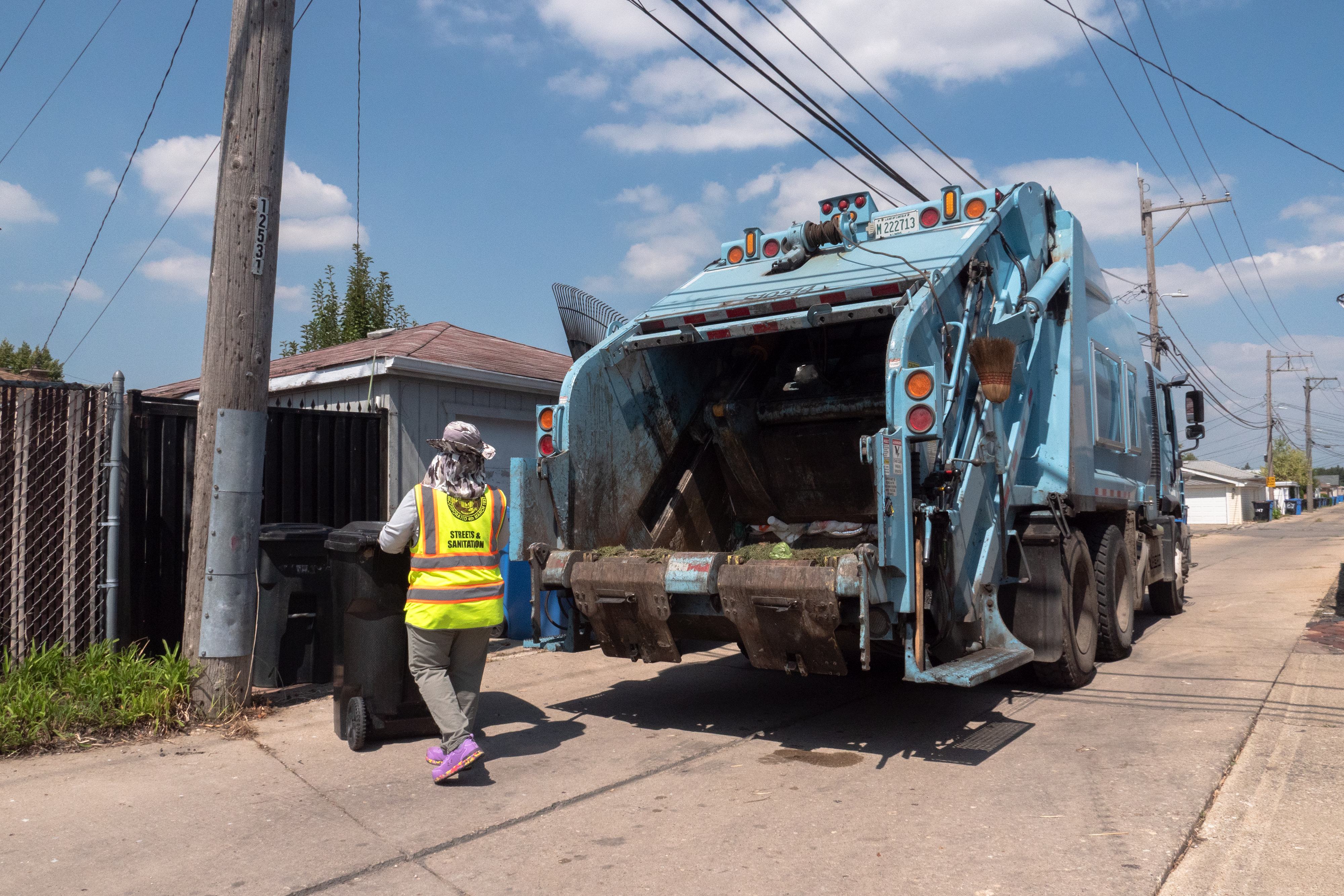
In Chicago, garbage from different types of residential buildings is collected in different ways.
Trash from “low density units” — that’s single-family homes and apartment buildings with four or fewer units — is collected by the city. People who live in larger buildings have to hire private trash haulers.
The city collects garbage from about 600,000 households — over half of the total households in the city. Mimi Simon, the director of public affairs for the Department of Streets and Sanitation, said garbage haulers for the city pick up about 800,000 tons of trash each year.
Joan Mitchell, Maretha Boyd and Jasilyn Williams are one of the only all-women sanitation teams currently working for the Chicago Department of Streets and Sanitation.
For the last three years, they’ve worked the same route together in the Garfield Ridge neighborhood.
Their weekday mornings start around 4:30 AM, when they get dressed and “prepare for the smell,” Boyd said.
“I have incense on the truck to help with the smell and the bugs,” Williams explained. “And you chew gum,” Mitchell added with a laugh. “And you keep going.”
The three didn’t choose to work together, but rather were assigned randomly by the city. “We just was lucky,” Mitchell said. “And it was a bond.”
Like most Chicago alleys, the ones on their route have around 25 homes each, and they cover between seven and 15 alleys a day.
Keeping the other two calm on the job is Mitchell, who Boyd and Williams describe as the “mother” of the group. She’s the one who reminds them to stay hydrated and take bathroom breaks, and who coaches them through lifting heavy items into the truck.
Technically, if you’re a Chicago resident and the city collects your garbage, just about anything is fair game to be disposed of. Some of the most difficult things the crew has had to lift? Williams listed a few as she remembered them: “A couch… hot water tanks… basement sinks… hot tubs.”
While you’re supposed to call 311 to give notice about these larger items, people often don’t, so the three are sometimes surprised by the things they come across.
Boyd, Mitchell and Williams said the hardest things to get used to, when they first started the job, were the heat and the animals — including rodents and their marsupial friends.
“A live possum was in the can!” Mitchell recalled. “We dumped it. And I was like, ‘Oh, no, no! It's a possum. So we had to let it run out [of the truck].”
It takes about three hours to fill up a Streets and Sanitation garbage truck, which can hold between 16,000 and 25,000 pounds of trash. Once the truck is full, they take the garbage to a transfer station where it’s sorted before being sent on to a landfill.
The three agree that being a garbage collector is actually a pretty fun job. They have a real sense of camaraderie between their crew, and they love many of the neighbors they’ve gotten to know over the years.
Their one complaint is that they wish people were a bit more mindful when taking out their trash.
“[Some] people don't use garbage bags, so that's nasty,” Williams explained. “They treat garbage like garbage. … They don't treat garbage how it should be treated.”
“And we’re here to clean it up,” Mitchell added. "That's what we do."
So tie your garbage bags tight, keep it contained and don’t take it for granted that after you toss your trash in the bin, there’s someone who has to pick it up.
More about our question-asker
Diane Judge has lived with her husband in the Ravenswood neighborhood for about 40 years.
In her backyard, Diane keeps a large compost bin for her fruit scraps and grows native flowers to attract butterflies. And just beyond her back fence is the alley where she first met the all-women city garbage crew that prompted her to ask Curious City what it’s like to be a woman on the job.
When did she start thinking about garbage? “A long time ago,” Diane said. “I can't pin it on any particular time or event, but I read the news, I became aware of what we're doing to the Earth, and I don't want to contribute to that.”
These days, the retired nurse practitioner spends much of her time gardening, reading and caring for Monarch butterflies, which she raises in her home. She also writes letters about the use of single-use plastics, which she’d love to see politicians do more to limit.
Maggie Sivit is Curious City’s digital and engagement producer.
The Devon Avenue area of Chicago’s West Ridge neighborhood is known as “Little India” because of its dense population of South Asian residents and cluster of businesses. But over the years, there’s been a demographic shift and many South Asians now live in the suburbs.
Today, Chicago's metropolitan area has the second-largest Indian population and the fourth-largest Pakistani community in the U.S., according to Pew Research Center. And it got Curious City listener Salek Khalid wondering: “Is the [Devon Avenue] area still a center for our [South Asian] community or has the center now shifted elsewhere?”
Khalid is a Pakistani American who grew up in Aurora, Ill. in the late 1990s, when the city had a much smaller South Asian population. Every month his family would take special trips to Devon Avenue to stock up on groceries, shop for traditional Pakistani clothes and maybe catch a Bollywood film at the theater before heading home.
But around the early 2000s, those trips to Devon Avenue became less frequent, until eventually, they stopped. His parents could find their favorite shops and restaurants close to their own suburban home.
“There was a halal meat shop that opened up less than five minutes away, which was incredibly convenient because you didn't have to drive really any distance at all,” said 33-year-old Khalid.
He said these days you don’t even have to leave the suburbs to check out a Bollywood movie.
Over the years, South Asians have created many hubs across the Chicago area. While the area known as Little India on Devon Avenue continues to be a landmark for many in the Midwest, the demographic shift is pushing some long-time business owners and advocates to rethink Devon’s role as an anchor for the South Asian community and how to keep attracting younger generations.
South Asian hubs are everywhere Today, the South Asian population in the Chicago area is about seven times larger than it was in 1980. A WBEZ analysis of census data shows that in 2021 about 255,000 South Asians lived in the region compared to about 35,000 people four decades ago.
Chicago has the largest population of Indians, Pakistanis and other South Asians in the six-county area — with nearly 33,000 people living across the city. However, there are far more South Asians, collectively, in the suburbs, and the rate of the population's growth has been faster in the suburbs than in the city. Khalid said he’s noticed the changes in Aurora where he’s lived for the past 25 years.
“There [are] so many more South Asian families in that particular neighborhood where if you were to go outside in the evening, you would see so many older adults going for their evening stroll. You see kids who look like they're from India or Pakistan that are riding their bikes and playing outside,” he said.
According to WBEZ analysis, more than 13,000 South Asian immigrants live in Naperville, followed by about 9,000 in Schaumburg and 8,000 in Aurora.
Patel Brothers, an Indian grocery that gained its popularity on Devon, now has four locations across the Chicago region. There’s also the big “Mall of India” in Naperville and many other South Asian stores.
Cultural events like the Pakistani and Indian Independence Day parades have become premier events in the suburbs. The Indian Independence Day Parade and celebration in Naperville earlier this month drew more than 37,000 people, according to Viral Shah, treasurer of the Indian Community Outreach, the group that organized the event. Famous singer Shankar Mahadevan was even flown in to headline the festivities.
“We brought a very versatile, legendary singer, who is part of Bollywood, and he has sung songs in multiple languages,” said Viral. “He's known across … the country.”
Shah said about 80% of India was represented in the parade, including the regions of Maharashtra, Mizoram, Kashmir and Punjab.
Shah, like other paradegoers, said their hub is not Devon Avenue anymore. Today, there are many hubs in places like west suburban Naperville and Aurora. Residents don’t have to go far to attend their temples and cultural events.
“Today, Devon Avenue is purely nostalgic,” Shah said. “I don't think I've been to Devon in the last, maybe, 10 years.”
An evolving South Asian community As an adult, question-asker Salek Khalid has made an effort to go back to Devon Avenue and explore the neighborhood on his own. He now works at a community organization in West Ridge. Over time, he’s noticed that not everyone comes from India or Pakistan, but surrounding countries like Bangladesh, Sri Lanka and Bhutan. He said Devon Avenue is a unique experience.
“It's a more immersive, cultural experience,” Khalid said. “You can walk around, you can sample traditional sweets. If you wanted to buy something to wear, you have that option as well. It's … a much more intense experience to the senses than if you were to just go to a random restaurant in an all-American strip mall.”
Roughly 6,200 people who identify as South Asian immigrants live in the West Ridge neighborhood. Many parts of the community are still considered working-class where the median household income is below $64,000, according to census data. The median household income for the 14-county Chicago metro area is about $79,000.
Shajan Kuriakose, executive director of the South Asian American Chamber of Commerce, said the expansion of South Asians into the suburbs has had an impact on Devon, but it’s minimal.
“If you have families that are coming from Indianapolis, or coming from Detroit, Michigan, or coming from parts of Iowa … they're going to go to Devon first before they go to the Schaumburg or Naperville area,” he said.
Still, there are challenges that keep the area from responding to the demands of suburban consumers. Smaller mom and pop shops have a hard time embracing innovation. Some business owners can be very private about their operations, and it’s difficult to get them to apply for government grants to weather economic hardships or to get assistance for remodeling projects.
Parking is another problem that has troubled the neighborhood for years. A vacant garage at the corner of Devon Avenue and Rockwell Street has burdened the area for nearly two decades.
Viral Shah, who helped organize the parade in Naperville, said these are important issues. People want stores to be updated and organized. Potential suburban visitors might think twice before heading out to West Ridge if they know they’ll have a hard time parking or end up with a ticket.
Some long-time area advocates and business owners want to see a more intentional plan that responds to the neighborhood’s growing diversity and demands for more public spaces.
Chinatown is an example of the type of redevelopment that could happen in West Ridge, according to Ann Kalayil, co-founder and board chair of the South Asian American Policy and Research Institute.
Throughout her work in the neighborhood, Kalayil noticed people tend to stick with their own communities. Residents come from many different countries, and some have strong religious differences. Other advocates said this neighborhood is still a port of entry for many immigrants who are adjusting to a new country.
It’s a challenge to mobilize them and get them civically engaged. Some don’t feel welcomed or empowered to speak up at neighborhood forums.
Shajan Kuriakose with the chamber said a survey from earlier this year found that many business owners share similar concerns about the neighborhood — parking and safety are at the top.
He’d like to see bigger festivals on Devon Avenue, the way he remembers them growing up. The chamber and other groups are advocating for those changes, but it’ll take some time.
Meanwhile, local business owners insist Devon will always be an anchor.
“Once you're here, you're gonna really enjoy the vibe because that's something that you can't recreate in the suburbs at the end of the day,” said Mita Shewakramani, whose family opened Regal Jewels and Sari Sapne on Devon Avenue in 1982.
But Kalayil said it shouldn’t be about the city versus the suburbs. It should be about the larger community.
“I also don't think that we need to look at these hubs, whether it's in Naperville or Des Plaines, as something that is juxtaposed to … the Devon Avenue hub,” she said. “They're all different experiences. … The sum of that is what defines our community, because our community has evolved.”
Adriana Cardona-Maguigad is Curious City’s reporter. Alden Loury contributed data analysis.
Devon Avenue in the West Ridge neighborhood has been the region’s top destination for South Asian restaurants, grocery stores, clothing, jewelry and more. But with more South Asian families settling in the suburbs, what does the future hold for the area known as “Little India”?
El otoño pasado, un oyente de WBEZ nos contó la historia de una casa embrujada en Barrington, IL, donde un niño murió en circunstancias trágicas y su espíritu quedó rondando.
¿Tienes una historia similar que ha pasado aquí en Chicago o en los suburbios para compartir con nosotros? Tal vez hayas notado objetos moviéndose inexplicablemente por una habitación, dispositivos electrónicos apagándose y encendiéndose u otras inquietantes señales de una aparición. A lo mejor investigaste la historia de tu casa o lugar de trabajo y encontraste algo revelador, o escuchaste espantosas historias de tus vecinos que se han quedado en tu mente.
Cuéntanos lo que sabes completando nuestro formulario de Google. Si tu historia también nos pone a temblar de terror, Curious City podría ir a entrevistarte y conocer más sobre tus visitantes del otro mundo.
This week, we're revisiting a story from 2022 that answers a question about the history of lesbian parties in Chicago.
Last fall, a WBEZ listener told us about a haunted house in Barrington, IL, where a young boy died under tragic circumstances and his spirit seemed to remain.
Do you have a similar story to share from the greater Chicago area? Maybe you’ve noticed objects moving around a room inexplicably, electronic devices turning off and on or other signs of a haunting. Perhaps you’ve dug into the history of your home or office building and found something revealing — or heard stories from your neighbors that linger in your mind.
Tell us about it by filling out our Google Form. If your story makes us shiver, Curious City might come out to see you and your otherworldly visitors.
Túi xách đeo chéo đi học thêm chất liệu canvas cao cấp nhiều ngăn đa năng VMCGZ0063 tím
Túi vải đi học thêm nữ cao cấp có lớp lót vải oxford dày tai thỏ dễ thương VMCGZ206 đen
Túi đeo đi học thêm nữ đa năng có quai đeo chéo vải canvas hình tai thỏ dễ thương VMCGZ206 be
Túi đi học thêm cho học sinh cấp 2 cấp 3 sinh viên thời trang nhiều ngăn tiện dụng VMCGZ206 tím
Soul Train was the place of love, peace, and of course, soul. Broadcast nationally from 1971 through 2006, it was one of the longest-running TV shows in history — with the longevity of this cultural phenomenon attributed to creator and longtime host Don Cornelius.
In 2011, Chicago celebrated the 40th anniversary of the show’s first nationally syndicated episode with a free concert in Millennium Park.
“That was incredible,” said former WBEZ host Richard Steele, a longtime radio personality and friend of Cornelius. “It was the 40th anniversary of the program, but it was also a celebration of Don Cornelius. That had never happened in Chicago, celebrating him even after all of his successes. And this was he was almost in tears, and he was not a guy to really shed tears.”
Richard Steele was an emcee at the event, along with fellow radio celeb Herb Kent, also known as “the Cool Gent.”
“At some point before the actual ceremony started, they did a Soul Train line that lasted forever,” Steele said. “And he was so moved.”
Besides Don Cornelius himself being a product of Chicago, there’s another reason why this celebration was monumental: because it was Chicago that gave birth to “the hippest trip in America."
Before becoming a nationally syndicated show, Soul Train began as a local show in Chicago. And this week, August 17, marks 53 years since it aired for the very first time.
A more grown-up dance show Back in 1970, young people lined up around the block of the Chicago Board of Trade building to be part of the first airing of this new dance show. They’d pack the tiny WCIU studio along with mostly Black creatives who were invited to showcase their talents on TV.
Artist Michael Griffin was one of those creatives. He was part of a group of designers and models named Les Ménage.
“I was known as a good dancer and someone who dressed well, which is kind of how those friendships began,” he said. “Our group was pretty much well-known in the Chicagoland area.”
Being on the scene is how he got to know Clinton Ghent — a Juilliard-trained dancer and choreographer who grew up with Don Cornelius. Cornelius tasked Ghent with finding hip people for the show, which was an extremely essential role. Ghent invited Griffin’s group on to Soul Train to model their clothing designs.
Ericka Blount Danois, author of Love, Peace And Soul, says the show allowed the city’s young people, like Michael Griffin, to become the show’s stars. And that was part of the magic.
“It was in this small space, like 10-by-10, no air conditioning,” she said. “But these kids were so talented that it took off. And also, just being able to sort of see yourself on TV, the kids felt like they were local celebrities, because they were.”
The idea of a dance show wasn’t necessarily new. There were other dance shows in Chicago, Kiddie A Go Go and Red Hot and Blue. But Don was motivated. He wanted to show Black youth in a way that the national media wasn’t portraying them at the time. His idea was to reimagine what a dance show could be: make it fresher, edgier, cooler. And pairing the city’s young people with that vision proved to be a winning formula.
“This dance show that he created on WCIU Channel 26 was a little bit edgier,” Danois said. “These were teenagers, a little bit older, and they had dance moves that were good.”
On top of this edgier approach, Chicago was already a music city, especially for Black musicians. So much of the most popular music of the 1950s and ’60s, leading up to Soul Train’s launch in 1970, came from the city.
“Etta James, Muddy Waters, the Dells, Chuck Berry — all of these people in this sort of place that is not New York, but is a music town,” Danois listed. “Earth Wind and Fire Curtis Mayfield, in terms of businesses, also, Sam Cooke … and Curtis Mayfield creating their own labels.”
The role of the Black radio celeb Don Cornelius’s rise in entertainment was swift. But it likely started with a chance encounter while working as a Chicago police officer. Legend has it that he was discovered by an executive at radio station WVON during a traffic stop, when the exec was blown away by Don’s voice and suggested he come work at the station.
Cornelius started working at WVON in 1966, and at the time, the role of Black radio personalities mirrored that of celebrities. As migration to Chicago from the South continued during this time, communities of Black folks who loved their radio personalities continued to swell.
“Chicago was the Mecca,” said Melody Spann Cooper, chair and CEO of the company that owns WVON — the first station in Chicago to cater to Black audiences.
Her father, Pervis Spann, was one of the city’s most well-known names in radio as well as the station’s co-owner.
“They all had monikers,” she explained. “You had E. Rodney Jones, ‘The Mad Lad,’ who was the program director; you had Bernadine C. Washington — she had the biggest women's club in Chicago, 3,000 women strong. … But all of them have their own special identity, special brand, and they brought their own DNA, which made it so powerful.”
Steele, Cornelius’s friend, says he was ambitious and took full advantage of how well-loved WVON personalities were in the communities.
“WVON was the killer radio station at that point,” he said. “And Don was a news guy who filled in as a disc jockey from time to time. Because ‘VON had such high visibility, it gave the personalities visibility, even the news people.”
Cornelius had music sets in high schools across the city called record hops. Those events created his audience for the show he would create.
In addition to radio, Don Cornelius already had ties in television. He hosted a daily news show called A Black’s View of the News at WCIU, the TV station where Soul Train would air. Don used $400 of his own money to produce the pilot.
“It became a success,” said Steele, about the start of the local show. “The first people he had on were the Impressions and Staple Singers. … And these kids were dying to be on television, show their dancing skills, and be there on Soul Train with Don Cornelius.”
Soul Train wasn’t the only show in the country, though. Every major metro area had a dance show with local teens clamoring to be on it. But there was something about Soul Train — and Don Cornelius — that made this particular show stand out.
“He was cool,” Steele said. “Don went to DuSable High School. … And if you knew him, you wouldn't say, ‘Oh, this is the erudite television personality.’ No, he's Don from the hood.”
As a host, Don Cornelius’s connection with the audience was effortless. And, it was authentic.
“With him, since he was from the inner city and from the community, he connected directly, he didn't have to stretch to do that,” he said. “He knew who everybody was, what they were about, as you do when you grew up in a community and you're a person who's involved a lot.”
And it’s that culture, that Chicago cool, that took Soul Train far past the walls of its 10-by-10 studio. In 1971, just a year after being a local show, Cornelius got a syndication deal, and created a new version of the show in Los Angeles. There, it became a national phenomenon.
Even after Don Cornelius moved out to Los Angeles, he continued to produce a local version of Soul Train in Chicago. Clinton Ghent, who helped him launch the original broadcast, hosted the Chicago show until 1976 (with reruns airing until 1979). And kids still lined the block for that one, too.
A long-lasting legacy Although Soul Train ended in 2006, its legacy — and that of its founder — did not.
“It was fitting that Don Cornelius, from here, would start something like that,” said Duane Powell, a DJ and music historian. “Because he was literally seeing the vibrancy of this soulful culture right where he's from. And I do see it [now].”
Here in Chicago, Powell says there are new young creatives who are connecting with each other, taking control of their own futures, and creating resources to display Chicago talent to the world.
“I think that millennial-wise, a lot of millennials have taken up the mantle of a lot of Chicago goodness, and have been really, really forging new paths globally,” he said. “So I do see that era has shaped … where we are now.”
He’s really proud of creatives — like Chance the Rapper, Vic Mensa and Noname — who are doing the very same things that people like Don Cornelius did in his day. Because of this, he wants young Chicago to know about the city’s full influence.
“There's so much of Chicago history that has not been really covered and talked about,” he explained. “We still are this really untapped market. And, just how influential we were all over the world. This is the home of house music, this is the home of the modern blues, this is the home of gospel.”
And, Chicago is the home of soul.
Arionne Nettles is a lecturer and director of audio journalism programming at Northwestern University’s Medill School. Follow her @arionnenettles.
For more than 3 decades, Soul Train brought the coolest music and dancers to TV sets across the country. It also featured the coolest host, Don Cornelius, who started the program in Chicago in a studio the size of a small living room at WCIU Channel 26. On the 53rd anniversary of Soul Train going national, we take you back to its earliest days, and see how it still looms large over local culture.
Túi đi học thêm nữ học sinh sinh viên có quai xách đeo chéo vải canvas dày VMCGZ206 xanh lá
Túi tote học thêm canvas cao cấp thời trang vải dày chống nước nhẹ cho nữ VMCGZ2631 đen
Túi xách đeo chéo nữ đi học vải dù thời trang đa năng cho học sinh sinh viên VMCGZ2631 hồng
Túi đi học cho sinh viên thời trang phong cách Hàn Quốc dễ thương 3 túi phụ VMCZ0061 đen
Túi đeo vai nữ đi học thêm phụ đạo cao cấp vải canvas Hàn Quốc có mặt lưới DISK IT VMCGZ8510 xanh lá
If you’ve ever kayaked down the Chicago River or relaxed along any of the waterways in the area, you may have encountered all sorts of creatures — an enormous snapping turtle, a stray alligator or maybe something that looks a lot like a lobster.
A lobster living in Chicago water would be impossible. After all, they thrive in salt water and would not be able to survive in fresh water. But a Curious City listener swears she’s seen something lobster-like swimming around the city. So if it wasn’t a lobster, what did the listener see?
To find out, Curious City got on a boat with some scientists in search of this mystery crustacean.
It turns out the creature the listener saw was a red swamp crayfish, and its presence in Chicago waterways is a warning sign. According to one ecologist, that particular crayfish species currently inhabiting the Chicago River is second only to Asian carp in terms of its invasiveness and potential to wreak havoc on local ecologies.
Something lurking in the water The North Branch of the Chicago River around W. Foster Ave. is among the areas where a lot of red swamp crayfish hang out. Reuben Keller is a freshwater ecologist at Loyola University. He and lab manager Rachel Egly go out on the water regularly to set traps. On a sunny weekday afternoon, Egly pulls up a cage from the water to find two red swamp crayfish that are less than six inches long from claw to tail.
These creatures are bright red with two long antennae, pincer claws and eight legs. They look like lobsters, but much smaller. American lobsters can get up to about two-feet long while red swamp crayfish max out at about five inches.
Unlike calico crayfish that are native to the Chicago area, red swamp crayfish come from the southern U.S. They’re a big part of the food culture in Louisiana, where fishermen have been harvesting them commercially since the late 1800s. But it’s not recommended to eat the ones found in the Chicago River because their densest populations are found about a mile downstream from a sewage treatment plant.
There are several theories on how the red swamp crayfish got to Chicago. The crustaceans could’ve been used as bait, some may have come from pet shops or a few may have escaped a pending boil. But Keller believes the likeliest culprits are local elementary schools.
“They’re a great classroom pet for elementary schools. They’ll stay alive for a long time under the pretty awful conditions that elementary students will subject them to,” he said.
At the end of the school year, Keller thinks some classes may have turned the crayfish loose in the river without realizing these things are rather invasive.
Claws out of control The red swamp crayfish are known as one of the most invasive species in the world. They can take over the waters they inhabit. They eat fish eggs, which affects fish reproduction. And they outcompete both fish and native crayfish for prey.
“The red swamp crayfish is a burrowing species,” Keller said. “In some parts of the world, it will weaken levees and lead to levee failure and flooding.”
Keller said that if Asian Carp are a code red issue for the Illinois River, he predicts that the red swamp crayfish could be just one step below that. He doesn’t know yet the impact the creature has had on the area, but he knows the problems they can cause if things get out of control.
It happened in southeast Wisconsin in 2009. The Wisconsin Department of Natural Resources kept getting calls from residents complaining about crustaceans on their lawns.
“They were just being aggressive to the homeowners …They don’t back away or move away. They just lift up their claws and show that they are ready to fight,” said Bob Stroess, who enforces Wisconsin’s trade rules for commercial fish and aquatic species.
Stroess said it took four years and $800,000 to remove the red swamp crayfish that had taken over two ponds — one in Kenosha and the other in a subdivision about 20 miles northeast of Milwaukee. Wisconsin officials had to put fabric lining around the ponds and a metal fencing with rocks on top of that to keep them from burrowing down or burrowing back up. They also used chemicals to kill them, and had to completely fill one pond as a last resort.
“No state, no city, no county can afford the cleanup for these if they expand beyond a small little area,” Stroess said.
Keeping crayfish in check Bringing red swamp crayfish into Wisconsin alive is illegal now. That’s the case for Minnesota, Michigan and Illinois.
Conservation police officers are charged with enforcing that law in Illinois. One such officer is Brandon Fehrenbacher, who oversees the Illinois Department of Natural Resources’ Office of Law Enforcement Invasive Species Unit. His purview is all invasive species, but he’s doubled down on the red swamp crayfish in recent years.
“There are hundreds of invasive species that are out there, but [the red swamp crayfish] is a common one we started to recognize and see lots of people having — not just fishermen, but also food markets,” Fehrenbacher said. “We started a campaign to identify and notify distributors of the red swamp crayfish that you can’t ship to Illinois.”
Dead, frozen red swamp crayfish are allowed in Illinois. But having, importing or selling live crayfish in Illinois carry penalties ranging from a petty offense to a Class 3 felony. Fines go from $195 to tens of thousands of dollars.
A lot of the time, people just don’t know the law and need to be informed. But from a culinary perspective, there’s a strong desire to bring them in alive: That’s certainly the preferred way to boil them, according to just about every video tutorial online.
Still, the state’s work stops much of the bleeding, so to speak. But it doesn’t reduce the population that’s already here. That’s why part of the work Keller and his team are doing involves killing red swamp crayfish.
Keller’s work life and personal life collided over the red swamp crayfish when his own daughter’s elementary school classroom had one as a pet.
“I was talking to the teacher throughout all this and sort of nudging and saying this is an invasive species,” he said. “When you’re done with the crayfish, you need to do the responsible thing, and that is to kill the crayfish.”
In the end, Keller was the one who had to kill the crayfish, which he said is a sure way to create a rift between yourself and your child.
For now, his lab currently has about 200 traps in the water, which are emptied out twice a week throughout the summer.
“Our first priority is to figure out how to reduce the population because based on everything we know, there’s really good reason to believe that they are having large impacts here, where they’re established,” he said.
Keller’s lab is seeing fewer red swamp crayfish in the traps these days. They’re still experimenting with their traps with the hope of catching even more. So far, they’ve learned, they catch more crayfish when they use hot dogs as bait.
But the most difficult part of reducing the population is that Keller and his lab are the only ones doing this work. The trapping work that Keller and his lab are doing to keep the Chicago population at bay is taxing. They’re just one lab and they’re outnumbered by the crayfish.
The least the public can do is not bring live crayfish around these parts. If you spot one, think twice before you kill one yourself: It takes some training to properly identify the red swamp crayfish (while the adults are bright red, the juveniles look similar to some native crayfish). The safest option would be to contact the Illinois Conservation Police.
Keller said volunteers could be a valuable part of the culling work, but they should “be part of a well-organized effort” that has the proper training, time and resources required to make a meaningful impact.
You can learn more about red swamp crayfish research at the Keller Lab website.
Laura Pavin is a journalist living in the greater Chicago area.
Take a walk around California and Kedzie Avenues on Chicago’s North Side, and you’re bound to see men wearing kippot — also called skull caps — or black fedora hats. You’ll also see women with their hair covered, big families walking together and many synagogues. It’s the West Ridge neighborhood, also known as West Rogers Park, and it’s one of the most diverse areas in the city.
Curious City listener Alice Henry grew up in West Ridge nearly 30 years ago, and her parents still live there now. Their family was a bit of an anomaly because they are Reform Jews, a stream of Judaism that’s less strict about keeping all the traditional rules that make up Jewish life.
The neighborhood has had a large Jewish population since the late 1940s. And for many decades, there was a range of Jewish life there: from Jewish atheists to those who adhered strictly to biblical and rabbinical law.
But over the last few decades, Jewish West Ridge has become more observant, more religious.
It got Henry wondering, “When and why did West Ridge become such an Orthodox Jewish neighborhood?”
There wasn’t one event or a specific timeframe that saw a change in the area. However, starting in the 1950s, debates within the Jewish community began to reshape Orthodox Judaism in Chicago — and helped create today’s West Ridge.
The first wave Jewish people first arrived in Chicago from Germany in the 1830s and ’40s. In the 1880s, Jews arriving from Eastern Europe settled on the Near West Side around Maxwell Street.
Over the next few decades, peddlers with pushcarts became businessmen with brick-and-mortar stores. This step up in economics and social acceptance brought a migration west to the Lawndale neighborhood, which became one of the largest and most vibrant Jewish communities in the country.
After World War II, the GI Bill helped many Jewish veterans go to college and purchase homes. Families began buying homes in West Ridge.
Rabbi Leonard Matanky is the spiritual leader of Congregation K.I.N.S., a synagogue at the corner of California and North Shore that lies in the heart of Orthodox Jewish West Ridge. He and his family have been in the neighborhood for more than half a century.
“My family moved to West Rogers Park in 1966,” he said. “Sacramento wasn't paved between Lunt and Pratt, right where Lerner Park is today. It was almost like an alley. During that time, there were these massive sunflower fields where the large buildings known as Winston Towers were then built.”
Devon Avenue was a major shopping corridor for the Jewish community, where you could find everything from bakeries and bookstores to high-end goods.
“The community was very different at the time, but it was still a very, very strong Jewish community,” Matanky said.
Matanky said the level of observance to Jewish law and customs varied widely at the time. In the 1930s and ’40s, as Jewish immigrants and their children were establishing new communities, some wanted to leave the old ways behind, imagining an America without Orthodox Jews. This idea was especially enticing to a group of people who for centuries were not allowed to own land, vote, go into most professions or even live where they wanted to because of their religion.
So by the 1950s and ’60s, with the dream of physical and economic safety fulfilled, most American Jews — includingthose in West Ridge — were practicing newer, less stringent forms of Judaism than their parents and grandparents. For some, eating lox and bagels became the only tie to their faith and their heritage.
Gradual change In the mid-20th century, a series of debates took place within the Jewish community that would eventually have a big effect on Orthodox Judaism in the city and the nature of modern West Ridge.
As the older generation that had founded many of the city’s Orthodox synagogues died off, the younger generation faced a decision about how to move forward. “There were discussions of perhaps joining with the Conservative Movement or the Reform Movement, which were both on the ascent,” Matanky said. “There was a compromise that was reached. And that compromise was that there would be mixed seating, family-style seating in the synagogue. And other than that, [it would be] a regular Orthodox service.”
Matanky said that was the general practice in the community for many years. In Orthodox Judaism there is no mixed or family-style seating. Instead, men and women are separated during prayer services. There’s an opaque partition — usually made of fabric or frosted glass — called a mechitza separating the sections.
But the compromise created by these “traditional” synagogues wasn’t destined to last. Between a famous Michigan court case and larger shifts happening in American Judaism, people headed toward one side of the debate or the other.
While there isn’t an exact date when West Ridge’s Jewish population became dominantly Orthodox, the gradual movement began in the 1960s, when the small number of Jews who continued to live an Orthodox life were joined by a sizeable group of young spiritual-seekers raised in secular homes looking for a deeper connection to their religion and their roots. That trend has continued to this day.
“I became the rabbi [at K.I.N.S.] in 1994. And they returned once again to having a mechitza. And that was also part of that general movement that we see across America, where there has been an ascendancy of the Orthodox movement,” Matanky said.
By the 1990s the original residents of West Ridge either passed away, headed to warmer climates or moved out to the suburbs. Younger, more religious families start buying those houses and shaping the neighborhood to be more conducive to an Orthodox lifestyle.
Orthodox life today The influence Orthodox Jews have on the West Ridge neighborhood can perhaps be most visible during Shabbat. That’s the Jewish Sabbath, or day of rest, that begins every Friday at sundown.
“On Shabbat what we focus on is recognizing God as the Creator. And so we cease activities that would be considered creative in nature,” Matanky said.
For thousands of years, Rabbis have argued with each other about what exactly “creative” means. It’s boiled down to 39 categories of things you don’t do on Shabbat.
“One of them, for example, is lighting a fire. For example, when you turn on a car, there's a spark, that's a fire, [so] we can't turn on that car on Shabbat,” Matanky said.
Another big one is carrying things outside the home, like keys, groceries or the kids. This can be a challenge for Orthodox Jews who need to get to synagogue or do things outside the home on Shabbat. But Orthodox communities, like the one in West Ridge, have stretched the rule by building what’s called an eruv, a large area demarcated by anything from wires, fences, roads or natural boundaries like rivers. For example the northern border of the West Ridge eruv is the CTA Yellow Line tracks just north of Howard St. The western border is the North Shore Channel that runs between Kedzie and McCormick. Everything inside the eruv is considered the same as being inside your home, meaning you can carry things on Shabbat as long as you’re within its boundaries.
Matanky said the eruv in West Ridge was built about 30 years ago.
“We have opportunities because of the eruv and it also strengthens communities because Orthodox Jews want to live in a community that has an eruv versus a community that might not,” he said.
Alderperson of the 50th Ward, Debra Silverstein, is part of the Orthodox community, and she’s lived in the neighborhood for more than 30 years.
She said she’s seen a lot of growth in the area in just the decade she’s been in office.
“We've had many more synagogues opening up,” she said. “I was actually at an event just this Sunday, and one of the trivia questions that we had [was] ‘How many synagogues are on Touhy Avenue?’ And the answer was 13.”
While the Orthodox community has grown significantly in the last couple of decades, this is a very diverse ward.
“We have Indians, Pakistanis. We have Croatians. We have Rohingya. In our schools, we have 40 plus languages at each school,” she said.
Silverstein said different groups within West Ridge get along well, but she acknowledged that they don’t really mix.
“I do think that the communities stick with their own communities,” Silverstein said. The Ward office often tries to organize events to bring residents together, according to Silverstein. “But it's not always the easiest, it's a challenge,” she said.
Still, people show support for each other at important moments. A few years ago, there were a number of anti-Semitic attacks in the neighborhood. Silverstein said it brought the community, Jewish and non-Jewish, together.
More about our question-asker Alice Henry is an environmentalist currently living in Vancouver, British Columbia.
Alice and her family practiced Reform Judaism, which is less strict than Orthodox Judaism about following the traditional rules of the faith. When her parents moved to the West Ridge neighborhood almost 30 years ago, there weren’t many Orthodox families on their block.
“We were aware that there was a history of a large Orthodox community here in West Rogers Park, but … it seemed to be slowing down,” said Alice’s mom, Nina Henry, a retired social worker. “We had some neighbors that were Orthodox, but it was not what I had heard or expected it to be. … I thought we were going to be the only Reform Jews on the block!”
Over time, however, the neighborhood grew more Orthodox Jewish, and Alice’s family felt like somewhat of an anomaly in the area. That got Alice curious about this history of the community all these years later.
Nina and Alice’s dad, David, still live in the West Ridge home in which Alice grew up.
Jason Marck is Curious City’s senior audio producer.
Chicago’s West Ridge neighborhood has had a large, vibrant Jewish population since the late 1940’s. But at some point, the people living there became more and more religiously observant. We’ll find out when and why that change took place, and hear about the practices that make the community unique.
The term “Chicagoland” is part of the region’s DNA. You’ve probably seen it plastered on car dealership billboards or grocery store coupons. Maybe you’ve even heard the weatherman refer to “sunny skies across Chicagoland.”
There’s no New York-land or Boston-land, so why does the Chicago metropolitan area have its own unique name?
It turns out this has been a question on the minds of many Curious City listeners. To learn more, we looked at the origins of this term, how its meaning has changed over time and the media mogul — or Colonel — behind it all.
Where did the term “Chicagoland” come from? Many people associate “Chicagoland” with television commercials and advertisements, but there was a time when the word brought to mind the Chicago Tribune.
In the 1920s, the Tribune’s publisher, Robert R. McCormick — or Colonel McCormick, as he was known — was a larger-than-life media mogul. While there’s debate over whether or not he actually coined “Chicagoland,” McCormick can be credited with adding it to the popular vocabulary to describe the region.
McCormick wanted to tie a familiar voice to “Chicagoland.” So he commissioned James O’Donnell Bennett, a distinguished novelist who was also well known for his war reporting, to write a series of articles documenting his travels in the Chicago region.
That’s how the word made its first appearance nearly 100 years ago in the July 27, 1926 edition of the Chicago Tribune. Across the front page was a story by O’Donnell Bennett titled “Chicagoland’s Shrines: A Tour of Discoveries.”
In the articles, O’Donnell Bennett spoke highly of the communities he visited: the restaurants, the entertainment and the scenery. He wrote about places such as Dubuque, Iowa; Holland, Michigan; and Moline, Illinois under the banner of Chicagoland. Soon enough, residents of places like Peoria and Kankakee wanted to be included, and wrote to the newspaper asking O’Donnell Bennett to visit their hometowns, too.
But the term was not embraced by everyone. A 1926 Tribune editorial quoted a woman from Nauvoo, Illinois who did not want Nauvoo associated with Chicago. According to Peter Alter, the Gary T. Johnson Chief Historian and Director of the Studs Terkel Center for Oral History at the Chicago History Museum, the author of the editorial essentially dismissed Chicago by saying, “It’s far away, it’s corrupt and it’s violent.”
Nevertheless McCormick was determined to instill a sense of civic pride in Chicago residents and to elevate the city’s profile.
“New York was [thought of as] the city of culture and Chicago was the city of business, and McCormick didn't like that concept,” explained Jeffrey Anderson, director of the Glen Ellyn Historical Society and the former historian of Cantigny Park, McCormick’s former estate. “[McCormick] had artwork printed in the Tribune, so people could cut it out, frame it and put it in their homes. [He implemented] lots of ways to bring culture and the world to the residents of Chicago.”
By positioning Chicago’s newspaper — and, by proxy, the city itself — as a cultural hub, McCormick hoped residents of nearby cities and towns would want to be associated with it, all under the banner of “Chicagoland.” And this in turn might lead to an increase in the Tribune’s readership. So the use of “Chicagoland” was in part a business strategy by McCormick, according to Alter.
“Robert R. McCormick was really looking to say, ‘Okay, if Chicagoland encompasses pretty much Iowa, Indiana, Illinois, Michigan and Wisconsin, then that's all of the places that should be reading the Tribune,’” Alter said.
How has Chicagoland’s meaning changed? Back in the 1920s, “Chicagoland” covered a whole swath of the Midwest.
But as other Midwestern cities grew and developed their own local newspapers, they were no longer considered part of Chicago’s orbit. That’s part of the reason the area we consider “Chicagoland” shrunk.
At the same time, Alter theorized that the suburbanization of the Chicago area following World War II meant that the city’s suburbs remained decidedly under the Chicagoland umbrella. People who grew up in the city began moving to the suburbs, but they kept reading the newspaper their parents read.
Today, we generally consider "Chicagoland” to mean a smaller and denser area of the city and suburbs. Depending on who you ask, it may also encompass Northwest Indiana and a small portion of southern Wisconsin.
“Chicagoland” in media Today, you’ll still find “Chicagoland” used in Chicago Tribune articles and hear it on WGN broadcasts. But you’ll be somewhat hard-pressed to find it in publications not associated with Tribune Media.
Here at WBEZ, there’s an unwritten rule that it’s preferable to use “the Chicago region” or “the Chicago area” instead of “Chicagoland.”
According to Torey Malatia, former WBEZ CEO and current CEO of the Public’s Radio in Rhode Island, he once got legal advice to stop using “Chicagoland" to prevent litigation by the Tribune Media Company. He told WBEZ staff to avoid using it.
“Chicagoland” is not currently under copyright, and when we asked the chief legal officer for Chicago Tribune Media Group if there ever was a copyright on the term, she said she wasn’t sure.
Still, the term is used frequently by advertisers and brands that strive to appeal to consumers beyond the immediate city. Car dealerships, for example, love to use "Chicagoland."
While Chicagoland’s current use may have become divorced from its original meaning, perhaps Colonel McCormick would still be proud to see that the term itself has stood the test of time.
Marie Mendoza is WBEZ’s podcast fellow.
The origins of “Chicagoland” can be traced back to nearly 100 years ago. Back then, it encompassed an area that went beyond the suburbs.
For the past ten years, Curious City has been answering your questions about Chicago and the region — including those about Chicago foods.
Here, you’ll find our top stories about the origins of beloved Chicago foods and some of the best places to try them.
Hot dog | Harold’s Chicken | Garrett Popcorn | Malört | Pizza slice | Korean wings | Giardiniera | Big Baby | Chicago originals | La Michoacana | Steak and lemonade | Bagels
Deconstructing the Chicago-style hot dog There’s perhaps no dish more closely associated with Chicago than the Chicago-style hot dog. Smothered in yellow mustard, chopped onions, neon green relish, two slices of tomato, sport peppers and a final whoosh of celery salt, it’s a staple of Cubs games and late-night hot dog stands alike. While we can’t claim to tell you where to go for the best Chicago-style dog in the city, we can tell you the fascinating history behind how these particular ingredients came together to create an iconic Chicago dish.
What makes Harold’s Chicken Shack a legendary Chicago spot? When it comes to fried chicken, Harold’s Chicken Shack is one of Chicago’s most popular spots. The fried chicken dinner with cornbread, coleslaw and Harold’s beloved mild sauce is a rite of passage. But how did Harold’s come to be a Chicago institution? What’s the relationship between different Harold’s Chicken Shacks across the city? And just what is mild sauce, anyway? Our friends at South Side Stories have the answers.
Love Garrett Popcorn? Here’s the science behind the sweet and salty food combinationHave you ever wondered why cheese and caramel popcorn pair so well together? We talked to a food scientist about why the combo is so hard to resist. Chicago-based Garrett Popcorn makes nine different flavors, but the Garrett Mix — that combination of caramel and cheese — is the company’s best seller. It’s popular enough that locals refer to it as “Chicago Mix.” And its popularity is no accident.
The unlikely rise of Malört as Chicago’s drink Throwing back a shot of Malört is practically a rite of passage for residents and visitors to the city, and if you spend long enough at any Chicago dive bar you’re likely to see patrons ordering a Chicago Handshake: the iconic pairing of a Malört shot with an Old Style beer. But how did Malört become a Chicago thing? Its ascendancy happened more recently than you might think.
We went in search of the best pizza-by-the-slice in Chicago Historically, “Chi-Town” has been a pie town, with pizzerias that sell only whole pies far outnumbering those that offer it by the slice. But that’s changing. We teamed up with WBEZ’s daily news show Reset to find out why it’s harder to find pizza-by-the-slice in Chicago than New York and how the pandemic helped change that.
Korean chicken wings: spicy, saucy and totally Chicago Gam pong gi wings are a Chicago-invented dish forged in Albany Park kitchens that have gone on to become a national hit. The chicken lollipops, as they’re sometimes called, are smothered in a signature sweet chili sauce. The story of how gam pong gi wings came to be can be traced to two immigrant families that settled in Chicago and put their own creative tweaks on a traditional dish.
What's the history of Chicago-style giardiniera? Giardiniera (pronounced jar-din-air) is a mix of pickled vegetables that’s great on everything from Italian beef sandwiches to pizza. Chicago-style giardiniera — a specific blend of peppers, carrots and other veggies mixed together in a spicy, salty, oily concoction — is its own art form, distinct from the Italian blends on which it’s based. According to industry estimates, we eat about 15 million pounds of the stuff in the Midwest each year. In this episode, we learn all about how it got to be so big here and the controversy surrounding how it’s pronounced.
Nicky’s and the Big Baby: Unveiling the history of a Chicago fast-food favorite Nicky’s Grill on Chicago’s Southwest Side serves up all the Chicago fast food classics, like pizza puffs and hot dogs. But they’re perhaps best known for their signature double cheeseburger, known as the Big Baby. We learned that the dish’s popularity has to do with Chicago’s Greek community and a particular way of stacking ingredients.
Beyond deep dish: Exploring Chicago’s native foods Chicago is known for deep dish pizza and Chicago-style hot dogs, but lots of other dishes were invented here in the city — gyros, brownies and pizza puffs were all created in Chicago, to name a few. In this episode, we dive into the origin stories behind lesser-known Chicago-invented foods including Italian beef, jibaritos and the jerk taco. Plus, we tell you where to try them.
From Mexico to Chicago, the story behind “La Michoacana” ice cream shops Spend time walking around Pilsen or Belmont Cragin and you’re bound to notice a number of ice cream shops that all have “La Michoacana” in their names. While their names may be similar, the shops have different owners, different offerings and even different prices. We learned about original paleta makers in Michoacán, the state in Mexico that lent its name to ice cream shops across North America — and the ongoing litigation over the copycat names.
Steak and lemonade: What are the origins of this Chicago food combo? The beef sandwich and slushy drink are sold together all across Chicago’s South and West sides. To find out how the two came to be paired together, we visited half a dozen steak and lemonade joints, asking owners where steak and lemonade originated. Eventually, we tracked down the man behind the combo — and it turns out steak and lemonade restaurants have their roots a lot closer to home than we expected.
Yes, Chicago has good bagels. Here's where to find them. New Yorkers may be reluctant to admit it, but we’ve got some pretty darn good bagels here in Chicago. In this episode, we recount the 100-year history of Chicago bagel bakeries, which saw a surge in the early part of the 20th century followed by a dip by the ’80s and a glorious bagel renaissance today. We also did the ultimate taste test of Chicago-area bagels, looking for that perfect combo of crisp exterior and dense, chewy center.
Want more answers to your Chicago food questions? Check out our full playlist of Curious City food stories.
The beef sandwich and slushy drink combo are sold together all across the South and West sides of Chicago. Reporter Monica Eng tracks down the guy who put the two together. Then, she answers a question about what those mysterious structures out on Lake Michigan actually do.
It’s summertime in Chicago and, once again, large teen gatherings are making headlines.
It got one Curious City listener wondering who’s behind the social media push for these so-called “teen takeovers.”
These meetups have been happening for years, and they are especially popular among Black teens. The gatherings are known as “trends,” a word that often appears on flyers, usually signaling a large meetup at a public place, like Grant Park or North Avenue Beach.
But in some instances these large gatherings have gotten out of control. Recently, an 18-year-old woman was run over with a car and a couple was assaulted in the Loop. Last year, 16-year-old Seandell Holliday was shot and killed during a gathering in Millennium Park.
Curious City spoke with teens and youth advocates to understand who is behind these flyers, why these meetups are happening and what the city’s response should be.
Lil Troup, a 20-year-old who works for C.H.A.M.P.S, a youth mentoring program, said he understands why kids organize and attend these gatherings. He asked to only use his artist name to protect his privacy. He hosted a house party for his 17th birthday. Between 50 and 100 young people showed up.
He said there weren’t any fights during the event, and he told people to “leave the B.S. at home.”
Lil Troup described his teen self as angry, with little support or structure. With a lack of guidance, he often went to “trends” meetups hoping to find positive connections. He said other teens might be experiencing similar struggles.
In hindsight, he says he recognizes that he was lucky nothing happened during the event he organized. “I can say I did a lot of dumb things that I thought [were] fun,” he said.
Nineteen-year-old Quan said he and his friends have gone to “trend” meetups at movie theaters, the beach and downtown.
“People just want to go hang out,” Quan said. “We’re just trying to have fun, that’s all we want to do.”
But he said he and his friends know things can turn bad, and they leave if things get heated.
Vondale Singleton, who heads C.H.A.M.P.S, said at first he thought these “trends” flyers were made by young adults in their early 20s. He later realized kids as young as 14 were making them, and they can spread like wildfire.
He said part of the reason why young people are attracted to these events is because there isn’t a lot to do in their own neighborhoods.
“If you ask a young person on the Southwest Side, ‘Hey, do you go to your local park?’ They say, ‘... [The] reason why I don't go [is] because I don't feel safe,’” Singleton said.
A recent WBEZ analysis shows many places of amusement like arcades and bowling alleys in Chicago are mostly located in and around downtown.
After Seandell Holliday was fatally shot last year, the city expanded its citywide curfew hours and increased police presence downtown. But some have questioned how effective the city’s measures have been and who they protect.
Groups like C.H.A.M.P.S and My Block, My Hood, My City have been countering “trend” events with their own organized youth gatherings. And public safety experts and youth advocates have pitched ideas for how to keep the city safe.
Mayor Brandon Johnson’s administration is trying to expand summer job opportunities for young people. He said he’s committed to centering youth voices when it comes to policies and decision-making. Youth advocate Asatta Lewis with Good Kids Mad City said she’s eager to see that happen. She said there’s been a lot of effort put into stopping young people from gathering, and it might be time to try something new.
Adriana Cardona-Maguigad is Curious City’s reporter. Follow her @AdrianaCardMag
Love it or hate it, Malört is Chicago's drink. Throwing back a shot of the bitter liquor is practically a rite of passage for residents and visitors, and if you spend long enough at any Chicago dive bar you’re likely to see patrons ordering a Chicago Handshake: the iconic pairing of a Malört shot with an Old Style beer.
Malört made its debut in Chicago in the 1920s, when Swedish immigrant Carl Jeppson began selling the traditional Swedish-style bitters on the Near North Side. Jeppson skirted Prohibition-era laws by selling his liquor as a tonic to cure stomach worms and parasites. After Prohibition ended, Jeppson sold the recipe and the first bottles of Malört were produced. In the mid ’40s, the liquor, which is similar to absinthe, was available for purchase in glass bottles with a stem of wormwood inside. Malort developed a steady customer base, but it never really became a popular drink. After all, it wasn’t known to win people over with its flavor.
But since then, the drink — which one person we spoke to for this story described as tasting like “baby aspirin wrapped in grapefruit peel, tied up with rubber bands” — has become a Chicago staple.
Curious City listener Kevin McDermott wanted to know how Malört went from being an obscure drink to a symbol of the city.
Malört’s ascendancy is more recent than you might think. For years, bottles of the stuff sat on the back shelves of VFW halls and dive bars, and bartenders used it to prank people who asked for a free birthday shot. But about 10 years ago, one particular Chicago bartender fell in love with the drink and made it his mission to make other people love it, too. What started as a semi-ironic gesture sent sales skyrocketing and helped bring about a revival of Malört.
The unlikely rise of Malört In the late 2000s, Sam Mechling was working as a bouncer at a wine bar when a guy at work dared him to try Malört.
“He said [it] tasted like that junk drawer that everybody has in their kitchen, and that just seemed so insane to me,” Mechling said. The idea that a drink could be so off-putting seemed improbable, but as soon as Mechling tasted it, he knew the description wasn’t an exaggeration.
Soon he started introducing it to his friends at birthday parties and gatherings. He became obsessed with seeing people’s first reactions, which have since become known as “Malört face.” He began hosting Malört-themed trivia nights and comedy shows at local bars.
He also created Twitter and Facebook pages for Malört, which didn’t have official accounts at the time, and documented people’s reactions to the drink. Those included phrases like “it tastes like the day dad left,” “Malört, because Blagojevich wasn’t the worst thing that came out of Chicago,” and “what soap washes its mouth with.”
As much fun as Mechling was having reenergizing the brand, he was spending his own money buying shots of Malört for people at his events. He wanted to at least break even by selling t-shirts featuring the Malört logo which he sold out of Paddy Long’s, a bar in Lakeview where Mechling worked.
“In one day, 100 people came in to buy these Malört t-shirts,” said Pat Berger, owner of the now-defunct Paddy Long’s.
Not only did that grab the attention of more fans — but also the brand’s then-owner, Patty Gabelick.
Sales skyrocket Around 2012, Gabelick showed up with her lawyer unannounced to Paddy Long’s, where Mechling worked at the time. The meeting was tense at first, with the lawyer questioning Mechling’s intentions. But then Mechling showed them a heartfelt letter he tried to send Gabelick months earlier, professing his love for Malört. He’d also included a check with profits he’d made from t-shirt sales. The letter had been returned to him by the Postal Service.
That quickly changed the mood. Instead of serving him a lawsuit, Gabelick offered Mechling a job.
“It was like going from thinking that I was going to be financially destroyed by this corporation to landing a dream job in the matter of five minutes,” Mechling said.
Mechling worked for Malört for nearly a decade. He continued to host events, but now they were official. Malort sales jumped significantly.
“That was the start of … Malört’s giant resurgence from just being available at VFW halls and the Green Mill to being in every hipster bar in Chicago,” said Berger.
In 2018, Tremaine Atkinson, CEO and head distiller of Chicago’s CH Distillery, bought the company when Gabelick retired. Production of Malört had moved to Florida in the late 1980s, but under Atkinson, it returned to its original home in Chicago in 2019.
A Chicago staple Over the last five years, Malört went from only being available in Illinois, Wisconsin, Indiana and Louisiana to being sold across 30 states.
Today, Mechling heads his own marketing company in Ohio — but the guerilla fandom that he started in the late 2000s carried on after he left.
You can buy Malört pet toys and pool floaties, and tattoo shops across the city get requests for tattoos of the drink’s iconic bottle. There’s even an unofficial Malört 5K that has runners taking shots during the race.
“People like to say, ‘Oh, I hate Malört,’ but … you usually don't come back to something unless you actually like it,” Atkinson said. “But it's fun to make fun of it.”
Looking back, Mechling said Malört gave him more than he ever expected — including meeting new friends and his soon-to-be wife.
Now, he’s on the hunt for the next old and unwanted thing he can help make new and desirable again.
Adriana Cardona-Maguigad is Curious City’s reporter. Follow her @AdrianaCardMag
Chicago may be known as the home of deep-dish pizza, the blues, and modern architecture.
But an international dance capital? It turns out a lot of famous dances were created in the city’s clubs and on its streets. The hops, skips, twists and turns took form in just about every corner of the city.
We started digging into this part of Chicago’s cultural history after we received a question from a couple of teenagers who stopped by a Curious City outreach event at the Dunning branch of the Chicago Public Library. They didn’t give their names, but they did give us a lot to think about when they asked: What dances were invented in Chicago?
Our reporting found dozens of moves that were born in the Chicago area, from a slowed-down, Chicago-style polka to a wedding reception favorite, the “Cha-Cha Slide.”
To tell their stories, Curious City tracked down several creators and pioneers of these Chicago-area dances — many of whom were still alive and grooving. They include band members, musicians, and dancers who helped create or popularize five dances we focused on: Polka Hop, Steppin’, el Pasito Duranguense (the little step from Durango), the “Cha-Cha Slide,” and Footwork.
On a recent afternoon, about 70 people sat quietly in the pews of the Chicago Temple Building in the Loop. They were there to remember nearly 300 people who died alone, without next of kin, in Cook County. Religious leaders from different faiths read the names of each person aloud, and the St. Sabina Youth Choir filled every corner of the room with songs.
We visited the service because Curious City listener Chris Ferrigno wanted to know what happens to people who die without any known family members — something that particularly affects some of the city’s most vulnerable residents, including people who are unhoused or who struggle with addiction. What happens to their bodies after they die? Who makes funeral arrangements for them? And if family members come forward later, are they able to bury their loved one where they would like?
In most cases, the body of someone who dies in Cook County goes directly to a funeral home, if the individual or family has made arrangements with one. In cases such as homicides, suicides, accidents or unexpected deaths, police departments are usually responsible for identifying the body and notifying next of kin.
Generally, when police can’t identify a deceased body in about 10 days, it becomes a case for the Indigent Disposition Program at the Medical Examiner’s Office. The program is responsible for trying to identify unclaimed bodies, contacting family members and arranging cremation, burial or both depending on the case. The department also makes final arrangements for those who have died of a drug overdose and unhoused people when their bodies remain unclaimed.
This process has changed a lot in the last decade to address previous issues, including very long processing times and inhumane conditions.
We spoke with officials at the Cook County Medical Examiner’s Office to learn more about the steps they take when unclaimed and unidentified bodies arrive at the agency.
- Identification: First responders might look for a wallet or ID, or contact a landlord or neighbor. If the person’s identity remains unknown, police then collaborate with the Indigent Disposition Program. They use techniques including fingerprinting, comparing dental records and in some cases taking DNA samples. The vast majority of bodies that come through the Indigent Disposition Program are eventually identified — about 99%, on average, over the last six years.
- Notification: In some cases, family members come forward on their own. If they don’t, the Medical Examiner’s Office works with organizations like the Chicago Coalition for the Homeless or consulate offices to help locate potential next of kin.
- Cremation: After 30 days, if no relatives come forward or can be found, the body of the identified deceased person is cremated. The cremated remains are stored and held by the Medical Examiner’s Office for up to a year.
- Burial: After about a year, the cremated remains are buried in Mount Olivet Cemetery on the Far South Side. The Medical Examiner’s Office works with agencies including the Cook County Funeral Directors Association and Catholic Cemeteries to arrange two burials each year. The cremated remains of each unclaimed and identified body are placed in small, labeled boxes the size of urns. Each box goes in a large casket with dividers that holds the remains of 20 people.
- Record-keeping: The cemetery keeps the GPS coordinates for the deceased in case relatives later come forward looking for them. If family members want to remove the remains of their relative, they can contact the cemetery and pay to have the casket unearthed to retrieve them.
While most cases that fall under the Indigent Disposition Program follow these steps, there are other cases to consider. For example, there are situations in which the family is notified, but they are unable to pay for cremation or burial. When that happens, the Medical Examiner’s Office will still cremate the body of the person. Family members have the option of picking up the cremated remains from the Medical Examiner’s Office. The fee for cremated remains is $250. Otherwise, the cremated remains will be buried following the process above.
In very few cases, when a deceased person can’t be identified, the body is not cremated. It is preserved and stored by the Medical Examiner’s Office for up to a year, and then buried intact. Photos and sketches of the deceased are sometimes added to a virtual cemetery to help relatives identify their loved ones. A DNA sample from the person is collected and shared with law enforcement databases.
While these steps can feel procedural, many volunteers and officials involved say they’re invested in making sure the bodies of unclaimed people are cared for and laid to rest with dignity and respect.
“Everyone deserves to have somebody there for them,” said Julian Gamboa, a senior at Brother Rice High School who has volunteered at burials organized by the Medical Examiner’s Office. “Even if it wasn't there during their actual life, they deserve somebody there for their afterlife.”
Nisan Chavkin, who is part of the interfaith planning committee that helps organize these services, added, “It's not an empty box you throw away. People are people, and they deserve respect and to be remembered. Taking care of someone when they die, after they are gone, and burying them properly is a great gift … .”
Adriana Cardona-Maguigad is Curious City’s reporter. Follow her @AdrianaCardMag
When someone dies in Cook County and there’s no one to identify or claim the body, a small army of people from the public and private sectors work to find out who the person is, if they have any relatives or friends, and ultimately give them a dignified burial.
Buena Park resident Rebecca Silverman moved to Chicago from the East Coast 16 years ago.
She likes to tell people Chicago’s got everything New York has — except when it comes to pizza by the slice.
“The one thing I do miss about the East Coast is a place to get a slice of pizza, not a whole pie,” Rebecca said. “I haven't quite found that here yet.”
So she wrote to WBEZ to ask where to find the best single slice of pizza in Chicago.
We teamed up with our friends at the daily news show Reset to find out. After Reset posed the question on social media, WBEZ listeners sent a flood of recommendations from places all over the city. Our two-reporter team embarked on a weeklong pizza bender to try the nine spots that received the most recommendations. Here they are (in no particular order):
Jimmy’s Pizza Cafe: This North Side pizzeria polled highest in our informal survey of WBEZ listeners. Jimmy’s has been in Chicago since 2011 and is known for serving classic, New York-style pizza. But they've been known to break format and offer fusion slices, like a Korean-inspired pizza with bulgogi.
Neighborhood: Lincoln Square
Style: Classic NY-style, with a thin, crispy crust. Slight char on the bottom. Sauce is flavorful and not too sweet.
Price for a slice: $5
JB Alberto’s: A carry out-only pizza joint serving Rogers Park since 1965, JB Alberto’s offers several types of pizza slices to go: pan, stuffed and thin crust. And the owners claim their 24-inch diameter extra large pie is the “largest delivered pizza” in Chicago.
Neighborhood: Rogers Park
Style: Lots of cheese, sprinkled with herbs on top. Crust is on the softer side and somewhat gummy. Sauce is sweet but sparse.
Price for a slice: $3.75 for thin crust, $4 for pan and stuffed slices
Art of Pizza: Art of Pizza has been in the business of making deep dish by the slice for 34 years. This counter service spot is the perfect place to check out if you want Chicago-style deep dish without having to eat a whole pie. Pan, stuffed and thin crust available by the slice.
Neighborhood: Lakeview, South Loop
Style: The popular stuffed pizza slice has dense layers of everything: crust, cheese and chunky, herby tomato sauce.
Price for a slice: $4.99 for thin crust, stuffed and pan slices
Dimo’s: A staple in Wrigleyville, Dimo’s puts a creative spin on pizza, from an elote pizza to a chicken-and-waffles pie. But what most stands out is its commitment to getting New York-style pizza dough just right.
Neighborhood: Wrigleyville, Wicker Park, Lincoln Square
Style: New York-style pizza with a chewy crust and classic char on the bottom. Cheese-heavy, in a good way.
Price for a slice: $5
Pizza Lobo: This pizza-and-beer spot boasts a large patio and plenty of specialty pies. Started in 2020, Pizza Lobo sells pizza by the slice at two locations — as well as from a to-go window at the Logan Square tavern.
Neighborhood: Logan Square, Andersonville
Style: New York-style pizza with a crusty, slightly charred crust and a slightly charred bottom. Slices are sturdy but tender, and even the plain slices feel almost artisanal.
Price for a slice: $4 for a cheese slice. (Dipping sauces including fennel aioli and hot honey are available for an additional $1.)
Dante’s: Dante’s has developed a loyal following since its first location opened in 2011. Pies are named for creatures from Greek mythology, and the menu boasts a large selection of vegan pies.
Neighborhood: Logan Square, West Town
Style: New York-style pizza slices as big as your head. Charred bottom, crisp but foldable crust. Sprinkled with herbs around the edge. Vegan slices available.
Price for a slice: $5.25
Pizza Friendly Pizza: Opened in 2020 as a way to feed hungry concert-goers from the Empty Bottle next door, Pizza Friendly Pizza bills itself as “Chicago’s best Sicilian pizza.” There are just a handful of tables inside this pizza joint, but patrons can still order slices directly from the Bottle, which connects to the restaurant via a literal hole in the wall.
Neighborhood: Ukrainian Village
Style: Sicilian-style, rectangular slices with puffy crust, not much sauce and gooey cheese. Flavors available by the slice include the vegan offering, miso mushroom.
Price for a slice: $4.50 for a burrata slice, the closest they’ve got to a plain cheese slice. (The additional $3 for hot honey dipping sauce is pricey but worth it.)
Fabulous Freddies: This family-owned spot has been serving up casual Italian fare since 1990. Cheese, sausage and pepperoni are available by the slice. It also offers a rotating special slice of the week. (Taco pizza, when we went.)
Neighborhood: Bridgeport
Style: Soft, not-quite-thin crust with very little char. Greasy in a good way and generous on the sauce.
Price for a slice: $3.75 ($3.50 during Happy Hour)
Benny’s Pizza: This counter-service spot serves pizza out of a cozy, mural-adorned storefront. Cheese, sausage and pepperoni available by the slice. When the weather’s nice, sit outside on the swinging benches.
Neighborhood: Pilsen
Style: Medium crust, doughy and soft.
Price for a slice: $4.75
Claire Hyman is the digital and engagement producer for Reset.
Marie Mendoza is WBEZ’s podcast fellow.
Maggie Sivit is Curious City's digital and engagement producer.
The U.S. Baháʼí House of Worship in Wilmette, Illinois is striking: it doesn’t seem like the three-tiered temple with a Renaissance dome belongs in the neighborhood of large homes where it sits.
Growing up in the area, Curious City listener Annie Carroll said she’d drive by the temple at least once a week.
“It never gets old. Every time you look at it, you see something completely new,” Carroll said. “It's an incredibly detailed, beautiful building.”
She wondered why something so grand and opulent was in a place like Wilmette. Surrounded by nine manicured gardens filled with a bevy of flowers and foliage, the gleaming building stands apart. It is on the U.S. National Register of Historic Places, and it gets hundreds of thousands of visitors annually from all over the world.
Founded in Iran in 1863, the Baháʼí faith teaches progressive revelation — the idea that religions are inherently one and God progressively reveals truth through a series of divine messengers. For Baháʼís, this means figures like Krishna, Buddha and Jesus were all divine messengers. And Baháʼu'lláh, the faith’s founder, said there will be a new messenger about 1,000 years after him.
Constructing the temple took several decades. We consulted Baháʼí National Center Associate Director of Communications Joyce Litoff, Temple Director George Davis, the Chicago Architecture Center and writings on temple architect Louis Bourgeois to construct a timeline on the history of Baháʼís in the U.S. and the completion of the temple:
1893: The first public mention of the Baháʼí faith in the United States happens at the Columbian Exposition
The World's Columbian Exposition was the site of the first meeting of the World’s Parliament of Religions. The exposition opened on September 11 that year, with international representatives of global religions present. The parliament aimed to cultivate harmony among a variety of faith traditions. It is considered a watershed moment of interfaith dialogue, and the World’s Parliament of Religions still convenes today.
Reverend Henry H. Jessup, an American Presbyterian missionary in Syria (now Lebanon) wrote a paper quoting the founder of the Baháʼí faith, Baháʼu'lláh. Jessup thought Baháʼu'lláh “gave utterance to sentiments so noble, so Christlike,” that he wanted to use them as closing words.
These words of the religious founder included: “That all nations should become one in faith and all men as brothers; that the bond of affection and unity between the sons of men should be strengthened; that diversity of religions should cease and differences of race be annulled.”
1903: Local Baháʼís pitch the idea of building a temple in Chicago There were about 3,000 Baháʼís living in Chicagoland in the early 1900s, the largest concentration of Baháʼís outside of New York. A small group of Baháʼís downtown pitched the idea of constructing a temple in the area. A few years later, Baháʼu'lláh's son ʻAbdu'l-Bahá, then-leader of the faith, gave Baháʼís the go-ahead to construct what is now the U.S. Baháʼí House of Worship.
Baháʼís considered building the temple in Jackson Park or Evanston, but Wilmette won out. The land was cheap and undeveloped at the time. Also, it was beautiful and right on the shores of Lake Michigan.
There was also a significant population of Baháʼís in New York, but Chicago had historic significance because of the World’s Parliament of Religions. It was also more accessible because it was centrally located in the U.S.
1906: Louis Bourgeois, who would go on to design the U.S. Baháʼí House of Worship, joins the Baháʼí faith with his wife Captivated by the teachings of the essential unity of all religions and the relationship between religion and art, Bourgeois became a Baháʼí.
In 1909, the newly formed Executive Committee for the Baháʼí Temple Unity asked North American architects to submit designs for the temple. Bourgeois made a presentation, and after some revisions, his design would be selected just over a decade later.
Bourgeois dreamed of building a temple dedicated to world peace before he became Baháʼí: the year prior to his conversion, Bourgeois entered a design for the League of Nations Peace Palace competition at The Hague.
1912: Baháʼís break ground on the temple
Serious construction would not begin for another eight years, but Baháʼís broke ground on the U.S. Baháʼí House of Worship in 1912. ‘Abdu'l-Bahá, Baháʼu'lláh's son, traveled to the U.S. to lay the cornerstone.
Chicago resident Nettie Tobin wished to contribute to the Baháʼí Temple Unity but lacked the funds. She visited a construction site near her home in Chicago and asked for a stone from the reject pile. Tobin had the stone delivered to the future construction site in Wilmette by streetcar and wagon. Abdu'l-Bahá decided that stone would be the dedication stone for the future temple.
The cornerstone was not used in the construction of the building. It is now displayed in the visitors center.
1920: Louis Bourgeois’ design is chosen for the U.S. Baháʼí House of Worship Bourgeois revised the design he’d submitted in 1909 and built a plaster model of the future temple. It was unanimously chosen as the design for the temple at an exhibition at the Baháʼí Temple Unity Convention in New York in 1920.
The design for the nine-sided building drew inspiration from famous styles of architecture, including a Renaissance dome and Islamic arabesque tracery. It famously includes symbolism from different major world religions. There are Islamic stars and crescents, crosses, and Stars of David laced into the building’s pillars.
These symbols are included because Baháʼís believe in progressive revelation, the idea that every major faith tradition has contributed to the collective understanding of what is true.
Bourgeois would continue to work on the design for years. He died in 1930, before the temple was completed.
1921: Construction begins The first part of the building, the Foundation Hall, was finished in 1922. However, construction of the rest of the temple faced many starts and stops due to the lack of knowledge on how to build the temple as envisioned, and historical events like the Great Depression and World War II. It picked up more steadily in 1947.
Bourgeois wanted the temple to be as white as possible and gleam in the light. He eventually met John Earley, who was an expert in ornamental concrete. Earley combined white Portland cement with crushed quartz to achieve the desired effect.
The Baháʼí House of Worship is surrounded by nine gardens, each planted with a variety of flowers and plants to symbolize the diversity of humanity. Each garden also has a fountain. They’re based on a design by landscape architect Hilbert Dahl, who was also Baháʼí.
1953: The temple is completed and dedicated The U.S. Baháʼí House of Worship was dedicated in a ceremony on May 2, 1953. Several thousand people attended the ceremony.
The temple in Wilmette is the oldest one in the world still standing. The first Baháʼí temple was in Iran, where the faith started. But that temple was destroyed in 1979 during the Islamic Revolution. Baháʼís in Iran have suffered persecution since the faith’s inception.
Since ʻAbdu'l-Bahá, son of the founder of the Baháʼí faith, laid the foundation stone for the temple in the U.S., it is considered the holiest of the temples worldwide.
Today The U.S. Baháʼí House of Worship receives more than 300,000 visitors from around the world every year. It is located at 100 Linden Ave. in Wilmette, IL. Today, there are about 180,000 Baháʼís in the United States and 3,000 in Chicago.
The Temple Auditorium, which is open daily to the public, hosts programs of prayers and readings. People can also sit in silence there to pray or reflect. At the Welcome Center, people can watch a film on early American Baháʼís, visit the bookshop, or go on guided tours of the space.
The temple was built as an offering to the Baháʼí principle of the oneness of humanity. It’s for everyone, whether Baháʼí or not, to enjoy.
More about our question asker: Annie Carroll grew up in Glencoe, Illinois. In high school, she got to go inside the Baháʼí temple for the first time as part of a world religions class. She enjoyed learning about the Baháʼí faith and was inspired to visit the temple for a few services.
Annie has since moved to California. She wanted to know why the U.S. temple was built in the Chicago suburbs when it’s only one of eight continental Houses of Worship globally.
Adora Namigadde is a WBEZ reporter. Follow her @adorakn.
Editor’s note: This story contains descriptions of violence.
Floyd Webb remembers the first time he met John Keehan. It was 1964, and Webb was just 10 years old, scrubbing out garbage cans in an alley in Chicago’s Chinatown to earn pocket money. Webb was living on the other side of the expressway in the Harold Ickes housing project.
On this particular day, behind a row of restaurants, Webb and his friends noticed a guy putting up posters. They’d seen him around before — he was a red-haired guy in his 20s, memorable because he was a white person who was actually friendly to them, a group of Black kids. “We usually got thrown out of places when we left the neighborhood,” Webb said.
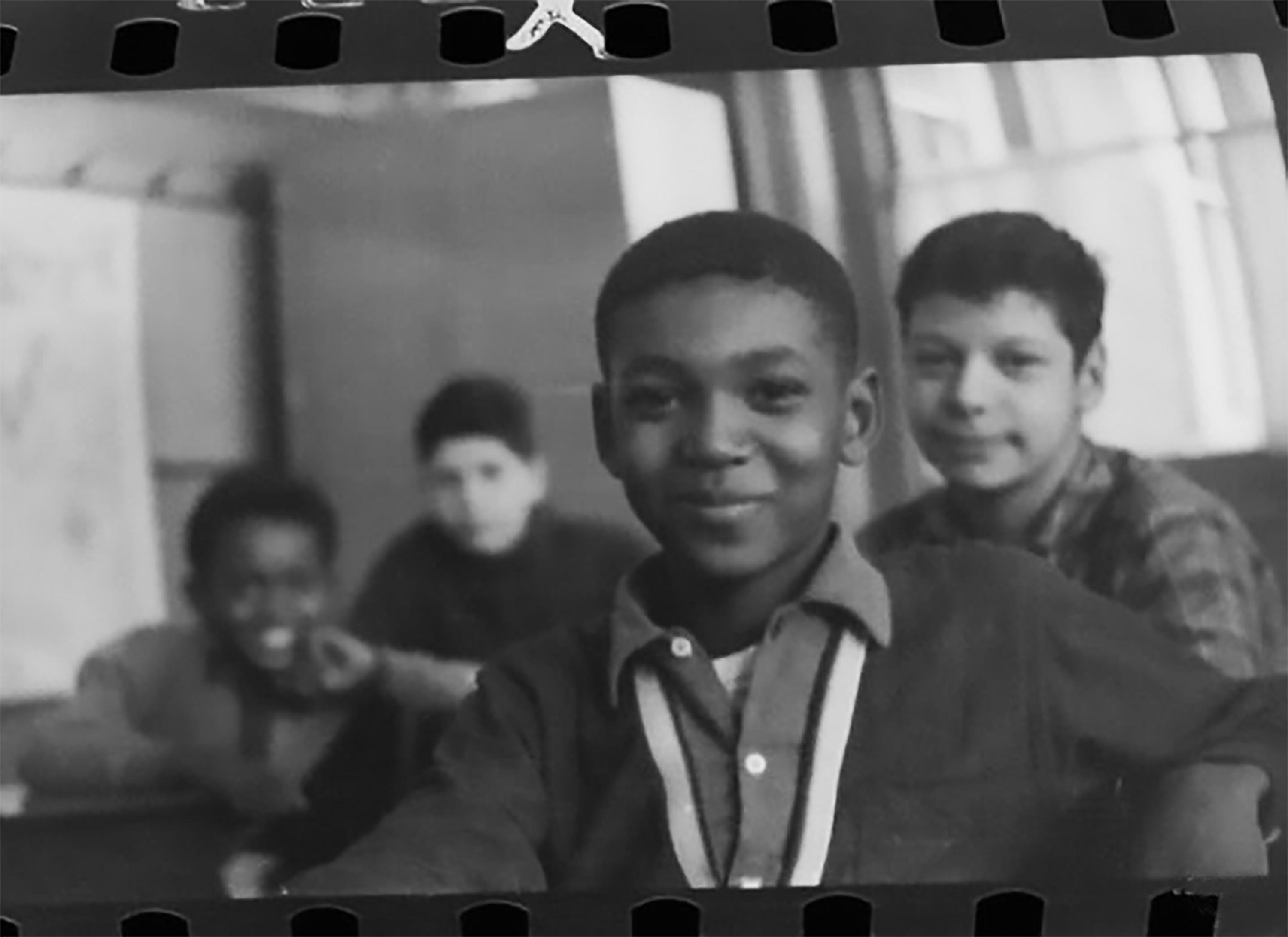
The man introduced himself to the boys as John Keehan. The posters he was putting up were for a karate tournament taking place just a few blocks from where Webb lived. The idea of going to the event exhilarated him.
Used to getting bullied by his classmates because he was scrawny and spoke with a stutter, Webb spent a lot of time daydreaming about sticking up for himself. He loved action movies with fight scenes, and when he was home alone, he often mimicked the judo-inspired moves he’d seen.
But when it came to joining a formal martial arts school, which were then becoming more popular around the country, Webb had a problem. Most martial arts schools at the time excluded Black people. On top of that, in a city like Chicago — which was then an incubator for a burgeoning Black Power Movement — teaching Black people to fight was considered taboo.
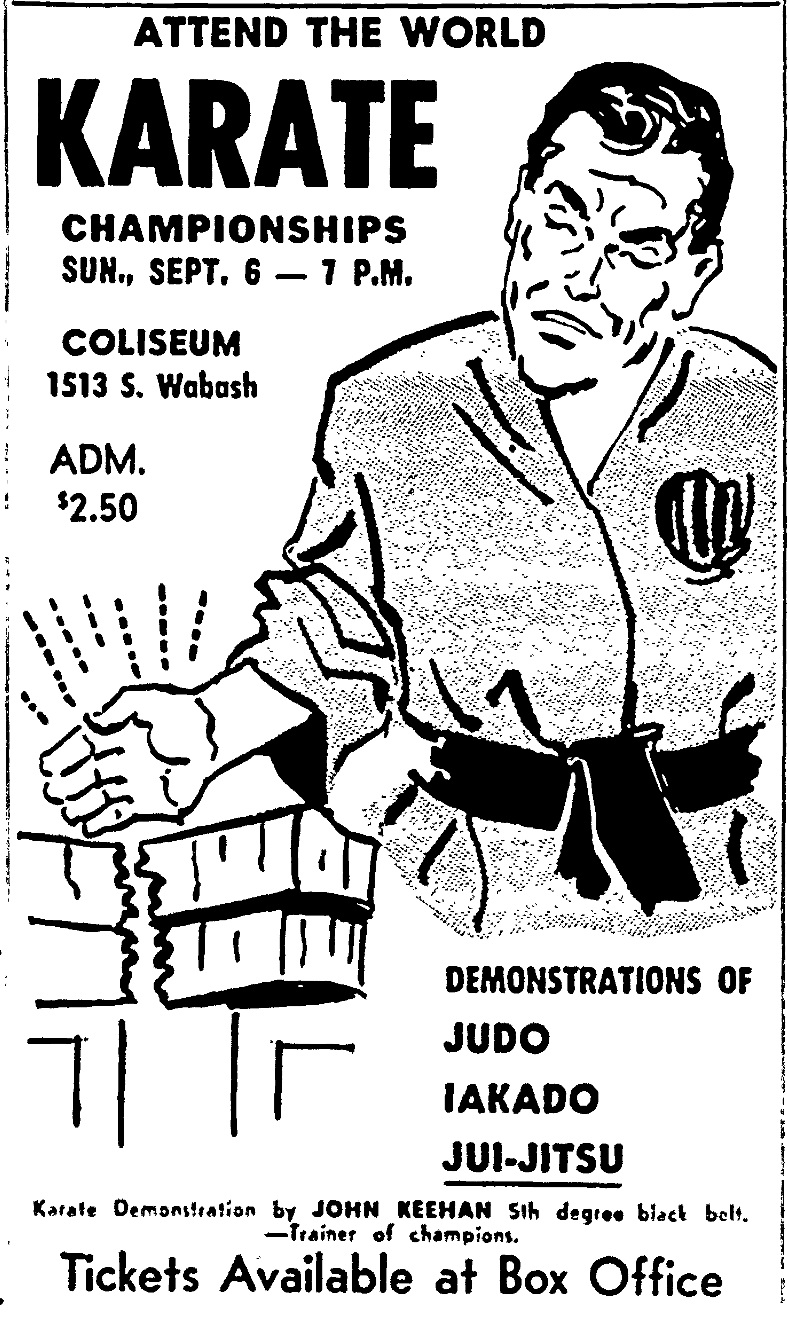
“The cops didn’t want Black and Hispanic people learning martial arts,” Webb recalled.
When they arrived at the tournament, the boys couldn’t believe their eyes.
“Instead of a three-ring circus, it was like a 12-ring circus,” Webb said. There were throngs of people gathered around matches taking place across the arena.
Keehan took the boys over to one of the matches and led them up to the front of the crowd. As the men fought round after round, Keehan told Webb and his friends about the fighters and talked them through the match.
Webb was in awe of Keehan. He brought Webb into a world he wanted to be part of. And he made him feel like an insider.
It’s what led Webb, as an adult, to spend more than a decade and a half working on a forthcoming documentary about Keehan’s life. Keehan ran successful dojos, or martial arts schools, and tried to change the very nature of martial arts competitions in the United States.
So when Curious City listener CJ Fraley asked about the infamous dojo wars in Chicago, we first turned to Webb, who has arguably the most comprehensive knowledge of the time. There were, in fact, intense rivalries between dojos in the city during the 1960s and ’70s. We also talked to a number of people who knew Keehan personally about the man at the center of these wars. Keehan helped popularize karate in Chicago, but his ego eventually led him down a path of self-destruction. This is his story.
Keehan was born in 1939 to an Irish-American family. Before he became a martial arts legend, he was a skinny kid growing up in Chicago’s Beverly neighborhood.
One night, someone broke into his family’s home, and Keehan, a teen at the time, confronted the intruder. Instead of stopping him, Keehan got beaten up.
After that, Keehan’s dad decided his son needed to be able to defend himself. He signed Keehan up for boxing lessons with Johnny Coulon, an Irish-American boxer who ran a gym in Chicago's Woodlawn neighborhood.
Fighting, to Coulon, was the great equalizer, and showed what you were truly worth. “If you came into Johnny Coulon gym and had a problem with Black boxers being there, Coulon would tell them, ‘Get in [the ring] with ’em, let's see what you can do,’” Webb said.
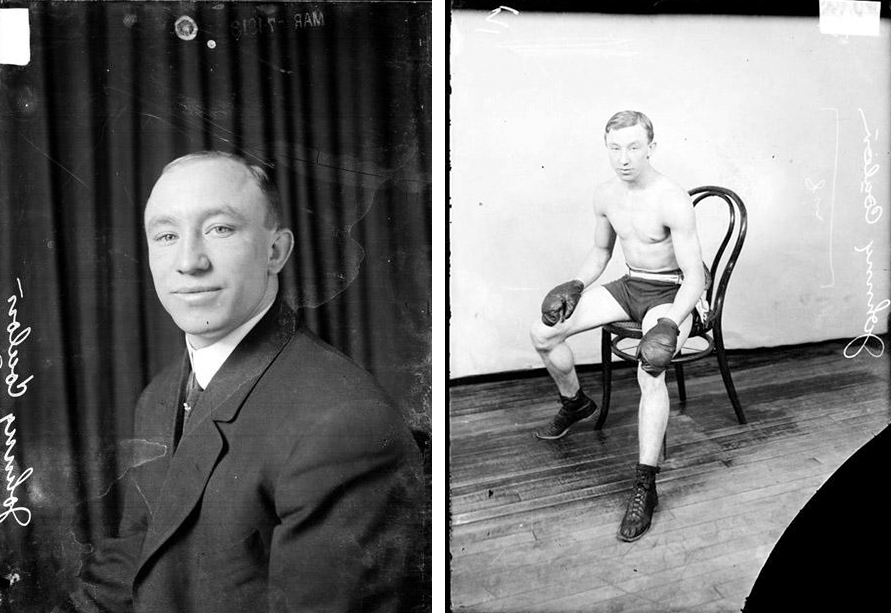
Because he spent so much time in places like Coulon’s gym, Keehan ran in more diverse circles than most kids in his neighborhood, which was majority-white at the time.
“Some of his friends would tell me that they were always shocked they would go out with John, and John would … go on the South Side to Black parties and everybody knew him,” Webb said.
After graduating high school in 1968, Keehan joined the military. He’d loved boxing since he was a teen, but it was while he was stationed in California in the Army that he became obsessed with martial arts. He read books about martial arts techniques, started training in kung fu and spent time with karate masters up and down the West Coast.
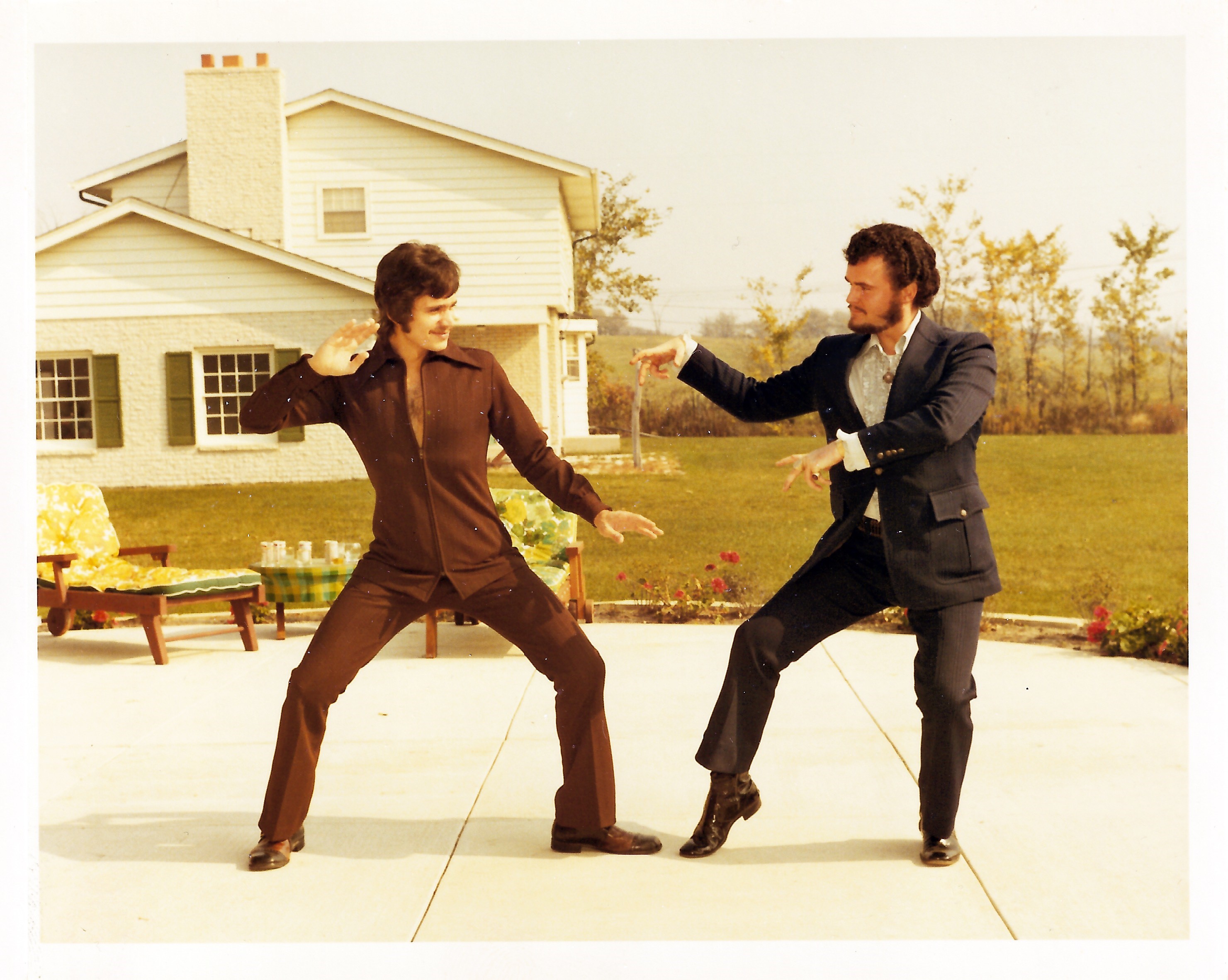
Keehan seemed hell-bent on getting discharged from the Army. According to his friend Tommy Gregory, Keehan stole cars, made false reports to police and even went AWOL for a while to try and get tossed out.
In 1960, Keehan finally got kicked out of the Army. Freed from his military duties, Keehan made his way back to Chicago and devoted himself to martial arts full time.
Karate was introduced to the United States in the 1940s and ’50s, partially driven by World War II and Korean War servicemen bringing fighting techniques back from abroad.
Robert Trias, often referred to as the “father of American karate,” was the first person to open a public karate school in the U.S. He opened his dojo in Phoenix, Arizona in 1946 and founded the country’s first national karate organization, the United States Karate Association (USKA), just a couple years later.
Keehan started training with Trias as soon as he returned from the Army. He drove from Chicago to Arizona and stayed for weeks at a time, renting rooms at fleabag motels and training during the day.
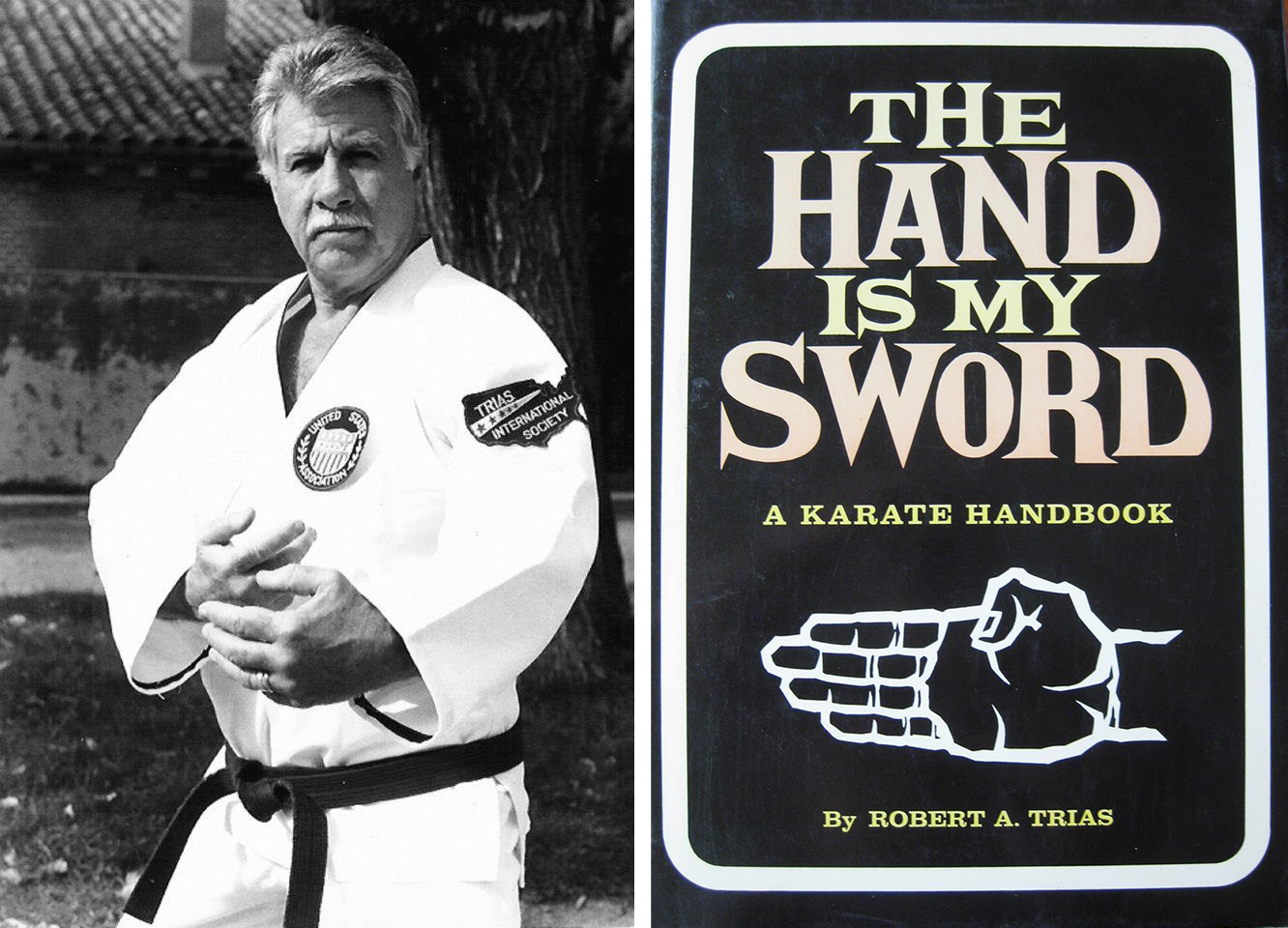
By 1962, Keehan had opened his own dojo in Chicago, the Imperial Academy of Fighting Arts. The school had two locations: one was in the Beverly neighborhood, where Keehan grew up. The other was on Rush Street in the Gold Coast. At the time, Rush Street was like Chicago’s Las Vegas strip, full of neon lights, bars and burlesque clubs.
Most of the guys Keehan trained were construction workers and people from around the neighborhood. He put them through rigorous boxing regimens he’d picked up from Coulon and taught them martial arts moves he’d learned from Trias.
Now in his mid-20s, Keehan was focused on creating a larger-than-life persona for himself. He drove fancy cars, wore expensive clothes and walked up and down Rush Street with his highly unusual pet: a lion cub named Aurelia he’d bought downstate.
His friend Tommy Gregory remembers the lion cub particularly vividly. “That f****** thing would absolutely tear the s*** out of you,” Gregory said. “It was as wild as can be.”
And he fell in love. In 1964, Keehan met a woman named Pat Harpold at a bar. He proposed within a few months of dating.
Keehan’s importance in the U.S. martial arts world was rising fast. In 1963, he and Trias had organized a successful karate tournament in Chicago. They planned another, even bigger tournament the following year.
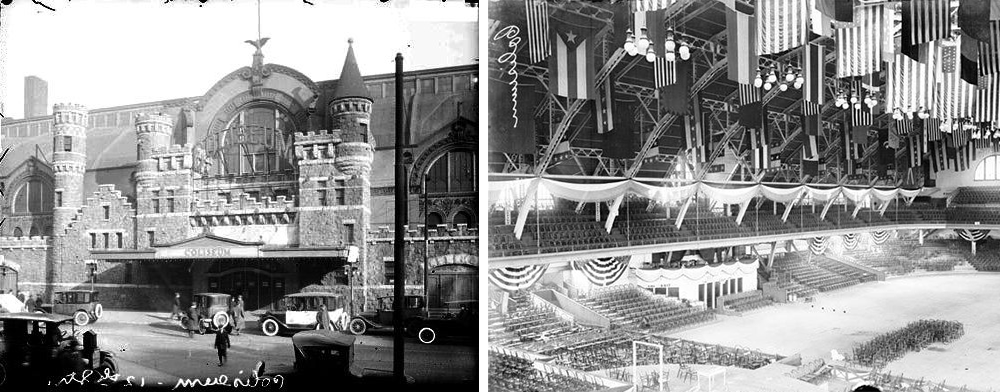
For Trias, the Chicago tournaments were part of an effort to expand the reach of the USKA. For Keehan, they gave him an opportunity to solidify his own reputation as a promoter, showman and karate master.
And they put Chicago on the map as an epicenter of martial arts nationwide.
But at this point, despite having one successful tournament under their belts and another on the horizon, things between Keehan and Trias were tense.
Keehan’s boxing mentor, Coulon, had believed anyone was worthy of being in the ring as long as they could fight. But Trias didn’t feel the same way. Keehan’s best fighter at the time was Raymond Cooper, who was Black. And Keehan had given black belts to a number of his Black fighters — something he saw as the biggest issue between himself and Trias, according to Webb.
But it wasn’t just who they put on the mat that Keehan and Trias disagreed about. It was also how they trained them to fight. “We're watching things like people's teeth get knocked out,” Webb remembered of the 1964 tournament, where he saw many of Keehan’s students up close for the first time. “For a no-contact tournament, there was a lot of contact.”
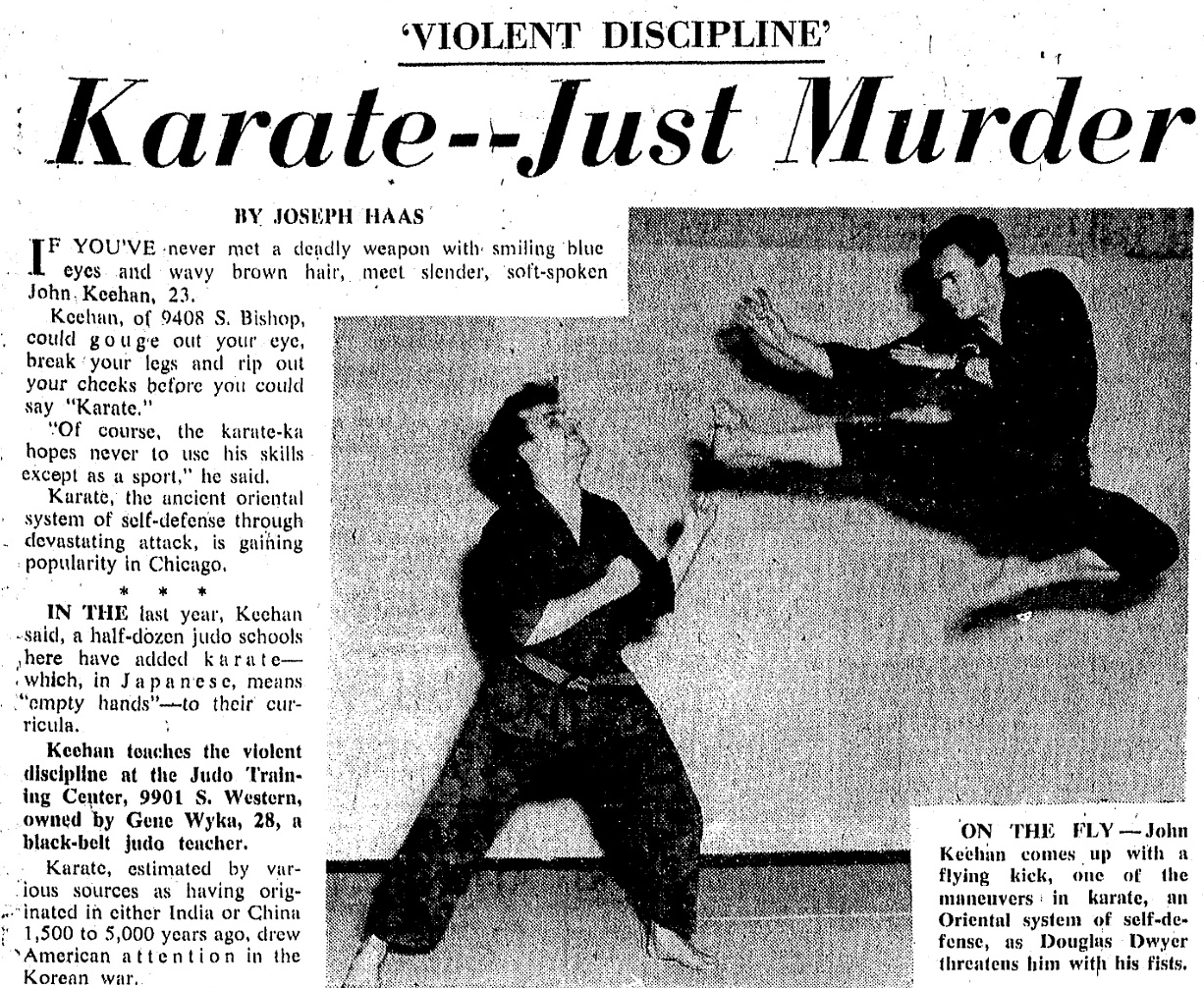
In a CBS News interview from just before the 1964 tournament, the reporter stands in front of the karate school’s logo, a giant black dragon. The reporter asks a confident-looking Keehan whether someone can be seriously injured doing karate. Keehan responds, “You can very easily kill someone, if you know how to hit them and where to hit them.” He pauses and then adds, “This is the whole thing [that puts] the trained over the untrained.”
Rather than going for knock-outs, like in boxing, a fighter in karate matches typically pulls their punches and kicks — coming mere inches from striking their opponent. Judges award points based on technique, and fighters can lose points, or even be disqualified, for making contact.
But for Keehan, none of that mattered if you couldn’t win a fight in the real world.
“You didn’t know what you knew until you actually went out and fought somebody,” Webb said of Keehan’s philosophy.
Frustrated by the sport’s no-contact rule, Keehan started his own organization, a competitor to the USKA called the World Karate Federation that allowed for more contact between fighters. (Keehan’s organization is unrelated to the World Karate Federation that exists today.)
Back at his own martial arts school, Keehan forced his most advanced students to go through a rite of passage before gaining higher degree belts.
Art Rapkin, one of Keehan’s former students, said trainees hoping to advance to brown or black belts were put in a dimly lit room and forced to fight four other students from their dojo — one after another, at full force. They were given sticks and knives, and let loose. By the end of this initiation ritual, people were left bruised and bloody.
And Keehan would intentionally instigate bar fights, enlisting unsuspecting people to help with the beat-in. Rapkin said Keehan would find the biggest guy at the bar, knock a beer bottle out of his hand and blame his trainee for it.
“John would look at me and go, ‘Why the f*** did you actually do that?’ in front of the guy,” Rapkin recalled.
“If he was with four guys, you’d have to fight them, too,” he said.
By the mid-1960s, Keehan had amassed a following of elite martial artists. He called these followers the Black Dragons.
The Black Dragons proved their mettle against other martial arts schools around the city in off-the-books battles. And because of Keehan’s own penchant for violence, when the Black Dragons got involved, the brawls were often bloody.
“Those fights were like Tarantino movies,” Rapkin said. “Think Kill Bill.”
These ongoing battles became known as Chicago’s infamous “dojo wars.” Violent from the start, within a few years, they would turn deadly.
Meanwhile, Keehan continued to add to his already mythic persona.
He legally changed his name to Count Juan Raphael Dante and began claiming to have descended from Spanish royalty. He wore a velvet cape and carried a gold cane with a lion’s head on its handle.
At home, he was increasingly prone to angry outbursts. “He lived in a fantasy world of things he wasn’t,” Harpold said. Keehan had to rehome their pet lion after it got too big and fierce for him to take care of. Harpold says their marriage dissolved, and by 1966 they were divorced.
Keehan started dating a waitress from the Playboy Club and turned her into a character, too. The Dragon Lady, as Keehan dubbed her, became a kind of sidekick to Count Dante. She was known as a Playboy Bunny with a black belt — though she had limited karate skills. They appeared together on tabloid covers and local television shows, performing acts that were a combination of martial arts and magic tricks. It was all part of a promotional ploy.
“He wasn't satisfied with just being a successful, well-respected martial artist,” Rapkin said. “He also wanted to be, like, Elvis.”
In September of 1968, Keehan held the first major full-contact karate tournament in the United States. At the World Fighting Arts Championship Tournament, virtually any move, no matter how aggressive, was allowed. It took place at the Chicago Coliseum, where Keehan had co-hosted a tournament with his former mentor several years earlier.
The fighting was fierce, but — perhaps in part because he was on the outs with the larger martial arts community — ticket sales were lower than Keehan expected. By the time the tournament was over, he owed a lot of people money he didn’t have.
According to Rapkin, Keehan was desperate to get off the hook for the money he owed, so he got creative. “‘What you're going to do is you're going to take the money and then you're going to report to the police that you got robbed by a couple of guys with a shotgun,’” Rapkin said Keehan told him. “And I did that.”
The physical violence that marked Keehan’s martial arts career began to leak out at home.
“She came to my house with two black eyes,” Harpold recalled of the night the Dragon Lady showed up at her door. After getting beat up by Keehan, the Dragon Lady found Harpold, hoping to talk to someone who knew Keehan the way that she did. And though Harpold said Keehan was never physically abusive with her, she was familiar with his outbursts.
At this point, Keehan was a powder keg. He had no mercy for anyone who stood in his way.
The Chicago dojo wars raged on.
One of the Black Dragons’ biggest rivals at the time were the Green Dragons, who trained at a dojo on Fullerton Ave. in Logan Square.
Keehan had already landed on the FBI’s radar after he tried to blow out the front windows of a rival martial arts school using dynamite a few years earlier. And things were about to get even worse.
Late in the evening on April 23, Keehan showed up at the Green Dragons’ dojo with some of his best fighters.
According to Patrick Garrison, a Green Dragon who was there that night, Keehan knocked on the door of the dojo and pretended to be law enforcement. As soon as the door opened, the Black Dragons stormed in.
The Green Dragons immediately grabbed their own weapons off the walls: samurai swords, battle axes and maces — spiked steel balls on the end of long wooden sticks.
One of the Black Dragons fighting beside Keehan that night was Jim Koncevic. At 6’2’’ and 265 pounds, Koncevic was a judo champion and legendary brawler. He also ran his own martial arts school in the Belmont Cragin neighborhood. The two were best friends.
Green Dragon Jerome Greenwald later told the Chicago Tribune that Koncevic attacked him from behind, hitting him right in the middle of his back. Trying to defend himself, Greenwald said he grabbed a dagger from the wall and turned to face Koncevic. In what Greenwald swore was an accident, his 14-inch knife plunged straight into Koncevic’s body.
Keehan’s friend staggered out the front door of the dojo and collapsed on the street. “You could swim through [the blood on] that sidewalk,” Garrison said.
Koncevic died from his injuries. Greenwald was charged with manslaughter and Keehan was charged with assault and battery, among other things, for instigating the attack.
When the case finally went to court, the judge dismissed all charges. According to Keehan’s attorney, Bob Cooley, who documented the events in his book When Corruption Was King, the judge screamed, “You’re each as guilty as the other. I’ve never seen such a pack of lunatics!”
But the fallout from Koncevic’s death came swiftly from the martial arts community, which shunned Keehan.
Over the years that followed, Keehan ran a used car dealership, a porn shop and a hot dog concession at Comiskey Park. He hovered at the edge of organized crime. In the fall of 1974, he was questioned in connection with the Purolator vault heist — the largest cash robbery in the U.S. at the time. He was never charged for it.
And then, in May of 1975, at just 36 years old, Keehan died. For a man who lived so much of his life in sensational terms, the circumstances of his death were surprisingly uneventful. He died at home alone in his Edgewater apartment. And though people speculated wildly about what led to his death, the official report stated that Keehan died from a bleeding ulcer.
Keehan’s impact on martial arts in the United States was huge but complicated. He took what he learned from the boxing gym of his youth and believed it was a person’s physical ability — rather than their race — that made them worthy of competing.
For documentarian Floyd Webb, what stands out about Keehan is the number of Black students that successfully trained in his dojos.
“He had welcomed Black students in his school and those Black students were taking all the championships at that point,” Webb said. At the same time, Webb believes reckoning with Keehan’s legacy is fraught because of how violent Keehan became. “You keep opening these doors and you keep finding out different things about the guy.”
Keehan’s emphasis on physical toughness as the ultimate sign of a person’s worthiness led him to push for more contact in martial arts — a precursor to sports like today’s mixed martial arts. But this same obsession led him to never back down, instigate deadly battles between dojos and made him volatile at home. For better or worse, he’ll be remembered as a main character in the history of Chicago’s martial arts scene.
Joe DeCeault is a senior audio producer for WBEZ. Follow him @joedeceault.
In the 1960s, Chicago was becoming known as a center for Karate teaching and international tournaments, and the main person behind this movement was John Keehan. In the last of this two part series, we delve into Keehan’s devolution into a persona he created, Count Dante. He was at the center of Chicago’s “Dojo Wars,” which would end up taking a dark turn.
At Curious City, we’ve been answering your questions about Chicago, the region and its people for the last ten years.
Our mission is to reach residents from all corners of the metro area with the goal of finding the answers to their questions together.
A couple years ago, we looked at how many submissions we were getting from people living in every Chicago-area zip code.
We chose a community we didn't hear from often. We started in Pilsen, working with community organizations, holding in-person tabling days and producing stories based on questions submitted by people from the neighborhood.
That was the start of what we now call our “Neighborhood Series.”
Since last fall, we’ve taken the “Neighborhood Series” to West Ridge, on the city’s North Side. The neighborhood is home to the historic Devon Avenue, a hub for dozens of South Asian businesses — including grocery stores, sari shops and jewelry stores. The area also serves as an entry point for diverse immigrant communities arriving in Chicago.
This spring, we held in-person tabling events to gather questions at the Indo-American Center and the Rohingya Culture Center, and we’ve got several more outreach days planned.
We’ve answered a question about how recently arrived immigrants can access resources like health care and legal support by learning about community navigators. And we’re in the process of reporting other stories inspired by questions we’ve received from West Ridge residents.
Ultimately, we’ll look for ways to bring these stories back to the West Ridge community beyond just sharing them on our podcast feed. This might look like holding live events in the neighborhood, printing the stories in zines or coming together for a community listening party.
If you live in the West Ridge neighborhood, we’d love to hear from you. What are you curious about? What stories do you think we should cover about your community?
In the 1960s, Chicago was becoming known as a center for Karate teaching and international tournaments, and the main person behind this movement was John Keehan. He was a revered black belt instructor who was also often an instigator in Chicago’s “Dojo Wars,” a series of brawls and incidents between competing martial arts schools. In part one, we follow Keehan’s rise as a sensei, and his efforts to bring more violence to the art, both on and off the mats.
Brandon Johnson was just sworn in as Chicago’s new mayor. Johnson was known as a union and community organizer who believes average people should have more say in how their government works. Which is why we thought this story from 2021 about how any citizen can introduce new laws here in Chicago was the perfect pairing to inauguration week.
Carolina Sandoval was on one of the first buses from Texas to Chicago last fall. We follow her journey here from Venezuela, discovering how she’s found some sense of independence as the situation for new arrivals continues to evolve amid a growing crisis.
In April, Carol’s Pub was packed with Curious City fans eager to learn about the history of Uptown saloons and the importance of beer and tavern culture to Chicago. Knowledge flowed from the stage, brews flowed from the taps and great music flowed from the Hoyle Brothers. We’ll take you inside the event on this week’s episode of Curious City.
At the corner of Pulaski Road and Foster Avenue on Chicago’s Northwest Side stands a statue of labor leader Samuel Gompers, welcoming people to the park that carries his name. Cast in bronze, he strikes a dignified pose, hands assertively clasping his lapels, his eyes gazing off into the distance. At his feet are two boxes of cigars, a nod to Gompers’ roots as a cigar maker.
This is a relatively new statue in Chicago, unveiled in 2007. It recognizes, among other things, the founder of the American Federation of Labor’s fight for the eight-hour work day and the end of child labor.
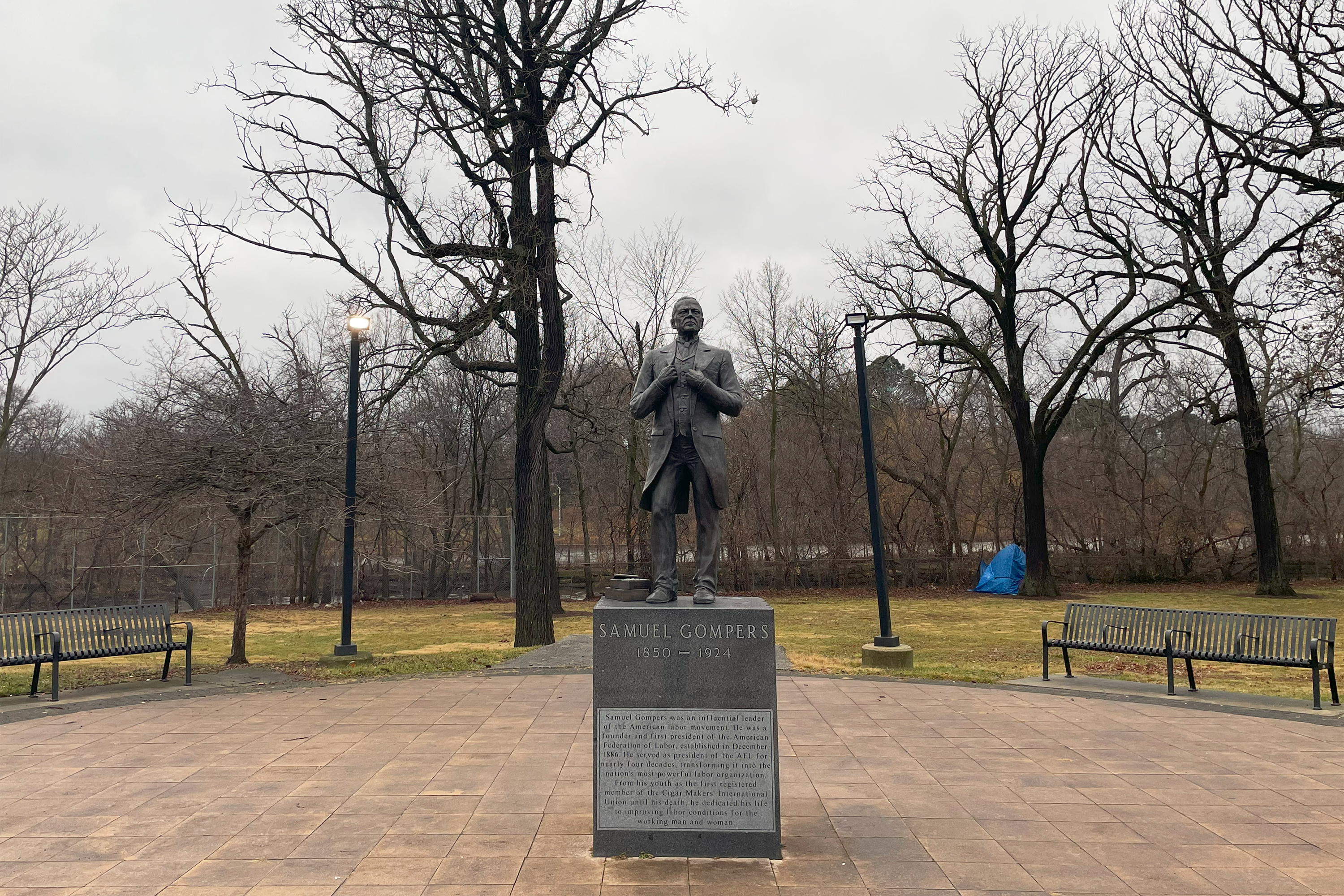
For a man who helped achieve so much, Gompers looks small in statue form, compared to other monuments around the city. Or that’s at least what Curious City listener John Cahill thought. Cahill said he used to pass by the Gompers statue every day on way to work. And he often wondered whether its stature was meant to represent Gompers as an “everyman,” or if there was a different reason for its small size.
To answer Cahill’s question, we did a little digging.
We began by reaching out to the sculptor herself, Susan Clinard. Clinard said that when she was commissioned by Chicago’s 39th Ward to create a statue of Gompers, her instructions were to create a life-sized depiction. And Gompers was about five feet five inches tall — average height for a man of his time in the late 1800s.
So Cahill’s question to Curious City about the statue's height seems to be a matter of perspective. After all, so many statues are larger than life. And perhaps we’ve come to expect that.
Answering Cahill’s question about the statue’s height led us down a rabbit hole into Gompers’ life as a labor leader — and how the commission to build the statue changed the course of Clinard’s career not once, but two times.
A statue to celebrate the work of a labor leader
The Samuel Gompers statue was unveiled in the park that bears his name on Labor Day in 2007. It was greeted by a crowd of jubilant 
Gompers founded the American Federation of Labor (AFL) in 1886 and served as its president for 40 years. It was in this role that he empowered local unions to achieve common goals including higher wages and better working conditions.
Back when she received the commission, earlier in 2007, Clinard was excited. She had recently left a career as a social worker in Chicago providing support for children in the foster care system. But the working conditions and the low pay had worn her down, leading her to embark on a new career as a sculptor. A statue of the labor leader who helped bring about child labor laws seemed like the perfect way to blend Clinard’s passions.
Clinard remembers the day of the unveiling as one of the best such events she’d ever been to. “The celebratory pride of so many unions there on the unveiling day was palpable,” she said.
Gompers’ anti-immigrant past
Clinard held on to that feeling for six years. That’s when she posted a picture of the statue on Facebook for Labor Day. An acquaintance saw it and reached out to Clinard, telling her that Gompers was not the universally beloved labor leader many imagined him to be.
The acquaintance told her Gompers had been prejudiced against immigrant laborers — particularly people of Asian descent. “That was a punch in the gut,” Clinard said.
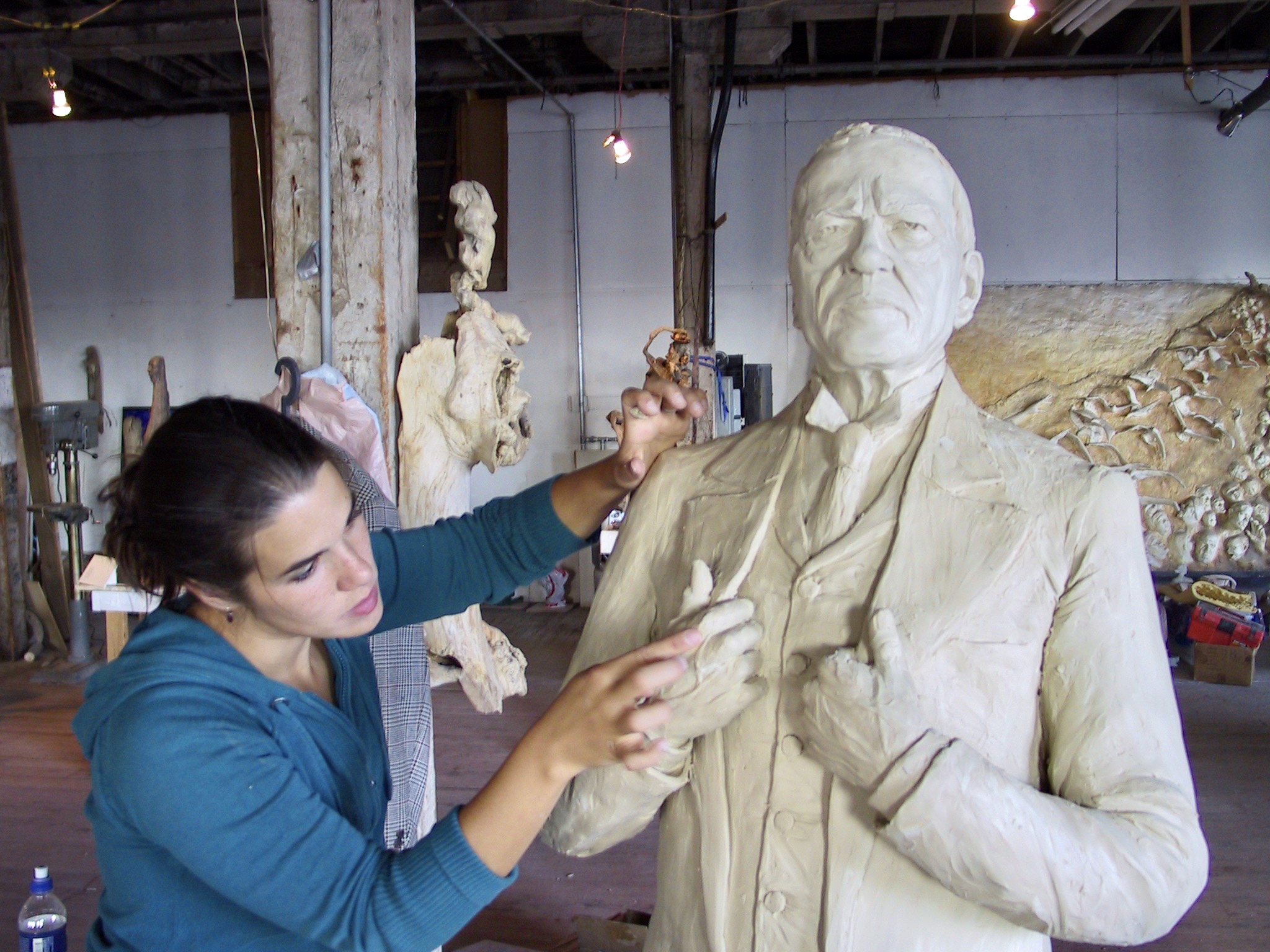
Labor historian Tim Messer-Kruse has written about the impact of Gompers’ efforts as a labor leader. He says Gompers primarily fought on behalf of white skilled laborers.
“He, more than any other single figure in the American labor movement, was responsible for constructing the Jim Crow structure of American unions right up until he died,” Messer-Kruse said. “I mean, he is ... primarily responsible for the fact that the AFL eventually becomes essentially an all white movement.”
Gompers very publicly campaigned against Asian people immigrating to the U.S., even writing a book in which he argued that people of Japanese and Chinese descent were taking away jobs from white workers.
After learning about Gompers’ past, Clinard said she regretted not knowing more about Gompers before taking the commission. “I didn't know that about Gompers,” she said. “I should have known that about Gompers.”
This news changed the way Clinard thought about her work as a sculptor. She decided she would no longer seek commissions of statues to an individual.
Reckoning with the statue of Samuel Gompers
As a society, we’ve been rethinking who we build statues to and why over the last few years. And we’re asking ourselves what we should do with statues like the one of Samuel Gompers that both spark reverence and anger.
One approach is the Chicago Monuments Project, created in 2020 to take a comprehensive look at our public art. In spring of 2022, the committee issued a report listing which pieces warranted attention or action. Samuel Gompers’ statue was not included in their list of problematic monuments.
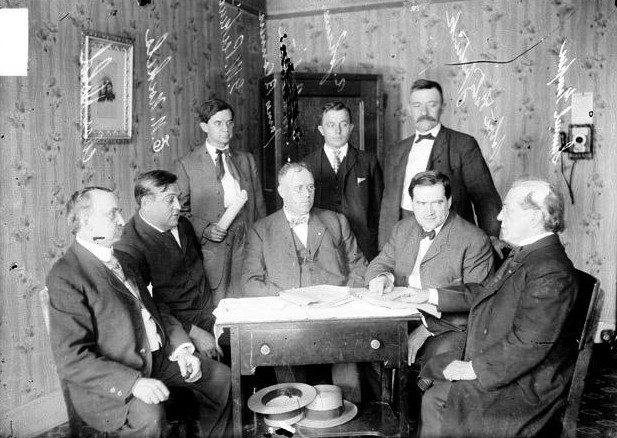
But Messer-Kruse said he didn’t recommend taking the statue down. Instead, he thought updating the statue’s plaque, or erecting an additional monument nearby could help provide additional context. “Maybe we need a statue to A. Philip Randolph, someone who opposed Gompers’ Jim Crow policies and was actively trying to change them,” he said. “[Randolph] was the first labor leader of color to become a member of the AFL-CIO executive board, after a lifetime of struggle.”
Do we need more statues or fewer? Different people recognized or different ways of recognizing them? These are questions artists, activists and city leaders are currently asking themselves and answering in different ways.
Meanwhile, on a corner on Chicago’s Northwest side, one can consider the ways Samuel Gompers improved our working lives as well as the ways he caused harm to those he ignored and ostracized. As the traffic whizzes by and families head to the park to play, they may wonder who the proud man in bronze with two cigar boxes at his feet is, not knowing the complicated answer.
More about our question-asker:
Skokie resident John Cahill used to live right by Gompers Park. Back then, John couldn’t help but take in the scenery - including the Samuel Gompers statue - while waiting for the lights to turn at the busy intersection of Foster and Pulaski.
But John’s interest in Samuel Gompers doesn’t just come out of rush hour boredom. Unions mean a great deal to John. In fact, he was a proud member and delegate for Local 1600 when he worked at Harold Washington College. And he was also briefly a member of local union, University Professionals of Illinois, when working at Northeastern Illinois University.
In a follow-up call we had with John, he was relieved to learn that the Gompers statue was true to the labor leader’s actual height, and not intended to belittle him in any way. However, after discussing Gompers’ more unsavory actions and opinions, John replied, “I feel like now we should maybe make the statue smaller, actually.”
John has lived in Rogers Park, Little Village, Lakeview, Portage Park, the South Loop and East Garfield Park. He says he cherishes this union town and its history.
Samuel Gompers fought for the eight-hour work day and helped create child labor laws. But for all he achieved, he was also fiercely anti-immigrant. We explore Gompers' life, legacy, and the statue built to this complicated man.
Winfield, Illinois resident Elizabeth Stoffel first heard about Swedish egg coffee from a friend.
Ruby, an older Swedish woman she met at church, would share stories with Stoffel about the Swedish Lutheran community she grew up with — and, in particular, a drink they used to make.
“She had lots of memories about this special coffee that she would get little sips of,” said Stoffel. “But because she was a young person, she was never in charge of making it.”
As Ruby’s health declined, Stoffel, who works as a speech pathologist, became one of the only people who could communicate with her. “We would kind of joke about coffee and … she would look at me with this twinkle,” Stoffel said. “And in that twinkle, I knew exactly what she was saying. ‘I want that egg coffee’ — it just became this sweet little string tied between us.”
Hoping to find the coffee drink, Stoffel wrote to Reset, which recently started a project called “Reset Lost and Found” where they send producers to track down things in Chicago that Google can’t uncover. She asked:
What exactly is Swedish egg coffee, and where can I find it in the Chicago area?
To try to answer Stoffel’s question, Reset producer Claire Hyman reached out to just about every Swedish restaurant and church in Chicagoland. But she didn’t have any luck finding a place that served the drink.
Finally, she contacted Patty Rasmussen, chef and co-owner of Tre Kronor, a Scandinavian cafe in North Park, who knew about the drink’s history.
Rasmussen said when Swedish immigrants moved to the Midwest, they brought the recipe for Swedish egg coffee with them. It was a tradition to make a big batch for Lutheran church gatherings. That's why it became known as “church basement coffee.”
So it’s not actually a drink you can find in Sweden. It’s almost exclusively a Swedish-American drink — and a Midwest one in particular.
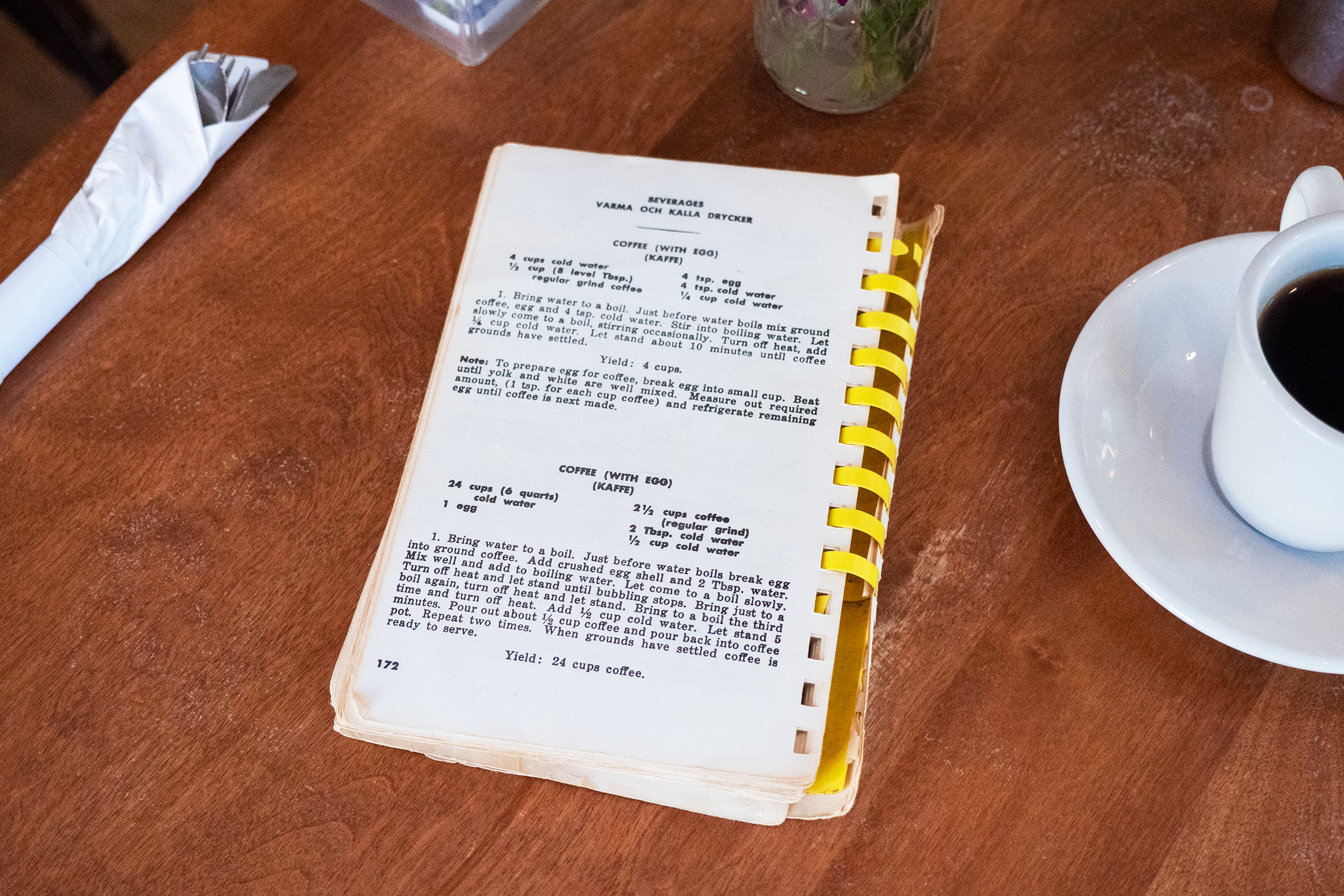
Swedish egg coffee is basically coffee brewed with an egg to cut the bitterness, but there isn’t just one way to make the drink, Rasmussen said. She was given an old Swedish recipe book by a longtime patron of Tre Kronor that included two ways to make it.
“I never knew if it was the entire egg or if it was egg whites, if it was the shells,” she said. “But then, upon asking in more detail, and referencing some church cookbooks, it did vary. Some places put the whole egg in there, some just put the egg whites in, some put the entire egg with the shell in there as well.”
Rasmussen said when she first opened Tre Kronor, people could make requests for dishes or drinks they wanted that weren’t on the menu. “So I think that also prompted a lot of people to ask for the egg coffee,” she explained.
But today, it’s hard to find because there’s not a demand for it anymore, said Rasmussen.
“I think that population has aged, and either forgotten or passed away,” she said. “I don't get too many requests for it anymore.”
Stoffel was happy to get the recipe from Reset, even though she wasn’t able to share it with her friend Ruby, who passed away several years ago.
Still, any time she thinks of Swedish egg coffee, it continues to be a string that ties them together.
Claire Hyman is the digital and engagement producer for Reset.
Curious City is joined by Reset’s Claire Hyman who went on a search for Swedish Egg Coffee in Chicago. Along the way she discovers its history, finds multiple recipes, and enlists a barista to brew up a batch.
The city that works needs places to play. Even before Chicago was a big city, its drinking establishments served as oases for the tired, thirsty and lonely alike.
On April 12, Curious City stopped in at the iconic Carol’s Pub in Uptown for a night of beer, honky-tonk and Chicago bar history.
Our guests for the evening were writer Robert Loerzel — who reported one of our favorite Curious City stories, about the history of Uptown’s nightlife and entertainment scene — and Liz Garibay, founder and executive director of the Chicago Brewseum.
Between a few Chicago Handshakes and Chicago-style hotdogs, here’s what we learned:
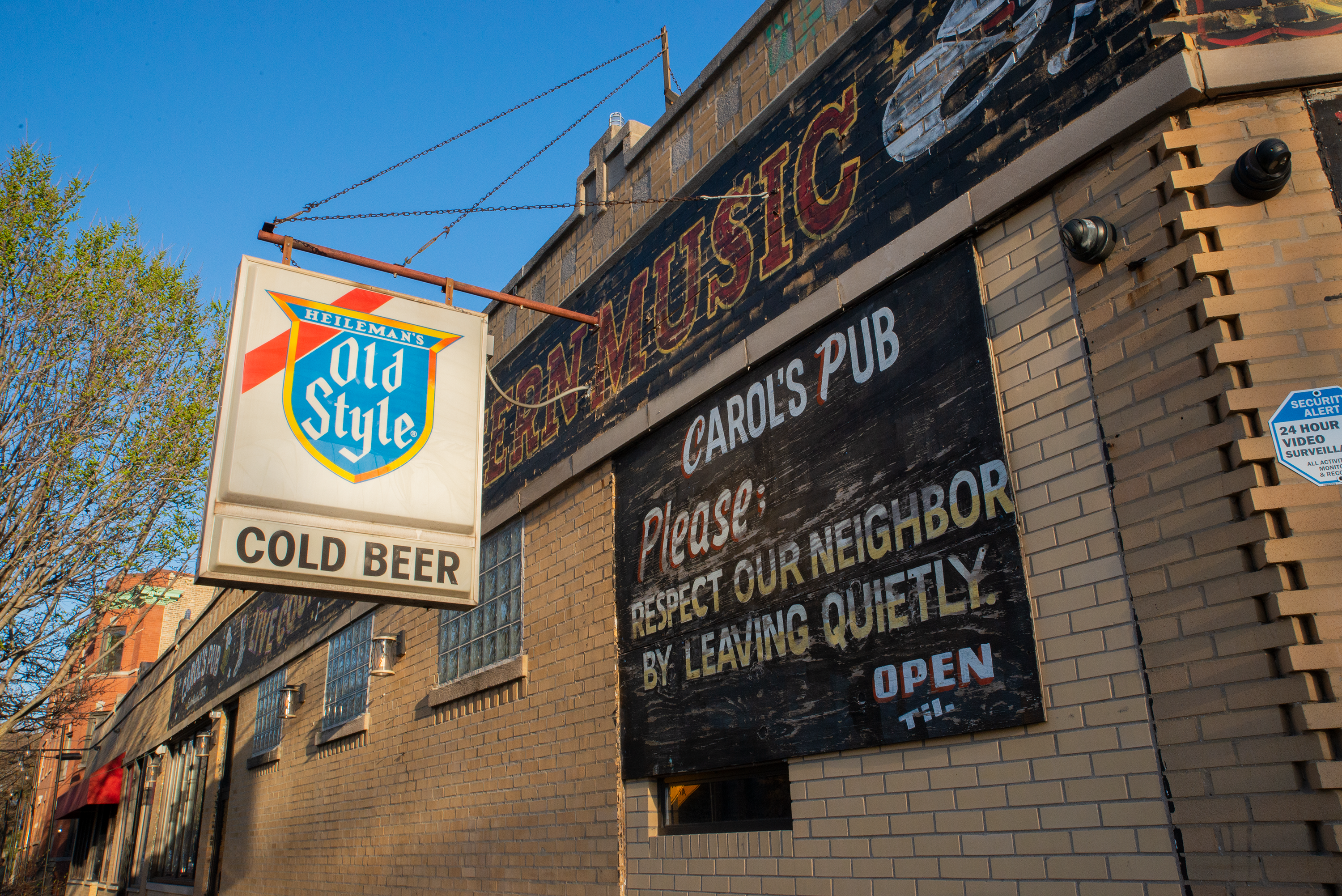
Chicago officially became a city at a bar: That’s right. Back in 1833, people who were decision-makers in Chicago’s nascent years got together to decide what they should do about the growing community around them. Naturally, they went to the Sauganash Tavern, a local saloon, threw back a few whiskeys and got “nice and loopy like a proper Chicagoan about to make an important decision,” Liz said. It was then and there that they voted to turn the village into a township. Four years later, they went back to the same tavern and voted again — this time, to turn the township into a city.
Some of the earliest bars in Uptown were “cemetery saloons”: In the mid-1800s, people left the city to bury their dead at places like Graceland or St. Boniface Cemetery, which at the time were well beyond city limits. It was a bit of a hike, and according to Robert, after a day of mourning, people went looking for a drink. Roadhouses popped up nearby. The most famous one, Robert said, was the Sunnyside — located right on the edge of Graceland Cemetery. According to the Chicago Inter Ocean newspaper, “There were hot words and hard fights” at this particular “cemetery saloon,” as the joints were then known.
The first riot in Chicago was over beer: In the 1840s and ’50s, there were lots of immigrants in Chicago, including Germans, who were involved in the local brewing industry. When Levi Boone, a local politician who was a member of the Know Nothing party, decided to outlaw drinking on Sundays, people weren’t having it. Different immigrant groups came together — even though most of them didn’t speak English — and decided to organize, Liz said. They stormed City Hall and chaos ensued. But the end result was that drinking remained legal on Sundays and “the good guys ended up winning,” Liz said.
A lot of what we know about the history of the Green Mill is wrong: Before it became the Green Mill, Chicago’s famous jazz club was a saloon run by a guy called Charles “Pops” Morse. While lots of books say it opened in 1907, Robert found a building permit for the roadhouse dated 10 years earlier. In those days, it served up corned beef and cabbage to Irish immigrants on their way to Calvary Cemetery, and was also a place where prizefighting boxers trained. But the stories about Al Capone hanging out there in the 1920s may not be true. According to Robert, the Green Mill Gardens, as the bar was then known, was controlled — like most North Side bars at the time — by Capone’s enemies.
Old Style and Malort are a match made in… marketing savvy: When it comes to drinks associated with a particular city, New Orleans has the Sazerac, New York’s got the Manhattan and Chicago has the Chicago Handshake: a shot and a beer as a chaser. But for a long time, any old beer and a shot would do. That’s in part because, though Chicago’s always had plenty of breweries, the city never really had a national beer brand in the way places like Milwaukee or St. Louis did. “We were drinking all our beer,” Liz said, “so there was never really a need to export.” Eventually, the companies that make Malort and Old Style decided to lay claim to the Chicago Handshake. But that was nothing more than good old-fashioned “marketing savvy,” Liz said — cashing in on something that was already well established as Chicago’s drink.
When it comes to drinking buddies, our needs are simple: We put out a survey during the event asking people what they most look for in a friend to go out drinking with. Just about 40 people responded, and it turns out things like being an extrovert or having the ability to drink a lot weren’t top priorities. The most important attribute? Always being available. Cheers to that.
Courthouse weddings have a lot going for them: They can be less stressful and less costly, take place in a smaller and more intimate setting, and are often steps away from great photo ops in historic locations.
In movies, courthouses are often elegant places with white columns, carved archways and light streaming in across marble floors and wooden benches.
We spent a day at Marriage and Civil Union Court in downtown Chicago to meet couples getting married.
Reporter Araceli Gómez-Aldana spent the day in Marriage and Civil Union Court in downtown Chicago, where she met all kinds of couples who were there to say “I do” and a clerk that’s helped thousands of couples tie the knot over the last 50 years. She’s seen it all, including brides left at the altar at the last minute, and Chicagoans lining up for hours to wed on the same day as Prince Charles and Princess Diana.
The Avalon Regal Theater is a Chicago architectural gem built in the 1920s in the South Shore neighborhood. This 100-year-old building was a center of culture and entertainment for many years but fell on hard times due to low attendance rates and expensive renovations.
The theater has been closed since 2003. Its most recent owner, Jerald Gary, has been trying to revive it since he bought it in 2014. But it’s been an uphill battle.
Gary has faced a number of financial roadblocks tied to the building’s expensive repair and maintenance costs. He also fell behind Cook County property taxes and had until the end of March to pay more than $600,000 in delinquent taxes to avoid losing the theater to the Cook County Land Bank Authority (CCLBA), an agency that acquires vacant and abandoned properties.
But Gary isn’t giving up the fight.
In February, he paid a deposit of more than $350,000 of the back taxes owed, enough to keep his dreams for the building alive for now. This was part of a strategy in which he argued in the circuit court of Cook County that the property’s delinquent taxes were improperly sold to the CCLBA under the Illinois statute, according to court documents obtained by Curious City.
He says he now has support from an investment group called OASIS, which focuses on investing in Black communities across the U.S. often ignored by traditional financiers.
In a statement to Curious City, the CCLBA told Curious City that it no longer has plans to acquire the Avalon Regal Theater. “Subsequent to CCLBA receiving the certificates of purchase, the owner redeemed the delinquent taxes under protest,” said Jessica Tcholakov, a spokesperson representing the agency. “... [W]e will be submitting dismissal orders.”
But Gary’s quest to reopen the theater doesn’t end there. He still has an outstanding property tax balance. He says he’s looking for ways to pay and reduce that tax liability.
Gary also says he is securing additional financial backing to rehab the theater and get the required city permits. He estimates that it will cost about $3.5 million to do the construction work necessary to get a certificate of occupancy with the city of Chicago. To cover some of that cost, he’s applied for city grants. Though he’s been denied in the past, he is hoping that city officials will be more supportive this time around.
“I'm here to stay, not going anywhere,” Gary said. “And I'm here to make sure that the building becomes available to the community, both in terms of its service as a venue as well as an investment vehicle.”
Adriana Cardona-Maguigad is Curious City’s reporter. Follow her @AdrianaCardMag.
Chicagoans live in two-flats, three-flats, bungalows and skyscrapers. And hundreds of households live in Chicago’s only trailer park, Harbor Point Estates. Beyond the city’s borders, there’s another 18,000 mobile homes in our metro area. Reporter Linda Lutton answers a question about what life is like in Chicagoland mobile home communities, as told by residents themselves.
Chicago has a vibrant drag scene. On any day of the week you can catch drag performances at venues across the city: Clubs like Roscoe’s, Berlin and La Cueva all host popular evening events, and the Walnut Room and Furama are just two venues that host some of the city’s celebrated drag brunches.
The history of drag in Chicago is known to go all the way back to the late 1890s, at gathering places like Dill Pickle Club and political fundraisers for the city’s 1st Ward.
To understand how the city’s drag scene has evolved since then, we spoke with James and Kurt Conley, two of the curators behind Gerber/Hart's 2018 exhibit The City That Werqs: A History of Chicago's Drag Revolutionaries. We also spoke with two current drag performers in Chicago, Miss Toto and Abhijeet, about how that legacy is carried on today.
James and Kurt Conley say there are a few things that have set the Chicago drag scene apart from the very beginning.
One is the diversity of the scene. Not just in terms of the performers, but also who came to see them. “From the very early days, you have people from all different walks of life, and they all wanted to celebrate together,” says James Conley.
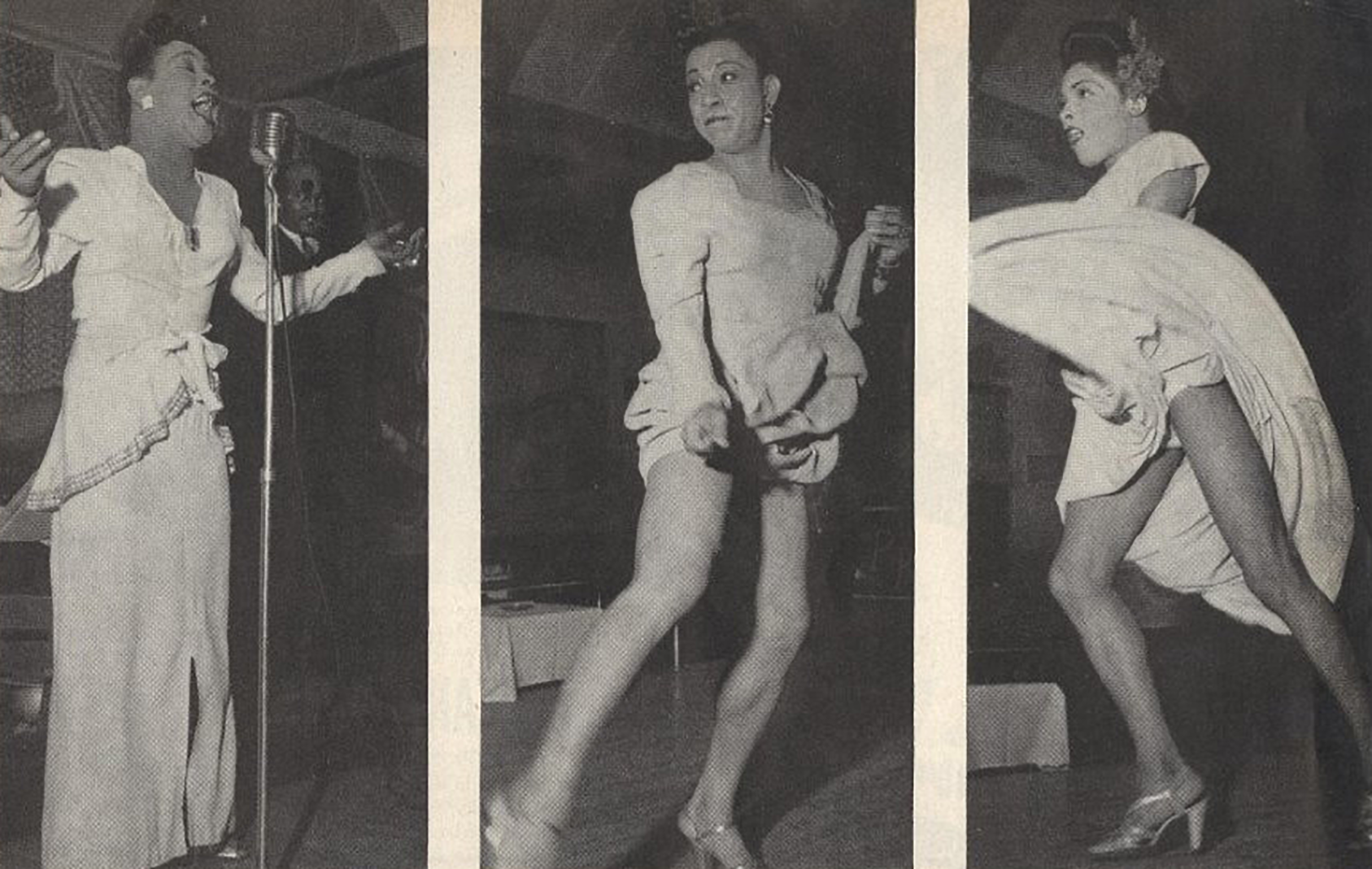
Another factor that makes Chicago unique is that "in New York you’ve always had a more theatrical drag scene that really persists today,” James Conley explains. “You have people kind of DIY-ing it here.”
And third, there's the sheer variety and abundance of types of performances happening in the city — from the racial, ethnic and gender identities of the performers to the styles of drag they perform.
“I've been in a lot of different drag scenes, but nothing that I've seen compares to Chicago as far as the amount of entertainers that we have and the diversity that we have,” Miss Toto says. “You can get a drag king, drag queen, anything in between.”
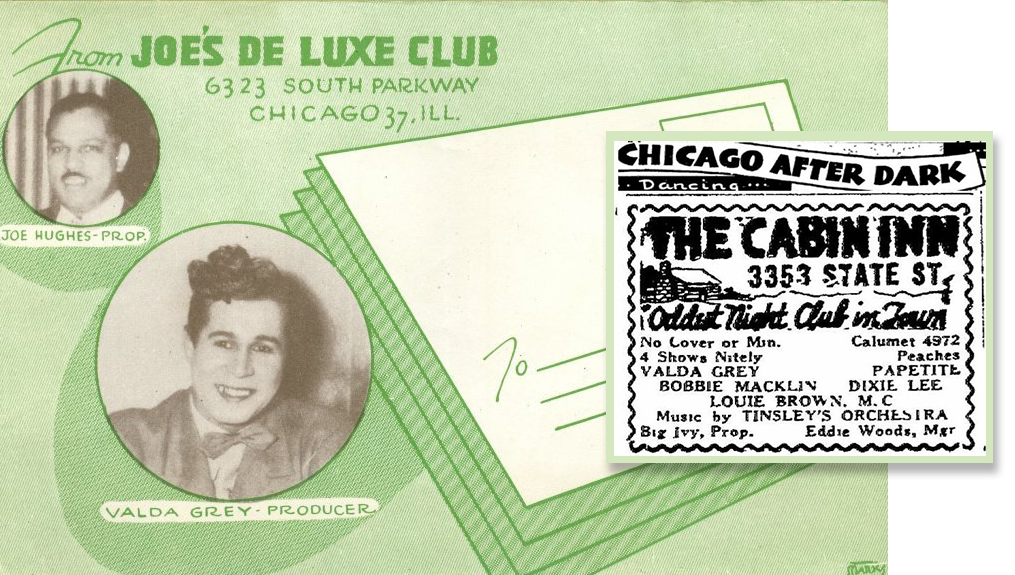
To understand more about the role drag performers have played in Chicago, we took a look back at several different eras of drag in the city — in particular, the 1960s and ’70s, when the art form was becoming more popular in the early days of gay liberation. During those decades, people built upon a long history of queer folks creating safe spaces where they could experiment with drag — especially at discotheques, which in those years provided havens for drag to flourish.
1890s-1950s
From the 1890s through the 1950s, Chicago saw the birth of a burgeoning drag scene that attracted people of different backgrounds, both on the North and South Sides.
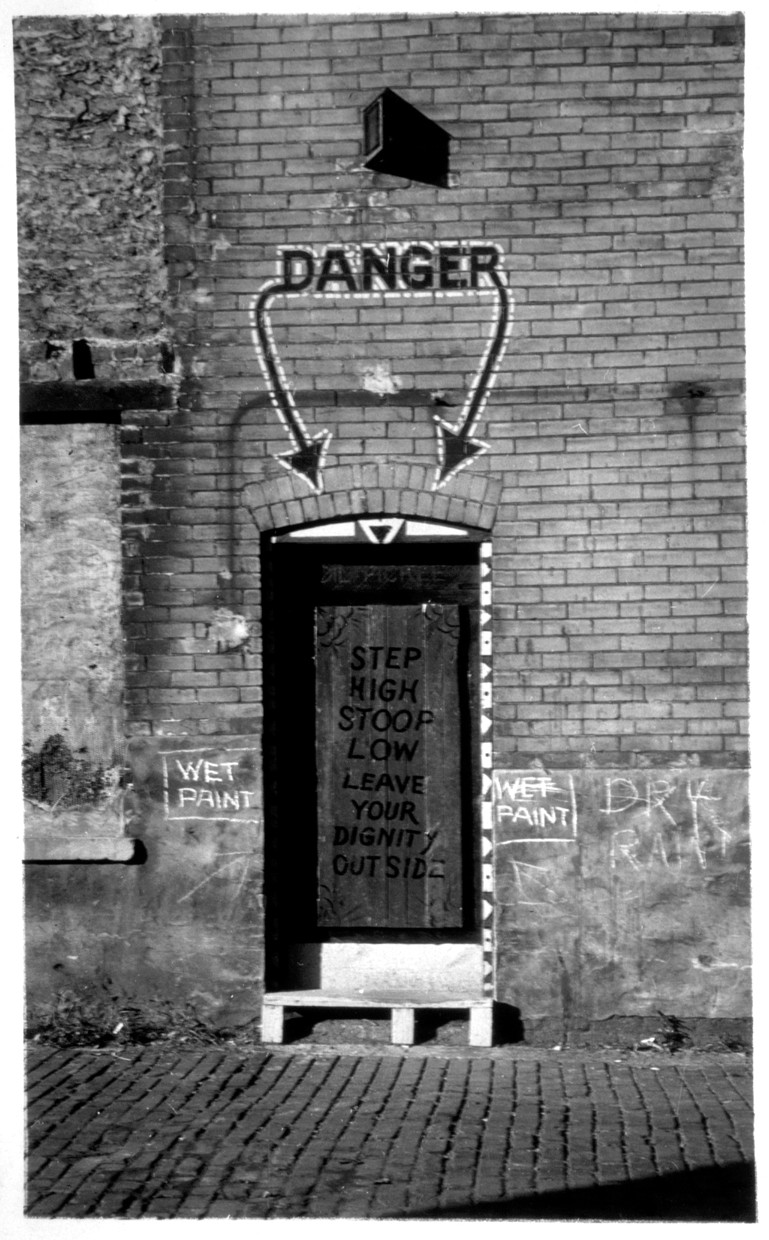
In the wake of the 1893 Columbian Exposition, many queer people gathered in bookstores and speakeasies — the most famous being The Dill Pickle Club, in today’s Near North Side. “It's where the vaudevillian performers hung out, the drag performers hung out, lots of queer folks, the bohemians and the communists. So it was a safe haven for all the outcasts to come and drink and share ideas,” says James Conley.
At the same time, two aldermen began a tradition of throwing political fundraisers in the form of debaucherous parties. “They were lambasted for being these Dionysian bacchanals,” says Kurt Conley.
According to Lloyd Wendy and Herman Kogan’s book Lords of the Levee: The Story of Bathhouse John and Hinky Dink, this annual event was known as the First Ward Ball. The events brought revelers from across the city.
By the 1930s, as white queer people flocked to North Side gay bars, the Black queer community cultivated its own nightlife on the south side, particularly in Bronzeville, according to Allen Drexel’s chapter “Before Paris Burned” in the book Creating a Place for Ourselves: Lesbian, Gay, and Bisexual Community Histories.
This gave rise to gay cabarets like Club DeLisa and The “Cozy” Cabin Inn, where the main events were often drag balls, which were hugely important for queer people of color in cities including Chicago.
One of the most famous of the balls on the South Side — Finnie’s Ball, named after founder Alfred Finnie — could draw crowds of up to 1,000 people. It took place in venues across the South Side, according to Drexel.
The disco era: 1960s-’70s
During this era, the queer community fought hard to gain some very basic rights, like the freedom to dance with someone of the same gender. At the same time, disco music was becoming all the rage. The combination of the four-on-the-floor beats and emerging gay liberation set the stage for a lot of creative expression. But the drag scene remained mostly out of the public eye because the practice was still criminalized according to laws that prohibited “wearing clothing of the opposite sex.” Drag performers were often a lightning rod for the dangers faced by queer folks during this period. But that didn’t stop them.
Beginning in the 1960s a number of gay bars featuring drag performers opened around Clark and Diversey. One of the more famous was Club Chesterfield, which incubated a new generation of Chicago drag performers. “They would have these events called turnabout nights, where the bartenders would perform in drag and the drag performers would tend bar,” says James Conley.
One of the most famous performers at Club Chesterfield was Miss Tillie, who was known as “The Dirty Old Lady.” In the Gerber/Hart Library and Archive’s photo collection, Miss Tillie can be seen wearing towering wigs, long, glamorous dresses, chandelier earrings and huge glittering necklaces. But what earned her the title of “The Dirty Old Lady” were her raunchy jokes and flirtatious personality.
Another iconic drag performer at Club Chesterfield was Roby Landers. Conley says Roby brought an outsized personality to the stage, a style that drag performers in the coming years and decades emulated. “Big, big personality,” James Conley says of Landers, “A lot of comedy. And as [Baton Show Lounge owner] Jim Flint says, you don’t mess with her.” Landers went on to open a well-known drag bar called House of Landers.
Throughout the 1960s Chicago drag became easier to find, and many performers became more widely known. But, as Chicago's gay population grew more visible, there was backlash. Gay bars were subject to countless police raids, where many drag performers were arrested again and again.
“The sad reality was that I think people knew that if you go into a gay bar, the likelihood that you’re going to be arrested is high — especially if there’s drag performance, especially if there’s anything loud going on, because you’re attracting attention to yourself,” explains James Conley. “There’s a quote we have from Chuck Renslow, who says, ‘The raids in those days were terrible. They always used to say, when you go in a gay bar, stand by the door so you get a seat in the paddywagon.’”
That’s why little is known about the personal lives of most performers — including Miss Tille and Roby Landers. So-called “cross-dressing” laws were still in effect during this period. And newspapers at the time would print the names of those arrested in raids, leading many to lose their jobs and be ostracized by their families.
But in 1970 restrictions against same-sex couples dancing were lifted, which led to fewer raids on spaces like gay discos where drag performances were also happening.
One of the most popular of these places was Dugan’s Bistro, which opened in 1973 at 420 N. Dearborn. (Ironically, it was located across the street from a police station.) Some came to the venue because of the DJ, Lou DeVito, who spun everything from Diana Ross to Donna Summer, Viola Wills to the Isley Brothers. And many Bistro patrons came to see the discotheque’s resident drag performer: the Bearded Lady, an icon of Chicago’s disco scene in the 1970s.
"The Bearded Lady was this symbol of the metamorphosis of the community, of people shedding things and becoming their truer self, and just being okay with that," says historian Owen Keehnen. "Just the celebratory, outrageous, love yourself vibe of it. And the Bearded Lady did that for years and was enormously popular."
But Dugan’s, like other gay discos on the North Side, was not welcoming to everyone. The venue used unwritten door policies — like requiring multiple IDs — to limit the number of Black people who were allowed in at any one time, those who were around at the time recall.
It wasn’t until 1978 that the cross-dressing ban under the public morals law was officially removed from Chicago’s municipal code. But this win was overshadowed quickly by a redevelopment project that forced many gay bars to close on the Near North Side in the early ’80s. Plus, there was an even more destructive force on the horizon: the AIDS epidemic.
1980s-today
As the AIDS epidemic devastated the queer community in Chicago in the 1980s, it impacted drag performers in multiple ways.
“You see a lot of drag performers as real social activists in this period of time,” says James Conley.
Other artists, like legendary performer JoJo Baby, who passed away this year, experimented with avant-garde costumes that were purposefully unsexy, in direct response to the AIDS crisis.
The 1980s also put Chicago centerstage as the birthplace of a major drag competition. The Miss Continental pageant, one of the most prestigious drag pageants in the US, was started in Chicago in 1980 by Jim Flint. After witnessing discrimination against performers who took hormones or had surgical enhancements at the Miss Gay America pageant, he sought to create his own pageant that would be an inclusive space for all female impersonators (as they are known at the pageant), according to Tracy Baim and Owen Keehnen’s book Jim Flint: The Boy from Peoria.
So much has changed in Chicago since the 1960s that today the official tourism website for Chicago promotes a variety of drag shows as some of the city’s top entertainment options.
But just because Chicago drag has earned mainstream recognition doesn’t mean it’s lost its connection to the creativity and radicality that defined earlier eras.
Today, events like Lucy Stoole’s Fabitat and Black Girl Magic featuring The Vixen and Shea Couleé are intentional responses to the history of racism at Northalsted venues, James Conley says, which in some cases persists today.
And in some cases, those same performers that helped shape earlier movements in the Chicago drag scene are still active today.
“There's so many historic drag performers that are currently still working and have been working for 30, 40 years, like Chilli Pepper, who's the first ever Miss Continental, is still working every week at the Baton Lounge,” says Abhijeet, a drag queen and nightlife producer in the city. “So I don't think Chicago drag history is something to ever look at as the past. It's a living history. It's there. Someone like JoJo Baby, who just very recently passed away, was a living legend. And I think that’s what gets lost a lot when we're talking about drag history.”
Many performers say the sense of community in the scene is stronger than ever.
“It went from drag just being an art form and self-expression, but it's become so much more than that. It’s become people's livelihoods,” says Miss Toto. “It's literally your family. I don't have any family in Chicago. The people that I spend my days in and days out with, the queer people that I surround myself with, are my family.”
But Miss Toto says that it’s important to appreciate where it all began.
“I feel like a lot of people do not know the history, or care to learn about the history, of the people that created this scene,” she says. “It’s important to understand why nightlife is important, why queer nightlife is important, who the people are that helped build this or create this, so you just understand where you come from and why these spaces exist that you're partaking in.”
More about our question-asker
Uptown resident Bizzy Stephenson moved to Chicago last year. She’s the lead singer of a five-piece disco and funk band called Superfloss (whose cover of “You Should Be Dancing” by the Bee Gees is featured in the podcast episode linked at the top of this story!).
“That album was life-giving when I was in my room alone, in May 2020, literally by myself in my bedroom, jumping up and down to ‘Levitating,’” Bizzy said. “And she just really, I think, captured something in that album that I hadn't heard in a long time.”
Bizzy’s fascination with the Chicago disco scene in the 1970s led her to ask Curious City a question about what that scene was like and why it faded away. That question is answered in the podcast episode linked at the top of this page, and inspired this web story focused on the role of drag performers in that scene and beyond.
Many thanks to the curators and archivists at Gerber/Hart Library and Archives, without whom this story would not have been possible.
Additional reporting came from Maggie Sivit, Curious City’s digital and engagement producer.
JP Swenson is the former Luminary Podcast Fellow with Curious City and current interim producer for Nerdette. Follow him @jp\_swenson.
Marie Mendoza is WBEZ’s Podcast fellow. Follow her @marieannmendoza.
Chicago historian Paul Durica shares famous ruses, hoaxes and stunts pulled by (and on) local media.
How disco evolved in Chicago in the 1970s in two distinct ways: On the near north side as part of the city’s emerging Queer nightlife scene. And on the southside in warehouses, underground clubs, and even in Catholic schools where it laid the foundation for house music.
Unlike many states in the Midwest, including Michigan, Wisconsin and Iowa, Illinois doesn’t have any federally recognized tribal lands. Yet all around the state, in the names of cities, rivers, streets and sports teams, there are reminders that we are living on land where Native Americans once farmed, traded and made their home.
By the time Europeans first explored the region in 1673, Native Americans had long been settled in villages all around the area.
So why aren’t there any federal Indian reservations in Illinois? (The term federal Indian reservation is used by the U.S. Department of the Interior.)
The answer requires a look back at the region’s history from the late 1700s through the 1830s — a period marked by armed conflicts, numerous treaty negotiations often made under pressure and through coercive tactics, attempts by Native American leaders to reclaim their lands and a series of policies enacted by a U.S. government determined to push out Native peoples. Read the full story, here.
Unlike many states in the Midwest, including Michigan, Wisconsin and Iowa, Illinois doesn’t have any federally recognized Indian reservations. Yet all around the state, in the names of cities, rivers, streets and sports teams, there are reminders that we are living on land where Native Americans once farmed, traded and made their home. So why doesn’t Illinois have any reservations? The answer requires a look back at the region’s history beginning in the 1700s.
Tesnim Hassan has lived in the Chicago area for about 10 years. But she’s originally from Los Angeles.
Back in L.A, she grew up in Leimert Park, a diverse neighborhood home to immigrants from all over the world. Hassan, who is African American, enjoys connecting with Black immigrants from Africa and the Caribbean, particularly Jamaica. She loves Jamaican culture, the music and cuisine, including its tasty jerk sauce – a mix of savory, sweet and spicy flavors that complement all kinds of grilled meats.
In Chicago, she has made friends with Caribbean immigrants, some of them Jamaican. And she has also found a ton of Jamaican jerk restaurant options – way more than she ever did in L.A.
During her commute to work, Hassan can easily drive by about 30 jerk chicken places, “No exaggerating,” she said.
That led her to ask Curious City: Why are there so many jerk restaurants in Chicago? And she wonders if there’s a big enough Jamaican community to justify all of these spots.
There are several layers to that answer. The simple one: Many Chicagoans love jerk, and its popularity has created a demand for more restaurants. A quick search on Yelp revealed 218 jerk restaurants in Chicagoland, and that doesn’t even include food stands and restaurants that offer jerk options.
Hassan is right. The Jamaican population in the Chicago area isn’t huge.
Recent census data indicates that about 20,000 Jamaicans were living in the Chicago metropolitan area in 2021 – about the same size as L.A. but significantly less than other metro areas like New York and Miami. But even though the Jamaican population is relatively small, Jamaicans in Chicago have made a mark culturally and socially on the city. Jamaican food, including jerk, may be the most visible one, but it's certainly not the only one.
Jamaicans influence in Chicago goes beyond food
Since the turn of the twentieth century Jamaican migration to the U.S. and Chicago has been influenced by a search for livable wages and new opportunities.
During World War II, U.S. companies were heavily recruiting thousands of agricultural, domestic and health care workers from the Caribbean including Jamaica, according to the Migration Policy Institute. In the 1950 and 60s some of that migration was also influenced by Jamaicans seeking higher education in Chicago and other parts of the country. Many sought engineering degrees or pursued nursing jobs.
Jamaica gained its independence from Britain in 1962. Soon after, U.S. immigration reforms like the Hart-Celler Act of 1965 opened the doors for Caribbean immigrants, many of whom chose Chicago as their home. The Hart Celler Act put an end to long-standing immigration policy that favored those from northern and western Europe.
Some experts believe Jamaicans in Chicago have electrified the local Black community.
“Through reggae, through music, through Bob Marley, through rastafarianism, through food,” said Erik S. McDuffie, associate professor in the Department of African American Studies at the University of Illinois at Urbana-Champaign. “The pride of the people is infectious.”
McDuffie said leaders like Marcus Garvey, co-founder of the Universal Negro Improvement Association (UNIA), played a key role in the empowerment of Black people across the world and the U.S., including in Chicago.
“The Midwest, Chicago in particular, was a hotspot of Garveyism during the early ’20s,” said McDuffie, adding that Garveyism laid the foundation for numerous Black power movements.
Chef Mark Johnson’s recipe for jerk
Mark Johnson, also known as Belly, is one of the many proud Jamaicans living on Chicago’s South Side.
He’s been running a food business called Belly Up for two decades. He caters during the winter and in warmer months he sets up his grill by a local South Side beach. This summer he plans to set up shop by the 57th Street Beach.
“When I came to America, I couldn't find nothing fit to my taste buds,” Johnson said. ”And that's when I really started cooking for myself. Just like I was raised.” He soon started sharing his dishes with friends and neighbors. “I gave people a sample and everybody go crazy about it."
His Jamaican-style dishes include jerk chicken, jerk lamb chops, curry chicken, yellow and white rice, red snapper and fried plantains.
He starts by making the authentic jerk sauce using fresh herbs like ginger, garlic, pimento seeds, thyme, scotch bonnet peppers and garlic – never the powdered spices.
Then, he says the secret to the best dishes is how long you marinate the meat, how fresh the sauce is and the way you grill it. In Jamaica, people use pimento wood which gives the meat a smoky flavor.
But Belly said there is also one more essential ingredient, the music.
“So the music and the food just go perfect together,” Johnson said. “Good music, good food, you can't beat that."
Adriana Cardona-Maguigad is a WBEZ reporter. Follow her on Twitter @WBEZCuriousCity and @AdrianaCardMag.
Even though the Jamaican population in Chicago is relatively small, the city is flush with restaurants serving jerk-style foods. Why are there so many? And what is authentic jerk cuisine?
When then-middle school student Julia Florek Carlson went on a family visit to the Hull House museum searching for an idea for a history fair project, she came across a “little tiny exhibit in the corner,” she said. It was about a long-time Hull House resident named Alice Hamilton.
And she thought, “Who?”
There wasn’t very much information about Hamilton — a bit about her being a pioneer in the field of science and disease — just enough to get Julia intrigued.
So she asked Curious City: Who was Alice Hamilton and what was her impact on Chicago and the country?
It’s a big question because Alice Hamilton, who lived to 101, led no small life.
Click here to read the full story.
Scientist Alice Hamilton’s investigations into toxins in Chicago’s factories led to some of the first workplace safety laws in the country. She was known for her “shoe leather” epidemiology, wearing out the soles of her shoes from all the trips she made to Chicago homes, factories and even saloons to figure out what was making people sick. Reporter Edie Rubinowitz has her story.
You’re likely familiar with the city’s most famous families — the Palmers, the Fields and the McCormicks — whose wealth and influence made their mark on Chicago.
But one Curious City listener wanted to know about some of the “everyday families” that have lived in Chicago continuously, for generation after generation. Families who shaped — and were shaped by — this city.
That’s what led us to the Atkinsons and the Bernsteins.
These two families made their homes on Chicago’s South Side starting in the 19th century.
Though they come from different places — one, a family of Eastern European Jewish migrants; the other, one of the earliest Black families to arrive in Chicago — and their descendants have never met, their stories cut across Chicago history and intersect in surprising ways. Members of these two families were deeply intertwined with the history of Chicago's abolitionist movement, film and entertainment scene, transportation industry and foundational religious institutions. And both were impacted, in different ways, by discriminatory housing practices in the mid-20th century.
They show us, through the separate threads of their stories, that every family history is at once a history of the place that they call home.
The Atkinsons: The 13th Black family to settle in Chicago
The Atkinsons were just the 13th Black family to settle in Chicago when Isaac and his wife, Emma Jane, arrived in 1847 from Virginia. Their great granddaughter Michele Madison is the last remaining keeper of the family history. She gave Curious City a glimpse into 180 years of the Atkinsons in Chicago.
Emma Jane Atkinson was part of the “Big Four” — a group of abolitionist women who helped run the Underground Railroad out of Quinn Chapel AME Church, the first Black congregation in Chicago. Black people seeking freedom in northern cities like Chicago could be arrested and sent back into bondage because of the Fugitive Slave Act. Born of free parentage, Emma Jane had some degree of protection from arrest, and this allowed her to help countless others find shelter and safety through her work.
Isaac, who was half Scottish and half Cherokee, founded his own transportation company. It was a system of horse drawn long carriages, called omnibuses, that picked up passengers and took them along the muddy, unpaved roads of 19th century Chicago. Isaac used his financial success to purchase 20 plots for the Atkinsons in Graceland Cemetary, which helped further establish Atkinson roots in Chicago and placed them alongside some of the city’s most prestigious families.
The Atkinsons threw parties and did business with other Black families who had also moved to Chicago during the mid-19th century, and eventually an exclusive society started to form. By 1904, the families formalized this network and called it the “Old Settlers Social Club.”
This club was made up of about 3,500 families whose members included businessmen, politicians and working class craftsmen. The only way to become a member was to be a part of a Black family that had been in Chicago for at least 30 years. One prominent member was Michele’s Uncle Petie, who took great care in maintaining the Atkinson family reputation within the community. Michele says he made sure that she and her older sister Grace knew how to present themselves in public.
“My sister was actually presented to society, when there was such thing as a Negro society to which to be presented. So she came out at 16,” Michele recalls. “Back in the day, people would introduce you to other families, and try to see who was marriageable in one family to another family, very old school.”
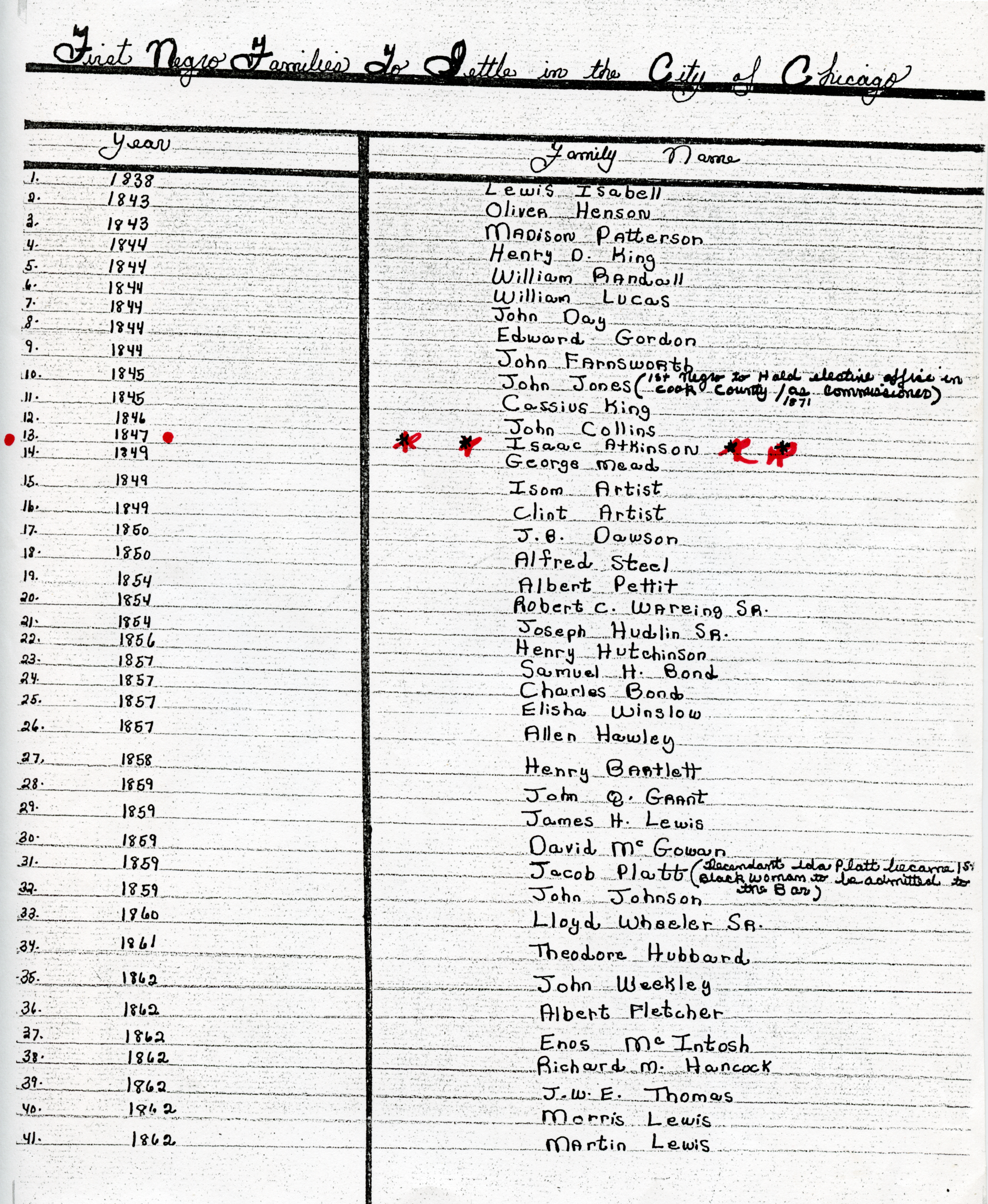
Michele was six when she moved into the family’s new home in Woodlawn, where she lives to this day.
“I love it here,” she says. “I come down that street and my car, and I smile. … If you come in the summer, there's flowers on the porch, and my catalpa trees have grown. And it just makes me feel, wow, that's home. This is home to me.”
Michele plans to donate her home to a local organization that runs Community Integrated Living Arrangements, or CILA homes, for young women with intellectual disabilities. So even though there won’t be Atkinsons living there, the importance of this house in Woodlawn will live on.
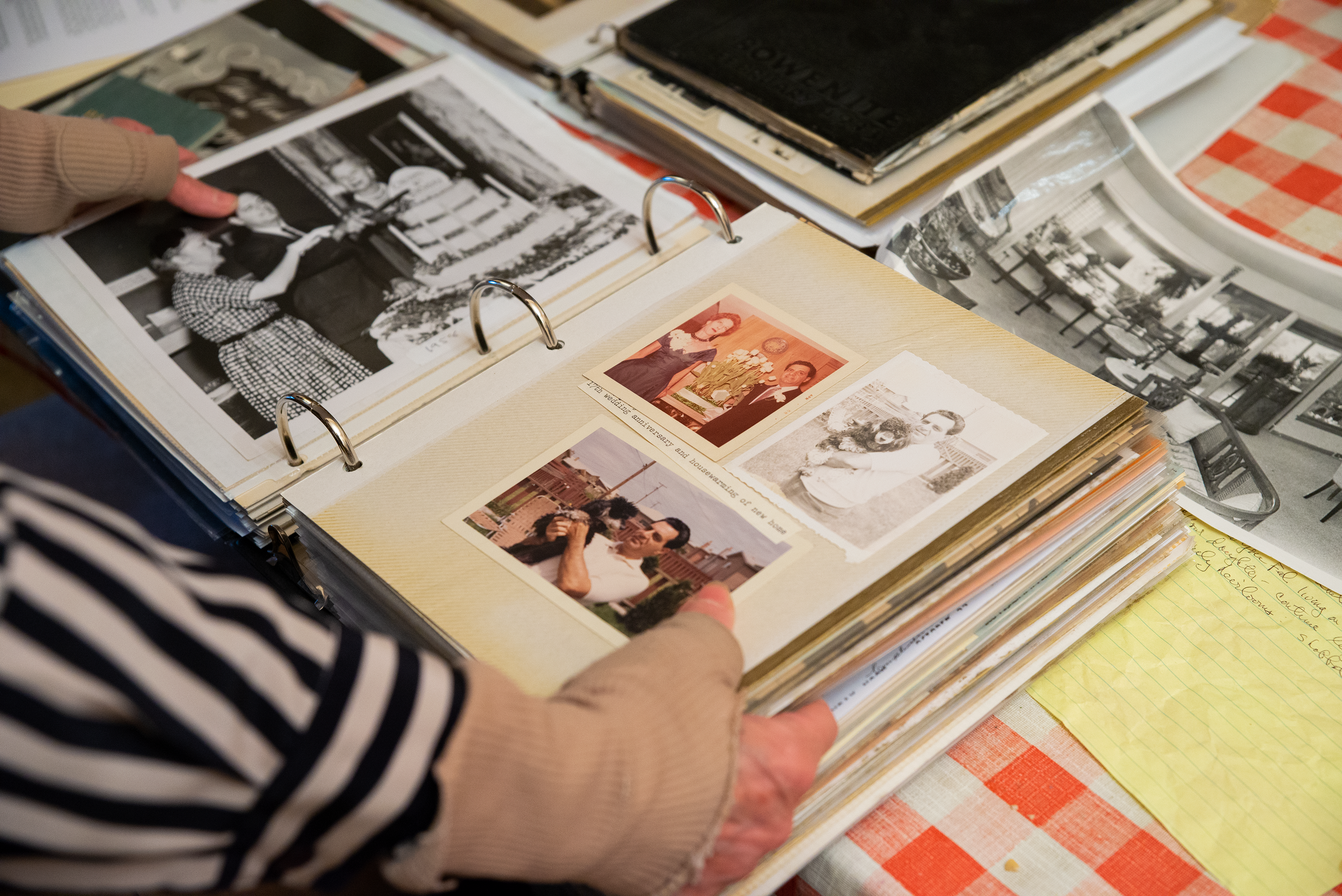
The Bernsteins: Early Jewish migrants to the Southeast Side
Nathan and Nettie Bernstein arrived in South Chicago in 1888 from Marijampolė, Lithuania. Like many Eastern European Jewish families at the time, they moved to escape antisemitism and to find economic opportunity in the U.S.
Nathan and Nettie’s grandson Chuck, his wife Roberta (Lesner) Bernstein and their son Aryeh, were our guides for this family’s story of six generations of Jewish life in Chicago. They explained that Nathan’s first job here was selling dry goods, and that he was an early active member of the very first Jewish congregation on the Southeast Side, called Bikur Cholim.
In their Hyde Park living room, Roberta opened up a big album, stuffed full of newspaper clippings and photos of her father alongside some of the biggest names in entertainment at the time: Sidney Poitier, Julie Andrews, Alfred Hitchcock and many more.
“As a result of [his work in the entertainment scene], his world was much more integrated than the worlds of almost anybody else in 1950s America,” Aryeh says.
In the 1960s, not long after Sam moved the family to the Southeast Side neighborhood known as Pill Hill, he started getting calls from realtors telling him to sell their home. Thousands of Black families seeking a better life were moving from more rural areas in the American South to northern cities, and real estate developers were working to profit off of this demographic change.
Aryeh says his grandfather would get calls pressuring him to sell late into the night.
“‘Another one moved on to the block, Lesner, you better sell now,” Aryeh recounts the callers saying. “‘I'll give you cash for your house. Now, if you don't go now you're gonna lose everything.’”
Developers would buy these homes from white families willing to sell and rent them to Black families without investing in the upkeep of the houses. And due to a combination of banks denying mortgages and a G.I. Bill that excluded Black veterans from low cost mortgages and low interest loans, most of those Black families were unable to buy those houses. But even against all of these aggressive calls to sell, Sam kept his family firmly planted in Pill Hill.
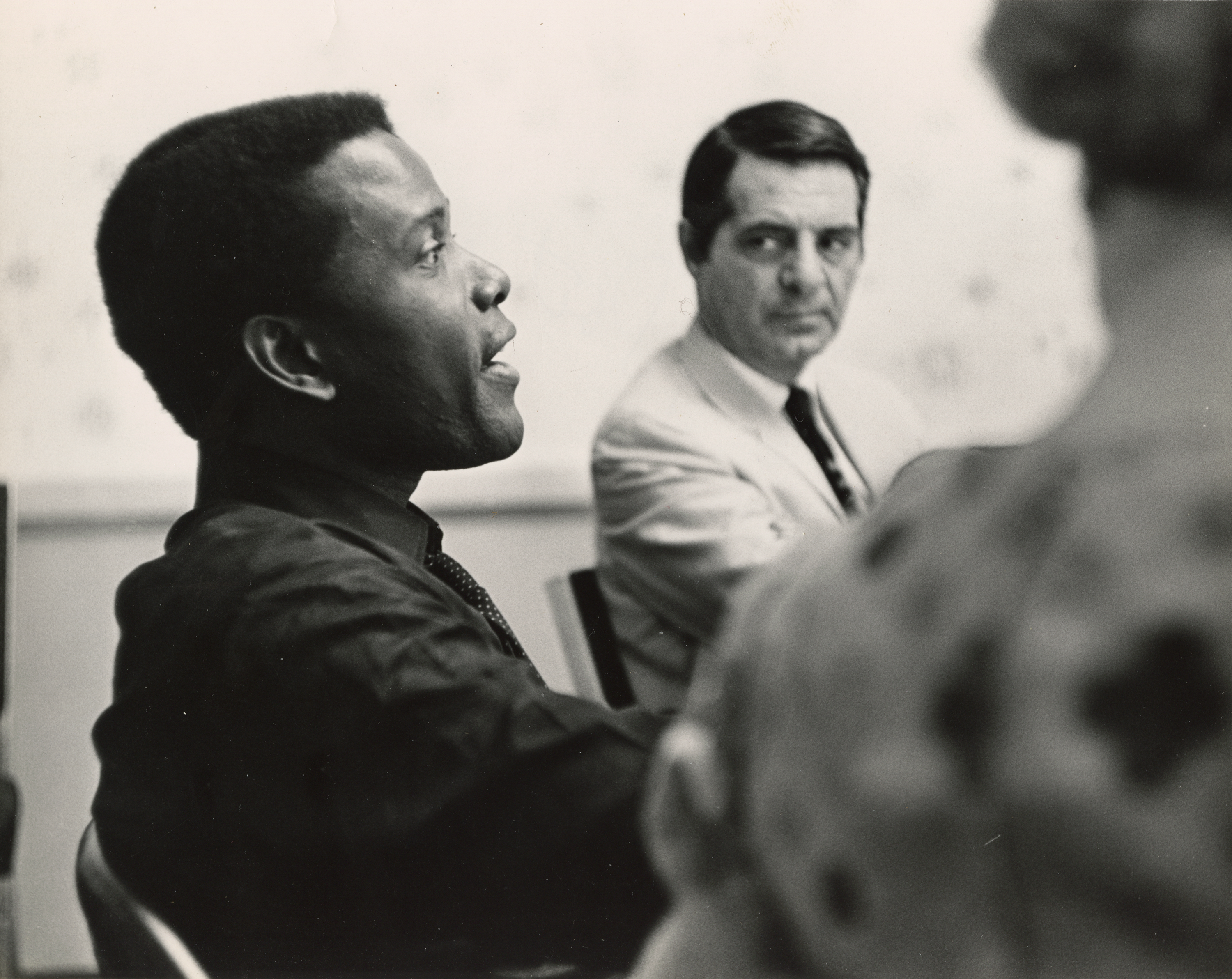
Aryeh grew up, became a rabbi and moved away from Chicago. But after 15 years, he returned, pulled back by the familiarity of the Southeast Side.
“Even just the names of the streets that only exist on the far east side, from South Shore down Chapelle, Oglesby and Bennett, there's a kind of emotional resonance to just the names of those streets,” Aryeh says. “Anytime I'm running an errand in South Shore in that area, there's a certain kind of tingling … it's a weird feeling of the accessibility of the old country.”
He and his wife Sarah had their daughter, Avniel, in August 2021 — almost 135 years to the week since Aryeh’s ancestors came over from Lithuania in 1888.
If you want to learn more about the Atkinson family, their records are housed at Chicago Public Library's Vivian Harsh Collection and the Chicago History Museum. Sam Lesner’s records are housed at the Newberry Library. Interested in finding out more about your own family history, or the history of your neighborhood? There are dozens of heritage institutions across Chicago — take advantage of yours.
Anna Mason is a journalist and producer living in Chicago, specializing in local history and archive media. Follow Anna @annadotmason
You’ve never heard of the Madison’s and the Bernstein’s, but these are two of historic Chicago families — and in big and small ways, they have left their mark on this city. They have been here for generations and generations, and continue to consider themselves, first and foremost, Chicagoans.
When Ida B. Wells moved to Chicago at the age of 32, she was already a world-renowned anti-lynching crusader, civil rights activist and investigative journalist.
Born into slavery during the Civil War, she later risked her life investigating and exposing violence against Black people in the South, and became a co-owner of The Memphis Free Speech so that she had the editorial power to do so. After an angry mob burned the newspaper’s office down, she kept going. She published her writings throughout the U.S. and abroad. She traveled, she taught, she spoke.
One CPS high school student learned about Wells’ work in the South for Black History Month but wanted to know more about her life in Chicago. So she asked Curious City:
What was Ida B. Wells' legacy in Chicago?
To hear the full answer, listen to our episode here.
Reporter Arionne Nettles brings us two stories honoring Black History in Chicago: The legacy of Ida B. Wells who empowered Black people to claim political power here. And the tale of Cadillac Baby, Nettle’s grandfather, who helped establish and nourish the Blues industry in Chicago.
For Curious City listener Erin Alexander, tinting her car windows poses a conundrum.
“I really want to tint my windows,” she explained, “but I don’t want the dreaded $250 ticket!”
So she asked Curious City: What exactly are the laws governing car window tinting in Chicago? If someone wants to get their windows tinted, what do they need to know?
Erin isn’t alone in being confused about window tinting laws in Chicago.
Tinted windows in the city are governed by the Illinois Vehicle Code. But for Erin and others, the law can be difficult to parse.
“Reading the Illinois Vehicle Code is like reading another language,” she said.
There are lots of reasons people choose to get their car windows tinted: for many, it offers an extra layer of privacy, particularly for drivers who park their cars on the street. But there are some concerns about tinting windows beyond the legal limit — including from folks like bicyclists who come face-to-face with cars on a regular basis. And it turns out that window tinting regulations are some of the most under-enforced laws in Chicago.
So here, we’re breaking down everything you need to know about window tinting in Chicago — including how the process works, what the laws are and more.
What are some reasons people get their car windows tinted?
Vehicle owners get their windows tinted for a variety of reasons, ranging from health to privacy.
For one parent we spoke with outside Burke Elementary School, the darkened glass in his car is about comfort. “I have a child, so keeping the sun out of his eyes, he doesn't always have sunglasses on,” he explained. “And really just reducing glare.”
For Chicago resident Brice, who we met while he was having his windows tinted, darkened windows function almost as an anti-theft device. “Specifically for my car, it feels like … a fishbowl inside, and when you sit in there, you really notice that you can see from everywhere. So I think partially parking on the street, it kind of helps to keep it more private.”
Plus, some people just love the way it looks. “I would go dark, dark, dark,” said Chicago resident Christyan Velasquez, who added he loves the sleekness of dark windows.
What exactly are the laws governing window tinting in Chicago?
Chicago used to have a zero-tint ordinance, but that’s no longer the case.
Today, car window tinting in Chicago is governed by the Illinois Vehicle Code. It’s enforced by the Chicago Police Department, according to city officials.
According to that law, which only applies to cars registered in Illinois, all windows on a car or truck can have some tint to them as long as it follows the established legal requirements.
The state law establishes how much light transparency is legal. The lower the percentage, the darker the window.
According to the Illinois State Police, most vehicle windows must allow at least 35% of light to pass through them — with numerous exceptions for people who drive commercial vehicles or have particular medical conditions, for example. On the front windshield, only the top six inches can be tinted, and only with a non-reflective tint.
Laws differ from state to state, but they are similarly complex. For example, Texas permits darker windows (in the 25% transparency range), and in California vehicle windows have to be much closer to transparent (in the 70% range).
How does the window tinting process work?
At Simon’s Shine Shop in Bucktown, customers select the type of tint they would like for their vehicle and employees load the corresponding roll of adhesive film into the printer.
Employees use a computer software system to look up the make and model of a customer’s vehicle and pull up the exact size and shape of each window on the car or truck.
The printer etches the shape of each window into the film and employees cut it out. They clean each window very thoroughly and apply the sheet of adhesive film. Then — and perhaps most importantly — they use squeegees to buff out any air bubbles that may have formed between the window and the film.
Finally employees at Simon’s use a heat gun to “cure” the film and bond it permanently to the window.
The cost of window tinting at Simon’s ranges from $200-500, depending on the make and model of the car, according to Victor Espeland, communications and brand manager.
In an informal survey of other car shops around Chicago, this price range was fairly standard.
(For hobbyists, there are a ton of tutorials on YouTube about how to tint windows yourself.)
How are the laws enforced?
Today, as explained above, Chicago police follow state law and its very specific set of transparency standards.
According to Rose Tibayan, director of public affairs with the city’s Office of Budget and Management, determining that a driver has violated that standard “requires evaluating the level of tint on the windows, which requires special equipment called a tint meter.” The Chicago Police Department didn’t respond to several requests for comment about this process.
Under Illinois law, a first ticket violation can be considered a petty offense with a fine of no less than $50 to no more than $500. Subsequent offenses are considered misdemeanors with fines that can cost anywhere between $100 to $500.
According to information gathered by Curious City through a public information request, Chicago police issued 184 tickets for illegally tinted windows in 2022, up from 103 in 2021. By comparison, other city records show that in 2013 — when Chicago had a $250 fine accompanying its no-tint ordinance — the city issued more than 20,000 tickets.
What are your thoughts on tinted car windows in Chicago?
We talked with a number of people who love tinted windows for a variety of reasons: they look cool, shield the car interior from the hot sun and offer privacy.
We also talked with several people who think illegally tinted windows pose a public safety issue — including a bicyclist who said darkly tinted car windows make it difficult for her to navigate around drivers in the city.
What do you think about tinted windows? Do you have them on your own car and love them? Tell us why! Have you had an encounter with a vehicle with tinted windows where the darkened glass created a hazardous situation? Tell us about it!
Call the Curious City hotline and leave us a voicemail at (888) 789-7752.
Adriana Cardona-Maguigad is Curious City’s reporter. Follow her @AdrianaCardMag
Curious City takes a look at the growing popularity of car window tinting in Illinois. We find out what the state law says about how dark automobile windows can be, who enforces these laws -- or not -- and why some people have safety concerns about them.
We're just a few weeks away from Chicago's municipal elections, when city residents will vote for mayor and members of the City Council.
Polls show that crime and policing is among the top concerns for Chicagoans right now.
Four years ago, current mayor Lori Lightfoot won the mayoral race in part because of her past experience. As former president of the Chicago Police Board and chair of the Police Accountability Task Force, she excited those seeking police and criminal justice reform.
But in May of 2020, protests and looting broke out in the wake of George Floyd's murder at the hands of police in Minneapolis. And the mayor's response to the actions of some members of the Chicago Police Department during that unrest caught the attention of many, including one listener who asked: How accountable is any Chicago mayor for police misconduct?
In other words, does the mayor actually have the power to make sure the accountability process works, and that there are consequences for officers who break the rules?
This week, we’re revisiting a story from the fall of 2020 when WBEZ criminal justice reporter Patrick Smith sat down with us to help answer that question.
Plus, the police accountability system is on the verge of changing. In this month’s municipal elections, Chicagoans will vote for the first time to elect citizens councils. These three-person councils are intended to give communities more power over policing in their own neighborhoods. Find out what’s in store in this recent interview from Reset, in which host Sasha-Ann Simons talks with Anthony Driver, current president of the Community Council for Public Safety and Accountability.
Patrick Smith is a reporter on WBEZ’s Criminal Justice Desk. Follow him @pksmid. Email him at psmith@wbez.org.
With the death of Tyre Nichols at the hands of Memphis police officers, the people and mechanisms that hold cops accountable are in the spotlight once again. It’s something we talk about often here in Chicago. Later this month, city residents will be voting for mayor, and whoever wins that race will sit at the head of a large-and growing-police accountability system. We’ll take you in a deep dive into that system, and update you on how a years-long battle for more citizen involvement in that system is finally coming to fruition.
A hundred and thirty blocks south of the Chicago Loop, there’s a stretch of brick wall, painted yellow, covered in hundreds and hundreds of hand-lettered names. Some of the bricks are chipped, some of the paint is faded. But to people who live — or once lived —in this public housing community of Altgeld Gardens, this is their Memorial Wall, a place of family record for lost loved ones and a place of history.
A young man stops to scan the names. “This is my grandmama name right here, Leola Lockett," he says. “She was a beautiful lady.” The man doesn’t want to share his name, but he’s glad the wall is here.
"These are all the people who’s raised up out here, who was part of the community. I miss ’em all."
Baron Johnson grew up in Altgeld Gardens and comes back each year for an “old-timers” picnic. Like many others, he gets sentimental recalling his time there: the baseball teams, late night roller-skating in a school gymnasium, the annual flower festival and a village looking out for each other’s kids.
“And everybody, when they come up to visit, they recognize the names and their memories,” he says. “So the wall is kind of like a historic monument for everybody who used to live or still lives in Altgeld Gardens.”
Still, parts of the wall’s history is uncertain, and its future is even more unclear. The Memorial Wall sits in the breezeway of a dilapidated — and privately owned — commercial building at the center of the community. That building has been in demolition court for the last few years, and the wall’s future is tied up with it.
A public housing community on the edge of the city
Altgeld Gardens is the most isolated of Chicago’s public housing communities. Completed in the mid-1940s, the complex was a racially segregated development for African-Americans — both war workers in the nearby armaments industry and returning veterans.
In contrast to the highrises that the Chicago Housing Authority would later build, the original 1,500 units were two-story brick rowhouses laid out on curving streets, each with its own small front yard. The Gardens, as it’s often called, had a suburban feel.
At the heart of the Altgeld development was a privately owned commercial building that for decades housed a collection of Black-owned businesses: a drug store, a shoe repair shop, a lounge called the Funky London, a barber shop, the Garden of Eden beauty shop — and most important: a grocery store.
This unusual building was designed by brothers George and William Keck, the architects who dreamed up the “House of Tomorrow” for Chicago’s 1933 World’s Fair.
Built in the modernist style, this block-long building had a swooping, cantilevered canopy and a gracefully curving, glassy front wall. It served as a kind of town center for the community, where people both shopped and spent social time together.
Residents called the building Up-Top and because it served as a gathering place it’s no surprise that the Memorial Wall took root here in a covered breezeway that runs north to south through the building.
Channeling grief into self-expression
The exact origin of the yellow brick Memorial Wall is difficult to discern. But in its early days it had a different look — and function — tied to an important event in Altgeld Gardens’ history.
Seth Ibrahim served as an imam at the Mosque of Umar on Chicago’s South Side, but back in the late sixties he was a young activist living in Altgeld Gardens.
Today’s wall, he says, started off as a “Wall of Pride” or “Wall of Hope” after a 17-year-old named Sterling “Pinky” Jones was shot and killed on Christmas Day in 1969. That was just three weeks after Fred Hampton, chairman of the Illinois Chapter of the Black Panther Party, was assassinated by police.
It’s always been unclear what happened to Jones, who was a popular and active Black Panther Party member, and the case was never solved.
What is clear is that in the days and months after he died, Altgeld Gardens was a tinderbox. It seemed like violence was about to erupt, Ibrahim recalls, and young people needed somewhere to put their energy and grief.
Ibrahim and his activist friends wanted to direct that energy — and grief — to something positive for the community. They came up with the idea of using Up-Top as a place where people could express their views about the Black Power Movement, post notes of encouragement to their neighbors, write poetry and paint murals.
Jones’ name went up in a prominent spot on the northeast side of Up-Top’s breezeway. And Chicago Housing Authority not only provided paint for the overall mural effort but also sent over a talented employee who painted a large mural of Malcolm X.
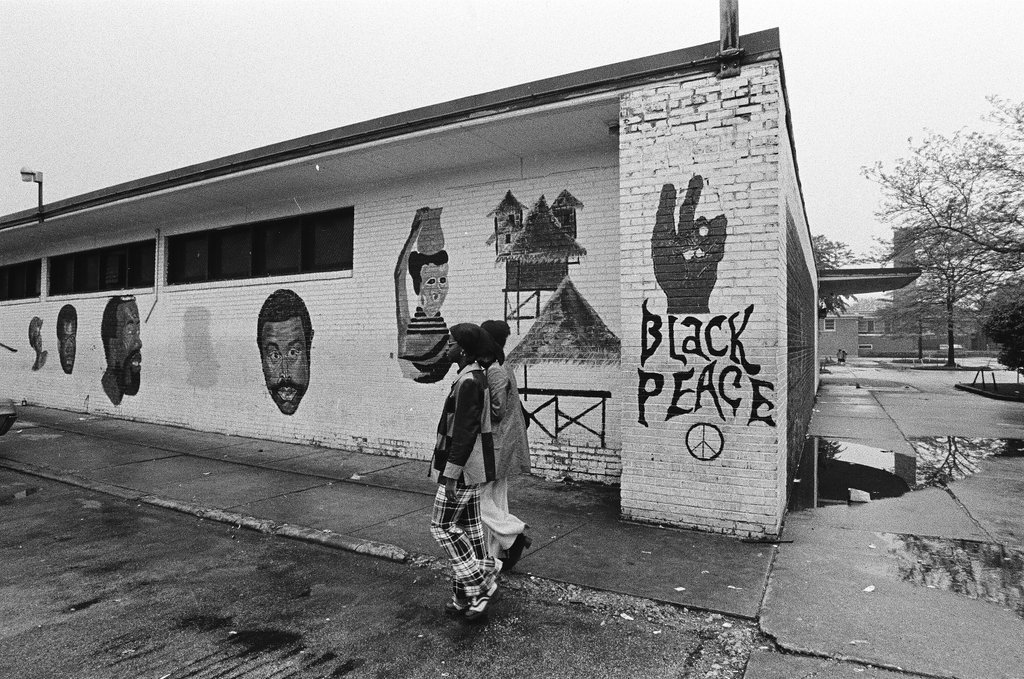
That mural was so good, Ibrahim says, that it spurred others into action. And over time the murals, political statements, poetry and words of encouragement spilled beyond the breezeway and onto the exterior walls of Up-Top.
The names memorializing people who’d lived and died at Altgeld became concentrated in the breezeway.
And those are the names that still remain on Altgeld’s yellow brick Memorial Wall today — some 50 years later.
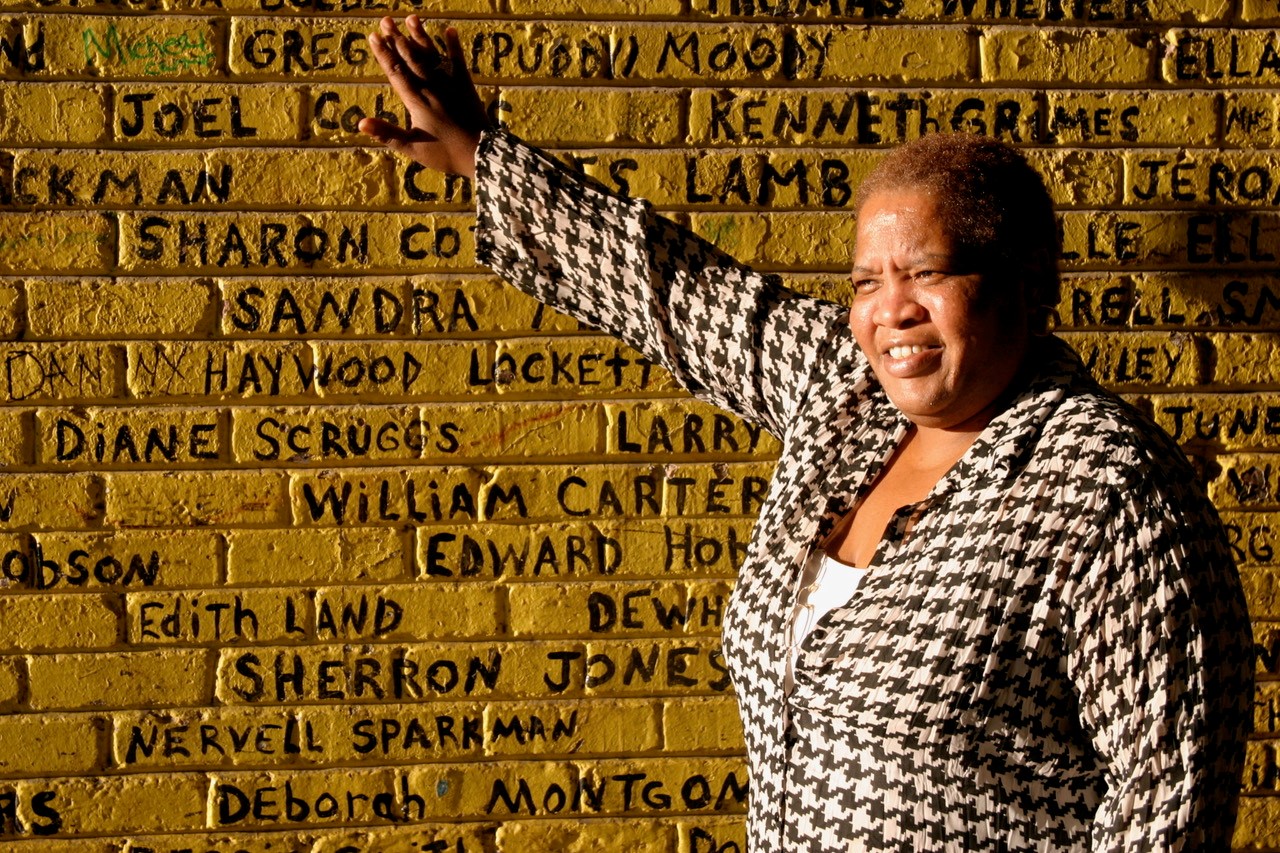
A legacy of environmental racism
Altgeld Gardens has been home to a lot of larger-than-life figures over the years. One in particular was the late Hazel Johnson, often called the “Mother of the Environmental Justice Movement.”
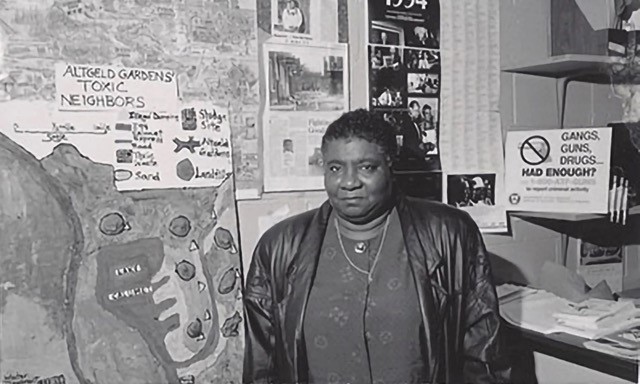
“The majority of those people on that wall died from cancer,” Johnson says. “And we still have a higher incidence of cancer in this area than any other. And now we have a lot of cardiovascular problems in the area, and that signifies something from breathing this polluted air in our community.”
Altgeld Gardens was built on the edge of what was once a dump for the town of Pullman. In 1892 alone, almost 700 million pounds of human waste and liquid sludge was dumped into the Pullman “sewage farm,” just west of what today is Altgeld Gardens.
For Johnson, the wall is proof of the many people whose lives were shortened because of exposure to hazardous waste and pollution. And it's a reminder of why her mother’s work was so important.
“That’s what that wall defines to me — that environmental racism was heavily practiced in Chicago,” Johnson says.
“That’s what that wall is to me.”
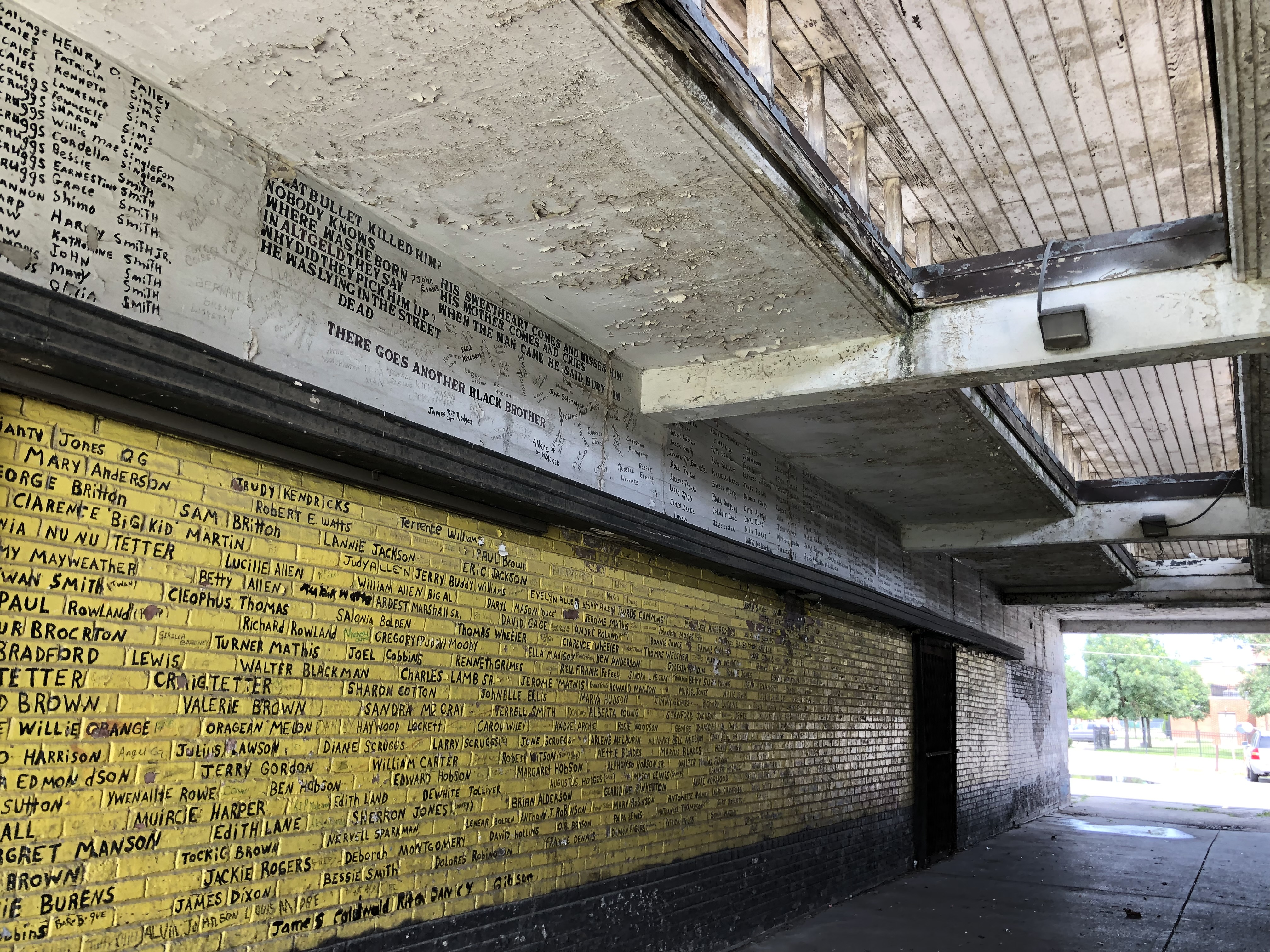
If Up-Top is demolished, what happens to the wall?
Last April, the entire Altgeld Gardens complex was listed on the National Register of Historic Places. That led some to believe that the Memorial Wall would be preserved.
But the City of Chicago is in demolition court with the private owner of the Up-Top building at Altgeld Gardens, so that building is endangered — which means the Memorial Wall is endangered as well.
Though there are workarounds, of course.
It’s possible, for instance, that the wall could be taken down and then reassembled someplace else. Or preserved in some other form, through detailed photographs, for instance.
But if the Altgeld community wants to keep the Memorial Wall intact and in its current location, that means saving the building it sits in.
“The only way to protect a building in the City of Chicago,” says Ward Miller, Executive Director of Preservation Chicago, “is by having it made a designated Chicago landmark — which is protecting the building by ordinance.”
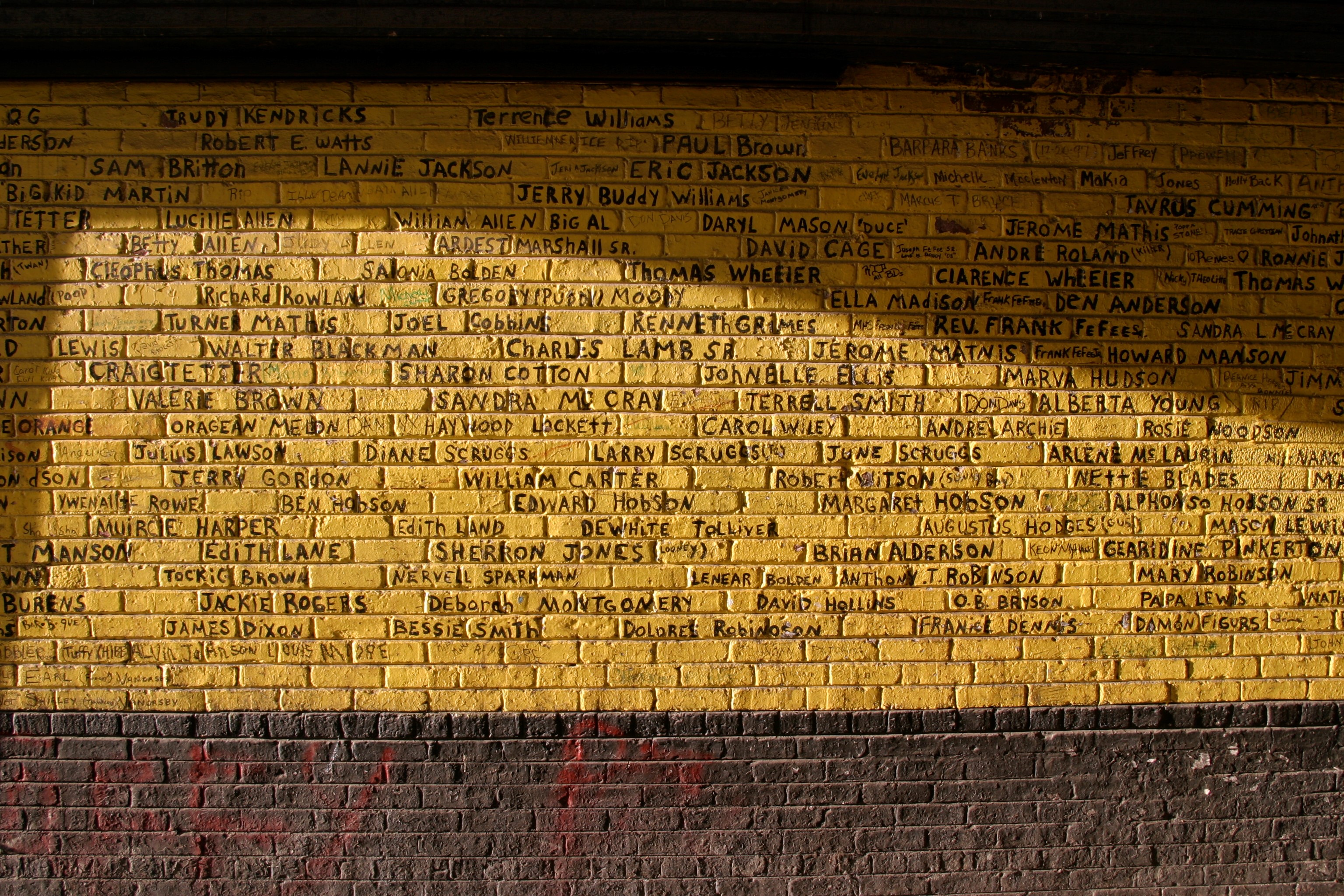
That means a vote of the City Council. The first step in that process, which anyone can take, is completing a “Suggestion for Chicago Landmark” form. It lists seven criteria that could make a nomination worthy — including important history, cultural significance and unique architecture — but only any two of the seven need to be met.
(The Chicago Landmark Designation Process site provides more information on what may happen with individual suggestions. Organizations like Preservation Chicago or Landmarks Illinois may be able to help with research needed for the suggestion form.)
Typically, Miller says, the City doesn’t like to landmark buildings that are in demolition court, so it could be a tough road ahead for the Memorial Wall at Altgeld Gardens.
“At the end of the day,” Miller says, “we rely on the Altgeld community to tell us if this is important to them.”
To many residents, the wall is a link to their past, to history and the fight for environmental justice. But to others, like Belinda McGrew, the priority for the community must be bringing back essential businesses — even if it means tearing down the wall.
“Most of the people that’s on the wall are not here, the family is not here anymore,” she explains. “We need grocery stores out here — we don’t have that anymore.”
“If you give me a magic wand, what I’m going to do is create a new wall and put all the names of the people who passed away and then tear down the entire building and create a store for the community,” echoes another Altgeld Gardens resident.
For resident Marguerite Jacobs, the idea of losing the Memorial Wall is painful.
“I would hate it. I would hate it,” she insists. “I mean, this is the core of Altgeld. So why don’t we rebuild instead of tear it down?”
Thank you to Jed Dulanas who submitted the question about mural preservation that inspired this story.
Linda Paul is a reporter living in Chicago.
The uncertain fate of a hand-lettered memorial wall in the Far South Side Altgeld Gardens community has Curious City digging into how such memorials and other valued local murals and artwork might be saved from destruction, even if they are not officially national landmarks.
Geese have the only flights in and out of Chicago that aren’t delayed. But seriously…we find out why the once-migratory Canada geese decided to make Chicago their permanent home, why these birds have become a nuisance, and what’s being done to keep their population in check.
The Avalon Regal Theater in South Shore has almost a century of cultural significance. Since 2003, it’s sat mostly empty. What will happen to it?
A Chicago snow plow driver who’s been on the job for 40 years tells us what it’s like to keep the roads clear of snow and ice. Plus, we find out about the time Chicago made a Floridian class of kids thrilled when we shipped them a bunch of... our snow.
We put all of the questions that you submitted in 2022 - nearly 700! - into a giant bag, and we’ve pulled a few out to answer all at once including Where to find the best Shrimp, the history of Cricket Hill, all the lettered streets west of Pulask, and more.
We revisit two questions from winters past: how the city breaks up the winter ice on the Chicago River, and in honor of the Jewish holiday of Hanukkah, the history of Chicago’s Jewish migration throughout the city and beyond.
This week we dive into the history of tree planting in Chicago, find out why trees are so important to us and our city, and talk to people who are working to get trees planted in the neighborhoods that need them most.
In the spirit of our show, and our inquisitive listeners, we decided to ask some about ourselves and Curious City’s humble beginnings, with founder Jennifer Brandel.
We start in the Chicago loop, then head south to the Powderhorn Prairie and Marsh to discover the area's rich flora and fauna.
Unlike other cities and towns in the Midwest, food co-ops never really caught on in Chicago. But with grocery chain mega mergers and the sky-high price of food, there's been a big uptick in interest for co-ops. We'll tell you the history behind co-ops, take you inside some that are already operating and tell you about several that are in the works.
Devon Avenue has long been known as Little India, but the diverse West Ridge strip has become home for many and is still evolving today.
We've been experiencing some warm days in and around Chicago. But winter is coming. This week, we've got a couple of classic Curious City stories about staying warm. One features folks who work outside during the bitter Chicago winters, the other features some furry friends from the Lincoln Park Zoo.
It’s election season. And Injustice Watch’s Maya Dukmasova joins us to answer your last-minute questions about that lengthy part of the ballot lots of voters avoid: judges.
A house on Rainbow Road in Barrington, Illinois is shrouded in mystery. Former residents say they’ll never return. Some locals say memories of the property still chill their blood. So, what really happened at 92 Rainbow Road?
From carnival shows to the early days of television. In this week’s episode: How pro wrestling grew up in America and had a flashy, sporty heyday in Chicago.
For decades, Chicago has received a steady stream of refugees who have made the city home after escaping war and political conflict. They have come from countries like Bosnia, Sudan, Iraq and Afghanistan. More recently, several thousand asylum seekers came to the city on buses from Texas. Many of the institutions and organizations helping these newcomers to resettle are faith-based. On this week’s episode we take on a question about how faith-based groups approach this kind of work from a listener who works with refugees through his church.
Former WBEZ host Tony Sarabia produced an audio documentary titled “Unlocking The Closet'' back in 2000. Tony, who came out later in life, wanted to share the stories of others who’d also finally felt ready to take this step. The documentary recounts the coming out stories of queer people who grew up in the 1950s and early ‘60s. While a lot has changed, many queer Americans still don’t have a safe space to come out. Curious City pulls this documentary out of the archives to recognize October 11 – National Coming Out Day.
For a long time, Chicagoans were scared of Dunning. The very name “Dunning” gave them chills. People were afraid they would end up in that place. Today, the Chicago neighborhood, out on the city’s Far Northwest Side, looks like a middle-class suburb. You’d never know there was once an asylum there. On this episode we revisit the history of the Cook County Infirmary, later known as Chicago State Hospital but to most, simply “Dunning.”
You’ve likely seen these signs hanging outside bars in Chicago. Pale yellow, almost white with the red-white-and-blue Old Style logo in thebig top square with a bottom partition that reads “Bottles and Cans,” “Cold Beer,” “Cerveza Fria” or even “Package Liquor”. Well there’s a reason so many of those signs still light up Chicago bars. Reporter John Fecile uncovers this mystery in this week’s episode.
A listener noticed her garden didn’t seem to have as many bees as usual buzzing about this summer. She wondered if the population in Illinois was on the decline. Curious City reporter Adriana Cardona- Maguigad finds out how the bees are doing and why experts are worried about the bees.
Medusa’s was “like a community center for weirdos and freaks and everybody else in between,” say some Chicagoans who went there as teens in the 1980s and ’90s. In this week’s episode Axios Chicago reporter Monica Eng finds out how the club got started, what it was like to hang out there and why, despite its popularity, it closed its doors in 1992.
Growing up, one listener heard tales about how an engineer was hidden inside Chicago’s Buckingham Fountain in order to make sure the water spouts out each day. This week we go inside the innards of the fountain to see how it works and learn the history behind it. Plus, we get the answer to the question: Why does Chicago have so many alleys?
Abolitionists in Chicago and Illinois helped freedom seekers reach Canada, and freedom.
Lakeview once had a thriving Japanese community, but it fell victim to a push for assimilation. As one Japanese-American puts it: “You had to basically be unseen.”
Lakeview once had a thriving Japanese community, but it fell victim to a push for assimilation. As one Japanese-American puts it: “You had to basically be unseen.”
Tips and tricks for spotting and enjoying birds in Chicago, from far flung marshes, to one birder’s window.
Find out how the folks behind El Paseo Community Garden in Chicago's Pilsen neighborhood changed a contaminated site into a space for neighbors to grow plants, keep bees, meditate, and congregate.
A tourist to Chicago in 1910 might have gone to see hogs being butchered, sought illicit pleasure in Chicago’s vice district, or simply enjoyed the majesty of Lake Michigan. We virtually explore those sites, and then trace the long history of Chicago’s rivalry with New York City.
As a classical composer and a Black woman, Florence Price blended African and European music into a new style of symphonic music.
We track down the band members, musicians and dancers who popularized dances in Chicago, and meet the people who keep La Danza Azteca alive in Pilsen.
Curious City takes a deep dive into how Chicago’s powerful white institutions – from the police and the politicians to the banks and the realtors – used the 1919 race riots to cement a more segregated city.
The history of traveling queer parties in Chicago is rooted in exclusion and racism. This week, we spoke with Pat McCombs and Vera Washington — longtime organizers of Executive Sweet, a traveling party focused on Black lesbians that got its start in the 1980s. We also talked with Tori and Jae Rice of smallWORLD Collective, a group that organizes events today — and learned how queer Black organizers have been at the forefront of traveling parties in Chicago.
Thinking about the next book you want to read? Librarians are way ahead of you. Find out how new books make their way in the Chicago Public Library system, and meet some of the librarians who make it happen.
Dozens of unconnected fast food joins serve up the same popular Chicago cheeseburger under the same name.
Chicago's scrap metal industry relies on small scale collectors, called scrappers, who scout for metal castoffs to sell and recycle.
Each year tens of thousands of people take part in 5ks, 10ks, half-marathons and all kinds of walking and running events in Chicago. But how does one get permission? And what’s it like to navigate the process and work with the various city departments to put on an event like this? Curious City talked to one race director who organizes ultramarathons to find out. And of course, as you might imagine, there’s just a little bit of bureaucracy involved.
Two sure signs of spring in the Chicago area are end-of-year band concerts at schools, and plants beginning to grow. This week we revisit a couple of stories from the archives on that theme. First, tenacious weeds like buckthorn, milkweed and goldenrod grow everywhere in Chicago from railroad tracks to sidewalk cracks. We find out how they survive city life. Plus reporter Monica Eng gets an answer to the question: why do so many kids learn to play the recorder in school?
Every election, after breezing through their choices for governor, president, senators, and state reps, Cook County voters face the longest part of the ballot: Circuit Court judges. Though the candidates running for judge may be the most obscure, judges are the elected officials any voter is most likely to encounter and the ones whose decisions can have the most direct impact on their life. Anytime you get divorced, sue for damages after a car accident, or face accusations of committing a crime — a judge is involved. And once a judge is elected, it’s rare they’ll ever be removed from office. This week, reporter Maya Dukmasova from Injustice Watch answers a question about why that’s the case.
For more than a century, Chicago’s Polish community has celebrated Polish unity and identity at the annual Polish Constitution Day Parade. This year, the parade has a new theme and anti-war message. Curious City’s Adriana Cardona-Maguigad tells us the history of the parade and what it has meant to the Polish diaspora in the Chicago area
A listener thought she’d noticed a change in Chicago’s crow population. And she was right. Twenty two years ago, the crow population of Illinois was at an all-time high. But just a few years later, half of the birds were dead. The crows were hit by a deadly virus. And it’s one that humans are susceptible to as well. So where was this virus coming from? Reporter Claire Caulfield finds the answer.
Sometimes, when Mike Ervin sees other wheelchair users about to board the bus or enter a train station in Chicago, he wants to catch up to them and say, “You’re welcome”. Because 30 years ago, much of the accessibility that people with disabilities encounter in public transportation today — lifts on buses, elevators at train train stations — didn’t exist. There were also no curb ramps, and buses would drive right by people in wheelchairs without stopping. But Mike Ervin, who has used a wheelchair all his life, fought to change all that. In this week’s episode we look at the history of the fight for disability rights in Chicago.
Geographically, Chicago is smack in the middle of the Midwest. But not everyone seems to think that’s enough to make us “real” Midwesterners. Is being a Midwesterner about where you are on a map, or about state of mind? We found that people’s answer to this question says a lot about how they view Midwestern identity and the growing urban-rural divide.
This season 800 students will be a part of the Chicago Youth Symphony Orchestra’s programs. They’ll come from across the state of Illinois but also from Indiana, Michigan and even Iowa. Nearly every member of the Chicago Symphony Orchestra played in a youth orchestra. Producer Jason Marck finds out about the joys and pressures of being an elite youth musician.
Students from different racial and ethnic backgrounds may go to the same high school, but this doesn’t guarantee they won’t cling to stereotypes about one another. That became painfully clear a few months ago when a student at Chicago’s Lincoln Park High School made a video asking classmates what race they wouldn’t date and why. Most of the answers were offensive, with many kids laughing and talking comfortably about how people of other races smell — all of it right in the school hallways with other students watching. That video was made public and got a lot of attention. But this kind of thing happens pretty regularly. Curious City reporter Adriana Cardona-Maguigad and WBEZ education reporter Susie An teamed up to talk to Chicago area teens about race and relationships and what they think schools should do to help kids move beyond stereotypes.
Chicago’s streets are covered in asphalt and the city pays out a lot of money to drivers whose cars have been damaged by the poor condition of our roads. So why does Chicago use a material like asphalt, which requires so much repair, to pave its streets? And is there any recourse when your car gets damaged from hitting a pothole? Find out in this week’s episode.
A Curious City fan asked us about an odd detail on an old Chicago map. Was it really a Native American burial mound? Producer Jesse Dukes went on a quest to find the answer.
The Free Theater was an ensemble group that put on non-traditional, avant-garde theatrical productions in Chicago from 1968 to 1974. Like its name suggests, the shows were free and no auditions were required. Productions took on the politics of the time. Curious City reporter Adriana Cardona-Maguigad digs into the group’s history and looks at what low cost and accessible theater looks like nowadays in Chicago.
One Curious City listener was skeptical about whether real people actually win WBEZ’s pledge drive giveaways. They do. But there’s a little more to that answer. Plus, an economist who studies fundraising explains why people give money during pledge drives in the first place.
Chicago has budgeted about 18 million dollars for salt for the winter 2022. And the city gets all that salt from one vendor: Morton Salt. Now, the company’s iconic warehouse is getting transformed into a multi-use development, including a music venue called “The Salt Shed.” In this episode historian Paul Durica traces the history of Chicago’s salt industry and tells us how some of that history will be preserved in the new concert space.
Last year the Garfield Park Aldi closed after 30 years, leaving thousands of West Siders without a nearby grocery store where they can buy affordable, fresh produce or other staples. Now, the City of Chicago is considering purchasing the Aldi property to ensure it remains a grocery store. WBEZ reporter Linda Lutton and Curious City intern Asia Singleton head to the West Side neighborhood to find how the store’s closing is impacting residents — and what they’re doing about it.
Chicago’s got a new ad campaign the city hopes will showcase Chicago’s influence around the globe. It reminded us of a question we answered about the origins of Chicago’s rivalry with New York. We actually took the answer to the stage and presented it as a live show in 2018 at the Museum of Science and Industry, with actors impersonating New York and Chicago. In this episode you’ll hear that performance and learn how the bid to host the 1893 World’s Columbian Exposition stoked Chicago’s rivalry with New York.
By now you’ve probably pretty familiar with that term the “Great Resignation.” We asked our listeners why they quit their jobs and how they’re doing now. We heard from more than a hundred people who talked about burnout, stress and toxic workplaces. And we heard a lot about the fear and risk that comes with quitting a job you know. In this episode we share some of those stories.
Chicagoans call lots of places home. We live in two-flats, three-flats, bungalows and skyscrapers. And hundreds of households live in Chicago’s only trailer park, Harbor Point Estates. Beyond the city’s borders, there’s another 18,000 mobile homes in our metro area. Reporter Linda Lutton set out to answer a question about what life is like in Chicagoland mobile home communities, as told by residents themselves.
During the Cold War, many Americans were convinced that the end was near, building concrete bunkers to protect themselves from a nuclear attack. Whatever happened to these fallout shelters around Chicago? In this episode Curious City goes underground to find out.
Curious City’s new reporter Adriana Cardona-Maguigad braves the freezing temperatures to find out how Chicagoans are getting through the stress of winter.
Reporter Araceli Gómez-Aldana spent the day in Marriage and Civil Union Court in downtown Chicago where she met all kinds of couples who were there to say “I do,” and a clerk that’s helped thousands of couples tie the knot over the last 50 years. She’s seen it all, including brides left at the altar at the last minute, and Chicagoans lining up for hours to wed on the same day as Prince Charles and Princess Diana.
In this episode we head to the Hideout in Chicago for an evening of storytelling around rats. Jesse Dukes, Curious City’s lead rat reporter shares some stories from a trip we took to Lincoln Park’s rattiest alley. And some Chicagoans share their some of their most traumatic rat encounters.
On this week’s episode we’re revisiting a couple of holiday stories. Reporter Monica Eng answers a question about a shuttered Chicago jazz bar that one hosted the likes of Tony Bennett, Liza Minnelli and Lionel Hampton. Plus, we meet some of the people that run the Christmas tree pop-ups around Chicago.
Native Americans farmed, developed trade routes and took advantage of Chicago’s geography before anyone else settled in the region. Yet Chicago histories usually start in 1830. Reporter Jesse Dukes fills us in on what the history books are missing.
The Chicago region was home to a number of Native American nations, and Illinois’ native history is rich and varied. But unlike neighboring states like Michigan, Wisconsin, and Iowa, Illinois doesn’t have any Indian reservations. Curious City looks into the history to find out why.
Every driver in Chicago has probably encountered a speed hump (yep, they are officially known as humps, not bumps) at some point while traversing the city. It’s probably safe to say that no one particularly enjoys going over one, but these barriers meant to slow drivers and make streets safer certainly annoy some more than others. And one listener wants to know if they’re even effective. Reporter Andrew Meriwether investigates.
Lawyer selfies line the interstate between Illinois and Indiana. Curious City took a road trip and counted almost a hundred in one stretch of I-90/94. Audio producer Steven Jackson investigates why there’s so many of these billboards here, especially for personal injury attorneys. He shares insights from lawyers, marketers, and historians. Features a guest cameo by Lyndon B. Johnson.
Jay Panandiker lives in Chicago’s Lincoln Park neighborhood but he often hits the road for Cincinnati to visit his family. And on those trips, he’s observed something unusual along the interstate south of Chicago.
“When I’m driving on the highway I always see a lot of billboards for lawyers and law firms, and it seems like a disproportionate number of billboards compared to other businesses,” he said.
Jay said these billboards seem to be concentrated on Interstates 90 and 94 in south suburban Chicago and across the Indiana border.
So he wrote into Curious City to ask why so many lawyers seem to advertise their services on this stretch of the highway.
Find the full answer here.
Chicago has served as the backdrop for blockbuster films like “The Blues Brothers,” “The Dark Knight,” and “The Break-Up.” But just when did Chicago, sometimes referred to as the “Hollywood of the Midwest,” first become a go-to location for film and TV producers? The answer goes all the way back to the silent film era of the early 1900s when the Essanay Film Manufacturing Co. produced thousands of films from 1907 to 1917 and William Foster debuted “The Railroad Porter” in 1913. Productions shot on location in Chicago ebbed and flowed in the years that followed as Hollywood became a film and television hub. But as of September 2021, a record 15 TV shows were filming here. And with so many things being filmed here, we get asked a lot of questions about what makes certain locations popular for movie shoots? Matt Sigur tracks down some answers for us.
We all know Chicago has a strong Polish community. But how did it get that way? And just how Polish is this city, really? Reporter Jesse Dukes finds the answers.
A listener noticed that diner after diner seemed to serve split pea soup every Wednesday. So is he really onto something? Reporter Linda Lutton investigates this legume mystery. Plus, we break down the origins of the Chicago-style hot dog.
On this week’s episode Curious City investigates the origins of the Munger Road haunting. Like any good ghost story, there are several versions of the Munger Road tale, but the ghost story goes something like this: A school bus full of kids was crossing over the train tracks and it stalled. Before the driver could get the bus off the tracks, a train came along and hit the bus. No one bus survived the accident. The legend says the ghosts of the children are still there, and claims that if you drive your car onto the tracks and put it in neutral and sprinkle some baby powder on your car bumper, allegedly, the children are going to push your car off the tracks to safety. And small handprints will appear in the baby powder.
Chicago was like Hollywood before Hollywood became the movie capital we know today. And Black directors were an important part of that early industry. In 1913 Willam Foster became the first Black director to make a film with an all Black cast. Yet most people have never heard of him. Reporter Arionne Nettles shares his story and the legacy he left behind.
Chicago’s Pilsen neighborhood was first settled by Irish and German immigrants who were soon supplanted by a large influx of Czech immigrants. They gave the neighborhood its name but it’s known today for its Mexican and Mexican American population who first began moving in during the 50s and 60s. Pilsen continued to be a port of entry for decades and since then, many have fought to maintain the neighborhood’s identity, culture, and its community. In this episode we answer several questions about Pilsen’s history -- about the role murals have played in creating that sense of community, how the people rose up and came together to fight for a new high school, and how residents of Pilsen took a Chicago housing peculiarity and made it their own.
The Great Chicago Fire, which lasted from October 8th to October 10th, 1871, destroyed most of Chicago from what is today Roosevelt Road up to Fullerton and from the Lake west to the Chicago River. Almost 100,000 Chicagoans lost their homes and several hundred lost their lives. And while the Chicago Water Tower has become an important symbol of what survived the destruction of the fire, it’s not the only building that made it through. Historian Paul Durica tells us about three other “survivors” and what happened to them decades later.
Called "more dangerous than a thousand rioters" by the Chicago Police Department, Lucy Parsons was a radical socialist, a labor organizer, and a powerful orator who worked on behalf of people of color, women, and the homeless, she was
While resistance to vaccine mandates goes back 200 years but state laws allowing for religious exemptions were rare until the 1960s. And faith leaders from the Pope to imams have pushed Americans to get vaccinated. So why do religious exemptions exist? Reporter Andrew Meriwether digs into the complicated history of religious exemptions.
The cicadas seem really loud this year around one listener’s home. But are they louder than usual? Are there more of them? Producer Jason Marck finds out the answers. Plus, can you really keep pigs, goats, chickens and other livestock in your backyard in Chicago?
When a 22-year-old executive came up with the iconic White Sox logo, he probably never imagined it becoming a hip-hop fashion sensation. Nearly 27 years ago the White Sox debuted a look that would become iconic in pop culture. Producer Jesse Dukes traces its origins all the way back to 1948. And, ever wonder how the Chicago Bears, who don’t play near Midway Airport, ever got their nickname? Bears fan and reporter Araceli Gómez-Aldana tracks down the answer.
Tenacious weeds like buckthorn, milkweed and goldenrod grow everywhere in Chicago from railroad tracks to sidewalk cracks. Reporter Natalie Dalea finds out how they’ve adapted to survive city life. Plus what happens to all the landscaping along the Mag Mile after the summer is over.
Historian Dominic Pacyga shares his encyclopedic knowledge of Chicago history and answers questions about everything from breweries to slaughterhouses. Plus, reporter Monica Eng brings us a story from Ed Kramer, who, as an eighth grader in 1941 took a field trip with his class to visit the stockyards. Yep, Chicago school kids used to do that.
Chicago once had a booming commercial fishing industry. Lawrence’s Fish and Shrimp is one of the last vestiges of that industry--serving up all kinds of fish that hasn't actually been caught in Lake Michigan. Reporter Jessica Pupovac finds out why that’s the case. Plus, producers Logan Jaffe and Jesse Dukes look for the best stargazing spots around Chicago. Turns out Lake Michigan offers one of them.
The beef sandwich and slushy drink combo are sold together all across the South and West sides of Chicago. Reporter Monica Eng tracks down the guy who put the two together. Then, she answers a question about what those mysterious structures out on Lake Michigan actually do.
Scabby the Rat is now common on picket lines around the world, but the balloon started right here in the Chicago area. This week on the show, we dig into the origins of the iconic union labor protest mascot. Plus, Monica learns why there are so many ice cream shops in Chicago with “La Michoacana” in their name — despite having different owners, offerings, and prices.
Paletero Victor Cruz says selling popsicles takes “patience.” Curious City learns the tricks of the trade.
This week on Curious City, we’re visiting the spots where Chicagoans would enjoy their beer and spirits during Prohibition.
In 1967 a tornado hit the Chicago suburb of Oak Lawn. It’s been a defining moment in the village’s history. Thirty three people were killed that day, 500 were injured. There was at least $40 million in damages in 1967 which, adjusted for inflation, would amount to more than $250 million today. More recently a tornado damaged more than 200 homes in suburban Chicago, including heavily populated Naperville. But despite their proximity to Chicago, lots of Chicagoans still believe a tornado won’t actually hit the city. In this episode we speak with survivors of the 67 tornado and bust some myths about why cities like Chicago aren’t immune to one of nature’s most violent storms.
It’s that time of the year where we can all finally hit the beach. But our listeners have a lot of questions about Chicago’s beaches. Like, how clean is the water? How much poop is in there? And why are some flotation devices banned? Curious City’s Monica Eng puts on her sun visor and a good deal of sunscreen and tracks down the answers.
The common stereotype for Midwesterners is that we’re polite, friendly...and passive-aggressive. But is there any truth to that? Reporter Andrew Merriweather goes looking for the answer.
Illinois passed a new law last month that sets a deadline for the state to replace all of its toxic lead service lines -- those pipes that deliver drinking water to our homes and park fountains. Curious City’s Monica Eng fills us in on how long it's going to take to get rid of all the lead lines.
Last year we met Elmhurst gardener Nicole Virgil, who was fighting for the right to put up a hoop house in her garden. A hoop house is an inexpensive way to help extend the growing season. It protects the crops from the wind and snow and can keep the soil from freezing. Virgil took her fight all the way to the state legislature. Curious City’s Monica Eng tells us what happened next.
As Illinois reopens, Chicago area artists Lori Lippitz of the Maxwell Street Klezmer Band, Lynne Jordan of Lynne Jordan and the Shivers, Juan Dies of Sones de Mexico and D2x reflect on what the last 15 months have been like, how the pandemic has shaped their music, and what they’re looking forward to as full capacity crowds come back.
Curious City’s Monica Eng investigates the origins of Chicago’s favorite spicy condiment: giardiniera. This humble jar of veggies packed in oil has roots in Sicily, and Monica tracks down at least two different Chicago families who believe they should be credited for the original recipe. Plus, what’s the right way to say it anyway?
In the notoriously flat Chicago region, what gives with names like Chicago Heights, Mount Prospect and Park Ridge?
Scientist Alice Hamilton’s investigations into toxins in Chicago’s factories led to some of the first workplace safety laws in the country. She was known for her “shoe leather” epidemiology, wearing out the soles of her shoes from all the trips she made to Chicago homes, factories and even saloons to figure out what was making people sick. Reporter Edie Rubinowitz has her story.
WBEZ, where Curious City gets produced, actually began as a radio station that broadcast educational programs for kids. In this week’s episode Monica Eng explores WBEZ’s roots in education and looks at how we went from math and fairy tales over the radio to a news and information station. Goodbye “Lady Make Believe,” hello “All Things Considered.”
Little-known fact: in Chicago, you don’t need to be an elected official to propose legislation to City Council. But does this process really work? Has anyone ever done it? WBEZ city politics reporter Claudia Morell investigates. Along the way she speaks to a former governor and a cab driver who have tested it out for themselves.
If you hear church bells ring in the Chicago-area, it’s likely they’re automated. Some bell systems are pneumatic or electronic. Others pipe digital hymns through amplifiers. But do real people ever ring real bells? That’s the question we’re exploring in this week’s episode. And the answer is yes! We head to five different spots, each with its own sound, unique history and distinct community.
In 1969, Chicago was home to one of history’s most high-profile trials. Known as the Trial of the Chicago 8 — and sometimes the Trial of the Chicago 7 — the trial pitted anti-war protesters against the federal government. Eight men were accused of conspiring to incite a riot during protests that took place in Chicago during the Democratic National Convention of 1968. Outside the courtroom, protesters and onlookers gathered. Some chanted to free the men. Some came with signs and posters of protest and solidarity. In this episode, reporter Arionne Nettles explores the intersection of art and protest movements as she tries to track down the artist behind one of these posters.
Why tens of thousands of Southern migrants made the Uptown neighborhood home, only to leave a short time later. And WBEZ's Natalie Moore tells us about her investigation into the history of racially restrictive deeds and covenants, and how YOU can help.
Curious City reporter Monica Eng and editor Alexandra Salomon try to help one listener who claims NY has better bagels find some good ones in Chicago. Plus, we trace the local history of the donut-shaped bread: From its arrival in the U.S. with Jewish immigrants to mass production to a renaissance of local artisanal bakers who have gone back to the traditional way of making them.
Chicago historian Paul Durica shares famous ruses, hoaxes and stunts pulled by (and on) local media.
We dug into the Curious City archives and pulled out one of our favorites, a story about the Chicago River. Chicago’s bold maneuver to reverse the Chicago River diverted sewage away from Lake Michigan, allowing Chicago’s continued growth. But it was hardly a perfect solution. The effects of the groundbreaking engineering feat are still being felt today -- even as far as the Gulf of Mexico. Reporter Carson Vaughan has that story.
We’ve reached the one-year anniversary of Chicago’s stay-at-home order. From schools going virtual to plastic shields lining the grocery store check-out lane, just about every aspect of life has been affected by the pandemic. To mark all the change this year has brought, we hear some essays from folks who’ve written about their experiences. Plus we look to the future and visit some vaccination sites to answer a listener’s question about what the vaccine means to people. From “cautious” to “hopeful,” they tell us what they’re most looking forward to next.
This week on the Curious City podcast we revisit a live show reporter Monica Eng hosted in early 2020 with Do312Chicago and singer-songwriter Andrew Bird. The violin playing, whistling musician asked us to tell him more about the history of some Chicago venues where he’s performed. We learn a fraternal lodge used to make their home in the Metro building in Wrigleyville. The Lyric Opera House historian ruins some of Monica’s favorite architectural gossip while busting some of the building’s famous myths. Plus, we hear about the gangster and working class roots of the 150 year old Hideout in Lincoln Park.
This week on the Curious City podcast we dig back into the archives to share one of our favorite stories about the song made famous by Frank Sinatra, “Chicago (That Toddling Town).” The song pays homage to the partying and excess of the roaring 20’s during Prohibition. It also contains a lyric about a man who tried to save the soul of Chicago. Who was he and how did he end up in the song? Plus, we hear from several small businesses about what they’ve been doing to keep their businesses going- and some of the lessons they’ve learned along the way.
Though little known on the North Side of Chicago, the sweet steak has been attracting long lines of fans to South Side eateries for 50 years now. The sandwich starts with a steamed bun, piled high with grilled onions, chopped ribeye steak, American cheese, sweet pepper relish, sliced tomatoes and hot peppers — all doused in a signature reddish sweet sauce. Curious City’s Monica Eng digs into the origins of the sandwich and what’s in store for the future. Hint: it has to do with walnuts.
One Curious Citizen wanted to know what people who moved to Chicago love about the city. From fireflies to the way people walk, we hear what transplants say makes Chicago so special. Plus Curious City’s Monica Eng helps answer a question from another Chicagoan who's frustrated that the city’s playgrounds are still closed while so many other restrictions are easing up.
Curious City took a road trip and counted almost a hundred billboard ads for lawyers along I-90/94 on the border between Illinois and Indiana. Audio producer Steven Jackson investigates why there’s so many of these billboards in this area, especially for personal injury attorneys. He shares insights from lawyers, marketers, and historians. (Features a cameo appearance from President Lyndon B. Johnson.)
Jay Panandiker lives in Chicago’s Lincoln Park neighborhood but he often hits the road for Cincinnati to visit his family. And on those trips, he’s observed something unusual along the interstate south of Chicago.
“When I’m driving on the highway I always see a lot of billboards for lawyers and law firms, and it seems like a disproportionate number of billboards compared to other businesses,” he said.
Jay said these billboards seem to be concentrated on Interstates 90 and 94 in south suburban Chicago and across the Indiana border.
So he wrote into Curious City to ask why so many lawyers seem to advertise their services on this stretch of the highway.
Curious City took a road trip as well and counted 98 billboards representing 24 different law firms in the area Jay asked about. The billboards included ads for medical malpractice lawyers and family law, but the vast majority were ads for personal injury lawyers.
So Curious City reached out to attorneys and advertising experts to find out why so many lawyers want to advertise there.
“There's multiple factors that make up the reason why there's lawyer billboards there," said Howard Ankin, a personal injury attorney with a background in marketing.
These factors include everything from the effectiveness of billboard ads to the types of clients these lawyers are trying to reach. We’ve put together a list of the top six, here:
Billboards are hard to missBillboards are a low-tech, relatively inexpensive way to reach anyone driving along the highway.
“When you’re driving down the highway, you’re not on your phone, you’re looking around you,” Anna Bager, president and CEO of the Out of Home Advertising Association of America explained. She said having a message embedded in the physical environment makes it easier to notice and nearly impossible to avoid.
“You can’t block it, you can’t skip it,” she said. “It’s not like an ad on the internet that will swish before your eyes and then disappear. This is always there.”
According to Bager, as advertising in local print, radio, and television stations has seen shrinking viewership and listenership, it’s become harder and harder for advertisers to reach individuals at scale. But even during a global pandemic people still commute, so billboards, which are there 24/7, remain a relatively cost-effective way to reach the audiences lawyers want.
“Lawyers have found that the medium works really well for them,” Bager said. “The whole industry [of outdoor advertising] has grown quite steadily in the last ten years.”
Billboards can reach a lot of people over and over againLawyers are selling a service, not advertising a brick-and-mortar store, so they want to pull from as wide a range of clients as possible. Billboards are an effective way to do that, according to Dave Westburg, co-founder of the outdoor advertising news website Billboard Insider.
“This isn’t like a McDonald’s that may want one billboard off of Exit 17 because that’s where their store is,” Westburg said. “An attorney wants to draw from anyone in a metropolitan area.”
Lawyers also tend to buy a lot of billboards, Westburg said. “Attorneys will say, I want dozens or hundreds — or I can think in one case of an attorney that buys thousands of billboards.”
Having so many billboards keeps the lawyer’s name at the front of your mind, said Westburg. And building name recognition makes it more likely for clients to pick that lawyer when they start looking for an attorney.
These ads capture potential clients across state linesInterstates 90 and 94 have a lot of commuters traveling between Illinois and Indiana — many of them living in one state and working in the other.
Entrepreneurial lawyers will get licensed in both states to better serve these kinds of clients. And then they’ll buy a billboard (or a dozen, or a hundred) to advertise their services in Illinois and Indiana.
So there are lawyers who say “we’ll represent you where you live but help you in a market where you may have been hurt,” attorney Howard Ankin explained.
Lots of blue collar jobs means a potential for injuryHeavy industries, especially steel, have a large presence near this section of the interstate — which means lots of jobs that require physical activity.
In December 2020, the Bureau of Labor Statistics reported 33,900 people were employed in manufacturing jobs in Gary, IN while Chicago had 398,600 manufacturing jobs.
Along with manufacturing, lots of people in this region are also employed in transport, utilities, warehousing and healthcare.
If you’re a personal injury attorney, all these physical jobs are a potential source for business.
“Typically people that have blue collar jobs are more in need of a workers’ compensation lawyer or a personal injury lawyer,” Ankin said. “It’s the nature of lifting heavy, odd objects all day versus sitting at an air-conditioned and heated desk behind a computer.”
People in these jobs can fall, or hurt their back (or neck, knees, or ankles) “from twisting the wrong way or lifting something,” Ankin said. An attorney might be needed to help recover lost wages, medical expenses, or rehabilitation costs.
Local governments can benefit from highway advertisingIn 1965, President Lyndon B. Johnson signed the Highway Beautification Act into law. “I want to make sure that the America we see from these major highways is a beautiful America,” Johnson said.
The Highway Beautification Act called for strict control of outdoor advertising and signage along the burgeoning Interstate system. But, through legal back-and-forth and lots of red tape, outdoor advertising ended up being primarily under local jurisdiction instead of federal. And not every city wanted to limit their advertising in the ’60s -- nor are they inclined to now, according to Joseph Schwieterman, an expert on transportation and professor at DePaul University.
“Look at areas south of the city [Chicago], near the Indiana border, you’ve got local governments that haven’t made beautification a huge part of their agenda. They’re often fighting other problems such as economic decline and de-industrialization. And in some cases they’re eager for any business that they can get,” Schwieterman said.
Competitive CopycatsThere’s one more reason for all the lawyer billboards — lawyers are competitive. Personal injury law is a very crowded field. If one lawyer is doing something that seems to be working, others will follow, said attorney Ankin and other lawyers Curious City spoke with.
“In lawyer marketing, there’s a herd mindset,” Ankin said. “Once one lawyer’s doing it, and other lawyers perceive that that lawyer has success in their career, then other lawyers are trying to follow that lawyer’s lead.”
It’s both sharklike and sheepish at the same time. But who started the trend?
Our intrepid Curious City reporters found the lawyer who claims to be the source of it all. You might recognize him by the huge fedora hat he wears in his ads, jutting past the top of the billboard’s frame. It’s Kenneth Allen, an Indiana-based personal injury lawyer.
“I started doing it decades ago,” he said. “And every year, more and more seem to do it.”
Allen said he’s proud of his ads, but even he’s been surprised by how many lawyers have copied him. “I may have inspired some Frankenstein-ish behavior,” he said.
More about our questionerJay Panandiker lives in Lincoln Park and works as an accountant for the firm PwC. The Chicago transplant is originally from Cincinnati, where he frequently returns for family visits (it was one such trip that inspired his question about lawyer billboards).
Like many people, Jay’s been spending a lot of time indoors during the pandemic. “Obviously it’s no fun to be at home all the time, but it could be worse,” he said. “I’ve been doing all the stereotypical things, just staying in and baking bread and things like that.”
As for his question, Jay is delighted to finally get the scoop on those lawyer billboards. “I’m glad I know!” he said. “Now I’ll always be able to tell people why there are so many, and I won’t wonder about it when I’m driving around.”
Steven Jackson is a senior producer for Curious City. Get in touch with him at sjackson@wbez.org.
The digital version of this story was produced by Natalie Dalea, Curious City's multimedia intern, and digital and engagement producer Maggie Sivit.
Mackenzie Crosson contributed additional reporting for this story.
Editor’s note: On Tuesday, February 23, the Chicago Park District announced it was reopening its playgrounds along with play areas and previously closed parts of the lakefront and indoor pools.
Officials cited improved COVID “metrics” for the change and urged park visitors to “continue to be diligent with safety protocols.” Park officials did not give a detailed timeline for when the city’s hundreds of playgrounds would all be reopened, but said it would happen over “upcoming weeks.”
Like park officials in Oak Park, Chicago Park District authorities said they will be installing safety signage at the playgrounds reminding visitors to wear masks, keep social distance and wash their hands.
Question asker Ashley Abbott, who has two young girls, was thrilled to hear the news.
“This was welcome timing as the city was thawing out,” she said. “I just know this is going to bring some needed joy and outdoor time to so many families. I feel confident they will use these spaces responsibly.”
Jeremy Hornik, who asked about playground closures during the summer, predicted that his seven-year-old son will be excited to finally re-enter the “great, huge crazy” playground at Indian Boundary Park.
“He has lived with it and even learned to deal with [the closure],” Hornik said. “But every time we’d go for a walk in the park he’d say ‘when coronavirus is over can I go back to the playground?’ ”
Hornik is pleased with the move by the city, and cautiously optimistic that it portends better times ahead.
“I love the fact that we are starting to turn corners and that we are opening things up again as the level of risk is going down,” he said. “I still want to be cautious because I know we are still not out of the woods, especially with the new strains coming through. But it’s good to know that public health officials feel that, after bars and restaurants, can come playgrounds and I am very glad they are reopening.”
Like a lot of Chicago kids, Ashley Abbott's two daughters have been cooped up at home doing e-learning since last March.
So, even on a Chicago winter day, Ashley would love to be able to take her girls for a romp in their local playground at Winnemac Park on the city’s North Side.
“But it’s actually chained up,” Ashley said with frustration. And those chains have been there for months.
Last June Ashley read our story answering a question about why Chicago keeps its playgrounds closed while many other cities and nearby suburbs have reopened them. At the time, she could sort of understand the city’s rationales. Health Commissioner Alison Arwady said kids aren’t able to control themselves and keep six feet away from each other. Park District CEO Mike Kelly further explained that it was too hard for his department to keep all 600-plus playgrounds clean.
But Ashley points out that many things have changed since last summer. In January, the city resumed indoor classes in parks (with new guidelines) and is currently planning to bring kids back to school in person. We’ve also learned much more about the relative safety of outdoor activities and the rarity of transmission of COVID-19 through surfaces.
Johns Hopkins epidemiologist Stefan Baral points out that, out of more than 100,000 papers published on COVID-19, none has identified playgrounds as a significant source of transmission. In fact the one that specifically studied the issue found that they weren’t a source, he said. Baral advocated for the opening of playgrounds across the nation last September in the Baltimore Sun, saying that their closures will come with “unlikely benefits in disease prevention but with very real harm to communities.” Other infectious disease experts like Harvard Medical School physician Abraar Karan have also argued that with precautions, playgrounds can be safe and a good way for kids to get outside.
Ashley agrees. “Most folks in the city don't have access to lots in their yards or within walking distance other than these playgrounds,” she said. And she doesn’t understand why they’re still closed when she’s “watching crowded bars and people with no masks dining indoors.”
At Ashley’s request Curious City went back to Chicago officials to see why, as Chicago moved into Phase 4 and other restrictions were eased up, playgrounds remained closed.
Chicago Park District officials told Curious City playgrounds are still closed at the recommendation of “city and state health officials.” But this can be confusing because the city does recommend keeping playgrounds closed while the state does not.
Officials at the Chicago Department of Health referred Curious City to Chicago’s Joint Information Center, which sent Curious City an email that said: “Our guidance on playgrounds remains the same for now because, unlike schools, restaurants and other settings, there are no controls in place to ensure COVID precautions are being taken that will limit the potential spread of the virus. We continue to monitor the data daily and will update when there is a change.”
But the Illinois Department of Public Health offers different guidance on playgrounds and encourages outdoor recreation with safety measures. Spokesperson Melaney Arnold notes, “Outdoor recreation has always been encouraged as long as it can be done safely with masking and social distancing. Under Phase 4, all outdoor recreation is allowed; however, some local government units may have more stringent requirements.”
Currently, the Centers for Disease Control and Prevention also recommends visiting parks while employing safety measures like social distancing, but urges people to “carefully consider use of playgrounds, and help children follow guidelines,” when they do.
Some Chicago Suburbs Keep Playgrounds Open While Chicago has decided to keep its playgrounds closed, changes were made months ago in nearby suburbs like Oak Park and Evanston, where playgrounds are open with warnings or instructions posted on signs.
Oak Park posts signs that warn, “This playground is open but not sanitized; use cautiously at your own risk.” The phrase “at your own risk” is underlined and bolded to ensure people notice. The signs offer further safety measures for visitors, including “Caregivers are responsible for supervising children and ensuring guidelines are followed.”
When asked why they reopened playgrounds after closing them last year, Oak Park officials said it was straightforward.
“We are simply following state guidelines,” Diane Stanke, Oak Park’s director of marketing and customer service, said. “We closed them when Governor Pritzker issued the shelter- in -place order back in March 2020. We reopened them, again, through an order issued by Governor Pritzker when we entered into the Phase 4 stage of the Restore Illinois Plan, and that was back in June 2020.”
Stanke said that Oak Park communicated these warnings in many different ways, “other than just banners at our playgrounds. We do electronic newsletters, our website, social media, et cetera — a lot of different ways to communicate to the public to explain what we were doing at each particular stage of the pandemic.”
When Curious City emailed CDPH officials to ask why Chicago couldn’t open playgrounds with similar guidance for users, officials did not respond.
Ashley Abbott notes that many people have found a way around the issue by simply breaking through the chains or ignoring signs and letting their kids play on the playground equipment anyway. But she said she believes some Chicagoans may feel a lot safer breaking the rules than others.
“It is part of a larger equity conversation in our city,” she said. “A lot of families wouldn't feel safe doing that -- ignoring the guidelines or just physically removing the barriers and I think that needs to be considered.”
Chicago Park District spokesperson Michele Lemons said her department works with the police to enforce the closures, but she did not have any data on if or when anyone has ever been cited for taking down the signs or breaking through the chains.
Still, Ashley said she was disappointed by these responses from Chicago officials on why they have decided to keep playgrounds closed when many other large urban areas have opened them.
“These taxpayer-funded vital resources have been summarily closed for almost a year and there seems to be no work going into a plan or timeline to reopen them,” she wrote in an email. “I question the current balance of prioritizing revenue generating businesses over truly supporting the community’s well-being and providing public services.”
Monica Eng is a reporter for Curious City. You can follow her @MonicaEng.
Natalie Dalea is Curious City's multimedia intern. You can follow her @nmdalea.
Chicago winters can be long and brutal. Curious City’s Monica Eng spoke with postal workers and other Chicagoans who spend a lot of time outdoors about how they dress for warmth during the winter. Also, we hear from a listener who asks what happens to the colorful landscaping along Michigan Avenue during the winter months.
Every spring, summer and fall, colorful displays of flowers and plants fill the medians and the sidewalk planters that line North Michigan Avenue, and then disappear during the winter.
The vibrant landscaping of the Mag Mile began during the Richard M. Daley administration as part of an effort to beautify downtown and draw more tourists and shoppers. In 2016, Chicago won the prestigious Landmark award from the American Society of Landscape Architects for these landscaping designs, and over the years other cities like Des Moines, Detroit and Washington, D.C. have incorporated similar streetscape designs into high visibility areas.
Joe Swedorski, who works nearby at Northwestern Medicine, has admired these plants and flowers for years as he commutes to and from work. But he said when he thinks about their wintertime fate, he starts to worry.
“I have the feeling they get thrown away, which kills me,” he said.
Joe said he hopes that’s not the case. So he asked Curious City: What exactly happens to the plants and flowers along North Michigan Avenue after the fall?
The Chicago Department of Transportation manages the planters on the medians while individual property owners are responsible for the sidewalk planters. And depending on where they’re located, it turns out there’s some good — and bad — news when it comes to the plants’ fates.
What happens to plants and flowers in the sidewalk planters?
Though individual property owners are responsible for these planters, businesses along Michigan Avenue hire landscapers to handle the rotation of the sidewalk displays. The landscapers reuse, compost, donate and throw out some of the plants.
“Ultimately the goal is to balance sustainability, the environment and the incredible beauty that the Magnificent Mile demands,” said Jenny Ricciardi, president of IGS Plantscaping Group, which does landscaping for five Michigan Avenue properties.
Ricciardi said businesses and property owners used to throw away the summer flowers once temperatures started to drop. But now, because of environmental concerns, companies really want to reuse the plants.
She says IGS Plantscaping Group is able to reuse 95% of their foliage. If the tropical foliage, like palms and ferns, are in good condition, they re-pot them and give them to other clients for interior design. Or, if plants can be reused the following season but won’t survive the winter outside, like ivy, they will tend to them in their facility and replant them outside come warmer weather. IGS also composts seasonal flowers that won't survive and can’t be tended through the winter.
Allie Corbett, a landscape architect with Clarence Davids, which manages nine properties on the Magnificent Mile, says when they pull up plants during seasonal rotations, they also offer some of them to business tenants in the buildings they manage.
But on a larger scale, she said it’s more difficult to reuse and donate plants.
“Of course we want to save plants, but [to do so] you have to be cautious with the root system, and as a contractor you have to balance how much time it takes to save a plant with be[ing] careful [about] how many hours you bid,” she said.
Corbett said that clients can request reusing and saving plants, and in these situations the extra labor hours would be accounted for in the contract. She said one of the properties they landscape at 625 N. Michigan has requested this.
“So we use boxwoods and hydrangeas, which come back every year,” she said.
Corbett said like IGS Plantscaping Group, they also compost some plants as well.
What about the plants and flowers in the medians? These displays are managed by the Chicago Department Of Transportation, or CDOT. And CDOT handles annuals, a plant that won’t grow back from season to season, and perennials, which will, differently.
Annuals are pulled out, disposed of and are not composted, according to Michael Claffey, a spokesperson for CDOT. As for the perennials, every year the city contracts with A Safe Haven — a nonprofit that offers job opportunities and training to veterans and people experiencing homelessness — to plant thousands of tulip bulbs in the medians. Even though these flowers will grow back, CDOT digs them up each year, plants new ones and then donates the old bulbs.
“We think the public appreciates variety and would not want to see the same colors year after year,” Claffey said.
In 2020, because of the pandemic, CDOT said the bulbs were donated to hospitals and veterans facilities. In pre-pandemic times, the city donated the bulbs to the Garfield Park Conservatory Alliance.
Mattie Wilson has been managing the conservatory’s program that receives bulbs from CDOT for the past 10 years. She says they’ve given away up to 25,000 bulbs each year to individuals eager to put a splash of color in their gardens.
“Usually it’s a 9 a.m. giveaway and there’s people in line two or three hours before we open the gates, which just blows my mind,” Wilson said.
She said most people are home gardeners, though some are teachers wanting to plant with their students.
“It’s really fascinating how people get so excited about the tulips and whether or not they’re going to bloom next year,” she said.
But is it wasteful?Whether all these plants end up being donated, composted or thrown out, this seasonal rotation costs energy, time and tax-payer dollars.
According to Suzanne Malec-McKenna, former Commissioner of the Environment for the City of Chicago, there are environmental and economic costs to repeatedly digging up and replanting the city’s displays.
“By having to go in three or four times a year to pull things or put things back in, you have labor, emissions, and dumping costs,” she said.
And Malec-McKenna said there are issues with soil as well.
“When you’re pulling out soil often it has to be put back in, which often comes from farms and it’s not good to remove soil from anywhere,” she said.
CDOT’s 2021 projected budget for the citywide Streetscape and Sustainable Design Program is $24.7 million. And in 2020, CDOT spent $173,470 just on the tulip bulbs alone.
Malec-McKenna said that she’s not opposed to planting some annuals — the plants that won’t grow back from season to season. Annuals do provide food and habitat for some migratory birds and butterflies.
And as for digging up tulip bulbs after they bloom every spring, Malec-McKenna says as long as they aren’t being thrown away, and if they are dug up properly and donated, then “it’s a huge gift to communities.”
And while some plants are discarded, the landscaping that is done each year also provides job training, said Neli Vazquez Rowland, founder and president of A Safe Haven. The nonprofit contracts with CDOT to landscape the medians, and since the landscaping program began in the early ‘90s, more than 2,000 people have received job training.
“Sometimes we think, ‘Wow, do we really need those flowers?’ In my opinion, we absolutely need them for so many reasons,” she said. “Not only are we a world class city, but what people don’t realize is that it’s creating a path to self sufficiency and independence.”
More about our question asker Joe Swedorski is a communications specialist at Northwestern Medicine. He’s been taking the bus from Uptown to Streeterville for years, so he’s spent a lot of time admiring the planters along Michigan Avenue.
He considers himself to be a plant enthusiast and said that we have a lot to learn from plants.
“Plants aren’t perfect. A lot of people get a houseplant and don’t want to see a yellow leaf, but that’s nature,” he said. “Plants go through life cycles just like we do, so it’s about pulling yourself back and not freaking out about a yellow leaf.”
He recently participated in the Underground Plant Trade that thinks about reparation in plant form.
“I found a neighbor who was looking for plants and I gave her some of mine, so it’s about sharing your passion,” he said.
Joe was happy to hear that many of the plants along the sidewalks are rehabbed and reused and that the seasonal annuals are composted. And he’s glad that the tulip bulbs get donated.
“I don’t have to worry anymore,” he said.
Lynnea Domienik is a former intern for Curious City.
A listener wanted to know some practical things he could do to support struggling businesses. Monica Eng shares tips from industry experts on how to support small businesses like bookstores and music venues. She also talks with chef Beverly Kim about how female restaurateurs in Chicago have been supporting one another during the pandemic.
A listener wanted to know some practical things he could do to support struggling businesses. Monica Eng shares tips from industry experts on how to support small businesses like bookstores and music venues. She also talks with chef Beverly Kim about how female restaurateurs in Chicago have been supporting one another during the pandemic.
This week we hear why Chicago has so many Thai restaurants and a renowned Thai chef offers up some tips for how to get the full experience of Thai cuisine. Hint: no chopsticks.
In this week’s episode we revisit a question we first answered in 2018. What was Chicago’s response to the Civil War? Chicagoans support for the war was actually quite varied and changed as the war progressed. To answer the question we focus on the experience of Irish Americans and African-Americans and look at how the war went from popular to controversial in Chicago in just a few years.
On April 13, 1992, Chicago was struck by a man-made natural disaster. The Great Chicago Flood of 1992 occurred completely underground and, fortunately, nobody was hurt — but several factors make it one of the most Chicago stories ever. In this episode from the archives, hear how clout, corruption, and construction without permits led to half the Loop being evacuated.
It’s the last day of 2020, which means we’re revealing the winners of our 2020 Haiku Contest. Plus, hear an interview from our friends at Reset, WBEZ’s daily talk show. In a multimedia project titled “The River Speaks,” a student at the University of Illinois at Chicago gives a unique personality to each of the six branches of the Chicago River.
In a response to our recent episode about the Walnut Room, listener Joyce Miller Bean shares her family’s experience of racism and discrimination when visiting Marshall Field’s in the ‘50s and ‘60s.
Maybe you find them annoying or maybe not, but one thing is certain: Chicago’s got a lot of geese. So this week we’re taking on your geese questions, from why they’re here to techniques for controlling their population.
From the Walnut Room restaurant to its window displays, Marshall Field’s figured out how to draw in the crowds during the holiday.
In this episode, reporter Arionne Nettles tells us the story of Lucy Parsons, a Chicago labor activist and anarchist known for her fiery speeches and dubbed “more dangerous than 1,000 rioters.” But who she was and what she fought for was complex — and just as complicated was her true identity.
In Part II of our special series on education during COVID-19, reporters Susie An and Kate McGee share stories of two high school juniors going through the college application process during remote learning and several college freshmen experiencing a strange first semester. Some of those college students are studying remotely from the homes where they grew up while others packed up and headed off to campus, only to face a quarantine.
Then, we hear from Curious City question askers and experts about what they’re thankful for this year.
We’ve spent the last couple of months reimagining the Curious City podcast and trying out some new ways to answer your questions. And now, the wait is over. We’re ready to let you hear what we’ve been up to. We’re still going to be answering your questions, but in this episode, we’re collaborating with our audience a little differently. Two WBEZ education reporters share how a family and a teacher are coping with remote learning.
In 2015, Satchel Lang was a curious five-year-old Chicagoan who didn’t want poop’s destiny to remain such a mystery. Now 11-years-old, we catch back up with Satchel and revisit the answer to Satchel’s question that reveals how poop and pee in the Chicago area get processed by an agency called the Metropolitan Water Reclamation District of Greater Chicago.
In the 20th century, millions of Black Americans who lived in southern states packed up and moved to northern cities — drawn by the promise of greater freedom and better jobs. Many headed to Chicago, and they brought a musical genre with deep African roots that reflected the realities of Black life: the blues. Reporter Arionne Nettles’ grandparents were among those who came to Chicago from the South, and when they established themselves in the city, they found success in the growing blues industry.
If you’ve lived in or visited an older home or apartment building in Chicago, like question asker Biz Knapp, chances are it has an odd door or some other quirky feature that seems out of place today. But the evolution of apartment layouts signifies more than just a change in style or materials — They also provide architectural clues about the way Chicagoans once lived. We revisit those clues in this episode from 2017.
Then, we catch up with Evanston elementary drama teacher Michael Rodriguez. You might recognize his voice from an episode back in August, when he shared his excitement for the new school year. Now, about two months into his remote learning routine, we hear if things are going the way he expected.
We’re back on the rat beat! Through WBEZ’s Citizens’ Agenda project, Chicagoans expressed concerns about the large number of rats in their neighborhoods. So we walk you through what you, your neighbor and your elected officials can do to tackle Chicago’s rat problem. Later in the episode, hear from Chicago-based professional wrestler Colt Cabana, who wants to know your questions about the city’s wrestling history.
House music got its start in the early 1980s — and it originated right here in Chicago. Many people say The Warehouse, a prominent house music club, is where the music genre got its name. Curious City talked with house heads (superfans) who danced at The Warehouse as teenagers to learn more about what the scene was like in Chicago.
And, stick around to hear from a mother who has transformed her Logan Square garage into a remote learning classroom, where preschool, kindergarten and second grade all happen under one roof.
The famous poet and writer Carl Sandburg spent more than two decades in Chicago, from 1912 to 1930. In this archival episode from 2017, we explore how the city’s people and places helped shape his work — and gives us a personal window into Chicago’s past.
Plus, the City of Chicago created programs to provide eligible Chicago Public School students with devices and free Internet access for remote learning. We hear from residents at a Back of the Yards community event about how these programs are working.
Recent wildfires on the West Coast and Mayor Lightfoot’s plan to replace lead service lines in Chicago have brought the environment to the top of our minds. And as reporter Monica Eng found last year, Lake Michigan is already being affected by climate change. For a look at what we can expect moving forward, we return to a question from 2019. Plus, we take another peek inside the new school year in the city.
For the last couple of months, we’ve been bringing you stories from our archive as we experiment with some new formats. Now, we wanted to share one of the stories we’ve been working on. As protests continue over police brutality and systemic racism in the justice system, WBEZ Criminal Justice Reporter Patrick Smith breaks down how the police accountability system works in Chicago, how these decisions are made— and what power the mayor holds in cases of police misconduct.
If you want to share feedback on this episode, send us comments to curiouscity@wbez.org.
The Mayor announced a plan to replace the city’s extensive network of lead service lines. So what does that mean for Chicago residents and the water they drink?
The inaugural citywide Curious City Scavenger Hunt: Chicago Eats Edition is coming to an end, so we’re capping off the past month of unlocking clues by revisiting a family mystery. In this episode from 2018, reporter Monica Eng digs into her family’s past to answer a listener’s question about the history of Chinese gangs in Chicago — and make sure to stick around for an update at the end of the story.
While our recent episodes have been taking you to different neighborhoods throughout the city, this week we’re visiting a Chicago neighborhood institution: the tavern. Recently, there have been a lot of debates surrounding whether to keep bars open during the COVID-19 pandemic and how to do so safely. And some of Chicago’s bars have struggled to stay in business. But even before the pandemic, bars have been disappearing.
The Ike was the city’s first superhighway. In this special presentation, people affected open up about how it scattered ethnic neighborhoods and changed many lives forever.
While the Curious City Scavenger Hunt: Chicago Eats Edition continues to take you all across the city, we’re pulling stories from our archive that dive into the history of Chicago’s neighborhoods. This week, a story from 2017 takes us to Lake View, which once had a thriving Japanese community — but it fell victim to a push for assimilation. As one Japanese-American puts it: “You had to basically be unseen.”
With the “Curious City Scavenger Hunt: Chicago Eats Edition” now underway, we’re revisiting a story about foods created right here in Chicago.
A listener noticed an odd detail on an old map. Curious City investigated whether it was the site of an ancient burial mound.
As statues are removed in cities across the United States, we revisit a story about what it takes to get one put up in the first place.
Folk singer Steve Goodman grew up going to Cubs games, and this diehard fan had a lifelong goal—to write a hit song about baseball.
From office use to wearing them outdoors, we clear up some of your lingering confusions about face masks.
Plywood boards on storefronts became canvases during the protests over the killing of George Floyd. One Chicagoan wonders what will happen to the art now.
A rising population, developing landscape and evolving entertainment all helped form a need for the Chicago music venues we know today.
Like other cities across the nation, Chicago has seen an increase in residential garbage as a result of the state’s stay-at-home order, city officials said.
And nestled in those garbage bags, you’ll likely find lots of pandemic related items, including disposable masks, gloves, takeout boxes, wipes and plastic grocery bags.
This inspired Curious City listener Sandy Kaempen to ask:
Just how much more garbage have we generated with this pandemic, with so much more medical waste, PPE items and carryout containers?
This is tough data to track down locally because Chicago officials say they don’t calculate COVID-19-related waste separately from other waste.
But we do know that Illinois’ pandemic equipment requests to the federal government included nearly 100 million disposable gloves, almost 17.5 million disposable gowns and nearly 12 million disposable N95 masks. The feds didn't fully deliver on the requests, but the numbers offer a glimpse of how much pandemic-related waste may be piling up around the state in health care settings alone.
This disposable health care waste may be unavoidable, but Sandy wondered if that’s also true with non-health care waste. So she asked a second related question: How can regular citizens start reducing COVID-19-related waste now that we know more about how the virus is transmitted?
To find out, we consulted experts, caught up on new policies and devised a few winning strategies of our own. The result is this handy list of ways to stay safe and relatively green during the pandemic.
Skip the latex gloves for most things: Early on, many people used latex gloves to run errands. But now, health experts including the CDC and Dr. Jennifer Grant, an infectious disease physician at NorthShore University HealthSystem, say that’s probably not necessary.
They still recommend gloves for frontline workers, and when cleaning or caring for someone who is sick, but otherwise they recommend hand-washing.
“The virus isn’t going to infect by penetrating your skin on your hands but rather through your mouth, nose or eyes,” Grant says. “So if your gloves are contaminated and you are scratching your nose or eyes, you are no better off than if you weren’t wearing them.”
Pro tip: If you worry about dirty hands after doing errands, keep some hand sanitizer in your bag, bike basket or car. Despite what you may have heard, it will not ignite in a hot car.
Opt for a reusable cloth mask: Yes, we know they can be uncomfortable and hot in the summer, but masks aren’t leaving us any time soon. So it’s time to find some you don’t hate (or maybe even look great in) and learn how to wash and use them properly.
Grant urges care when removing masks: “Think of the outside surface as a potentially contaminated surface. Handle it by the straps and wash your hands after taking it off.”
To keep them clean, the CDC recommends washing masks after use with a five-minute soak in water and mild detergent. The agency recommends air drying in the sun or in a hot dryer.
Pro tip: Machine wash and dry them in a lingerie bag (aka bra-saver) to avoid damaging or stretching out the straps.
Know when and how to use (and reuse) other masks: Surgical masks and high-quality KN95 and N95s are technically meant to be disposable. But with the current shortage, even frontline workers have been known to reuse them. The CDC does not have official rules on how many times you can reuse them, but offers some general guidelines here.
Pro tip: N95s should still be reserved for frontline workers, but many people have found them at home stored with their tools from previous home projects.
Make your own disinfection solution: If you want to avoid using multiple disposable wipes, the CDC says you can make a disinfectant bleach solution with four teaspoons of bleach per quart of water. Spray it on a cloth or hard surface, wipe and let it air dry. Use with paper towels or, even better, clean reusable washable towels. The CDC warns against applying disinfectants to food.
Pro tip: Put the disinfectant in a clean empty spray bottle and label it clearly as diluted bleach solution.
Break out your reusable grocery bags — but only for bagging outside: Back in March, Gov. JB Pritzker allowed stores to temporarily ban the use of reusable grocery bags to potentially slow the spread of COVID-19 among grocery workers.
But it was just a suggestion, and in the intervening months, we’ve learned that surfaces, including cloth bags, are not significant paths of transmission . So several chains like Tony’s Fresh Market, Aldi, Pete’s Fresh Market and Whole Foods recently welcomed back reusable bags as long as customers packed their own groceries. However, in a stunning move, Pritzker issued recent executive orders “discontinuing” reusable bags from all retail stores across the state. His office did not immediately respond to requests for comment on why, or whether or not that would preclude customers bagging their own groceries in their bags at the store.
Still, consumers may see more stores interpret the executive order the way Jewel Osco spokeswoman Mary Frances Trucco has: “Customers may bag their own groceries outside the store, but not inside.”
Pro tip: Even if you’re the only one packing, it’s a good idea to give those reusable grocery bags a regular wash.
Bring your own reusable food container to a restaurant: Now that some restaurants are open for both takeout and dine in, there are more opportunities to use your own container to bring food home. For takeout — depending on the dish, of course — you may be able to ask the restaurant to place your sandwich on deli paper and hand it to you on a tray so you can package it yourself. Or if you are dining in, you can order the food, eat as much as you like and then box up the rest in your own container.
Pro tip: Check out an article and video on BYO-container strategies and laws here.
Shop at places that make it easy to reduce waste: If you want to further avoid plastic waste during the pandemic — and even buy your disinfectants in refillable glass jars — check out stores like the Dill Pickle Food Co-op in Logan Square, the Sugar Beet Food Co-op in Oak Park or the brand new Eco & the Flamingo. These are some of the only stores in the area that allow you to bring your own clean containers to weigh and refill with bulk food, spices, cleaners and soaps.
Pro tip: Keep a clean empty container in your reusable bag for spontaneous eco-shopping when possible.
More about our question asker
Sandy Kaempen is a northwestern suburban native and Arlington Heights library staffer.
“I have always been a recycler even when I was a kid and we could only do glass,” she says. “So when this whole thing started and you couldn’t take your reusable grocery bags to the store and everyone was getting takeout, I was seeing the single-use masks and gloves and all the wipes — it just seemed to be an incredible amount of garbage. So I was worried.”
Sandy is happy to hear that there are several ways Illinois residents can now reduce their COVID-19-related waste, but she was upset to learn Pritzker has banned reusable bags from all retail stores. This move by Pritzker comes as California’s governor just banned plastic bags and welcomed back reusables bags.
“That’s depressing,” she says. “You know all those plastic bags are just going to end up in the landfill.”
Still, she hopes that more people will learn about other ways to reduce COVID-related waste.
Sharing information happens to be part of her job at the Arlington Heights Memorial Library. There, like a walking Curious City, she says she spends a lot of her time answering people’s questions.
Since the library reopened this month, she says, the staff has been taking special COVID-19-era precautions.
“We are being very careful with anything returned or donated,” she says. “And we quarantine books for three days before they can go out again. It’s a very interesting time.”
Monica Eng is a WBEZ reporter. Contact her at meng@wbez.org.
As new parents to twins, Ricardo and Marcela Serment wonder if it could finally be time to invite some helping hands into their home.
As the Lakefront Trail, field houses and other parts of Chicago parks continue to reopen, local playgrounds remain closed.
But you might not know this if you’ve visited a park in recent weeks, where kids are playing on the slides, swings and seesaws.
Jeremy Hornik said his 6-year-old son would like to join them.
“When we go out to the park he often wants to go play on the playground, and I tell him no,” he said.
Jeremy said he’s heard that the risk of transmission of COVID-19 is lower outdoors, so he asked Curious City why playgrounds are still closed when other outdoor activities have opened up and whether there are plans to reopen them anytime soon.
Mayor Lori Lightfoot addressed that last question at a Monday press conference, stressing that parents should not take their children to the city’s playgrounds.
“The playgrounds are still closed and they’re going to be closed for the foreseeable future,” she said.
Chicago Public Health Commissioner Dr. Allison Arwady said playgrounds are “impossible” for social distancing, and she worries about kids mingling. “You think about young children and the ability to keep 6-foot distance on a playground, it really is nonexistent,” Arwady said.
Dr. Tina Tan, a pediatric infectious disease specialist at Northwestern University’s Feinberg School of Medicine, supports the city’s decision. Alongside concerns about the difficulties of keeping kids apart, kids tend to touch their faces often and don’t like to wear masks.
“Most kids under six are not going to wear that mask,” said Tan. “It is just very hard for them to keep it on. It’s hard for a lot of adults and even harder for these younger kids who might wear it for five seconds and then take it off.”
And health officials say playgrounds are places where large groups of people tend to congregate.
On a conference call with reporters, Arwady said the city will continue to monitor the situation, but noted that Chicago still has a lot of COVID-19 cases.
“We’re thinking about the fall as well, and we’re thinking about school and the opportunity to be able to be bringing children hopefully together in ways that are safe,” said Arwady. “And I don’t want to jeopardize some of those larger conversations.”
And even though the CDC says “the primary and most important mode of transmission of COVID-19 is through close person-to person contact,” surface transmission is still a consideration — which is why the Chicago Parks District website urges parents to “keep children away from equipment to prevent the spread of the virus.”
Read more: All of WBEZ’s coverage of the COVID-19 outbreak in Chicago and the region
While some smaller towns have the resources to clean playgrounds frequently, Chicago has over 600 playgrounds throughout the city. Chicago Parks District CEO Mike Kelly says this makes the regular disinfection of playground equipment “just impossible.”
So how do you explain to children why they should stay out of playgrounds while other kids are playing away?
“Depending on the age of the child you can basically explain that you don’t want them to get sick,” said Tan. “And that it’s possible that one of the children or parents on the playground is sick and you don’t want to expose them to the virus.”
Monica Eng is a WBEZ reporter. Contact her at meng@wbez.org.
Last week, Curious City answered a question on the safety of Illinois’ recently restored outdoor dining. We talked to health professionals about how to do it more safely. In the process, we heard about an innovative safety plan afoot at Uptown’s Sun Wah BBQ, famous for its roasted duck dinners. Co-owner Kelly Cheng told us she plans to require all diners to sign a declaration of health regarding COVID-19 and share all of their contact information before sitting down.
Read more: All of WBEZ’s coverage of the COVID-19 outbreak in Chicago and the region
Cheng hopes to get the restaurant’s new outdoor patio license this week from the city. But even if they don’t get it, she says they still plan to require customers to sign the declaration before diners head indoors later this summer. The following is an edited transcript about why Cheng — who started running the restaurant with her siblings when her dad retired — decided to do this and how she anticipates it will work.
So you guys were getting by and keeping your staff safe during the pandemic with just a brisk curbside pick-up business on weekends. Why did you decide to apply for a patio permit at this time? Kelly Cheng: If we don’t have an outdoor space, we don’t have a learning curve. … And I’ve been hearing a lot of horror stories, people that have been opening right away, and then they get bombarded with customers and then people get upset. And then you have basically fights breaking out, you know, whether it’s verbal or actual fights breaking out, because people have been locked up for three months and they don’t honestly know how to behave in public anymore.
And so having read a lot of those weird, crazy stories and knowing that we can be a draw for crowds, I really didn’t want to just jump back in. My staff are willing to work, but they’re also fearful. They’re like, ‘Well, you know, what if we have crowds? How are we going to control that?’ We only have a skeleton crew.
How did you get the idea to have people sign an affidavit of sorts about their health? Cheng: I was also doing research and a lot of people were throwing the Black Sheep Restaurant handbook at me. Black Sheep is a restaurant group in Hong Kong. And I pay attention to the restaurant industry in Hong Kong, not just because they have good food and stuff, but because they are such a crowded, densely populated space. And eight times out of ten, they’re ahead of the curve.
And what they essentially did was make rules for what their employees should do, what would happen. They made a health declaration form, and I think that is the most brilliant thing on earth.
What does their form look like? Cheng: So they basically tell you you have to attest that you don’t have covered symptoms, that you’re not sick, that you haven’t exhibited the symptoms, and for their form, that they haven’t been outside of Hong Kong for the last 14 days. In other words, you’re not in quarantine and you’ve snuck out to come for some food.
And they were very strict about the form. … But they had trouble getting people to sign the form. So what they did was they turn people away. They said the first night they reopened, they turned away like 50 parties … because those people wouldn’t sign the affidavit. And then they created a WhatsApp group with their entire restaurant group team so that those same groups that refuse that store A couldn’t go to store B, C and D and try to pull off the same stunt and get in.
[Eventually many diners warmed up to the idea. The restaurant group’s manual is now being shared across the world, and their safety protocols have allowed them to survive and even make expansion plans amid the pandemic.]
What will your form look like? Cheng: I’ve made it much more simple. And this is America, so obviously lawsuits will happen, and they have privacy concerns. … I’ve essentially said, OK, you have attest that you are not sick. You haven’t exhibited signs of COVID-19. You haven’t had COVID[-19] in the last 14 days. I don’t bother asking people if they’ve been out of town, but I ask for people’s names, numbers, emails and so forth. Contact information.
Health Declaration Form (PDF)
Health Declaration Form (Text)
I also put a disclaimer: Your information will not be used. No one will see it except your server, me, the manager and you the customer, essentially. I’m not going to have these, like, laying around for people to check out. And I’m not going to use them to market or spam you. I’m only going to use this form, and it will only become public if that happens to be a [COVID-19] case and we’re informed that someone at our restaurant has or contracted COVID[-19]. And my last disclaimer was … this form that you’ve signed will be destroyed in 60 days.
What did your dad think about the form? Cheng: He said, ‘It’s a form, people are not going to sign it. What if they give you fake info?’ I’m like, ‘Hey, I’ve done my part. I have put that form out there. If they’re going to give me fake info because they don’t want their info out there and anything goes wrong, I can’t help them.’
I am going to tell the customer, ‘This is for your own good, because if anything goes wrong, I can find you and tell you and give you information.’ And suddenly you’re using this as a marketing tool to help people.
The first few weeks of this, you are only going to take reservations and then only from people who sign the form. Where can they find more information? Cheng: This is all going up on the website so people can see it. I’m going to have it on Facebook linked to the websites. I also started an Instagram, so I’m going to put it on there.
This interview has been edited for brevity and clarity.
Monica Eng is a WBEZ reporter. Contact her at meng@wbez.org
In this episode we speak with comedians Ashley Ray, Josie Benedetti and artistic performer Angela Oliver about how systemic racism has impacted Chicago’s improv and comedy scene, what they’ve experienced onstage and off and what it will take to change things.
As Chicagoans respond to the death of George Floyd, WBEZ’s Natalie Moore, Monica Eng, Chip Mitchell and Sarah Karp take us through the moments that defined this historic week.
On Wednesday, Chicago moved into Phase 3 of its reopening plan. In this next phase nonessential businesses like retail stores, spas and salons can reopen — along with child care centers for all those nonessential workers.
But things will be far from business as usual at day cares because of strict new guidelines. Under the new regulations, child care facilities will have to do things like provide PPE for their staff and do daily deep cleans to prevent the spread of COVID-19. Additionally, they will have to limit class sizes to groups of 10 children or fewer, implement hourly handwashing for all children and staff and conduct regular health screenings.
All of these new rules come with a lot of challenges and uncertainty, as many parents return to their jobs in person. And Curious City has gotten a lot of questions from parents wondering how this is all going to work. So we spoke with a day care owner, a nanny and a mom who organizes events and resources for families about what this next phase will mean for them.
I’m opening my day care but not sure we’ll stay open Leah Petermon-LaNier runs the Minds Over Matter Childcare Center in Harvey, Ill. She’s been eager to reopen since Illinois moved into Phase 3 last week, but says she’s unsure whether her day care can survive under the new rules. Petermon-LaNier says the new regulations around class sizes will drastically reduce the number of children who can attend her day care — which means a loss of income coupled with the additional costs for supplying her staff with personal protective equipment (PPE) like masks. Plus, she says, she will likely need to pay her staff overtime to help her with the required daily deep cleaning.
“They’re putting these things on us like we have to provide the PPE, which right now is hard to come by,” she says. “It’s hard to come by and expensive. So they’re putting these things on us that the money they provide to us is not enough to get.”
On top of that, she says some of the regulations are just not realistic — like keeping young kids’ faces covered all day long.
“That’s going to be impossible to keep a mask on a kid all day,” she says. “That’s not going to happen.”
Petermon-LaNier says she’s determined to try her best to reopen while keeping the virus in check, but she’s worried there’s only so much she can do.
“Kids could be asymptomatic — anybody could be asymptomatic,” she says. “If they’re not having the symptoms, we could still be letting somebody in that is transmitting the disease, so everybody is not sure. We’re just praying that by the grace of God, He keeps us safe.”
I lost my job as a nanny, I hope I can find another And daycare owners like Petermon-LaNier aren’t the only child care providers who are determined to make things work.
Sharon Vicente lost her job as a full-time nanny when one of her employers was let go from his job in the middle of March. She was able to find a new temporary position, but since that ended in May she says she’s been unable to find a permanent full-time placement.
And after applying for over 15 openings and receiving only one interview, she says she and her husband have started to have some tough conversations about their financial status.
“We were talking about how we were gonna pay the mortgage at the beginning, but then I found a temporary position right away. Now it’s like, ‘Let’s see. If in two weeks I can’t find anything, how are we going to pay the mortgage?’”
Vicente says she thinks part of the difficulty right now is that the child care job market is oversaturated. Many child care professionals like her have faced employment disruptions as parents began to lose jobs themselves, and were no longer able to afford a nanny or babysitter.
On sites like Care.com and SitterCity, Vicente says she has seen the number of people who apply to a position increase, sometimes with as many as 60 applicants for one job opening. And other avenues feel just as hopeless.
“I’ve been calling [child care] agencies, and they don’t return my call,” she says.
But even though competition is high, Vicente says she doesn’t want to take just anything. She has asthma, which puts her at a higher risk of developing a serious case of COVID-19 if she were to be exposed in a new work environment.
“It’s not easy because ... you’re going to people’s houses and you don’t know if they’re taking care of themselves,” she says. “It’s hard.”
For now, I’m not going to reopen But while some child care professionals are looking for work, others, like Jenny LeFlore, are making the decision to hold off their reentrance into the workforce.
LeFlore is a Bronzeville resident who organizes kid-friendly events and workshops for families and runs a resource hub for Chicago parents called Mama Fresh. She says her work is normally all about bringing people together, which means the stay-at-home order brought her to an almost complete halt. She says that’s been a big blow to the Mama Fresh community.
“We are all so thirsty for connection at this point. And so the challenge that I have to myself this summer is: What does connection look like when we can’t be in each other’s presence. That’s the next phase for Mama Fresh, and I’m still figuring out what that looks like.”
Despite the economic impact this will have on her business, she’s made the difficult decision not to move forward with any in-person events, at least not now.
“There is so much about this [virus] we don’t know,” she says. “The risk of putting someone’s kid at risk or putting a mom at risk is not worth it.”
But as the parent of a three-year-old boy, LeFlore says she is experiencing firsthand the sustained pressure that comes with the lack of risk-free child care options for parents and caregivers. And she says the parents that she works with are saying the same thing.
“Balance was always a joke,” she says. “I never believed in balance in motherhood. I always believed in the juggle … but that is really in overdrive.”
At this point, she says she’s just trying to stay flexible and show herself some grace — which is advice she’d lend to other parents, too.
“You are parenting through a pandemic. … Do not overwhelm yourself trying to figure out now to the end of August in one day. Just as the city is going through phases, so is our parenting, and we will adapt because that is what we do,” she says. “Take care of your home. Take care of your child. And most importantly, also take care of yourself.”
Isabel Carter is an intern for WBEZ. Monica Eng is a WBEZ reporter. You can contact her at meng@wbez.org.
Since the pandemic began, people have been concerned about food—how safe it is, how to get it, whether it would be available. We answered many of those questions a couple of months ago. But now, with new state and local regulations coming out for how to reopen, things are slowly beginning to change. And Curious Citizens have asked us what it means for things like Chicago area farmers markets, take out and restaurants. We answer a few of those questions here:
What will it be like to shop at the outdoor farmers markets in the Chicago area? The City of Chicago still hasn’t released its guidelines or set a date for the reopening of farmers markets within the city limits—much to the chagrin of organizers and shoppers. But several local area markets, including those in Oak Park and Evanston, are already open, along with dozens of others across the state. The Illinois Farmers Market Association has also put out recommendations for safety.
So even though city guidelines haven’t been announced, many Chicago area market operators already have a clear idea of what this year’s socially distant season will look like—and many have been operating virtually in the meantime. Here are some of the most common rules they say will be in place, once markets open for in-person shopping:
- All markets we checked with in Chicago will require face coverings for all vendors and patrons for entry.
- Market managers will limit the number of people who can be inside the shopping area at any one time. And, once inside, visitors will be encouraged to walk through the market in just one direction, keeping 6 feet from all others.
- Managers and farmers want customers to pre-order and pre-pay for their produce in advance so they can pick it up from the market without any money changing hands. They encourage shoppers to use an app called WhatsGood that aggregates the products of all the market vendors in one spot for pre-order and delivery.
- Most social aspects of the markets, like musical performances, yoga, chef demonstrations and kids activities have already been cancelled or at least delayed until the situation can be re-evaluated later in the year. At Chicago’s Green City Market, organizers have moved some activities, like their kids’ Club Sprouts, into the virtual sphere.
- Logan Square Farmers Market organizers have developed detailed rules that they will combine with any city rules that emerge in the coming days. They also plan to experiment with a reservation system where shoppers can sign up for a specific time to enter the market in order to manage the flow of traffic and avoid long lines for entry.
Christine Carrino, a spokesperson for the City of Chicago, says they plan to share more information about the future of Chicago farmers markets sometime in early June.
What are farmers markets going to sell? Shoppers can expect a more limited selection of items at farmers markets when they reopen for in-person shopping. Many market managers tell Curious City that they are going to focus on vendors selling fresh plants, herbs, fruits and vegetables in the early weeks. This will allow them to keep crowding down and expand gradually as shoppers get used to the new rules.
Jessica Wobbekind, executive director of the Logan Square Farmers Market, said they may add things like bakery items later in the season, but not prepared items—like tacos. This is to discourage people from hanging around the market and socializing.
Still some sacred farmers market traditions will remain in modified form, like the famous Oak Park Farmers Market doughnuts made at Pilgrim Church. They are still being sold at the market, but have to be pre-ordered through the WhatsGood app and pre boxed for pick up—so maybe they won’t be quite as hot.
What’s the best way to make sure local businesses—rather than third party delivery companies—are getting the money from takeout orders? Under the stay-at-home order thousands of Illinois restaurants moved to a takeout and delivery model, including many in Chicago. Some restaurant owners say the model has served them surprisingly well and will remain a lasting part of their business—even at high-end dining establishments. Curious City looked at the safety aspects of this model in a previous story, but today there’s a lot more scrutiny on the economics of it.
That’s largely because Mayor Lori Lightfoot issued a directive in May requiring third party delivery services to disclose their fees on the customer’s receipt. This has cast a new spotlight on who is actually benefiting from the fees charged by companies like GrubHub and Uber Eats. Sometimes these companies can take up to 30 percent of the total bill.
If you want to ensure your local restaurant is getting the most money from takeout transactions, here are a few tips, according to restaurateurs we’ve spoken with:
- Take a look at your next takeout or delivery receipt to see how much you are actually paying in various fees. The disclosure rules are already in effect in Chicago. You might see that some restaurants have added in-house COVID fees to their bills, and they should be able to answer customer questions about what these fees cover.
- Don’t always believe what you see on Google or delivery sites in terms of how the restaurant’s takeout procedures operate—sometimes it’s wrong. If possible, call the restaurant first and ask them about their set up. Some may have their own in-house delivery person or have limited delivery. Others may have good curbside pick up options to avoid delivery altogether.
- While most restaurants prefer contactless credit card transactions at this time, they also have to pay the credit card company fees for every transaction at around 1.75 percent. Call to ask if they have other payment options that they prefer.
- Whether you are picking up or getting delivery, figure out the tip in advance by either putting it on the credit card when you order or having a clean envelope with the cash tip taped to your front door or in the part of your car (back seat or popped trunk) where the staffer is placing your food during curbside pickup.
What kinds of creative things are restaurants doing to maintain their business during COVID-19? The prognosis for restaurants in Chicago—and across the nation—is not good. Many have announced permanent closures, others are hanging on by a thread and some may reopen only to fail, according to the National Restaurant Association.
While city and state authorities are still formulating rules for when and how local restaurants can reopen their indoor dining rooms, they recently announced rules for the next small step—allowing outdoor dining. You can read the city and state rules on these links.
Curious City has heard a lot of ideas from Chicago restaurateurs about how they might reshape in-person dining experiences, like removing half of the tables from the dining room, putting up bookcases between tables, creating tent-like structures around tables and even erecting plexiglass barriers. But a couple of our question askers wanted to know what other things restaurants were doing right now to adapt and try to sustain themselves safely in the time of COVID-19.
Some of the most creative innovations to keep restaurants open and people fed during COVID-19 have included everything from takeout meals you cook yourself at home to mixed cocktails (after the Illinois General Assembly passed legislation allowing restaurants and bars to sell the sealed to-go drinks).
Here are just a few examples of some of the creative adaptations now on offer in Chicago:
-
Logan Square’s award-winning Fat Rice restaurant has transformed into Super Fat Rice Mart, which sells whole kits to make the erstwhile restaurant’s signature dishes including Macanese vegetable curry and ginger and pork dumplings. More adventurous types can try the “Mystery Box” option, with ingredients and recipes for three unknown (in advance) Fat Rice dishes.
-
Pasta restaurant Daisies in Logan Square is now selling their fresh pasta along with produce and groceries from local farms, including milk, butter, flour and eggs.
-
El Che Steakhouse and Bar has become a butcher shop, selling premium cuts of meat, wine and grilling kits.
-
The popular Gibson’s Steak Houses are also selling aged prime cuts of meat, normally unavailable to ordinary consumers, for cooking at home.
-
El Ideas in Douglas Park on 14th Street is offering curbside pick up of its tasting menus paired with an optional Zoom meeting with chef Phillip Foss later in the night. Here diners can talk with Foss about the dishes and hear the inspiration behind them. “Even though dining rooms are closed,” Foss says, “I think people still want a way to connect.”
-
And one of the biggest surprises has been the sudden (relative) affordability of meals from Chicago’s top-rated Alinea and the Alinea group. Customers regularly paid more than $200 a head at the flagship Lincoln Park restaurant that now offers a nine-course tasting menu for about $50 per person through curbside pick up.
A few companies have tried to aggregate a lot of these creative offerings across the country including Chicago-based enterprises Dining at a Distance and Tock.
How else can you help out your local restaurants? Kelly Cheng of Sun Wah BBQ in Uptown has a few tips for customers who want to help make the whole contactless takeout experience work better for everyone:
- Order early. This helps the restaurant organize its workflow. For example, order at noon for a 4pm pick up
- Try to do curbside pick up at off-times for quicker curbside service when you arrive. If you must pick up at a popular time (like 6:30pm), be patient. Dozens of others have probably chosen the same time for dinner pick ups.
- Make sure you are clear about how the pick up will go—like, do you text when you get there or call to retrieve your order?
- Consider putting a flag on your antenna or a sign in your window that says “Picking up Order for John Doe.” Cheng says, “It can be hard sometimes to hear and understand each other through masks and this way you can be sure you don’t have to get out of your car and interact.”
- Park safely. “We have seen a few near accidents as people have parked in bike lanes while waiting for their pick up,” Cheng says.
- Don’t pop your trunk until you see the staffer coming out of the restaurant with the food, “especially if it’s raining,” Cheng says.
Thank you to question askers Jennifer Ptak, Diane Danbury, Leslie Harris and Mary Beth Nevulis for your great food questions.
Monica Eng is a WBEZ reporter. You can contact her at meng@wbez.org.
As the state and the city take new steps to reopen life during COVID-19, we're releasing our last episode of Life Interrupted, a weekly series about daily life in Chicago during the pandemic. On this last episode, we meet Kate Huffman, a sixth generation farmer. Despite the economic uncertainty right now, she says farmers will come through.
At the beginning of the 20th Century, a global public health crisis hit Chicago—a widespread outbreak of tuberculosis. The highly contagious respiratory disease spread easily from person to person and attacked the lungs. Without a vaccine or a cure, doctors attempted to treat positive cases with sunshine, fresh air and by quarantining the sick away from the general public. Chicagoans who couldn’t afford to go to a private facility were sent to the Municipal Tuberculosis Sanitarium in Peterson Park, which back then was at the edge of the city.
At the age of 12, Lillie Campbell was taken away from her family and quarantined at the MTS, where she remained for three years in the 1950s. She’s now 74, and she says that experience stayed with her and even inspired her to go into the medical field.
While some Chicagoans are showing signs of quarantine fatigue after just two months under the Illinois stay-at-home order, Campbell recounts what it was like to live through the TB outbreak and how it has prepared her for the pandemic the world is living through today.
What follows is an edited transcript of Campbell’s recent interview with Curious City.
How did you find out you had TB? It was a very ‘hush hush’ disease—you didn't talk about it if you had it. You were considered very lowly, very unclean, like you were dirty. I think my teacher was one of the first people to begin to notice [I was sick] and they didn't let me go back to school. The thing I do remember most was the doctor who treated me, and he said to my mother, ‘I've seen this before.’
My mother was just heartbroken. She didn't cry, but she was very visibly shaken. [The doctor] let me spend one last night with my mother and my brothers and sisters. He explained to her that the whole family would have to be tested.
She had to bring me to [the sanitarium] that next morning. We didn't talk the whole way. There was really nothing much to say.
What was it like to be in quarantine at the MTS? I was there from when I was 12 until I was 15. I was isolated. You couldn't go outside. Your nurses were afraid of you. They were very kind to me as long as my mother was standing there, but the moment she left, all hell broke loose. And we had to learn quickly—you're on your own. And I had to realize that it's either do or die.
You had to get cards that had certain color codes—like everybody strived to get a green one [because] that meant you could go outside. You could not socialize with other people, other children, so you grew up very fast.
What kept you going? You know, I’ll never forget that my dad--he sent me a poem. It was called “If” by Ruyard Kipling. And he wrote it out by hand and I'll never forget it. And it stuck with me.
Lines like:
If you can meet with triumph and disasters and treat those imposters just the same.
If you can wait and not be tired by waiting...or in being hated don’t give way to hating.
The whole thing was just encouraging, just the fact that he said don't hate someone because they hate you, to take a disaster and make it the best that you can. The whole thing spoke to me because I needed encouragement. I needed to know that what I was going through wasn't the end of me and I had to faith in what my parents had given me and have faith in God and to hold on. And I got through. So that part to me was crucial.
Given your experience, what advice do you have for people? We're acting like we're in a barbaric age. We're mad. We want to blame the mayors and the governors. We want to stand at city halls with guns.
You need to learn to sit quietly [and] just do what you need to do. This isn't gonna last forever. It's gonna get better. If you sit back and say, ‘OK. I'm in this. I don't like it, but it's gonna be okay. I just gotta hold on. I'm almost at the door ... And after a while, we'll be OK.’
This isn't just the United States’ problem—this is the world's problem. Wherever it came from, whoever started it ... it doesn't matter. What we have to do—and I firmly believe this—is to help each other ... But that's not what's happening. It's every man for himself. People saying, ‘well, I want to go outside. I'm tired of being cooped up. And then I want to go to work.’ So then when your child gets sick or your grandmother or your sister or brother, then, what are you going to do? There is no quick fix for this ... But the bottom line is, yes, we should quarantine. We should understand that this is not something [officials are] trying to take from you ... [they’re] trying to keep you from getting something. We’ve just got to be patient.
But we'll never be the same. You're never the same after a terrible illness or a problem or a hurt or loss. You're never the same and you're not supposed to be the same. That's the point ... But it's all in how you allow it to change you.
The question that inspired this interview: Curious City question asker Laurie Nayder was strolling through Peterson Park on the Northwest Side with a friend when they ran into a park staffer. The staffer took them on a tour around the park fieldhouse and shared that the building and grounds had once been home to the state’s largest tuberculosis sanitarium. Nayder wanted to know more about what went on inside the buildings still standing in the park today, so she asked Curious City about the history of the Municipal Tuberculosis Sanitarium. We answered her question in this piece from 2018, based on the historical record and remembrances of several former patients, including Lillie Campbell.
Monica Eng is a WBEZ reporter. Contact her at meng@wbez.org.
In today's episode of Life Interrupted: Deanna Othman looks forward to sharing meals with friends and family during Ramadan. Now, she’s relying on faith to get her through isolation.
The Illinois stay-at-home order was supposed to slow the spread of COVID-19. So one Curious Citizen wonders how so many people are still getting sick.
In today's episode of Life Interrupted: A first pregancy is normally filled with a lot of excitment but also a lot of anxiety. So what's it like to bring a baby into the world during a global pandemic?
With less traffic on the roads and some businesses shut, one Curious Citizen wonders if the air we’re breathing is any cleaner.
Life Interrupted is a new weekly series from Curious City about daily life in Chicago during the pandemic. In today's episode, as their daughter treats COVID-19 patients in intensive care, Suzie and Bob Pschirrer wonder if military families feel the same mix of pride and fear.
Around the turn of the century, the great American wilderness was disappearing. That’s when an architect named Dwight Perkins devised an ambitious plan to save Chicagoland’s natural treasures — by creating the state’s first forest preserves. . Over the next 15 years, Perkins would weather legal battles and partisan squabbling in pursuit of his vision.
Life Interrupted is a new weekly series from Curious City about daily life in Chicago during the pandemic. In today's episode, Lucy Keating first learned to sew on her grandmother’s Singer sewing machine. Today, she’s reviving her skills to make masks for COVID-19.
Two Albany Park chefs turned a Chinese-Korean chicken dish into a signature Chicago food. Listen to the history, then go to wbez.org/curiouscity for recipes to make at home.
Whether you’re single or in a decades-long relationship, it’s likely coronavirus has had an impact on your love life. With Illinois’ “stay-at-home” order and new social distancing rules in place, the pandemic has fundamentally changed how we’re supposed to interact with one another, and that can include our romantic partners. Now, some couples are unexpectedly navigating long distance because of quarantine; other single folk are trying out virtual dates now that bars and restaurants are closed.
Chicago dating coach Bela Gandhi said the disruption caused by COVID-19 has made people seek out relationships and romantic encounters.
“People are craving connection more than ever because it's constrained,” she said.
“I think it's heightening the feeling for a lot of people that they would really like to have a romantic partner.”
Dating app data matches Gandhi’s observation. The app Hinge reported a 30% increase in messages among users in March. According to Tinder, there were more than 3 billion swipes on March 29, the highest number of recorded swipes for a single day in the app’s history. People have also been turning to non-dating-specific apps and games to meet and spend time with loved ones — some people reported that they’ve scheduled virtual dates and even attended wedding ceremonies in the Nintendo Switch game Animal Crossing.
We wanted to get to the stories behind the stats, so we asked you how your relationships and dating lives have fared during COVID-19. From learning how to use sex toys while staying socially distanced to quarantining on a boat with an ex-flame, here's what you had to say about love, sex and dating during the pandemic.
Virtual blind dating made me rethink my approach to love Relationship status: Dating someone virtually through a new kind of matchmaking service
The backstory:
Most of Michael Gorman’s dating life has been facilitated through apps like Tinder and OkCupid. So when someone in his workout group chat posted a link to a signup form for a new Chicago dating experiment called “Quarantine Bae,” he figured he had nothing to lose.
“I wasn’t doing anything else with my time ... why not give it a shot?” he said. “Especially right now when the world is a very isolated place, I’ve been living for all of the video chats and other opportunities to connect with other human beings.”
Quarantine Bae is a virtual matchmaking service started by two single friends who wanted to help connect other single people vulnerable to loneliness during quarantine. Co-founder Stefanie Groner said she was jaded by most dating apps, so she wanted to create something different.
“We thought to ourselves, ‘Can we design more meaningful interactions and a different way to date that’s relevant for coronavirus?’ ’’
Enter COVID-19:
Quarantine Bae matches people based on their preferences listed in the sign-up form and sets them up half-hour-long “blind” Zoom dates. The calls are audio-only, and participants don’t receive any information about each other going into the call.
Michael said he was more nervous going into his first Quarantine Bae date than he’s ever been before.
“I couldn’t come up with things to talk about or questions to ask him about his life,” he said. “It was kind of like [being in] that new Netflix show called Love is Blind.”
Despite his nerves, Michael said the Zoom conversation “never got slow or uninteresting.” When his BaeMaker (matchmaker) checked in with him afterwards to ask if he wanted his match’s photo and phone number, he said yes. He said he was surprised when he saw what his match looked like.
“I didn’t realize he was black, and when I saw the picture, I was taken aback a bit,” he said. “I was still interested in him — it didn’t matter — but it did surprise me a little bit.”
Now what?
Since their initial Zoom call, Michael said he and his match have gone on three video chat dates. He said he appreciates how Quarantine Bae set things up, because it pushed him to re-evaluate what’s important in a potential match.
“When you’re swiping on Tinder, it’s very superficial — you’re not giving people a chance to be an actual human,” he said. “If you’re limiting yourself to other people who meet your predefined idea of a perfect match, then you’re losing out on tons of potential opportunities to connect with people.”
He said he hopes services like Quarantine Bae stick around after the pandemic is over.
“I honestly wish there were more dating apps that didn’t have pictures, that didn't make you predisposed to see someone a certain way. To the extent that dating has become problematic, superficial … I think this is a great opportunity to hit the reset button and think about how we actually want to date in the 21st century.”
I’m socially isolating 24/7 with a former Tinder date Relationship status: Quarantining on a boat in the Gulf of Mexico with an on again, off again flame.
The backstory:
Claire Oliphant matched with a guy on Tinder in the beginning of 2020. He’s from Chicago and like her, he’s into art and traditional music. He’d traveled to her hometown of New Orleans by boat. She says they dated for a week and a half, and “it was very fun, super intense.” But after that, he disappeared.
She says she didn’t hear from him until “he showed back up” a few weeks later. The two decided they would just “be friends.” Then he disappeared again. Both times, Claire was crushed. “Each of the break ups and disappearing were really intense, and I was very sad about them.”
But she likes to think of herself as a “pretty adventurous person.” So when he turned up again and invited her to wait out the pandemic on his two-person boat in the Gulf of Mexico, she decided to be spontaneous and join him — despite the fact that the two of them “haven’t gotten along for longer than a week and a half at a time.”
“I thought it would be a good opportunity to have an adventure instead of sitting in my apartment at home passively reading the news.”
Enter COVID-19:
Claire didn’t know how long the stay-at-home order would last when she hopped on that small boat with a guy she’d been back and forth with more than once. Recently, they had their first big “yelling argument” since they set sail together.
But she says for the most part, they spend their days drawing, fishing, swimming and cooking elaborate meals with dried food.
“And then at night we've been singing songs and telling stories, which is pretty fun.”
She also said the two have slept together since setting sail — “Everywhere. We’re very far away from many other people, so it doesn’t really matter where.” But she’s staying realistic about their future.
“Even though it feels very domestic to be in this tiny space and to be so close to somebody for this long … I’m not having, like, daydreams of being with him after this.’’
Now what?
Claire’s isn’t sure when she’ll actually get off the boat. Currently, no ports or marinas in New Orleans are allowing people in. She hopes she’ll be able to get off somewhere in Florida, but doesn’t know how she’ll get back to New Orleans from there.
“I keep going back and forth, like maybe I should … try to go back now,” she said. “But I feel like I've put a lot into this adventure, and I feel pretty committed to it.”
Regardless of what happens, Claire says this situation is changing the way she thinks about love.
“I'm going to look at people in the future and be like, ‘Can I be quarantined with them for 18 months?’ ”
My open relationship is getting extra complicated during quarantine Relationship status: Navigating social distancing with a girlfriend who’s quarantining with her other boyfriend
The backstory:
Drake Stewart had never been in a polyamorous relationship before his current one with his girlfriend. The two met on Tinder last April and immediately connected on a deep level, Drake said.
“I was really into it,” he said. “[But] in the back of my mind, l knew this person told me that she was in an open relationship, and I didn’t really know what that meant.”
In the first few months of dating, before the pandemic started, Drake said he and his girlfriend would spend two weeks full weeks at a time together. Then, she would tell him she needed to be with her other partner. Drake said it was painful each time, but that he learned to cope.
“It kind of happens in cycles. And each time I learn a little bit more or unlearn a little more, and I can manage it better,” he said. “I feel like we're getting healthier each time this happens, and we're both very open and we talk about all of our feelings.”
Enter COVID-19:
These cycles of being together then apart continued until the week Gov. Pritzker announced Illinois’ “stay-at-home” order. Drake says both he and his girlfriend were “a bit freaked out,” but that they’d decided they would continue to see one another.
But a couple of days after the Governor’s order was issued, his girlfriend called, said her other boyfriend wasn’t doing well and that she’d decided she was going to go stay with him.
“That just kind of felt like a stab in the heart,” Drake said. “And since then, we've been talking, but we haven't been able to talk about how that has made me feel or impacted me.”
Now what?
It’s been more than two weeks since Drake and his girlfriend have touched each other or been in each other’s homes. Last week, Drake said they celebrated their one-year anniversary by cooking their own food separately and bringing it to his girlfriend’s backyard to eat it from opposite ends of a picnic table.
“It f***ing sucks not being able to be there and like, hold her or be held,” he said. “The only thing I want to do is see this person.”
Drake said this extended separation has forced him to really think about his feelings for his girlfriend and what their relationship means to him.
“I feel like, if anything, this will just show us how fragile life can be and not to take it for granted. So I'm going to try to spend more time with this person. It's just solidified my belief [that] this person needs to be in my life, he said.
I’m not giving up my sex life even during quarantine Relationship status: In a new relationship but quarantining apart
The backstory:
Max Dinerstein had their first date with their partner, who works as a cook, on Jan. 24 of this year. They say it had been going “really well,” so when Max’s mother’s birthday rolled around on March 20, and Pritzker had already shut down the city’s restaurants to dine-in customers, their partner came over to help cook a special birthday dinner.
Then, the Illinois “stay-at-home” order went into place the next day, and Max hasn’t seen their partner since.
“We're two months into a brand new relationship. We've said ‘I love you’ to each other, he's met my parents, and now I can't see him indefinitely.”
Enter COVID-19:
While the enforced distance is tough on a new romance, Max is looking forward to the ways social distancing will change how they’ll need to communicate with their partner — about all aspects of their relationship, including when it comes to virtual sex.
“I'm not saying we're going to go all the way back to Jane Austen when you wrote each other like 12 letters and then you're like, ‘Cool, we've had one dance and we’re in love.’ I don’t want that,” Max says. “But I do think that communication of [one’s] needs and wants in dating is going to change.”
With no ability to indulge in physical activity, partners and love interests have no choice but to really communicate their desires, Max said.
“Everybody is now kinky for long distance sex, unless they live with their partner … [and] sex while social distancing is still possible.”
Max recently ordered a sex toy that allows you to control your partner’s toy from a distance through an app. Max has used these kinds of toys before, but never with their current partner. They say they’re excited about giving it a try — even though they know it could feel awkward the first time around.
“We’re just doing whatever we can to get that sweet, sweet serotonin.”
Now what?
Max, who considers themselves an expert on sex toys, said some friends reached out to them asking which toy they should invest in to keep their sex lives active during quarantine.
“And that's information I'm happy to give people, because if it means they're staying inside, great — that's my public service. I think people are trying non-traditional approaches to dating. And people are really open to things that they might not have been [before social distancing].”
My ex and I reconnected for real Relationship status: Rekindling lost love through virtual space
The backstory:
When Ellen Mayer, a former Curious City intern, created an OKCupid profile in 2017, she said she was “just looking for something casual.” But her first time on the app, she found a connection she hadn’t expected. She decided to meet up with this person for a date on a Rogers Park beach.
“It was very romantic, and we clicked very quickly,” she said. So quickly, in fact, that she says she was falling in love by the third date. “He took me to a poetry night at The Hideout and read a poem that knocked me off my feet.”
She said the first six months were so good she almost couldn’t believe it. But things took a turn after that. Both Ellen and her partner were dealing with mental health issues, and their relationship became strained.
“A lot of it had to do with outside forces,” she said.
After a year of dating, they decided to part ways, even as they both acknowledged that someday they wanted to try again. Ellen said she got back on the apps, but the lack of closure kept her from moving on. So at the end of last year, she decided to cut things off with him completely.
Enter COVID-19:
Quarantined alone in her apartment, contemplating what seemed like it could be the end of the world, Ellen said she began to rethink her decision to end things last year. With all that time to think about what really matters, she says she couldn’t stop thinking about him.
“I would joke about it and be like, ‘I’m not going to call my ex,’ and lots of people would be like, ‘Yeah, don’t do it!’ ” she said. “But then I started thinking about it more and started thinking that maybe I did want to be in contact with him and maybe try to reopen that relationship.”
Just as she decided to reach out, Ellen said her ex called her up. “We were both on each others’ minds.”
Now what?
Like everyone else, Ellen and her former ex are taking things day by day as they adapt to a changing reality under COVID-19. They have been going on virtual dates and working their way through the New York Times’ “36 Questions That Lead to Love.” She says the pandemic has made her reevaluate things that had been making her hold back.
“I had all these rules in my head of what the timeline should look like and when I would be ready. And living through a global pandemic puts things in perspective,” she said. “There’s certainly a piece of it that’s like, ‘It’s the end of the world. Be with the one you love.’ ”
Now, after a week of what she calls “rekindling,” she said she’s thinking about what it will mean to be together if social distancing remains in place for months or even a year.
“It’s a little bit all or nothing if we decide that we want to be sharing space physically,” she said. “But I’d be lying if I said I don’t like the idea of being able to share space with a partner in this time. We’ll see how it goes.”
As many Chicagoans celebrate Passover, we’re sharing a story about the history of Chicago’s Jewish community through one congregation.
Chicagoans have become familiar with how COVID-19 is spread from person to person and what types of safety measures they should be taking during this time.
But WBEZ has gotten several questions from pet owners who are wondering about the risks to their furry friends, things like--are cats and dogs susceptible to the virus and who will care for my pet if I get hospitalized with COVID-19?
Scientists recently confirmed the first cases of COVID-19 in domestic pets- two cats and two dogs. But science journalist David Grimm says researchers, at this stage, believe the risk of transmission is low because the cell biology of animals is so different from humans.
Still, there are precautions people need to take.
In this episode, we explore how to best care for your pets right now, what to do if a pet owner gets sick with the virus and how our furry companions may also be responding to the emotional stress their owners might be experiencing right now.
More about our questioner
Dr. Samuel Farbstein is one of several people who asked WBEZ questions about pets and COVID-19. Samuel was wondering about whether his two dogs, J.C. and Benji, could possibly contract the virus and if they would be contagious if they did.
He’s an internist at DuPage Medical Group and has been reading all the medical literature about the novel coronavirus so he can up with his patients’ questions and concerns. He thinks J.C. and Benji sense he’s under an unusual kind of stress, and says they’ve tried to offer him some comfort.
“I [spent] 8 hours at my computer dictating yesterday and [both dogs] were basically at my side making sure I couldn't walk without stepping on them,” Sam says. “They knew I needed it; they know I'm under stress. They read us well.”
Jesse Dukes is the Curious City audio producer. You can follow him @CuriousDukes.
Governor Pritzker’s “stay-at-home” order has left lots of Chicagoans wondering how they can safely enjoy the outdoors during the COVID-19 pandemic. While the city’s Lakefront, adjacent parks, the 606 and the Riverwalk have been closed because people were congregating in large groups, you can stillgo outside to walk, run or bike ride. But you need to make sure you remain six feet away from other individuals. If these rules are followed, experts say spending time outdoors can be really good for mental and physical well being.
We asked Chicagoans for ways they’ve spent time outside while practicing safe social distancing — and we got a lot of responses. We’re highlighting an activity to try each day this week. Today’s is slacklining, something you can do in your own backyard to calm your mind and improve your balance.
Craving more balance in your life? Slacklining involves balancing and walking on a suspended line of flat webbing that’s tensioned between two anchors. The lines are generally just a couple of feet above the ground, so the chances of injury are low, similar to jogging or biking. But of course, all activity has risk.
Dr. Danette Daniels is a biochemist in Madison, WI who studies the function of proteins in disease, including a new project on coronavirus proteins. She said slacklining has been a huge stress reliever from the intensity of work.
“Right now, it’s especially important to take care of your mind,” she said. “Slacklining is really good for mental training like balance and focus, as well as physical core work.”
Daniels said slacklining is a good activity to try during quarantine because you can practice it by yourself.
“I’m very lucky to have trees in my backyard so we don’t have to leave the house,” she said. “And it’s just a chance for me to get outside every day. I leave [the slackline] up all the time and take 5 to 10 minutes to try and stand and balance out there.”
Daniels said beginners should start with 2 inch-wide lines because they’re the easiest to set up and learn to walk on.
“Setting them up at low levels and at shorter distances is the way to start,” she said.
She added that if you are just getting started, you can use an overhead hand line so you have something to hold onto to help with balance.
If you’re setting up your line in between two trees, Chicago slackliner Joshua Bell said to make sure they’re at least 12 inches in diameter. There are also free standing slacklines you can use if there are no trees nearby, or if you’re slacklining indoors.
Tips for staying socially distanced Bell said slacklining is a “coronavirus-safe” activity by nature.
“It's hands free. Your hands should be completely up in the air the whole time.”
Victor Azcorra helps organize Chicago’s suburban slacklining community. He said the toughest part of social distancing has been not being able to do in-person meetups with community members.
“I hope they are still out there slacking when they can, and I’m grateful to still be able to attend to my practice at home,” he said. “Fortunately, I installed a permanent rig in my back yard last fall. This has allowed me to go out in the yard, let the kids run around and let me get a quick session in.”
Daniels said it’s still possible to find a sense of community online. Instagram accounts like Slacktivity and Slackrobats have been posting “quarantine challenges” to try in your own home setup. People post what they’ve been able to do relative to the challenge.
“It definitely feels like a community,” she said. “You’re seeing posts from people quarantined from Italy to Switzerland to Mexico, so you really get a sense of we’re all in this together, we’re all staying at home, we miss our communities, but we’re still connected.”
Brookfield-based slackliner Bones Rangel recently spent an afternoon completing a Slacktivity online challenge. (Courtesy of Bones Rangel)
Curious Citizens on why they recommend slacklining “It exercises the mind and body while also helping to find peace. It’s a mechanism to quiet the mind while using your own balance as a toy. One of my favorite things to do is to wait for sunset, get out on the line, turn sideways into what is called “exposure stance,” and watch the colors of day change into night. ” — Victor Azcorra
“It has been an awesome thing to have while we are all cooped up because it allows us to get up and be active any time we’d like. It’s not only a physical activity, but it is also a form of active meditation for us, which we could all use more of in our lives at a time like this. It helps calm and strengthen our bodies and our minds.” — Amanda Leon
“There are actually many niches within the sport that people can focus on. Some people focus on the height, some focus on length, some on tricks, some on yoga. So [all] in all, I love that I get to exercise while having fun. It’s relatively simplistic, the community is small but great, and it’s a fun way to challenge yourself mentally and physically at the same time. — Bones Rangel
Katherine Nagasawa is the multimedia producer for Curious City. You can reach her at knagasawa@wbez.org.
Governor Pritzker’s “stay-at-home” order has left lots of Chicagoans wondering how they can safely enjoy the outdoors during the COVID-19 pandemic. While the city’s lakefront, adjacent parks, the 606 and Riverwalk have been closed because people were congregating in large groups, you can stillgo outside to walk, run or bike ride, as long as you remain 6 feet away from other individuals. If these rules are followed, experts say spending time outdoors can be really good for mental and physical well being.
We asked Chicagoans for ways they’ve spent time outside while practicing safe social distancing — and we got a lot of responses. We’re highlighting an activity to try each day this week. Today’s is birdwatching, an easy way to liven up your daily walk.
How to become an ear detective Kat O’Reilly of Evanston said spring is the perfect time to start bird watching because “birds are just coming back from their wintering spots and starting to sing up a storm.” She added that if you start soon, you can learn to identify the calls and songs of local birds like robins, chickadees and red-winged blackbirds before the soundscape gets too complex.
“Once you have gotten used to the common songs, you will start to notice calls that sound different and, like a detective, can start to narrow down the less common birds.”
Robert Beedle of McKinley Park said birding helps fulfill the need we all have for connection. He recommends walking to a green space you know and moving around to get any restlessness out.
“[Then] find a spot and just stand, breathe in and out, and start to take it in. You can scan the whole area for all the activity or just zoom in on one bird.”
Beedle said the silver lining of having less people out and about is that it’s easier to notice bird sounds.
If you want guidance for what to look for, O’Reilly says there’s lots of resources from the Chicago Audubon Society and the Chicago Ornithological Society. She recommends Merlin, a free app that helps identify birds and their calls, and eBird, a community science resource from the Cornell Lab of Ornithology.
“While you keep track of your own experience, you are contributing data about when and where you see different bird species,” she said.
The Chicago Audubon Society has also started a #cassoundsofspring campaign on their Instagram, where they post a picture of a bird with a sound of their song. They use mnemonics to help people remember each bird’s song.
Tips for staying socially distant O’Reilly said birding is an activity that can easily be enjoyed alone. If you must take a friend, she said it was easy to maintain 6 feet apart on a recent birding excursion. But, since you’re far apart from your birding buddy, “the main trick was figuring out how to draw attention to a cool sighting without spooking a bird or the deer.”
One way she adapted her behavior was to stand behind her friend and “look at the line of his binoculars so I could see the bird he was seeing. It worked just fine.”
Beedle said he’s started wearing light utility gloves on his walks.
“On one hand it makes me feel more comfortable opening garbage can lids, and opening and closing my gate,” he said. “And on the other hand, having the gloves on is a great reminder to not touch your face, phone or keys.”
And when he runs into someone he knows on his walks, he recommends still acknowledging them and connecting, but standing at least 6 feet apart. Or, if you really want to keep moving, just nod your head in greeting.
Nature enthusiast Robbie Telfer said it’s important to remember what’s at stake when we’re outside. He noted that it’s okay to be “a little rude in public” right now — for the sake of people’s health.
“It’s a time where it's okay to be a little bit stricter with what you’re comfortable with. If you see people not following guidelines, say something. If the worst thing that happens is that someone is annoyed because you were a little bit rude to them, that’s great because the worst thing that could happen if you don’t is that someone might die.”
Curious Citizens on why they recommend bird watching “I can't tell you how great it was to be out in the open, listening for new sounds, seeing deer leaping over fallen trees, watching a woodpecker preening while its red head caught the sunlight — it inspires hope and calm for me. It adds richness to my walks.” - Kat O’Reilly
“I want people to love nature and to enjoy it … One of my favorite sounds is the sound of a bunch of ducks landing on the lake, when they all come in for a landing and skim on the surface. It’s a great combo, of sight and sound.” - Robbie Telfer
“My walks in the park have taken a deeper meaning since the start of the outbreak. I've always valued connecting with nature in various ways, and connecting with my neighbors in the park, but now more than ever I can feel the calming effect and benefits to my well-being.” - Robert Beedle
Lynnea Domienik is an intern for Curious City. You can reach her at ldomienik@wbez.org.
Governor Pritzker’s “stay-at-home” order has left lots of Chicagoans wondering how they can safely enjoy the outdoors during the COVID-19 pandemic. While the city’s lakefront, adjacent parks, the 606 and Riverwalk have been closed because people were congregating in large groups, many natural areas in the region remain open.
So people can stillgo outside to walk, run or bike ride, as long as they remain six feet away from other individuals. If these rules are followed, experts say spending time outdoors can be really good for mental and physical well-being.
We asked Chicagoans for ways they’ve spent time outsidewhile practicing safe social distancing — and we’re highlighting an activity to try each day this week. Today’s activity, stargazing, only requires a clear sky, a porch chair and your eyes.
Just look up! Michelle Nichols, director of public observing at Chicago’s Adler Planetarium, said stargazing at night is a great way to get outside during COVID-19.
“There’s no limitation that says you can only go outside during the day,” she said. “Being out at night can be just as mentally beneficial as going outside to see the daylight.”
Chicago astronomer Joe Guzman, also known as “Astro Joe,” leads star talks for Chicago’s Park District, the 606 and After School Matters. He said it’s possible to see lots of stars without having to leave your own backyard — just try to get away from any glare.
“Although we have intense light pollution in the city, it’s a misnomer that you can’t see anything,” he said. “Find a shaded area away from street lights and the skies will open up to you.”
To start, Guzman said to sit in a chair facing north and try to find Polaris — the North Star — because “everything orbits Polaris.” For help, he suggests bringing a printed star chart out with you or downloading an app like Sky Safari or Stellarium to help you identify constellations and planets. And, while you can still see a lot with your naked eye, a pair of binoculars can greatly enhance the experience.
Nichols added that it’s important to wear layers, including warm socks. You might also want to bring a sketchbook to draw what you observe and write notes.
“And, hot chocolate is always a welcome addition to the evening.”
If you want guidance for what to look for, Nichols recommends checking out astronomy resource websites like earthsky.org/tonight or timeanddate.com’s moon phases section. The Adler Planetarium also has frequent “#LookUp” posts on social media and a printable LookUp guide for beginner astronomers featuring drawing and journaling prompts to get to know the sky over the course of a week.
What you can see this spring Venus
- When: 10-15 minutes after sunset.
- Where: High in the western sky.
- What to look for:
- Venus is one of the brightest objects in the night sky between now and mid-May.
- If you have binoculars, look for the phases of Venus —Venus is at half-Venus now in late March, moving toward being a thin crescent by mid-May.
Mars, Jupiter, and Saturn
- When: Early morning, starting about 2 hours prior to sunrise.
- Where: Low in the southeast sky.
- What to look for: Mars is orange, Saturn is a yellow-tan color, and Jupiter is the brightest.
Comet ATLAS
- When: The comet will be closest to Earth on May 23rd and viewed as a sunset object close to the horizon.
- Where: Presently, the comet is passing the orbit of Mars and is positioned around the Big Dipper high up in the northern skies. It will continue toward the western horizon in the next two months.
- What to look for: The comet is presently exhibiting an emerald green-ish glow, signifying a concentration of heavy carbon/nitrogen and cyanide vaporizing. It's visible via telescopes, and perhaps the naked eye in mid-May.
*Tips for keeping distanced* Nichols said it’s easy to stargaze without ever having to leave your backyard.
“There’s no one best spot to observe the sky. The best place to observe the sky is wherever you currently are. So you don’t have to find that perfect location — it doesn’t exist. There are some sites that are better than others, but truly get to know the sky where you are.”
She said the silver lining of stargazing in an urban area is that it’s actually easier for beginners.
“I tell people the best place to start learning about the sky is in a light polluted situation. Only the brightest stars are visible, only the moon is visible, only the bright planets are visible. That way it’s not as confusing!”
But there’s also another advantage to stargazing right now. Guzman said with so many people staying inside during COVID-19, there’s less air pollution — and being able to see the stars depends on the levels of both air and light pollution.
“The skies have gotten a little deeper in the last couple of weeks. Even with the light pollution problem we’re encountering, there are less cars, less factories, less pollutants in the atmosphere.”
“The light pollution bounces off of these particles in the air. The less particles, the deeper the sky, the better the seeing conditions for astronomy.”
As for sharing your stargazing experience with others while staying socially distanced, Nichols said electronic communication can help bridge the gap.
“Set up a FaceTime or Facebook Live where your group goes outside at the same time all look at Venus at the same time,” she said. “That’s how you can have group observing activity without congregating in a group.”
Why stargazing offers so many benefits “It reminds me that there is a universe out there that we’re all connected to. And we tend to forget that in our everyday lives. We tend to forget that there’s an entire universe up there that we can explore as well. And that’s the great thing about going out in your backyard. You are sharing the same sky as everyone else in our area is too.” - Michelle Nichols
“I love the one-on-one relationship I get to build with the cosmos. It's quiet and it’s there just waiting for us to examine it. I love exploring and discovering new things in the sky. Even though it’s been there for billions of years, it’s new to me.” - Joe Guzman
“Standing beneath the night sky creates a feeling of humility in a vast universe of gas and light. Even on a dark, clear night there are so many stars that can only be identified through a lens.” - Evan Medrano
“It's hard to describe, but I love the night sky. Many times I've been stopped in my tracks just to gawk up at the stars. It's almost a type of meditation? I find it very peaceful and relaxing, even when it’s 10 degrees out and I'm freezing. I just get trapped in the hugeness of it all.” - Sam Donnell
Katherine Nagasawa is the multimedia producer for Curious City. You can reach her at knagasawa@wbez.org.
Governor Pritzker’s “stay-at-home” order has left lots of Chicagoans wondering how they can safely enjoy the outdoors during the COVID-19 pandemic. While the city’s lakefront, adjacent parks, the 606 and Riverwalk have been closed because people were congregating in large groups, many natural areas in the region remain open.
So people can stillgo outside to walk, run or bike ride, as long as they remain six feet away from other individuals. If these rules are followed, experts say spending time outdoors can be really good for mental and physical well-being.
We've received at least 14 questions in the last couple weeks about the safety and logistics of outdoor recreation during the COVID19 crisis. In this episode, we talk about how you can safely be outside, and why it matters.
Governor Pritzker’s “stay-at-home” order has left lots of Chicagoans wondering how they can safely enjoy the outdoors during the COVID-19 pandemic. While the city’s lakefront, adjacent parks, the 606 and Riverwalk have been closed because people were congregating in large groups, many natural areas in the region remain open.
So people can stillgo outside to walk, run or bike ride, as long as they remain six feet away from other individuals. If these rules are followed, experts say spending time outdoors can be really good for mental and physical well-being.
We asked Chicagoans for ways they’ve spent time outsidewhile practicing safe social distancing — and we’re highlighting an activity to try each day this week. Today we’re taking on litter pickup, which turns out is both great exercise and good for the environment.
Take a walk — but make it eco-friendly Cook County Forest Preserves spokeswoman Stacina Stagner said picking up litter is a good way to make your walk or hike more purposeful.
“When you’re following CDC guidelines for social distancing, cleaning up litter in your community or in a forest preserve is a great way to get outside, get fresh air, but still give back,” she said.
Tyrone Dobson manages volunteers for the Alliance for the Great Lakes. He said picking up trash in your neighborhood has many positive impacts on the environment, particularly on waterways.
“The trash or litter in the neighborhoods could make its way into storm drains and those drains could enter into a body of water, whether that be a stream, creek or the Chicago River,” he said. “So stopping it from getting into storm drains has huge benefits.”
Forest Park resident Kathleen Garness recommends documenting the type of litter you collect via a phone app called Litterati. You can also use the app to challenge your neighbors to keep your street or neighborhood clean.
Be careful and keep your distance while picking up litter Stagner said picking up litter is a perfect solo activity if you’re trying to get outside while following social distancing rules. However, she recommends wearing protective gear like rubber or nitrile gloves when handling trash.
“Or — even better — use a trash grabber or trash poker so you’re not touching litter directly,” she said.
Another reason to use a trash grabber is that gloves will be hard to find right now due to high demand. You can order a trash grabber online or at home improvement and hardware stores.
Stagner said if you’re picking up trash in the forest preserves and come across any potentially hazardous items, report to Forest Preserves police for safe removal by calling (708) 771-1000. If you’re in your neighborhood and need help with disposing any items, call 311 or contact your local alderman.
Once you’re done collecting litter, Dobson recommends recycling any items that qualify. Just make sure to double check recycling rules in your city to make sure you’re not contaminating the batch with any items that aren’t accepted.
Curious Citizens on the benefits of picking up litter during COVID-19 “Litter cleanup is something people of all ages can do. It’s a really great activity for families or people who have a favorite trail and love going for regular walks and feel a sense of connection to a particular area.” - Stacina Stagner
“Having this experience puts you intimately close with pollution in a way that you normally wouldn’t interact with it and it highlights the problem in a way you can’t forget. You become more attuned to the issue after you’ve found 100 cigarette butts or plastic bottles. I’ve changed the way I go about my daily life because of these experiences I’ve had.” - Tyrone Dobson
"I figure everyone should give a little bit back to the community and so I feel I am doing my small part. I guess I find being out in nature relaxing. I like coming out here, just being away from the noise. I look around at the animals, listen to the birds, listen to the wind blow through the leaves and just relax.” - Paul Liston
Katherine Nagasawa is the multimedia producer for Curious City. You can reach her at knagasawa@wbez.org.
Governor Pritzker’s “stay-at-home” order has left lots of Chicagoans wondering how they can safely enjoy the outdoors during the COVID-19 pandemic. While the city’s lakefront, adjacent parks, the 606 and Riverwalk have been closed because people were congregating in large groups, many natural areas in the region remain open.
So people can stillgo outside to walk, run or bike ride, as long as they remain six feet away from other individuals. If these rules are followed, experts say spending time outdoors can be really good for mental and physical well-being.
We asked Chicagoans for ways they’ve spent time outsidewhile practicing safe social distancing — and we got a lot of responses. We’re highlighting an activity to try each day for the next week, starting with something you can do in your own backyard: planting a vegetable garden.
Start with some seeds Kasey Eaves runs a community garden and small gardening service company in Chicago. She recommends planting vegetable seedlings during COVID-19 because the materials needed are cheap and relatively easy to access.
“Seeds are still available at local hardware stores and online from Johnny’s, Seed Savers, Bakers Creek and others,” she said.
For beginner gardeners, Eaves suggests starting with lettuce, arugula, peas or bush beans, which grow fast and do well in lower light conditions if you’re starting them indoors.
“Use your yogurt cups, salad containers, folded up newspapers or anything else you have around as a pot,” Eaves said.
Read more: All of WBEZ's coverage of the COVID-19 outbreak in Chicago and the region.
Naperville gardener Hope Alysse agreed that now is the time to be scrappy and resourceful about planting.
“Use what you have! A roasted chicken container from Costco makes a great starter greenhouse in a sunny window. Don't have seeds? Ask neighbors or go on a local Facebook group.”
Tips for gardening at a distance Many gardeners we spoke with said the benefit of gardening during coronavirus is that you can do it inside your own home or backyard.
Northwest Indiana gardener Danielle Ray said to include your kids if they’re self-isolating with you.
“My kids love watching the seeds grow so it is great for morale,” she said. “Keeps their minds off the craziness happening around us. It also serves as a conversation starter which can be [so] important when you’re closed in together.”
But, if you don’t have partners to garden with, Kasey Eaves said not to worry.
“In a garden you’re never alone. There’s always a bird, bug, plant or other living thing at your elbows.”
If you’re looking for additional tips, there are plenty of fellow gardeners eager to chat and give advice online in groups like Chicagoland Gardening and Homesteading and Greater Chicago Area Garden Enthusiasts.
Curious Citizens on the benefits of gardening during COVID-19 “More than anything, I think everyone is missing the feeling of touch right now. We’re on computers and screens and washing our hands raw and so the tactile nature of plunging your fingers into soil, getting them dirty and knowing it’s healthy and good feels almost rebellious as much as it is healing.” - Kasey Eaves
“Being in the yard and having this ‘respite’ from being indoors all the time is a life saver, and helps us stay busy and active. Plus, looking forward to an early harvest of greens and veggies and relieving the anxiety of having to go to stores is a bonus.” - Mia Lahoz
“I LOVE the smell of dirt. It's so good for the soul. Morale and self sufficiency are so important in trying times. Simple pleasures such as sprouting seeds can change your entire mindset for the day.” - Danielle Ray
Katherine Nagasawa is the multimedia producer for Curious City. You can reach her at knagasawa@wbez.org.
WBEZ is answering lots of your other frequently asked questions about the COVID-19 outbreak in Illinois here.
Life in Chicago has changed dramatically this past week, from schools and restaurants closing to evolving policies around social distancing and public events. As Chicagoans — and most people across the country — hunker down at home over the next few weeks, Curious City is answering questions about how to safely deal with food, cooking and eating during coronavirus.
Please keep in mind that what is known about the virus and the disease it causes, COVID-19, is still evolving. This information does not constitute professional medical advice. For questions regarding your own health, always consult a physician.
How safe is it to shop at the grocery store? The main issue with grocery shopping is your exposure to other people and contaminated hard surfaces like grocery carts, freezer handles and credit card swiping machines. Delivery services also involve some contact with people who may handle your produce.
“Stay away from other shoppers, [and] don’t hover over someone’s shoulder trying to get the last toilet paper,” said Martin Wiedmann, food safety professor at Cornell University.
For this reason, you should shop as infrequently as possible and at off-peak hours. Stores including Jewel-Osco, Dollar General, Target and Whole Foods are even creating special hours for seniors and vulnerable populations. You may also want to check with elderly neighbors to see if you can shop for them.
When you must shop, keep a safe distance from other shoppers, wear gloves, wash hands, wipe down surfaces and don’t touch your face.
Cook County Resources County Board President Toni Preckwinkle said people can call (708) 633-3319 to speak with county public health professionals or email questions to ccdph.covid19@cookcountyhhs.org. The county is also launching a text alert system that people can sign up for by texting ALERTCOOK to 888-777.
Can the virus be transmitted through raw food? As far as experts are aware, at this time, you cannot get the virus from ingesting food. However if you were to touch food that contains the virus and then touch your mouth or eyes or other mucus membranes, you could get it. But the risk is extremely low.
“The current thinking is that you really have to inhale it or touch your face and have it come into contact with your mucosa,” said Dr. Jessie Abbate, an infectious disease specialist at Institut de Recherche pour le Développement France.
Martin Wiedmann, a professor of food safety at Cornell University, said it’s important to keep the big picture in mind.
“Nothing we do right now is zero risk, and food consuming has never been zero risk,” he said. “The lowest risk today will be packaged foods and canned foods. But that doesn’t mean we should not eat fresh vegetables. We’ve got to take care of our overall health, too.”
Can the virus be transmitted through cooked food, like bread? See above. The current information suggests that ingestion is not an infection pathway for Covid-19 whether through cooked or raw food.
“If you eat it … it goes into your stomach [where it cannot be transmitted],” said Dr. Jessie Abbate, an infectious disease specialist at Institut de Recherche pour le Développement France. “Along the way, it could potentially come into contact with your mucosa [where it might theoretically attach and infect], but it's very unlikely that this is how it transmits.”
Can the people who prepared my food transmit the virus to me? Experts say the virus is transmitted person-to-person, through the air or on hard surfaces where it can live up several hours or days. Again, it is not thought to be transmitted through the ingestion of food, but there may be a low risk transmission through fecal contact, where a food worker does not properly wash hands. All food service professionals are supposed to be trained in safety procedures to avoid such transmission, however.
What are my takeout and delivery options, and are they safe? In the Chicago area, a site called Dining at a Distance has been building a database of more than 1,000 local restaurants and their options for pick up, delivery and other ways to support restaurants.
If you opt for pick up, experts recommend doing so at off-peak hours when you will not likely be waiting in a room with others. If possible, wait outside away from other customers.
Read: Follow WBEZ’s coverage of the COVID-19 outbreak in Chicago and the region.
If you are doing delivery, you may want to opt for “no contact” delivery, where the delivery worker leaves the food at your door or other desired location indicated in your online or phone order. But don’t forget to tip. These people are doing important work in trying times. Same principles apply for grocery delivery.
After you get the takeout or delivery dishes, treat packaging as you would any surface out of your control by wiping it down, washing or discarding it, and washing your hands again. Again, all professional workers are supposed to be trained in safe food handling, but these are special times. Transfer food into your own clean dishes and enjoy.
How do I safely store food? Although authorities urge people to avoid hoarding, many have and will continue to stock up on food during this time. Inevitably, many will buy more than home refrigerators or freezers can hold. These are some aspects of the crisis that Cornell food safety professor Martin Wiedmann is worried about. He said consumers need to be careful about refrigerating excess food in the hall or on their porch, because most of those perishables need to be kept under 40 F for safety.
He also warned against things like washing meat in the same sink where you wash vegetables, causing cross-contamination. He noted you don’t need to wash any meat you are going to cook.
“Wash your hands before you cook food. Keep raw food, raw chicken, raw meat, etc. away from produce. … Cook things at the proper temperature using USDA temperature guidelines,” he said.
He said it’s extra important to take these precautions today. “If someone gets foodborne illness now because of something else — not coronavirus — and has to go to a hospital or has to travel, that exposes them to greater risk.”
What pantry staples should I buy to make versatile recipes for my household? Chef Sarah Stegner said her top six pantry staples for this time are dried beans, onions, nuts, oatmeal, plenty of salt and some kind of oil.
For versatile meals, she recommends roasting a chicken (at 450 F until the thigh registers 165 F), or you can buy a roast chicken to-go from a restaurant.
“I like this because you can get multiple meals out of it,” she said. “And once you have that chicken and [eat most of the meat], you take the bones and the trimmings and make a stock or soup out of it.”
You can also freeze that soup to have it ready to go in case someone in your house gets sick.
Longtime Chicago chef, baker and restaurateur Ina Pinkney suggested keeping your refrigerator full of eggs and your freezer full of frozen soup. She also suggested cheering up the household by making breakfast for dinner, something like pancakes.
“I think it’s the most comforting way to end a day,” she said.
You can find the recipe for Pinkney’s famously light, heavenly hot pancakes here. Pinkney said you can find the potato starch in the “Jewish food section of your grocery store.”
How should I cook and care for a member of the family who is sick? The Centers For Disease Control and Prevention says that when someone in the household is sick, they should stay in their room and be cared for by only one family member.
The CDC further advises people who suspect they have COVID-19 to “use a separate bathroom, if available” and “not share dishes, drinking glasses, cups, eating utensils, towels, or bedding with other people or pets in your home. After using these items, they should be washed thoroughly with soap and water.”
Authorities have not devised any special dietary recommendations for patients with the virus, but the CDC does recommend drinking plenty of fluids.
Is it OK to have friends over for dinner? Experts say no, and the CDC recommends “limiting food sharing” in general. As unsavory as this is, we spit when we talk and touch our faces — more than we realize — and that can spread the virus, said Dr. Jessie Abbate, an infectious disease specialist at Institut de Recherche pour le Développement France. You can be carrying the virus, and be asymptomatic or pre-symptomatic.
“If you're having a dinner party with someone who is infected and shedding [spreading the] virus, you're all gonna get it,” Abbate said.
Essentially, when you have dinner with a neighbor, you’re having dinner with them and anyone they’ve had dinner with over the last two weeks.
If you still want to have people over, Abbate suggested really limiting who you invite. If you have a friend across the hall that you want to see, she said “stick with them and no one else. Now you have a slightly larger family.”
What are some ways to keep enjoying meals with other people? While it’s hard to be isolated from friends and family, especially during mealtimes, here are some creative ways Chicagoans are keeping meals fun and social.
- Call for advice. Prairie Grass Cafe chef Sarah Stegner is manning a cooking hotline from 2 to 4 p.m. everyday at (847) 920-8437.
- Stage virtual dinner and cooking parties with friends on apps like Zoom, Google Hangouts and Facetime, like this group of Italians.
- Share a challenge with household members to come up with the most creative dishes with the staples you still have on hand.
- Finally learn how to make bread. All you need is flour, water and salt. You don’t even need yeast if you make your own sourdough starter with water and flour.
- Involve the kids. Chicago chef Cheryl Knecht Munoz is posting daily lessons and recipes you can cook with children home from school on her Sugar Beet Schoolhouse blog.
- Use the good china and light a candle, says Chicagoan Eilleen Howard Weinberg.
- Anshe Emet Day School chef Ben Randall is posting daily recipes for kids at SageBZell on Instagram
- Louisa Chu of the Chicago Tribune plans to start cooking through the Tribune recipe archives on Instagram as well.
Special thanks to our questioners Thanks to everyone who sent in food-related coronavirus questions, including: Ned Lot, Jennifer Ptak, M.Hamilton, Helen Micari and Mary Beth N.
Fourteen-year-old Evan Robinson is a Chicago foodie — you might have even seen him on Master Chef Junior. Over the years, when he’s gone to see his orthodontist on 55th Street in Hyde Park, he’s noticed a tasty mystery.
“We always see all these different Thai restaurants,” he says, referring to Snail Thai Cuisine, Siam Thai Cuisine and Thai 55 Restaurant.. “I think that’s crazy that there are three [within] one block right here.”
Evan’s dad, Christopher, has lived in a lot of Chicago neighborhoods and says he’s noticed similar situations there, too.
“There seemed to be a Thai restaurant in almost every neighborhood,” Christopher says.
So Evan and Christopher wrote in to Curious City asking:
Why are there so many Thai restaurants in Chicago?
While there may not be a Thai restaurant in every Chicago neighborhood, there are a lot. According to Thai officials, the greater metropolitan area has about 300 Thai restaurants, but only about 10,000 Thai residents. This breaks down to about one restaurant for every 33 Thai people — twice the national average.
In the 1970s, thousands of Thai doctors, nurses and students started immigrating to the U.S., and Illinois was the third most popular destination (behind Los Angeles and New York City). A few of these immigrants started opening restaurants in the early ‘70s, and by the 80’s and ‘90s Chicago was in the middle of a Thai restaurant boom.
“It seemed like every few months a Thai restaurant popped up,” says nurse-turned-chef Chanpen Ratana, who at one point owned four Thai restaurants in Chicago.
Experts believe this big early wave of Thai immigration laid the familiarity with — and demand for — the solid Thai restaurant scene we have today.
As to why so many of these Thai immigrants decided to go into the restaurant business: Thai chefs, business scholars and government officials say it has to do with a culture of cooking and entrepreneurship. Plus, a Thai government “gastrodiplomacy” program aimed at promoting Thai cuisine across the world has given many local restaurants an extra boost.
Thais know food Chef Arun Sampathavivat of Arun’s Thai Restaurant says a big reason for the large number of Thai restaurants in Chicago — and across the world — is that Thais are natural cooks.
“Thai people usually love to cook. They can cook anything,” Sampathavivat says. “Unlike most people who are not comfortable in the kitchen, most Thais can cook spontaneously right away. It's in them.”
While it might sound like hyperbole, several people interviewed for this story gave a similar explanation, and Sampathavivat’s own story suggests there’s some truth to it. He came to Chicago as a University of Chicago graduate student with no cooking training, then became one of the most celebrated Thai chefs in the world.
Sampathavivat also notes that many Thais are exposed to quality food culture at an early age as a part of their religious practice.
“When Thais go to temple, we bring food to offer to the Buddha, and we have to bring the best we can,” he says. “There is almost an implicit contest. Like, ‘The better I do, the higher level of heaven I can go to.’ The result is that you learn about great food at the temple even outside of your own family.”
Thai culture promotes entrepreneurship In a 2016-2017 survey, Thailand ranked second among 65 countries in number of business owners, which carries a high social status in the country.
“Thailand is very positive toward entrepreneurs and entrepreneurship” says Ulrike Guelich of the Global Entrepreneurship Monitor in Bangkok. “We have 20% of the population who are starting a business and 20% who run established businesses.”
For Sampathavivat, Thai entrepreneurship comes out of his countrymen’s love of freedom.
“Thai people don’t like to be hired by anyone,” he says. “They are not [very] good employees, but they can be a good boss, because they like to have their own thing. They like to be independent.”
Despite this independent streak, Sampathavivat says, many Thais are happy to replicate the models of existing businesses and even open them in the same area.
“Thai people like to follow the kind of fashion or trend,” Sampathavivat says. “When one is doing this, the other one likes to do it, too. And before you know it [the same businesses are] all over the market just as fast as they can start.”
This may help explain some of Chicago’s Thai restaurant clusters — past and present — in Hyde Park, Lakeview, Lincoln Square, Albany Park and downtown.
The Thai government gives restaurants support And if a culture of cooking and entrepreneurship isn’t enough?
In 2000, the Thai government launched a gastrodiplomacy program aimed at expanding tourism to Thailand by promoting authentic Thai restaurants around the world. The program funded food research and provided money to help restaurateurs design, launch, market and maintain standards in their restaurants.
Some have credited the program with the heavy presence of Thai restaurants in the U.S., but data show many were well-established long before the program started.
“We go to events like Chicago Gourmet and promote Thai food. We don’t subsidize the restaurants but just do the marketing campaigns for them,” says Chicago Thai Trade representative Usasri Kheorayab.
Part of that marketing campaign includes something called the “Thai Select” program. It highlights restaurants that maintain specific quality standards and levels of Thai authenticity. Thai commerce officials award qualifying restaurants with the “Thai Select” seals that you can find in the windows of dozens of Chicago-area Thai restaurants.
More about the question asker Evan Robinson was born and raised in Chicago, where he’s now a freshman at William Jones College Preparatory High School. He became a finalist on MasterChef Junior when he was just 10 years old.
“That was an amazing experience, because I got to meet a lot of other kids who like cooking like I do,” he says.
After MasterChef Junior, “I got a lot of opportunities to do things like work with Whole Foods and the Mushroom Council, where I had a series of videos where we substituted meat with mushrooms for healthier dishes that tasted as amazing, if not better, than they did before.”
When he’s not at school or cooking, “I like to play video games and hang out with my friends.”
His favorite dish at Snail Thai in Hyde Park is an egg noodle dish called birds nest noodles.
But he’s alway up for trying new restaurants with his family. A big fan of eel rolls and spicy salmon rolls, Evan says he’s been eyeing “a new sushi place that opened up in Hyde Park that looks pretty cool.”
Monica Eng is a reporter for Curious City. You can follow her @MonicaEng.
Tofu, a soft curd made from soybeans, is usually imported to Chicago from other places.
But Phoenix Bean has produced fresh tofu in Chicago’s Edgewater neighborhood for more than 30 years.
Henry Harris wanted to learn more about what kinds of unique products are made here in Chicago when he asked Curious City:
What’s being manufactured locally that would surprise most Chicagoans?
Phoenix Bean is the oldest-running tofu factory in the city, and in the past, it mostly sold to Asian restaurants and grocery stores. But today — due to growing demand for plant-based protein — its tofu is sold everywhere from high school cafeterias to Whole Foods.
We visited Phoenix Bean and talked to owner Jenny Yang to learn more about how the business has grown over the years, and why she wants to stay based in the Edgewater neighborhood.
More about our questioner
Henry Harris has always been fascinated by Chicago’s manufacturing history. He became interested in present-day manufacturing when he was walking in West Town and passed by Tweeten Fibre Company, a billiards supply manufacturer.
“I saw this building with all its windows open and I heard machinery running and thought, ‘What is that?’” he says. “And it made me wonder, ‘What else is being made here now?’”
Henry says he was surprised to learn about Phoenix Bean’s factory in Edgewater.
“Something like tofu? Never in a million years would I have guessed it’s made here.”
Henry says his favorite part of visiting Phoenix Bean’s facility was seeing the coordinated hum of activity all happening in such a small space.
And, he now has a better understanding of how tofu is made.
“I think of it as less processed than I used to,” he says. “Because I could see a fairly clear path from the beans all the way to the final form they take.”
Henry works part-time in the conservation department of the Newberry Library and is about to start another part-time job doing outreach work for the 2020 census.
In his free time, he enjoys filmmaking, photography and wandering around the city — especially the lakefront.
Katherine Nagasawa is the multimedia producer for Curious City. You can reach her at knagasawa@wbez.org and follow her @Kat_Nagasawa.
This curated episode from WBEZ and Comedy Central’s South Side Stories explores why every Harold’s chicken tastes different.
Police records show that dibs disputes have led to everything from broken mirrors to life-threatening acts of retaliation.
It’s sung everywhere from summer camps to soccer games. We dig into the song’s contested origins, and how it became such a hit.
From raw celery to “milk toast,” we explore the biggest food fads of the era — and the restaurants that served them.
We explore a phenomenon called “cuffing” and the (short) lengths Chicagoans will go for love.
Back in the 1940s, Chicago school kids took local field trips that would be unthinkable today.
Chicago is geographically in the Midwest. But many people believe that being “Midwestern” is something else entirely.
From mail carriers to photographers, we asked people who spend a lot of time in the cold how they stay warm.
The common stereotype for Midwesterners is that we’re polite, friendly...and passive-aggressive. But is there any truth to that?
Do the animals go somewhere warm, like Florida? Does the zoo give them coats? We took a behind-the-scene tour of the zoo to find out.
Tim Harrington’s family has spent nearly 100 years running Barr Funeral Home in the Edgewater neighborhood. But it might soon have to close its doors for good.
Commuters are regularly hit with the announcement “Gambling is prohibited on CTA trains.” We find the reason behind the rule and look for those who inspired it.
Rust Belt cities tackling their lead problems offer advice for Chicago on funding, public education and getting political buy-in.
Chicago’s "Red Summer" of 1919 comes alive in this radio drama from WBEZ's Natalie Moore. It’s history with a twist.
With trust in police at a historic low, the Chicago Police Department’s latest community policing initiative puts relationship building at its center.
Not only have the Dajnowskis restored most of Chicago’s public art, they’ve also revolutionized the field of art conservation worldwide.
The recorder often inflicts squeaky torture on parents. Music teacher Valerie DePriest explains why it became a staple in music education.
She’s best known for her anti-lynching work in the South, but Wells spent nearly four decades advancing black equality in Chicago.
Following several recent reports of a strange winged creature around the Chicago area, we try to find out what the heck is going on.
Once you recover from the initial shock, experts recommend piecing together evidence, spreading the word, and hitting the street stat.
The effects of the groundbreaking engineering feat are still being felt today — as far as the Gulf of Mexico.
A half day from ... what? Why this suburban myth is not even half true, and why the same mistake was made again 600 miles away.
Over three decades, Aadam Jacobs obsessively documented Chicago’s indie rock scene. His collection includes the early work of Liz Phair, Smashing Pumpkins, Jeff Tweedy, New Order, Naked Raygun, Flaming Lips, Yo La Tengo and much more. Today, the future of his roughly 10,000 live recordings is unclear. We took a peek into Jacob's archive.
Population estimates vary drastically. And numbers matter, since they dictate funding for crucial resources like shelter beds, food and social services.
Erratic water levels, disappearing beaches — climate change is already affecting Lake Michigan’s shoreline. Here’s what else we can expect.
Chicago’s Full Moon Jam is now a popular city-sanctioned attraction. But it began back in 2004 as a birthday party among friends.
Don your dancing shoes as we track down the Chicago band members, musicians, and dancers who helped create five iconic moves.Â
A child psychiatrist, a public defender and a police officer weigh in on how to prepare kids for interacting with the police.
To explore the mysteries of Chicago’s rodents, Curious City took a rat safari, interviewed experts and turned your stories into a zine.
Our recent search for the origins of a famous South burger hit a dead end — until the elusive Nicky Vagenas finally came forward.
From attracting new members to re-thinking its social justice mission, Quinn Chapel is working to maintain its legacy in a new era.
Choices made in the wake of the violence set a foundation for the racial inequality the city continues to grapple with.
Long-brewing racial tensions came to a head one hot summer day, when a black boy was drowned near a whites-only beach.
It smells like garbage and gym shoes, but, surprisingly, the city’s geographic center says a lot about Chicago’s soul.
We used a Geiger counter to see if we could detect any radiation footprint from the site of the first sustained nuclear chain reaction.
Use our handy guide to determine which Chicago beaches are safe for swimming, and when to proceed with caution.
Dozens of unconnected fast food joints serve up the same popular Chicago cheeseburger under the same name. Where did it all begin?
A key experiment in the development of the atom bomb was hidden in plain sight on University of Chicago’s campus. Who was in on the secret?
The DuSable Museum says — creepy or not — its Harold Washington robot will teach you a thing or two about the city’s first African-American mayor.
Back in 2008, Mayor Richard M. Daley’s plan to make Chicago “the greenest city in America” by 2020 made national news. How’s that going?
Think you know all the recycling rules? Think again. Check out this quick guide to some common dos and don’ts of Chicago recycling.
Lots of items in your local grocery aisle claim to have been at the 1893 World's Fair. We piece together these savory origin stories.
The U.S. legal system treated children the same as adults until the late 19th century, when a group of Chicago women demanded change.
Like millions of black Southerners during the Great Migration, they sought greater freedom and opportunity. They found it in the blues.
Chicago Park District officials say they have a five-year plan to remove or replace plumbing in hundreds of outdoor drinking fountains.
One Chicagoan is worried her neighbors are putting the wrong things in their shared recycling bin. We share five do’s and don’ts.
Community activists and a university representative reflect on why the relationship has been difficult in the past and where it stands now.
Demographic shifts, changes in attitudes towards public drinking and the politics of the Daley family led to the shuttering of many Chicago bars.
It takes a lot of information and a lot of patience, but here’s what you need to know to get reimbursed from the city.
Bruce Graham and Fazlur Khan changed the way architects and engineers thought about the structure of the modern skyscraper.
Part I of our CliffsNotes guide to Chicago music history included jazz, folk, Latin, and gospel. Here, we present four more genres.
A former CPS student wishes kids learned more about Chicago’s rich music history. So here’s a CliffsNotes music guide. Happy listening!
On Tuesday, Mayor Rahm Emanuel announced the city has now installed more than 100,000 new LED streetlights across all 50 wards.
The $160 million dollar program to swap energy efficient LED lights for the city’s orange-hued lights is projected to save taxpayers more than $100 million over 10 years, the city said.
But research by health, wildlife and safety experts suggest that these bright white lights (with high blue spectrum levels) could impact health, animals and even crime rates.
Northwest Indiana resident Beth Braun wants to know whether lead emissions from the nearby steel mill are landing in her backyard.
Did you know you can’t perform in a window or dye a baby chick? We feature nine of Chicago’s most obscure laws.
Election judges don’t usually count votes for cartoon mice or celebrities, but there was one exception. We took a peek.
One Chicagoan wants to know what people who moved to Chicago love about the city. From fireflies to marathons, here’s what they have to say.
The Dill Pickle wasn’t just any old 1920s nightclub. It opened its doors to queer Chicagoans and other marginalized groups.
The story of one Chicago grocery store tycoon’s dream for jazz music, movie stars, and bygone glamour.
From boycotts to hashtags, Curious City traces the history of a 150-year-old message urging the black community to support black businesses.
Curious City spends a night at The Warehouse club through the memories of teens who danced there in the 1980s.
WBEZ’s Tony Sarabia talks with people who came out later in life about how that affected their closest relationships.
A recent episode from VPR’s podcast for curious kids features reporting from Curious City about what happens after you flush the toilet.
The city's top recipe sleuths share their secrets as we recreate a divine, but elusive, fried chicken dish.
Hint: If you want a Chicago street named after you, it helps to know a real estate developer — or be married to one!
Candidates need to gather and then defend stacks of petition signatures. We break down who this helps and hurts.
Sure, they pass laws and vote on city budgets. But there’s so much more. Think: Pregnancy tests and pigeon poo.
The CTA consults lots of sources to decide how to pronounce street names. Take our quiz to find out how your pronunciations match up.
The Ike was the city’s first superhighway. In this special presentation, people affected open up about how it scattered ethnic neighborhoods and changed many lives forever.
The beef sandwich and slushy drink are sold together all across the South and West sides. We track down the guy who put the two together.
The story of Irish-American draft resisters, African-Americans who defied the odds in order to fight, and women who found alternate ways to support the war.
Dominic Pacyga shares his encyclopedic knowledge of Chicago history and answers questions about everything from “gin joints” to stockyards.
We unearth the business model behind these seasonal shops, and get the scoop on what costumes will be most popular this season.
We learn that, despite the current paucity of food co-ops, the city actually has a strong food co-op history — and there may be more on the horizon.
Chicago once had a booming commercial fishing industry. Lawrence’s Fish and Shrimp is one of the last vestiges of that industry.
Billy Sunday was an influential preacher within the American evangelical movement. How'd he end up in a song sung by Sinatra?
Chicago continued to use lead pipes long after many cities banned them. We look at the politics and personalities behind it.
Why did Richard J. Daley push for the UIC campus to rise from the heart of a long-standing ethnic neighborhood? In this special Curious City presentation, reporter Monica Eng examines the pervasive suspicion that the mayor’s choice rose from a political spat or — even worse — from disdain for the Italian-American community. Click here for the full story.
Here’s a peek at what goes on inside some of these “mystery buildings” and how their architectural disguises have evolved over the decades.
We trace one synagogue’s migration, from the Maxwell Street neighborhood to North Lawndale to West Rogers Park.
More than 1,100 people had to move due to pollution. We follow two of them as they fight to find housing.
The city says the show generates millions of dollars in business. But some listeners wonder whether it’s worth the environmental costs.
We find out why downtown became the go-to destination for Chicago’s tallest buildings, and whether that might change in the future.
Lots of famous comedians got their start in Chicago. Actor and improviser T.J. Jagodowski talks with Jimmy Carrane about why that’s the case.
Chicago has the nation's most extensive network of lead service lines, but city officials say drinking water is safe.
In this live podcast episode, two actors playing New York and Chicago duke it out over who will host the coveted 1893 World’s Fair.
One Chicagoan wonders why Chicago beaches ban things like rafts and boogie boards. But experts say there's good reason to leave them at home.
Chicago is home to an estimated 2,000 coyotes. To learn how they survive, Curious City joined researchers as they tracked down pups.
Long hours, fatigue, and boredom can be hazards of the job. But former rail operators say there’s a lot to love about driving an 'L' train.
When pollution invaded Ezell Foster’s East Chicago neighborhood, he found himself stuck between industry and a bureaucracy.
We curate an episode from WPLN’s podcast, ‘The Promise,’ a series about life in the James Cayce Homes, a public housing complex in Nashville.
We curate an episode of the WBEZ podcast, Nerdette, featuring an interview with comedian John Hodgman and the very Chicago story of Malört.
As lawmakers move to require additional training for police in Illinois schools, five young people weigh in on whether it will make a difference.
Do LED lights cause cancer? Can they really reduce crime? One kid is so concerned about LED streetlights that he called Mayor Rahm Emanuel.
Lots of Mexican bakeries can be found near one another in neighborhoods like Pilsen. So how do they stay in business?
Editor’s Note: This story was first published in 2018.
On a warm September night, a gunman walked into a West Side restaurant, greeted the manager, and shot him three times. Hours after the murder, Chicago cops were still trying to figure out if the shooting was gang-related, the Chicago Tribune reported.
This may sound a lot like Chicago in 2018. But the murder actually happened in 1936. The alleged gangs were Chinese — and the killer was after my family.
That’s one of the reasons I recently took on a Curious City question about the history of Chicago’s Chinese gangs — also called tongs. The questioner didn’t leave their name, but they wanted to know how these powerful gangs got started, what they did, and what happened to them.
I wanted to know the answers to these questions to help me finally understand why my family members were targeted for murder back in 1936. But as I dug into the history of Chicago’s Chinese gangs, I realized that my family’s story offers insight into the social structure and unwritten rules that defined Chicago’s Chinese-American community during much of the 20th century.
How did these Chinese gangs get started in Chicago? It turns out that the tongs my family got caught up with in Chicago actually originated as secret societies in China. They were divided into two main factions: the On Leong and the Hip Sing. These rival gangs first arrived in the U.S. in the 1860s with Chinese railroad workers. They operated in cities from San Francisco to Chicago to New York, and in just about any town with a large Chinese population.
Part of their role was to provide protection for members within Chinese immigrant communities. This protection was essential when low-wage Chinese workers came under attack for bringing down railway worker pay, says Gangland Chicago author Richard Lindberg.
“As a means of self-protection, the Chinese community organized extensions of the tongs of Imperial China here,” he says. “And then they divided along traditional tong lines of the Hip Sing and the On Leong, which were the principal rivals of 17th-century China.”
In his book, Lindberg writes extensively about the operations of Italian and Irish gangs, but says he found much less open information on Chinese gangs.
“Asian crime in Chicago is not well-documented simply because it was conducted under the veil of secrecy for most of its history,” Lindberg says.
Historian Huping Ling offers one of the few detailed accounts of Chicago tongs in her book, Chinese Chicago: Race, Transnational Migration, and Community Since 1870. She describes On Leong as a “self reliant, quasi-legal and social organization of Chinese immigrants.” Ling says Chinese immigrants relied on organizations like On Leong and Hip Sing because they “received little protection from the homeland government or the host country authorities.”
The On Leong Merchants Association Building on Wentworth Avenue in Chicago’s Chinatown was once the organization’s headquarters. (Today, the building is a community center.) On Leong was one of two rival Chinese gangs that first arrived in the U.S. in the late 1800s. Courtesy of Chicago Daily News negatives collection and Chicago History Museum
Not just crime, but also social services While these gangs were most closely associated with crime, Ling points out they also operated as social service agencies in the Chinese community. Among other things, they helped with translation, education, burials, business licenses, and immigrant resettlement. They also served as de-facto courts, resolving a wide range of community and family disputes.
While I’m not sure if my family ever relied on the tongs for these services, Chicago arts advocate Nancy Tom says hers did. In the 1950s she married into the prominent Tom family, who served as business and civic leaders in Chinatown and beyond. At that time, she says, the On Leong was a central force their community.
“If anyone got into trouble or anything, they would go to the On Leong and they would protect them, but all of it was for a fee,” Tom, 82, recalled. “[If], say, an uncle was stealing from another uncle, they would settle all of that. So they were useful for everything.”
Tom says her own mother-in-law turned to the On Leong when there was an inheritance dispute after the death of the patriarch in their family. She says the community simply had more faith in these institutions than the American courts.
“They didn’t trust the outside,” Tom says. “They didn’t trust because they didn’t understand what was going on. So [they thought] it would be better to fight with your own, within your own community. They felt more secure.”
The dark side: rules and violence As I learned all of these things about Chicago’s tongs and their roles in keeping order and peace, I had a hard time reconciling that image with the brutal gangs allegedly involved in gambling, drugs, and the murder of my family members — specifically my great-great uncle John and grandpa Harry Eng in 1936.
But then I learned about something called the tong’s “one-mile rule.” It prohibited restaurants and laundries from opening too close to each other, and, in my family’s case, it explained a lot about how keeping order and committing murder could go hand-in-hand.
Newspaper accounts of the 1936 murder say that my great-great uncle John and my grandpa Harry opened a restaurant called the Paradise Inn in West Garfield Park, right around the corner from an existing Chinese restaurant called — get this — The New Paradise restaurant.
Courtesy of Chicago Tribune, 26 Sep 1936, Sat, Page 3
When I asked my 90-year-old Uncle George about the case a few years ago, before he passed away, he said that our restaurant was in flagrant violation of the one-mile rule. And when something like this happened, he said, the wronged party could go to their tong boss and complain.
“They’d say, ‘Hey boss, look at that. I was making money and the other guy just came in and chopped it up. Go and kill him.’ Then a guy would go in, get an order of chop suey, and bang — it happened so often,” said Uncle George, who married my father’s sister and was an elder in the Hip Sing tong.
But he also noted that tongs often gave violators warnings to close their business before they escalated matters. But Uncle George said my grandfather and his Uncle John ignored the warnings.
“So they just got somebody to go and kill someone,” he alleged. “At that time the target was [grandpa] Harry Eng, but then somebody inside the store stayed there — John Eng — and they killed him instead.”
So what stopped the gang from continuing to hunt down my grandpa Harry after that September night in 1936? Uncle George said that shortly after the murder, my grandpa was visited by On Leong representatives who wanted to have a “friendly discussion.”
“They said, ‘Hey Harry, you better join my tong and we can protect you.’ And Harry accepted the suggestion,” he recalled.
So in 1936, my grandfather joined the On Leong, the gang that allegedly authorized a hit on him and his uncle. It may seem like a weird move, but it allowed him to live another 30 years, create a successful restaurant group, and a have a family with six kids, including my dad.
And, as a bonus, that meant I got to be born.
According to Monica Eng’s uncle George (top left), her grandfather Harry Eng (seated second row, left) joined On Leong after his uncle John Eng was murdered. Harry Eng’s association with the tong allowed him to stay alive, bring relatives over from China, and raise his growing family. Courtesy of Monica Eng
So what happened to the tongs? Uncle George said the U.S. tong wars — fueled by gambling issues, territory disputes, and revenge — continued off and on for a few more decades. But in the mid-’60s, leaders decided to hold a national peace summit in Washington, D.C. It brought together tong leaders from across the U.S., including from Chicago.
“We said to each other, ‘You’re On Leong big shots and I am a Hip Sing big shot, so we should talk and not kill each other anymore,’” Uncle George remembered. “So in 1960-something, we get to Washington, D.C. to have a meeting. We talked about why we had to kill each other, and that we are coming to America to make some money and a living, and so we should settle down without all this killing.”
After the peace summit, he said, the tongs also decided to stop protecting members who violated the truce. “We decided that we would let the American government take care of them and let the guy go to jail.”
This summit ushered in an era of relative peace, with some notable exceptions. But generally the On Leong kept to its territory in the South Side Chinatown, and the Hip Sing operated out of its base in the North Side Chinatown at Argyle and Broadway.
This would all change in 1988, when, with an informants help, the FBI raided both tongs and shut down their gambling operations. The raids led to convictions of Chinese tong leaders and investigations of Chicago cops, an alderman, and a judge who abetted their activities.
Uncle George said the raids and closure of their private casinos took a toll on membership.
“To be honest, those organizations depended a lot on gambling to make money,” he said. “People liked to join to enjoy that kind of life. But now the government said you cannot have the Chinese gambling shops. So it got pretty hard to get people in the On Leong and Hip Sing because there was no more gambling.”
In the intervening years, other institutions in Chicago have taken on some of the tongs’ traditional roles. Organizations like the Chinese Consolidated Benevolent Association, the Chinese American Service League, Chinatown Chamber of Commerce, and Chinese Mutual Aid Association have filled in many of the business and social service needs.
Municipal courts and police now play a bigger role in the lives of Chinese-Americans, community members say. And on the gambling side, mainstream casinos have targeted Chinese consumers with Asian entertainment and food, as well as convenient buses from Chinatown to their poker tables and slot machines in Indiana.
But that’s not to say the On Leong and Hip Sing tongs have completely disappeared.
“They didn’t really go away, they’re both still here,” Ling says. “They’ve just become one of the many community organizations in the area.”
Indeed, both still occupy buildings in their respective Chinatowns. Hip Sing offices sit next to the Argyle El stop, and the On Leong occupies a small building around the corner from its once grand headquarters on Wentworth Avenue — now a community building called the Pui Tak Center.
The Hip Sing Association currently has its headquarters in Chicago’s Uptown neighborhood. Monica Eng’s uncle George, who was a Hip Sing elder, attended meetings at this location next to the Argyle El stop. (Bashirah Mack/WBEZ)
But are they still involved in the same activities?
Chicago Police Department spokesman Anthony Guglielmi says his department doesn’t publicly comment on any of its ongoing gang investigations — Asian or otherwise. And when I called and stopped by the two organizations, they didn’t answer the phone or respond to my questions.
As for my own family, as far as I know, our connection to the tongs ended with my Uncle George. I don’t even have any family elders left to ask. The last of that generation passed away in the last decade. And their kids, who are senior citizens themselves, don’t know much about these admittedly secret societies.
After a recent lunch with my cousin Winston (Uncle George’s son) in Uptown, I asked if he’d walk over to the Hip Sing Association building with me. We rang all the buzzers, but no one answered the doors. Winston said he used to drive his dad, who was well into his 80s, to the building regularly for Hip Sing meetings.
“But did you ever go up and see what was going on?” I asked.
“Not really, I usually waited downstairs,” he said. “And when I went up, it was mostly just a lot of older Chinese guys smoking cigarettes and hanging out.”
More about our reporter
Monica Eng at the grave of her grandfather Harry Eng and grandmother Nora Sit Eng in the Chinese section of Mount Auburn Memorial Park in suburban Stickney, Illinois. (Katherine Nagasawa/WBEZ)
Monica Eng is a veteran Chicago journalist and WBEZ reporter whose great-grandfather Joe Eng came to Chicago around 1920. Within a few years, he opened restaurants in West Garfield Park, including The Chicken Shop and a “dine and dance” ballroom called the Golden Pumpkin.
After losing all the businesses after the stock market crash, Joe launched new restaurants in the early ’30s with his relatives, his daughters, and son Harry Eng. These included the Paradise Inn on the West Side, the ornate Hoe Sai Gai on Randolph Street, and House of Eng on Walton Street.
Monica has never formally worked in restaurants, but has written about hundreds in her years as a food journalist at the Chicago Tribune and Chicago Sun-Times. She continues to explore food, health, and history on her Chewing podcast.
Monica Eng is a WBEZ reporter. Follow her at @monicaeng or write to her at meng@wbez.org.**
Looking around Chicago today, you won’t find many stink balls or cannons—but did you know the city has ordinances regulating both? When these laws were first passed more than a century ago, aldermen may have believed they posed a real threat. But today, these old laws don’t seem to make a whole lot of sense.
Logan Square resident Ty McCarthy was wondering whether Chicago had any outdated laws on the books. So he asked Curious City:
What are some of Chicago’s oldest and weirdest laws?
To find some weird laws, we pored over Chicago’s municipal code—which anyone can search online—and pinpointed several ordinances that were passed more than 50 years ago.
Click here to view our special presentation featuring nine of Chicago’s most obscure laws.
From a statue honoring police to a tribute to Confederate prisoners, these monuments have raised debate over how history is represented.
A Curious City fan asked us about an odd detail on an old Chicago map. Was it really a Native American burial mound?
The light near Chicago Avenue causes mile-long backups. City officials are proposing a solution, but you might be in traffic for a while.
Robert K. Elder would love to decorate the walls in his living room with original paintings from the Art Institute of Chicago. So he was floored when a friend told him that her mom rented two pieces of artwork back in the day. This was hard for Robert to imagine. Like, what would that even look like? Someone strolling onto Michigan Avenue with a rented Monet stuck in his or her backpack? Curious City looked into whether this story has any truth to it.
Beach weather one day and freezing rain the next: Chicago weather can be unpredictable, but how do we compare to other cities?
These seven "treasures" bear witness to Chicago history, from the Civil War to the election of the first African-American mayor of Chicago.
You asked about square slices, where the pepperoni goes, and the origins of the pizza puff. We dish it deep on nine questions you kneaded to know.
Former patients recall the tests, treatments, and trauma nearly 250,000 Chicagoans experienced over the sanitarium's near 60-year-long existence.
More public elementary schools were built in the 1920s than in any other era. Their design reflected new ideas about child development and health.
The village insists a decades-old rule to fight blockbusting continues to protect a precious suburban commodity: diversity.
For more than 20 years, researchers have tracked how often Americans defend themselves with a gun. So why can’t they agree on an answer?
A family, a dog owner and tenants of a men's hotel explain why the Loop offers a sense of community amid the hustle and bustle.
Eight improvisers who got their start in Chicago explain what draws so many aspiring funny people to the city’s improv scene.
Do the animals go somewhere warm, like Florida? Does the zoo give them coats? We took a behind-the-scene tour of the zoo to find out.
Illinois residents can get discounted tickets to some of Chicago’s big museums this week. From the Art Institute of Chicago to the Adler Planetarium, various cultural institutions are offering 25 percent off admissions for Museum Week, which runs Jan. 18 to Jan. 26.
You can find more information about Museum Week here, but below is a roundup of features from Curious City that answer quirky questions about some of the participating institutions.
Did The Art Institute Of Chicago Ever Rent Out Paintings?
Could people ever walk out of the Art Institute with a Monet in their backpack? Allow us to be your curator in this exhibit of curiosity.
15 Things You Can Actually Rent From The Field Museum
From a life-sized replica of a T. rex skull to fake bear feces, here are some notable items you can rent from the Field Museum.
What Happens To The Lincoln Park Zoo Animals In The Winter?
Do the animals go somewhere warm, like Florida? Does the zoo give them coats? We took a behind-the-scene tour of the zoo to find out.
How Much Of The Field Museum’s Collection Is Actually On Display?
The bulk of the museum’s collection are out of sight, but not necessarily out of mind. Start with our behind-the-scenes view, and stick around for a surprising international backstory.
Here's Harold! (The Robot Edition)
The DuSable Museum says — creepy or not — its Harold Washington robot will teach you a thing or two about the city’s first African-American mayor.
Mold-A-Rama-Rama! The Secrets Behind Chicago's Plastic Souvenir Empire
We look at the company behind the cheap plastic souvenirs you can buy at various tourist destinations, like the Museum of Science and Industry, where rock star Jack White allegedly became mesmerized by one of the plastic mold machine.
Statues of historic men can be found throughout Chicago’s parks and plazas. But one Curious Citizen wonders, "Where are all the women?"
Tearing down an old home can release dust containing asbestos or lead. Curious City found that Chicago rarely enforces laws meant to minimize contaminant exposure.
From a life-sized replica of a T. rex skull to fake bear feces, here are some notable items you can rent from the Field Museum.
Answers to listeners' questions about the mysterious side of Chicago that lies beyond the soaring skyscrapers and the sheen of the Bean.
The City of Chicago employs 20 full-time blacksmiths. But what do they do? And what's with the ancient job title?
A 2015 Senate investigation found that the DOD did in fact pay college sports teams to stage patriotic tributes at games. Curious City finds out whether they still do.
Some wards vote on how to spend some taxpayer money. Does it help spread the wealth or is it just a feel-good exercise?
It took decades for Chicago's first and only female mayor to land an official honor from City Council. Is there a reason it took so long?
Our podcast has been around for more than three years — now we want your feedback on how we're doing.
Curious City finds out where your poop goes by taking a journey through the Chicago-area sewer system.
The recorder often inflicts squeaky torture on parents. Music teacher Valerie DePriest explains why it became a staple in music education.
Names like Marquette and Joliet are cited in history books. But it was Native Americans who first set Chicago on a path to develop into a major metropolis.
From Chicago Heights to Mount Prospect, here's why Chicago suburb names flat out lie about their elevation.
The listings are there — just in Chinese. Is this a form of discrimination, or a way to preserve a neighborhood's character?
The answer has to do with shifting ideas about bikes and the proper way to mourn the dead.
More residents are calling for leaf and yard waste pickup, but collection numbers have dropped. What gives?
The good news is Chicago probably won’t be hit by hurricanes and earthquakes. But the area is becoming more vulnerable to other disasters.
Chicago area Muslim leaders weigh in, and they open up about what divides and unites the community.
Architect Dwight Perkins' ambitious plan to save Chicago's natural landscapes raised a question: Which kinds of nature deserve to be preserved?
The brainchild of a 22-year-old executive, the White Sox look hit a home run with fans and, half a century later, rappers.
Don your dancing shoes as we track down the Chicago band members, musicians, and dancers who helped create five iconic moves.
John Connors says swimming naked in high school gym class was “torture.” Curious City looks at why schools enforced the policy for decades.
Camp Douglas’ deadly reputation was kept in shadows but now there’s a surprising movement to bring it to light.
Being a paleta vendor may seem like a sweet life, but we learned that selling Mexican popsicles is anything but a walk on the beach.
The city deserves cred as an industrial giant, but it was also the first city of flowers, a pickle powerhouse and the heart of American celery.
Lake View once had a thriving Japanese community, but it fell victim to a push for assimilation. As one Japanese-American puts it: “You had to basically be unseen.”
A quick tour of places where residents would chill, get clean and — sometimes — get down.
On paper, Chicago is more integrated than it was a few decades ago. But the numbers don’t tell the whole story.
From 1912 to 1930, the famous poet and writer lived and worked in the Chicago area. Step back in time to experience Sandburg's Chicago.
A listener’s nostalgia for catching lightning bugs as a kid lead her to wonder: Are there any left these days? Our experts say they’re around, just really, really fickle.
Albany Park used to be home to Chicago's Korean community. But while some ethnic enclaves have grown, Koreatown has slowly disappeared.
Chicago drivers are required to obey traffic laws when they’re out on the road. But what about the police?
Chicago's notorious light pollution hides the stars, but here's where you have a fighting chance to peek at the heavens.
Forty years ago, it would have been nearly impossible to find an otter in Illinois, never mind Chicago. Today, could they be here to stay?
A multi-generational panel talks about what the neighborhood means to them and where they see its future.
We look at eight building features and what each reveals about how society and urban life has changed over the years.
Engineers once compared Chicago’s soggy soil to jelly cake. How did they build a forest of skyscrapers on it?
In the past decade the city paid out nearly $3 million drivers whose cars were damaged by poor road conditions. Is asphalt to blame?
Political activism and businesses helped shape the city's gay neighborhood, but there's a debate about its future.
Was there ever a Nazi neighborhood in Chicago? In this special Curious City mini-documentary and online presentation (complete with archival photos and video), we tell the story of how an infamous neo-Nazi group settled in the Marquette Park neighborhood and used it as a home base to gain attention and promote its political agenda. The story of the group’s rise and fall on Chicago’s Southwest Side raises questions about the extent of free speech and how mainstream racism in any neighborhood can encourage hate groups.
Scabby the Rat is now common on picket lines around the world, but the balloon started in Chicago’s historically blue-collar suburbs.
Officials say the Jane Addams Tollway will soon be faster, safer and smarter. But will it deliver?
Medical calls outnumber fire calls 20 to one in Chicago. So why does the city own so many more fire trucks than ambulances?
Tom Skilling explains why most TV meteorologists don't talk about climate change, but should.
A prospective Chicago parent wants to know where he could be within door-knocking distance of other families with kids. So we mapped them.
Chicago-style hot dogs are a beloved culinary masterpiece: A snappy all-beef wiener, steamed poppy seed bun, yellow mustard, chopped onions, neon-green relish, two slices of tomato, a dill pickle spear, two sport peppers and a final whoosh of celery salt.
But how did that unique mix of ingredients come to be? In a special Curious City presentation, Chicago’s premier hot dog expert breaks down the history of each ingredient. It’s a tale of immigration to Chicago’s Maxwell street neighborhood a century ago. Click here for the full story.
Monica Eng is a WBEZ food and health reporter. Follow her at @monicaeng
Coffee shops, hospital waiting rooms and train cars are a few of the places Chicago’s homeless go to escape the cold.
After her neighbor adopted five goats, Jeanne Cuff wondered about Chicago's livestock laws.
We explore a phenomenon called “cuffing” and the (short) lengths Chicagoans will go for love.
Shipping on Lake Michigan helped the U.S. become an industrial behemoth. After hitting choppy waters, is the industry poised for a comeback?
Sidewalk grates make people feel uneasy. An anxiety expert said this uneasiness is rooted in something much deeper.
Two Albany Park chefs fused Chinese and Korean flavors, giving birth to the chicken lollipop.
Complete with video and archival images, we track down the offensive phrase’s roots and consider whether it’s time to retire it.
In this special podcast episode, Curious City presents three Chicago disaster stories as told at the Old Town School of Folk Music on March 30, 2016. Inspired by questions posed from Chicago-area residents, the tales range from the practically comical Loop flood of 1992, to a terrifying tornado that struck the region, to the city’s infamous Iroquois Theater fire. If you didn’t get your fill of disaster stories, Curious City’s collected even more!
What will happen to the Willis Tower in 150 years? In this special Curious City presentation, producer Jesse Dukes and the Chicago Architecture Foundation’s Jen Masengarb envision three future scenarios for the iconic skyscraper, and for the Chicago of 2166. Click here for the full story.
Pop-up tree lots sprout up on every Chicago corner during the holiday season, only to disappear. Who are the people who make these happen and what's the business like? As one operator says it, "It’s fast, it’s furious and it’s over in about three and a half weeks."
Aurora leads council meetings with prayer, and it sometimes raises eyebrows. But would a judge ever smack it down?
Murals beautify some viaducts, while others are left bare and dirty. Why the disparity?
The city's top recipe sleuths share their secrets as we recreate a divine, but elusive, fried chicken dish.
Tempted to ignore the revolving door? Here are the revolutions that made the city a magnet for this seemingly simple device.
Schools are really crimped for cash. Hold up, wasn’t the lottery supposed to help with that?
There was a time Chicago gave New York a run for its money. How did we end up the Second City?
Minneapolis and San Fran do it. Even Oak Park’s got a program. What gives? Photos of how municipal composting works in Oak park, interviews and the prospects for change in Chicago.
That sorry-looking bike on the curb could end up in the hands of a local kid or even a family overseas. Full story with additional interviews and photos: http://wbez.is/2dgqDAf
Why did Richard J. Daley push for the UIC campus to rise from the heart of a long-standing ethnic neighborhood? In this special Curious City presentation, reporter Monica Eng examines the pervasive suspicion that the mayor’s choice rose from a political spat or — even worse — from disdain for the Italian-American community. Click here for the full story.
As The 606 stokes fears of economic displacement, the city wants to repurpose more rail lines. What's the state of research on this?
This Curious City special mini-documentary answers how the Polish became one of Chicago’s largest and most influential ethnic groups. And, come to think of it, is there anything to the claim that the city has the most Poles outside of Warsaw?
Craftsmanship and economics combine to keep the city's tradition of distinctive hand-painted signs alive in the digital age.
Ongoing lead tests suggest more than five percent of parks have at least one fountain with high levels of lead in the water.
The Ike was the city’s first superhighway. In this special presentation, people affected open up about how it scattered ethnic neighborhoods and changed many lives forever.
How clout, corruption, and construction without permits led to half the Loop being evacuated.
Commuters are regularly hit with the announcement “Gambling is prohibited on CTA trains.” We find the reason behind the rule and look for those who inspired it.
In the 1920s, the city was head over heels for airships. So why did it let this once-futuristic technology float away?
Tempted by kale, cabbage and chard grown along the city's streets? Here's why you shouldn't treat public planters like personal salad bars.
When one Chicagoan found brand-name Brussels sprouts at a bargain produce market, she had to wonder: How did these get here? And why are they so cheap?
A listener’s nostalgia for catching lightning bugs as a kid lead her to wonder: Are there any left these days? Our experts say they’re around, just really, really fickle.
It smells like garbage and gym shoes, but, surprisingly, the city’s geographic center says a lot about Chicago’s soul.
Here’s a peek at what goes on inside some of these “mystery buildings” and how their architectural disguises have evolved over the decades.
Rumor has it a young George Lawson was attacked by a shark while swimming at a Chicago beach in 1955. Is it true, or just a bunch of bull shark?
Before it fizzled out, the summer shindig’s blue ribbons, plump pumpkins and animal shows united a large, diverse county.
Sisters seek details about their grandfather’s Chicago baseball team, and his killing by a white police officer in 1925.
The city’s pushing pedestrian-friendly design, but it’s left one consideration at the curb.
Combine gangster-era liquor laws with a twist of modern creativity, add a dash of laid-back spirit, and you’ve got a cocktail that makes Chicago the BYOB capital of the country.
Each migratory season leaves a flurry of birds dead at the feet of skyscrapers. But does that make a dent in the bird population?
The answers are crazy. We’ll have fun looking. But you’ll probably be pretty mad by the end. Things are worse than you thought.
The bad news: We’re paying out billions more than we take in. Just without setting priorities.
The state comptroller — who makes the payments — calls it “ad hoc” and “ridiculous.”
The worse news: We’re still letting billions of dollars in services go totally unfunded.
And: We’re breaking the non-profits that provide those services.
Full story, complete with charts.
Decades ago, Chicago’s Union Stockyards were the source of meat for the country, jobs for the city and ... field trips for Chicago Public School children. Really. (Related to a Curious City story about meatpacking in Chicago.)
The village insists a decades-old rule to fight blockbusting continues to protect a precious suburban commodity: diversity.
If this retail mystery’s keeping you up at night, here are answers. Plus: Have we hit peak mattress? Warning: More puns ahead!
Today’s Chicago architects answer why they build the way they do, and to what degree their inspiration comes from the city’s past. Full story, with photos and additional interviews from Chicago architects and developers.
Rifle sport shooting was once so popular in the city that even ComEd and schools had competitive teams. Today, there's not a range in sight.
An audio exploration of 1910 Chicago's hottest tourism destinations — from omnibus tours of Lake Shore Drive, an African-American owned theater, and the city's notorious red light district, the Levee.
Answers to listeners' questions about the mysterious side of Chicago that lies beyond the soaring skyscrapers and the sheen of the Bean.
Lake Michigan was once a passenger steamer superhighway. Could a Chicago-to-Michigan route make a comeback?
Tempted to ignore the revolving door? Here are the revolutions that made the city a magnet for this seemingly simple device.
A half day from ... what? Why this suburban myth is not even half true, and why the same mistake was made again 600 miles away.
How a Chicago-area famiHow a Chicago-area family turned cheap plastic souvenirs into a nostalgia empire.ly turned cheap plastic souvenirs into a nostalgia empire.
The City of Chicago employs 20 full-time blacksmiths. But what do they do? And what's with the ancient job title?
How generation after generation of Polish families made the city into a 'Poland elsewhere.'
A Grabowski team of demographA Grabowski team of demographers help us test the city’s claim of having the most Poles outside Poland.ers help us test the city’s claim of having the most Poles outside Poland.A Grabowski team of demographers help us test the city’s claim of having the most Poles outside Poland.
From Chicago Heights to Mount Prospect, here’s why Chicago suburb names flat out lie about their elevation.
How Chicago became the alley capital of the country and why so much of the rest of the region is conspicuously alley-free.
Yeah, it's a Chicago icon in green and white, but did it change information design forever?
The lowdown on how the fountain shoots water so high, and why it was built to impress in the first place.
A list of meaty, messy and often obscure city originals that's meant to get you out of your comfort zone.
Ever see this rusty old freighter off the Bishop Ford Expressway? Its backstory says a lot about the Great Lakes shipping industry.
Poverty touches all races in Chicago, but it's more visible among blacks and Latinos. Here's why that happens and why it matters.
From teenage mischief to possible drug markets, a search for the real reasons sneakers end up on power lines.
In its heyday the neighborhood was flush with black-owned businesses. Where did they go? And, did the end of legal segregation play a part?
Chicago’s notorious light pollution hides the stars, but here’s where you have a fighting chance to peek at the heavens.
The DuSable Museum says — creepy or not — its Harold Washington robot will teach you a thing or two about the city’s first African-American mayor.
How often do the dead make way for planes, parks and other local development? More than you'd think.
Unsung urban planning hero Edward Brennan tamed a chaotic 19th-century street-numbering system.
We start an era-by-era search for the district’s ‘golden age’ and wonder: Could it be right now?
Yes, it tosses most of it, but a smidge is stored and studied. That’s where it gets interesting!
Why tens of thousands of white Southern migrants made the North Side neighborhood home, only to leave a short time later.
Here's why there's no recycling offered at so many large apartment and condo buildings.
The city rode high when ‘His Airness’ played for the Bulls. But what did he leave behind?
Camp Douglas’ deadly reputation was kept in shadows but now there’s a surprising movement to bring it to light.
Engineers once compared Chicago’s soggy soil to jelly cake. How did they build a forest of skyscrapers on it?
How Chicago’s Polish community won a Revolutionary War hero a holiday ... in a state he never stepped in.
Sure, the timing’s awful for campaigning and voting, but it wasn’t some trick concocted by the Democratic Machine. In fact, it was meant to empower voters.
A Chinese developer wants to alter the city skyline and break a dry spell in a field we once dominated.
Let our info about the Let our info about the worst hours, days and seasons for road congestion steer you clear from a traffic-induced personal hell.
The Chicago suburbs of Romeoville and Joliet were once named Romeo and Juliet. We explored why.
What associations do you make with Chicago? Da Bears? Shady politics? Wacky weather? If you feel that list is getting stale, here’s a list of new ones to consider!
A state task force likes the idea, but one former officer says the proposed job description could be a bit too much.
Our case study: The U of C, where a private force polices 65,000 Chicagoans on and off campus.
What makes these notable ghost stories tick? Even if you don’t believe them, you’ll never forget them.
How a modest congregation at Seventeenth Church of Christ, Scientist built and maintained an improbably cool concrete oasis in such an improbable location.
A visual explainer: Why multiple buses arrive at the same stop at the same time, and why the fixes are almost as frustrating as the problem.
Historians consider our “what-if” scenario about a city that escaped the 1871 blaze. Would the Loop be a livable neighborhood? Would the skyline be so strident? And would there be such a thing as the Chicago spirit?
One listener’s loss raised the question of whether the commuter rail agency's investigations are thorough enough.
As Chicago's former grand movie palace turns 90, the question remains: What can be done to restore it?
Illinois struggles with debt and unpaid bills, while Indiana is sitting pretty with a surplus topping $2 billion. What’s behind the fiscal gap between these two neighbors?
The faux speakeasy is popping up everywhere these days, but what made the original Prohibition saloon work?
Several varieties of furry fliers are likely closer than you think. Given the rampant spread of a deadly bat disease, we’re lucky to find the critters here at all.
It took decades for Chicago's first and only female mayor to land an official honor from City Council. Is there a reason it took so long?
Swept from their homes on Chicago’s Near West Side, Latinos laid roots in nearby Pilsen and Little Village.
The city’s city-to-city diplomatic network spans from Bogota to Moscow. How do cities make the cut?
The city nixed the truancy officers decades ago, but the truancy problem — and its consequences — persist. Is there a chance officers could hit the streets again?
Local governments across the country are dumping ‘alderman’ for gender-inclusive alternatives. Here's why this particular job title remains a holdout in Chicago and other Illinois cities.
Here’s why the city’s hold on pinball industry and artistry continued through the game’s heyday.
How a planning association took on racial fears and realtor lawsuits, and eventually prevailed in integrating its corner of Chicago.
One Curious Citizen wonders if Chicago’s garbage collectors will pick up anything he leaves in the alley.
A concerned citizen poses questions about violence and the state’s new law allowing people to carry concealed guns. We find a surprising lack of consensus among the candidates and researchers, too.
Now that our wicked winter’s ending, we look at whether there’s any fallout from flinging so much salt around.
In 1915, Chicago tried to convince the neighboring city of Blue Island to become part of the Second City. Blue Island voted no, and the stubborn suburb hasn’t looked back.
No? Well, here's what staticky reception in downtown Chicago tells us about the limits of modern radio technology.
Our animated map shows how Chicago grew from lakeside outpost to booming metropolis over the course of a century.
Daring escapes, unexpected romance and more true stories from German prisoners held in our area.
Smartphones making it hard for you to remember phone numbers? Well, there was a time when a Chicagoan would use numbers and a few letters to dial up a buddy. A map didn’t hurt, either!
Here’s the evolution of the Lincoln Avenue motels, from sensible to seedy to retro spectacle.
Chicago is well-known for that big fire that destroyed the city. So why would we have a means of escape made of wood?
There are exactly two hunter-friendly oases in the city proper, but the city limits the game and the gun.
The Chicago International Film Festival’s logo has intrigued movie buffs for decades. But is that Charlie Chaplin? Liza Minelli? Here’s the backstory.
The Progressive Era activist was many things: a Nobel Peace Prize winner, a social reformer, a feminist. But what about ... a lesbian? And, just why should we know in the first place?
Curious City finds the city’s best doughnut spot, while Dunkin’s former CEO spills the secret to the chain’s growth here.
From the outdoorsy to the artsy, here’s the most surprising stuff you can check out in area libraries. Return this story in three weeks, please!
Curious City received an anonymous question about the area’s best privately-owned doughnut shops. The search is on, but we need your help!
The area’s so flat that every bunny hill seems a candidate. But it’s sweet (literally) to find the real deal.
Ever wanted to peel back Chicago’s streets and take a peek underground? At the request of one Curious Citizen, we did just that.
The post-industrial neighborhood considers whether to market its history ... or start a Pullman 2.0.
Sure, they pass laws and vote on city budgets. But there’s so much more. Think: Pregnancy tests and pigeon poo.
Curious City tracks down the average wages of panhandlers and street performers in Chicago.
A listener who hustles to make ends meet wants us to think about people who hustle for even less.
Sure, we have fewer industrial giants in our area these days, but if you know where to look you can find the beating heart of industry.
You’d think food blogger Louisa Chu would be stuffed after this assignment. Nope. Pass her the syrup, she says. She wants to stay and hear more stories.
Just how similar do African-Americans sound across the country? For one commenter, not as close as we’d suggested.
In both life and death, the people who ended up at the notorious asylum and poor farm were some of Chicago’s least fortunate residents.
Our Geiger counter couldn’t detect any radiation footprint from the site of the first sustained nuclear chain reaction. (Whew!) But, was safety first and foremost when scientists ran their WWII nuclear experiment in Chicago?
A Curious Citizen’s question becomes your ticket to our multimedia playground, where you can relive the sometimes joyful, sometimes disturbing, and often unnerving stories of a Chicago amusement park.
A Chicago transplant asked what — if anything — is unique to Chicago. Answers were slippery, but our songster grabbed the best and wrote a song.
Cold War Chicago was once peppered with nuclear missiles ready to thwart a Soviet attack.
Curious Citizen Linda Rudy wondered when ground is broken for building or repairs, is anyone there to look for treasure? We catch up with local archaeologists who’ve scoured everything from construction sites, to the White City, to ... grandpa’s outhouse.
Rogers Park resident Lowell Wyse noticed how diverse his neighborhood is, and wonders whether the city helps place international refugees there. If City Hall’s not, who is?
The bulk of its objects are out of sight, but not necessarily out of mind. Start with our behind-the-scenes view, and stick around for a surprising international backstory.
History suggests a Victorian-era prejudice against commercial traffic in Chicago parkways lurks behind a ban against pickup trucks on Lake Shore Drive. Should truck owners worry? And, where can they park, anyway?
Curious citizen Miriam Reuter wondered how Chicago's coastline has changed over the decades. We learn that from nature to industry and back again (sorta), the lakefront’s changed so much that city founders wouldn’t recognize it.
The city's home to more wildlife than the usual suspects. (We're talking 'bout you, Mr. Squirrel.) Lace up your boots, folks. To find lizards, osprey and cactus, we’ll be heading far off the Mag Mile.
What is a Chicago accent and what do Chicagoans really sound like? Sound off with your phone and become part of the linguistic record.