Best of Lists Archives - Comic Book Herald: Recent Episodes
Best of Lists Archives - Comic Book Herald

This month Beneath the Trees Where Nobody Sees returns, Tillie Walden and James Stokoe have new graphic novels, and Dogs on Dates makes a run at becoming my new favorite graphic novel of the year.
To get these picks sent directly to your mailbox every month, sign up here for free.
To see the full year’s list, check out the best comics of 2026 (updated monthly!).
Investigators: Weather or Not / A Mighty Marvel Team-Up: Spider-Man Vol. 4 – Mighty Mayhem! / Aurora and the Orc
In the last month, my kids have raced to grab our newly arrived copies of each of these graphic novels, and honestly that’s the coolest feeling in the world for me. Both John Patrick Green’s Investigators and Mike Maihick’s Spider-Man graphic novels are already among my picks for the best comics for kids, and the latest, already dogeared copies just reinforces that.
As much as the kids love to read, getting them to try new graphic novels is always a trick. I dropped a copy of Lewis Trondheim’s Aurora and the Orc on my son’s pillow (this is my go-to trick, with an approximate 82.4% success rate), and within hours he was quoting mischievous battle-ready orc quotes back to me. Out now from First Second, and translated from the original French by Montana Kane, Aurora and the Orc is a Calvin and Hobbes/Big Nate esque series of cartoon vignettes where young schoolchild Aurora is the only one who recognizes an Orc has suddenly been dropped into their class! It’s cute, charming and full of exactly the kind of goofball antics the middle-grade reader crowd finds hilarious.
Heartstopper Vol. 6
Alice Oseman’s Heartstopper is so damn sweet. Given its gravity and Netflix-infused popularity, it’s hard to reconcile that this gorgeously crafted young romance is actually ending, but good on Oseman for observing that all good stories end. I’ve been impressed too not only by Oseman’s cartooning and respect for rendering young queer love, but by her willingness to blend the challenging with the saccharine. Because at the end of the day, Nick and Charlie’s is a storybook romance, and that could feel too easy without the realism Oseman applies. Is she out to break hearts too as the boys prepare for college? You’ll have to finish Heartstopper to find out.
Record Journey Vol. 1
Ryoichiro Kezuka’s Record Journey defies expectations in all the right ways. The first chapter of this “I Love Albums!” anthology feels like a rather route, predictable passage on the power of music (I know, I know, my cynicism is showing!). The remainder turns in deeply interesting directions to reflect on this power, though, from an imagined alt-Beatles secret concert recording to literal pirate radio aired on the open seas to avoid censorship (the most dangerous ship on all the seas!). Kezuka works in that Jamie McKelvie on Phonogram or Dave Chisolm on, well, anything mode of bringing the transformative magic of audio to a soundless medium. It’s an extremely cool manga, and I’m greatly looking forward to volume two from Titan.
Orphan and the Five Beasts: Bath of Blood
Sometimes you just need to step away from a comic and take the pressure off. I loved James Stokoe’s first entry in his gory kung-fu throwback, but the first issue of the sequel, “Bath of Blood,” just did not hit any of the buttons I thought I was looking for. Stokoe is a the modern Geoff Darrow, one of my absolute favorite hyperdetailed ultra-action cartoonists, and his work on Sobek or Alien: Dead Earth remain some of my favorite comics. So, correctly, I put the issues down, walked away (to read different comics), and a few weeks later remembered that I should give “Bath of Blood” another shot.
Turns out, Stokoe still rules! If anything, “Bath of Blood” only exaggerates the cartoonist’s affinity for ubergore body horror disrupting the classic kung-fu tradition. We’ve got corrupted iron pregnant bellies (there’s a metal band name in there somewhere), floating krang-brain viscera (same), and a wifeguy so deluded he starts experimenting on patients and misses all the red flags (shouts to the wifeguys).
Anyway, I’m glad I walked away. Orphan and the Five Beasts is the best ongoing Kung-Fu saga in comics and I’ll read anything Stokoe does.
Charity & Sylvia
This summer’s award for graphic novel that made me cry while my kids enjoyed the backyard slip n’slide in front of me goes to Tillie Walden’s Charity and Sylvia (jokes on you, Tillie, I was sweating so much the tears blended right in!). Walden became one of the youngest Eisner winners ever with the back-to-back-to-back graphic novel knockouts of Spinning, On a Sunbeam and Are You Listening?, then took an unexpected but welcome detour into the Walking Dead universe with the Clementine trilogy. Walden continues to defy expectations, channeling all that goodwill into her latest passion, a meticulous historical biography of 1800s Vermont lesbian couple Charity Bryant and Sylvia Drake.
The first thing that jumps out from Walden’s approach is the care put into this telling, with nearly every page a 4×3 12 panel vignette. In a 250 page graphic novel that is an absurd number of panels! As a historical story, Charity and Sylvia’s relationship is a juxtaposition of a completely average couple in love and a time-and-place where that was, in theory, entirely unheard of and made unacceptable. Walden eschews any fictionalized drama for the perhaps mundane but ever present fight these women must undertake to make their love last in plain sight of scandalized, heavily religious community.
Queens of the Crypt Vol. 1
Get enough emails from people trying to get you to read a new comic, and you start to see some embarrassing hyperbole. “Watchmen meets Game of Thrones by way of Kendrick Lamar in this debut graphic novel!” “One must imagine a young Philip K. Dick writing a love letter to a time-displaced Kurt Vonnegut in this queer YA sci-fi thriller!” Leave the overreaching comparative references to hack reviewers like yours truly, please!
Of course, my teasing belies the fact that this type of sales-pitch almost always works on me, which makes it doubly exciting when the hyperbole proves true. For Queens of the Crypt by Dom&Ink, Penguin opted for E.M. Carroll (huge fan) meets Buffy the Vampire Slayer (eat a rock, Joss!) by way of the Rocky Horror Picture Show (LET’SSSS GOOOOO!). And dammit, they’re right. Dom&Ink’s fearlessly evocative, non-conforming cartooning evokes Carroll’s When I Arrived at the Castle, the narrative itself is full of the not-quite-scary-if-we-joke-our-way-through-it ethos of Buffy’s supernatural world, and dammit, Janet, it’s one fine young debut graphic novel!
Gigs
What if Mark Zuckerberg bought the Minority Report tech and used it to acquire ZipRecruiter? Wait no, what if comics creators imagined a near-future quasi-dystopia that forecasted the emergent trends of late-stage capitalism and AI in the workplace? Wait, no, no, no….
What if a new sci-fi graphic novel was smart, heartfelt, and really, really good? That’s the one!
Gigs is a new graphic novel from Mark Mosedale and Si Smith, via Top Shelf, where a series of interconnected short stories paint an altogether believable future look at the way technology and corporate mergers are consolidating the way we work, and the very nature of humans as cogs in algorithmic job-machine. Fortunately, the comics are a lot less like the semi-interesting LinkedIn post I seem to be describing (jeez, this guy’s even criticizing himself!), and find a deeply felt human heart at the center of this just-out-of-reach future.
For the majority of the graphic novel, Mosedale and Smith offer a bleak yet resisted future, whether it’s a gig-working woman developing an unlikely relationship with an old tech-punk, or an anti-gig graffiti artist sisyphean fight against the tech oligarchy. The ending is the most controversial decision for me, as it falls into the sci-fi trap of feeling like it needs to answer the dilemma lest we all fall into a pit of despair. Regardless, Gigs is an of-the-moment win, even if it means we’re all losing.
Beneath The Trees Where Nobody Sees: Rites of Spring
The single biggest surprise in putting together my guide to the most popular comics of the 2020s came from seeing just how big Beneath The Trees Where Nobody Sees actually got. I knew I loved Patrick Horvath’s vision of Dexter by way of the Berenstain Bears but it’s extremely cool that this IDW miniseries exploded in collection edition sales and via a Webtoon expansion. In the aftermath of “Holy cow, it’s a hit!,” the most pressing question facing Horvath (and Eisner-award winning letterer Hassan Otsmane-Elhaou) is whether Beneath The Trees Where Nobody Sees demands more story or if sequels are simply the byproduct of such overwhelming success that everyone involved had no choice!
“Rites of Spring” easily answers in the affirmative, with a sequel that jumps serial-killing Samantha Strong from 1980s Woodbrook to 1990s Woodbrook and the advent of the internet. It’s a compulsively readable cold-case where we know all the answers, told in dark noir captions and Horvath’s gorgeously inventive of storybook grotesqueries. It would have been easy to simply sit in Woodbrook and reap the rewards of a hit, but Horvath seems unwilling to take the easiest road, allowing a significant passage of time and escalating surprises that ensure “Beneath The Trees” never lies stuck buried in a paint can of its own making. Given the announcement that the story will conclude with a 2027 release, we can rest assured we’re getting the best version of a well-deserved indie hit.
Dogs on Dates
Luke Healy is my favorite comedy cartoonist working today. We talk all the time about how hard it is to sell comedy in comics, but Healy’s approach of believably absurd escalation, queer sass, and heartfelt characters makes it look easy every time. Self-Esteem and the End of the World was one of my favorite graphic novels of 2024, and Healy’s back at it again – this time with talking Dogs! – as Dogs on Dates is quickly one of my favorite works of 2026.
Honestly, the decision to make this a romantic-comedy with anthropomorphic dogs (I think just the Dogs talk, too… one of them has a Goat as a pet!) is its own piece of humor, as absolutely nothing that happens in these pages is specific to dogs. It’s purely a touching, hilarious and at times tense queer relationship, framed by counting our lead couples each and every date (with an emphasis, of course, on some of the more eventful ones). Healy’s a master at the demanding tradition of punchline-a-page newspaper strips, alternating here between single page vignettes and fully realized short stories where the humor can compound over time. The approach builds an astonishingly well-paced window into Brad and Bernie’s growing love.
The post My Favorite Graphic Novels of July 2026 appeared first on Comic Book Herald.

I’d say if I learned two things from Wicked, number one is every musical should end at the intermission, and number two is that it’s very fun to sing the word pop-U-lure. As such, these are the most – sing it with me! – popUlar comics of the decade, from superhero comics to kids comics to critically acclaimed fancypants graphic novels and everything in between!
Given a fragmented sales ecosystem and shifting standards and metrics, keeping track of what’s popular in comics and graphic novels is not quite as simple as a New York Times bestseller list, or a year-end sales list. Plus, the goal posts shift depending on the playing field – for example, the expectations and sales of manga and kids comics are very different than the American model for selling superhero comics in local comic book stores. I try to take all that into consideration while also factoring in the personal experience of what it felt like to be obsessed with comics this decade and the books that made the most noise.
Since there will inevitably be backlash that misses this point, please note this is not the same as the best comics of the 2020s, or even necessarily my favorites! I have lists for those! A good number of these picks are both critically acclaimed and successful, but the primary metric I’m using here is sales data, and secondary is how much a book captured readers attention throughout the decade. These are the comics the most people read and that the most people were talking about. As always, it’s going to be inherently slanted through my view in America and books translated into English. But if you have suggestions, let me know in the comments!
Now listen, if you’d prefer a home for curated comics recommendations, I keep track of 10 new favorite graphic novels every month in the Comic Book Herald newsletter. Is it the best newsletter for comics recommendations? Well, since it’s the only one I both write and subscribe to, I have no choice but to say yes.
Further Reading:25 Best Graphic Novels of the 2020s
Best Comics of 2020
Best Comics of 2021
Best Comics of 2022
Best Comics of 2023
Best Comics of 2024
Best Comics of 2025
Best Comics of 2026
The Most Popular Superhero Comics!X-Men: Age of Krakoa
Although the biggest wave of energy came for the release of House of X / Powers of X during the summer and fall of 2019, the collected editions released in 2020 and the start of Jonathan Hickman’s (short-lived) time spearheading X-Men comics was an undeniable moment in mutantdom.
Listen, did it end well? It sure didn’t! But in the words of Stevie Nicks (or is that, NiX?), “When you were good? You were veeerrrrry, veeerrry good.”
Read the whole era with Comic Book Herald’s X-Men: Age of Krakoa reading order!
Teenage Mutant Ninja Turtles: The Last Ronin
About once every 20 years, a well-known franchise receives the “Dark Future” treatment in a way that completely captivates a fanbase. For Batman there’s The Dark Knight Returns, for X-Men there’s Old Man Logan, for Spider-Man there’s the one with radioactive sperm, and now for Teenage Mutant Ninja Turtles, there’s The Last Ronin. Based on a 1987 plot outline from TMNT co-creators Peter Laird and Kevin Eastman, The Last Ronin effectively summarizes decades of Turtles history into one effective story of the last turtle standing. It’s noir-ish, mysterious, and full of heart and action.
Read the whole series with Comic Book Herald’s TMNT: The Last Ronin reading order.
Supergirl: Woman of Tomorrow
Bilquis Evely and Tom King’s Supergirl: Woman of Tomorrow may have one of the fastest rises to move adaptation inspiration in comics history, as the graphic novel quickly became one of James Gunn’s go-to source materials for the refreshed DC Movie Universe. It’s an understandable move by Gunn, as Tom King is arguably the most successful DC Comics writer of the past decade, and most importantly, Evely and colorist Matheus Lopes made one of the coolest looking comics of the decade.
For more, check out Comic Book Herald’s Supergirl reading order.
Transformers (Energon Universe)
Turns out if you hand a floundering franchise to one of the most explosively skilled and popular cartoonists of the decade, you might just light a fire sparking an entire shared universe. Robert Kirkman lit the fuse with the secret universe launch in Void Rivals, and then Daniel Warren Johnson poured gasoline on the fire as the hype around the Energon Universe accelerated out of control.
The whole ensuing Energon Universe (Transformers, GI Joe, Void Rivals, and all those sweet 80s Toys Skybound licenses) fully captured comics reader’s growing appetite for concise, approachable superhero shared universes.
For the full read, check out Comic Book Herald’s Energon Universe reading order!
Ultimate Spider-Man
Marvel’s rebooted Ultimate Universe (aka the Ultimate 2niverse) was a relative – if deliberately short-lived – success for the publisher, with Jonathan Hickman and Marco Checchetto’s Ultimate Spider-Man leading the way. The new USM became one of Marvel’s best sellers due to 1) A hunger for a knockout Spider-Man comic with the mainline Amazing Spider-Man wandering through the wilderness for years 2) Possibly an even greater hunger for Peter Parker and MJ to work it out and start a proper family after 60+ years of continuity! and 3) Jonathan Hickman’s first time writing a solo Spider-Man comics run.
Read the whole era with Comic Book Herald’s Marvel Ultimate Universe 2 reading order!
Absolute Batman // Absolute Wonder Woman
It’s an understatement to say DC’s Absolute Universe obliterated all expectations for superhero comics dominance in the 2020s. Over the last six months of Comic Book Herald search data, there are over 1 million searches looking for DC’s Absolute comics. Over that same time period, searches for all of Marvel – historically, CBH’s bread and butter! – are only about 20% higher! The Absolute Universe is only a fragment of DC’s overall publishing line, and yet it’s rivaling all of Marvel by itself!
Absolute DC is timed perfectly to explode with 1) Marvel in an unshakeable malaise 2) The aforementioned audience appetite for approachable shared universes 3) Most crucially, a linewide commitment to content over collectibles, aka putting top notch comics creators on stories that don’t hold back. Batman by Scott Snyder and Nick Dragotta and Wonder Woman by Kelly Thompson and Hayden Sherman are the most notable standouts from the launch, but the line as a whole is a behemoth.
Read the whole era with Comic Book Herald’s Complete Absolute DC Universe!
Compact Classics
While not a specific graphic novel – and frequently not even comics released in the 2020s! – there’s no question to me that DC’s publication of the compact classic format marked a huge sea change in superhero comic book sales. When I walk into my local comic book shop, the best selling 25 recent collections shelf is always 50% Compact Editions, as DC’s $9.99 manga-sized versions of their greatest hits continue to fly off the racks. Publishers like Marvel and Oni have chased the approach to varying degrees of success, and I’m confident we haven’t seen the last of the impact.
Check out the whole list with Comic Book Herald’s Complete guide to DC Compact Classics!
The Most Popular Manga!Demon Slayer: Kimetsu no Yaiba
While Demon Slayer technically ended in May 2020, the anime and Mugen Train movie (October 2020) sent collected editions into the stratosphere throughout the 2020s. It’s perhaps the clearest beneficiary of the pandemic lockdown explosion where a renewed desire for at-home entertainment ignited the largest manga sales growth of the millennium. Written and illustrated by Koyoharu Gotouge, Demon Slayer is a shonen dark fantasy, where ronin-esque young warrior Tanjiro Kamado embarks on a quest for vengeance against the demons who murdered his family (and left his younger sister infected with demon blood). It’s certainly not the first of the kind – Devilman would like a word – but Demon Slayer also highlights a regular fixation with monstrous reimaginings of demons and kaiju that permeates many of the decades most popular manga.
One Piece
The Lionel Messi of Manga. Whereas Messi just needed a 2020s Argentina World Cup to cement his GOAT status (pour one out for the Ronaldo-heads), One Piece just needed a successful Live Action adaptation on Netflix to ascend even higher this decade. One Piece is easily the longest running juggernaut included among the most popular comics list (with respect to JoJo’s Bizarre Adventure which also seems to somehow be gaining steam this decade!), with an incredible 30 years of fandom and durability. Due to the length of Eiichiro Oda’s neverending story, the 2023 Live Action bump actually boosted sales of massive One Piece Box Sets, as opposed to individual volumes, to the point that in 2023, 64% of all One Piece sales in the U.S. came from Box Sets.
Oda’s hardly on cruise control either, prepping readers for The Final Saga, and a game-changing One Piece Volume 103 (lol) that ranks among the best-selling comics of the decade.
Jujutsu Kaisen
As I write this, the latest and final English volume of Jujutsu Kaisen Vol. 30 sits atop the New York Times bestselling graphic novels list, with Vol. 1 in the top 10, where it’s been for 13 straight weeks (the only manga with two entries inside the top 10 total). As a “new gen” manga, Jujutsu Kaisen already ranks among the top 15 best selling manga of all time. Gege Akutami sales titan – which translates to “Sorcery Battle” – helps define the dark mystical monster trend of the decade, with Curses, sorcerer showdowns, and some truly uniquely cool magic tactics like Domain Expansion.
Chainsaw Man
My personal favorite manga of the decade, Tatsuki Fujimoto’s Chainsaw Man is a remarkable blend of adolescent humor, artistic freedom and demonic lore. Not a lot of books can walk the line between furious action against cosmic horrors and the desire to touch a boob quite like Chainsaw Man.
Even more remarkable, Fujimoto followed the extremely popular, relatively straightforward first half of the work – The Reze Arc – with a POV and tonal flip that regularly denies the high highs of whirlwind pencils depicting a man made of chainsaws ripping through demons. It’s In Utero to Nevermind, if not quite as successful. What a cool manga!
For more, check out Comic Book Herald’s complete guide to Tatsuki Fujimoto!
Dandadan
Listen, one day I’ll do it, but for now Dandadan is my “most attempted” manga, with several binges that never quite make it to “caught up” status. Yukinobu Tatsu’s chaotic blend of alien abductions, evil spirits, and teenage kicks is a bona fide knockout hit, particularly intriguing given its digital-first launch on the Shonen Jump+ app. Tatsu regularly approaches Fujimoto level spreads, in a work that only seems to be getting bigger every year.
Spy x Family
Tatsuya Endo’s classic espionage-family-assassin-telepath sitcom became one of the decade’s true crossover hits, with the anime adaptation sending English volumes soaring up bestseller charts week after week. It’s been a strong decade for manga genre mash-ups with a playful side (see Sakamoto Days below), and Spy x Family is one of the most accessible, converting all sorts of new manga enthusiasts in the process.
Kaiju No. 8
I’ll tell you what, if there’s one thing I can relate to, it’s an ancient 30+ year old man trying to regain his athletic peak. Combine that with a secret Kaiju transformation ability and a world infested with rampaging alien beasts, and it’s practically a biography!
Naoya Matsumoto’s kaiju-battling infantrymen saga rode one of the most explosive Shonen debuts in recent memory to a 2024 anime that only heightened interest. It’s almost like this manga to anime pipeline is a good idea for selling comics… wonder if anyone in America is listening…
Frieren: Beyond Journey’s End
What starts as “Lord of the Rings is over, now what?” blossomed into one of the decade’s most unexpectedly massive manga hits. Frieren’s meditative elf-wizardry is proof that readers will absolutely show up in force for quiet, contemplative storytelling if the emotional hooks are sharp enough.
Delicious in Dungeon
Ryoko Kui’s monster-cooking dungeon crawler turned niche foodie fantasy into a legitimate sales powerhouse, especially once the anime adaptation hit and sent backlist volumes flying off shelves. Listen, I’ll be honest, this book’s popularity confounds me, but I only tried the first volume, and a hit’s a hit!
Witch Hat Atelier
For the Studio Ghibli set, Kamome Shirahama’s intricately illustrated magic-system fantasy built a devoted, steadily growing readership through gorgeous artwork and a counter to the all-out city-wide destruction battles of the demon shonen. Witch Hat Atelier is interesting in that it’s quickly captivated the Western awards voters, winning an Eisner Award and Harvey Award already this decade. Given a 2026 anime launch, it’s likely the back half of the decade is even bigger for Shirahama’s work.
Sakamoto Days
In the vein of Way of the Househusband, Yuto Suzuki’s retired-hitman-turned-convenience-store-owner premise proved to be exactly the blend of action and comedy modern manga readers were hungry for. Sometimes the pitch really just needs to be “John Wick, but he’s pudgy and happy now.” Don’t overthink it!
The Most Popular Indie Comics For Young Adults!Something is Killing the Children
Somehow, someway, we have to make space for the decade James Tynion IV is having as an American indie superstar writer and creator. You could make a strong case for including the DC Black Label series The Nice House on the Lake by James Tynion IV and Álvaro Martínez Bueno, or The Department of Truth by Tynion IV and Martin Simmonds. And hey, if your favorite is The Deviant or Exquisite Corpses or WorldTr33, I’m sure you’re not alone!
For sheer popularity, though, Tynion IV’s clear winner is Something is Killing the Children via Boom Studios! with artist Werther Dell’Edera. While sales charts, spinoffs and an inbound TV adaptation are all clear indicators of the works success, nothing is clearer than the deluge of would-be imitators that expanded the average wordcount of comic book titles from 3 to 6 (estimates via CBH, sources too secret to be displayed!).
Read the whole series with Comic Book Herald’s Something is Killing the Children reading order.
Heartstopper
Alice Oseman’s queer high school romance is a remarkable success story, self-published by Oseman across Tumblr and Tapas prior to a Kickstarter print publication in 2018. Fast forward to a publishing deal, and a Netflix adaptation debuting in 2022, and Heartstopper volumes have held permanent real estate on the New York Times Graphic Books bestseller list ever since.
Sweet, funny and full of heartfelt drama, Heartstopper is an essential, authentic slice-of-life series of graphic novels that deftly navigates a young queer relationship.
Radiant Black
For hopefully obvious reasons, I’ve excluded any resurgent bestsellers from CBH’s guide to the most popular comics of the 2020s. For example, TV adaptations brought concluded books like Sandman, The Boys and Invincible back to the top of bestsellers lists this decade.
All that success invariably increases the desire for newer comics like those juggernauts, and Radiant Black taps strongly into that Invincible appetite. It’s a book focused on a new teen superhero, but where Invincible tapped into Superman and Spider-Man lore, Radiant Black looks to Green Lantern and Power Rangers. Kyle Higgins and company have successfully leveraged the comics appeal to build out a whole universe of interconnected spinoffs.
Read the whole era with Comic Book Herald’s Radiant Black reading order.
BRZRKR
Ok, we have to mention the rise of the Kickstarter mega-funded comics in the 2020s, with the Keanu Reeves co-written Brzrkr marking the first such work to crack the $1,000,000 threshold. Although other Kickstarted comics have since easily eclipsed this mark (Transformers/GI Joe 80s compendiums, The recent Dungeon Crawler Carl graphic novel adaptation, Murder Drones), along with Matt Kindt, Ron Garney and BOOM Studios, Reeves’ Brzrkr is a shockingly genuine attempt at new comics not based on a pre-existing license (even if the work is clearly leveraging the film persona of the one and only Neo/John Wick himself!).
The Most Popular Comics For Kids!Dog Man
If I was ranking books in order of sales, we’d have started with Dog Man, and you’d still be scrolling trying to reach the next comic. Dav Pilkey’s Dog Man simply dominates copies sold, with only one legitimate rival (and Raina Telgemeier has technically only released one new work this decade, the Cartoonist’s Club co-authored with Scott McCloud).
As a father of kids who love Dog Man, I’ve come to most appreciate just how excited the graphic novels get kids to read, and how effortlessly inspiring Pilkey’s works are – particularly Cat Kid Comic Club – at getting kids to make their own art!
Read the whole series, including Cat Kid Comic Club, with Comic Book Herald’s Dog Man reading order.
Investigators
If Dog Man is my kids favorite series of books to read on their own, Investigators is the series I’m most excited to read with them. John Patrick Green’s Alligator duo of espionage are as charming as they come, constantly entering new capers of excessively pun-filled comic twists on language. It’s like Catch-22 for the 6 to 9 year old literary set. It’s absurdist, wordplay-drunk, and exactly the kind of book that turns reluctant readers into series completionists 100 times over.
The Baby-Sitters Club
Another long-running graphic novel best-seller (adapting an even longer running best-selling series of novels!), The Baby-Sitters Club not only shows no signs of slowing, but is even expanding with ‘Little Sister’ spinoffs throughout the 2020s. Ann M. Martin’s original prose series already had generational goodwill built in, allowing Raina Telgemeier’s earlier adaptations to lay the groundwork for a 20 year run of new readership via graphic novels.
Wings of Fire: The Graphic Novel
Tui T. Sutherland’s bestselling dragon-fantasy novel series found new sales life in graphic novel form, becoming a mainstay of the same middle-grade graphic novel boom that’s propelled Dog Man and Baby-Sitters Club up the charts. Dragons, clan warfare, and prophecy merge into Game of Thrones for the elementary school reading level, and kids can’t get enough.
The Most Popular Webtoons!Solo Leveling
What began as a Korean webtoon (Manhwa) became a full-blown global multimedia phenomenon, with the Solo Leveling anime adaptation shattering platform records and sending print collections soaring. Written by Chugong and illustrated by the late DUBU (Redice Studio), Solo Leveling became the proof that the phone-scroller webtoon reading experience could successfully translate across print, anime and everywhere fans could get the story.
Lore Olympus
Man, those Greeks were really cooking. Rachel Smythe’s modern reimagining of the Hades and Persephone myth became one of Webtoon’s flagship success stories, racking up billions of views and eventually landing a print deal that shot straight to the top of bestseller lists. Turns out ancient Greek gods with modern relationship drama and impossibly lush color art is a formula for comics domination. The multiple Eisner, Ringo and Harvey award-winner concluded in 2024, but still awaits the animated series explosion.
Batman: Wayne Family Adventures
Heaven forbid a comics space leaves room for non-Batman stories! DC wisely allowed Wayne Family Adventures to capture the tone and style of the massive Webtoon reader base, converting Gotham’s traditional grimdark into a warm bat-household. Sure, it’s apples and oranges, but approaching 2 million Webtoon susbscribers puts Wayne Family Adventures as DC’s most-read Batman comic of the decade by several factors!
The Most Popular Prestige Graphic Novels!Monsters by Barry Windsor-Smith
I’ve famously planted my flag as a Monsters hater (this is not true: I greatly respect the work, I just think it’s deeply flawed and didn’t include it among my year-end favorites, like a big weirdo!), but even I have to admit, it’s getting real lonely over here on ‘kinda-overrated’ island. This is the decades in the making, finally completed opus from a living legend, except unlike Kevin Shields pretty good MBV or Axel Rose’s Chinese Democracy (snortswithheldinlaughter), Windsor-Smith more or less made good on the magnum part of that equation.
Beneath the Trees Where Nobody Sees by Patrick Horvath
I mean, I’ve been consistently and early on the hype train for Beneath The Trees Where Nobody Sees (hey, what’s up influence of Something is Killing the Children!), and even I’m impressed by what an apparently massive sales success the collected graphic novel has become. Patrick Horvath (with lettering from Hassan Otsmane-Elhaou) combines Dexter with Winnie the Pooh in a gorgeous, earnest mash-up of small-town anthropomorphic critters and rival serial killers.
Ducks: Two Years In the Oil Sands
It’s Lonely At the Centre of the Earth
The Many Deaths of Laila Starr
Ducks from Kate Beaton, It’s Lonely At The Centre of the Earth by Zoe Thorogood, and The Many Deaths of Laila Starr by Ram V and Filipe Andrade are all also included on my guide to the 25 best graphic novels of the 2020s! What am I going to do, recap them twice? I ain’t no recycle-bot-GPT!
The post 35 Most Popular Comics of the 2020s Decade (2020 to Right Now!) appeared first on Comic Book Herald.


This month’s new graphic novels features 2 DC superhero titles, 3 2020s Manga runs among my favorites of the decade, and one written by a musician whose concert I very drunkenly attended in 2011!
To get these picks sent directly to your mailbox every month, sign up here for free.
To see the full year’s list, check out the best comics of 2026 (updated monthly!).
Martyr Loser King
Poet, activist, actor and musician Saul Williams was one of my first great teachers on race, as his Trent Reznor collaboration “The Inevitable Rise and Liberation of NiggyTardust” peeled my eyelids open in 2007 (it remains one of my favorite albums). Williams has an inimitable voice and way of speaking truth to power – I dare anyone unfamiliar to queue up “List of Demands (Reparations)” or “Burundi” on your car speakers without hitting 135 mph by the song’s midpoint. Over the past decade, Williams’ fascinating career – from Slam! poet to indie-rap mainstay to the Preacher in Sinners – has largely concentrated around building out the MartyrLoserKing mythology, first on 2016’s underrated album of the same name, then via the “Neptune Frost” film and soundtrack, and now with his debut graphic novel, Martyr Loser King.
Alongside artist Morgan Sorne and 23rd St. Books, Williams gets to consolidate his themes into one graphic novel, centered around modern exploitative coltan mining in Africa, but expanding outward on themes of colonialism, systems of power, and the philosophical import of the “unanimous goldmine” of human worth. Sorne is a superstar bringing this work to life, with a shockingly flexible command of the required aesthetics to visualize such an ambitious free-flowing narrative. Sorne slides between traditional black-and-white comics framing and cosmic explosions like an artist possessed by a higher power, preventing the work from drowning under the weight of Williams’ ambitions. Unsurprisingly, Williams’ approach to fiction is poetic, meditative, and wholly unafraid, to the point that it’s not hard to imagine an artist getting completely overwhelmed in the process. Sorne somehow retains control – it’s what keeps this work afloat.
I’ll admit that near the midway point I checked the credits to see if Martyr Loser King had an editor (it does! Mark Siegel, founder and creative director First Second!). Artistically, I get Siegel’s desire to keep Williams’ vision pure. As a reader, though, I feel it needs guidance and shaping to retain a more penetrable core. Honestly, it reminds me a lot of Grant Morrison’s least compromising works – for example, The Filth – where the creator sees a high-minded vision so clearly they lose all sight of translating – not watering down, but translating – that discovered alien tongue for an audience (Shades here, too, of Russell Hoban’s Riddley Walker, where a college course full of annotations is effectively required). Sometimes that’s where the magic happens; often, though, I fear it will simply create too many new bald-spots from head-scratching.
If I wanted to be snarky, I’d say “What it lacks in comprehensibility it makes up for in length,” but I don’t want to be snarky. Marty Loser King is an authentically uncompromised vision brought to life by two gifted artists. What are graphic novels for if not that?
Animan
Anouk Ricard’s award-winning Animan is a strange beast, 88% kid-friendly comics strip, 8% arthouse experiment, and 4% boobs and full-frontal. Translated from the original French to English by Montana Kane and Drawn & Quarterly, Animan is a human pet detective who can transform into and speak with any animal at will. He’s married to a frog (Fabienne), his nemesis is Objecto (who can turn into any object at will!), and he solves pet-crimes. It’s cute!
I’ll admit there’s a pretentious part of me that kept waiting for Animan to elevate to the same wavelength of Cornelius: The Merry Life of a Wretched Dog – Ricard’s cartooning and vision is so strong it feels like she could simultaneously offer a layered satirical commentary – but this simply ain’t that kind of book. Sometimes a duck is a duck! Or, a frog is a frog? Mixed metaphors aside, Animan is a very fun riff on superhero comic strips. Just note, this is very much not the same book as Yen Press’ Animan manga!
Batman by Matt Fraction and Jorge Jimenez Vol. 1
In the age of Absolute Batman, it’s hard not to feel skeptical about a ‘normal’ Batman run, even by creators as accomplished as Matt Fraction and Jorge Jimenez (Jimenez in particular is so damn good at Batman he’s survived – and at times carried – runs by an unheard of 3 different superstar writers (Tynion IV, Zdarksy and now Fraction).). When Nick Dragotta, Scott Snyder and friends are delivering such a thrilling boundary-pushing reimagining of the Bat, of what use is the relic? Can it become a heavyweight champion again?
Considering Fraction’s superhero glory days are decidedly in the past (by choice), I had to imagine a journey to Gotham came with big ideas and an angle. Crucially, Fraction doesn’t overreact to Absolute with an overwhelming high-concept shift, and instead is carefully finding his footing with a compelling approach. Through six issues, the clearest mission statement is a bit “back to basics” (a Vandal Savage led GCPD hunts the Bat a la Year One), and an interrogation of Gotham’s cycle of violence and incarceration (perpetuated by Batman). Every issue is “standalone,” although there are clear tethers being built, and when Batman does encounter the classic supervillain set (Killer Croc, Riddler, Anarky), they’re all psychologically more broken than usual. Batman still punches literally all of them, but “most” of the interactions are conservations trying to understand and maybe, just maybe, help them. (How helpful is it to have a chat with a man who just broke your jaw? A valid question).
As it’s been for the entire decade to date, Jimenez provides the accelerant that takes been-there-done-that Bruce Wayne dates interrupted by ninja assassins to new heights. I can understand, and in some ways align with readers who would have preferred a more immediate status quo shift. Fraction and Jimenez’s seven-fingered Minotaur crime boss does feel a LOT like the Tynion IV era Designer. Nonetheless, the pacing (near “one-and-done” style issues) and visual acuity (hot DAMN Jimenez and colorist Tomeu Morey emphasizing the Garcia-Lopez inspired light blues of Batman’s cape) are keeping this on my superhero comics to keep up with.
The End of the Arab of the Future: A Youth in the Middle East Vol. 1
Talk about jumping into the deep end of the pool before you’ve learned to swim! I saw the Volume One on this Fantagraphics’ edition and assumed this was the starting place of a series called “The End of the Arab of the Future.” Come to find out French cartoonist Riad Sattouf’s “The Arab of the Future” has been winning awards since 2015, and this is quite literally the end of a now six volume memoir detailing the cartoonist’s childhood spent in Libya, Syria and France. It’s a skillful graphic memoir that is drawing Maus and Persepolis comps, so take any big picture rankings here with a grain of salt – I need (and plan) to read the whole work!
Volume One of “The End” (of a planned two volumes) captures Sattouf’s high school years in Northwest France in the early 90s (Nirvana is a major player). The work opens with Sattouf’s Arabic father running to Syria with the family’s youngest son, Fadi, and much of the work focuses on the family’s struggles to see Sattouf’s brother returned to his mother and siblings. Despite that terror, Sattouf’s cartooning and tone are surprisingly light on their feet.
Yan Vol. 1 – 3
Yan provides this month’s lesson in the value of sticking with it. I read the first chunk of volume one and thought I was picking up what Chang Shang was throwing down – Peking Opera girl framed for her mother’s murder, now on a quest for revenge. Kill Bill by way of an Opera reference I am nowhere near cultured enough to make. A tale as old as time!
Keep reading.
Keep reading.
By the backhalf of volume one and for all of the remainder, Yan becomes a sci-fi explosion of ideas. This is going to be upsetting to a good many readers, but I couldn’t help but think the sheer reckless abandon of Shang must be how readers felt picking up Akira in 1982. Shang’s pedal is always grating against the floor, and even if we’re Fred Flinstoning right off a cliff, it’s exhilarating.
Listen, this kind of 160 mph at all times driving is not without downsides – for most of the book every character speaks like THEY ARE ALWAYS YELLING THE MOST URGENT THING ANYONE HAS EVER YELLED!!! Of course, this is exactly how Jack Kirby also wrote dialog, so who am I to object. Listen, Akira was a little hyperbolic, but Yan definitely reaches early 90s valiant by way of those Frank Miller/Walt Simonson Terminator comics. It’s just a confident, energetic superhero epic and a great time.
Die: Loaded
I was thinking about Kieron Gillen and Stephanie Hans returning five years later (Bowie-voice: 5 Years!!!) to the Die-Verse for a relaunched ongoing run, primarily centered around “new” characters, and how unusual that actually is in the history of independent comics. I looked through my 200 favorite comics and the closest examples of great runs that have an “ending” of sorts, only to later return and recapture shades of that glory are Grendel, Astro City, and, leading the pack, Criminal via Brubaker and Phillips. I don’t count the likes of Hellboy or Love and Rockets in this category as those never really seem to end (and thank goodness for us). Matt Kindt’s trying this trick right now with Mind MGMT, but obviously that’s TBD. Probably there are other examples, but the point: It’s unusual!
Of course, if you turn your adventure-goggle settings from comics to RPGs, resetting a new adventure in the same world with new character creations is the name of the game. It’s not surprising that Gillen and Hans haven’t lost a step, but it is fascinating how quickly they transition “Loaded” from the familiar Die crew of Ash and company to the “NPCs” of the original run. It’s not there yet, but it’s not inconceivable that “Loaded” could surpass the original 20 issues. That said, it would be a challenge to recommend the work to someone who hasn’t read at least the first volume of Die (2018 – 2021). It turns out you do need some familiarity with that core rulebook before you launch into gameplay.
Sleep
Zander Cannon’s eight issue horror series is a Lynchian werewolf inversion from the exclusive perspective of the morning after the terror. Cannon’s black-and-white (with pointedly deliberate red items) cartooning follows a protagonist in a sleepy, church-going middle American town who wakes up every morning to a new trail of amnesiac destruction. It’s a unique kind of horror comic where the protagonist is increasingly horrified and confused by his apparent murderous outbursts, but life in the small town carries on quietly… normal? It’s not that no one realizes that say, a whole house has been destroyed, but the way they accept this as the norm is bedeviling.
Perhaps this is Cannon’s way of commenting on the size of horror it takes to shake up our day-to-day routines. How many bloodsoaked tracks across our town map before we take real action towards the monster? Either way, it evokes a compelling sense of mystery apart from the obvious Werewolf in the room – what kind of monster are we dealing with here! If you’ve read Cannon’s cartooning on Top 10 or KaijuMax before, you know you’re in for confident, smooth storytelling, with a bit of experimentation baked in here as Cannon moves towards a monster’s eye view in the endgame. Sleep’s an easily gripping graphic novel, making sure you certainly won’t get any until all eight issues are complete.
Absolute Green Lantern Vol. 2
Welcome back, Al Ewing! From 2018 to 2023 there was an argument to be made that Al Ewing was the best superhero comics writer (Immortal Hulk, X-Men Red, SWORD, Guardians of the Galaxy, Defenders), but the ensuing years haven’t quite measured up (thought certainly with Immortal Thor it’s not for lack of trying). Ewing’s an interesting Absolute Universe presence, as he’s practically brand new to DC (not forgetting a quite well liked Metamorpho mini), and because his presence on Absolute Green Lantern with relative newcomer artist Jahnoy Lindsay created a rare imbalance of writer outweighing artist. This is not the Absolute way!
Where volume one was intriguing without the knockout highs of Absolute Batman or Wonder Woman, and quite literally grounded to the Evergreen, Colorado Green Lantern crash site, volume two ascends to the stars, in every sense. Ewing was born to reimagine the cosmic emotional light spectrum of the lanterns, and every new reveal and lantern mythology appearance is beyond thrilling. Crucially, this is just the frosting, as the internal study of Jo Mullein, Green Lantern, remains the focus. Ewing digs deep into Mullein’s past, developing queerness, and relationship struggles with Renee Montoya (squee!) and Cam Chase (squeeeee!). It’s as deeply felt as our understanding of any Absolute Universe hero to date.
The biggest question with Absolute Green Lantern is whether Lindsay is up for reaching the bars set by Dragotta, Sherman, Sandoval, Robles, et al. Visually, the work never ascends to the top tier of Dragotta/Sherman, and while strong storytelling, the bar for the Absolute Universe is “Coolest s*** you’ve ever seen in your life.” I don’t make the rules! That’s just the bar! Absolute Green Lantern hasn’t gotten there. Long term, this also might not really be the right question – as Lindsay is entirely absent from what will be volume three. But there’s still a leap this book can make if Ewing finds the right collaborator.
Either way, it’s pretty easily one of my 10 favorite ongoing superhero comics, and my third favorite Absolute comic.
Kagurabachi Vol. 1 – Vol. 7
In my quest for the best new-ish manga of the 2020s, there are two titles that come up more than any other: Kagurabachi and Gachiakuta. I’m mostly caught up through English releases on both, and for my money, Kagurabachi by Takeru Hokazono is the clear winner. The Shonen samurai hit checks off all the “Gonna be a hit anime in 2027” boxes with Dragon Ball questing, video game logic hunting for enchanted swords, and striking action visuals (shy of Fujimoto’s bar, but that’s why it’s the bar to clear). Hokazono isn’t reinventing any wheels here (RIYL Blue Samurai), but the earnest dedication to a magic system layered on top of the classic ronin revenge narrative is consistently a blast.
Through seven English volumes, I’m most impressed how easily Hokazono launches into extremely compelling new arcs, shifting from enchanted sword questing to supernatural sorcerer auctions to a reveal of the actual enchanted sword-bearers. I’d put Kagurabachi on par with the easy bingeability of Kaiju No. 8, Dandadan, or Choujin X, and recent moments – CROW – suggest Hokazono is only getting better.
Anxietyland
I don’t like being reminded that I have anxiety. While I’m aware that self-acceptance is grounding, when I start to think about how my anxiety manifests, I get anxious, and therefore I don’t like to think about having anxiety! A whole meaty graphic novel (over 400 pages!) about one cartoonists lifelong struggle with anxiety and depression is therefore kind of a daunting request. I am perfectly fine shaking in the corner pretending I’m perfectly fine thank you very much!
Gemma Correll’s “Anxietyland” is a humorous-yet-emotional memoir through Correll’s life with anxiety and debilitating panic attacks. Early on, the graphic novel explores how Correll – already an active cartoonist and art animator – experiences a weeks long panic attack, to the point that she checks into a partial daytime hospitalization program to seek help. Correll flashes in and out of her past experiences with anxiety and the “present” moment of the hospital to illustrate the impact of a life with anxiety, and of thinking the experience is ‘abnormal.’ I was amazed how much of Correll’s laugh-out-loud depictions of moments that felt terrible resonated with my own – abandoning social situations, hiding in bathrooms, drinking heavily to hide the anxiety… I see you!
Crucially, this is not a self-help book, nor is it the artist working through a particular trauma (as Correll reiterates, sometimes the anxiety doesn’t feel earned given her own lack of a central trauma). Instead, it’s a very real, unflinching, honest look at a pretty normal exterior life, and the internal war raging inside the author. Correll’s gifted cartooning excels at finding the absurdity in what, again, I imagine are pretty difficult moments to reveal so openly. If you have anxiety/depression, I suspect you’ll see a lot of yourself brought to life, and if you know someone struggling with the same, this may help understand.
Shimazaki in the Land of Peace Vol. 1 – Vol. 8
Following the success of Way of the Househusband and Sakamoto Days, there’s a wave of manga imitators trying to capture the natural slice-of-life comedy and action that stems from “tough as nails action hero does normal life stuff.” As you’d expect with derivative creativity, it’s generally not as good. That’s what I expected of Shimizaki in the Land of Peace by Gouten Hamada and Takeshi Seshimo (Kondasha), a series set up to follow Shingo Shimazaki after 30 years captured and turned into the ultimate weapon by terrorist organization the LEL. Fortunately, Shimmy doesn’t want to be that kind of manga at all. It’s not even that Hamada and Seshimo can’t be funny – I’ve rarely smiled so broadly at a character’s attempt to make pour over coffee – it’s that they mash slice-of-life, action and the occasional wandering ronin genres into something wholly unique. It’s a pitch-perfect serious character study and look at a community of trauma survivors, bouncing in and out of tones with an almost unbelievably natural flow.
When Shimmy wants to do action, our lead transforms into El Nebulo and it’s the closest thing ongoing manga has to a John Wick. But then a chapter later, the creators comfortably slide into that same Wick saving a sandwich shop with his international knowledge of recipes. Again, there are cute funny moments, but largely it’s not played for laughs, it’s played for the development of Shimazaki fitting into a life devoid of constant violence. Naturally, that shadow lingers, as a web of espionage and LEL attempts to recapture their “asset” grow. It’s a remarkable work, intensely under the radar!
To get these picks sent directly to your mailbox every month, sign up here for free.
The post My Favorite Graphic Novels of June 2026 appeared first on Comic Book Herald.
This month’s new graphic novels features 6 that make it inside my 20 favorite books of the entire year, including a new #1! Sign up for the newsletter version to also see how I voted in this year’s Eisner awards!
To get these picks sent directly to your mailbox every month, sign up here for free.
To see the full year’s list, check out the best comics of 2026 (updated monthly!).
Robots, Demons and Day Jobs: A Collection of Silly and Strange Comics
This short collection of David Kantrowitz’s self-published comics is a delightful display of some casually virtuosic cartooning. Mike Mignola’s inks meet Juni Ba’s Monkey Meat for some goofy fast-paced gag strips. There’s a meta-comics joke in here that rivals anything this side of Mister Invincible, and that’s some of the highest praise I can even think of!
The Author Immortal
In this month’s edition of most ridiculous reason Dave almost didn’t read a very good comic, I submit to you: I associated author Frank J. Barbiere with Marvel’s unethical practice of printing an issue of Avengers World with Thanos on the cover that did not include a single relevant Thanos sighting in the actual content therein. Was this Barbiere’s fault? Almost certainly not. And yet, a nerd never forgets, and certainly never forgives. Ridiculous? Yes! Clearly! But it honestly presented an uphill climb for Author Immortal, Barbiere’s new Image Comics series with Morgan Beem. Just know that this inclusion of a recommended comic had to be good enough to overcome Bait-And-Thanos practices. What an achievement!
The Author Immortal doesn’t reinvent the wheel – a revolting professor obsessed with a series of fantasy novels discovers the fantasy may well be real! – but Barbiere and Beem inject the familiar narrative with new, modernized life. It operates on a similar playing field as Kieron Gillen and Stephanie Hans’ Die, but with an added focus on a non-binary teen’s relationship with their (again, revolting) father, and a deliberate JK Rowling stand-in communing with some dark shadowy pact. Beem sells both “real world” relationship struggles and emerging fantasy lands, in a quietly gorgeous start to a very strong new comic.
The Court Charade
Flore Vesco and Kerascoët’s The Court Charade is a preposterously charming new graphic novel about a young “common” lady sneaking her way into court to become one of the Queen’s ladymaids. It’s a royal fairy tale full of whimsy and spunk, like Bandette merging with The Great into a gorgeous and funny Bandes dessinées. The wit and style make this feel like an easy recommendation for all ages, but there are occasional moments of nudity (sacré bleu!) that keep it clearly adult.
While it was originally published in native French in 2022, The Court Charade is the kind of everlasting fairy tale that feels like it must have been in the world for centuries.
Names and Faces: A Graphic Memoir
Leise Hook’s memoir “Names and Faces” is a collection of 9 integrated stories that reflect on Hook’s experiences as a mixed-race Chinese-American. Hook offers a pristine looking glass into her world of confused identity, feeling not quite Chinese enough but also never entirely “white.” The graphic memoir space has exploded with questions of identity in recent years, and Hook finds intriguing metaphors to help expand the conversation, looking at invasive species of bugs in America and American Girl Dolls to offer perspectives you wouldn’t necessarily expect.
Hook’s an extremely gifted graphic novelist, with a clear sense of using the page’s space effectively as she navigates internal struggle. This is another strong entry in a growing field of AAPI memoirs, and graphic novel memoirs in general.
Inbetweens
Faith Erin Hicks is a superstar YA cartoonist, so I fully expected to think highly of Inbetweens. What I did not expect was a world so fully realized that I started looking at the fictional twin sisters with the same parental care that I typically reserve for my actual children overcoming the challenges of their own worlds. Hicks captures a depth of feeling and emerging youthful creativity to such a successful degree that I actually saw and felt for my own children. After completion I immediately placed the graphic novel on my 9 year old’s pillow (the secret: you don’t ever suggest a kid read something you like; you just lay it somewhere where they’ll fall into it themselves!).
Inbetweens is about twin sisters Sloane and Ash, both gifted artists who enter a summer school animation program with dreams of professional careers as animators for Disney (Yes, this means the work is set in the late 90s, and no we will not be wallowing in the present day reality that such jobs for humans are endangered!). Hicks nails the energy of young artists, the pressure of trying to live up to ideals and your heroes (even if it turns out your heroes are JERKS), and the power of supportive family and friends. It’s sweet, funny, and allows for some gorgeous rendering of raw animation on the comics page. This might just be my favorite graphic novel from Hicks yet.
Everything Dead and Dying
Tate Brombal, Jacob Phillips, Pip Martin and Aditya Bidikar craft a melancholic, post Walking Dead zombie masterclass, recently nominated for a 2026 Eisner for best limited series. Phillips has rapidly entered John Romita Jr territory as the son of a comics legend (Sean Phillips) ascending into his own superstardom. Phillips’ resume (That Texas Blood, Newburn, coloring his father across Reckless) is critically adored and near-flawless, and for my money, Everything Dead and Dying is his best work yet, oscillating between the aching romance of the past and violent pain of the present.
Brombal largely avoids zombie fiction tropes by focusing on Jack Chandler, a farmer and gay man, tending to a whole community taken by a zombie virus (that he’s mysteriously immune to). The narrative inversion is that our hero wants to keep the zombies “alive” as they include his husband and their daughter. While this might seem, uh, mentally unwell, the creative team completely sells the emotional conviction of Chandler protecting and surviving despite the encroaching decay. Brombal has proven exceptionally gifted at depicting the experience of being gay in hostile communities (Black Hammer: Barbalien), and that’s the secret here, where Chandler becomes the caretaker for a community that showed him no shortage of bigotry. It’s a gripping, emotionally powerful zombie graphic novel, and great work from everyone involved.
The Machine is Broken
Jared Sarnie’s debut graphic novel (via Fieldmouse Press) is an ice cold bucket of water dropped over your head from the 2nd floor while an aeroplane trails the message “YOU CAN JUST BREAK THE RULES” in the sky above you. Narratively the center here is a young woman, her sister and her mom traveling to Zurich so she can use a “euthanasia pod” aka the “exit shell” via assisted suicide. This sounds much heavier than it is. While there is some emotional resonance and care there, Sarnie’s primarily playing at satirical humor – spoilers: the shell breaks a valve and it doesn’t work!
The real force of The Machine is Broken is style. Sarnie airdrops in and out of cartooning styles like his pen might stop working if he sticks with one mode too long. The end result is a gloriously manic graphic novella that oscillates between Schulz, Clowes, Olivier Schrauwen, Emil Ferris, and honestly I could do this all day. It’s a controlled chaos (mostly), and as the residual cherry coke flavored gases hit our protagonist fully, I’m dead-on David Lynching trying to make heads or tails of what’s real and what’s not.
Metadoggoz
Easily the coolest graphic novel I’ve read so far in 2026, just oozing with style, for miles and miles (so much style that it’s waaaaasted!). Bérénice Motais de Narbonne’s Metadoggoz (originally published in French in 2023, and translated by Montana Kane for Drawn & Quarterly here) is a surreal cyberpunk explosion of cartooning excellence, channeling Taiyo Matsomoto’s Tekkonkinkreet and the anything-goes black-and-white ethos of Jim Woodring’s Frank. Narbonne’s metastation cities and gap-world creature designs are ferociously pure, rendered with a fearless density. Honestly, trying to color the work would send you straight to a therapist.
While I coasted on vibes for the book’s middle-act, Narbonne brings the work together in a satisfying conclusion of queer-punk outsiders finding their place, whether it was their intention or not. Found family can feel like an overused descriptor, but the purity of that goal is never diminished when it’s weaved this tightly in a genuinely fresh design. This is the graphic novel for anyone who loves shouting “Hell yeah, comics!,” for anyone who thought the third Matrix movie was really onto something, and for anyone who wants to see the future of the medium.
Criminal: Five Gears in Reverse
Ed Brubaker and Sean Phillips are first ballot comics hall-of-famers, probably the surest bet creative team of the entire 2000s, and Five Gears in Reverse, the newest graphic novel set in the Criminal Universe, is the hardest fastball they’ve thrown since Criminal’s return in 2019. These guys have the right to tell their stories however they damn well please, but hey, I’m pleased that heading into Criminal’s adaptation debut on Amazon Prime, they opted for hard, fast, Ricky Lawless crime, where you know every decision is going to be the wrong one, and if you’ve read the second volume of Criminal (“Lawless”) you know exactly what that means for Ricky. Brubaker and Phillip’s greatest trick here is I’m still half-wondering how the hell he walks away.
Five Gears in Reverse is classically tragic and violent noir, but it’s also richly humorous, particularly in the early going as Ricky botches his first job in ways that only “he has a heroin-whoopsie” can quite suggest. This is a prequel 20 years in the making (chronologically, the story is set 2 years before the Criminal Universe launched in 2006), and it’s truly unprecedented how consistent Brubaker and Phillips have been with all things Criminal during that stretch. Let’s be honest, most comics creators don’t return to their hits because things are going great, but with Brubaker and Phillips it always feels like the comics they were put on this earth to make. They can detour in all kinds of truly excellent ways (Fatale, Pulp, Reckless) but it’s Criminal where they’ve announced to the comics world for 20 years and counting that this is the creator-owned bar you should all aspire to.
Five Gears in Reverse is my favorite Criminal graphic novel of the 2020s. Long live Criminal!
All the Cameras In My Room
And now, a very special presentation of the most exciting thing in comics this year:
Camera pans in slowly on bearded, rapidly aging man sitting softly on couch. He is holding an ice pack on a recently separated shoulder that occurred while playing basketball, this upon his return from a strained calf that put him in a walking boot. He considers whether he is too old to play competitive basketball, but then remembers, “I’m the same age as Steph and KD, and much younger than Lebron,” and is clear in his foolhardy pursuit of hoops nirvana. In his offhand he holds the new graphic novel from Michael Deforge, and opens the front cover.
“What,” he exclaims masculinely to no one, as he finds a pocket inside the front cover that reads “The Spins,” with an arrow pointing up to a minicomic placed inside.
“WHAT!” he exclaims more shrilly now, as he pulls out the minicomic, which is inside a larger comic.
“LET’S GOOOOOOOOO!!!!” he screams, waking up the baby, as he begins to read Michael Deforge’s minicomic, “The Spins,” which is – and this cannot be emphasized enough – a small comic within a larger comic.
Camera zooms all the way in on the man’s immaculate eyes and beard, both immaculate, the eyes and the beard, though it would seem excessive to label them both as such in the same sentence. One would not want to seem arrogant. The look on his face is pure, pure joy. The baby wails. His wife is saying something like, “Seriously, Dave?” Pure joy.
This has been a very special presentation of the most exciting thing in comics this year.
I’ll also note that last year’s Holy Lacrimony was the push I needed to say I’ll read anything by Michael Deforge (it wound up inside my 15 favorite comics of the year). For my money, All the Cameras In My Room is even better, 14 short stories that range from weird, hilarious and insightful to hilariously weird yet insightful. This is my favorite graphic novel from Deforge to date, and it offers the fullest glimpse of the cartoonist’s unfettered vision.
To get these picks sent directly to your mailbox every month, sign up here for free.
The post My Favorite Graphic Novels of May 2026 appeared first on Comic Book Herald.
The annual exercise of keeping up with all the best new graphic novels and comics collections is perhaps one of humanity’s greatest feats, impossible for all but the most dedicated and classically handsome, but have no fear, I’m still here! As I’ve done every year of the decade, I’ll be updating Comic Book Herald’s best graphic novels of 2026 every month throughout the year, culminating in a final unimpeachable year-end version of the best comics have to offer this year.
I cut off last year’s list at my 50 favorite comics, and will target that same number here as the year progresses. Picks are confined to completed graphic novels or full trade comics collections. This means good runs that have only been released in single issues are not yet eligible until they are collected, unless I turn into one wild and crazy guy and break my own rules. As always, the list is also limited to works that have been written or translated into English, and somehow found their way into my hands. And yes, they’re ranked in descending order ending with my very favorite favorite #1 best comic at the end!
To get all my monthly favorite picks sent directly to your mailbox every month, sign up here for free.
Last Updated: 7/29/26
Previous Best Comics of the Year Lists:
- Best Comics of 2020
- Best Comics of 2021
- Best Comics of 2022
- Best Comics of 2023
- Best Comics of 2024
- Best Comics of 2025
Without further ado… the best comics of 2026!
Sleep
Zander Cannon’s eight issue horror series is a Lynchian werewolf inversion from the exclusive perspective of the morning after the terror. Cannon’s black-and-white (with pointedly deliberate red items) cartooning follows a protagonist in a sleepy, church-going middle American town who wakes up every morning to a new trail of amnesiac destruction. It’s a unique kind of horror comic where the protagonist is increasingly horrified and confused by his apparent murderous outbursts, but life in the small town carries on quietly… normal? It’s not that no one realizes that say, a whole house has been destroyed, but the way they accept this as the norm is bedeviling.
Perhaps this is Cannon’s way of commenting on the size of horror it takes to shake up our day-to-day routines. How many bloodsoaked tracks across our town map before we take real action towards the monster? Either way, it evokes a compelling sense of mystery apart from the obvious Werewolf in the room – what kind of monster are we dealing with here! If you’ve read Cannon’s cartooning on Top 10 or KaijuMax before, you know you’re in for confident, smooth storytelling, with a bit of experimentation baked in here as Cannon moves towards a monster’s eye view in the endgame. Sleep’s an easily gripping graphic novel, making sure you certainly won’t get any until all eight issues are complete.
Queens of the Crypt Vol. 1
Get enough emails from people trying to get you to read a new comic, and you start to see some embarrassing hyperbole. “Watchmen meets Game of Thrones by way of Kendrick Lamar in this debut graphic novel!” “One must imagine a young Philip K. Dick writing a love letter to a time-displaced Kurt Vonnegut in this queer YA sci-fi thriller!” Leave the overreaching comparative references to hack reviewers like yours truly, please!
Of course, my teasing belies the fact that this type of sales-pitch almost always works on me, which makes it doubly exciting when the hyperbole proves true. For Queens of the Crypt by Dom&Ink, Penguin opted for E.M. Carroll (huge fan) meets Buffy the Vampire Slayer (eat a rock, Joss!) by way of the Rocky Horror Picture Show (LET’SSSS GOOOOO!). And dammit, they’re right. Dom&Ink’s fearlessly evocative, non-conforming cartooning evokes Carroll’s When I Arrived at the Castle, the narrative itself is full of the not-quite-scary-if-we-joke-our-way-through-it ethos of Buffy’s supernatural world, and dammit, Janet, it’s one fine young debut graphic novel!
Nights Vol. 3In basketball analysis, they talk a lot about players ‘making a leap,’ aka a clearly talented individual taking their game to the next level and elevating from star to superstar. As a Bulls fan, this usually happens once our players leave the team (Go and get it Coby and Ayo!), but it’s thrilling to see potential achieved. This is more of a rarity in independent comics, where market forces tend to put an undue amount of weight on how a series begins. I’m certainly guilty of this as well, although I make an effort to consider ongoing comics with some longevity as seriously as I consider shiny new opening arcs (on CBH’s best of 2025, I included 5 new volume ones and 6 stale old ongoings in the middle of their runs!).
The first volume of Nights was among my favorite comics of 2024, but I felt the second volume didn’t measure up. Reading volume three – aka Season Two, Part One – was a bit of a revelation, as creators Wyatt Kennedy and Luigi Formisano completely reset the setting, tone and focus of the book, and once again achieve comics excellence. Swinging a relatively successful Image book back to an arc completely set in the past is a huge risk, but Kennedy and Formisano prove it’s exactly what Nights needed. We’re pulled out of the modern day YA supernatural angst to the ancient days of the 1970s, with a focus on CHIMERA, the superspy network deadset on wiping out or controlling the supernatural – which of course puts them on a crash course with a younger vampire Gray.
The prequel-gambit suggests a longevity and depths to Nights that I wasn’t sure we’d see, and I’m so excited about that! Nights has made the leap, and it’s one of the best ongoing runs of 2026!
ArmaveniThere are too many graphic novels about genocide. This is of course less the fault of the artists than the history, where one would be too many. But as awareness increases globally, and squashed histories become harder than ever to keep from rising like the phoenix, I’m finding a comics landscape suddenly full of familial legacies that make me question what I ever saw in humanity.
Armaveni is Nadine Takvorian’s personal history of the Armenian Genocide of the mid 1910s via Levine Querido books. Takvorian is a gifted cartoonist, with a natural ability to weave memoir, flashback and family histories into one informative, emotionally gripping work. At one notable point, Armaveni contains one of the most searingly memorable depictions of genocide in action that I’ve read. Educational with a heart, Armaveni is well worth a read.
Punk’N Heads“Teenage angst has paid off well; Now I’m bored and old.” Dave Baker and Nicole Goux have made a habit of capturing the messy transition into adulthood (F* Off Squad, Forest Hills Bootleg Society), and for my money, Punk’N Heads is their most effective collaboration yet. I thought this would be because I’m a sucker for bad/emerging rockers. Spinal Tap, Tenacious D, Flight of the Conchords, and of course, last year’s Beat It, Rufus from Noah Van Sciver. While Punk N’ Heads is very much about a subslice of the punk rock scene in LA, I did have to recalibrate my expectations for Baker and Goux’s aims. In short, it’s not a rock comedy, it’s a character drama, where yes, sometimes there’s great comedy when a queer punk rock band wearing pumpkin heads gets booked for a children’s birthday party.
Once I made this shift in my reading, the inner riches of Punk’N Heads hit my system with the right force. Baker and Goux are modern masters at illustrating the mess, confusion, and potential of finding direction and community in your 20s. As the work progresses, that focus hones in on some soul-stirringly profound reflections on creativity and the lifelong artistic goal of truly capturing your voice. Goux is perfectly suited to render these emotive considerations visually – as you know, if you’ve read This Place Kills Me with Mariko Tamaki – putting a truly remarkable amount of detail into everything from a painter’s trailer to the more obviously spectacle-laced full-page rock-out spreads.
It’s a longer work with relatively concentrated heavy character beats, so Baker and Goux wisely separate chapters both with Silver Age romance comics scene-setting, and manga-outtake esque mini asides between chapters. It might seem like a small thing too, but Goux’s book design features one of my favorite additions of the year – pumpkin head fold outs on the front and back covers! These can be used as bookmarks, they look fun, AND that’s what the band wears. YES. Book design!
Fantastic Four Vol. 1For me, the health of superhero comics is understood through how many runs have a legitimate chance to go down as all time greats, or contenders for the franchise’s best. When I think of the times I most enjoyed Big 2 comics, it’s usually because the year or era has multiple contenders at a time. Whether or not something actually surpasses the impossibly high bars of Kirby/Lee Fantastic Four or Claremont and friends on X-Men isn’t really important. The point is that something’s making me think it has a chance. That’s the thrill.
I was nervous to jump back into the Ryan North written Fantastic Four, which doesn’t make much sense (FF plus One World Under Doom were among my 2025 favorites) but Marvel made the predictable-yet-obnoxious decision to relaunch the 30+ issue run with a new #1 issue (while simultaneously tying into One World Under Doom), and just… like, bad vibes, ya know? That North and new FF collab Humberto Ramos are able to muscle their way past those barriers to entry is just another reason to believe this run is something of a miracle.
I’m pleased to report that North’s time on the first family remains a legitimate contender, and among my favorite Fantastic Four runs of all time. North continues the approach of placing the family in short-burst impossible sci-fi scenarios, and then scientifically familying (a word! shut up spellcheck!) their way out. Here, the challenge is first escaping from Doctor Doom scattering the 4 through different points in time, and then outthinking Doom’s Sorcerer Supreme infused ability to “savepoint” and rewind every battle/interaction like it’s a video game.
I’m not willing to solidify and rankings, but I will say I’d rather read this run a second time than read Hickman’s Fantastic Four a fourth time. Does that mean anything? Who’s to say! It’s a run in contention with the greats, though, and we (see also: Marvel) need more of those!
Gigs
What if Mark Zuckerberg bought the Minority Report tech and used it to acquire ZipRecruiter? Wait no, what if comics creators imagined a near-future quasi-dystopia that forecasted the emergent trends of late-stage capitalism and AI in the workplace? Wait, no, no, no….
What if a new sci-fi graphic novel was smart, heartfelt, and really, really good? That’s the one!
Gigs is a new graphic novel from Mark Mosedale and Si Smith, via Top Shelf, where a series of interconnected short stories paint an altogether believable future look at the way technology and corporate mergers are consolidating the way we work, and the very nature of humans as cogs in algorithmic job-machine. Fortunately, the comics are a lot less like the semi-interesting LinkedIn post I seem to be describing (jeez, this guy’s even criticizing himself!), and find a deeply felt human heart at the center of this just-out-of-reach future.
For the majority of the graphic novel, Mosedale and Smith offer a bleak yet resisted future, whether it’s a gig-working woman developing an unlikely relationship with an old tech-punk, or an anti-gig graffiti artist sisyphean fight against the tech oligarchy. The ending is the most controversial decision for me, as it falls into the sci-fi trap of feeling like it needs to answer the dilemma lest we all fall into a pit of despair. Regardless, Gigs is an of-the-moment win, even if it means we’re all losing.
The ShadowerYou’re excited to read The Shadower by Peter and Maria Hoey. Their graphic novel In Perpetuity was one of your favorite graphic novels of 2024. You pick up your tablet to read The Shadower. It’s a water-marked review copy not fit for horizontal reading on a tablet. One strike. You forge ahead because the wait time at your local library is too long. You begin to read The Shadower.
You observe the Hoey’s working in their patented style, an emotionless, descriptive form of mathematical world-building that effectively evokes sinister dread lurking underneath. The Shadower focuses on a young actress pulled into a world of espionage as her role takes over more and more of her reality. You think of comparing the work to John Le Carré by way of Chris Ware constructing a biography of Nathan Fielder, but realize this may be a function of a limited referential palate. You consider reading a wider range of spy fiction but acknowledge this is unlikely.
You occasionally find yourself growing tired of the narrative – yes, yes, this role is consuming her – but are a devoted reader, and the Hoeys always pull you out of the doldrums just in time. Good thing. You read the ending. It’s the best ending of a graphic novel you’ve read this year. You sit down to review The Shadower by Peter and Maria Hoey.
The Voice Said KillOne of the first comics review gigs I landed (for a now long-defunct site!) led me to an editor who pushed me to personalize my reviews. “Anyone can describe a comic, but only you can describe what you felt,” I imagine he said. “You’re so smart and cool. You’re destined for great – possibly the greatest – things,” I imagine he continued. The advice stuck with me, as did the comic where I first applied those lessons: The Empty Man #1 by Cullen Bunn and Vanesa Del Rey. Apart from a legacy as one of the wildest comics-to-movie trivia blurbs in history (The film version was one of the first to hit pandemic theaters in October 2020… you’re not gonna believe this, but it performed horribly!), The Empty Man introduced me to the gorgeously idiosyncratic visual stylings of Del Rey. I identified an artist due for superstardom, and while that hasn’t quite played out (if only the world at large could catch up!), Del Rey’s continued achieving critical adoration via 2018’s Eisner-winning Redlands, a cult-favorite Scarlet Witch run with James Robinson, and now one of my early favorite comics of 2026, The Voice Said Kill with Si Spurrier via Image Comics.
Spurrier’s post X-Men comics career has elevated the writer to another tier. For my money, this is effectively through Spurrier’s ability to work against type. If I’d had to describe Spurrier previously, I’d point to his work writing John Constantine or Dr. Nemesis, verbose-literary characters who never pass by an opportunity to bludgeon you over the head as the smartest guy in the room. Yet, in Step by Bloody Step with Matías Bergara, Spurrier ceded a silent work to Bergara’s visualizations, and in the most notable example of growth yet, In The Voice Said Kill, Spurrier channels Elmore Leonard with a perfectly cast Del Rey to bring the sweltering Flordia swamps to life.
Spurrier nailing a work that sidesteps Justified, Ozark and southern-broiled crime fiction felt about as likely as Taylor Swift’s Screamo-era, but here we are! The work centers around a pregnant not-technically-a-cop wildlife protection officer, as she’s embroiled deeper and deeper in webs of competing criminal plots. Told less abstractly, the work might feel too familiar – with a centerpiece you may well see coming – but fortunately Del Rey won’t allow that. You feel the dark of the marsh, the menacing shadow of the crocs, and the impossible challenge of escape with your life. Tight, beautiful, and just strange enough to keep you guessing, The Voice Said Kill is one of the year’s best.
Absolute Green Lantern Vol. 2
Welcome back, Al Ewing! From 2018 to 2023 there was an argument to be made that Al Ewing was the best superhero comics writer (Immortal Hulk, X-Men Red, SWORD, Guardians of the Galaxy, Defenders), but the ensuing years haven’t quite measured up (thought certainly with Immortal Thor it’s not for lack of trying). Ewing’s an interesting Absolute Universe presence, as he’s practically brand new to DC (not forgetting a quite well liked Metamorpho mini), and because his presence on Absolute Green Lantern with relative newcomer artist Jahnoy Lindsay created a rare imbalance of writer outweighing artist. This is not the Absolute way!
Where volume one was intriguing without the knockout highs of Absolute Batman or Wonder Woman, and quite literally grounded to the Evergreen, Colorado Green Lantern crash site, volume two ascends to the stars, in every sense. Ewing was born to reimagine the cosmic emotional light spectrum of the lanterns, and every new reveal and lantern mythology appearance is beyond thrilling. Crucially, this is just the frosting, as the internal study of Jo Mullein, Green Lantern, remains the focus. Ewing digs deep into Mullein’s past, developing queerness, and relationship struggles with Renee Montoya (squee!) and Cam Chase (squeeeee!). It’s as deeply felt as our understanding of any Absolute Universe hero to date.
The biggest question with Absolute Green Lantern is whether Lindsay is up for reaching the bars set by Dragotta, Sherman, Sandoval, Robles, et al. Visually, the work never ascends to the top tier of Dragotta/Sherman, and while strong storytelling, the bar for the Absolute Universe is “Coolest s*** you’ve ever seen in your life.” I don’t make the rules! That’s just the bar! Absolute Green Lantern hasn’t gotten there. Long term, this also might not really be the right question – as Lindsay is entirely absent from what will be volume three. But there’s still a leap this book can make if Ewing finds the right collaborator.
Either way, it’s pretty easily one of my 10 favorite ongoing superhero comics, and my third favorite Absolute comic.
Kagurabachi Vol. 1 – Vol. 7
In my quest for the best new-ish manga of the 2020s, there are two titles that come up more than any other: Kagurabachi and Gachiakuta. I’m mostly caught up through English releases on both, and for my money, Kagurabachi by Takeru Hokazono is the clear winner. The Shonen samurai hit checks off all the “Gonna be a hit anime in 2027” boxes with Dragon Ball questing, video game logic hunting for enchanted swords, and striking action visuals (shy of Fujimoto’s bar, but that’s why it’s the bar to clear). Hokazono isn’t reinventing any wheels here (RIYL Blue Samurai), but the earnest dedication to a magic system layered on top of the classic ronin revenge narrative is consistently a blast.
Through seven English volumes, I’m most impressed how easily Hokazono launches into extremely compelling new arcs, shifting from enchanted sword questing to supernatural sorcerer auctions to a reveal of the actual enchanted sword-bearers. I’d put Kagurabachi on par with the easy bingeability of Kaiju No. 8, Dandadan, or Choujin X, and recent moments – CROW – suggest Hokazono is only getting better.
Inbetweens
Faith Erin Hicks is a superstar YA cartoonist, so I fully expected to think highly of Inbetweens. What I did not expect was a world so fully realized that I started looking at the fictional twin sisters with the same parental care that I typically reserve for my actual children overcoming the challenges of their own worlds. Hicks captures a depth of feeling and emerging youthful creativity to such a successful degree that I actually saw and felt for my own children. After completion I immediately placed the graphic novel on my 9 year old’s pillow (the secret: you don’t ever suggest a kid read something you like; you just lay it somewhere where they’ll fall into it themselves!).
Inbetweens is about twin sisters Sloane and Ash, both gifted artists who enter a summer school animation program with dreams of professional careers as animators for Disney (Yes, this means the work is set in the late 90s, and no we will not be wallowing in the present day reality that such jobs for humans are endangered!). Hicks nails the energy of young artists, the pressure of trying to live up to ideals and your heroes (even if it turns out your heroes are JERKS), and the power of supportive family and friends. It’s sweet, funny, and allows for some gorgeous rendering of raw animation on the comics page. This might just be my favorite graphic novel from Hicks yet.
Kaya Vol. 5We were conversating in the My Marvelous Year Slack recently about the realities of attempting an ongoing indie comic in today’s market (prompted by Spike Stonehand’s very good Divining Comics newsletter). The focus was on Kieron Gillen’s reveal that The Power Fantasy might end with issue #16 and that the series (which in my head, I imagined running for years and years!) was financially doing “fine” but hardly great. I quite like The Power Fantasy (it was on CBH’s 2025 favorite books), and the idea that a well-known writer coming off X-MEN would have a hard time sustaining a superhero riff… it does not at all bode well for the traditional ongoing indie comics market!
Which is all a long-winded way of celebrating what Wes Craig is achieving on Kaya, now collected through 30 issues, and one of the longest-running Image Comics to begin in the 2020s (Kaya #1 came out in late 2022). Jeff Smith’s Bone is obviously the gold standard in all ages fantasy adventure comics, and Craig’s Kaya strives for those heights in a world of anthropomorphic creatures, transformative magic, impish mythical beings, and robot kingdoms. It’s consistently impressive considering how thoroughly Craig transitioned from “Rick Remender’s incredible Deadly Class artist” to his very own creator-owned do-it-all comics machine. Shades of Shohei warming up to pitch in the World Series (what can’t this guy do?!).
Anyway, I love Kaya. You should too. I hope it breaks all the rules and hits 50 issues!
Uri Tupka and the Gods: Another Story from Lands UnknownMike Mignola loves comics storytelling so much that he’s rebuilding a whole new mythology from scratch – post Hellboy (one of the great comics landscapes of the modern era)! It’s among the most positive late-stage career arcs in the history of comics, an industry which obviously has more than its fair share of heartbroken creators. Mignola’s Lands Unknown are certainly in line with the author’s established fixations – dark magic, secret mythologies, quirky talking animals making lil’ jokes while you read some of the darkest folk you’ve seen in your life – and I for one just can’t get over how fun it is to see the legend so obviously enthralled.
I prefer Uri Tupka and the Gods to the previous entry (the quite good Bowling with Corpses), largely because it centers the anthology of short folk-horror stories around the titular Tupka (say that twenty times fast!). It’s a more focused guide through the Lands Unknown, where the depth of history and cosmology can overwhelm at this (seemingly) early stage. Tupka will return later this year with Uri Tupka and the Devils, and I absolutely can’t wait. A new Mignola graphic novel every year? Say less!
Chicken HeartOne of the great thrills of seeking all the best new comics is the feeling of opening a new book not knowing if it’s going to hit or miss. I’ll be 122 pages into a trade I really like and still have this nagging feeling in the back of my head that I should start one of those new downloads just in case its even better. Generally, I’m chasing a high that doesn’t return (D.A.R.E. kids!) but with Chicken Heart it worked! Bad habits sometimes pay off and should never be changed!
Out now from Street Noise Books, Morgan Boecher’s first full length graphic novel is a marvel. Chicken Heart follows the story of a stand-up comic presenting as female learning of the death of her Trans aunt, visiting her aunt’s Chicken Heart community for “misfits” like herself, and ultimately learning to come to terms with their own trans reality. It’s funny (the lead is a stand-up after all), heartbreaking, and emotionally gripping. Boecher’s character-centric panels, Allred-thick inks, locale specific monocolors (pink for the city, green for Chicken Heart) all play together perfectly for a plaintive yet satisfying journey of self-discovery.
Beneath The Trees Where Nobody Sees: Rites of Spring
The single biggest surprise in putting together my guide to the most popular comics of the 2020s came from seeing just how big Beneath The Trees Where Nobody Sees actually got. I knew I loved Patrick Horvath’s vision of Dexter by way of the Berenstain Bears but it’s extremely cool that this IDW miniseries exploded in collection edition sales and via a Webtoon expansion. In the aftermath of “Holy cow, it’s a hit!,” the most pressing question facing Horvath (and Eisner-award winning letterer Hassan Otsmane-Elhaou) is whether Beneath The Trees Where Nobody Sees demands more story or if sequels are simply the byproduct of such overwhelming success that everyone involved had no choice!
“Rites of Spring” easily answers in the affirmative, with a sequel that jumps serial-killing Samantha Strong from 1980s Woodbrook to 1990s Woodbrook and the advent of the internet. It’s a compulsively readable cold-case where we know all the answers, told in dark noir captions and Horvath’s gorgeously inventive of storybook grotesqueries. It would have been easy to simply sit in Woodbrook and reap the rewards of a hit, but Horvath seems unwilling to take the easiest road, allowing a significant passage of time and escalating surprises that ensure “Beneath The Trees” never lies stuck buried in a paint can of its own making. Given the announcement that the story will conclude with a 2027 release, we can rest assured we’re getting the best version of a well-deserved indie hit.
Anxietyland
I don’t like being reminded that I have anxiety. While I’m aware that self-acceptance is grounding, when I start to think about how my anxiety manifests, I get anxious, and therefore I don’t like to think about having anxiety! A whole meaty graphic novel (over 400 pages!) about one cartoonists lifelong struggle with anxiety and depression is therefore kind of a daunting request. I am perfectly fine shaking in the corner pretending I’m perfectly fine thank you very much!
Gemma Correll’s “Anxietyland” is a humorous-yet-emotional memoir through Correll’s life with anxiety and debilitating panic attacks. Early on, the graphic novel explores how Correll – already an active cartoonist and art animator – experiences a weeks long panic attack, to the point that she checks into a partial daytime hospitalization program to seek help. Correll flashes in and out of her past experiences with anxiety and the “present” moment of the hospital to illustrate the impact of a life with anxiety, and of thinking the experience is ‘abnormal.’ I was amazed how much of Correll’s laugh-out-loud depictions of moments that felt terrible resonated with my own – abandoning social situations, hiding in bathrooms, drinking heavily to hide the anxiety… I see you!
Crucially, this is not a self-help book, nor is it the artist working through a particular trauma (as Correll reiterates, sometimes the anxiety doesn’t feel earned given her own lack of a central trauma). Instead, it’s a very real, unflinching, honest look at a pretty normal exterior life, and the internal war raging inside the author. Correll’s gifted cartooning excels at finding the absurdity in what, again, I imagine are pretty difficult moments to reveal so openly. If you have anxiety/depression, I suspect you’ll see a lot of yourself brought to life, and if you know someone struggling with the same, this may help understand.
Everything Dead and Dying
Tate Brombal, Jacob Phillips, Pip Martin and Aditya Bidikar craft a melancholic, post Walking Dead zombie masterclass, recently nominated for a 2026 Eisner for best limited series. Phillips has rapidly entered John Romita Jr territory as the son of a comics legend (Sean Phillips) ascending into his own superstardom. Phillips’ resume (That Texas Blood, Newburn, coloring his father across Reckless and Criminal) is critically adored and near-flawless, and for my money, Everything Dead and Dying is his best work yet, oscillating between the aching romance of the past and violent pain of the present.
Brombal largely avoids zombie fiction tropes by focusing on Jack Chandler, a farmer and gay man, tending to a whole community taken by a zombie virus (that he’s mysteriously immune to). The narrative inversion is that our hero wants to keep the zombies “alive” as they include his husband and their daughter. While this might seem, uh, mentally unwell, the creative team completely sells the emotional conviction of Chandler protecting and surviving despite the encroaching decay. Brombal has proven exceptionally gifted at depicting the experience of being gay in hostile communities (Black Hammer: Barbalien), and that’s the secret here, where Chandler becomes the caretaker for a community that showed him no shortage of bigotry. It’s a gripping, emotionally powerful zombie graphic novel, and great work from everyone involved.
The Machine is Broken
Jared Sarnie’s debut graphic novel (via Fieldmouse Press) is an ice cold bucket of water dropped over your head from the 2nd floor while an aeroplane trails the message “YOU CAN JUST BREAK THE RULES” in the sky above you. Narratively the center here is a young woman, her sister and her mom traveling to Zurich so she can use a “euthanasia pod” aka the “exit shell” via assisted suicide. This sounds much heavier than it is. While there is some emotional resonance and care there, Sarnie’s primarily playing at satirical humor – spoilers: the shell breaks a valve and it doesn’t work!
The real force of The Machine is Broken is style. Sarnie airdrops in and out of cartooning styles like his pen might stop working if he sticks with one mode too long. The end result is a gloriously manic graphic novella that oscillates between Schulz, Clowes, Olivier Schrauwen, Emil Ferris, and honestly I could do this all day. It’s a controlled chaos (mostly), and as the residual cherry coke flavored gases hit our protagonist fully, I’m dead-on David Lynching trying to make heads or tails of what’s real and what’s not.
The WarDammit, Garth. I was having a nice evening pretending we aren’t all a madman’s itchy trigger finger away from utter annihilation! The War is a completely uncompromising modern horror story that disintegrates the daily comfort of thinking nuclear war couldn’t happen because no one would be crazy enough to kick off mutually assured destruction. Garth Ennis and Becky Cloonan (alongside colors from Tamra Bonvillain and letters from Pat Brosseau) take us inside one group of NYC friends as the situation progresses from faux-intellectual party-fodder (can it really be a party unless a guy is mansplaining global war?) to European bombing to New York fallout. The scary part of course is not just that Ennis and Cloonan could bring something so bleak to life – and don’t let the bleakness make you think the work isn’t a page-turner – but that even the act of reading and writing about the graphic novel feels like an active coping mechanism for the threat’s terrifying reality.
Despite the reputation as a masterful shock-jock (Preacher, Punisher and especially The Boys on your resume will do that), Ennis’ last 15 years are full of nuanced, expertly designed war stories (Sara‘s my personal favorite), and some fascinating spectral horror (A Walk Through Hell remains an underrated work). Alongside the absurdly versatile Cloonan (fresh off the excellent horror of Somna), the duo is deliberately unrelenting in The War, largely avoiding sensationalized story beats (admittedly, the earned last page is a massive exception!) or really any feeling of a way out. Likewise, through a focus on fracturing or doomed relationships, the inevitably nihilistic conclusion maintains a troubling emotional core.
I hated how I felt after reading The War. And now you can too!
We’re Taking Everyone Down With UsMatthew Rosenberg is on a heater. What’s The Furthest Place From Here with Tyler Boss remains one of the most underrated ongoing comics of the last several years, the adaptation of Four Kids Walk Into a Bank (also with Tyler Boss) is filming with Liam Neeson, and now Rosenberg launches his “Rook Spy Thriller” line with We’re Taking Everyone Down With Us, one of the best comics of 2026. Alongside Stefano Landini, Jason Wordie and Hassan Otsmane-Elhaou, the new 6 issue Image series follows Annalisse, a barely-teen girl raised on her father’s supervillain hideout island by robots and a doting Aflred-esque caretaker. When longtime Agent Rook goes rogue and attempts a capture, Annalisse and one of the bots are forced on the run in a world of superspies, supervillains, and SUPER COMICS (put that on the cover!!!).
We’re Taking Everyone Down With Us is surprisingly playful, balanced with Rosenberg’s humorous asides offering some needed self-awareness of all the absurdity abundant in a world of vampire-apes and supervillain cabals. Much like 4 Kids, though, Rosenberg and Landini are very good at discerning the right emotions and tone for the moment, effortlessly alternating between tortured but caring family dynamics, high-speed moving train escapes, and a roguish British spy cursing in ways I’d never imagined (Rosenberg must have gotten his master’s degree at The Ennis Academy For F&#& Lads). Landini mirrors some of Rosenberg and Boss’s preferred moves with gazillion-panel headshots breaking up key conversations, but mostly excels in his own right, particularly with character design. It’s amazing how quickly this camp-Bond meets Copra world of comics-fans tropes accelerates into its own captivating entity.
The plan for this world is intriguing, as the creators are taking a page out of the Brubaker/Philips playbook with a serialized approach of Rook Spy Thrillers. So instead of We’re Taking Everyone Down With Us issue #7, we’ll jump next to In Good Hands With Bad Company #1. I really like the approach for this particular project, as it leaves me wanting more from WTEDWU, but pragmatically not enough where I’m immediately dying for a whole volume two. Instead we’ll bounce out to another Rook story, and I’ll be there day one.
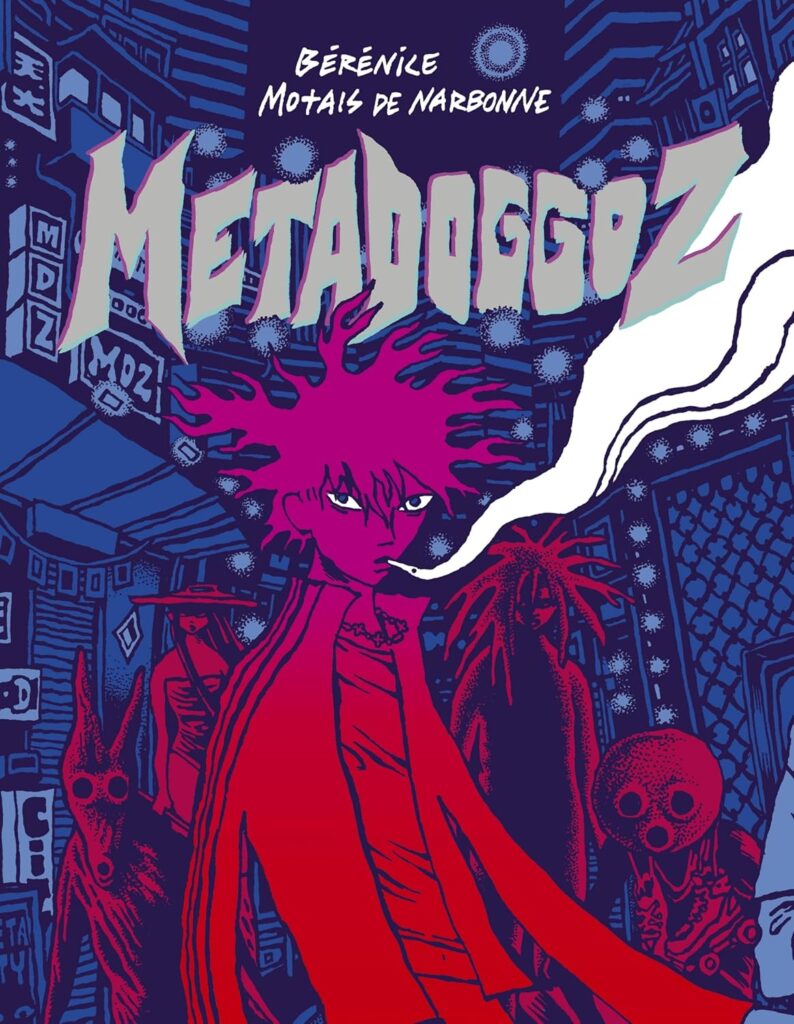
Easily the coolest graphic novel I’ve read so far in 2026, just oozing with style, for miles and miles (so much style that it’s waaaaasted!). Bérénice Motais de Narbonne’s Metadoggoz (originally published in French in 2023, and translated by Montana Kane for Drawn & Quarterly here) is a surreal cyberpunk explosion of cartooning excellence, channeling Taiyo Matsomoto’s Tekkonkinkreet and the anything-goes black-and-white ethos of Jim Woodring’s Frank. Narbonne’s metastation cities and gap-world creature designs are ferociously pure, rendered with a fearless density. Honestly, trying to color the work would send you straight to a therapist.
While I coasted on vibes for the book’s middle-act, Narbonne brings the work together in a satisfying conclusion of queer-punk outsiders finding their place, whether it was their intention or not. Found family can feel like an overused descriptor, but the purity of that goal is never diminished when it’s weaved this tightly in a genuinely fresh design. This is the graphic novel for anyone who loves shouting “Hell yeah, comics!,” for anyone who thought the third Matrix movie was really onto something, and for anyone who wants to see the future of the medium.

Shimazaki in the Land of Peace Vol. 1 – Vol. 8
Following the success of Way of the Househusband and Sakamoto Days, there’s a wave of manga imitators trying to capture the natural slice-of-life comedy and action that stems from “tough as nails action hero does normal life stuff.” As you’d expect with derivative creativity, it’s generally not as good. That’s what I expected of Shimizaki in the Land of Peace by Gouten Hamada and Takeshi Seshimo (Kondasha), a series set up to follow Shingo Shimazaki after 30 years captured and turned into the ultimate weapon by terrorist organization the LEL. Fortunately, Shimmy doesn’t want to be that kind of manga at all. It’s not even that Hamada and Seshimo can’t be funny – I’ve rarely smiled so broadly at a character’s attempt to make pour over coffee – it’s that they mash slice-of-life, action and the occasional wandering ronin genres into something wholly unique. It’s a pitch-perfect serious character study and look at a community of trauma survivors, bouncing in and out of tones with an almost unbelievably natural flow.
When Shimmy wants to do action, our lead transforms into El Nebulo and it’s the closest thing ongoing manga has to a John Wick. But then a chapter later, the creators comfortably slide into that same Wick saving a sandwich shop with his international knowledge. Again, there are cute funny moments, but largely it’s not played for laughs, it’s played for the development of Shimazaki fitting into a life devoid of constant violence. Naturally, that shadow lingers, as a web of espionage and LEL attempts to recapture their “asset” grow. It’s a remarkable work, intensely under the radar!
The Bugle Call: Song of War
I’m trying to improve my manga credentials this year (some folks get advanced degrees as they approach mid-life. Not me! I make up credentials!), which led me down a fun rabbit hole exploring all the most interesting “new gen” 2020s manga (I smell a future CBH guide!). So far (and I’ve got a lot more reading to do!), the only book that knocked my hair off and my socks straight back is The Bugle Call: Song of War by Mozuka Sora (story) and Higoro Toumori (art). Fortuitously, the sixth Viz volume translated into English just hit stores, making it a perfect recommendation for the best manga of 2026.
As Sora and Toumori make fun in some back matter, The Bugle Call is kind of X-Force/Suicide Squad set in a medieval fantasy, but listen, if every comic with young people developing superpowers had to pay X-Men royalties, we’d never get anywhere (and X-Men would still owe Doom Patrol!). I am not prone to liking manga playing at the battle of Helm’s Deep (it often winds up feeling like… I could just go read more Berserk?), but somehow this book about the damn BUGLER alerting armies is the most compelling piece of superpowered action I’ve picked up this year.
For starters, the powered individuals – the Branched – are extremely compelling characters with uniquely portrayed abilities. Even in cases where I’ve seen this ability before – what’s up Mirror Master! – Sora and Toumori find fresh innovative ways to bring them to life. One character in particular – Zoe – has a powerset that gave me those Isca the Unbeaten feelings (my Krakoa heads know what I’m talking about!). Plus, the creative team are extremely smart about powerset synergies, combining seemingly minor gifts into unstoppable army destroying tide-turners. Of course, all of that isn’t worth much if Toumori doesn’t bring it all to life in captivating ways, and HOLY GUACAMOLE the Looking Glass v. Zoe fight in Volume Four! If you like meta panel explosions have I got a manga for you!
The Bugle Call: Song of War is my favorite ongoing manga right now, honestly even surpassing my long-running favorite Chainsaw Man as Fujimoto approaches the endgame there. This book rules. Check it out!
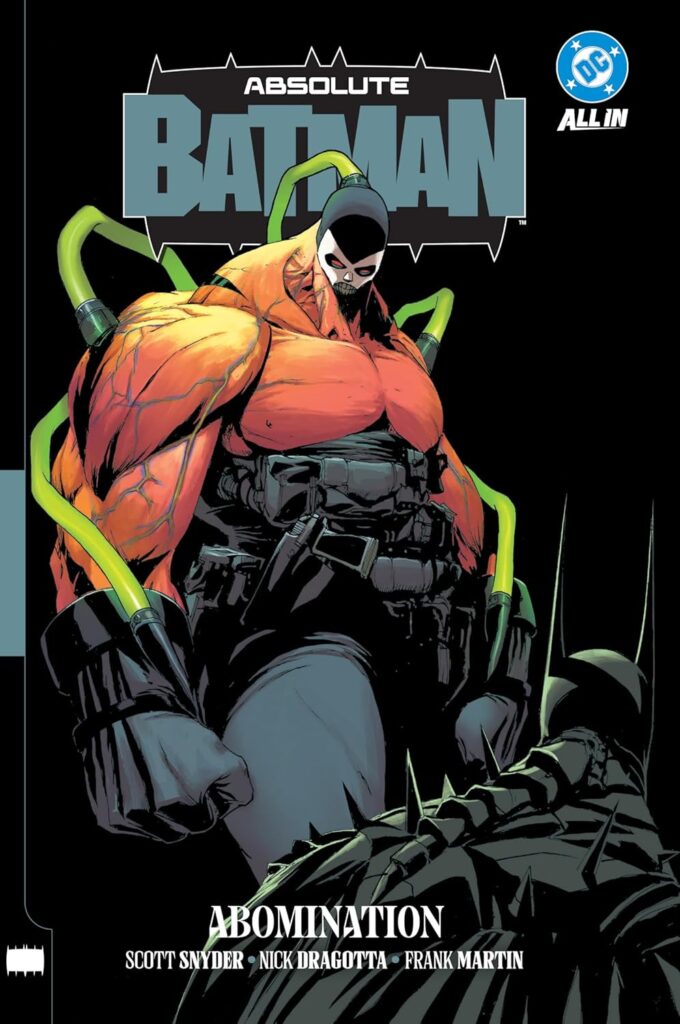
Absolute Batman Vol. 2 / Absolute Wonder Woman Vol. 2
Ok, fine, since you’re being so PUSHY… I definitively declare my allegiance to Absolute Batman as my favorite Absolute DC comic (at least until Absolute Wonder Woman Vol. 3 makes me flip flop yet again!). Does it matter which one is subjectively better? Of course not. The point here is we have creators giving their all to just-fresh-enough spins on the ol’ super friends, with the editorial conviction to ensure the best artists working in superhero comics (Nick Dragotta and Hayden Sherman take all the bows) get to do their thing. It’s almost literally all I want from superhero comics in 2026. And then when there is a scheduling fill-in on Batman… it’s GD Marcos Martin! Be still my art!
One of the natural concerns with DC’s Absolute Universe is how long DC can keep it feeling vibrant and friendly to new/lapsed readers before it gives way to that all-too-familiar – looks over both shoulders to make sure MCU stans aren’t listening – fatigue. As these second volumes are hitting shelves Marvel’s Ultimate 2niverse is already on the way out the door! Typically, two to three years is the sweet spot for a shared universe or big idea (New 52, DC Rebirth, Marvel NOW, House of X / Powers of X) before the ideas start to run stale and the freshness wears off. I don’t expect the Absolute U to necessarily be any different. BUT that means we are right in the sweet spot of when this candy tastes the best – enjoy it!
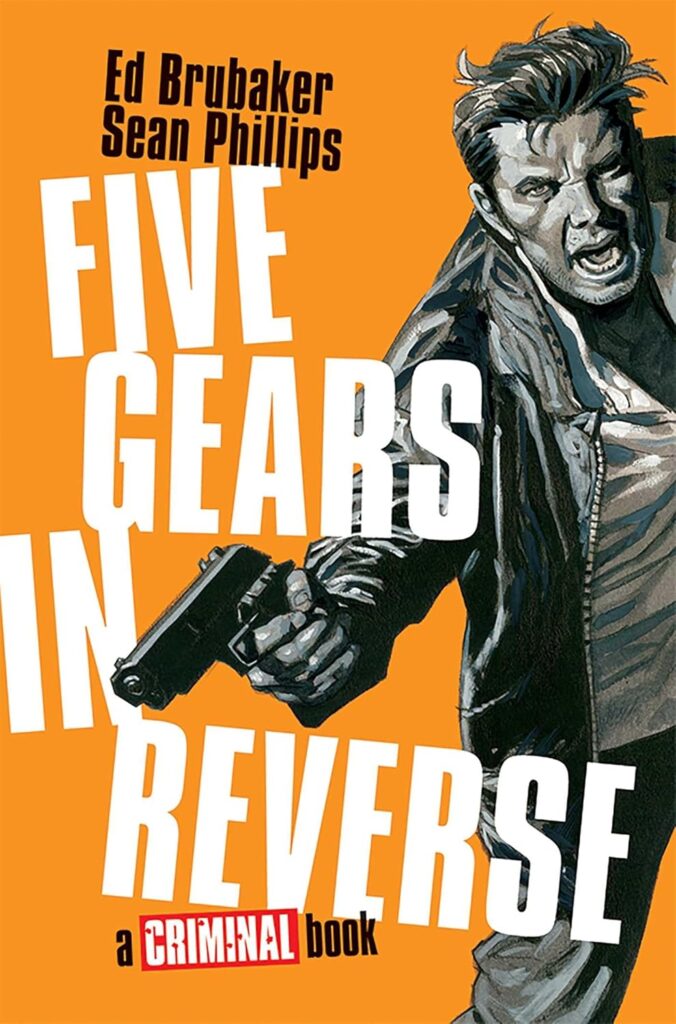
Criminal: Five Gears in Reverse
Ed Brubaker and Sean Phillips are first ballot comics hall-of-famers, probably the surest bet creative team of the entire 2000s, and Five Gears in Reverse, the newest graphic novel set in the Criminal Universe, is the hardest fastball they’ve thrown since Criminal’s return in 2019. These guys have the right to tell their stories however they damn well please, but hey, I’m pleased that heading into Criminal’s adaptation debut on Amazon Prime, they opted for hard, fast, Ricky Lawless crime, where you know every decision is going to be the wrong one, and if you’ve read the second volume of Criminal (“Lawless”) you know exactly what that means for Ricky. Brubaker and Phillip’s greatest trick here is I’m still half-wondering how the hell he walks away.
Five Gears in Reverse is classically tragic and violent noir, but it’s also richly humorous, particularly in the early going as Ricky botches his first job in ways that only “he has a heroin-whoopsie” can quite suggest. This is a prequel 20 years in the making (chronologically, the story is set 2 years before the Criminal Universe launched in 2006), and it’s truly unprecedented how consistent Brubaker and Phillips have been with all things Criminal during that stretch. Let’s be honest, most comics creators don’t return to their hits because things are going great, but with Brubaker and Phillips it always feels like the comics they were put on this earth to make. They can detour in all kinds of truly excellent ways (Fatale, Pulp, Reckless) but it’s Criminal where they’ve announced to the comics world for 20 years and counting that this is the creator-owned bar you should all aspire to.
Five Gears in Reverse is my favorite Criminal graphic novel of the 2020s. Long live Criminal!
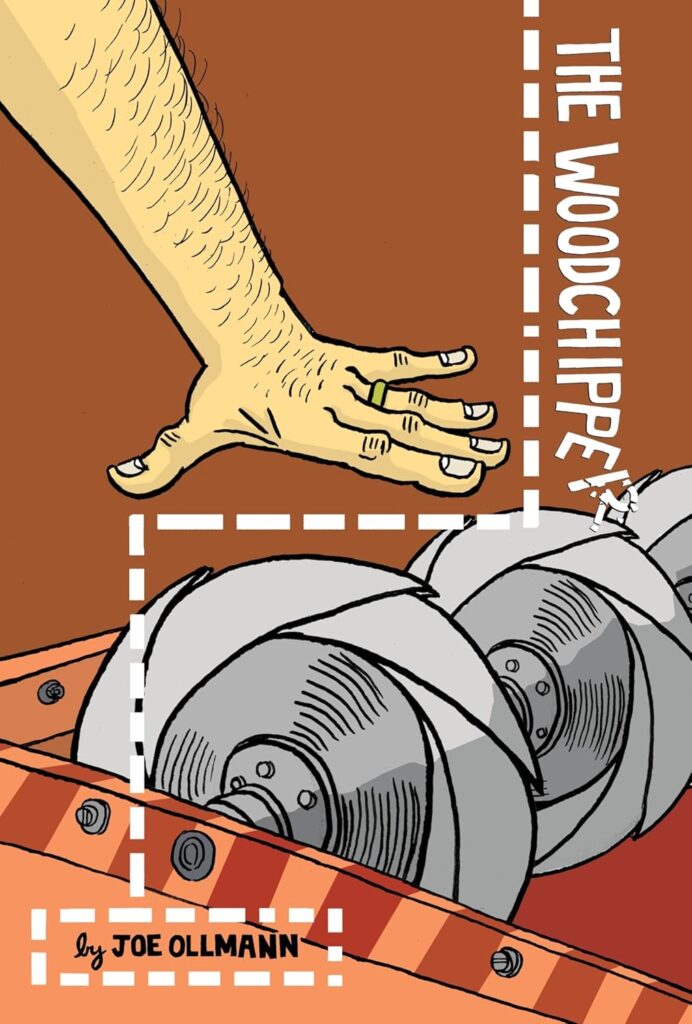
The Woodchipper
Joe Ollman’s new collection of short stories (5 stories, at a 9-panel a page pace essentially makes for 5 compelling graphic novellas!) shows just how far empathy for the inner lives of the average American can take a master cartoonist. In each of the five stories, Ollman dives headfirst into the heads of the working class, waltzing up to slightly sensationalized moments that – with one exception! – never even come close to escaping the bounds of reality. As the narrator puts it in the work’s first story, “The Woodchipper”, nothing actually happened. And yet. As we come to find in this story, the narrator’s whole life is upended, he’s unable to function near the sound of chainsaws or electrical equipment (quite essential for construction!) after he nearly turns on a woodchipper before checking and finding a dumb-as-rocks colleague with his hand in the equipment trying to get out his phone. Sure, nothing actually happened. And yet.
Elsewhere we meet a bookstore employee trapped in the office bathroom during Christmas or a landlord who discovers his rental property was the site of a brutal homicide. The scale and scope of the work is relatively small (we spend most of one story in a bathroom after all!) but the urgency of what these moments mean for each character are gripping. The lone exception is the collection’s middle piece, the longest of the five, centering a security guard for a highly questionable mega-corp that experiments on animals. The curiosity for the inner life of Kara is no less rich, but as Kara befriends the vegan animal rights protestors, the work builds to the most dramatic action (and reveal!) of any story here. It’s the only one of the five works that borders on the supernatural. And yet… maybe not. Like most of Ollman’s endings, no morals are overtly declared. It’s up to us to decide what just happened.
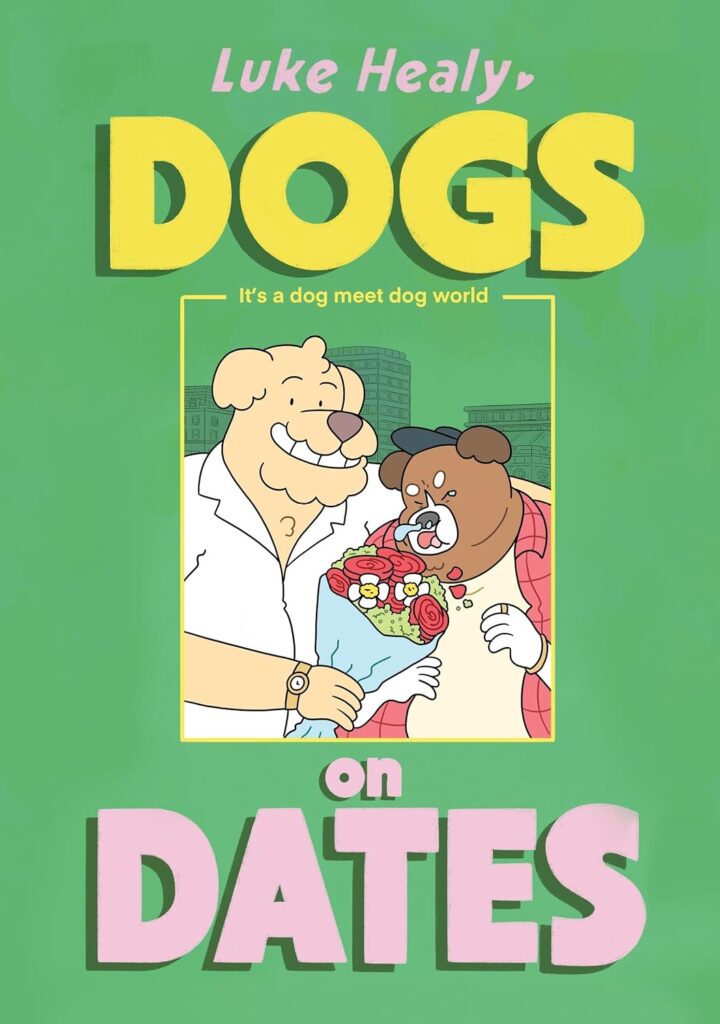
Luke Healy is my favorite comedy cartoonist working today. We talk all the time about how hard it is to sell comedy in comics, but Healy’s approach of believably absurd escalation, queer sass, and heartfelt characters makes it look easy every time. Self-Esteem and the End of the World was one of my favorite graphic novels of 2024, and Healy’s back at it again – this time with talking Dogs! – as Dogs on Dates is quickly one of my favorite works of 2026.
Honestly, the decision to make this a romantic-comedy with anthropomorphic dogs (I think just the Dogs talk, too… one of them has a Goat as a pet!) is its own piece of humor, as absolutely nothing that happens in these pages is specific to dogs. It’s purely a touching, hilarious and at times tense queer relationship, framed by counting our lead couples each and every date (with an emphasis, of course, on some of the more eventful ones). Healy’s a master at the demanding tradition of punchline-a-page newspaper strips, alternating here between single page vignettes and fully realized short stories where the humor can compound over time. The approach builds an astonishingly well-paced window into Brad and Bernie’s growing love.
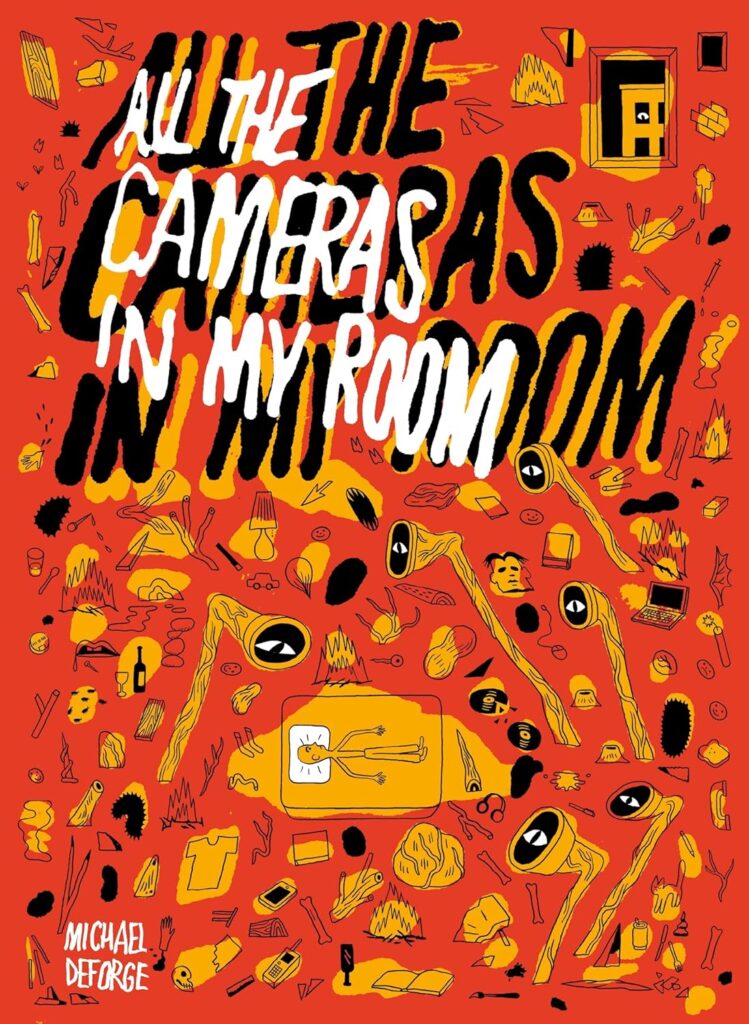
And now, a very special presentation of the most exciting thing in comics this year:
Camera pans in slowly on bearded, rapidly aging man sitting softly on couch. He is holding an ice pack on a recently separated shoulder that occurred while playing basketball, this upon his return from a strained calf that put him in a walking boot. He considers whether he is too old to play competitive basketball, but then remembers, “I’m the same age as Steph and KD, and much younger than Lebron,” and is clear in his foolhardy pursuit of hoops nirvana. In his offhand he holds the new graphic novel from Michael Deforge, and opens the front cover.
“What,” he exclaims masculinely to no one, as he finds a pocket inside the front cover that reads “The Spins,” with an arrow pointing up to a minicomic placed inside.
“WHAT!” he exclaims more shrilly now, as he pulls out the minicomic, which is inside a larger comic.
“LET’S GOOOOOOOOO!!!!” he screams, waking up the baby, as he begins to read Michael Deforge’s minicomic, “The Spins,” which is – and this cannot be emphasized enough – a small comic within a larger comic.
Camera zooms all the way in on the man’s immaculate eyes and beard, both immaculate, the eyes and the beard, though it would seem excessive to label them both as such in the same sentence. One would not want to seem arrogant. The look on his face is pure, pure joy. The baby wails. His wife is saying something like, “Seriously, Dave?” Pure joy.
This has been a very special presentation of the most exciting thing in comics this year.
I’ll also note that last year’s Holy Lacrimony was the push I needed to say I’ll read anything by Michael Deforge (it wound up inside my 15 favorite comics of the year). For my money, All the Cameras In My Room is even better, 14 short stories that range from weird, hilarious and insightful to hilariously weird yet insightful. This is my favorite graphic novel from Deforge to date, and it offers the fullest glimpse of the cartoonist’s unfettered vision.
To get these picks sent directly to your mailbox every month, sign up here for free.
The post The Best Comics of 2026! (So Far!) appeared first on Comic Book Herald.


I’ll be honest, through the first three months of the year I was getting worried for 2026, but don’t worry your pretty little head, April’s guide to the best graphic novels is stacked (‘specially in the back!). Most importantly, I have a new favorite ongoing manga, and it’s my favorite new book of the month. Check out all the picks below!
To get these picks sent directly to your mailbox every month, sign up here for free.
To see the full year’s list, check out the best comics of 2026 (updated monthly!).
Tower DungeonIf you had any doubt that it’s Absolute Batman’s world, and we’re all just living in it, let me present to you the weirdest path to CBH’s favorite manga of 2026! I fell in love with Nihei Tsutomu’s Blame! over the last few years, and excitedly pre-ordered volume one of their new fantasy labyrinth manga Tower Dungeon. I don’t know if it was all the Elden Ring I’d been playing (if you close your eyes and see tarnished, you might be a ringneck!) but something about the video game mechanics of the first volume felt underwhelming, and I mentally set a reminder to reconsider the work after a few years. Then here I am simply going about my business, and I catch a Popverse article (https://www.thepopverse.com/comics-absolute-batman-nick-dragotta-manga-influences) about the influence of Tsutomu’s Tower Dungeon on Nick Dragotta’s incredible approach to Absolute Batman!
Well, if it’s good enough for the guy turning Bane into a venom-Kaiju, I am more than happy to admit I was wrong!
I’m fully caught up on Tower Dungeon now, and fully converted. The journey through Tsutomu’s endless staircases doesn’t have quite the same unreal design of Blame!, but it’s narratively more concise, and I can clearly see what Dragotta might find compelling about the monster design. Whether it’s Dragons, Basilisks or Necromancers eating baby bugs out of their umbilical cords (gross!), Tsutomu puts a unique spin on familiar fantasy, with a charming, slightly playful cast making their way up an endless tower to save the princess (yep, them tropes be tropin’!). So hey, it took Absolute Batman to reconnect me to a new favorite manga, but that’s just the power of the best superhero comic!
The Power Fantasy Vol. 3Well, that escalated quickly. The Power Fantasy Volume Three takes us through 16 issues of a start-to-finish look at what happens when 6 superpowered Atomics (Think omega level mutants, or quasi Dr. Manhattans) try to shape the world. Spoiler alert: A lot of dung hits a lot of fans! Kieron Gillen and Caspar Wjingaard continue crafting one of the more earnestly reflective and thoughtfully designed commentaries on superheroes-as-nuclear-weapons. While The Power Fantasy has toyed with alternate history, it’s largely window dressing that helps build the world and keeps the focus on the book’s true aim dissecting whether anyone should have this kind of power. And once that power is obtained, what should actually be done with it?
The most interesting thing about this volume might be the inside baseball reflection of what it means for independent comic books (Gillen has shared that the series will continue only as collected trades, and forego single issues). But just on narrative alone, The Power Fantasy remains one of the most satisfying superhero reads in comics in 2026. The thrill of seeing Wjingaard’s design for Masumi’s monster-power or that final page twist are best-in-class. Volume Four will be fascinating, however we read it, and I’ll be there day one. Sure, I hope for approximately 10,000% less utilitarian analysis, but day one I say!
Bury Me Already (It’s Nice Down Here)As the most notorious Big Daddy in comics criticism, I have felt endlessly grateful that my wife and I had our first babies (how many do we have? Even I don’t know for sure!) right before the 2020 pandemic shutdown. I cannot imagine the stress and pandemonium of going to the hospital for the birth of a child during that time. Well, I don’t need to, as Julia Wertz lived it, and documents the experience in her new memoir Bury Me Already: It’s Nice Down Here.
As I learned for the first time reading Impossible People (one of my favorite 25 graphic novels of the 2020s so far!), Julia Wertz is such a phenomenally funny, honest, emotive cartoonist. That package is fully on display here, as Wertz covers her full pregnancy experiences, from consideration to miscarriage to emergency caesarian and beyond. Much like Liana Finck’s How To Baby, Wertz is able to capture the full impossible, miraculous journey to motherhood, warts and all. Simplifying Bury Me Already as Wertz’s “Mom” book is a disservice, even though that’s the tether.
Nights Vol. 3In basketball analysis, they talk a lot about players ‘making a leap,’ aka a clearly talented individual taking their game to the next level and elevating from star to superstar. As a Bulls fan, this usually happens once our players leave the team (Go and get it Coby and Ayo!), but it’s thrilling to see potential achieved. This is more of a rarity in independent comics, where market forces tend ot put an undue amount of weight on how a series begins. I’m certainly guilty of this as well, although I make an effort to consider ongoing comics with some longevity as seriously as I consider shiny new opening arcs (on CBH’s best of 2025, I included 5 new volume ones and 6 stale old ongoings in the middle of their runs!).
The first volume of Nights was among my favorite comics of 2024, but I felt the second volume didn’t measure up. Reading volume three – aka Season Two, Part One – was a bit of a revelation, as creators Wyatt Kennedy and Luigi Formisano completely reset the setting, tone and focus of the book, and once again achieve comics excellence. Swinging a relatively successful Image book back to an arc completely set in the past is a huge risk, but Kennedy and Formisano prove it’s exactly what Nights needed. We’re pulled out of the modern day YA supernatural angst to the ancient days of the 1970s, with a focus on CHIMERA, the superspy network deadset on wiping out or controlling the supernatural – which of course puts them on a crash course with a younger vampire Gray.
The prequel-gambit suggests a longevity and depths to Nights that I wasn’t sure we’d see, and I’m so excited about that! Nights has made the leap, and it’s one of the best ongoing runs of 2026!
ArmaveniThere are too many graphic novels about genocide. This is of course less the fault of the artists than the history, where one would be too many. But as awareness increases globally, and squashed histories become harder than ever to keep from rising like the phoenix, I’m finding a comics landscape suddenly full of familial legacies that make me question what I ever saw in humanity.
Armaveni is Nadine Takvorian’s personal history of the Armenian Genocide of the mid 1910s via Levine Querido books. Takvorian is a gifted cartoonist, with a natural ability to weave memoir, flashback and family histories into one informative, emotionally gripping work. At one notable point, Armaveni contains one of the most searingly memorable depictions of genocide in action that I’ve read. Educational with a heart, Armaveni is well worth a read.
Punk’N Heads“Teenage angst has paid off well; Now I’m bored and old.” Dave Baker and Nicole Goux have made a habit of capturing the messy transition into adulthood (F*** Off Squad, Forest Hills Bootleg Society), and for my money, Punk’N Heads is their most effective collaboration yet. I thought this would be because I’m a sucker for bad/emerging rockers. Spinal Tap, Tenacious D, Flight of the Conchords, and of course, last year’s Beat It, Rufus from Noah Van Sciver. While Punk N’ Heads is very much about a subslice of the punk rock scene in LA, I did have to recalibrate my expectations for Baker and Goux’s aims. In short, it’s not a rock comedy, it’s a character drama, where yes, sometimes there’s great comedy in a queer punk rock band wearing pumpkin heads gets booked for a children’s birthday party.
Once I made this shift in my reading, the inner riches of Punk’N Heads hit my system with the right force. Baker and Goux are modern masters at illustrating the mess, confusion, and potential of finding direction and community in your 20s. As the work progresses, that focus hones in on some soul-stirringly profound reflections on creativity and the lifelong artistic goal of truly capturing your voice. Goux is perfectly suited to render these emotive considerations visually – as you know, if you’ve read This Place Kills Me with Mariko Tamaki – putting a truly remarkable amount of detail into everything from a painter’s trailer to the more obviously spectacle-laced full-page rock-out spreads.
It’s a longer work with relatively concentrated heavy character beats, so Baker and Goux wisely separate chapters both with Silver Age romance comics scene-setting, and manga-outtake esque mini asides between chapters. It might seem like a small thing too, but Goux’s book design features one of my favorite additions of the year – pumpkin head fold outs on the front and back covers! These can be used as bookmarks, they look fun, AND that’s what the band wears. YES. Book design!
Uri Tupka and the Gods: Another Story from Lands UnknownMike Mignola loves comics storytelling so much that he’s rebuilding a whole new mythology from scratch – post Hellboy (one of the great comics landscapes of the modern era)! It’s among the most positive late-stage career arcs in the history of comics, an industry which obviously has more than its fair share of heartbroken creators. Mignola’s Lands Unknown are certainly in line with the author’s established fixations – dark magic, secret mythologies, quirky talking animals making lil’ jokes while you read some of the darkest folk you’ve seen in your life – and I for one just can’t get over how fun it is to see the legend so obviously enthralled.
I prefer Uri Tupka and the Gods to the previous entry (the quite good Bowling with Corpses), largely because it centers the anthology of short folk-horror stories around the titular Tupka (say that twenty times fast!). It’s a more focused guide through the Lands Unknown, where the depth of history and cosmology can overwhelm at this (seemingly) early stage. Tupka will return later this year with Uri Tupka and the Devils, and I absolutely can’t wait. A new Mignola graphic novel every year? Say less!
The WarDammit, Garth. I was having a nice evening pretending we aren’t all a madman’s itchy trigger finger away from utter annihilation! The War is a completely uncompromising modern horror story that disintegrates the daily comfort of thinking nuclear war couldn’t happen because no one would be crazy enough to kick off mutually assured destruction. Garth Ennis and Becky Cloonan (alongside colors from Tamra Bonvillain and letters from Pat Brosseau) take us inside one group of NYC friends as the situation progresses from faux-intellectual party-fodder (can it really be a party unless a guy is mansplaining global war?) to European bombing to New York fallout. The scary part of course is not just that Ennis and Cloonan could bring something so bleak to life – and don’t let the bleakness make you think the work isn’t a page-turner – but that even the act of reading and writing about the graphic novel feels like an active coping mechanism for the threat’s terrifying reality.
Despite the reputation as a masterful shock-jock (Preacher, Punisher and especially The Boys on your resume will do that), Ennis’ last 15 years are full of nuanced, expertly designed war stories (Sara‘s my personal favorite), and some fascinating spectral horror (A Walk Through Hell remains an underrated work). Alongside the absurdly versatile Cloonan (fresh off the excellent horror of Somna), the duo is deliberately unrelenting in The War, largely avoiding sensationalized story beats (admittedly, the earned last page is a massive exception!) or really any feeling of a way out. Likewise, through a focus on fracturing or doomed relationships, the inevitably nihilistic conclusion maintains a troubling emotional core.
I hated how I felt after reading The War. And now you can too!
The Bugle Call: Song of WarI’m trying to improve my manga credentials this year (some folks get advanced degrees as they approach mid-life. Not me! I make up credentials!), which led me down a fun rabbit hole exploring all the most interesting “new gen” 2020s manga (I smell a future CBH guide!). So far (and I’ve got a lot more reading to do!), the only book that knocked my hair off and my socks straight back is The Bugle Call: Song of War by Mozuka Sora (story) and Higoro Toumori (art). Fortuitously, the sixth Viz volume translated into English just hit stores, making it a perfect recommendation for the best manga of 2026.
As Sora and Toumori make fun in some back matter, The Bugle Call is kind of X-Force/Suicide Squad set in a medieval fantasy, but listen, if every comic with young people developing superpowers had to pay X-Men royalties, we’d never get anywhere (and X-Men would still owe Doom Patrol!). I am not prone to liking manga playing at the battle of Helm’s Deep (it often winds up feeling like… I could just go read more Berserk?), but somehow this book about the damn BUGLER alerting armies is the most compelling piece of superpowered action I’ve picked up this year.
For starters, the powered individuals – the Branched – are extremely compelling characters with uniquely portrayed abilities. Even in cases where I’ve seen this ability before – what’s up Mirror Master! – Sora and Toumori find fresh innovative ways to bring them to life. One character in particular – Zoe – has a powerset that gave me those Isca the Unbeaten feelings (my Krakoa heads know what I’m talking about!). Plus, the creative team are extremely smart about powerset synergies, combining seemingly minor gifts into unstoppable army destroying tide-turners. Of course, all of that isn’t worth much if Toumori doesn’t bring it all to life in captivating ways, and HOLY GUACAMOLE the Looking Glass v. Zoe fight in Volume Four! If you like meta panel explosions have I got a manga for you!
The Bugle Call: Song of War is my favorite ongoing manga right now, honestly even surpassing my long-running favorite Chainsaw Man as Fujimoto approaches the endgame there. This book rules. Check it out!
To get these picks sent directly to your mailbox every month, sign up here for free.
The post My Favorite Graphic Novels of April 2026 appeared first on Comic Book Herald.


I’ve been tracking and ranking all my favorite (and least favorite!) comic books for well over a decade publicly on Comic Book Herald on the world’s most regularly updated best comics of all time guide. While the behind-the-scenes spreadsheet is approaching 1,500 ranked works, I publish the top 500 as my recommended favorites (and think they’re all quite good!). I’ve largely avoided breaking that list out into categories, but I get enough requests for just the superhero side of the coin, so ya know what, fine, we’ll break this puppy out into a best superhero comics guide!
Much like the government’s definition of pornography, I know superhero comics when I see them. Obviously, anything from Marvel and DC are easy pickings, but the selections below won’t be limited to the Big 2 superhero universes. There may well be some here that you think don’t qualify as “superhero” in the traditional “capes and superpowers” sense. That’s fair! I also won’t be changing anything! The decision’s been made! Stop pushing!
The best superhero comics guide is broken into four categories:
- The 10 best superhero comics of all time
- The 10 best indie superhero comics
- My 10 favorite superhero graphic novels and runs of the decade
- My 10 favorite superhero comics right now
If one of your favorites is missing, I’d recommend checking my best comics of all time list to see if it’s there, just slightly further down the list. It probably is. If it’s a Big 2 book, there’s a statistical certainty I’ve already read it, and if I liked it, it’s just outside the top 10 comics I’ve listed here (unless it’s one of the brand new ones!). That said, if you really think there’s a contender that belongs that I may not have read, I would love to hear about it so I can read it! Comics! They’re great!
Finally, if you want to dig deeper into some superhero comic book universes, here are some of the most popular guides on CBH:
Popular Superhero UniversesMarvel Comics
DC Comics
Energon Universe (Transformers & GI Joe)
Invincible
Massive-Verse
My 10 Favorite Superhero Comics of All Time!10) Frank Miller’s Daredevil
Publisher: Marvel
Creators: Frank Miller, Klaus Janson
Miller’s Daredevil is a run so utterly foundational to the character that it’s frankly impossible to discuss ol’ hornhead today without acknowledging Miller’s impact. What’s often overlooked amidst the gritty noir and martial arts mastery that Miller infused into Hell’s Kitchen is the surprising sense of humor and character work present from the earliest issues. Seriously, the likes of Turk Barrett temporarily taking over as Stilt-Man, or Foggy Nelson’s absolutely iconic, albeit brief, turn as “Guts” provide a much-needed levity amidst the groundwork of everything we know about Elektra, Kingpin and Stick. And look, if you get me the right drinks, I might just admit that I actually like Miller’s Daredevil work more than his highly lauded Batman: Year One and The Dark Knight Returns. Don’t tell anyone I said that.
What’s especially impressive about Miller’s tenure with the Man Without Fear is that his original run, alongside Klaus Janson, is already considered gold-standard work, defining Matt Murdock for a generation and elevating Daredevil into the top tier of Marvel heroes. But he didn’t stop there. Miller then returns, years later, with artist David Mazzucchelli for the utterly breathtaking “Born Again,” a story that remains one of the most critically acclaimed comic book arcs of all time. And still, he wasn’t done, later collaborating with John Romita Jr. on the seminal origin story “The Man Without Fear.” It’s an unparalleled hat trick that solidified Miller’s legacy not just as a Daredevil writer, but the Daredevil writer for many.
9) All-Star Superman
Publisher: DC
Creators: Grant Morrison, Frank Quitely, Jamie Grant
This twelve-issue masterpiece doesn’t waste time with gritty deconstruction or cynicism. Instead, it boldly embraces the purest, most aspirational ideals of the Man of Steel, delivering a Superman for the ages. There’s a good reason James Gunn was hurling copies of All-Star Superman at anyone who would listen in the run-up to his own take on the hero; there are few better ways to get modern audiences excited about the boundless potential of Superman than Morrison and Quitely’s work here. It’s a love letter to the character, and an incredibly effective entry point.
Facing his impending death from overexposure to the sun, Superman embarks on a series of final, profound acts of heroism – from curing cancer to saving a suicidal girl to dealing with anything and everything Lex Luthor is scheming in the background. Each issue is a self-contained gem, yet they all weave together to form a cohesive tapestry of hope, wonder, and humanity.
8) Miracleman
Publisher: Eclipse
Creators: Alan Moore, Garry Leach
One of the earliest and finest examples of superhero subversions, as Alan Moore worked his way to Watchmen’s defining treatise on the genre. Miracleman’s influence on superhero comics is among the most far reaching of all time, shaping everything from Astro City to Infinite Crisis to Ultimate Spider-Man. Its influence is only overshadowed by three decades of legal copyright issues that kept the work largely out of print!
Starting life as Marvelman in the UK’s Warrior magazine, the forgotten Golden Age character was violently reanimated by the unparalleled vision of writer Alan Moore. Alongside artists Garry Leach and, crucially, John Totleben, Moore dragged childish superhero comics into a horrifyingly realistic and mature new era. What if superheroes were real? What if their powers weren’t just fantastic, but terrifying? Moore explored themes of unchecked power, broken identities, and the terrifying implications of god-like beings on Earth, culminating in the shocking destruction of the showdown between Miracleman and Kid Miracleman.
7) Hawkeye
Publisher: Marvel
Creators: Matt Fraction, David Aja, Annie Wu, Matt Hollingsworth
There’s one piece of Hawkeye that is more transcendent than any other: David Aja and Matt Hollingsworth’s storytelling and visual acuity. Simply put, it looks like nothing Marvel Comics published at the time, before or since really. This is one of my favorite things about Hawkeye because despite the way I’m celebrating its differences, Fraction/Aja and team still aren’t running from the superhero landscape of the Marvel Universe that Clint and Kate call home. Hawkeye isn’t embarrassed to be a superhero comic, it just isn’t the focus.
The idiosyncratic nature of the style, the fact that it looks quite unlike anything in Marvel Comics of the time, and the way this was embraced by readers leaves one of the most influential legacies of any artist on any Marvel Comics of the entire millennium. For my money, Fraction and the team capture Clint perfectly, surrounded by gorgeous, brilliant, strong women, and stepping in it every time he opens his mouth. Essentially, Fraction and Annie Wu find appropriate time for Kate Bishop, the legacy Hawkeye who takes over the mantle – who simply claims it as her own and is proven right to do so! – and is just as essential to the book’s success as any character. All told, Hawkeye is one of the most influential superhero comics of the 2000’s.
6) Mister Miracle
Publisher: DC
Creators: Tom King, Mitch Gerads
Tom King and Mitch Gerads crafted an instantly iconic story about parenthood, New Gods, and the uncertainty of existence. Mister Miracle features gorgeous romance between Scott Free and Big Barda, captures all the highs and lows of new parenthood, and showcases Darkseid’s casual enjoyment of veggie trays. Literally what else are we looking for here? Comics like this just don’t come around every year, but when they do it’s a welcome reminder why I dive into shared superhero universes so frequently. There’s drivel, and there’s muddled trash, but Highfather’s Beard, when the medium is crafted like Mister Miracle it’s the greatest show on earth.
King and Gerads strip away the typical superhero bravado to give us Scott Free, the universe’s greatest escape artist, in a raw and vulnerable state, contemplating the ultimate escape. King’s signature nine-panel grid is used to brilliant, claustrophobic effect, mirroring Scott’s internal struggles and the constant, inescapable war between New Genesis and Apokolips. Gerads’ art hits here like unearthing a lost VHS of your new favorite movie. This duo’s done great work together, and Mister Miracle is the best of it.
5) Grant Morrison’s Doom Patrol
Publisher: DC / Vertigo
Creators: Grant Morrison, Richard Case, Scott Hanna, Doug Braithwaite
Grant Morrison, Richard Case, and John Workman reshaped the Doom Patrol’s Silver Age superhero world, pushing the central concept to its absolute limits, and taking it to realms it had never been. A spiritual successor to Steve Gerber’s Defenders, in a Claremont X-world, Morrison’s vision was a hurricane of neverending big ideas, influenced by everything from Dadaism to experimental European filmmaking. By the time it was over, one thing was clear: This was the defining run, now and forever. As the concept’s creator Arnold Drake put it, this is the one run that understood the concept and fulfilled its intentions best, even better than its own creator. It’s a foundational text for the kind of transgressive, intelligent, and deeply weird storytelling that would later define much of the Vertigo imprint.
4) The Dark Knight Returns
Publisher: DC
Creators: Frank Miller, Klaus Janson, Lynn Varley
Frank Miller’s The Dark Knight Returns, with Klaus Janson on inks and Lynn Varley on colors, is formally ambitious, employing its iconic 16-panel grids not to slow things down, but to create an incredibly propulsive, almost suffocating narrative energy. It often gets lumped in with Watchmen as a “superhero deconstruction,” but frankly, that misses the point entirely. This is a book that revels in being a superhero action comic – we’re talking an older, grizzled Batman snarling like a wolf, fighting mutant gang members in mudbaths, and getting a glorious, classic-looking save from a new Robin, Carrie Kelly. It perfectly captures that primal, almost celebratory joy this aged Bruce Wayne finds in once again suiting up and pounding on the criminal element.
Nothing makes me appreciate TDKR more than the parade of imitations it spawned – Spider-Man: Reign, Avengers: Twilight, Marvel: Ruins, and even Miller’s own The Dark Knight Strikes Again – and how incredibly hard they make the original look by comparison. The scope of this miniseries is just phenomenal, scaling up with each issue, taking us from Bruce Wayne’s internal struggle and his return to the Bat, through Batman and Robin saving Gotham, to the final, brutal confrontation with the Joker, and then, most thrillingly, the ultimate showdown between Batman and Superman. It masterfully allows for all the scale a Batman comic can offer, from intimate conversations with Commissioner Gordon to the broader implications of the Justice League’s involvement in world affairs. Its impact is undeniable, making it essential reading for anyone who loves the medium.
3) Amazing Spider-Man by Stan Lee, Steve Ditko and John Romita
Publisher: Marvel
Creators: Stanly the Manly, Steve Ditko, John Romita, Artie Simek
Web-slinging out of the pages of Amazing Fantasy #15, Amazing Spider-Man is the comic book all other superhero comics aspire to be. Steve Ditko and Stan Lee created an icon, and the first 100 or so issues (the first 38 issues Ditko plotted and drew before John Romita took over artistic duties) are shockingly fun and captivating all these years later.
These are the comics that reminded me I love comics, and there’s never a bad time, age, or era to enjoy the original Amazing Spider-Man. For the record, the John Romita years are just as impressive (with iconic Green Goblin stories really taking off with Romita on the pen), and I’d encourage you to keep going strong with AMS for as long as it feels right.
2) Jonathan Hickman’s Avengers and Secret Wars
Publisher: Marvel
Creators: Jonathan Hickman, Jerome Opena, Mike Deodato, Esad Ribic, Leinil Francis Yu
Whereas Jonathan Hickman’s Avengers in many ways required an impending Secret Wars to justify the long game and the meandering, New Avengers was building the road to the end from day one. The concept is simple but endlessly compelling: What do the smartest, most powerful men in the Marvel Universe do when they have to destroy to survive? It’s a dark, deadly serious Illuminati title, and as such is the single most relevant read in modern Marvel.
Likewise, you won’t see me rave more passionately about any single Marvel event in the history of the publisher. I read every single Secret Wars tie-in, and somehow I didn’t burn out on the story once. Sure, I didn’t go outside for 9 months, but what good is the sun anyway? So yeah, I love Secret Wars. I love it dangerous amounts. I love it to the point that this write-up is getting weird. It’s great!
1) Watchmen
Publisher: DC
Creators: Alan Moore, Dave Gibbons, John Higgins
Alan Moore, Dave Gibbons and John Higgins’ classic masterpiece. Often mischaracterized as deconstructionist, ‘realistic’, or ‘cynical’, Watchmen is so, so much more. It’s a trailblazer for how superhero stories could be told, what was actually possible with them, and how they could be utilized to pose and explore powerful questions. Watchmen is a guidebook on how to use formalism to enhance your story, and to tell stories in fresh new ways, whether it be through prose backmatter, the 9-panel grid, or cutting across genres, and coloring.
Watchmen is the superhero graphic novel so influential it inspired an entire Comic Book Herald series considering how the work changed the industry and genre. Because there’s a before Watchmen (no, not that one) and there’s an after Watchmen, and that, my friends, is the sign of the greatest superhero graphic novel of all time.
Remember, if you’re looking for the full list of my favorite comics (superhero and otherwise!), check out Comic Book Herald’s best comics of all time!
My 10 Favorite Indie Superhero Comics!10) Zot!
Publisher: Dey Street Books
Creators: Scott McCloud
What’s to love? Masterfully crafted by Scott McCloud – the same genius who gave us Understanding Comics – and groundbreakingly infused with manga aesthetics at a time when that was far less common in Western comics.
9) Teenage Mutant Ninja Turtles
Publisher: Mirage
Creators: Peter Laird, Kevin Eastman
What’s to love? The original Teenage Mutant Ninja Turtles by Eastman and Laird is a lightning bolt of raw, independent creativity, an unexpected ninja action-comedy that took the world by storm and proved that even parody could become a phenomenon if the cartoonists are committed.
8) Atomic Robo
Publisher: IDW
Creators: Brian Clevinger, Scott Wegener
What’s to love? Atomic Robo is pure pulp adventure starring the eponymous robot and his nemesis Dr. Dinosaur, a perfectly executed blend of science and humor that never takes itself too seriously.
7) Invincible
Publisher: Image
Creators: Robert Kirkman, Cory Walker, Ryan Ottley
What’s to love? What if Peter Parker’s dad was Superman, and his comic didn’t have to keep up the illusion of change for eternity?
6) Astro City
Publisher: Image
Creators: Kurt Busiek, Brent Anderson, Alex Ross, Steve Buccellato
What’s to love? Busiek’s love of superhero comics shines through with every new issue, with a keen eye for a “boots on the ground” perspective of what it would be like to be a normal person in a world of Marvels. If you want to see an expert Marvel and DC aficionado put their spin on a similar verse, with slightly more realism and consideration for humanity, don’t look farther than Astro City.
5) Black Hammer
Publisher: Dark Horse
Creators: Jeff Lemire, Dean Ormston
What’s to love? In the same spirit as Astro City, Lemire and Ormston mash-up everything they’ve ever loved about superhero comics and put their own supernatural, mysterious and character-focused flair on the pastiche.
4) Grendel
Publisher: Dark Horse
Creators: Matt Wagner
What’s to love? You could make a strong case that Grendel is more appropriately categorized as crime, but honestly, there’s enough in master cartoonist Matt Wagner’s bag here to feel fine about sneaking a rec onto a best indie superhero comics list. If it weren’t for Hellboy, this would be the coolest comic on this whole list.
3) Supreme: Story of the Year
Publisher: Checker Book Publishing Group
Creators: Alan Moore, Joe Bennett, Rick Veitch
What’s to love? Alan Moore writes the best Superman comic of the 90s, but with analogs from the 90s Image Comics scene!
2) Hellboy
Publisher: Dark Horse
Creators: Mike Mignola
What’s to love? Horror, humor and horns combine in Mike Mignola’s all-time great creation, a supernatural universe that makes comics perfection look almost effortless (hint: it’s not actually!).
1) Mister Invincible
Publisher: Magnetic Press
Creators: Pascal Jousselin
What’s to love? Not the Invincible superhero comic you were expecting at number one, huh? A perfectly joyous exploration of the comics medium, with a superhero who can use the very format and structure of comics as his superpower!
The Best Superhero Graphic Novels & Runs of the Decade (2020 to Present!)— #10) AvA: Aliens vs Avengers
Publisher: Marvel
Creators: Jonathan Hickman, Esad Ribic
What I Love: In the parlance of the local youths I play hoops with, Aliens vs. Avengers is in its bag. In one of the stranger miracles of comics this year, these four issues feel like a proper sendoff to Hickman’s Marvel Universe works, a Marvel Universe: The End spurred on by those wiggly lil’ Xenomorphs.
— #9) The Eternals
Publisher: Marvel
Creators: Kieron Gillen, Esad Ribic
What I Love: Gillen and Ribic don’t just put a new spin on things; they do so in a way that contextualizes and synthesizes all of the previous versions, creating a kind of grand unified theory of the Eternals. Along the way, they also tell a densely-plotted, gorgeously-illustrated, rip-roaring tale filled with moments of fist-pumping excitement and tragic heartbreak alike. The end result is the best possible entry point into the Eternals for a new reader.
— #8) Ram V’s Detective Comics
Publisher: DC
Creators: Ram V, Various
What I Love: I didn’t know you could make a long run like this any more. In its totality, Detective Comics reveals a truly remarkable case for the long-form ongoing comic book, and the value of empowering a wide variety of creative voices to fulfill their visions.
— #7) 20th Century Men
Publisher: Image
Creators: Deniz Camp, S. Morian, Igor Kordey
What I Love: Deniz Camp and Stipan Morian set out with no less of a goal than putting a final rubber stamp on the superhero comics of the 2000s, transforming the influence of The Authority, The Ultimates and the MCU into the comic book equivalent of a redacted government secret history, stained in shame. Together, Camp and Morian are able to look directly into the eyes of empire and find it severely lacking.
— #6) Green Lantern: Far Sector
Publisher: DC
Creators: NK Jemesin, Jamal Campbell
What I Love: N.K. Jemisin and Jamal Campbell’s excellent addition to the long history of DC’s Green Lantern mythos. The story of Jo Mullein instantly refreshed what Green Lantern could mean in the DCU.
— #5) Teenage Mutant Ninja Turtles (Turtles Reborn)
Publisher: IDW
Creators: Sophie Campbell
What I Love: The Turtles help establish “mutant town,” and the community focus means the questions, considerations, and explorations are succinct and engaging. Plus, whether it’s Campbell on art or not, Turtles comics simply look fantastic, with Ronda Pattison’s colors ensuring vibrancy and tonal consistency no matter who’s drawing.
— #4) Fantastic Four by Ryan North
Publisher: Marvel
Creators: Ryan North
What I Love: North’s approach to the first family has been Planetary by way of the Magic School Bus, mashing heaping doses of imaginative science into one-off adventures that tap into the full gamut of genre. The end result is a run not only unique among contemporary superhero comics, but wholly unique in the 60+ year history of the Fantastic Four.
— #3) Wonder Woman: Dead Earth
Publisher: DC
Creators: Daniel Warren Johnson, Mike Spicer
What I Love: Diana wakes up in a post-apocalypse, as drawn by Daniel Warren Johnson and Mike Spicer. Say less!
— #2) Catwoman: Lonely City
Publisher: DC
Creators: Cliff Chiang
What I Love: My favorite DC Black Label graphic novel is Cliff Chiang’s vision of a future for Selina Kyle and Gotham City, inevitably seen as a response to Frank Miller’s The Dark Knight Returns but with a flavor all its own.
— #1) Immortal Hulk
Publisher: Marvel
Creators: Al Ewing, Various
What I Love: Immortal Hulk will go down as a constant presence on “Best of Marvel Comics” lists for years to come, and with the exception of “Planet Hulk,” it’s honestly hard to even consider other contenders for Marvel’s best Hulk work. 50 glorious issues transforming the possibilities we consider for one of the most iconic characters in pop culture.
The Best Superhero Comics Right Now (2026)!And finally, my picks for 10 favorite superhero comics in comic book stores at this very moment!
The Rules:
- Even if single issues or manga chapters have concluded, I’ll keep the work listed until the collections have hit shelves. If a run ends, it moves off this list and onto my picks for favorite comics of all time!
- My definition of superhero is not confined to Marvel and DC!
- I’m very unlikely to include a work here until it has at least one collected edition out in the wild. As always, exceptions will follow, as this is my kingdom, and rules are for cowards!
- Enjoy the comics!
— #10) Captain America
Publisher: Marvel Comics
Creators: Chip Zdarsky, Valerio Schiti
What I Love: Zdarsky’s Doctor Doom-centric commentary does directly align with a “ripped from the headlines” feel of America’s current intervention in Iran. The geo-political intrigue isn’t first of its kind, but Latveria does offer an interesting metaphor for American interventionism.
— #9) Absolute Green Lantern
Publisher: DC
Creators: Al Ewing, Jahnoy Lindsay
What I Love: While initially on the fence, Ewing and Lindsay are fully firing another Absolute Universe winner as they get more and more cosmic with Green Lantern.
— #8) Poison Ivy
Publisher: DC
Creators: G. Willow Wilson, Marcio Takara
What I Love: It’s well worth a moment to celebrate Poison Ivy, not only one of the longest running ongoing runs of the last three years, but given the character’s supplemental Batvillain origins, one of the most unlikely.
↓ #7) Kaiju No. 8
Publisher: Viz Media
Creators: Naoya Matsumoto
What I Love: The hardest I’ve fallen for a Viz Shonen Jump title since Chainsaw Man. In a lot of ways, Naoya Matsumoto’s monster-hunting action-adventure is the Blockbuster Movie cousin to Chainsaw Man, full of demonic Kaiju designs and incredible kinetic violence, but with the strangeness of Fujimoto sanded down for consumption.
↑ #6) Absolute Martian Manhunter
Publisher: DC
Creators: Deniz Camp, Javier Rodriguez
What I Love: The thing about Javier Rodriguez comics is they are GORGEOUS with an absolute gift for evocative colors and unpredictable layouts. Rodriguez is Camp’s first perfect superhero comic collaborator, the kind of top-shelf talent completely unafraid to get weird at the altar of Morrison. Absolute Martian Manhunter is the most Vertigo-esque of the Absolute titles (complimentary), and a necessary entry willing to push what the universe is capable of.
↓ #5) The Power Fantasy
Publisher: Image
Creators: Kieron Gillen, Caspar Wjingaard
What I Love: This book is HIGHLY ambitious, eminently critiquable, and I did not want to put it down! From creators Kieron Gillen, Caspar Wijngaard, and Clayton Cowles, this is Gillen’s attempted apotheosis on superheroes, after over 15 years in the trenches, and fresh off best-in-franchise work on Marvel’s Eternals and saved-the-franchise-from-heat-death work on Immortal X-Men.
— #4) Absolute Wonder Woman
Publisher: DC
Creators: Kelly Thompson, Hayden Sherman
What I Love: A contender for best book in the Absolute Universe behind Hayden Sherman’s incredible design and layouts. Diana comes soaring out of hell, with all the best gear from Elden Ring soaring on the wings of a skeleton horse, ready to fight similarly engorged monsters threatening humankind.
↑ #3) Chainsaw Man
Publisher: Viz Media
Creators: Tatsuki Fujimoto
What I Love: While I love Tatsuki Fujimoto’s furiously sketched chainsaw devils, and Denji’s offbeat juvenile humor, it’s Chainsaw Man’s fearless plotting and pacing that has kept me happily committed. There’s just a complete and utter fearlessness and confidence than I find intoxicating. Pump it into the veins of editorial branches across every major publisher!
↓ #2) Fantastic Four
Publisher: Marvel Comics
Creators: Ryan North, Humberto Ramos
What I Love: A real genuine contender for second best Fantastic Four run of all time. North continues to work miracles.
↑ #1) Absolute Batman
Publisher: DC
Creators: Scott Snyder, Nick Dragotta, Frank Martin
What I Love: I definitively declare my allegiance to Absolute Batman as my favorite Absolute DC comic. We have creators giving their all to just-fresh-enough spins on the ol’ super friends, with the editorial conviction to ensure the best artists working in superhero comics (Nick Dragotta and Hayden Sherman take all the bows) get to do their thing.
For my monthly favorite comics, check out the Comic Book Herald newsletter!
The post The Best Superhero Comics & Graphic Novels appeared first on Comic Book Herald.


I read two Marvel and DC volumes this month (Ultimates Vol. 3 and Absolute Superman Vol. 2) that won’t make the list of recommendations below (they’re both very readable with some strong moments, just not among my favorites), but they did inspire some larger thoughts on Ultimate 2niverse vs Absolute Universe. First off, it’s a wild time to be alive when the go-to thinly-veiled real world inspiration for Superman and Avengers comics is fighting the rise of authoritarianism in America. The metaphors are not subtle, my friends! Ultimates was a little ahead of the curve on how deliberately Camp was able to finetune Hickman’s premise into commentary on guerilla resistance with the deck stacked against you, but it does now seem to be the stock-in-trade of any relevant superhero work (see also: The superior Absolute Batman Annual #1 for the best example on either side of the ball). And it’s interesting to find Ultimates – seemingly built for this moment – losing significant steam, as Absolute Superman wields the fears of the zeitgeist for its own narrative growth.
Big picture, the dueling trendlines (Ultimates on the downswing, Absolute Superman rising) illustrates the overall impression of the lines. Absolute is built for a longer haul, whereas the Ultimate 2niverse was always built for an 18 month adrenaline shot (it’s quite literally in the premise of the Maker locked in his lil’ sci-fi dome for 18 months!). I aggressively disliked the first volume of Absolute Superman (admittedly, a lot of this was driven by comparisons to Absolute Batman and Absolute Wonder Woman), but the second volume’s showdown with Ra’s Al Ghul trying to Big Daddy supes (and Rafa Sandavol’s continued evolution into a talent worthy of the Absolute format) has me fully on board with the series. It’s still lower rung, but that means there are 5 of 6 Absolute titles what I am truly excited to read (of all the Absolute titles, Absolute Flash is certainly the 6th of them!). That’s a wonderfully strong position as these books hit one of the most dangerous moments in any superhero titles life (their 20s!).
Meanwhile over on the 2niverse, Ultimate Endgame is in the midst of a semi-controversial conclusion, and the flagship Ultimates suggests the timing is right. Camp is simply doing more compelling work now for the competition, whether its Absolute Martian Manhunter or the freshly relaunched Vertigo work with Stipan Morian. I’m still very interested in reading new Ultimates collections as they release (I’ll save my Hickman/Checchetto Ultimate Spider-Man conclusion thoughts for the trade write-up!), but not quite to the degree of anything in Absolute, and far less than I was when the first volume of Ultimates had me thinking the book was among the best in all of current comics. And then when you consider the rest of the line, Ultimate X-Men remains a fascinating Peach Momoko project with borderline zero shared DNA with the universe, Ultimate Wolverine is steady but unremarkable, and I’ll forget Ultimate Black Panther by the time I finish writing this… where was I?
It’s been cool to see competing universes at DC and Marvel really gunning for some “best in superhero comics” heights. But who won? Right now, it feels Absolutely clear (bazinga!).
To get these picks sent directly to your mailbox every month, sign up here for free.
To see the full year’s list, check out the best comics of 2026 (updated monthly!).
Superman: The Kryptonite SpectrumSorry, you thought the creative team behind Ice Cream Man was going to publish a DC Black Label Superman book and it wouldn’t lead this month’s favorites? Have I taught you nothing?! The full creative suite behind the world’s best ongoing comic book – W. Maxwell Prince, Martin Morazzo, Chris O’Halloran, and Good Ol Neon – are here for a five issue Supes saga featuring the introduction of – drumroll – new colors of kryptonite! This being a Superman book, the work lacks the lightly hope-twinged nihilism of ICM, opting instead for lightly doom-flavored hope! Given that there’s an excellent issue of Ice Cream Man that works as homage to All-Star Superman, it’s no surprise to see Morrison/Quitely’s DNA in the approach here, gravitating to Silver Age infused impacts instead of anything attempting to modernize or overthink the way these freshly vibrant rocks change Superman (for example, one of them simply makes him reallly, REALLY big). I feared the restrictions on Clark might neuter team ICM, but instead it just allows them a likely needed breath of fresh Metropolis air.
If you’re hoping for meta-commentary and deconstruction, check your bags at the door. Team ICM plays this Black Label success straight, leaning into what it means for Superman’s greatest weakness to be “his home.” In the words of Blink 182, “This house is not a home,” ya know? Honestly, the approach here plays neatly with the James Gunn-verse, with an irrationally optimistic Superman, Lex Luthor as a highly literary Legion of Doomer, a comic-yet-in-character Batman, and on and on. The point in any Superman story when the 5th Dimension takes over is typically when I raise my hand to please leave the ride, but I’ll admit the boundless mischief of Mxypytlyk, Bat-Mite and newcomer Kal-Elf does at least afford Morazzo and co. some fun opportunities to play with form and style.
Is “The Kryptonite Spectrum” shaking up the canon and entering the best Superman graphic novels conversation? Maybe not. But it wouldn’t feel entirely out-of-place on a modern faves list. At a minimum, it’s another argument for Black Label books outside of Gotham.
Gay Mormon DadYou probably think you know this story. And in many ways, you might. I see Gay Mormon Dad and I’m immediately thinking about a man raised in the Mormon community, not allowed to be who he is, and only in adulthood finding a way to reconcile his truth and all that trauma. And… that’s not wrong. But what Chad Anderson and Remy Burke are so effective at here is cutting through those macro-level assumptions with searingly sincere inner truth. It is easy to places stories in categorical buckets – it is not easy to truly see an individual.
Anderson’s exploration of his journey is insightful, earnest and heartbreaking, with a unique knack for pacing that expertly weaves between flashbacks and present day. Structurally, Anderson and Burke are quite smart here, breaking up the heaviness of a religion and family that disowns their own children with regular one-page illustrated poems, heightening the work’s themes and struggles. There are quite a few standout moments throughout a well-crafted graphic novel, including Anderson’s willingness to show his own (now regretful) mistreatment of a sister coming out, and his wife’s reaction to him coming out (multiple times!). The realities of Gay Mormon Dad are quite sad – as the work highlights, these stories are common in Mormon communities of Utah, not to mention religious communities the world over – but the journey is a hopeful one.
Asadora Vol. 9Imagine Alan Moore was working on a graphic novel at least in conversation with Watchmen. The American comics apparatus wouldn’t be able to shut up about it. Meanwhile, Naoki Urasawa (Pluto, 20th Century Boys, Monster) is nine volumes into a work playing all the legendary mangaka’s greatest hits (grand mystery! giant mysterious creatures and robots! complete and utter obsession with made-up singles from the 60s!) and it’s practically crickets over here.
Admittedly, to-date Asadora lacks 20th Century Boys intrigue, Pluto’s adaptive-efficiency, or Monster’s urgency. But still, bro, it’s good! Asadora is Godzilla Minus One, minus the Godzilla (obviously our mystery Kaiju here is sliiiighly different), and with a much cooler protagonist, ace-pilot Asa Asadora. Like any Urasawa work, it’s amazing how adeptly he builds beyond the core of the work, with subplots here involving a young Japanese woman’s Marilyn Monroe inspired showgirl career, the Japanese government’s refusal to call in the military to deal with the ‘Zilla because that might mess with hosting the Olympics (lol), and the ways performance-enhancing drugs will always – always – transform you from marathon runner into cult-leader. If you’ve enjoyed anything Urasawa’s done, this continue to be a must-read. And if you haven’t, I’d have words with thee!
Smoke Gets In Your EyesAnaïs Flogny’s graphic novel debut from Abrams follows an Italian-American immigrant’s journey into the American gangster machine, from Chicago’s late stage prohibition through the Italian mafia’s role in WWII era New York City. The protagonist, Jules, is brought into the life by an older lover, Czar, in a relationship that quickly enters murky power dynamics and both overt and more subtle forms of abuse. It’s a carefully considered, emotionally vulnerable rumination on power and organized crime’s dangerous reactions to queer love.
Flogny works light, drawing flowing, purposefully emotive characters who always occupy center stage. The work lives and dies by how clearly Flogny can sell their various reactions and interactions, and she’s more than up to the challenge. In a genre frequently full of desperate would-be Godfathers, it’s refreshing to see a creator take a new lens to these rich worlds.
BenjaminI’m not saying I alone know the secret to your comic succeeding in today’s marketplace (although a place on the Comic Book Herald best of the year list is obviously the place to start), but I’m confident that in the era of multi-word comics titles, Benjamin stands alone as one of the least communicative book titles in years. Sight unseen, it’s either an overly self-serious biography comic of Benjamin J. Grimm or Cumberbatch’s long awaited tell-all memoir. It is of course neither, and instead the singular work of a purportedly deceased cult classic sci-fi author waking up in a hotel room with no memory of how he got there or why he seems to be, in fact, alive. Ironically this means that an old-timey sci-fi book title like “The Man With No Past” would have worked perfectly, so credit to everyone involved for sticking with the conviction to avoid the Dude Where’s My Car-ification of comics titles and stick with the borderline un-googleable Benjamin.
From Oni Press, Ben Winters and Leomacs, this tight graphic novella is a gloriously meta exploration of authorship and self, with a hearty side of sci-fi adoration. You can practically smell the old bookstore’s shelves as the titular Benjamin J. Carp scrolls through the unending array of paperbacks he’s written and can’t remember, like a resuscitated Kilgore Trout on the hunt for how he staged his own resurrection. It’s a strong sci-fi mystery with the kind of unexpected turns – and message – that help it avoid the trappings of readers who’ve been overexposed to authors writing about authors.
News From the FalloutThere’s something instantly inviting about Zombie stories, but that same genre-comfort can signal over familiarity. Its hard to do something different in a genre this overexposed, especially in comics where The Walking Dead became the cultural signifier of indie comics success. For the most part, your zombie comic won’t win because of an idea, or just the right mash-up of slightly altered ingredients. But, it can win with style and conviction. And that’s what Chris Condon and Jeffrey Alan Love tap into in News From the Fallout.
Narratively, News From the Fallout is about a 1962 atomic test turned zombie-virus outbreak, and the ways the secret history of that virus has shaped the small town. But that’s not what’s important. Love tells the terse horror entirely in black-and-white, inking nearly everything deep black with just enough give that it occasionally looks like characters are shimmering like Ditko’s Eternity. The intensity and commitment of the style is so thoroughly heavy that I kept waiting for it to break – surely at some point they’ll show us the details of this world like a regular-ass comic book! – but it never does (unless I’m avoiding a spoiler and it actually does! Who’s to say?!).
Condon matches the visual conviction with his own endearing love of backmatter ephemera, the kind of writer who read Alan Moore’s Minutemen biographies and said “I’m going to do that every time.” If you’ve read That Texas Blood you know what I’m talking about, and Condon brings the same energy here to Nevada diner menus and military missives adding color to a world without. The end result is classic zombie horror immersion and a great read.
Fantastic Four Vol. 1For me, the health of superhero comics is understood through how many runs have a legitimate chance to go down as all time greats, or contenders for the franchise’s best. When I think of the times I most enjoyed Big 2 comics, it’s usually because the year or era has multiple contenders at a time. Whether or not something actually surpasses the impossibly high bars of Kirby/Lee Fantastic Four or Claremont and friends on X-Men isn’t really important. The point is that something’s making me think it has a chance. That’s the thrill.
I was nervous to jump back into the Ryan North written Fantastic Four, which doesn’t make much sense (FF plus One World Under Doom were among my 2025 favorites) but Marvel made the predictable-yet-obnoxious decision to relaunch the 30+ issue run with a new #1 issue (while simultaneously tying into One World Under Doom), and just… like, bad vibes, ya know? That North and new FF collab Humberto Ramos are able to muscle their way past those barriers to entry is just another reason to believe this run is something of a miracle.
I’m pleased to report that North’s time on the first family remains a modern miracle, and among my favorite Fantastic Four runs of all time. North continues the approach of placing the family in short-burst impossible sci-fi scenarios, and then scientifically familying (a word! shut up spellcheck!) their way out. Here, the challenge is first escaping from Doctor Doom scattering the 4 through different points in time, and then outthinking Doom’s Sorcerer Supreme infused ability to “savepoint” and rewind every battle/interaction like it’s a video game.
I’m not willing to solidify and rankings, but I will say I’d rather read this run a second time than read Hickman’s Fantastic Four a fourth time. Does that mean anything? Who’s to say! It’s a run in contention with the greats, though, and we need more of those!
The ShadowerYou’re excited to read The Shadower by Peter and Maria Hoey. Their graphic novel In Perpetuity was one of your favorite graphic novels of 2024. You pick up your tablet to read The Shadower. It’s a water-marked review copy not fit for horizontal reading on a tablet. One strike. You forge ahead because the wait time at your local library is too long. You begin to read The Shadower.
You observe the Hoey’s working in their patented style, an emotionless, descriptive form of mathematical world-building that effectively evokes sinister dread lurking underneath. The Shadower focuses on a young actress pulled into a world of espionage as her role takes over more and more of her reality. You think of comparing the work to John Le Carré by way of Chris Ware constructing a biography of Nathan Fielder, but realize this may be a function of a limited referential palate. You consider reading a wider range of spy fiction but acknowledge this is unlikely.
You occasionally find yourself growing tired of the narrative – yes, yes, this role is consuming her – but are a devoted reader, and the Hoeys always pull you out of the doldrums just in time. Good thing. You read the ending. It’s the best ending of a graphic novel you’ve read this year. You sit down to review The Shadower by Peter and Maria Hoey.
The Voice Said KillOne of the first comics review gigs I landed (for a now long-defunct site!) led me to an editor who pushed me to personalize my reviews. “Anyone can describe a comic, but only you can describe what you felt,” I imagine he said. “You’re so smart and cool. You’re destined for great – possibly the greatest – things,” I imagine he continued. The advice stuck with me, as did the comic where I first applied those lessons: The Empty Man #1 by Cullen Bunn and Vanesa Del Rey. Apart from a legacy as one of the wildest comics-to-movie trivia blurbs in history (The film version was one of the first to hit pandemic theaters in October 2020… you’re not gonna believe this, but it performed horribly!), The Empty Man introduced me to the gorgeously idiosyncratic visual stylings of Del Rey. I identified an artist due for superstardom, and while that hasn’t quite played out (if only the world at large could catch up!), Del Rey’s continued achieving critical adoration via 2018’s Eisner-winning Redlands, a cult-favorite Scarlet Witch run with James Robinson, and now one of my early favorite comics of 2026, The Voice Said Kill with Si Spurrier via Image Comics.
Spurrier’s post X-Men comics career has elevated the writer to another tier. For my money, this is effectively through Spurrier’s ability to work against type. If I’d had to describe Spurrier previously, I’d point to his work writing John Constantine or Dr. Nemesis, verbose-literary characters who never pass by an opportunity to bludgeon you over the head as the smartest guy in the room. Yet, in Step by Bloody Step with Matías Bergara, Spurrier ceded a silent work to Bergara’s visualizations, and in the most notable example of growth yet, In The Voice Said Kill, Spurrier channels Elmore Leonard with a perfectly cast Del Rey to bring the sweltering Flordia swamps to life.
Spurrier nailing a work that sidesteps Justified, Ozark and southern-broiled crime fiction felt about as likely as Taylor Swift’s Screamo-era, but here we are! The work centers around a pregnant not-technically-a-cop wildlife protection officer, as she’s embroiled deeper and deeper in webs of competing criminal plots. Told less abstractly, the work might feel too familiar – with a centerpiece you may well see coming – but fortunately Del Rey won’t allow that. You feel the dark of the marsh, the menacing shadow of the crocs, and the impossible challenge of escape with your life. Tight, beautiful, and just strange enough to keep you guessing, The Voice Said Kill is one of the year’s best.
The WoodchipperJoe Ollman’s new collection of short stories (5 stories, at a 9-panel a page pace essentially makes for 5 compelling graphic novellas!) shows just how far empathy for the inner lives of the average American can take a master cartoonist. In each of the five stories, Ollman dives headfirst into the heads of the working class, waltzing up to slightly sensationalized moments that – with one exception! – never even come close to escaping the bounds of reality. As the narrator puts it in the work’s first story, “The Woodchipper”, nothing actually happened. And yet. As we come to find in this story, the narrator’s whole life is upended, he’s unable to function near the sound of chainsaws or electrical equipment (quite essential for construction!) after he nearly turns on a woodchipper before checking and finding a dumb-as-rocks colleague with his hand in the equipment trying to get out his phone. Sure, nothing actually happened. And yet.
Elsewhere we meet a bookstore employee trapped in the office bathroom during Christmas or a landlord who discovers his rental property was the site of a brutal homicide. The scale and scope of the work is relatively small (we spend most of one story in a bathroom after all!) but the urgency of what these moments mean for each character are gripping. The lone exception is the collection’s middle piece, the longest of the five, centering a security guard for a highly questionable mega-corp that experiments on animals. The curiosity for the inner life of Kara is no less rich, but as Kara befriends the vegan animal rights protestors, the work builds to the most dramatic action (and reveal!) of any story here. It’s the only one of the five works that borders on the supernatural. And yet… maybe not. Like most of Ollman’s endings, no morals are overtly declared. It’s up to us to decide what just happened.
Catch up on all CBH’s favorite graphic novels of 2025 right here!
The post My Favorite Graphic Novels of March 2026 appeared first on Comic Book Herald.


Welcome back to the first 2026 edition of Dave’s Faves! I took a month off for 1) A new baby (a girl!) and 2) to play Silksong, Super Metroid, Metroid Prime and watch the Traitors with my wife. Turns out this is a great way to detox from comics before the bug returns, and as you’ll see from this list, I’ve caught it bad again.
In an effort to catch up from a month off, I’m sharing graphic novels I read in January and February, plus my favorites from the 2025 Shortbox Comics Fair (which I also finally caught up on). Will 2026 have as many great graphic novels as 2025? Read on to find out!
To get these picks sent directly to your mailbox every month, sign up here for free.
To see the full year’s list, check out the best comics of 2026 (updated monthly!).
Deeply DaveDid I pull this comic off the new kid’s graphic novels shelf in my library entirely because my name’s on the cover? Of course. Am I at least 63% more likely to enjoy it because the lead is a kid named Dave. Absolutely. Was David Robinson one of my favorite athletes for the same reason? I fail to see your line of reasoning, objection your honor!
Apart from the hyper targeted marketing, Michael Grover’s Deeply Dave is a charming, formally inventive, Mignola inspired undersea adventure about a boy trying to save his mom from the salty alien depths of the ocean. It’s also the first print example I’ve held that mirrors its webcomic origins by turning pages vertically. This makes for a less convenient physical experience, but metaphorically it’s appropriate given the narrative is all about sinking deeper into the depths of alien ocean monsters and delightfully charming lobsters. There’s a nice core here about the bond between a mother and son, and how parents can learn from their children, but that’s all window dressing for adorable ocean critters obsessed with the idea of a nice toilet seat. Very recommended for kids that would also enjoy the likes of Amulet or Bone.
SettleIn my never ending quest to read all the best comics, 2025 became the year my Kickstarter FOMO kickstarted (hah!) into overdrive. I backed over 25 comics projects throughout the first 6 months of the year, and yes, some of those worked their way onto Comic Book Herald’s favorite comics of 2025 (Basket, Trial+Error, The Fables of Erlking Woods). But on average, I found my Kickstarter batting average a little too close to the Ian Happ in the playoffs range (Go Cubs Go!). It’s a strange game, honestly, where I derive joy from supporting cool comics, but the reality – of course – is only so many of those comics will really work their way into my heart.
Jason Horn’s Settle effectively settles (HAH!) into the latter category, with a gorgeously rendered cyber sci-fi about terraforming planets, robot relationships, and good old fashioned corporate greed. Horn worked for years on this project and it shows, with a Ryan Ottley meets Geoff Darrow version of an Oklahoma small town… IN SPACE. If you’ve read your Asimov and Murderbot, you won’t feel especially wowed by the narrative turns, but it’s a beautiful world crafted with great care. If you like this vibe, you’ll probably also enjoy Testament from J. Marshall Smith (recently Kickstarted via Bulgilhan Press!), but Settle narrowly edges that one for me.
ShiftMy favorite Ponzi scheme (The Jonathan Hickman led 3 Worlds / 3 Moons) finally releases an actual, honest-to-god graphic novella from Hickman and Mike Del Mundo. Over the course of its almost 5 years, the promise of Hickman, Del Mundo and Mike Huddleston building a sci-fi comics universe has led to a fascinating potential universe, a keen eye for collaborative talent (they bring in all the coolest comics creators for their Legends anthologies), probably my favorite book design in comics (shouts to Sasha Head), and – up to this point – actually zero full collections worth of comics from either Hickman/Del Mundo or Hickman/Huddleston. Never have I ever lost money to a finer comics concept.
So! An actual graphic novella from 2 of the 3 princes who were promised! Does it deliver on all that potential?
Not really! And yet, 64 pages of Del Mundo’s interiors and sci-fantasy designs are wonderful and worth your time. Del Mundo’s an all-star cover artist, but old heads remember Del Mundo’s Marvel interiors on Elektra and Weirdworld as some of the coolest of 2014/2015, so it’s extremely exciting to see the talent applied in full to 3W/3M.
To me, it feels like Hickman’s entered the post-prime phase of his career after X-Men went belly up, frankly similar to Lebron’s Lakers tenure (remember, that’s still a Championship and All NBA award level post-prime!). This is not the insult you think it is – Ultimate Spider-Man and Aliens vs. Avengers are REALLY good Marvel Comics – but compared to East of West, Black Monday Murders, Decorum, and House and Powers of X, we haven’t seen peak Hickman for the majority of the 2020s. Shift finds Hickman at least structurally engaged with a Twilight Zone inspired sequence of seemingly disconnected dueling narratives that spiral together by work’s end.
Inevitably, Shift will be a lot more appealing to those of us gleefully funding the Ponzi scheme, as the themes of religion vs science, and characters like Syg return for gorgeous morsels of low-calorie dining. But again, when we’re talking about 64 pages of Del Mundo, it won’t matter if you’ve never read a single work in this universe to enjoy the sights.
The Game by Ophilia BedeliaI try to keep an open mind when evaluating comics. If you asked me if there’s any type of comic I would not consider recommending, my gut reaction would be absolutely not. If I paused for a moment and really thought about it though, the reality is there are two types of comics I wouldn’t truthfully recommend: Anything by Mark Millar and straight-up porn comics.
Turns out, there’s only one type of forever-banished, and I just wasn’t reading the right porn. “The Game” is one of my favorite entries in the 2025 Shortbox Comics Fair and it gleefully crosses the line from erotica to pornography, while remaining charming, steamy, laugh-out-loud funny and as successful a riff on superhero comics riffs as anything this side of Damage Control or Powers. The graphic novella follows two “evil” scientists (think AIM’s scientist supremes) outfitting a dimwitted supervillain. The real focus is on their romance, and BDSM games that drive the eager man in the relationship to borderline lose his mind (and lead to the funniest thought bubble I think I’ve ever read in a comic book).
Bedelia is skilled at both passionate erotica (ok, fine, naked butts) and supes satire, with a hilarious, horny, helluva of a comic. Not. Safe. For. Like, Anywhere.
Mama Came Callin’When it started airing on HBO, a colleague of my wife told her that Game of Thrones was “so dark.” My wife of course took this to mean the startling violence and cruel world, but actually this colleague was referring to the literal brightness of the show. “I can never see what’s happening,” she said. We haven’t stopped laughing since.Well, I’m now officially of the age where one of my main reactions to Mama Came Callin’, the new deep south serial killer mystery graphic novel from Ezra Claytan Daniels and Camilla Sucre, is that it’s literally so dark. As characters explore the sunken depths of a murder victims car or the Gator-mask stuffed trailer home of a suspect, the visuals mirror the darkness of the story environment, in an oddly satisfying form of immersion. I cant tell if its formally inventive or just hard to see!The work as a whole is honestly a lot like that, great storytelling swirling among murky decisions. For fans of Daniels, the book’s certainly no Upgrade Soul or BTTM FDDRS, but it’s also targeted for a younger audience. The mystery of the serial killer Gator Man feels deeply lived-in, with highly believable characters and Daniels and Sucre effortlessly conveying the institutionalized racism and legacies of bigotry that continue to haunt the southern community. Grab a flashlight and explore the swamp.Resurrection Man: Quantum Karma / New Gods Vol. 2I haven’t been big “comics-mad” for, well, I think all of 2026. I’d like to say this is because I’m maturing, but it’s clearly because I’m sleep-deprived and detoxing from social media. That changed (quickly) as I raced to the finish of Ram V and Evan Cagle’s New Gods run to find the book seemingly concluding with issue #12. Not only do I think Ram and Cagle are the single most compelling creative collaboration in ongoing supes (certainly in the conversation with Hickman/Chechetto and Thompson/Sherman), and not only do I adore the ways this team is delivering on all the promise of a modern prestige New Gods comic the way I’ve never seen in my lifetime, but when I interviewed Ram V he spoke of grand plans for a ~3 year, 36 issue run. And DC is cancelling this book after a mere 12 issues?! Fire up the petitions! Light the angry posts! This travesty cannot stand!
After feeling genuinely upset for about an hour (“what’s wrong honey, you’ve hardly touched your Quantum Karma?”), I had the brilliant idea to look up whether or not this was true. And – good news – word on the street (aka what Ram shared) is the creators are taking a planned hiatus with an intent to return with season two of New Gods. Cancel the petitions! Track down your mailcarriers and retrieve the angry letters! Hope no one saw your burner post (@DidioWasRight69) about DC’s “abject cowardice and malfeasance”!
Honestly, this makes a big difference in my evaluation of New Gods because as an ending, I’d have been greatly disappointed. As a season one conclusion, I’m still in love with this run. This is without question the most I’ve enjoyed The New Gods since Kirby, in a run full of expanded-lore, centralized import (at times the work flirts with a Justice League event tying into the Absolute Universe, and in a way that makes perfect sense), and the best looking DeSaad vs Mister Miracle showdown you will ever see in your life. At this stage, post Ryan North’s One World Under Doom / Fantastic Four double feature, I think New Gods is the in-continuity superhero comic (non Absolute/Ultimate version) that I consider a must-read.
I imagine the six issue Resurrection Man with Anand RK will be the more popular critical darling from Ram V, and it’s got all that good late-stage Vertigo energy to easily see why. Quantum Karma is a gorgeous exploration of roads not travelled and the value of every individual, lightly seasoned with superpowers and showdowns with Vandal Savage. It’s a tad unfair, but personally the work is too easily defined by what it’s not – The Many Deaths of Laila Starr or V/RK’s superior Grafity’s Wall or Blue in Green. I don’t feel this pressure with New Gods because it’s so clearly playing within the boundaries of superhero comics – Resurrection wants to reach greater heights (and I love that ambition!) but that also means the standards and expectations are raised. Nonetheless, it’s clearly a great read for DC Black Label fans and recommended as such!
Absolute Batman Vol. 2 / Absolute Wonder Woman Vol. 2Ok, fine, since you’re being so PUSHY… I definitively declare my allegiance to Absolute Batman as my favorite Absolute DC comic (at least until Absolute Wonder Woman Vol. 3 makes me flip flop yet again!). Does it matter which one is subjectively better? Of course not. The point here is we have creators giving their all to just-fresh-enough spins on the ol’ super friends, with the editorial conviction to ensure the best artists working in superhero comics (Nick Dragotta and Hayden Sherman take all the bows) get to do their thing. It’s almost literally all I want from superhero comics in 2026. And then when there is a scheduling fill-in on Batman… it’s GD Marcos Martin! Be still my art!
One of the natural concerns with DC’s Absolute Universe is how long DC can keep it feeling vibrant and friendly to new/lapsed readers before it gives way to that all-too-familiar – looks over both shoulders to make sure MCU stans aren’t listening – fatigue. As these second volumes are hitting shelves Marvel’s Ultimate 2niverse is already on the way out the door! Typically, two to three years is the sweet spot for a shared universe or big idea (New 52, DC Rebirth, Marvel NOW, House of X / Powers of X) before the ideas start to run stale and the freshness wears off. I don’t expect the Absolute U to necessarily be any different. BUT that means we are right in the sweet spot of when this candy tastes the best – enjoy it!
Butter Bean’s BallMay I present to you the world’s first prefect premise for a comic. A Bad News Bears junior high basketball team needs a substitute, so they teach a cat to play basketball. And then it turns out the cat can BALL OUT. Cute, charming, earnest and a healthy reminder not to overthink your comics.
Yvonne Hsuan Ho has exactly the innate cartooning sensibilities needed for the best of the middle grade graphic novel market, and I hope to see more long form work from the talented Taiwanese artist soon!
Kaya Vol. 5We were conversating in the My Marvelous Year Slack recently about the realities of attempting an ongoing indie comic in today’s market (prompted by Spike Stonehand’s very good Divining Comics newsletter). The focus was on Kieron Gillen’s reveal that The Power Fantasy might end with issue #16 and that the series (which in my head, I imagined running for years and years!) was financially doing “fine” but hardly great. I quite like The Power Fantasy (it was on CBH’s 2025 favorite books), and the idea that a well-known writer coming off X-MEN would have a hard time sustaining a superhero riff… it does not at all bode well for the traditional ongoing indie comics market!
Which is all a long-winded way of celebrating what Wes Craig is achieving on Kaya, now collected through 30 issues, and one of the longest-running Image Comics to begin in the 2020s (Kaya #1 came out in late 2022). Jeff Smith’s Bone is obviously the gold standard in all ages fantasy adventure comics, and Craig’s Kaya strives for those heights in a world of anthropomorphic creatures, transformative magic, impish mythical beings, and robot kingdoms. It’s consistently impressive considering how thoroughly Craig transitioned from “Rick Remender’s incredible Deadly Class artist” to his very own creator-owned do-it-all comics machine. Shades of Shohei warming up to pitch in the World Series (what can’t this guy do?!).
Anyway, I love Kaya. You should too. I hope it breaks all the rules and hits 50 issues!
Chicken HeartOne of the great thrills of seeking all the best new comics is the feeling of opening a new book not knowing if it’s going to hit or miss. I’ll be 122 pages into a trade I really like and still have this nagging feeling in the back of my head that I should start one of those new downloads just in case its even better. Generally, I’m chasing a high that doesn’t return (D.A.R.E. kids!) but with Chicken Heart it worked! Bad habits sometimes pay off and should never be changed!
Out now from Street Noise Books, Morgan Boecher’s first full length graphic novel is a marvel. Chicken Heart follows the story of a stand-up comic presenting as female learning of the death of her Trans aunt, visiting her aunt’s Chicken Heart community for “misfits” like herself, and ultimately learning to come to terms with their own trans reality. It’s funny (the lead is a stand-up after all), heartbreaking, and emotionally gripping. Boecher’s character-centric panels, Allred-thick inks, locale specific monocolors (pink for the city, green for Chicken Heart) all play together perfectly for a plaintive yet satisfying journey of self-discovery.
We’re Taking Everyone Down With UsMatthew Rosenberg is on a heater. What’s The Furthest Place From Here with Tyler Boss remains one of the most underrated ongoing comics of the last several years, the adaptation of Four Kids Walk Into a Bank (also with Tyler Boss) is filming with Liam Neeson, and now Rosenberg launches his “Rook Spy Thriller” line with We’re Taking Everyone Down With Us, one of the best early comics of 2026. Alongside Stefano Landini, Jason Wordie and Hassan Otsmane-Elhaou, the new 6 issue Image series follows Annalisse, a barely-teen girl raised on her father’s supervillain hideout island by robots and a doting Aflred-esque caretaker. When longtime Agent Rook goes rogue and attempts a capture, Annalisse and one of the bots are forced on the run in a world of superspies, supervillains, and SUPER COMICS (put that on the cover!!!).
We’re Taking Everyone Down With Us is surprisingly playful, balanced with Rosenberg’s humorous asides offering some needed self-awareness of all the absurdity abundant in a world of vampire-apes and supervillain cabals. Much like 4 Kids, though, Rosenberg and Landini are very good at discerning the right emotions and tone for the moment, effortlessly alternating between tortured but caring family dynamics, high-speed moving train escapes, and a roguish British spy cursing in ways I’d never imagined (Rosenberg must have gotten his master’s degree at The Ennis Academy For F&#& Lads). Landini mirrors some of Rosenberg and Boss’s preferred moves with gazillion-panel headshots breaking up key conversations, but mostly excels in his own right, particularly with character design. It’s amazing how quickly this camp-Bond meets Copra world of comics-fans tropes accelerates into its own captivating entity.
The plan for this world is intriguing, as the creators are taking a page out of the Brubaker/Philips playbook with a serialized approach of Rook Spy Thrillers. So instead of We’re Taking Everyone Down With Us issue #7, we’ll jump next to In Good Hands With Bad Company #1. I really like the approach for this particular project, as it leaves me wanting more from WTEDWU, but pragmatically not enough where I’m immediately dying for a whole volume two. Instead we’ll bounce out to another Rook story, and I’ll be there day one.
Catch up on all CBH’s favorite graphic novels of 2025 right here!
The post My Favorite Graphic Novels of January & February 2026 appeared first on Comic Book Herald.
Comic Book Herald’s 50 favorite comics of 2025 are etched in stone and you can see all of them right here. I’m happy with the list – the last two years have been my most careful, studied series of recommendations – but I know from putting together my picks for the best graphic novels of the 2020s (so far) that a handful of books I haven’t even read yet will inevitably creep towards “Oh, that really should have been on the best of the year list!” status.
Here’s an early attempt at getting out in front of some of those, with my 2025 picks for honorable mentions, and comics I simply did not get around to writing about and recommending. In some cases this could mean it’s because they don’t quite measure up to my faves, but in a lot of cases, it probably says more about the headspace I was in when I read them! I’ll try to focus on what I remember liking in the write-ups here, as obviously there was something that didn’t click for me for the work to be in the honorable (and how honorable they are!) mentions.
You can find the (near) full 2025 list of all my favorite comics this year on Bookshop. The annual list is right around 100 for the year! Don’t hesitate to let me know any of your favorites I may have missed via dave@comicbookherald.com!
To get these picks sent directly to your mailbox every month, sign up here for free.
Tomes I Simply Could/Did Not Commit To But Clearly Recognize As Artistic Achievements!* Do Admit: The Mitford Sisters and Me * World Within the World * Black Arms to Hold You Up * Precious Rubbish * More Weight * Ginseng Roots: A Memoir
Mimi Pond’s “Do Admit” is easily the work I would have been most likely to include 2 or so years ago when I was more susceptible to what I thought critics would think should be on a year-end best of list (I’m still perfectly susceptible, only older and more tired. It helps!). Practically every second holding Pond’s work left me in a form of awe at the cartoonist’s mastery, and the ambition of her scope (Do Admit doubles as a biography of the six Mitford Sisters, British socialites in the 1920-30s AND a memoir of Pond’s time growing up in 1950’s California). Despite the fact that ultimately I only even considered reading a biography of this group because of Pond’s skill, there are absolutely jaw-dropping histories here I never would have known about (most strikingly, Unity Mitford’s close friendship with, uh, actual Hitler). This is a tremendously impressive graphic novel from a phenomenally skilled cartoonist, and for the love of Jack Kirby, make sure you read it in print!
Julia Gfrörer’s collection of short stories from 2010 to 2022 was an early front-runner for best of the year conversations, to the point that I gave it a read upon publication and then again in November just to confirm whether or not I wanted to feature the work among my own favorites. The Fantagraphics published celebration of Gfrörer’s wonderfully unique approach to dark history and erotic fantasy is well worth checking out. Any one of these mini comix would be among my favorite pulls at any given indie comic con. And for stretches, Gfrörer can win just about anyone over as their favorite cartoonist.
I’ve loved a number of Ben Passmore’s works – BTTM FDRS and Sports is Hell particularly – and Black Arms to Hold You Up: A History of Black Resistance is his most ambitious project to date. “Black Arms” follows Passmore’s own literalized time-traveling journey through acts of black resistance throughout American history, pushing aside the coddled sanitized versions of events for a closer look at the harsh realities. Vital histories and stories told by one of the best Black cartoonists.
It will not at all surprise me to see Precious Rubbish by Kayla E. mentioned alongside Chris Ware’s Jimmy Corrigan or Alison Bechdel’s Fun Home in 5 to 10 years time. I just wasn’t ready emotionally to commit to the realities of the author’s trauma (cowardly, I know!). The whole memoir is told through the language of historical children’s comics, meaning it’s as formally inventive as it is devastating.
More Weight: A Salem Story is definitely my #1 most unfairly poorly considered work of the year. I’m sure I’ll come back to it eventually, but you know, sometimes you just don’t want to sink into a 300 page behemoth about the complete history of Salem, Massachusetts. Again, this says nothing about the work of Ben Wickey which looks incredibly well researched and strikingly told.
Well, I can definitely confirm Craig Thompson’s Ginseng Roots is the best graphic novel about Wisconsin’s ginseng trade and the history of the root. Despite Thompson’s 2000s canonization of Blankets, and to a lesser extent Habibi, it’s also likely Thompson’s best-looking work, full of absolutely gorgeous design and attempts to breathe life into a topic you have likely spent 0 moments thinking about. Unfortunately, it also took me approximately 95 weeks to make it about halfway through the work, and I have no desire to return. Why say in 200 pages what you could say in 448, ya know? Still, damn Thompson draws his ass off in this one.
Pretty Good Ongoings I Enjoy!* Search and Destroy Vol. 2 * Nights Vol. 2 * Ultramega Vol. 2 * Ice Cream Man Vol. 11
This category’s self-explanatory – I love keeping up with Nights and Ultramega, and will read either work so long as Wyatt Kennedy and Luigi Formisano or James Harren chose to continue, respectively. Nights was a 2024 favorite, and as the series extends above 15 issues, I’m sure I just need to read it all at once before my next return. Same goes for Ultramega, but with a way more reasonable excuse that volume one and volume two come 4 years apart. I’m quite literally always here to see what Harren wants to cook up on the page, but I can barely remember what I was doing four days ago, forget a story four years in the making!
Search and Destroy is a consistently compelling read from Atsushi Kaneko, adapting and re-imagining Osamu Tezuka’s Dororo. Volume 3 is already out by year’s end, and I’ll definitely be reading. There are moments of snow-washed landscape and action in Kaneko’s pages that are among the best of any manga I read. I’ll admit I struggle with a couple elements – #1) The most famous Tezuka adaptation is Urasawa’s Pluto, and this ain’t that #2) I read an enormous amount of Tezuka for the first time this year as part of Extra Issues… and this also ain’t that! – but Search and Destroy is a cool project, and I look forward to completing the read.
Ice Cream Man is of course it’s entirely own category, and one I’ve written more than enough about. Just note, that if I was assessing single issues, Ice Cream Man: The Mortal Coil Shuffle is easily my favorite comic shop experience and print read of 2025, with an actual deck of cards masquerading as an issue of Ice Cream Man! God, I love this comic.
Hot Damn That’s A Cool Comic* Armored * Big-Ass Sword * Huge Detective
I had a pretty hit-or-miss year on Kickstarters (I backed more than ever in ’25, but not a ton of them stood out among my favorites), but I’m really glad I got to hold the hardcover Armored in my hands from Clover Press. Michael Schwartz and Ismael Hernandez craft a movie-ready coming-of-age tale, but with a surprisingly dark middle twist. Hernandez in particular is a revelation, with some of the coolest haunted medieval watercolors I’ve ever seen in print.
Andreas Butzbach’s Big-Ass Sword (from 2000AD) was a hotly anticipated read that didn’t live up to my weirdly sky high expectations. Butzbach is a wonderful artist, but I couldn’t shake the feeling he was Hellboy-ing too hard (there’s inspiration and then there’s imitation). But again… maybe I was just cranky that week! I have bad weeks! I’d read it again.
Huge Detective from Adam Rose and Magenta King is another work I thought I’d see among my year-end favorites, with a really ambitious blend of fantasy and detective fiction, where the detectives are – you’re not gonna believe this – literal Giants! There’s a real creative energy to this neo-noir in a work worthy of more attention.
The Hardest Cuts (Dark Horse Graphic Novels)* The Stoneshore Register * Living Hell * Reversal
G. Willow Wilson has had a very good 2025, defying all industry expectations with one of DC Comics’ best ongoings (If you had Poison Ivy going over 40 issues, come on down and collect your million to one odds!). Elsewhere, Wilson’s quiet, contemplative The Stoneshore Register, told in black-and-whites from M.H. Perker, is easily one of the most underrated graphic novels of ’25, like a long lost 90s Vertigo series about a refugee journalist digging into the possibly supernatural mysteries of a small northwest coast town. It’s a subtle, thoughtful slice of life that willfully avoids the splashy fantasy that would make it easy to classify.
Caitlin Yarski’s Living Hell gets off to an incredibly strong start, and feels to me like this year’s series that would have benefited the most from a sure 12 issues. As creator-owned debuts go, Yarski proves here she’s going to be a force in comics. Can’t wait to read her next creator-owned book.
Alex de Campi, Skylar Patridge and Kelly Fitzpatrick made a helluva YA graphic novel in Reversal, a gorgeous, inclusive fantasy bodyswap story that libraries everywhere should be stacking up on.
Catch up on all CBH’s favorite graphic novels of 2025 right here!
The post My Favorite Graphic Novels of December 2025 appeared first on Comic Book Herald.


This month’s journey through the best comics of 2024 was especially fun because we’re deep enough into the year that I got to perform my annual ritual of organizing and bingeing all the floppies sitting in my to-read longboxes. My office floor is literally covered with Kaya, What’s the Furthest Place From Here, Usagi Yojimbo, Ice Cream Man, Robin: the Boy Wonder, and more (some of which you’ll see below!). While I’m often critical of the pre-order system and month-to-month experience of reading direct market comics, I do LOVE powering through physical mag after physical mag once enough have accumulated to properly enjoy a full story.
Don’t hesitate to let me know any of your favorites I may have missed via dave@comicbookherald.com!
To get these picks sent directly to your mailbox every month, sign up here for free.
Blue Lock Vol. 14Man, I don’t even like soccer (dumb American, I know!), but Muneyuki Kaneshiro’s story about what it takes to get Japan a win in the World Cup is one of my favorite sports manga since I read Slam Dunk. Kaneshiro combines tactical soccer acumen, Hunger Games-like training regimens, and treating competitors like Pokemon (from the synopsis of their skills down to the blending of almost supernatural effects depicting their abilities). Whereas a lot of the sports manga that hasn’t gripped me (Haikyu!) focuses on a more standard journey through competitive school sports (this is the Slam Dunk template), Blue Lock cracks open enough corners of strangeness and desperation to be the champ that sets it apart. I’m all caught up with present day in the span of 3 months – highly recommend getting on board!
A Phone Call AwayThis tight graphic novella from Rich Douek, Russell Mark Olson, and Mad Cave is a classic lite-mystery reflecting on a culture obsessed with influencer celebrity. It’s like if Pokerface did an episode on the parents of Jon Benet Ramsey after her parents rose to fame raising a lookalike sibling. Everything about A Phone Call Away is predictable, but in an oddly comforting, entirely controlled way. It’s a story built on anticipating exactly (or approximately!) how an evil scheme is going to unravel, and celebrating the tension as a couple vile individuals get what they have coming. Douek and Olson have a great handle on dialog and character expression throughout, playing with enough familiar tropes to shortcut through a gripping read. It’s a one-sitting read, and a nice one at that.
Madame Choi and the Monsters: A True StoryThe story of Kim Jong-Il’s kidnapping of South Korea’s film stars Choi Eun-hee and her ex-husband (and director) Shin Sang-ok is already one of the wildest historical stories you’re liable to hear (to the tune of a bestselling work, A Kim Jong-Il Production, written by Paul Fischer.) Purely on the power of truth-is-stranger-than-fiction, a rising Dictactor kidnapping film stars to make his own movies (dude loved Cinema!) is so incredible, it makes for a fascinating Wikipedia deep dive on its own terms.
In Madame Choi and the Monsters, Patrick Spat and Sheree Domingo avoid a straightforward retelling by mixing Eun-hee’s story with a recreation of the 1962 film Bulgasari, based on old Korean myths starring an iron-eating monster resembling Godzilla. The effect put me off balance but curious. It isn’t until the book’s midway point that Kim Jong-Il re-enters the picture, and the seemingly unrelated stories co-mingle into a singular vision. Despite the drama of the truth – rising dictators and desperate escapes for the American embassy – Domingo’s style is often restrained and exuberant in its jovial cartooning. This is true in early sequences of the mercurial dictator or the Godzilla-esque Bulgasari, but undone during Eun-hee’s moments of despair at being kidnapped and removed from her children. By the work’s end I simply couldn’t help but admire the ambition of this approach, and how committed Spat and Domingo are to telling the full story of Bulgasari amidst the history.
Bear Pirate Viking QueenOn the surface, BPVQ isn’t so much a story as it is raw mythological magnetism on the page. Jonathan Marks Barravecchia’s Sienkiewicz-infused abstractions collage and collide across the page, a swirling high-seas painted dream of oceanic Bears, Norse-god pirate-monsters, and the inevitable violence that comes from both. You can get lost in a Barravecchia page, particularly in instances where images compile upon images, in a kaleidoscope maze of fantasy. Sienkiewicz is the clear godfather influence for all our modern abstractionists – Martin Simmonds and Stipan Morian quickly come to mind – but the comparison is too easy without delineating modes of Bill: His Moon Knight isn’t his New Mutants isn’t his Stray Toasters after all. For much of its blood-soaked tale of vengeance, Bear Pirate Viking Queen leans more heavily towards Stray Toasters, that pure abstract expression that screams send all your linear narrative comics rules to the fiery pits of hell.
At its heart, though, Sean Lewis and Barrevecchia combine to execute a more purposeful message than the opening number might lead you to expect. It’s a story of pirates and a Bear that rises out of the ocean, yes, but it’s also a screed against the history of imperialism as represented by The Queen (there’s a particular panel of The Queen with a crown made out of a palace that is a wonderful example of Barravecchia’s mile-a-minute explosion of metaphorical imagery throughout). It would be easy to critique BPVQ as mere “great art tho” but that thoroughly misses the point and the purpose. There’s real poetry in Lewis’ telling, real anger in the evils being confronted. So come, look that evil in the eye; just try not to sink too deeply into the circles of its rage.
What’s the Furthest Place From Here Vol. 3If I evaluated comics purely based on how much I like holding single issues in my hands, Tyler Boss, Matt Rosenberg, and Hassan Otsmane-Elhaou’s What’s the Furthest Place From Here would be in the running for best of the year. For example, issue #18, the final issue in the third volume, comes in at a whooping 39 pages of art, plus chapter breaks and credits, all for the perfectly reasonable Image standard of $3.99. I suppose the downside to this great value is only 4 new issues of the series will be released in 2024, but if you binge the meaty beauts in volume-sized increments, the only downside is hoping you remember what happened last time! As a whole, it’s one of the easiest books to recommend actually collecting from your local comic shop issue by issue.
Boss and Rosenberg’s 4 Kids Walk Into a Bank is one of my favorite comics – straight up – and they bring that energy and humor to a gang of youths in a much grimmer post-apocalyptic landscape. It’s Fallout by way of Warriors, but mixed with the irreverence of Wes Anderson, and it all works seamlessly. Their third volume – issues #14 to #18 – moves the plot forward more than anything since the early issues, as the Academy gang struggles to find their way back together, and the secrets of why there are almost no adults in this world are revealed. It’s an impressive direct-market book, where I’m invested in character (Alabama and Syd rule), mystery (what is up with this world), and the pure style Boss and Otsmane-Elhaou bring to every page. I look forward to my annual binge next year when I hold these wonderful comics and think, now this, this is heaven!
Peepee Poopoo #1I’ll admit it: It took Caroline Cash’s slice-of-life Comix anthology winning an Eisner for me to even consider reading a comix anthology called Peepee Poopoo. I at least in part blame Dogman and the fact that the Dad in me HAS to resist my kid’s favorite joke. I don’t know why I couldn’t just embrace the juvenile fun of launching an anthology with an issue #420 and issue #69 before the first issue; I think it’s an innate resistance to the R. Crumb worshipping antiquated Comix culture and the snobbery that comes with it. I don’t know; 50 year old guys swooning over Crumb feels like the 16 year-olds I knew in high school swearing up and down that Pink Floyd was the only real music, man. There are so many good alternative-comics scenes, and so much rich independent art available, that it feels depressingly backwards to fixate so whole-heartedly movements rooted in 60s counterculture. There’s enough culture to want to counter as is!
Cash quite clearly owns this, channels this, and blows up the stereotypes of Comix with her humorous, queer, richly detailed of life in Chicago (and beyond!). As an anthology, Peepee Poopoo is deeply indebted to Alison Bechdel, and Daniel Clowes’ Eightball, but through a modern lens of how cartooning has progressed in the 35 years since. I love Cash’s ability to tell a gag short-story about getting stoned and lost in Philadelphia, or about the first attempts at dating in the Pandemic. There’s a real honesty, heart and self-awareness to Cash’s work that instantly pulled me in.
Listen, Peepee Poopoo is awesome. Tell everyone you know.
Kaya Vol. 3Full disclosure: When I was sorting my issues of Kaya, I realized that around issue #12 (where this third volume starts) Wes Craig and the Kaya team started boasting of their 2023 year-end best-of rankings, including the nod from yours truly at Comic Book Herald. So now that I am officially an investor, collaborator, and co-creator of Kaya, it’s inevitable that it receives my most boisterous full-throated support. I don’t write to try to get my name in pull quotes on floppies, but damn if it doesn’t feel good!
Fortunately, I don’t have to lie for the sake of my ego to continue supporting Craig and Kaya. The adventures of Kaya and Jin through Craig’s powerfully uninhibited fantasy landscape of mutants, robots, lizard-people and magic are among the best all-ages comics since Bone. It’s an adventure full of mystery, prophecy, darkness and a core exploring the bonds of family. Plus, all those years on Deadly Class have turned Craig into one of the surest cartoonists in the market, with a brilliant sense of expression, pacing and character design. Craig knows exactly when to turn the key to unleash the dragon (sometimes literally!) and when to build these worlds through expository dialog.
Fans are catching on too. Craig shared earlier this month that pre-orders for Kaya #21 are higher than they were for issue #20, a defiant sign of growth amid the natural tendency for comics to decrease in orders over their shelf-life. Perhaps great longform storytelling can benefit from word of mouth and – gasp! – best of the year lists! As long as it means Kaya is here for years to come, it’s a great thing.
Houses of the Unholy / FridayAt this point, you should be pretty sure where you stand on Ed Brubaker and Sean Phillips, and you should be pretty sure you stand on the side of: make good ass comics. Since the powerhouse duo officially moved from single issues of Criminal to standalone graphic novels, they’ve released Pulp (great), 5 books in the Reckless series (quite good), last year’s Night Fever (weakest of the bunch) and Where the Body Was (good!). Add in 2024’s Houses of the Unholy, and that’s 9 good graphic novels in the span of five years, or as Jay-Z would say, a 9 hot comics every 5 year average. With Sean’s son Jacob in tow as colorist, there’s simply a baseline to a Brubaker/Phillips release that promises a higher certainty of quality than literally anything else in comics.
Here comes the but (my four favorite words in the English language): The last two years of releases since putting Reckless on hiatus haven’t seen the duo’s best work. So as much as I enjoy Houses of the Unholy (it’s here on the best comics of 2024 list, and it has every right to be), it’s also hard not to read it and think… why isn’t this just the next Reckless? It’s a compelling story of 80s Satanic Panic and the ways it intersects with modern conspiracy theories run amok, but it’s also very much the template for story we’ve seen this powerhouse team use since Fatale. The details change, but I’ve heard them play this song before. The good news of course is they WROTE the song, and they play it better than anybody. The question I keep asking: Do they have any tricks left up their sleeve?
That’s where Friday comes into the picture. It took four years for all 9 issues of Friday by Brubaker, Marcos Martin, and Munsta Vicente, but now that the full story is available (for pay-what-you-want at Panel Syndicate), it’s second only to Pulp among my favorite Brubaker works since the last round of Criminal ended. Friday‘s already been celebrated plenty – and if you haven’t experienced the works of Marcos Martin and Munsta Vicente through Spider-Man or Private Eye with Brian K. Vaughan get ready for a TREAT – but the final issues released in 2024 reminded me of something: I love it when Ed gets weird. Friday is a gorgeous, funny, clever comic riffing on Nancy Drew and The Boxcar Children, but as the work develops it sinks deeper and deeper into the supernatural. In the Scooby Doo mystery, the mysterious, murderous White Lady is revealed to be the wife of a Lumber Tycoon hellbent on revenge; in Friday she’s actually a mysterious-ass White Lady of the Forest!
It’s not like Brubaker and Phillips have been afraid to do the unexpected – again, demonic supernatural forces are all over Fatale and Kill or Be Killed – but Friday is a glorious glimpse into what it might be like to bring some of those stranger influences back. Maybe that’s not the answer either, but I find myself looking forward to the next work of theirs that leaves me thinking: I didn’t see that coming.
3 Moons 3 WorldsOh boy. This is a big one! 3m3w is the Substack Comics Universe launched by Jonathan Hickman, Mike Del Mundo, and Mike Huddleston in August 2021. Remember Substack Comics? This was one of two MASSIVE launch projects (the other was James Tynion IV leaving Batman for Substack money and what is now the quite good Tiny Onion Studios). Three years later and Substack’s moment as The Next Big Thing in comics is long gone, the grant money has dried up, and 3m3w just released their second big package of physical comics to my door. Now, there are two conversations to be had regarding 3m3w. The first is whether it’s worth it to pay for a Hickman-fronted project that has in 3 years physically delivered 2 sourcebooks with about 100 pages of comics per, 2 preview-edition floppy comics, a boatload of concept art prints, and 1 newspaper style cut-out of “Academy” with incredible art by Steve Epting. That’s not the question I’m answering today, although I suspect most of you can answer for yourselves!
The question for right now is: Are the 3 Moons 3 Worlds comics any good? Specifically, are the new 3m3w comics delivered in 2024 worth reading? Broadly, speaking… yeah! Hickman, Del Mundo, Huddleston, and for the last year, Nick Spencer (in some entirely unclear capacity) have created a genuinely fascinating science-fiction universe, and when they or their invited collaborators settle in to tell a story in this universe, it’s of the highest quality. For my money, the greatest skill of 3m3w is TASTE, as this crew has a knack for bringing in the best artists and creative teams to tell their slice-of-universe stories. Throughout 2024, Deniz Camp and Stipan Morian (20th Century Men), Alex Paknadel and Caspar Wijngaard (All Against All), and Dan Watters and DaNi (Coffin Bound), all entered the universe to tell stories as part of the Legends collection of short stories told across this universe (other entrants include Al Ewing, Tini Howard, Phil Hester and Rich Douek!). It’s unusual to see comics creators approach storytelling in this way, but the end result is a playground for some of the best creative teams in the business to compile a really compelling Sci-Fi Anthology.
For the most part, that’s been the 3m3w model to this point – Sci-Fi Anthology of short stories spread across this nascent universe with minimal tethers connecting to one another. That’s what you get in the Sourcebooks as well, with Del Mundo and Huddleston conceptualizing the incredible visuals, and Hickman and various collaborators (Juni Ba! Andre Lima Araujo! James Stokoe!) stepping in to bring them to (brief) life. These are regularly good but the end result does feel a lot like reading the first 10 pages of 30 new comics series. The potential far outweighs the actual satisfaction. But gods, that potential is devilishly tempting.
The one “core” narrative with any development right now follows the story of the adventurer Tajo Vallar, lost and thought-dead on the magical moon Kaoso. The recent physical editions include two Tajo stories: 1) “Academy” with Hickman and Steve Epting telling a Flash Gordon style story of what happened to Tajo after he was lost on Kaoso and 2) “The Vallars,” the most traditional ongoing comic in the line, a prequel story of Tajo as a boy on Therra, from Hickman, Jason Howard, Frank Martin and Rus Wooton. Ironically, on their own merits, neither of these works would live up to best of the year status (and honestly, in the catalog of Hickman’s creator-owned work would barely measure up to anything he’s done in the last decade). Nonetheless, as part of this developing greater whole, I quite enjoyed my time at the Rock of Vallar and the Academy Ruins.
At the end of the day, there are hundreds of words to be spilled on the nature of this project, but none of it changes that a new sci-fi universe of this scope and scale is endlessly ripe for great comics. I’d argue we’ve seen too few of those, but a Hickman/James Stokoe short-story about pirates and mythology is worth its weight in gold. The stories that do exist are unlike anything else in comics.
Single MotheringI expected to find Anna Harmala’s semi-autobiographical Single Mothering an emotional gut-punch, but instead Harmala’s delightful cartooning is one of the funniest and cutting works I’ve read in comics this year. Single Mothering is an informative look at what it’s like to be the (oft) lone new single mother in a group of parents, but Harmala’s quips cut both ways, targeting the misbehaviors of those around her as often as she’s revealing her own navel-gazing faux-pauxs. Set in Helsinki, Harmala also offers a strong glimpse into world culture for this dumb American (I showed my wife a scene of parents leaving their babies in strollers to nap outside a café like I’d just discovered a conspiracy of heretofore unimaginable grotesquery! She calmly informed me that apparently this is quite common!).
Gorgeous, smart, insightful to a specific point-of-view, Single Mothering has everything I look for in a comic book, and it made me laugh out loud to boot. Highly recommended.
Rare FlavoursIt’s so exciting when creators pair-up and form an instant sure thing for great comics. It’s why comics fans perk up for Morrison/Quitely, Brubaker/Phillips, and Gillen/McKelvie. Certain teams can build a reputation that assures some of the best of what comics have to offer, and Ram V and Filipe Andrade are on the fast track to locking in one of comics’ greatest modern partnerships. Following up on the massive success of the EXCELLENT The Many Deaths of Laila Starr, Ram and Andrade return with Rare Flavours, a six issue series from Boom Studios about a demigod/daemon who eats people and consumes their stories but is now hellbent on making a documentary about, uh, food.
There are sensational supernatural hooks we demand of comics – Cannibal Gods! Bounty Hunter assassins! A completely full theater to watch a documentary! – but the genius of Rare Flavours lies in structure and message. The creative powerhouse strike this stunning balance between filmmaking, flashbacks, and recipes, with each of the six issues centered around the ways certain dishes are routed in human lives and stories. This leads our lovable cannibal-god Rubin Baksh to wax poetic about the beauty of being human, as Ram and Andrade powerfully hammer home the value of adding your own depth of flavour to any art you create. It’s an inspiring, melancholy and cathartic work that belongs alongside The Many Deaths of Laila Starr as a modern classic. Best case, you’ll leave Rare Flavours inspired to create your own great works, and worst case, you’ll leave with a better understanding of how to make great triple schezwan rice.
BlurryFun fact: For the first 30 pages of Blurry, I confused Dash Shaw with Dax Shepard, and was therefore furious that the actor married to Kristen Bell was this good at making comics out of the gate. I don’t have strong Shepard opinions (I guess other than his parents forgot an ‘R’), but I do bristle at the idea that somebody already granted success in one medium could step in and produce something this… undeniable. Don’t worry, Blurry isn’t the work of some Hollywood-come-lately (you already knew that), instead the carefully considered progression of Shaw’s 20+ years cartooning and releasing critically-acclaimed works primarily through Fantagraphics.
More succinctly: Blurry‘s right in the conversation for graphic novel of the year. Shaw pulls off one of the trickiest feats in comics – a perpetual reset of starting new stories within stories – with such smooth skill I never once got tired of the trick. Every time two characters meet and ask about each other, it’s a chance to jump from one carefully considered life to another, feeling the weight of each individual’s own unique path and the choices that led them to this point. The end result is 10+ character’s who could fill a graphic novel on their own, from an art professor in a failing marriage to the queer black model in his art class to a novelist in search of a second book… the possibilities are endless, and Shaw devotes fully to each slice-of-life quest. The throughline is thematic, centered around a woman’s inability to choose flavors of ice cream, as each character faces life-altering choices of their own. I’ll be reading everything else Shaw has ever done, and never mistaking him for Dax Shepard again; this is instant classic work right here.
The post My Favorite Graphic Novels of September 2024 appeared first on Comic Book Herald.


For some reason this month I decided I could read as many Manga picks as possible from Briana Lawrence’s The Essential Manga Guide, read the first 35 issues of Lucifer for the Extra Issues podcast, AND keep up with all the best new graphic novels and trades in August 2024. As always, my appetite for comics consumption is always greater than the realities of time. Nonetheless I persist, and pound-for-pound, I think this is the best monthly list published this year!
Don’t hesitate to let me know any of your favorites I may have missed via dave@comicbookherald.com!
To get these picks sent directly to your mailbox every month, sign up here for free.
SubgenreAt the exact moment I was ready to put Subgenre down, and move on to a stacked pile of amazing looking graphic novels, Matt Kindt and Wilfredo Torres hit me with the hook: Subgenre is a literal years-in-the-making answer to one of the greatest mysteries in Matt Kindt comics! For the first couple issues, this is not clear, or at least I didn’t anticipate it. In many ways, Subgenre is a careening genre mash-up by way of psychotic break, following a lead unable to tell the reality of his life as a P.I. or a warrior barbarian. And while I often like this ambition – see 1949 below! – through two issues it felt a bit like Kindt and Torres were simply going through the paces of Double Indemnity and Conan impressions. Intensely talented creators playing cover songs. I was getting tired.
Spoilers follow in the next paragraph!When the hook hit and I realized just how deeply Kindt was staring at his own navel, I laughed out loud with joy. Subgenre offers social commentary on A.I. ‘creation’ and the state of intellectual property, but more than that, it’s Kindt finally reconciling a character who has appeared in (I think) all of his comics since Super Spy. When I got to talk through a deep dive on Mind MGMT (one of my favorite comics of all time) with Kindt, we talked a little bit about the recurring nature of Philip K. Verve (or Verge at times), and how Kindt had devious plans for this strange villain occupying all the various realms of his own multiverse. As it turns out, Subgenre is that book, making use of the en vogue multiverse craze to tackle Verve’s place in Kindt’s canon. I can’t imagine this hook holds the same weight for those who aren’t devotees of the author, but personally, seeing Kindt’s long-running meta cut-ups of Mind MGMT and Dept. H in a comic celebrating a decade-plus long con is the kind of only-in-comics storytelling that makes me smile from ear to ear.
Search and Destroy Book 1Considering Pluto is the first manga I loved, and binged faster than pre-Covid Noah Lyles, it shouldn’t be too surprising that I’m deeply curious about any of the – many! – riffs on the works of Osamu Tezuka, aka the God of Manga. Search and Destroy is the latest in line, the dystopian Sci-Fi vision of Atsushi Kaneko adapting Dororo, the story of a young girl who had her 48 organs stolen and sold to “devils” and now seeks them out as a revenge cyborg! While I found the initial pacing sluggish and confusing – part of this might be that Fantagraphics’ English translation reads from right to left on each page (like Manga!), but the page turns are left to right (Like non-Manga!) – Search and Destroy gains clarity through chapters three and four, and is building a series I’ll look forward to continuing (Book 2 is already scheduled for a March 2025 release).
The opening essay describes Kaneko’s punk energy in these pages (hence the false hope that you’ve picked up a Stooges manga), and while it’s felt in the mere act of maturing and spraying blood across an acclaimed classic, I felt it most in the artist’s uncompromised vision for scenic quiet moments and hyper-kinetic, constantly escaping-the-eye action. Whereas Urasawa is meticulous and clean in Pluto, Kaneko is far more willing to smash-cut from seemingly unrelated body parts and scenic texture to create atmosphere. Again, at times the end result is a lack of coherence, and the emotional resonance of the involved characters is muted in the early going. As Search and Destroy picks up steam, though, it’s hard to put down, and harder still to wait for the remainder.
Kill Your DarlingsThe eight issues of Kill Your Darlings feel familiar, tickling memories of I Kill Giants, Die, Wednesday and much more, but in the way where I couldn’t put the story down until I found out how it all ended. I devoured this supernatural tragi-fantasy in a single sitting, as Ethan S. Parker, Griffin Sheridan, Bob Quinn and John J. Hill show off their bonafides in a heart-wrenching coming-of-age knockout. Kill Your Darlings begins with an 8-year-old Rose conjuring visions of anthropomorphic warrior kingdoms, only for a lurking evil to take hold and crossover into the real world with harrowing consequences. The world explodes from there, taking The Neverending Story and layering in modern reflections on imagination, mental health, and the appropriate dialect for an Elepig (Australian, obviously).
I was a big fan of Bob Quinn’s Krakoa X-Men contributions in the pages of Way of X (I still have a swashbuckling Quinn Nightcrawler set as my laptop background), but it feels like Quinn and Hill get to let loose in especially freeing ways across the cuddly yet devastated kingdom of Rose’s young mind. As far as I know, this is Parker and Sheridan’s first major release, and they come out of the gates fully formed, with an instantly adaptable (complimentary!) feature.
1949Marvel and Jonathan Hickman fans are likely to know Dustin Weaver as the artist and co-creator of the comically long-gestating SHIELD miniseries. Weaver’s work on SHIELD is excellent, selling the sci-fi grandeur and intrigue of that expansion of the Marvel mythos, and it’s always interesting watching a creator known as an artist venture into writing and drawing their own stories. This can be the turn to superstardom (as in the case of so many like Frank Miller, Walt Simonson, Todd McFarlane, etc) or it can be a fascinating window into the value of a professional storyteller guiding and scripting the proceedings! In Weaver’s case, 1949 isn’t exactly his first writing credit, as I learned recently reading some Bebop and Rocksteady work of his to my kids. Likewise, 1949 is actually a part of Weaver’s Image-published sci-fi anthology Paklis, which has been coming out since 2017.
All of that is mere prologue to the salient point: 1949 rules. Weaver seamlessly blends black-and-white noir murder mystery with full-shine cyber sci-fi. The end result is Blade Runner by way of Modesty Blaise with a healthy dose of Raymond Chandler. Fans of the Matrix or Altered Carbon won’t find Sci-Fi they’ve never seen before, but most comics readers will see beloved genre-mashing in the hands of an ambitious, deeply talented creator. Weaver’s ability to channel Frank Miller’s Sin City in black-and-white supernatural murder mystery and then seamlessly segue into the glowing polished metals of their past SHIELD work is worth the price of admission alone.
DwellingsJay Stephens’ Dwellings is an absolute triumph of following your passions with all your ability, even when your passions are Chibi/Archie comics infused with all the blood, guts and horror the haunted town of Elwich can manage! And listen, a round-headed cartoon strip hero from days of yore cursing like a sailor and murdering adorable characters with an axe-puppet has a certain level of intrigue. But what makes Dwellings special is once you get past the “gimmick,” you very clearly see – quite early in the work – that Stephens is deep in this world, and channeling Junji Ito-esque hauntings. There’s a surreal poetry to the darkness, sometimes literally as characters quote literature, and oft-adjacent, with Stephens breaking up story with false old-school comic book advertisements for all manner of odd, twisted ephemera. It’s the kind of comic that I’m just happy to see exist, unabridged and with all its edges unsawed. Stephens could continue these horror stories in Dwellings for as long as he wants as far as I’m concerned, and I’ll keep reading.
The Library Mule of CordobaWhat a delightful surprise. I went into The Library Mule of Cordoba from Ablaze publishing hoping for some interesting slices of history, and left with deeply resonant characters, regularly inventive formal uses of the medium, and a thoughtful treatise on the value of art and what you’d do to keep it alive. And also, all the best sequences of a Eunuch fighting a Donkey in the history of comics. The French duo of Wilfrid Lupano and Leonard Chemineau team up for the story of the librarian, transcriber, and apprentice-turned-thief (plus his good-for-nothing mule!) trying to salvage as many books as they can from the greatest library in the world before the new Caliph burns the books in the name of religion and power. It’s funny, insightful and full of captivating characters, plus Ablaze includes some fascinating historical reference work that the fable is based on. Admittedly, the book drags its heels at times, but we can chalk that up to fully inhabiting the spirit of the mule tasked with carrying the knowledge of an entire civilization.
Loving, OhioThose teens! Always coming of age! Loving, Ohio is Matthew Erman and Sam Beck’s heartfelt, richly characterized story of jaded high-schoolers desperate to escape their dead-end town AND the supernatural horror that haunts them. There are a LOT of good comics in this realm in 2024 – What’s up The Gulf and Nights on this very list! – but what makes Loving, Ohio stand out is Beck’s ability to visually transform sound into pulsating terror, and Erman’s sincere exploration of the insidiously casual nature of religious cultism. The town of Loving is the heart of a cult/religion (this book makes it hard to tell the difference, which is its own kind of successful commentary) called The Chorus. The friend-posse’s fathers are members of The Chorus, and come to deeply resent it the same way I came to resent Church services (I particularly remember gravitating to the Jim O’Rourke line: “I don’t wanna desecrate, my only day to sleep in late”). Over the course of the work, we see Sloane’s father completely taken in by The Chorus, to the point that he loses his daughter and doesn’t even realize it’s happening. It’s an incredibly effective and believable emotional core.
First, though, the teens have to survive the David Lynch villain with knives in his octopus arms, in a town where teen death seems to be about as common as the cold. I don’t know how intentional it is, but I certainly felt the weight of mass shootings in the way Loving sighs and plows onward after tragedy, and I wonder how much Erman and Beck thought about similar national attitudes towards mass trauma. Regardless, there’s a weight and beauty to this graphic novel that held me captive through a single sitting. By books end you’ll know these teens, and you’ll care for them, and you’ll want them to escape this corner of the world they’ve known as much as they do.
How It All EndsThis will come as a shock to many of you, but I am not a teen girl about to enter high school. And I think I’ve been frank in these monthly reviews, that the shine of the middle-grade / YA graphic novel market has worn thin for me lately, with too many Telgemeier clones playing it safe with a formula of recycled emotive Issues(TM) that has worked for these younger readers. So believe me when I say How it All Ends by Emma Hunsinger is an absolutely joyful breath of fresh air. It’s a deeply inhabited, laugh-out-loud funny journey into the window of a teenage girl skipping straight from 7th-grade to high school. There’s not a lot I’ve read that more effectively captures the anxiety of starting high-school, the pressures of looking cool, or the sheer charm of making a new best friend (and maybe more). I loved this book – this should be a middle-grade staple for years to come.
Putty PygmalionEvery new release from Silver Sprocket offers the possibility of greatness. Obviously, not everything can be a favorite or an instant classic, but the publisher’s ethos of expressive, unadulterated creativity from a wide variety of diverse creators is bursting with potential. This month, it’s Lonnie Garcia’s Putty Pygmalion as one of my favorite works of the year, in a 70+ page graphic novella I absolutely couldn’t put down.
Impossible mash-ups of vintage photos, clay dogs, Misery-vibin’ root vegetables are like putty in Lonnie Garcia’s hands, in this story about a lonely nerd who (illegally) Frankenstein’s to life a companion made from misuse of an old children’s putty product. Imagine play-do creations could come to life, and a deeply sad individual used it to replace their roommate/crush! Narratively, there’s a great deal of Black Mirror tension in this poor creation infused with an adult-male consciousness but unable to leave the house for fear of being undone. The real trick to Garcia’s work is in the details, though, with an inimitable style of relatively simple characters standing in stark contrast to washed out old photos of familial spaces (in the liner notes that conclude the work, Garcia reveals the photos are from a miniature playhouse he bought on Facebook marketplace! One horror story straight into another!). It would be so easy for Garcia to lose control of clarity amid all the ambition, but honestly, that only really happens during the work’s climax, and that’s by design! Putty Pygmalion is truly excellent arthouse comic-making, and well worth your time.
Brittle JointsMaria Sweeney’s debut graphic novel from Street Noise Books is one of the most striking, earnest works I’ve read this year, an incredible window into invisible illness, living with disability, and the American healthcare experience. Sweeney’s gorgeous painted autobiography of living with an exceedingly rare Bruck’s syndrome finds a challenging balance between completely foreign daily complexity and deeply relatable struggles that follow from those around you questioning how “real” your pain and ailments may be. Sweeney lives with impossibly brittle bones and constant pain, but finds a way to communicate her life with poetic empathy that never drifts into hollow platitude or exaggerated optimism. Told in bite-sized chapters, Brittle Joints is an effective, memorable meditation on the value of a life often consumed by chronic pain.
Given my own struggles with migraines that leave me frustratingly dizzy and limited for days on end, I found Sweeney’s ability to push through decidedly more invasive pain recognizable and encouraging, even in their deep frustration. In depicting the specifics of a Doctor that ignores her symptoms and chart, and denies hope of new solution, Sweeney taps into an all-too familiar experience of many Americans let down by medical systems. Sweeney is not simply driving awareness for Bruck’s syndrome either; Brittle Joints is a call to consider the internal ails of all those around you, to hold back your own judgments about others medical needs, and to remember that yours is not the only battle.
NightsI’ve heard so many good things about Nights this year, and it did not disappoint. Wyatt Kennedy’s writing is the kind of skillful mastery of comedy and human dialect that reminds me just how far great dialog can carry a comic. Sure, the worldbuilding of Nights is a wonderful mix of familiar elements (vampires!) placed in unfamiliar situations (there’s only one in a Spain-controlled Florida, and she’s an unemployable kletopmaniac!). And sure, Luigi Formisano sells the expression of everything from a Ghost out for a jog to a star-nosed mole named Starven (like Steven but he’s a star-nosed… you got it). But sometimes it’s that good old-fashioned ability to put words in bubbles and make you laugh. It’s so simple, but it’s so hard to do well!
Even more than that, Kennedy and Formisano transcend concept, taking a coming-of-age teenage wasteland set in a casually supernatural Florida, and infusing it with abrupt page turns, non-sequitur panel visions, and all manner of “wait, what was THAT” moments. In the wrong hands this could be chaos, but I get the feeling Nights Season One is a special moment for both creators, and they’re completely at ease with the confidence it takes to break rules like this. I don’t want to get in trouble, but yeah, it’s Morrisonian. Can’t wait for season two.
Young Hag and the Witch’s QuestOne of my favorite things about exploring comics is the medium is so full of incredible, varied work that I can go from never-heard-of-em to Isabel Greenberg is one of my favorite contemporary graphic novelists in the span of 2 months. My local library turned me on to Greenberg’s The One Hundred Nights of Hero, an instant classic about a lesbian couple that has to keep an abusive oaf distracted with fairy tales for 100 nights, and because of that recent luck, when I saw Young Hag and the Witch’s Quest in the new releases, my eyes lit with excitement. Greenberg’s latest follows a grandmother, mother and daughter (the titular Young Hag), Britain’s last witches as magic has left the land. The story is told 50 years after the fall of Camelot, tying its history to King Arthur, Merlin, Morgan Le Fay, and all the great mythologies you’ve encountered in some version across so many tales.
Greenberg shares a Vertigo-infused love of stories-within-stories, all captured through her exuberant cartooning and command of narrative structure. This allows Young Hag to flow through the familial witch’s quest and intertwining Arthurian legends, but all told through Greenberg’s feminist interpretation of stories left untold. Greenberg’s approach gives her a great deal of imaginative terrain for characters like Morgan Le Fay and The Lady of the Lake (she had a name!) who get short-shrift as betrayers or plot devices in many versions of the legends. It’s a smart, captivating journey, with deeply relatable relationships between the likes of Young Hag, Ancient Crone, and eventually even Tom.
My Favorite Thing is Monsters Book 2I sat intimidated by Emil Ferris’ long-awaited follow-up to 2017’s much-celebrated My Favorite Thing is Monsters for weeks. The massive tome lurked on my shelf like a sentient homunculus taunting me with jeers: “Don’t bother picking us up, you’ll never finish this great work before the library due date any way! Mwahahaha!” I can’t say I’ve been waiting 7 long years, but it’s hard not to feel the weight of Ferris’ journey to seeing Book 2 to publication (especially given what I know about the literal lawsuits Ferris and publisher Fantagraphics fought through along the way). It’s the sequel to an instant comics canon classic, and that’s actually quite rare in the critically-acclaimed graphic novel space – there’s simply a heft to a work like this that is rare in comics.
So naturally, once I started, I finished the whole thing in three days, and it went down smooth as a nice Chianti.
Ferris’ notebook journaling remains an incredibly effective storytelling device for the charming Karen Reyes, our would-be young lesbian werewolf detective. This work lives and breathes Chicago, July, 1968 so effectively, it’s impossible not to feel yourself transported like Karen and Deeze taking the el to the Art Museum. The core cast of characters – the Brain, the memory of Anka, the addition of Karen’s new girlfriend, Shelly – are bursting with their own worlds of story and perspectives on the scene. You take all that, and Karen’s continued efforts to solve Anka’s murder as she navigates the world after the death of her mother, and you add-in Ferris’ generationally unique densly-hatched Monster Mag covers interspersed purposefully throughout the narrative, and you have everything that made this book such a massive hit in 2017.
The worst thing I can say about My Favorite Thing is Monsters Book 2 is that it’s more of the same. But considering “the same” is perhaps the most unanimously praised graphic novel of the last decade (I have Book 1 ranked inside my 20 favorite comics of all time!), that doesn’t seem like an especially effective slam. The one pervasive question I can’t shake is whether a Book 2 is especially additive, and on those grounds, I’m conflicted. Plot-wise, the answer is no – the murder-mystery aspects of Monsters aren’t that compelling or frankly even that ambiguous. So I suppose if you’re a reader deeply invested in Anka’s past, and Deeze’s exact, specific, spelled-out role, Monsters Book 2 is especially unsatisfying. For my money, all those details are functionally just an excuse to live in Karen’s world, to see through her eyes, and to watch Ferris’ reinvent her storytelling style every third page.
Ironically, Book 2 ends on even more of a cliffhanger than Book 1, and although I’m sure the work could end here, Ferris has left the door wide open for a Book 3. I wonder if Ferris will have a hard time letting this world go. I couldn’t blame her. After all, we extend comics of all kinds the endless shelflife of ongoing continuities – but Ferris has to wrap up Monters with a tidy bow in two books? If I let go of the idea of a smoking-gun conclusion that pulls everything together, and open myself to the possibility of revisiting this world every few years, well, let’s just say it doesn’t sound especially monstrous. My Favorite Thing is Great Comics. Why not enjoy some more?
The post My Favorite Graphic Novels of August 2024 appeared first on Comic Book Herald.


I don’t know what’s more impressive: how many good comics there are every month, or my ability to curate them. You’re right, it’s probably a tie.
Don’t hesitate to let me know any of your favorites I may have missed via dave@comicbookherald.com!
To get these picks sent directly to your mailbox every month, sign up here for free.
Smoking Behind the Supermarket With YouThere are approximately 4-5 public sources I trust for comics recommendations these days: Sktchd, Comics Beat, Book Riot, CBCC, and my local library. The rare 6th option is floating past a rec on the artist formerly known as social media, which is exactly how I learned of Smoking Behind the Supermarket With You, a rom-com manga from Junishi via SquareEnix Manga. As is my way, an inability to find the manga via any of my normal sources led me to purchase a copy through my local comic shop (my decidedly not “with it” cashier said, “Here’s the one you ordered… uh… it has a long name.”) It’s hardly going to be one I hang on to pass on to my children, but it’s a simple, sweet and silly manga that provided just what I needed to detox with in between more serious works.
The premise is that a middle-aged man stuck in a boring corporate job has but one joy in life: seeing the young beautiful cashier who sells him cigarettes. While many jokes are made at his expense, it’s a deliberately non-sexual infatuation, which only grows as that cashier puts on a disguise and begins – you guessed it! – smoking behind the supermarket with the clueless, sweaty guy (you can put that description on my tombstone). Tonally, it reminds me a lot of Kaguya-Sama: Love is War, although it’s nowhere near as funny. Nonetheless, it’s a nice, feel-good read and a light change of pace.
Mark Twain’s War PrayerThis Fantagraphics graphic novel is a bit of a historical/literary curio, as Mark Twain’s War Prayer is a satirical, poetic short story written in 1910 (the year Twain died). Illustrator Seymour Chwast accompanies Twain’s scathing indictment of religious celebration of war – Twain is particularly savage towards prayers for the troops, and all that entails for the other side – with a mixture of cartooning, collage, textual design, and artistic virtuosity. Chwast really finds their groove selling the indignity and atrocity of war as Twain hits his stride with the actual parodic prayer and lines like “help us to turn them out roofless with little children to wander unfriended the wastes of their desolated land.” It’s perfectly and sadly evergreen dark humor poking right at the heart of our many, many modern religious crusades, and a fresh reminder of Twain’s vitality.
My Fairy GodfatherHere’s the challenge with My Fairy Godfather, a new Fantagraphics graphic novel out now from Robert Mailer Anderson and Jon Sack: It plays like a classic movie. This is both praise and my hesitation in evaluating the work. On one hand, the characters and world of My Fairy Godfather, where a teen girl loses her parents and moves in with her gay godfather in the decidedly conservative Liberal, Kansas, are pitch perfect. Anderson writes deeply compelling interactions and small-town tensions, and Sack sells the characterizations with the skill of Daniel Clowes at his most earnest. It’s teen angst mixed up in middle-America bigotry, with a healthy side of finding connection through art.
What’s the hold up?
You know this story. You know every beat of this story. There are no alarms, and no surprises throughout the entire work. So yes, while I enjoyed and recommend the read, somewhere past the halfway point I realized that everything was playing just a bit too much like a movie I’ve seen before. Nonetheless, My Fairy Godfather is a really well-produced affirmation of found family, queer acceptance and allowing people to improve.
Korgi: The Complete TaleYou may never forgive me for this, but I have to speak my truth: I don’t like dogs. I didn’t have dogs growing up, and was chased and threatened by them multiple times. Subconsciously, I associate dogs with a similar threat level to seeing a coyote walking down the street, except I’m more confident the coyote will run away. Now, as an adult I’ve known many wonderful, loving dogs, and certainly respect the bond between canine and pet-owner. But I also know quite clearly that until my kids start to demand a pet, and I inevitably lose, I won’t be a dog person.
Fortunately, this is no way impedes my ability to enjoy Christian Slade’s Korgi. Slade is a preposterously gifted illustrator, launching a young girl and her dog into all kinds of wordless fantastical journeys with nothing but a heavily detailed pen. Korgi is reminiscent of Jim Woodring’s Frank, another wordless series of strange black-and-white worlds driven entirely by their creators artistic prowess and ability to sell story entirely through visuals. There’s a real thrill to the endless possibility of one cartoonist’s pen in Korgi, with weird, strange mystical fantasy that always take four left turns you don’t expect, and looks great doing so.
The Last DeliveryEvan Dahm is a fantastic cartoonist, and The Last Delivery is a gorgeous yet sinister glimpse into the haunted house of their imagination. This anthropomorphic fantasy world finds an innocent Turtle delivery boy seeking to deliver a single package, only to sink deeper and deeper into an Edgar Allen Poe-esque party of horrors, where each new party-goer seems more deranged than the next. There’s a surprise nausea to the madness as the cute and deluded designs indicate a light-hearted comedy, and the ensuing fever dream of Alice in Wonderland inspired head-chopping is anything but light.
This would all be enough to satisfy that classic appetite to see Kermit the Frog tortured endlessly, but where Dahm excels is through a flexible metaphor for the impact on the grotesquely rich on the genuine salt of the Earth committed to their meaningless work. So, yes, there’s the shock from watching our poor last deliverer sustain near mortal wounds, but there’s a more unsettling effect via a work that reminds me I’m wasting my damn time on a dead end job! Far be it from me to use nausea multiple times to sell the effectiveness of a comic I quite like, but it works, dammit!
BardaI love that DC’s committed to a middle-grade line of graphic novels, but mostly they haven’t been for me (often quite literally: I’m only middle-grade at heart when someone starts blasting Linkin Park). Ngozi Ukazu’s Barda is a rare exception, a compelling and heartfelt look into the early days of Big Barda and Scott Free on Apokolips. Ukazu’s Check, Please is among my favorite comics of all time, but it’s fascinating watching her navigate Jack Kirby’s 4th World with reverence, horror, and awe, and very little of the webcomic humor that made Check, Please such a runaway hit.
The graphic novel is at its most effective exploring the traumas Granny Goodness inflicts upon Barda and her Female Furies to bludgeon them into the weapons Darkseid’s Apokolips requires. If you’ve read Kirby’s 4th World – or virtually any DC Comic involving Barda since – you know how this ends, but Ukazu still sells the difficulty of Barda overcoming the pain and manipulations inflicted upon her, and the lessons she’s been taught all her life. The saga of Aurelie is particularly haunting, even within the confines of middle-grade, and Barda renewed my passion for the Fourth World as a whole!
Age 16At an absolute minimum, I love Rosena Fung’s structural ambition and scope in Age 16, out now from Annick Press. The gorgeous graphic novel tracks one Chinese-Canadian family line, a grandmother, mother, and daughter, with chapters of what each of them were like and experienced at the Age of 16. So we begin with 16-year old Roz, in the more familiar (for me at least!) setting of Toronto in 2000, before cutting back to her mother’s time in 1972 Hong Kong and her mother’s time in 1954 Guangdong. It’s a brilliant way to examine why parents act the way they do, and what forces shaped them to fixate on the things that occupy their brains. Fung not only expertly illustrates how Roz’s mother (Lydia) plays into her developing eating disorder, but how Lydia experienced similar cutting comments from her mother about her weight and eating in Hong Kong. Fung draws consistent mirrors between the women’s experiences at 16 despite their vast regional and cultural differences. It’s the kind of rare insight every 16 year old craves when they look at their parent and shout “Why are you like this?!”
Fung is a wonderful artist, capable of expressive character action and strategic yet captivating color choices dictating the flavor of each shift in era. The Toronto era teenage angst reminds me in part of the recent, critically-lauded Roaming by Mariko Tamaki, with the blending backdrop of history that made Feeding Ghosts one of my favorite graphic novels from earlier in the year. Age 16 is a striking portrait of 50 years of shared family history, and how the past shapes behavior and relationships across generations.
Food SchoolJade Armstrong’s 2022 Shortbox Comics Fair entry gets a physical graphic novel release from Conundrum Press, and it’s another common win for the Zainab Akhtar curated comics fair. Food School is Armstrong’s self-described Josei slice-of-life look at young non-binary character named Olive as they navigate a three month stint in a program designed to help with their eating disorder. Armstrong treats the illness with compassion and careful examination, but also finds plenty of space for comedy, characterization, and relatable relationship drama. Armstrong’s cartooning is simple which belies the complexity of facial expression selling emotion and feeling. Likewise, the clean panels help exaggerate the Manga-influenced explosion of emotion during pivotal scenes.
At 78 pages and an adorably wee package, it’s a literal light read, but perfectly satisfying in narrative density. Armstrong is an immensely talented cartoonist, and when I wasn’t laughing or learning, I was impressed by Armstrong’s subtle ability to weave in gender dysphoria into a work already full of complicated, sensitive topics.
Final CutThere’s a real comfort, an excited relief, in sinking into the work of a celebrated comics master. I find this especially true for living legend cartoonists who so clearly see the literary potential of graphic novels, and trod along at their own pace and process far outside the week-to-week grind of the direct marketplace ecosystem. It’s the feeling I have with new comics by Chris Ware, Emil Ferris or Lynda Barry, last year’s Monica by Daniel Clowes, and now Final Cut by Charles Burns. Readers most likely know Burns via Black Hole, an all-time great work completed from 1995 to 2005. Otherwise, apart from the oft-overlooked X’ed Out trilogy, Burns’s oeuvre is a bit less clear than say Clowes’ or Ware’s, making them a more mysterious, seemingly reclusive cartoonist. That changes to some extent in 2024 with two releases from Burns: Kommix, a series of comic book covers from imagined comics of the Silver Age, and Final Cut, a full graphic novel released via Pantheon.
In Final Cut, Burns returns to the lens of confused young adults set amid a backdrop of nostalgic vague Americana. The work centers on a young man’s artistic obsessions, and how these dreams interfere with human connection. Through the lens of Brian, the young would-be filmmaker, and his lead actress, artistic muse, and crush, Laurie, Burns subtly blends reality and filmmaker’s visions into a coalesced whole where it’s not always clear what is or isn’t happening. Unlike the X’ed Out trilogy, though, Final Cut never fully succumbs to Burns’ more surreal nightmares. There’s ample tension created by the B-movie horror obsessions, particularly with Invasion of the Body-Snatchers, but Burns never quite lets on whether or not the work is about to go full pulp. It’s a challenging blend, adding a layer of gripping uncertainty to what would otherwise be a fairly straightforward story of young artists finding their way through a project that can never quite measure up to the visions they have for it. Burns fully inhabits Brian in particular, through gorgeous alien invaders and versatile sketchbook drawings of everything from alien self-portraits to lushly rendered sketches of Laurie. It’s a lived-in, esoteric and compelling work that encourages re-reads.
AttaboyHoly Samus Aran, I love this comic. Attaboy is the self-published graphic novella of cartoonist Tony McMillan, now given wider publishing by Mad Cave Studios, and it’s the secret in-depth history of a classic video game that may or may not be real. The author sets out to describe and document an instruction manual of their memories of the childhood favorite, unlocking the unreality of the mysterious classic as the book progresses. It’s a gorgeously illustrated love letter to Megaman and Metroidvania, with an unexpected gut-punching message at the center.
McMillan works in the DIY tactile style of Michel Fiffe (Copra) or Jesse Lonergan (Planet Paradise), with this brilliant blend of childlike enthusiasm of taking colored pencil to paper, and the completely untouchable skill of a tenured professional. Attaboy is awash in swirling, kinetic dreams of a videogame universe, as the narration builds towards deeper meaning and understanding how art helps us process the real struggles of our day to day. It’s particularly focused on absent father figures and single mothers, and how children relate to both, but even more broadly Attaboy uses its svelte weight to reiterate the power of our entertainment at its best. This is one of my absolute favorite comics of 2024, and I can’t wait to read more from McMillen in the future.
The post My Favorite Graphic Novels of July 2024 appeared first on Comic Book Herald.
Watching my son become a veracious graphic novel reader is one of the purest delights of my entire adult life. After several years of only very gently pushing Marvel superhero toys to replace or join his dinosaurs (didn’t take), offering to read him the Marvel encyclopedia instead of the Pokedex in kindergarten (wasn’t interested), and trying to get his first words to be “All Hail Doctor Doom” (that one worked, Doom be praised), turns out I just calmly needed to wait for him to learn to read and I wouldn’t be able to tear him away from comics.
My wife and I have always enjoyed reading to the kids, but in Kindergarten (somewhere in the 5 to 6 year old range) my son started blazing through books on his own and hasn’t looked back. Every week now is full of library visits filling up our basket with as many Magic Treehouse chapter books and comics that we can carry.
Below you’ll find our favorites through less than two years of his reading journey. Keep in mind, this is quite different than my own personal favorite comics. Although that list includes popular all-ages fare like Jeff Smith’s Bone, my kids haven’t been quite ready to dive into that one yet (although I did talk him into me reading some short stories from the Tall Tales collection!). So you can check out the CBH best comics of all time for assorted all ages or middle grade picks that I think sit among the best of the best, but this list is pure, unADULTurated kid-friendly comics.
InvestigatorsWhile it’s not the series of kids graphic novels that has most thoroughly become an identity (and here, I am course talking about our identity as parents), John Patrick Green’s Investigators were our first shared love, and remain a favorite. Investigators follows Mango and Brash, two Alligators and agents of S.U.I.T., as they stop evil schemes, take on myriad disguises, and throw out more puns than a dad on the last leg of his six pack. It’s funny, heartfelt, and quite good at teaching wordplay in the English language. Plus, even though the anthropomorphic investigators travel through sewer pipes to get to their secret base and exit-and-enter through toilets, the series is lighter on potty humor than most of the comparable comics (this is for you, not the kids!).
If your little one enjoys Investigators – and I’ll be baffled if they don’t! – the spinoff series, Agents of SUIT is a must. Plus, the spinoffs are co-written with Dr. McNinja and Gwenpool creator Christopher Hastings, guaranteeing an extra infusion of zany antics.
Why your Kid Will Love It: Goofy alligators and animals crack jokes and stop light-hearted crimes.
Why you’ll love it: More puns per part than just about any comic, and super fun to read together.
DogmanThere have been three major obsessions that permeated our household through seven years: Dinosaurs, Pokemon, and Dogman. Nothing has done more to fan the flames of my son’s love of reading than Dav Pilkey’s irreverent, comedic, and frequently inane Dogman. It’s the kind of comic that as an adult I completely didn’t understand (I’ve read Bone, and you good sir, are NO BONE dog whimpers), and after watching my 6 going on 7 year old read, I completely endorse. Pilkey fully embraces the wackiness, potty humor, and attention spans of new readers, and has created a comics universe unlike anything else in the young reader space.
Odds are that if your kids haven’t already started Dogman, you’ll soon be asking “what are other comics like Dogman?” It’s straight up the young reader standard. For my money, once your child hits their 75th read of “A Tale of Two Kitties,” they’ll be asking you the same. I’d highly recommend Dogman: The Musical as an extra soundtrack during this phase (Genuinely baffled how this didn’t win all the Tonys) , as well as the next item on the list!
Why your Kid Will Love It: Flip O Ramas! Sniffin’ butts! Dogman!
Why you’ll love it: God, it’s great seeing a kid read the same book 50 times!
Cat* Kid Comic ClubI was very skeptical when I heard there was a Dogman spinoff comic, but it’s my favorite of Pilkey’s works. My boys love them, and we’re going to grow up on a whole generation of new comic book creators who got their start pouring over these pages. Where Dogman was the start of my kid’s voracious appetite to read comics, Cat Kid Comic Club was the start of his desire to make comics*. The spinoff graphic novels are endlessly positive and inspiring, encouraging kids everywhere, with any interests, to make their own stories. It’s full of good advice, too, both big picture and small, with insights on how to draw, creating with perspective, and the benefits of failing (the club’s first assignment is to make a super bad comic!).
Plus, Cat Kid Comic Club highlights how meta Pilkey’s work can get, which is quite fun to see introduced for a whole new generation of young readers. Dogman is itself crafted by Harold and George, two tween creators (also the duo famously responsible for Pilkey’s first mega-hit, Captain Underpants). And then within that creation, you have the comics made by the kids of Cat Kid Comic Club. It’s a creative explosion of different styles of comics with Pilkey inhabiting the persona, tone and style of each child’s attempted first comics.
Why your Kid Will Love It: More Dogman Universe!
Why you’ll love it: Few kids graphic novels are better at encouraging children to make their own art.
Calvin & HobbesFinally, something for you and the kids! For my wedding, my brother-in-law got my wife and I the complete hardcover collection of Bill Watterson’s iconic newspaper comic strip. I cracked a strip every once in a blue moon, but it wasn’t until my son hit kindergarten that I considered maybe it’d be fun to read them together. I’m so glad I did because it turns out we both love reading Calvin & Hobbes together.
There are plenty of Watterson’s musings that fly over the kiddo’s heads, but mostly the lil’ stinker’s parent-pranks, schoolyard antics, and incredible imaginative transformations completely captivate my boys. No joke, if my 7 year old is about to melt down, I can just quietly slide a volume of Calvin & Hobbes his way, and an hour later he’ll be pouring over it none the wiser. It’s one of man’s greatest discoveries since fire.
Why your Kid Will Love It: Calvin is a 6 year old menace with an unstoppable imagination. Just like your little one.
Why you’ll love it: Bill Watterson’s work is one of the 15 best comic books of all time!
Hilo When I interviewed Brian Michael Bendis earlier this year, he told me one of his favorite tricks to raising kids, and encouraging their passions, was that instead of telling them how much you think they’ll like a work of art, to just leave it laying around their space. Their natural curiosity will pull them into obsession in a way their developing realization that their parents are deeply uncool would never allow! This is how I got my son hooked on Hilo by Judd Winnick, leaving the first volume on his pillow, and then watching him go off to the races!
Winnick’s Hilo is the story of a young alien cyborg crashed to Earth, and the kids who find him and discover their own bravery with family, friends and school along the way. It’s a wonderful combination of silly and heartfelt, with a host of aliens, robots, and a diverse cast of characters.
Why your Kid Will Love It: Hilo’s confusion at humanity is quite funny to kids, and the catchphrase “Outstanding!” during crashes plays very well at the playground.
Why you’ll love it: Judd Winnick cut his oats writing Marvel’s Exiles and knows how to craft some compelling comics.
Spider-Man: Cosmic Chaos / Spidey and his Amazing FriendsOne of the most common questions parents have is where to find all the Marvel superhero comics for kids (or, you know, DC comics for kids, I don’t want to make this political!). We’ve covered this on CBH in the past, but honestly, now that I have young readers, I fully realize how confusing and oddly challenging it can be to find proper Marvel comics for kids. The animated Spidey and His Amazing Friends is one of the first pieces of superhero media that connected with my kids (my dreams of watching 90’s X-Men and Batman with toddlers have been thoroughly dashed to date), and there are good, simple versions of these comics for new readers. The last few years, Marvel has even made print versions available for Free Comic Book Day at your local comic book store. (For the DC version, the DC Super Hero Girls line of comics are really well regarded!)
A little more under the radar, Marvel has outsourced their young readers comics to a variety of different publishers (I simply do not have time to get into this!), and Abrams Comics recently released Spider-Man: Cosmic Chaos from Mike Maihack. This is the third volume in Maihack’s Mighty Marvel Team-Up series, and it’s excellent early readers versions of Spidey from a talented author and illustrator. Too many kids versions of Marvel comics are just watered down facsimiles of better stories, but these are truly high quality original work designed for your kids.
(As a bonus recommendation, we’ve enjoyed watching the newer Moon Girl & Devil Dinosaur on Disney+ as a family, and there’s a new young readers graphic novel out now called Moon Girl & Devil Dinosaur: Wreck and Roll!)
Why your Kid Will Love It: Find me the kid who doesn’t want to put on a Spidey costume and jump off the couch.
Why you’ll love it: You get to share your passion for supes and comics with the kids!
Mayor Good BoyDuring 1st-grade summer break, we set up a slip ‘n slide in the backyard, and watched with fascinated horror as our sweet innocent first-grader asked us to record only to yelp, “Hey, it’s your boy, like and subscribe,” before doing some sweet moves down the slick water. When I asked him – with impressive calm, restraint! – where he learned the phrase, he sweetly said, “From Mayor Good Boy!” You know, the graphic novel about a town with a dog for a mayor, which I purchased from author Dave Scheidt at Chicago Comic Con after he assured me it would be great for fans of Dogman. I’ve created a Gen Alpha influencer, and entirely through encouraging his love of reading!
The real takeaway, of course, is that my kids love reading Mayor Good Boy – now 3 books deep into the series – to the point that it’s influencing their catchphrases.
Why your Kid Will Love It: My oldest says, “When they go to the zoo all the animals escape and you get to see all the animals. Literally. I love that.”
Why you’ll love it: Cute, heartfelt and great for dog lovers.
The Mighty BiteOne of the clearest indicators that I’ve shifted from cool young bachelor to cool young father/bachelor is my eagerness to receive review copies of graphic novels has shifted dramatically to books my kids might love. I hit the jackpot with Nathan Hale’s The Mighty Bite, a goofball graphic novel where a crew of prehistoric creatures mostly try to get internet famous. It’s in the Dogman vein of silliness and compelling characters, and my boys love both the first book and the sequel, The Mighty Bite: Walrus Brawl at the Mall.
Apart from famously regretting that he had but one life to live for his country, Hale is most well-known for the series of American history graphic novels Nathan Hale’s Hazardous Tales. These seem quite good for young readers as well, although I can’t vouch for them personally!
Why your Kid Will Love It: Dinosaur-adjacent characters who act like tiny little nuts.
Why you’ll love it: You’ll be looking for “books like Dogman” for most of your waking hours, and this hits the bill.
Paker’s Review: I like Amber because it reminds of a Crocodile, and I like reptiles.
Dinosaur SanctuaryI think Itaru Kinoshita’s Dinosaur Sanctuary is the first manga I bought for myself with the expectation that I could also read or share with the kids. The Seven Seas series is “What if Jurassic Park didn’t always go to hell,” with a focus on the zookeepers who care for the dinosaurs that were discovered on an island in 1946. It’s a great way for kids to get their dinosaur fix without the scares of Jurassic World, and Kinoshita crafts a sweet look at the young caretakers who keep these rare creatures in health.
Realistically, Dinosaur Sanctuary is written for all ages, meaning the pacing and vocabulary can be a bit advanced for younger readers. Nonetheless, it’s a good challenge, and an enjoyable shared read.
Why your Kid Will Love It: Dinosaurs! Zoos! Dinosaur Zoooooooooos!
Why you’ll love it: It’s nice to mix in some genuine all ages manga with the kiddos!
Pokémon: Sword and ShieldWhen I first tried reading manga, I read Attack on Titan backwards for 17 pages before I realized what was happening. This will never happen to my kids, not because I’ll teach them, but because Pokémon manga exists. There are loads more Pokémon manga to choose from, and they all seem to capture virtually the same spirit of the more familiar anime. We started with the 10 volume Sword and Shield series manga since that’s the video game we started with as well.
This is a good, clean easy series of first reads that accomplishes its one mission critical objective: Lots of Pokémon and battles!
Why your Kid Will Love It: A chance to relive their Pokémon adventures from the anime or video games.
Why you’ll love it: I want to be the very best, like no one ever was BUM BuM BUM to catch them is my request, to train them is my cause DAD DANCES EVERYWHERE
Teenage Mutant Ninja Turtles: Saturday Morning AdventuresOne of our Uncles introduced TMNT Shredder’s Revenge to the boys on Switch (great early video game to play as a family!), and it was off to the sewers from there. While I quite like IDW’s Ninja Turtles comics (the Sophie Campbell run is particularly radical), they’re decidedly not for young readers. The Saturday Morning Adventures collections recapture the vibe, spirit and characters of the 1987 cartoon, and the cartoon theme song you know and love. Erik Burnham and Tim Lattie make sure to fill the pages with all the old faves – Shredder, Bebop, Rocksteady, Casey Jones – in kid-friendly fair.
If your kids grew up on different animated Turtles fair, it’s pretty easy to find collections that capture the designs and attitude of later generations. For example, my boys have primarily caught the 2018 Rise of the Teenage Mutant Ninja Turtles on Netflix, and there’s a complete adventures comic book collection as well.
Why your Kid Will Love It: Leonardo’s cool, Donatello does machines
Why you’ll love it: Raphael is cool but crude (gimme a break), Michelangelo is a party dude (PAAAARRRRTTAAAAYYYY!)
Dinosaur ExplorersWhen I was a kid, my parents wouldn’t let me watch Power Rangers (and frankly, I’ve never recovered). I think most 90s kids in religious households have some variation of this – I’ve heard it from Rugrats to The Simpsons. As a cool, hot millennial, I’ve obviously held out against restraining media for silly reasons like “it will turn you into a violent ninja.” Dinosaur Explorers pushes those limits.
This series of graphic novels is the absolute leader in “Comics I can’t stand but my kid really likes.” One of the primary reasons he likes it is the kids say words he’s not allowed to (don’t worry, this is of the ‘S-word = Stupid’ variety). But also this is a quick fix of Carcharodontosaurus v. Camarasaurus action, and when you love dinos like these kids do, that’s always gonna hit.
Why your Kid Will Love It: Dinosaurs battling everywhere and it speaks their language.
Why you’ll love it: You won’t, but your kid will be in their room reading for half an hour, and take the win where you can, right?
Cretaceous / JurassicIf your household is anything like ours, you haven’t seen the floor in years, and you can never have enough dinosaur books. Cretaceous and Jurassic are two of our favorite all dinos all the time works. Despite the similar era-based names, they’re from entirely different publishers and artists. Cretaceous is from Todd Galusha and Oni Press (the publisher of Scott Pilgrim vs. the World), and is a wordless story focusing on a lost T-Rex. Jurassic is from Ted Rechlin and Rextooth Studios, and alternates between stories of a lost baby Brontosaurus, and a Big Momma Allosaurus. If you’re worried about providing a wordless story for new readers, I do think there’s value in processing the visual storytelling and language of comics as well. This is especially great before your toddlers are quite reading, as we’ve seen our non-readers pour over the pages of comics before they recognize any of the words on their own.
In addition to enjoying their own reads, my youngest toddler has recently adopted Jurassic as his bedtime reading. Nothing says sweet dreams like “Thunder Lizards” and Allosaurus vs. Torvosaurus fights over territory and Stegosaurus carcasses. My oldest particularly likes Cretaceous because it shows all the dinosaurs names at the end, and it’s great for providing reference materials for drawing.
Why your Kid Will Love It: Have I mentioned how cool dinosaurs are?
Why you’ll love it: Really cool dinosaur art and coloring, and if you like drawing with your kids, you’ll come back to this one again and again.
The post The Best Comics For Kids Age 7 and Under (New Readers)! appeared first on Comic Book Herald.


I honestly don’t know how these demanding editors* expect me to read every Garth Ennis comic I haven’t read before in preparation for an interview with the legendary creator, AND keep up with all the new great comics released around June 2024. Yet here I am, once again performing feats of intense comics obsession.
*There are no editors. I do this entirely to myself.
To get these picks sent directly to your mailbox every month, sign up here for free.
Deer EditorI haven’t hemmed and hawed about including a book in CBH’s 2024 favorites more than with Deer Editor, a three-issue noir series from Ryan K. Lindsay, Sami Kivela, Lauren Affe, Jim Campbell and Mad Cave Studios. I’m not even that torn on the quality of the work – this is a lovingly recreated crime-noir with a hilarious premise played entirely straight – but I think I read it to close in proximity to Blacksad. And if you’re going to read an anthropomorphic crime-noir in close proximity to Blacksad, well, that’s simply not fair.
Deer Editor grabbed my attention through sheer punnery – the Bogart in our saga is the editor of a local paper, and uh, a Deer – but Lindsay and Kivela create an entire world of corruption and scandal even Chinatown would frown its cute little woodland nose at. At time, Deer Editor leans into the anthropomorphic-absurdity – Bucky, our lead, is seemingly the only ‘Animal’ character here – but the book works hard to avoid the comedy it could have been. Admittedly, I often find the plots of even my favorite noirs byzantine to the point of deep confusion, and generally find its better to simply get swept up in the P.I. vibes than connect the Pepe Silva dots of narrative. Deer Editor certainly falls in that category, but you know, I’ve already hesitated far too long – this is one of my favorite comics of the year!
DraculaIf we’re being honest – and I think we can be honest among friends here – Martin Simmonds could adapt my least favorite books of all time (what’s up, Hemingway and Hunger Games!), and I’d still want to include them among my favorite comics of 2024. Simmonds is a tour-de-force, and while I certainly prefer their nightmare-explosions etched over James Tynion IV’s breakdowns of conspiracy culture in The Department of Truth, it’s pretty damn cool to see the duo adapting Dracula.
I’m far from a Dracula purist – a VAST majority of my knowledge comes from the Marvel Comics version and the Monster Mash – but even I can tell Tynion IV and Simmonds are closer to the right track than the Netflix adaptation by the Sherlock folks. So sure, if you’ve got quibbles about the concentration on say, Renfield v. Mina, I won’t stand in your way. But clearly the point here is to put Simmonds in position to make Dracula as cool, scary, and sexy as humanly possible, so guess what? Mission accomplished!
Hack/Slash: Back to SchoolI quite like Tim Seeley, but I’m not a huge Hack/Slash devotee (I currently have it at 611 out of 1,096 ranked comics – which is not bad, but fairly middle of the pack!). There are only a handful of cartoonists who could get me to fully into a four issue miniseries set at the start of the long-running slasher-comedy, and Zoe Thorogood is right at the top of that list. It’s Lonely at the Centre of the Earth is on my Mt. Rushmore of essential comics of the 2020s (even though they misspelled center – how embarrassing!), and on Hack/Slash, Thorogood gets to fulfill all her best Juni Ito / Tatsuki Fujimoto parasite demon dreams, while fulfilling the badass, sexy action of Seeley’s original Cassie Hack. I’m definitely more excited by the prospect of Thorogood’s next creator-owned work, but it’s an incredibly smart strategic move from Seeley to encourage an up-and-coming superstar to put their stamp on his breakout work.
Rogue Trooper: Blighty ValleyMy first 2000AD pick of 2024, and likely not my last, as this plus last month’s Garth Ennis reawakening has me doing the 2000AD deep dive I’ve always wanted to do but never made time for! I had zero knowledge of Rogue Trooper (an early 80s Dave Gibbons and friends co-creation for 2000AD) but didn’t find much of an impediment to jumping right in with the standalone Blighty Valley graphic novel from Ennis and Patrick Goddard. Rogue Trooper is a soldier from a future Nu_Earth, with three fellow soldier’s consciousness embedded into his weapons (they’re given voice by three numbered skulls). Blighty Valley kicks off with Rogue sucked through a Black Hole straight outta the future and into the frontlines of World War I.
The inciting incident puts Ennis firmly in his modern comfort zone, war stories and the endless cycles of violence, with the sci-fi elements of Rogue Trooper setting up an extremely effective full circle moment cementing the terror of these cycles. There’s an impressive timelessness to Blighty Valley too, with both Ennis and Goddard operating in a mode revealing human truths that could come straight out of the pages of essential 2000AD from the early 1980s just as easily as it can now.
The NWord of GodMark Doox’s “literary graphic novel” (isn’t that virtually everything Fantagraphics puts in the market?) is one of the most challenging explorations of race, America and religion I’ve ever read, in any medium. Following the cultural push of anti-racist readings in the wake of George Floyd’s murder by police, it’s eye-opening to read satire so unflinching. To put it plainly: I don’t always know who is the butt of Doox’s jokes, and precisely the points he’s making. The satire is at times so sarcastic I can tell Doox is criticizing institutional racism, but he’s not as careful* about it as I’ve been taught to expect! This is not a failing of the work, and instead a re-awareness that these issues are muddy, muddled and require active engagement and thought to perceive more clearly.
The NWord of God* is an inventive merger of graphic novel illustration and Biblical parody, and left me shaking my head with smirking awe at the wordplay. Doox is dissecting heavy themes, but he also appears to be having a blast poking fun and tearing down every sacred cow in scripture, constitution and history. It’s a fascinating project, and well worth your time.
How to BabyAs a father of three boys, I’ve obviously mastered every facet of parenting, but I’ve never seen an author (and a cartoonist to boot!) so effectively capture what it’s like to go through every phase of BABY, from consideration to birth to walking reality! Liana Finck combines wry observations and loose, humorous figures and diagrams in a truly masterful, engaging depiction of motherhood. I recognized many similar elements my wife and I went through, and was freshly reminded of the many, many experiences I don’t understand especially well.
Finck is careful to avoid crafting an advice book, instead focusing on the lived experience, and the variety of topics and issues you’re likely to experience. I’d expect the work resonates far more with fairly recent or soon-to-be parents, but again, purely on a craft level, I’m awed by the mileage Finck can get out of a jumbled anatomy-free penned sketch of a frazzled mother. It’s a Scott McCloud esque testament to the power of forms and icons, and Finck wields that ability with understated power.
The Mushroom KnightOliver Bly’s The Mushroom Knight is a small miracle. Yes, that’s partly just my annoying inner comedian smirking at the tiny little Mushrooms that make up our core cast, but it’s also true: anthropomorphic fantasies aren’t usually this committed to ecology and a scientific fascination with nature. Bly brings a texture of care – of authentic interest in the fungus beneath our feet – all while playing in the grand tradition of Lilliputian warriors and magic-wielders navigating a world of giants (us!). And just when you think you have a hold on The Mushroom Knight‘s center, Bly seamlessly injects the heartbreaking story of a bullied girl and her lost dog. I almost stopped reading, not because the comic lost my interest, but simply because my heart hurt.
Oh, and here’s the other thing: The Mushroom Knight is gorgeous! Bly is a brilliant artist, and I can’t wait to see what’s next in the Mushroom kingdom.
The EssentialsIt’s a shockingly good year for sci-fi comics taking an artist anthology approach to a singular narrative (shouts to The Singularity). A Hollywood co-writing pair of Luke Arnold (plays John Silver on Black Sails) and Chris Wyatt (writer-producer across TMNT, Avengers: Earth’s Mightiest Heroes and mores) kickstarted this excellent team-up graphic novel from Lab Press. The Essentials is primarily told by Jason Howard, but artistic collaborators also include Glenn Fabry, Vince Locke, Brendan McCarthy, Andrea Mutti, M.K. Perker and DaNi.
It’s a classic recipe for too many cooks in the kitchen, not to mention get-rich-quick TV pilot, but The Essentials simply works. The sci-fi apocalypse centers around genius tech-bro mathematician Harris Pax who sees the end of the world coming, but can’t get anyone to listen to him. A multiversal alien invasion ensues, with civilization driven – at best – into visions of unreality that keep them placated or take them off the board. The end result is a strange, shifting sci-fi apocalypse with a unique angle and compelling characters. Is it essential? It just might be.
Self-Esteem and the End of the WorldLuke Healy’s second graphic novel is a hilarious, heartfelt, contemplative look at aging into catastrophe, both expected and otherwise. It’s a reflection on family, on finding yourself, and (“he loves that meta sh**”) trying to make it as a cartoonist. More than any of that, Self-Esteem and The End of the World, out now from Drawn & Quarterly, is one of the best comics of the year, as well as one of the best comics of recent years.
Healy’s rigid 6-panel structures at times play like newspaper gag strips, and at times like long-form memoir, blending the best recurring comedy of the former with the pathos of the latter. Once you get in Healy’s rhythms, and adapt to the unique blend of self-lacerating wry humor, it’s a laugh out loud funny work that doubles as some of the best mother-son relationship work I’ve read in the medium. Plus, as a fellow sucker for the meta, Healy includes an honest-to-god reproduction of the fictional work he references as the comic of his that gets adapted into a movie. That’s commitment to the bit, and a damn fine read in and of itself. I love this comic, and I’ll be recommending it for a good long while.
The post My Favorite Graphic Novels of June 2024 appeared first on Comic Book Herald.


Listen, I appreciate that you’re taking the time to read this intro, but every second you waste here is a second you could have spent reading one of the many great new comic books in 2024. So, again, thank you for considering that I might be able to write something here worth reading, but in the name of Jack Kirby, let’s get moving to the best comics so far this year!
For the mid-year, I’m keeping the picks to my favorite 30 completed graphic novels and trades released in 2024. This means favorites I’ve been reading entirely in single issue (Ultimate Spider-Man, The Deviant, I Heart Skullcrusher) are largely absent (but will probably be on the year-end list!). Likewise, I ruled out including any compendiums (what’s up Sex Criminals: The Cumplete Collection) or favorite reads that came out late in 2023 (sorry Mobilis and Worm: A Cuban American Odyssey!).
To get my monthly favorite picks sent directly to your mailbox every month, sign up here for free.
Otherwise, without further ado, check out the best comics of 2024, listed from my 30th favorite to my absolute favorite below!
InfluencaIt’s a danger to give a comic too much credit just for its premise, but Influenca‘s is so damn good. In Jade LFT Peter’s graphic novella from Silver Sprocket, a zombie apocalypse marks the 7th apocalypse the world has been through (and can remember!), and the story follows the online influencers (named here for a combination of Influenza and Influencer) who hunt zombies. It’s an erotic, queer, funny and at times tense look at the ways we both fight and post our way through what feels like the end of the world, and the relationships that help us do it.
Immortal Thor Vol. 1: All Weather Turns To StormAt the core of Al Ewing and Martin Coccolo’s Immortal Thor, there is a lingering question: What does the Immortal legacy mean to Ewing?
Through the critical and commercial success of Immortal Hulk, Ewing established “Immortal” as his sacred ground for mature, nuanced superhero storytelling, a cut well above the typical standards of the monthly corporate rat race. Immortal Thor is Ewing’s second attempt at chasing those lofty ideals, but the methods feel distinctly changed to meet what Thor needs. An easy answer would have been to chase the “horror” genre thrills of Hulk, or the cosmic doors to hell, but that was the Hulk story that needed telling. And Thor has so many more stories at his beck and call.
“Too long have you chosen illusion over change!”
There’s a really fascinating undercurrent of tension in Ewing’s narration, much talk of the magic of story, and the associated costs that lie in wait for Thor. It’s a fairly challenging blend of superhero highs and Asgardian tales, and meta-commentary on the stagnation of the medium and what must happen to shake Thor out of it. In this first volume, Ewing is more nebulous in his motives, more mysterious in his aims, than he ever was on Immortal Hulk. The vision is not quite solidified, but the promise is there. In the meantime, here are Storm, Thor, Loki, Jane Foster and Beta Ray Bill playing pass the hammer to defeat an ancient god.
So be it.
How to BabyAs a father of three boys, I’ve obviously mastered every facet of parenting, but I’ve never seen an author (and a cartoonist to boot!) so effectively capture what it’s like to go through every phase of BABY, from consideration to birth to walking reality! Liana Finck combines wry observations and loose, humorous figures and diagrams in a truly masterful, engaging depiction of motherhood. I recognized many similar elements my wife and I went through, and was freshly reminded of the many, many experiences I don’t understand especially well.
Finck is careful to avoid crafting an advice book, instead focusing on the lived experience, and the variety of topics and issues you’re likely to experience. I’d expect the work resonates far more with fairly recent or soon-to-be parents, but again, purely on a craft level, I’m awed by the mileage Finck can get out of a jumbled anatomy-free penned sketch of a frazzled mother. It’s a Scott McCloud-esque testament to the power of forms and icons, and Finck wields that ability with understated power.
The Enfield Gang MassacreChris Condon and Jacob Phillips’s That Texas Blood is one of my favorite ongoing comics since its launch in mid-2020. The creative team is smart about taking breaks between installments to allow for quality (and presumably their own scheduling sanity), meaning each arc feels like a carefully calibrated document of small-town Texas crime. The latest “hiatus” took the form of a spinoff arc set entirely in the town’s past, documenting a somewhat mysterious massacre of outlaws hundreds of years ago. It’s a bold risk, and only loosely connected (at least on the surface) to the immediate action of That Texas Blood, but Condon and Phillips fully commit to the vision.
Under Phillips’s brush every setting sun makes me think, “Well maybe I would like to spend more time in Texas” (I wouldn’t!), and Condon’s dedication to backmatter ephemera highlights a unique hyper-obsessive loyalty to the worlds being created. It’s one thing to allude to a town’s past, it’s another to tell a story from hundreds of years ago, and then it’s an unprecedented third level to write the investigative journalism chronicling the discovery of truth about that story from inside the fictional universe. It’s the kind of “Alan Moore just straight up wrote an article on ornithology” level of craft that tells me I’m in the hands of storytellers who care so much. And that just innately makes me care too!
Hobtown Mystery Stories: The Case of the Missing MenIf you told me Kris Bertin and Alexander Forbes were adapting a popular series of middle-grade novels from the 1970s, the Hobtown Mystery Stories, I’d fully believe you. The serialized title and small-town America environment feel pulled out of time from used book store shelves, dusting off their thrills, horrors, and downright strangeness for a new comics audience in the 2020s. Yet in reality, the Hobtown Mystery Stories (which as far as I can tell ran for two volumes) are being reprinted by Oni Press after their release via Conundrum in 2017.
At times, The Case of the Missing Men feels like reading an adaptation of Boxcar Children directed by Twin Peaks-era David Lynch. Or like if Ed Brubaker was writing Friday with Dan Clowes instead of Marcos Martin. The premise is a high school group of teens form a detective club and are pulled deeper and deeper into a deeply strange town-wide conspiracy. While this is ripe for simple pleasures, Bertin and Forbes imbue the work with such tension, nightmare, and surreal imagery that The Case of the Missing Men is hard to put down.
Transformers Vol. 1: Robots in DisguiseDaniel Warren Johnson and Mike Spicer are a walking advertisement to pursue your creative vision without compromise. This is perhaps surprising given their latest entry – an instantly Eisner-nominated Transformers run – is part of the hottest corporate IP synergy in 2024 comics, with the Robert Kirkman driven Energon Universe. Yet even within those boundaries, Johnson and Spicer produce a work akin to their masterful catalog of gems like Murder Falcon, Do a Powerbomb, and Extremity. It’s the platonic ideal of how big-name comics should work – all the audience of a nostalgia-franchise with all the creative freedom of a creator-owned book.
I’ll tell you right now: they’re gonna win a damn Eisner for best ongoing comic with this formula. Marvel and DC, where’s your head at?
Personally, I don’t get the same charm and literally out-of-this-world characterization as Transformers: More than Meets the Eye by James Roberts and Nick Roche, and if I’m being well and truly honest, Johnson’s very much in danger of repeating himself to the point of cliché (he’s Jeff Lemire’ing all over these sad Dad stories!). Nonetheless, there is an unquestionable thrill in the tactile, pen-to-paper sheer style, and the way Johnson and Spicer make you believe Cybertronian wrestling makes metal look like it’s made of Gumby. The approach injects Optimus Prime with pathos, isn’t shy about sidelining or destroying your childhood faves, and is the kind of comic you can hold up and wave about at a protest of AI taking over the creative arts. It’s good. And I’ll tell you again: It’s gonna win a damn Eisner!
Bad Dreams in the NightI start at least one comic review every month with a reflection on my own ignorance about the world of comics, and this month it’s webcomics superstar Adam Ellis’ Bad Dreams in the Night. Despite tremendous popularity (dude has over 1 million followers on every social platform), I of course had never heard of Adam Ellis. It’s yet another fantastic reminder that staring too hard at the bullpens of Marvel and DC can make you intensely ignorant of where people are actually reading their comics.
Bad Dreams in the Night is a collection of short horror stories, oscillating between humorous depictions of millennial fears and genuinely unsettling body horror. The tenor, pacing and characterizations of all these initially innocuous settings building to their ultimate dread reminds me of Junji Ito filtered through the artwork of Chip Zdarsky. You can feel Ellis trying on different styles and approaches here as well, in a refreshingly honest display of an artist not afraid to experiment in a published graphic novel. Frankly, this is my kind of horror – too grim and unsettling to be considered exclusively YA, but often with just enough nod and wink under the surface that I don’t lose sleep (with the exception of Ellis’ brief recounting of a harassment campaign levied against him in 2017 – as always, real life monsters are the scariest of them all). It’s great work from Ellis, and I’m eager to explore more.
Chainsaw Man Vol. 14You can tell Tatsuki Fujimoto is playing a jazz solo only he can hear right now because in Chainsaw Man Vol. 14 one of the biggest mangas in the WORLD goes an entire volume without a SINGLE chainsaw. While the early thrill of Chainsaw Man was Fujimoto’s explosive, hyper-dynamic horror-action, recent volumes have amplified the idiosyncrasies of a creator trying to make sense of landing on top of the world. I’m consistently in awe of just how strange Chainsaw Man can be in part because it’s so difficult to imagine any of the top superhero comics with the courage to sideline their own main players for such extended periods of time (at least without the tired death and rebirth cycles). It’s also tremendously rewarding to see audiences willing to ride out Fujimoto’s quirks, and to evolve with the work through an on-the-fly creative rebirth. Don’t worry, there’s still a fair share of demon-monsters and the dry-as-desert-sand humor that the book has excelled at since jump, but again: A whole volume. No chains!
How is he getting away with this?!
The Ribbon QueenWith Hellblazer, Preacher, and The Boys to his name, Garth Ennis is widely regarded as one of the best and most successful comic book writers of the past 35 years. Post-Boys, though, I was under the impression Ennis had fully retreated to his love of War Comics, a genre I simply didn’t care to follow. So just like that, a modern master completely fell off my radar: I haven’t read a Garth Ennis book since the spiteful cynicism of a Boys binge turned me off to the comics well over 6 or 7 years ago.
After reading The Ribbon Queen, I suspect I have a lot of catching up to do. Ennis partners with Jacen Burrows (speaking of underrated recent resumes) on The Ribbon Queen, via the “oh yeah, remember them!” AWA publisher, and it’s a gripping smooth ride through terror, revenge, and more flayed skin than New 52 Joker could even stomach. It’d be one thing if Ennis and Burrows were just flexing on all the ways to set up evil men getting their skin peeled off layer by layer by an ancient spirit, but the ambitions of The Ribbon Queen are astonishingly multifaceted. Ennis and Burrow’s lead, Detective Sun, is an Asian woman on the NYPD, and the book bounces back and forth between issues of policing through Black Lives Matter, institutional racism, patriarchal society, and a host more. They’re the kind of issues that Boys era Ennis would have treated with all the wrong amounts of Juvenile shocks, and the kind Preacher era Ennis and Steve Dillon could have lent a needed outside viewpoint towards. The Ribbon Queen leans more towards the ladder, rarely overstaying the length of the sermon, and organically weaving it into what is ultimate a horror-comic asking the question: could a human jaw go down a bath drain? Deeply impressive work from masters I’ll be reading more of as soon as I’m able.
Lunar New Year Love StoryA new First Second graphic novel from Gene Luen Yang (American Born Chinese, Dragon Hoops, Shang-Chi) is one of those “pencil it onto everyone’s best of the year list” books, so it’s no surprise that this near-perfect teen rom-com with LeUyen Pham is a preposterously well-constructed read. Yang’s ability to capture teenage emotion and dialog only continues to grow, but for me, it’s Pham who stole the show with a deeply versatile style. Pham’s supernatural St. Valentine is the wonderfully gothic old horror spirit, while her Lion Dancing (a Vietnamese and Korean cultural element this book taught me about for the first time) is pure Kirby monster energy. Pham utilizes a unique tactile approach where images are frayed at the edges, where uncolored slots of white seem to reveal the page beneath – it’s the kind of AI-assassinating artistic effect that subtly iterates, yes, a real person made this with their own two hands.
You’re going to hear about Lunar New Year Love Story this year. The only question is do you read it now, or wait for the best-of accolades at year end?
Death Strikes: The Emperor of AtlantisPurely based on graphic novel title and publication by Dark Horse, you’d be forgiven for assuming Death Strikes: The Emperor of Atlantis is a well-worn genre thriller looking to expand upon the sandy shores of Aquaman and Namor. Cursory inspection reveals it’s anything but, though, as Dave Maass and Patrick Lay are actually adapting a suppressed 1943 opera by Jewish artists created inside a Nazi Germany concentration camp. The history alone, and the miracle of any retained art surviving the Holocaust is worth the price of admission. The comic looks to adapt Der Kaiser von Atlantis, created by Peter Kien and Viktor Ullman from within the Terezin concentration camp, and seeks to share how “beauty and humor can be found even in the face of doom.”
A work like this is in danger of flatlining at curious historical project, but Maass and Lay modernize and elevate the opera for comics with tremendous, care, relevance and precision. Death Strikes is funny, at times like Joseph Heller’s Catch-22 (a personal favorite), and the ink-washed grays are gorgeous. You’ll want to read the historical analysis that bookends the comic, but readers could pick this up without any of that context and simply enjoy a parodic dig into the rise of fascism and the endless ills of war. This is genuinely special work from Maass and Lay, living up to the weight of adapting something created in such historically harrowing circumstances.
Victory ParadeWhen Leela Corman sets out to make a graphic novel, she makes a graphic novel built to win awards. The early 2010’s Unterzakhn is a tremendous work, following twin sisters navigating New York’s Lower East side as Jewish immigrants circa 1910. Corman wields an innate ability to transform history into an emotionally resonant present, with casts of fierce women encompassing the full spectrums of humor, heart, and heart of fully realized lives. Victory Parade walks a similar emotional path, following the lives of Brooklyn women navigating World War II in America as German-Jewish refugees.
In Victory Parade, Corman eschews the black-and-white thick inks for a lush and times surreal palette of softly melting watercolors. The oversized Pantheon Graphic Library hardcover allows for a wider canvas, which Corman uses to full effect, particularly during hallucinogenic dream sequences full of dissected anatomy depicting subconscious trauma in the lives of these characters. Even so, the ‘realism’ of the history is only augmented through fever dreams and flashbacks, whether it’s memories of pre-Nazi Germany or Sam’s nightmares of seeing the post-liberation Buchenwald concentration camp. Corman’s quite carefully considered in depicting the rampant blend of misogyny and xenophobia of the era as well, even down to lettering that snakes around a lead character’s neck like a noose of jeers.
Corman’s ambitions – in tone, pacing, character focus – all seem larger than the inevitable Unterzakhn comparisons, and not always to her benefit. Ruth’s journey into women’s professional wrestling of the era could likely have been a whole graphic novel of its own, but within Victory Parade, it’s a bit clouded in all the moving parts. Nonetheless, this is fascinating work from an incredible talent, and well worth seeing in print.
ZodiacLike most deep philosophical art critics, I picked up Ai Weiwei’s graphic memoir Zodiac because the cover is very pretty and shiny. I’d love to say here that this is another one of my many classic jests, but I’m 100% sincere. I had no idea Ai Weiwei was a legendary Chinese performance artist (not to mention political prisoner & exile) – I just really loved the gloss on Ten Speed Press’s hardcover design, and the feel of Gianluca Costantini’s pencils from a quick scan.
I’m glad I’m so easily impressed because Zodiac is a fascinating read, oscillating between meditative and almost surreal discussions of art, politics, and human purpose. The memoir is structured via 12 chapters, each corresponding to the twelve signs of the Chinese zodiac. At times this framing is very intentional, with Weiwei and Costantini sharing the folklore inspirations of the zodiac, but more often than not it’s a metaphorical framing tied to discussions of everything from the Chinese Cultural Revolution to Chairman Mao to Weiwei’s most famous works. Unlike most memoirs that trade in linear autobio, Zodiac walks a fine line between history and theory, between concrete and ethereal, and somehow Costantini’s lines are so precise yet tactical the pacing never feels stodgy. A highly compelling work that I’d recommend.
DOOM (2024)Sanford Greene and Jonathan Hickman’s DOOM one-shot is my favorite Marvel comic book of the past 4 years, and in a perfect world, would serve as the launching template for a Marvel Black Label series of creator-driven out-of-continuity prestige comics. Tying Hickman to a project will get the lion’s share of attention – especially on a character he’s so well known for across Fantastic Four and Secret Wars – and he plays to his love of Valeria Richards and Doom’s relationship, calling back to many of his Doom’s greatest hits moments.
The real star, though, is Greene, the artist of the excellent Bitter Root, making a star turn as co-plotter and artist across 48 pages of Marvel cosmic glory. The premise is hardly unprecedented – Doom vs Galactus at the end of the Marvel Universe as we’ve known it – but Greene’s virtuosic visualizations give the rarest of joys across modern Marvel Comics: an artist fully empowered to explore their own style with the full use of these toys we’ve built such adoration for over decades. It calls to mind the potential of Peach Momoko’s Ultimate X-Men, or better, Tradd Moore’s artistic showcase on Doctor Strange: Fall Sunrise.
It is joyful, it is so rich and living with detail you could pour over these pages for a full childhood, and by DOOM, it’s why I can’t quit Marvel Comics.
In UteroI was on the fence about trying In Utero, but the pull quote from Jeff Lemire on the back cover calling Chris Gooch “his new favorite cartoonist” convinced me. I’m glad because Gooch’s In Utero is “best of the year” stuff, a masterfully in control, tense, creeping sci-fi, with enough youthful lightness to keep from sinking into the monstrous muck. The graphic novel takes place a decade after a mysterious massive explosion shook Australia, in a dilapidated old shopping mall now overrun with… well, something mysterious! It’s a heartfelt and earnest story with expert creative design and tonal control. Gooch is an artist I’ll be following into the future.
SingularitySingularity is a concept comic from composer Bear McCreary (who scored everything from God of War to Outlander to The Rings of Power) with scripting from Mat Groom and more art teams than you could fit inside a black hole (including personal fave Rod Reis). The 144 page comic released via Image is a companion piece to the concept album of the same name, and while this would normally make the comic an afterthought, it’s actually quite good. I read the whole thing in a single sitting and love the sci-fi premise, the use of new art teams for every reincarnated life, and the message on the ultimate question: what’s all this for?
So here’s the challenge: For a Jonathan Hickman scholar (see also: nerd) like myself, Singularity reads like a greatest hits of Hickman’s works across Powers of X, Decorum, Secret Wars, and beyond(er). There are two ways of interpreting this. One is some nebulous accusation of plagiarism, which I don’t buy (Bear McCreary might not even known who Jonathan Hickman is!). The other is that some Hickman comics are a source of inspiration, in much the same way Claire North’s The First Fifteen Lives of Harry August inspired Hickman’s own narratives for Moira in House and Powers of X. All art is influenced one way or another, this one simply wears it on its sleeve very openly, or shares DNA with a very popular source. But within those inspirations, everyone involved does great work!
At the end of the day, here’s what matters: At its best, Singularity improves on some of Hickman’s concepts, and on average, lovingly recreates visual spectacles of a reincarnated life across the multiverse. It’s not as if there aren’t plenty of other sci-fi reference points outside of Hickman anyway: It’s Tom Cruise in Edge of Tomorrow but across alien planets throughout the entire multiverse, with a heaping dose of Jim Starlin’s cosmic entities mixed in for good measure. It’s a really satisfying graphic novel executed through an anthology approach that makes narrative sense. And yeah, RIYL Hickman comics!
The Werewolf at Dusk: And Other StoriesI talk about this a lot, but I’m endlessly tantalized by how much I don’t know about comics. I feel like I have a pretty good grasp on the major celebrated works of the 2010’s, but then here’s David Small, an artist I’ve never encountered before, with a graphic memoir, Stitches, so beloved it’s blurbed by R. Crumb and Stan Lee! Small’s so good he has Gene Luen Yang saying, “David Small is among the most masterful storytellers alive today.” I don’t know anything about anything. It’s great!
Small’s latest is a series of three short stories: The Werewolf at Dusk, A Walk in the Old City (the only of the three also written by Small), and The Tiger in Vogue. The works are compulsively readable, and compulsively inspiring, with Small working in an almost child-like partially sketched pen that makes me want to stop what I’m doing and draw my own aging werewolves. The difference of course is that Small knows what he’s doing with the absence of a line, or a detail-less grocery aisle, allowing character expression and a laconic narrative do the heavy lifting. For my money, The Tiger in Vogue is the standout, a surreal adaptation of Jean Ferry’s story about the rise of fascism in early 1920’s Germany, as told by a man attending a musical with a woman and a literal tiger as the star attractions. It taps into the same themes as the previous works – aging as the world changes and shifts the ground beneath your feet – but while also capturing the madness inducing fear that comes from watching a small mustached man controlling a crowd in ways only you seem to fully understand.
In PerpetuityMaria and Peter Hoey’s In Perpetuity, out now from Top Shelf Productions, is a brilliant exercise in comic-making restraint. Stylistically like Chris Ware’s slice-of-life decompression meets the staccato movements of Robot Chicken figures, In Perpetuity is told primarily through stilted, matter-of-fact third-person narration. “Jim walked over to his car.” “He took the bus to make it more believable.” “Kimberly continued on and did not look back.” The repetition and simplicity captures the mundanity of In Perpetuity‘s Afterlife, a vision not of heaven nor hell, but instead one of tedium and limited pleasures. The lead character works as a gas station attendant, with days largely broken apart by crossword puzzles and cigarettes, until an old acquaintance from life pulls him into a criminal enterprise contacting the living from the A.L.
As In Perpetuity develops, its reimagining of the Greek afterlife mixes in noirish mystery, conspiracy, and ultimately a confrontation with the ruler of the A.L, Hades. It’s a masterful mixture of genre, both compelling as narrative and contemplative of the joys we take for granted of in this life.
Beneath The Trees Where Nobody SeesWhile my intent is to keep these monthly favorites to full graphic novels or trades released in a given month, I had such a good time reading the first three issues of Patrick Horvath and Hassan Otsmane-Elhaou’s Beneath the Trees Where Nobody Sees that I have to put it on the list. Horvath combines the warmth of small-town anthropomorphic forest creatures with the cold, calculating serial killing of Dexter. Except unlike Winnie the Pooh: Blood and Honey, Horvath is in complete command of the tone and pacing of the work, allowing it to traverse a read that is at once as charming as it is deadly mysterious. This one has The Juice. Expect to see it on most best of the year lists in 2024!
Punk Rock KaraokeIf Bianca Xunise’s Punk Rock Karaoke was just a playlist of punk rock deep cuts interspersed with canon classics by X-Ray Spex and Fugazi, it’d still be one of my favorite comics of the year. Fortunately, the “now playing” soundtrack recs are mere icing on a beautifully designed world of punk rockers and Chicago friends navigating the steps from high school to adulthood. Xunise’s Southside is full of a lived-in amateur music scene, wondrously full queer characters, and a fluid style of Chibi by way of Bryan Lee O’Malley. Punk Rock Karaoke is bursting with charm, radiant colors, and the importance of the bonds of community.
No joke, queuing up the referenced punk cuts while I read this graphic novel was one of my favorite comics experiences of the entire year. The only good reason to stop reading at any point is if you’re not in a good place to blast Ministry. Punk Rock Karaoke is one of my favorite comic books of the year.
GleemOriginally published in 2019, Freddy Carrasco’s “selection of spectacular short stories” is so good Drawn & Quarterly picked up the out-of-print work for a new edition this year. I’m very glad they did, as Carrasco’s fully-realized sci-fi worlds walk an incredible blend between Taiyo Matsumoto’s Tekkon Kinkreet and the cosmos-shattering spiritualism of Jim Starlin reincarnated in the pen of Ronin-era Frank Miller. Gleem is composed of three distinct stories, one a bored kid’s accidental spiritual journey at a future megachurch, another what happens when bored kids add a defective robot AI to their crew, and a final that I can best describe as what it’s like for bored kids to do future-drugs at the coolest rave I’ll never get invited to.
Carrasco’s cartooning is confident and inspiring, the kind that often invites you to make your own comics even as its displaying a control of the page that can only come from immense creative experience. In his book blurb, Michael DeForge writes, “Nobody’s doing space and time the way Freddy Carrasco does space and time,” and it’s hard to argue otherwise. Sequences where a teen at church loses himself in a swirling fever dream made up of lust and a fish asking him if he’s paid his taxes are, uh, hard to pull off! Within Gleem‘s walls it all makes a delirious amount of sense.
From here on out, I’ll be reading anything Carrasco releases, no questions asked.
Tokyo These Days – Taiyu MatsumotoHonestly, all I needed to know was Viz Signature was releasing a new series from Taiyo Matsumoto (thanks to Ritesh Babu for that nudge!). I’m a manga noob sure, but Matsumoto is one of the artists I’m most caught up on, having read both Tekkon Kinkreet and Ping Pong within the last year.
This is “Inside Manga” from a celebrated master, a slice of life manga about a lifer who retires from his job editing manga, and the writers, artists, editors and “jobbers” that surround him. The work begins as a character study taking us behind the curtain of who comics are made but evolves into both an inspirational reflection on artistry, aging, and how we choose to spend our days. This could easily go down as another all-time classic, but with only volume 1 released in English, I’ll have to eagerly wait and see.
Feeding Ghosts: A Graphic MemoirFor vast stretches of its 300+ pages I was convinced Feeding Ghosts is the graphic novel of the year. Tessa Hulls’ multigenerational memoir, tracking the lives and relationships of her grandmother, mother, and herself, is an almost impossibly ambitious document of Chinese history, immigrant experience, mental health, generational strands of trauma, and therapeutic self-examination. Hulls treats the entire work with a laboriously designed swirl of creeping ink, a descending black-and-white instability ready to spin the entire work of its axis but never giving way to outright madness. Put another way, Feeding Ghosts can be out of this world gorgeous, and designed unlike anything else I’ve read this year.
At the same time, Feeding Ghosts is dense. You feel the weight of the labor, the toll of the personal introspection, the weight of every family tree branch crashing from the ether into a fully formed published document. It’s not just that the book isn’t light reading; it’s that information often feels repetitive, or tediously drawn out. Feeding Ghosts is so much from start to finish that it seems inevitable the work will oscillate between the most fascinating examinations in comics and stories a close friend has told you several times before.
For a work this personal, though, I’m more than willing to look past the rocky stretches, and celebrate the magnificence of Hulls’ accomplishments. Much of Feeding Ghosts is among the best memoirs I’ve read, whether we’re talking Fun Home, Blankets, The Best We Could Do, or anything else in comics (and beyond). I learned so much about Mao’s China, and the psychological toll that took on generations of Chinese, and Hulls benefits from the unique existence of her grandmother’s memoir about escaping Mao’s China to Hong Kong! It’s a must-read, and will be for years to come.
The GulfComics are full of teenage coming-of-age journeys where an otherwise mundane experience is amplified by the angst and promise of youth. For obvious reasons, cartoonists love tapping into this emotionally resonant adult ground zero, from Craig Thompson’s Blankets, to Mariko and Jillian Tamaki’s This One Summer or Roaming, to Tillie Walden’s catalog, and on and on. Adam de Souza’s The Gulf is the latest standout in the genre, a masterfully put together graphic novel about high school friends seeking the idyllic promise of a Canadian commune over the stale possibility of a life spent collecting paychecks for insignificant contributions to the capitalistic machine.
de Souza’s work excels due to an excellent lead character, the wise-cracking, fiery, complex Oli, who steps right up to the legacy of Enid Coleslaw as memorable comics creations. With one brilliant exception, de Souza avoids the spectacle of the supernatural, and plays the journey straight: these are just three high school graduates navigating the woods and trails of Canada over the course of two days. There’s the messy backdrop of high school sexuality, bullying, and parents with no idea how to parent teens, but at the end of the day, it’s just a few awesome, confused kids finding their way and asking the question we’re all asking regardless of age: What is all this for?
Swan SongsIf you’ve followed my picks for favorite comics at any point over the last 6 years, you’ve probably gathered that I am decidedly in the bag for W. Maxwell Prince. Ice Cream Man has been my favorite ongoing comic book for about 5 years, and the spiritual (and final-issue crossover!) sibling Swan Songs was among my favorite works of 2023. I don’t think anyone in comics is more thoroughly and effectively dedicated to the art of the single issue than Prince, giving every 20+ page floppy work its own flavor, approach and experience. Alongside some of the best creative collaborators in the business, Prince justifies monthly comic shop sojourns better than anyone in the business.
Swan Songs is a series of 6 one-shots with a new artist on each issue (Martin Simmonds! Caspar Wjingaard! Filipe Andrade! Caitlin Yarsky! Alex Eckma-Lawn! And Ice Cream Man‘s own Martin Morazzo), and each issue is about the end of… something. We get the end of a life, the end of the world, the end of a marriage, the end of a sentence, the end of depression, and in a parody of Shel Silverstein, the end of the sidewalk. In Prince’s manner, each issue offers something entirely new, while trading in black humor, existential dread, and sneaking, buried, blink-and-you’ll-miss-it hope. Issue two reimagines the end of a marriage as a series of genre-laced battles between the splitting couple, issue 5 reimagines therapy as a hypnotic sojourn into a collaged dreamscape, and issue 6 reimagines the aforementioned Silverstein.
It is dark, it is funny, it is imaginative, and always, always, always: it is what comics were meant to be.
Self-Esteem and the End of the WorldLuke Healy’s second graphic novel is a hilarious, heartfelt, contemplative look at aging into catastrophe, both expected and otherwise. It’s a reflection on family, on finding yourself, and (“he loves that meta sh**”) trying to make it as a cartoonist. More than any of that, Self-Esteem and The End of the World, out now from Drawn & Quarterly, is one of the best comics of the year, as well as one of the best comics of recent years.
Healy’s rigid 6-panel structures at times play like newspaper gag strips, and at times like long-form memoir, blending the best recurring comedy of the former with the pathos of the latter. Once you get in Healy’s rhythms, and adapt to the unique blend of self-lacerating wry humor, it’s a laugh out loud funny work that doubles as some of the best mother-son relationship work I’ve read in the medium. Plus, as a fellow sucker for the meta, Healy includes an honest-to-god reproduction of the fictional work he references as the comic of his that gets adapted into a movie. That’s commitment to the bit, and a damn fine read in and of itself. I love this comic, and I’ll be recommending it for a good long while.
Hexagon BridgeLike any sane comics fan, I passed on Richard Blake’s Hexagon Bridge because the clean, striking covers looked like Jesse Lonergan’s work on Planet Paradise or Hedra, and I thought maybe they were an egregious form of imitation. Ya know, instead of getting excited about a new artist sharing Lonergan’s sense of space and design. As usual, I’m an idiot, and Blake’s Hexagon Bridge is one of my favorite comics in recent years.
Hexagon Bridge is glorious cartoonist sci-fi, and the single closest approximation of a Christopher Nolan film via comics that I think I’ve ever read (complimentary!). The fact that this is Blake’s graphic novel debut is concerning. No one should be this good this fast unless they’ve already been replaced by the advanced AI navigating the mysterious maps of Blake’s work! Yes, Hexagon Bridge has huge RIYL Hickman/Nolan/Asimov energy, but it captures a wholly unique atmosphere, not to mention a rare innate ability to trust the reader to take care of the damn exposition themselves. It’s AI sci-fi but without any of the ripped-from-the-headlines ham-fisted approaches the genre is currently overwhelmed with. Much like Adley’s parents, Hexagon Bridge is a whole world to get lost in, and if you’re like me, the only time you’ll feel dissatisfaction is when the work suddenly ends against all your wishes.
The JellyfishOne of my favorite surprise graphic novels of the year, simply due to my lack of familiarity with the artist Boum and Pow Pow Press. The Jellyfish is a gorgeous, touching, queer work, and one of the better explorations of what it feels like when doctors can’t tell you what the hell is wrong! The premise is that Odette, a young Canadian woman, develops a unique condition where she has a… Jellyfish… in her eye. This condition is stated as both unique and completely matter-of-fact, as Boum depicts literal floating black spots of jellyfish circling around Odette, growing in number as Odette’s condition worsens. Doctor visits confirm Odette does in fact have Jellyfish in her eyes, but aren’t able to offer much by of solution, apart from more doctor visits and prescriptions that maybe might help but who really knows (I’ve been there so hard!). In the midst of all this, Odette falls for another young woman experiencing the traumatizing abuses of her father/boss. It’s a sweet, touching romance in the face of impending health failure and resonates deeply.
It’s a hyper-specific thing, too, but I love how The Jellyfish seamlessly incorporates a sick mid-aughts indie dance rock playlist of songs by groups like Gorillaz and The Rapture. Obviously comics can’t capture sound, but I do find that reference points are an effective way to present scene, tone and time period. This is especially true when all the songs are tracks I know – I danced to Gorillaz in 2006 too! – but plenty of times it’s led to discovery (I’m thinking here of when I interviewed Stephen Franck and discovered “Honky Tonk Hardwood Floor” in his L.A. country bar noir). Again, the end result is a work of art that feels intensely lived-in, and intensely relatable, only adding to the ways it completely pulled me into this world of all-consuming Jelly.
TenderBeth Hetland’s graphic novel debut from Fantagraphics looked me directly in the eyes, crawled under the lids, and rooted around in the slimiest corners of my brain all night. If that’s a little too gross, Tender might not be for you! This astounding work combines modern social pressures, body horror, fever dreams, expectations, grief, eating cats, and trauma like nothing I’ve ever read. Ok, fine, that’s a pretty specific combination, but hot damn if it doesn’t work under Hetland’s carefully constructed nightmare.
Tender effortlessly oscillates between the familiar patterns of adulthood (first comes love, then comes marriage, then a baby in a baby carriage!) and a creeping, sinister darkness under the current that grows to a nauseating critical mass where there’s no hiding it. Hetland isn’t the first artist to try and turn suburbia into horror, but the blend of yearning for a perfect family you can brag about onto Instagram alongside exaggerated truly grotesque scenes of self-mutilation is a rare kind of resonant. Hetland shows a confident grasp of restraint, setting scenes of suburbia in ink-washed grays and blues, but unleashing the destructive forces of angry reds and yellows during 12+panel pages of psycho-kinetic terror. I couldn’t put Tender down, even knowing it would wreak havoc on my dreams, and I’ll be reading anything from Hetland in the future.
Mary Tyler MoorehawkRight up front, I’ll admit that the mere suggestion of a comic pulling from David Foster Wallace’s Infinite Jest and Mark Z. Danielewski’s House of Leaves is exactly the kind of English Major snobbery lab-tested to impress me. At the same time, those are outlandish claims to make about your graphic novel, especially for an up-and-coming creator like Dave Baker. Heading into Baker’s Mary Tyler Moorehawk I was both prepared to be floored and pretty skeptical that the work could live up to its own literary ambition.
Mary Tyler Moorehawk is the front-runner for my favorite comic book of 2024, and on the shortlist for my WIP Mt. Rushmore of vital reads this decade. Baker’s combination of DIY adventure comics, like a fanzine riffing on Alan Moore and co.’s Tom Strong, and magazine columns from a not-so-far-flung American future where physical media has been purged, wears all its ambitions so earnestly that I couldn’t help but fall in love. It captures one of the underlying similarities of all my “Mt. Rushmore” contenders this decade: Naked, raw ambition and the bravery to say, ‘This is what comics can be in MY hands.’ It’s the kind of comic that makes me want to make comics, read comics, live comics, breath comics.
The post The Best Comics of 2024 (So Far) appeared first on Comic Book Herald.


I would simply request that all of comics slow down releasing so many interesting graphic novels and collected editions. Despite my many substantial gifts and abilities, at the end of the day, I am only one innocent man.
To get these picks sent directly to your mailbox every month, sign up here for free.
Hobtown Mystery Stories: The Case of the Missing MenIf you told me Kris Bertin and Alexander Forbes were adapting a popular series of middle-grade novels from the 1970s, the Hobtown Mystery Stories, I’d fully believe you. The serialized title and small-town America environment feel pulled out of time from used book store shelves, dusting off their thrills, horrors, and downright strangeness for a new comics audience in the 2020s. Yet in reality, the Hobtown Mystery Stories (which as far as I can tell ran for two volumes) are being reprinted by Oni Press after their release via Conundrum in 2017.
At times, The Case of the Missing Men feels like reading an adaptation of Boxcar Children directed by Twin Peaks-era David Lynch. Or like if Ed Brubaker was writing Friday with Dan Clowes instead of Marcos Martin. The premise is a high school group of teens form a detective club and are pulled deeper and deeper into a deeply strange town-wide conspiracy. While this is ripe for simple pleasures, Bertin and Forbes imbue the work with such tension, nightmare, and surreal imagery that The Case of the Missing Men is hard to put down.
Bad Dreams in the NightI start at least one comic review every month with a reflection on my own ignorance about the world of comics, and this month it’s webcomics superstar Adam Ellis’ Bad Dreams in the Night. Despite tremendous popularity (dude has over 1 million followers on every social platform), I of course had never heard of Adam Ellis. It’s yet another fantastic reminder that staring too hard at the bullpens of Marvel and DC can make you intensely ignorant of where people are actually reading their comics.
Bad Dreams in the Night is a collection of short horror stories, oscillating between humorous depictions of millennial fears and genuinely unsettling body horror. The tenor, pacing and characterizations of all these initially innocuous settings building to their ultimate dread reminds me of Junji Ito filtered through the artwork of Chip Zdarsky. You can feel Ellis trying on different styles and approaches here as well, in a refreshingly honest display of an artist not afraid to experiment in a published graphic novel. Frankly, this is my kind of horror – too grim and unsettling to be considered exclusively YA, but often with just enough nod and wink under the surface that I don’t lose sleep (with the exception of Ellis’ brief recounting of a harassment campaign levied against him in 2017 – as always, real life monsters are the scariest of them all). It’s great work from Ellis, and I’m eager to explore more.
InfluencaIt’s a danger to give a comic too much credit just for its premise, but Influenca‘s is so damn good. In Jade LFT Peter’s graphic novella from Silver Sprocket, a zombie apocalypse marks the 7th apocalypse the world has been through (and can remember!), and the story follows the online influencers (named here for a combination of Influenza and Influencer) who hunt zombies. It’s an erotic, queer, funny and at time tense look at the ways we both fight and post our way through what feels like the end of the world, and the relationships that help us do it.
The HarrowingOne of the easiest, surface-level lines of critical thinking in comics is identifying and celebrating when a story looks different than the norm. This can be a very simple positive – nobody paints figures like Alex Ross in Marvels, therefore it stands out to all sorts of readers – but it can also lead to some of the most reductive complaining. Name an artist, now matter how good or critically adored, and I guarantee you there is somebody (probably somebodies) calling their art trash on a pirated comic site, message board or Youtube comment. While it is not an inherent net positive, I am always, and increasingly, more partial to storytelling that feels unique, authentic and personal. Blend that with a style and approach that fits the collaborative narrative, and you have what makes comics special.
On The Harrowing, Rye Hickman and Kristen Kiesling seem to understand this. I have read so many versions of this exact YA graphic novel told with flat 6-panel grids and lifeless characters. Yes, it’s Minority Report meets One Flew Over the Cuckoos Nest meets Professor Xavier’s School for Gifted Youngsters. But that doesn’t mean anything until we see the subtle use of color to highlight memory and premonition, or the way these teen girl’s faces scrunch into knowing panic when they brush hands with would-be assailants. Rye Hickman captures a full suite of emotion from the main cast of characters, while also recreating some haunting and violent visions of murders-to-be. Together with Kiesling, the creators build a fully-realized world around Rowan, including a full school full of girls who can predict violent crime. And then, when you inject Philip K. Dick into X-Men, with a book with this much style? Now we’re talking!
King in LimboAi Tanaka’s King in Limbo, given an English translation for the first time by Kodansha this year, feels like post-pandemic science-fiction. I was fully ready to kick off this introduction talking about my limited appetite for pandemic-fiction, and how hard it is to pull that off in comics, only to realize that Tanaka first released the manga in Japan in 2016! While it’s hardly the first sci-fi to deal with the horrors of rampant disease (what’s up junior high Dave reading Andromeda Strain!), King in Limbo is just prescient enough to anticipate elements of social upheaval caused by the mass casualty of a pandemic. Better yet, Tanaka’s sci-fi is a calm, meticulous exploration of Andromeda Strain meets Inception, with The Sleep as the big virus, and “Dream Divers” as the only individuals who can help pull the infected out of their sleeping death.
It’s a relatively slow burn, but builds to an intriguing world of conspiracy and Big Pharma secrets without sounding like Aaron Rodgers after a weekend at a darkness retreat.
Transformers Vol. 1: Robots in DisguiseDaniel Warren Johnson and Mike Spicer are a walking advertisement to pursue your creative vision without compromise. This is perhaps surprising given their latest entry – an instantly Eisner-nominated Transformers run – is part of the hottest corporate IP synergy in 2024 comics, with the Robert Kirkman driven Energon Universe. Yet even within those boundaries, Johnson and Spicer produce a work akin to their masterful catalog of gems like Murder Falcon, Do a Powerbomb, and Extremity. It’s the platonic ideal of how big-name comics should work – all the audience of a nostalgia-franchise with all the creative freedom of a creator-owned book.
I’ll tell you right now: they’re gonna win a damn Eisner for best ongoing comic with this formula. Marvel and DC, where’s your head at?
Personally, I don’t get the same charm and literally out-of-this-world characterization as Transformers: More than Meets the Eye by James Roberts and Nick Roche, and if I’m being well and truly honest, Johnson’s very much in danger of repeating himself to the point of cliché (he’s Jeff Lemire’ing all over these sad Dad stories!). Nonetheless, there is an unquestionable thrill in the tactile, pen-to-paper sheer style, and the way Johnson and Spicer make you believe Cybertronian wrestling makes metal look like it’s made of Gumby. The approach injects Optimus Prime with pathos, isn’t shy about sidelining or destroying your childhood faves, and is the kind of comic you can hold up and wave about at a protest of AI taking over the creative arts. It’s good. And I’ll tell you again: It’s gonna win a damn Eisner!
The Ribbon QueenWith Hellblazer, Preacher, and The Boys to his name, Garth Ennis is widely regarded as one of the best and most successful comic book writers of the past 35 years. Post-Boys, though, I was under the impression Ennis had fully retreated to his love of War Comics, a genre I simply didn’t care to follow. So just like that, a modern master completely fell off my radar: I haven’t read a Garth Ennis book since the spiteful cynicism of a Boys binge turned me off to the comics well over 6 or 7 years ago.
After reading The Ribbon Queen, I suspect I have a lot of catching up to do. Ennis partners with Jacen Burrows (speaking of underrated recent resumes) on The Ribbon Queen, via the “oh yeah, remember them!” AWA publisher, and it’s a gripping smooth ride through terror, revenge, and more flayed skin than New 52 Joker could even stomach. It’d be one thing if Ennis and Burrows were just flexing on all the ways to set up evil men getting their skin peeled off layer by layer by an ancient spirit, but the ambitions of The Ribbon Queen are astonishingly multifaceted. Ennis and Burrow’s lead, Detective Sun, is an Asian woman on the NYPD, and the book bounces back and forth between issues of policing through Black Lives Matter, institutional racism, patriarchal society, and a host more. They’re the kind of issues that Boys era Ennis would have treated with all the wrong amounts of Juvenile shocks, and the kind Preacher era Ennis and Steve Dillon could have lent a needed outside viewpoint towards. The Ribbon Queen leans more towards the ladder, rarely overstaying the length of the sermon, and organically weaving it into what is ultimate a horror-comic asking the question: could a human jaw go down a bath drain? Deeply impressive work from masters I’ll be reading more of as soon as I’m able.
SingularitySingularity is a concept comic from composer Bear McCreary (who scored everything from God of War to Outlander to The Rings of Power) with scripting from Mat Groom and more art teams than you could fit inside a black hole (including personal fave Rod Reis). The 144 page comic released via Image is a companion piece to the concept album of the same name, and while this would normally make the comic an afterthought, it’s actually quite good. I read the whole thing in a single sitting and love the sci-fi premise, the use of new art teams for every reincarnated life, and the message on the ultimate question: what’s all this for?
So here’s the challenge: For a Jonathan Hickman scholar (see also: nerd) like myself, Singularity reads like a greatest hits of Hickman’s works across Powers of X, Decorum, Secret Wars, and beyond(er). There are two ways of interpreting this. One is some nebulous accusation of plagiarism, which I don’t buy (Bear McCreary might not even known who Jonathan Hickman is!). The other is that some Hickman comics are a source of inspiration, in much the same way Claire North’s The First Fifteen Lives of Harry August inspired Hickman’s own narratives for Moira in House and Powers of X. All art is influenced one way or another, this one simply wears it on its sleeve very openly, or shares DNA with a very popular source. But within those inspirations, everyone involved does great work!
At the end of the day, here’s what matters: At its best, Singularity improves on some of Hickman’s concepts, and on average, lovingly recreates visual spectacles of a reincarnated life across the multiverse. It’s not as if there aren’t plenty of other sci-fi reference points outside of Hickman anyway: It’s Tom Cruise in Edge of Tomorrow but across alien planets throughout the entire multiverse, with a heaping dose of Jim Starlin’s cosmic entities mixed in for good measure. It’s a really satisfying graphic novel executed through an anthology approach that makes narrative sense. And yeah, RIYL Hickman comics!
Worm: A Cuban American OdysseyLike a lot of Americans, I’ve come to two realizations as I’ve entered my 30s (I should hope I’ve come to at least two revelations, but let’s not get cocky): 1) There are chasms of American history that we barely grazed in school and 2) Holy mother of Topanga do immigration stories call into focus how effortlessly I take my lot in life for granted. Edel Rodriguez’s Worm: A Cuban American Odyssey, an autobiographical, gorgeously articulated account of Cuban history, leaving Cuba during the 1980s, and making a life in America, is the latest wonderful example of art that helps close those gaps.
Through evocatively textured reds and blacks, Rodriguez expertly blends the rise of Fidel Castro’s communism with his lived experience growing up in Cuba, and the terror-tension of trying to get out. As a generation removed from truly understanding the pressure of Cold War communism, I’m often somewhat skeptical of the vilification of the ideology. Is it really so cut-and-dry evil, or is that just the American propaganda version of events? Works like Worm (and recent favorite reads like Feeding Ghosts: A Graphic Memoir) to highlight life from inside the red walls, and how desperate Rodriguez’s family was to escape the tyrannical control of materials and the constant, prying eyes into their every movement. It’s miraculous perseverance, unthinkable choices for a parent to have to make, and essential comics-making.
Hexagon BridgeLike any sane comics fan, I passed on Richard Blake’s Hexagon Bridge because the clean, striking covers looked like Jesse Lonergan’s work on Planet Paradise or Hedra, and I thought maybe they were an egregious form of imitation. Ya know, instead of getting excited about a new artist sharing Lonergan’s sense of space and design. As usual, I’m an idiot, and Blake’s Hexagon Bridge is one of my favorite comics in recent years.
Hexagon Bridge is glorious cartoonist sci-fi, and the single closest approximation of a Christopher Nolan film via comics that I think I’ve ever read (complimentary!). The fact that this is Blake’s graphic novel debut is concerning. No one should be this good this fast unless they’ve already been replaced by the advanced AI navigating the mysterious maps of Blake’s work! Yes, Hexagon Bridge has huge RIYL Hickman/Nolan/Asimov energy, but it captures a wholly unique atmosphere, not to mention a rare innate ability to trust the reader to take care of the damn exposition themselves. It’s AI sci-fi but without any of the ripped-from-the-headlines ham-fisted approaches the genre is currently overwhelmed with. Much like Adley’s parents, Hexagon Bridge is a whole world to get lost in, and if you’re like me, the only time you’ll feel dissatisfaction is when the work suddenly ends against all your wishes.
DOOM (2024)Sanford Greene and Jonathan Hickman’s DOOM one-shot is my favorite Marvel comic book of the past 4 years, and in a perfect world, would serve as the launching template for a Marvel Black Label series of creator-driven out-of-continuity prestige comics. Tying Hickman to a project will get the lion’s share of attention – especially on a character he’s so well known for across Fantastic Four and Secret Wars – and he plays to his love of Valeria Richards and Doom’s relationship, calling back to many of his Doom’s greatest hits moments.
The real star, though, is Greene, the artist of the excellent Bitter Root, making a star turn as co-plotter and artist across 48 pages of Marvel cosmic glory. The premise is hardly unprecedented – Doom vs Galactus at the end of the Marvel Universe as we’ve known it – but Greene’s virtuosic visualizations give the rarest of joys across modern Marvel Comics: an artist fully empowered to explore their own style with the full use of these toys we’ve built such adoration for over decades. It calls to mind the potential of Peach Momoko’s Ultimate X-Men, or better, Tradd Moore’s artistic showcase on Doctor Strange: Fall Sunrise.
It is joyful, it is so rich and living with detail you could pour over these pages for a full childhood, and by DOOM, it’s why I can’t quit Marvel Comics.
Punk Rock KaraokeIf Bianca Xunise’s Punk Rock Karaoke was just a playlist of punk rock deep cuts interspersed with canon classics by X-Ray Spex and Fugazi, it’d still be one of my favorite comics of the year. Fortunately, the “now playing” soundtrack recs are mere icing on a beautifully designed world of punk rockers and Chicago friends navigating the steps from high school to adulthood. Xunise’s Southside is full of a lived-in amateur music scene, wondrously full queer characters, and a fluid style of Chibi by way of Bryan Lee O’Malley. Punk Rock Karaoke is bursting with charm, radiant colors, and the importance of the bonds of community.
No joke, queuing up the referenced punk cuts while I read this graphic novel was one of my favorite comics experiences of the entire year. The only good reason to stop reading at any point is if you’re not in a good place to blast Ministry. Punk Rock Karaoke is one of my favorite comic books of the year.
The post My Favorite Graphic Novels of May 2024 appeared first on Comic Book Herald.
This April’s absolutely overloaded with a concerning amount of great graphic novels. These are my favorites.
To get these picks sent directly to your mailbox every month, sign up here for free.
ResonantIf you asked me my appetite for new zombie-apocalypse comics, I’d probably put it at somewhere between “none” and “why are you asking me that?” Resonant by DB Andry, Skylar Patridge, Jason Wordie and Deron Bennett works around the familiar trappings, and much like The Last of Us, finds a post-apocalypse approach that feels fresh, engaging, and full of characters you have to root for. The series was originally published for 10 issues between 2019-2021 via Vault Comics, and is back for a complete collection edition. If you missed the first go (like I did), it’s worth reconsidering.
Patridge and Wordie are a particularly effective art team, able to capture the quiet moments of a broken world as well as the chaos of what happens during invasive swarms. Andry accompanies them with a smart mixture of The Road inspired dread and child-heroes trying to survive the impossible. It’s scary, charming, and thrilling, all the things good post-apocalypse comics should be.
The Enfield Gang MassacreChris Condon and Jacob Phillips’s That Texas Blood is one of my favorite ongoing comics since its launch in mid-2020. The creative team is smart about taking breaks between installments to allow for quality (and presumably their own scheduling sanity), meaning each arc feels like a carefully calibrated document of small-town Texas crime. The latest “hiatus” took the form of a spinoff arc set entirely in the town’s past, documenting a somewhat mysterious massacre of outlaws hundreds of years ago. It’s a bold risk, and only loosely connected (at least on the surface) to the immediate action of That Texas Blood, but Condon and Phillips fully commit to the vision.
Under Phillips’s brush every setting sun makes me think, “Well maybe I would like to spend more time in Texas” (I wouldn’t!), and Condon’s dedication to backmatter ephemera highlights a unique hyper-obsessive loyalty to the worlds being created. It’s one thing to allude to a town’s past, it’s another to tell a story from hundreds of years ago, and then it’s an unprecedented third level to write the investigative journalism chronicling the discovery of truth about that story from inside the fictional universe. It’s the kind of “Alan Moore just straight up wrote an article on ornithology” level of craft that tells me I’m in the hands of storytellers who care so much. And that just innately makes me care too!
100 BulletsOccasionally, my monthly scans of the League of Comic Geeks’ new trade releases lead to a… spot of confusion. For example, I might see that 100 Bullets Book 1 is receiving a compendium release and think, “Aha, my chance to dive headfirst into Brian Azzarello and Eduardo Risso’s crime opus!” But what I might not realize, dear reader, is that this “new” release is merely a variant cover on a collected edition older than all of my children combined.
So, no, there’s not really anything new here with 100 Bullets, but the good news is I finally sat down to read this 6-timer Eisner winner that ran via DC’s Vertigo from 2000 to 2009, and you’re not gonna believe this, but I like it a lot. I have a fuzzy memory of trying the first 3-5 issues way back when, and finding Risso’s fluid character work off-putting, and I’d like to borrow Doctor Doom’s time platform so I can properly flog myself for this horrible opinion. Risso is a marvel throughout 100 Bullets, mastering shadow like he’s Gene Colan or Mike Mignola, and although I can nitpick that too many of the Minutemen look kinda the same (which is only a problem insofar as I had a hard time distinguishing major players even 20+ issues in), that’s far overshadowed by brilliant pacing, angles and dramatic perspective.
At the time of this writing, I’m still finalizing my way through 100 Bullets Book 2 (up to issue #36), but the pairing of Azzarello and Risso is a great one, enough that I was very excited to dive into their more recent 28 issue Image work, Moonshine. Ideally, I’d fall hard enough for 100 Bullets that I could rank it as my 100th favorite comic of all time, but that seems like a tall order. Nonetheless, can it make the cut off for the published top 500? I fully think so, even though I’ve heard rumblings the back half doesn’t match the front!
Death Strikes: The Emperor of AtlantisPurely based on graphic novel title and publication by Dark Horse, you’d be forgiven for assuming Death Strikes: The Emperor of Atlantis is a well-worn genre thriller looking to expand upon the sandy shores of Aquaman and Namor. Cursory inspection reveals it’s anything but, though, as Dave Maass and Patrick Lay are actually adapting a suppressed 1943 opera by Jewish artists created inside a Nazi Germany concentration camp. The history alone, and the miracle of any retained art surviving the Holocaust is worth the price of admission. The comic looks to adapt Der Kaiser von Atlantis, created by Peter Kien and Viktor Ullman from within the Terezin concentration camp, and seeks to share how “beauty and humor can be found even in the face of doom.”
A work like this is in danger of flatlining at curious historical project, but Maass and Lay modernize and elevate the opera for comics with tremendous, care, relevance and precision. Death Strikes is funny, at times like Joseph Heller’s Catch-22 (a personal favorite), and the ink-washed grays are gorgeous. You’ll want to read the historical analysis that bookends the comic, but readers could pick this up without any of that context and simply enjoy a parodic dig into the rise of fascism and the endless ills of war. This is genuinely special work from Maass and Lay, living up to the weight of adapting something created in such historically harrowing circumstances.
The Werewolf at Dusk: And Other StoriesI talk about this a lot, but I’m endlessly tantalized by how much I don’t know about comics. I feel like I have a pretty good grasp on the major celebrated works of the 2010’s, but then here’s David Small, an artist I’ve never encountered before, with a graphic memoir, Stitches, so beloved it’s blurbed by R. Crumb and Stan Lee! Small’s so good he has Gene Luen Yang saying, “David Small is among the most masterful storytellers alive today.” I don’t know anything about anything. It’s great!
Small’s latest is a series of three short stories: The Werewolf at Dusk, A Walk in the Old City (the only of the three also written by Small), and The Tiger in Vogue. The works are compulsively readable, and compulsively inspiring, with Small working in an almost child-like partially sketched pen that makes me want to stop what I’m doing and draw my own aging werewolves. The difference of course is that Small knows what he’s doing with the absence of a line, or a detail-less grocery aisle, allowing character expression and a laconic narrative do the heavy lifting. For my money, The Tiger in Vogue is the standout, a surreal adaptation of Jean Ferry’s story about the rise of fascism in early 1920’s Germany, as told by a man attending a musical with a woman and a literal tiger as the star attractions. It taps into the same themes as the previous works – aging as the world changes and shifts the ground beneath your feet – but while also capturing the madness inducing fear that comes from watching a small mustached man controlling a crowd in ways only you seem to fully understand.
Victory ParadeWhen Leela Corman sets out to make a graphic novel, she makes a graphic novel built to win awards. The early 2010’s Unterzakhn is a tremendous work, following twin sisters navigating New York’s Lower East side as Jewish immigrants circa 1910. Corman wields an innate ability to transform history into an emotionally resonant present, with casts of fierce women encompassing the full spectrums of humor, heart, and heart of fully realized lives. Victory Parade walks a similar emotional path, following the lives of Brooklyn women navigating World War II in America as German-Jewish refugees.
In Victory Parade, Corman eschews the black-and-white thick inks for a lush and times surreal palette of softly melting watercolors. The oversized Pantheon Graphic Library hardcover allows for a wider canvas, which Corman uses to full effect, particularly during hallucinogenic dream sequences full of dissected anatomy depicting subconscious trauma in the lives of these characters. Even so, the ‘realism’ of the history is only augmented through fever dreams and flashbacks, whether it’s memories of pre-Nazi Germany or Sam’s nightmares of seeing the post-liberation Buchenwald concentration camp. Corman’s quite carefully considered in depicting the rampant blend of misogyny and xenophobia of the era as well, even down to lettering that snakes around a lead character’s neck like a noose of jeers.
Corman’s ambitions – in tone, pacing, character focus – all seem larger than the inevitable Unterzakhn comparisons, and not always to her benefit. Ruth’s journey into women’s professional wrestling of the era could likely have been a whole graphic novel of its own, but within Victory Parade, it’s a bit clouded in all the moving parts. Nonetheless, this is fascinating work from an incredible talent, and well worth seeing in print.
In PerpetuityMaria and Peter Hoey’s In Perpetuity, out now from Top Shelf Productions, is a brilliant exercise in comic-making restraint. Stylistically like Chris Ware’s slice-of-life decompression meets the staccato movements of Robot Chicken figures, In Perpetuity is told primarily through stilted, matter-of-fact third-person narration. “Jim walked over to his car.” “He took the bus to make it more believable.” “Kimberly continued on and did not look back.” The repetition and simplicity captures the mundanity of In Perpetuity‘s Afterlife, a vision not of heaven nor hell, but instead one of tedium and limited pleasures. The lead character works as a gas station attendant, with days largely broken apart by crossword puzzles and cigarettes, until an old acquaintance from life pulls him into a criminal enterprise contacting the living from the A.L.
As In Perpetuity develops, its reimagining of the Greek afterlife mixes in noirish mystery, conspiracy, and ultimately a confrontation with the ruler of the A.L, Hades. It’s a masterful mixture of genre, both compelling as narrative and contemplative of the joys we take for granted of in this life.
GleemOriginally published in 2019, Freddy Carrasco’s “selection of spectacular short stories” is so good Drawn & Quarterly picked up the out-of-print work for a new edition this year. I’m very glad they did, as Carrasco’s fully-realized sci-fi worlds walk an incredible blend between Taiyo Matsumoto’s Tekkon Kinkreet and the cosmos-shattering spiritualism of Jim Starlin reincarnated in the pen of Ronin-era Frank Miller. Gleem is composed of three distinct stories, one a bored kid’s accidental spiritual journey at a future megachurch, another what happens when bored kids add a defective robot AI to their crew, and a final that I can best describe as what it’s like for bored kids to do future-drugs at the coolest rave I’ll never get invited to.
Carrasco’s cartooning is confident and inspiring, the kind that often invites you to make your own comics even as its displaying a control of the page that can only come from immense creative experience. In his book blurb, Michael DeForge writes, “Nobody’s doing space and time the way Freddy Carrasco does space and time,” and it’s hard to argue otherwise. Sequences where a teen at church loses himself in a swirling fever dream made up of lust and a fish asking him if he’s paid his taxes are, uh, hard to pull off! Within Gleem‘s walls it all makes a delirious amount of sense.
From here on out, I’ll be reading anything Carrasco releases, no questions asked.
The JellyfishOne of my favorite surprise graphic novels of the year, simply due to my lack of familiarity with the artist Boum and Pow Pow Press. The Jellyfish is a gorgeous, touching, queer work, and one of the better explorations of what it feels like when doctors can’t tell you what the hell is wrong! The premise is that Odette, a young Canadian woman, develops a unique condition where she has a… Jellyfish… in her eye. This condition is stated as both unique and completely matter-of-fact, as Boum depicts literal floating black spots of jellyfish circling around Odette, growing in number as Odette’s condition worsens. Doctor visits confirm Odette does in fact have Jellyfish in her eyes, but aren’t able to offer much by of solution, apart from more doctor visits and prescriptions that maybe might help but who really knows (I’ve been there so hard!). In the midst of all this, Odette falls for another young woman experiencing the traumatizing abuses of her father/boss. It’s a sweet, touching romance in the face of impending health failure and resonates deeply.
It’s a hyper-specific thing, too, but I love how The Jellyfish seamlessly incorporates a sick mid-aughts indie dance rock playlist of songs by groups like Gorillaz and The Rapture. Obviously comics can’t capture sound, but I do find that reference points are an effective way to present scene, tone and time period. This is especially true when all the songs are tracks I know – I danced to Gorillaz in 2006 too! – but plenty of times it’s led to discovery (I’m thinking here of when I interviewed Stephen Franck and discovered “Honky Tonk Hardwood Floor” in his L.A. country bar noir). Again, the end result is a work of art that feels intensely lived-in, and intensely relatable, only adding to the ways it completely pulled me into this world of all-consuming Jelly.
TenderBeth Hetland’s graphic novel debut from Fantagraphics looked me directly in the eyes, crawled under the lids, and rooted around in the slimiest corners of my brain all night. If that’s a little too gross, Tender might not be for you! This astounding work combines modern social pressures, body horror, fever dreams, expectations, grief, eating cats, and trauma like nothing I’ve ever read. Ok, fine, that’s a pretty specific combination, but hot damn if it doesn’t work under Hetland’s carefully constructed nightmare.
Tender effortlessly oscillates between the familiar patterns of adulthood (first comes love, then comes marriage, then a baby in a baby carriage!) and a creeping, sinister darkness under the current that grows to a nauseating critical mass where there’s no hiding it. Hetland isn’t the first artist to try and turn suburbia into horror, but the blend of yearning for a perfect family you can brag about onto Instagram alongside exaggerated truly grotesque scenes of self-mutilation is a rare kind of resonant. Hetland shows a confident grasp of restraint, setting scenes of suburbia in ink-washed grays and blues, but unleashing the destructive forces of angry reds and yellows during 12+panel pages of psycho-kinetic terror. I couldn’t put Tender down, even knowing it would wreak havoc on my dreams, and I’ll be reading anything from Hetland in the future.
The post My Favorite Graphic Novels of April 2024 appeared first on Comic Book Herald.


One of my favorite things about comics is how they’re always the best. Below you’ll find my favorite graphic novels or collected editions released in March 2024. I’ve ordered the selections in relative preference, in ascending order.
To get these picks sent directly to your mailbox every month, sign up here for free.
The Marble QueenI talk about this all the time, but one of the most important things I try to keep in mind is how to respect the craft, aims and effect of a work when it’s very clearly not targeting “aging Dad with a sick step-back three” as its primary audience. The Marble Queen by Anna Kopp and Gabrielle Kari is a great example, a Sapphic YA graphic novel from Dark Horse following a Princess brought to a faraway Kingdom to marry the realm’s Queen for the sake of both their kingdoms. The work is undeniably written for a younger audience, and more deliberately speaks to queer audiences navigating early feelings of romance and the cultural hostility or “othering” that follows. Nonetheless, I read half the graphic novel in a single sitting, fully pulled in by Kopp and Kari’s pacing, Manga-esque comedic expression, and beautiful storytelling. The Marble Queen is especially good at capturing the creeping dread of anxiety, and the ways its tendrils sneak into your world at the most unsuspecting otherwise blissful times.
Admittedly, the plot-based palace intrigue didn’t pull me through the book’s back half. Nonetheless, I can tell this is some fine work worthy of its audience.
Immortal Thor Vol. 1: All Weather Turns To StormAt the core of Al Ewing and Martin Coccolo’s Immortal Thor, there is a lingering question: What does the Immortal legacy mean to Ewing?
Through the critical and commercial success of Immortal Hulk, Ewing established “Immortal” as his sacred ground for mature, nuanced superhero storytelling, a cut well above the typical standards of the monthly corporate rat race. Immortal Thor is Ewing’s second attempt at chasing those lofty ideals, but the methods feel distinctly changed to meet what Thor needs. An easy answer would have been to chase the “horror” genre thrills of Hulk, or the cosmic doors to hell, but that was the Hulk story that needed telling. And Thor has so many more stories at his beck and call.
“Too long have you chosen illusion over change!”
There’s a really fascinating undercurrent of tension in Ewing’s narration, much talk of the magic of story, and the associated costs that lie in wait for Thor. It’s a fairly challenging blend of superhero highs and Asgardian tales, and meta-commentary on the stagnation of the medium and what must happen to shake Thor out of it. In this first volume, Ewing is more nebulous in his motives, more mysterious in his aims, than he ever was on Immortal Hulk. The vision is not quite solidified, but the promise is there. In the meantime, here are Storm, Thor, Loki, Jane Foster and Beta Ray Bill playing pass the hammer to defeat an ancient god.
So be it.
A Firehose of Falsehood: The Story of DisinformationExplanations of chronologies of disinformation – in the immortal words of Billie Joe Armstrong, “Now everybody do the propaganda!” – are increasingly and sadly needed more than ever. It’s a huge reason why I fell so hard for James Tynion IV and Martin Simmonds The Department of Truth; to me, it seemed a miracle to be able to translate the era of “Fake News” and accelerating lies and conspiracies into fast-paced fiction. How do you articulate what is happening when shameless lies are told to the rapturous applause of an ahistorical rabid fanbase feeding purely off emotion?
A Firehose of Falsehood feels like the other side of the coin, where Teri Kanefield and Pat Dorian expertly navigate the full historical breadth of disinformation. It’s an engaging, simply told history of a complex subject, and one that made me realize truths I hadn’t quite seen. For example, I knew Donald Trump was Exhibit A in the contemporary American political scene of “Fake News,” but I did not realize how directly many of his tactics were taken from Italy’s Benito Mussolini. It is a difficult read, frankly, knowing where our world is at. But seeing that disinformation has been weaponized for millennia, and that inevitably its evils have been overcome is oddly comforting.
DescenderI used the release of a Descender compendium to catch-up on Jeff Lemire and Dustin Nguyen’s Descender, an Image Comics sci-fi series that launched in 2015 and ran until its 32nd issue in 2018. Since that time, Lemire has release approximately 684,000 new creator-owned comic books and has become the Robert Pollard of comics creators. Nonetheless, it was quite thrilling to revisit an underrated time when Lemire had a clearer sense of quality control, and when Nguyen’s watercolor landscapes captured some of the purest cosmic energy of anything in comics.
Descender is effectively the answer to the question “What if Jeff Lemire read Isaac Asimov’s Robot novels” and I’m mostly here for it, although it’s hard not to feel diminishing returns over the run’s back half. Plot-wise the sci-fi doesn’t break any new ground, but Lemire is creative enough to mix up the delivery utilizing Nguyen’s strengths, most notably in a standout triptych with three separate narratives told one atop the other on each page for the whole issue. Likewise, it wouldn’t be a Lemire comic without a sincere effort to find the tear-jerking pathos of a robot built to drill mines. All in all, it’s a memorable if flawed run.
Hockey Girl Loves Drama BoyI suspect I’m undervaluing Faith Erin Hicks. Despite the fact that she’s a pretty big name in all-ages cartoonists, I’ve never found my in with the creator. The Nameless City doesn’t quite measure up to my all-ages faves (Bone, Amulet, Nimona, Mister Invincible, etc), and Hick’s popular licensed work on Avatar and The Last of Us is simply the kind of spinoff comic I tend to ignore (aka comics from media I’ve already enjoyed better!).
As such, it was an enjoyable awakening to see Hicks at her full powers on Hockey Girl Loves Drama Boy, a queer teen romance from the absurdly reliable First Second Books. It’s clear with the first 30 pages that Hicks sense of pacing, space, character, and emotion is all masterwork, art from the hands of a cartoonist fully in control of the themes they wish to convey. Even the premise is a clever subtle subversion of sports-romance tropes, where our star athlete is the high school girl being bullied, and the queer drama boy becomes her mentor (and maybe more). I took minor issue with the high school sports bullying taking place seemingly right in front of the coach (come on, coach! Speak up!), but this is coming from a guy who regularly reads comics about a 200 hundred year old man with knife hands. Believe what you will.
Sex Criminals: The Cumplete Story (…Do you get it?)One of the weird things about coming of age and falling in love with comics during the Image renaissance of the early 2010s is there are a lot of comics that I think of as some of my favorites ever that I actually never finished. Due to various combinations of delays and personal life there are multiple series that I fell in love with from 2012-2014, and kept collecting, but never actually went back and read. Over the last 5 years, I came to this realization with Deadly Class, East of West, Black Science, Chew, Invincible, and now, the permanent #69 on my favorite comics of all time list, Sex Criminals.
Matt Fraction and Chip Zdarsky’s cum comic (their words) is particularly egregious because it turns out I only ever made it to issue #7 of a run that spanned #1-#30 and ends with an issue #69. So yes, let me reiterate that dirty, naughty secret: I’ve been recommending a comic as the 69th best of all time based on 22.5% of the run. I’m a nasty, freaky lil fraud! Punish me!
This re-release of the whole dang story in one sizable package prompted me to hit my longboxes and pull out the run. Hitting my own stacks for a run I haven’t finished (or read in a while) is in my top 2% of favorite things to do, and it was especially thrilling to – for the first time – cut open the NSFW variant pink polybags for a few of my comics (including a Bryan Lee O’Malley NSFW variant that can only be described as “I’ll never play Mario the same way again”). But the other rewarding part of this sexperience was confirmation that Fraction and Zdarsky kept Sex Criminals great all the way throughout! This could have easily been a short-term adrenaline rush of taboo humor and dick jokes, but instead it’s decidedly character driven, and thoughtful in its depictions of the messiness and complications of sexuality and gender. Even in moments when I stop finding Sex Criminals especially funny, I’m still eager to continue with the creator’s imaginative fantasies, explosions of formal expectations, or deeply self-conscious meta commentary.
It would be no surprise if a book featuring Cumworld didn’t hold up a decade later. The miracle of Fraction and Zdarsky’s collaboration is that it reads as fresh now as it did then – it’s like they came together and stopped time.
ZodiacLike most deep philosophical art critics, I picked up Ai Weiwei’s graphic memoir Zodiac because the cover is very pretty and shiny. I’d love to say here that this is another one of my many classic jests, but I’m 100% sincere. I had no idea Ai Weiwei was a legendary Chinese performance artist (not to mention political prisoner & exile) – I just really loved the gloss on Ten Speed Press’s hardcover design, and the feel of Gianluca Costantini’s pencils from a quick scan.
I’m glad I’m so easily impressed because Zodiac is a fascinating read, oscillating between meditative and almost surreal discussions of art, politics, and human purpose. The memoir is structured via 12 chapters, each corresponding to the twelve signs of the Chinese zodiac. At times this framing is very intentional, with Weiwei and Costantini sharing the folklore inspirations of the zodiac, but more often than not it’s a metaphorical framing tied to discussions of everything from the Chinese Cultural Revolution to Chairman Mao to Weiwei’s most famous works. Unlike most memoirs that trade in linear autobio, Zodiac walks a fine line between history and theory, between concrete and ethereal, and somehow Costantini’s lines are so precise yet tactical the pacing never feels stodgy. A highly compelling work that I’d recommend.
Feeding Ghosts: A Graphic MemoirFor vast stretches of its 300+ pages I was convinced Feeding Ghosts is the graphic novel of the year. Tessa Hulls’ multigenerational memoir, tracking the lives and relationships of her grandmother, mother, and herself, is an almost impossibly ambitious document of Chinese history, immigrant experience, mental health, generational strands of trauma, and therapeutic self-examination. Hulls treats the entire work with a laboriously designed swirl of creeping ink, a descending black-and-white instability ready to spin the entire work of its axis but never giving way to outright madness. Put another way, Feeding Ghosts can be out of this world gorgeous, and designed unlike anything else I’ve read this year.
At the same time, Feeding Ghosts is dense. You feel the weight of the labor, the toll of the personal introspection, the weight of every family tree branch crashing from the ether into a fully formed published document. It’s not just that the book isn’t light reading; it’s that information often feels repetitive, or tediously drawn out. Feeding Ghosts is so much from start to finish that it seems inevitable the work will oscillate between the most fascinating examinations in comics and stories a close friend has told you several times before.
For a work this personal, though, I’m more than willing to look past the rocky stretches, and celebrate the magnificence of Hulls’ accomplishments. Much of Feeding Ghosts is among the best memoirs I’ve read, whether we’re talking Fun Home, Blankets, The Best We Could Do, or anything else in comics (and beyond). I learned so much about Mao’s China, and the psychological toll that took on generations of Chinese, and Hulls benefits from the unique existence of her grandmother’s memoir about escaping Mao’s China to Hong Kong! It’s a must-read, and will be for years to come.
The GulfComics are full of teenage coming-of-age journeys where an otherwise mundane experience is amplified by the angst and promise of youth. For obvious reasons, cartoonists love tapping into this emotionally resonant adult ground zero, from Craig Thompson’s Blankets, to Mariko and Jillian Tamaki’s This One Summer or Roaming, to Tillie Walden’s catalog, and on and on. Adam de Souza’s The Gulf is the latest standout in the genre, a masterfully put together graphic novel about high school friends seeking the idyllic promise of a Canadian commune over the stale possibility of a life spent collecting paychecks for insignificant contributions to the capitalistic machine.
de Souza’s work excels due to an excellent lead character, the wise-cracking, fiery, complex Oli, who steps right up to the legacy of Enid Coleslaw as memorable comics creations. With one brilliant exception, de Souza avoids the spectacle of the supernatural, and plays the journey straight: these are just three high school graduates navigating the woods and trails of Canada over the course of two days. There’s the messy backdrop of high school sexuality, bullying, and parents with no idea how to parent teens, but at the end of the day, it’s just a few awesome, confused kids finding their way and asking the question we’re all asking regardless of age: What is all this for?
Swan SongsIf you’ve followed my picks for favorite comics at any point over the last 6 years, you’ve probably gathered that I am decidedly in the bag for W. Maxwell Prince. Ice Cream Man has been my favorite ongoing comic book for about 5 years, and the spiritual (and final-issue crossover!) sibling Swan Songs was among my favorite works of 2023. I don’t think anyone in comics is more thoroughly and effectively dedicated to the art of the single issue than Prince, giving every 20+ page floppy work its own flavor, approach and experience. Alongside some of the best creative collaborators in the business, Prince justifies monthly comic shop sojourns better than anyone in the business.
Swan Songs is a series of 6 one-shots with a new artist on each issue (Martin Simmonds! Caspar Wjingaard! Filipe Andrade! Caitlin Yarsky! Alex Eckma-Lawn! And Ice Cream Man‘s own Martin Morazzo), and each issue is about the end of… something. We get the end of a life, the end of the world, the end of a marriage, the end of a sentence, the end of depression, and in a parody of Shel Silverstein, the end of the sidewalk. In Prince’s manner, each issue offers something entirely new, while trading in black humor, existential dread, and sneaking, buried, blink-and-you’ll-miss-it hope. Issue two reimagines the end of a marriage as a series of genre-laced battles between the splitting couple, issue 5 reimagines therapy as a hypnotic sojourn into a collaged dreamscape, and issue 6 reimagines the aforementioned Silverstein.
It is dark, it is funny, it is imaginative, and always, always, always: it is what comics were meant to be.
Mobilis: My Life With Captain NemoThis is unquestionably a 2023 release, but I finally read my hardcover this month, and it’s one of my favorite reads in recent years, so on with the show! I first got wind of Mobilis, Juni Ba’s follow-up to his similarly excellent TKO graphic novel debut, Djeliya, a few days before I interviewed Juni and Hassan Otsmane-Elhaou about their collaborative Dark Horse graphic novel The Unlikely Story of Felix and Macabber. The cutoff for review copies had already passed, making it one of the first interviews I’ve ever done where I knowingly walked into a conversation without having read an author’s most recent work. In my arrogance, I assumed I kind of knew what the book was! After all, I’m a big fan of Juni’s Djeliya, Monkey Meat, and the aforementioned Unlikely Story. I’ve even read his Ninja Turtles work! Surely, no surprises lie in wait.
And, on the surface, Mobilis is not a book that trades in surprise. Both narratively and visually, Mobilis is very much Juni Ba’s modern re-imagining of a Captain Nemo on a never-ending underseas mission, with a young girl rescued and in tow. A tale as old as time! The surprise, then, is the totality of Ba’s vision, the consistency of his handle on tone, spectacle, pacing and emotion. Juni should not be this in control this quickly. Where Djeliya and Monkey Meat both felt like like works created with the energy of someone bursting with ideas and who had to get them down on the page before the next idea wormed its way in, Mobilis feels like the carefully considered craft of a years-in-the-making study. Yet somehow, the work doesn’t lose that thrilling energy – I sat down to read a few pages, and lo and behold I finished the work in a single night.
Juni Ba was already a must-buy cartoonist for me, but honesty I can’t say enough good things about Mobilis – this is a must-buy, and I would strongly encourage the hardcover print package over digital to fully enjoy the vision at its fullest.
An Unordered list of other New Comics I Read and Mostly Enjoyed!: Masters of the Nefarious – by Pierre La Police * Transitions: A Mother’s Journey – Elodie Durand * Ultimate Invasion – Jonathan Hickman / Bryan Hitch * Firebugs – Nino Bulling * Viscera Objectica* – Yugo Limbo
The post My Favorite Graphic Novels of March 2024 appeared first on Comic Book Herald.


Comics are so good. Below you’ll find my favorite graphic novels or collected editions released in February 2024. I’ve ordered the selections in relative preference, in ascending order.
To get these picks sent directly to your mailbox every month, sign up here for free.
Chainsaw Man Vol. 14You can tell Tatsuki Fujimoto is playing a jazz solo only he can hear right now because in Chainsaw Man Vol. 14 one of the biggest mangas in the WORLD goes an entire volume without a SINGLE chainsaw. While the early thrill of Chainsaw Man was Fujimoto’s explosive, hyper-dynamic horror-action, recent volumes have amplified the idiosyncrasies of a creator trying to make sense of landing on top of the world. I’m consistently in awe of just how strange Chainsaw Man can be in part because it’s so difficult to imagine any of the top superhero comics with the courage to sideline their own main players for such extended periods of time (at least without the tired death and rebirth cycles). It’s also tremendously rewarding to see audiences willing to ride out Fujimoto’s quirks, and to evolve with the work through an on-the-fly creative rebirth. Don’t worry, there’s still a fair share of demon-monsters and the dry-as-desert-sand humor that the book has excelled at since jump, but again: A whole volume. No chains!
How is he getting away with this?!
Amulet Book Nine: WaveriderAmulet is one of the leading “I can’t wait to share this with my kids” graphic novels, and it’s wonderful to see Kazu Kibuishi and co. land the series so successfully. Amulet is undoubtedly a fantasy for middle-grade readers, and doesn’t quite touch the impossible all ages crossover of say Jeff Smith’s Bone, but I still marvel at Kibuishi’s pacing, ability to circumnavigate fantasy’s over-reliance on Tolkien, and, my goodness, that ART. I truly haven’t seen comics as strikingly animated as Amulet, a nine book series that feels like your favorite childhood TV series popping off the material page. It’s the kind of comics that look so good you wonder what magic Kibuishi and colorist Jason Caffoe have tapped into that other works don’t yet understand. Very happy for the team to go out on top like this, and really can’t wait to see what Kibuishi has in store next!
Bad MedicineI’m a man of simple pleasures. I like trying out new graphic novels I’ve never heard of at my library, and I like sitting and reading alongside my son as he devours the entire Dog Man catalog for the first time. This is what I call a perfect Saturday afternoon.
Of course, no one in Bad Medicine has a perfect afternoon. Christopher Twin’s graphic novel about teen Cree (an indigenous tribe primarily in Canada) telling campfire horror stories blends Cree mythology and societal challenges into a striking, supernatural portrait of marginalized voices. It’s a familiar structure allowing for a variety of short stories centered around the framework of the teen group killing time together, but Twin’s pacing and focus are excellent, whether navigating genuine issues of Cree women going missing or more supernaturally outlandish tales of haunted lakes. As is so often the case, the real world inspiration is scarier than any of the monsters, but this is strong, confident work from Twin that makes me eager to see what they can do next.
CursesDrawn & Quarterly is re-releasing a version of Kevin Huizenga’s Curses, the cartoonist’s early 2000’s start of his ongoing Glenn Ganges short stories and formal experiments. I came to Huizenga last year, and The River at Night is genuinely one of the more impressive comics I’ve read in my life.
Curses hints at the experimentalism, sardonic wit, and the titular Glenn Ganges as our focal character, without ever reaching the highs of The River at Night. Nonetheless, there are multiple short stories here that nearly brought me to tears, and anyone who can make a Christian scholar’s essay on the reality of Hell this engaging understands something about making comics that most simply do not.
Beneath The Trees Where Nobody SeesWhile my intent is to keep these monthly favorites to full graphic novels or trades released in a given month, I had such a good time reading the first three issues of Patrick Horvath and Hassan Otsmane-Elhaou’s Beneath the Trees Where Nobody Sees that I have to put it on the list. Horvath combines the warmth of small-town anthropomorphic forest creatures with the cold, calculating serial killing of Dexter. Except unlike Winnie the Pooh: Blood and Honey, Horvath is in complete command of the tone and pacing of the work, allowing it to traverse a read that is at once as charming as it is deadly mysterious. This one has The Juice. Expect to see it on most best of the year lists in 2024!
The Night Eaters Book 2I’ve talked about this before, but one of the things I increasingly value with age is being wrong about art, particularly when it’s the experience of writing something off, but then finding – wait, actually – I love it. In my teens, media consumption was all about formulating taste-based personalities, and taking hardline stances that fit whatever mold of indie-punk I was trying on in a particular week. Hence, an early conviction that Bruce Springsteen was awful based on A) His greatest hits B) Born to Run and C) My Dad liking him. He was a very easy paragon of Boomer aesthetics to (critically) burn in effigy. I still distinctly remember the subsequent experience in my 20s, as Spotify emerged and made exploring entire discographies easier than ever before, as I realized I actually LOVE The River, Nebraska, and probably even Born in the USA.
I was decidedly wrong in an earlier critical write-off. But the cost of that miscalculation was… good art! To enjoy! Even when I lose, I win!
My write-off of Marjorie Liu and Sana Takeda’s The Night Eaters, Book 1 was nowhere near as militant, but decidedly as short-sighted. I love Liu and Takeda’s collaborations on Monstress, and while I respected their newest project, The Night Eaters never clicked for me in the same way. I don’t think I even finished Book 1.
Well, here I am re-exploring Book 2 in hardcover from Abrams Comics, and I don’t know what I could have possibly been thinking. Liu and Takeda are straight-up among my favorite collaborations in ALL OF COMICS, and The Night Eaters is this gorgeous blend of wit, dry humor, demons, mythology, and creepy ass dolls. The book walks this incredible line between horror, the supernatural and irreverence, in ways that only come from deeply realized characters and family dynamics that feel wholly immersive.
In short: Holy cow was I wrong! What a gift to find that out now instead of years later!
Mary Tyler MoorehawkRight up front, I’ll admit that the mere suggestion of a comic pulling from David Foster Wallace’s Infinite Jest and Mark Z. Danielewski’s House of Leaves is exactly the kind of English Major snobbery lab-tested to impress me. At the same time, those are outlandish claims to make about your graphic novel, especially for an up-and-coming creator like Dave Baker. Heading into Baker’s Mary Tyler Moorehawk I was both prepared to be floored and pretty skeptical that the work could live up to its own literary ambition.
Mary Tyler Moorehawk is the front-runner for my favorite comic book of 2024, and on the shortlist for my WIP Mt. Rushmore of vital reads this decade. Baker’s combination of DIY adventure comics, like a fanzine riffing on Alan Moore and co.’s Tom Strong, and magazine columns from a not-so-far-flung American future where physical media has been purged, wears all its ambitions so earnestly that I couldn’t help but fall in love. It captures one of the underlying similarities of all my “Mt. Rushmore” contenders this decade: Naked, raw ambition and the bravery to say, ‘This is what comics can be in MY hands.’ It’s the kind of comic that makes me want to make comics, read comics, live comics, breath comics.
An Unordered list of other New Comics I Read and Mostly Enjoyed!:Nate Powell’s Fall Through
Zack Soto’s Power Button
Jim Zub and co’s Titan Conan the Barbarian
Jeff Victor’s You Wish
Spy x Family Vol. 10
Teenage Mutant Ninja Turtles Vol. 8: Damage Done
Joe Sacco’s “The War on Gaza”
Kyle Stark’s Peacemaker Tries Hard
Way of the Househusband Vol. 11
The post My Favorite Graphic Novels of February 2024 appeared first on Comic Book Herald.


Below you’ll find my favorite graphic novels or collected editions released in January 2024. Generally, I’m looking to keep the selections to collections released for the first-time, but I’ll make some special exceptions for Omnibus or Deluxe Editions. I’ve ordered the selections in relative preference, in ascending order.
Please keep in mind this is not the same thing as my favorite single issue comics of the month, although while I’m thinking about it that list includes the following this month:
Ultimate Spider-Man #1
Rise of the Powers of X #1
Resurrection of Magneto #1
Don’t hesitate to let me know any of your favorites I may have missed via dave@comicbookherald.com!
TMNT / Usagi Yojimbo: WherewhenAt the end of the day, I just like Stan Sakai comics. There’s a remarkable – like, generational talent level – consistency to Sakai’s work on Usagi Yojimbo, which Sakai’s been writing/drawing in various forms since 1984. I can barely go 2 straight days stretching before bed, and this guy’s out here cartooning for 40 straight years.
Sakai’s Usagi has a nice history crossing over with the more popular Turtles, and it’s a perfect blend of nostalgic bliss and cartooning mastery when the duo gets together for 2023’s TMNT / Usagi Yojimbo: Wherewhen. The 5-issue mini is far from revolutionary, but if you’ve read one of Sakai’s wonderful modern Usagi tales published via IDW recently, you know exactly what you’re in for. Sakai leans more heavily on the Usagi side of the crossover (no surprise there), but the classic “Turtles in Time” approach works seamlessly. There’s also a surprising willingness to commit to seemingly consequential narrative beats, with Usagi mainstays seemingly taken out in action against the Star-Nosed Mole ninjas and Dr. WhereWhen.
Wild’s End CompendiumThis one’s not “new,” but it is the first collection of all three Wild’s End 6 issue books from Dan Abnett and I.N.J. Culbard, and it prompted me to dig into this excellent work. Despite hearing Wild’s End recommended from David Harper (SKTCHD) several times, I remained decidedly on the fence about letting another anthropomorphic animal book back into my heart. WE3 will scar you like that. As it turns out, Wild’s End is a delight, and although there’s an emotional fulcrum and no shortage of fatality, it’s paced and blended so expertly as to instantly hook me on the whole world.
This is the most I’ve enjoyed post-Guardians Dan Abnett work, and Culbard is a perfect choice to bring this (War of the) World of rogue foxes, rambunctious pigs, nervous cats, and stodgy old war dogs to life. An alien invasion falls on the heads of a quiet old English town, and it’s up to these animal characters to get to the bottom of it and survive. Well worth the potential tears.
Jonna and the Unpossible MonstersWhat if Jeff Smith adapted Jack Kirby’s Kamandi as drawn by one of the best storytellers in the modern age? Jonna and the Unpossible Monsters from Chris and Laura Samnee, with Matt Wilson colors, is an instant all-ages classic. Admittedly, I didn’t see it reading the series via digital review copies as it was released month-to-month. But that changed completely after I grabbed the oversized Deluxe Edition at my local library. There’s a real beauty to experiencing the Samnee’s work all at once in full-size (in package produced so well it even smells good), and it allowed me to see the familial heart that makes this book a must-add to any quality all-ages collection.
Barbaric Vol. 3: Hell to PayThe first volume of Barbaric was one of my favorite works of 2021, but I haven’t kept up, despite appreciation for both Michael Moreci and Nathan Gooden. Something strange has been happening with the consistency of Vault Comics post-pandemic, to the point that I barely read anything from them until it hits collection. Regardless, Barbaric was well worth a revisit, as Moreci and Gooden are still delivering my favorite sword-and-sorcery book this side of Monstress, a modernized comedy-action that finally solves my quest for “What if I actually liked Conan?” There’s only 3 collections, about 4-5 issues a pop, and they’re all well worth it.
In UteroI was on the fence about trying In Utero, but the pull quote from Jeff Lemire on the back cover calling Chris Gooch “his new favorite cartoonist” convinced me. I’m glad because Gooch’s In Utero is “best of the year” stuff, a masterfully in control, tense, creeping sci-fi, with enough youthful lightness to keep from sinking into the monstrous muck. The graphic novel takes place a decade after a mysterious massive explosion shook Australia, in a dilapidated old shopping mall now overrun with… well, something mysterious! It’s a heartfelt and earnest story with expert creative design and tonal control. Gooch is an artist I’ll be following into the future.
Tokyo These Days – Taiyu MatsumotoHonestly, all I needed to know was Viz Signature was releasing a new series from Taiyo Matsumoto (thanks to Ritesh Babu for that nudge!). I’m a manga noob sure, but Matsumoto is one of the artists I’m most caught up on, having read both Tekkon Kinkreet and Ping Pong within the last year.
This is “Inside Manga” from a celebrated master, a slice of life manga about a lifer who retires from his job editing manga, and the writers, artists, editors and “jobbers” that surround him. The work begins as a character study taking us behind the curtain of who comics are made but evolves into both an inspirational reflection on artistry, aging, and how we choose to spend our days. This could easily go down as another all-time classic, but with only volume 1 released in English, I’ll have to eagerly wait and see.
Lunar New Year Love StoryA new First Second graphic novel from Gene Luen Yang (American Born Chinese, Dragon Hoops, Shang-Chi) is one of those “pencil it onto everyone’s best of the year list” books, so it’s no surprise that this near-perfect teen rom-com with LeUyen Pham is a preposterously well-constructed read. Yang’s ability to capture teenage emotion and dialog only continues to grow, but for me, it’s Pham who stole the show with a deeply versatile style. Pham’s supernatural St. Valentine is the wonderfully gothic old horror spirit, while her Lion Dancing (a Vietnamese and Korean cultural element this book taught me about for the first time) is pure Kirby monster energy. Pham utilizes a unique tactile approach where images are frayed at the edges, where uncolored slots of white seem to reveal the page beneath – it’s the kind of AI-assassinating artistic effect that subtly iterates, yes, a real person made this with their own two hands.
You’re going to hear about Lunar New Year Love Story this year. The only question is do you read it now, or wait for the best-of accolades at year end?
The post My Favorite Graphic Novels of January 2024 appeared first on Comic Book Herald.


Comics are good. These are the best of 2023.
Related Best Of Lists:Best Comics of 2022
Best Comics of All Time
Below you’ll find all the best comics released in 2023, updated throughout the year as I read more great books. See a graphic novel or series you love missing from the list? Let us know in the comments!
Best New Comics of 2023Why Don’t You Love Me?
With digital streaming services and review copies, it’s a rarity these days that I buy a whole graphic novel from a creator I don’t know sight unseen, but that’s what happened when I saw Zack Quantaince raving about P.B. Rainey’s “Why Don’t You Love Me?”. Zack (formerly Comics Bookcase, now of Comics Beat) called the Drawn and Quarterly book “the first must-read graphic novel of 2023” and “one of the most surprising graphic novels in years.” Color me hooked!
Now, “Why Don’t You Love Me?” is a little tricky to talk about because it revolves heavily around some twists and turns, and I think knowing what they are would undo much of the work’s spell. In his back-cover blurb, Neil Gaiman (Sandman, Netflix Sandman, not Flint Marko) says, “…I thought it read like any number of… vapid early 2000s stories… the cartoonist’s way of telling you they hated everyone and everything. And then it came into focus and it wasn’t that thing at all… What a masterwork.” This sums it up quite nicely, but it also highlights the difficulty of Rainey’s magic trick. In order to see the full picture, and get to the payoff, there’s a lot of uncomfortable cruelty to wade through, particularly as a parent. The entire work is told in Sunday newspaper strip style black-and-white, detailing a man and woman’s challenges navigating the routines of family life, work and relationships. I found myself alternating between intrigue, disgust, laughter and heartache. Sometimes it hurts. Sometimes I had to put the book down and say – not today. Sometimes I couldn’t put it down!
Masterwork? I don’t know. I’m still on-the-fence on that one. But a 2023 must-read, and one of the more fascinating graphic novels this year? Absolutely.
Damn Them All
One of the more memorable interactions I’ve had in an interview came when I asked Si Spurrier about his run on Hellblazer – critically adored, and cut down after only 12 issues – and he had such an honest, open air of disappointment and sadness to his answer (paraphrased here from memory): “Sometimes you get to write the book you were born to write… and it just doesn’t work out.” I found it heartbreaking.
So, few things in comics this year give me greater joy than watching Spurrier and Charlie Adlard just do a Constantine book and call it something else via Boom Studios! Damn Them All is essentially the story of Constantine’s niece, after his death, and her challenges navigating his occult lessons and related baggage, as well as her own personal demons. Adlard and Sofie Dodgson’s rendering of the impossibly demonic avoid the unknowable in favor of renditions the human mind can comprehend, which works quite well in a book where the demons of hell are mysteriously made feeble and subservient. Likewise, Spurrier’s time in the X-Office pays off with incorporated textual interstitials laying out Alfie’s last will and testament (our Constantine substitute) and encyclopedic entries on the occult. Maybe this is the book Spurrier was born to write; damn all those who try to stop it!
Kaya
Wes Craig’s work on 8 years and 56 issues of Deadly Class with Rick Remender is honestly some of the most underrated storytelling of the past decade, despite the book’s success. Even knowing that I slept on the first three issues of Kaya, but now that I’m caught up, this is clearly one of the best comics of the year. Craig’s fantasy world design is reminiscent of Horizon Zero Dawn by way of Teenage Mutant Ninja Turtles, with enough splash pages of lizard-warriors and giant spiders to thrill the Jeff Smith fan in all of us. At its core, though, Kaya is the story of a hardened warrior sister and her little brother, who’ve lost their tribe and need to find their way in a threatening, complicated world. It’s a time-tested formula told magnificently, and well on its way to status as an all-ages classic.
Mister Mammoth
What if Sherlock Holmes looked like slasher-film Ben Grimm, was a world-renowned pacifist, and found themselves placed right in the middle of The Maltese Falcon? That’s where Matt Kindt kicks things off with French artist Jean-Denis Pendanx, in the first straight-to-graphic-novel release from Kindt’s Flux House imprint at Dark Horse Comics. While Kindt has established a very particular world of whimsical espionage across a wide variety of some of my favorite comics (Mind MGMT, Black Badge, or even this year’s Spy Superb), Mister Mammoth is pure detective-noir, with the world’s greatest crime-solver set to uncover a mystery that gets increasingly complex and personal with each new revelation. This work marks Pendanx’s US debut, and it’s marvelous, evoking similar mystery thrills of Blacksad. 120 pages of gorgeous modern-noir with a 7-foot tall comic book figure in the lead? Sign me up. Plus, Mister Mammoth builds to one of the better puzzles in Kindt’s oeuvre.
Ashes
Including Ashes as a new 2023 graphic novel is a mild misdirect, considering Alvaro Ortiz’s work debuted in Spain over 10 years ago. But considering this marks the first time Top Shelf Productions has translated Ortiz’s work into English, it’s going to be many readers first time exploring the artist’s work, and it’s more than worth stretching the rules to encourage more familiarity.
Ashes is the story of three 30-something, estranged friends reconnecting for a road trip after the fourth member of their former crew dies suddenly. They are tasked with delivering his ashes to a mysterious “X marks the spot” he left behind. While full of the pathos and relatable isolation that stems from friendships gone stale, Ortiz’s humor, pacing and unexpected whimsy separate Ashes from the long line of melancholy odes to loneliness. There are quirky roughnecks on the friends’ trail, Mojo’s pet monkey, and a brilliant use of one-page asides to either explore the history of cremation, or, well, that aforementioned monkey. The end result is a delightful graphic novel desperately waiting for a movie adaptation, and yet another explosion of attention.
Shubeik Lubeik
For another English translation of a modern masterwork, we have Deena Mohamed’s Shubeik Lubeik, now translated from the original Arabic via Pantheon (the series originally ran as 3 distinct parts from 2017 to 2021). Mohamed’s carefully constructed economy of magic wishes drives an astonishingly rich not-so-alternate reality where the wealthy can afford “1st Class” wishes that can grant them nearly anything, and those in need are left to take their chances with risky “3rd Class” wishes. Through all the detailed exploration of wish manufacture, sale, and legality, there’s a character driven, intersecting story of a Kiosk vendor with three licensed first-class wishes just waiting to be sold and used.
Shubeik Lubeik draws from Salman Rushdie, Arabian Nights, modern marketing techniques, and Jonathan Hickman-esque infographics to craft something wholly unique and captivating. It’s a brilliant use of fantasy to elucidate a metaphor so plain it’s like staring out the window. Even after 500+ pages, I still wish there was more.
Hungry Ghost
Victoria Ying’s First Second publishing debut is a gorgeous yet unsettling depiction of disordered eating in a high school girl named Valerie. While you might feel like you know this story through media, Ying is careful to focus on the ways disordered eating, and the cultural and familial pressures in Val’s life, come to dominate her every waking action and thought. This can be a hard read, especially if you or someone you know struggles with disordered eating, or even addiction, but it’s also a hopeful read culminating in the values of friendship, identity and family.
To this point Ying’s work on City of Secrets and Diana: Princess of the Amazons is geared towards younger readers, but on Hungry Ghost the struggles and mental toll are meant for a slightly more mature audience, and Ying captures this teenage experience with deft awareness. The recurring use of pink and turquoise adds a calming, almost meditative quality, interrupted by dark greys and brown during the tensest moments. I won’t spoil the conclusion, but I was also fascinated by finding hope in an ending despite, as Trung Le Ngyuen puts it on the back-cover blurb “people in your life who might stand in the way of… self-love.” It’s a smart, engaging read with the potential to really help someone who needs it.
Mimosa
I remember in my early 20s, in the earliest stages of Comic Book Herald, I started to get emails from artists promoting their comics on Kickstarter, or simply looking for coverage. And I distinctly remember how some of those would hinge all their marketing on the fact that the comic was queer, or featured LGBT+ (the acronym usually stopped there in those days!) characters. I won’t lie, at this point in my life, I didn’t get it. There wasn’t aversion to the purported queerness of the work so much as confusion as to why these artists would emphasize that at the expense of telling me what kind of story was going to be told.
A decade later, and the situation is largely inverted. I am a lot more likely to give works promoting their queerness a chance, simply because I’ve seen how these marginalized creators can otherwise go ignored or undercelebrated. Plus, from a self-interest standpoint, new queer perspectives offer the possibility of a tonal specificity that I won’t find in other works from more familiar creators, and that often leads to interesting work. The thing that the “anti-woke” dog-whistle of “We just want good stories” misses, or willfully ignores, is that often times the clearest path to a quality fresh narrative is through diverse voices that can capture aspects of worlds you don’t already know.
This is all a long-winded way of saying that on the surface Archie Bongiovanni’s new graphic novel, “Mimosa”, doesn’t sound all that inventive. A group of four friends are getting older, and their personal lives start getting in the way of their relationships, so they plan a new dance-party meet-up for thirty-somethings. There is virtually no hook when the premise is stated so flatly!
But that’s not the story. The story is queer! And here that means Bongviovanni reflecting queer life through tone, character, dialog, action and story. The value of all of this is graphic novel with a very specific lens into a fictional world that feels like it could quite easily be happening anywhere from Chicago to LA right now. Importantly, too, Bongiovanni’s characters are messy, at times funny, cruel, sensual and petty. All the things fully realized friends can and should be. In many ways, Mimosa reminds me of Fire Island and an ability to uniquely give life to facets of queer experience.
The Legacy OngoingsMonstress
Marjorie Liu and Sana Takeda’s Monstress has now been in publication for 8 years, approaching 45 to 50 issues in one of the best fantasy comics of all time. While Liu and Takeda teaming up for the new Night-Eaters series of graphic novels is of course exciting, don’t let it distract from the ongoing truth: Monstress will be one of the best possible comics on shelves until the story of half-wolfs, old gods, and cursing kittens decides to reach an end!
I’m Fine I’m Fine Just Understand
Nate Stevenson’s ongoing Substack email diary comics are appointment viewing week in and week out. Whether Stevenson is detailing all the emotion of their journey with gender, identity and body image, or sharing infectiously sweet inside jokes with their partner Molly Knox Ostertag, the work is inspired, heartfelt and moving.
Much ado was made about big-name American comics creators taking big paychecks to publish comics via Substack, yet Stevenson is the only creator whose e-mails I actually open and read with any kind of regularity. I’m still skeptical about comics in your inbox as a publishing model; this is the exception.
Very Likely To Be Added As More Issues Are Released in 2023!
- Fantastic Four by Ryan North and Iban Coello
- Immortal X-Men / X-Men Red
- Night Fever by Brubaker and Phillips
- What’s the Furthest Place From Here
- That Texas Blood
- Ice Cream Man
The post The Best Comics of 2023 (So Far)! appeared first on Comic Book Herald.


Getting into Marvel Comics is an exciting yet intimidating time, so let me be the first to welcome you to the wonderful world of Marvel!
Whether you’re in love with the Marvel Cinematic Universe and looking for more, or simply fell out of favor with comics in an earlier decade and want to catch up, there are plenty of entry points for all kinds of readers.
Since Marvel has been publishing an ongoing continuity of a shared universe since Fantastic Four #1 in 1961, there are tens of thousands of comics, across thousands of series titles. It can be wildly confusing to try and read them all, which is why Comic Book Herald is here to take as much of the confusion out of the equation as possible.
Bigger than the Hulk!Best Marvel Comics To Start With For New ReadersIf you’re brand spanking new to Marvel Comics, I think it’s often times useful to try out a few series to find out what you most enjoy reading.
There will be a temptation to try and read absolutely everything, and for that I’d recommend My Marvelous Year, a comic book reading club and podcast! Join all of us in the completely insane yet totally understandable quest as we read every single year of Marvel publication history, year by year, enjoying the best stories from Marvel history!
Or, if video is more appealing, check out Comic Book Herald on Youtube, where I breakdown new comics with an eye towards the history readers need to know to understand and enjoy!
1) Essential Marvel ClassicsFor my money, I’d recommend checking out Marvel’s earliest standout comics, Amazing Spider-Man by Steve Ditko, John Romita and Stan Lee, and Fantastic Four by Jack Kirby and Stan Lee.
Amazing Spider-Man by Ditko and Lee
Fantastic Four by Kirby and Lee
For new readers, note that these comics feel like they were written in the 1960’s, and guess what, they were! The Silver Age style of comics (and Stan Lee’s verbose dialogue) is not for everyone today. Don’t worry if it’s not working for you – there’s plenty more to check out below!
2) Top 25 Most Important Marvel Stories From 1961 to 2000If you want to know how the Marvel Universe progresses throughout its first 40 years, but don’t necessarily want to sink a whole lot of time into the more middle-of-the-road, product, I’ve also compiled a list of the top 25 stories from Marvel during this time.
1961 to 2000 Essential 25 Trade Collections Fast Track
In addition to the essential origin stories, this guide will take you through Chris Claremont’s X-Men (the origins of Wolverine on the X-Men), Frank Miller’s Daredevil, and the 1990’s event Age of Apocalypse.
3) Best Modern Marvel ComicsIf you gave them a shot and think those old Marvel Comics are for the birds (or, you know, your great-grandparents), there are a few good ways to launch into modern Marvel Comics from 1998 on.
My personal favorite recommendations are:
My Favorite 100 Marvel Comics From 1998 to 2015
Comic Book Herald’s Complete Marvel Reading Order Part 1 (Marvel Knights)
The major difference between these two approaches is that Part 1 of the CBH reading order will take you through every Marvel story, in chronological reading order through present day. This guide is updated constantly and as we head in to the new year, includes Marvel’s most recent events.
In short, the top 100 Marvel Comics guide is best for readers who just want to get started with the good stuff. The Comic Book Herald reading order is for those who want to try and read as much of the Marvel Universe as possible. You’ll be pretty well-versed in all things Marvel either way!
How To Start With Marvel Comics in 2023If you’re less interested in catching up on Marvel’s vast history, and would instead like to jump in to the current, ongoing state of Marvel Comics in 2023, there’s a fair amount of background you’ll need to understand what’s going on.
Beginning in May 2018, Marvel launched an initiative known as “Marvel Fresh Start,” which effectively marks the most recent wave of comic starting points for readers in 2023. If you missed out, Comic Book Herald has a complete guide to getting started with “Fresh Start.”
It’s important to note that Marvel continuity doesn’t offer any sort of hard reboot with “Fresh Start” in 2018, so if you really want the most modern context for everything happening, the Comic Book Herald Marvel reading order is your best bet.
To dive into what’s new with the X-Men, Avengers, and other Marvel staples, though, “Fresh Start” is a good jumping on point that’ll pave the way for you to enjoy classics from this era including Immortal Hulk, X-Men: House of X, and Venom!
The chronology of essential/important comics that sets up the current state of Marvel Fresh Start flows as follows:
Marvel Fresh Start
War of the Realms
House of X / Powers of X
Absolute Carnage
Empyre
X of Swords
King in Black
X-Men Inferno
Devil’s Reign
A.X.E. Judgment Day
X-Men: Sins of Sinister
As you’d expect, reading all of this is the best way to understand what’s going on. It’s also a whole lot of comics to read.
For the purposes of quickly getting up to speed, I’d recommend you check out my favorite Marvel Comics of 2022.
This approach will give you plenty of background as you head in to the world of Marvel!
Get To Know The Heroes And Villains of the Marvel UniverseIf instead of reading the shared universe as a whole you’d prefer to start with particular characters, Comic Book Herald has guides for most major Marvel characters.
You can find them all on the bottom half of the complete Marvel reading order, and I’ve listed some of the major players in 2023’s slate of MCU movies and TV as well!
Ant-Man
Amazing Spider-Man
The Avengers
Black Panther
Captain Marvel
Doctor Strange
Guardians of the Galaxy
Kang the Conqueror
Loki
Ms. Marvel
She-Hulk
Thanos
Thor
The X-Men
The post Where to Start With Marvel Comics In 2023? appeared first on Comic Book Herald.


As always, keeping up with all the comics that are published every year is nigh impossible. And that’s just the traditional publishers! Webcomics are a rapidly growing and easily available cornucopia of fantastic stories or all stripes. Added bonus, it lets small, independent comic creators get their content out to the wider world! To help […]
The post The Best Webtoons of 2022! appeared first on Comic Book Herald.
For about a decade now, I’ve updated my Marvel Cinematic Universe power rankings with each new movie and TV series release. I’ve also preposterously avoided putting those rankings in one consistent place, so as the list hits 50 entries, it’s time to rectify that! Below you’ll find my favorite MCU movies and TV ranked in […]
The post Dave’s Faves: The MCU Power Rankings! appeared first on Comic Book Herald.
I put together the initial looks at DC and Marvel’s best comics of 2022 around the same time, and the biggest thing that stood out to me was DC’s fragmented line of imprints and miniseries made it a lot easier to fill out a list of at least 10 recommended reads. Marvel’s on less solid […]
The post The Best Marvel Comics of 2022! appeared first on Comic Book Herald.
While the center of the DC Universe is full of deaths of the Justice League and Dark Crises that haven’t ignited the fandom’s enthusiasm, the full scope of DC Comics is quietly having a very good 2022. Between out-of-continuity Black Label projects, and some more off-the-beaten path in-continuity runs and limited series, I had a […]
The post The Best DC Comics of 2022 (So Far!) appeared first on Comic Book Herald.
In the early days of Comic Book Herald, I’d occasionally get promotional Kickstarter emails teasing a “queer sci-fi saga” (or some such), and I’ll fully admit, I did not understand what sexuality had to do with the promotion. What did the “queerness” of this work have to do with selling me on the story and […]
The post Supporting Queer Comics & Creators appeared first on Comic Book Herald.
Obi-Wan Kenobi, the new Disney+ series, represents the first time the character has been in the cinematic spotlight by himself. But the vast tableau of Star Wars stories across multiple modes of media contains many previous examples in which the wise and cagey Jedi operates on his own. Below is an overview of some of […]
The post The Adventures of Obi-Wan Kenobi appeared first on Comic Book Herald.
Since his MCU origin in 2016, Dr. Stephen Strange has held one of the more consistent supporting roles in the Marvel Universe. Benedict Cumbermagic’s Strange plays key roles in Thor Ragnarok, Avengers Infinity War, and of course most recently, Spider-Man: No Way Home. Much like his cameo-laden Marvel Comics counterpart, stories related to multiverse-breaking magic […]
The post The Best Comics To Read With Doctor Strange: Multiverse of Madness! appeared first on Comic Book Herald.
[covers by Sara Pichelli & Justin Ponsor; Mashal Ahmed; and Cliff Chiang] The world seems to slip by so fast these days—hence, why the past decade feels like two decades! (And yes, that’s the usual cliché inverted, because it’s truer!) Somehow, in 2022, it seems like Kamala Khan has always been with us and yet […]
The post The Best Kamala Khan (Ms. Marvel) Comics! appeared first on Comic Book Herald.
It continues to be nearly impossible to keep up with all the good comics coming out every year, as there’s never been a wider variety of high quality publishers and access to both current and historical comic books. To help ease the search for the best of the best, I’m keeping a list of my […]
The post The Best Comics of 2022! appeared first on Comic Book Herald.
It’s time for DC’s The Batman to hit theaters in 2022, which means the CBH staff is here to pick some favorite Batman comics and graphic novels to fully immerse yourself in Gotham City. Much like our guide for Wolverine, these picks represent some personal favorites and more off-the-beaten-path recommendations than the average list. If you’re wondering where […]
The post Best Batman Comics & Graphic Novels! appeared first on Comic Book Herald.
As Marvel Comics kicks off the 10 issue weekly event X Lives / X Deaths of Wolverine, the CBH staff is looking back at some of our favorite Wolverine comics of all time! X Lives / X Deaths promises to explore Wolverine’s full history, so it’s a great time to dig through the long catalog of Wolverine comics […]
The post The 10 Best Wolverine Comics! appeared first on Comic Book Herald.